
Summary
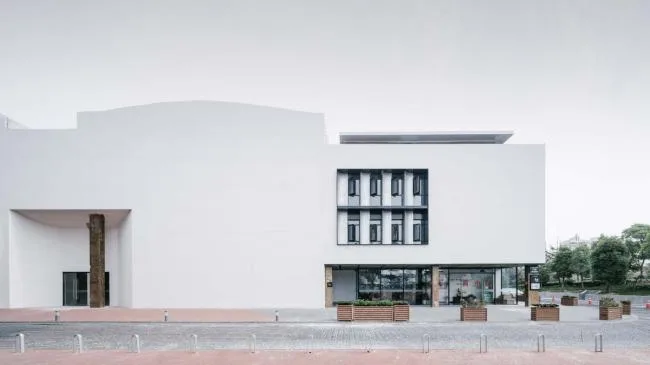
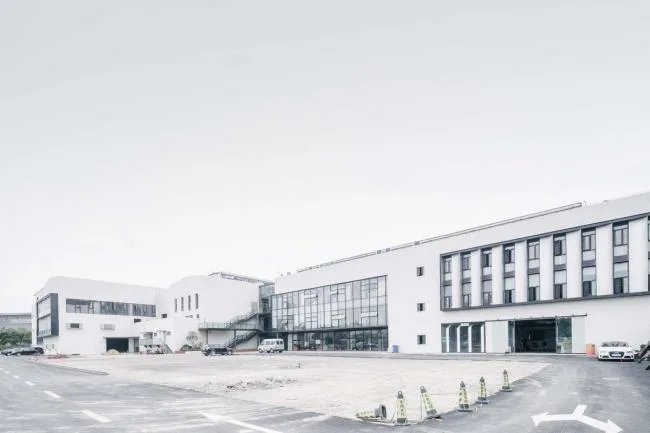
This project encompasses a comprehensive renovation and modernization of a group of industrial workshops and auxiliary buildings originally constructed in the 1990s alongside the Jiading Jinghu Expressway in Shanghai. The design concept centers on “plain porcelain tiles,” with an extracted curved surface serving as the core motif for the building’s facade, forming the fundamental vocabulary of the main exhibition hall.
The original architectural structure and site relationships have been preserved, while new internal steel structure interlayers have been introduced. This approach revitalizes the industrial character of the space, infusing it with a fresh artistic atmosphere and commercial functionality. The previously enclosed and deep workshop volumes have been opened up, with newly added landscape corridors and glass ceilings linking the front and rear areas of the park. These changes enhance the usability of the indoor space for resident enterprises and visitors alike.
Current Situation
The site is located on Huajiang Road in Jiading District, Shanghai, within the North Hongqiao area. This factory complex, which retains a classic industrial heritage atmosphere, is in urgent need of renovation and upgrading to align with the city’s evolving development, especially as Jiangqiao Town integrates into the Hongqiao Business Circle.
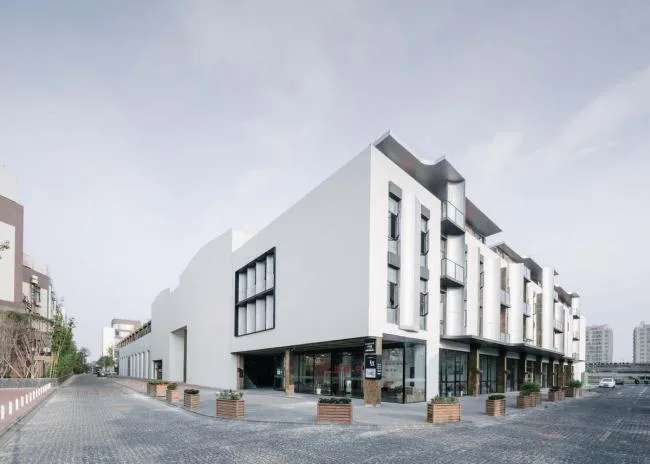
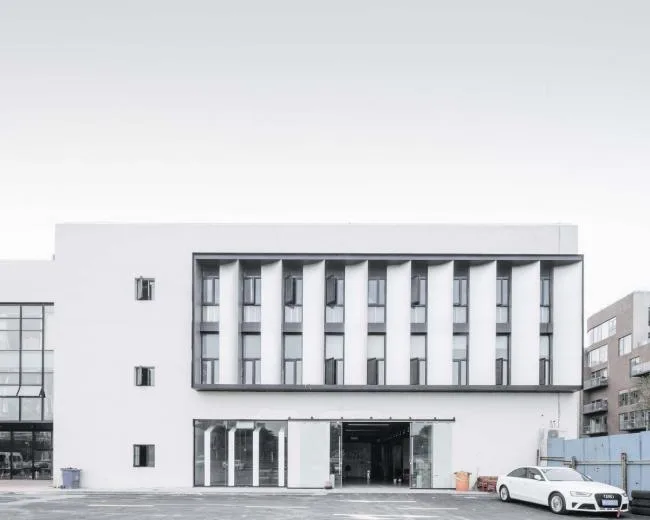
Within the factory area, one building functions as a “production complex,” comprising office buildings, two large factory spaces, and several smaller auxiliary buildings. Another building is a multi-story slab dormitory, originally constructed as a factory building. The preserved structural framework on-site exhibits a strong industrial order and spatial presence typical of large-scale production workshops.
The design challenge is to inherit the original factory’s architectural structure and spatial scale, repurpose the space with new functions, and transform the old cast iron factory into a creative art park dedicated to ceramic art.
Design Strategy
The design initiates a dialogue with the original architectural space and structure, exploring the thematic qualities of the newly introduced functional areas. While organizing these spaces logically, the design continuously interacts and integrates with the existing structural system.
By carefully negotiating spatial relationships through local adjustments, enclosure, and reinforcement of the original structure, the project reveals a rhythmic structural system that is prominently expressed within the urban context.
Facade Renovation
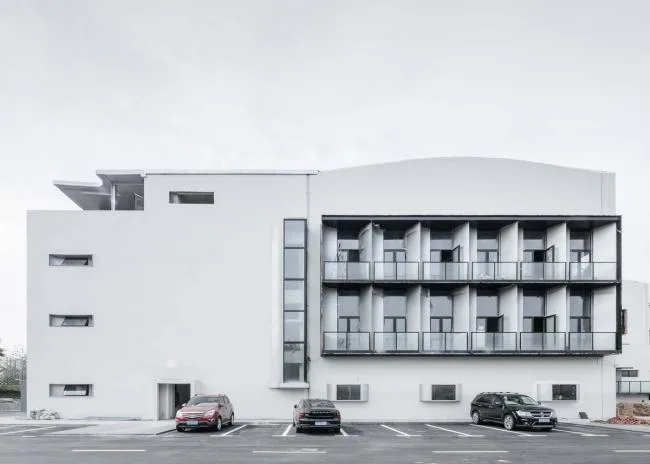
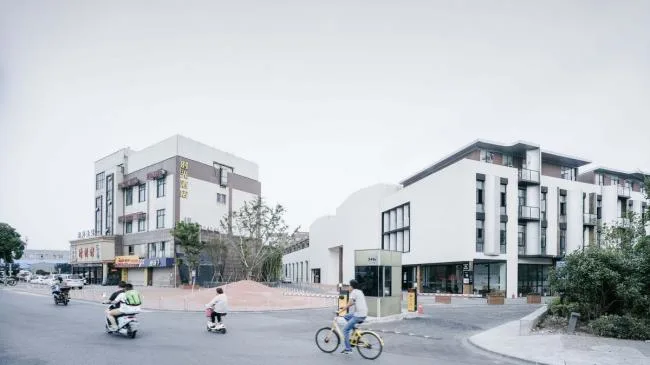
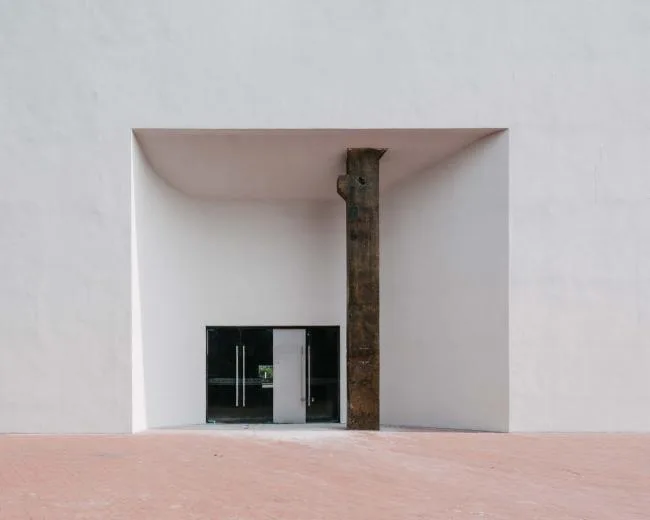
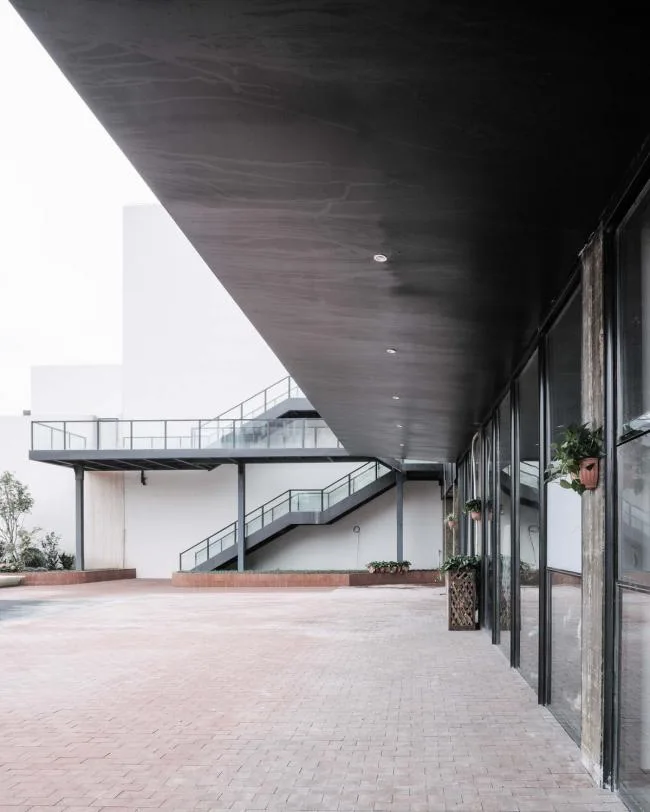
The facade design employs a combination of orthogonal and curved forms, abstracting the “plain porcelain tile” into sheet-like curved surfaces. These are interpreted across different building components in three ways: concave curved door brackets, curved window frames tailored to various window scales, and curved steel plate curtain walls connecting balconies between floors.
These systematically arranged curved surfaces are distributed across the factory facade, giving the building a distinctive character and establishing the primary aesthetic tone of Shenyao.
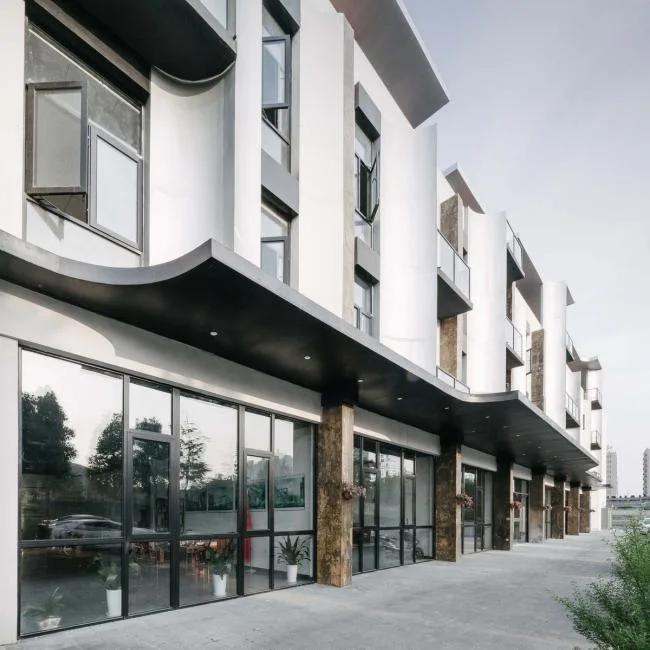
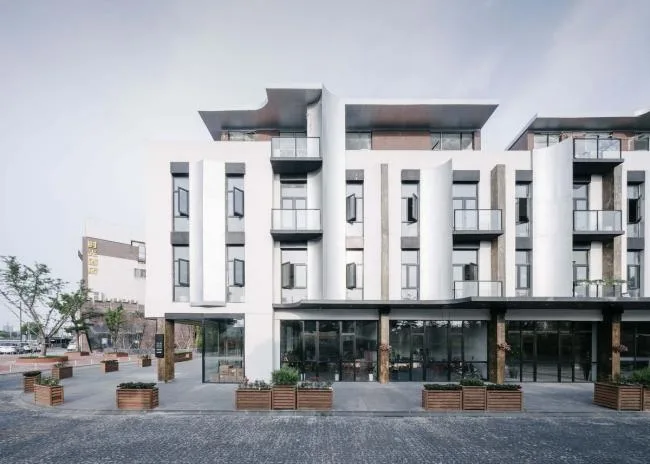
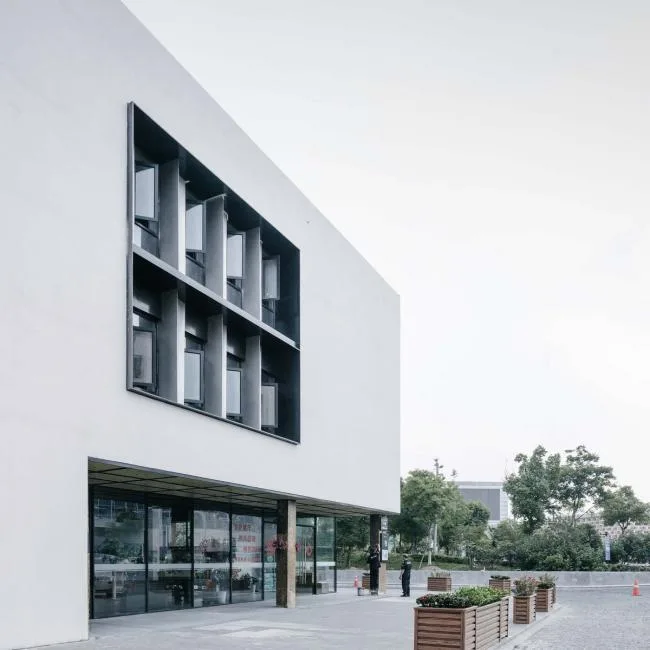
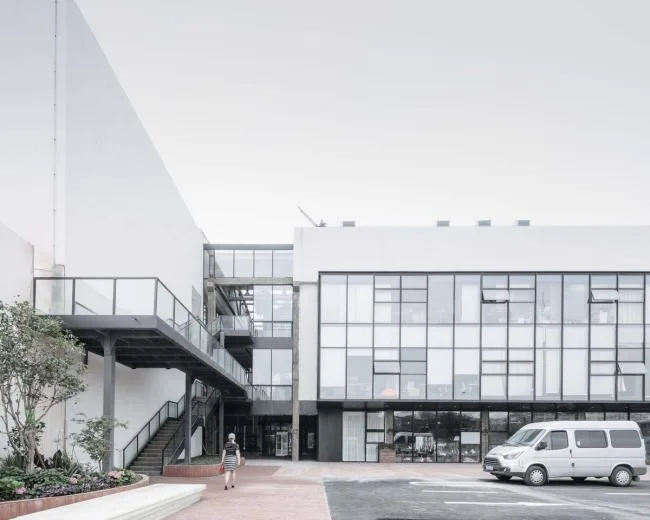
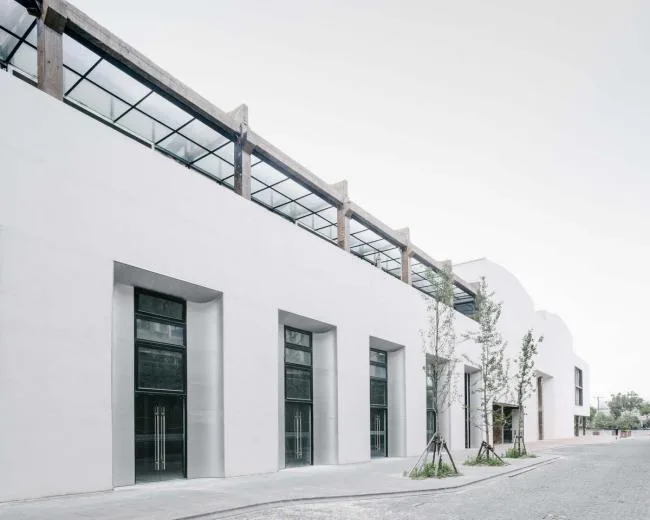
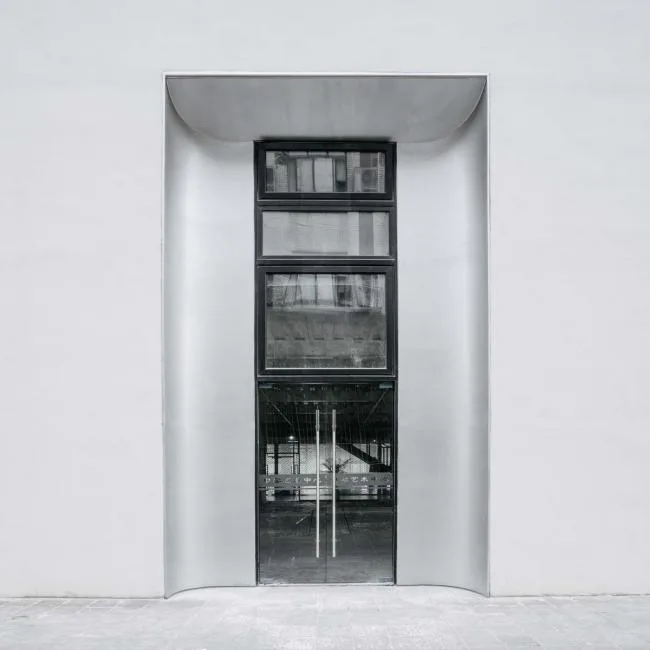
The large-scale main entrance door on the south facade extends the factory’s unique spatial qualities outward. The door recess reveals a single tall column, visually linking the indoor space with the exterior while highlighting the spatial dynamics.
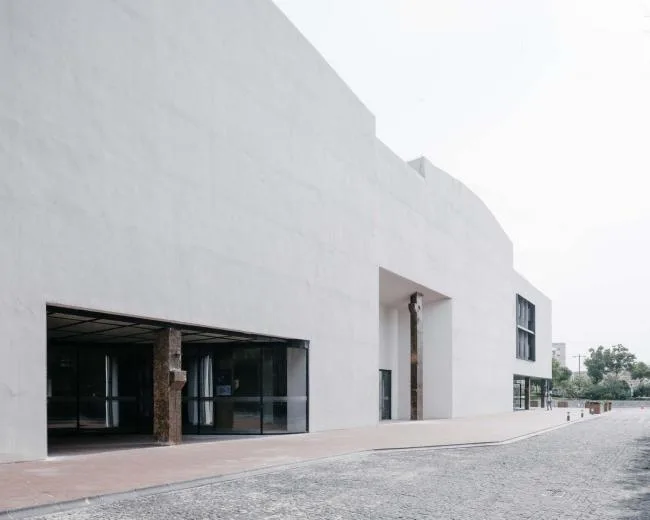
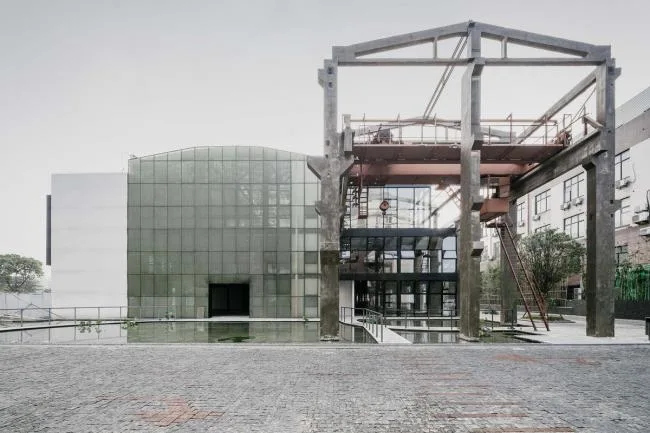
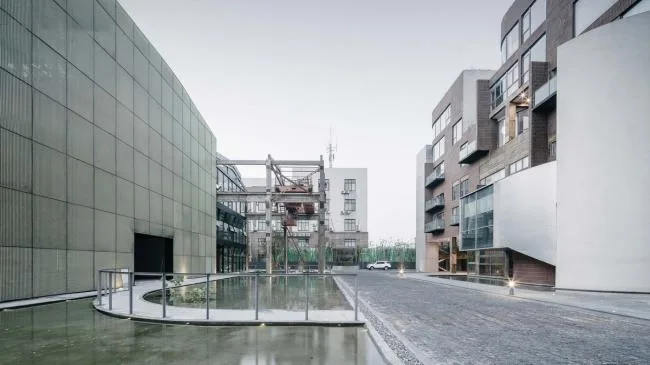
The protruding wall and roof on the west side of the factory have been removed to create the future hotel’s front area, fully exposing the reinforced concrete structural framework. The remaining framework is wrapped to clearly define the building’s volume. The introduction of a fiberglass grille curtain wall system enhances natural lighting indoors and enriches the facade, while maintaining the architectural integrity.
Interior Space
The internal volume has been reorganized to flexibly create multiple exhibition spaces of various scales within the original large spatial structure. The design emphasizes spatial enjoyment, transforming the former “production complex” into an “art complex” with exhibition, workshop, training, and other cultural functions.
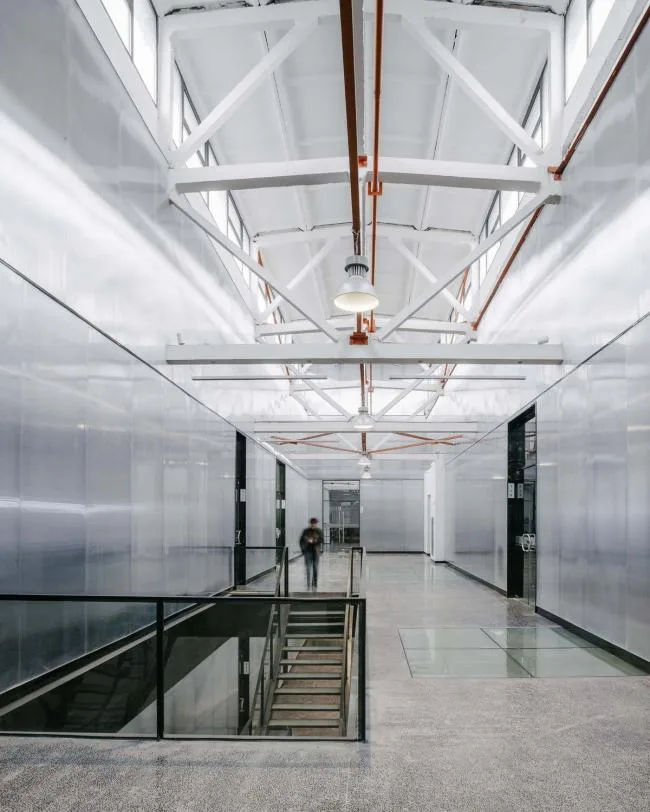
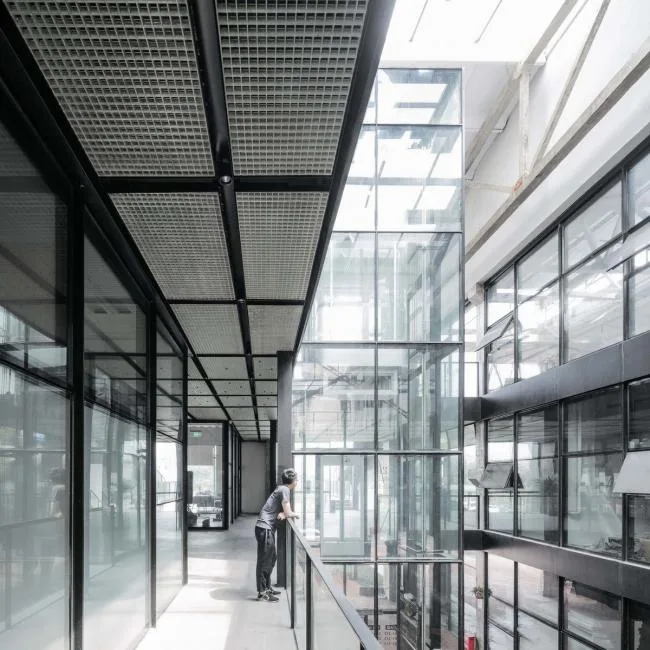
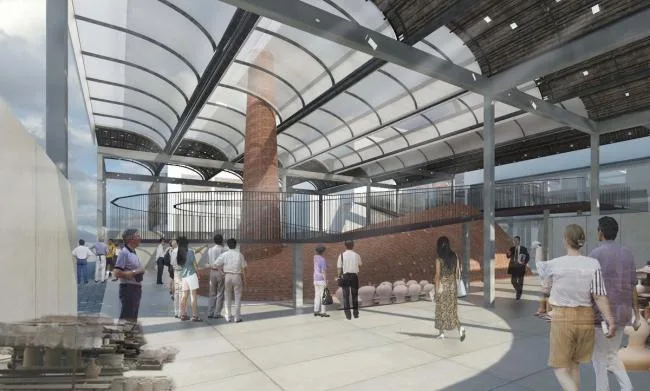
Steel structures have been added inside the main building on the west side to divide the space into three main areas. A series of long skylights, aligned with the structure, and three square skylights in the public corridor introduce natural light deep into the interior across multiple floors. Fiberglass grilles and tempered glass floors arranged in a staggered pattern further increase light penetration into the factory’s central zone.
Light passing through the fiberglass grilles is broken into small grid patterns, interacting with users in the calm office spaces and allowing them to experience the dynamic flow of light. Along the corridor, double-layered partitions with semi-transparent sun panels and glass improve lighting deficiencies of the original space and provide quiet zones suitable for art-related activities.
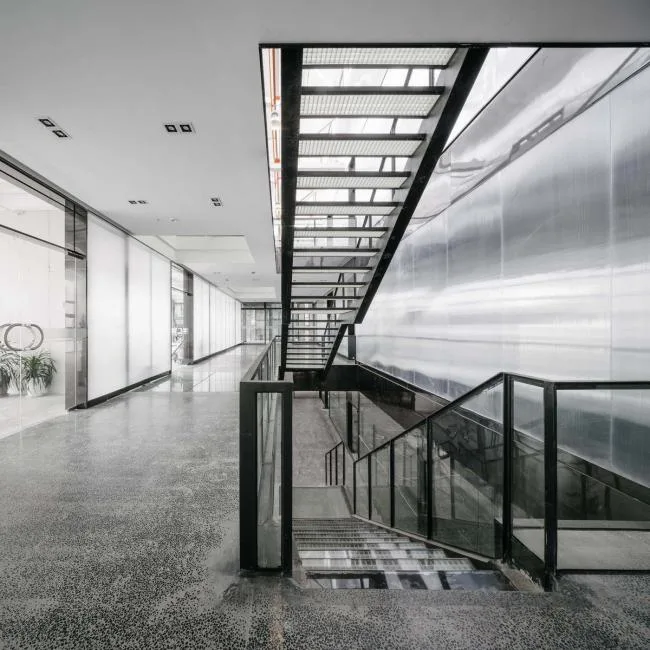
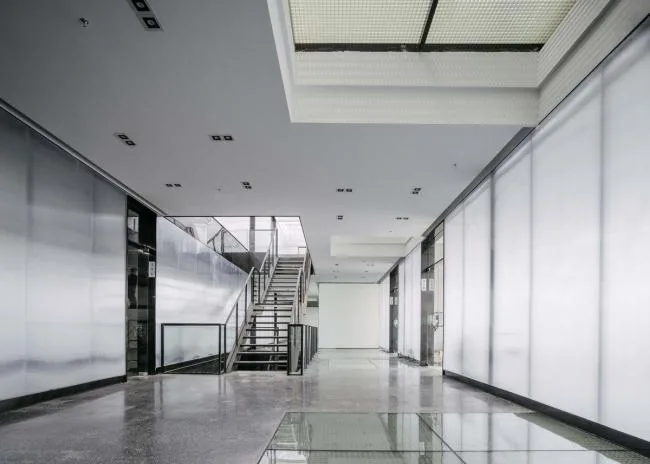
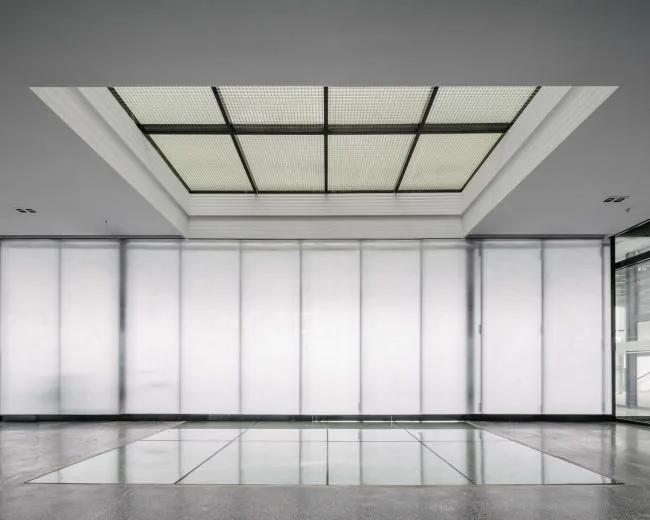
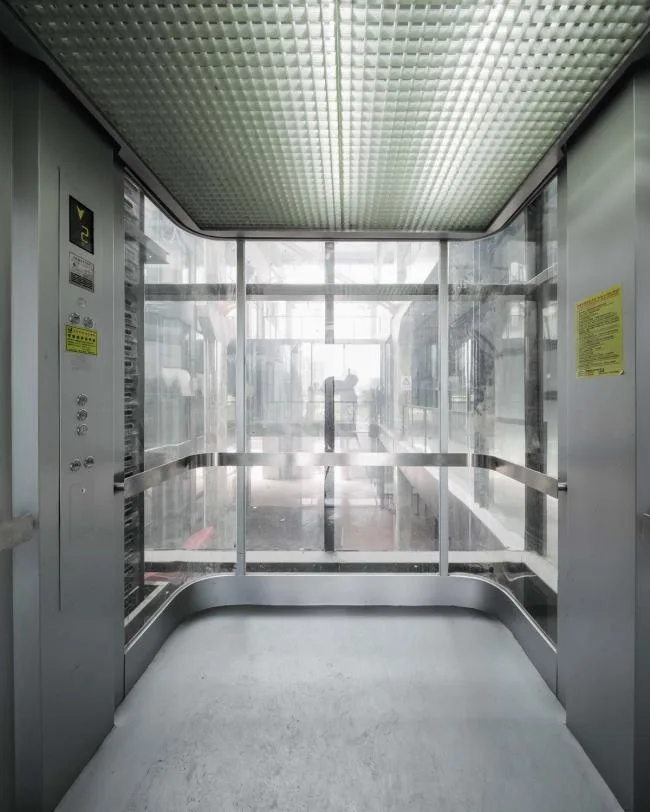
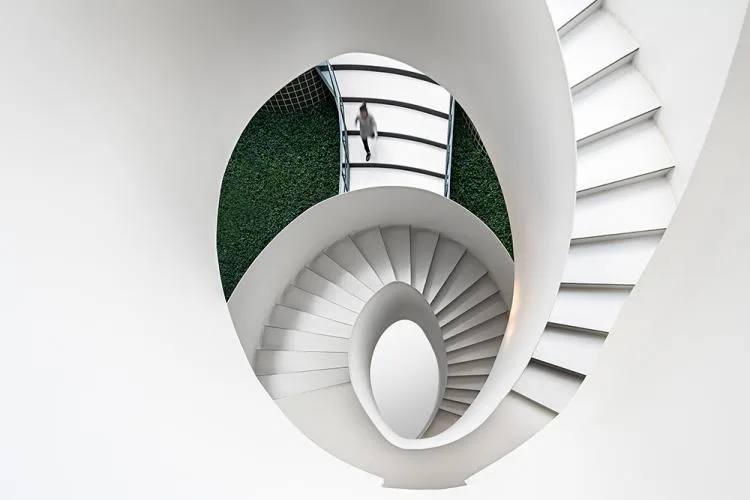
The design of light wells throughout the building continues to be refined to address lighting and ventilation challenges. The “porcelain tile” motifs passing through multiple floors incorporate stairs or elevators inside, with partition walls composed of white surfaces or U-shaped glass. The elements of light, curves, and texture evoke a strong connection to ceramic art.
Landscape Arrangement
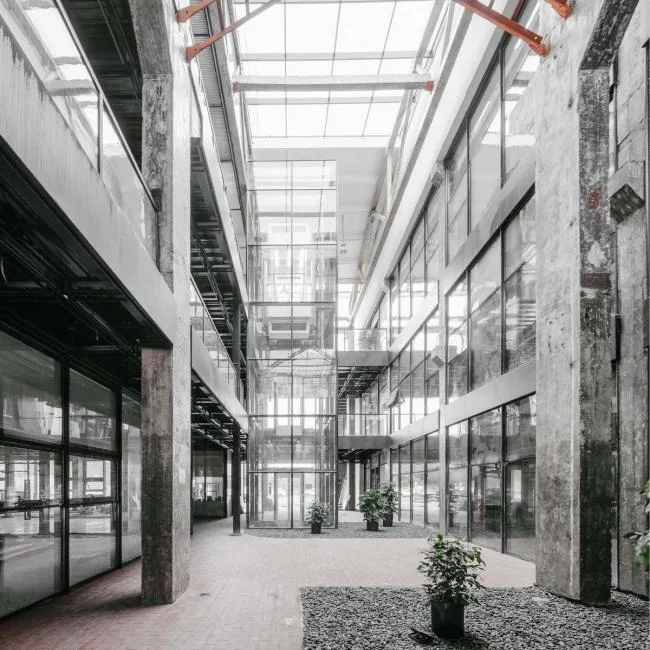
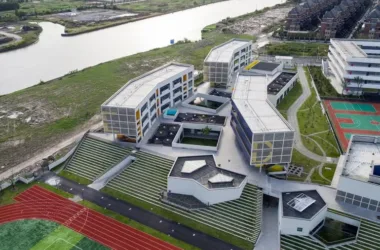
The setbacks between the internal functions of the factory expose the remaining structure to the sky, creating atrium spaces for the new functions that break the original monotonous spatial volumes. Additionally, the removal of the factory building’s waist section has created a semi-outdoor space.
The towering volume and intact roof pre-truss structure deliver a strong visual impact. The external landscape extends from the front to the back and is divided into East and West zones. This division addresses the challenge of land occupation by the factory and facilitates the grouping and rhythm of the building’s functional layout.
At the same time, it comprehensively resolves the issue of insufficient natural light caused by the building’s large depth, improving daily usability.
Future Prospects
Looking ahead, a reserved public square has been designed for community activities, with a connecting corridor providing direct access to the interior of the “Art Complex” from the North Square entrance. This design aims to gradually enhance the space while reshaping the cultural fabric of the area.
The goal is to establish this area as an open and interactive urban public space, inviting participation from local residents. Upon completion, the renovated Shenyao Art Center will serve as a North Hongqiao Art Demonstration Park, complementing the park to the south and integrating with commercial hubs such as Wanda Commercial Plaza in Jiangqiao. It is poised to become a new cultural landmark in North Hongqiao.
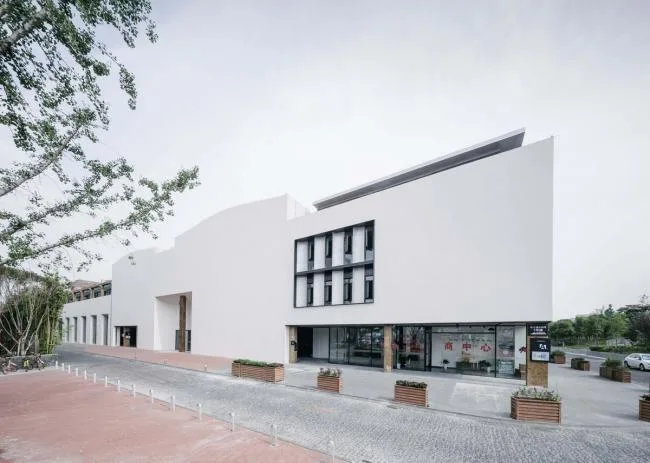
Shenyao Guangjing Renderings
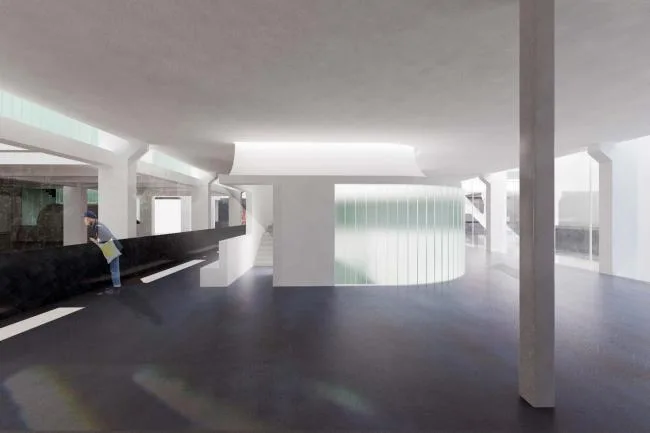
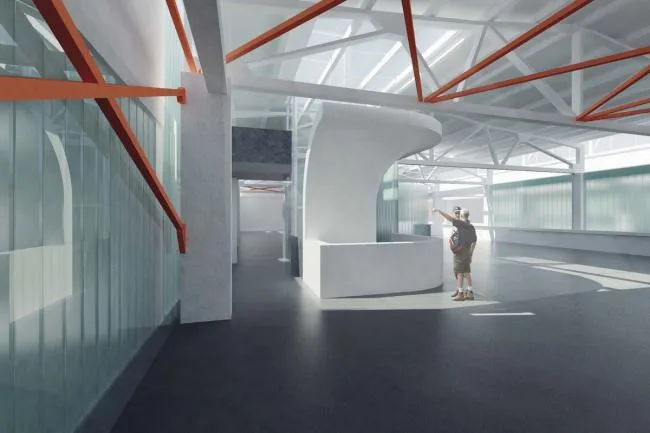
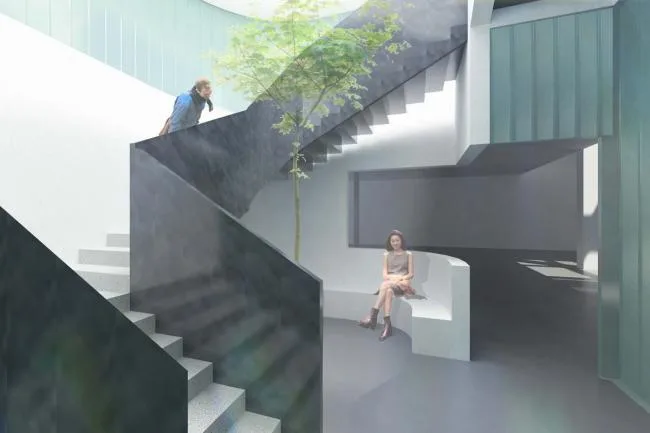
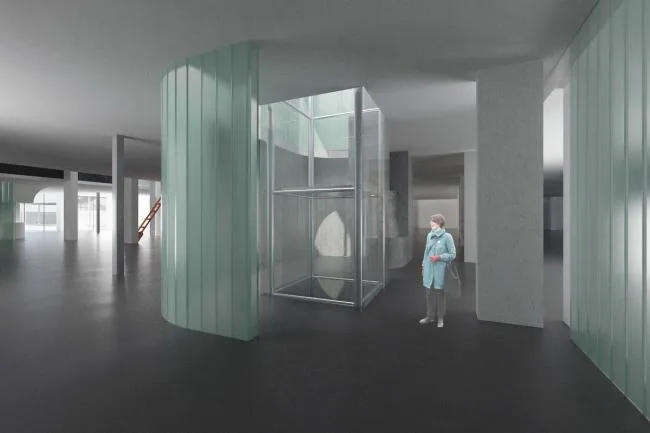
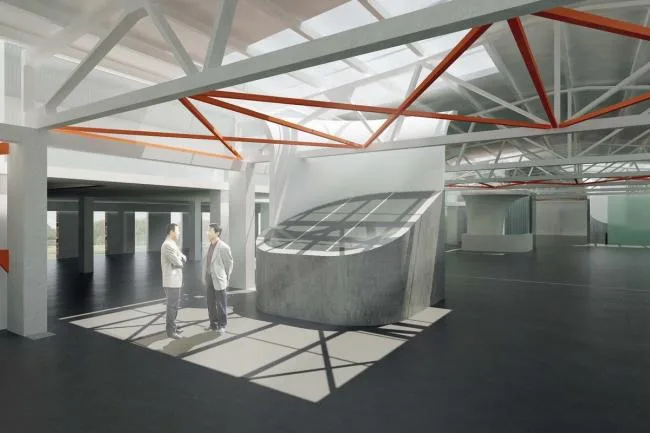
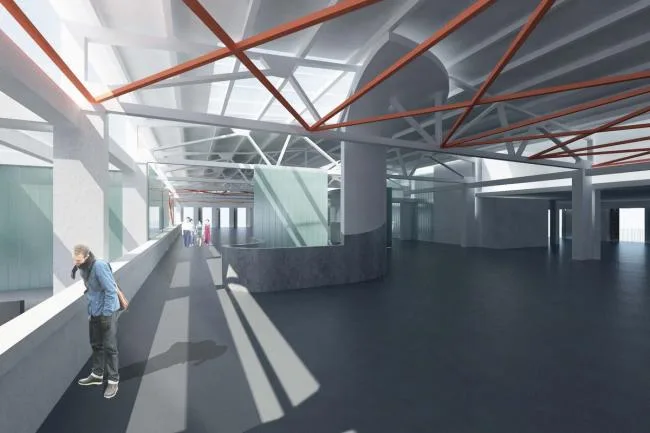
Renderings of the Entrance to Shenyao North Square
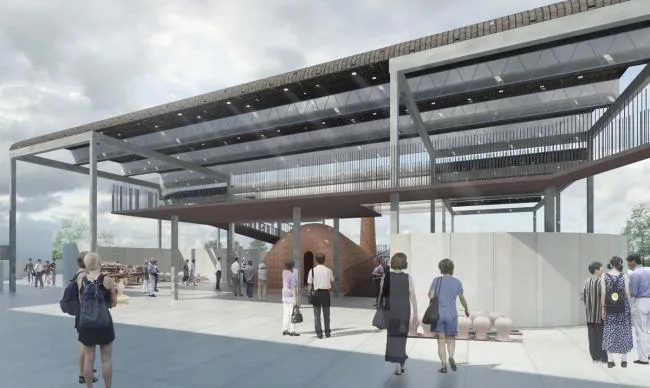
Design Drawings
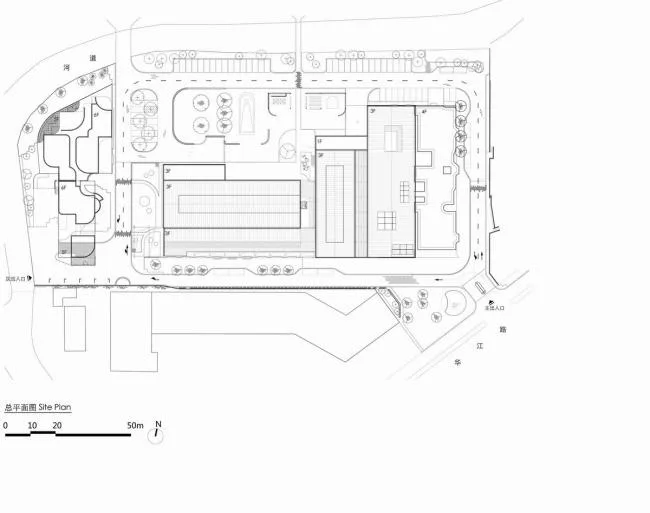
▲ General Plan of Shenyao Industrial Park
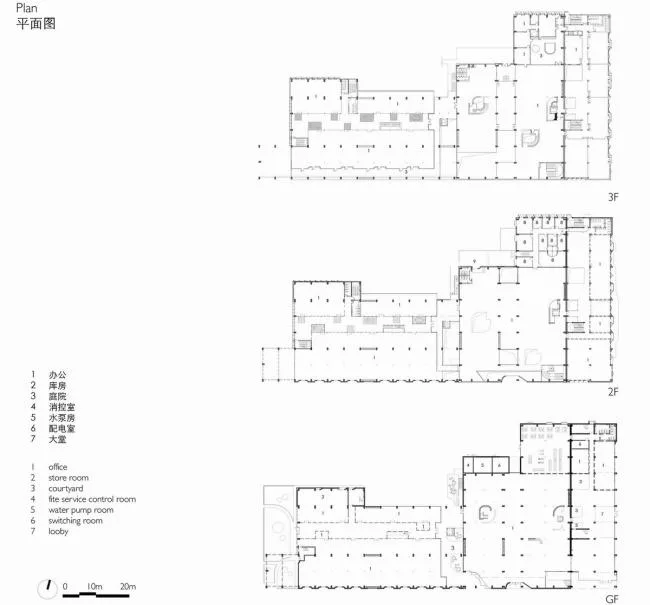
▲ Plan of Phase I of Shenyao Art Center
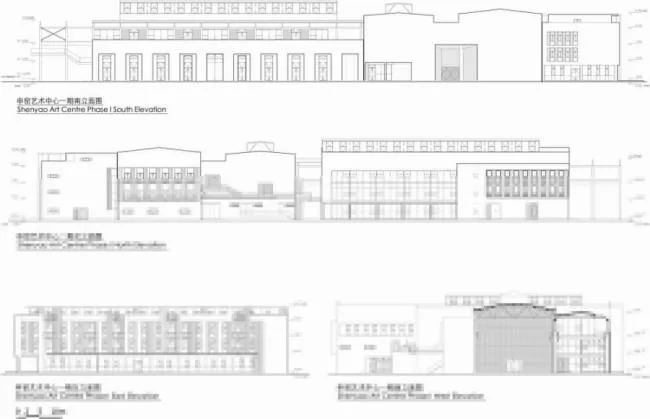
▲ Front view of Shenyao Art Center Phase I
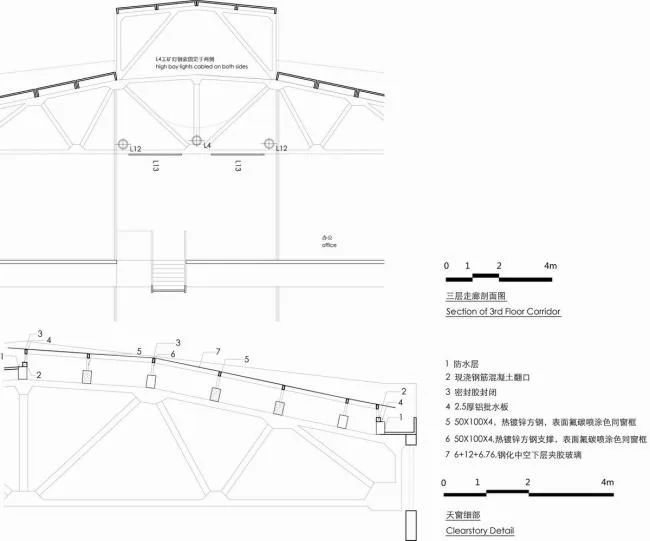
▲ Section of the third floor corridor
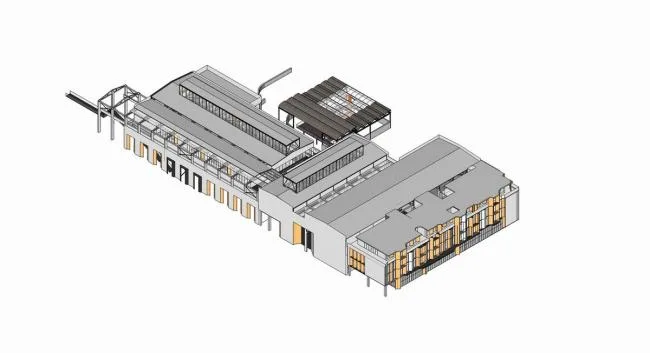
▲ Axonometric diagram
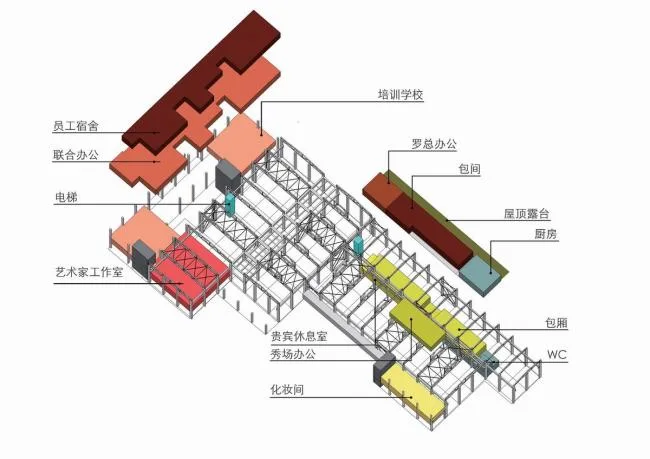
▲ Functional axis measurement
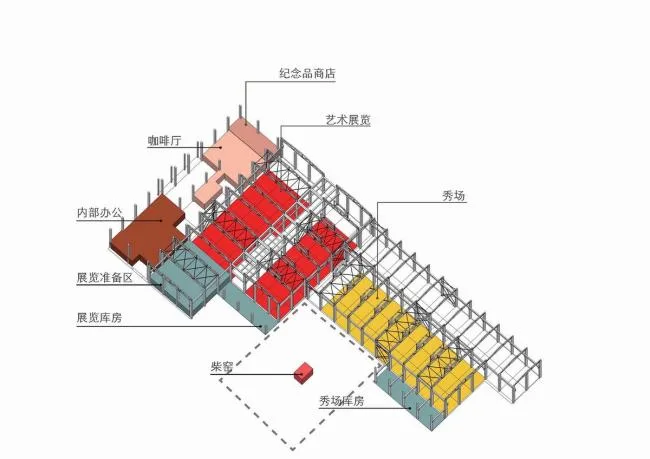
▲ Functional axis measurement
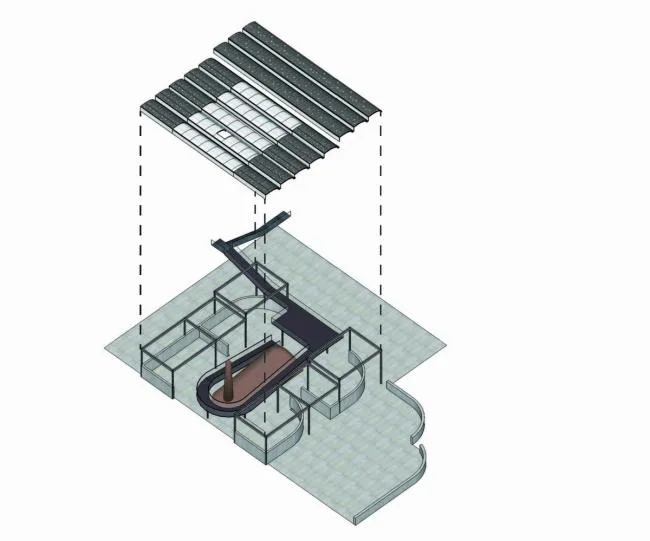
▲ North Square Axis Measurement
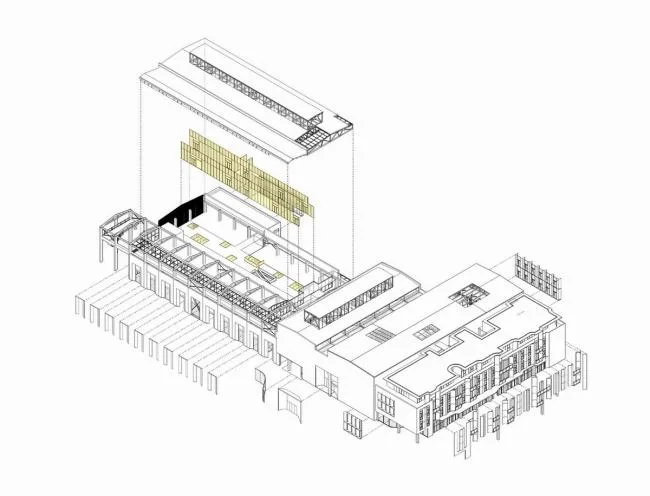
▲ Explosion diagram
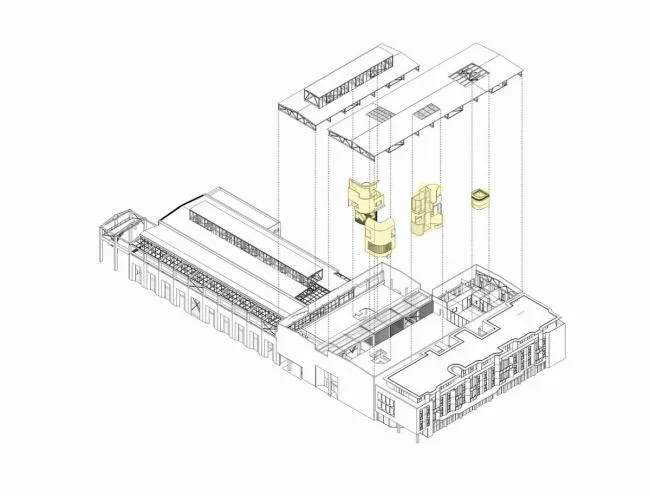
▲ Explosion diagram
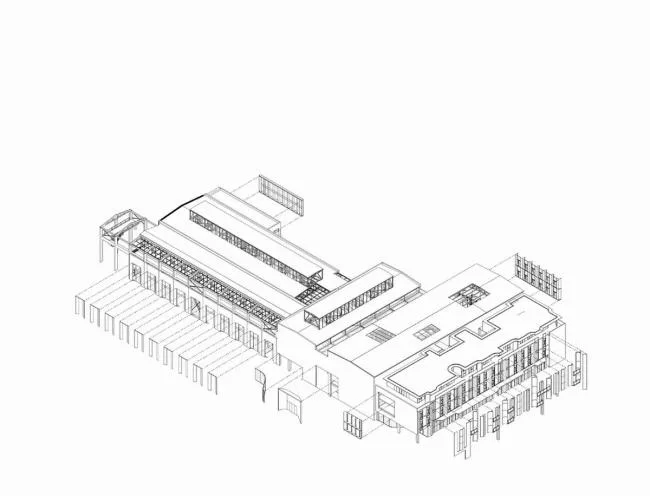
▲ Explosion diagram
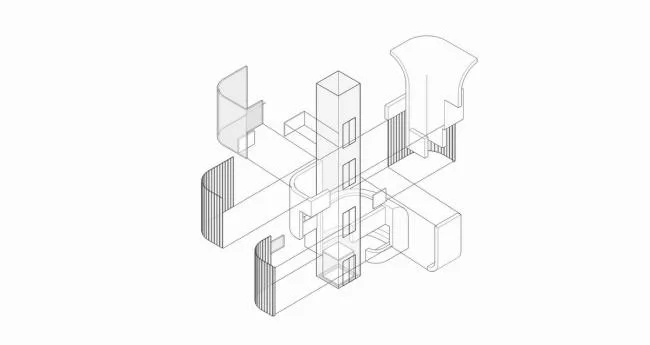
▲ Explosion diagram of Guangjing
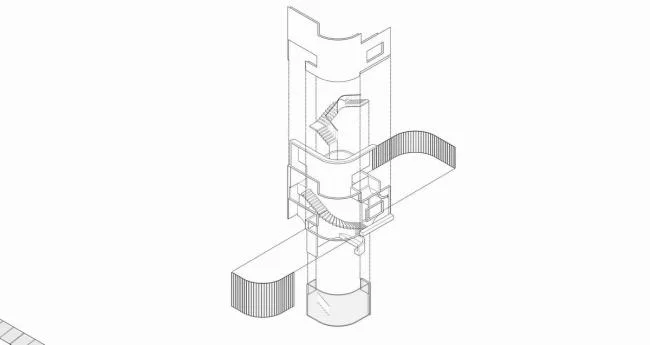
▲ Explosion diagram of Guangjing
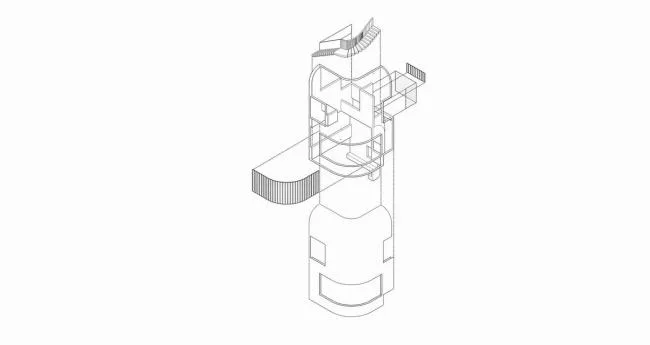
▲ Explosion diagram of Guangjing
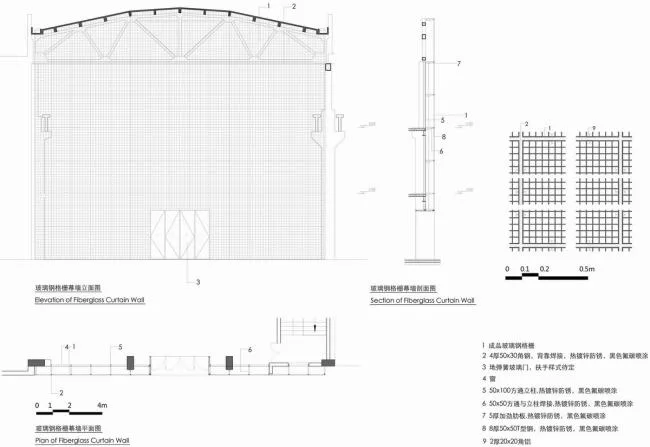
▲ Fiberglass Grating Curtain Wall
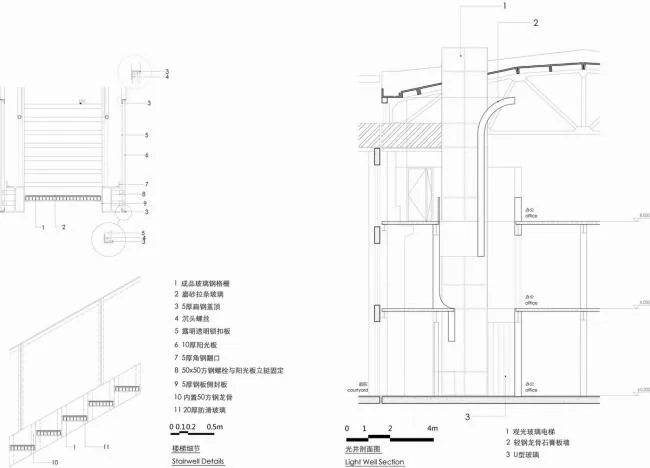
▲ Detailed drawing of Guangjing staircase
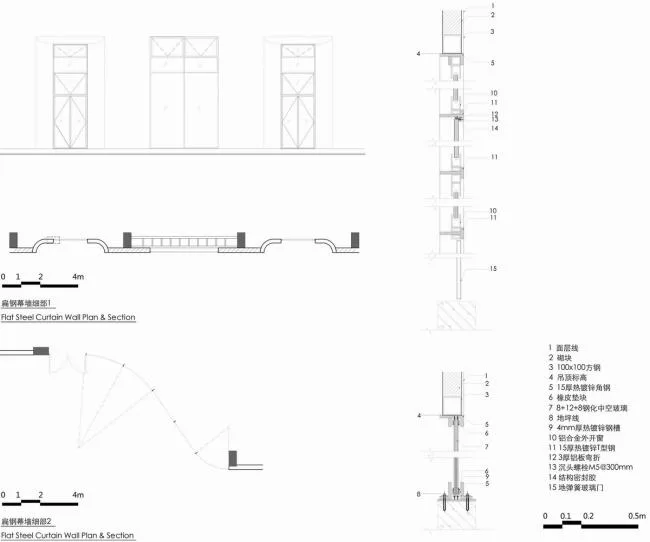
▲ Details of Flat Steel Curtain Wall
Project Information
Architect: Liu Yuyang Architectural Firm
Address: 348 Huajiang Road, Jiading District, Shanghai, China
Category: Cultural Center
Lead Architect: Liu Yuyang
Project Architect: Wu Congbao
Design Team: Wang Jue, Chen Zhuoran, Chen Han, Zhu Chenghao, Hu Qiming, Wen Tianqi, Zhou Sijia, Xuan Jiali, Ma Teng, Wang Jun, Yang Yimeng, Zhou Zhe, Lin Can, He Yuqing
Resident Architect: Lin Yihong
Building Area: 15,765.0 m²
Project Year: 2018
Structural Consultant: Zhang Zhun
Mechanical and Electrical Consultants: Gao Xintai, Yu Lihua, Gou Shaobo
Construction Unit: Shanghai Xinao Industrial Co., Ltd.
Construction Partners: Shanghai Shenyao Culture and Art Development Co., Ltd., Shanghai Xinao Industrial Co., Ltd.












Must log in before commenting!
Sign Up