
Over the past two decades, China’s rapid hospital construction has helped ease the long-standing shortage of medical resources. However, challenges such as poor building quality, short lifespans, low-quality spatial environments, difficult renovations, high operational energy consumption, and maintenance issues remain widespread. As social economies and medical technologies continue to advance, hospital buildings must evolve to provide healthier, more welcoming, and human-centered spaces for both patients and healthcare professionals. Future hospital construction should shift towards greater refinement and intensification.
Renewing hospital design concepts, creating more humane healthcare environments, and transforming the hospital construction industry have become urgent demands of our time.
01 Sustainable Development: The Heart of Human-Centered Hospital Architecture
Humanizing hospital architecture means not only addressing the immediate needs of users but also allowing for future adaptability and sustainability throughout the building’s entire lifecycle.
Sustainable development lies at the core of humanized hospital design. Promoting sustainable design principles helps achieve human-centered goals in hospital architecture, focusing on three key aspects:
Building Longevity. Hospital designs should embrace sustainability by considering functional flexibility over the building’s lifespan, facilitating easy maintenance and replacement of equipment and pipelines to ensure durability.
High Quality. Selecting materials and components that are healthy, eco-friendly, durable, universally accessible (especially for the elderly), and easy to replace or repair enhances overall construction quality—from structural elements to interior components—leading to comprehensive improvements in hospital building standards.
Green and Low-Carbon. Throughout the building’s lifecycle, combining passive design strategies with active technologies maximizes resource efficiency, reduces pollution and carbon emissions, and ensures healthy, comfortable, and efficient spaces for patients and staff. This fosters harmonious coexistence between humans, buildings, and nature.
02 Prefabricated Design: Driving Sustainable Hospital Development
In 2016, the State Council issued Document No. 71, promoting prefabricated construction as a key driver for transforming and upgrading the building industry through technology-led innovation.
Prefabricated buildings embody sustainability throughout their lifecycle by emphasizing standardized design, factory production, off-site assembly, integrated decoration, information management, and smart applications. Industrial production enhances efficiency and quality while flexible design accommodates evolving needs, supports space adaptability, extends building lifespan, minimizes resource waste, and reduces environmental impact—achieving green, low-carbon, and sustainable development.
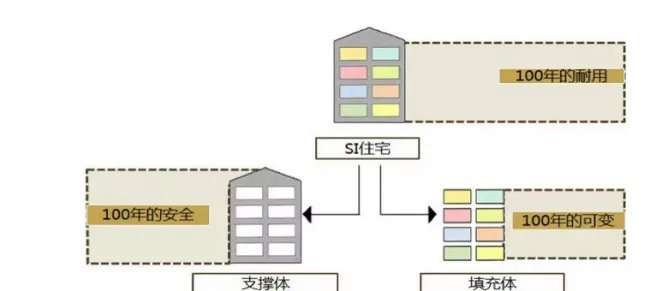
Many hospitals today face challenges of simultaneous use and renovation. Minimizing disruptions to medical operations during maintenance and upgrades exemplifies humanized design. Prefabricated construction addresses these needs by separating the building’s structural framework (support body) from its infill systems (peripheral protection, equipment pipelines, and interiors), allowing for flexible, adaptable spaces centered around core traffic and utility shafts (see Figure 1).
Using lightweight partition systems and modular designs such as integrated bathrooms enables seamless demolition, renovation, and renewal of medical spaces, boosting building longevity. Factory production ensures high-quality components, while shorter, quieter, and cleaner onsite assembly reduces disturbances to medical activities. Separating equipment pipelines from the main structure simplifies maintenance and upgrades, minimizing operational impact.
Applying prefabricated design principles in hospital construction promotes human-centered, sustainable, high-quality, and environmentally friendly healthcare facilities.
03 Human-Centered Modular Building Design
Humanizing hospital architecture extends beyond patient and staff care to encompass the entire construction and operational process. Enhancing construction efficiency, improving building quality, and reducing environmental pollution are fundamental expressions of this approach.
Prefabricated buildings strive for superior quality, cost-effectiveness, and reduced construction time through integrated design and management across design, production, construction, and operation phases. Achieving this depends on standardized design and comprehensive information management throughout the project lifecycle.
Standardized Design
Standardization in prefabricated construction reflects a human-centered philosophy. It facilitates mass production of building components, simplifies onsite assembly, lowers energy consumption and pollution, and minimizes disruptions to hospital operations—demonstrating a people-first approach.
Alongside standardization, the principle of “fewer specifications, more combinations” ensures architectural diversity, resulting in rich and vibrant human-centered designs. Standardization is achieved through module coordination and modular combinations based on functional zoning.
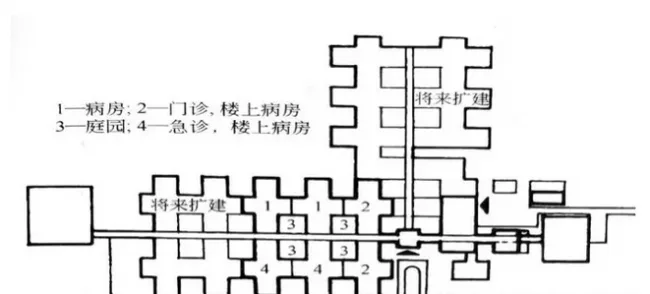
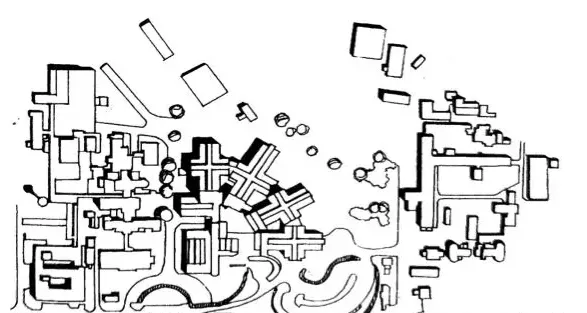
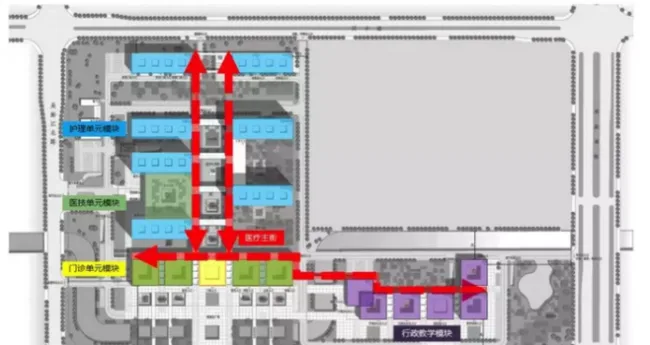
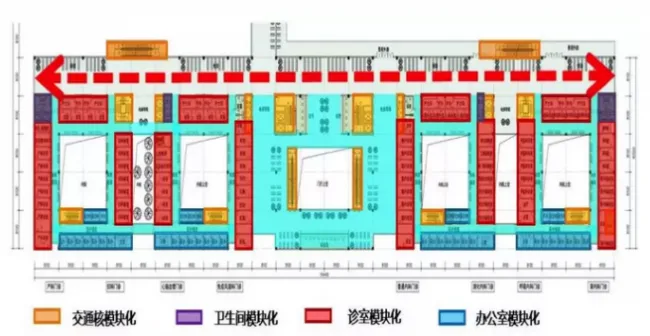
Modular design groups zones with similar functions into spatial systems, then combines modules according to needs. This concept is familiar in modern hospital design; for example, the UK’s 1970s Nucleus system used cross-assembled modular units for outpatient, medical technology, and inpatient functions (Figures 2–5). Modular units connect via main corridors to form cohesive hospital layouts, allowing for future expansion and functional updates through modular replacement.
Information Management
Enhancing construction and operational efficiency also supports humanization. Prefabricated buildings utilize BIM technology to enable effective information sharing and collaboration throughout the building’s lifecycle. During operations, BIM helps quickly identify issues with concealed equipment pipelines and trace component data, enabling precise problem-solving and improved maintenance.
04 Integrated Building System Design
Unlike traditional construction, prefabricated buildings are industrialized products integrating four main systems: structural, enclosure (peripheral protection), equipment and pipelines, and interior systems (Figure 6). Delivering high-quality, functional, and environmentally responsible buildings reflects a truly human-centered approach. Prefabricated design resolves coordination challenges among these systems, creating well-integrated, user-friendly buildings.

Structural System
Prefabricated structural systems commonly include precast concrete, steel, and wood, with precast concrete dominating in China. Factory-produced beams, columns, floors, and stairs facilitate faster onsite assembly compared to traditional cast-in-place methods, meeting hospital construction demands. Particularly in renovations and expansions, this minimizes disruptions to medical operations, aligning with humanized design principles.
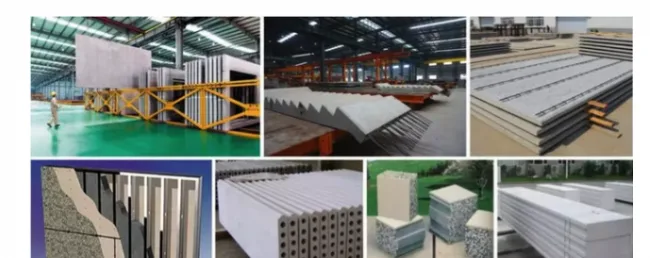
Due to the flexible spatial requirements and high standardization of outpatient wards, hospital structures typically utilize precast concrete frames, precast concrete frame-shear walls, steel frames, or steel frame-support systems (Figure 8). Frame-shear wall and concrete frame-steel support structures offer superior seismic resistance, suitable for taller hospital buildings.
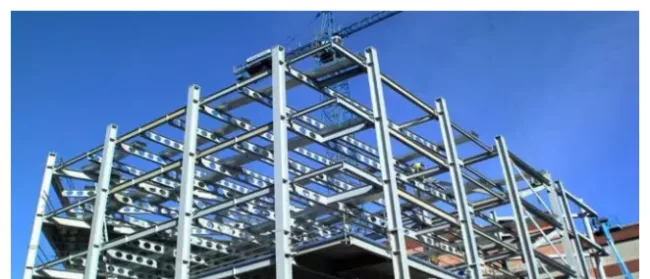
Steel structures offer large spans, high flexibility, and strong adaptability, providing variable open spaces. Steel’s high strength allows smaller vertical components, improving space efficiency. Its excellent ductility and energy dissipation enhance seismic performance, making it ideal for hospitals in seismic zones. Steel components are standardized and factory-produced, promoting industrialization with minimal environmental impact during construction (Figure 9). Steel’s recyclability supports sustainable development. Generally, steel frames suit mid-rise hospitals, while steel frame-support systems are appropriate for high-rise wards.
Peripheral Protection System
The enclosure system includes exterior walls, roofs, doors, and windows, integrating fire prevention, insulation, waterproofing, and aesthetic functions. Prefabricated buildings leverage industrialization to optimize performance, appearance, and durability of enclosure systems, enhancing safety and longevity—key to sustainability and humanization.
Depending on structural type and project requirements, suitable enclosure systems include prefabricated exterior walls, onsite-assembled skeleton walls, curtain walls, and others.
Interior System
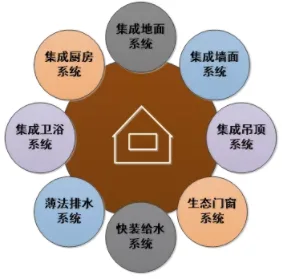
Interior systems encompass floors, walls, lightweight partitions, ceilings, doors, windows, kitchens, and bathrooms. These are the most directly experienced elements by patients and staff, reflecting the hospital’s humanized design quality.
Prefabricated interiors are designed integrally with structural, enclosure, and equipment systems to meet construction, maintenance, usage, and expansion needs across the building’s lifecycle.
Factory-produced prefab interior components maximize environmental friendliness and quality. Onsite dry installation is fast and reduces cement use, minimizing environmental pollution.
Interior decoration can utilize integrated factory-produced components such as ceilings, partitions, floors, bathrooms, medical furniture, and storage units (Figure 10). These industrialized parts offer interchangeability and universality, easing updates, maintenance, and space reconfigurations.
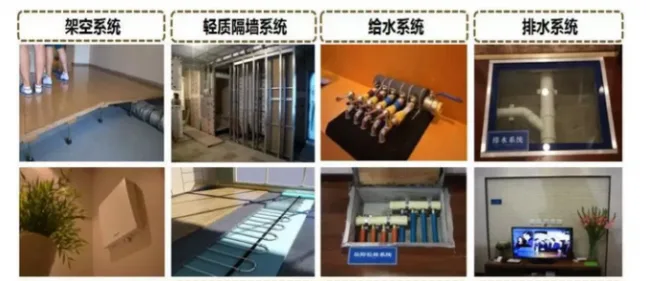
Elastic space separation employs lightweight strip panels, light steel frames, and wooden composite walls for internal partitions. These can be quickly installed or renovated onsite with minimal construction waste. Partition cavities accommodate equipment pipelines, simplifying maintenance and repairs.
Ward bathrooms feature integrated units made of eco-friendly, high-quality materials, installed dry with waterproof bases and inspection ports to effectively prevent leaks and facilitate convenient maintenance.
Such humanized prefab interior systems perfectly suit hospital construction needs.
Equipment and Pipeline System
Traditionally, equipment pipelines are embedded within cast-in-place concrete structures, mixing systems with a 10–20 year service life into structures designed for 50 years or more. Aging pipelines complicate renovation, requiring chiseling or rebuilding structural elements, severely impacting building use and longevity.
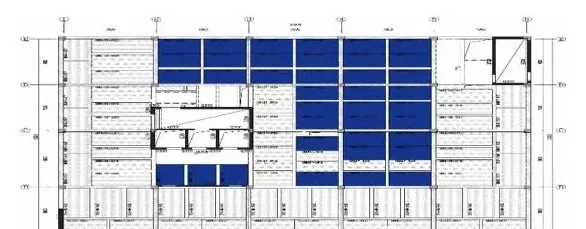
Prefabricated buildings separate equipment pipelines from the main structure, placing them within partition wall frames or decorative layers (Figure 11). This arrangement allows quick inspection, repair, and replacement without damaging the main structure, enhancing building durability.
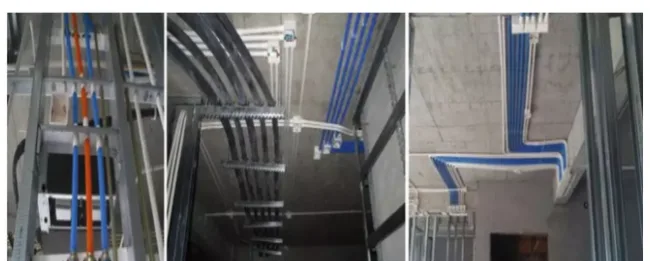
Centralizing equipment and pipeline layouts reduces conflicts with medical functional areas, minimizing maintenance disruptions to patient care and rest, thereby creating more humane medical spaces. This approach also produces more complete and adaptable functional spaces, enabling future renovations.
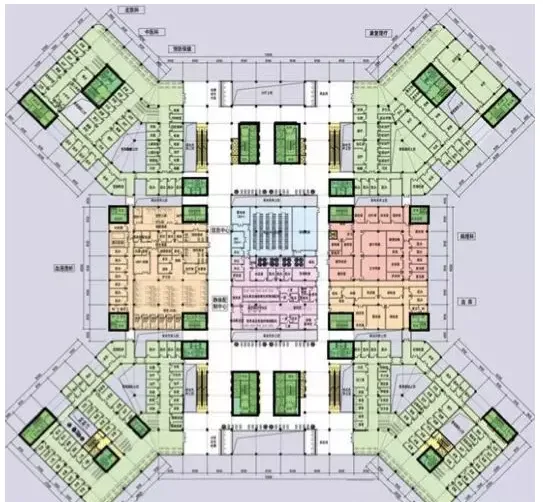
In one hospital design (Figure 12), equipment shafts are located in public zones outside medical units to maximize flexibility and support sustainable development.
Conclusion
No matter how medical technology evolves, fulfilling human-centered needs remains the foremost priority in hospital design. Prefabricated construction offers a compelling solution, transforming buildings into refined, precise, green, efficient, and sustainable products—much like cars or smartphones. This approach represents not just a construction method shift but a design concept upgrade.
Embracing humanized prefabricated design will accelerate hospital construction transformation, establish industrialized building and component systems, create durable, high-quality, green, and low-carbon hospitals, and promote sustainable development in modern healthcare architecture.













Must log in before commenting!
Sign Up