
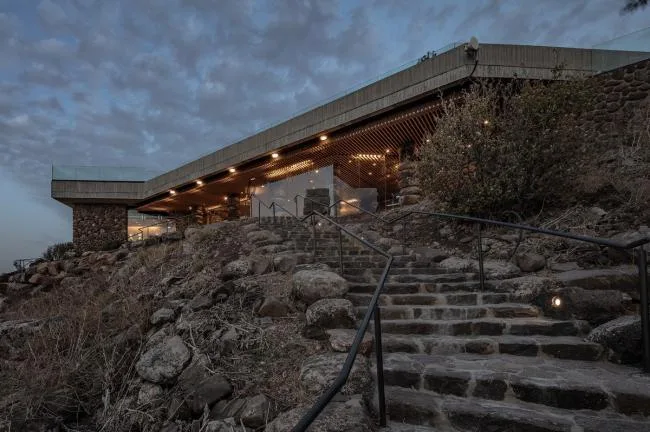
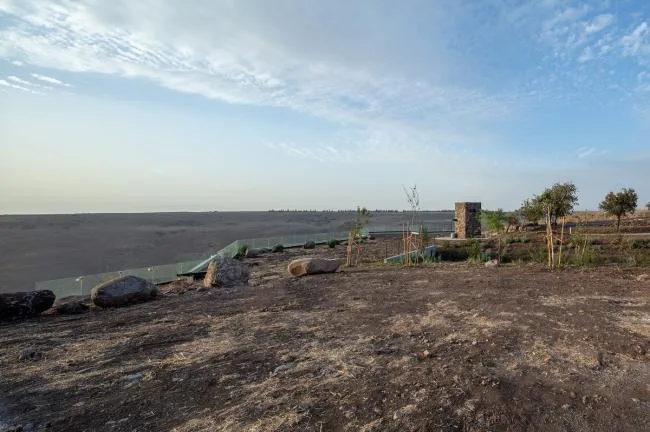
This site serves as a bridge between tourists and archaeological heritage. Visitors navigate through an open space designed with BIM technology, moving fluidly between the ever-changing natural landscape and the architect’s creations. They gradually emerge from the outdoor environment, shaped by volcanic soil, into an interior that reflects relaxation and softness.
Here, visitors traverse time as the site spans over 1,500 years. It acts as a reconciliation point between an ancient religious place of worship and Israel’s ongoing efforts to rebuild its national identity within the contemporary political landscape.
Within this archaeological site lies an ancient Jewish synagogue, believed to have been constructed in the 5th century. It suffered damage during an earthquake in 749 and has recently undergone partial restoration. The site is called Ein Keshatot (Arabic: Umm el Kanadir), which translates to “arched spring” in Hebrew. This name refers to a spring flowing behind the ancient synagogue, housed within an arched structure.
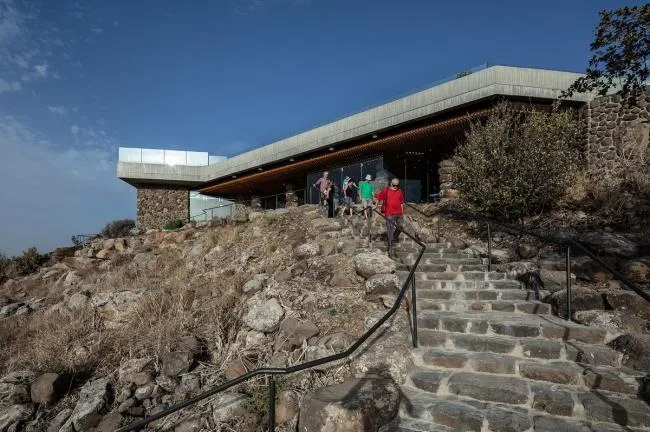
The concept for this project was introduced late in the site planning process. Serving as the site’s entrance, the visitor center manages visitor flow, provides essential services, and offers a preview of the site. This makes the visitor center a crucial part of the overall tourism complex.
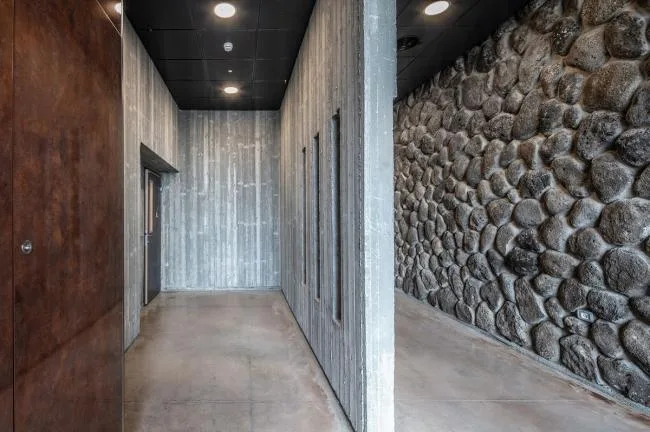
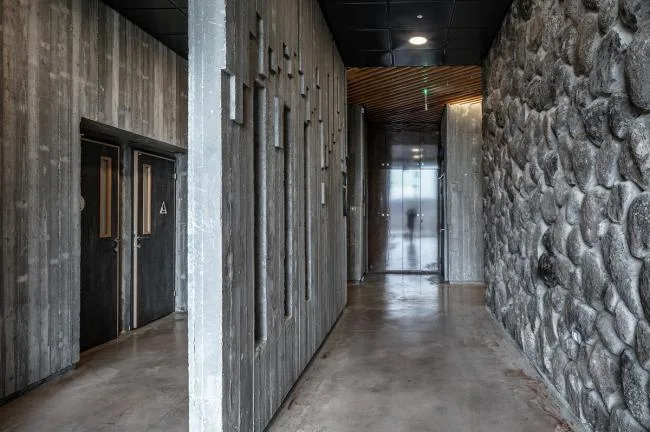
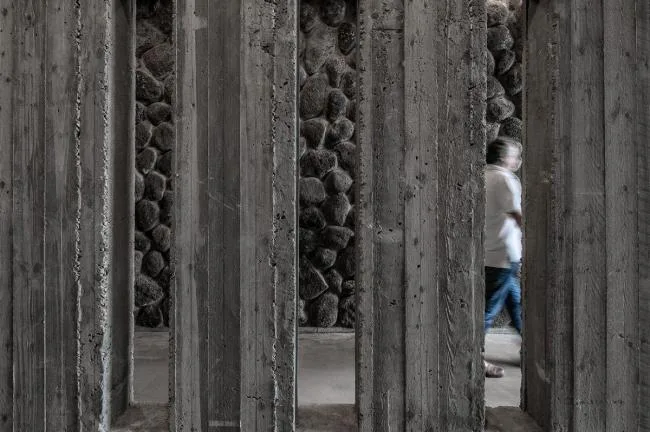
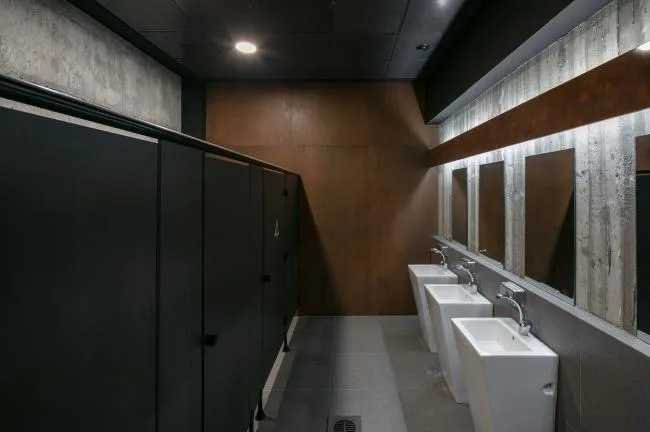
The design balances elements such as wild nature, terrain, geology, dramatic landscapes, historical narratives, and key attractions, all requiring a structure that mediates and harmonizes these features. The main challenge was to integrate these elements while preserving the authenticity of the original site as much as possible.
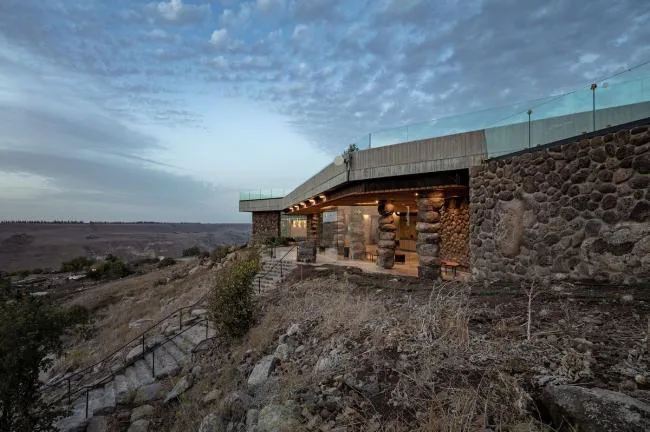
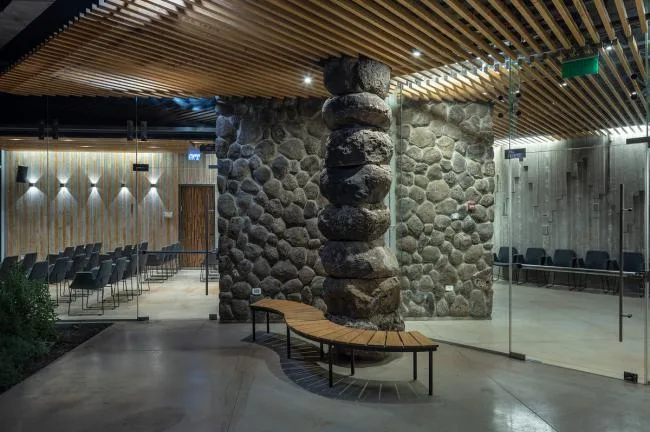
Unlike typical projects that start with horizontal functional layouts, this design began with vertical sectional planning. The new space is embedded within the site’s terrain, featuring only a transparent western facade. From inside, visitors enjoy unobstructed views of the main outdoor attractions without competing with the existing landmarks.
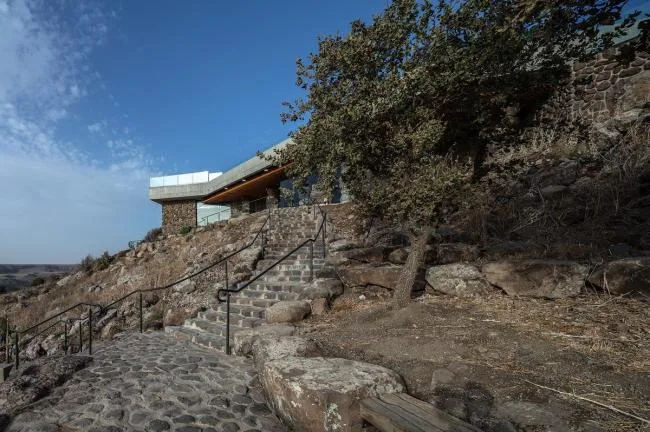
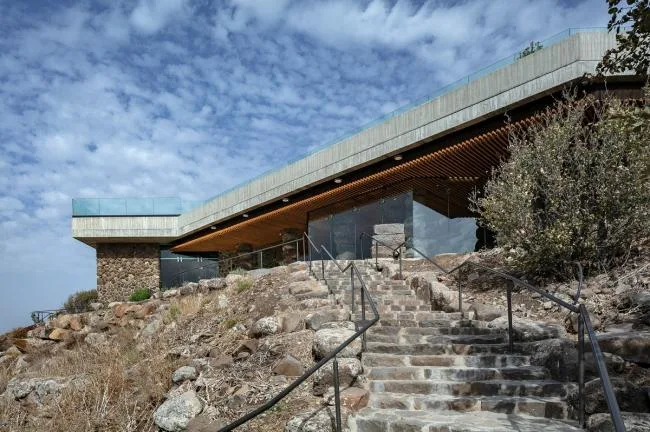
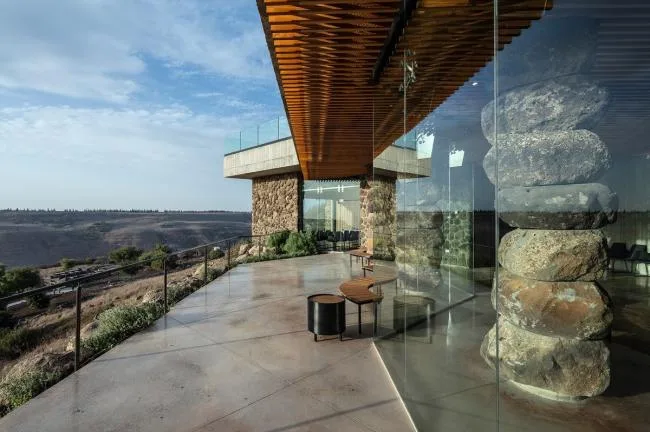
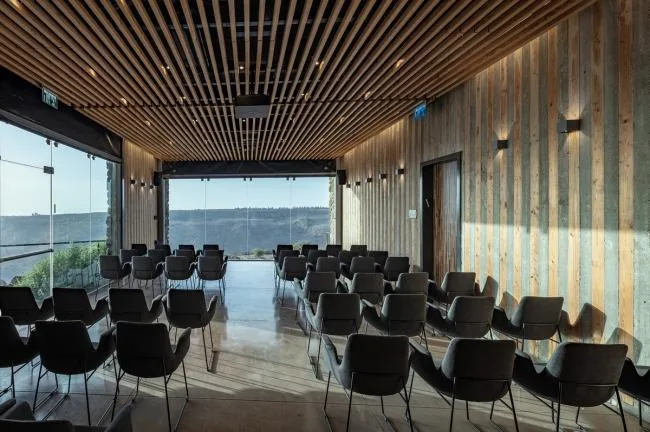
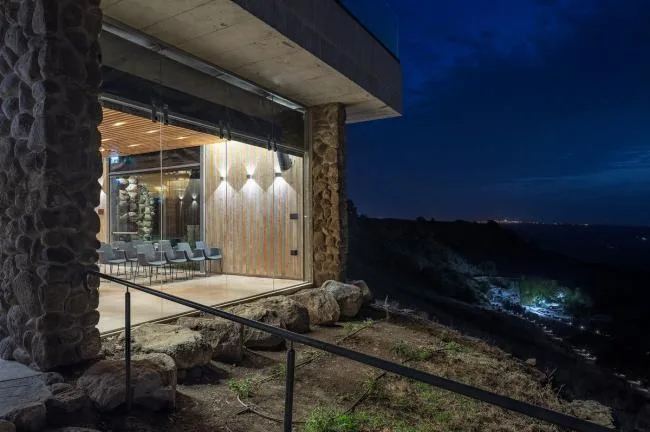
The western facade combines transparency with an opaque, lightweight volume, offering visitors panoramic views. It is divided by a frame created by a row of massive columns made from local basalt. These columns serve as structural supports, crafted with unique techniques.
The glass curtain wall wraps around the space between these giant pillars, allowing visitors to walk between the stone frames and the glass walls, experiencing the landscape through the columns. When weather conditions limit indoor access, the entrance area provides an introductory space where visitors can engage with the ancient synagogue’s arched structure through audiovisual guides.
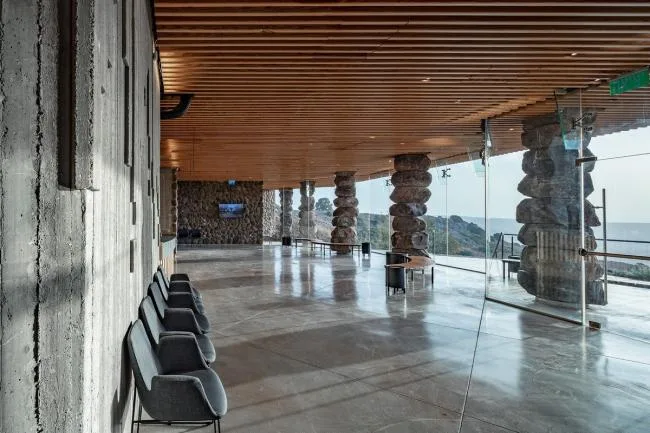
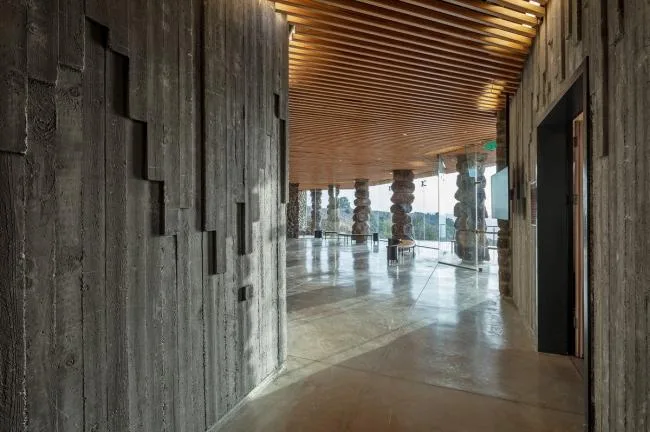
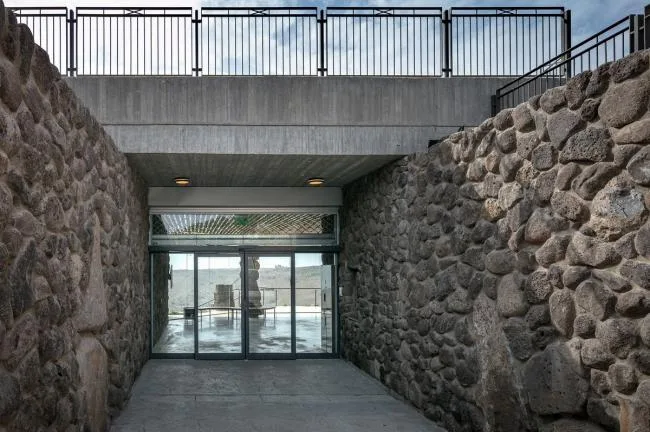
If the glass curtain wall is like an eye overlooking the mountains, then the wooden ceiling above resembles eyelashes, softly filtering light into the interior space. Materials such as exposed concrete, basalt, and corroded steel plates were selected to integrate the structure with its natural surroundings, emphasizing the region’s character.
The raw textures of these materials create a cool, quiet atmosphere that evokes the essence of ancient ruins in dim light. The visitor’s journey begins and ends here. People return to the central hall from various directions, reflecting on their experience before dispersing through the “tunnel” that leads back to the open Golan Heights.
Design Drawings:
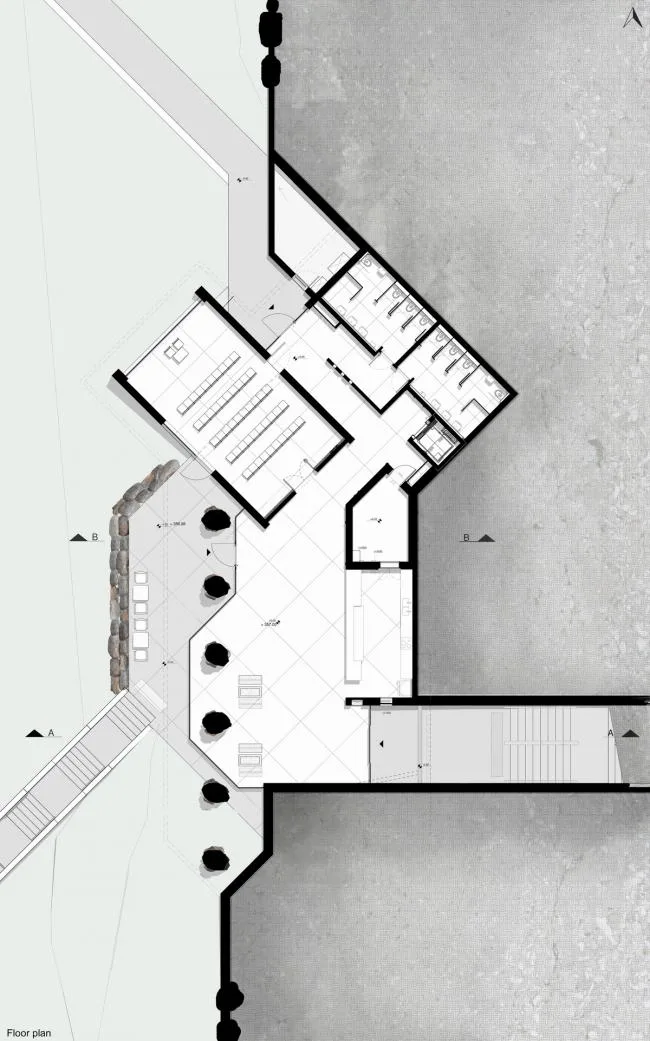
Floor Plan
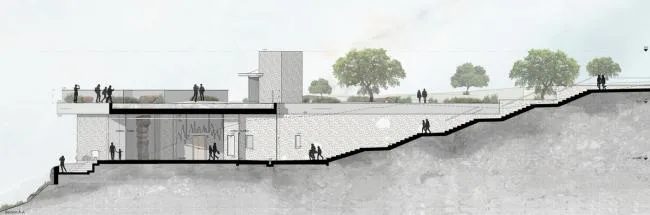
Section A
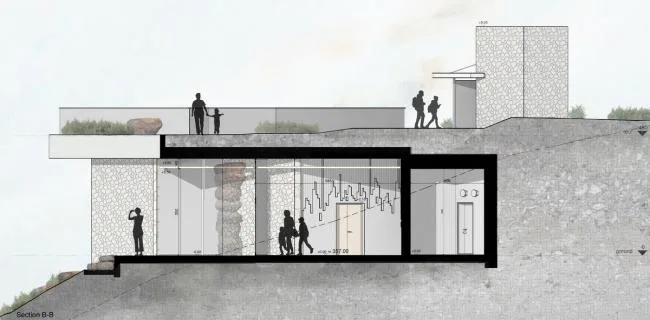
Section B
Project Information:
Architect: Raz Architects
Location: Unnamed Road, Natur, The Golan Heights, Israel
Category: Renovation Project
Building Area: 400 m²
Year: 2018
Photographer: Uzi Porat
Manufacturer: Autodesk
Engineer: Alroy Yonatan
Archaeological Restoration: Yeshu Dray
Landscape Architect: Har Gil Landscape Architects
Building Management: Mark Bendit Eng
Contractor: Ronir Construction Company
Owner: Golan Regional Council












Must log in before commenting!
Sign Up