
01Has prefabricated building been validated?
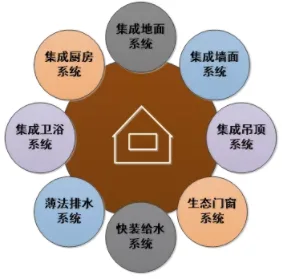
Prefabricated building represents the physical embodiment of industrialized construction. It involves assembling factory-produced components on-site to create a complete structure. This process encompasses standardized design, factory production, prefabricated assembly, integrated finishing, information management, and intelligent applications. Prefabricated buildings offer numerous advantages, including consistent quality, low energy consumption and pollution, high production efficiency, reduced safety risks, lower labor intensity, and improved working conditions.
Evidence from national standards and manuals—such as “Design Examples of Prefabricated Concrete Structure Residential Buildings”, “Representation Methods and Examples of Prefabricated Concrete Structures”, and various design atlases—combined with extensive practical projects both domestically and internationally, demonstrate that prefabricated buildings are safe and reliable structures that have undergone thorough validation.
02Are quality and safety guaranteed?
Prefabricated building technology is mature and dependable. During the design phase, various computational models are simulated, accompanied by comprehensive physical testing. Experience from numerous projects worldwide confirms that prefab buildings meet rigorous quality and safety standards. Factory production of components allows for superior quality control compared to traditional on-site cast-in-place construction.
What about seismic resistance?
Currently, the seismic performance of prefabricated buildings in China is generally on par with, and sometimes exceeds, that of cast-in-place structures.
A key factor in earthquake resilience is the connection technology at prefabricated joints. The predominant method is the grouting sleeve connection, where sleeves are embedded into components and steel bars are joined on-site using high-strength grout.
This technique has been extensively tested since the last century in countries like Japan and the United States, including stress-strain analyses and cyclic fatigue tests. It has proven safe even in strong earthquakes, allowing for confident use in high-rise buildings. Additionally, seismic isolation measures can further enhance the earthquake resistance of prefabricated structures.
04Why promote prefabricated construction?
With China’s growing population and pressing environmental concerns, the construction industry must adopt industrialized methods that conserve resources, save energy, and reduce pollution. Prefabricated buildings are a primary solution in this regard.
Advancements in materials and technology have addressed previous challenges such as seismic resistance, water leakage, and cracking. The cost gap between prefabricated and traditional cast-in-place methods is narrowing. Moreover, standardized design, factory production, assembly construction, and integrated finishing improve project quality and safety, boost efficiency, and shorten construction time.
This approach reduces resource and energy consumption as well as construction waste, dust, and noise pollution, representing a significant improvement over traditional brick and concrete housing.
05How effective is sound insulation in prefabricated buildings?
Interior partitions in prefabricated buildings commonly consist of lightweight concrete panels, light steel keel partitions, or other lightweight materials. These partitions are lightweight, strong, fire-resistant, versatile, and easy to install.
They provide earthquake resistance, dust prevention, sound insulation, sound absorption, and temperature regulation. Additionally, they boast short construction periods, straightforward installation, and resistance to deformation.
Lightweight concrete partitions, made from lightweight concrete strips or products, inherently offer excellent sound insulation. Light steel keel partitions typically include soundproofing materials like rock wool or insulation boards within the structure, meeting national sound insulation standards.
06Are there issues with frost heave, corrosion, or leakage at assembly joints?
Prefabricated buildings address water leakage through a combination of structural and material waterproofing techniques:
- Self-waterproofing via vertical joint cast-in-place concrete pouring ensures structural integrity against water ingress.
- Waterproof construction includes horizontal seam anti-threshold structures designed to prevent water from entering interiors.
- Material waterproofing employs improved silicone adhesive at exterior wall joints to seal against moisture.
Factory-produced exterior wall panels maintain dimensional tolerances within 2 millimeters for door and window openings, allowing precise installation and seamless integration with factory-manufactured insulated windows. This enhances insulation and effectively eliminates external window leakage issues.
07Are prefabricated buildings more expensive?
The cost of prefabricated construction varies compared to traditional cast-in-place methods, depending on factors such as structural design, technical systems, seismic requirements, prefabrication rates, management quality, and project scale. Therefore, it is inaccurate to categorically state whether prefabricated buildings cost more or less.
Increased costs typically stem from factory-produced components, transportation, on-site installation and hoisting, heavy machinery rental, and joint treatment materials. Conversely, savings arise from reduced on-site masonry, plastering labor, and formwork expenses, since steel reinforcement and concrete work occur off-site in controlled factory settings.
Overall, prefabricated and cast-in-place methods differ significantly in construction techniques, processes, project management, and their economic, social, and environmental impacts. Thus, simple cost comparisons do not capture the full picture.
08How are prefabricated buildings developing internationally?
Abroad, rising timber prices have spurred the rise of cold-formed thin-walled steel structures as a new building system. This method has become a leading residential construction technique in developed countries such as the United States, Japan, and Australia.
Design, production, and installation processes for cold-formed steel structures are well developed, supported by dedicated software that enables rapid design, drafting, quantity estimation, and cost calculation. These systems have achieved high levels of industrialization and standardization, demonstrating strong prospects for widespread adoption.
09Can prefabricated buildings be constructed in rural areas?
Prefabricated buildings offer significant advantages in rural contexts due to their high mechanization and factory precision, resulting in efficient production and high-quality components. On-site assembly typically takes only a day or two, substantially reducing labor demands—a critical benefit given rising labor costs.
Various building systems—such as light steel, steel-wood hybrids, and precast concrete—are being introduced in rural China. Provided costs are managed effectively, prefabricated construction is poised to become the future standard for rural housing.
10Are prefabricated buildings suitable for affordable housing?
Affordable housing projects, often government-funded, demand high quality. Prefabricated buildings meet these requirements effectively. Large-scale affordable housing developments benefit from high standardization and repeated layouts, enabling mass production of identical components and improved cost efficiency.
As a result, affordable housing initiatives are a primary driver of prefabricated building adoption in many regions.













Must log in before commenting!
Sign Up