
To advance the development of prefabricated buildings toward intelligent construction, this article explores how such buildings can implement green design using a BIM platform and data integration. The construction process can incorporate collision detection, detailed design, progress simulation, supervision control systems, and BIM combined with various technologies. By leveraging a BIM collaborative platform, projects can connect different stages and facilitate information exchange among stakeholders, achieving intelligent project management. This article analyzes three real projects from Xiamen as case studies. Research indicates that BIM technology is a powerful tool for realizing intelligent construction in prefabricated buildings.
Keywords: Smart Construction; Prefabricated Buildings; BIM Technology; Green Building; Intelligentization
Introduction
In 2017, the Ministry of Housing and Urban-Rural Development and the General Office of the State Council issued policies emphasizing the promotion of BIM technology, green development in prefabricated buildings, and enhanced scientific management across the construction project life cycle—referred to as smart construction. Yang Baoming introduced the concept of “smart construction,” which we define as an integrated process combining greening and intelligence in construction.
Several developed countries have explored green building evaluation systems, certification methods, and policies tailored to their national contexts. China has issued the “Green Building Evaluation Standard GB/T50378-2014,” focusing on energy, resource efficiency, and building characteristics. Researchers like Liu Dandan have proposed BIM software collaboration to optimize project design and construction plans while Wang Ailan simulated CSI components with BIM to reduce rework and energy consumption. Further studies by Liu Pingping, Irizarry, and Porwal examine BIM’s role in supply chain information flow, while Wang Qiaowen and Hu Yanhong highlight BIM collaborative platforms for efficient multi-stage management. Peng Shuning analyzed BIM applications in prefabricated building construction during the China Construction Engineering BIM Competition, and Qi Baoku identified BIM application challenges based on the Pujiang Base Affordable Housing Project.
Overall, existing research mainly addresses achieving green buildings or optimizing prefabricated building construction through BIM. However, there remains a lack of studies on integrating green and intelligent smart construction based on BIM. Traditional prefabricated building methods face challenges such as complex component management, an incomplete construction industry chain, and bottlenecks in achieving “four savings and one environmental protection.” Consequently, exploring intelligent construction for prefabricated buildings is crucial. This article introduces BIM-enabled green building solutions and intelligent construction processes, supported by three BIM-based prefabricated building case analyses, offering valuable insights for smart construction.
1. Green Design of Prefabricated Buildings Based on BIM Technology
Green design is fundamental to advancing prefabricated buildings toward sustainability. The key is developing BIM platforms and generating comprehensive BIM data to support green design.
1.1. Building a BIM Green Platform
BIM spans the entire project lifecycle, including design, production, construction, operation, and maintenance. Greening prefabricated buildings requires a technical platform for scheme design, covering seismic analysis, building performance, energy consumption, visibility, evacuation, and comfort assessments. BIM enables importing 3D building models into green building design software to simulate sunlight, natural lighting, ventilation, noise control, indoor temperature, and humidity (see Figure 1), promoting sustainable prefabricated building design.
1.2. Rapid Data Generation Based on BIM
BIM’s complete, accurate data and visualization capabilities provide integrated solutions for green modular design. Designers can quickly extract 3D models needed for green analysis, including geometry, cost, schedule, and other data, enabling faster, more precise green design decisions. By incorporating local climate and geographical information early in projects, BIM supports rapid consideration of green building components. For example, in reference __AI_S_SC_0_, a prefabricated building lighting analysis was conducted using BIM software (Revit). A typical functional room was modeled, defining an indoor working plane as a 13×10 point matrix. Illuminance was calculated for eight representative sunny days, including June 22nd, revealing natural lighting distribution patterns. Such simulations closely replicate real environments, providing data to inform green design and daylighting strategies.
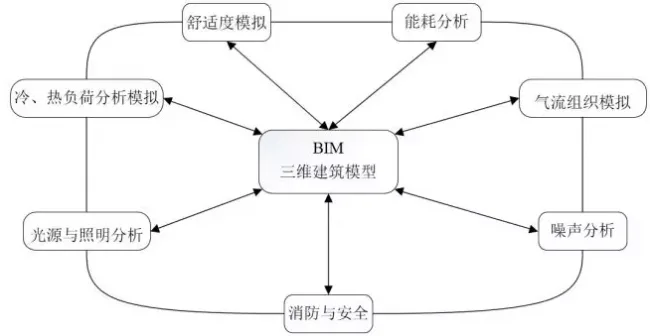
Figure 1: Simulation Method for Green Design of Prefabricated Buildings
2. Intelligent Construction of Prefabricated Buildings Based on BIM Technology
With advancements in computer technology, prefabricated building construction has evolved from manual to keyboard to integrated ages. BIM effectively consolidates data across disciplines, stages, and stakeholders throughout the project lifecycle, transforming traditional construction models into BIM-based integrated models (see Figure 2) to achieve intelligent management. Key technologies include:
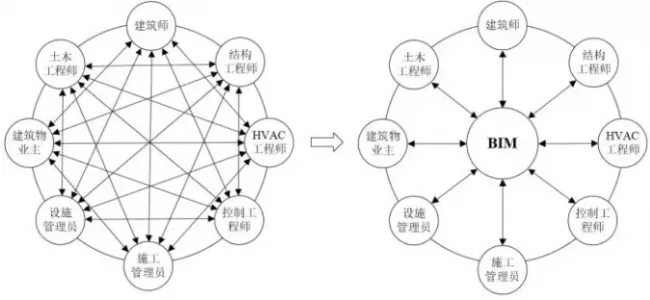
(a) Traditional project construction mode (b) BIM-based integrated mode
Figure 2: Evolution from Traditional to BIM-Based Integrated Construction
2.1. Design Scheme Optimization
Collision Detection: BIM models for various specialties (building, structure, plumbing, electrical, site) enable comprehensive collision checks: hard collisions within the same specialty, soft collisions between specialties, and dynamic collisions during lifting operations. Following a “detect → optimize → re-detect” cycle, the design and construction plans are continuously refined to ensure smooth prefabricated construction.
Deepening Design: Deepening design links closely with design, production, and installation stages. BIM visualization enhances overall design efficiency by constructing detailed 3D models incorporating steel bars, mechanical/electrical pipelines, reserved holes, and embedded parts. Collision detection, quantity calculations, and 3D printing support component production. During construction, integrating cast-in-place nodes with prefabricated models allows advance simulation of on-site assembly, minimizing conflicts.
2.2. Construction Progress Optimization
BIM tools like BIM5D and Navisworks enable 4D construction models integrating schedule data to simulate and optimize construction organization. Real-time tracking of schedule and resource deviations allows continuous adjustment of plans, enhancing factory and site progress while maintaining quality. BIM also supports on-site installation guidance for complex node support, lifting, and embedding operations.
2.3. Supervision Control System
Supervision of prefabricated buildings often faces issues such as redundant or falsified data, outdated information, and inconsistent component acceptance, risking quality and safety. BIM addresses these challenges by enabling modular supervision and control systems based on comprehensive, accurate databases accessible to all key stakeholders. This facilitates dynamic project monitoring, visualization, and intelligent interaction, establishing a robust BIM-based supervision framework.
2.4. “BIM+” Technologies
- BIM + 3D Printing: Extracting complex BIM component models and using 3D printing offers a 360° view, assisting construction teams beyond traditional CAD drawings or electronic devices.
- BIM + Drones: Combining BIM with drones supports site layout, analysis, planning, earthwork scheduling, and road routing, accelerating progress, reducing costs, and improving site management and quality.
- BIM + Intelligent Monitoring: Monitoring personnel assign deformation data, analysis results, coordinates, and component info to BIM points, integrating IoT technologies like QR codes and RFID. On-site personnel can quickly access monitoring data via scanning.
- BIM + VR: Integrating BIM with virtual reality creates interactive design and visualization environments.
- BIM + RFID: Using RFID chips links BIM data with prefabricated component production, enabling intensive management across production, transportation, storage, lifting, and installation.
2.5. Collaborative Management
The core of intelligent construction lies in integrating the construction process through effective collaborative management. Despite widespread BIM adoption, without emphasis on collaboration, the integration of stages and participants is hindered, limiting intelligent construction benefits.
Integrating the prefabricated construction industry chain is a major challenge. Mature BIM collaborative management software like Guanglian Da BIM5D and ITWO5D support this by incorporating design, production, and installation considerations before component fabrication. Virtual construction via BIM models enables design coordination, production simulation, and installation rehearsal, identifying and resolving issues early. During actual production and installation, information tracking and automation combined with Internet connectivity and CNC machinery enhance accuracy in manufacturing and assembly (see Figure 3).
Additionally, managing complex information exchange among numerous participants is challenging. Integrating BIM databases based on IFC standards, visual editing platforms, and specialized BIM applications into collaborative software, supported by cloud technology, enables structured permission management and standardized data access. This ensures smooth, accurate, and timely information sharing.
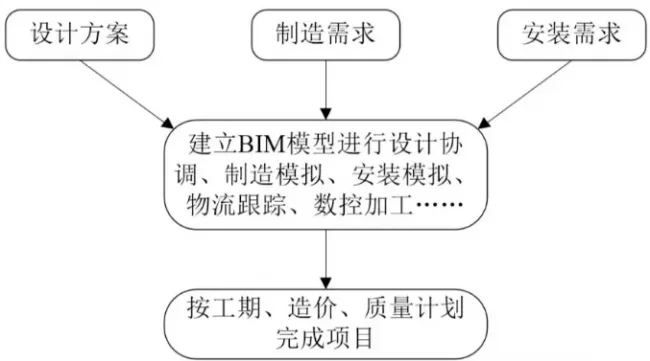
Figure 3: BIM Application Process in Projects
3. Case Analyses
3.1. Prefabricated Curtain Wall – Xiamen Tianyuzhou Radar Project
The project in Xiamen City, Fujian Province, features a building over 400 meters tall, covering around 100,000 square meters, with an investment of 270 million yuan. It is one of Xiamen’s four major meteorological modernization projects. The design uses 550 types of hyperbolic panels to create complex ship-shaped forms. Figure 4 shows the positioning coordinates of GRC panels.
Based on BIM technology, a structural model matching the site was developed, with detailed curtain wall units ensuring accurate representation of complex shapes. Installation was simulated to resolve conflicts among curtain walls, civil engineering, and steel structures, ensuring smooth construction. Optimized curtain wall units enabled automated component lists, cost control through computer cutting and factory processing, and comprehensive information management from panel division to installation.
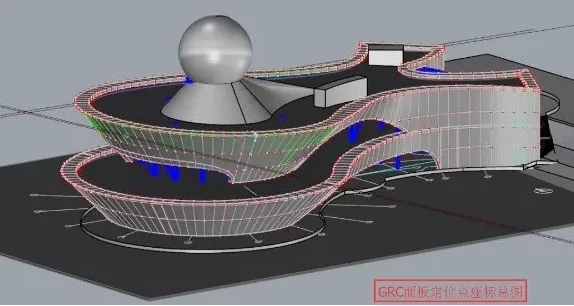
Figure 4: Overall Coordinate Diagram of GRC Panel Positioning Points
3.2. Prefabricated Splicing Caisson Intelligent Underground Parking Garage
To address parking shortages in old residential, commercial, office, and public transportation areas, Xiamen China Railway Science and Technology Construction Co., Ltd. developed a patented “prefabricated splicing caisson intelligent underground parking garage construction method” based on BIM. This method efficiently utilizes urban corner plots for parking garage development.
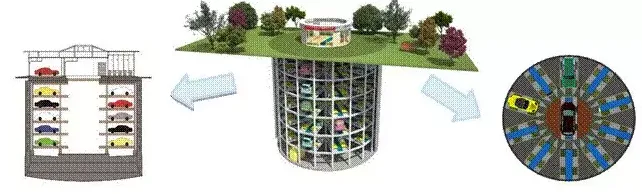
Figure 5: Prefabricated Splicing Caisson Intelligent Underground Parking Garage Layout
The garage consists of a cylinder with a parking gate pavilion on the first floor, and five underground parking levels, each housing 10 spaces, totaling 50 spaces. Using a fully prefabricated approach and BIM, design, disassembly, production, and lifting are integrated, achieving a 36% prefabrication rate.
At the center is parking equipment with translation, lifting, and 360° rotation capabilities. BIM combined with Internet technology integrates toll collection, access, handling, and control systems into a unified intelligent management platform connected to regional parking and dynamic traffic networks for real-time control.
Advantages include: 1) environmental friendliness with energy, material, and land savings; 2) short construction time with high safety; 3) compact footprint and adaptability; 4) advanced equipment and intelligent integration easing vehicle access.
3.3. Prefabricated Steel Structure – Xiamen Central Building
The Xiamen Central Building project covers approximately 610,000 square meters and includes four office buildings and two hotels connected structurally, with a maximum height of 163 meters. BIM technology was applied across civil engineering, steel structure, and MEP disciplines, featuring 21 core applications in seven major areas, earning the national BIM technology application first prize (see Figure 6).
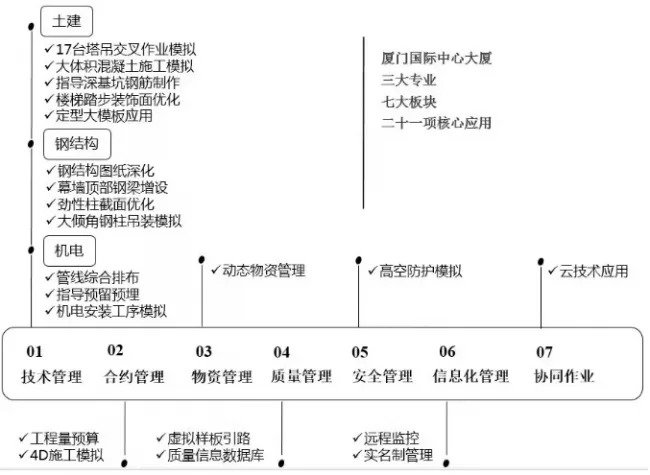
Figure 6: Core BIM Application Technologies for Xiamen Central Building
Design challenges and highlights include:
- Comprehensive pipeline layout: Using Revit, pipelines across specialties were coordinated to avoid collisions and ensure functional, aesthetic arrangements in spaces like pump rooms and corridors (see Figure 7a).
- Large-angle steel column hoisting simulation: BIM software created accurate 3D models for analysis and optimization, generating construction positioning maps for irregular components. MIDAS software simulated construction stages ensuring safety despite steel columns tilting outward up to 61° over multiple levels (see Figure 7b).
- Tower crane cross-operation simulation: BIM technology organized tower crane transportation capacities, avoided collisions among cranes, and achieved efficient operations (see Figure 7c).
- Dynamic material management: BIM integrated with scheduling exported dynamic material lists, enabling just-in-time procurement within defined progress intervals (see Figure 8).
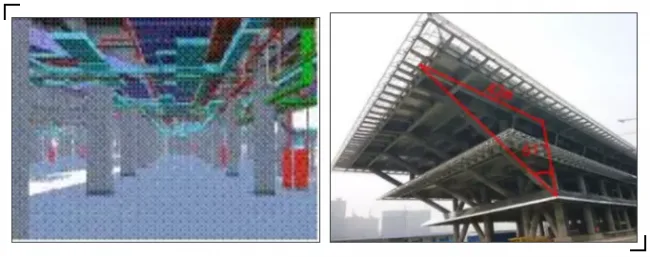
(a) BIM-based comprehensive pipeline layout (b) Large-angle steel columns
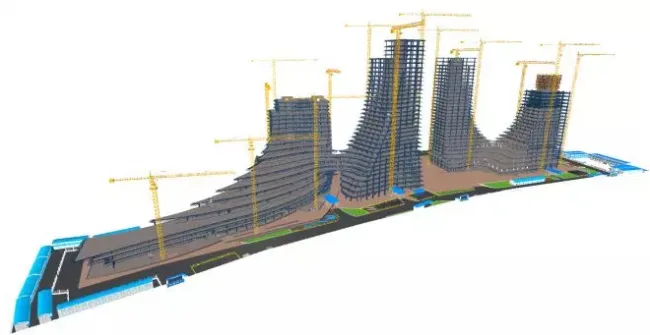
(c) Tower crane group operation
Figure 7: Highlights of BIM Technology Application
Figure 8: Dynamic Bill of Materials Based on BIM
4. Conclusion and Outlook
This article explores how prefabricated buildings can achieve smart construction through two main approaches:
- Utilizing BIM technology to implement green design, promote energy conservation and emissions reduction, maximize “four savings and one environmental protection,” and advance sustainable, low-carbon prefabricated buildings.
- Integrating and optimizing resources across stages and stakeholders on BIM collaborative platforms, enhancing fine management during construction, and fostering intelligent prefabricated building processes.
The integration of BIM with prefabricated buildings transcends simple 3D modeling or animations, marking a transformative construction approach. This development not only improves building quality but aligns with global construction industry trends. Although current BIM hardware, talent, and technology maturity still have room for growth, ongoing exploration, innovation, and theory-practice integration promise BIM as a key enabler for smart prefabricated building construction. The era of intelligent prefabricated construction is imminent.














Must log in before commenting!
Sign Up