
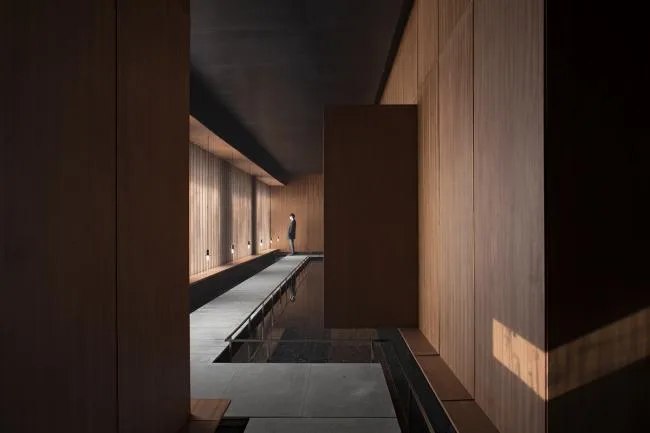
▲ Water Institute
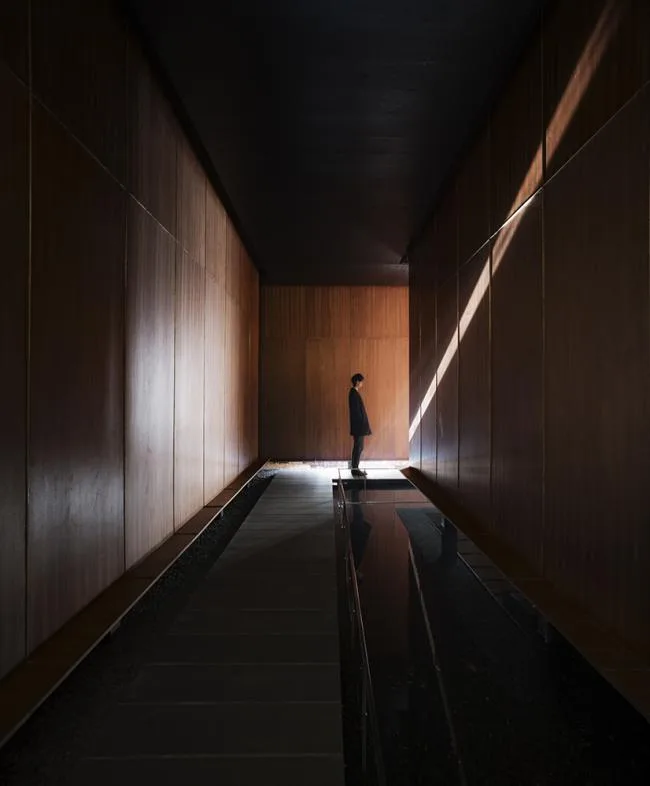
▲ Passageway in front of the water courtyard, divided by wooden veneer and brass
Located in the suburbs of Cangzhou, this newly built residential community borders a natural wetland. The owner aimed to transform several ground-floor shops from their original state into a meditation hall. This space regularly hosts meditation, yoga, flower arranging, and incense burning sessions, providing residents a retreat from the hectic pace of daily life to relax and visualize.
Despite the community’s proximity to a valuable wetland nature reserve, the residential area is separated from the wetland by a road. The meditation center is situated on the community’s busiest commercial street, facing an “artificial” landscape within the park. This spatial mismatch and contradiction became the foundation for the project’s design concept.
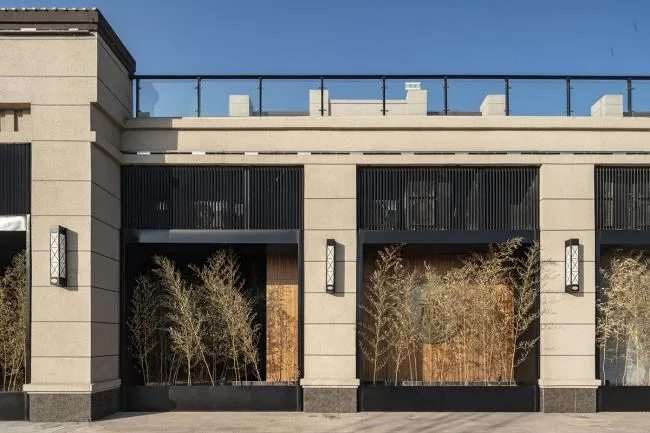
▲ Exterior facade
The continuous single-story shops along the commercial street provide an open rooftop terrace for the second-floor residents behind them. The six interconnected shops feature linear columns and beams. In terms of layout, the design accommodates rooms with various visualization functions as basic units to divide the space.
The dispersed volumes create continuous yet winding external public spaces — such as corridors and water courtyards — where the original structure is hidden. In contrast, the independent, tranquil internal visualization spaces (classrooms) expose the original structural elements.
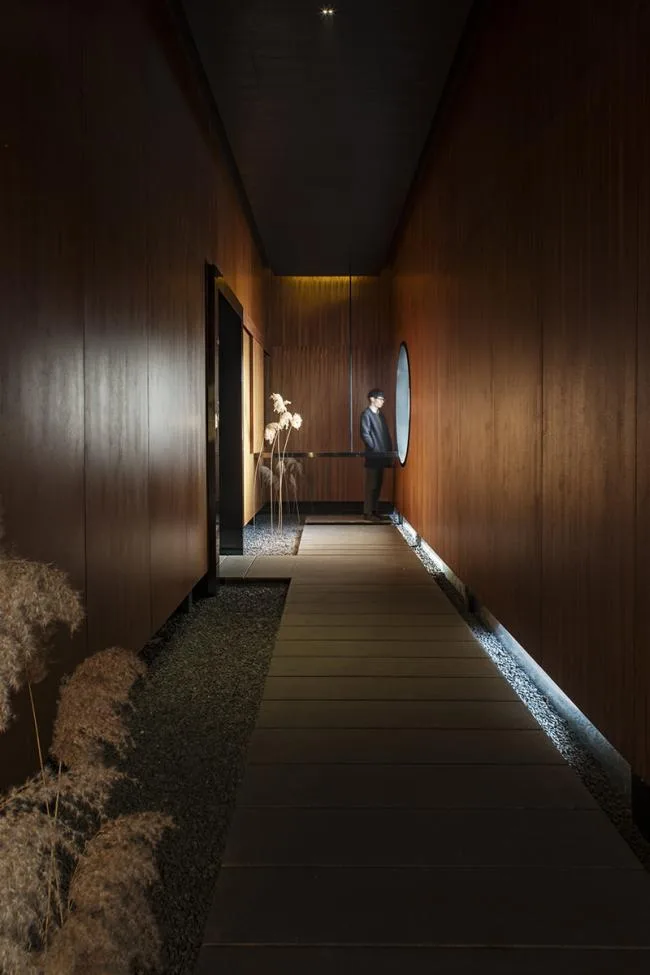
Within the “inner world,” each room serves a specific function: entrance hall, waiting area, changing room, main classroom, smaller classrooms, and restrooms, each tailored to their scale and character. The “external world” features a meandering linear path leading to the classrooms, serving as an introduction from the physical realm to the psychological.
▲ Front Desk
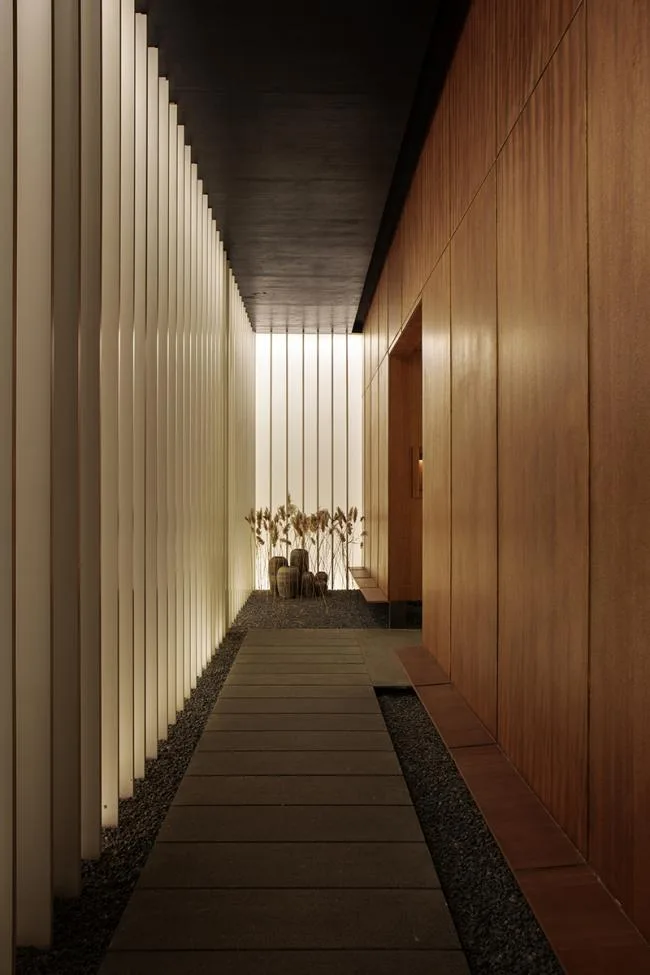
▲ Corridor
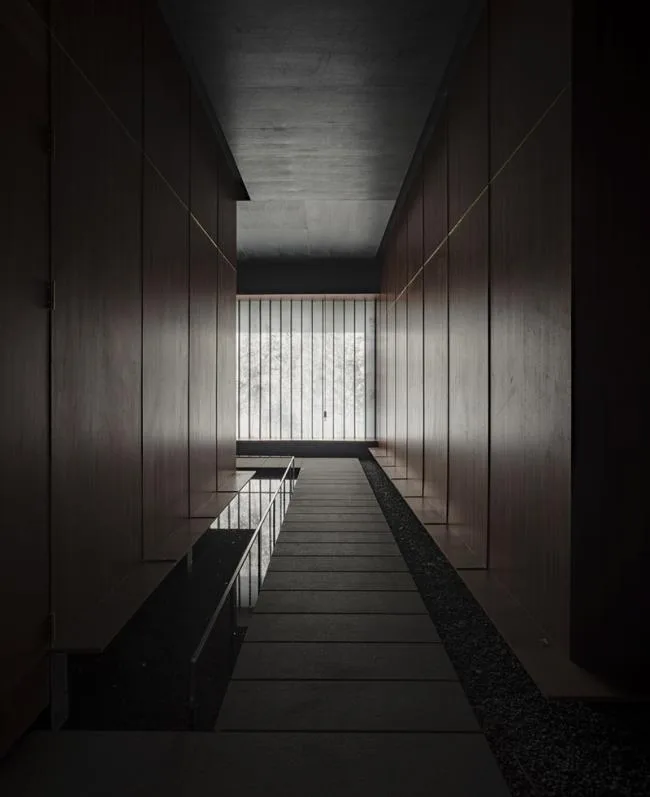
▲ Viewing bamboo shadows of Shuiyuan from the corridor
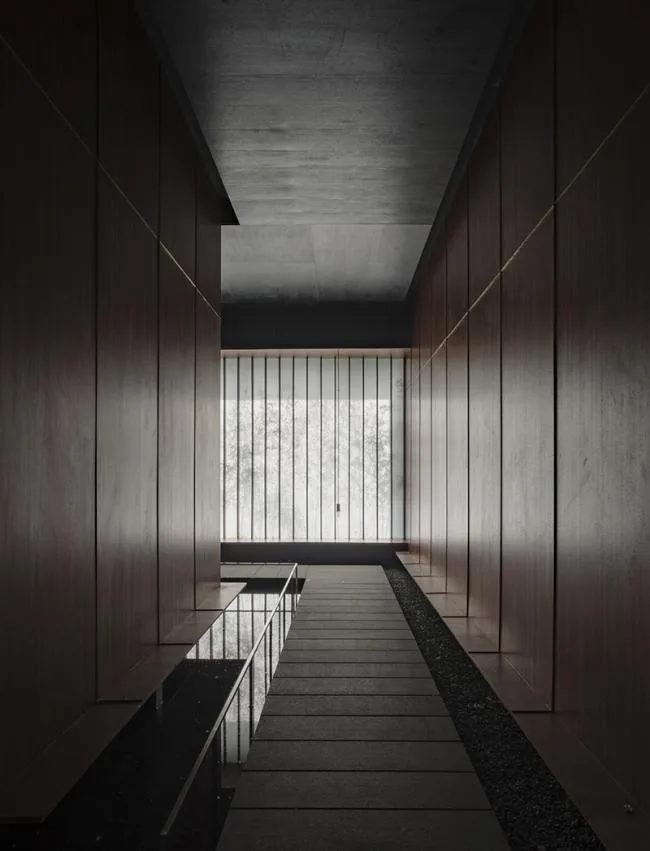
▲ View towards the water courtyard from the corridor
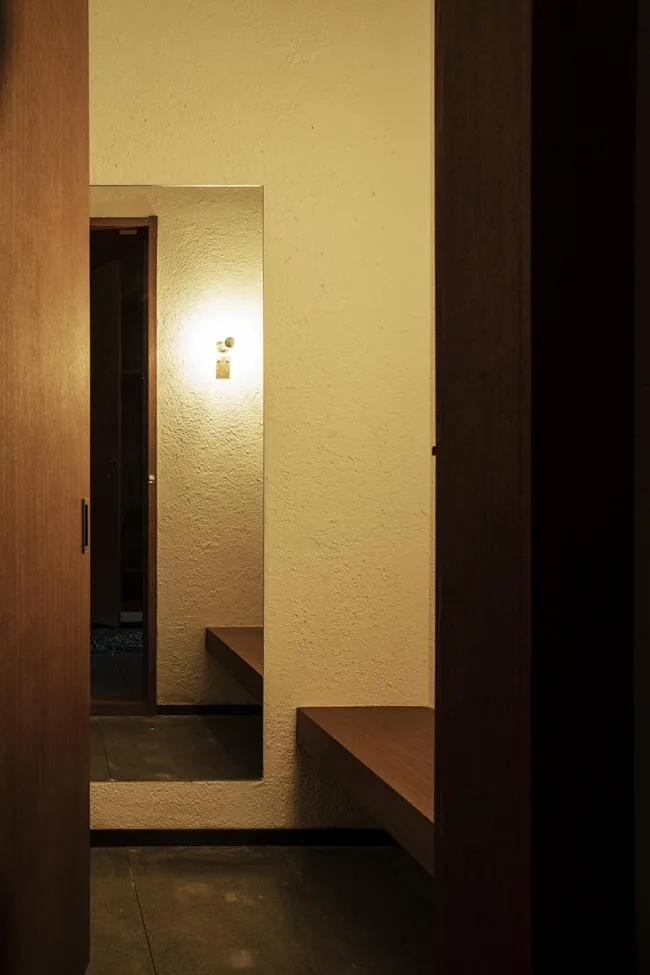
▲ Changing Room
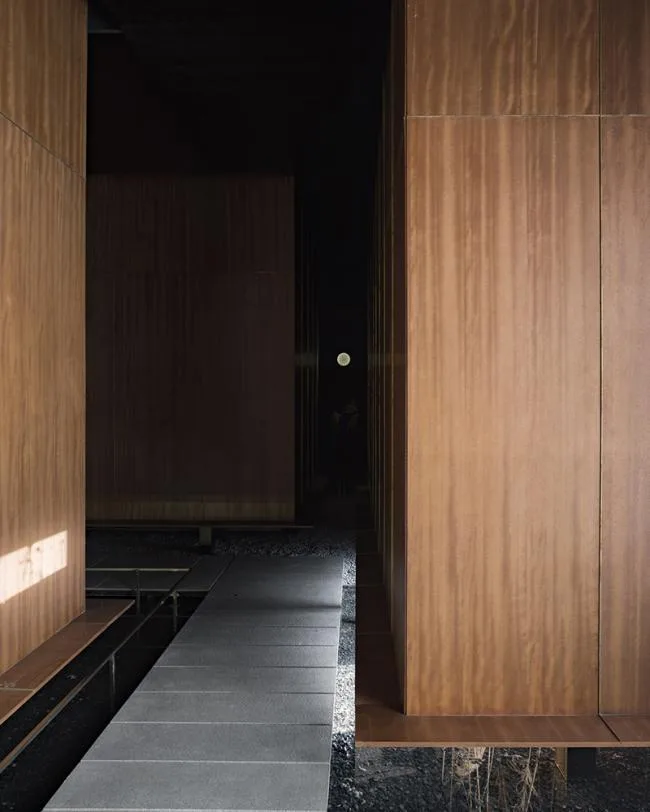
▲ (BIM Architecture) Eaves indicating direction
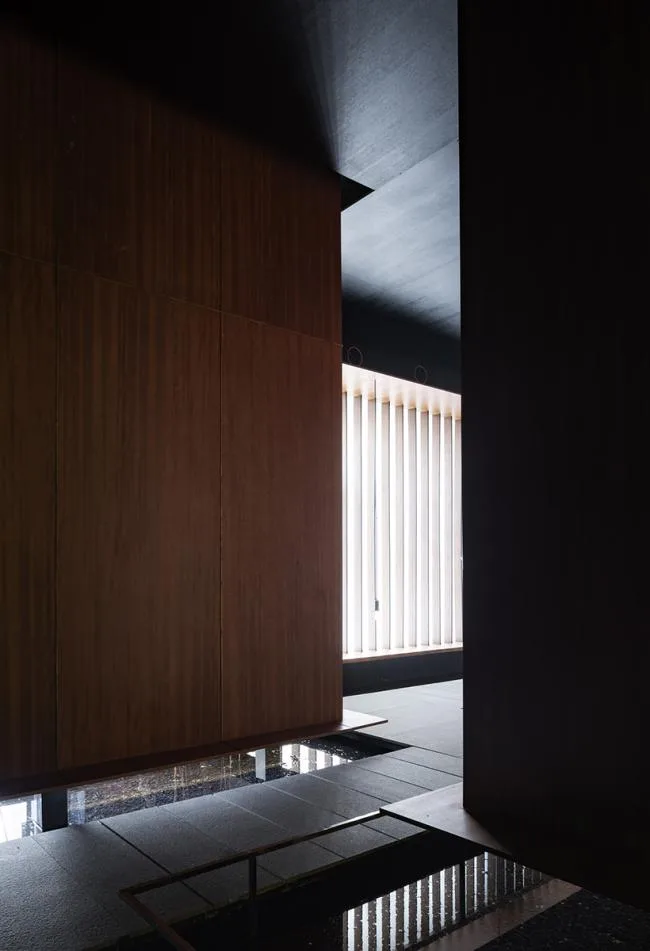
After several movements, arriving at the suddenly bright water courtyard
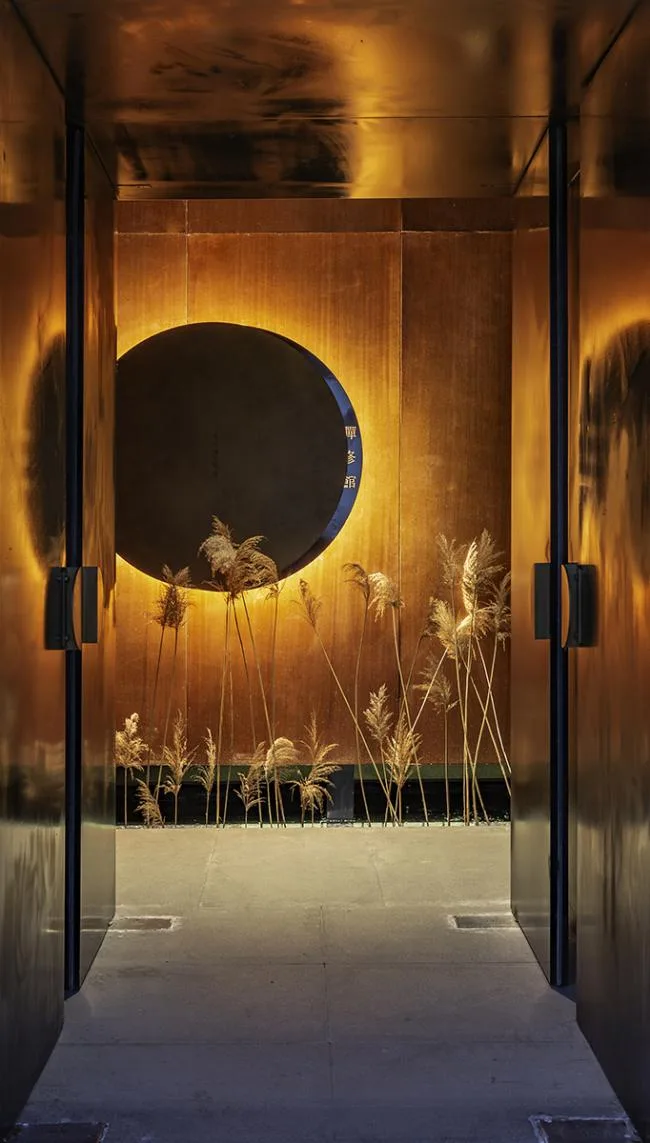
▲ Tunnel-like entrance and foyer
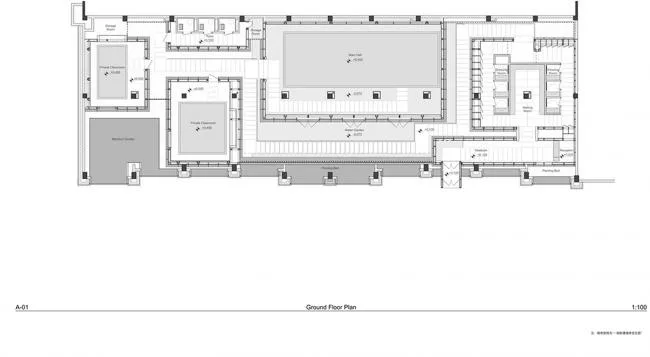
▲ First Floor Plan
The core spatial concept revolves around the relationship between “inside and outside,” established through the floor plan’s organization. The sectional design complements this by highlighting the spatial contrasts between these two realms.
A water feature flows through both interior and exterior spaces, reflecting light from the courtyard via horizontal openings. Inside the classroom, four concrete columns rise from the water, supporting lightweight wooden structures that appear to float on the surface. The entire meditation hall draws inspiration from archaeological wetland sites, creating a conceptual “wetland” landscape.
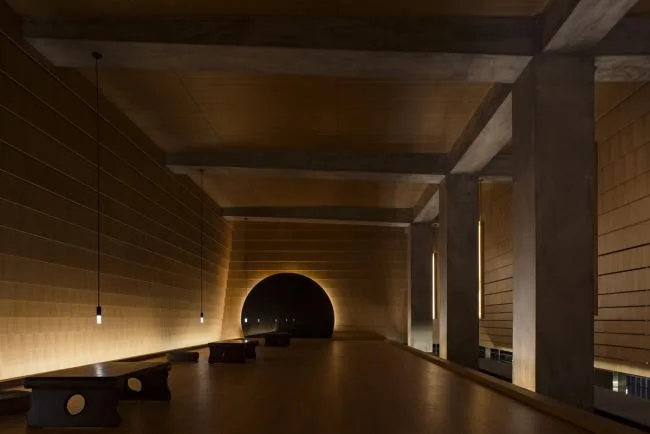
▲ Hall
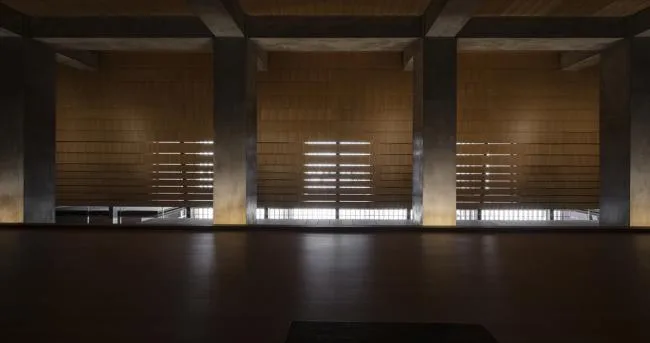
▲ Hall
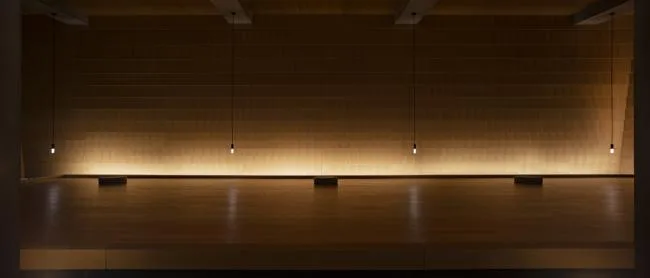
▲ Hall
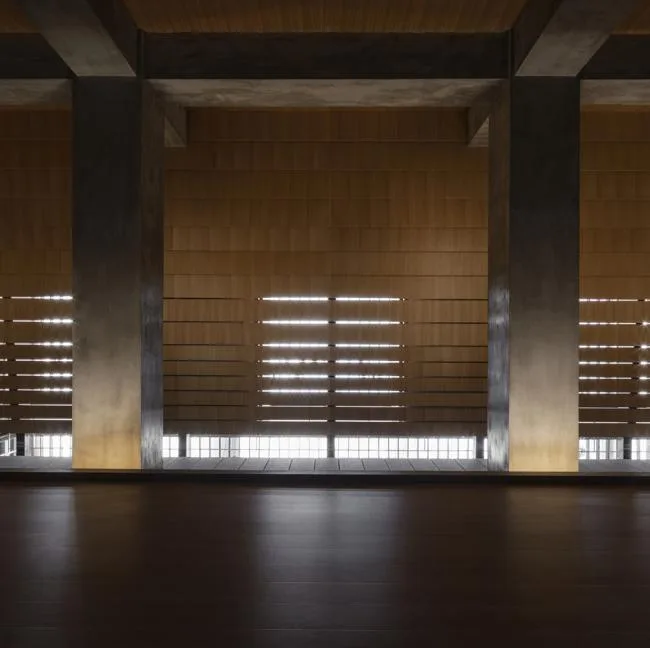
▲ Hall
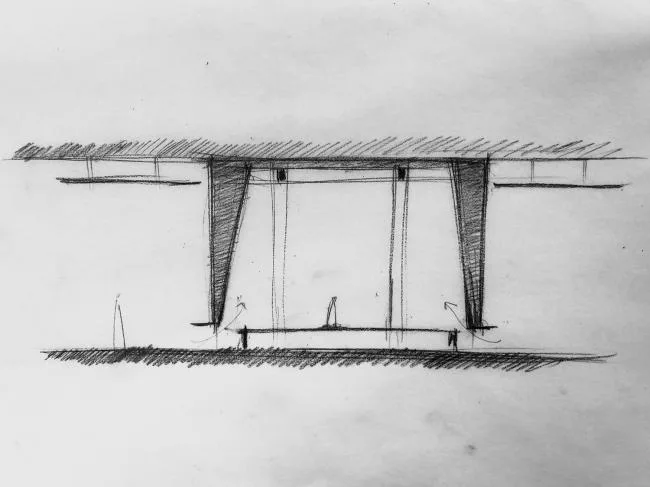
▲ Manuscript
The spatial organization focuses on creating an inward-looking environment. On the exterior facade, old doors and windows were removed and replaced with stainless steel window frames inserted between the original structural columns. These frames include grooves to accommodate outdoor air conditioning units and feature planters facing the commercial street, intentionally detached from the building’s original framework.
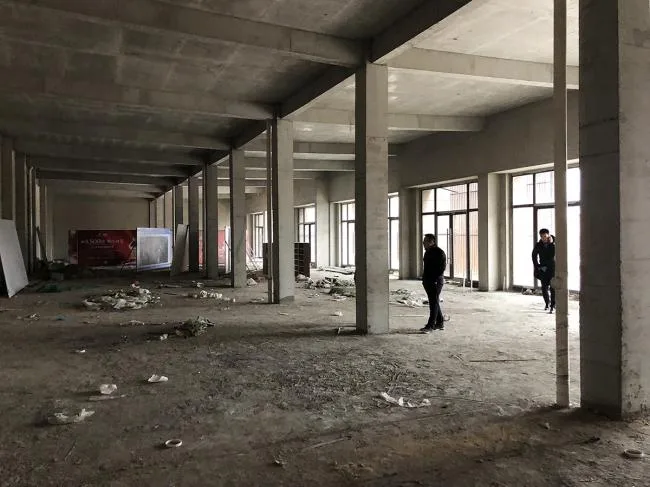
▲ Interior space before renovation
Transitioning from the bright, bustling commercial street into the indoor space, visitors gradually encounter the soft, natural light of the water courtyard. Their eyes adjust through a gradient of brightness—from bright to dim to bright again. With the harmonious interface treatments on both sides of the water courtyard, one experiences a sensory shift into an internalized “outdoor” space.
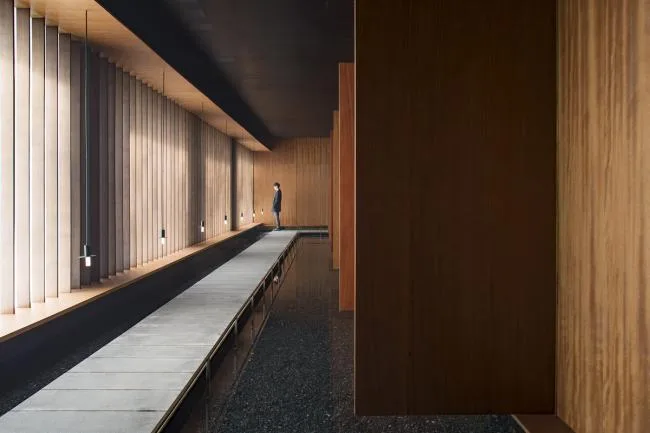
▲ Water Institute
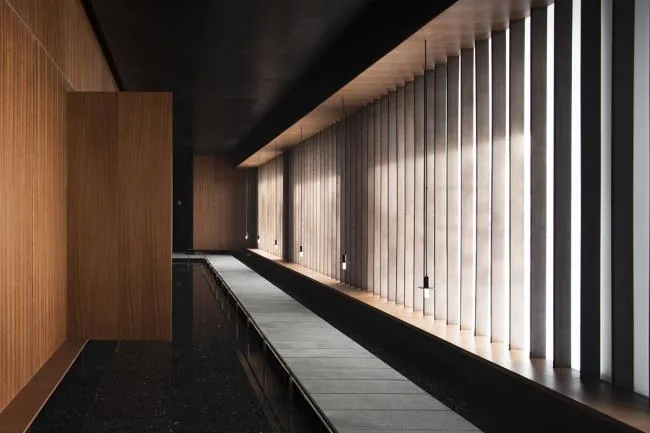
▲ Water Institute
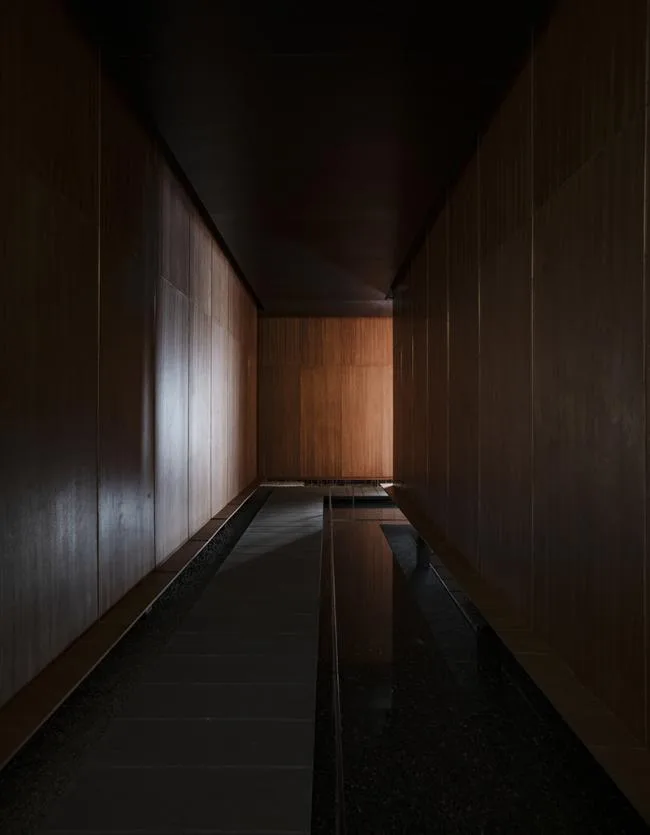
▲ Water Institute
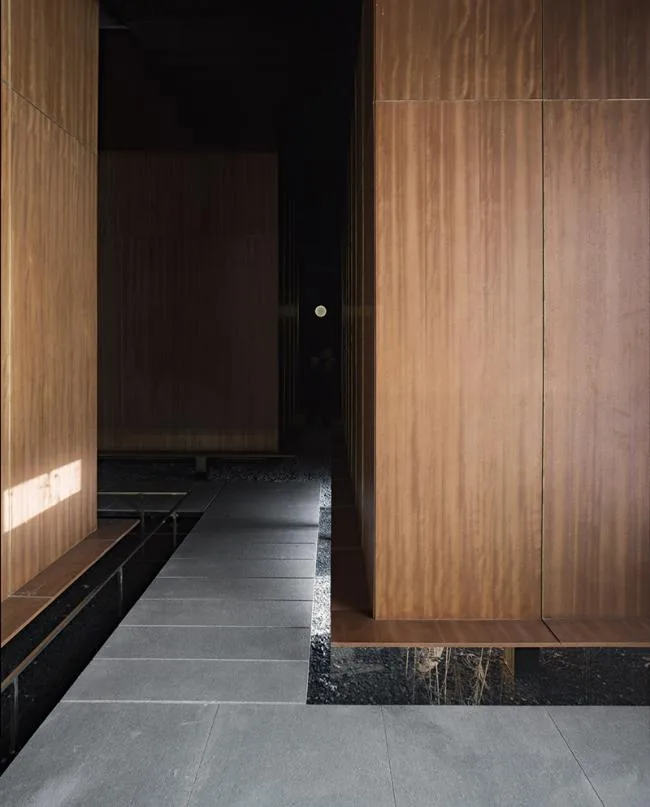
▲ Rear of the Water Institute
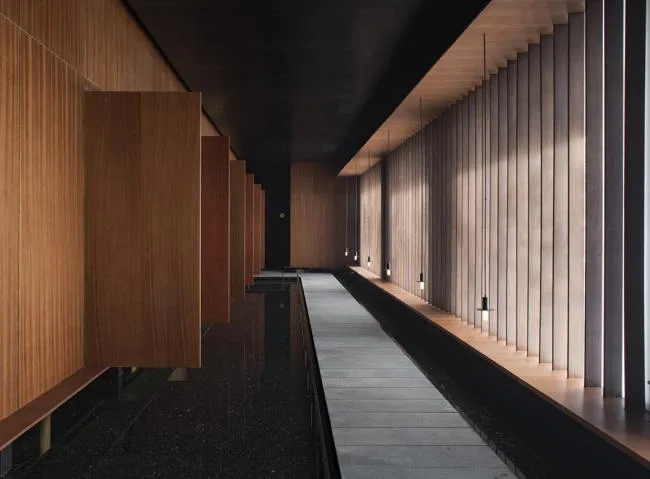
▲ Water Institute Review
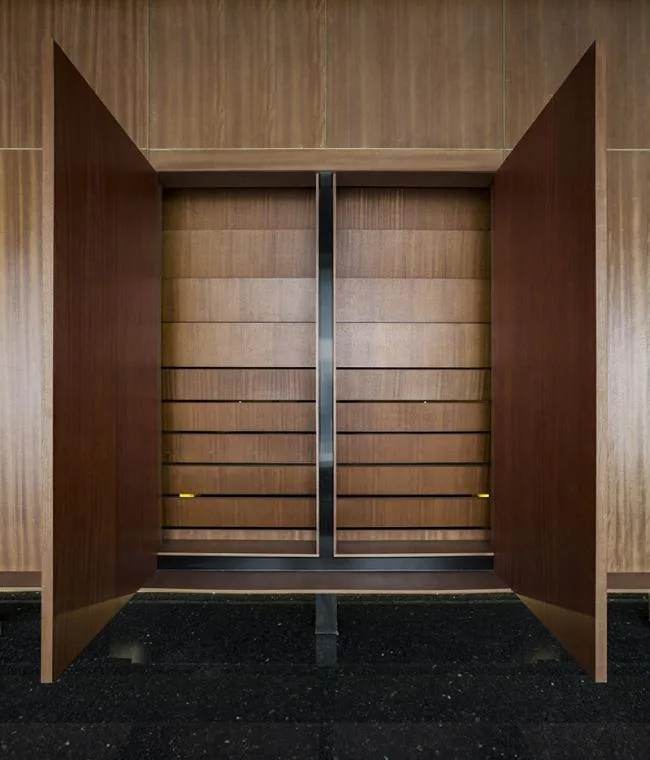
▲ View of the water courtyard towards the double-layered cavity in the door leaf
The unique placement of containers, columns, and beams gives each room a distinct personality, tailored to its intended visualization function. The main classroom, designed to accommodate multiple people, features four sets of column and beam sequences that give the space a “hall-like” atmosphere.
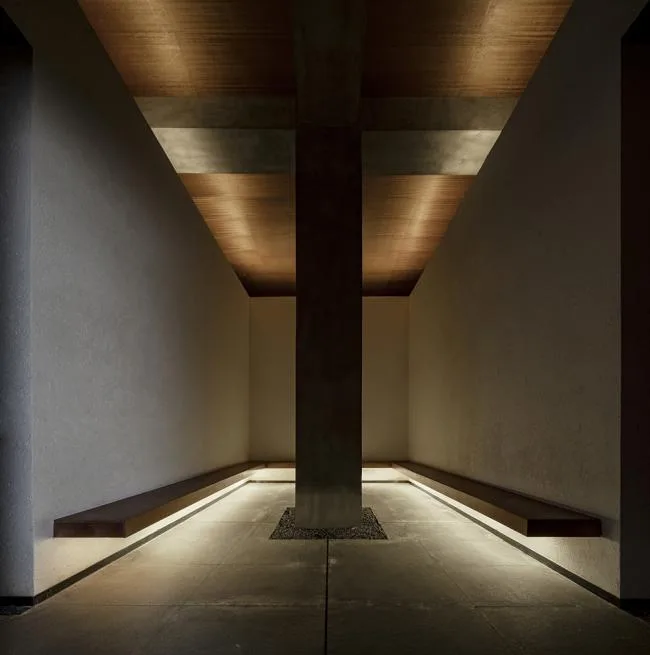
▲ Waiting room arranged around columns and beams
The classroom walls are constructed as double-layer chambers using light steel keels and lightweight wood. The inner cavity walls are inclined, while the outer walls remain vertical. The interfaces on both sides are supported above ground by horizontal eave components. Inside, horizontal wooden louvers are layered, hanging with the support of the columns and protruding beams, creating the impression of a “container” supported by sturdy columns and beams, seemingly floating above the ground and embracing the imaginary occupant.
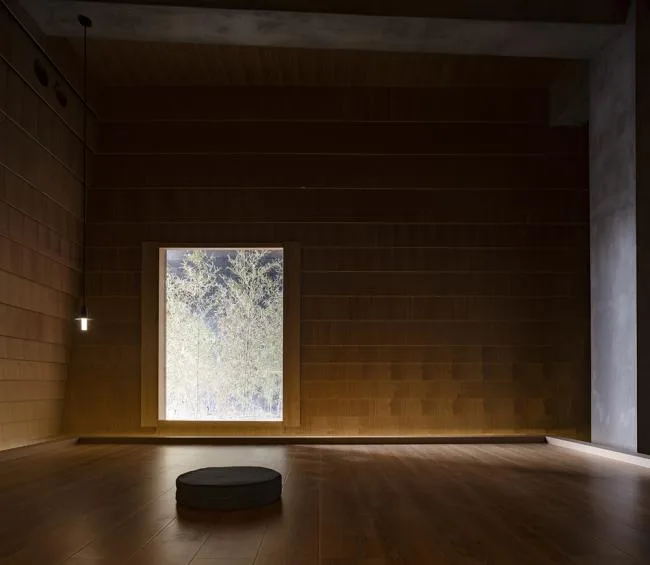
The solitary pillar and beam in the small classroom provide a physical companion for the individual observer
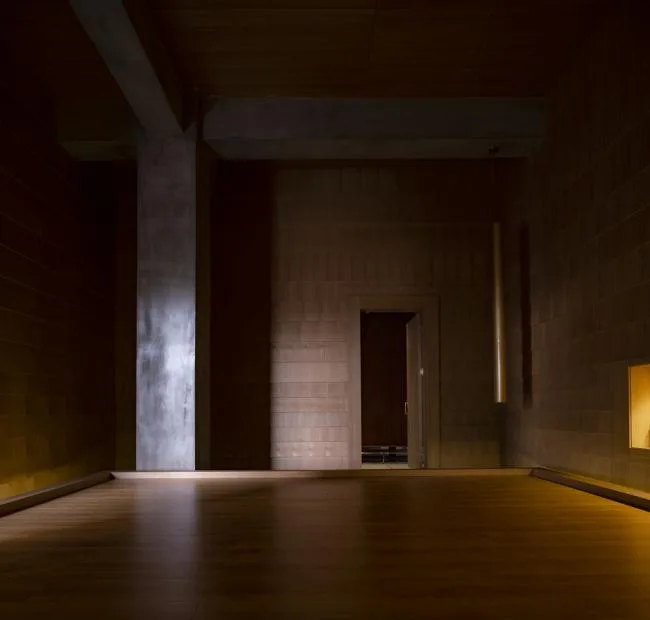
▲ Small Classroom, South
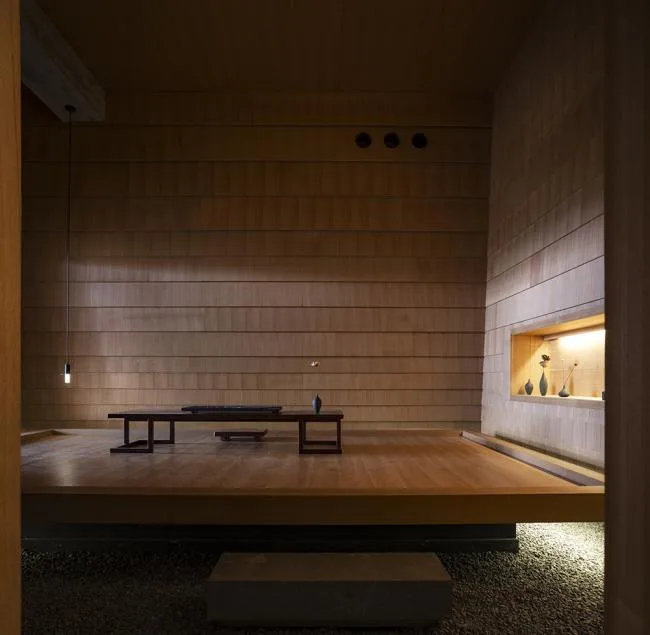
▲ Small Classroom, West
Project Drawings:
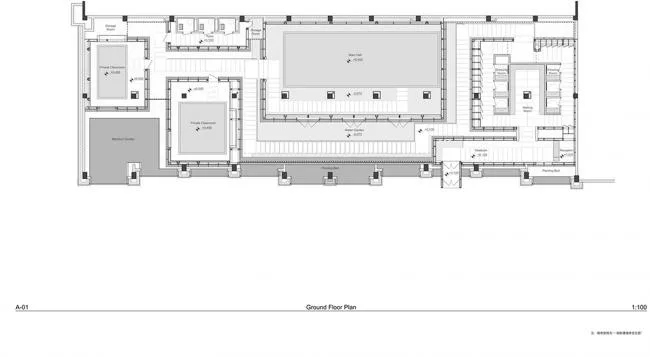
▲ First Floor Plan
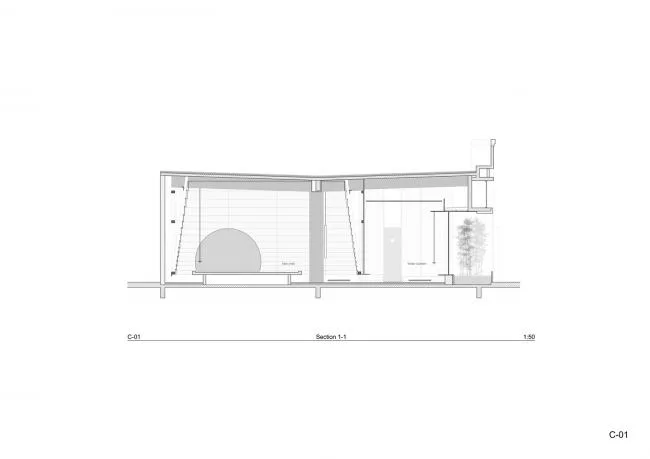
▲ Sectional View: Main Classroom, Water Institute Window Cover
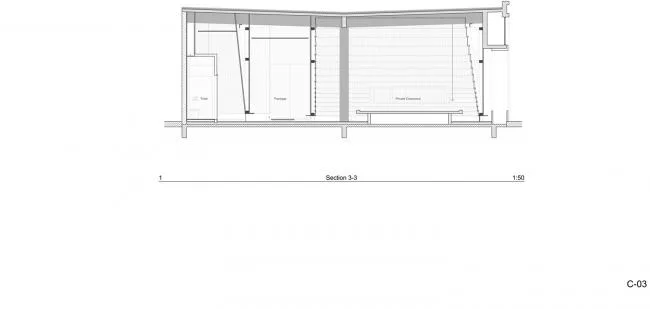
▲ Sectional View: Waiting Room, Changing Room, Corridor
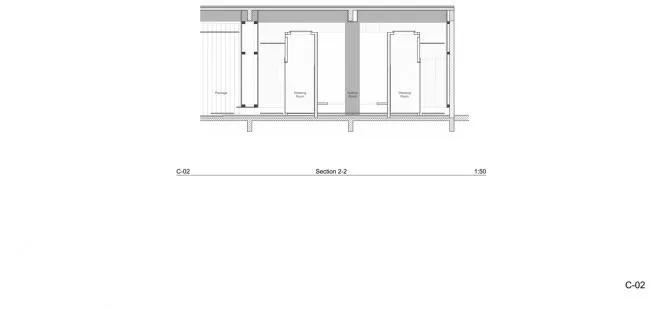
▲ Sectional View
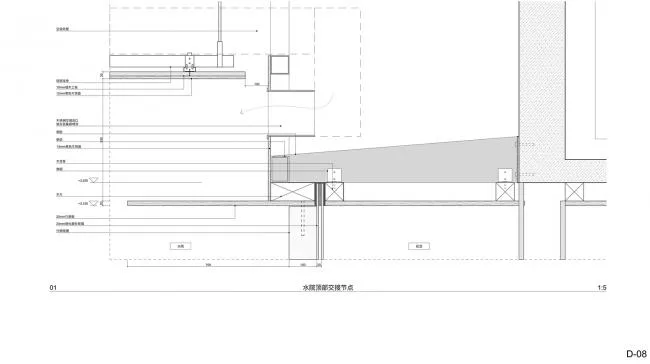
▲ Water Courtyard Ceiling Details
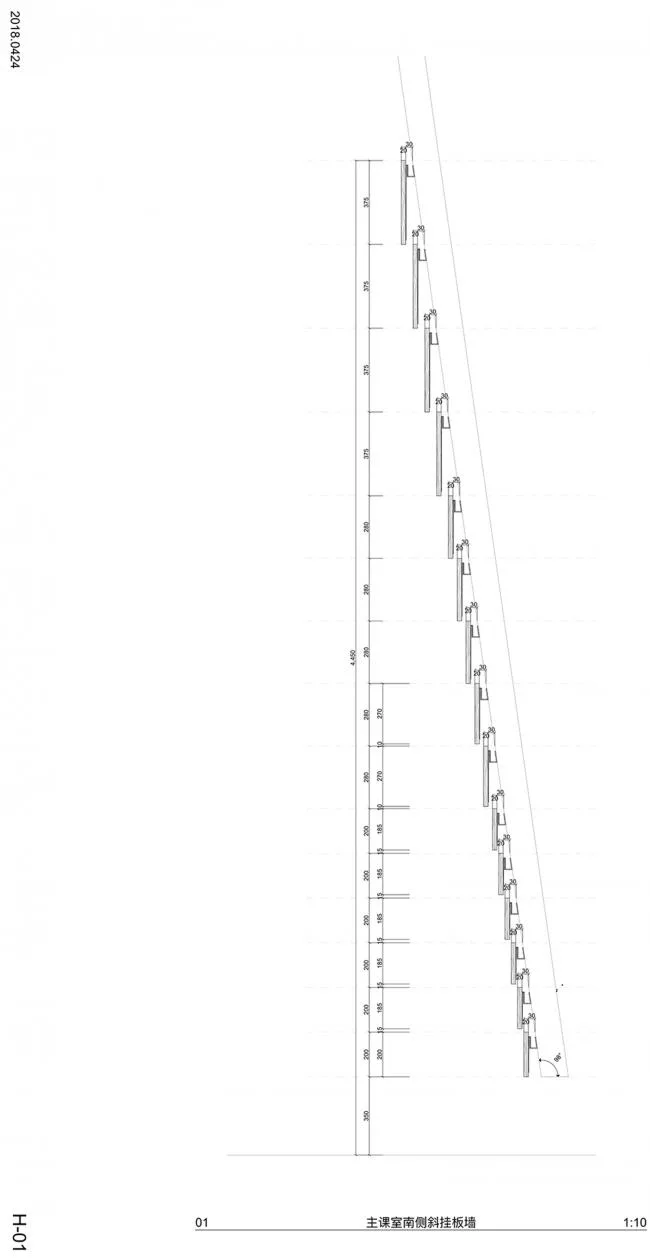
▲ Details of Wooden Sandalwood Strips
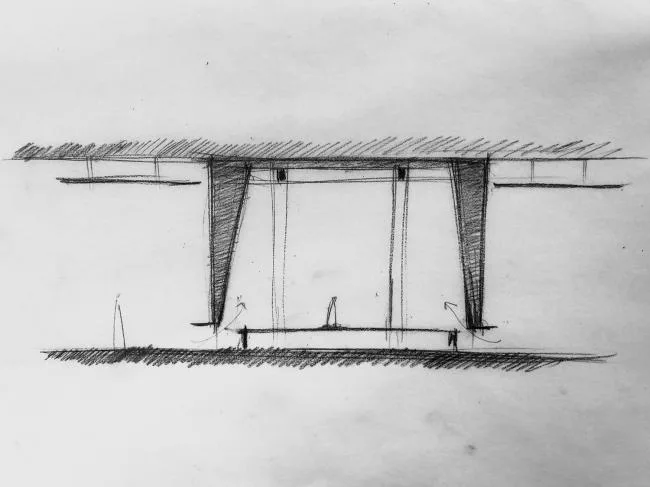
▲ Manuscript
Project Information:
Architect: Qiu Architectural Design Firm
Location: Huanghua, Cangzhou, Hebei, China
Category: Commercial Buildings
Lead Architects: Yu Dao, Cheng Bo, Li Bo
Project Manager: Ye Lizhou
Partners: Li Ran, Li Zhangjun
Building Area: 600 square meters
Year: 2018















Must log in before commenting!
Sign Up