
The Nanhui Construction Engineering Baoshan New City PC project has pioneered the use of BIM technology for virtual construction in prefabricated projects. This innovation has significantly enhanced refined project management, earning high praise from industry leaders and stakeholders, while delivering notable economic and social benefits.
By leveraging BIM technology, various project management teams can rapidly and accurately access essential data, greatly supporting decision-making processes. The creation of virtual 3D models and a 4D integrated database facilitates effective control over project progress, cost management, and early detection of engineering challenges. This fosters collaboration, data sharing, and coordination among different management sectors, thereby increasing overall efficiency. Let’s explore the BIM technology applications implemented in the Baoshan New City PC project by Nanhui Construction Engineering.
1. Project Overview
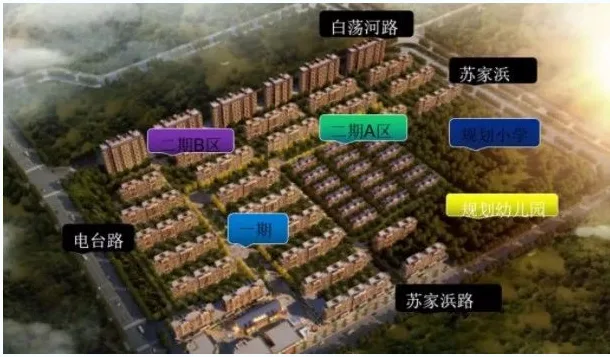
Figure 1: Project Rendering
Location: Intersection of Radio Station Road and Sujiabang Road, Gucun Town, Baoshan District, Shanghai
Developer: Shanghai Anfuxin Real Estate Development Co., Ltd
Design Team: Shanghai Xianyuan Design Consulting Co., Ltd
Supervision: Shanghai Chuangzhong Engineering Supervision Co., Ltd
Construction: Shanghai Nanhui Construction Engineering (Group) Co., Ltd
Consulting: Shanghai Luban Engineering Consulting Co., Ltd
The project is situated in Gucun Town, Baoshan District, Shanghai, covering an area of 27,598.72 square meters with a total construction area of 71,389.87 square meters. The above-ground construction area is 57,563.74 square meters, while the underground area totals 13,826.13 square meters.
2. Engineering Challenges
The project features individual PC (prefabricated concrete) units. However, the narrow construction site limits the space available for stacking excess PC components. Additionally, assembling these components demands skilled labor; any oversight could cause redundant work and construction delays. The project involves numerous individual subprojects, making scheduling a significant challenge.
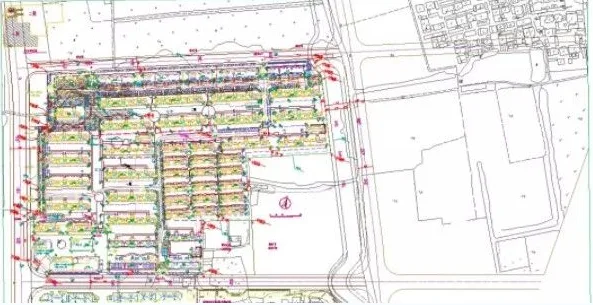
Figure 2: Ground Layout Schematic
3. BIM Models
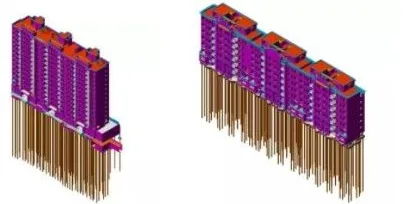
Figure 3: Civil Structure Model
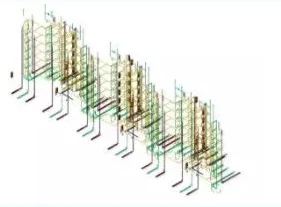
Figure 4: Installation Model of Overall Pipeline and Underground Sections
4. BIM Technology Applications
4.1 Drawing Issue Detection
BIM technology enables 3D structural modeling, which helps identify unclear annotations, insufficient clearance heights, and conflicting reinforcement details in drawings. Detecting and resolving these issues early prevents construction delays and reduces labor costs.
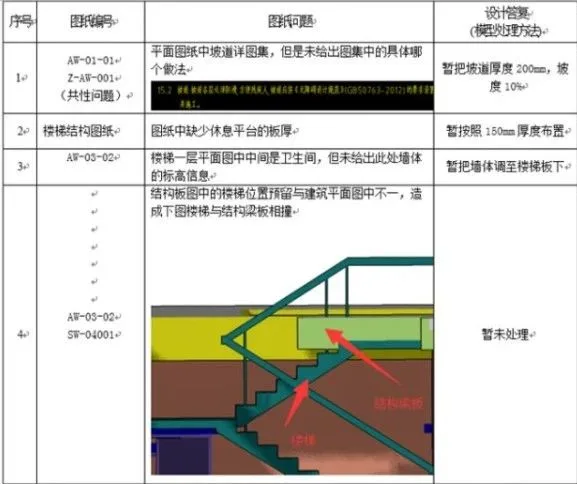
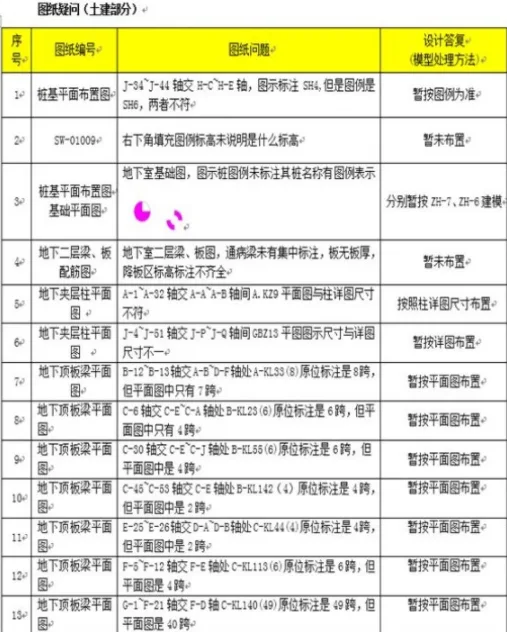
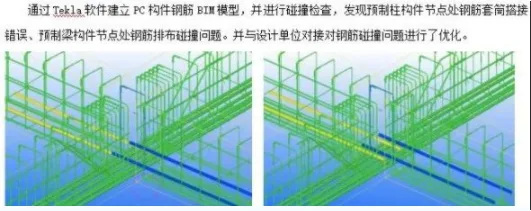
Screenshot of Drawing Issues (Figure 5)
4.2 Site Layout Planning
Utilizing BIM models for site layout allows for scientific 3D planning of the construction site. This approach visually represents the site conditions, optimizes land usage, ensures clear transportation routes, facilitates personnel management, and helps prevent rehandling and accidents.
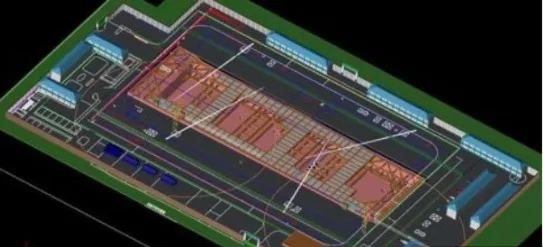
Figure 6: 3D Layout Model of the Construction Site
4.3 Schedule Simulation
BIM technology enables real-time visualization comparing planned and actual progress. This 3D monitoring can be accessed anytime to identify potential delays or advances early. The system highlights areas ahead or behind schedule in different colors and triggers alarms to prompt timely corrective action.
4.4 Positioning of Reserved Wall Openings
Through the BIMWorks platform, pre-embedded verification of PC components is achieved by integrating mechanical and electrical pipeline models with structural models. This intelligent process determines reserved hole locations in advance, providing detailed reports that help construction teams avoid post-installation drilling and structural damage.

Figure 7: Reserved Hole Positioning in Cast-in-Place Sections
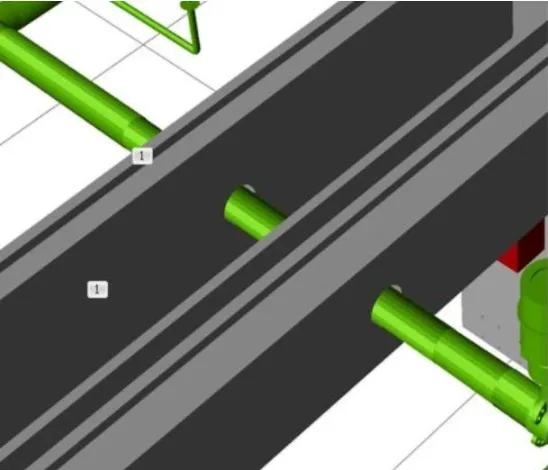
Figure 8: Reserved Openings Positioning in PC Sections
4.5 PC Component Hoisting
The lifting sequence for prefabricated components is critical; errors can cause extensive rework, increasing time and costs. BIM models correlate components with their schedule, allowing 3D dynamic simulation of lifting plans. Multiple rehearsals help identify and resolve potential issues, ensuring smooth onsite construction.
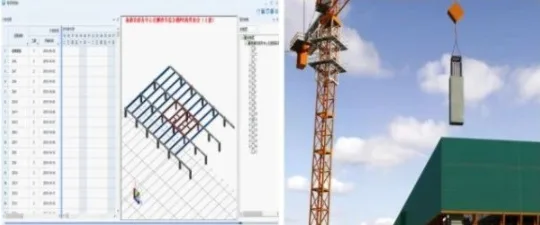
Figure 9
The optimal stacking positions of PC components are determined through field layout. To enhance lifting efficiency, BIM technology employs QR codes to easily locate the assembly floor, position, and height of each component, ensuring accurate placement and enabling traceability and verification.
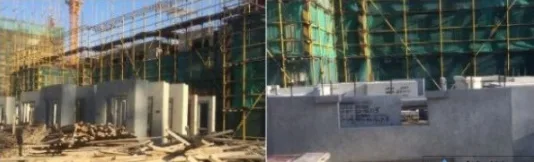
Figure 10: Dedicated Onsite Stacking Area
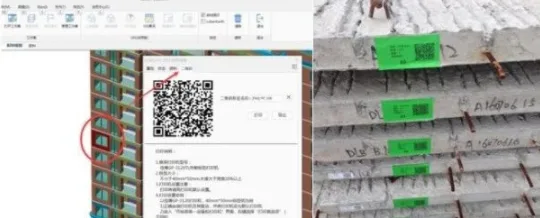
Figure 11: Accurate Component Positioning via QR Code Scanning
4.6 Analysis of Beam and Column Node Quantities
The BIM system allows searching by concrete grade to calculate excess concrete quantities, analyze additional costs, and improve refined management for better cost control.
4.7 Structural Column Positioning
Based on the secondary structure construction plan, layout rules for construction and door frame columns are established. The modeling software generates and positions these columns on-site with one click, numbering and marking distances as needed. The system outputs 2D CAD drawings to assist onsite construction, boosting efficiency and saving time and labor.
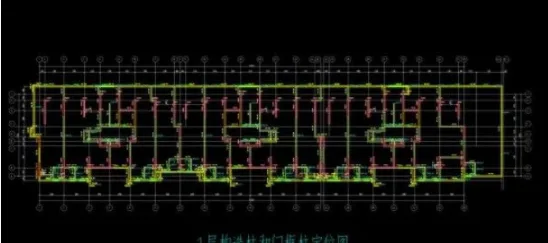
Figure 12: Structural Column Positioning Diagram
4.8 Masonry Layout Planning
Before construction, block arrangement diagrams are prepared based on wall types to estimate block types and quantities per floor. This reduces material handling, achieves refined material management, minimizes waste, lowers costs, and increases project profitability.
4.9 Precise Material Procurement Control
Through basic data analysis systems and BIM viewers, project and company personnel can access project data anytime, anywhere. Strict control over procurement quantities and limited material requisition reduce waste and ensure timely material delivery. This approach optimizes fund allocation, reduces capital lock-in, and curbs cost overruns.
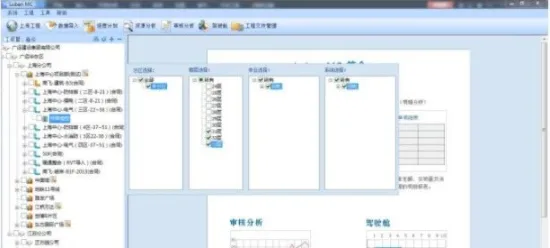
Figure 13: Material Usage Monitoring for Concrete, Formwork, and More via MC System
4.10 Collaborative Quality and Safety Management
BV software provides rapid, detailed feedback from project sites, often within seconds, greatly reducing problem response times. Data on quality defects, safety risks, and construction civility are linked instantly with BIM models, enabling effective defect tracking during and after construction. Authorized managers receive real-time alerts and can review issues via the BIM browser. Weekly meetings facilitate unified problem resolution, significantly boosting efficiency.

Figure 14: Problem Rectification Process
4.11 Data Management
Engineering data for each subproject is uploaded to the BIM platform, allowing real-time access through the 3D model. Each component is linked one-to-one with its data, simplifying information retrieval and aiding in archiving completion documentation.
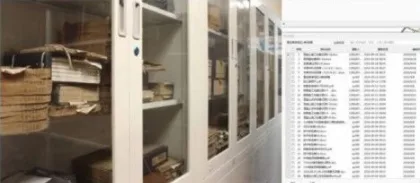
Figure 15: Transition from Paper Documents to Electronic Archives
4.12 Cost Management
The Basic Data Analysis System (Luban PDS) efficiently manages project investment portfolios, particularly investment allocation. It quickly and accurately analyzes and calculates quantities and costs by region and time period (monthly, quarterly, etc.), supporting informed investment decisions.
5. Analysis of BIM Effectiveness
The Baoshan New City PC project by Nanhui Construction Engineering has successfully applied BIM technology for virtual construction in prefabricated projects, enhancing refined project management. This achievement has garnered recognition from leadership and the industry, yielding positive economic and social impacts.
1) Increased Efficiency of Project Departments
BIM technology enables rapid identification of large formwork parts throughout the project, reducing a multi-day task to just 1-2 hours.
Project baseline data from the BIM model facilitates timely multi-calculation comparisons, statistical output, and subcontracting settlements, condensing prior half-month workloads into one week and eliminating the need to borrow staff from other departments for audit assistance.
2) Improved Project Quality Control
Comparative analysis of onsite steel bar cutting ensures timely issuance, alerts, and rectifications for areas not meeting flat binding specifications, safeguarding quality.
BIM mobile applications provide powerful tools for project quality and safety departments, ensuring smooth and timely issue feedback.
3) Support for Project Progress Control
Early identification and resolution of drawing issues prevent construction delays.
3D visualization enhances team understanding of drawings, reducing rework and maintaining progress.
Economic change analysis and 3D technical reviews speed up project decision-making.
4) Accurate Project Engineering Settlements
Monthly and process audits compare BIM technical data with contract data, combined with actual results to prevent omissions. BIM’s integration of multiple disciplines revealed that a single missing steel bar item could total hundreds of tons, with error rates dropping from 1% in single data sets to 0.01% when comparing two data sets.
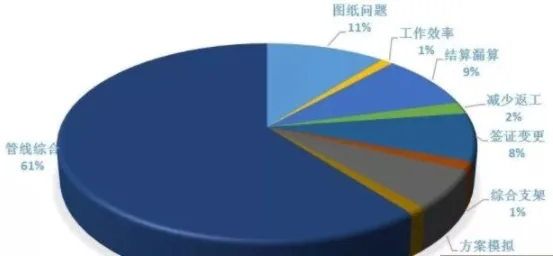
Figure 16
6. Conclusion
The use of BIM modeling systems and related software has delivered remarkable results in construction management, cost control, and drawing inspection for the Baoshan New City PC project. Early detection of drawing issues saves time and labor, while optimized site layout reduces land usage and prevents accidents. Integrating BIM technology has enhanced project management processes at Nanhui Construction Engineering, raising refined management standards and setting a benchmark for BIM application within the company and across Shanghai. With continued exploration and experimentation, BIM is poised to achieve wider adoption and promotion throughout China’s construction industry.














Must log in before commenting!
Sign Up