
Preface
Prefabricated buildings offer numerous advantages, including superior quality, faster construction speeds, reduced energy consumption during building, and lower environmental pollution. In developed regions such as Europe, the United States, and Japan, the adoption rate of prefabricated buildings has exceeded 70%, making it the leading trend in modern construction.
China began exploring prefabricated construction as early as the 1950s and 1960s. However, after the 1980s, this development slowed down due to two main factors: firstly, the technology in China was still immature and relevant standards were incomplete; secondly, the lack of effective waterproofing methods and sealing materials for exterior wall joints led to issues like wall leakage, poor sound insulation, and inadequate seismic performance. These problems hindered the advancement of prefabricated buildings in China.
Entering the 21st century, real estate companies such as Vanke reintroduced prefabricated buildings in China. Since 2015, technological progress combined with increased emphasis on energy conservation and environmental protection has led government authorities at all levels to implement policies promoting prefabricated construction. As a result, the industry has experienced rapid growth. This article explores effective methods for exterior wall waterproofing and sealing, covering design principles, selection of joint sealing materials, and sealant application processes.
1. Waterproof Design for Prefabricated Concrete Exterior Walls
Waterproof design for prefabricated exterior walls should involve multiple protective layers. The first line of defense is sealed waterproofing, where various sealants fill the wall joints to create a waterproof barrier. The second defense involves designing joints with appropriate sizes and structures to minimize moisture migration forces. The third line of defense is an airtight strip located inside the cast-in-place concrete or on exterior wall panels of shear wall structures. This strip can be formed during component manufacturing by bonding adhesive tape to the concrete or by leaving a groove for later installation of the adhesive strip.
2. Waterproofing Construction
During the design and installation of exterior wall panels, joints should be structured and sized appropriately to absorb forces that facilitate moisture movement, ensuring effective waterproof sealing.
Forces driving water movement include gravity, surface tension, capillary action, motility, and pressure differences. Joint designs should address these forces accordingly.
2.1 Waterproof Design for Horizontal Joints
Horizontal joints should be sealed with materials on the upstream side, complemented by a sealing strip or grout on the downstream side, forming a dual-layer waterproof barrier. Incorporating a structural waterproof layer between these two materials significantly enhances effectiveness. The waterproof sealing process for horizontal joints is illustrated in Figure 1.
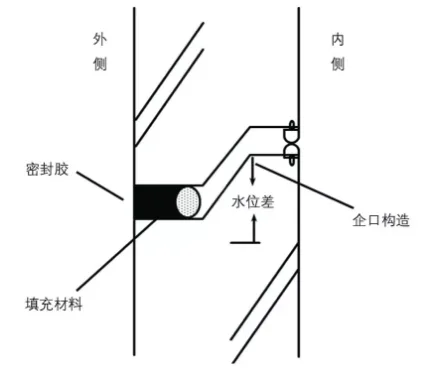
Figure 1: Waterproof sealing process for horizontal joints
Designing the horizontal joint as a groove with a higher interior and lower exterior reduces the energy of rainwater movement—such as gravity and surface tension. Even if the outer seal is compromised, rainwater cannot penetrate indoors. This cavity also channels infiltrating rainwater toward vertical joint drainage outlets. Table 1 details conditions and solutions for rainwater leakage.
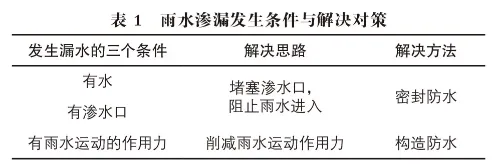
2.2 Waterproof Design for Vertical Joints
Vertical joints should also use two layers of waterproofing materials on both the interior and exterior sides. As shown in Figure 2, a pressure-reducing cavity is placed between these seals, with a drainage outlet at the base of the joint. Should the outer seal fail, any infiltrating rainwater can be drained through this outlet, maintaining waterproof integrity.
Drainage outlets are typically created by reserving openings during sealing material application, into which water pipes are inserted. Figure 3 illustrates the vertical joint drainage pipe setup for a prefabricated house.
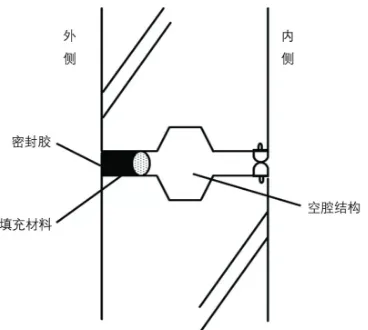
Figure 2: Vertical seam waterproof sealing process
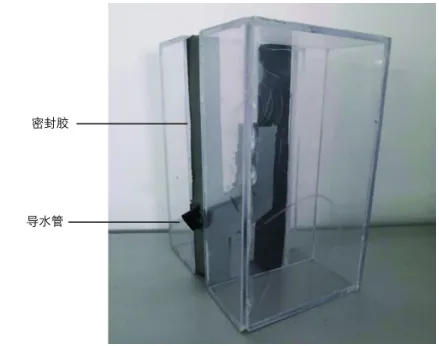
Figure 3: Schematic of vertical joint water conduit treatment
3. Waterproofing Materials
Sealing materials filled into exterior wall joints form the first line of defense. Sealants play the most critical role, as any leakage due to sealant failure is difficult to detect and repair. Therefore, selecting the right sealant is essential.
3.1 Characteristics of Prefabricated Exterior Wall Joints
Compared to other joint types, prefabricated exterior wall joints have two distinct features:
3.1.1 Difficult Bonding
Concrete is an alkaline and porous material. Residual release agents on its surface during manufacturing complicate bonding with sealants.
3.1.2 Movement and Deformability
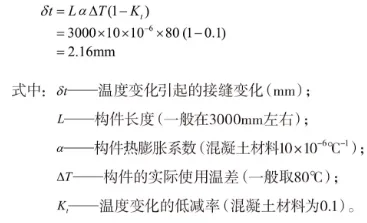
Exterior wall panels are relatively large (typically over 3 meters). Temperature variations, wind, earthquakes, and material shrinkage cause joint size changes.
(1) The impact of temperature changes on joint width can be calculated using the following formula:
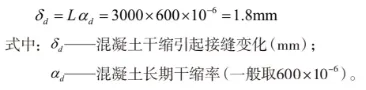
(2) Concrete drying shrinkage also widens joints during hardening, as calculated by the following formula:
3.2 Sealant Performance for Prefabricated Exterior Wall Joints
The sealant’s performance critically influences the waterproofing of exterior walls. Considering the joint characteristics, sealants should meet these five key requirements:
3.2.1 Strong Adhesion
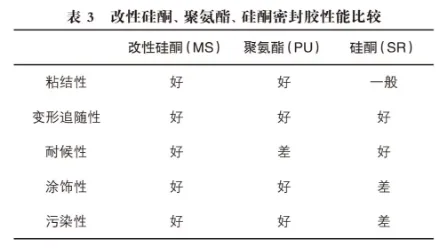
Effective adhesion to concrete is fundamental. In China, three main sealant types are used: modified silicone (MS), polyurethane (PU), and silicone (SR). Tests show that with the right primer, MS and PU sealants adhere well to concrete, while silicone sealants have weaker adhesion.
3.2.2 Flexibility and Deformation Compatibility
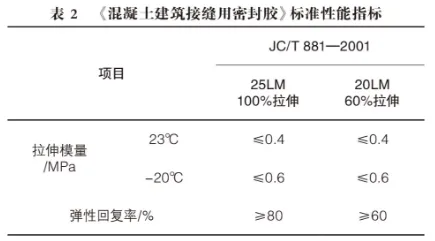
Sealants need elasticity and resilience to accommodate joint expansion and contraction caused by external forces. They must deform freely and recover after repeated movements. The JC/T 881-2001 standard “Sealants for Concrete Building Joints” specifies elastic recovery rates, summarized in Table 2.
Modified silicone, polyurethane, and silicone sealants all exhibit good elasticity and resilience. Table 3 compares their performance. Well-formulated products comply with these standards.
3.2.3 Weather Resistance and Durability
Sealant durability affects the lifespan of waterproof systems. Exposure to wind, rain, UV radiation, and mechanical stresses accelerates aging and failure. UV radiation, with a typical wavelength of 300 nm and energy of 399 kJ/mol, can break the molecular bonds in modified silicone and polyurethane, but not in silicone chains. Table 4 shows that silicone sealants have superior weather resistance, while polyurethane is most susceptible to UV damage.

Figure 4 presents a case from a Shenzhen PC project where a two-component MS sealant and an imported single-component polyurethane sealant were applied in 2014. After four years, the MS sealant remained intact, while the polyurethane sealant showed significant cracking, indicating inferior weather resistance.
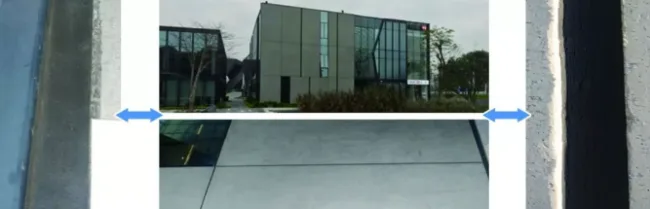
Figure 4: Weather resistance comparison between two-component MS and single-component polyurethane sealants
3.2.4 Paint Compatibility
To enhance building aesthetics, exterior walls are often coated or painted. Sealant surfaces must be paintable without contaminating coatings. Silicone sealants have continuous silicon-oxygen molecular chains with high surface tension, making them difficult to coat. Conversely, modified silicone and polyurethane sealants are compatible with various coatings and do not interfere with paint adhesion.
3.2.5 Non-Polluting
Prefabricated concrete is porous and prone to pollution, which affects appearance and cleaning costs. Silicone sealants contain small molecule silicone oils that migrate to the surface, attracting dust and causing visible staining. Modified silicone and polyurethane sealants lack this issue, making them cleaner and more suitable for concrete exterior joints.
Overall, modified silicone offers the best balance across these performance criteria, making it the preferred choice for sealing prefabricated exterior wall joints.
4. Key Considerations for Sealant Application on Prefabricated Exterior Walls
4.1 Primer Importance
Before applying sealant, a compatible primer must be applied. The primer improves bond strength between the sealant and substrate and prevents migration of alkaline substances from the wall and plasticizers from the sealant, enhancing durability and preventing contamination, as illustrated in Figure 5.

Figure 5: Schematic of primer action
It is essential that the primer fully cures by solvent evaporation before sealant application.
4.2 Double-Sided Bonding
Using a PE foam rod as a backer during joint sealing reduces cost and ensures the sealant bonds only to two sides instead of three. For deformable joints, double-sided bonding is critical. As shown in Figure 6, when bonded on both sides, the sealant can accommodate joint movement freely, maintaining the seal. Three-sided bonding restricts movement, causing sealant tearing and failure.
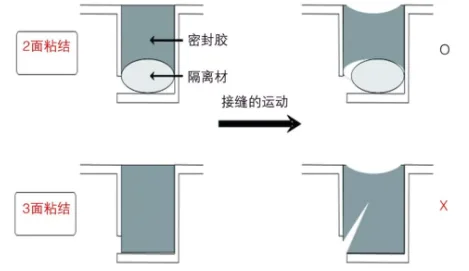
Figure 6: Double-sided and three-sided bonding schematic
4.3 Sealant Depth
The sealant thickness impacts the sealing performance. Too thin a layer results in insufficient adhesion and increased risk of peeling and surface aging damage. Too thick a layer, especially with single-component products, may delay curing and cause internal defects. Recommended sealant thickness varies with joint width, as shown in Figure 7.
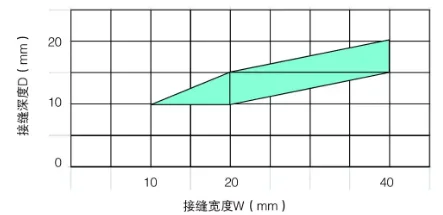
Figure 7: Allowable ranges for seam width and sealant depth
5. Domestic Modified Silicone Sealant Market
Modified silicone sealants originated in Japan in the 1970s, with SUNSTAR Group among the pioneers in development and application. Japanese sealant professionals are highly skilled, and two-component sealants are widely used due to their superior performance.
In contrast, many workers in China lack professional training, making two-component products challenging to apply and complicating project management. Therefore, single-component sealants, which are easier to use, are often preferred in China.
5.1 Performance Comparison: Single-Component vs. Two-Component MS Sealants
Performance tests following GB/T 14683-2017 “Silicone and Modified Silicone Building Sealants” and JC/T 881-2001 “Concrete Building Joint Sealants” standards compared our company’s single-component MS-1 and two-component MS-2 sealants (see Tables 5 and 6). Both types have distinct advantages, allowing selection based on specific project needs and conditions.
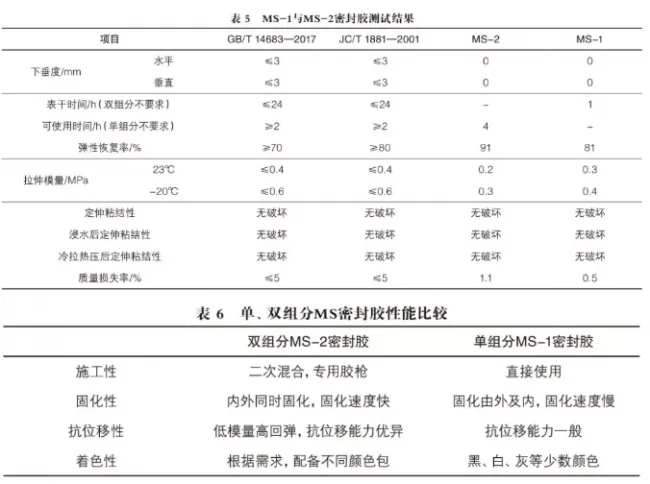
5.2 Application Process
The application procedures for single and two-component sealants are outlined in Figure 8, with Figure 9 showing the step-by-step operation during sealant application.
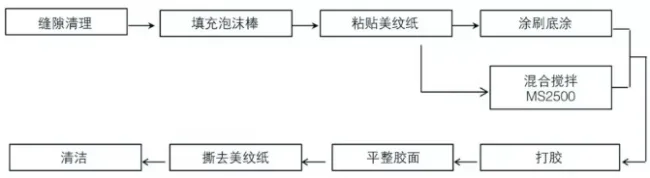
Figure 8: Process flow of single and two-component sealant application
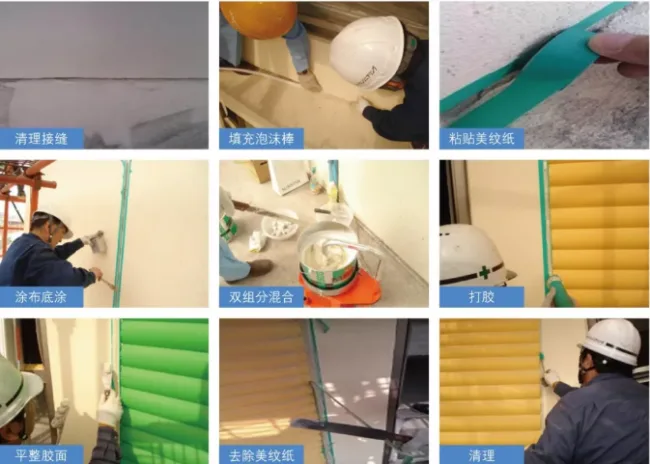
Figure 9: Sealant application operation diagram
Conclusion
Recently, both central and local governments have introduced policies encouraging prefabricated building development, making it a hot topic in China’s construction industry. However, compared to Europe, the U.S., and Japan, prefabricated construction in China is still at an early stage. Limited practitioner experience and the absence of comprehensive standards have restrained progress.
Waterproof sealing of exterior walls remains a critical challenge for prefabricated buildings and is crucial for their future growth in China. Achieving effective waterproofing requires sound structural design, high-quality sealing materials, and proper construction techniques. Modified silicone sealants, widely promoted and applied in China, have become the preferred material for sealing precast concrete exterior joints. Both single and two-component MS sealants offer distinct advantages, allowing selection tailored to environmental conditions and project requirements.













Must log in before commenting!
Sign Up