
City Vision
Since 2016, visitors to Xuzhou can easily spot an impressive highlight dominating the city’s skyline. Even from an airplane, this architectural complex reveals a striking resemblance to the traditional “auspicious cloud” pattern. As one of the largest commercial complexes in northern Jiangsu, it sparks excitement and imagination about the future of Xuzhou and the entire northern Jiangsu region in the 21st century.
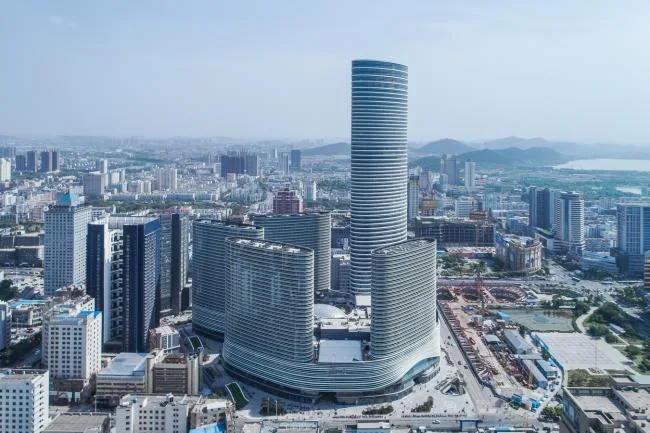
The Relationship of Architectural Communities in Cities
Formerly known as Pengcheng, Xuzhou serves as a vital gateway city in East China. It sits at the intersection of the Beijing-Hangzhou Grand Canal and the Longhai Beijing-Shanghai railway, earning the nickname “the thoroughfare of five provinces.” Historically, Xuzhou is the earliest city in Jiangsu Province and is celebrated as the birthplace of Han culture. Over six thousand years, it has amassed a rich cultural legacy, scenic landmarks, and historical heritage.
With China’s modern economic and cultural centers shifting to the Yangtze River Delta, Xuzhou finds itself at a sensitive crossroads. It is no longer content with its industrial identity as the “capital of construction machinery” and seeks to forge a new development path bridging northern and southern regions.
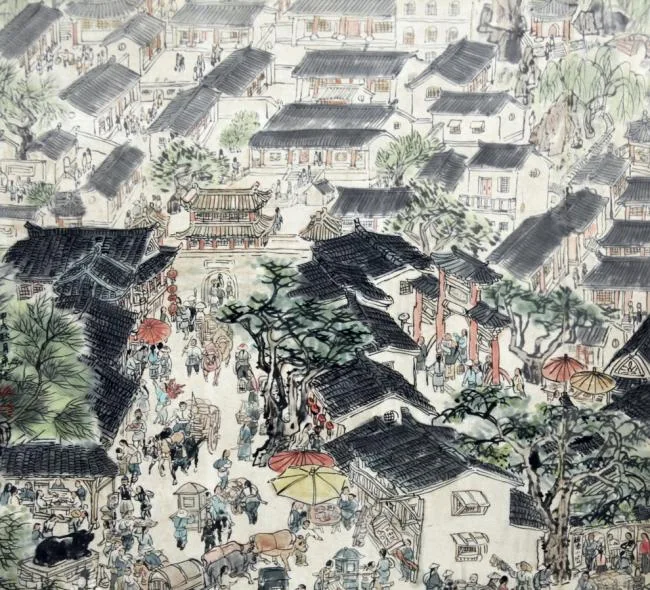
Historical scenery of Xuzhou during the Qing Dynasty
In response, a brand-new commercial complex was planned. As early as 2009, Suning Group acquired the city’s most strategic commercial land to build a landmark complex that would serve as a beacon for surrounding urban areas. In 2010, a joint design by Aedas and CCDI won an international competition. Seven years later, the massive Xuzhou Suning Plaza was completed, marking a significant milestone in the city’s urban development.
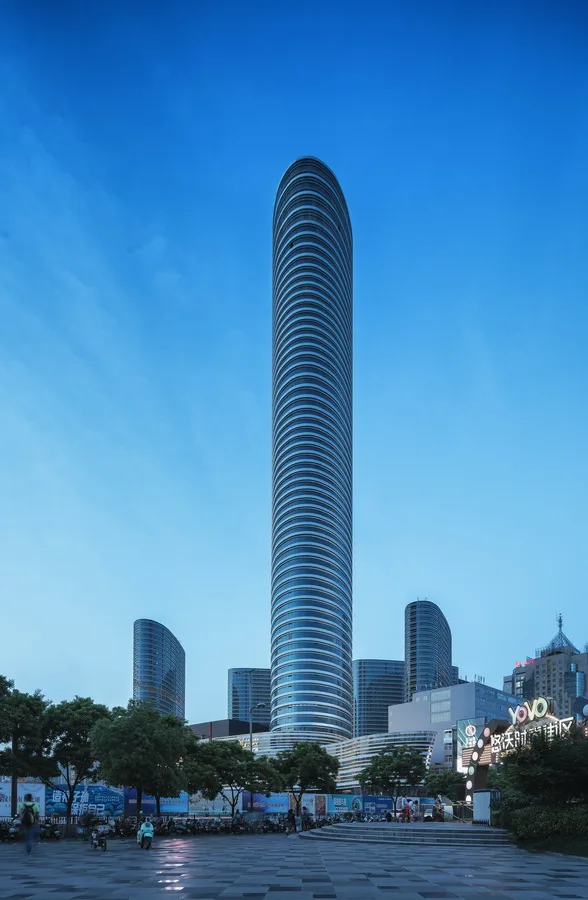
The tallest tower rises to 260 meters, currently the highest building in northern Jiangsu.
Planning Strategy
Given the city’s rich historical context, the new development required a unified and distinctive image to inspire confidence in the city’s future growth.
The project site is divided into three sections: the east and west plots, along with the original fruit garden plot. A renovated alley runs north-south through the site, serving as an internal road. The design treats all three plots as a single unified land parcel, connecting commercial podiums to create a cohesive building complex.
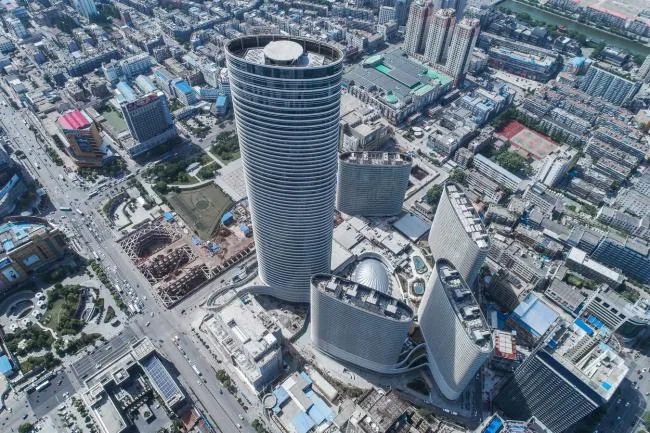
Aerial panoramic view
To address the considerable depth of the site in both north-south and east-west directions, the plan incorporates a north-south through-lane and a sunken commercial plaza. This design integrates underground retail with urban public space, mitigating challenges posed by the site’s depth. The sunken plaza activates the commercial atmosphere, improves land utilization, and increases the site’s value.
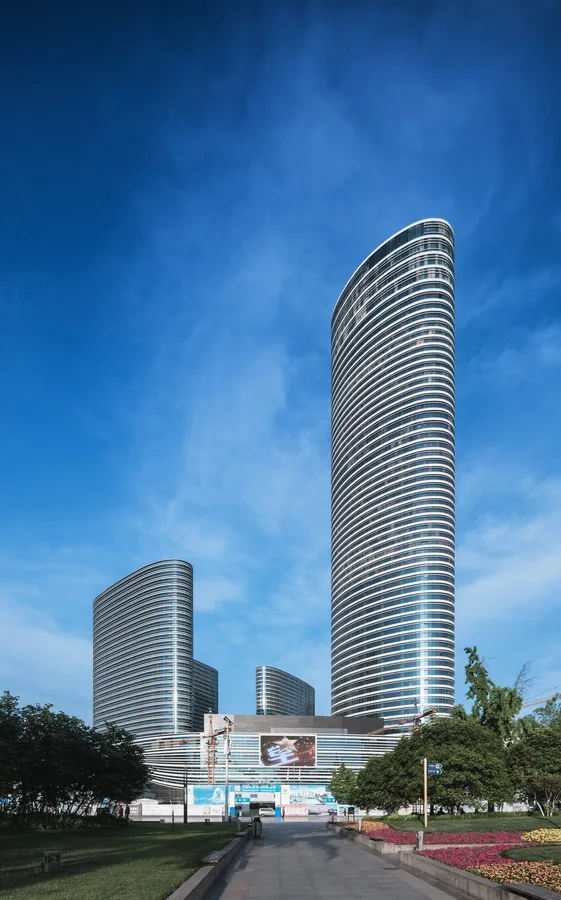
View of the complex from street level
The entire complex features five towers rising above a circular podium. These towers form a long elliptical shape consistent with the podium’s layout, avoiding sharp angles and creating a smooth, upward flow that unites the structures.
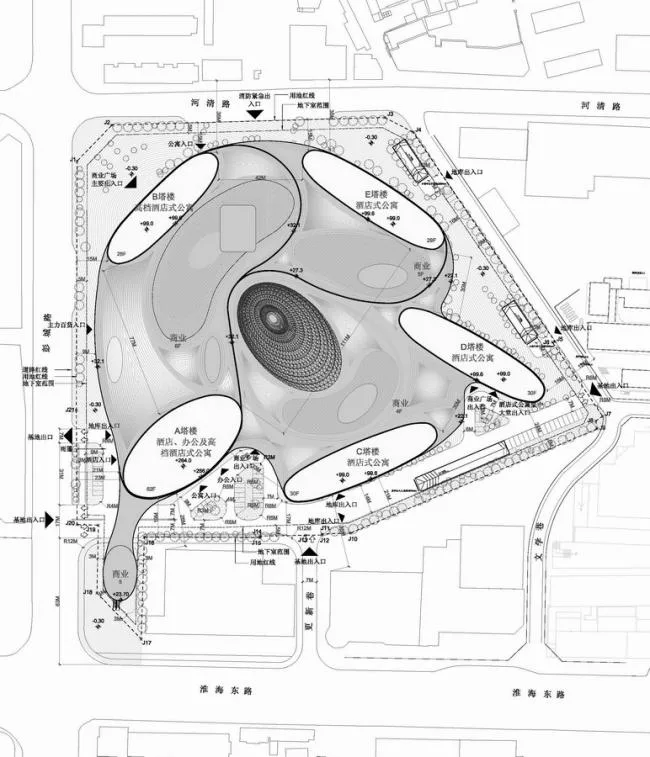
Master Plan
Cultural Intent
The Xiangyun (auspicious cloud) motif holds a profound historical connection to Xuzhou. From the Western Zhou through to the Qin and Han Dynasties, this pattern symbolized deep cultural significance in Han culture. In designing Suning Plaza for the new century, the architects fused ancient history, contemporary progress, and future aspirations into a circular, ascending form. This shape embodies a balance of strength and softness, symbolizing the coexistence of tradition and modernity.
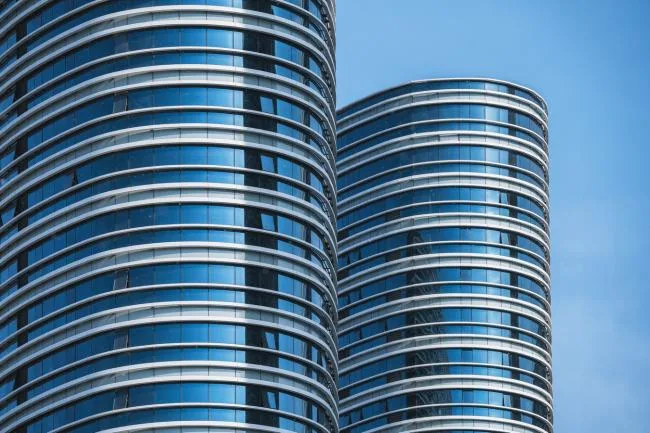
Recent close-up of architectural facade details
Architecturally, the five towers and podium emphasize horizontal lines and a simple white palette. Materials include aluminum panels, polycarbonate boards, and back-painted glass. This combination enhances the layered “cloud” effect, softening the mass of the buildings and infusing the complex with rich cultural meaning.
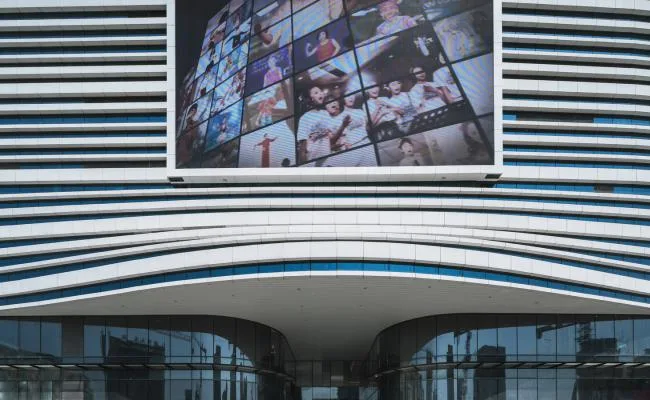
Dynamic detailing on commercial facades
Commercial Space
With Xuzhou planning a new subway line and an existing underground commercial area at Pengcheng Square, the design integrates a pedestrian transportation axis on the first underground level via the central sunken plaza. This level includes pedestrian streets and entrances that link directly to the subway station and the underground retail at Pengcheng Square. The goal is to fully utilize urban underground space and develop a three-dimensional pedestrian transport system.
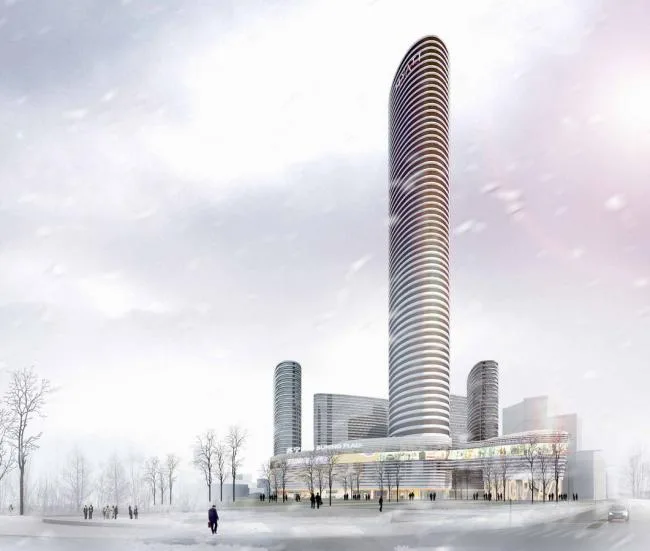
Architectural perspective view
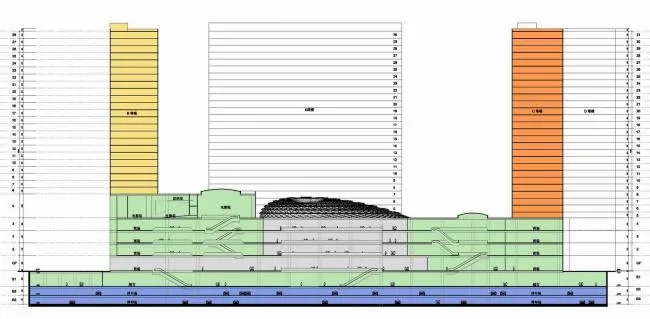
Overall sectional view of the building
Inside the podium, traffic revolves around a central atrium, creating a smooth, circular commercial flow that connects major department stores, Suning Appliances, and various retail outlets. Outdoor retail spaces are arranged around the atrium, featuring glass curtain walls and a 6-meter-wide outdoor terrace for public activities. From the ground floor, visitors can observe the pedestrian traffic on the second floor and above via these outdoor platforms along the atrium’s perimeter.
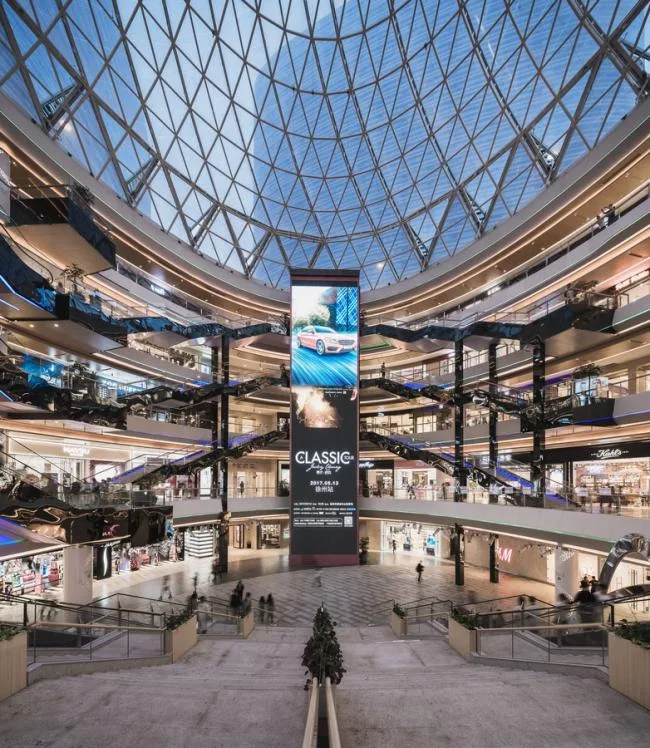
Evening view of the courtyard landscape
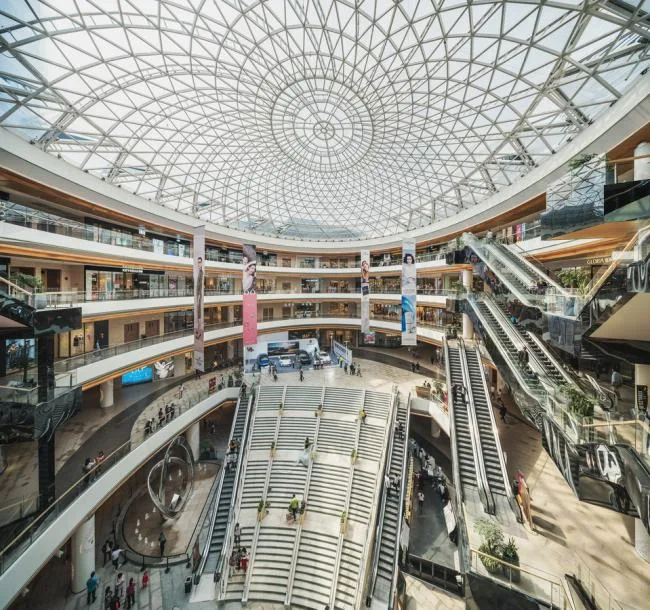
The grand staircase in Suning Plaza’s super atrium serves as a dynamic urban event space
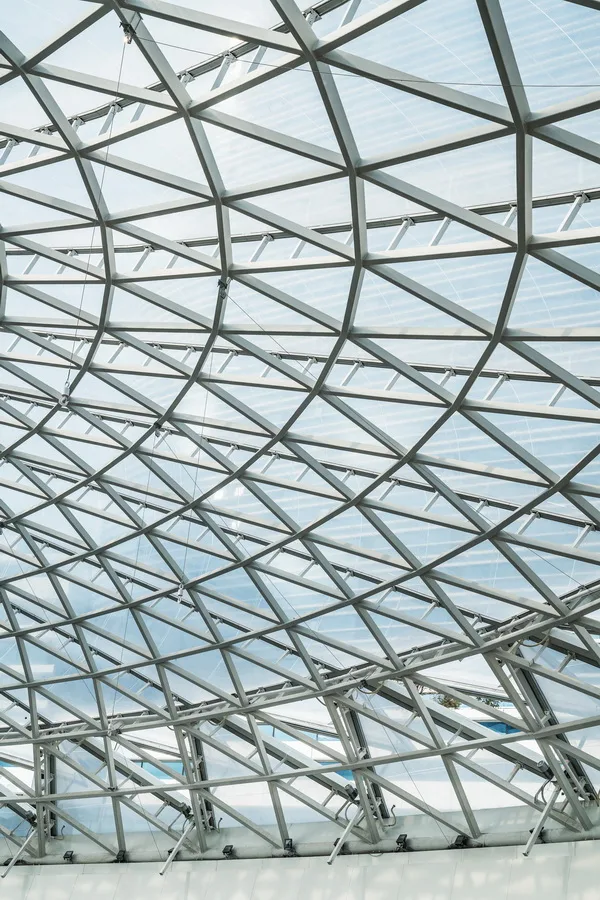
The rhythmic steel structure of the dome
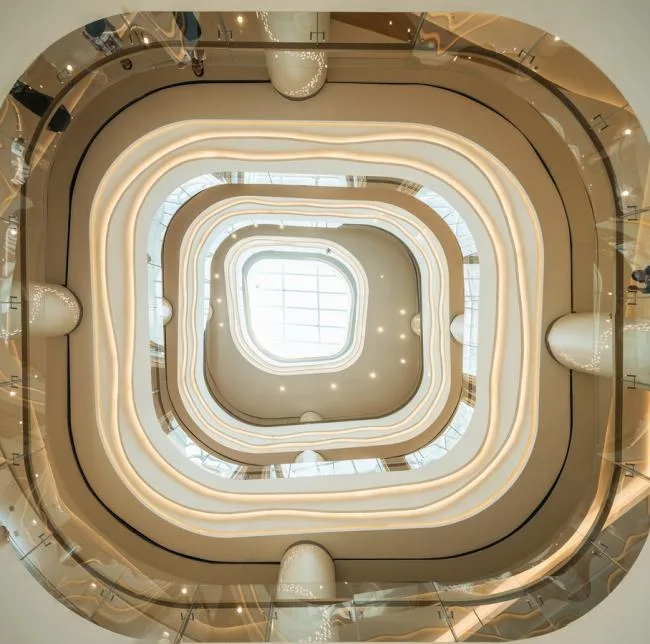
Spatial relationship within the secondary atrium
The central sunken plaza connects seamlessly to the underground supermarket and the above-ground podium retail. Its elliptical layout creates a vibrant, dynamic space, enclosed by podium buildings from the second floor upward. Layered stepped platforms foster interaction between urban public spaces at ground level and commercial areas above, enhancing visual depth and forming a focal point of architectural interest.
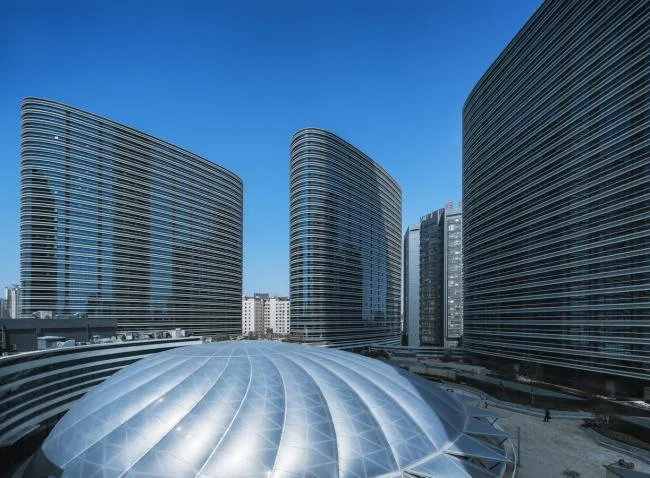
Relationship between the architectural tower and the ETFE commercial dome
The tallest tower features a central corridor floor plan with a standard floor area of 1,980 m², suitable for Grade A office space. The ground floor serves as a multifunctional lobby entrance, with the second to fourth floors connecting to major department stores. The fifth floor houses a five-star hotel banquet hall, the sixth floor includes a swimming pool, spa, and support facilities. Floors seven through twenty-four are designated for Grade A offices, floors twenty-six to forty are hotel-style apartments, and floors forty-two to sixty-two accommodate a five-star hotel.
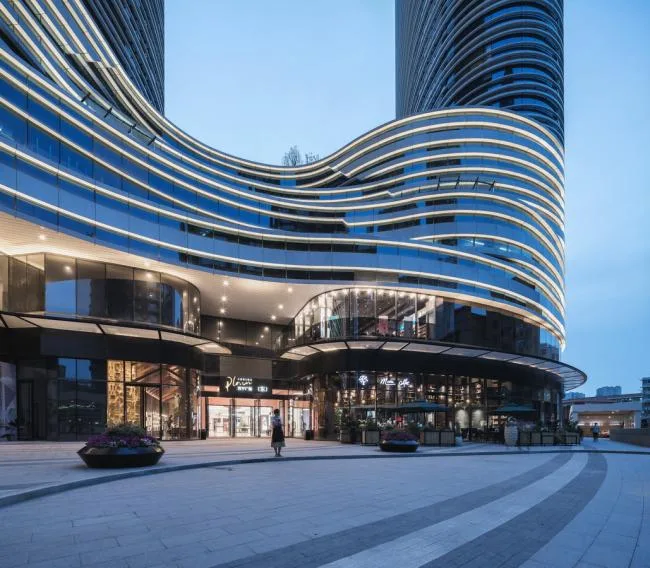
Main street entrance to the shopping mall
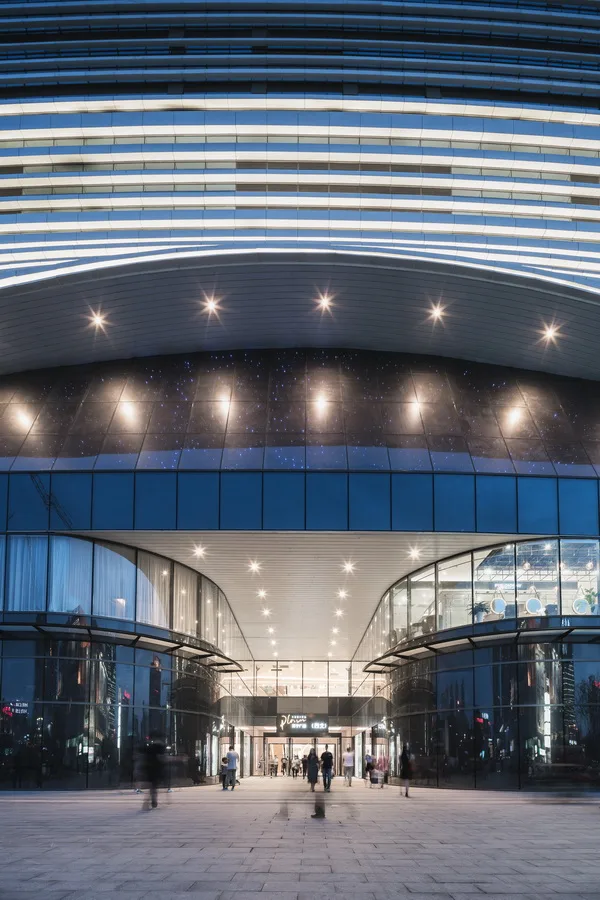
Side entrance of the shopping mall
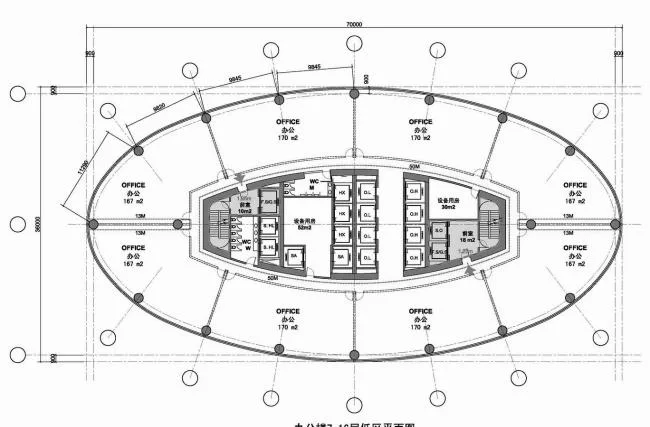
Office area floor plan of Tower A
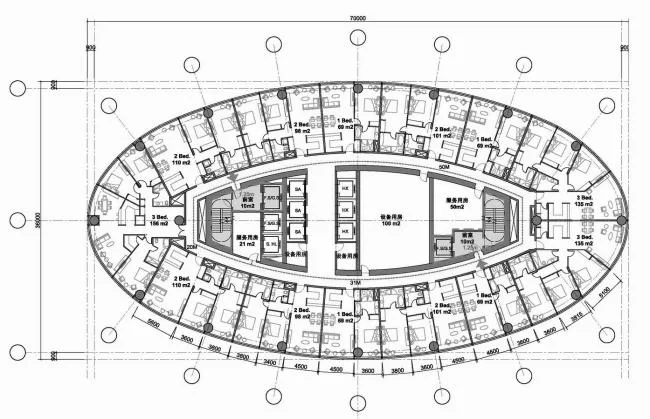
Standard hotel floor plan of Tower A
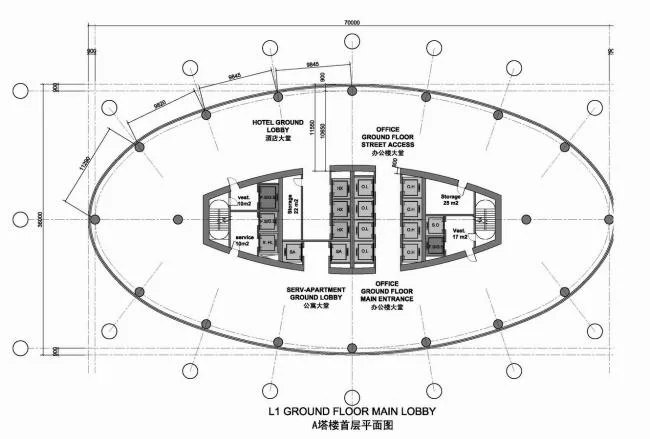
First floor plan of Tower A
In 2014, Xuzhou was ranked 30th among Forbes’ Best Commercial Cities in mainland China. Opening in 2017, the Suning Center has become a new symbol for the city, guiding its vibrant future growth.
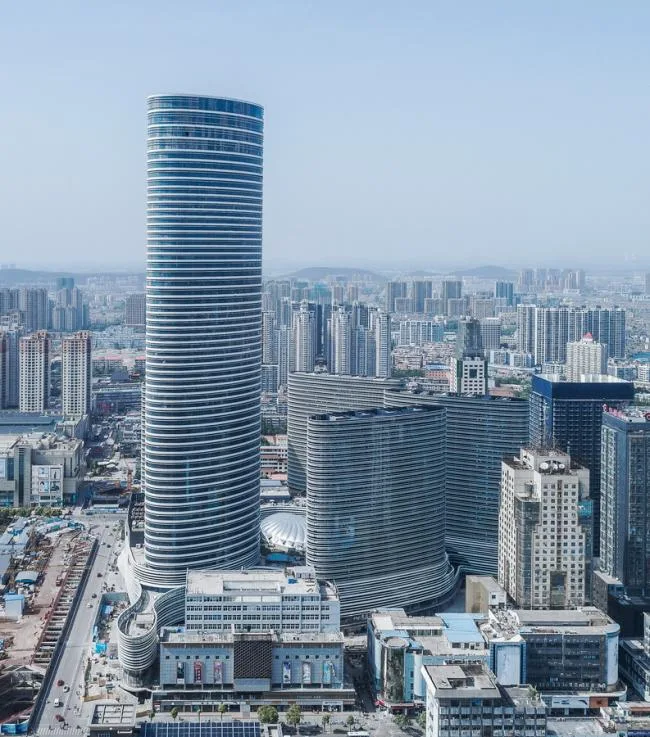
Panoramic view of the building facade
Project Information
Project Name: Xuzhou Suning Plaza
Location: Huaihai East Road, Gulou District, Xuzhou City
Developer: Suning Real Estate
Building Functions: Large shopping center, office, hotel, apartment
Architectural Design: Aedas Kaida Global
Architecture, Structure, MEP Design: CCDI International
Design Period: 2010–2014
Completion & Opening: 2016
Total Land Area: 44,400 m²
Above Ground Floor Area: 348,000 m²
Underground Floor Area: 123,000 m²
Floor Area Ratio: 7.9
Building Density: 50%
Maximum Building Height: 266 meters
Parking Spaces: 1,310 vehicles
Architectural Review by Ai Xia















Must log in before commenting!
Sign Up