
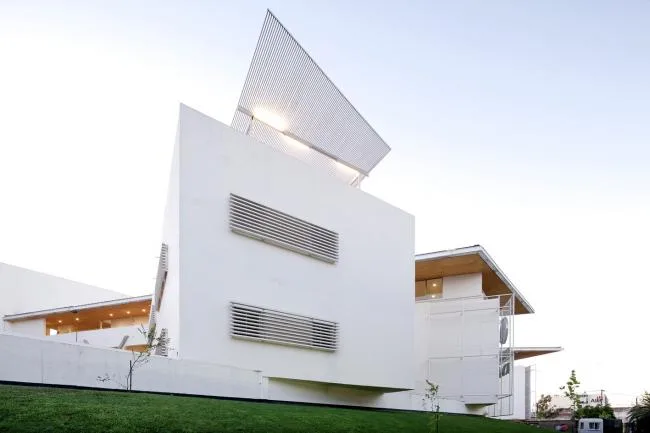
The project site is situated at the corner of the busy Vicuña Mackenna Avenue, directly beneath an elevated subway line bustling with activity. Opposite the site lies the largest campus of one of Chile’s most prestigious universities, featuring its main entrance aligned diagonally with Santo Tomás Vocational College.
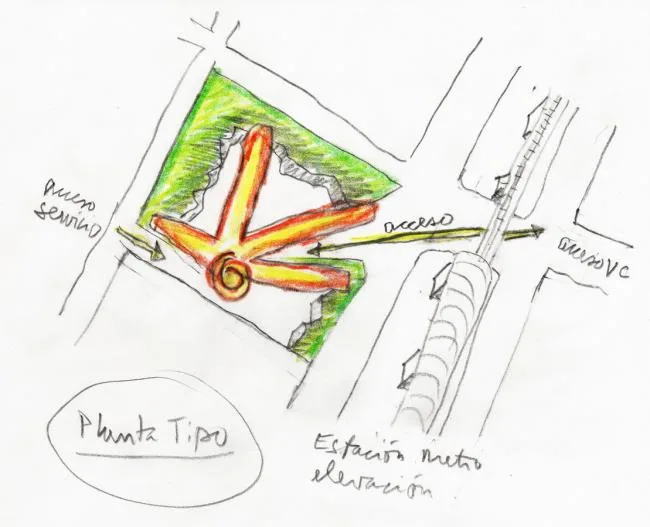
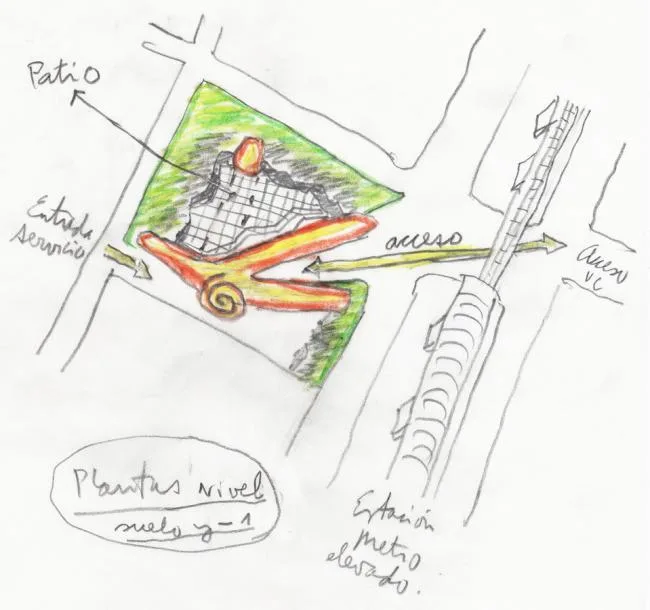
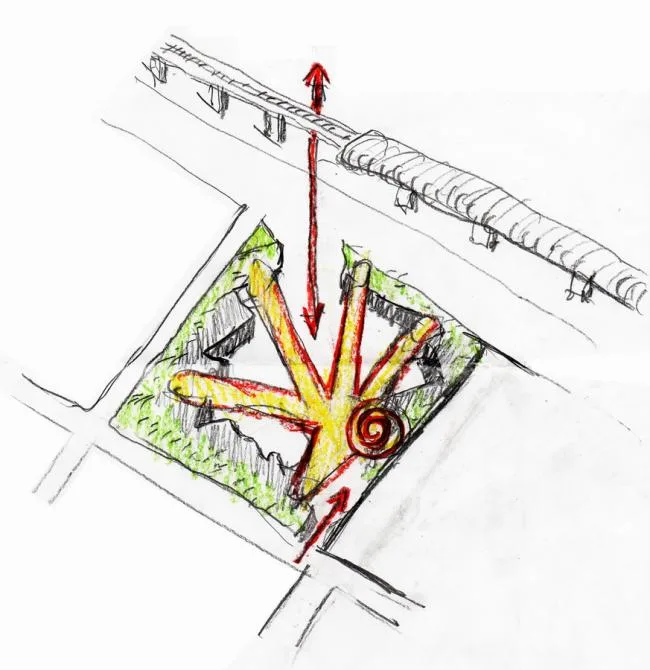
A major challenge was addressing the imposing presence of a 150-meter-long subway station, which rises as a four-story building directly in front of the site. The only visual interest occurs at the corner—precisely along the diagonal axis referenced by BIM. Consequently, the design team chose to position the main entrance to the research institute along this axis.
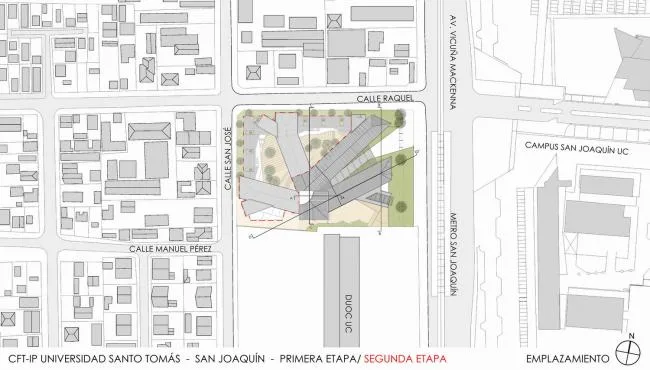
Site Plan
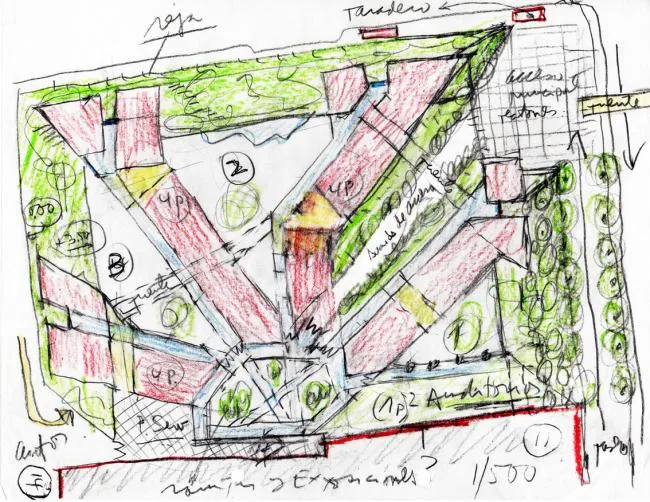
Given the chaotic surroundings, conventional solutions would not suffice. Therefore, the design separates the new buildings from the disorderly environment by creating a walkable green embankment that encircles the site. Beneath this embankment lies a series of classrooms oriented toward the building’s interior. These green embankments are continuous around the building’s perimeter, except for a break at the main entrance axis.
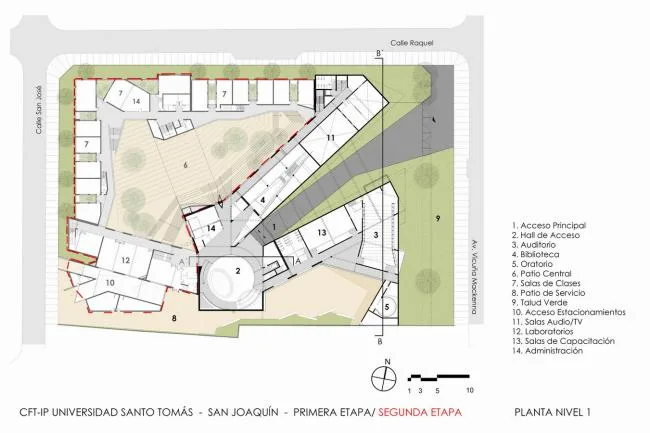
First Floor Plan
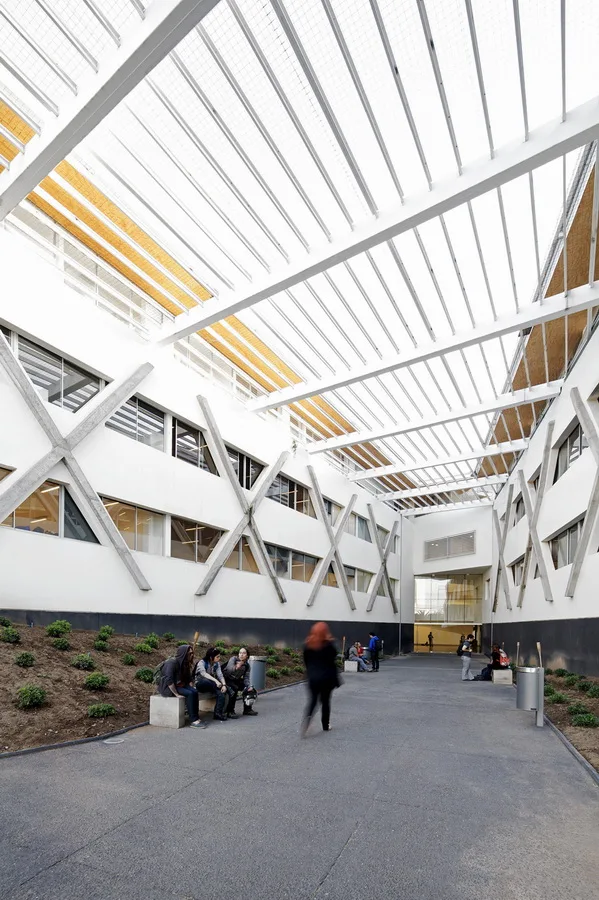
The design employs a finger-like structural form, which creates open courtyard spaces and allows sunlight to penetrate from the east, north, and west. These “fingers” segment the building into distinct stages and periods.
A long, grid-shaped entrance trellis covered with climbing ampelopsis plants is positioned between the buildings along the diagonal axis. The tips of the fingers extend into green zones, serving as buffers against noise and sunlight, while also connecting to the surrounding embankment.
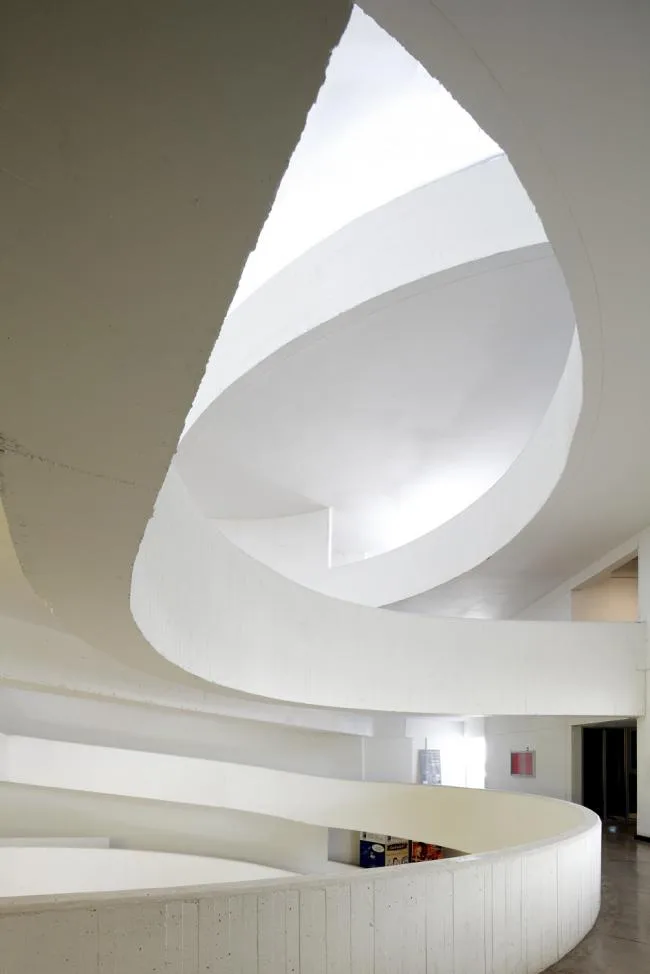
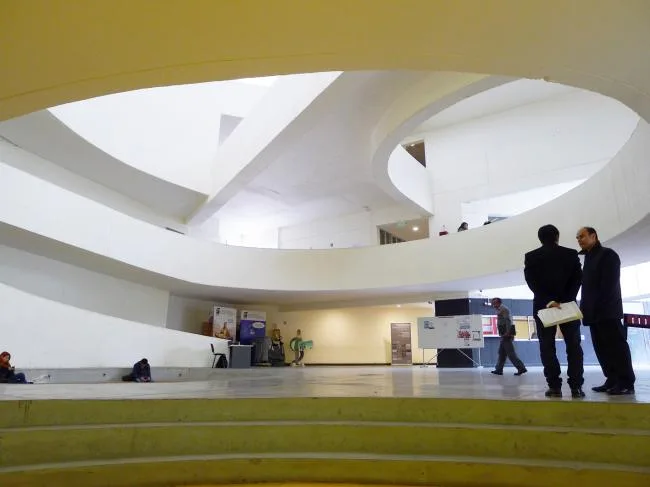
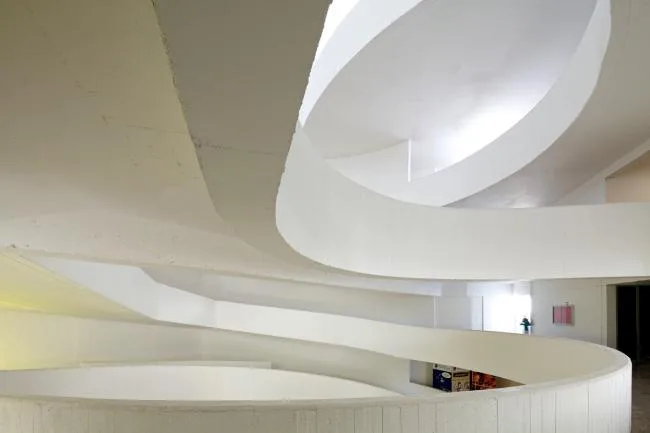
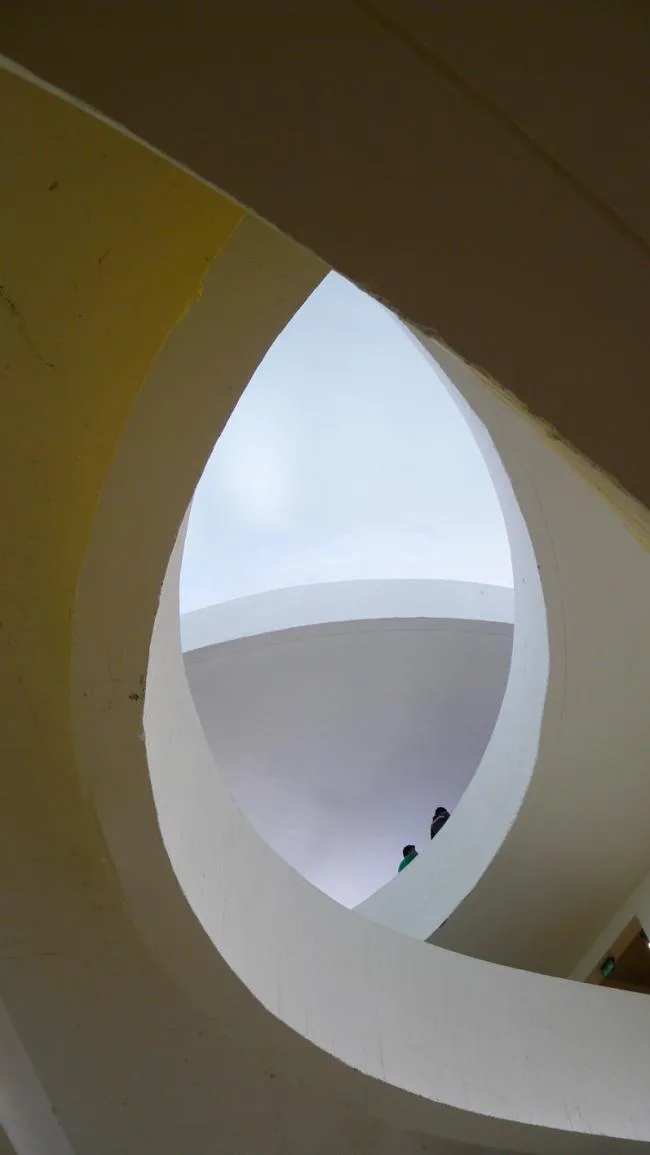
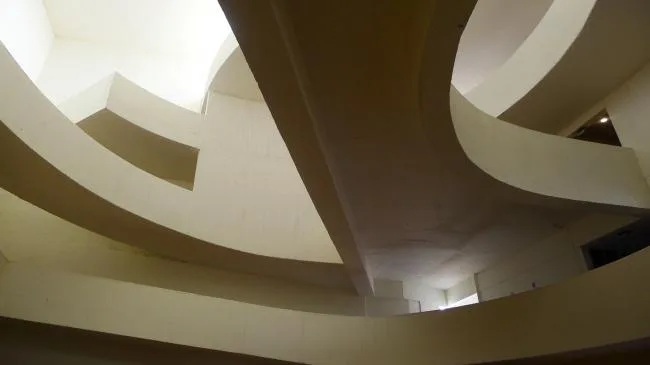
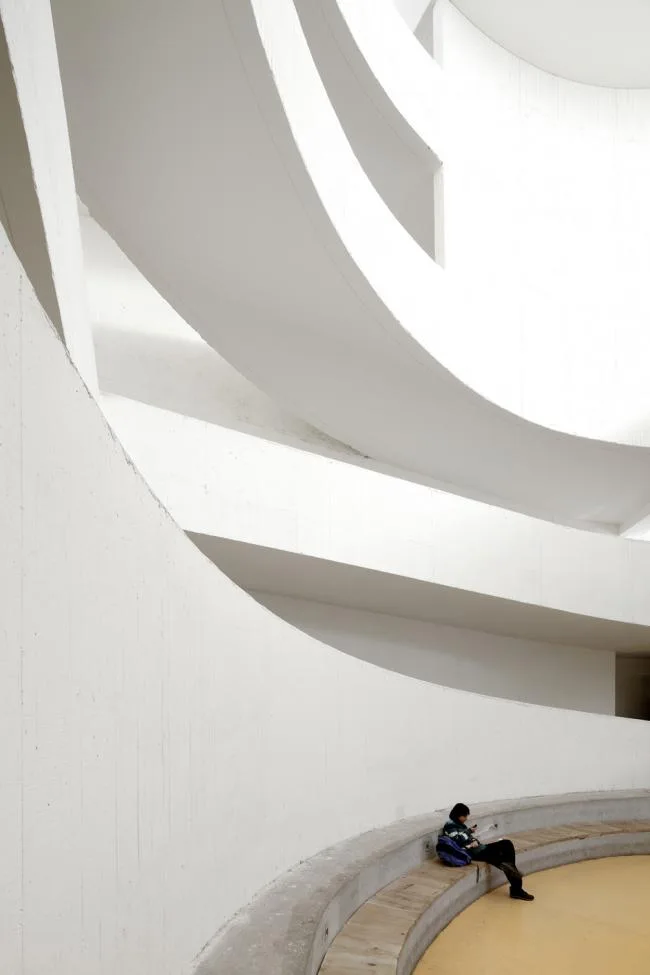
These finger-like extensions converge on a spacious and versatile central hall located on the fourth floor. This area is surrounded and intersected by numerous ramps and resting spaces, forming a large terrace that serves as the core for student and faculty activities, especially during the cold winter months.
The central hall accommodates public and commonly used functions, featuring abundant natural light and flexible spaces equipped with audiovisual technology to support multifunctional uses.
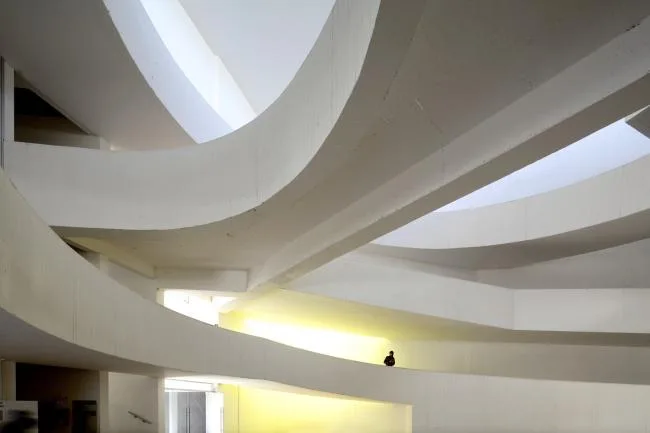
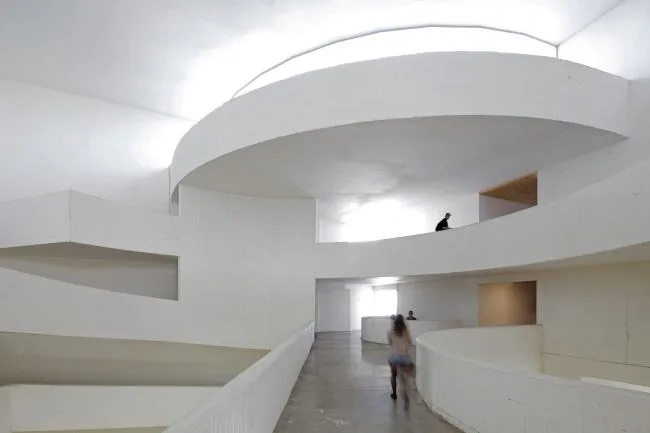
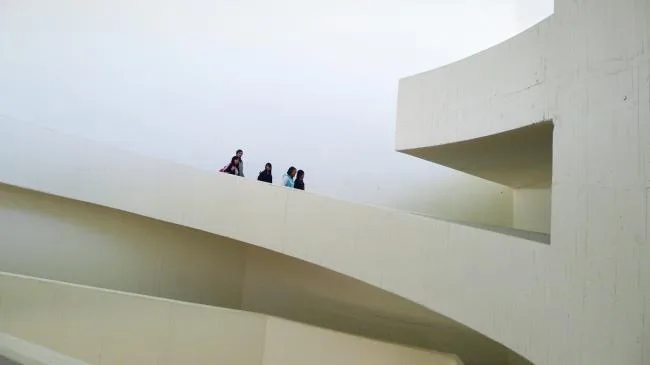
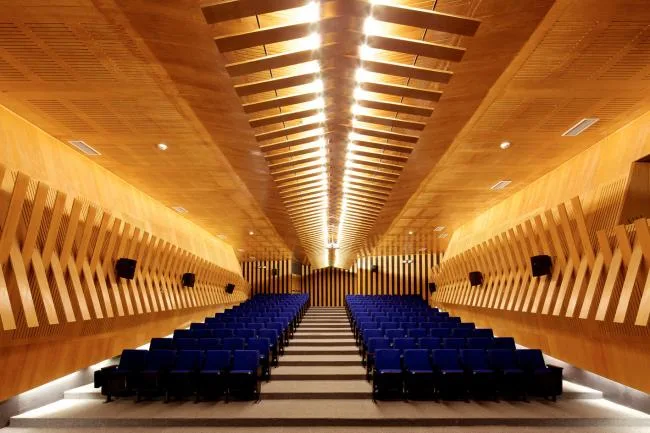
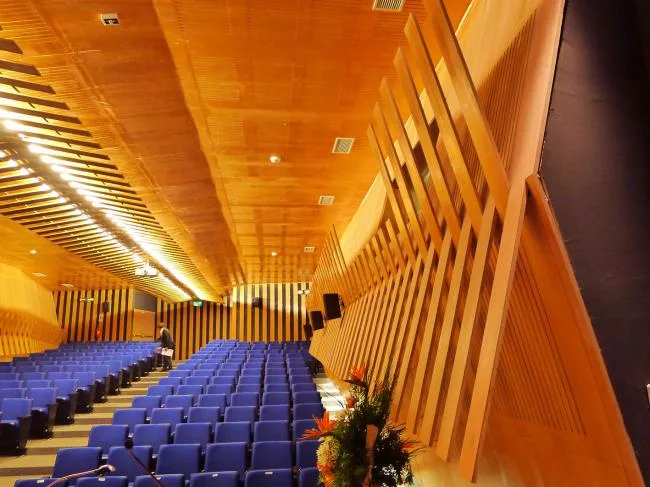
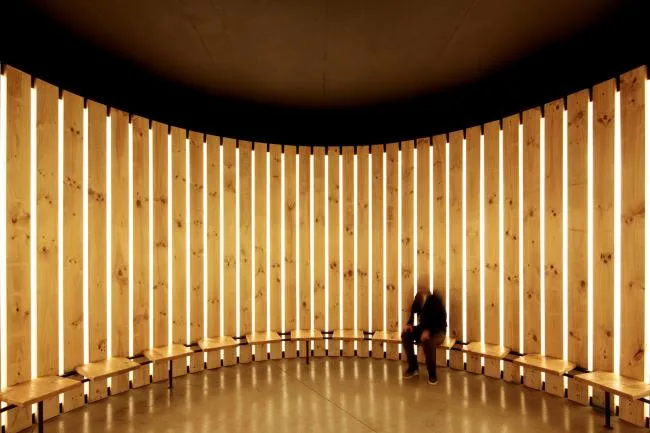
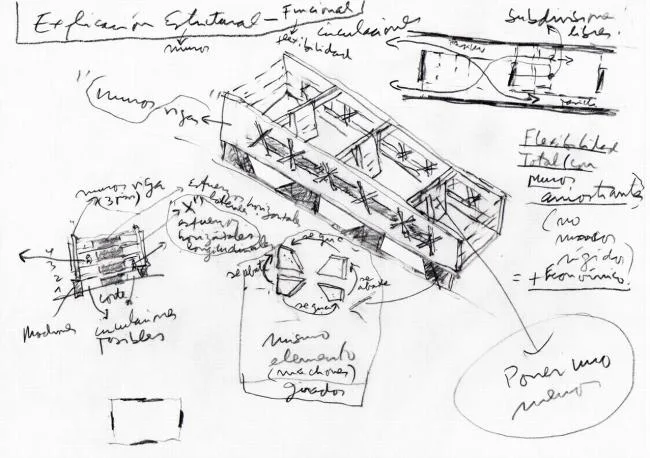
The “finger” ramps and corridor forms within the buildings represent a hybrid design approach influenced by both economic and flexible considerations. The exterior longitudinal facades feature robust walls reinforced with steel “X” and T-shaped sections to maintain structural rigidity.
Horizontally, the volumes intersect solid concrete walls at fixed intervals across all levels. These design elements ensure the building bears horizontal structural loads effectively while allowing flexibility and ease of movement through corridors along the longitudinal sides.
Moreover, compared to similar structures, the construction cost per square meter is notably economical.
Drawings
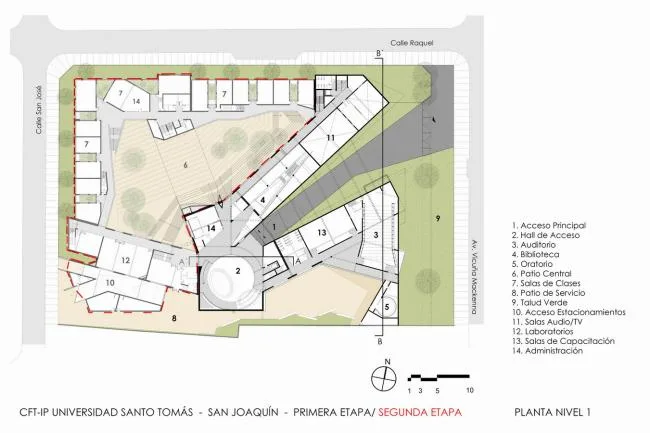
First Floor Plan
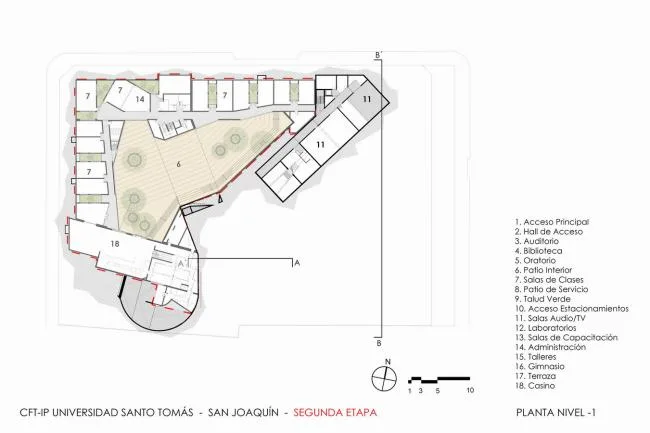
Underground Floor Plan
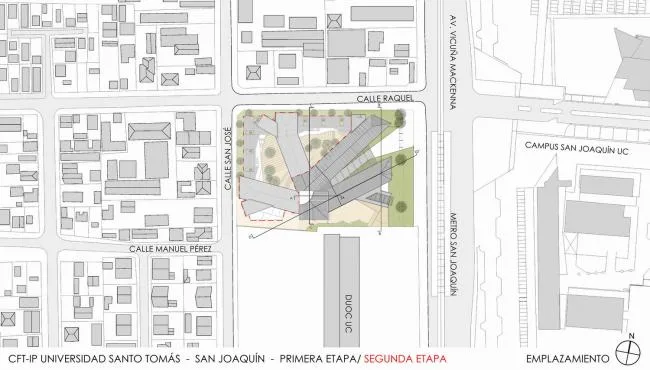
Master Plan
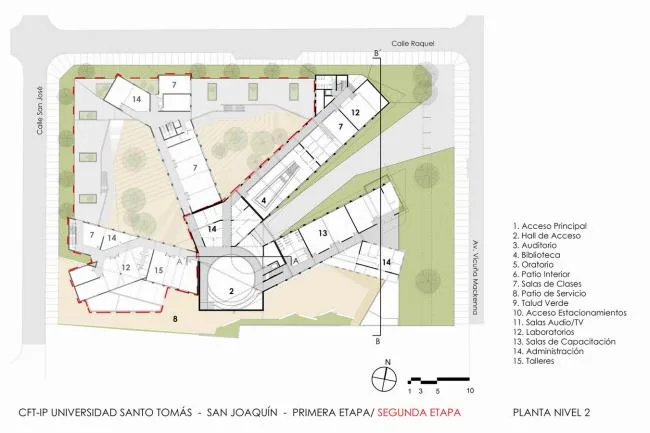
Second Floor Plan
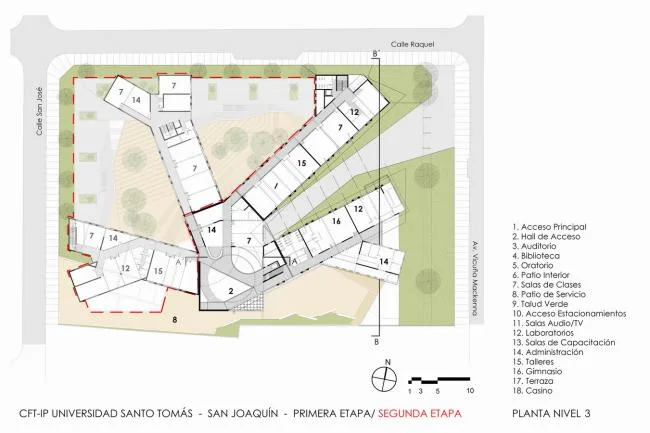
Third Floor Plan
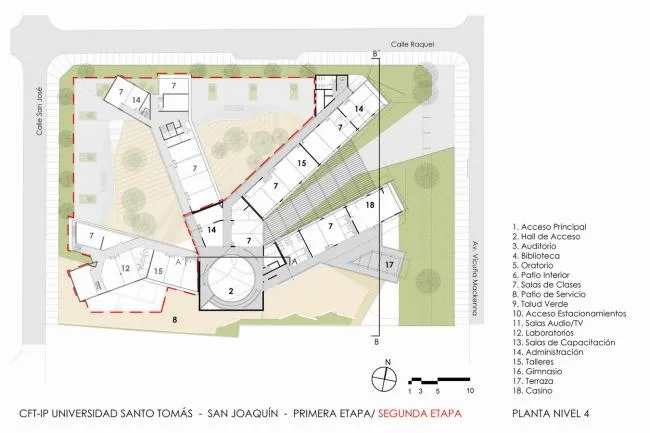
Fourth Floor Plan
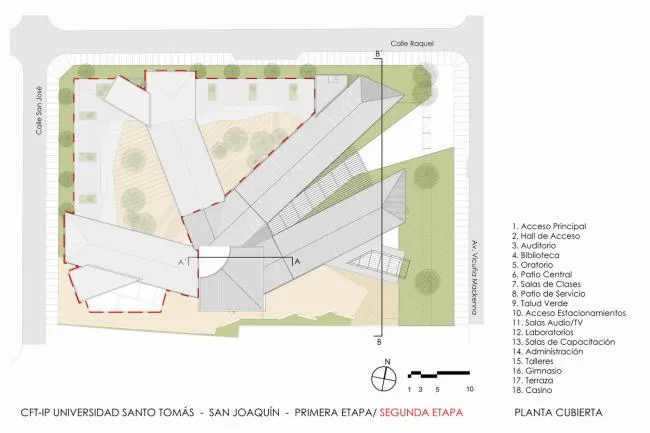
Roof Plan
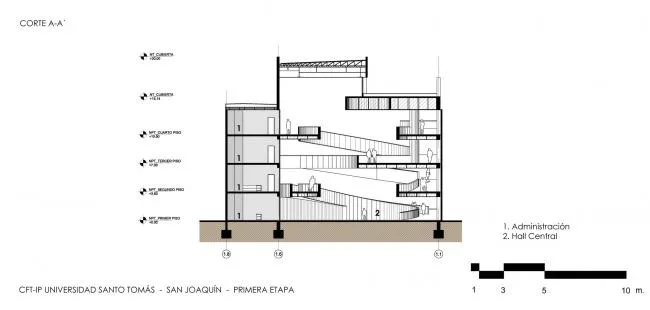
Sectional Views
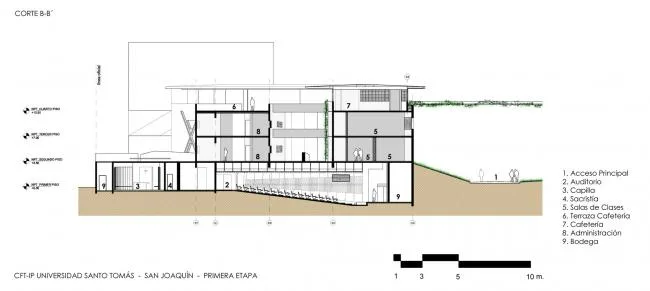
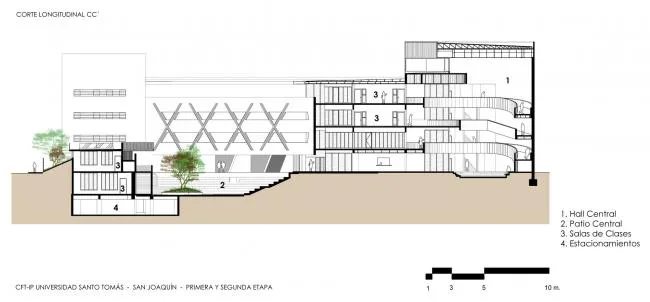
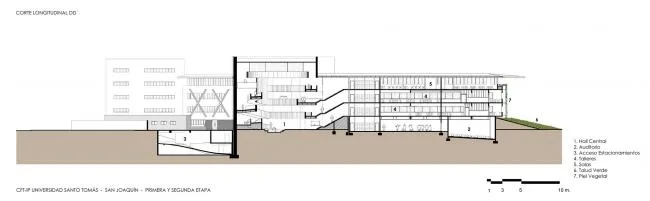
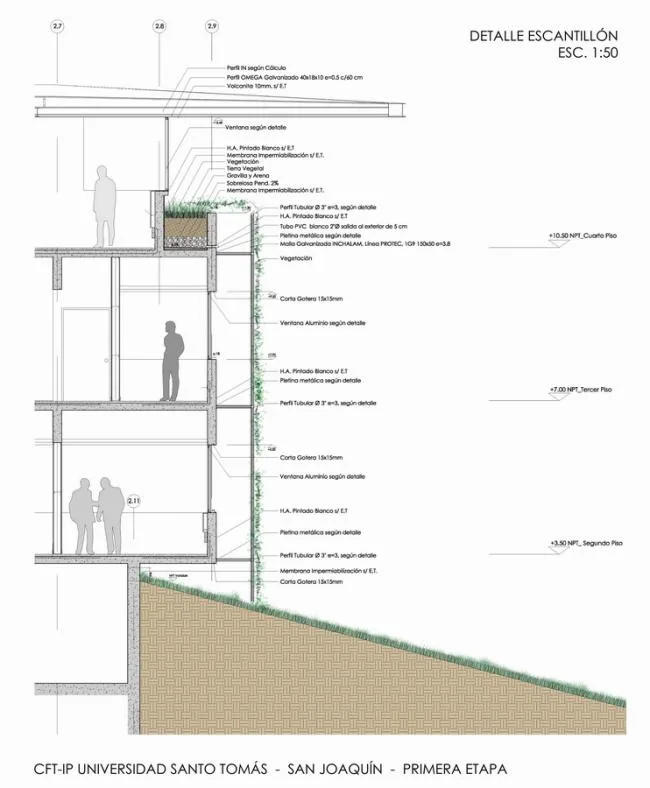
Node Construction Analysis Diagram
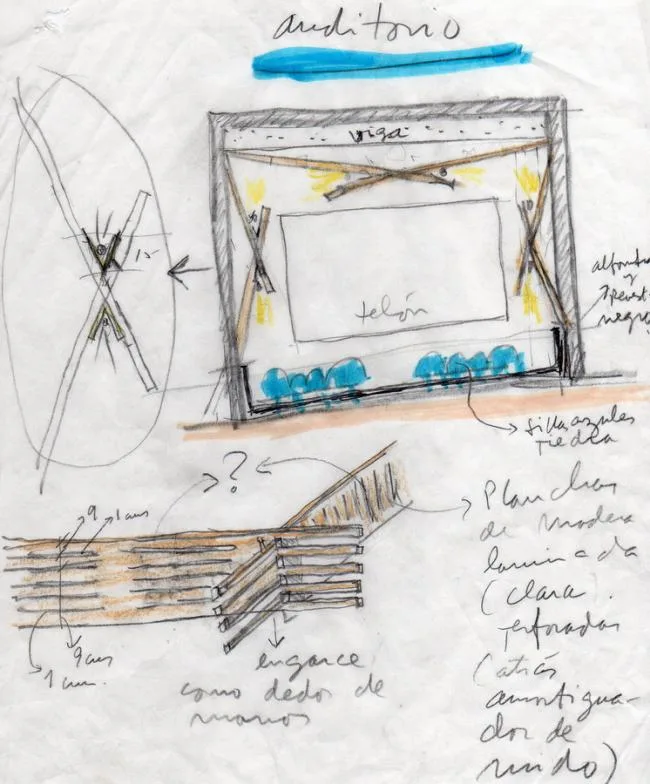
Concept Sketches
Project Information
Architect: Browne Swett Arquitectos
Location: Vicuña Mackenna 4835, San Joaquín, Santiago Metropolitan Region, Chile
Lead Architects: Enrique Browne, Tomás Swett
Design Team: Felipe Combeau, Tadade Ipiña, Olimpia Lira, Cristóbal Teixido, Gonzalo De la Parra, Josefina del Río, Carolina Rocco
Building Area: 8,107 m²
Project Year: 2013
Architectural Photographers: Nico Saieh, Enrique Browne
Contractor: EBCO
Structural Engineering: RG Ingenieros Asociados LTDA — Jorge Gonzalez and Juan Espinosa
Technical Inspection: IBLOCK — Willy Herrera
Acoustic Design: Delta Acústica
Lighting Design: Paulina Sir / Alejandra Ramos
Principal: CFT-IPSanto Tomás
Site Area: 9,861.5 m²
Phase 2 Area: 10,288.3 m²
Total Construction Area: 18,395.14 m²
Phase 2 Construction Period: 2013–2014












Must log in before commenting!
Sign Up