
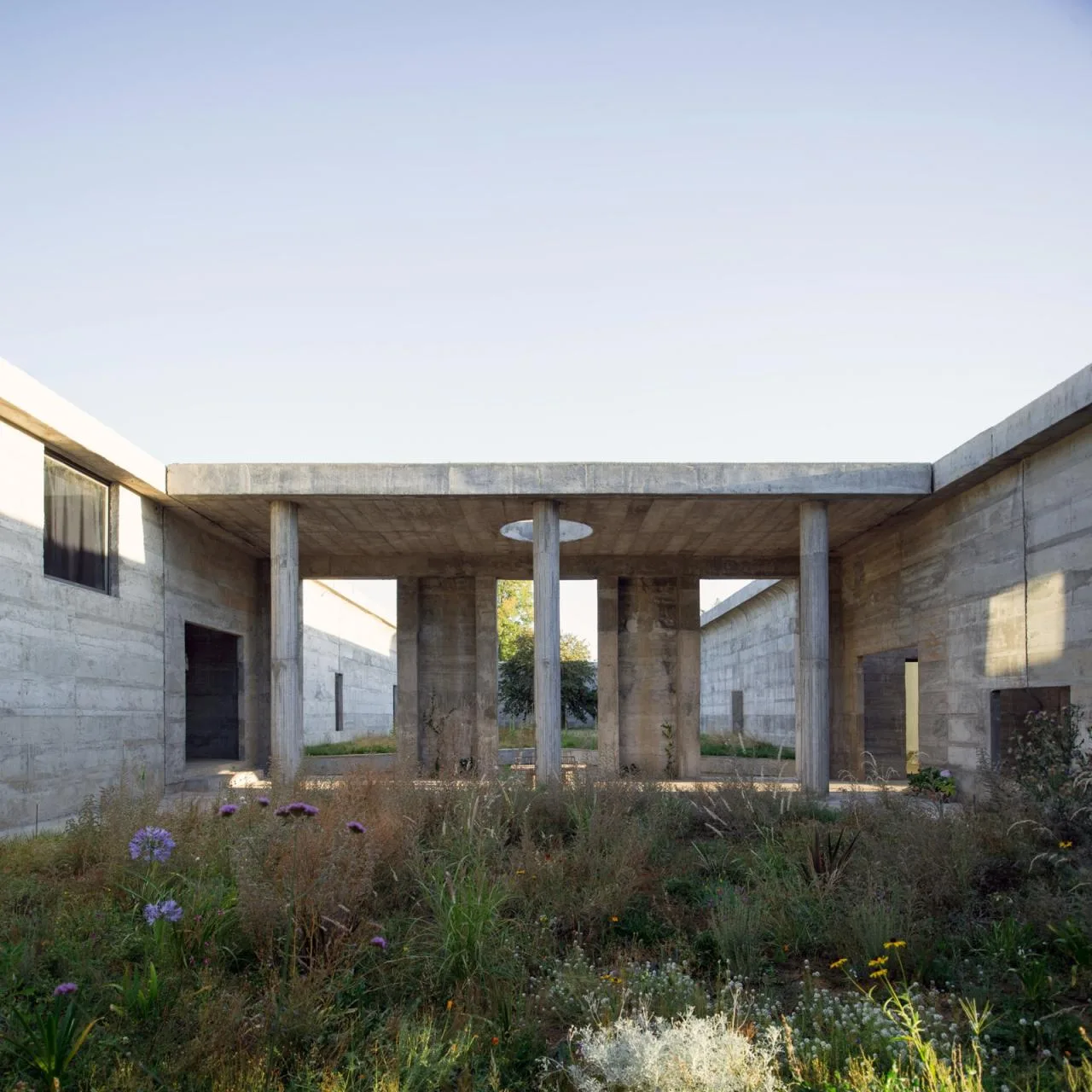
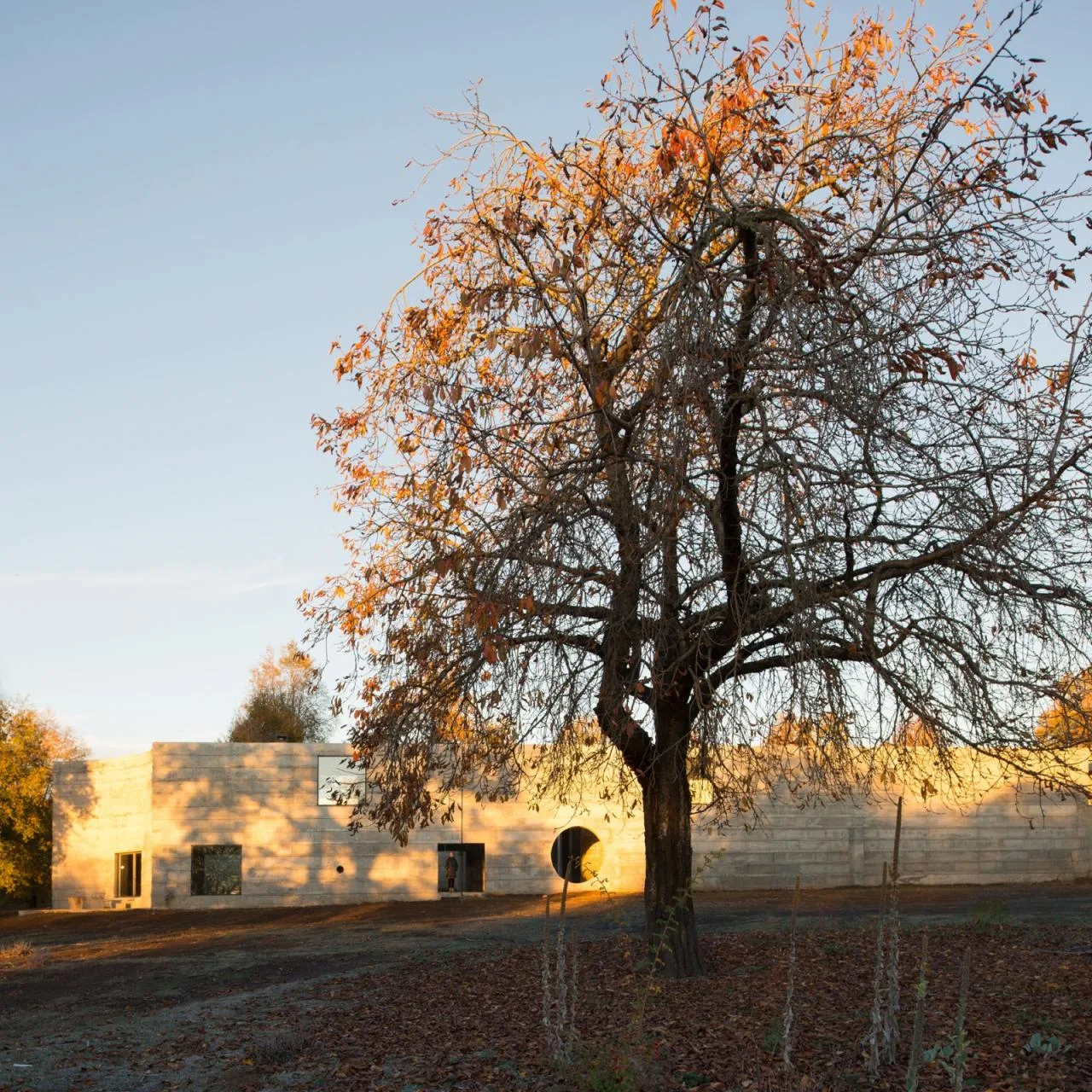
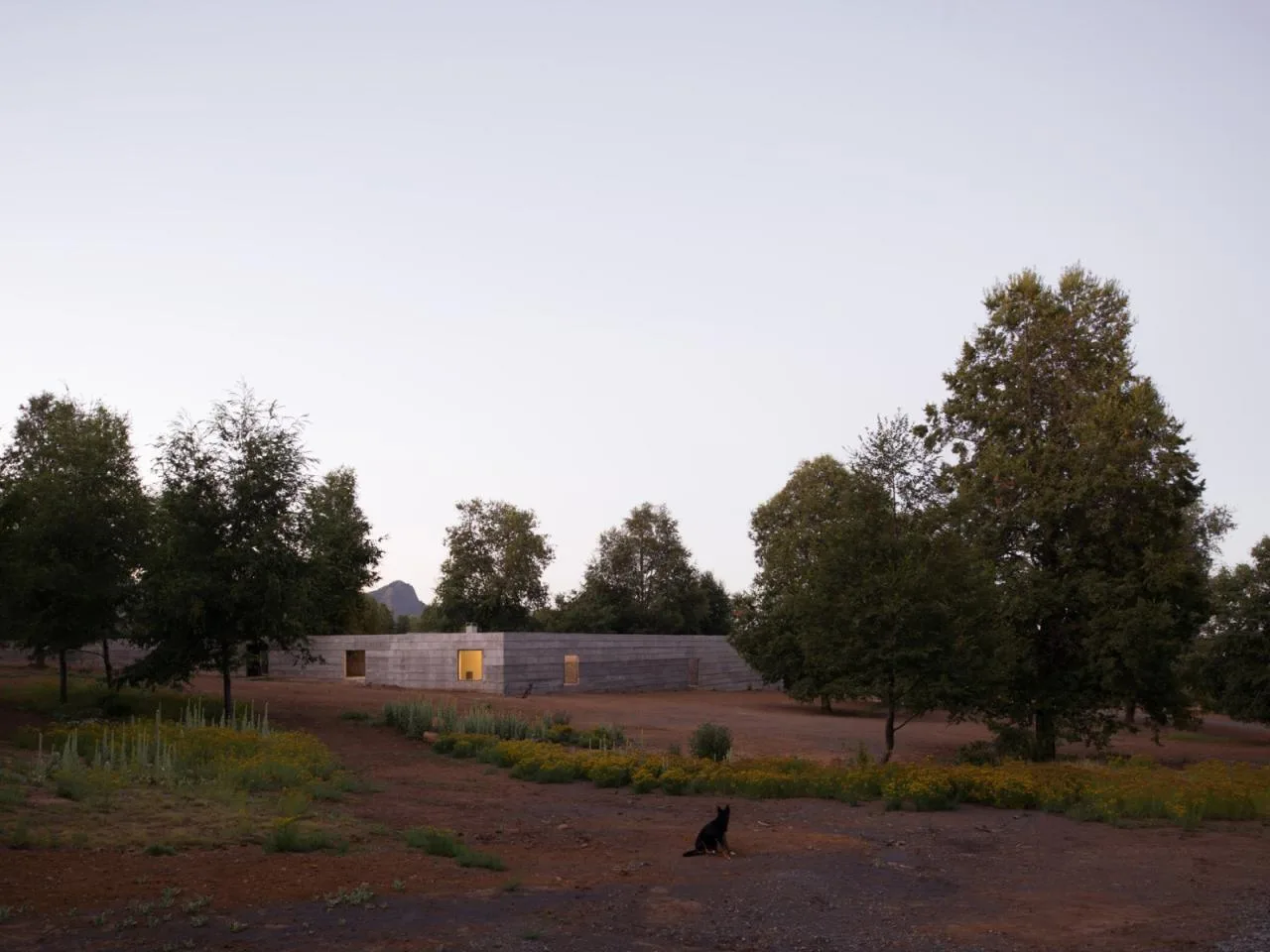
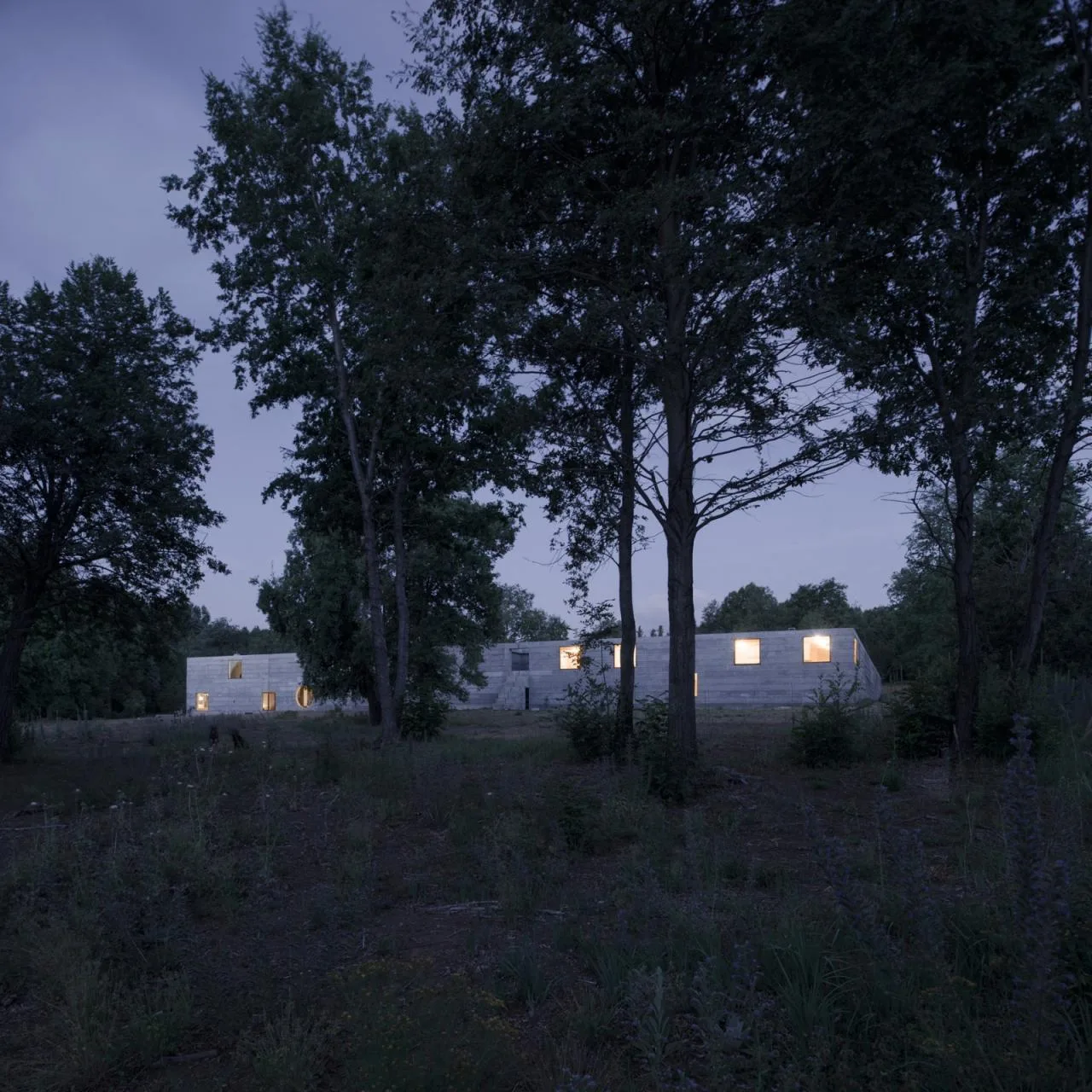
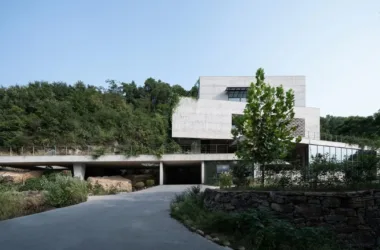
Situated at the foothills of the Andes mountain range, this architectural complex consists of 12 distinct volumes separated by clearly defined seismic gaps. Calling this concrete cluster merely a house or museum would be an oversimplification.
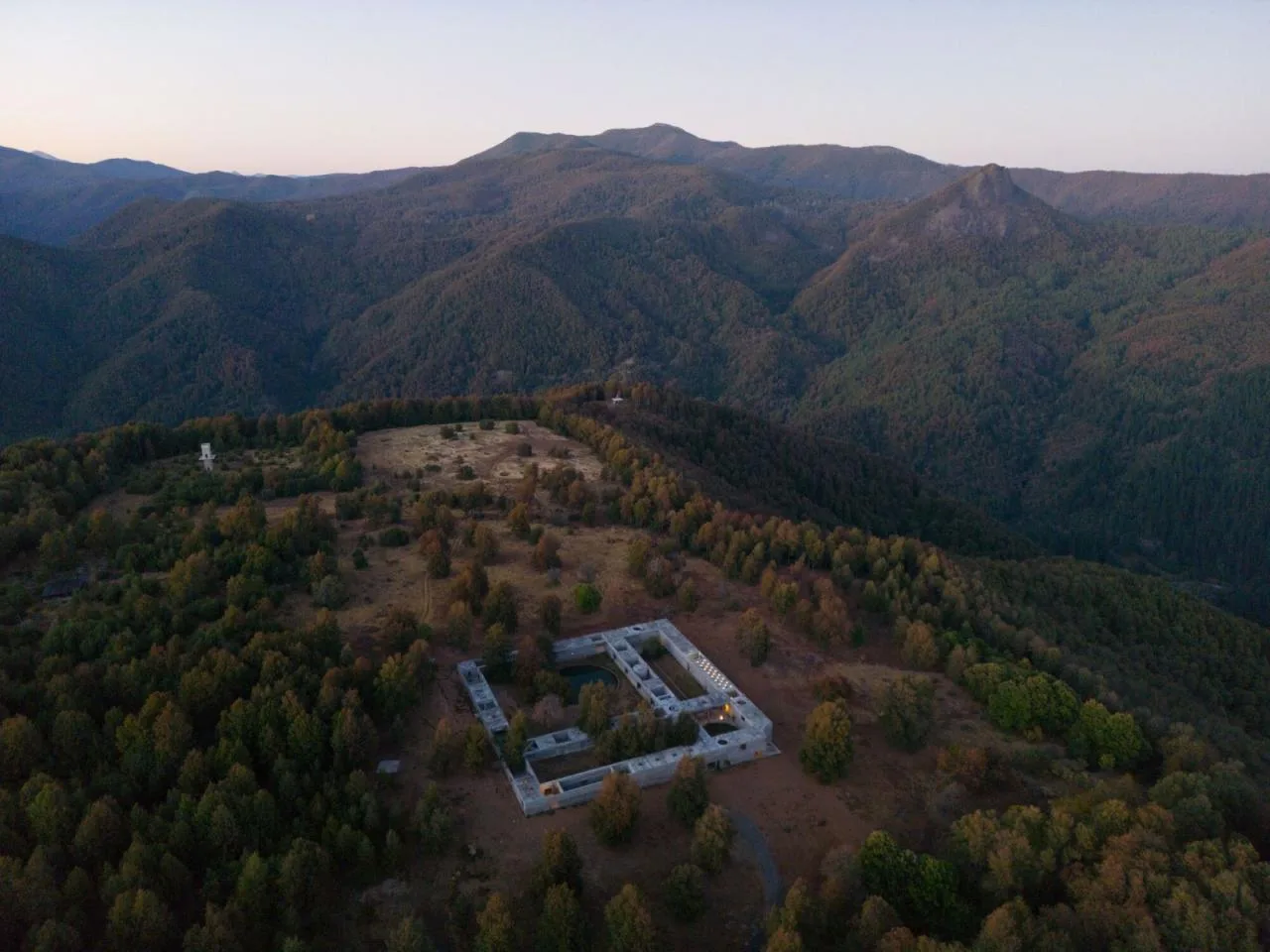
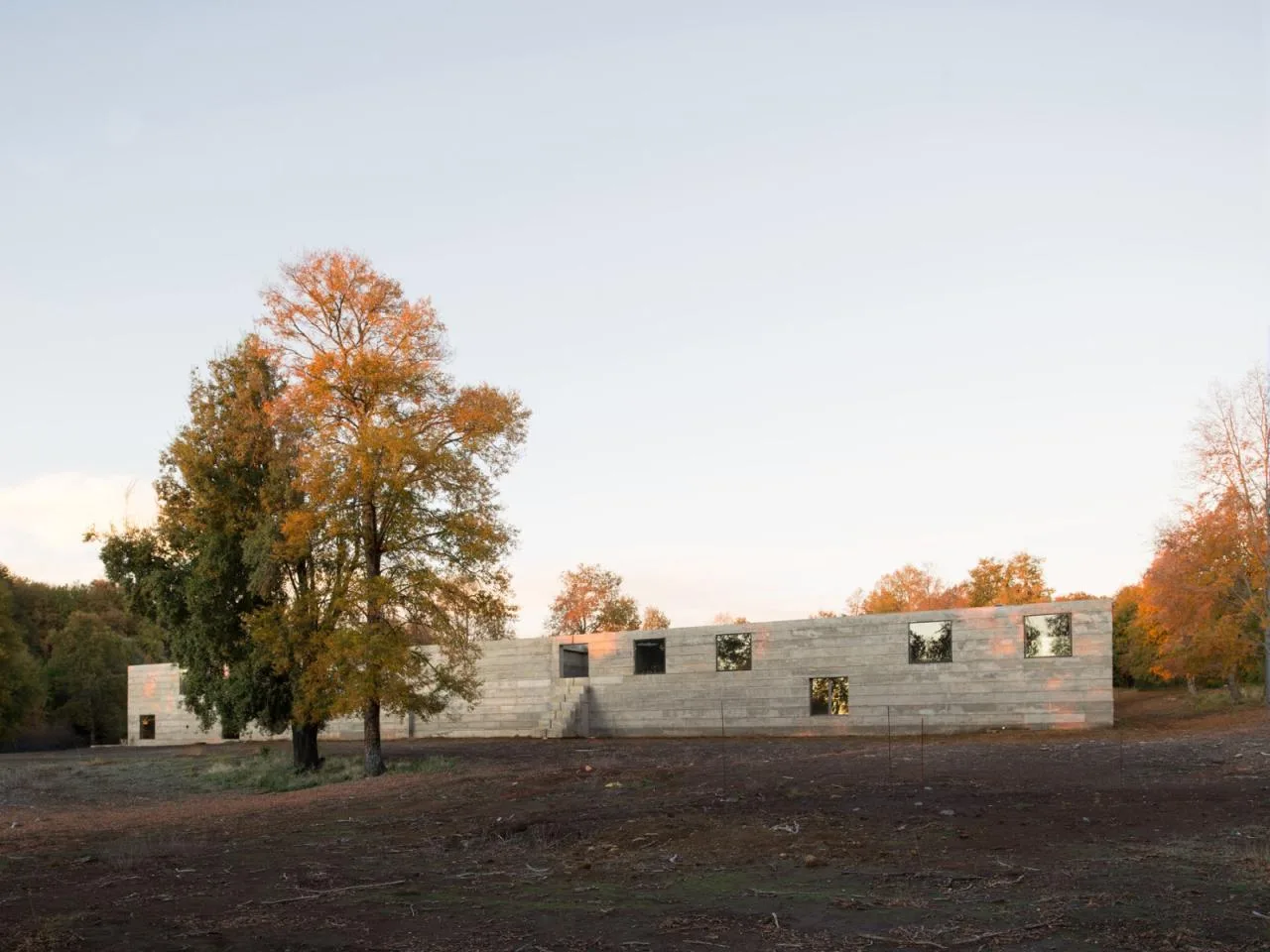
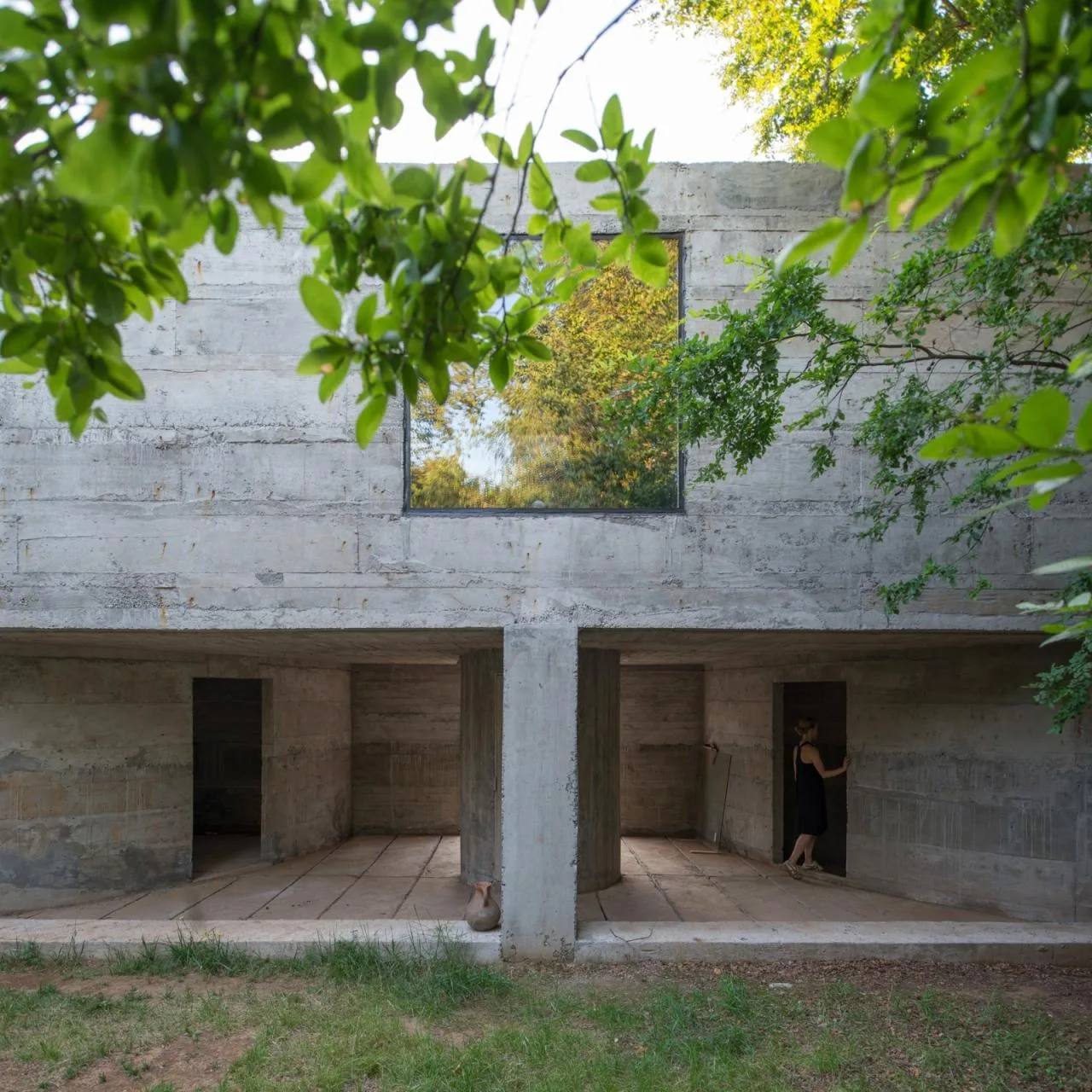
Beyond its secular appearance, this ensemble resembles a corridor or monastery. Its design features a straight, solemn outline with a square layout divided by asymmetrical crosses, enclosing rooms arranged around a central core.
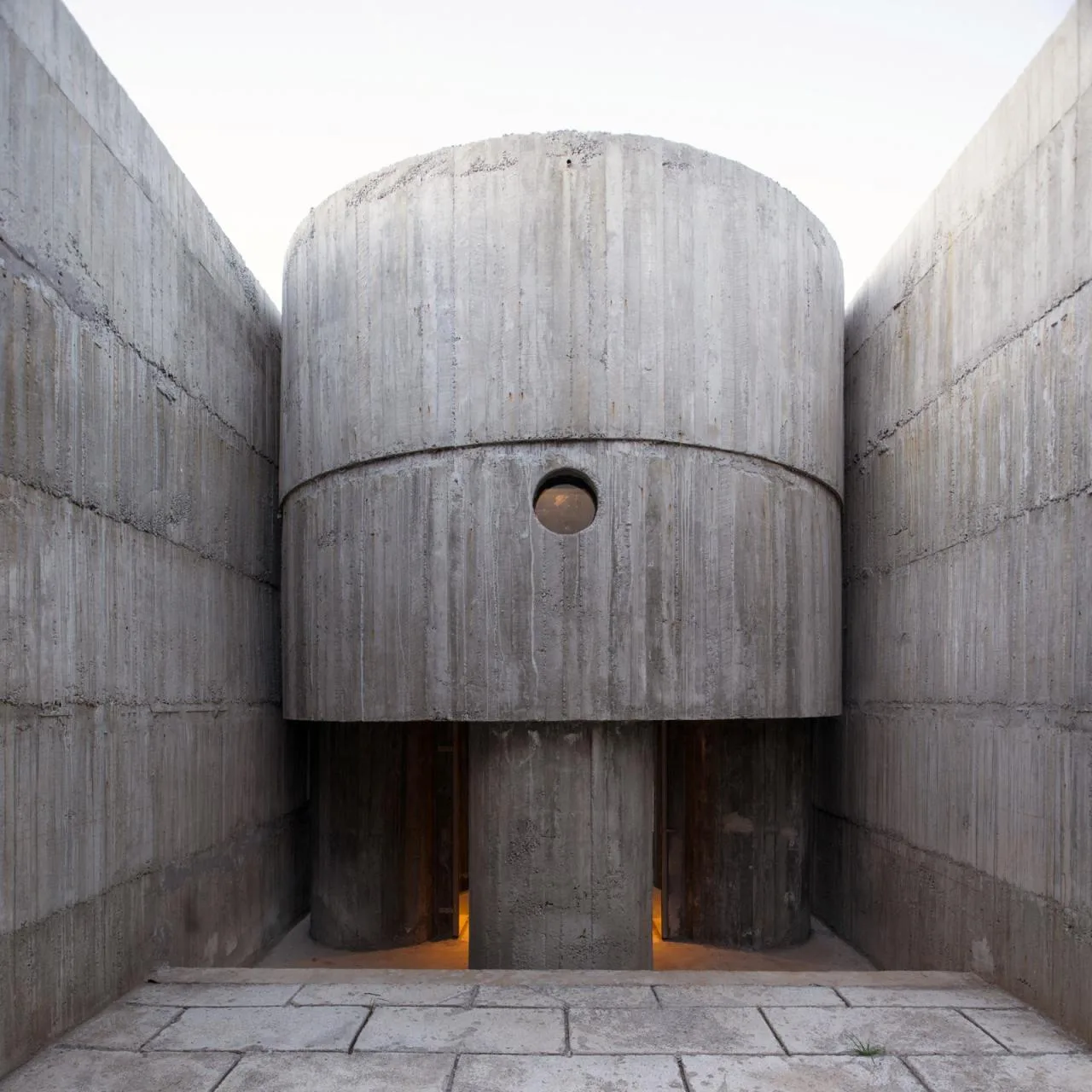
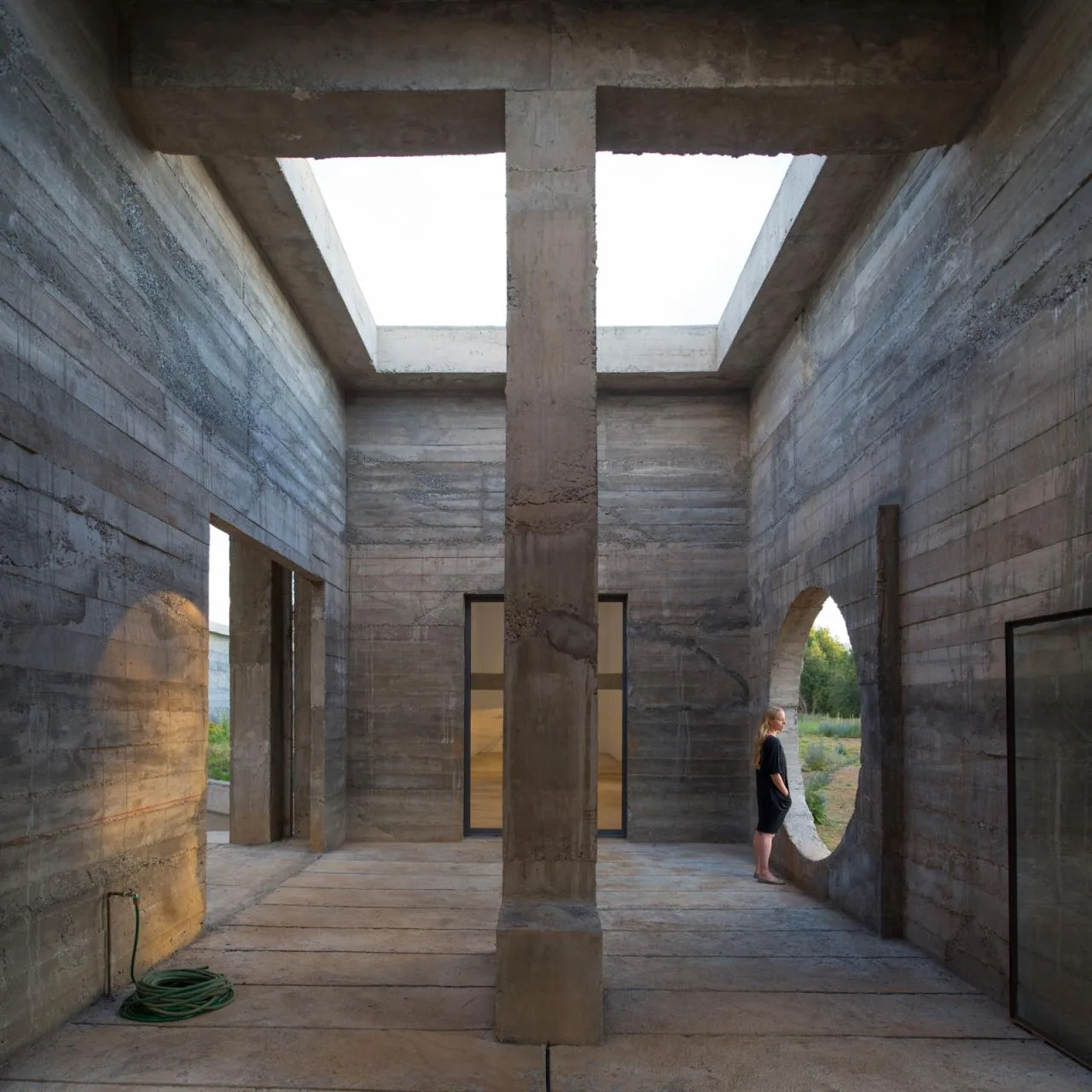
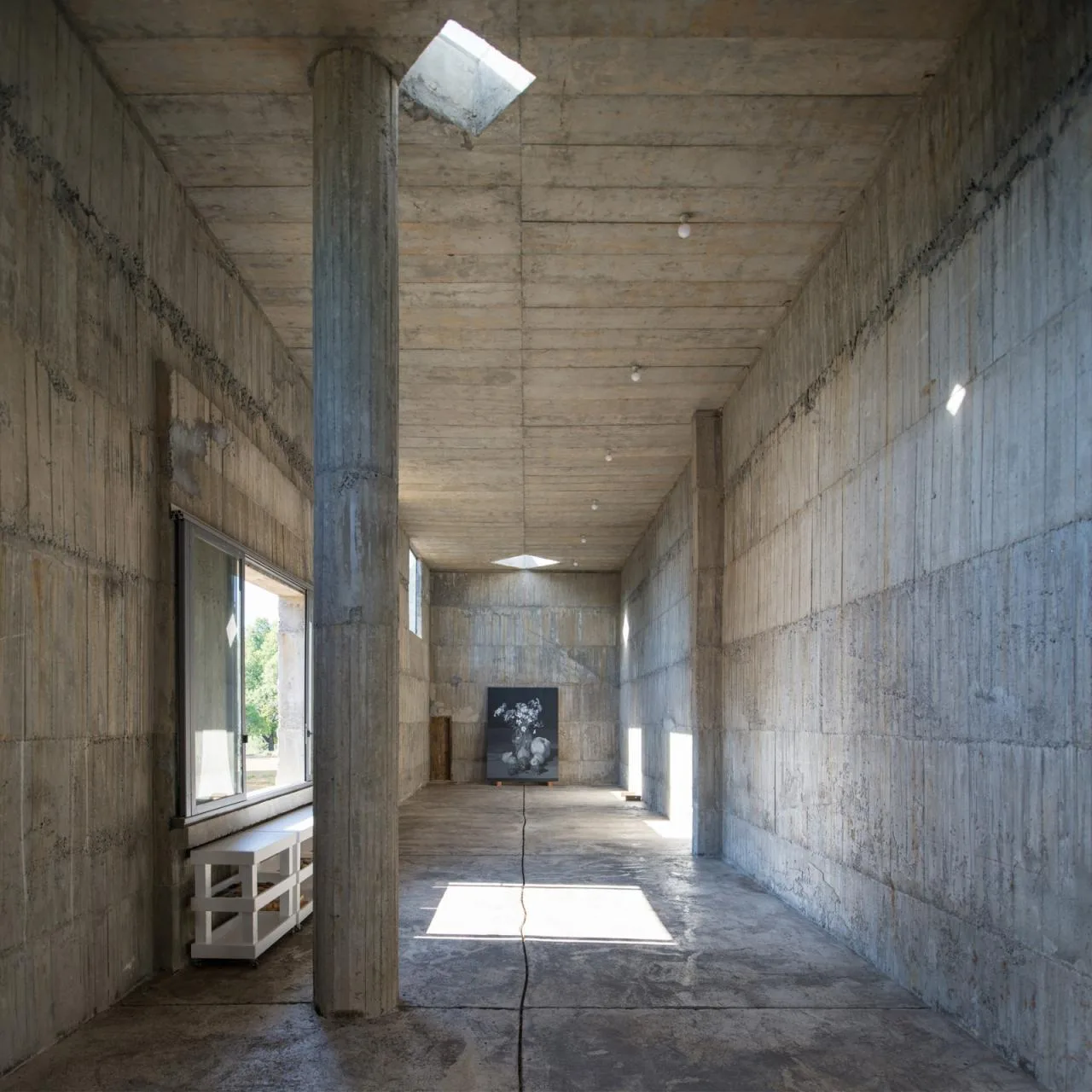
The rooms are arranged horizontally around four distinct courtyards. One follows a natural slope, simulating the path of the sun from sunrise to sunset. Another courtyard is narrow, flat, and faces north, featuring a stream that connects a solitary hazelnut tree with two triangular ends. The third courtyard is a circular flower garden, while the largest—nine times bigger than the others—contains a circular pond surrounded by mature trees.
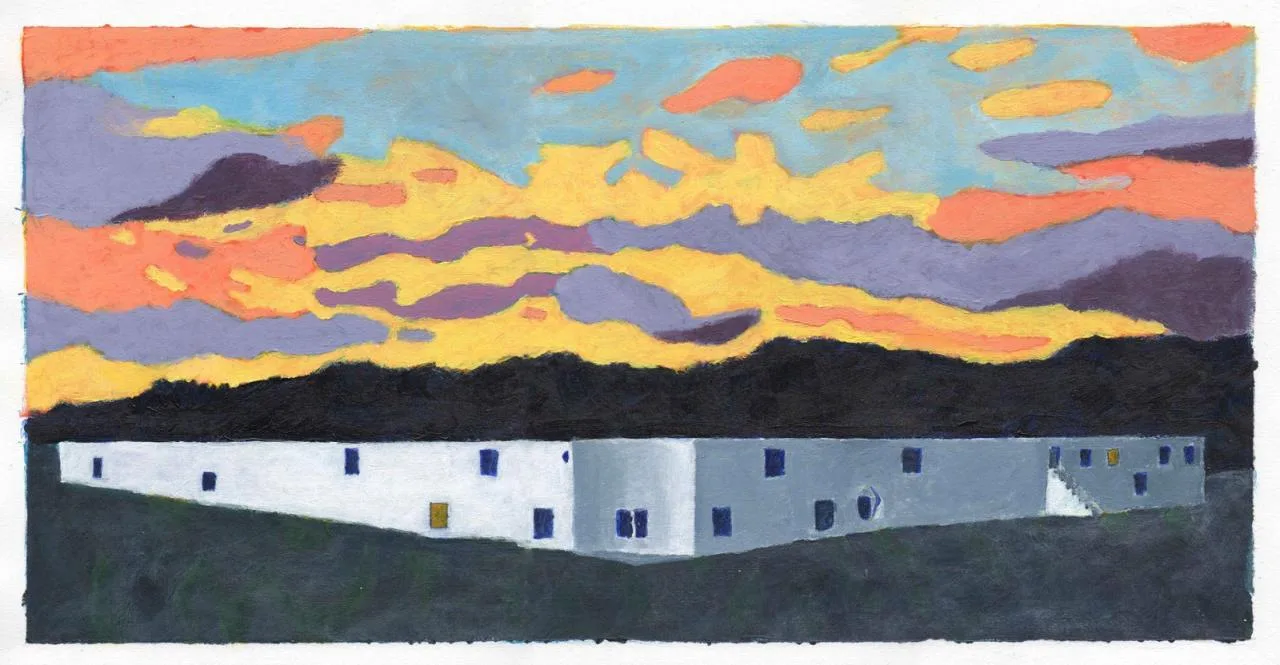
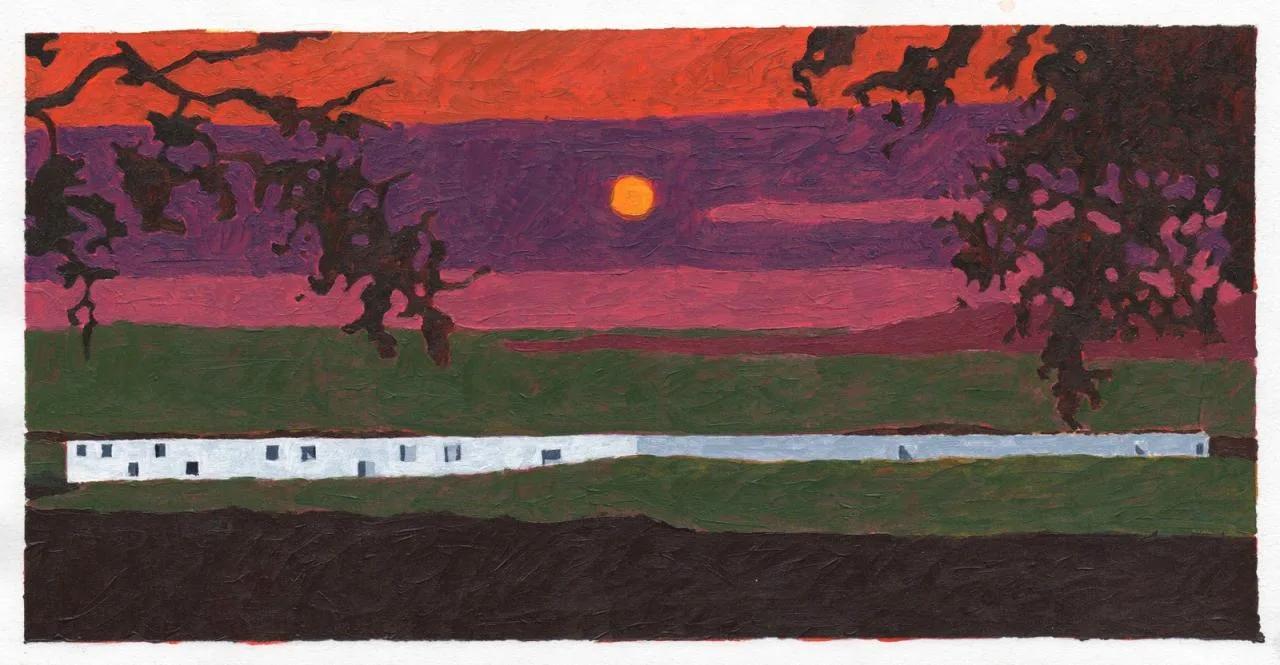
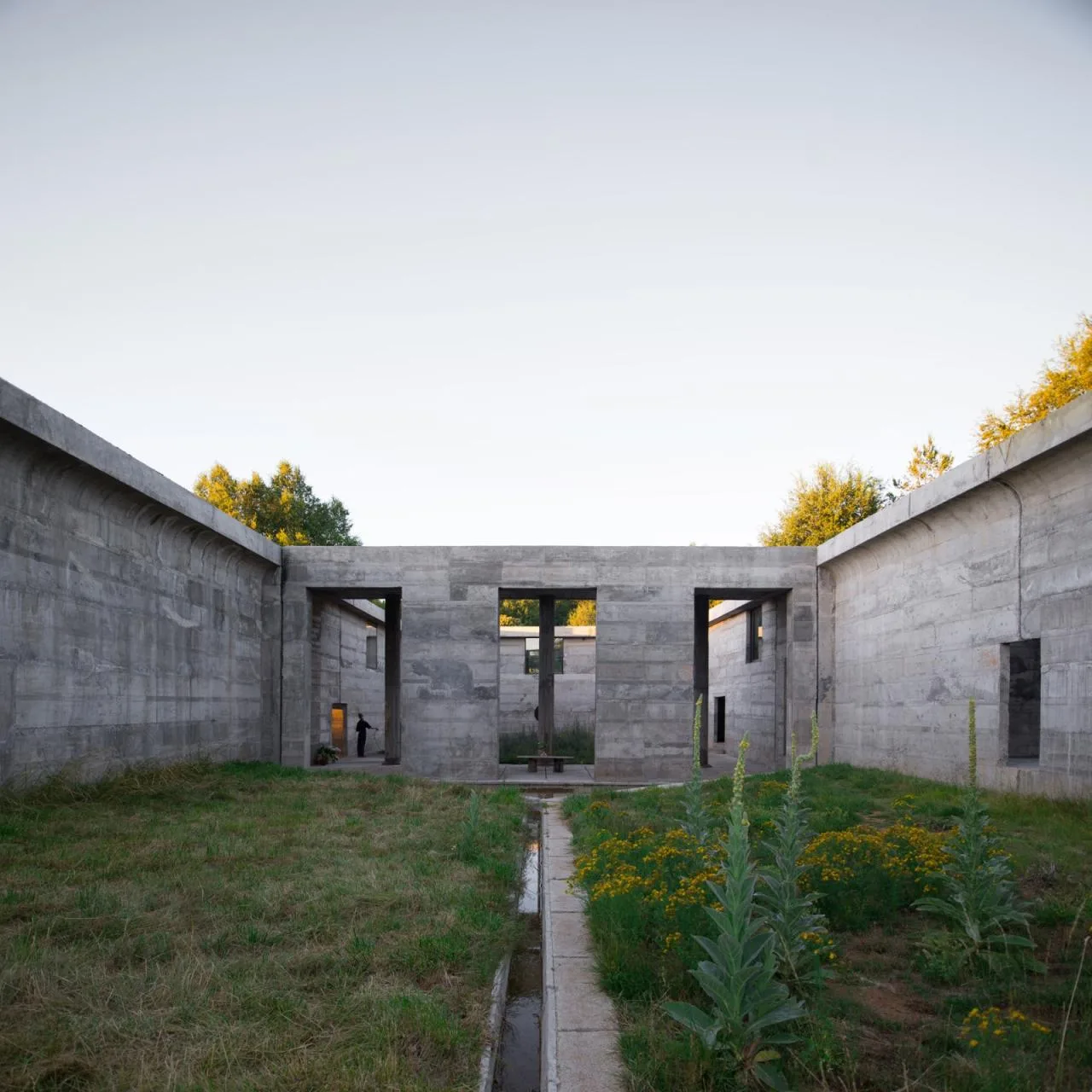
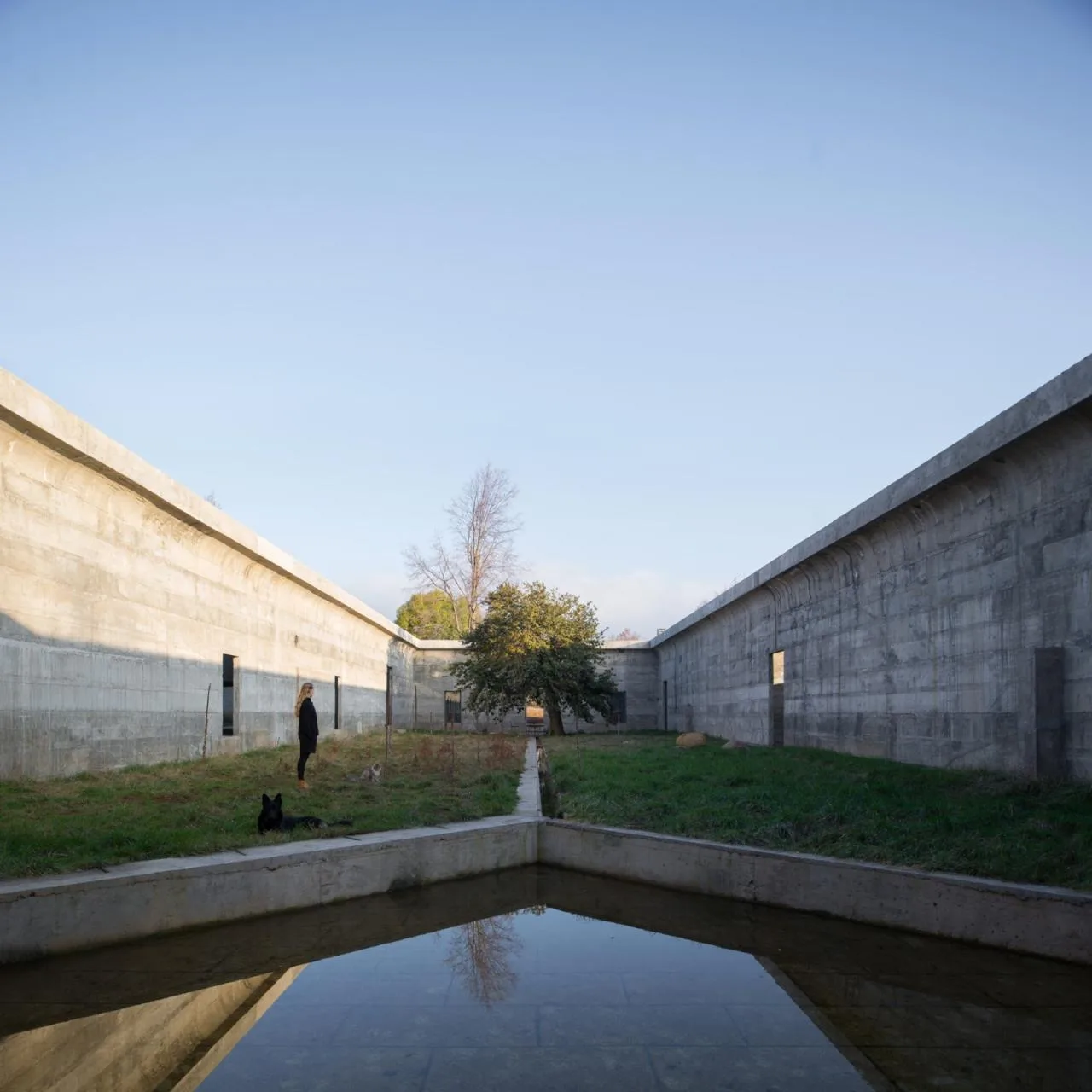
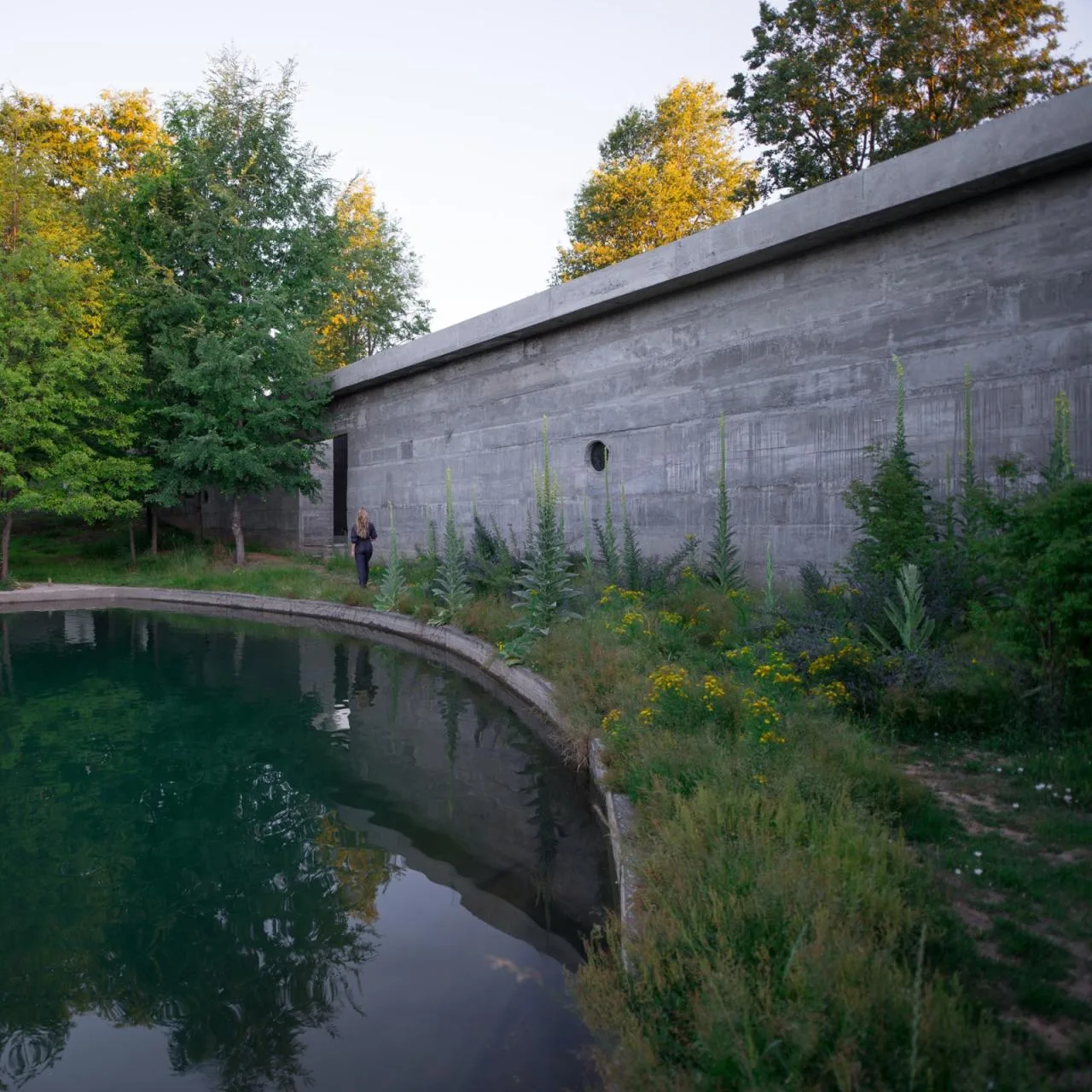
The name of this complex is inspired by its largest courtyard, which matches the size of a traditional Chilean bullfighting ring called a “medialuna.”
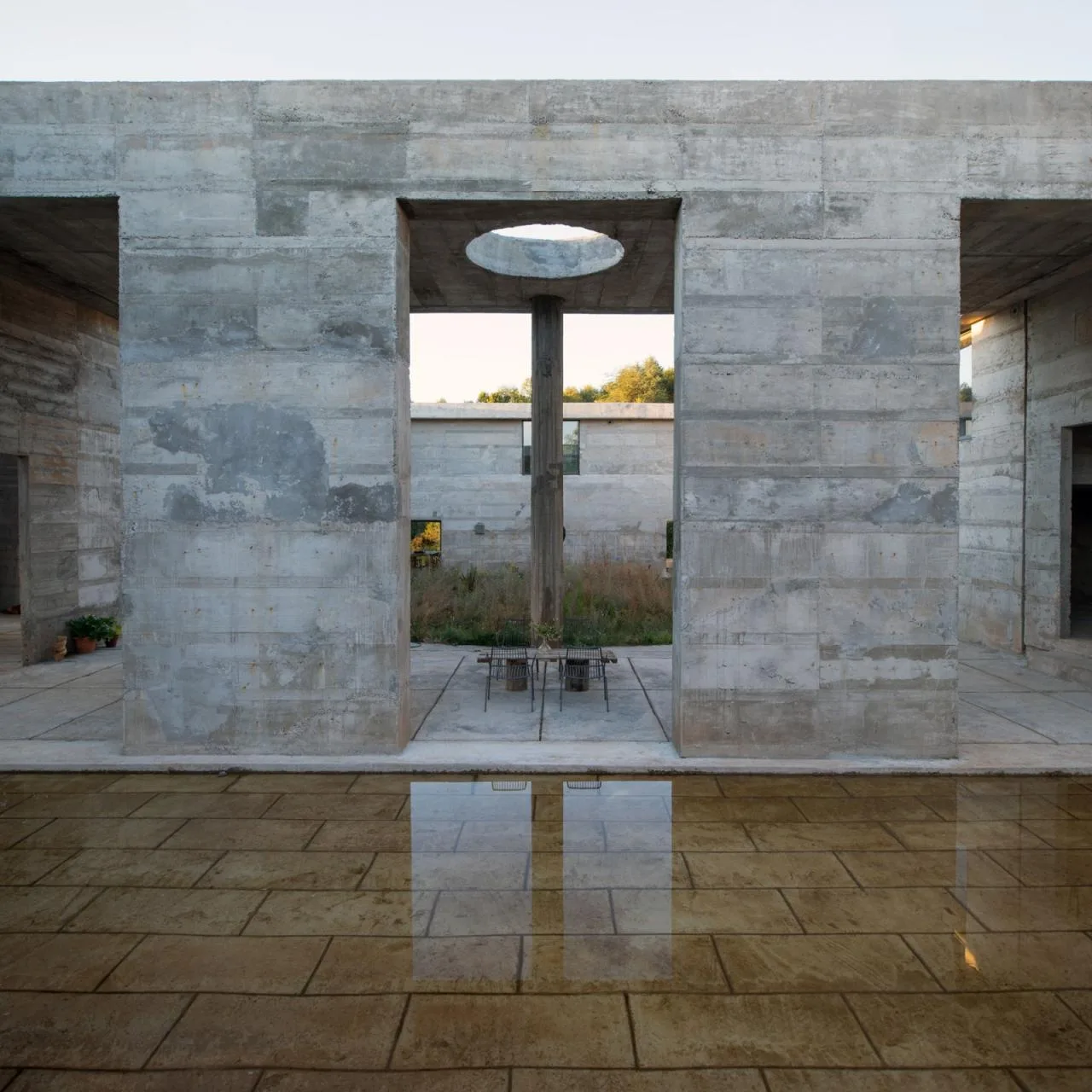
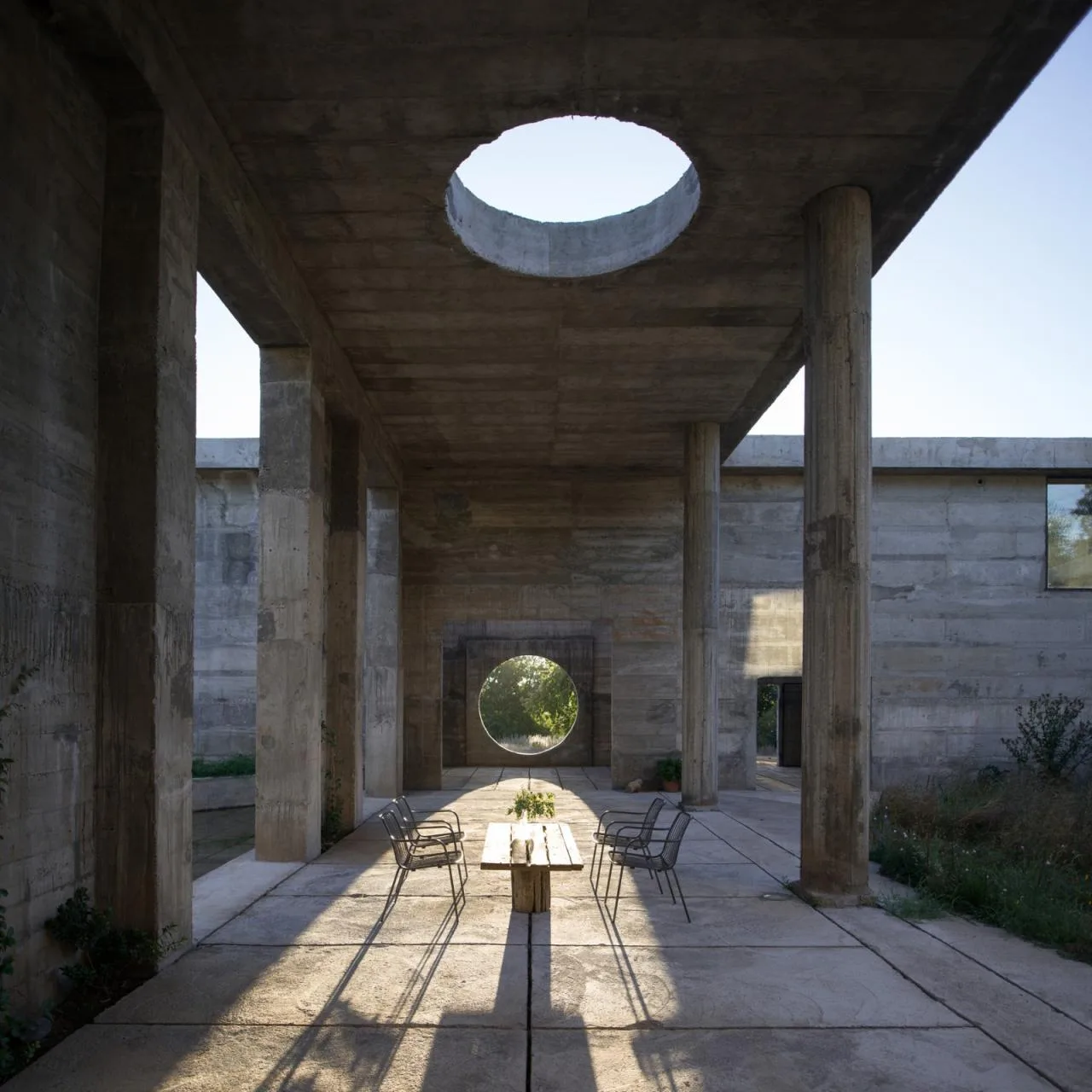
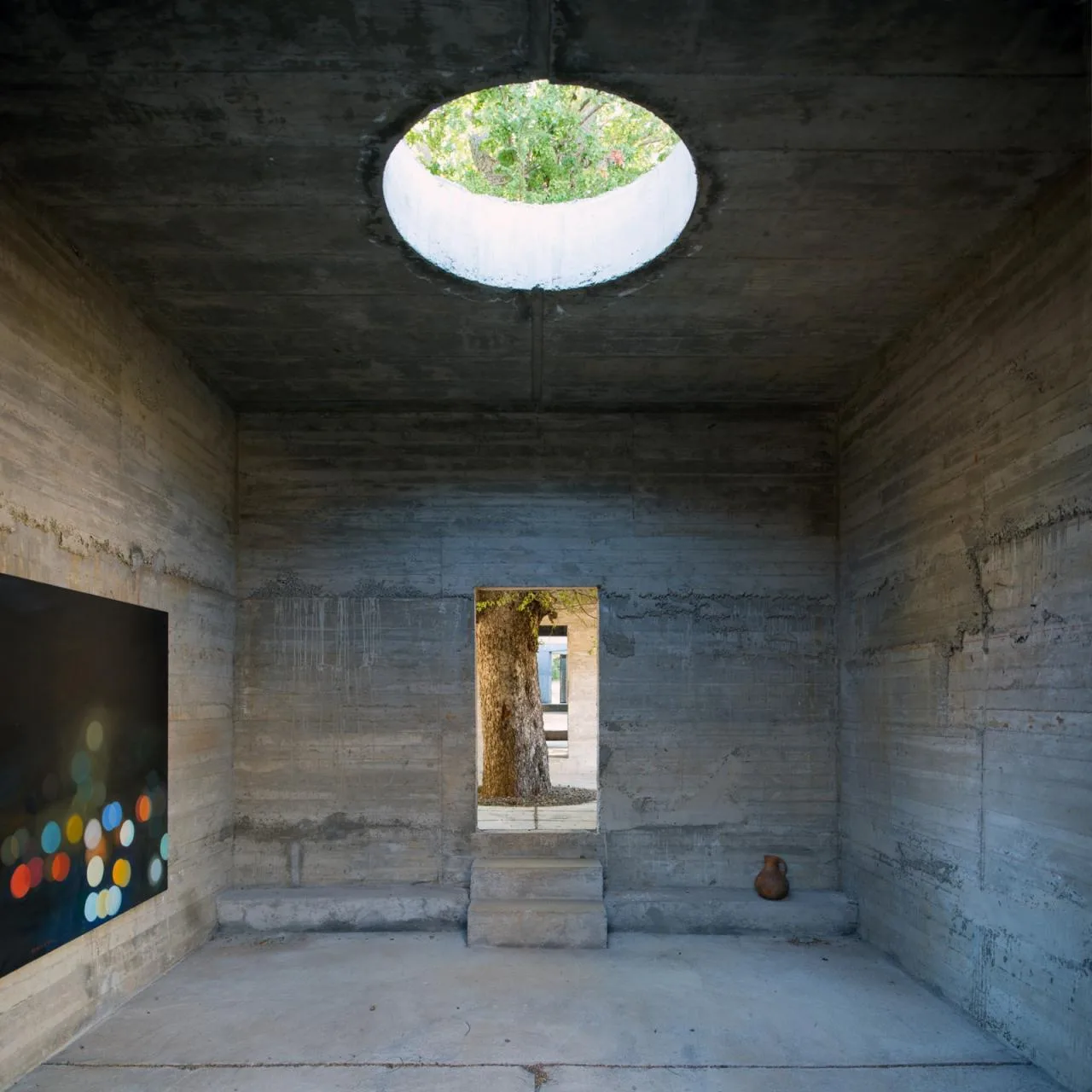
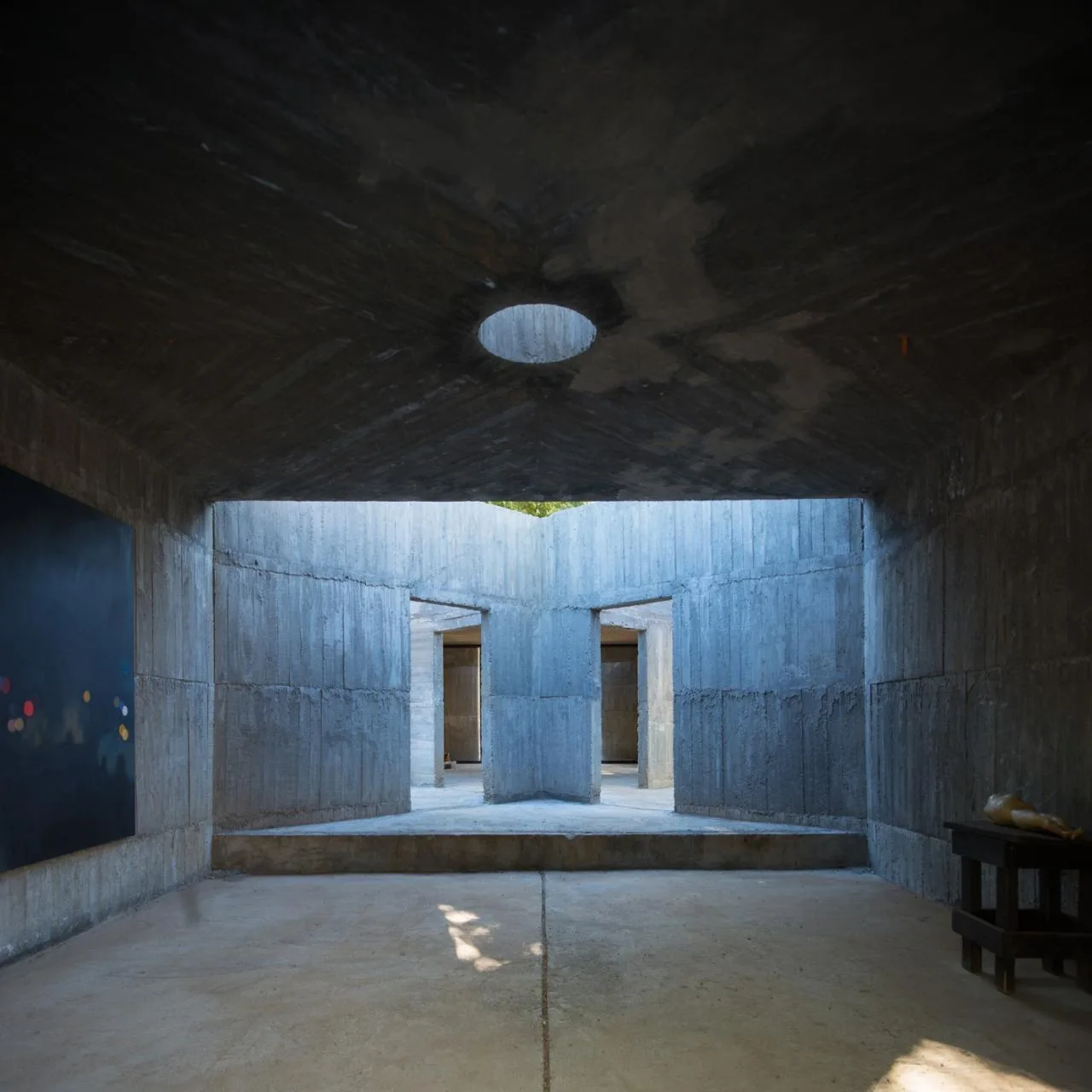
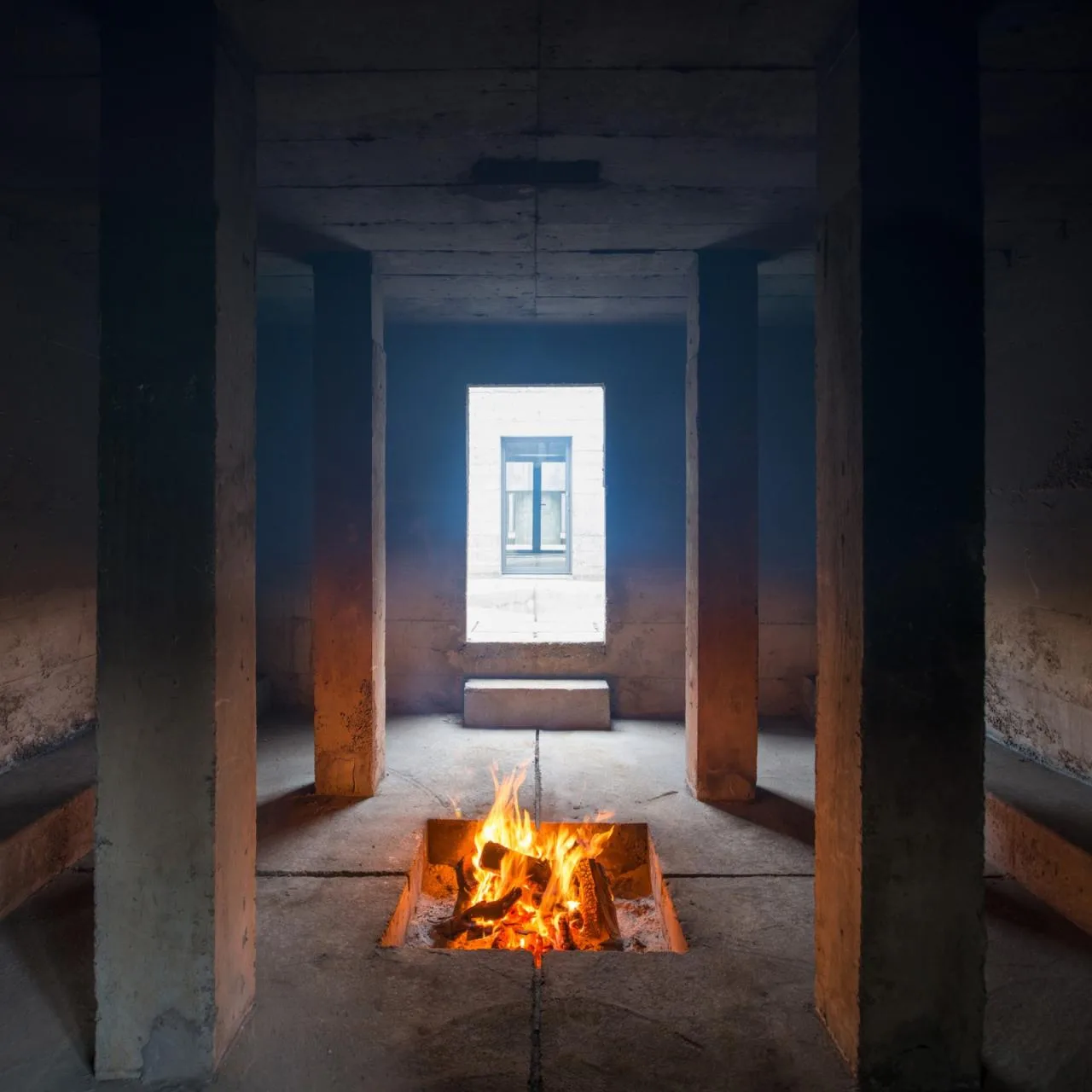
The interior and exterior spaces of each room are characterized by unique multi-directional openings, mostly square in shape. This design blurs the boundaries between functional areas, making the transition between living rooms and studios (used for painting, writing, or gardening) almost seamless.
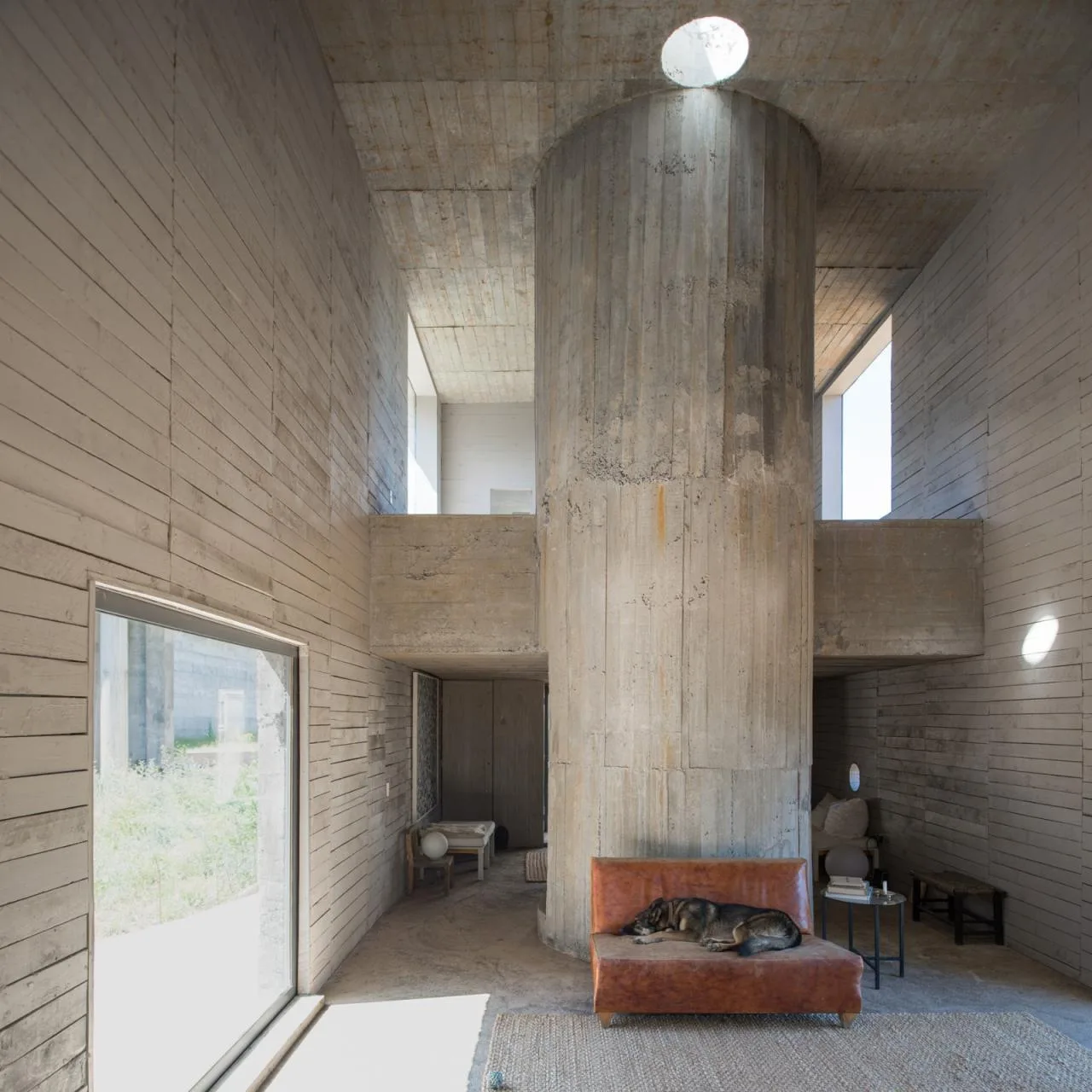
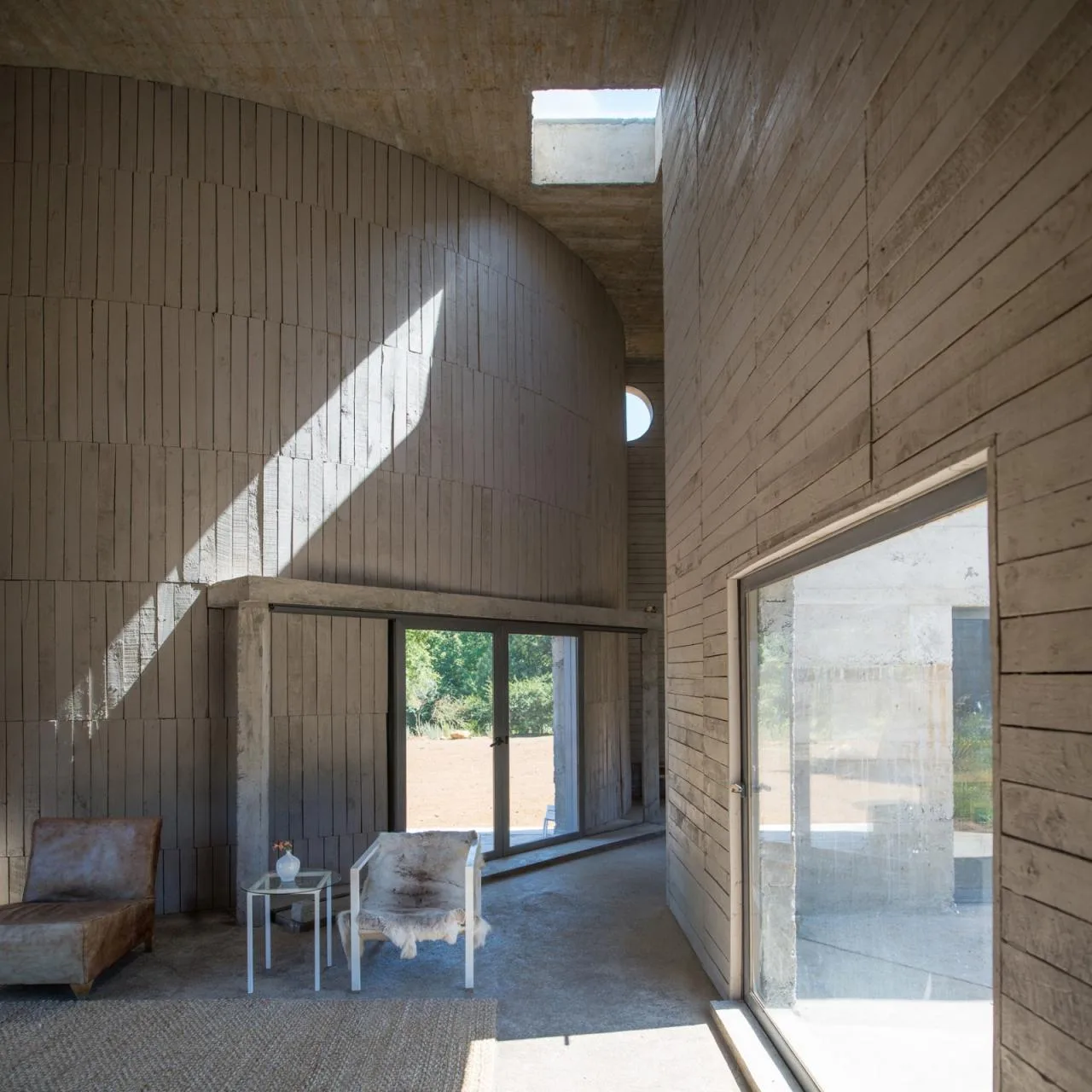
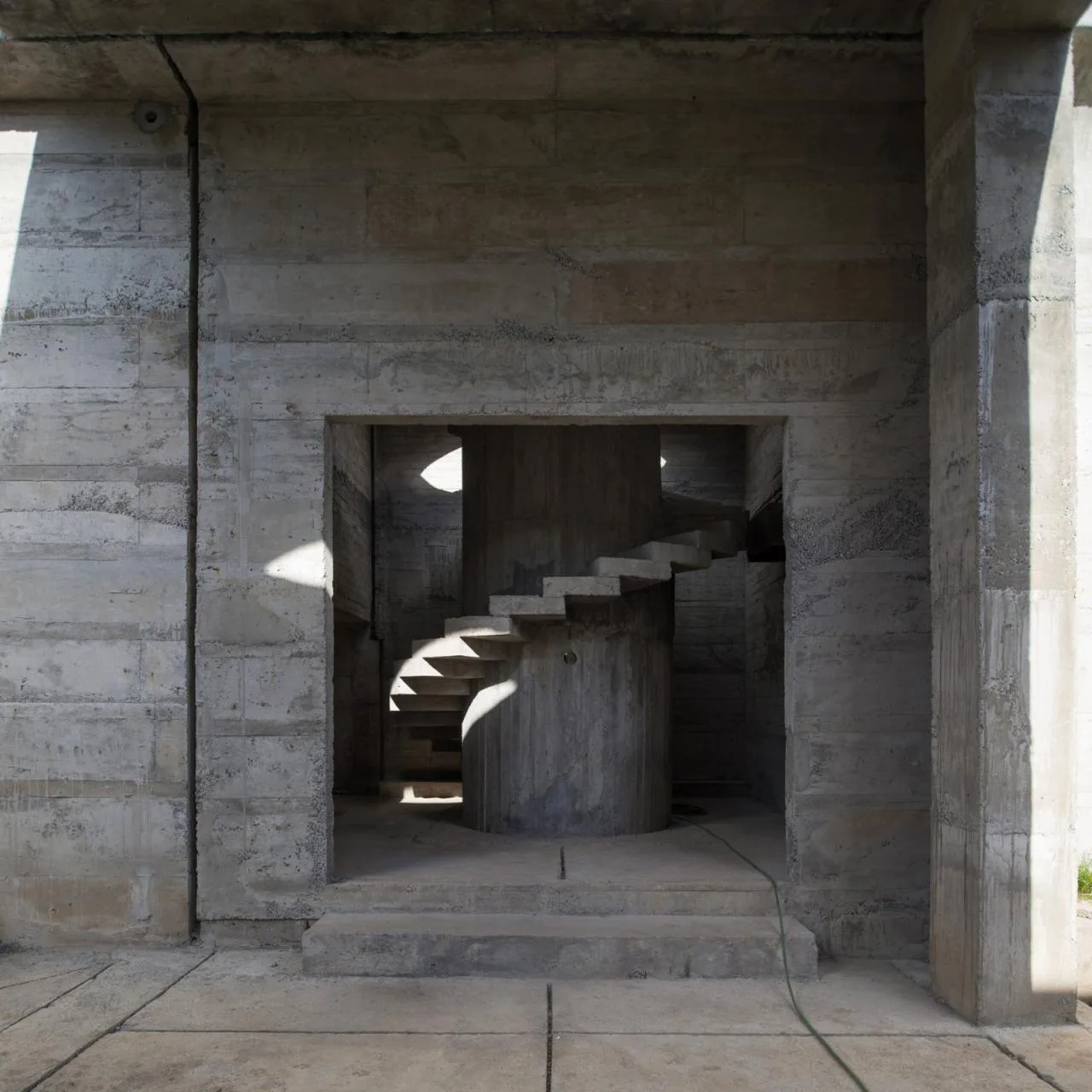
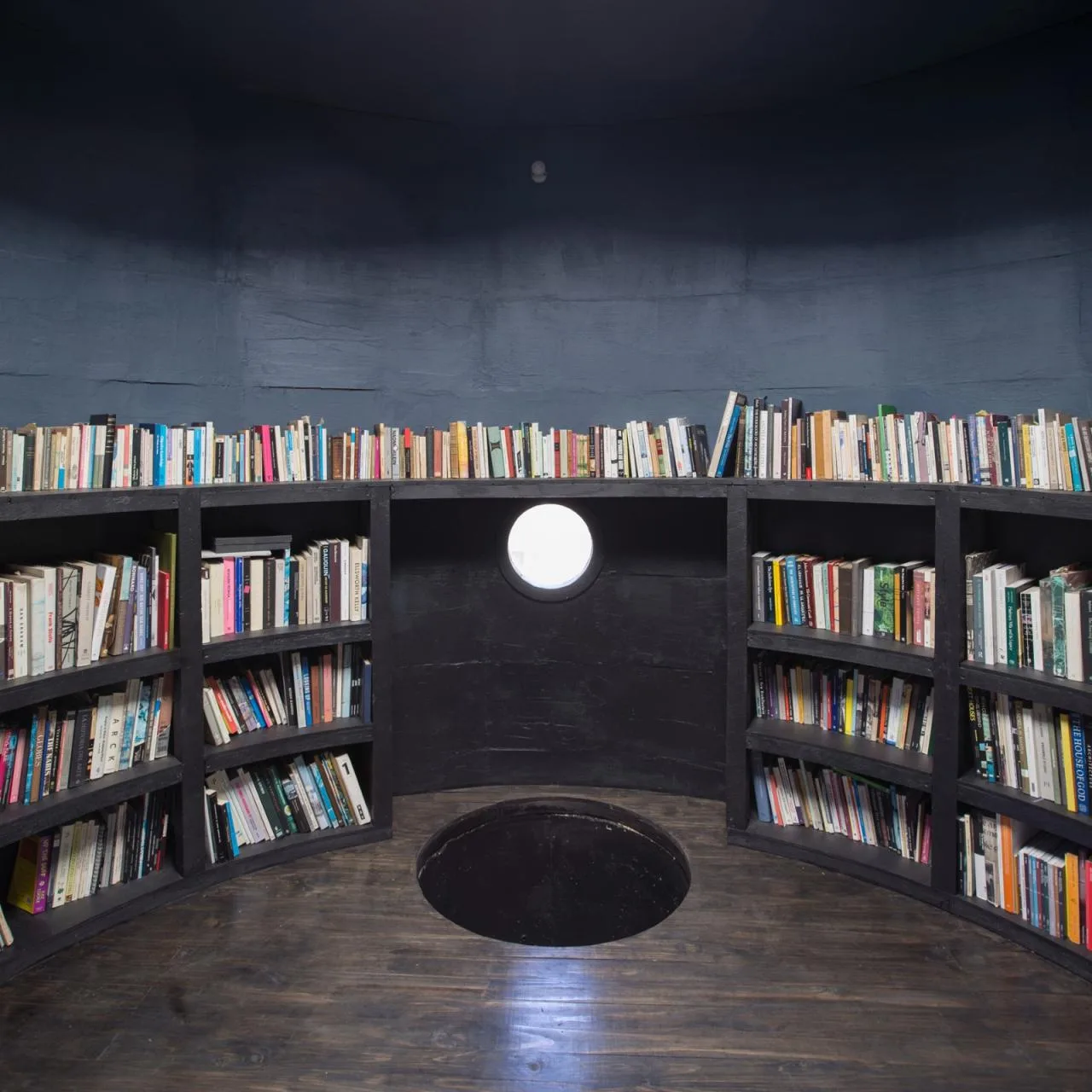
Small objects placed in some corners add warmth to the spaces, while others emphasize weight, emptiness, and opacity, creating memorable atmospheres. The layout unfolds to reveal a clear, flat horizontal roof extension, with the transition between one and two floors being almost imperceptible.
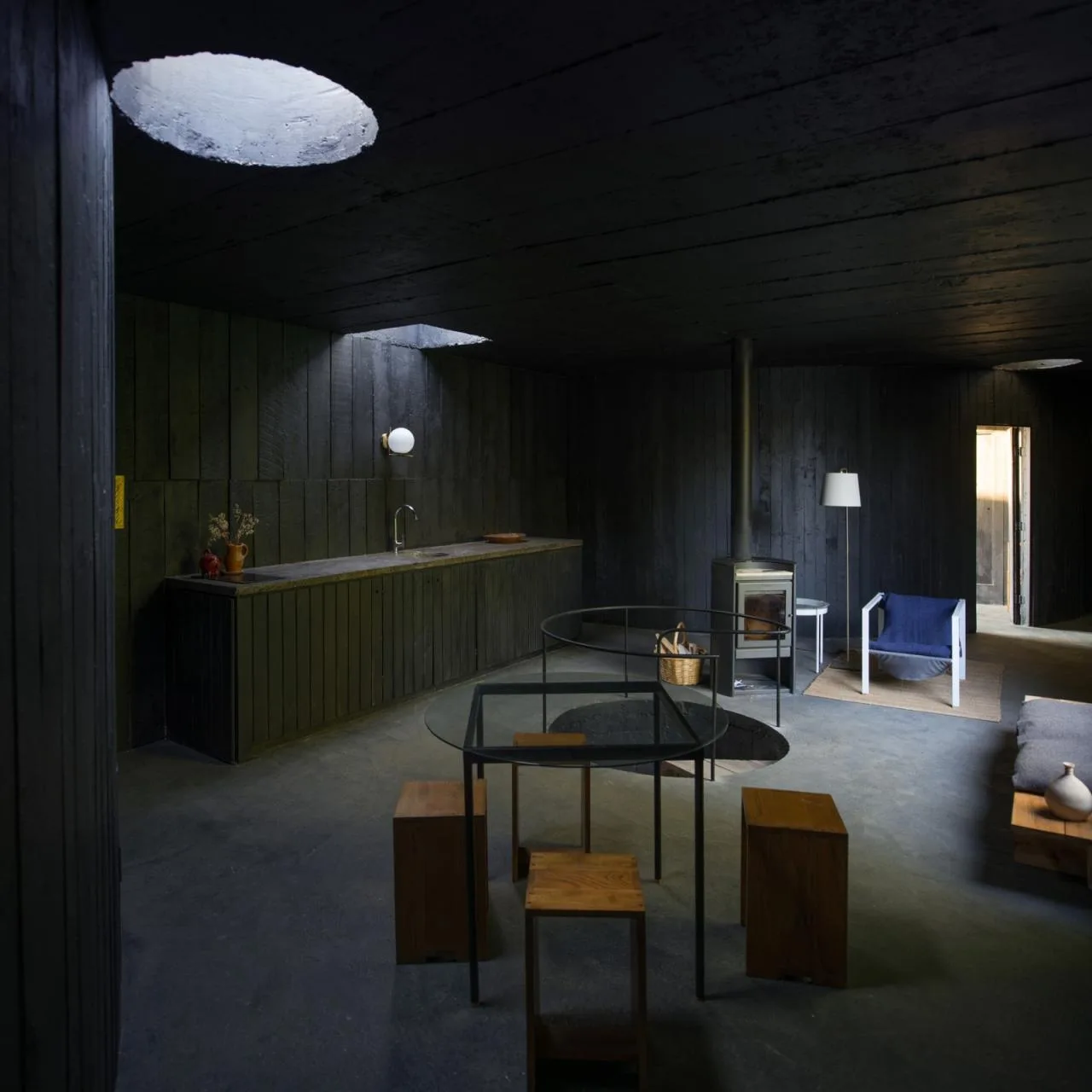
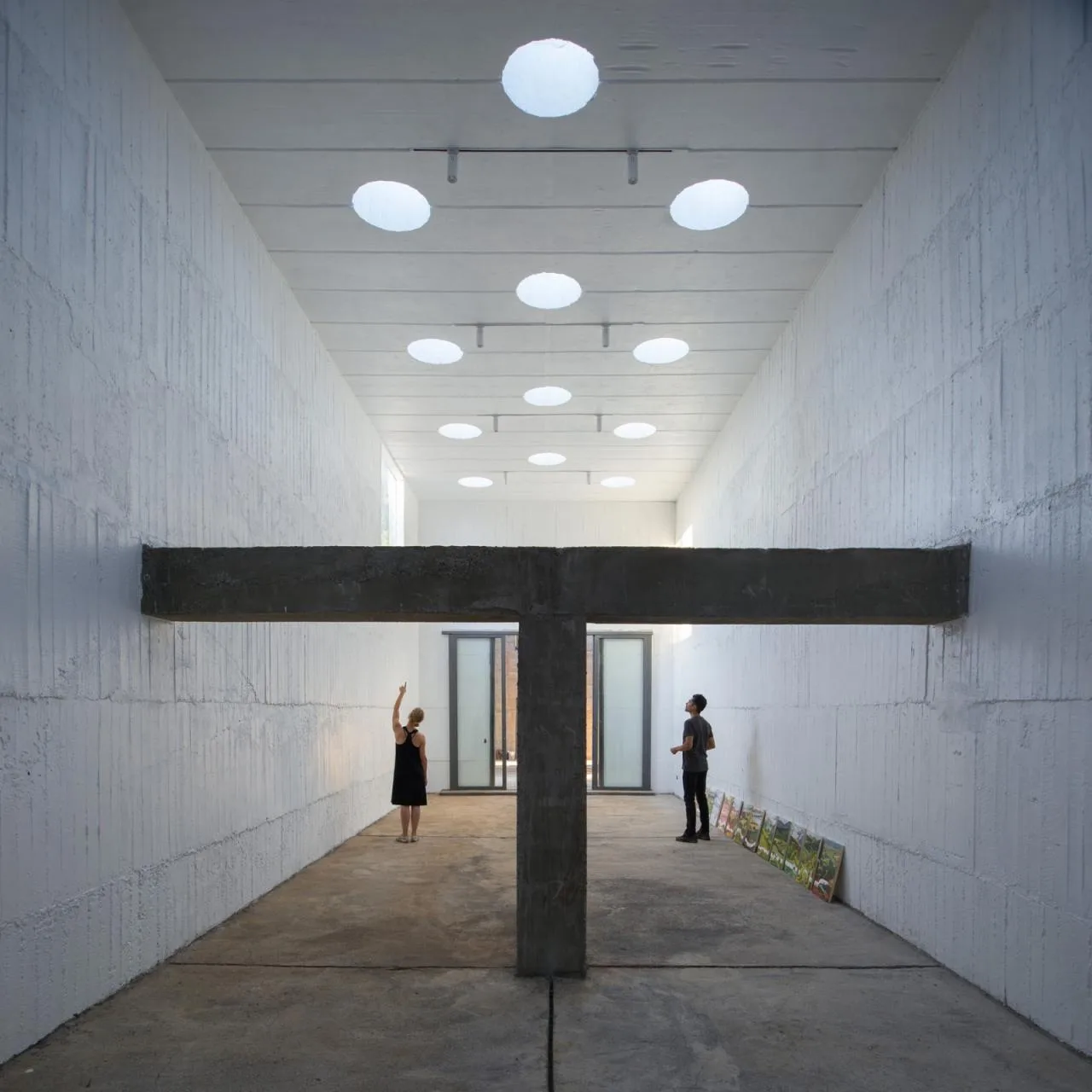
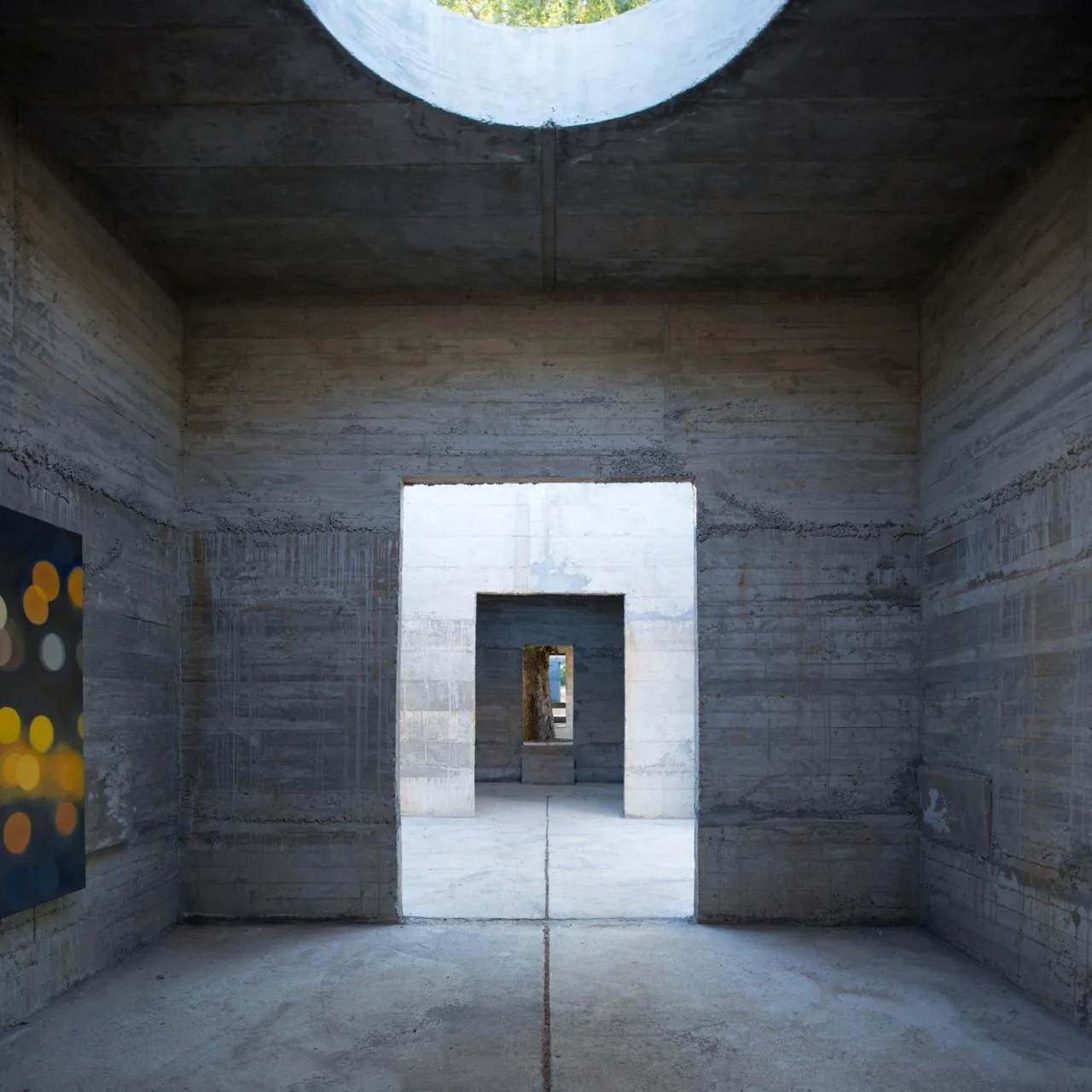
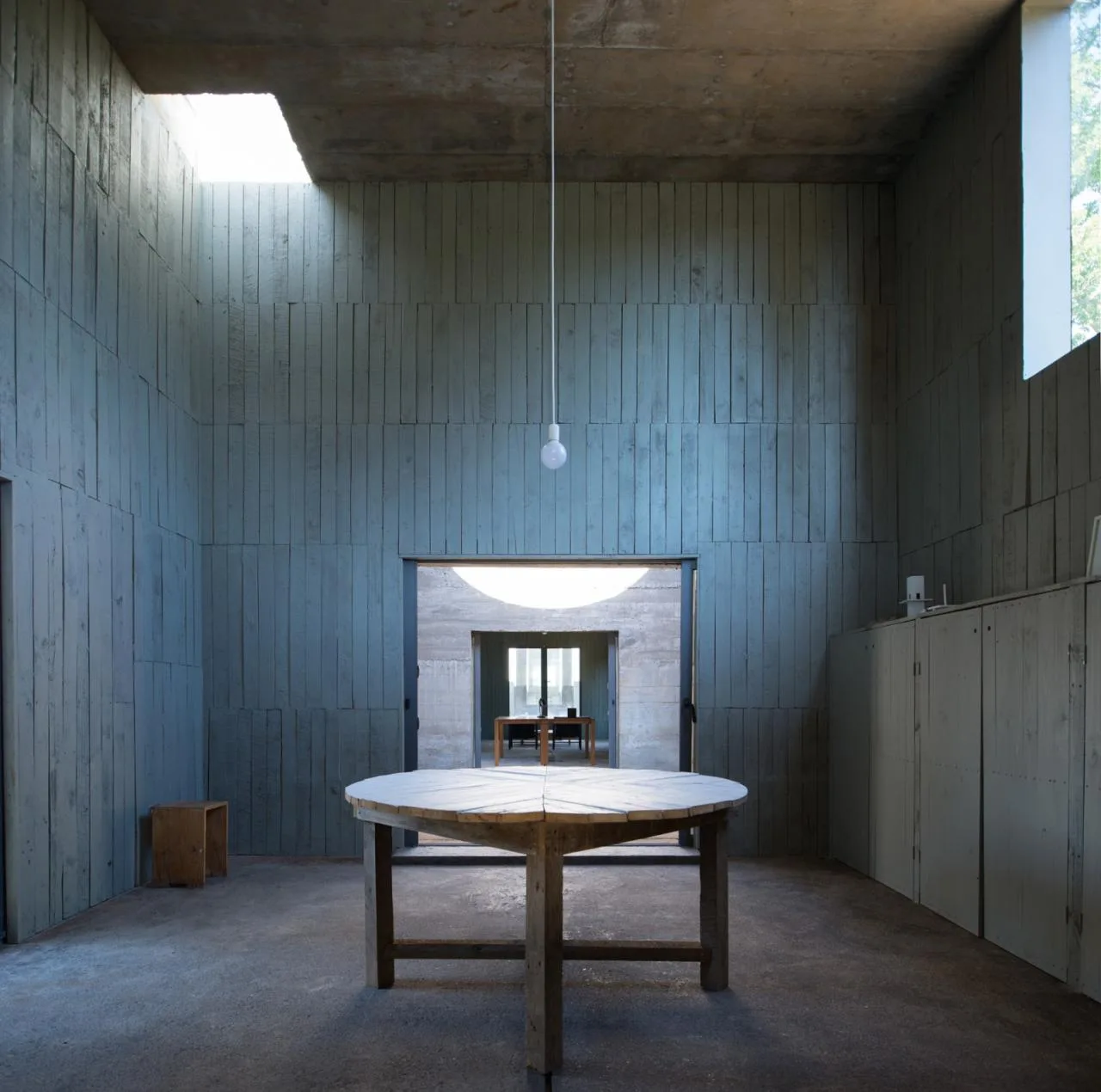
The building’s design evokes a defensive city-like structure. Although the handmade concrete walls, layered with horizontal stone and topped with regular eaves, lack the expected thickness, the courtyard walls stand out with their thick vertical or curved eaves, contrasting the rough surfaces.
Project drawings
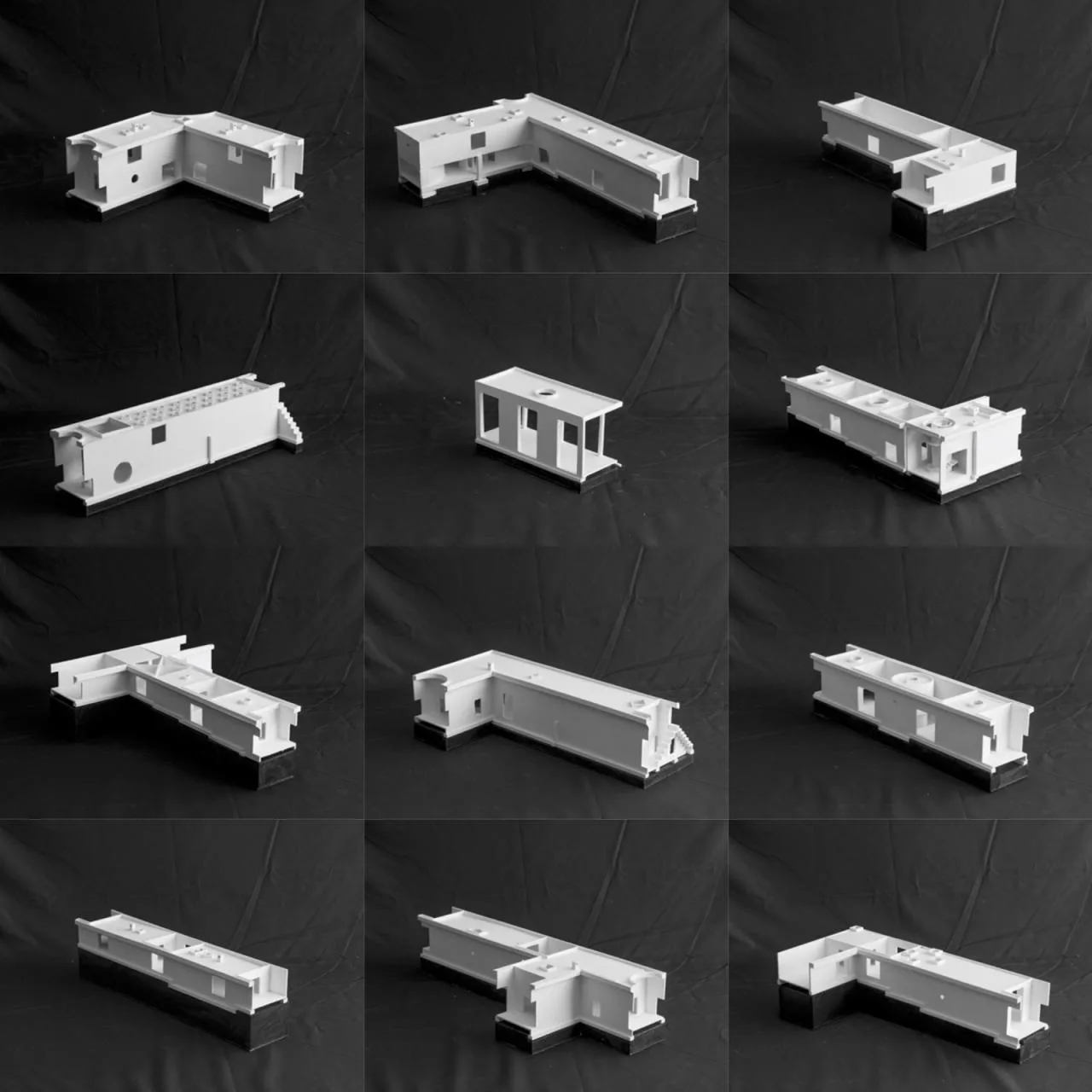
△ Model diagram

△ Model diagram
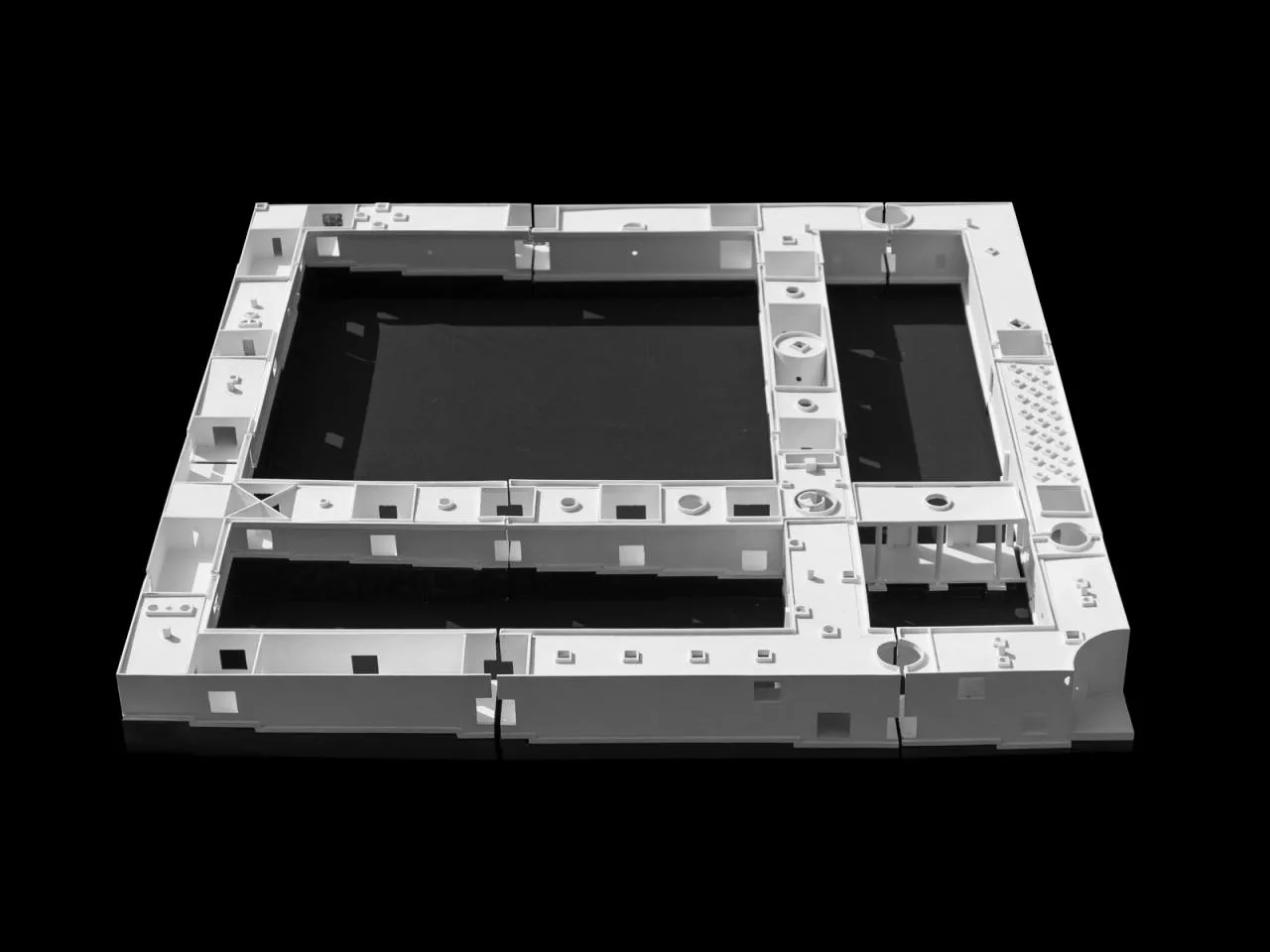
△ Model diagram
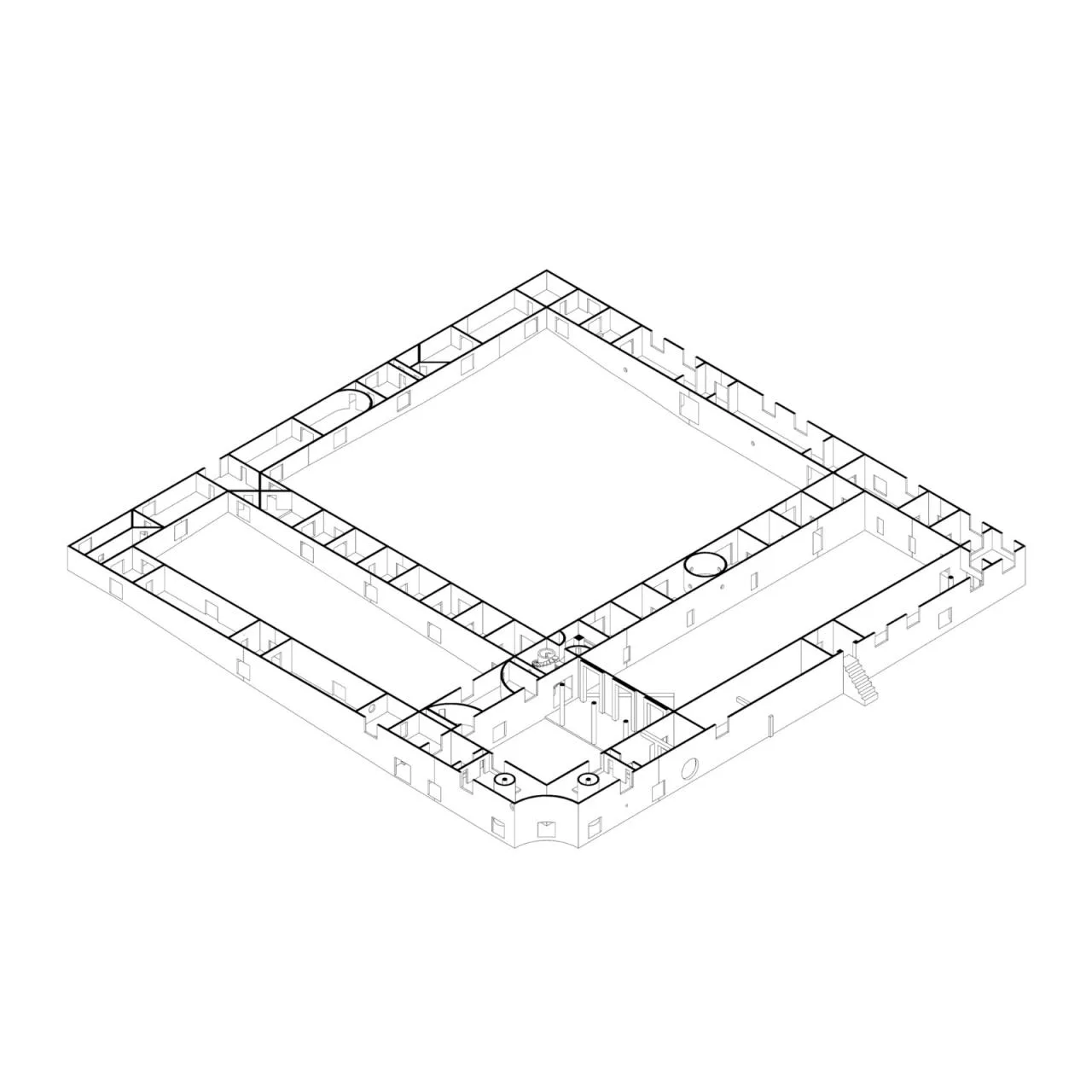
△ Axonometric diagram
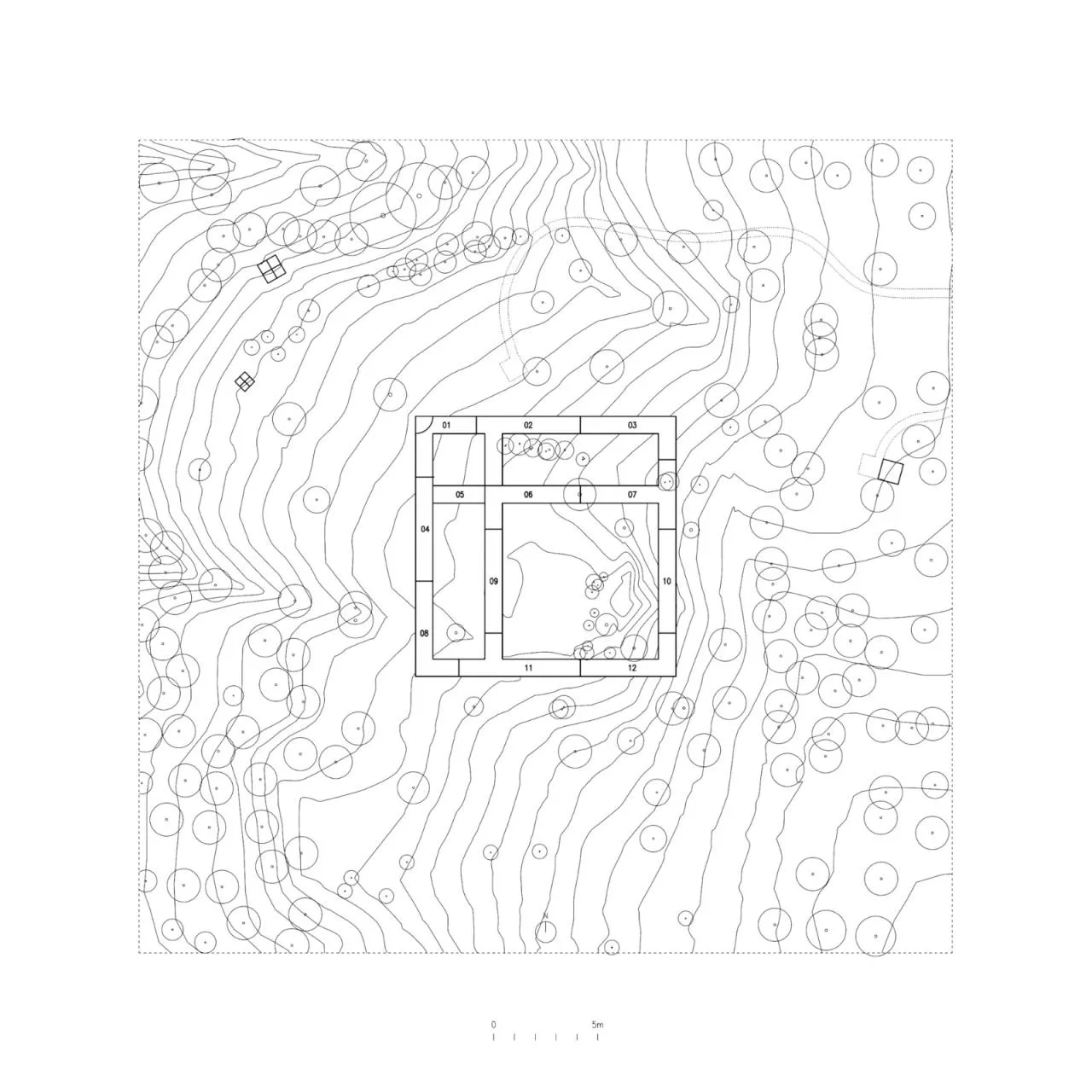
△ General layout plan
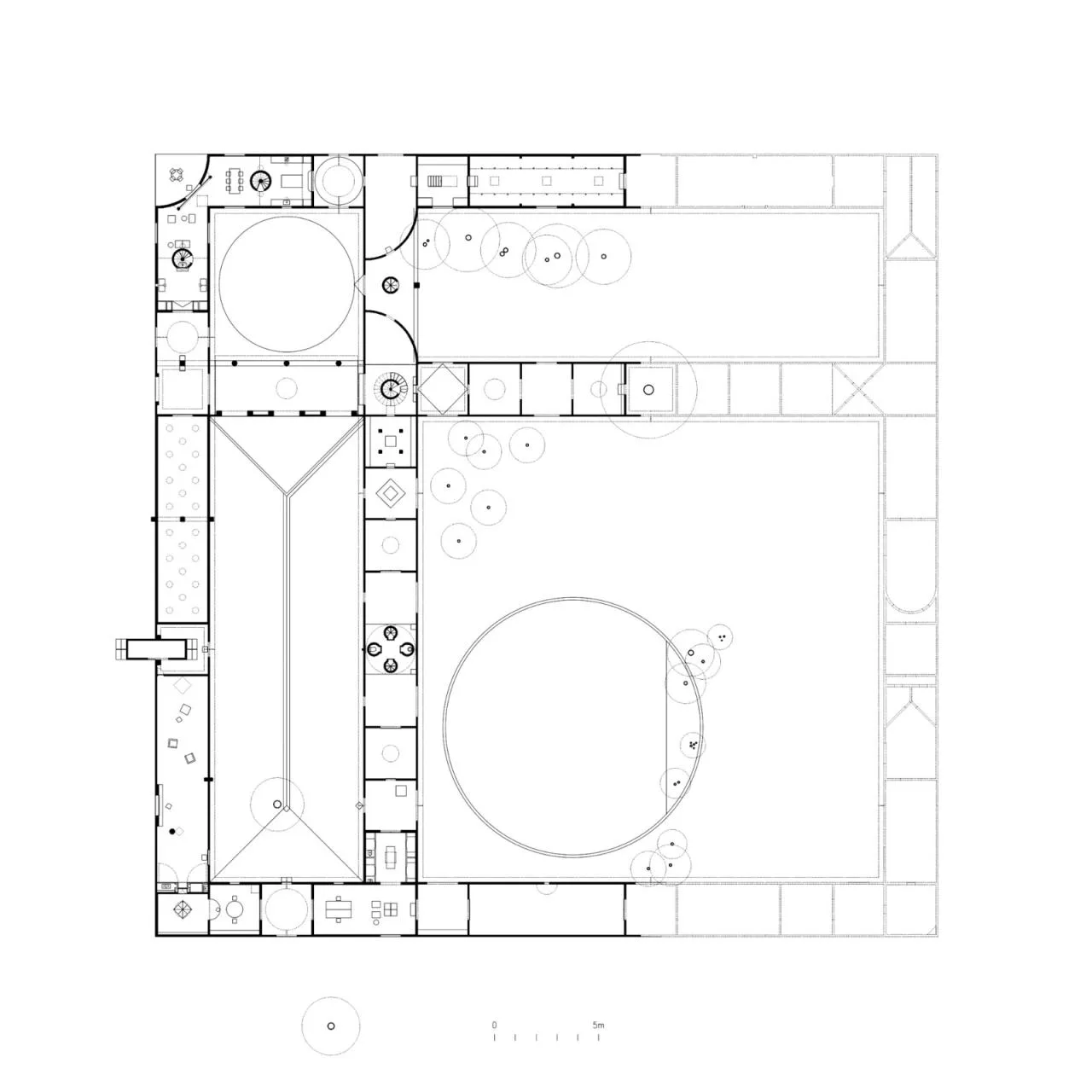
△ First floor plan
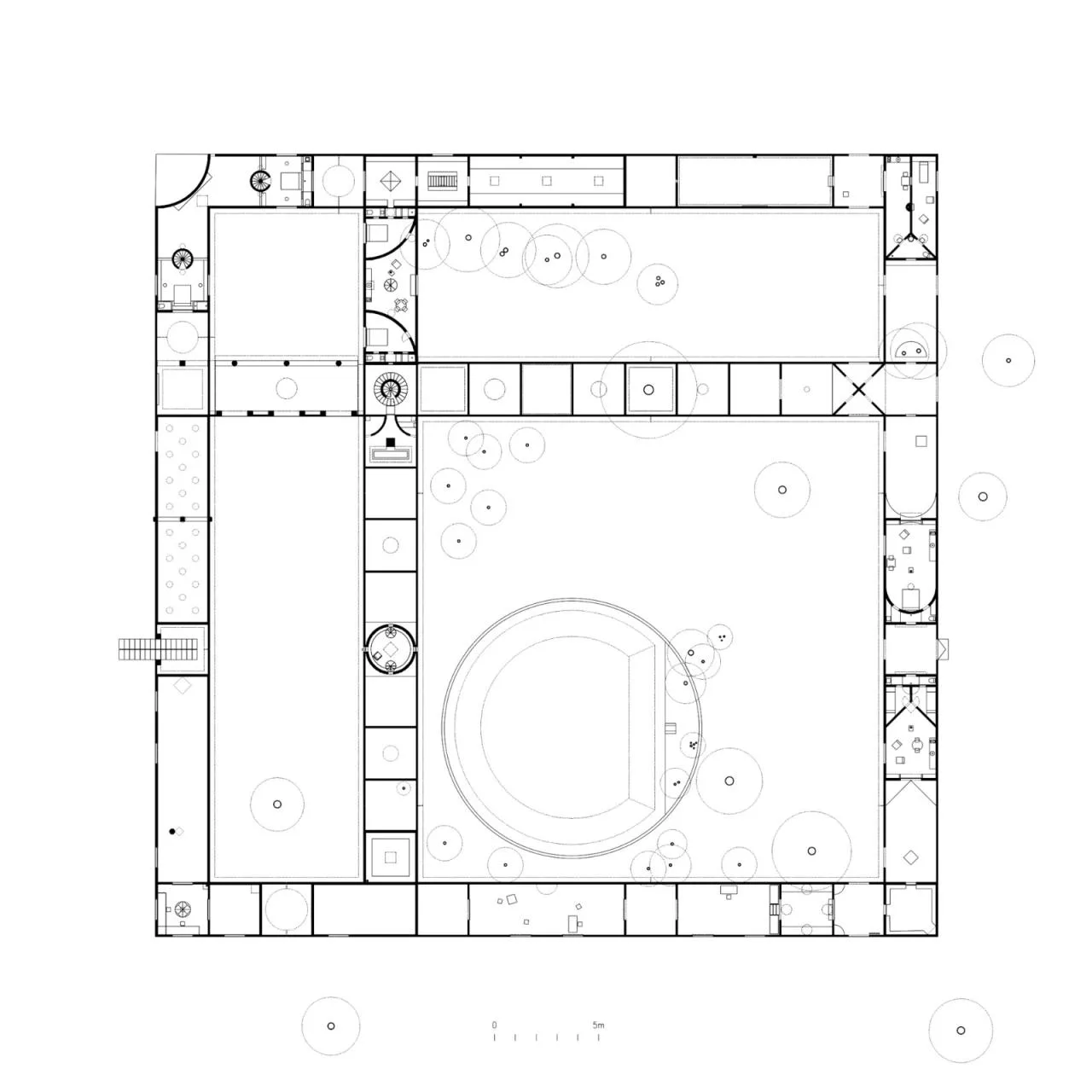
△ Second floor plan
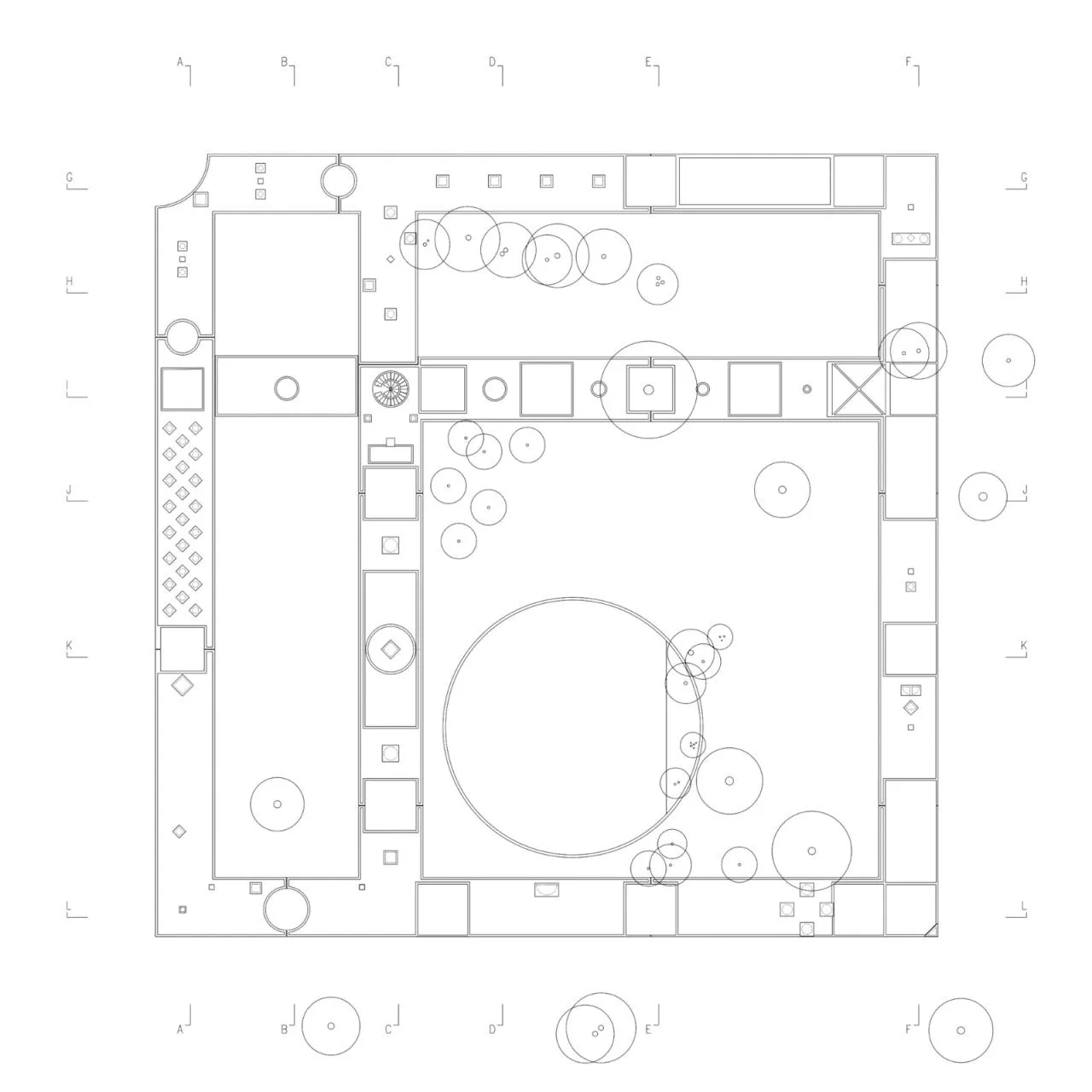
△ Third floor plan
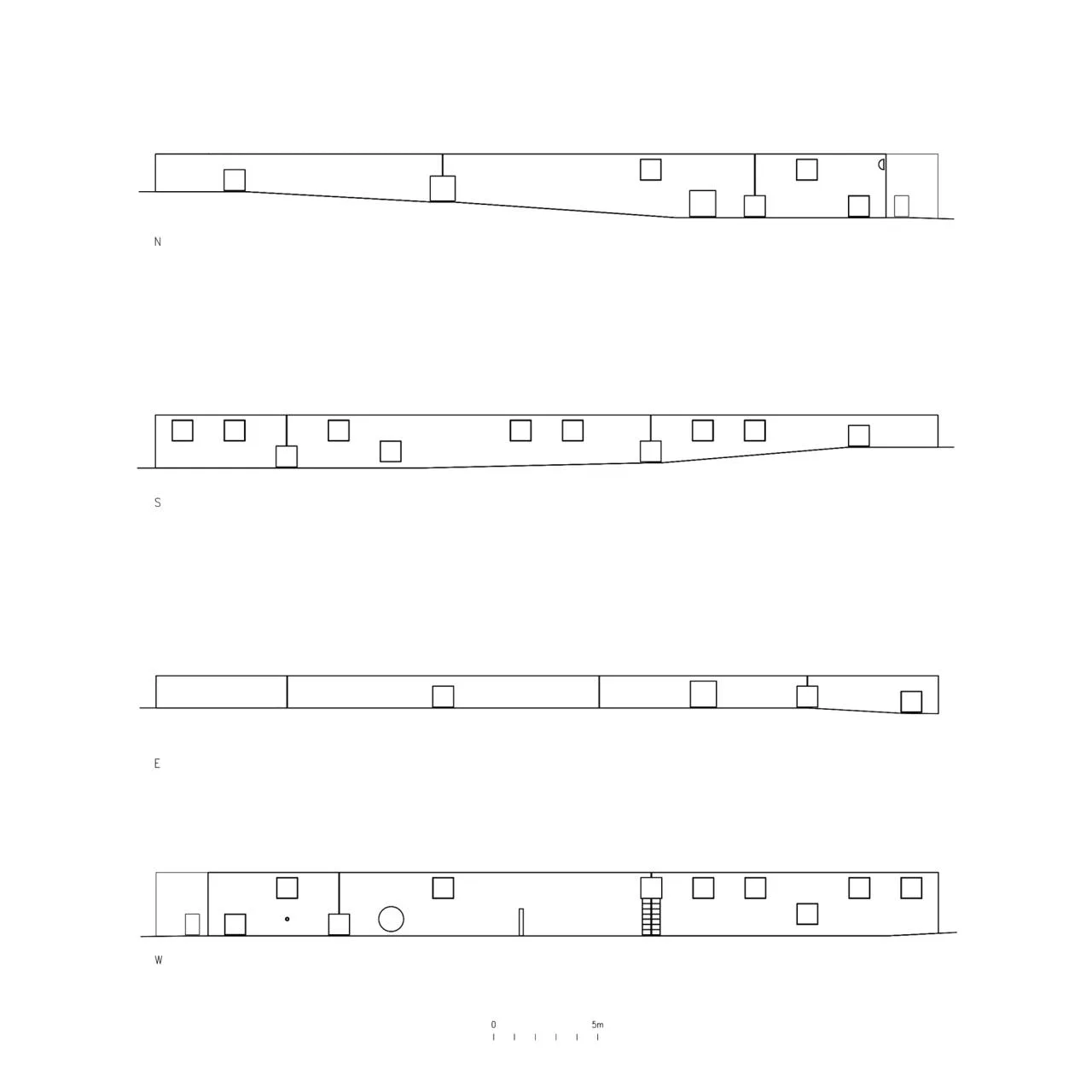
△ Elevation drawing
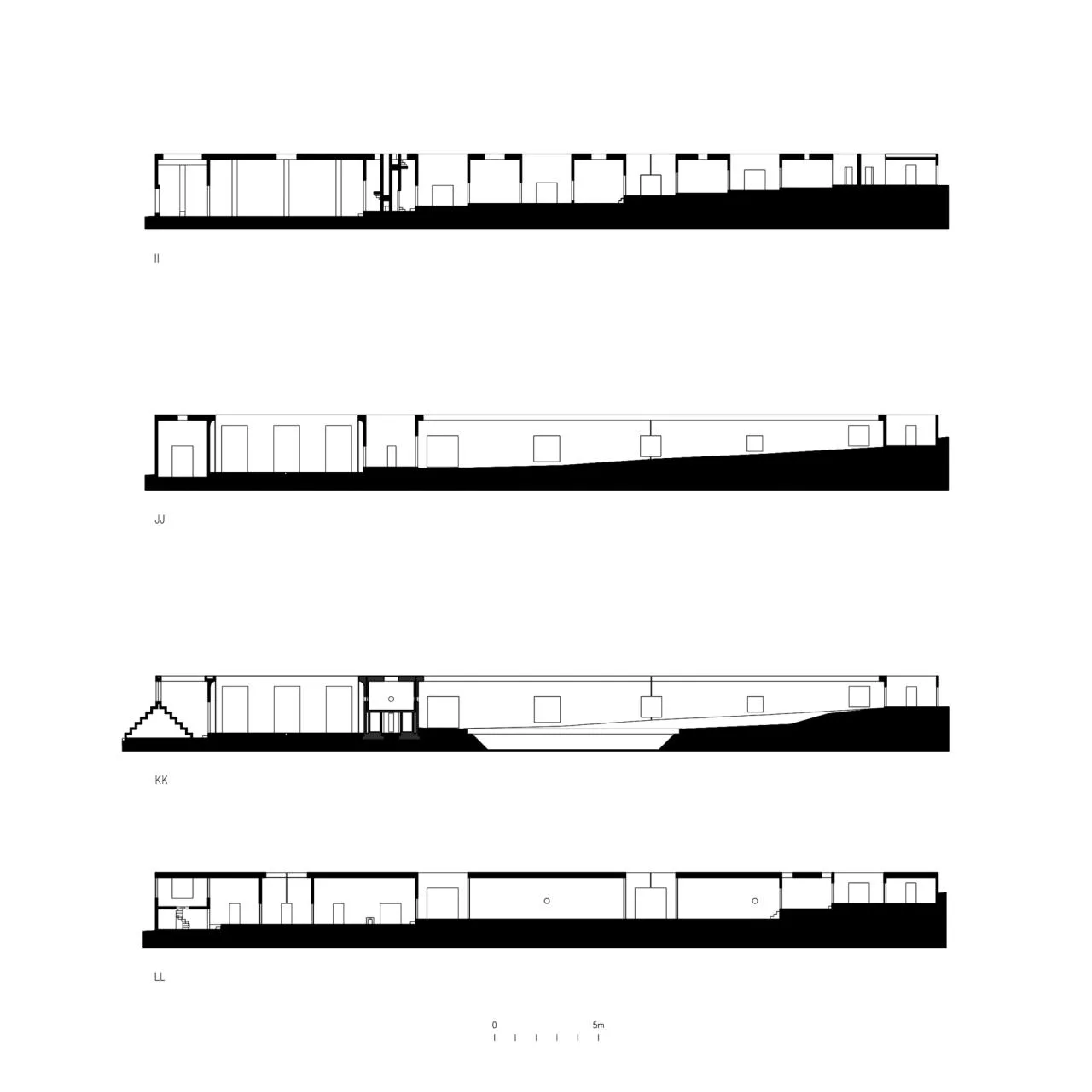
△ Section diagram
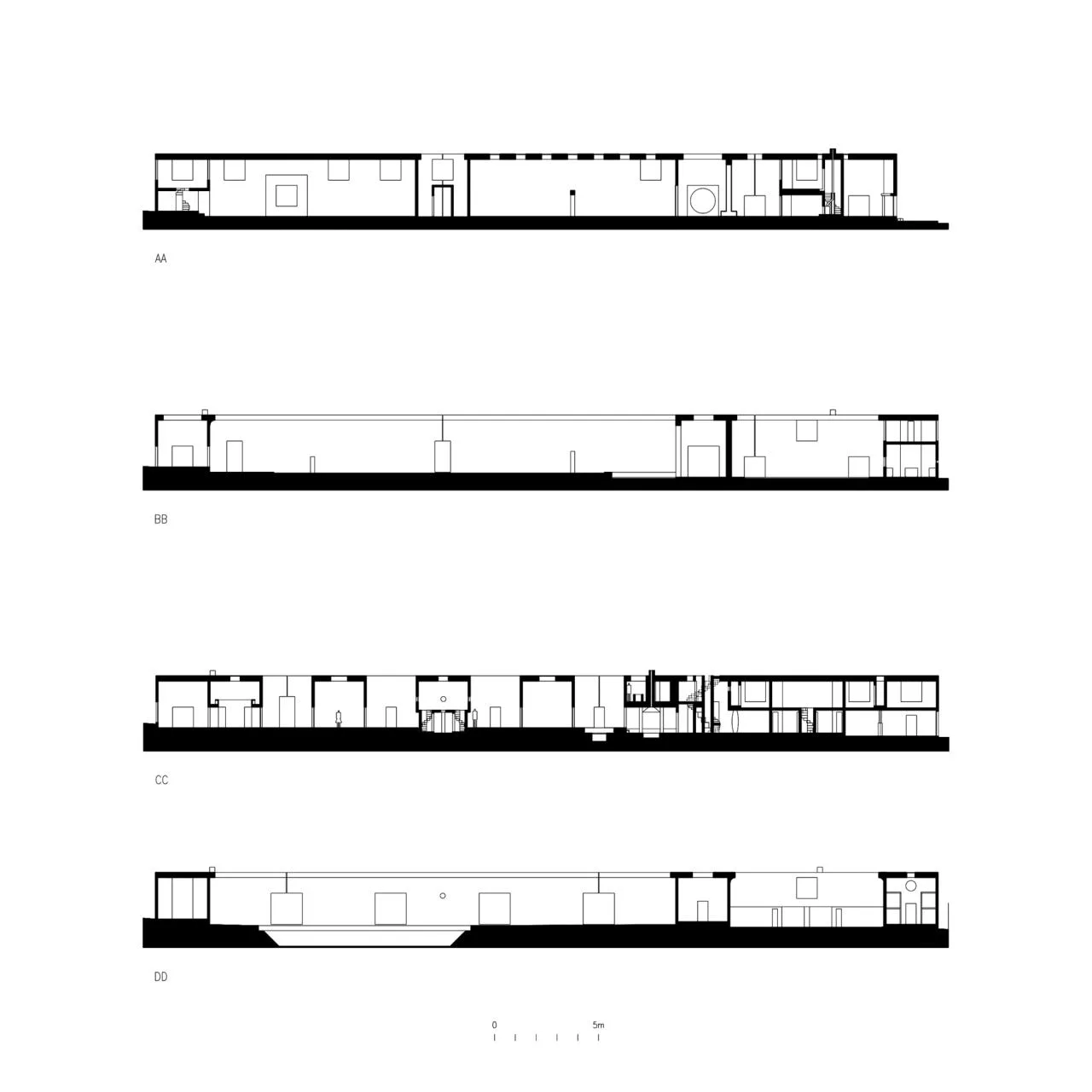
△ Section diagram
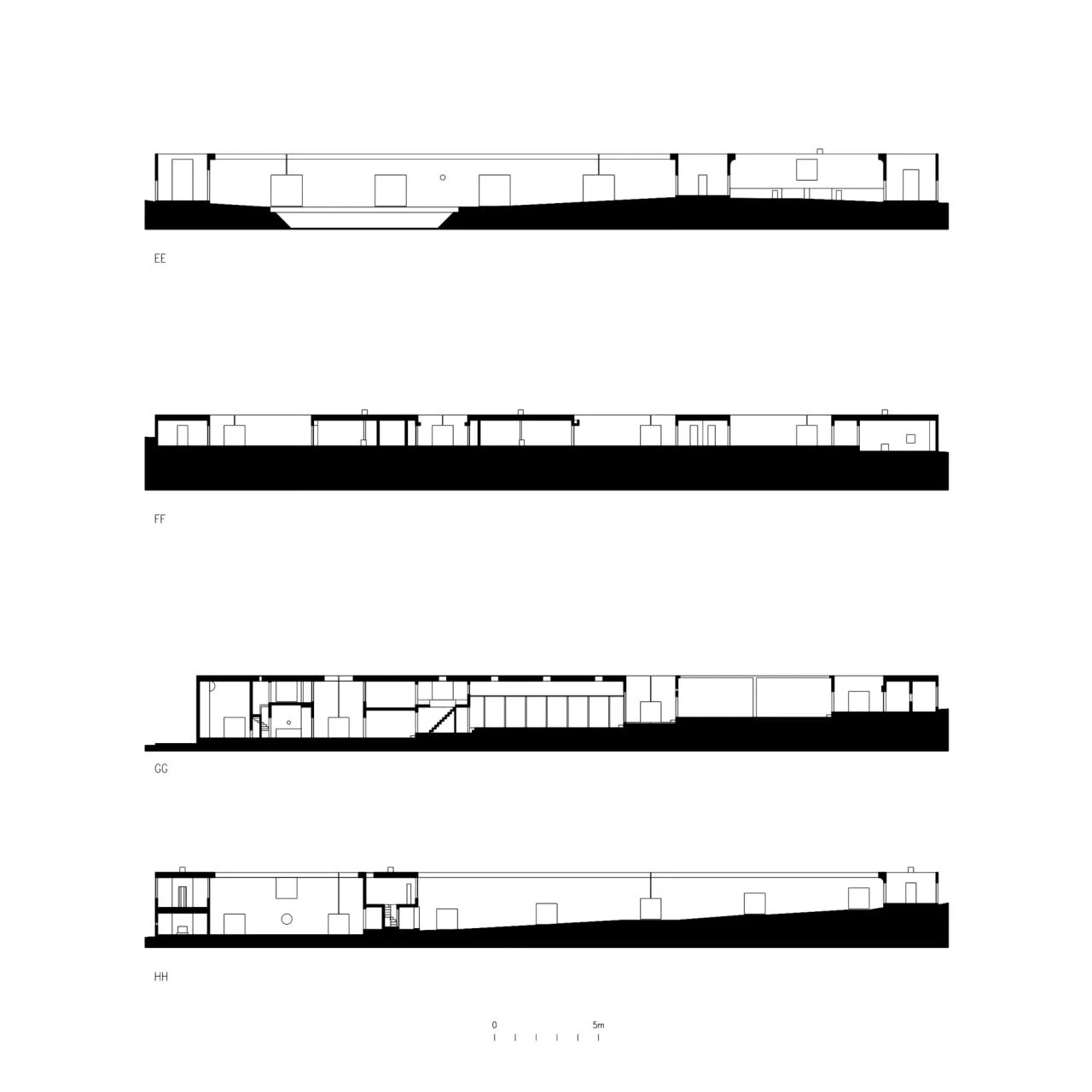
△ Section diagram
Project Information
Architect: Pezo von Ellrichshausen
Area: 2400 m²
Client: Fundación Artificial
Architects: Mauricio Pezo, Sofía von Ellrichshausen
Collaborators: Emilie Kjaer, Maria Arnold, Isabella Hubsch, Thomas Harlander, Fabian Puller, Olga Herrenbrücks, Torun Stjern, Simon Bohnet, Amelie Bès, Elina Zempetakis, Jeffrey Wu, Jasper Lorenz, Hannah Frossard, Pablo Valsangiacomo
Structural Engineer: Sergio Contreras
Construction: Constructora Natural
Location: Yungay, Chile














Must log in before commenting!
Sign Up