

OMA has recently unveiled images and floor plans for its new Feyenoord Stadium, designed in Rotterdam. This stadium will become a multifunctional sports hub for the residents of Zuid, Rotterdam, as part of a master plan developed by OMA following initial city approval in 2016. Covering an area of 63,000 square meters along the river, the Feyenoord Stadium will be the largest outdoor football stadium in the Netherlands.
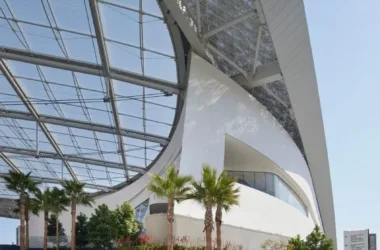
The stadium features a perfect bowl-shaped design, composed of continuous, curved, layered volumes that wrap around its structure. From the exterior, views extend across the Rotterdam skyline and through the building’s main lobby, offering a direct visual connection to the stadium itself.
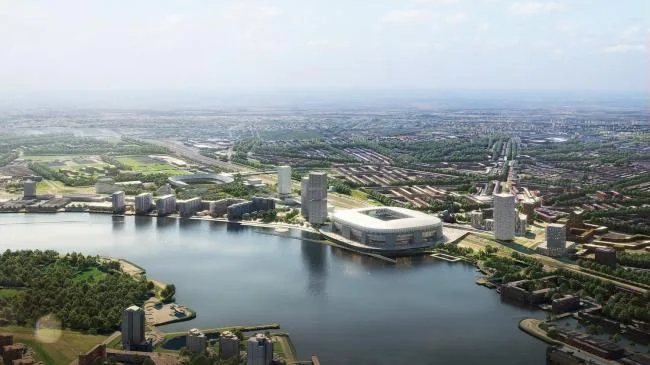
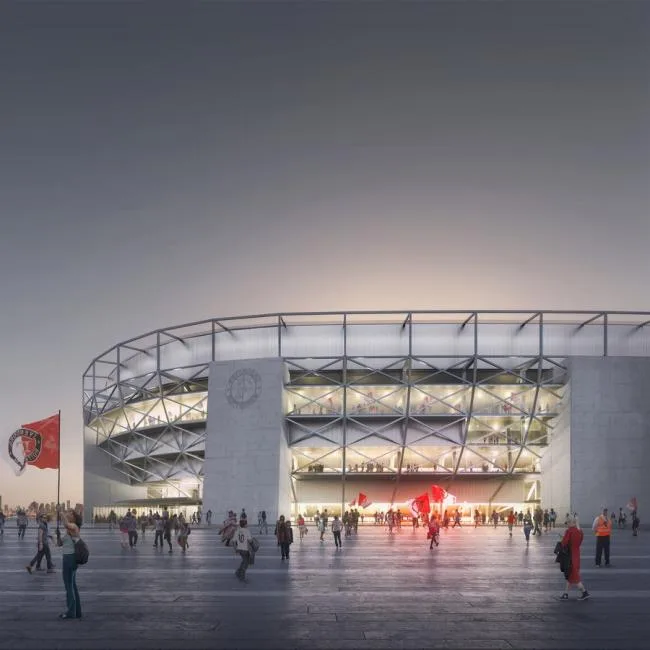
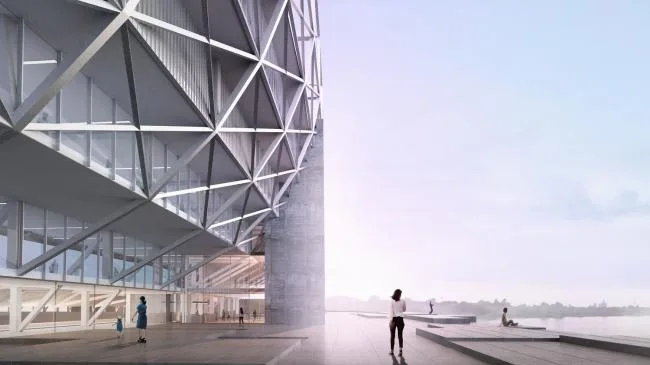
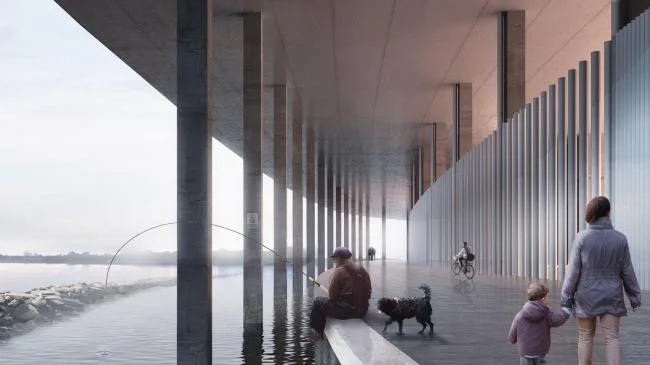
The stadium was designed by architects Kees van Casteren and Shinji Takagi, led by OMA Managing Partner David Gianotten. This project is a key part of the larger urban master plan for the southern area of Rotterdam, known as Feyenoord City. The plan was developed over two and a half years in collaboration with the football club Feyenoord, the Feyenoord Stadium team, the Feyenoord City Project Team, and the Rotterdam City Government.
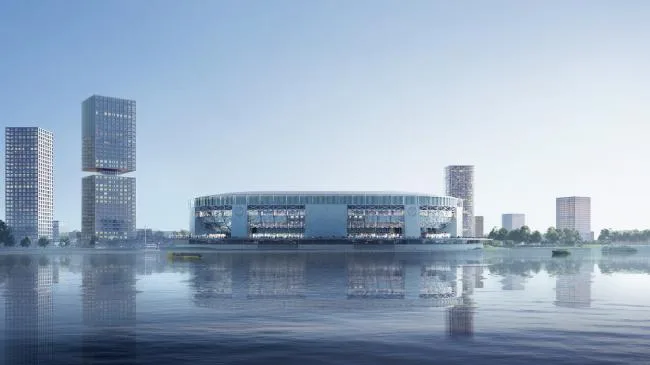
David Gianotten remarked, “The new Feyenoord Stadium will be as iconic and appealing to Feyenoord supporters, players, and the Dutch national team as the historic De Kuip Stadium. It meets the highest UEFA standards, setting a new benchmark in modern stadium design. We eagerly anticipate the finalization of the design and look forward to visiting the completed stadium in our hometown Rotterdam.”
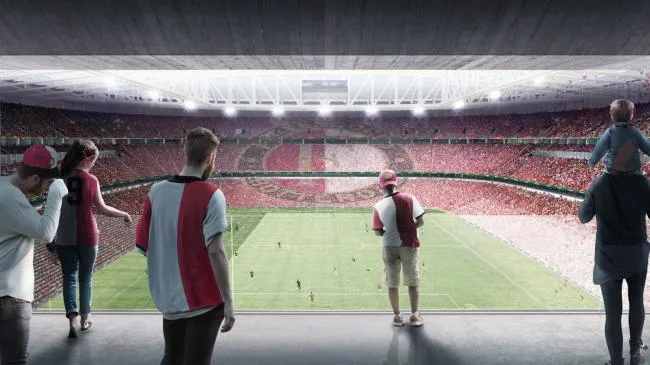

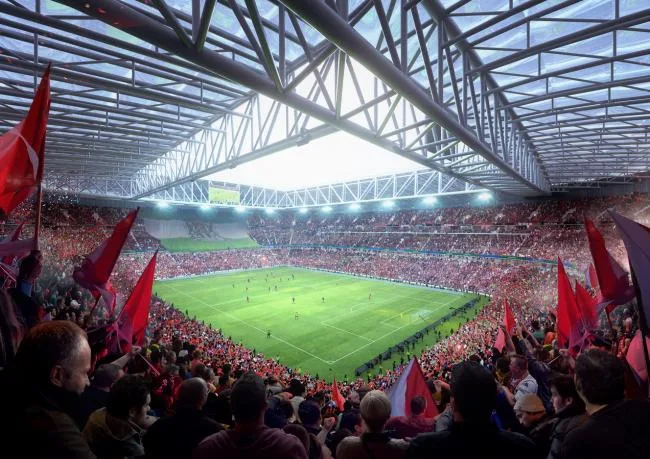
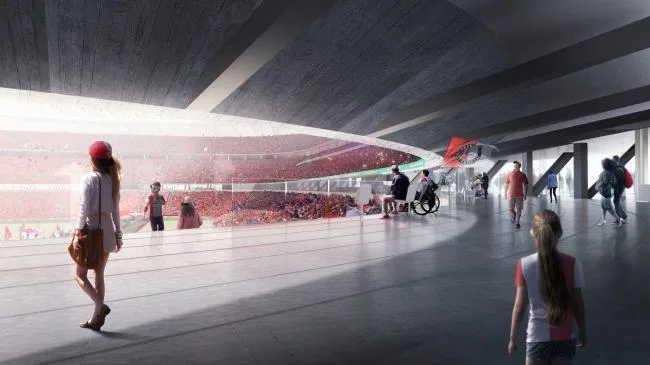
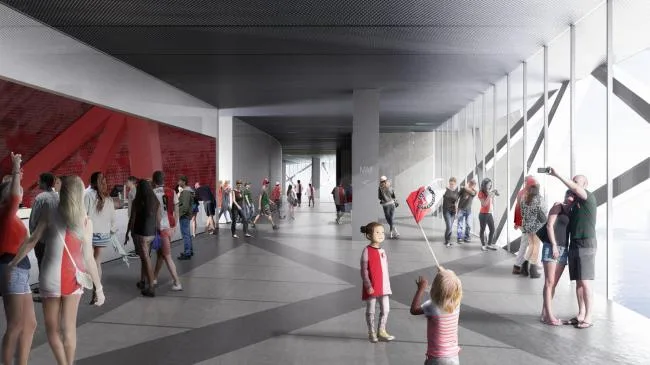
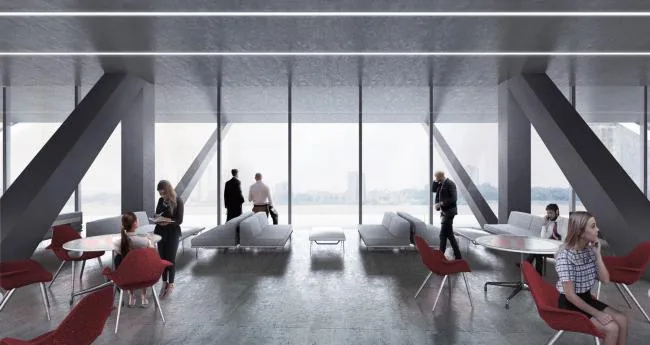
OMA’s comprehensive plan for Feyenoord City includes five main components: building the new larger Feyenoord Stadium, renovating the existing De Kuip Stadium, developing city bridges, creating urban areas, and establishing Kuip Park. The De Kuip Stadium will be transformed into apartments, commercial spaces, sports centers, and public squares. Surrounding Kuip Park will provide spaces for sports, leisure, and green areas for residents.
The urban area will feature a three-dimensional pedestrian walkway, linking the old and new stadiums, new public and commercial spaces, and parking facilities.
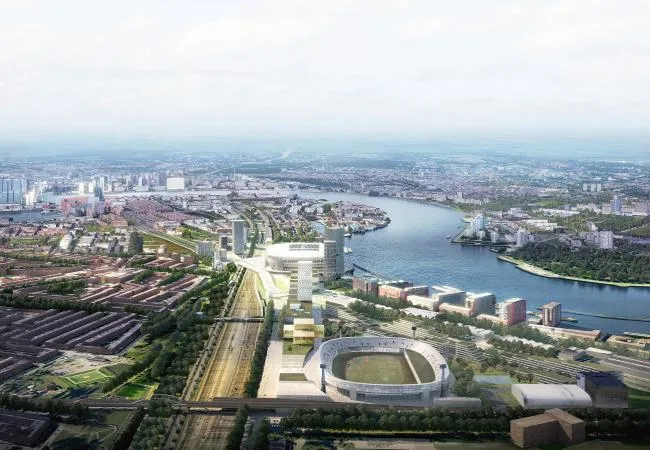
Once Feyenoord officially approves the design, OMA will begin detailed planning for the stadium. The new sports venue is scheduled to open in 2023.
Drawings
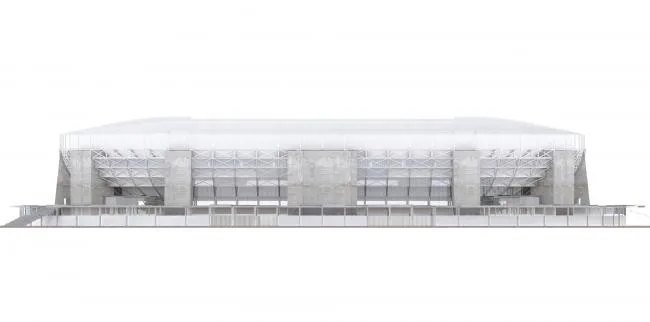
(BIM learning) Elevation drawing
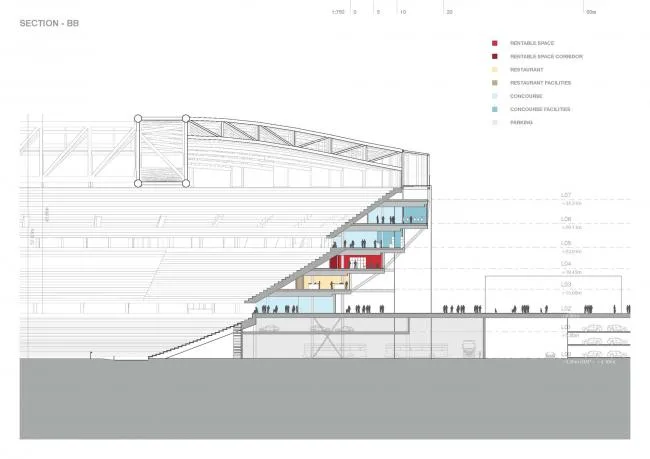
Sectional view
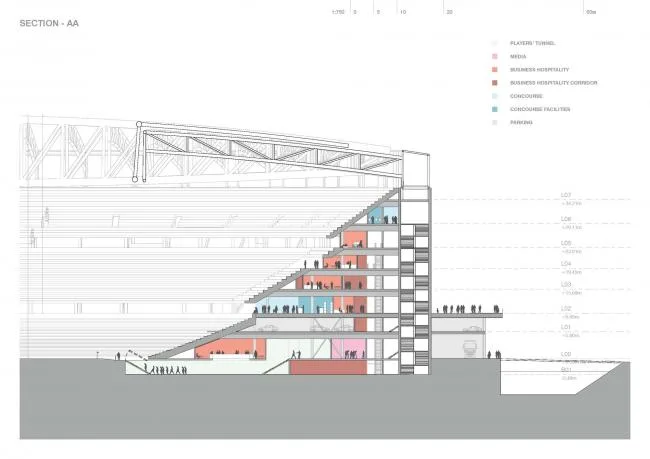
Sectional view
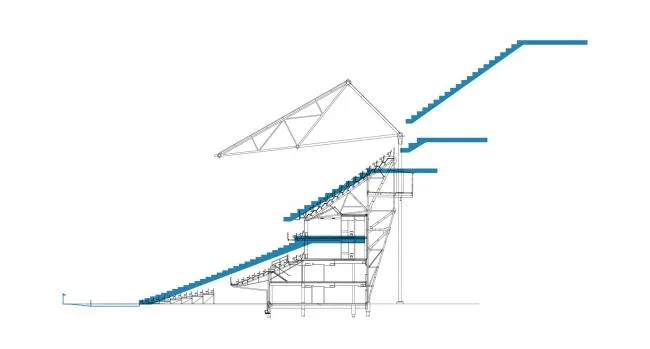
Comparison between the new Feyenoord Stadium and the original De Kuip Stadium
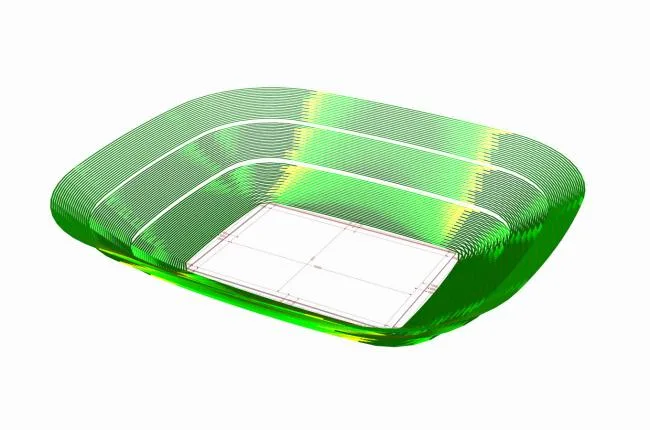
Venue heat map analysis
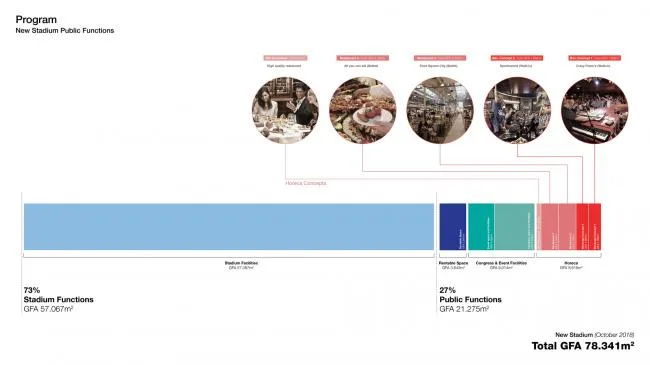
(BIM Engineer) Public functions of the venue
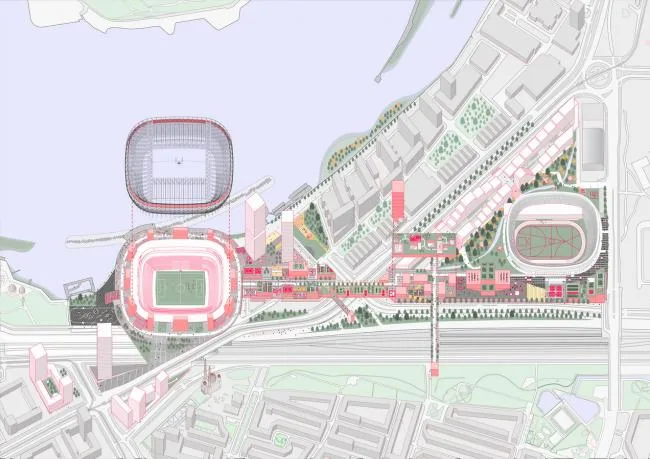
Venue location analysis
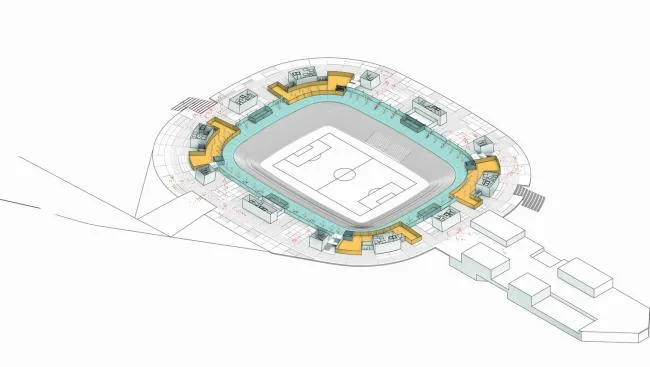
Internal venue analysis
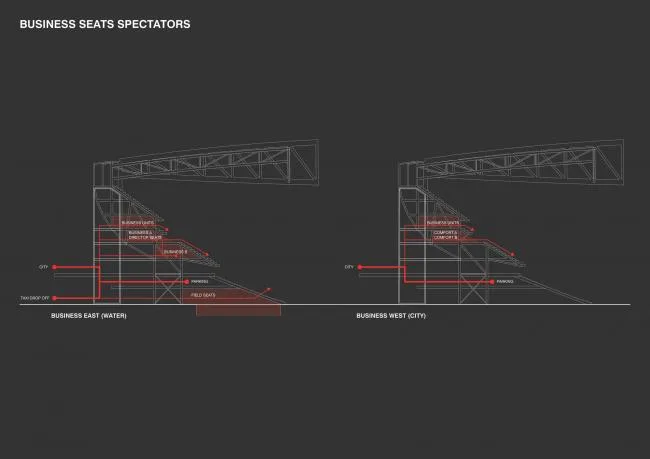
Analysis diagram
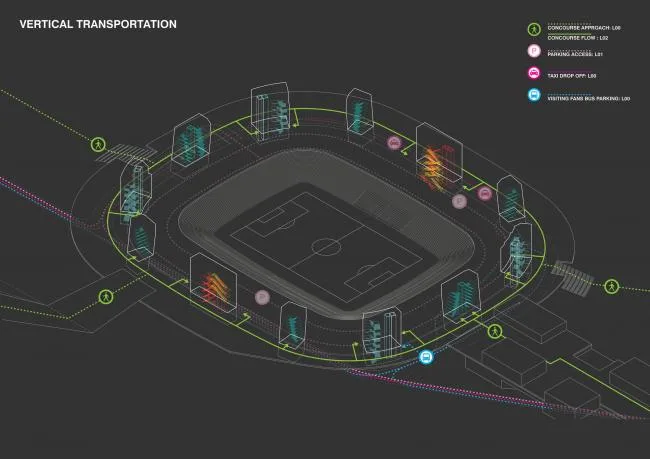
Analysis diagram
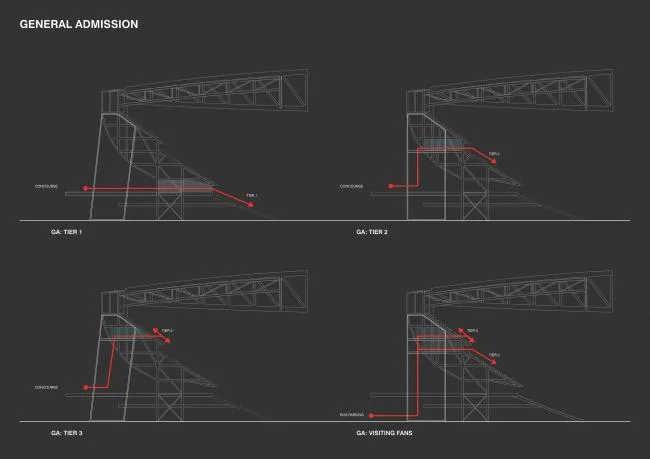
Analysis diagram













Must log in before commenting!
Sign Up