
Author: Fan Hua
Prefabricated buildings are often described as a form of systems engineering. As such, they inherently involve the complex integration of multiple dimensions across time and space. While the scope of prefabricated construction has narrowed in terms of implementation methods—from architectural industrialization to prefabricated construction—its functional demands have expanded. This broadens the potential for imaginative integration and functional combination within prefabricated buildings.
The English term “5W+2H” stands for the questions: Why, What, Who, When, Where, How, and How Much. These questions address the core of any project or initiative:
- Why do we need to do it?
- What should be done?
- Who is responsible?
- When will it take place?
- Where will it occur?
- How will it be executed?
- What is the cost?
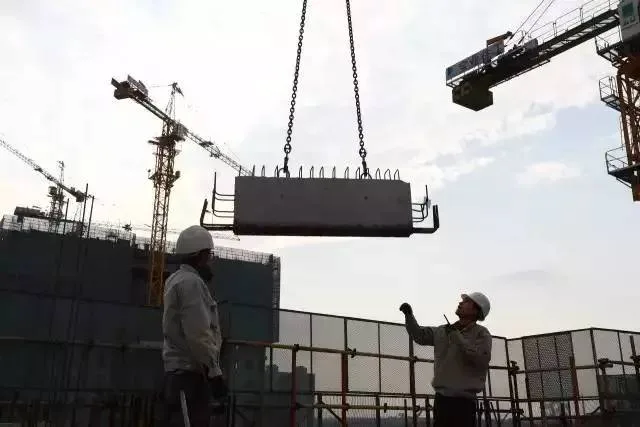
WHO: Who Is Responsible?
Is the work being done by an individual, a team, or a complex multi-unit organization? Are they qualified? Can they collaborate effectively with minimal conflicts? In my view, the people involved are the most critical factor in successfully implementing prefabricated buildings. Many challenges in building industrialization actually stem from the question of “Who.”
Since prefabricated buildings are systems engineering, they require personnel at three levels:
- Creators and managers of the systems engineering process;
- Managers overseeing individual tasks;
- Operators executing specific transactions.
Expanding further, this includes roles across development, standards, design, R&D, production, logistics, construction, and maintenance. From an operational standpoint, whether those involved are qualified is crucial. Unqualified personnel can seriously compromise outcomes. For example:
- Designers who lack expertise may create structural or equipment plans that cause unsolvable issues on-site, frustrating experienced construction personnel.
- Unqualified factory operators might produce substandard prefabricated components.
- Inexperienced on-site workers can introduce safety hazards and functional problems, especially when connecting building nodes such as grouting and waterproofing.
Managers of specific tasks in design, production, and construction stages also need robust standards to assess their qualifications, with professional and collaborative skills being especially important.
For the creators and managers of the entire system, a broader skill set is required, including foresight, leadership, coordination, integrated thinking, execution, and adaptability. Since prefabricated buildings emphasize integration based on specialized labor divisions, managing complex changes in time and space is essential.
Moreover, even qualified professionals can cause inefficiency if assigned tasks outside their expertise. For example, many projects incorrectly require component factories to perform curtain wall decoration, leading to higher costs and lower efficiency than specialized companies would achieve. Similar mismatches occur in insulation, stone veneer decoration, and integrated door and window wall panels, where multiple specialized trades are forced into one component factory.
In some cases, personnel incompetence does not stem from technical skills but from poor judgment, particularly regarding professional division of labor and collaboration. Misguided direction and improper task assignments can derail prefabricated building projects, causing delays until adjustments are made.
WHEN: When Should We Act?
This question involves both the broader timeline and specific project scheduling.
In prefabricated construction, timing is crucial. Acting too early, before the industry chain matures or before policies and standards align, often leads to setbacks and financial losses (though valuable experience may be gained). Waiting too long risks losing competitiveness and missing opportunities to accumulate resources and expertise.
Within individual projects, certain tasks must be completed early. For example, detailed decoration and construction drawing design for residential buildings should be finalized during the construction drawing phase. This helps resolve conflicts between prefabrication and the positioning of mechanical and electrical equipment. Similarly:
- Pre-construction planning impacts design development;
- Factories need to prepare mold schemes and procurement in advance.
WHY: Why Is This Necessary?
Recent discussions about the necessity of prefabricated buildings span government agencies, enterprises, and social development perspectives. The evolution from residential industrialization to construction industrialization, then industrialized construction, modernization of the construction industry, and finally prefabricated construction reflects a narrowing focus but all represent essential steps in transforming the construction sector.
The specific term matters less than the underlying concept of advancing construction methods.
WHERE: Where Should Implementation Occur?
Determining where prefabricated construction is suitable depends largely on regional environmental characteristics, which shape different needs and systems. This variability explains changes seen within the generally uniform concept of prefabricated buildings.
At the national level, it is important to identify regions and cities with the foundation to pilot, demonstrate, and promote these methods comprehensively. Policy division, gradual progress, and combined strategies all reflect the “where” consideration.
For enterprises, decisions about which branches or projects to implement prefabrication fully or partially are also answers to the “where” question.
For individuals, choosing where to apply their expertise aligns with the principle that professionals should focus on their specialized tasks. The prefabricated construction industry’s segmented supply chain produces both universal products (usable anywhere) and specialized products (optimized for specific applications).
Understanding the specificity and adaptability of these products is critical to selecting the right context for their use.
For example, choosing between reinforced concrete, steel, and wood structures is not mutually exclusive; the principle of “using what works best where it works best” applies, though resistance can arise from unfamiliarity or misconceptions.
Technically, decisions must consider factors such as:
- Prestressed vs. non-prestressed components
- Pre-installation methods
- Lightweight vs. heavyweight materials
- Metal vs. non-metal connectors
- Embedding strategies
- Fire protection levels (A vs. B)
- Assembly line production vs. non-assembly
- 3D vs. 2D design approaches
Determining the best use scenarios for each helps optimize prefabricated construction.
WHAT: Understanding the Project Itself
Architectural industrialization and prefabricated buildings share similarities and differences. Both rely on the foundation of the “Five Modernizations”: standardized design, industrial production, prefabricated construction, integrated decoration, and information management.
The “Three Modernizations” concept, proposed by architect Liang Sicheng in 1962, was advanced for its time, despite lacking modern information technology. Today’s prefabricated construction stages revolve around these five modernizations, which define the “what”—the specific content of the work.
This content can be categorized into three types:
- Timeless truths, directions, and methods;
- Areas requiring ongoing adjustment and improvement due to incomplete information;
- Elements that appear well-defined in the short term but are disrupted by evolving time and context.
Examples include:
- The concept of “two improvements and two reductions” (improving quality and efficiency while reducing labor and energy consumption) is a constant, correct direction.
- Modular and family library design concepts in standardized design require continual refinement, evolving from version 1.0 to 2.0 and beyond, with a focus on process vs. size modular standardization.
- Attempts to create industrial fine decoration atlases and enforce them represent seemingly logical but ultimately misguided efforts, as decoration differs significantly from civil engineering. The complexity of industrial chains and rapidly changing information renders such atlases ineffective and potentially obstructive.
HOW & HOW MUCH: Execution and Cost
After addressing the 5 Ws, the next questions are how to execute the project and what the costs will be. The “Five Modernizations” encompass both content and methods. Successfully implementing prefabricated buildings depends on effectively applying these modernizations.
Key points include:
- The EPC (Engineering, Procurement, and Construction) model effectively addresses process conflicts in prefabricated construction;
- BIM (Building Information Modeling) naturally complements prefabricated buildings, enabling more scientific implementation;
- Prefabricated construction requires design processes that differ from traditional methods due to front-end assembly;
- Facade design with fewer specifications but more combinations, alongside modular layout design, are correct concepts;
- Factory production plans should be product-driven rather than uniform.
Ultimately, the most important aspect of “how” is doing things correctly: the right person doing the right task, and professionals focusing on their specialties. Though ideal system integration is the goal, human and process imperfections are inevitable.
Therefore, realistic methods, controls, budgeting, post-implementation settlements, cost analysis, and cost control are all critical components within the scope of “how much.”
While prefabricated buildings are still emerging in China, they are gaining attention amid national industrial restructuring and the promotion of green, energy-saving construction. As a transformation of production methods in the construction industry, prefabricated buildings offer an effective pathway to modernization.
Prefabricated houses boast four key advantages: lightweight, speed, quality, and economy. They cause minimal environmental damage, provide high strength and seismic performance, reduce foundation costs, and ensure superior building quality and industrialization levels. Additional benefits include increased usable space, dry construction unaffected by seasons, water savings, reduced construction footprint, noise and dust reduction, shorter construction periods, easier cost control, adaptability to various climates, reusability, waste reduction, and promotion of new building material industries. Green materials themselves avoid pollution and secondary contamination.
China is currently in a critical phase of accelerating industrialization, urbanization, and rural development. The advancement of green prefabricated housing and the circular economy are vital, with green prefabrication poised to become the next major trend in the construction industry.














Must log in before commenting!
Sign Up