
The spatial form of the Xuzhou Olympic Sports Center Stadium is highly complex, featuring a large span and long overhangs, which present significant challenges in prestressing and tensioning. During construction, several key difficulties arise, including how to reasonably plan construction sequences given the irreversible nature of the process, how to ensure quality control over numerous installation tasks, and how to monitor stress and deformation so that they remain within safe limits. Traditional construction control techniques fall short in addressing these challenges. To overcome these issues, BIM technology has been employed as a supportive tool, yielding excellent results.
1. Applying BIM for Installation Quality Control
For prestressed steel structures, the quality of installation at critical nodes is vital. Poor installation can lead to prestress loss and negatively impact the structural stress distribution; in severe cases, it may cause structural failure. The use of BIM technology in the Xuzhou Olympic Sports Center project focuses on two main aspects:
- Controlling the processing quality of key components, such as cable clamps and adjustable cable heads.
- Ensuring construction quality by verifying that welds meet standards, screws are properly tightened, and installation positions are accurate.
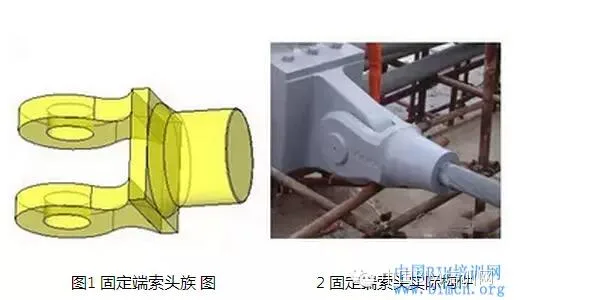
This involves comparing BIM family files of key parts with factory-processed components to confirm that shapes and dimensions meet processing requirements. Figures 1 and 2 show the comparison between the BIM model of the fixed-end cable head and the actual components:
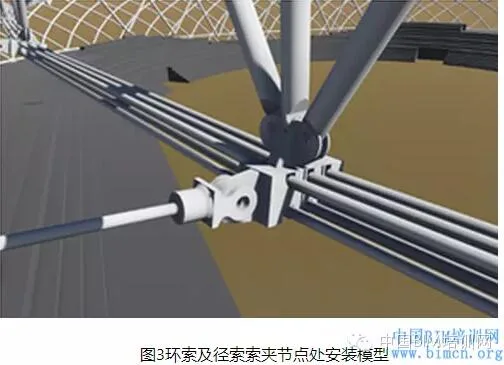
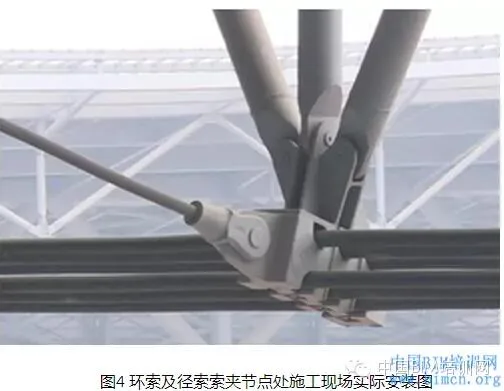
The installation of prestressed key nodes is complex. BIM models and installation animations of key parts are utilized to guide the installation process, effectively ensuring quality control. Figures 3 and 4 illustrate the comparison between the BIM installation models of loop cables and radial cable clamps and the actual site installations:
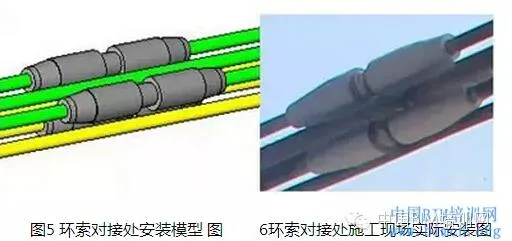
Figures 5 and 6 show the comparison between the BIM model of the loop cable joint installation and the actual installation on site:
2. Applying BIM for Construction Progress Control
Historically, low collaboration efficiency has been a major obstacle to improving project management. Studies indicate that over 20% of project progress can be lost due to poor coordination. The Xuzhou Olympic Sports Center addresses this by adopting a 3D BIM communication language and collaborative platform. Construction progress simulation and onsite integration of BIM with mobile intelligent terminal photography enhance communication efficiency and help achieve construction milestones.
During progress simulation, the actual construction status can be visually checked against the planned schedule. If deviations occur, the causes can be analyzed, and corrective actions or plan adjustments can be made to ensure overall project timelines are met. Figure 7 depicts the construction progress of the stadium roof at a specific point in time:
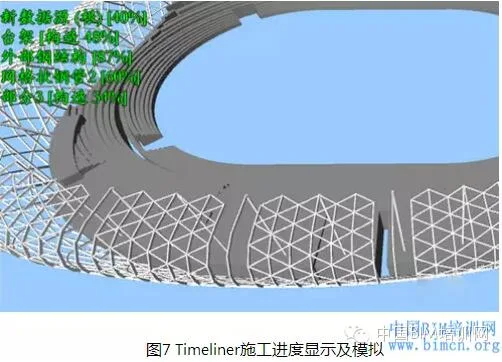
By integrating technologies such as wireless mobile terminals, WED, and RFID with the BIM model, the entire construction process can be managed on a daily basis. This integration helps prevent issues that could impact construction progress at any stage of on-site assembly.














Must log in before commenting!
Sign Up