
Source: Envisioner Home Decoration BIM Design Software
In China’s current macroeconomic adjustment phase, characterized by sluggish transitions between old and new growth drivers and insufficient economic momentum, many construction companies find themselves in a state of uncertainty. Numerous firms are expanding eastward and westward, or competing north and south, concentrating on restructuring their business models, executing strategic transformations, and exploring new market opportunities. Meanwhile, others remain focused inward, committed to refined, intensive development by transforming and upgrading internal management practices to discover fresh sources of endogenous growth.
So, where does the new driving force for the endogenous development of construction enterprises come from? Many leading companies are turning to digitalization, seeking to deeply integrate standardized management with information technology by applying interconnected digital solutions in enterprise management. This approach aims to achieve precise management and promote sustainable, healthy growth. Last year, I shared some initial thoughts on the challenges of integrating the construction industry with the Internet in an article titled “Reflections on the Dilemma of ‘Construction Industry + Internet’.” Building on recent developments, I have revisited this topic and developed some preliminary insights that I would like to share with industry colleagues.
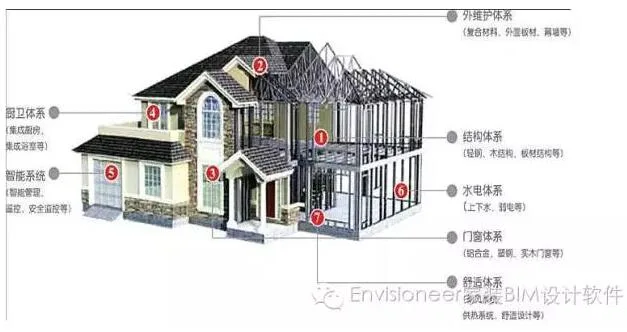
Informatization within construction enterprises can be categorized into two major areas: management informatization and product informatization. Common management informatization tools include enterprise portals, OA office systems, financial management systems, human resource management systems, project management platforms, and integrated enterprise management information systems. Product informatization, on the other hand, encompasses computer-aided design (CAD), Building Information Modeling (BIM) technologies, and construction technology standards. Due to space constraints, this article focuses primarily on management informatization.
1. Why Is Informatization Essential for Construction Enterprises?
History unfolds with unstoppable momentum. Those who embrace change thrive; those who resist fall behind. In the age of information, construction companies must accelerate their integration of the “construction industry + Internet” to keep pace and avoid obsolescence. Simply put, mastery of information interconnection technology is key to future success.
1.1 Responding to Global Technological Trends
Since the dawn of industrial civilization, humanity has witnessed four major technological revolutions: the steam engine driving mechanization, electricity enabling electrification, electronic information technology ushering in informatization, and the Internet catalyzing intellectualization. China missed the first three revolutions, leading to economic lag and lower productivity. However, it now has the foundational conditions to lead in the current wave of Internet intelligence technology.
National strategies such as “Internet Plus,” the “Made in China 2025” initiative, and recent State Council guidelines on integrating manufacturing with the Internet highlight this commitment. Globally, the U.S. promotes the “Industrial Internet,” while Germany advances “Industry 4.0.” Collectively, these represent the three dominant global development trends centered on informatization and intelligence—marking the future’s direction.
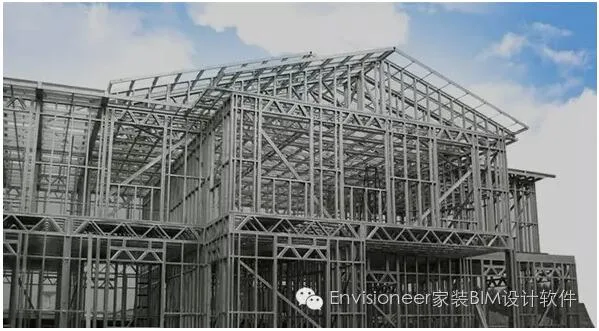
As a traditional industry with a rich history, construction faces the critical challenge of achieving a qualitative leap to align with the Fourth Industrial Revolution. Seizing this strategic opportunity requires boldness, adaptability, and swift action to overcome integration challenges, reduce energy consumption, enhance enterprise quality, improve construction products, and boost productivity. Clearly, “construction + Internet” is the prevailing trend.
1.2 Informatization as the Core of Supply-Side Structural Reform
Supply-side structural reform, a strategic framework by China’s Central Committee and State Council, addresses key economic challenges by improving production efficiency and balancing supply and demand. The construction sector, operating within a perfectly competitive market, must adapt by prioritizing strong management, quality improvement, cost reduction, excellent service, and brand building. This requires focusing inward, enhancing management efficiency, and raising labor productivity.
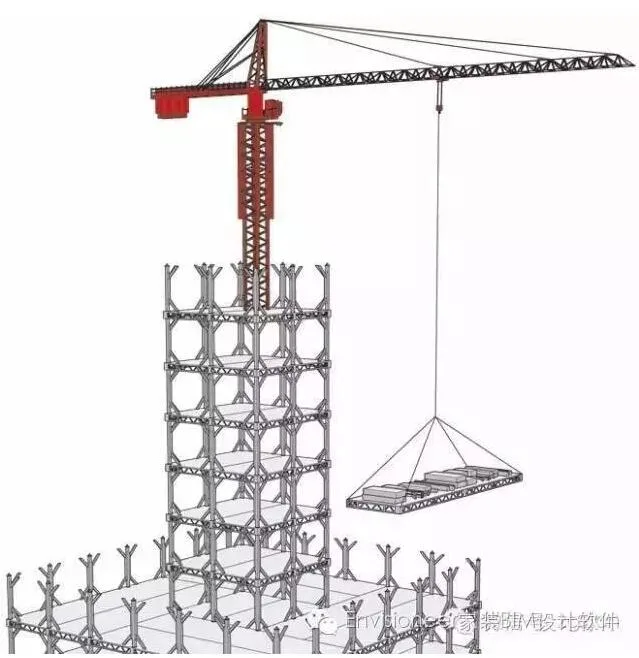
Implementing information interconnection technology allows companies to delegate tedious and burdensome tasks to computers, mobile devices, and the Internet, drastically cutting labor costs while enhancing work and product quality. For instance, calculating MEP quantities for a 100,000 square meter building takes five days with computational software versus ninety days manually. Paper-based approval processes that average five days can be completed in just one or two hours after informatization.
The China Construction Enterprise Association found a clear correlation between informatization and enterprise quality: successful companies actively pursue informatization, and those with advanced informatization perform better overall. For example, in large-scale enterprises, the proportion of non-project management staff at headquarters and branches is significantly lower in highly informatized companies compared to less informatized ones. Informatization not only improves efficiency but also streamlines management processes, broadens oversight, enhances transparency, closes loopholes, mitigates operational risks, and supports better decision-making and competitiveness. In summary, management informatization is critical to supply-side reform and essential for improving quality and efficiency in construction enterprises.
1.3 The Current State of Informatization in the Construction Industry
Since the 1980s, construction firms have gradually embraced computer-assisted office tools. The 1990s saw the adoption of LANs and specialized systems, while the 21st century brought collaborative internet-based management information systems. Over more than 30 years, informatization in construction has progressed through four stages:
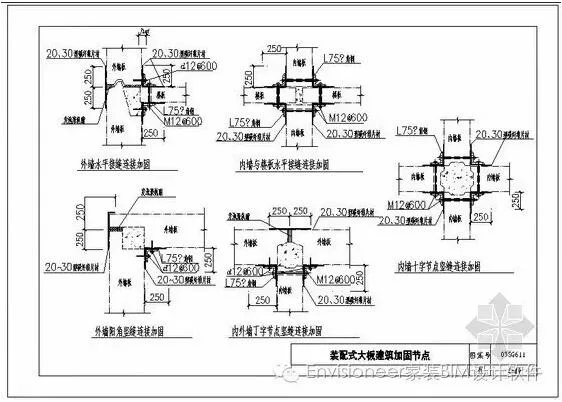
- Job-Level Application (“Construction Industry Informatization 1.0”): Focuses on general IT applications such as CAD, office software, structural calculations, budgeting, steel cutting, quantity estimation, simulation, 3D modeling, surveying, and image processing. This elementary stage remains predominant in many companies today.
- Department-Level Application (“Construction Industry Informatization 2.0”): Involves integrating IT with management modules, leading to mature, specialized departmental management systems like office automation, financial management, HR, video conferencing, archiving, project management, and decision support. This intermediate stage is common among large and medium-sized enterprises, including many first-class general contractors and specialized contractors. It features initial data management and customized optimization but also reveals inter-system contradictions prompting the need for upgrades.
- Enterprise-Level Application (“Construction Industry Informatization 3.0”): Represents integrated enterprise management information systems combining data connectivity across the entire enterprise. Only a few leading companies have reached this university-level stage, with varying depths of integration from shallow (“associate degree”) to extensive, grassroots-to-headquarters integration (“bachelor’s degree”). Larger enterprises face greater integration challenges.
- Social-Level Application (“Construction Industry Informatization 4.0”): This graduate-level stage embodies true “Internet Plus” integration. Inspired by this vision, some top-tier enterprise groups have begun mobilizing specialized IT teams to explore and pioneer breakthroughs.

Currently, most construction enterprises operate at the departmental application level (Informatization 2.0), with only a few achieving enterprise-level integration (Informatization 3.0) and many still at the job-level stage (Informatization 1.0). Some companies have only recently embarked on informatization efforts.
2. Challenges Hindering Informatization in Construction Enterprises
Enterprise informatization aims to utilize interconnected information technology to digitize construction processes and enterprise management, thereby enhancing productivity and efficiency. However, management informatization currently faces eight major challenges:
2.1 Low Standardization of Enterprise Management
Standardized management is the cornerstone of informatization. The higher the standardization, the easier the informatization implementation. Conversely, informatization promotes management standardization. Unfortunately, the Chinese construction market is fragmented with diverse investors, market regulators, joint ventures, aggressive bidding, and fierce competition, making it difficult for companies to focus on standardized management. Geographic dispersion, personalized project requirements, and varying worker skill levels further impede standardization. Differences in scale, management models, culture, and team quality among general contractors, specialized contractors, and labor subcontractors exacerbate this issue. While some firms have made progress, overall standardization remains low, severely restricting informatization.

2.2 Diverse, Incompatible Information Systems and “Information Silos”
Many enterprises lack an overarching, systematic IT architecture and enterprise-level design, leading to fragmented, decentralized, and emergency-driven IT deployments. This results in complex systems, multiple platforms, and numerous “information silos.” For example, one enterprise headquarters may operate 36 distinct systems, while another has 19 platforms, creating inconsistency and unevenness. These isolated systems struggle to communicate, forcing companies to resort to costly and wasteful “blasting” (system overhauls) to restart informatization efforts, dampening enthusiasm and progress.
2.3 Disparate Accounting Rules between Business and Finance
Construction project cost accounting in China follows unique practices that often conflict with financial accounting rules. Cost sub-accounts in business cost lists rarely correspond directly to financial accounts, especially at detailed levels. These discrepancies, entrenched over time, create significant challenges in unifying business and financial cost measurements. Aligning these requires system reforms, personnel training, mindset shifts, and process changes. Without unified cost measurement and standardized data coding, true business-finance integration remains elusive, forming a major obstacle to informatization advancement.
2.4 Multiple Management Entities with Conflicting Goals Impeding Transparency
Construction projects involve numerous stakeholders: owners, contractors, designers, supervisors, subcontractors, suppliers, and regulators, each with distinct interests and sometimes adversarial relationships. This complexity makes achieving full transparency in project management and financial information challenging. Within enterprises, various management levels have differing objectives and priorities, leading to inherent contradictions that hinder open information sharing. Furthermore, lengthy project lifecycles and complex workflows involve negotiation and game theory dynamics, complicating the establishment of a unified, transparent information platform.

2.5 Shortage of Cross-Disciplinary Talent and Insufficient Top-Level Design
Effective management informatization requires deep integration across business lines, which demands talented professionals fluent in IT, enterprise operations, finance, and business. Currently, a severe lack of such cross-disciplinary experts causes fragmentation: IT specialists lack management insight, managers lack IT expertise, finance and business functions are siloed, and material and funds management are disconnected. This leads to duplicated efforts, isolated systems, and ineffective communication. Without capable management architects, top-level informatization design is often absent or inadequate, making true integration a distant goal.
2.6 Lack of Mature Enterprise-Level Integration Technology Products
IT vendors often prioritize rapid, short-term solutions over comprehensive, enterprise-level integration products due to high development costs and uncertain returns. While specialized, tool-focused software products exist and meet basic needs, mature, systematic, enterprise-wide integration solutions are scarce. Some construction firms undertake independent R&D efforts but struggle due to limited technical talent and resource constraints, leading to stalled informatization projects and wasted resources. This gap represents a significant barrier for advancing enterprise informatization.
2.7 Restlessness and Trend-Chasing Impede Practical Implementation
In recent years, industry professionals have been distracted by buzzwords like BIM, big data, and cloud computing, often without fully understanding or applying them effectively. This hype-driven environment discourages focused, practical efforts at the grassroots level. Huawei’s Ren Zhengfei aptly cautioned against prematurely pursuing Industry 4.0 without completing fundamental industrial automation. Many construction firms struggle to accurately track project data yet continue to chase trendy concepts, leading to wasted effort and jeopardizing their future.
2.8 Outdated Mindsets and Resistance to Change
The construction industry’s traditional nature means entrenched mindsets, habits, and practices are hard to shift. As the saying goes, “the country is easy to change, but human nature is difficult.” Informatization inevitably alters organizational structures, workflows, approval processes, responsibilities, and authority. Resistance arises when these changes threaten established interests, sometimes manifesting openly, other times covertly. Overcoming this resistance is essential but challenging for successful informatization implementation.
3. How Can Construction Enterprises Advance Informatization?
Given the construction industry’s complexity, information technology adoption remains insufficient. Current management levels do not meet development needs and hinder competitiveness and profitability. Therefore, construction companies must maintain confidence, face challenges head-on, and accelerate informatization efforts. The “construction + Internet” initiative is urgent.
3.1 Stay True to Your Original Purpose: Focus on Practicality, Effectiveness, and Roots, Avoid Hype
Technology is only productive when applied effectively. The fourth industrial revolution—driven by information interconnection technology—promises massive productivity gains across industries. For construction, the primary goal of informatization is to enhance management efficiency and enterprise benefits, thereby boosting industry productivity. This is the “original intention” to never lose sight of.

When advancing informatization, companies must adhere to three principles:
- Usefulness: Informatization should address actual management needs. Efforts aimed solely at impressing superiors or meeting administrative requirements (such as qualifying for special information standards) are counterproductive and should be avoided.
- Effectiveness: The focus must remain on improving management efficiency, reducing costs, and enhancing enterprise performance. Informatization for its own sake, involving cumbersome procedures, redundant work, or superficial compliance, wastes resources and fails to solve real problems.
- Rootedness: Informatization efforts must be grounded in practical application, especially in managing construction projects. Since projects are the core products of construction enterprises, applying digital solutions to project management is essential for improving productivity.
Companies should be wary of chasing buzzwords like “big data” and “cloud computing” without foundational capabilities. For firms under 1.5 billion USD struggling to control project data accurately, indulgence in such trends is empty talk that harms both the enterprise and industry, wasting money and missing valuable opportunities.
3.2 Prioritize Management Standardization, Coordinate Top-Level Design, and Achieve Deep Integration
Standardized management is the prerequisite for successful informatization. While informatization can promote standardization, without a solid standardized foundation, informatization efforts risk inefficiency and rework.
Management standardization in Chinese construction enterprises has evolved through four stages:
- Version 1.0: Basic standardization characterized by standardized documents and manuals.
- Version 2.0: Quality and safety certifications (ISO9000), procedural documentation, and standard manuals.
- Version 3.0: Standardization driven by excellent performance models.
- Version 4.0: Digitized management standards building on previous achievements to create comprehensive, unified, and operational digital manuals.
Only upon reaching Version 4.0 can enterprises truly integrate informatization with refined management. Digitized management standardization organizes numerous processes, standards, and control reports into unified, measurable language and metrics, creating the essential foundation for effective IT application.














Must log in before commenting!
Sign Up