
BIM Software Tip: How to Connect Revit’s Irregular Exterior Walls with Interior Walls
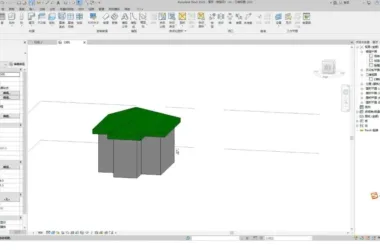
Revit is a powerful tool for creating irregular exterior surfaces. It allows users to design complex volumes and even import them from other formats. However, one common challenge is connecting these irregular exterior walls with standard interior walls where they meet. Here’s an example to illustrate the process:
The key technique involves editing the wall’s profile and selecting the intersection edge to create a smooth connection between the interior and exterior walls. However, simply using the “Edit Profile” tool to pick the intersection line often fails to capture the boundary correctly.
To overcome this, start by using the “Join Geometry” command to connect the exterior and interior walls. This creates a clear intersection edge, making it easier to select when editing the wall profile. When selecting the walls for joining, make sure to select the interior wall first, followed by the exterior wall.
After joining the walls, use the “Edit Profile” tool to pick the newly created intersection edges. This method ensures a clean and precise connection between the irregular exterior wall and the standard interior wall.













Must log in before commenting!
Sign Up