
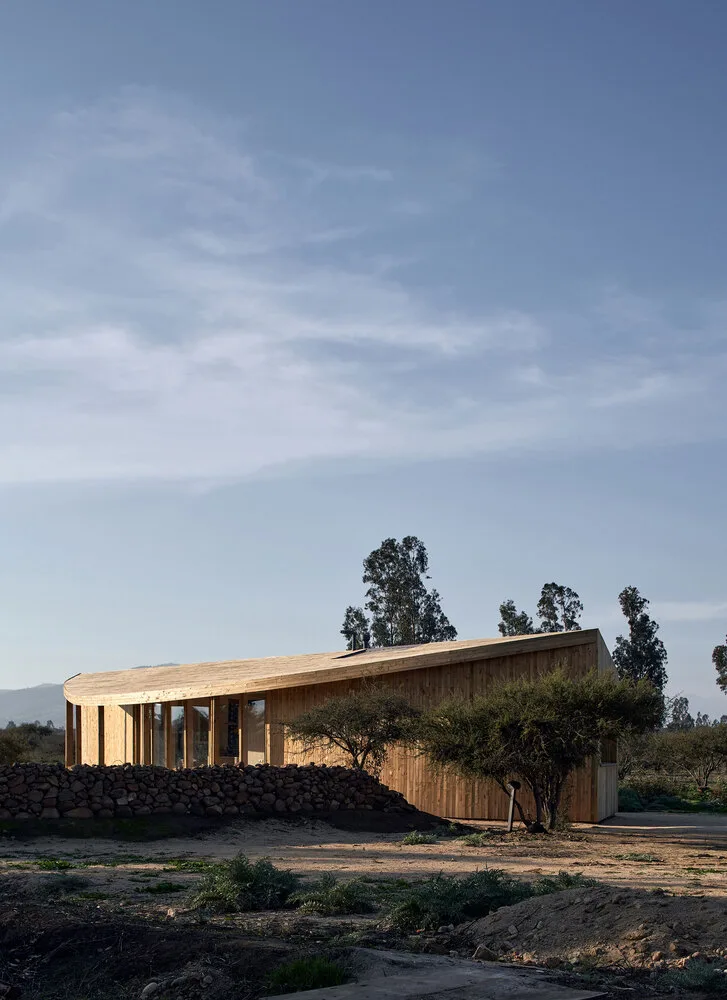
This rural vacation home belongs to a middle-aged couple living in the countryside who work closely with plants and essential oils. The design concept is deeply inspired by their lifestyle and passions. With a playful spirit, the husband named the house “La Ultima Morada,” abbreviated as “LUM.” While the English translation means “the final resting place,” the abbreviation “LUM” holds significance only in Spanish. Beyond the unique architectural vision, he personally cultivated a garden on-site, which became the foundation for the design.
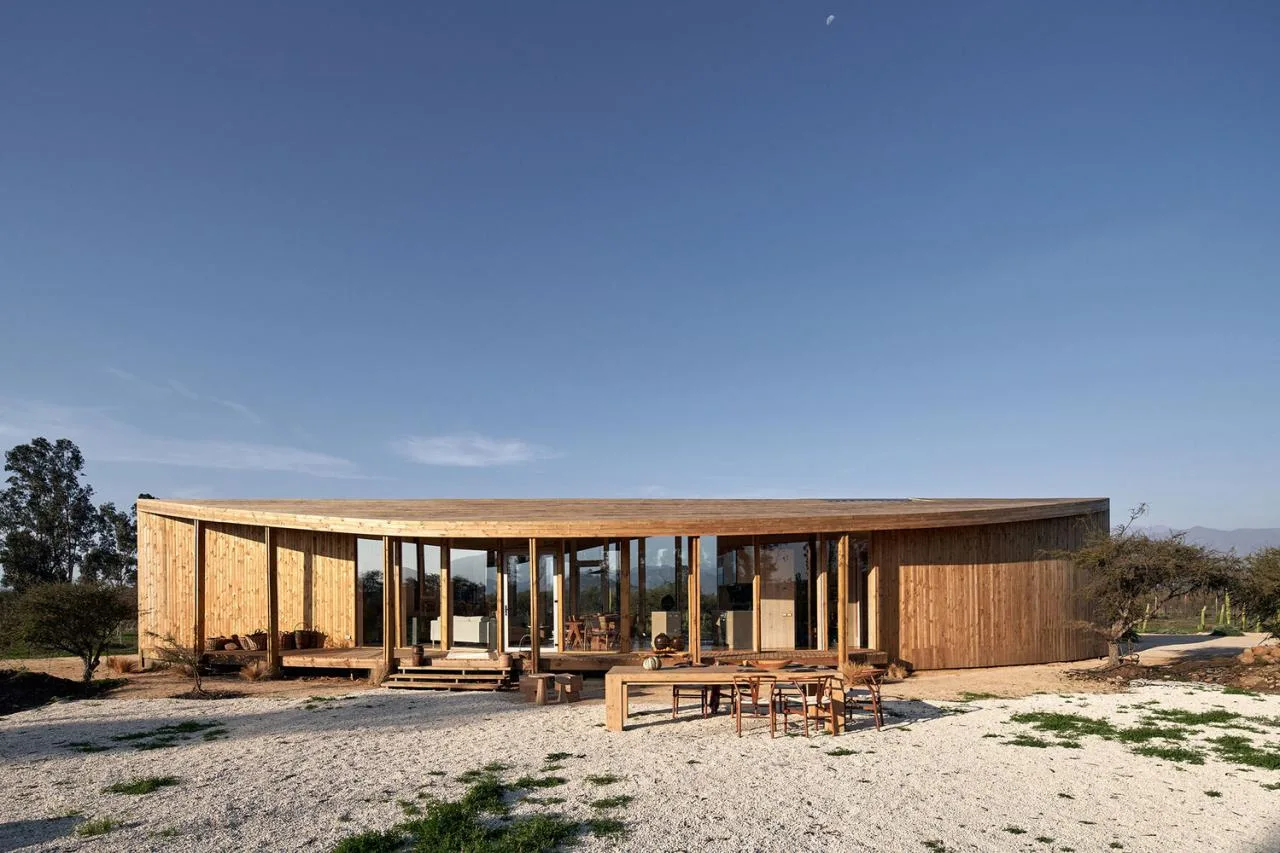
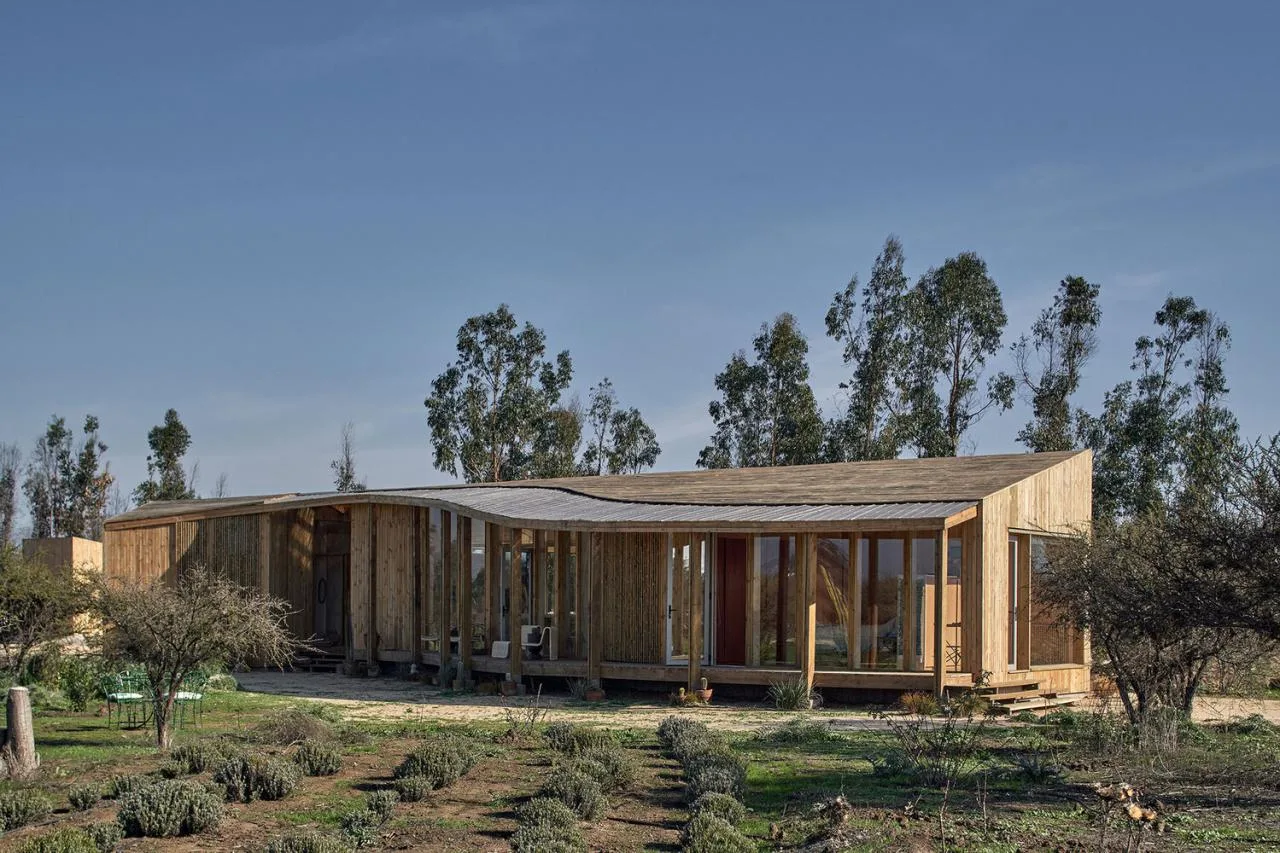
The design draws inspiration from the spiral growth pattern of plants, famously described by Italian mathematician Leonardo Fibonacci (1140–1270). This spiral motif influenced the garden’s layout and the house’s positioning on the site. The winding pavilion resembles a serpent’s movement, offering a tranquil space for morning meditation and aligning with natural phenomena like the sunrise and full moon, as well as the surrounding hills.
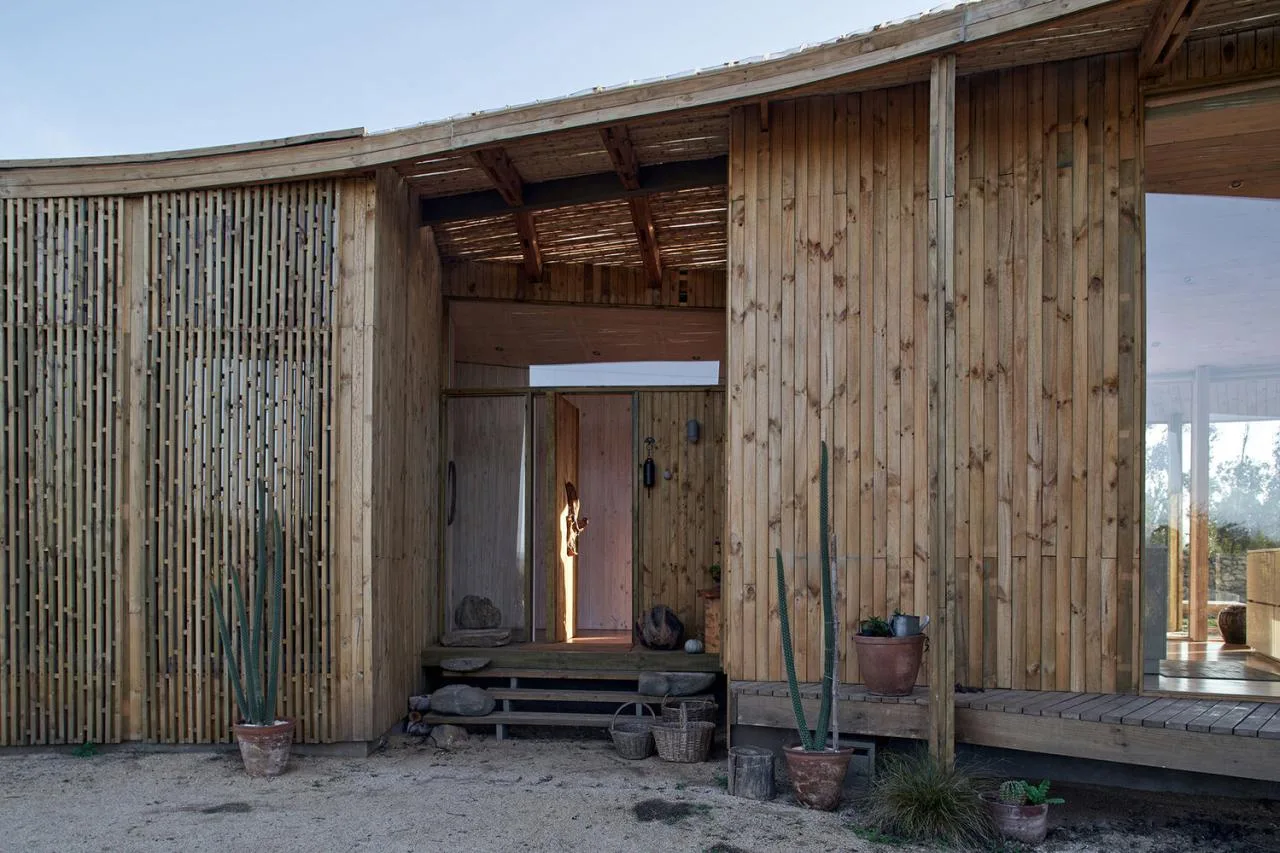
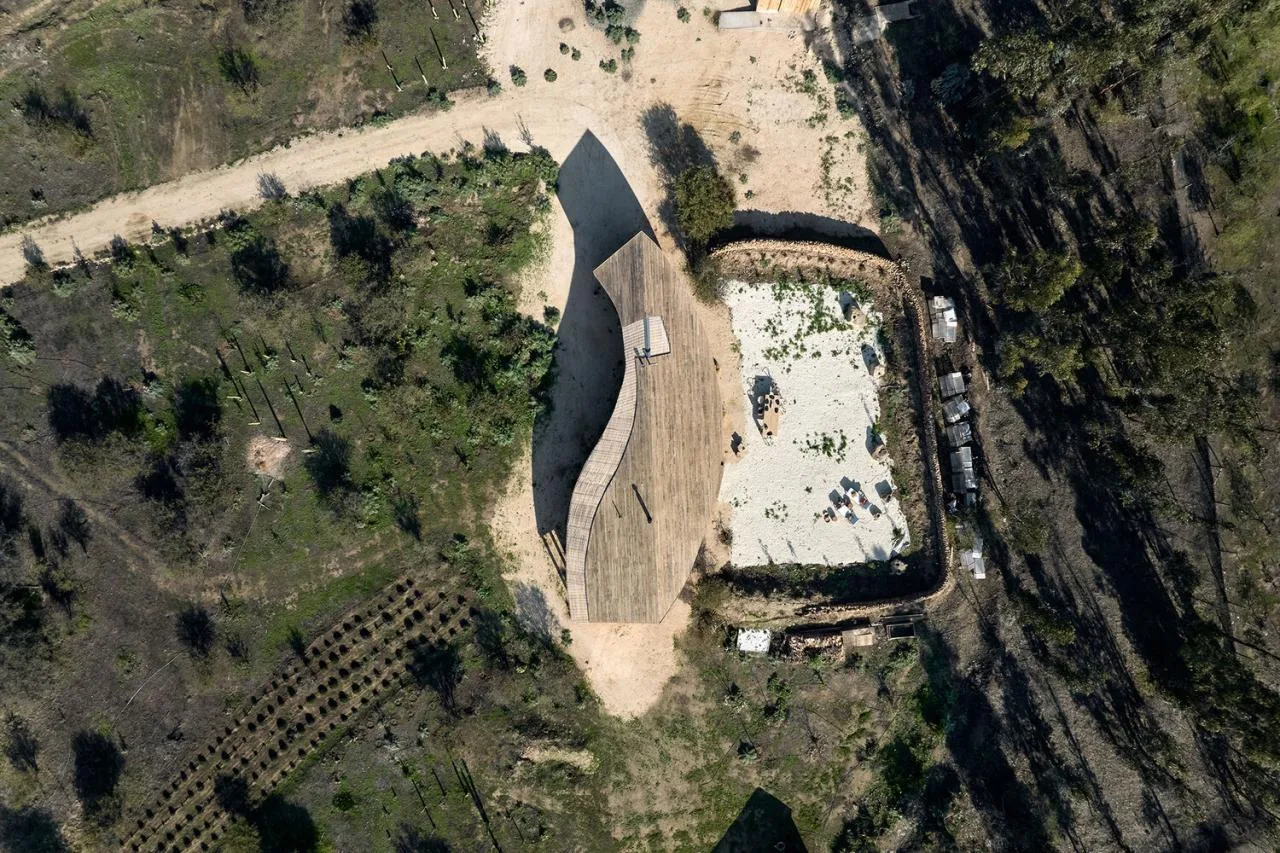
Each natural element around the home forms part of a daily ritual, connecting the couple to nature in a meaningful way. The house’s structure gracefully winds around a rock garden made from protected pre-Columbian ritual stones, encircled by semi-circular stone walls and a layer of quartz. This creates a private living area centered along the main Fibonacci curve. A secondary curve runs through the front garden, leaving an entrance space between the studio and the house.
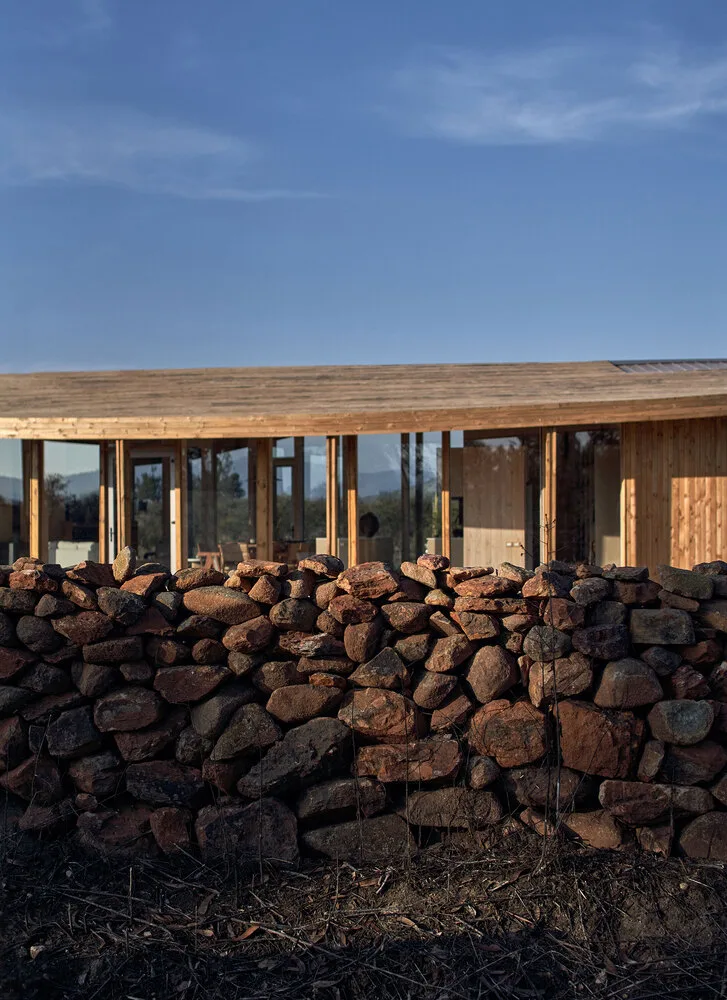
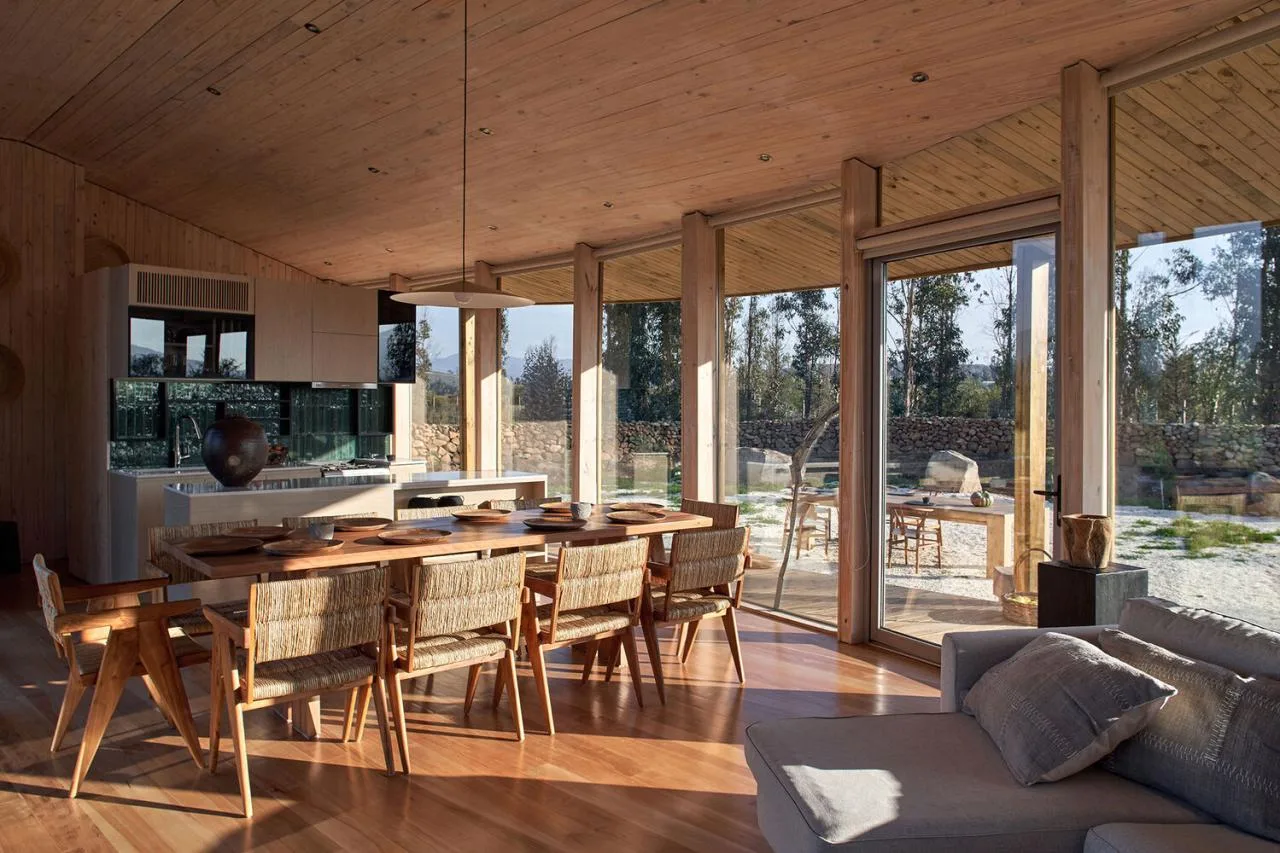
This layout allows the living area and bedroom to function as a continuous private space when guests visit. The roof follows the building’s curve, featuring a diagonal ridge that extends from one end to the other. Walls and a wooden terrace above the roof compactly define the house’s volume. Inside, curved walls conceal doors, enhancing the spatial flow and creating a sense of intrigue that extends from the south-side studio to the master bedroom at the opposite end.
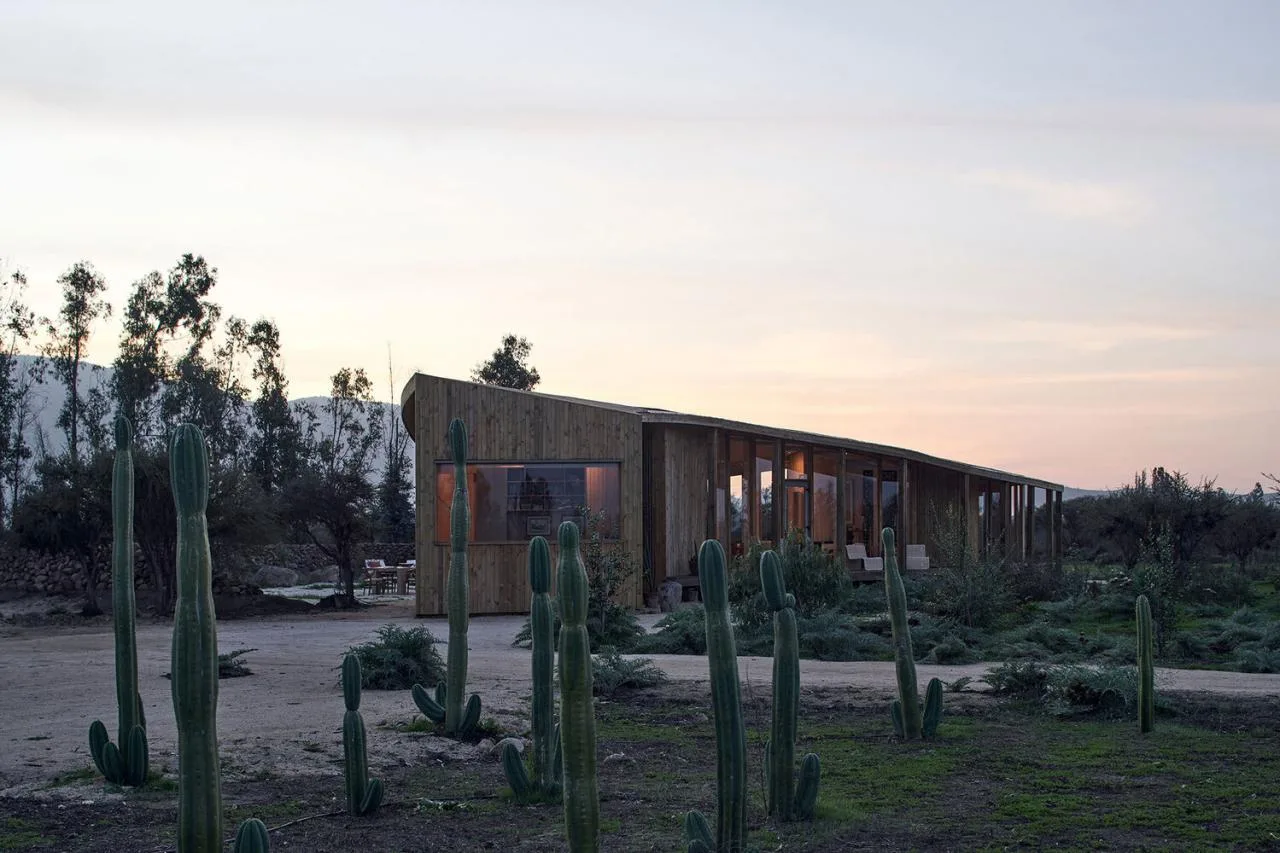
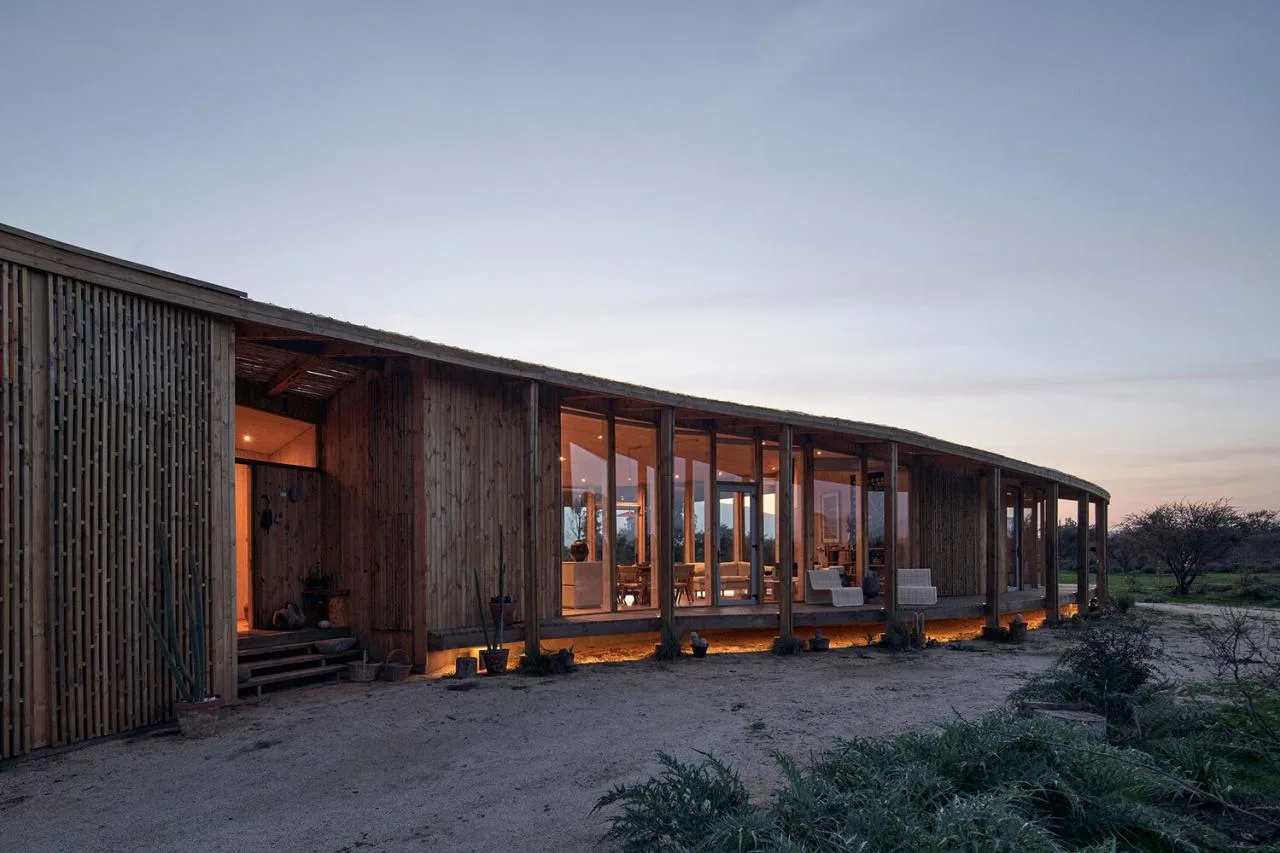
An important requirement was to follow a specific orientation. While this isn’t optimal for controlling solar heat gain or climate efficiency, it was essential to the owners. Given the area’s tendency to flood during winter, the entire structure is elevated 40 centimeters above ground level. This practical decision also gives the impression that the building floats, opening up views to the surrounding landscape. The roof’s pillars extend directly from the ground, supporting the terrace and reinforcing the concept of a floating pavilion.
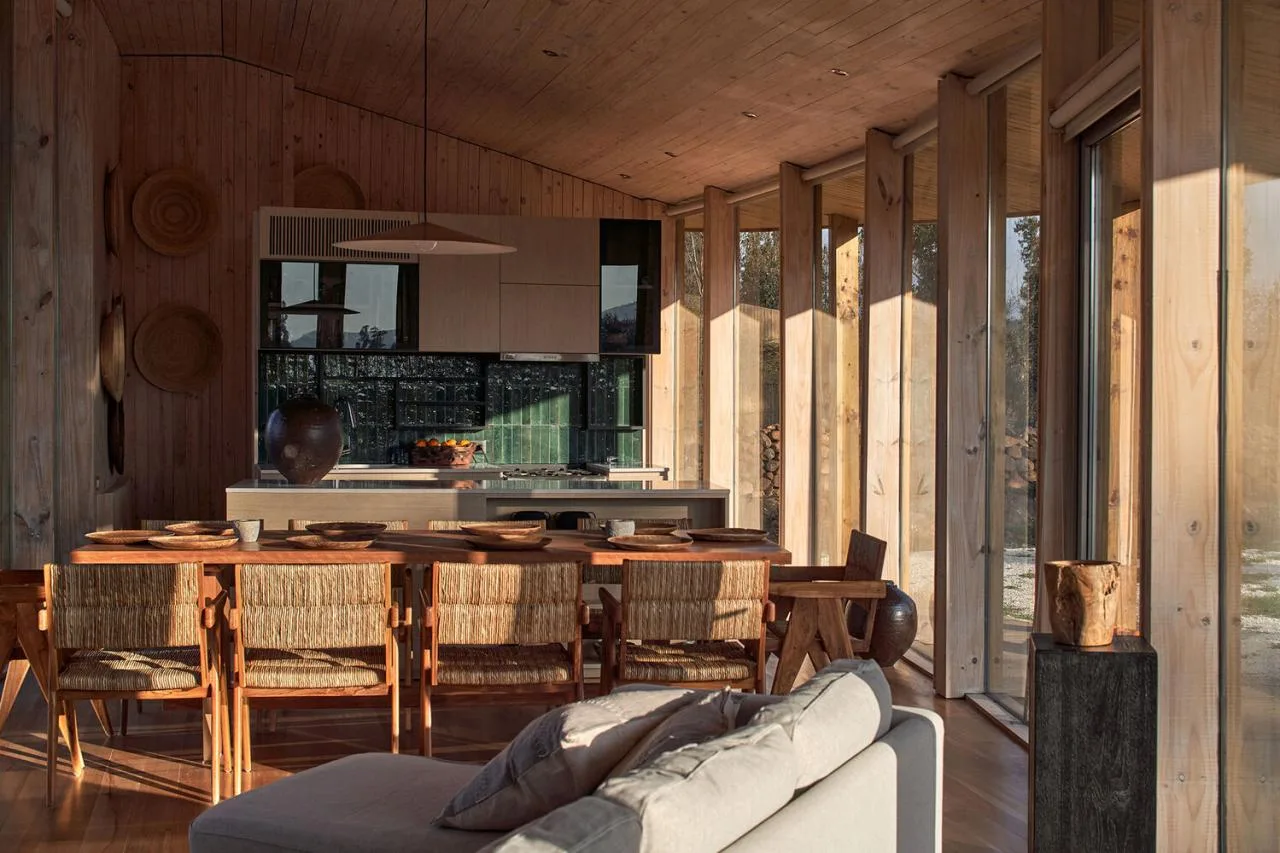
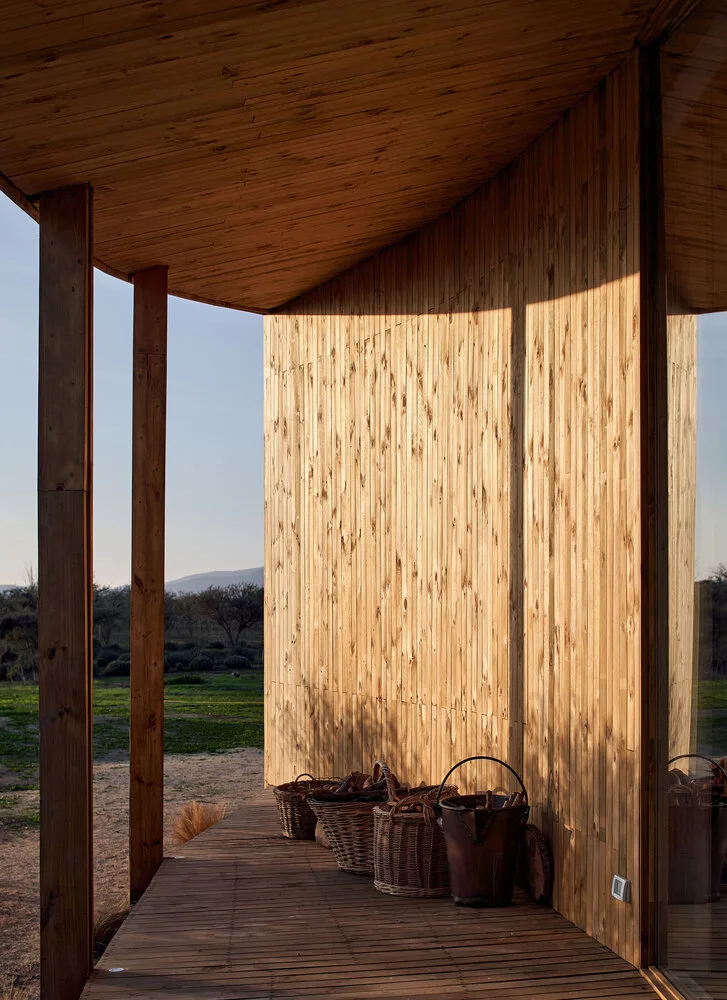
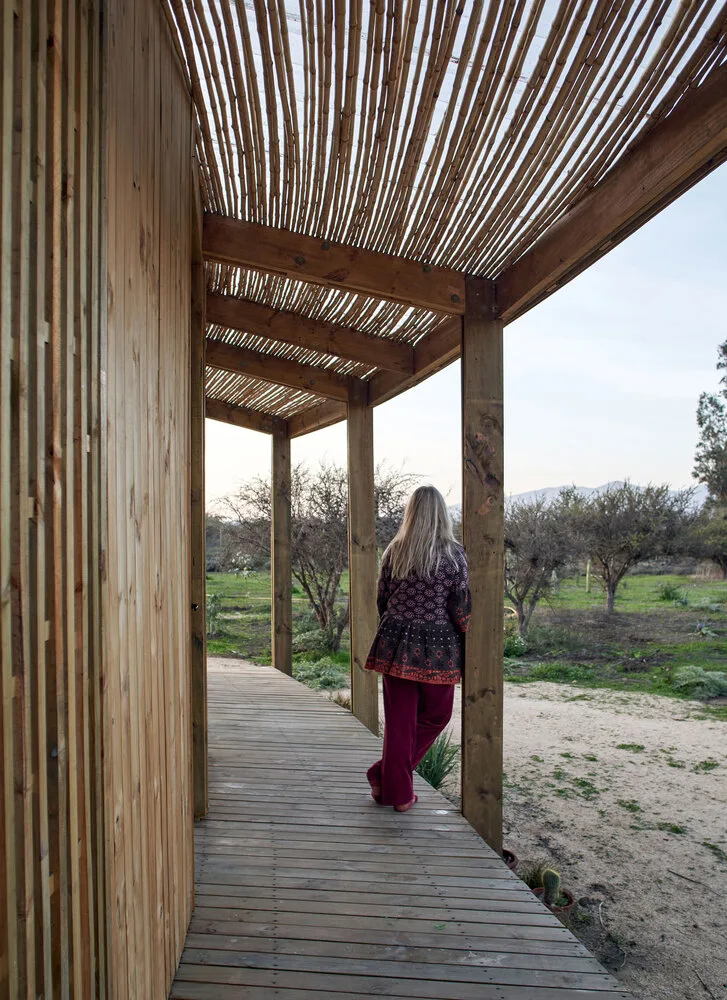
This project embraces sustainability while maintaining a low budget. The design ensures energy efficiency in walls, floors, and roofs through passive housing techniques. Covered outdoor corridors provide shading and serve as transitional spaces open to the east and west. Although the western-facing quartz rock garden may not be ideal for climate efficiency, it balances the owners’ needs effectively, maintaining the building’s harmony and coherence.












Must log in before commenting!
Sign Up