
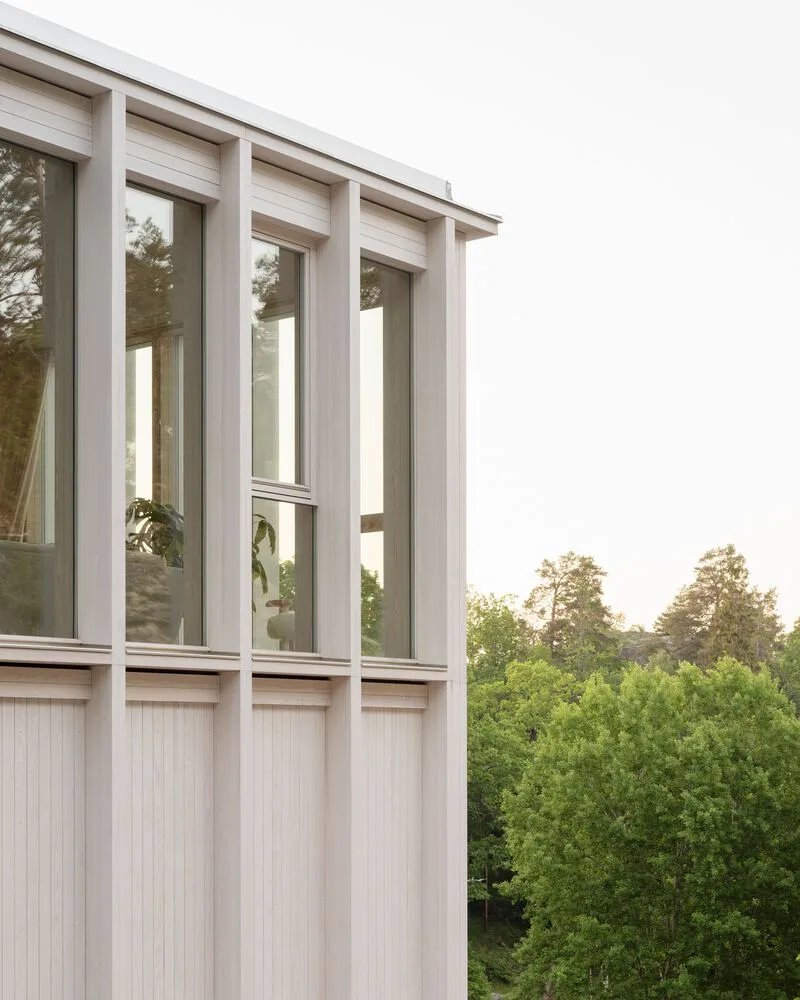
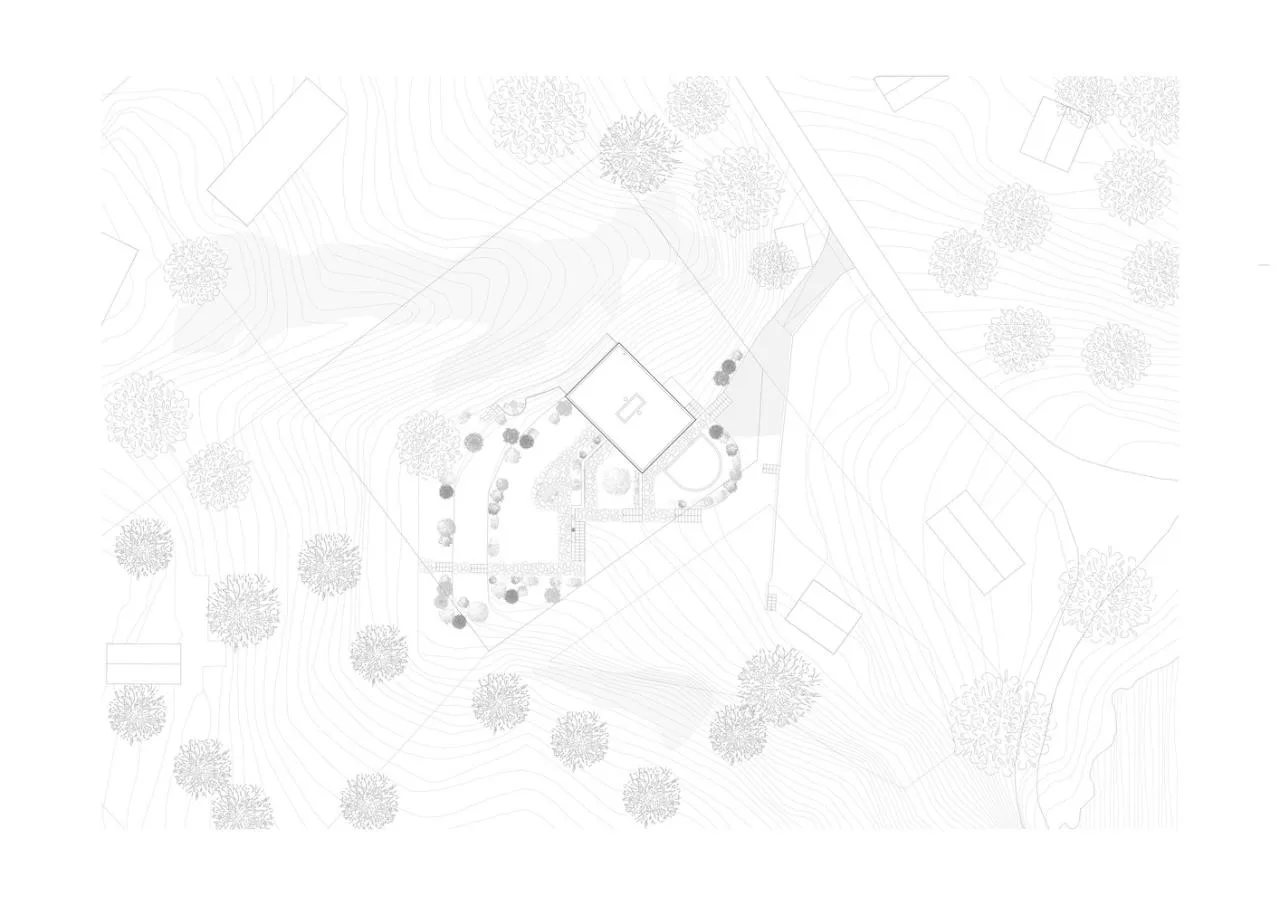
This wooden vacation villa is nestled on the scenic northwest side of the Skurusundet strait, presenting unique challenges for prospective homeowners. The plot lies within a deep canyon, flanked by cliffs on both sides, making road access difficult. While the towering cliffs offer breathtaking views of Stockholm Port’s entrance, building here demands careful planning to meet regulations and manage construction costs effectively.
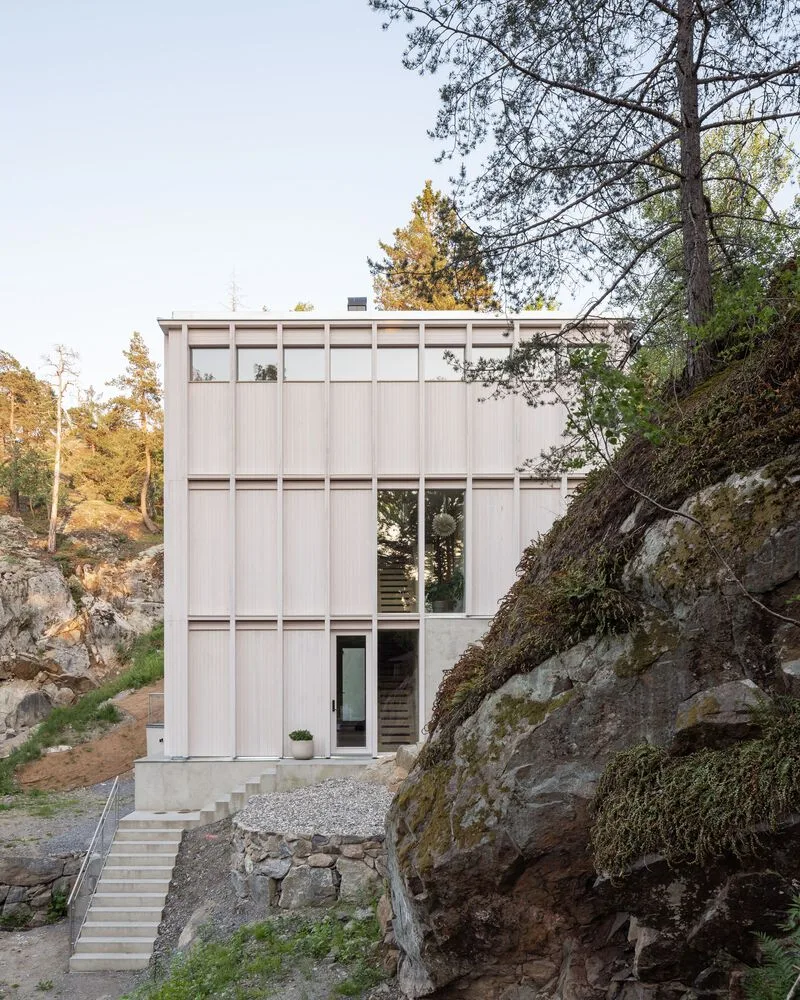
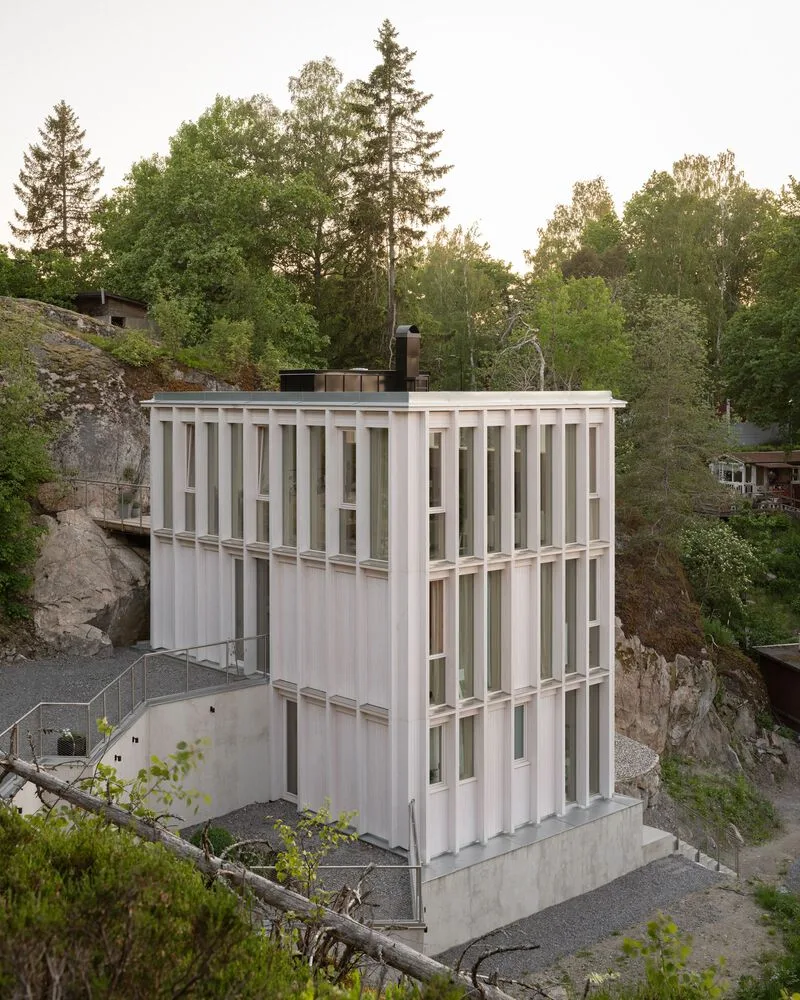
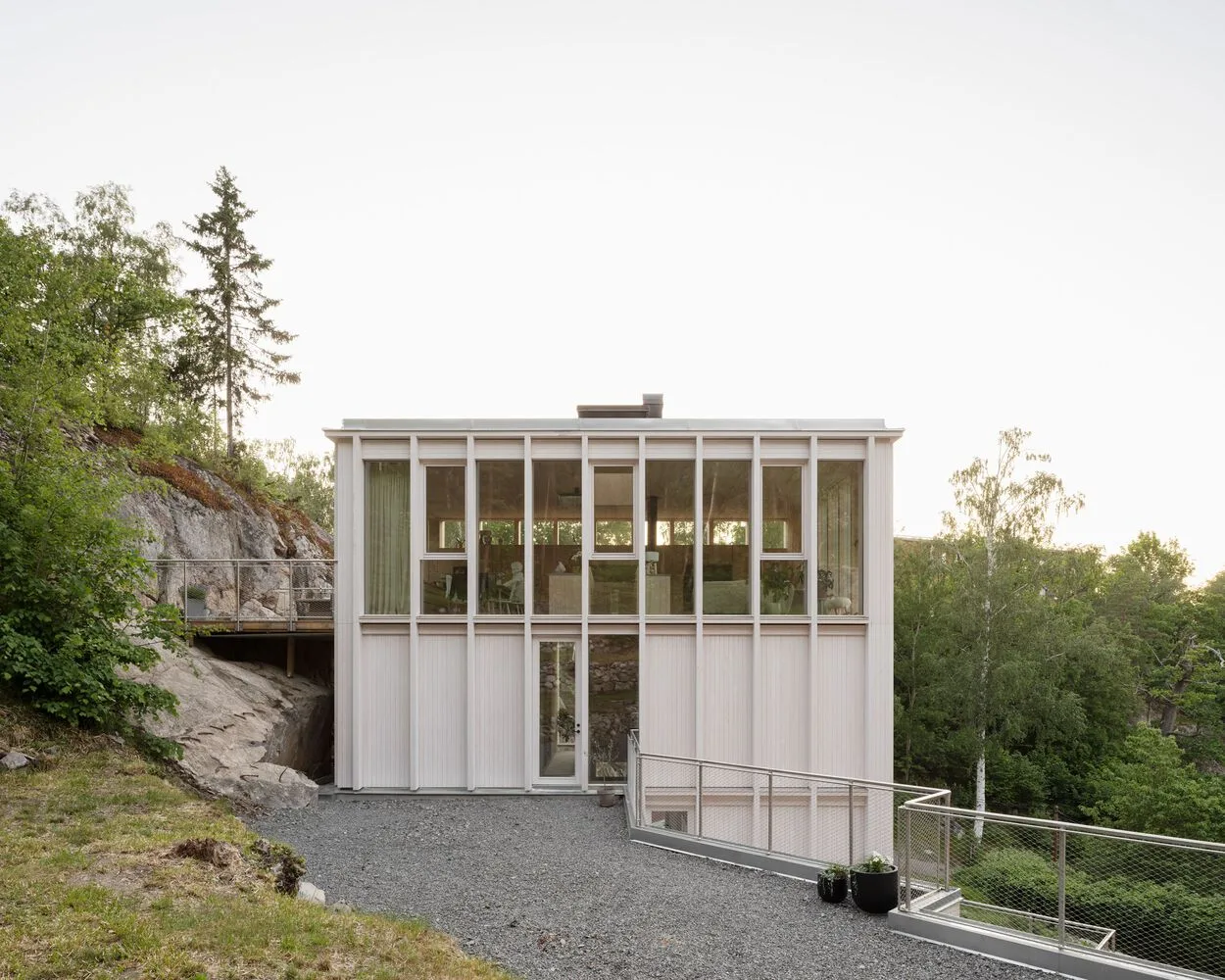
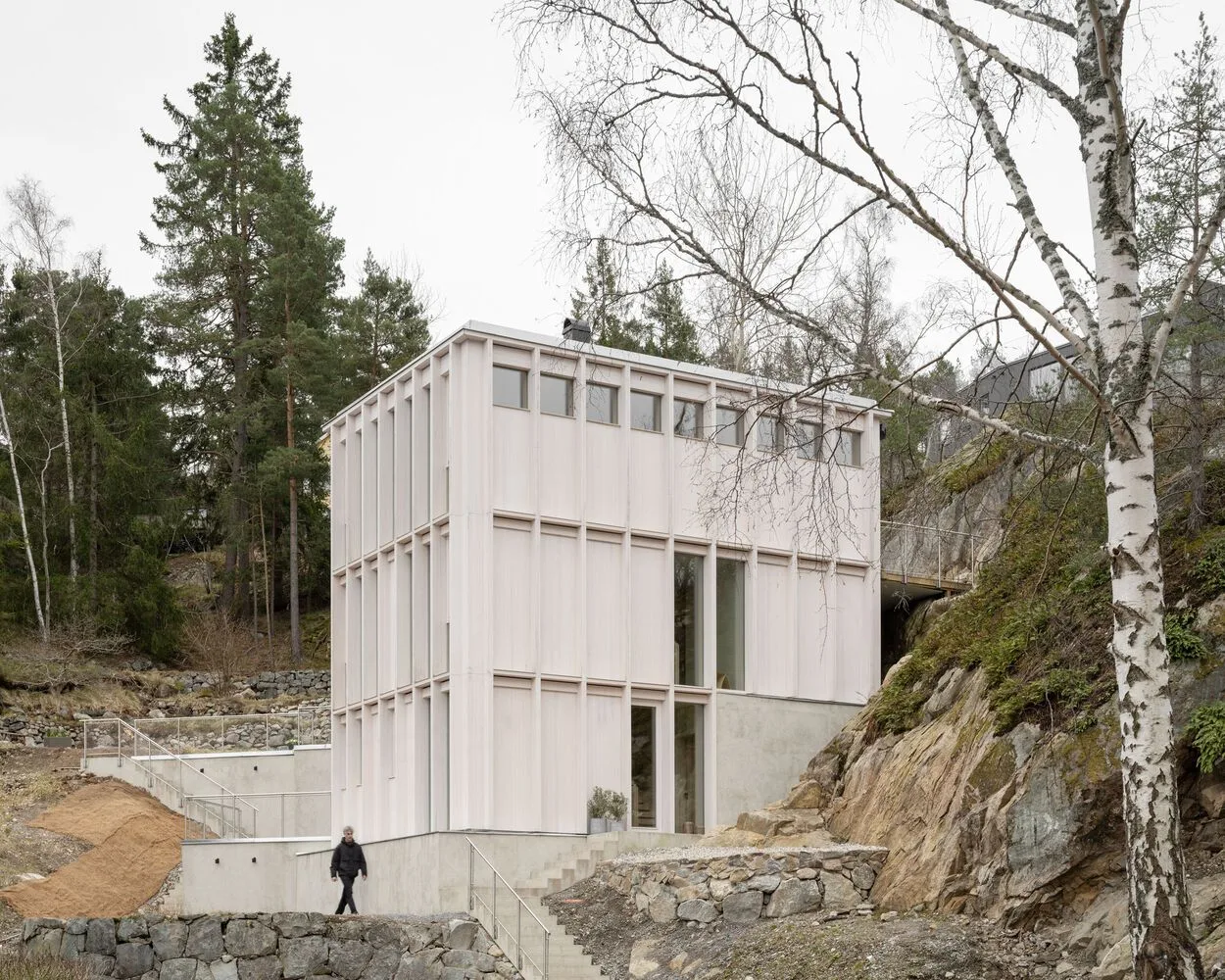
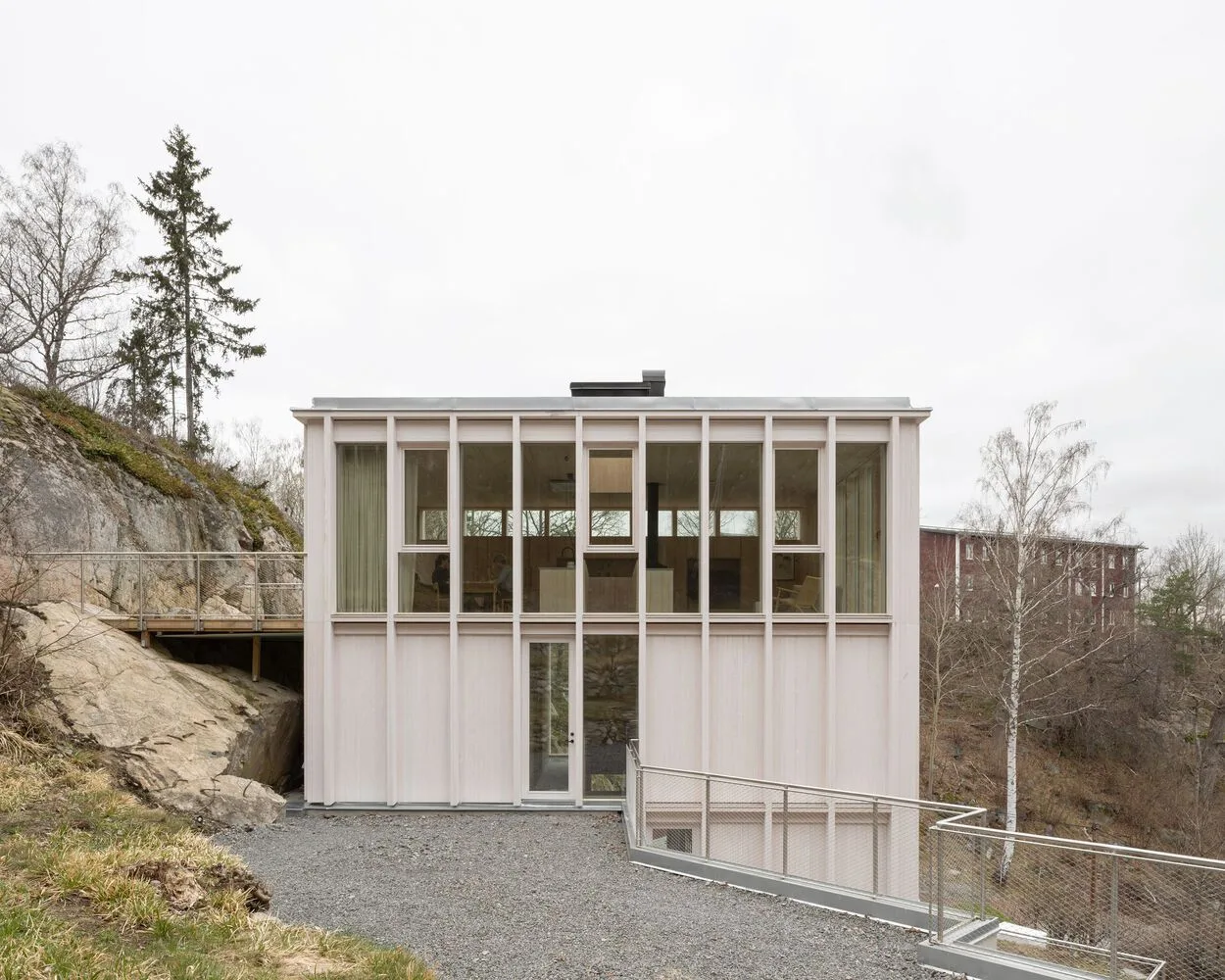
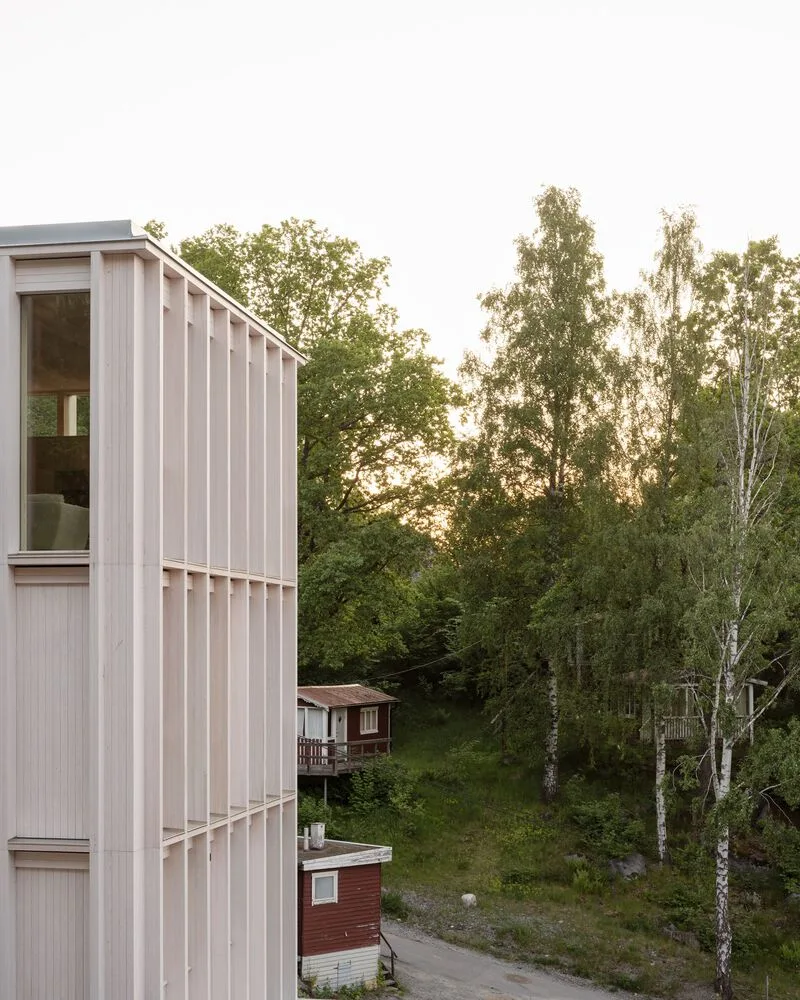
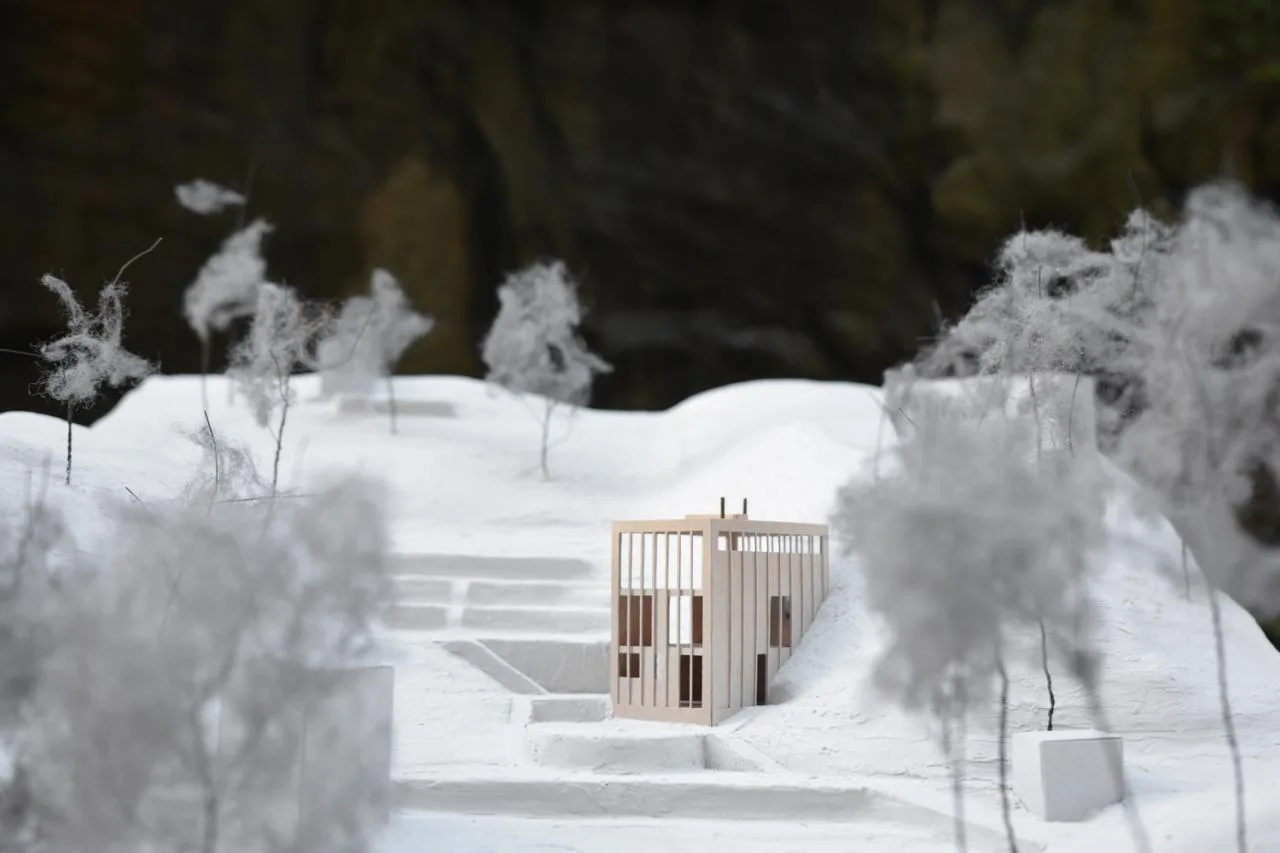
Historically, this area has been a beloved summer retreat for everyday people, featuring numerous small and simple red cottages that offered affordable summer living. Close to Stockholm, many of these cottages have been replaced by larger, permanent homes. This particular plot once hosted a larger structure, terraced landscaping descending from the canyon, and a semi-circular fish pond enclosed by sturdy granite walls, all remnants that highlight its rich past.
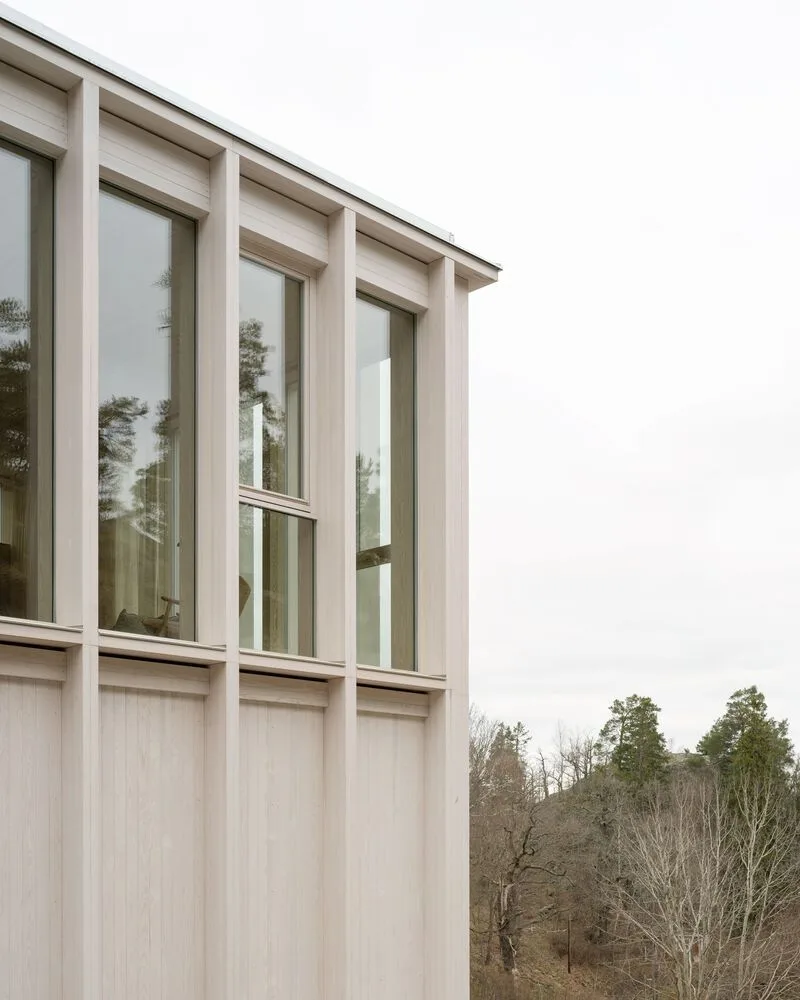
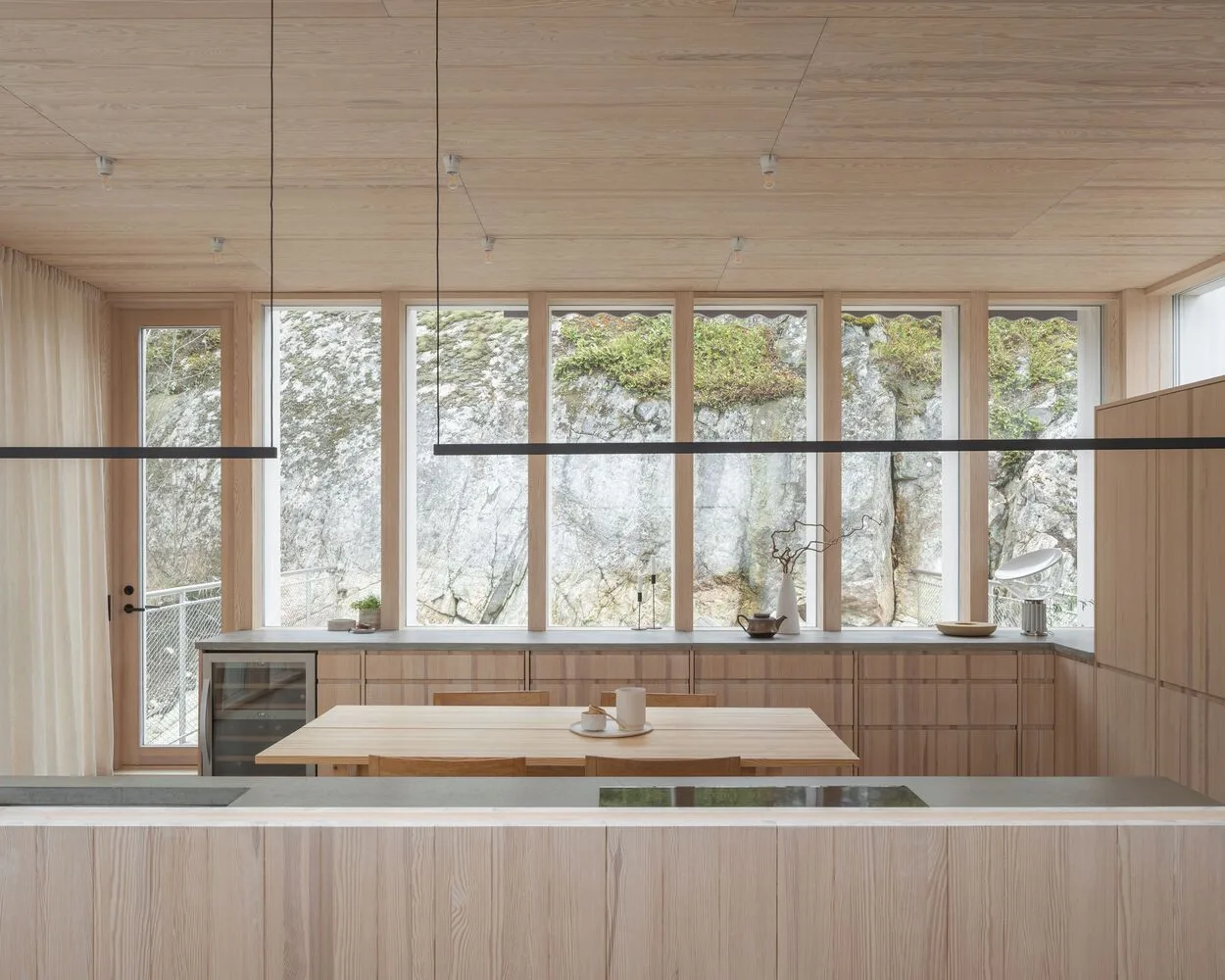
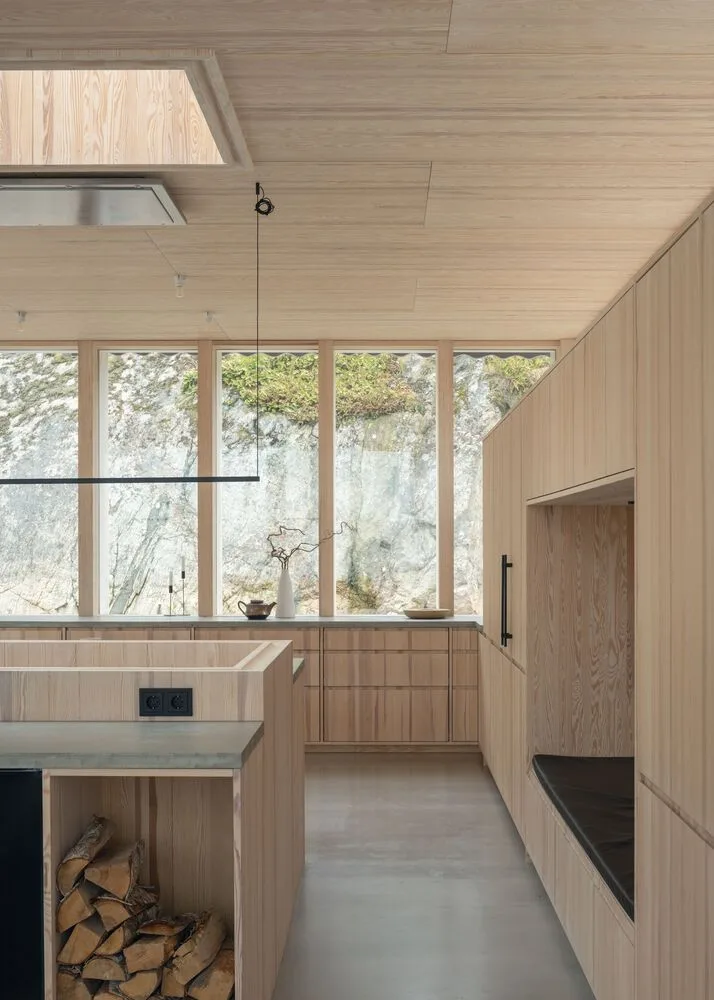
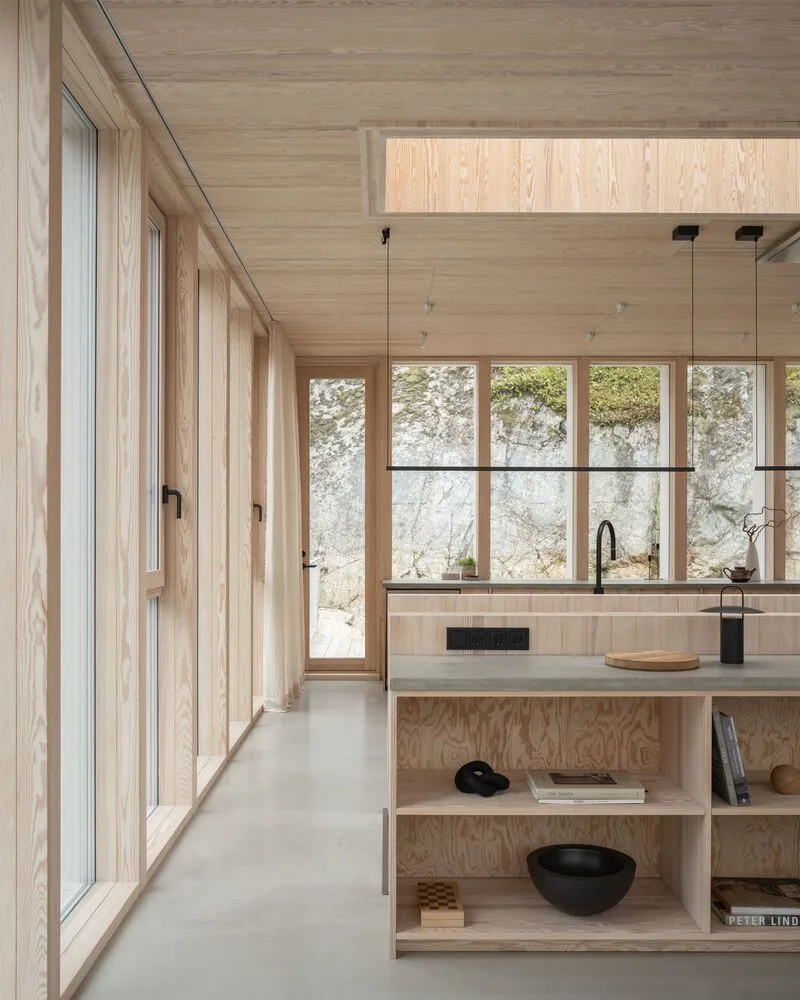
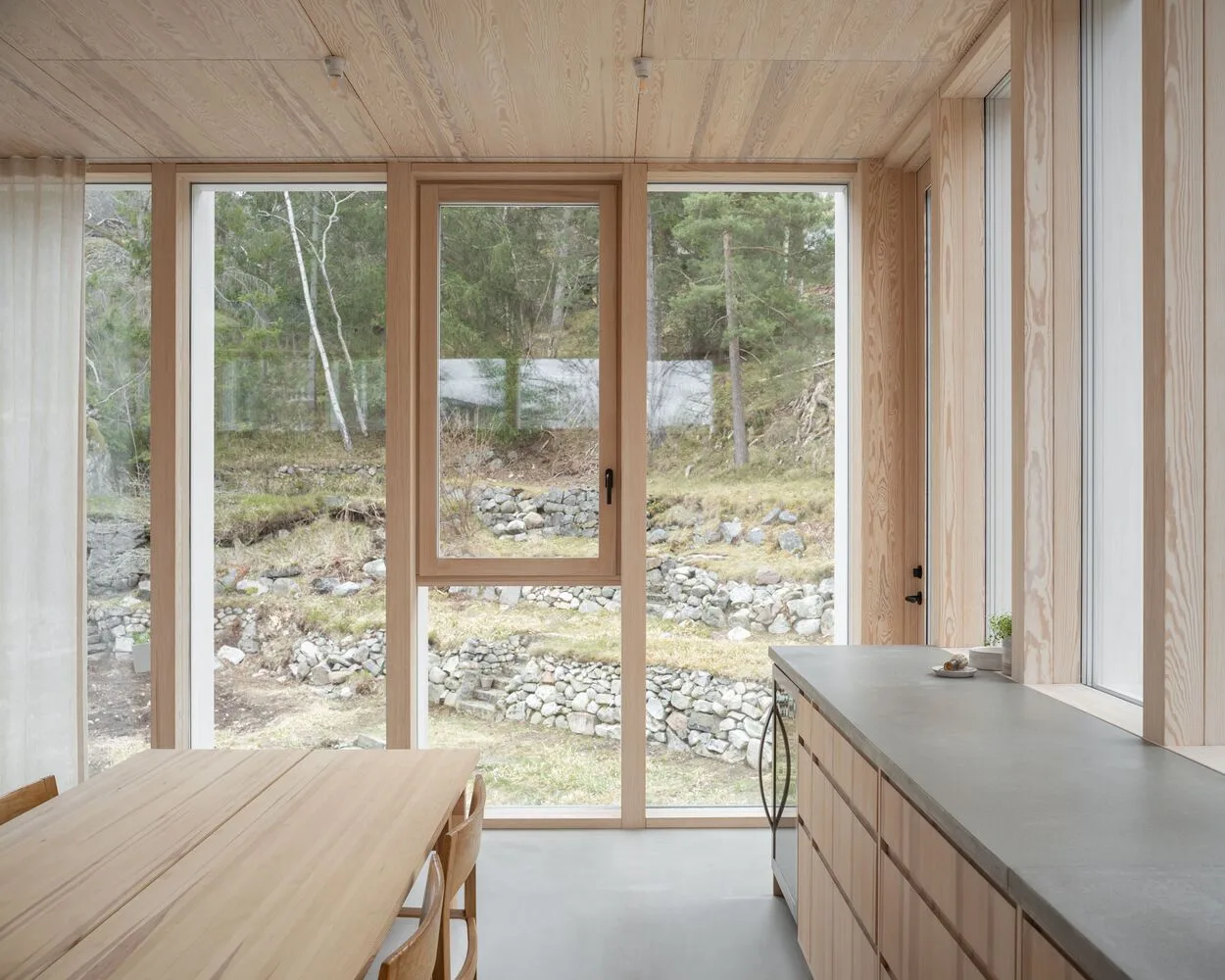
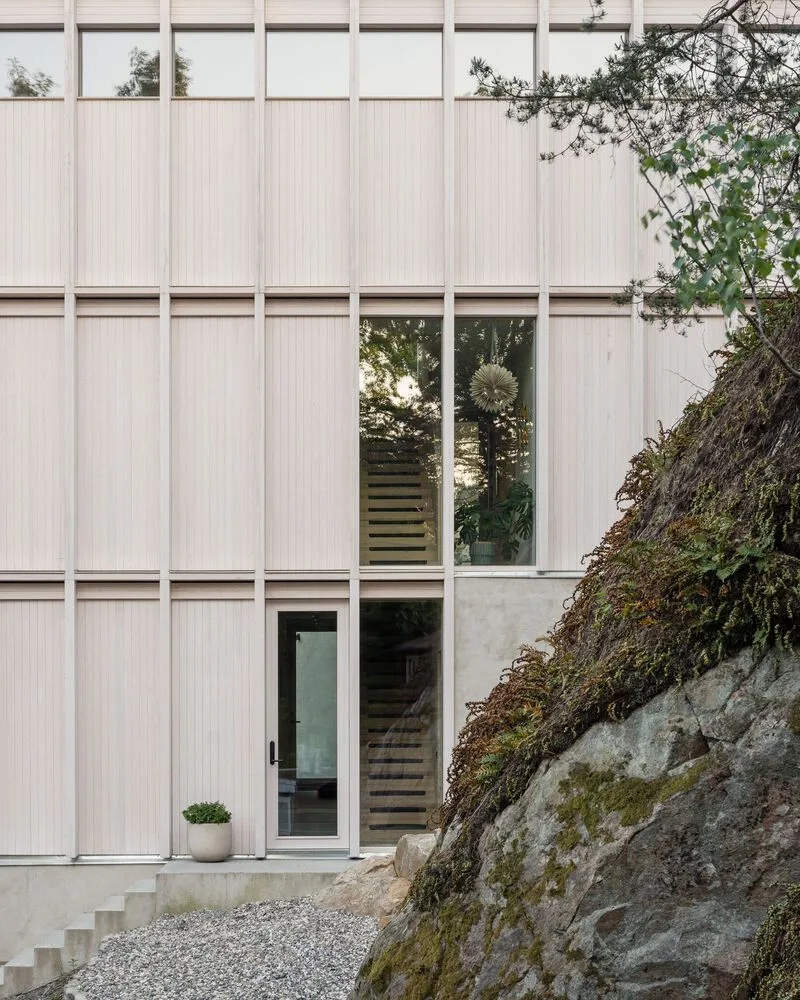
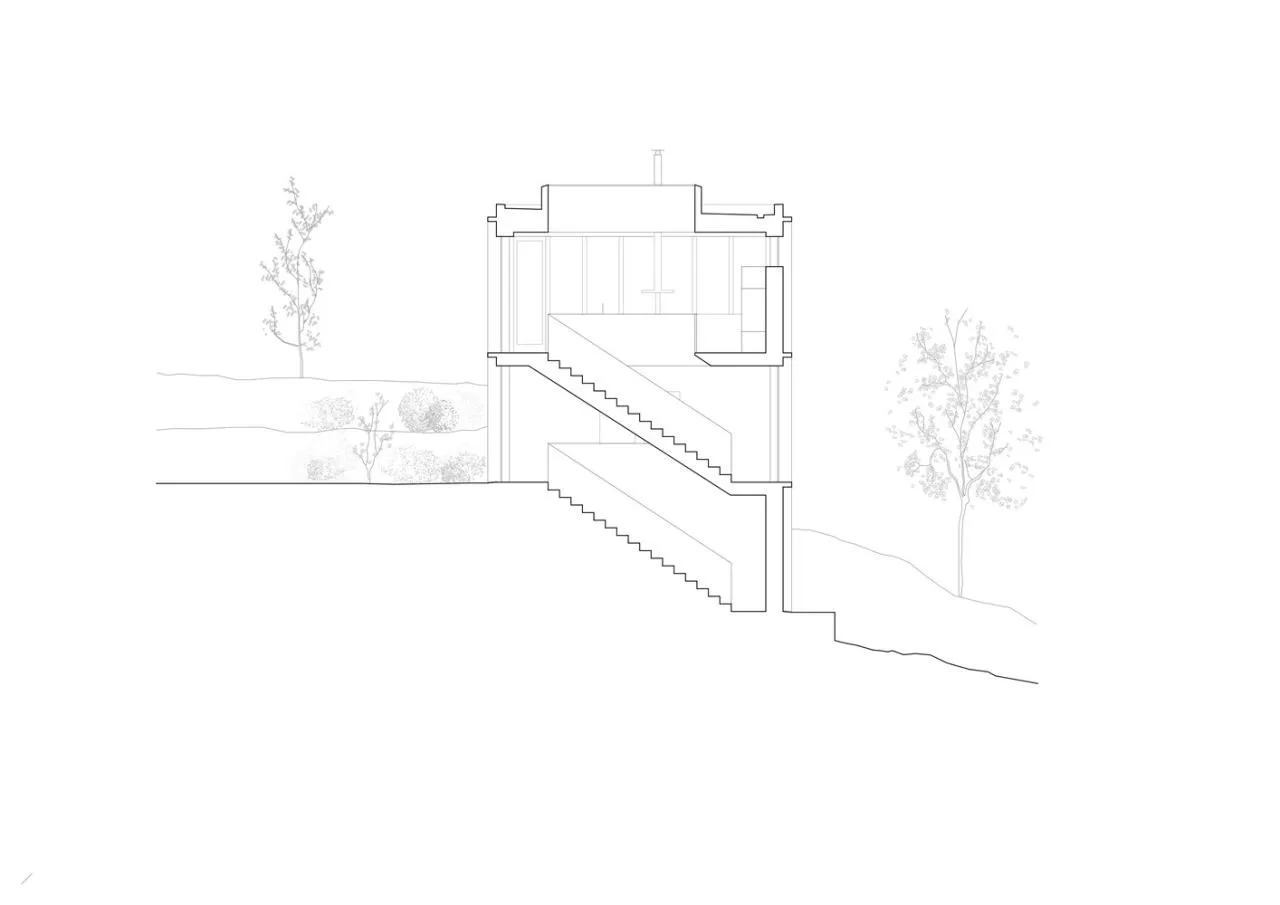
The newly constructed residence stands as a well-organized three-story building with a compact footprint. By embedding the structure into the natural steep cliff edge, its visual impact is minimized, while allowing for increased ceiling height on each floor. The design respects the existing terraced landscape, making only minor alterations. Wood is thoughtfully arranged in horizontal and vertical elements, creating a striking contrast with the terrain and establishing a strong connection between the home and its surroundings.
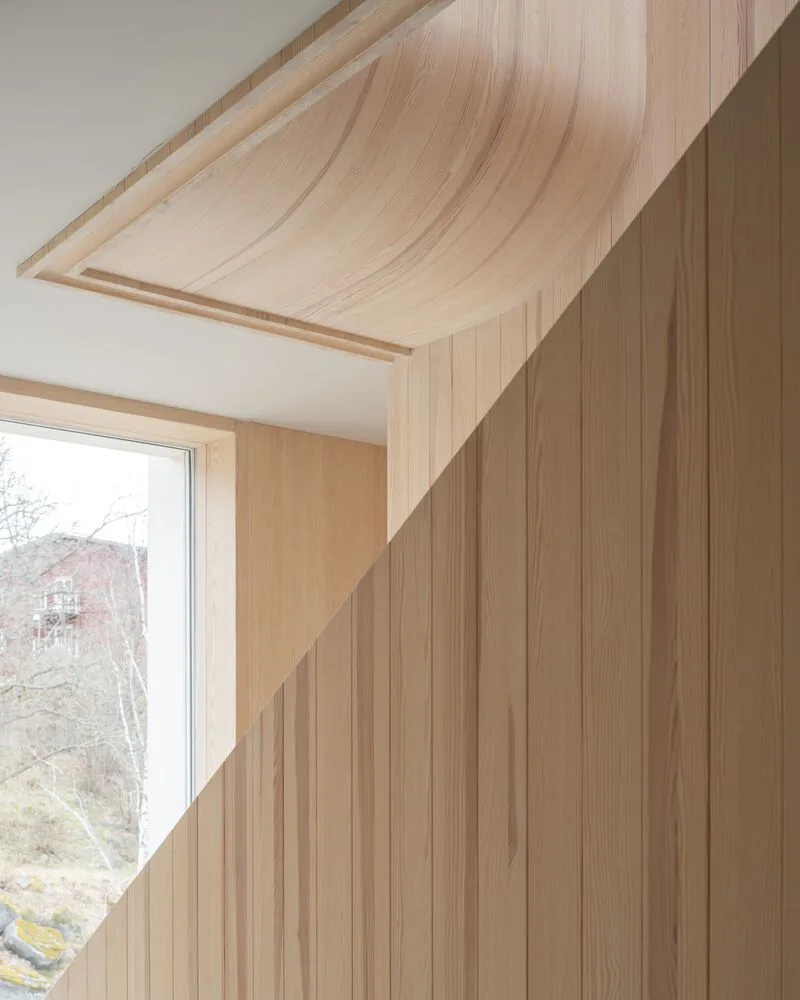
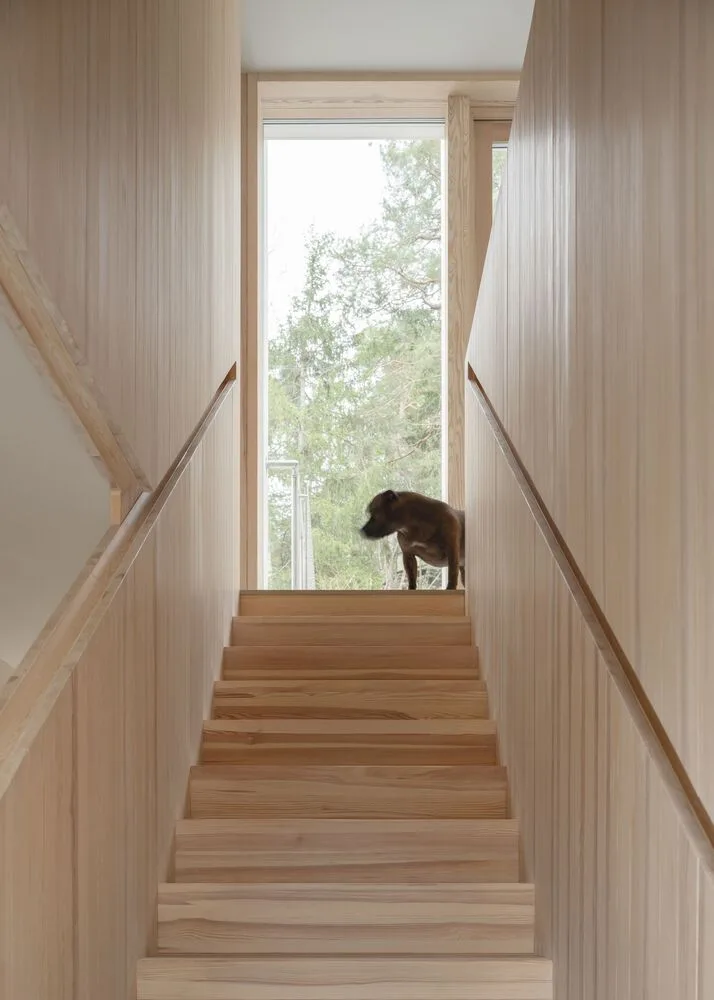
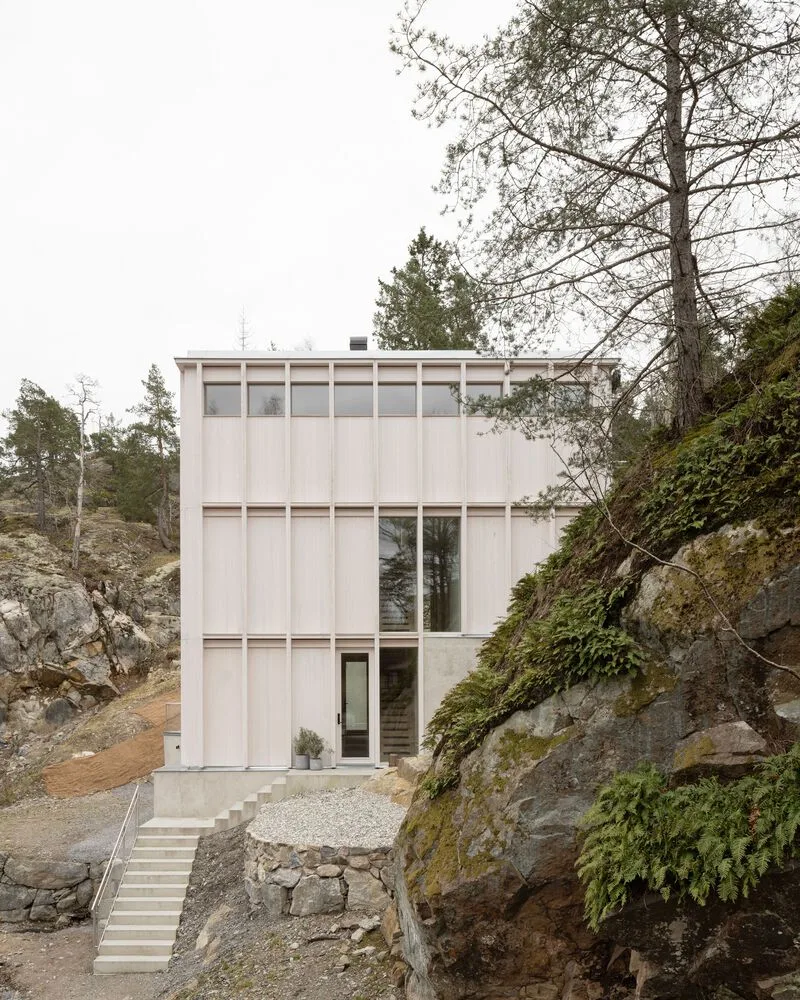
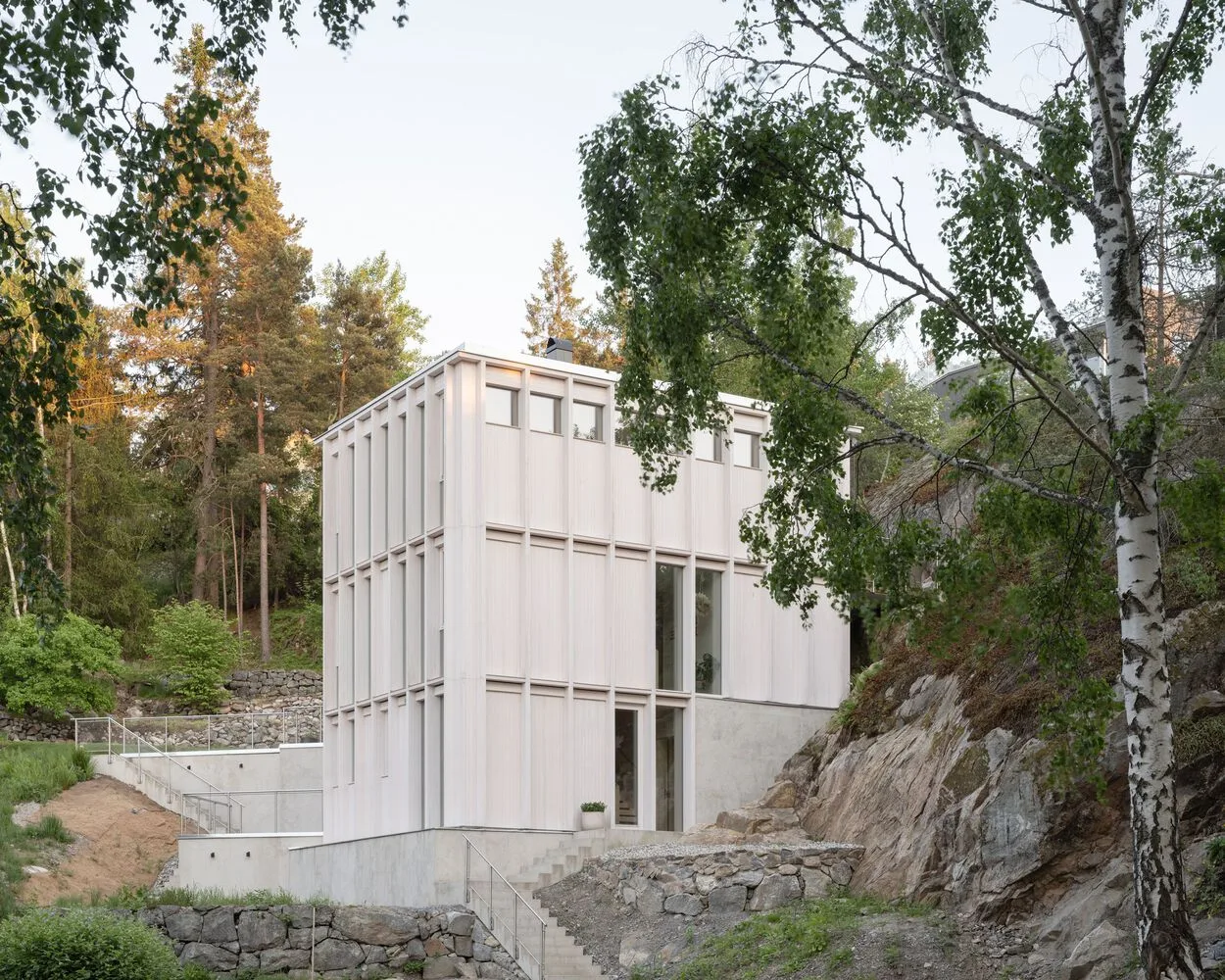
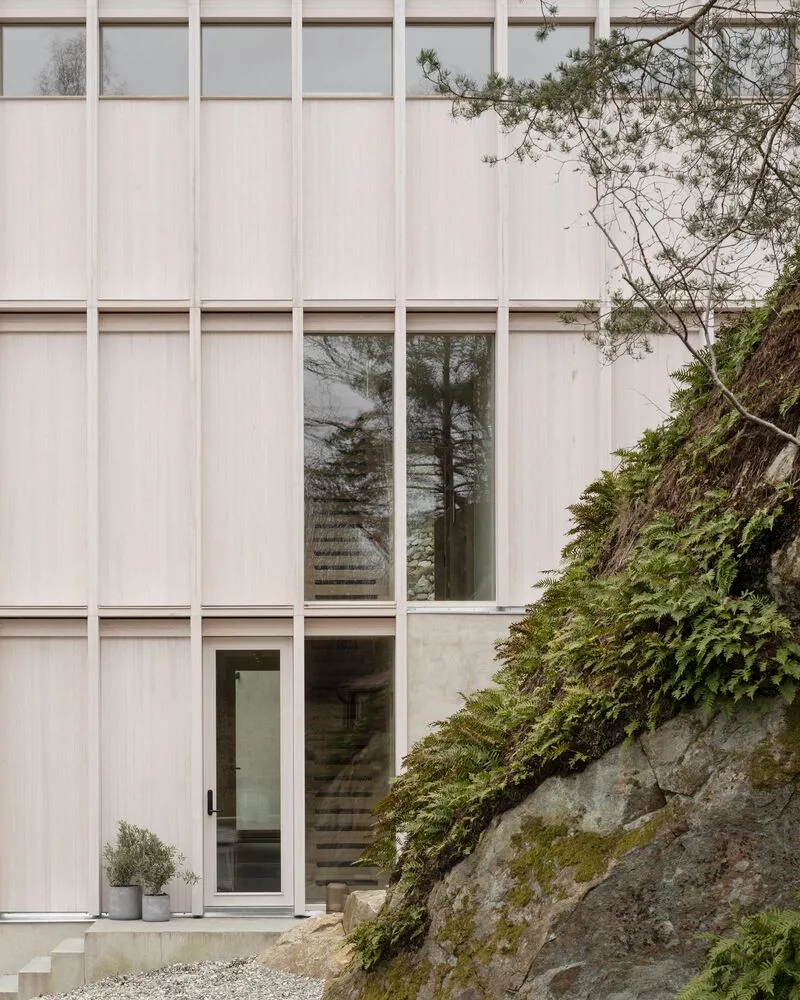
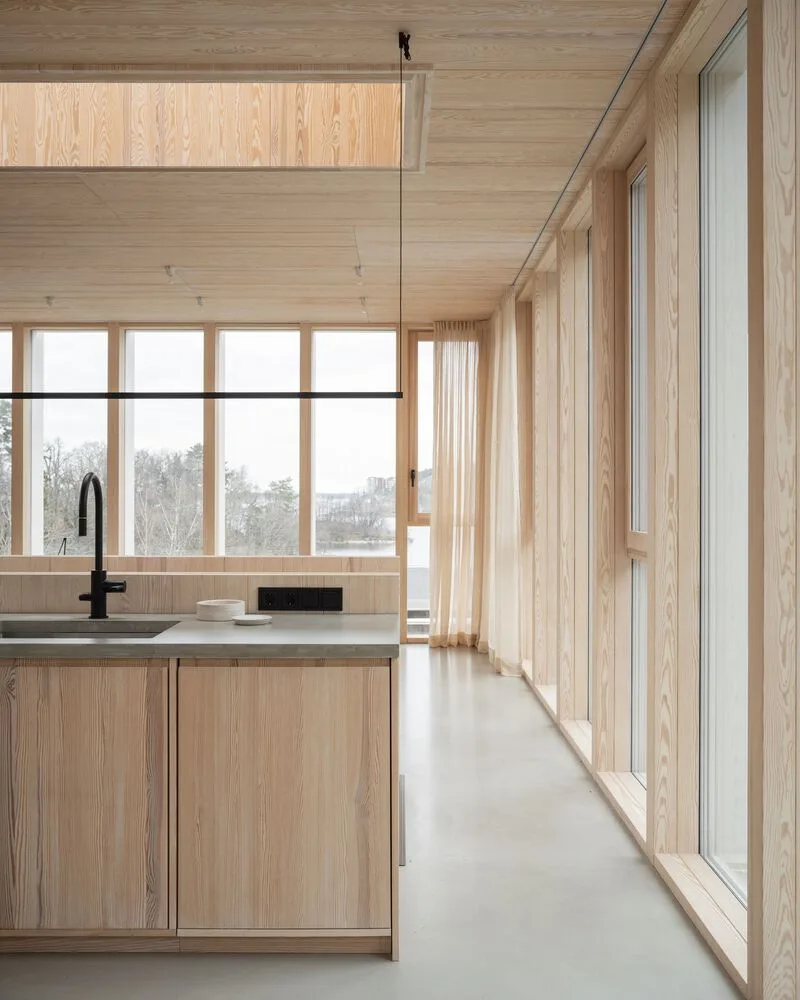
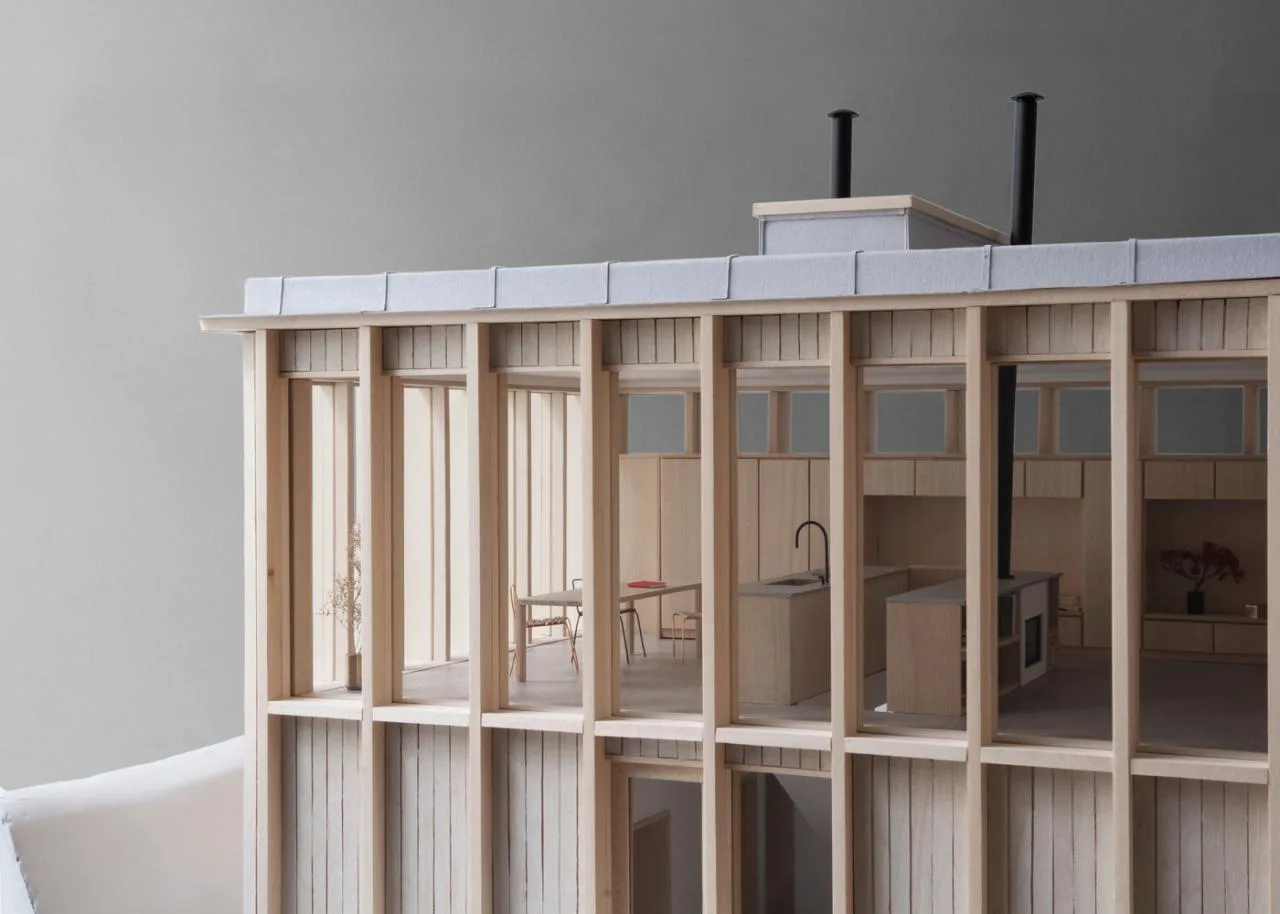
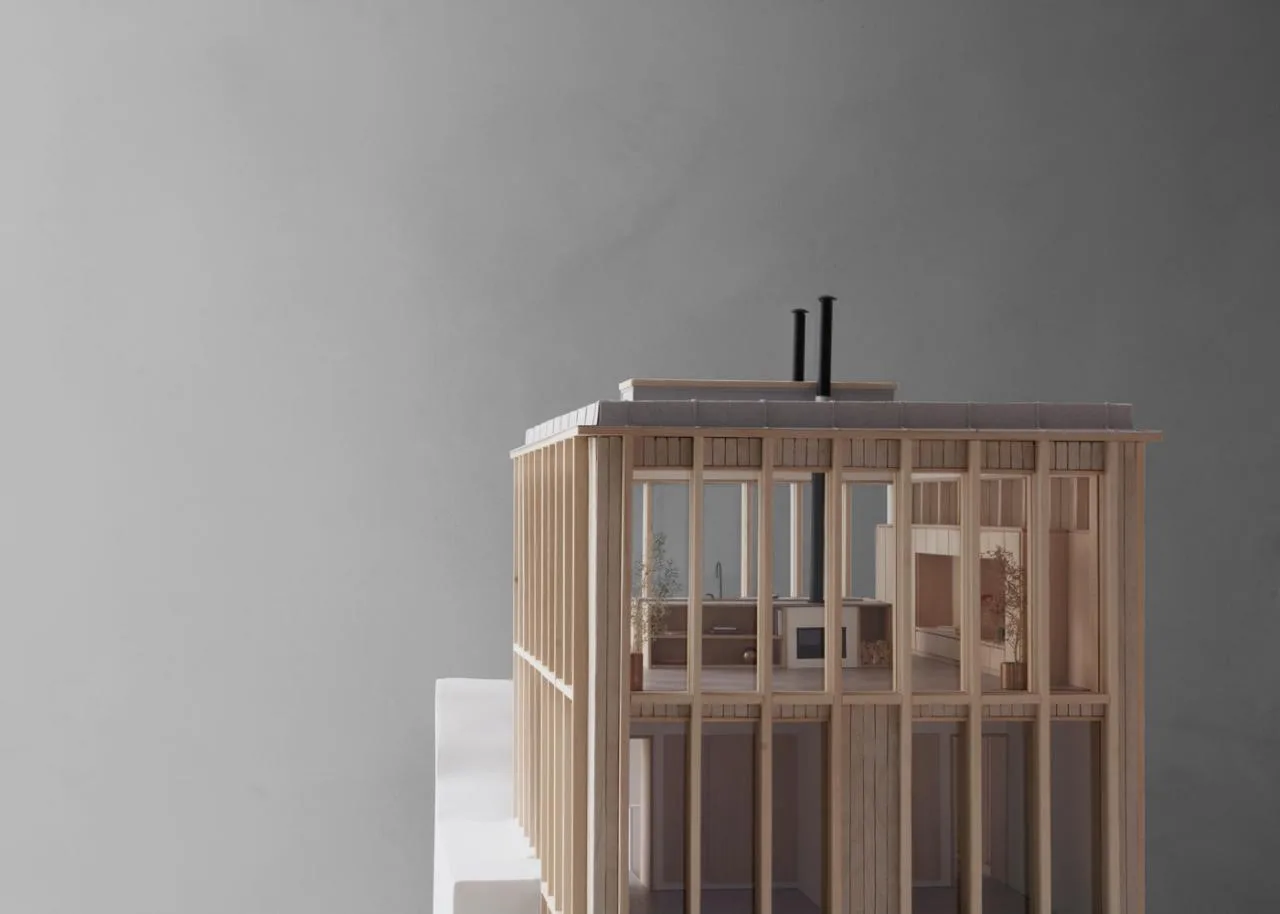
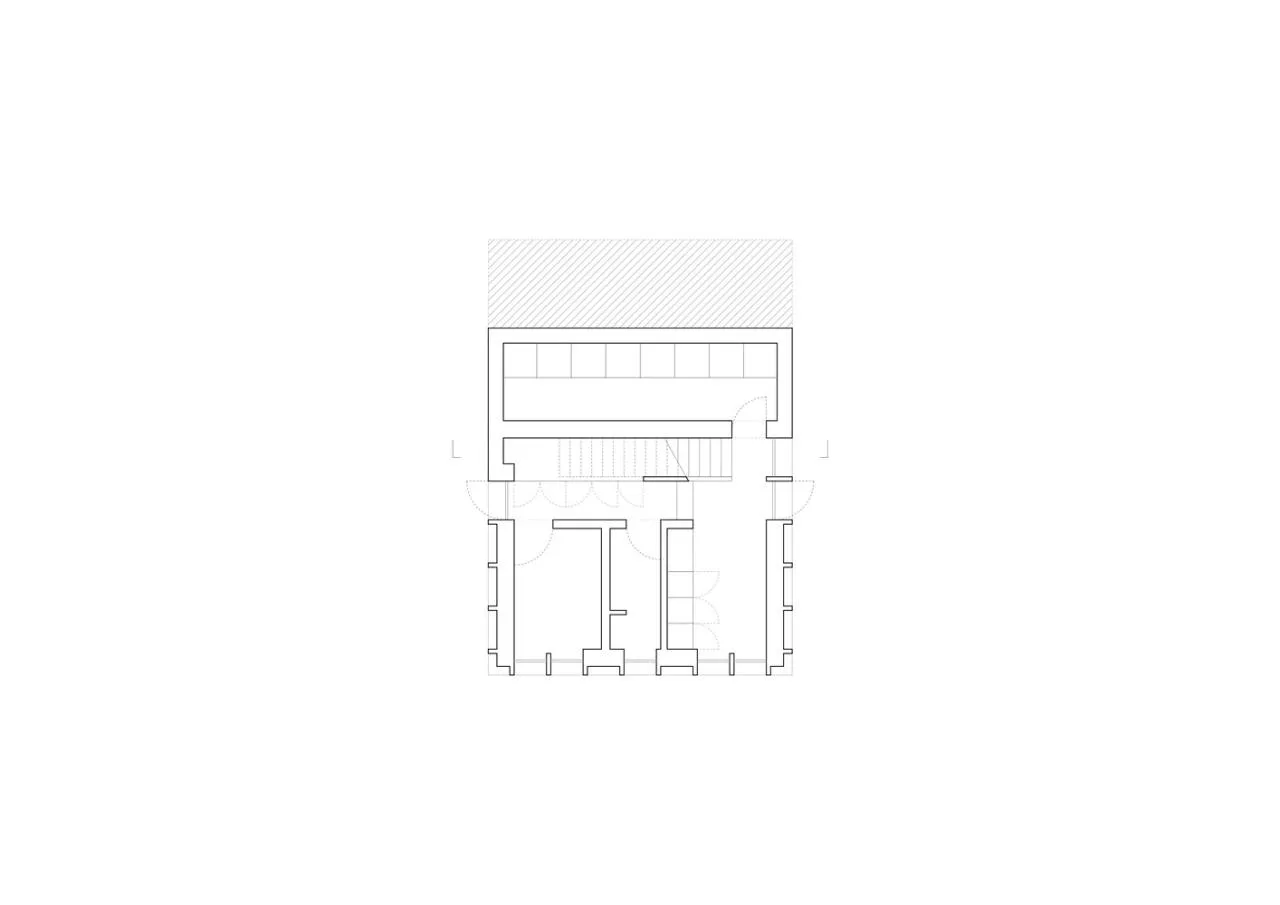
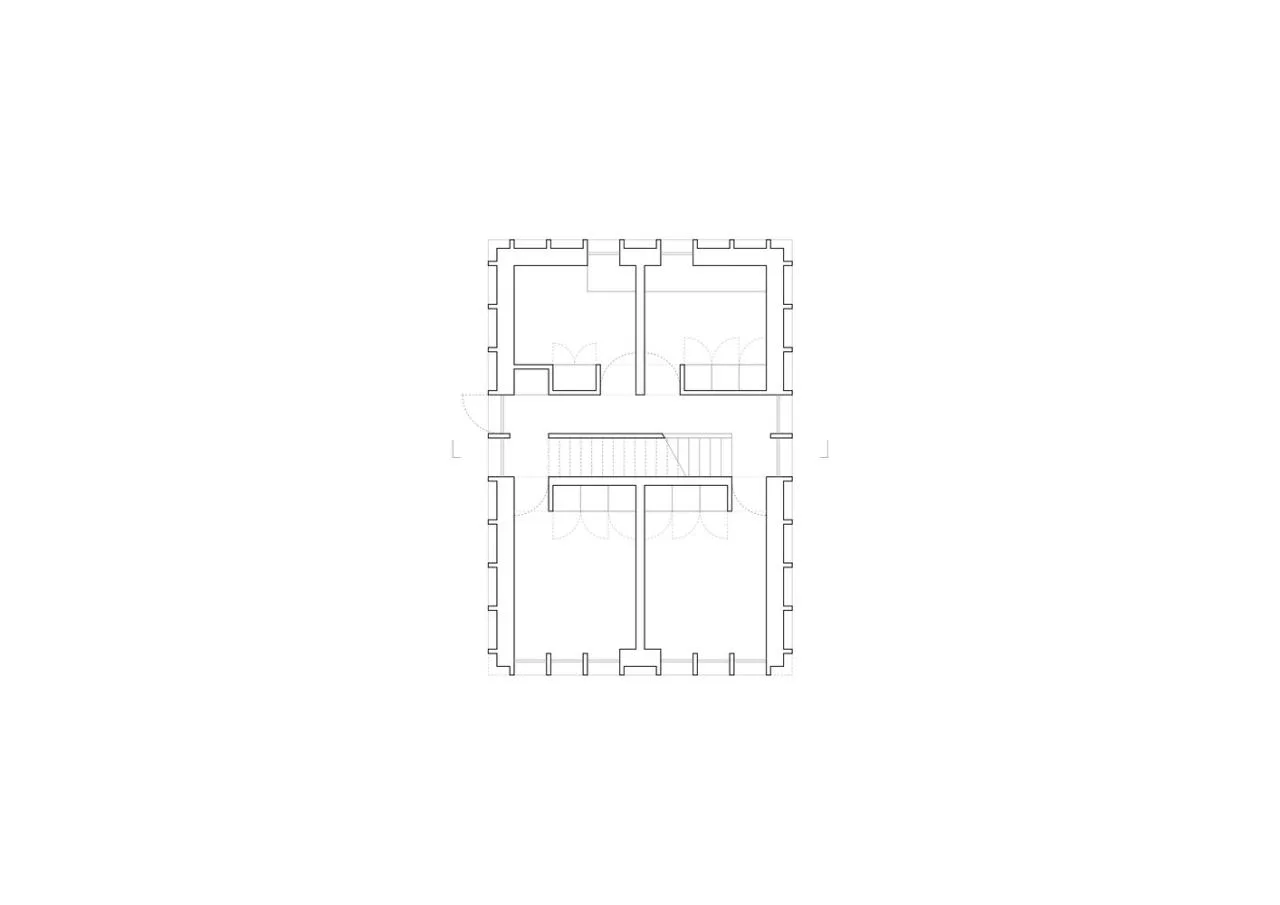
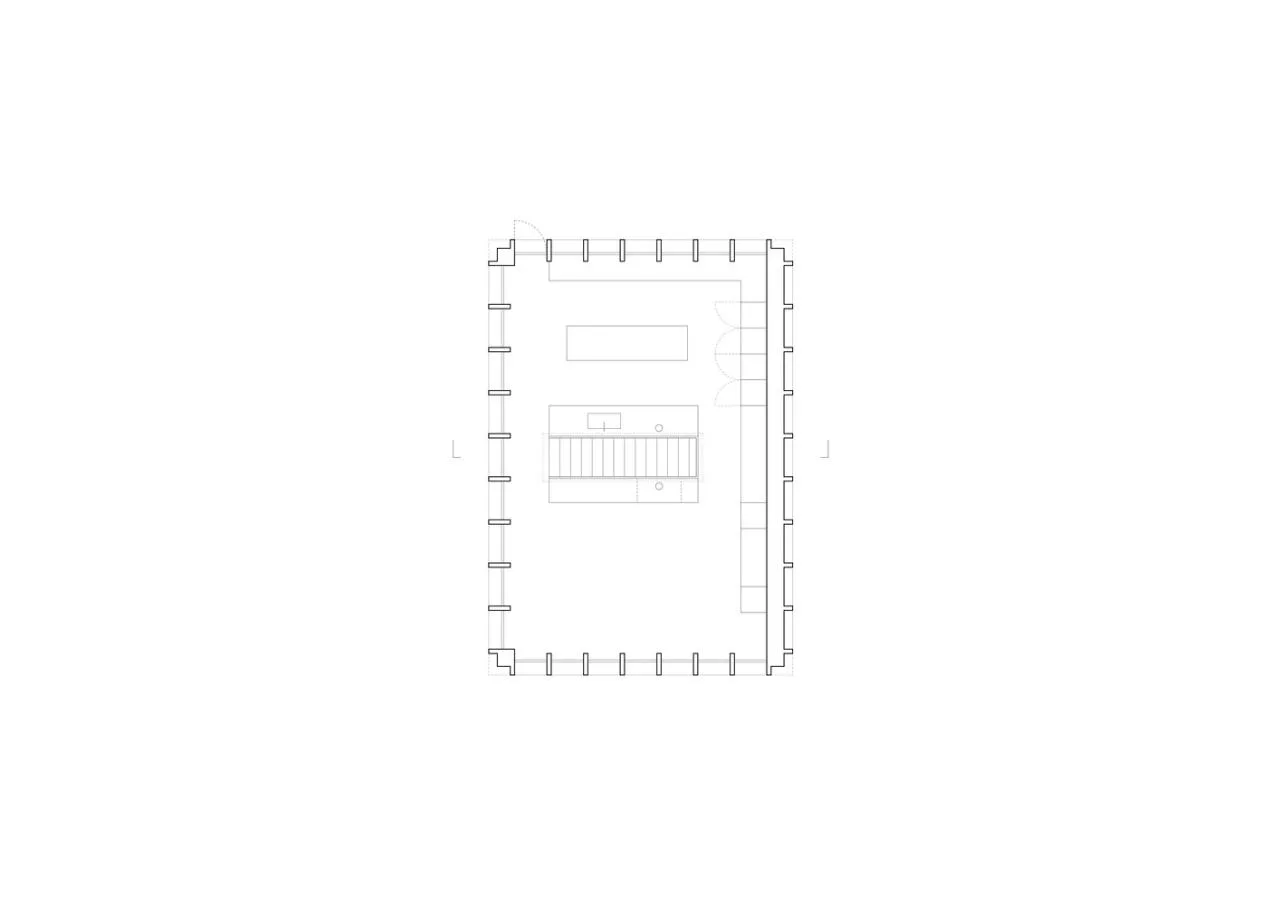
A central wooden staircase links all three floors and defines the overall layout. The ground floor serves as a functional area, while the middle floor acts as the main entrance level, featuring wardrobes and bedrooms. The top floor is an open-plan space with floor-to-ceiling glass, providing captivating views of Stockholm Port’s entrance. This level combines the kitchen and living room, with each floor offering direct access to outdoor terraced rock gardens at varying elevations.
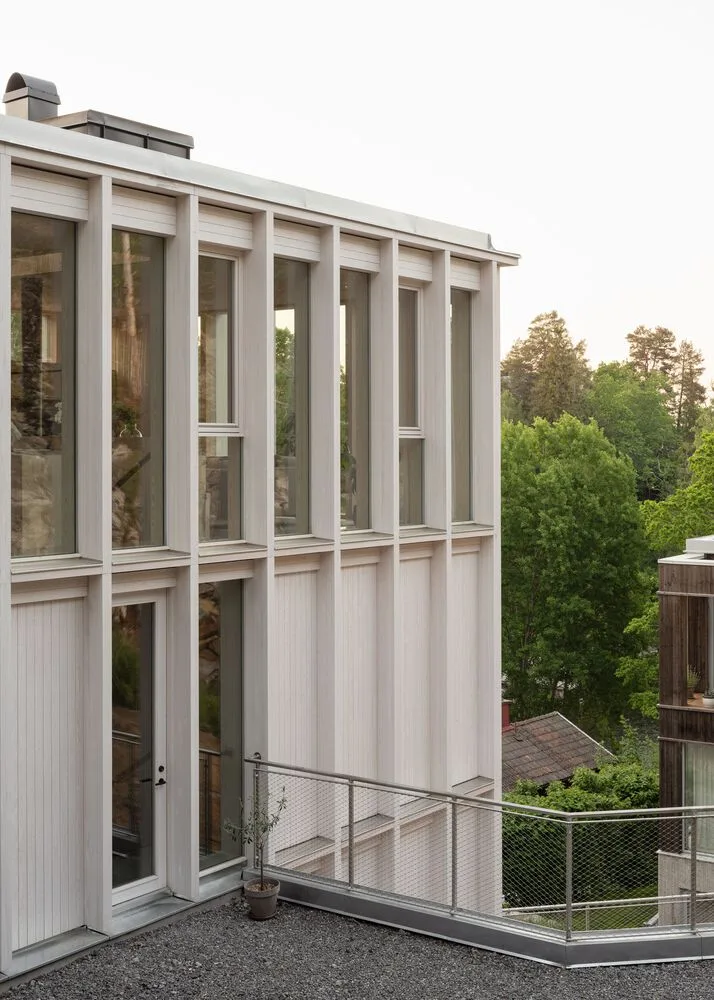
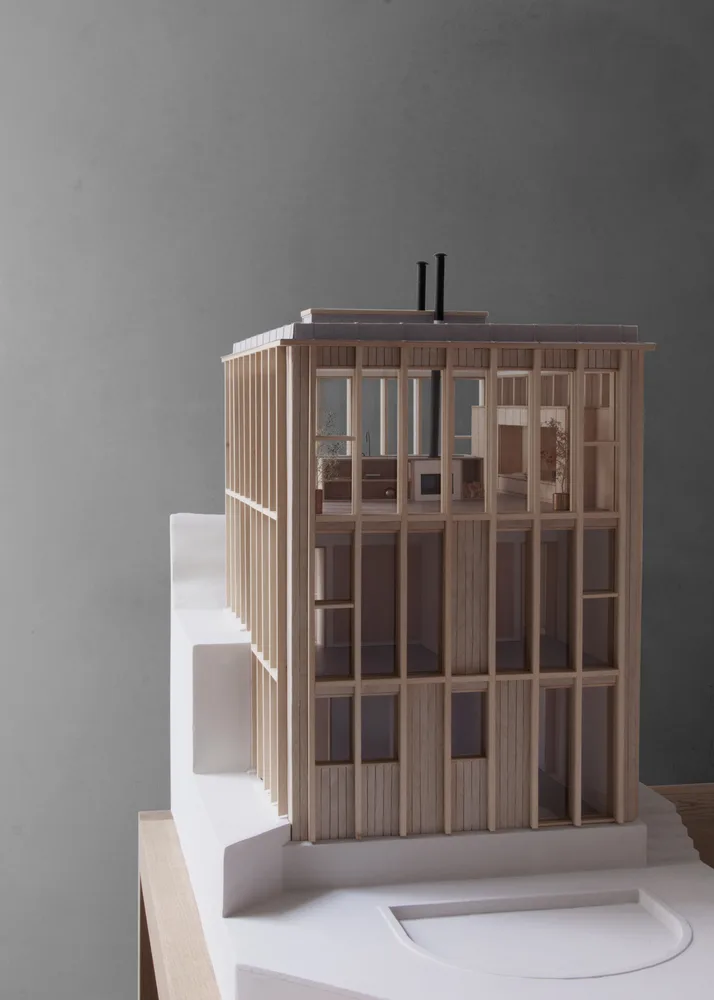
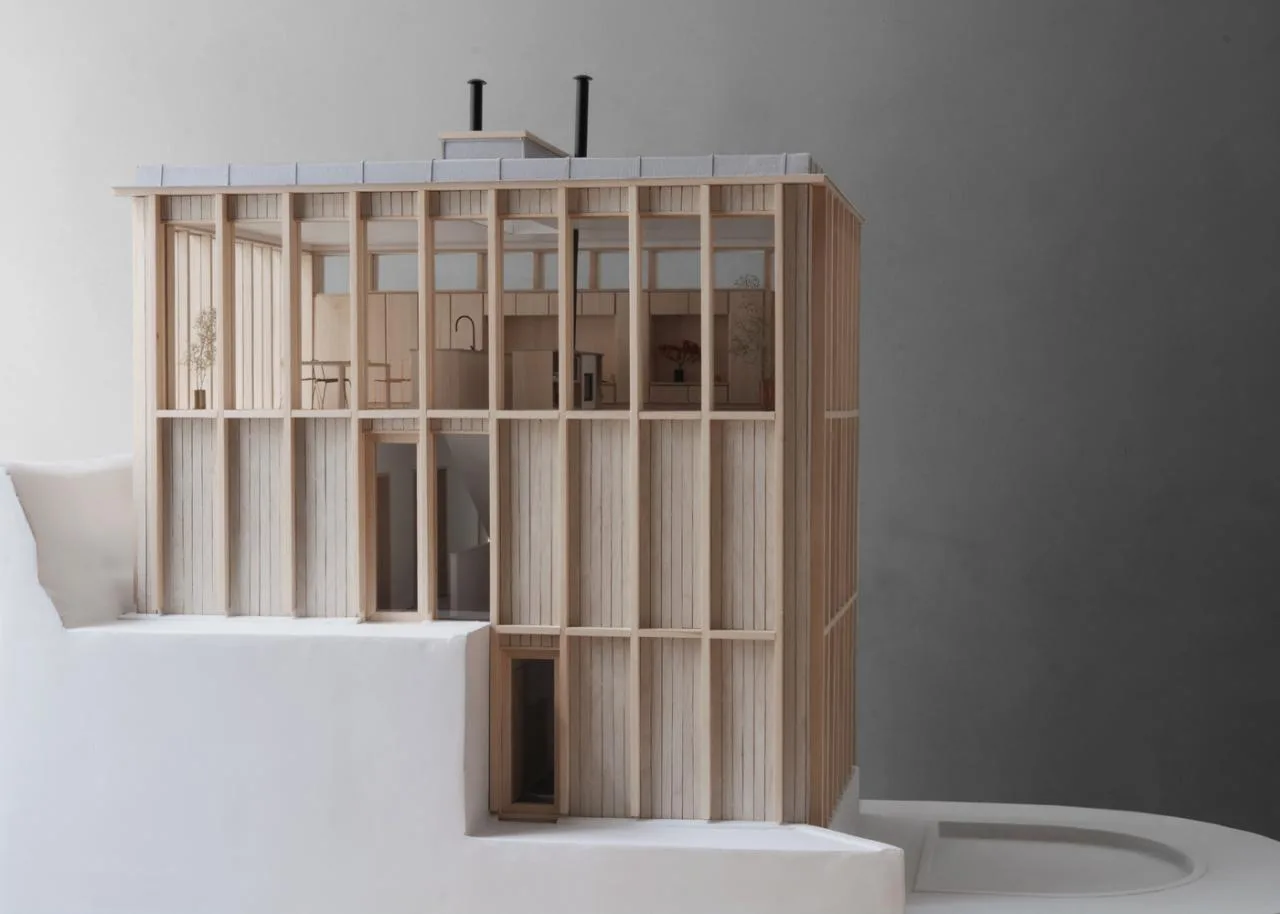
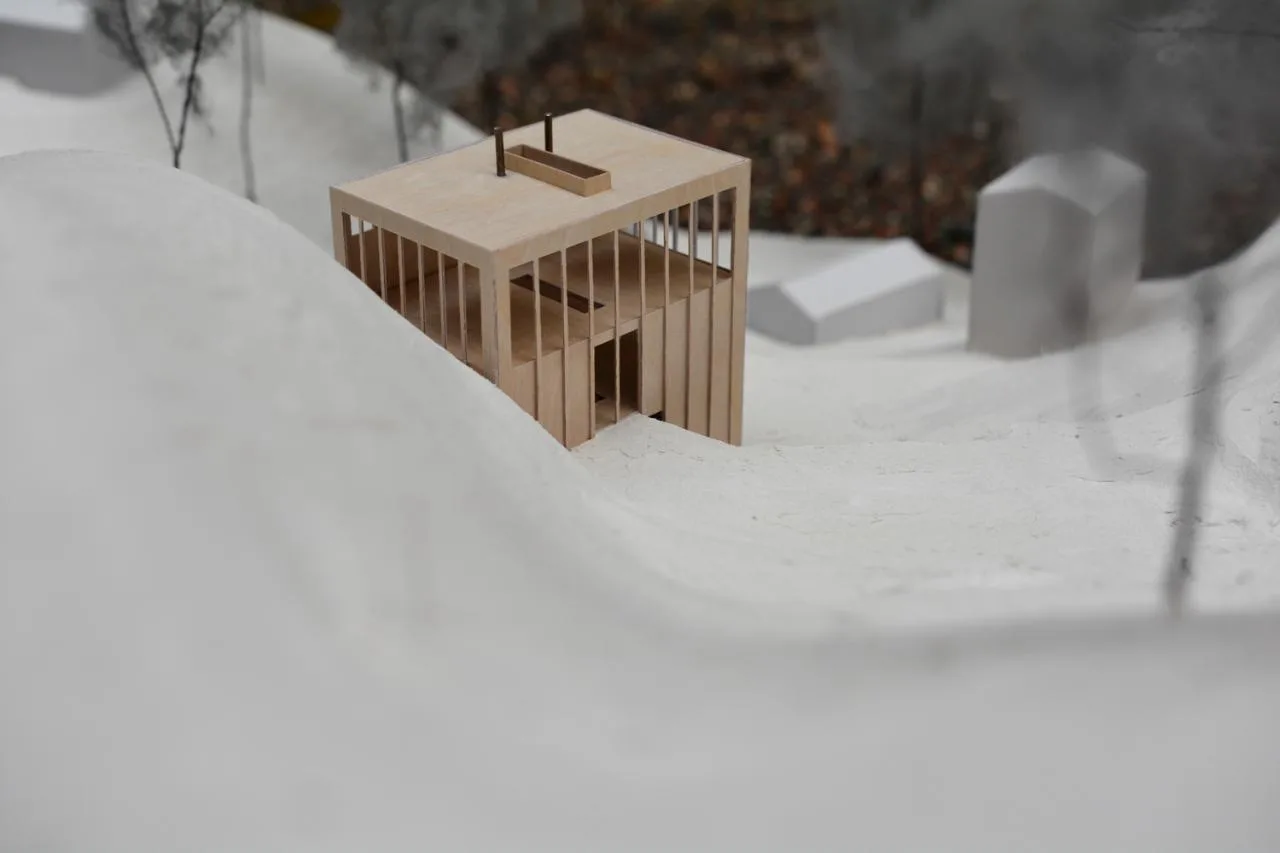
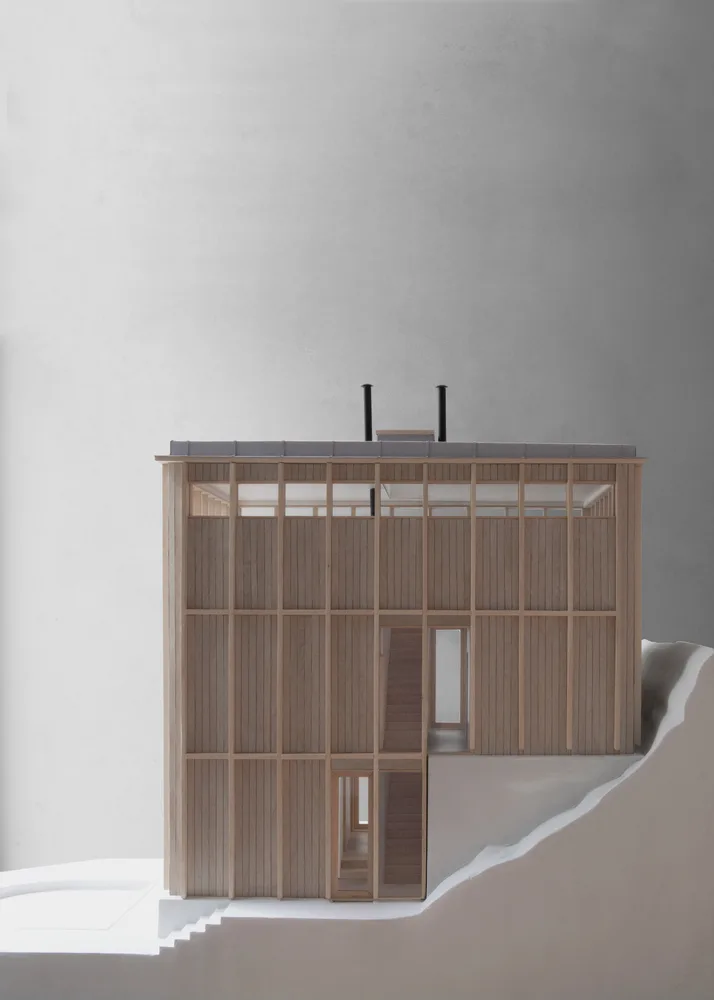
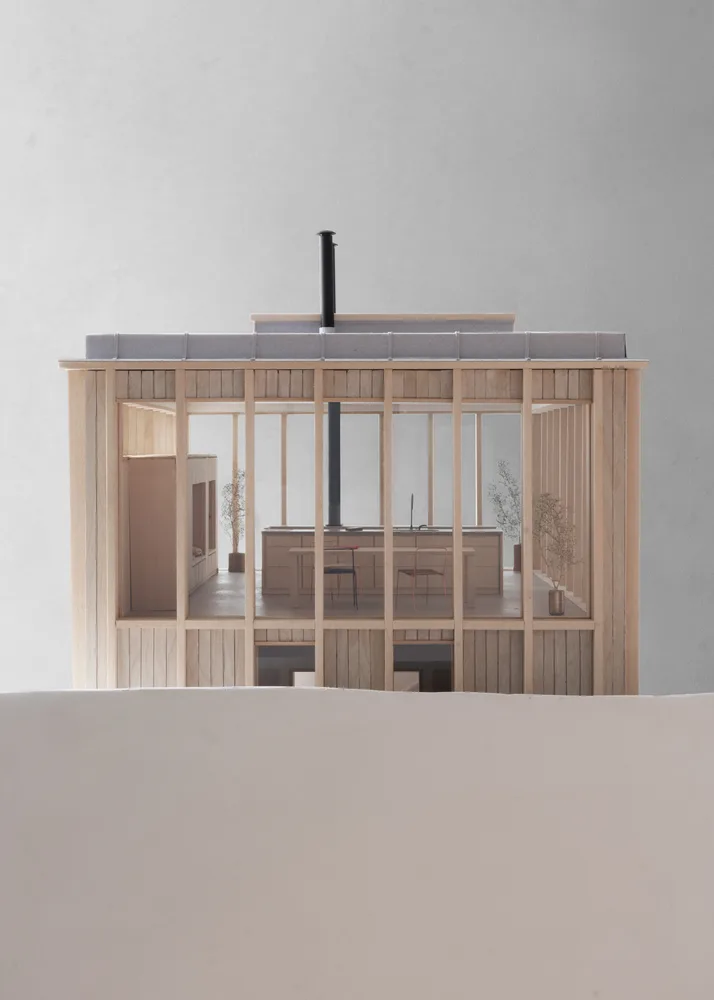
Given the unique characteristics of the site, sustainable and renewable materials were prioritized in the construction. Inspired by the Saltviga project, which repurposed leftover flooring materials, this project sought to enhance the quality of raw wood. Through careful selection, cutting, and bonding, knotty pine wood was refined into knot-free pine. The wood with knots is used for concealed structural elements indoors, while the flawless sections are showcased visibly, elevating pine from a common, affordable material to one with a finer, more elegant texture.












Must log in before commenting!
Sign Up