
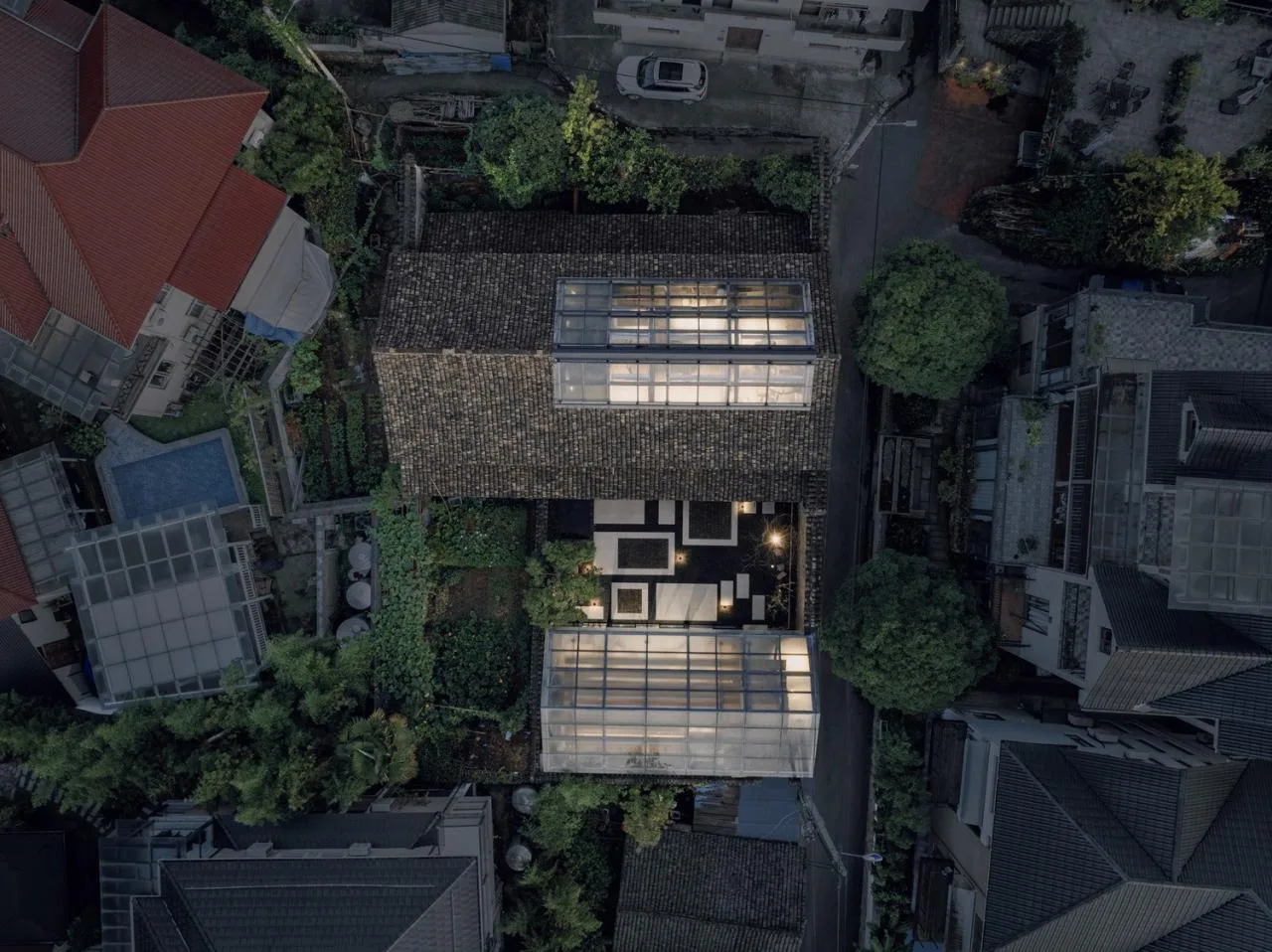
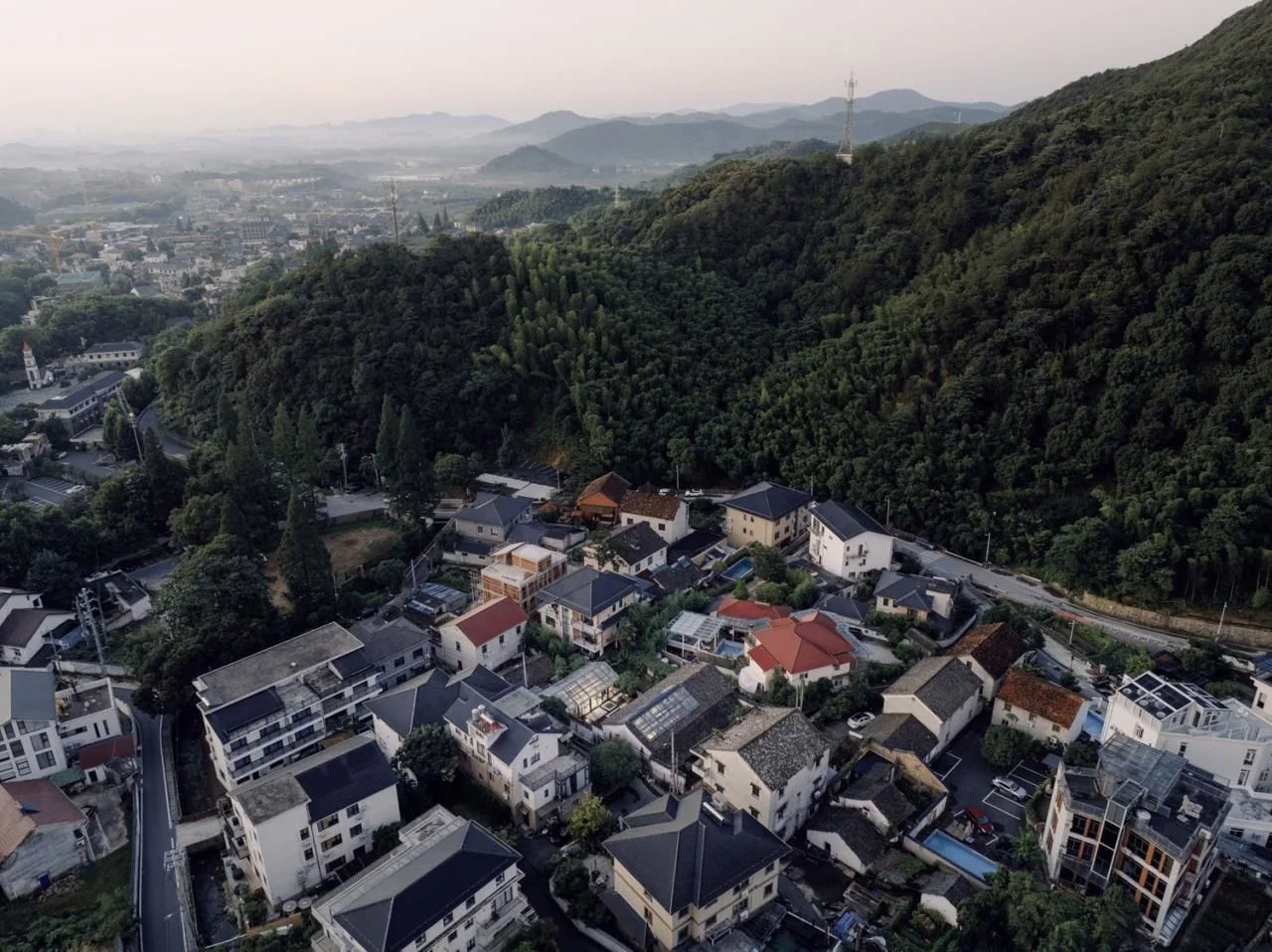
Located at the foot of Mogan Mountain, this site features the last remaining traditional Jiangnan residential building with a raised beam style, double eaves, and a five-bay layout. The historic dwelling, over a century old, was partially abandoned before renovation. The client’s vision was to transform this ancient architecture and its courtyard into a modern, relaxed tea space while preserving its original character and artisanal craftsmanship.
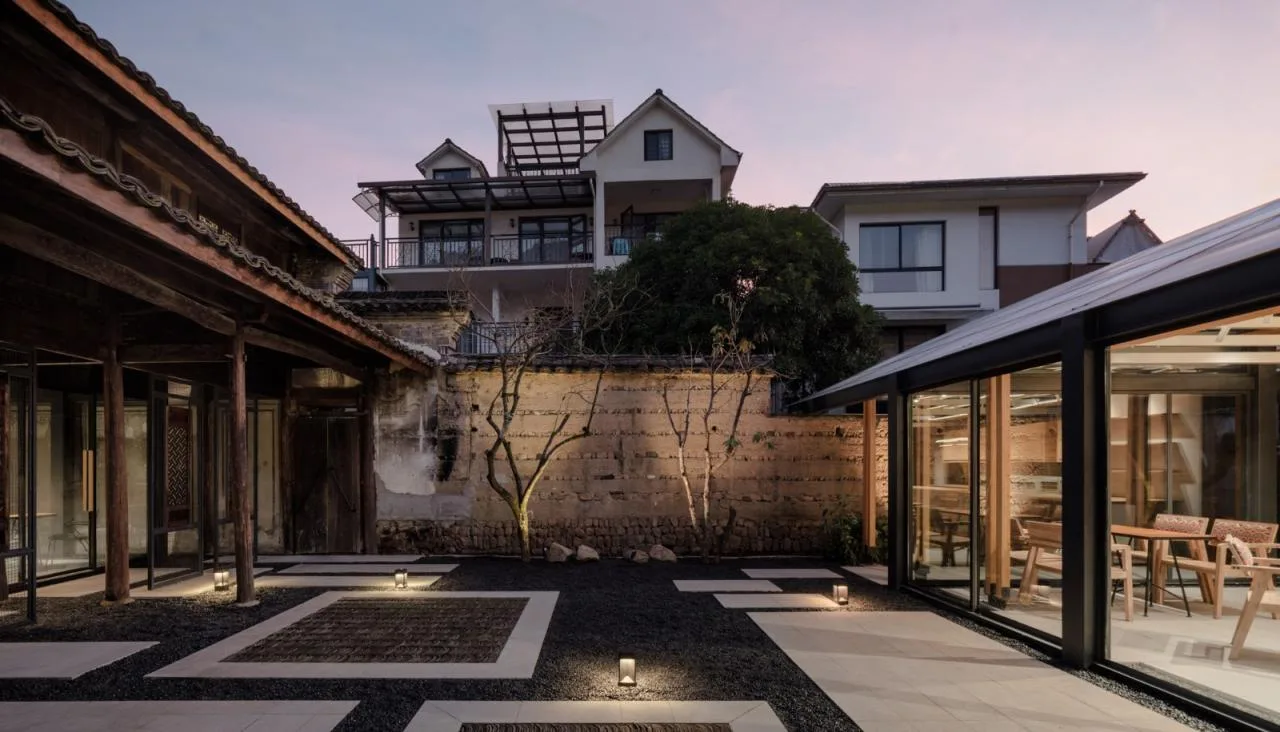
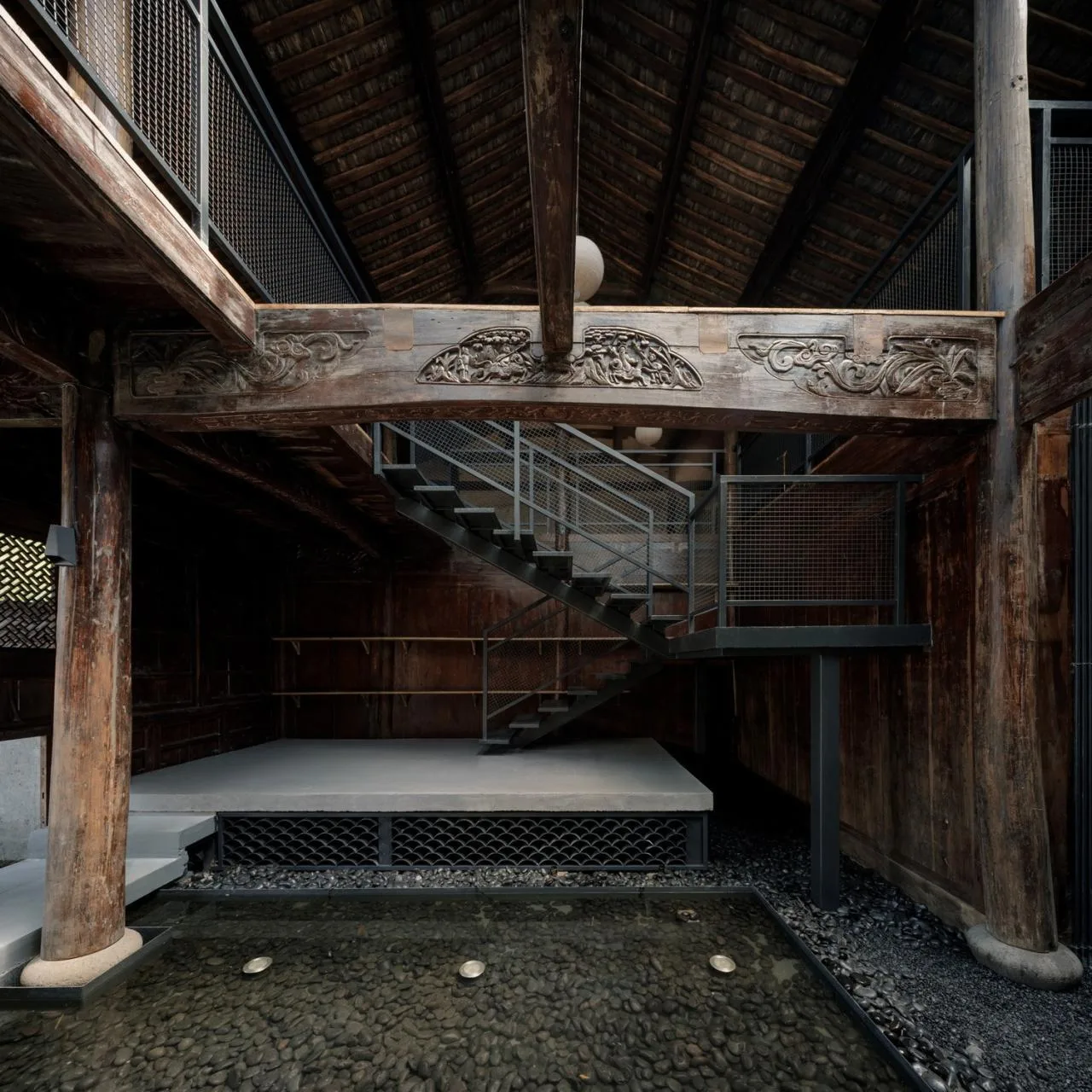
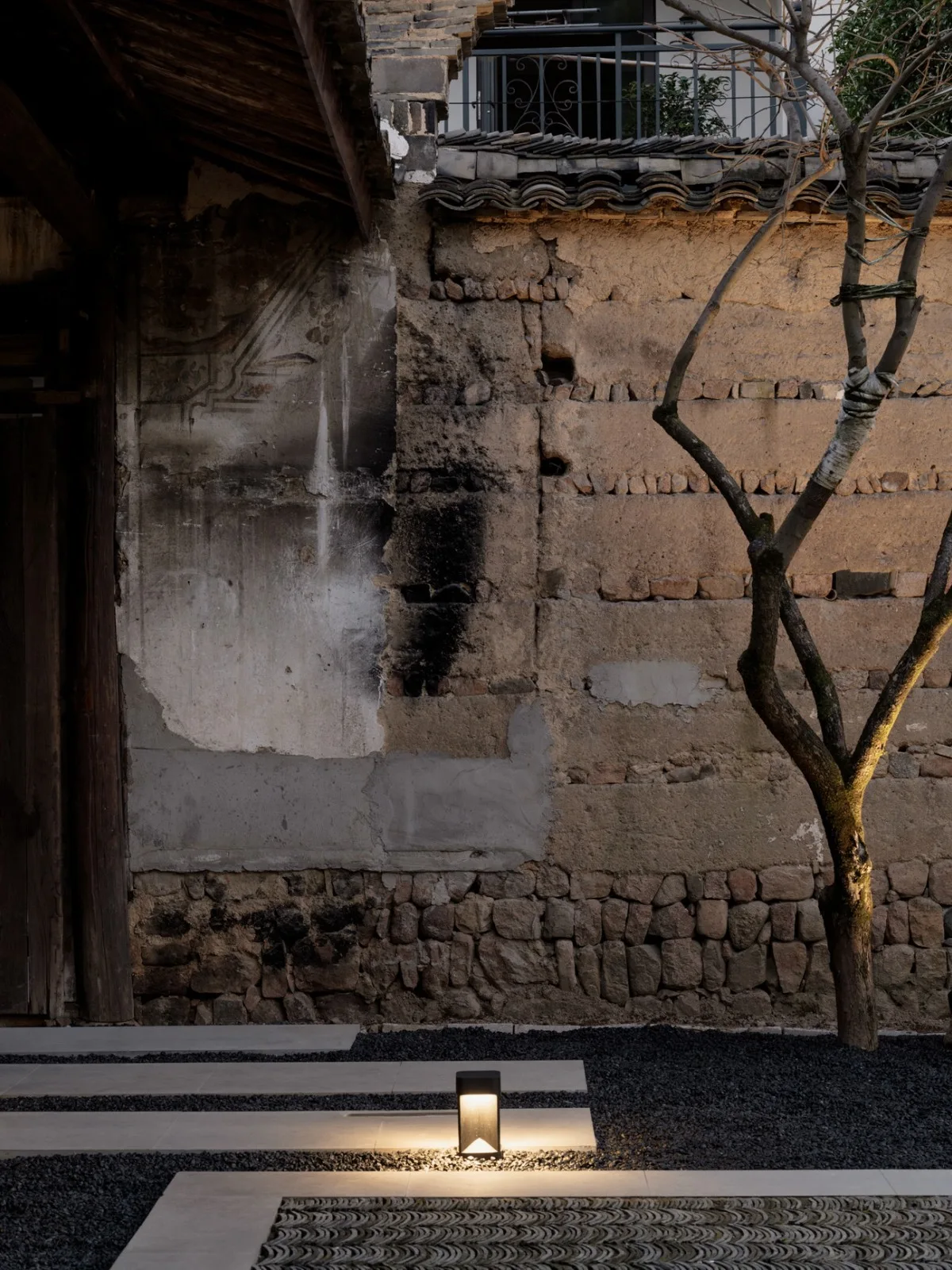
Following a thorough survey and structural safety evaluation, the main beam structure was preserved after pest control treatments. Numerous damaged elements—such as second-floor slabs, roof rafters, rammed earth gable walls, and roof tiles—were carefully restored using original techniques and materials, as specified by the design team. The exquisite window frames, murals, lintels, and carved beams, representing local construction traditions and cultural symbols, have been fully preserved for appreciation.
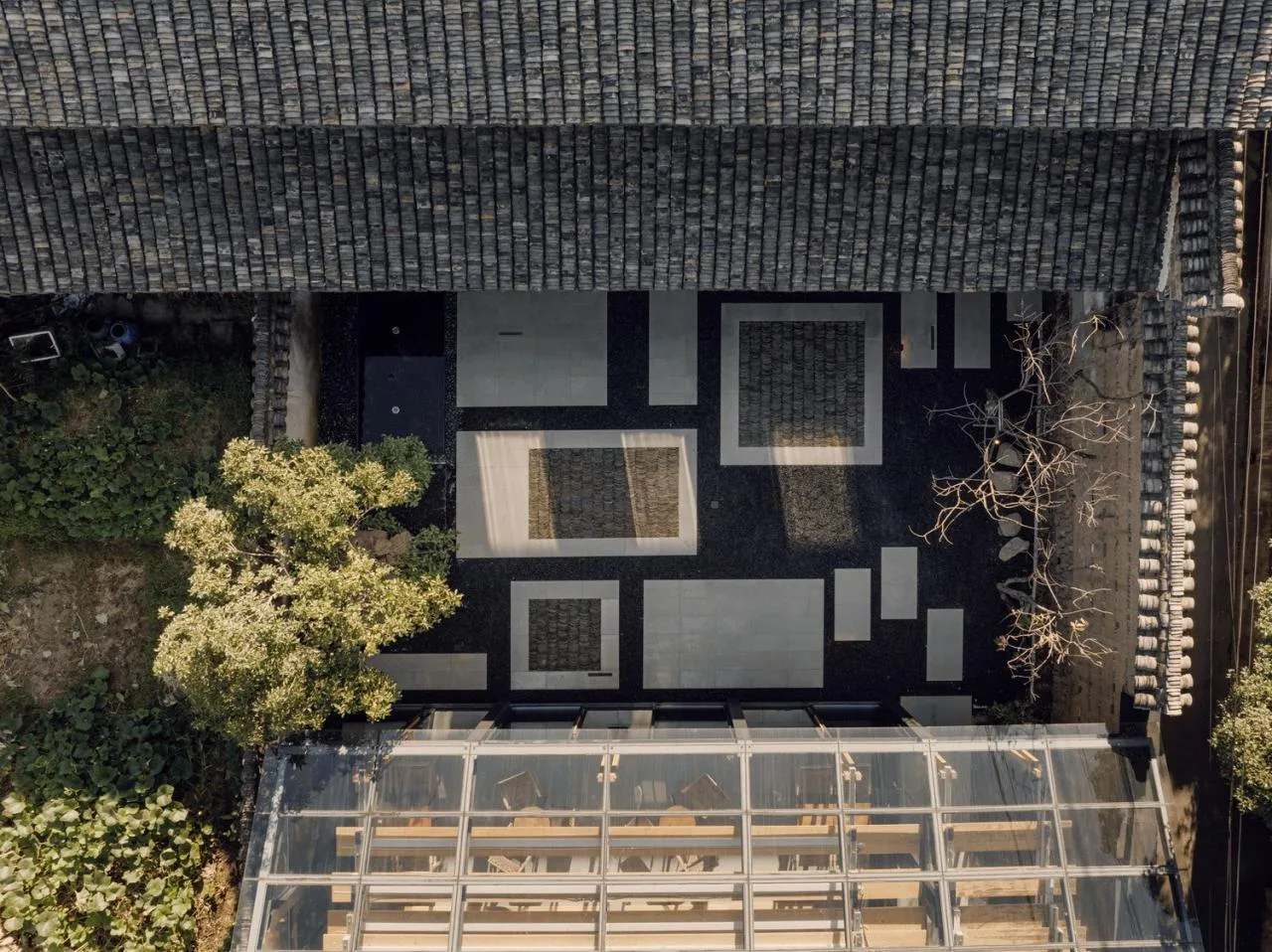
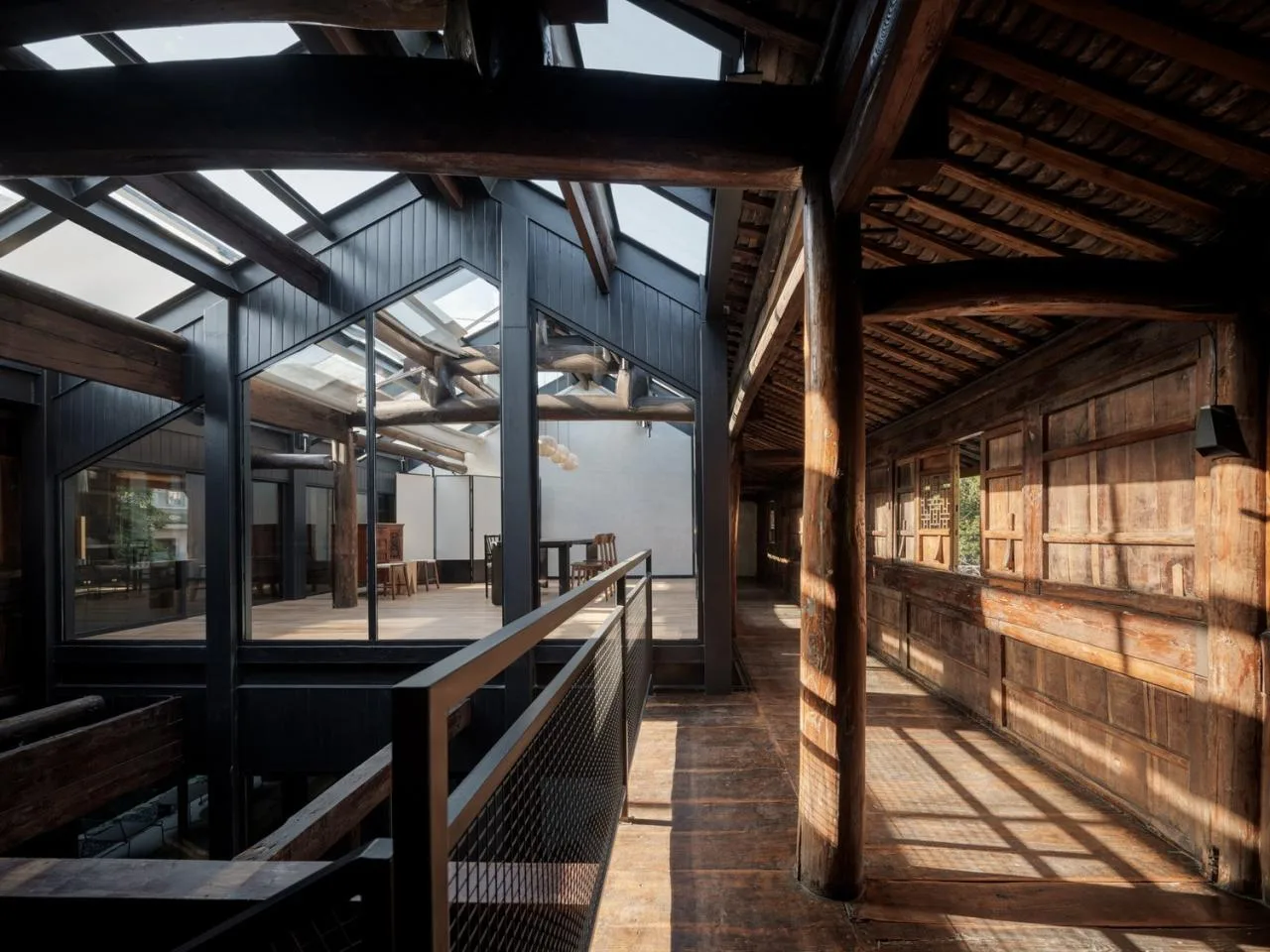
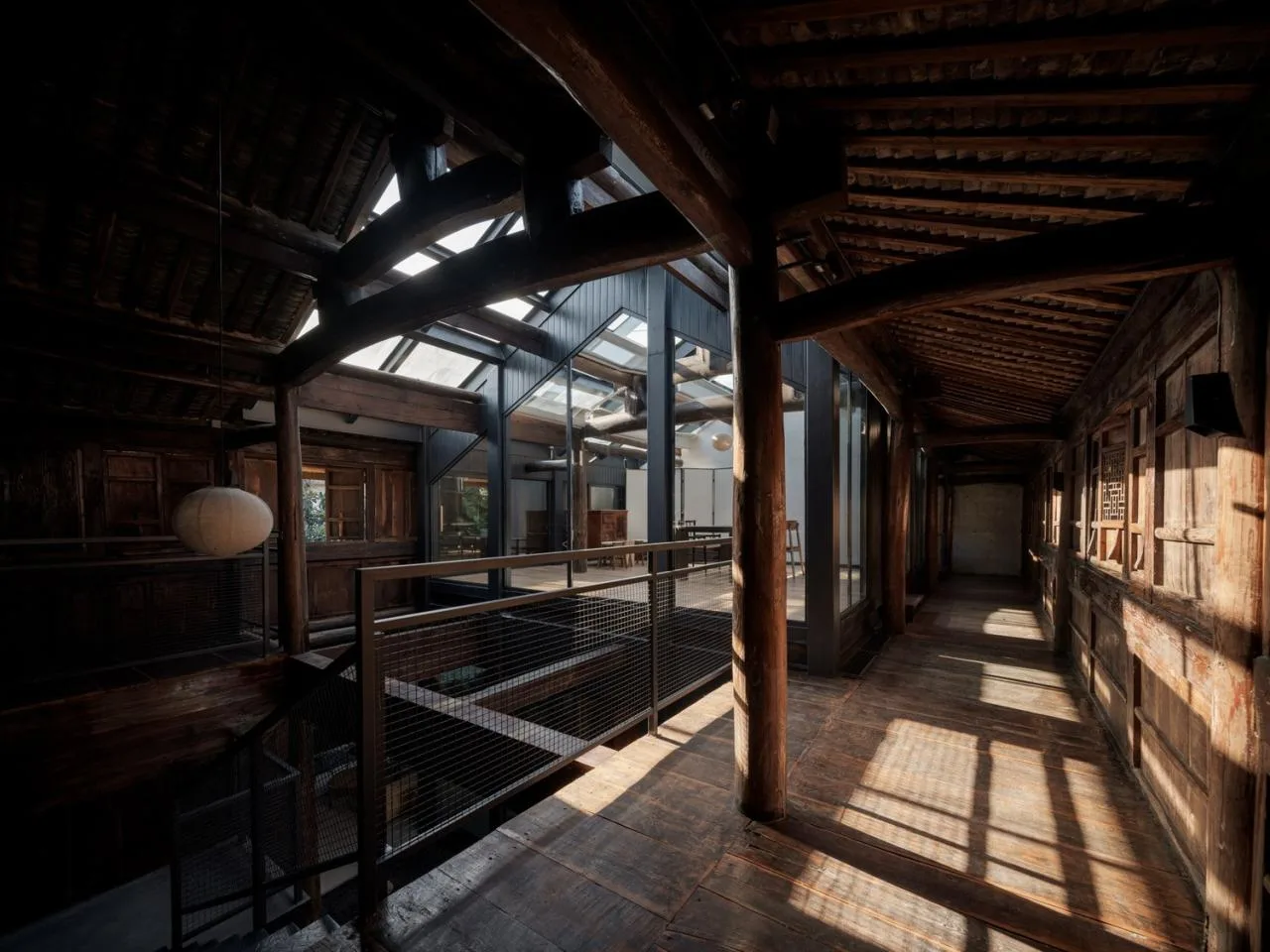
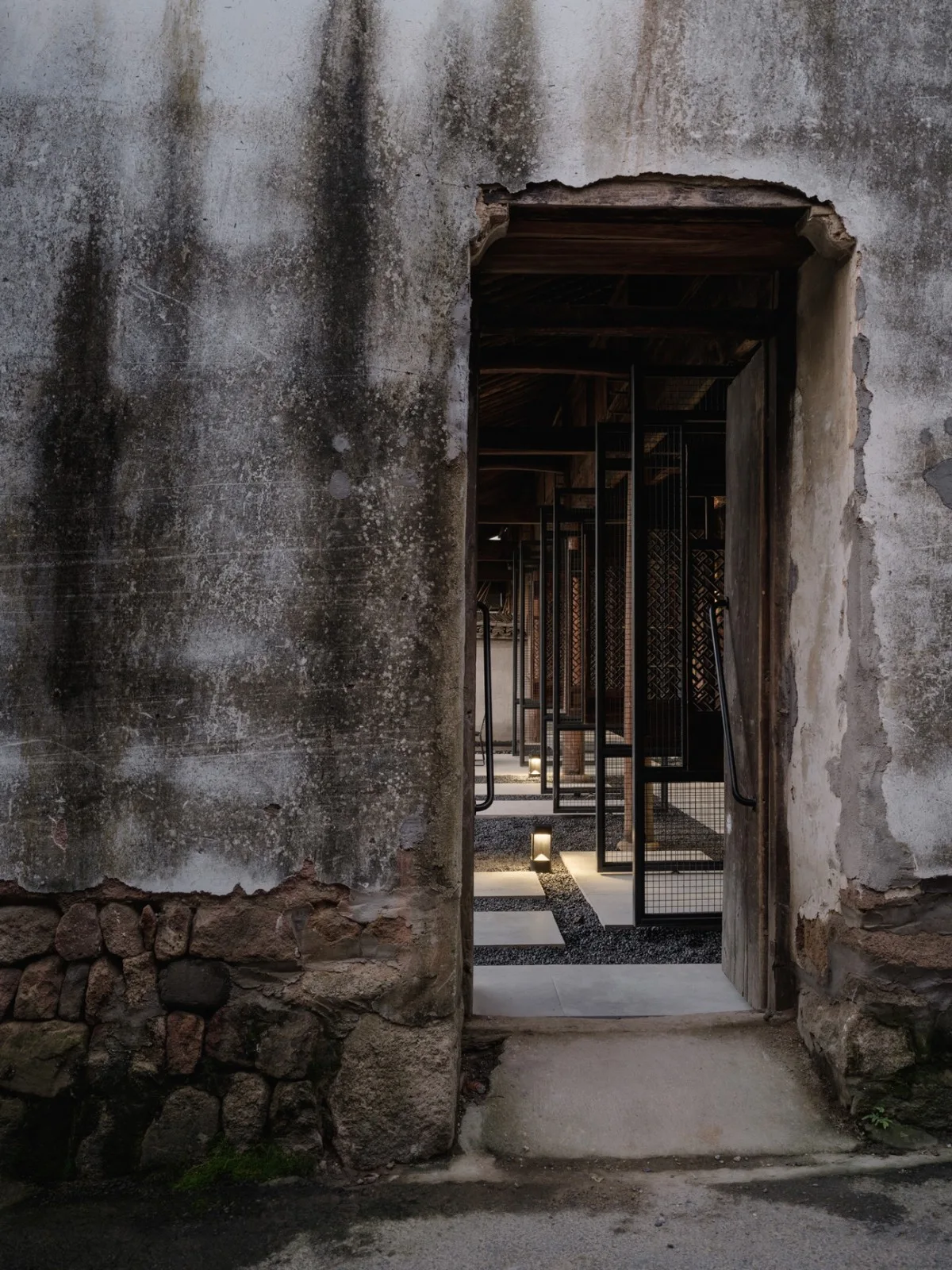
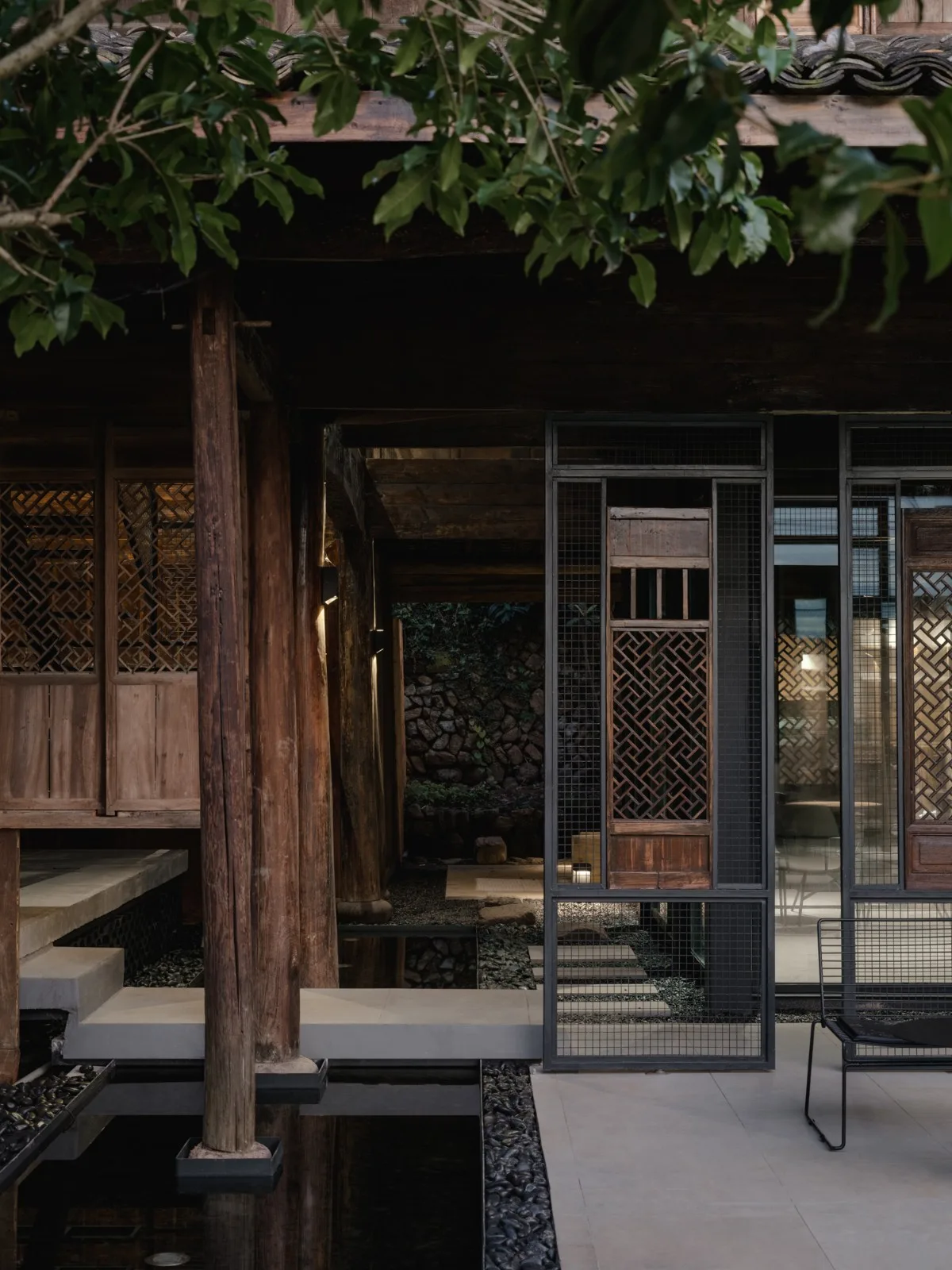
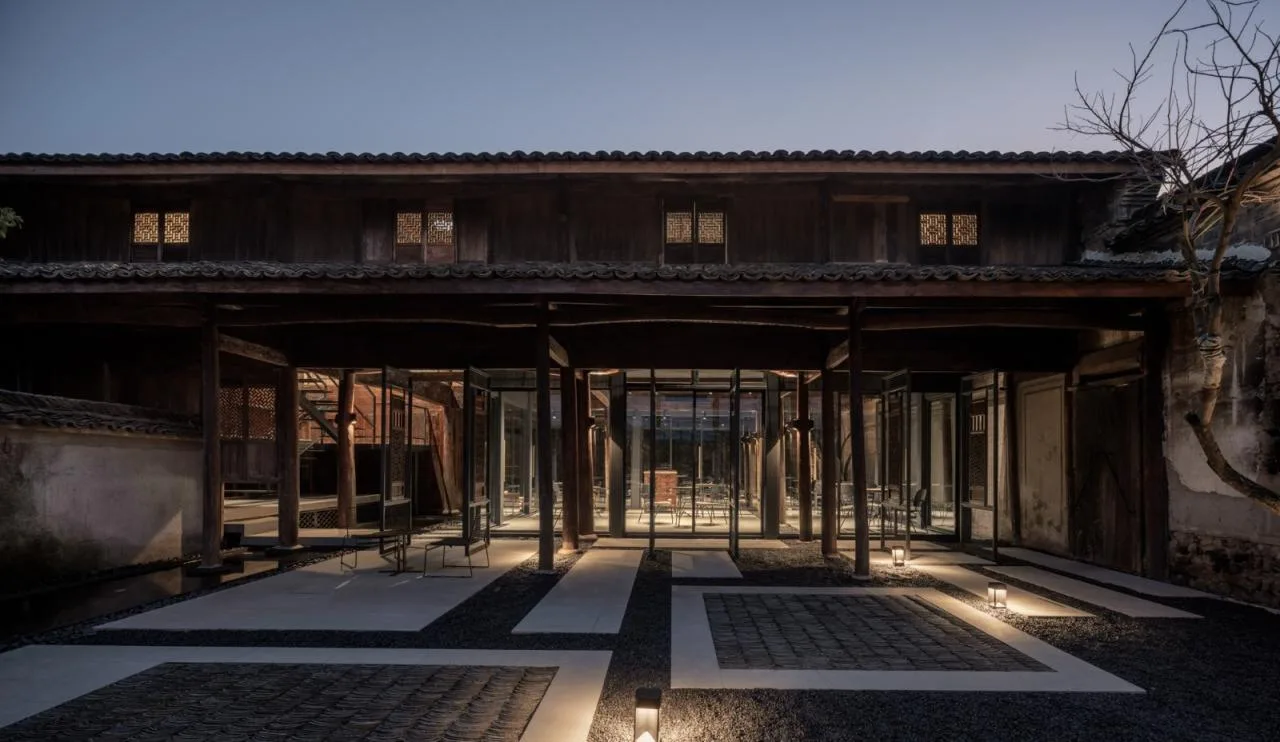
To introduce abundant natural light and fresh air, the design team removed sections of the exterior walls, roof, and second-floor slabs that previously made the interior living room dark and confined. This allowed the courtyard’s water features to flow through the facade and into the interior spaces. The exposed eaves and columns created two semi-outdoor areas under the eaves, facing the courtyard both front and back. The north-south transparent layout enables natural airflow through the hall. Partial removal of the second-floor slab created a void beneath the large eaves. These strategic “pruning” interventions dissolve the boundaries between inside and outside, crafting a novel and vibrant spatial experience.
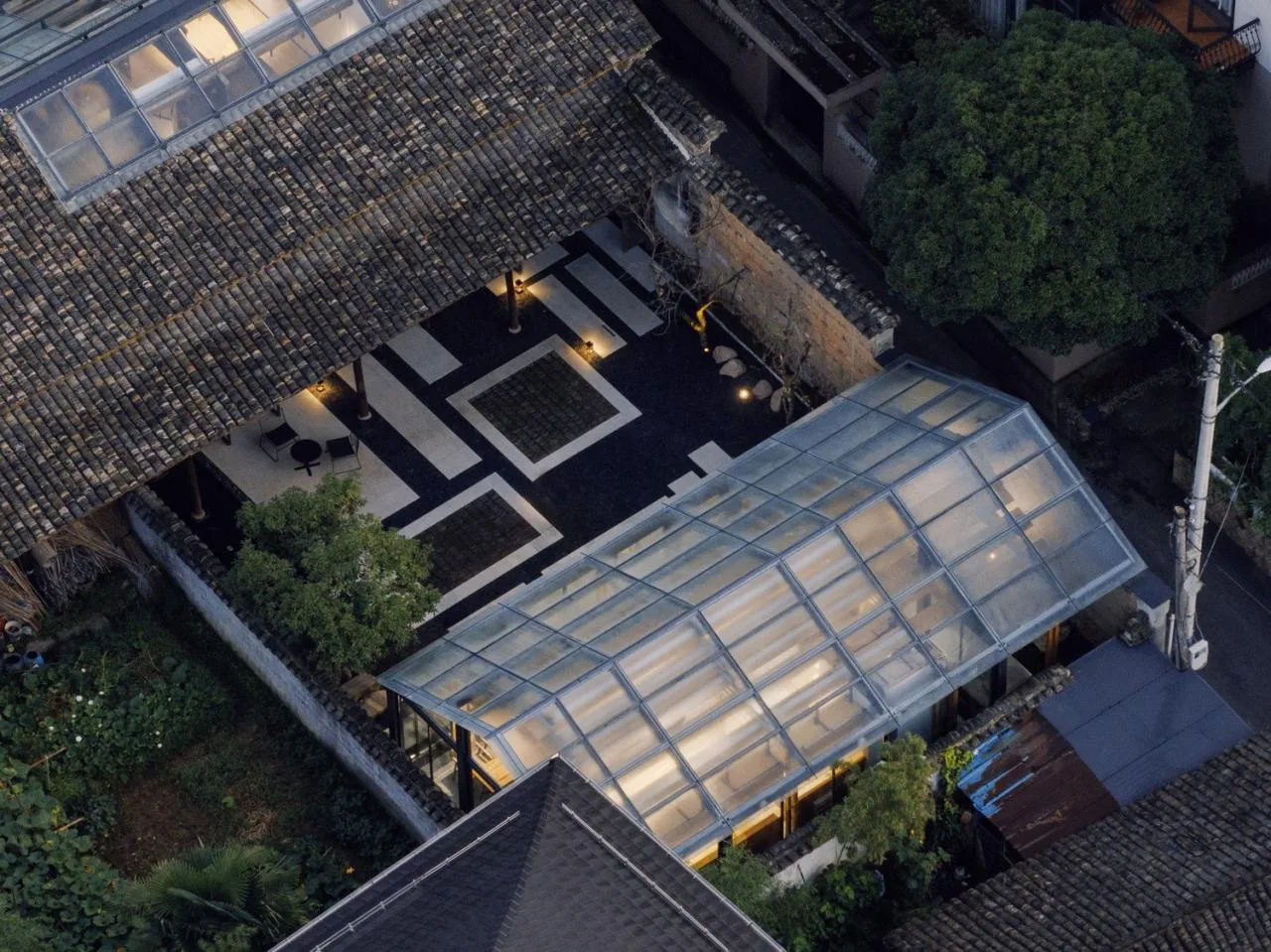
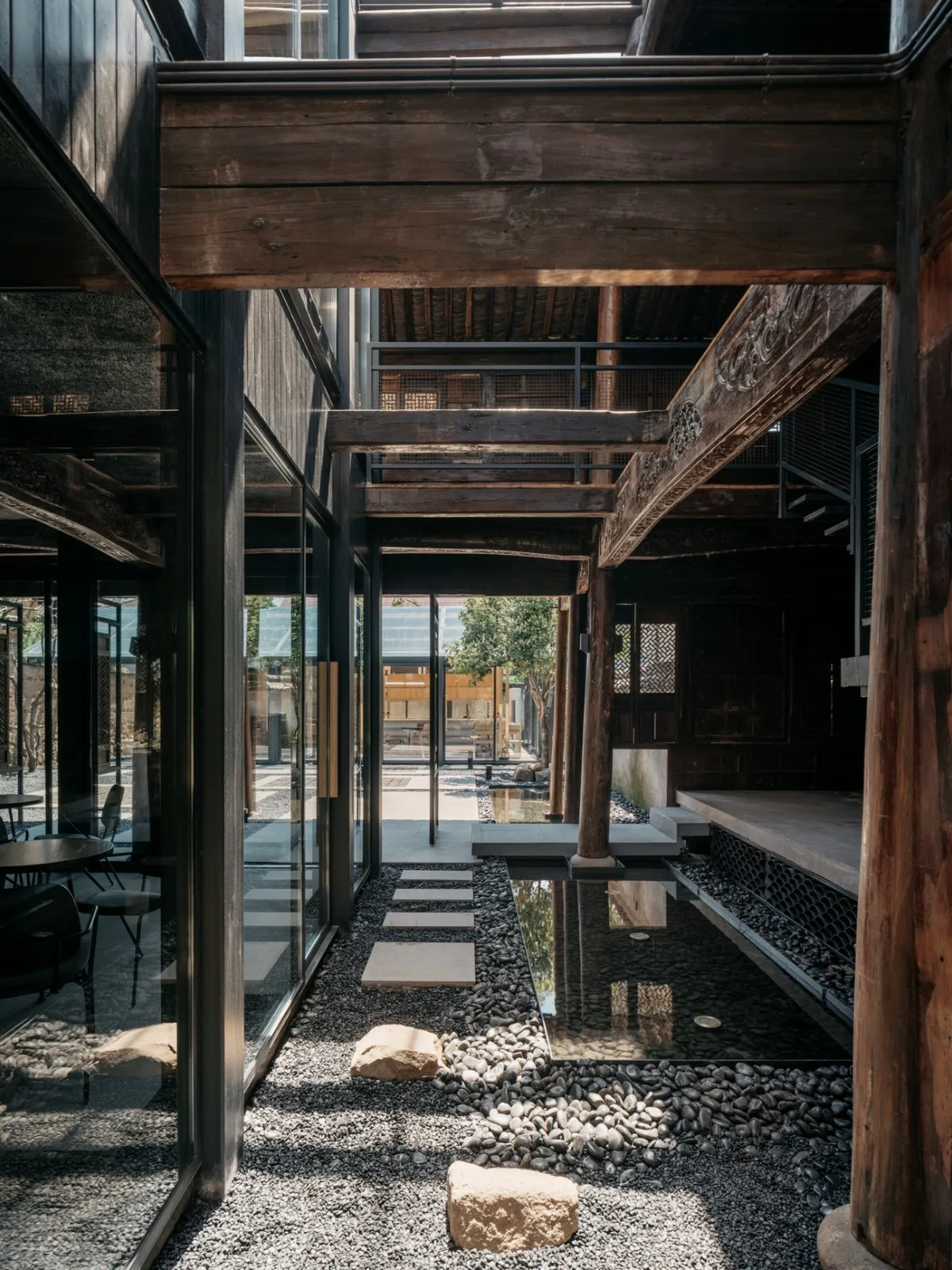
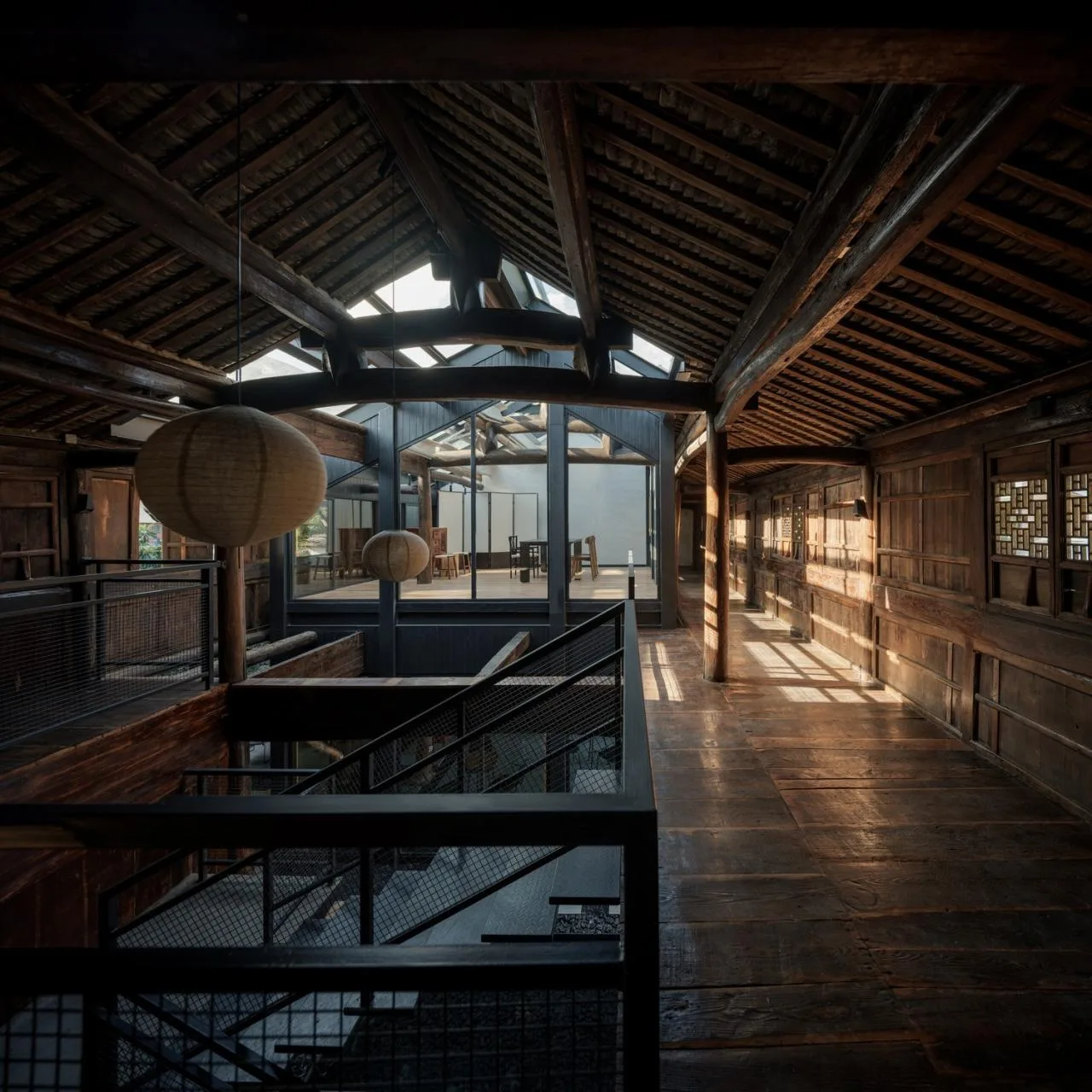
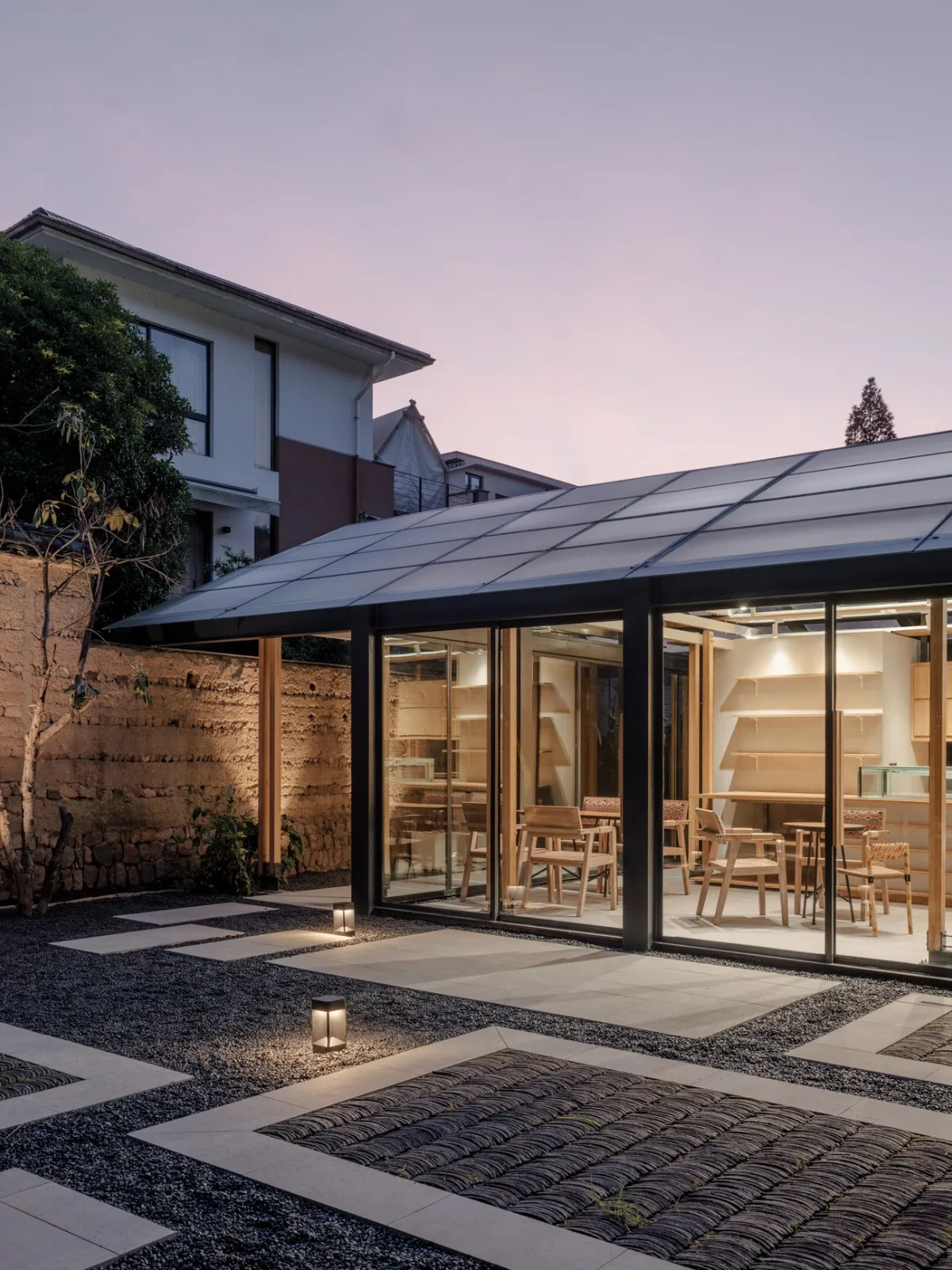
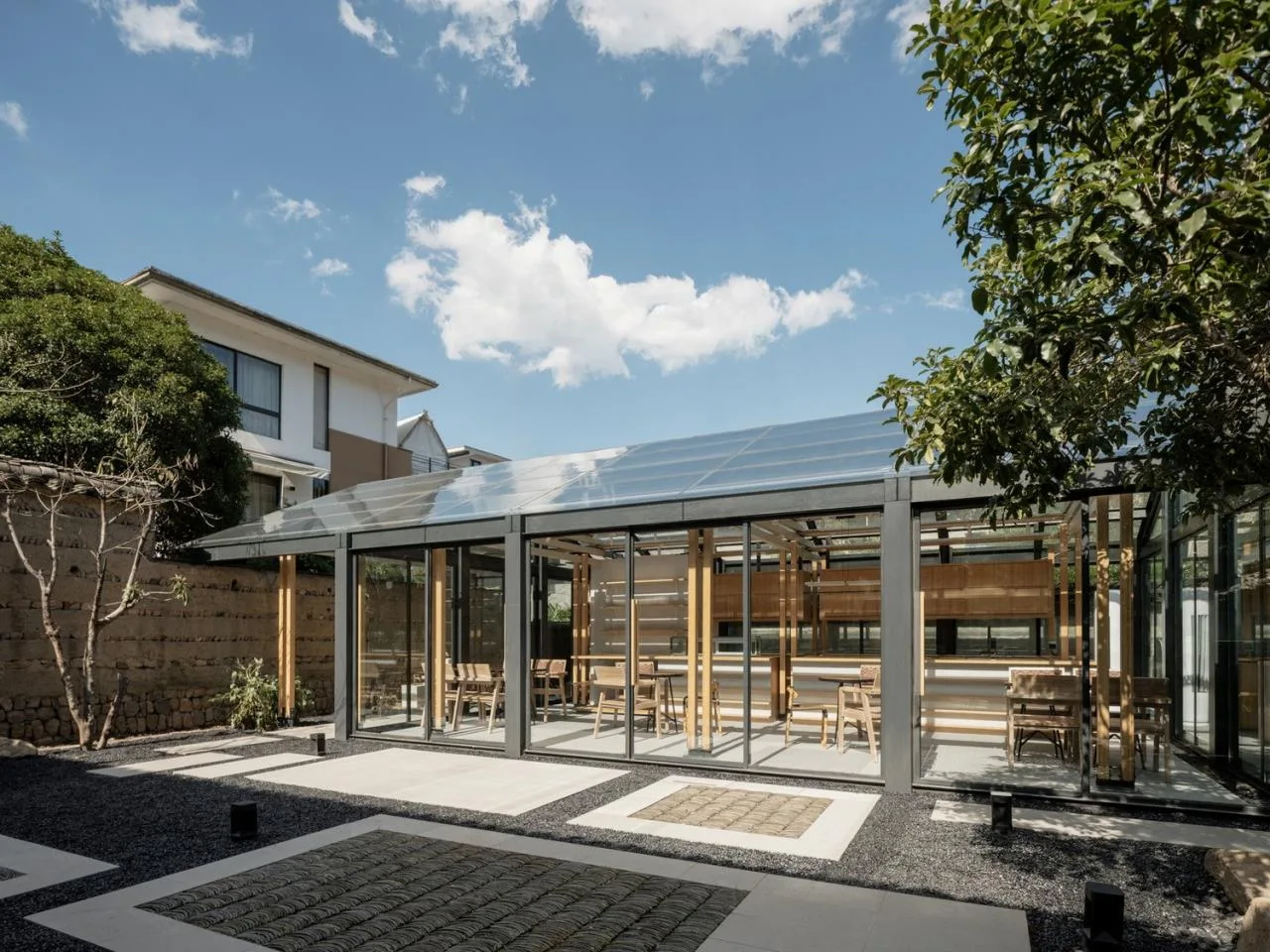
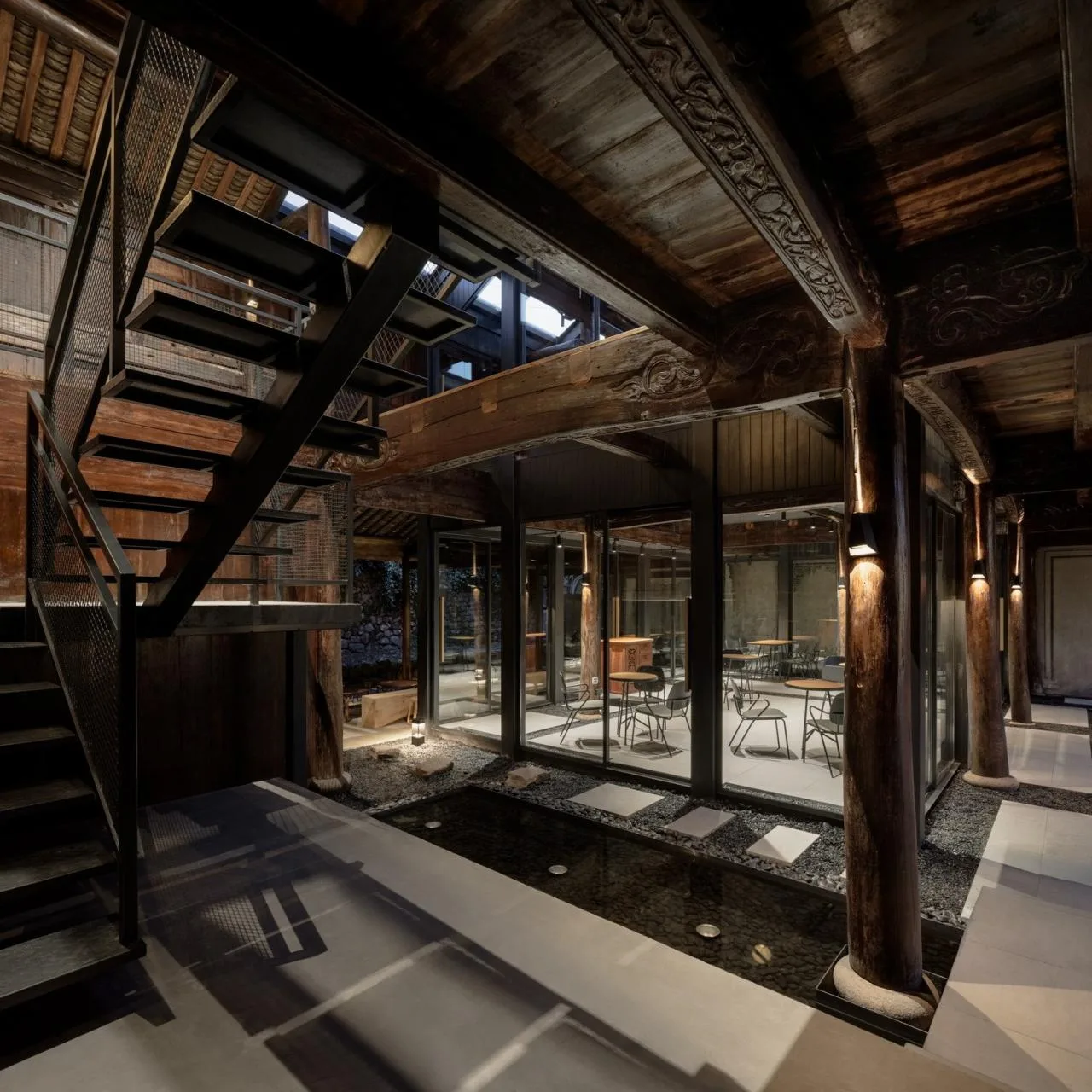
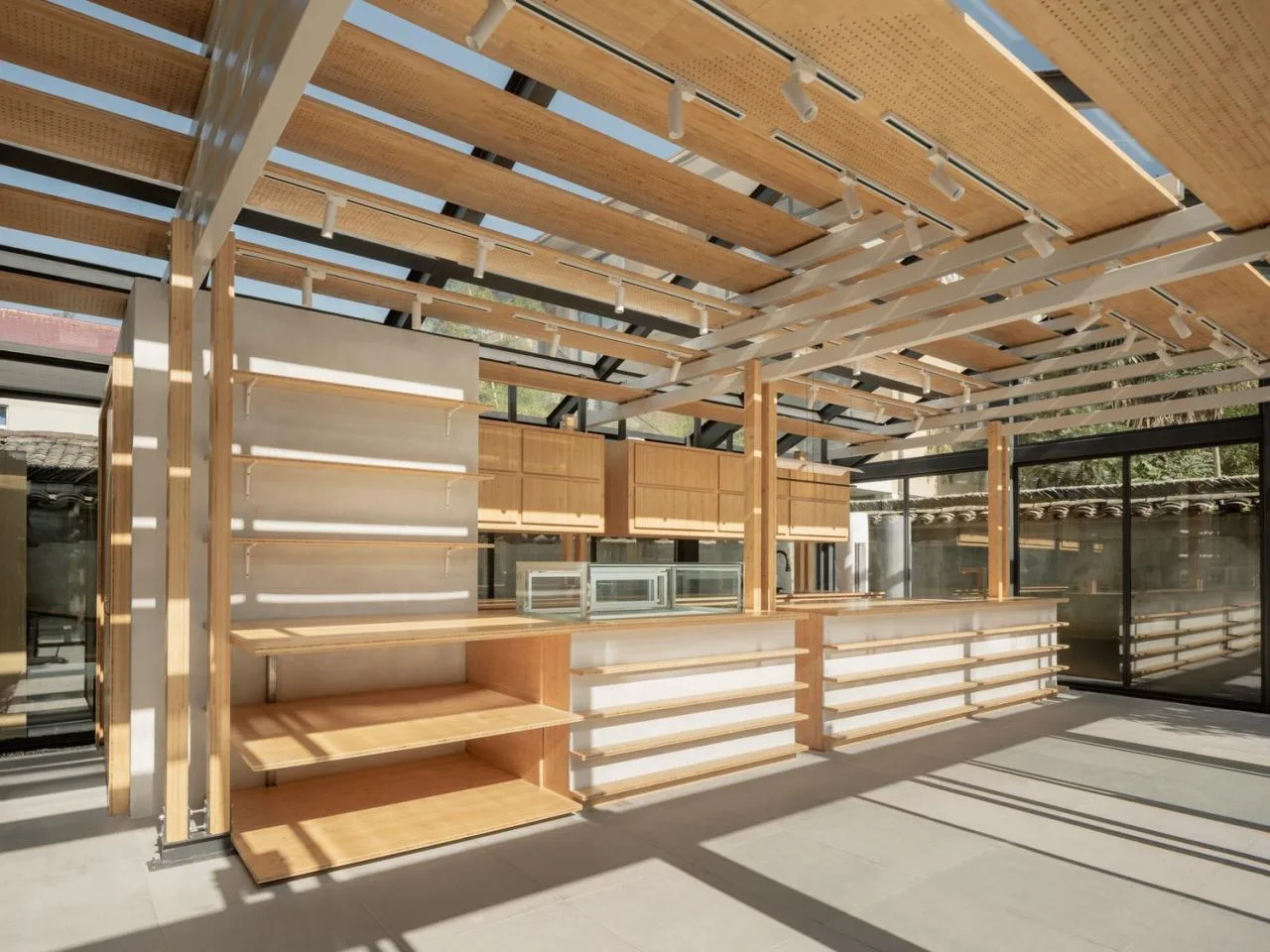
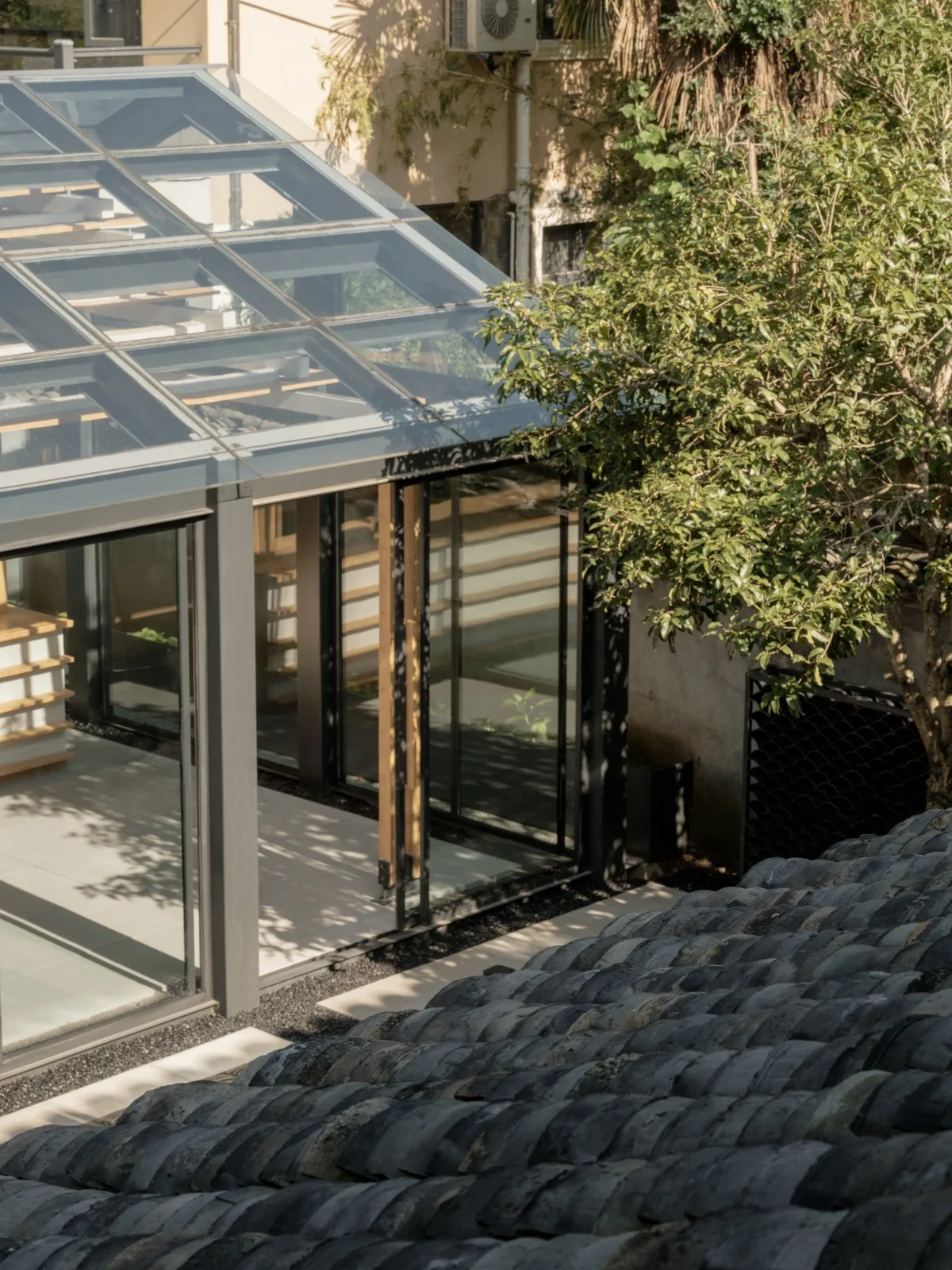
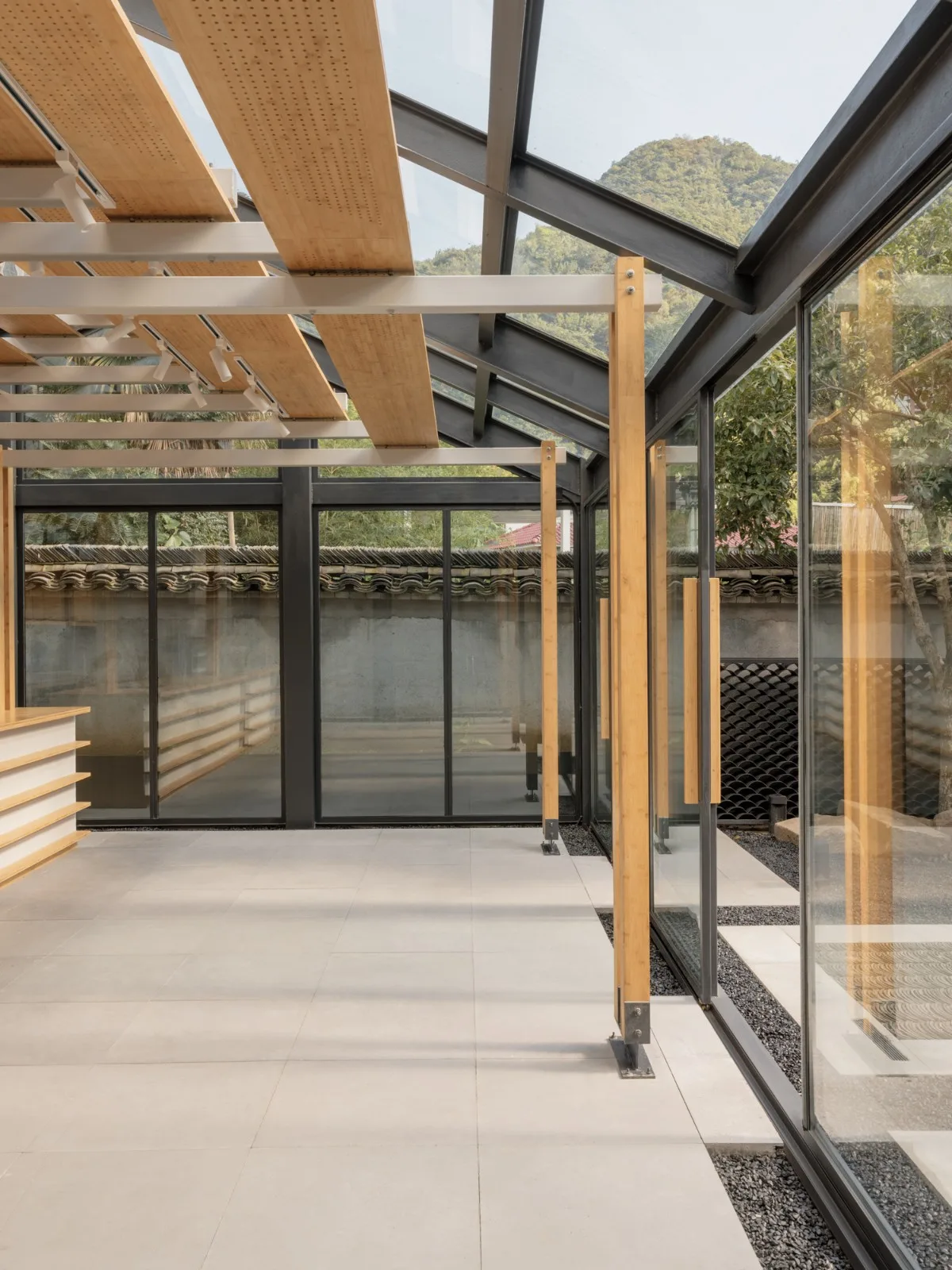
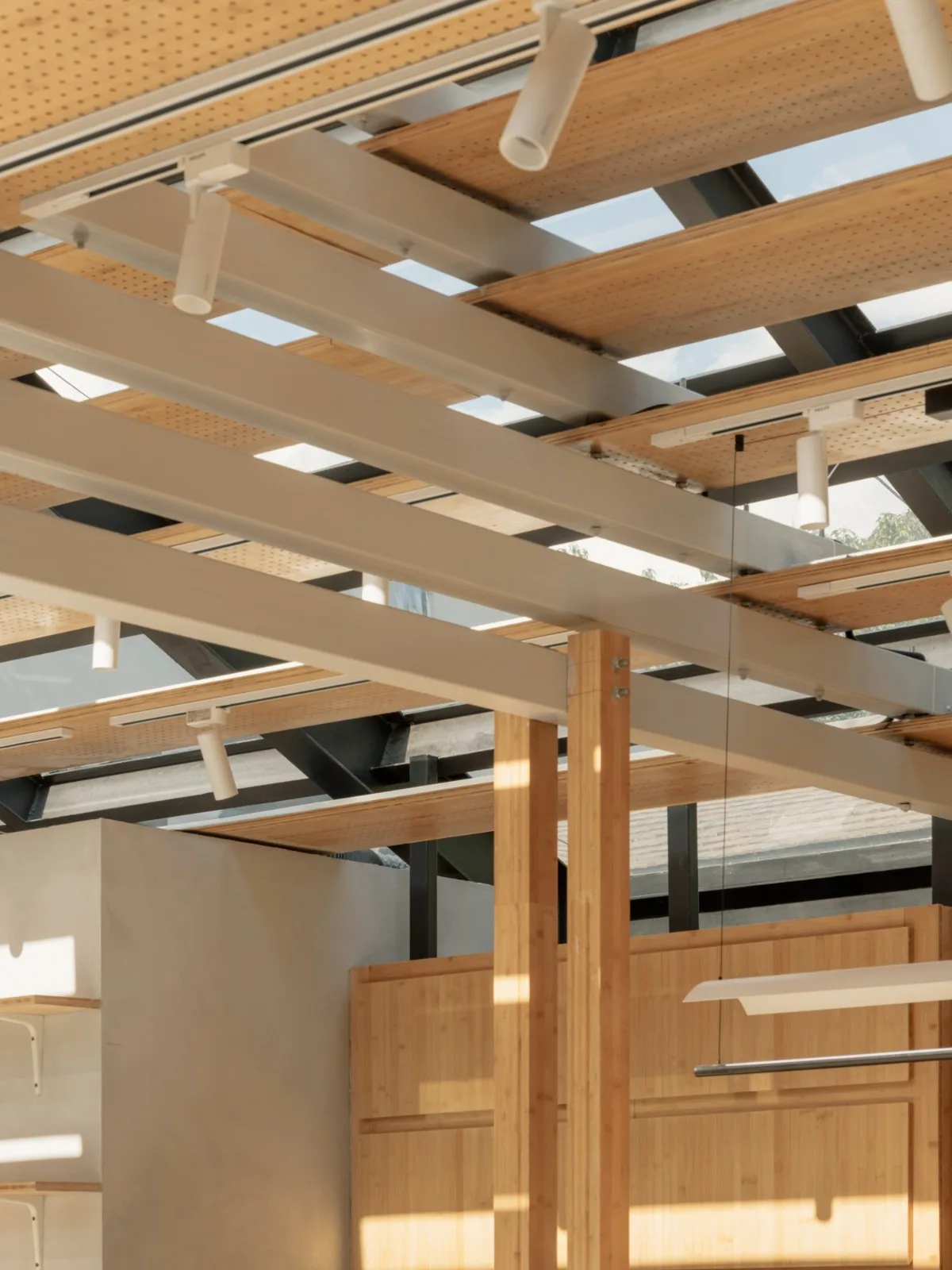
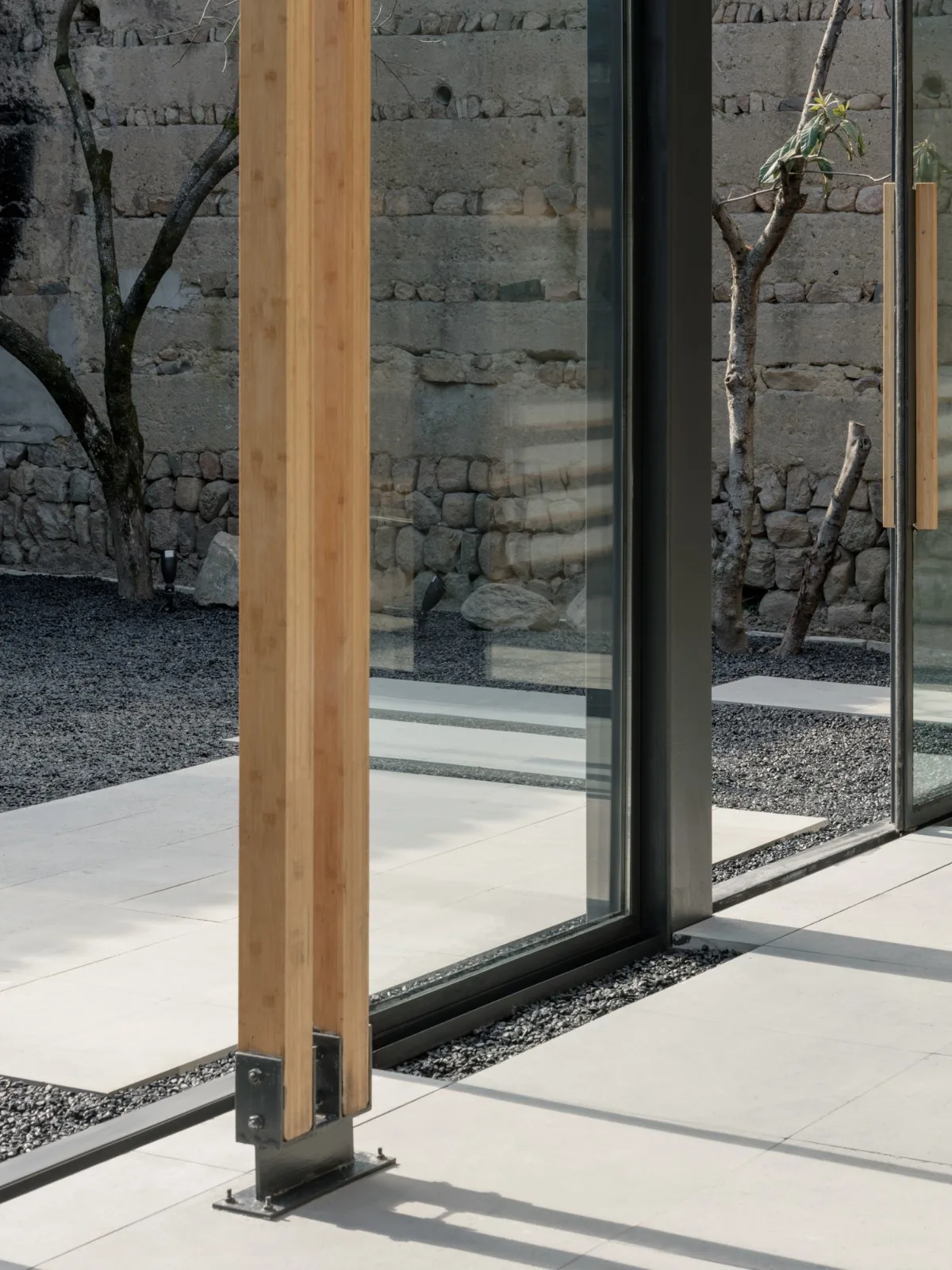
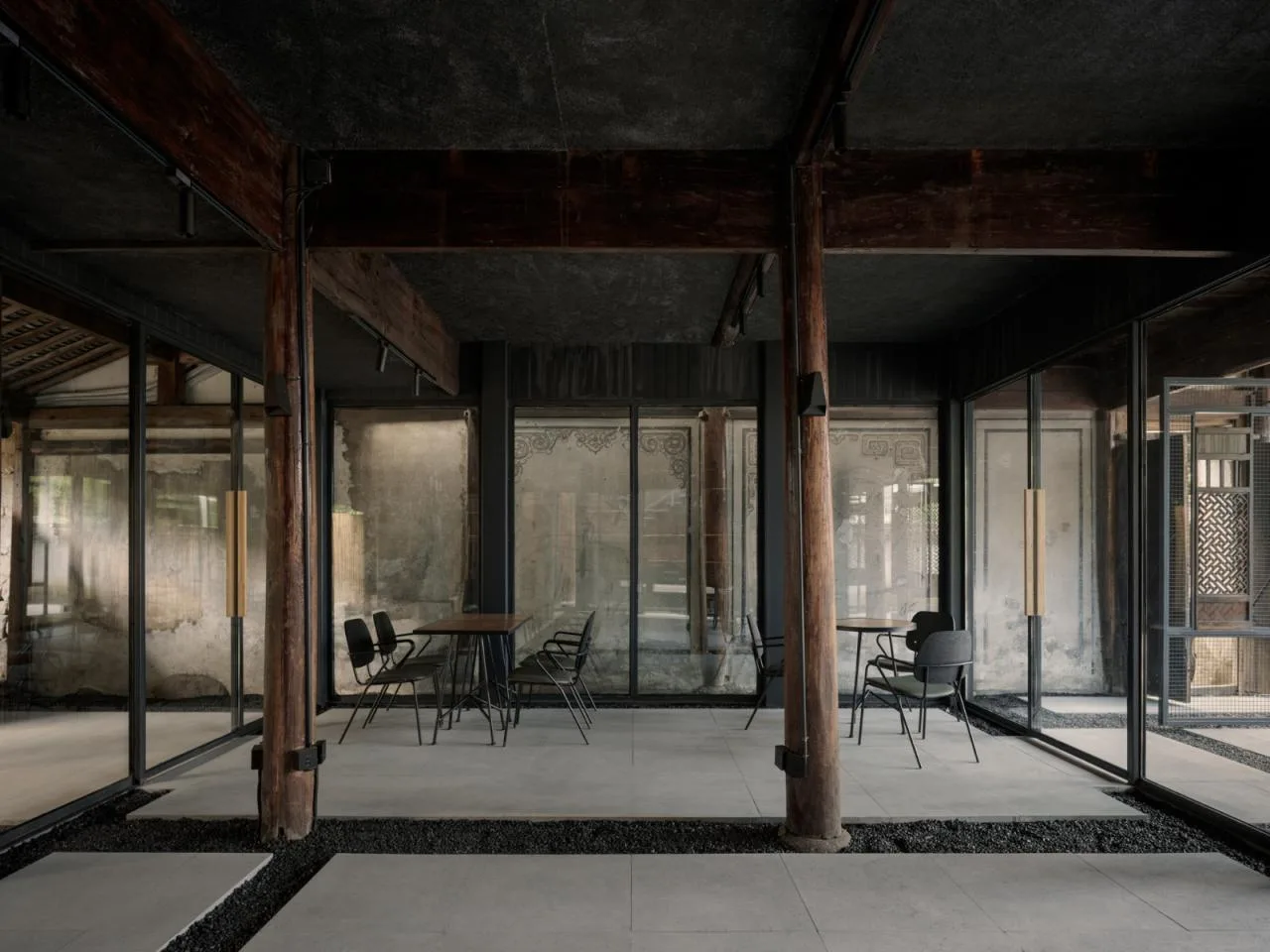
To enhance comfort and functionality, the design team introduced two self-supporting glass structures using steel frames. These glass houses were integrated into the historic wooden beam framework at the center of the ancient building. This approach maintains the overall visual integrity of the traditional dwelling while adding climate-controlled spaces where guests can enjoy tea comfortably. One standalone building, located deep within the courtyard, uses bamboo and steel materials to complement the wooden beams. Inside, the tea bar counter, bathroom, and sunshade ceiling are constructed with these materials. The composite bamboo ceiling abstractly mirrors the wooden beam framework of the old house, recreating the sun-shading effect similar to that of the traditional mansion’s roof.
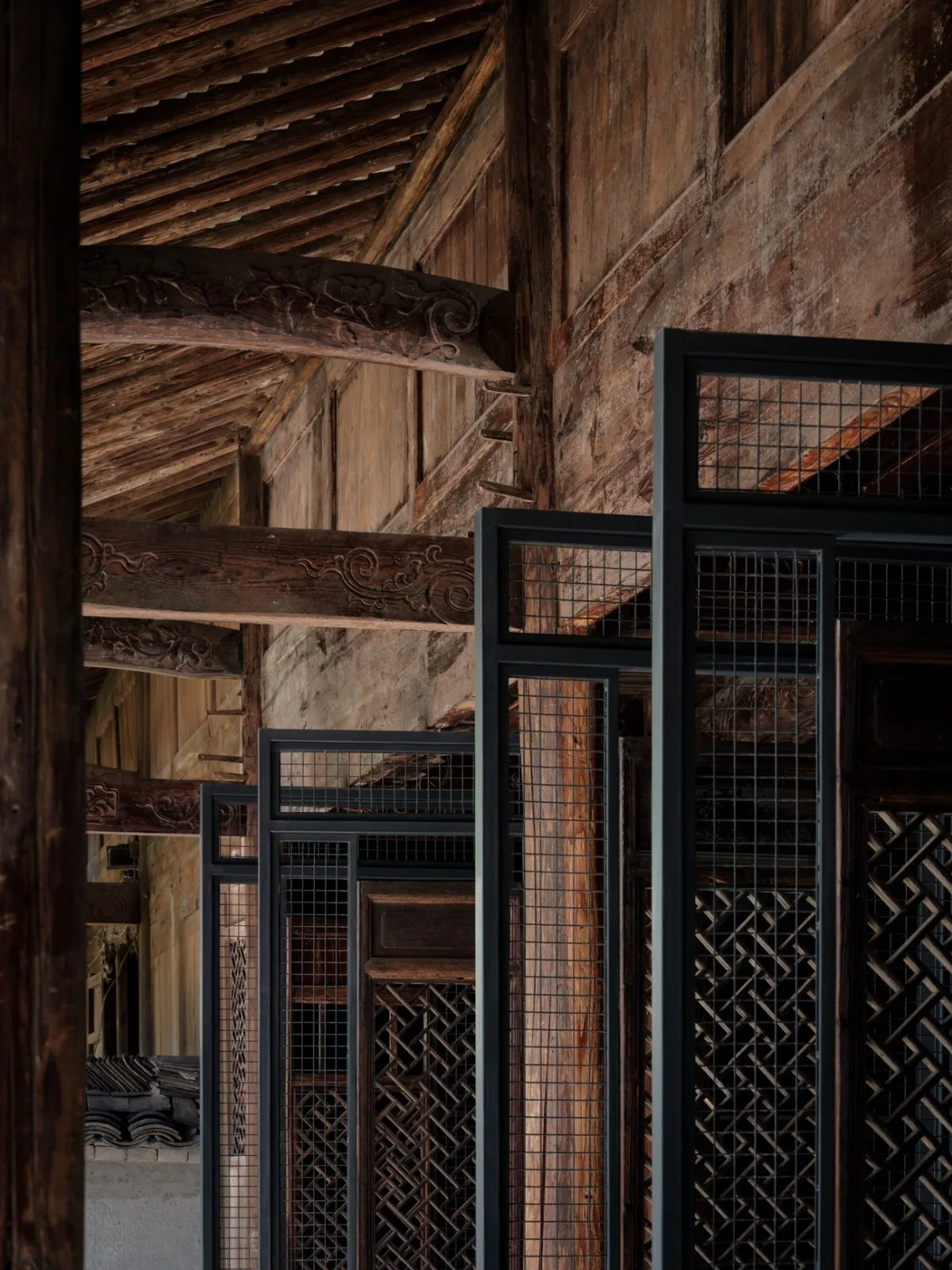
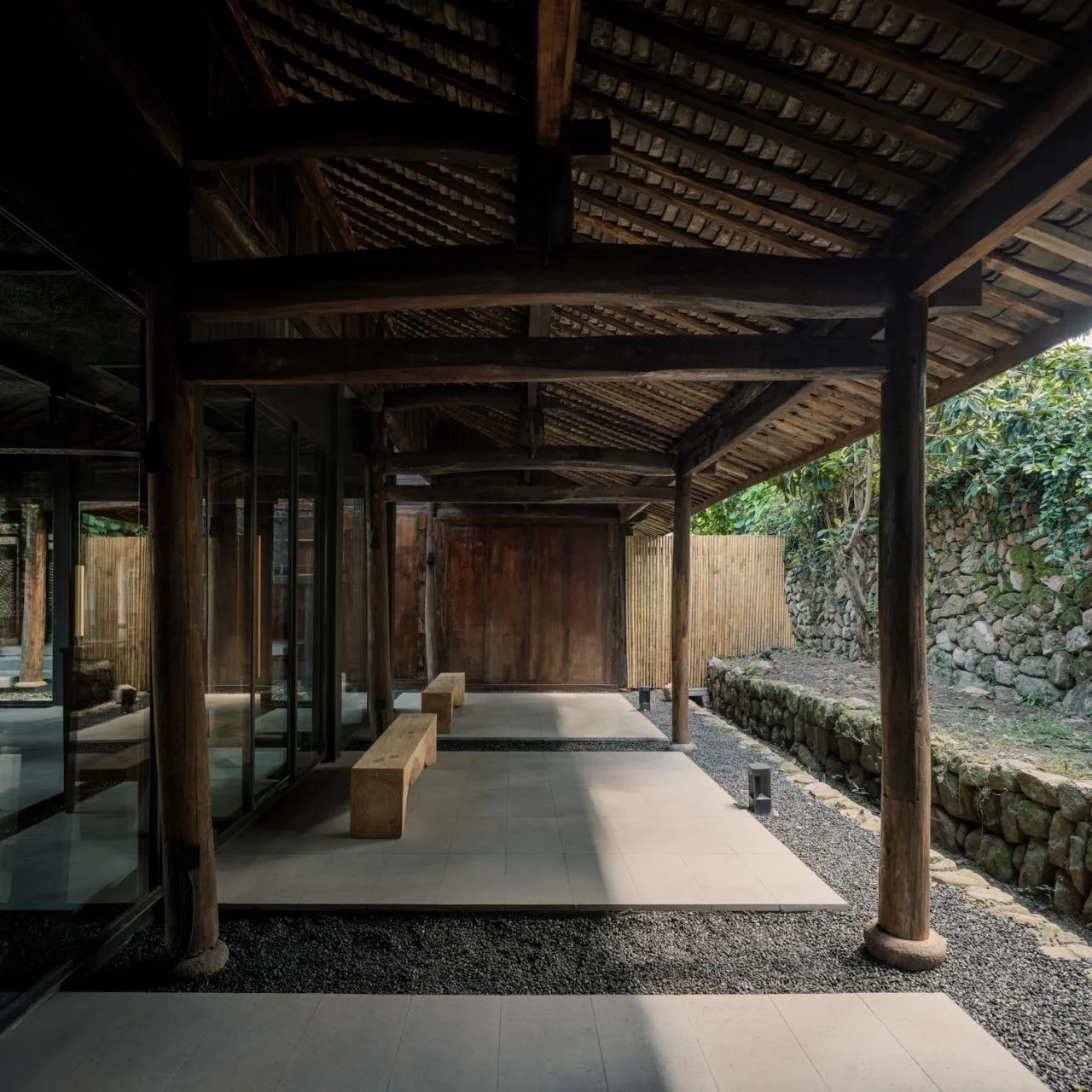
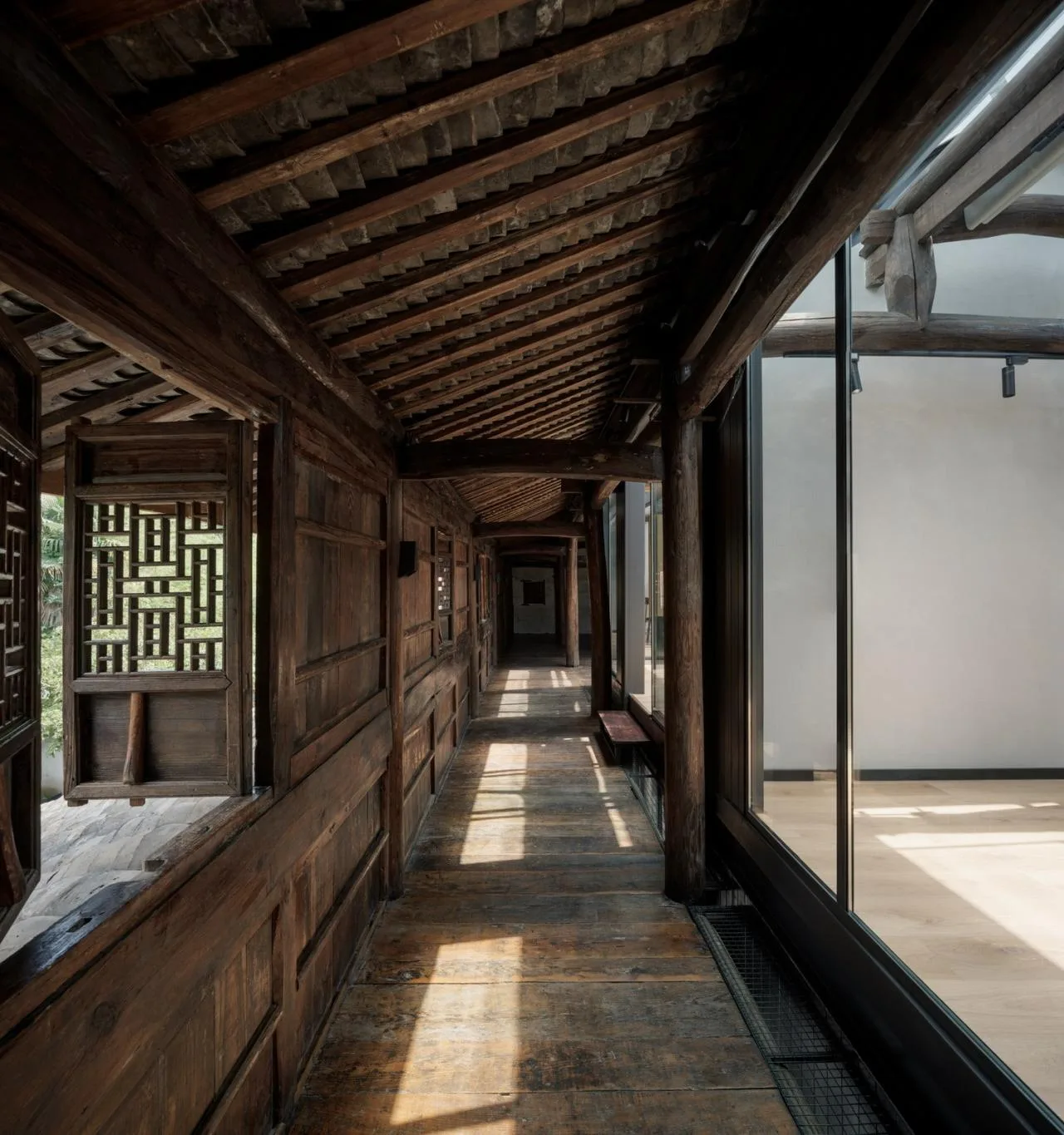
The two new volumes, equal in form and scale, are positioned both inside and outside the historic mansion, creating a dialogue between past and present. The clear contrast between the glass boundaries and bamboo/wood structures generates a rich spatial experience. Contemporary and traditional construction coexist—one structure within the ancient building, the other outside—positioned on opposite sides of the courtyard.
Project Drawings
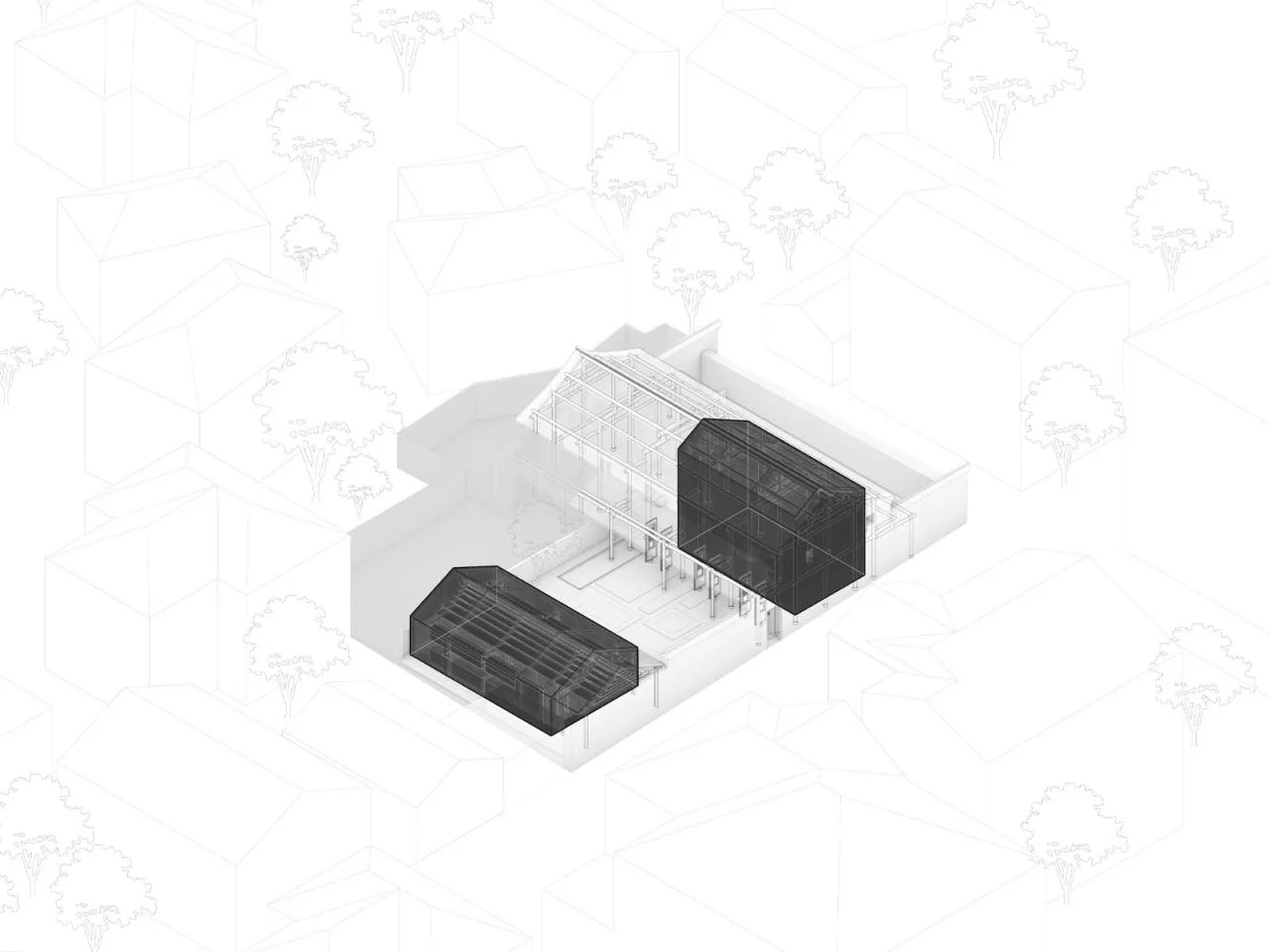
△ Axonometric Diagram
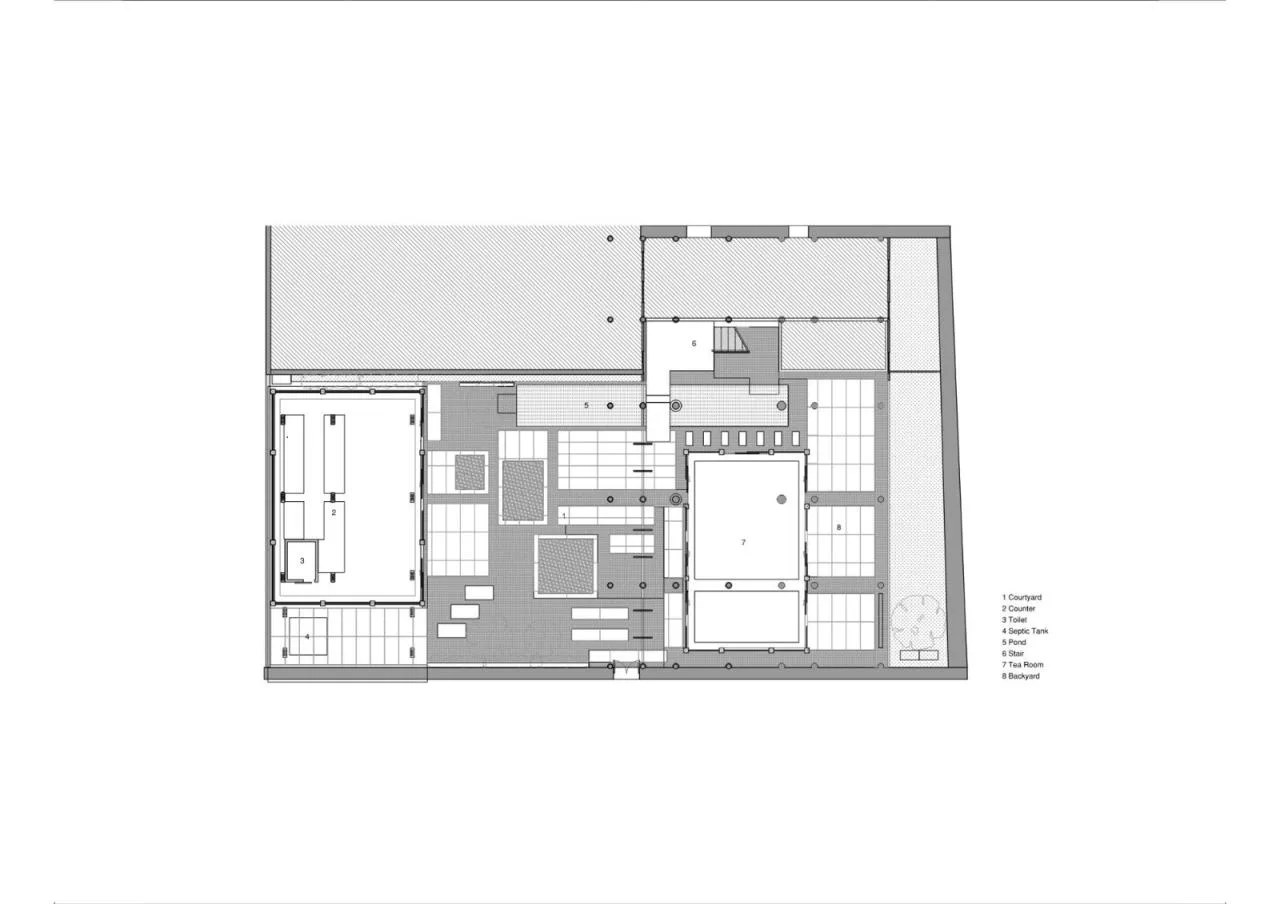
△ First Floor Plan
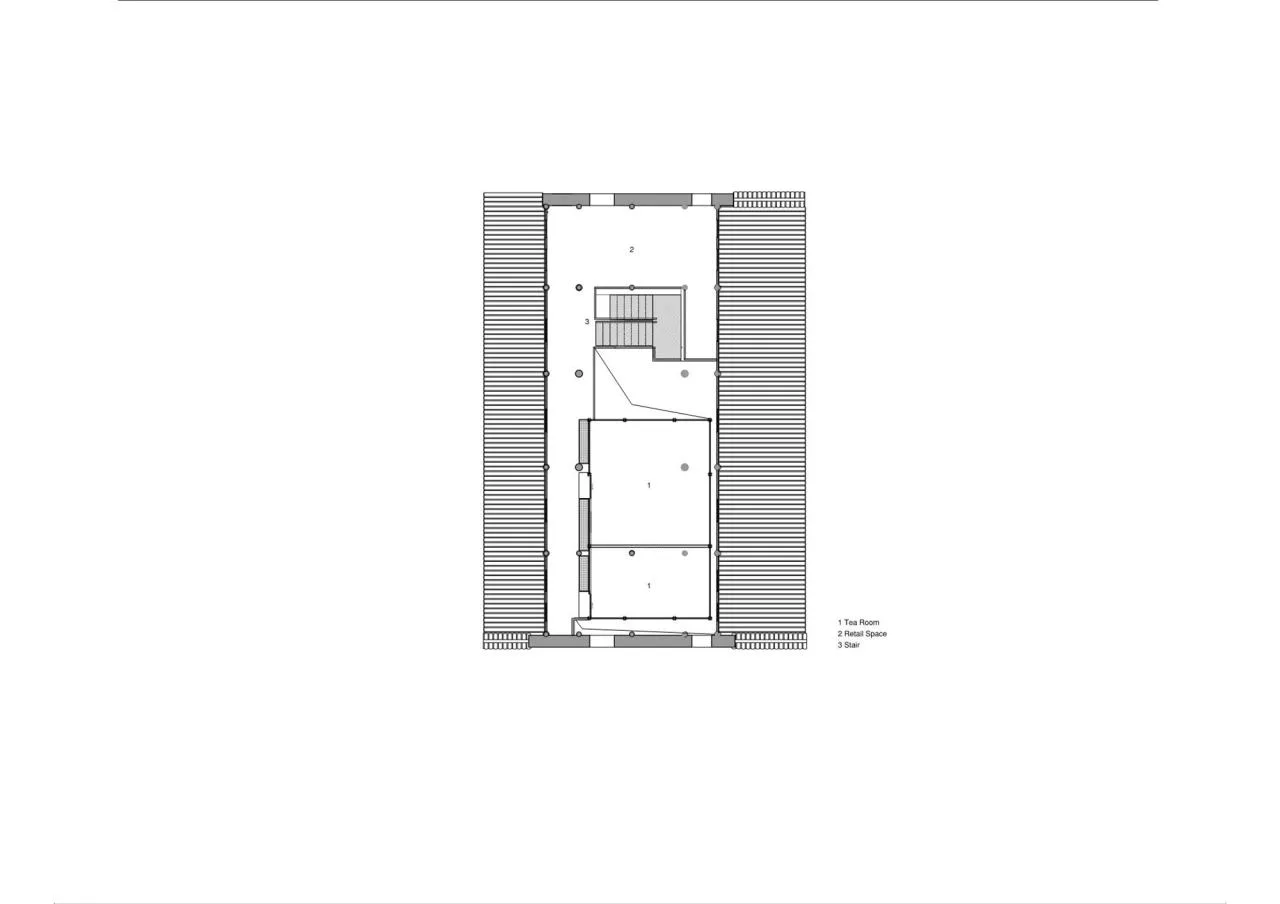
△ Second Floor Plan
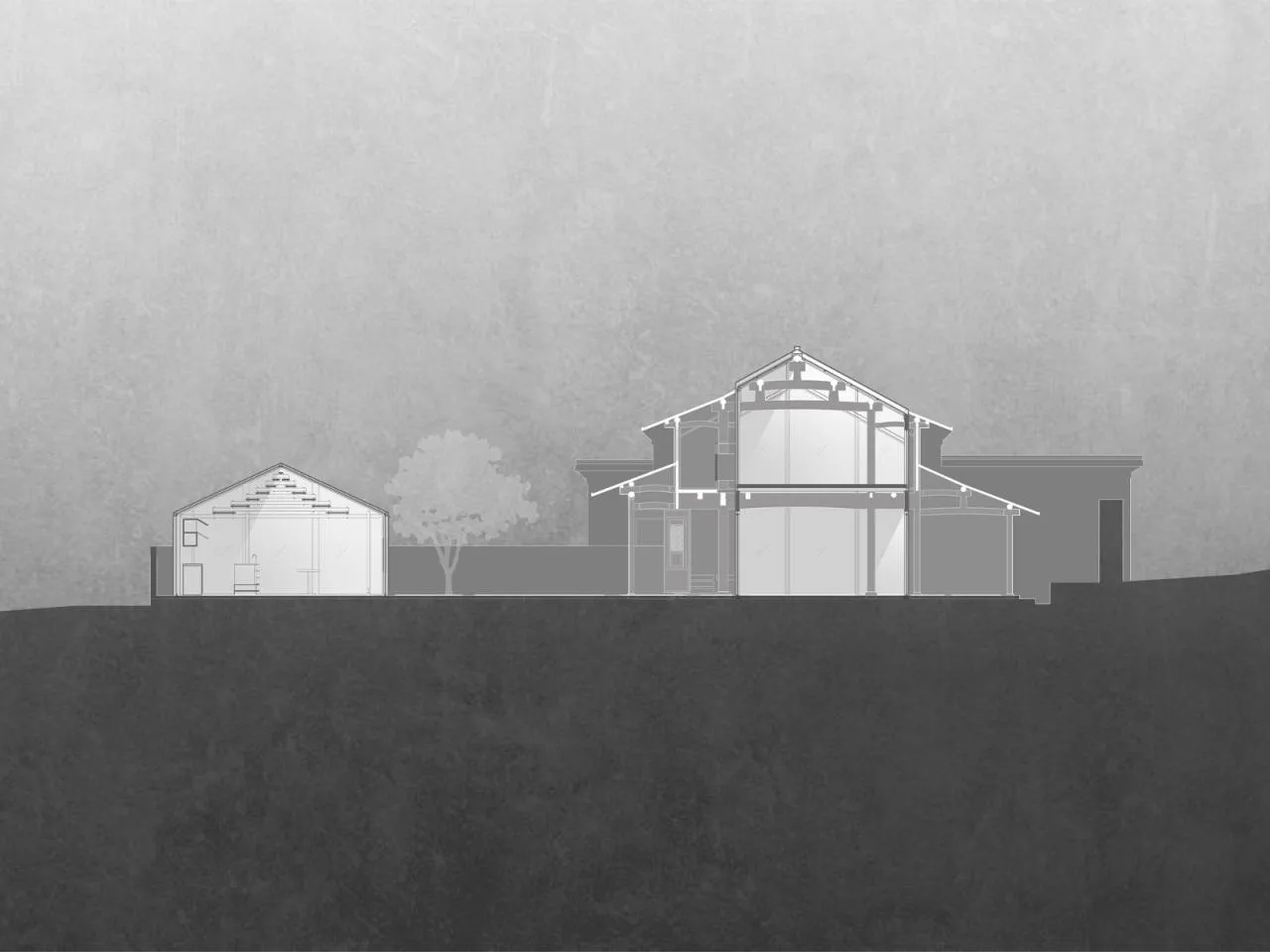
△ Section Diagram
Project Information
Architect: Aoshi Architecture
Area: 380 m²
Year: 2024
Photographer: Wen Studio
Manufacturer: Nippon Paint
Principal Architect: Yang Kuang
Design Team: Yang Yan, Zhan Mengjie, Fan Zhiqian, Chen Yufan, Wu Jingxue
Structural Design: Hu Xiaojie
Graphic Design: DizzyLab
Renovation Design: Bu Jianmin, Liu Mingyun
Client: Shanyu Tea House
Location: Huzhou City














Must log in before commenting!
Sign Up