
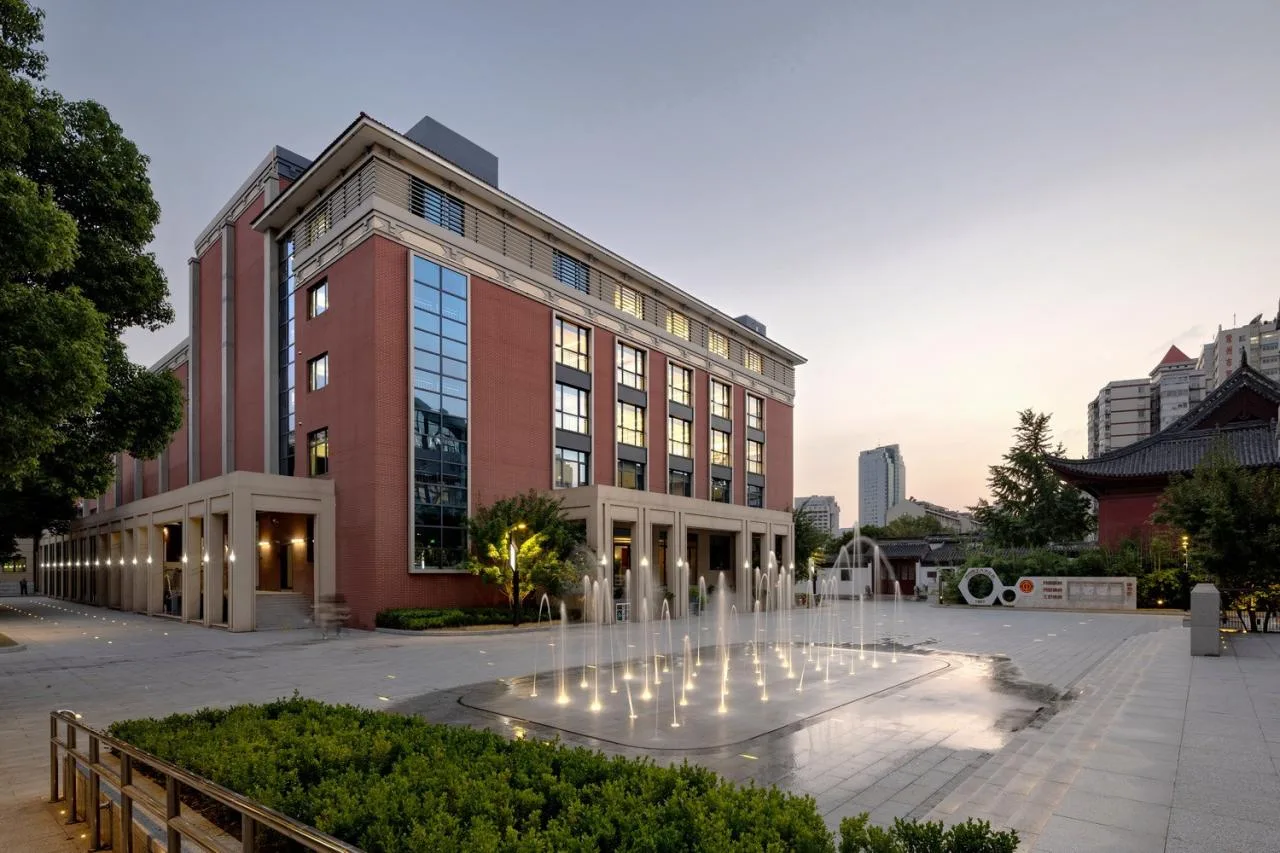
01 Historical Background
Former ‘Palace of Culture’
The Workers’ Cultural Palace, also known simply as the “Cultural Palace,” traces its origins to the workers’ clubs established during the Soviet era. These spaces provided workers with opportunities for recreation, socializing, and learning after their shifts. During the period of Sino-Soviet friendship, many regions across China adopted the Soviet model and architectural style, leading to a surge in the construction of workers’ cultural palaces and a number of iconic buildings.
Built in 1957, the Changzhou Workers’ Cultural Palace is a unique blend of Chinese and Western architectural styles. It stands today as one of the few fully preserved structures among Changzhou’s top ten buildings.
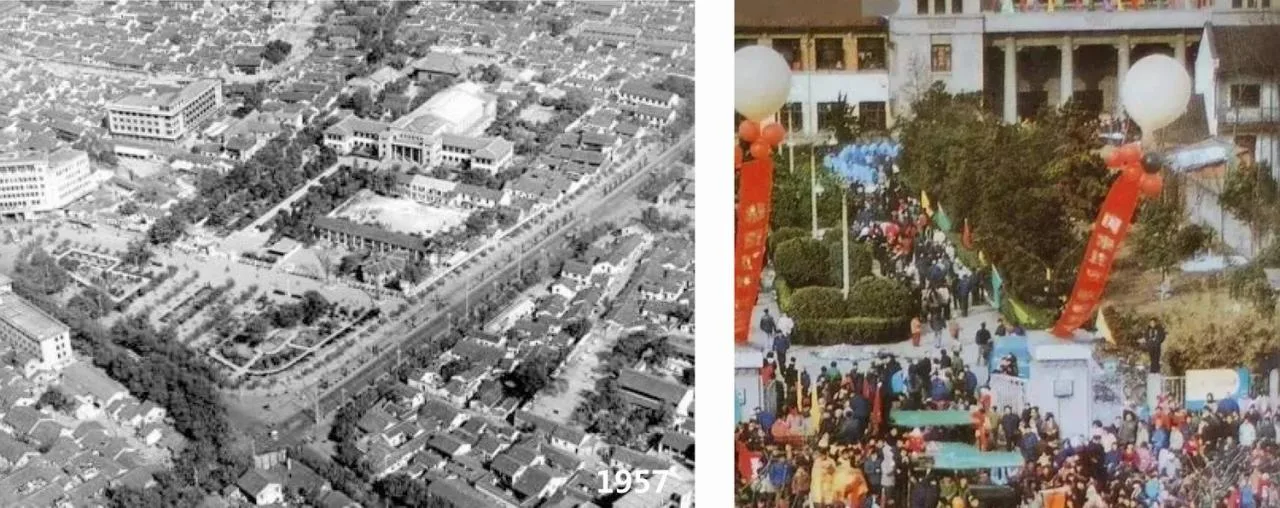
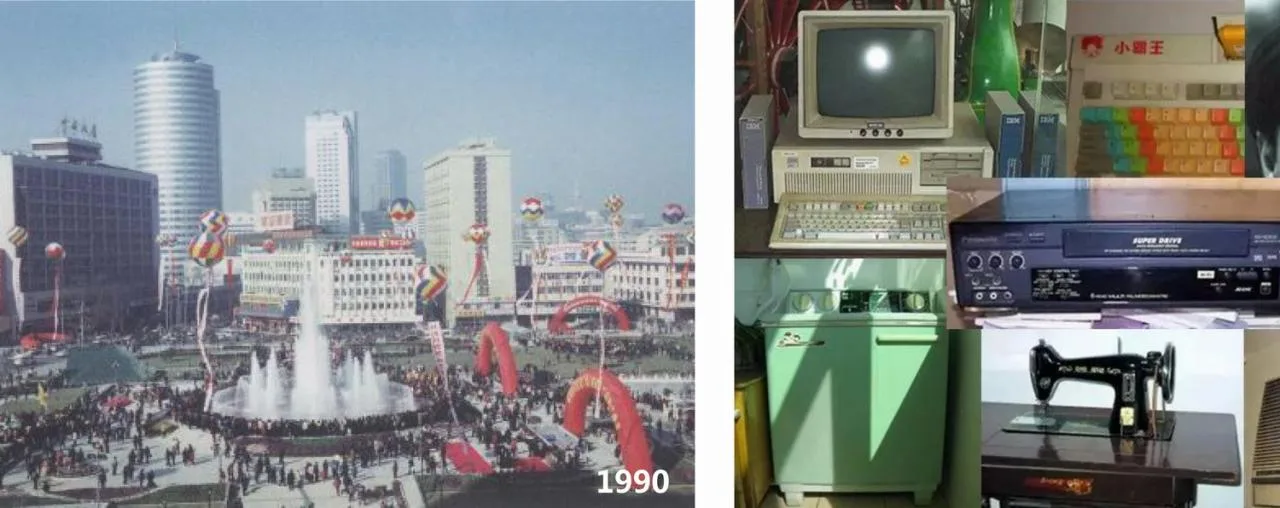
During the 1970s and 1980s, the Workers’ Cultural Palace thrived as the primary venue for cultural and entertainment activities among workers, embodying the glory of an era and preserving the collective memory of multiple generations. However, from the mid-1990s onwards, the rise of the market economy led to a diversification of cultural and entertainment venues. Consequently, workers’ cultural palaces nationwide began to decline, losing much of their former prestige and significance.
02 Current Issues
Complex Historical Imprints
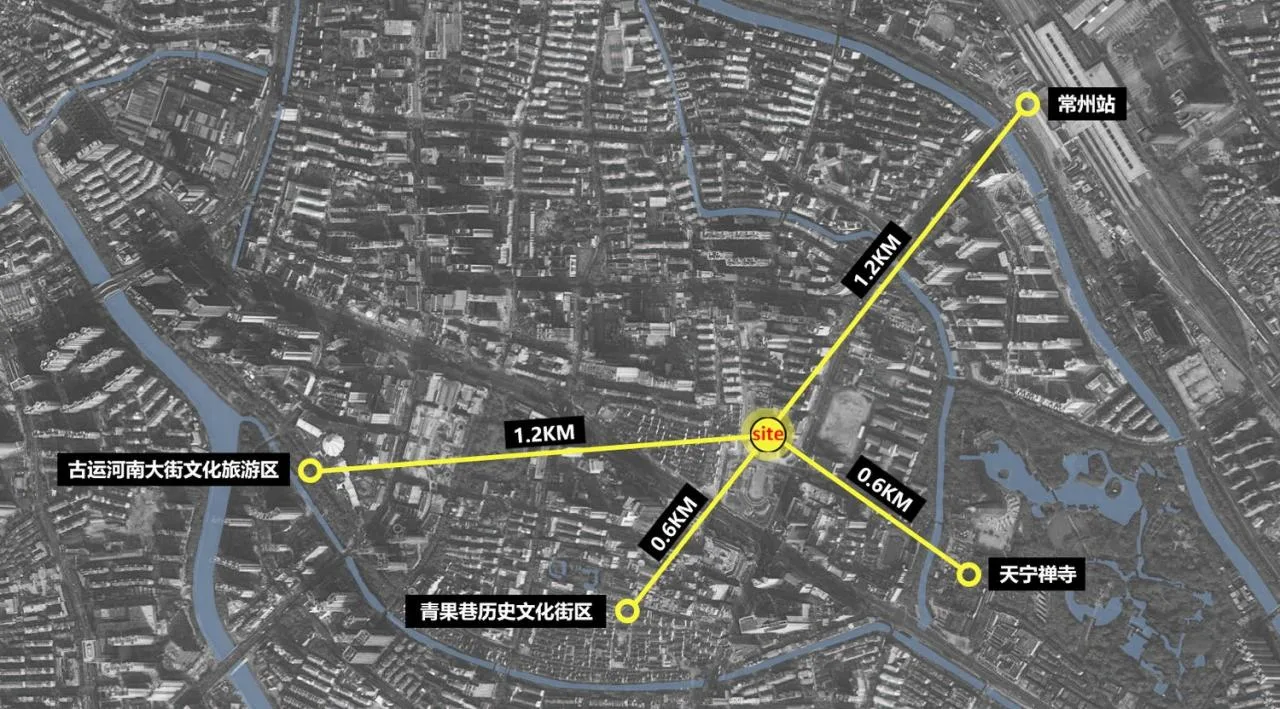
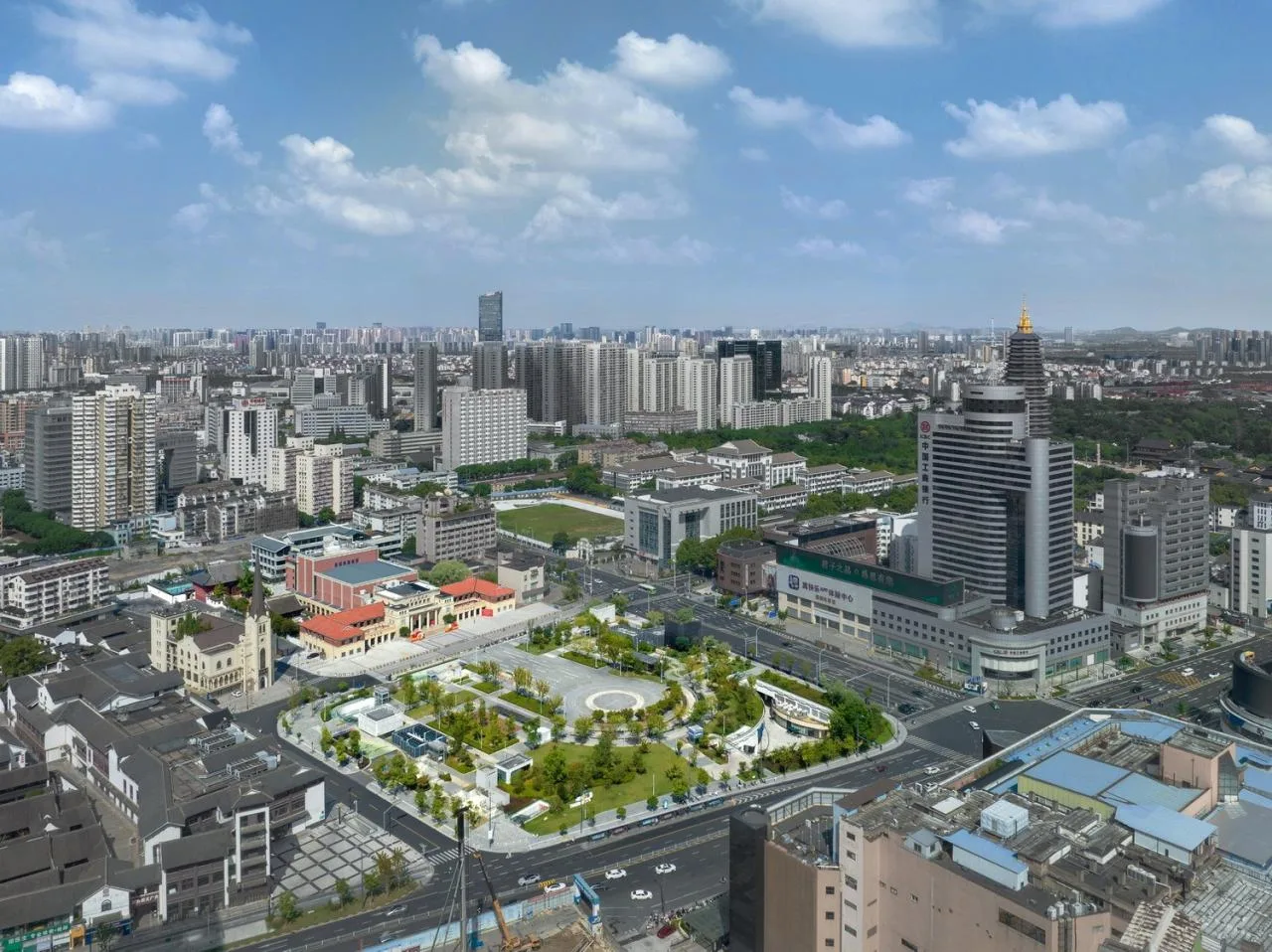
△ Project Location
Situated in the heart of Changzhou’s old town, the Cultural Palace is surrounded by key cultural institutions—including Confucian temples, Christian churches, the city library—as well as historic districts to the north and along the back riverbank. Nearby are Dongpo Academy and provincial secondary schools, making it a central hub for cultural education.
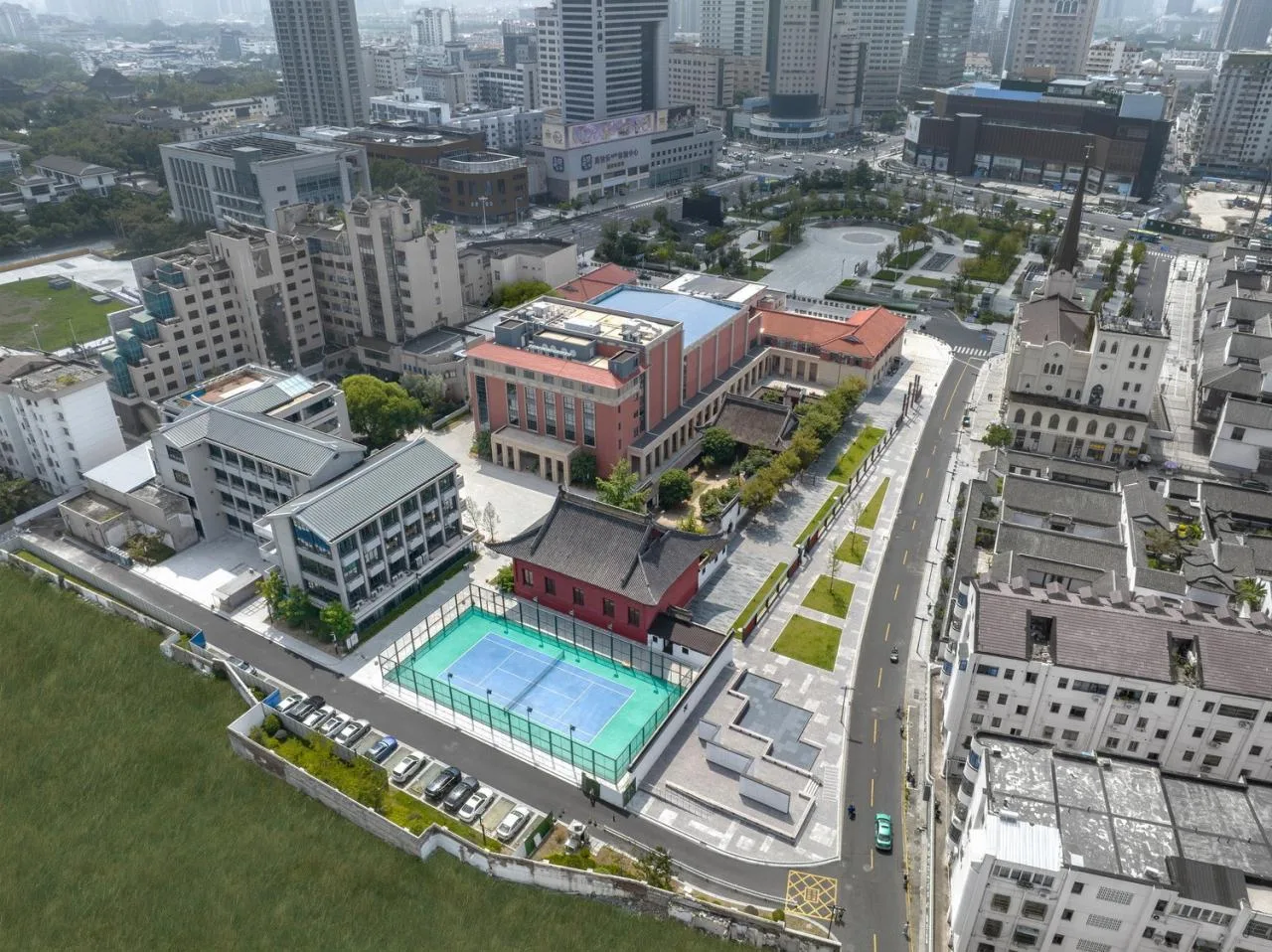
These cultural landmarks represent diverse historical periods, collectively imprinting deep historical significance on the Cultural Palace area. The challenge lies in enhancing the area’s cultural identity through thoughtful renovation of both buildings and their surroundings, transforming it into a cultural emblem of Changzhou’s old city.
Construction Issues
The current state of the Workers’ Cultural Palace reveals a patchwork of façade styles, misaligned functions, diminished cultural value, and limited public accessibility. Multiple renovations and expansions over time have complicated the site’s layout, introducing various problems like fire hazards, structural weaknesses, missing architectural drawings, and a lack of technical standards.
Environmental Issues
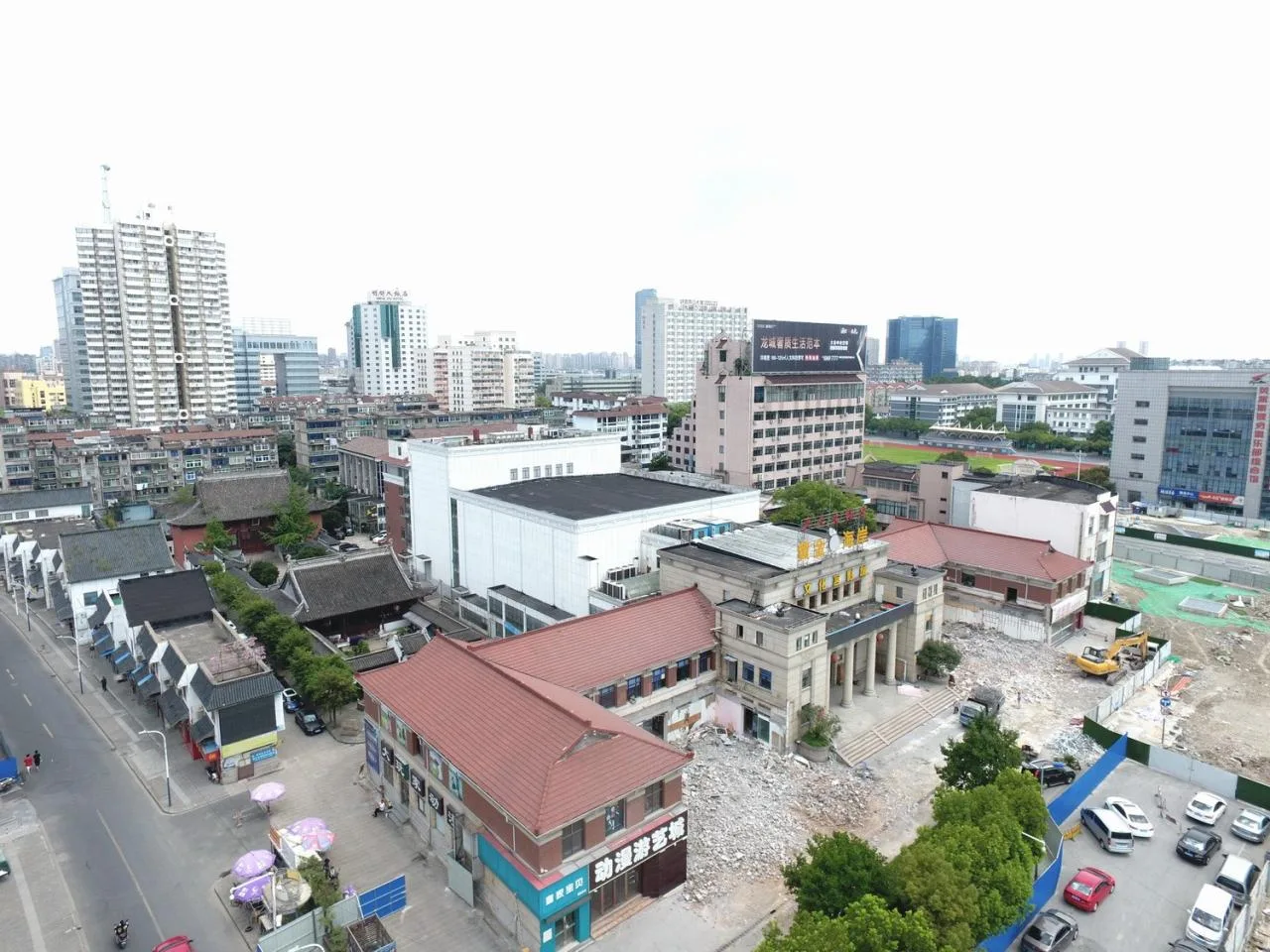
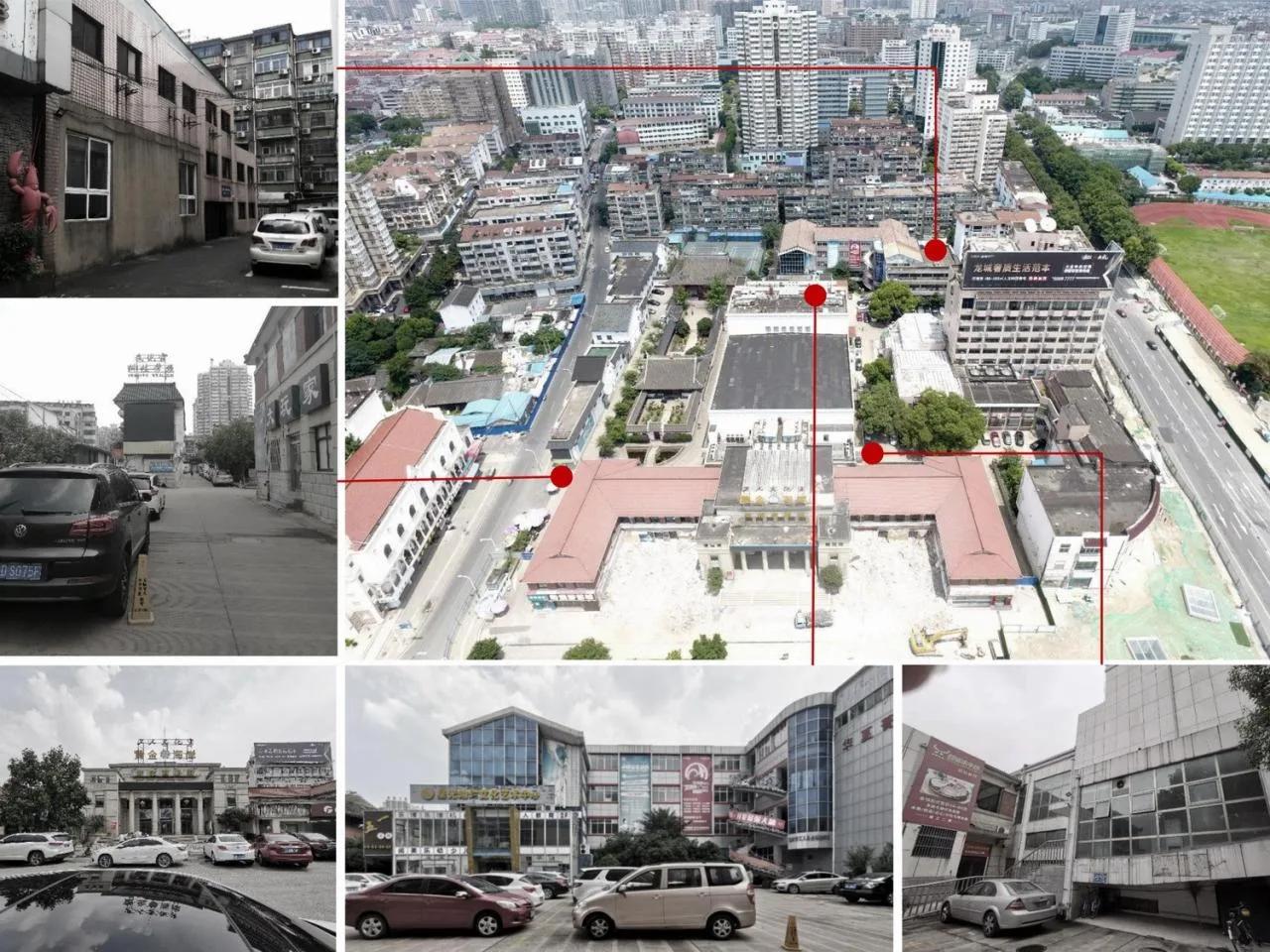
Extensive research and site visits revealed a lack of interaction between architecture and environment, resulting in uninspired and underutilized spaces. External connections are disjointed and lack public accessibility. Leisure facilities are insufficient, greenery is disorderly, and cultural atmosphere is weak. Inconsistent signage and building colors further detract from the experience, highlighting the urgent need for systematic environmental planning.
Traffic Issues
Located in the old city’s core, the site is constrained by a small plot with a fully occupied parking lot in the inner courtyard. There is poor traffic organization, with pedestrians and vehicles sharing space, raising concerns about safety and emergency access. The challenge is to reorganize traffic effectively, separate pedestrian and vehicular flows, and ensure fire truck access if underground construction proceeds.
Appearance Issues
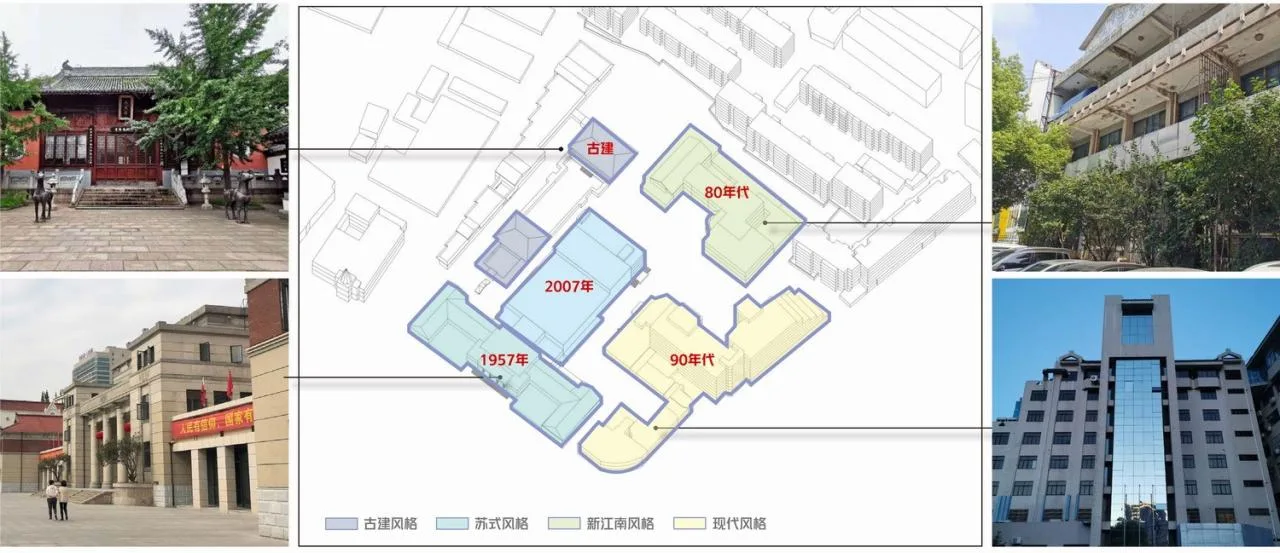
The site currently hosts a mix of architectural styles and historical periods, including the Dacheng Hall of the Confucian Temple, the 1950s Soviet-style Great Hall (“Airplane Building”), the 1980s Science and Education Building, and newer Great Hall and auxiliary buildings built after 2000. Many have undergone multiple renovations and lost their original identities. The question of which style to emphasize involves not only aesthetics but also a sensitive understanding of historical context.
03 Transformation Strategy
Reshaping Place Memory and Activating Social Functions
Through thorough on-site research, historical material review, understanding the area’s master plan, and collaborative workshops with owners and relevant departments, a renovation framework was developed. It focuses on history and culture, landscape and architecture, as well as functionality and community activities.
Open Sharing to Create Cultural Blocks
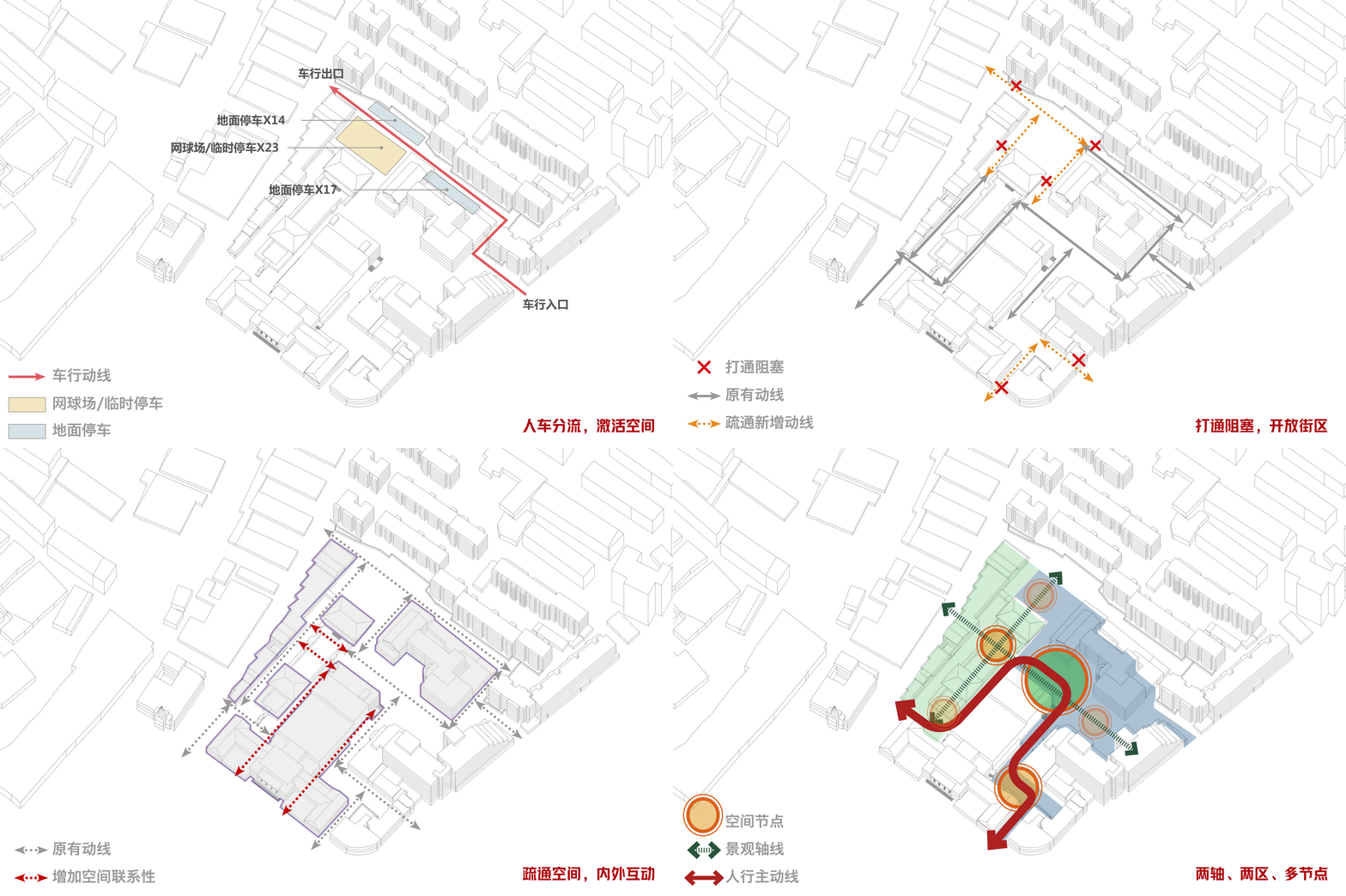
By opening up the boundaries of the Cultural Palace—both the site and the buildings—the design fosters interaction between structures and the central square. The central plaza and multiple smaller nodes, combined with pedestrian flow from the subway station, create an open, continuous, and slow-moving public space.
Traffic Diversion and Pedestrian-Friendly System
A pedestrian-friendly street system will be introduced with square paving, speed bumps, and other measures to separate vehicles from pedestrians, while coordinating regional parking needs.
Enhancing the Cultural Core Around Public Welfare
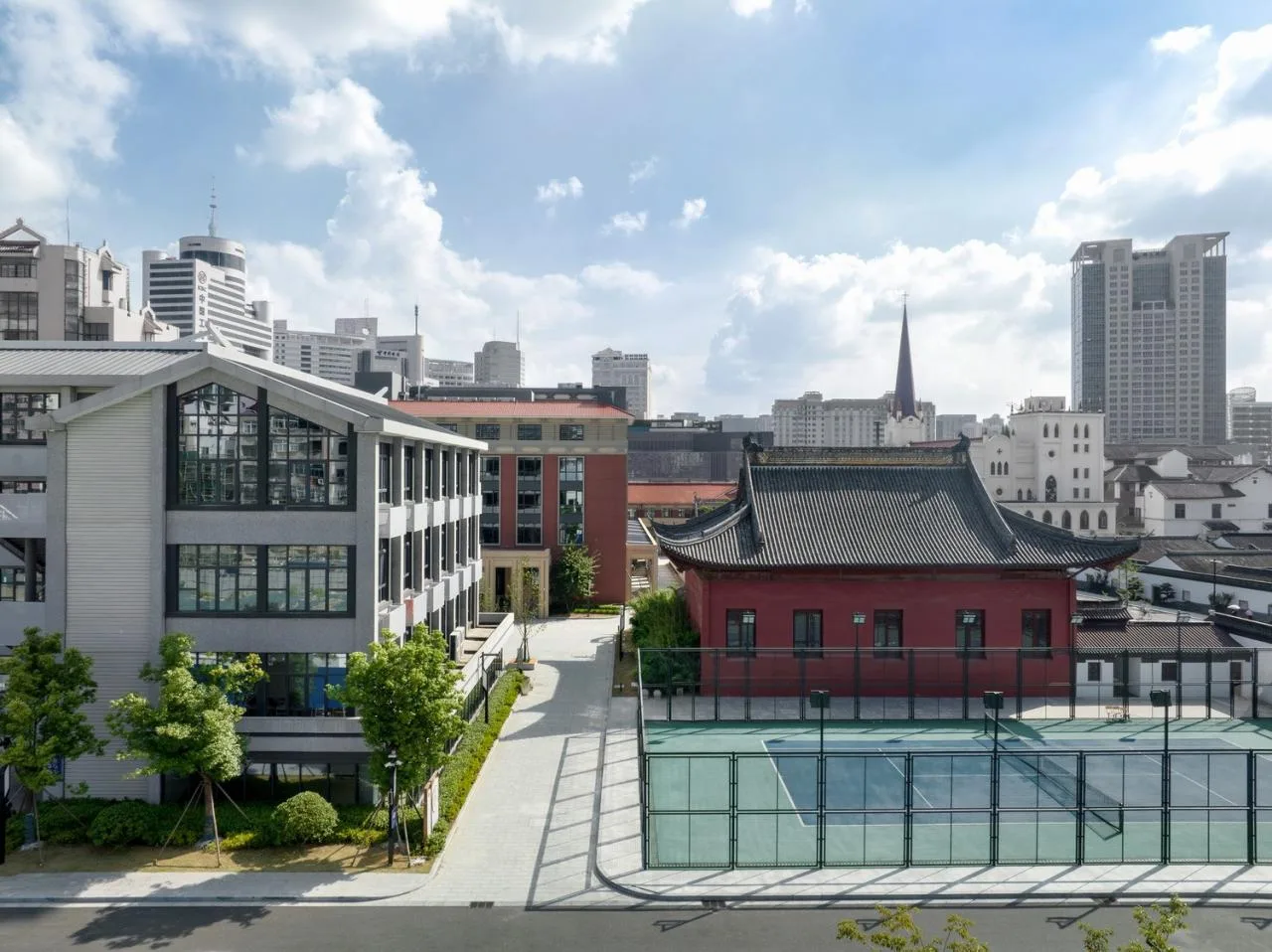
Current functions have been reassessed. The Great Hall and Science and Education Building functions have been reorganized to center on “Theater/Cinema” and “Staff Training” respectively. Environmental interaction has been prioritized to enrich the overall cultural atmosphere.
Restoring Style and Unifying Architectural Language
The design philosophy embraces “restoring the old as it was,” preserving historical architectural expressions from various periods while emphasizing the Cultural Palace’s unique identity. The approach balances historical authenticity with modernity, maintaining a cohesive architectural style.
Landscape Reshaping to Cultivate Cultural Atmosphere
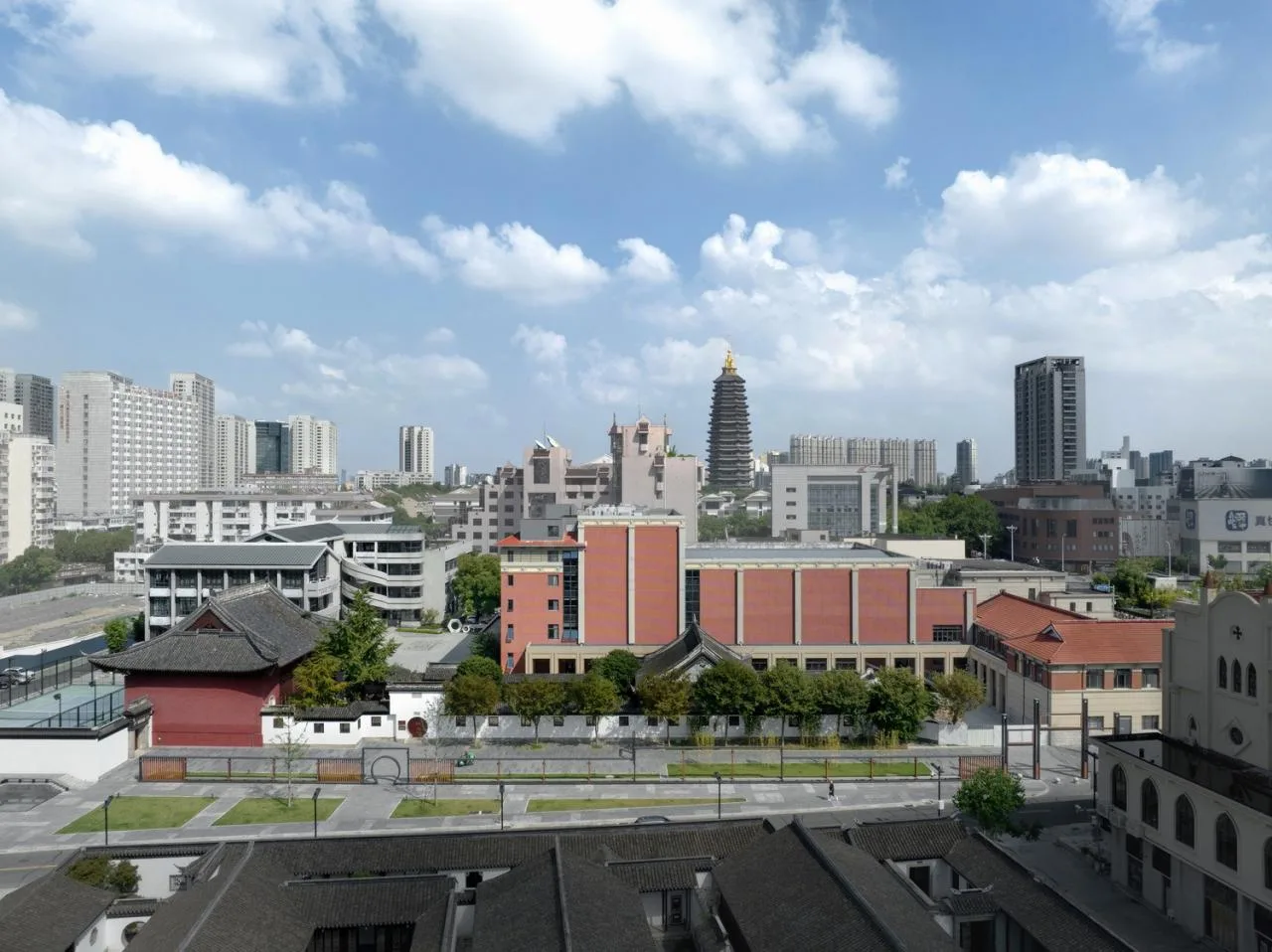
Distinctive landscapes create cultural landmarks within the area. Public facilities are upgraded to encourage spatial engagement, offering memorable, interactive, and welcoming places to gather and linger.
04 Transformation Path
Comprehensive Integration to Build a “Museum of the Era”
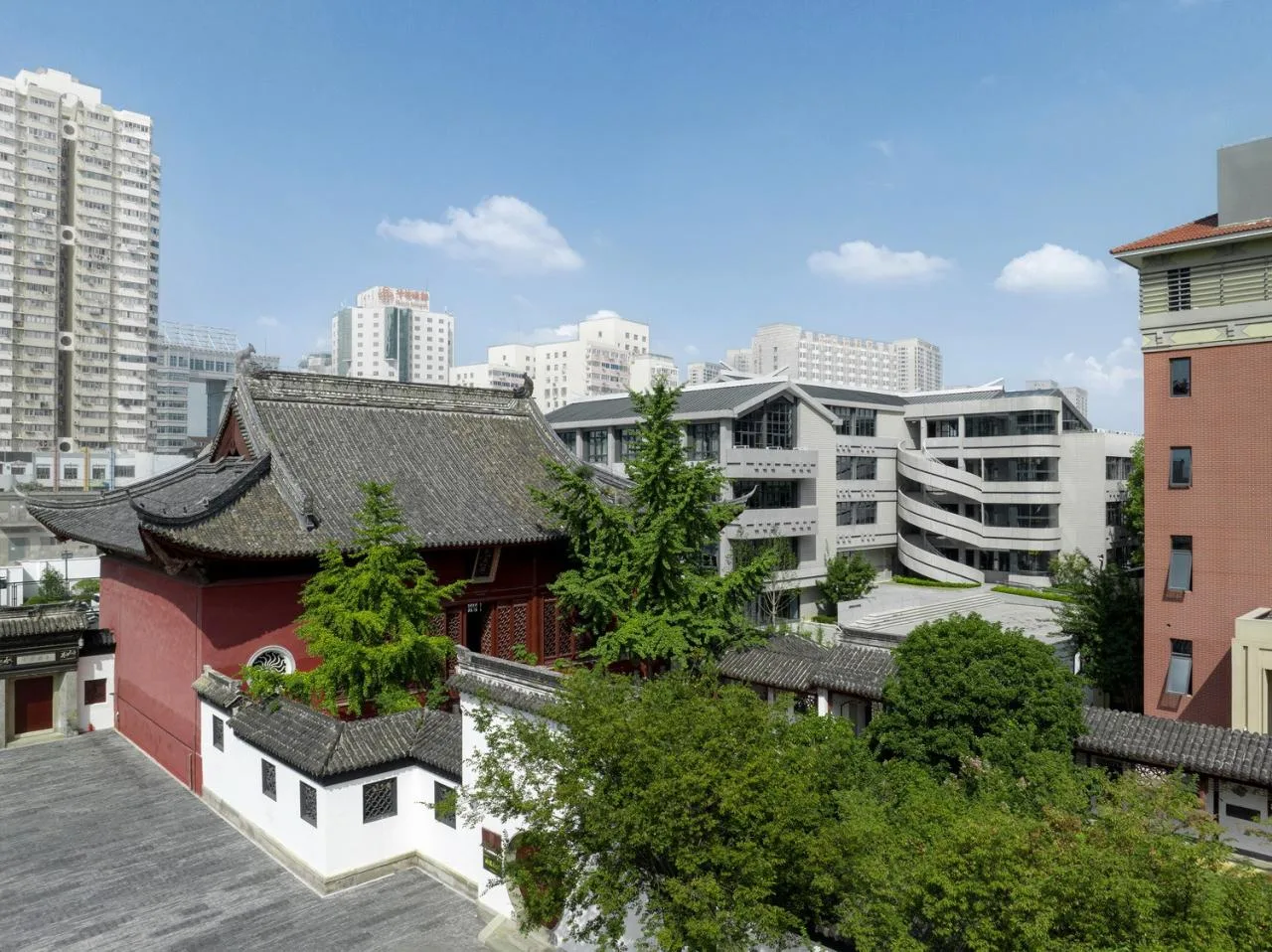
The project follows a methodical process: research, collection, value assessment, content planning, scope definition, and integrated design. A specialized expert team was quickly formed to gather historical data through archives and interviews. Professional surveying and reinforcement specialists assessed the current condition to inform restoration efforts. Focusing on style restoration, micro-renovations collectively reflect the site’s diverse historical eras, effectively transforming it into a “Museum of the Ages.”
Traffic Organization and Spatial Reordering
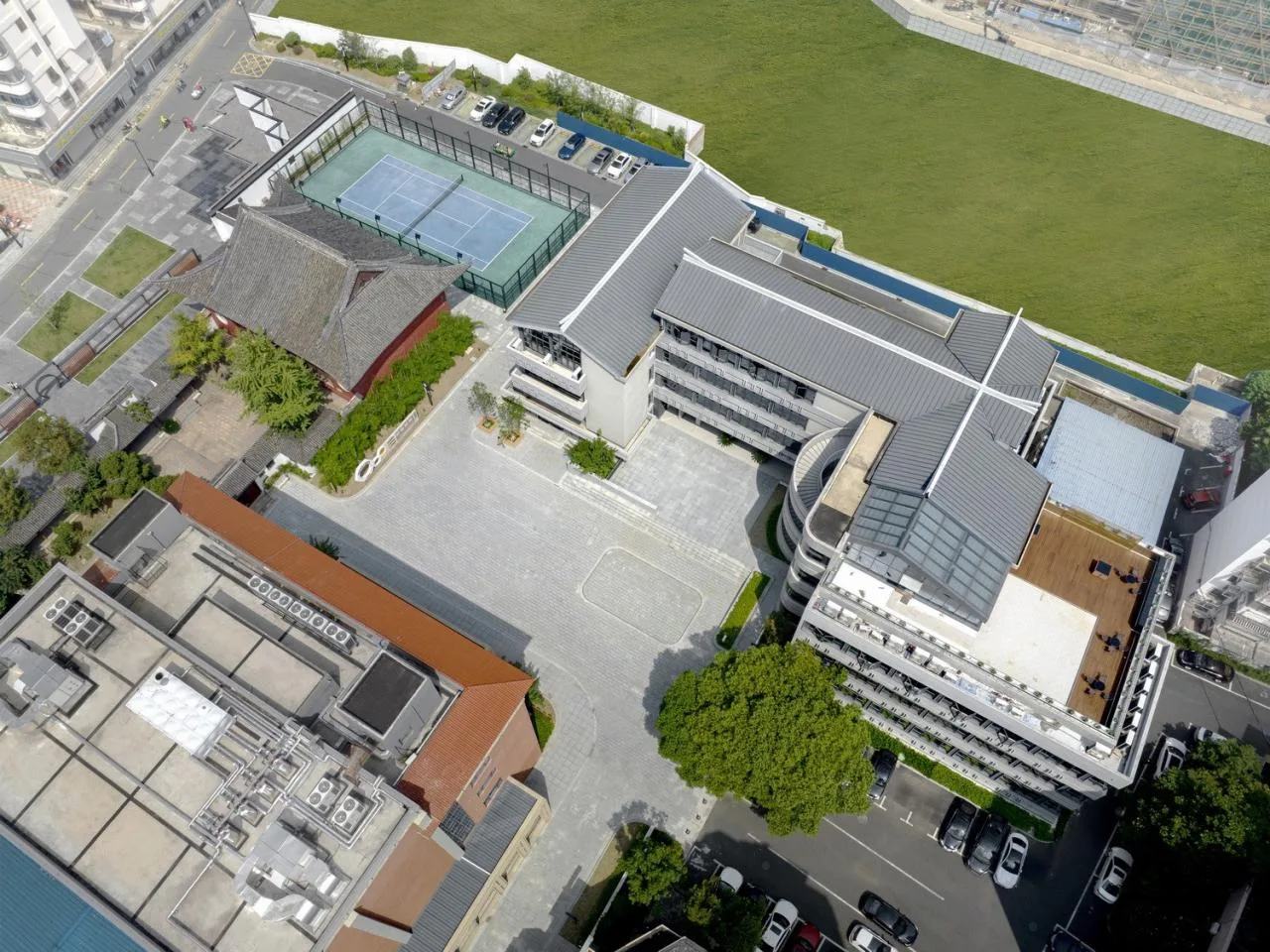
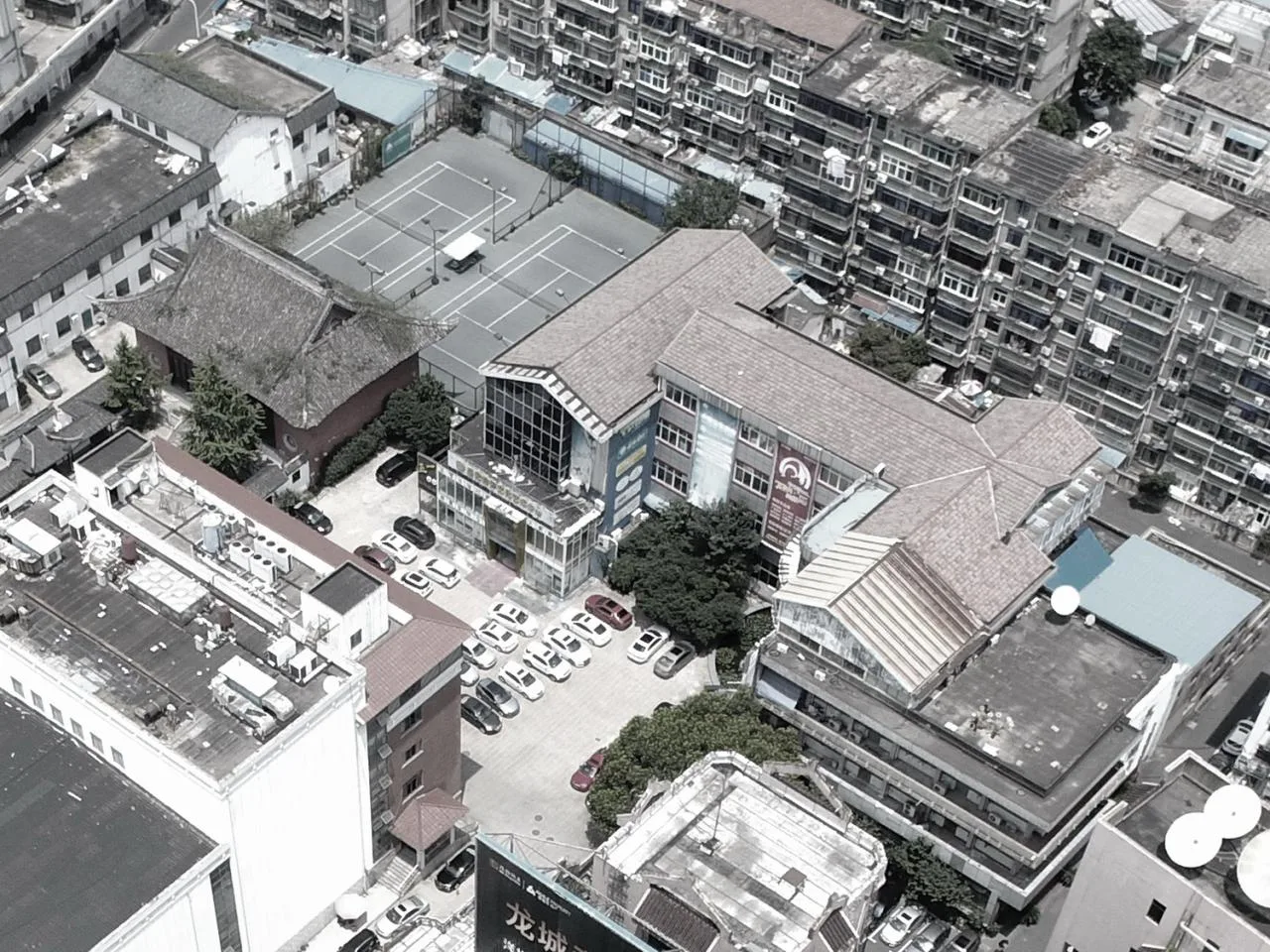
A one-way road will be introduced along the northern edge of the site, relocating parking from the central square to an open area to the north. This separation of vehicular and pedestrian traffic will improve safety and flow. Connections between the inner square and surrounding streets will guide pedestrians into the venue, transforming the central square into an “urban reception room” through strategic diversion and openness.
Orderly Space Shaping and Functional Reconstruction
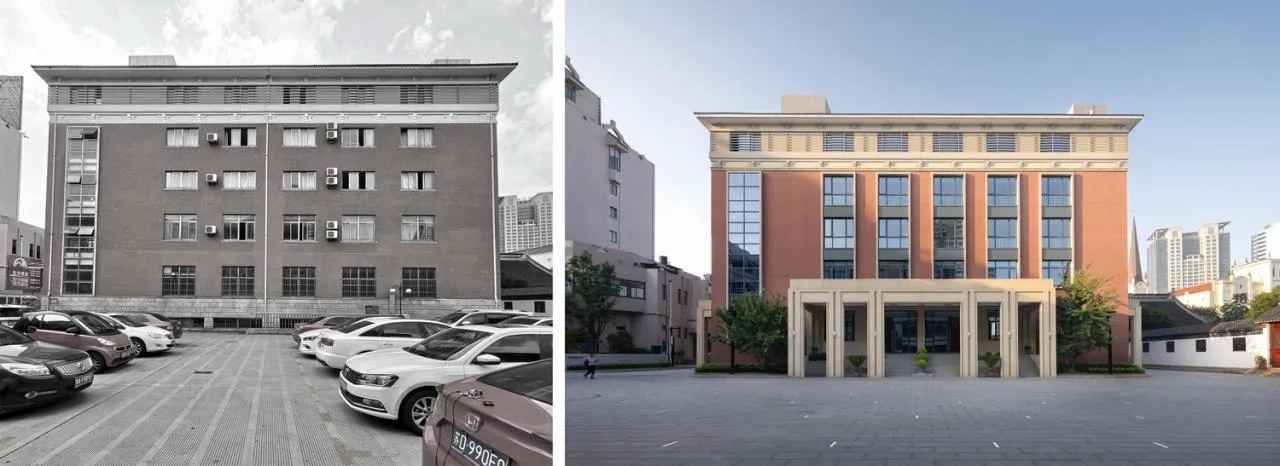
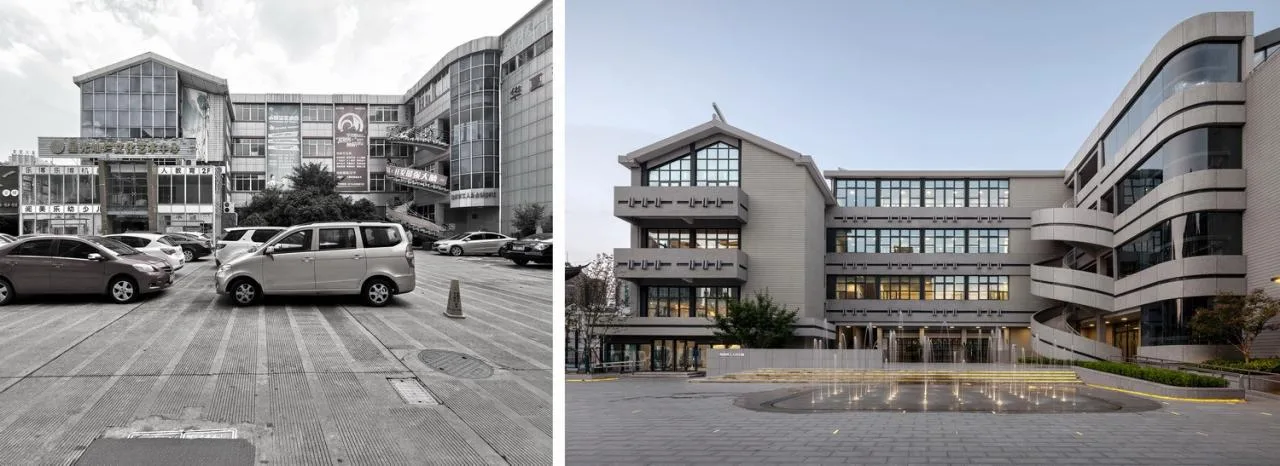
Functions of the Great Hall and Science and Education Building have been updated, and internal public spaces reorganized for better flow and clarity. The auxiliary building north of the theater, which has a less public role, will become a support space for the Great Hall including reception, rehearsal, makeup, and waiting areas. A secondary entrance on the north façade will enhance interaction between internal functions and the city square.
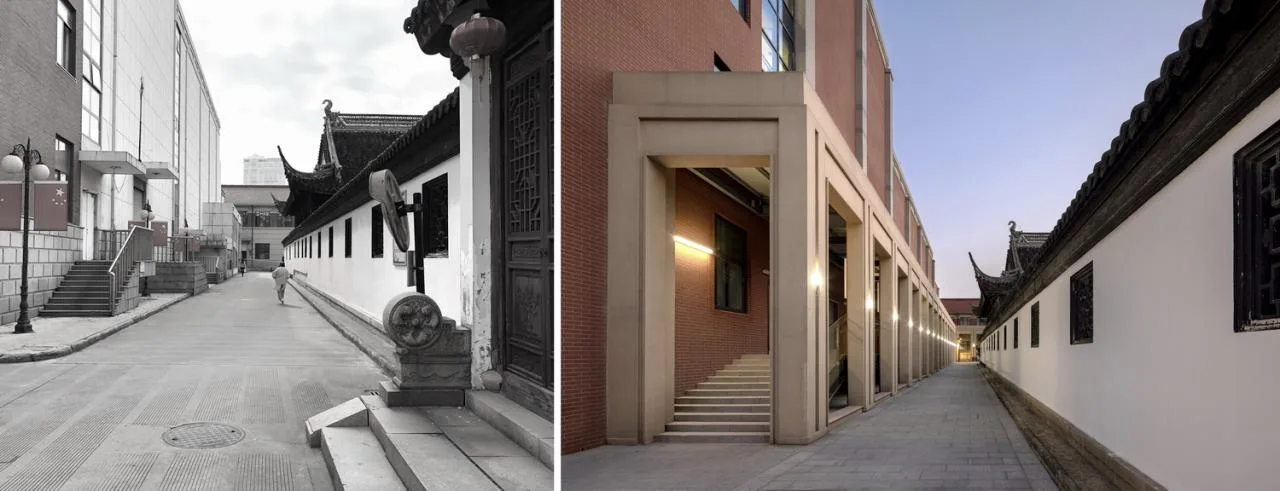
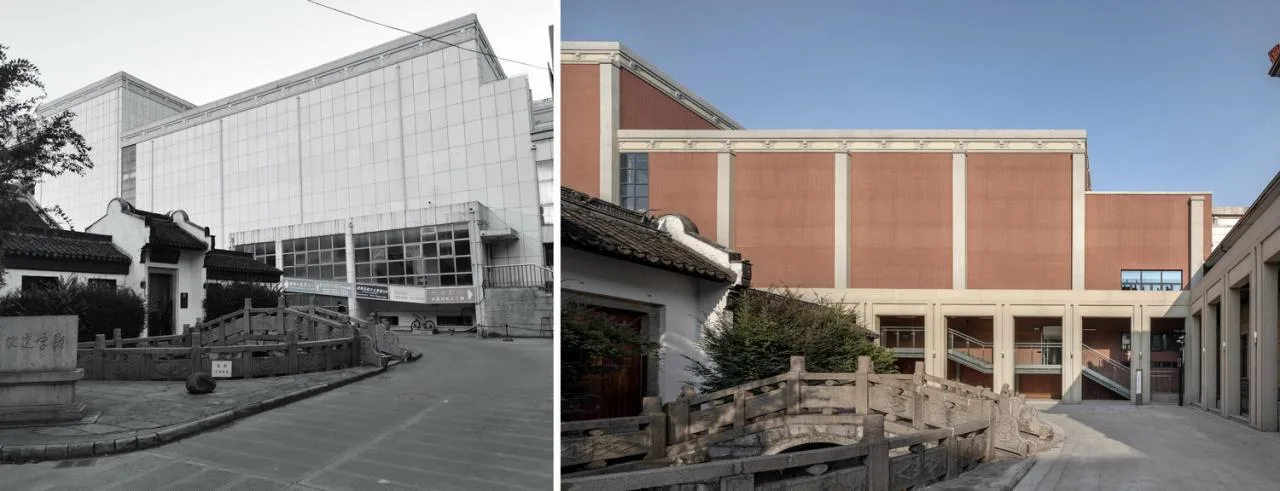
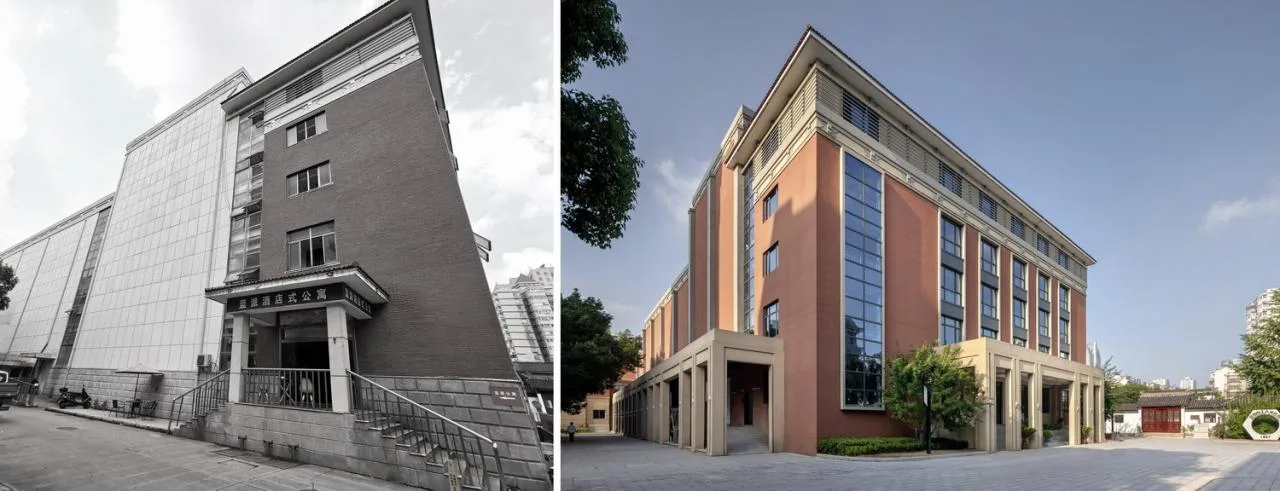
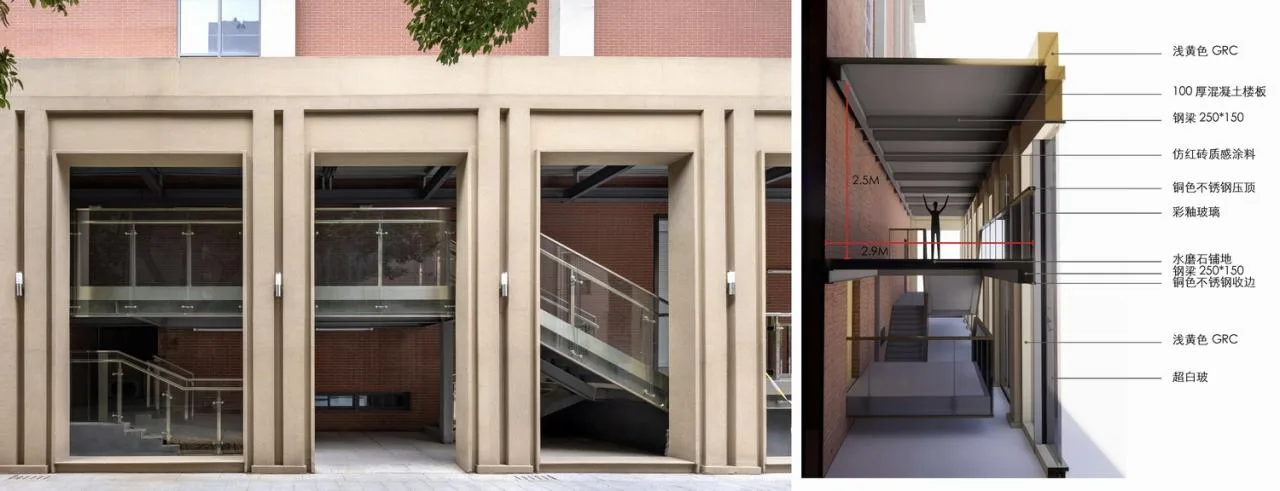
The existing evacuation stairs flanking the Great Hall are underutilized and consume valuable external passage space. A newly designed corridor will connect different levels, serving both as an evacuation route and a daily leisure and social area, transforming negative spaces into meaningful places for gathering.
Integrating Historical Style and Facade Design
Balancing preservation and new construction, the design team provides restorative protection for historic sections while adopting a more harmonious design approach for newer additions. This ensures the entire complex aligns with the overall tone of a “cultural palace.”
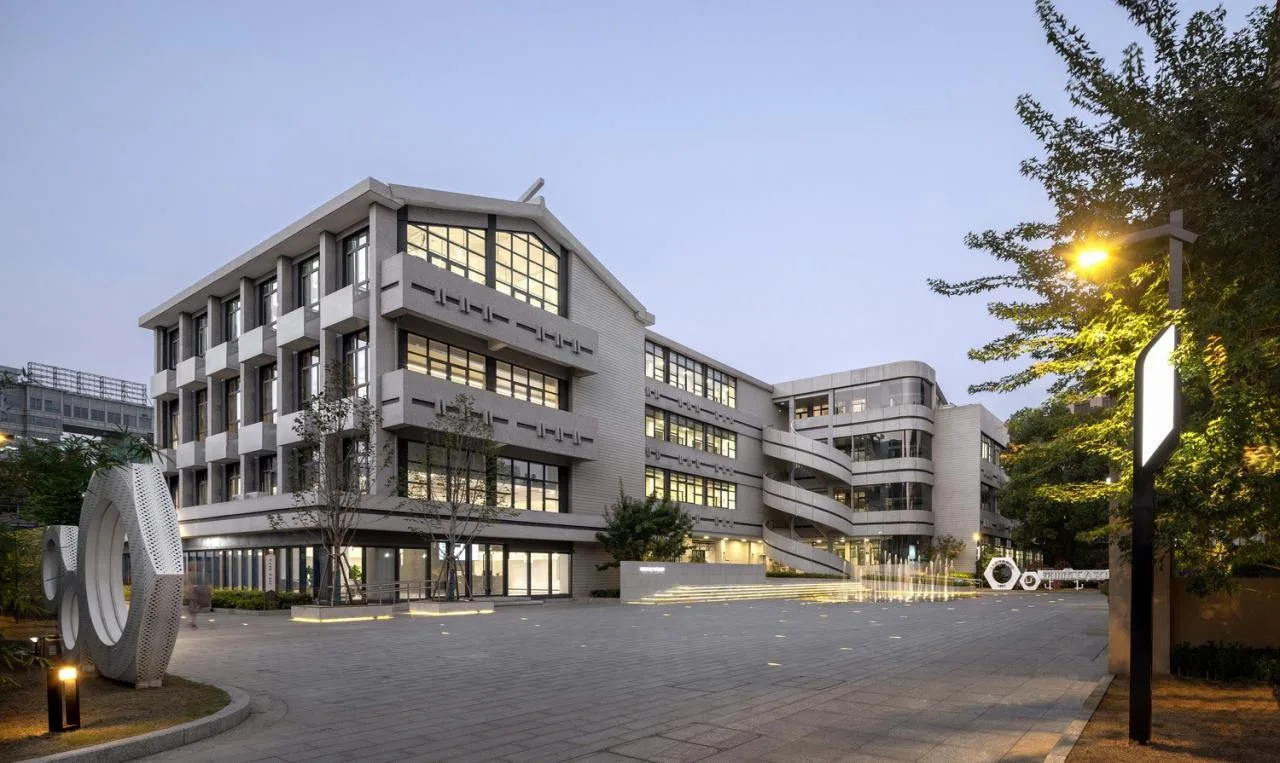
The Great Hall will be restored in its original 1950s style, while the facades of the auditorium and auxiliary buildings constructed after 2000 will adopt the style and materials of the iconic “Airplane Building.”
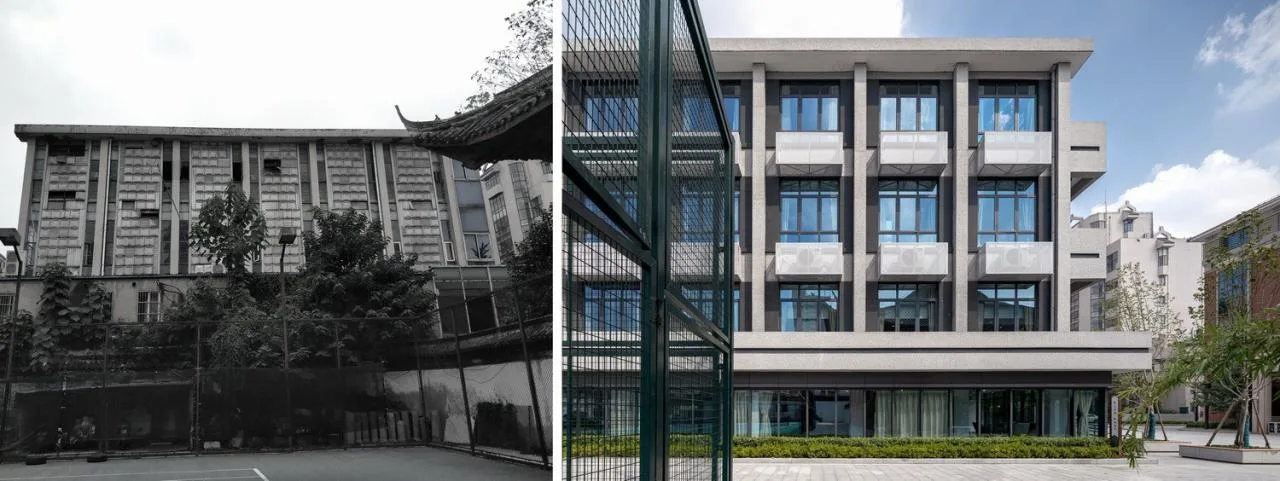
For the Science and Education Building, representing the 1980s style, the design team did not replicate original blueprints exactly but instead extracted stylistic elements from drawings and historic photos to reinterpret and honor the building’s architectural language.
The Never-Ending “Red Curtain”
Interior design continues the architectural concept by incorporating elements from different eras. Within the Great Hall, spatial openings and closings create a symmetrical and sequential atmosphere.
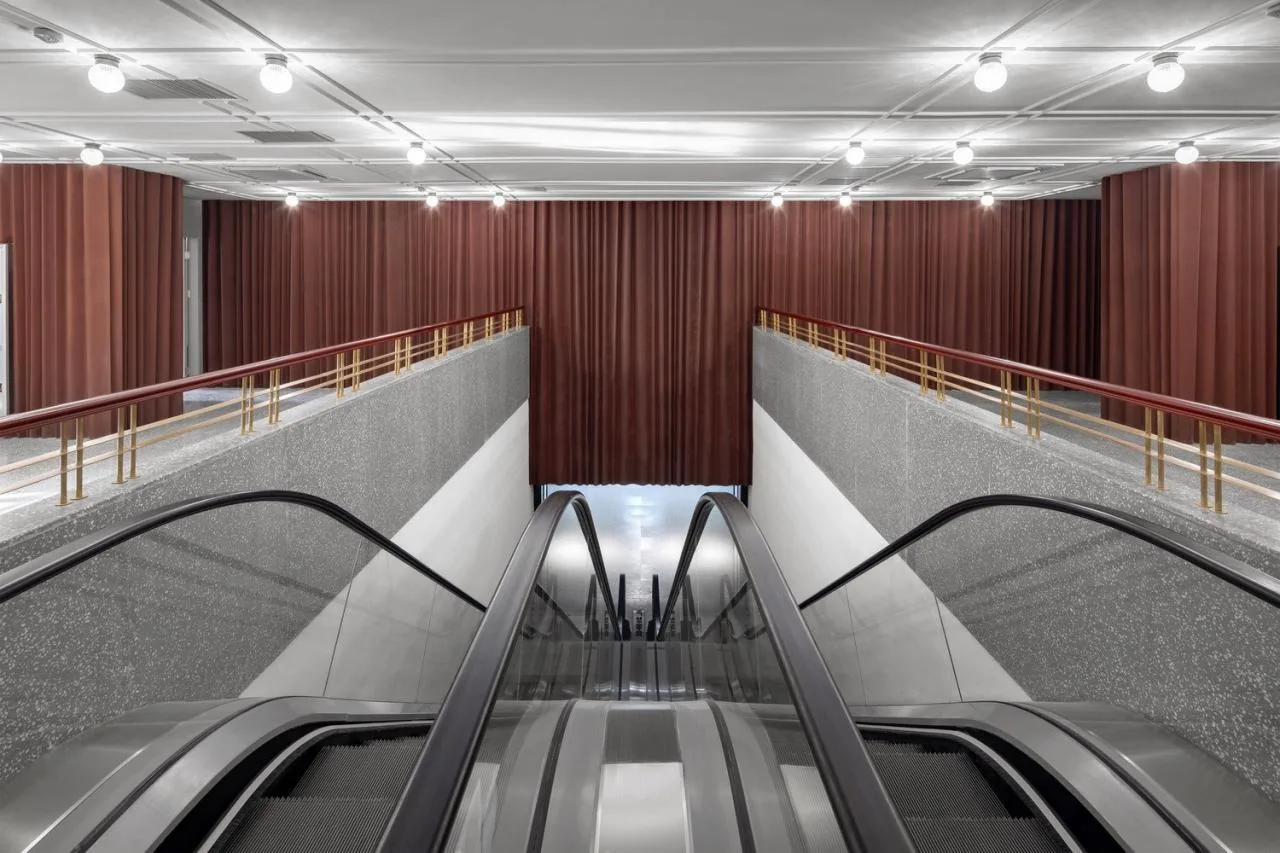
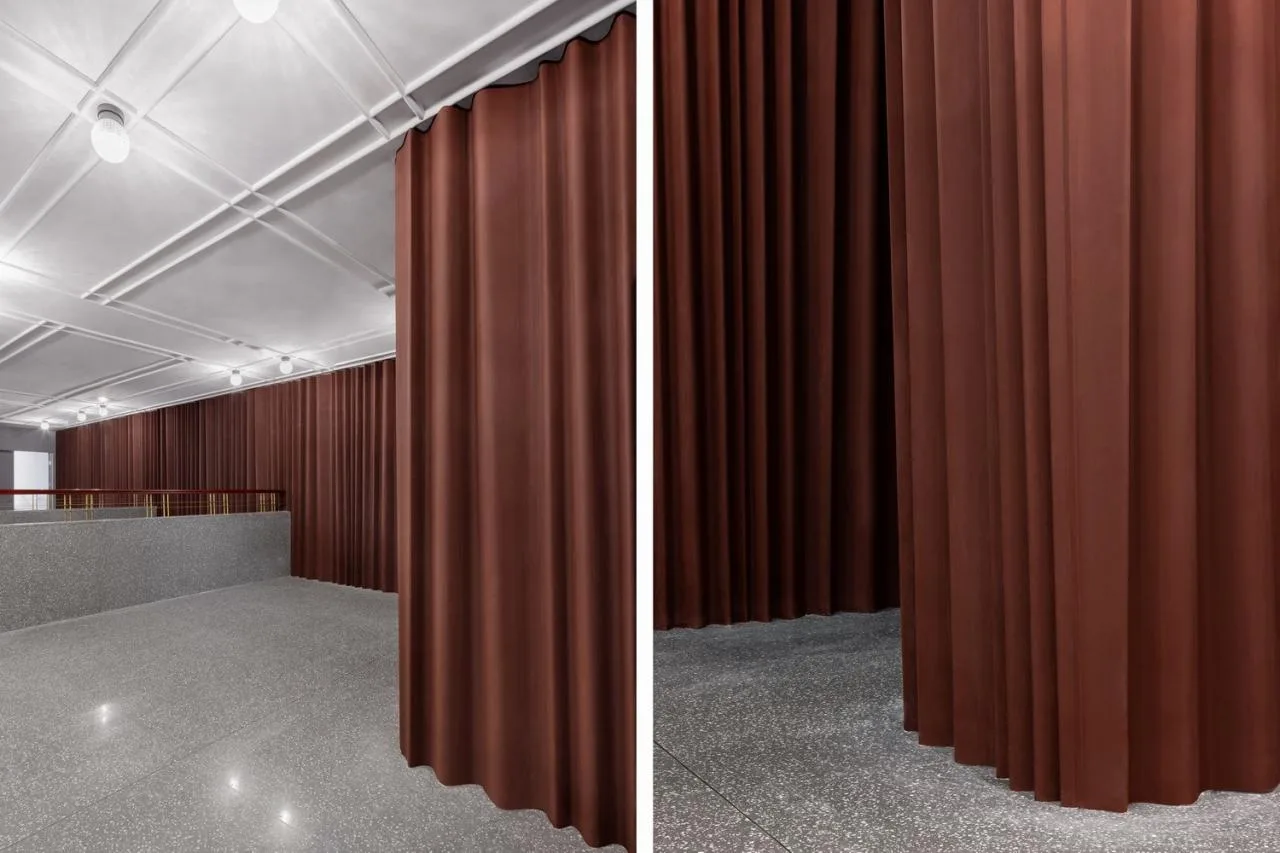
Inspired by conversations with longtime locals, the Cultural Palace’s Gate Hall is also known as the “Red Hall.” The design team drew inspiration from the “Red Curtain,” using GRG material to simulate a curtain effect, reinforcing the theater’s image and evoking a romantic era.
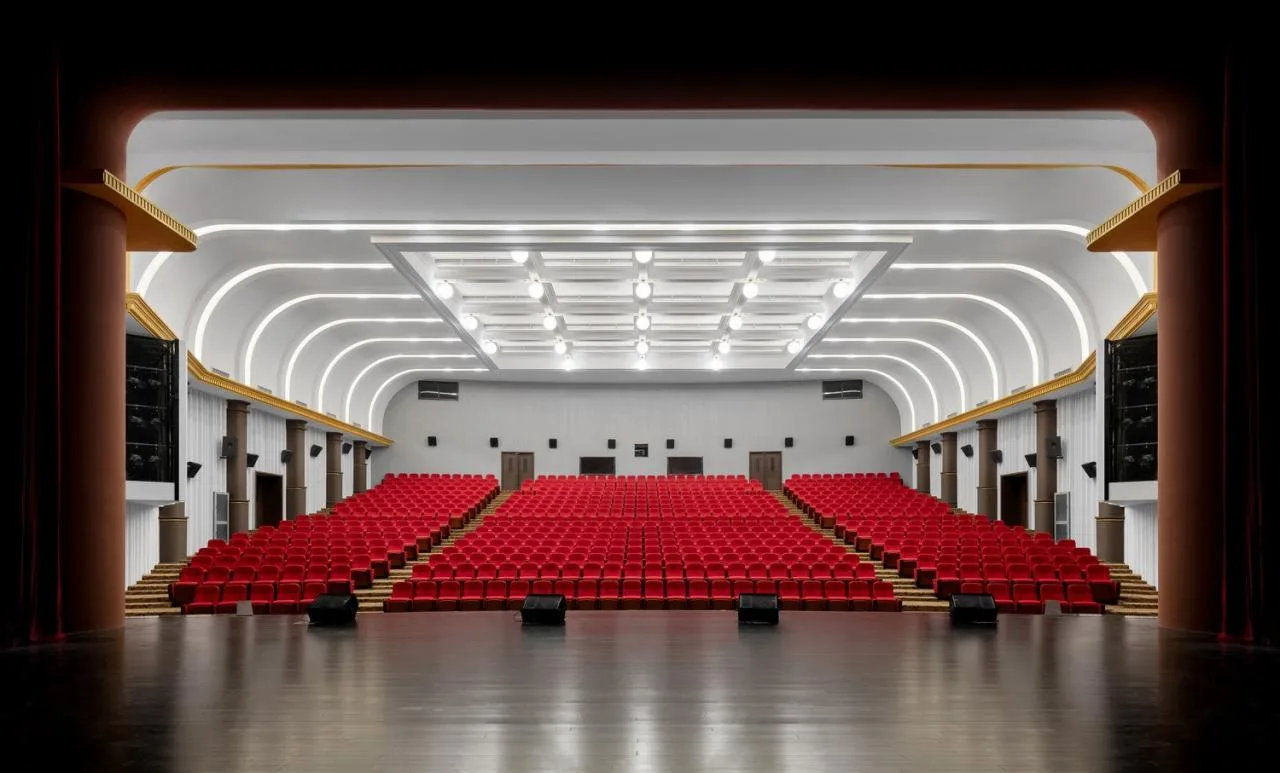
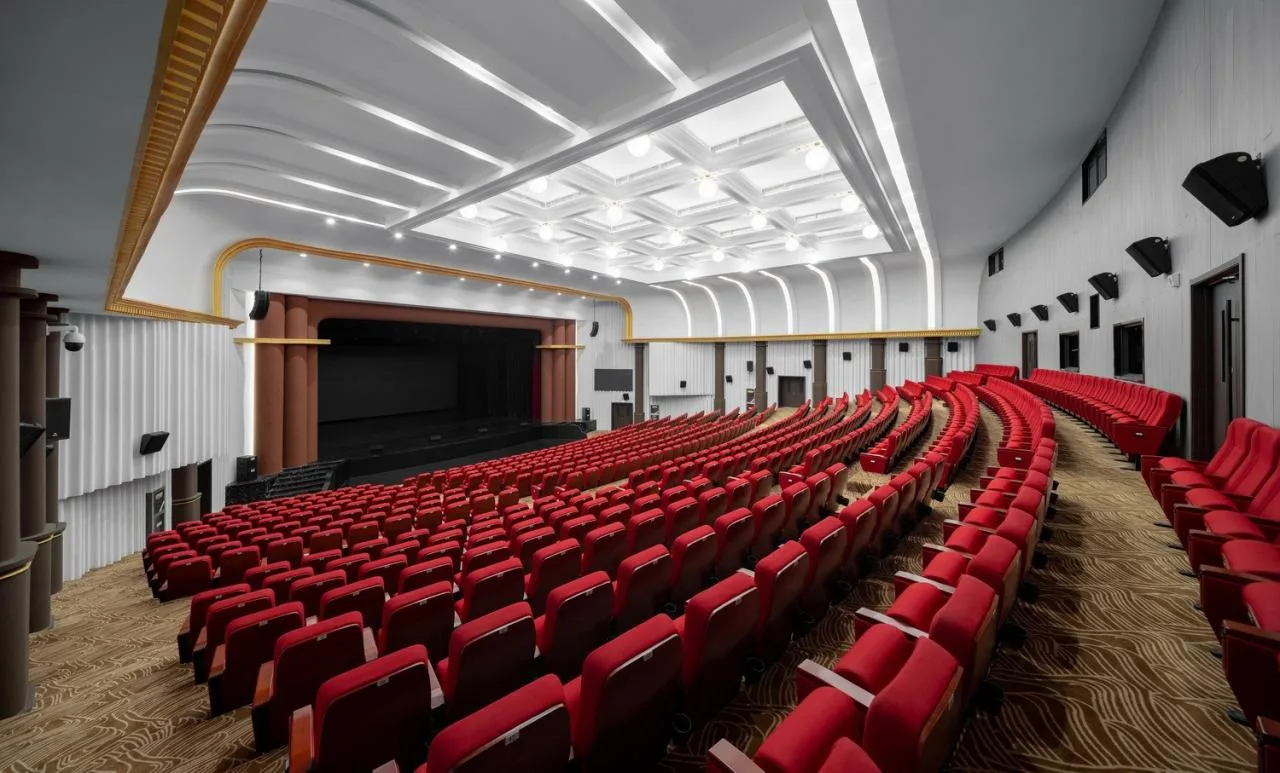
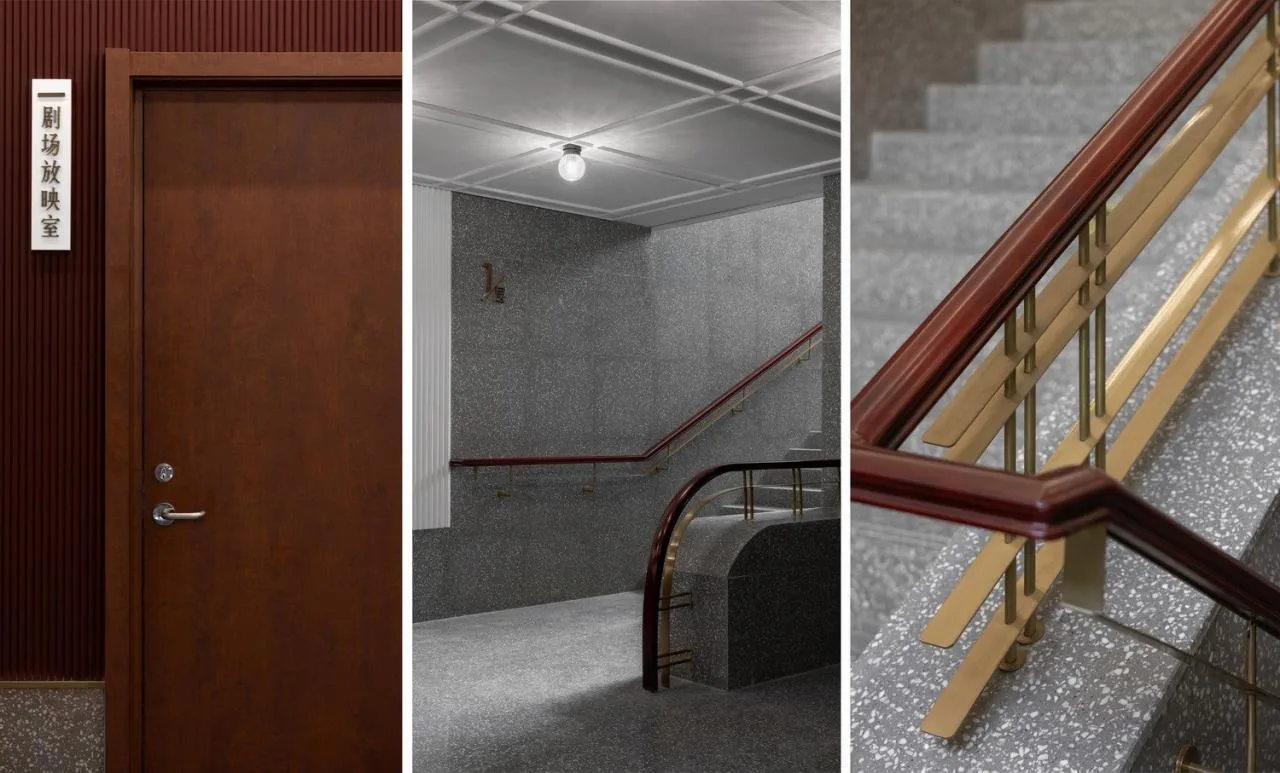
Features such as beams, columns, corridors, wall skirts, and terrazzo from Soviet and period architecture are highlighted. Elements like coffered ceilings, semi-high wall skirts, arches, and chandeliers enrich the interior with a nostalgic atmosphere.
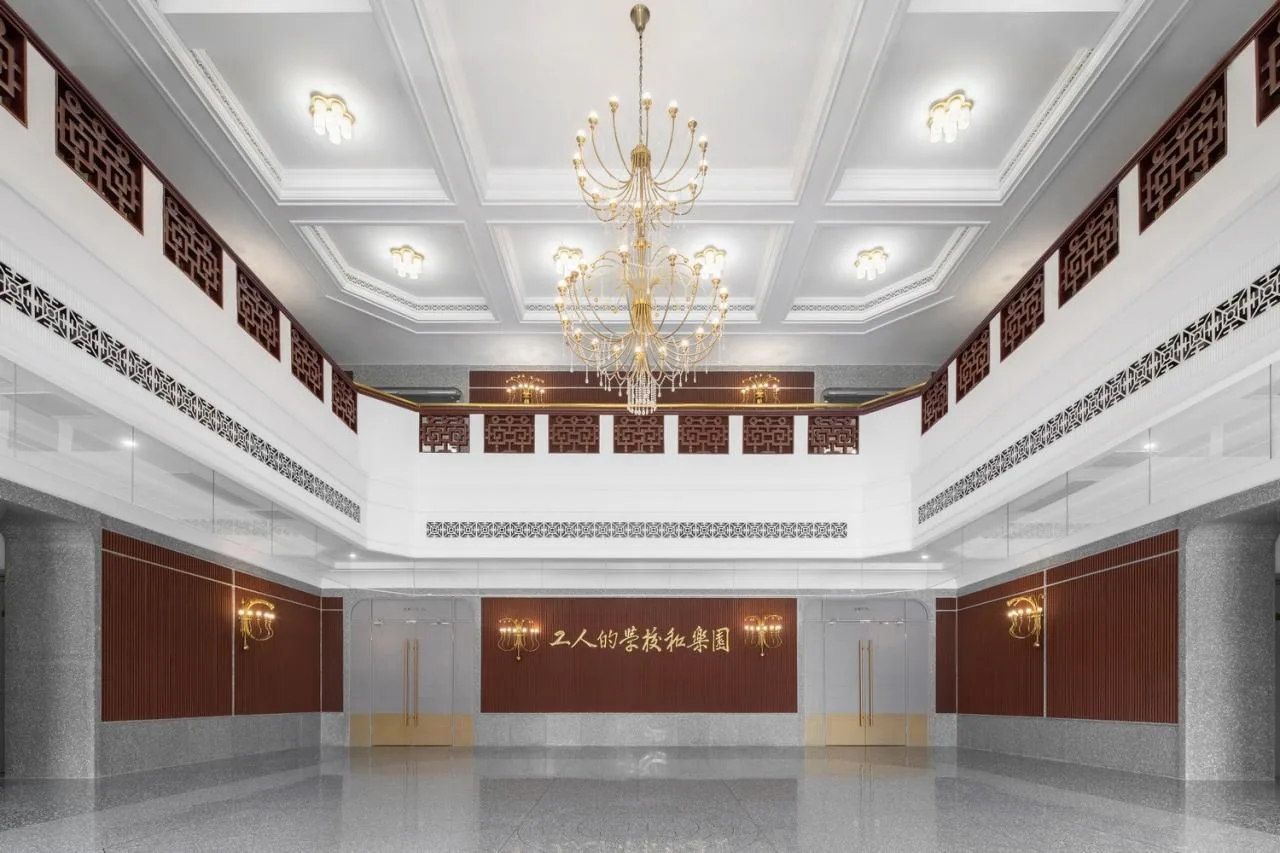
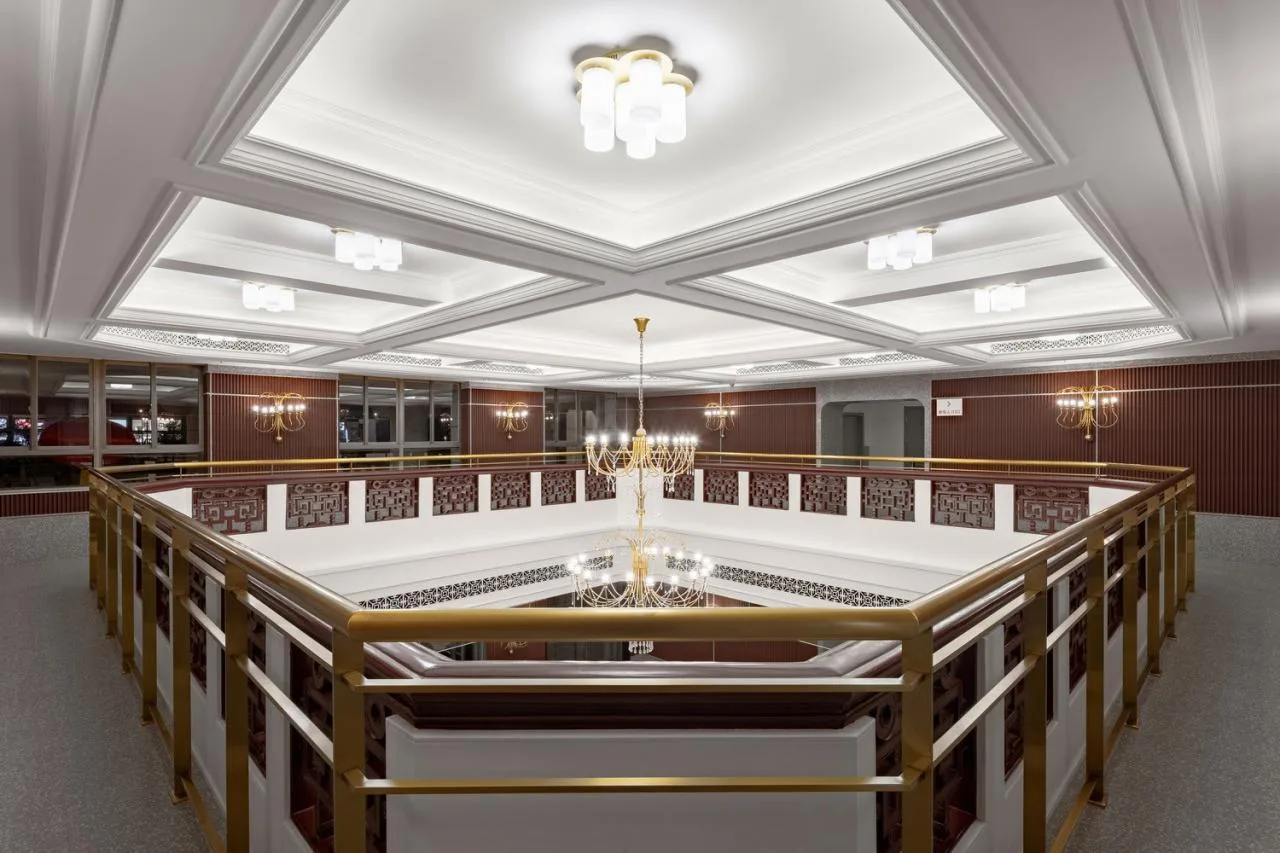
To prevent fragmentation caused by the diverse architectural styles from different eras, the North Gate Hall serves as a transitional space. It continues the red and white color scheme of the Great Hall, adding wood tones and a more minimalist style.
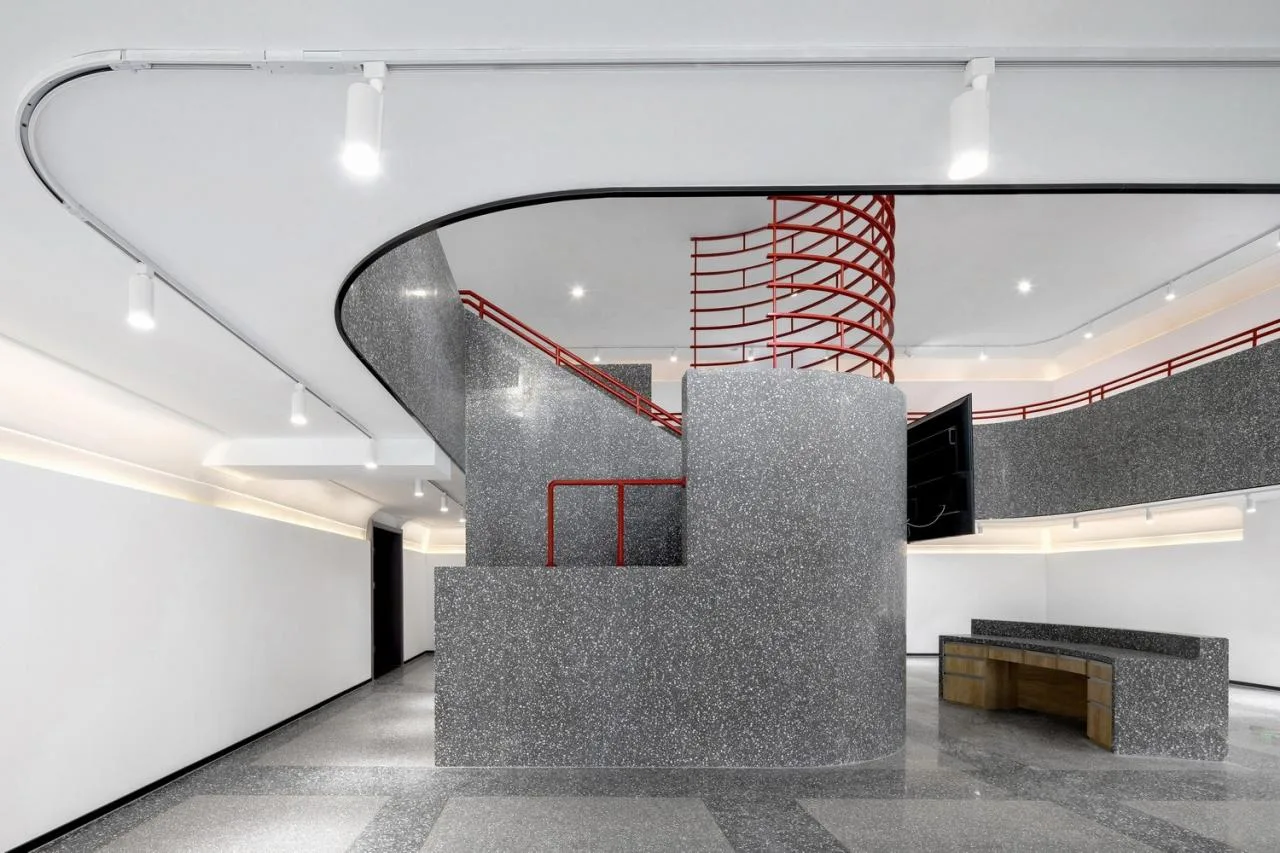
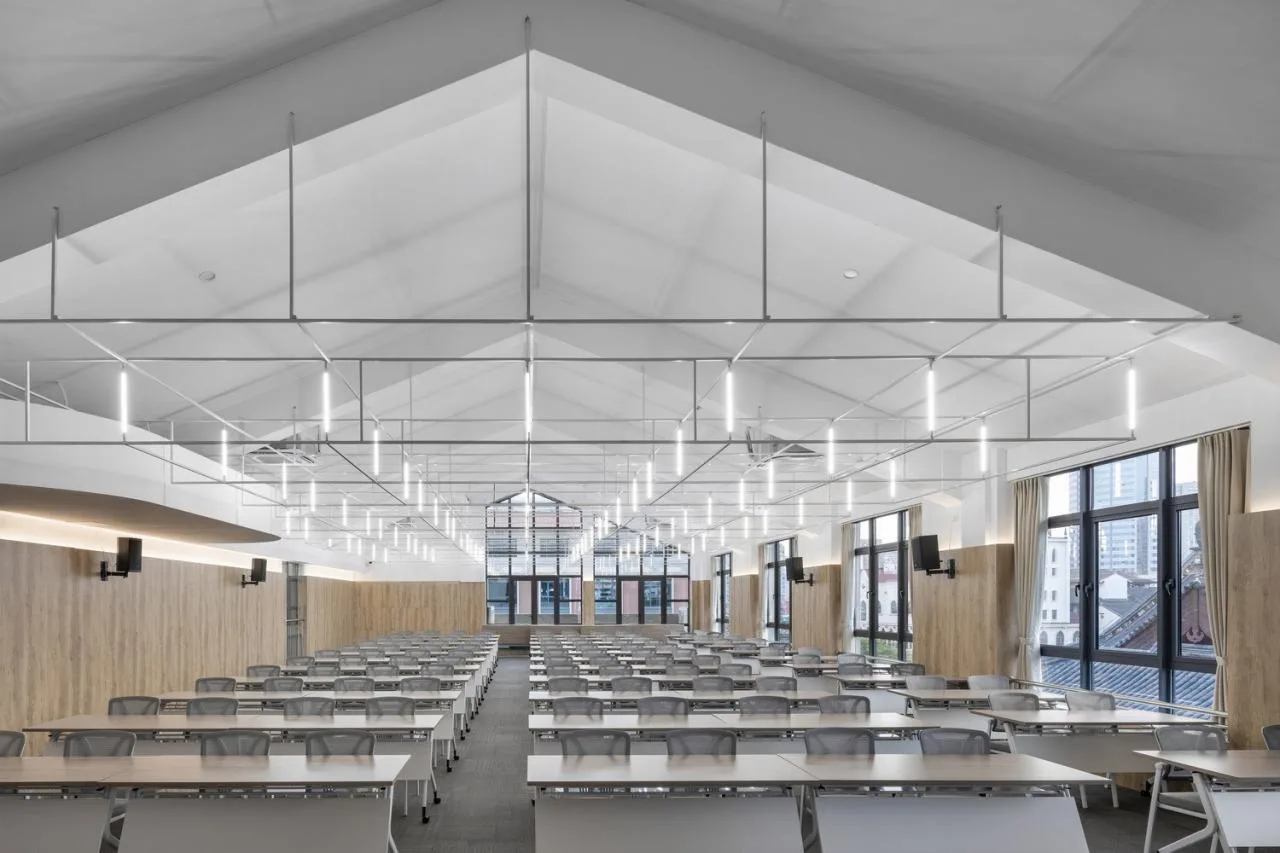
The design transitions to the 1980s style Science and Education Building using concise, restrained expressions to evoke the memory space of that generation.
Guiding the Occurrence of “Events”
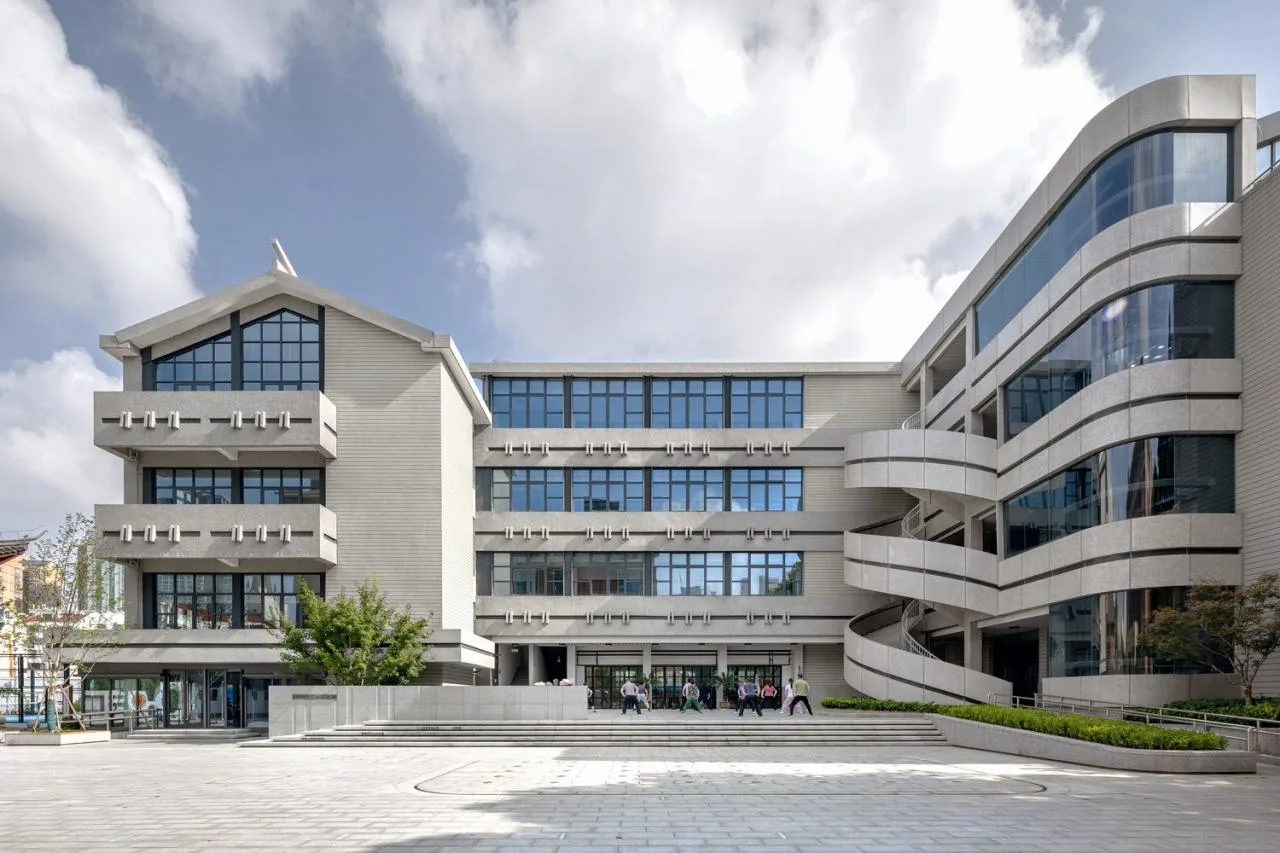
Landscape design follows principles of humanities, ecology, and integration, focusing on “places” and “events.” Different zones offer varied spatial atmospheres. The theater and Science and Education Buildings emphasize openness, clear guidance, and diversity to accommodate multiple scenarios, making them true “urban living rooms” and popular public spaces.
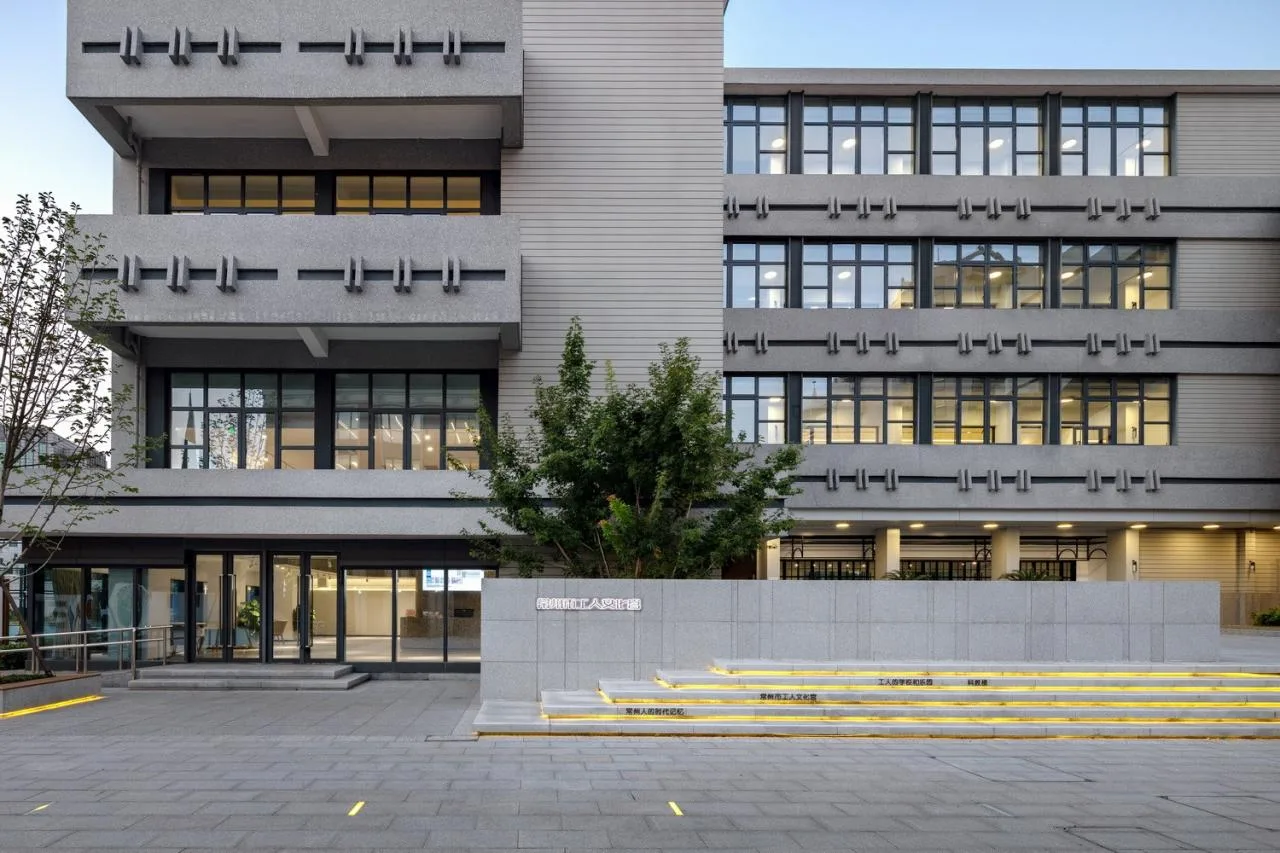
The elevation difference between the square and the Science and Education Building is addressed with platforms, steps, ramps, and scenic walls. This design provides privacy for the semi-enclosed courtyard and blurs the boundary between indoor and outdoor spaces.
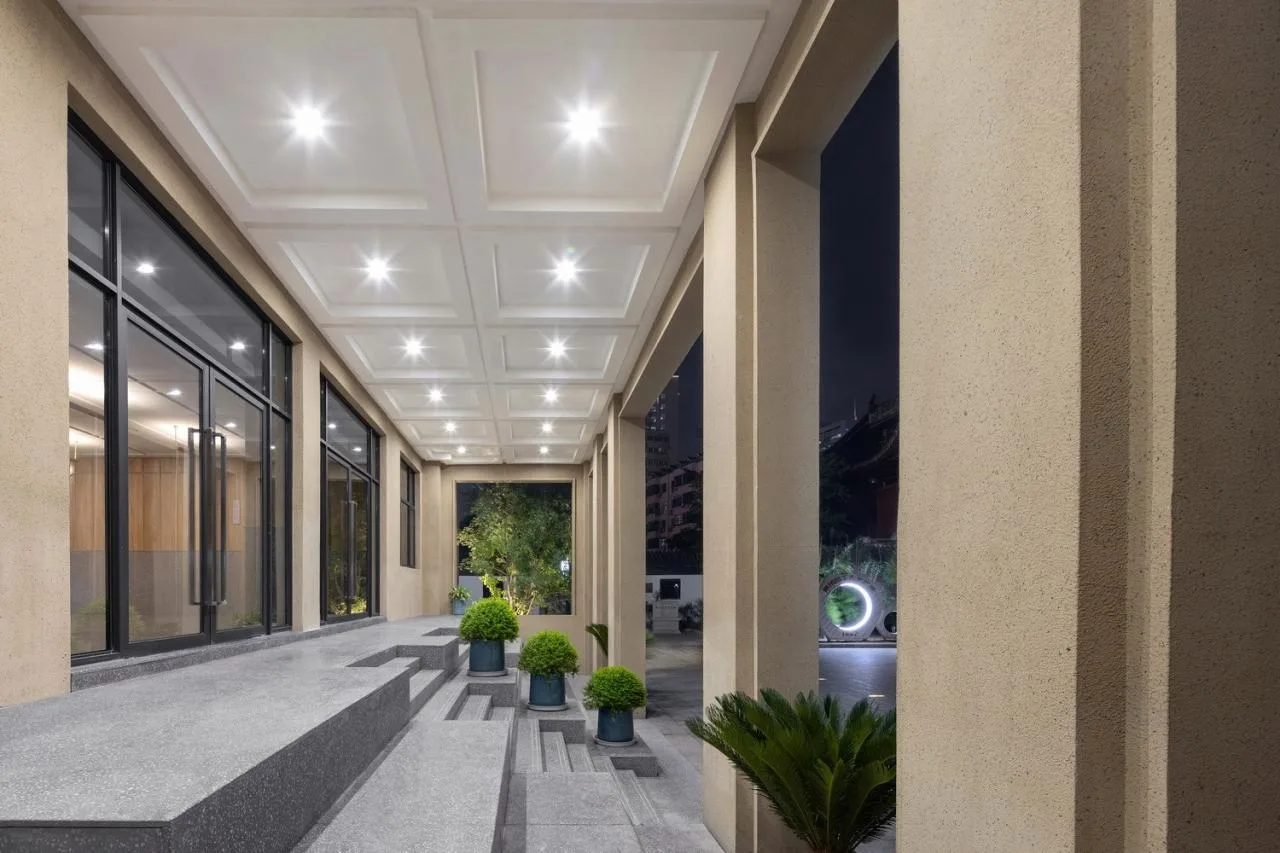
The new north entrance to the auxiliary building opposite the Great Hall brings order to the square. The entrance steps accommodate the building’s height variation and serve as informal seating for citizens, supporting a range of activities like weekday relaxation, markets, outdoor movies, and gatherings.
05 Summary
A Gift of Historical Heritage to the City
This renovation project is a key part of Changzhou’s “Three Year Action Plan for Revitalizing and Developing the Old Town.” It reflects the local government’s vision to improve the old town’s environment, enhance its cultural heritage, and invigorate the city center.
It also addresses the urgent need to upgrade and transform the Cultural Palace’s functions, fulfilling citizens’ aspirations for a more livable environment and richer cultural life.
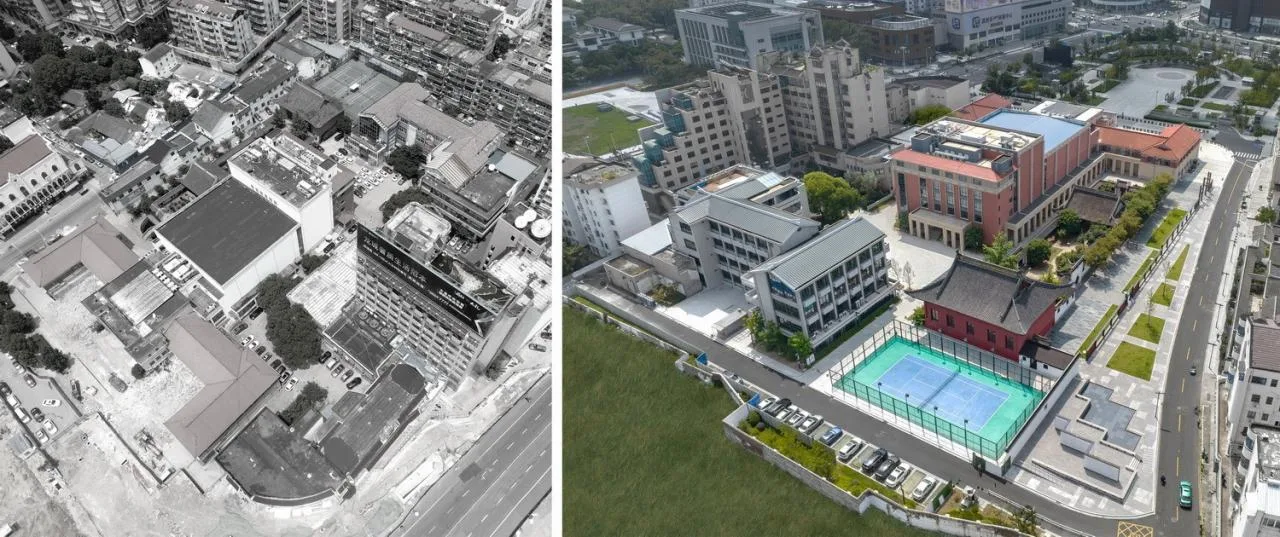
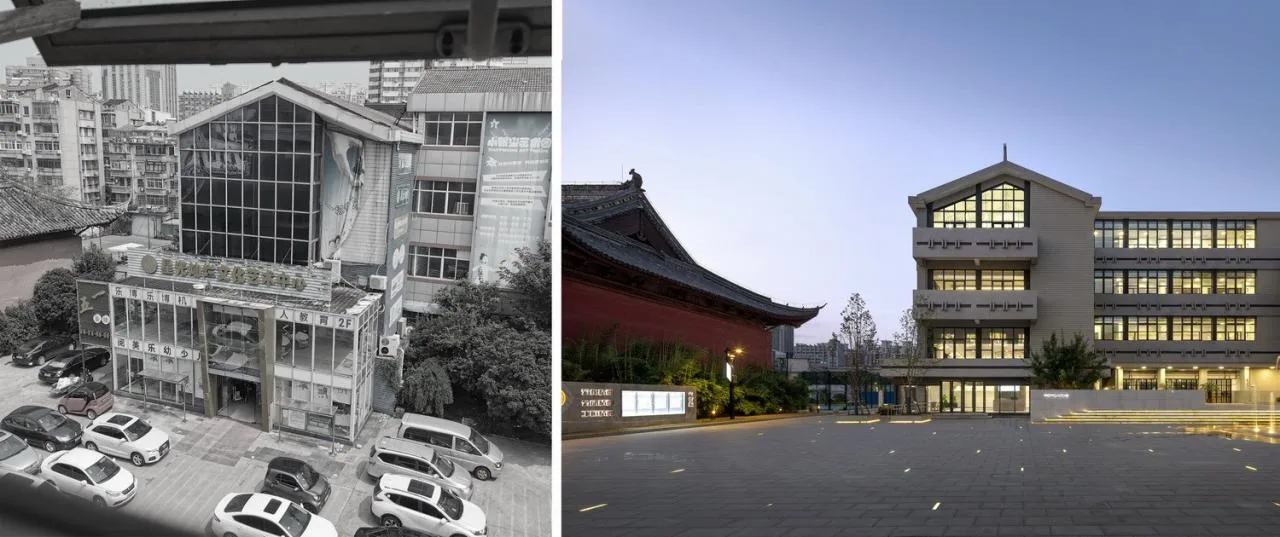
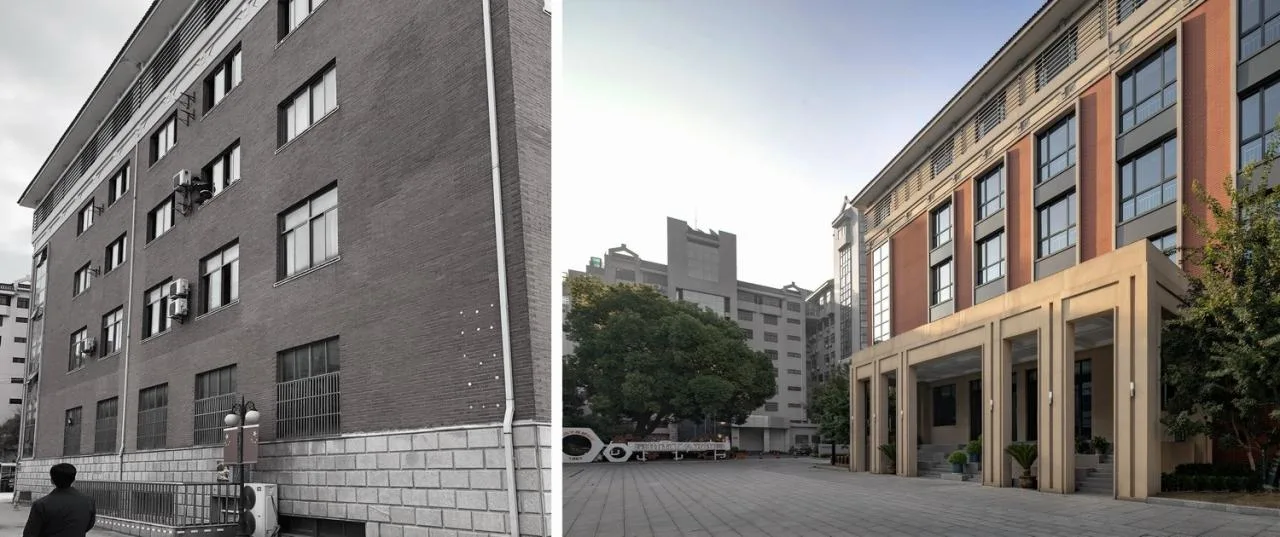
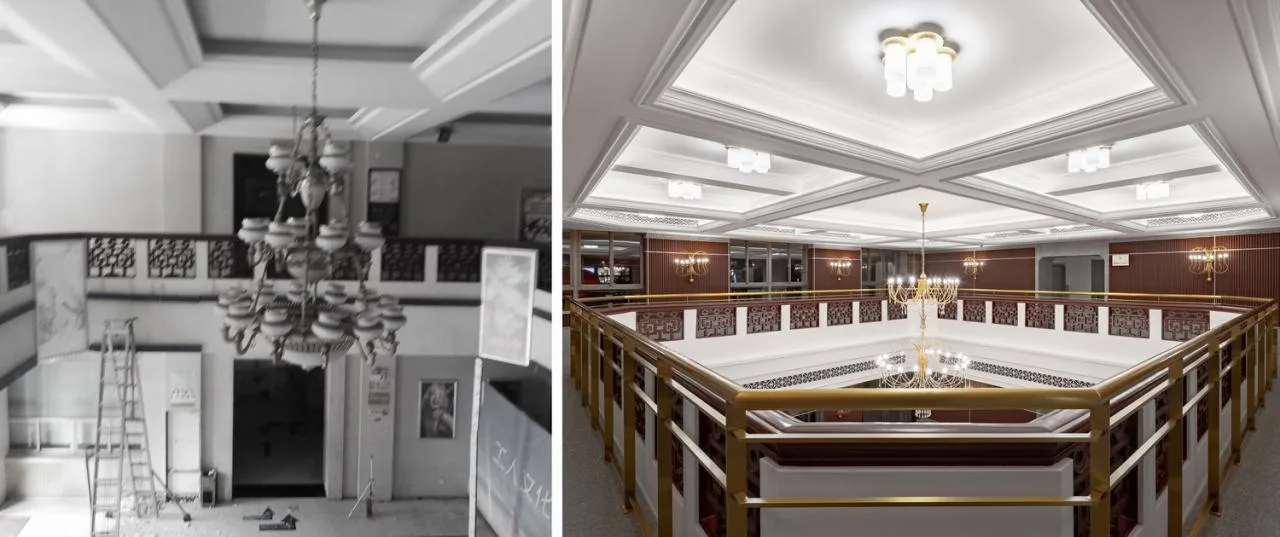
Complex renovation projects like this require more than just aesthetic and environmental improvements. They demand a systematic enhancement of the building’s internal structure and involve numerous specialized disciplines. Success depends on close collaboration between internal professional teams, trust from the owners, and the coordination skills of external contractors.
With deep affection for Changzhou, the design team pays tribute to history and the city by carefully reshaping this significant site.
Project Drawings
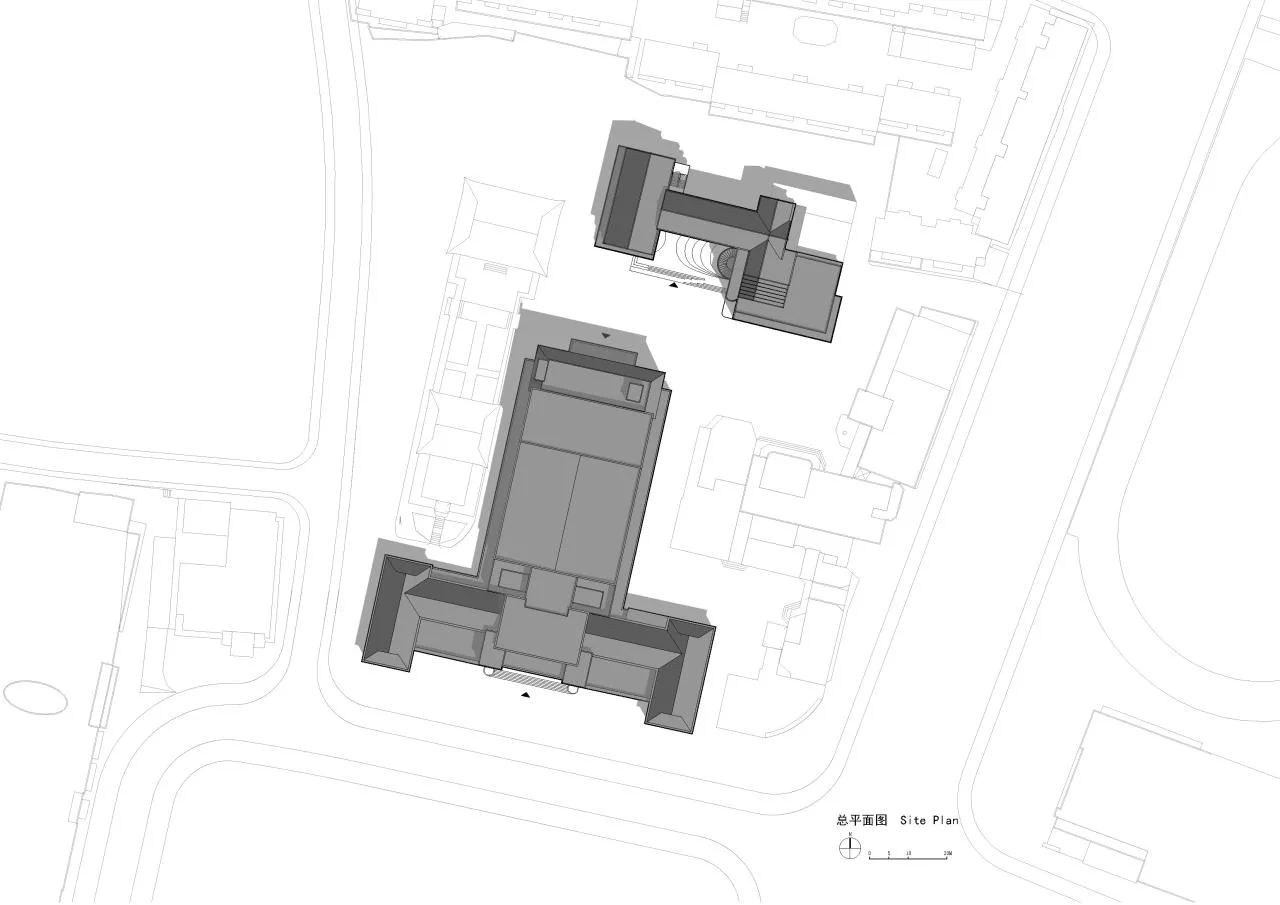
▲ General Layout Plan
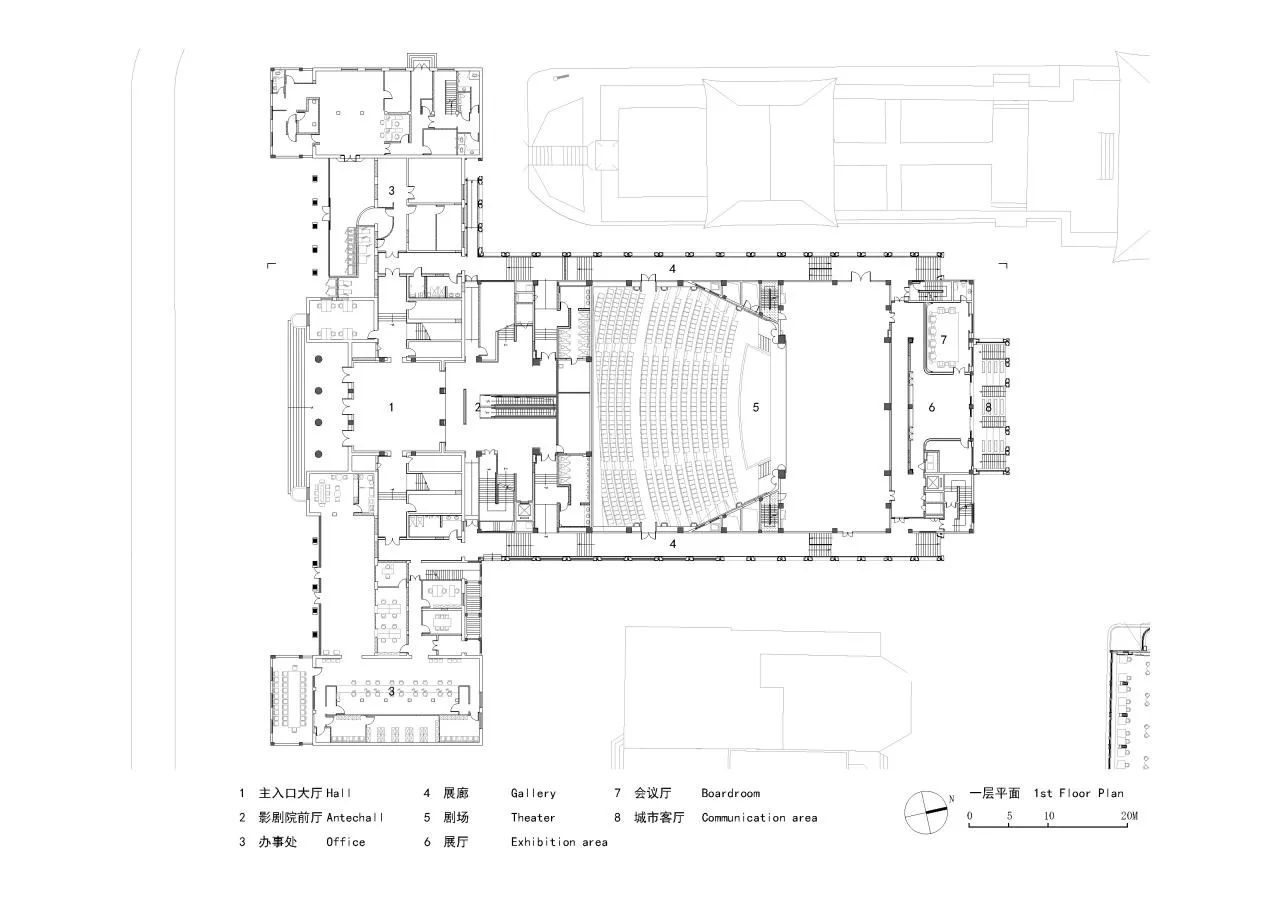
▲ First Floor Plan of the Main Building
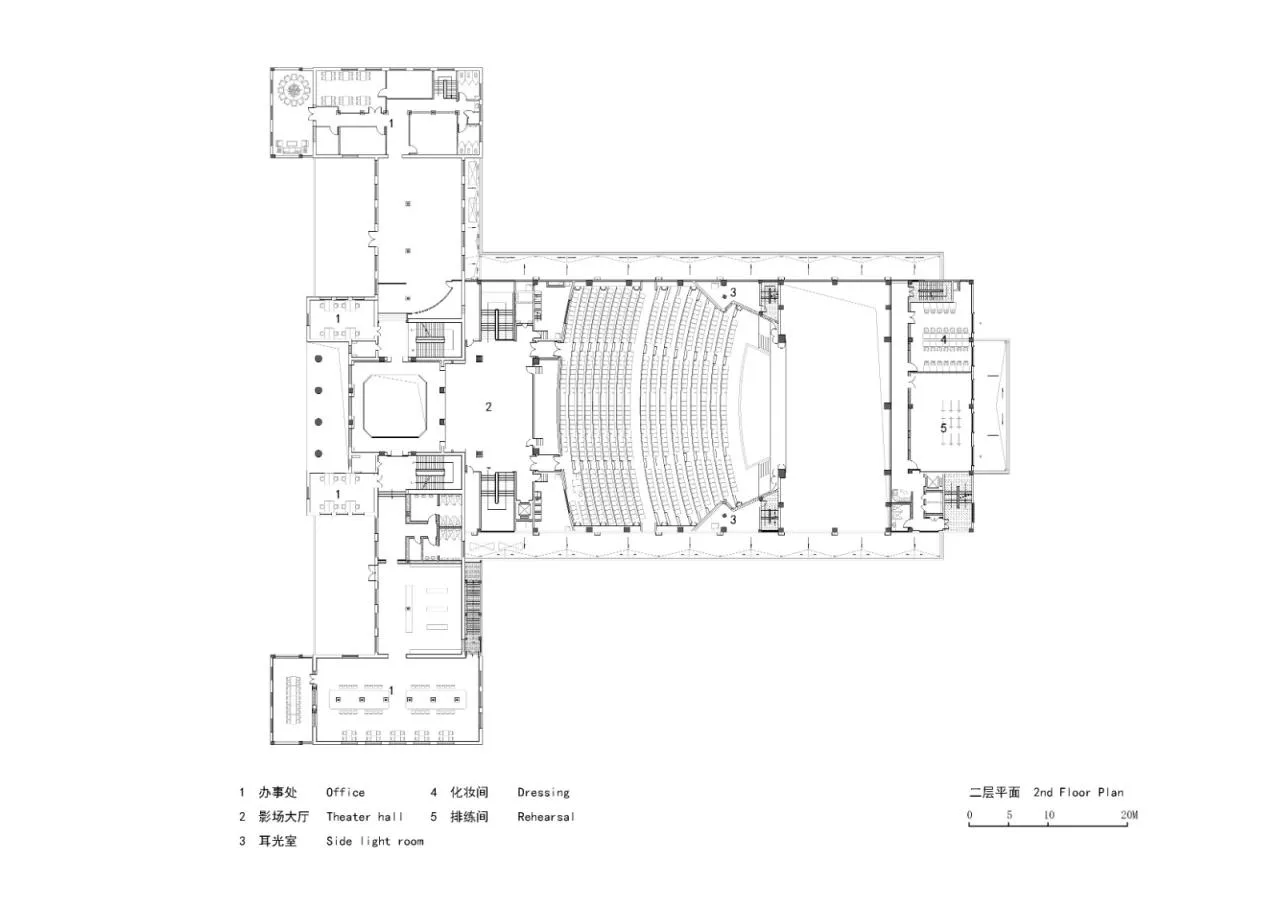
▲ Second Floor Plan of the Main Building
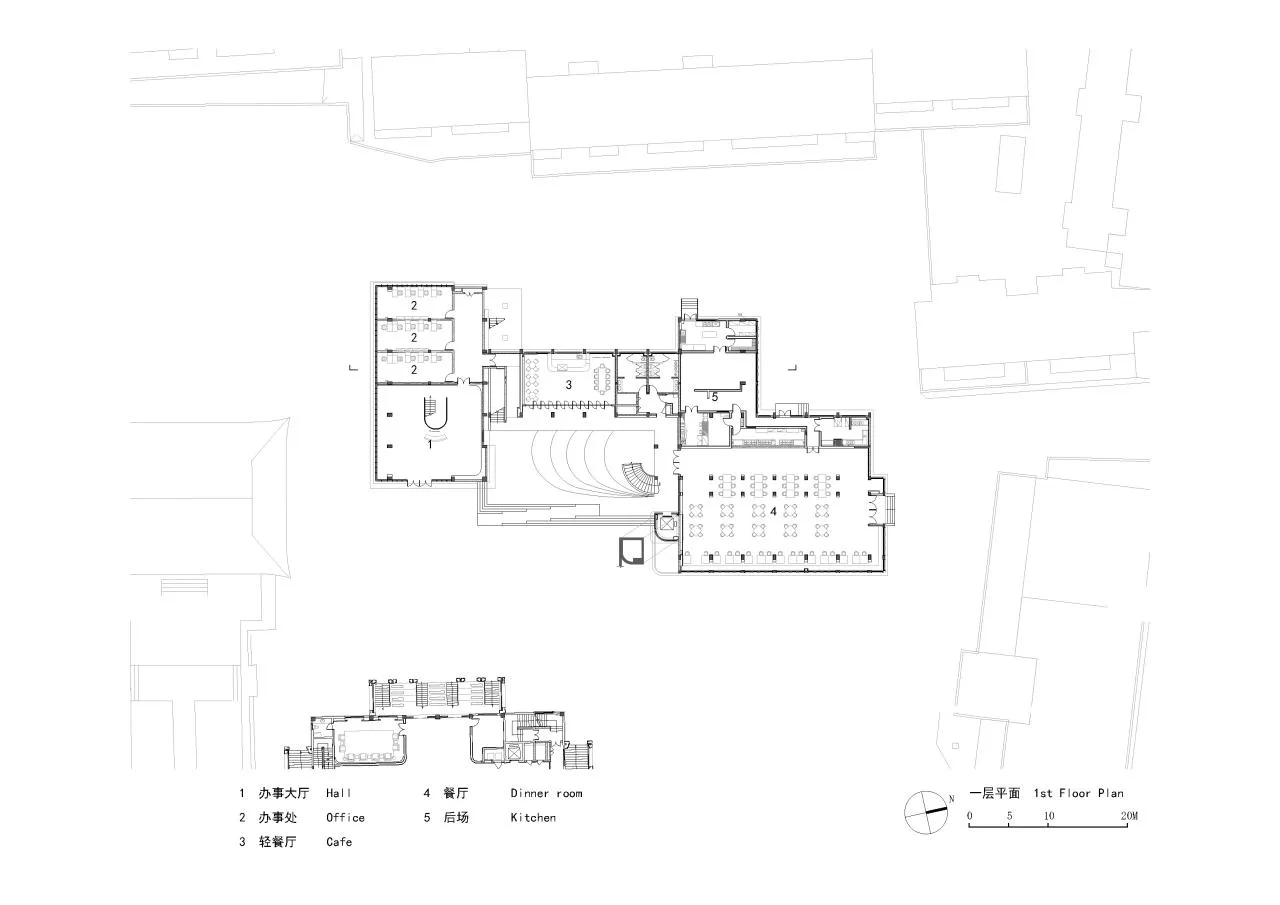
▲ First Floor Plan of the Science and Education Building
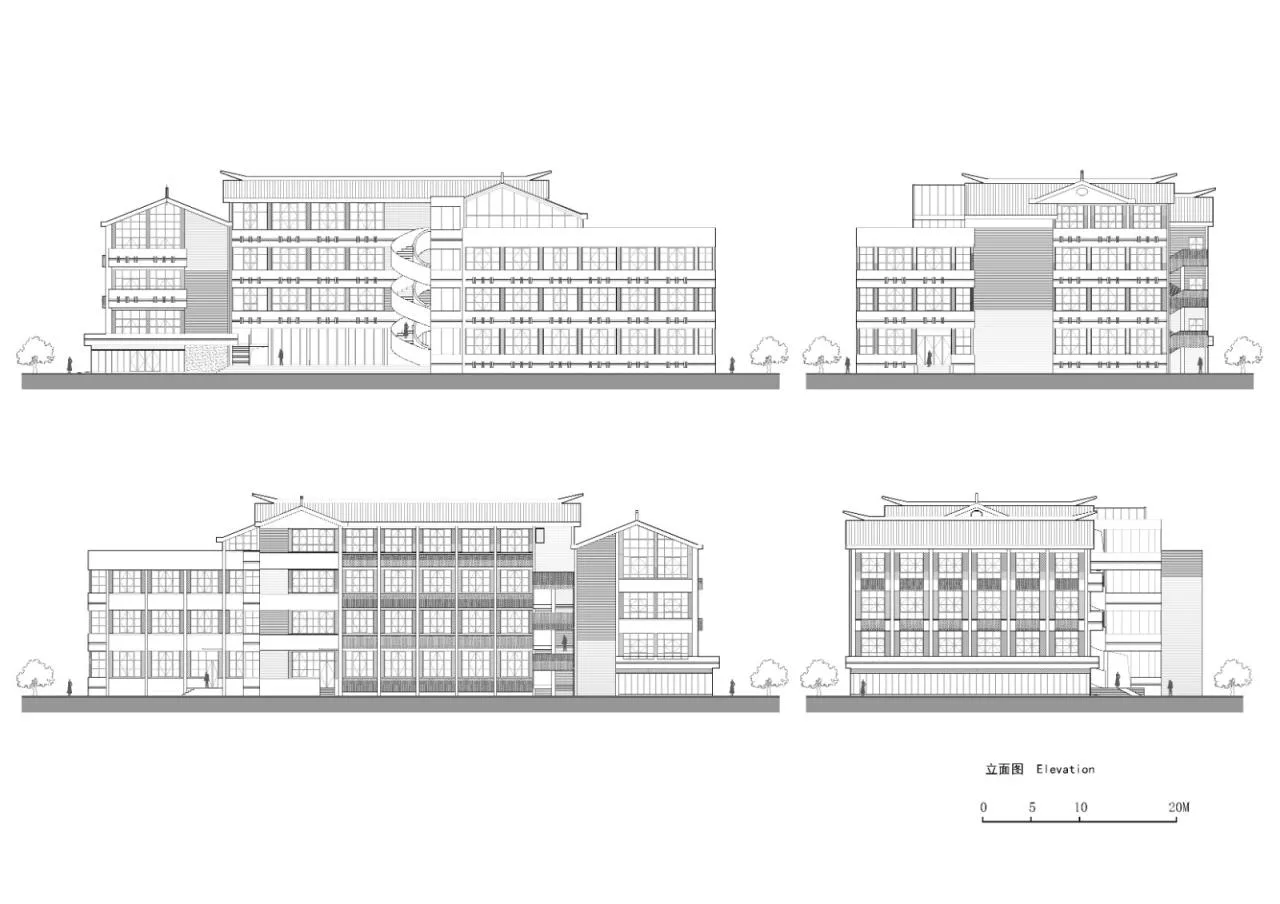
▲ Elevation View
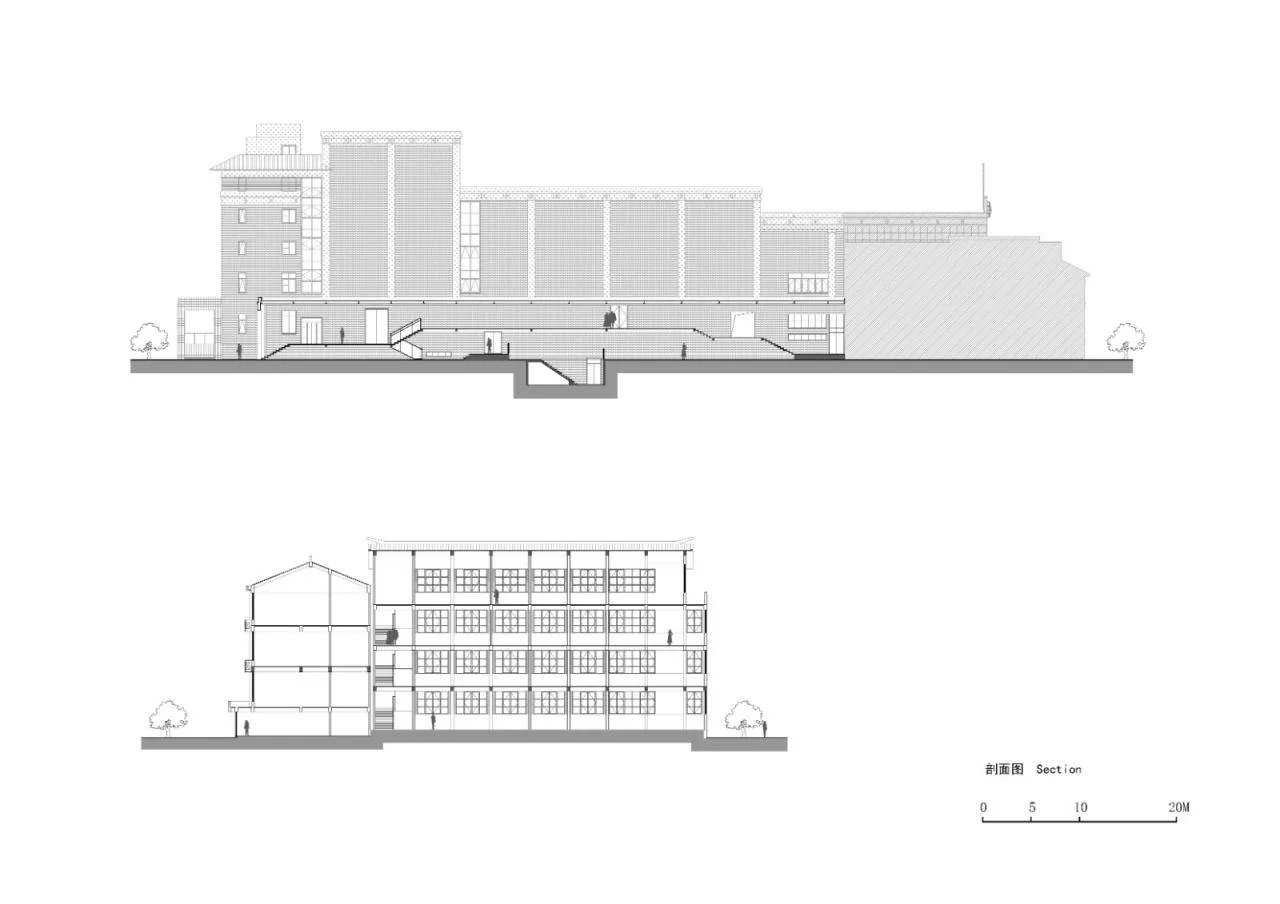
▲ Sectional View
Project Information
Project Name: Changzhou Workers’ Cultural Palace Renovation Project
Owner: Changzhou Workers’ Cultural Palace
Completion Date: February 28, 2023
Building Area: 18,740 square meters
Design Team: Scheme Design by Chen Tao, Zou Danni, Zhou Jinxin, Liu Yujing, Zhou Kui
Construction Drawing Design by Jia Jie, Zhang Yujiang, Gong Feixue, Jiang Weishan, Lei Dong, Jing Ye, Zhu Wuping, Ji Xiaoqi, Mei Yanling, Li Yepeng
Landscape Design by Ma Bin, Zhai Chang’an, Zhang Mengyao, Li Na, Cao Kexin, Liu Dong, Su Ni
Interior Design by NARMAL Length Seeking Design
Interior Construction Drawings by Wang Jian, Wei Qi, Yang Yang, Wang Bin, Ying Lanfang
Construction Company: Wuxi Xishan Construction Industry Co., Ltd
Photographer: Xie Dongrui, RUI PHOTOGRAPHY















Must log in before commenting!
Sign Up