
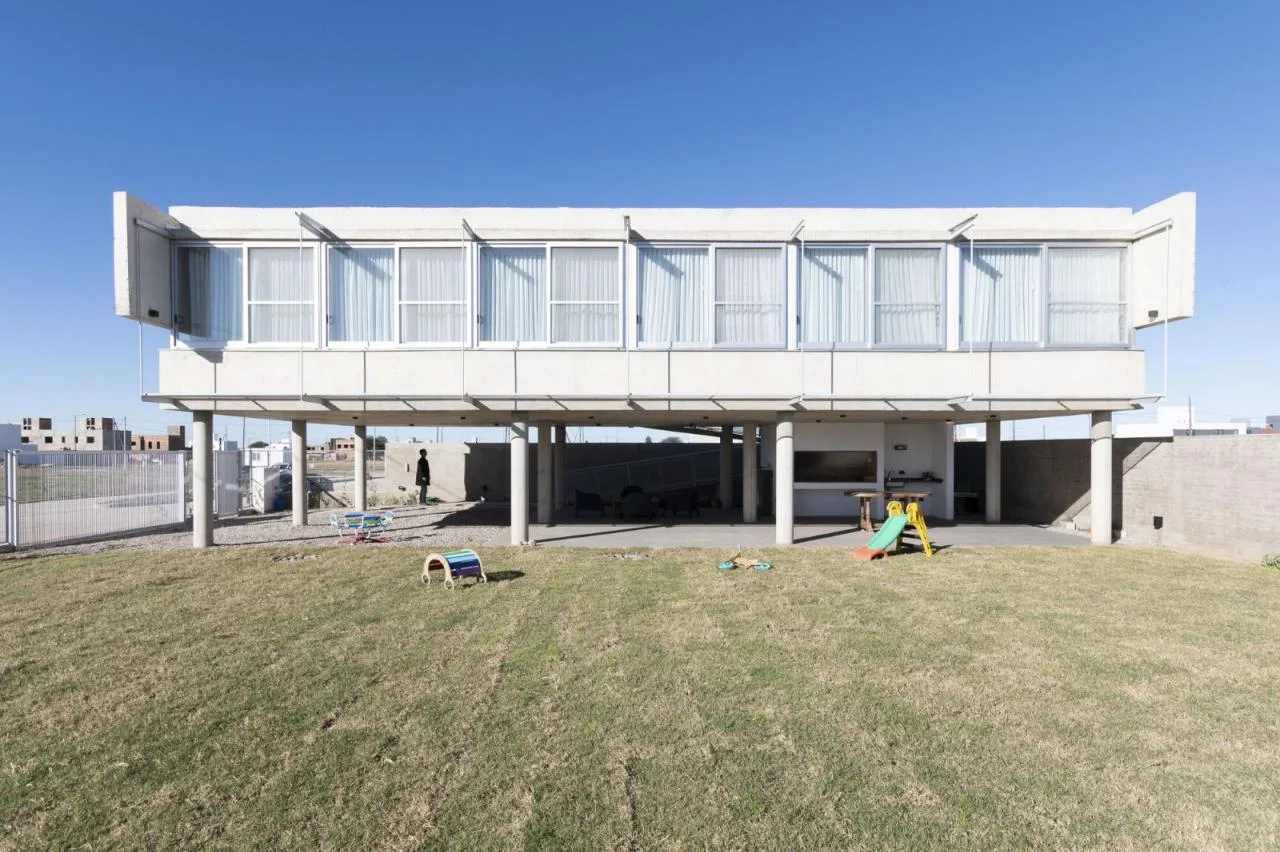
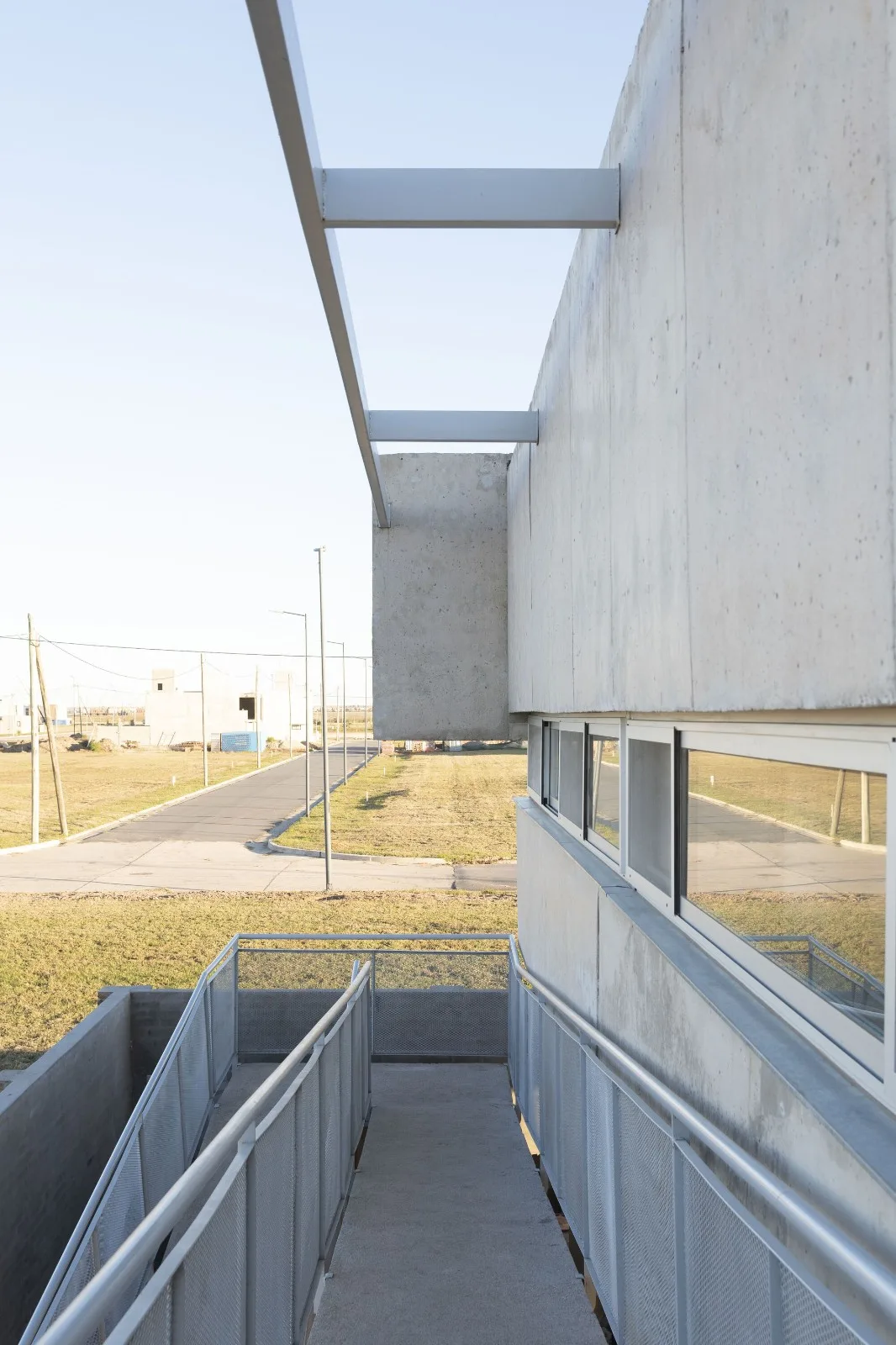
This project envisions a seamless space bridging the street and the home, where boundaries fade and coexist harmoniously. The residential landscape consists of a series of cylindrical structures forming the spatial matrix, focusing on the experience rather than physical objects. A grid framework supports and elevates the space without altering the natural ground. The ramp extends the terrain’s function, allowing residents to overlook the scenic hills and plains.
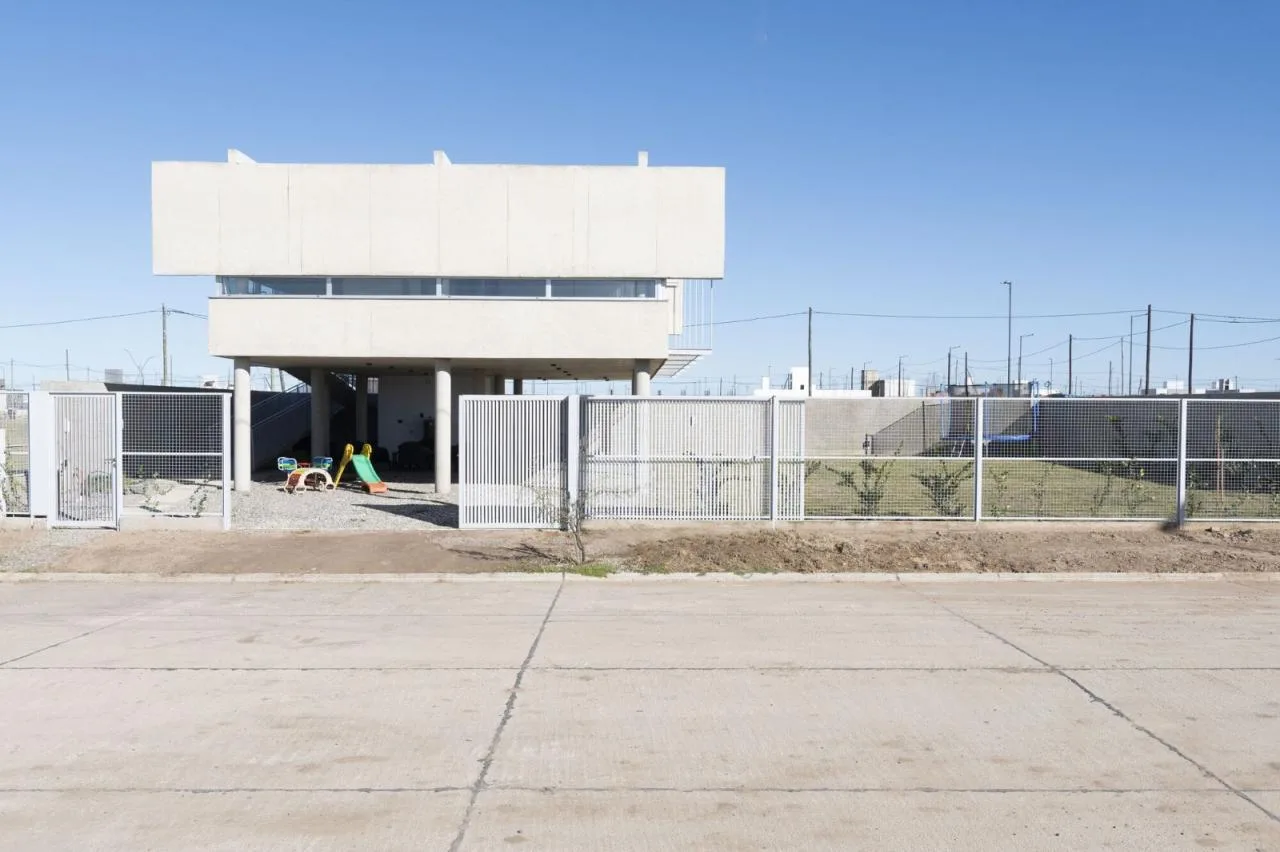
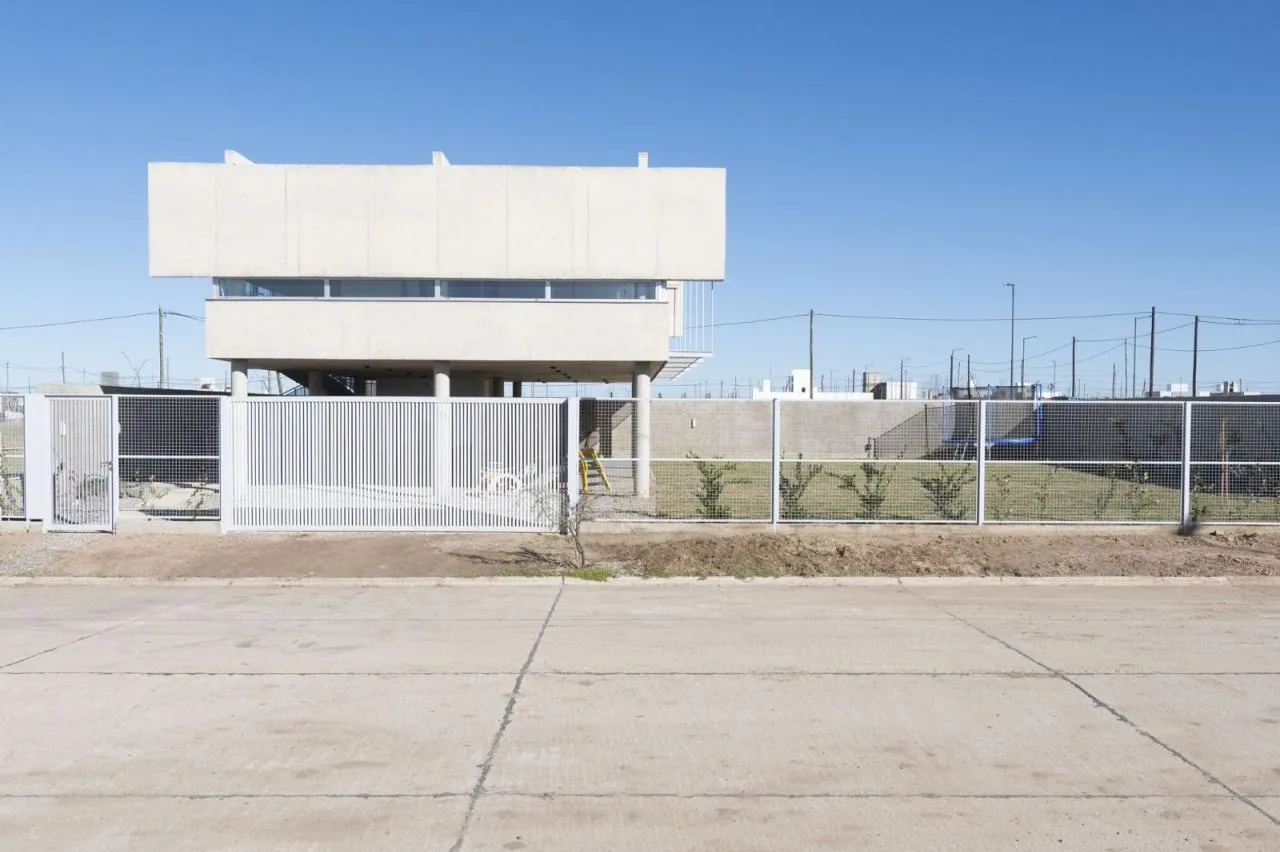
Location: The project is situated in a suburban community southwest of Cordoba. Like many expanding neighborhoods, it extends into the city outskirts, characterized by a grid layout on flat terrain facing the mountains, with streets and service facilities only. This residential experiment occupies a small plot, creating modern single-family homes within a real estate framework. Positioned on the northern side of the neighborhood’s main road, it overlooks a large communal green space. Together, two adjacent plots measure 24 meters wide by 22 meters deep.
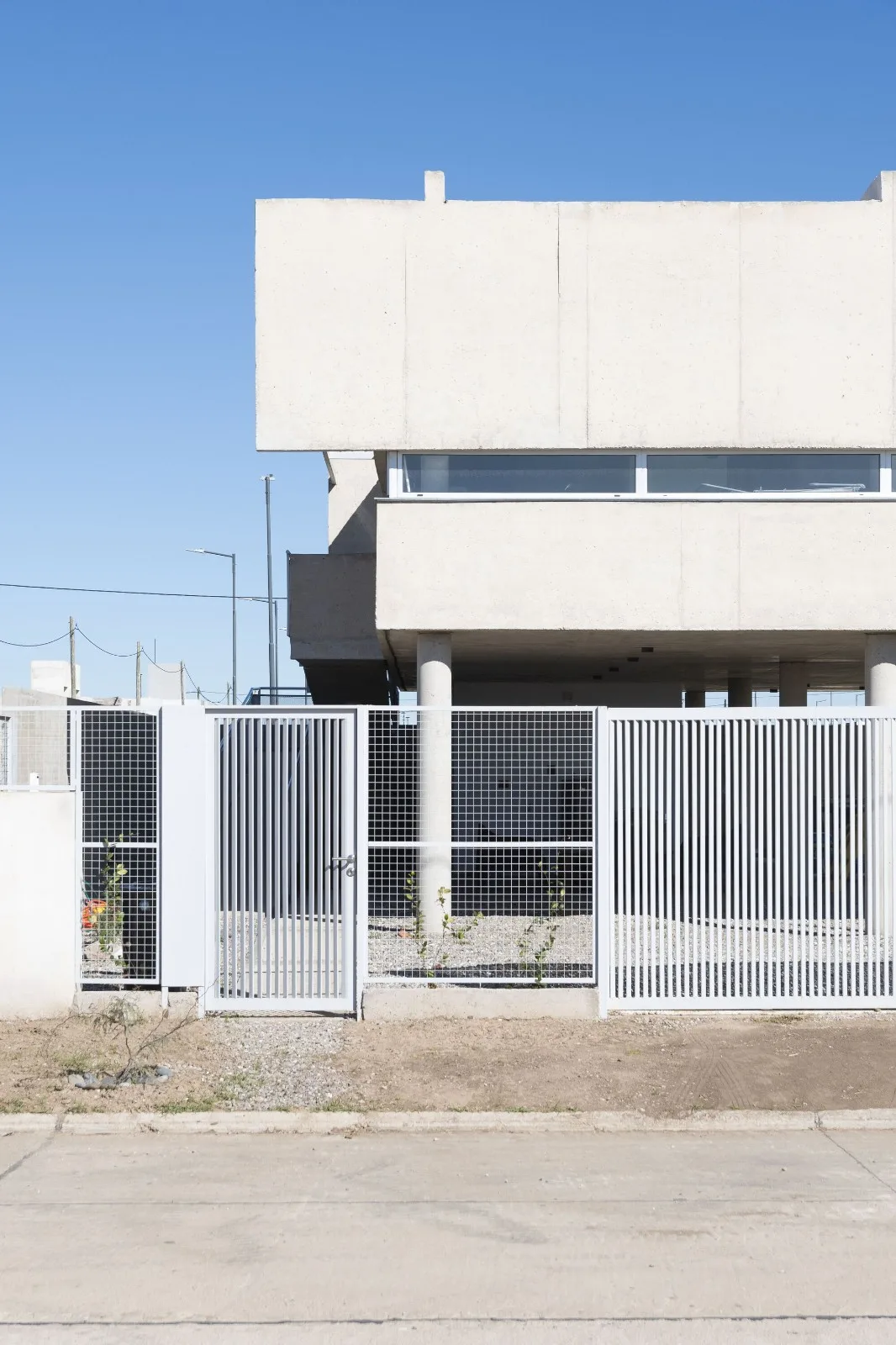
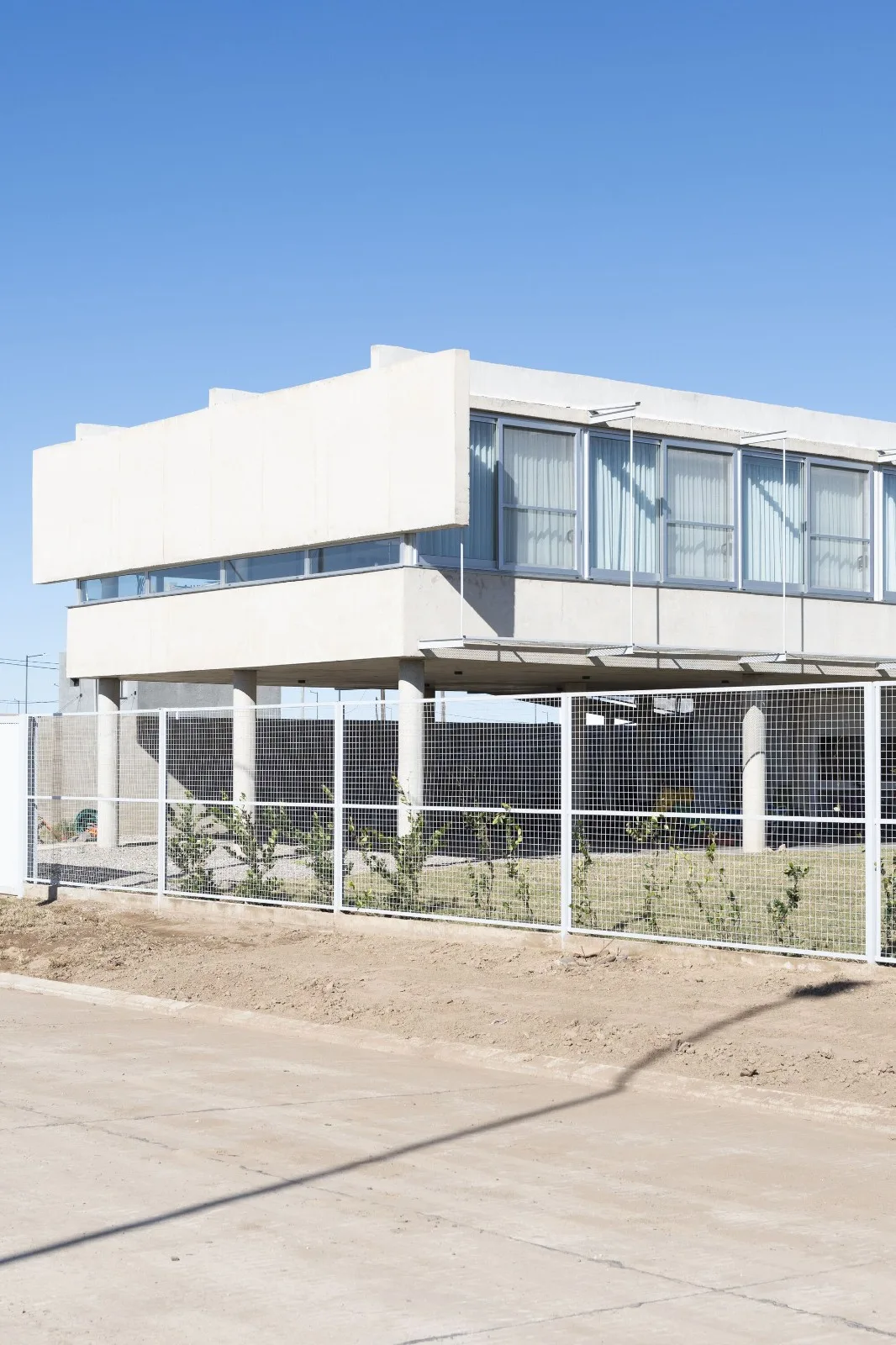
Structure: 12 Pillars and Open Ground Space
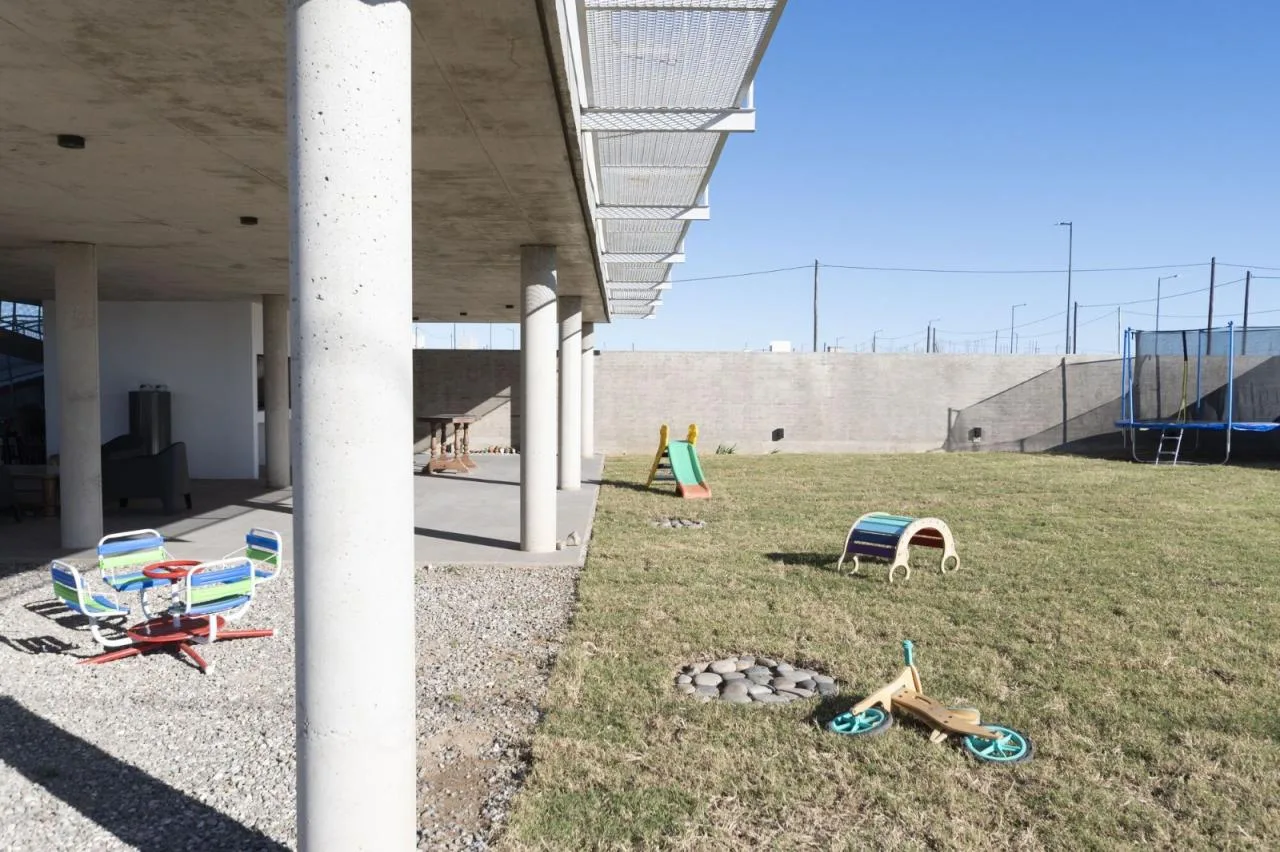
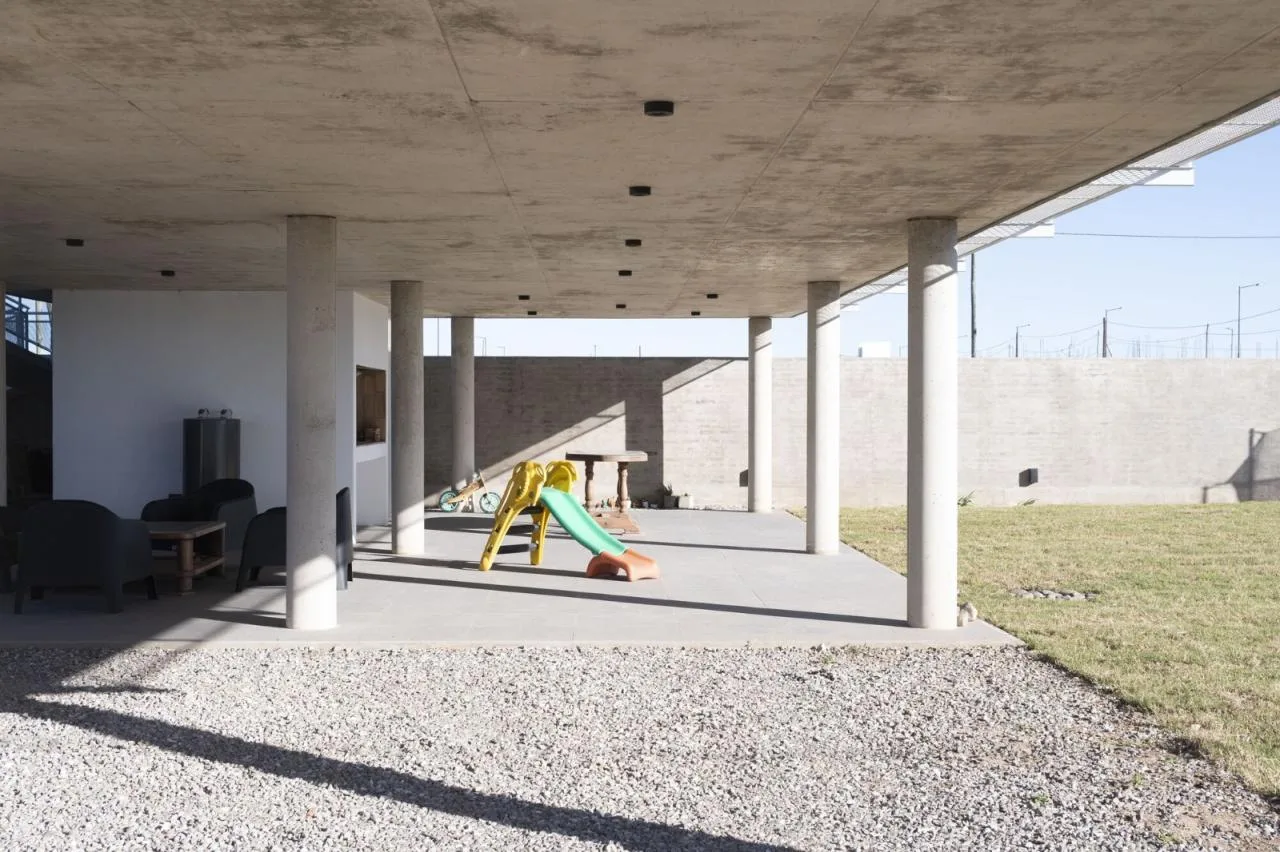
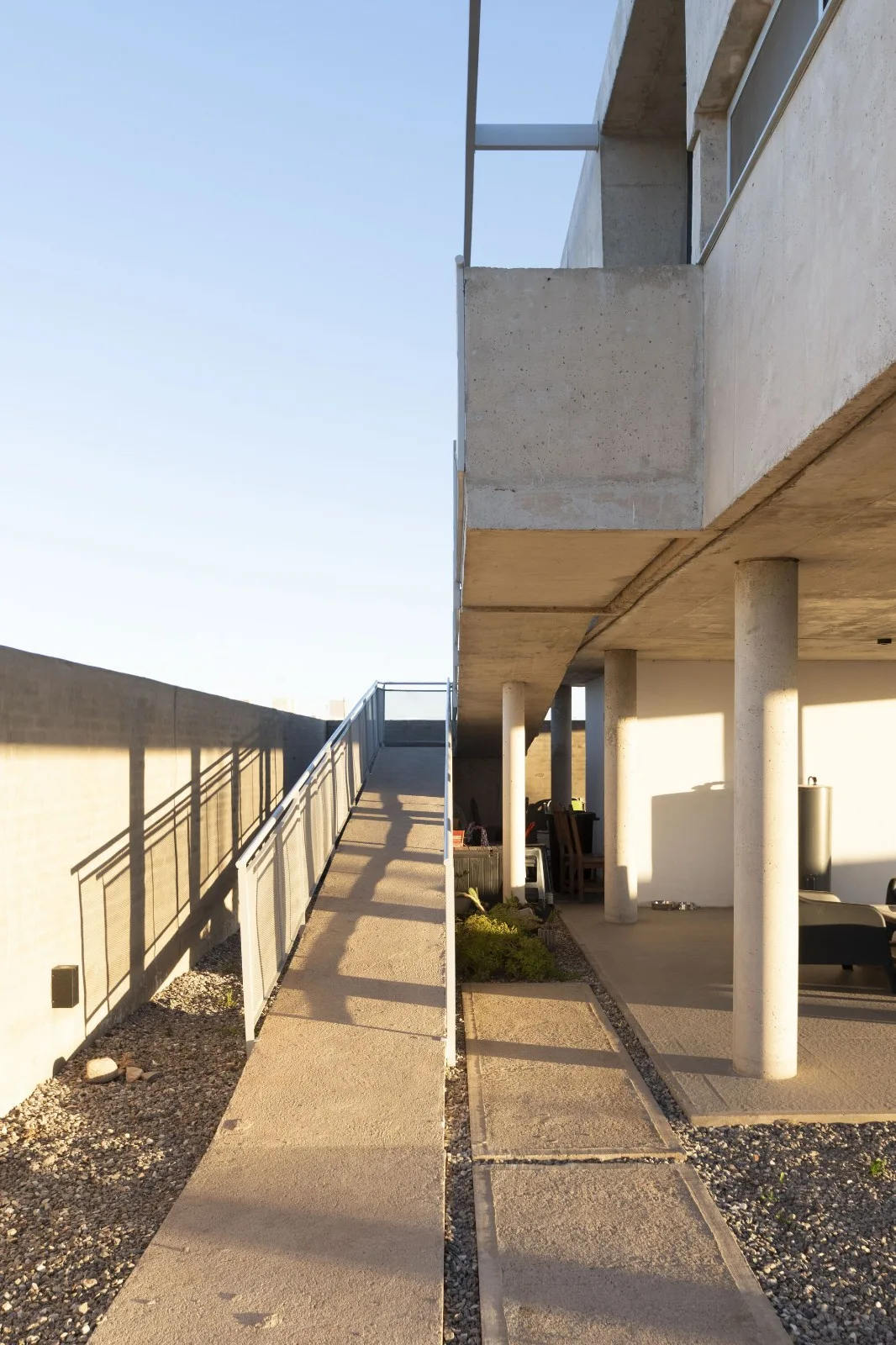
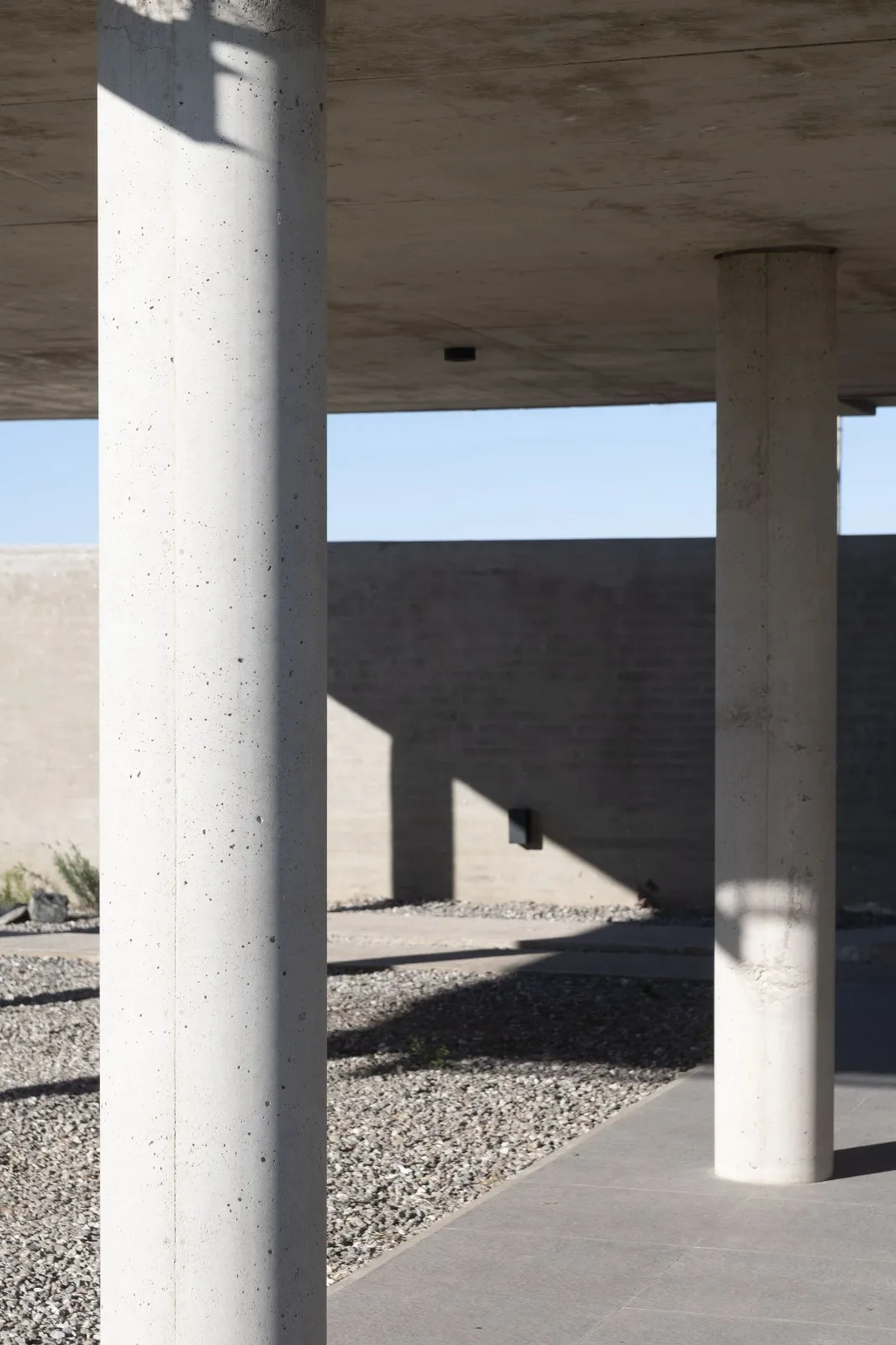
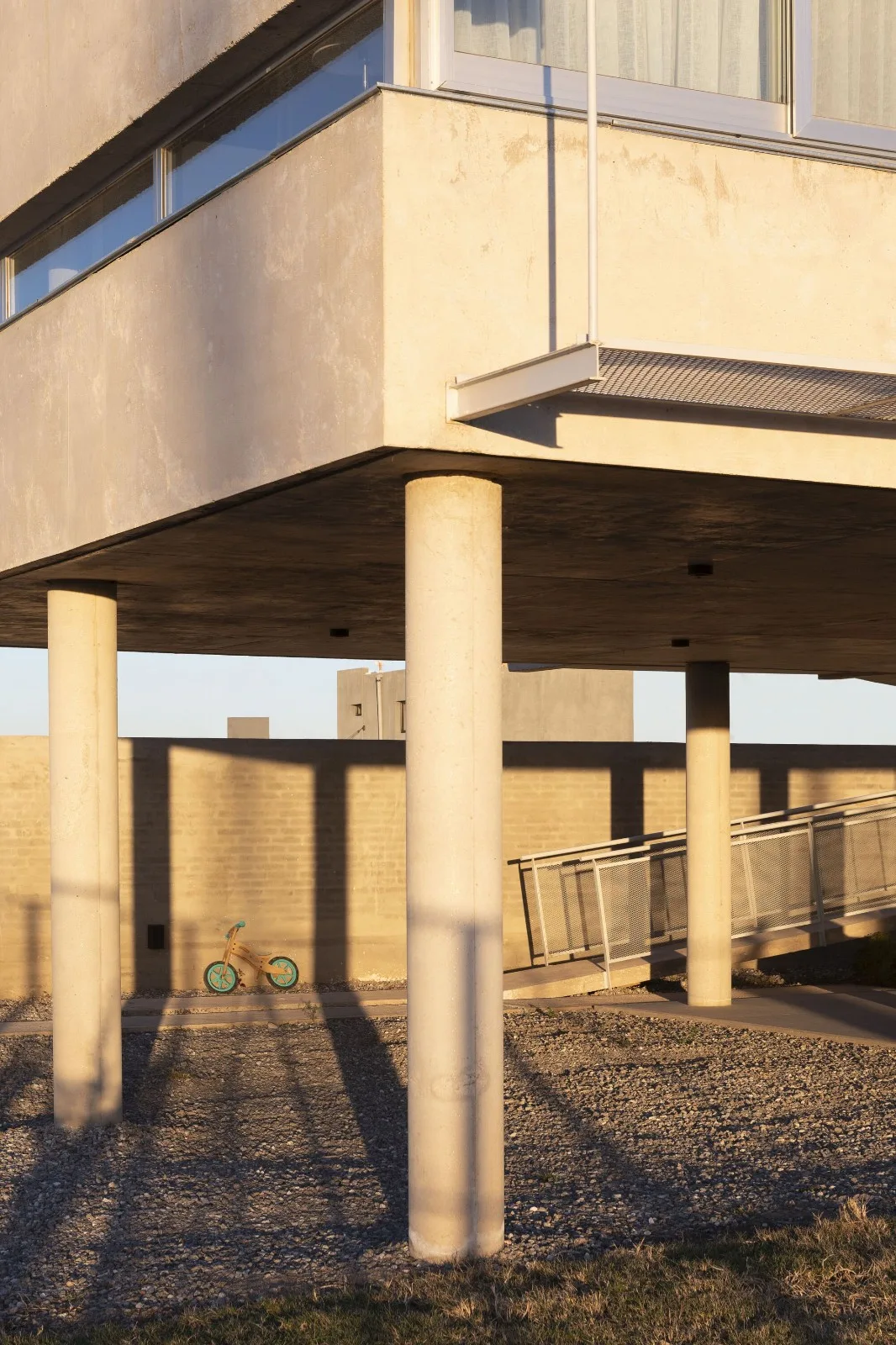
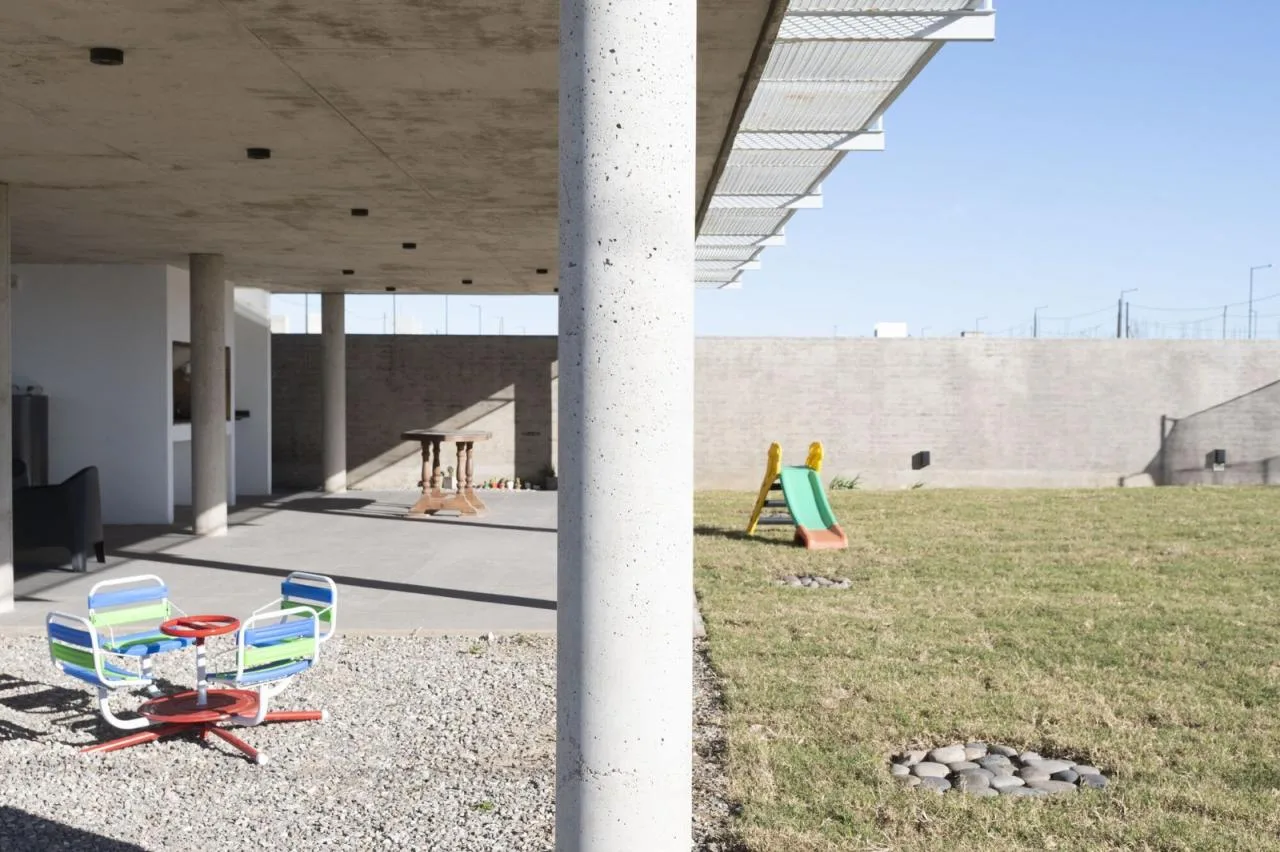
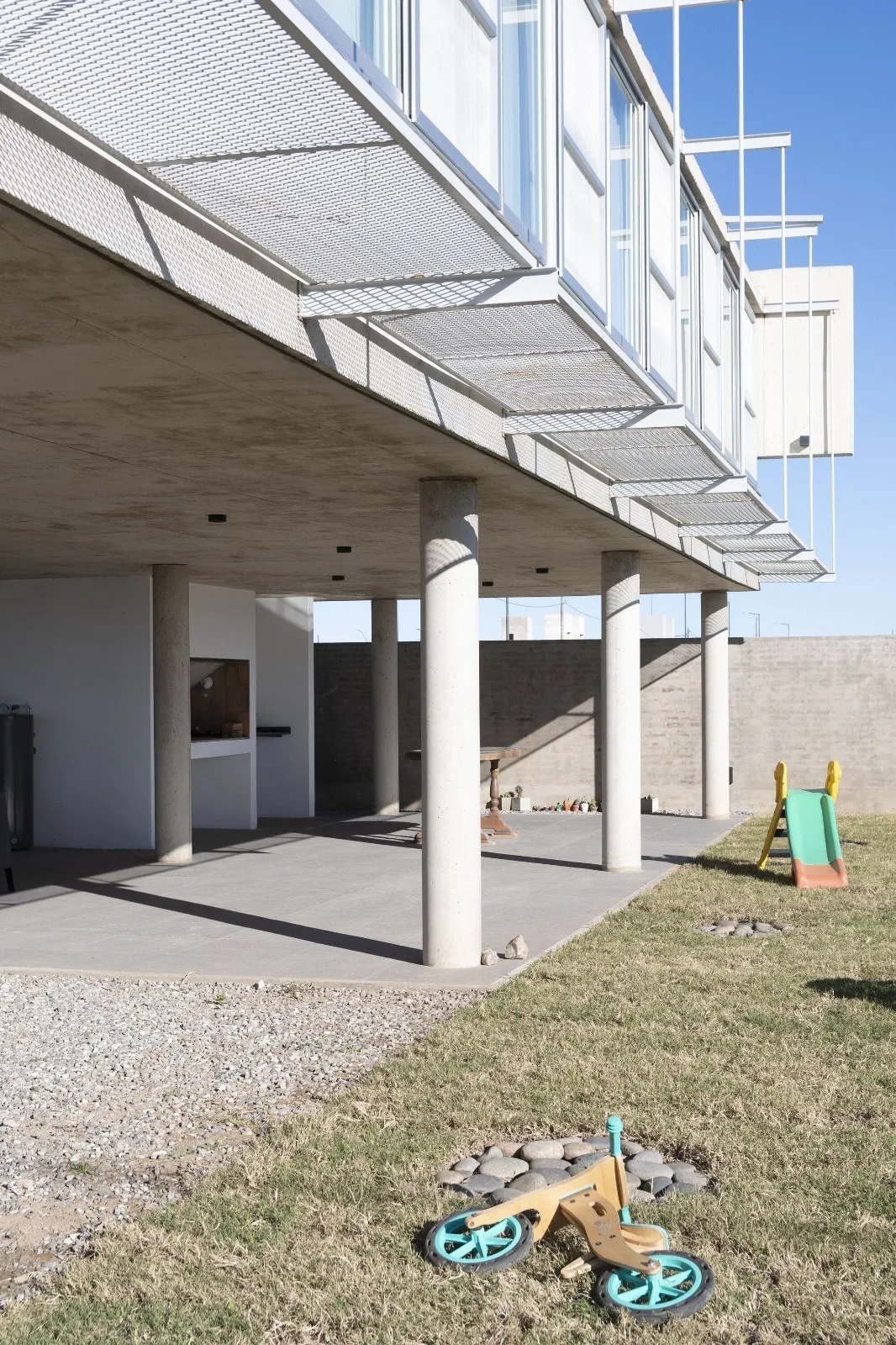
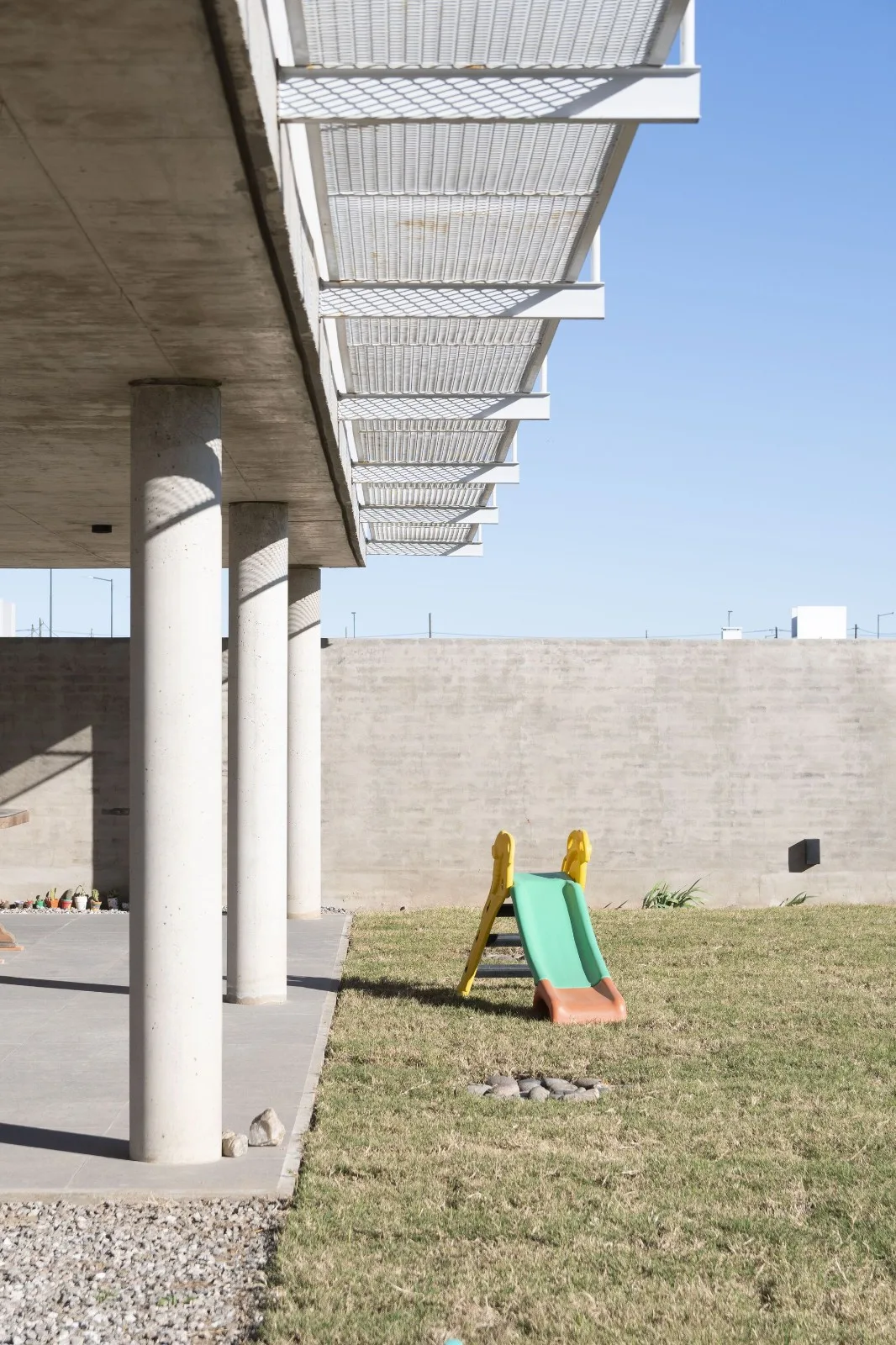
The initial response to the limited, arid site was to elevate the residential units, freeing the ground for communal use. This approach allows one plot to be entirely dedicated to green space, while the adjacent ground supports auxiliary functions such as parking, laundry, and barbecue areas. Twelve cylinders, each 30 centimeters in diameter, support the structure, creating an open ground level that maximizes usable outdoor space. These elements cluster around a compact core within the plot, optimizing living space between the pillars and the surrounding greenery.
Ramp Design
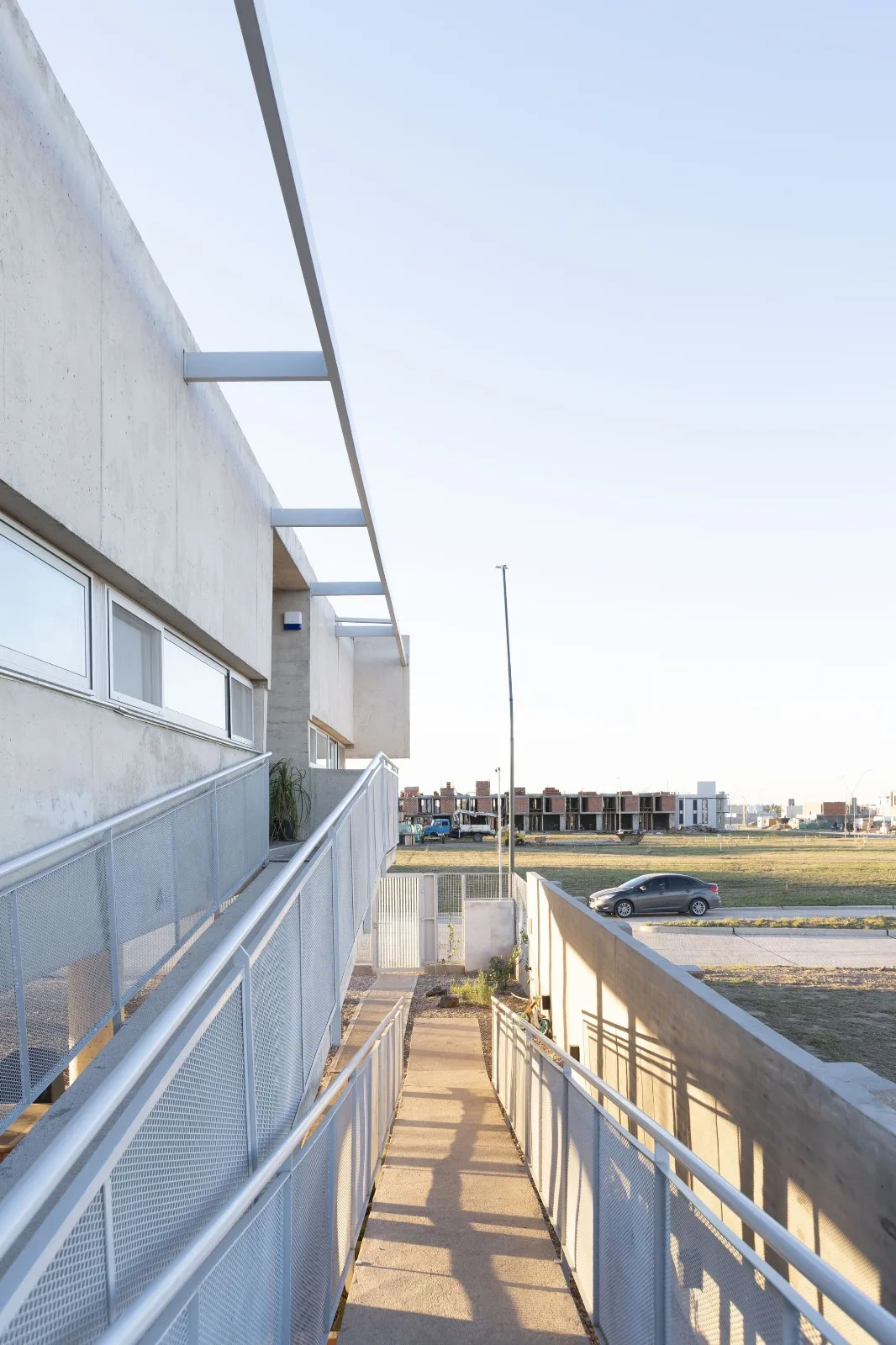
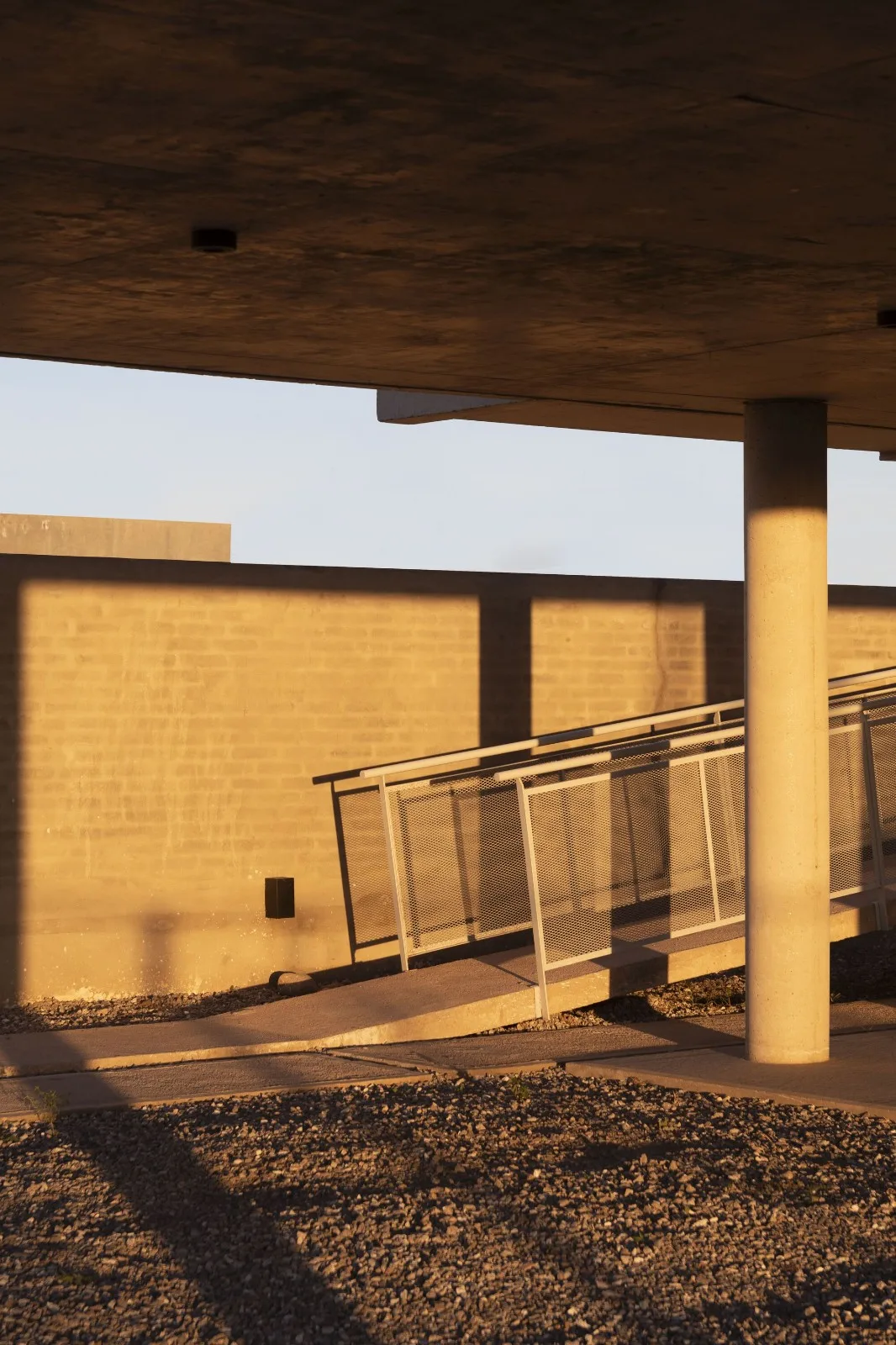
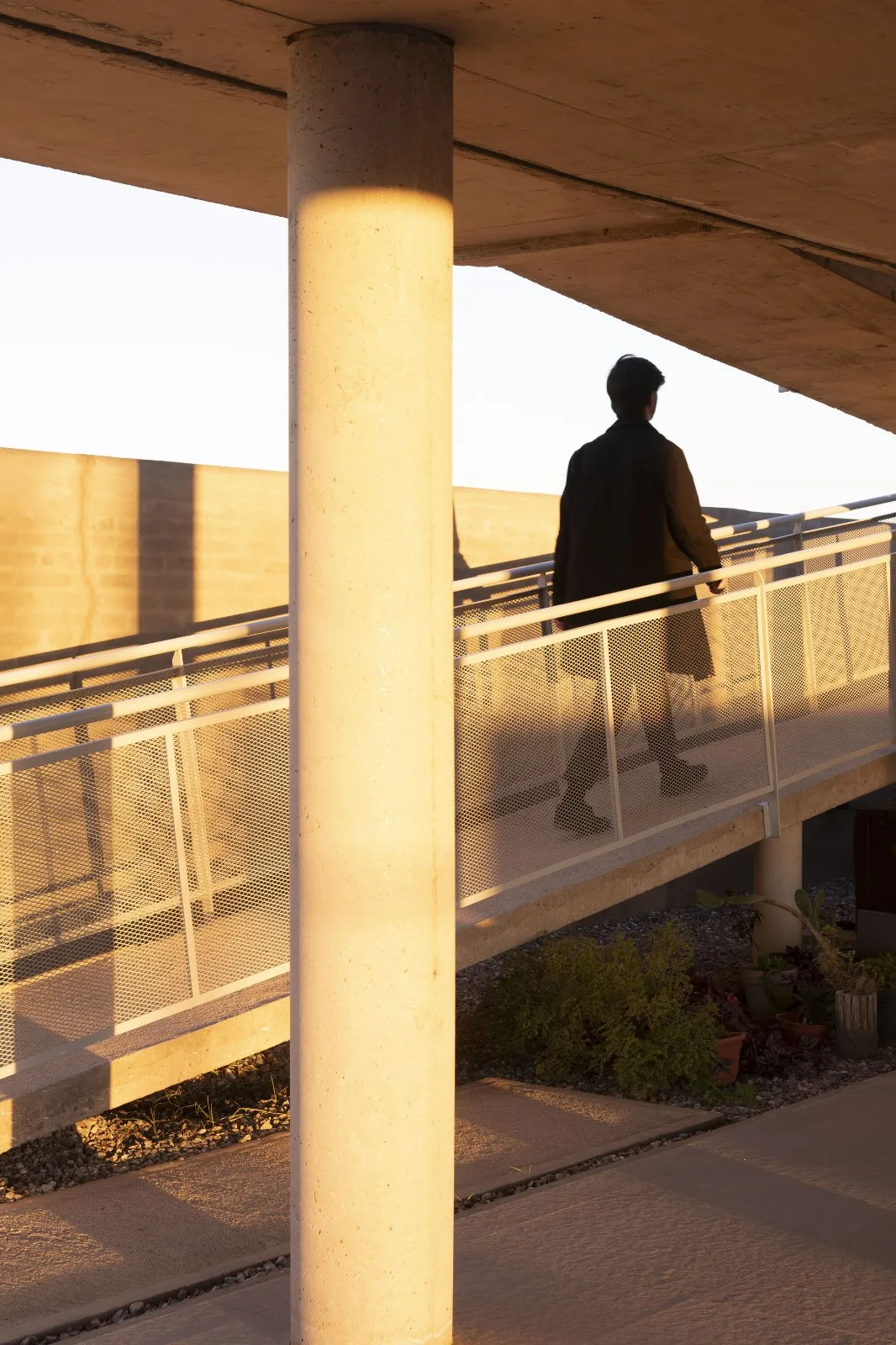
To connect public and private spaces, as well as different levels, ramps serve as transitional elements. These ramps activate the space by extending the ground plane upwards to a platform or observation deck. The ramp then continues to the house entrance, where the platform gently sinks inward, revealing the supporting pillars. This arrival area expands, embracing and framing the entrance.
Project Overview
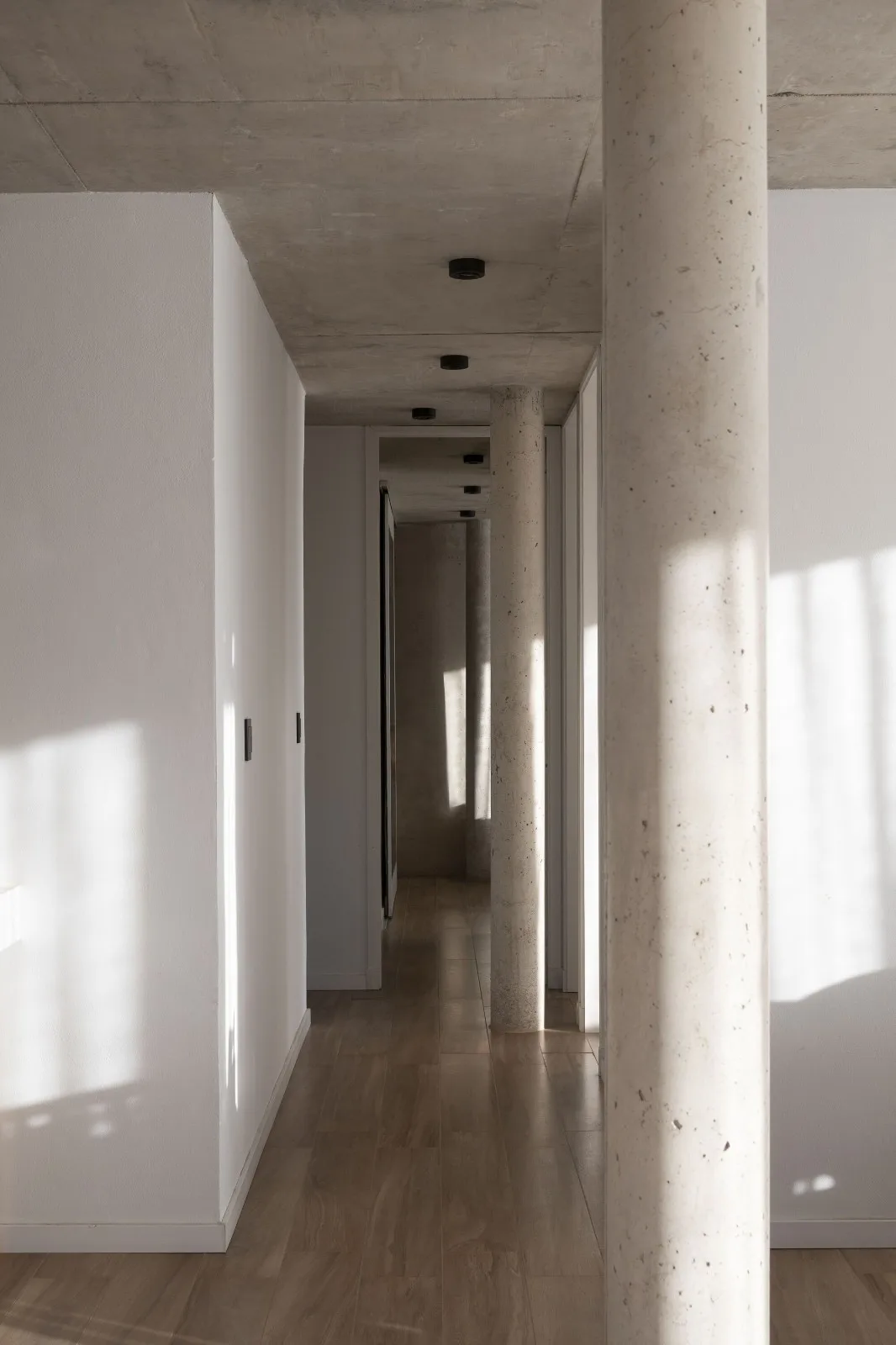
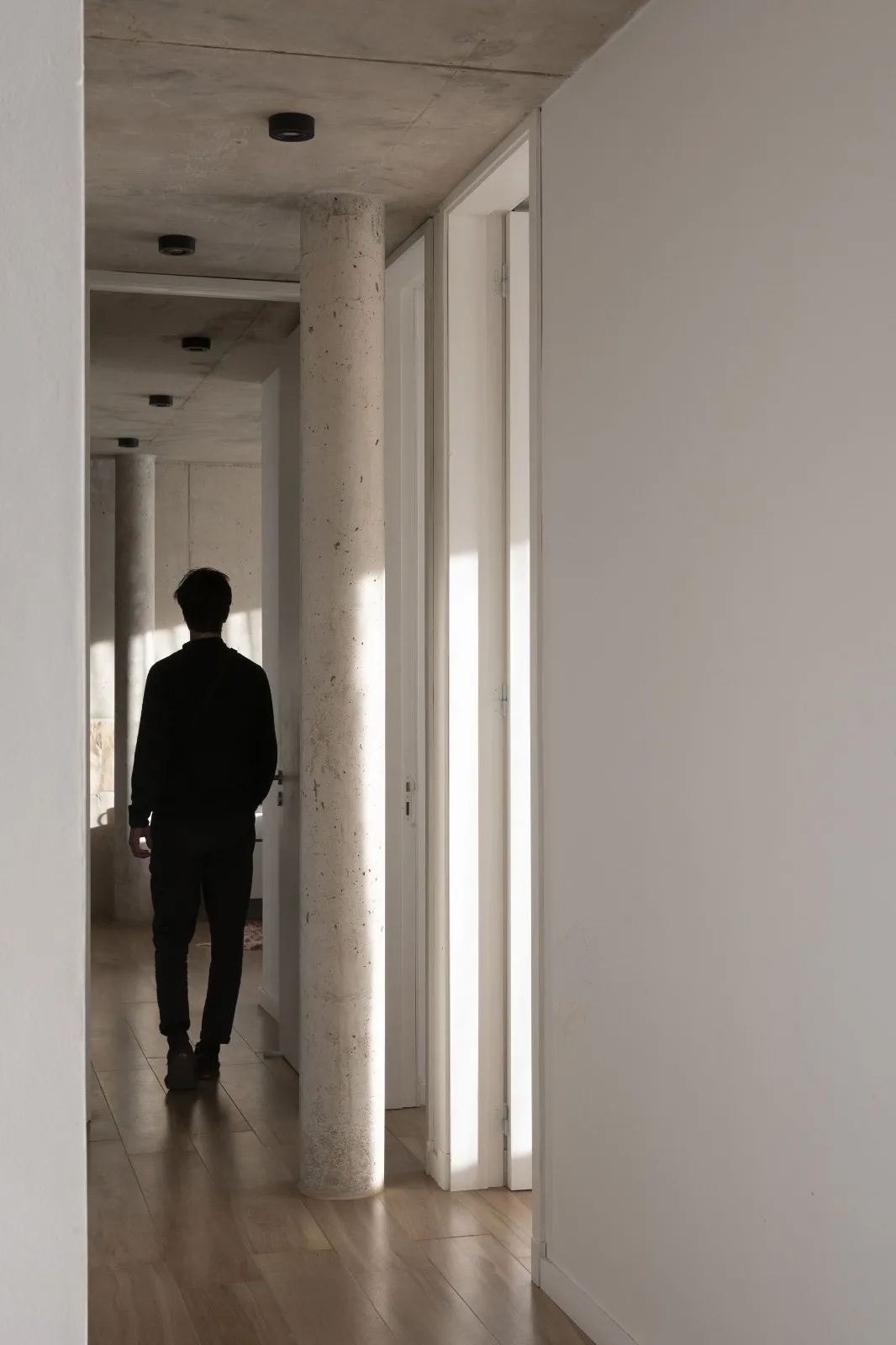
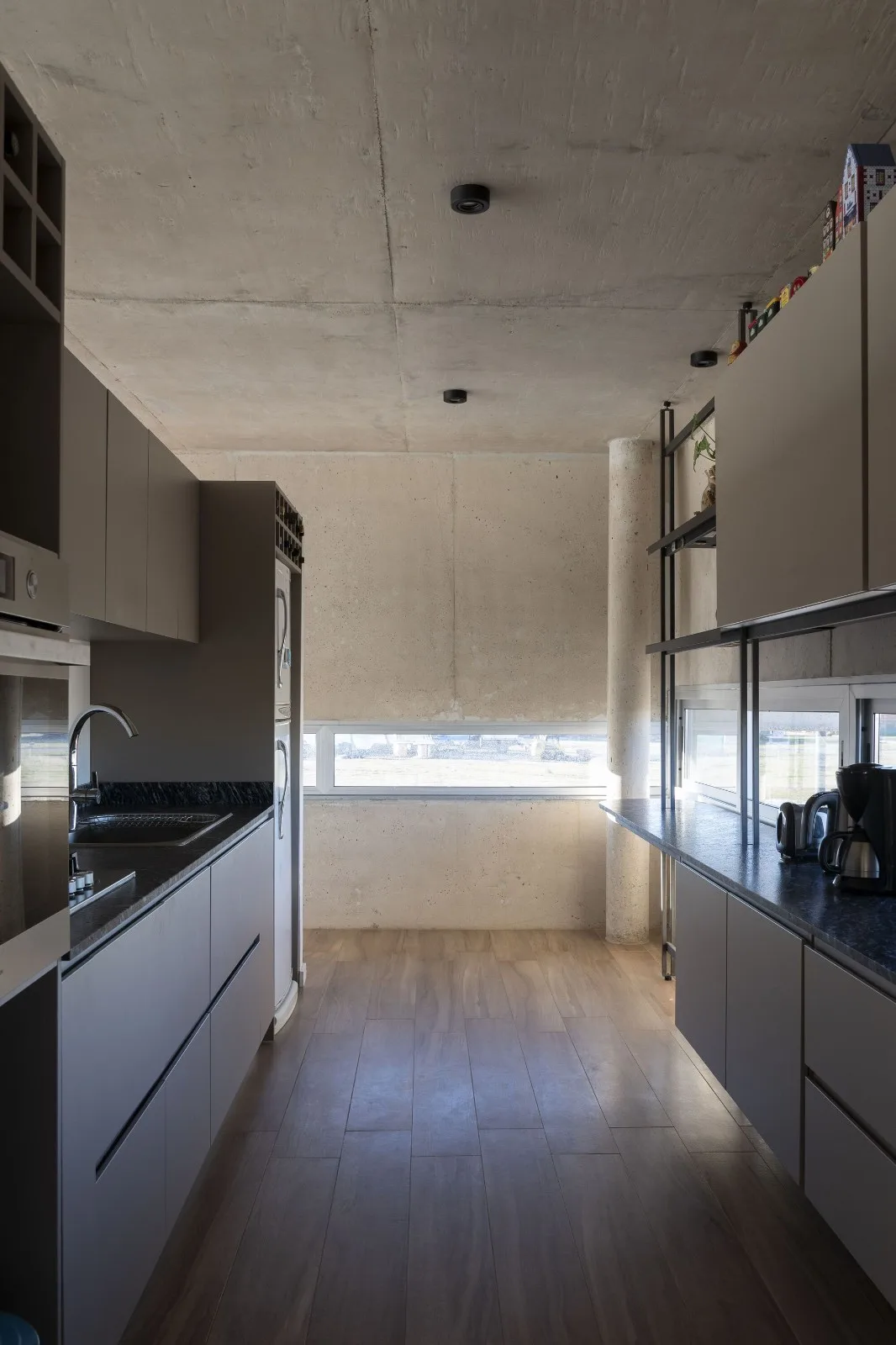
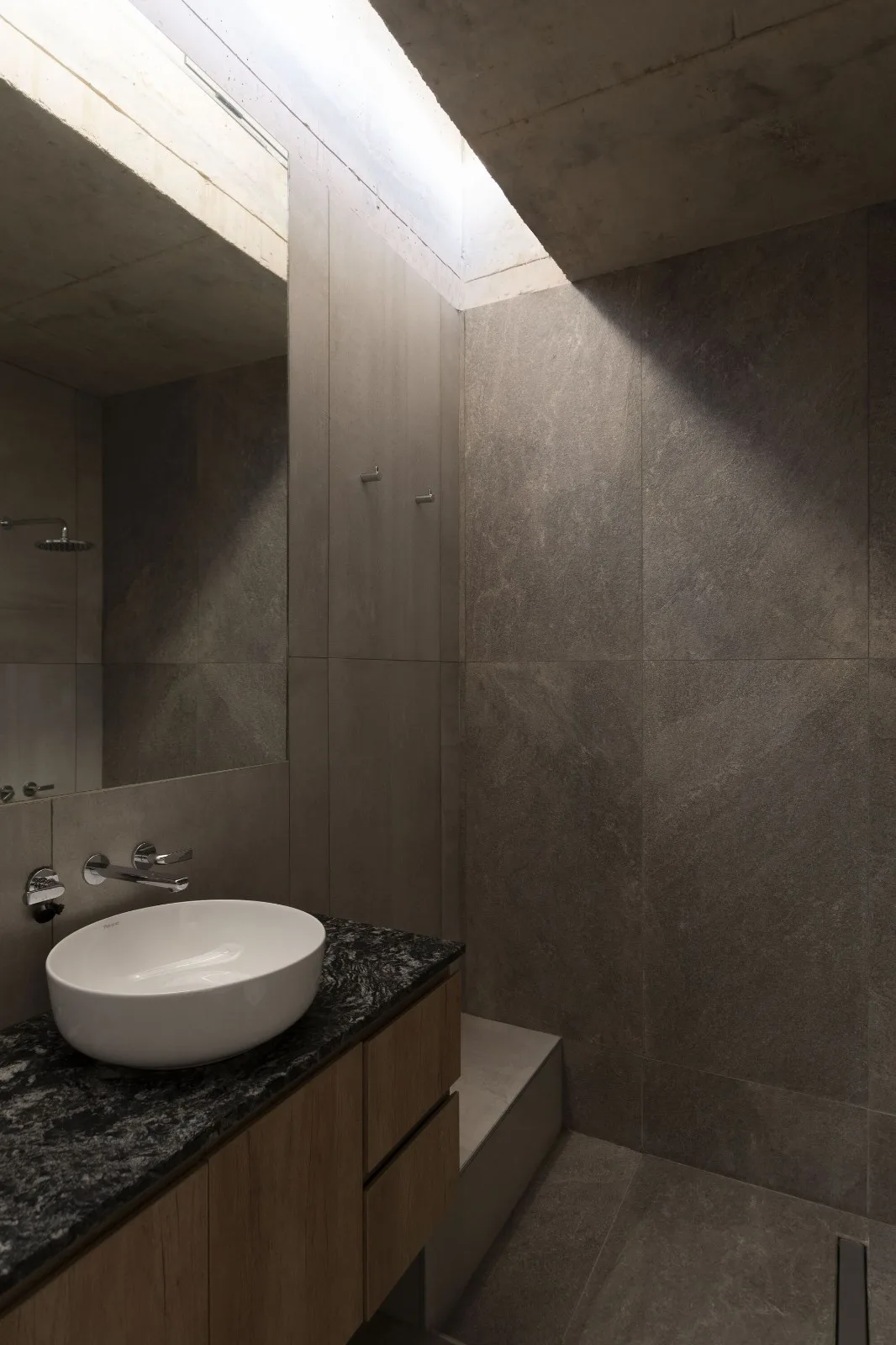
Commissioned by a young family with two children, the design needed to accommodate a range of ages and spatial functions. Centered around twelve cylinders, the architects developed a flexible, traditional layout featuring independent bedroom and bathroom zones. Emphasis was placed on circulation and the spatial possibilities it unlocks, with bathroom and kitchen areas strategically positioned to maintain a fluid flow throughout the home.
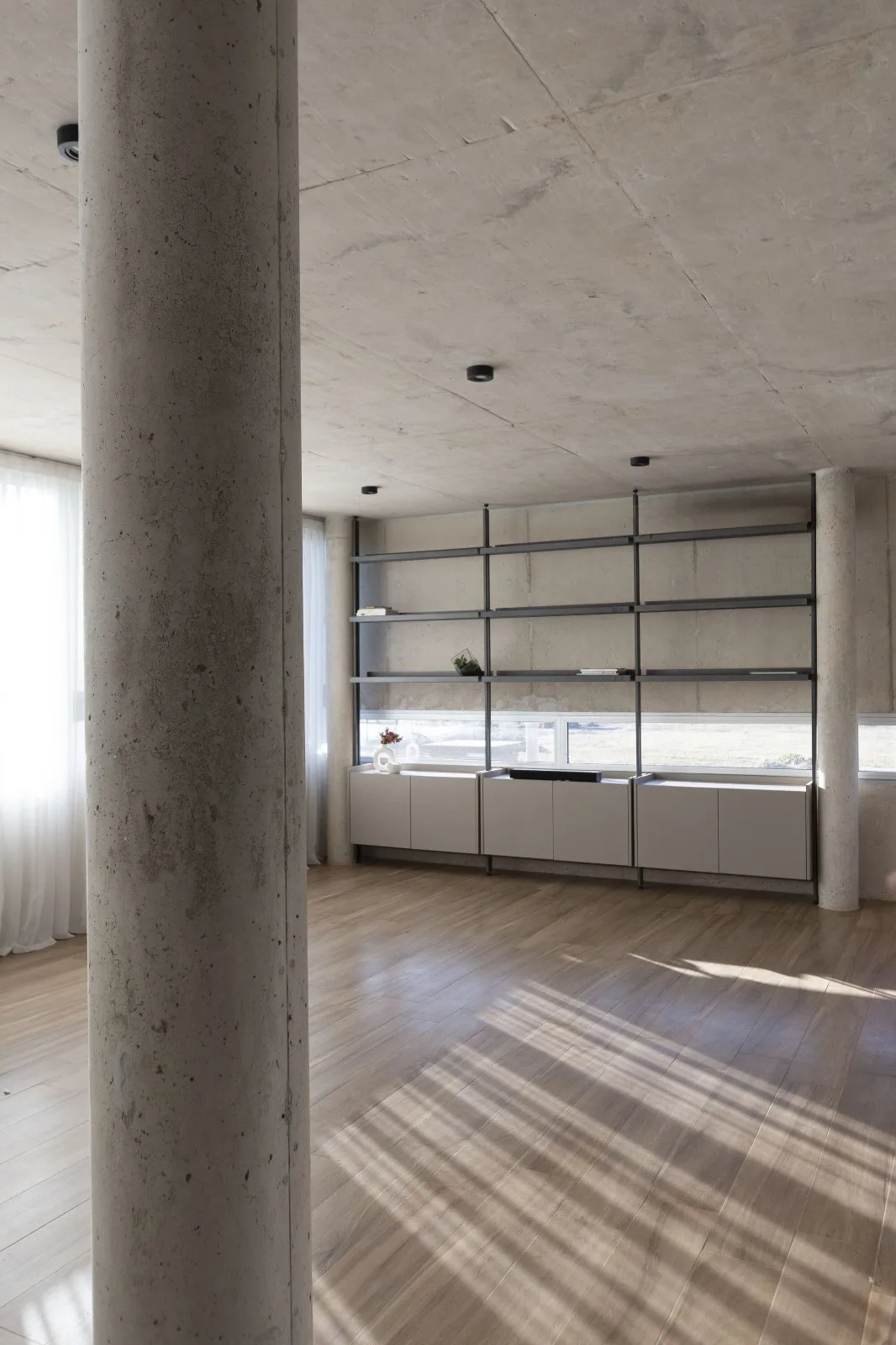
Structure and Spatial Experience
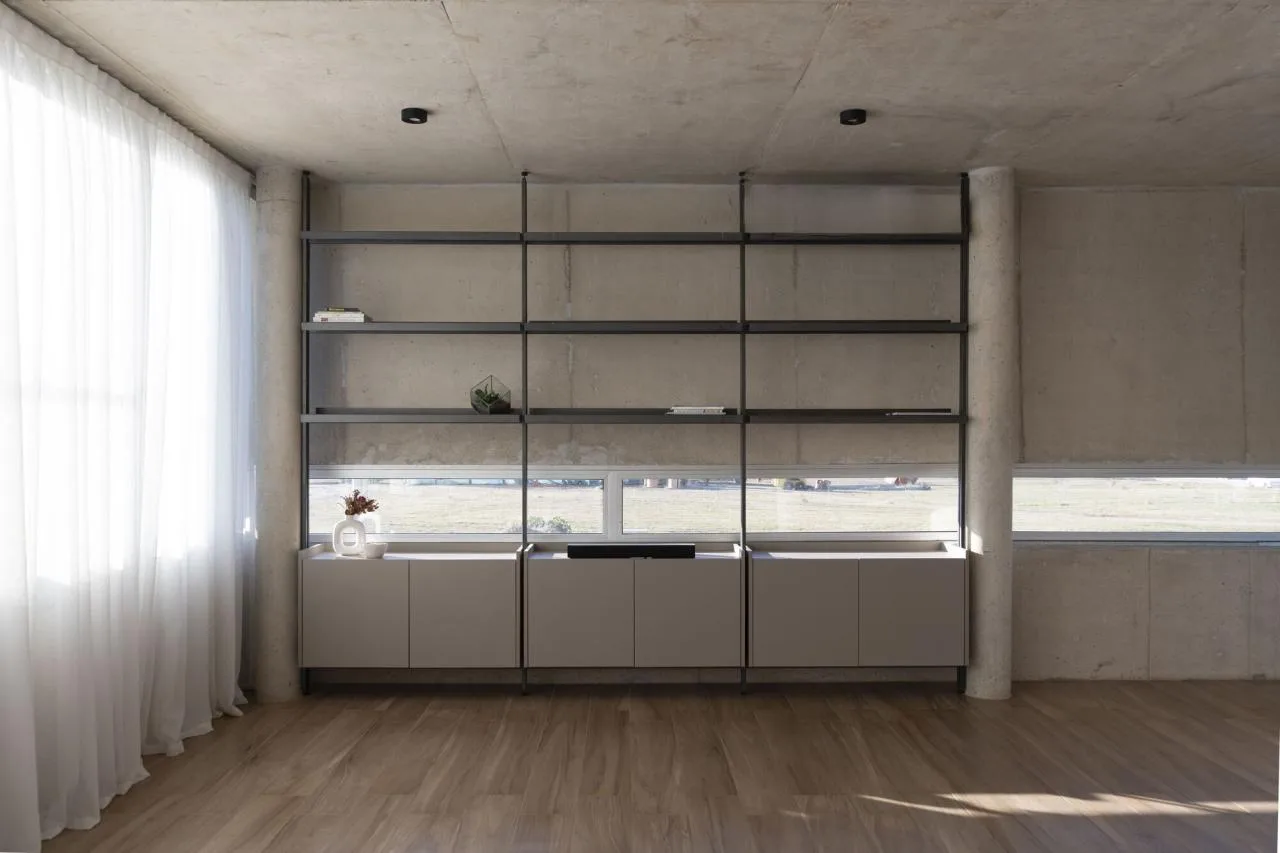
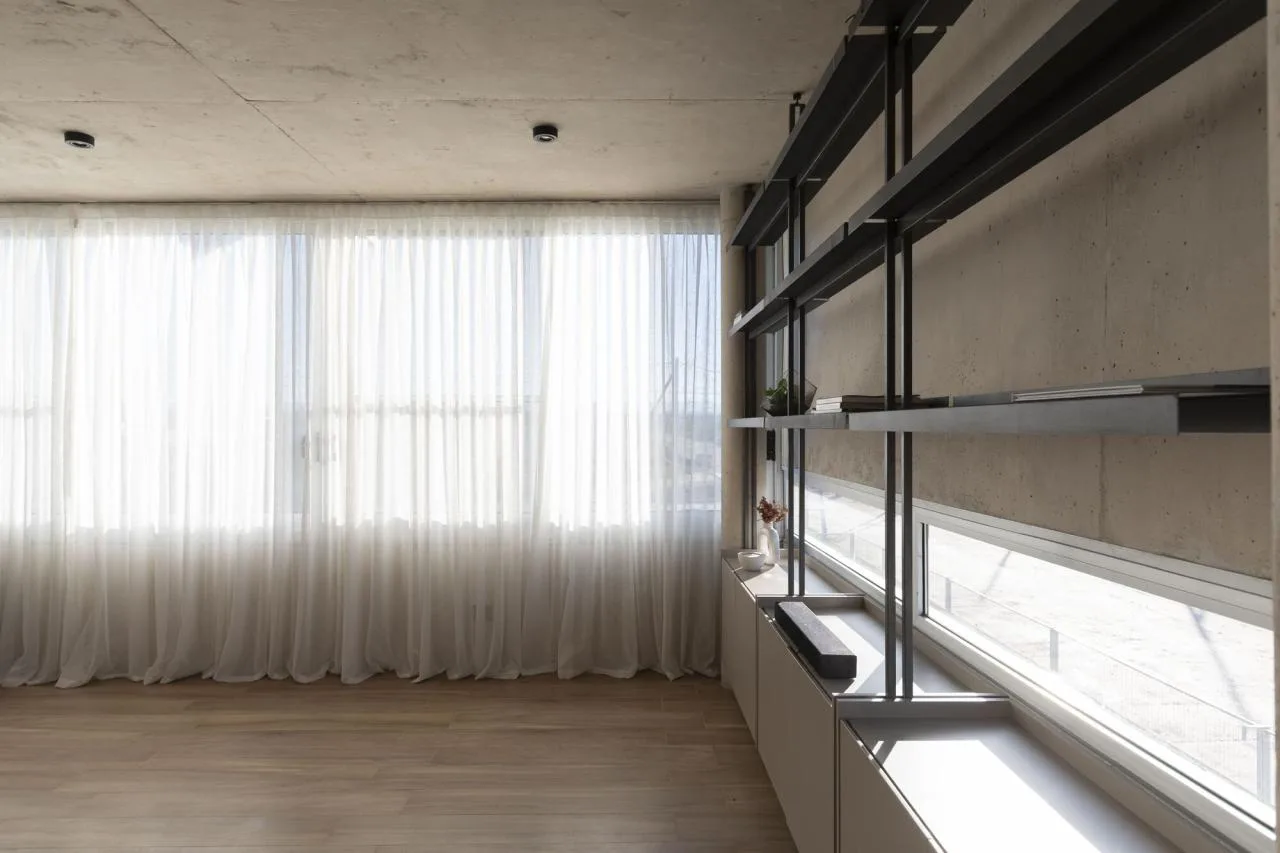
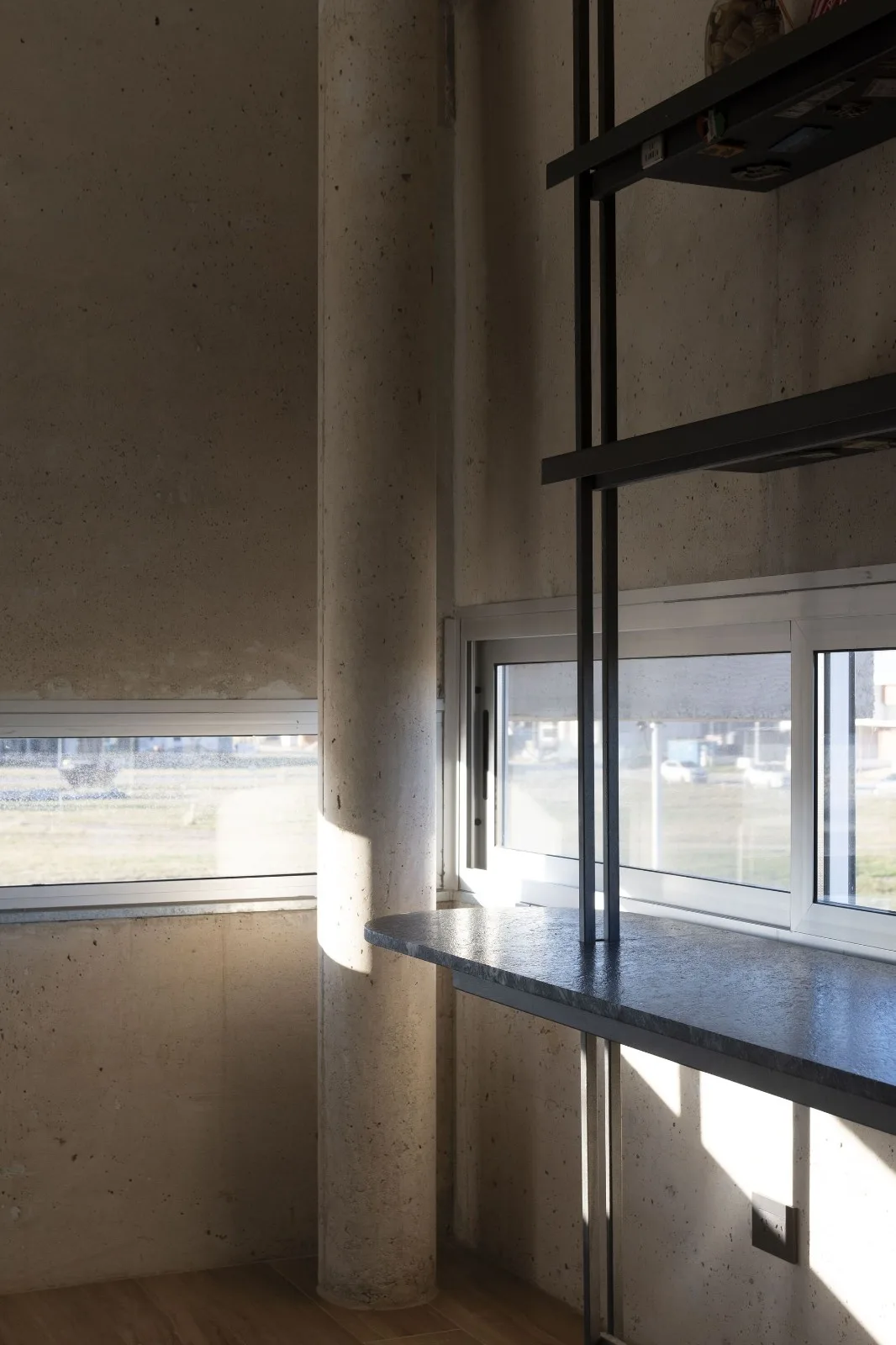
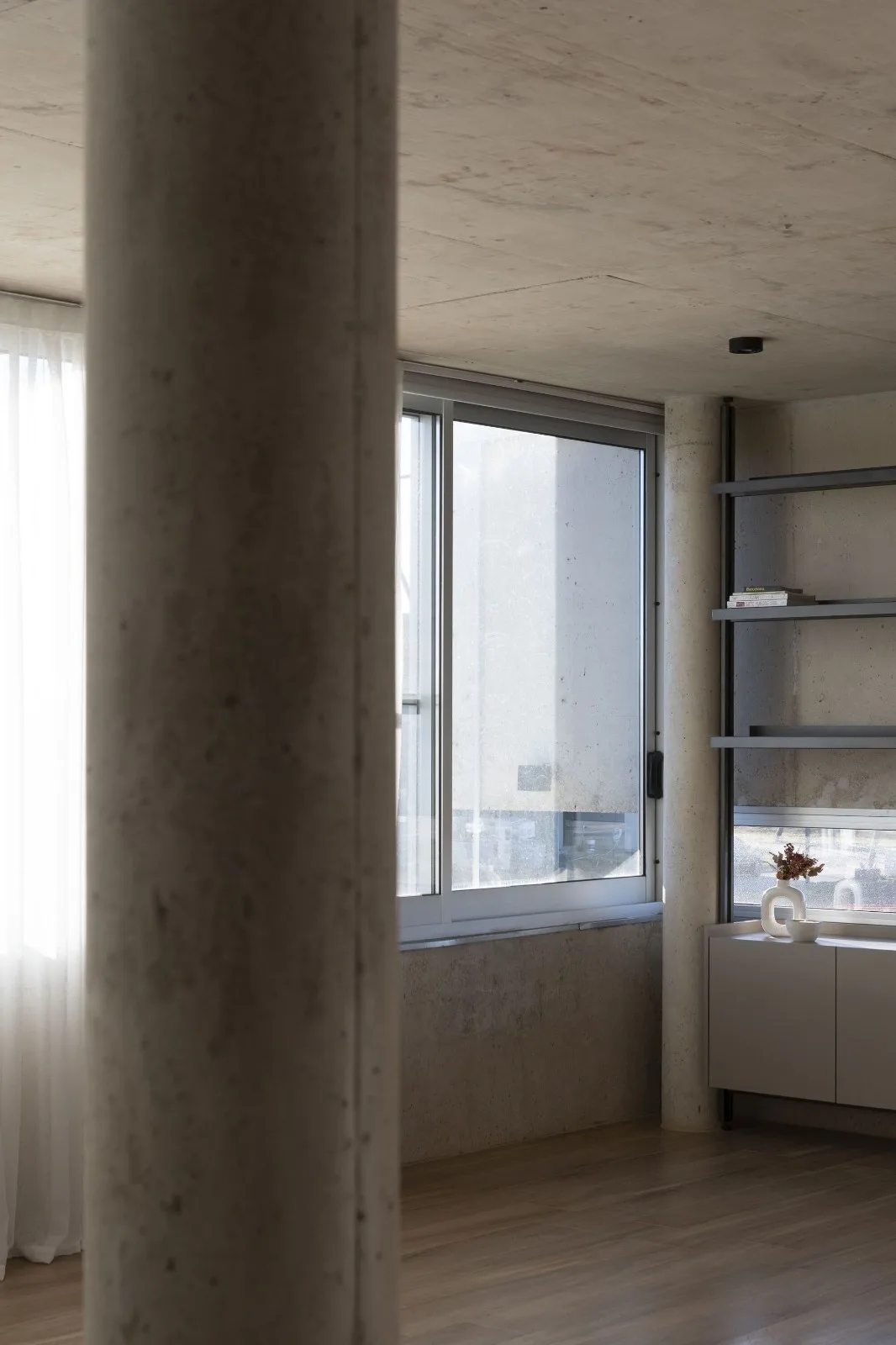
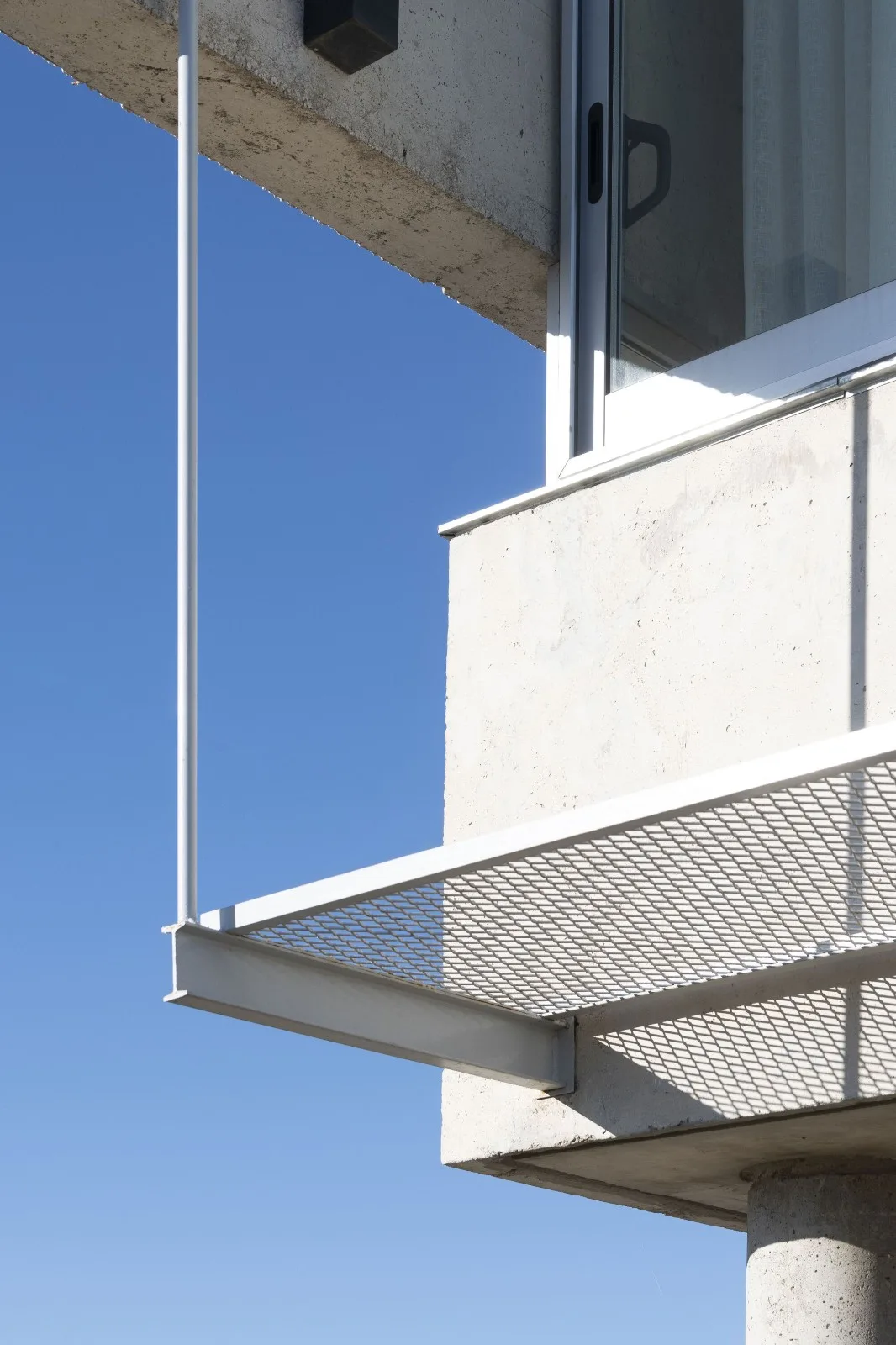
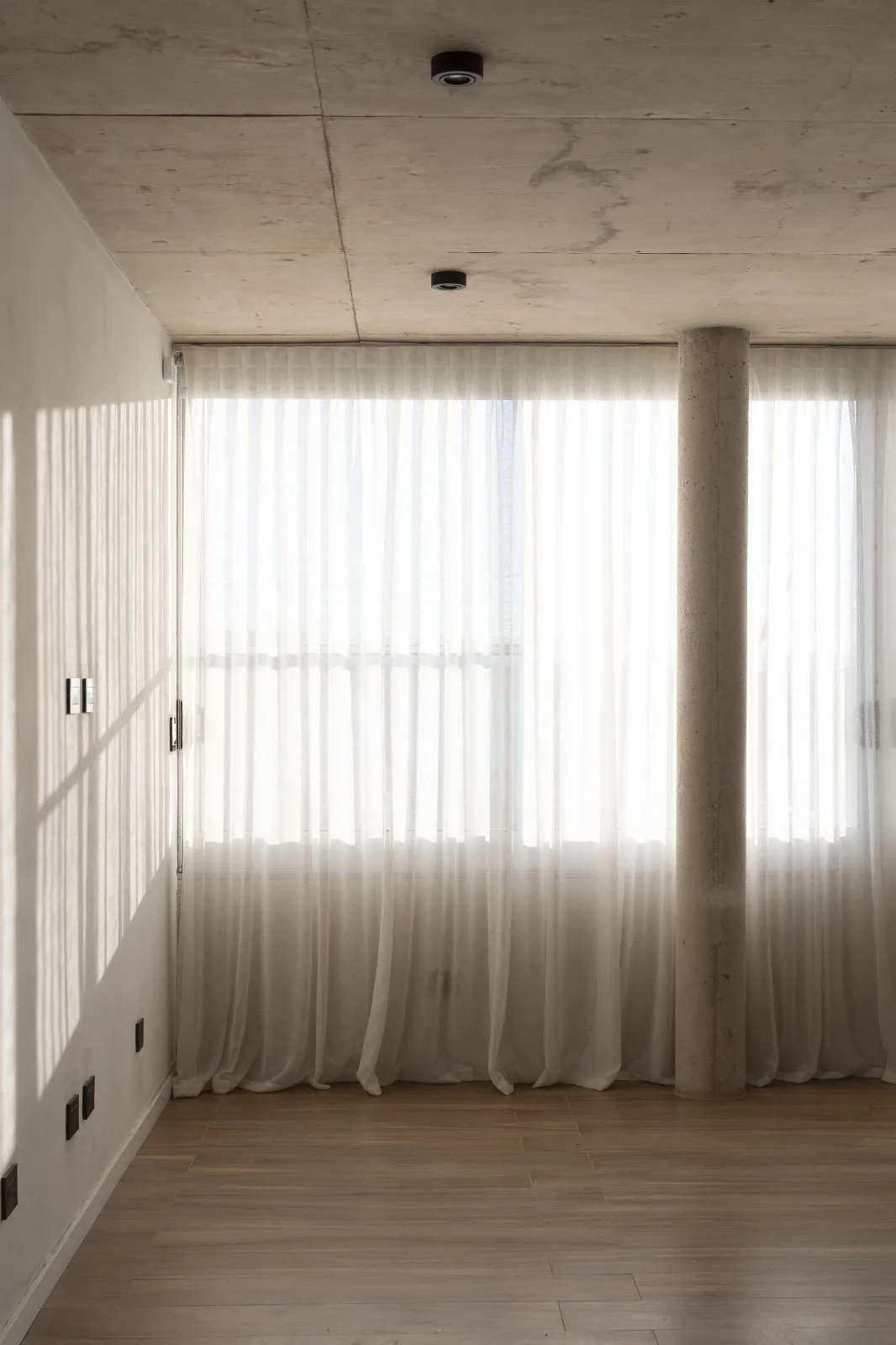
The spatial framework serves as the core matrix, prioritizing experience over objects. The use of materials and technology pays homage to architectural artistry. Concrete is a key element, explored for both its technical and aesthetic qualities, achieving efficiency in structure and space. The design highlights the living experience between columns, emphasizing support, weight, and gravity.
Sustainability
Constructed with high-quality materials, the project emphasizes sustainability through low maintenance impact, natural lighting, and cross ventilation. The layout avoids enclosed spaces, promoting vertical and horizontal flow to maintain connectivity. Elevating the structure preserves the ground’s original state and permeability, minimizing environmental disturbance.
Project Information
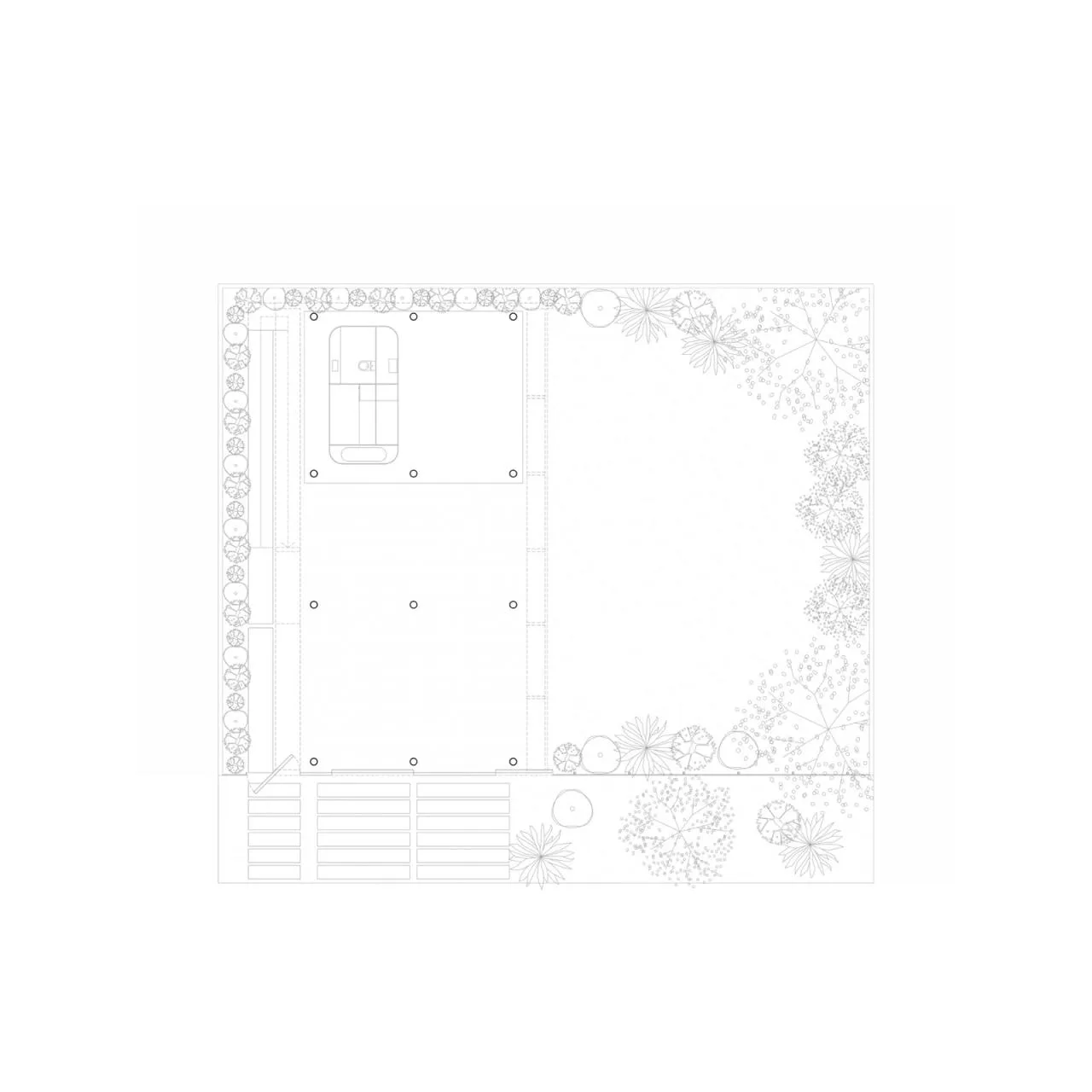
△ First Floor Plan
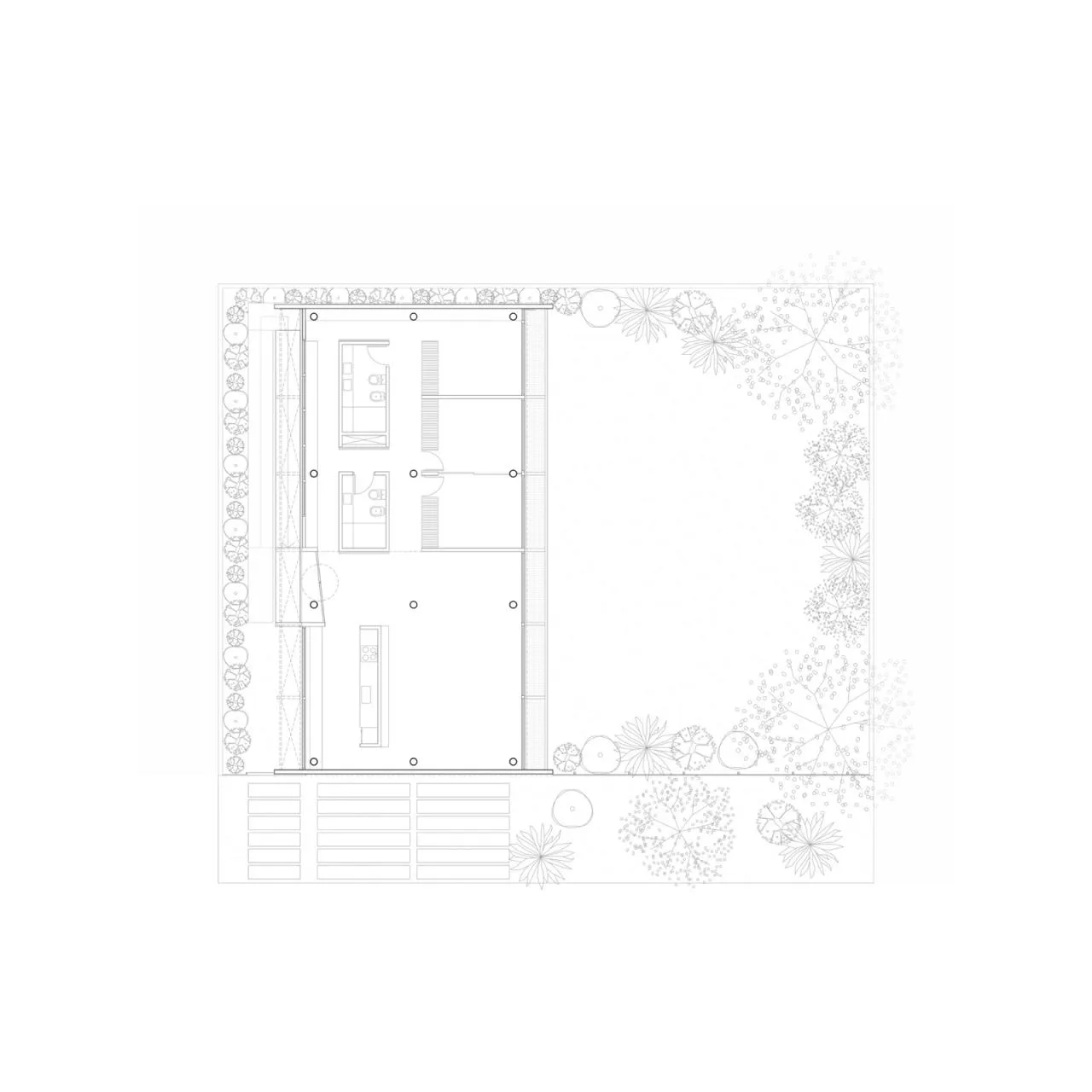
△ Second Floor Plan
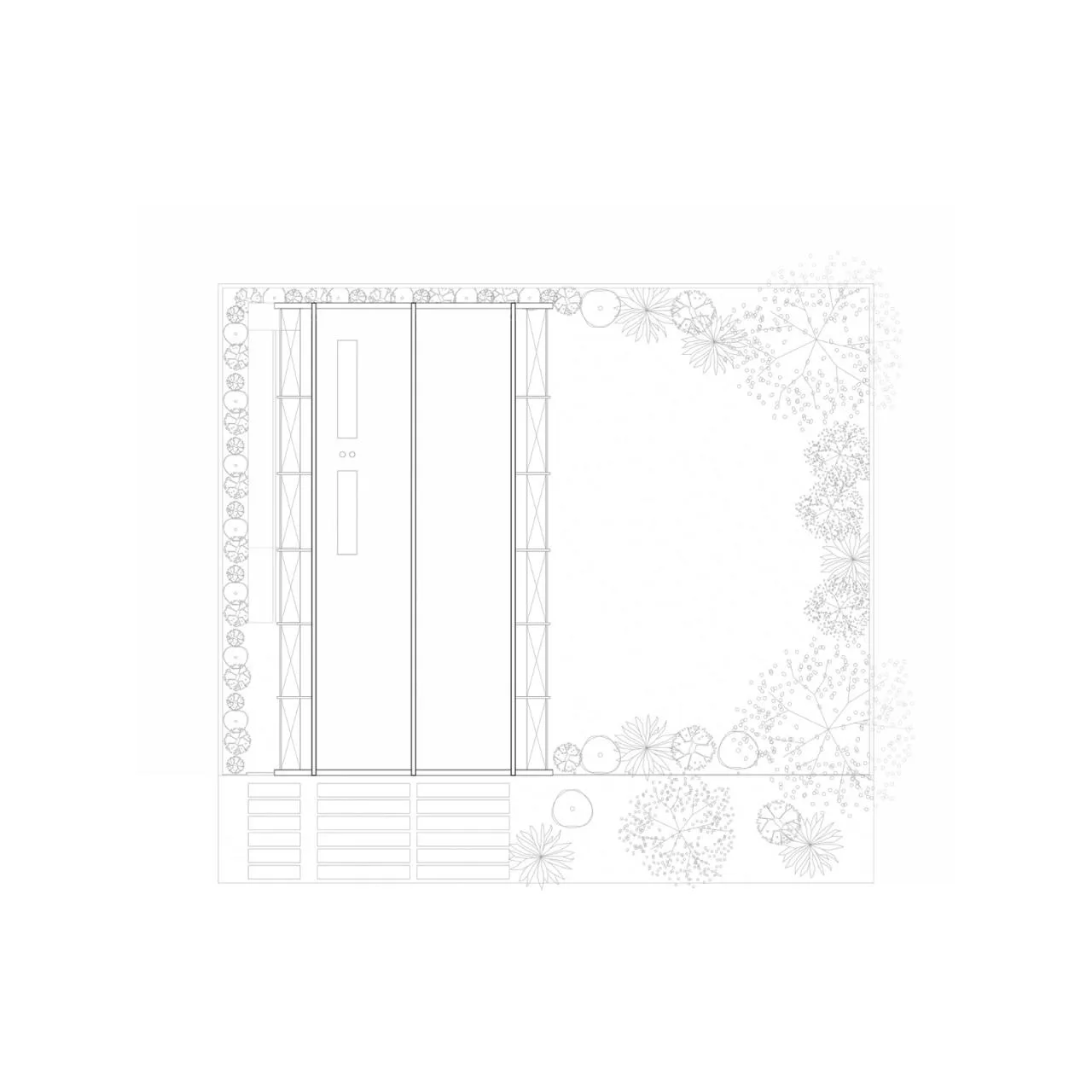
△ Roof Plan
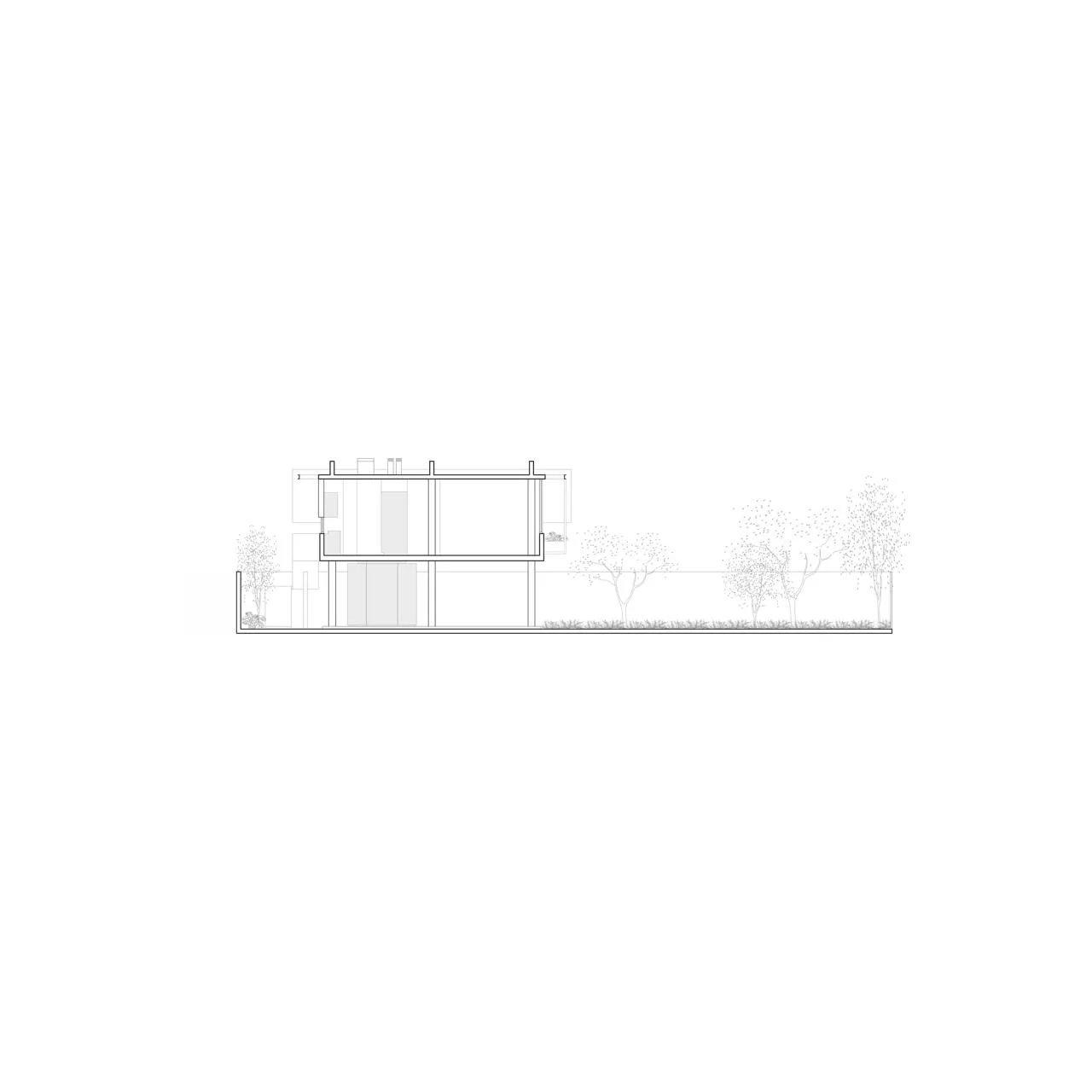
△ Section Diagram
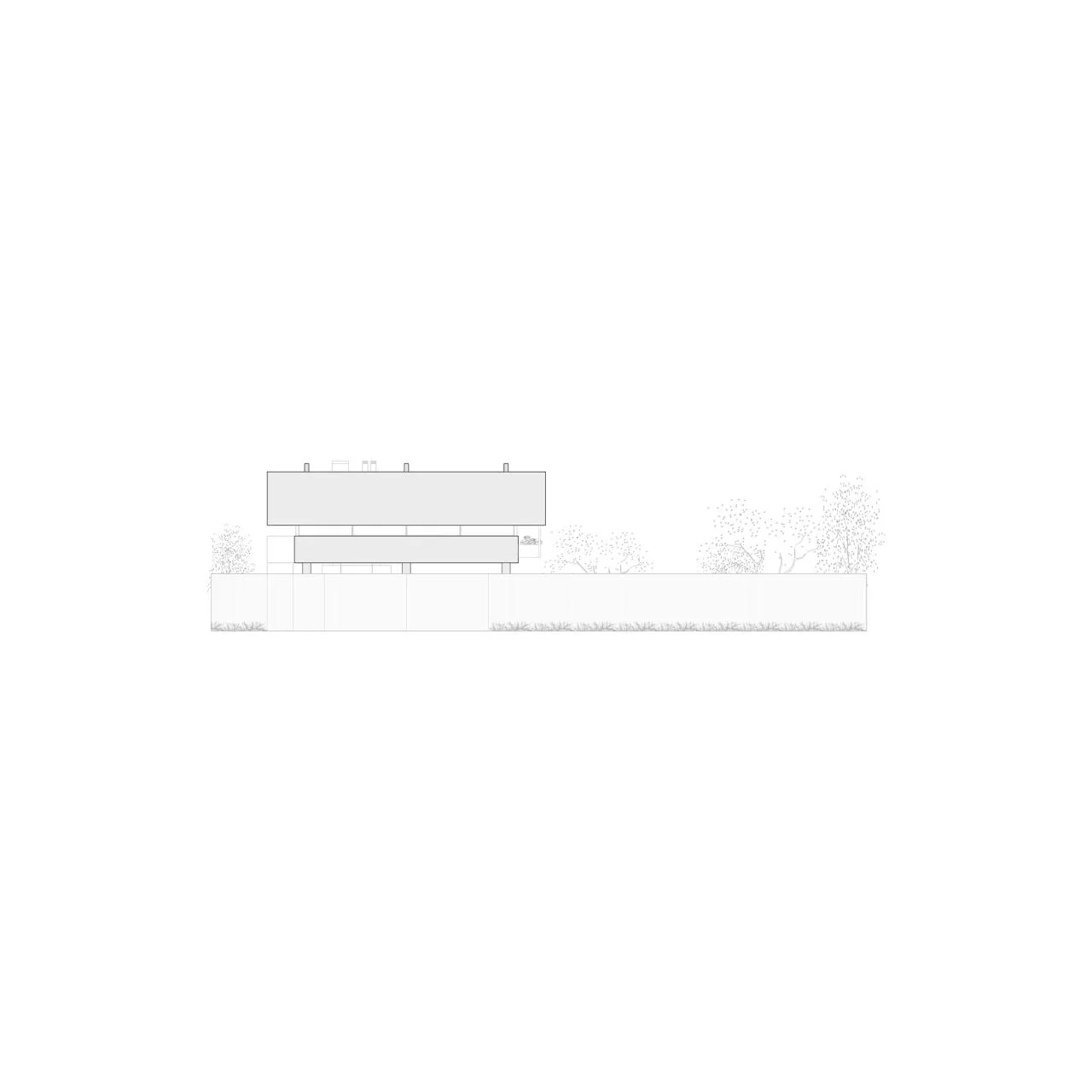
△ Elevation Drawing
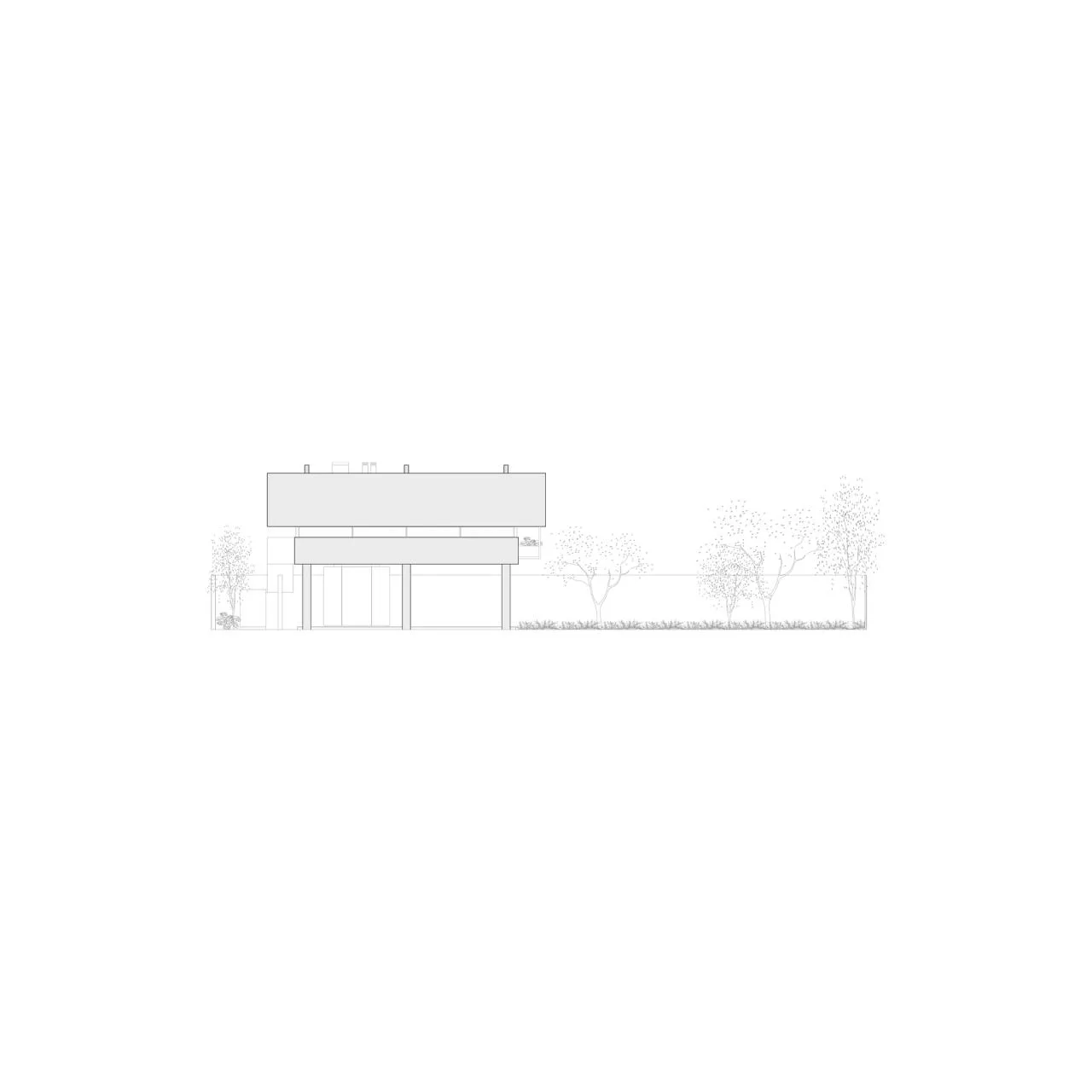
△ Elevation Drawing
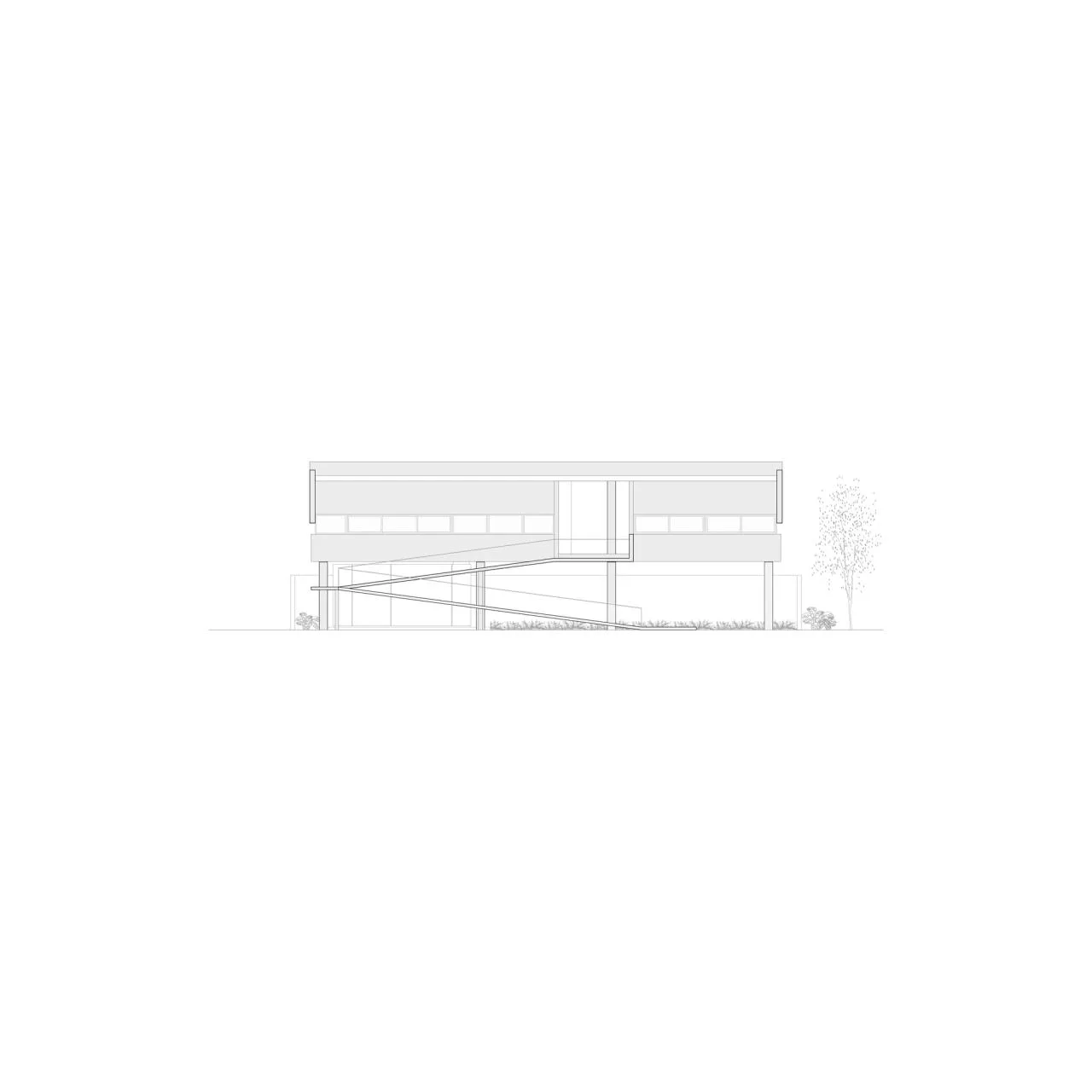
△ Elevation Drawing
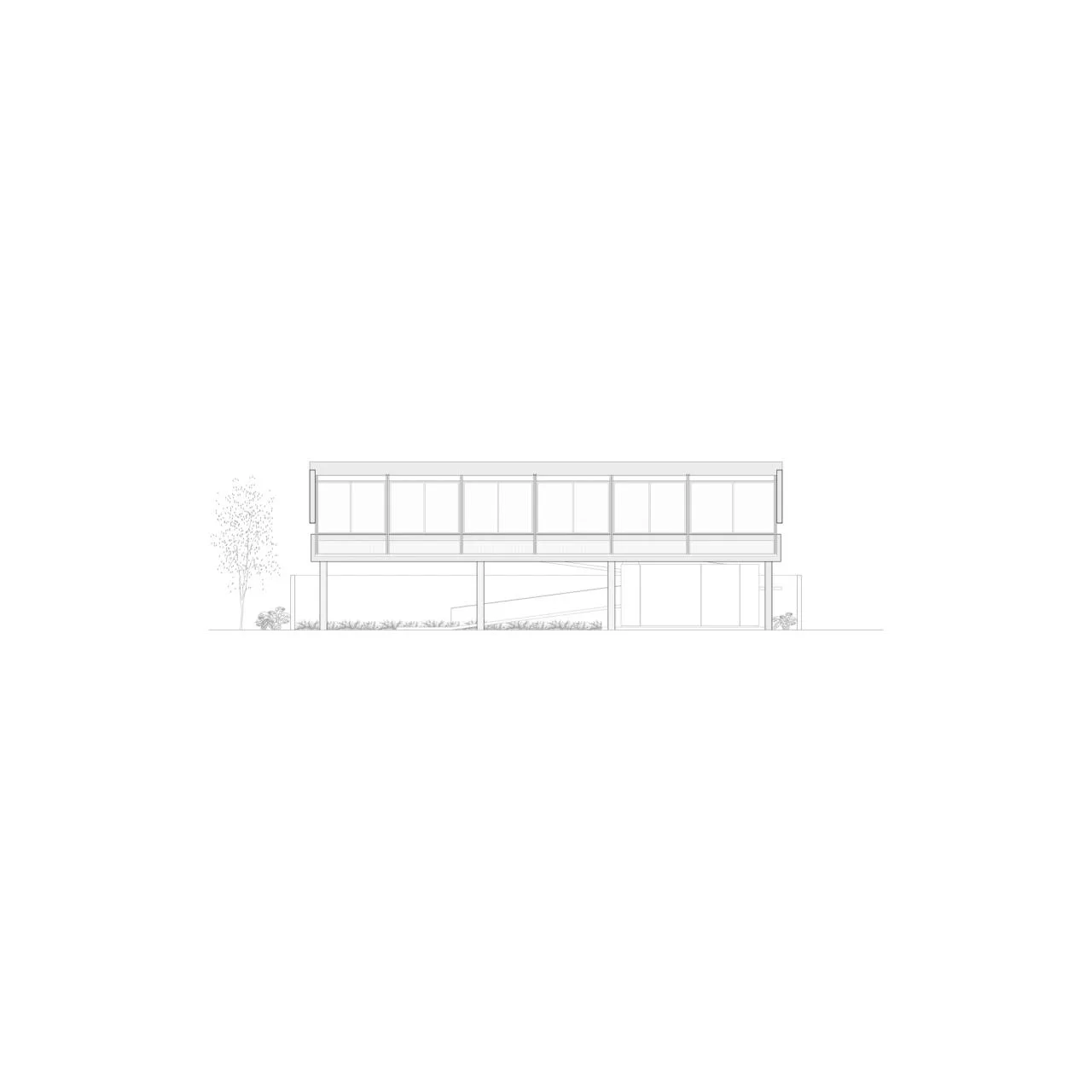
△ Elevation Drawing
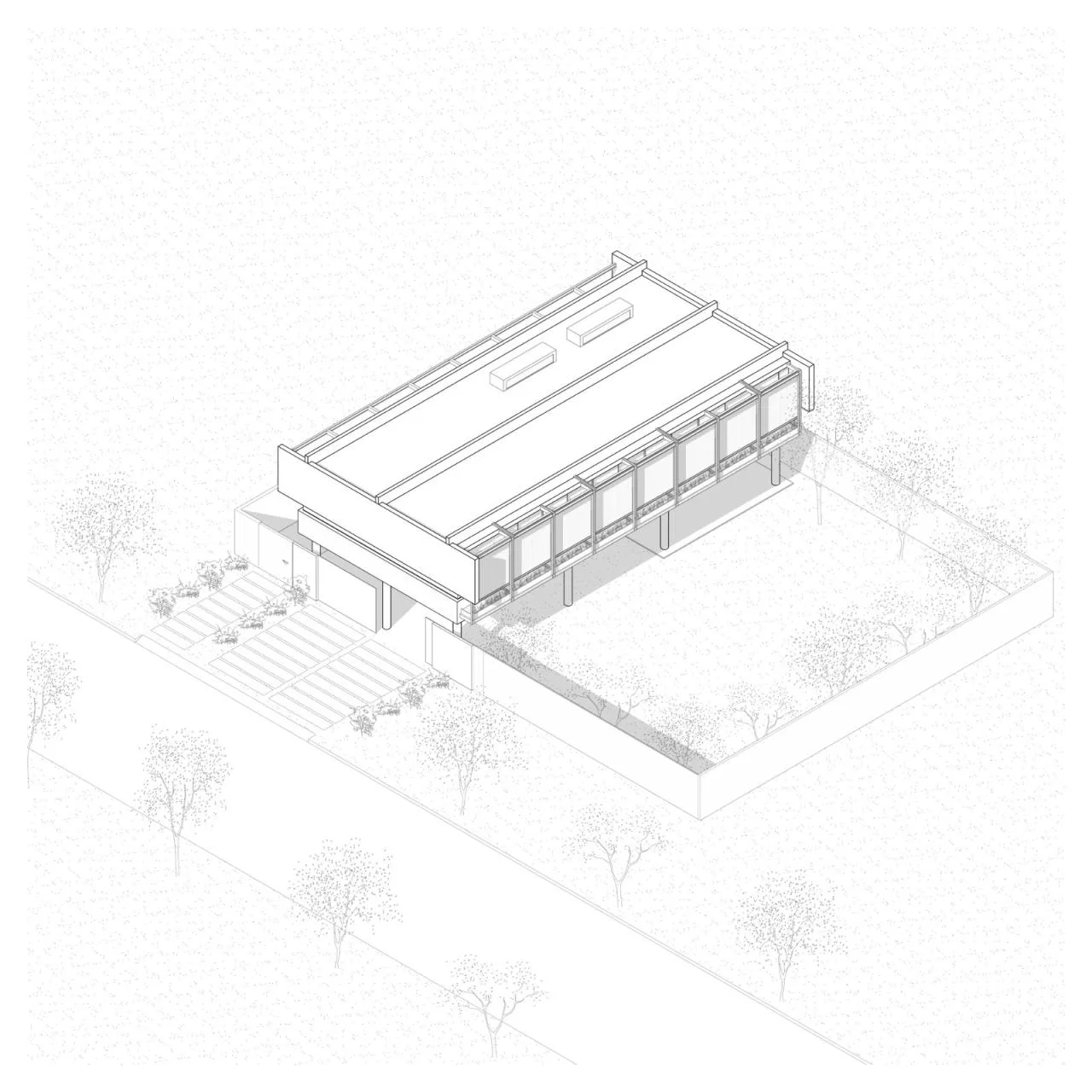
△ Axonometric Diagram
Project Details
Architect: Esteras Perrote
Area: 150 m²
Year: 2023
Photographer: Juan Cruz Paredes
Location: Argentina












Must log in before commenting!
Sign Up