
The EKA Tianwu Art District is situated in Shanghai’s Pudong New Area, specifically in the Jinqiao district. The site originally housed the Zhongchuan Navigation Instrument Factory during the 1950s and 1960s. Commissioned by the property owner, Benzhe Architecture undertook the comprehensive planning, renovation, and design of the area. The ‘Yuanjian’ building, once the mechanical and electrical facility of the navigation equipment factory, stands as the largest structure in the block, prominently positioned at the main entrance. During the renovation, Benzhe Architecture honored the historical heritage and maritime culture embedded in the site, skillfully blending contemporary design elements to breathe new life into the building. From the moment I first stepped onto EKA’s celestial grounds, the unique maritime spirit of the neighborhood was palpable.
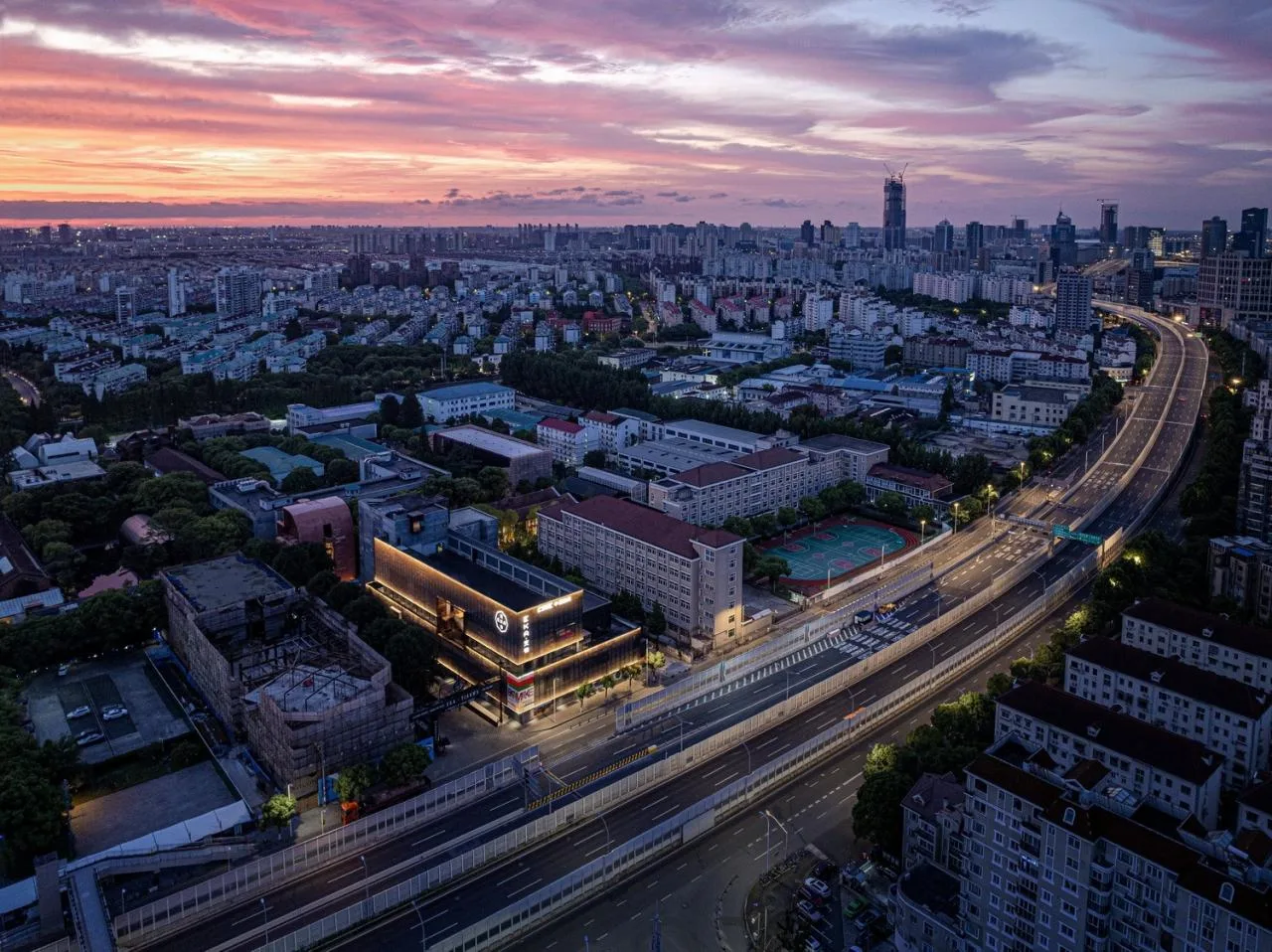
The distant ship on the edge of the middle ring © Su Shengliang
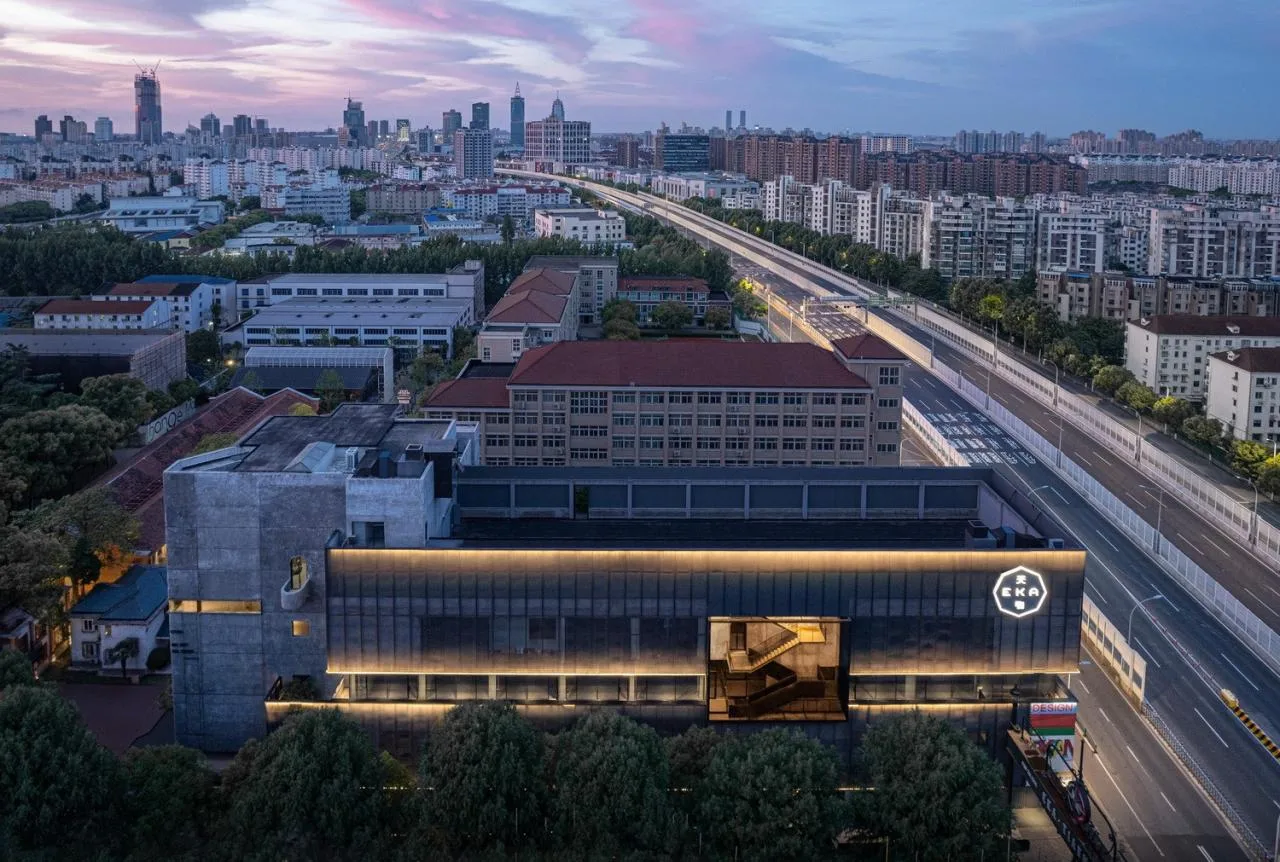
North facade viewed from above © Su Shengliang
The ‘Far Ship’ building greets visitors at the block’s main entrance, facing Central across an open air space, serving as a showcase for EKA’s celestial objects to the outside world. Originally a rectangular factory structure with a traditional, slender layout, the design employs a vast steel wire mesh to envelop the old building. This approach preserves its original texture while layering and redefining the structure, seamlessly merging the old with the new. The mesh wrapping unifies the building’s appearance, enhancing its monumental presence and evoking the image of a giant ship, awakening the maritime memories of the park. The buildings, shrouded in black steel mesh, appear mysterious and intriguing, inviting exploration.
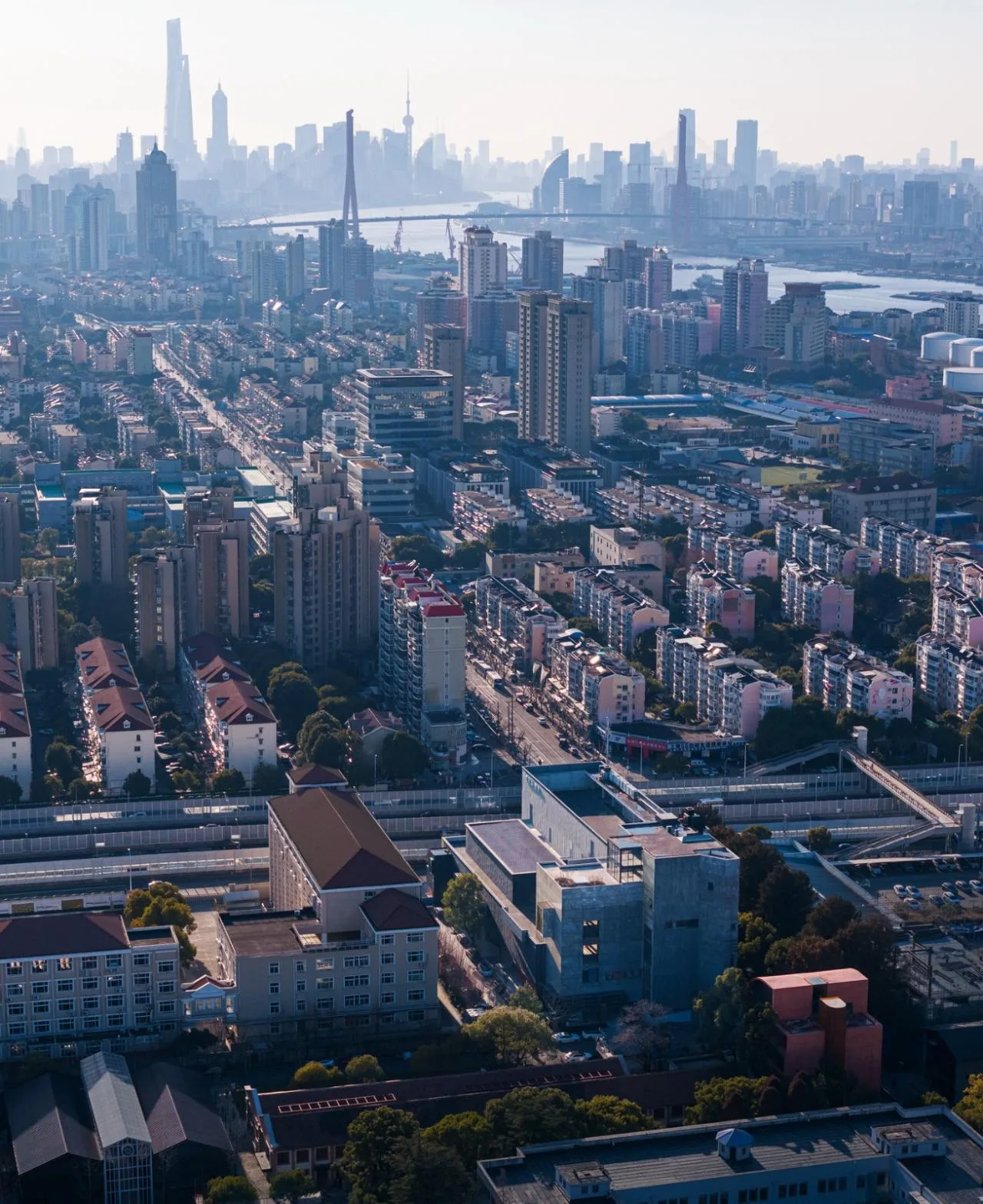
A distant ship from a bird’s eye view, with the Huangpu River, Shanghai’s mother river, stretching into the distance © Su Shengliang
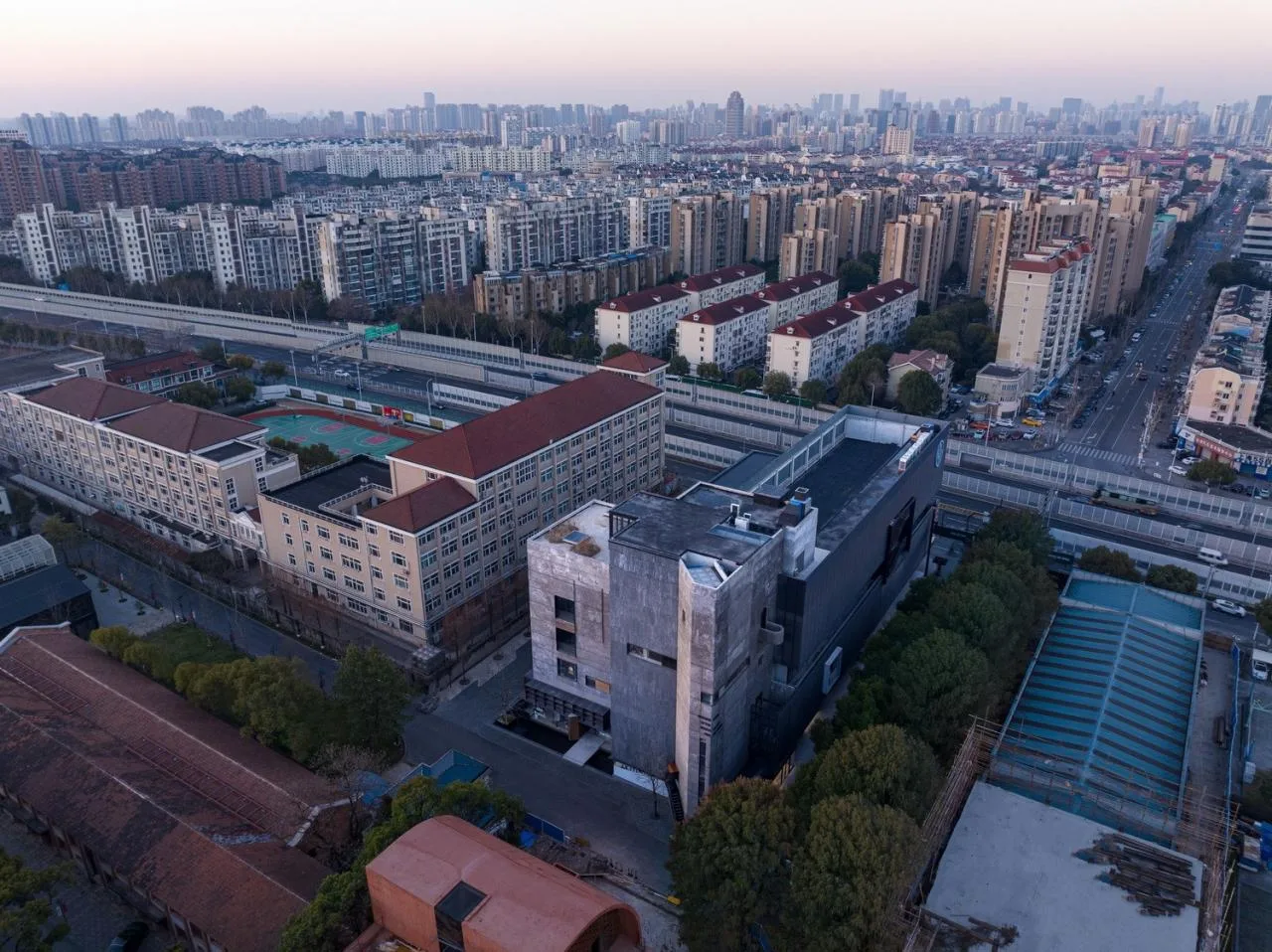
Composition and texture of the east facade viewed from above © Su Shengliang
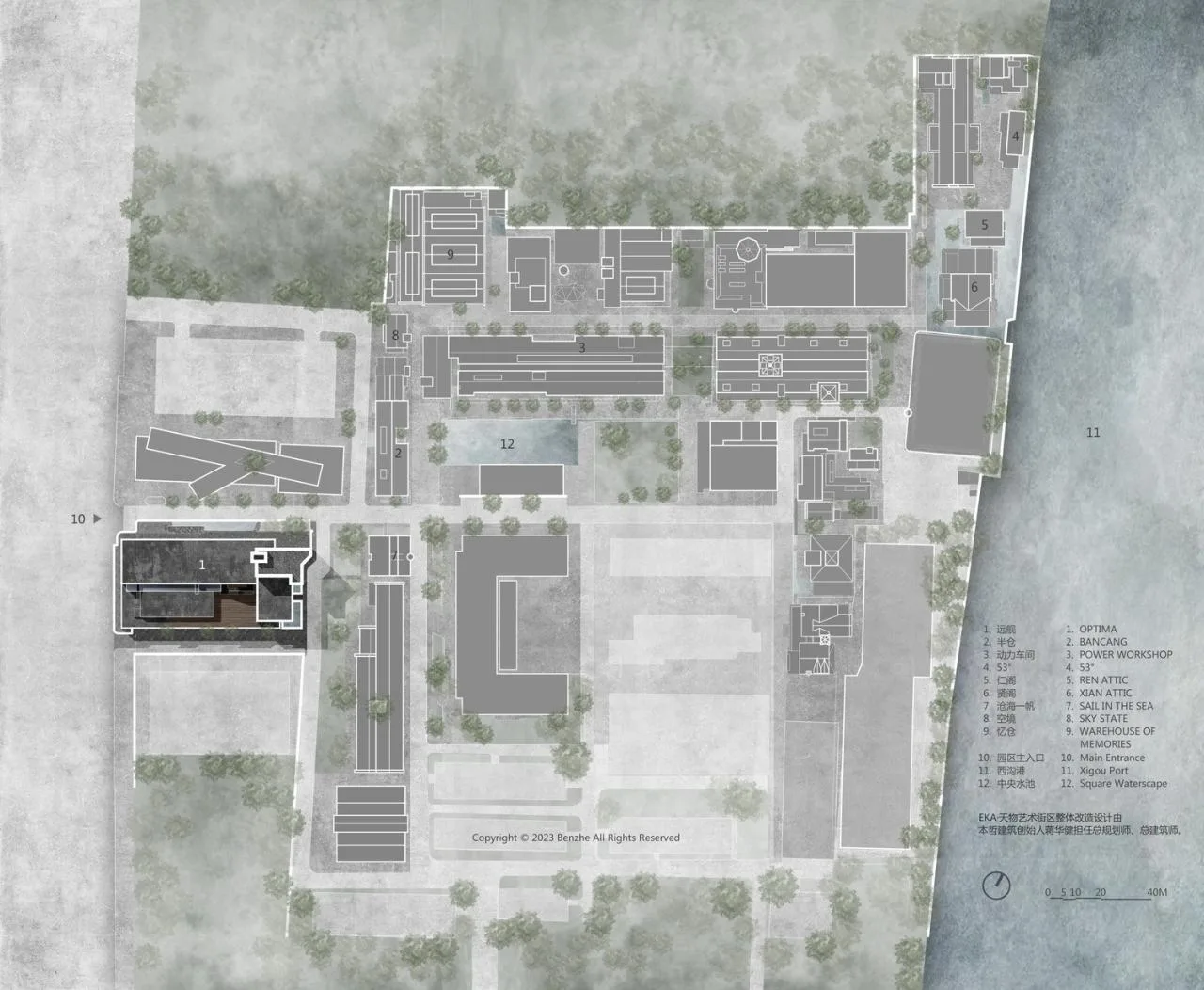
Positioning of the distant ship in EKA Tianwu District © Benzhe Architecture
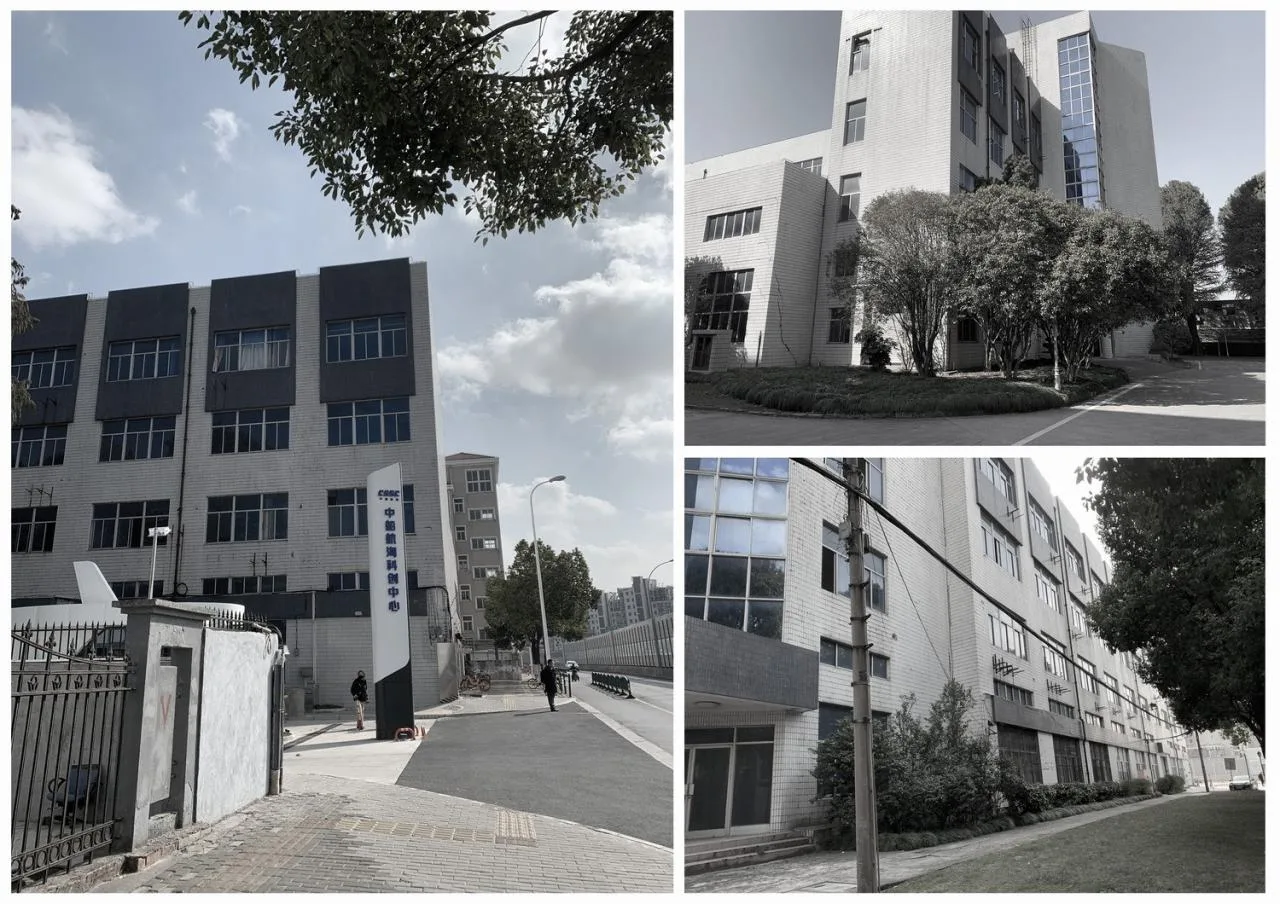
Original appearance of the building © Benzhe Architecture
The first floor features an open design with a newly added external staircase on the north side, connecting from the bottom to the top. The upper staircase winds and folds, intentionally disrupting the building’s external symmetry. The lower staircase, crafted from water-brushed stone, offers a sculptural quality that integrates interior and exterior spaces with a play between solid and void. Multiple terraces punctuate the north facade, arranged in a staggered, geometric pattern that encourages social interaction and appreciation. Embedded within the entrance floor is a guide map, serving both display and navigational purposes. A tiered water feature separates pedestrian and vehicular traffic, fostering a comfortable and tranquil environment.
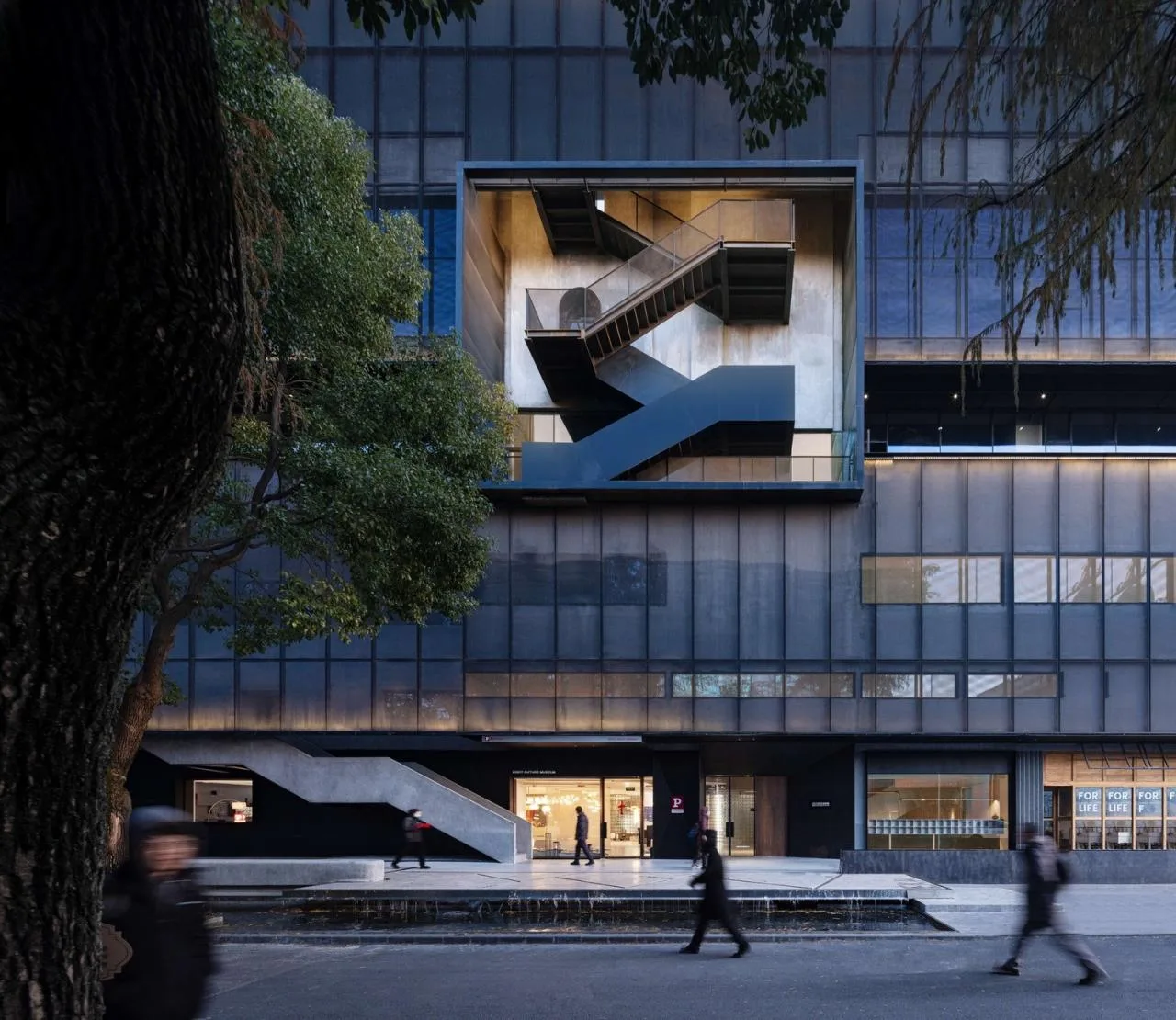
The rich texture of the north facade © Su Shengliang
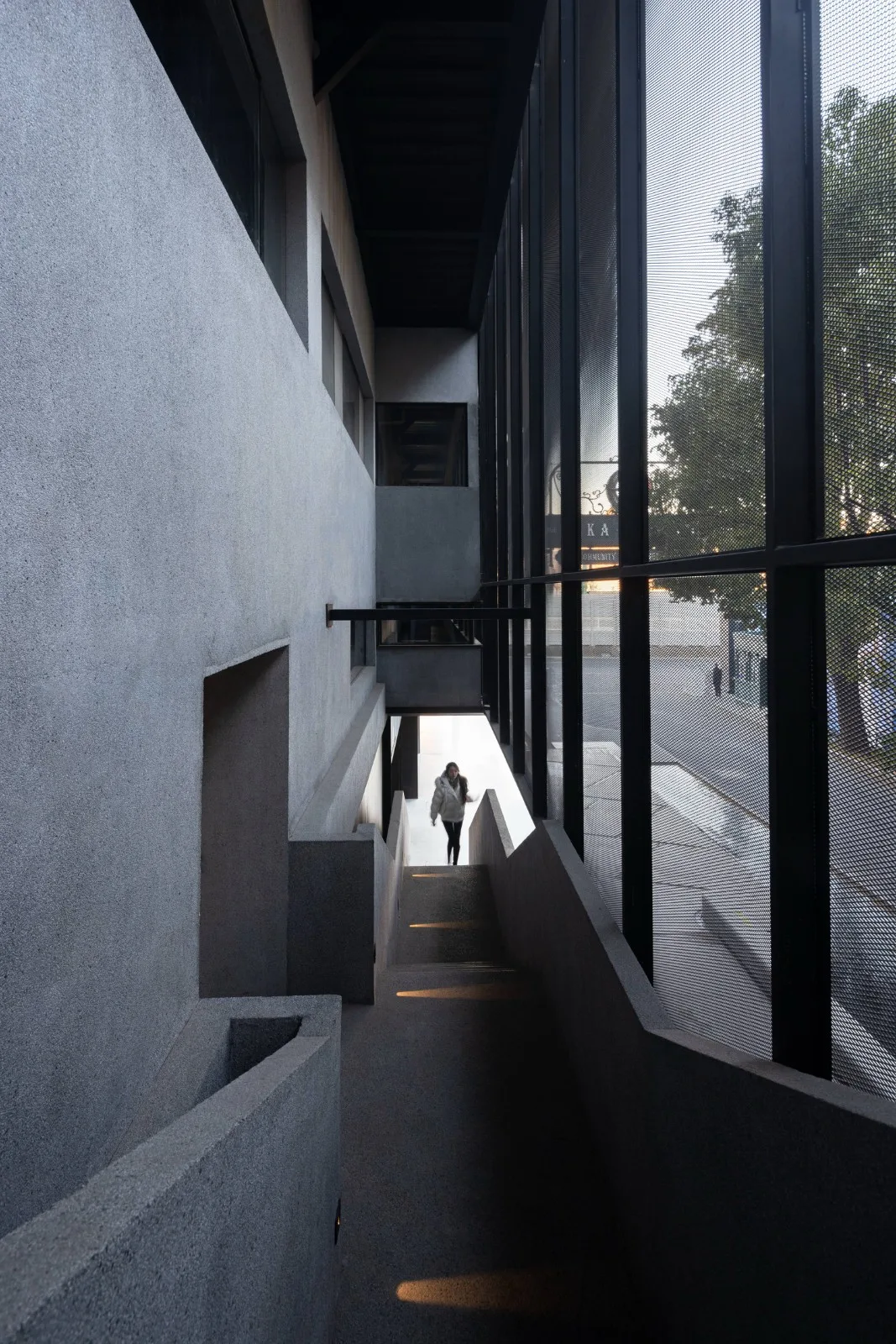
External staircases connecting interior and exterior spaces © Su Shengliang
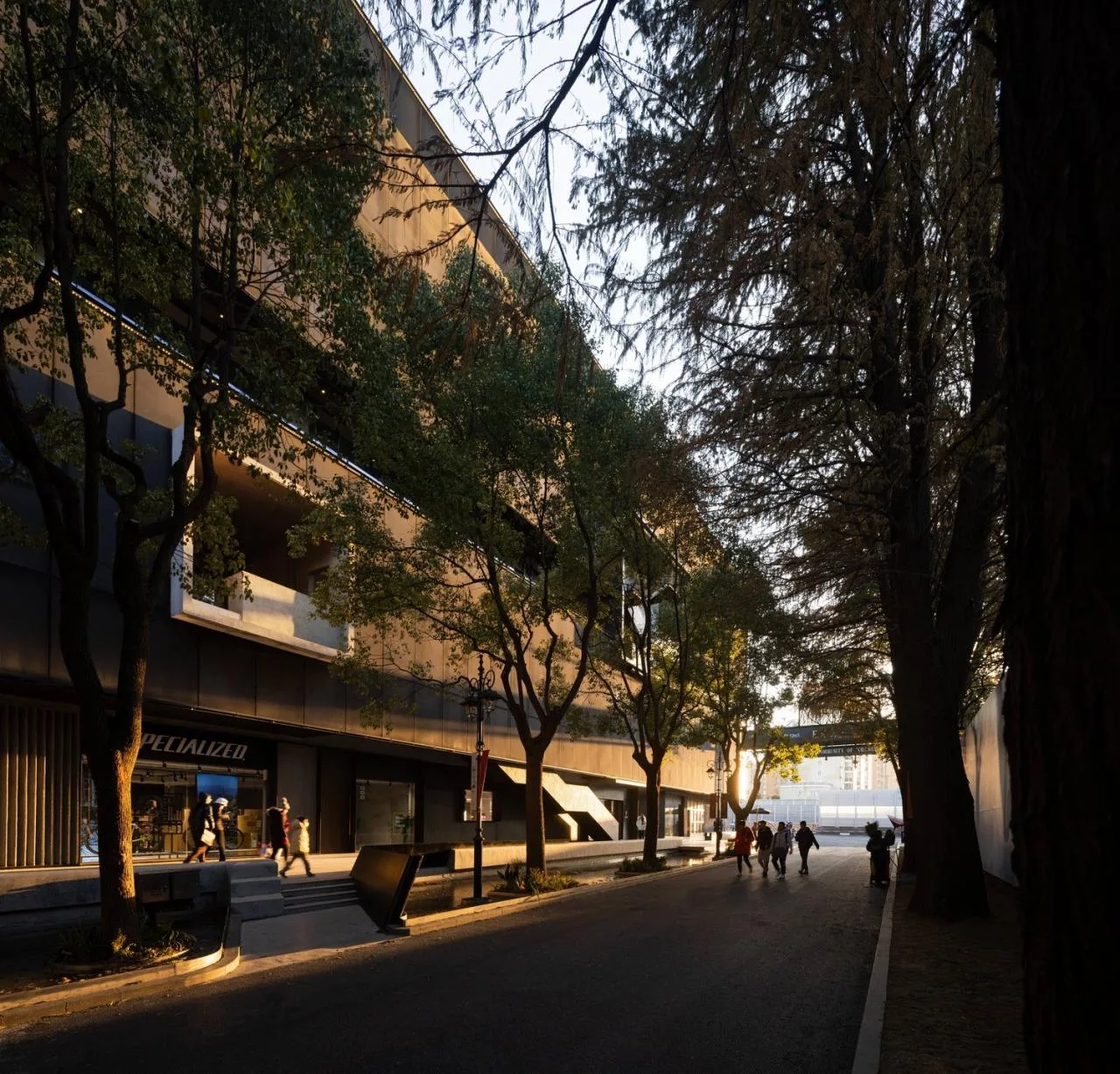
Coexistence of the distant ship and century-old trees © Su Shengliang
The east facade preserves the building’s original architectural form, featuring a rustic gray water-brushed stone finish that retains the texture of the original exterior wall. This contrasts and complements the black mesh wrapping on the west side, with localized wrinkled line textures that enrich the facade’s visual diversity. Square glass windows of varying sizes and shapes punctuate the east side, creating an elegant composition of dots, lines, and planes—simple yet detailed.
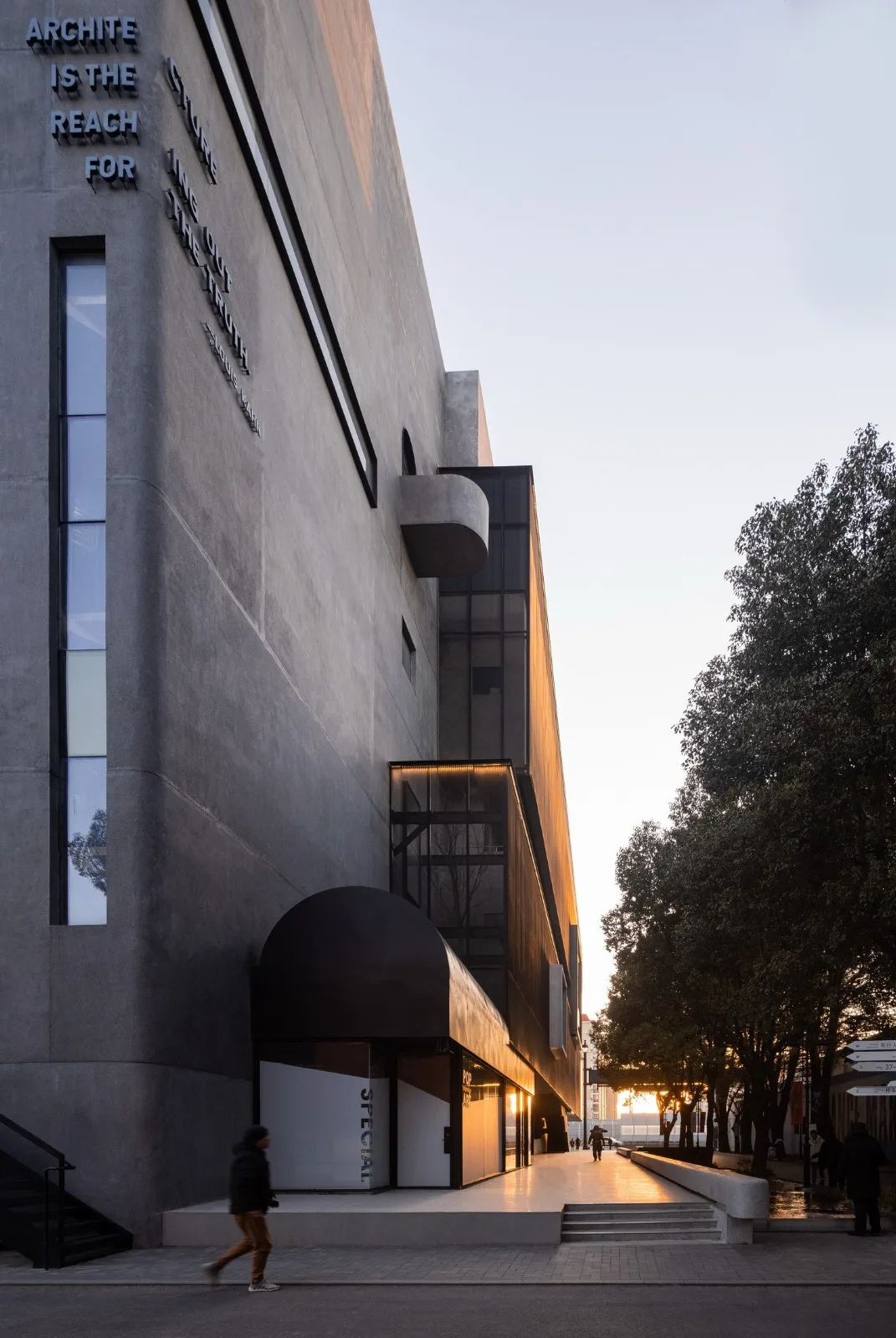
The distant ship bathed in sunset glow © Su Shengliang
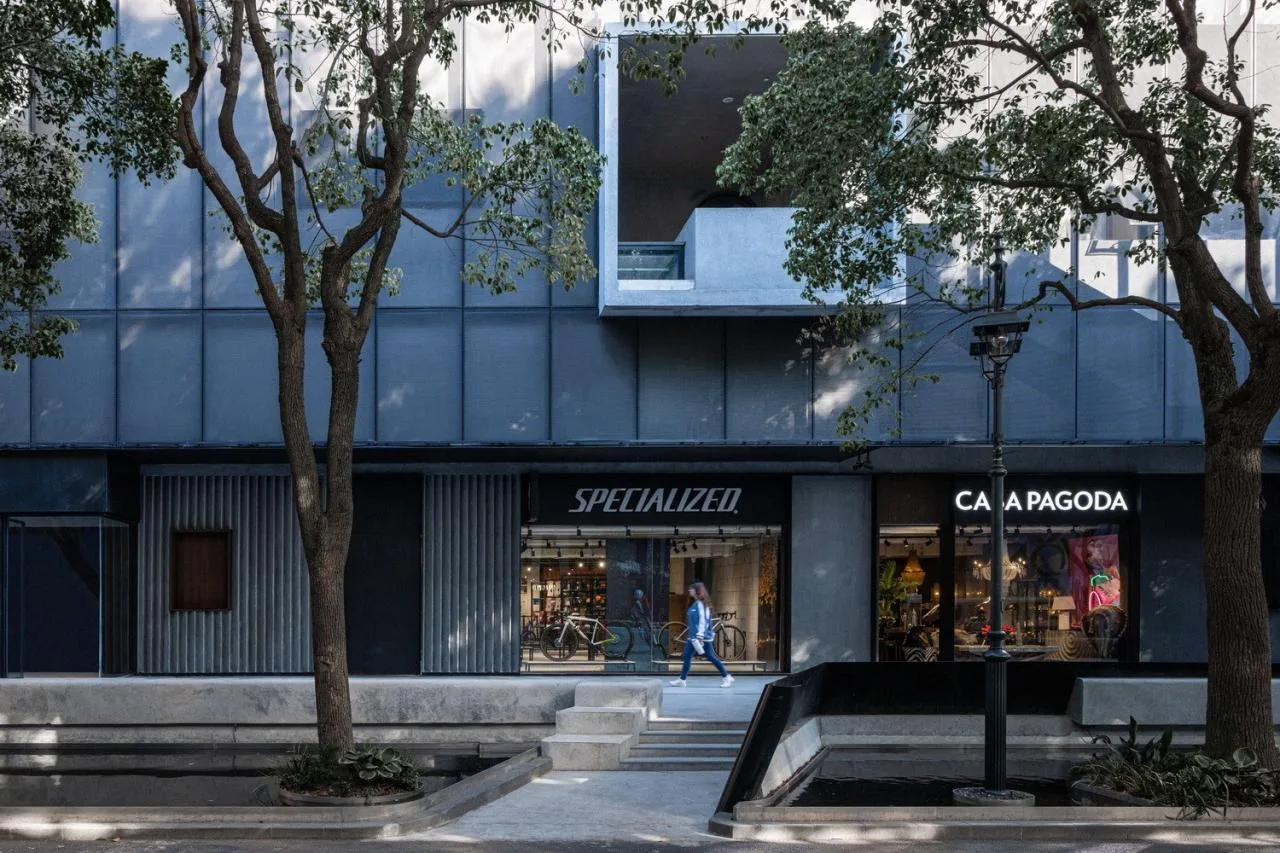
A terrace that disrupts the building’s balance © Su Shengliang
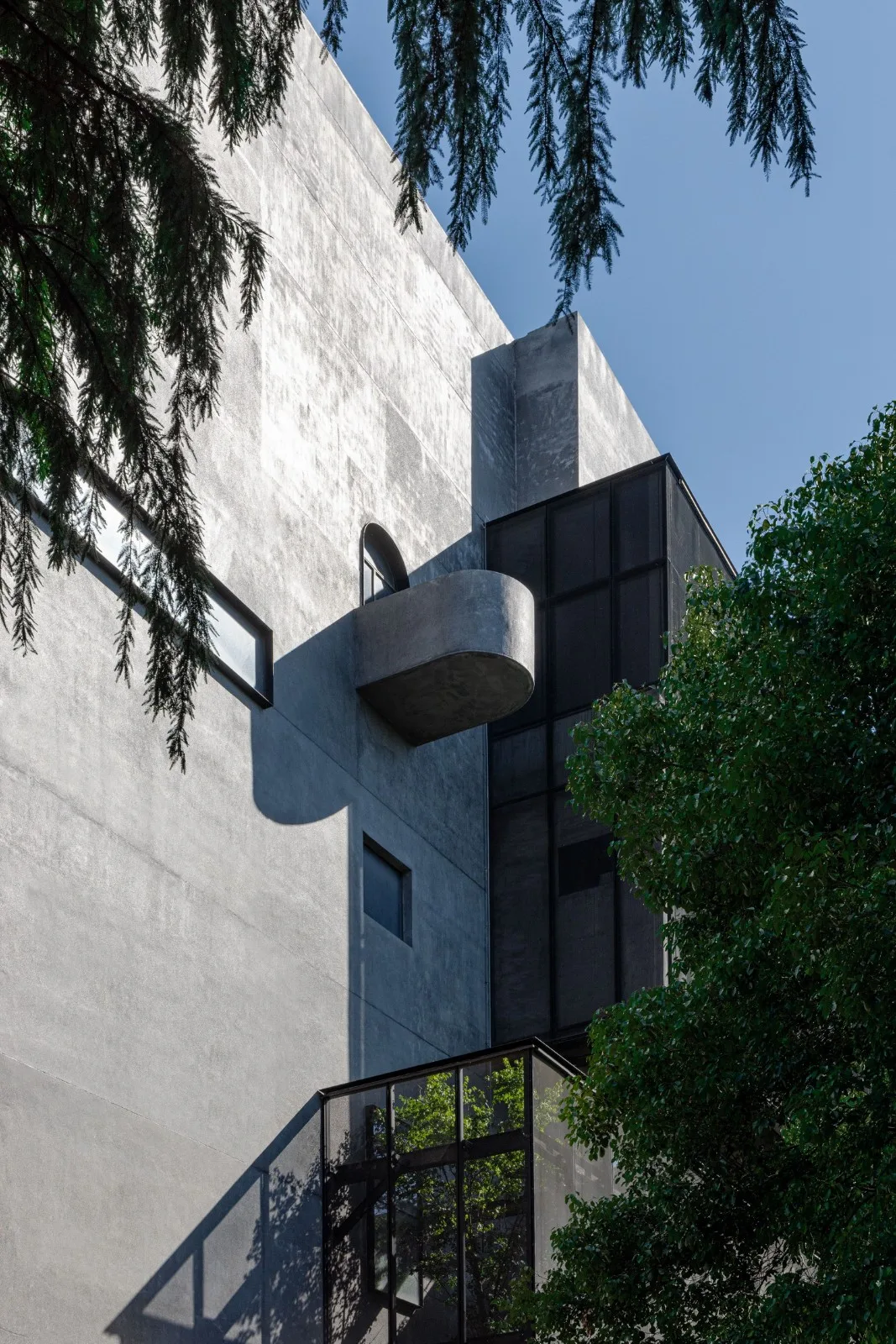
Facade texture illuminated by sunlight © Su Shengliang
The mechanical and electrical building was originally composed of two separate structures, now unified through stacked volumes in the redesign. The south block’s rooftop features a spacious terrace resembling a ship’s deck, offering a space for breathing, socializing, and relaxation. On the terrace’s inner north side, a steel staircase with railing transitions from solid to void, creating a striking interplay between materiality and transparency.
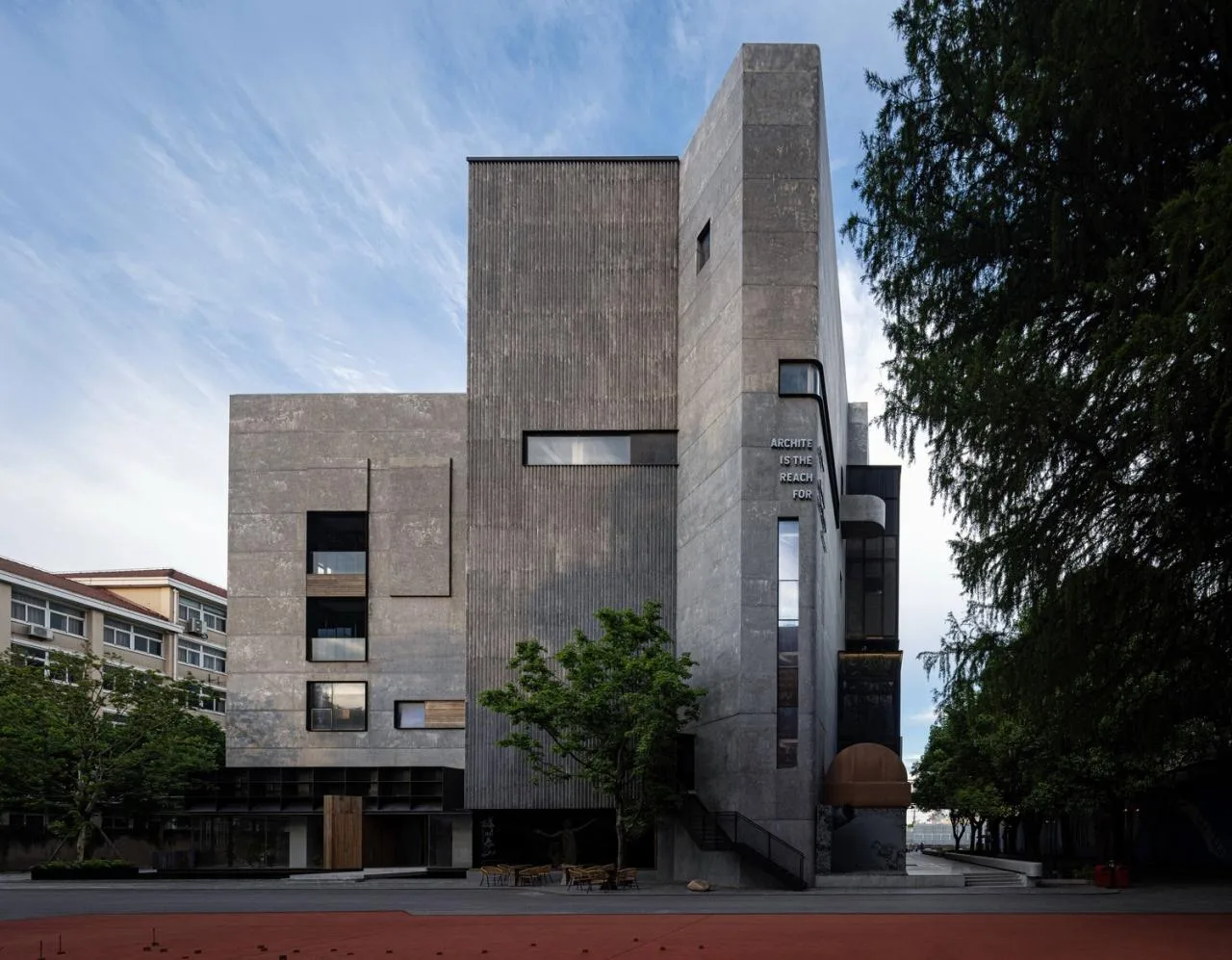
Geometric composition of points, lines, and surfaces © Su Shengliang
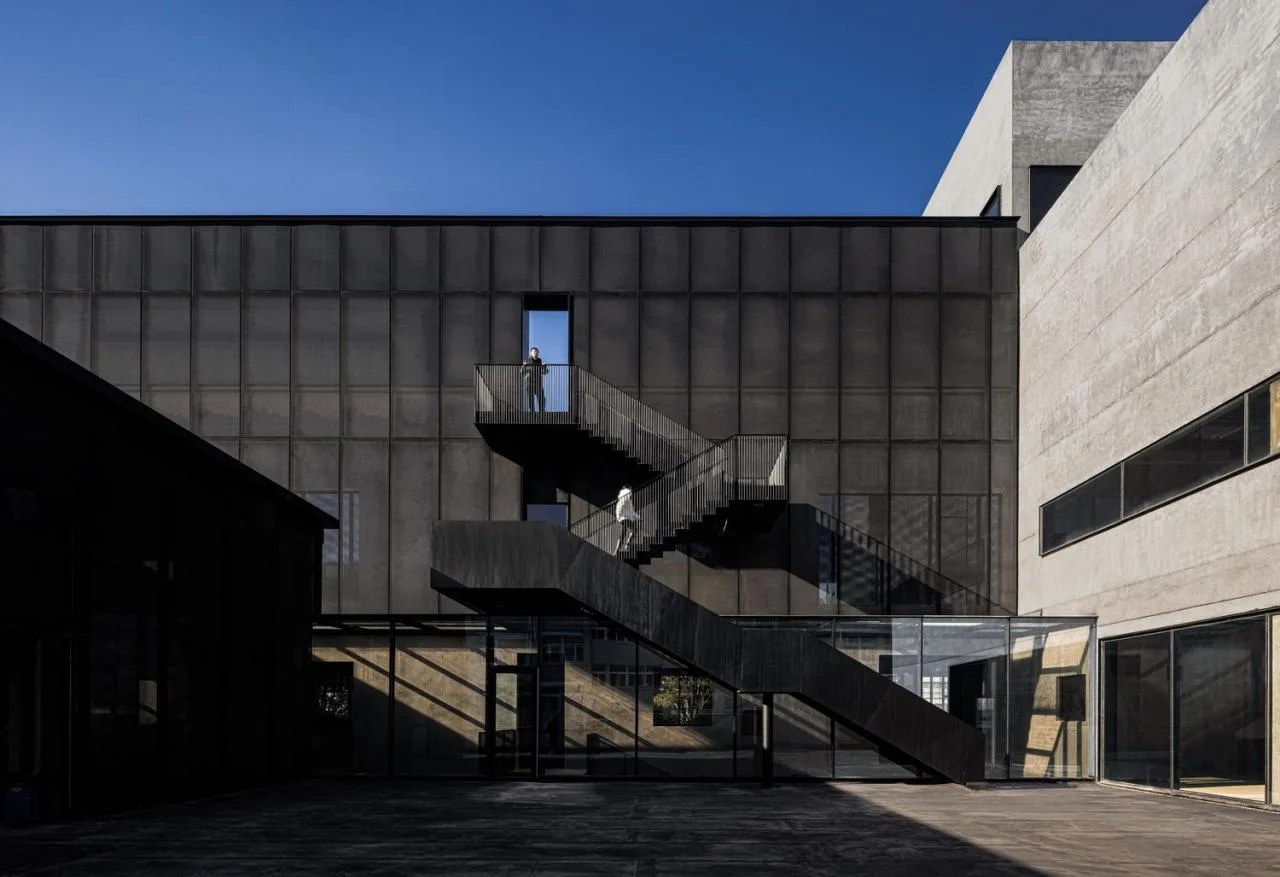
Corner staircase transitioning from solid to transparent © Su Shengliang
The lobby’s reception area on the first floor features a reception desk composed of two elongated, raw I-beams arranged side by side, embodying a primitive and unadorned aesthetic. Adjacent to the resting area is a newly created semi-open water feature, where the sunset’s shimmering waves dance on the surface. Overlapping wooden and terrazzo platforms appear to float on the water, inviting visitors to pause and experience the passage of time.
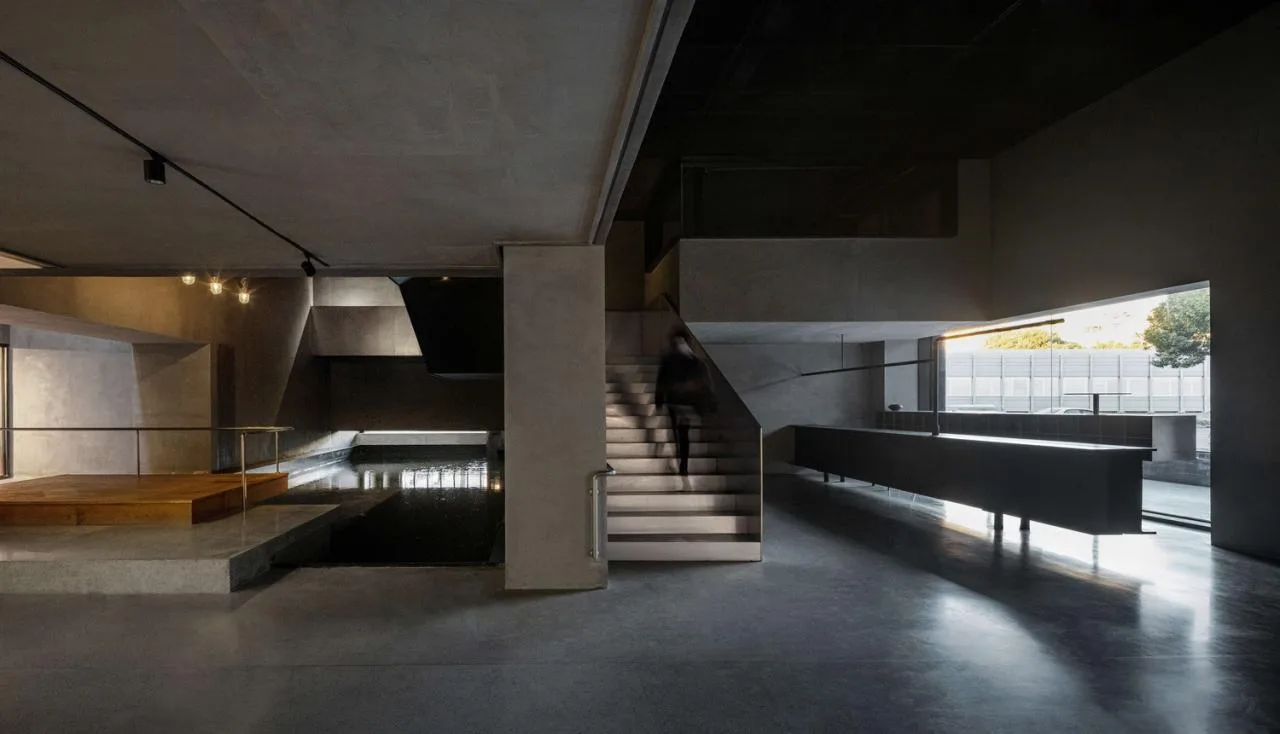
Reception and resting area on the first floor © Su Shengliang
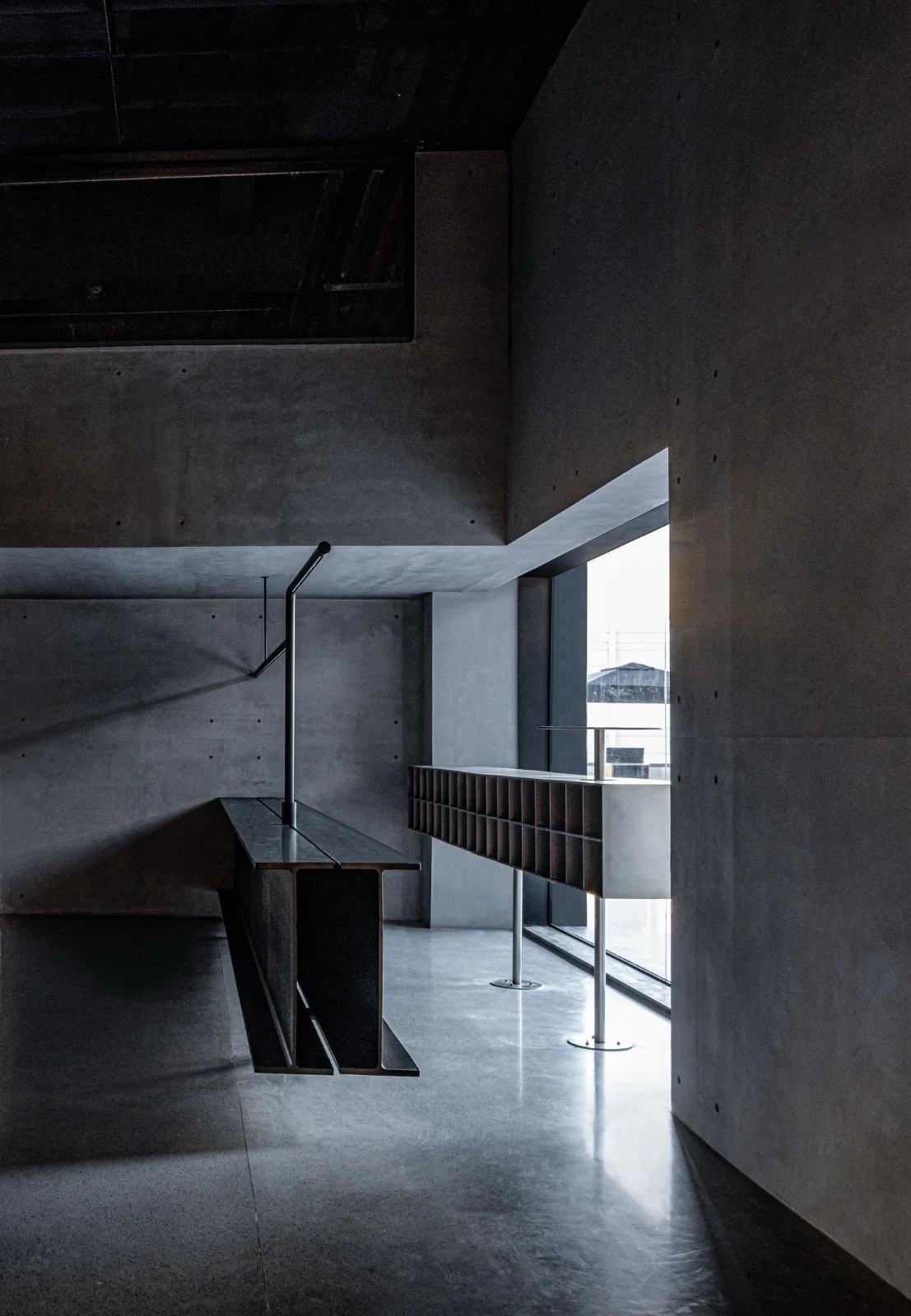
Reception desk details © Su Shengliang
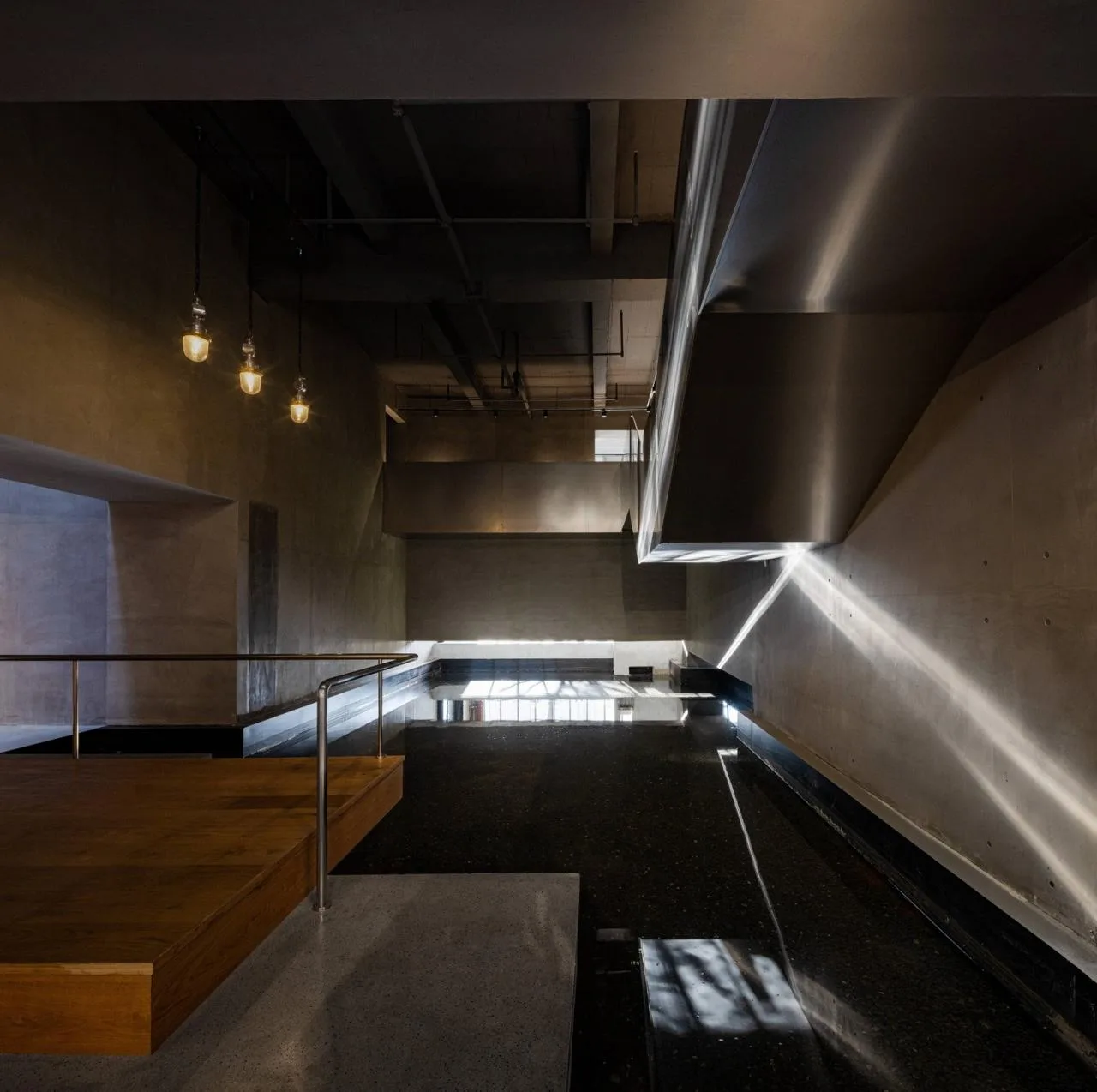
The sunset’s reflection on the water surface © Su Shengliang
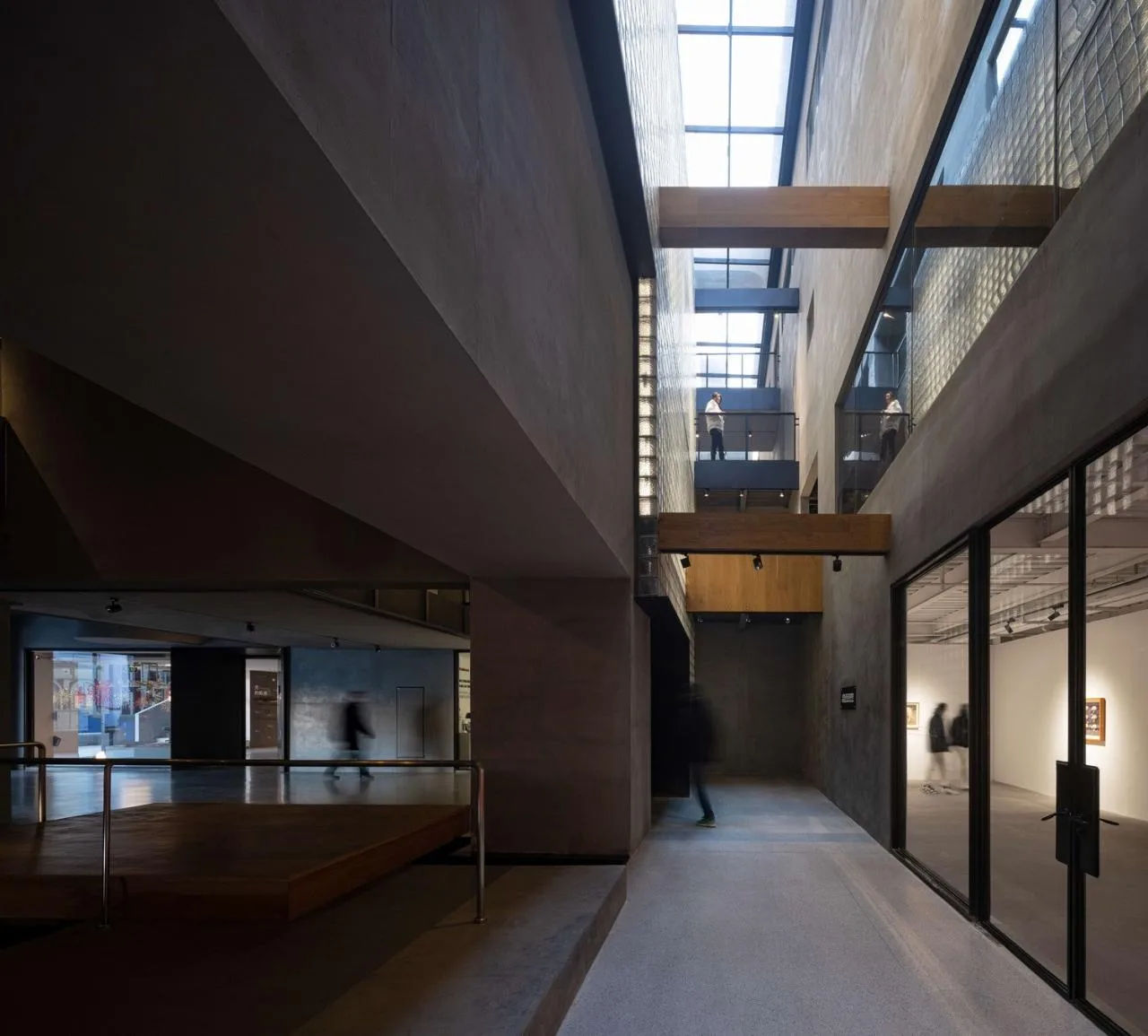
High-rise atrium design © Su Shengliang
The building adopts a staggered high-rise design with several skylights to introduce abundant natural light and atmosphere into the interior. The interplay of light and shadow balances the industrial rigor with openness and warmth. The interior features an open plan where various spaces are connected via corridors and bridges, promoting interaction and dialogue among occupants.
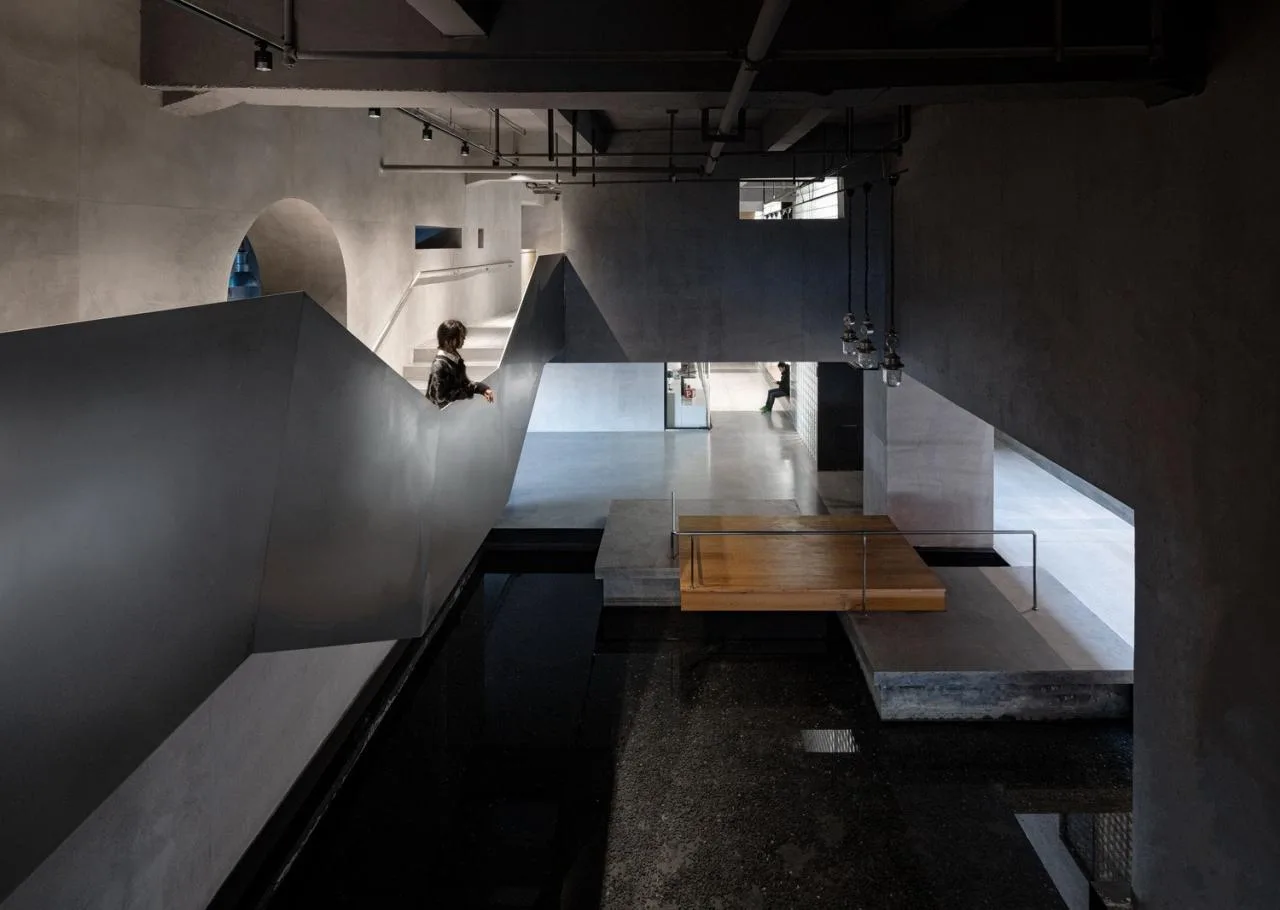
Experience the presence of water from multiple perspectives © Su Shengliang
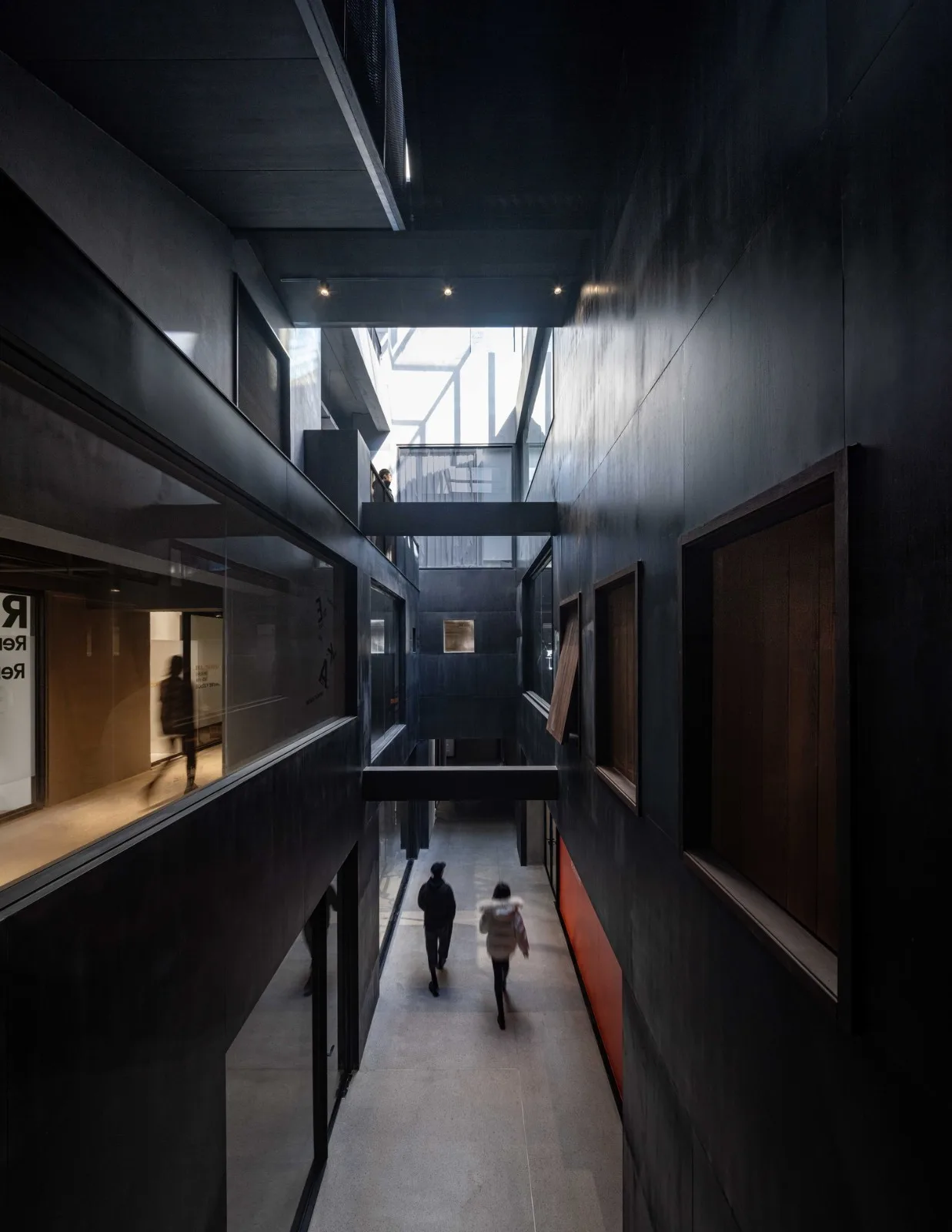
A distant ship in motion, with people moving through the courtyard © Su Shengliang
The interior texture is primarily composed of clear cement and terrazzo, creating a simple and unpretentious atmosphere that extends the exterior’s material palette. Glass brick partitions are arranged to allow transparency and brightness inside. Stairs and bridges traversing the space incorporate a variety of materials including weather-resistant steel, stainless steel, and wood, yielding a rich dialogue between cold and warm, industrial and natural elements.
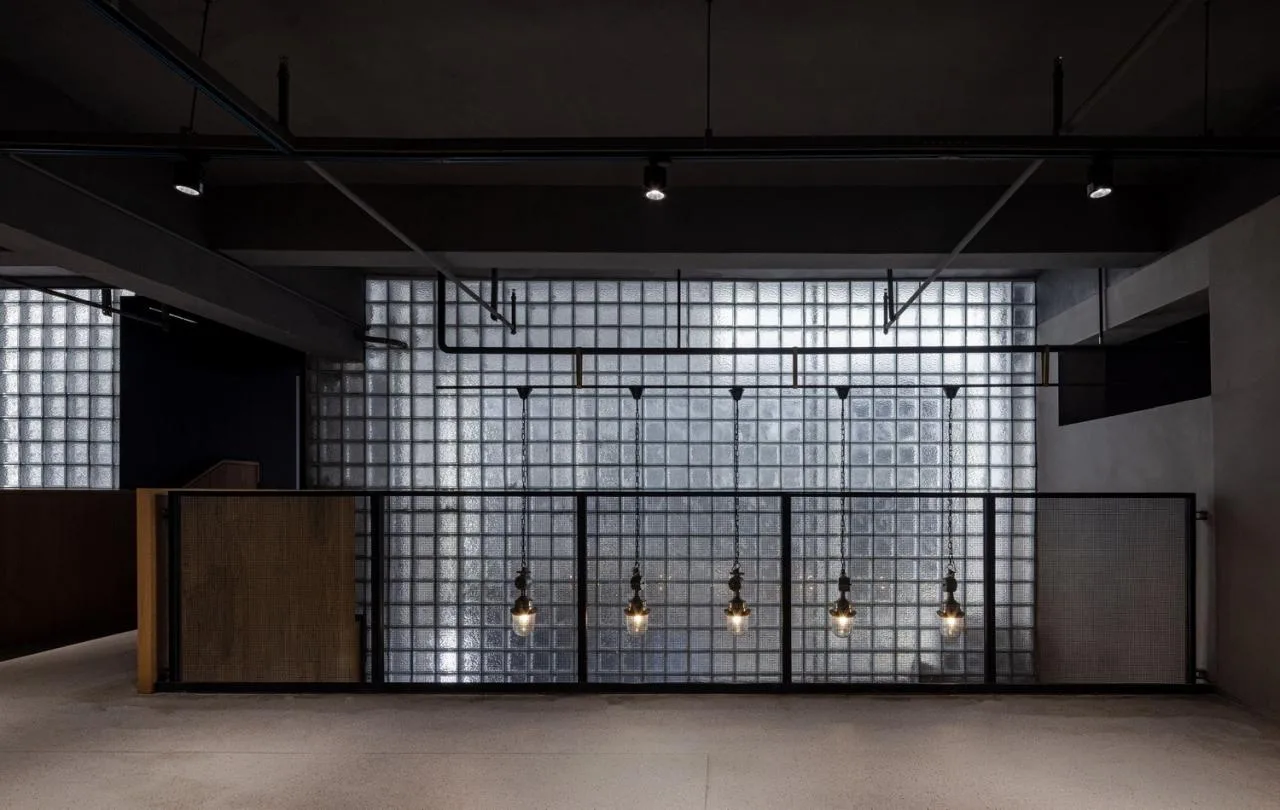
Detail view © Su Shengliang
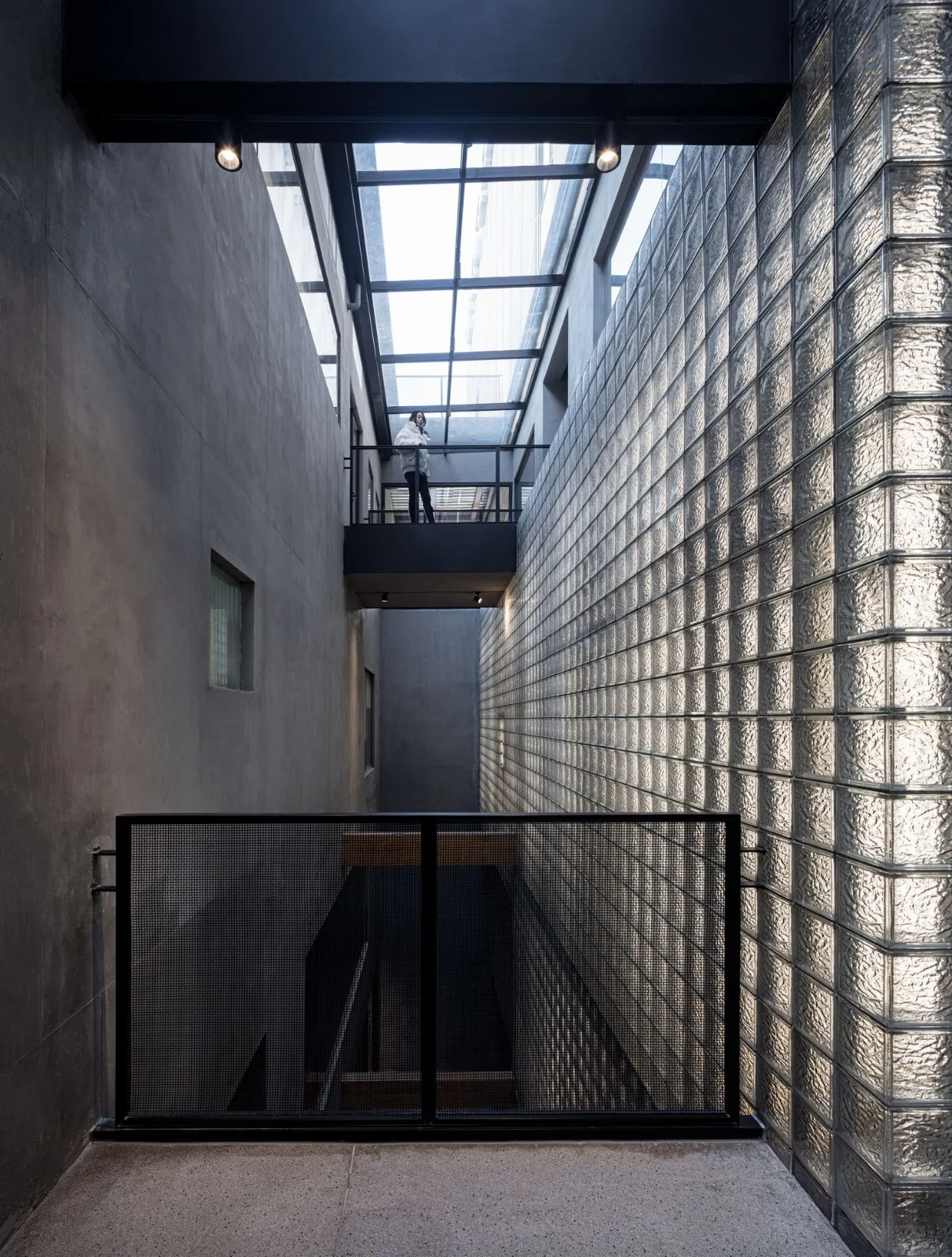
Glass partitions enhance transparency and brightness © Su Shengliang
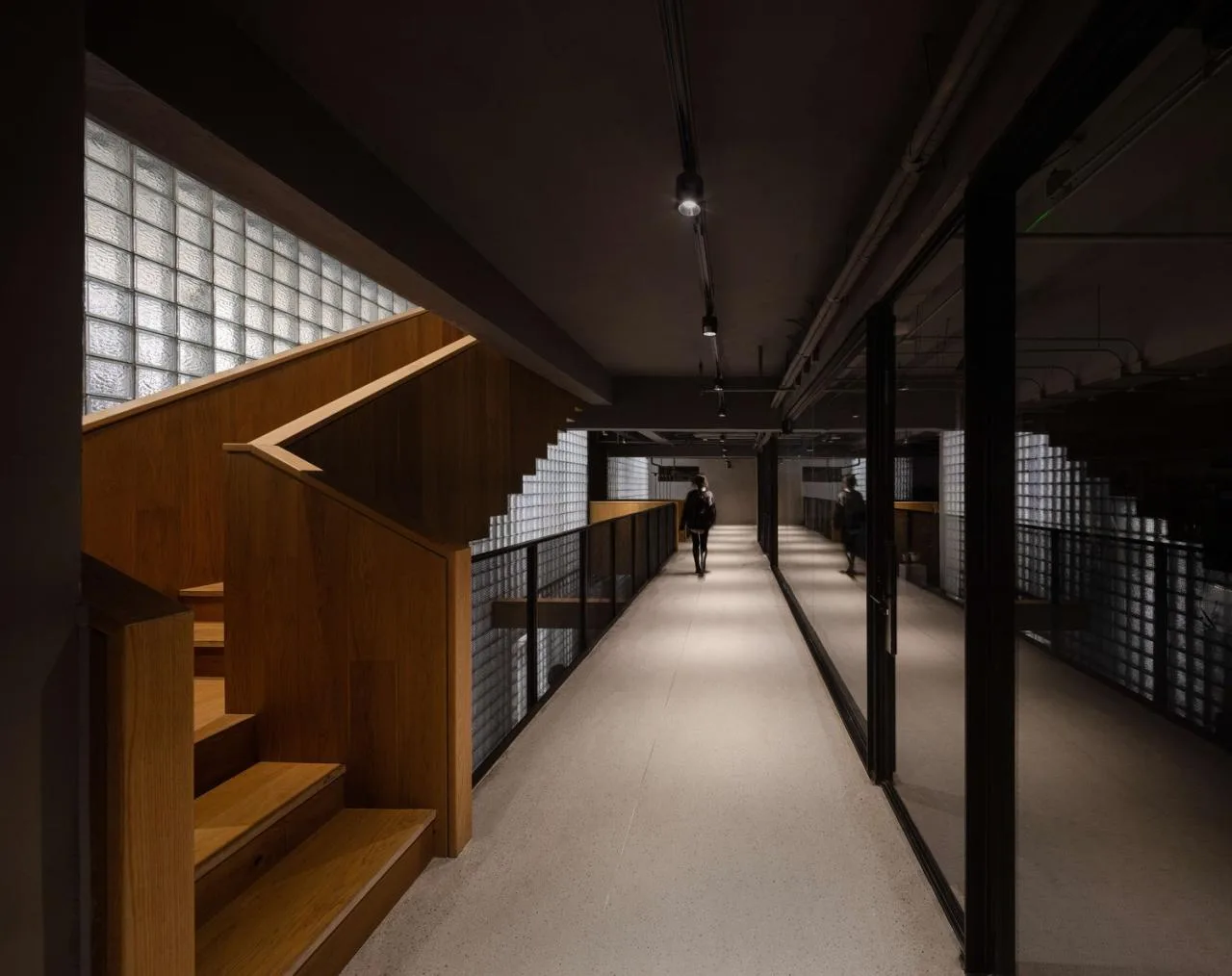
Folding wooden staircase ascending © Su Shengliang
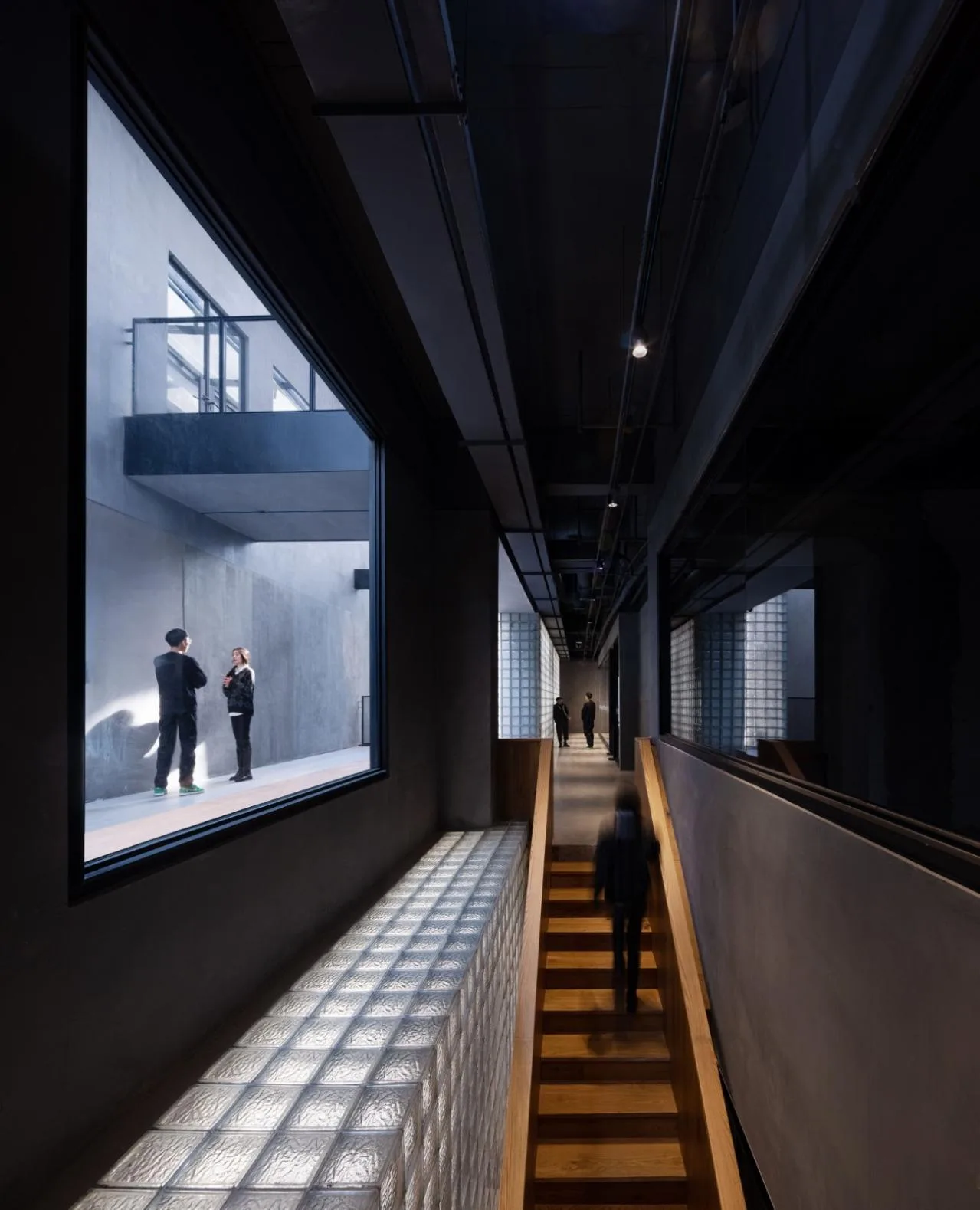
Stairs and bridges spanning the interior space © Su Shengliang
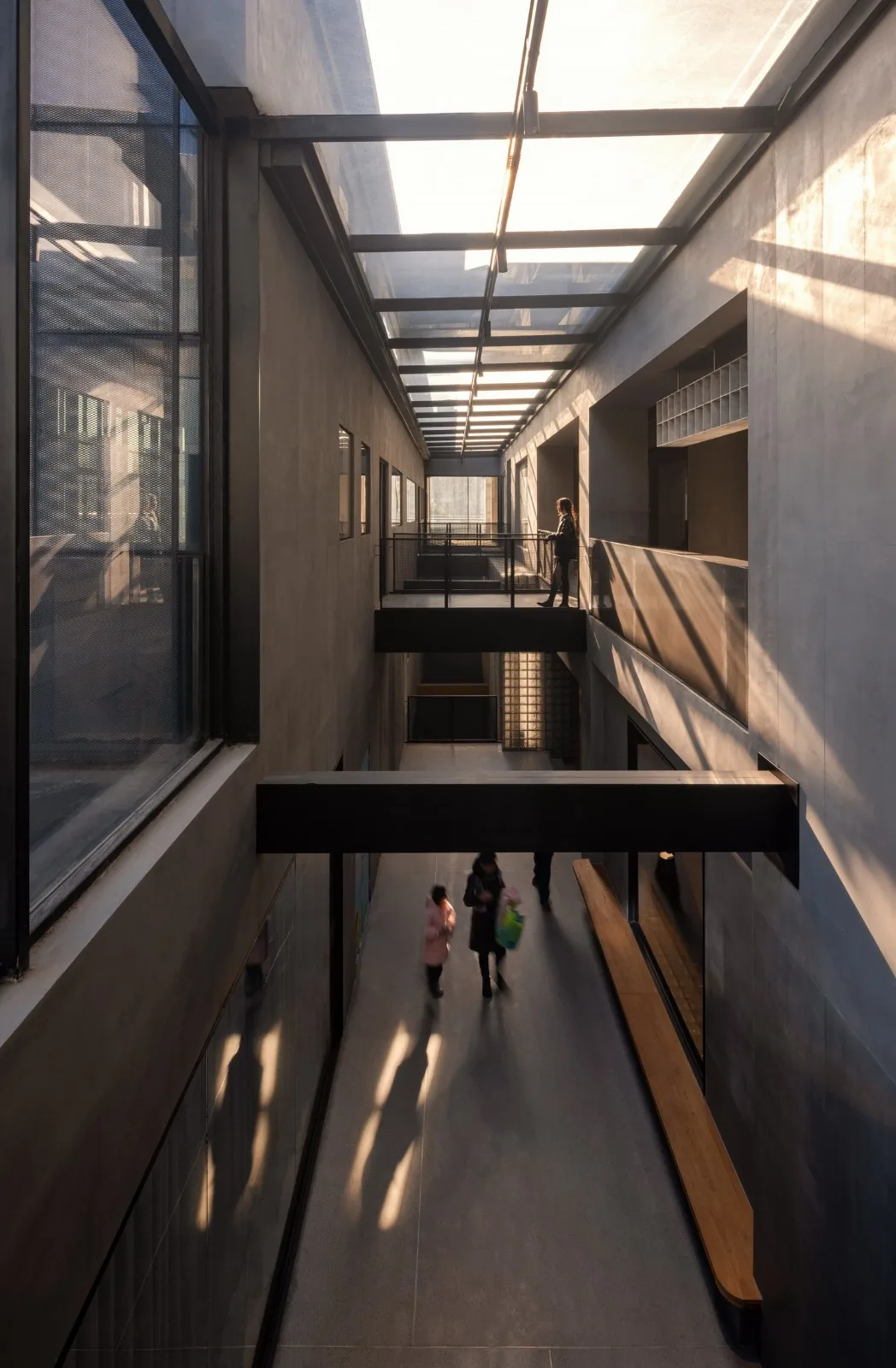
A courtyard enclosed by the northern and southern buildings © Su Shengliang
The transformation of the old buildings through the art of wrapping brings new life, as the ‘Far Ship’ is ready to set sail once more.
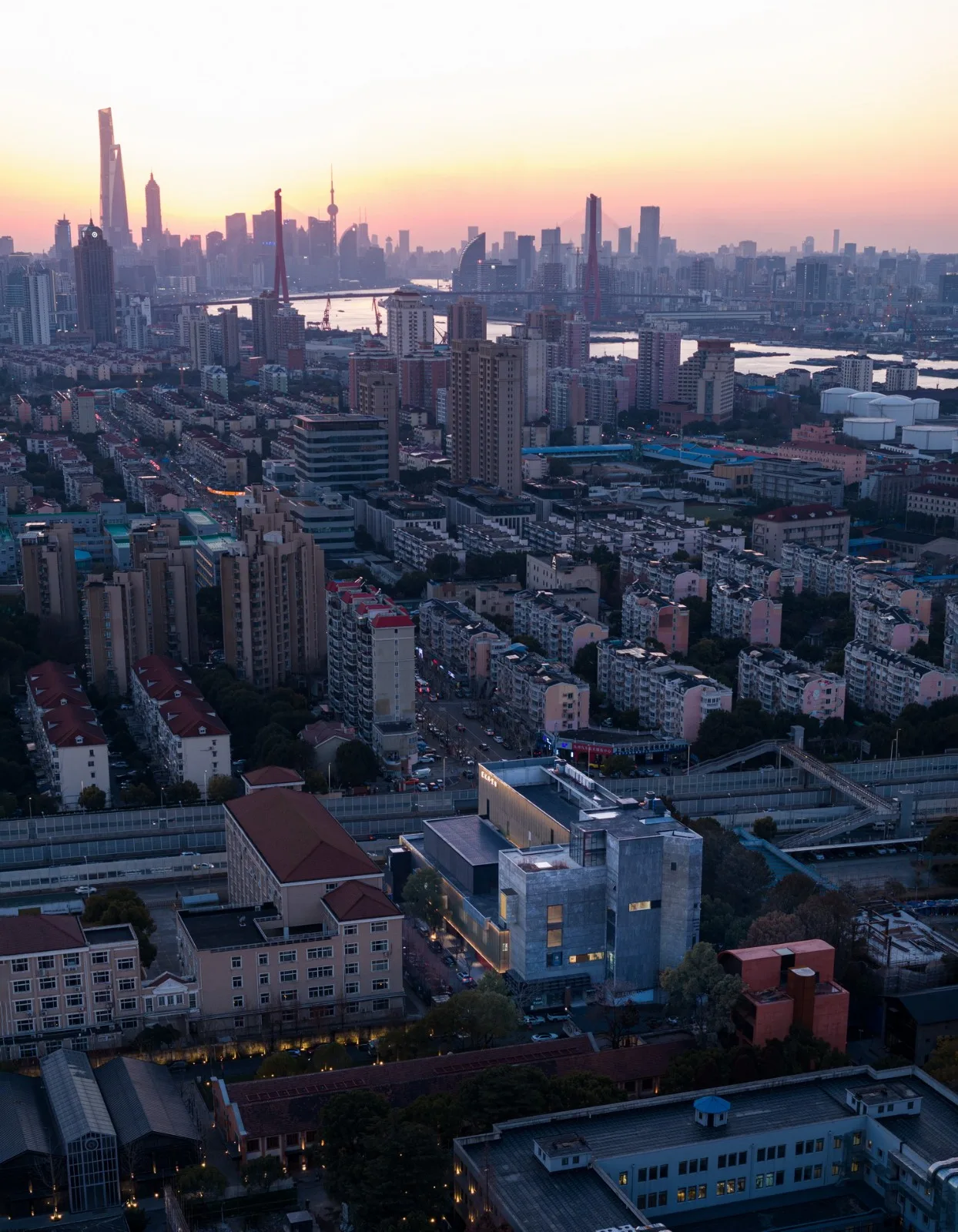
Aerial view © Su Shengliang
Project Drawings
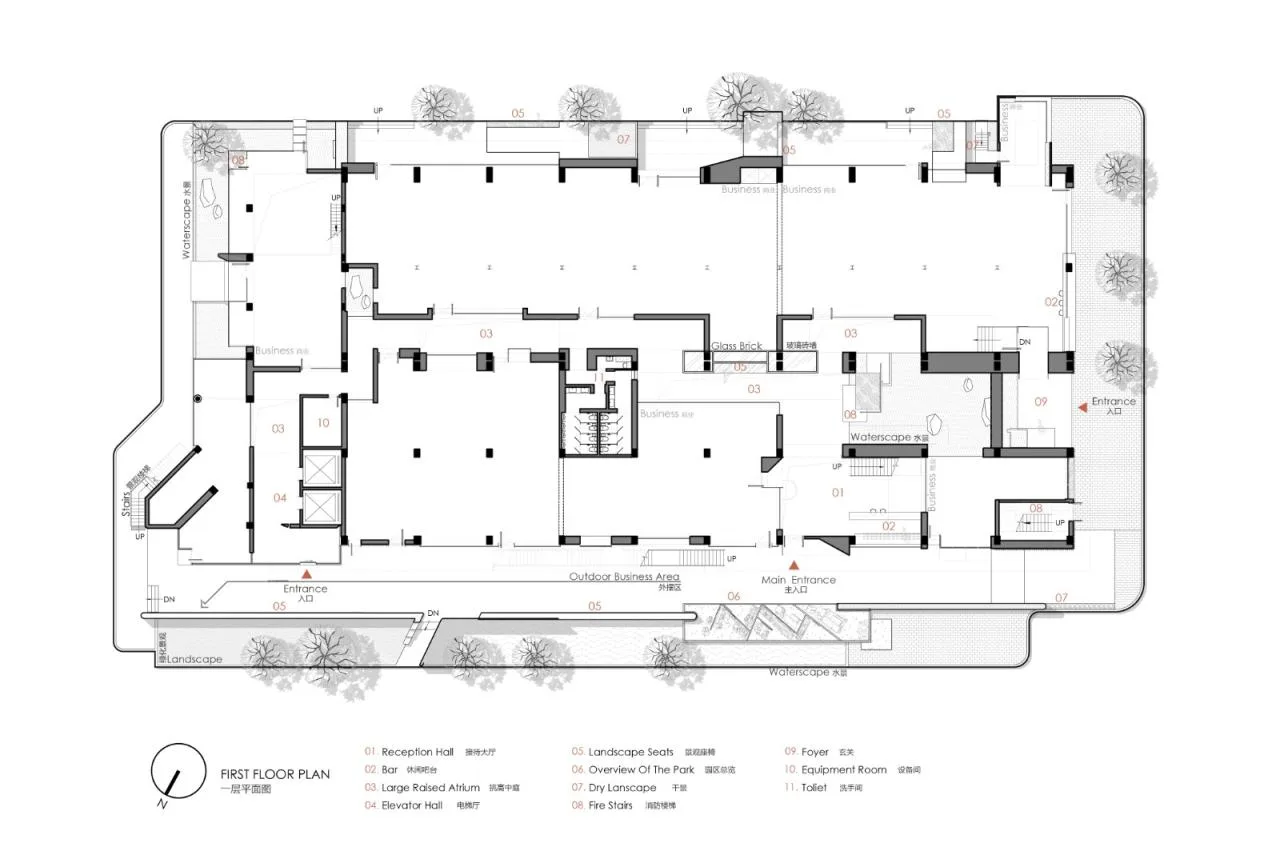
First floor plan © Benzhe Architecture
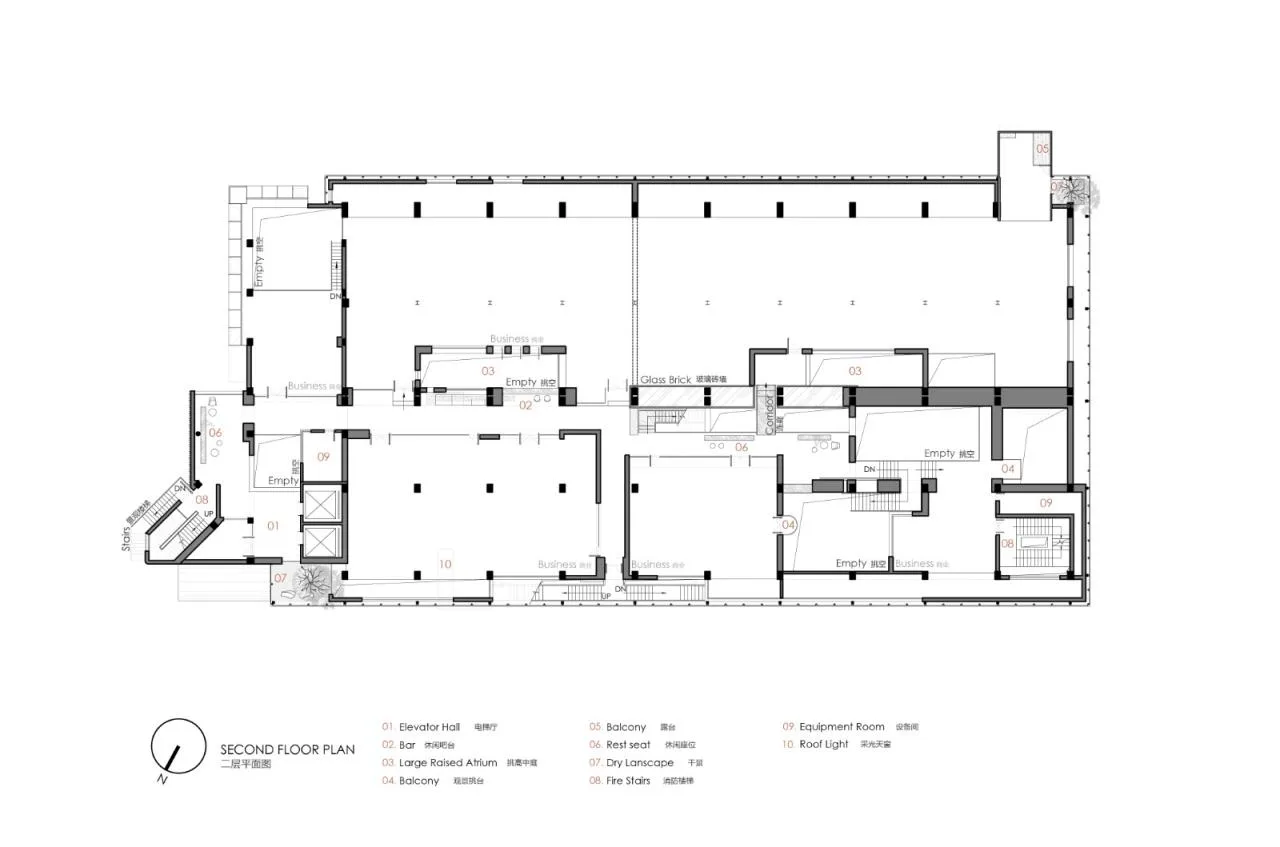
Second floor plan © Benzhe Architecture
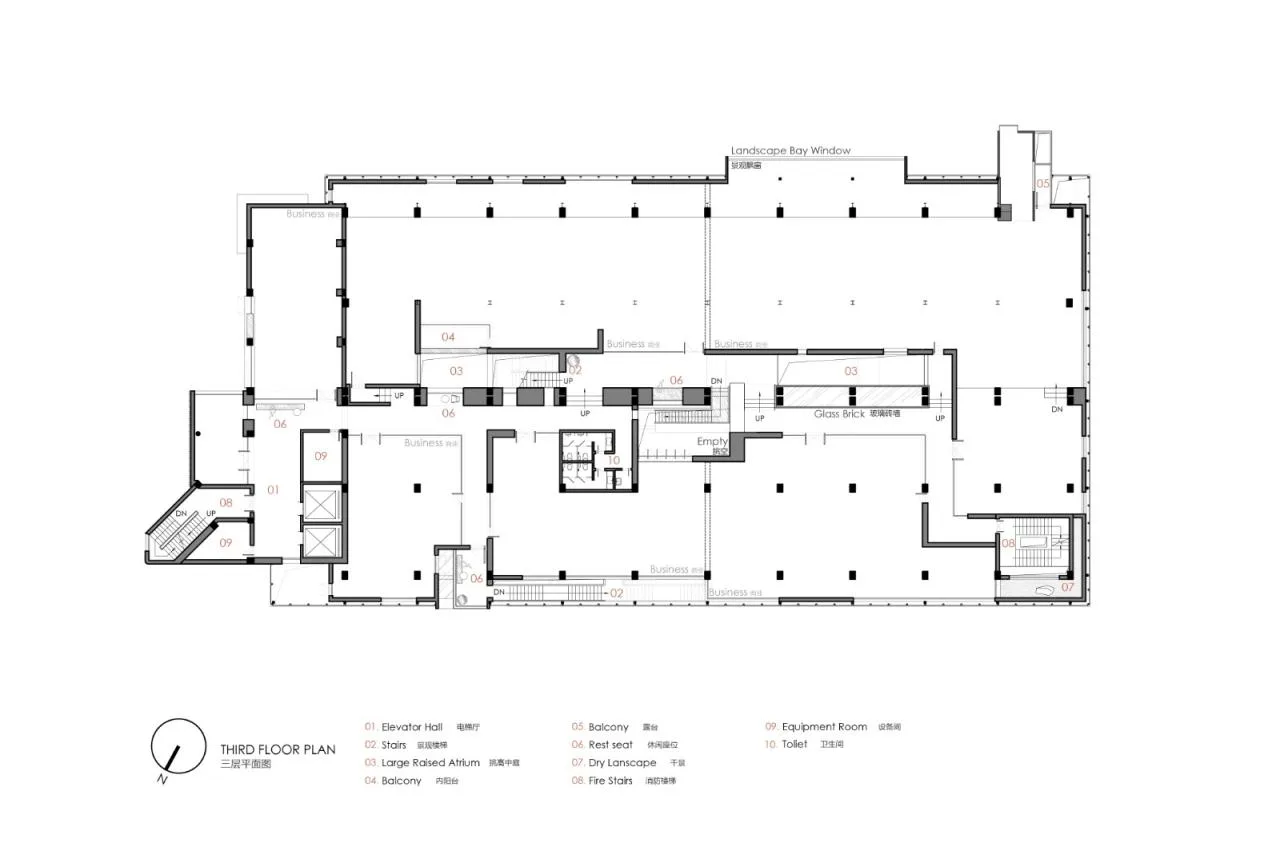
Third floor plan © Benzhe Architecture
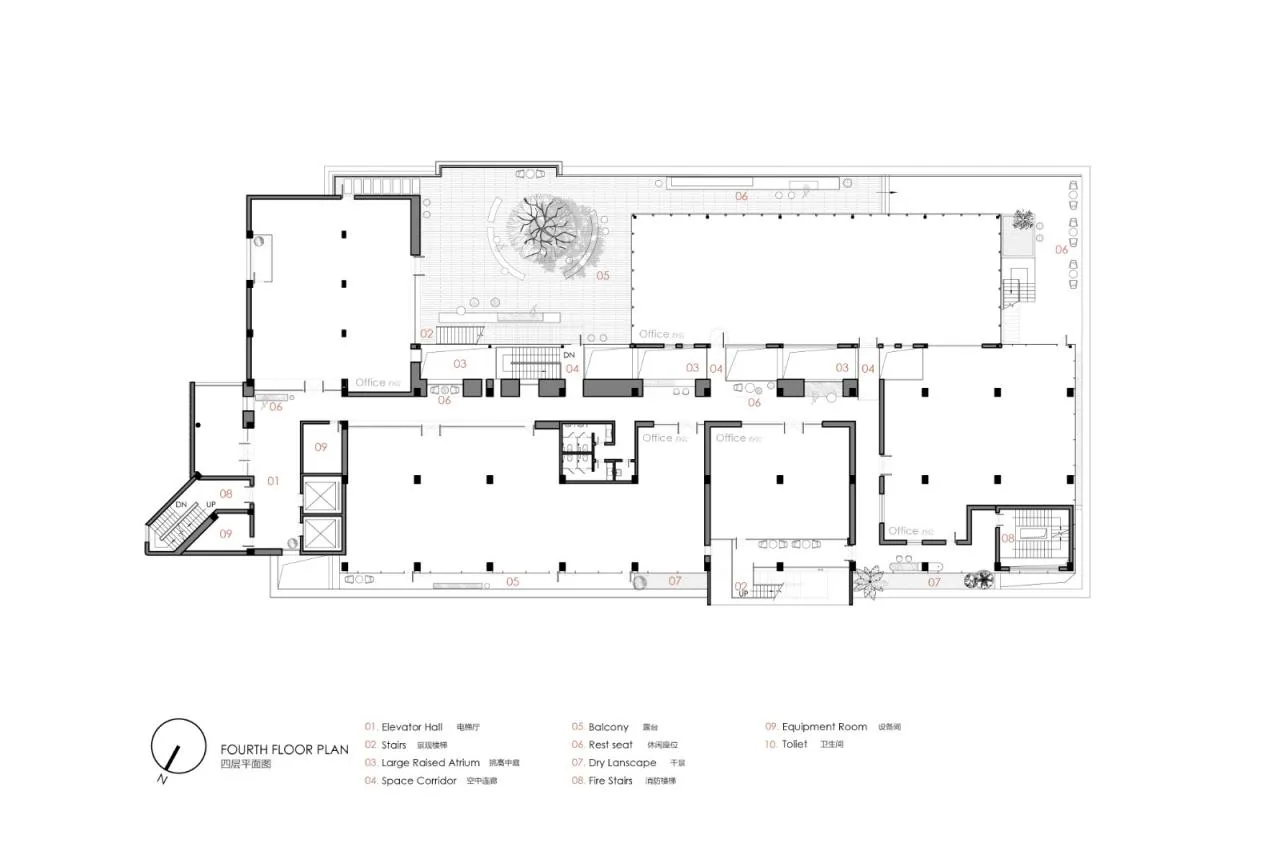
Fourth floor plan © Benzhe Architecture
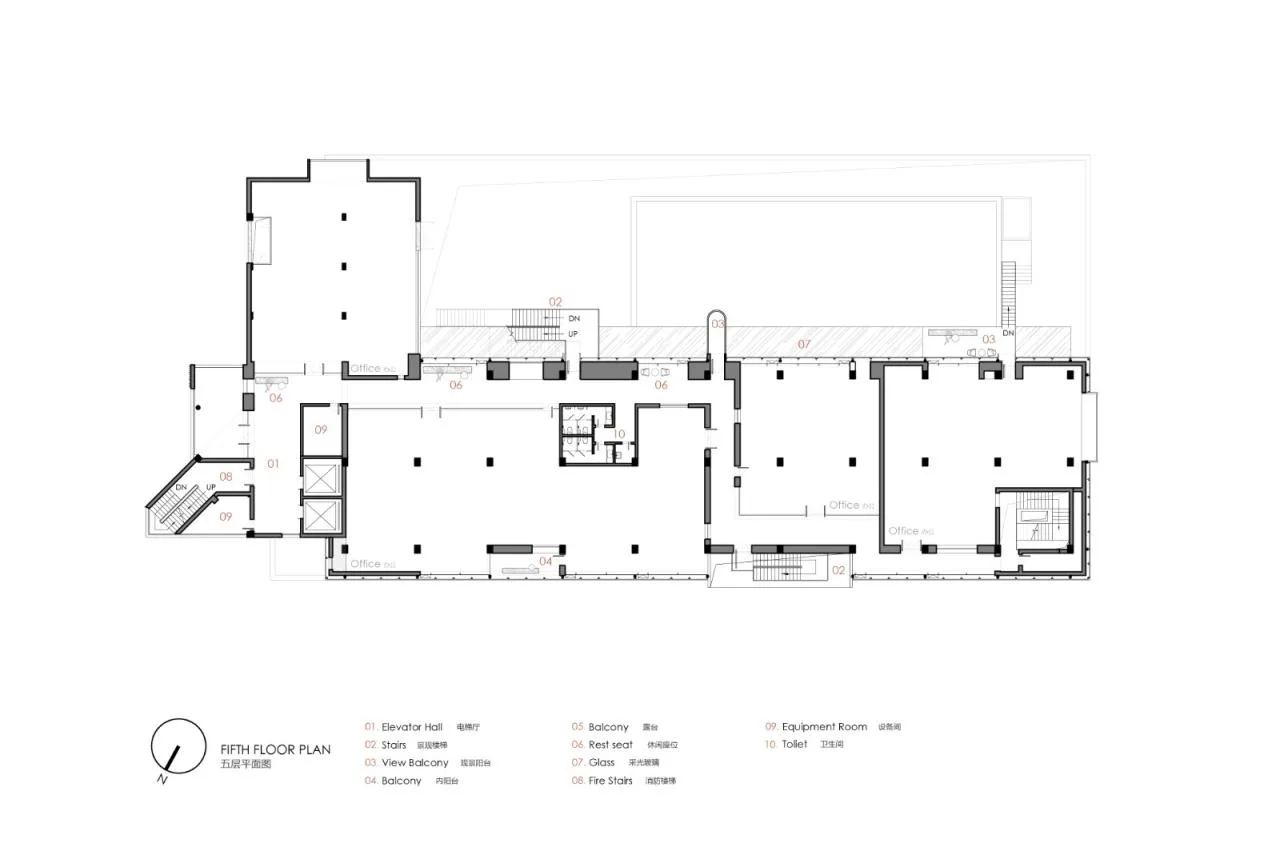
Fifth floor plan © Benzhe Architecture
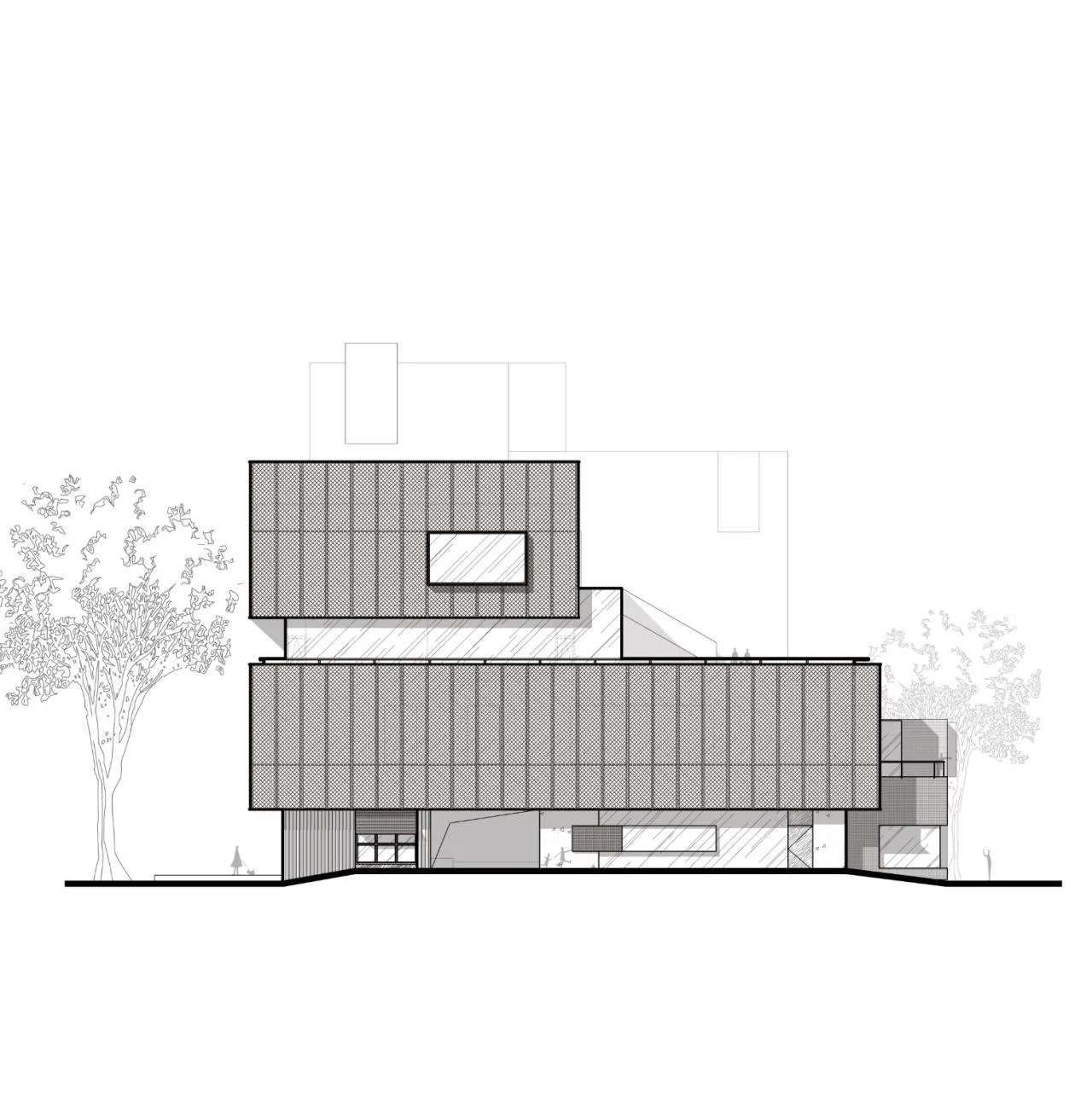
West elevation view © Benzhe Architecture
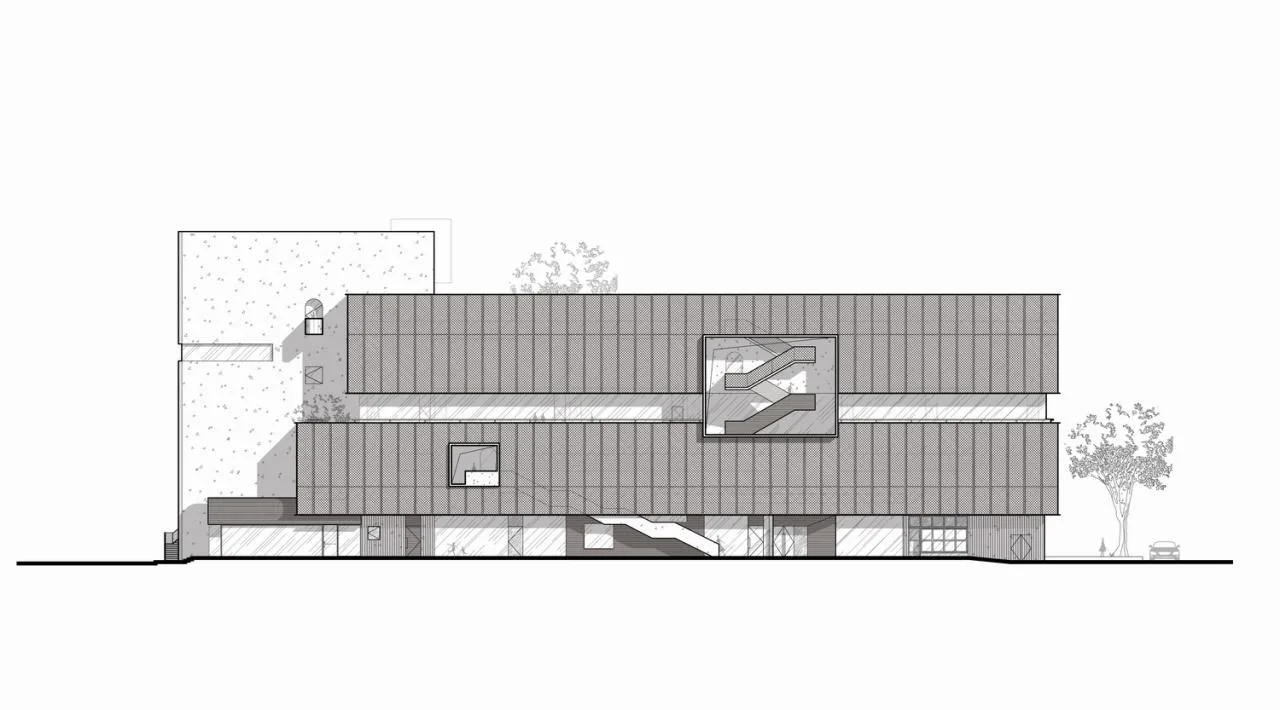
North elevation view © Benzhe Architecture
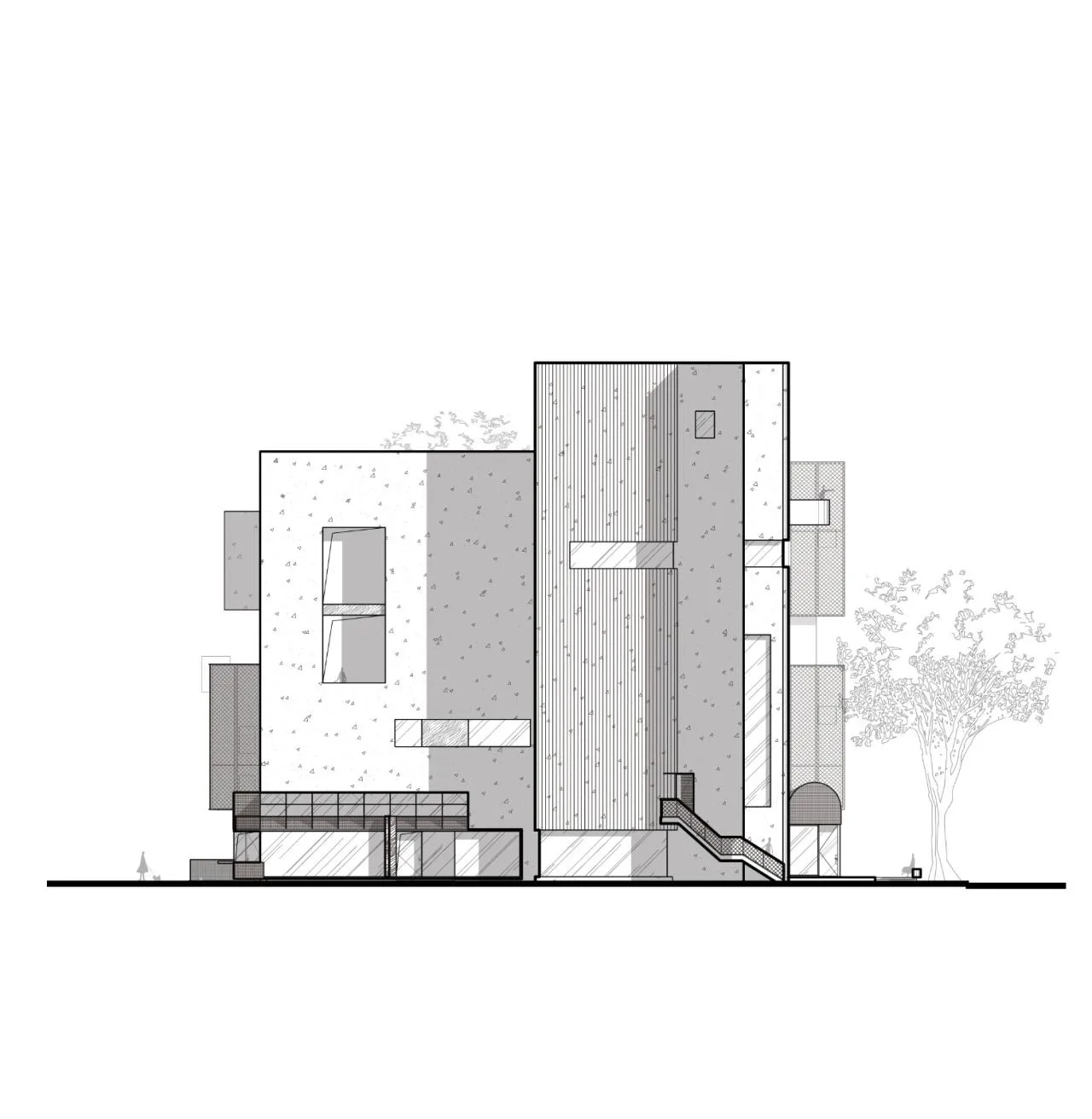
East elevation view © Benzhe Architecture
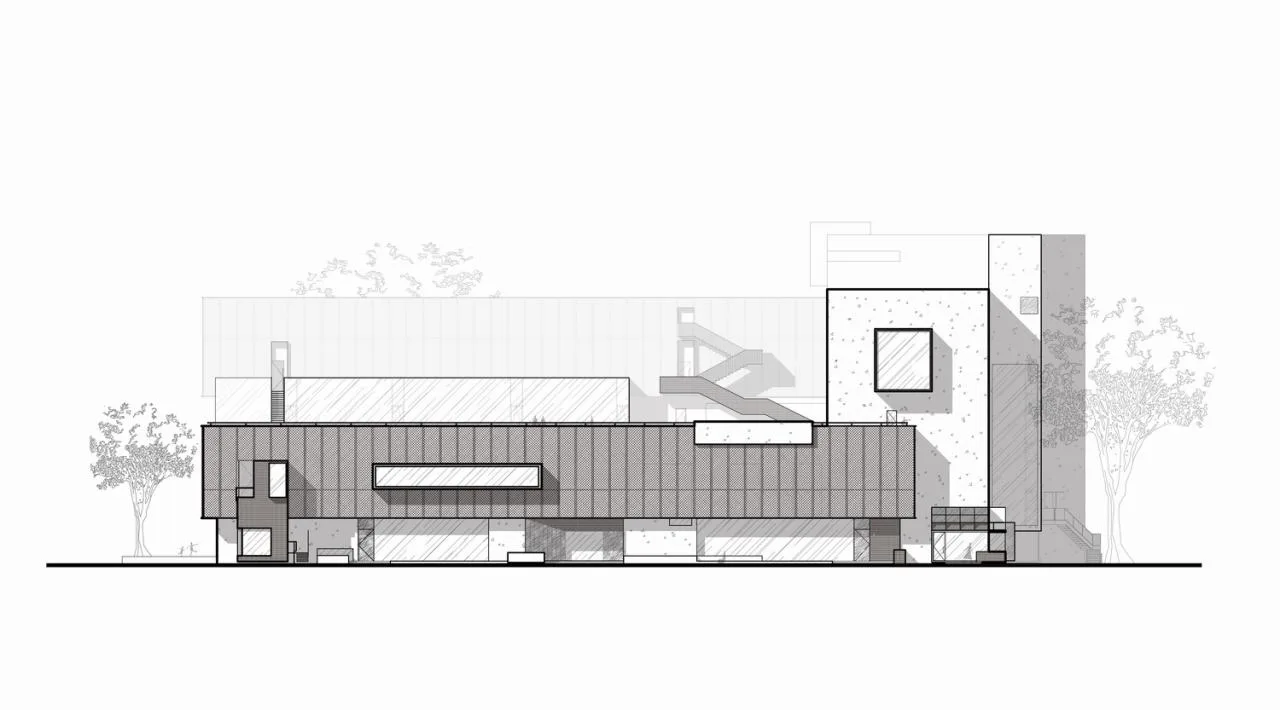
South elevation view © Benzhe Architecture
Project Information
Project Name: Far Ship EKA Tianwu
Location: EKA · Tianwu, No. 535 Jinqiao Road, Pudong New Area, Shanghai, China
Architecture/Interior/Landscape Design: Benzhe Architecture
Lead Architect: Jiang Huajian
Design Team: Yao Ruigen, Lin Tong
Building Area: 6,748 m²
Design Period: February 2022 to June 2022
Completion Date: June 2023
Owner: Shanghai Jiayun Investment Management Development Co., Ltd
Structural Design: Shanghai Tongyan Civil Engineering Consulting Co., Ltd
Photography: Su Shengliang















Must log in before commenting!
Sign Up