
The forest presents a scene as picturesque as a painting.
Linpantianju represents the quintessential agricultural lifestyle of the Chengdu Plain, spanning thousands of years from the ancient Shu civilization to modern times. Typically centered around a courtyard, it features multiple farmhouses and courtyards combined freely. Bamboo groves alongside various fruit and other trees form natural fences between these courtyards. This small settlement pattern is dispersed throughout the vast “Tianfu Granary,” creating natural villages where farming, living, and resting seamlessly integrate. Baicao Xianglu is located in Tianxing Village, Xindu District, north of Chengdu City. It is a small forest plot nestled within thousands of acres of fertile farmland.
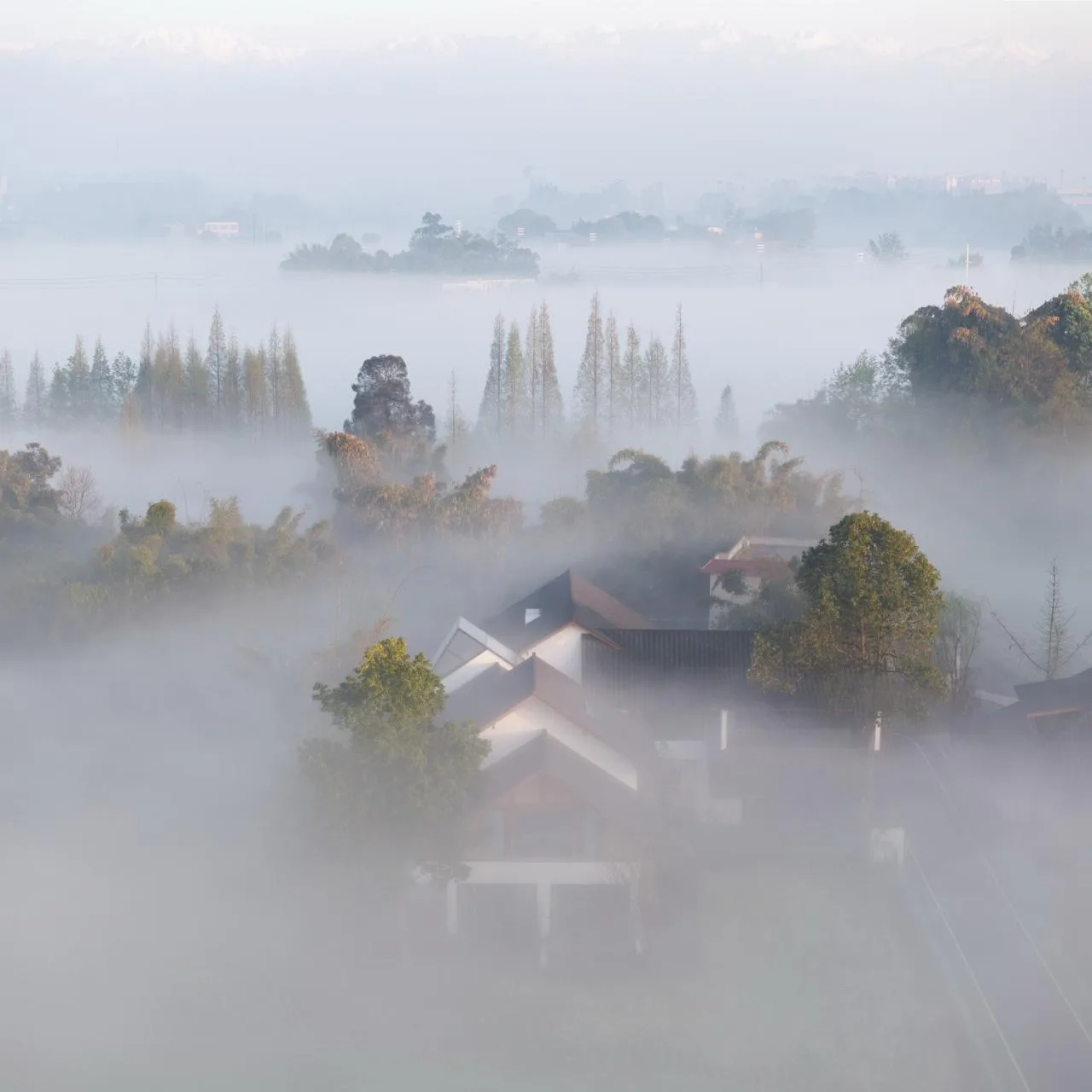
▲ Panoramic View of the Forest Plate in Tianfu Granary under Snow Mountain © DONG Architectural Imaging
Like other forest plots in Tianxing Village, this site lies at the heart of farmland, encircled by lush vegetation and trees. Observing the forest resembles admiring a pastoral painting, where the farmland acts as both foreground and background. This provides depth while emphasizing the forest as the focal point. Roads weave through the landscape, inviting people to enter this living painting at any moment.
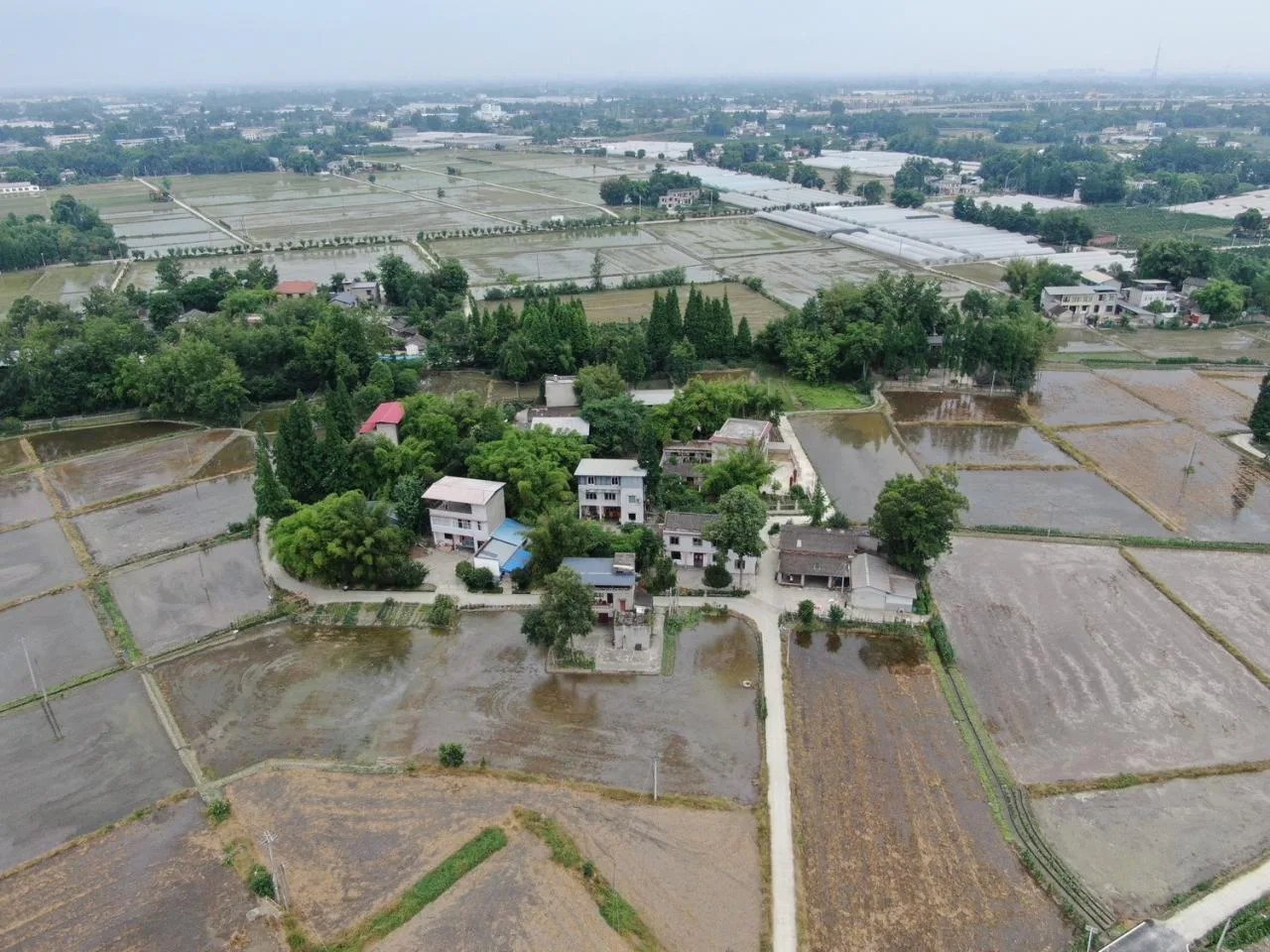
▲ Original condition of the venue © Xiaoyin Architecture
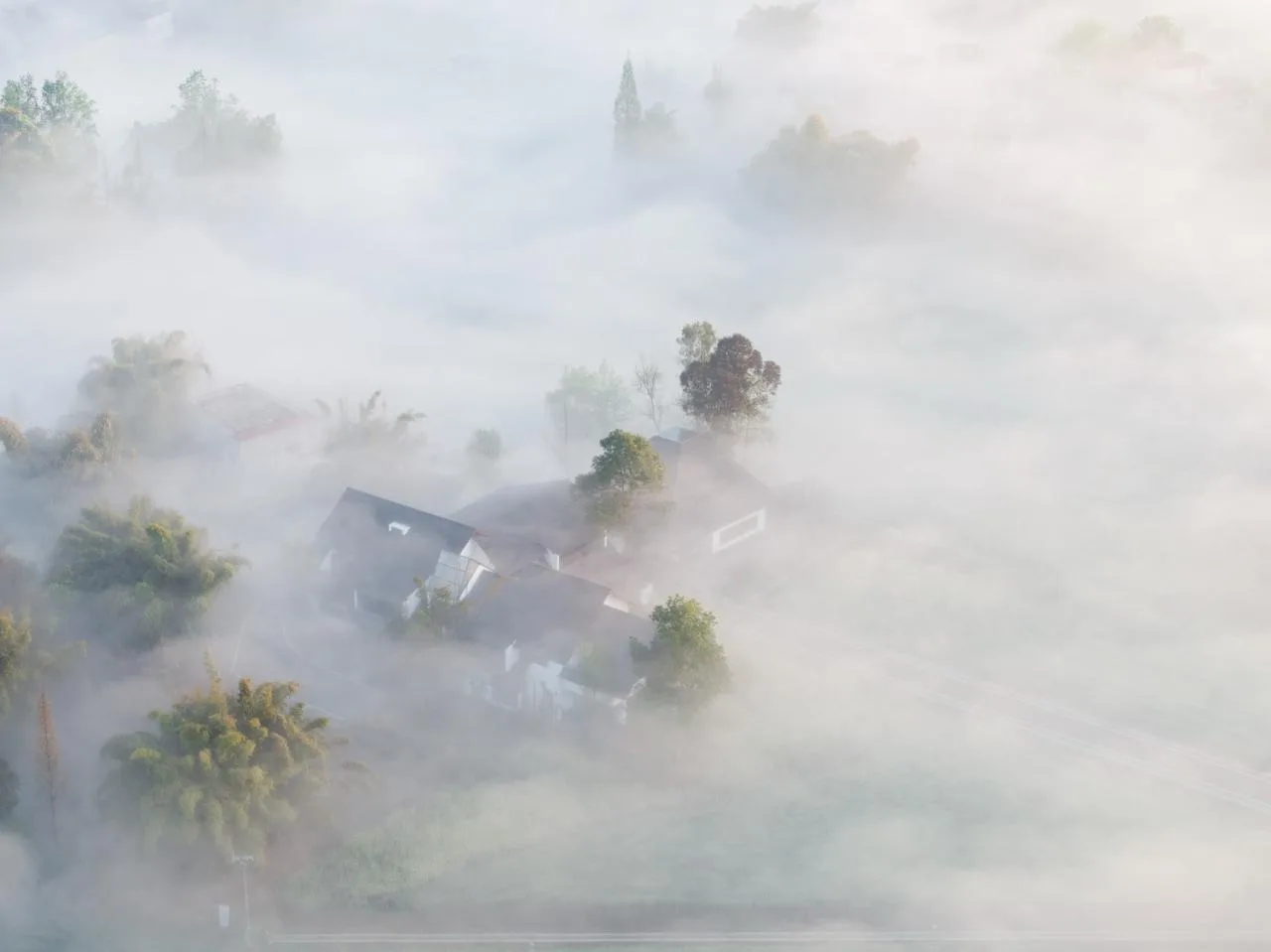
▲ Fragrant Cottage of Hundred Herbs amid Morning Mist © DONG Architectural Imaging
This scene shares the charm of classical Chinese landscape paintings, where mountains, forests, and waters are often left blank, concentrating the content in one or a few corners. When multiple forest plots appear in a single field, it resembles a long scroll painting, with the surrounding farmland left empty to frame stories unfolding within each forest patch.
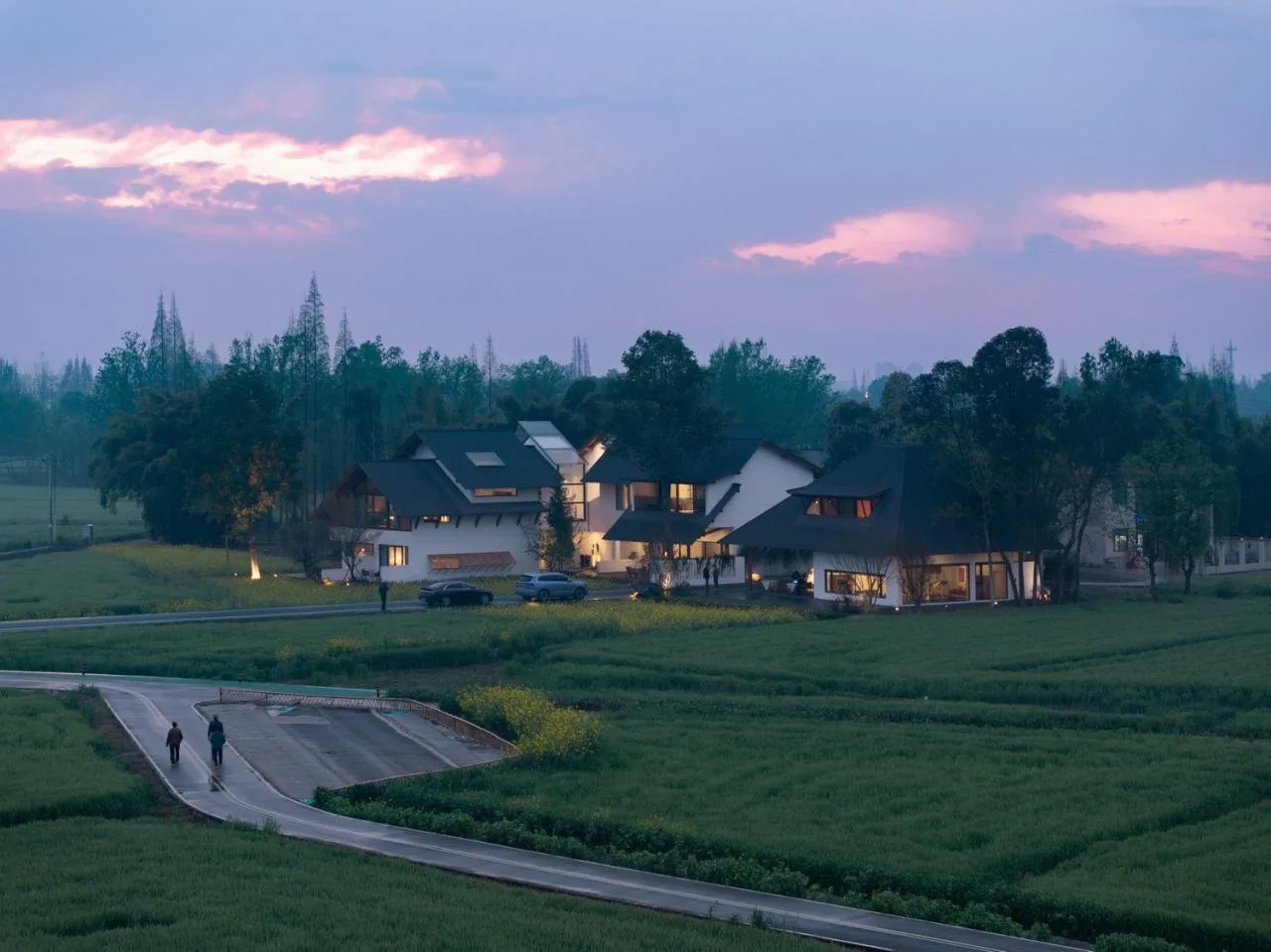
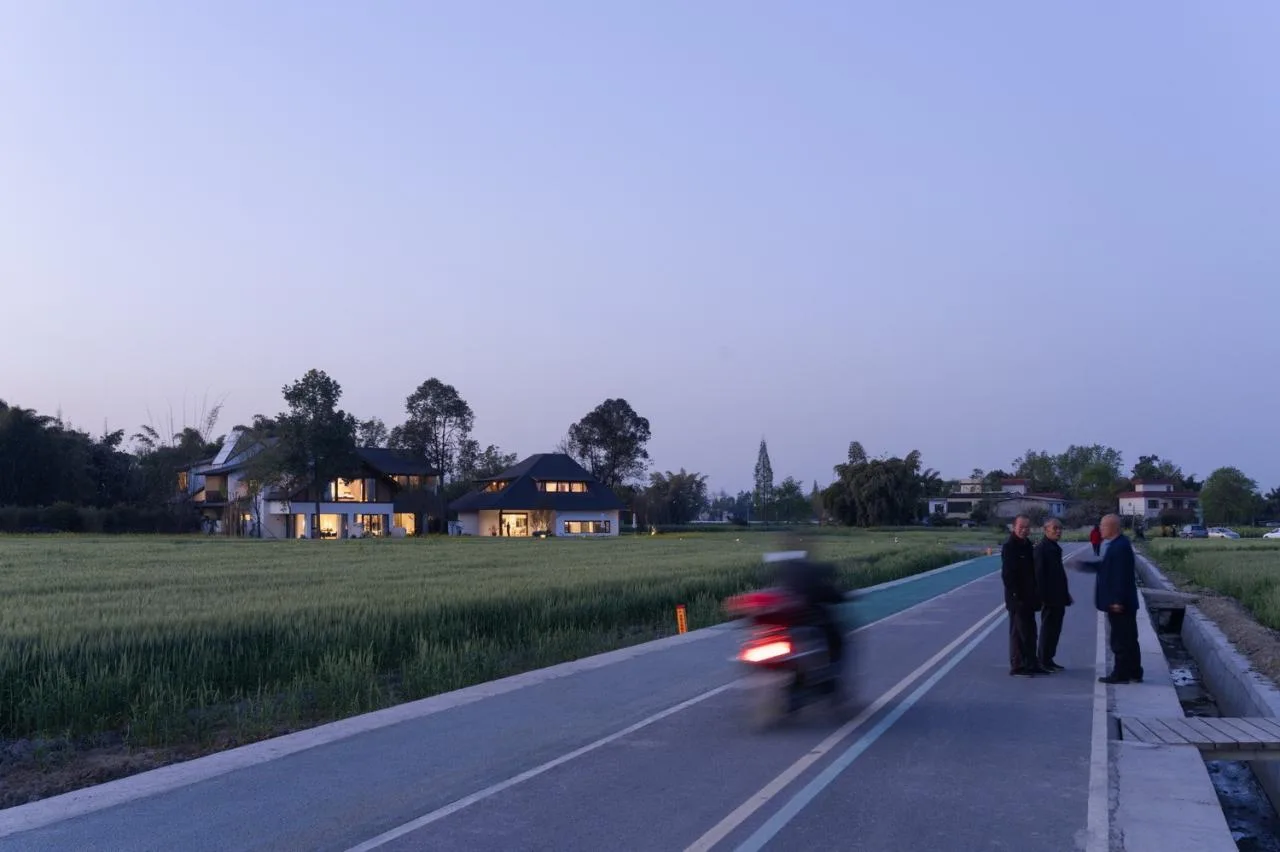
▲ Villagers strolling after dinner near the Hundred Herbs Fragrant Cottage © DONG Architectural Imaging
The design concept of Baicao Xianglu extends beyond individual rural elements; the agricultural life thriving within the forest is the central image we aim to convey.
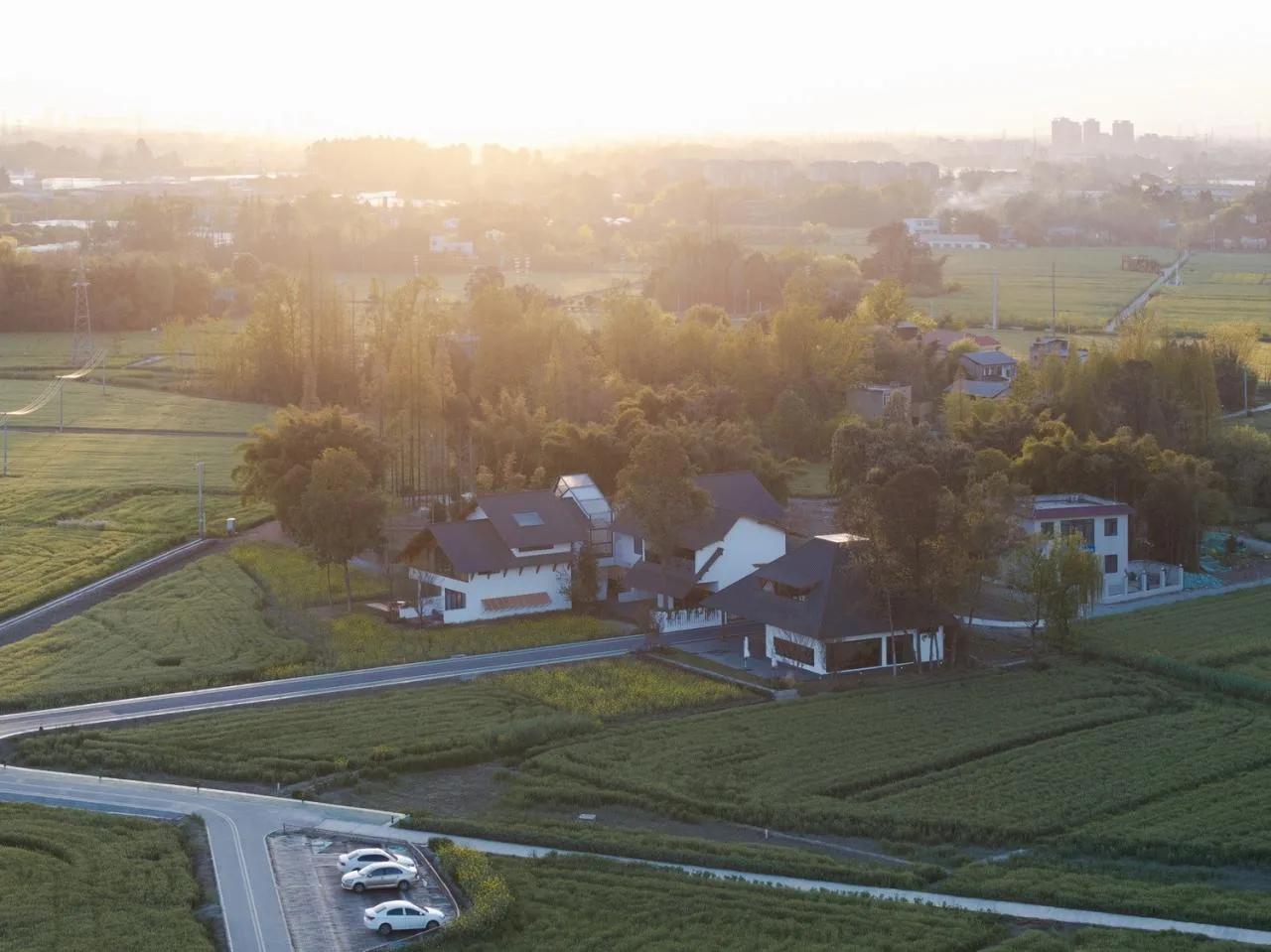
▲ Fragrant Cottage of Hundred Herbs in a Wheat Field © DONG Architectural Imaging
We have studied garden layouts, housing forms, and spatial combinations from historical sources like the “Gengzhi Tu” across various dynasties, the Ming Dynasty’s “Dongzhuang Tu” by Shen Zhou, and multiple versions of the “Wangchuan Tu.” Drawing from the texture of original onsite buildings, the spatial layout, rural environment, and scenes from ancient millennia-old paintings, we created multiple relatively independent yet interconnected canvases, depicting vivid forest life scenes.
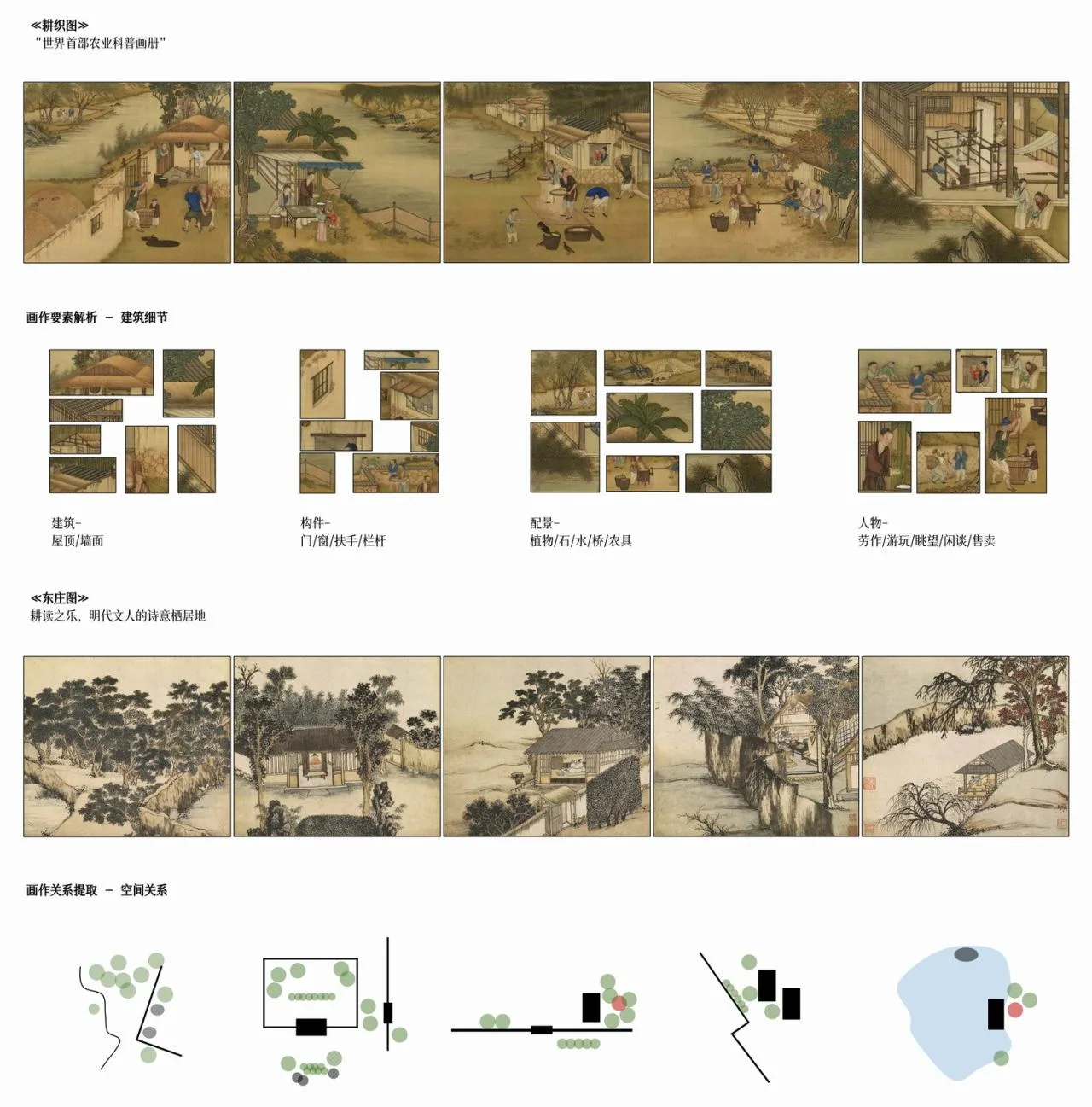
Research on Ancient Paintings (Qing Chenmei’s “Farming and Weaving Picture” and Ming Shen Zhou’s “Dongzhuang Picture”)
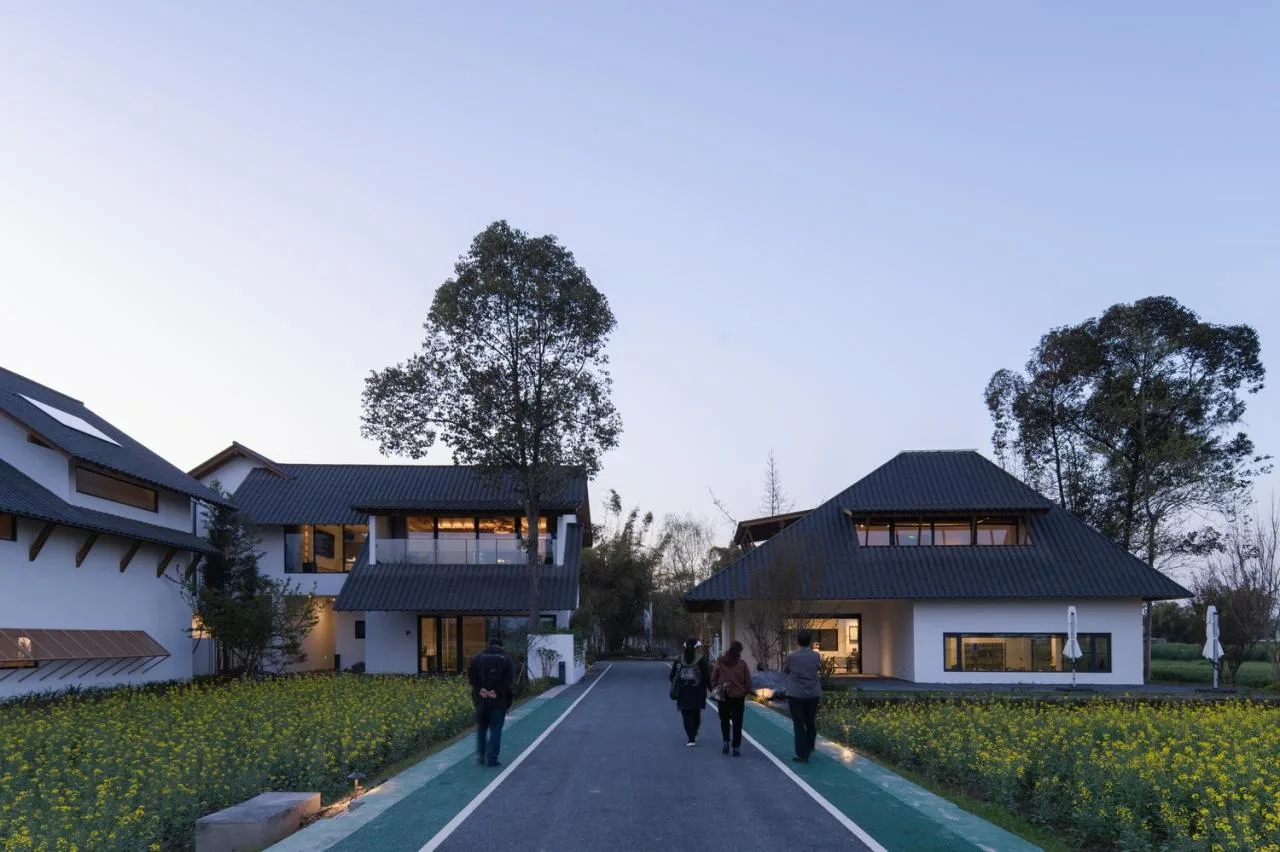
▲ Separation and continuity across multiple display surfaces © DONG Architectural Imaging
Lin Pan Reborn
The land is divided by the only road leading into the forest, splitting the project into two parts. A smaller parcel is transformed into a rural reception area, mainly featuring a tea room and multifunctional hall. The larger area consists of homesteads from multiple households, primarily used for homestays and private dining.
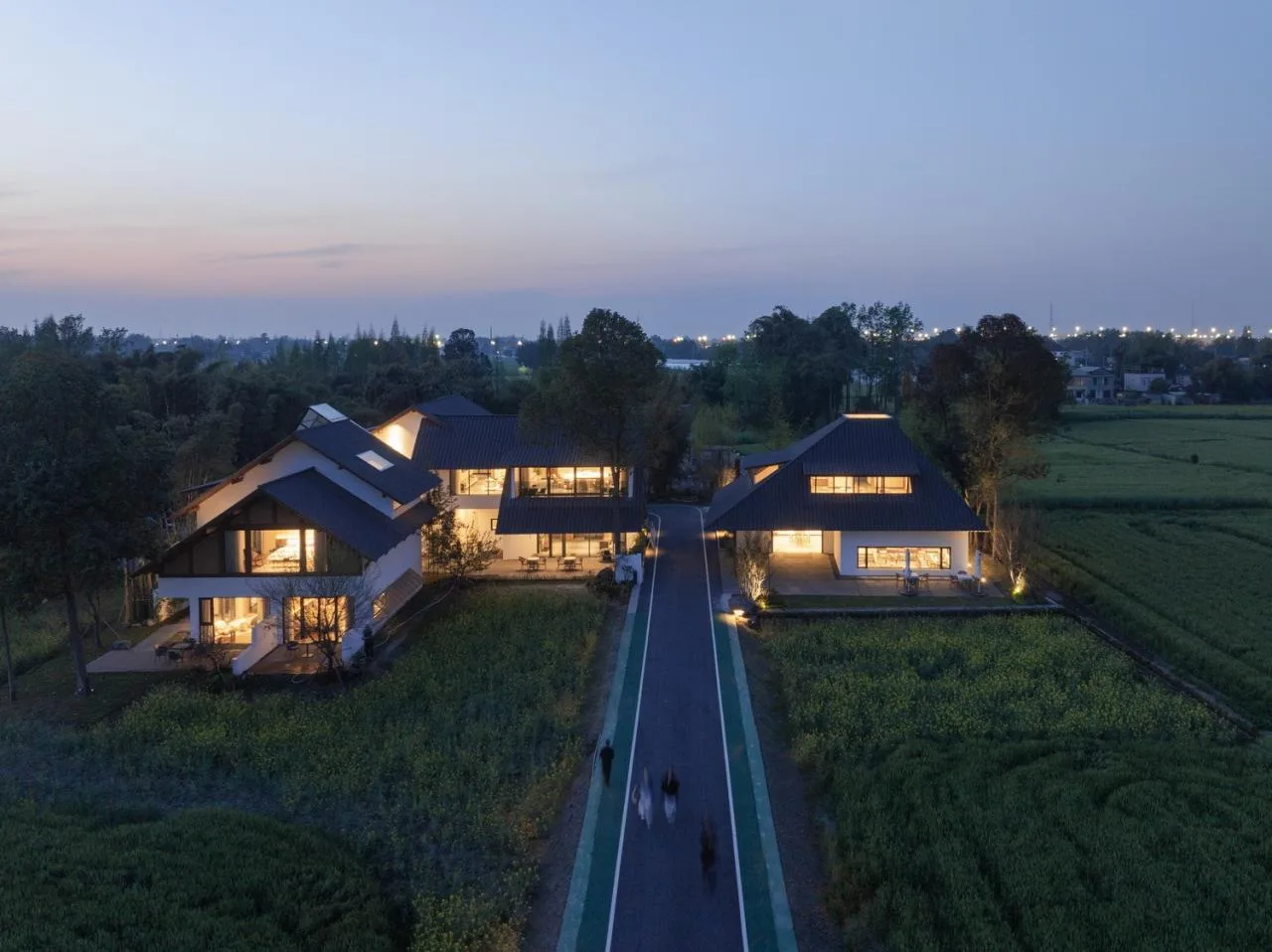
▲ Overall layout of Baicao Xianglu © DONG Architectural Imaging
The rural areas of the Chengdu Plain differ from mountain villages by presenting a more straightforward layout due to open terrain. We use walls and farmland to define flow lines, and the building entrance faces the road to create a more open atmosphere. Unlike mountain villages with winding paths leading to secluded spots, here the aim is to maximize views of the fields through the windows.
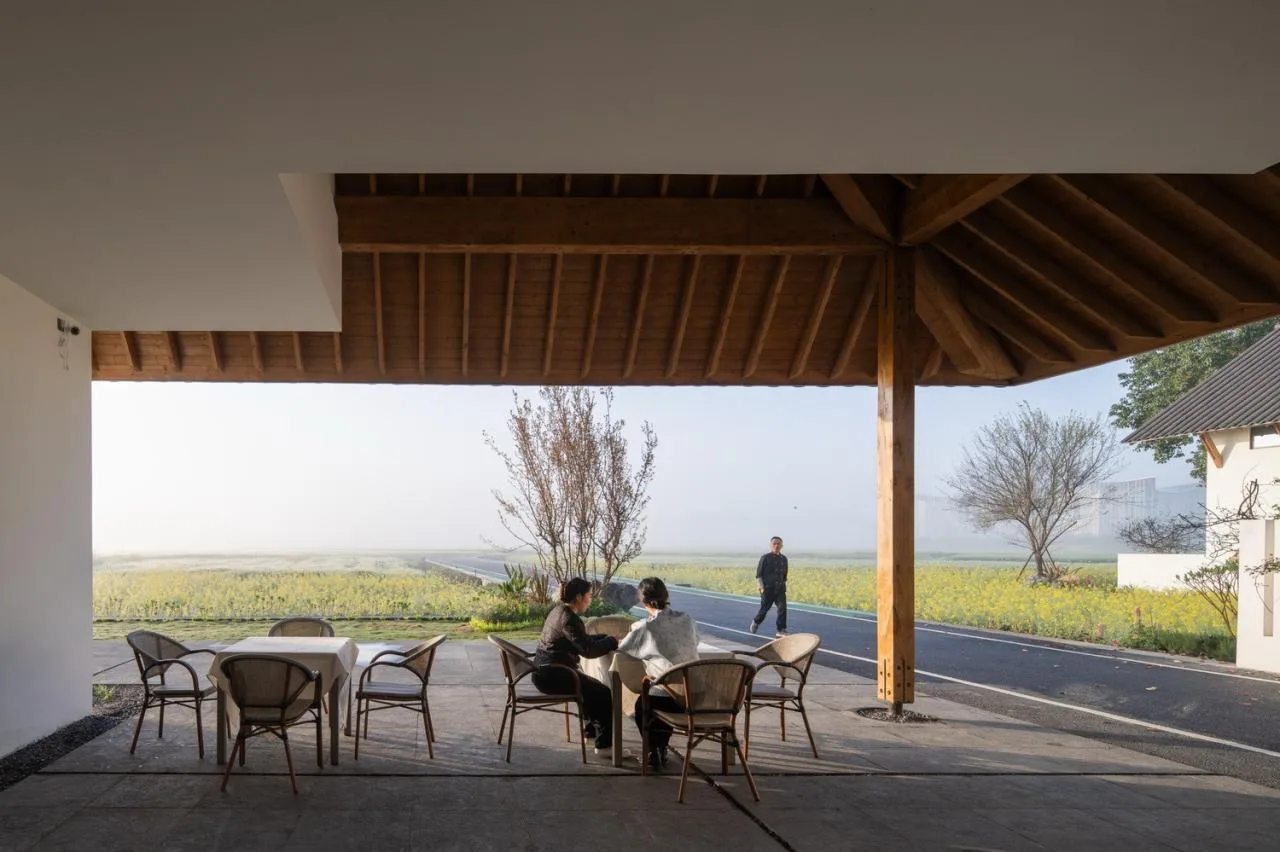
▲ Welcome porch of the rural living room © DONG Architectural Imaging
The entrance to Linpan typically serves as a public open space—either a gathering spot for villagers or a small shop serving the community. We have cut and recessed the corner of the rural living room facing the entrance, with large eaves and a partially sunken gray space forming an external display area. This acts as the entrance porch to the living room and connects to the vacant front yard, offering neighbors a “dragon gate” formation.
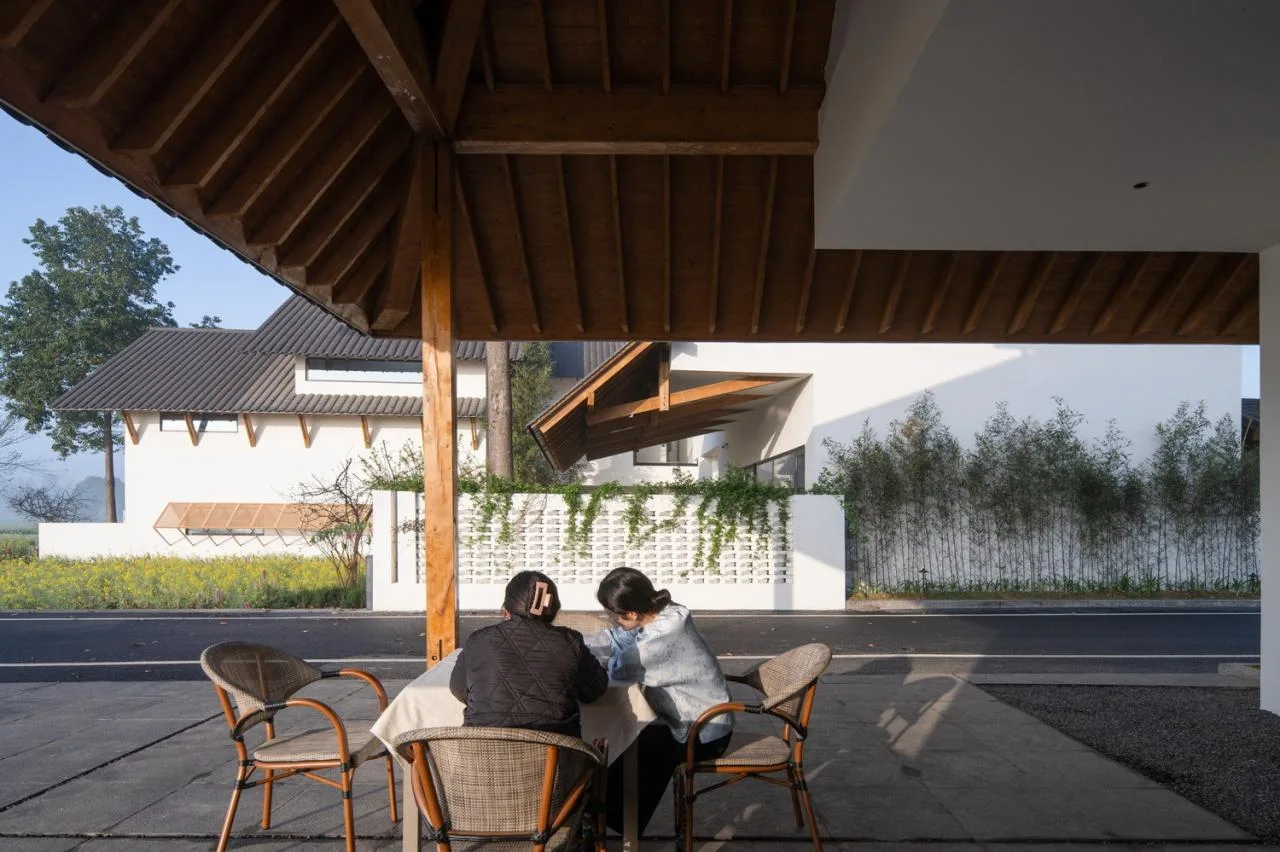
▲ Reception room entrance porch © DONG Architectural Imaging
Reflecting the agricultural culture of the “Tianfu Granary,” the rural living room’s roof incorporates imagery inspired by granaries and rice bowls. This design visually distinguishes the building from adjacent homestay structures and emphasizes its public function.
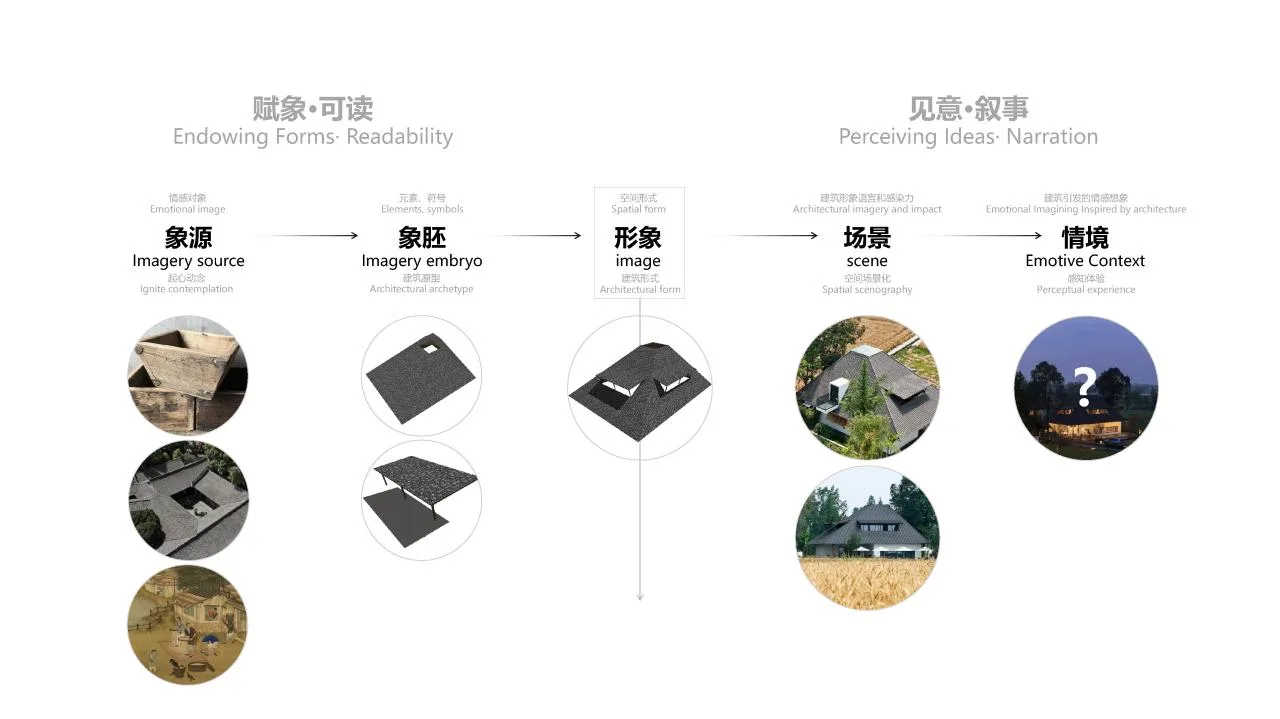
▲ The rural reception hall embodies the imagery of a warehouse and rice bowl
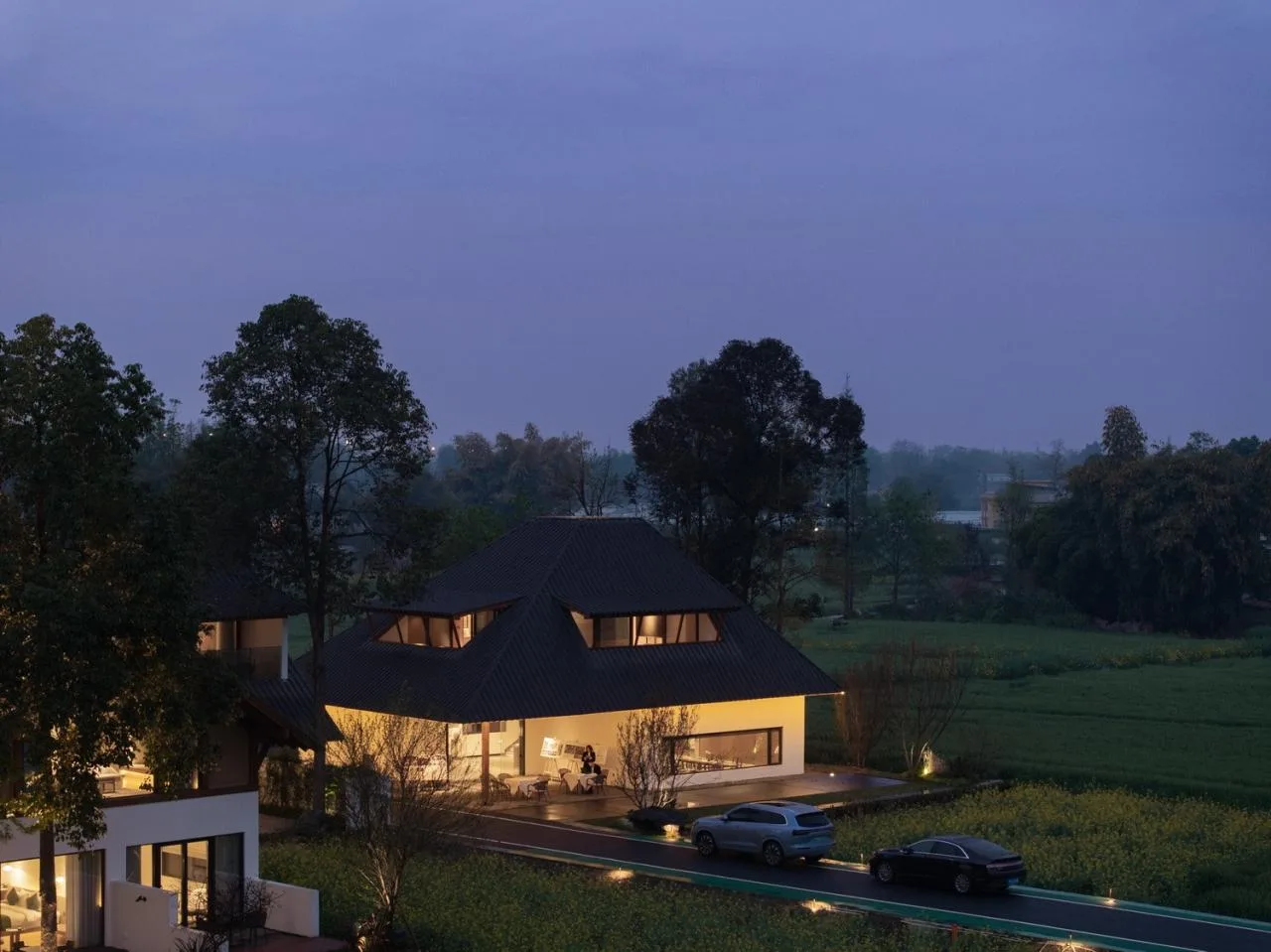
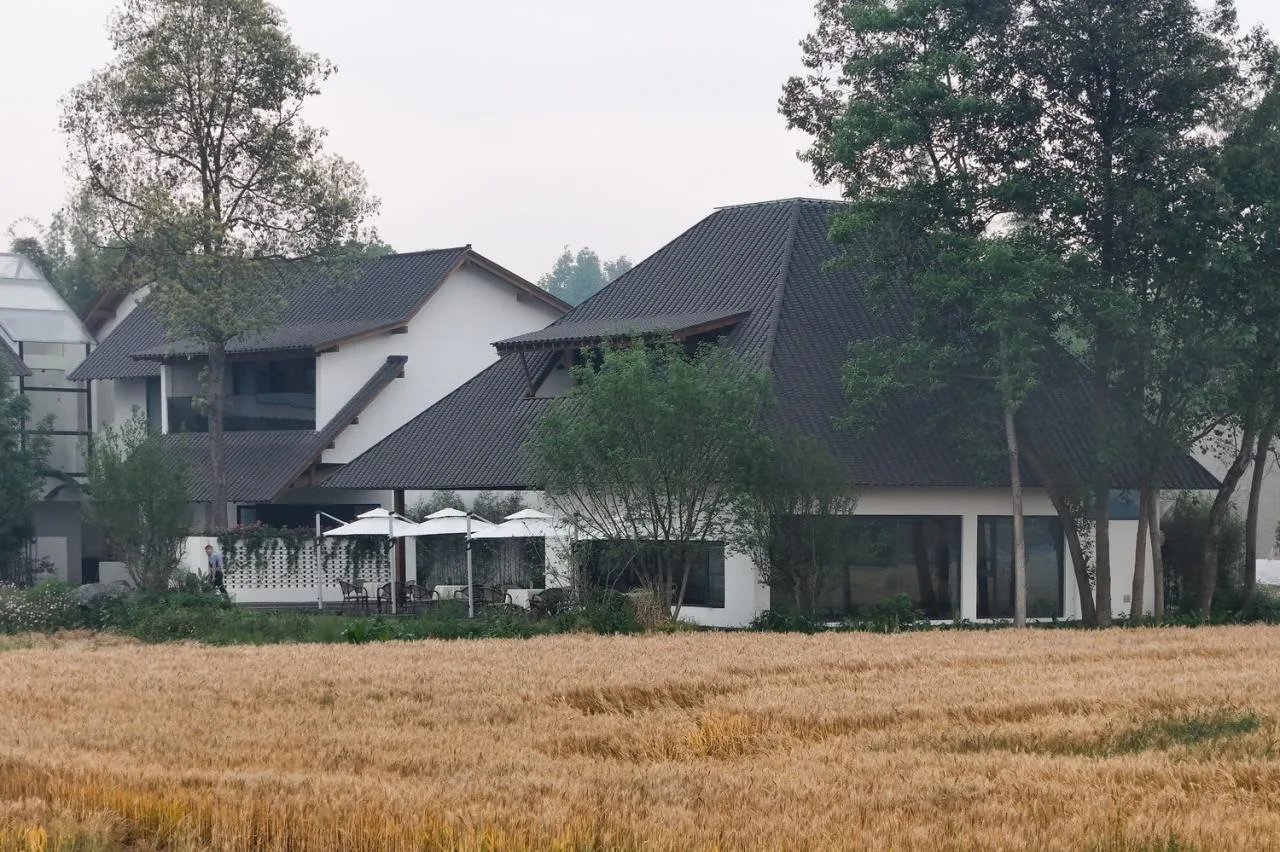
▲ The rural reception hall designed with warehouse and rice bowl imagery © DONG Architectural Imaging
The tea room on the reception room’s first floor is sunken, allowing guests to sit at eye level with the surrounding farmland. The tea-drinking experience is enveloped by fields, blending indoor and outdoor spaces with a sense of isolation from the farmland. Through the window, the landscape of alternating wheat and rice fields unfolds like a large silk scroll painting, illustrating the seasonal cycles of prosperity and decline.
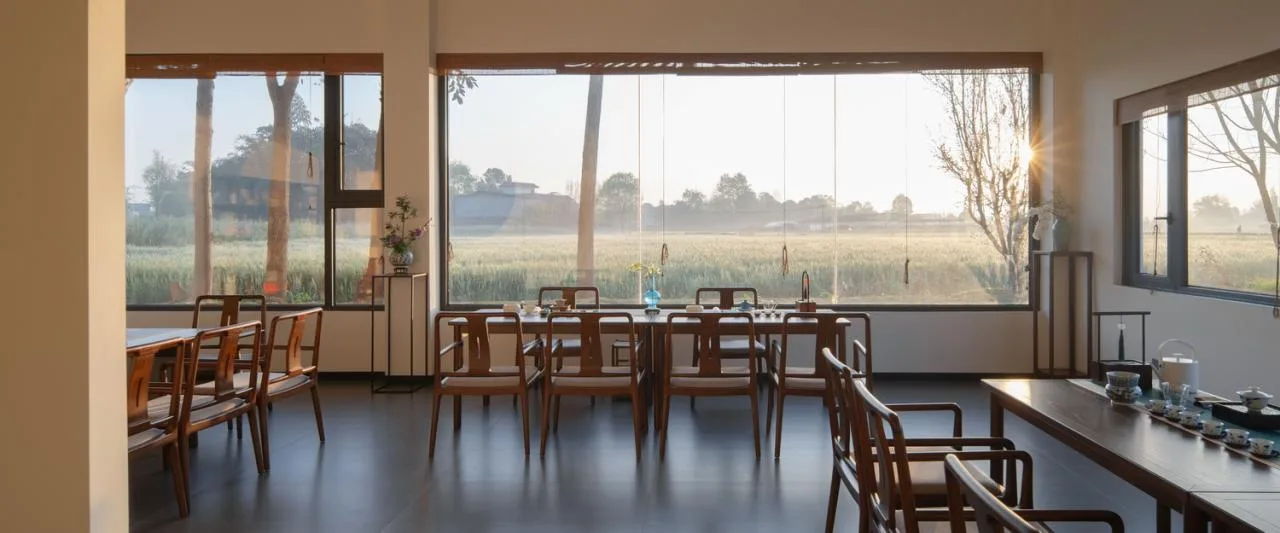
▲ Sunken Tea Room with Rice Fields Outside the Window © DONG Architectural Imaging
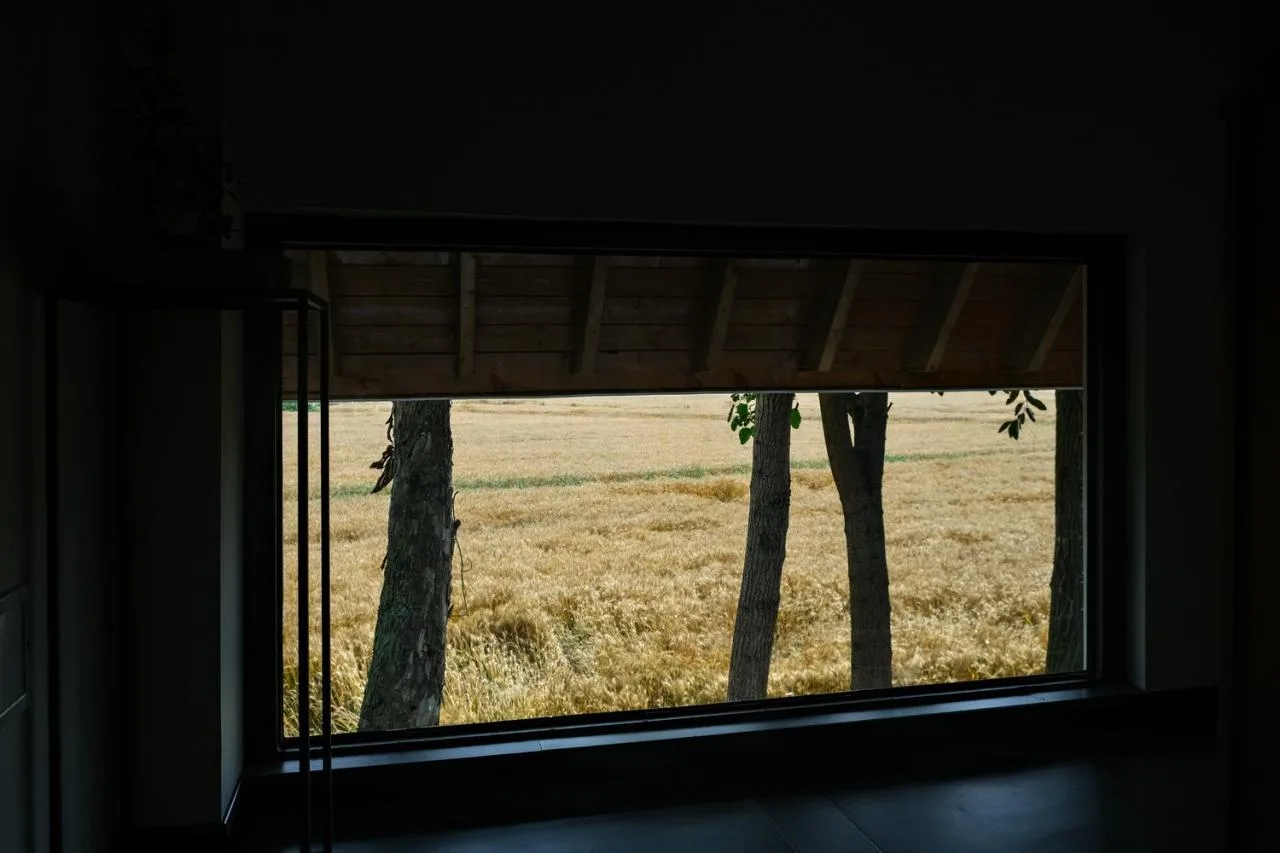
▲ Staircase overlooking the rice fields © DONG Architectural Imaging
The multifunctional hall on the second floor offers a spacious area to listen to the wind, watch the rain, and admire the fields. Its flexible design allows it to be adapted for meditation, study, meetings, and other uses.
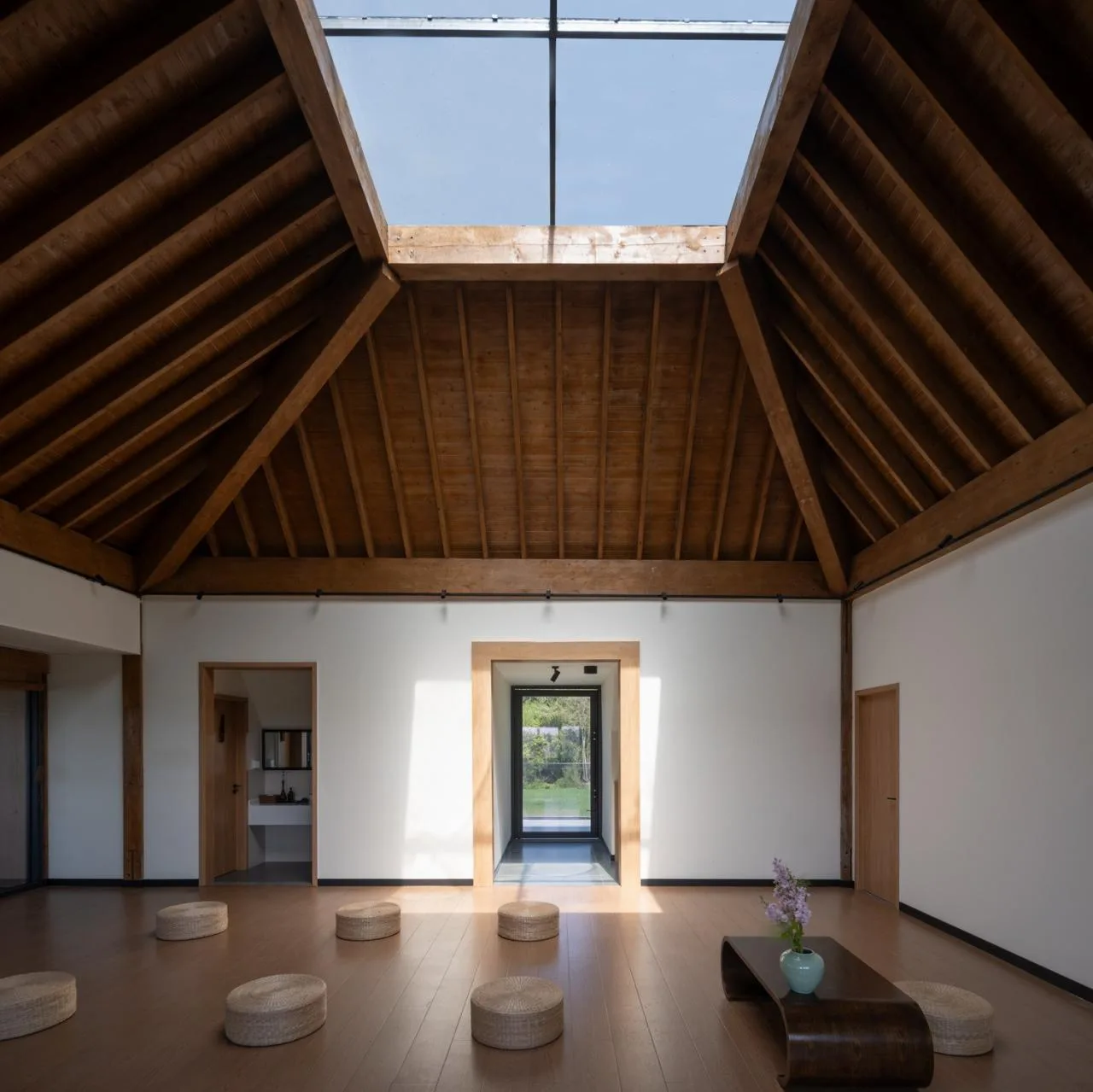
▲ Meditation mode with sunlight streaming through the skylight onto the multifunctional hall © DONG Architectural Imaging
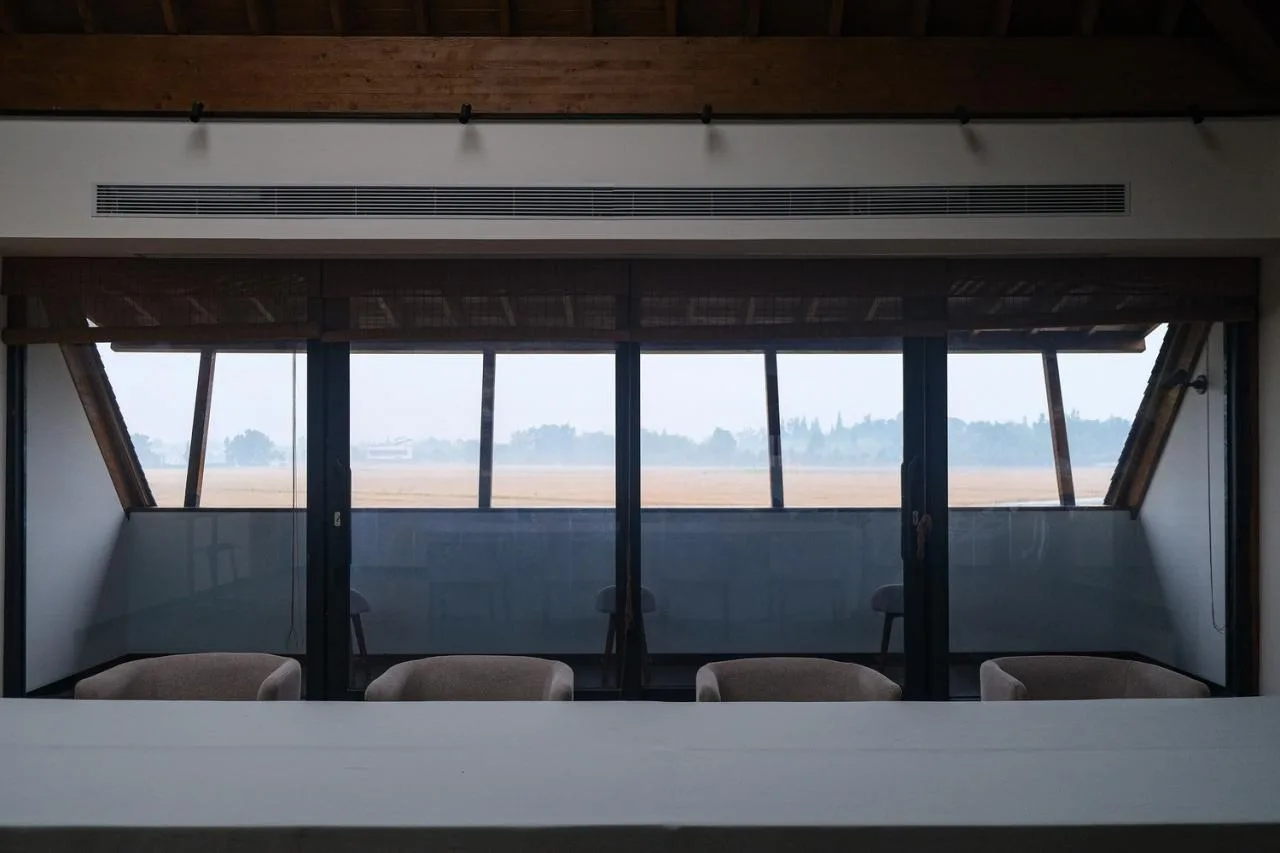
▲ Conference mode overlooking the scenery of Datian © DONG Architectural Imaging
The sloping roof is partially lifted to create viewing balconies on both sides of the building, providing resting spaces with panoramic views. These balconies integrate scenes from the upper and lower floors, as well as the surrounding fields and houses, resembling hanging scroll paintings. The combination of roof and guardrails frames the views, offering diverse perspectives of farmland and forest plots.
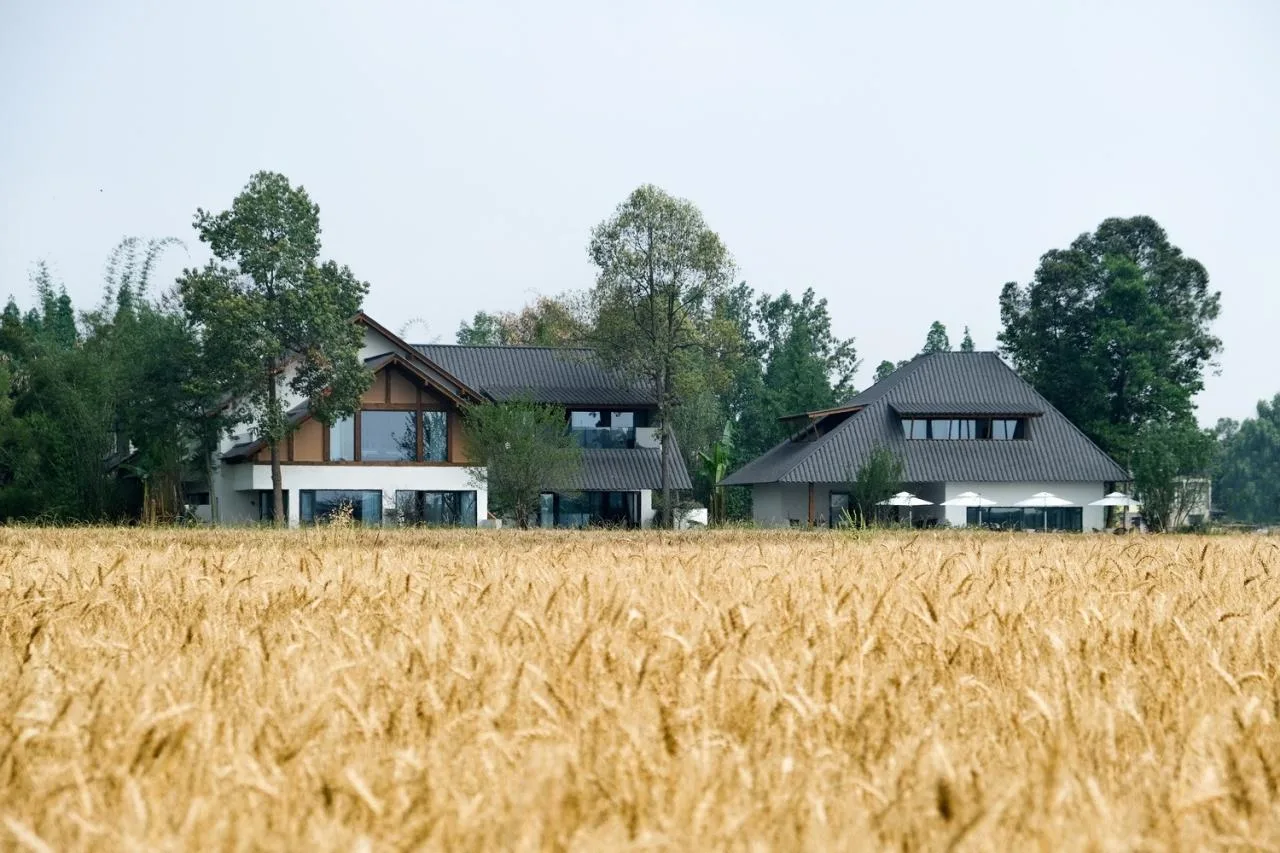
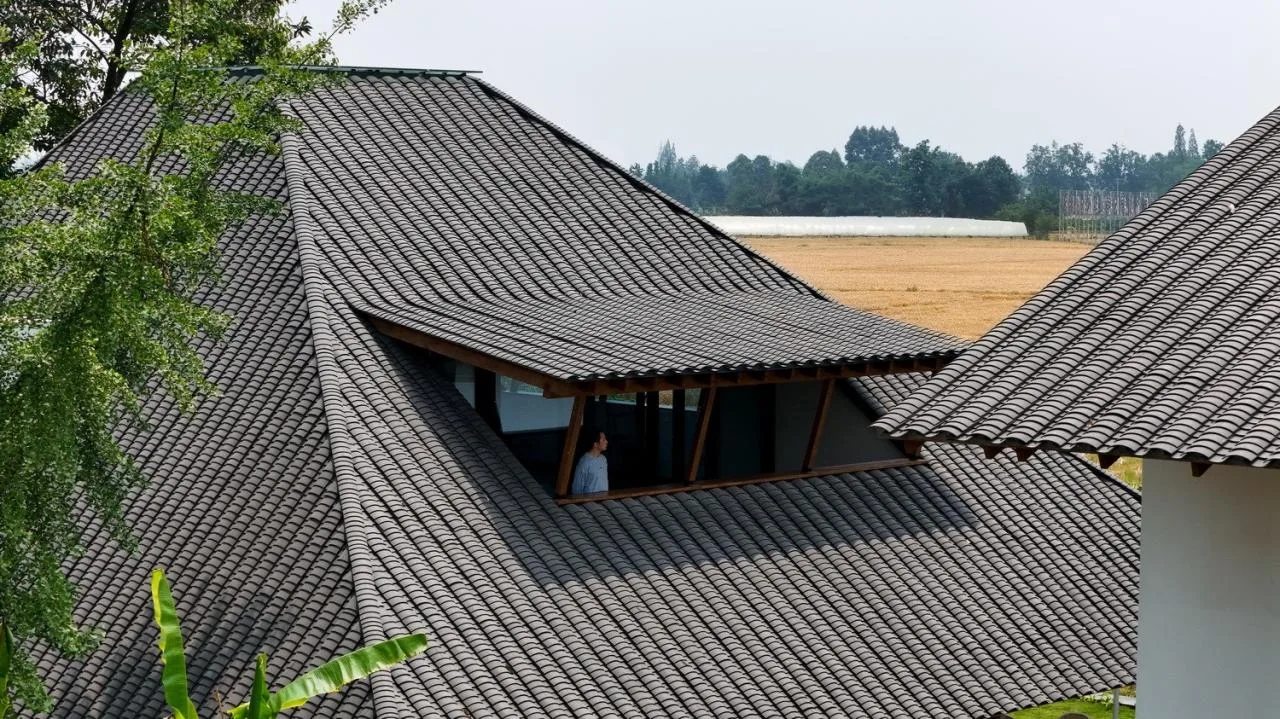
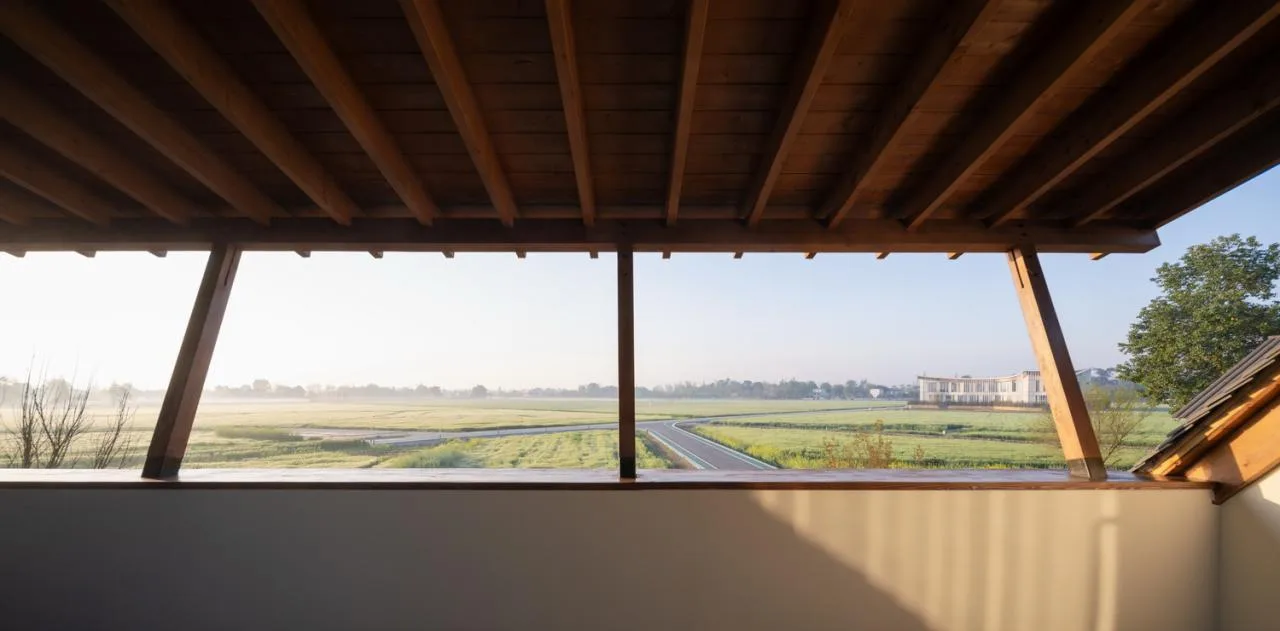
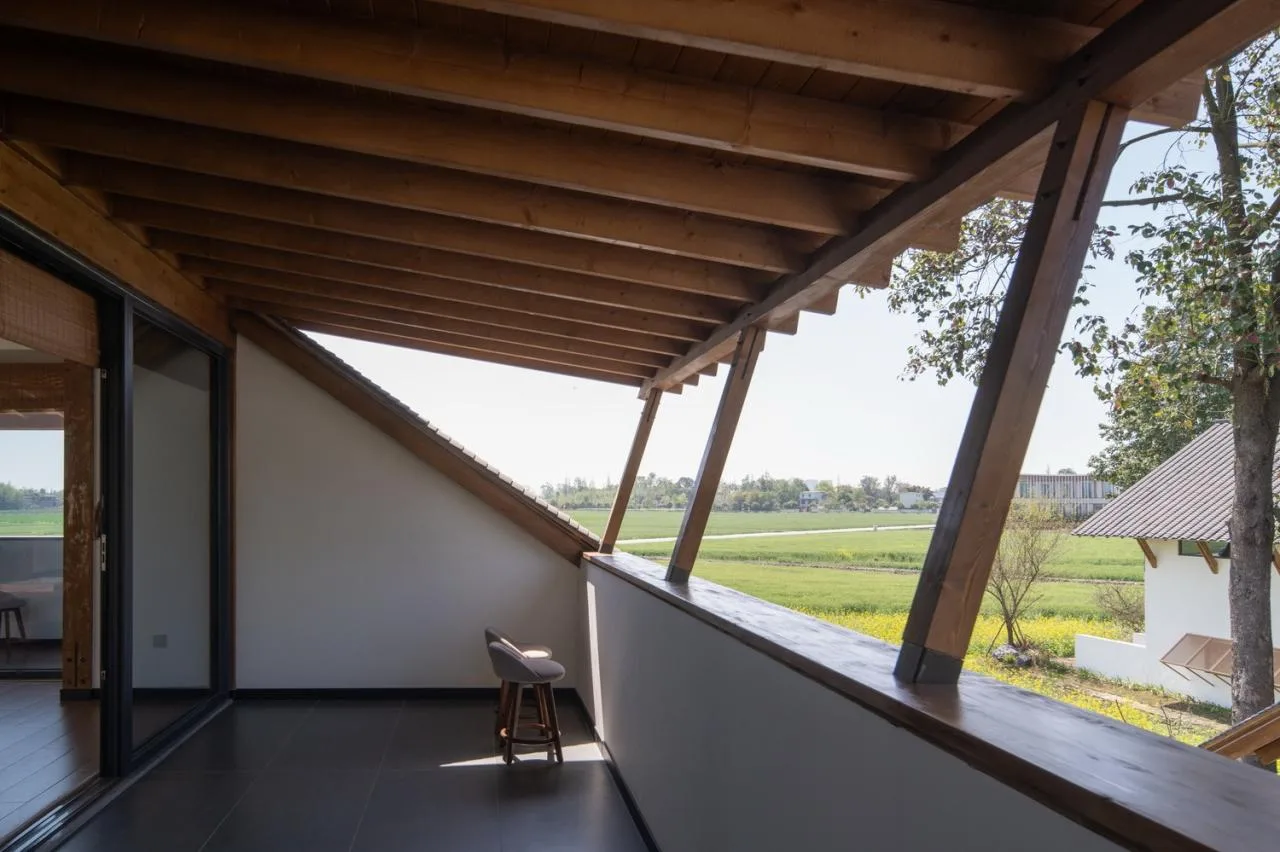
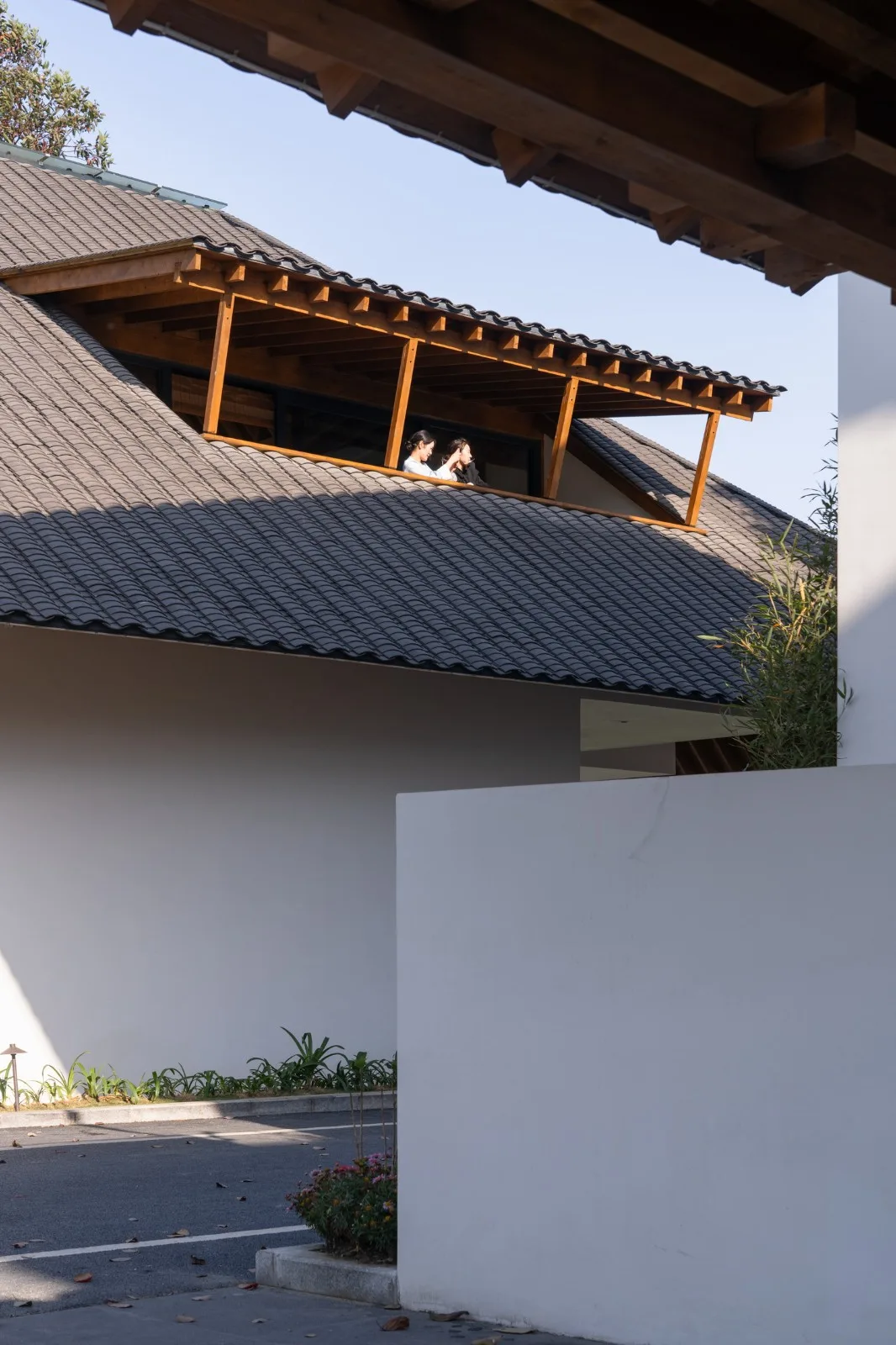
▲ Views from balconies facing each other at different angles © DONG Architectural Imaging
An observation deck has been added on the north roof to connect the building with the internal forest landscape and the upcoming Phase II development, providing an aerial vantage point for visitors.
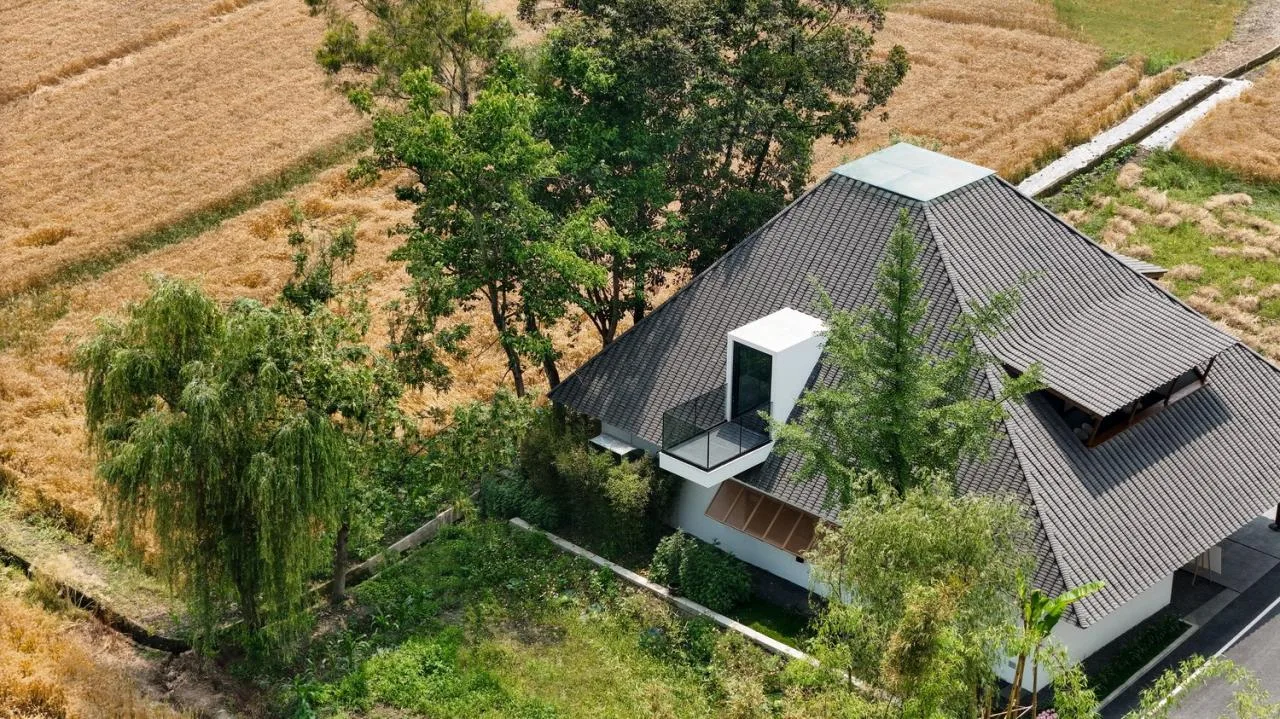
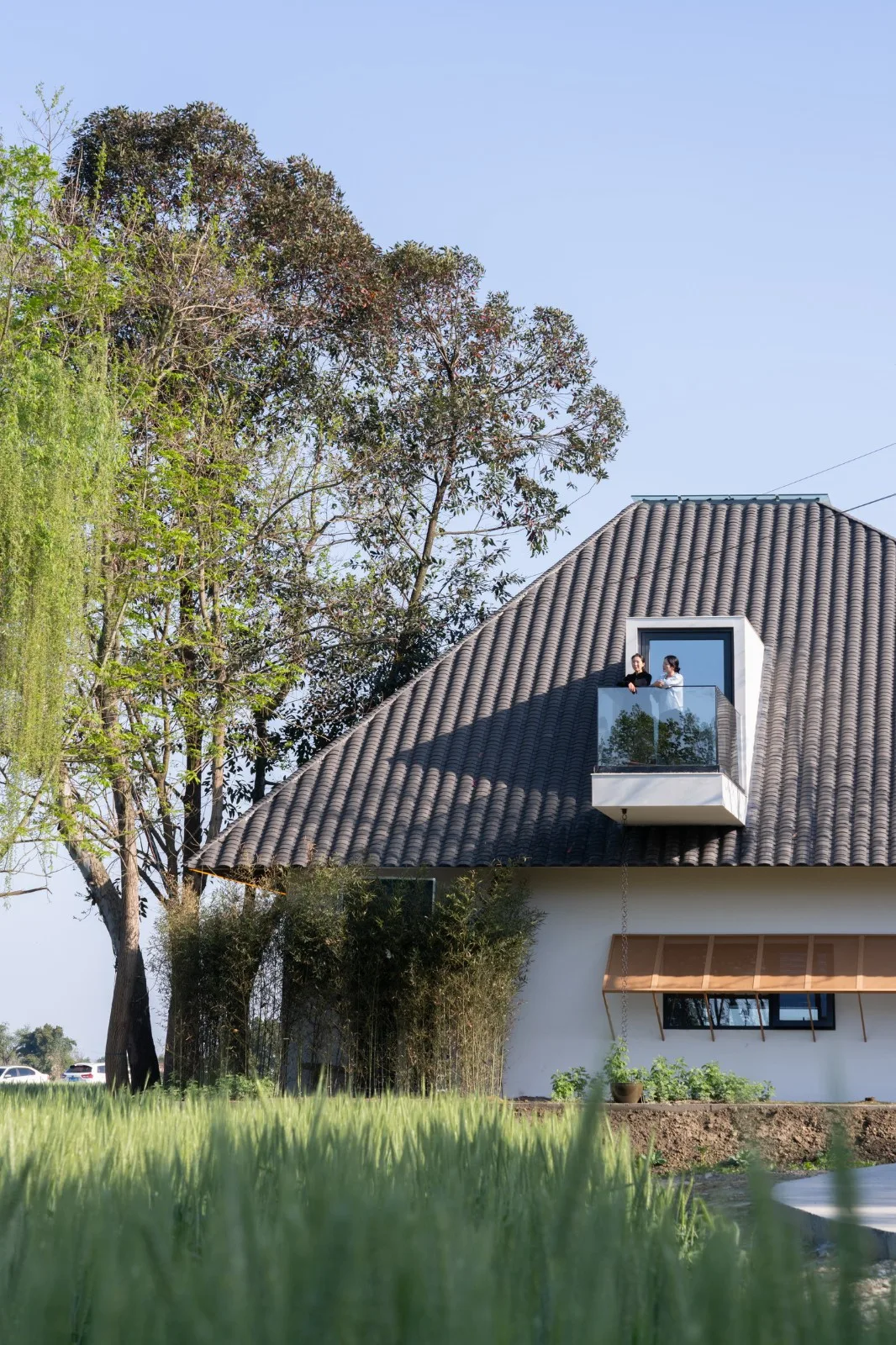
▲ North side observation deck © DONG Architectural Imaging
To balance land use efficiency with the traditional rural architectural style, homestay and private kitchen buildings are combined into a single structure. The roof is segmented into multiple blocks, mimicking a natural combination of several buildings, while accommodating practical functions such as viewing, shading, and drainage for each facade.
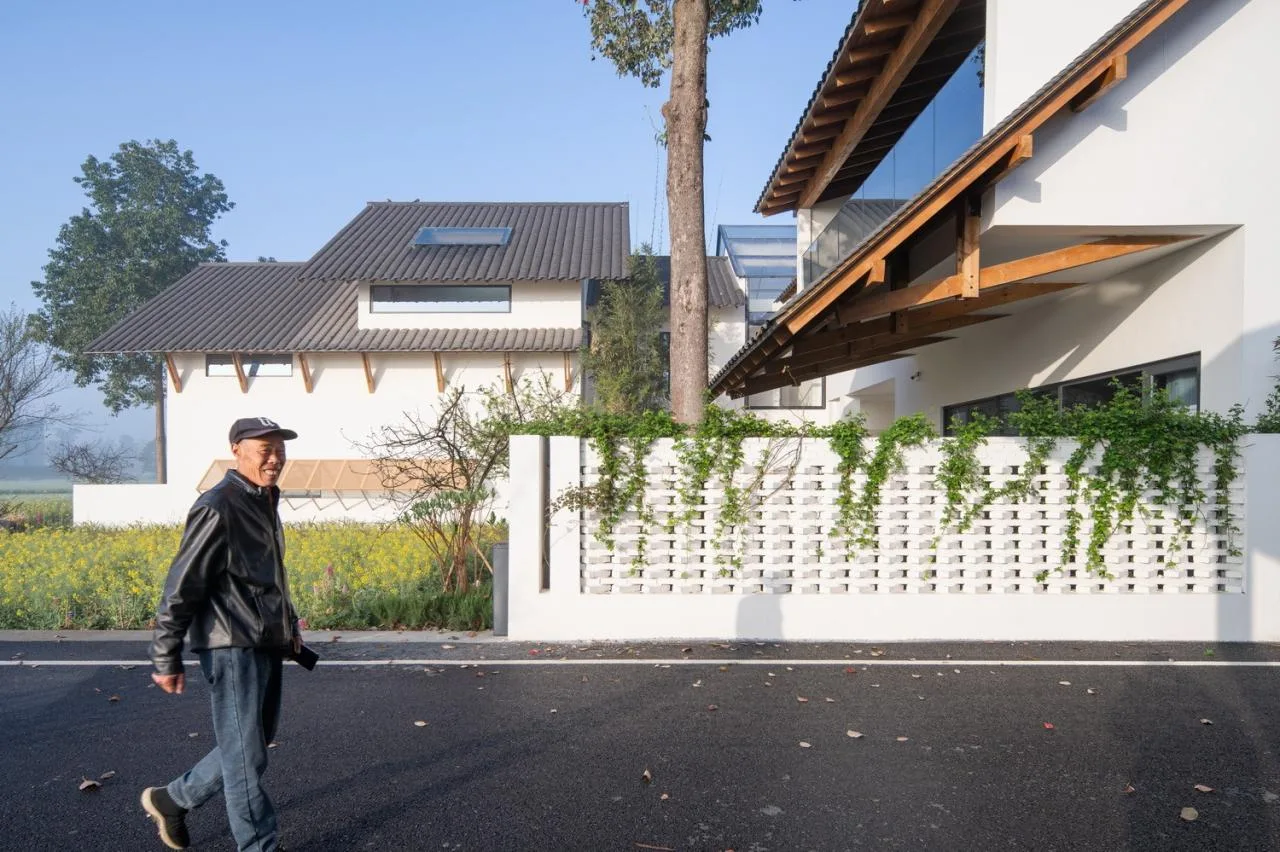
▲ Staggered spatial arrangement of homestays and private dining buildings © DONG Architectural Imaging
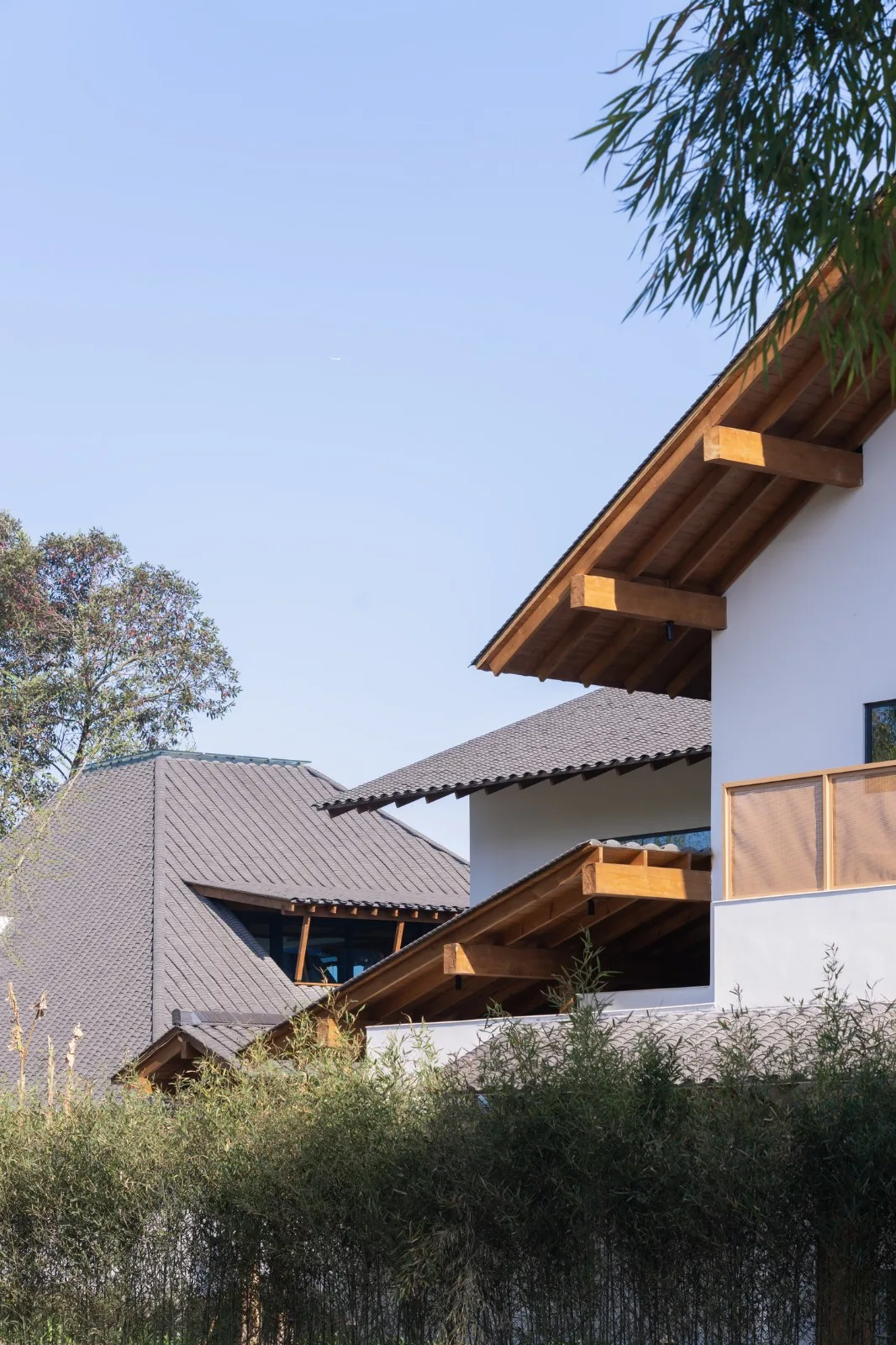
▲ The roof design creates the illusion of multiple residential buildings within the site © DONG Architectural Imaging
The homestay and private kitchen share a common entrance, integrating the four elements of forest, field, water, and homestead from the forest into the spatial layout, creating a harmonious microcosm.
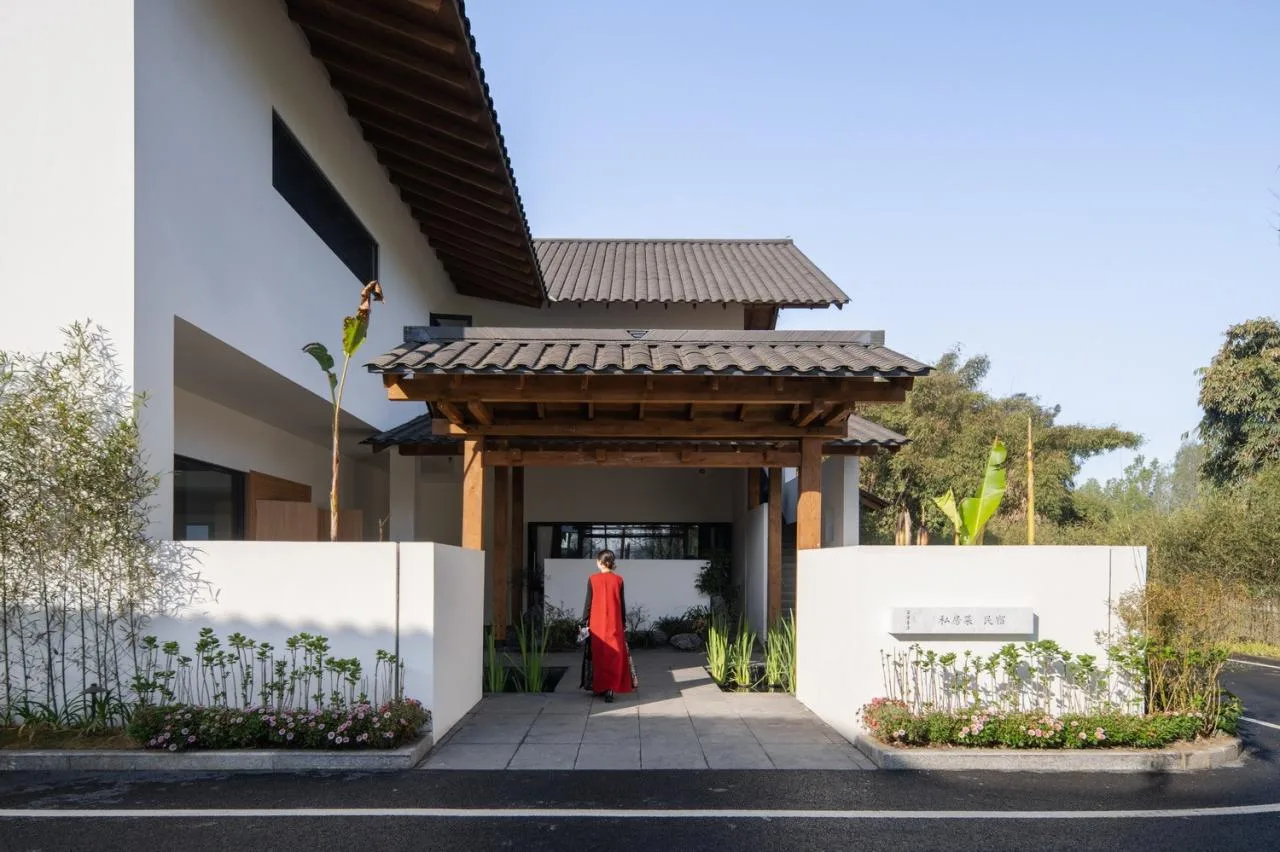
▲ Entrance to homestays and private rooms © DONG Architectural Imaging
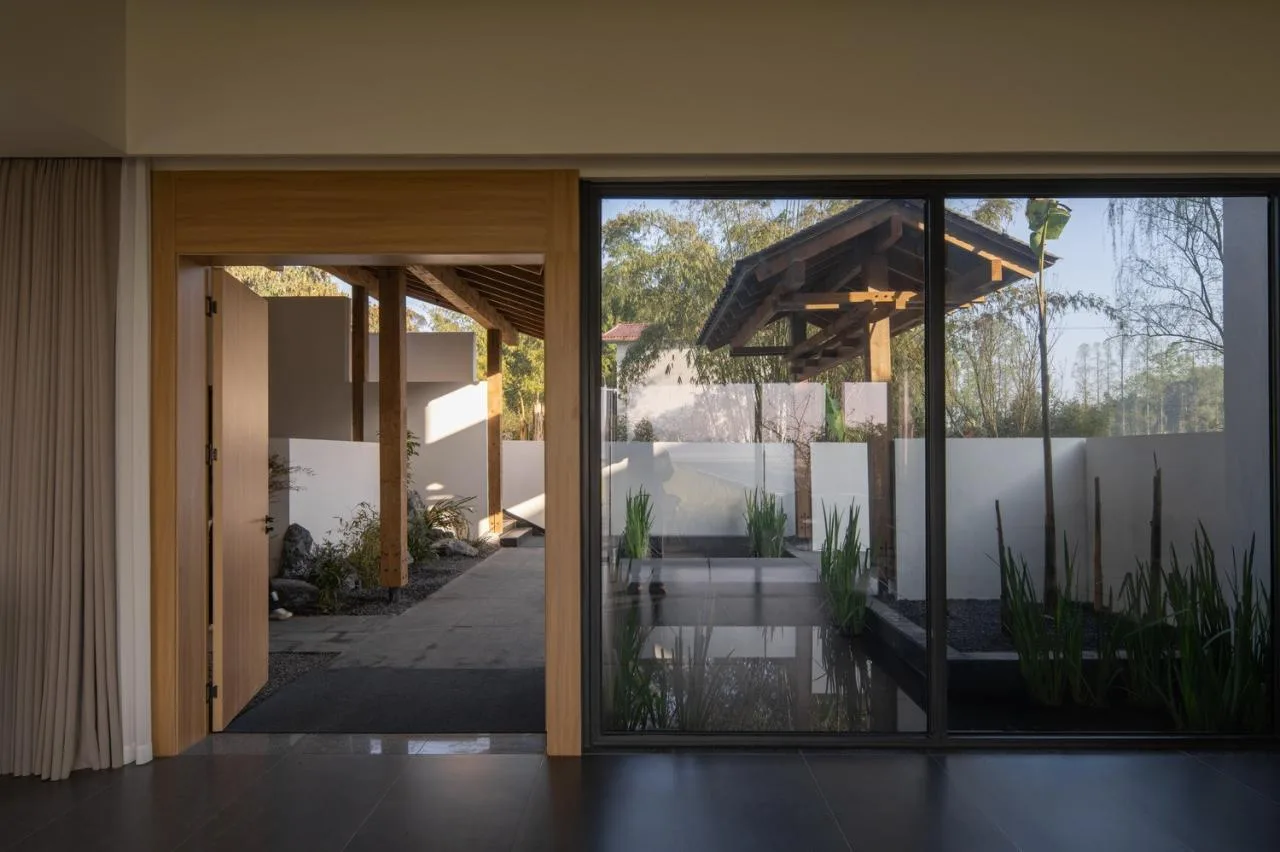
▲ Reception area facing the entrance direction © DONG Architectural Imaging
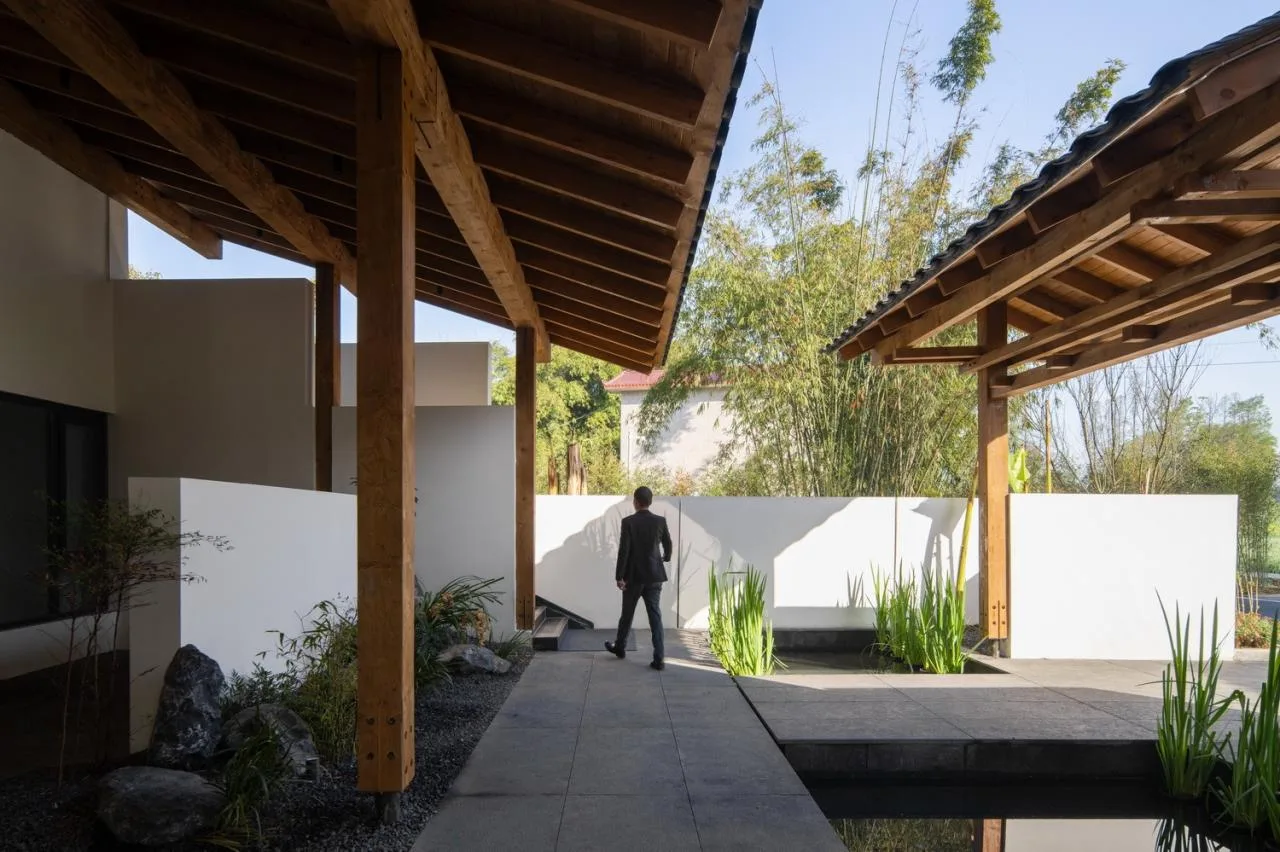
▲ Integrated entrance landscape blending forest, fields, water, and homes © DONG Architectural Imaging
The flow between the restaurant and accommodation areas is dynamic and engaging, with no strict separation between primary and secondary paths. Meandering forest roads guide spatial circulation, where the randomness of site openings and closures combined with viewing surfaces creates a delightful experience of wandering through the forest and glimpsing beautiful scenery framed by trees and buildings.
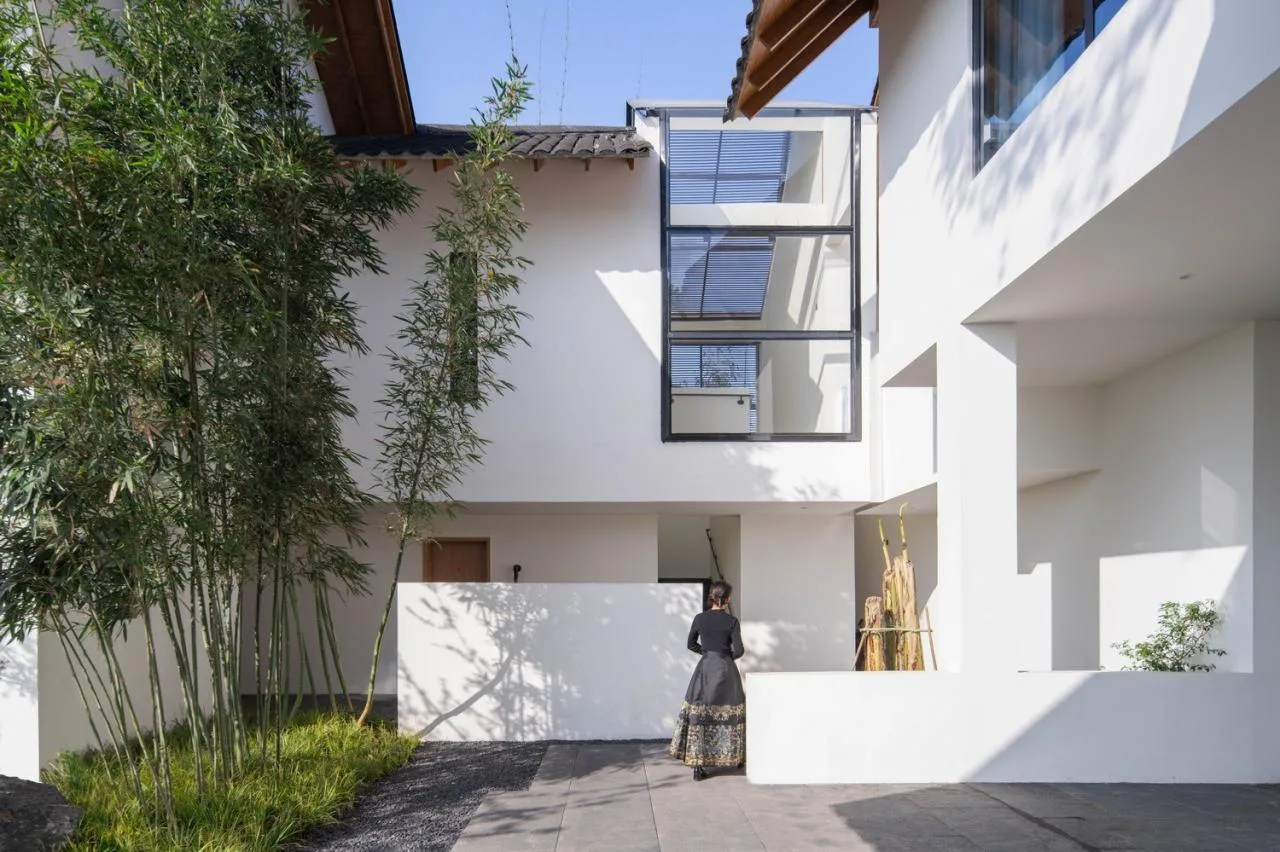
▲ The landscape wall and building form a semi-enclosed space © DONG Architectural Imaging
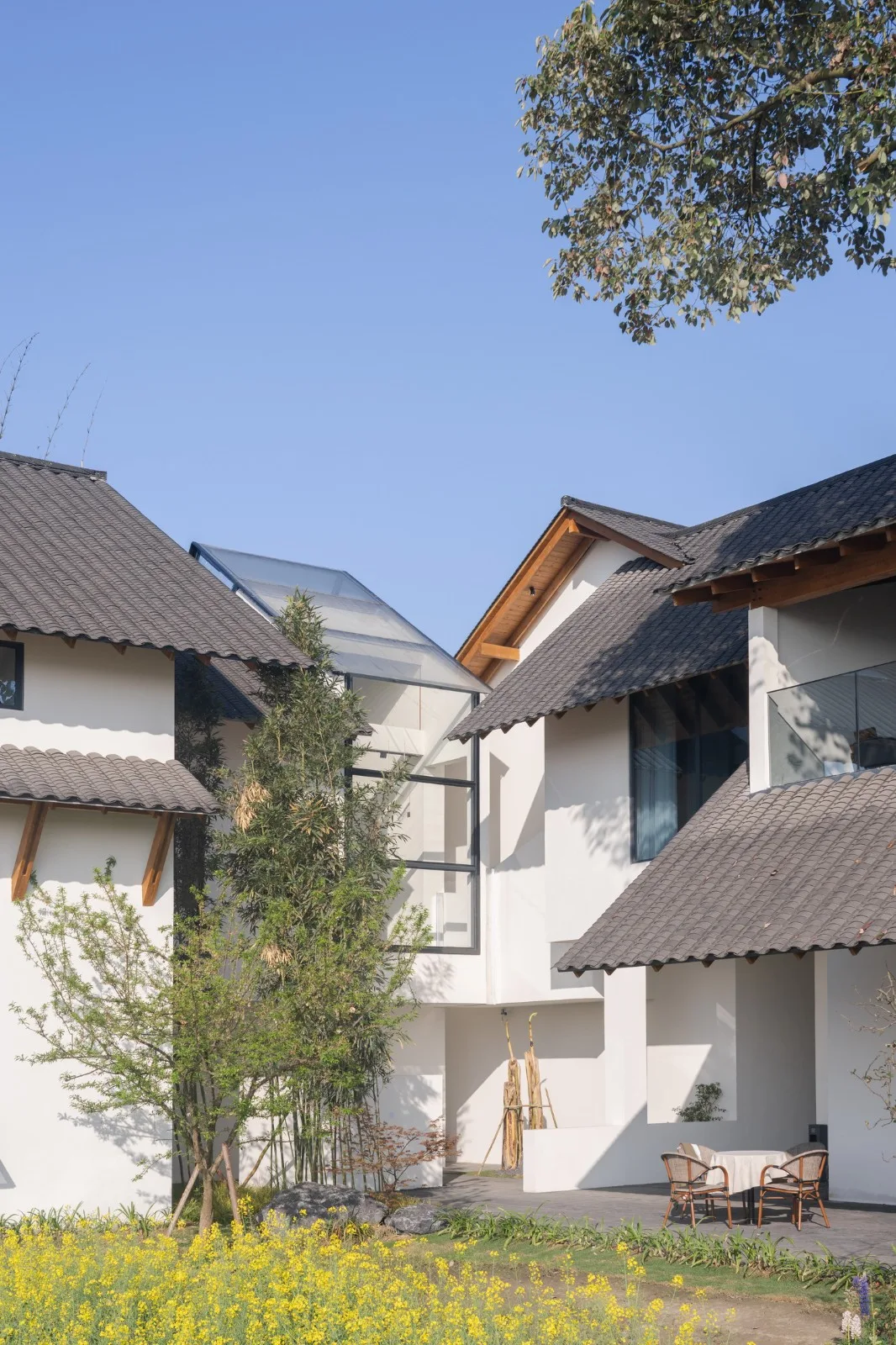
▲ The courtyard opens directly to the farmland, blending indoor and outdoor landscapes © DONG Architectural Imaging
By rhythmically combining main spaces and circulation areas through small passages and platforms, the total number of stairs is reduced. Multiple viewpoints and outdoor lobbies are positioned at circulation nodes, creating natural ventilation and diminishing the building’s perceived mass.
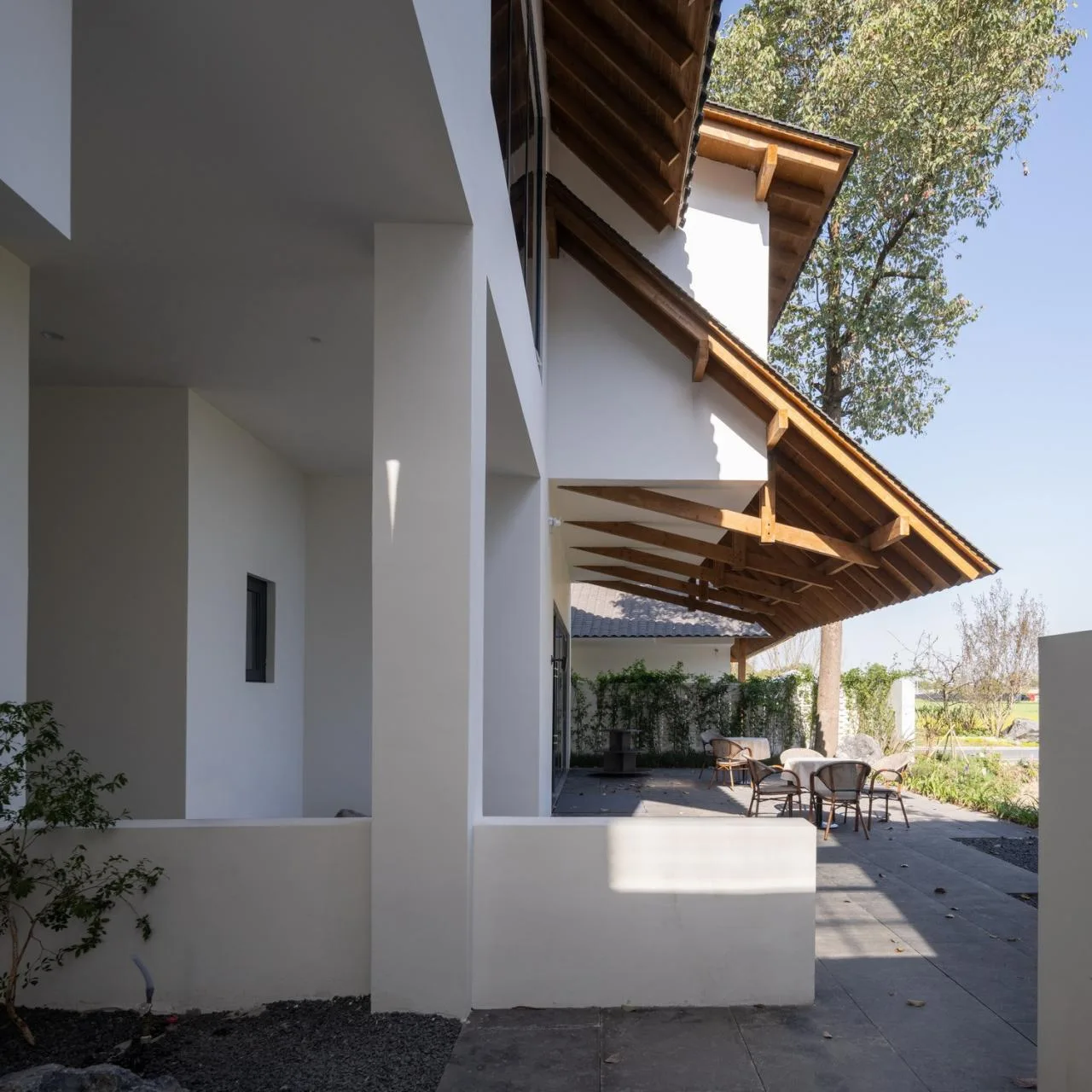
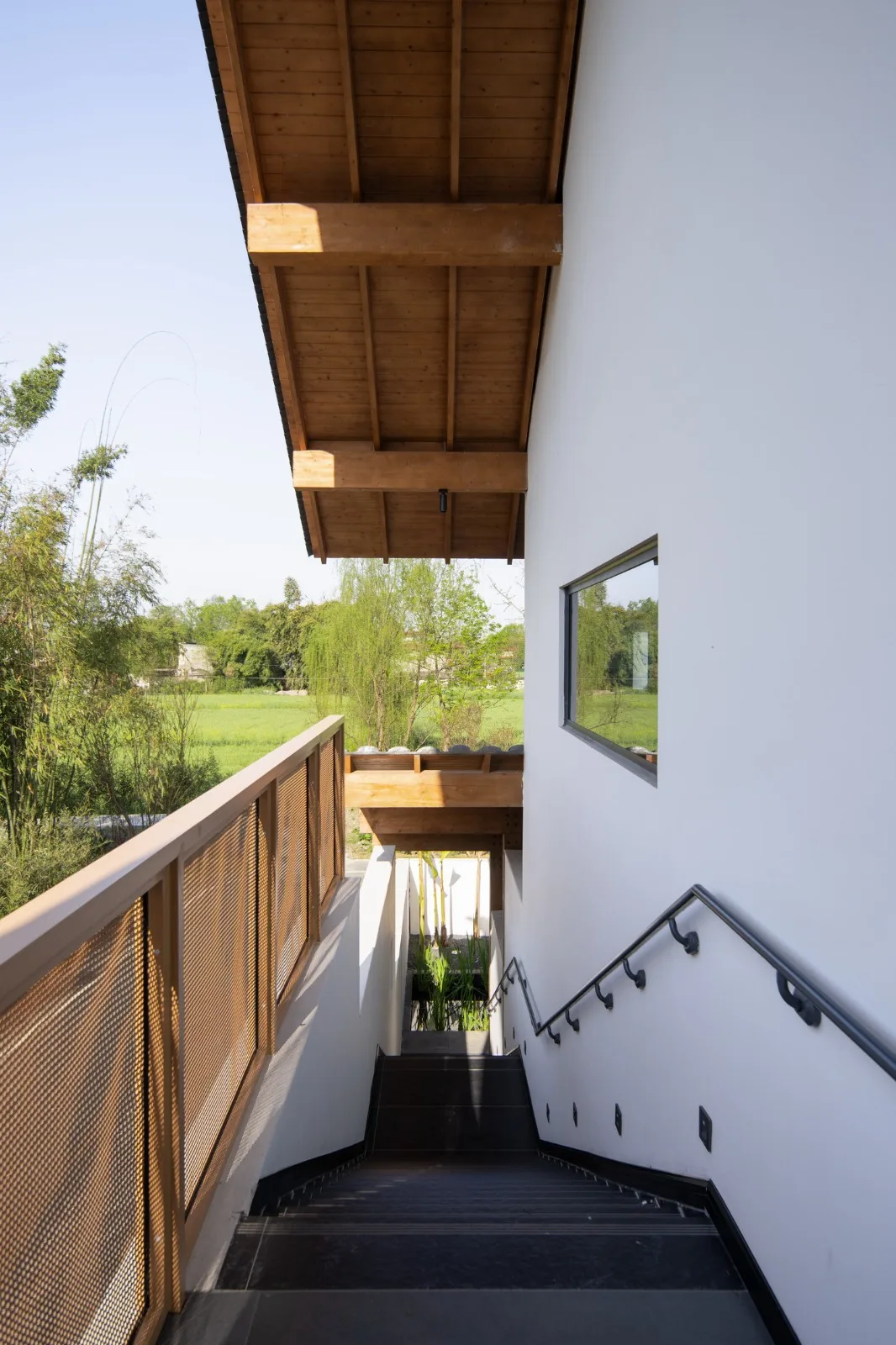
▲ Outdoor gray-space lobby and scenic spots along the flow line © DONG Architectural Imaging
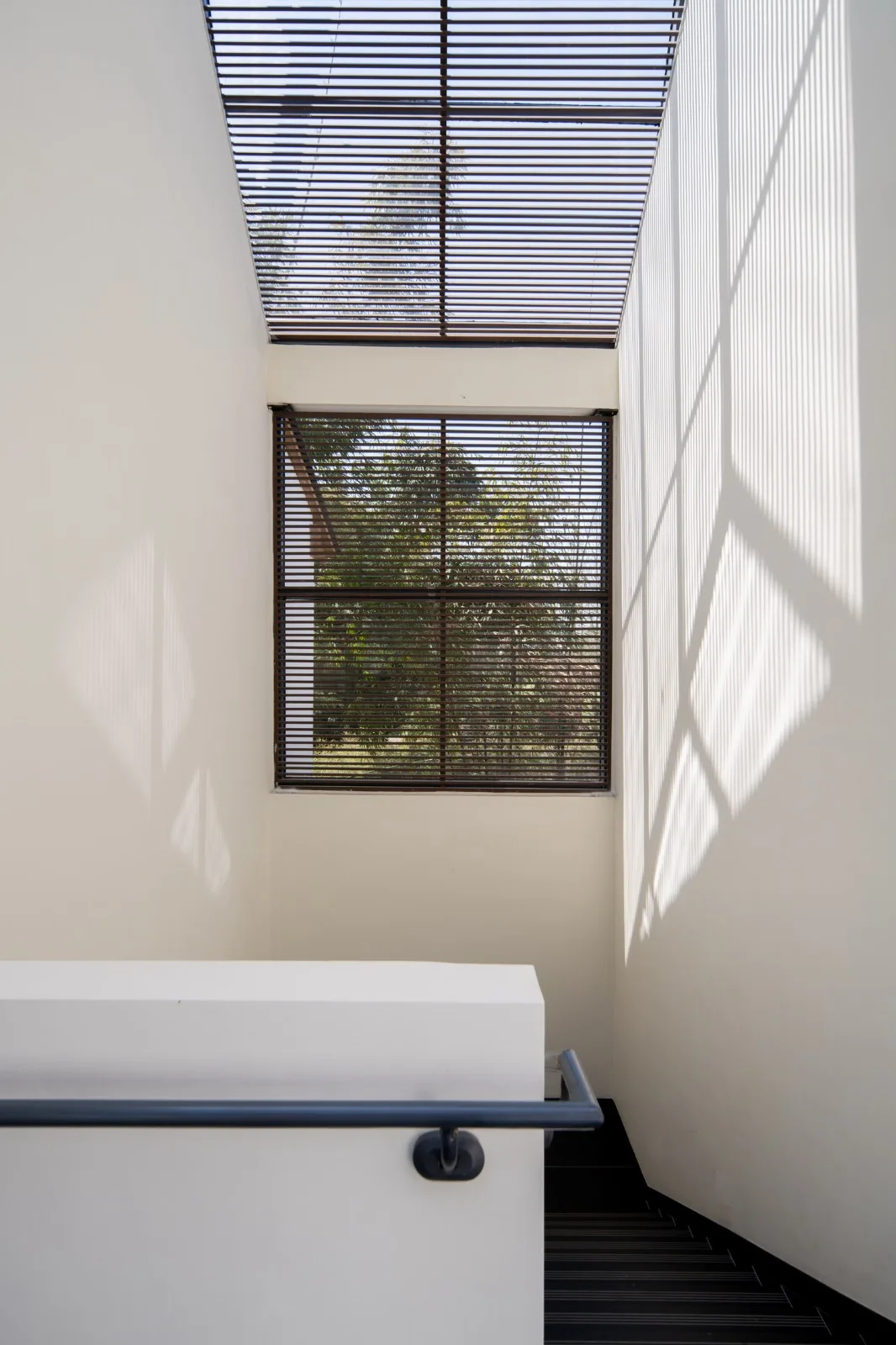
▲ Glass blocks on homestay stairs introduce light and shadow into circulation spaces © DONG Architectural Imaging
The adjacent driving road has been rerouted into the forest interior, allowing building courtyards to connect directly with farmland. This design integrates the countryside into each courtyard, enabling every room to enjoy its private rural landscape.
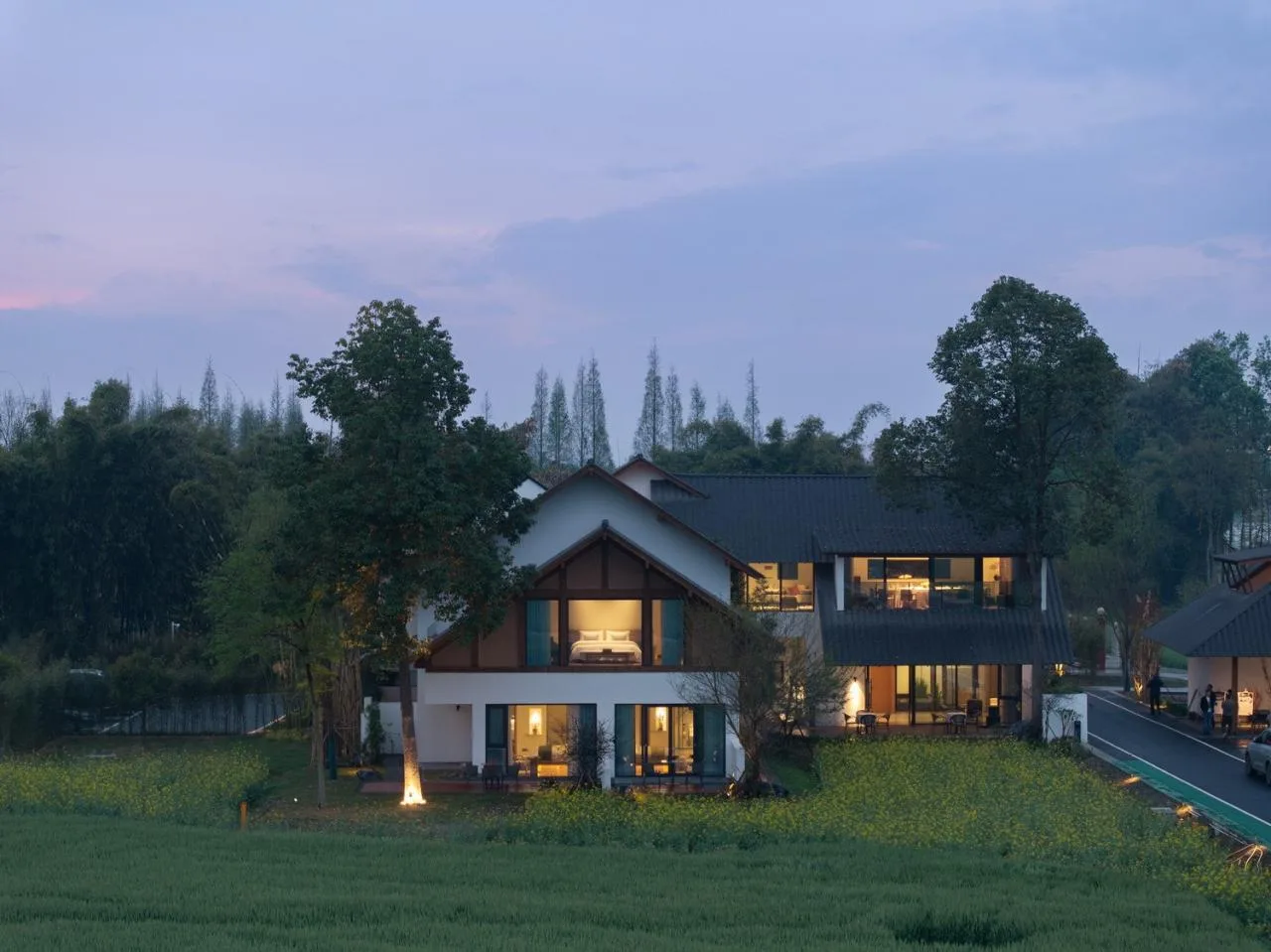
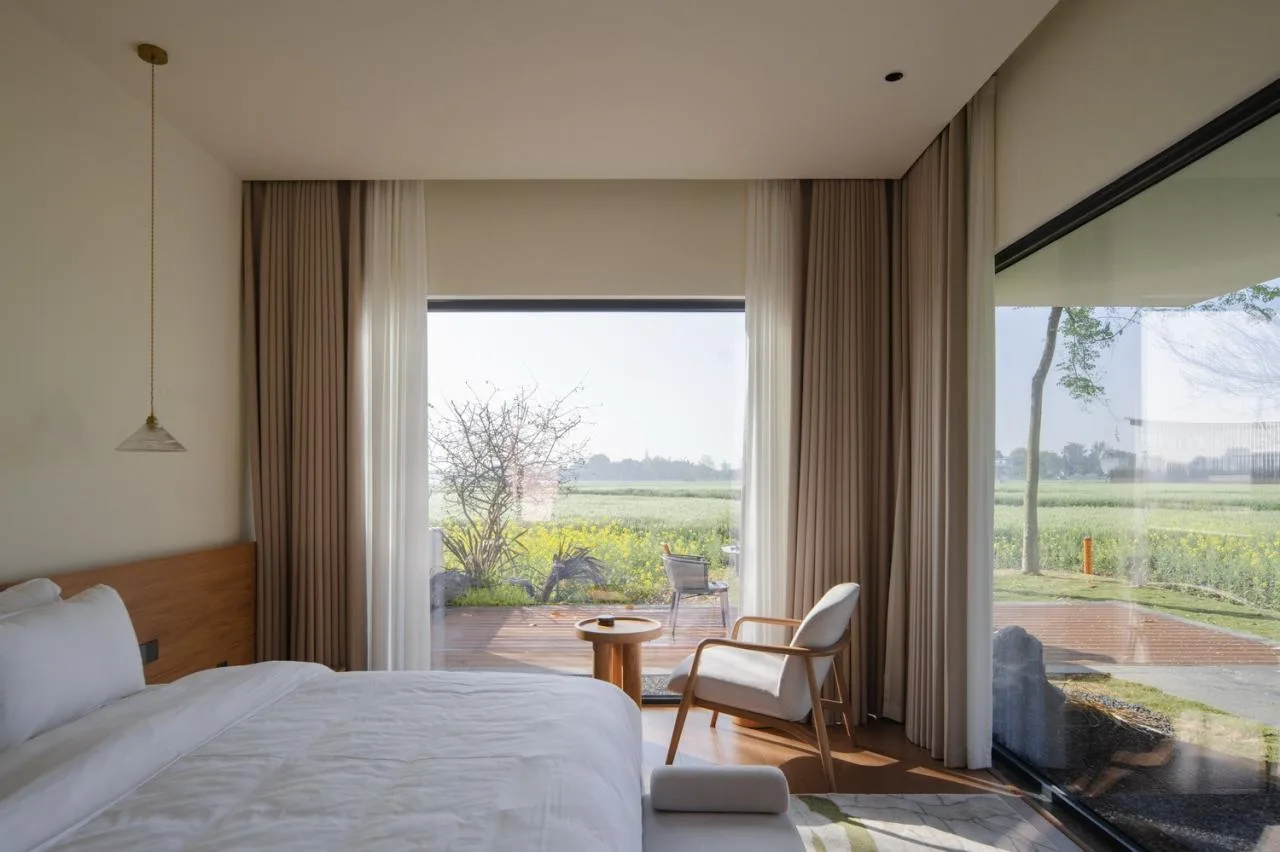
▲ Farmland seamlessly integrated into homestay courtyards © DONG Architectural Imaging
Rural Revitalization
Integrated urban-rural development is the core strategy for rural revitalization. Combining diverse resource backgrounds with rural development needs to create mutually beneficial functions is the goal we pursue in projects like this.
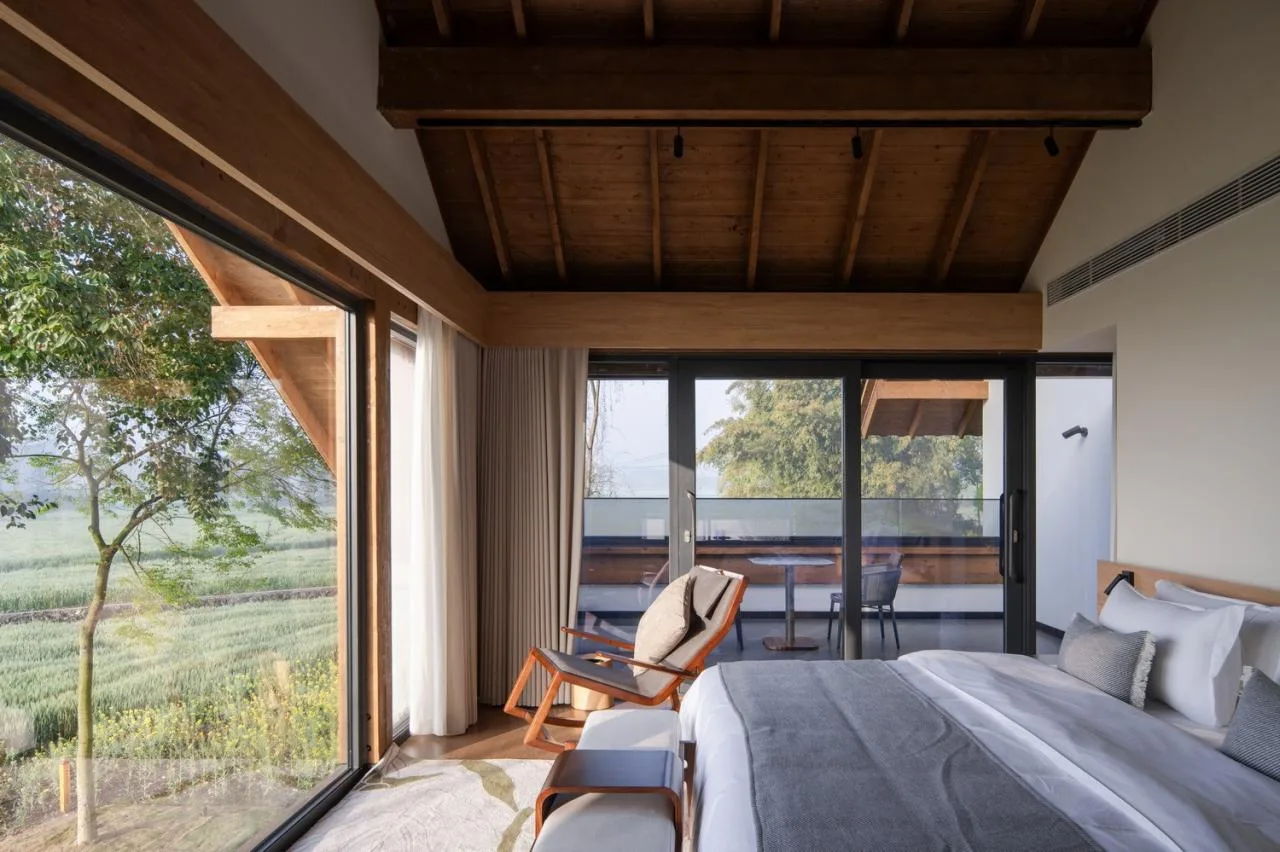
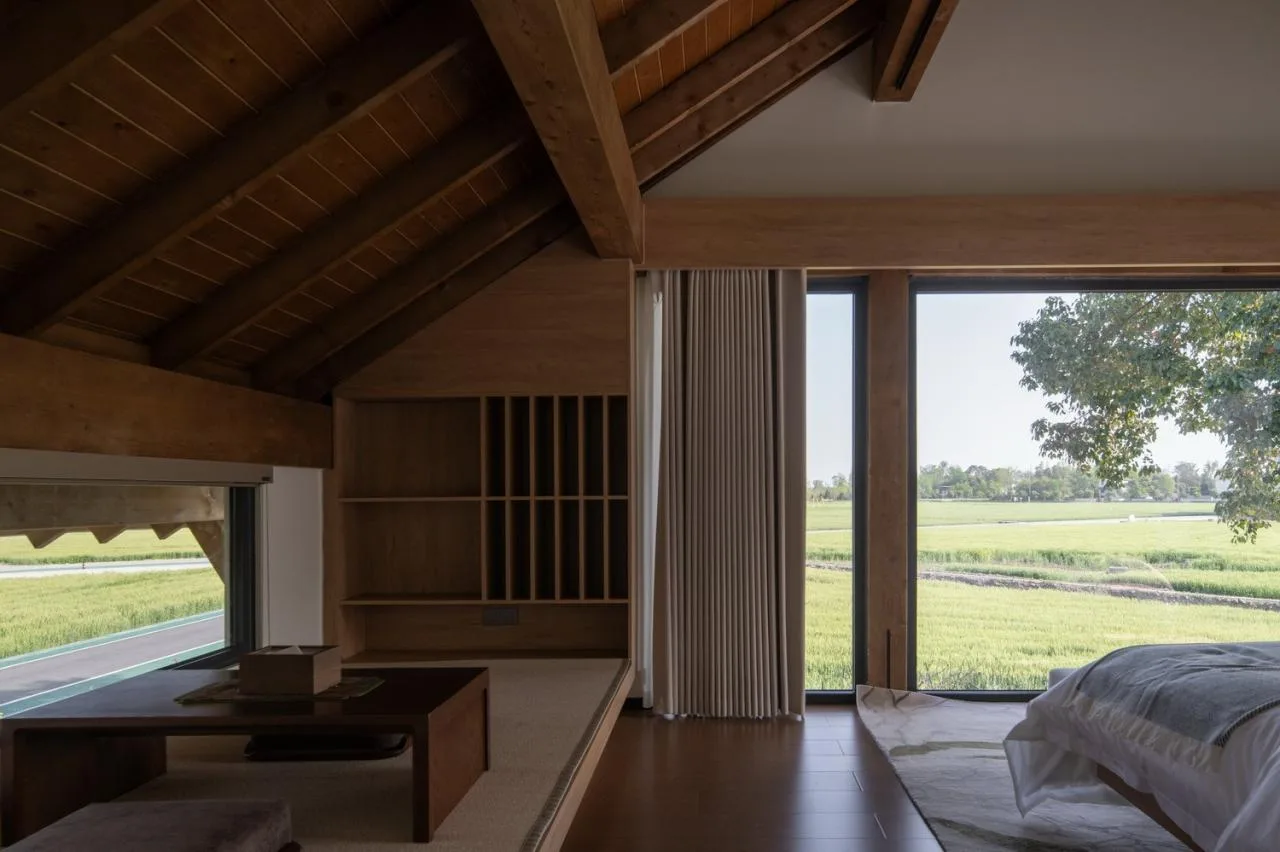
▲ Stunning guest room views from the homestay’s second floor © DONG Architectural Imaging
“Hundred Herbs” enriches project management by integrating Xindu’s traditional Chinese medicine planting industry, combining tonic diets, decoction, physiotherapy, and other functions with business opportunities. It also enhances the local plant resources within the forest.
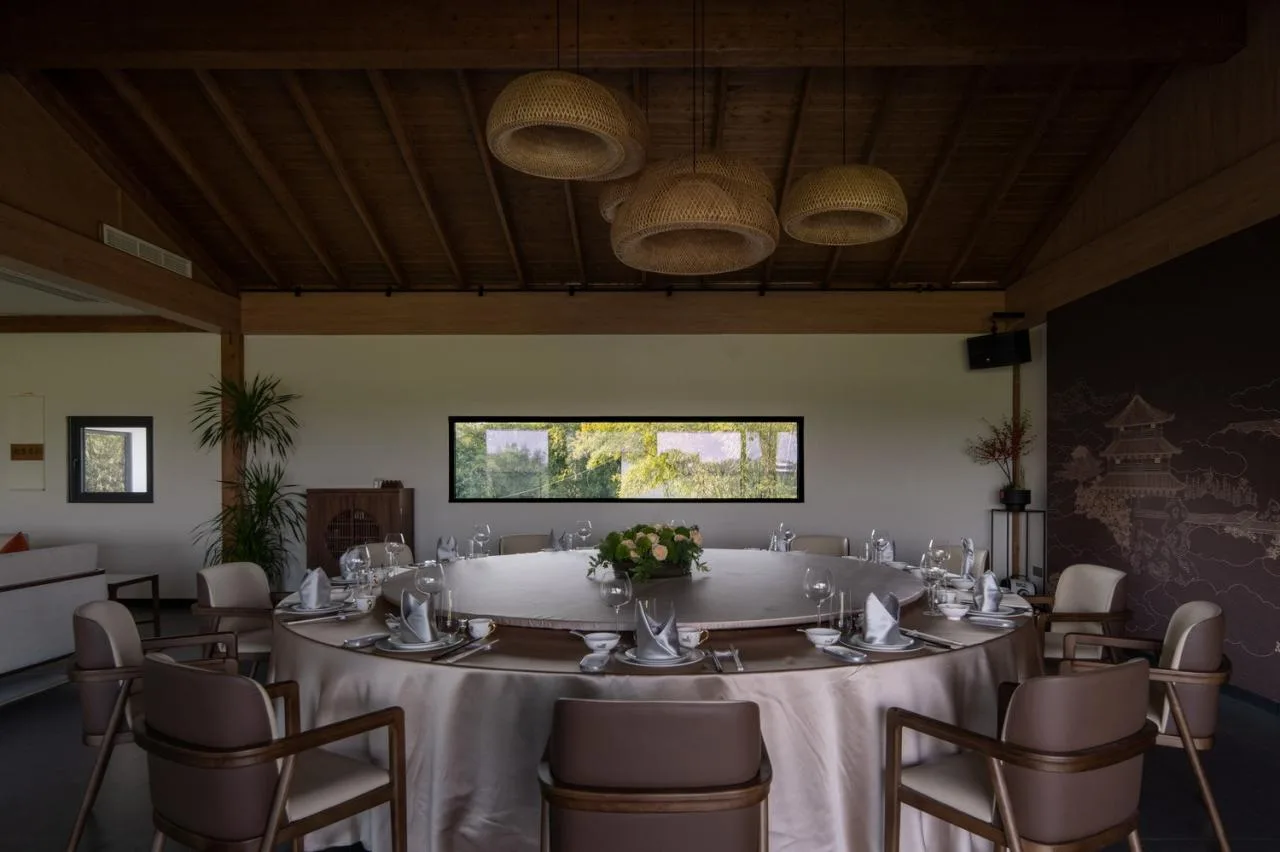
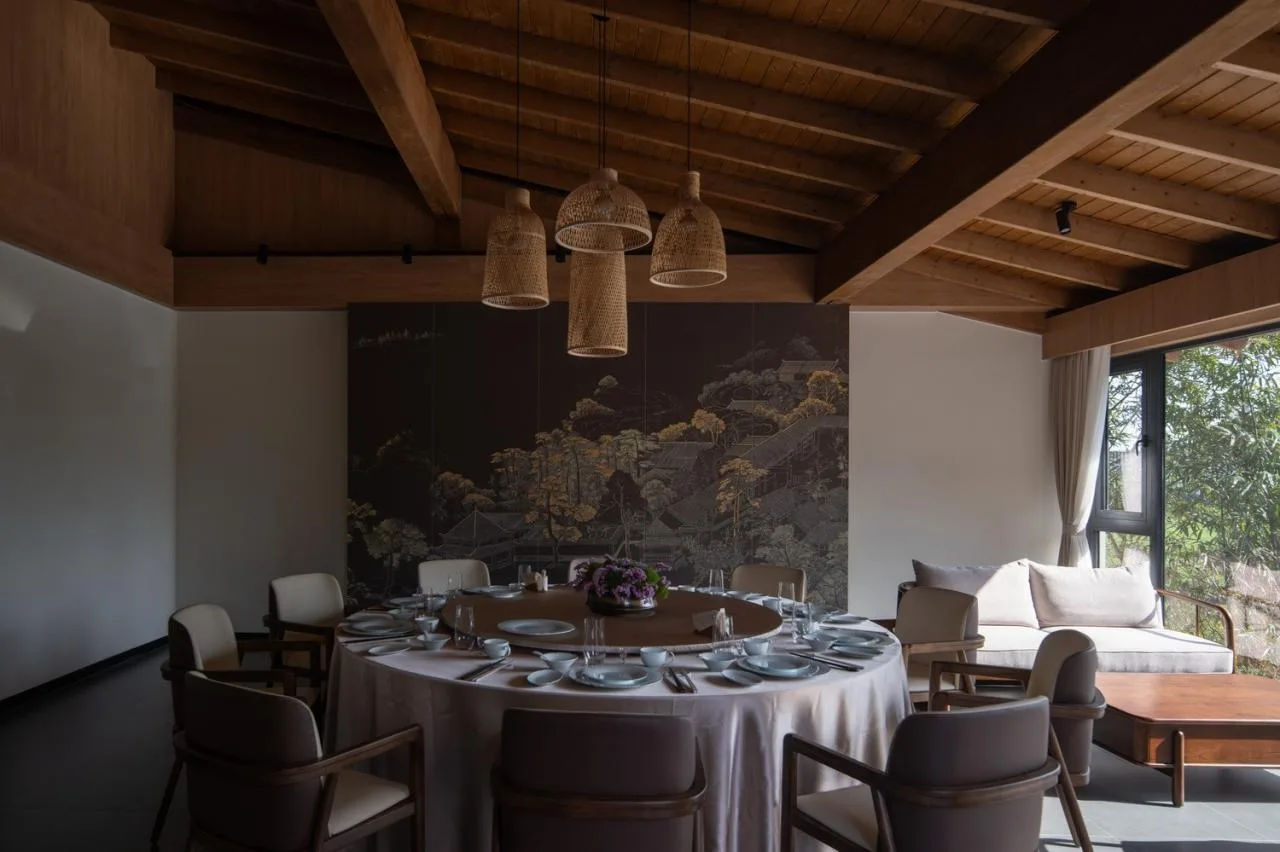
▲ Rural private restaurant integrating tonic diet concepts © DONG Architectural Imaging
Xianglu uniquely expresses an array of fragrances—incense, books, flowers, rice, wheat—embodied in huts made from grass. It synthesizes multiple dimensions including functional formats, architectural styles, agricultural culture, and resource environments.
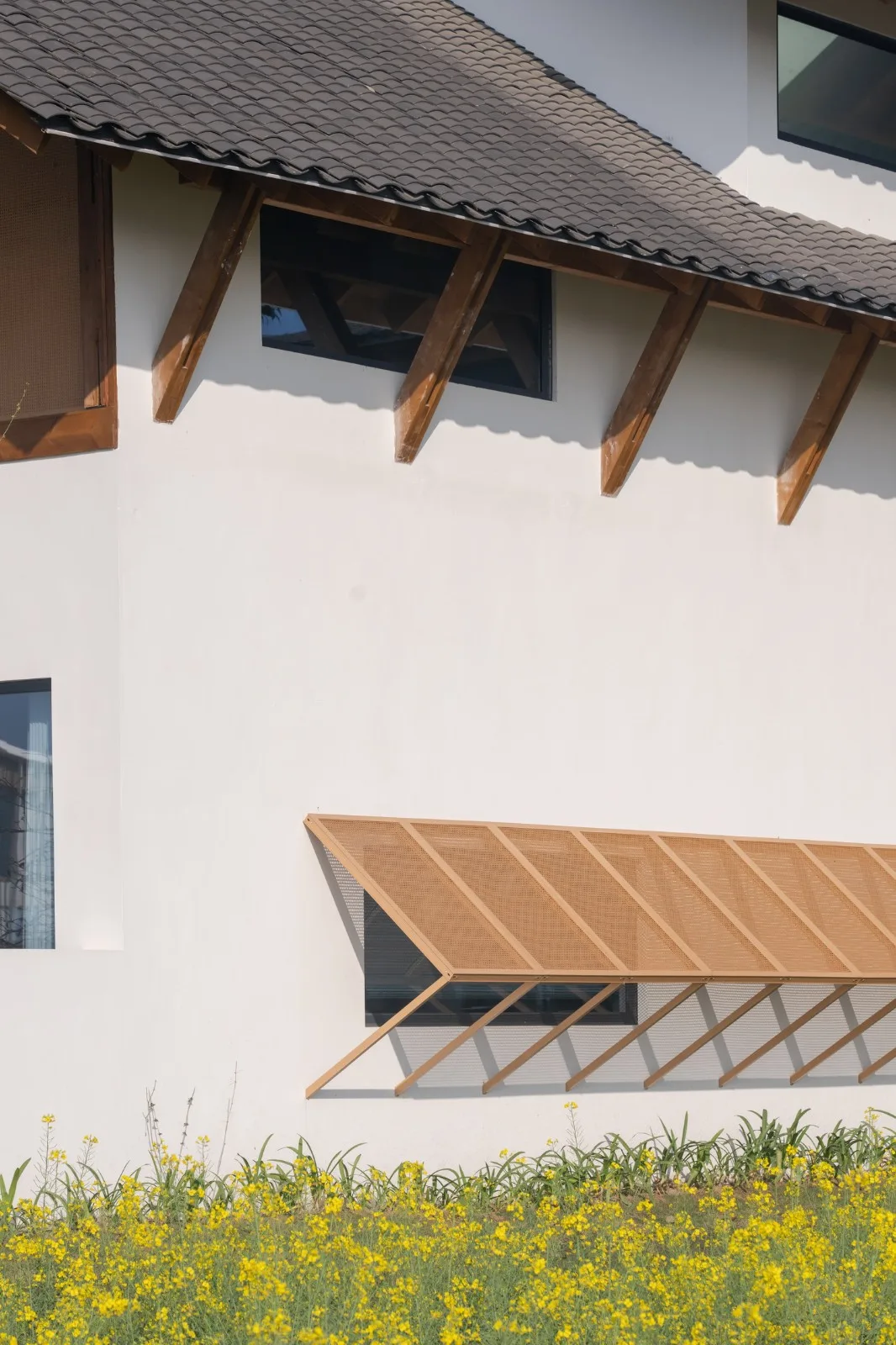
▲ A new era combining traditional materials with modern design © DONG Architectural Imaging
The vivid rural narrative of “the forest made of silk, life depicted in paintings” offers fresh ideas for expanding surrounding forest areas and even developing forest regions across the Greater Chengdu Plain. By blending traditional agricultural living conditions with modern functions and situating them within forested areas, a unique and vibrant paradise emerges—an independent, pure, and simple realm.
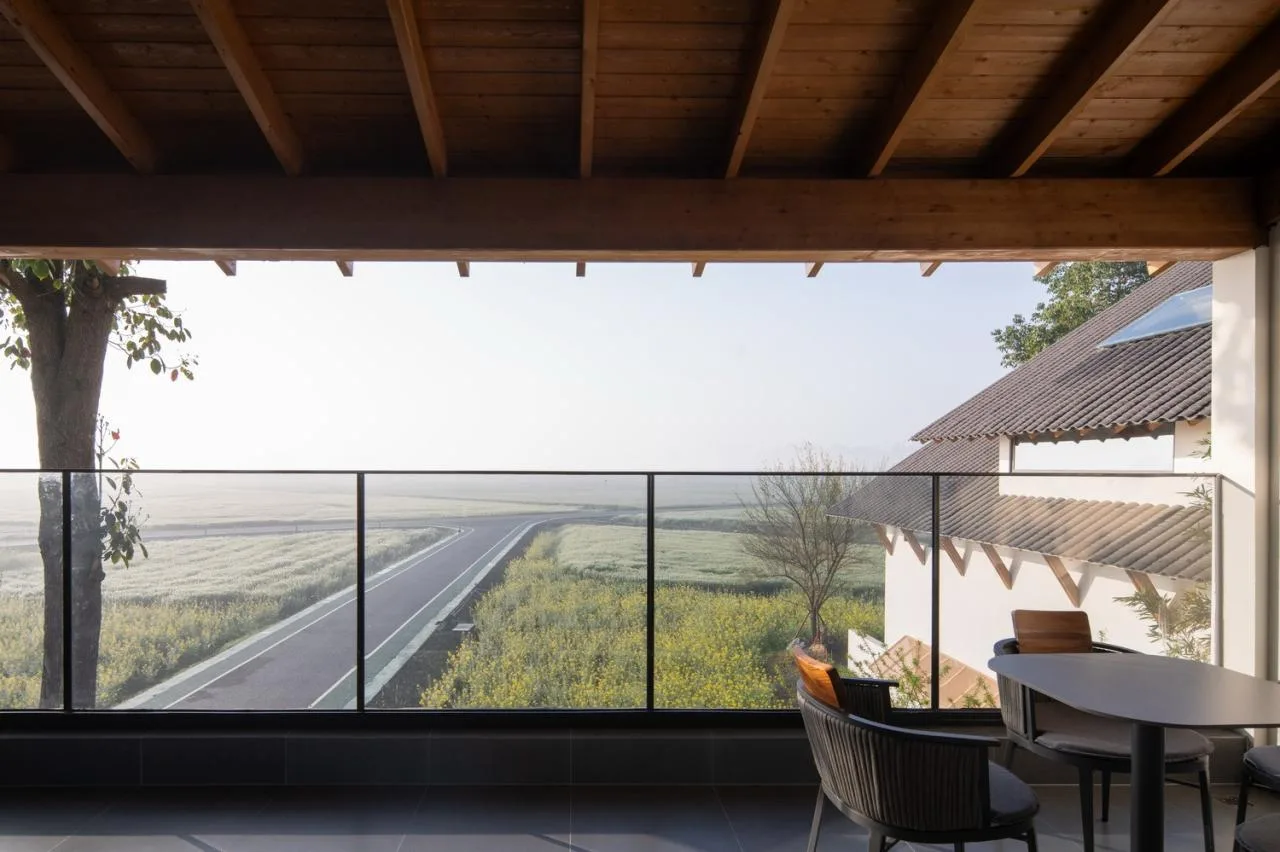
▲ Private dining balcony overlooking the fields © DONG Architectural Imaging
Baicao Xianglu serves not only as a model for local forest development but also offers a new lifestyle for urban residents. By leveraging rural differentiation, it creates complementary functional spaces bridging urban and rural areas, thereby promoting integration. This reflects the Chinese people’s aspiration for a better life in both their homes and rural communities.
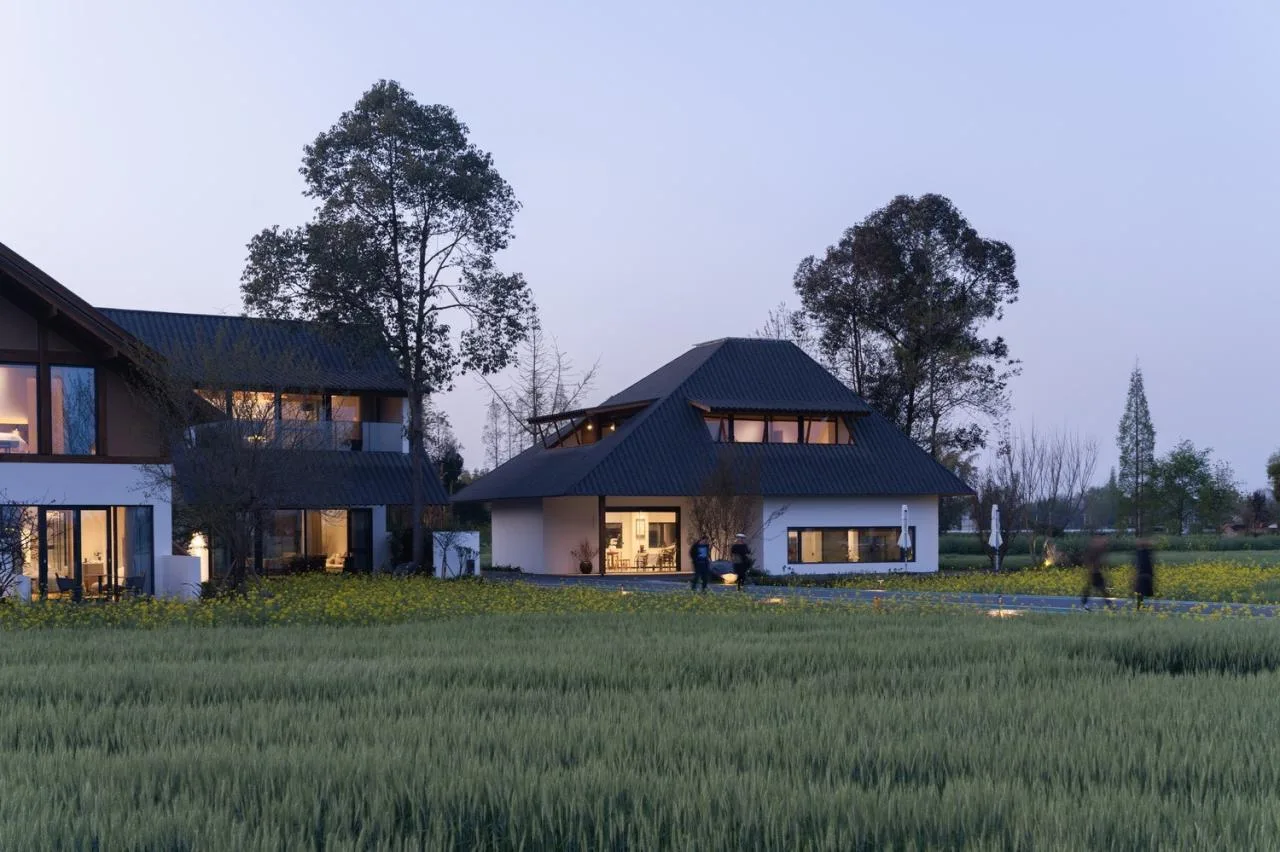
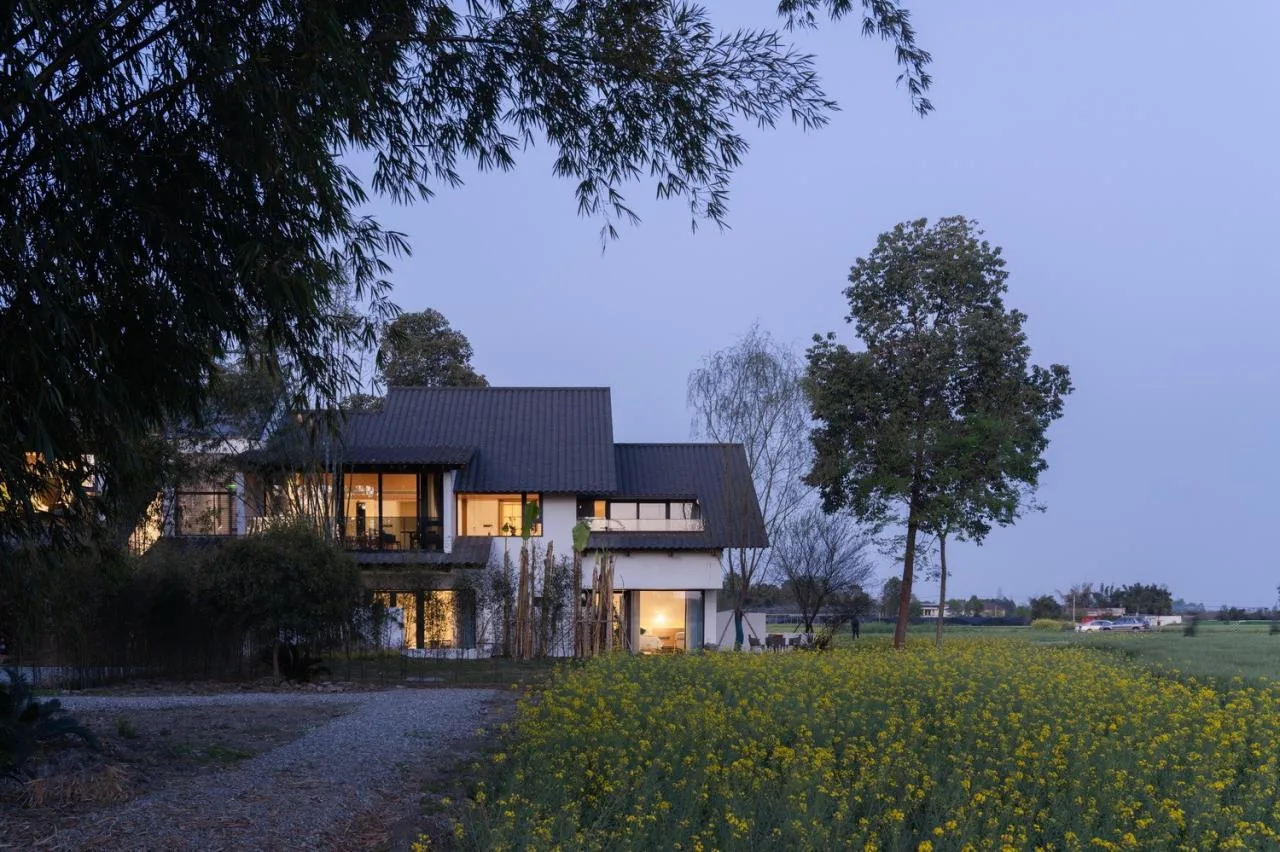
▲ Architectural night scene © DONG Architectural Imaging
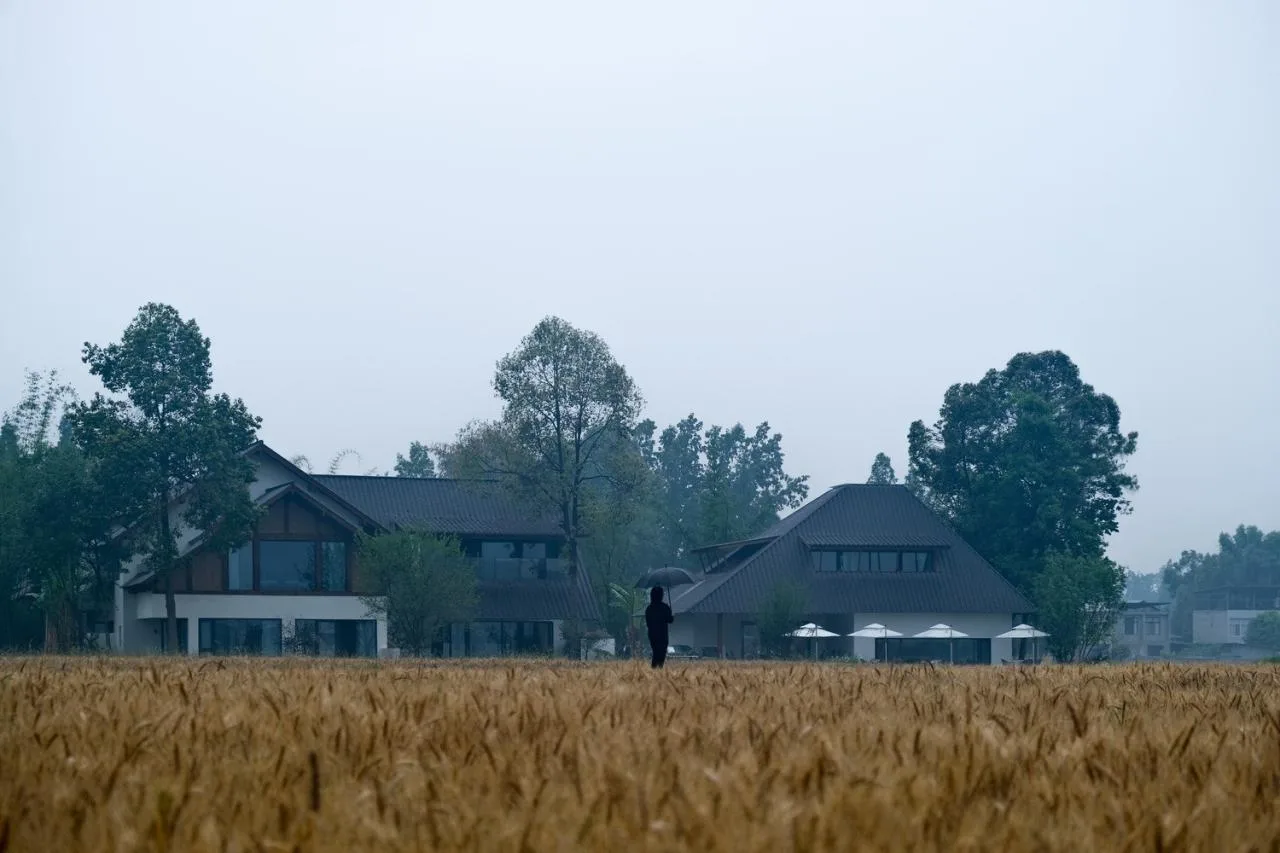
▲ Hundred Herbs Fragrant Cottage in the mist and rain of wheat fields © DONG Architectural Imaging
Project Drawings
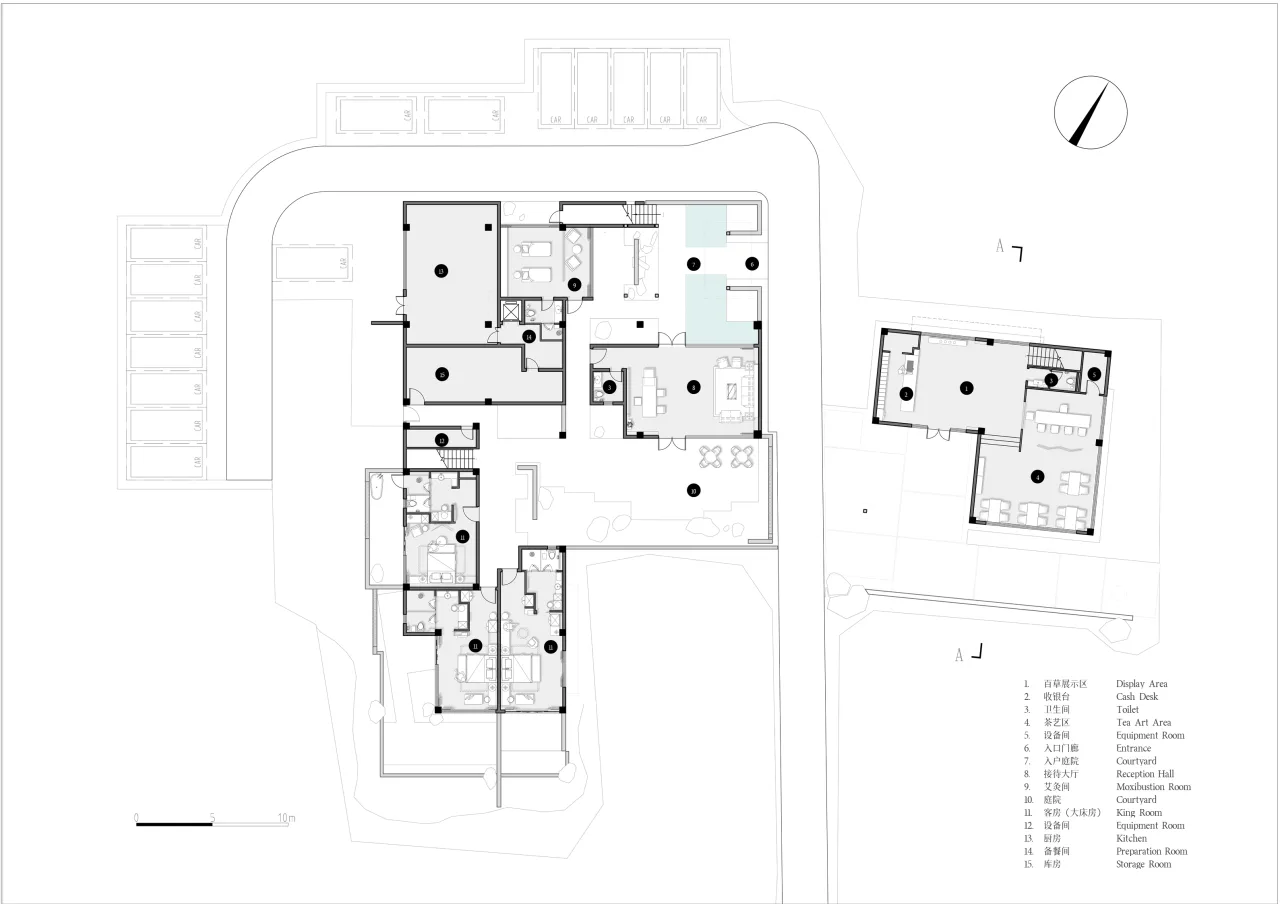
▲ First floor plan
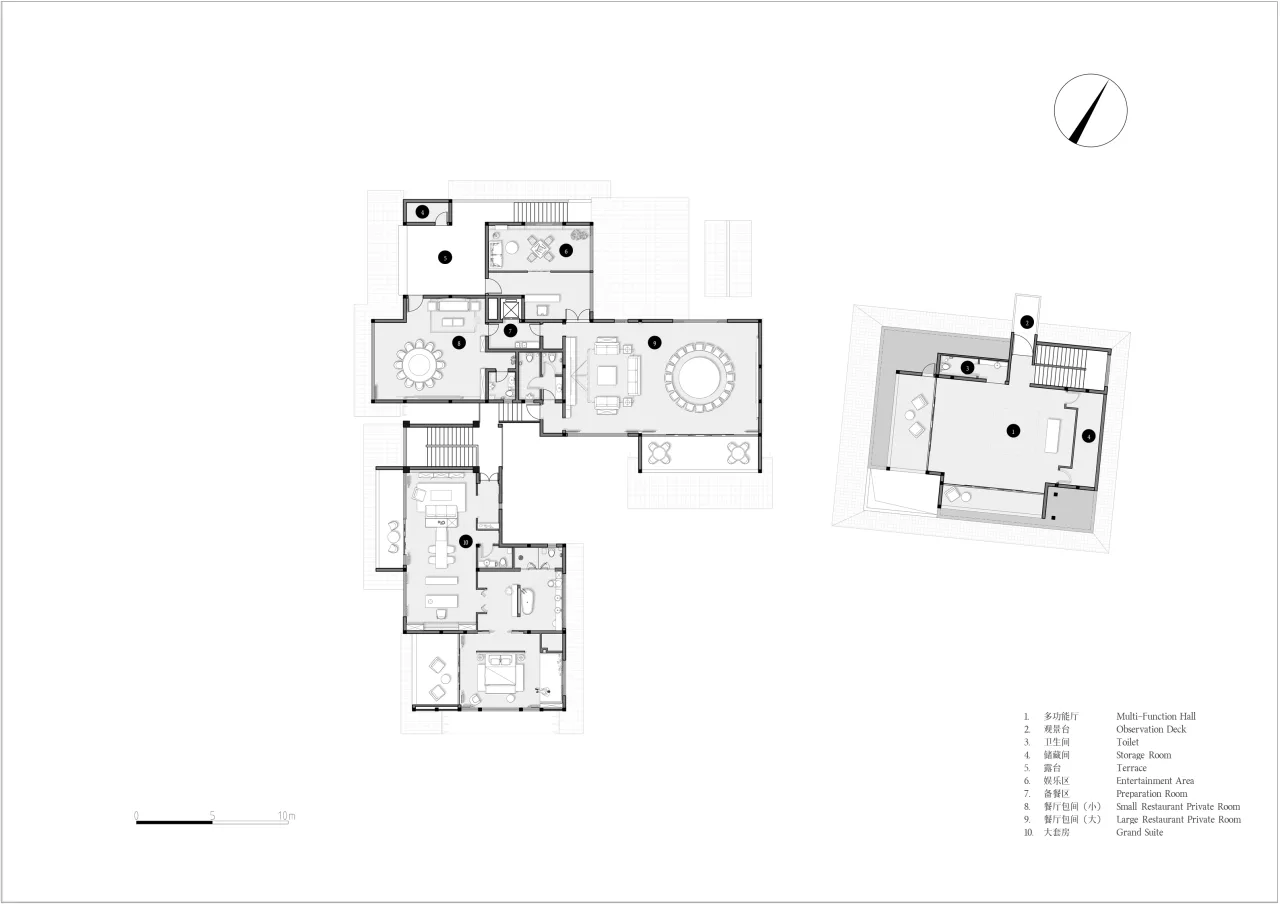
▲ Second floor plan
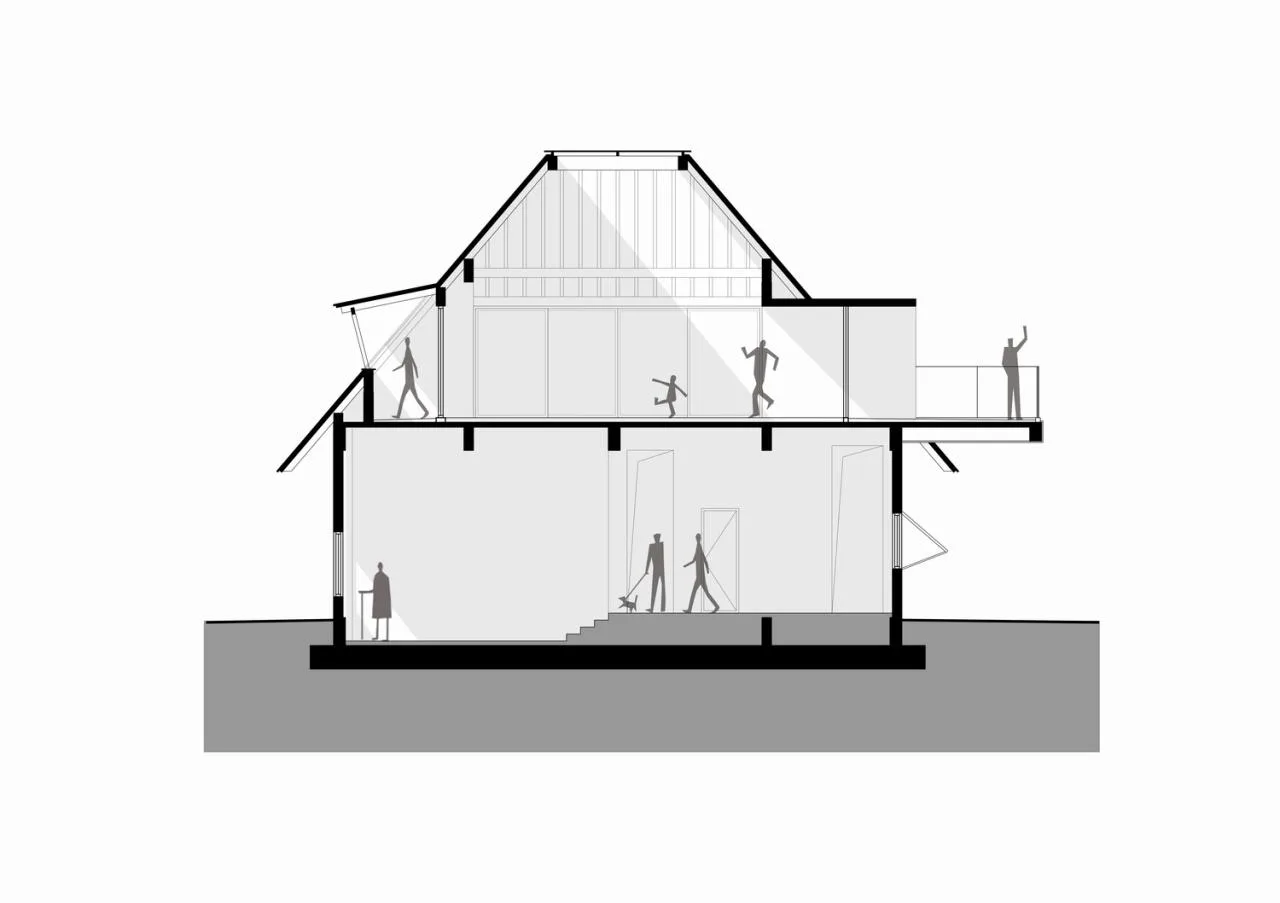
▲ Sectional view
Project Information
Main Creative Team: Xiaoyin Architectural Firm
Lead Architect: Pan Youcai
Design Director: Yang Zhe (Partner)
Technical Director: Chen Renzhen (Partner)
Design Team: Yang Rui, Hu Qinmei, Zhao Yaxian, Gou Yuanjun, Huang Yuting, Wu Ning
Construction Drawing Team: Chengdu Meisha Architectural Design Co., Ltd
Owner: Chengdu Huade Ecological Agriculture Development Co., Ltd
Construction Unit: Sichuan Shentai Construction Engineering Co., Ltd
Photography: DONG Architectural Imaging
Author: Yang Zhe
Project Location: Tianxing Village, Xindu District, Chengdu City, Sichuan Province
Building Area: 1,015 square meters
Building Materials: White exterior wall coating, wooden structure (cedar), Low-E insulated glass, small blue tiles, imitation bamboo woven flower windows
Construction Date: March 2024














Must log in before commenting!
Sign Up