
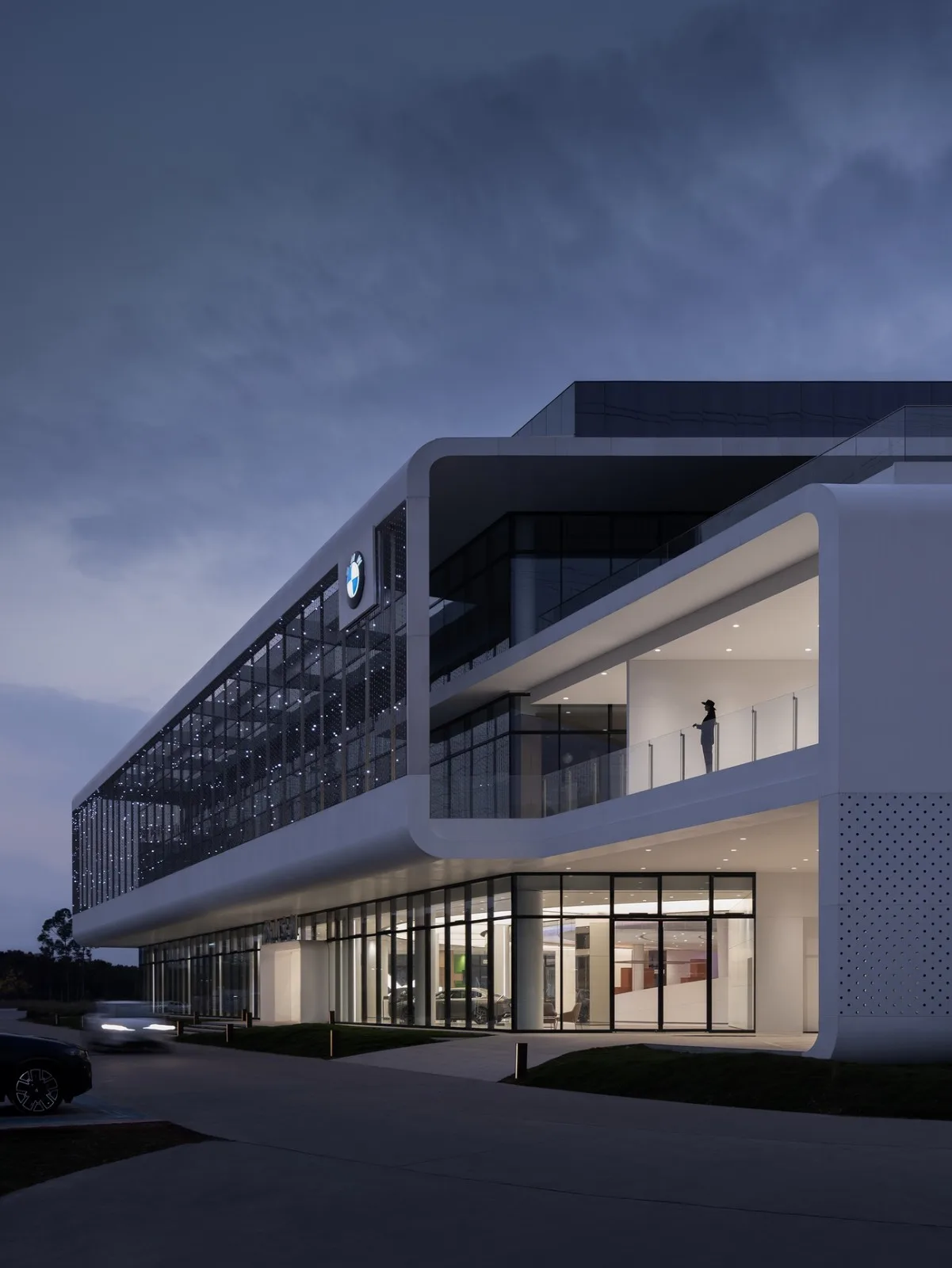
The recently completed BMW “Green Star Lighthouse” by Zhu Haibo Architecture Firm embraces sustainable architecture at its core. Drawing inspiration from Lingnan architecture, the design incorporates the traditional “arcade” to address climate adaptation. This approach achieves natural self-shading and enhances the user experience by integrating pedestrian and vehicle circulation seamlessly.
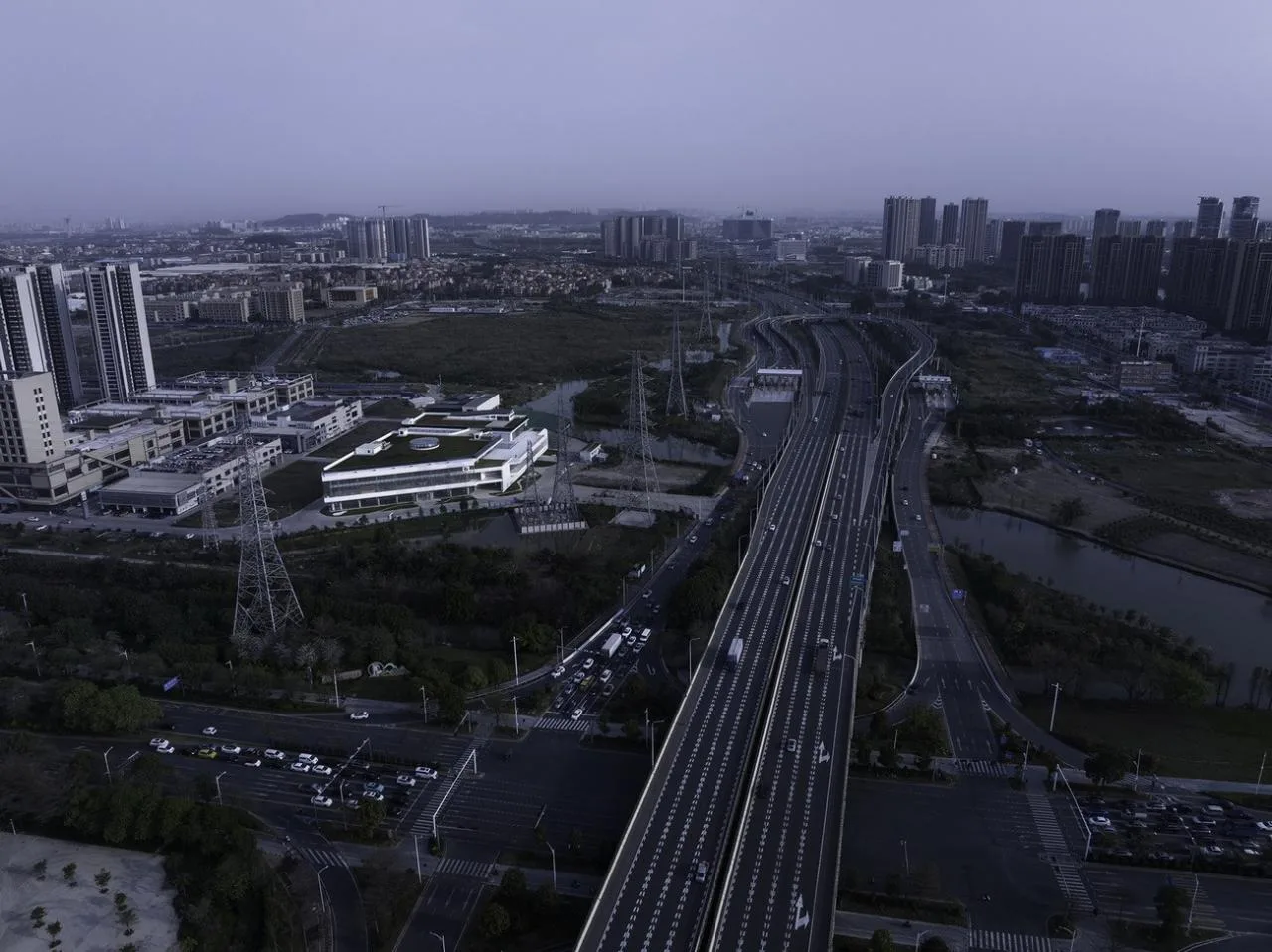
Located in Chancheng District, Foshan, the project spans 7,865 square meters across two independent plots. Zhu Haibo Architecture Firm cleverly connects the two main buildings with a corridor, creating a cohesive architectural complex. The goal is to transform these multifunctional buildings into the BMW Green Star Lighthouse, aiming for LEED BD+C Gold certification. The design integrates exhibition spaces, social areas, and efficient office zones, revitalizing the city with fresh energy.
#01
Exploring Green and Sustainable Architecture
Lingnan’s southern climate demands effective shading and relief from summer heat. From the project’s inception, Zhu Haibo Architectural Design Firm focused on sustainable architecture principles. Inspired by Lingnan’s “arcade,” the team prioritized climate-responsive design, addressing shading, ventilation, and heat dissipation to combat high temperatures and urban heat island effects.
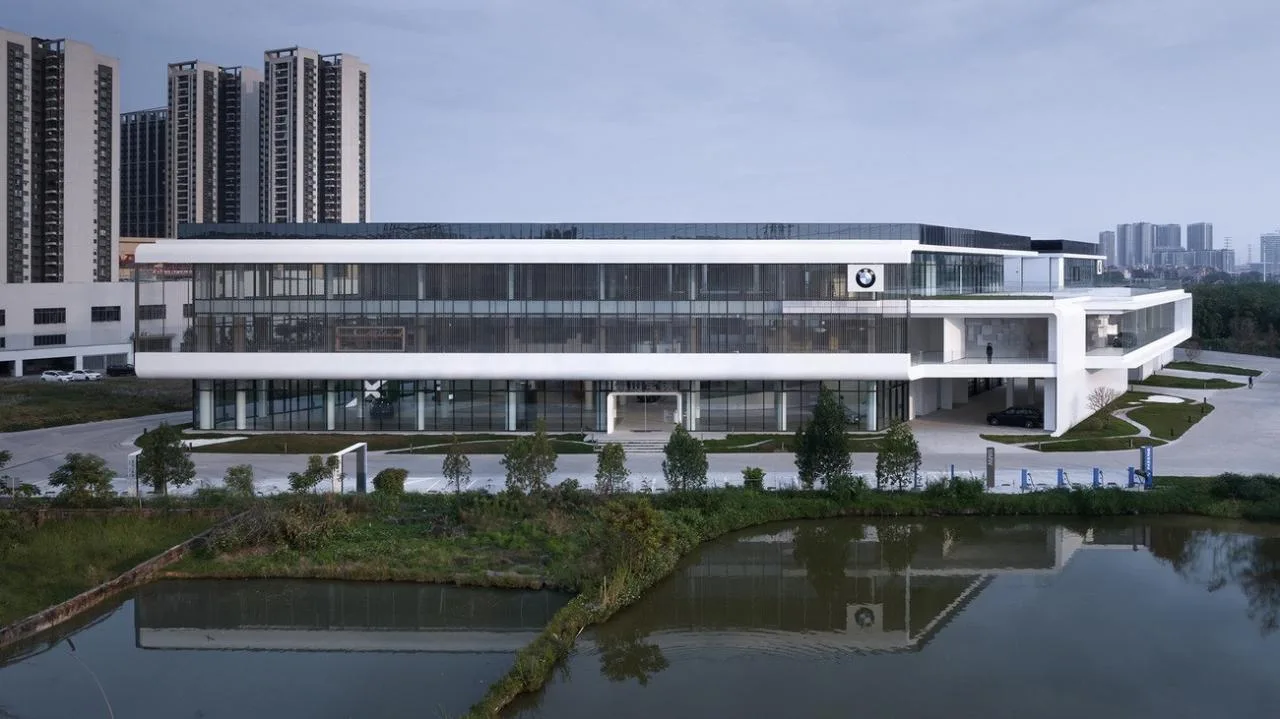
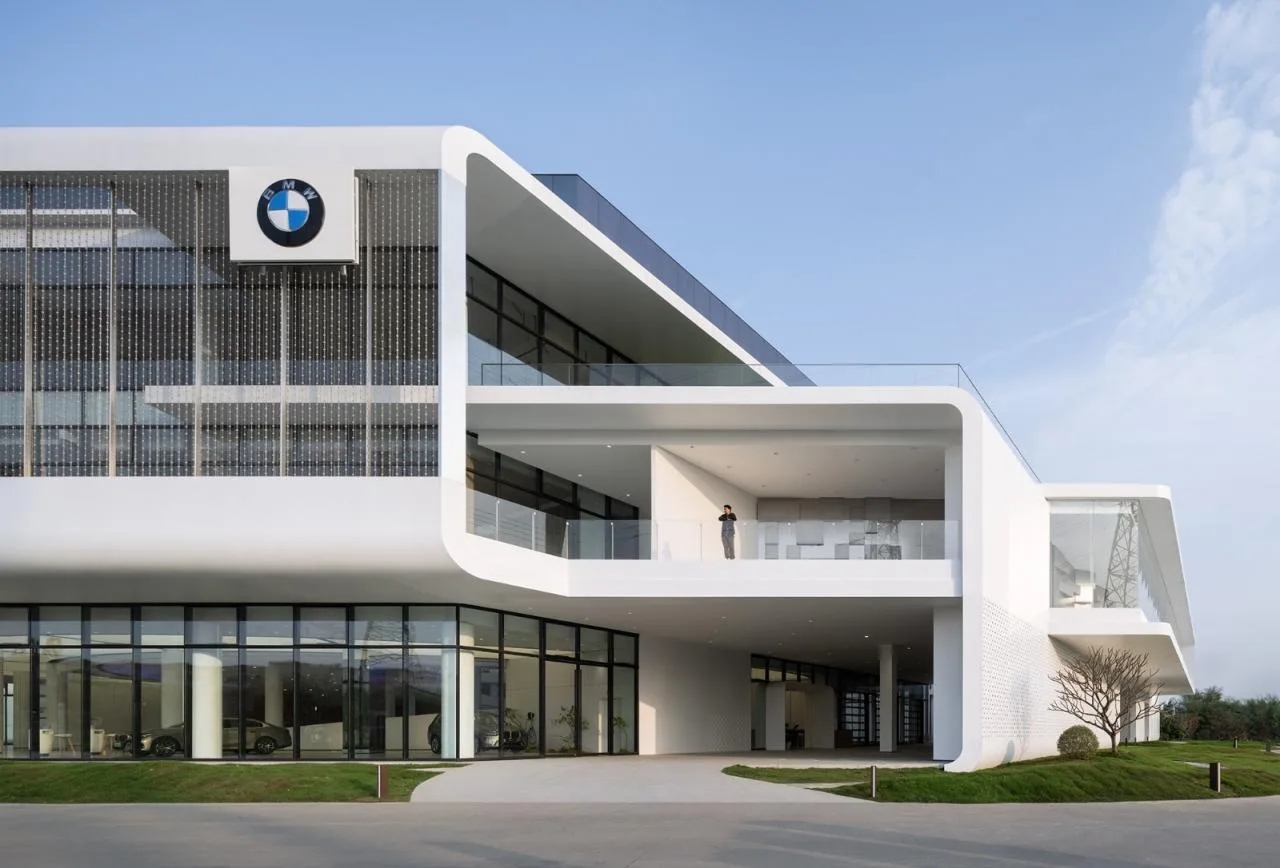
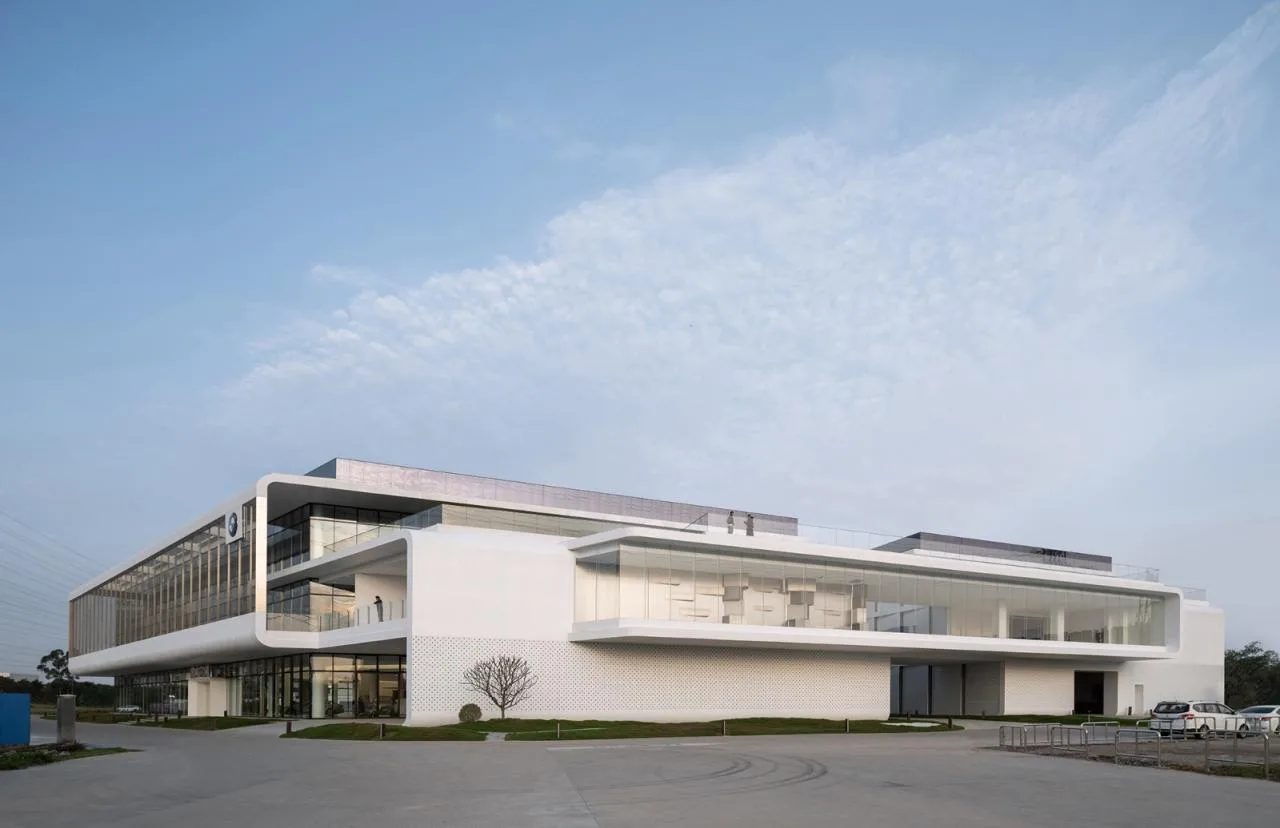
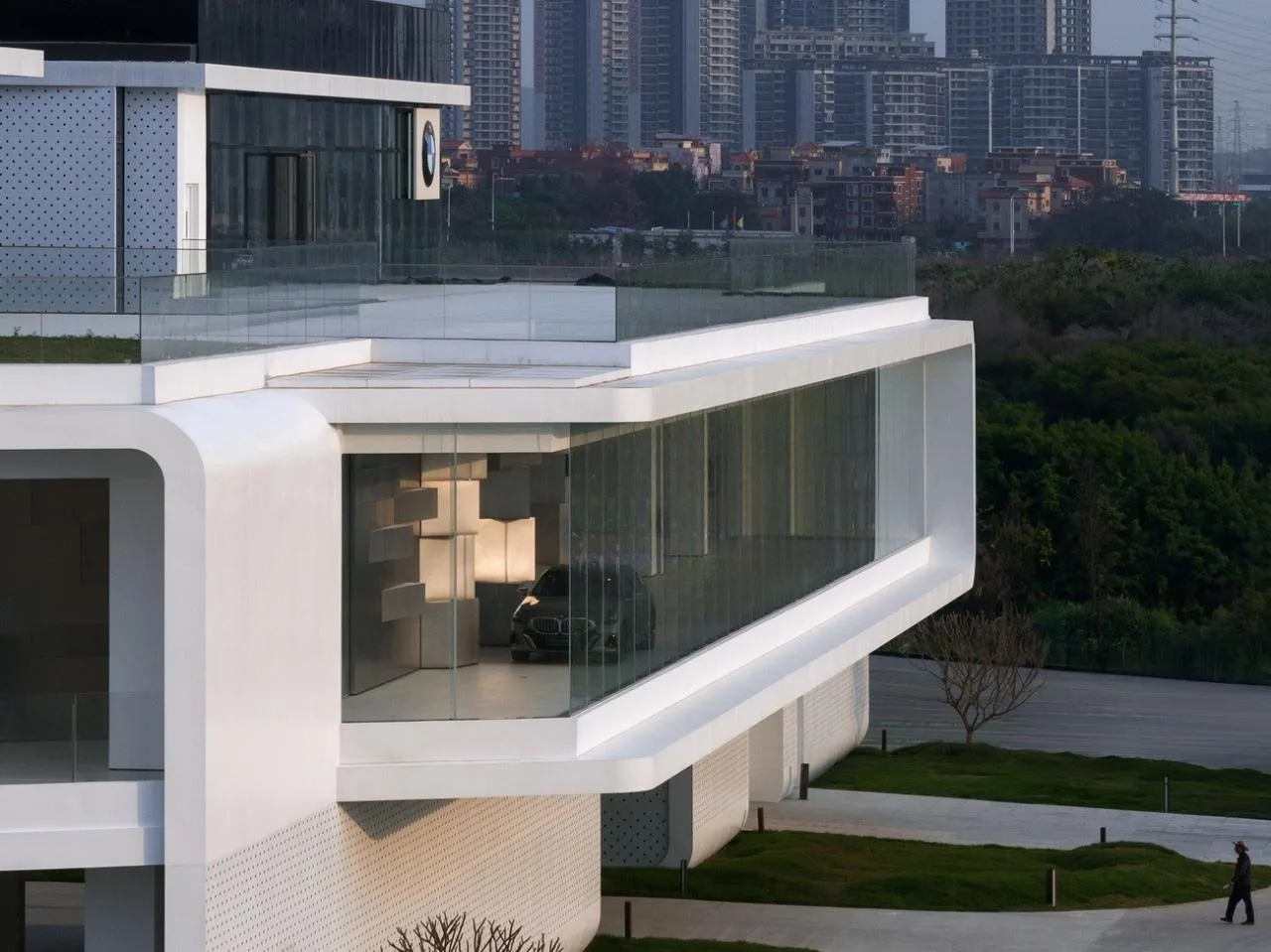
To enhance natural ventilation and cooling, the design incorporates courtyards, narrow alleys, elevated floors, and breathable walls throughout the building. A corridor connects the two buildings horizontally, cantilevered over the curtain wall to create a multifunctional space that serves as an elevated wind and rain shelter, a showcase, and a sunshade. This traditional corridor sunshade evolves into a new facade system.
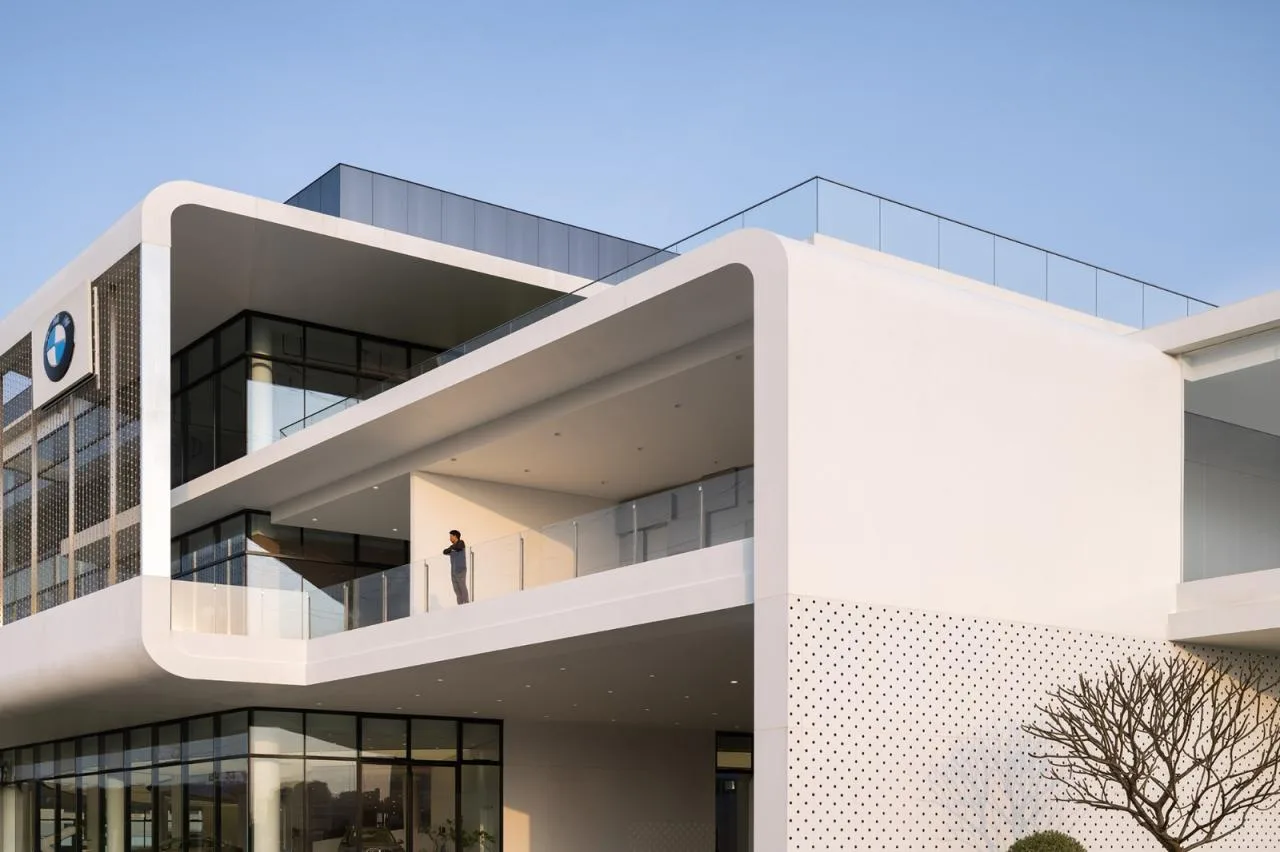
Beyond shading efficiency, the design integrates shading with architecture to suit the subtropical climate. The corridor and the two plots form an inseparable volume. The main facade features interlocking C-shaped blocks that connect various functional zones, enhancing cohesion.
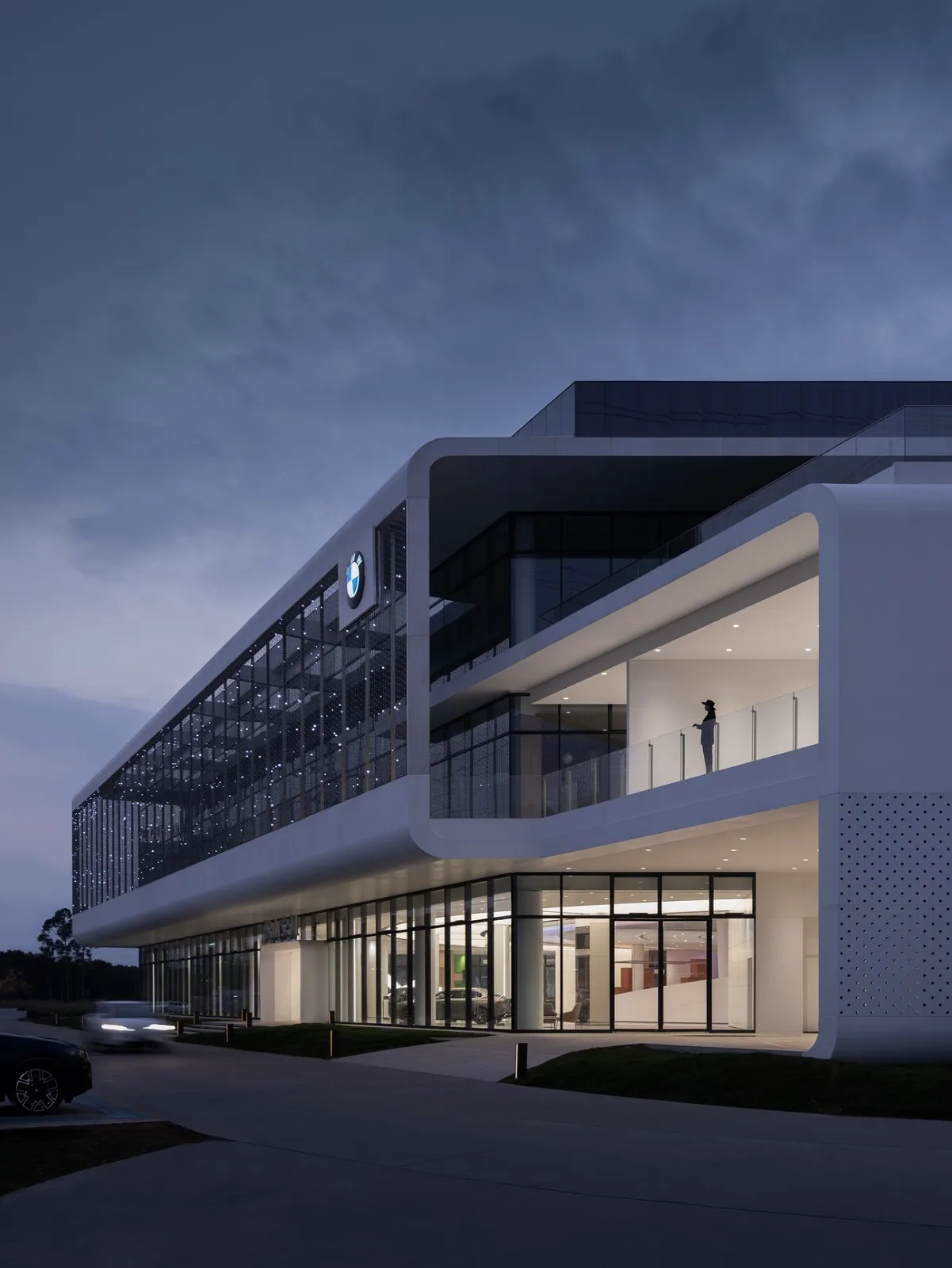
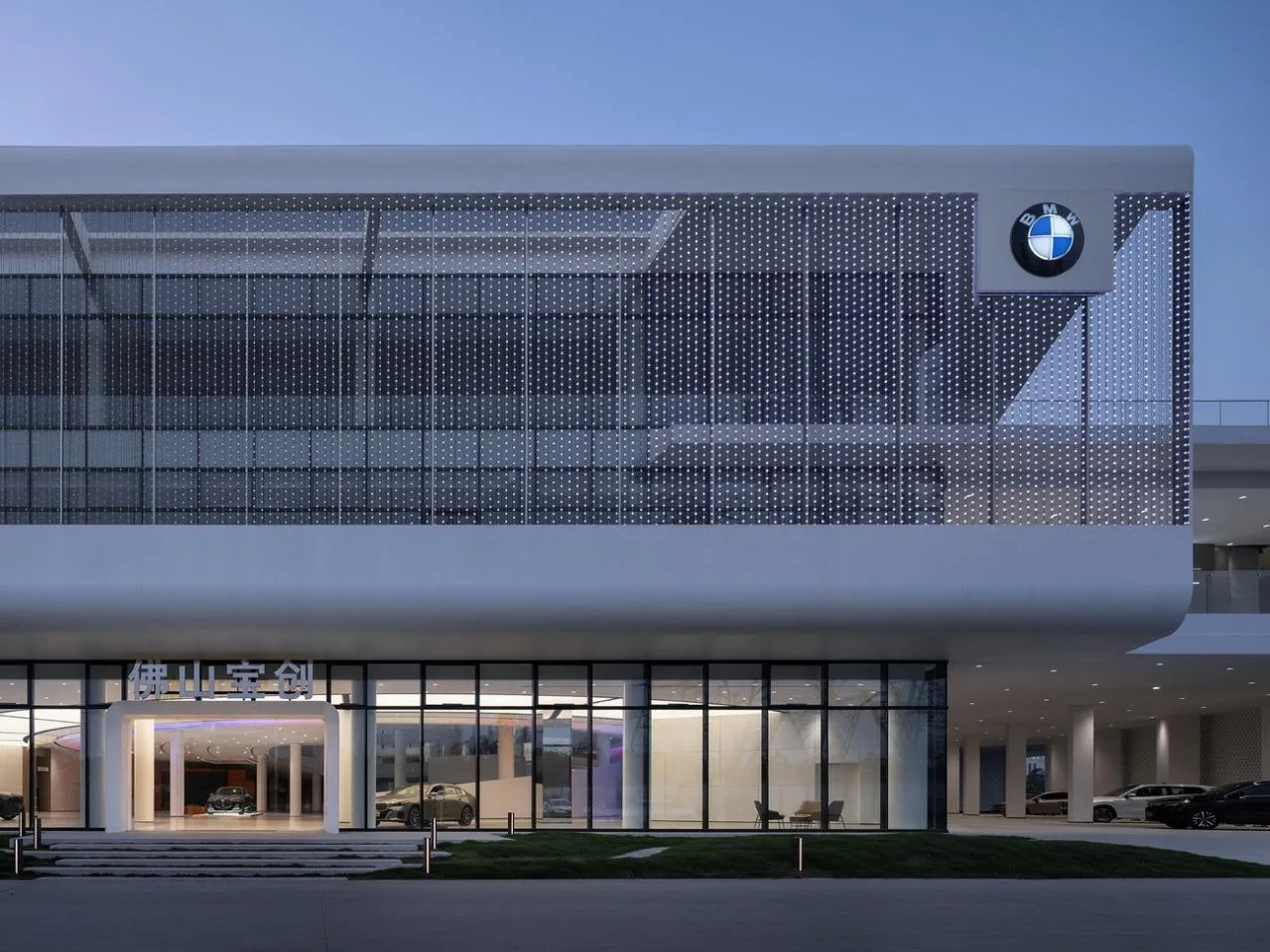
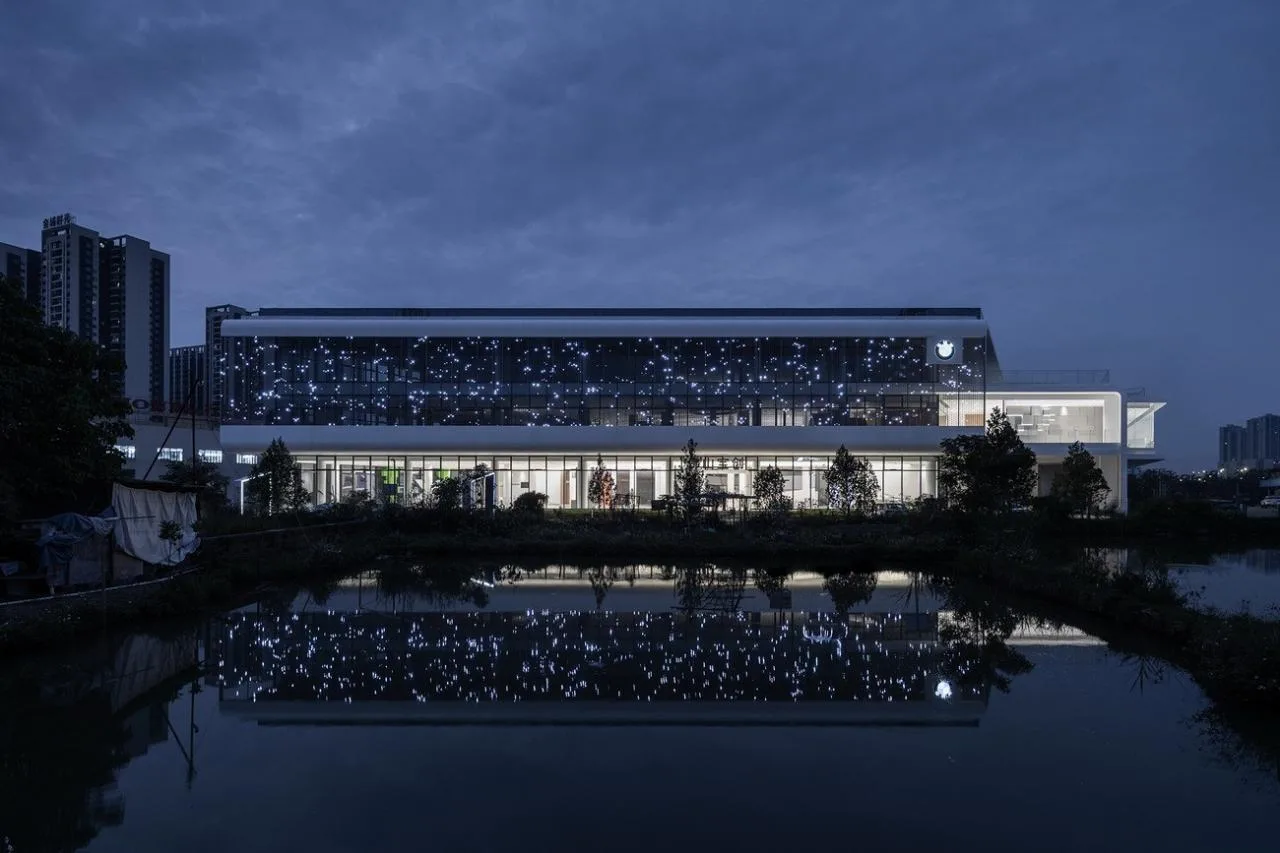
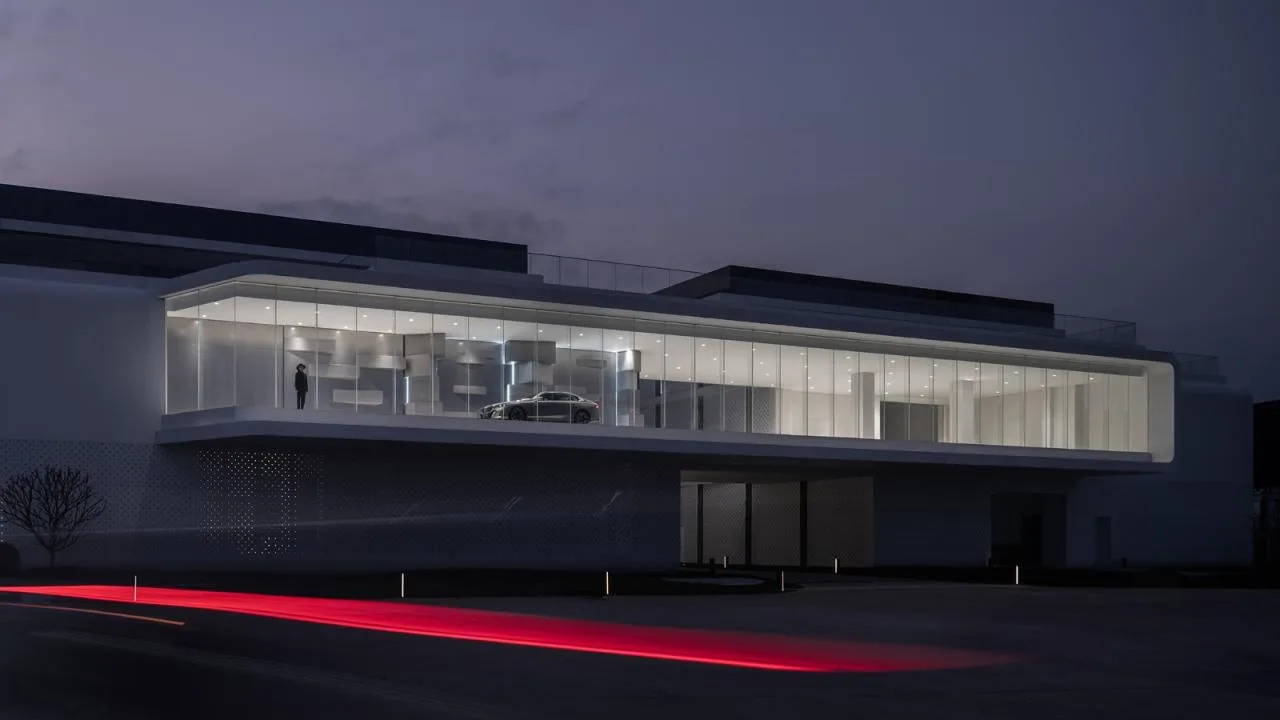
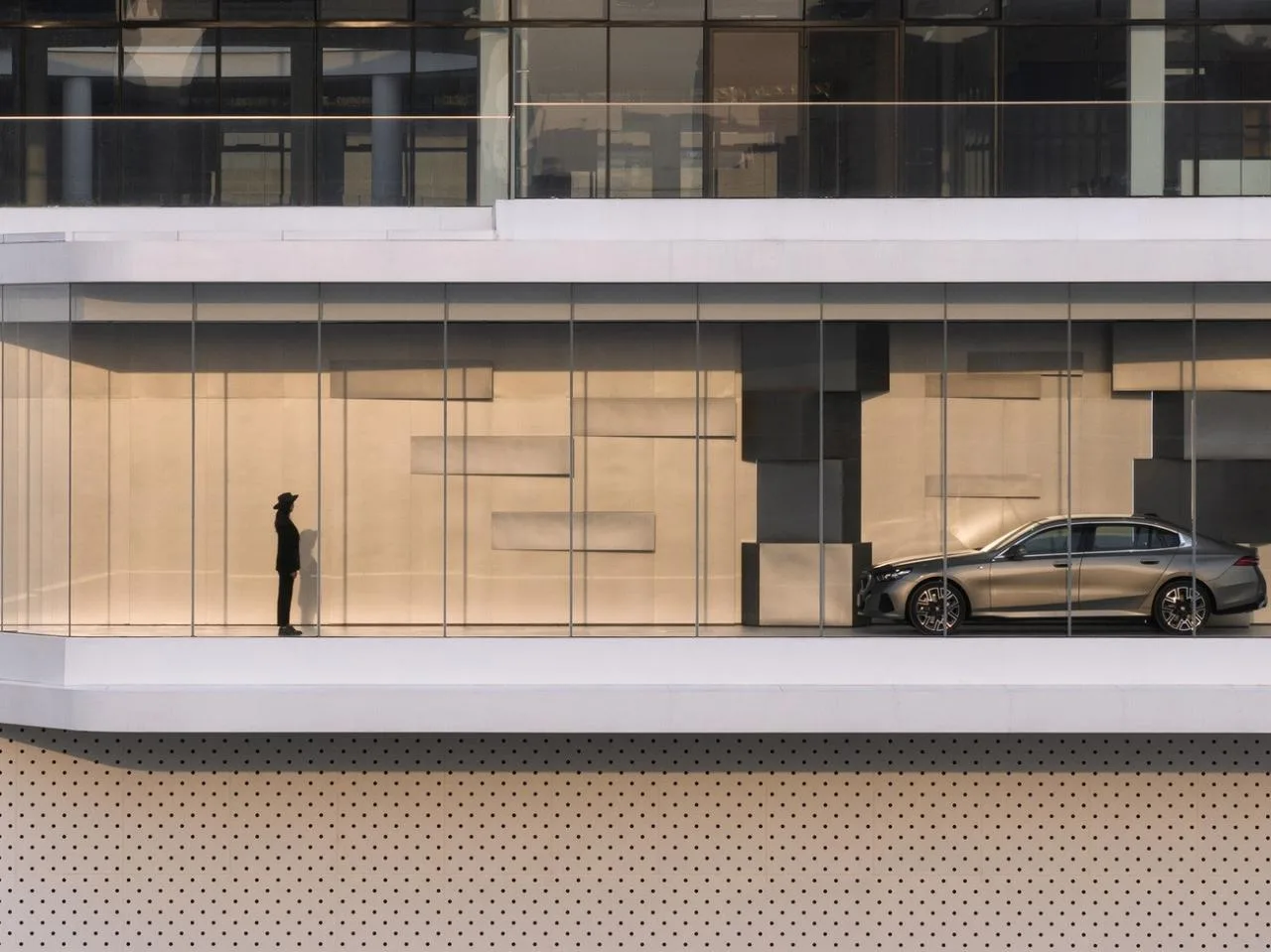
The arcade-style cantilevered first-floor curtain wall provides smooth shading that reduces glare and prevents indoor overheating. This design not only dissipates heat but also creates sheltered interactive spaces for visitors and staff to avoid wind and rain.
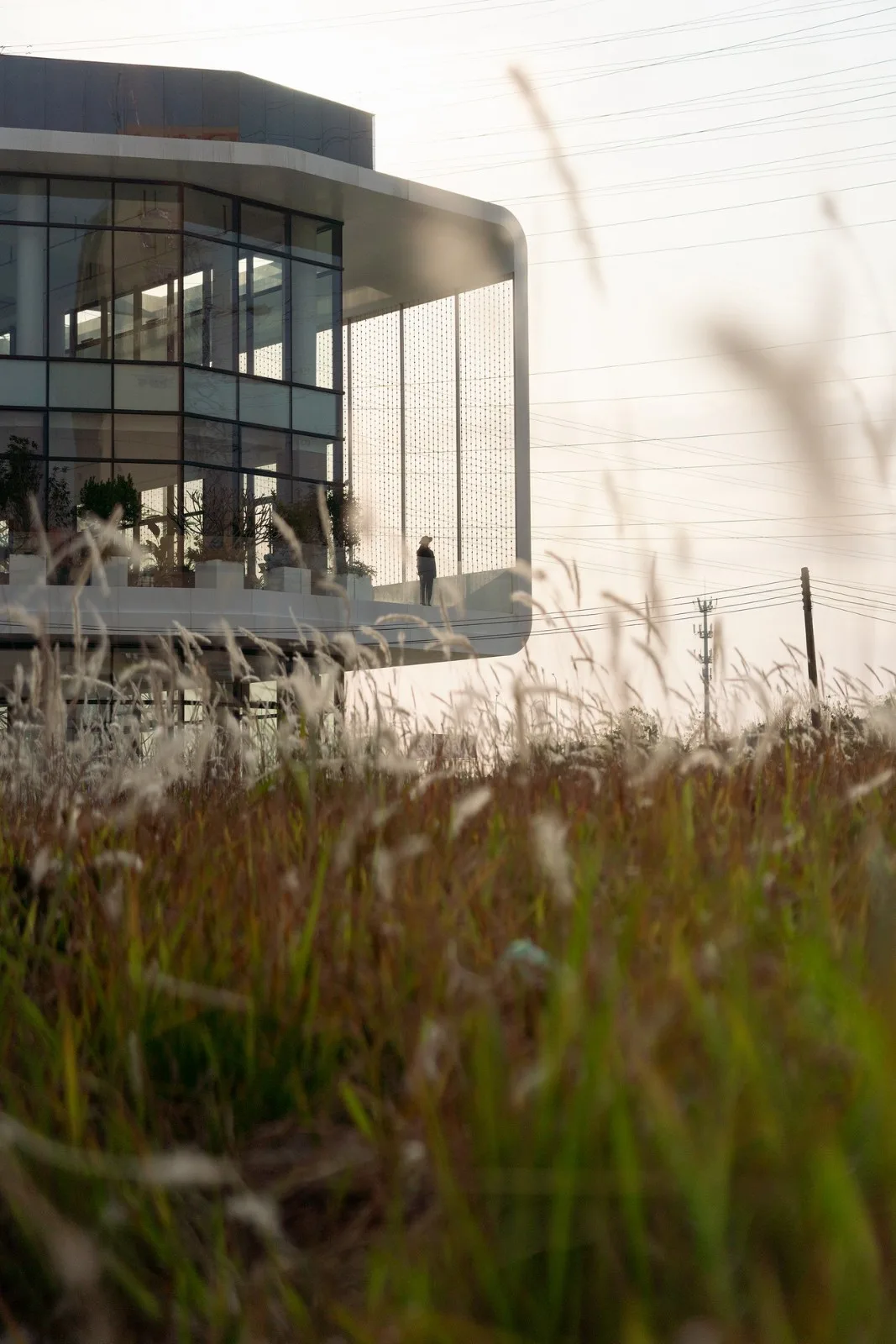
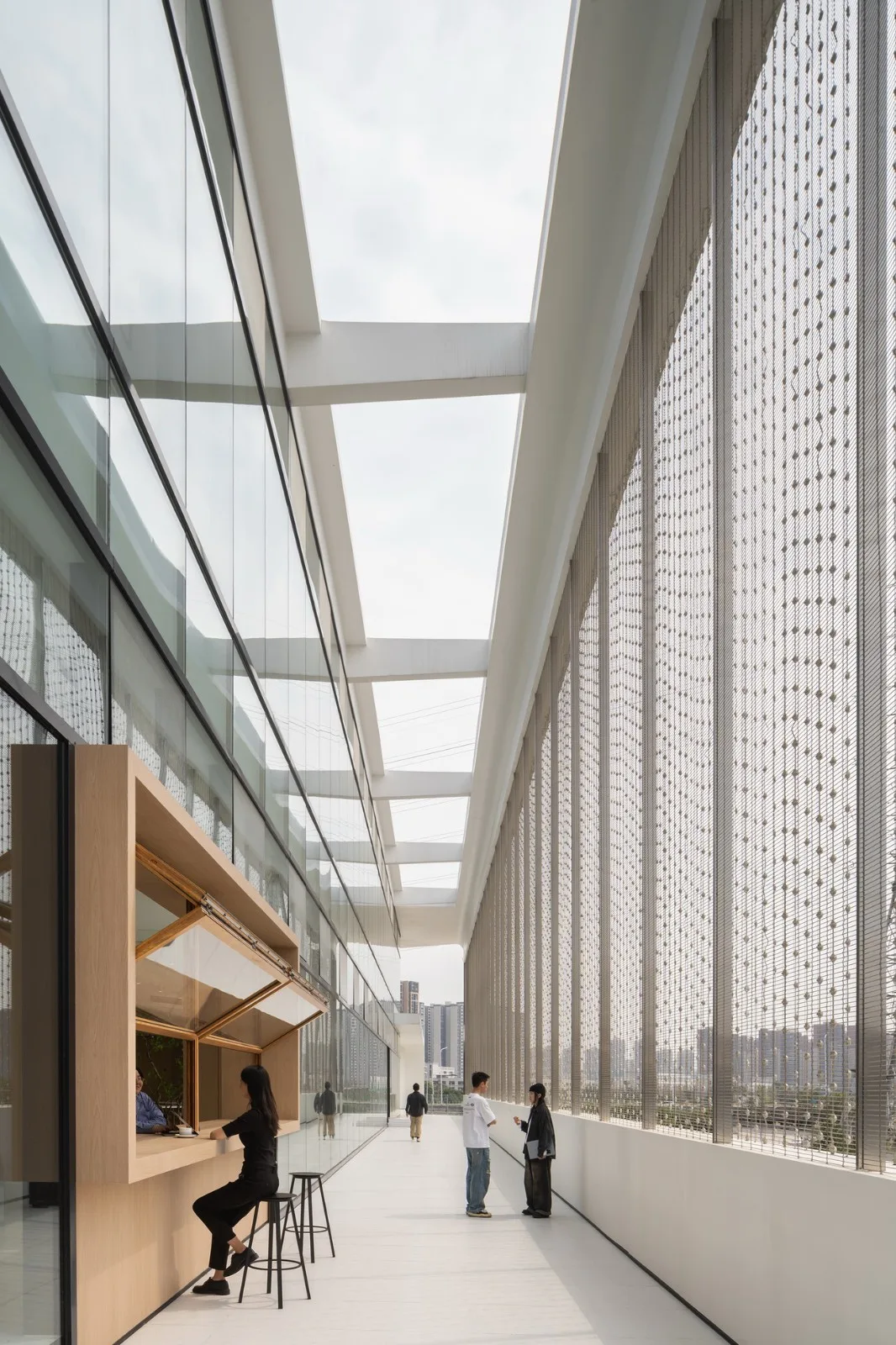
The overhanging facade above the arcade draws inspiration from spider webs, combining a dot matrix light screen with metal mesh. This design effectively filters sunlight without blocking it entirely, creating a spacious two-story terrace that offers ample outdoor space with excellent lighting and ventilation.
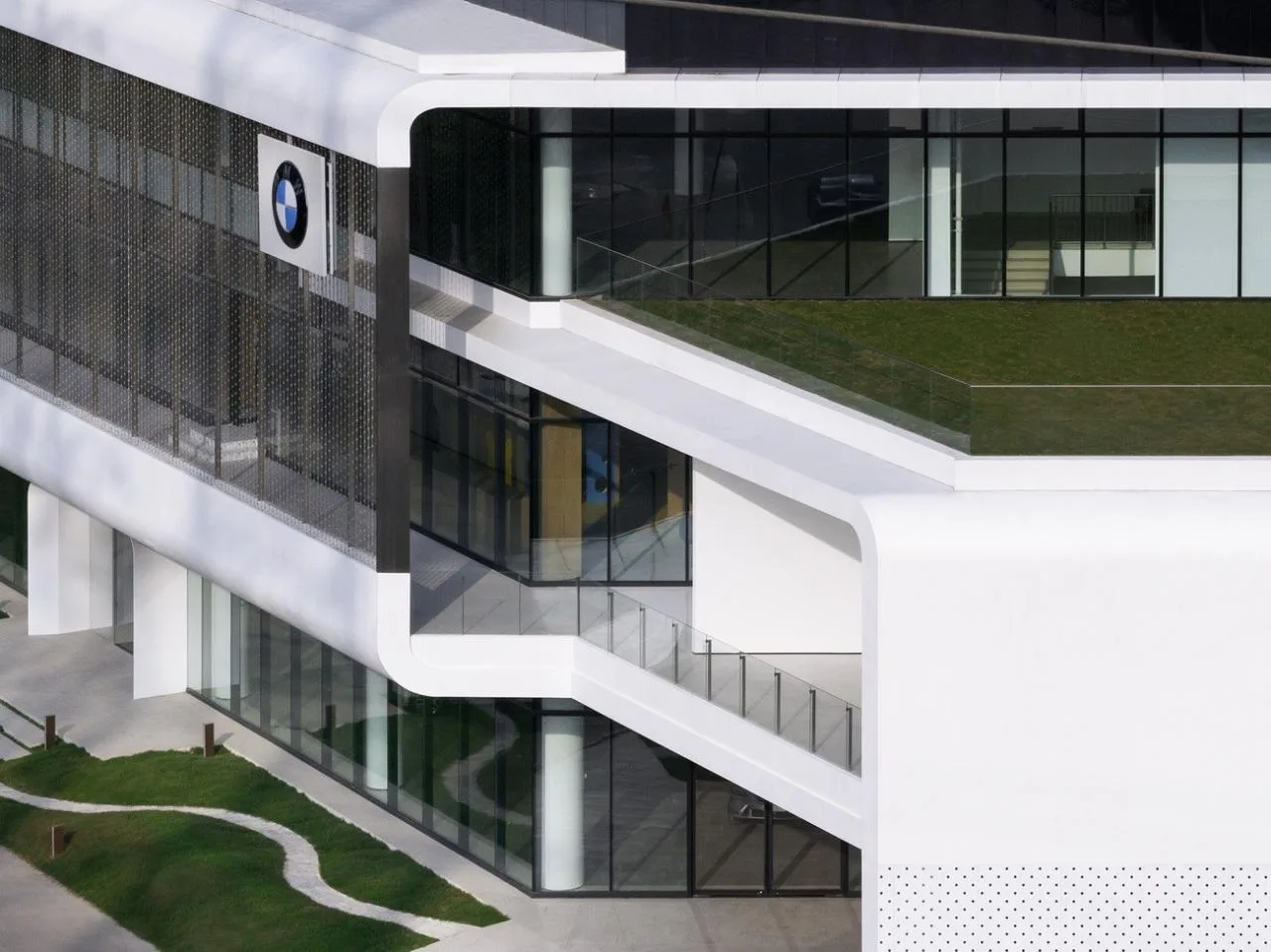
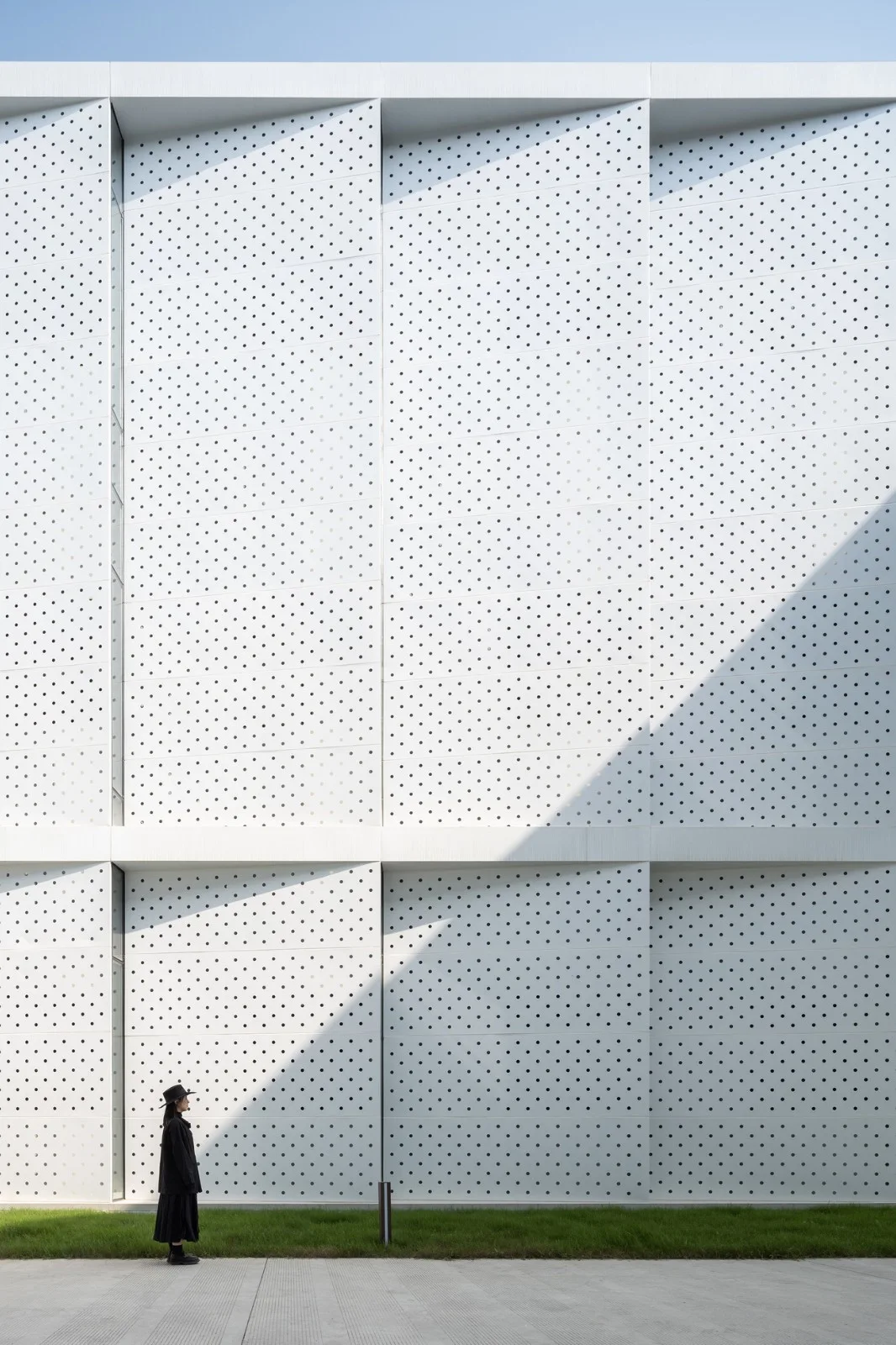
In the southeast vehicle reception area, the facade features perforated aluminum panels to reduce solar heat gain, achieving effective self-shading and enhancing the customer experience.
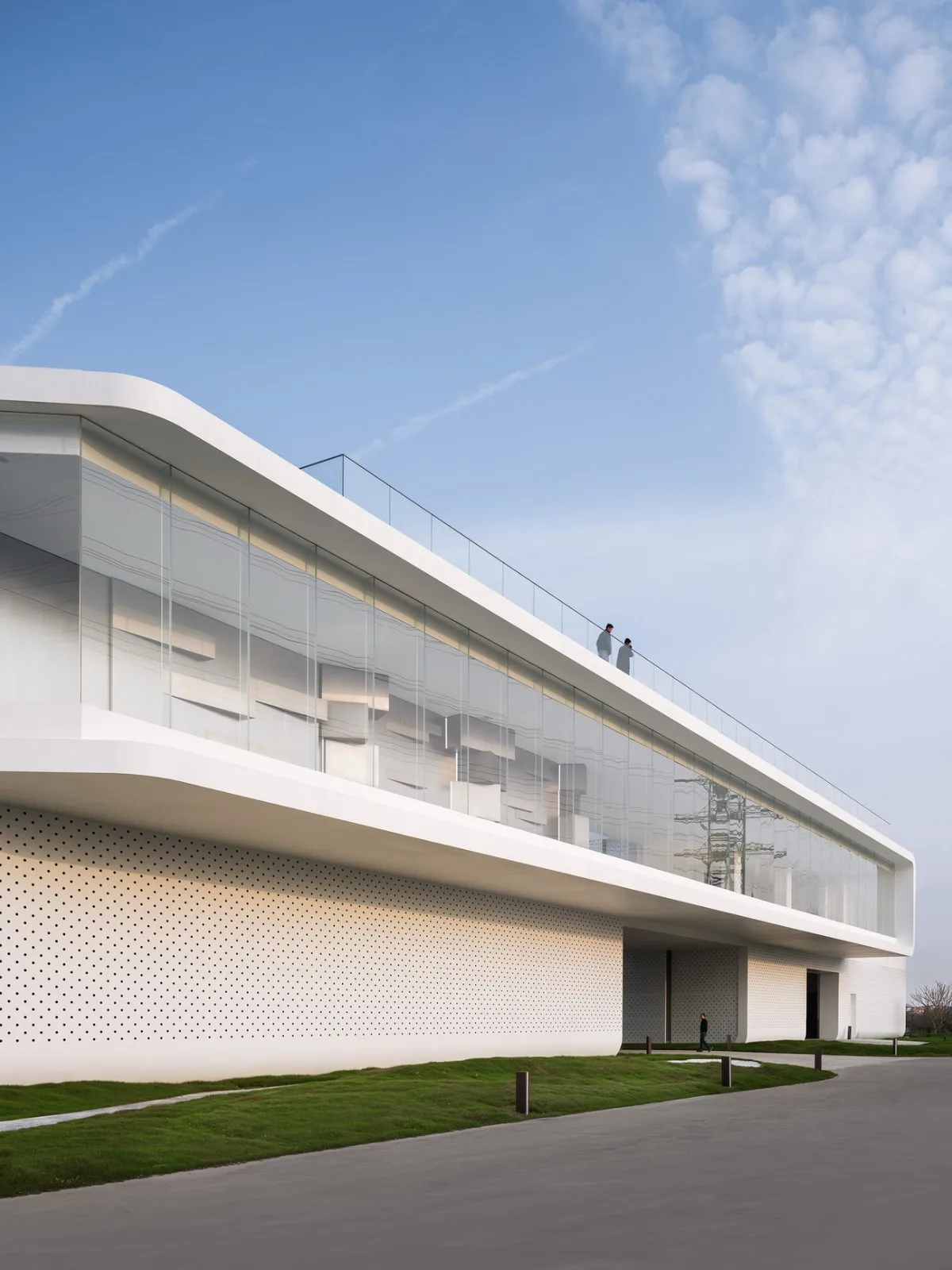
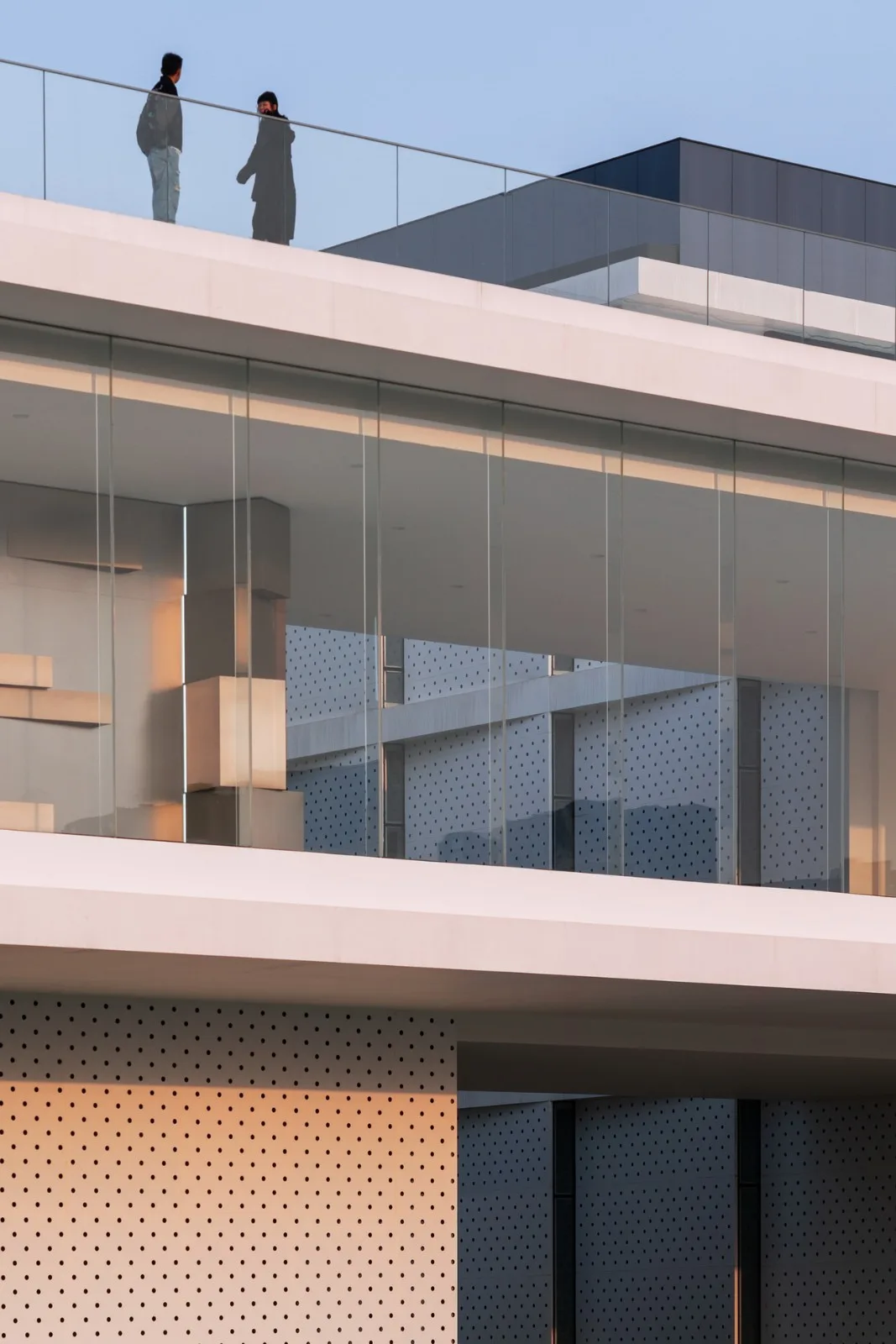
Embracing sustainable design, the project incorporates various strategies: high-performance thermal enclosure, self-shading systems, bicycle facilities with showers, fresh air monitoring, efficient HVAC systems, energy metering and intelligent lighting controls, water-efficient landscaping, and pollution prevention during construction. Interior spaces utilize modular partitions and workstations, significantly reducing energy consumption and boosting sustainability.
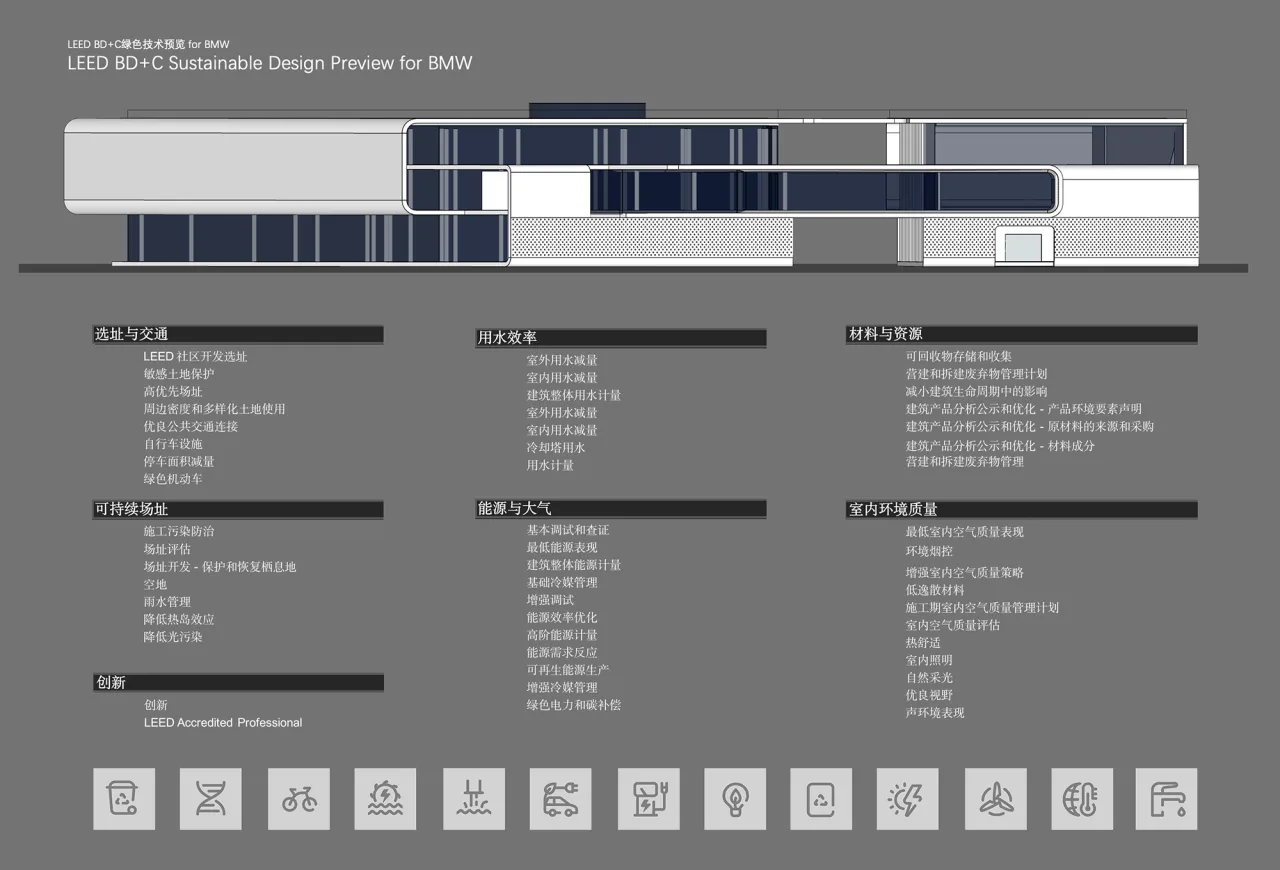
△© ARCHIHOPE
#02
Flow Lines and Functional Zones
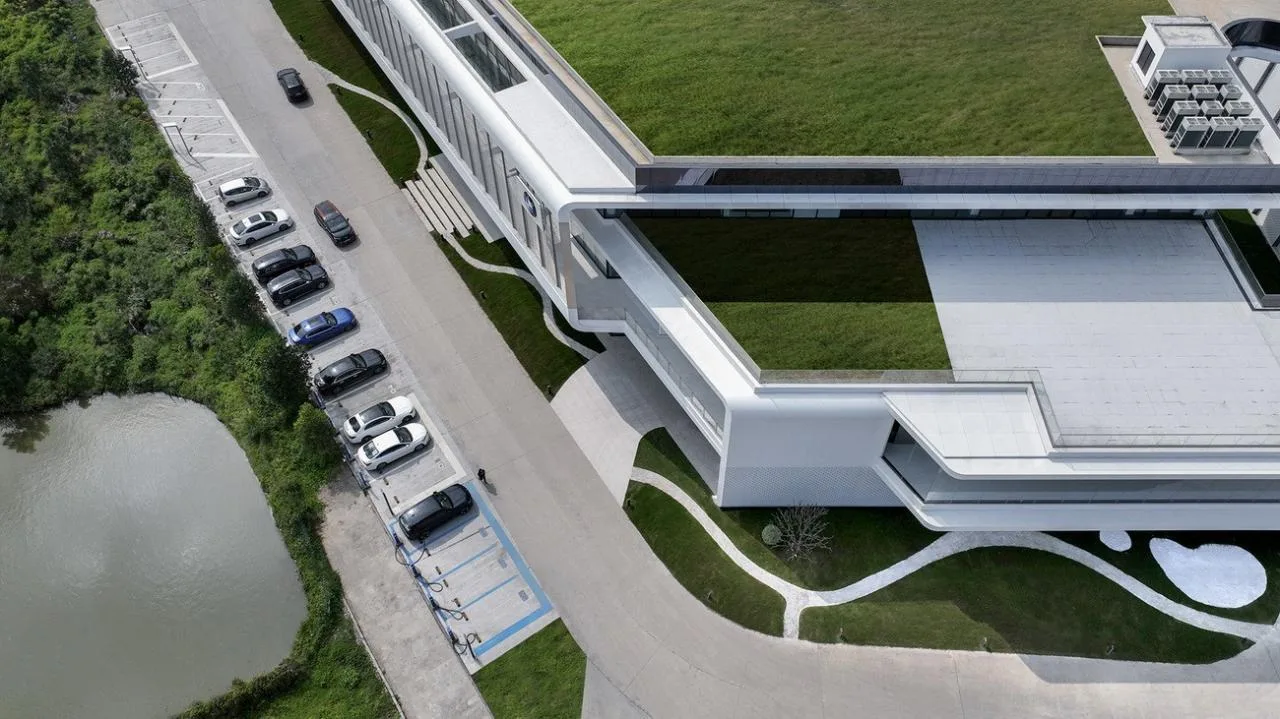
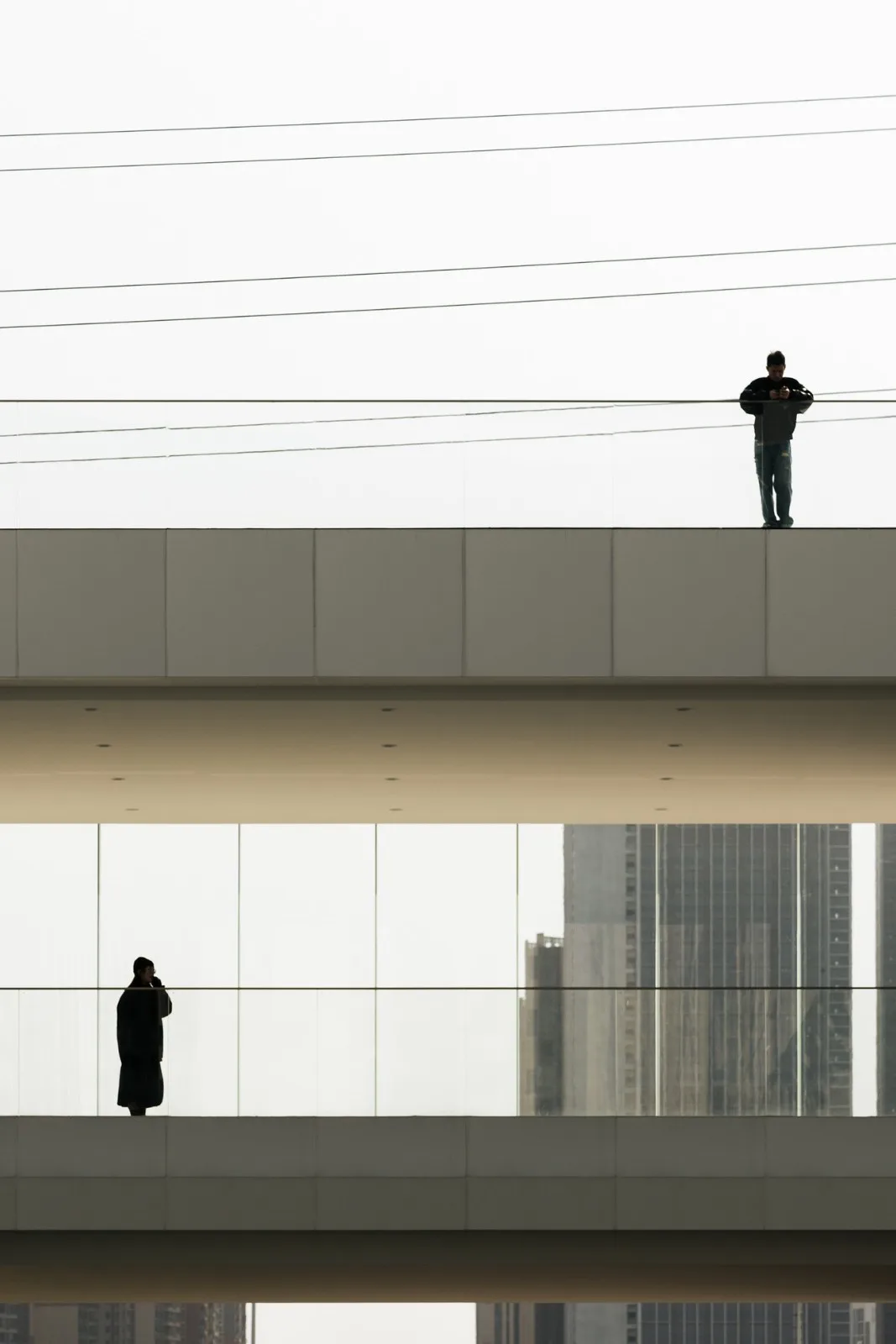
Integration of pedestrian and vehicle movement is central to the building’s circulation design. This approach encourages diverse activities and allows both people and vehicles to move freely throughout all floors, interior and exterior spaces, and even the rooftop.
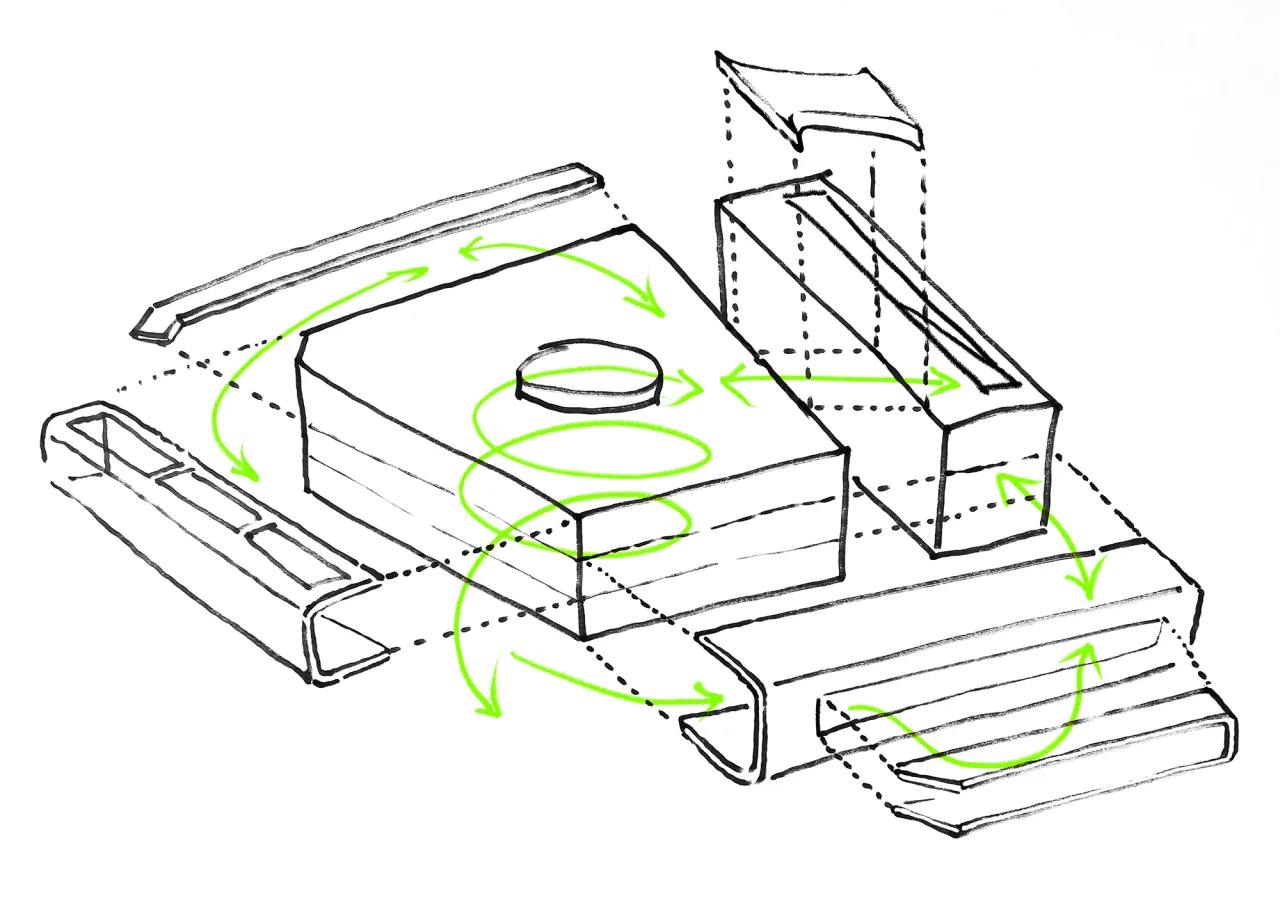
△ Corridor sketch © ARCHIHOPE
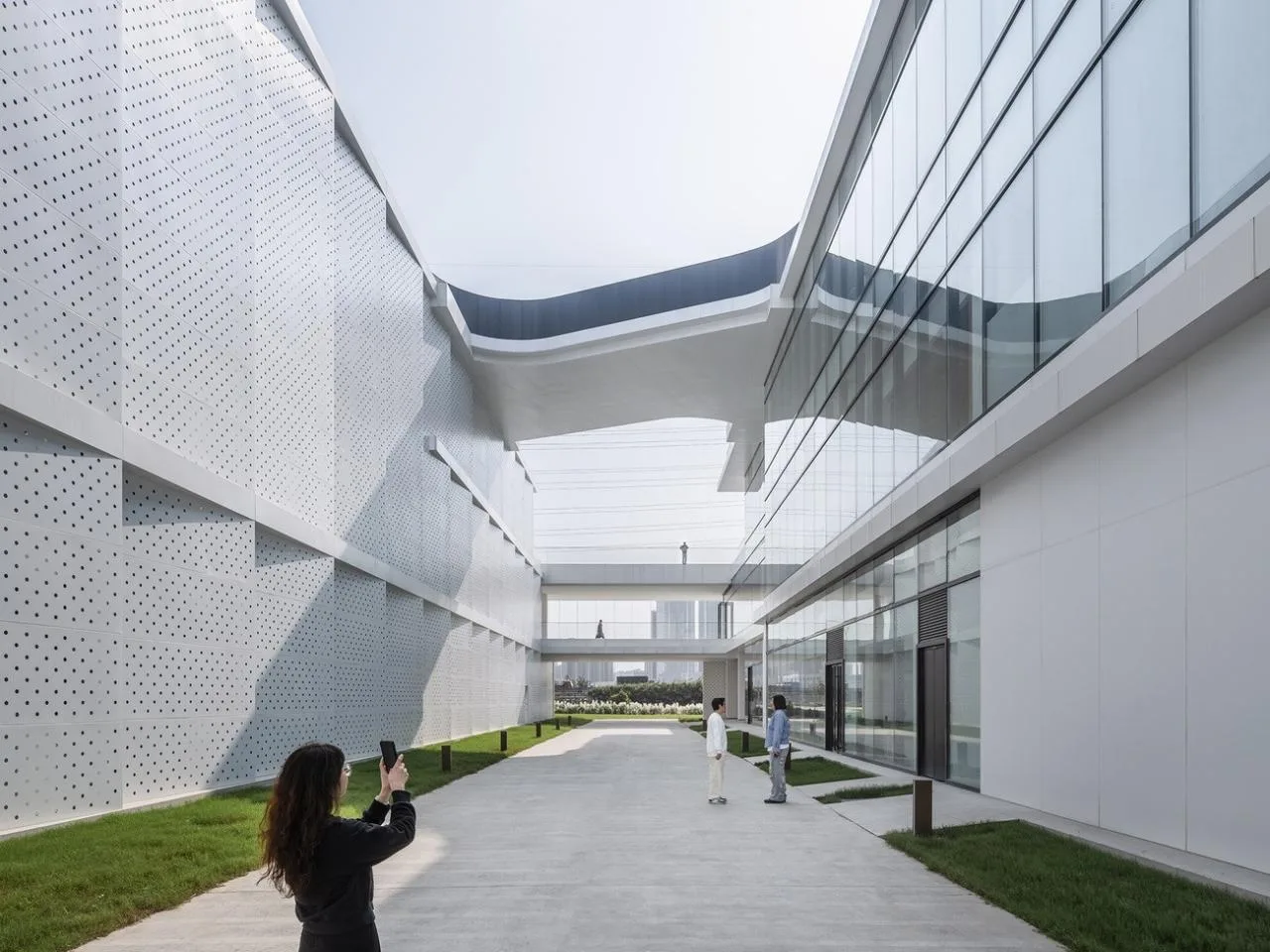
Each side of the building features entrances and exits. To the south lie exhibition areas, offices, and parking across three floors, while the northern section houses the workshop. The southern exhibition includes a ground-floor car showroom and customer negotiation and office spaces. The second floor combines customer lounges, interactive zones, dining areas, tea rooms, coffee shops, a book bar, children’s play area, and offices. The third floor mainly serves offices and parking. A corridor links the northern and southern buildings, with maintenance workshops occupying the northern three floors. Behind the workshop is a runway enabling cars to access the rooftop directly.
#03
Artistic Exhibition Hall
The interior design fosters a bright, warm atmosphere with a relaxed layout. The goal is to create an open, gallery-like space with clear sightlines, encouraging visitors to feel at ease.
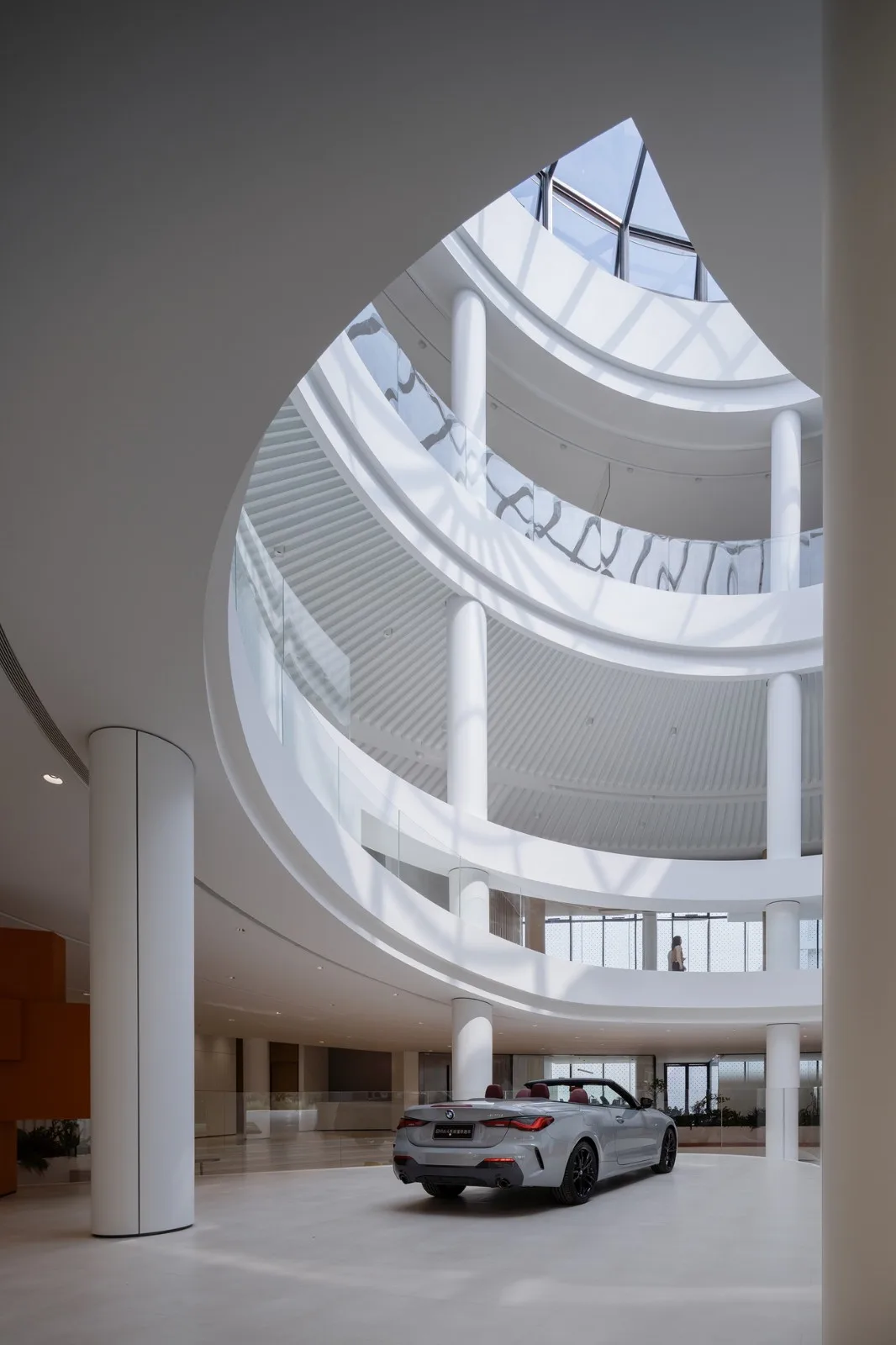
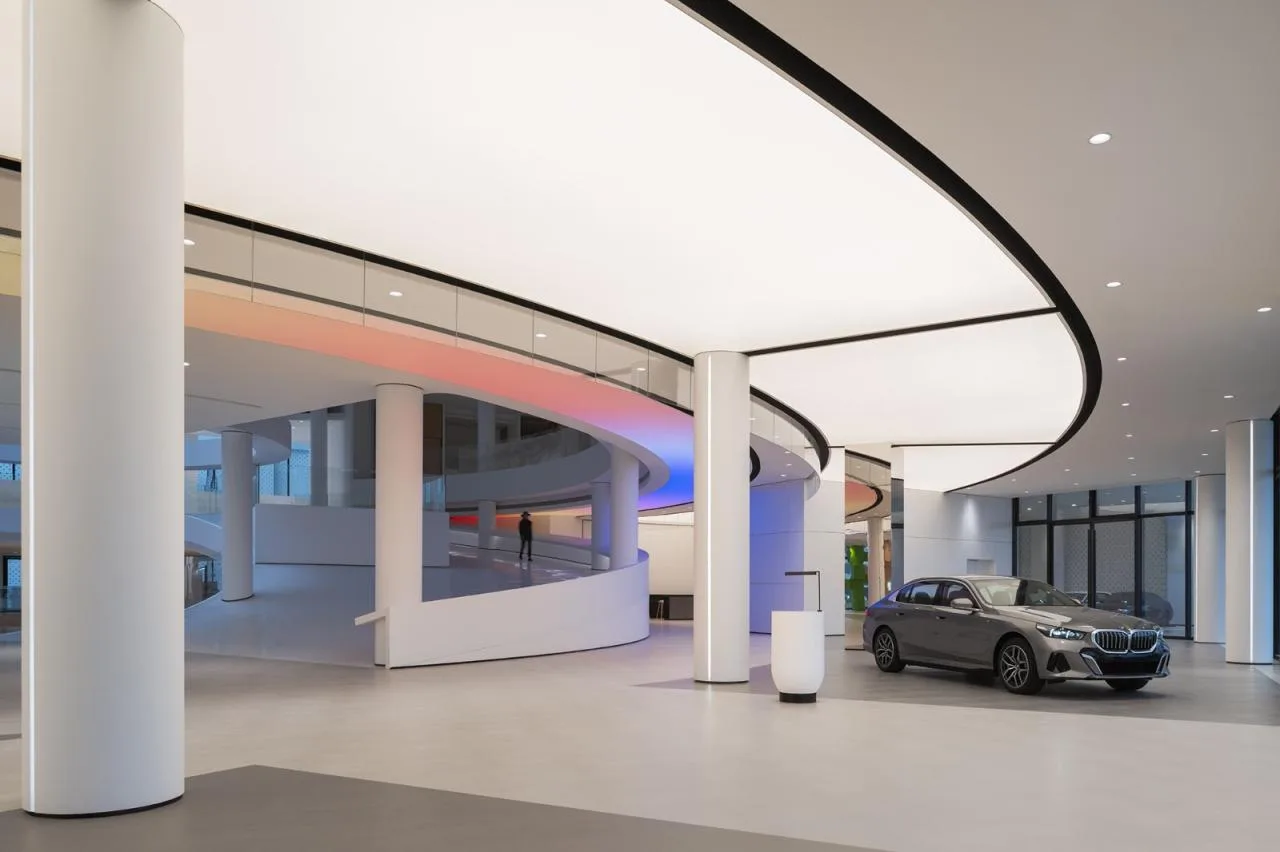
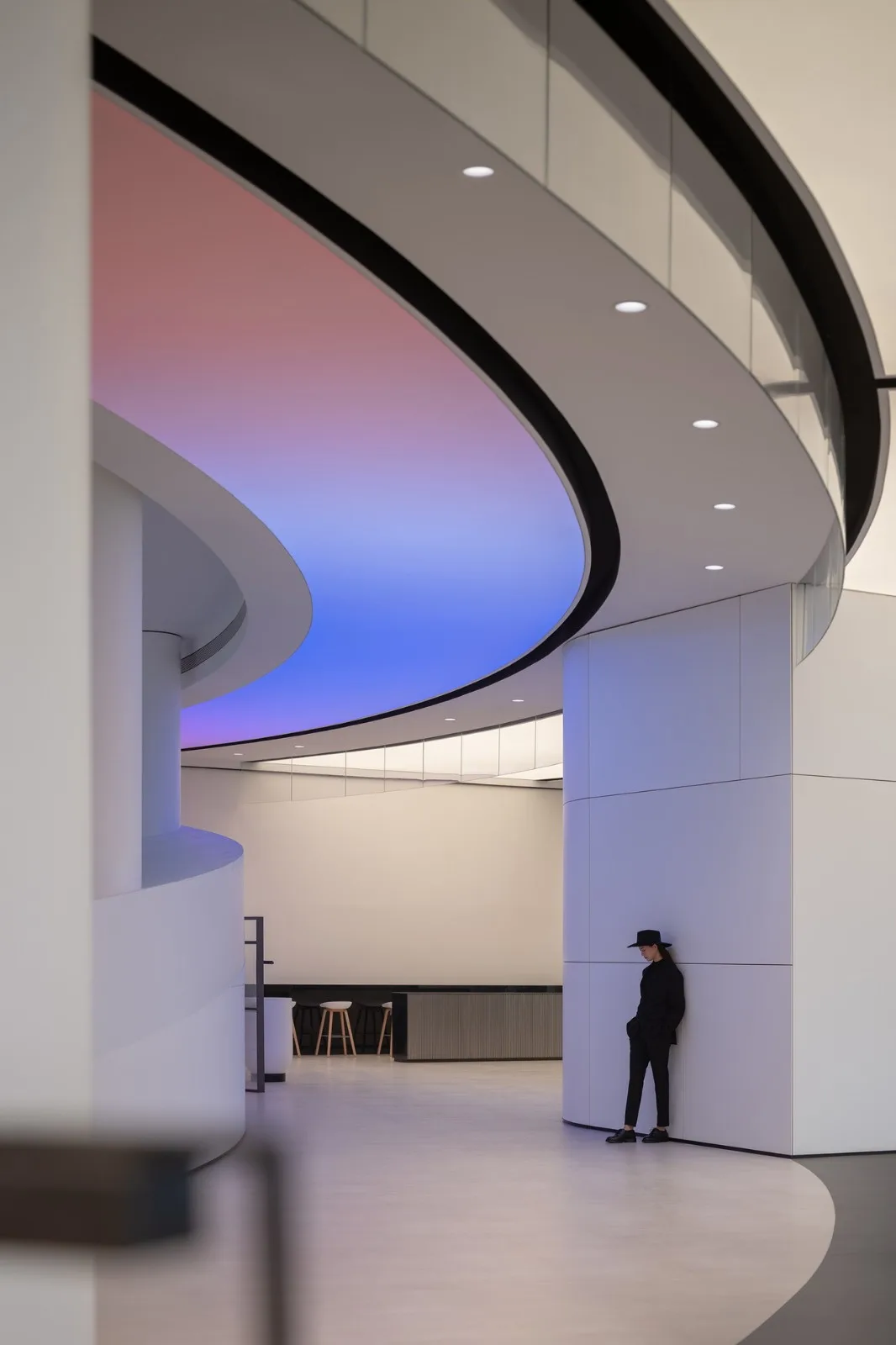
The first-floor exhibition area embraces pixel modularization, stacking enlarged pixel blocks into varied shapes interspersed with showcased cars. A dynamic, large-scale circular colored light film on the ceiling contrasts with the shapes below, expressing a youthful and playful lifestyle.
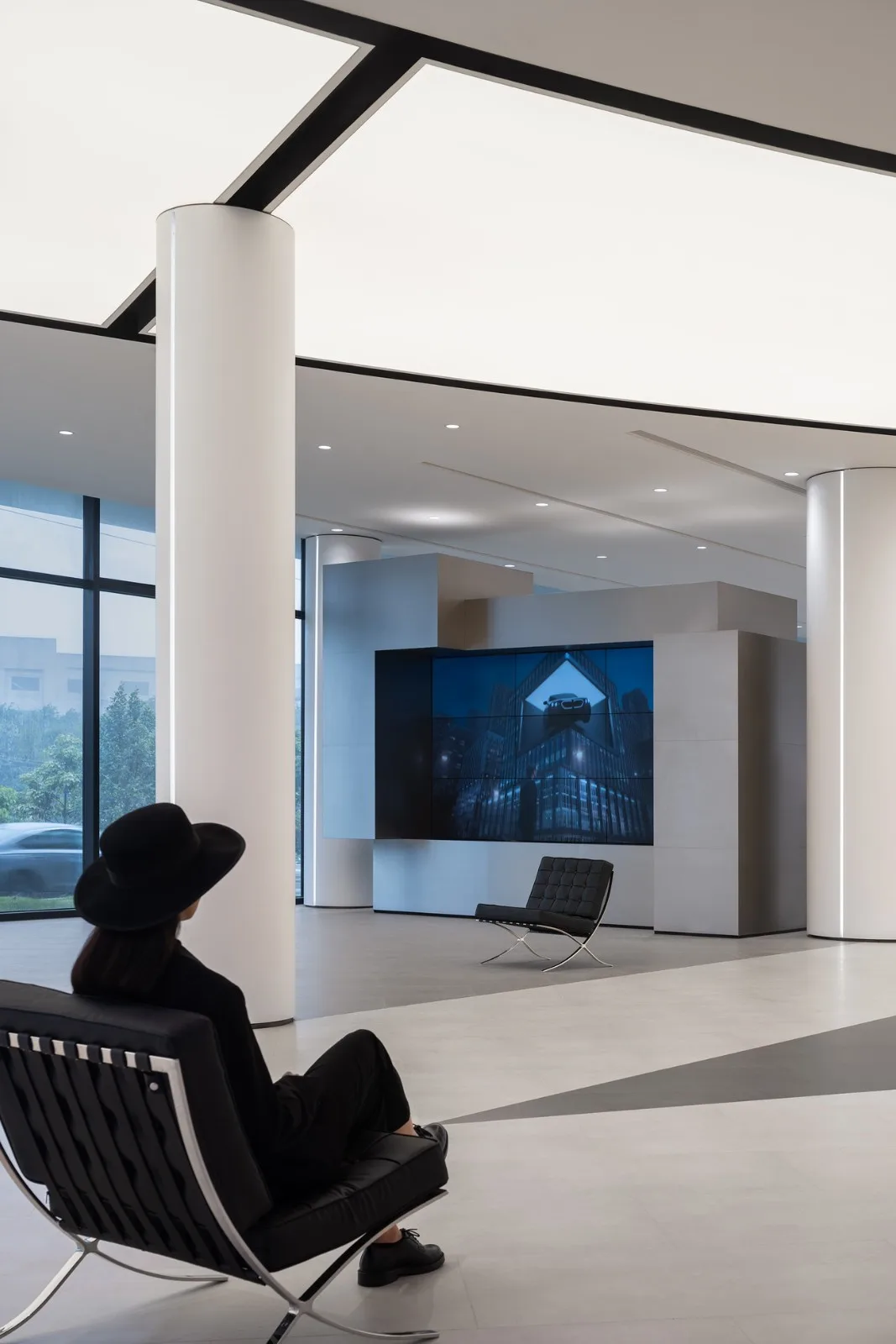
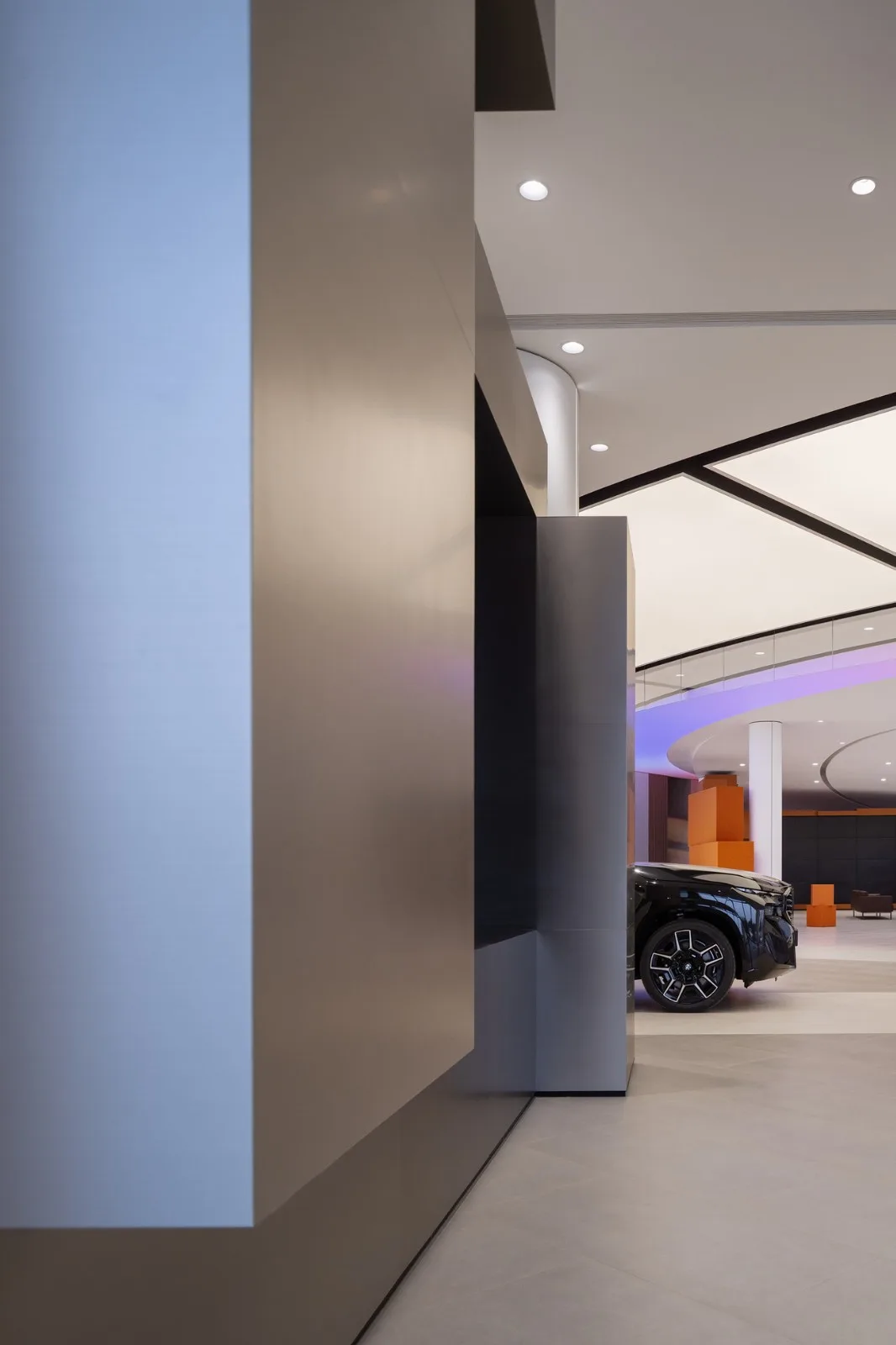
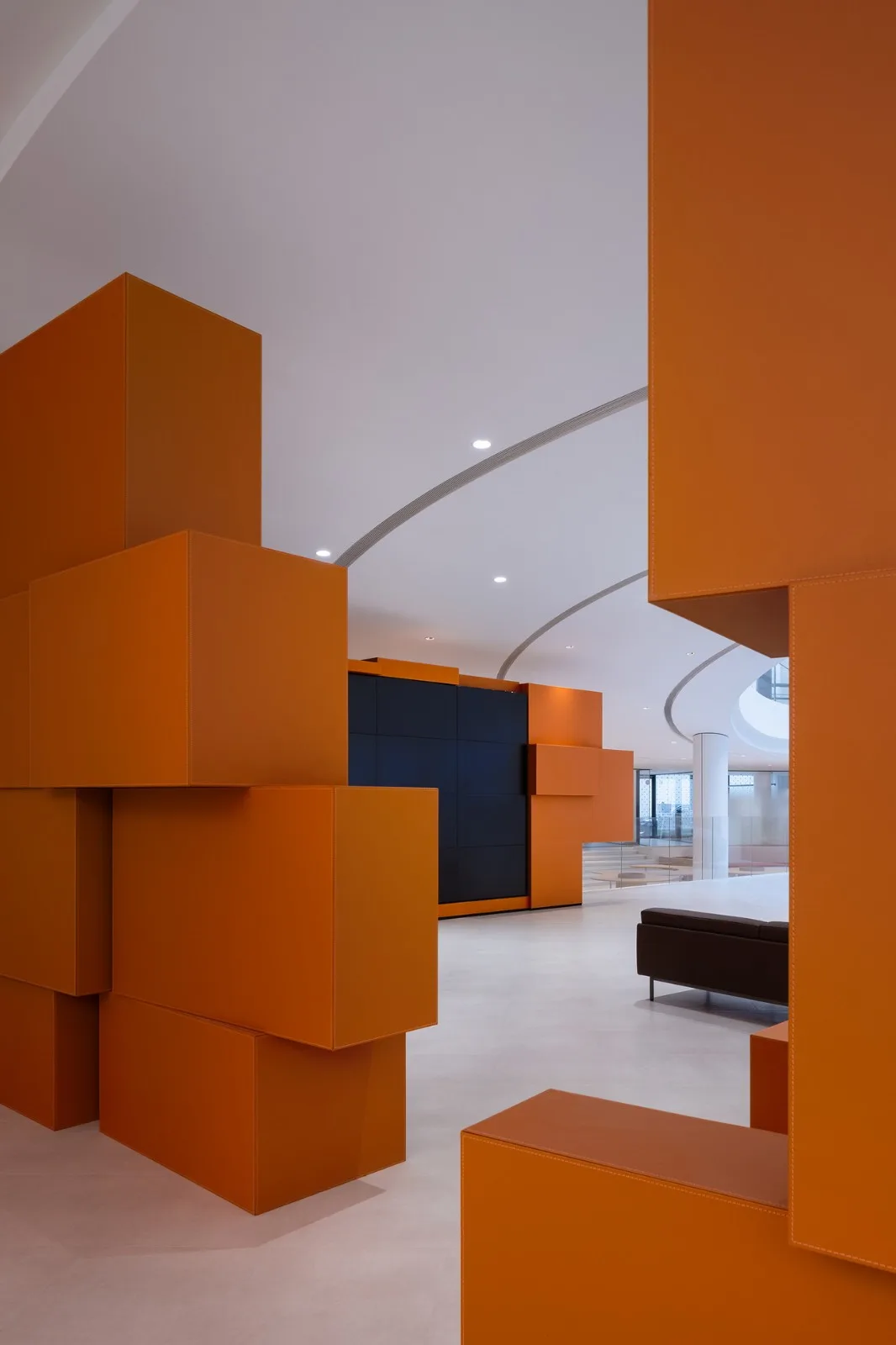
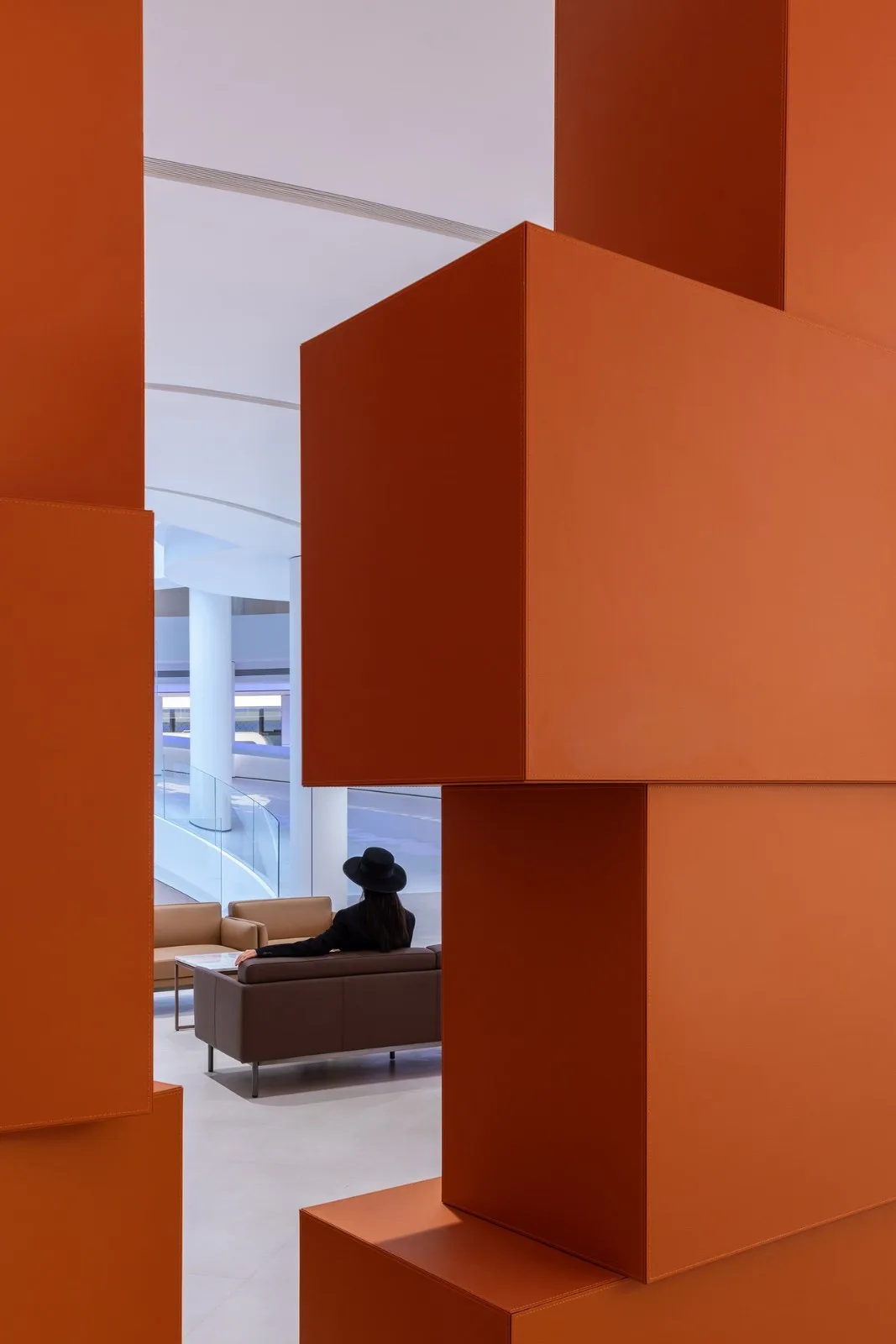
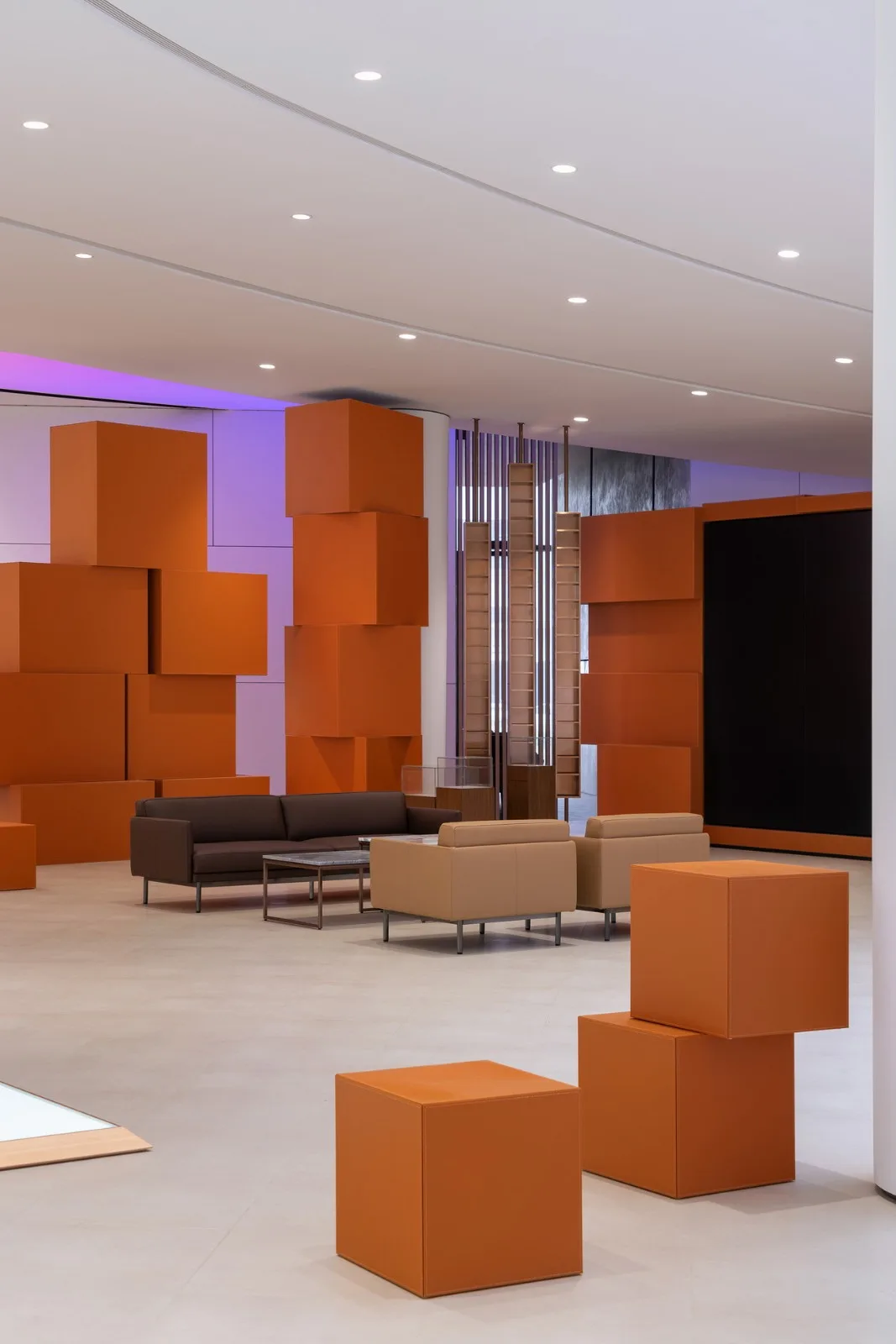
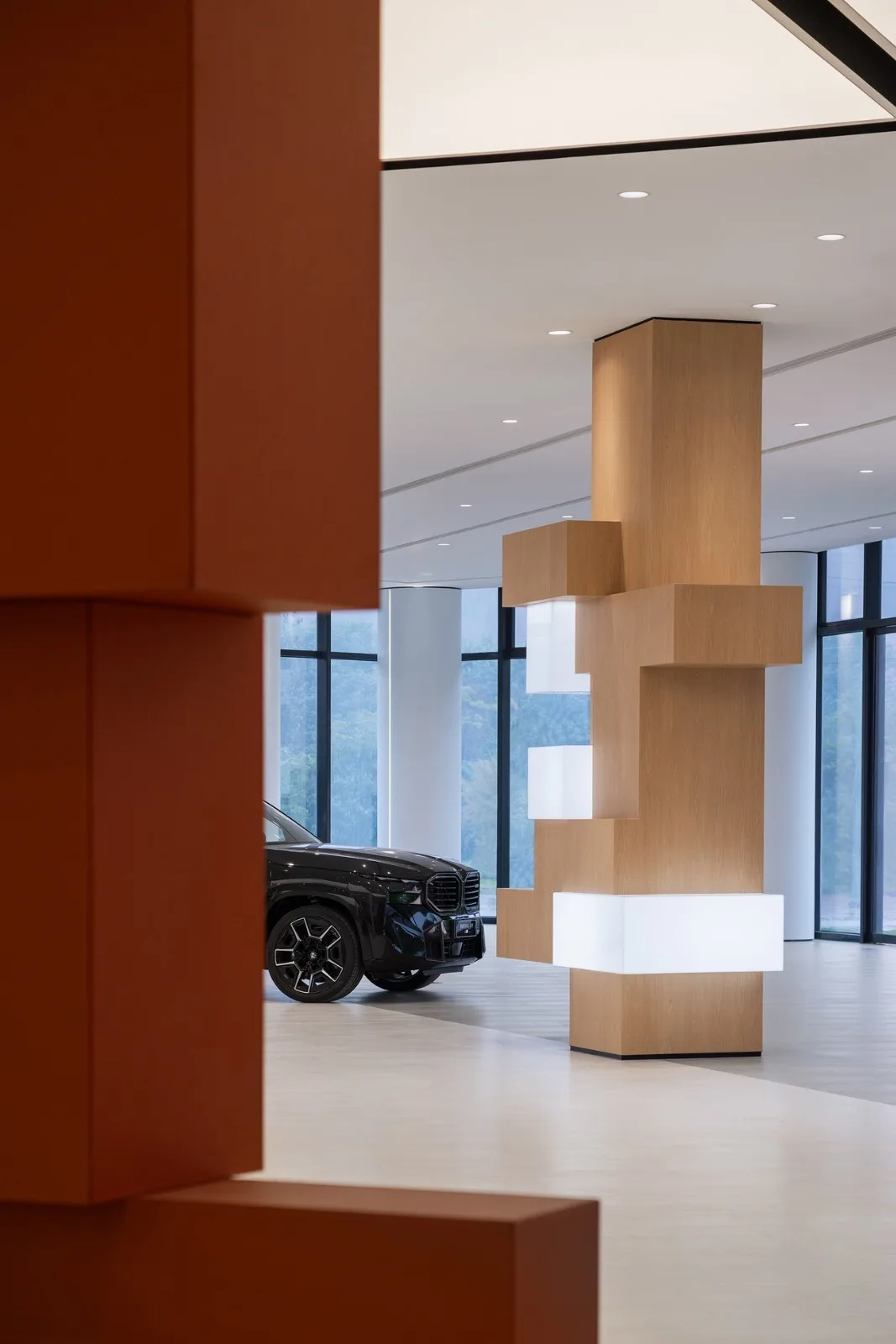
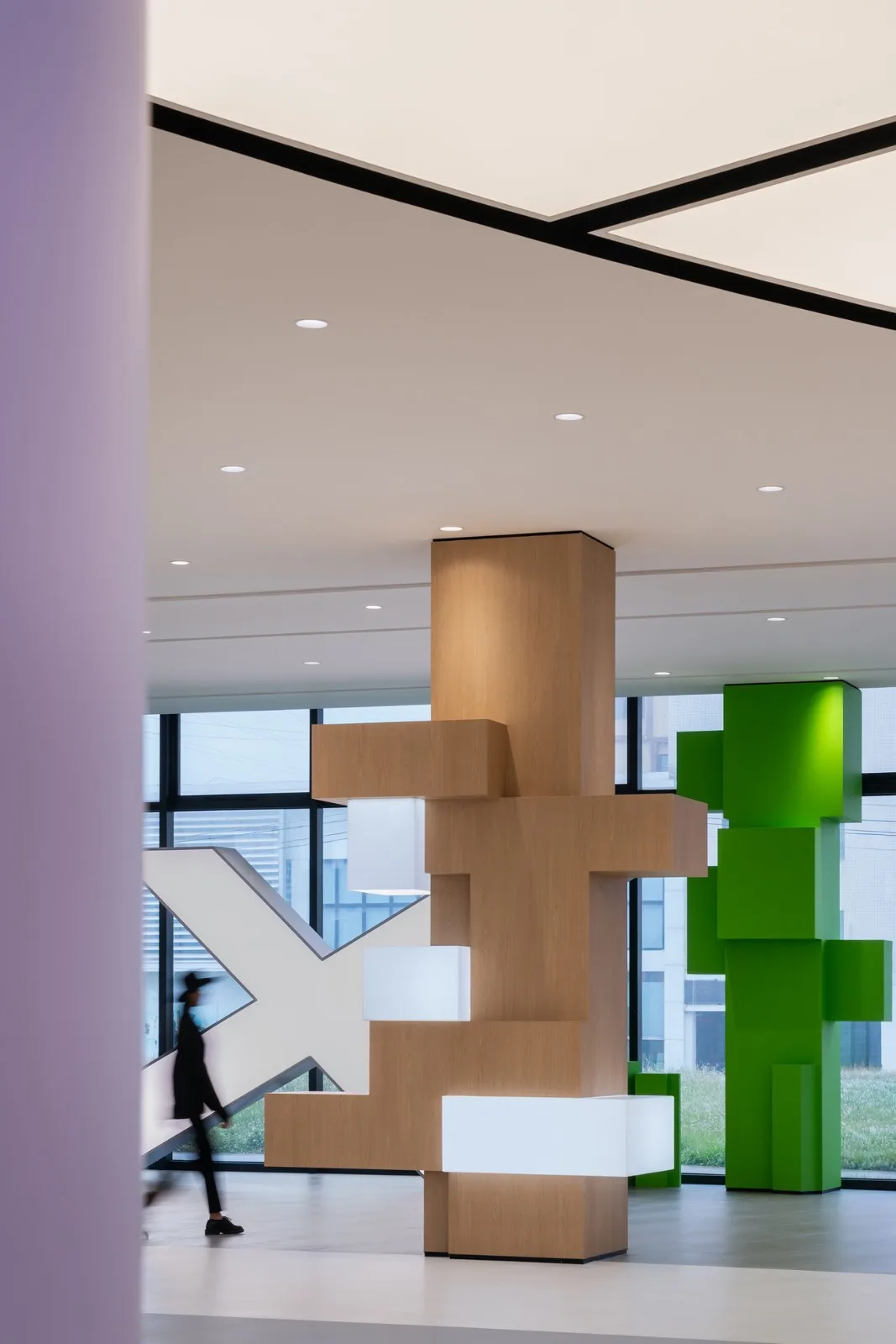
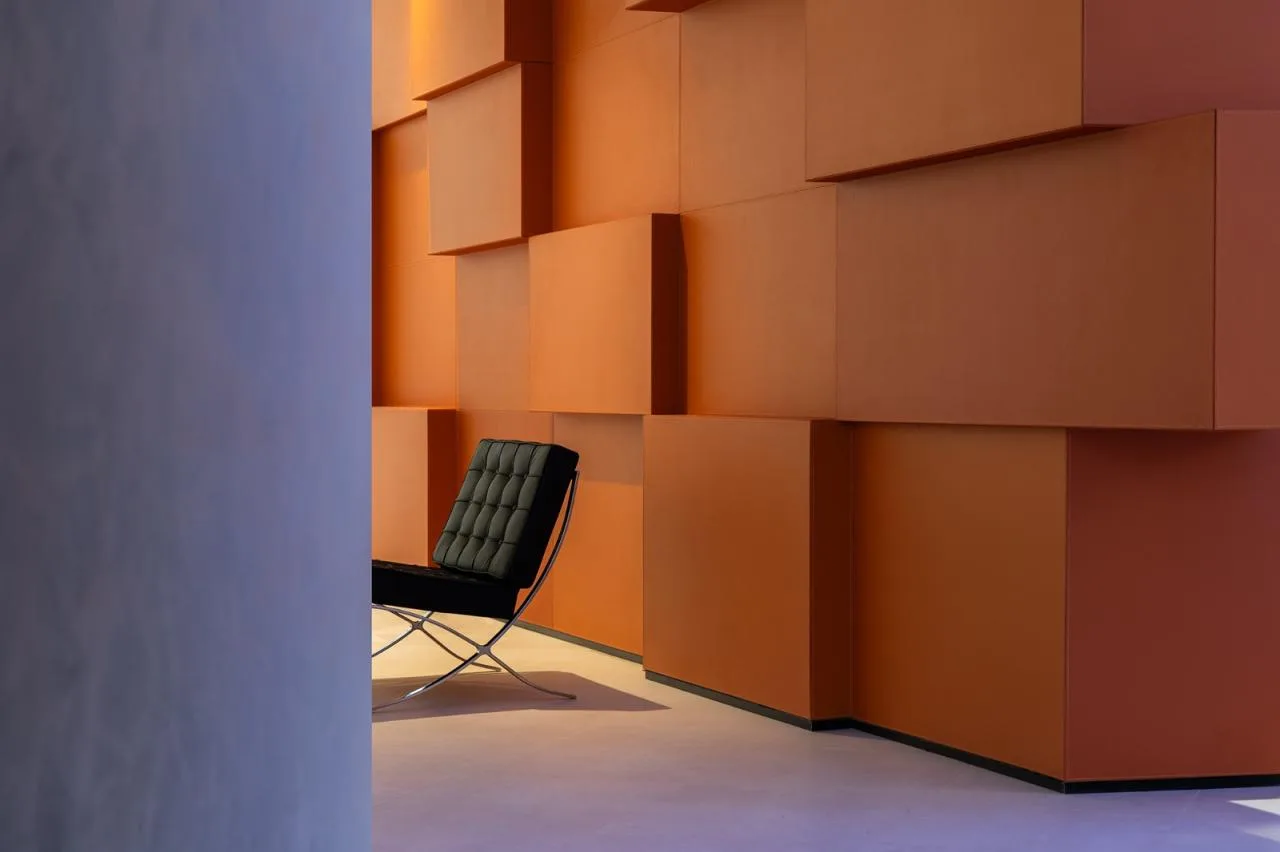
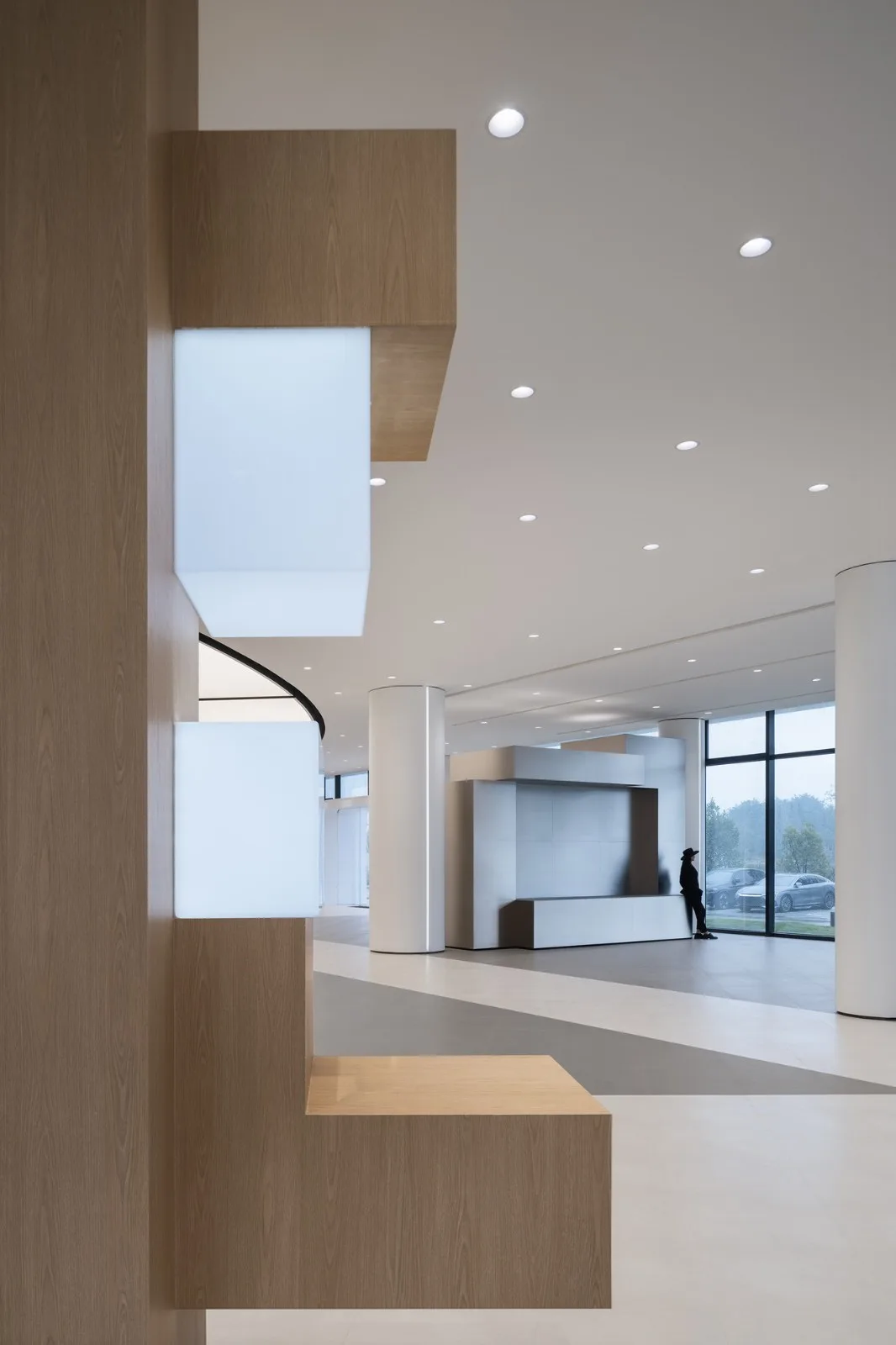
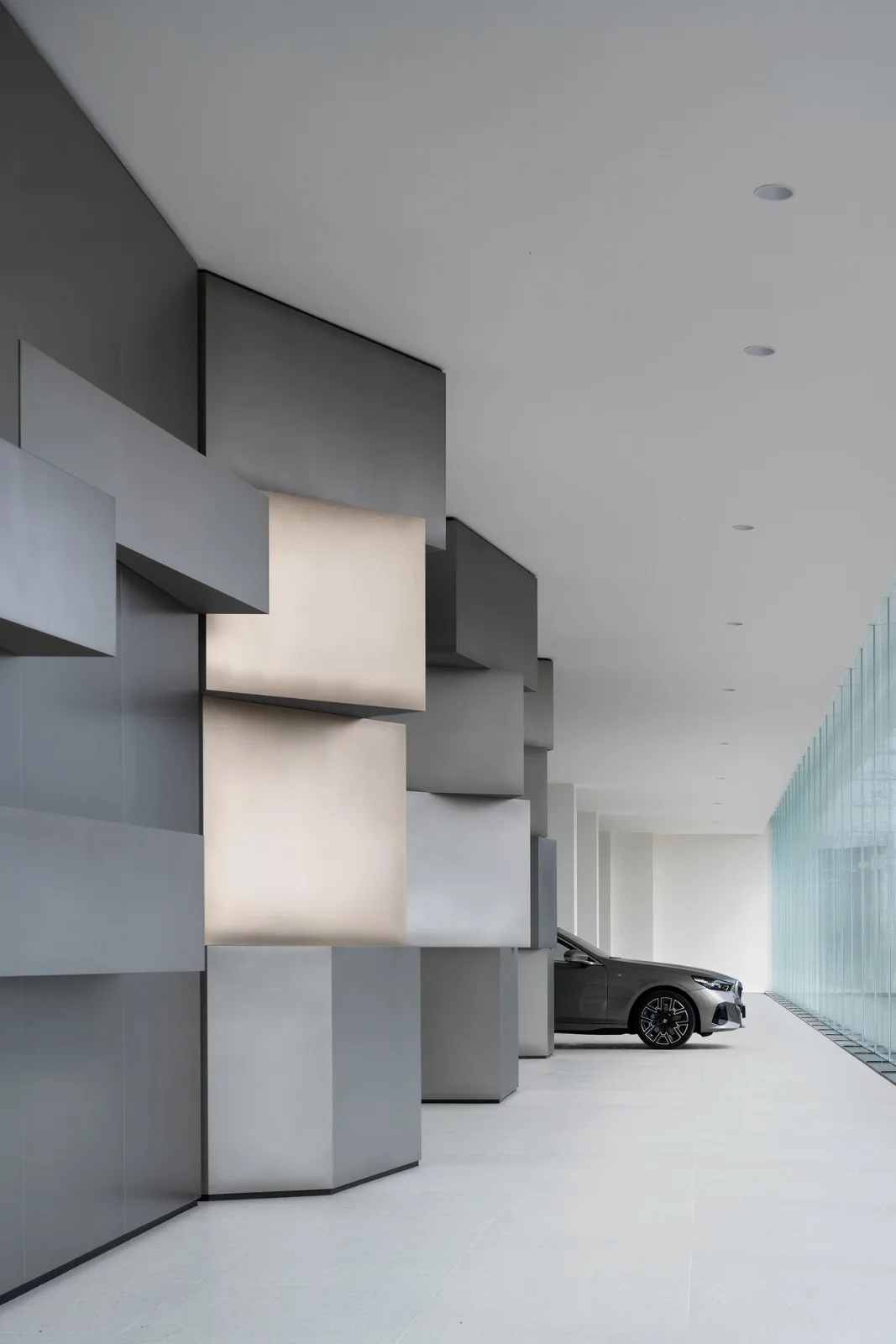
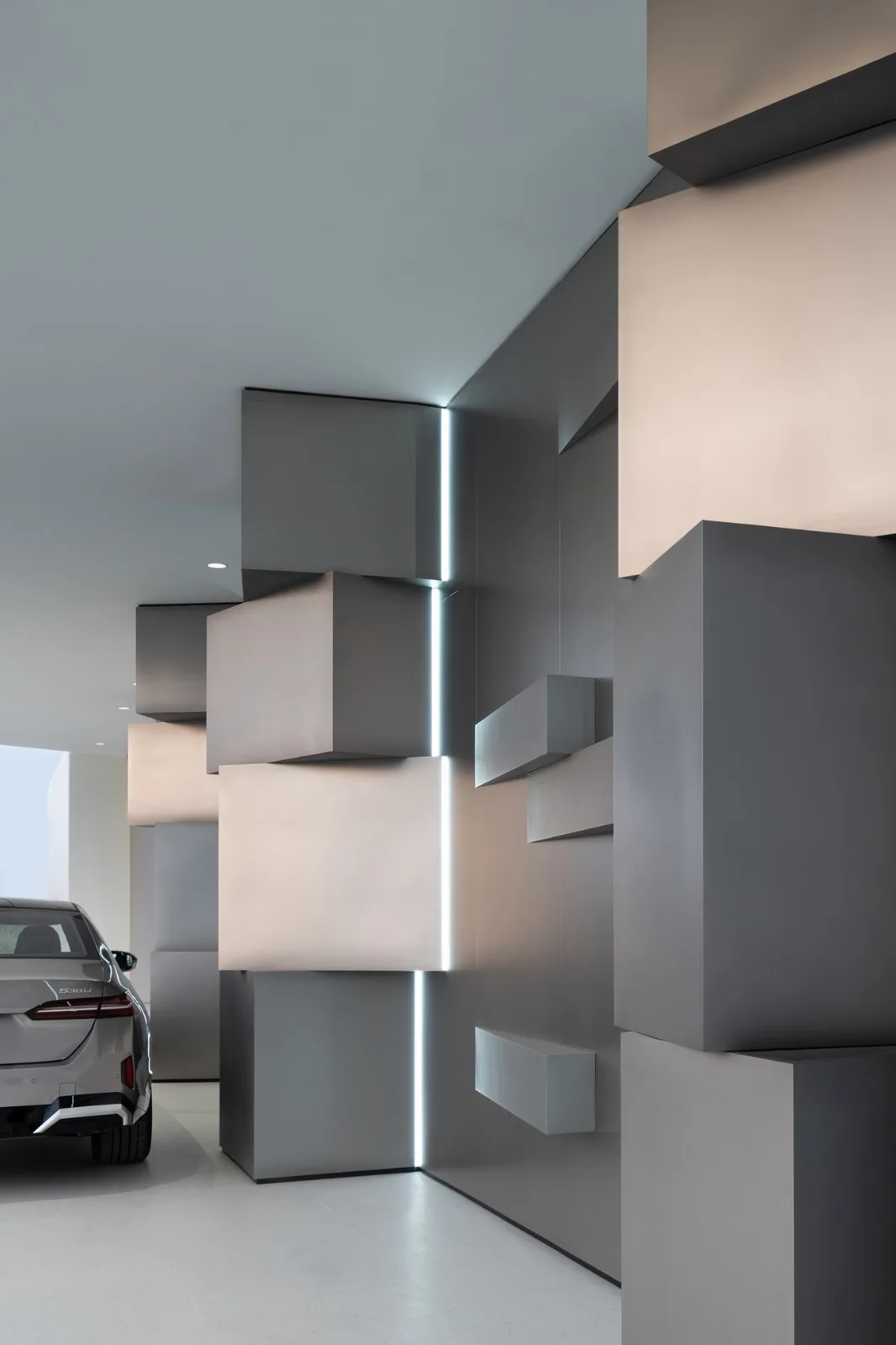
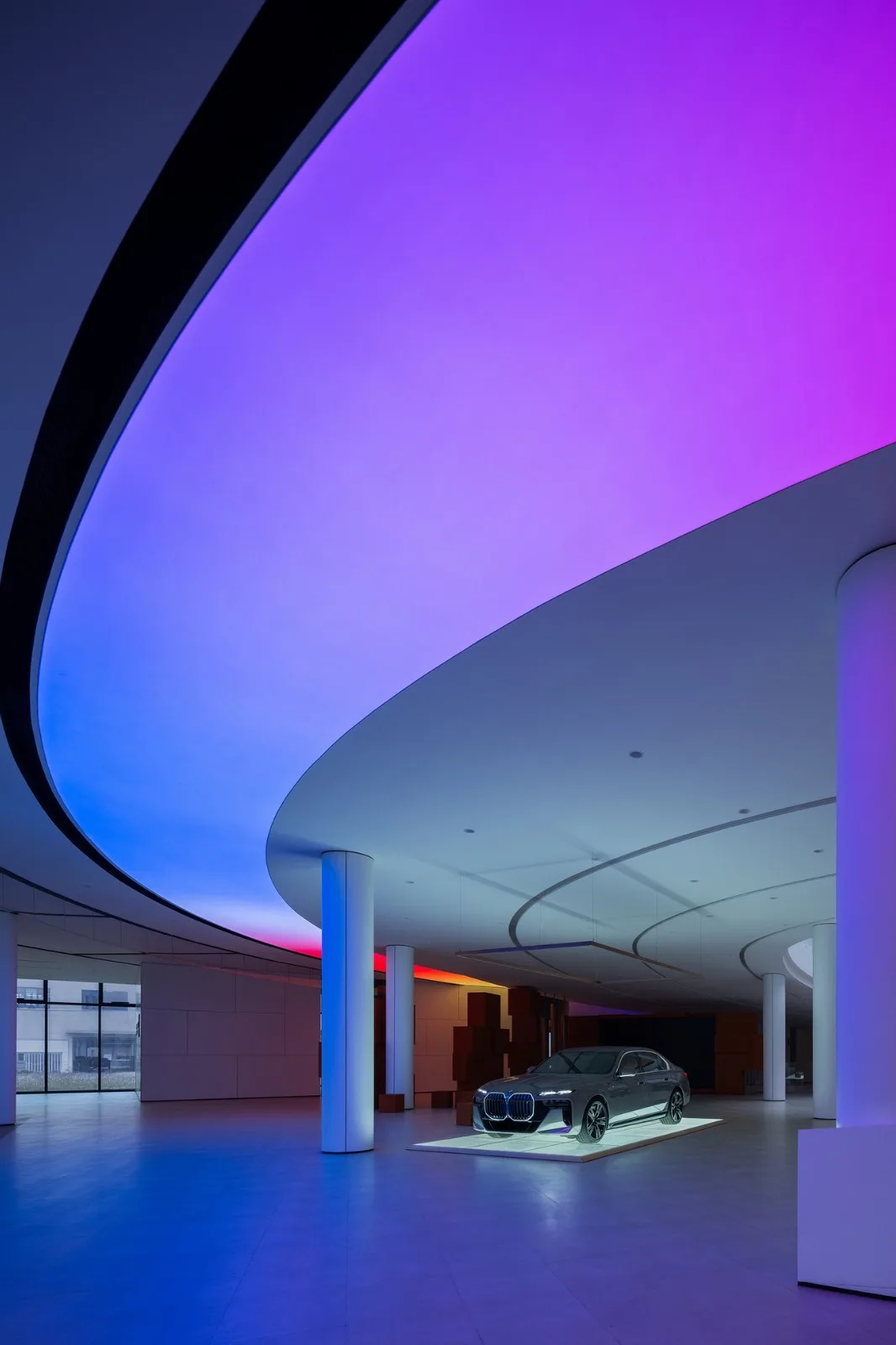
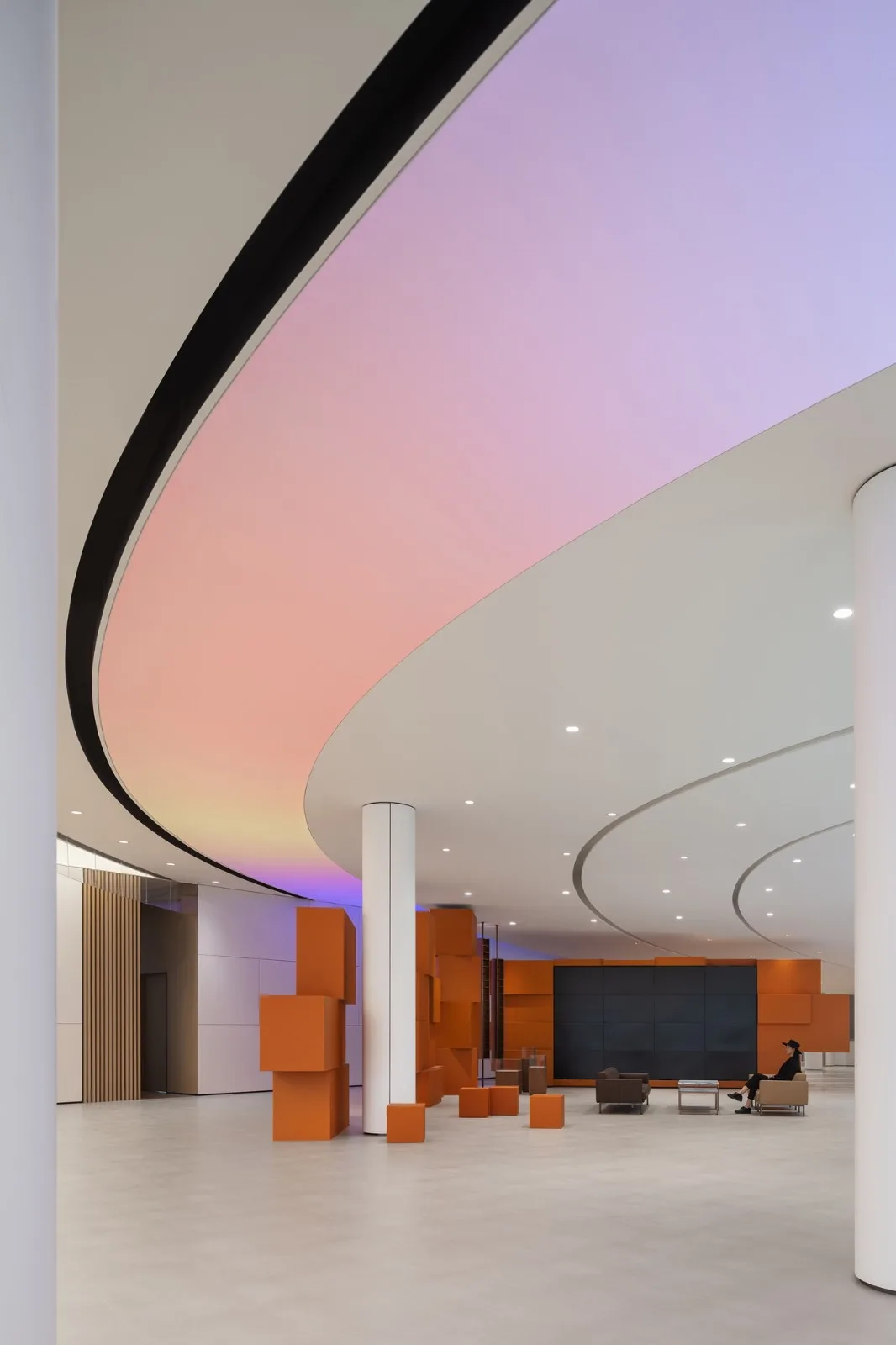
The atrium features a sunken coffee area with a circular open space at its center. Natural sunlight filters through the skylight above, creating a cozy spot for small groups to gather. The coffee bar also follows the pixel modularization concept, adding a youthful and colorful vibe. A circular ramp gently connects the first and second floors, while a circular car ramp courtyard enhances natural lighting and promotes air circulation, improving the building’s microclimate.
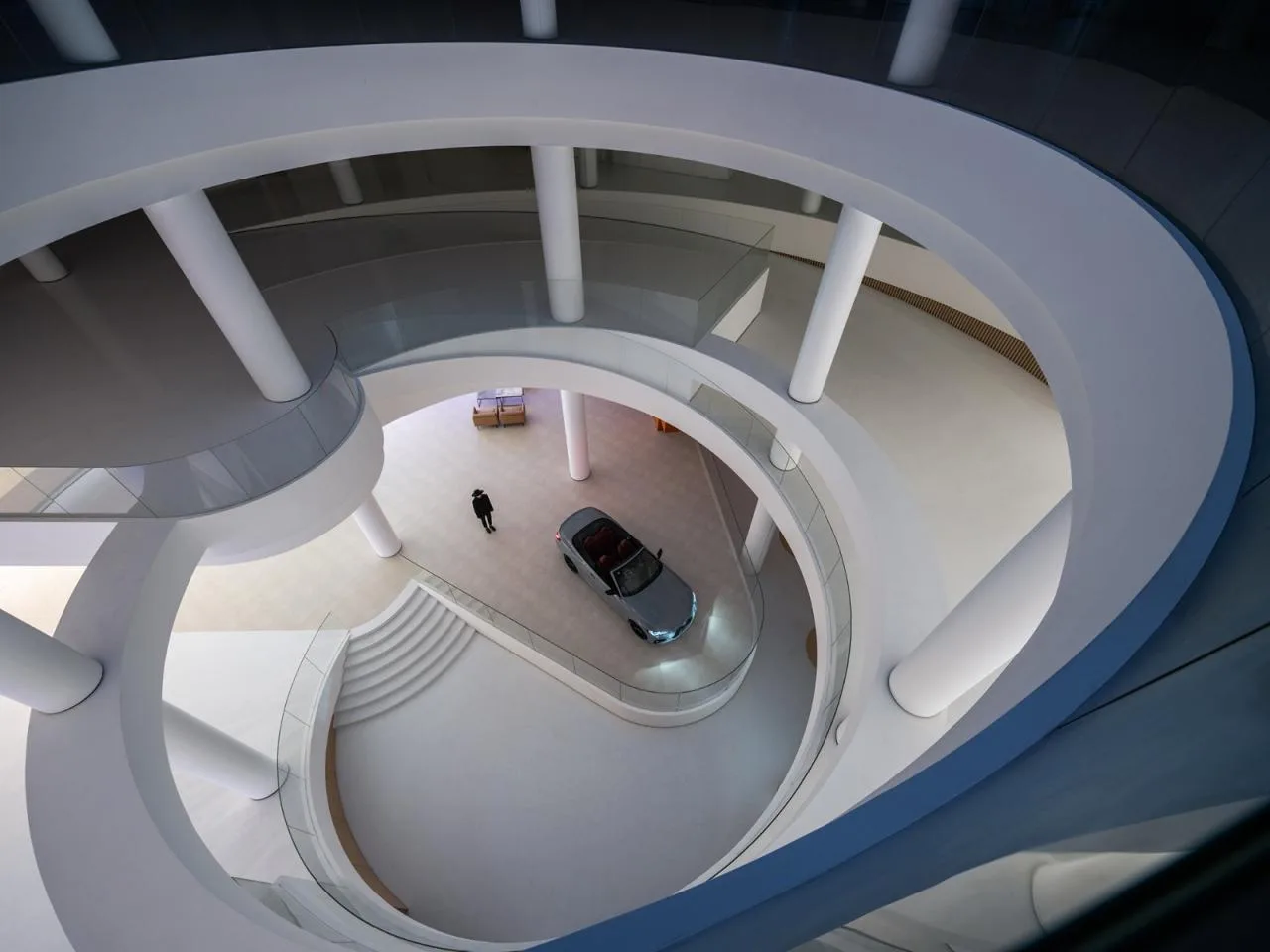
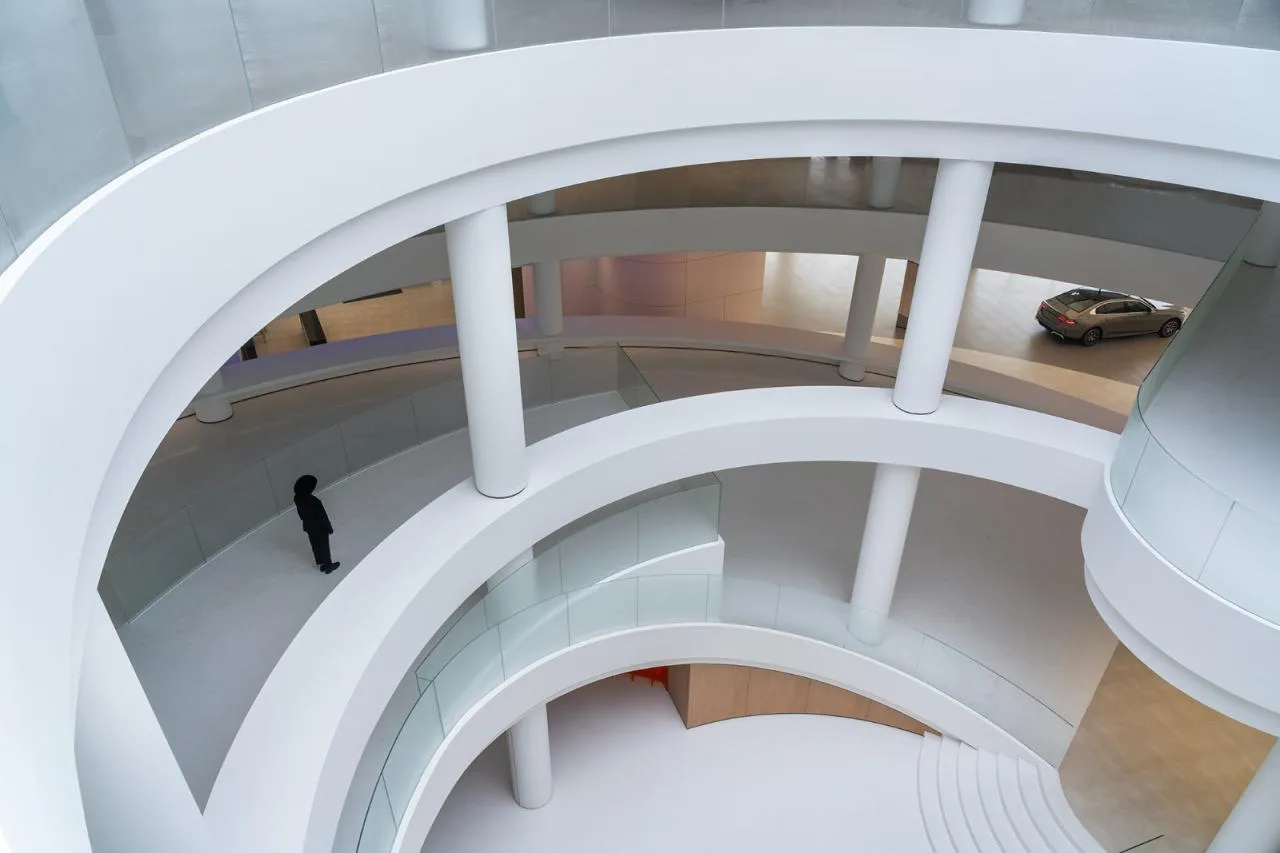
Indoor and outdoor landscaping adopts a golf course-inspired design, featuring subtle terrain treatments and winding paths. Plantings along curtain walls and window edges use soil-filled flower boxes to enhance greenery.
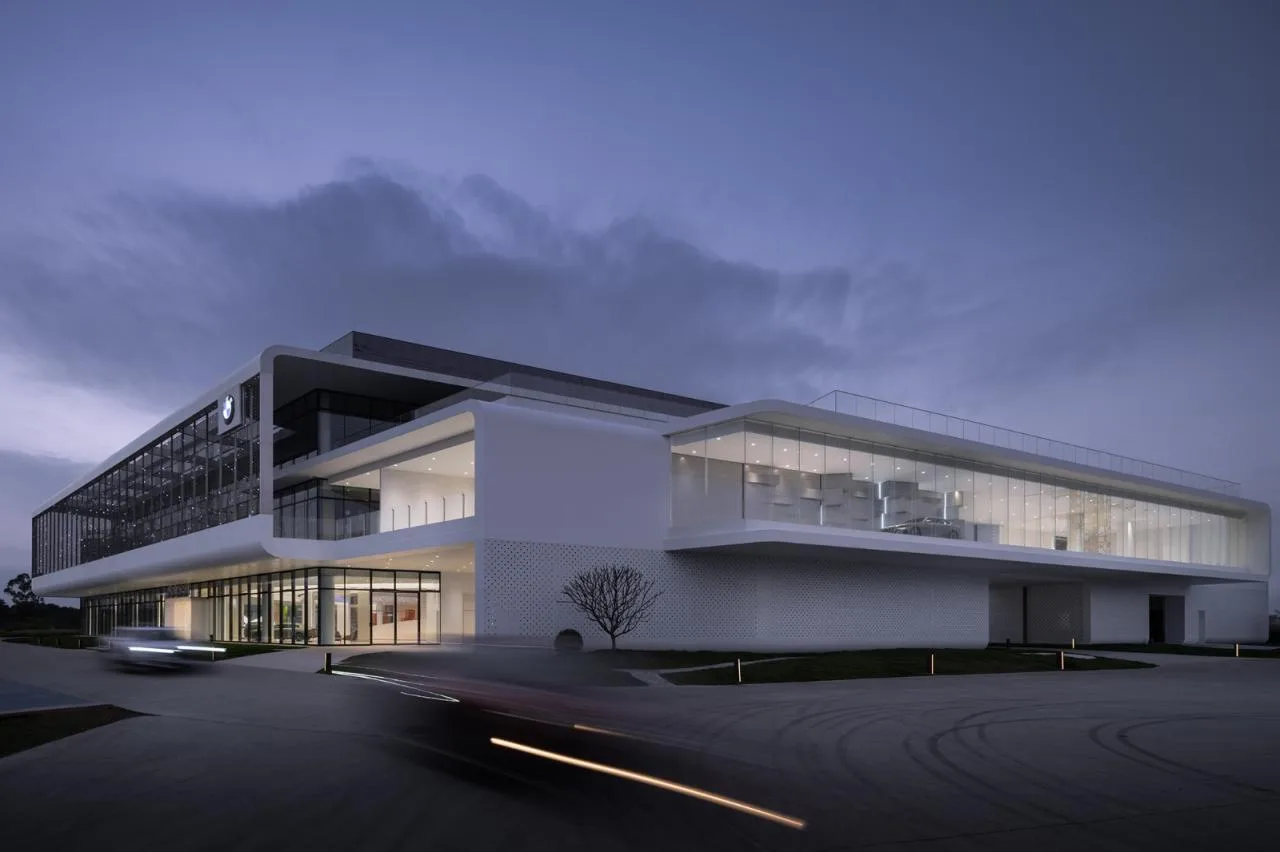
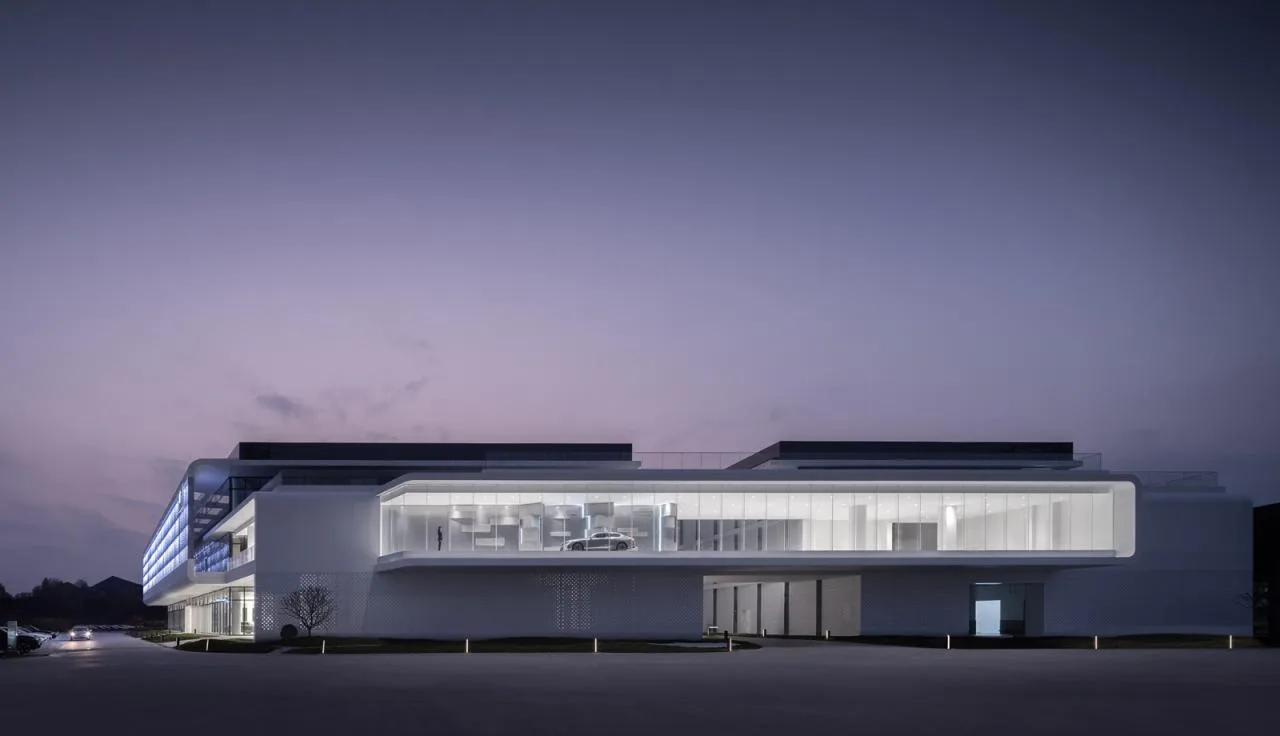
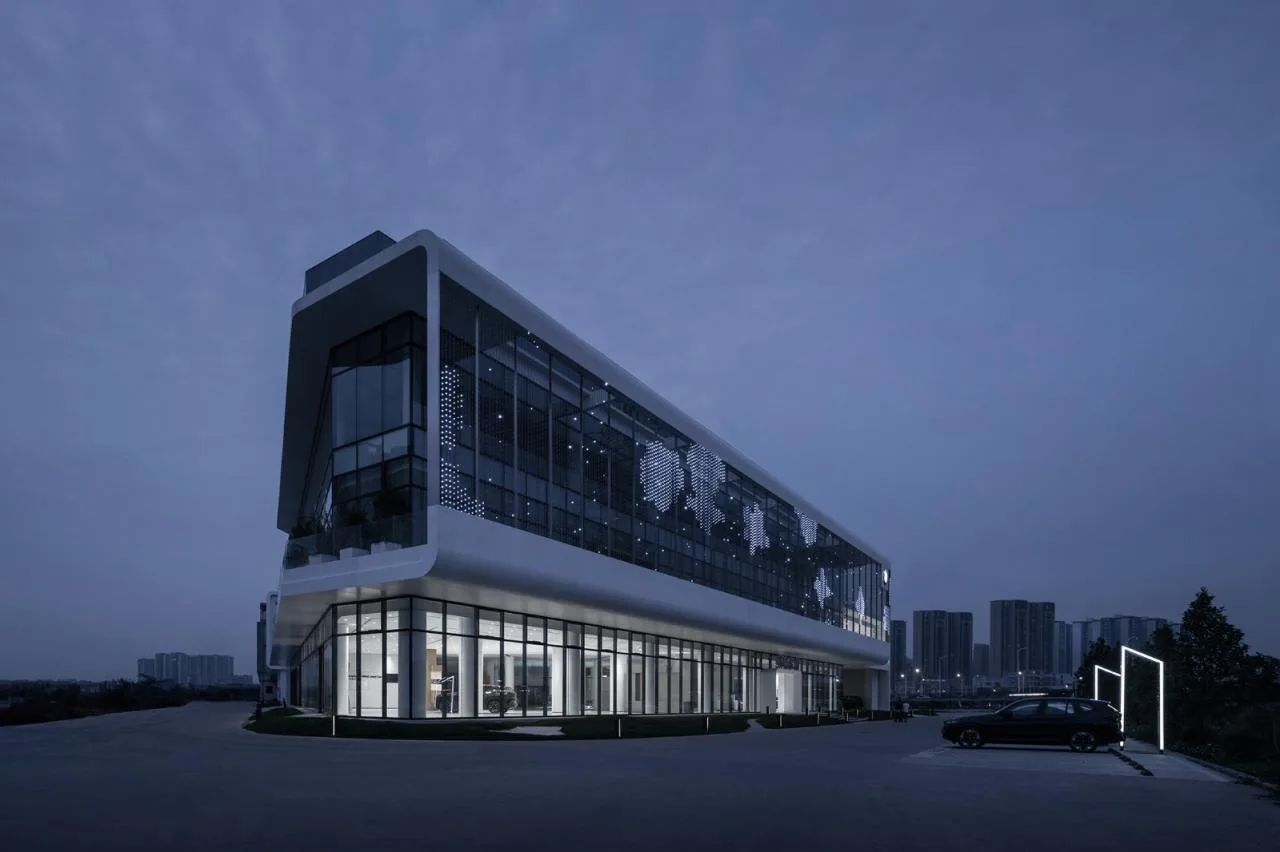
Zhu Haibo Architectural Design Firm’s intention is to create a joyful work environment and a relaxed living experience for occupants, ultimately enhancing their quality of life.
Technical Drawings
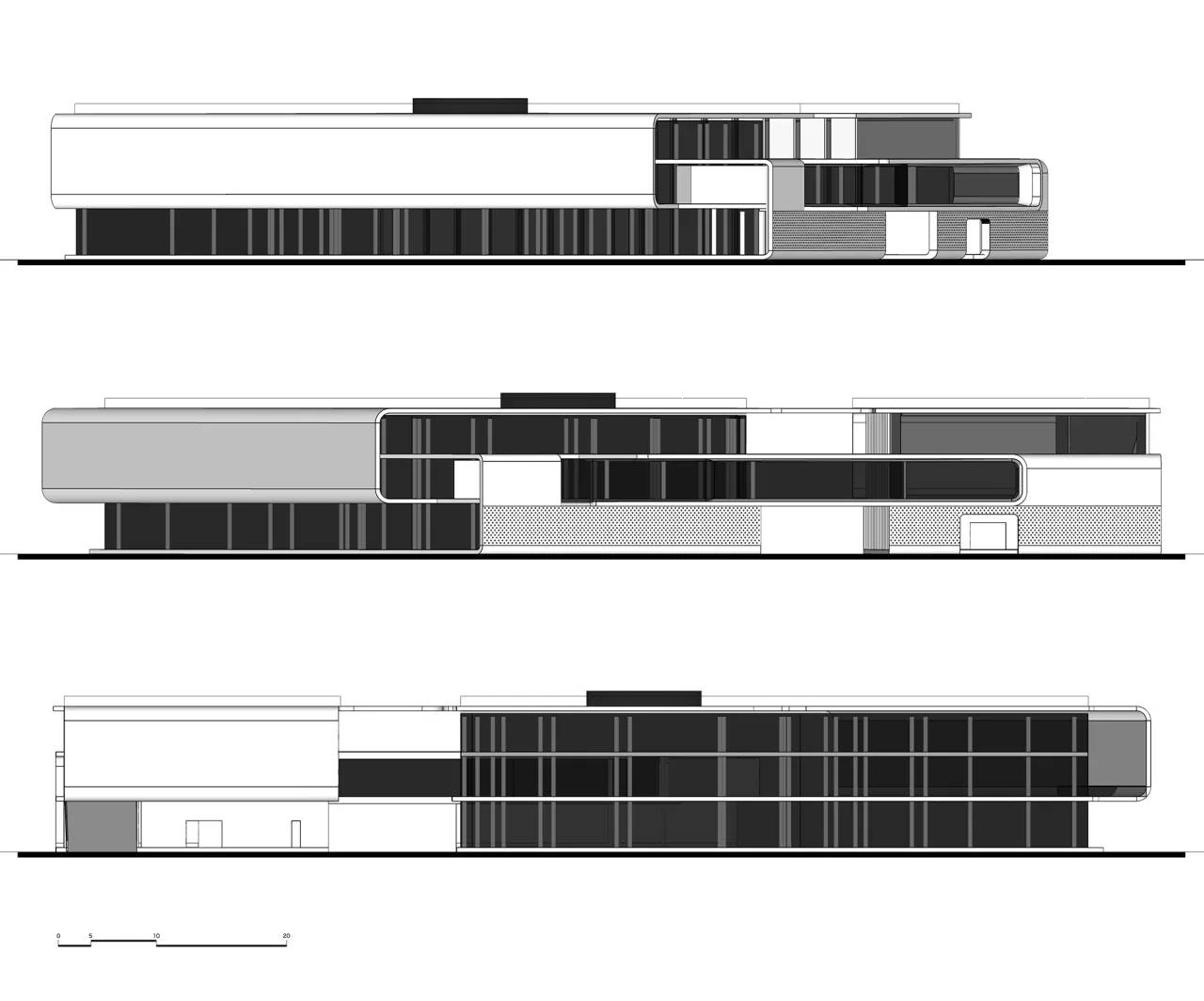
△ Facade © ARCHIHOPE
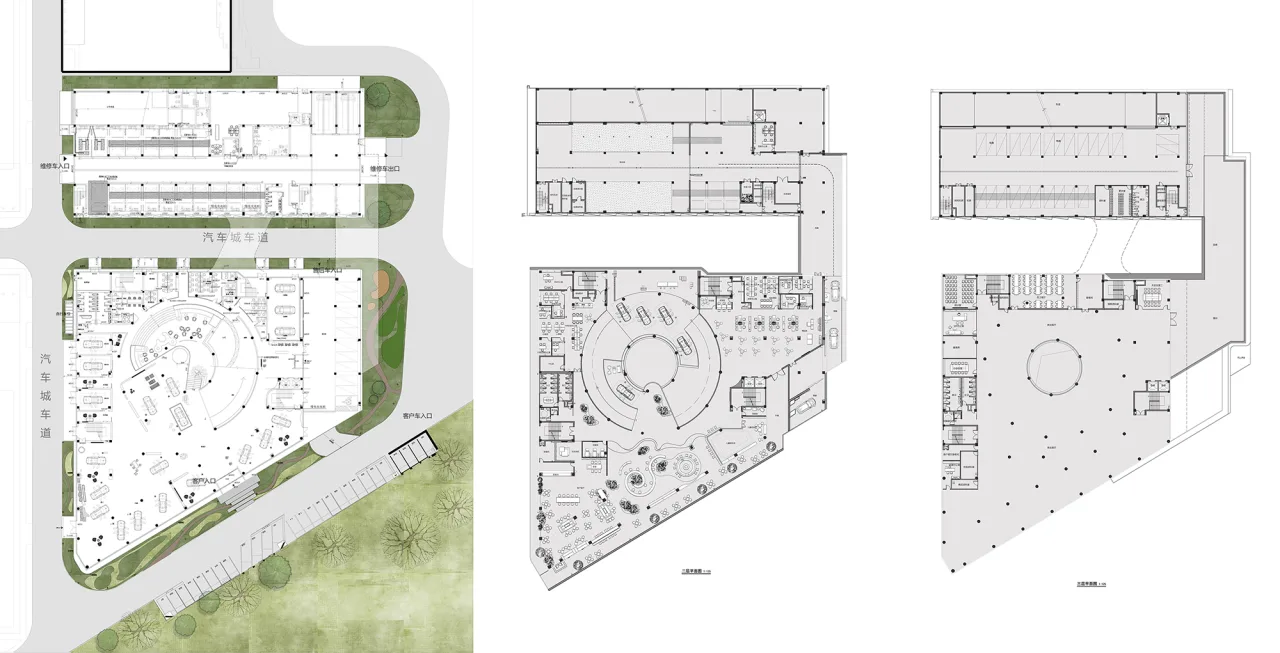
△ Floor Plan © ARCHIHOPE
Project Details
Project Name: BMW Foshan BMW Baochuang Green Star Lighthouse Project
Location: Jihua West Road, Chancheng District, Foshan City, Guangdong Province
Architectural Design: ARCHIHOPE Zhu Haibo Architectural Design Firm
Office Website: archihope.com
Lead Architect: Zhu Haibo
Design Team: Fang Jie, Xu Chang, He Mengjun, and others
Interior Design: Shenzhen Story Space Design Co., Ltd
Building Area: 7,865 square meters
Main Materials: Aluminum panels, perforated aluminum panels, low-E double-glazed insulated glass, metal mesh, dot matrix screens, etc.
Completion Date: March 30, 2024
Project Photography: Wu Jianquan














Must log in before commenting!
Sign Up