
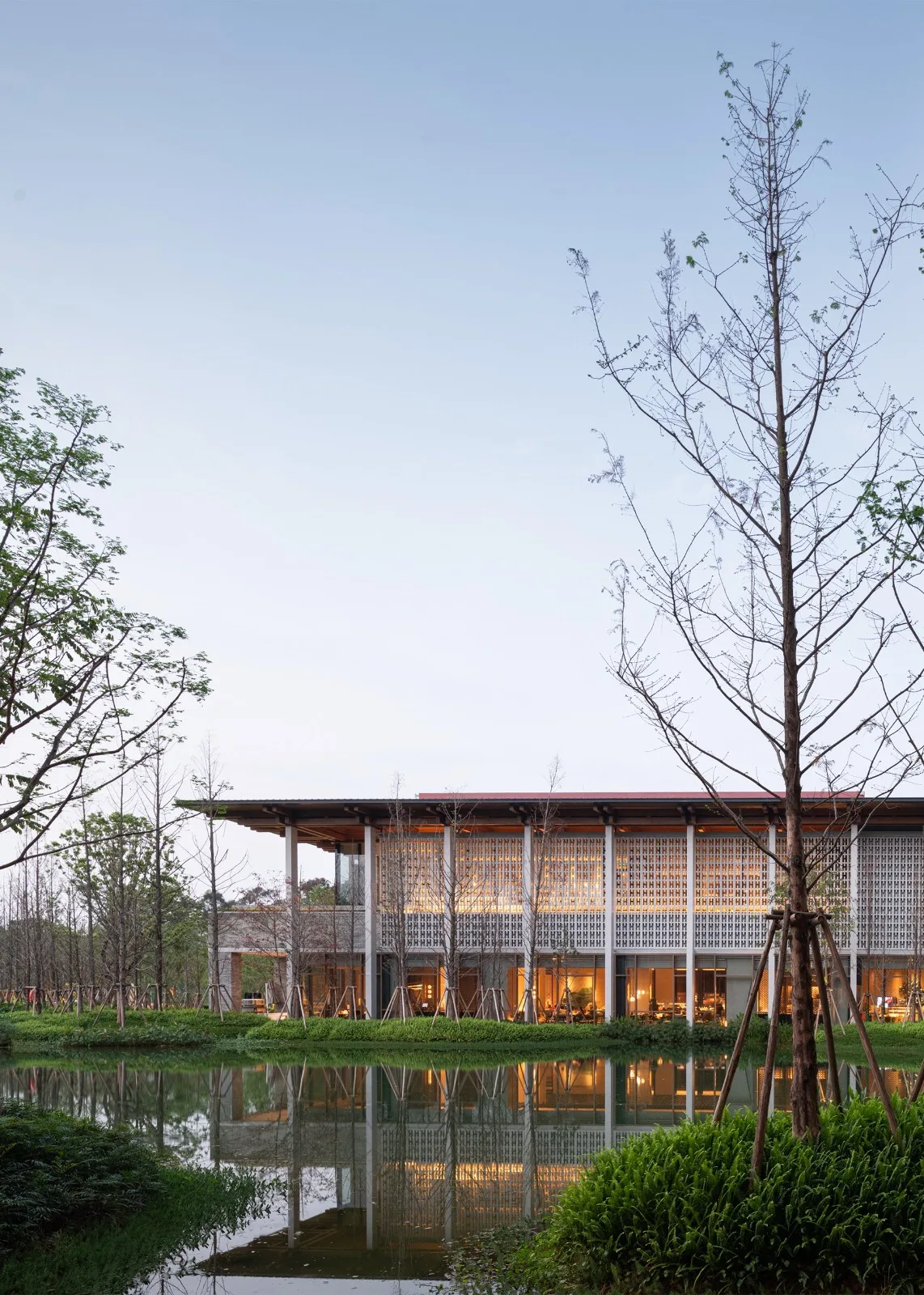
The southern region of the Five Ridges is known as Lingnan, a term that encompasses both geographical and cultural significance. The area’s environmental conditions have fostered a distinctive climate characterized by intense sunshine, heat, humidity, and frequent rainfall. In the 1950s, Mr. Xia Changshi introduced the concept of Lingnan architecture, emphasizing its core principle: adaptation to the local climate. This architectural style prioritizes water management, shading, insulation, and natural ventilation, which is reflected in the extensive use of grey spaces within building communities and spatial layouts.
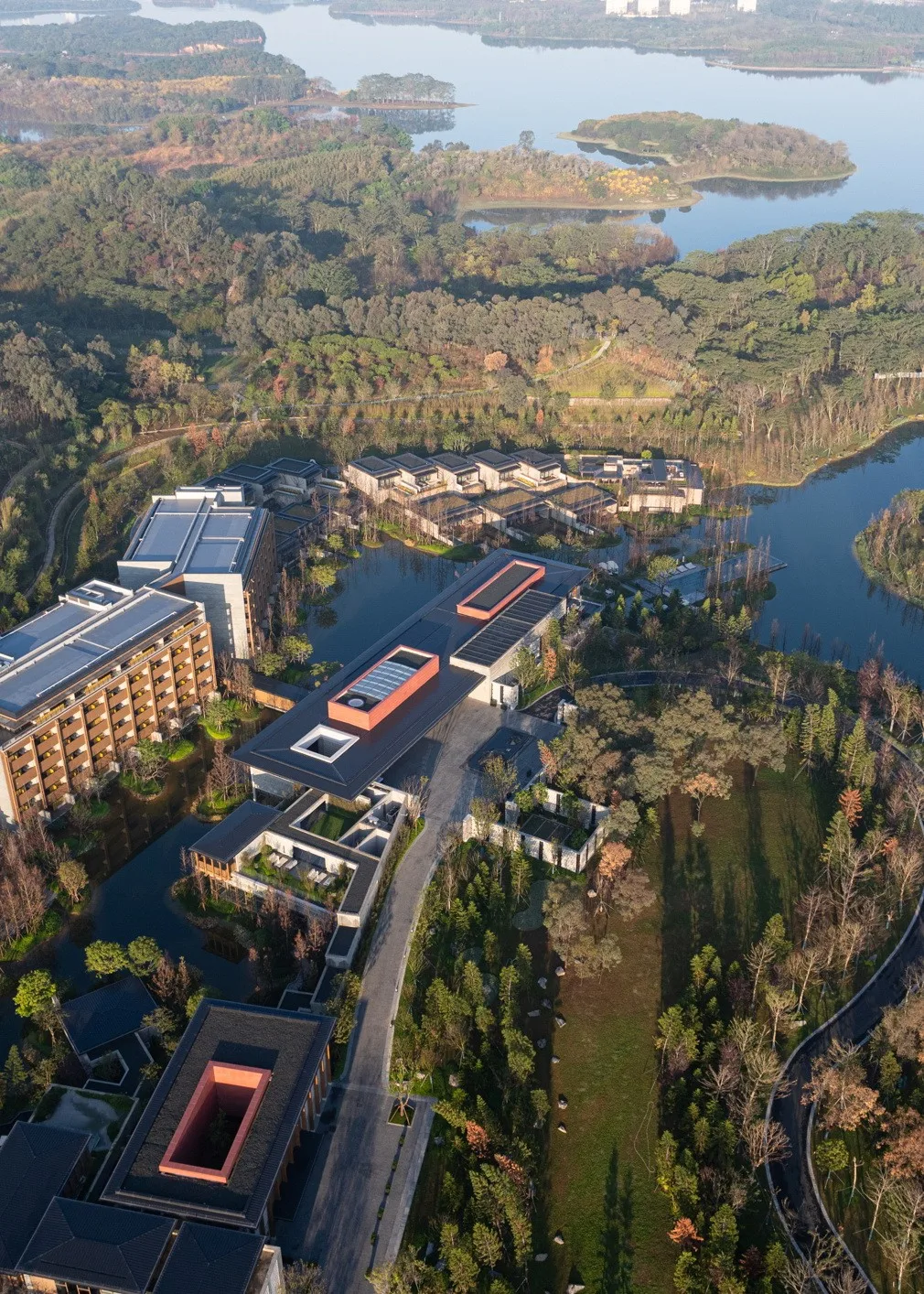
△ Aerial view of the hotel by Right Angle Architectural Photography
Situated between Shenzhen and Dongguan, Songshan Lake is renowned for its stunning environment and as the location of Huawei’s global R&D headquarters. The Dongguan Songshan Lake Banyan Tree Hotel nestles beside this serene lake, surrounded by verdant peaks and the misty rain characteristic of Songhu Lake. The hotel features 159 guest rooms, an international conference center, the Mi Yan all-day restaurant, the Baiyun Chinese restaurant, and the Banyan Tree SPA. The architectural design aims to root itself in the traditional Lingnan culture, integrating elements such as overall layout, spatial design, climate responsiveness, and material choice to create a nature-harmonized resort hotel rich in local cultural identity.
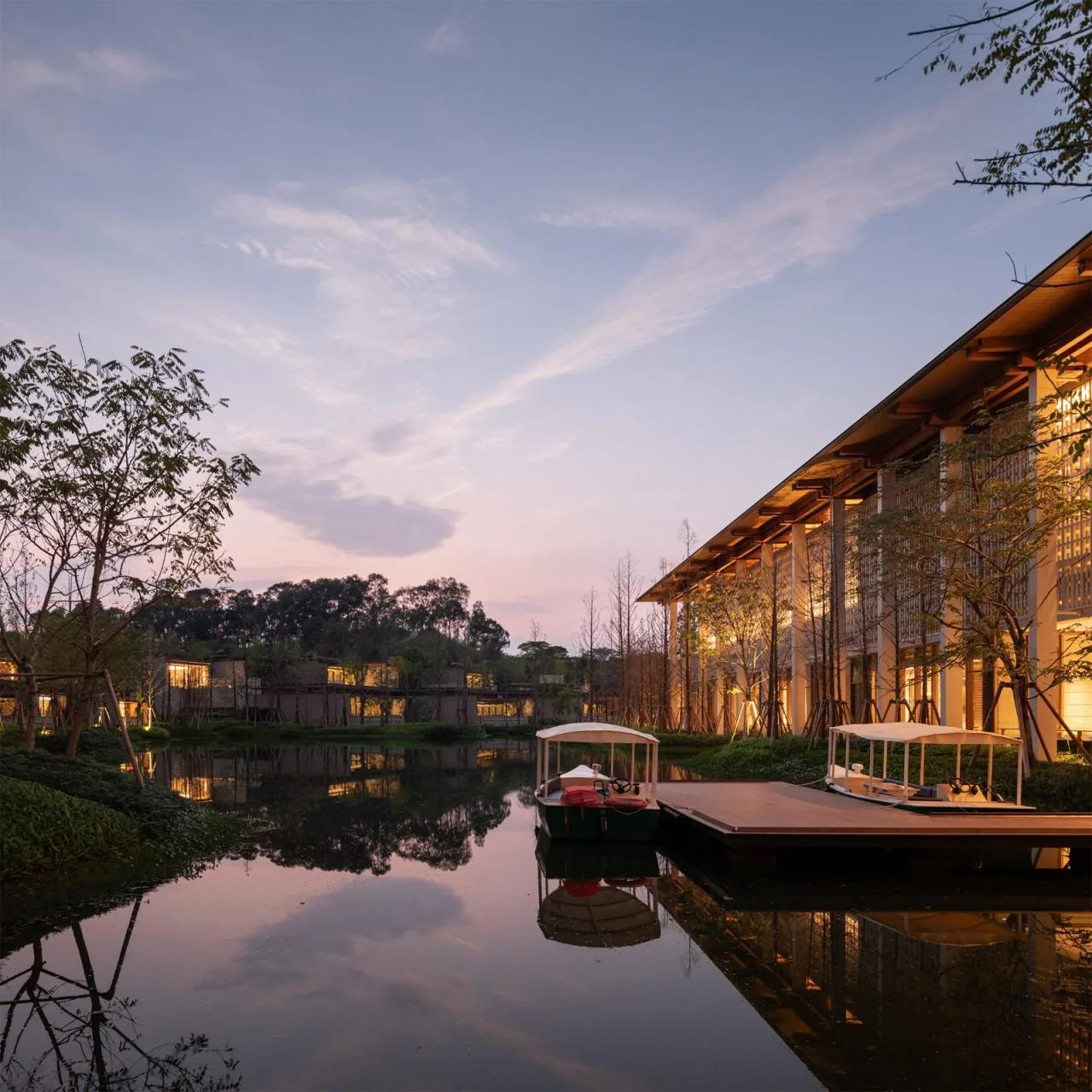
△ Inner lake facade photographed by Right Angle Architectural Photography
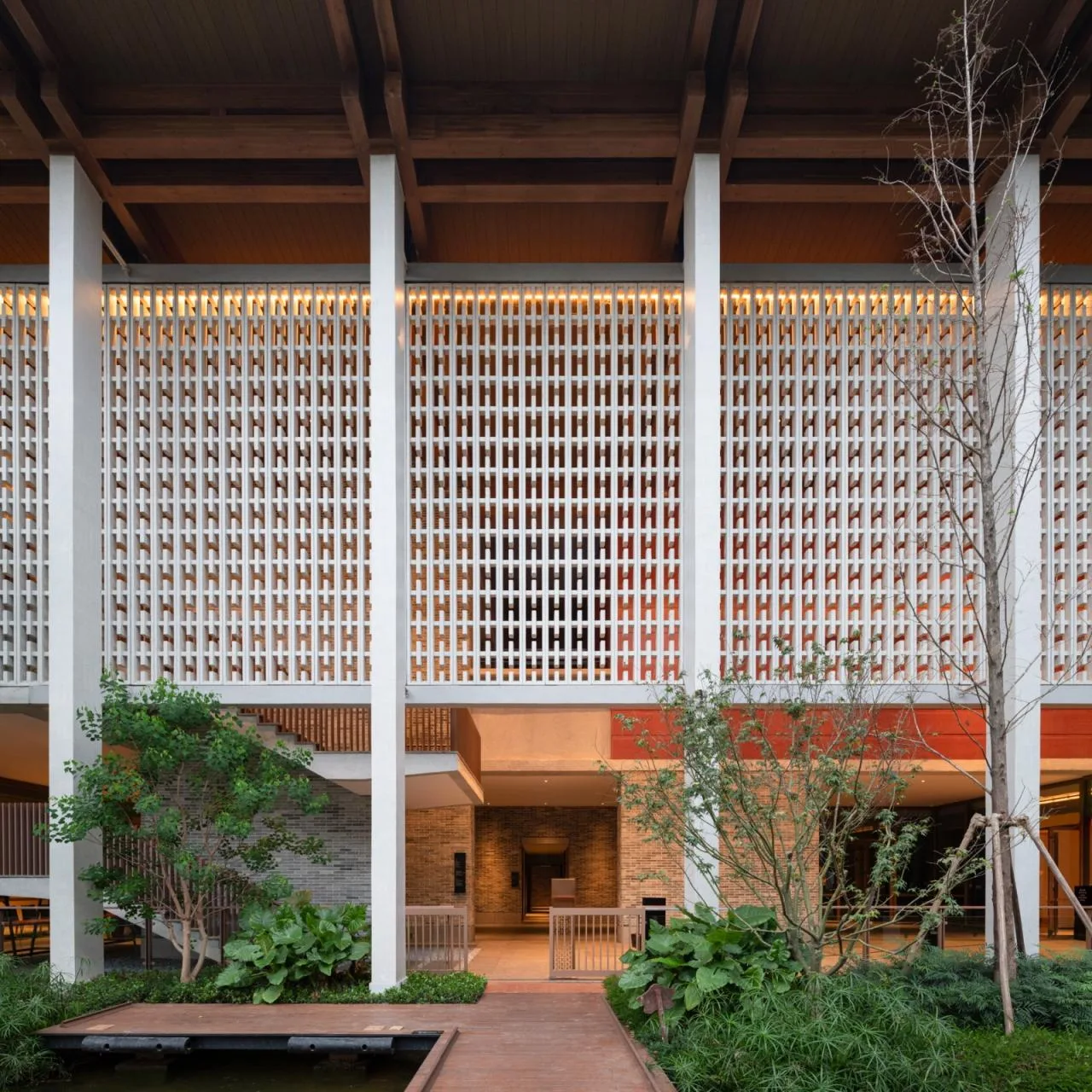
Photography of the barge dock by Right Angle Architectural Photography
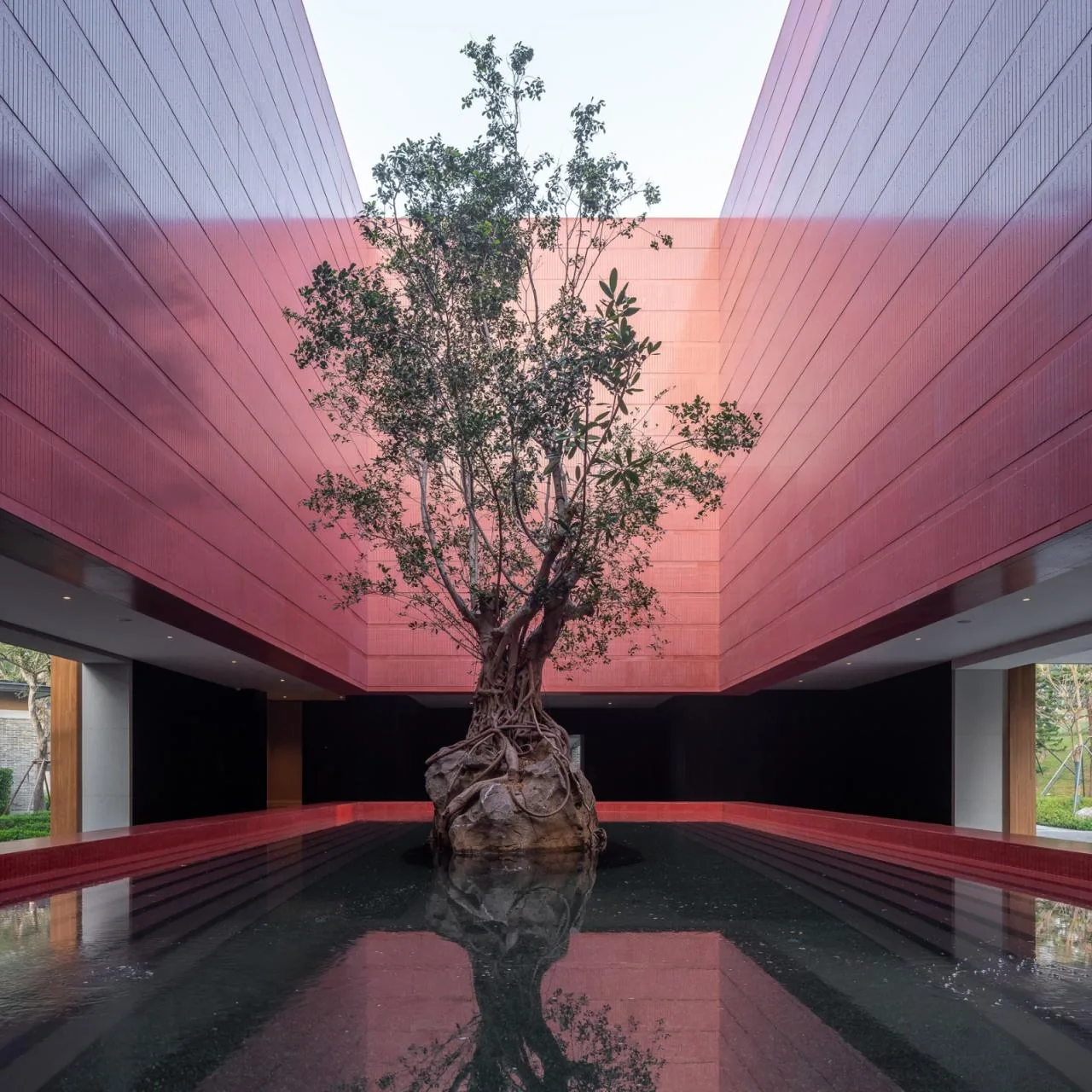
△ Entrance courtyard of the Chinese restaurant, photographed by STUDIO FANG
01 Layout Strategy – “One Pool, Two Banks”
For the layout, inspiration is drawn from the traditional Lingnan village of Nanshe Ancient Village, famous for its “living by the water, forming a street by the water” arrangement. We incorporated a lake landscape within the site, creating an artificial lake that naturally separates the hotel’s public areas and guest rooms. The public spaces are positioned on the lake’s northern bank, while guest rooms occupy the southern bank, establishing a dynamic and static division that forms the overall “one pool, two banks” layout.
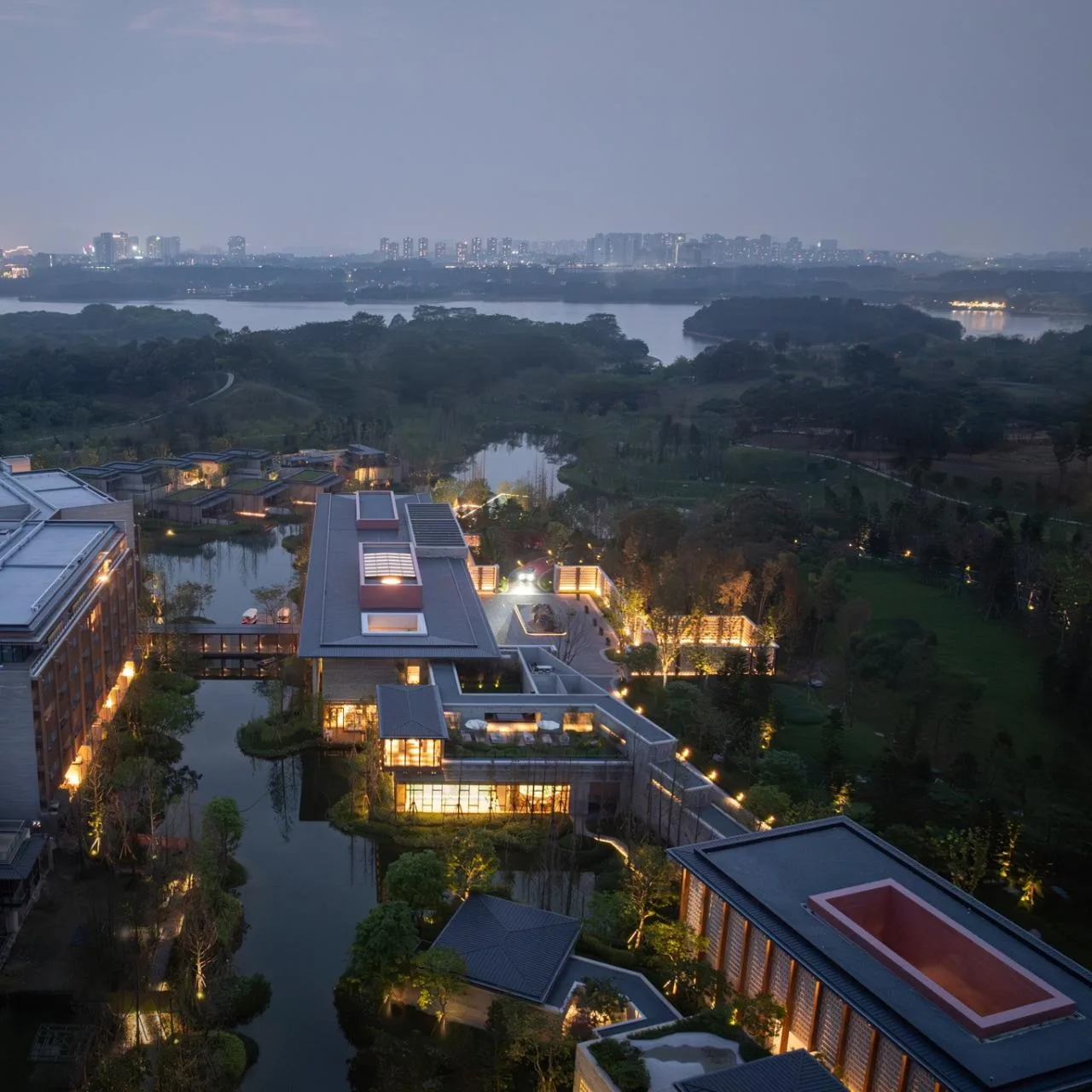
△ Aerial view of the hotel by Right Angle Architectural Photography
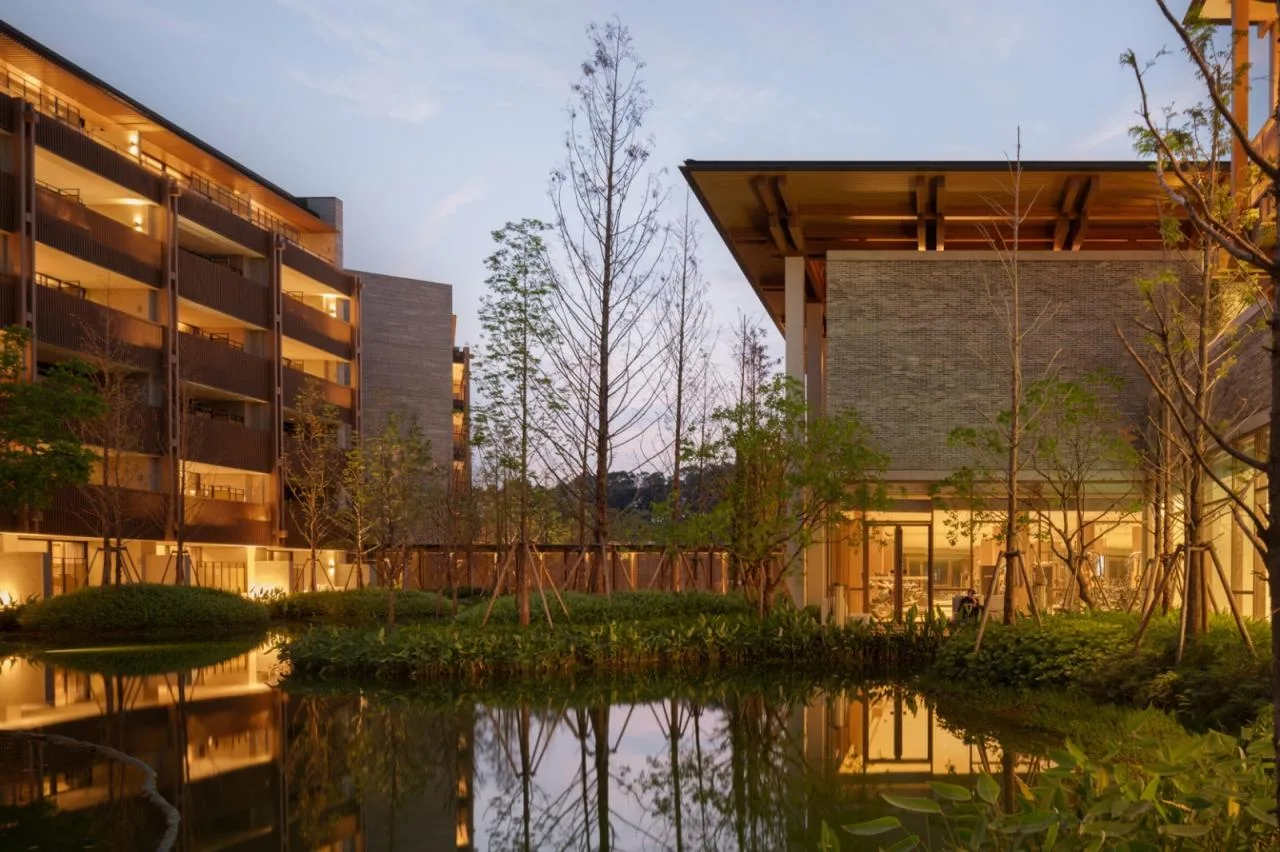
△ Hotel lake view by Right Angle Architectural Photography
Vertically, the design maximizes the natural terrain to minimize landform disruption and mountain excavation. The approach of “connecting internal and external flat paths with the lake” and “absorbing height differences inside the building” embeds the hotel seamlessly into its natural surroundings, achieving a high degree of integration with nature.
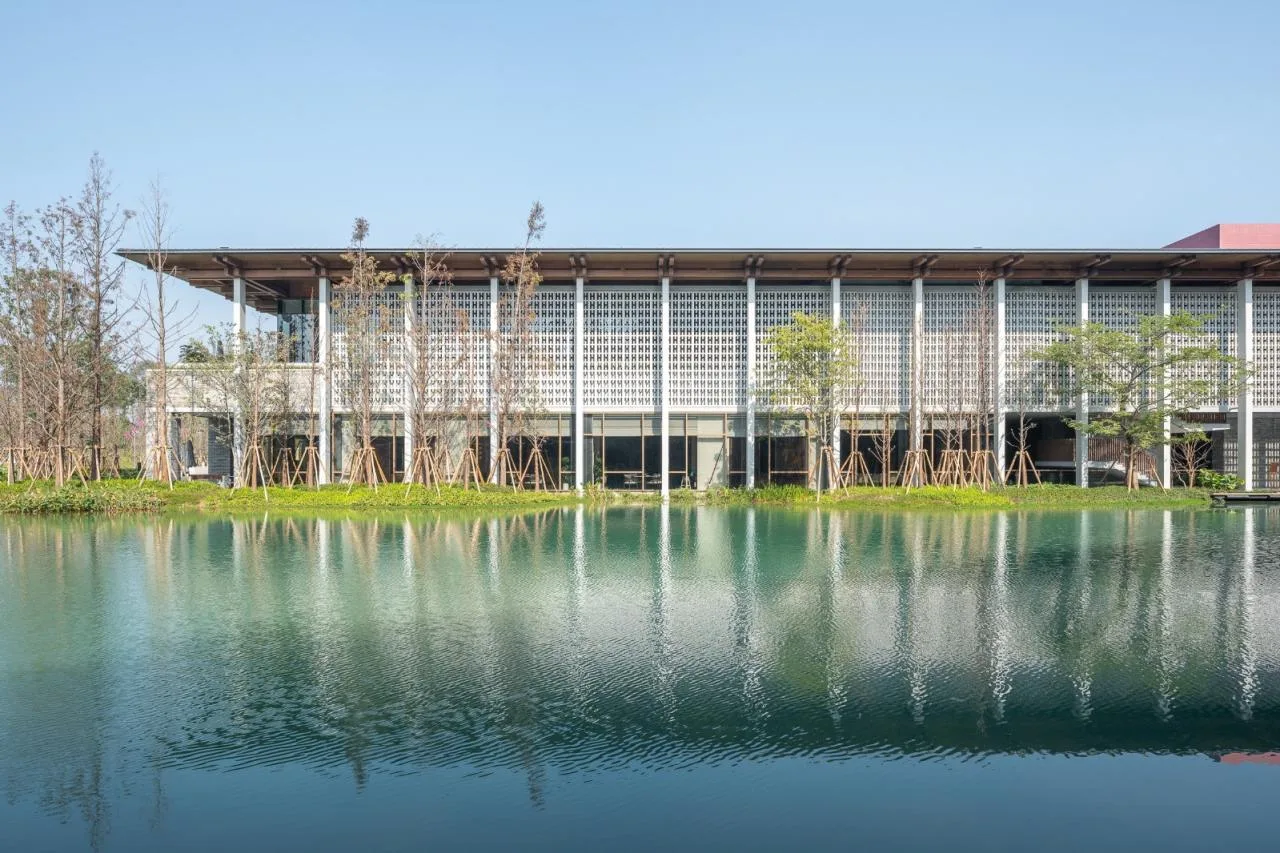
△ Lakeside lobby facade by STUDIO FANG
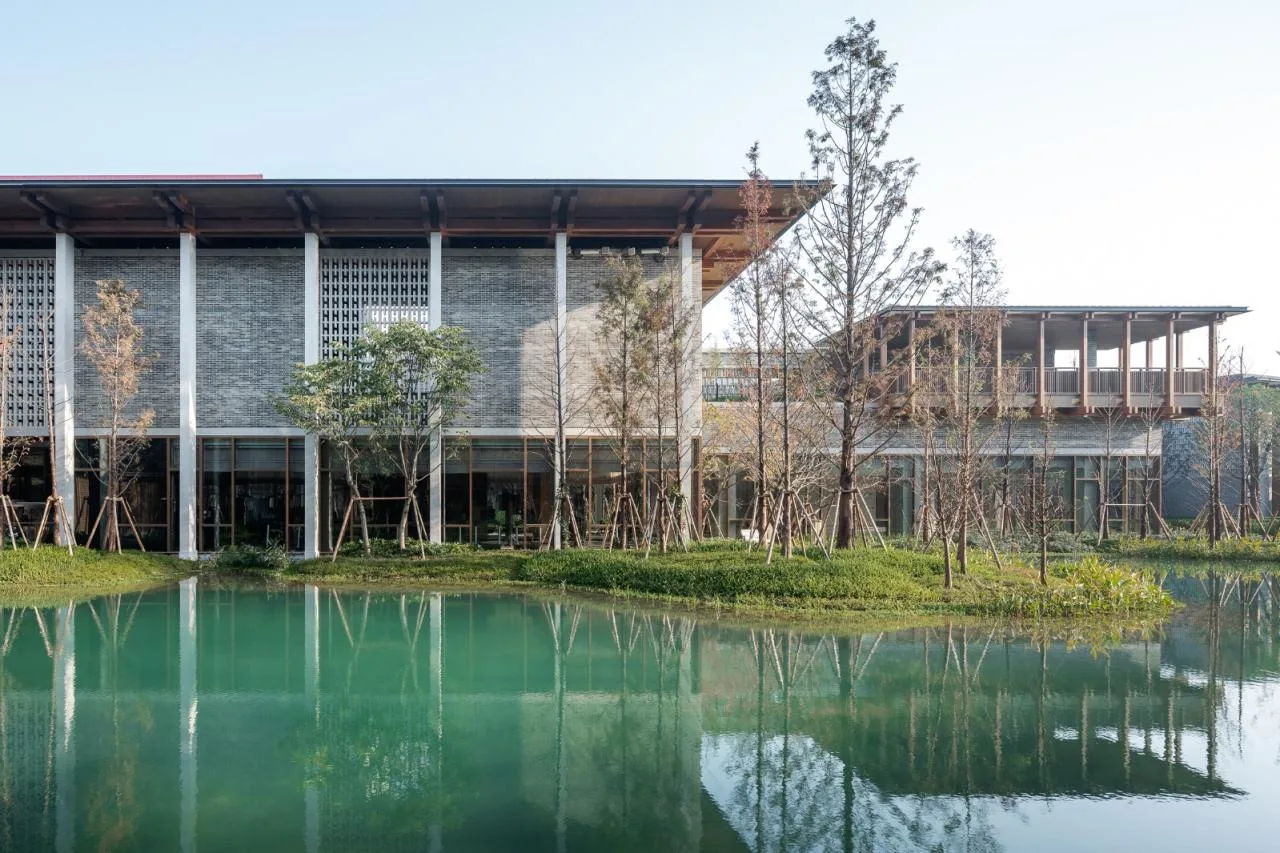
△ Sports and fitness area facade by STUDIO FANG
02 Spatial Design – “Traditional Essence”
The hotel complex follows a linear layout along the inner lake water system. Spatially, it draws on the rhythm of traditional Lingnan villages and gardens, characterized by “beginning, passing, turning, and merging.” Architecturally, it incorporates classic Lingnan forms such as open halls, corridors, and courtyards, enhanced with modern design techniques.
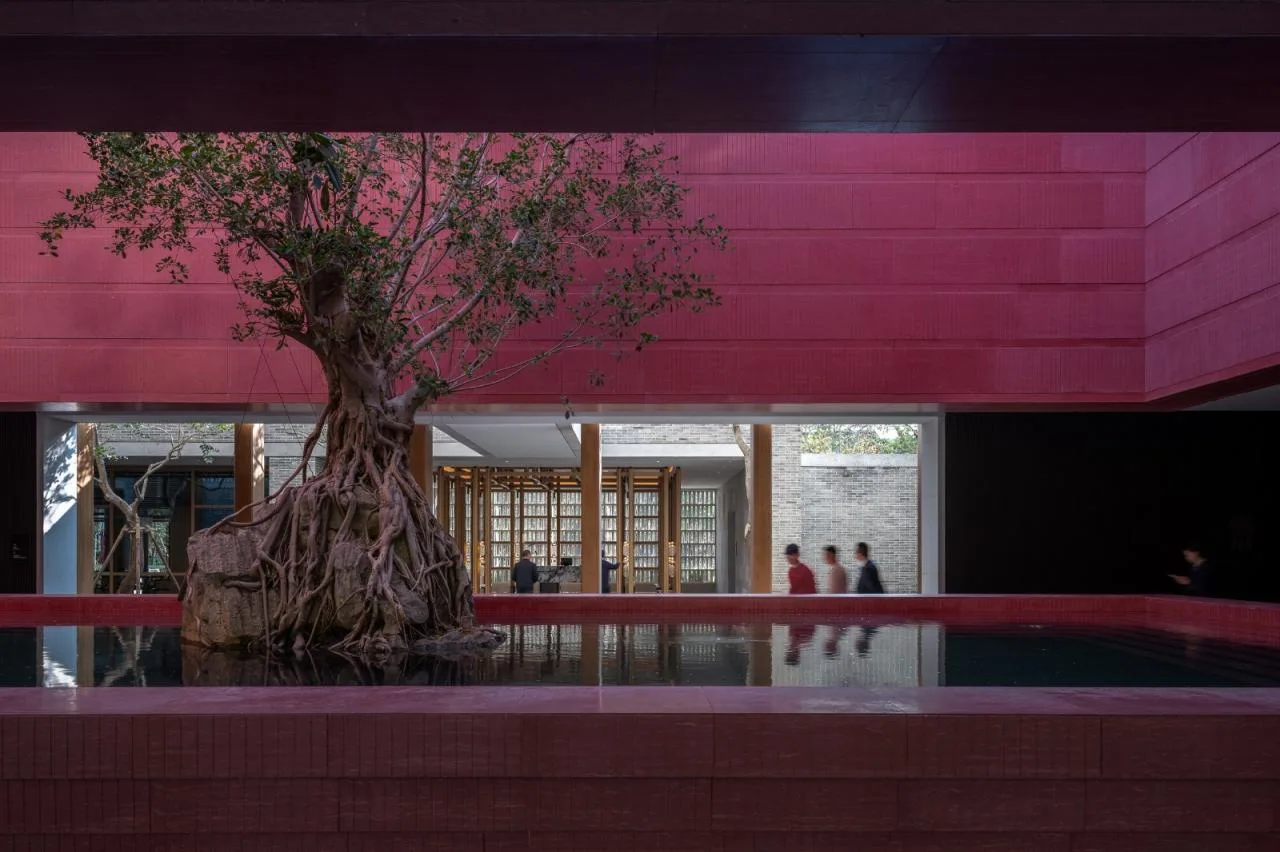
△ Courtyard entrance of the Chinese restaurant by STUDIO FANG
△ Cross-lake bridge by Right Angle Architectural Photography
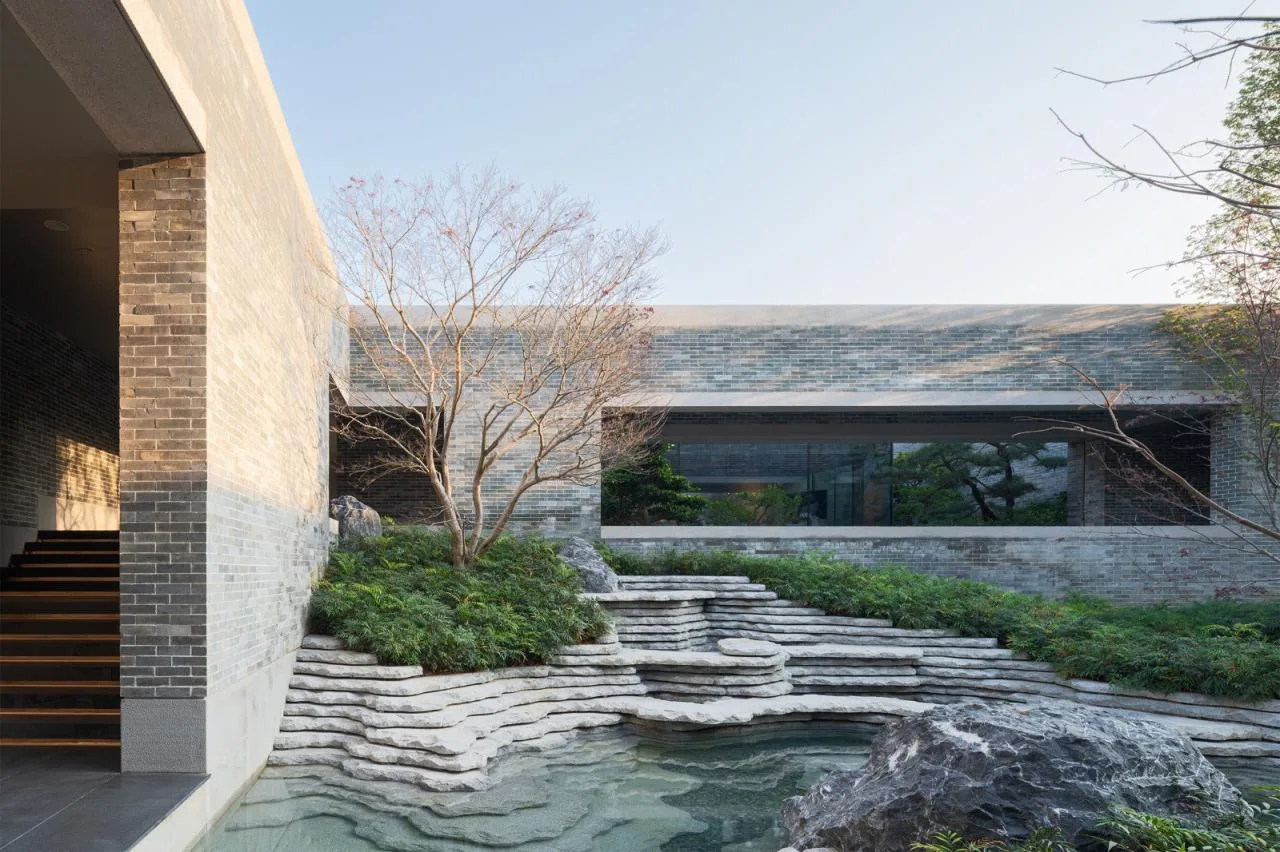
△ Guanxiangge courtyard by Right Angle Architectural Photography
The hotel’s flow creates multiple functional and cultural themed spaces from west to east, including the lobby entrance, welcome atrium, Chinese restaurant and SPA entrance, banyan tree courtyard, banquet entrance courtyard, and Guanxiang Pavilion. This sequence forms a modern spatial narrative enriched with Lingnan cultural connotations.
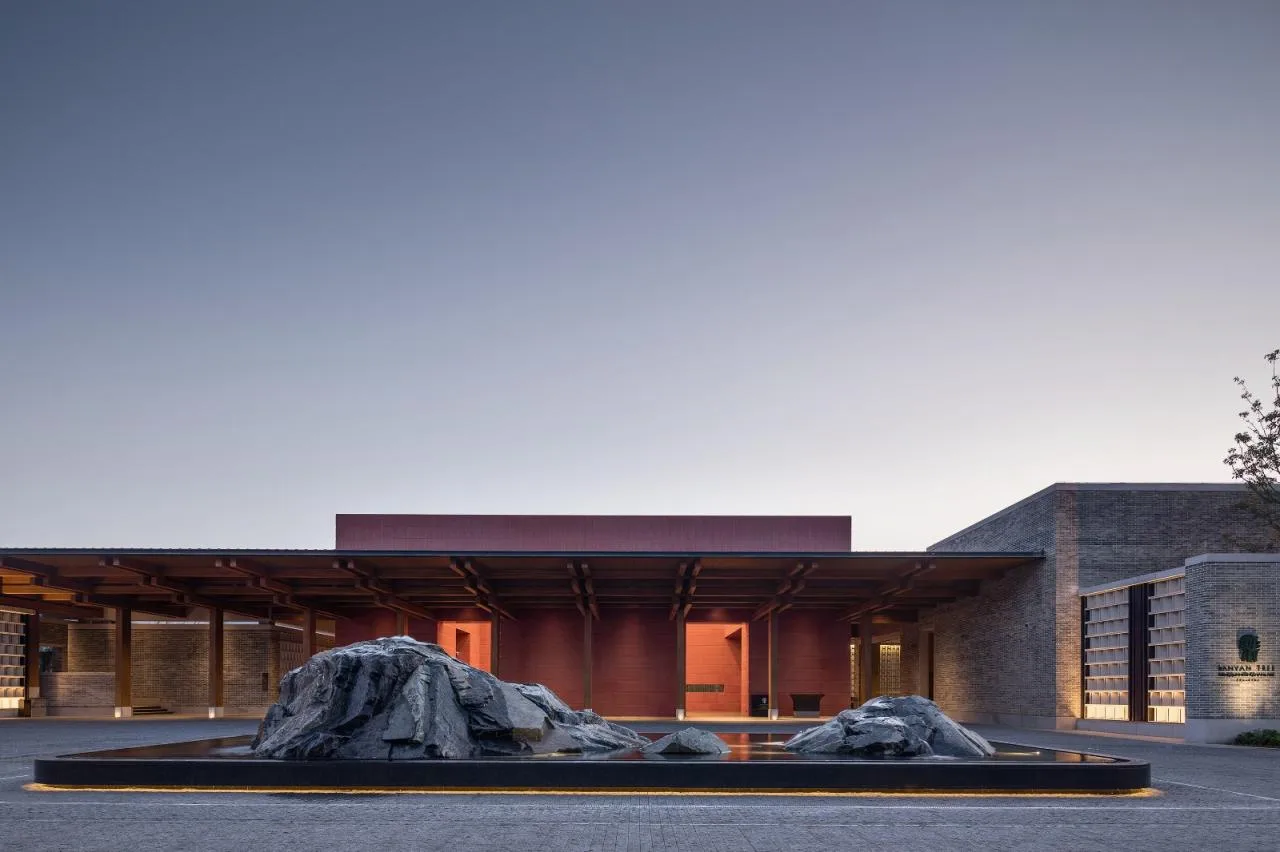
△ Lobby drop-off area by Tieshan
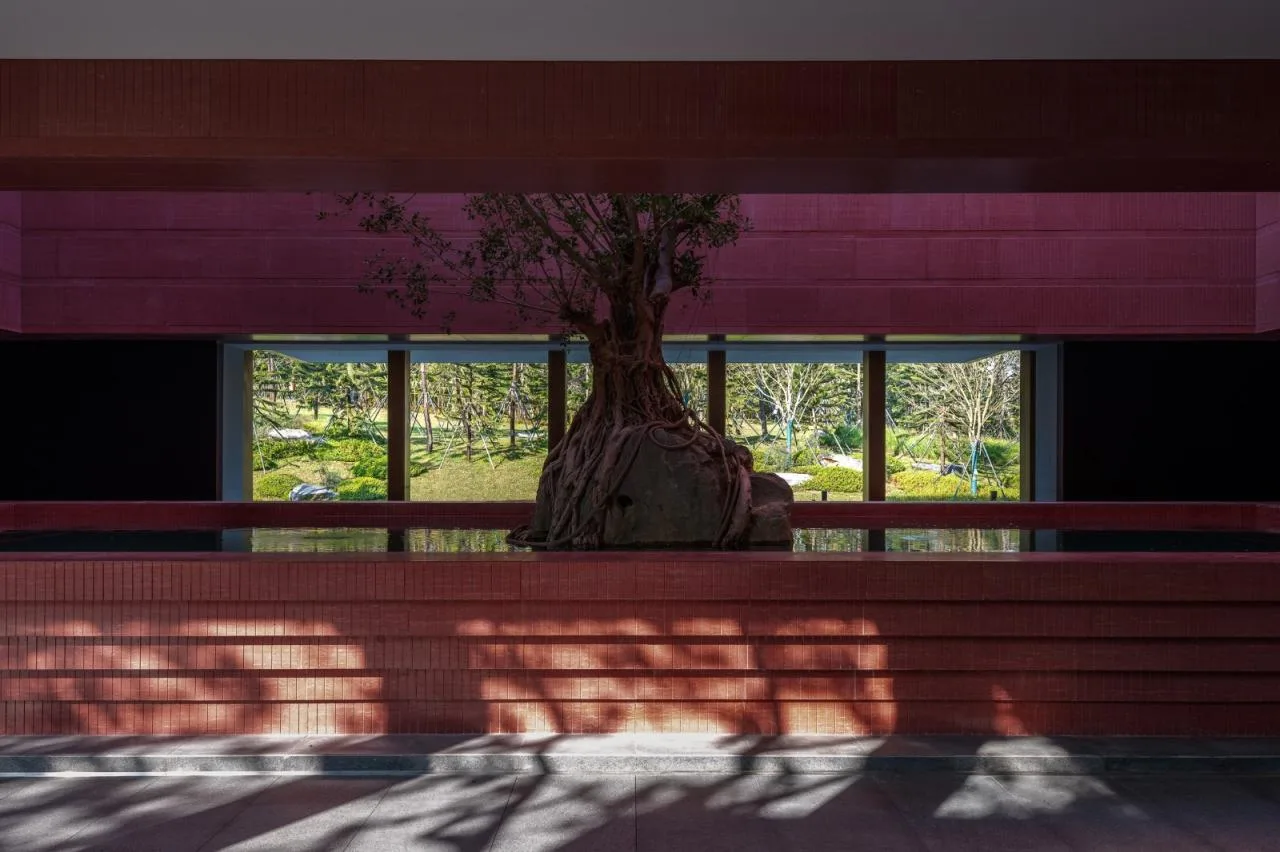
△ Entrance courtyard of the Chinese restaurant by STUDIO FANG
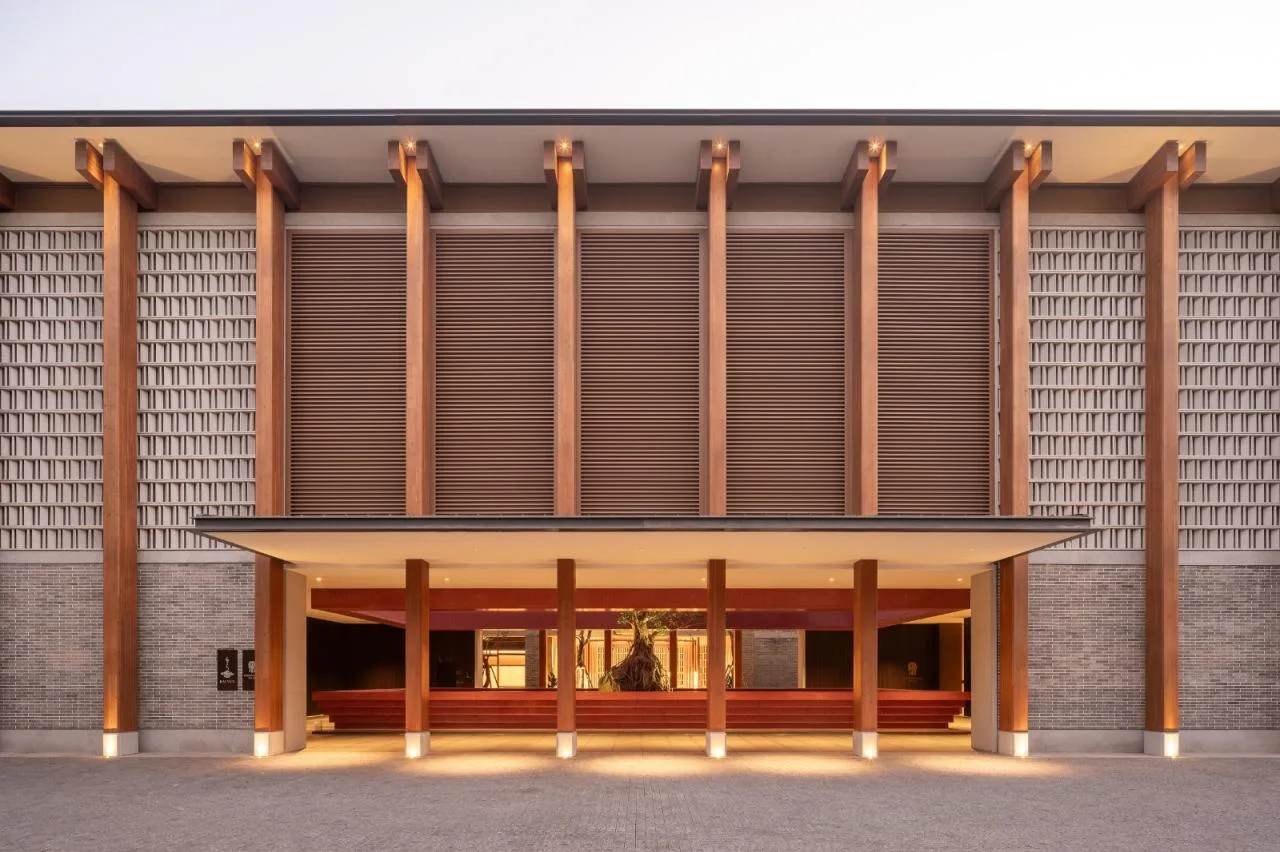
△ Chinese restaurant entrance by STUDIO FANG
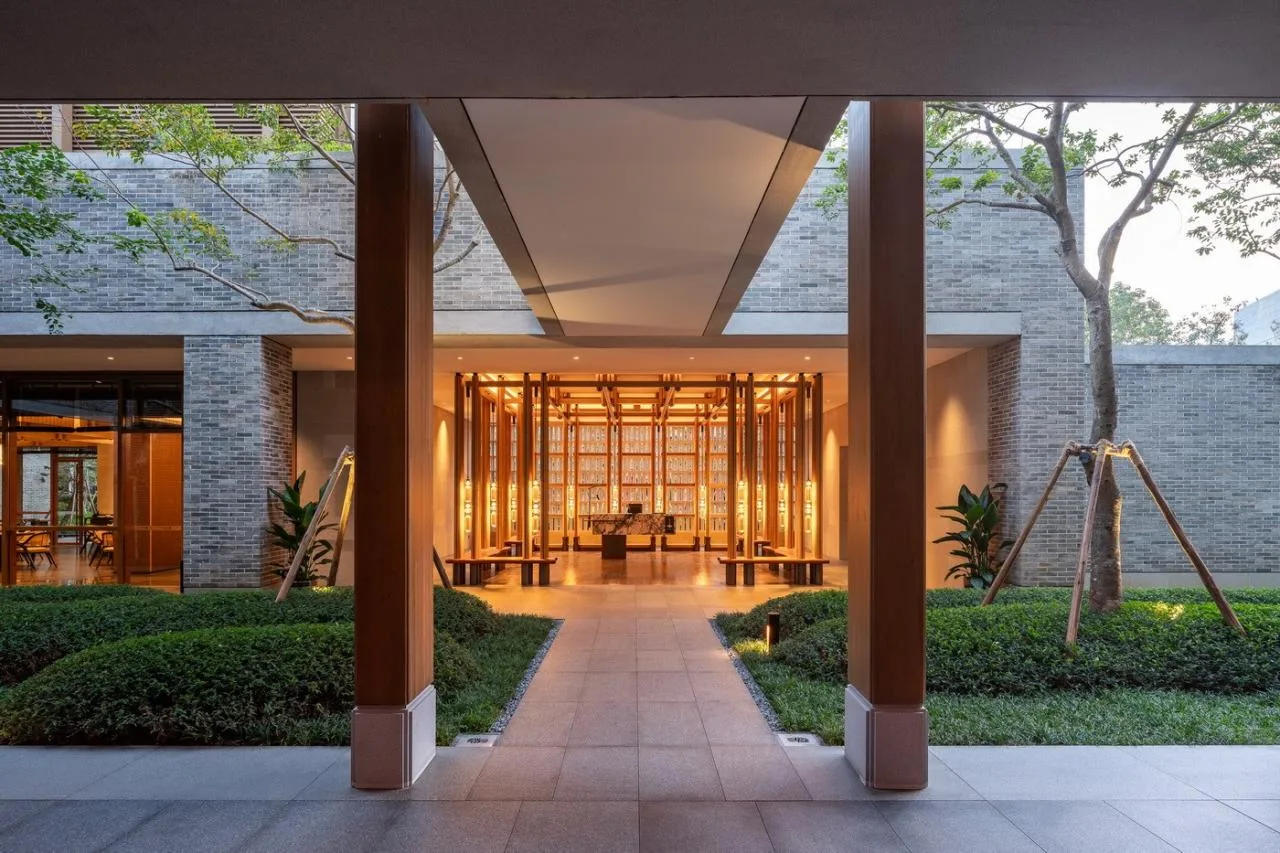
△ Chinese reception area by STUDIO FANG
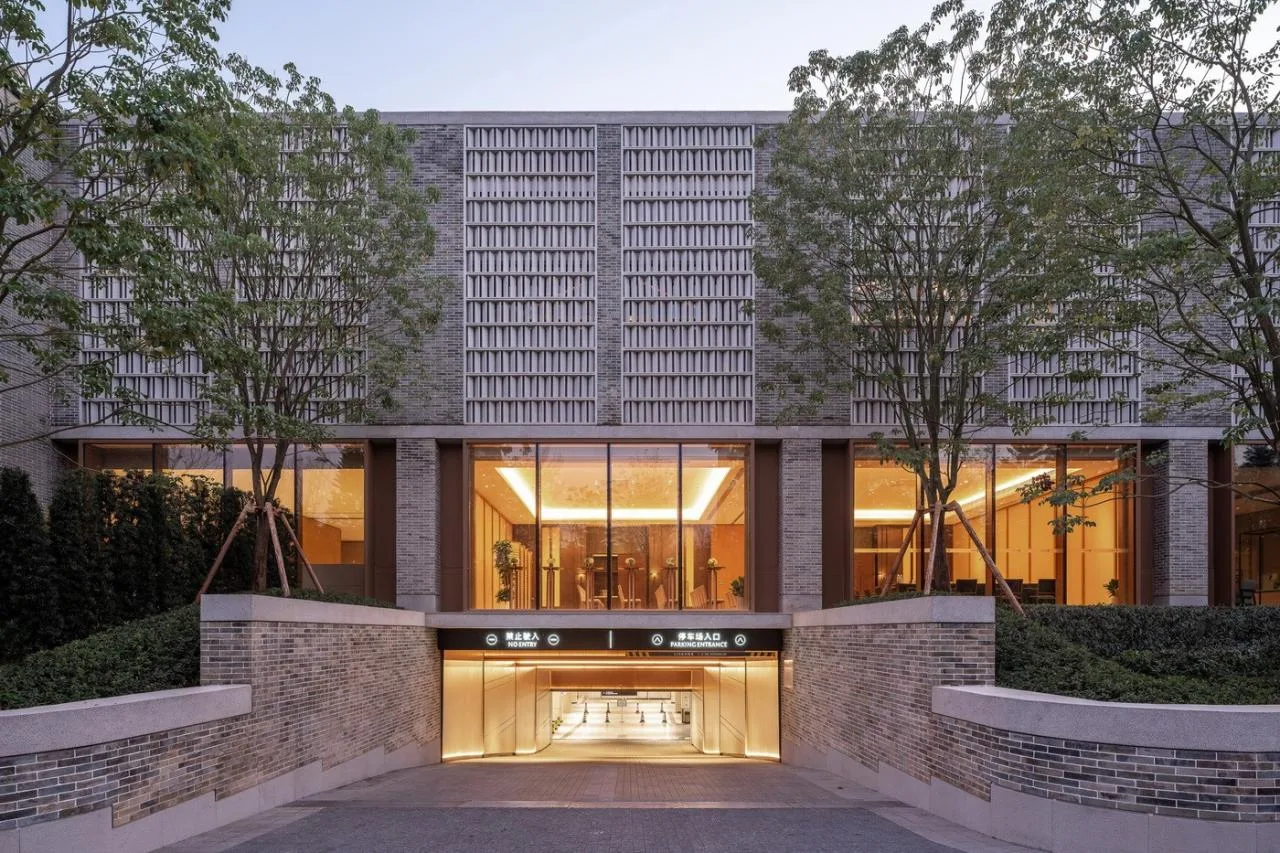
△ Basement entrance by STUDIO FANG
03 Climate Adaptation – “Comfortable and Breathable”
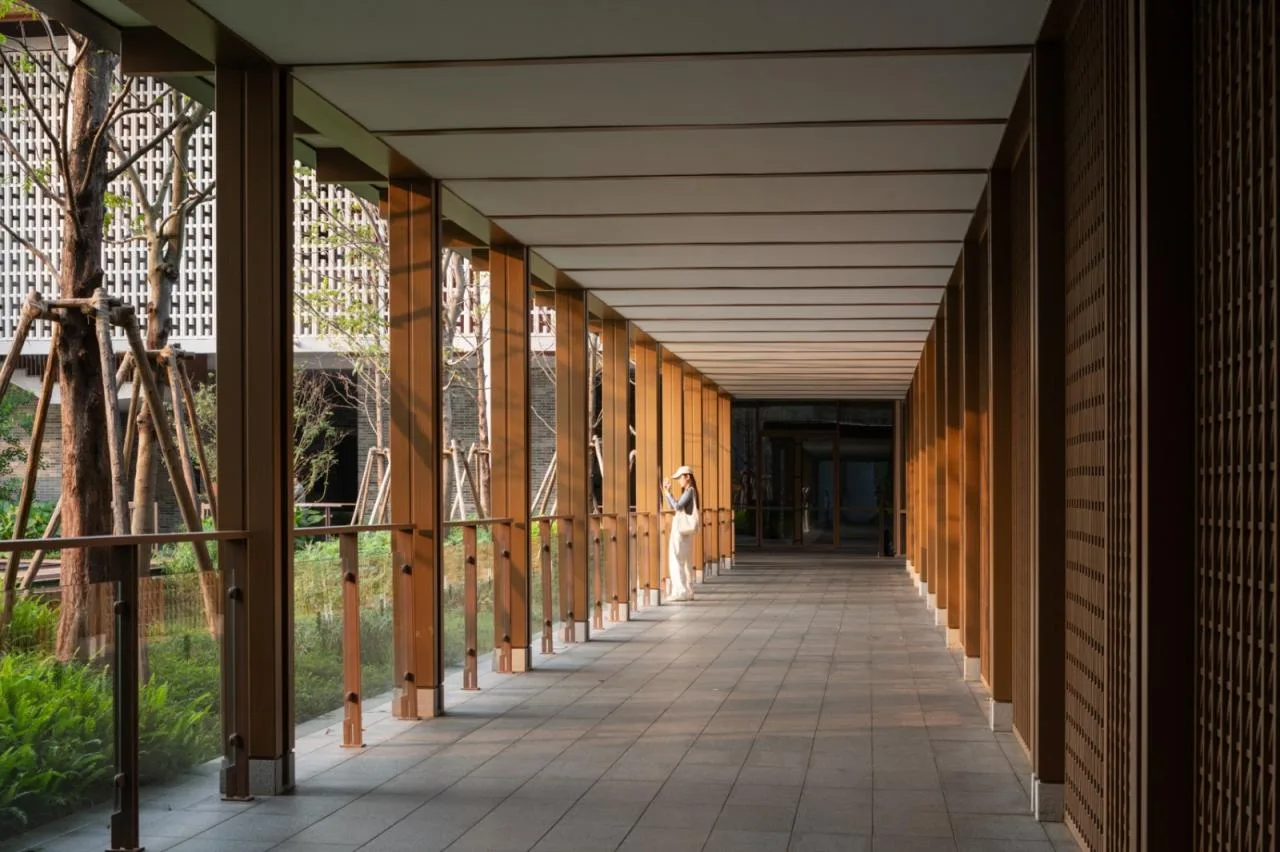
To adapt to Lingnan’s intense sun, humidity, and frequent rain, traditional residential buildings improved indoor ventilation and lighting by creatively using grey spaces such as courtyards, recessed corridors, narrow alleys, and connecting passageways. Following this tradition, the hotel incorporates multiple wind and rain corridors. These corridors effectively link public and guest areas while significantly enhancing the comfort of the internal pedestrian network.
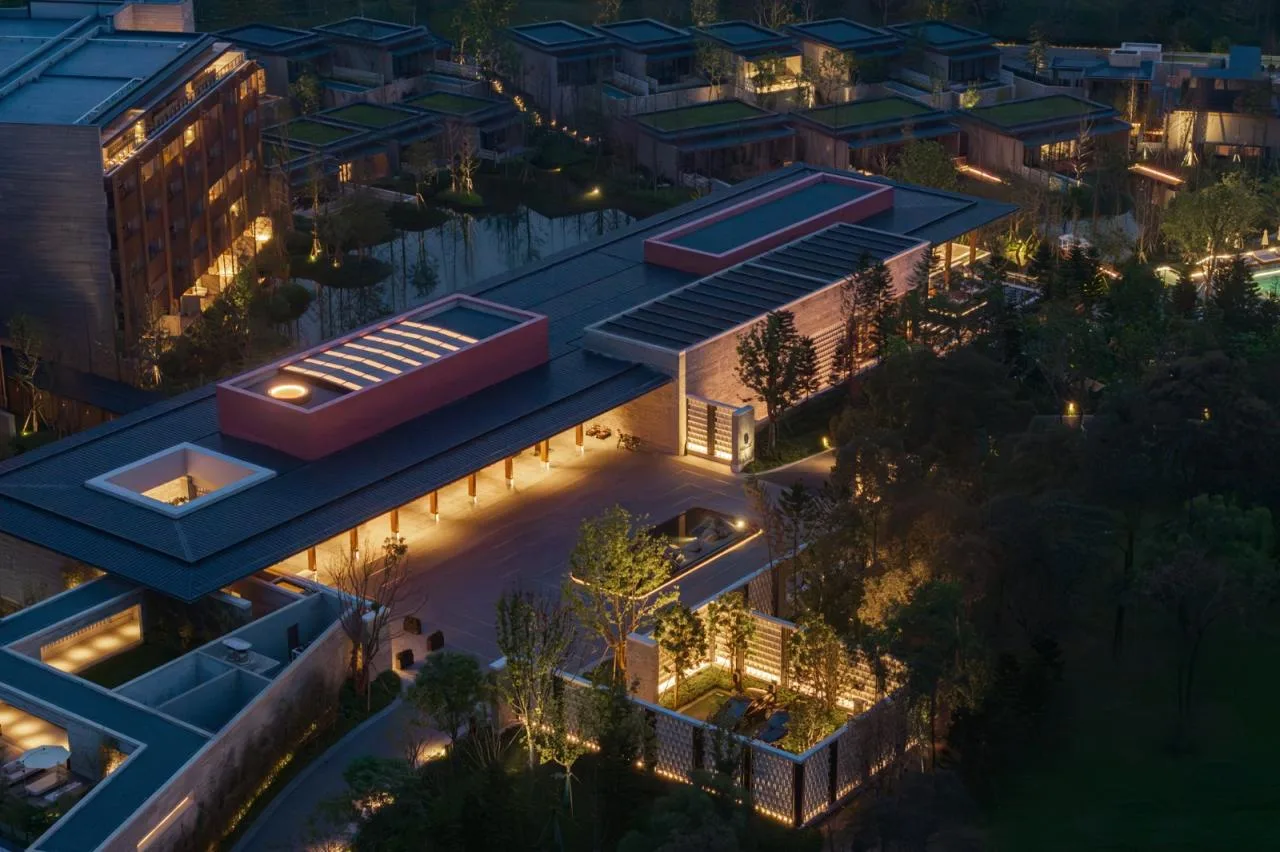
Aerial view of the lobby area by Right Angle Architectural Photography
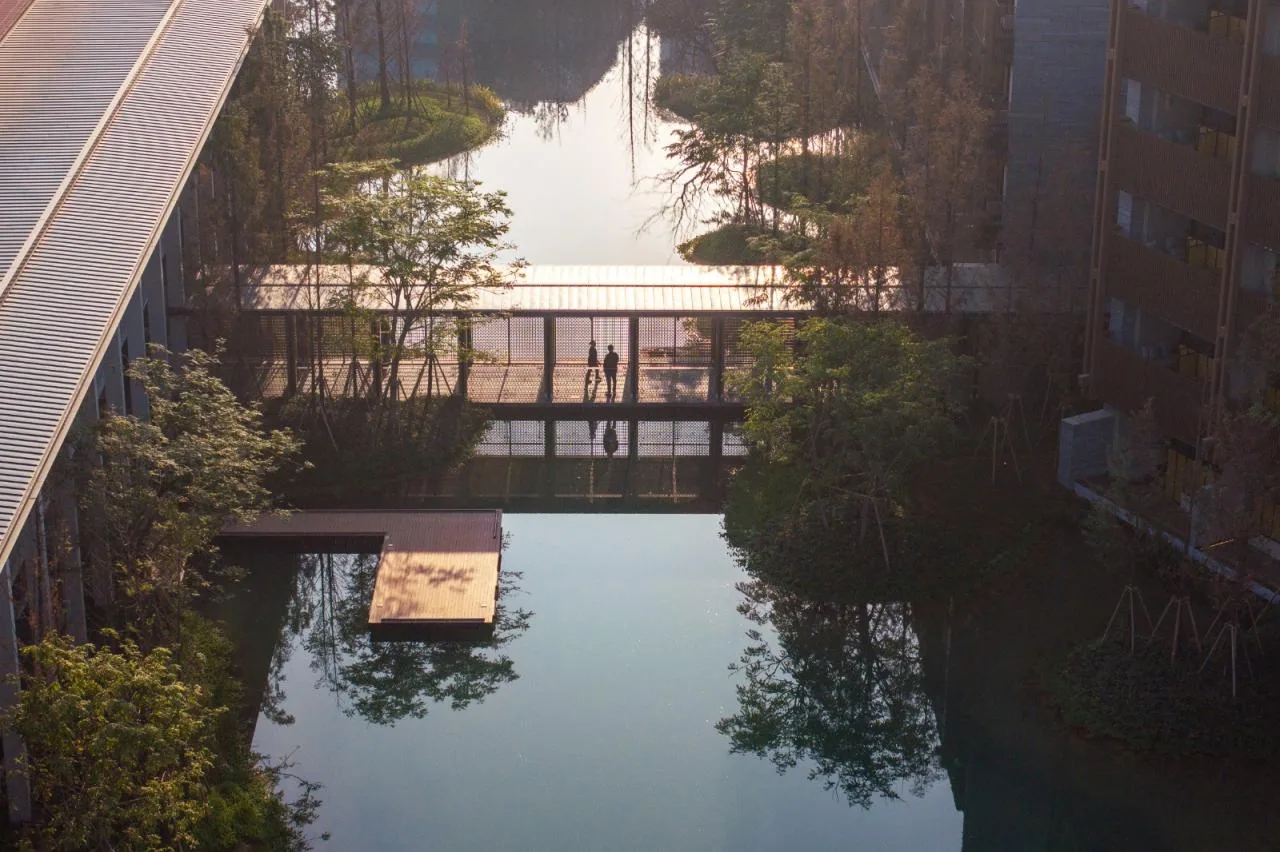
△ Aerial view of the lake-crossing bridge by STUDIO FANG
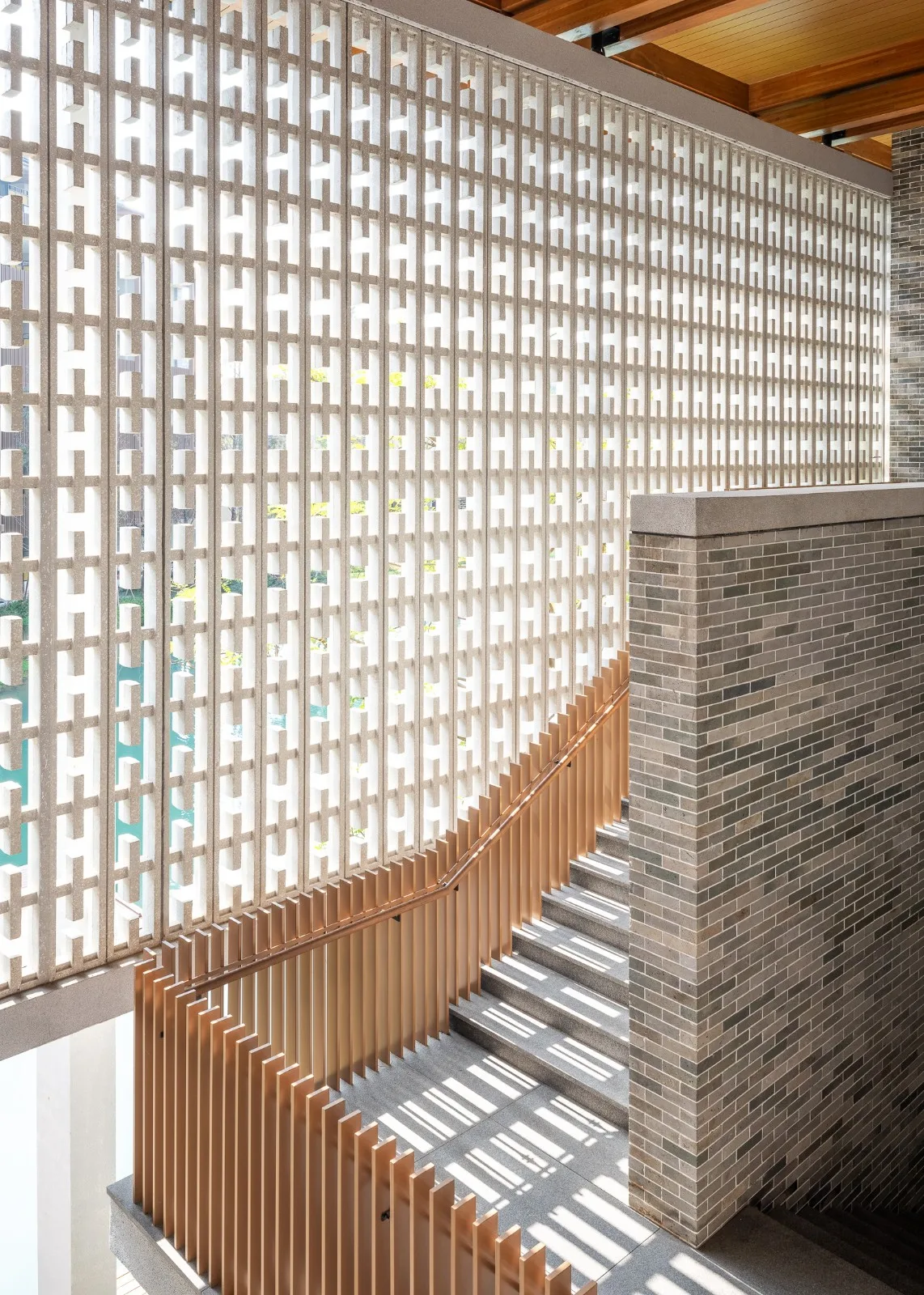
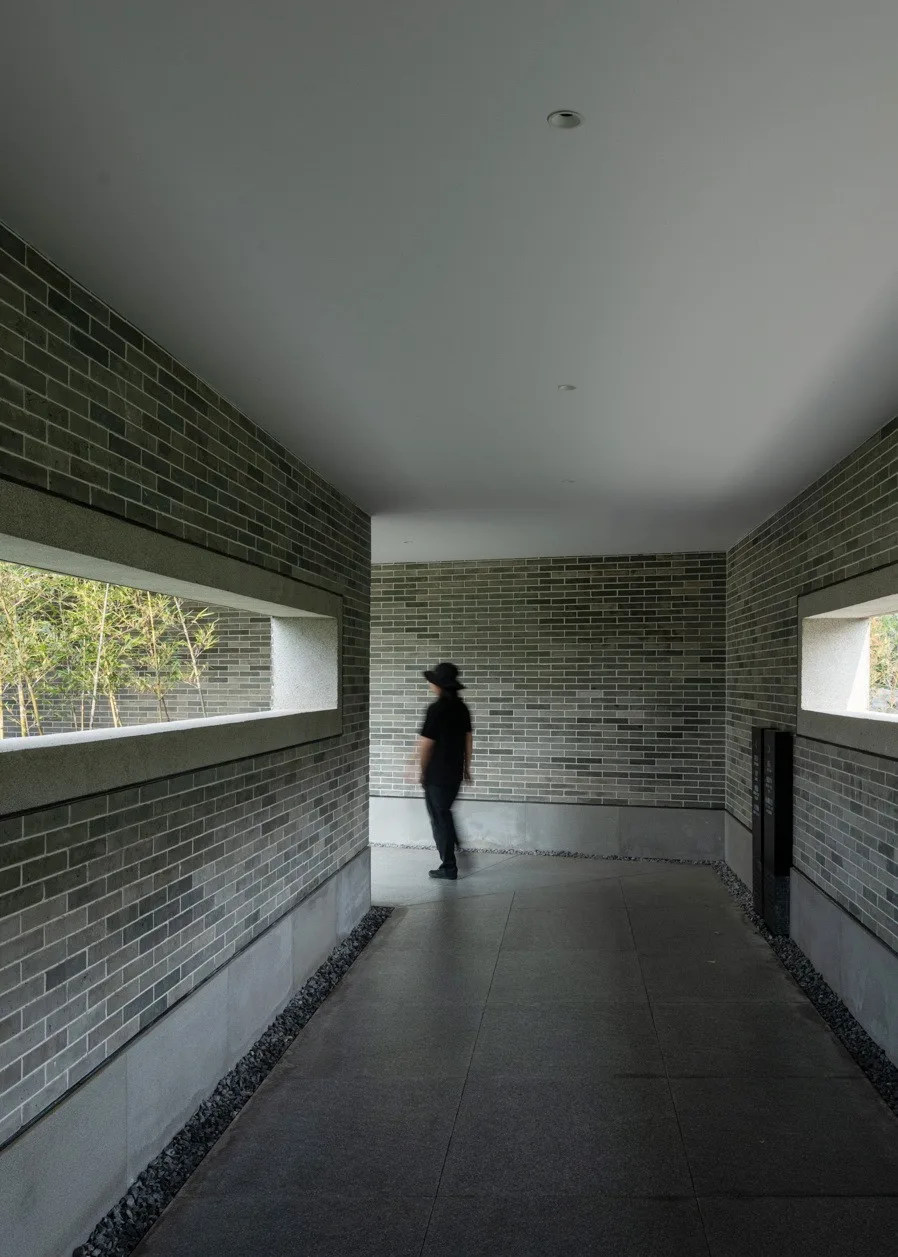
△ Landscape staircase and wind/rain corridor photography by STUDIO FANG (left) and Right Angle Architectural Photography (right)
Beginning with the large canopy at the drop-off area, the hotel offers comfortable grey spaces throughout—from the drop-off canopy to the open lobby, surrounding corridors by the lobby bar, the Chinese restaurant courtyard, and connecting corridors—each designed to respond effectively to the local climate.
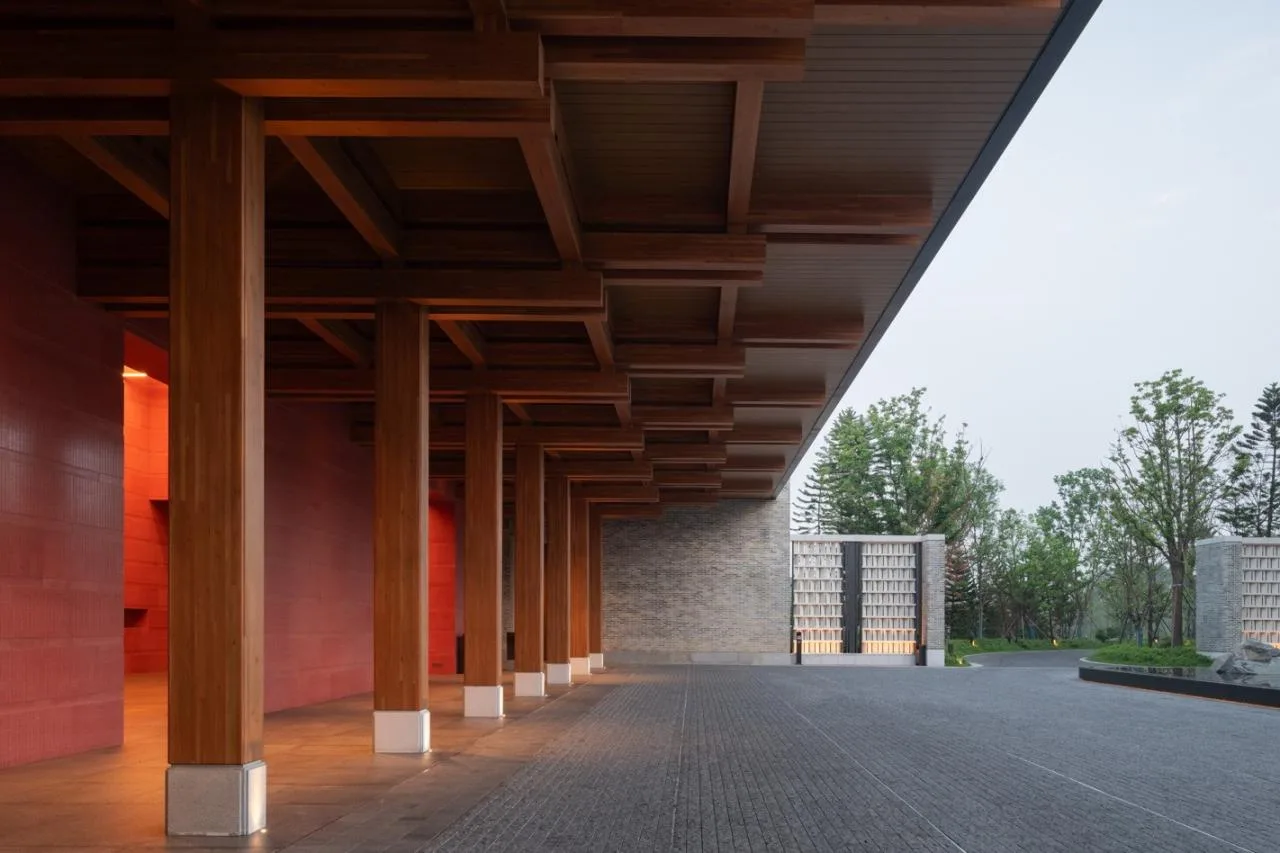
△ Drop-off canopy at the lobby by Right Angle Architectural Photography
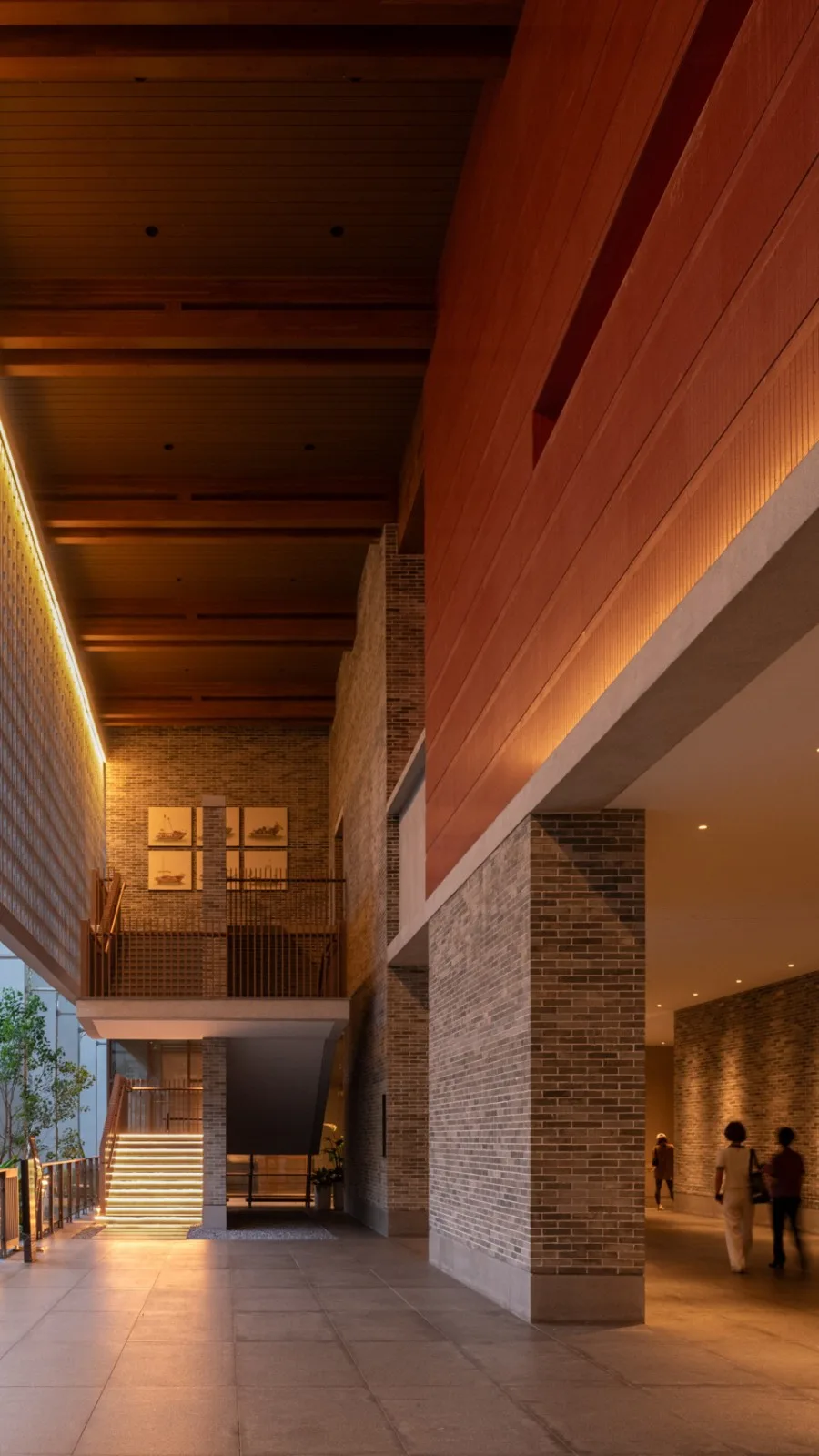
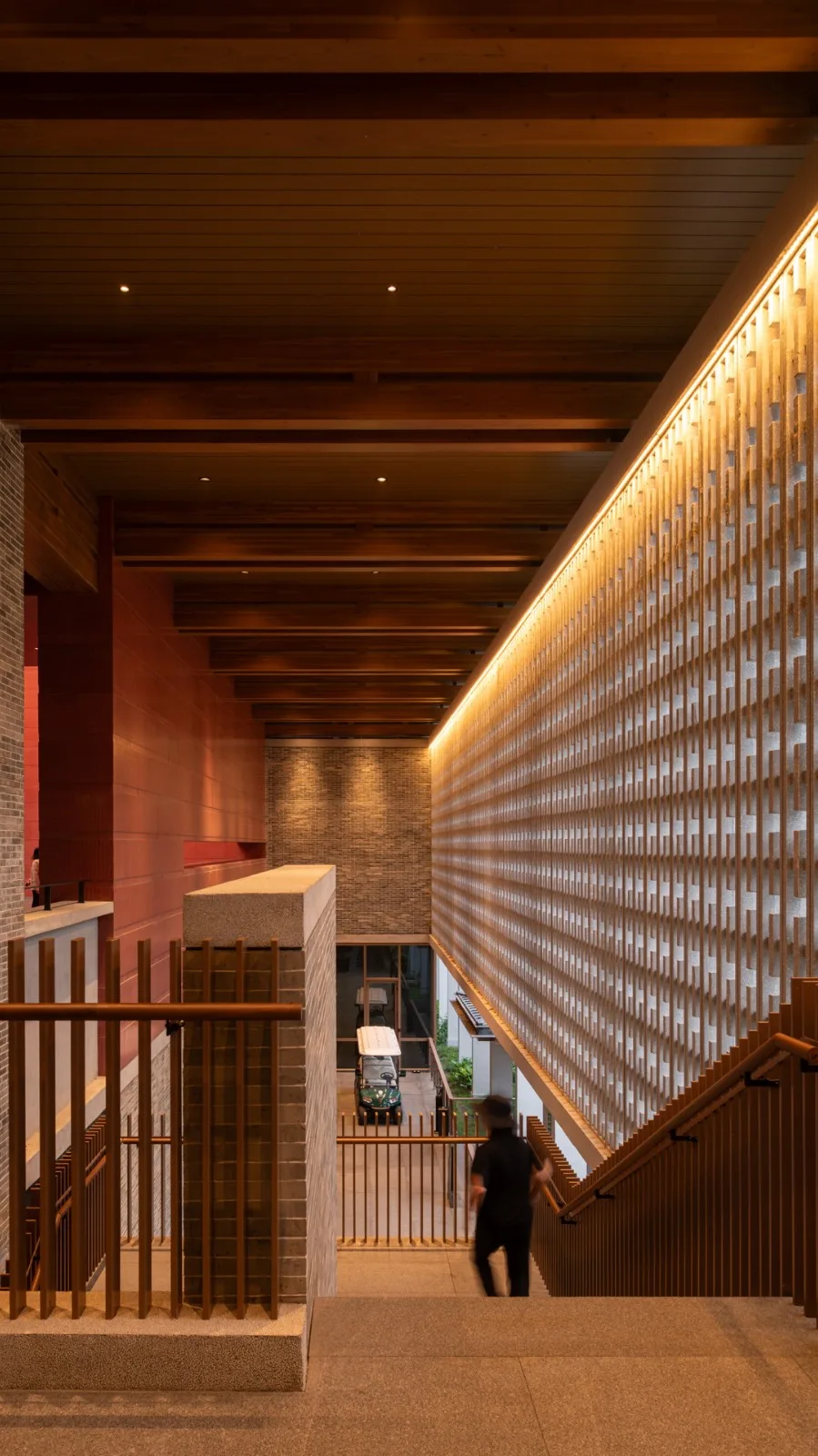
△ Photographs by Tonggao Transportation Department and Right Angle Architectural Photography
04 Facade Materials – “Low Carbon and Energy Efficient”
The hotel facade materials are primarily inspired by local Lingnan traditional architecture, highlighting cultural resonance while promoting low-carbon and sustainable design through the use of recyclable and renewable materials. The main material is recycled green bricks, revitalized through simple processing. Additionally, locally sourced red sandstone is used in prominent public spaces.
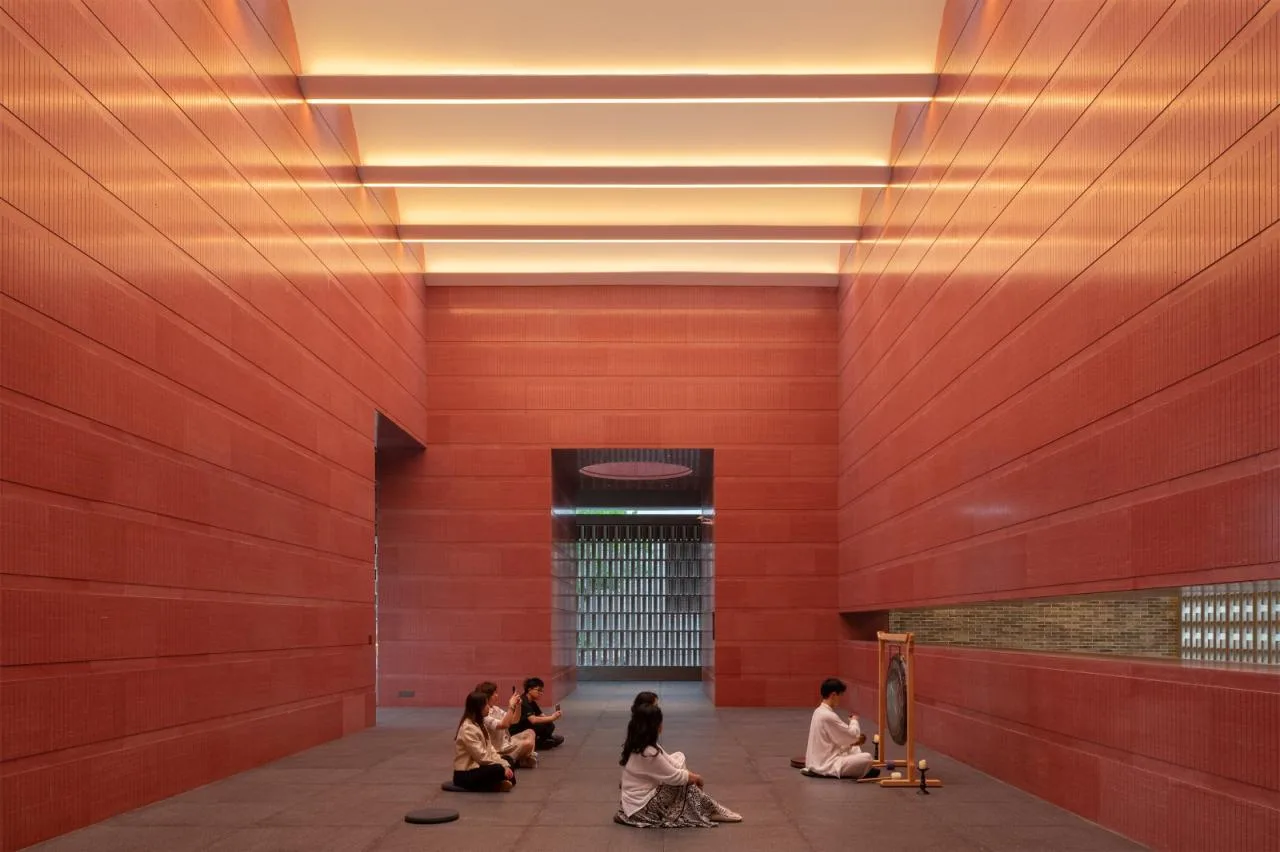
△ Lobby drop-off lighting hall by Right Angle Architectural Photography
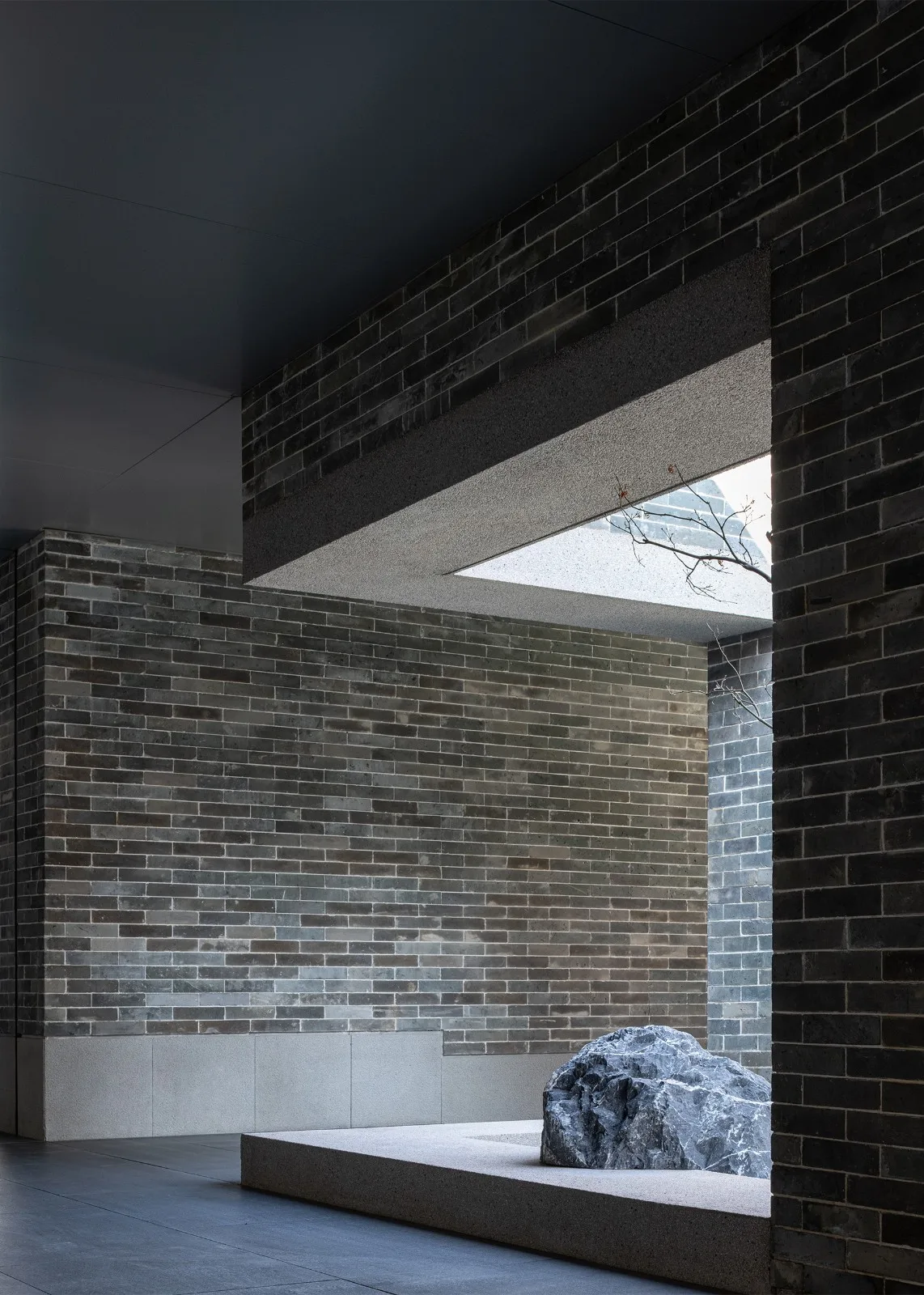
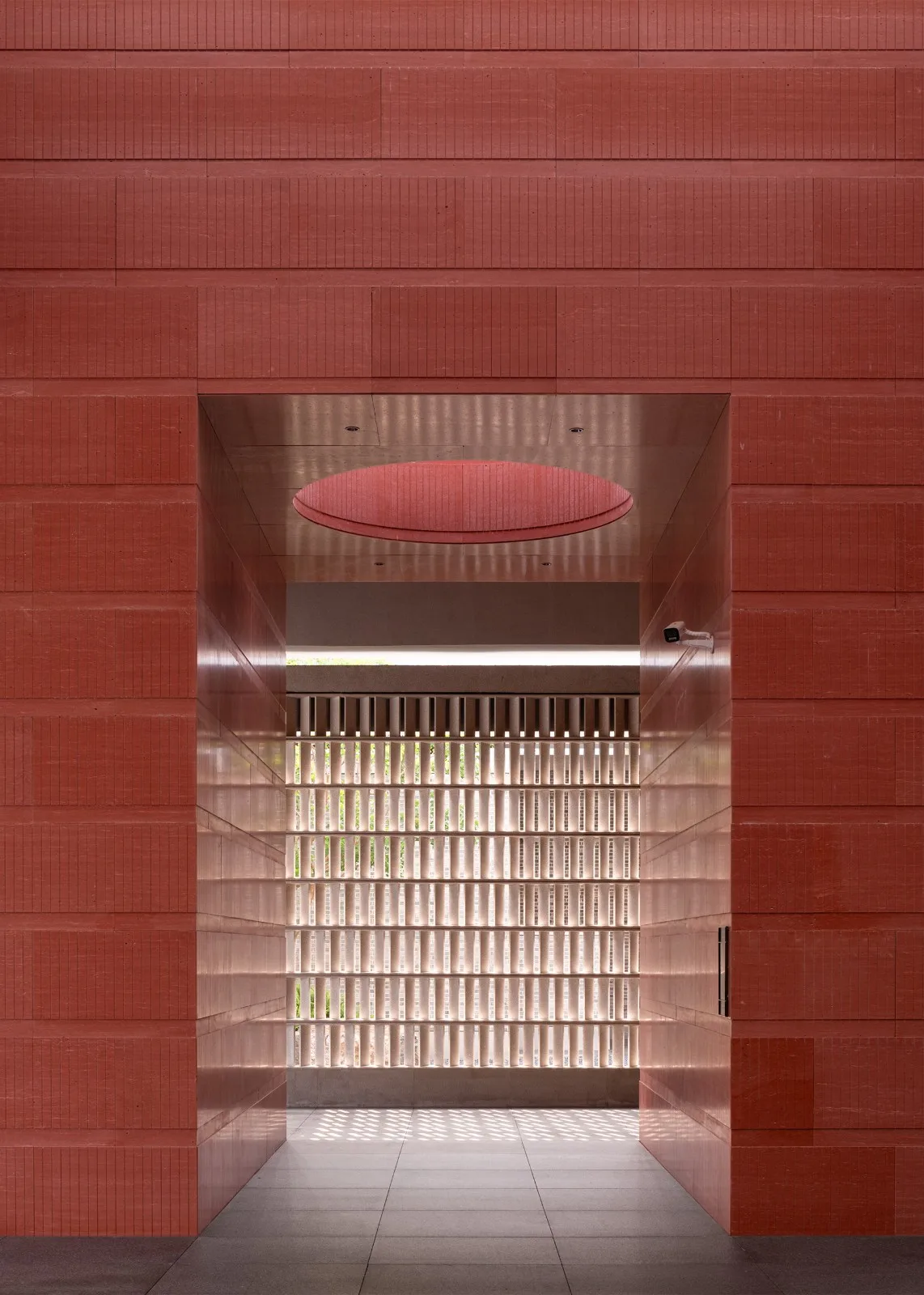
△ Wind and rain corridor and lobby drop-off lighting hall by Right Angle Architectural Photography
Instead of traditional flat stone surfaces, the facade features rhythmic “groove” details on artificial stone panels. The public lobby employs a real wooden structure system using high-strength Cross-Laminated Timber (CLT), allowing large overhangs and finer structural components. This is complemented by a small-scale “composite beam” construction method, which reduces the visual bulk of beam frames and enhances structural expression.
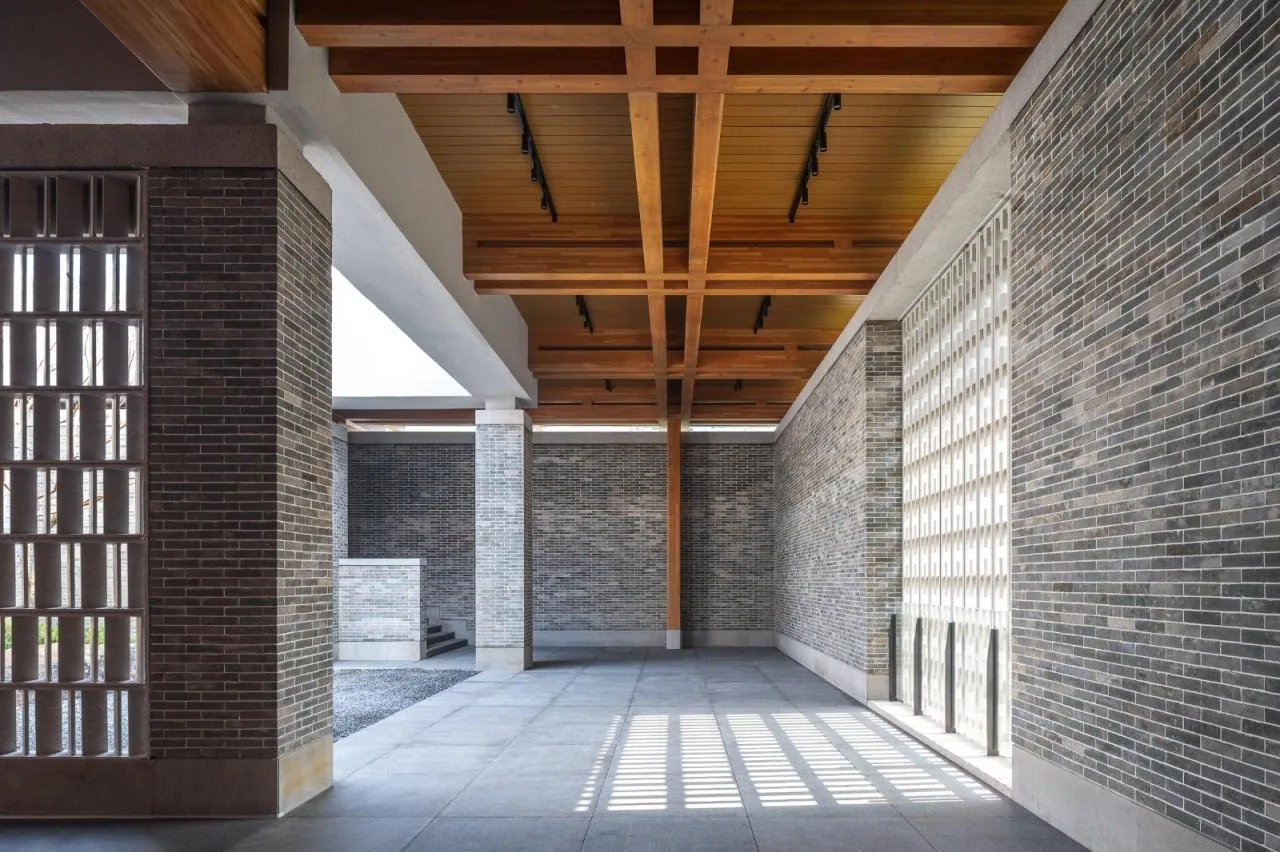
Outdoor gallery photographed by STUDIO FANG
Hollow blocks are utilized to ensure privacy and ventilation, lending a unique breathable quality to the facade. Prefabricated Ultra-High-Performance Concrete (UHPC) blocks guarantee material stability and durability. The repetitive and staggered arrangement of these blocks creates a rhythmic facade pattern, becoming a recognizable feature of the hotel’s design.
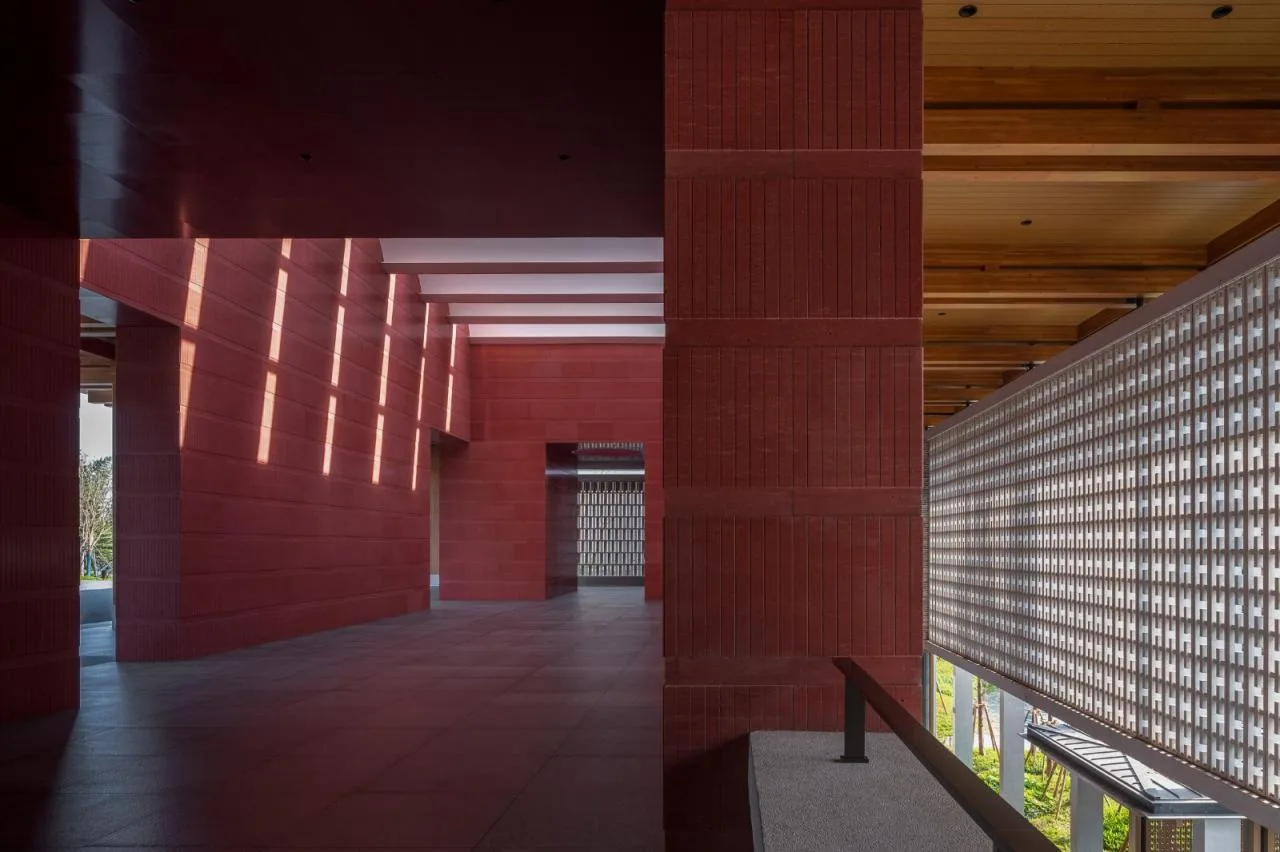
△ Lobby drop-off lighting hall by STUDIO FANG
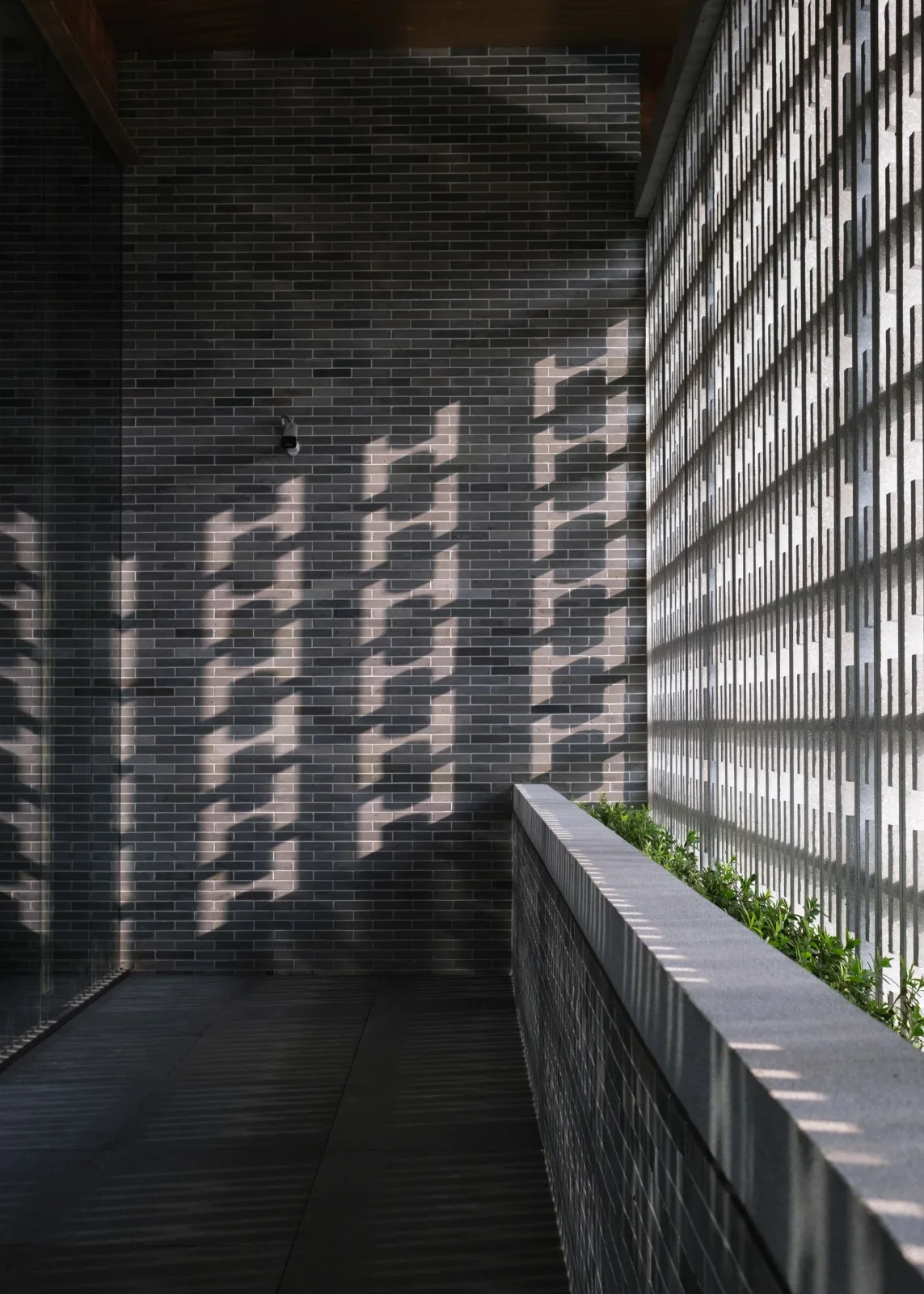
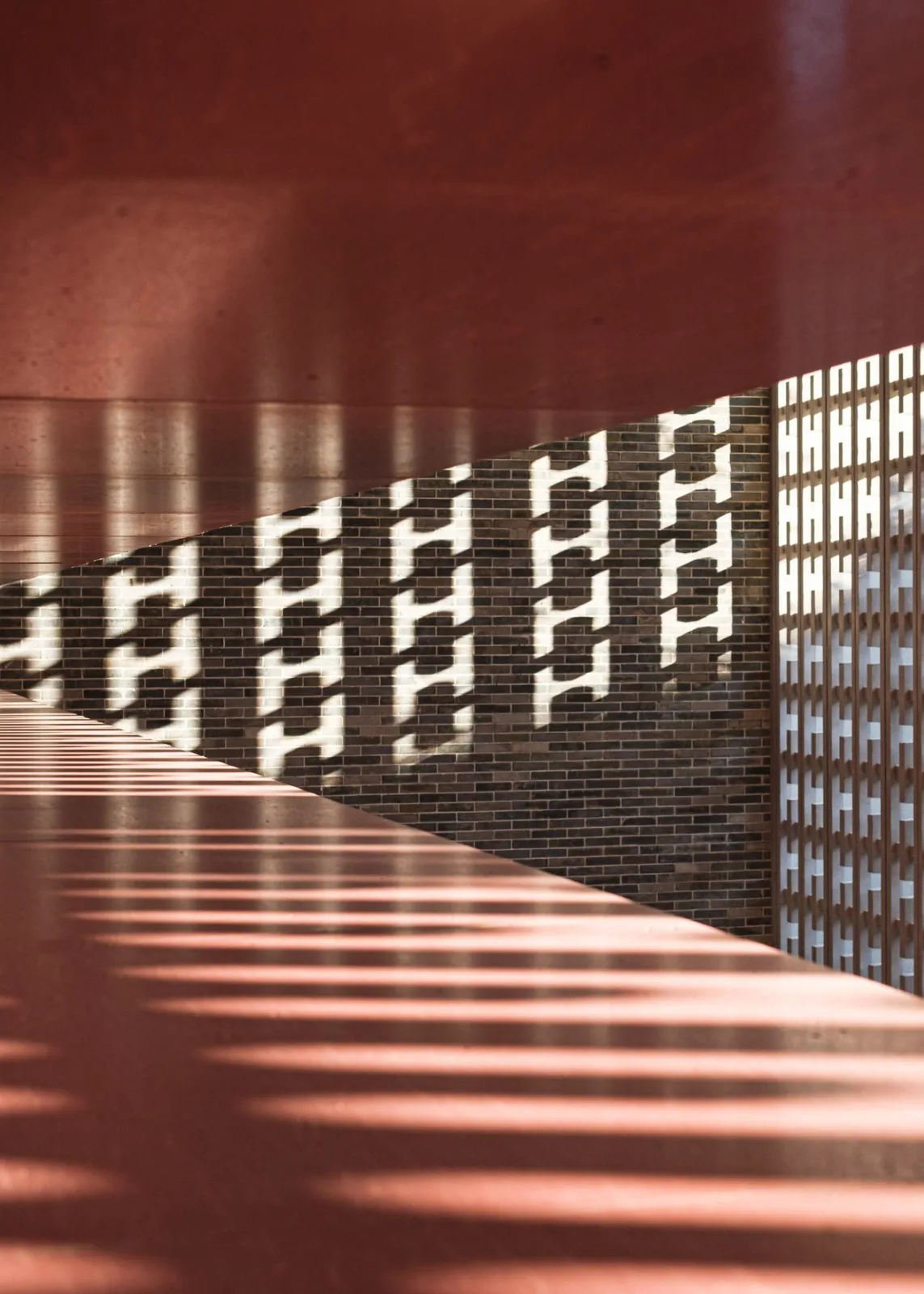
△ Hollow block details photographed by Tieshan
Dongguan Banyan Tree represents a commitment to preserving Lingnan traditional culture while embracing sustainable, low-carbon design. By thoughtfully utilizing the original environment, inheriting traditional spatial concepts, adopting climate-adaptive design techniques, and innovating with recyclable, energy-saving materials, the project respects nature and history, breathing new life and memory into the site.
Project Drawings
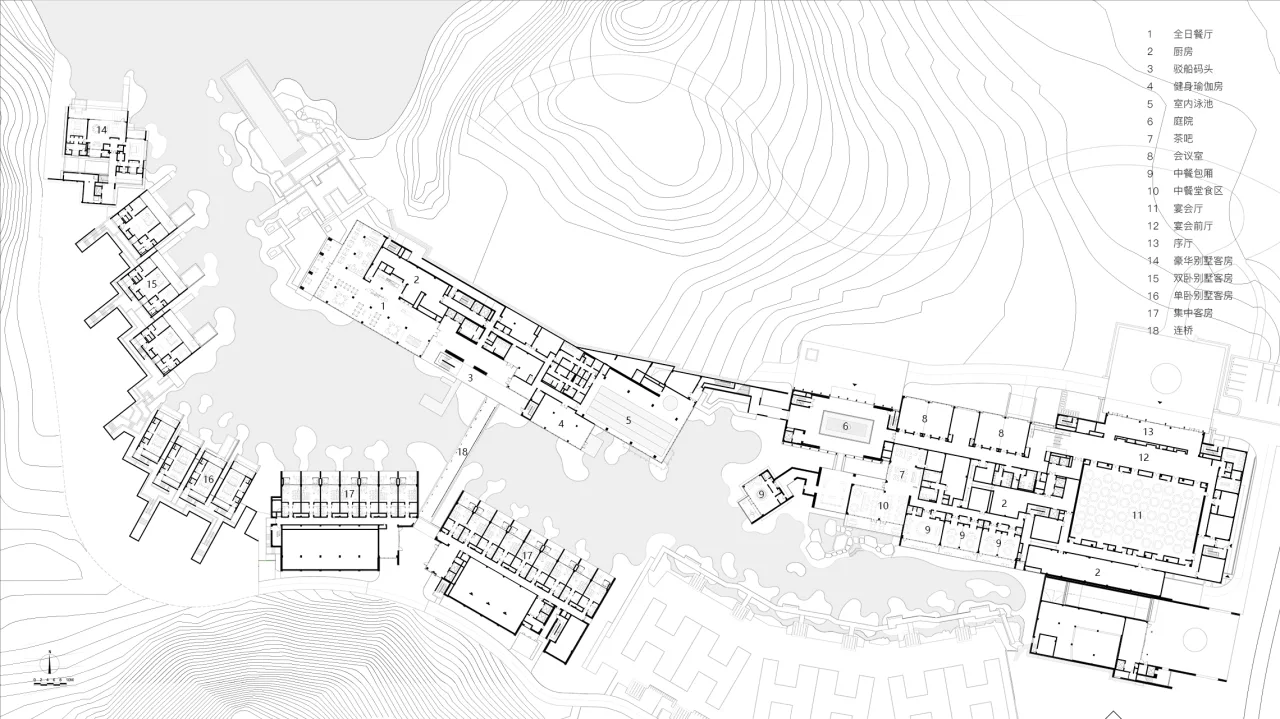
△ First floor plan © gad
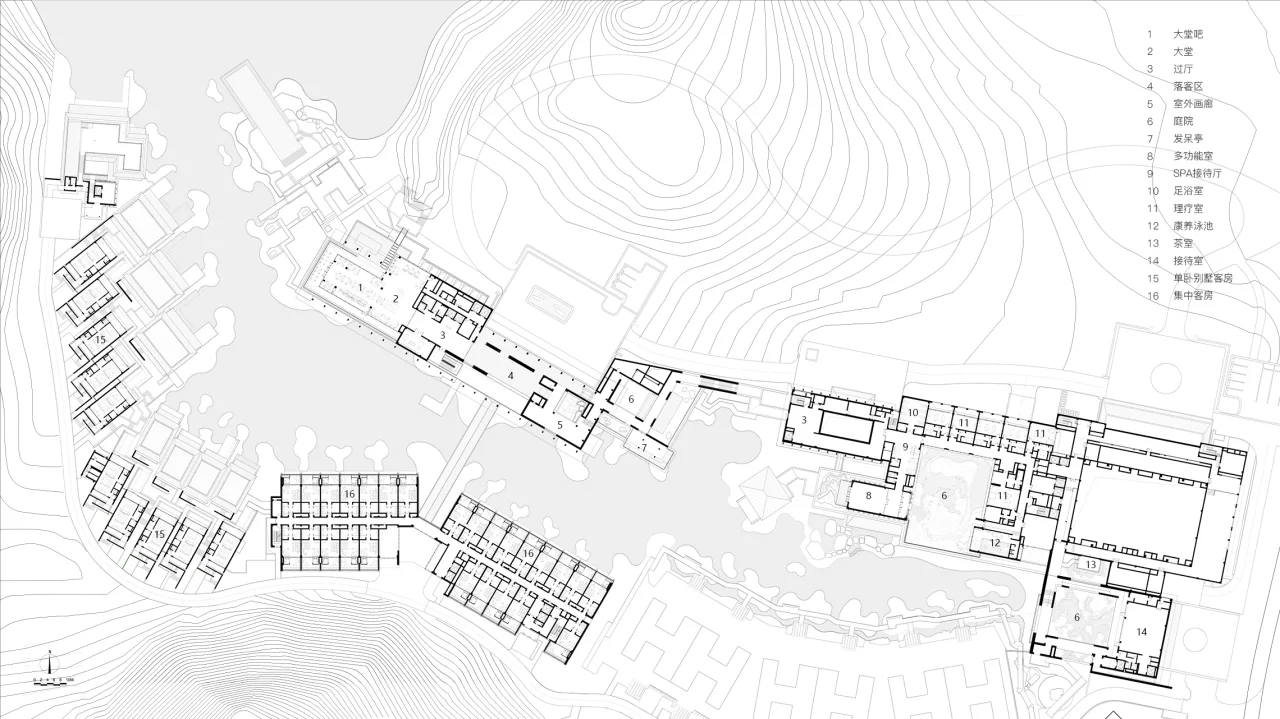
△ Second floor plan © gad
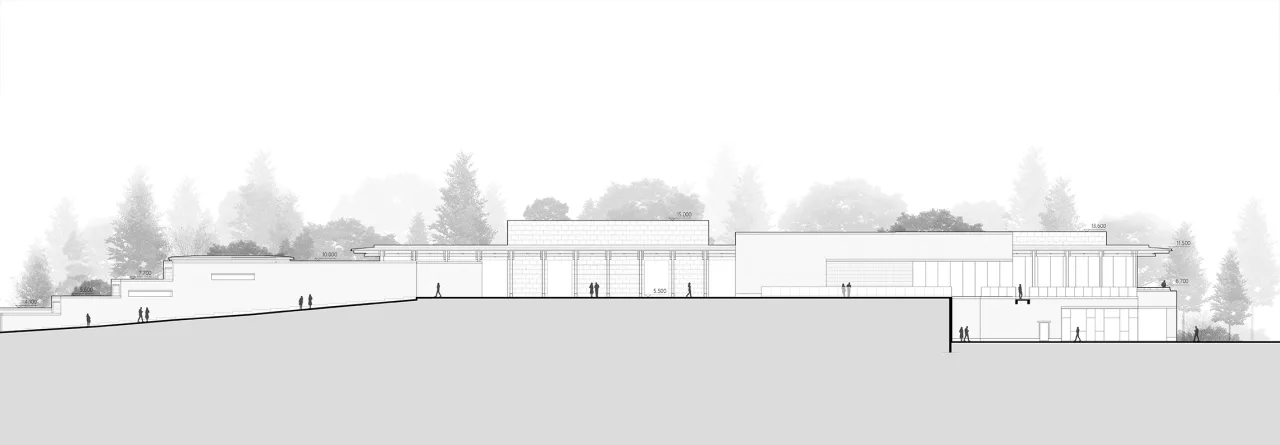
△ Front elevation of the lobby drop-off area © gad
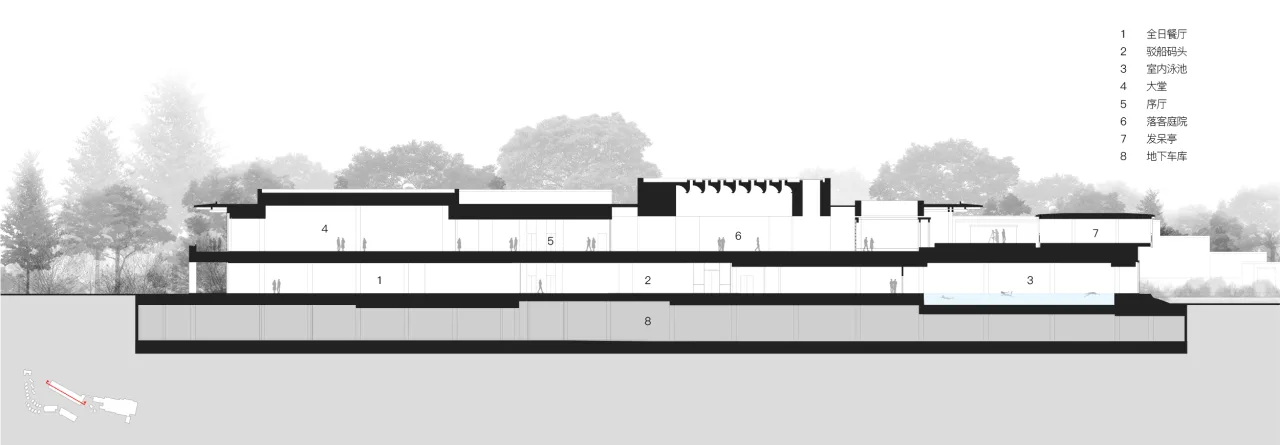
△ Horizontal section of the lobby © gad
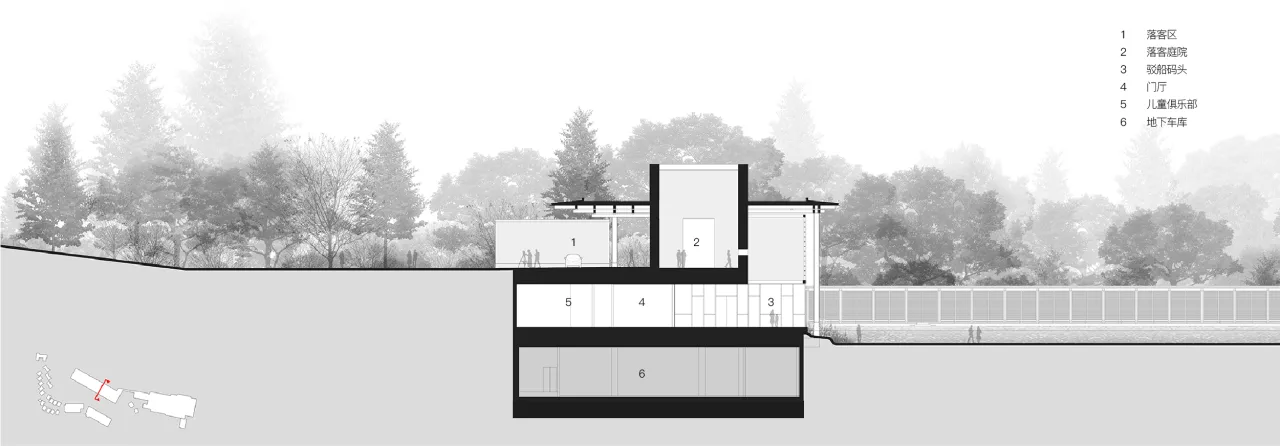
△ Longitudinal section of the lobby © gad
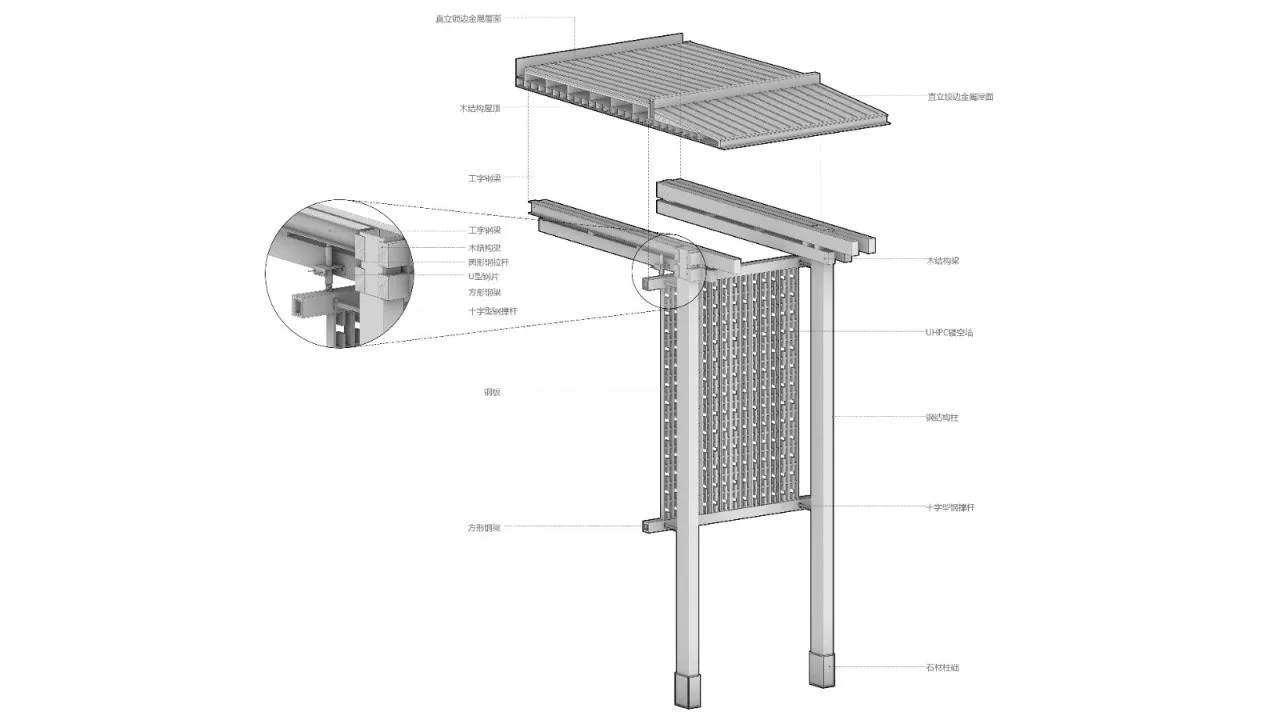
△ Detailed node diagram © gad
Project Information
Project Name: Dongguan Songshan Lake Banyan Tree
Location: Dongguan, Guangdong Province
Address: No. 7 Hu’an Road, Songshan Lake Science and Technology Industrial Park, Dongguan City, Guangdong Province
Design Year: 2020
Construction Year: 2023
Land Area: 40,001 square meters
Building Area: 52,289 square meters
Floor Area Ratio: 0.75
Design Team: Gad Jiedi Design
Project Director: Zhang Wei
Project Creator: Wu Kesuo
Architecture: Shen Jiangang, Yang Zhaolun, Zeng Tianqi, Bao Lvyong, Cai Hengyi, Wu Gang, Wang Tianyi
Structure: Ren Guangyong, Wang Xiaodi, Ye Wuqiang, Jiang Yipang
Water Supply & Drainage: Wu Wenjian, Gong Hai, Hu Ting, Shi Jincheng
HVAC: Cui Daliang, He Hailong, Li Jinniu
Electrical: Lu Baiqing, Ren Feiyu, Cao Jun, Yang Guanghao, Xu Jingliang
Collaborating Institutions:
Interior Design: BLINKDesign Group (Singapore), Zheng Zhong Design Firm (Hong Kong)
Landscape Design: PLANDSCAPE (Thailand), Uemi Kato Garden Co., Ltd. (Japan)
Lighting Design: KLAASEN Lighting Design (Singapore)
Logo Design: Corlette Design (Australia), Shanghai Baixi Logo Co., Ltd.
Curtain Wall Design: Weiye Construction Group Co., Ltd., Zhejiang Greentown Architectural Design Co., Ltd.
Wooden Structure Design: Liaoning Jinbaisheng Wooden Structure Technology Co., Ltd.
Owner: Dongguan Vanke Real Estate Co., Ltd.
Photography: Right Angle Architectural Photography, STUDIO FANG, Iron Mountain
Main Image: Right Angle Architectural Photography














Must log in before commenting!
Sign Up