
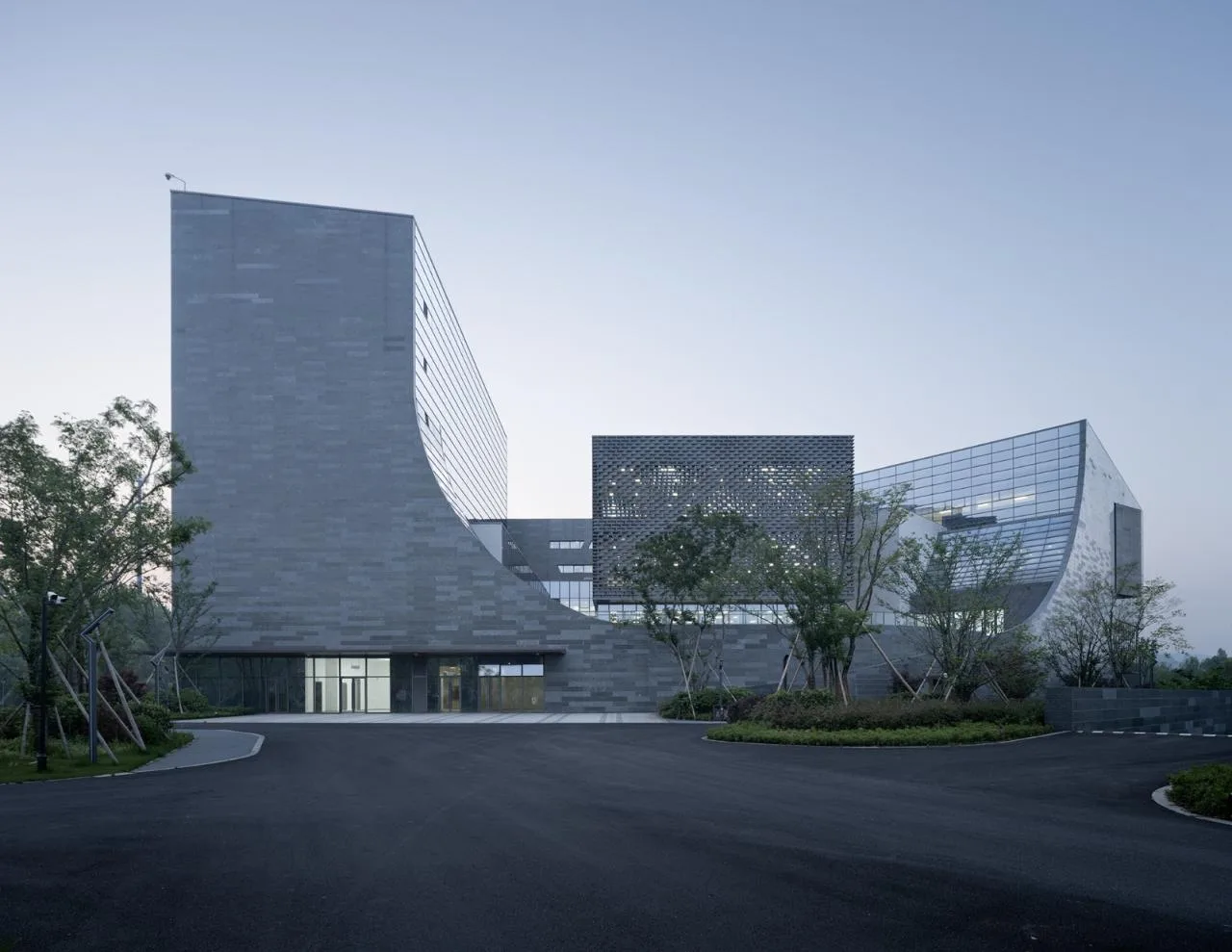
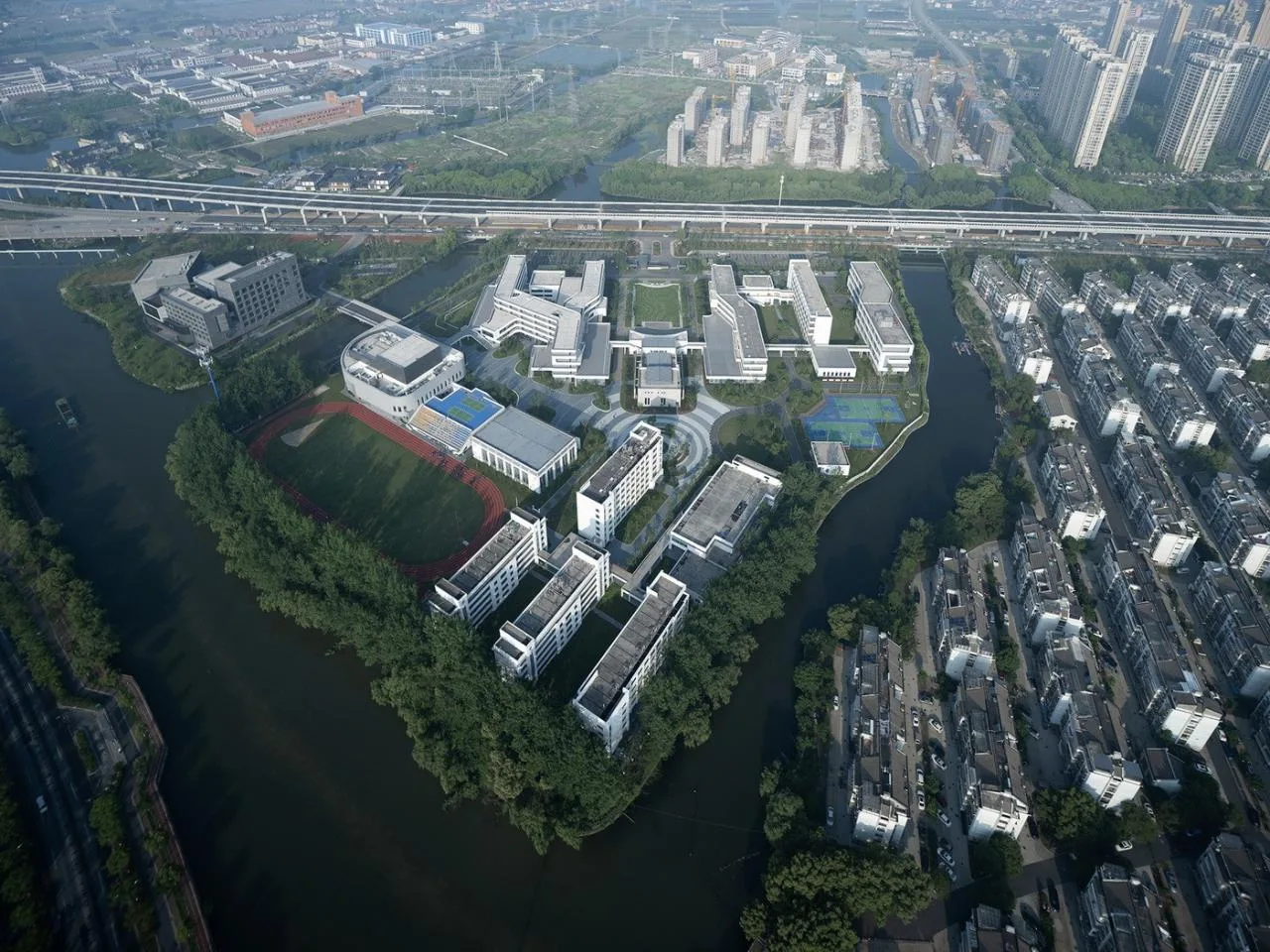
Shaoxing Art School, originally established as the Zhejiang Shaoxing Opera Art Training Class, has occupied its current campus on Second Ring West Road in Shaoxing City since 2003. After nearly two decades of growth, the existing campus no longer meets the demands of its academic disciplines and future expansion, prompting this comprehensive renovation and expansion project.
To support the reform of “school group cooperation,” newly acquired land in the southern triangular area will serve as the site for the Shaoxing Performing Arts Group Comprehensive Building. While these two entities operate independently, they aim to achieve organic integration and share resources efficiently.
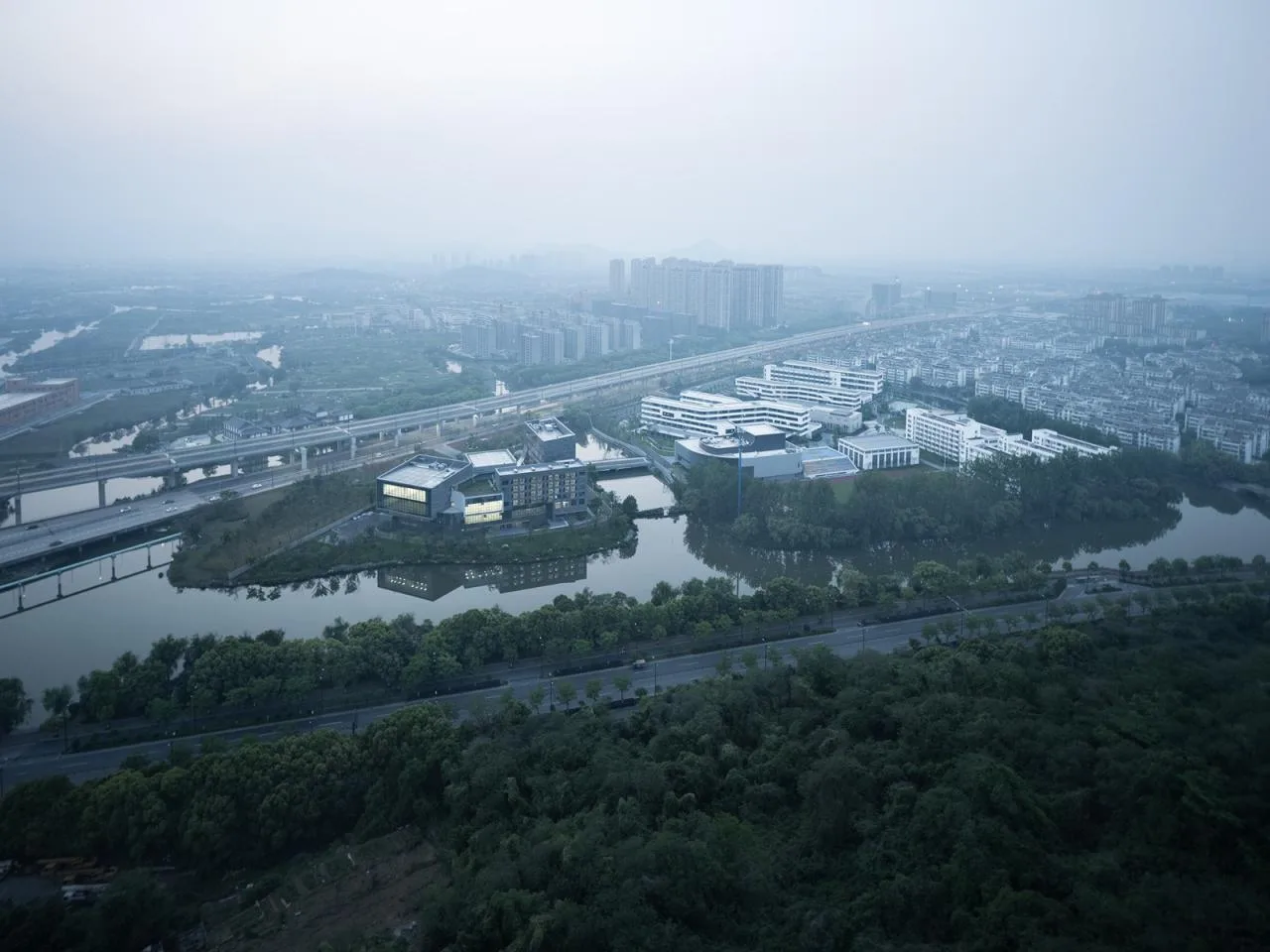
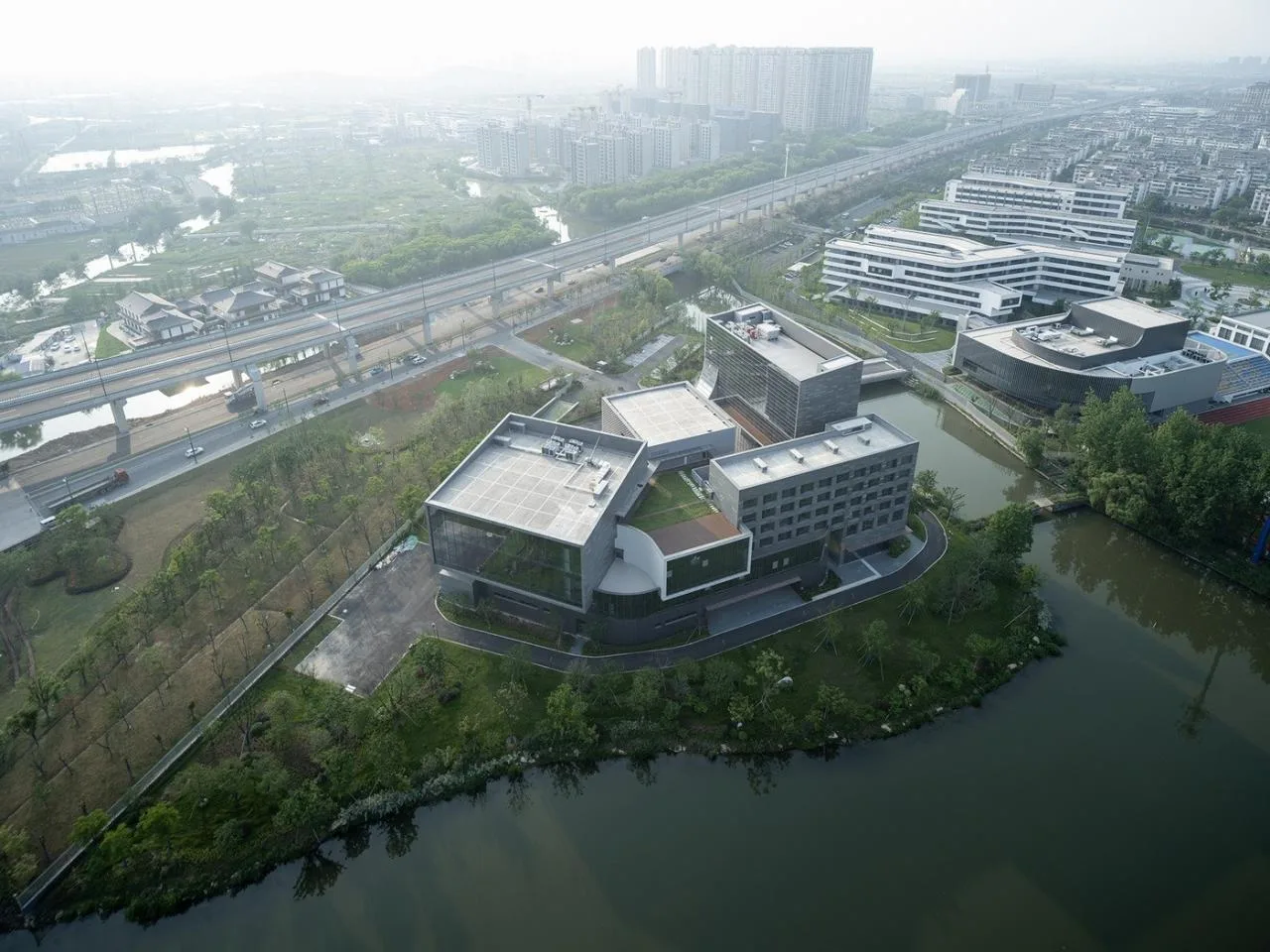
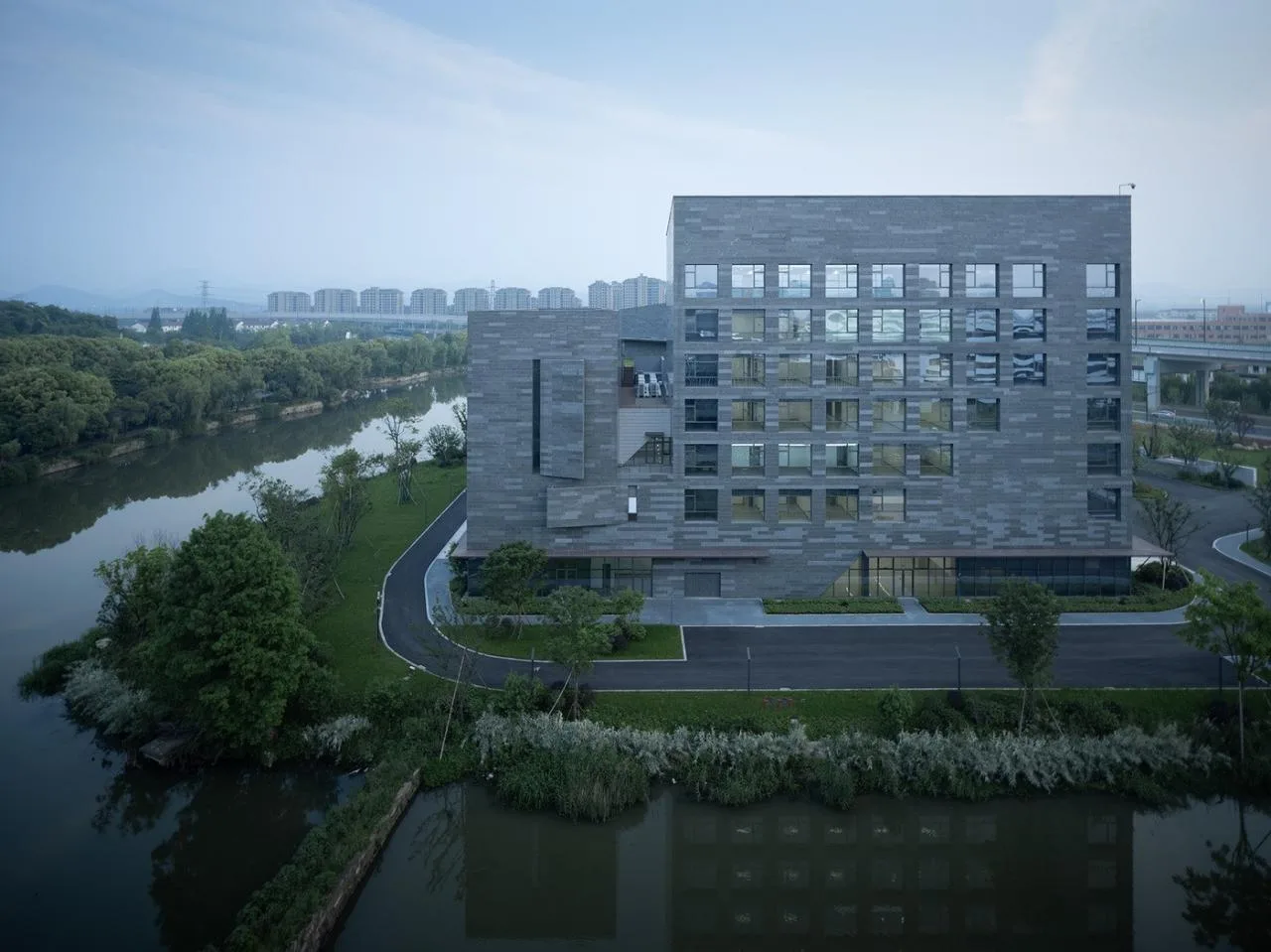
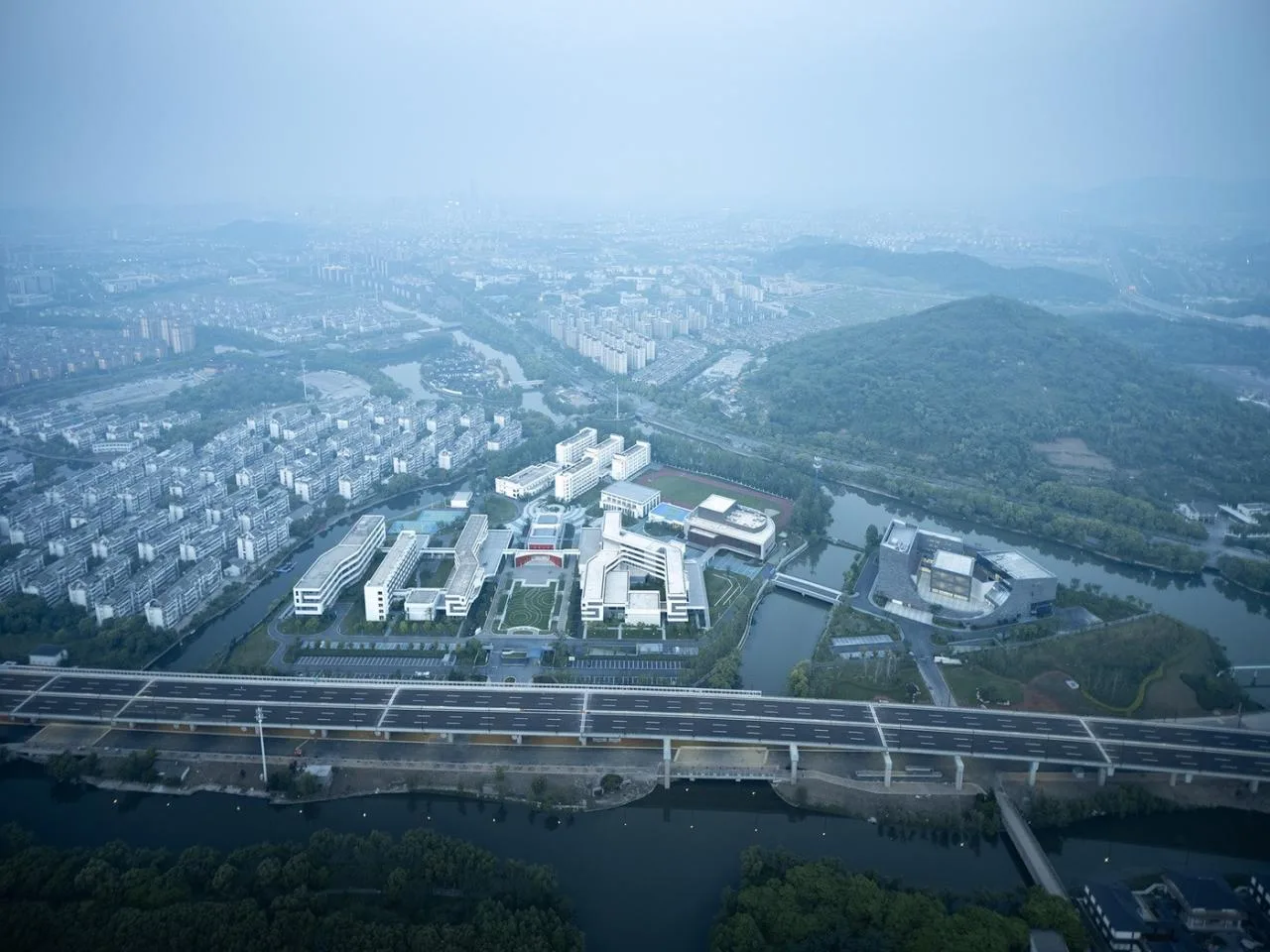
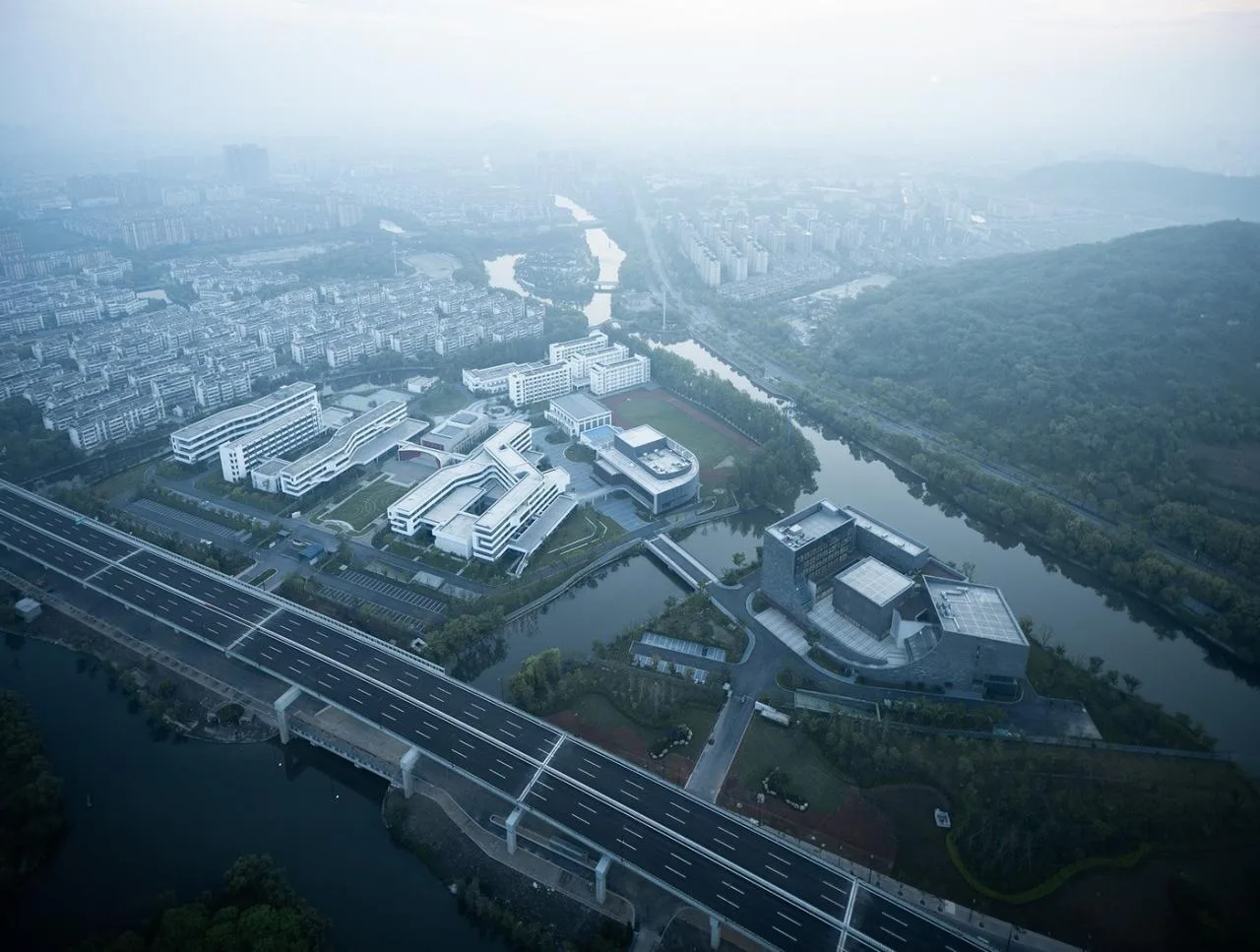
The newly acquired southern land completes the site’s inverted triangular shape. Situated on the west side of Second Ring Road West, this area serves as the sole interface connecting the campus with the city. The eastern and northern borders are flanked by rivers, while the eastern view offers uninterrupted natural mountain scenery, providing exceptional environmental assets.
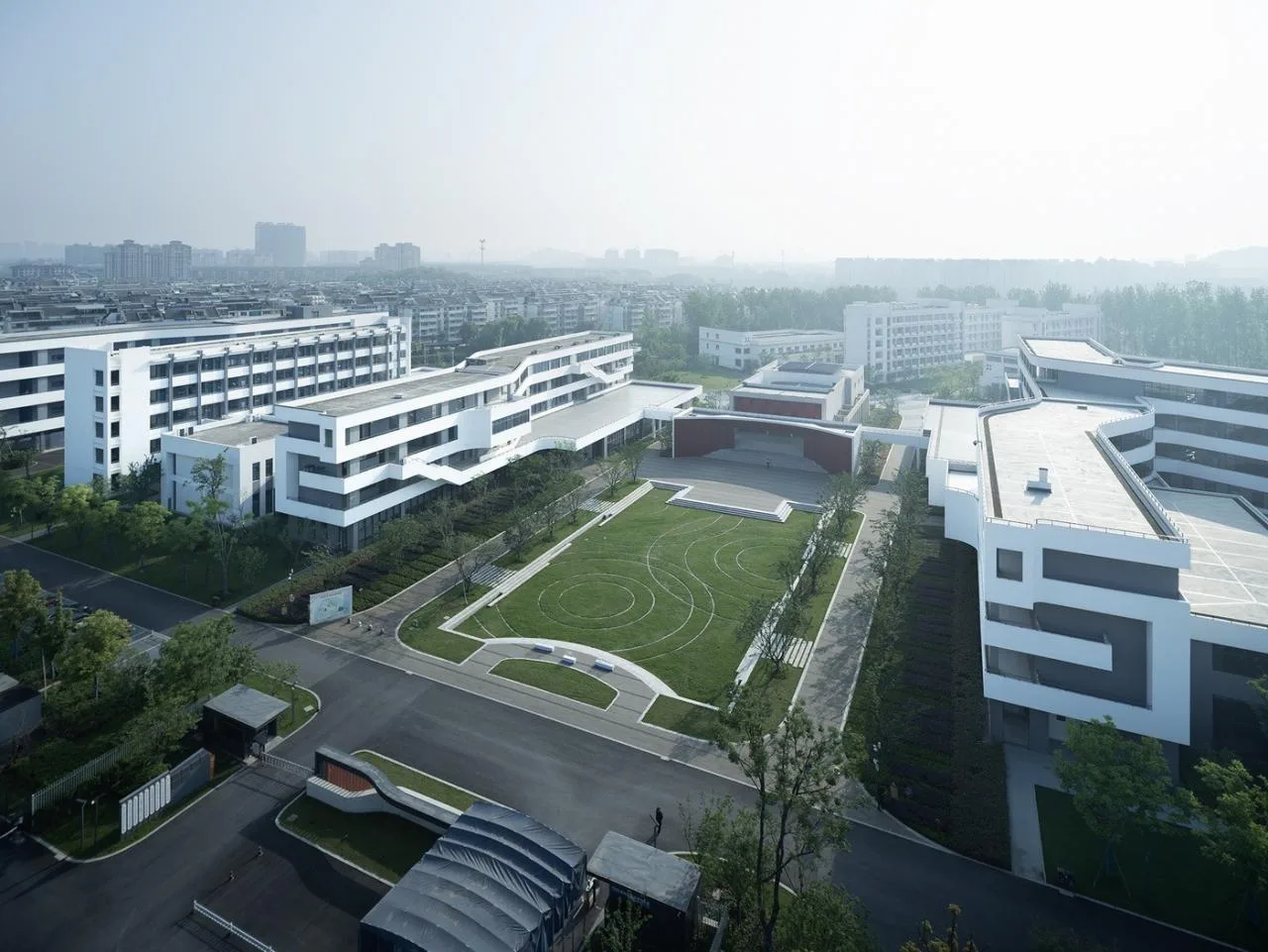
The teaching and training facilities occupy the campus’s western side, oriented perpendicular to the city road. Conversely, the residential and sports complexes lie on the eastern side, aligned orthogonally to the river. This arrangement creates a campus layout defined by non-parallel triangular boundaries, resulting in a textured grid oriented in two directions.
Per design requirements, all residential and sports buildings will remain, receiving only façade renovations. The teaching area will preserve the public teaching building and core music hall. Consequently, retaining structures along both axes of the original campus grid is crucial for redefining the campus layout.
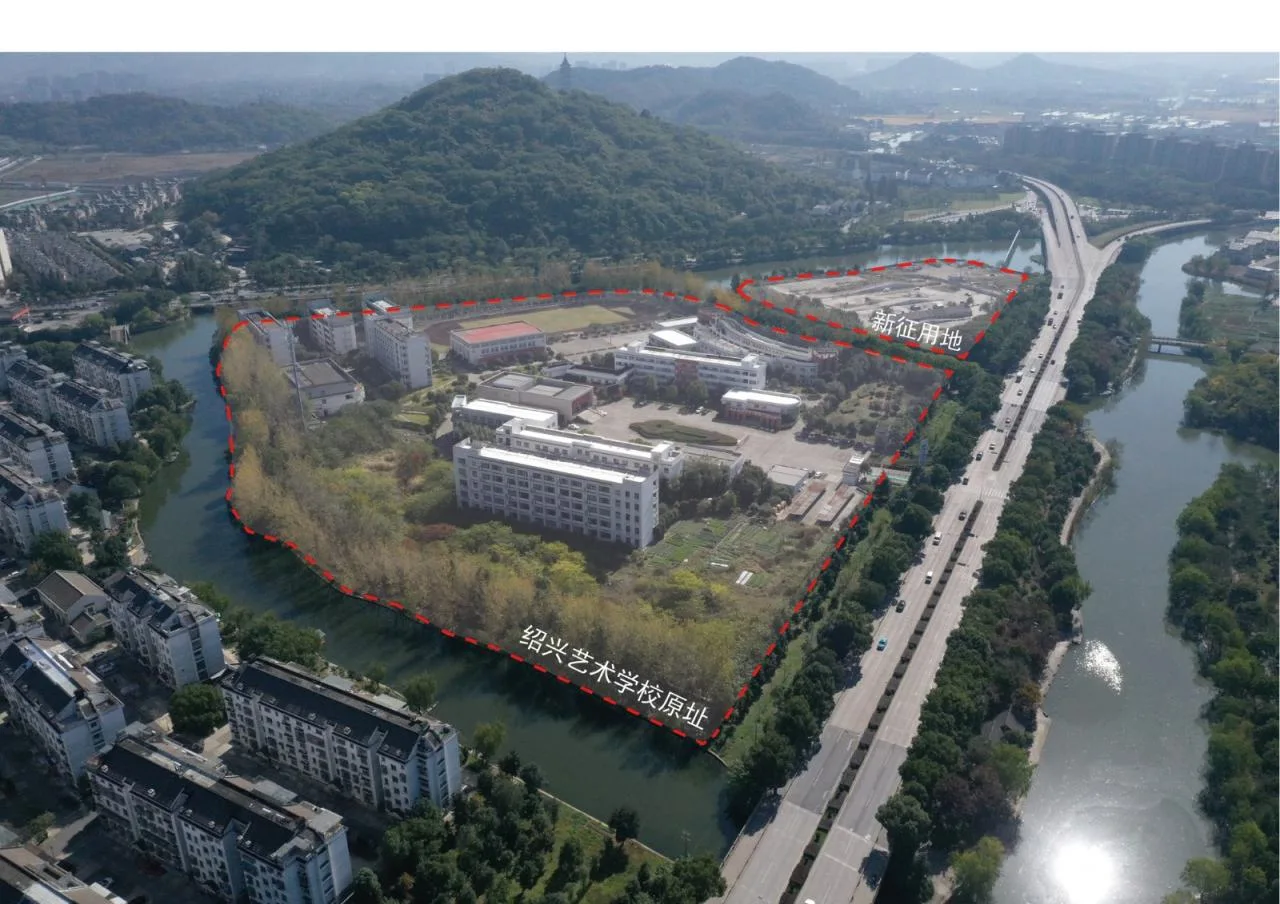
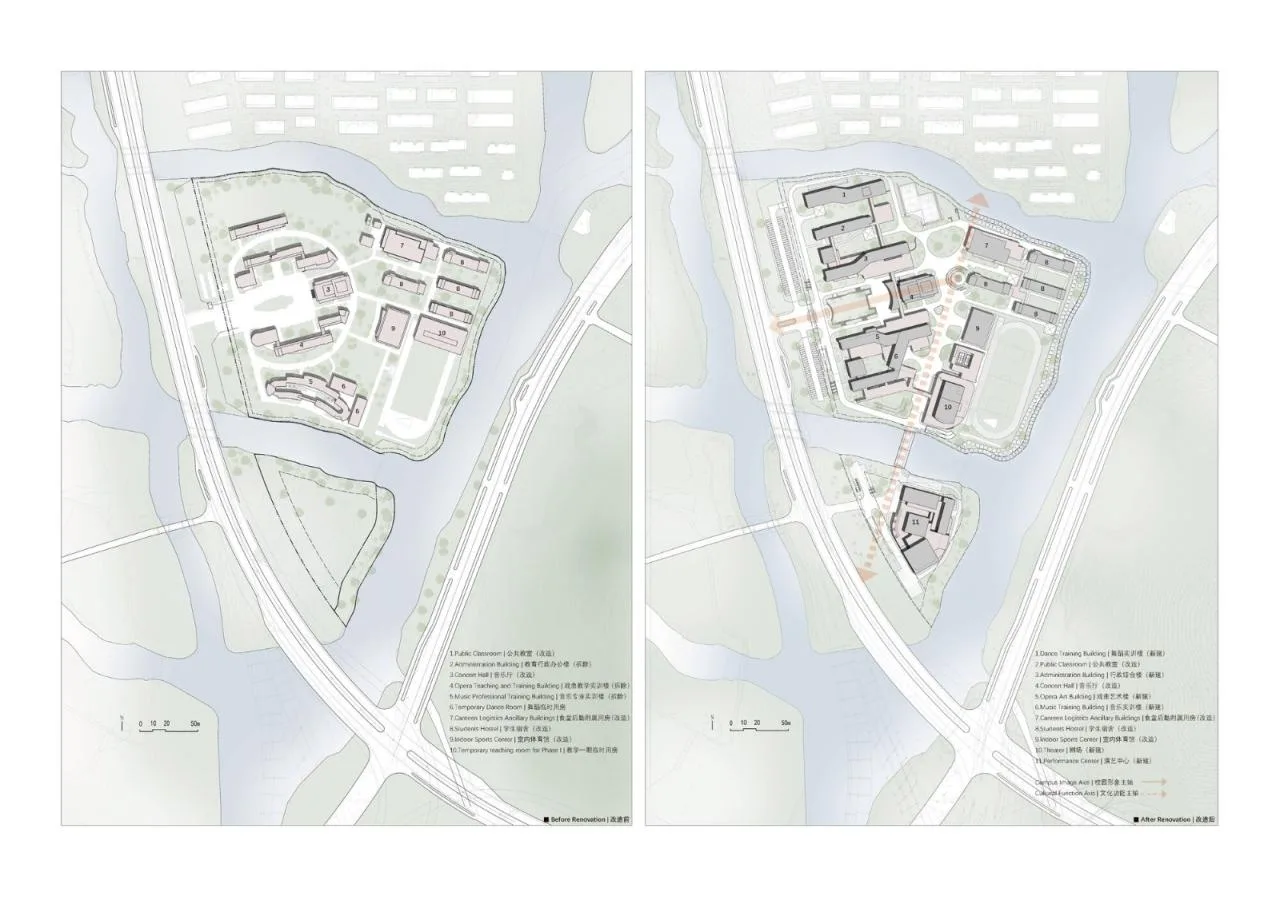
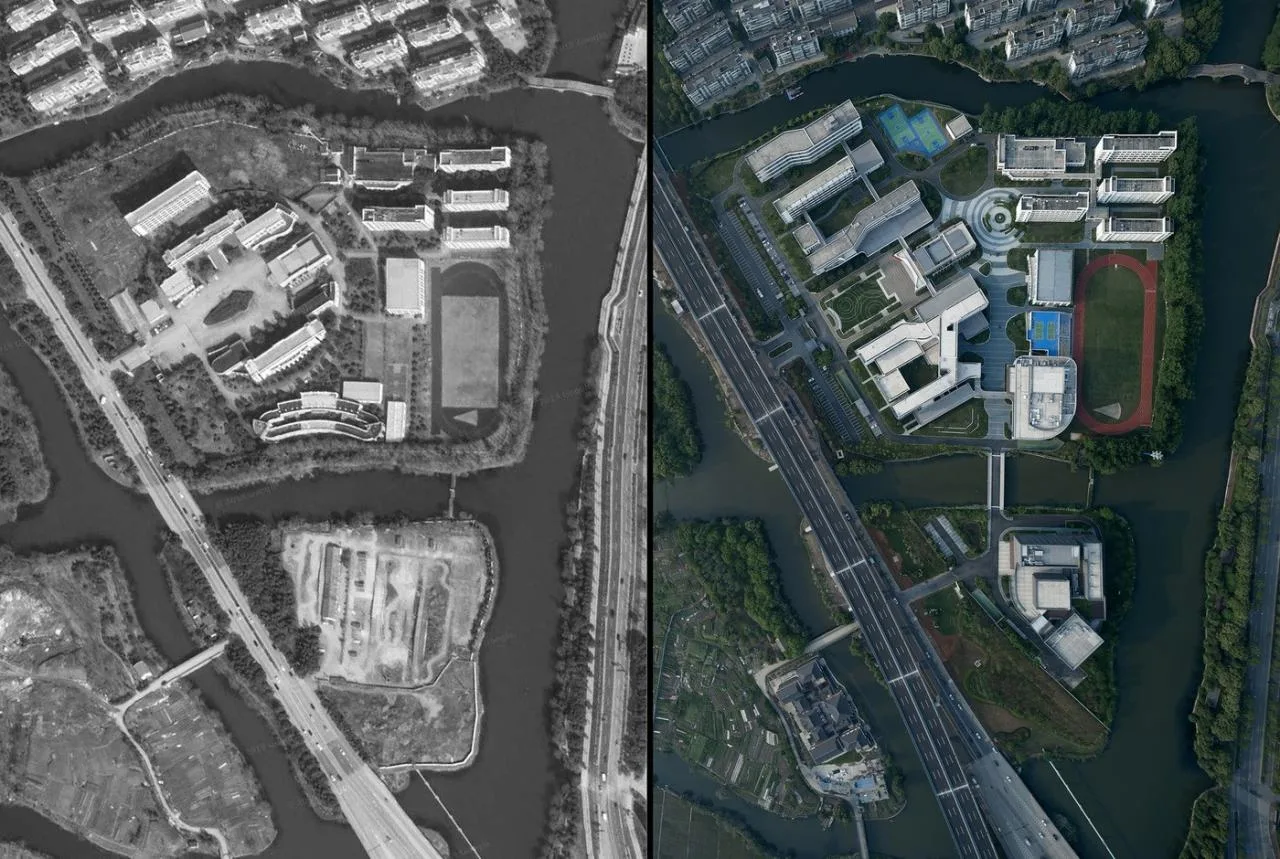
Over years of use, Shaoxing Art School’s original campus has developed a stable spatial pattern and architectural texture through successive reconstructions. Respecting this heritage, the renovation aims to preserve the site’s memories and historical traces.
Guided by the site’s distinct texture and design criteria, the new layout emerges naturally. The main entrance facing Second Ring West Road is preserved, while an entrance pergola has been added to the west side of the music hall to emphasize its prominence, opening onto the main square.
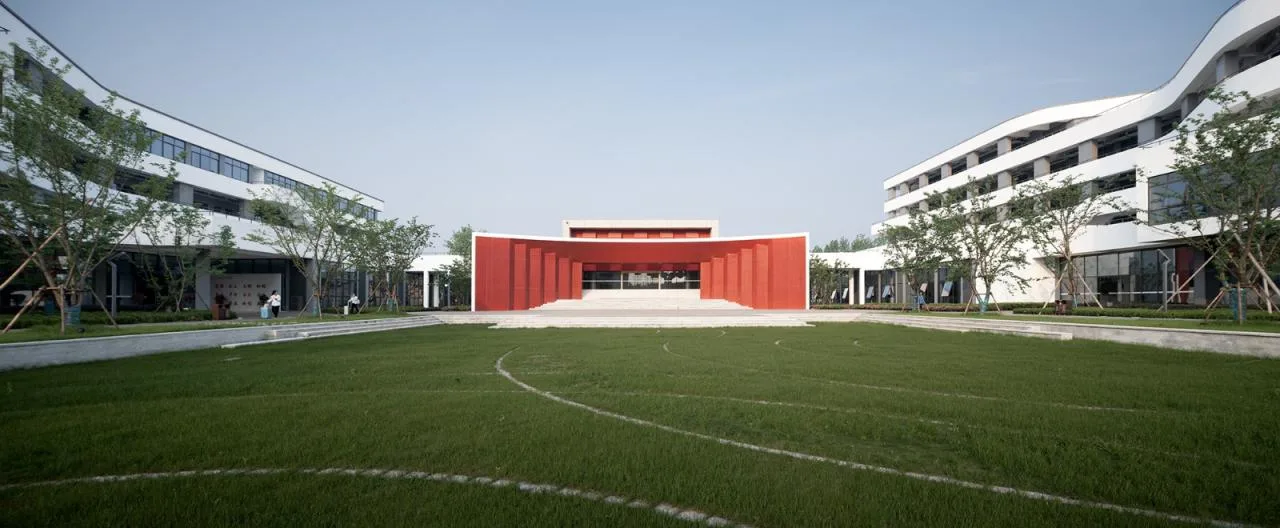
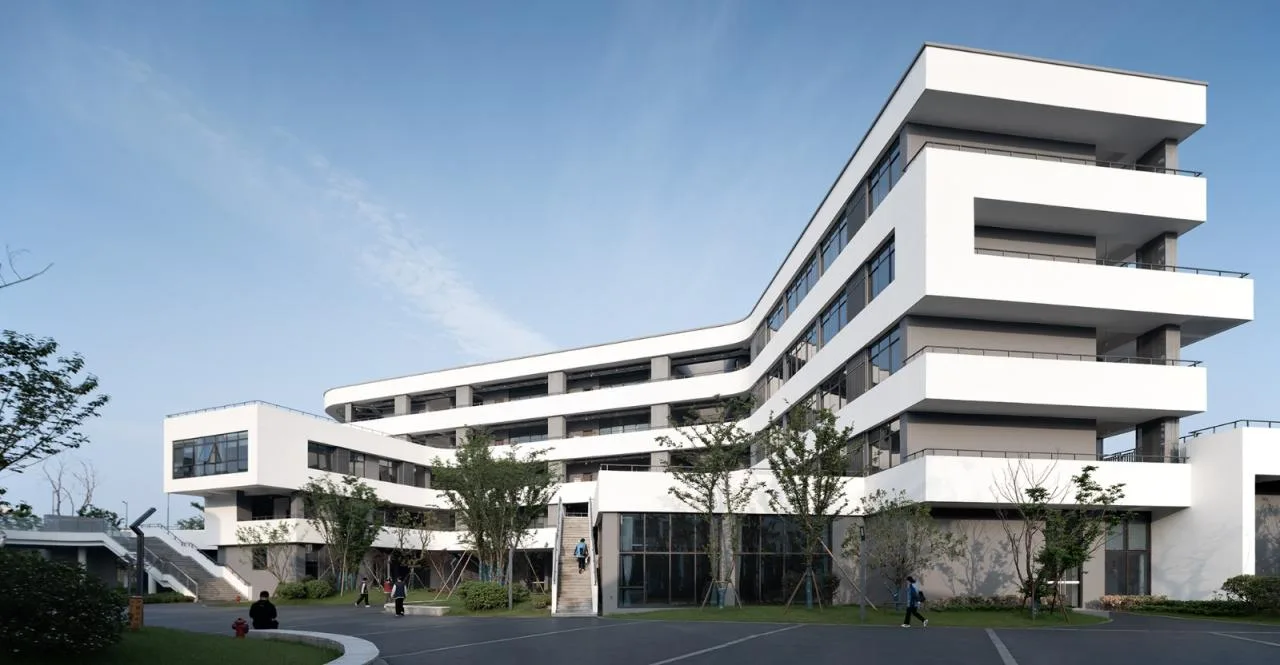
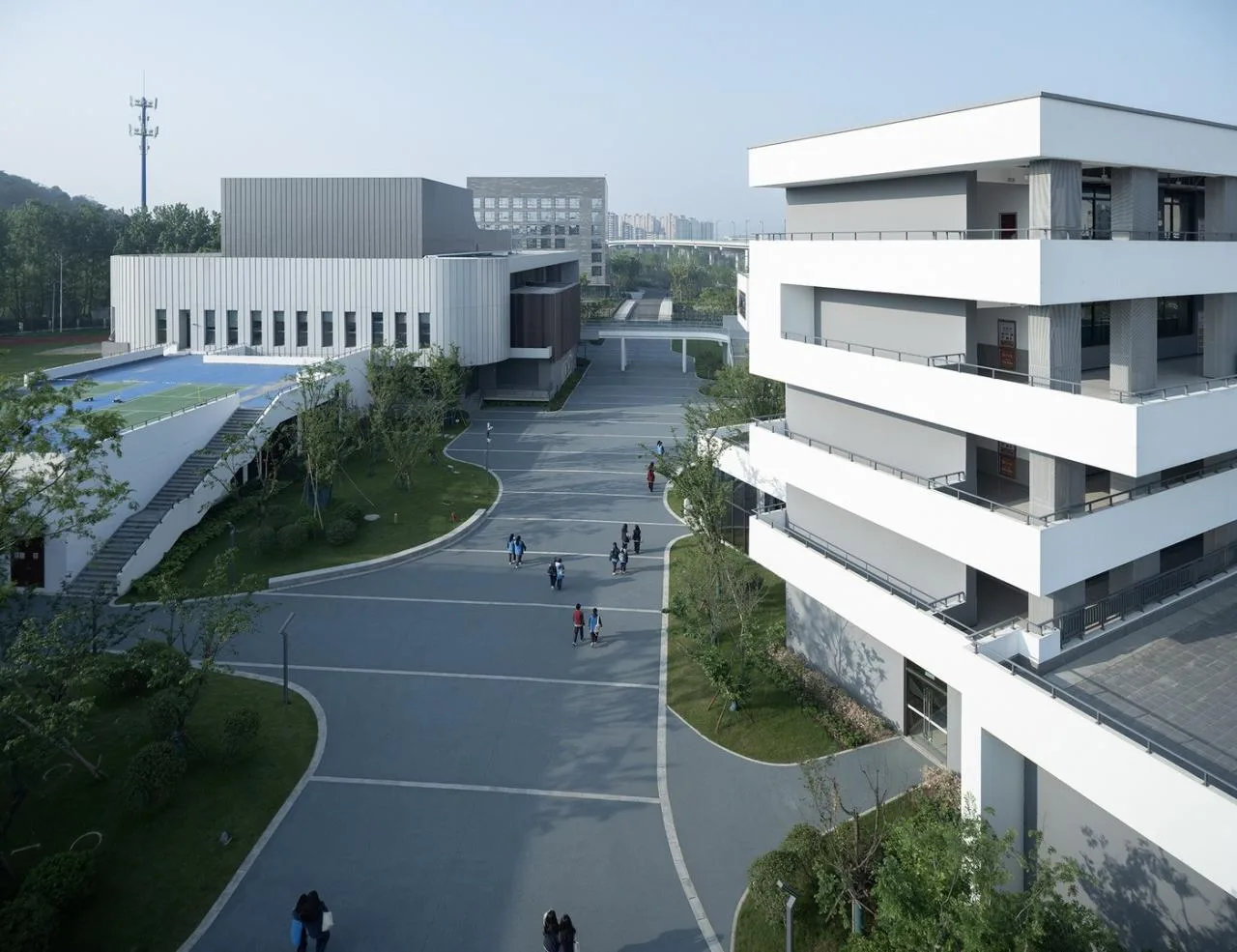
On the south side of the square, adjacent to the water, a new opera and music arts building has been constructed. Opposite, on the north side, stands a new administrative complex. Both buildings curve around the music hall, creating a harmonious spatial relationship. Further north, preserved public teaching buildings and new dance training facilities complete the teaching and training group, reinforcing the campus’s east-west axis.
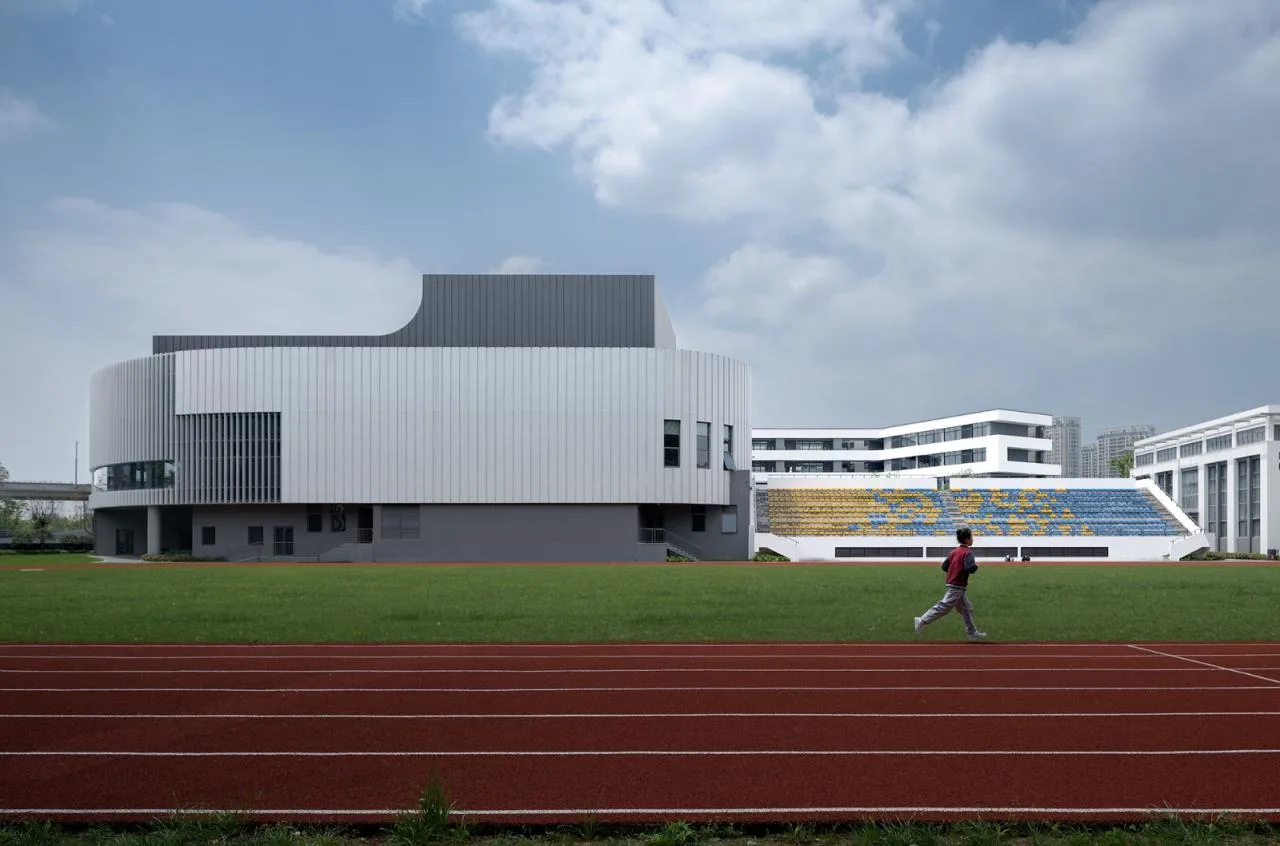
Following the spatial rhythm of the residential and sports group, a small theater has been added to the south side of the sports hall. This theater connects to the newly acquired Performing Arts Group Complex, serving as a shared functional space for both institutions and fulfilling their mutual goals.
The east-west campus layout does not merely replicate the original texture but reinterprets and reconstructs the site’s boundaries and spatial patterns. By reshaping the entrance square and integrating open spaces such as the circular cultural plaza, the north-south pedestrian corridor, and various buildings, the campus forms a cohesive spatial architecture. This integration further highlights the unique dual-grid spatial characteristic of Shaoxing Art School.
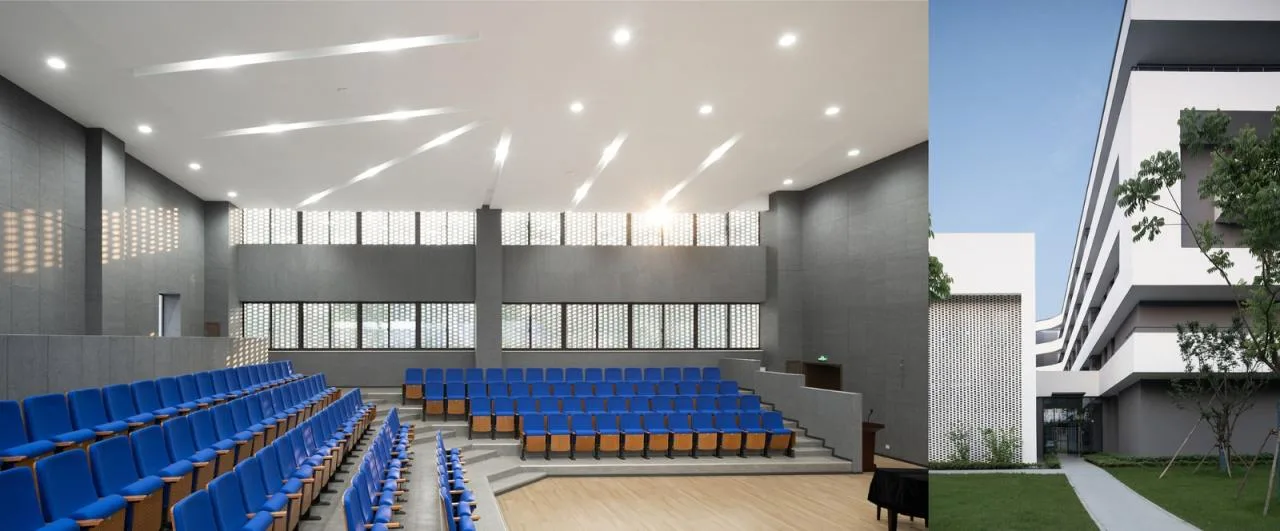
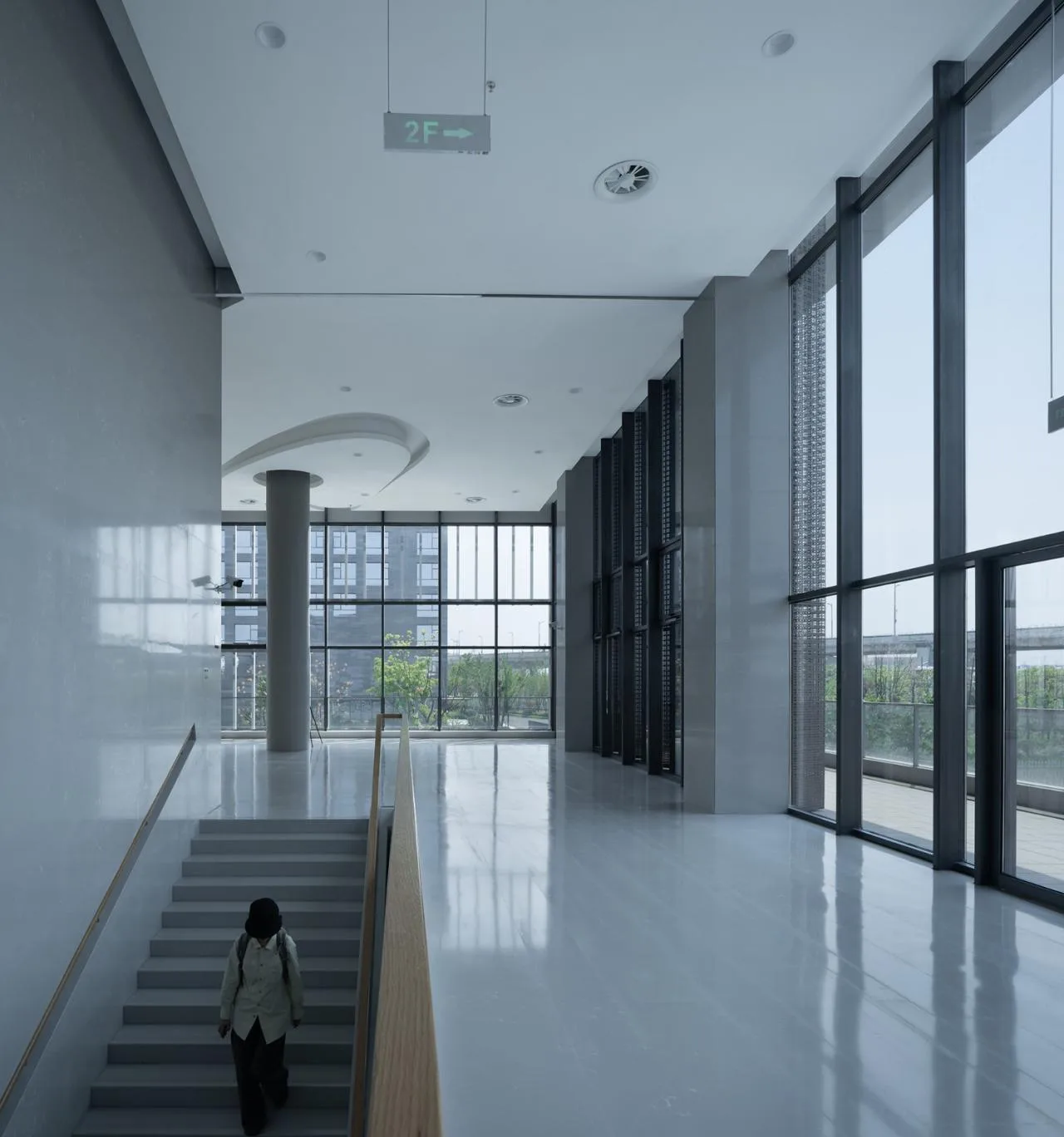
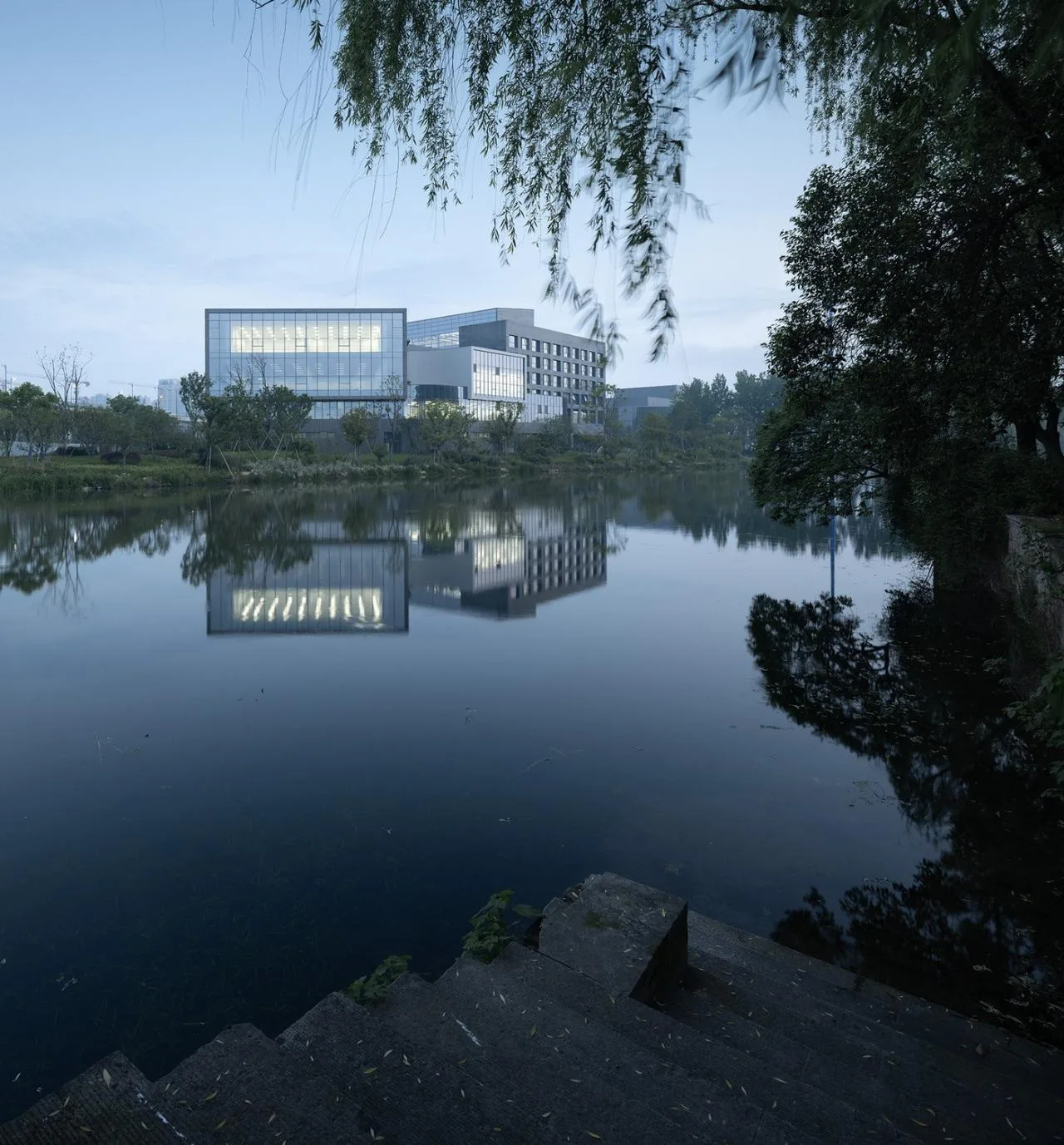
Creating a sense of place involves grounding the design in this location, moment, environment, and emotion. While reconstructing the campus texture, functional flows, environment, and architectural style, special attention is given to whether the space can resonate with users’ behaviors, experiences, emotions, and consciousness.
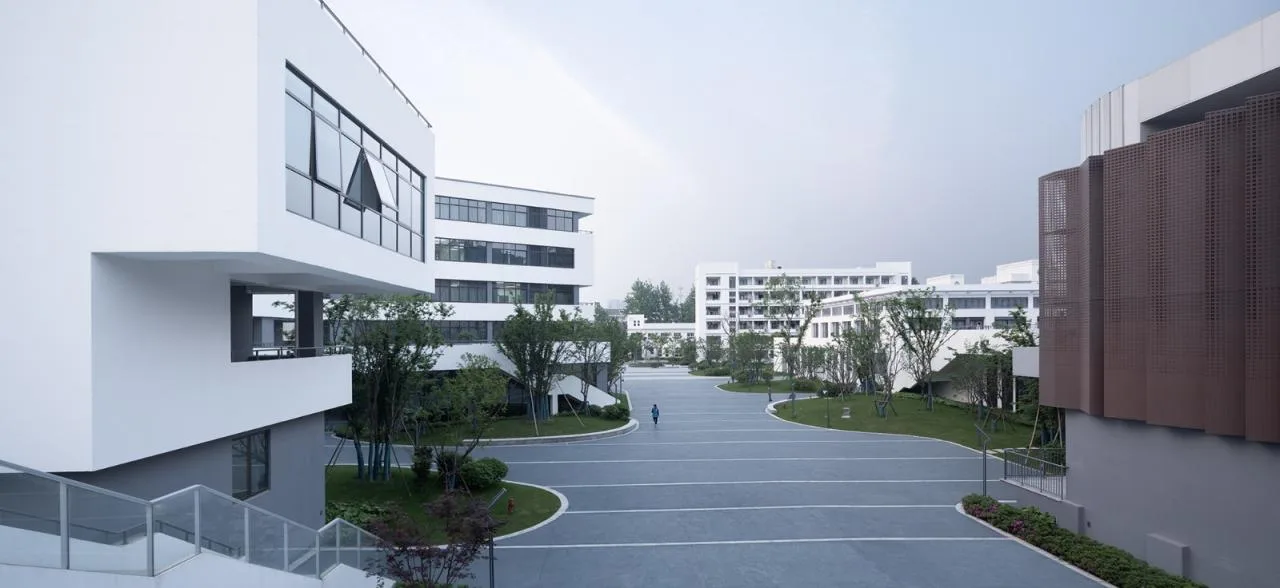
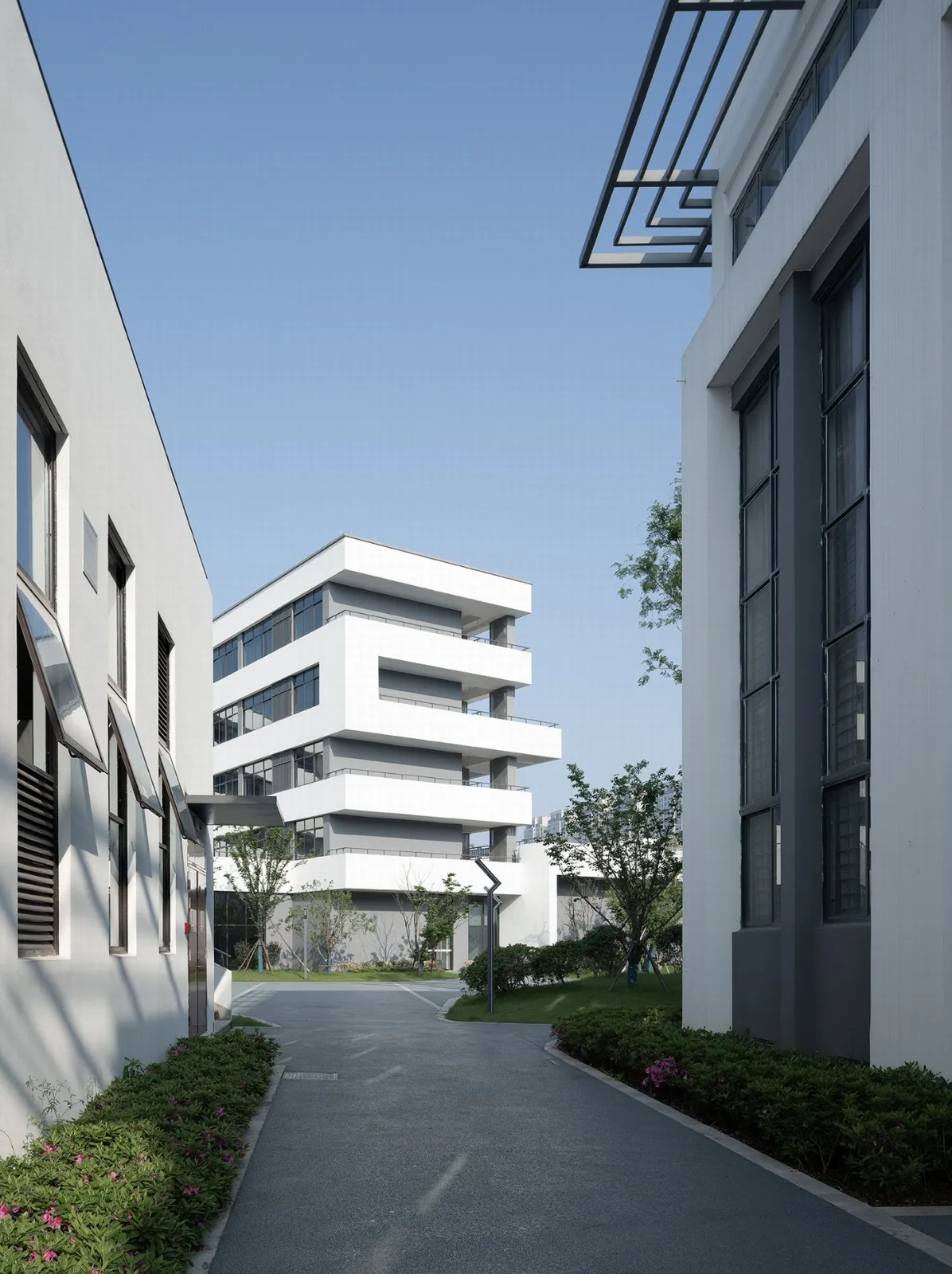
The campus motor vehicle circulation is relegated to the periphery, enabling full pedestrian access within. Squares, corridors, courtyards, and platforms establish multidimensional connections among various functional areas, facilitating smooth movement for teachers and students at different times, and creating spaces for teaching, socializing, and leisure throughout the campus.
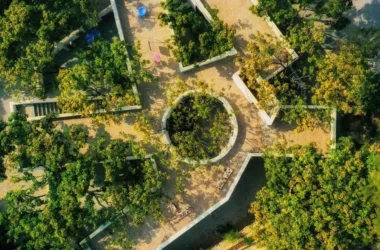
The campus’s main square has transformed from a simple, straightforward space into a more dynamic environment. A sunken green area is surrounded by circular steps, offering students a place to sit and gather. The music hall’s entrance steps have been expanded and a prominent porch added to enhance its presence, while also creating an outdoor classroom or rehearsal space for opera majors.
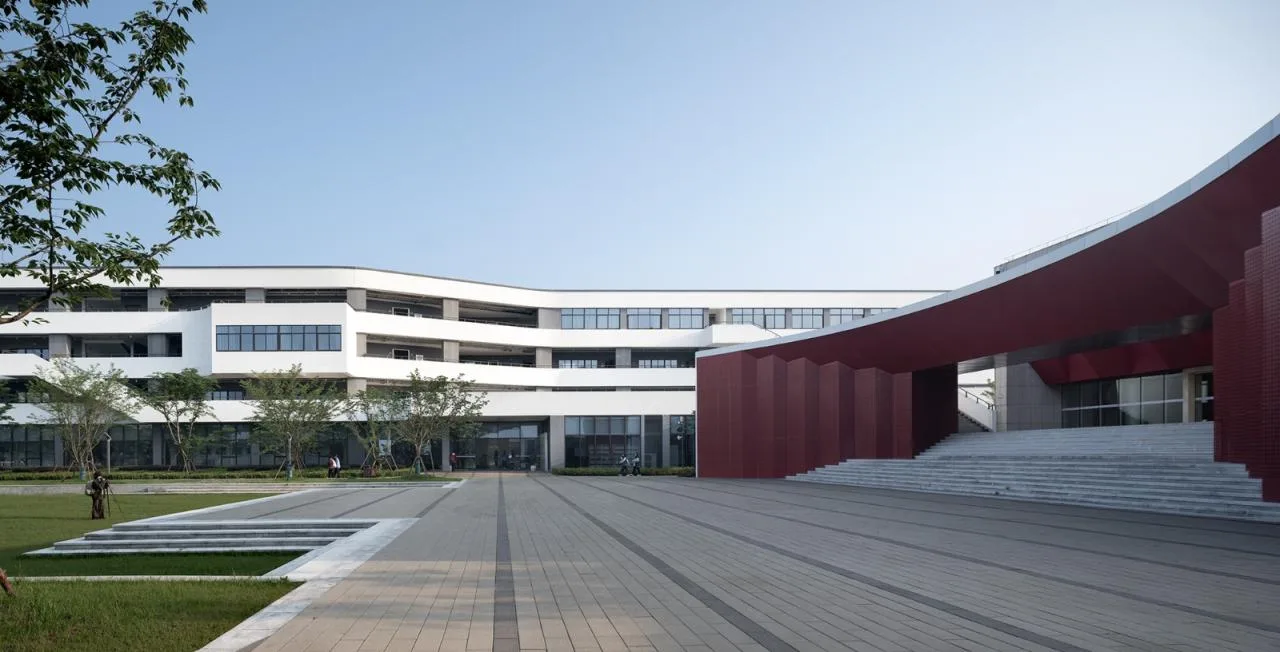
Based on detailed analysis of teacher and student behavior and vocational teaching methods, the teaching facilities are connected by a north-south corridor. Opera and music majors share theoretical classrooms in the southern teaching area. Adjacent to these are teachers’ studios, with piano rooms for both instructors and students nearby. The proximity of piano rooms and theaters encourages collaborative learning, fosters creativity, and promotes cross-major interaction.
A north-south pedestrian corridor separates the teaching group from the residential and sports group, linking dormitories, dining halls, classrooms, sports facilities, professional buildings, and theaters. This central artery gathers nearly all campus functions, enabling seamless transitions between classes, breaks, rehearsals, performances, dining, and leisure.
We envision vibrant campus life: during breaks, clusters of students head to their classrooms; at leisure, they gather and chat; and traditional Chinese opera majors practice outdoors. The nearby theater resonates with the sounds of drums and gongs, while the piano rooms fill the air with melodies. This dynamic fusion of activities and spaces fosters strong connections between people and their environment, a key goal in the campus’s spatial redesign.
The Theater and Performing Arts Complex stands as a pivotal new facility, completing the transformation of campus spaces.
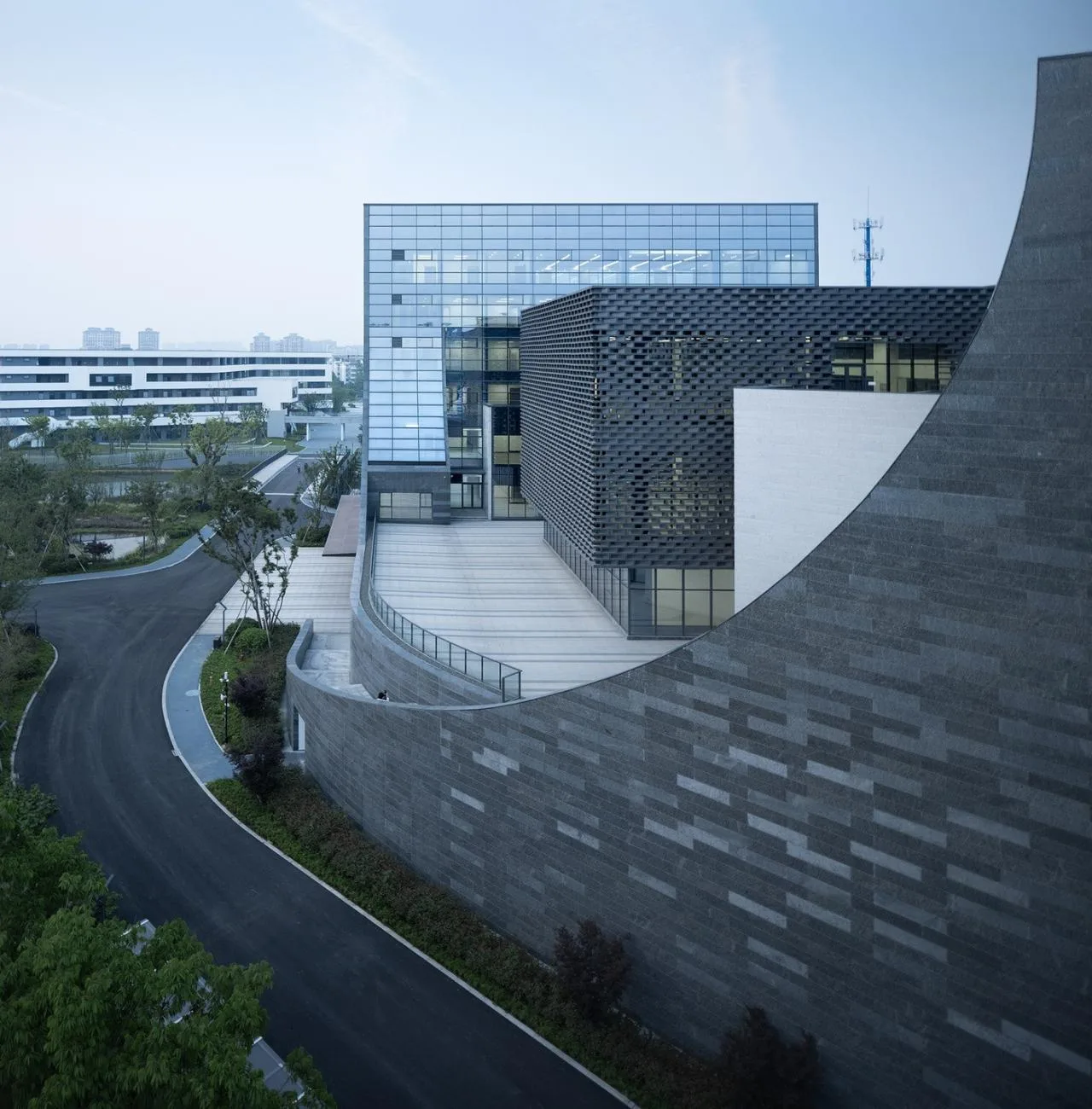
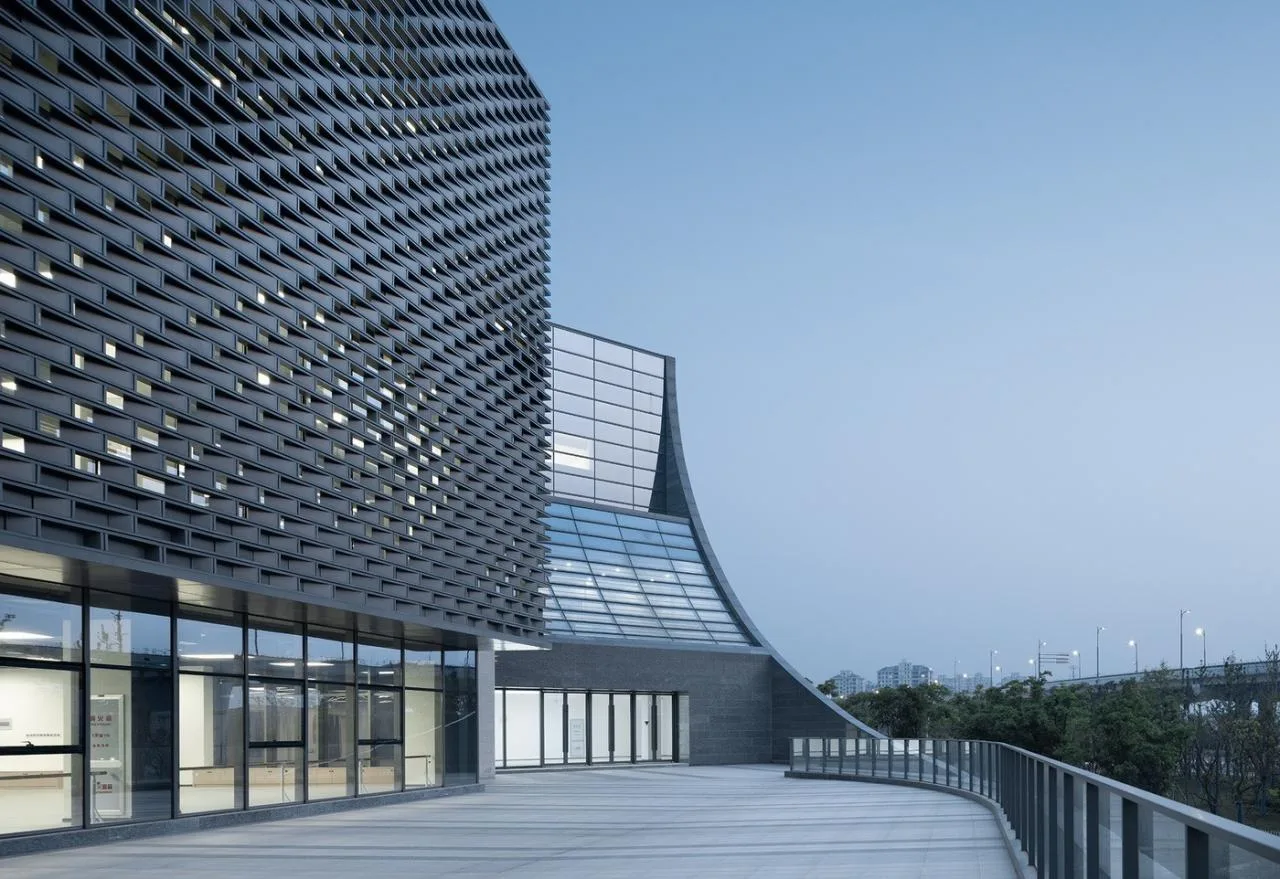
Positioned facing the water and aligned with the north-south axis, the small theater features a straight western façade. Its second floor connects to the southern teaching area’s piano rooms via a platform and corridor. The rust-red perforated panels evoke stage curtains, opening toward the central axis and cityscape. From south to east, the façade curves, transitioning from glass curtain walls with rod elements to vertically segmented aluminum panels. The east side forms a backdrop to the lively sports field. An inverted roof softens the imposing stage volume, achieving seamless form integration and design logic.
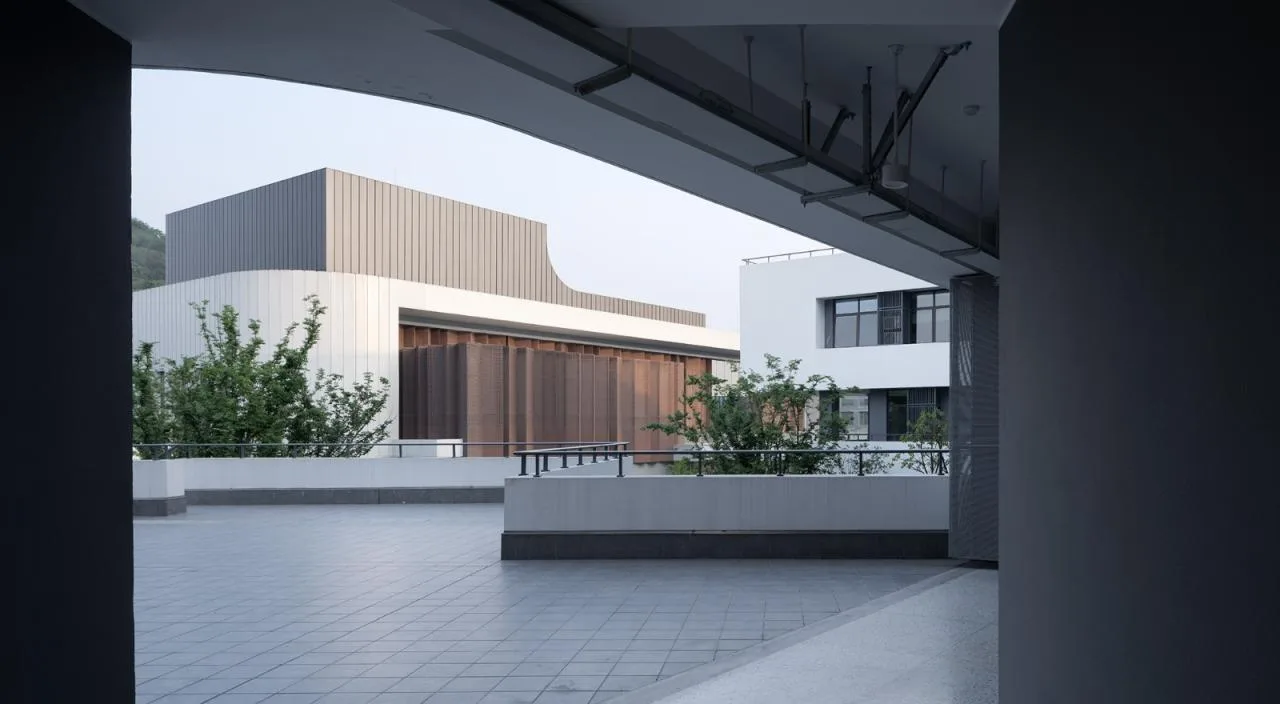
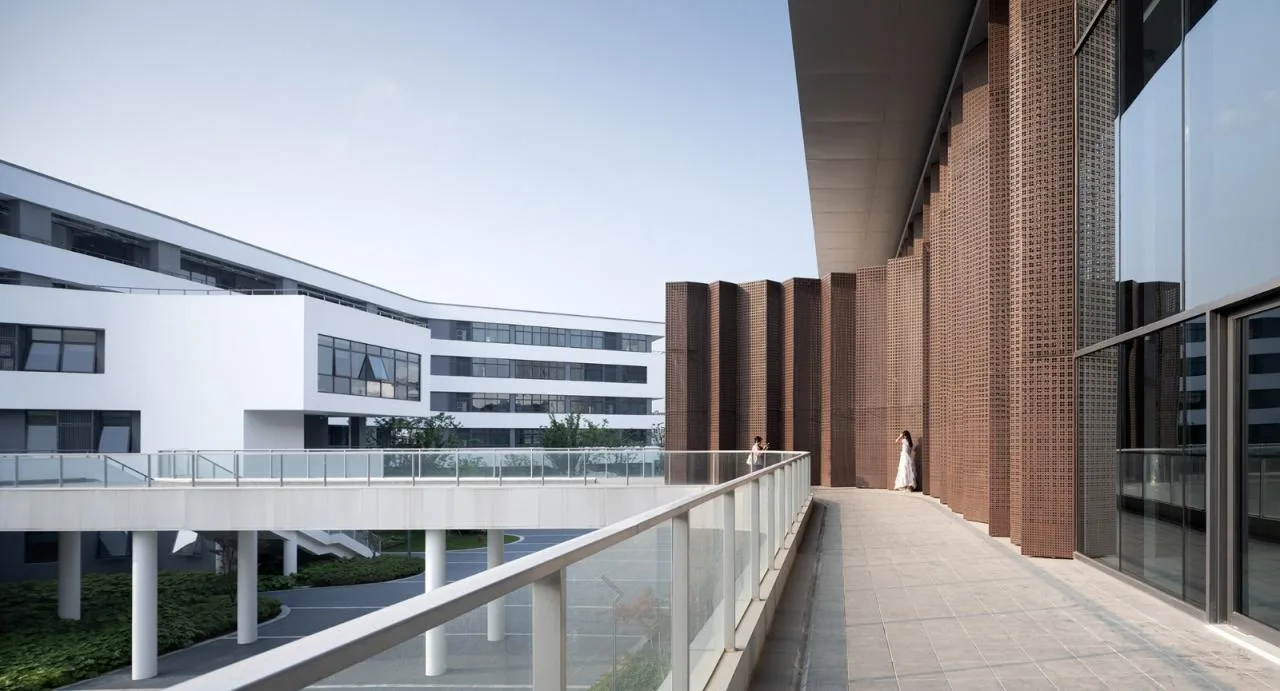
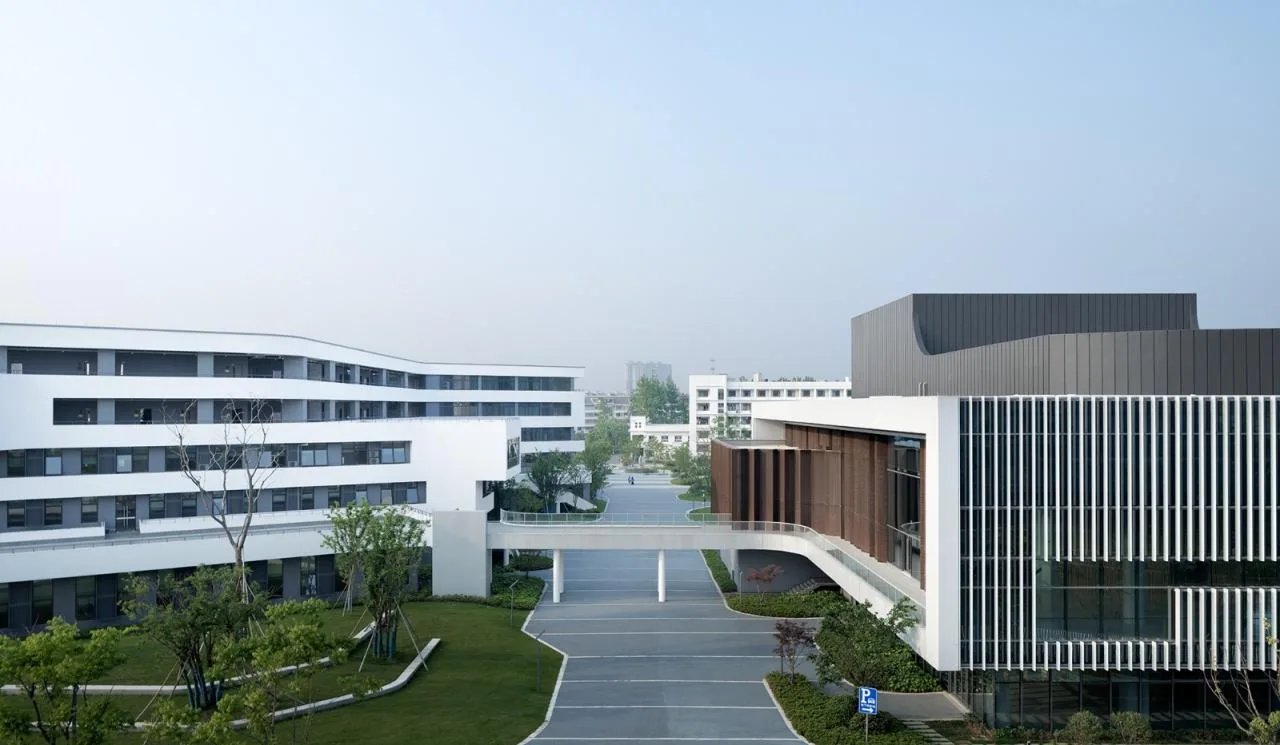
The irregularly shaped site for the South Performing Arts Complex accommodates diverse functions, creating a multifaceted relationship between the city, campus, and nature.
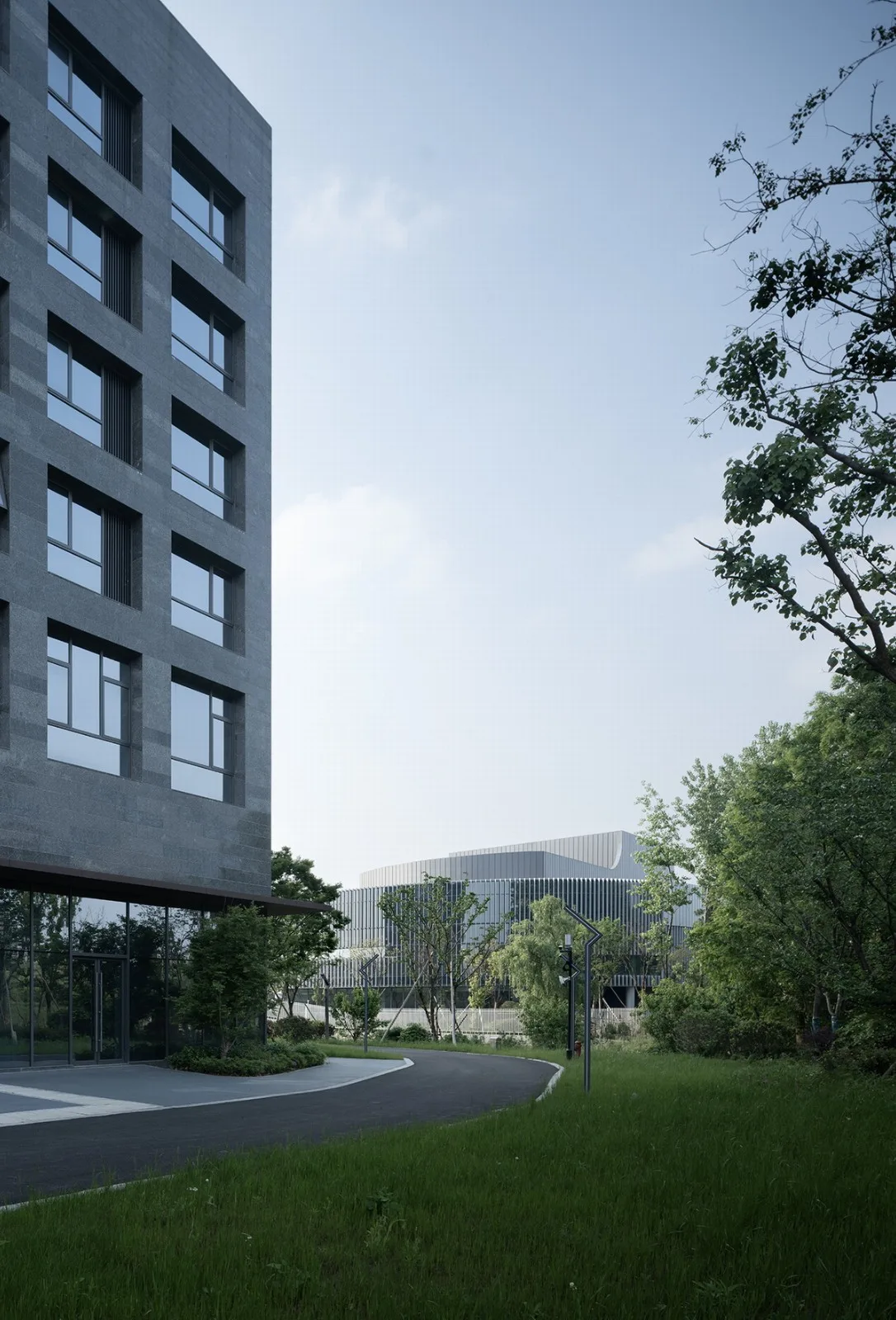
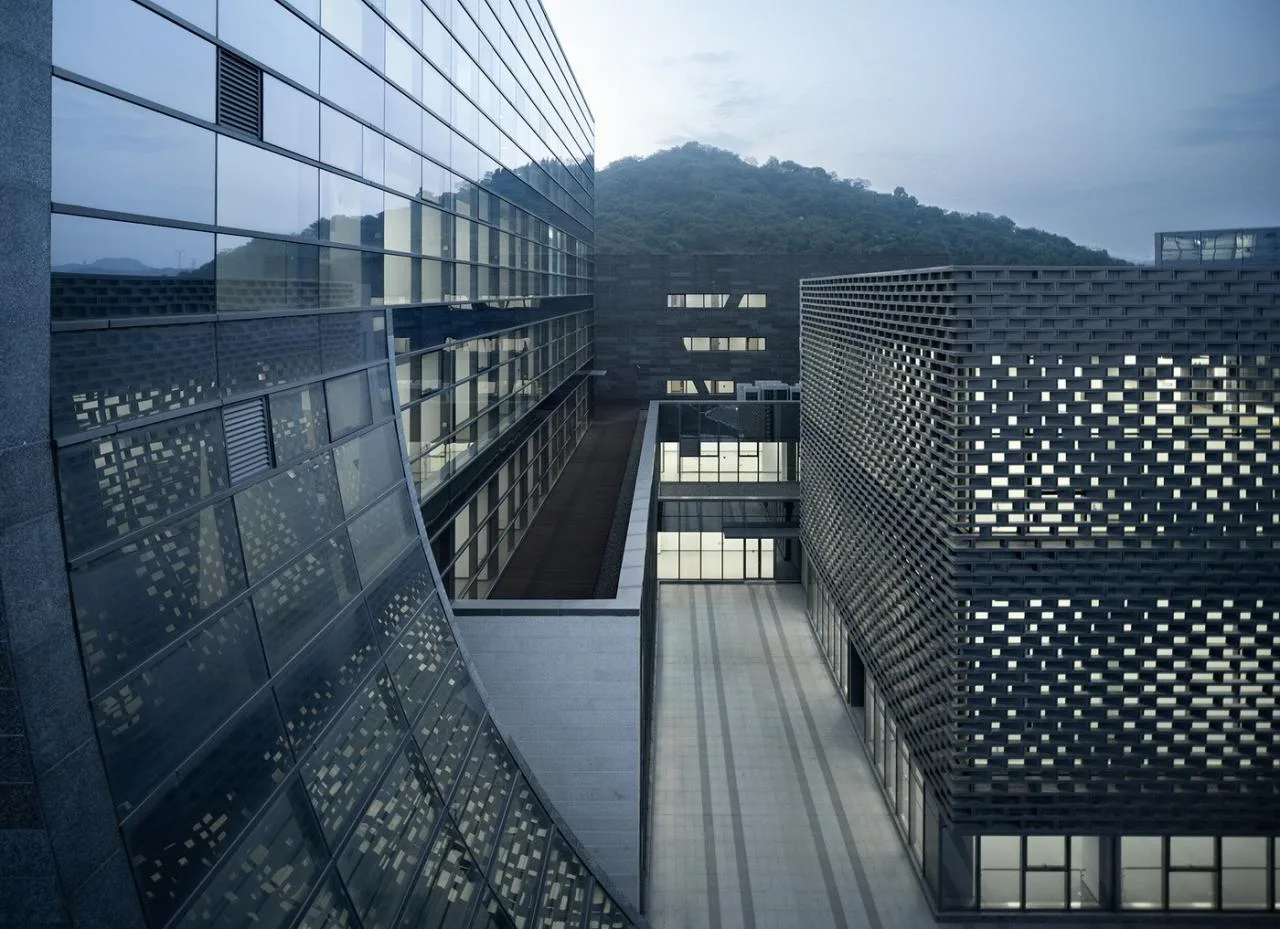
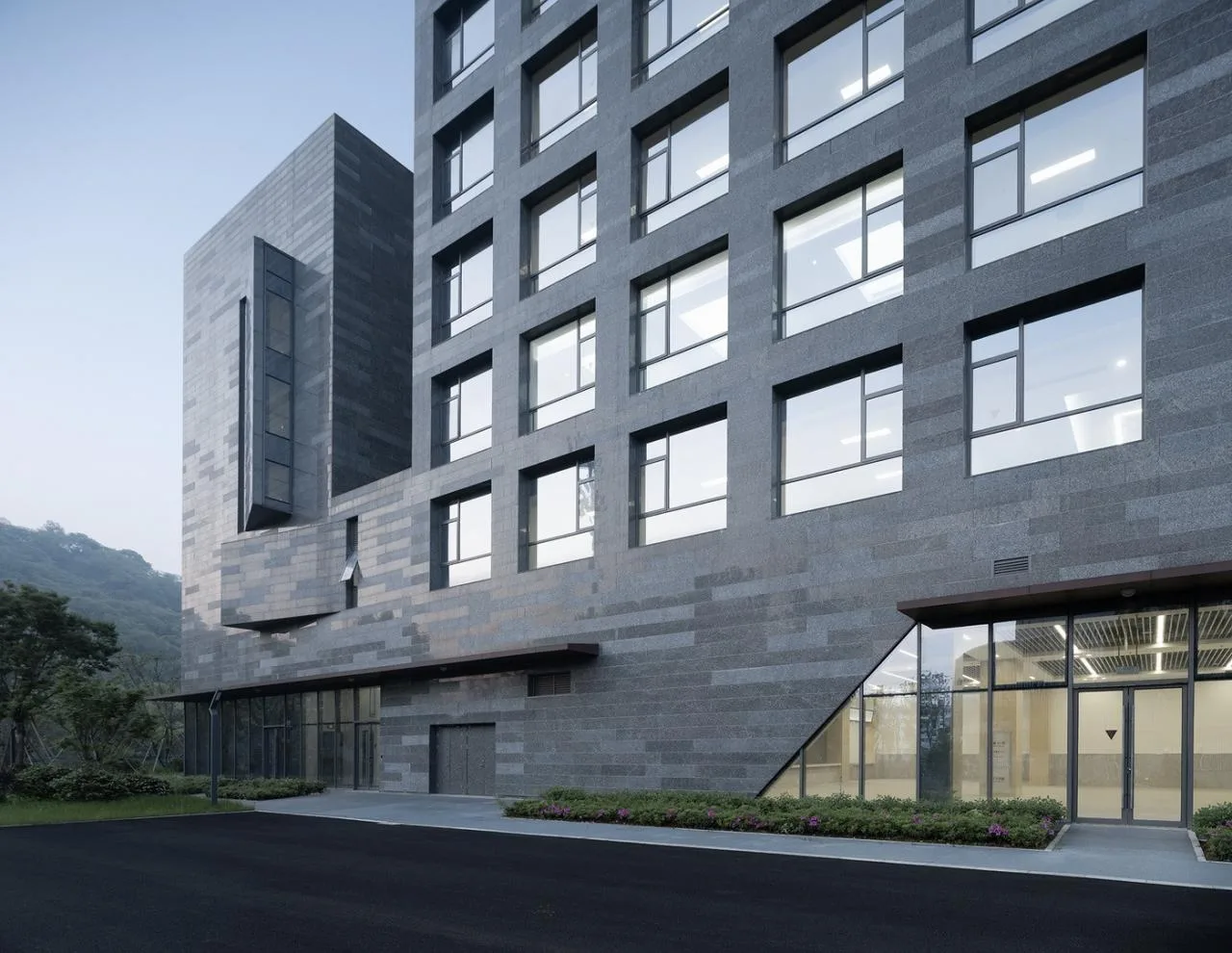
The base integrates equipment rooms, storage, and auxiliary spaces, connecting smoothly to the front plaza via wide steps. Above the base, three black volumes house a museum (south), offices (north), and dormitories (east). Interspersed among these are lighter-colored functional units that adapt sensitively to irregular site boundaries.
Inside, a glass curtain wall forms an arc-shaped open space reminiscent of a flowing canyon, housing restaurants and rehearsal halls while offering expansive views toward the city and waterfront.
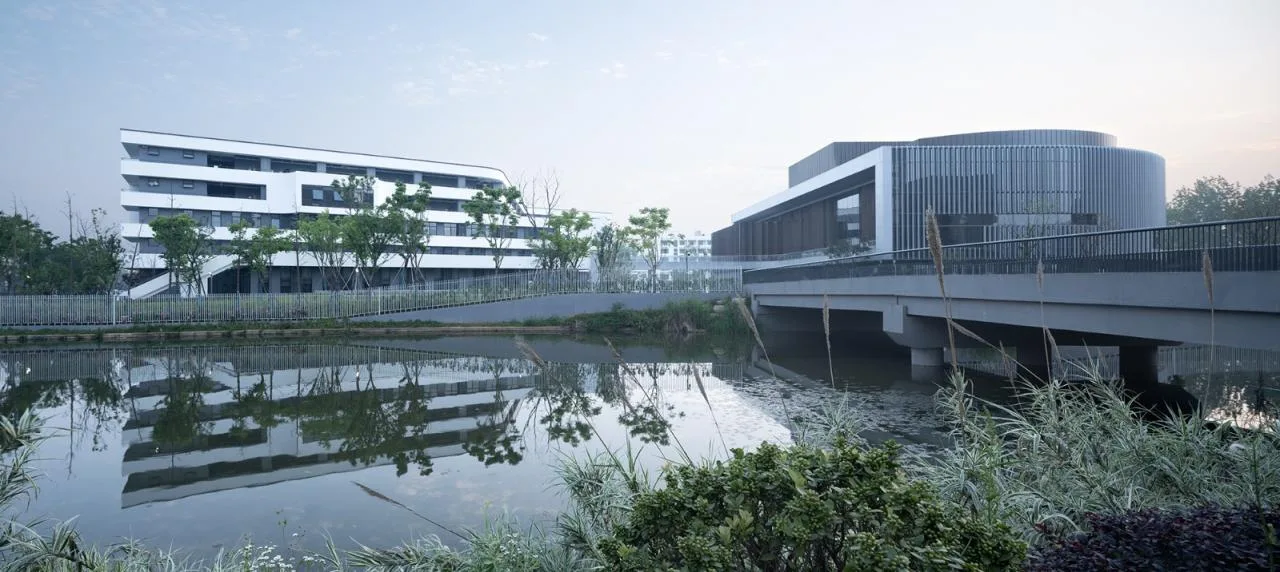
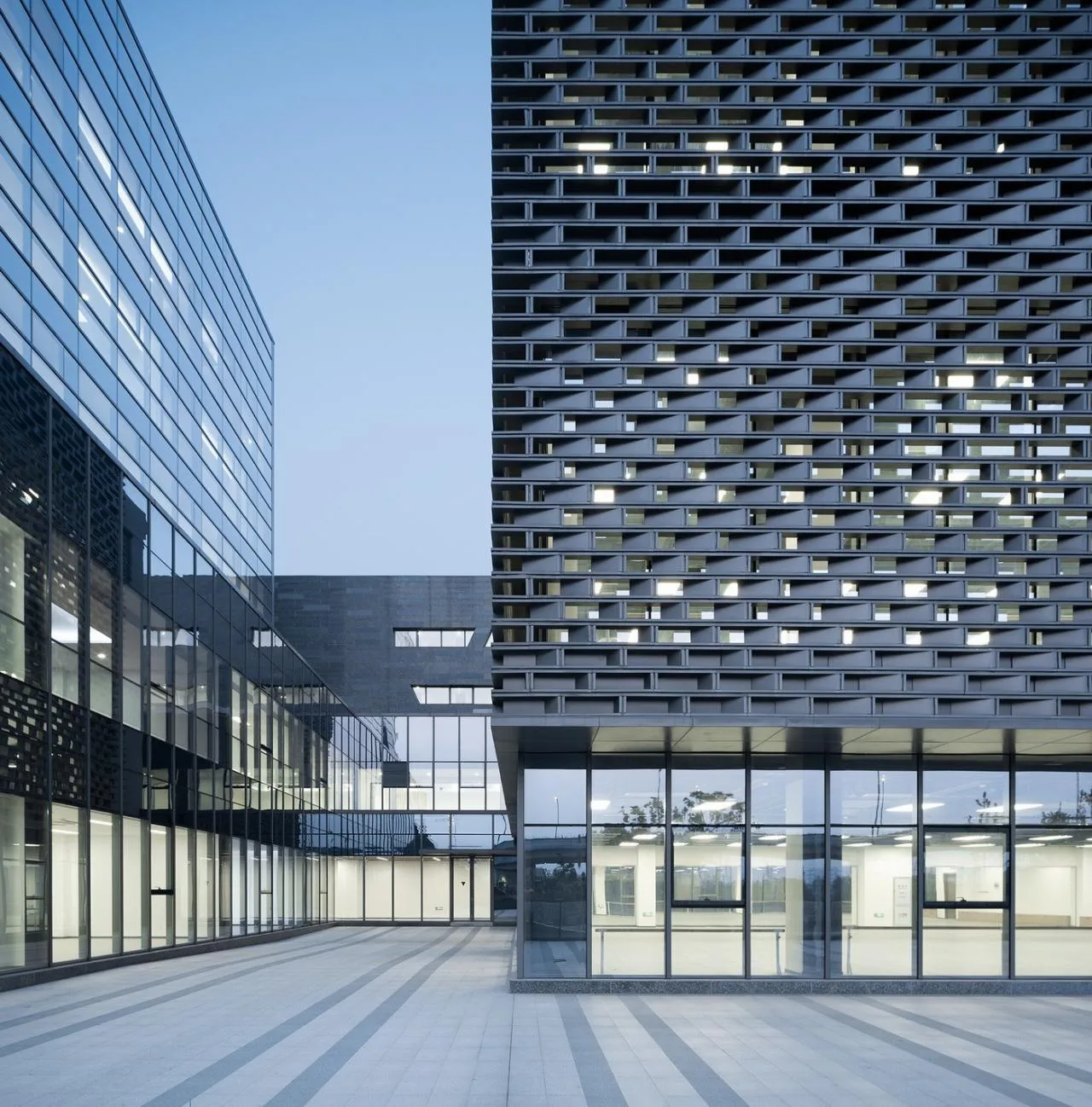
The central rehearsal hall, clad in a semi-transparent façade inspired by traditional Shaoxing flower windows, serves as the visual heart of the complex. Multiple outdoor platforms of varying sizes and heights extend the functional spaces, creating vibrant interactive areas for performances and socializing.
Minor interventions were made to the preserved buildings, simplifying façades and enhancing functionality. For example, a centralized entrance hall and covered walkway were added to the dormitory for better management and usability. The original shower area adjacent to the cafeteria was converted into a staff dining space, offering more convenient options for teachers and students.
The gymnasium was connected to the theater with a canopy, and the music hall and public classrooms were integrated with new structures. Covered walkways, wide steps, and outdoor platforms were introduced to seamlessly blend old and new buildings, achieving harmonious coexistence within the revitalized campus.
After nearly 20 years of development, this renovation acts as both a disruption and rebalancing of the existing campus order. Through careful organization and reconstruction of local elements, a renewed sense of place and a vibrant campus spatial life are created.
Conclusion: This project exemplifies local reconstruction and situational rebirth. Drawing from the Jiangnan Water Town and Drama Town regional culture, alongside the artistic temperament of the institution, Shaoxing Art School’s new campus is deeply rooted in its original context, exhibiting a natural growth trajectory.
The old and new buildings, along with open spaces, are connected through courtyards, corridors, platforms, and broad steps, creating multi-level permeability and multi-scale shared spaces. The campus’s curved surfaces flow smoothly alongside rigid, compact volumes, composing a harmonious architectural melody reminiscent of high mountains and flowing waters.
Project Drawings
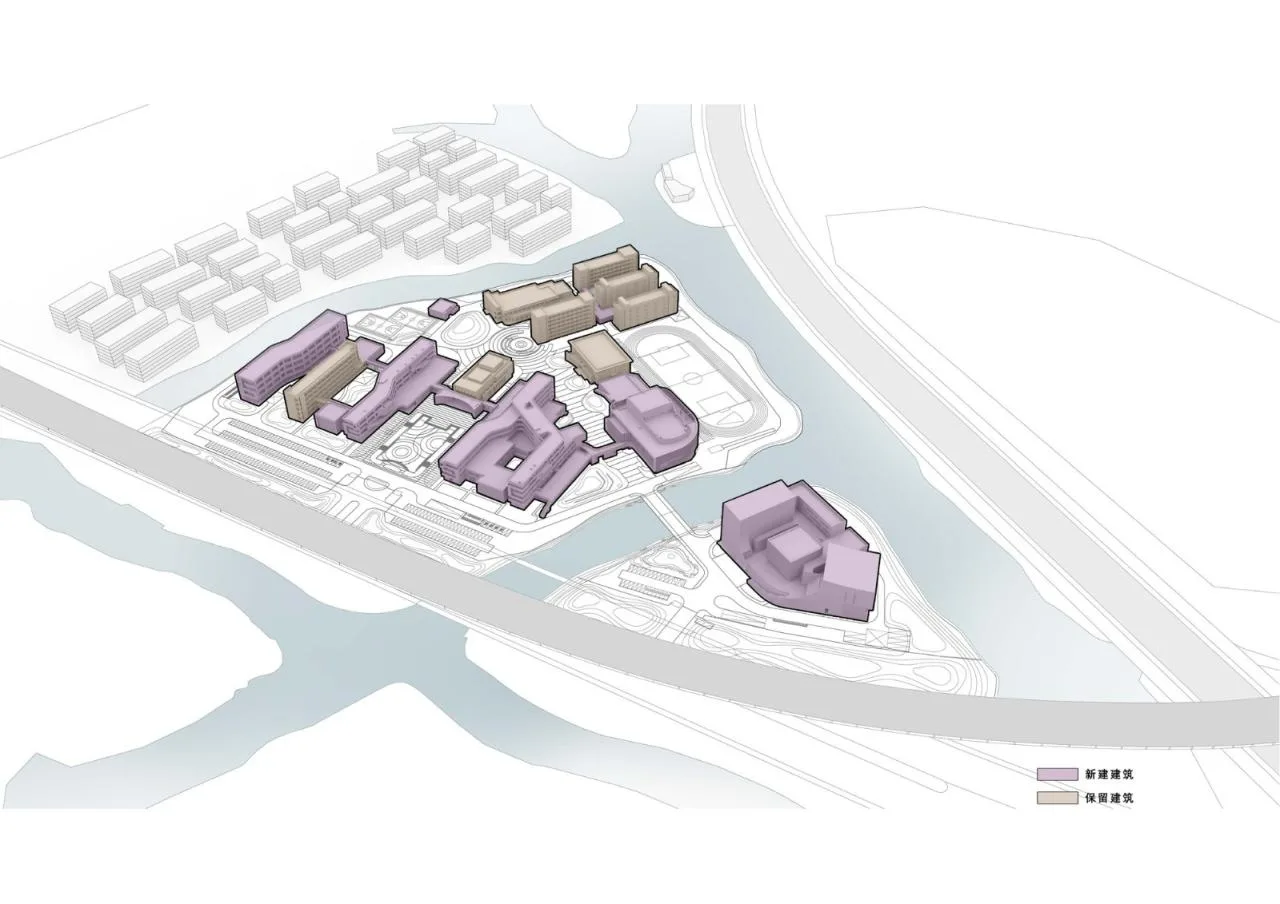
△ Schematic diagram of new and old buildings
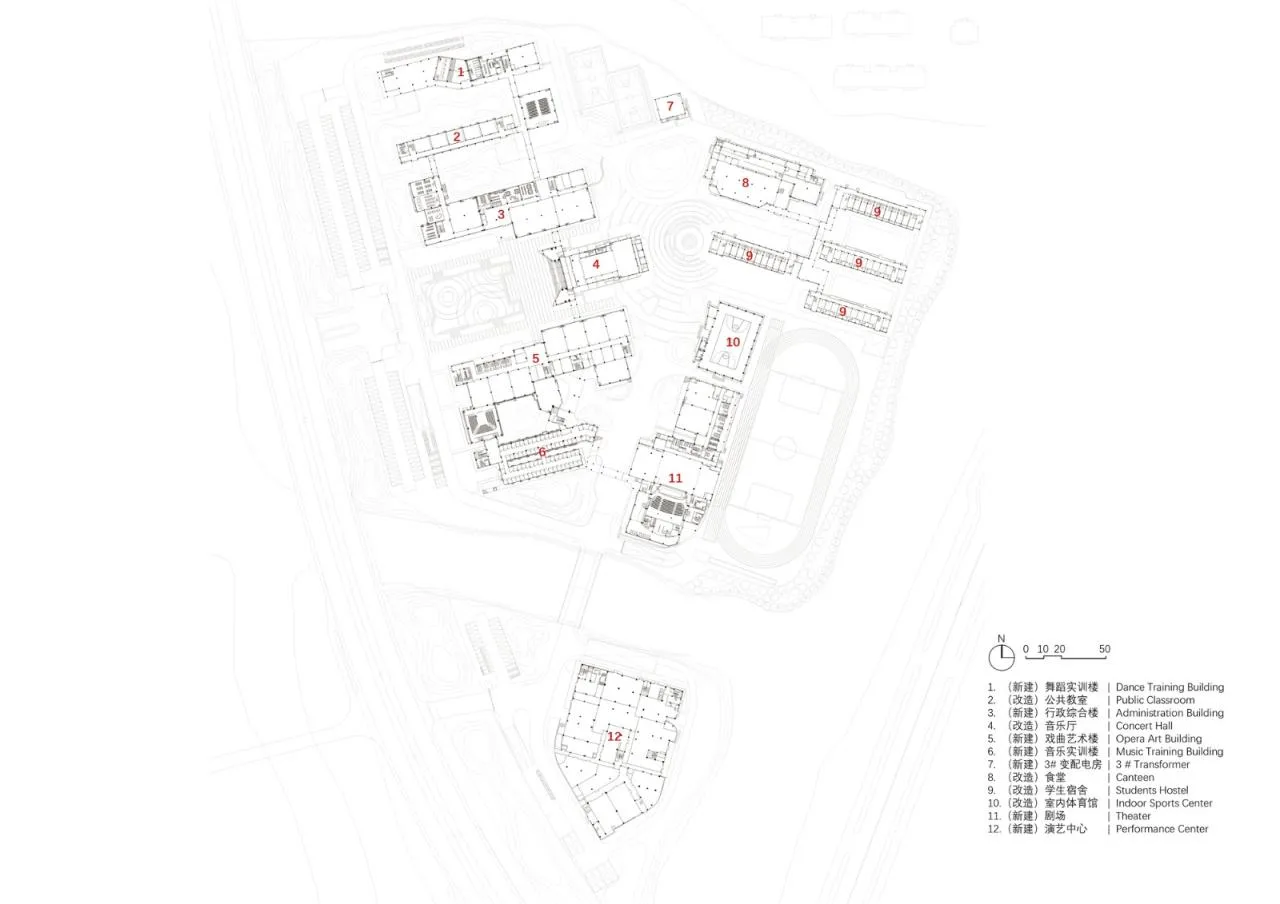
△ First floor plan
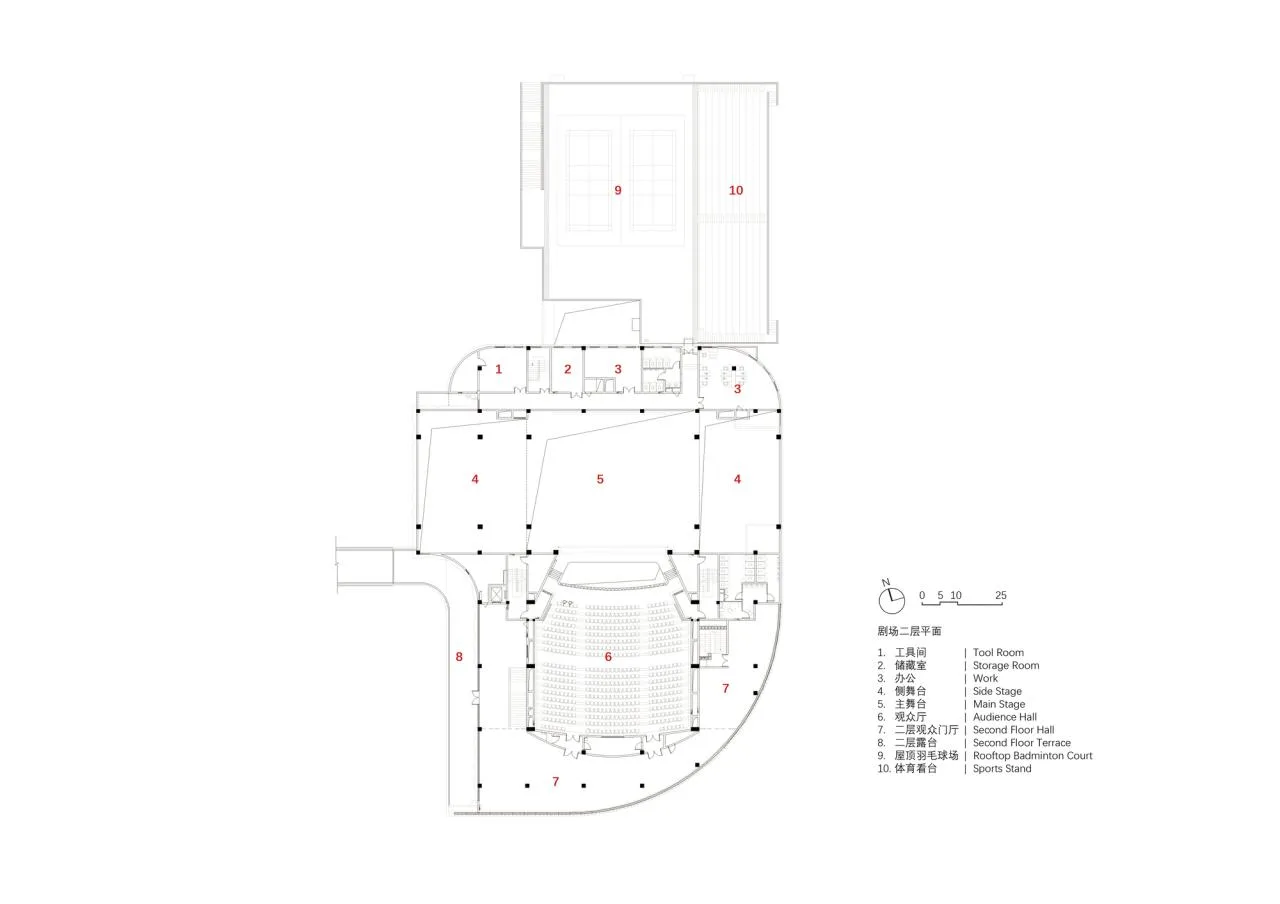
△ Theater second floor plan
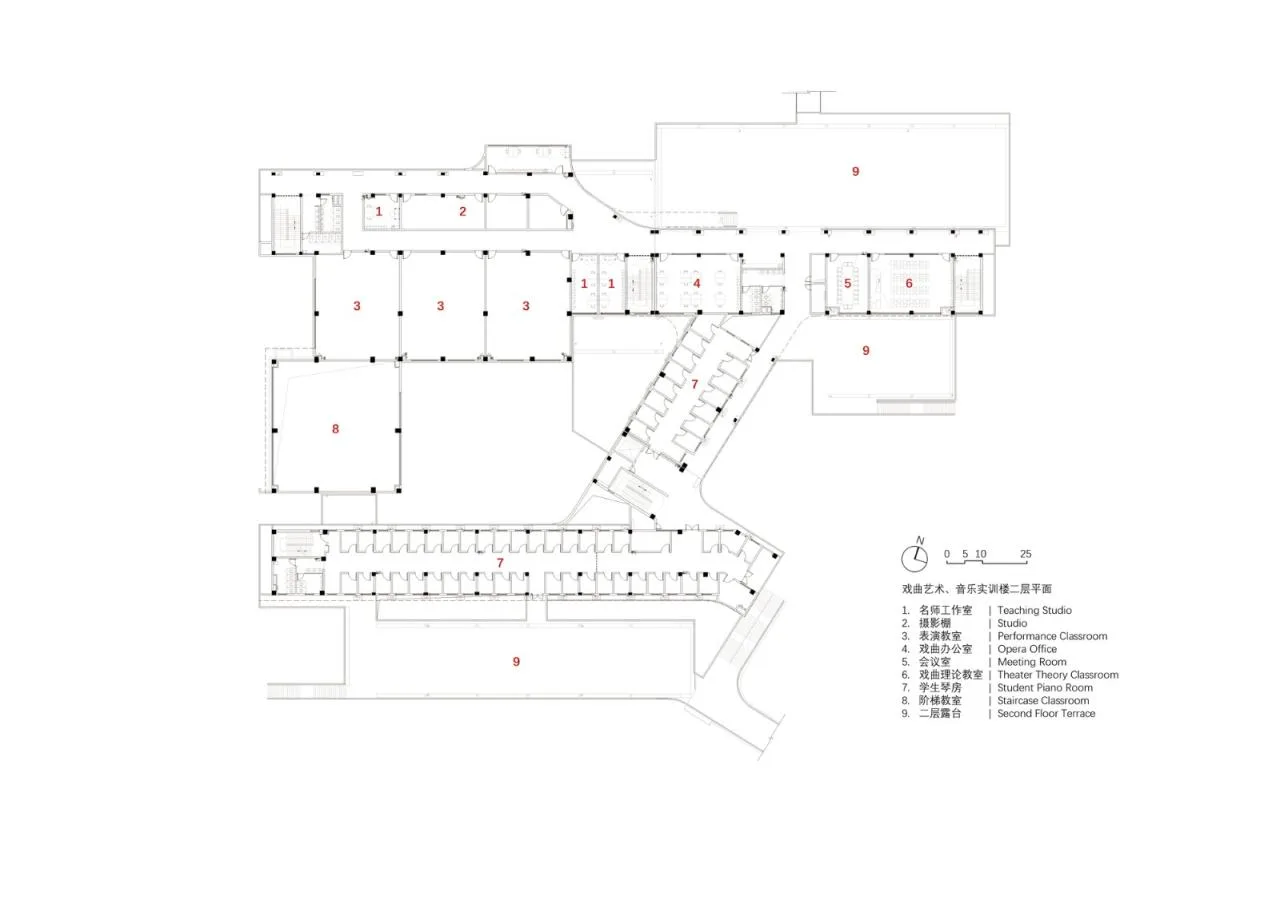
△ Plan of the second floor of the Opera Center and Music Training Building
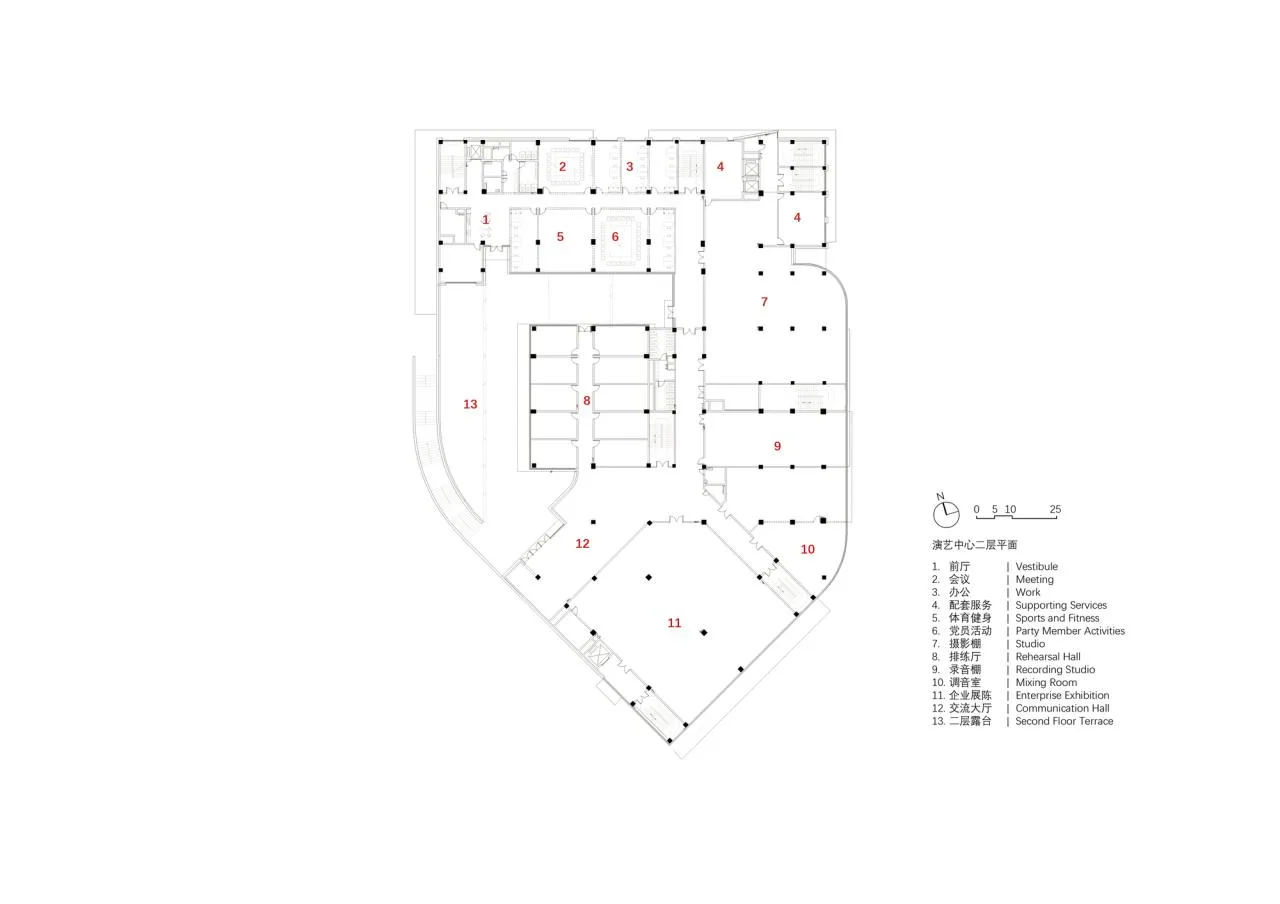
△ Plan of the Second Floor of the Performing Arts Center
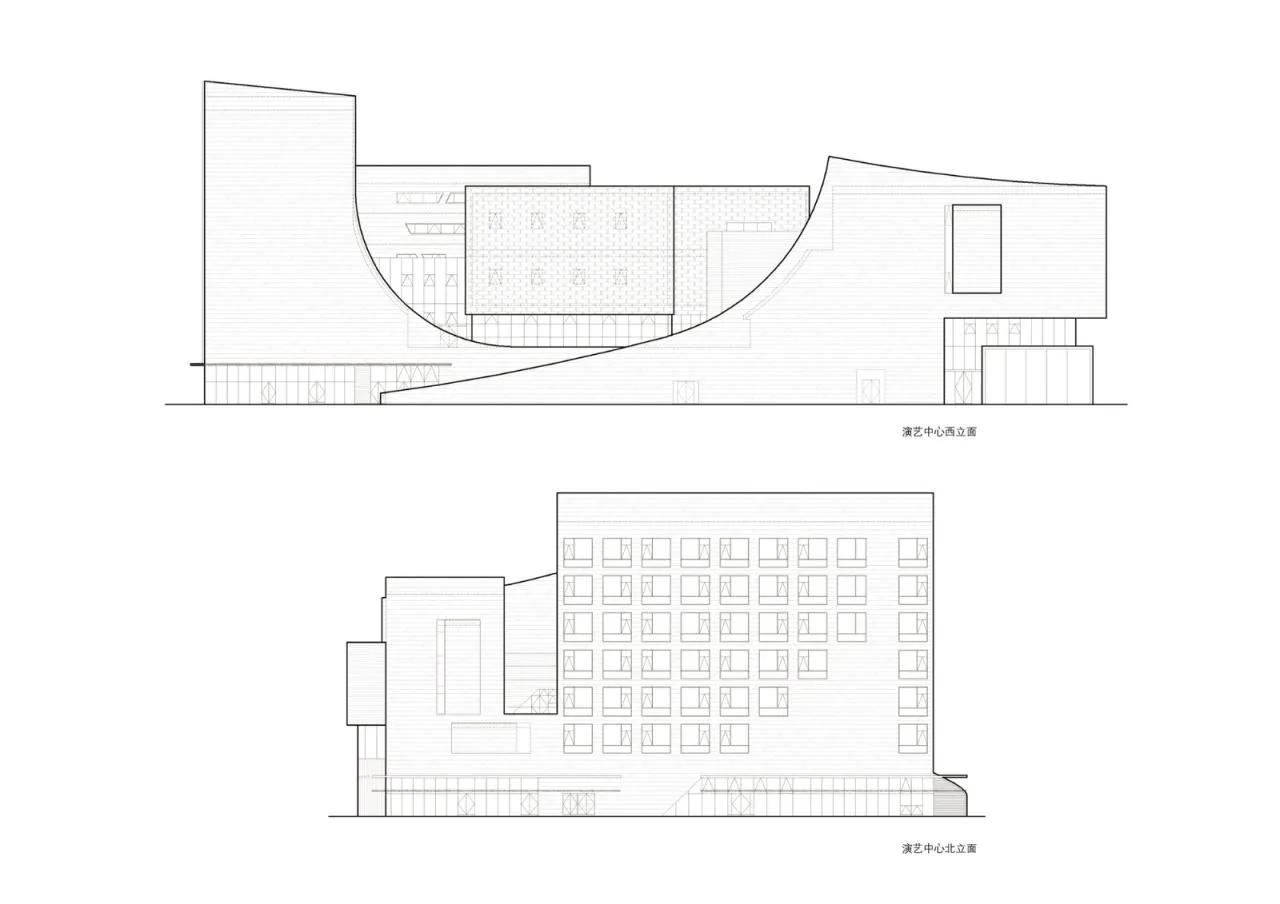
△ Front view of the Performing Arts Center
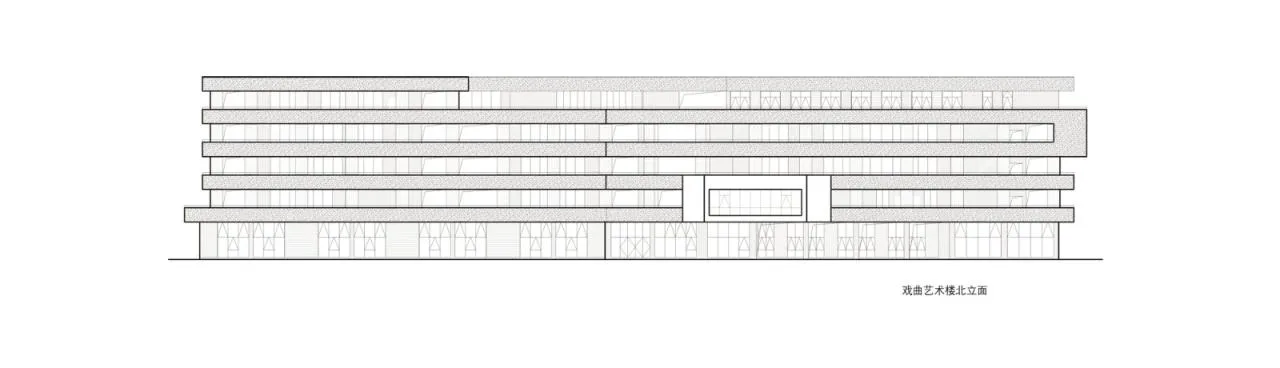
△ North facade of the Opera Art Building
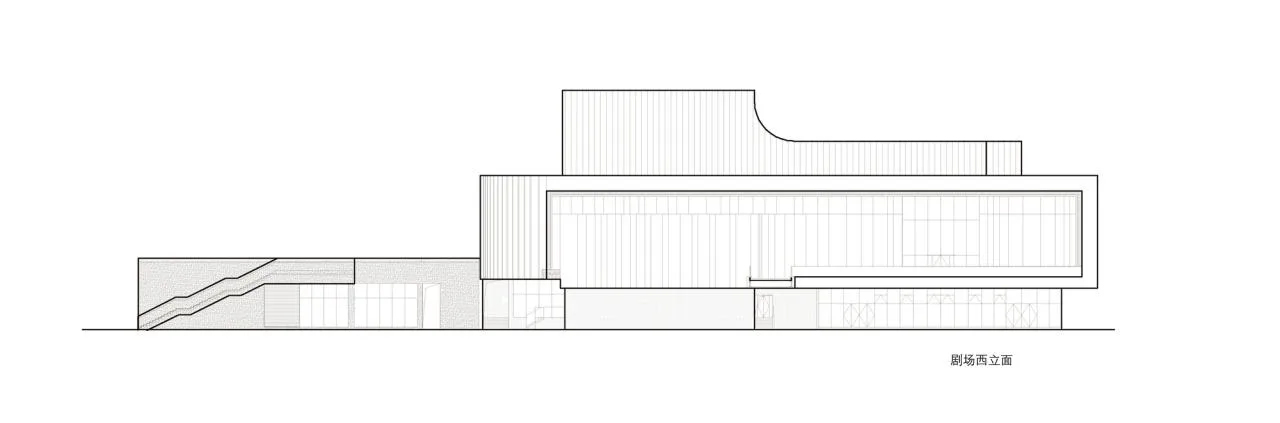
△ Theater West Facade
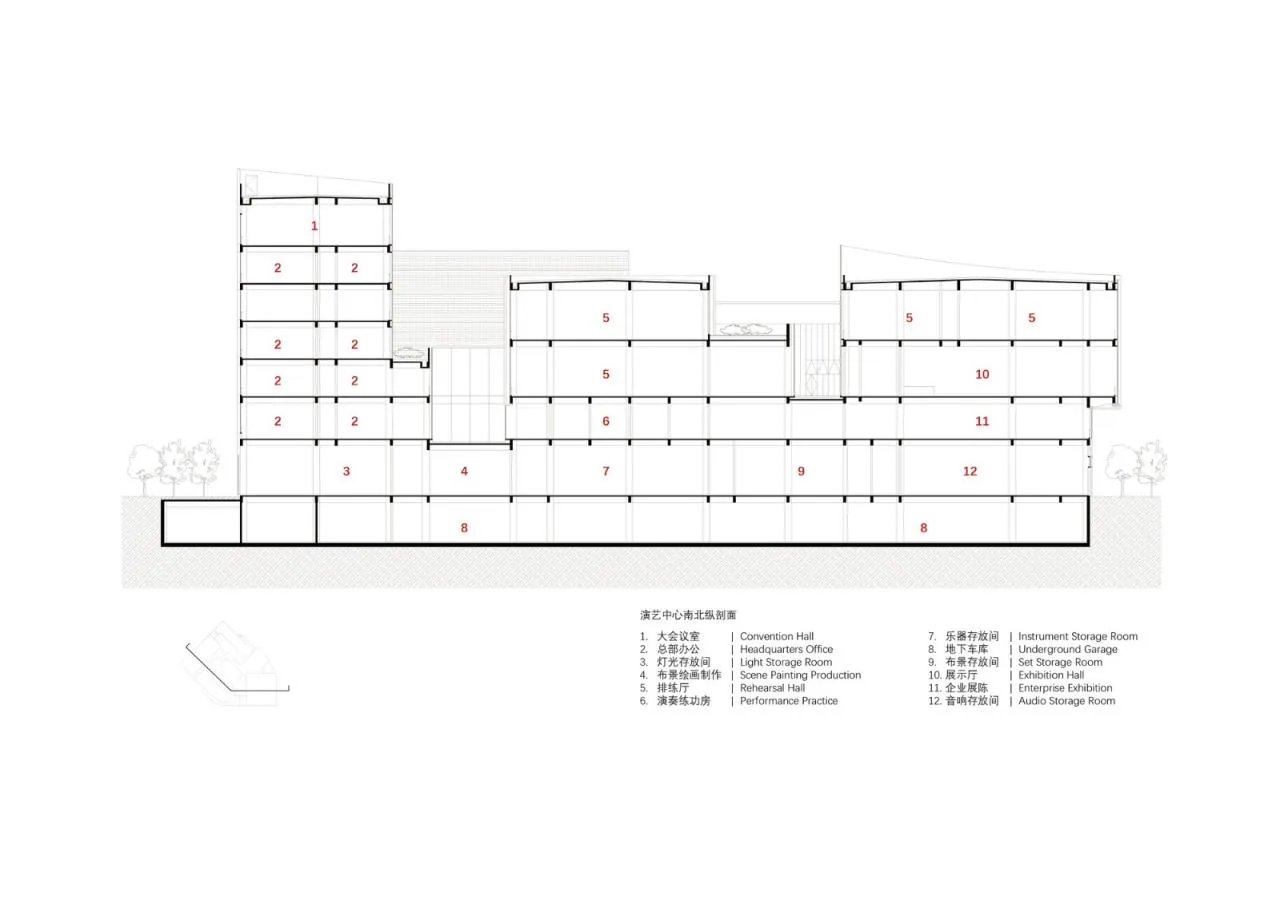
△ Sectional View of the Performing Arts Center
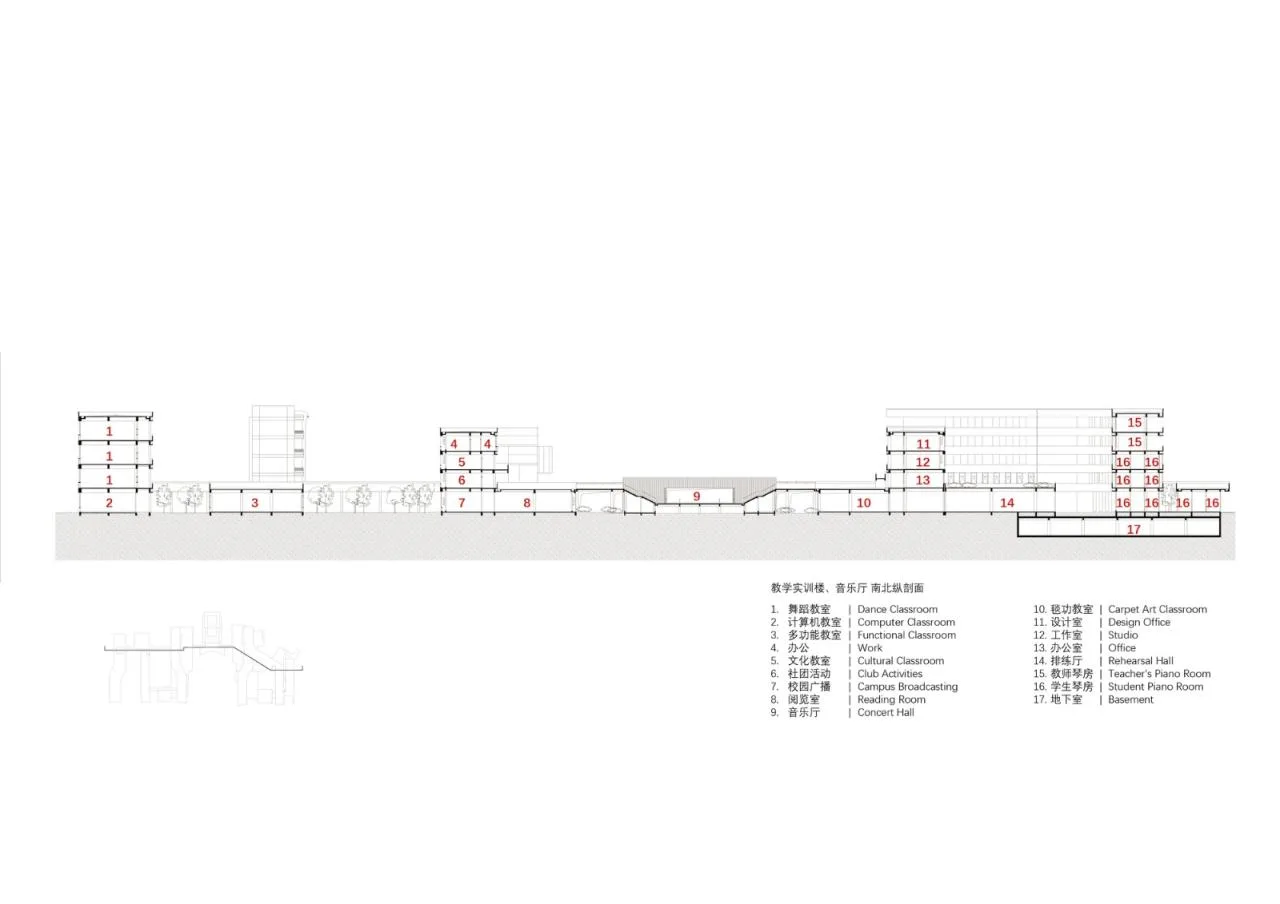
△ Section of Teaching and Training Building and Concert Hall
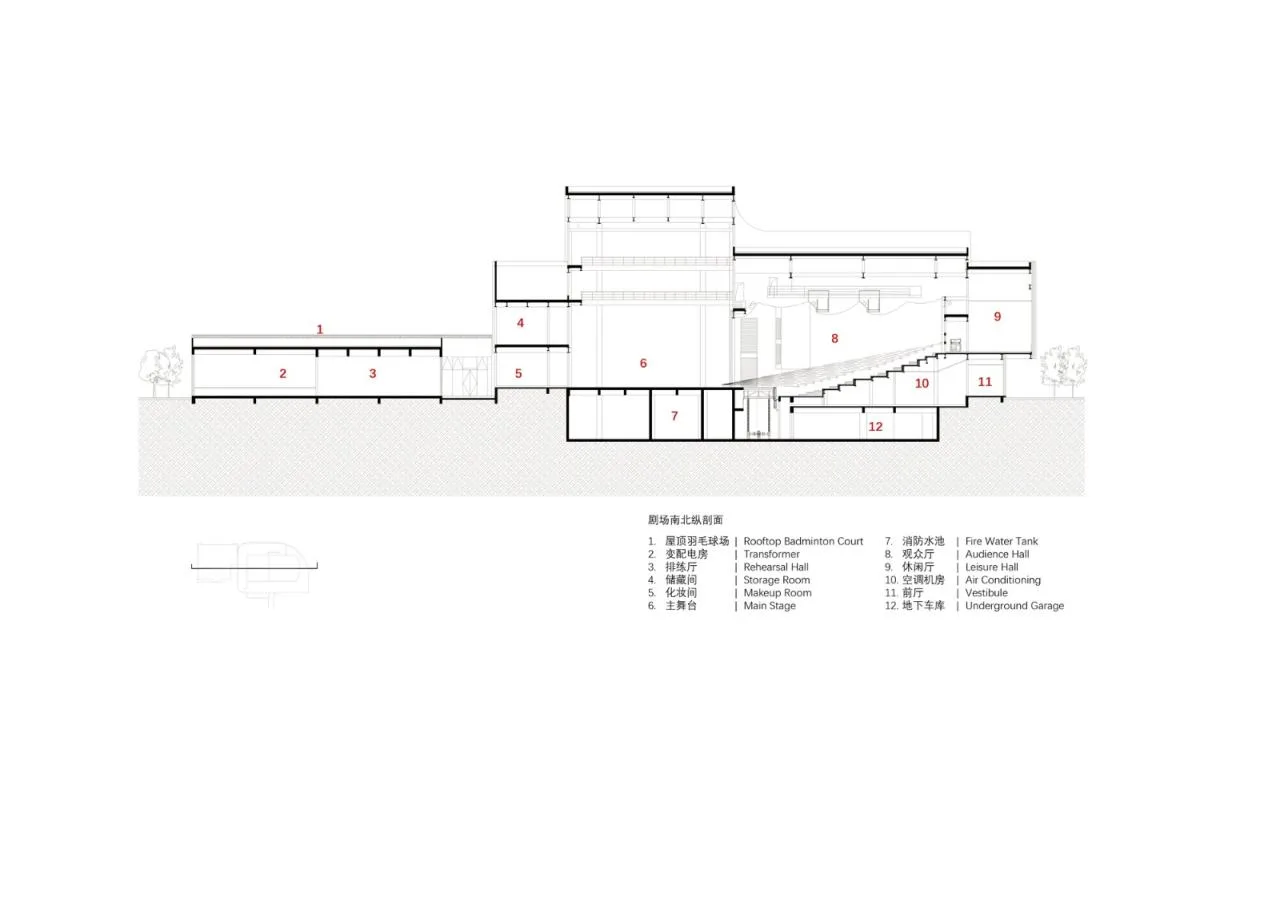
△ Theater sectional view
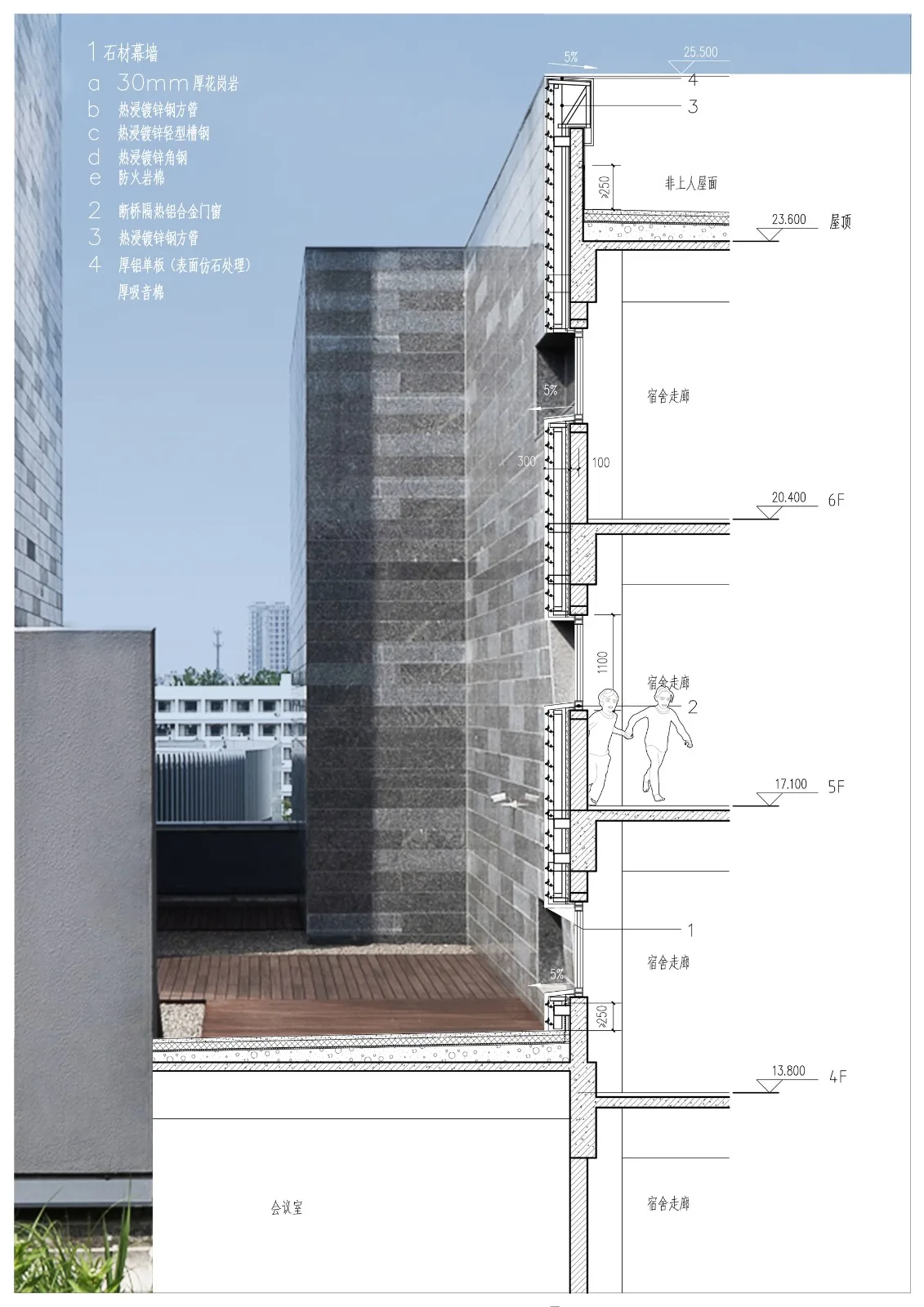
△ Detailed Structural Drawing
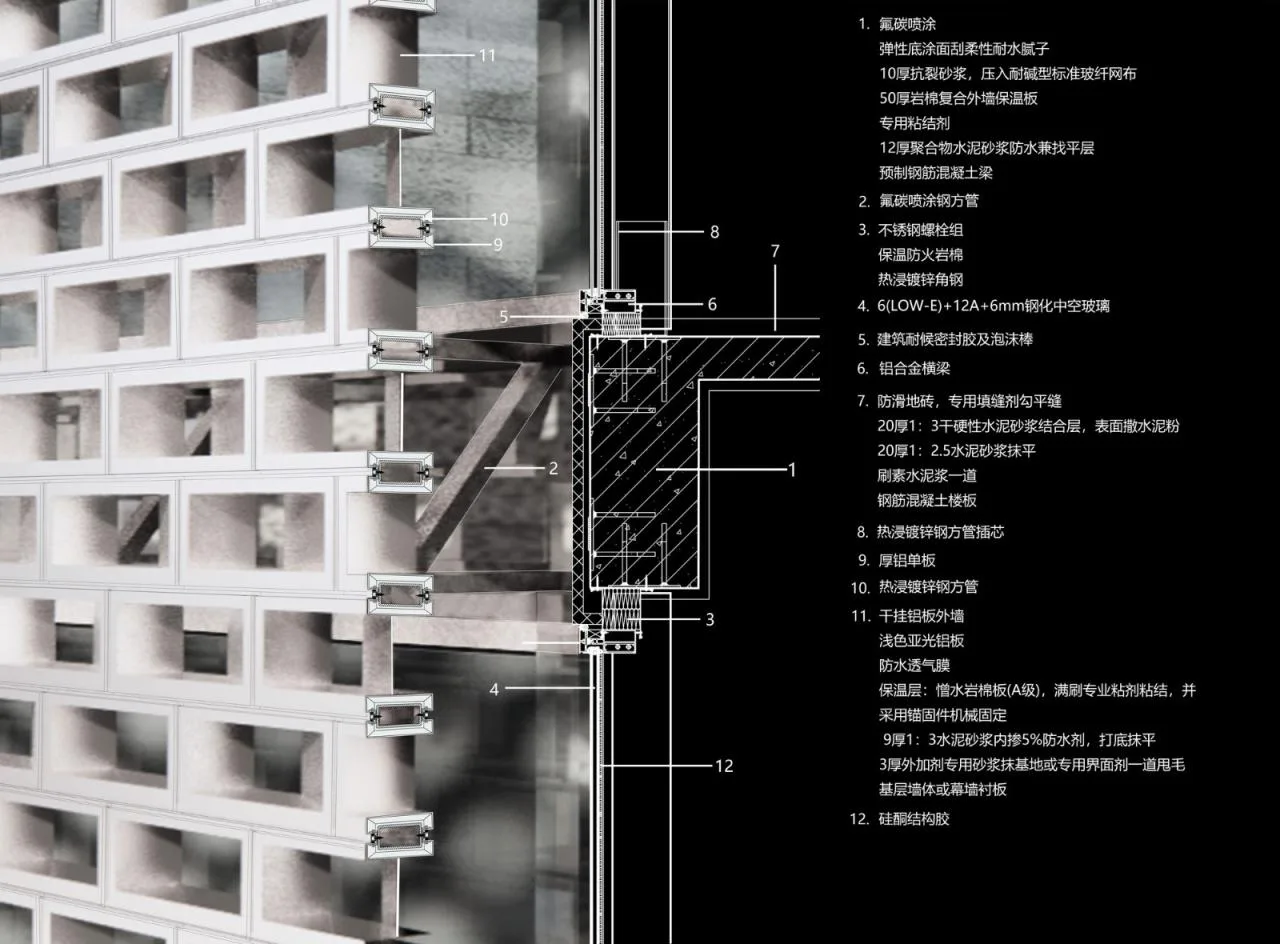
△ Detailed structural drawing
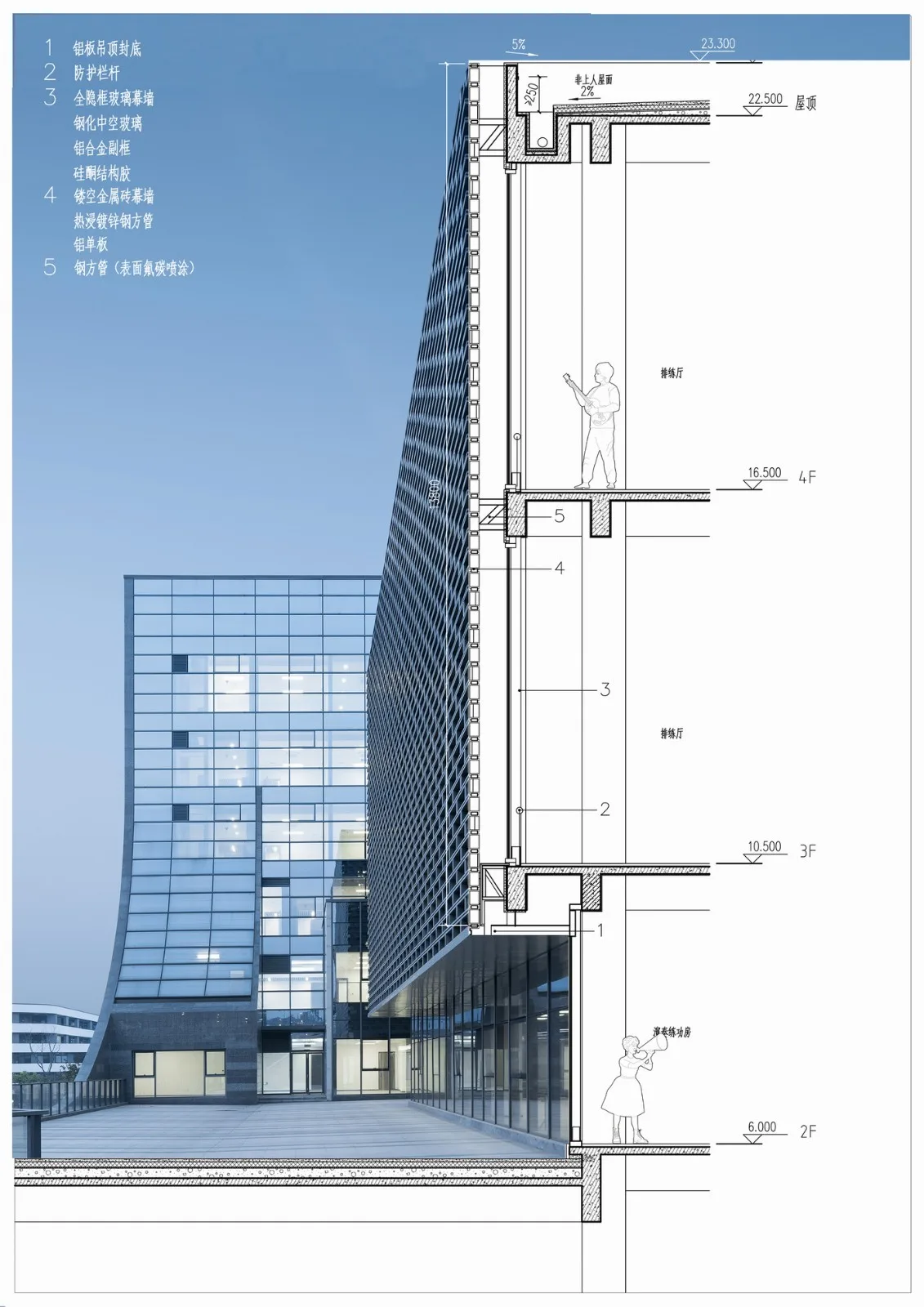
△ Detailed structural drawing
Project Information
Architect: Zhejiang University Architectural Design and Research Institute
Area: 79,606 m²
Project Year: 2022
Photographer: Zhao Qiang
Lead Architect: Lao Yanqing
Design Team: Zhang Yongqing, Chen Ze, Jin Chuhao, Zhang Chi, Chen Shuyang, Wang Yang, Lv Shangze
Structural Design Team: Zheng Xiaoqing, Zhang Jie, Wu Xiawen, Lv Junfeng, Ling Jiayan, Wang Yuxuan, Cao Shunyu, He Lihong, Ding Ziwen
Water Supply and Drainage Design Team: Zheng Xiaoqing, Zhang Jie, Wu Xiawen, Lv Junfeng, Ling Jiayan, Wang Yuxuan, Cao Shunyu, He Lihong, Ding Ziwen
Electrical Design Team: Feng Baile, Zhang Qiang, Wang Bin, Deng Zhouning, Yu Liyong, Wu Xuhui, Zheng Guoxing
HVAC Design Team: Pan Dahong, Mao Xikai, Yi Kai
Interior Design Team: He Yong, Niu Dong, Gao Heng, Zhang Yi
Landscape Design Team: Huang Lu, Cha Lijun, Zhang Beibei, Shu Hong, Fan Yulu, Cen Shiyu, Xu Hui, Shen Haitao, Wang Jue
Bridges: Shi Dawei, Hu Guomin, Gong Yiqiong
Intelligent Design: Li Xiangqun, Sun Chaomin, Lin Hua, Yang Guozhong
Curtain Wall Design Team: Li Xiangqun, Sun Chaomin, Lin Hua, Yang Guozhong
Geotechnical Design: Chen Yun, Gu Jiacheng, Xin Lei, Hu Genxing
Stage Design: Chi Wangang, Chen Yong, Chi Jiabei
Reinforcement: Lin Dejian, Qian Tao, Gu Zhengwei, Wang Qi
Economy: Zhang Ying
Owners: Shaoxing Art School, Shaoxing Performing Arts Group
Location: Shaoxing












Must log in before commenting!
Sign Up