
01. Learning from Shopping Centers
The Xiamen Red Dot Design Museum is the third museum established worldwide by the German Red Dot Design Award and the second in Asia. Unlike traditional museums, its exhibits mainly feature industrial design products closely linked to daily life and popular consumer culture.
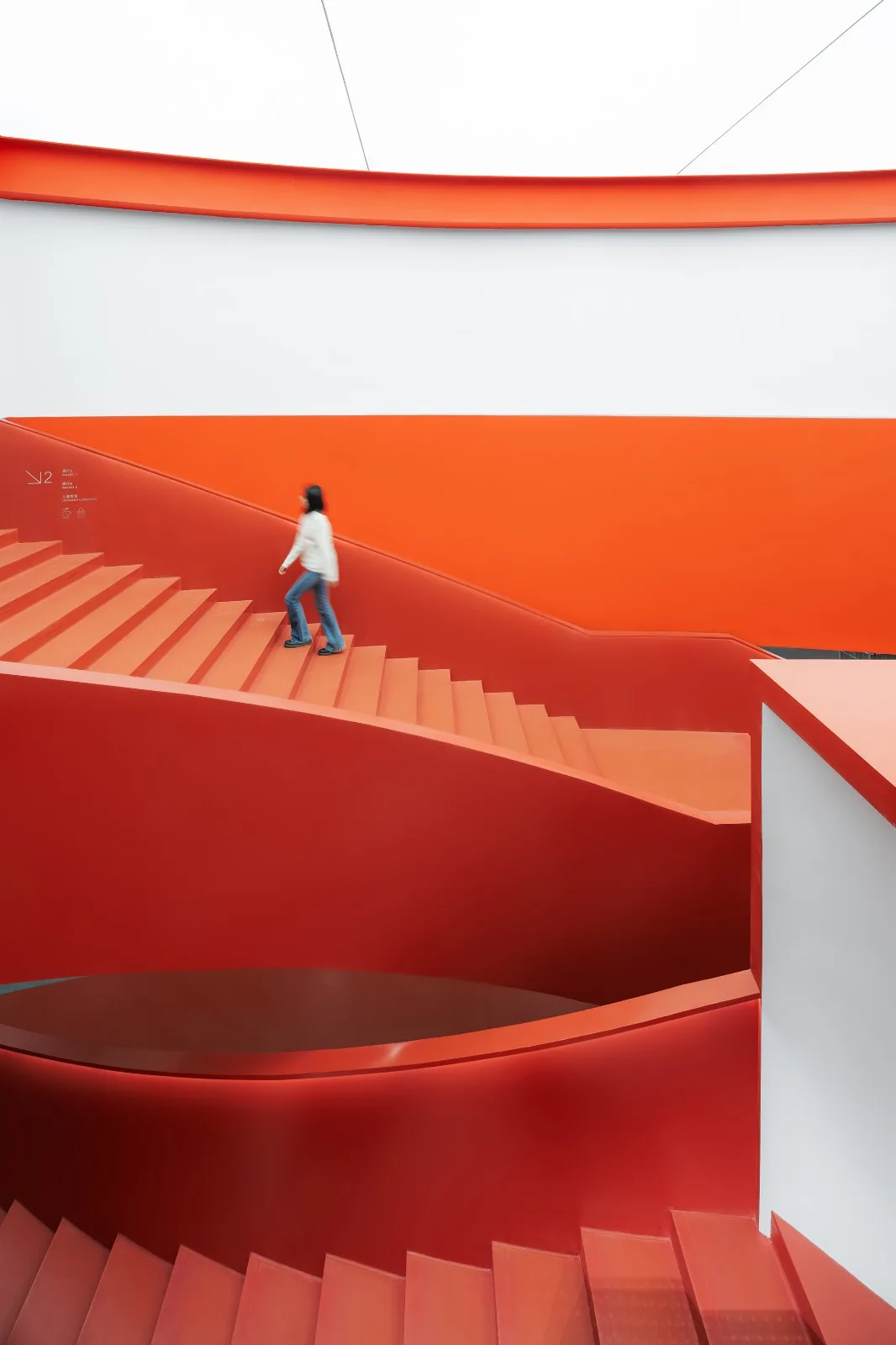
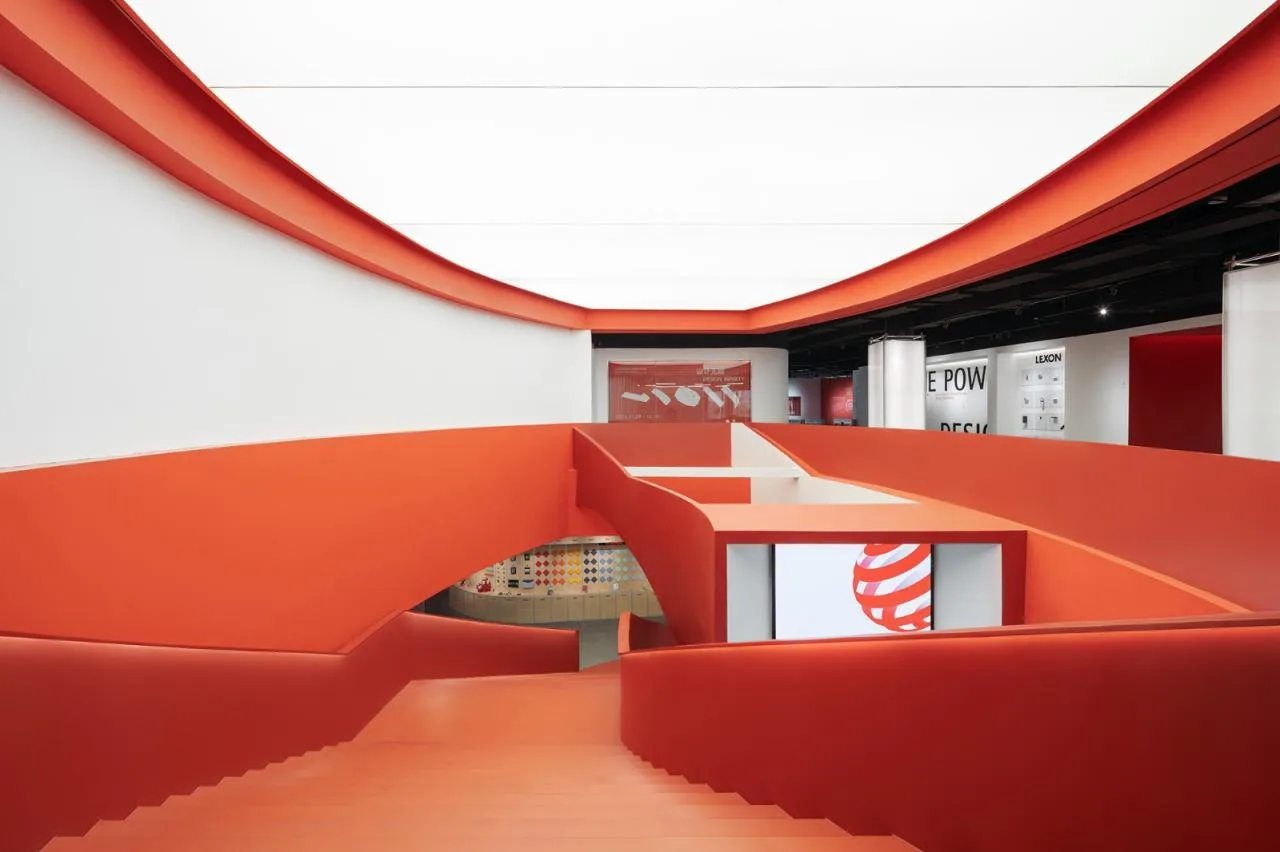
△ Space Overview © CreatAR Images (Ai Qing)
Andy Warhol once predicted, “All shopping centers will become museums, and all museums will become shopping centers.” Inspired by this vision, we chose to break away from the conventional design of cold, conservative white-box museums and boldly blur the boundaries between museums and shopping centers. Fortunately, our concept aligns perfectly with the Red Dot founders’ original intention to create a down-to-earth and vibrant new design museum.
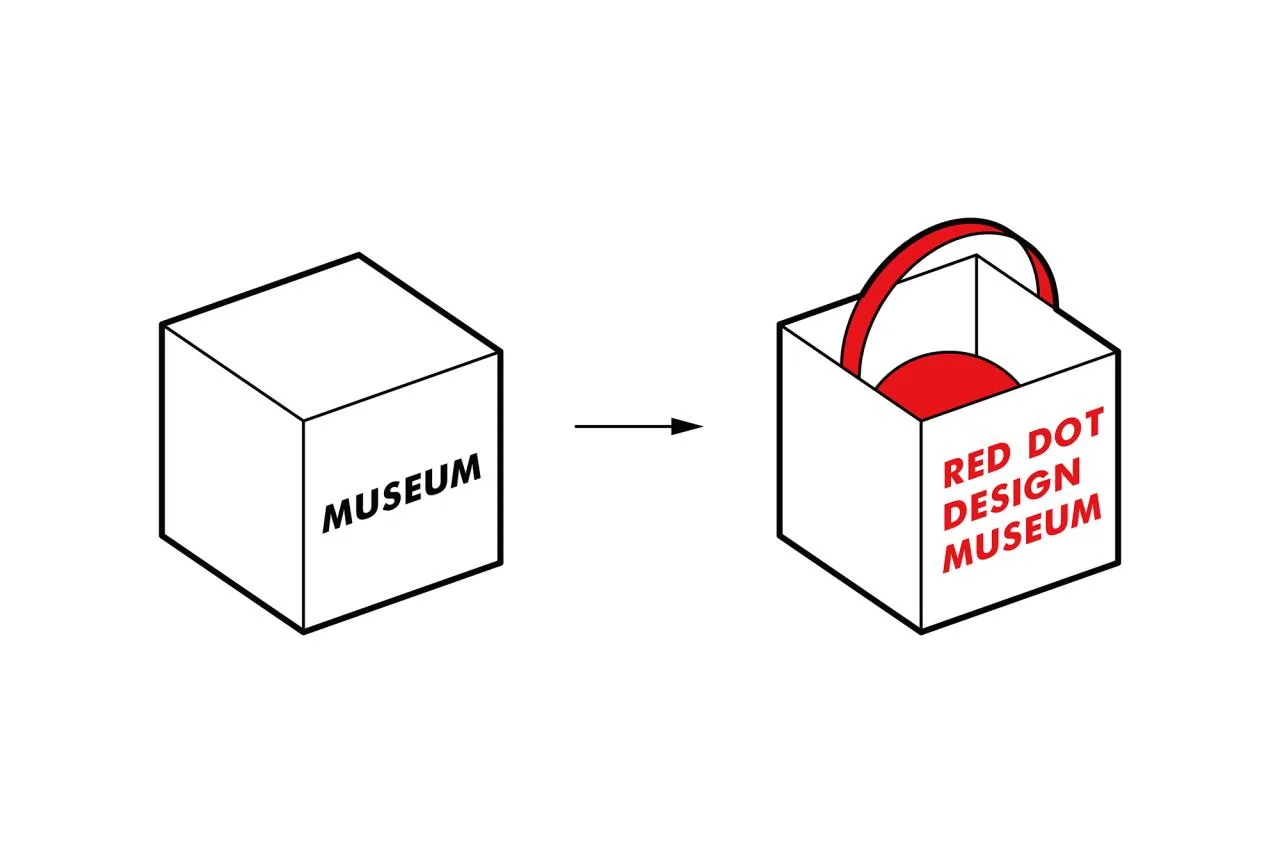
△ Conceptual Diagram © STEPS Grand Staircase Architecture
From the 19th-century arcade streets of Paris to modern shopping centers, Benjamin’s “Arcade Plan” introduced the “wanderer” lifestyle, emphasizing the creation of free public spaces within urban commercial environments for leisure. At the Red Dot Design Museum, we embrace the familiar spatial form of shopping centers to balance commercial and public spaces. This approach creates a museum environment that encourages free roaming, much like shopping, bringing the museum experience closer to visitors.
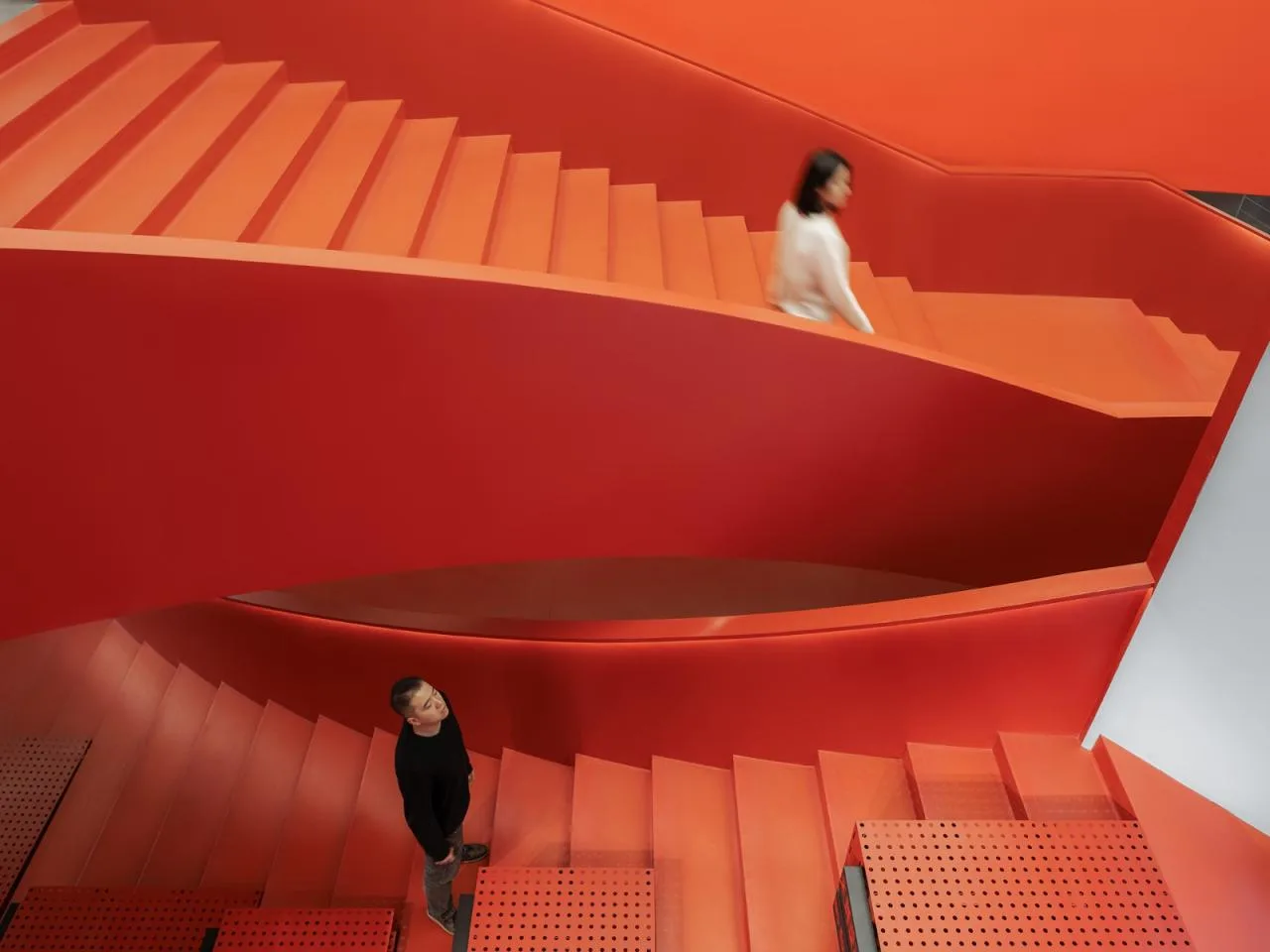
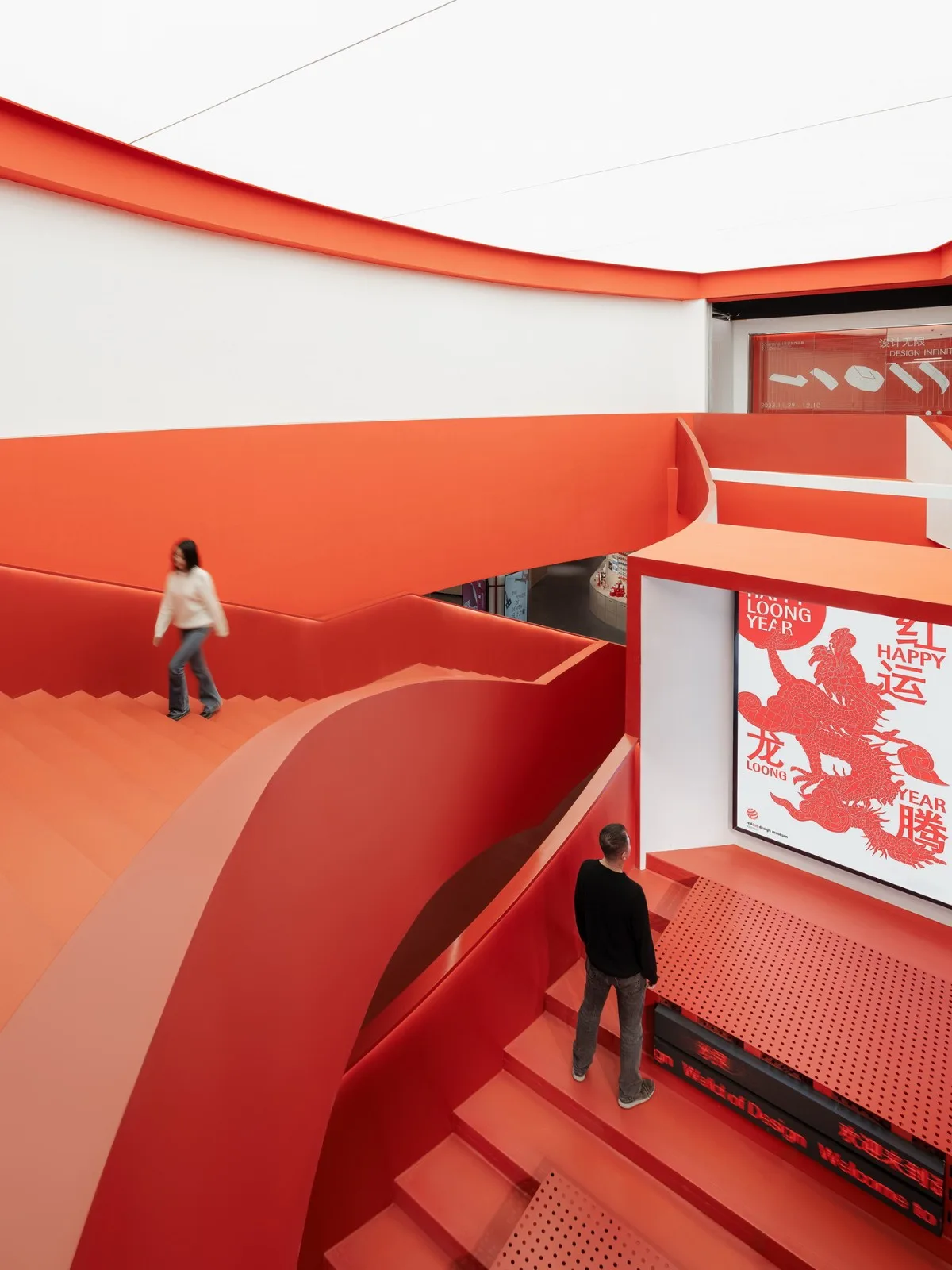
△ Free Roaming Space © CreatAR Images (Ai Qing)
02. Revitalizing the Commercial Podium
The museum is located within the commercial podium of the tallest office building in Xiamen’s Jimei Xinglin Bay Business District. Our design integrates the podium’s commercial functions with the museum space, revitalizing this long-vacant area.
The original facade display windows of the podium have been repurposed as museum poster displays. Outdoor public spaces, including the square and pedestrian bridge, feature a series of local red elements—advertising boxes, columns, handrails, canopies, and letter seats—that act as vibrant guides directing visitors to the museum entrance. This not only forms an inviting outdoor space but also injects a splash of bright red color into the cityscape.
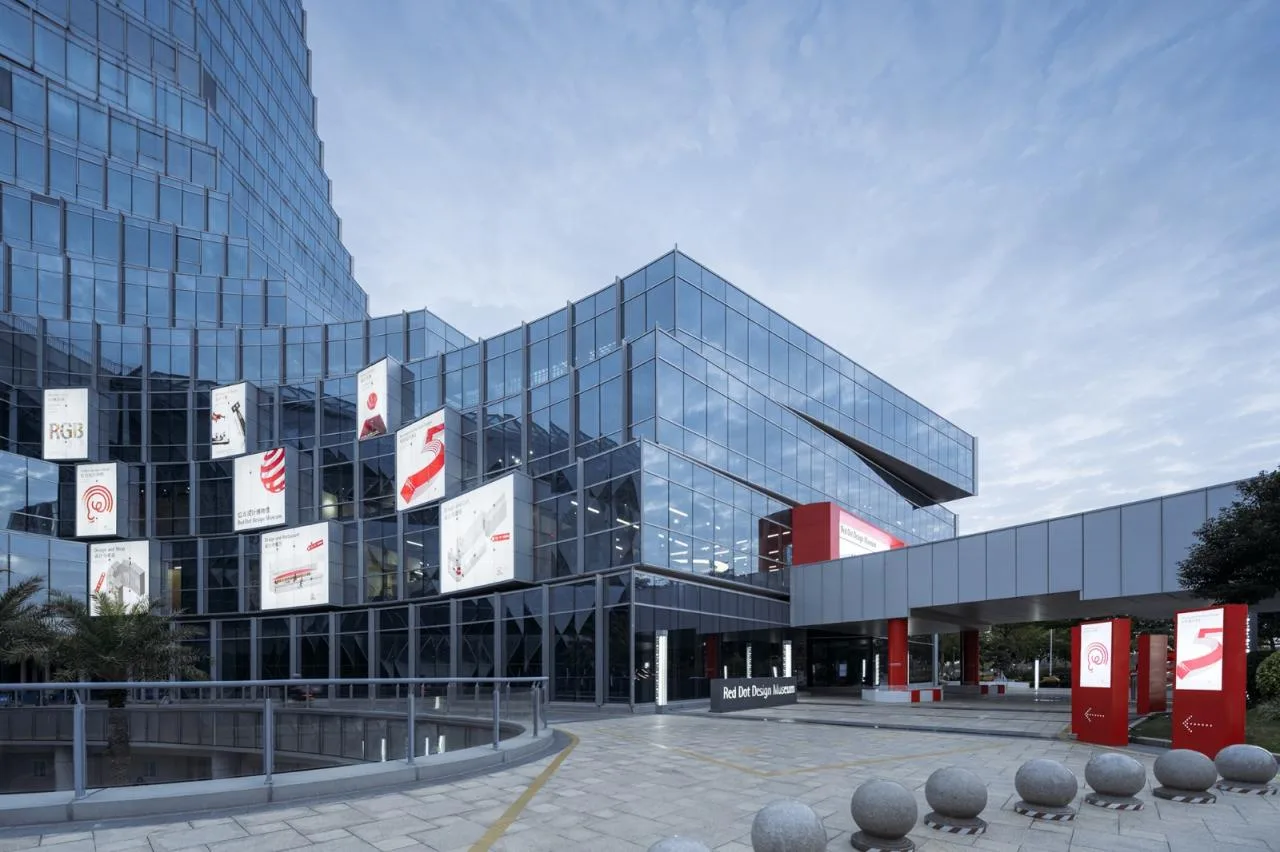
A series of red elements serve as outdoor signage guidance © CreatAR Images (Ai Qing)
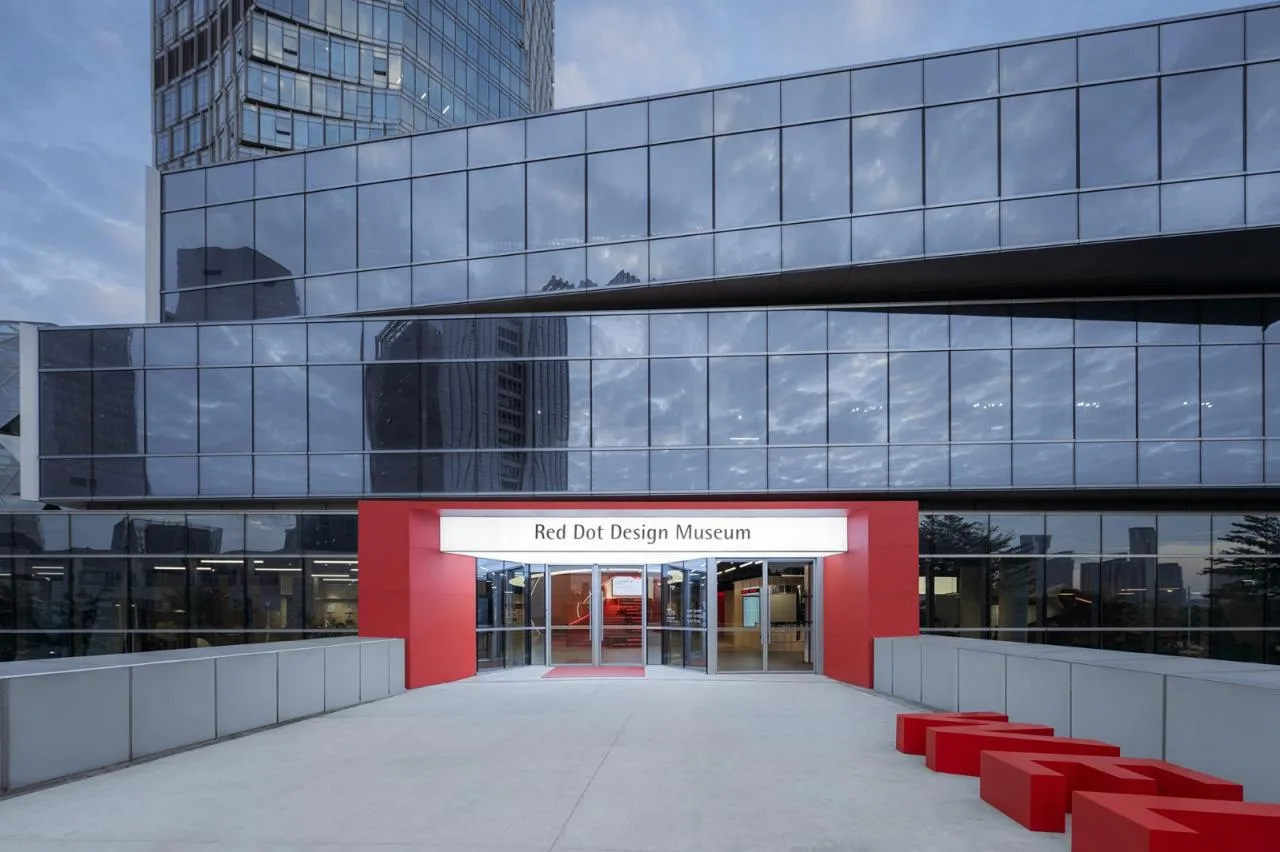
△ Museum Entrance © CreatAR Images (Ai Qing)
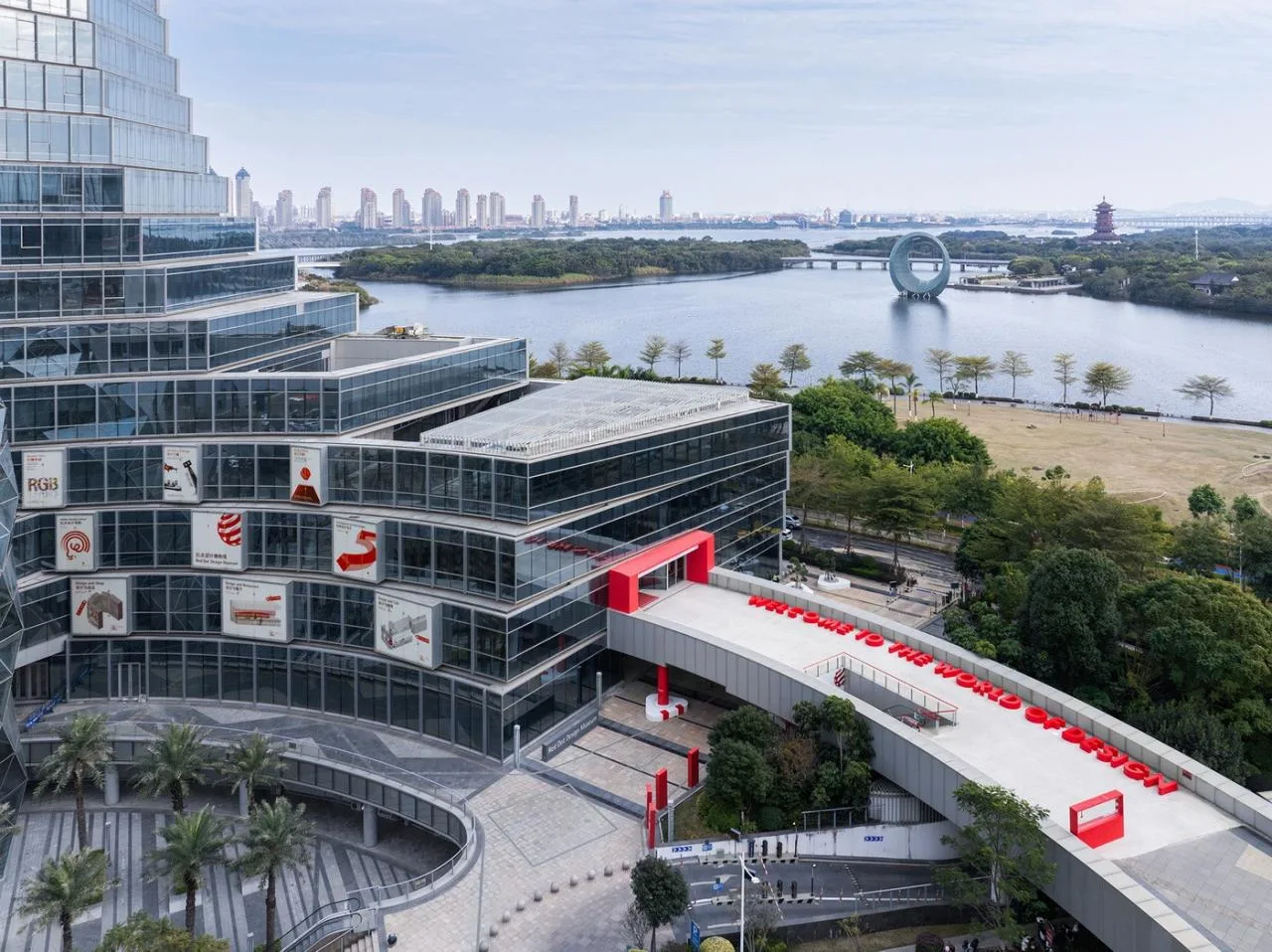
△ Outdoor Public Space of the Museum © CreatAR Images (Ai Qing)
Working with a cross-media design team, we leveraged the commercial podium’s spatial advantages to create key public spaces: an open retail area and a dining and café zone. The elevated atrium, positioned at the entrance, serves as the museum’s core. The original escalators were removed and replaced by a striking double spiral red staircase, becoming the visual focal point. One staircase, facing the entrance, functions as a display stairway equipped with LED screens for rotating themed exhibitions and video content. The other serves as a functional staircase leading to the upper level. The playful intertwining of these two staircases attracts visitors to take photos and share them on social media, promoting the museum organically.
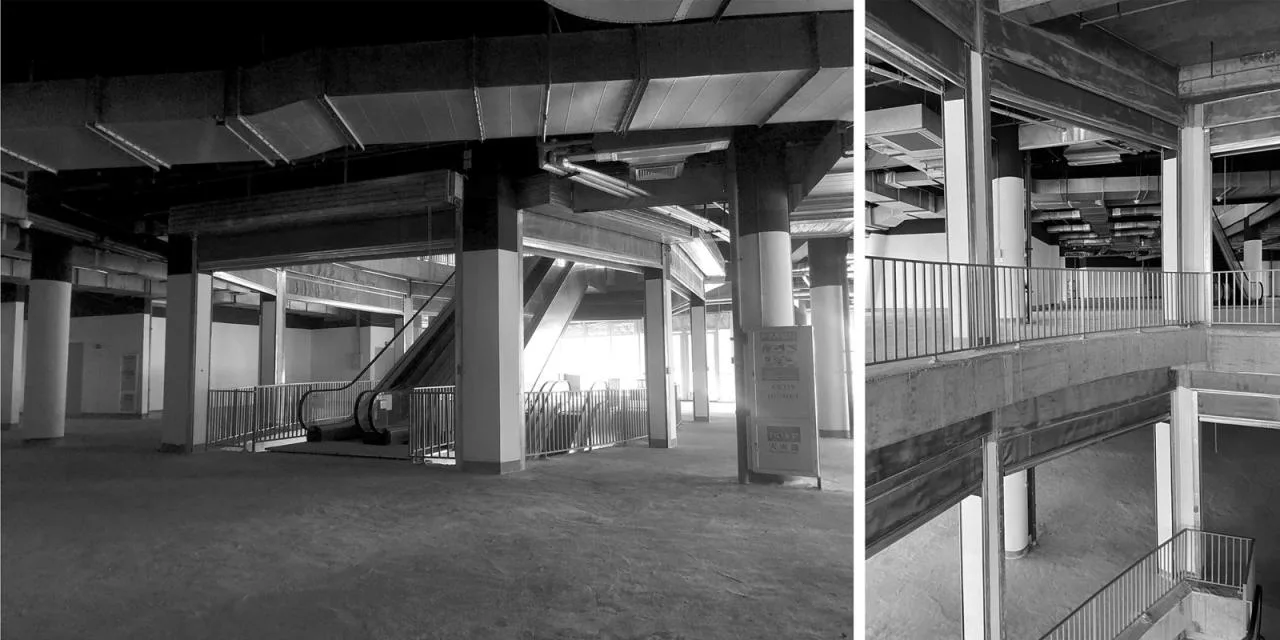
△ Original Atrium Space with High Ceilings © STEPS Grand Staircase Architecture
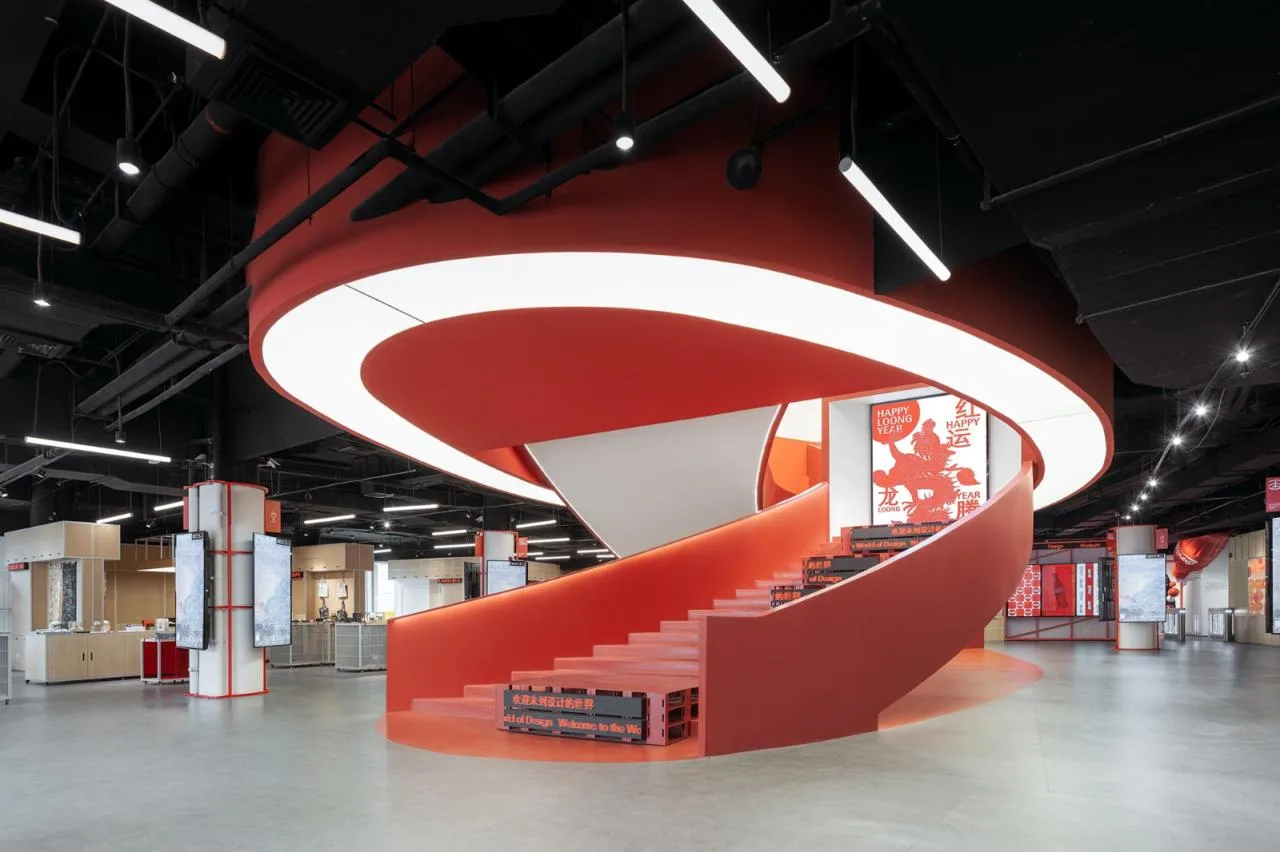
△ Display Staircase Facing Entrance © CreatAR Images (Ai Qing)
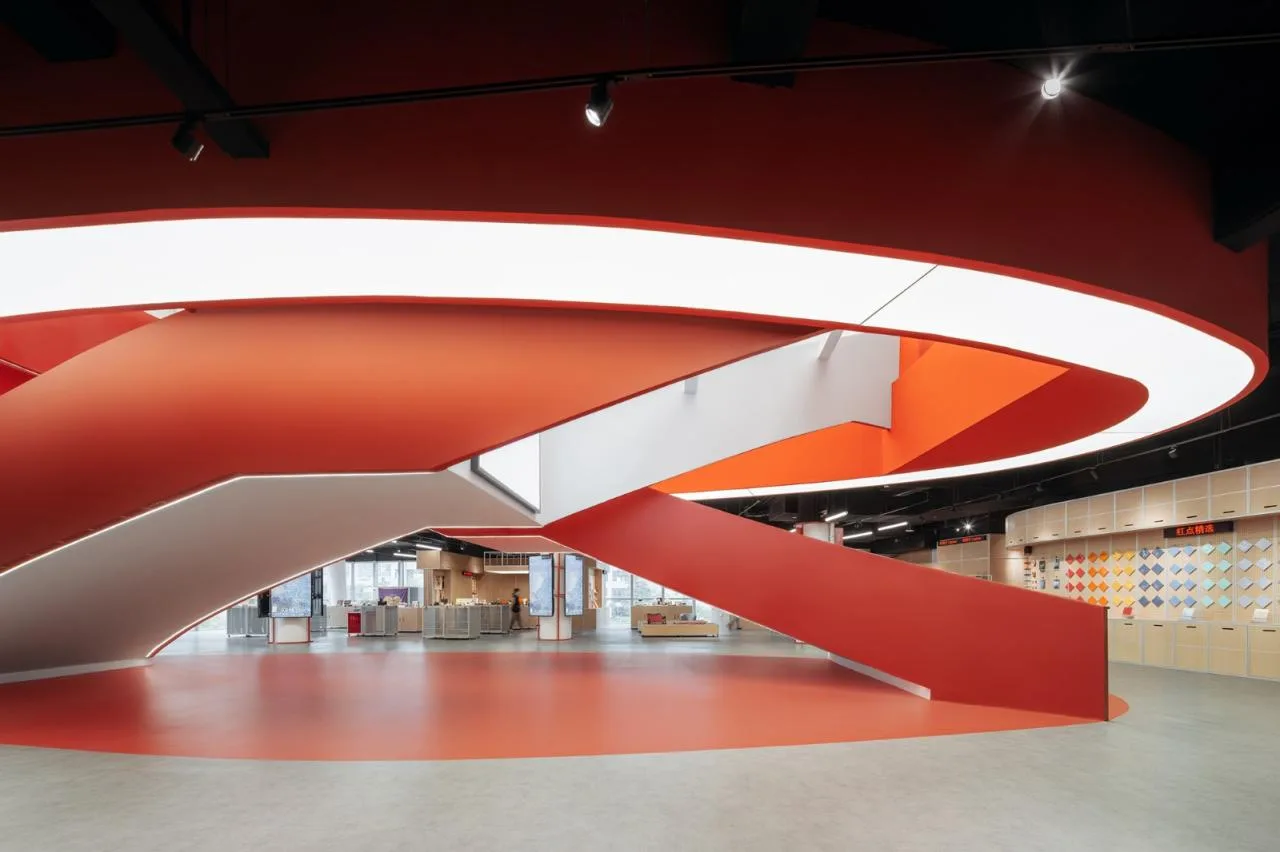
△ Atrium Staircase as Visual Center © CreatAR Images (Ai Qing)
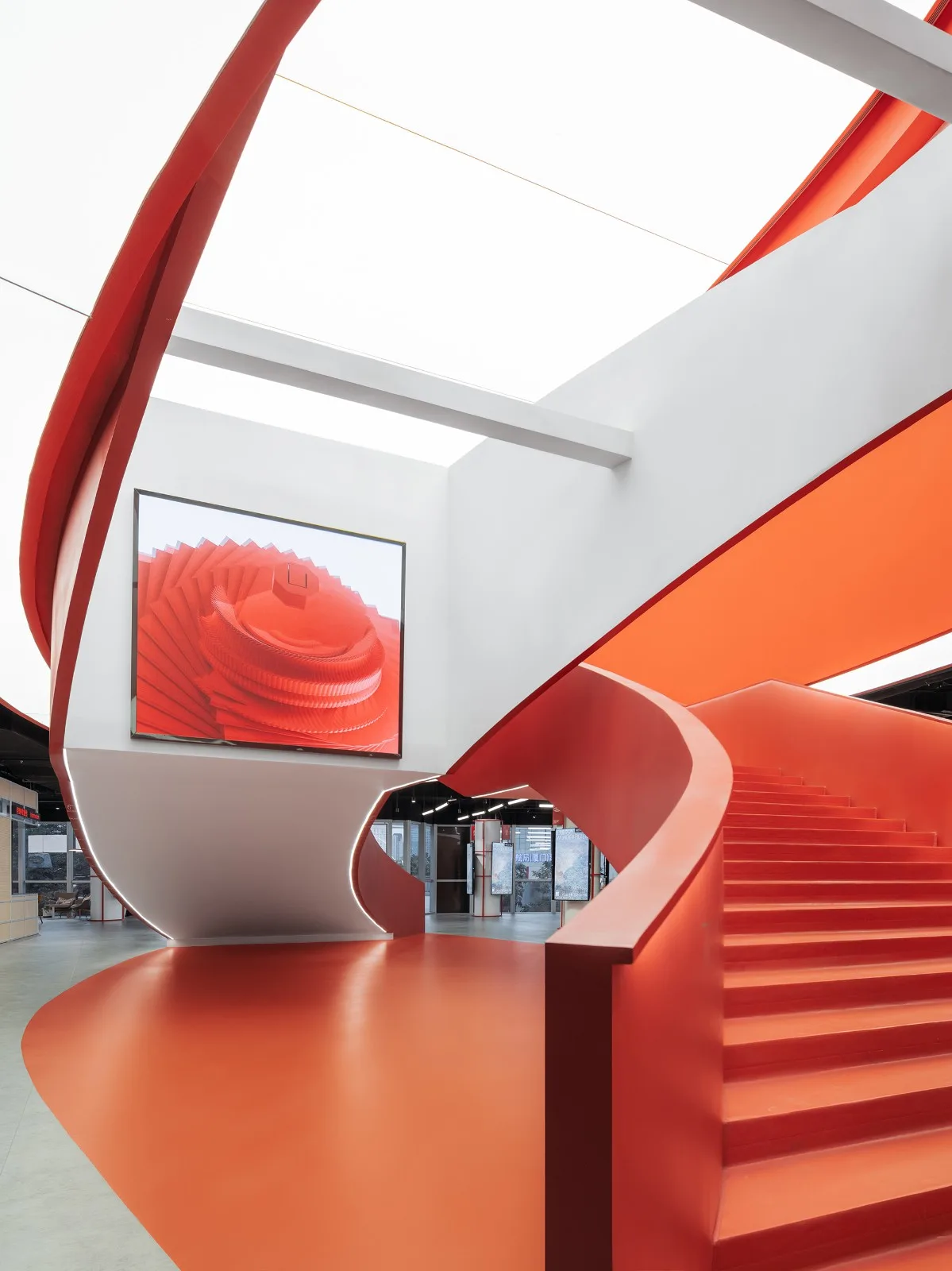
△ Staircase Hollow with Large Screen Display © CreatAR Images (Ai Qing)
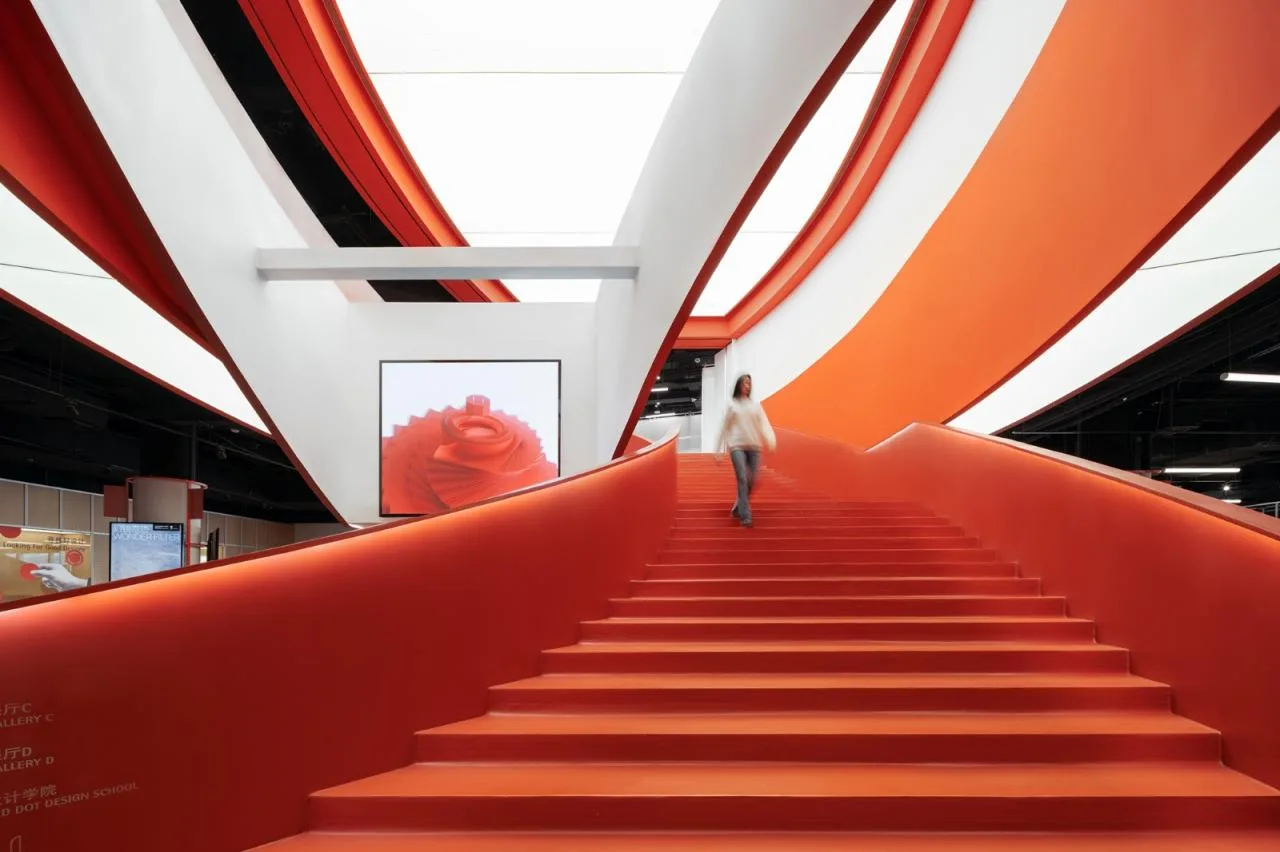
△ Staircase Leading to Third Floor © CreatAR Images (Ai Qing)
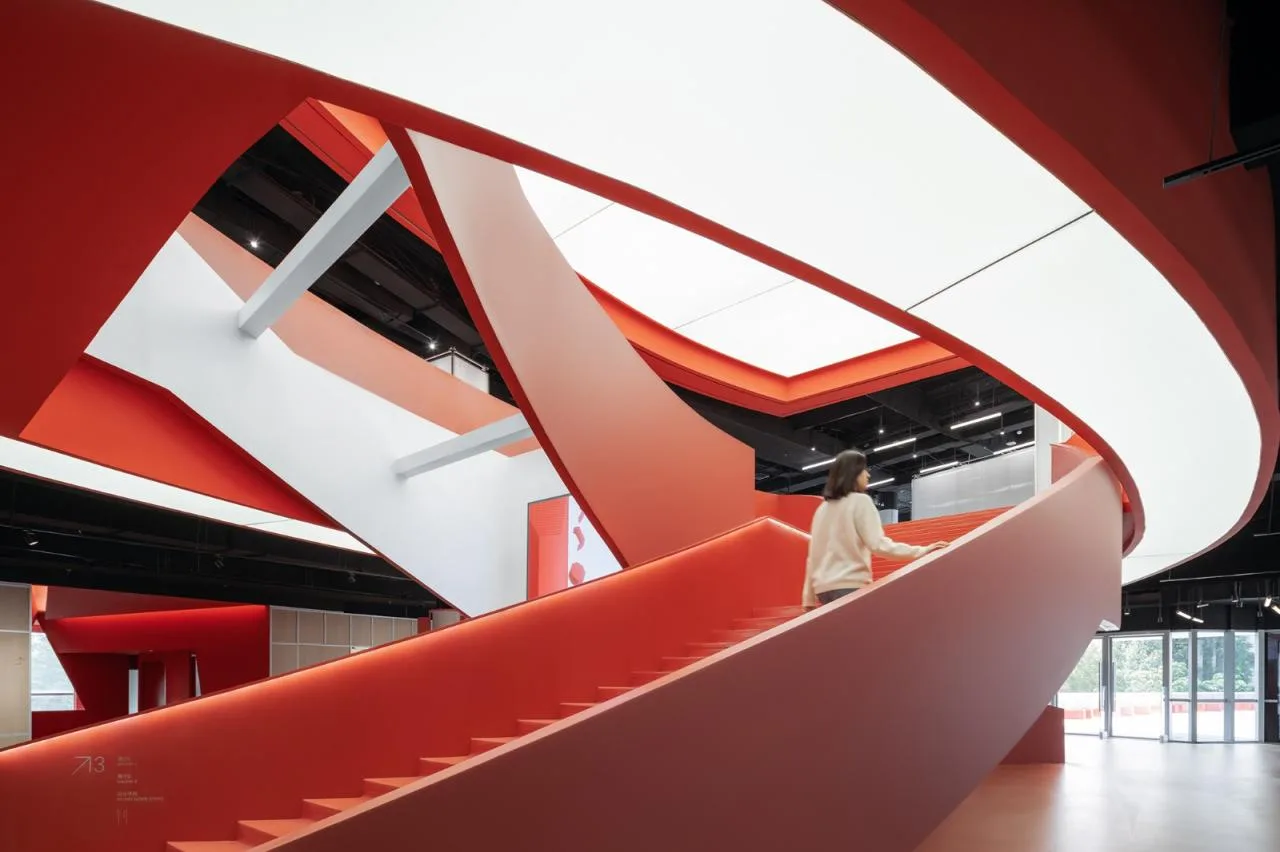
△ Dynamic Atrium Staircase © CreatAR Images (Ai Qing)
The third floor, situated near the glass curtain wall and facing Xiamen Garden Expo Park, boasts abundant natural light and scenic views. We enhanced this space with a functional bar, repurposed award-winning lighting fixtures, and comfortable furniture to create a cozy observation café and restaurant. A vibrant red spiral staircase connects the upper and lower floors.
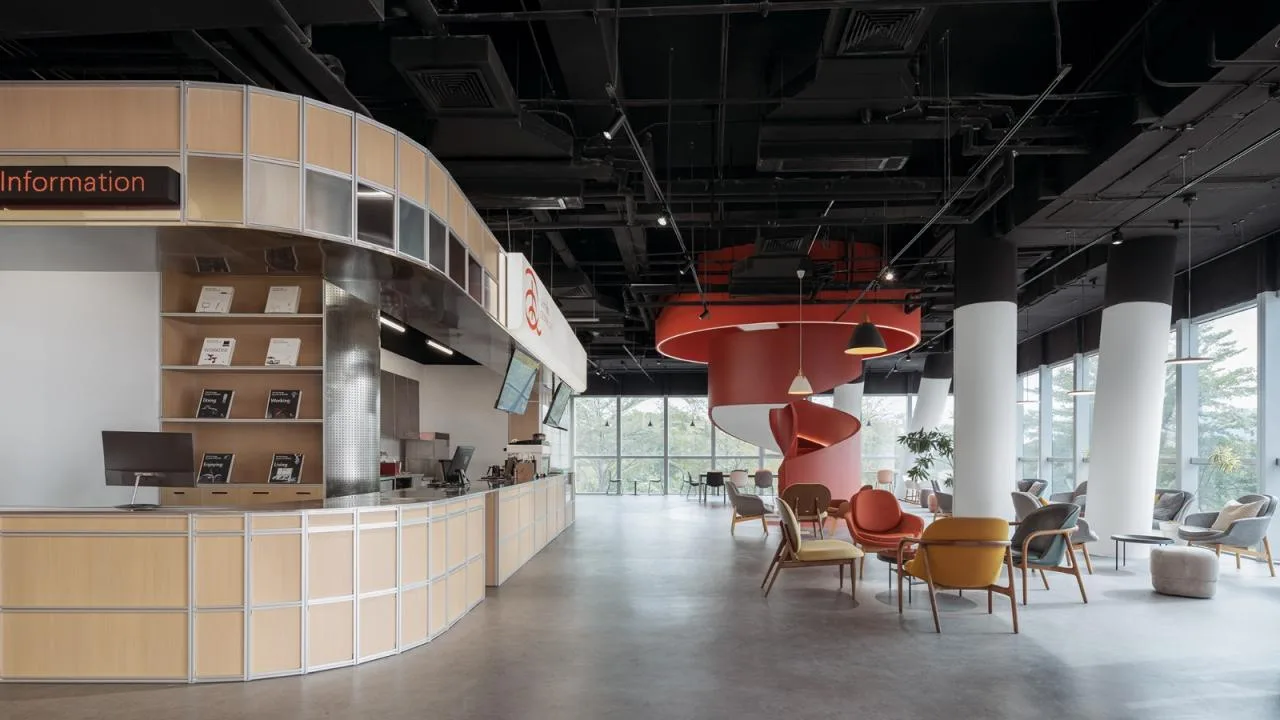
View from Museum Entrance towards Café © CreatAR Images (Ai Qing)
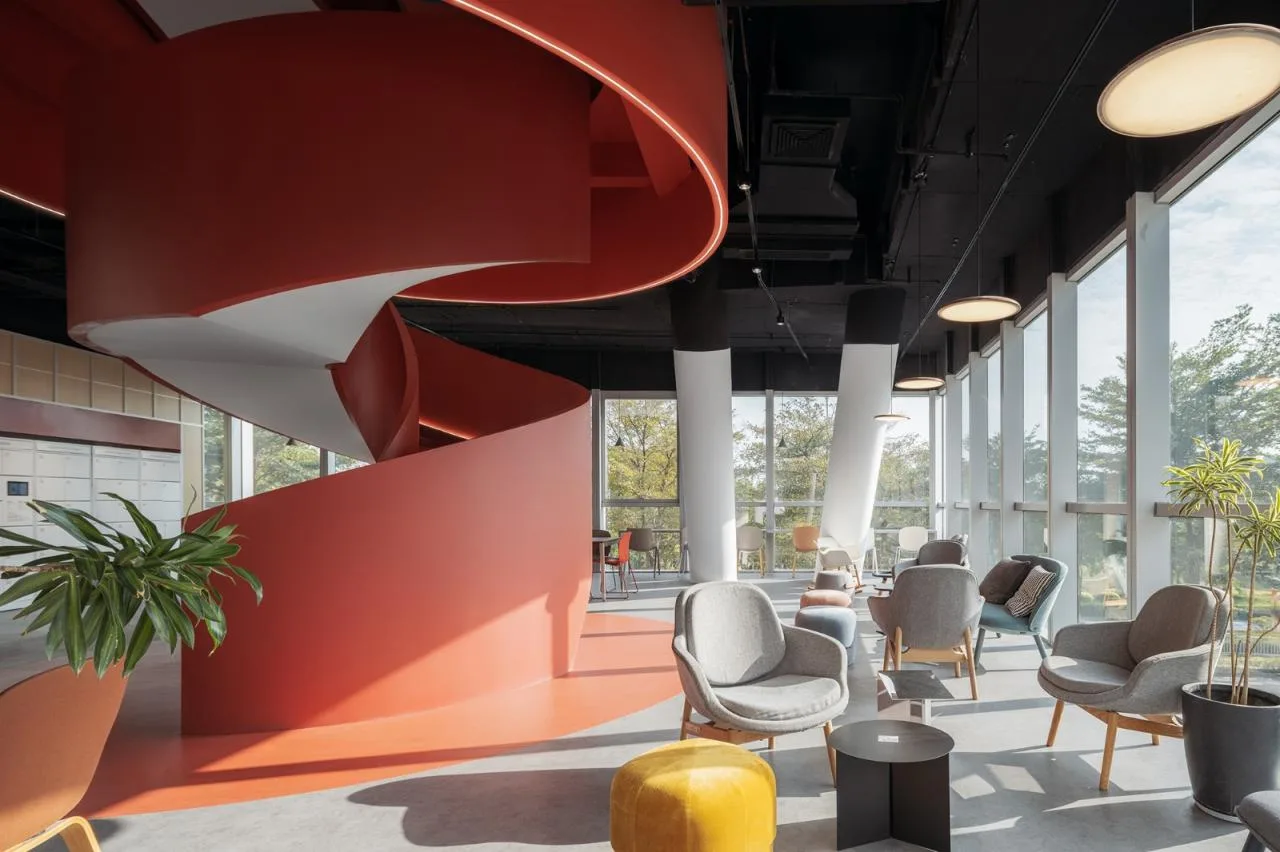
Bright and Comfortable Observation Café © CreatAR Images (Ai Qing)
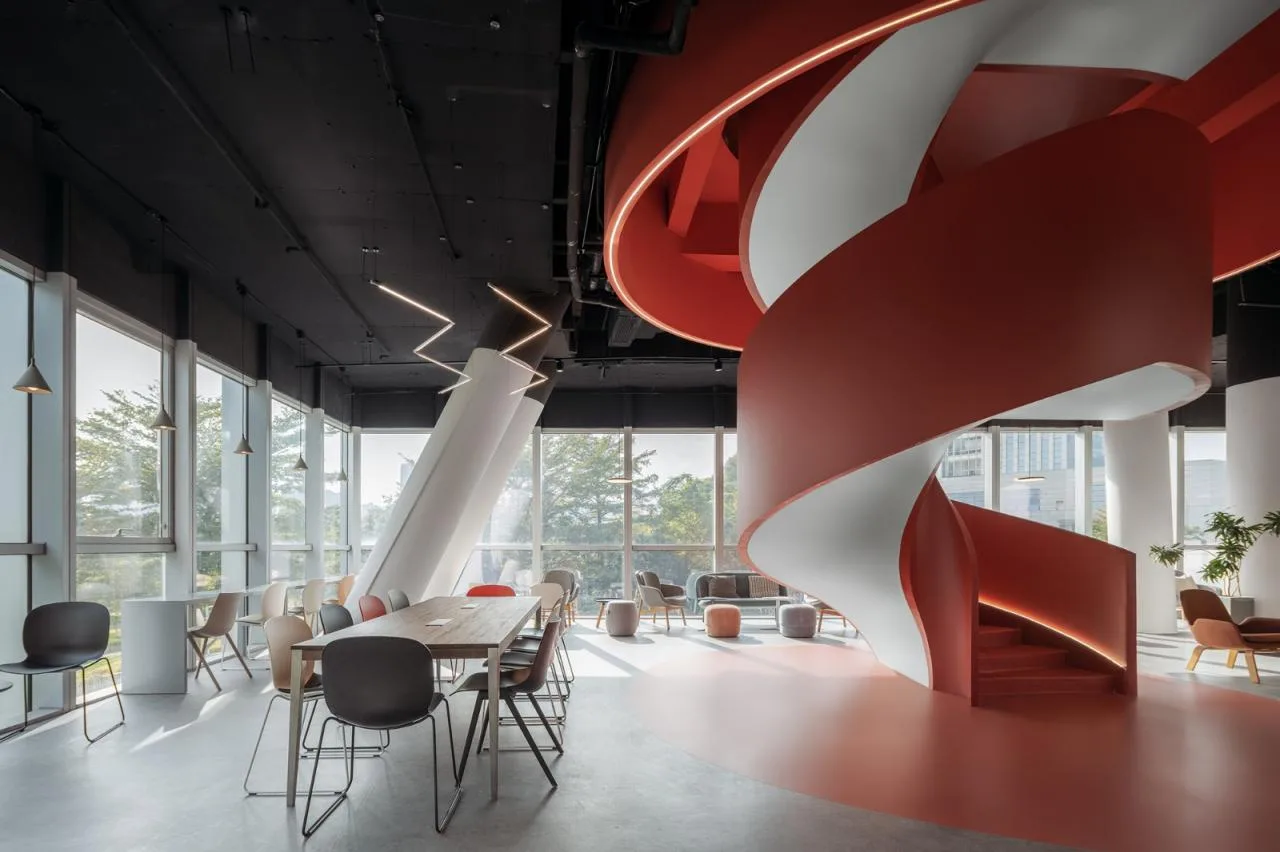
Bright and Comfortable Observation Café © CreatAR Images (Ai Qing)

Red Spiral Staircase Connecting Café and Restaurant © CreatAR Images (Ai Qing)
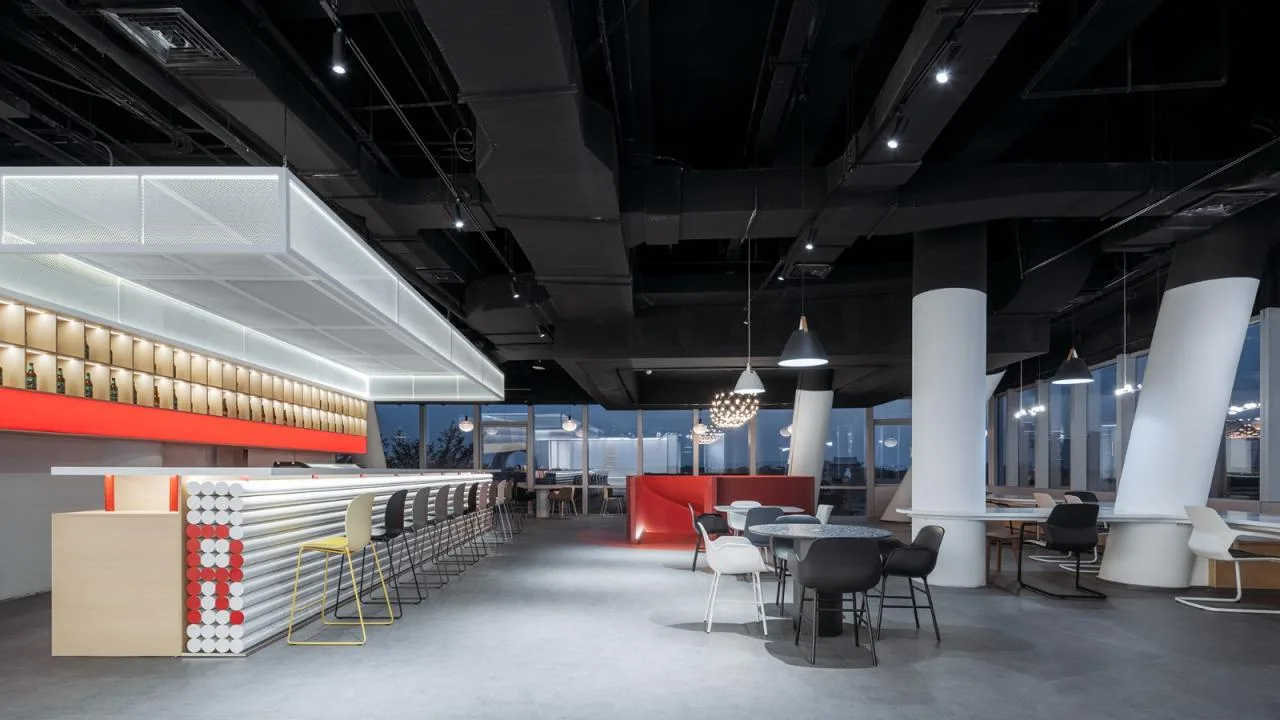
△ Night View of Restaurant © CreatAR Images (Ai Qing)
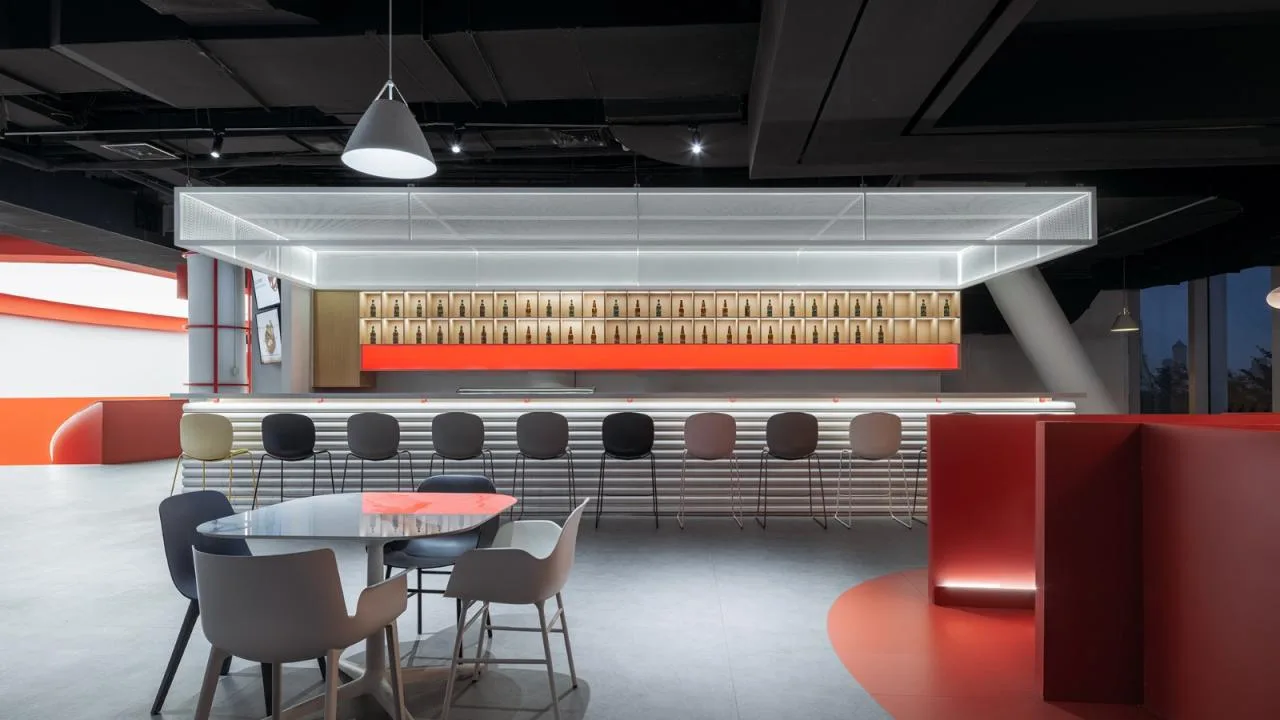
△ Restaurant Bar © CreatAR Images (Ai Qing)
The common corridor space leading to the restrooms has been transformed into a dramatic red tunnel. At its end, a naturally formed triangular display window offers both sightseeing and exhibition opportunities.
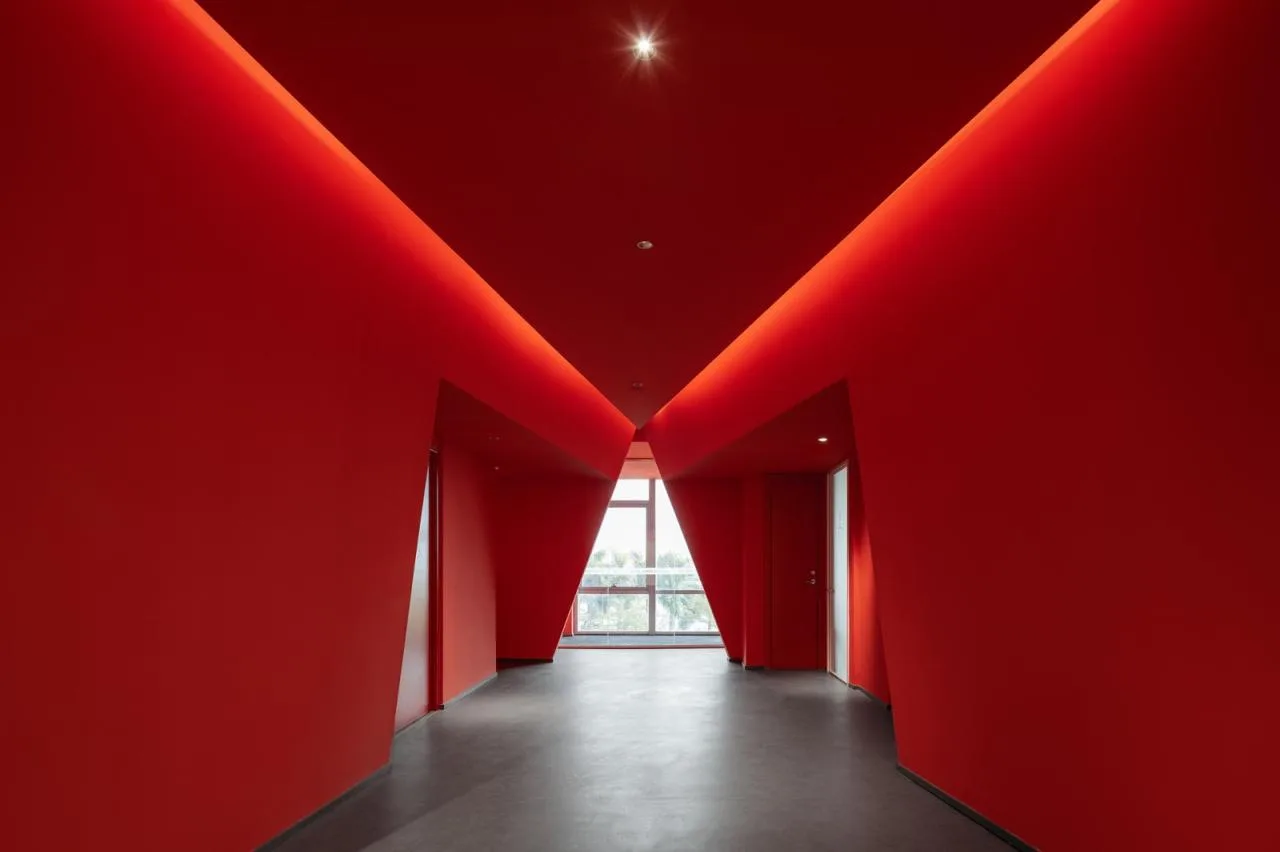
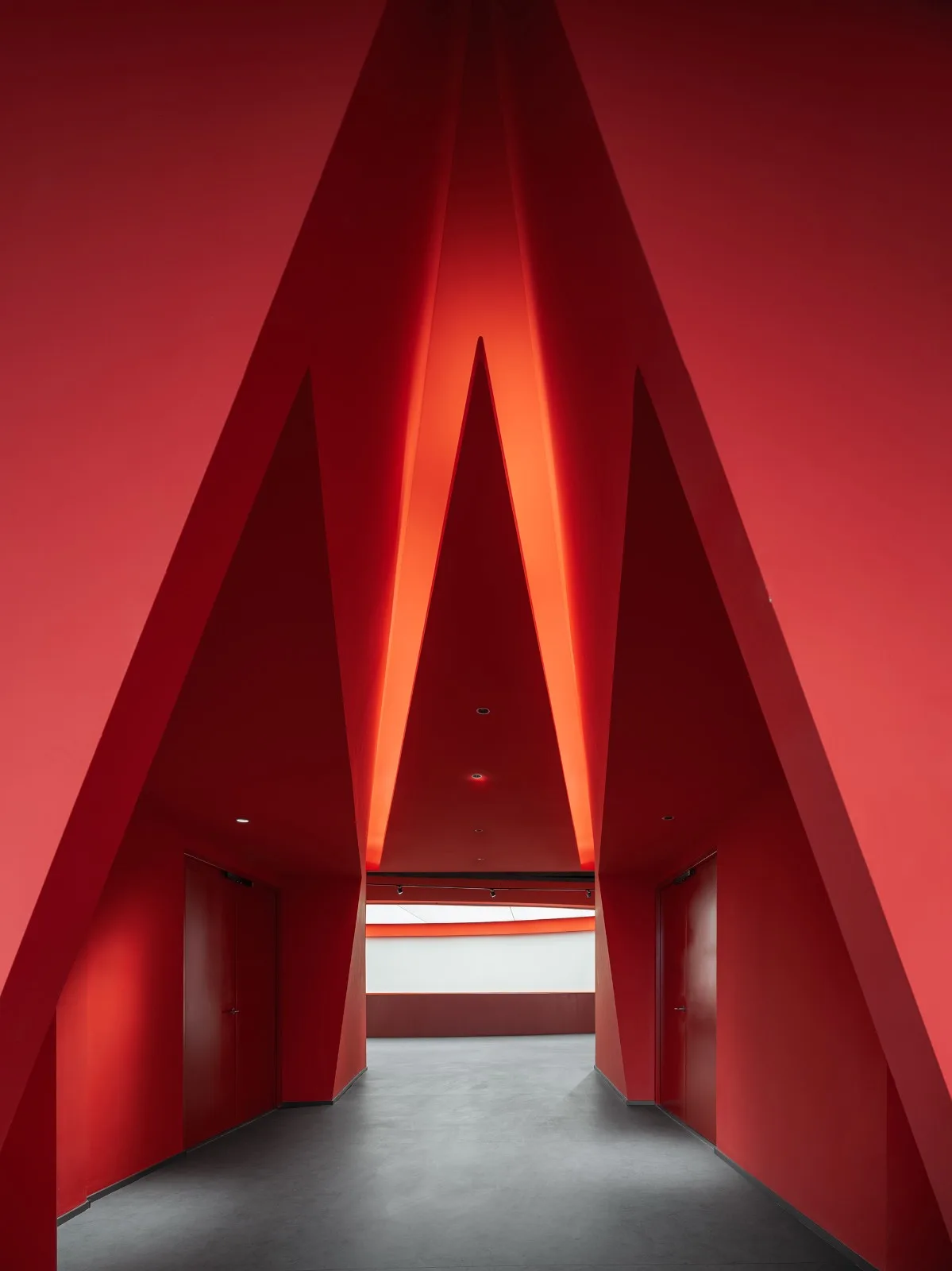
Dramatic Red Tunnel © CreatAR Images (Ai Qing)
03. A Museum Without Walls
Building on the concept of “learning from shopping centers,” we created a continuous roaming experience that blurs the lines between exhibition and non-exhibition spaces. Visitors feel as if they are inside a vast, flowing, ever-changing exhibition hall. Two key design strategies enable this “museum without walls”: exhibition-oriented spatial separation and prefabricated separation interfaces.
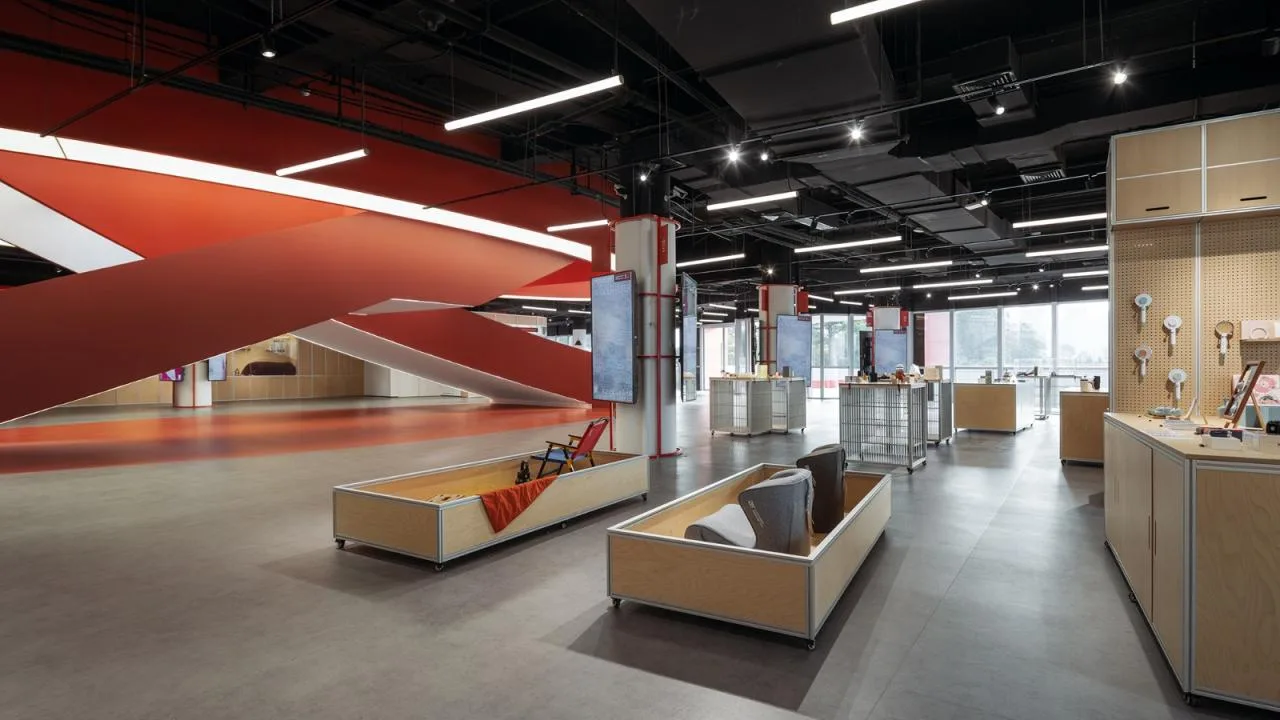
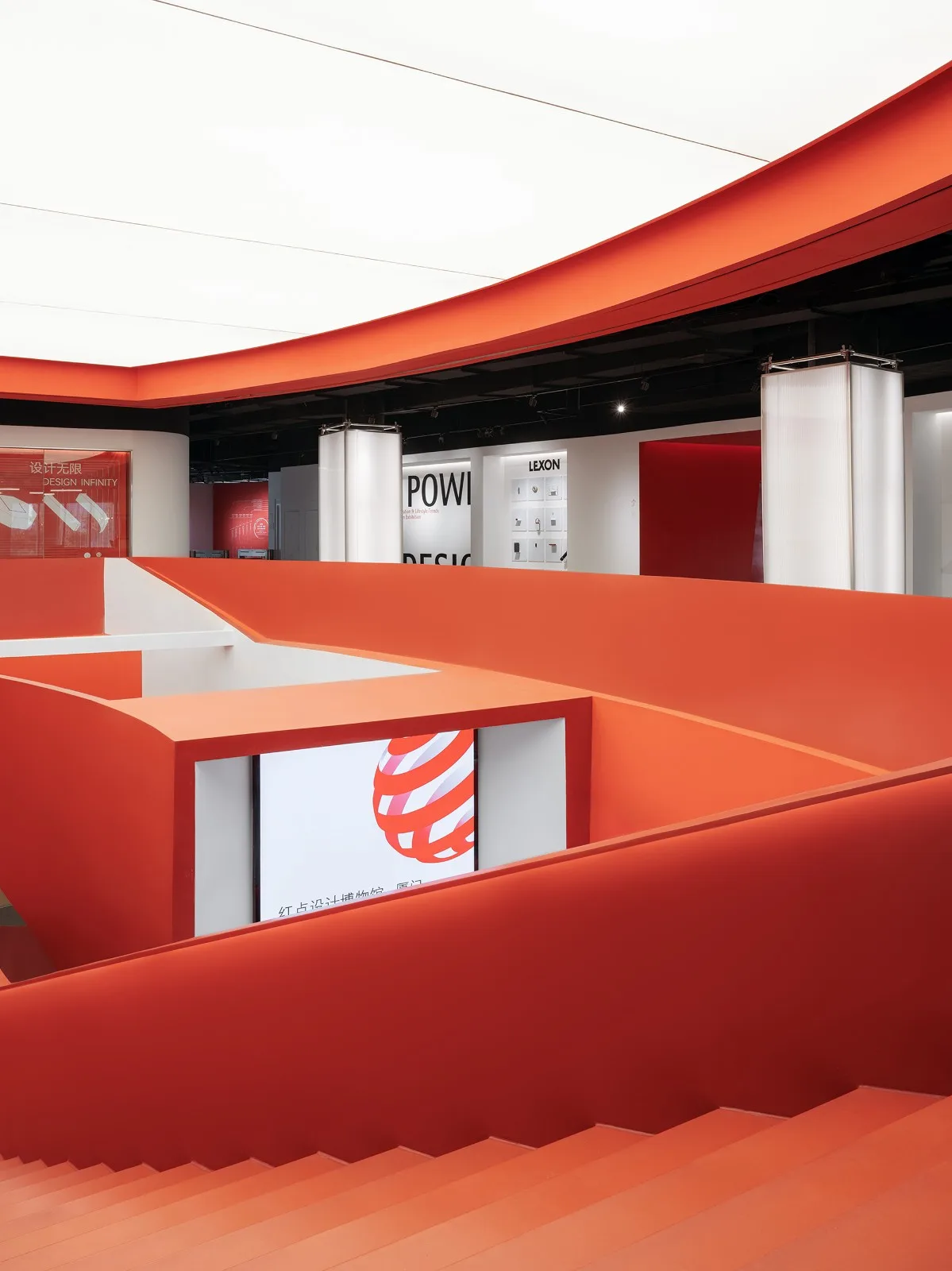
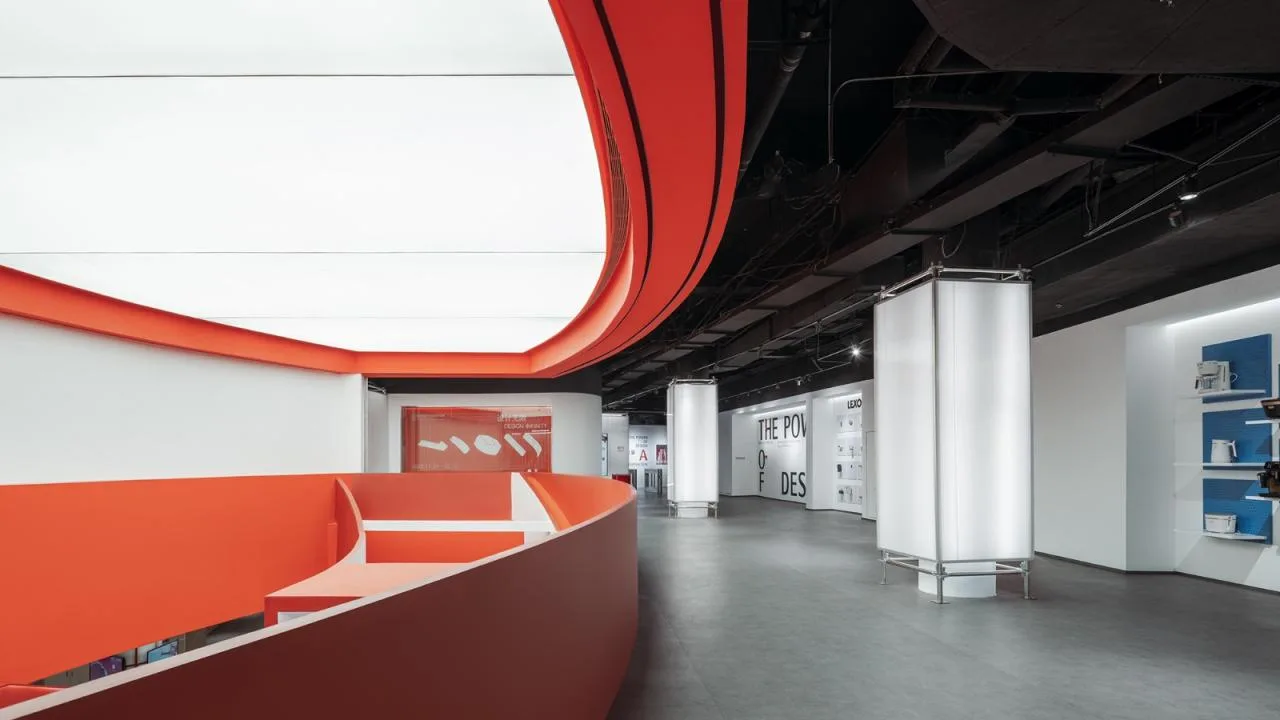
△ Museums as Complete and Continuous Exhibition Halls © CreatAR Images (Ai Qing)
Exhibition-oriented Spatial Separation Interfaces: We integrated numerous display windows, openings, and hanging boards along corridors, converting these spaces into free exhibition areas. This benefits visitors and generates revenue opportunities for merchants and brands through museum display windows.
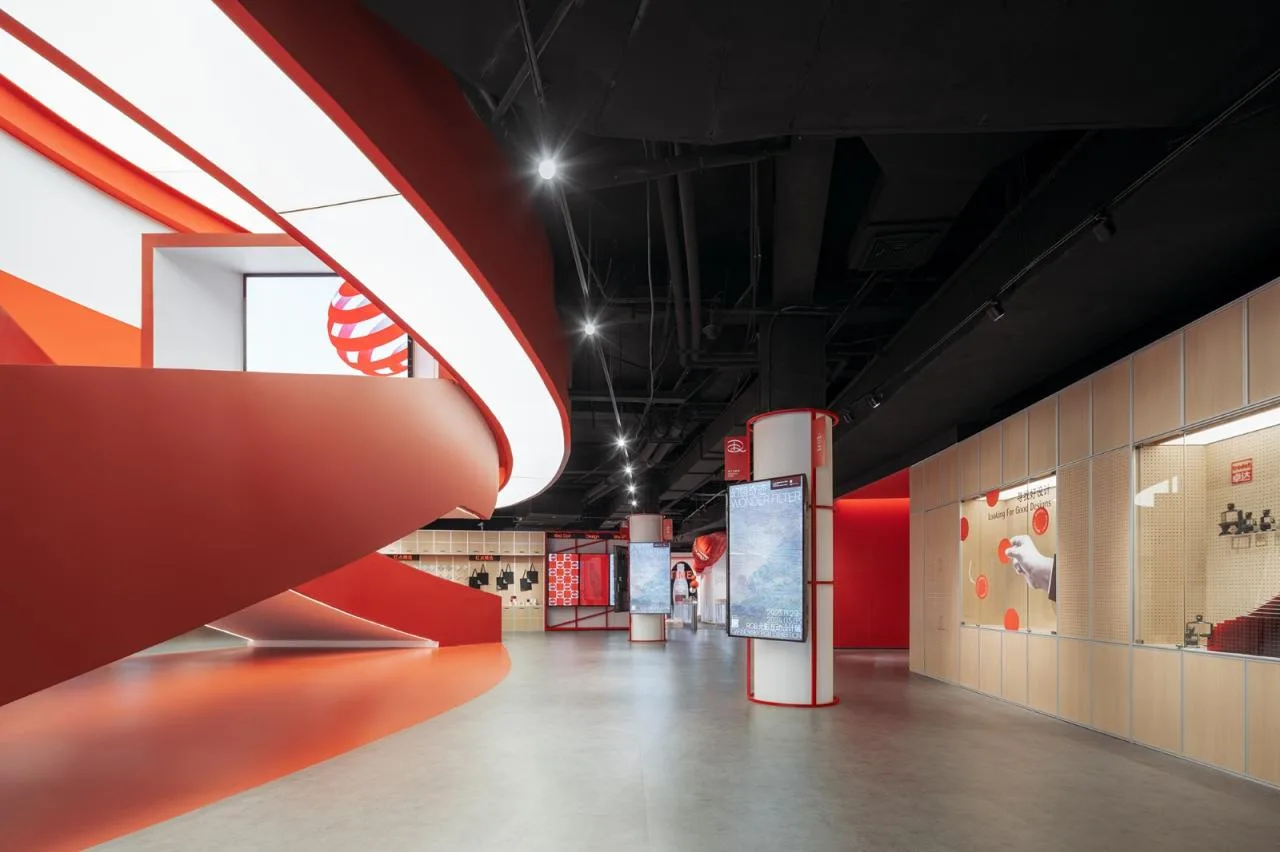
△ Brands Showcased in Retail Spaces © CreatAR Images (Ai Qing)
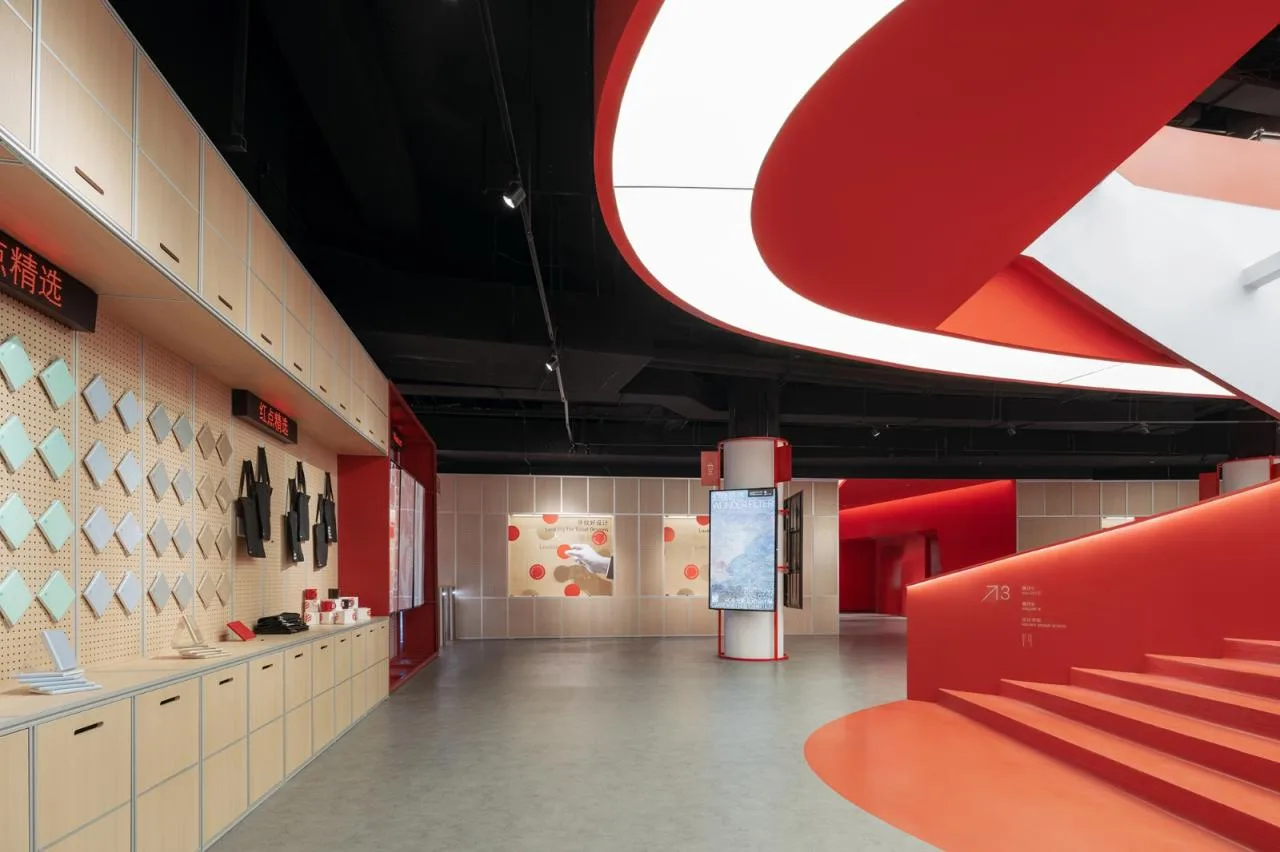
△ Product Display Windows in Retail Spaces © CreatAR Images (Ai Qing)
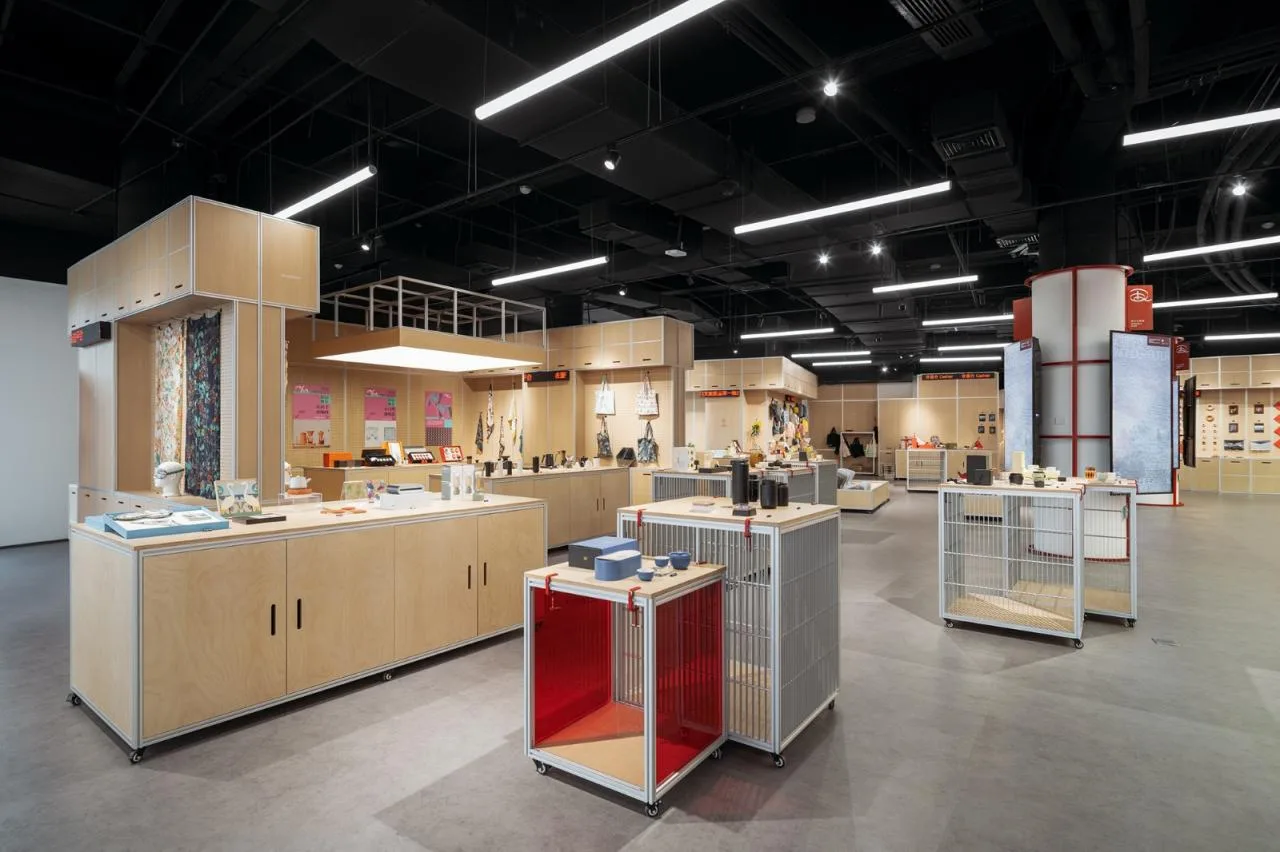
△ Retail Spaces as Free Exhibition Areas © CreatAR Images (Ai Qing)
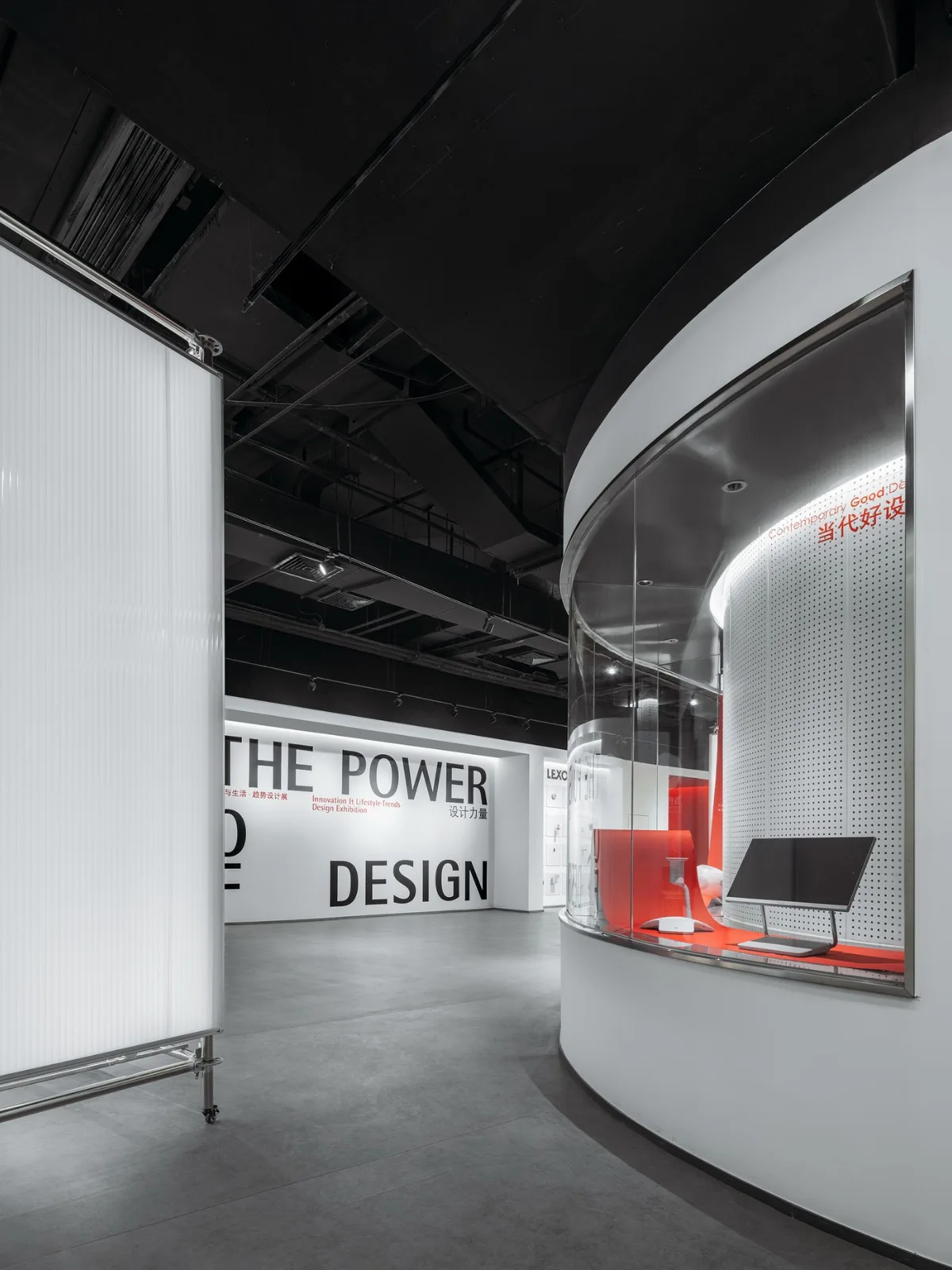
Display Windows and Openings in Corridor Spaces © CreatAR Images (Ai Qing)
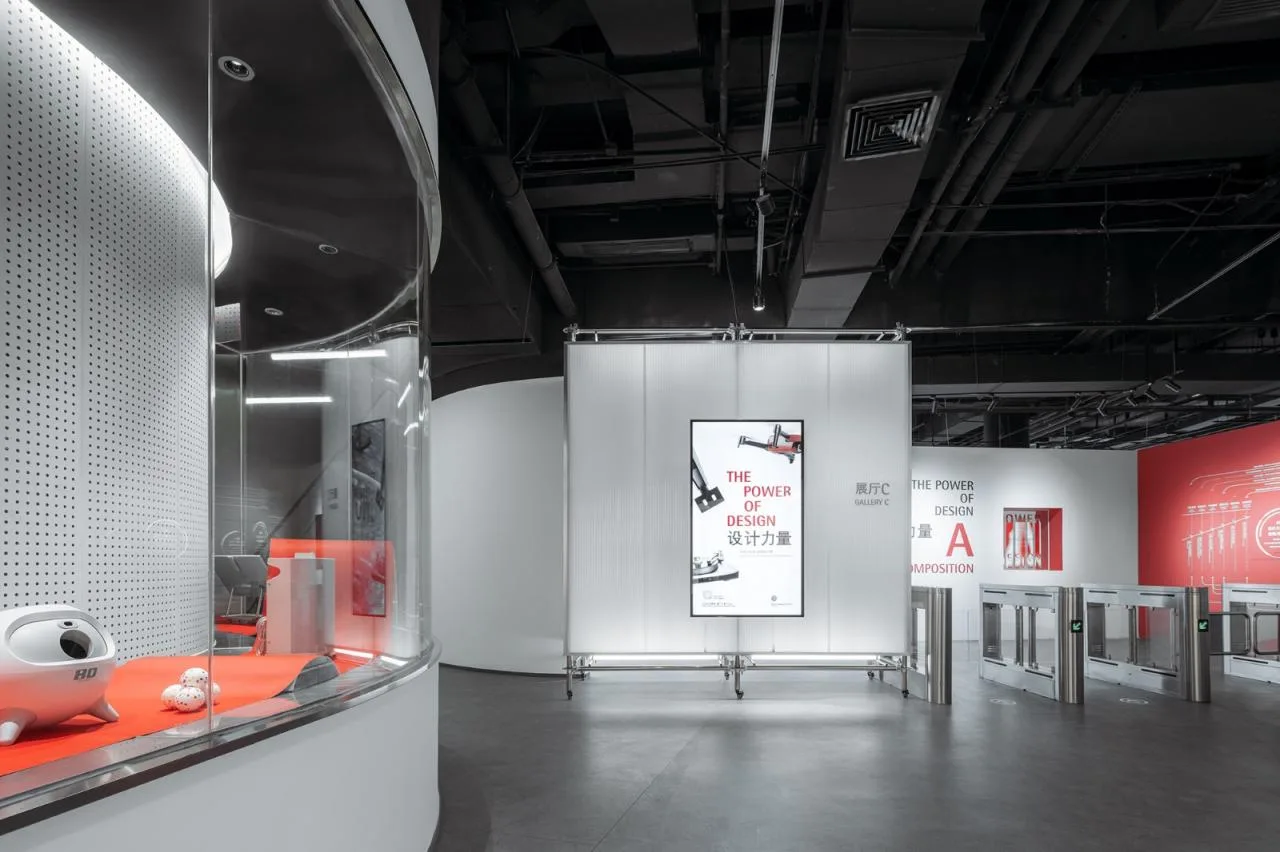
Display Windows and Openings in Corridor Spaces © CreatAR Images (Ai Qing)
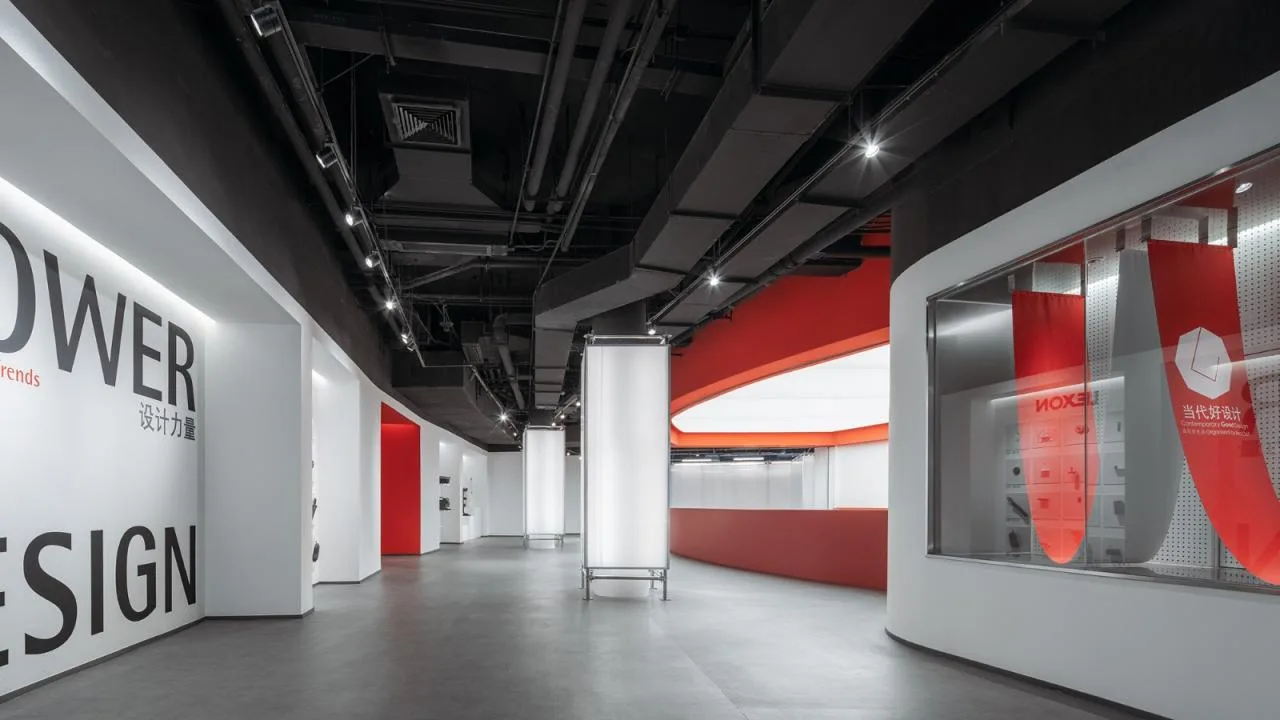
△ Corridor Space Transformed into Free Exhibition Hall © CreatAR Images (Ai Qing)
Prefabricated Spatial Separation Interfaces: Applying industrial design principles, we replaced conventional solid walls with prefabricated scaffolding elements to create flexible, versatile exhibition boundaries. This breaks the traditional enclosed “box” museum concept. The modular system facilitates flexible exhibitions and easy transport of exhibits. It also allows simultaneous on-site and factory work, saving time and ensuring high-quality results, aligning with the industrial design ethos of the Red Dot Award.
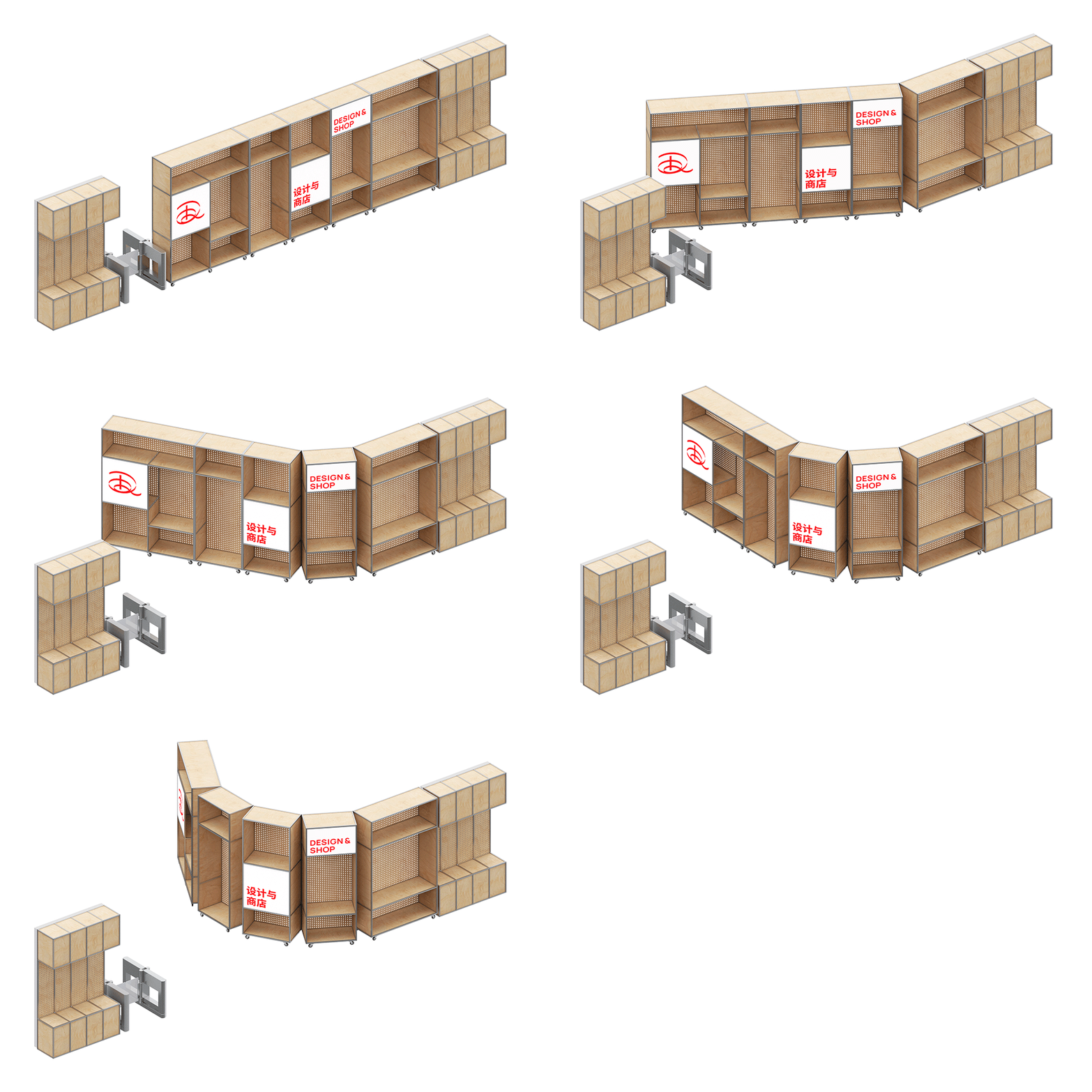
The retail cabinet doubles as an exhibition boundary and can rotate to form a shipping port © STEPS Grand Staircase Architecture
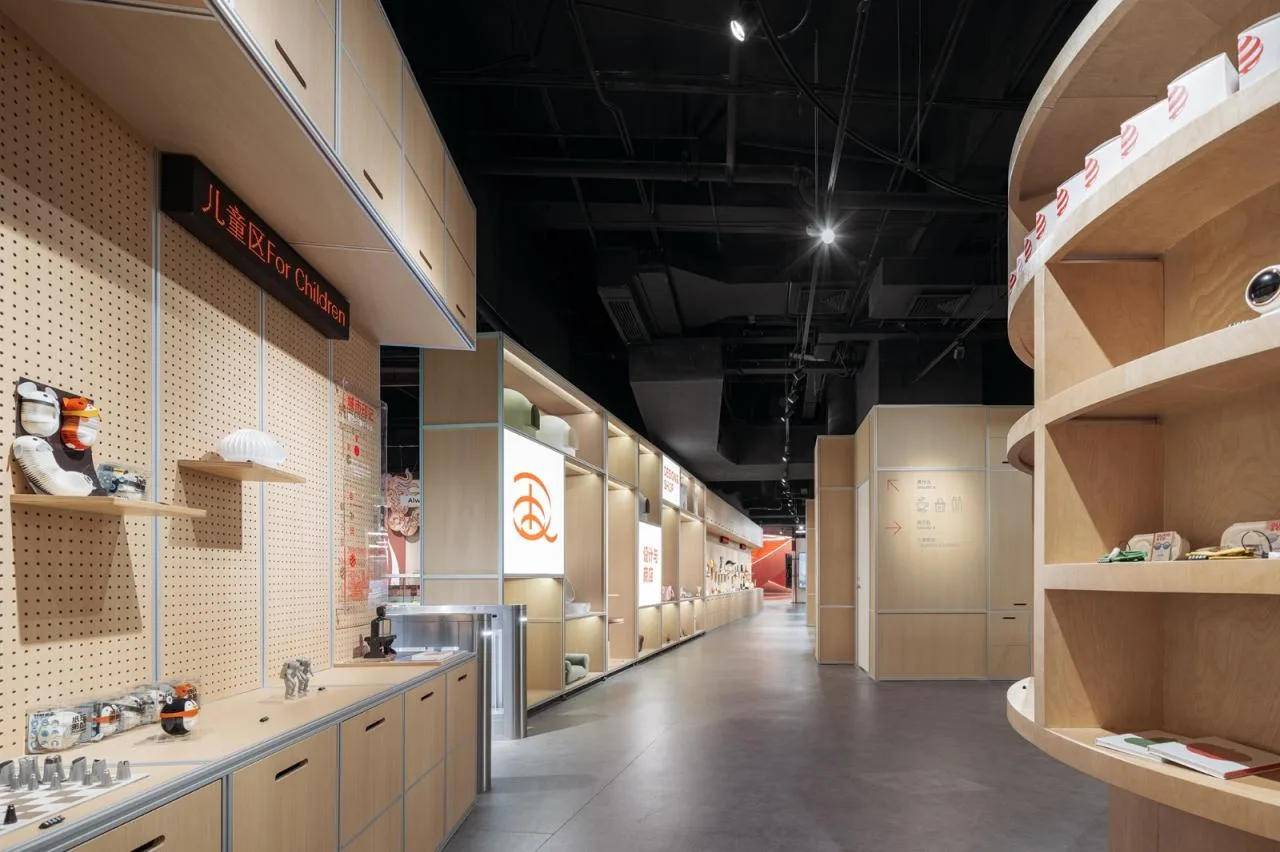
Retail Cabinets Serving as Exhibition Boundaries © CreatAR Images (Ai Qing)
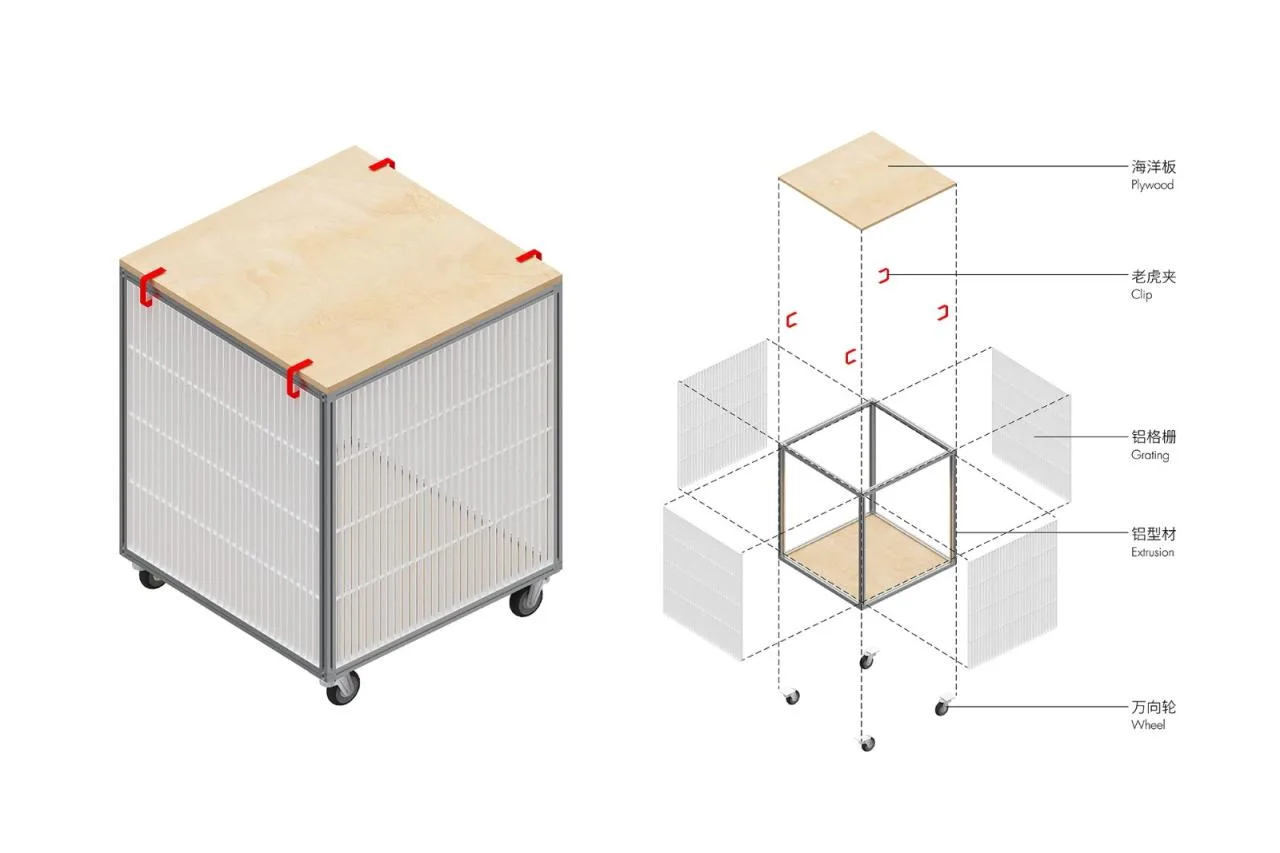
The retail cabinet features an aluminum profile frame embedded in ocean board, designed for easy disassembly © STEPS Grand Staircase Architecture
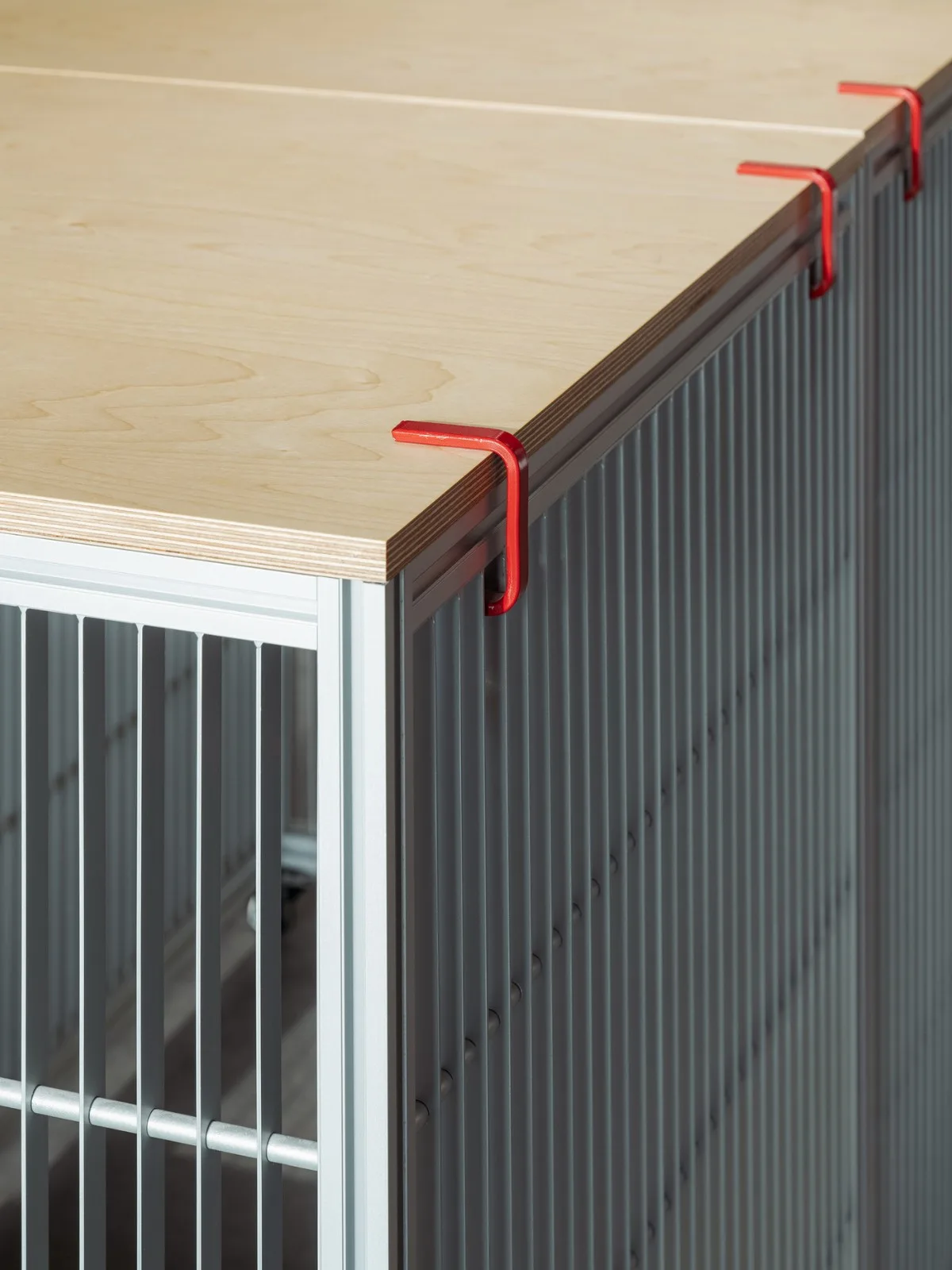
△ Retail Cabinet Details © CreatAR Images (Ai Qing)
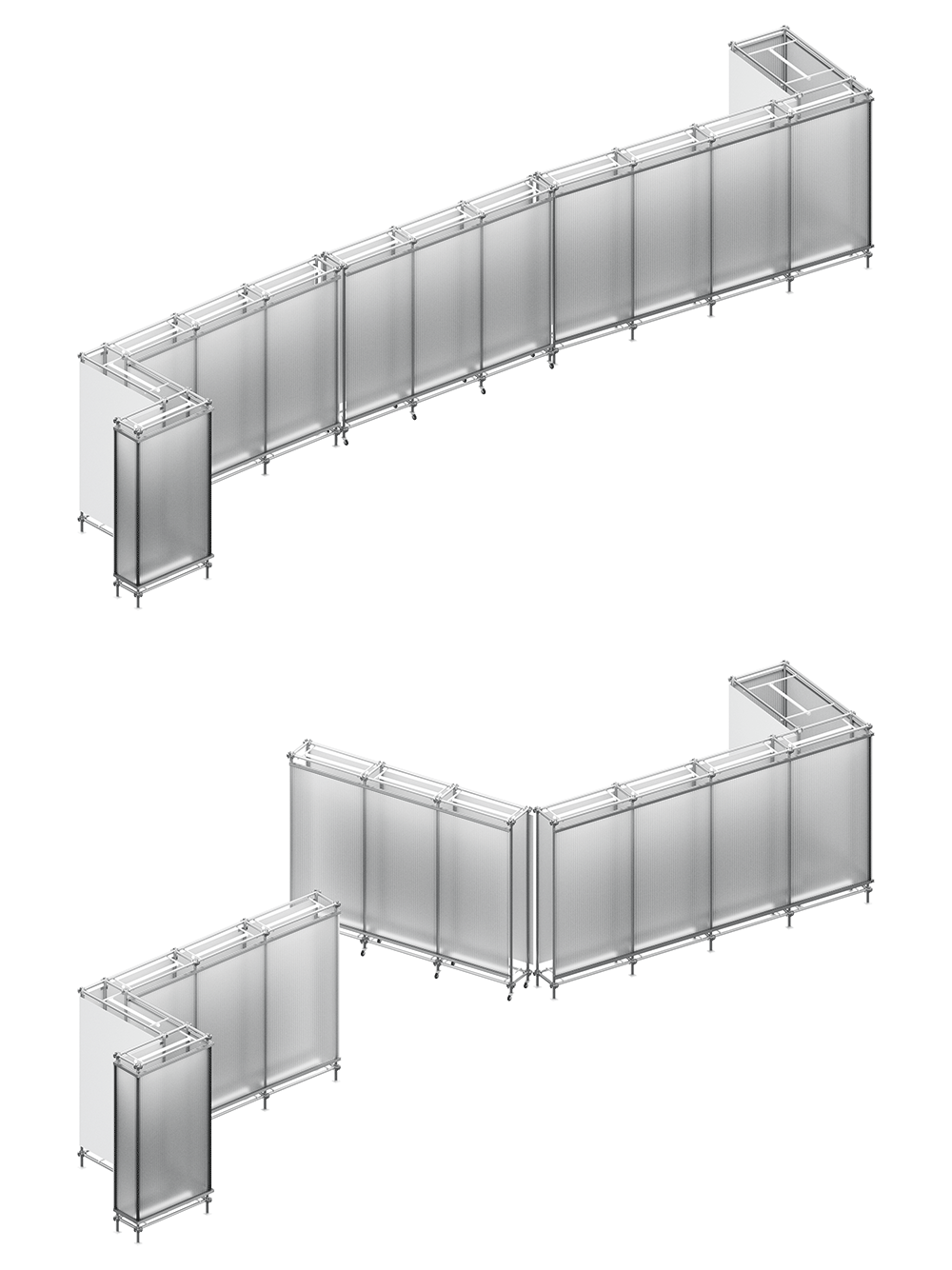
The scaffolding unit acts as an exhibition boundary and can be moved to form a cargo port © STEPS Grand Staircase Architecture
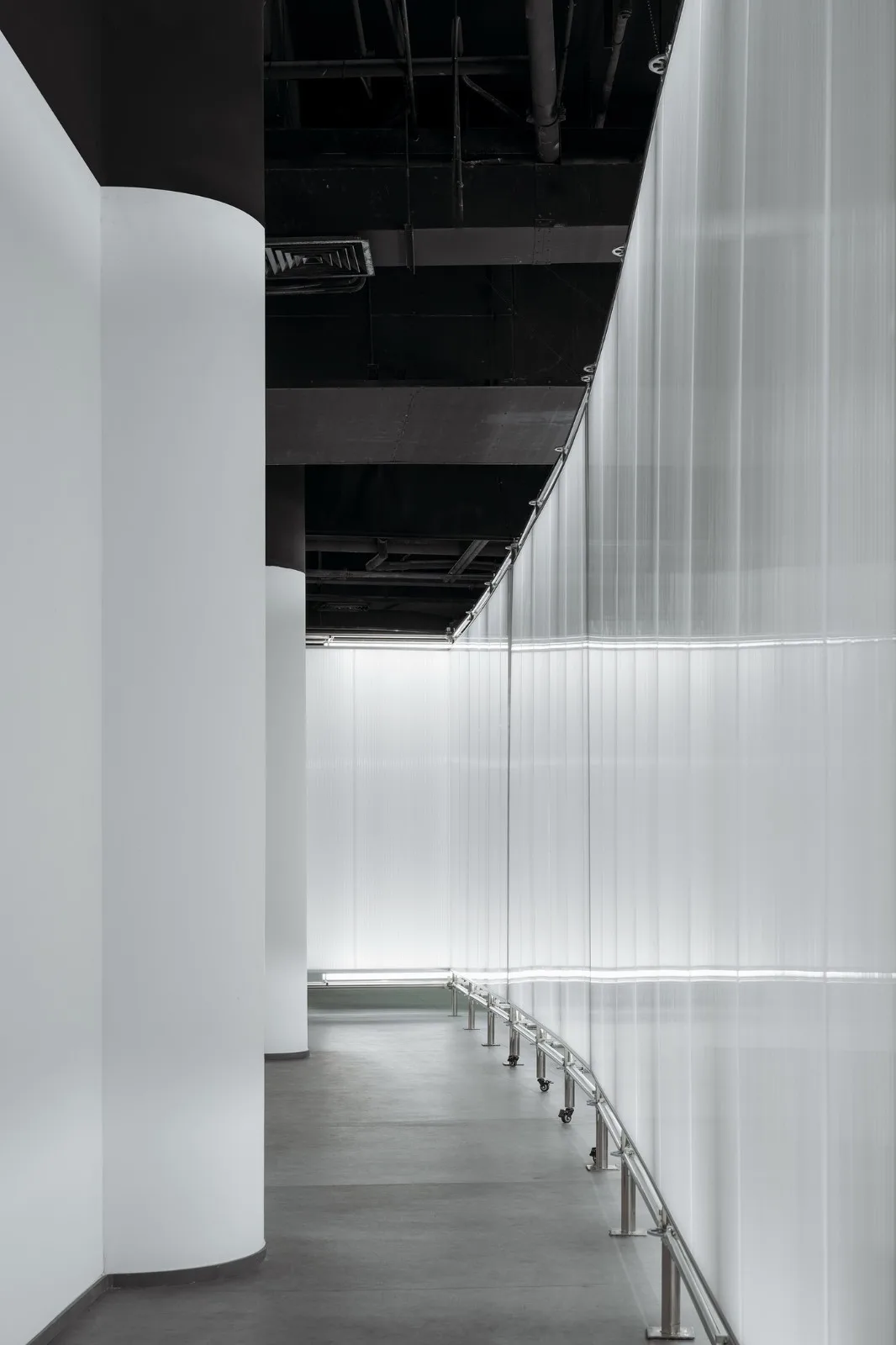
Scaffolding Unit as Exhibition Boundary © CreatAR Images (Ai Qing)
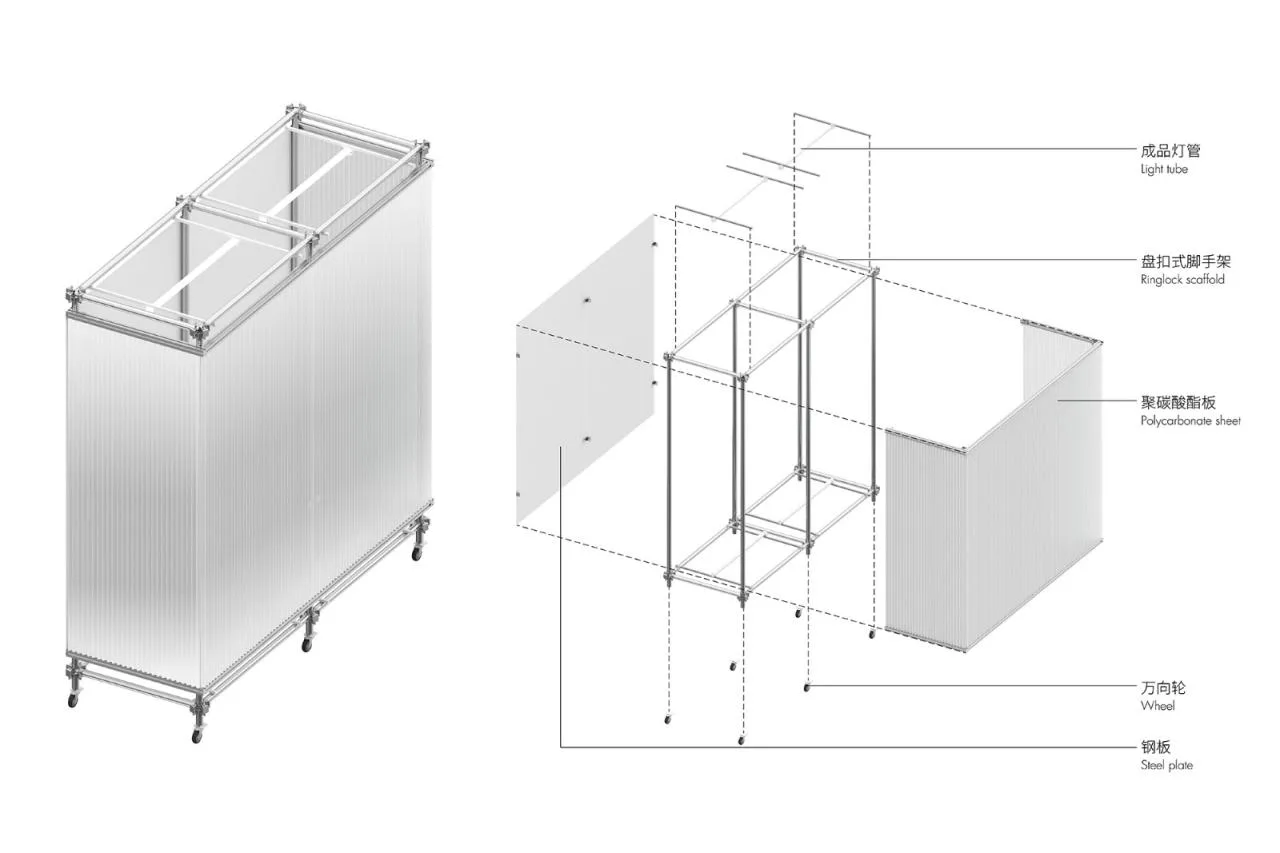
△ Scaffolding wrapped with white steel plates on the exhibition side and polycarbonate lightboxes on the corridor side © STEPS Grand Staircase Architecture
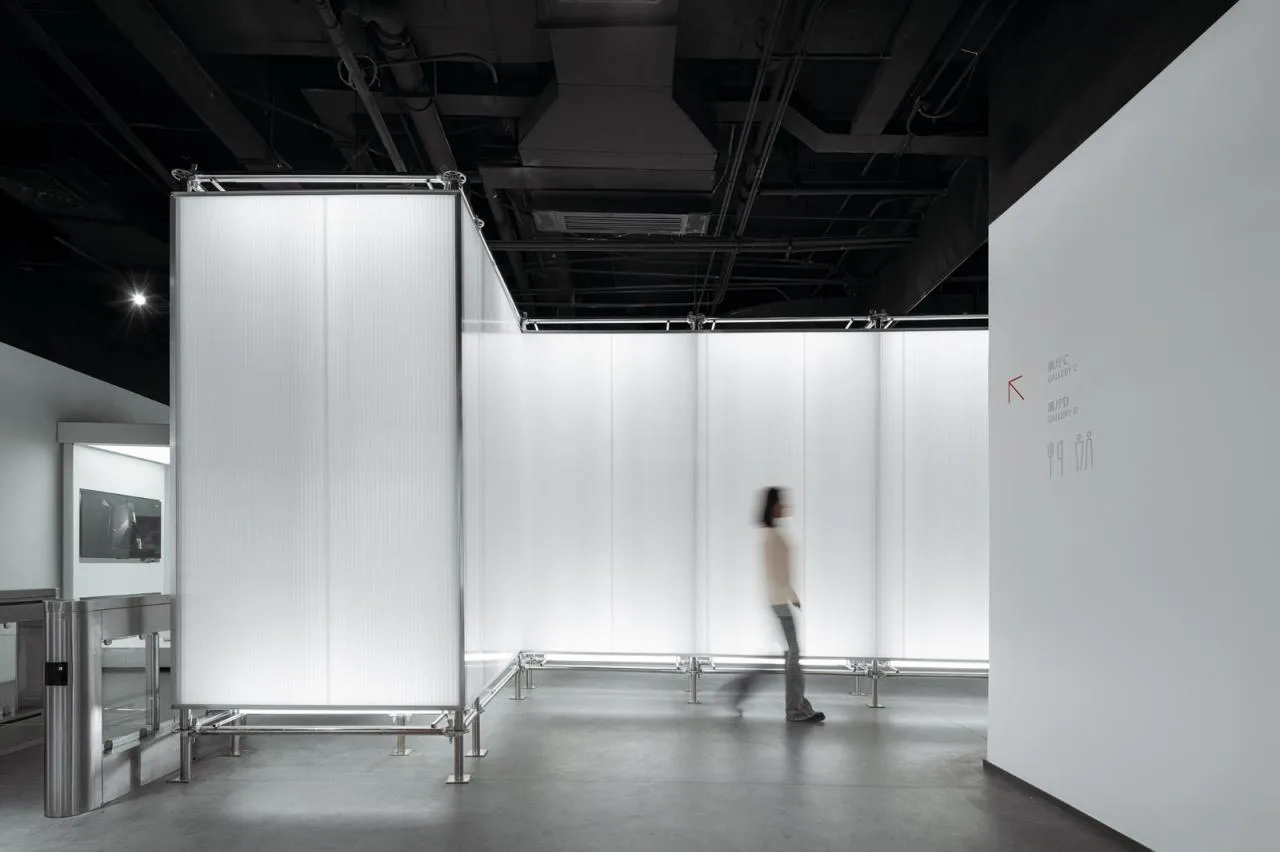
Polycarbonate panels on the outside of scaffolding serve as walkway lightboxes © CreatAR Images (Ai Qing)
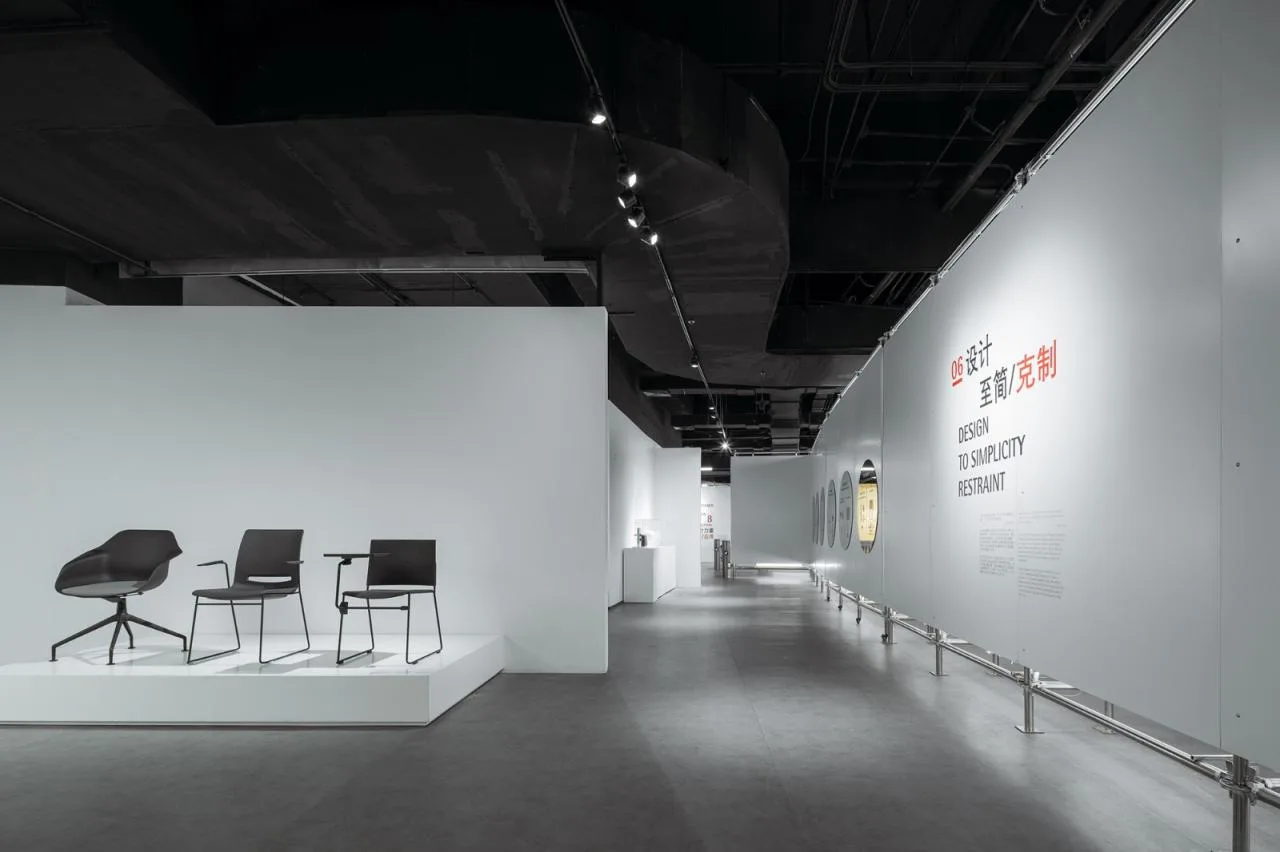
White steel plates on the inside of scaffolding serve as exhibition boards © CreatAR Images (Ai Qing)
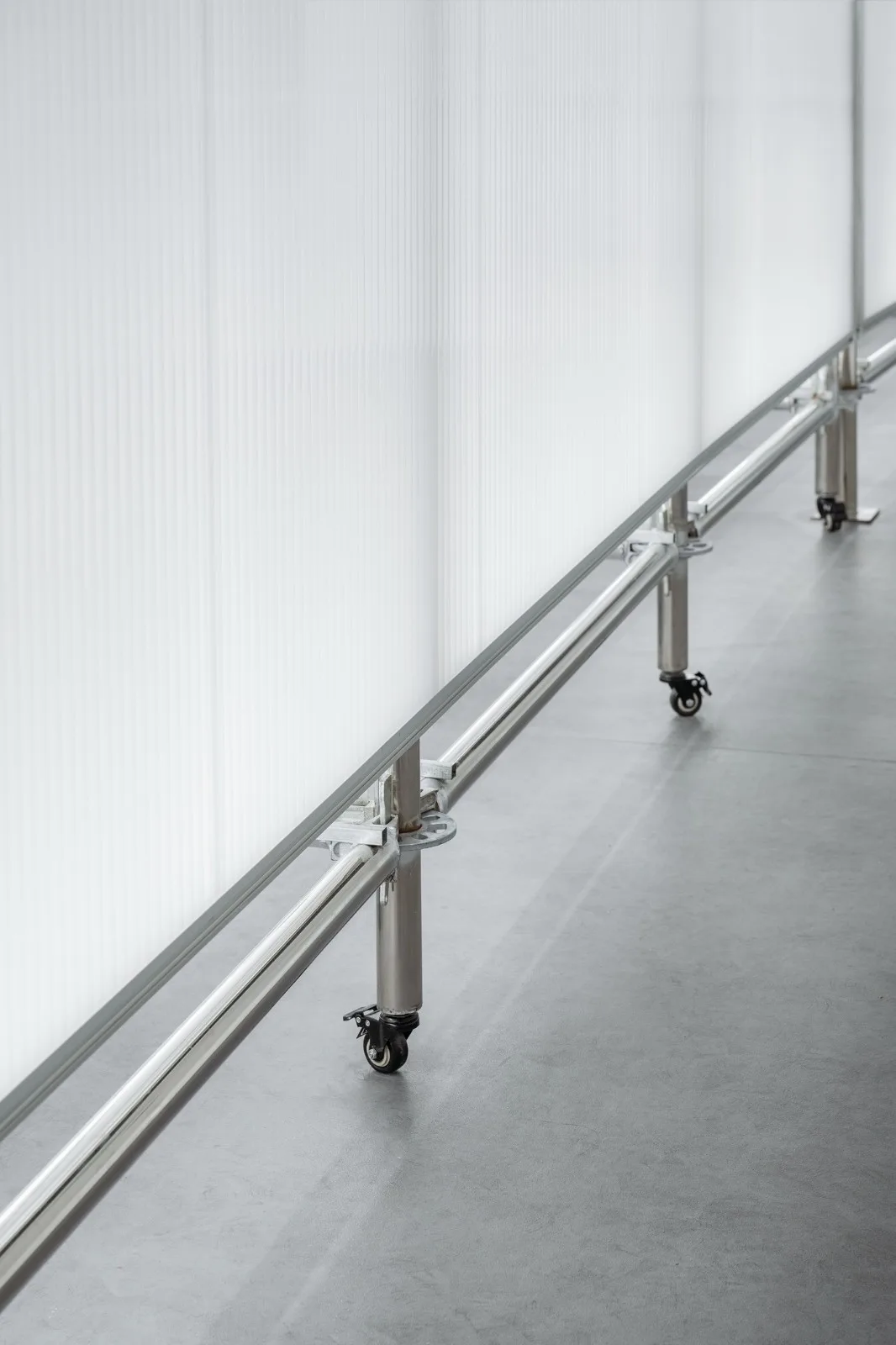
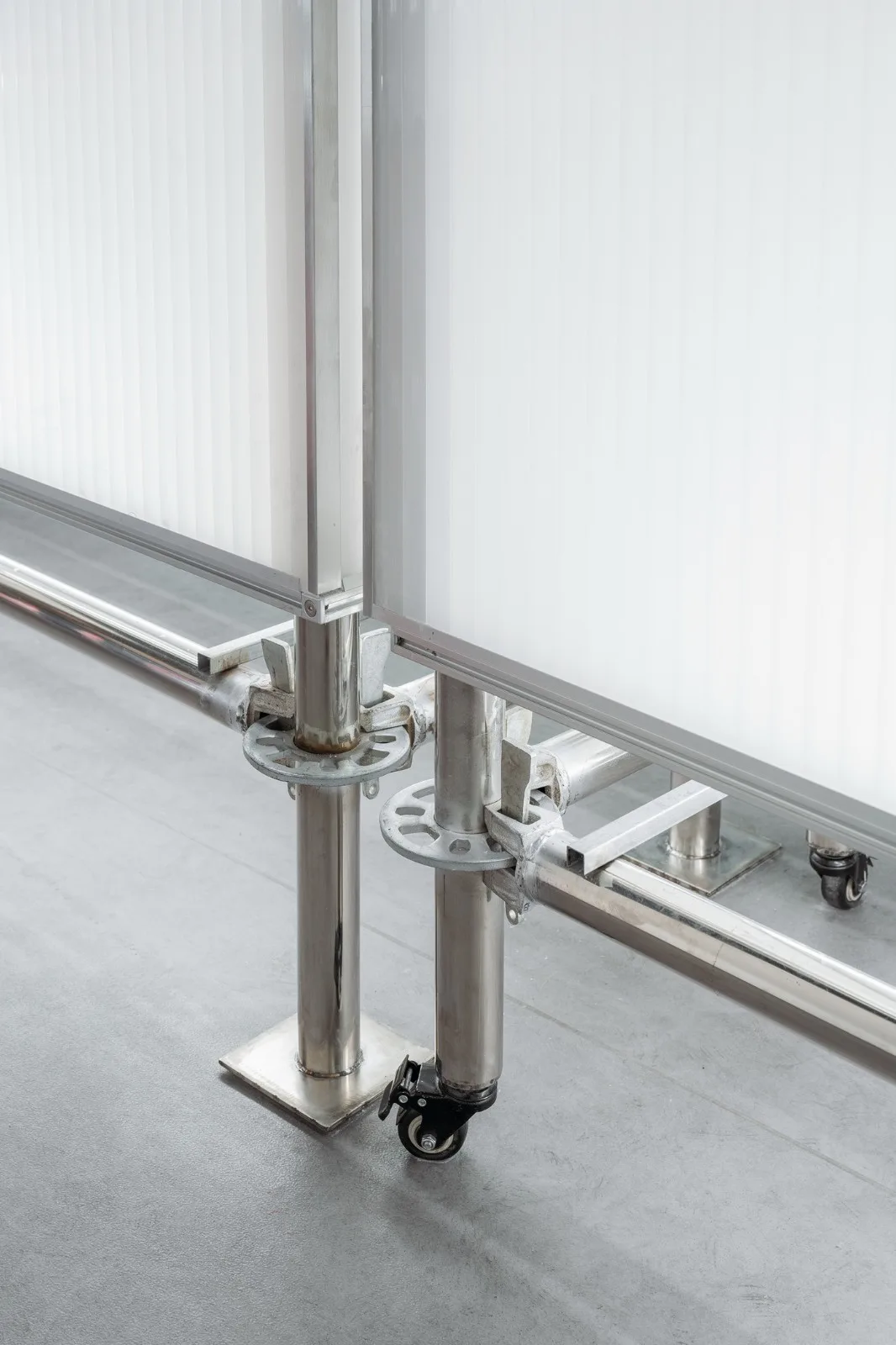
Details of Scaffolding Units © CreatAR Images (Ai Qing)
04. Designing for the Future
Beyond the planning, design, and construction of the new museum, we contributed to its future operational planning and partially to exhibition design. As a benchmark in the design industry, the Red Dot Design Award carries the mission of nurturing the next generation of talented designers. Education is a key focus in the museum’s business and operational strategies.
The Red Dot Design Academy provides training and exchange platforms for industry designers and regularly hosts courses, forums, and events. To accommodate diverse usage scenarios, we designed a flexible multifunctional theater-style grandstand with seats and rotating tabletops that can be dismantled.
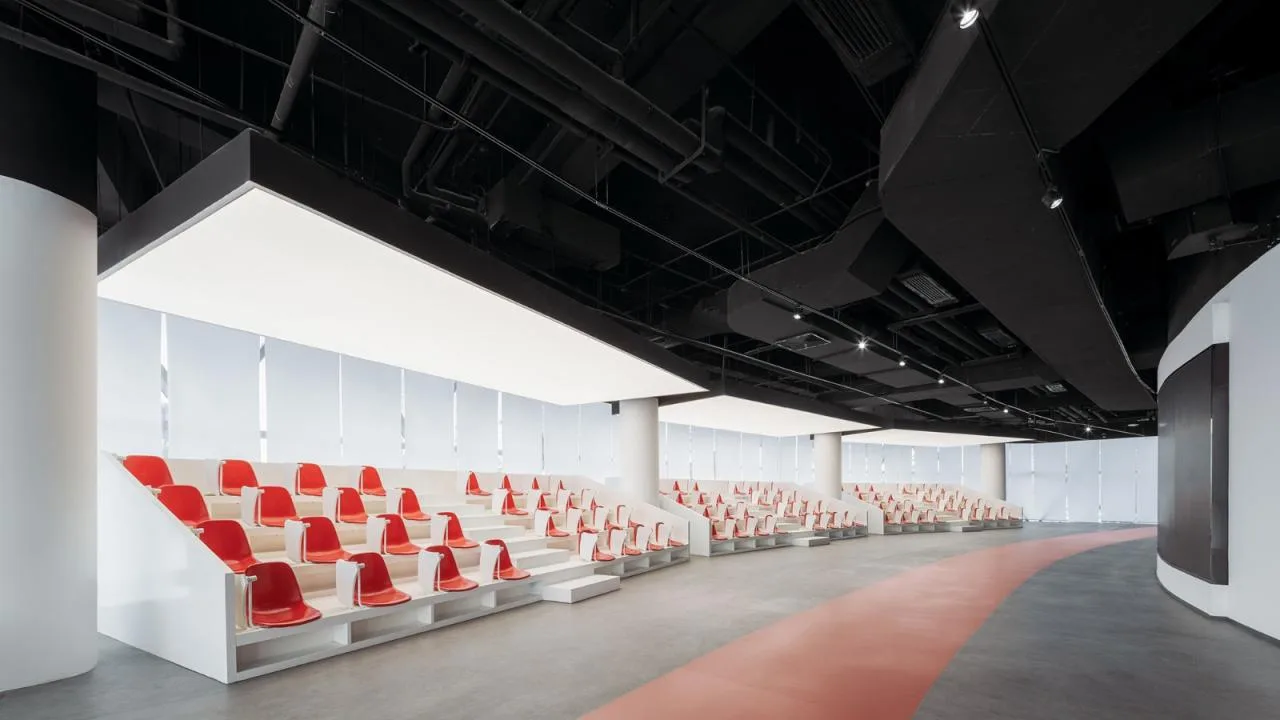
Design school space hosting various activities © CreatAR Images (Ai Qing)
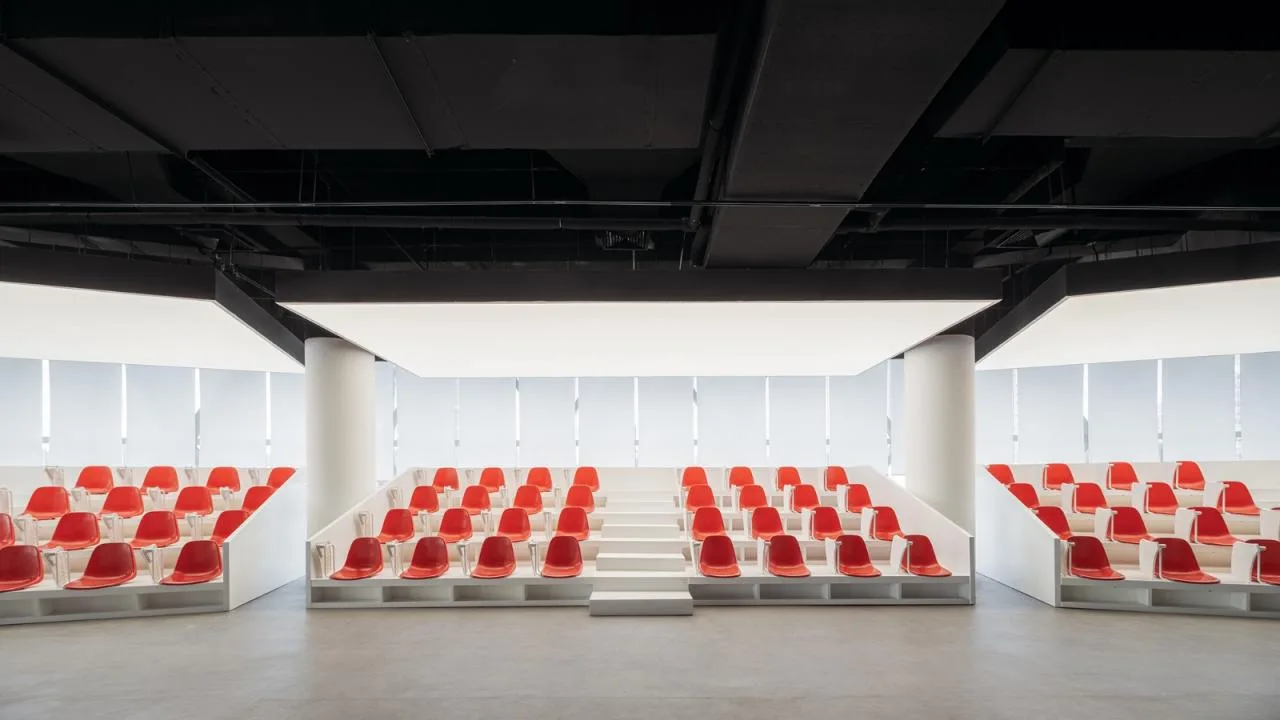
△ Flexible multifunctional theater-style grandstand © CreatAR Images (Ai Qing)
The children’s area is a semi-independent zone, comprising classrooms and exhibition halls. We transformed the children’s classrooms into three small wooden houses, each painted in different thematic colors. Through block cutouts, these classrooms create window-like display interfaces to showcase children’s design works. The transparent classroom can also serve as a free mini-exhibition hall.
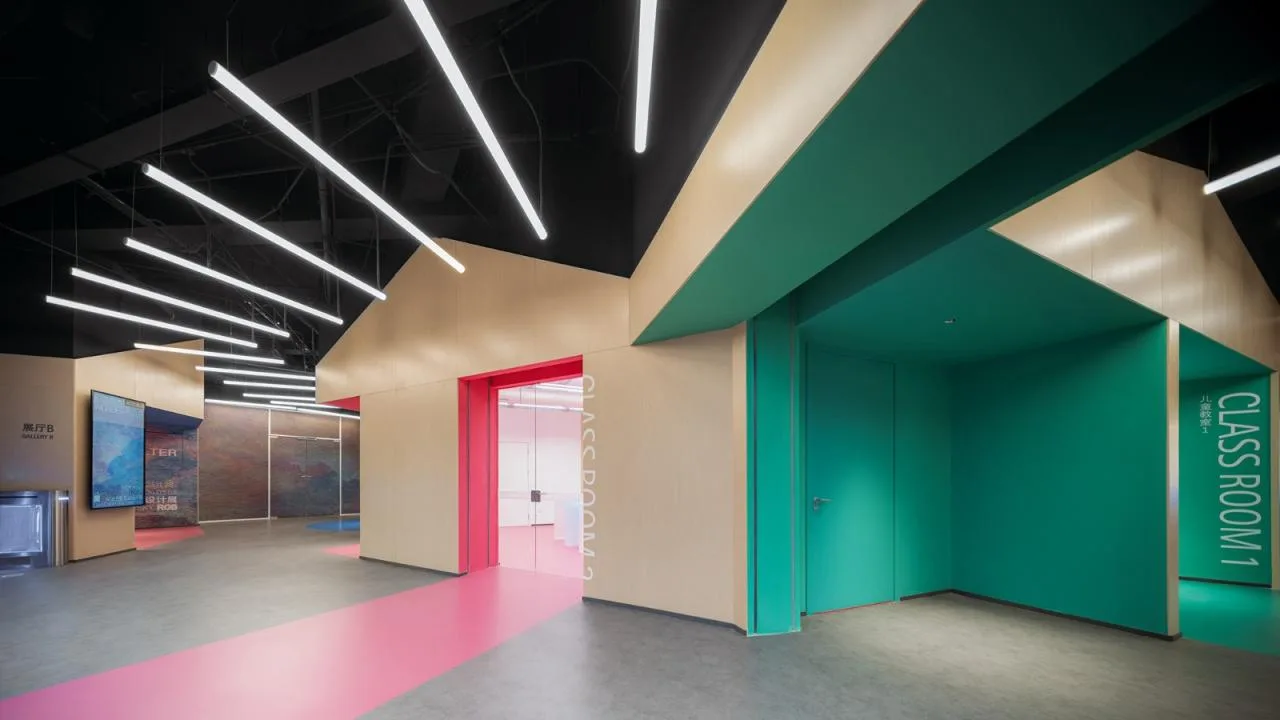
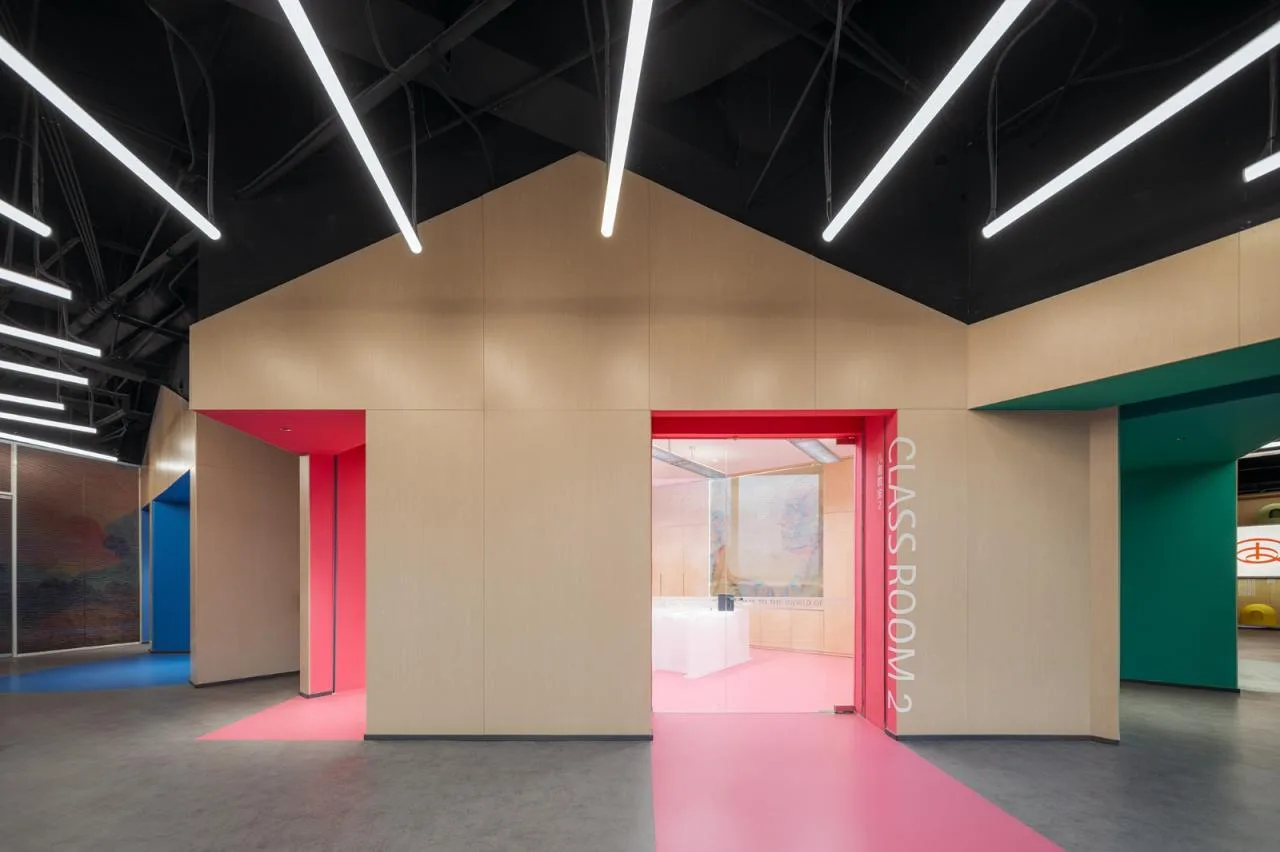
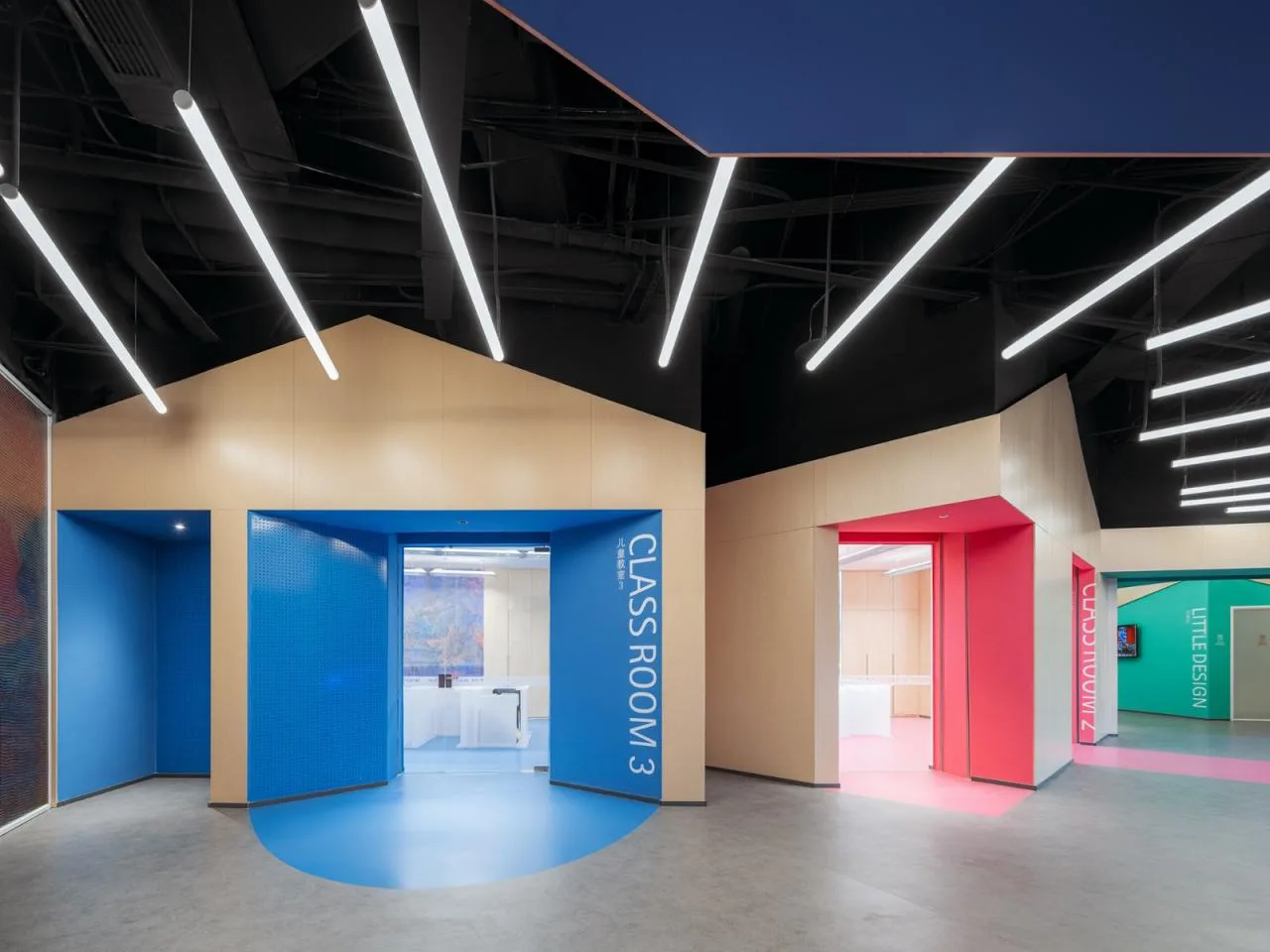
Children’s classroom designed as small wooden houses © CreatAR Images (Ai Qing)
For the children’s exhibition hall, we designed the opening exhibition “Mirror Miracle: RGB Light and Shadow Interactive Design Exhibition.” This European artist team uses the RGB principle, overlaying red, blue, and green illustrations to create vibrant images through changing light colors. Multiple viewing modes were created: switching the space’s colors via LED lighting or viewing through colored wall openings, enriching the spatial experience. To engage children’s playful spirit, we integrated game and exhibition spaces with mezzanines, openings, steps, and slides, blending education and entertainment. We also designed special exhibition equipment using translucent frosted acrylic panels assembled into various forms with colored connectors for easy setup and storage.
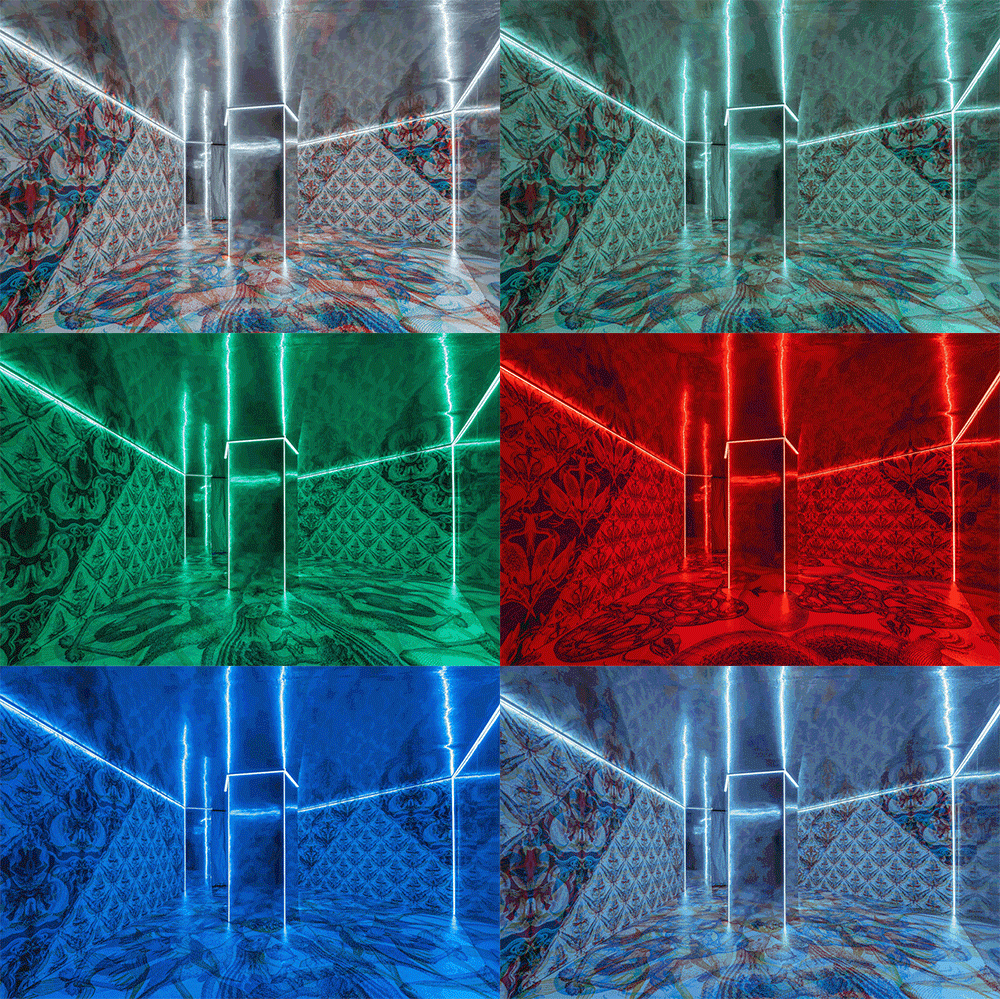
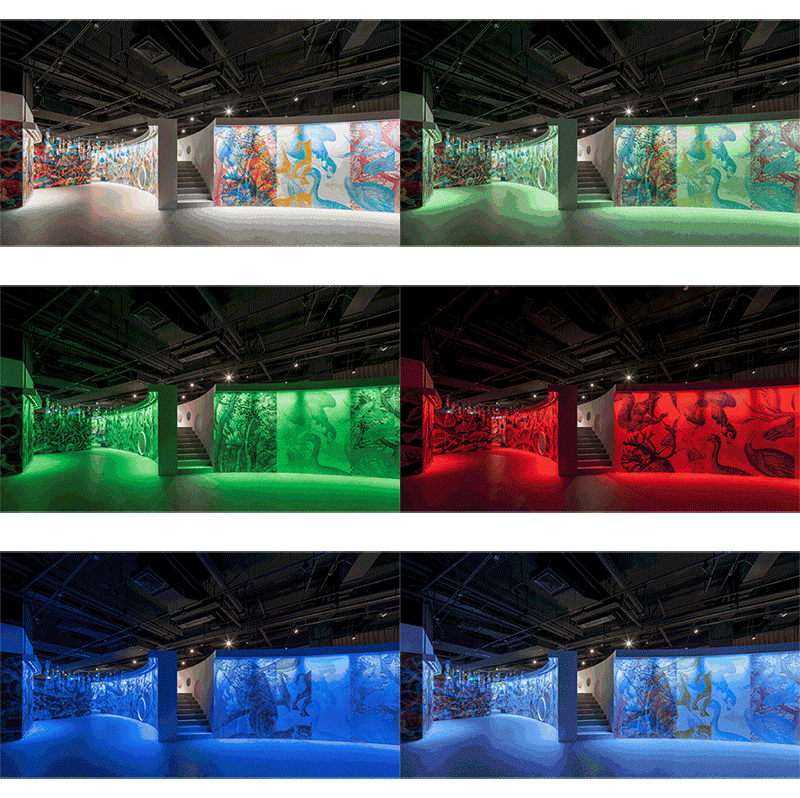
Light color changes create dazzling and varied images © STEPS Grand Staircase Architecture
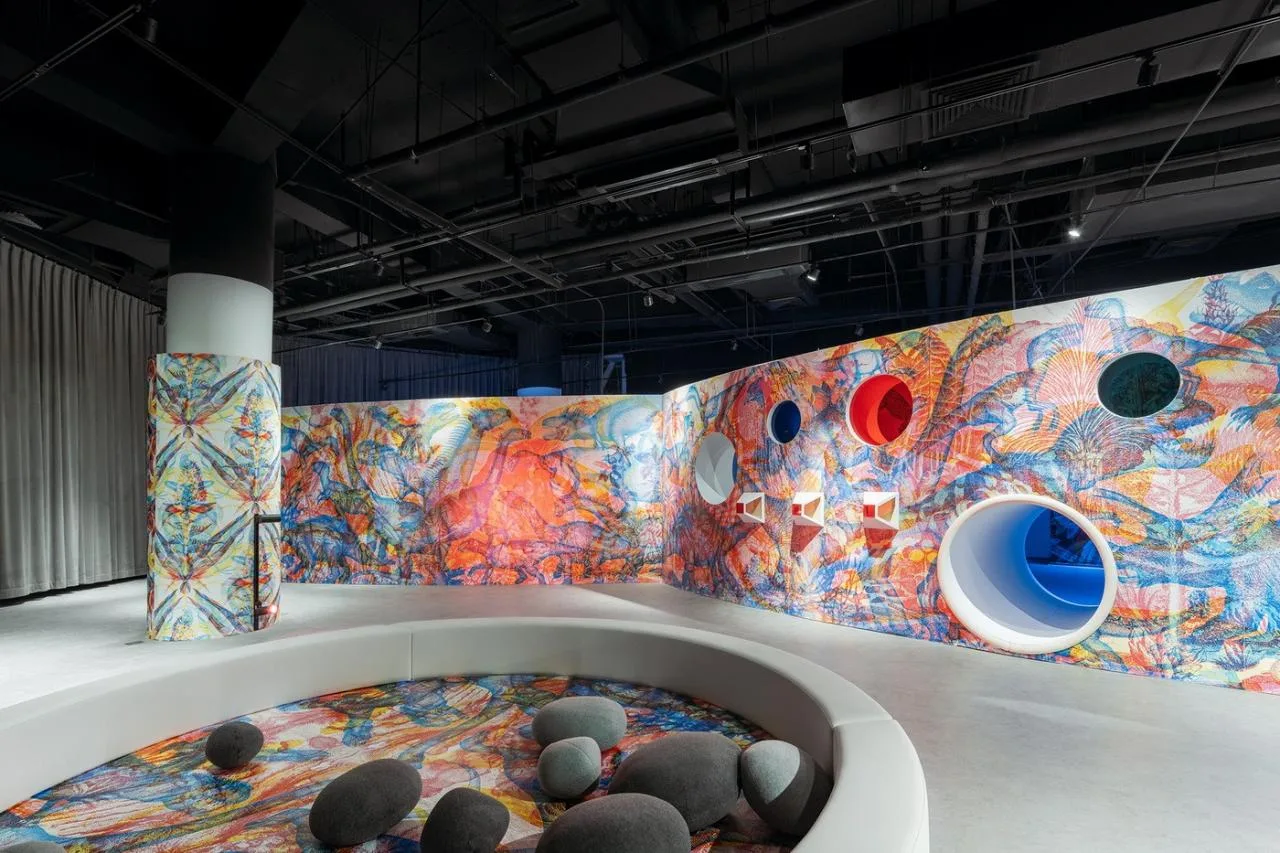
Integration of Game and Exhibition Spaces © CreatAR Images (Ai Qing)
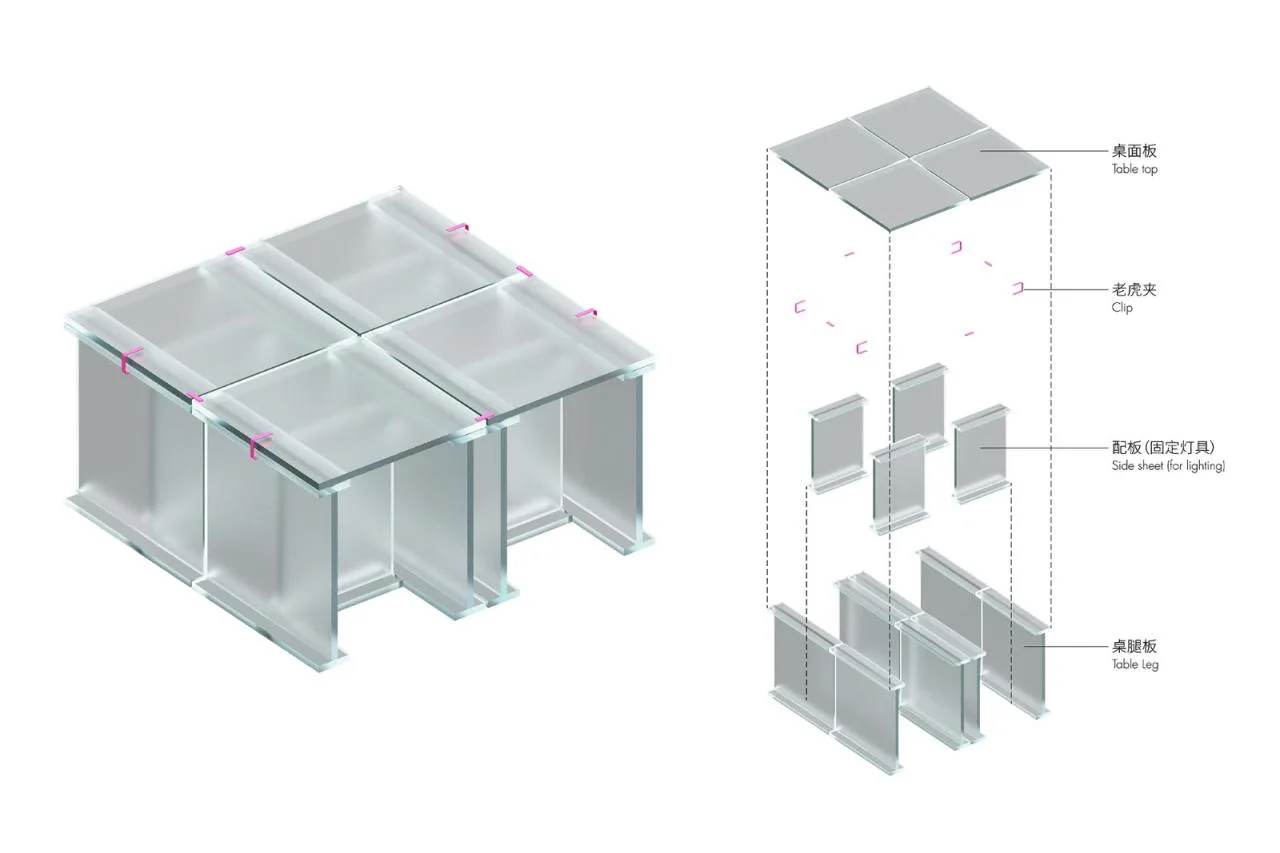
△ Children’s Exhibition Equipment Construction © STEPS Grand Staircase Architecture
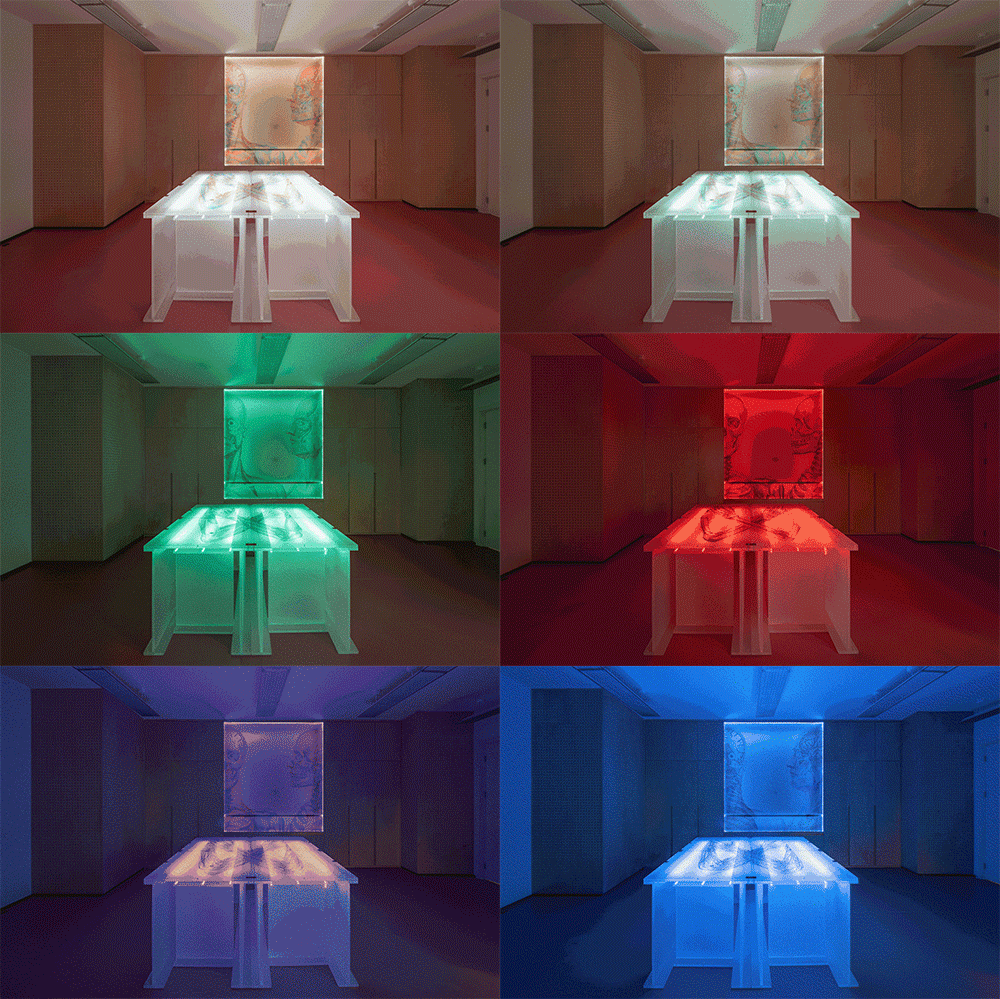
Transparent Acrylic Exhibition Equipment © STEPS Grand Staircase Architecture
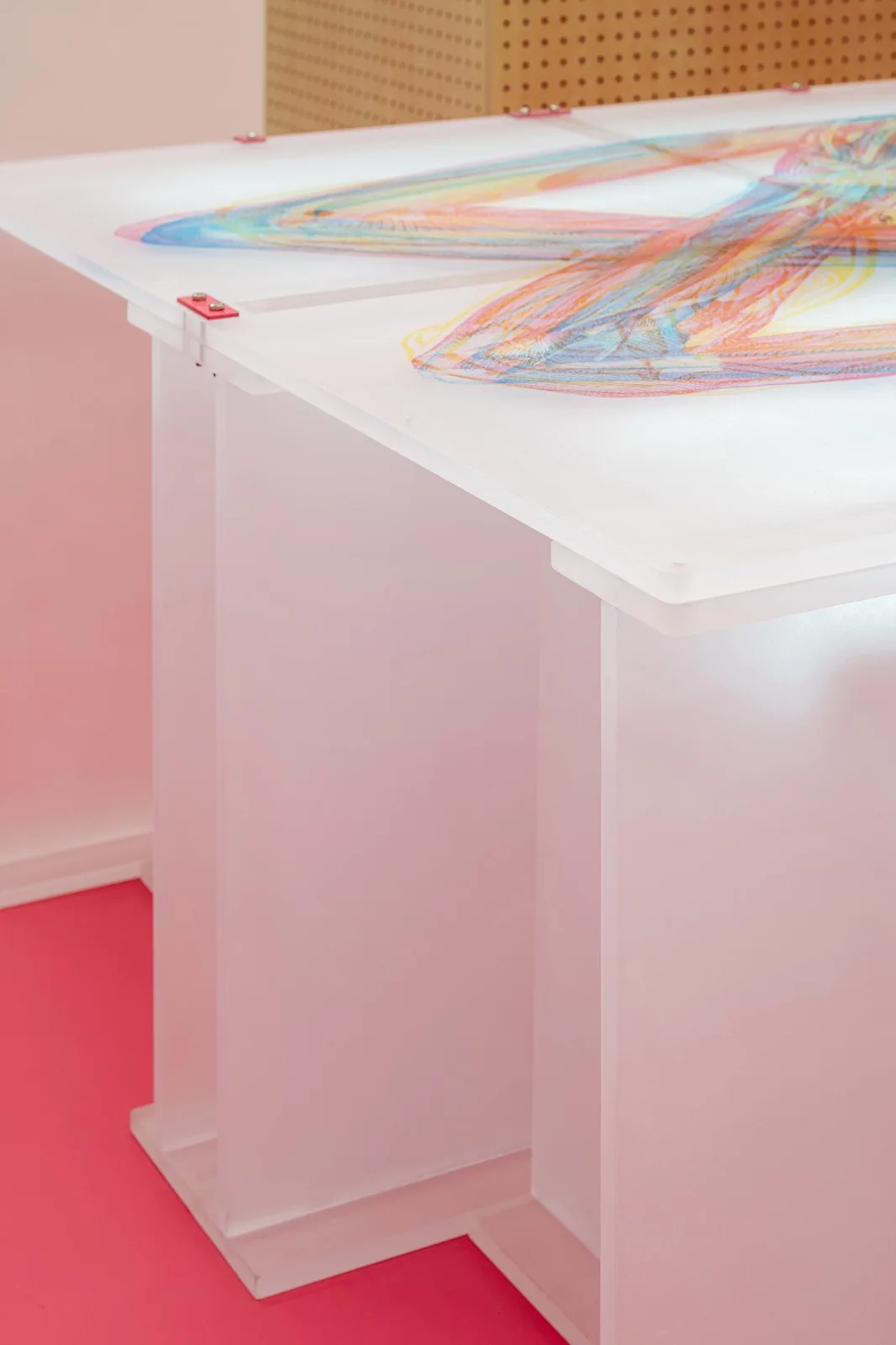
Details of Acrylic Exhibition Equipment © CreatAR Images (Ai Qing)
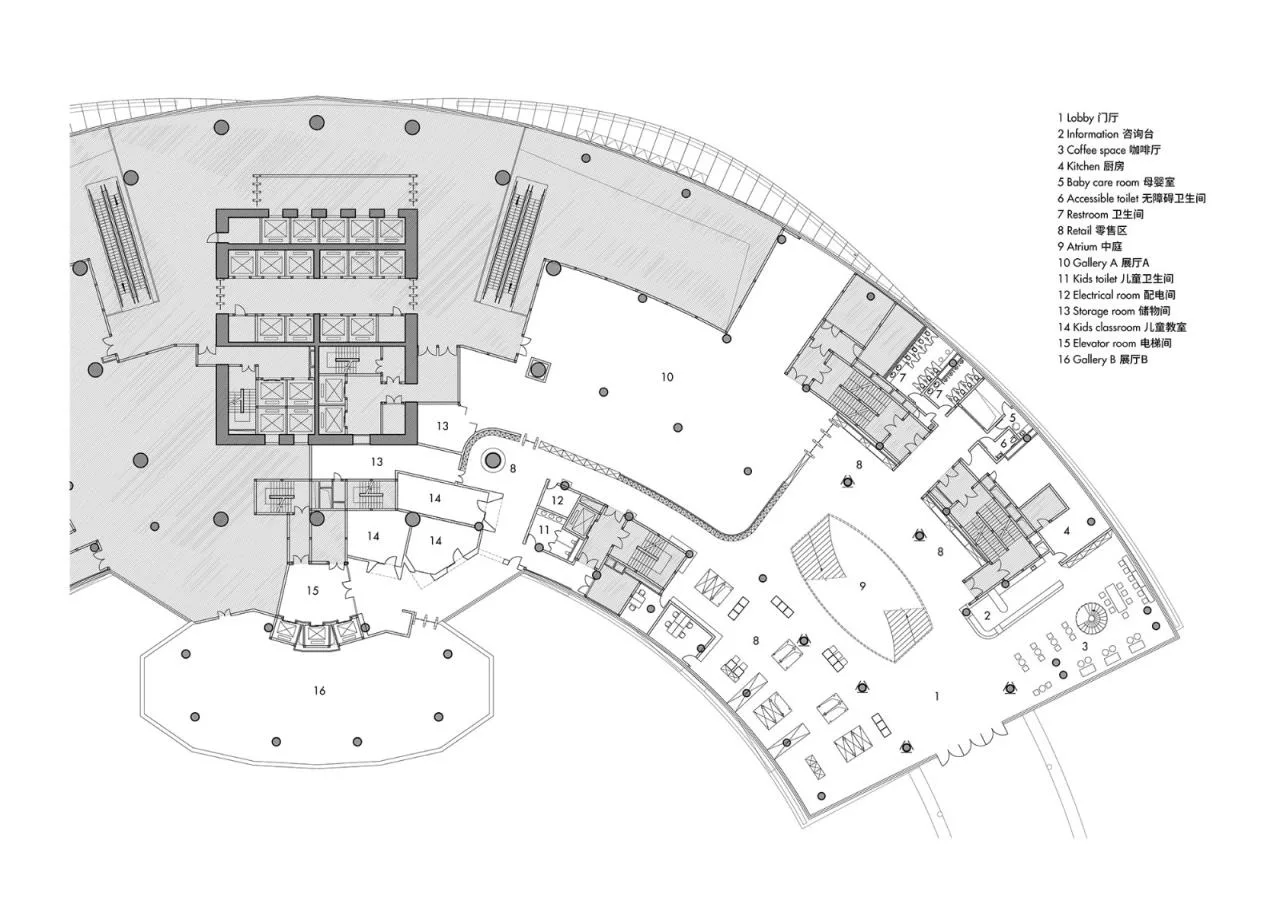
△ Second Floor Plan © STEPS Grand Staircase Architecture
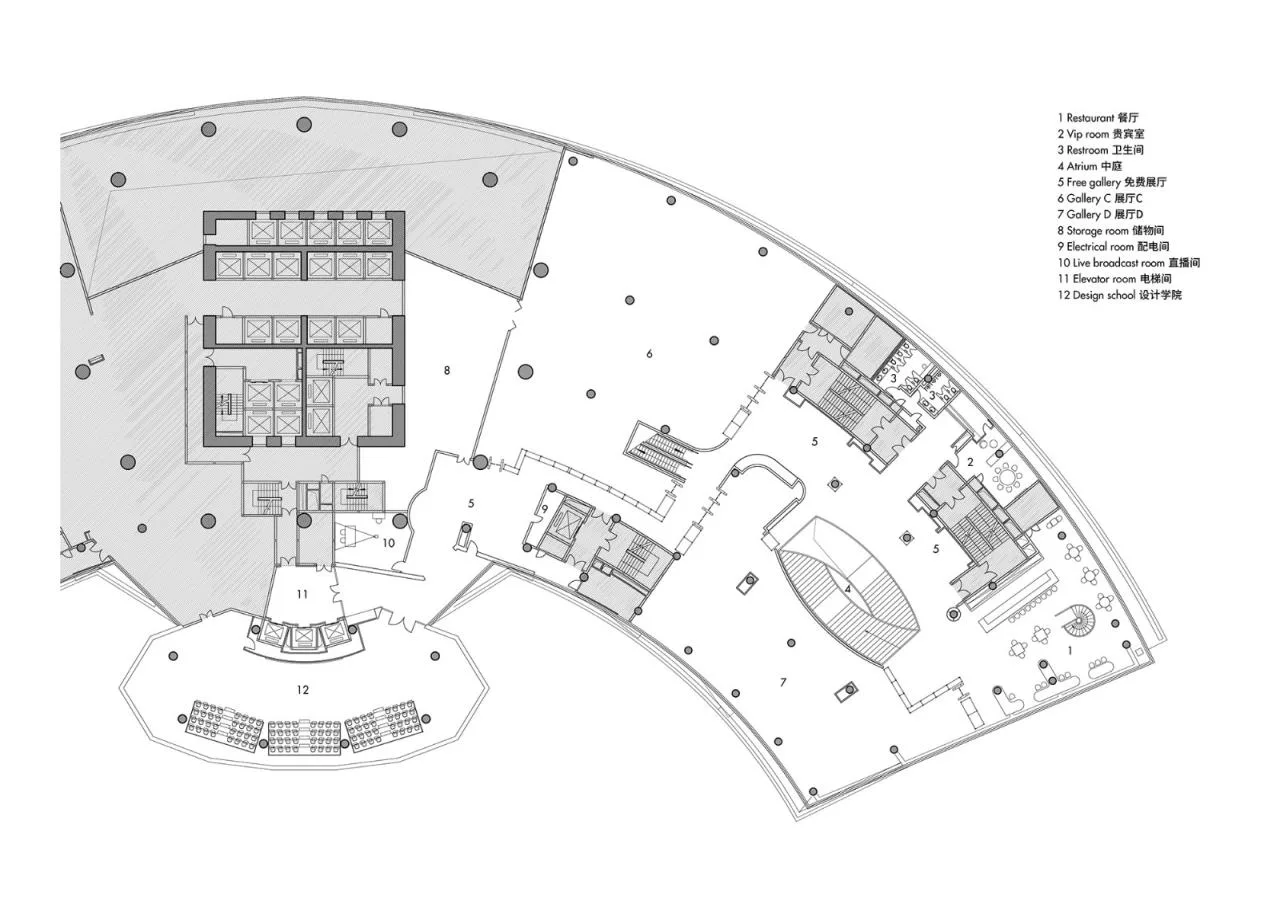
△ Third Floor Plan © STEPS Grand Staircase Architecture
Project Information
Project Name: Red Dot Design Museum · Xiamen
Project Type: Architectural Renovation, Interior Design
Designer: STEPS Grand Staircase Architecture, Collaborative Party
Completion Year: 2023
Main Creative Designers: Wu Mina, Ji Zixiao
Design Team: Cai Kai (Collaboration Party), Li Chenshu (Collaboration Party), Chen Yanping (Collaboration Party), Zeng Tian (Collaboration Party), Zhao Yueming, Li Tao, Zhao Hui, Wang Kaiping, Cheng Guangxiao, Yan Ruiqi, Liu Yu Sadiq, Wang Bo, Shi Luhang, Li Chunrong, etc.
Design Consulting: Beijing Yanhuang United International Engineering Design Co., Ltd
Construction Drawings: Fujian Boyi Architectural Design Co., Ltd
Construction Contractor: Fujian Xinggang Construction Engineering Co., Ltd
Agent: Xiamen Municipal Urban Development and Construction Co., Ltd
Project Address: Chengyi International Business Center, No. 502 Xinglinwan Road, Jimei District, Xiamen City, Fujian Province
Building Area: 8,000 square meters
Photography Copyright: CreatAR Images (Ai Qing)
Lighting Design: Lumia Lab Lumia Lighting Design
Guide Design: Out.o studio and flat design
Multimedia Design: Collaborative Party
Customized Furniture Design: STEPS Grand Staircase Architecture, Collaborative Parties
Exhibition Design: STEPS Grand Staircase Architecture, Collaborative Party, Weitian Design Co., Ltd
Client: Red Dot Design (Xiamen) Brand Operation Co., Ltd
Materials: Fluorocarbon spray paint, ocean board, polycarbonate board, PVC floor adhesive
















Must log in before commenting!
Sign Up