
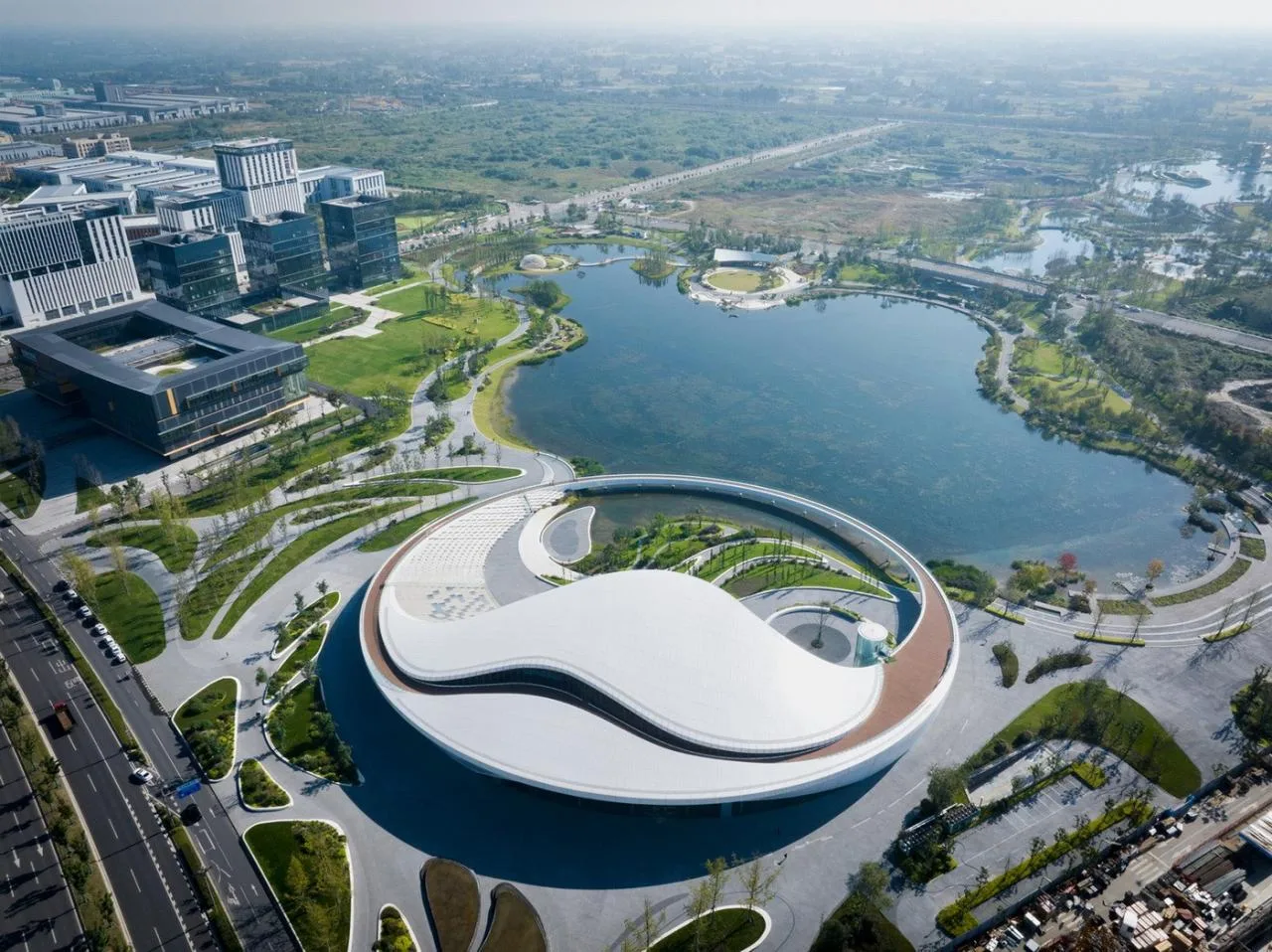
Project Background: In March 2020, MUDA Architecture, led by Lu Yun, designed and constructed the Tianfu Traditional Chinese Medicine Museum in Pengzhou City, Chengdu. Pengzhou serves as the northern transportation hub of Chengdu and is rich in flora, fauna, and medicinal herbs. As China’s largest standardized demonstration base for the Chuanxiong industry, Pengzhou hosts nearly 90 pharmaceutical and health enterprises.
To support the national strategy of revitalizing traditional Chinese medicine, Tianfu Traditional Chinese Medicine City was officially established in 2019, based on the development of the Pengzhou Industrial Park in Sichuan. The museum is situated at the entrance of Tianfu Traditional Chinese Medicine City, occupying a planned construction area of approximately 13,000 square meters.
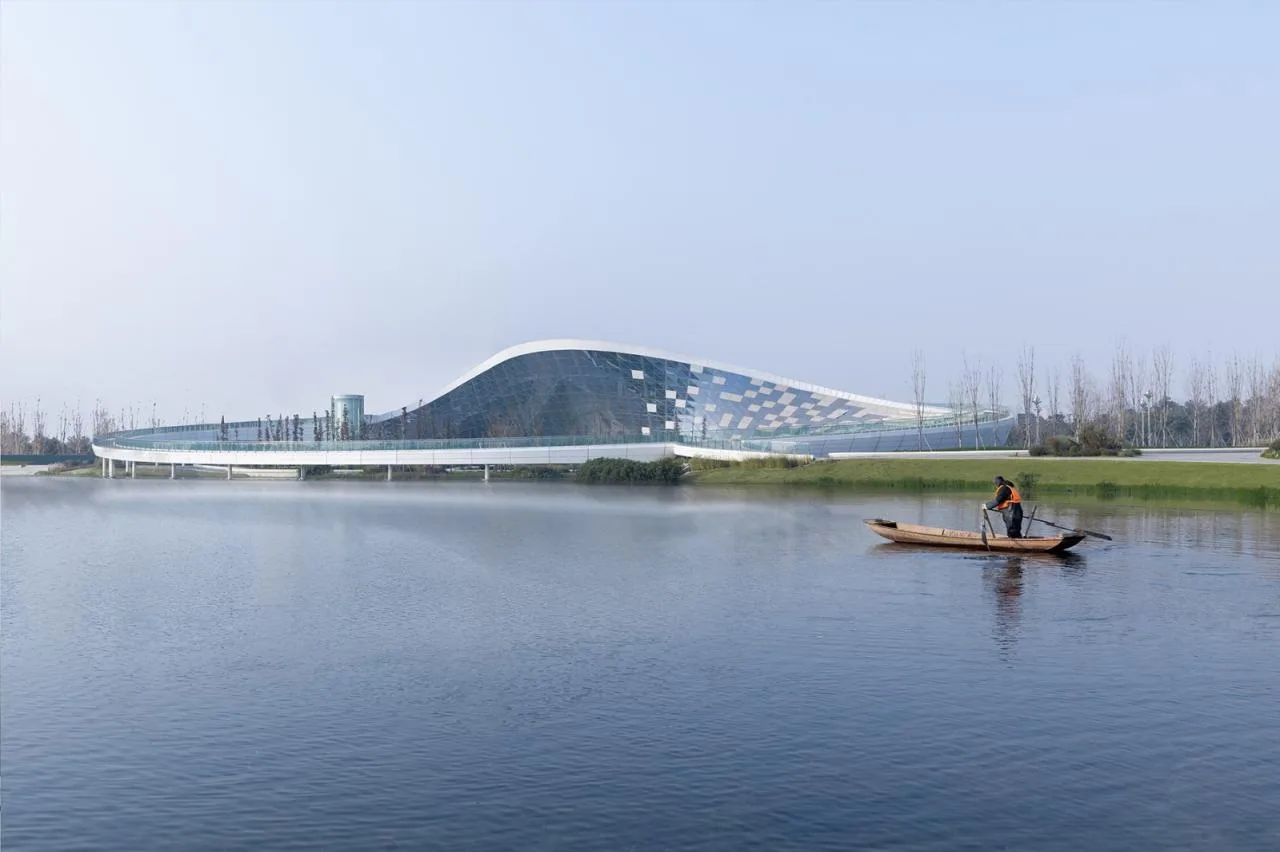
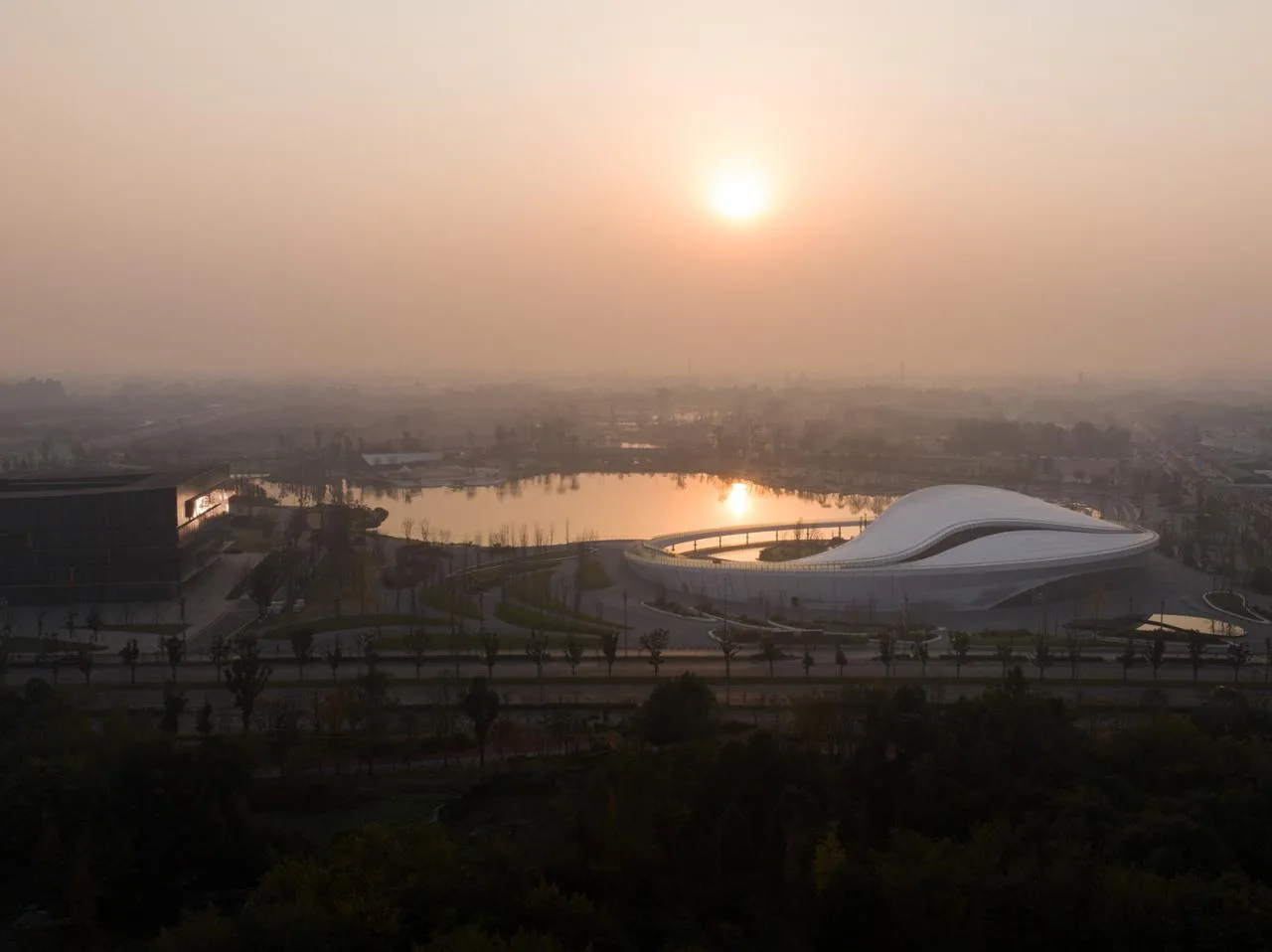
The site is bordered by Huitong Lake to the east and the Third Ring Road to the west, providing convenient transportation access. Upon completion, the museum will serve as a landmark for Tianfu Traditional Chinese Medicine City, playing a vital role in interpreting traditional Chinese medicine culture, showcasing the ecological value of local medicinal resources, disseminating knowledge, and contributing to the vision of a sustainable park city.
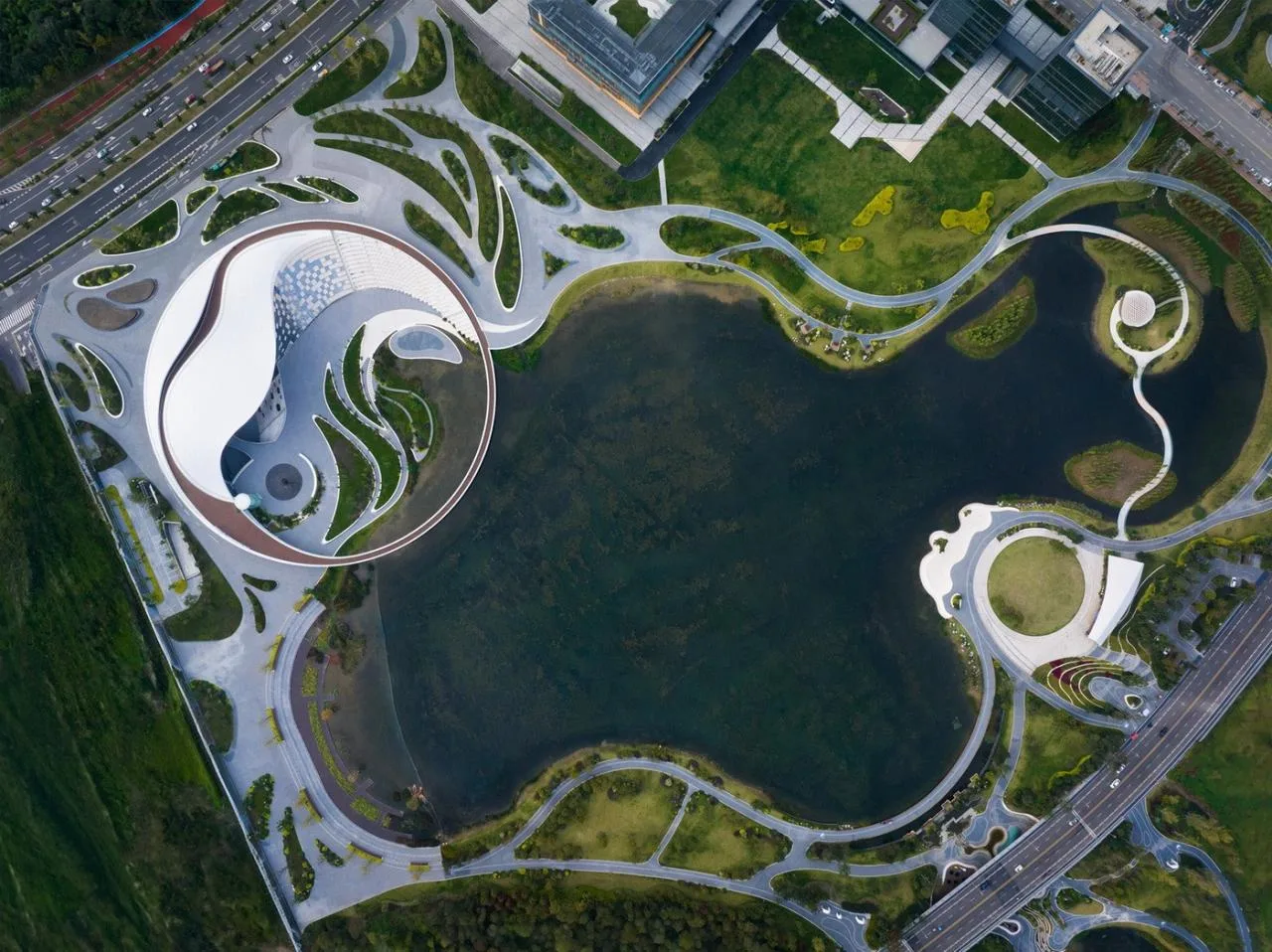
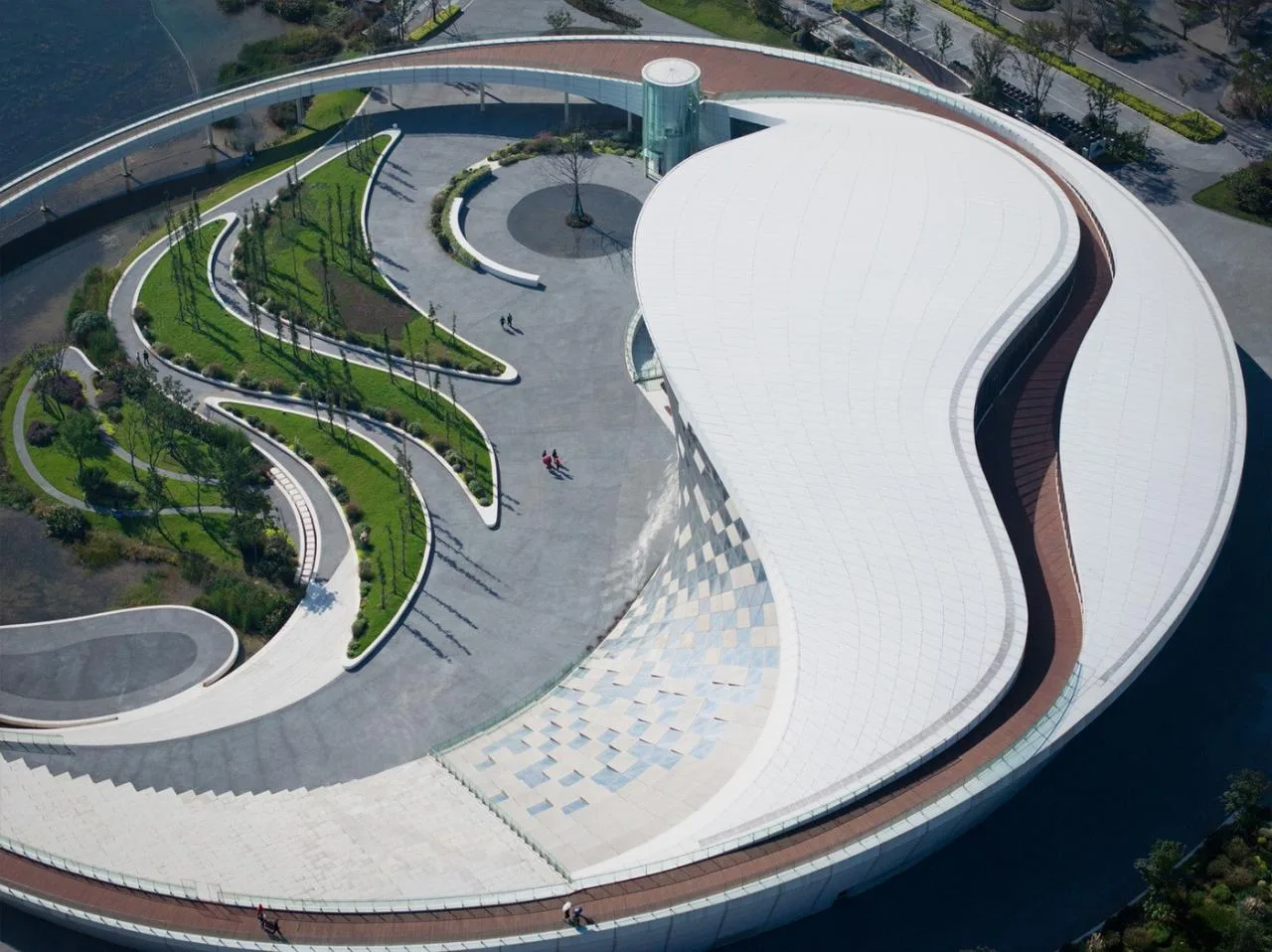
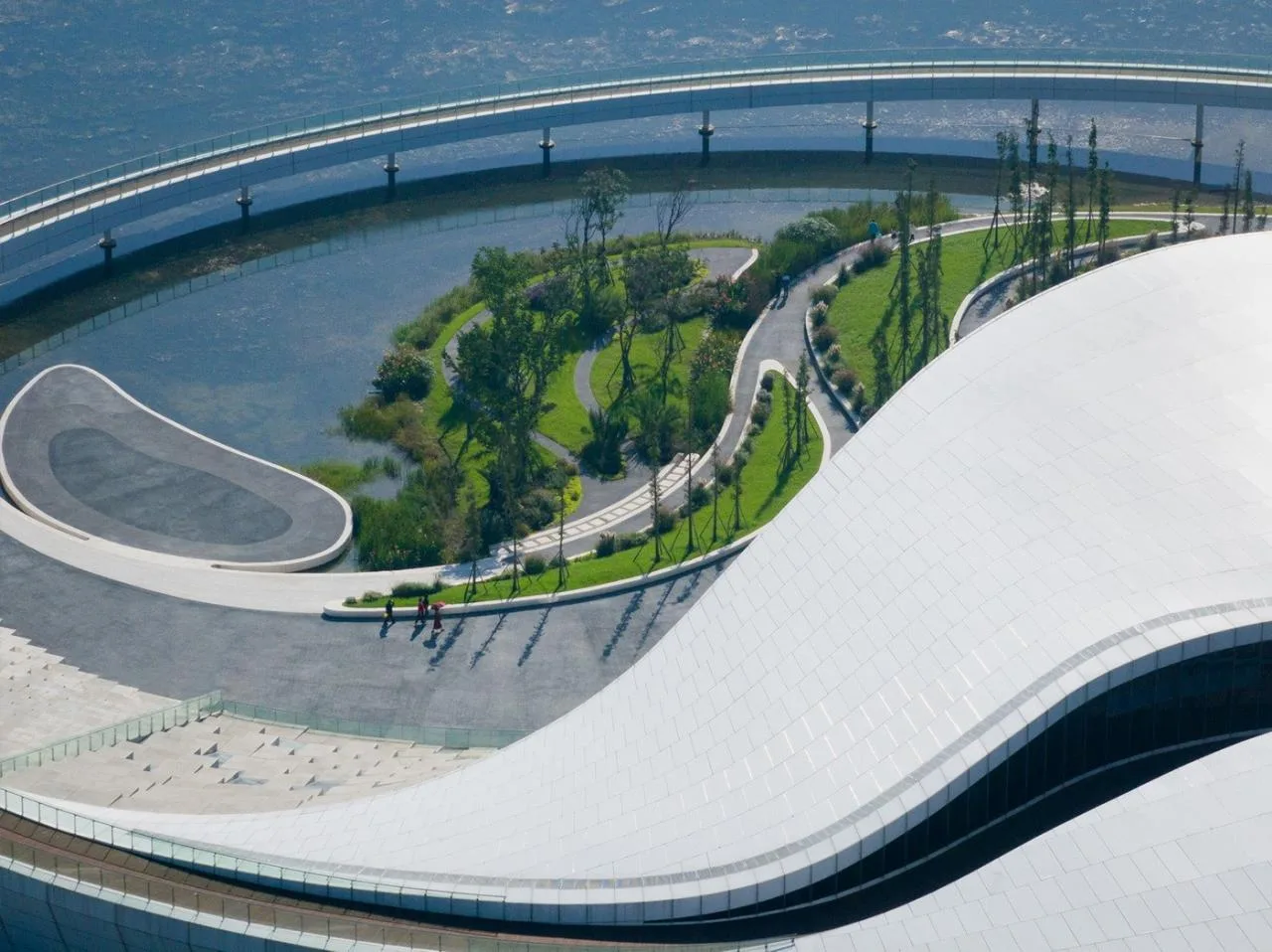
The philosophy of traditional Chinese medicine has a long-standing history and a comprehensive theoretical framework. It emphasizes a holistic worldview centered on the unity and correspondence between humanity and nature, along with the principle of dialectical treatment. This philosophy identifies two fundamental substances—yin and yang—that are opposing yet interdependent, continuously moving and transforming in a balanced cycle.
The ancient Tai Chi diagram encapsulates this concept, symbolizing the dynamic rotation and harmony between yin and yang as the source of all creation and change. Inspired by these ideas, MUDA Architecture incorporates the yin-yang concept to create a spatial experience that blends the virtual and the real, reflecting the interconnectedness of people, architecture, city, and nature. This integration represents the natural unity central to traditional Chinese medicine.
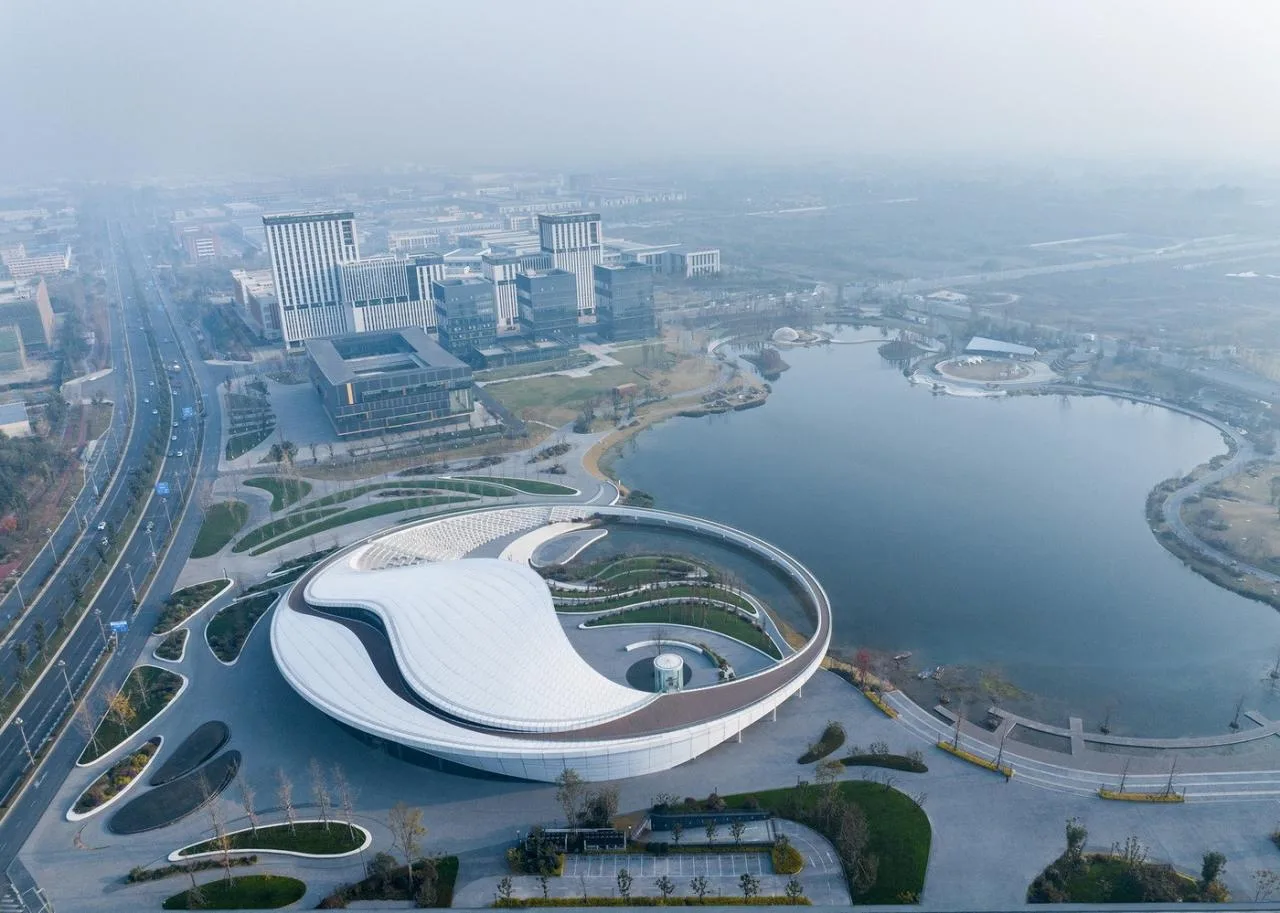
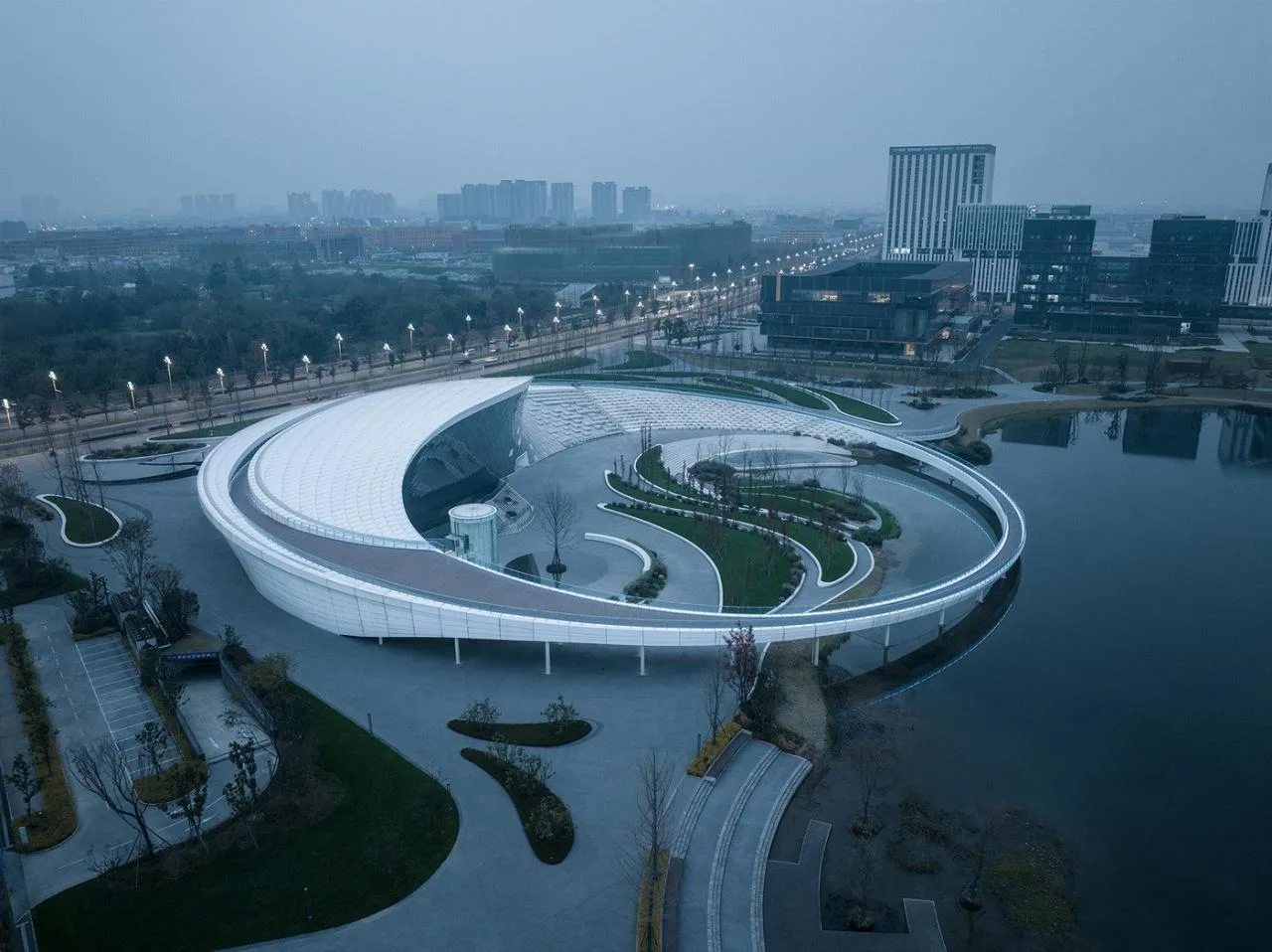
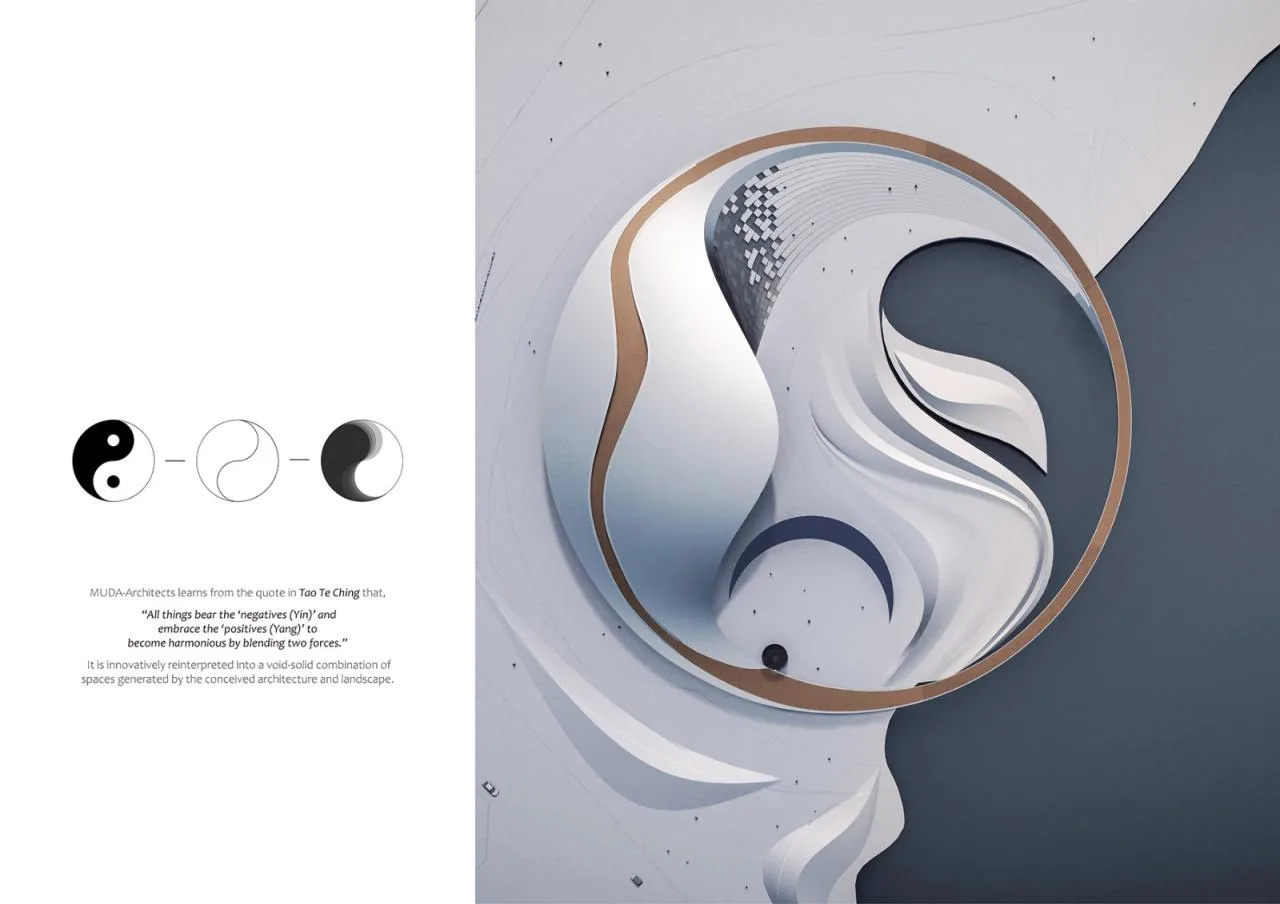
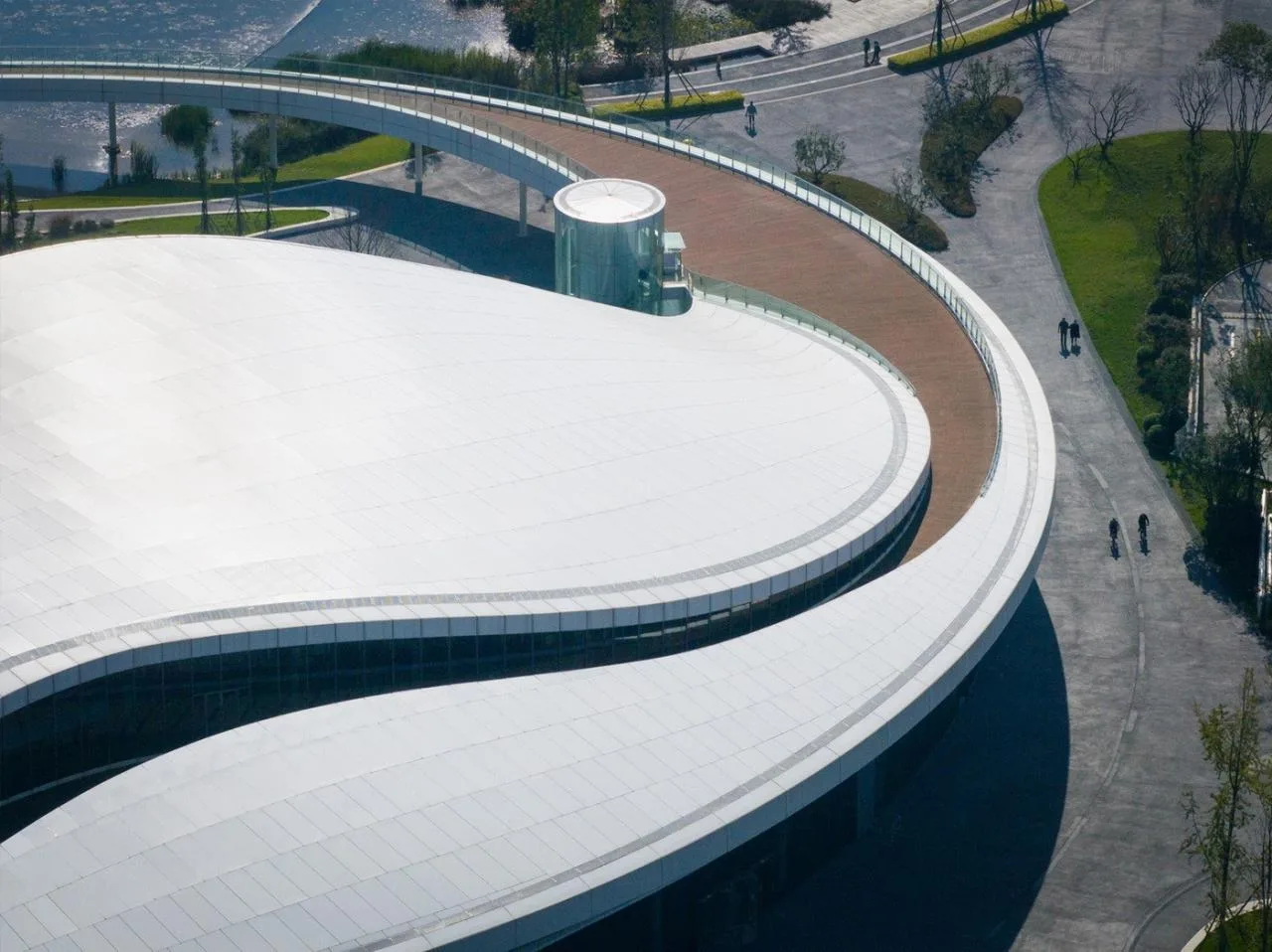
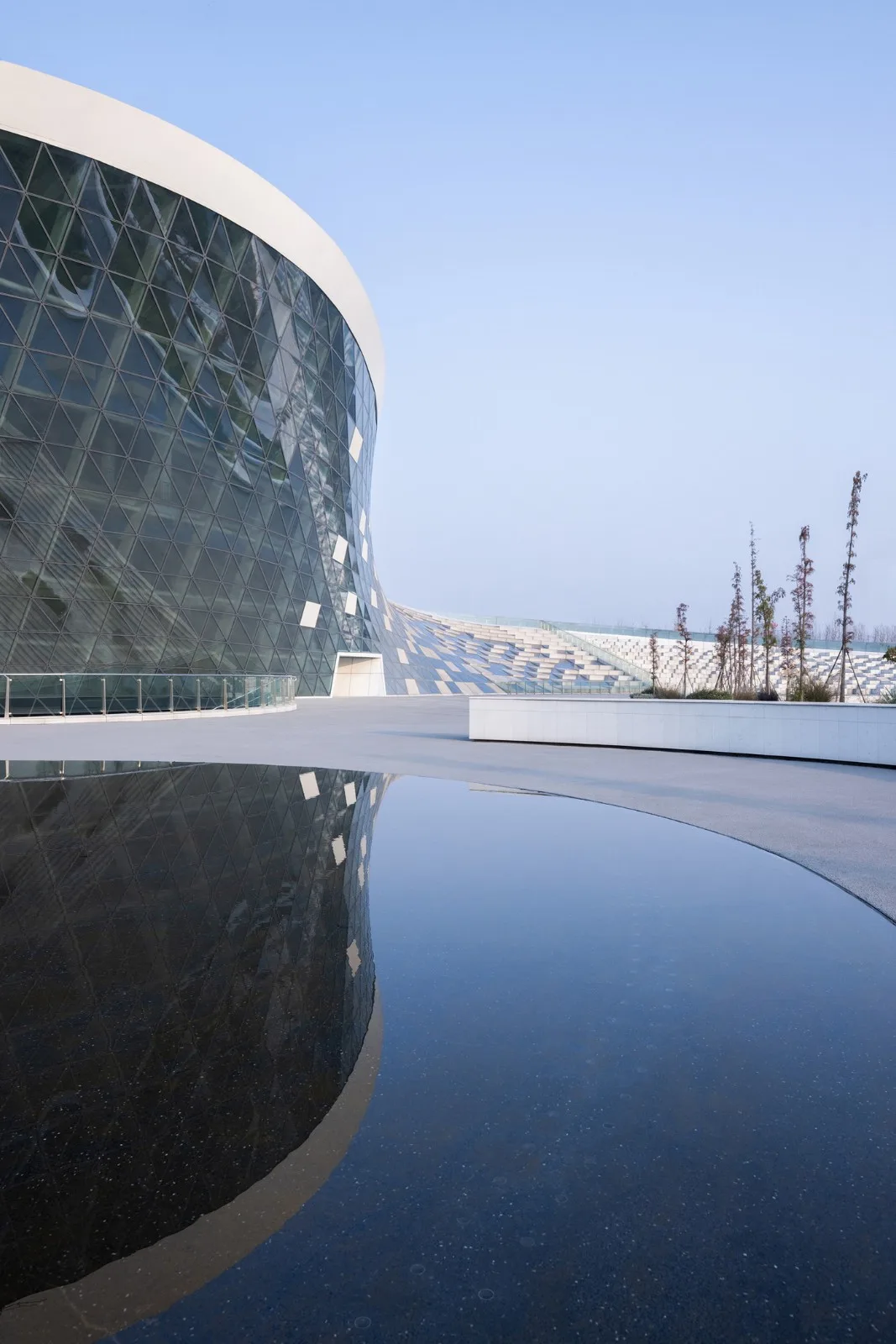
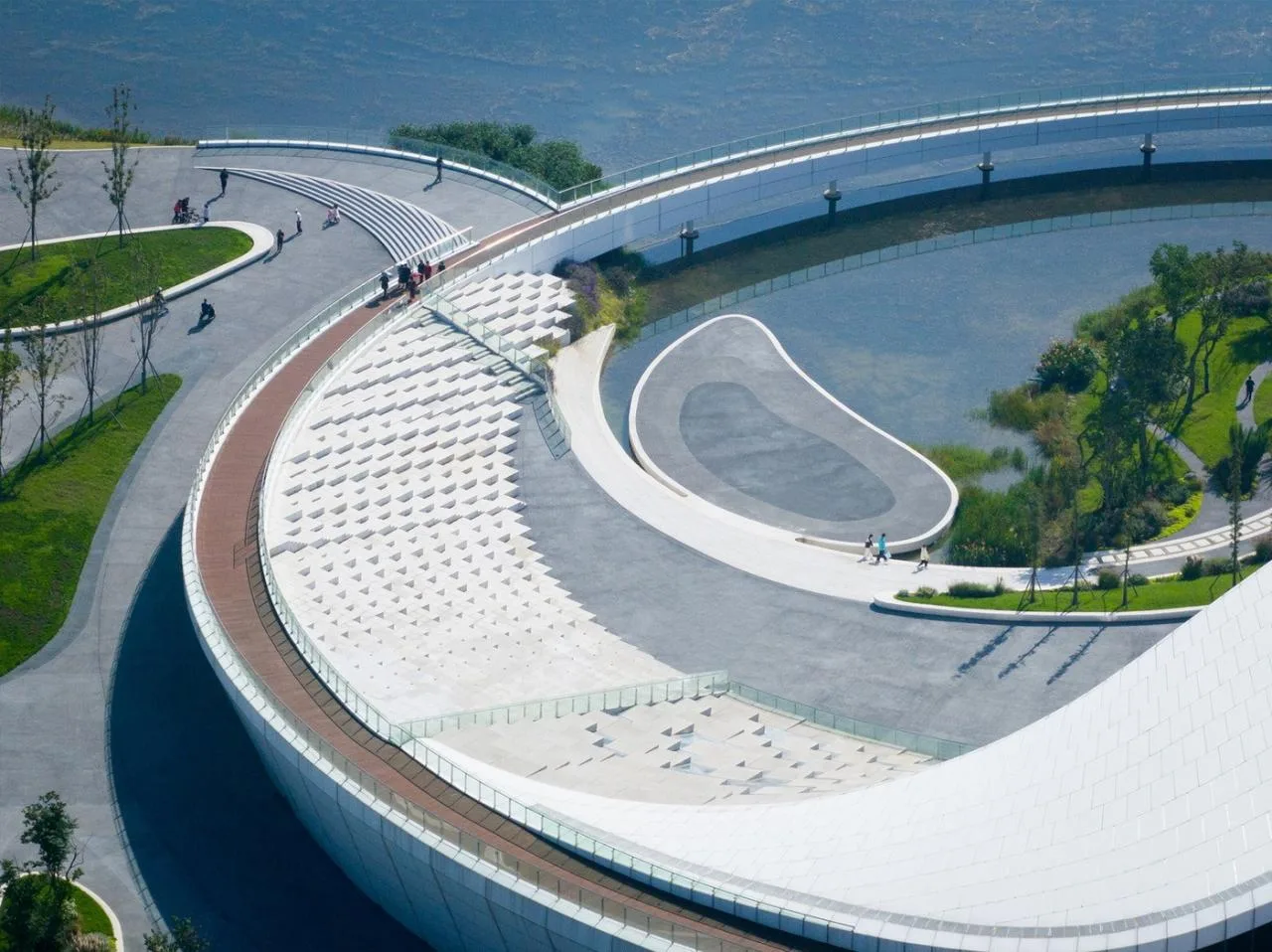
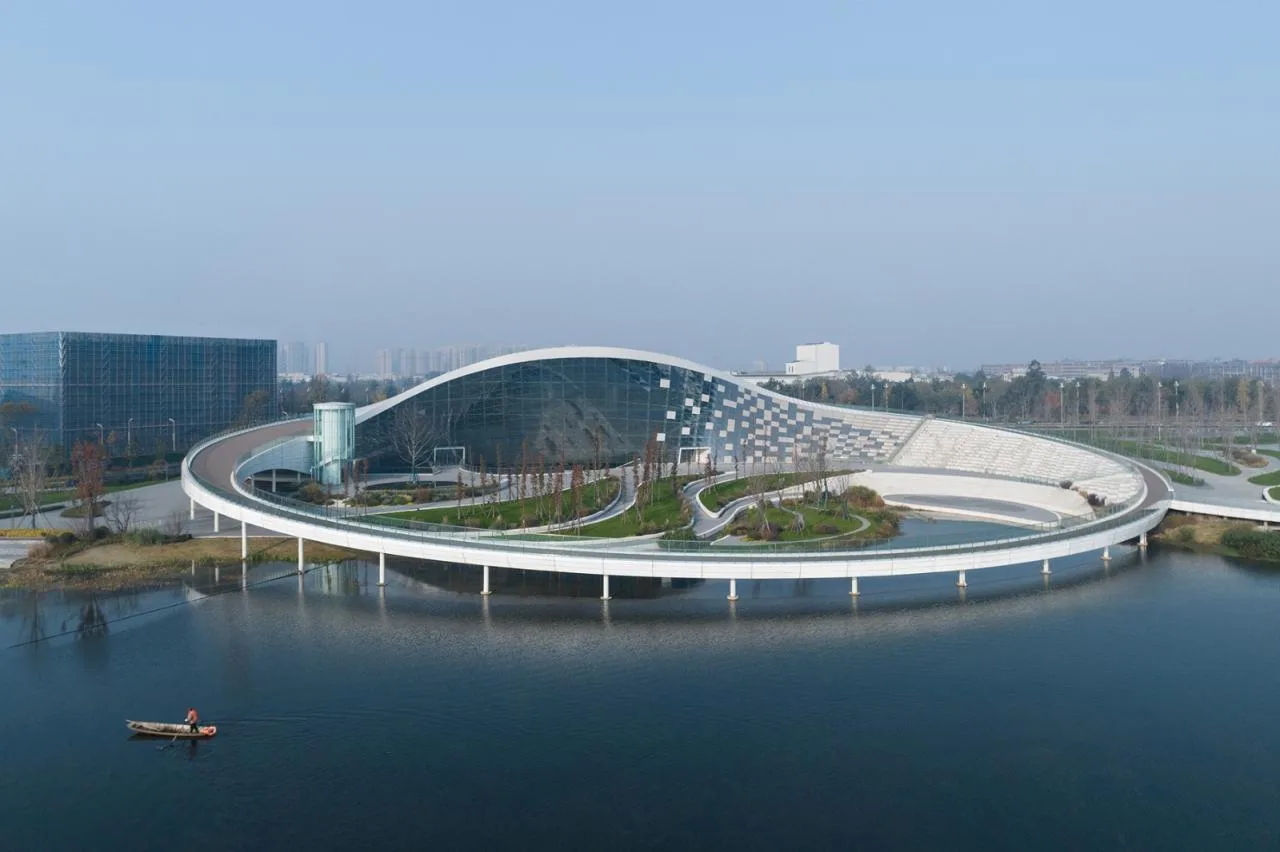
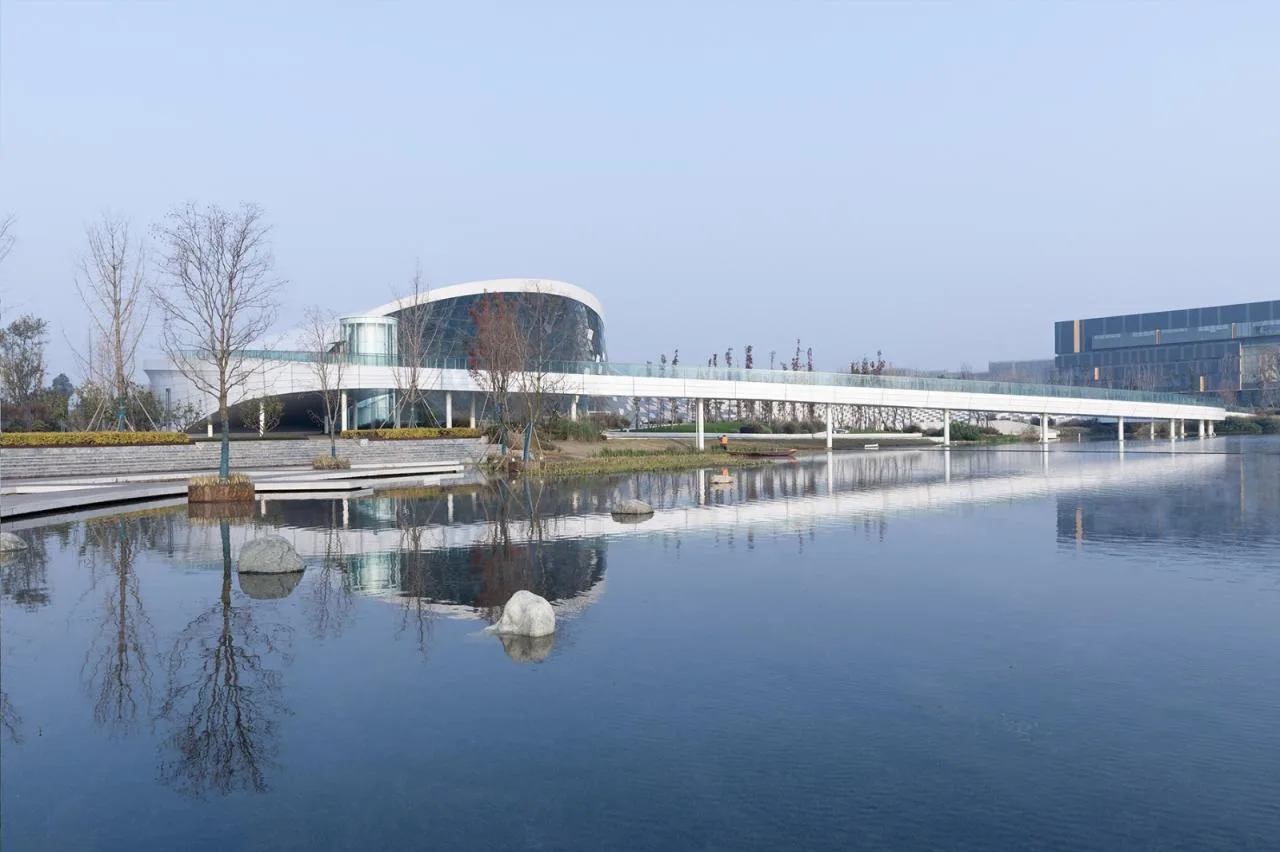
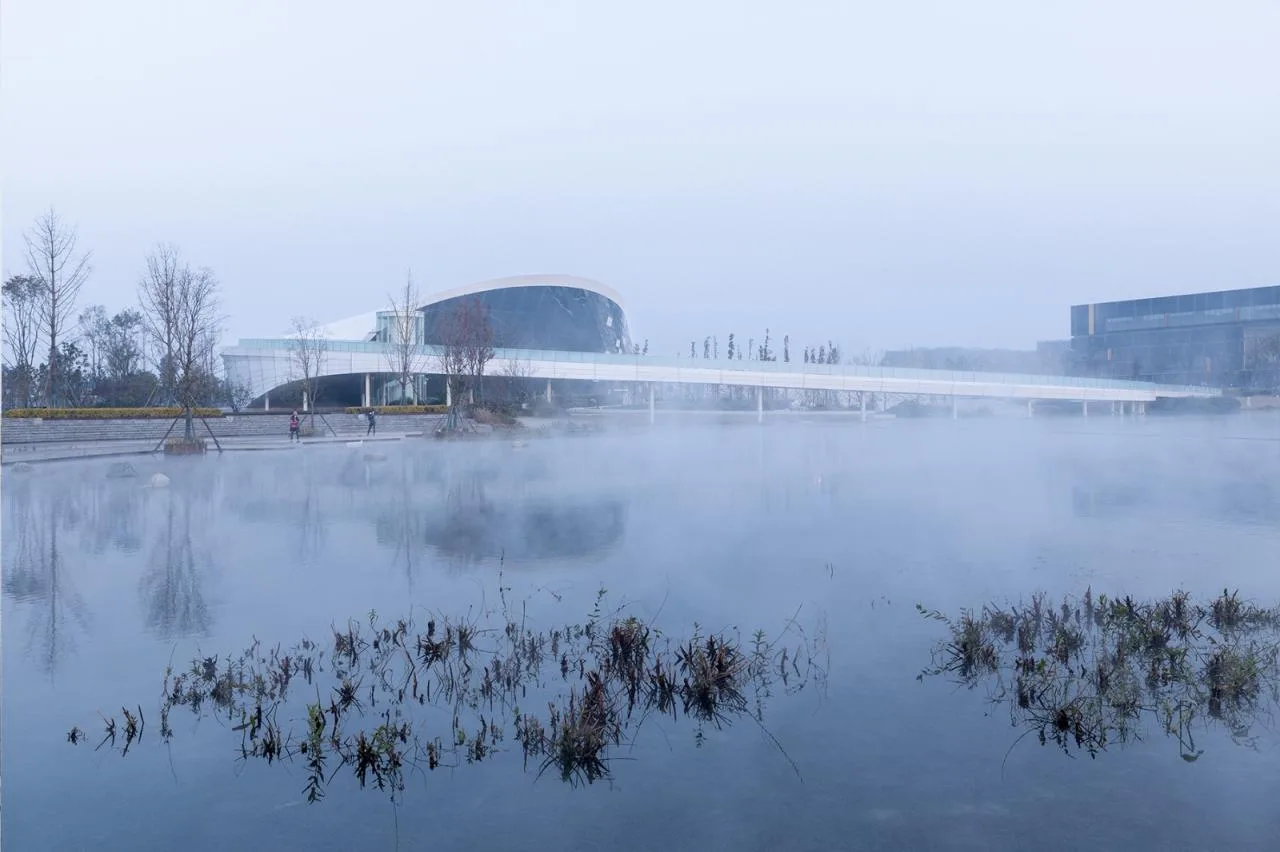
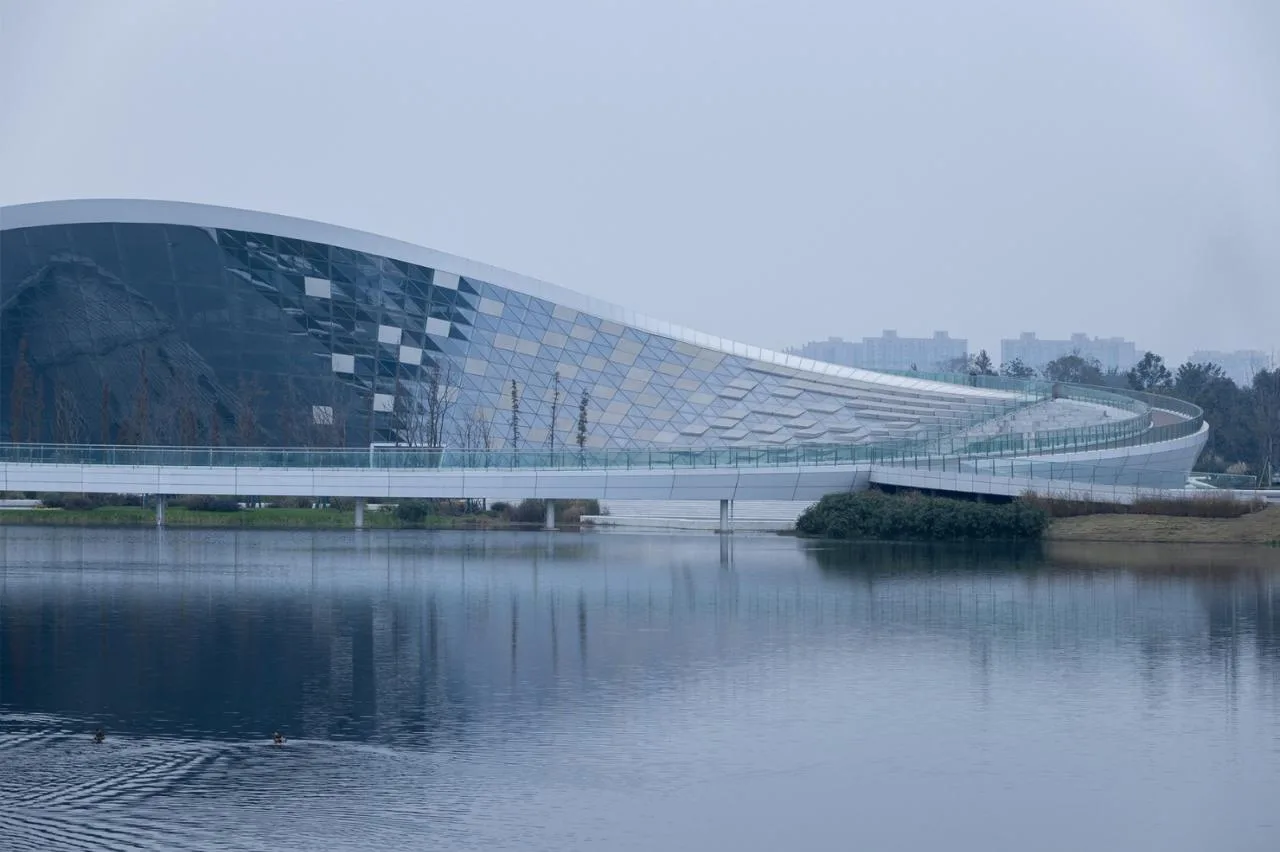
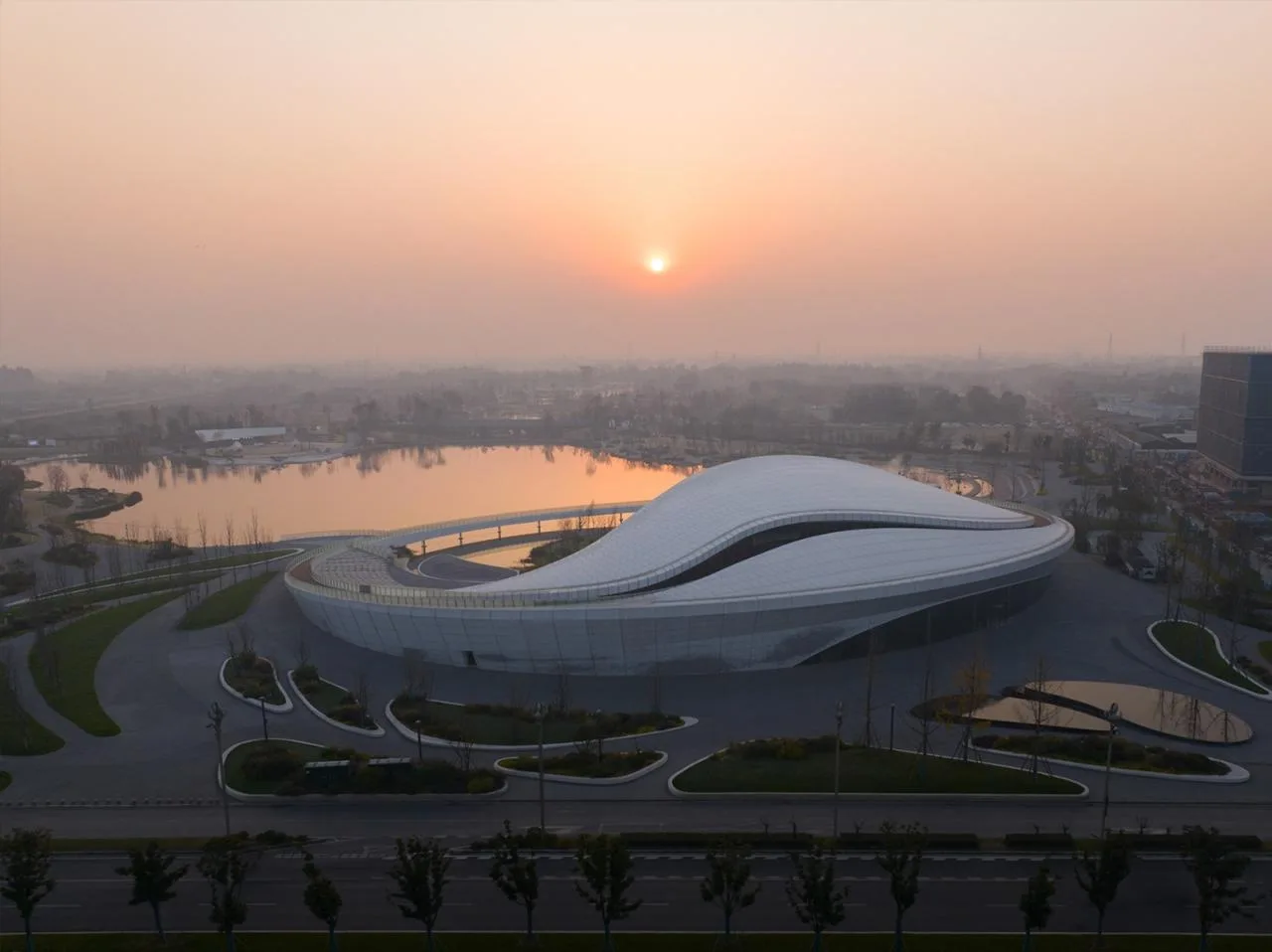
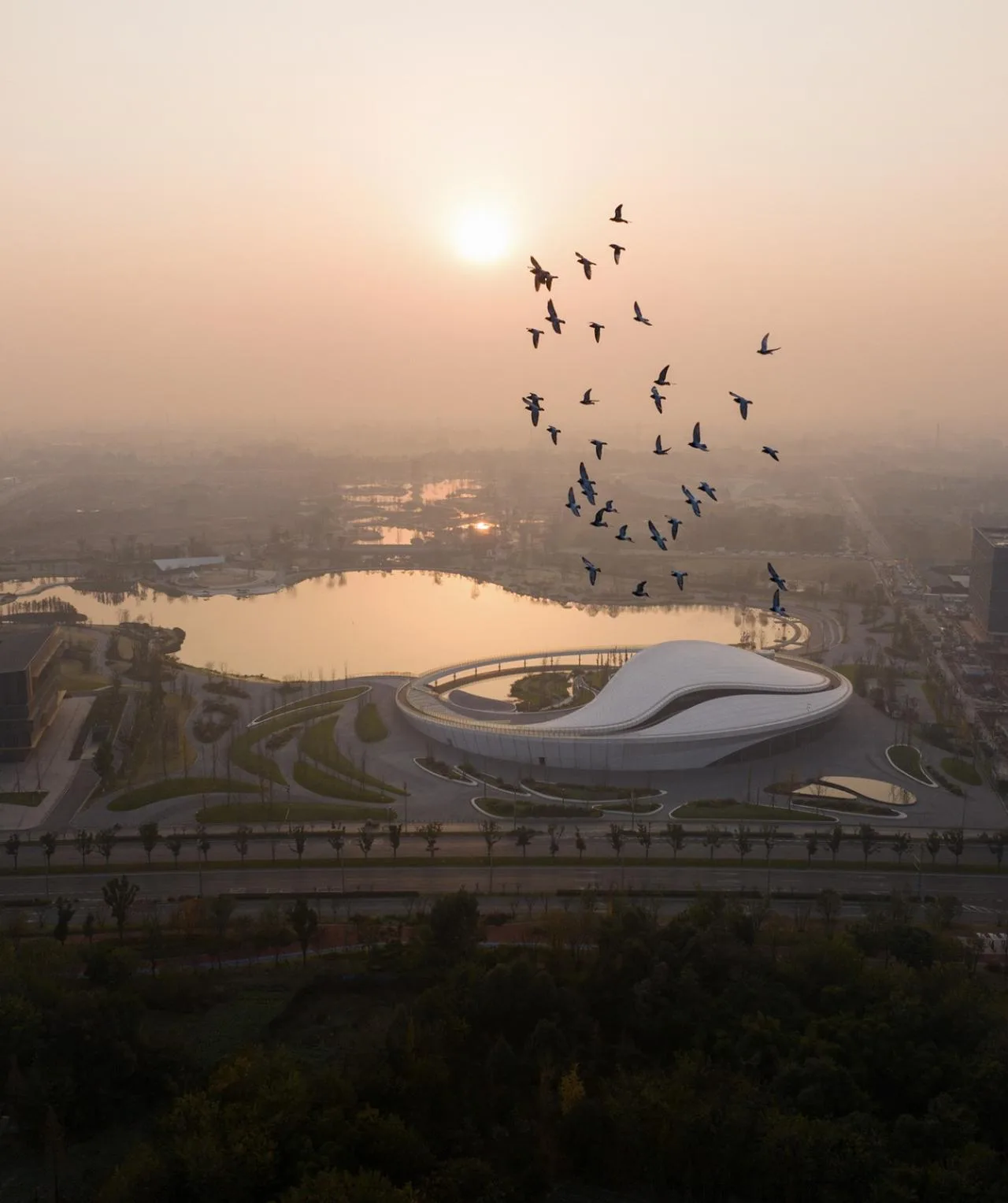
The architecture unifies the virtual and real through its circular form, which overlooks the entire museum and harmoniously integrates with the site’s water landscape to form a Tai Chi shape. The building represents the “real,” while the water embodies the “virtual”; the land symbolizes yang, and the water yin. This yin-yang relationship is enclosed by a continuous circular ring, merging the virtual and real in a dynamic balance.
The flowing water and pedestrian movement inject life and energy into the otherwise static structure, blending motion and stillness to achieve harmony between humans and nature. This fusion of heaven, earth, and humanity embodies MUDA’s interpretation of natural harmony and balance in architecture.
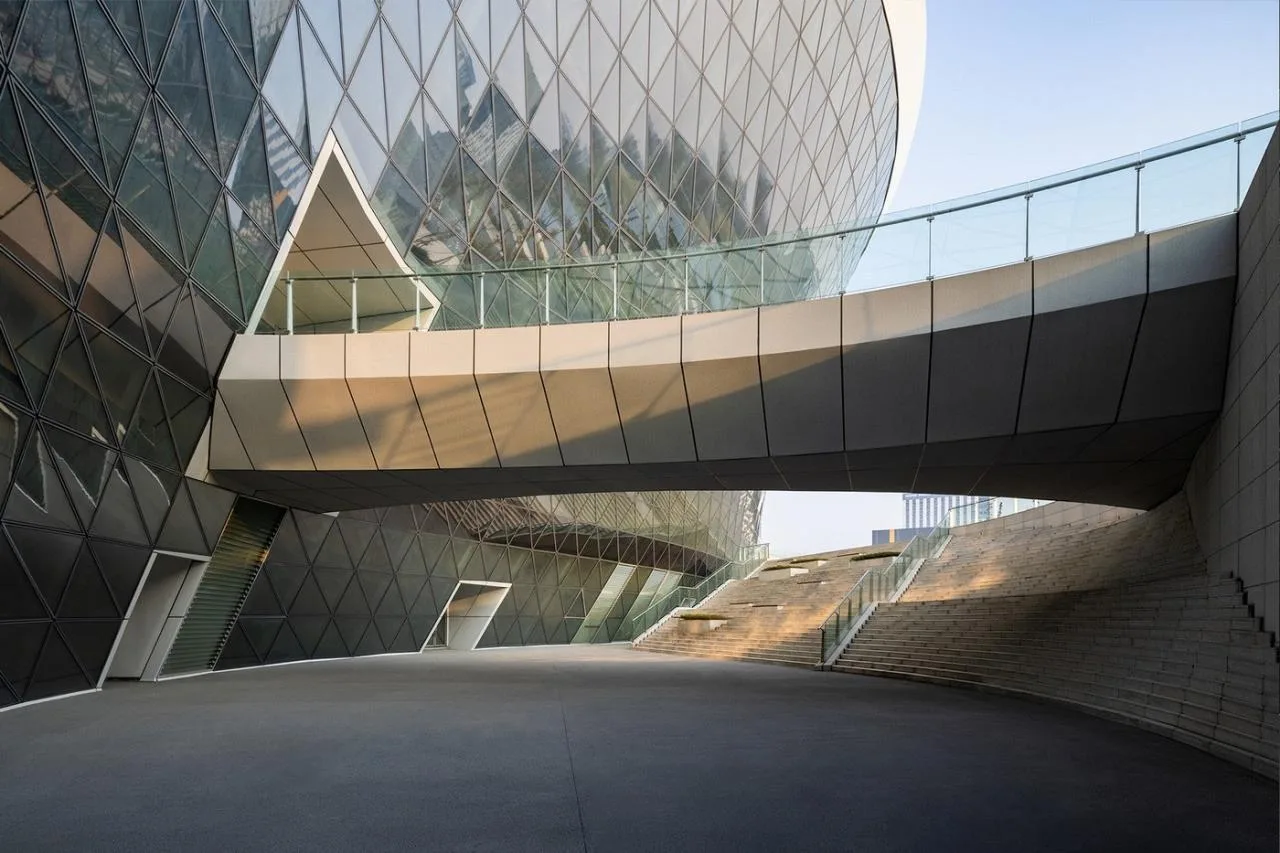
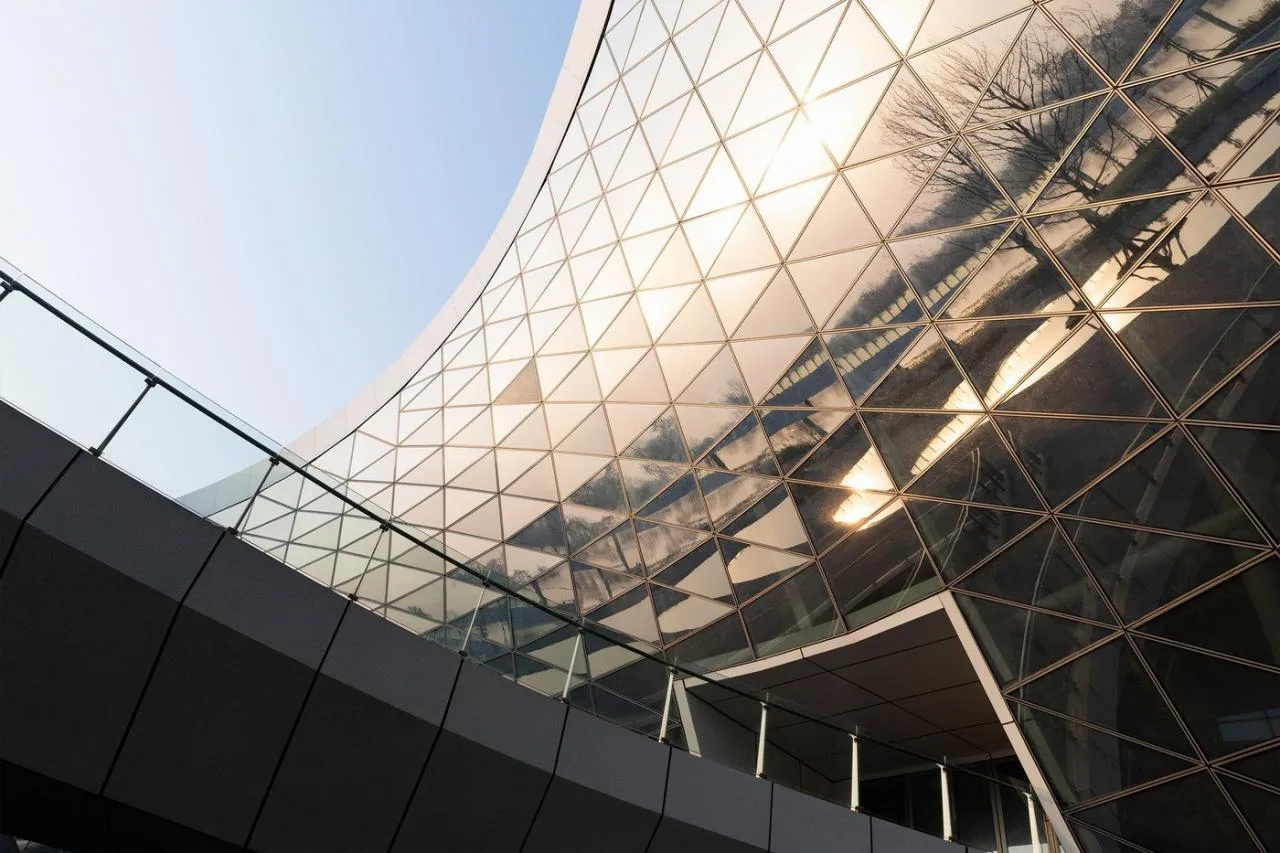
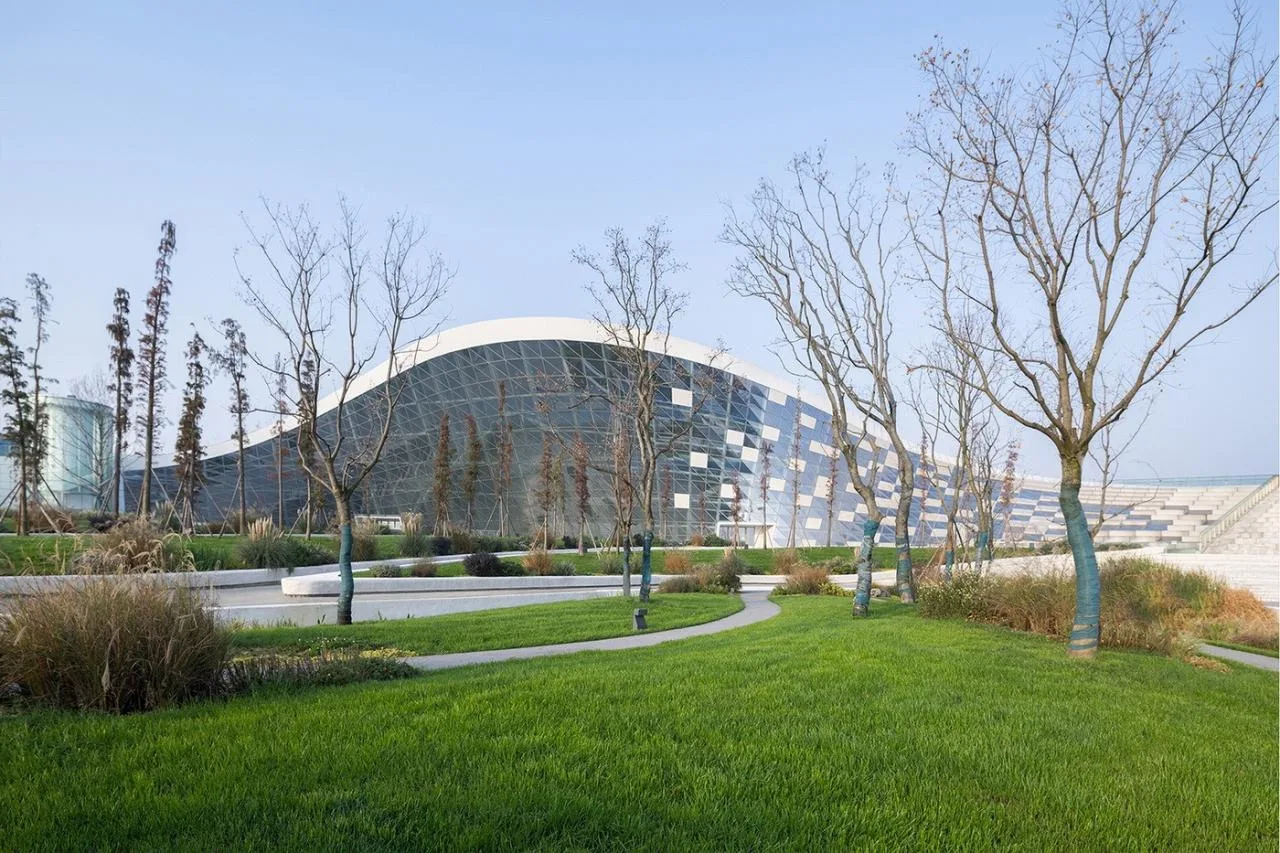
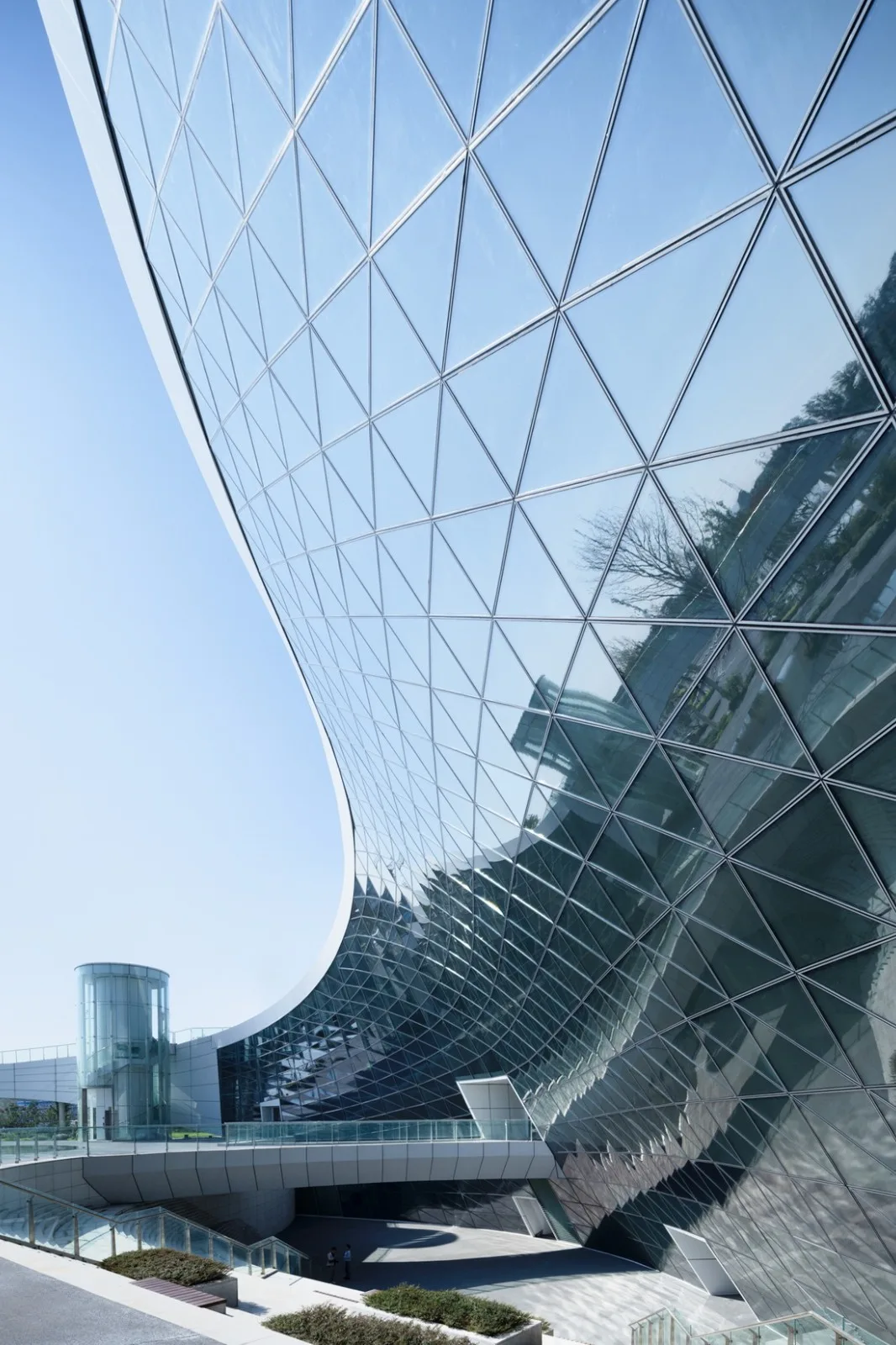
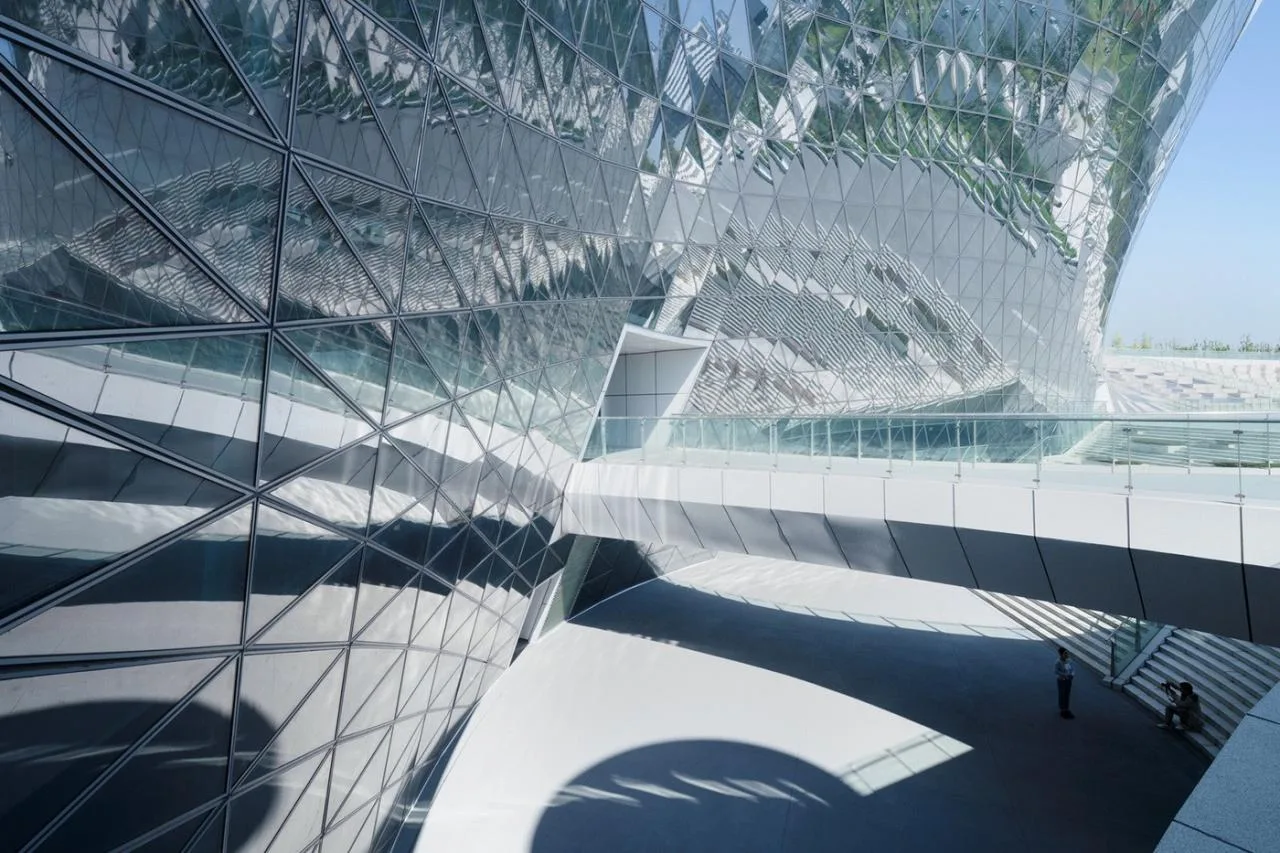
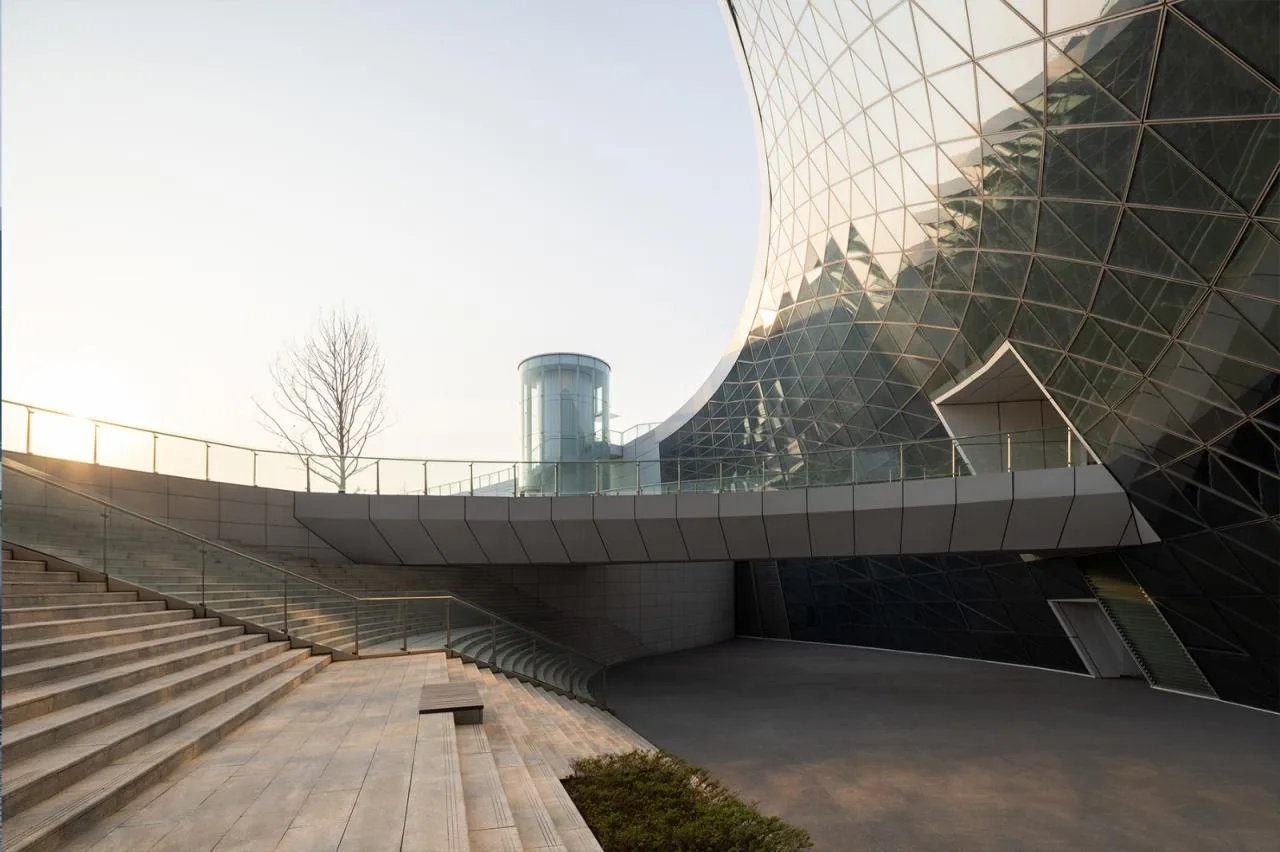
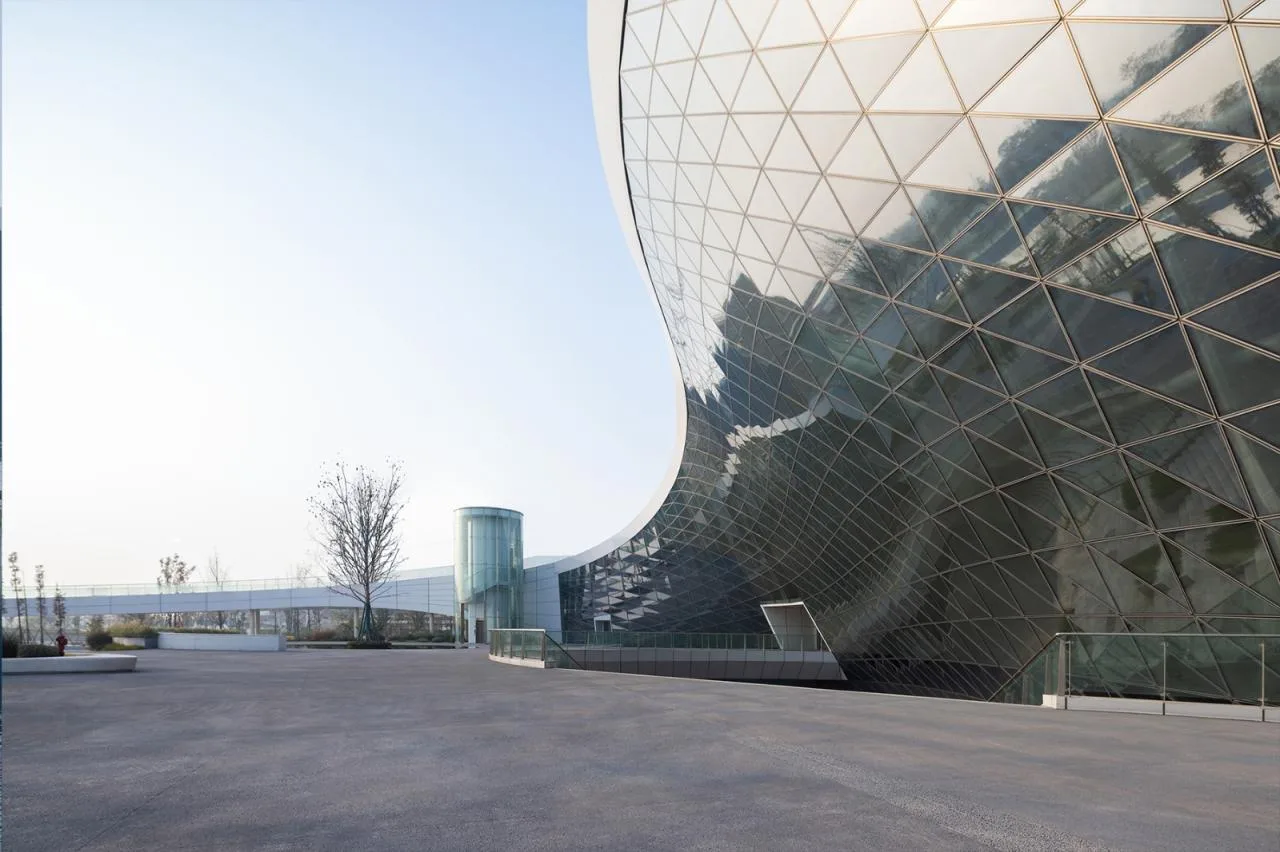
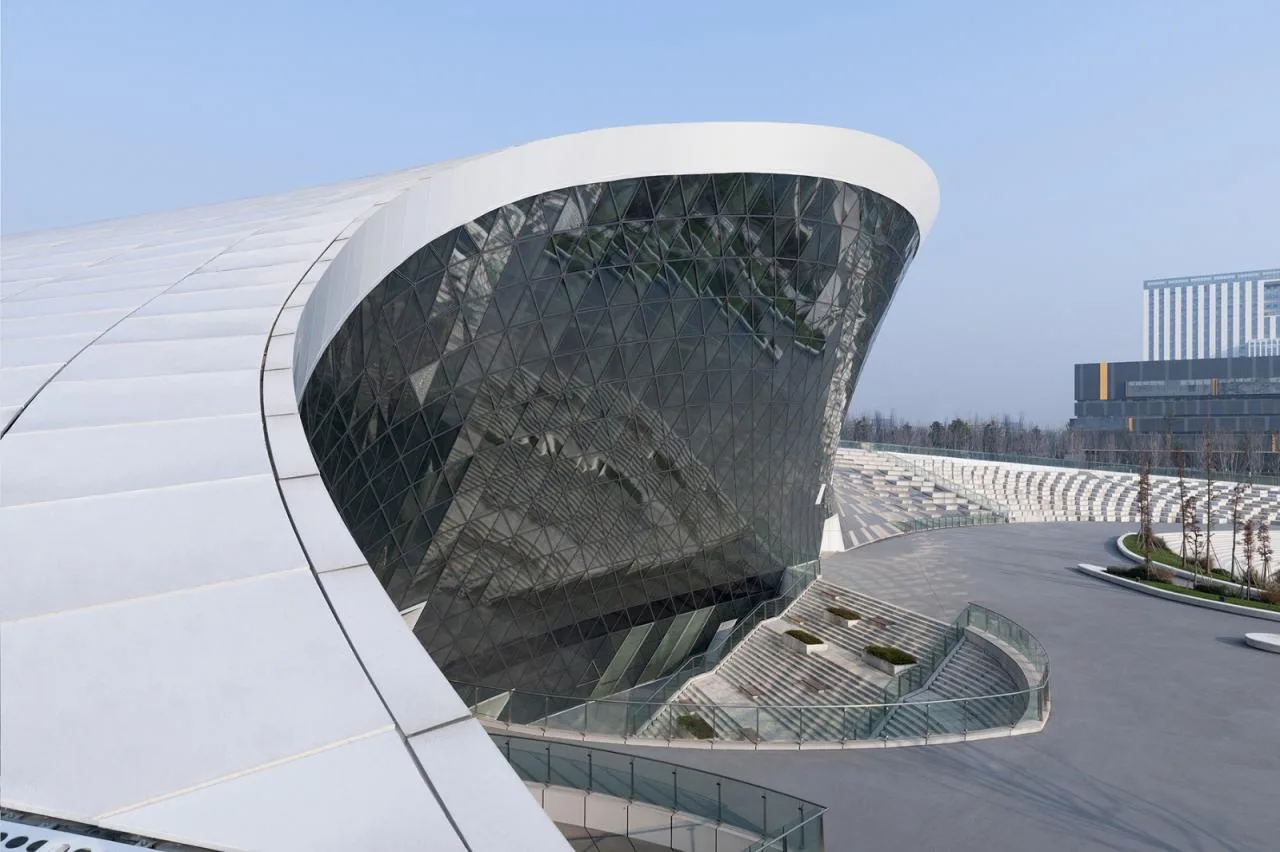
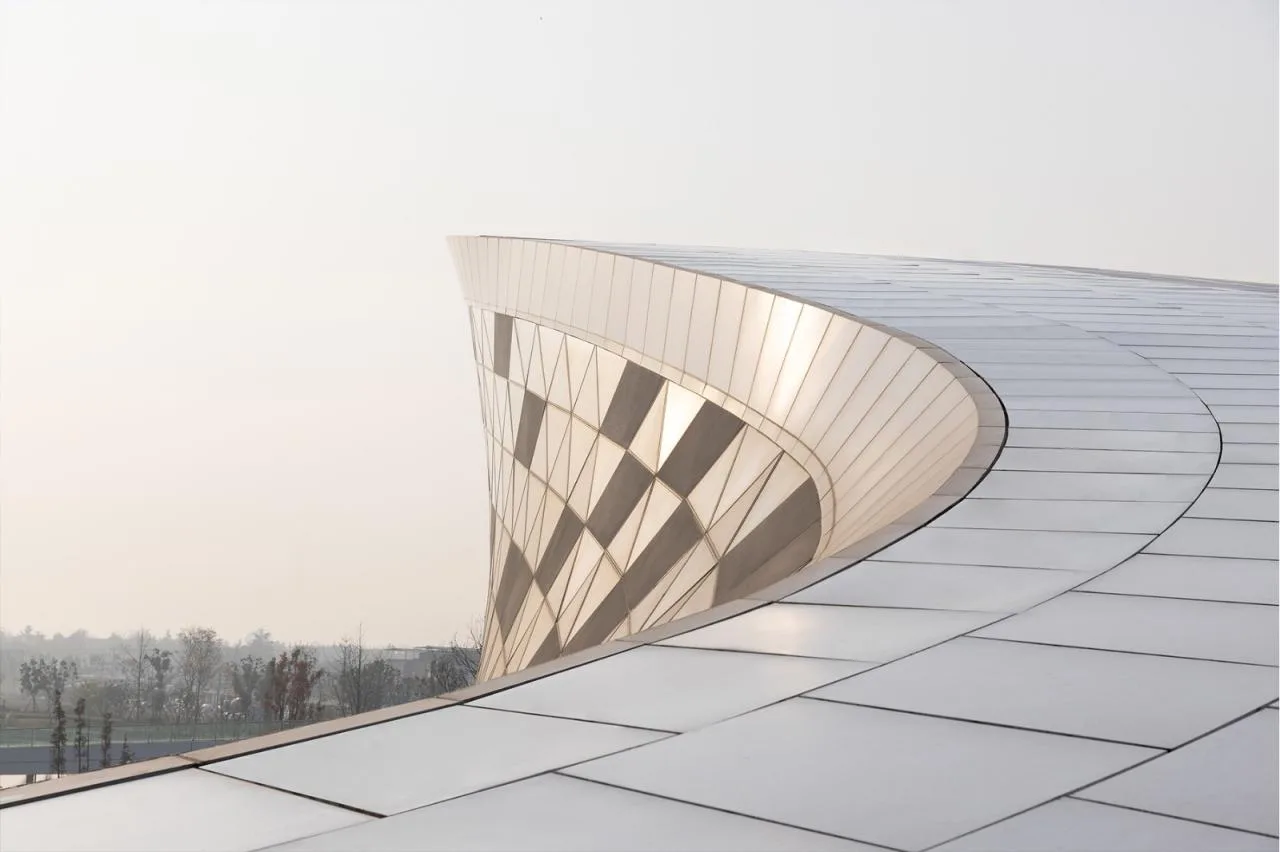
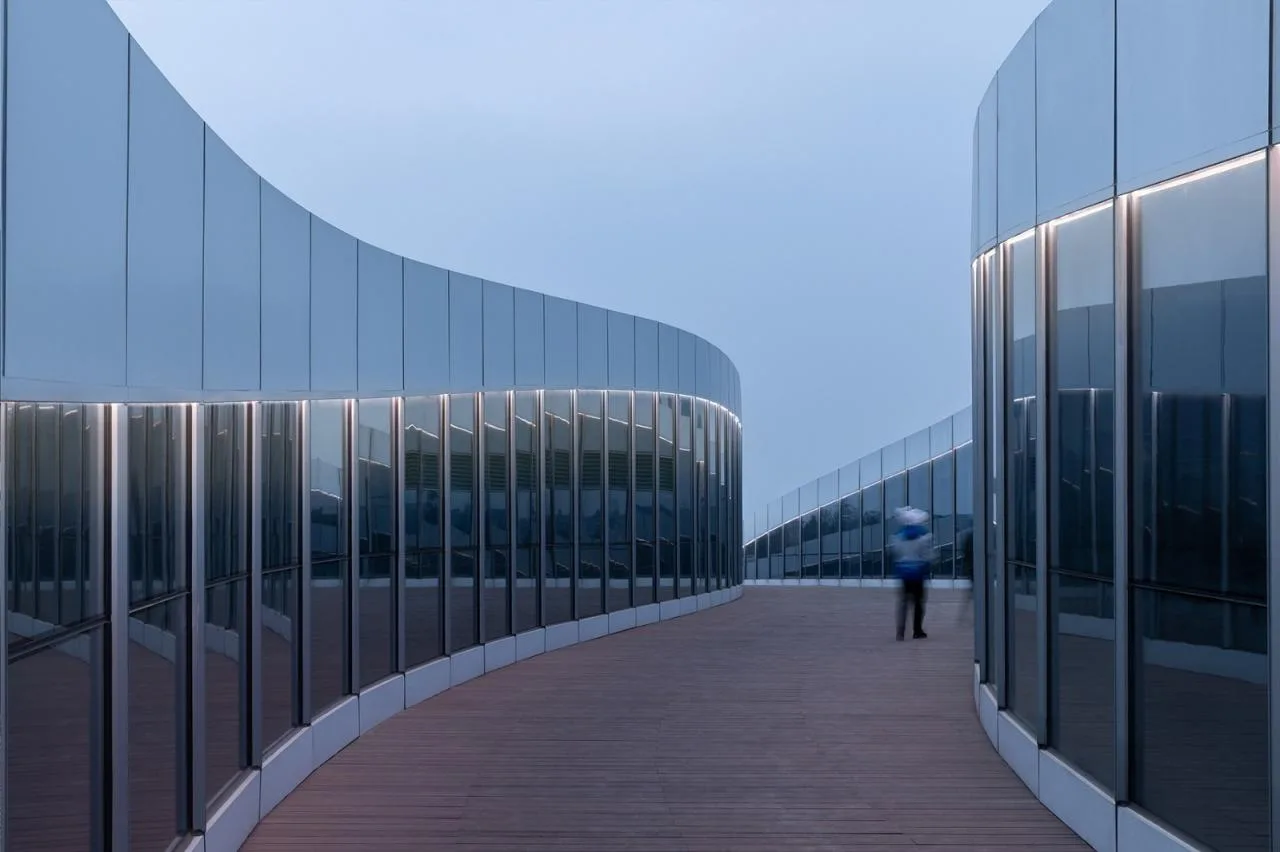
The museum’s main entrance is located on the west side, where an entrance plaza effectively links the building to the city’s main roadway. The west façade features perforated aluminum panels that block the harsh afternoon sun, reducing energy consumption, while its curved form adds visual interest to the urban streetscape. In contrast, the east façade faces the lake and boasts a highly transparent, double-curved glass curtain wall that invites natural landscapes indoors, blurring the boundary between architecture and nature.
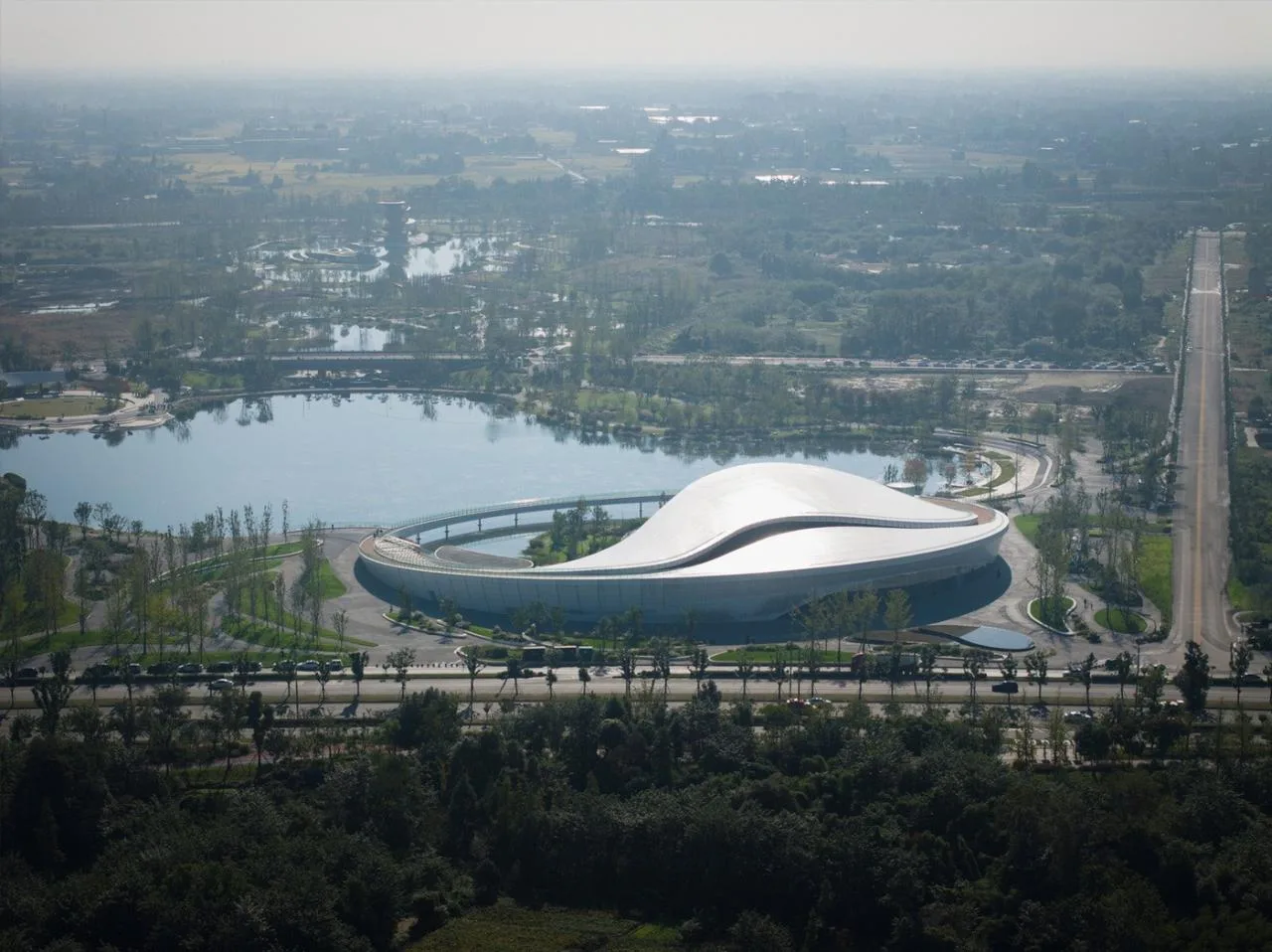
Inside, the building reaches a height of 22.4 meters, comprising three above-ground floors and one underground level. The first floor houses public areas including entrance halls, lecture rooms, interactive exhibition spaces, and dining facilities.
The third floor is dedicated to exhibitions, featuring halls for traditional Chinese medicine, technology and culture, as well as studios related to traditional medicine. The underground level provides parking and support facilities, combined with a sunken plaza that creates flexible commercial and interactive spaces suitable for various events.
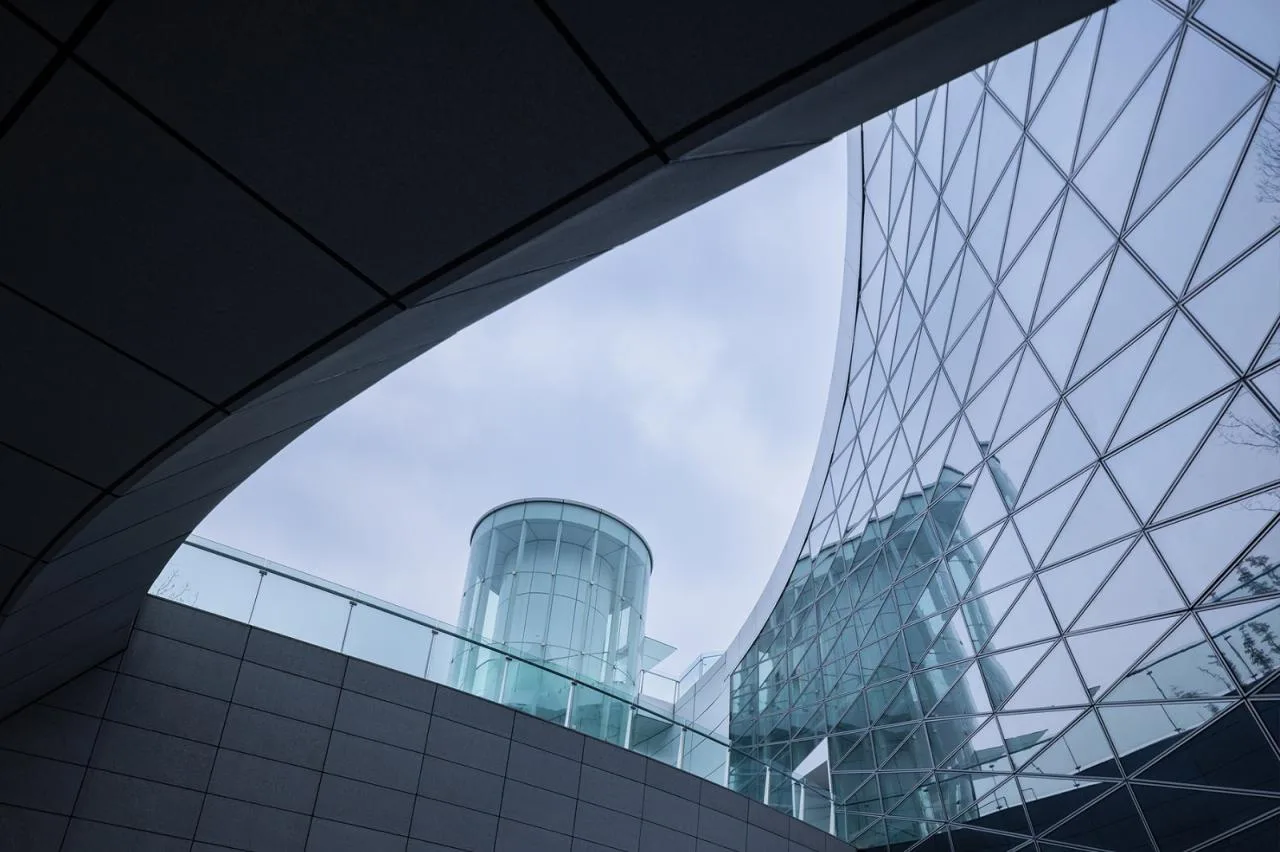
The entrance opens into a three-story atrium, where multi-level curved platforms enrich the spatial experience and offer versatile exhibition possibilities. Skylights and transparent glass walls flood the interior with natural light and ecological views, allowing visitors to connect with nature from multiple perspectives across different floors.
The interior design continues the architectural concept, extending flowing and winding curves into the interior spaces. Elements blend organically, balancing the virtual and real as well as order and chaos.
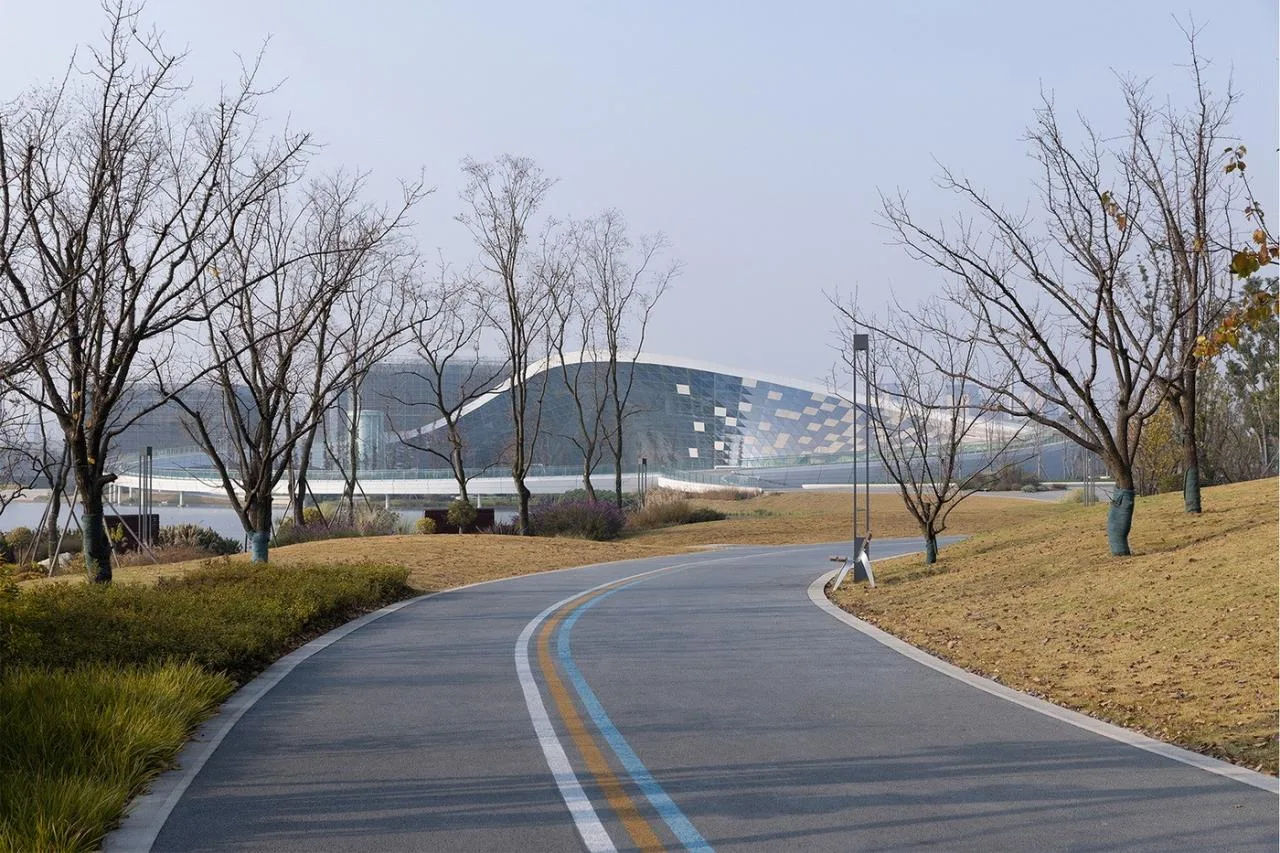
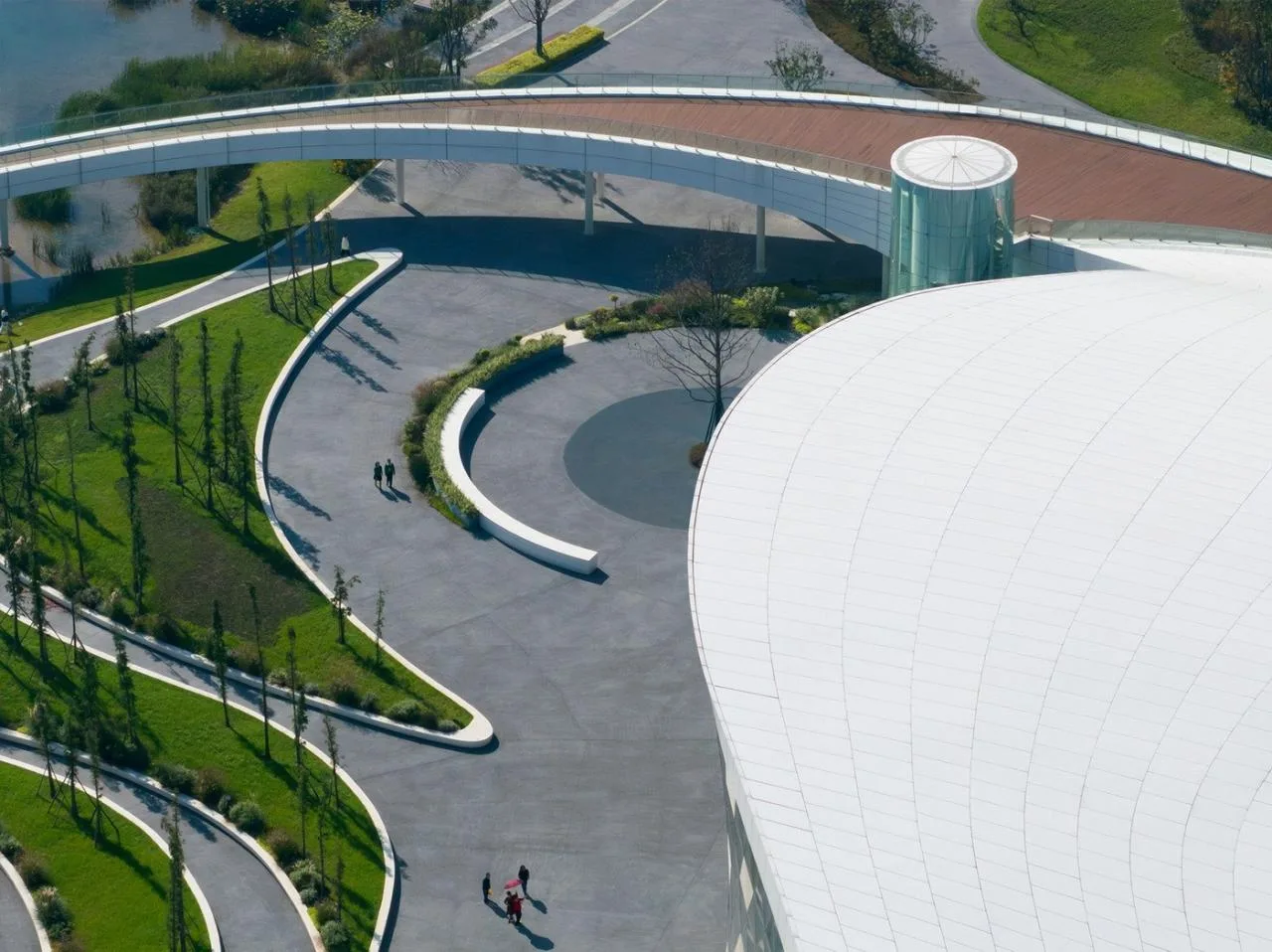
The landscape design centers around the museum, integrating the building, streamlined green spaces, internal water features, circular corridors, and water islands to form a large Tai Chi diagram reminiscent of a fifth façade for the city. This dynamic composition drives the surrounding environment, blending various elements in a harmonious and ordered flow.
The landscape language transforms the energy of movement into rolling green spaces and curved water features encircling the central building, giving the static curves an impression of dynamic vitality. This mixed element reflects the grand cosmic principles of heaven and earth, encompassing the rhythms of the universe and the essence of human life.
This harmonious integration aligns with traditional Chinese medicine’s principles of holism, yin-yang balance, and unity between heaven, earth, and humanity. The landscape is open 24/7 to the public, serving as an urban park and communal space.
There are four primary landscape systems:
- Spatial system: Featuring undulating terrain and extended green areas to create an immersive natural atmosphere.
- Pedestrian system: Connecting multiple walking paths that offer a comfortable and oxygen-rich experience.
- Plant system: Showcasing seasonal traditional Chinese medicinal plants to promote knowledge and healing.
- Art life system: Integrating diverse art forms and reserving flexible spaces for creative activities.
Visitors can stroll through the park to learn about traditional Chinese medicine culture and experience its spiritual essence, fostering harmony between internal and external environments.
Conclusion: As a landmark of Tianfu Traditional Chinese Medicine City, the museum stands as the spiritual heart of the entire park. It not only preserves the profound history of traditional Chinese medicine spanning thousands of years but also embodies hopes for its inheritance and future development.
For MUDA Architecture, this project represents an endeavor to integrate architecture, nature, urban context, and traditional culture, while reflecting on traditional Chinese philosophy through the lens of contemporary architectural design.
Project Drawings
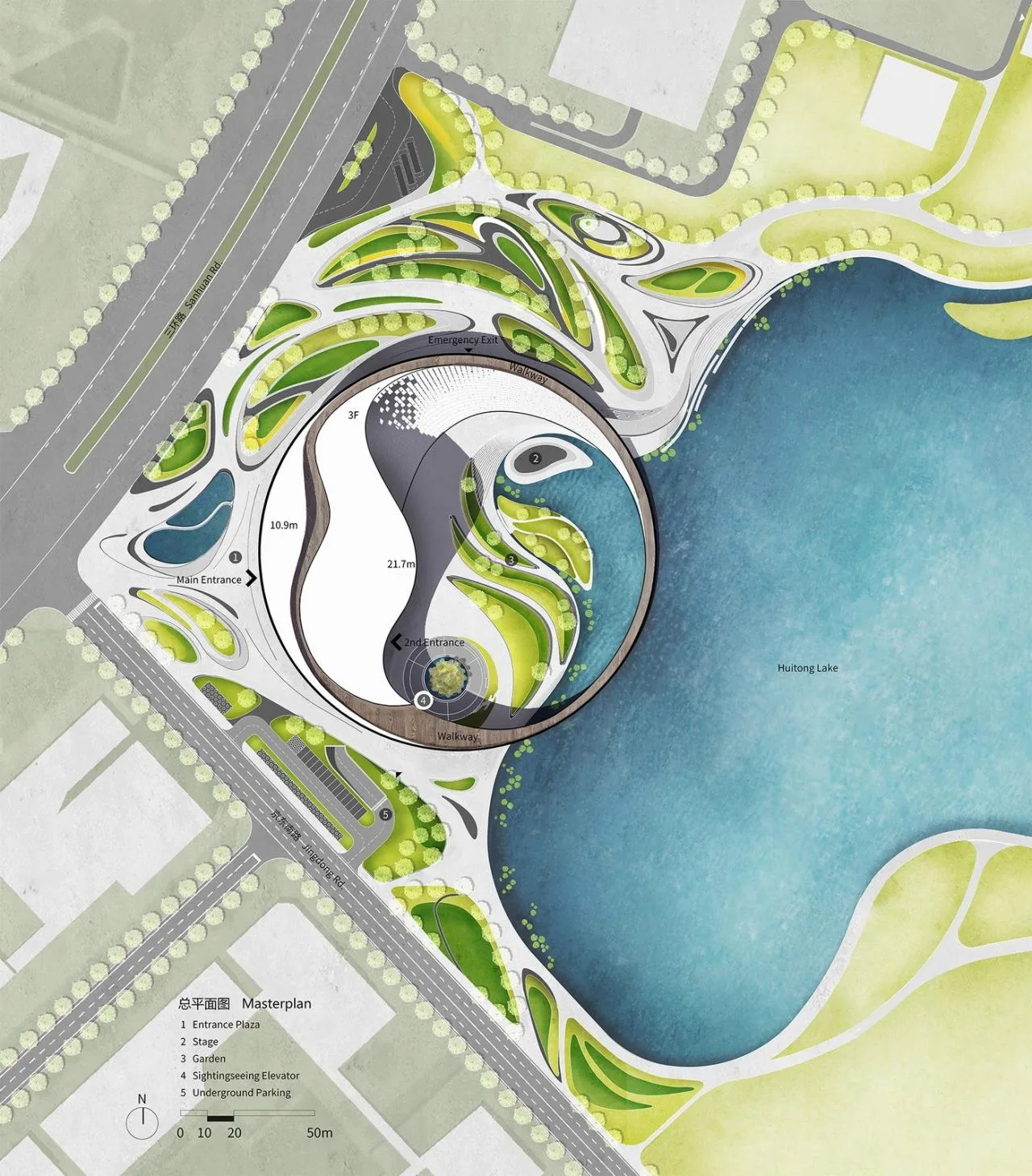
△ General Layout Plan
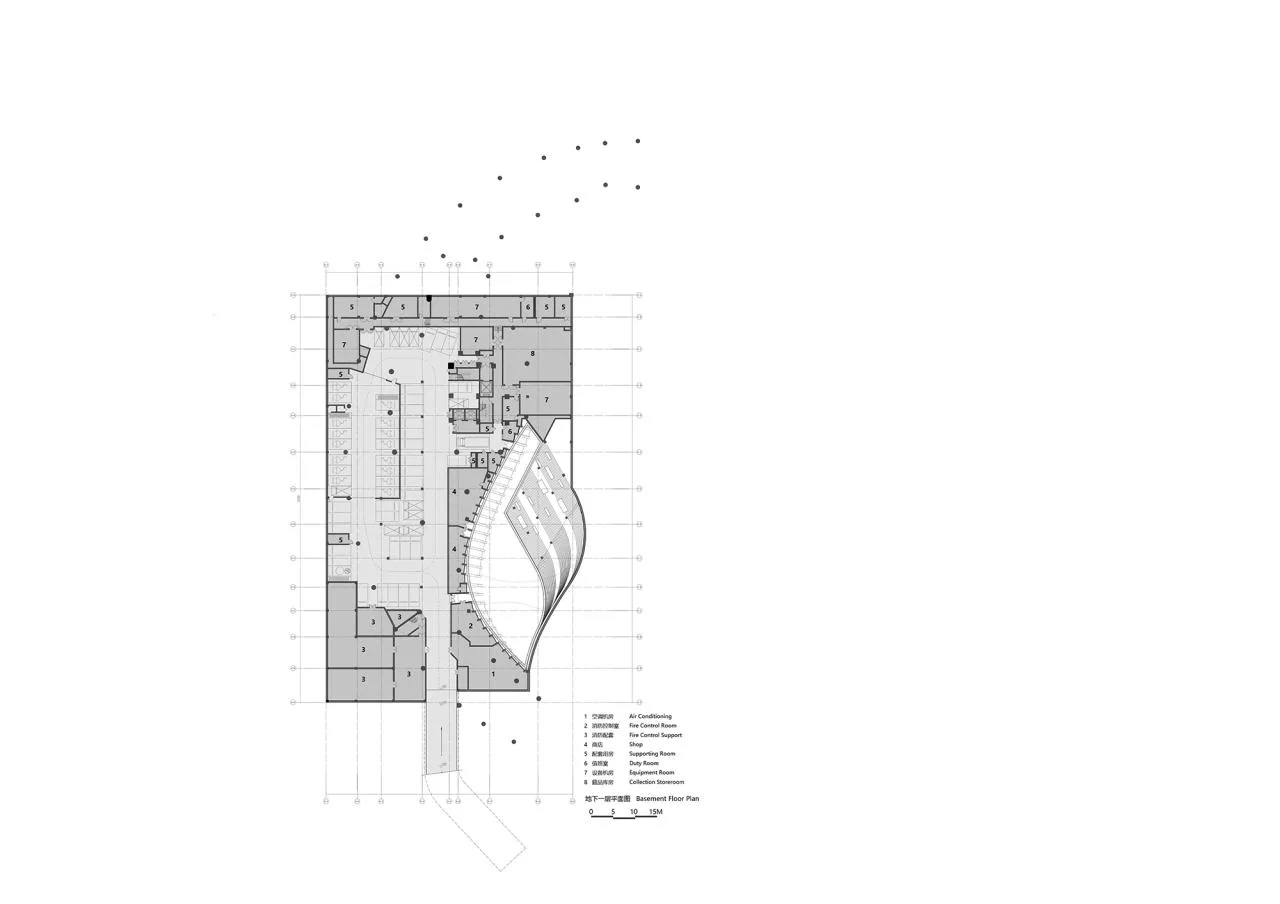
△ Underground Floor Plan
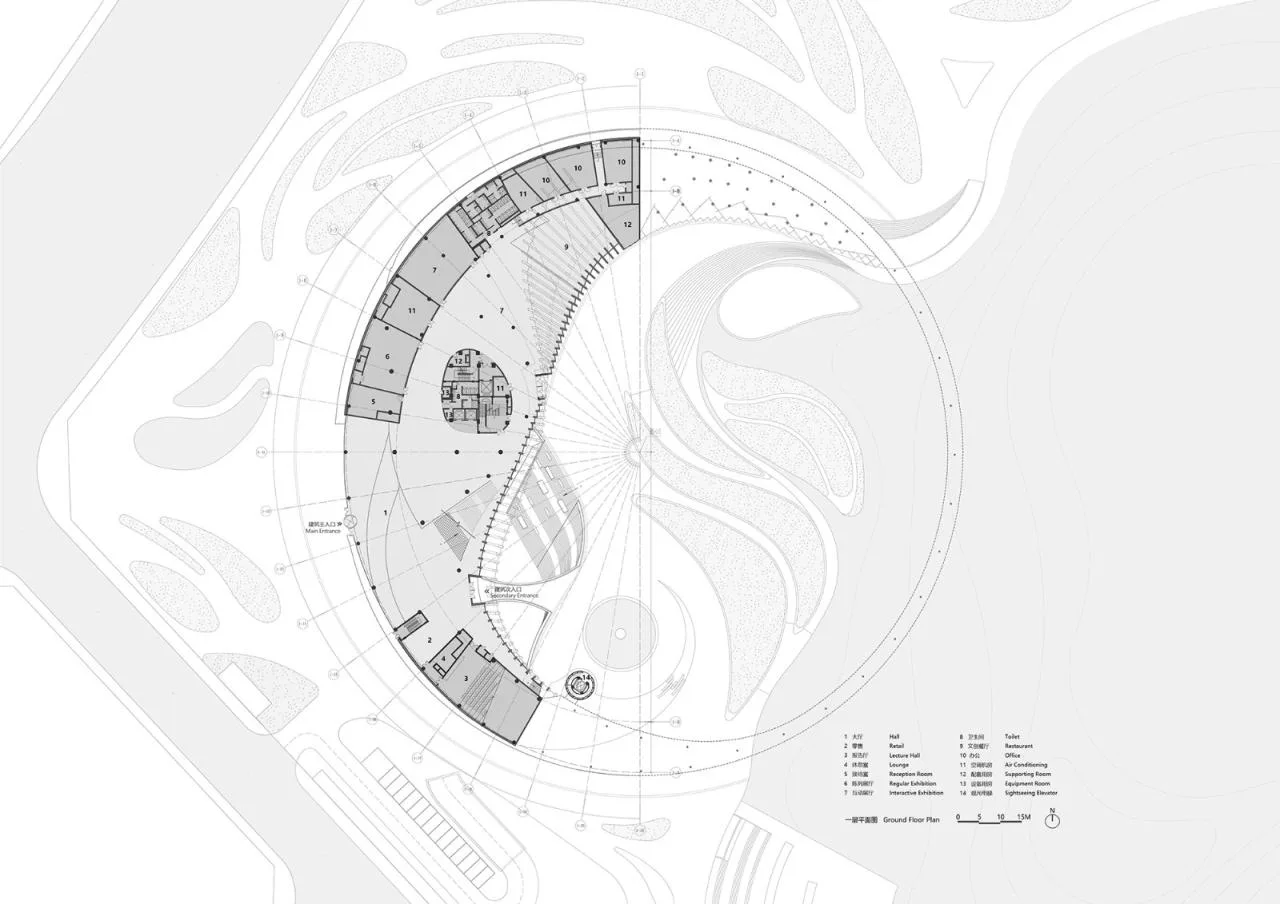
△ First Floor Plan
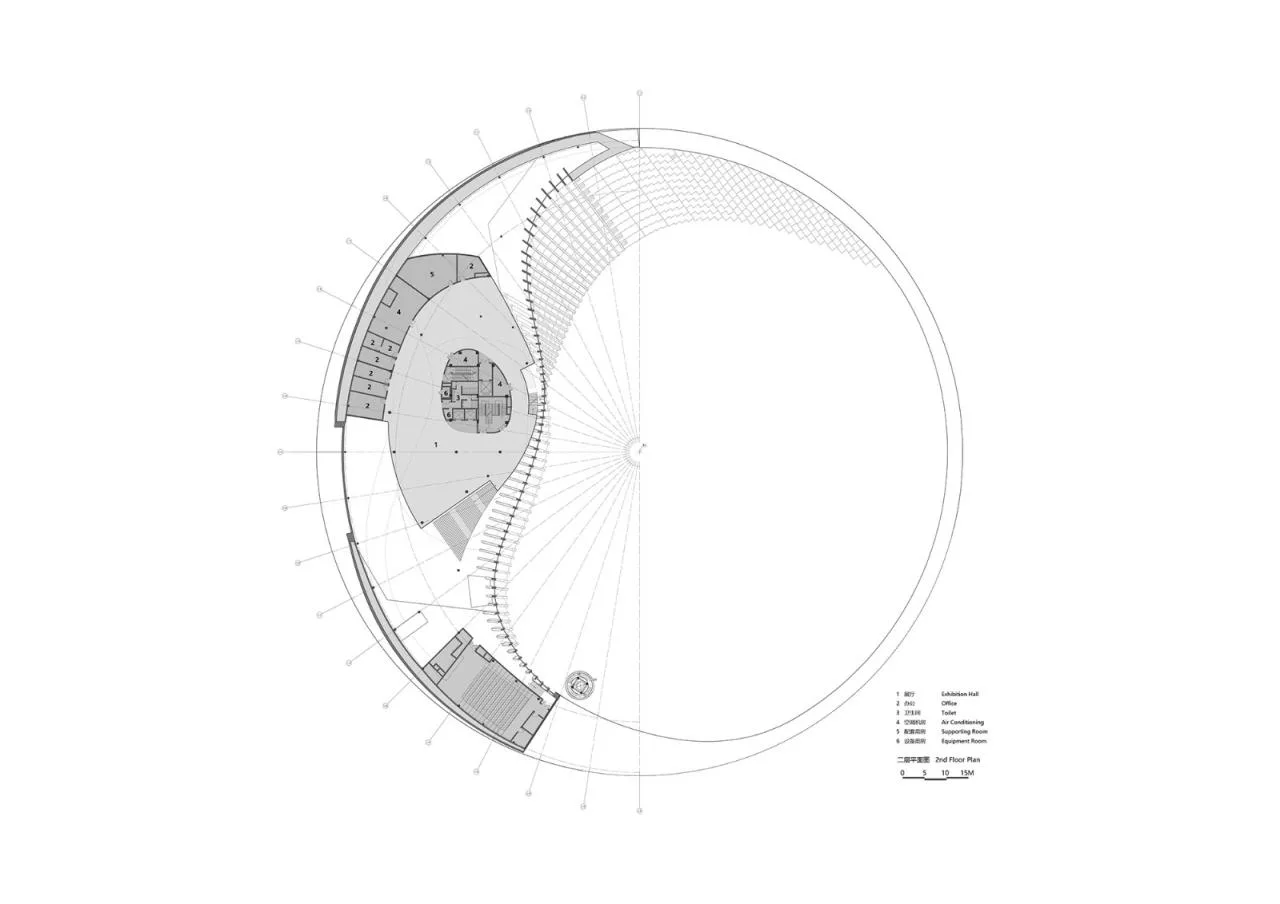
△ Second Floor Plan
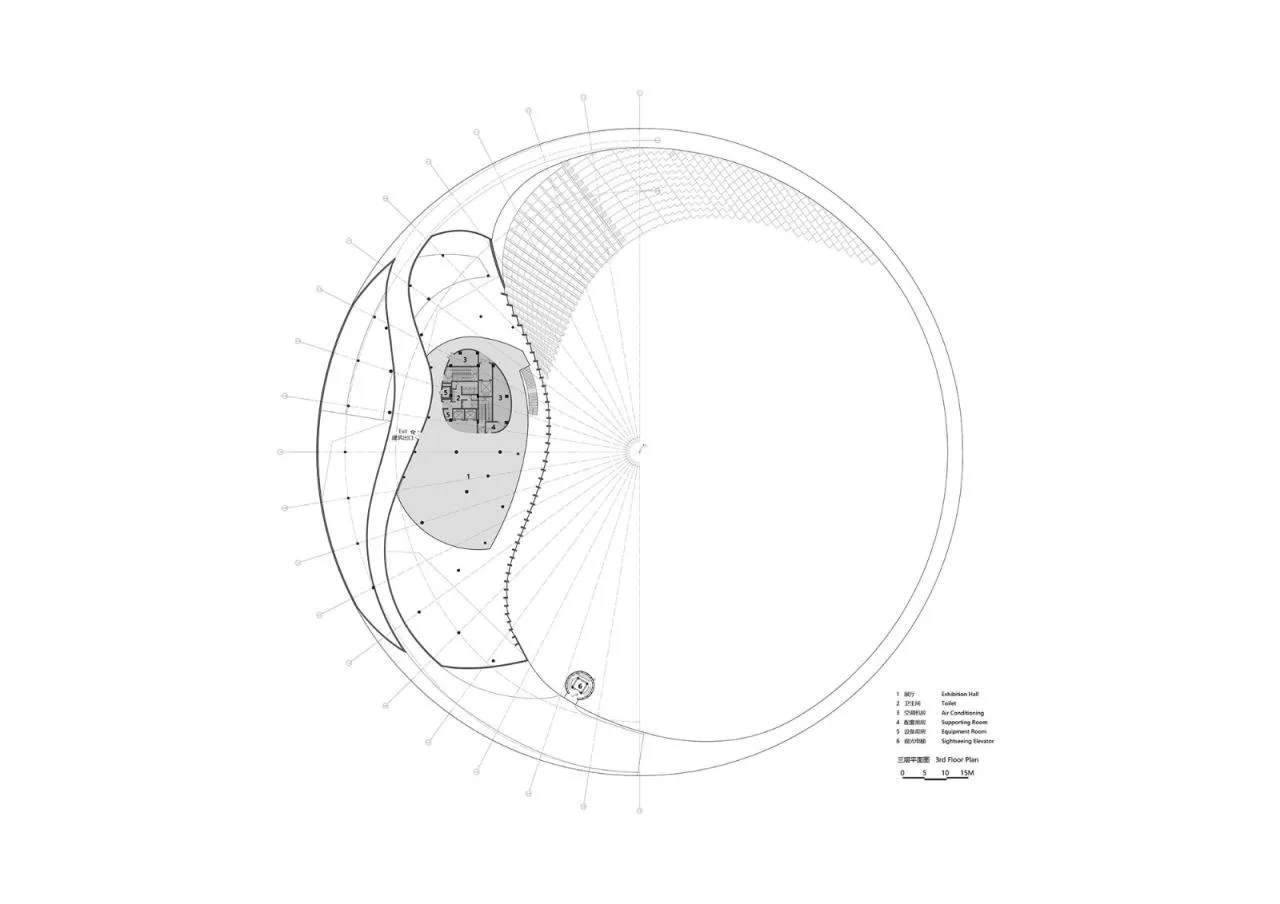
△ Third Floor Plan
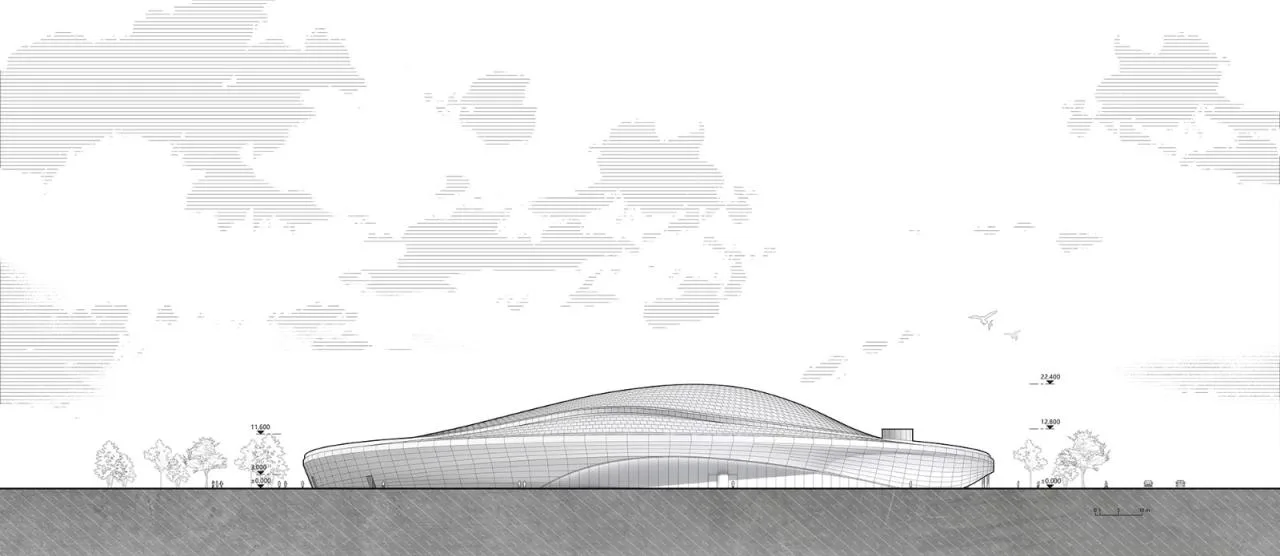
△ Elevation Drawing
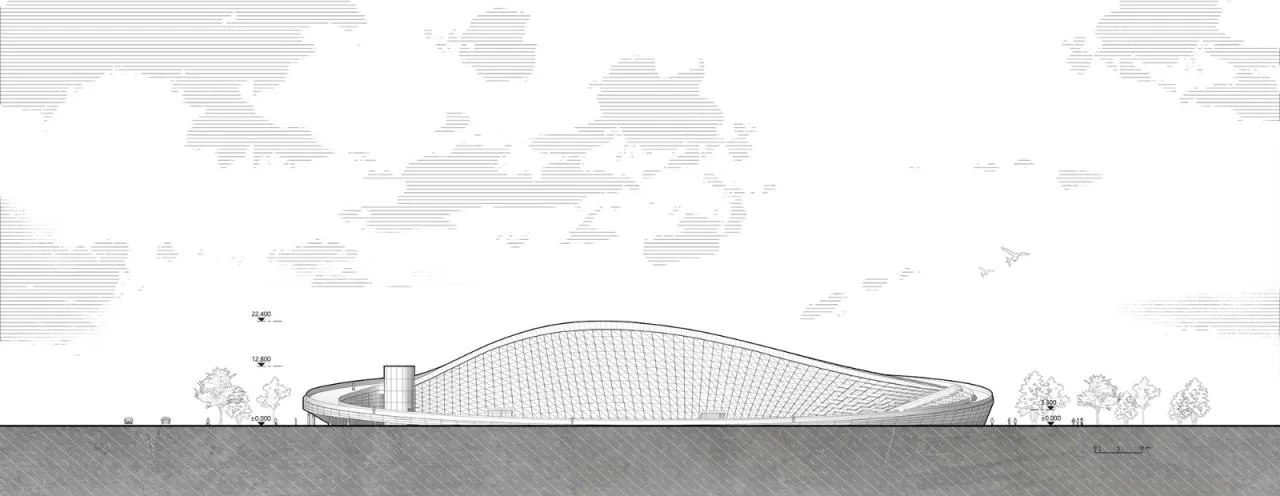
△ Elevation Drawing
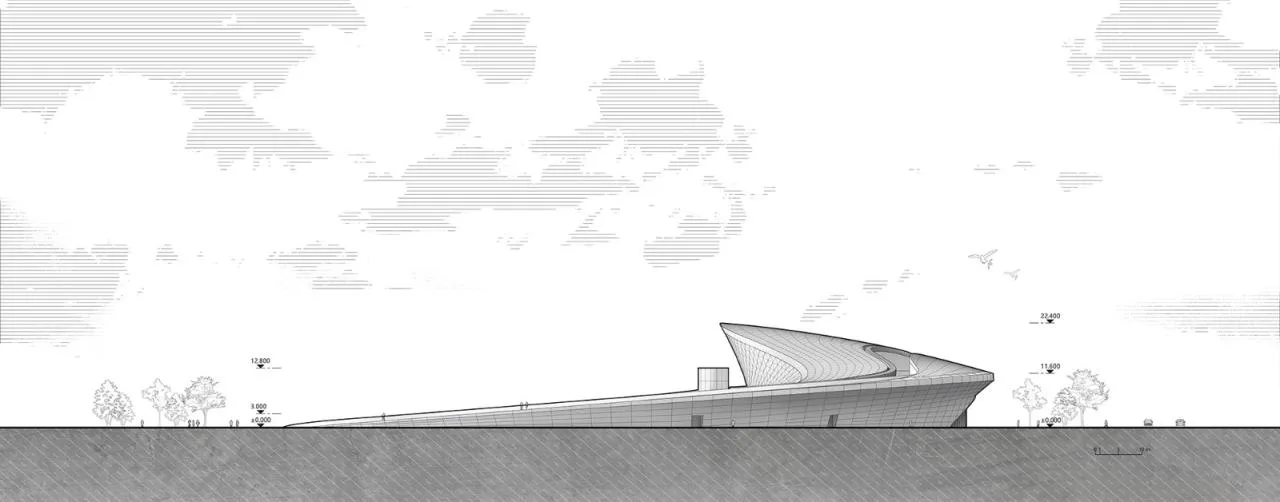
△ Elevation Drawing
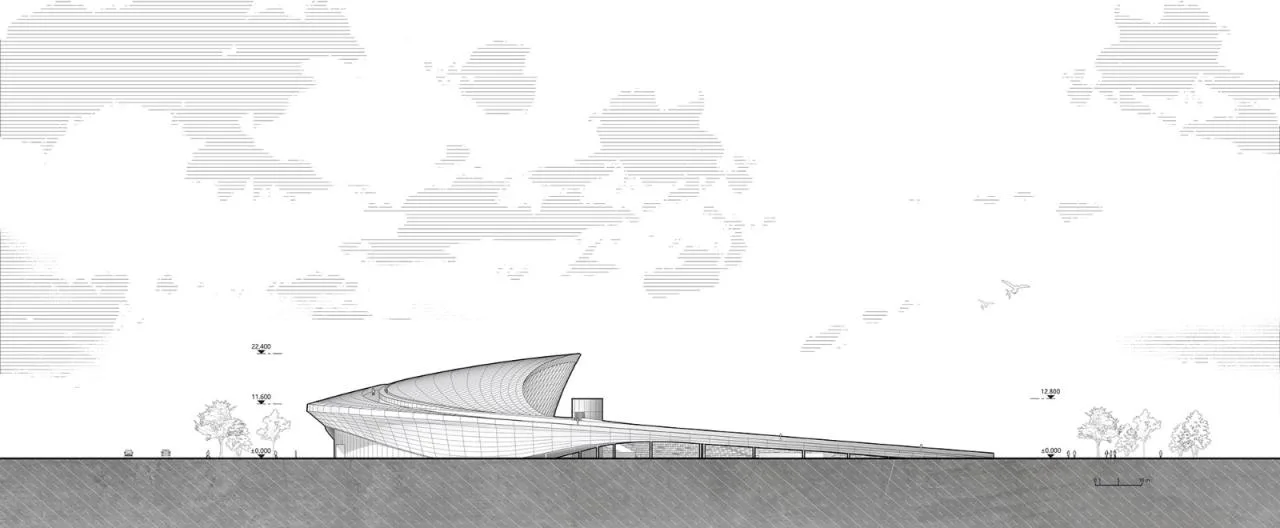
△ Elevation Drawing
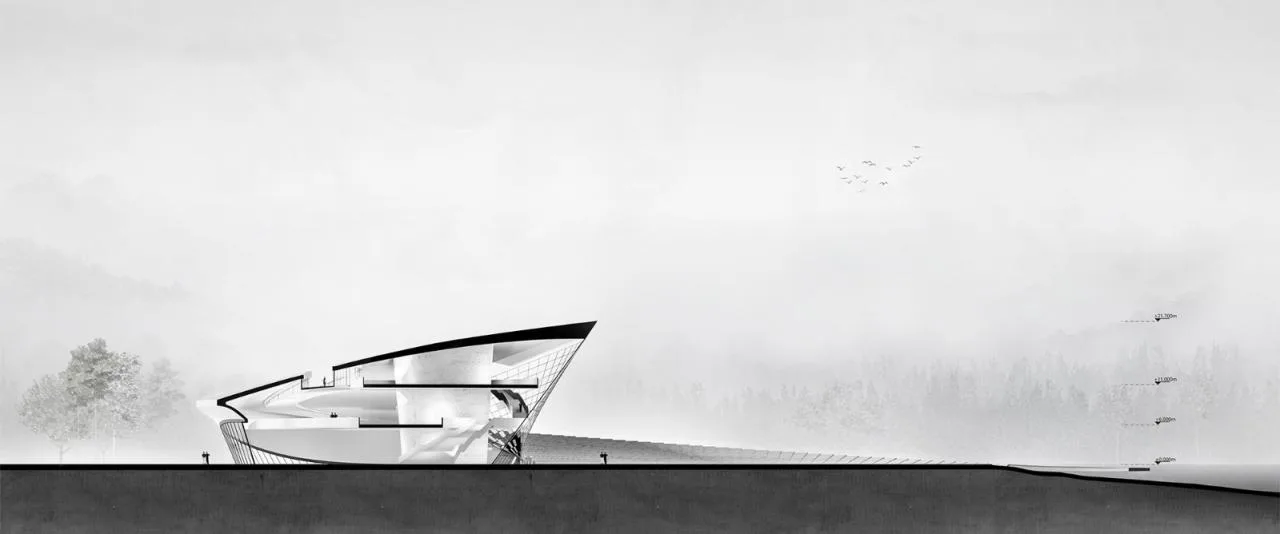
△ Section Diagram
Project Information
Architect: MUDA Architecture
Area: 13,245 m²
Year: 2024
Photographers: Existence of Architecture – Architectural Photography, Literal Translation of Architectural Photography
Manufacturers: Changzhou Xinbang Board, Sichuan CSG Energy Saving, Sichuan Deyi Building Materials
Lead Architect: Lu Yun
Design Team: He Fan, Xu Jiandan, Li Hao, Li Aidong, Fu Yao, Rong Dian, Liu Bin, Lv Chenyu, Zhan Ziqi, Cheng Shiyun
Functions: Cultural architecture, interior design, landscape & programming design
Owners: Pengzhou Planning and Natural Resources Bureau, Pengzhou State-owned Investment Co., Ltd.
Curtain Wall Design Consultant: Chengdu Jili Creative Curtain Wall
Structural Design Consultant: iStructure
Architectural Construction Drawing Design: China Southwest Architectural Design and Research Institute
Location: Chengdu














Must log in before commenting!
Sign Up