
Have you ever stepped on LEGO bricks? Almost everyone who has experienced this knows the sharp pain all too well. This raises two interesting questions: just how durable is this material? And how many building blocks remain in households after children have outgrown them?
Plastic is embedded in nearly every part of our daily lives—including 90% of toys worldwide. This is a stark contrast to the outdoor games and wooden toys typical of many childhoods in India. By 2022, global toy sales are projected to peak at $107.4 billion. Unfortunately, toys are difficult to recycle due to their complex shapes and chemical additives. As a result, 80% of toys end up buried in landfills, incinerated, or discarded into the ocean.
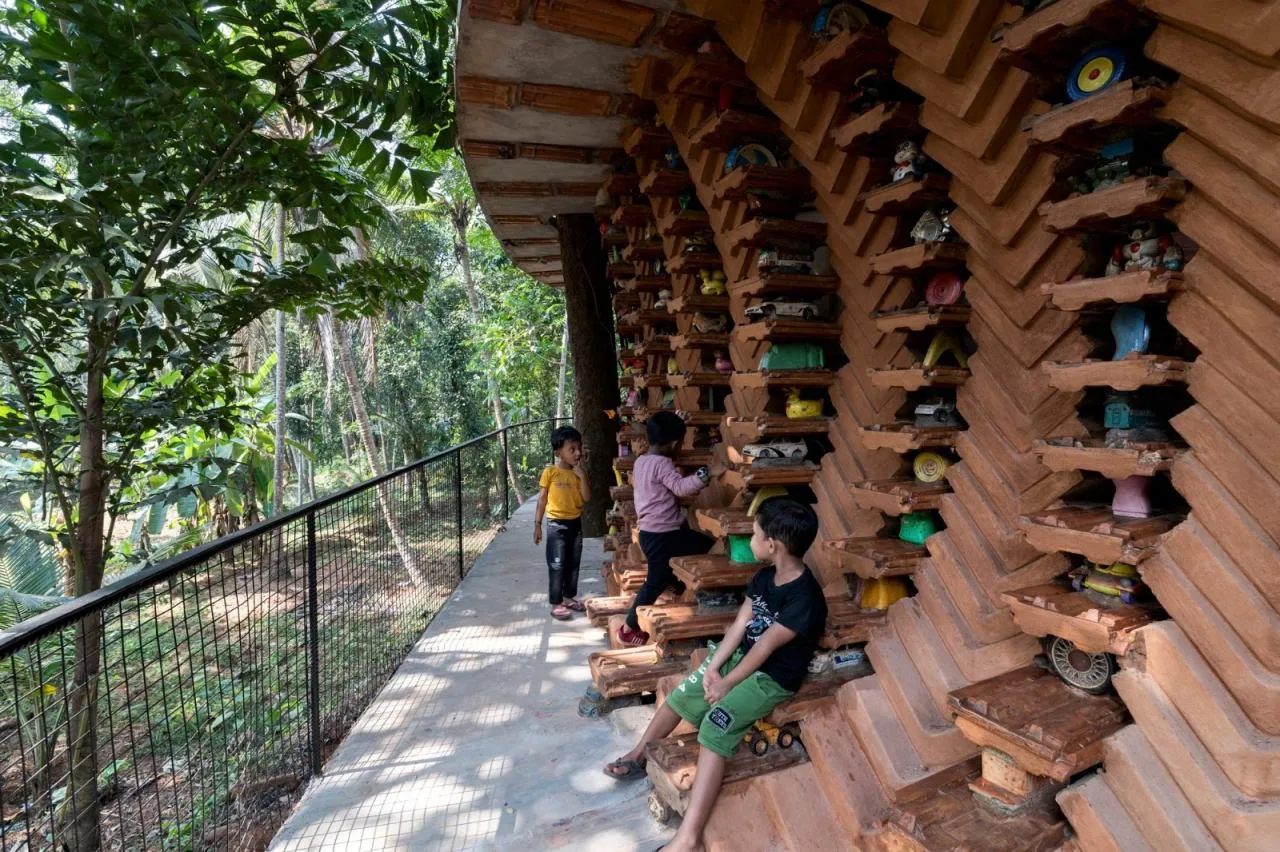
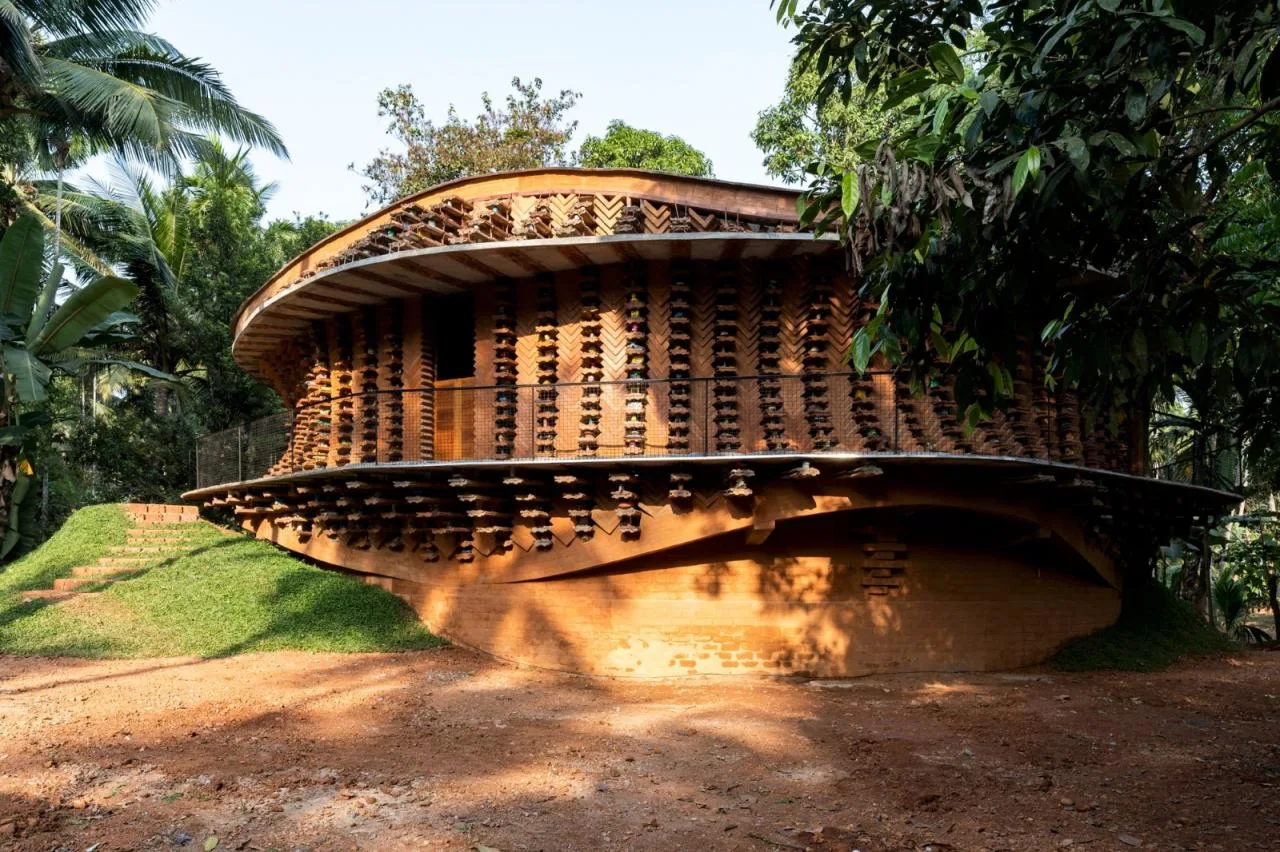
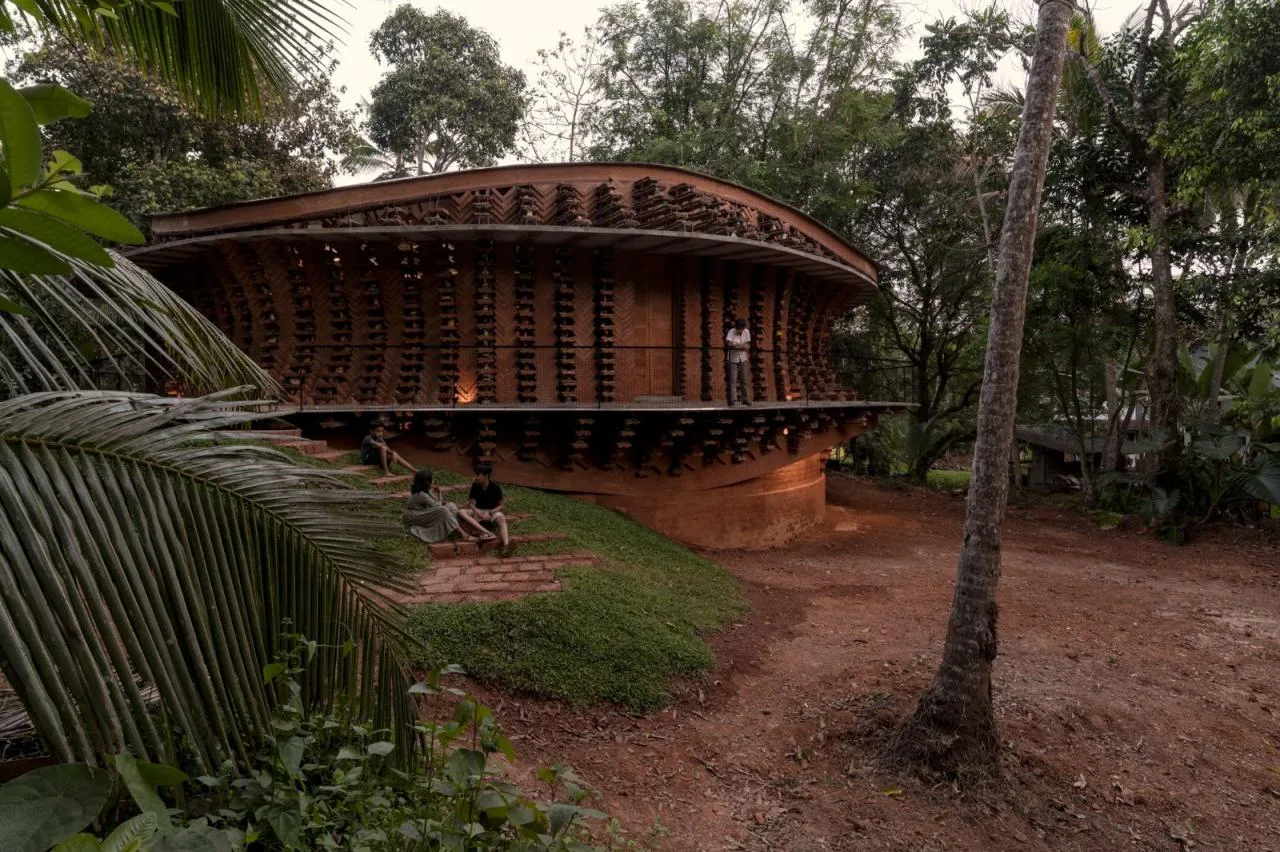
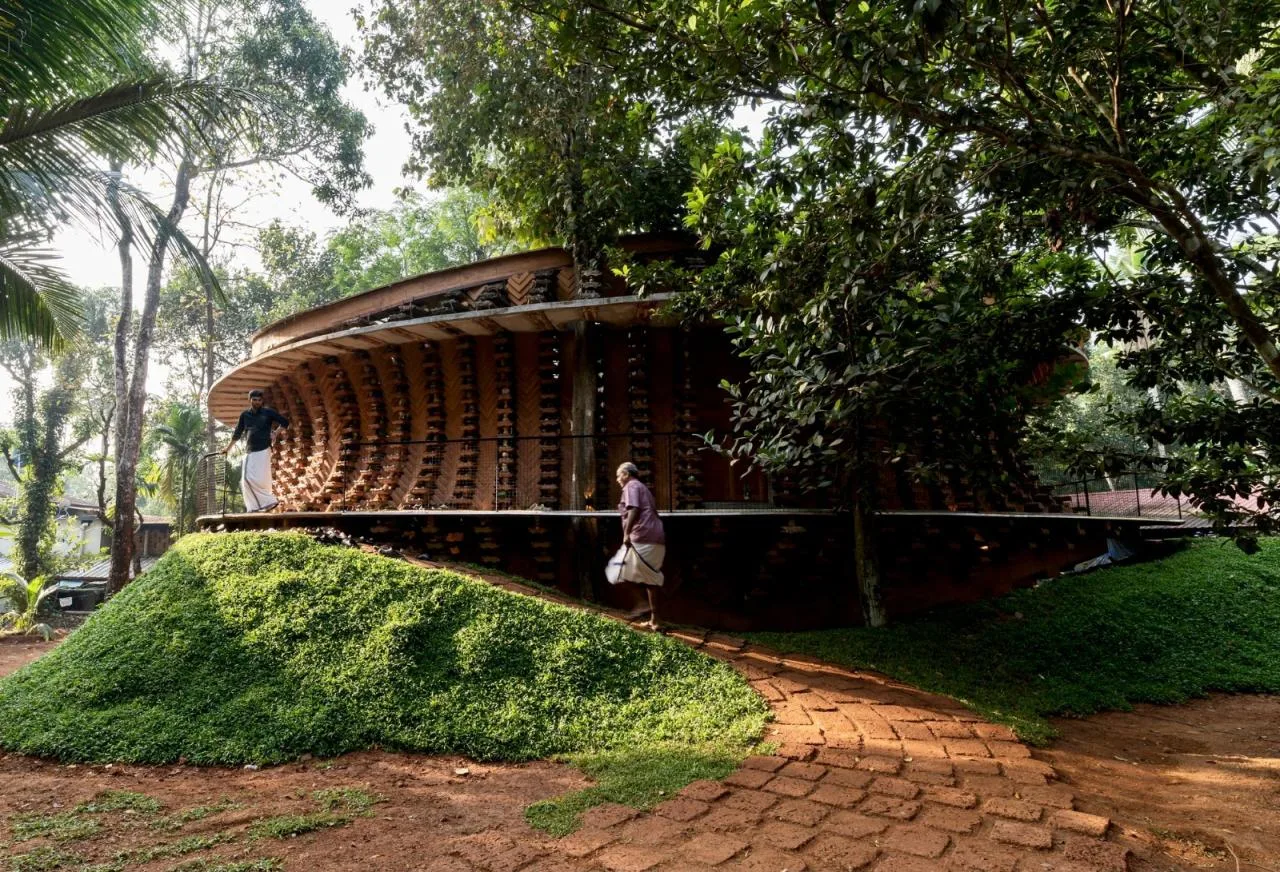
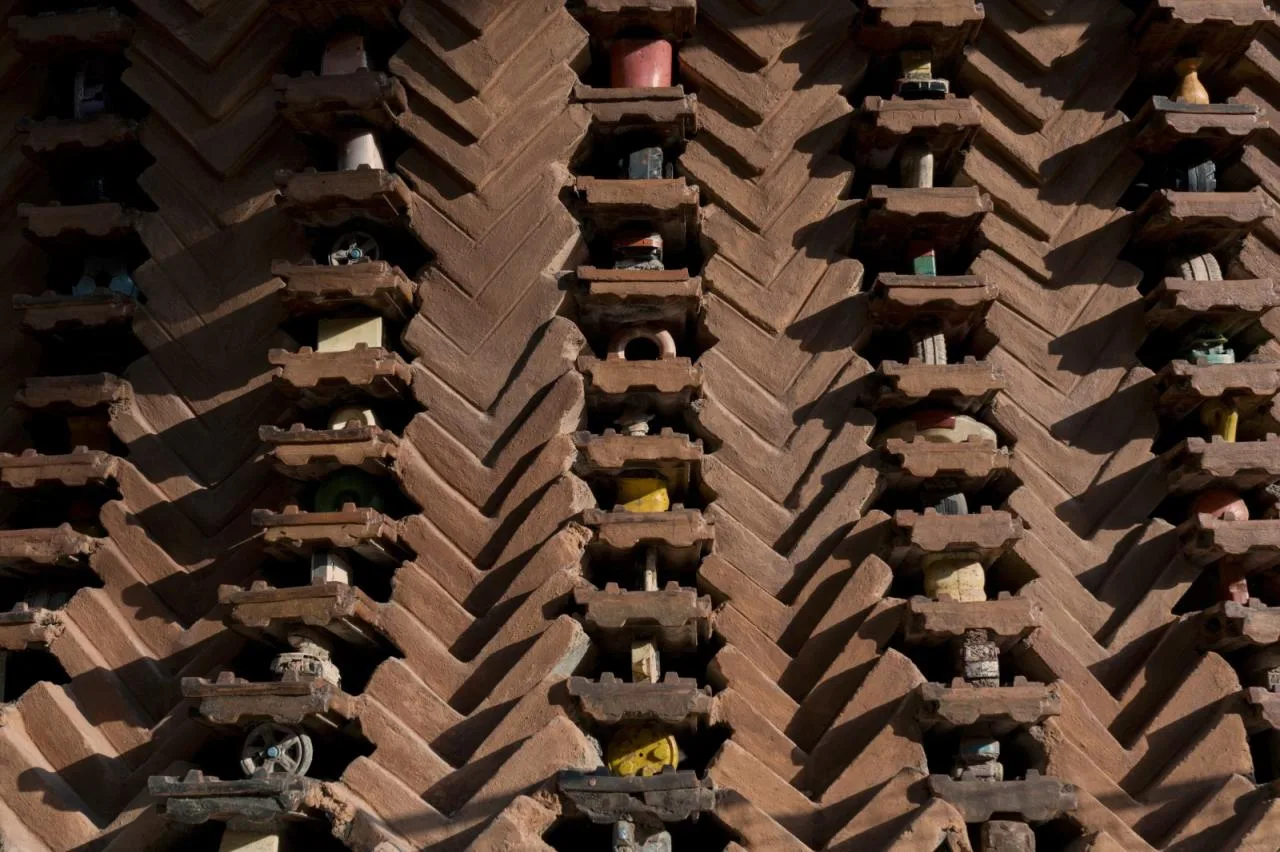
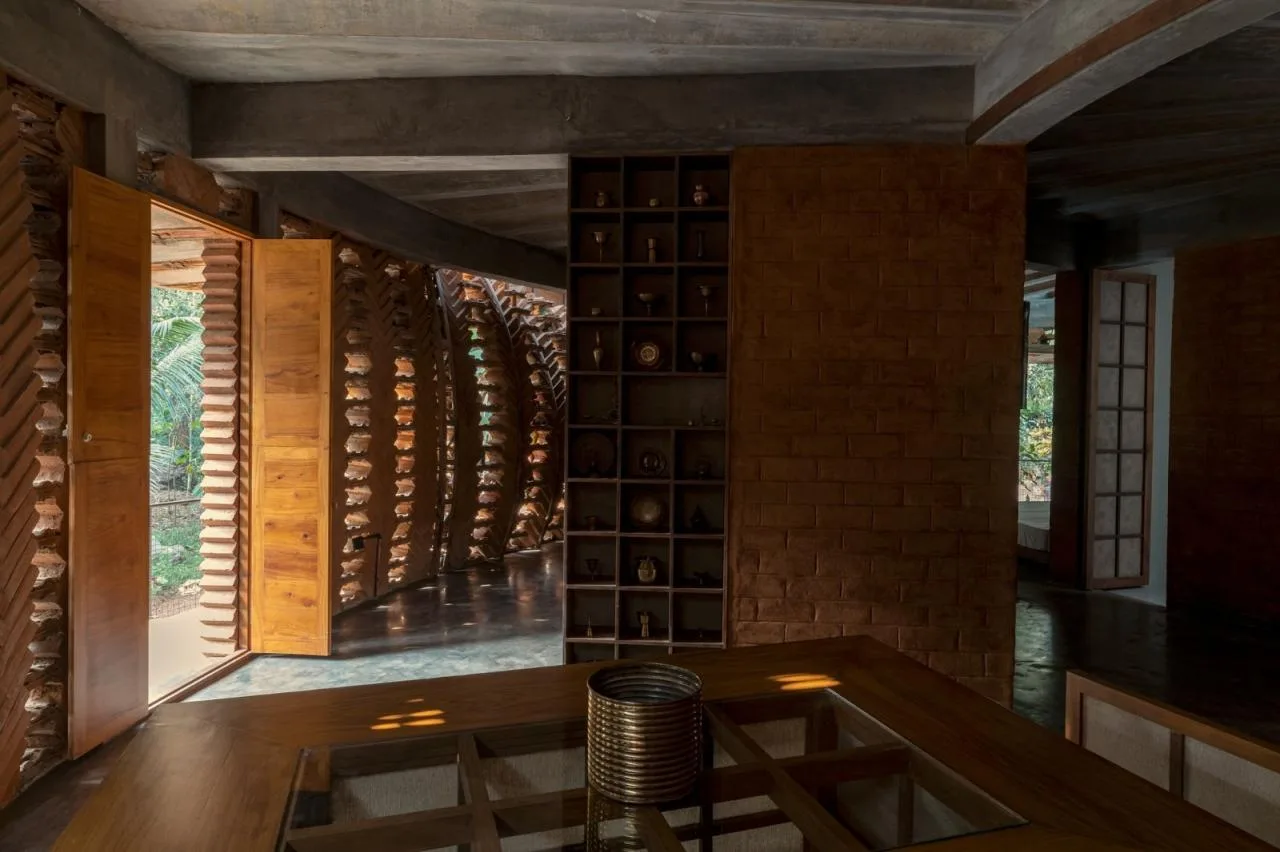
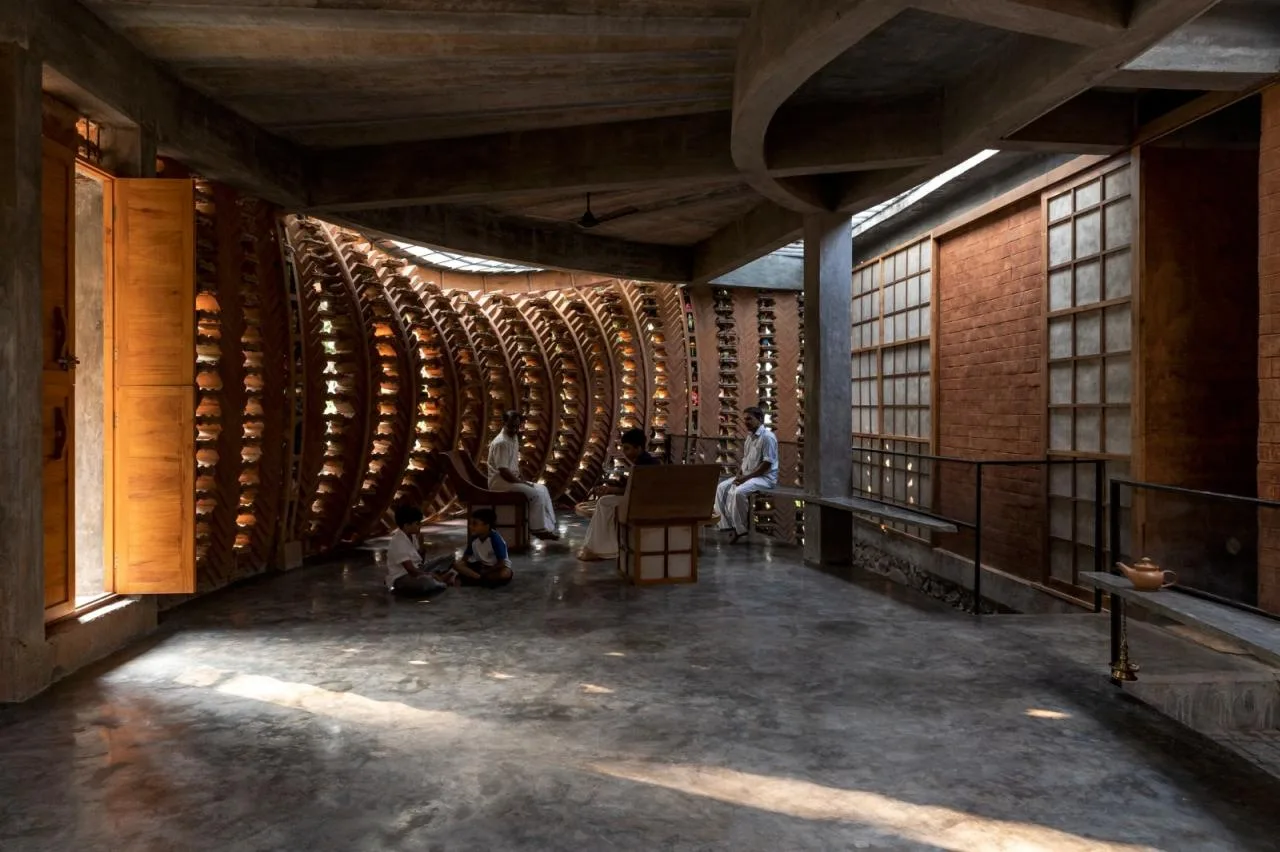
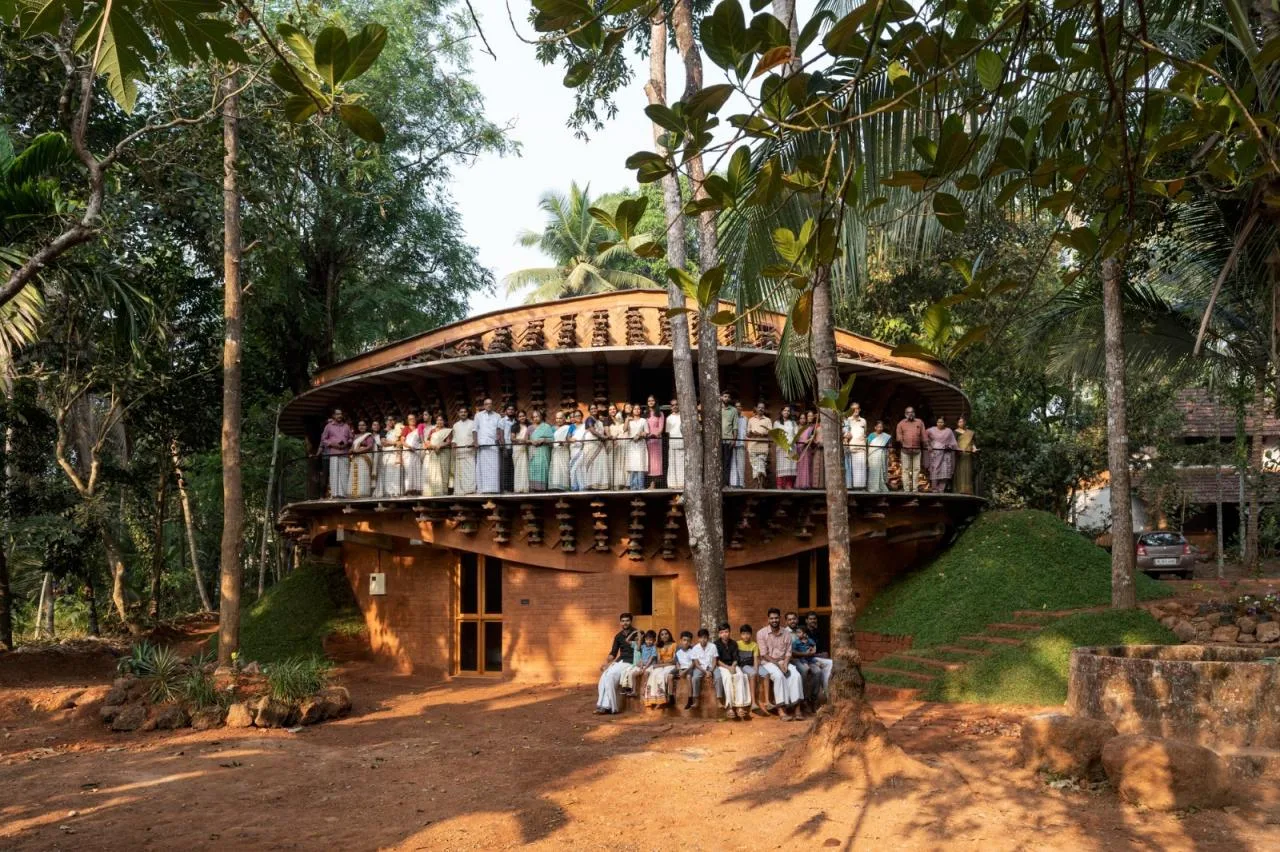
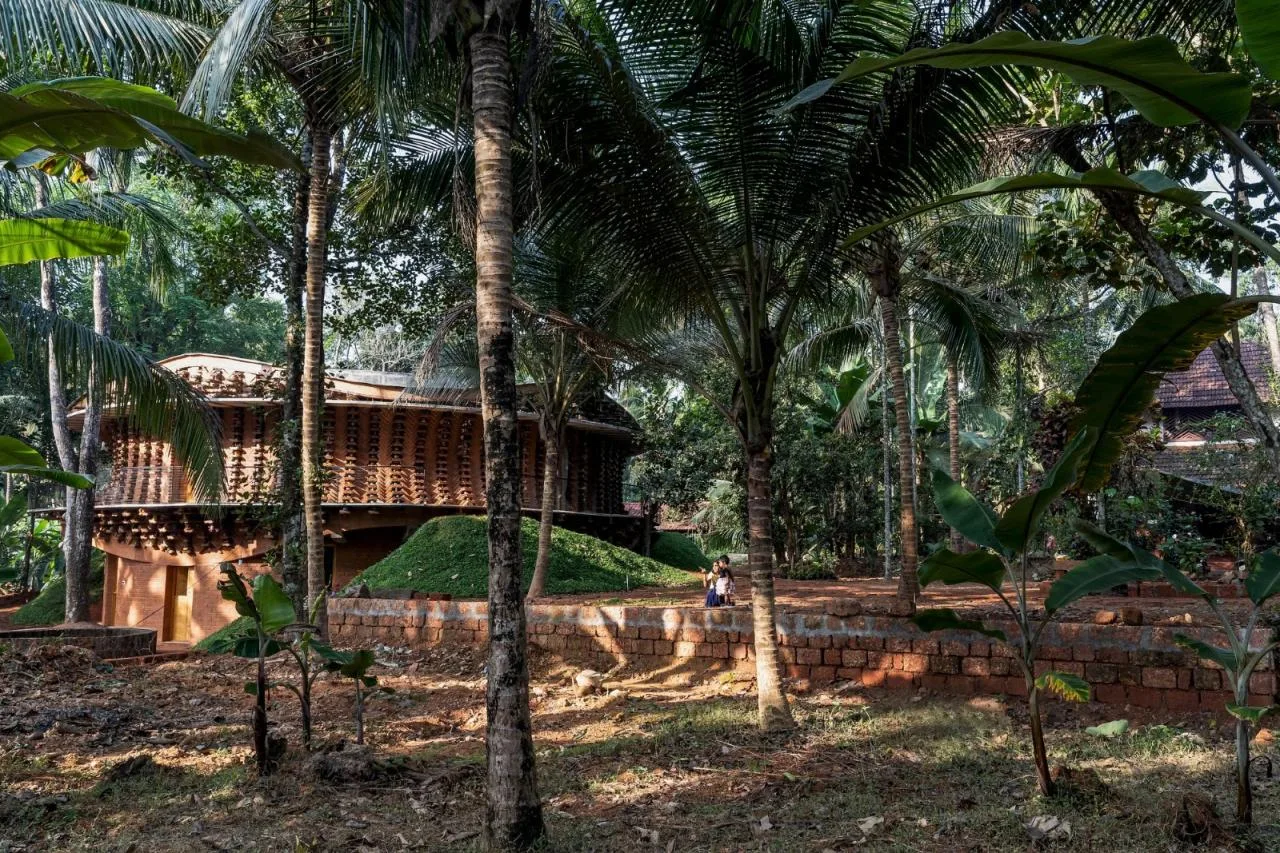
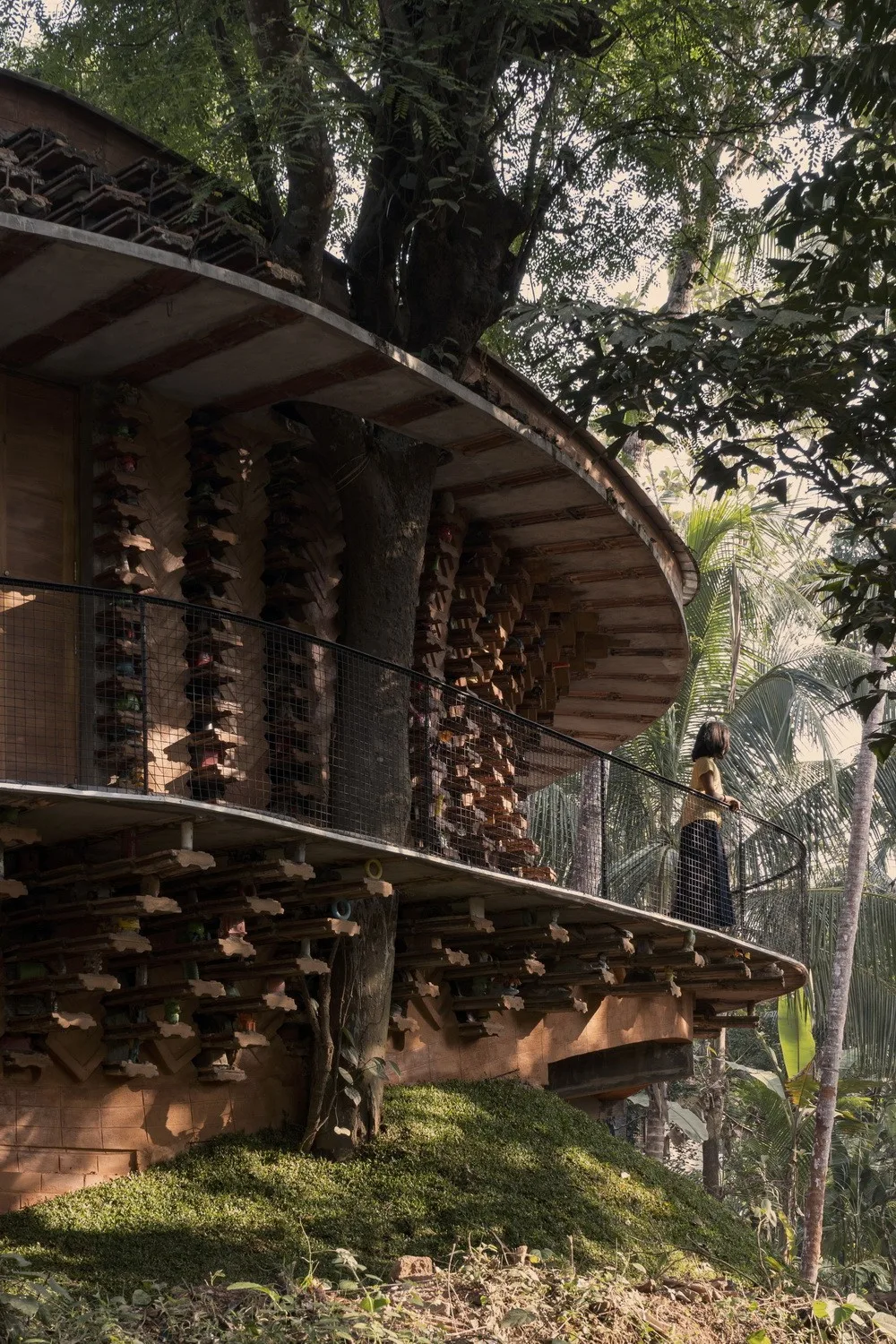
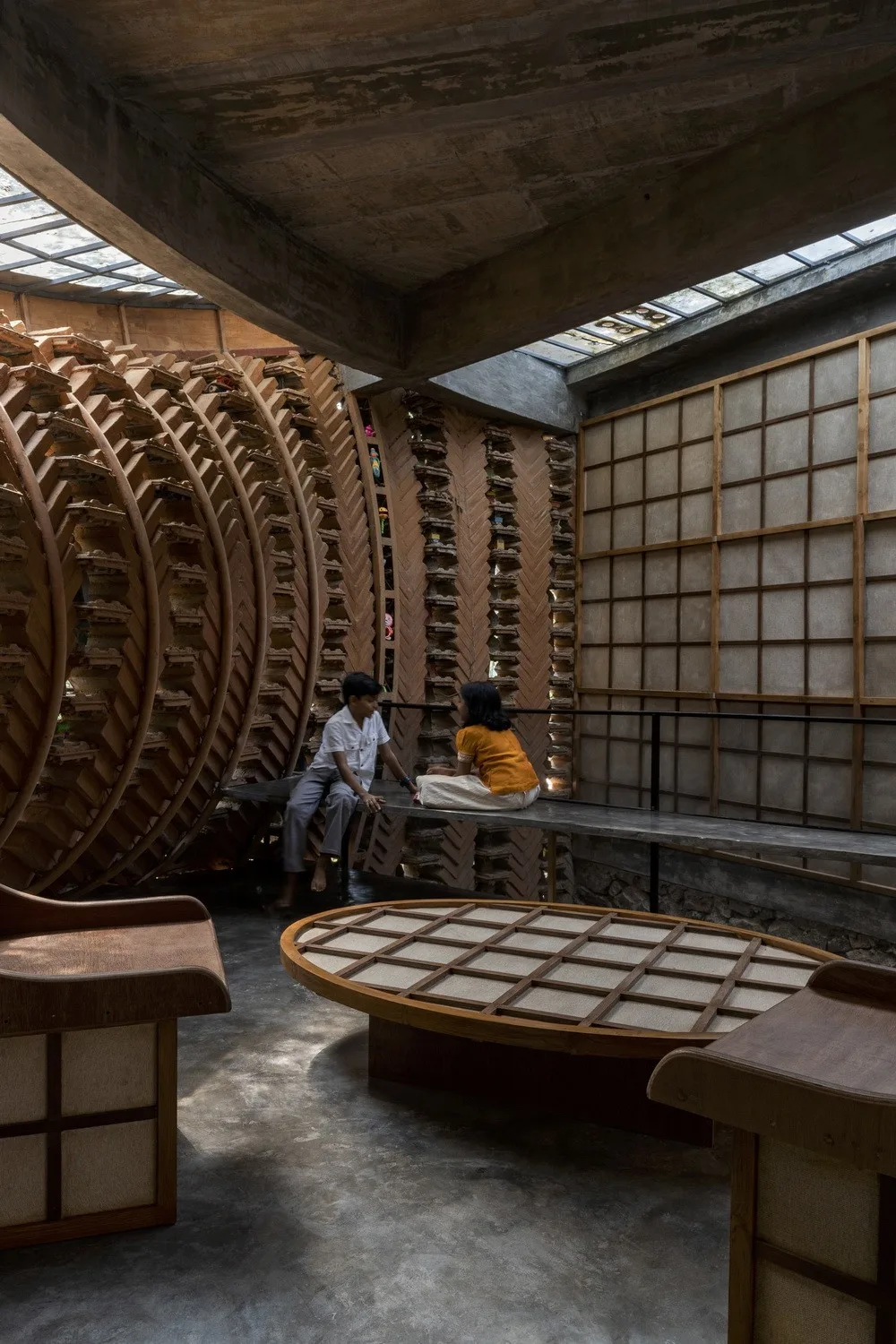
Bodhra, located in North Kerala, has the highest toy consumption rate in the state. When a new project was initiated here, the concept was to create a circular home accessible from all four sides, featuring balconies supported by toys and recycled Mangalore tiles. The cantilevered balconies are held up by wooden stake toys, encircling the house without defining a traditional “front” or “back.” Three large trees stand at the center of the property, shaping both the house’s layout and the terrain’s elevation. Beneath the main structure lies a hidden basement with a study and bedroom.
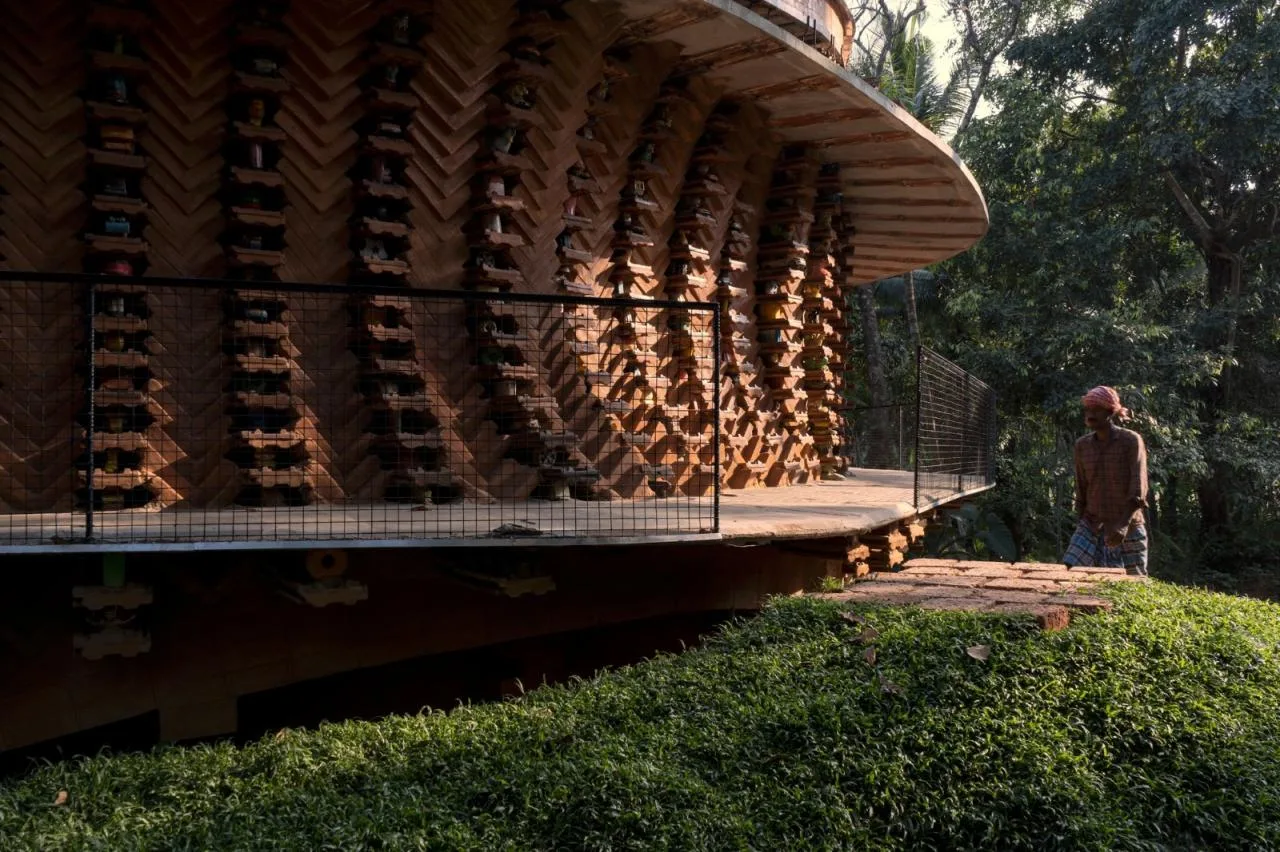
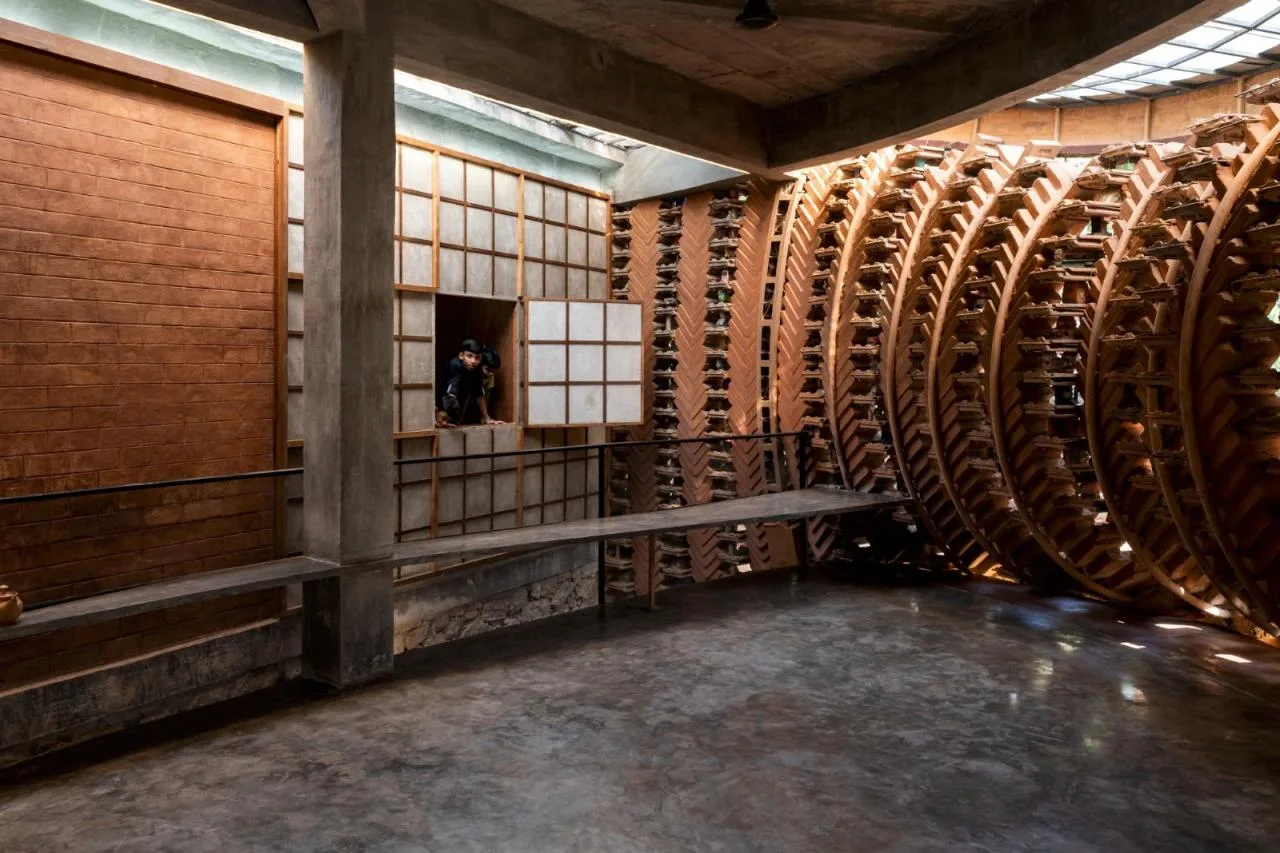
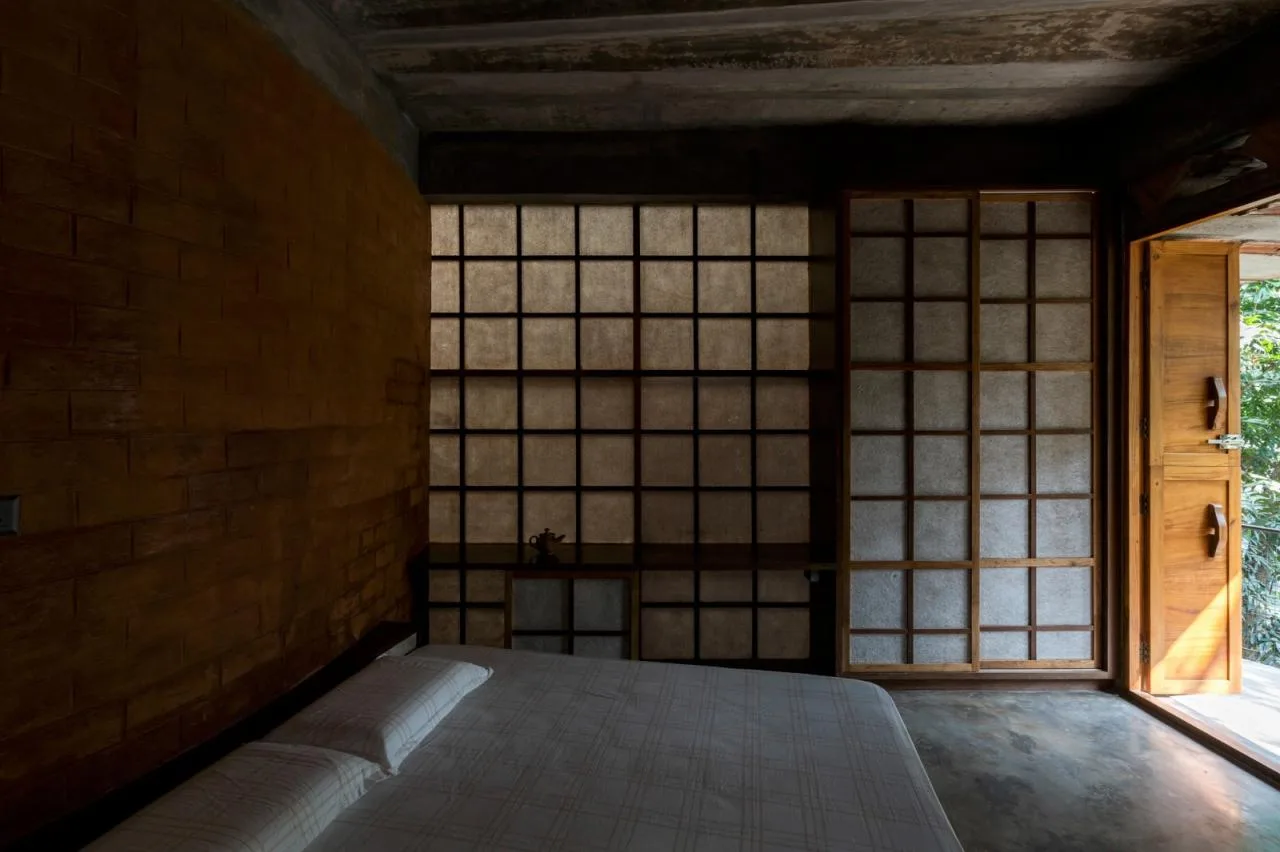
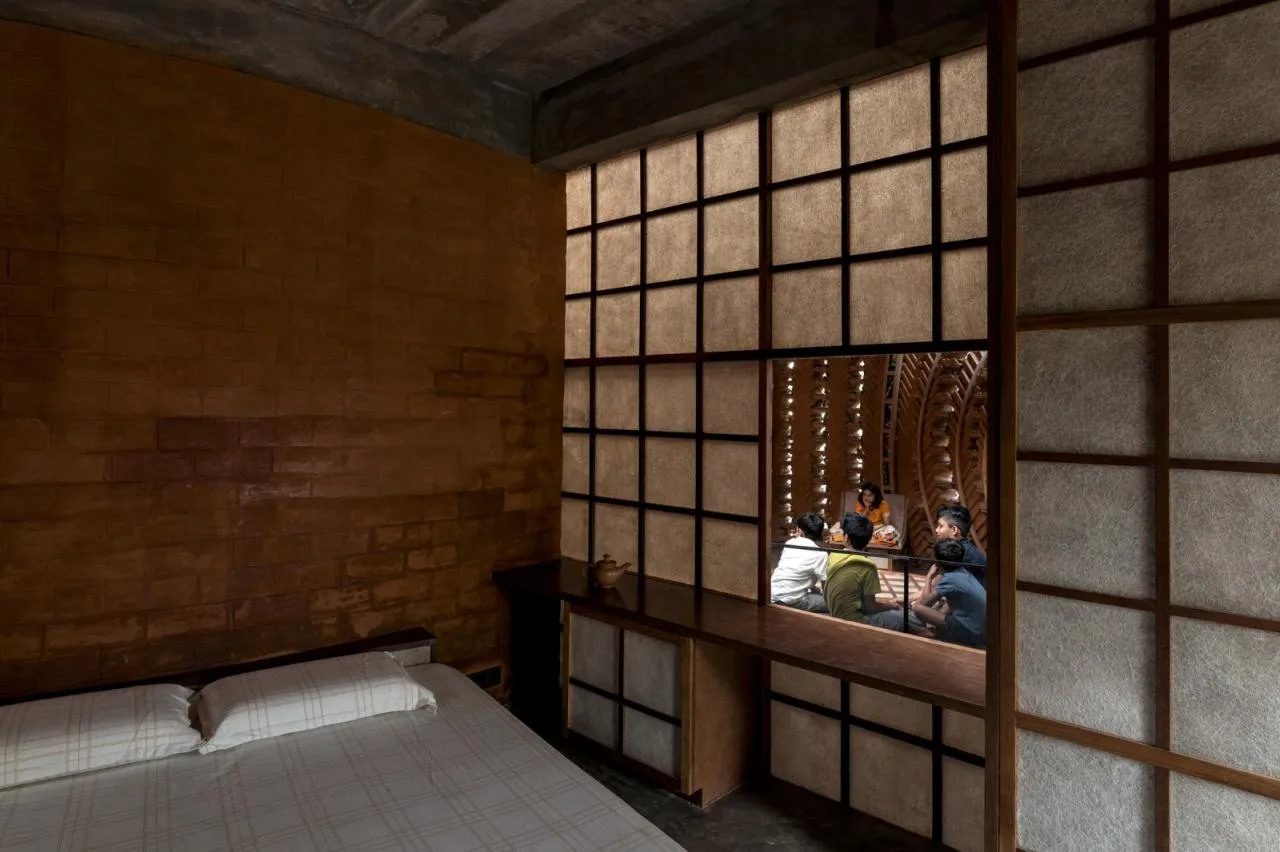
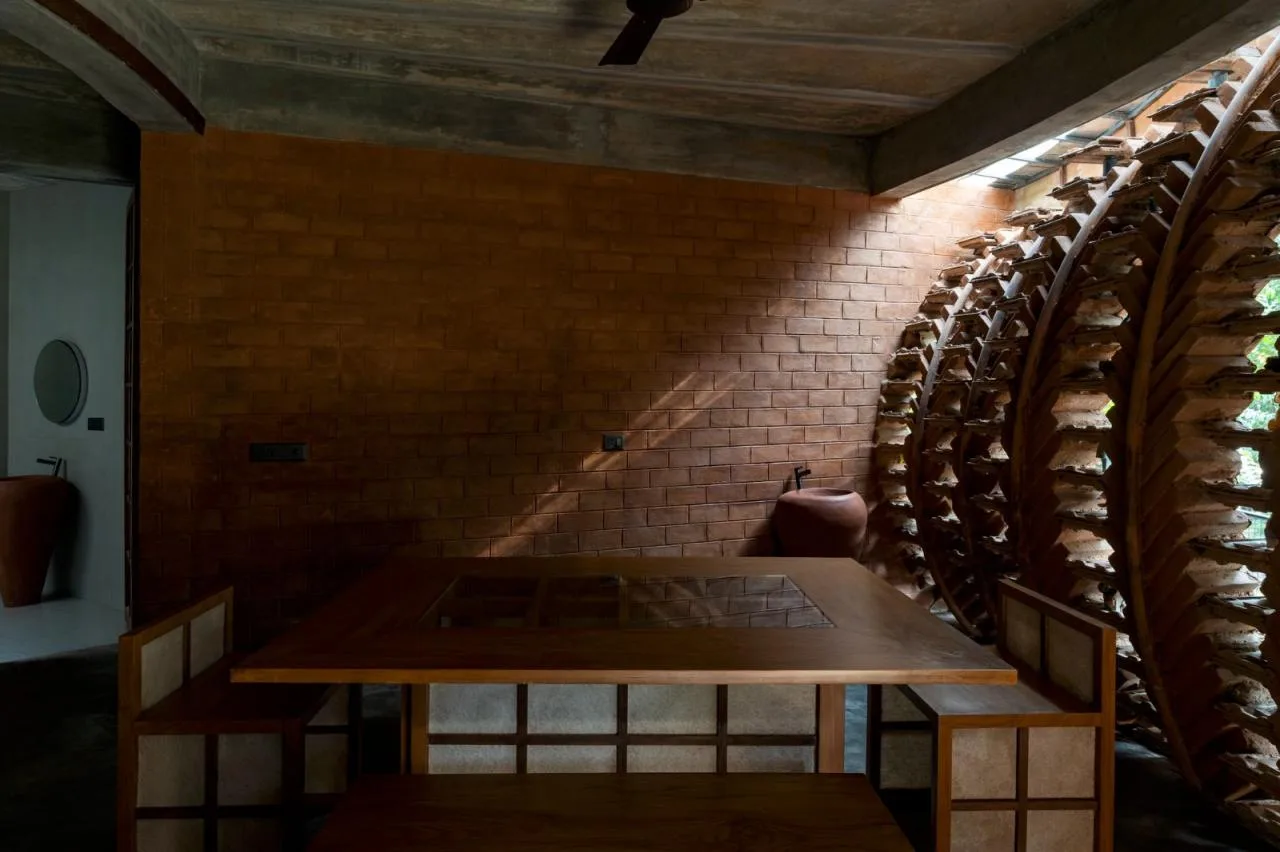
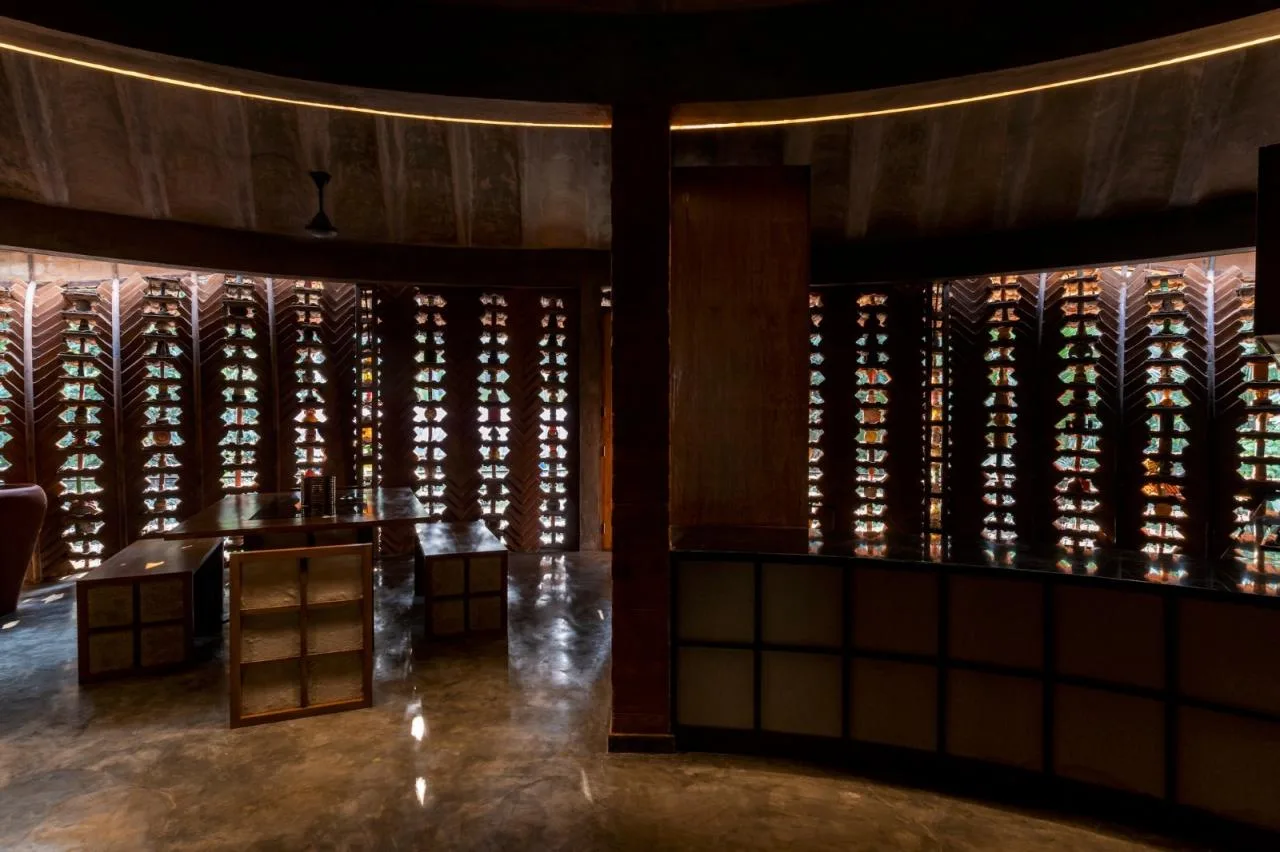
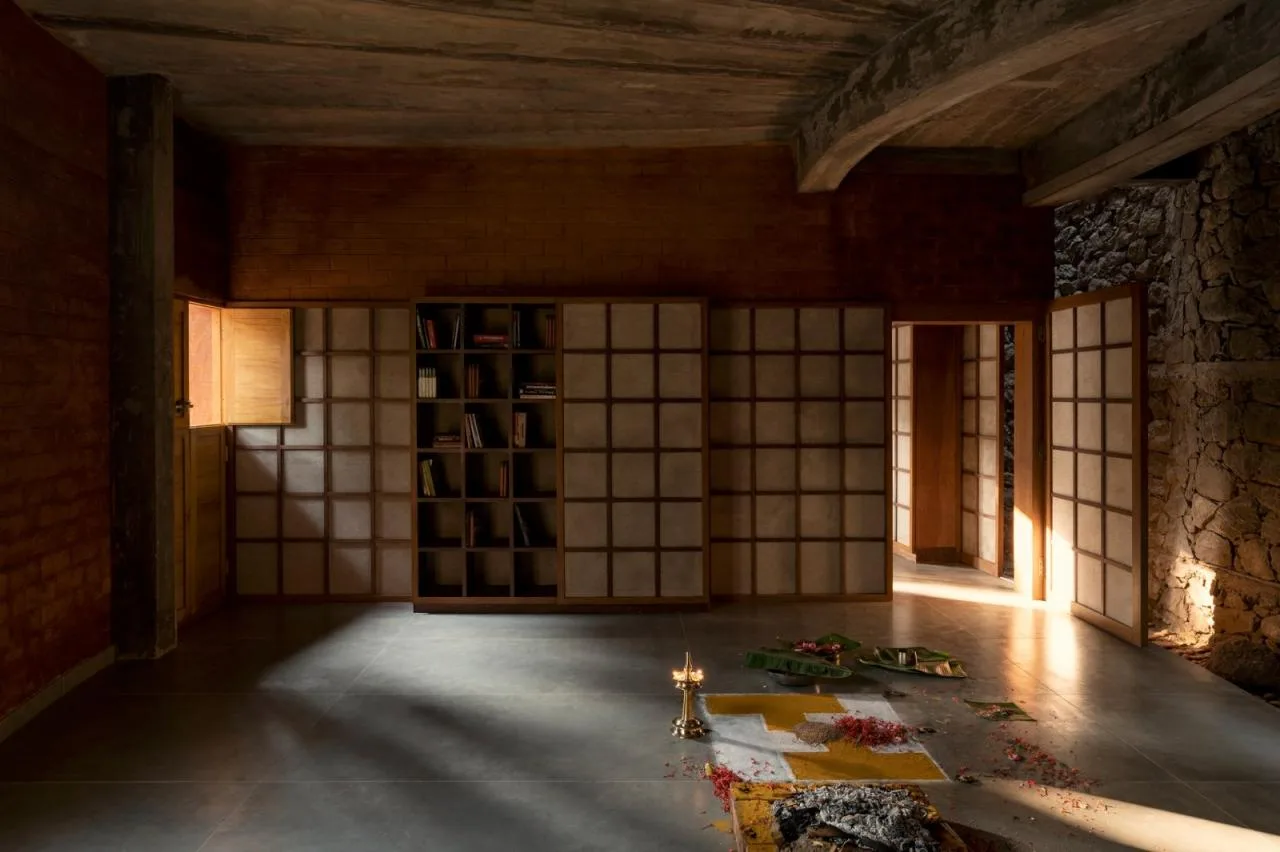
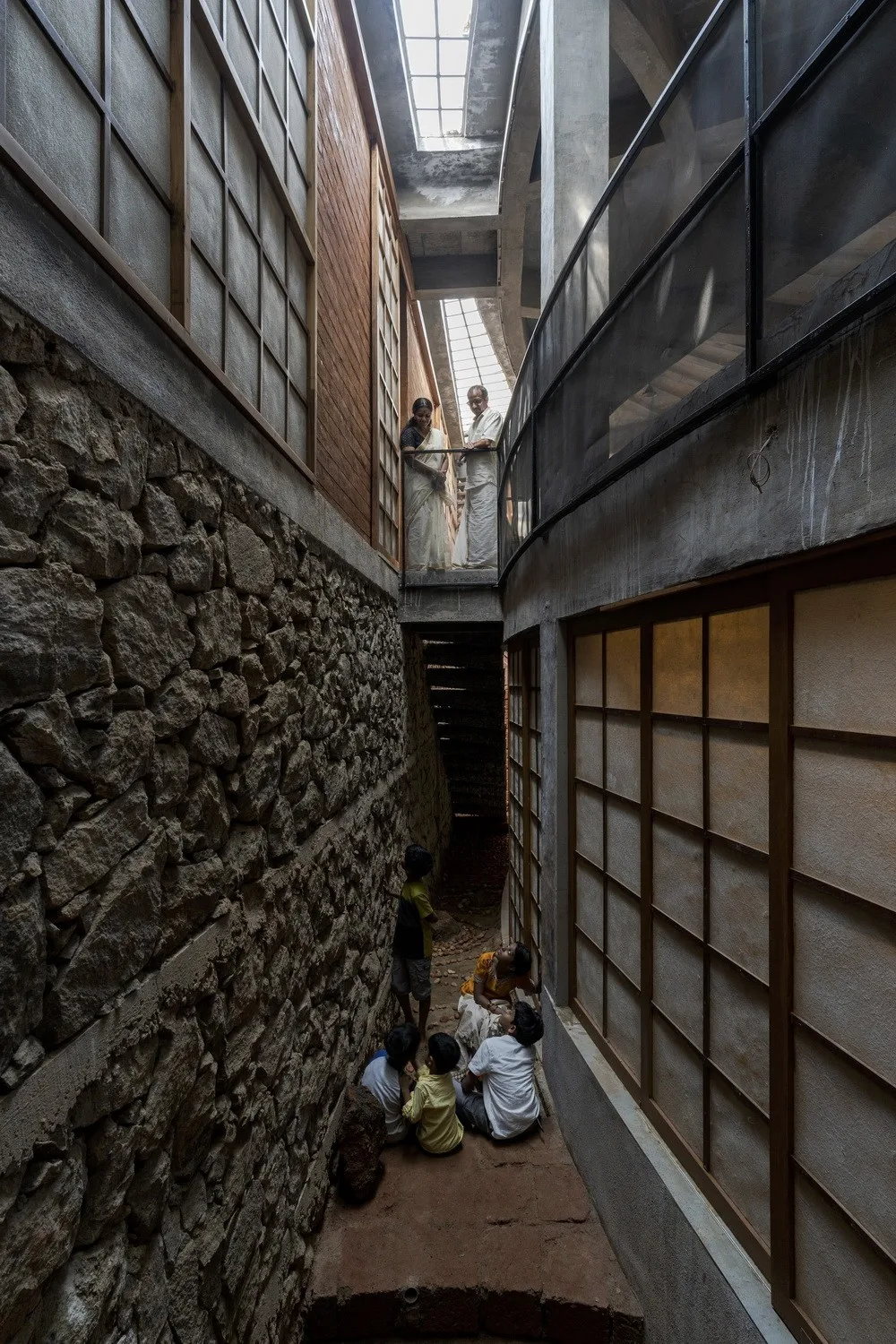
The residence embodies the concept of “stay at home,” with spacious living areas always open to neighbors and community members. Japanese-style tatami screens serve as semi-transparent partitions, allowing light to filter through while maintaining visual connections to private spaces. The central courtyard and composite CSEB Toy Jaali walls—made from compressed stabilized soil blocks sourced on-site—function as perforated outer skins, ensuring continuous cross ventilation and improved insulation.
The project also features a radial ferrite shell roof that reduces steel reinforcement by 33%, energy-efficient CSEB walls consuming only 572 megajoules per cubic meter, and traditional oxide flooring techniques.
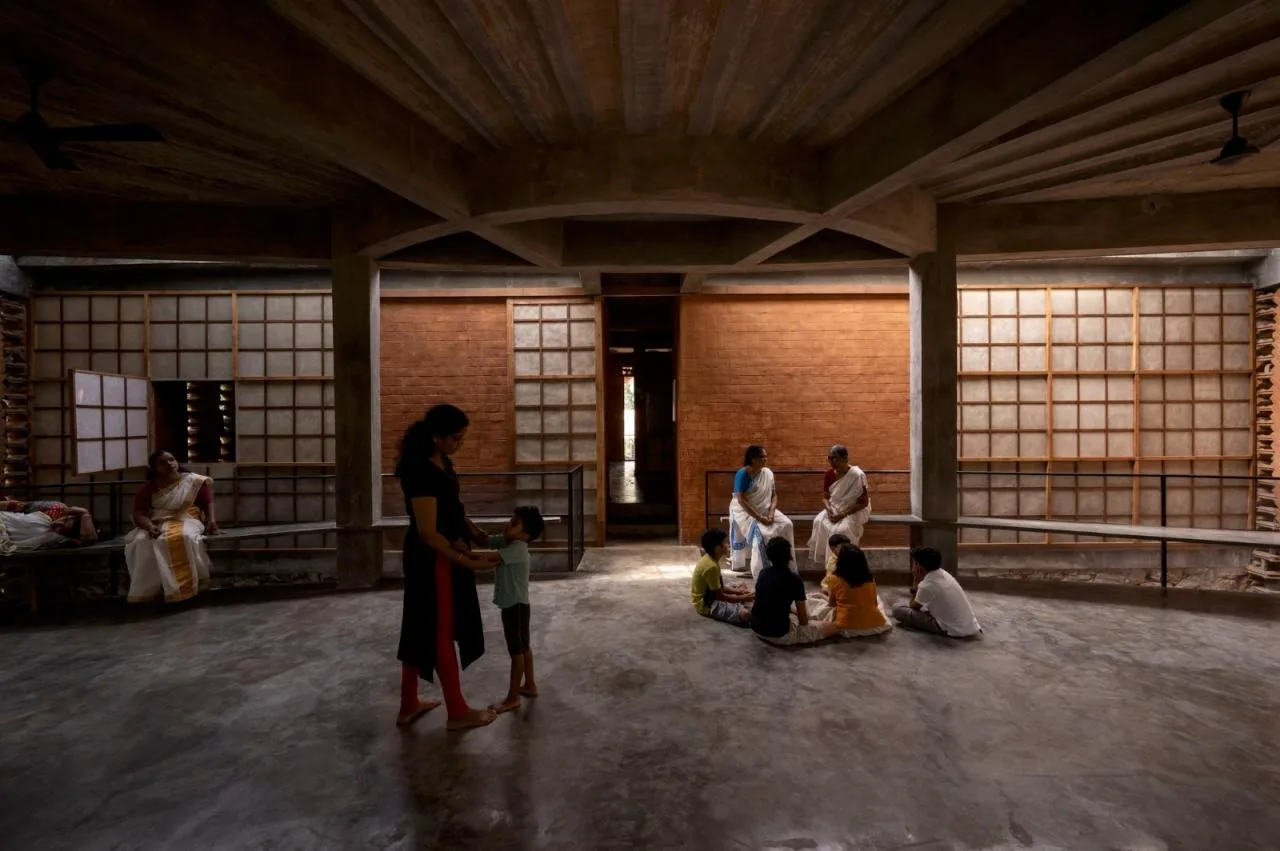
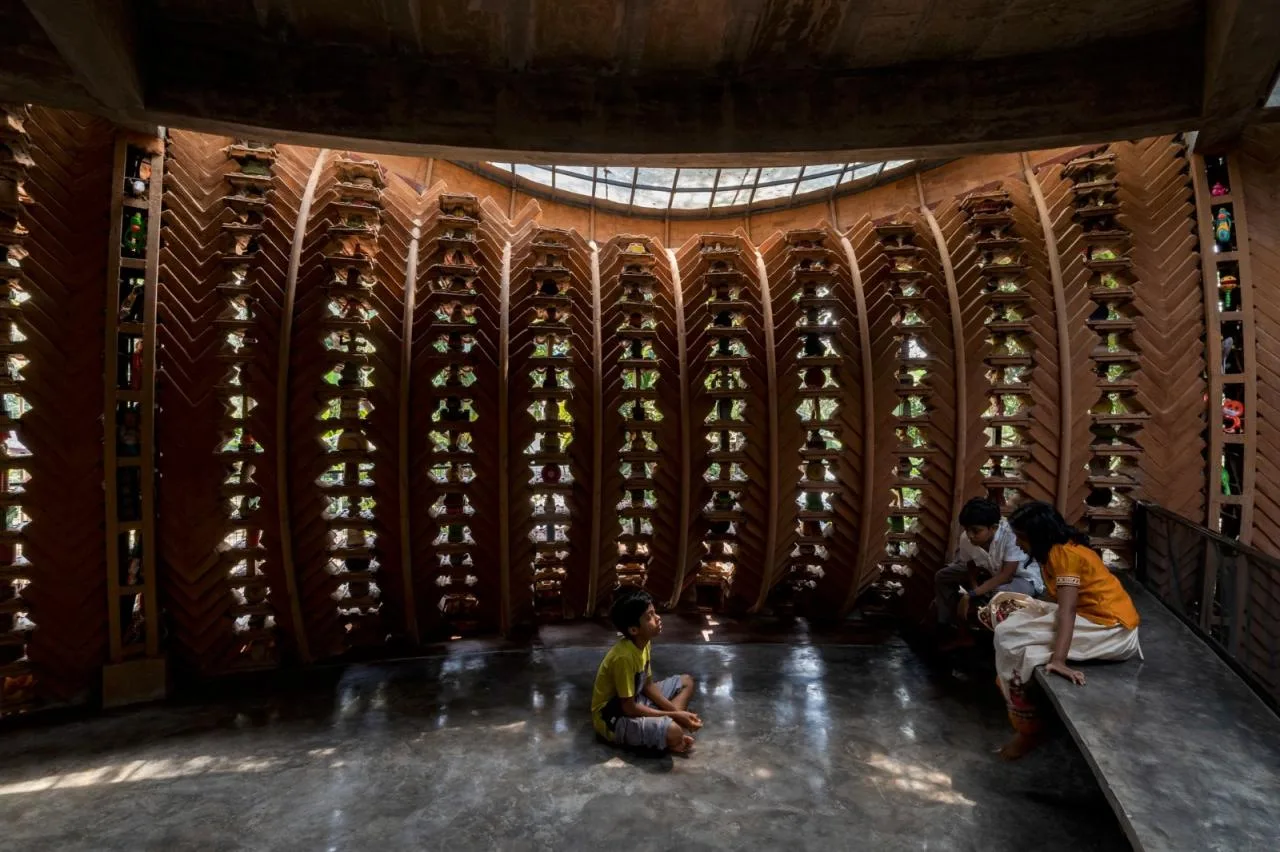
But perhaps the most meaningful aspect is that local children frequently visit, bringing and sharing their old toys. Using approximately 6,200 discarded toys, the “Toy Story” project has immortalized our generation’s childhood memories on its walls.
Project Drawings
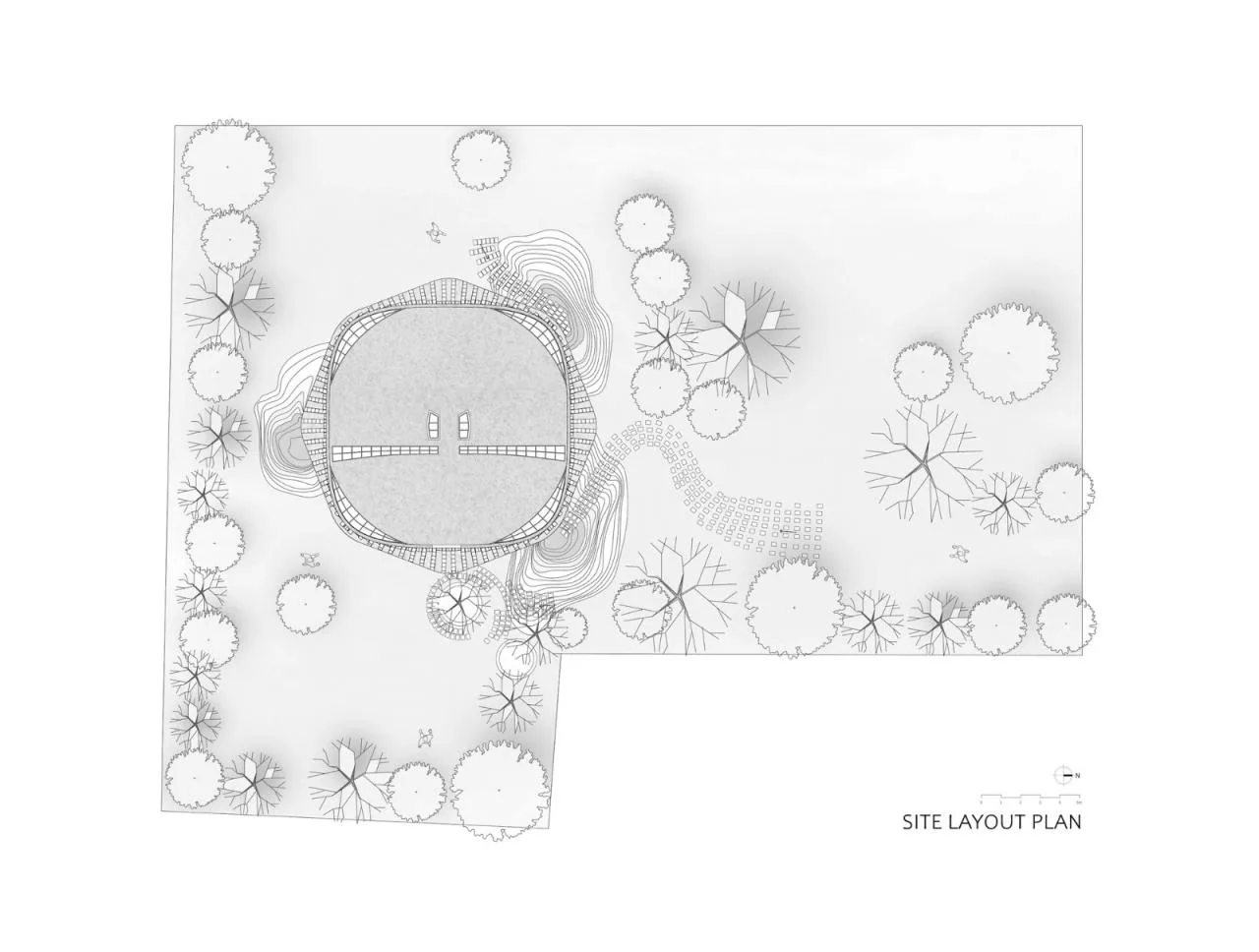
△ General Layout Plan
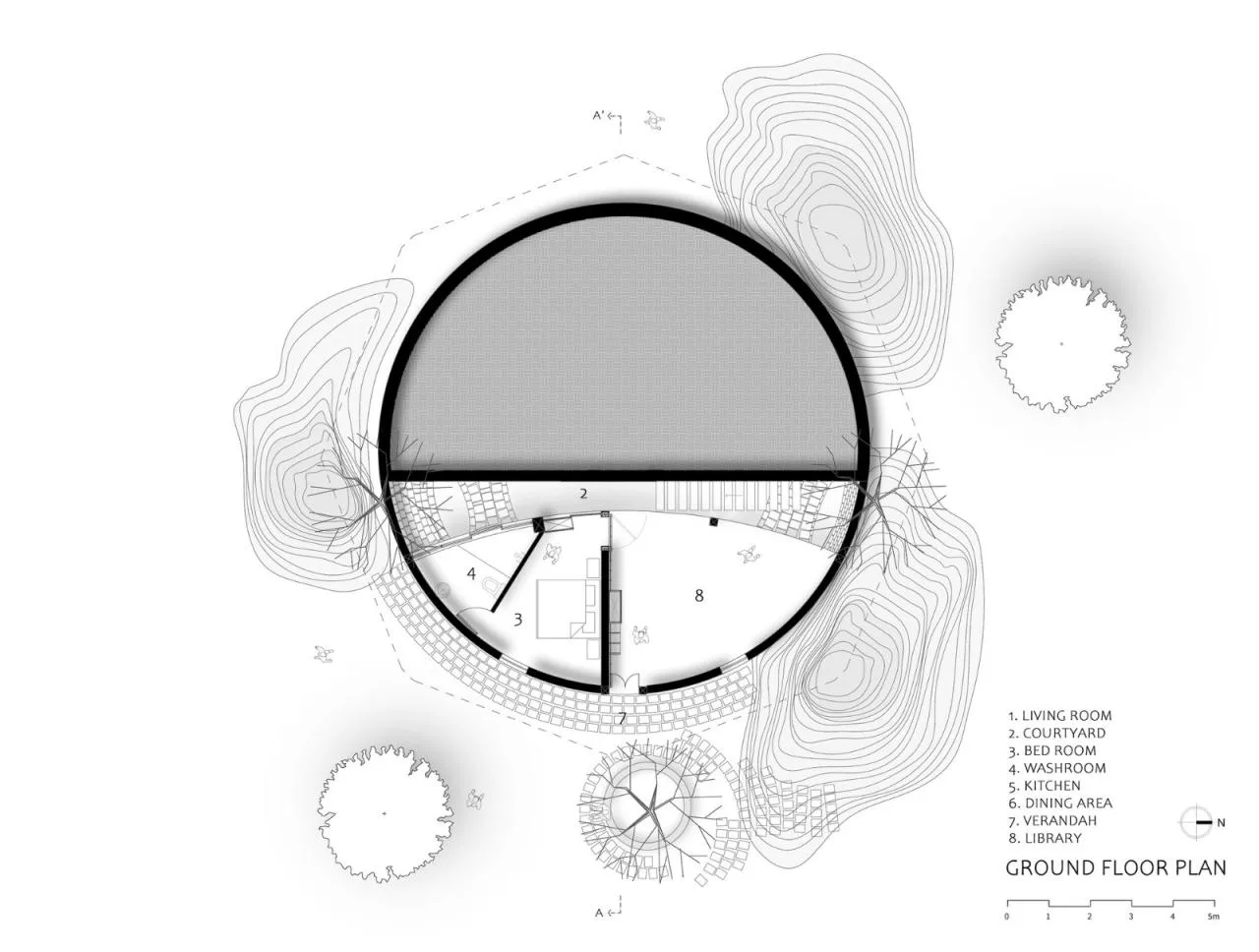
△ First Floor Plan
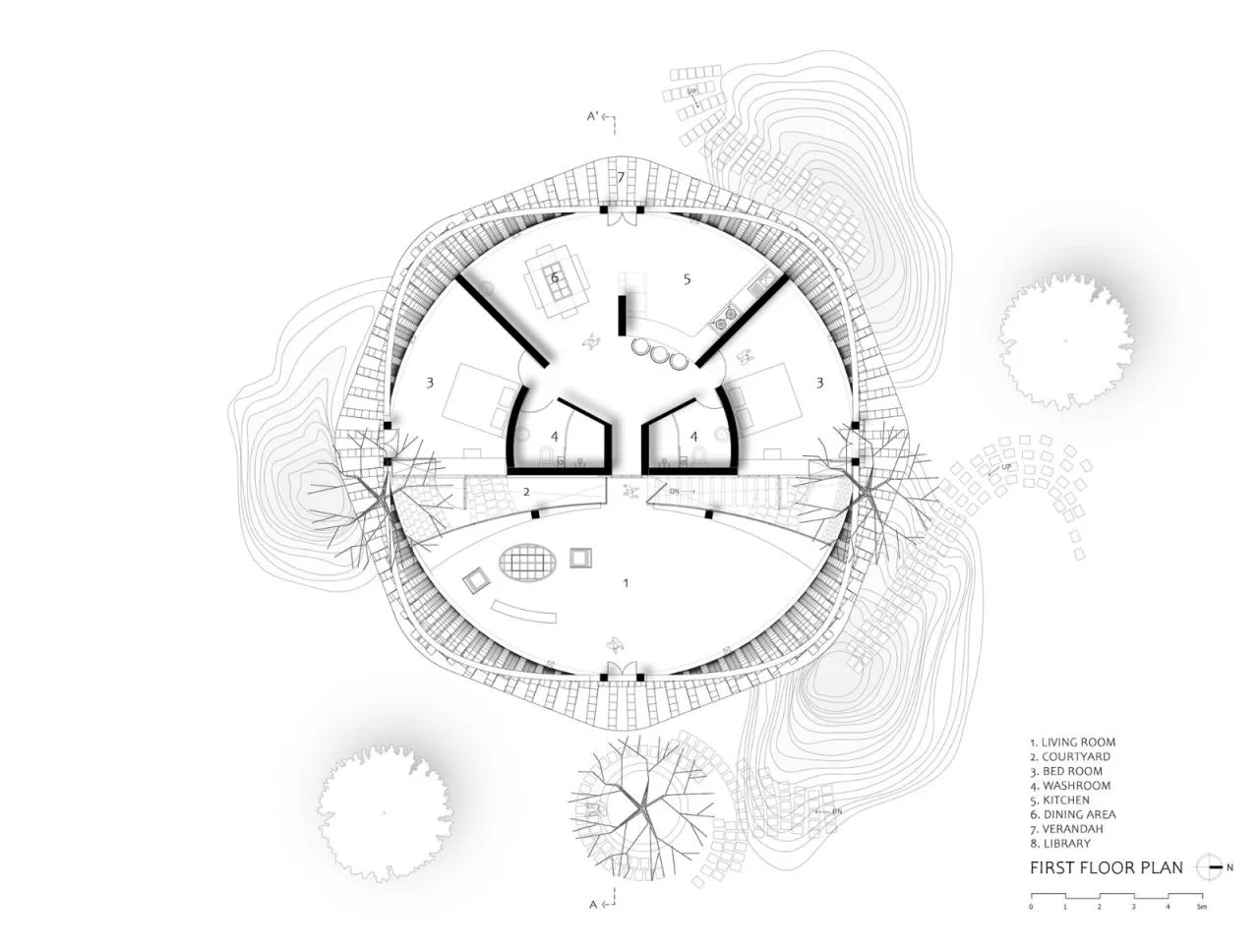
△ Second Floor Plan
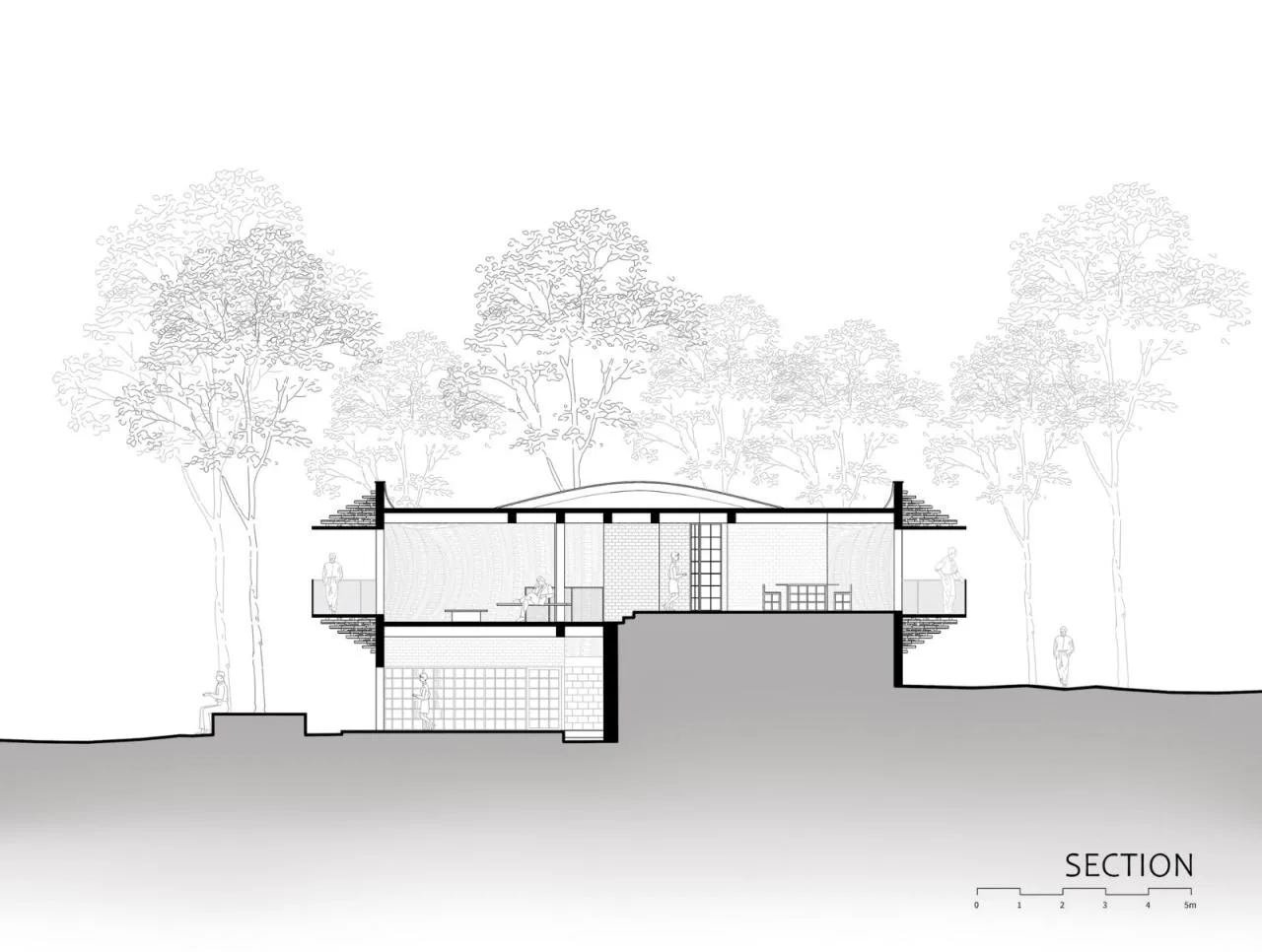
△ Section Diagram
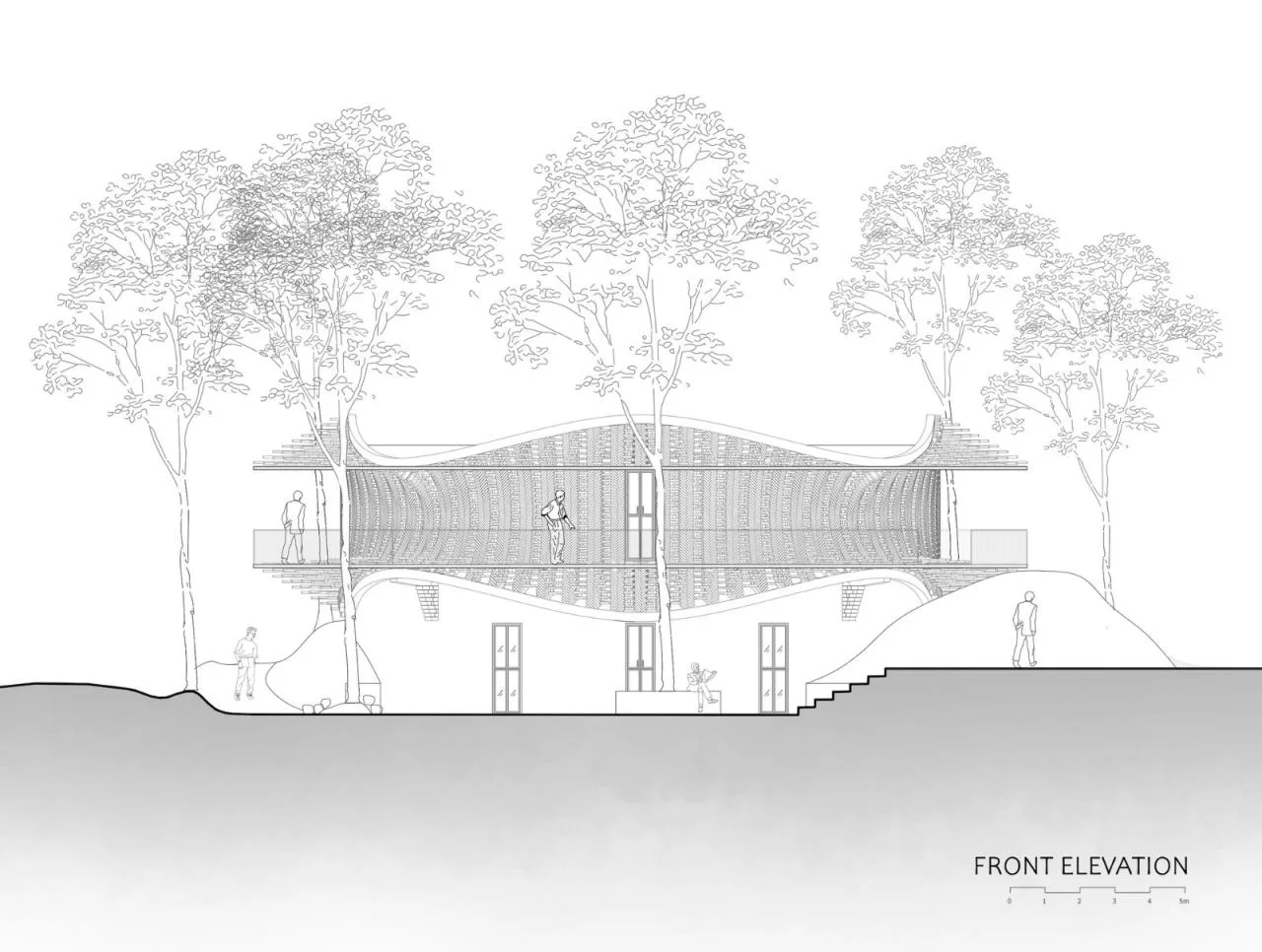
△ Elevation Drawing
Project Information
Architect: Wallmakers
Area: 3,843 ft²
Project Year: 2024
Photographer: Syam Sreesylam
Lead Architect: Vinu Daniel
Design Team: Oshin Mariam Varughese, Dhawal Dasari, Mrityunjoy Pan, Rosh Saji
Location: Vatakara, India













Must log in before commenting!
Sign Up