
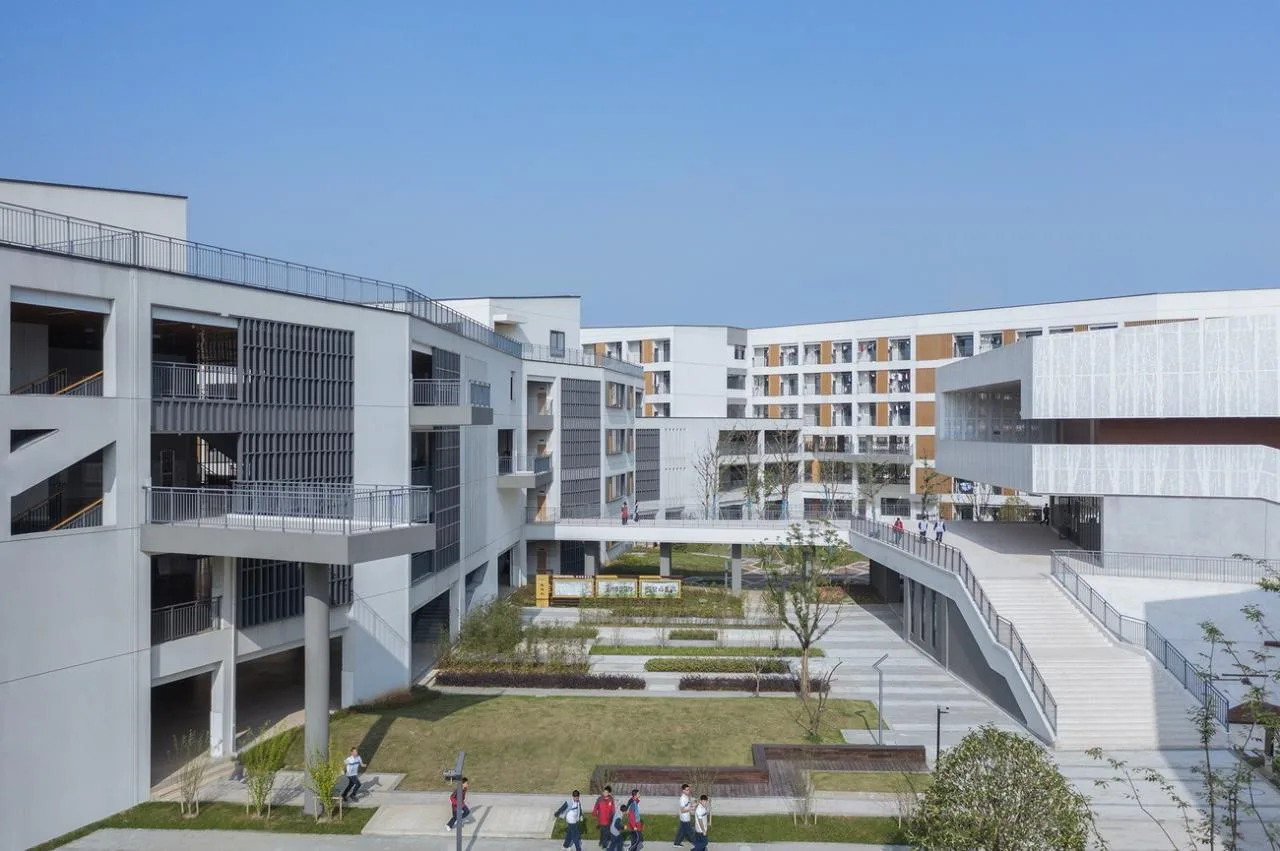
Education aims to awaken curiosity, not simply to mold students. The campus and natural environment are intertwined rather than separate. This project breaks away from traditional campus layouts by integrating valleys, sunlight, and modern facilities, encouraging students to explore and satisfy their innate curiosity while enjoying an ecologically rich environment. Established in 2001, Hangzhou Zhongtai Middle School has grown steadily as the city’s population increased. To foster a free and ecological campus, the school relocated to a new site on Zhongtai Street in Yuhang.
By analyzing the surrounding natural and urban elements, the architects developed the “studyMall” concept. This design abandons the conventional inward-focused campus centered purely on academics and instead embraces an open, inclusive approach that connects the city, nature, and education. The result is a green valley campus characterized by multi-directional pathways, courtyard-style spaces, and shared areas.
Part 01: Campus Design Background
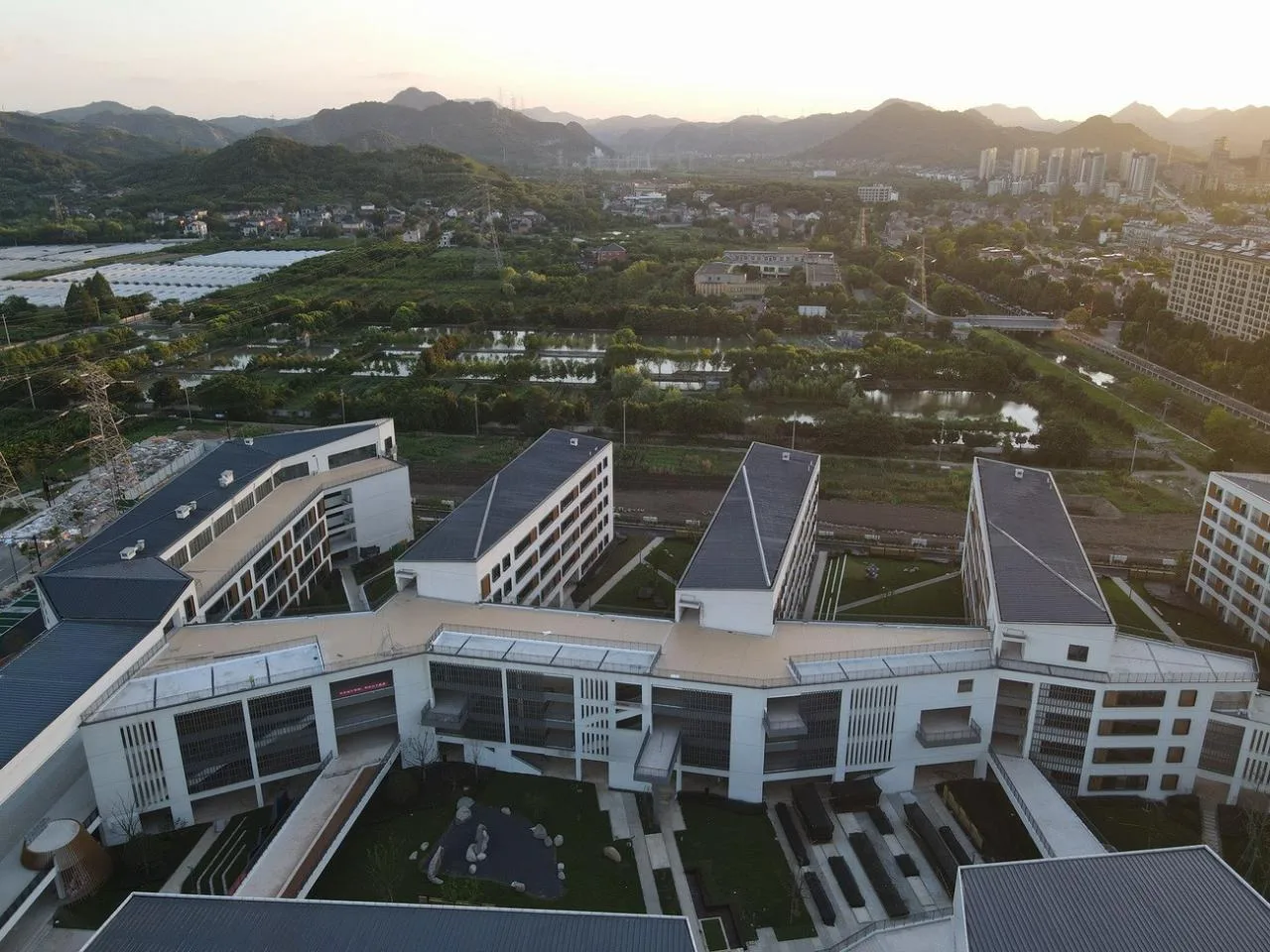
The new Zhongtai Middle School campus is located in Zhongtai Street, Nanhu New City, Yuhang District, Hangzhou. It lies south of the Future Science and Technology City, adjacent to farmland to the northeast, facing mountains and water, and benefits from excellent urban accessibility. The rectangular site spans east to west and north to south, with a total construction area of 80,000 square meters.
The design integrates teaching, sports, and residential functions arranged west to east, accommodating 51 classes and a standard 400-meter track, while maintaining openness to the surrounding city. The layout responds to the urban fabric, balancing free-form and centralized planning methods to create a harmonious spatial pattern. Buildings and nature complement each other, with functions scattered and radiating to form a pan-core ecological green valley campus. Students can enjoy secondary education in a friendly environment surrounded by mountains and forests, freely walking, running, and observing their surroundings.
Part 02: Multi-Line Connection Strategy
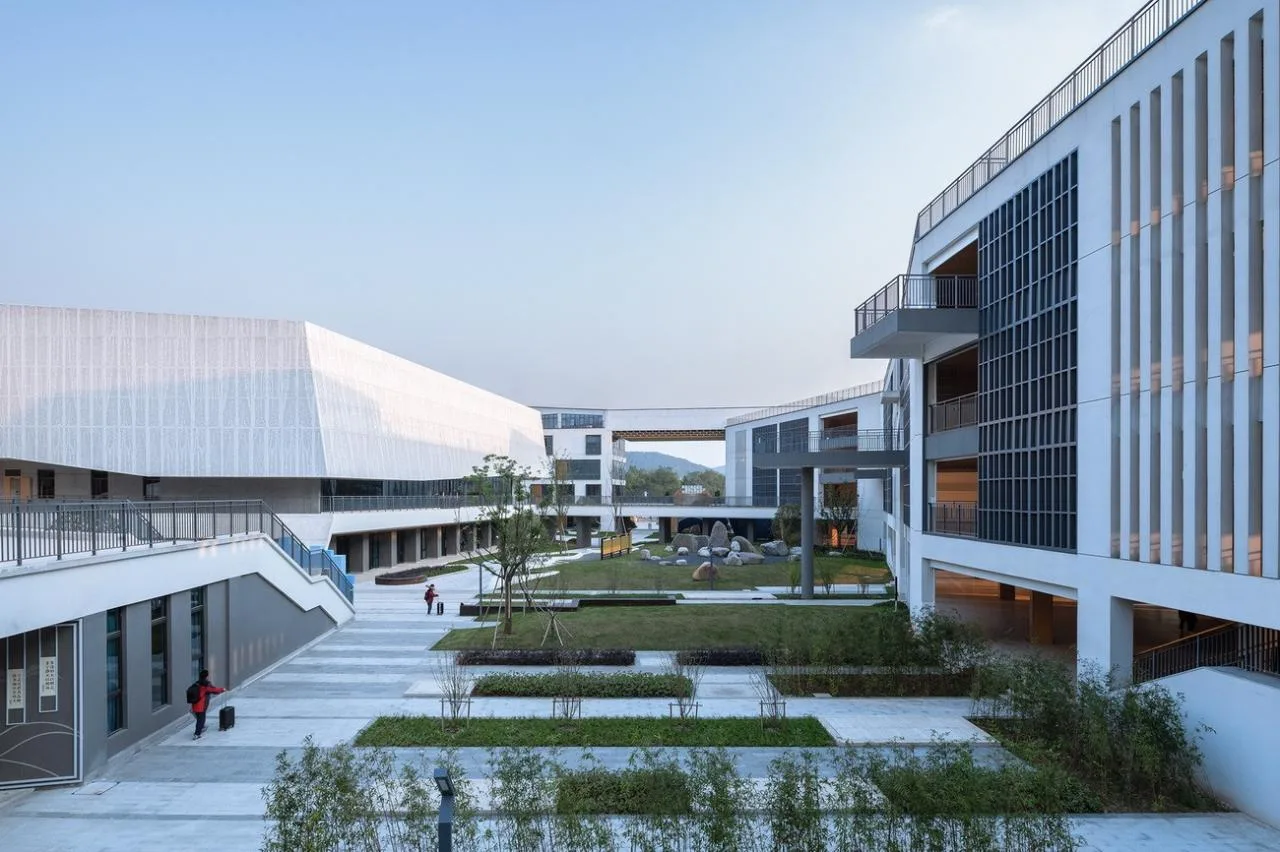
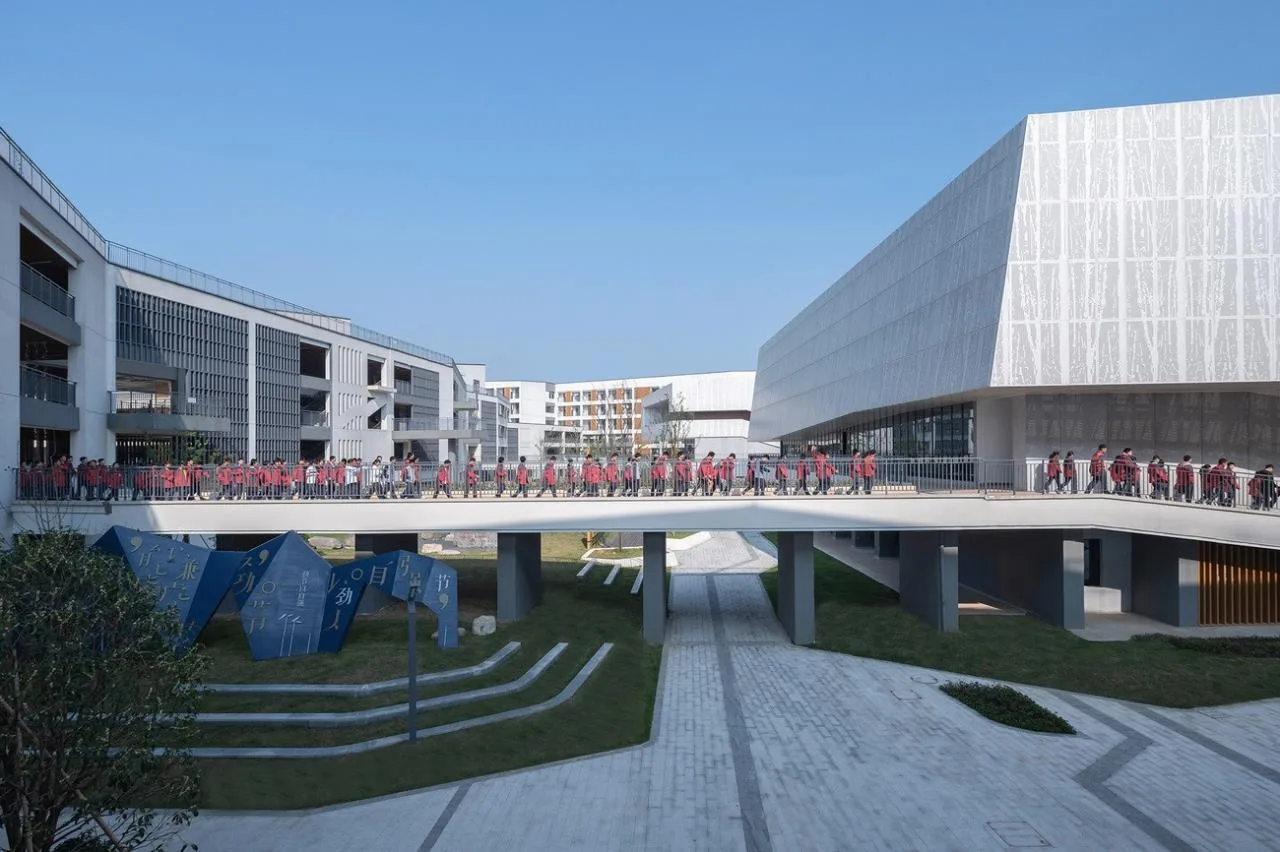
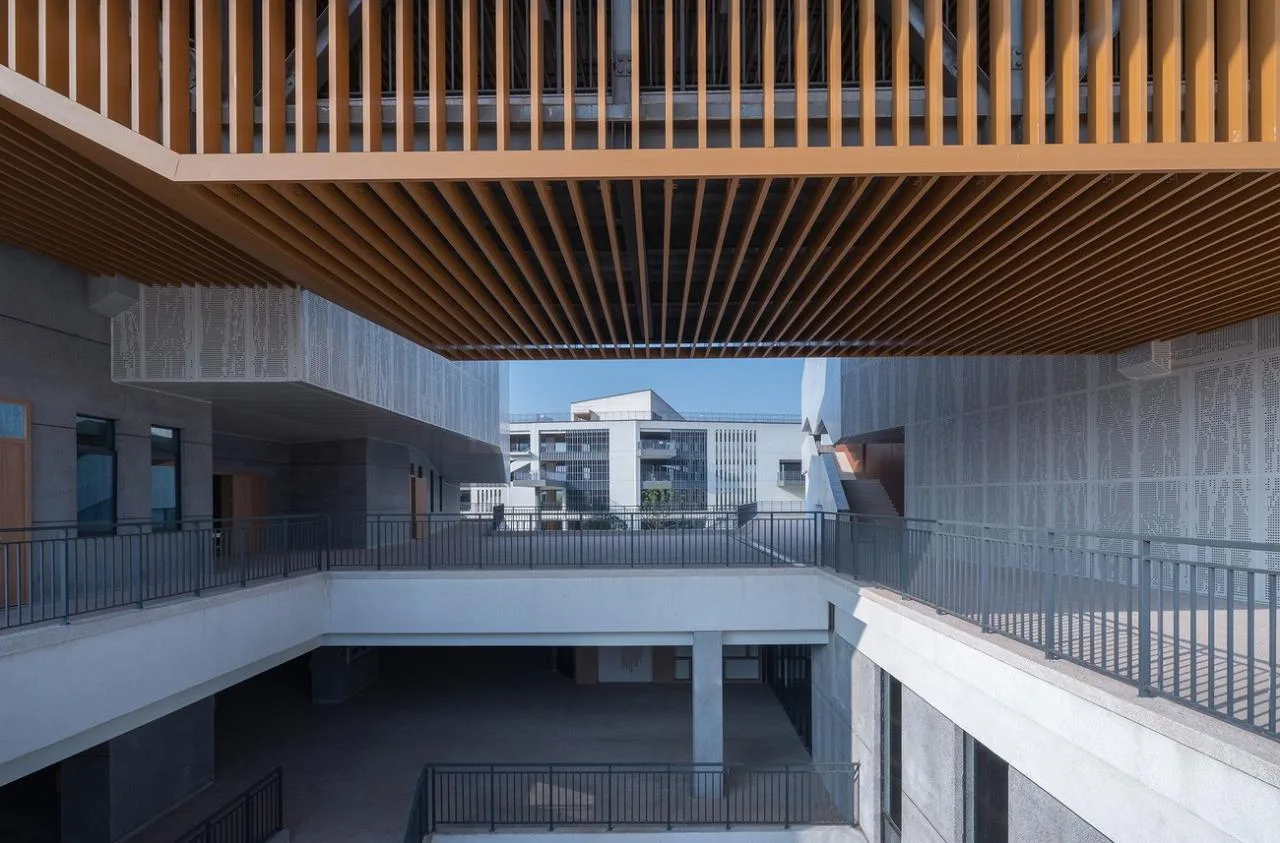
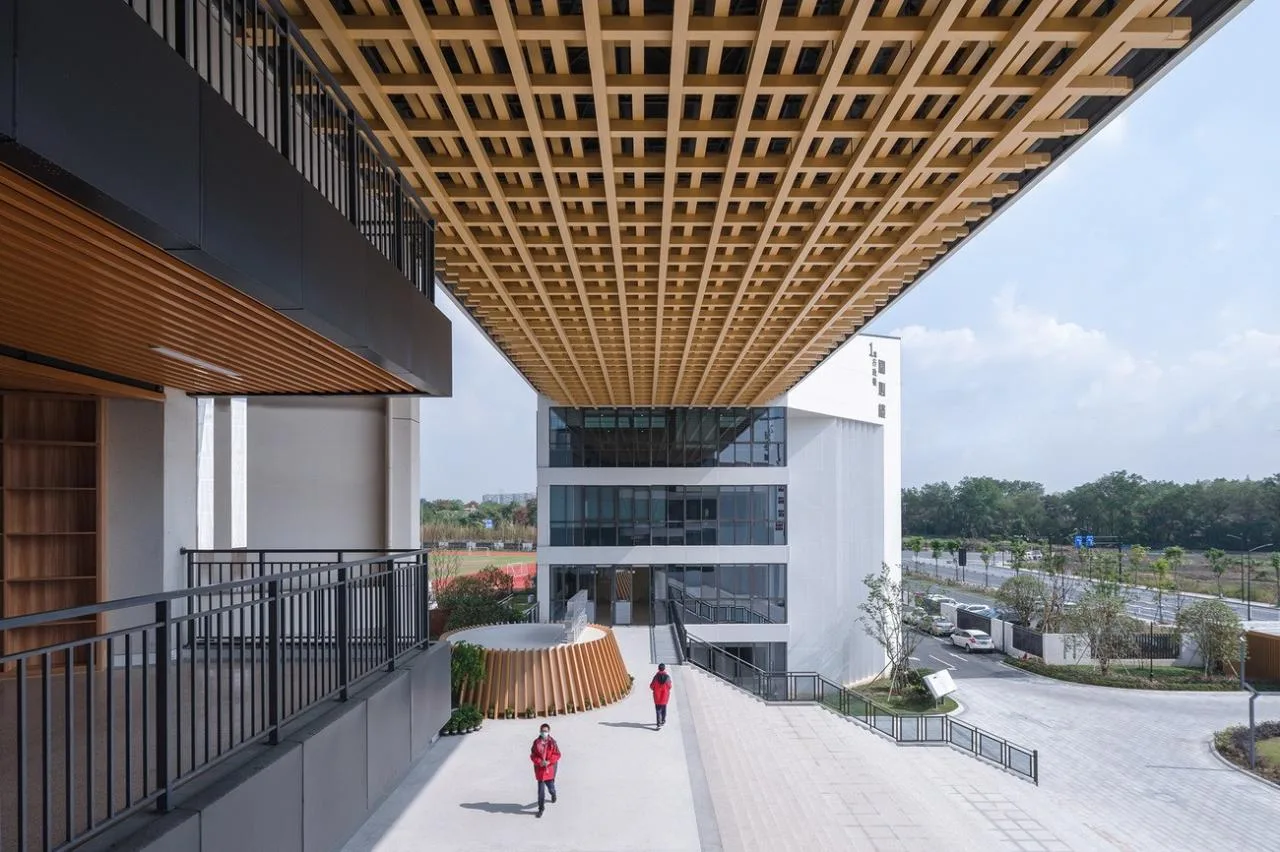
In southern cities, where summers are humid and rainy, sheltered outdoor spaces are essential. The campus features a 2 km corridor network that acts like an elevated branch, linking teaching, sports, administrative, and recreational areas. This connected corridor system transforms previously vague spaces into lively, interactive places where students can play, run, socialize, or study.
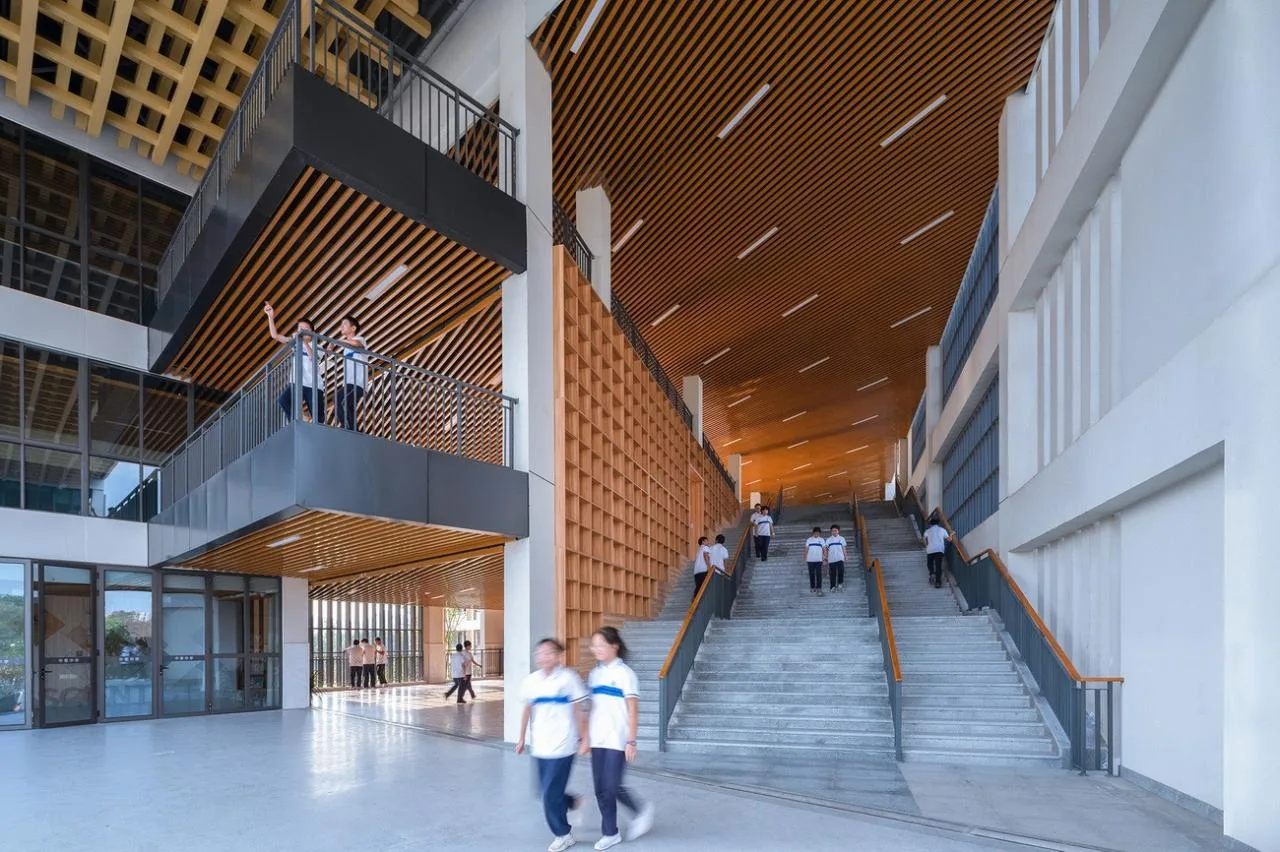
The core functional zones are fragmented and reorganized into a pan-core area. The art activity zone is positioned on the eastern side, while residential areas connect north-to-south with teaching buildings. The main southern entrance includes a comprehensive building and an experimental facility. The campus’s rich and three-dimensional circulation paths foster seamless connections between spaces, turning ambiguous spots into vibrant courtyards, corridors, grey areas, or observation decks. This design achieves efficient interconnectivity reminiscent of urban complexes, while also offering enjoyable experiences.
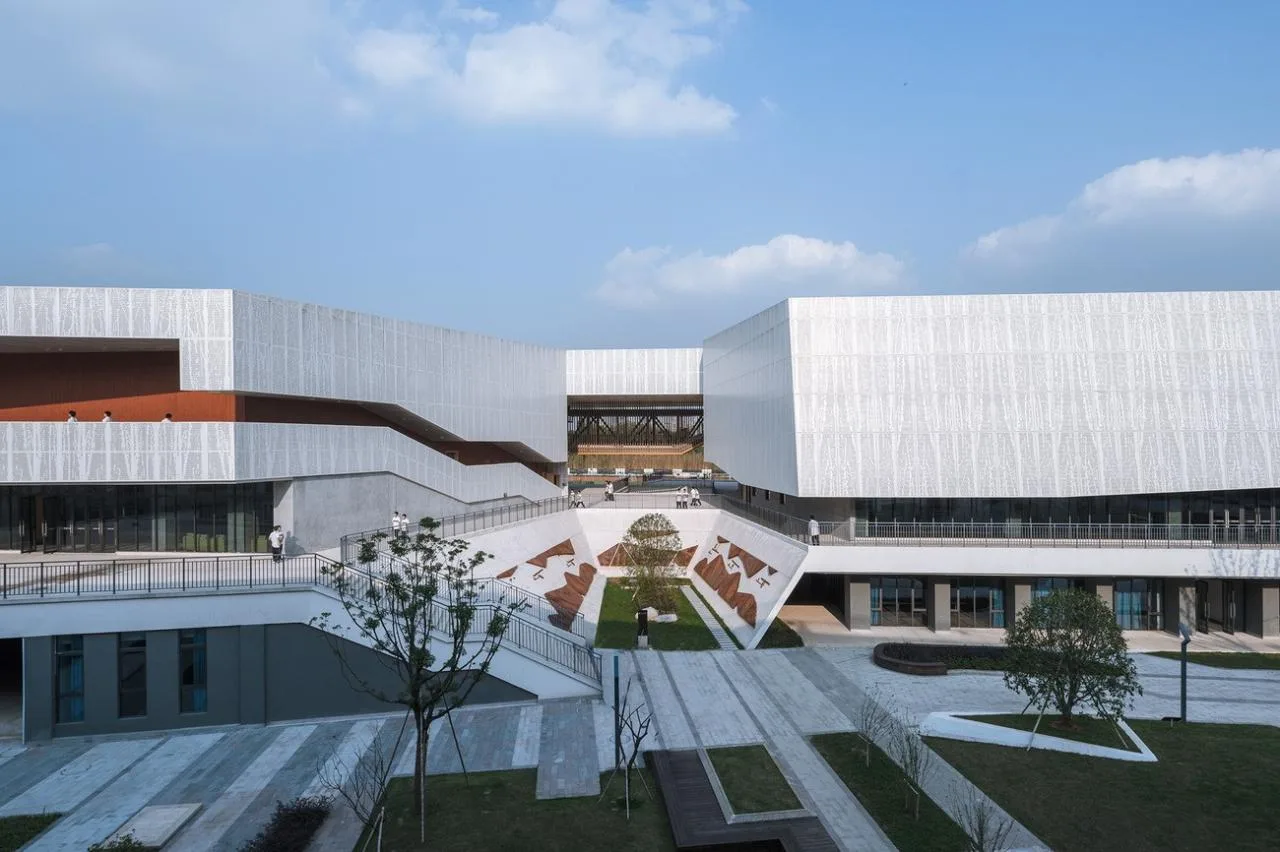
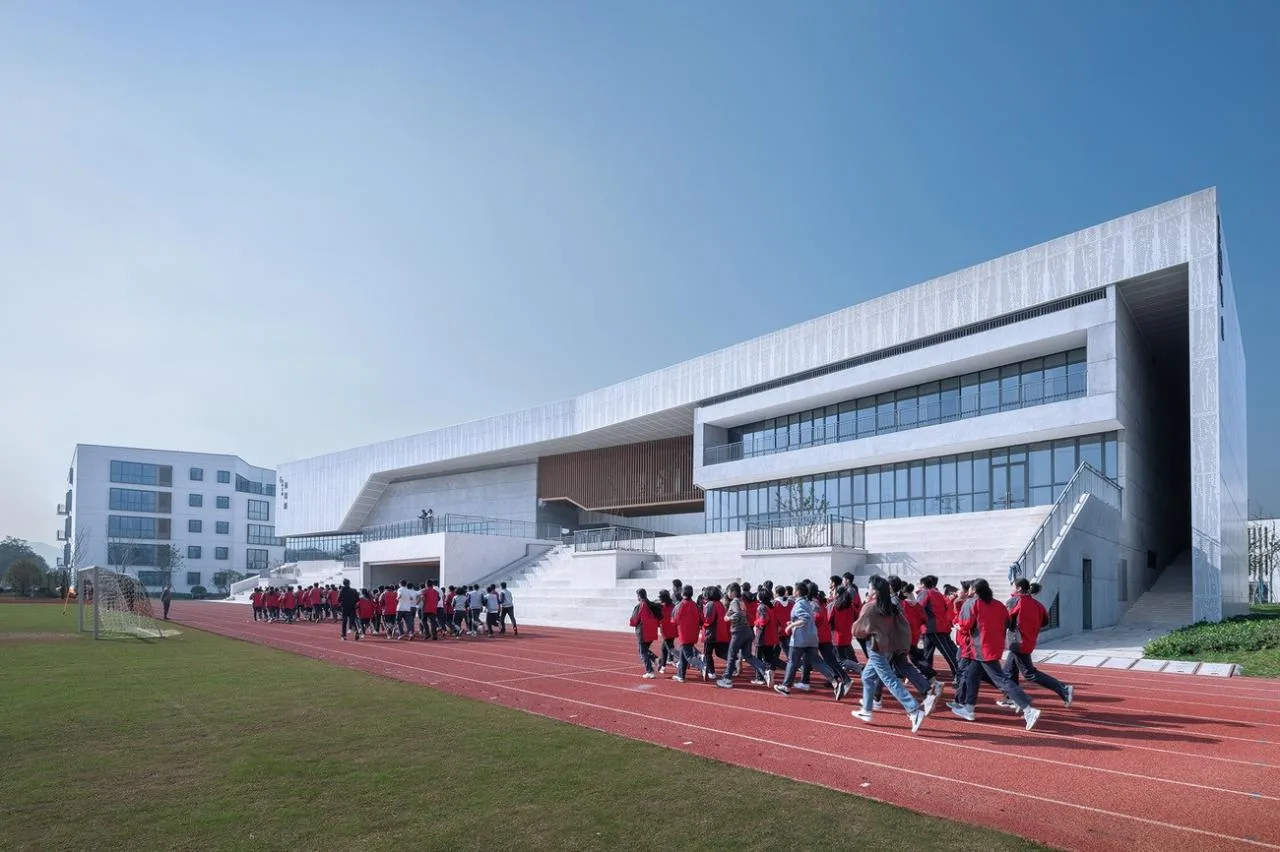
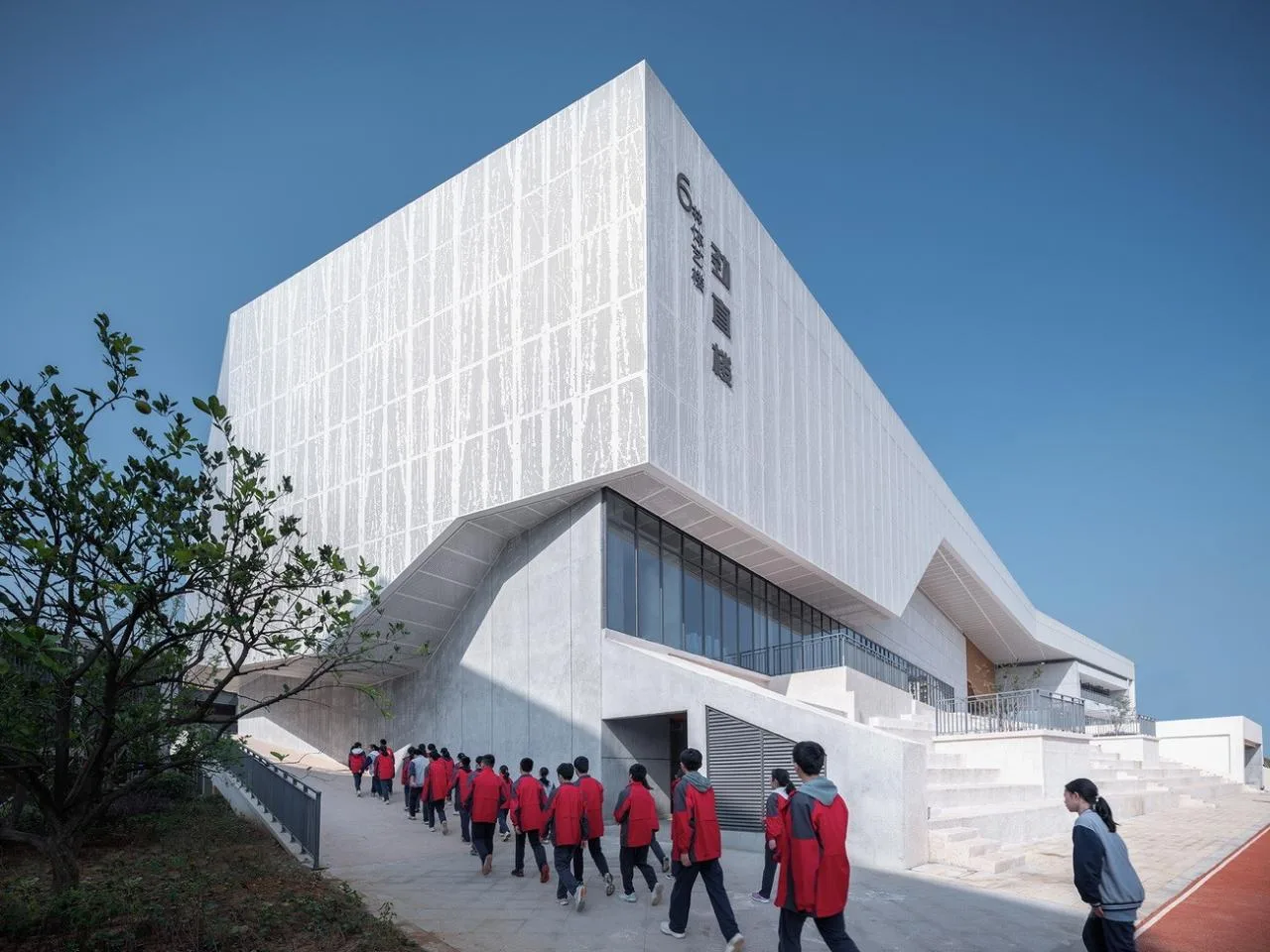
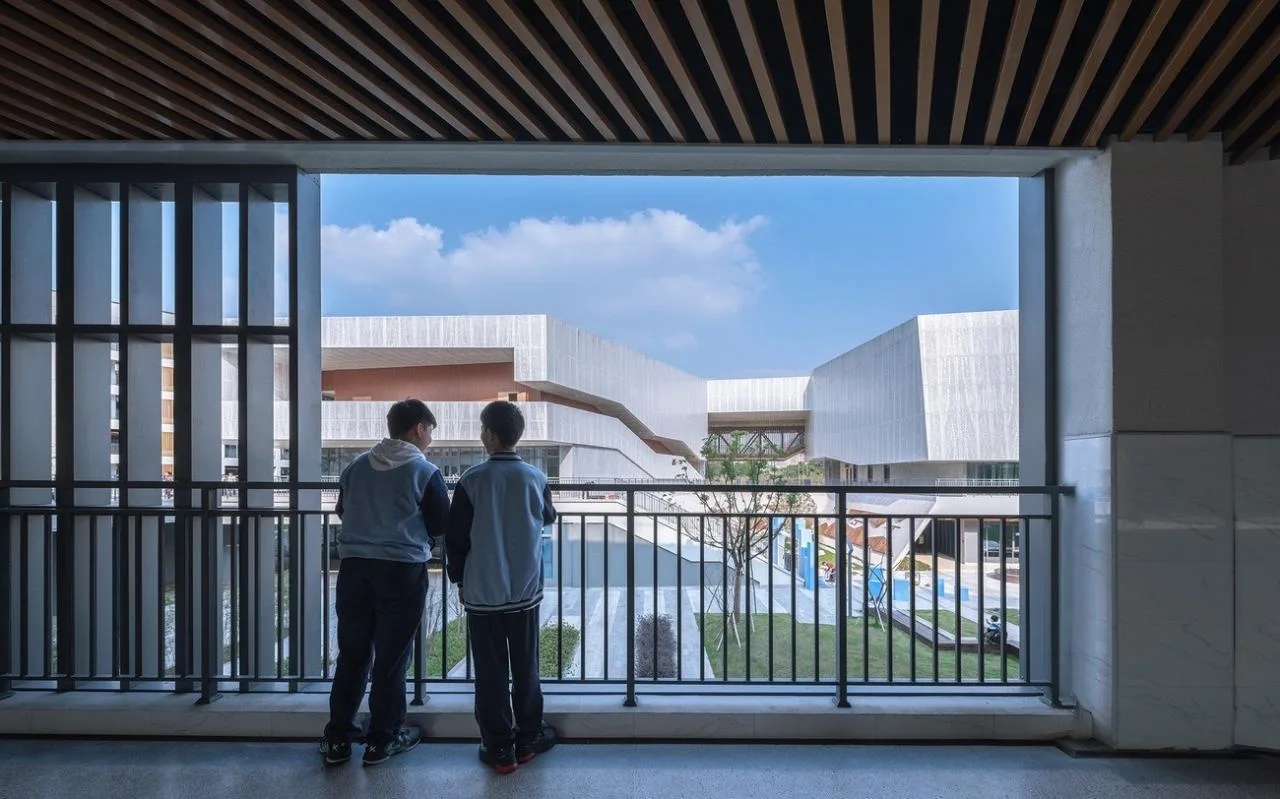
Architecturally, the campus buildings exhibit dynamic forms with varied angles and momentum. Corridors serve not only as passageways but also contribute to the building façades. For example, the cultural and sports center’s art library and gymnasium are linked by two-story and three-story outdoor corridors, with visible stairs and walkways that create “lookout windows” opening dialogue with nature.
Part 03: A Pleasant Landscape Scale
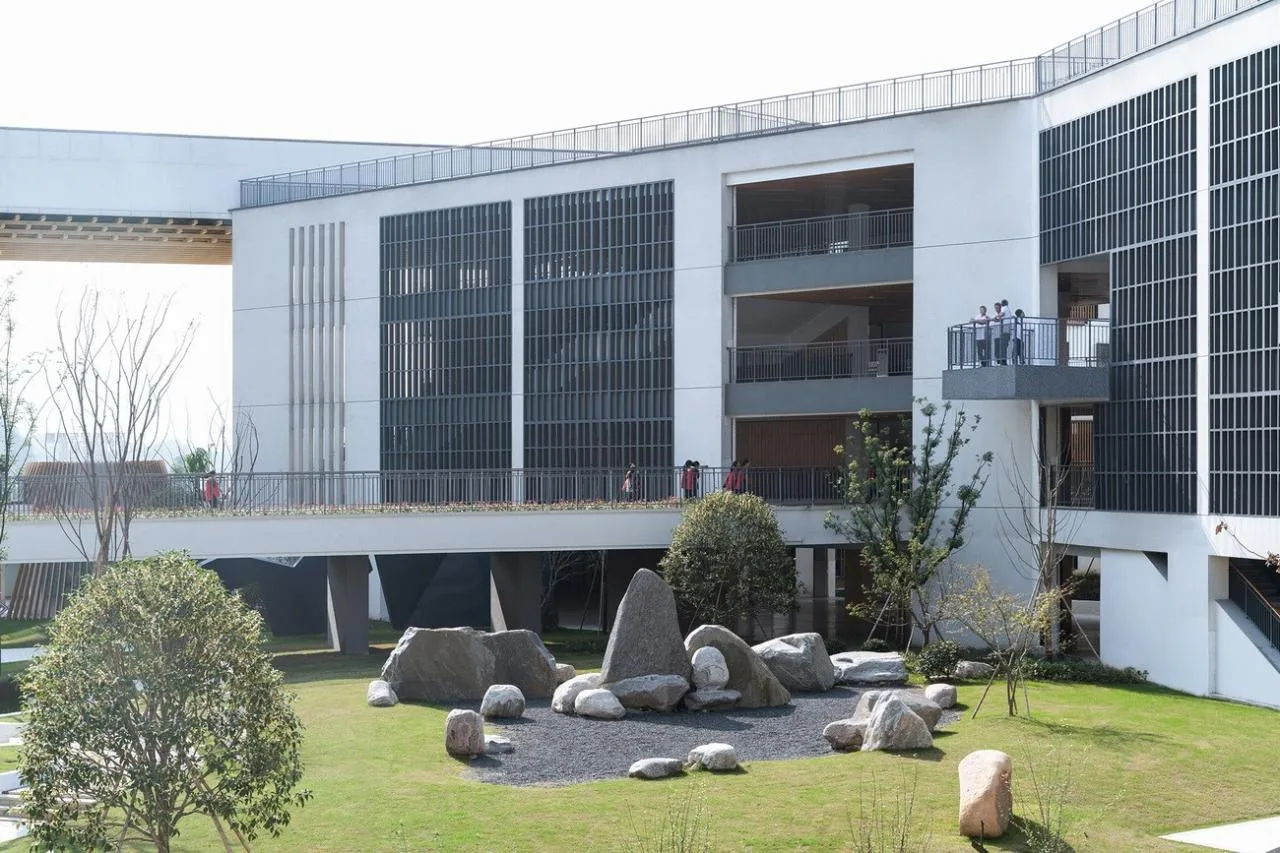
The campus features three landscape nodes that transition from dynamic to tranquil: the entrance square, Le Li square, and the life square. Activity spaces are organized around courtyards, creating a multi-courtyard system with a primary central courtyard supported by secondary courtyard squares. This arrangement creates a comfortable and inviting scale.
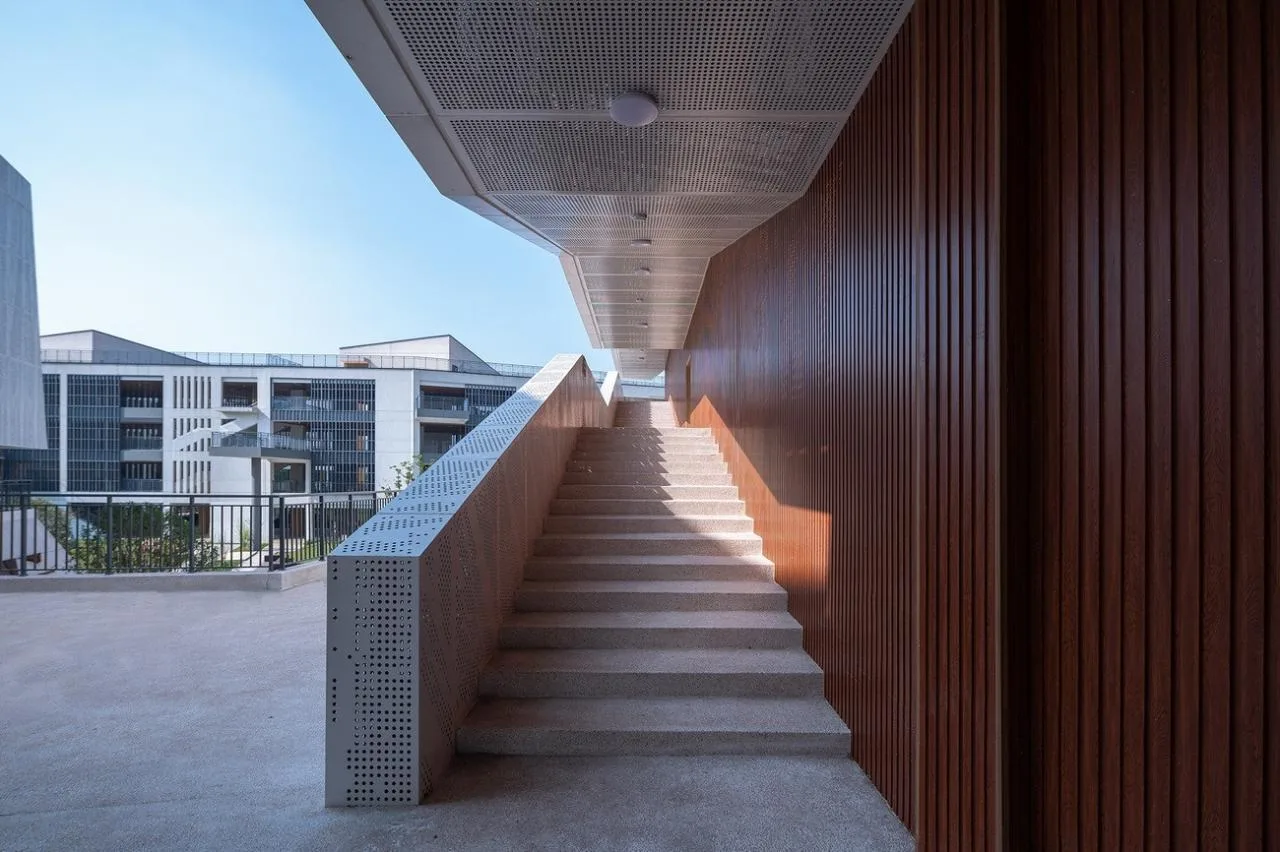
To support the campus’s external image and pedestrian flow, two entry routes are provided—either by climbing stairs or through the entrance square. The square’s simple, modern design reflects the progressive spirit of the campus. Le Li Square, centrally located, includes stone blocks shaped to mimic mountains and rivers, serving as an abstract representation of the “Green Valley Campus.” Outdoor stairs and corridors cross the courtyard, evoking the feeling of a valley.
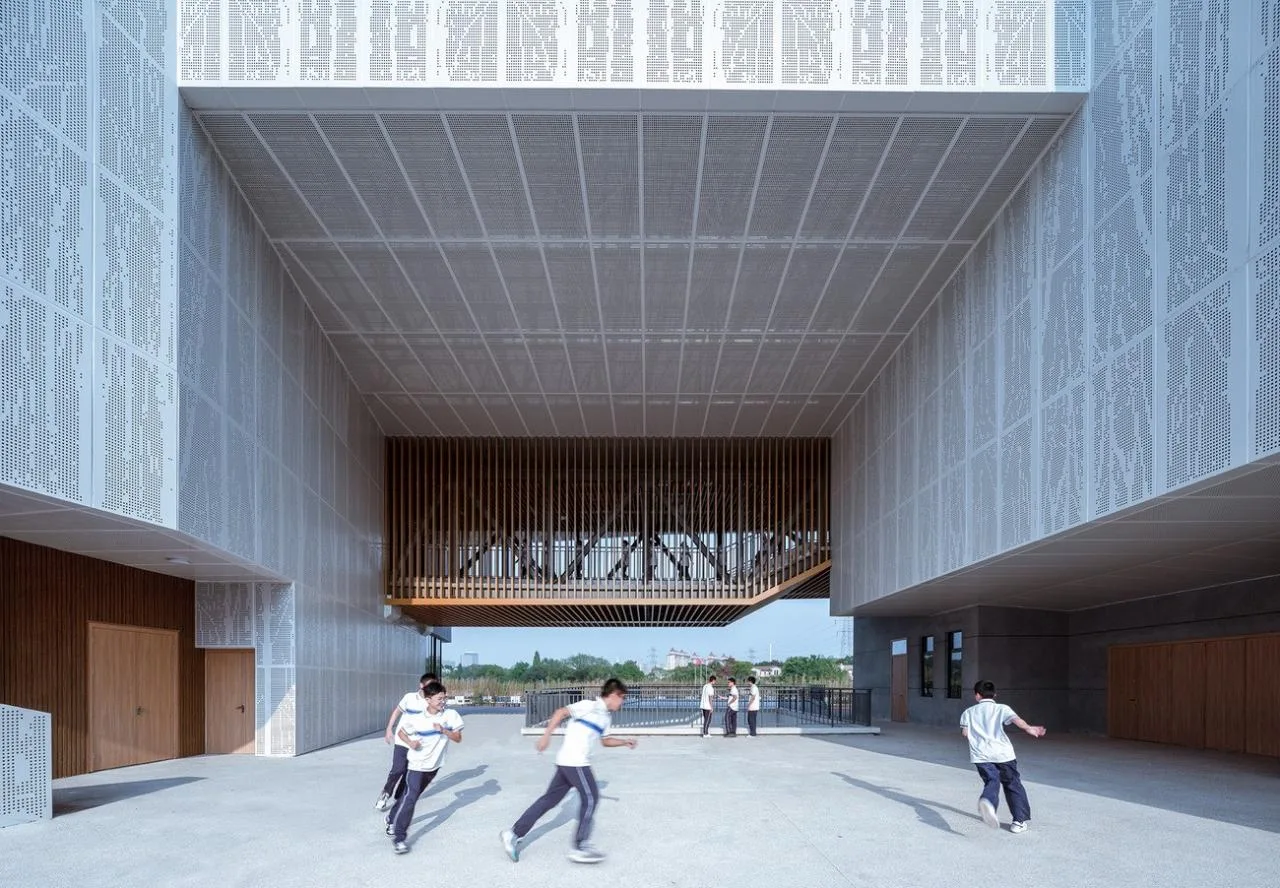
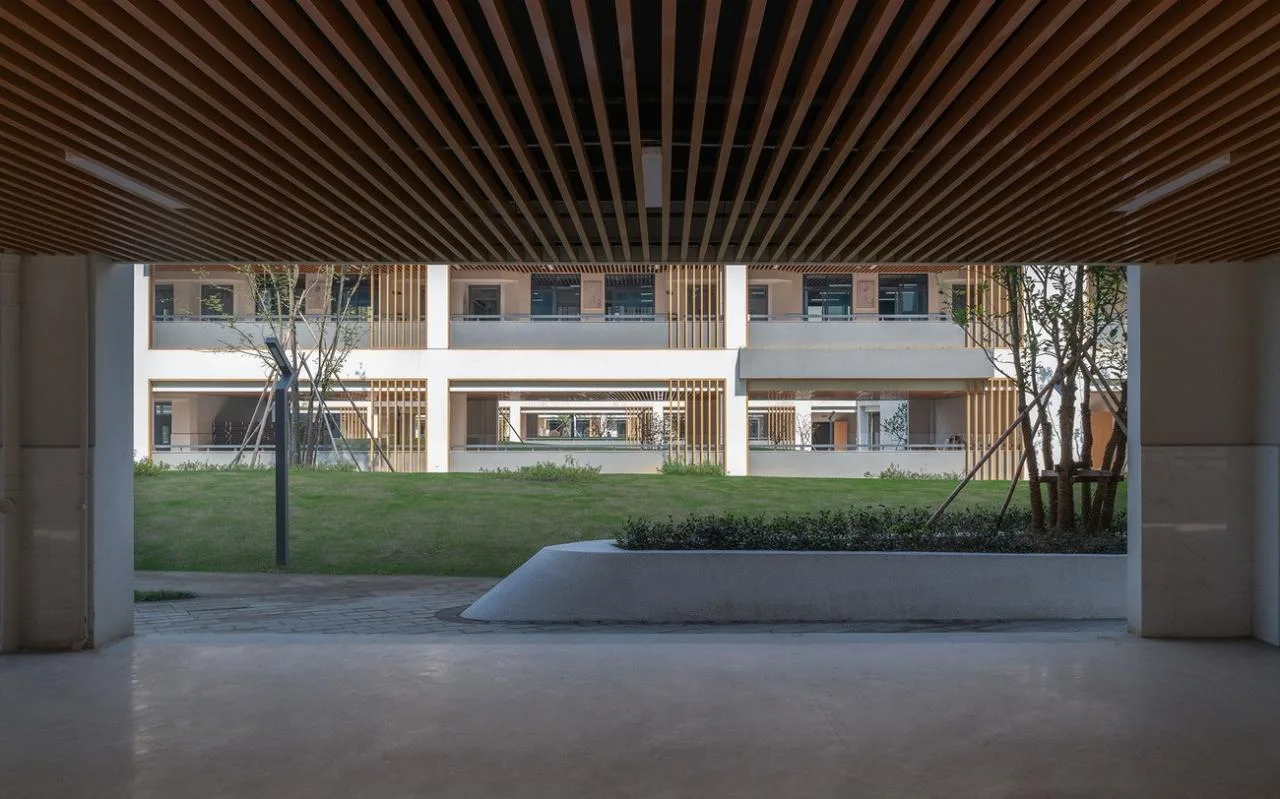
The life square offers a welcoming scale, with courtyard clusters between it and teaching buildings forming a “patchwork of nature” that promotes the physical and mental well-being of students and staff. The architectural design reinforces the connection between nature and people, incorporating wooden elements in entrance roofs, window grilles, corridor walls, and roofs. These materials are thoughtfully arranged and layered to create delicate, natural spaces.
Part 04: An Exploratory, Multi-Dimensional Campus
“A person’s curiosity is proportional to their education.” — Rousseau. Preserving curiosity throughout growth is rare and valuable. The campus design focuses on inspiring students’ desire to explore.
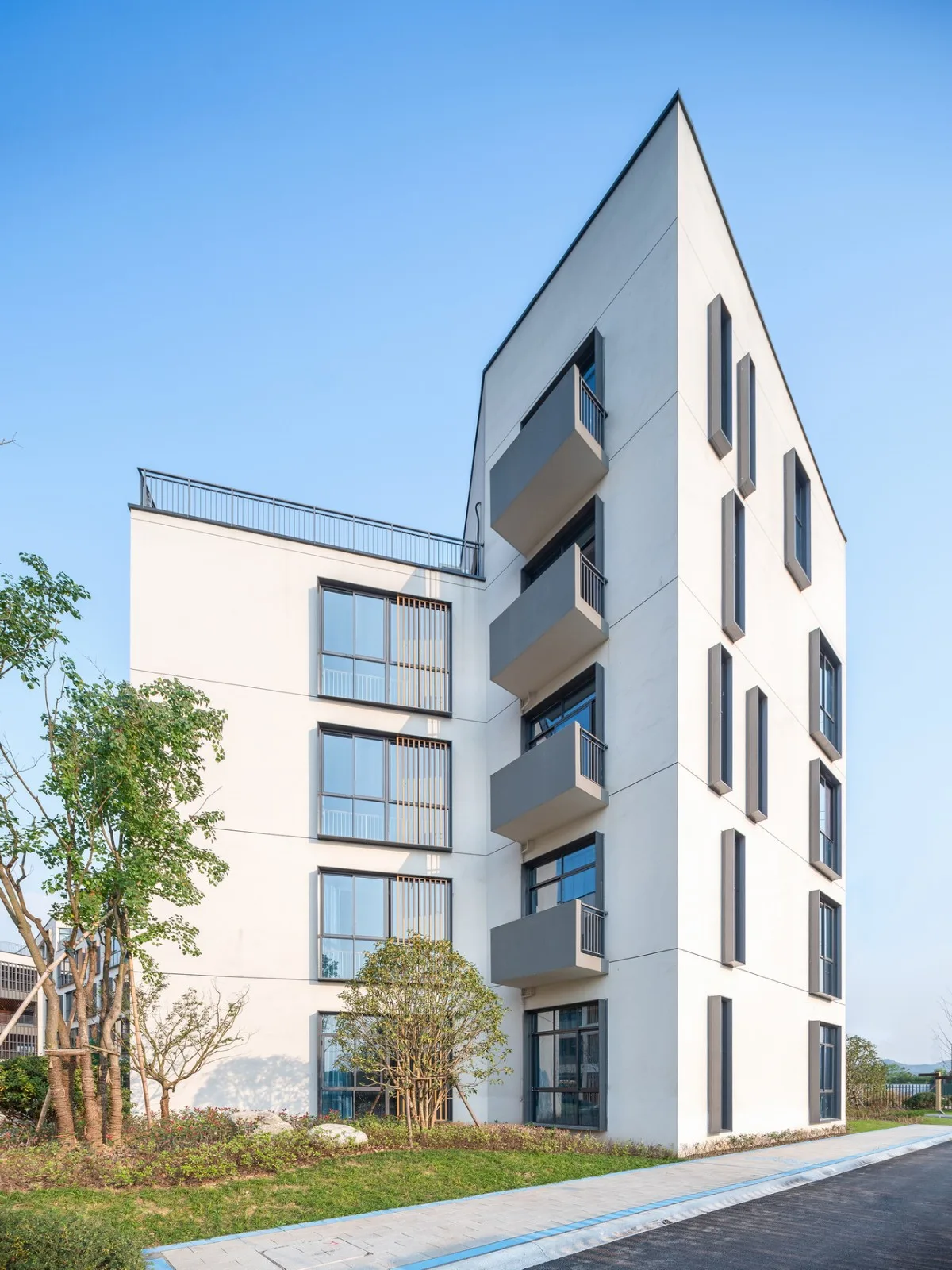
Zhongtai Middle School’s interior spaces are rich and multi-dimensional. The entrance complex features a mouth-shaped window symbolizing openness. The cultural and sports center breaks conventional spatial forms with bold cuts and deformations, turning the building itself into a scenic element of the campus. Walking through it feels like passing through a valley.
The campus functions like a “porous sponge,” with sunlight and views penetrating everywhere. Shared multi-platform spaces create energetic hubs, offering expansive views of distant mountains and broad horizons. Instead of clustering shared spaces into dull areas, they are scattered freely, sometimes prominent, sometimes hidden, inviting students to discover new delights around every corner.
This approach fosters a comfortable connection between education and students, replacing rigid structures with open dialogue. This philosophy guided the design, with hopes to uncover more possibilities as the campus evolves.
Project Drawings
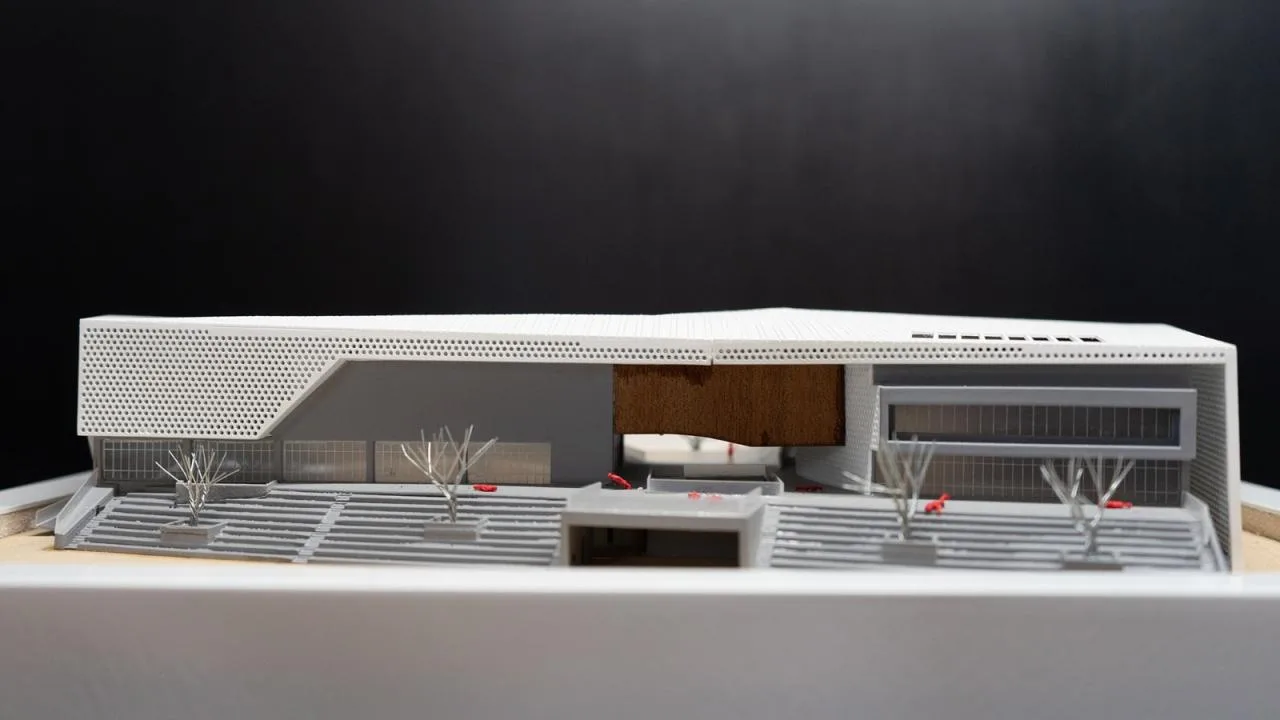
△ Model diagram
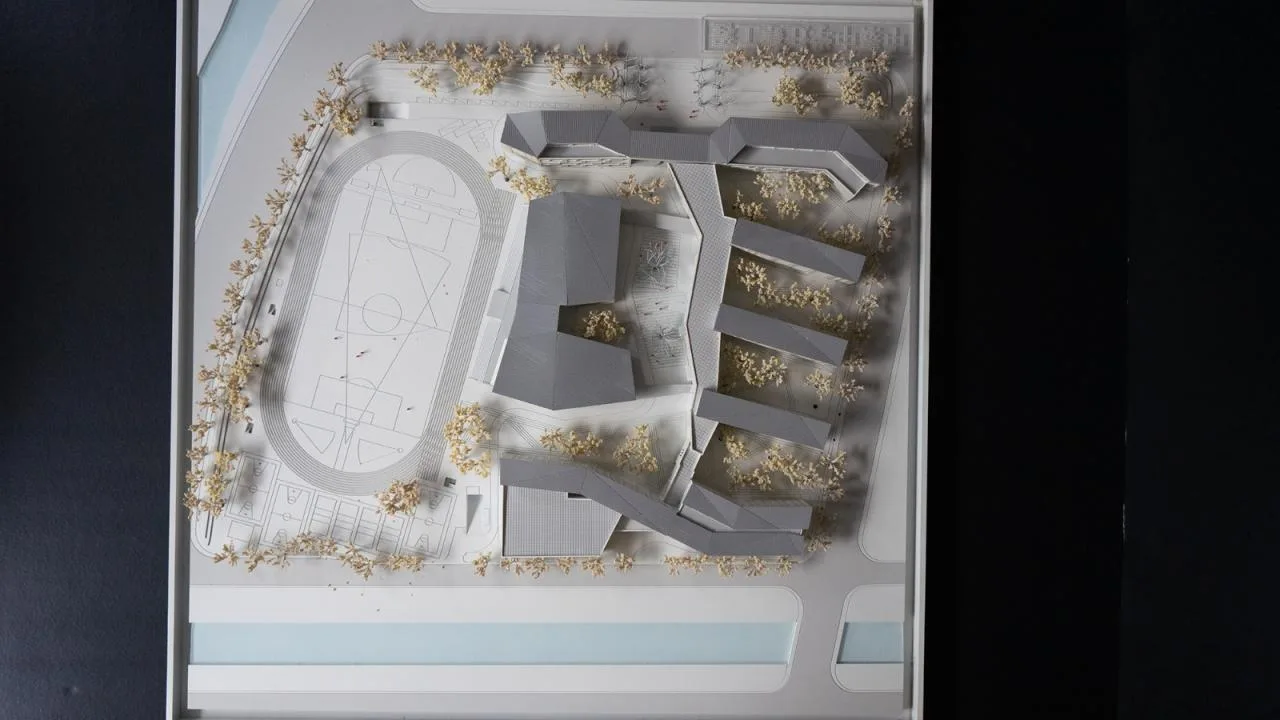
△ Model diagram
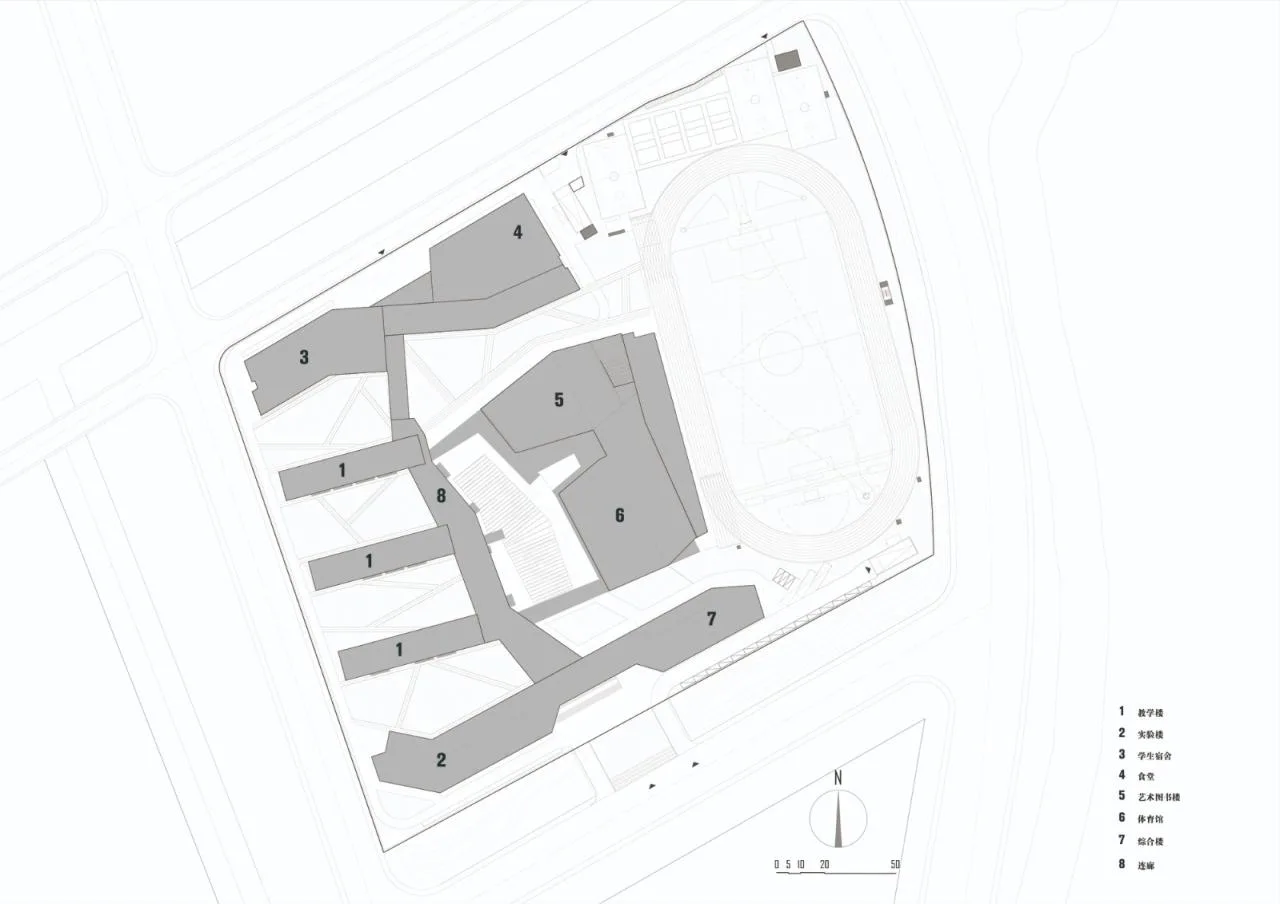
△ Functional zoning diagram
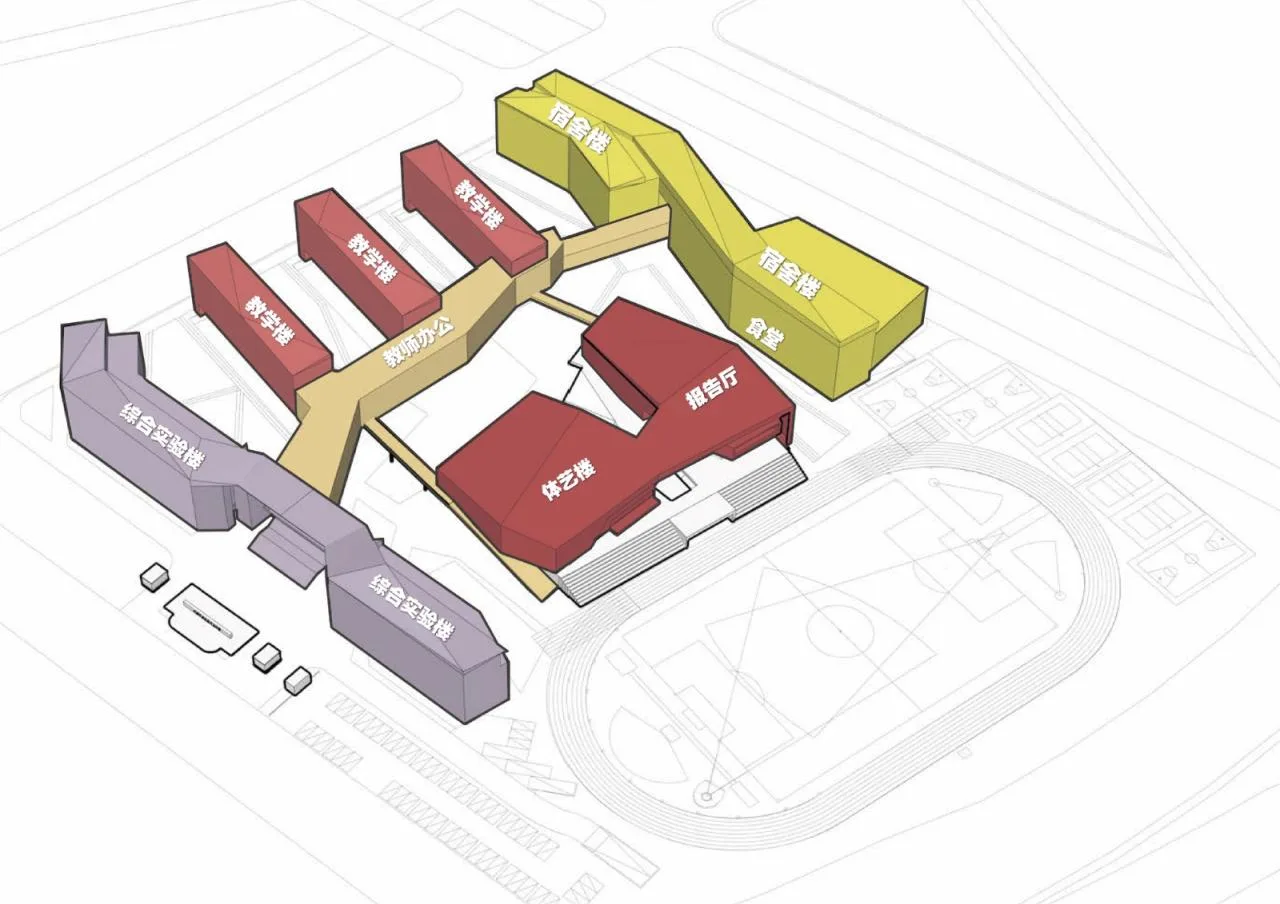
△ Functional zoning diagram
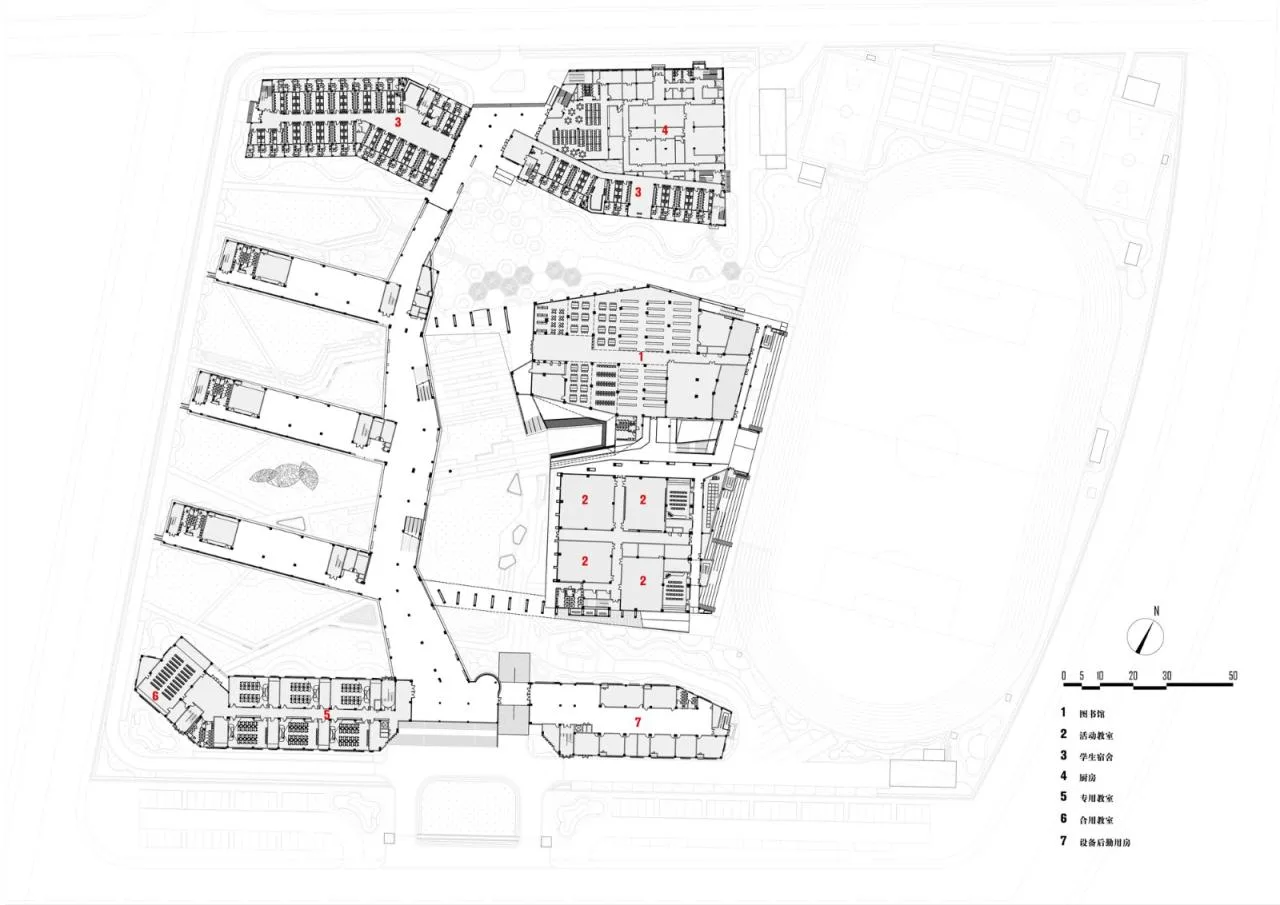
△ First floor plan
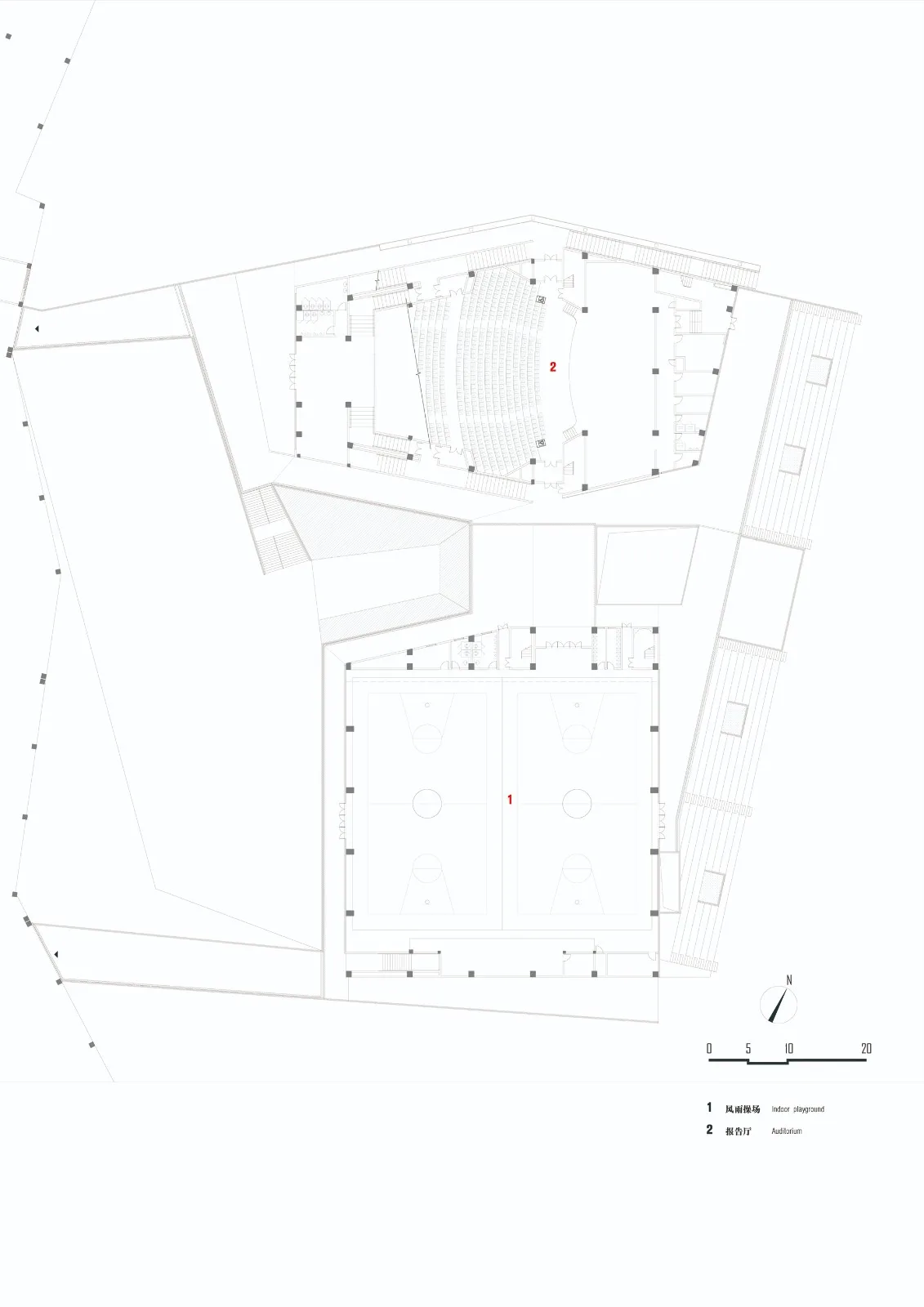
△ Plan of the Cultural and Sports Center
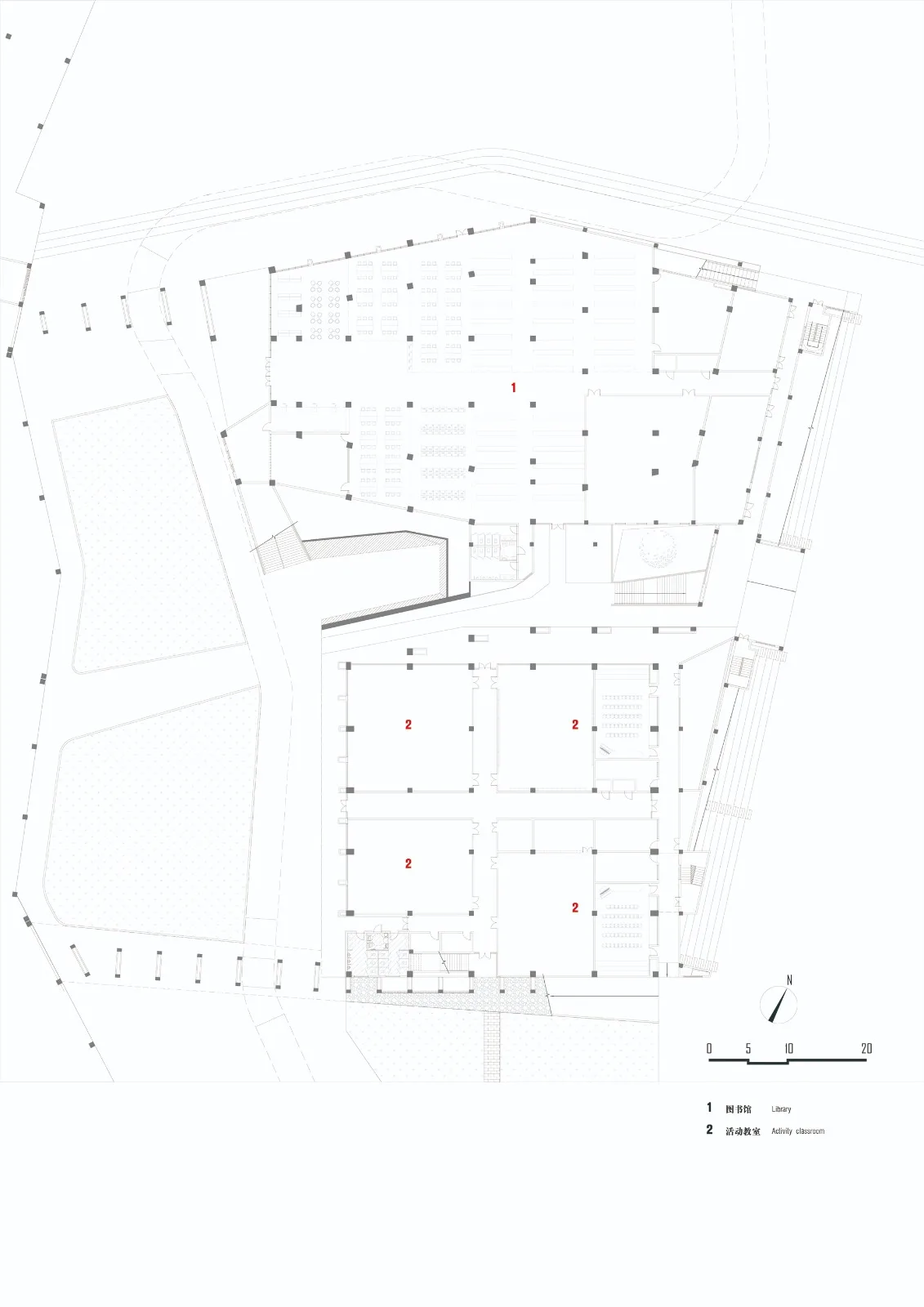
△ Plan of the Cultural and Sports Center
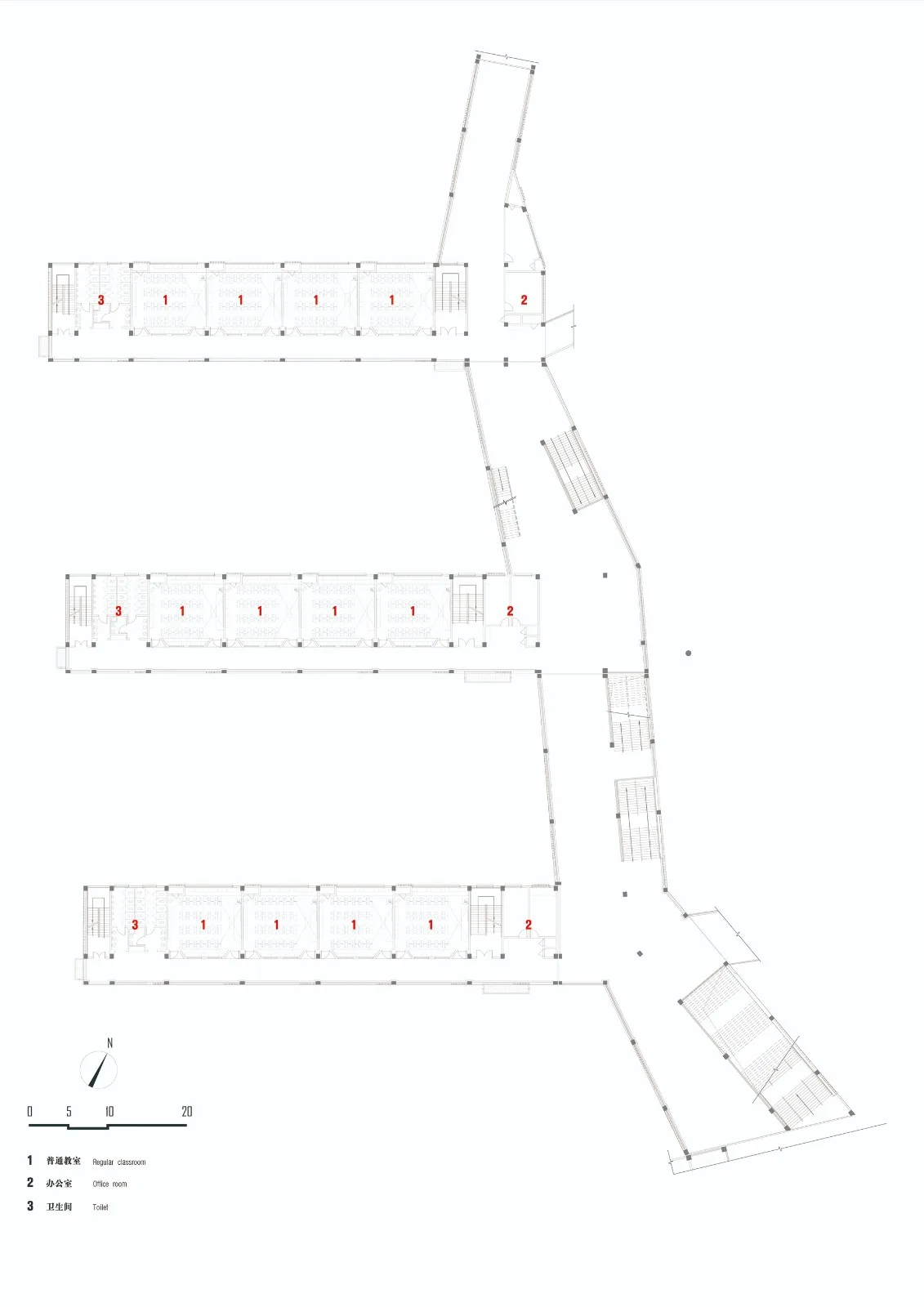
△ Standard Classroom Floor Plan
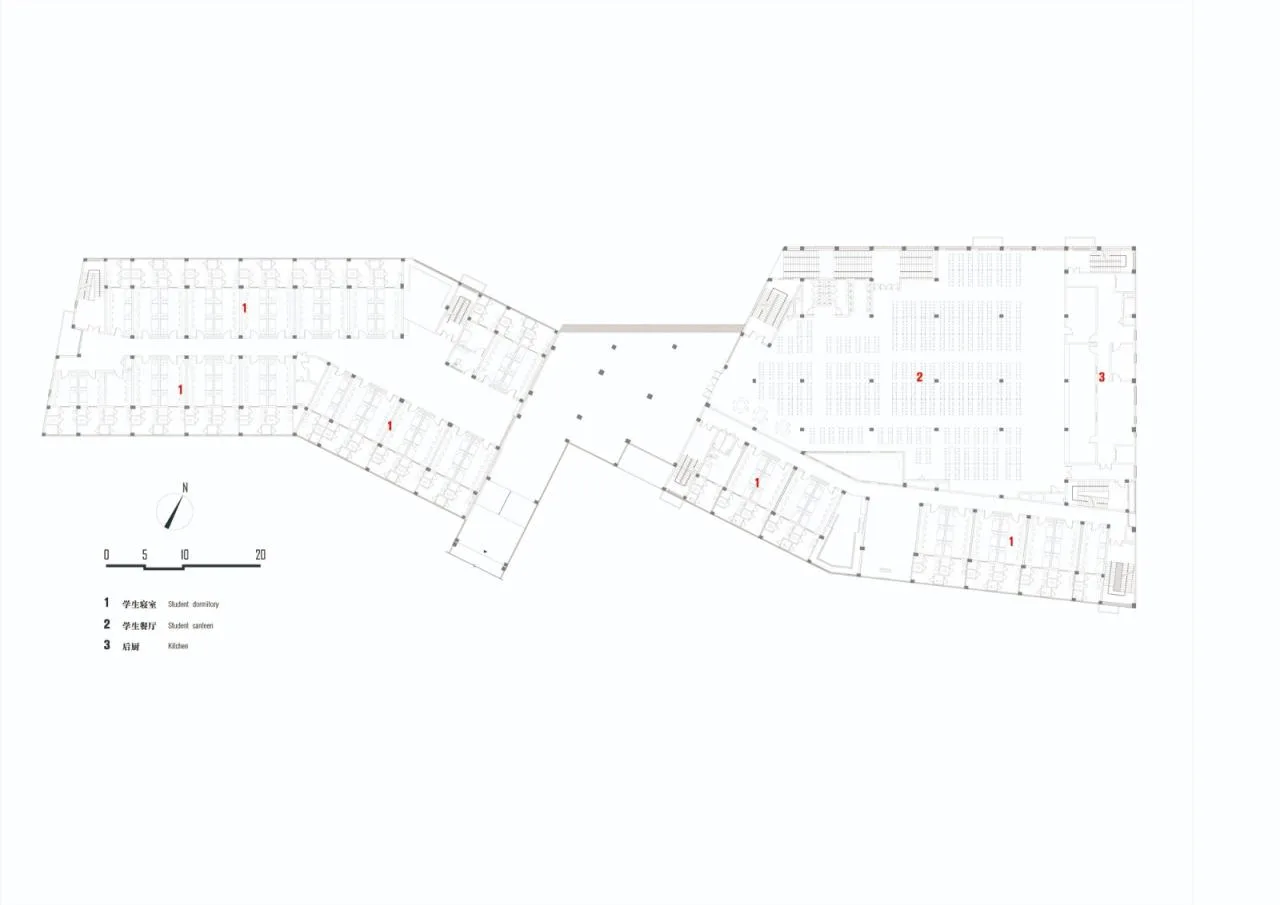
△ Student Dormitory Plan
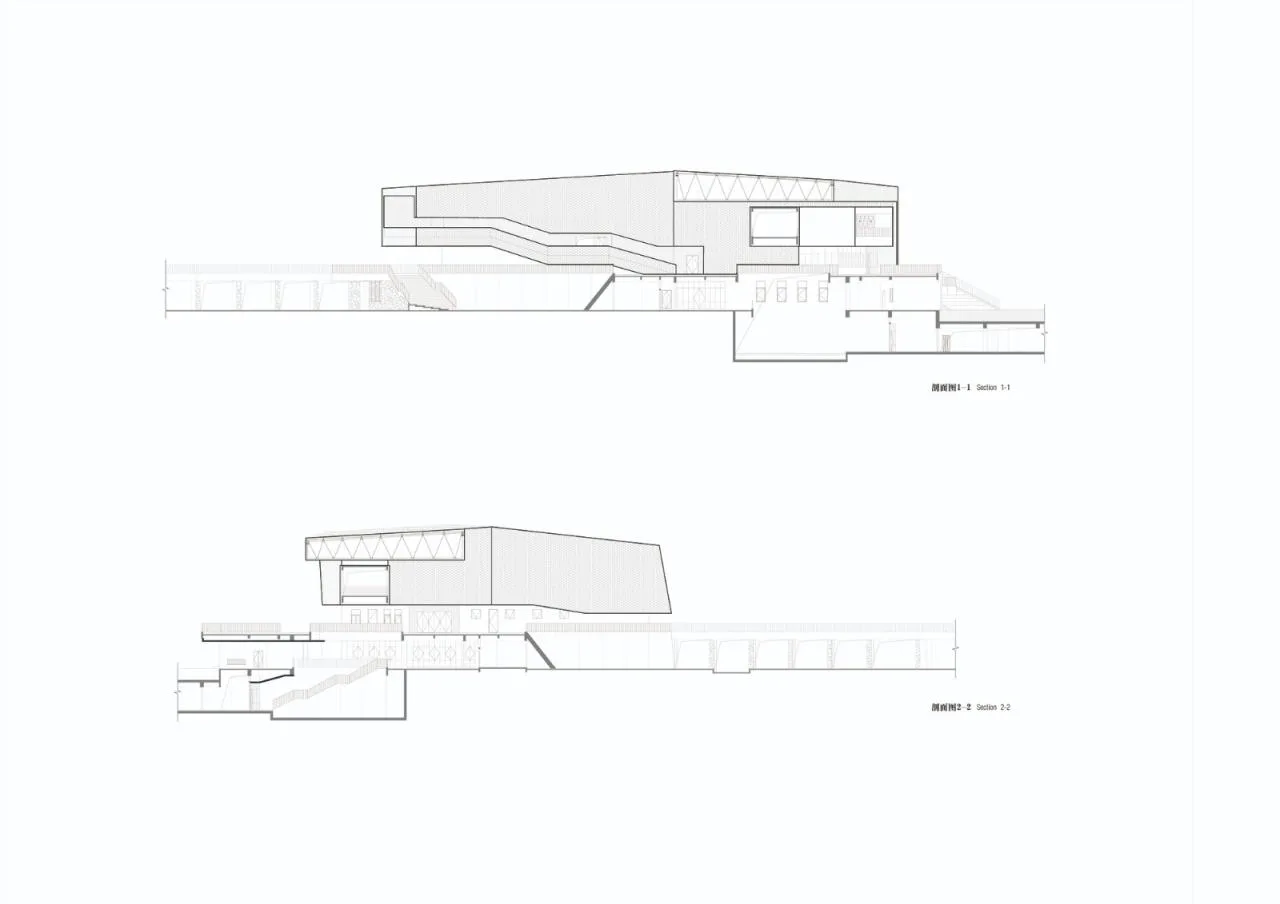
△ Section diagram
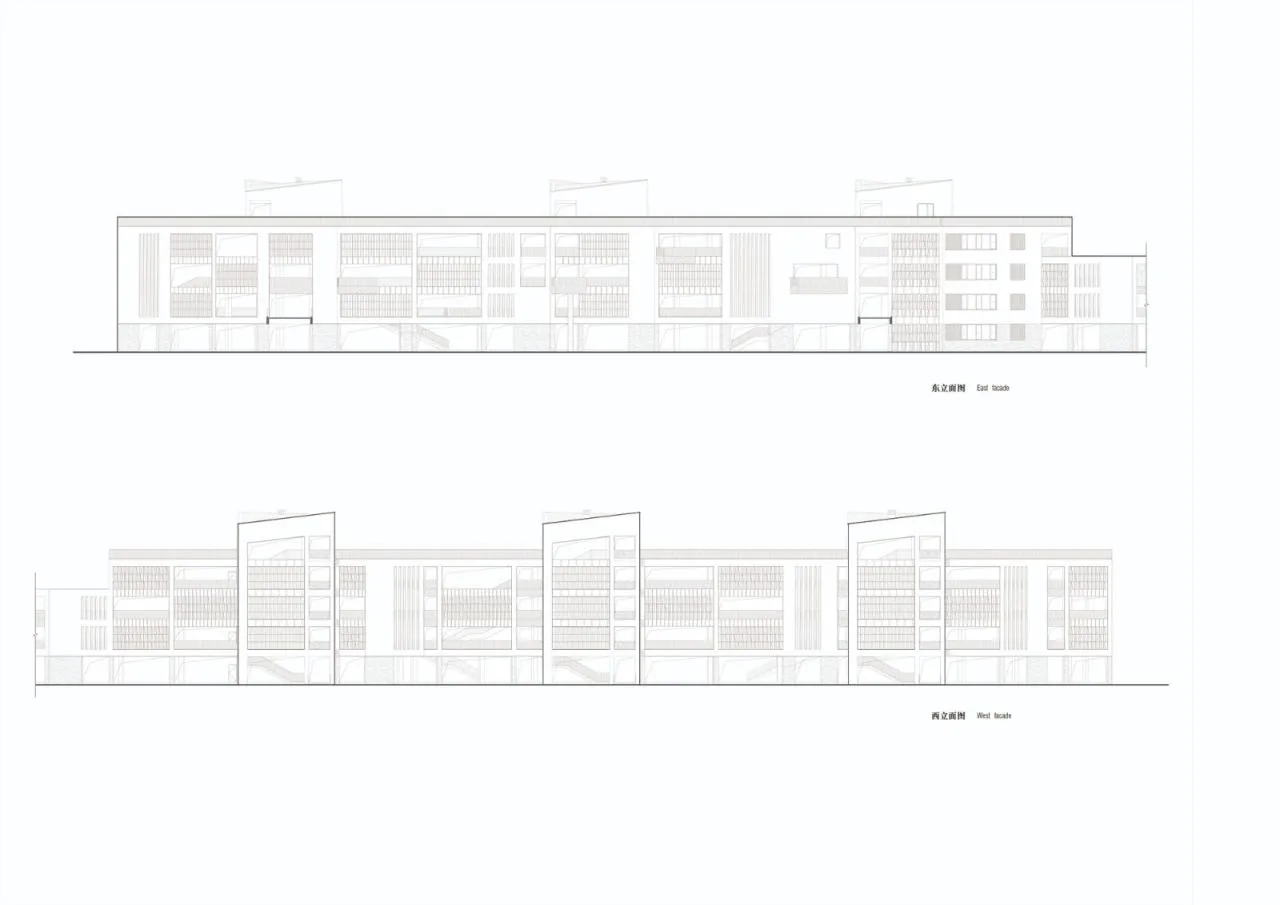
△ Elevation drawing
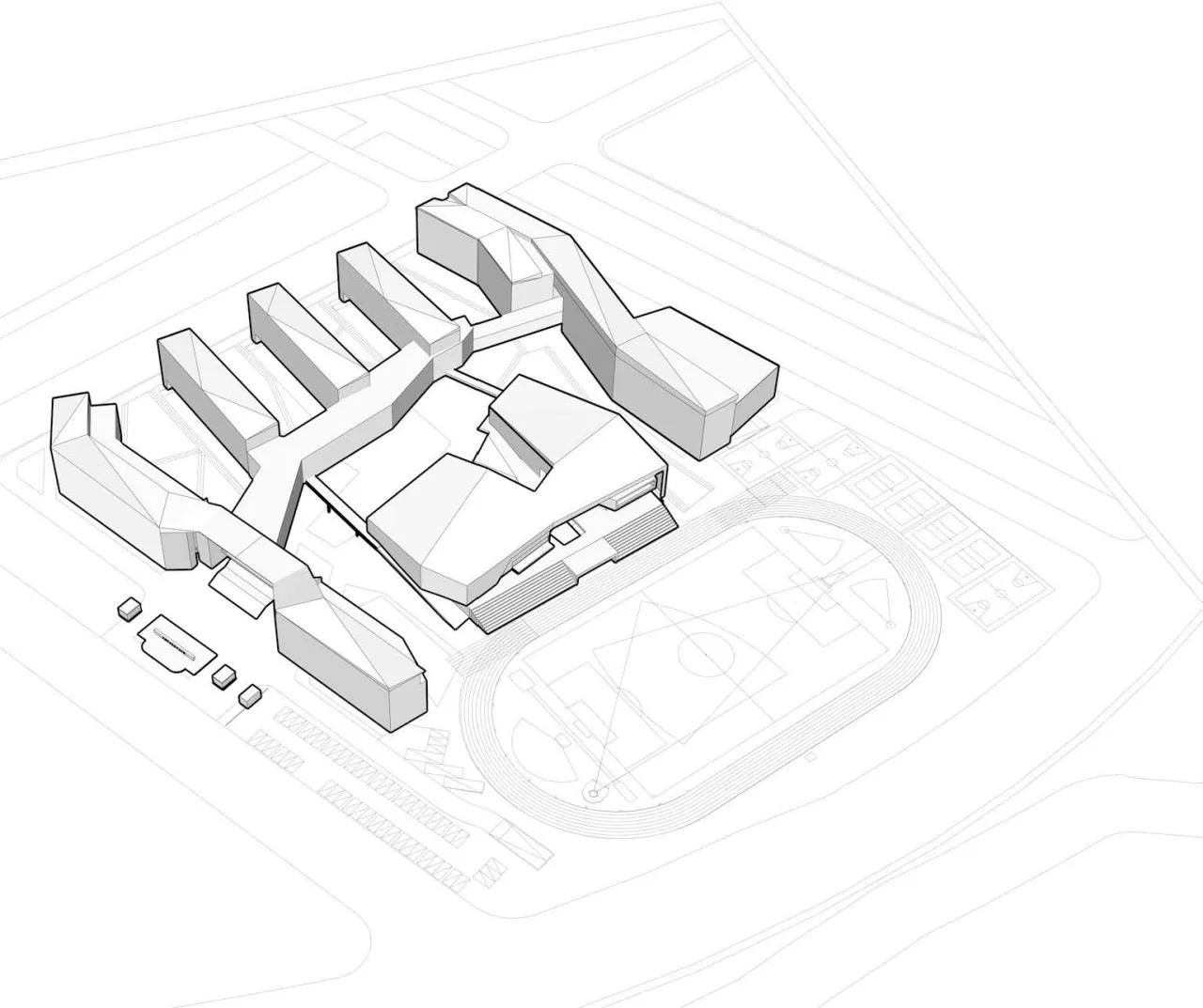
△ Axonometric diagram
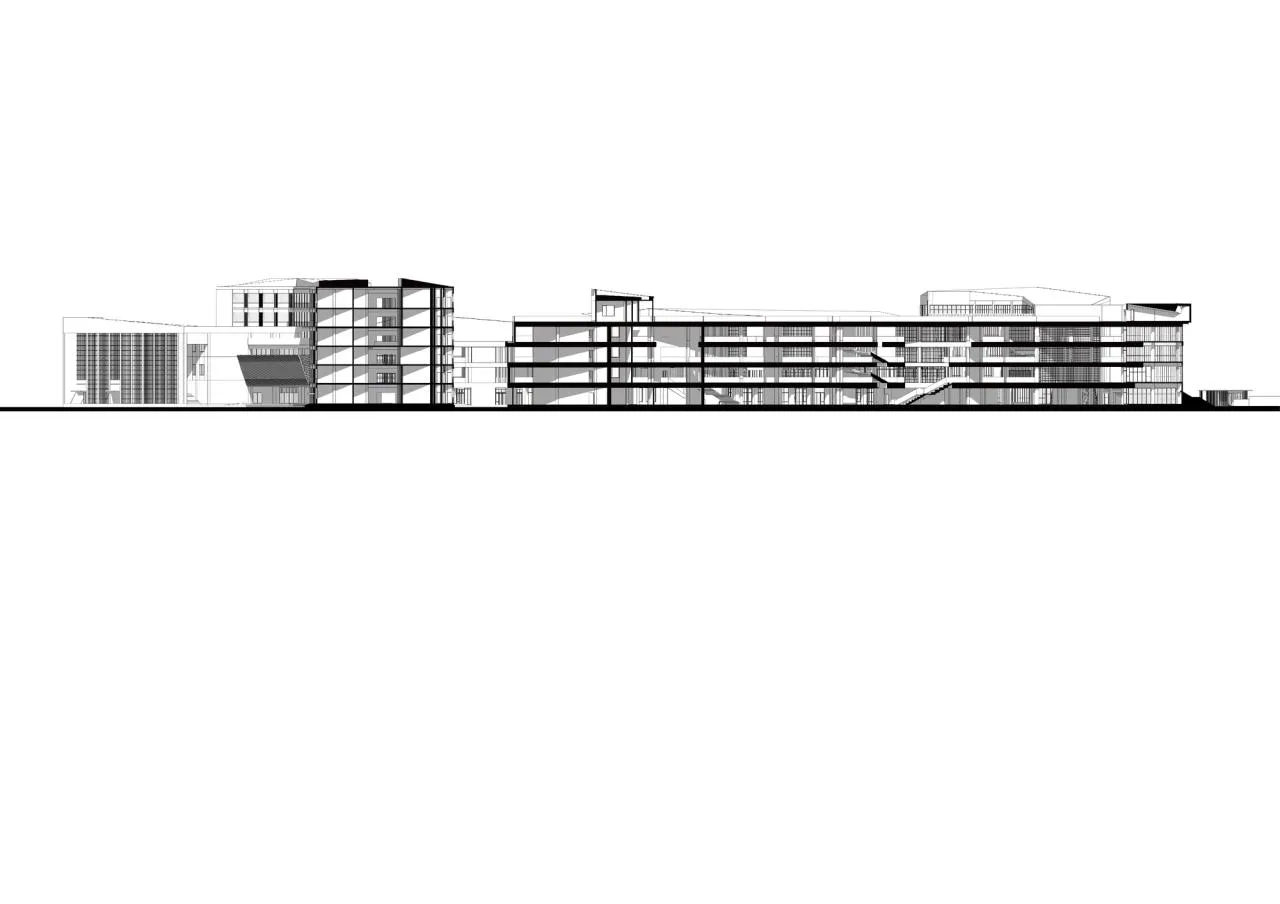
△ Sectional perspective
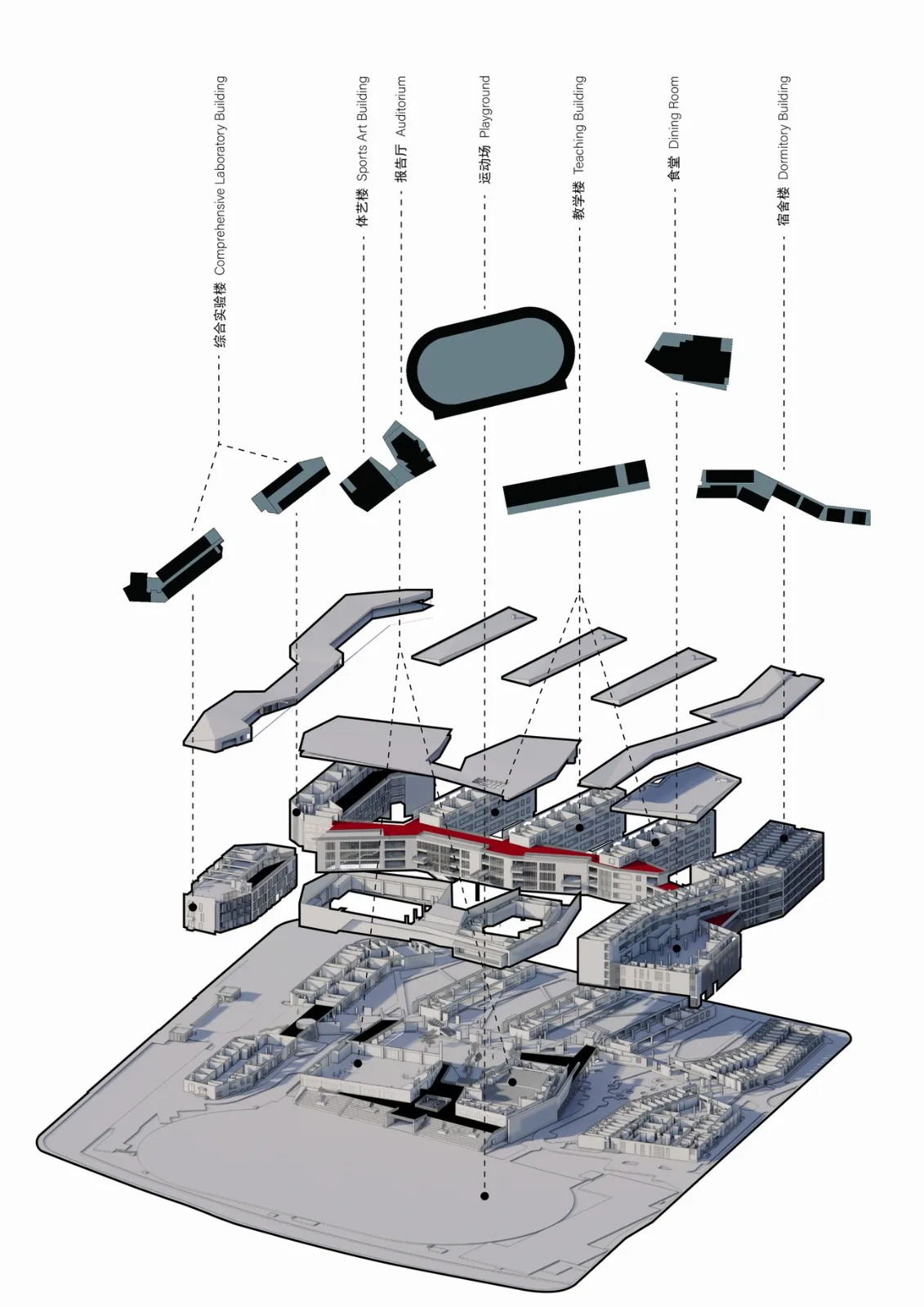
△ Exploded diagram
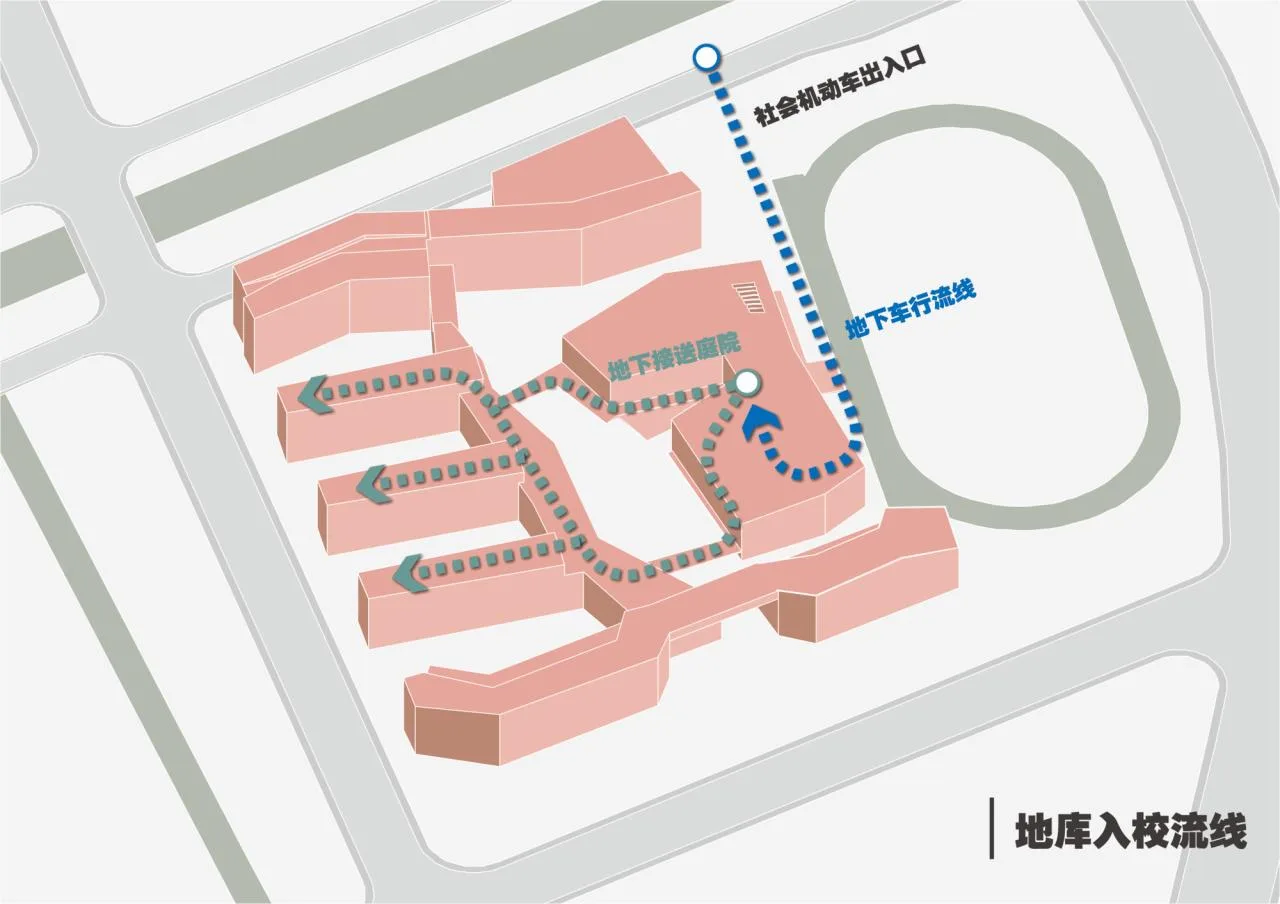
△ Streamline diagram
Project Information
Architect: LZGC Quantum Architecture City Design Firm, Zhejiang Jianyuan Architectural Planning and Design Institute
Area: 70,000 m²
Project Year: 2021
Photographer: This building
Lead Architect: Huang Yinjin
Architectural Design Team: Jia Jing, Zheng Xiaohe, Yao Jiaye, Zhou Guohua, Zhu Qing, Wu Tiancheng, Zhou Yu
Structural Design: Lu Feiqun, Cao Lei, Ji Jingli, Xia Jingwei
Mechanical and Electrical Design: Shen Feng, Chen Liangxing, Hu Congxiang, Shen Wendong
Interior Design: Chen Jinhua, Ma Qingyong
Landscape Design: Yan Jing, Chen Qi
Location: Hangzhou















Must log in before commenting!
Sign Up