
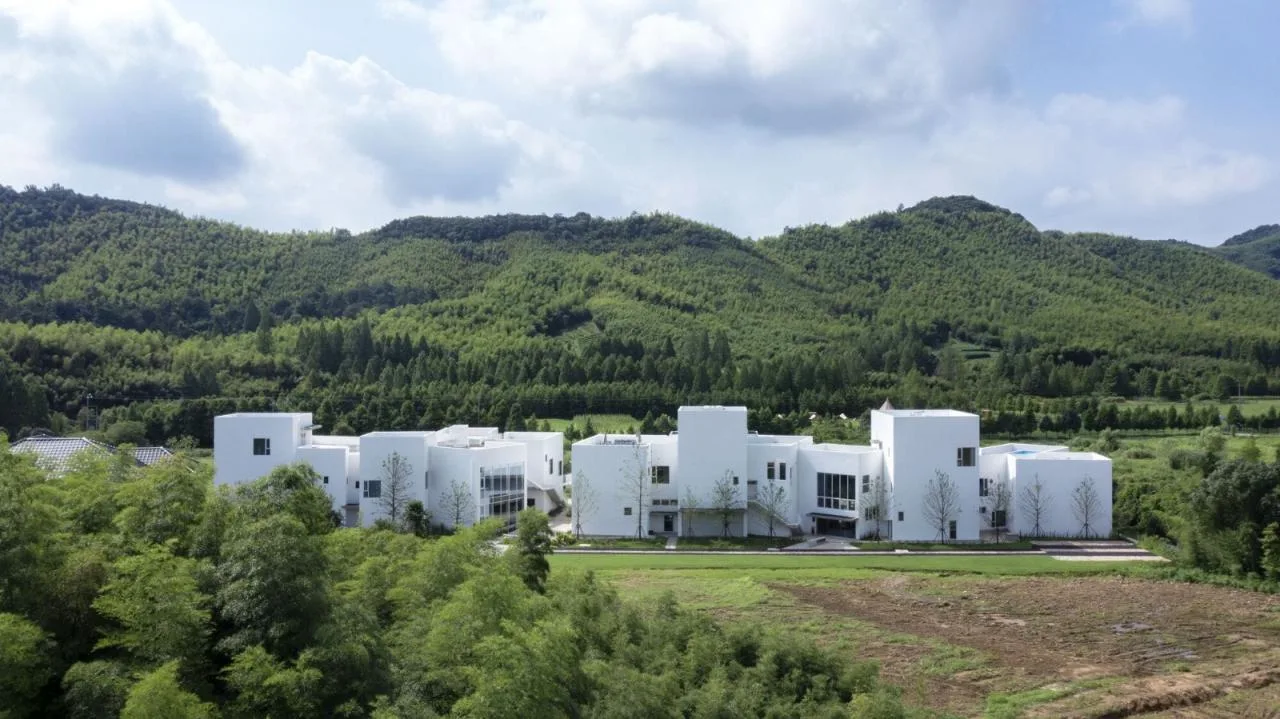
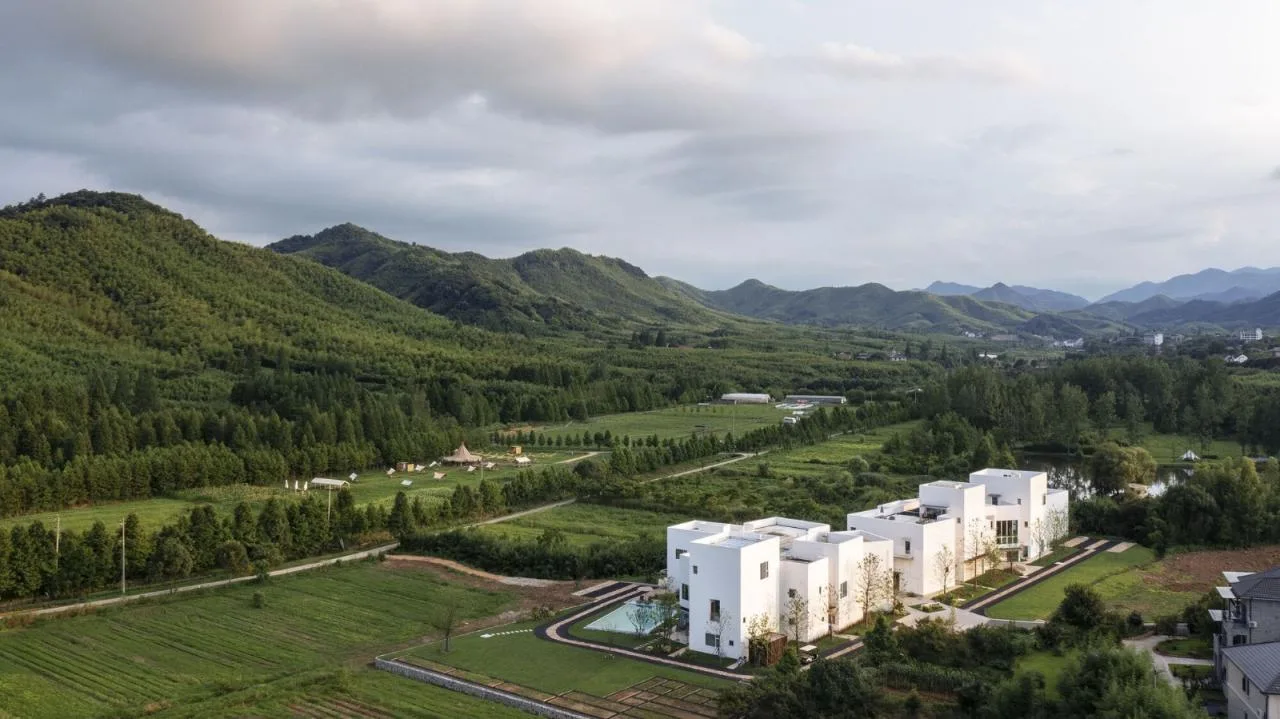
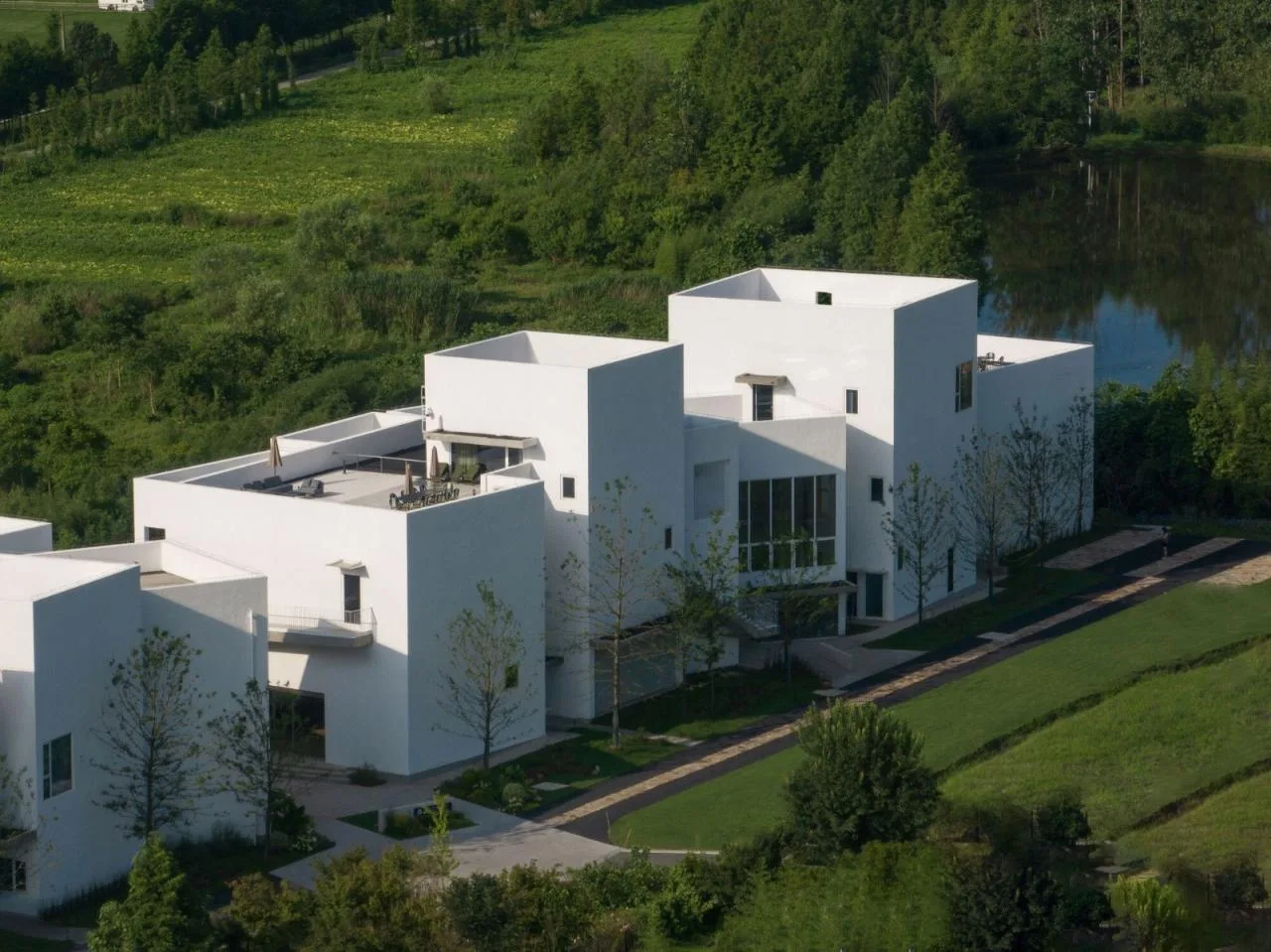
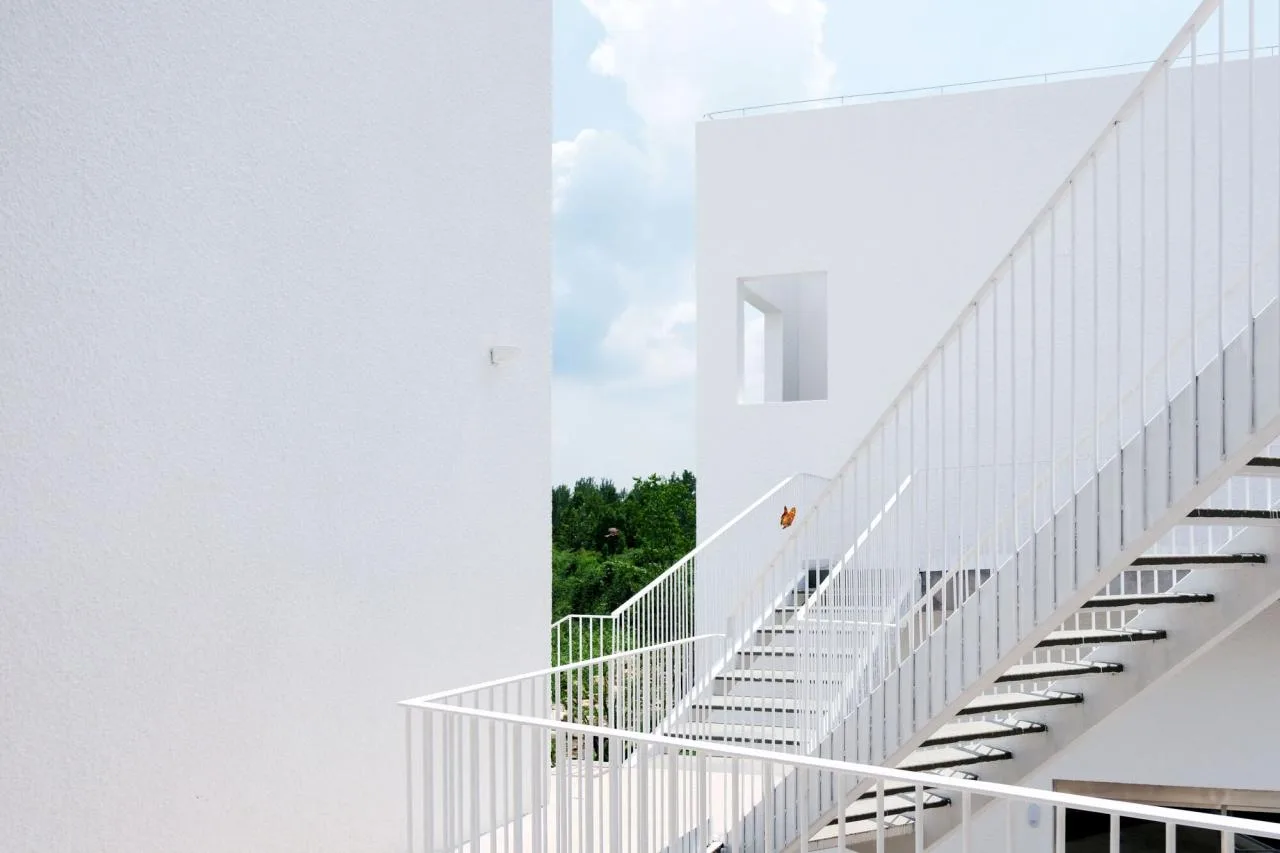
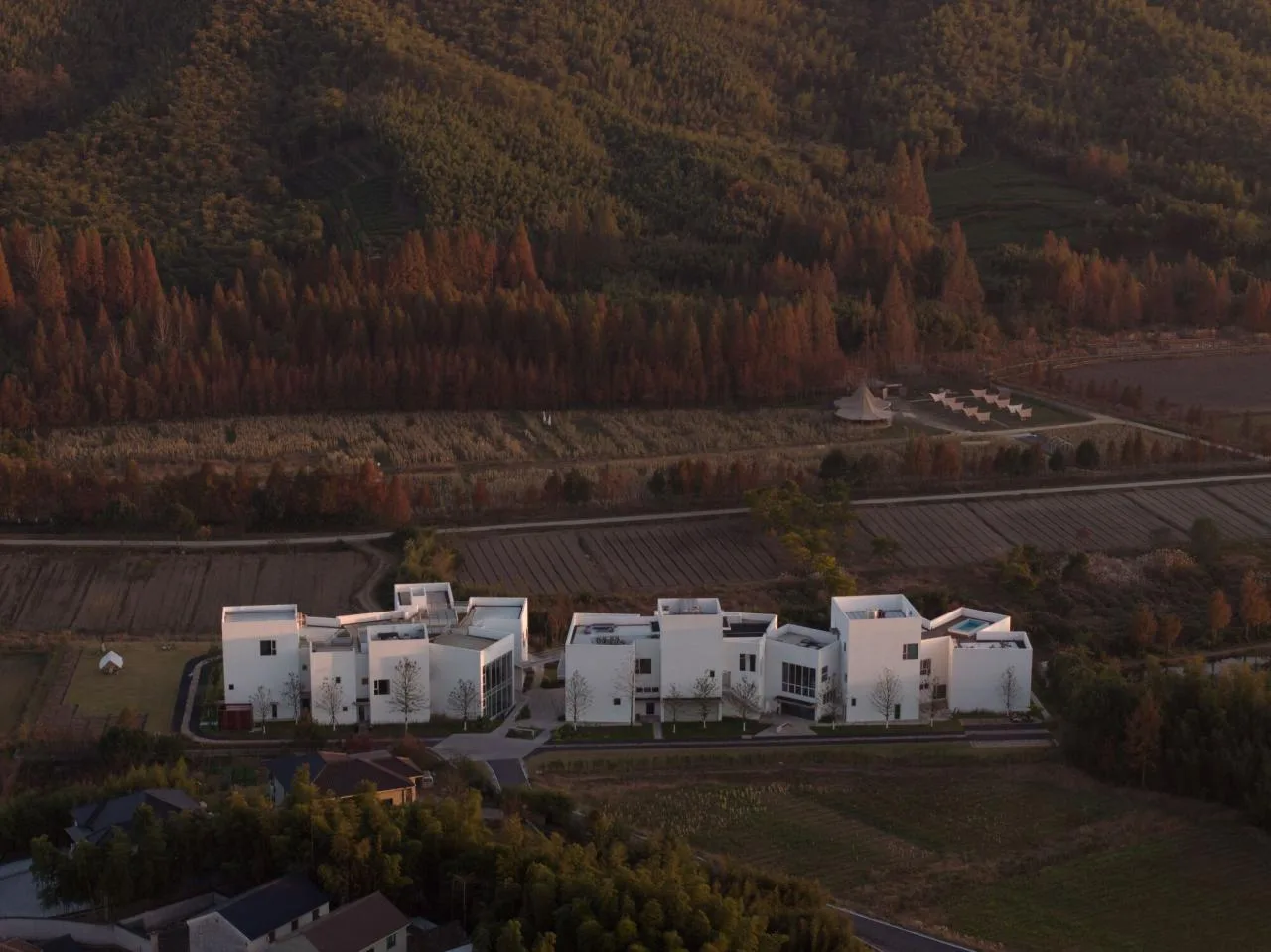
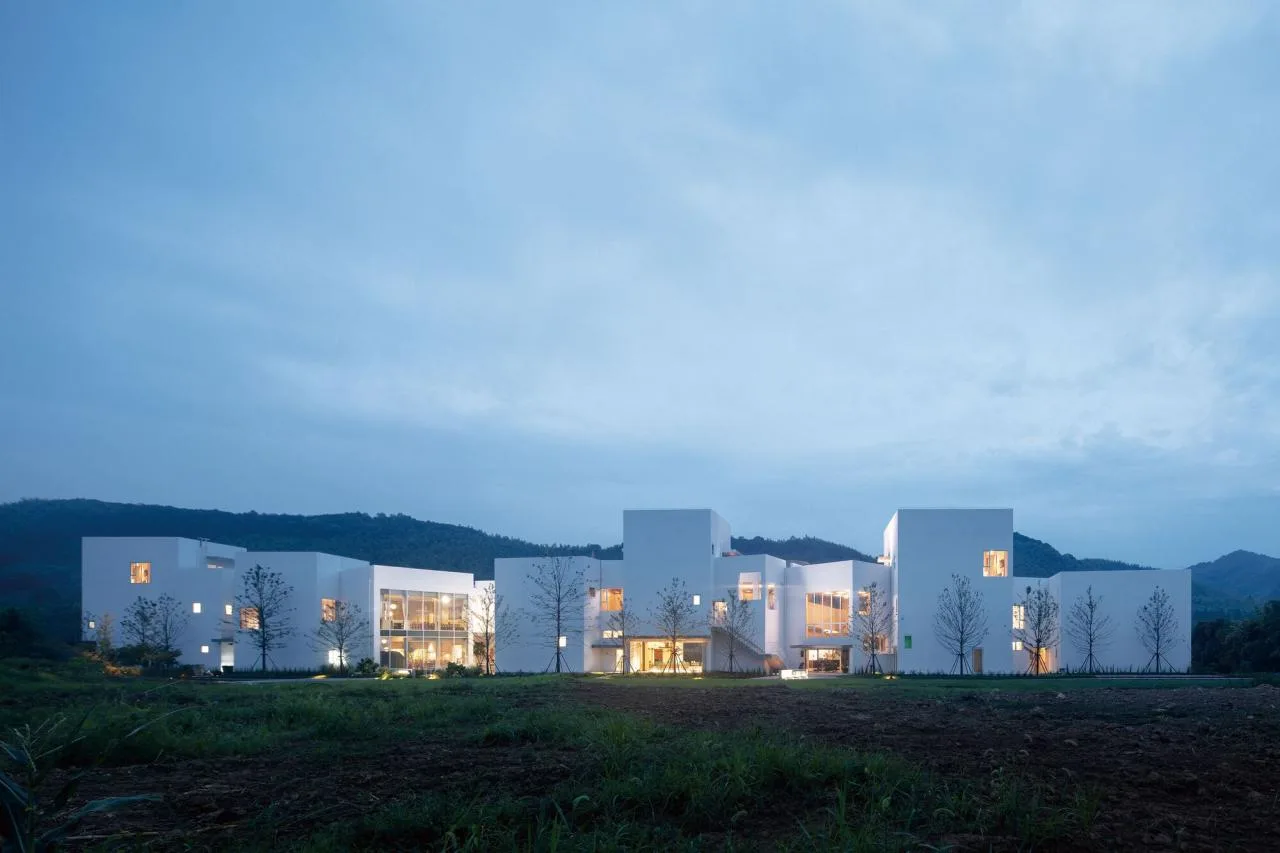
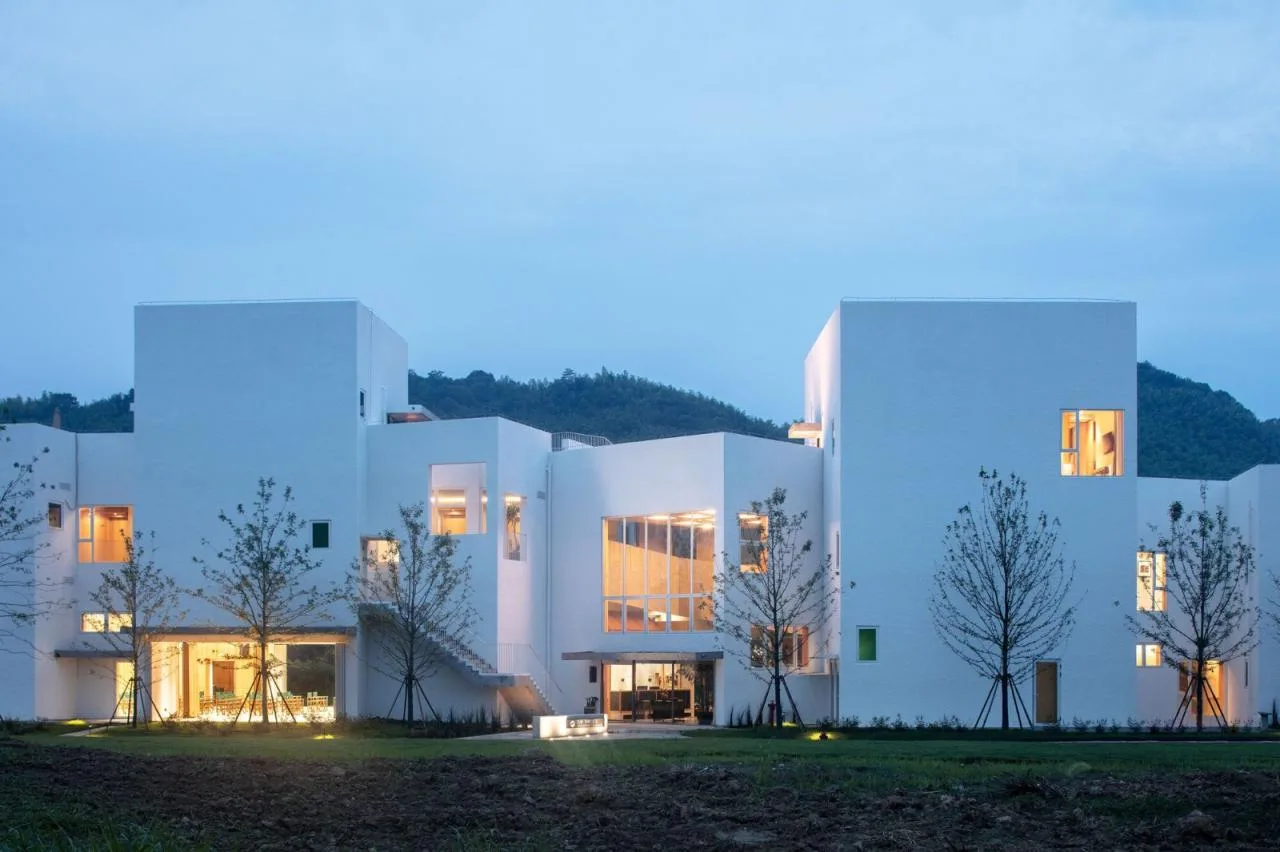
This naturally developed white settlement consists of 16 white houses arranged in a staggered and interwoven pattern, oriented north to south overall. Each house varies slightly in orientation, height, and window placement, offering unique views from every room.
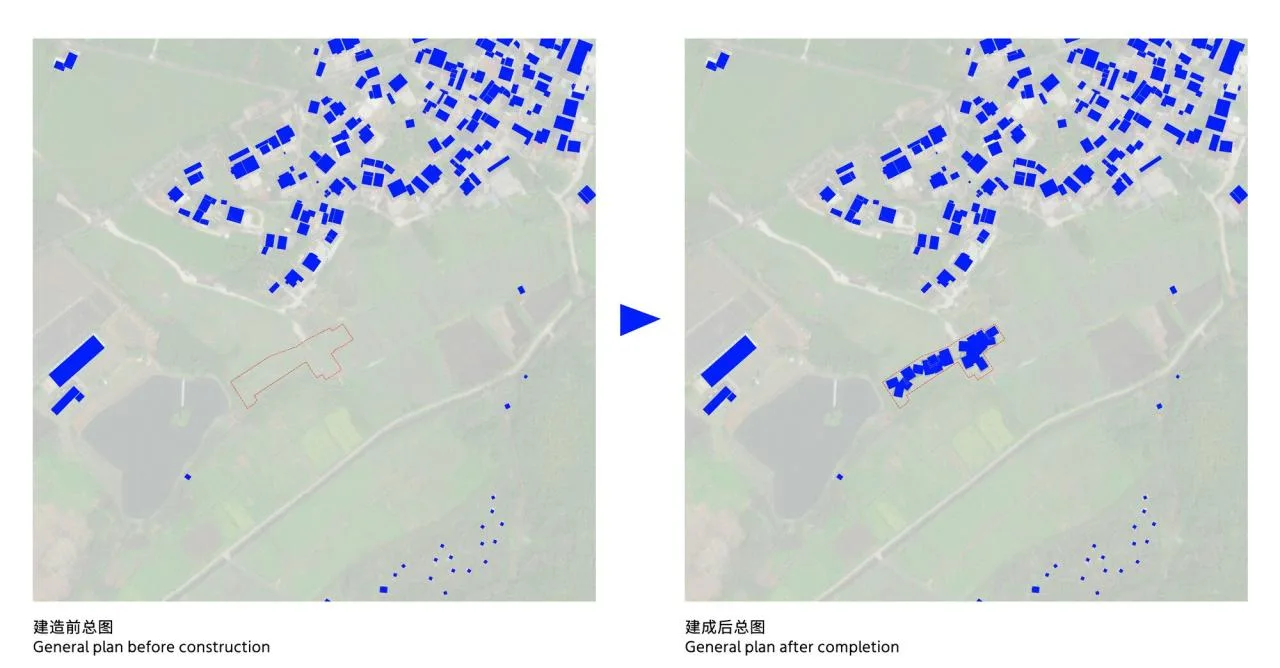
Situated in the countryside, the settlement is bordered by a pond to the west, a small stream to the south, a village to the northeast, and distant low mountains. The size of each small house aligns closely with neighboring village residences, and their similar yet distinct forms mimic the organic growth of a traditional village. This cluster of white buildings resembles the white hues of cows and egrets in the fields, standing out while harmonizing with the natural surroundings.
The exterior walls are primarily constructed from large-particle materials coated with deeply textured white paint. As sunlight shifts throughout the day, the interplay of light and shadow on the textured surfaces creates a dynamic and rich white appearance. This rural hotel features 23 rooms and includes a restaurant, coffee shop, handicraft workshop, bakery, swimming pool, conference facilities, and public spaces, all surrounded by streams, fields, and mountains.
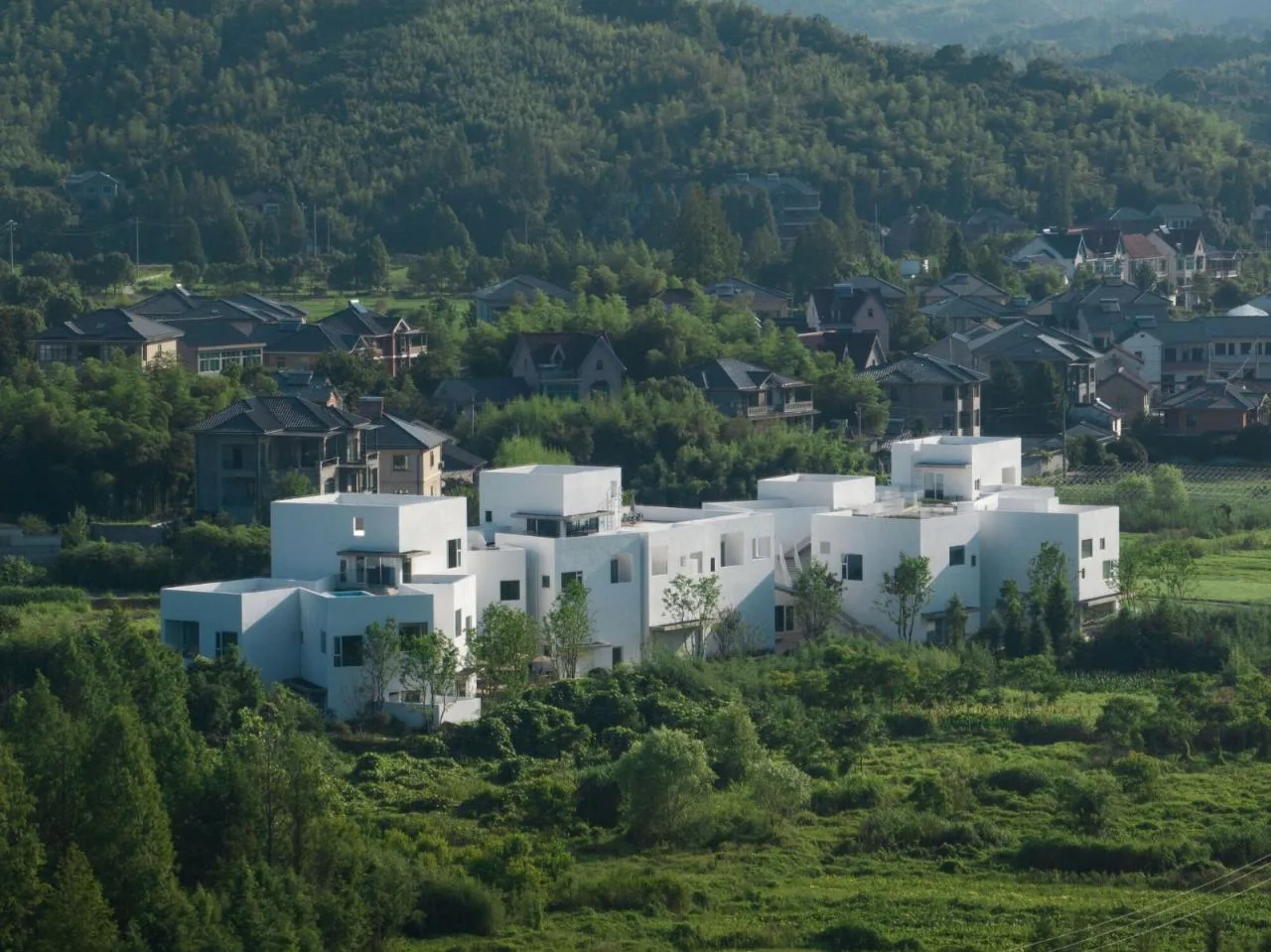
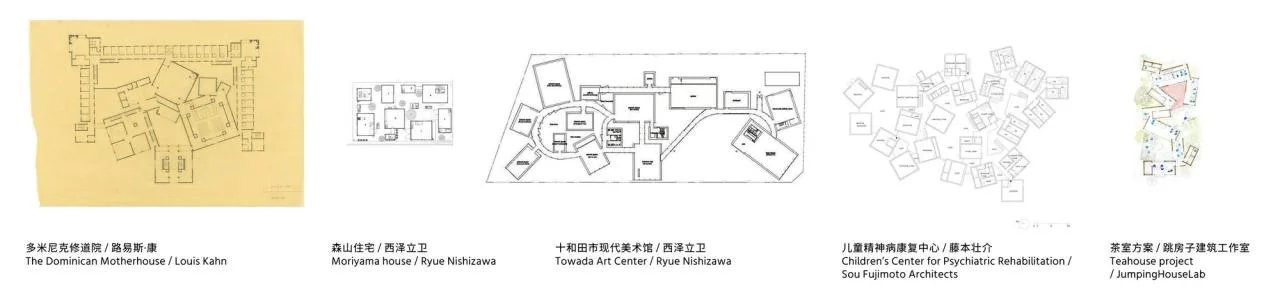
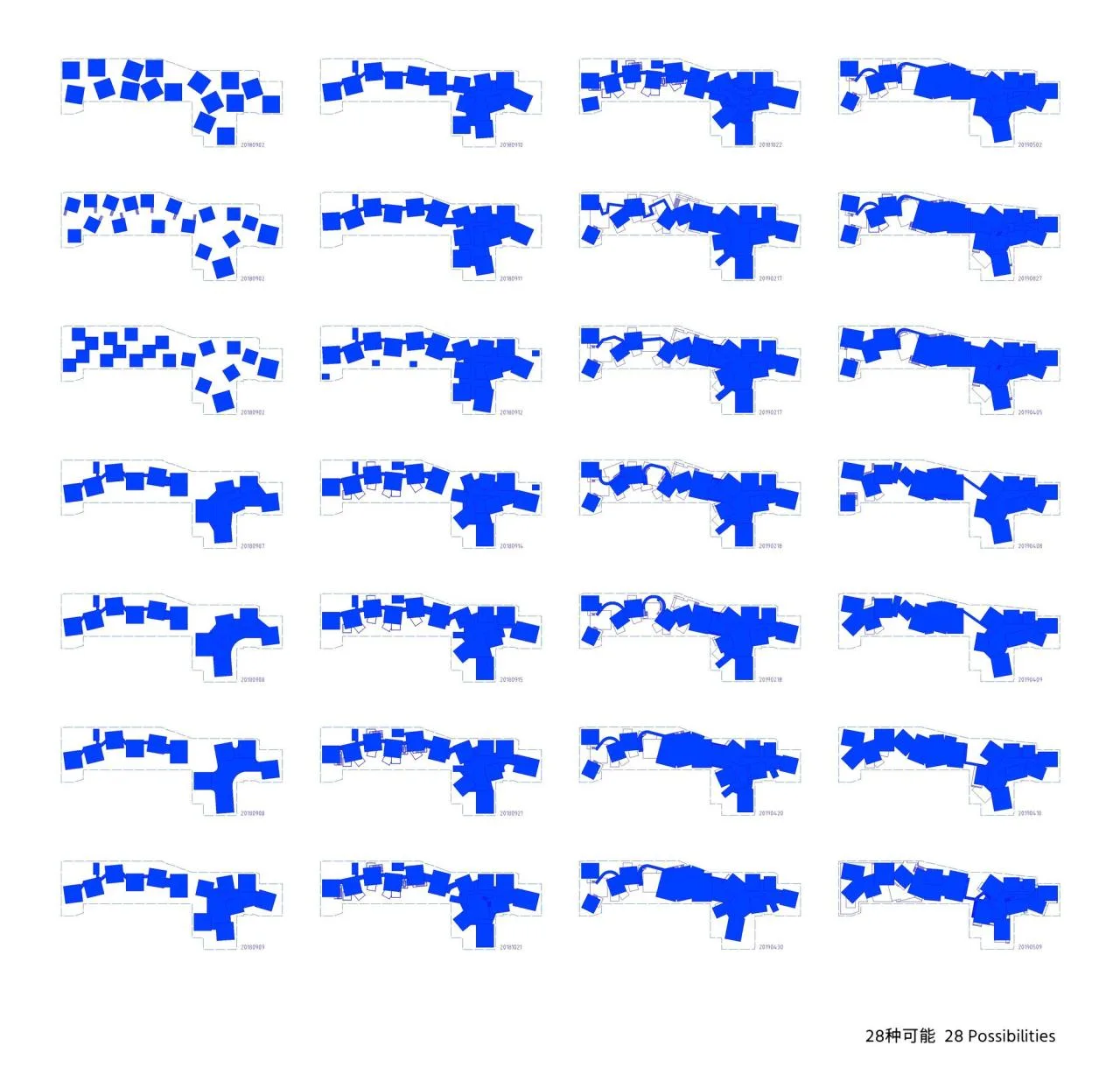
Constructing a building over 100 meters long in an open field presents 28 potential design approaches, many of which could seem abrupt as a whole. To avoid this, the design breaks down the structure into a settlement of abstract white houses. This approach reflects the scale and growth patterns of surrounding villages and draws inspiration from works by architects such as Louis Kahn’s Dominique Monastery, Nishizawa Ryue’s Moriyama Residence, the Towada City Modern Art Museum, and Shigenobu Fujimoto’s Children’s Mental Health Rehabilitation Center.
These projects share a decentralized spatial approach, fragmenting and recombining buildings to create unexpected and flexible spaces. A similar method was previously applied by the architect in a tea room design during their graduation project. Throughout the design process, spatial concepts and experiential methods were tailored to fit the site and function, leading to 28 different combination schemes. Each iteration aimed to align with specific project phases, balancing determinacy within seemingly random structures to achieve concrete results.
The final layout divides the settlement into two groups: the West Building is a linear series along a narrow, elongated site, primarily housing guest rooms; the East Building features a radial structure on a square site, hosting mainly public areas.
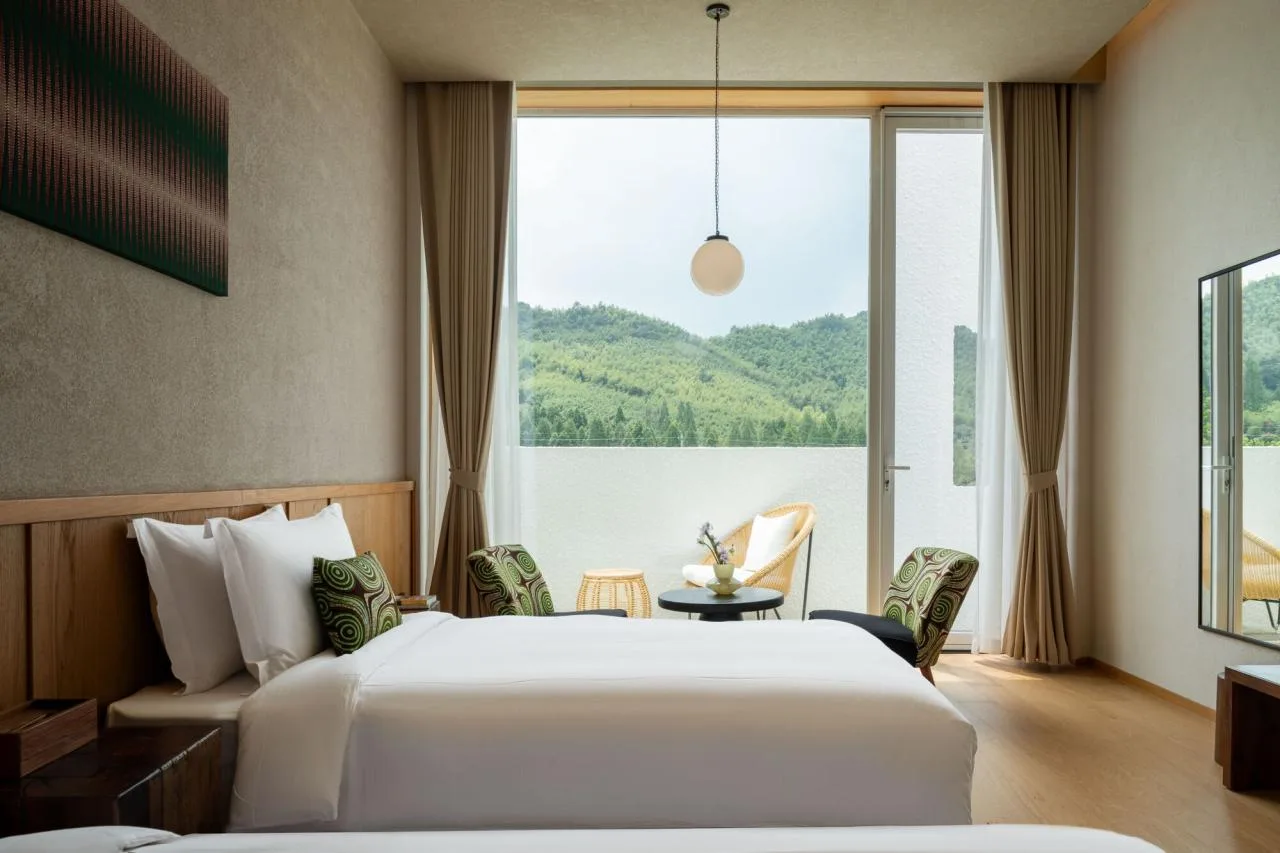
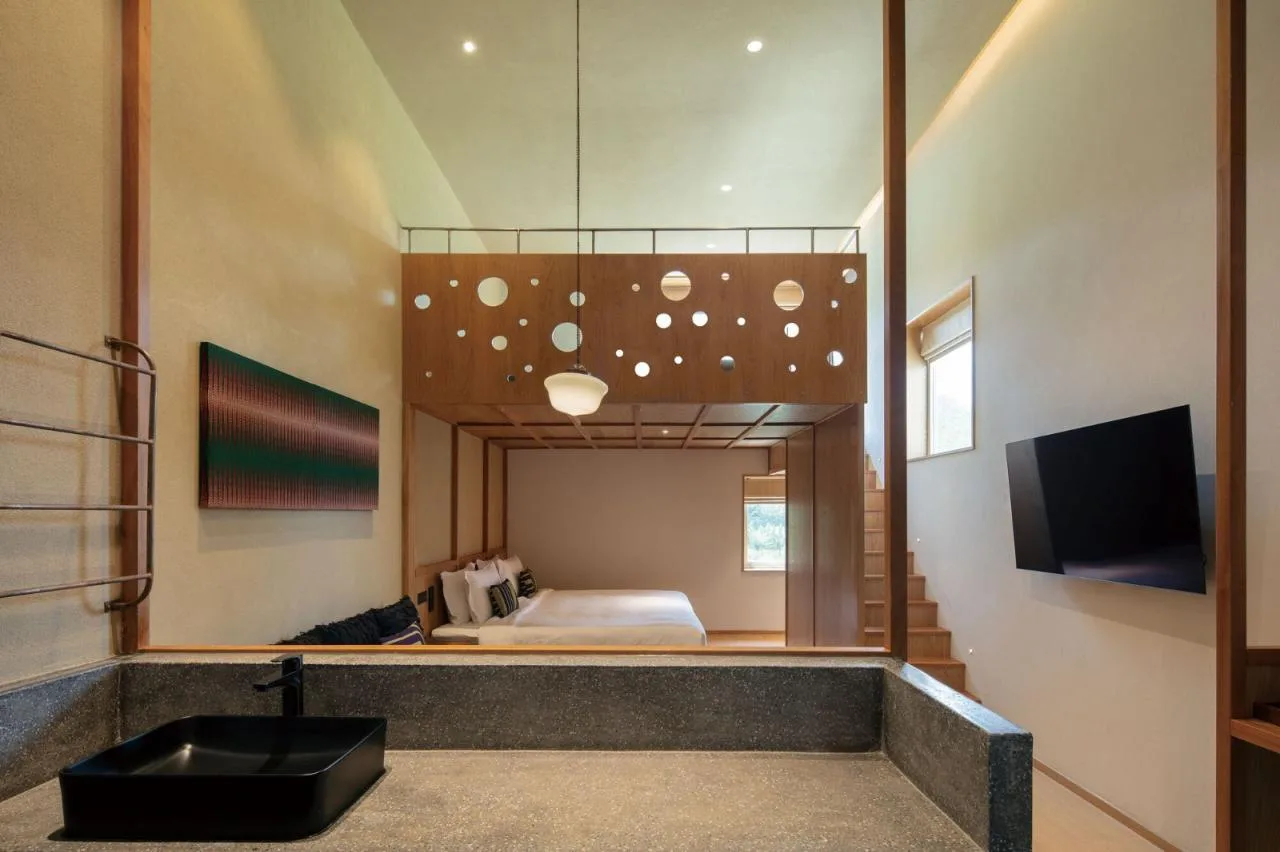
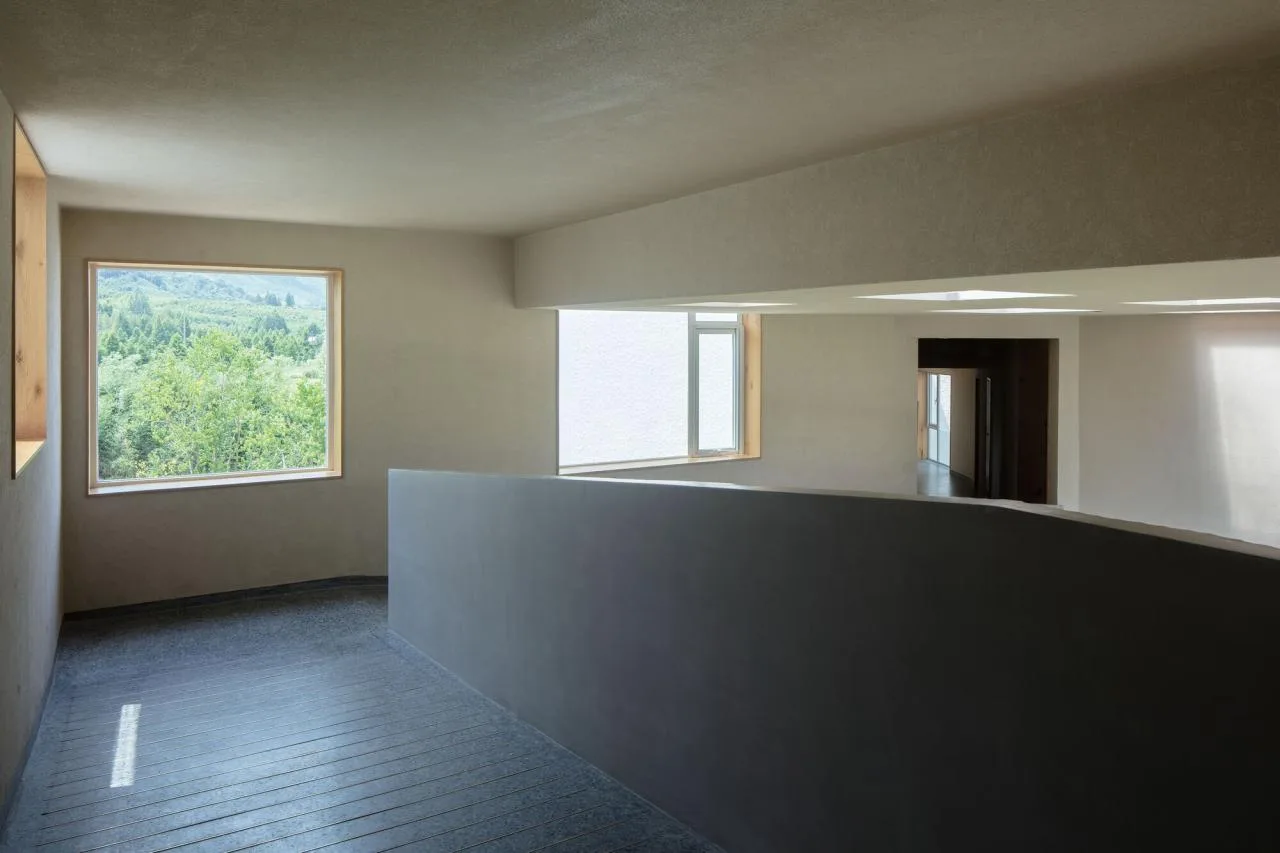
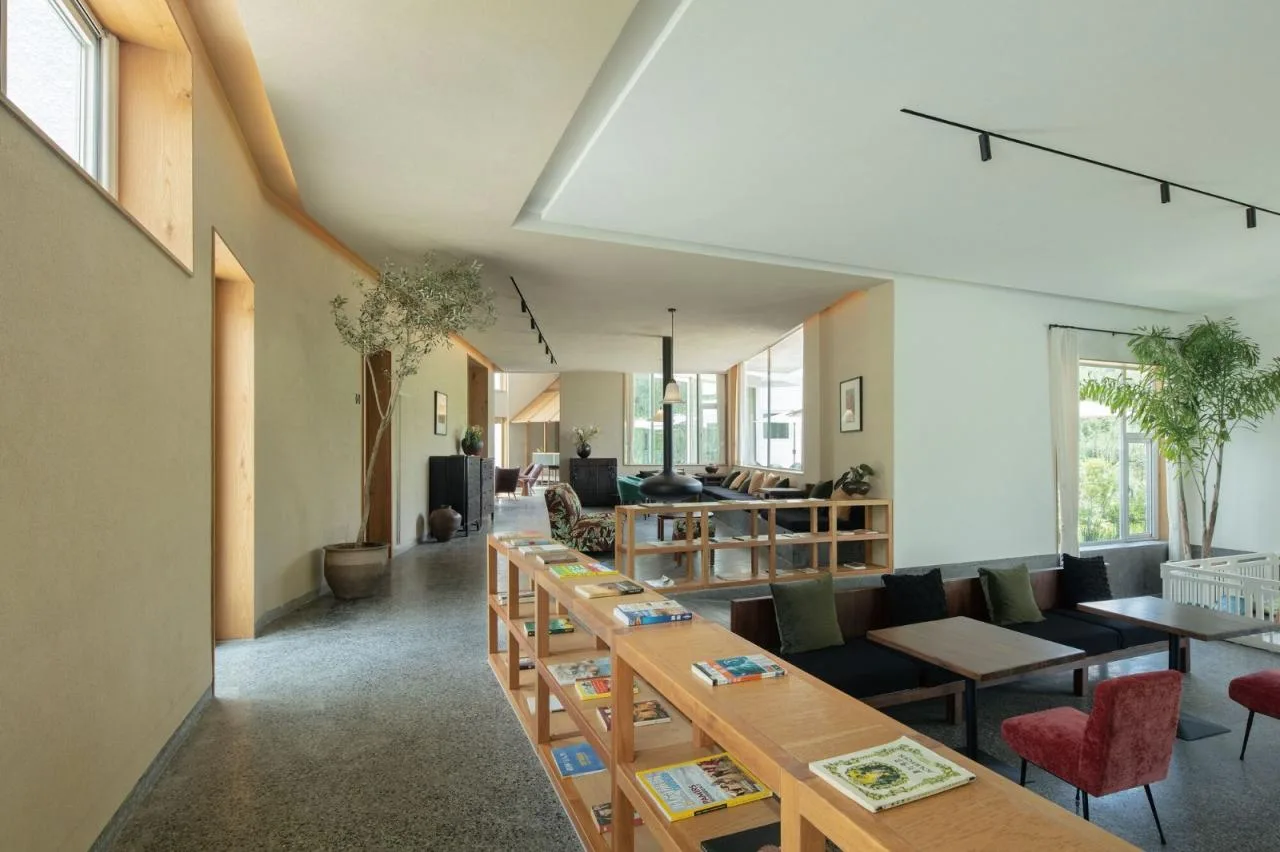
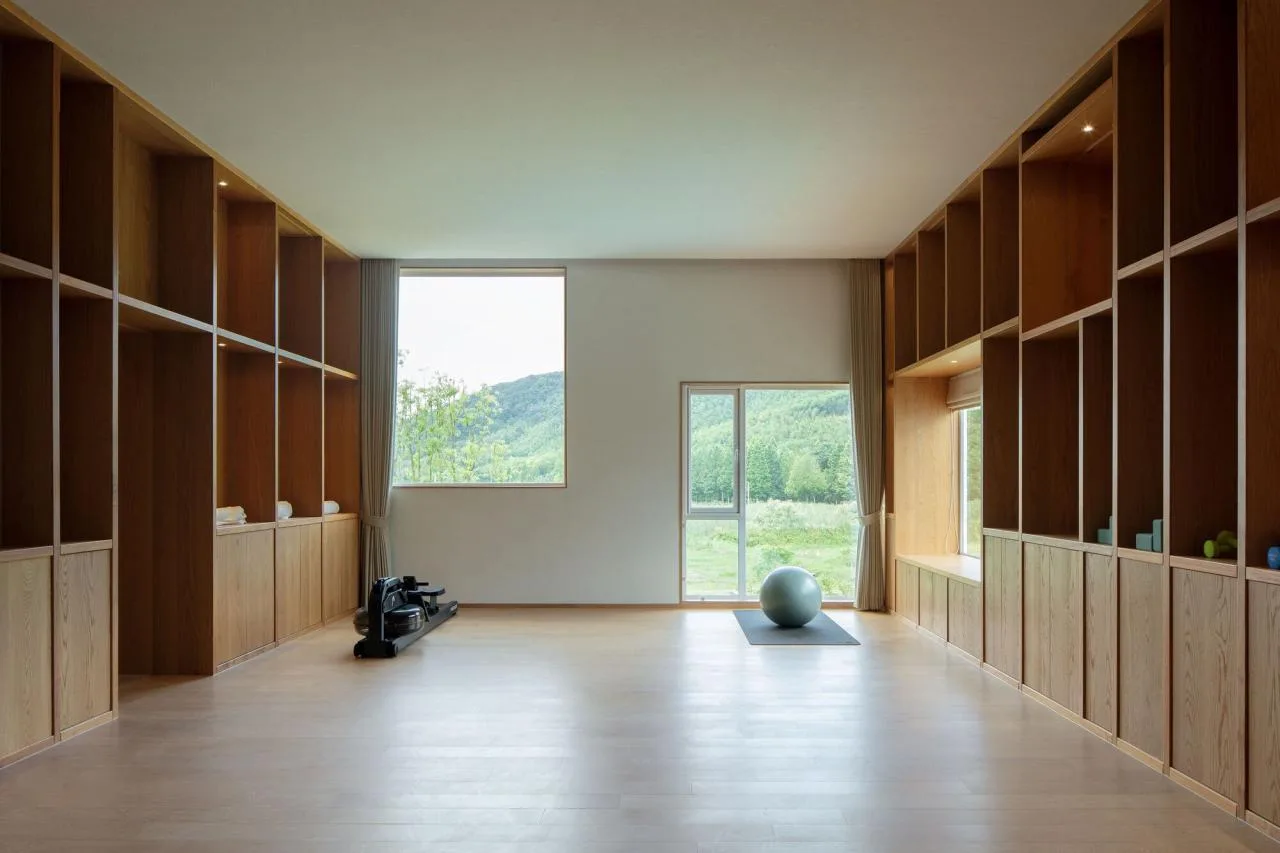
The cabin’s exterior is an abstract white, while the interior is designed to feel warm and textured through material choices. In frequently used spaces such as guest rooms, restaurants, and coffee shops, materials like solid wood, textured mud-coat finishes, and warm-toned terrazzo are predominant.
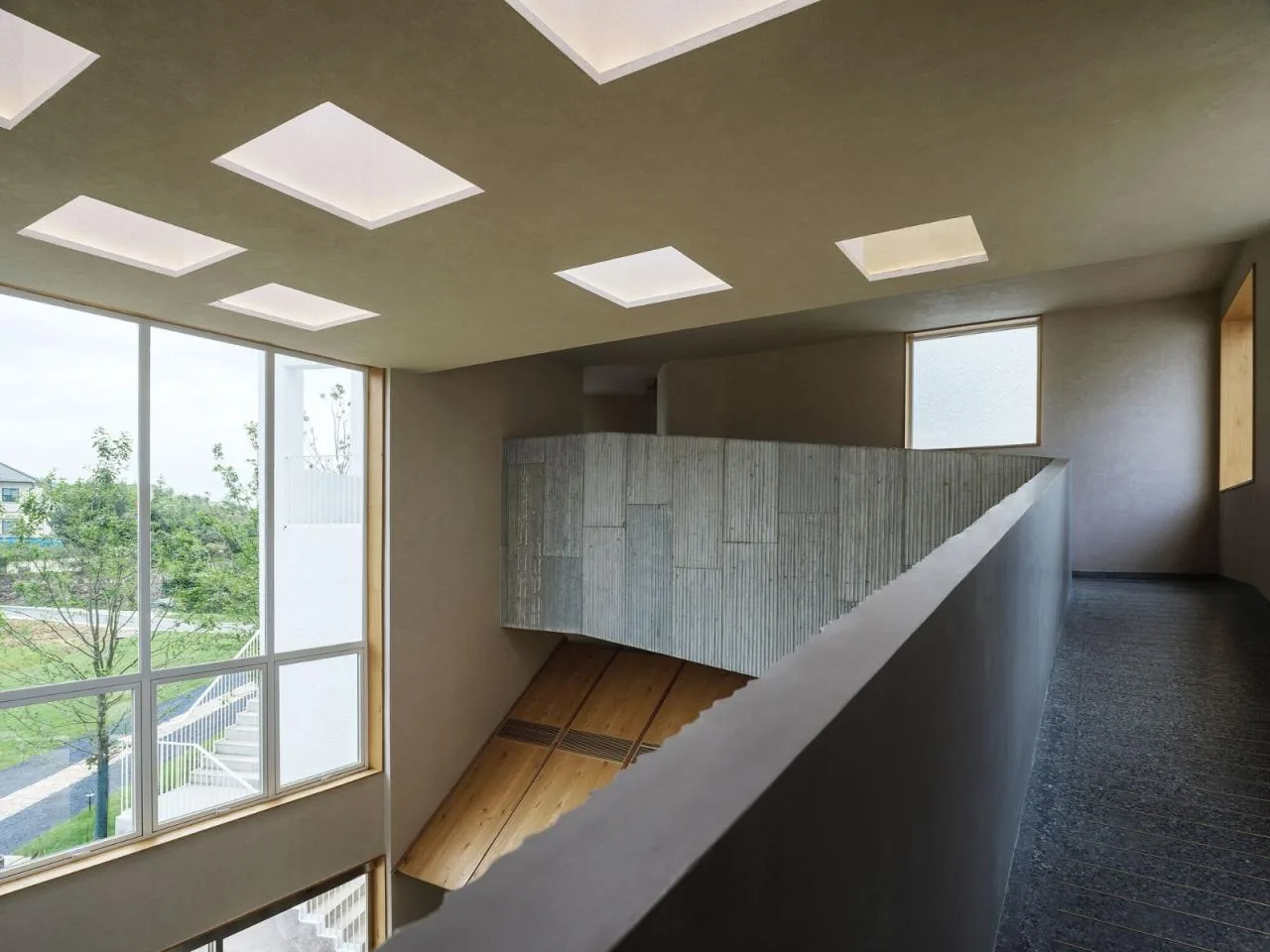
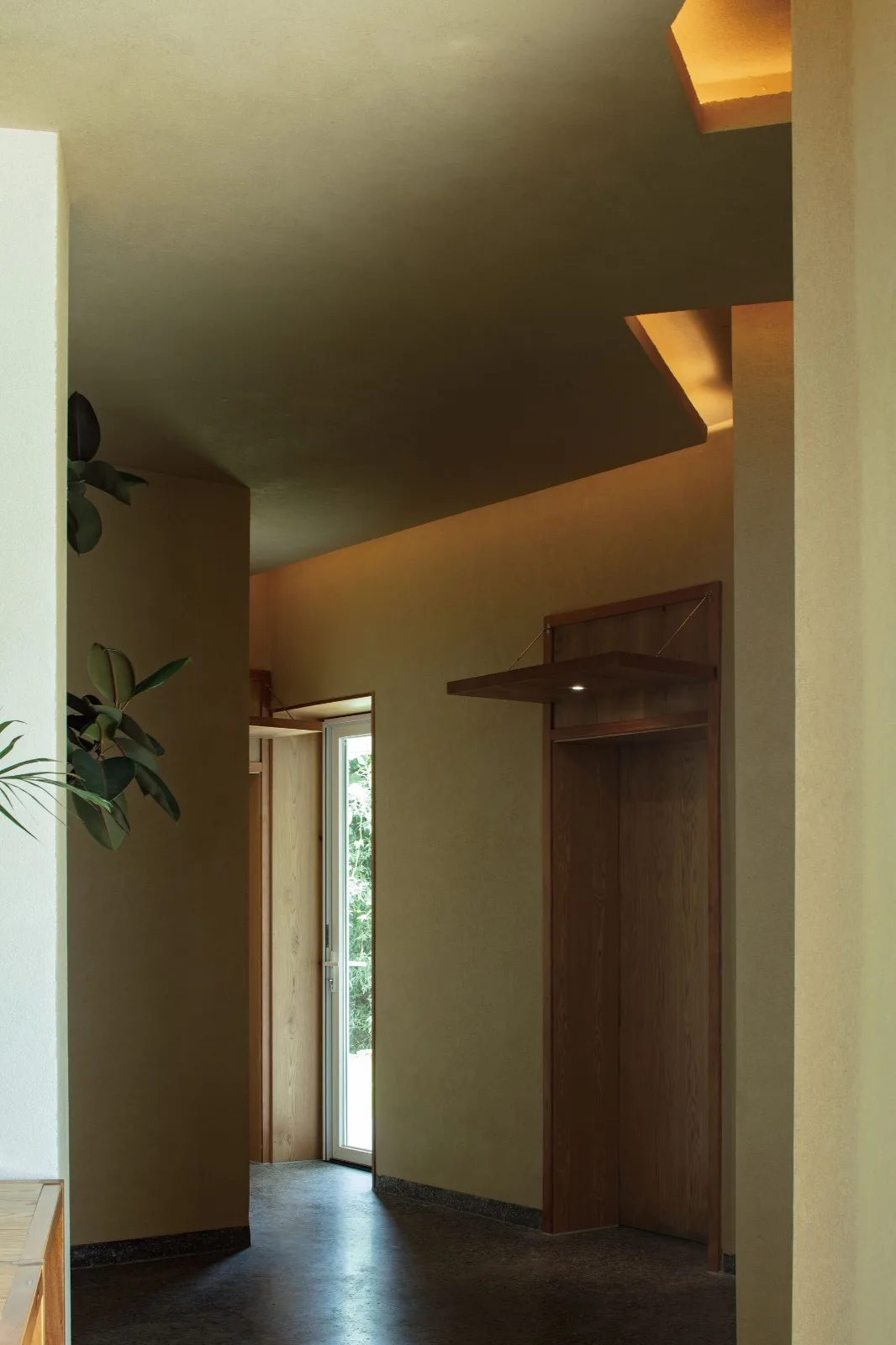
Less commonly occupied areas, including public halls and transit spaces, use auxiliary materials such as bamboo mold textured prefabricated panels, stainless steel panels, and darker terrazzo surfaces. This gradual transition from the exterior’s stark white to a warmer, more tactile interior allows visitors to feel the space gain texture and warmth as they enter.
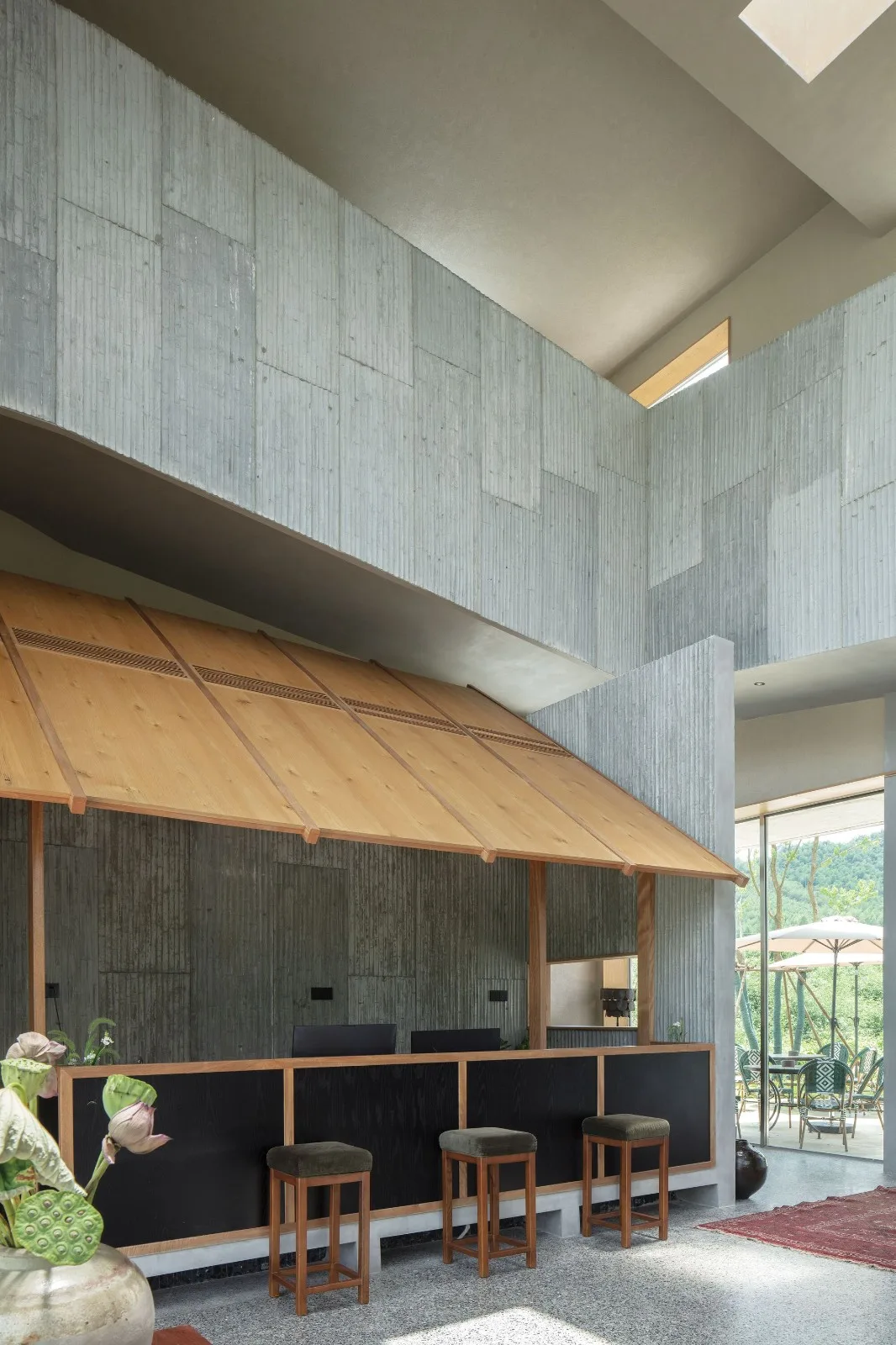
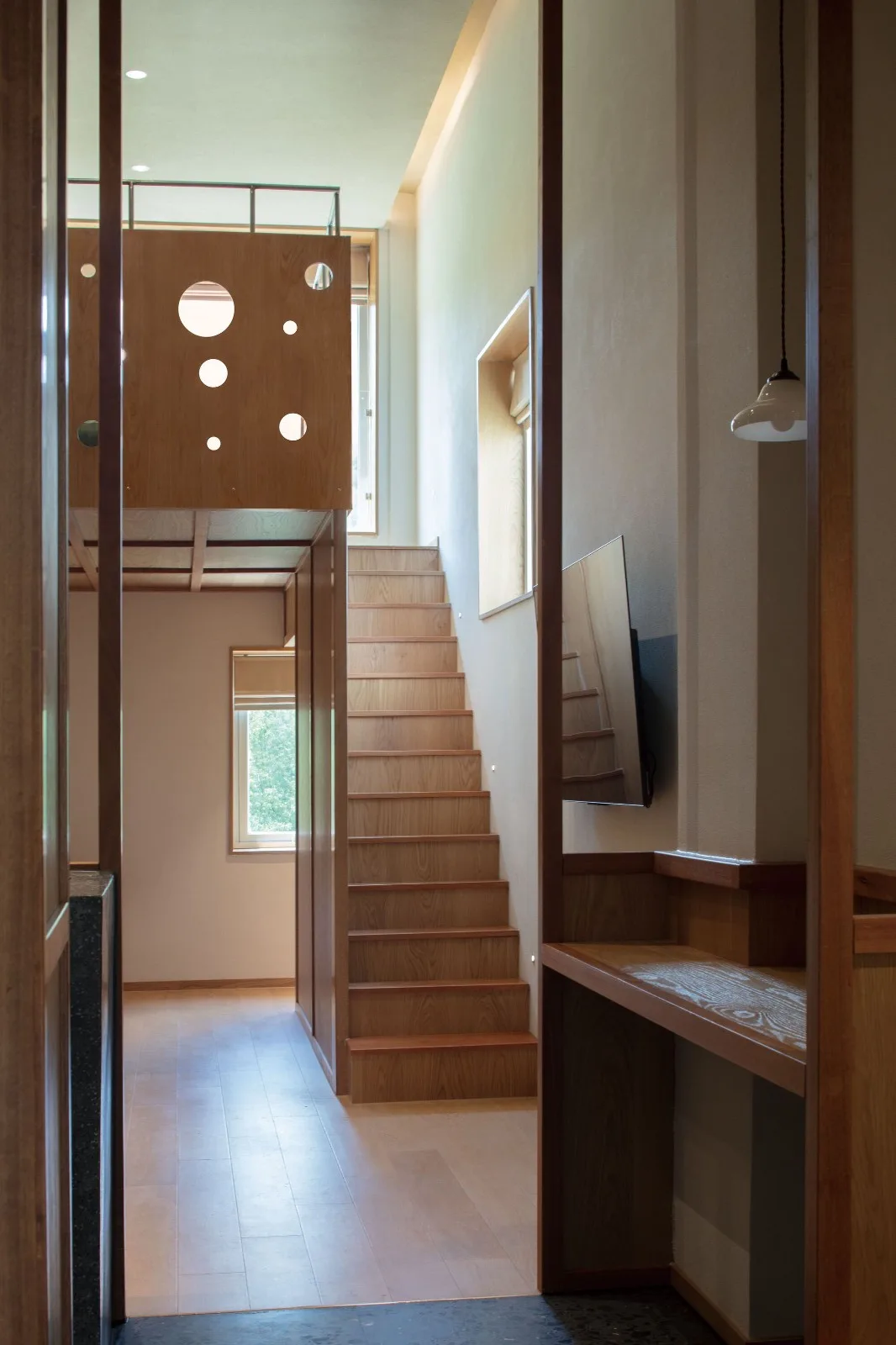
Additionally, small wooden houses are integrated indoors to create cozy, engaging experiences. For example, the homestay front desk is designed as a small wooden house with a sloped roof, evoking a homely atmosphere and cleverly concealing air conditioning units to maintain a clean space. Similarly, the attic of each parent-child suite features a charming wooden house, providing children with their own private nook.
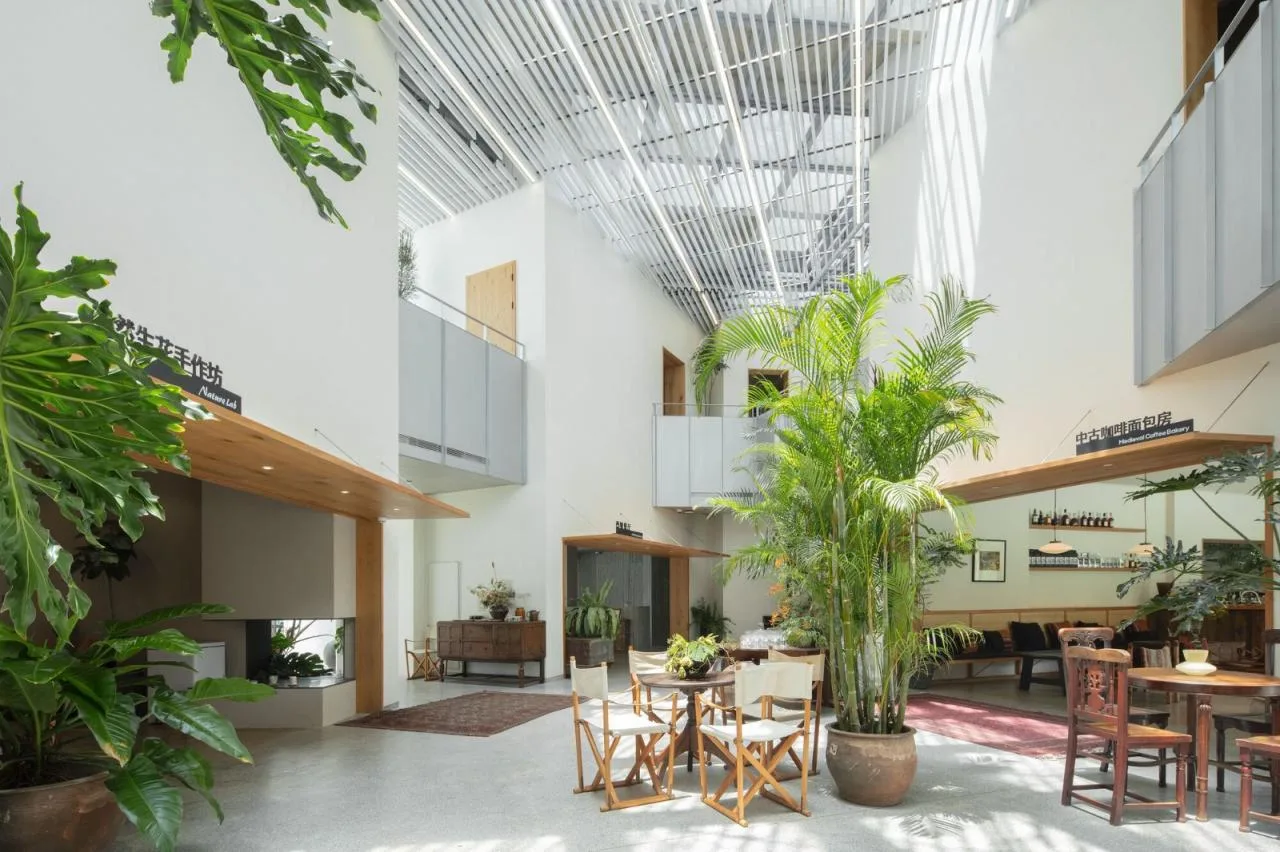
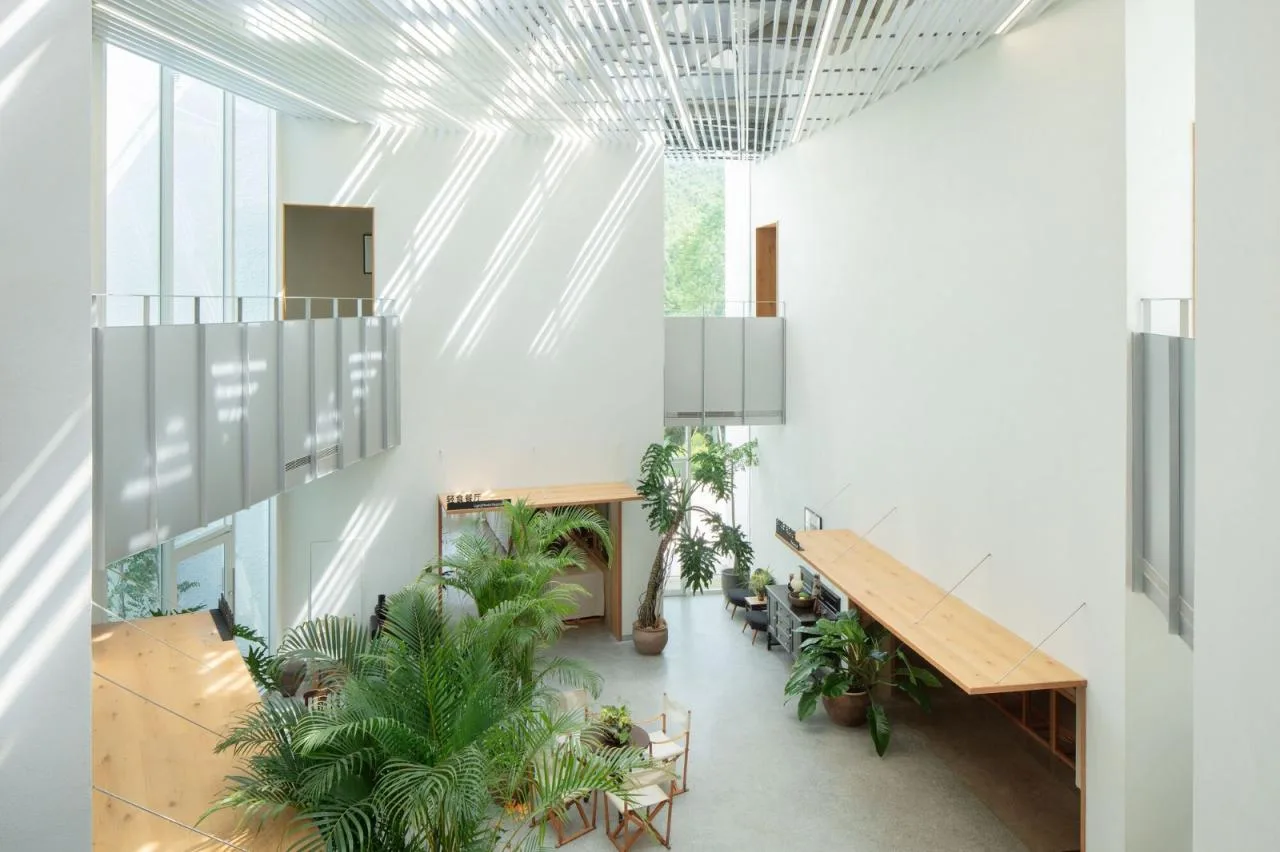
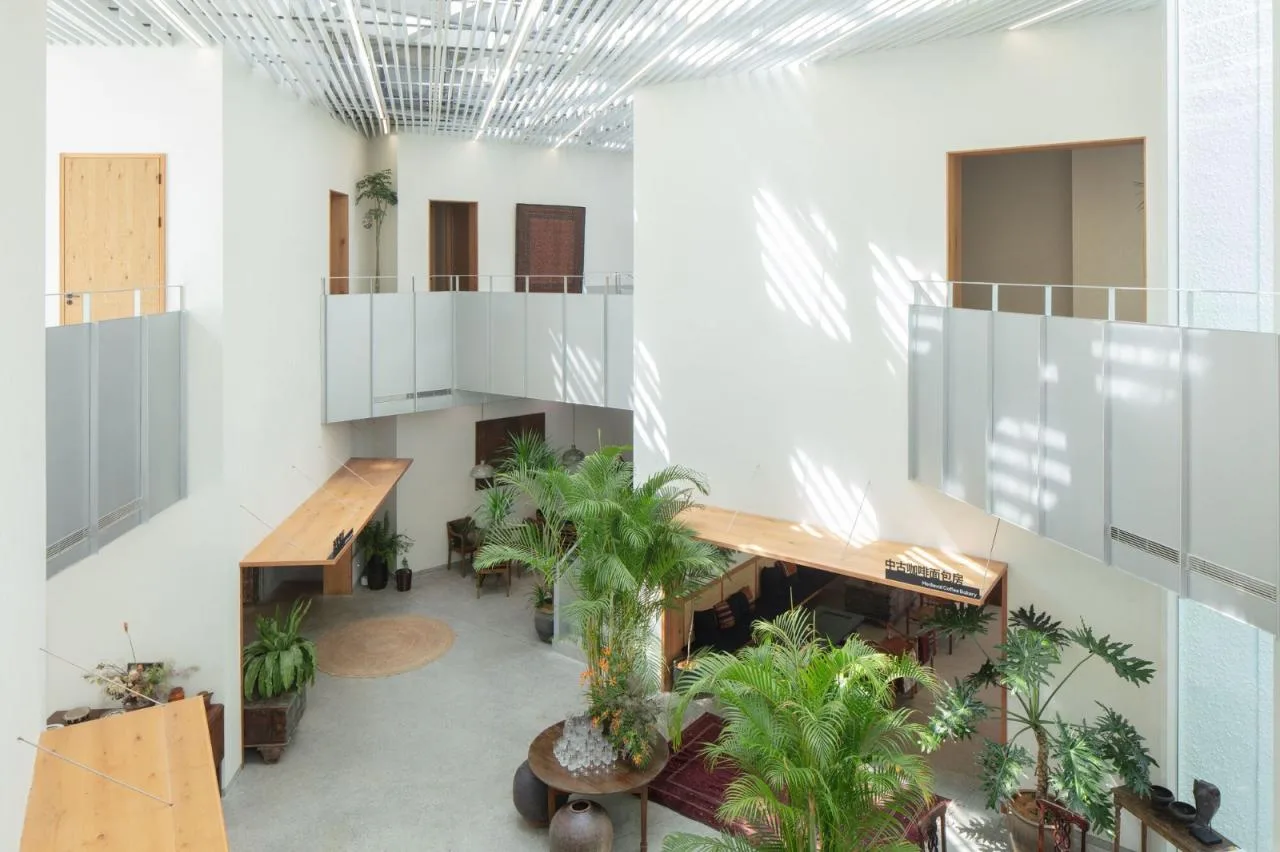
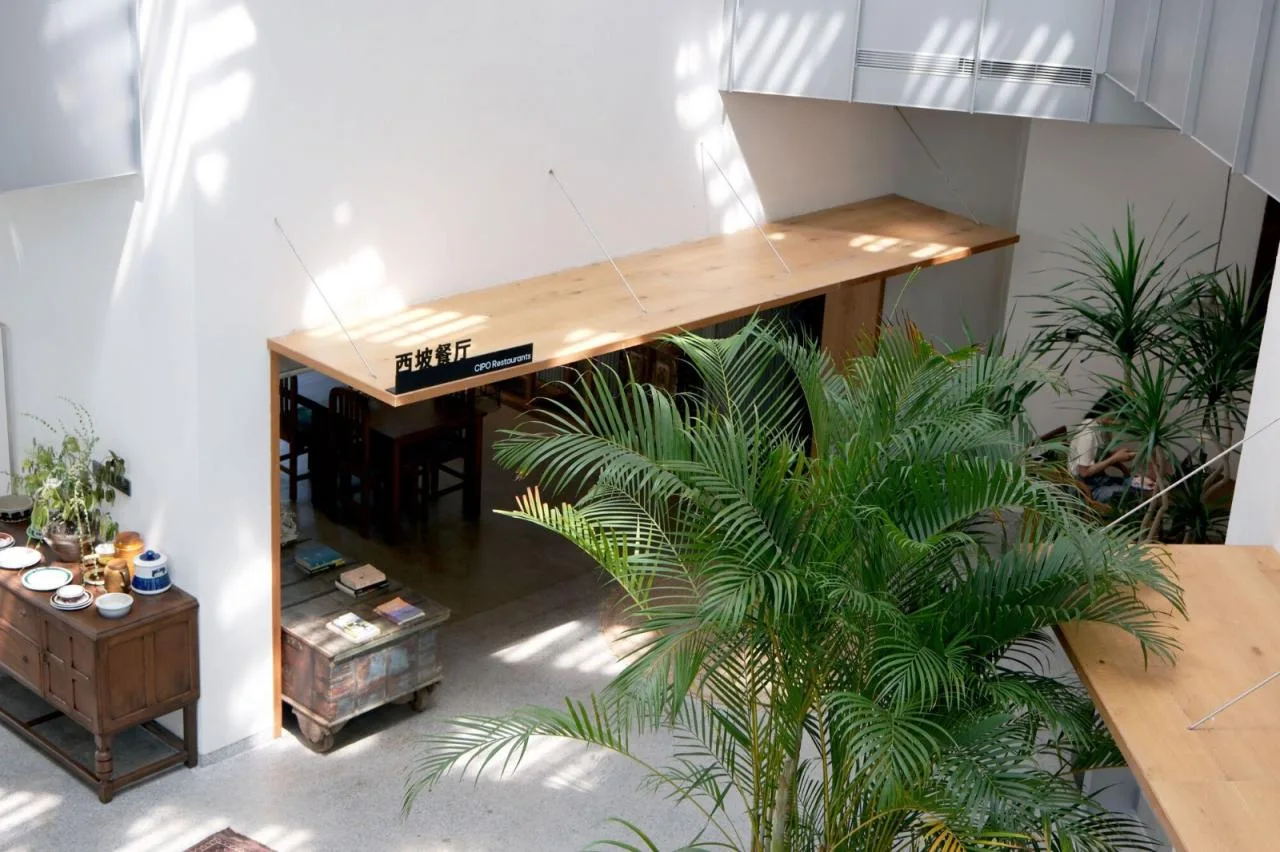
The building features two main groups of public spaces that are both independent and interconnected. The East Building’s public area is radial in shape, with two central floors resembling a small square illuminated by skylights. Shops such as restaurants, workshops, and a coffee shop—connected to a bakery—open toward this central space.
Above, five parent-child suites offer private accommodations, separated by solid walls with occasional openings that provide glimpses into the public space. The East Building functions like a small community, blending private family spaces with accessible public areas that encourage interaction.
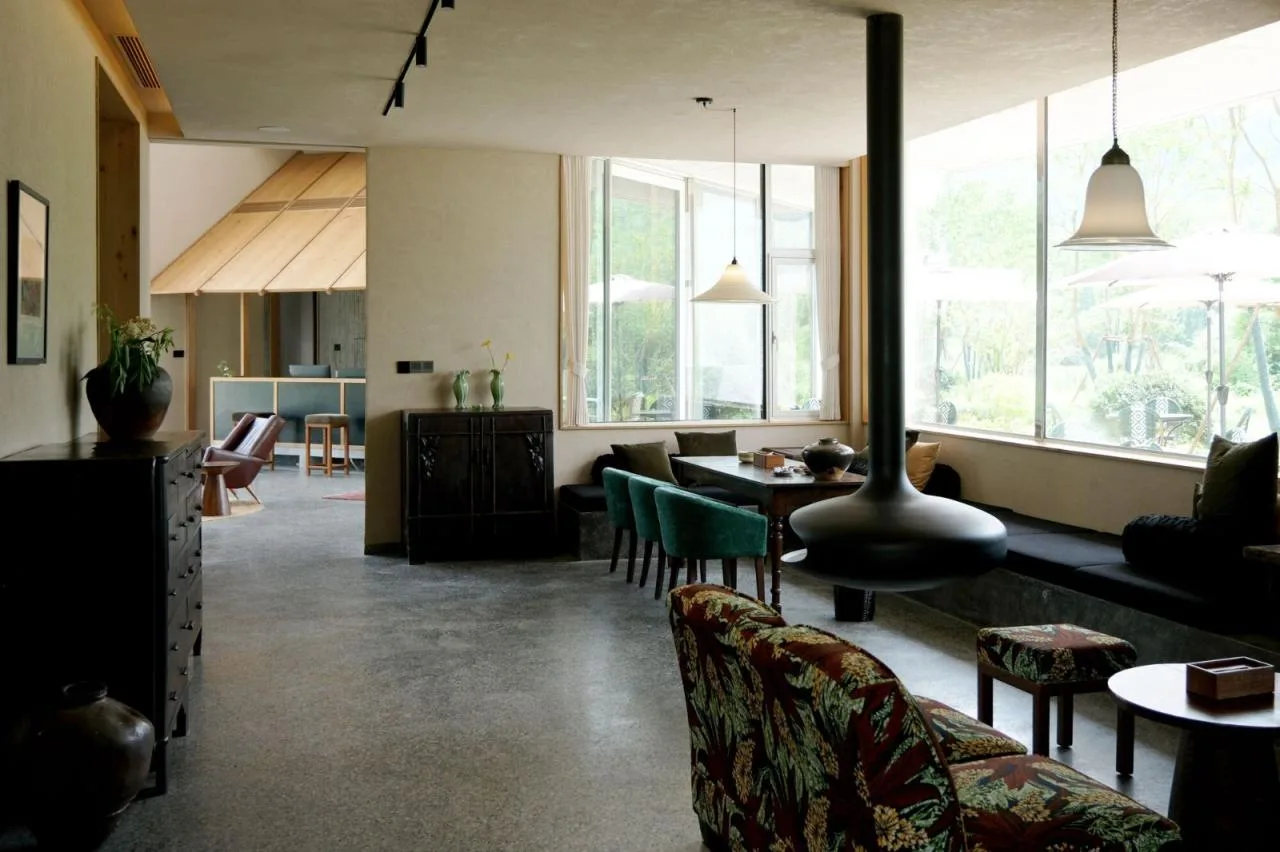
The West Building’s entrance features a continuous public living room composed of three connected square spaces, each situated at a corner. The first is a transparent, double-height space with light flooding in from all directions. Visitors can check in at the front desk, designed as a small wooden house, or relax in the waiting area. A bamboo formwork concrete corridor extends overhead.
The second space is a single-story area with a large corner window, seating along the window, and a central fireplace, creating a quiet and cozy public living room. The third space is set 600mm lower than the second and is separated by low bookshelves, serving as a lively parent-child reading and play area. These three spaces maintain continuous sightlines, allowing guests to explore the full space and find secluded corners of their own.
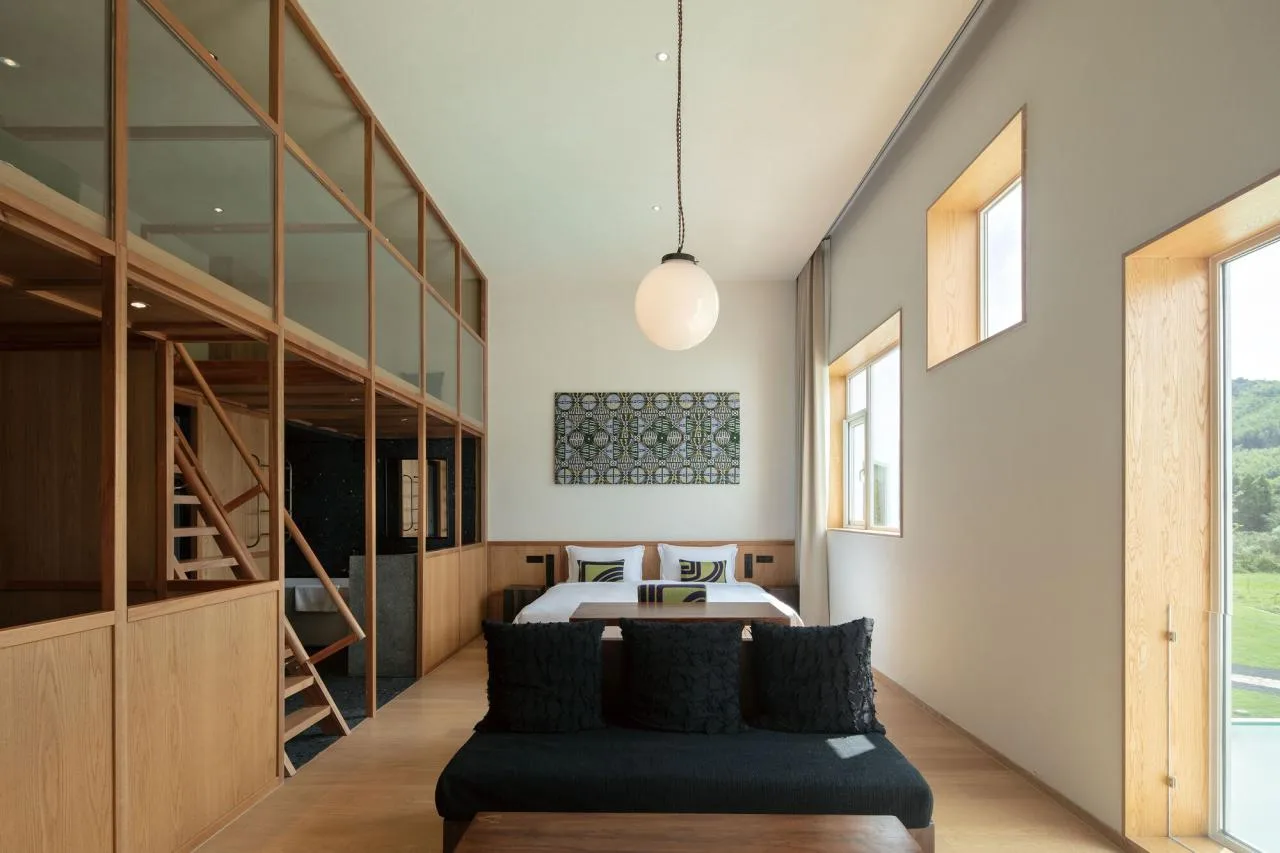
Of the 23 guestrooms, 17 face each other and are standard or large-bed rooms with similar layouts. Minor differences in orientation, location, window openings, and size ensure no two rooms are identical. Some rooms include balconies, terraces, pools, courtyards, or large French windows with views of nature, lakes, and mountains.
The remaining six are special suites, including three types of parent-child suites with attics and one rooftop suite. The rooftop suite features a garden terrace with access in three directions, suitable for living or hosting rooftop gatherings.
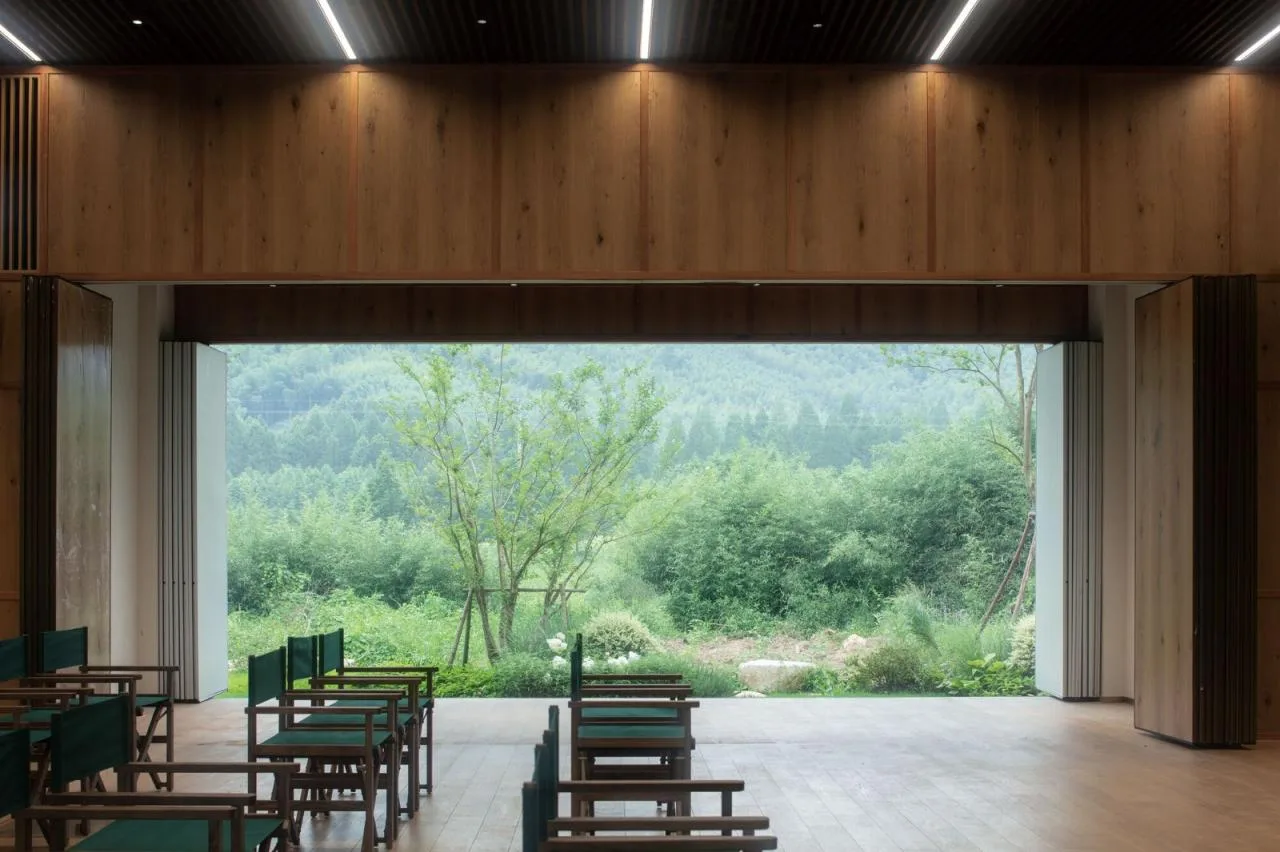
The building includes a multifunctional hall that opens seamlessly to nature. Its cross-shaped layout usually forms a rectangular space of approximately 10 by 20 meters, suitable for meetings, small performances, and more. Two hidden side stages flank the main hall, and when the nearly 8-meter-wide openings on both sides are fully opened, the boundary between indoor and outdoor dissolves, allowing views to extend from north to south.
This flexible space is ideal for natural music concerts or outdoor weddings, using the surrounding environment as a stunning backdrop and exploring new possibilities for use.
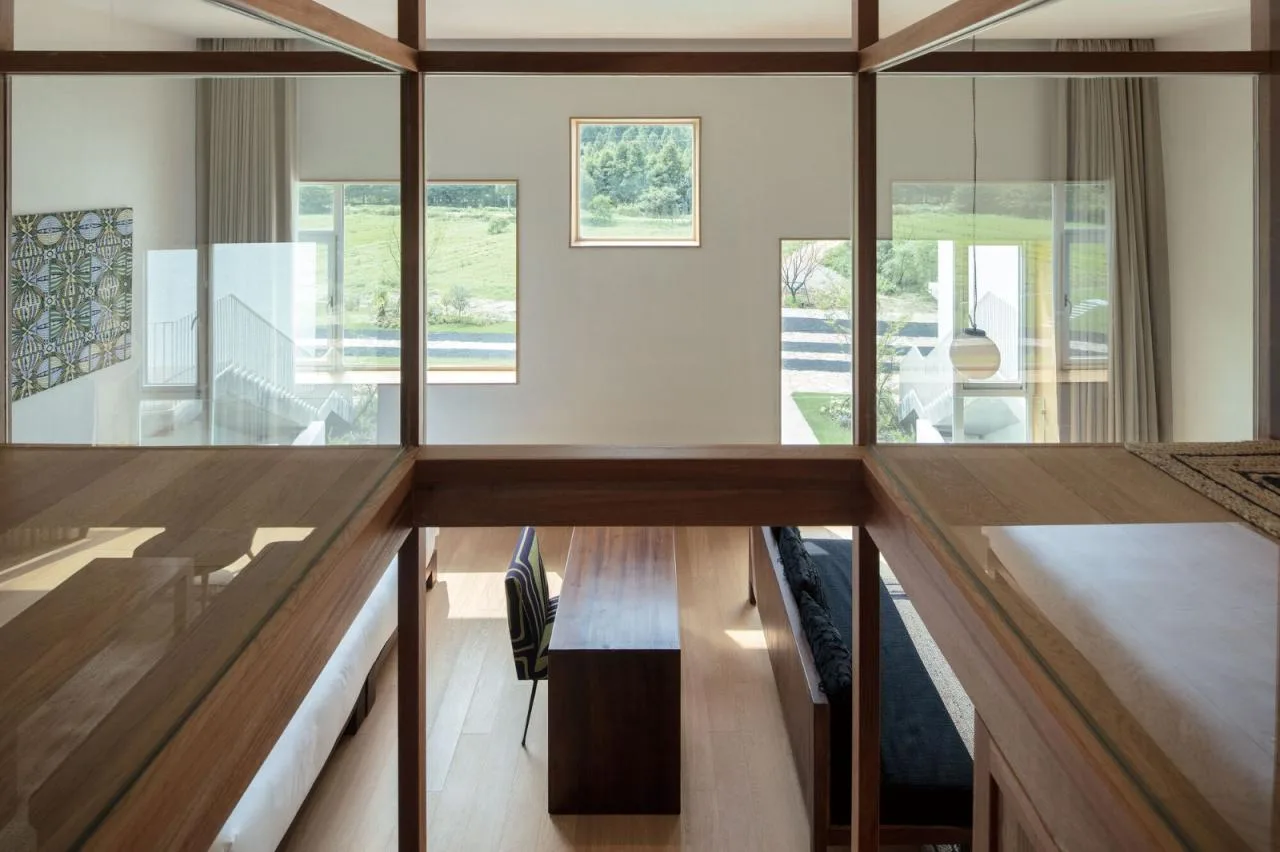
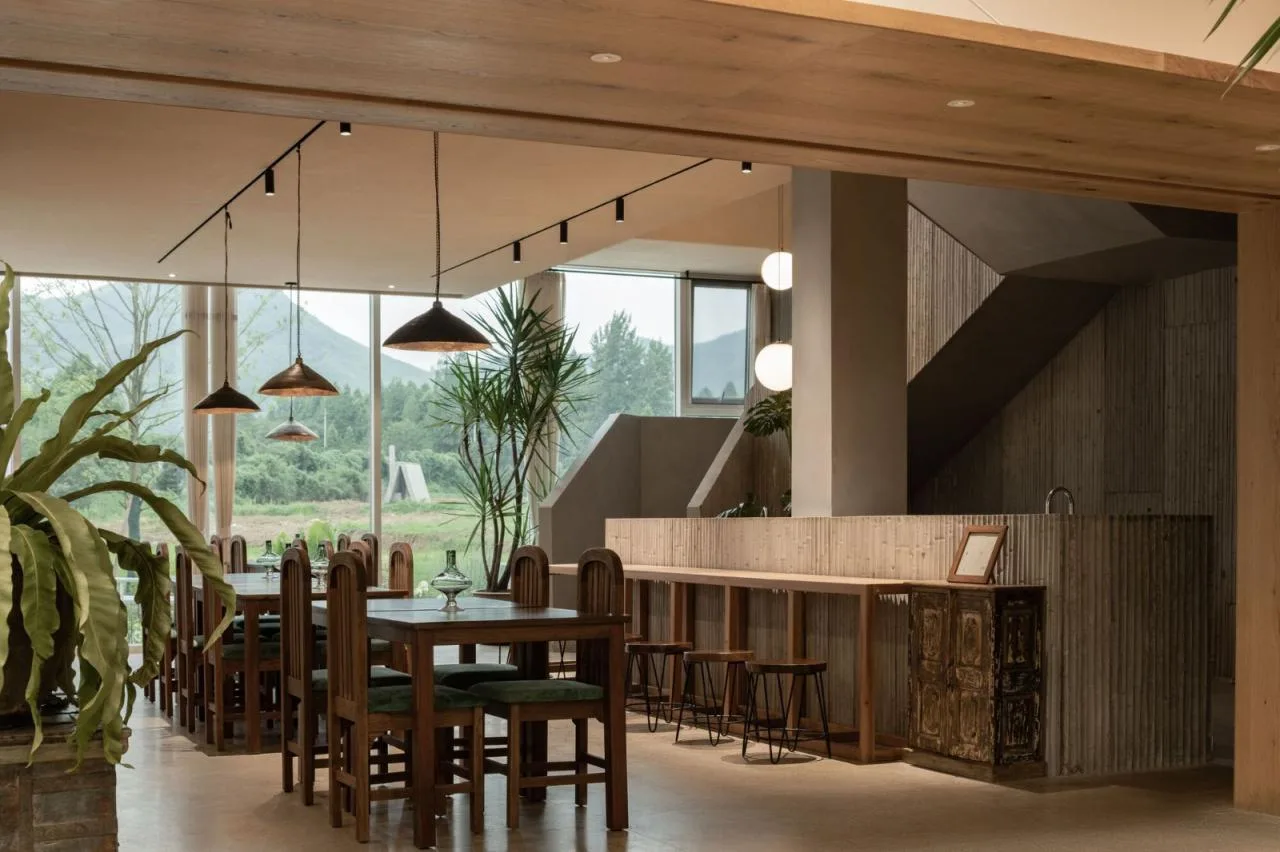
A winding tourist path connects the two building clusters, guest rooms, and public areas within the settlement. Unlike city hotels with straight corridors and no scenic views, this route features twists, turns, branching paths, and scenic spots throughout. It passes through a two-story elevated space and outdoor areas, leading visitors to rooftop gardens and fields.
This project’s journey spanned five years from initial design in 2018 to completion in 2023, including three years affected by the pandemic and multiple changes in function, client, and operator. Throughout, all participants contributed to the growth of the studio, for which we are deeply grateful. This process also marked a significant period of adaptation for the studio, though our core initial concepts remained largely unchanged despite numerous revisions.
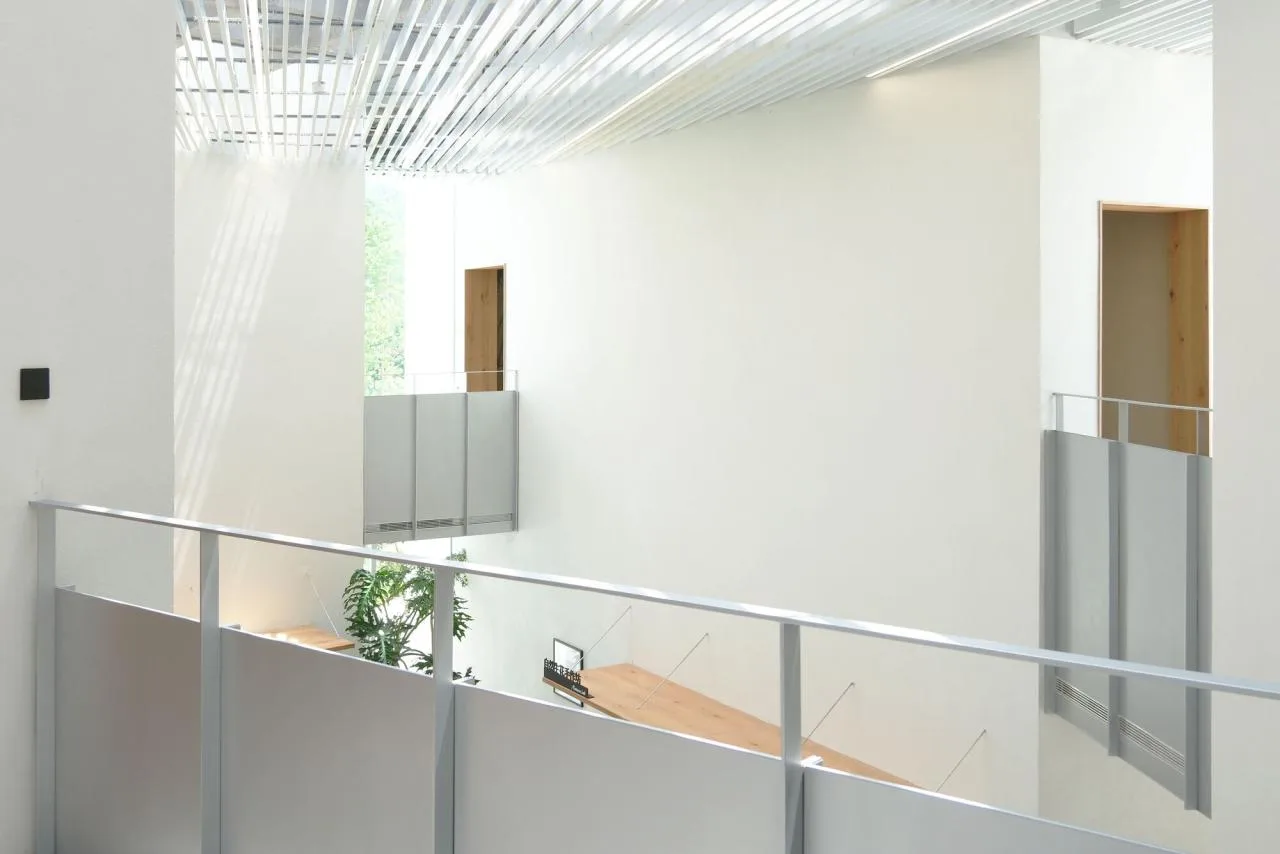
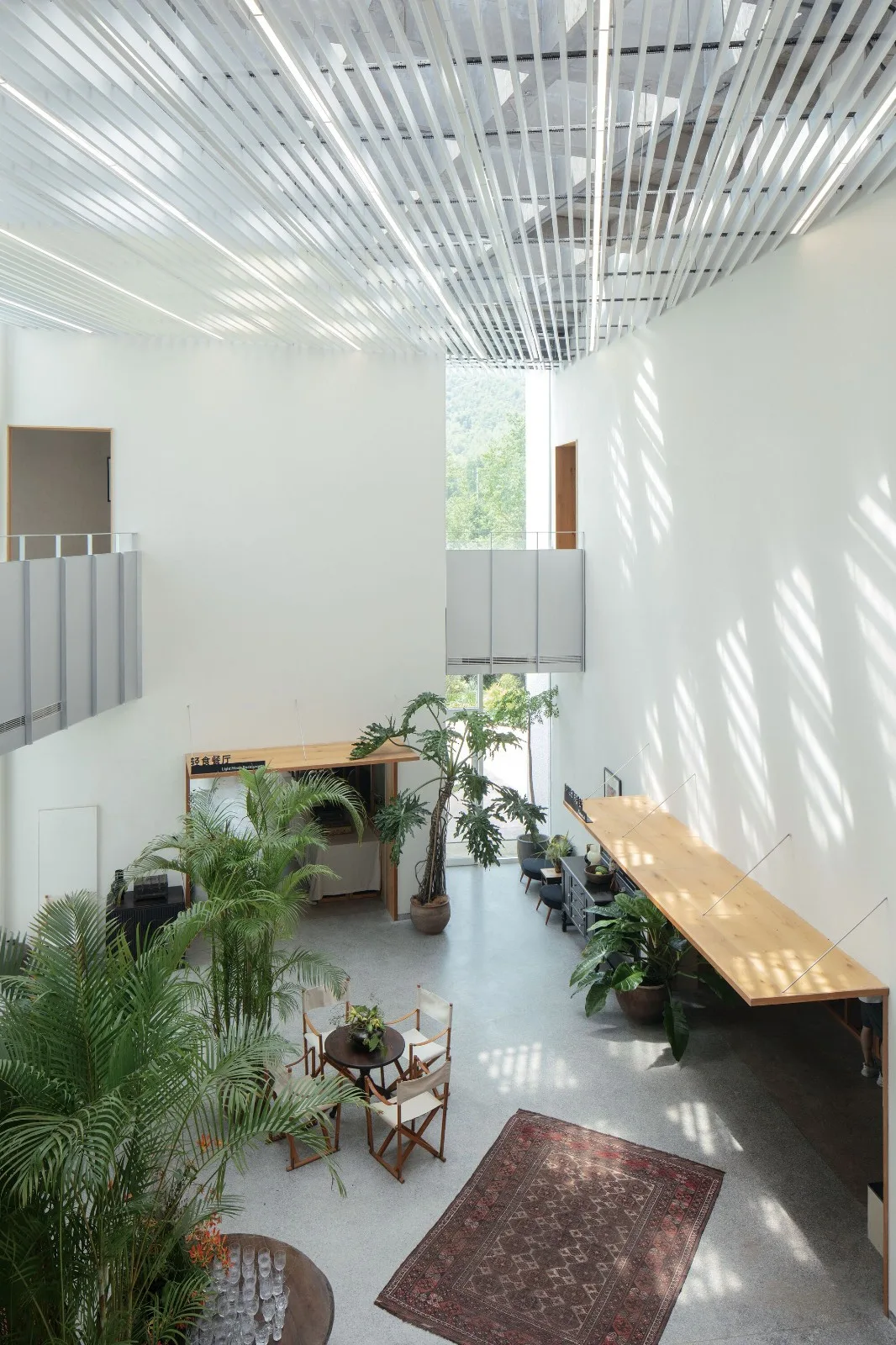
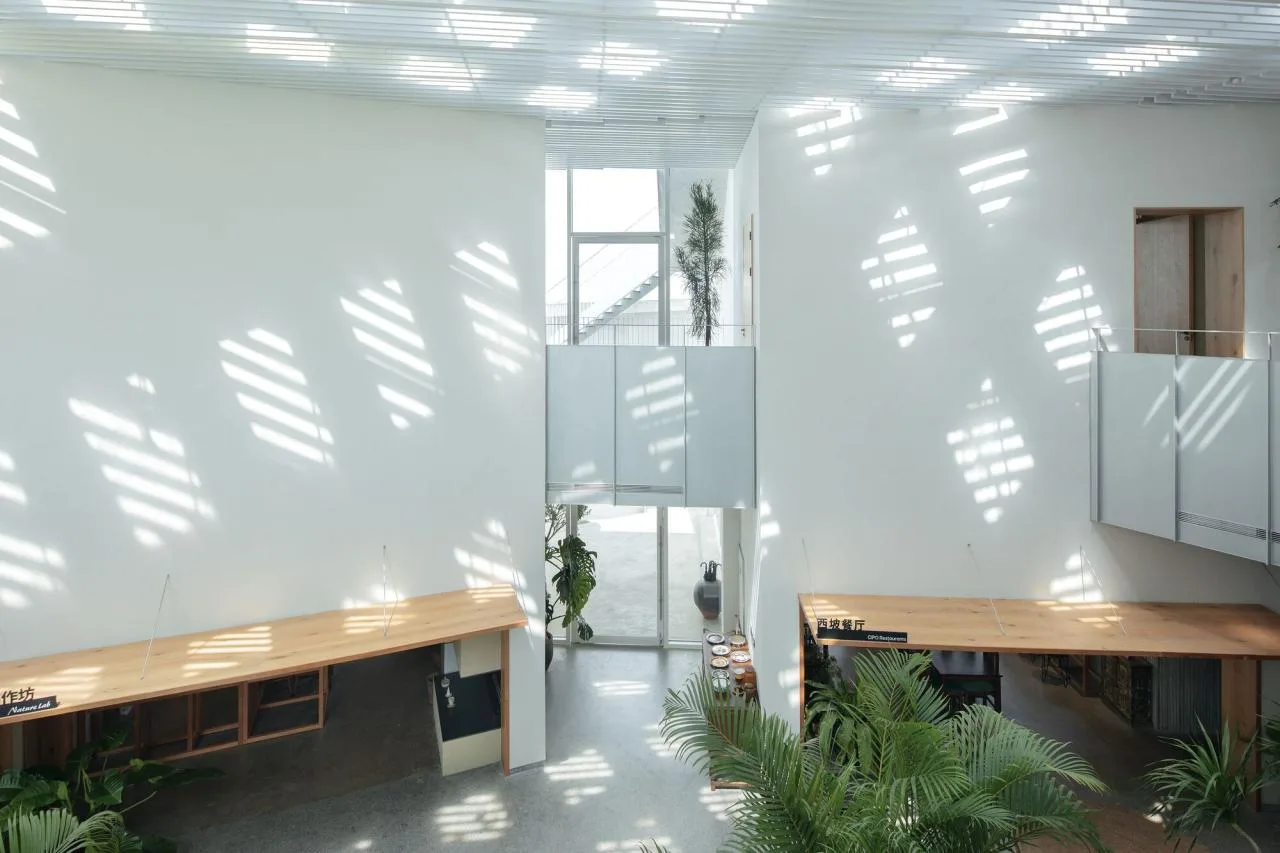
Nowadays, more urban dwellers seek rural vacations not to visit specific attractions but to spend quality time with friends and family amid different environments and nature. Thus, rural hotels are not just places to rest, but interesting small worlds to explore and live in. This project aims to create such a place—a rural hotel that serves as an ideal setting where strangers can briefly coexist, allowing guests to find solitude, gather socially, observe quietly, or celebrate joyfully within this field settlement.
Project Drawings
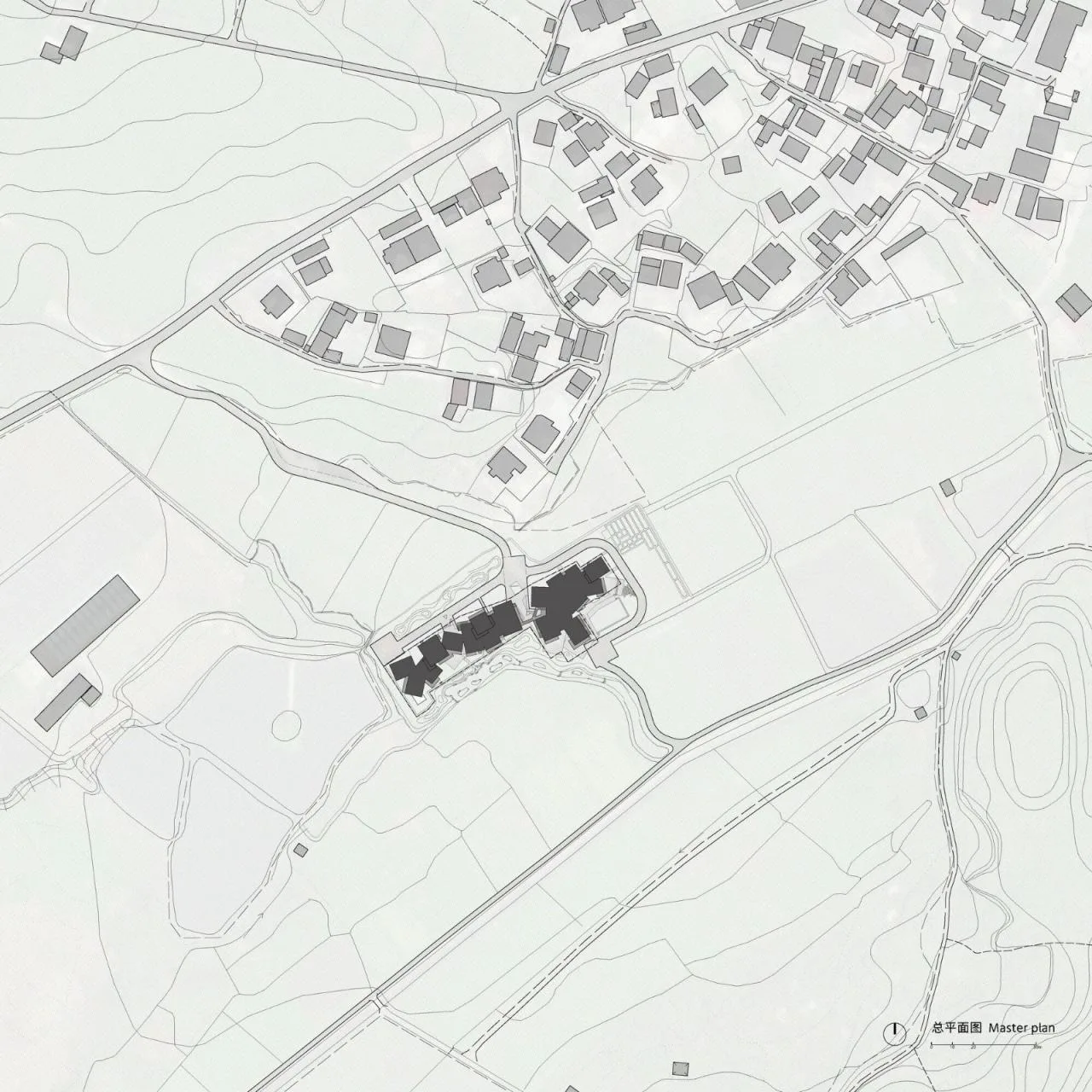
△ General Layout Plan
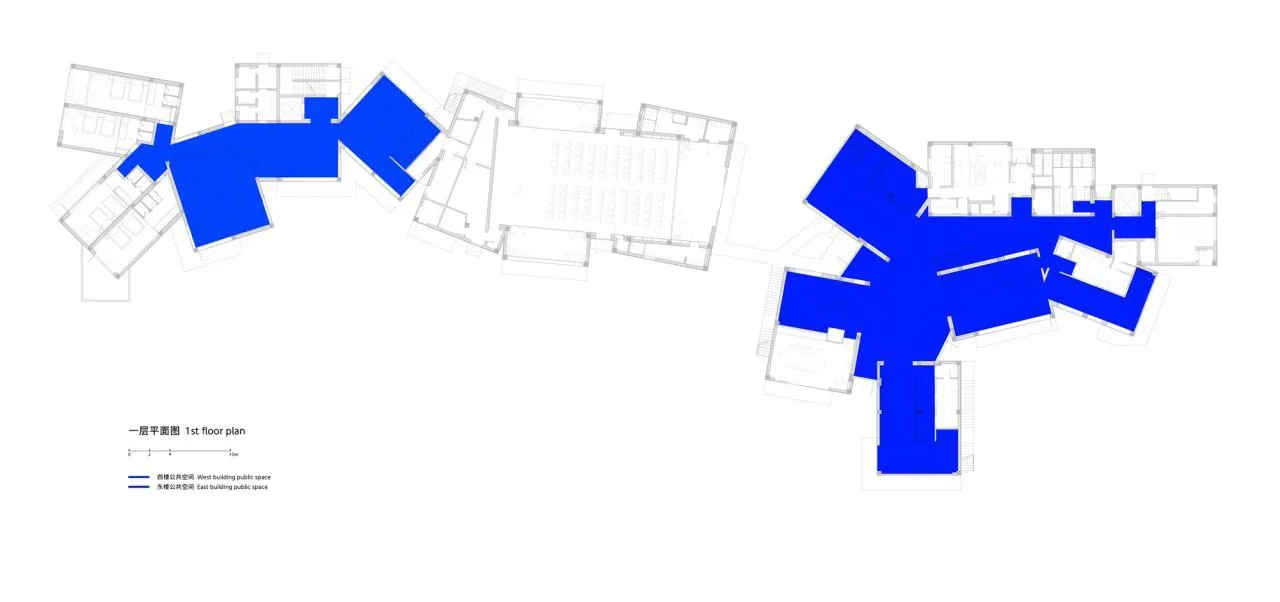
△ First Floor Plan
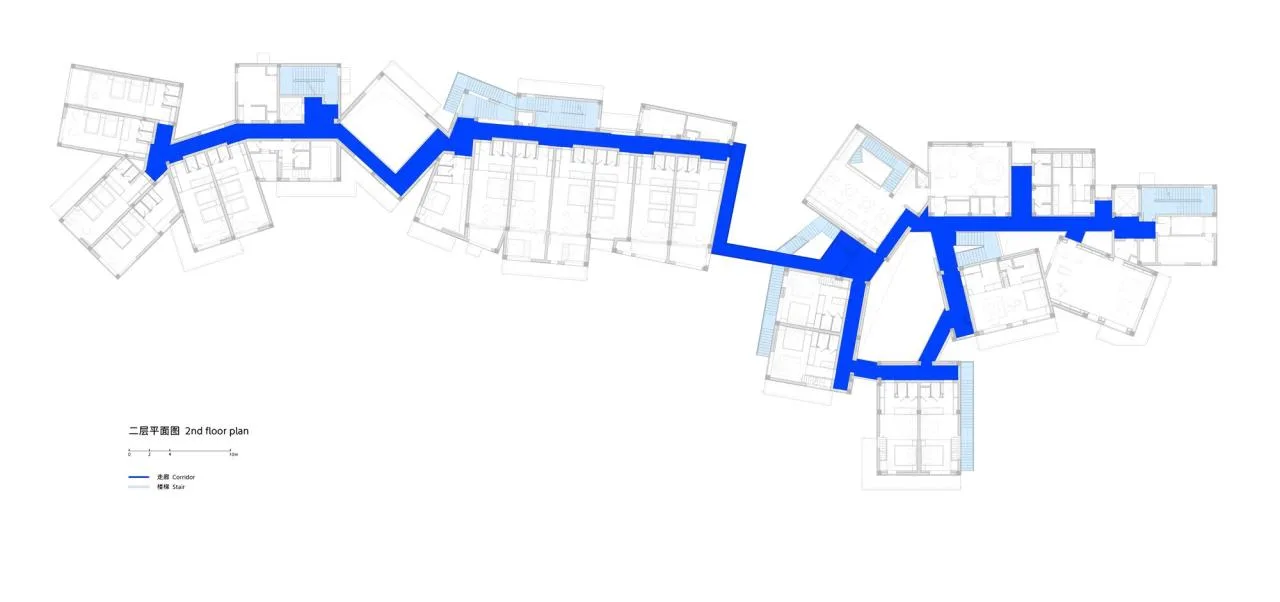
△ Second Floor Plan
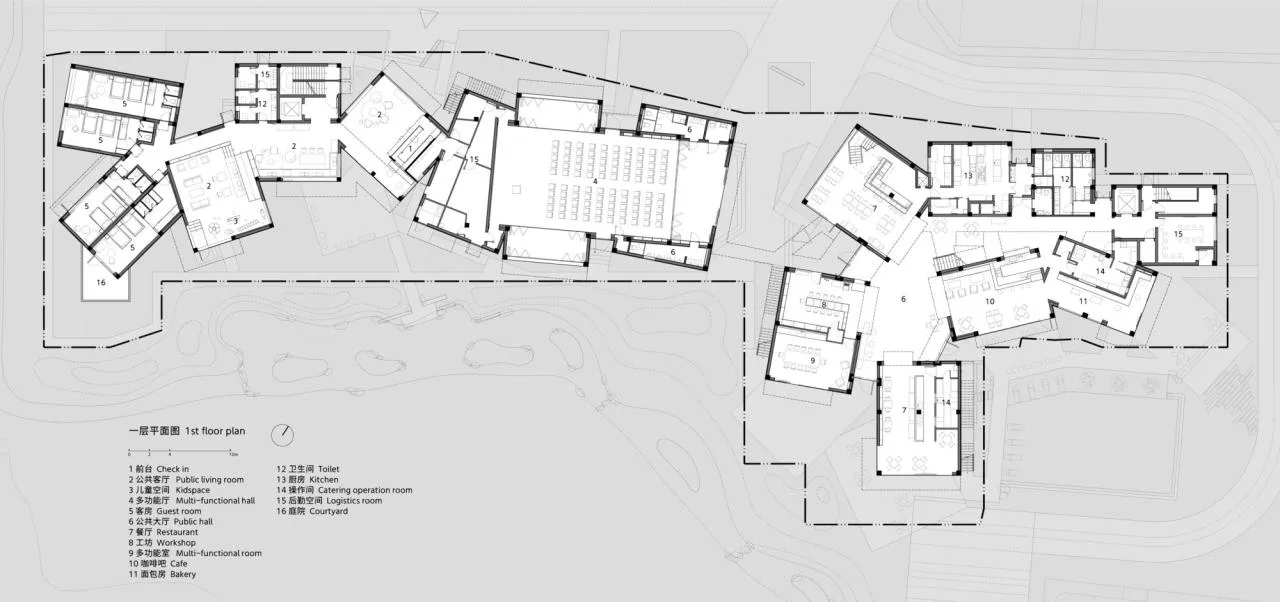
△ First Floor Plan
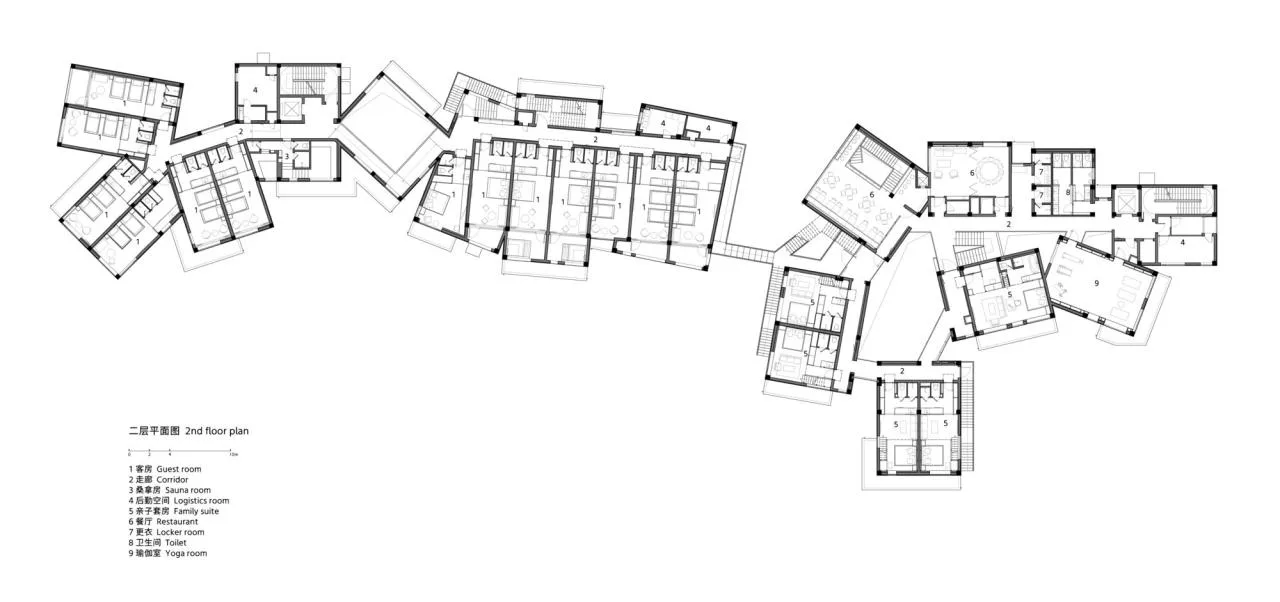
△ Second Floor Plan
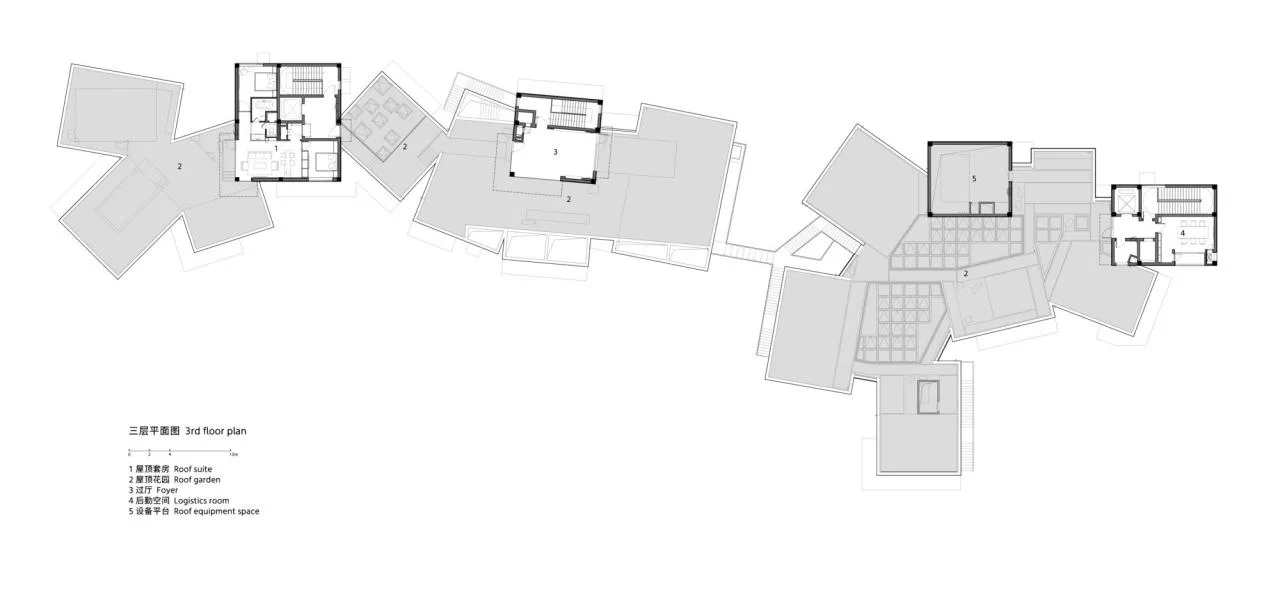
△ Third Floor Plan
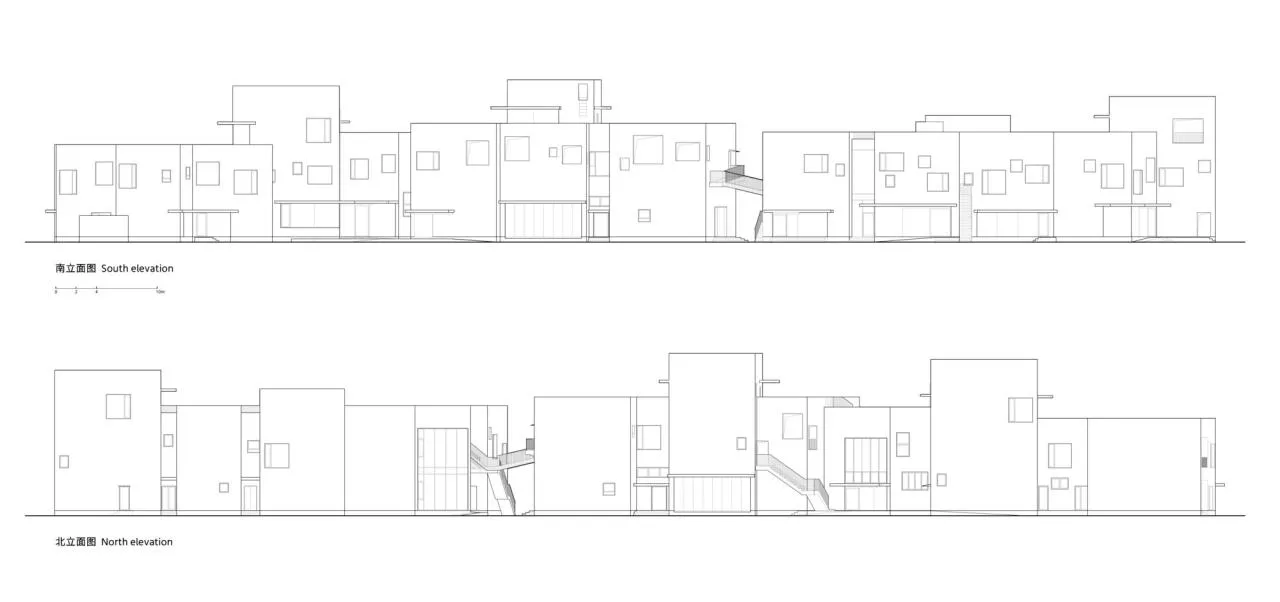
△ Elevation Drawing
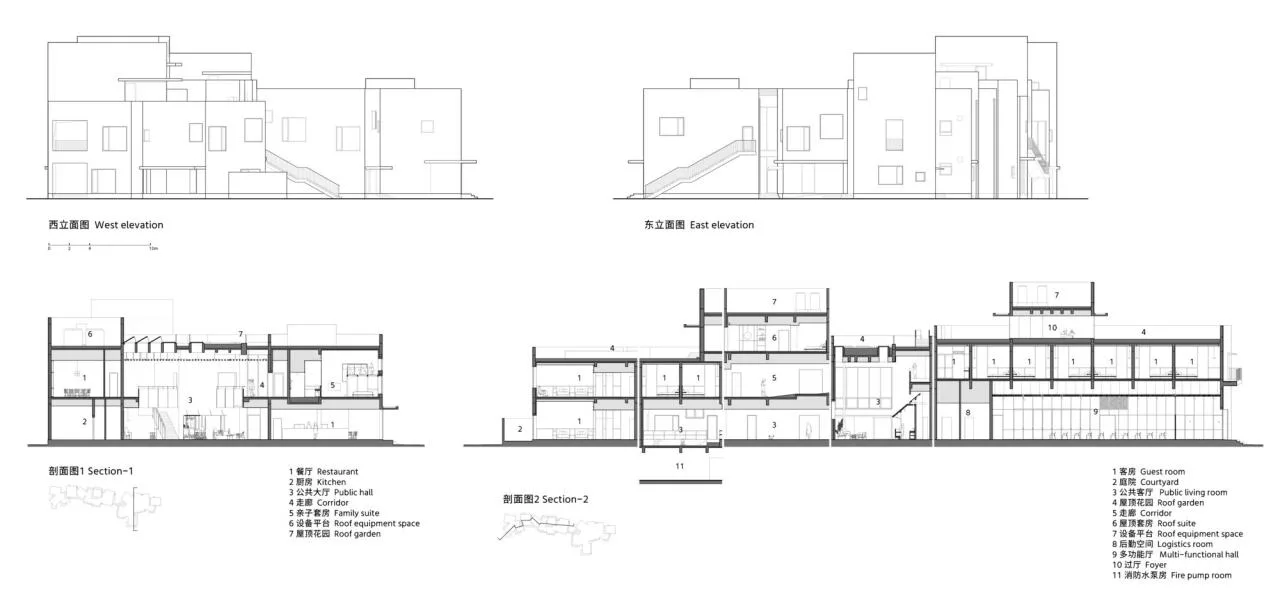
△ Elevation and Section Views
Project Information
Architect: Jumping House Architecture Studio
Area: 3,711 m²
Project Year: 2023
Photographers: Summer Solstice, Southwest Space Image, Wang Tiantian
Lead Architects: Wang Tiantian, Luo Yaqin
Project Consultant: Xu Yongyong
Construction Drawing Team: Shen Xianming, Fang Yunping, Zhang Jia, Xing Jiabin, Hu Yifeng, Yu Zhijun, Yu Weiyang, Weng Lijun, Zheng Xiaoxiao, Wang Dong
Indoor Lighting Consultant: Fang Fang
Operator: Deqing Xipo Hotel Management Co., Ltd
Landscape Design: Chu Zuo Lan (Shanghai) Architectural Design Consulting Co., Ltd
Indoor Construction Drawing Team: Fang Junhua, Zhong Yue, Ye Haichao, Dai Haiguang, Wang Yajun, Liu Hui
Collaborative Design Institute: Zhejiang Heyi Architectural Design Co., Ltd
Soft Decoration Design: Deqing Endless Summer Soft Decoration Design Co., Ltd. / Shen Ya, Ping Fengjia, Qian Qifan
Civil Construction: Zhejiang Zhongnuo Construction Co., Ltd
Indoor Construction: Zhejiang Qiaoxing Construction Group Co., Ltd
Client: Deqing County Moganshan International Tourism Resort Development Co., Ltd
Location: Huzhou















Must log in before commenting!
Sign Up