
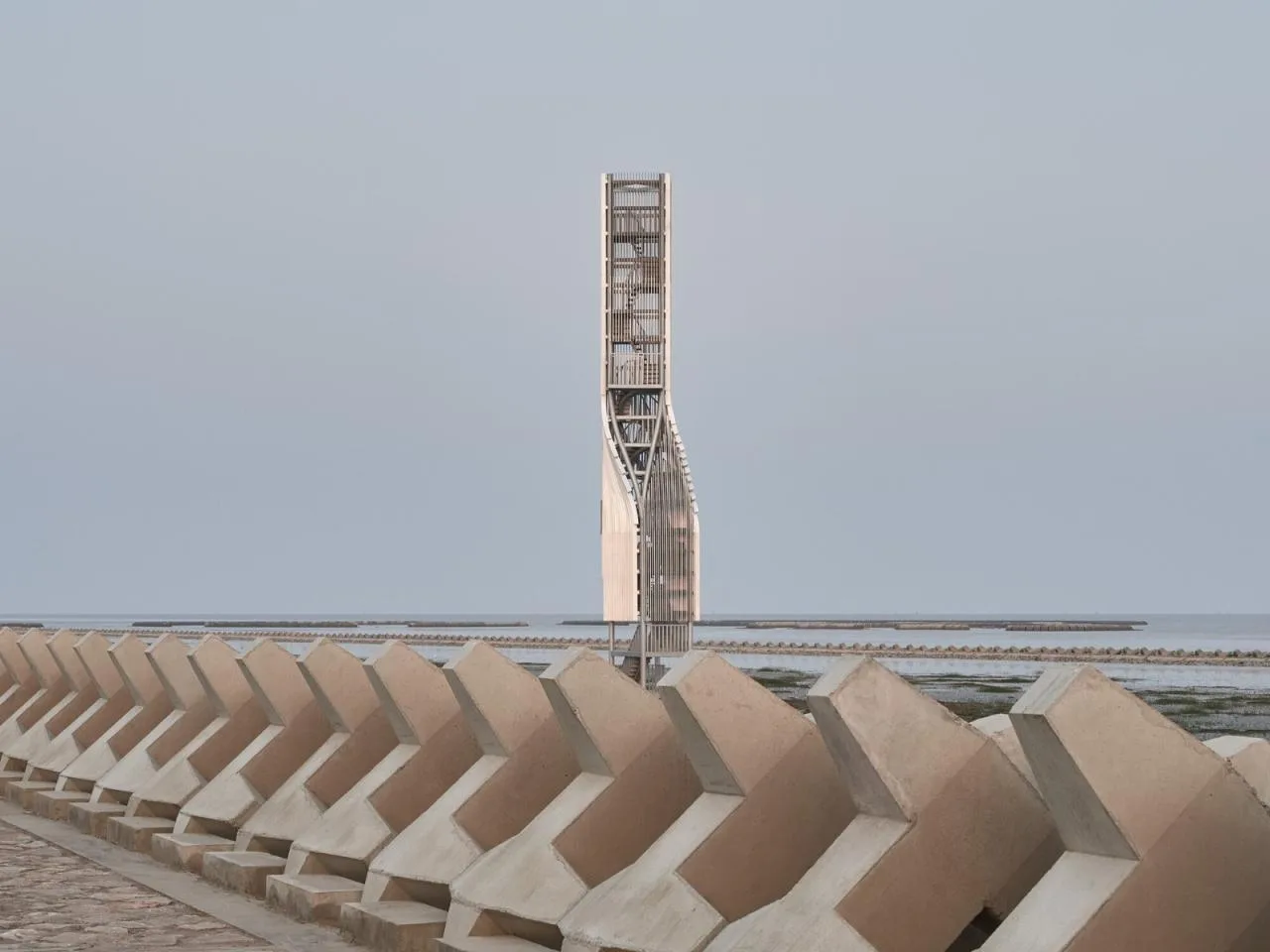
The Twist Tower and Spiral Station are two key sites within the Shanghai Lingang Marine Ecological Protection and Restoration Project, situated 10 kilometers apart along the coastline. These structures exemplify how infrastructure can serve as iconic landmarks. Though primarily functional and not open to the public, they engage the community by showcasing their ecological monitoring functions and technological features, effectively providing a broad popular science exhibition.
From an architectural standpoint, these projects explore how minimalistic design language and limited operational scope can achieve economical yet intriguing results.
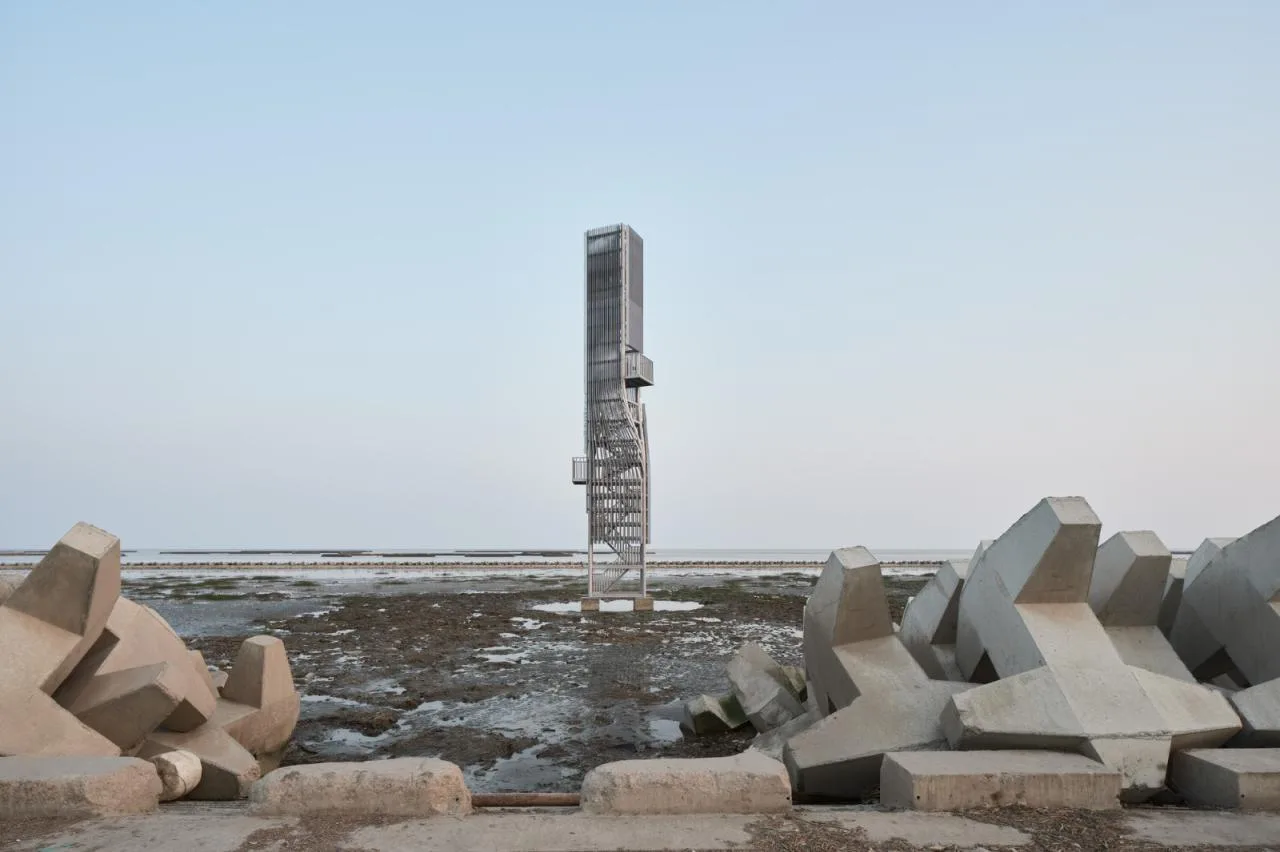
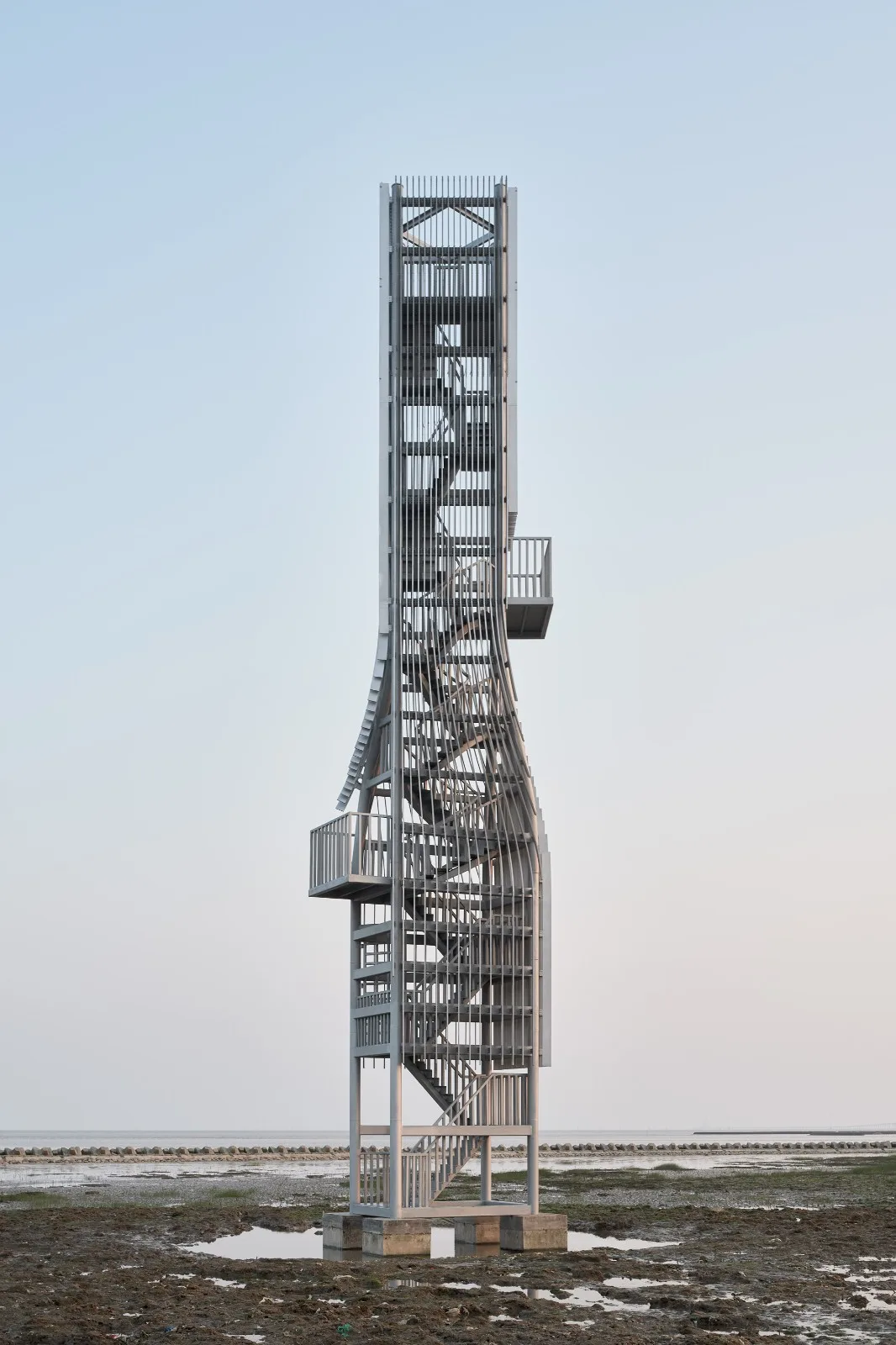
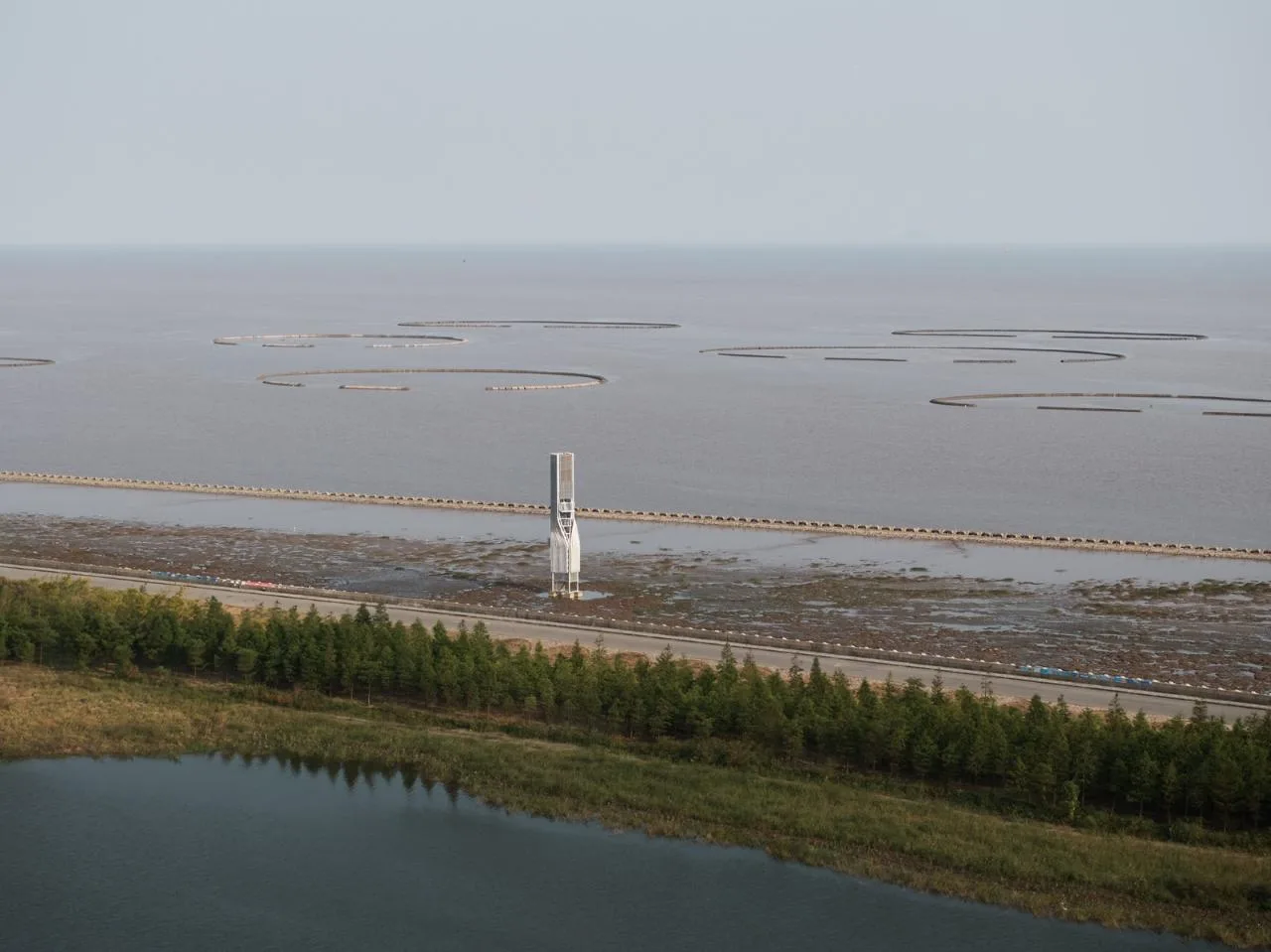
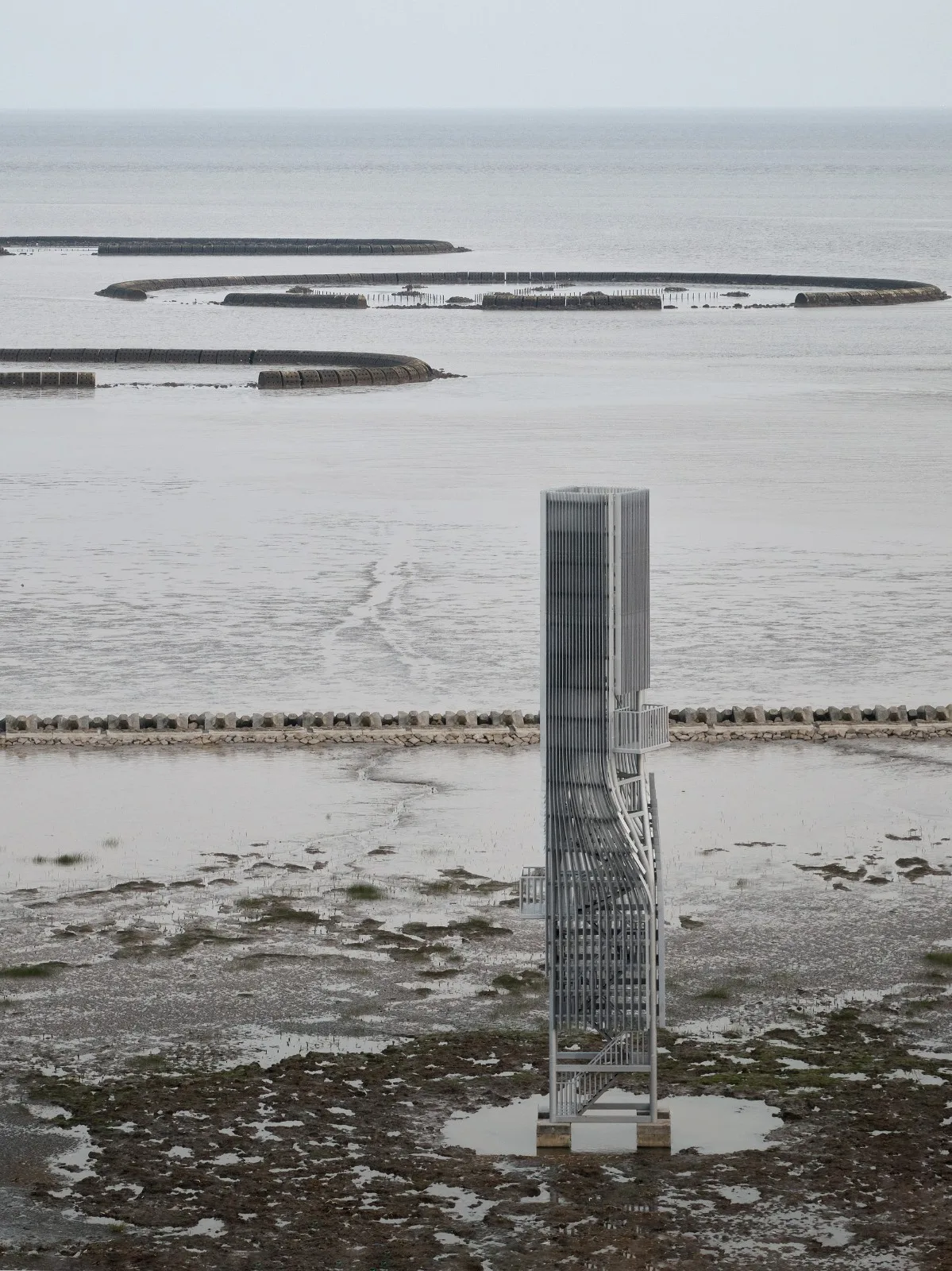
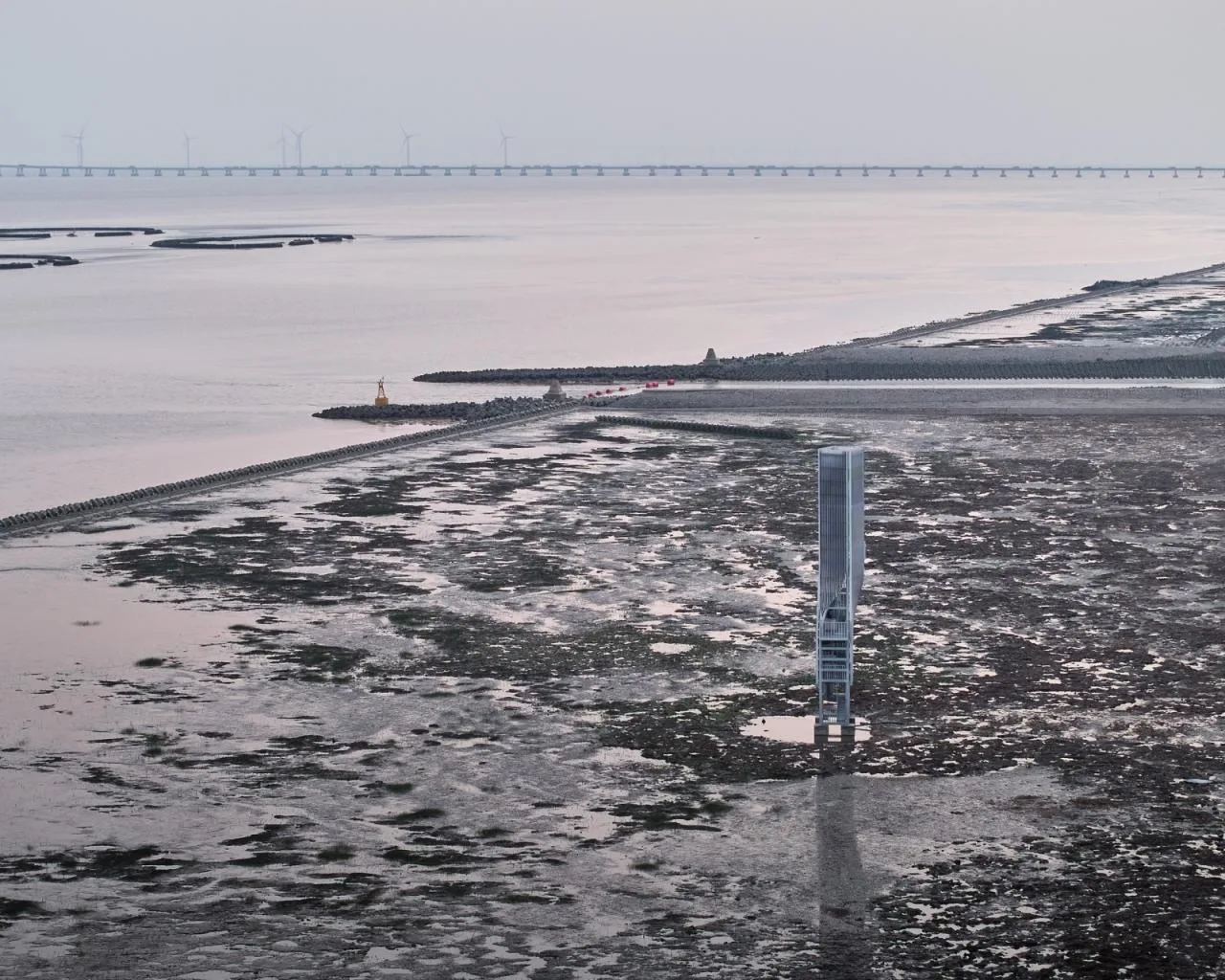
Located above the mudflat, the Twist Tower is an ecological monitoring facility integrating two key functions: carbon flux monitoring and tidal level warning. Traditionally, carbon flux monitoring is carried out by a slender steel-frame tower featuring multiple platforms at various heights for installing and retrieving monitoring devices. This supports air quality monitoring, climate change observation, birdwatching, and data management. Meanwhile, tidal level warnings typically rely on a concrete cylinder equipped with top lighting to signal ocean tide changes and storm surge alerts.
Initially, these two functions were planned as separate structures at different sites. However, the client opted to combine them into a single 20-meter-high tower, serving as a distinctive landmark for the area.
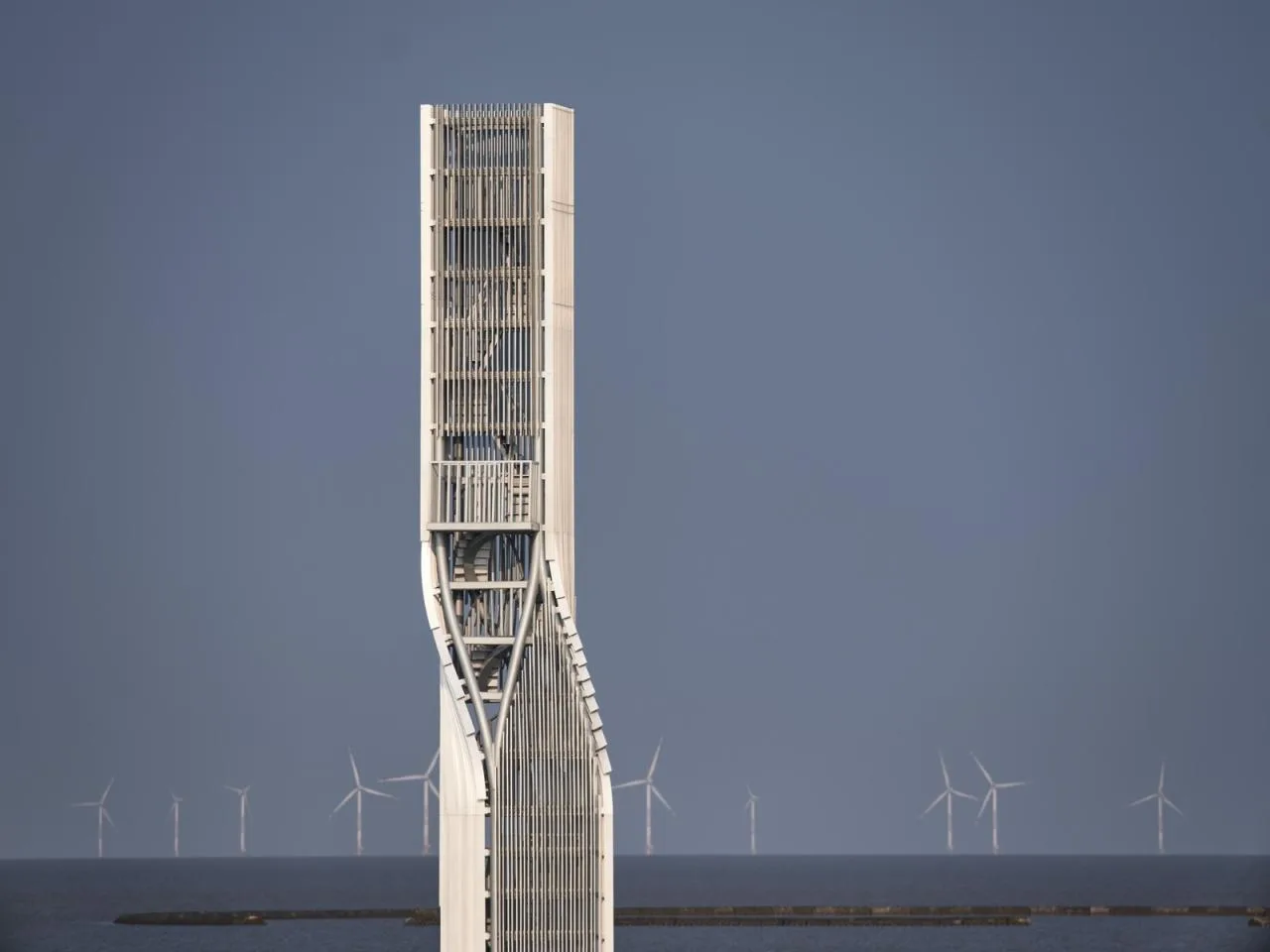
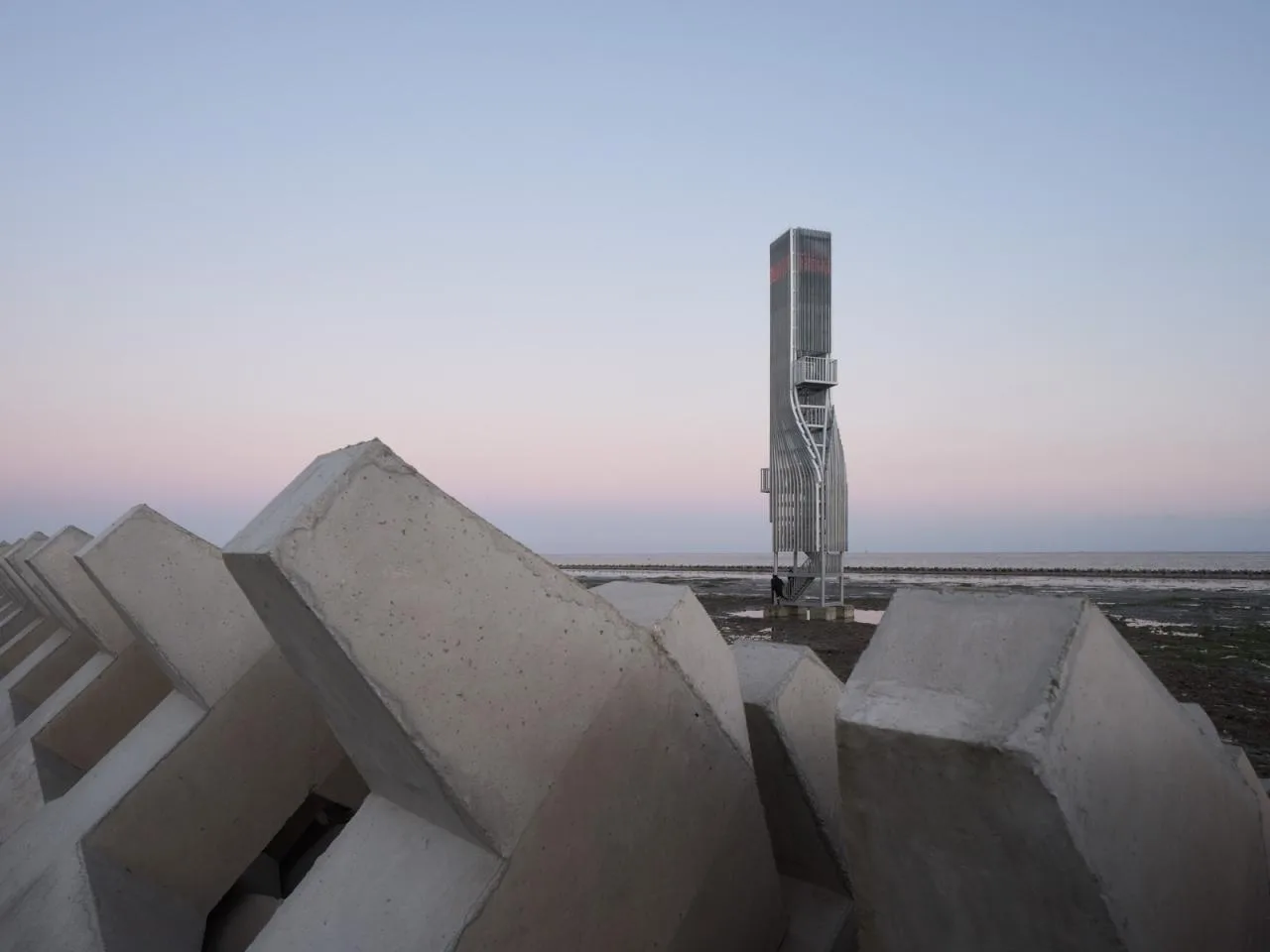
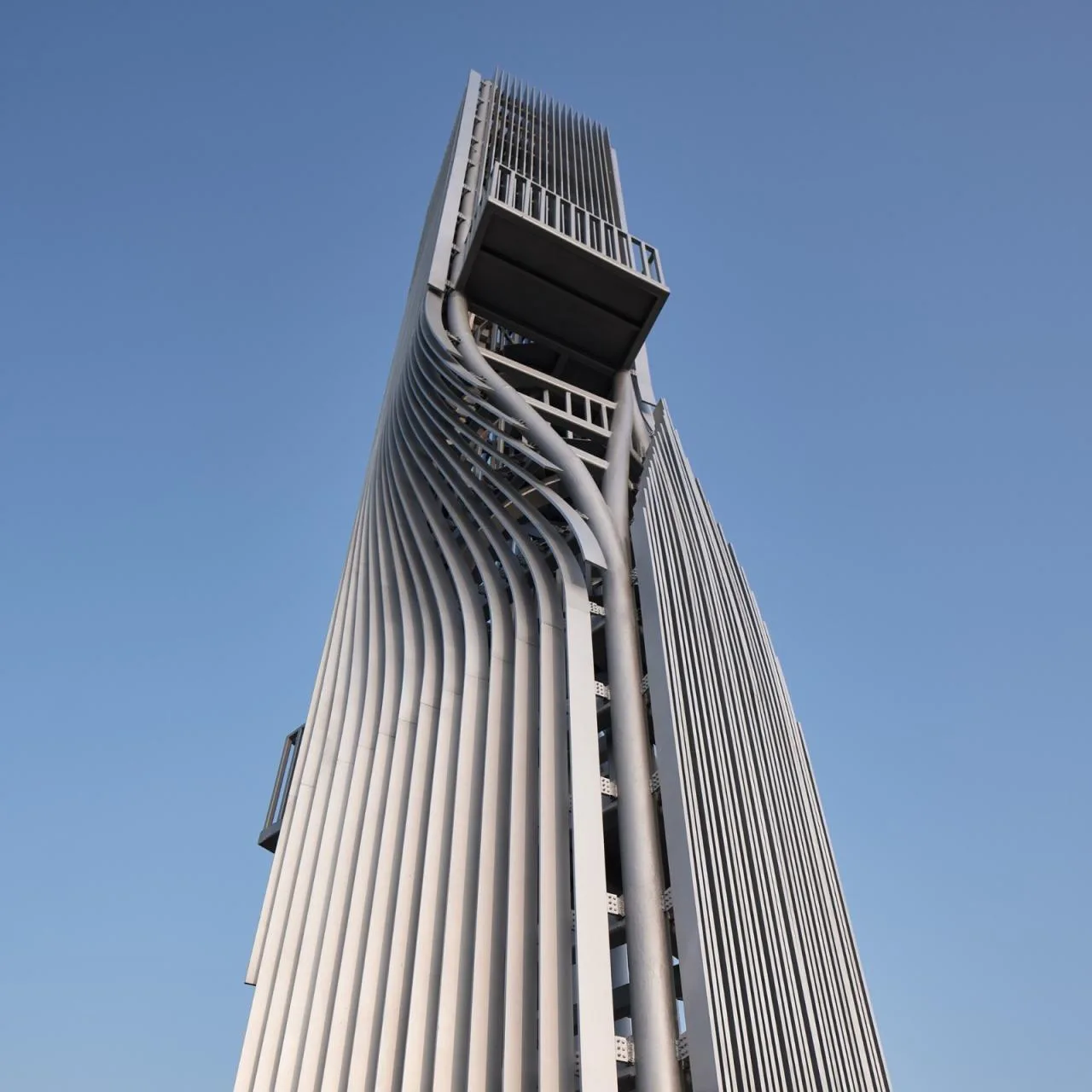
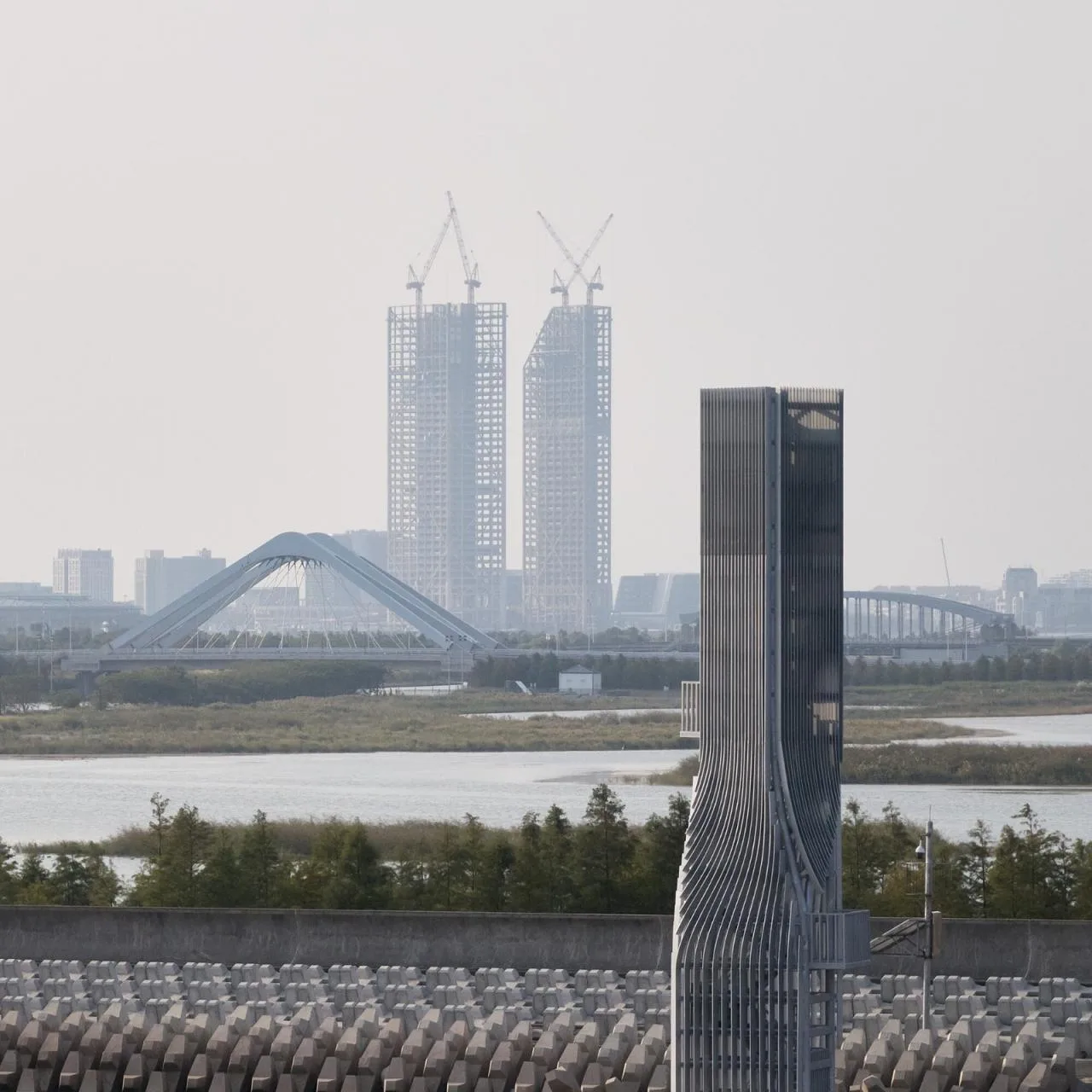
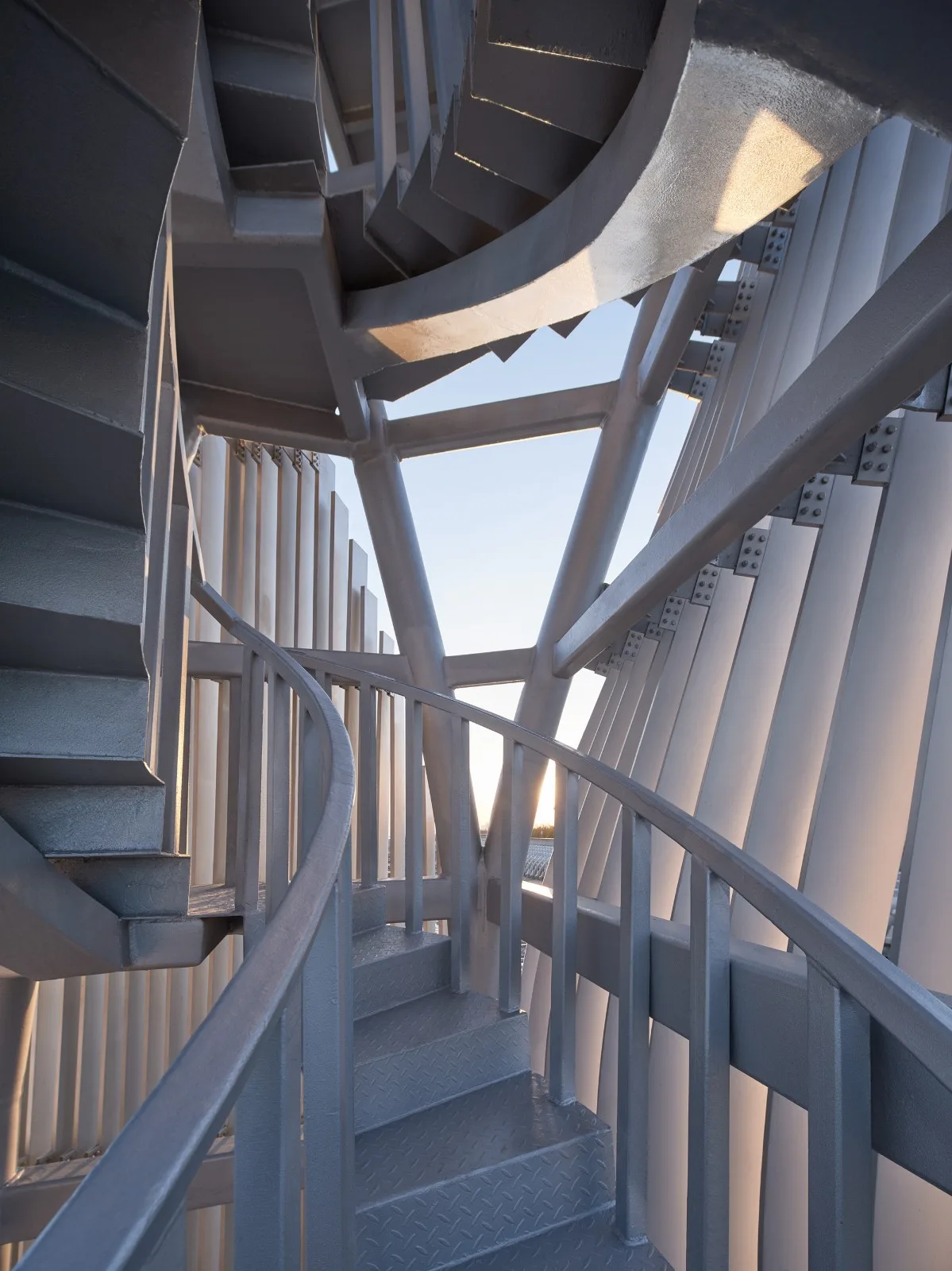
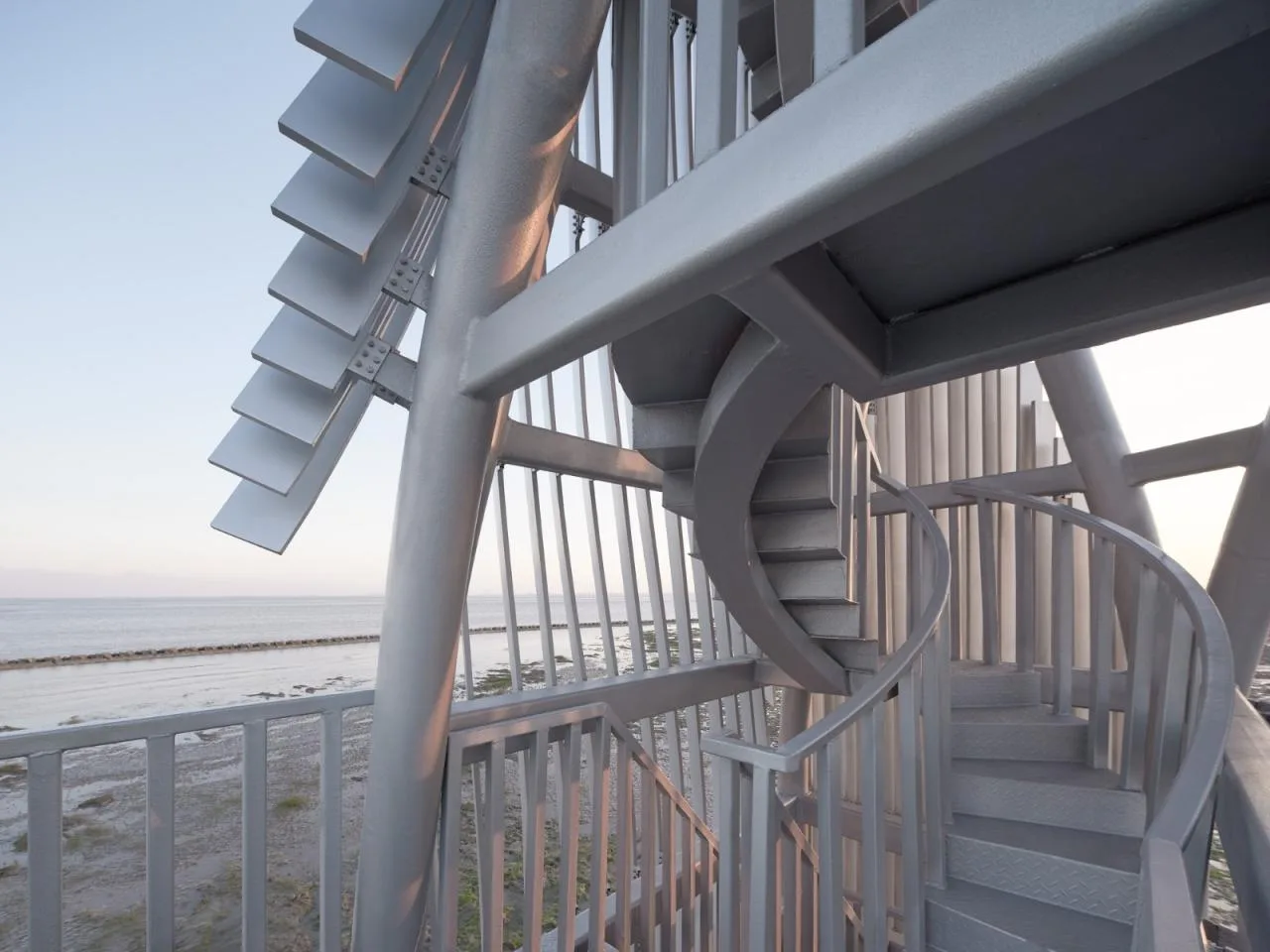
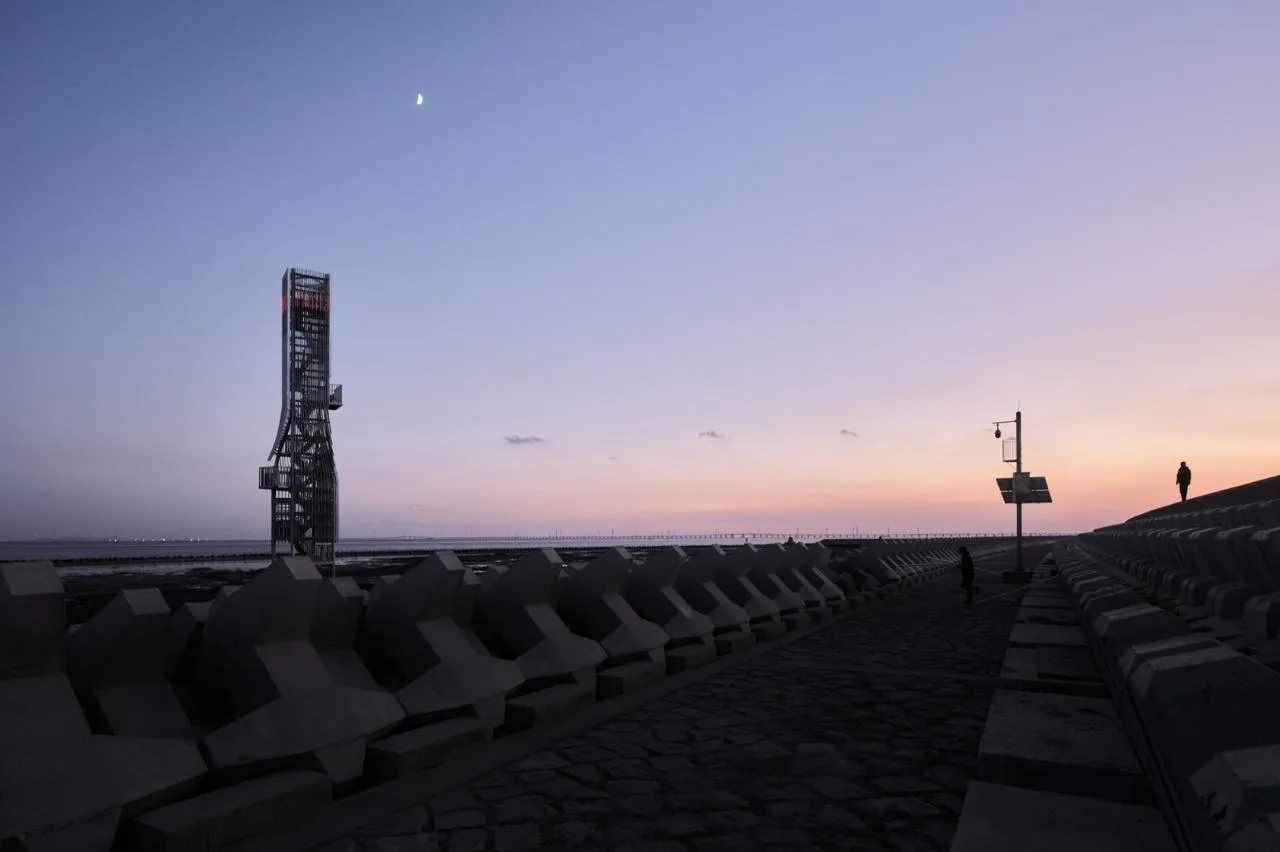
The integrated tower features a twisting motion at both ends, symbolizing the fusion of its dual functions and aiding the suspension of monitoring instruments in multiple directions. A narrow internal staircase connects the different levels. Encased in vertical metal panels, the steel structure presents an ambiguous scale against the vast, unmarked beach landscape. The steel staircase appears and disappears subtly among the panels as one approaches.
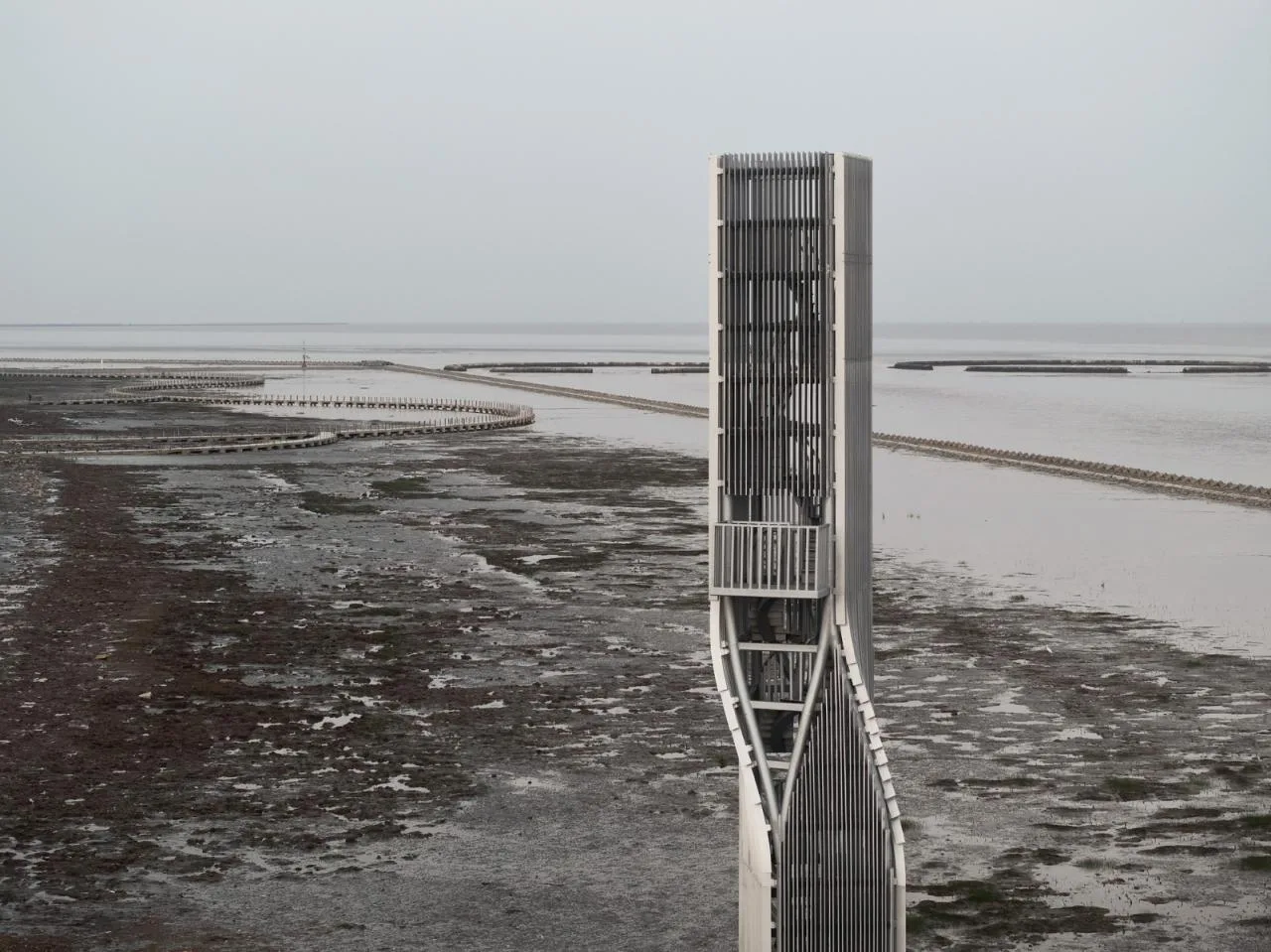
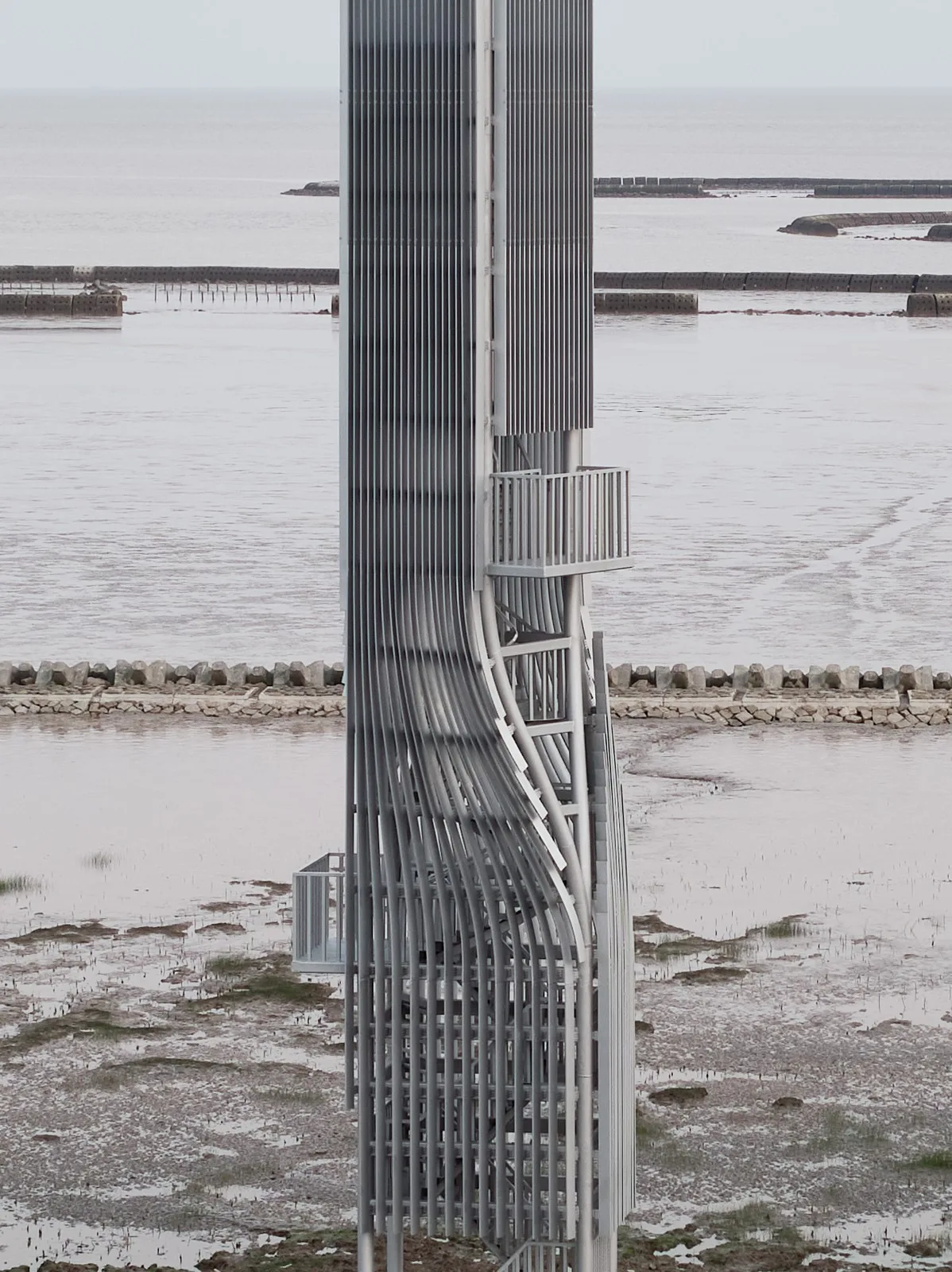
The tower’s base measures 3 by 2 meters, twisting 25 degrees to reduce to a 2 by 2 meter cross-section at the top. A 4-meter-high LED light strip crowns the tower, serving as a tide warning signal. Below this, the carbon flux monitoring zone includes observation platforms situated at 6 and 12 meters above sea level.
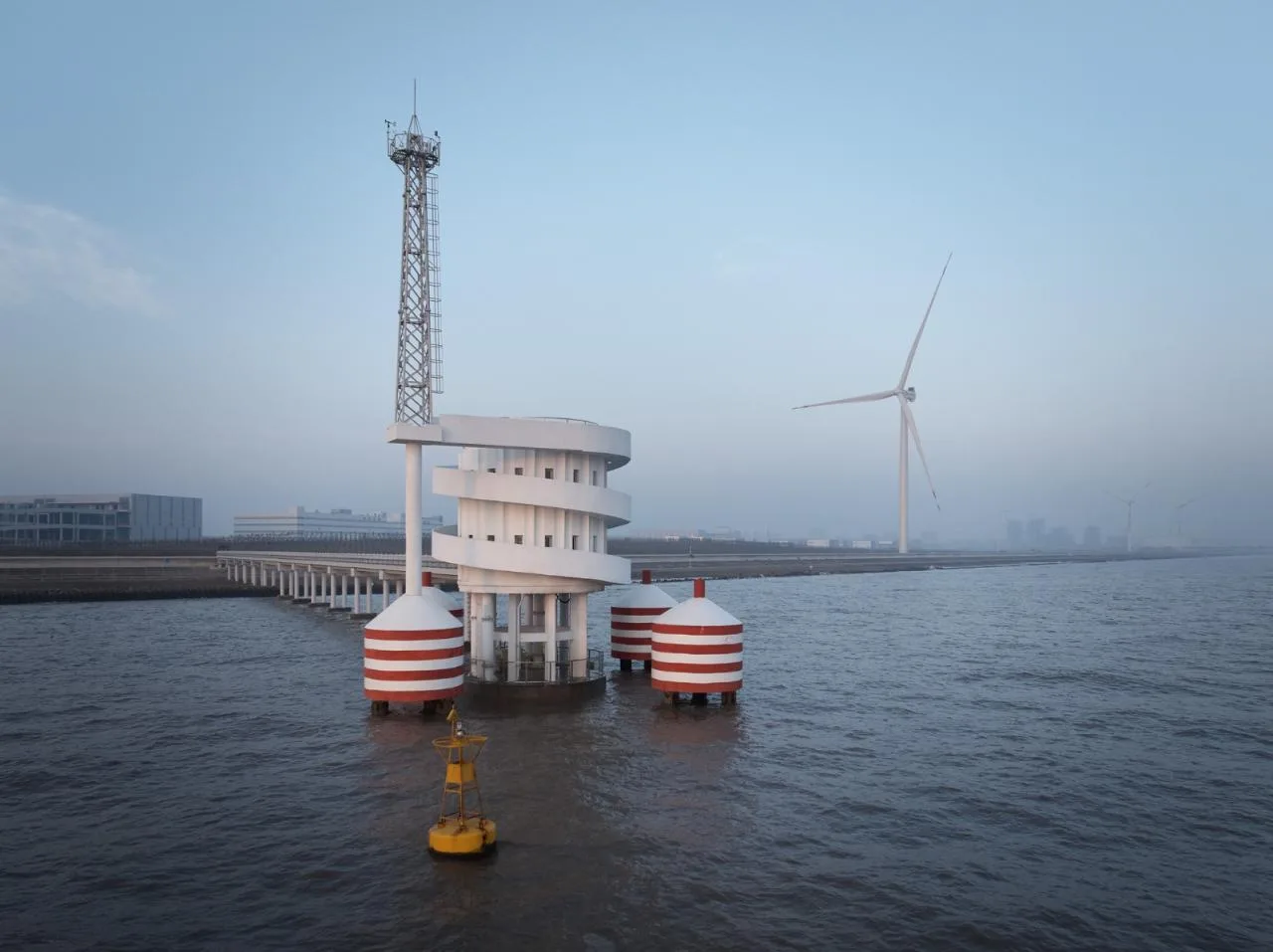
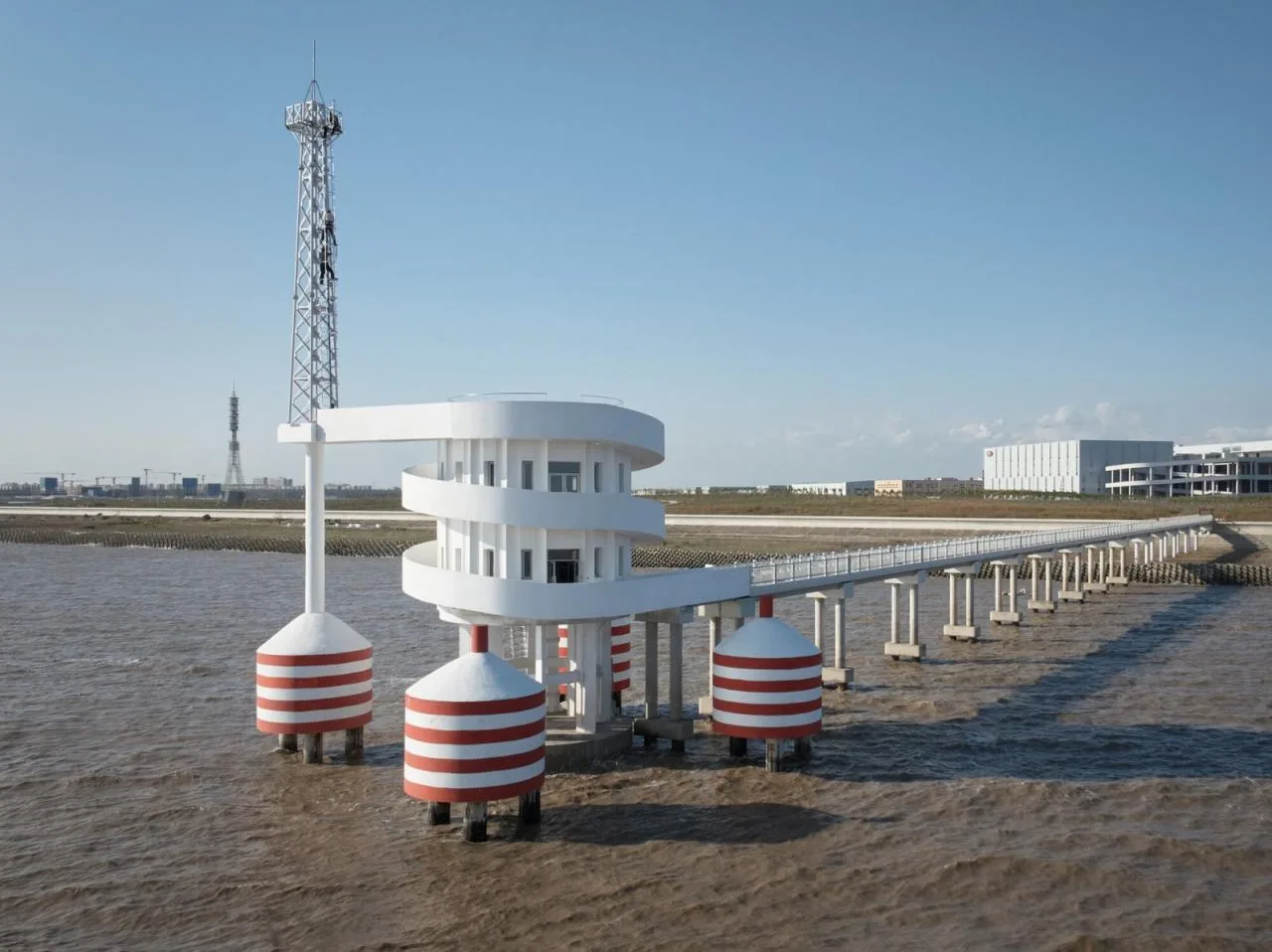
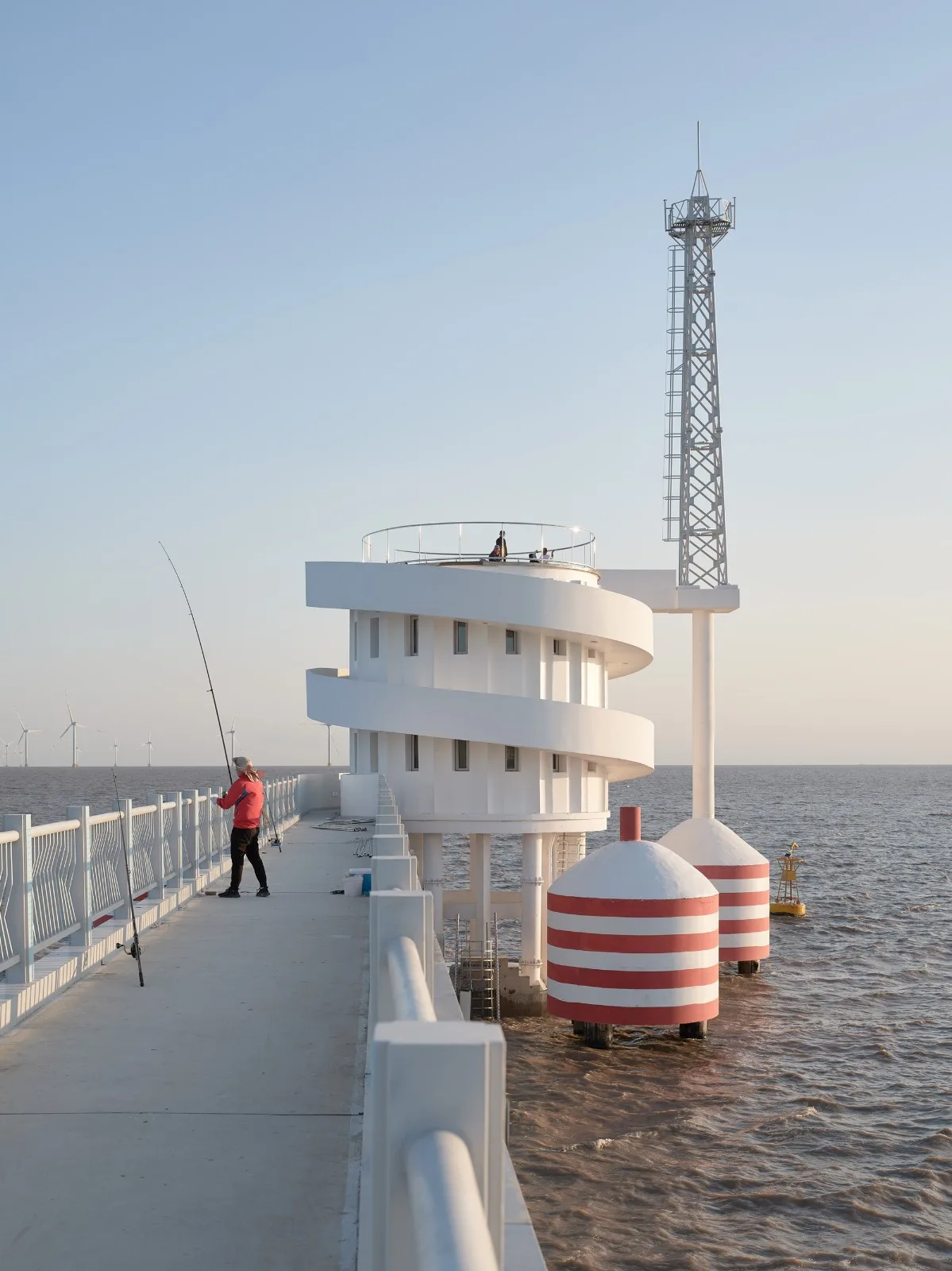
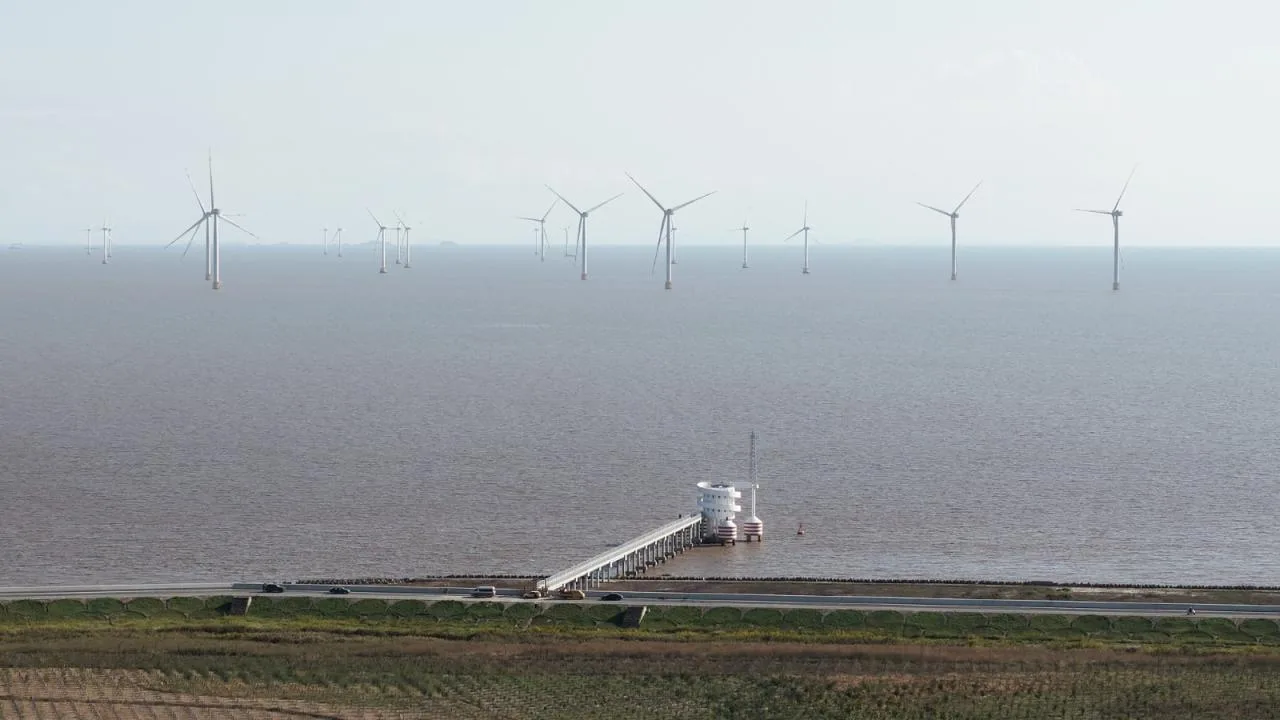
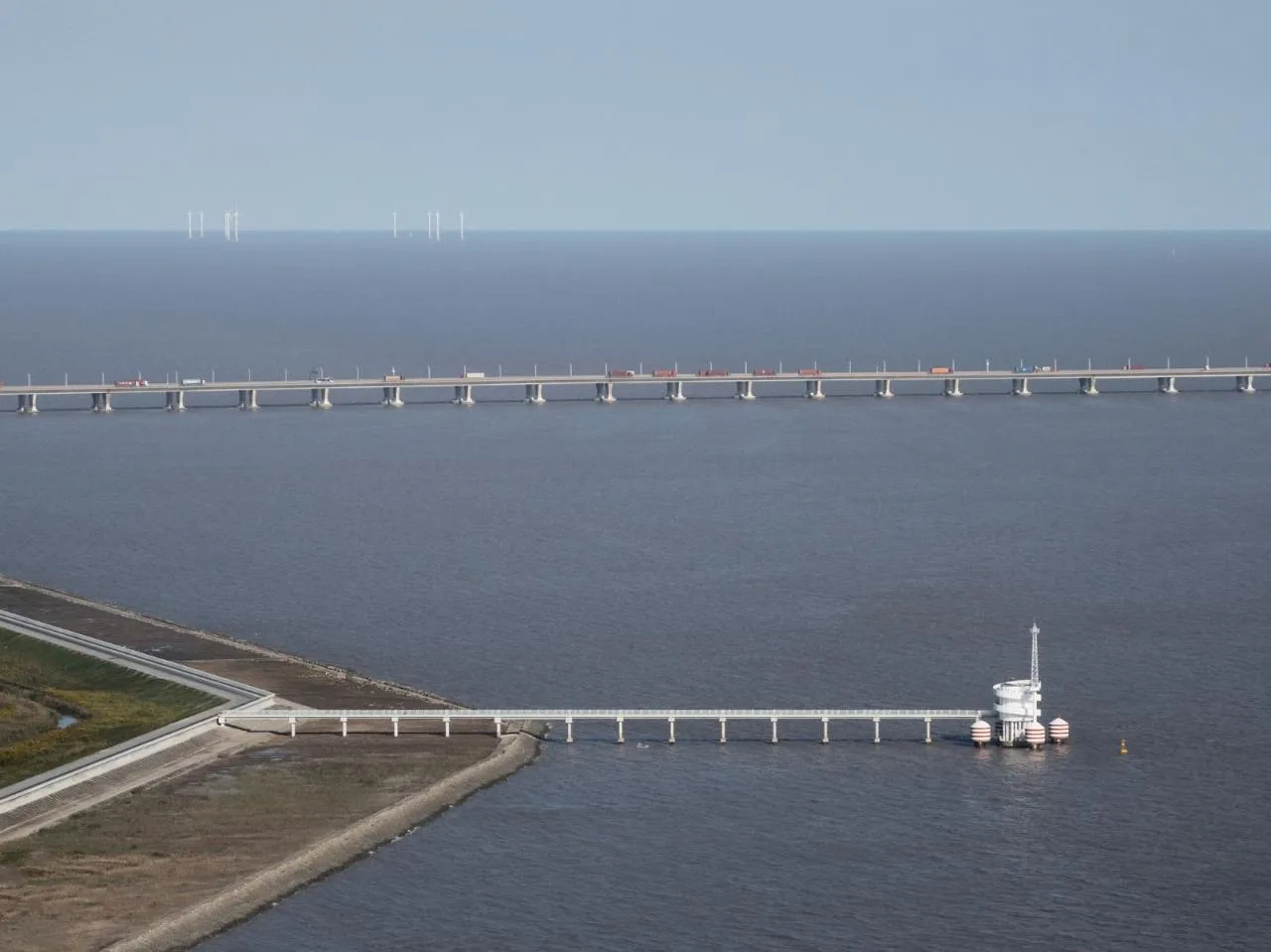
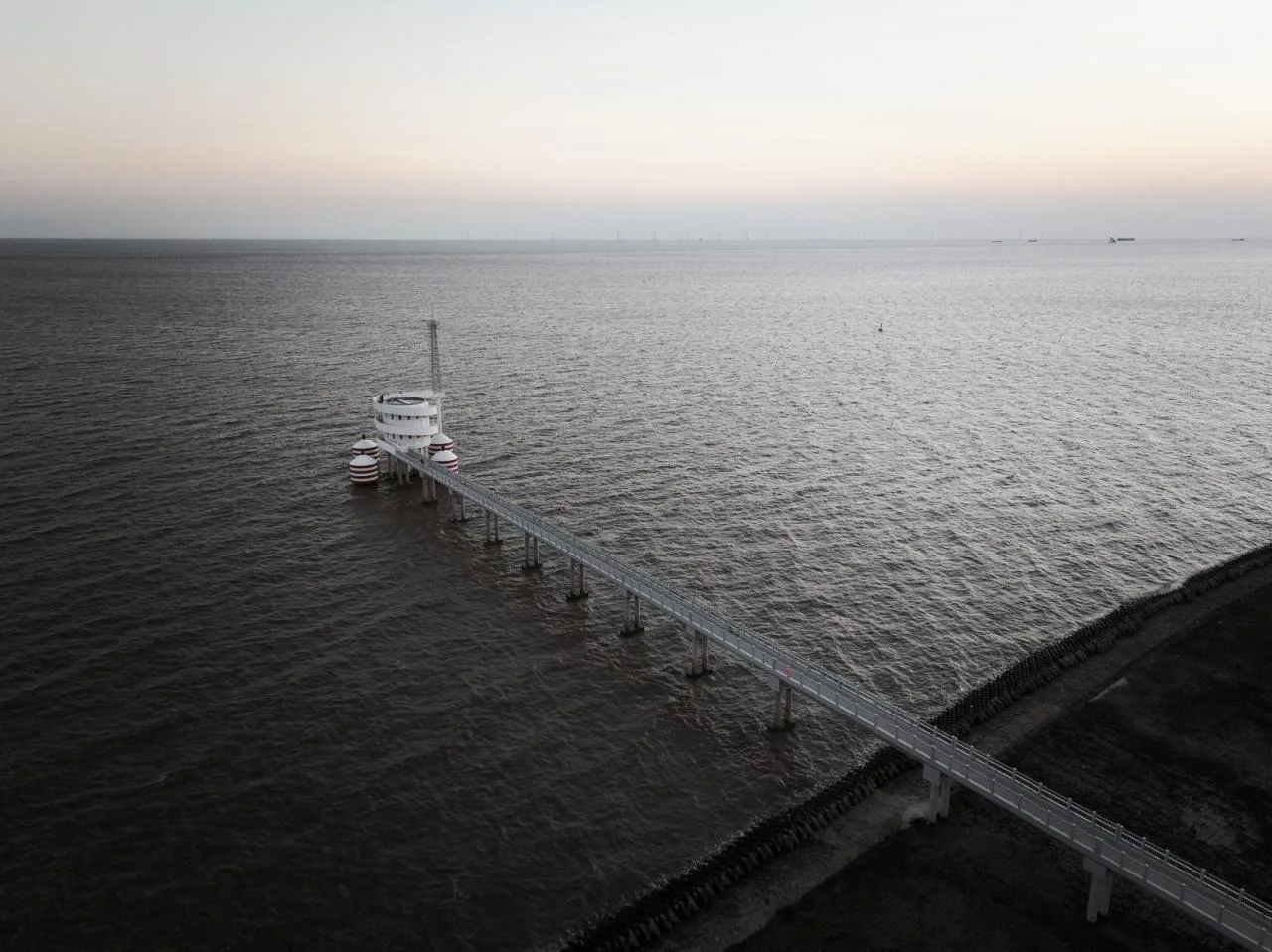
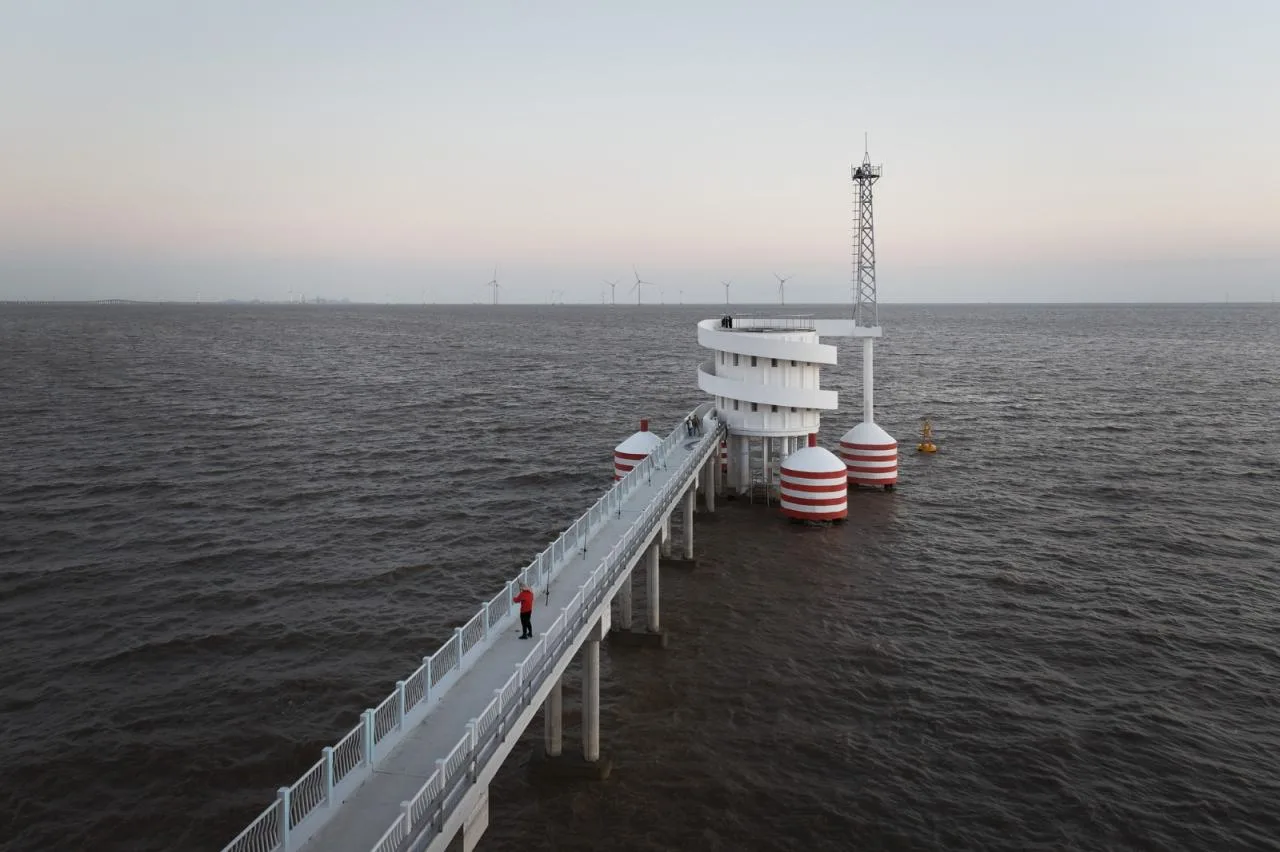
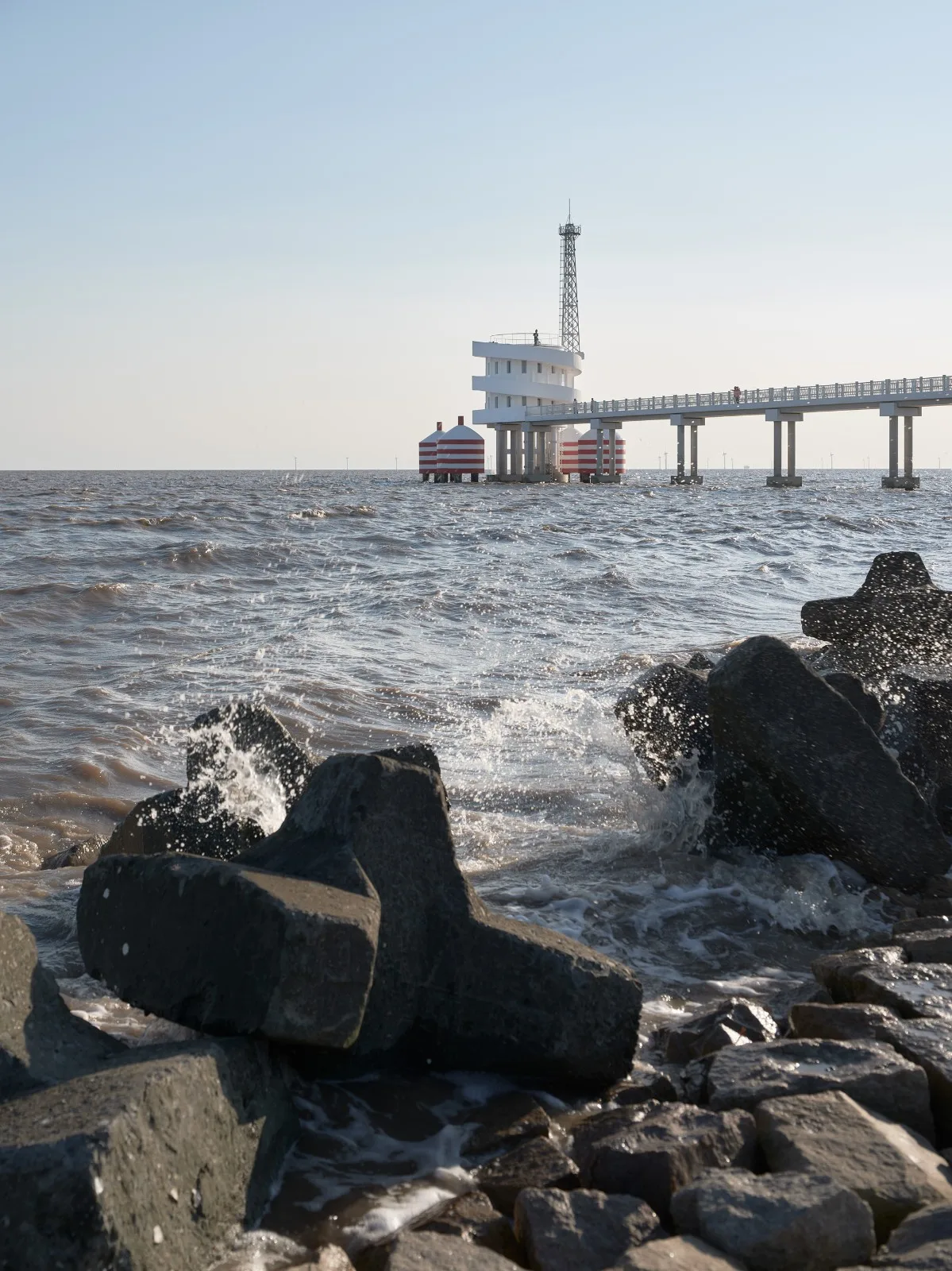
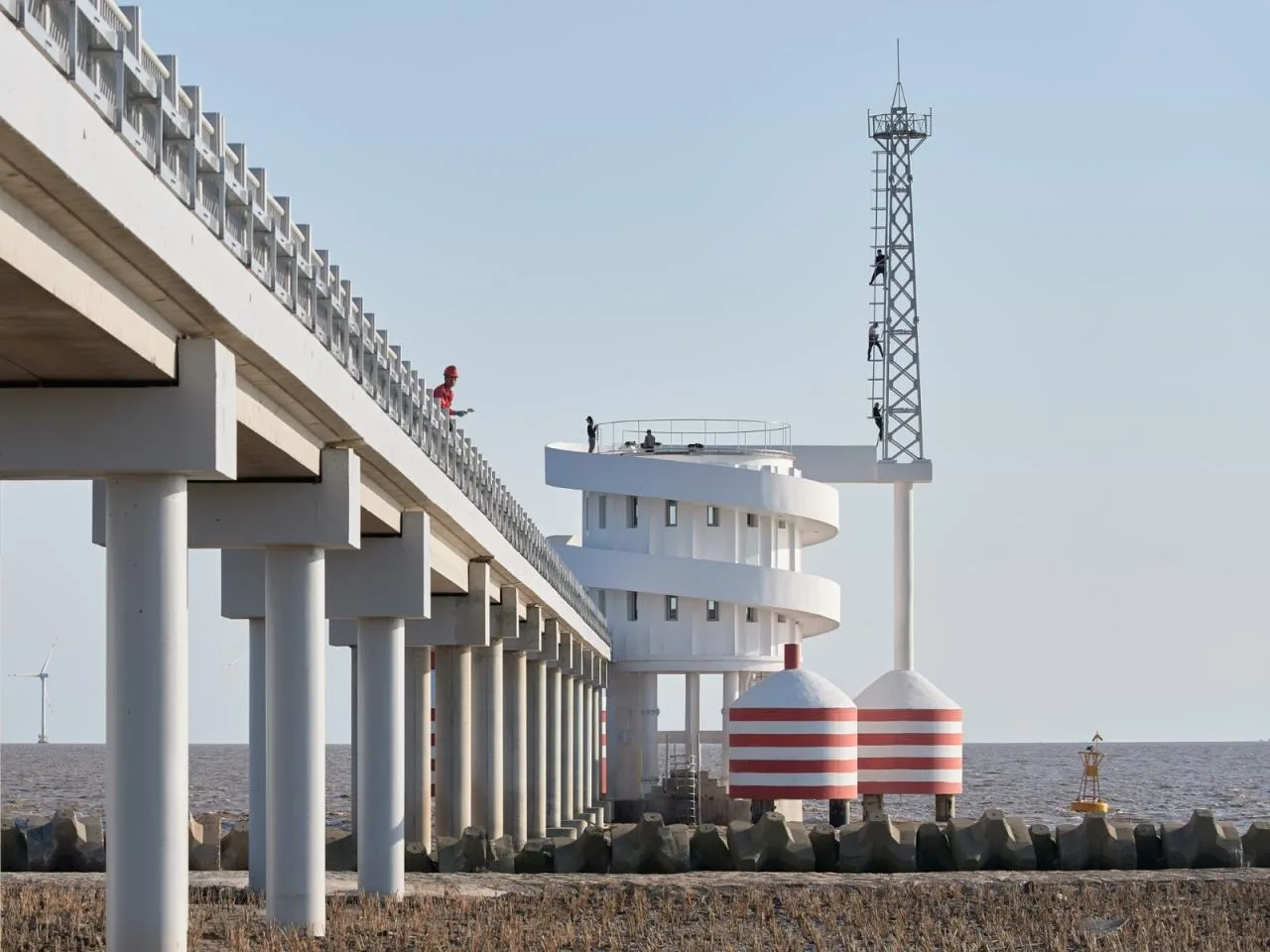
At the seaward end lies the Spiral Station, an ecological monitoring outpost positioned 200 meters offshore. It supports essential monitoring tasks including hydrology, meteorology, and water quality assessments. Access is via a 20-span pier, making it resemble a solitary space station floating on the sea.
The platform measures 11 by 11 meters, with all functions and form confined within this footprint. Additional facilities include the pier, collision protection, navigation warning signs, tide observation wells, and water sampling points.
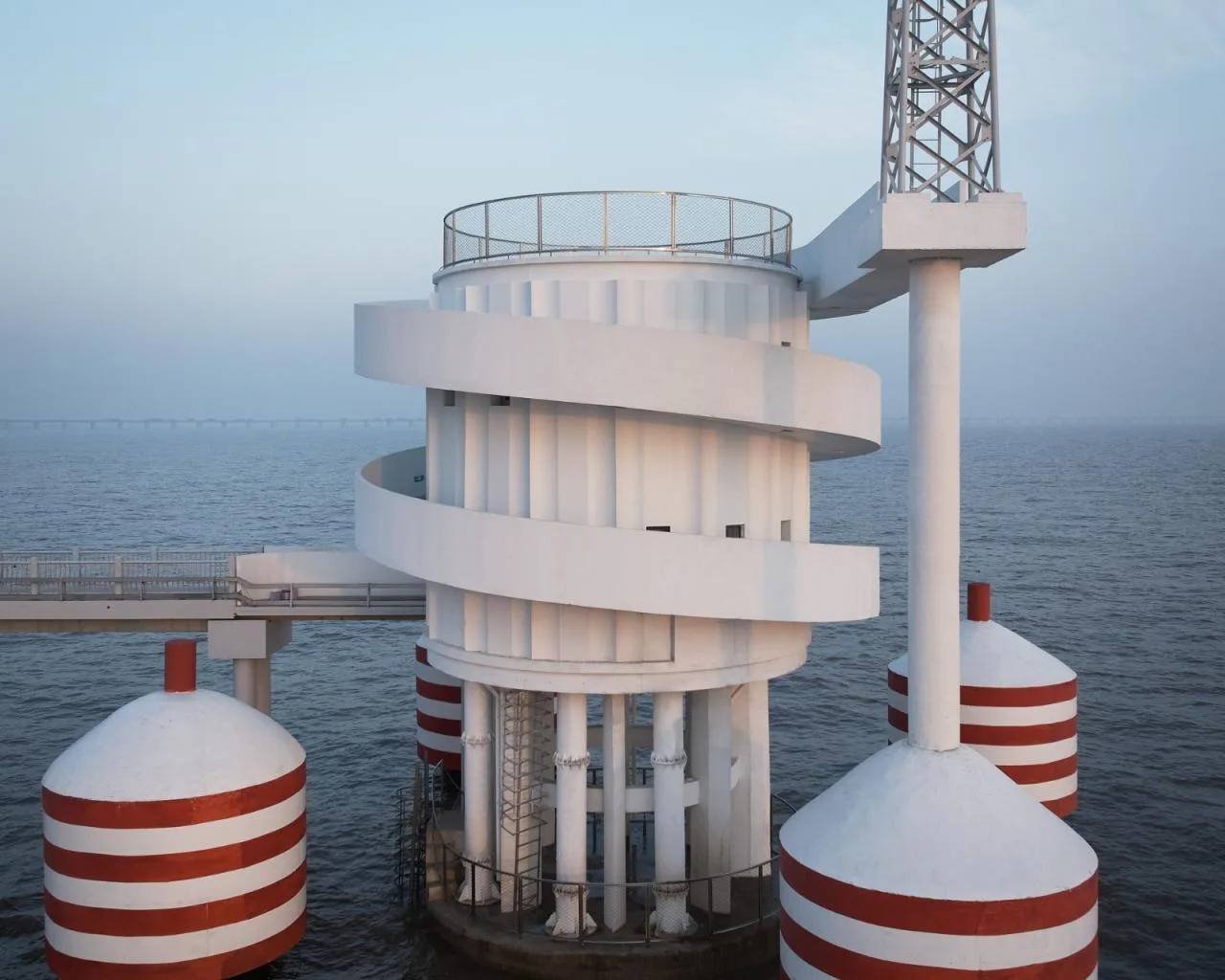
The typical offshore station is a rectangular concrete box connected by indoor and outdoor stairs across its detection platform, two floors, and roof. A climate monitoring tower rises from the roof. Due to strong offshore winds and its distance from the shore, the design emphasizes bold, large-scale movements to create a visual landmark without unnecessary decoration.
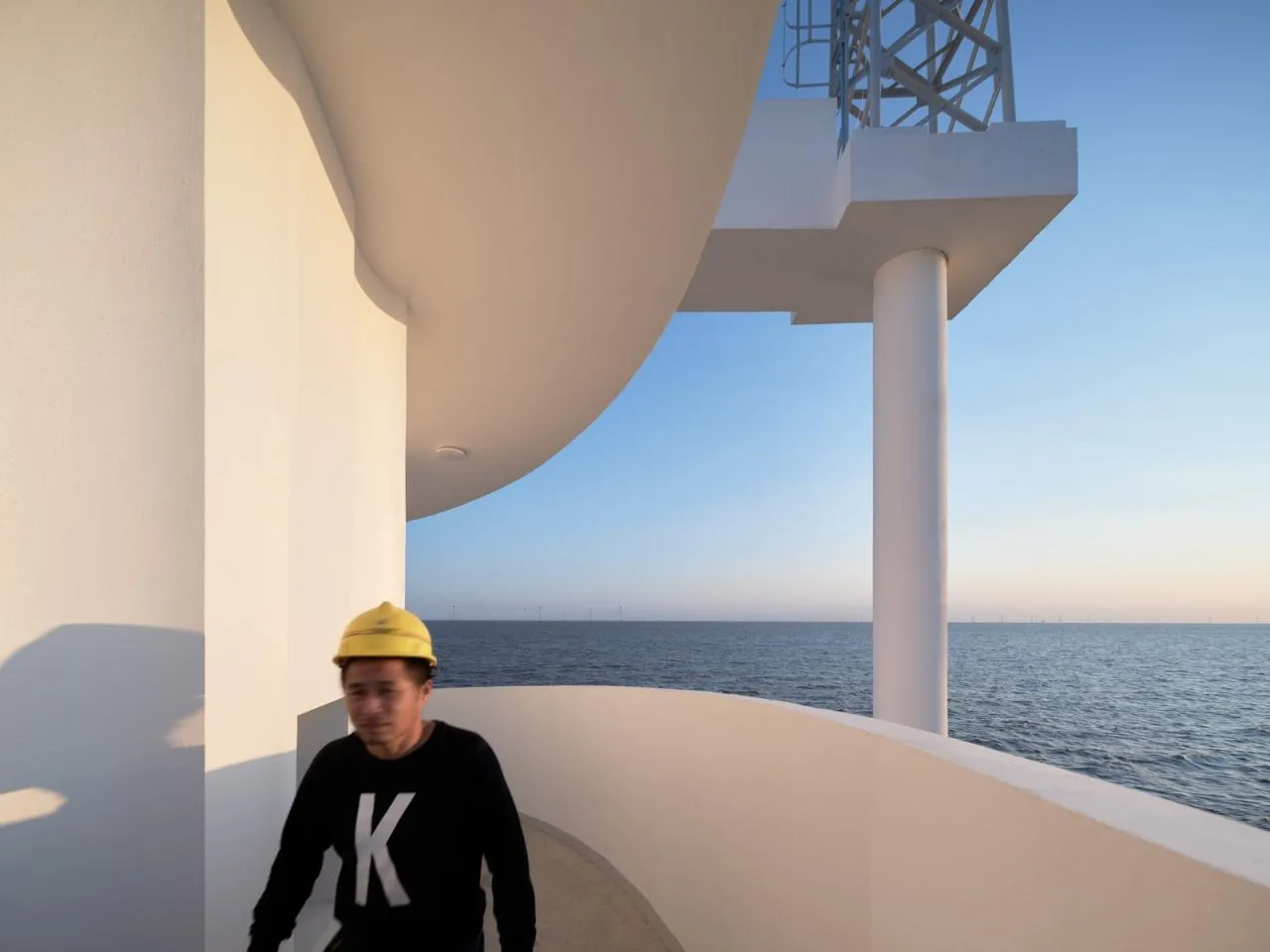
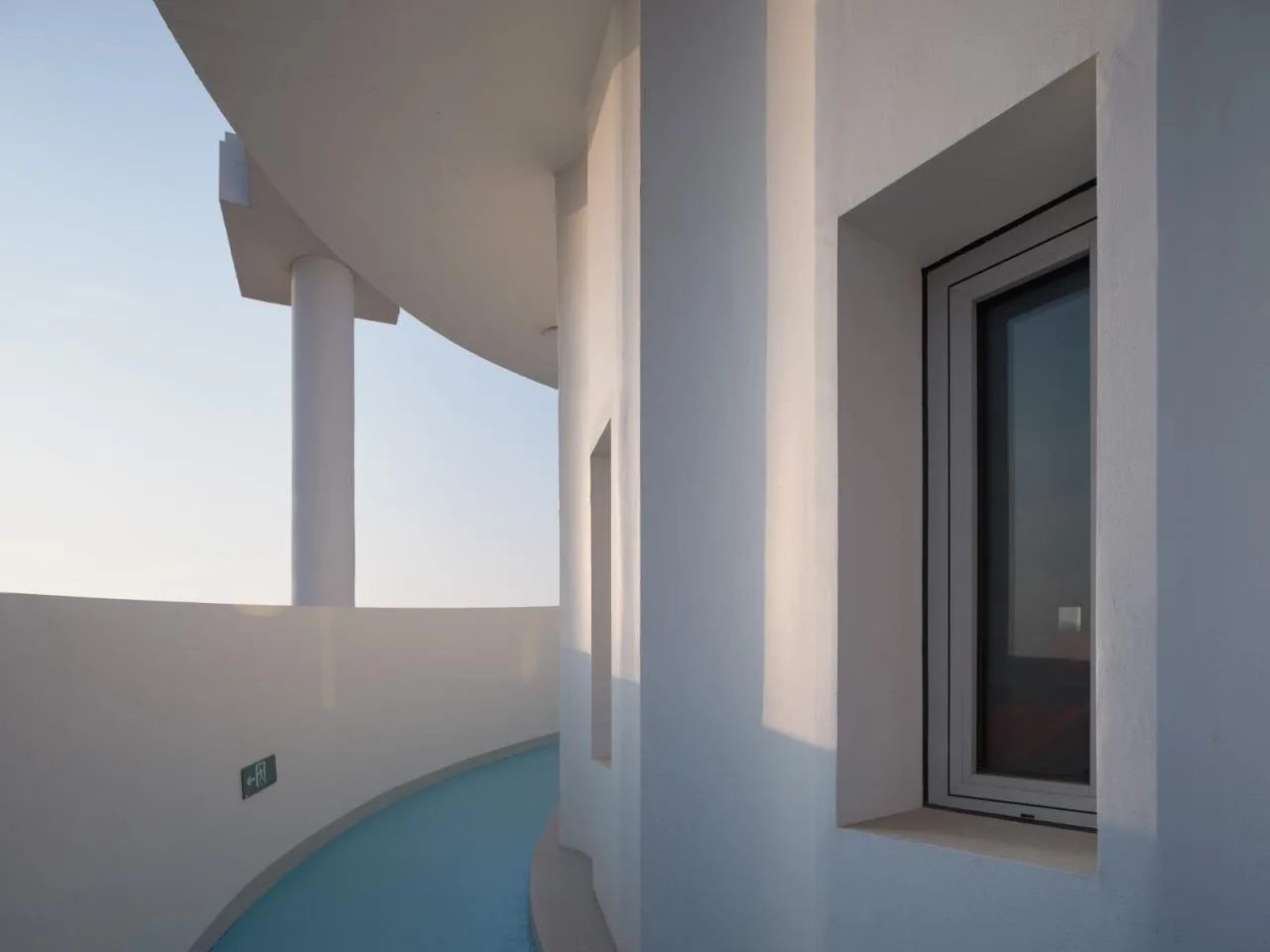
The station features a circular floor plan, 8 meters in diameter, with a vertical spiral corridor 2 meters wide wrapping around its perimeter. This corridor gently ascends from the pier to the roof, resembling a long ribbon connecting the pier to the climate tower on the crash barrier. Inside, staff enjoy unobstructed space, panoramic sea views, and easy roof access.
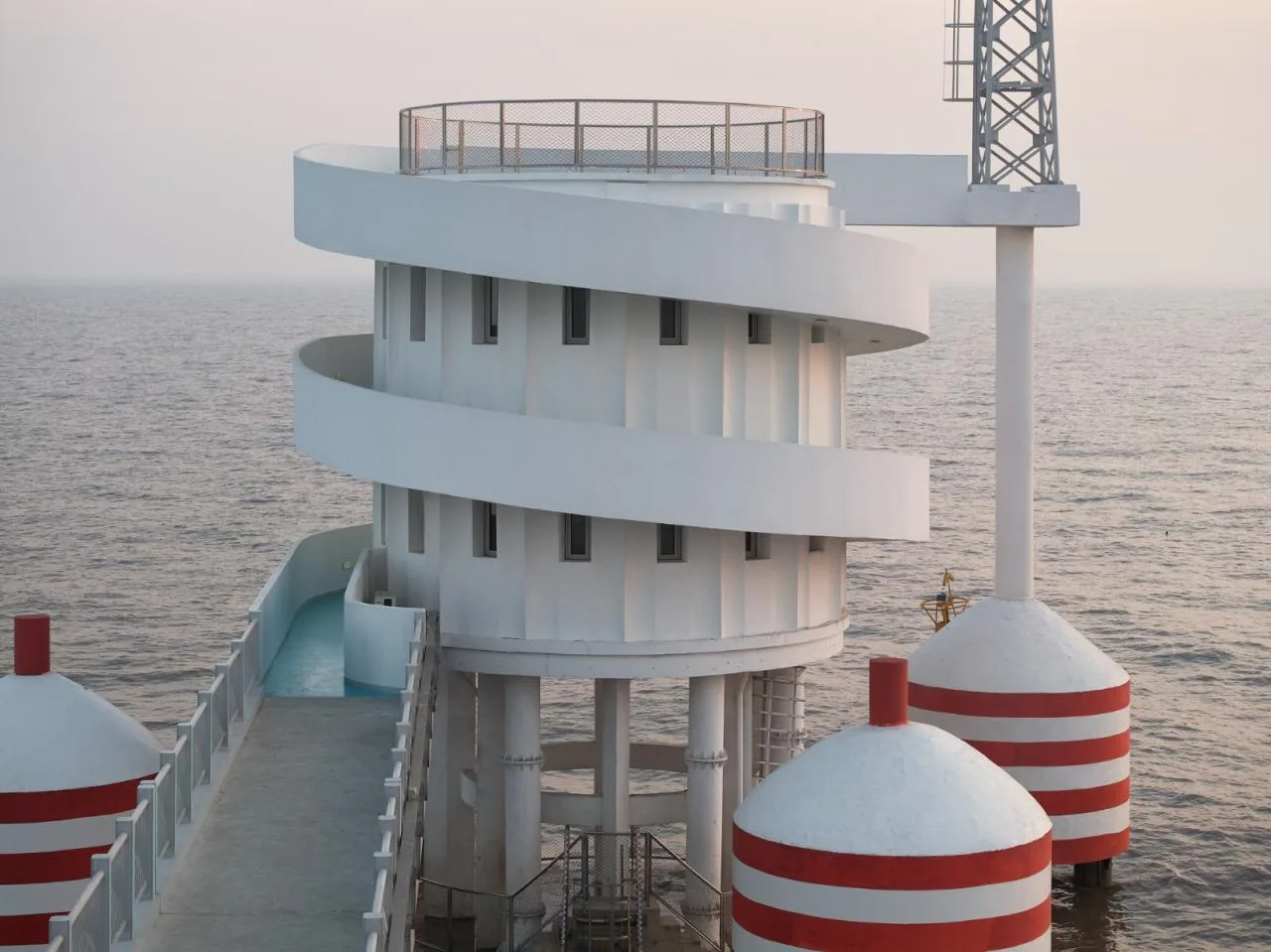
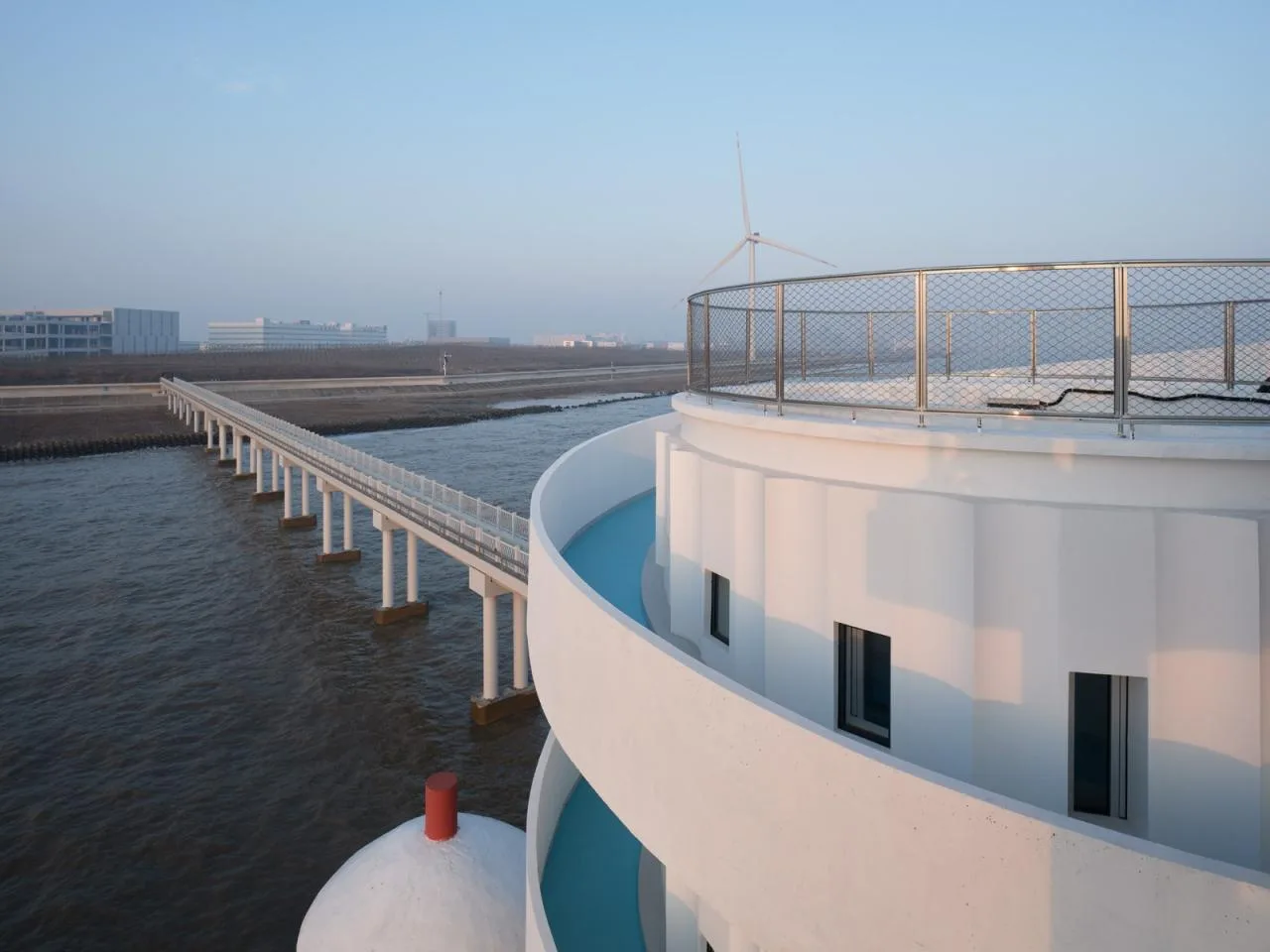
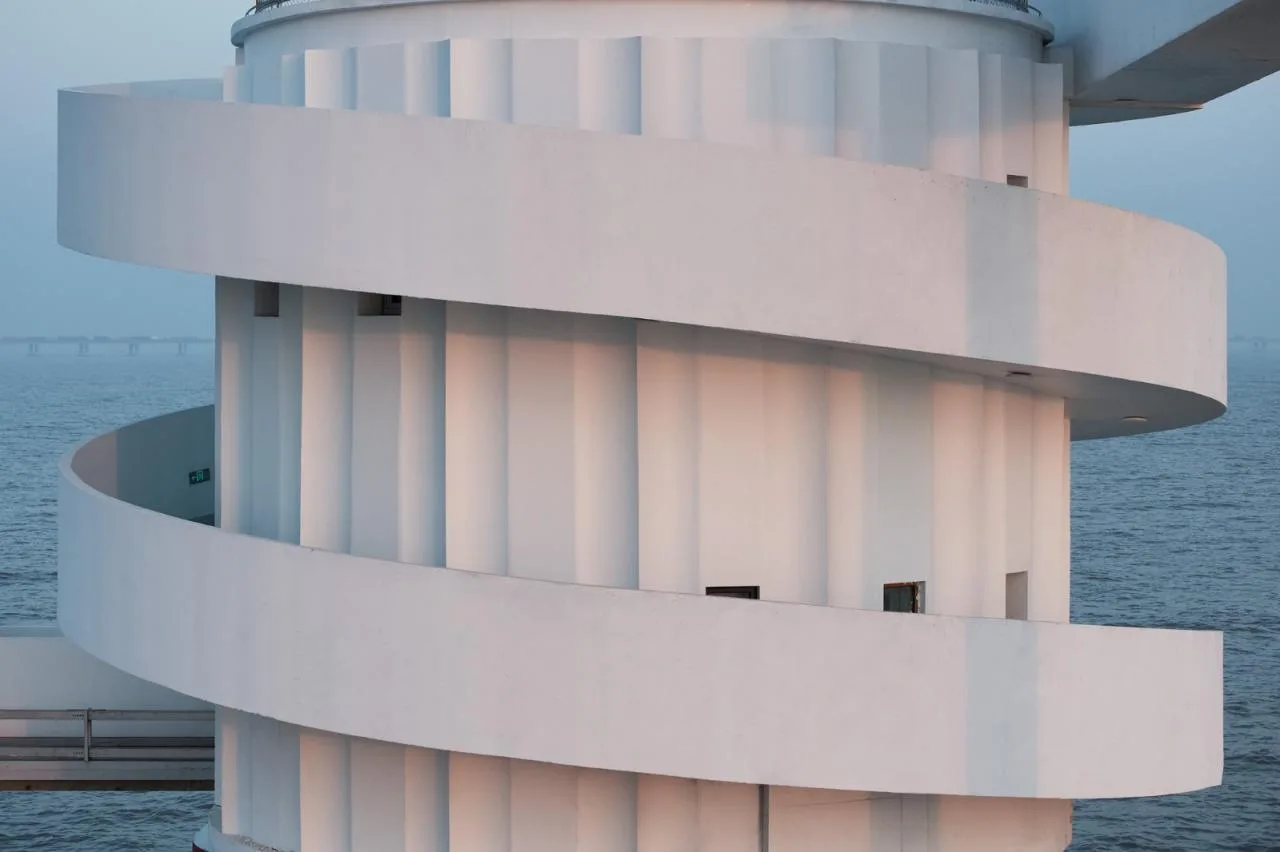
Through simple yet deliberate modifications and a focus on direct functional transformation, the Twist Tower and Spiral Station challenge conventional infrastructure design, standing as abstract sculptures on the mudflat and at the sea’s edge.

Project Drawings
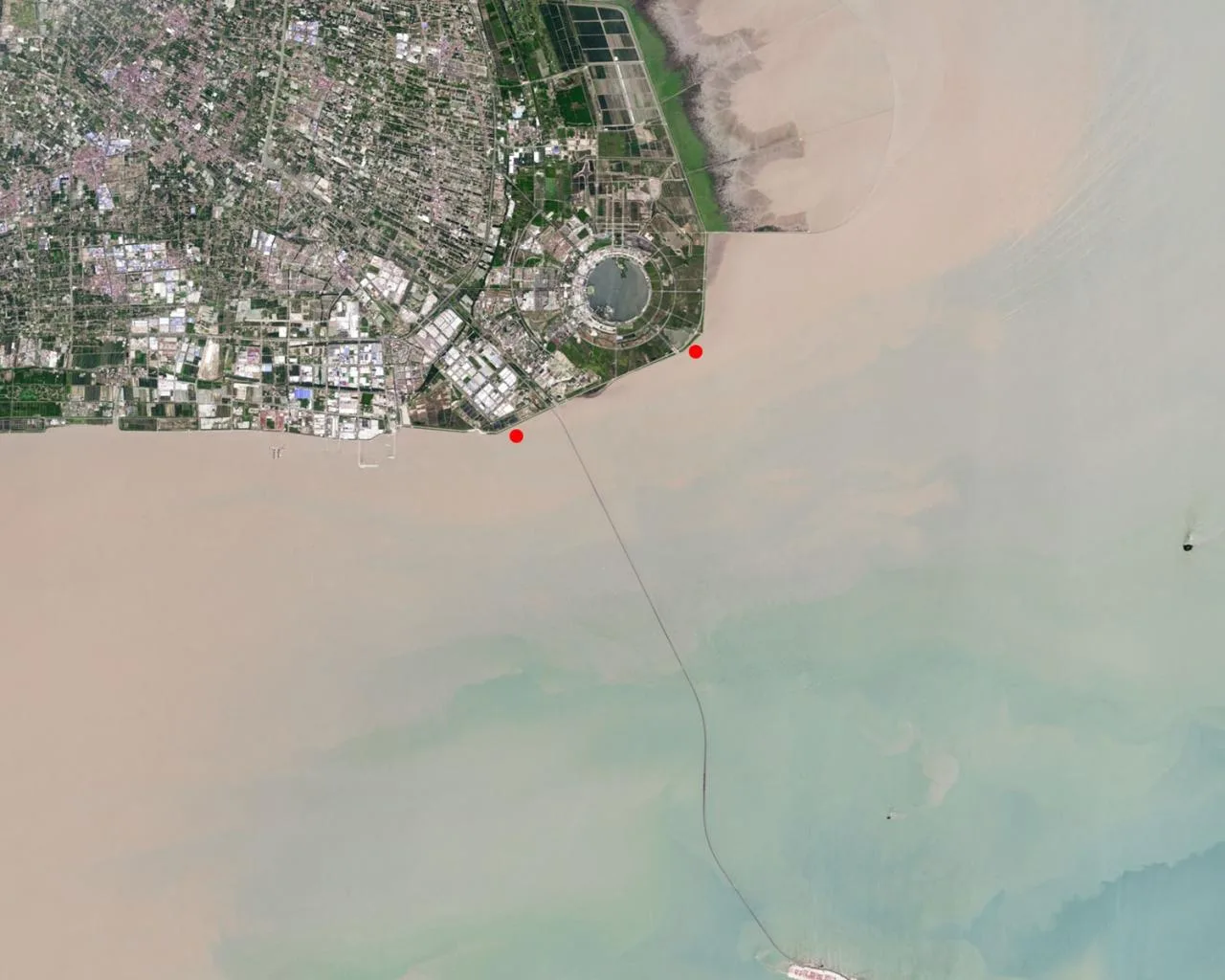
△ Location Diagram
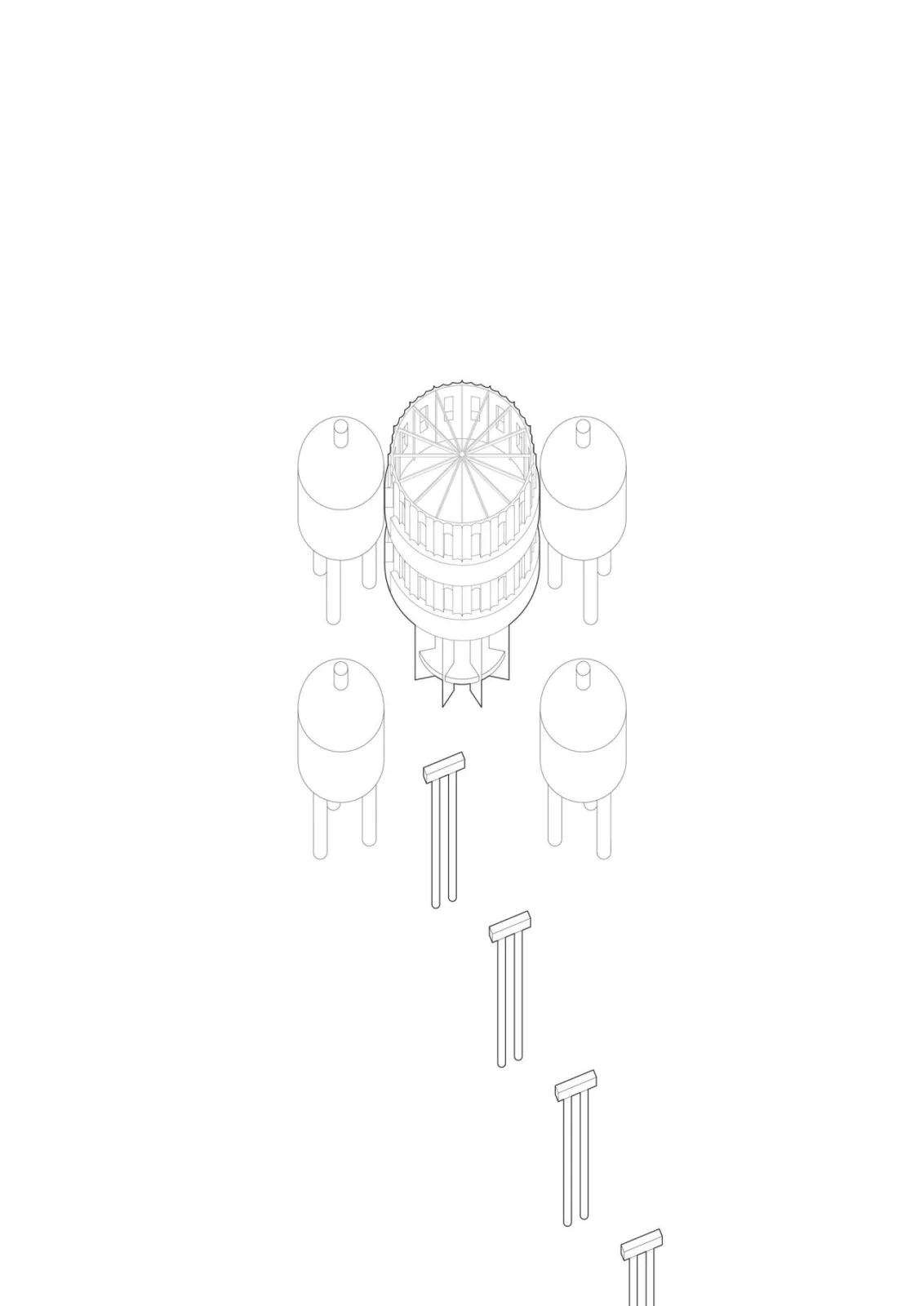
△ Spiral Station Axonometric Diagram
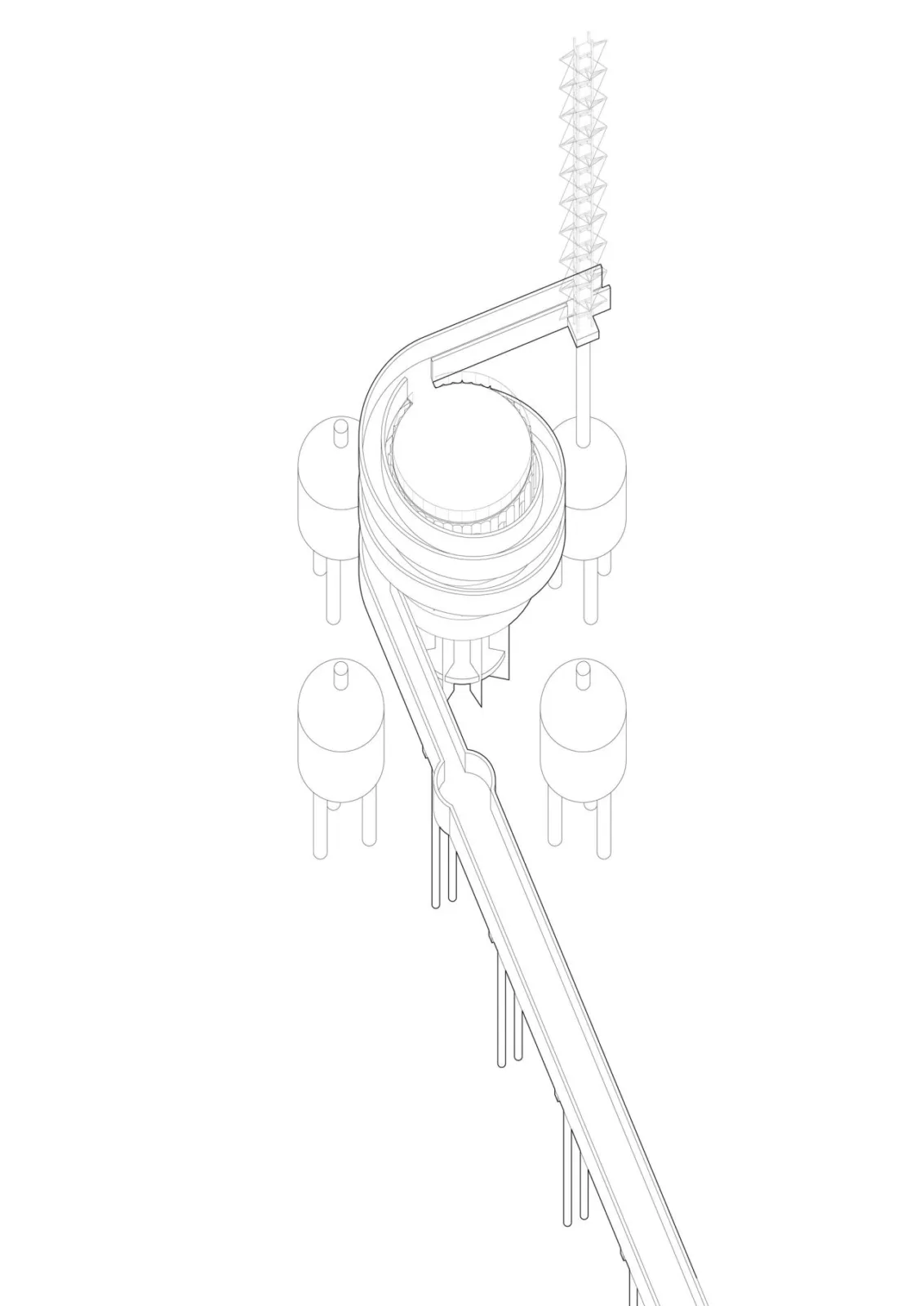
△ Spiral Station Axonometric Diagram
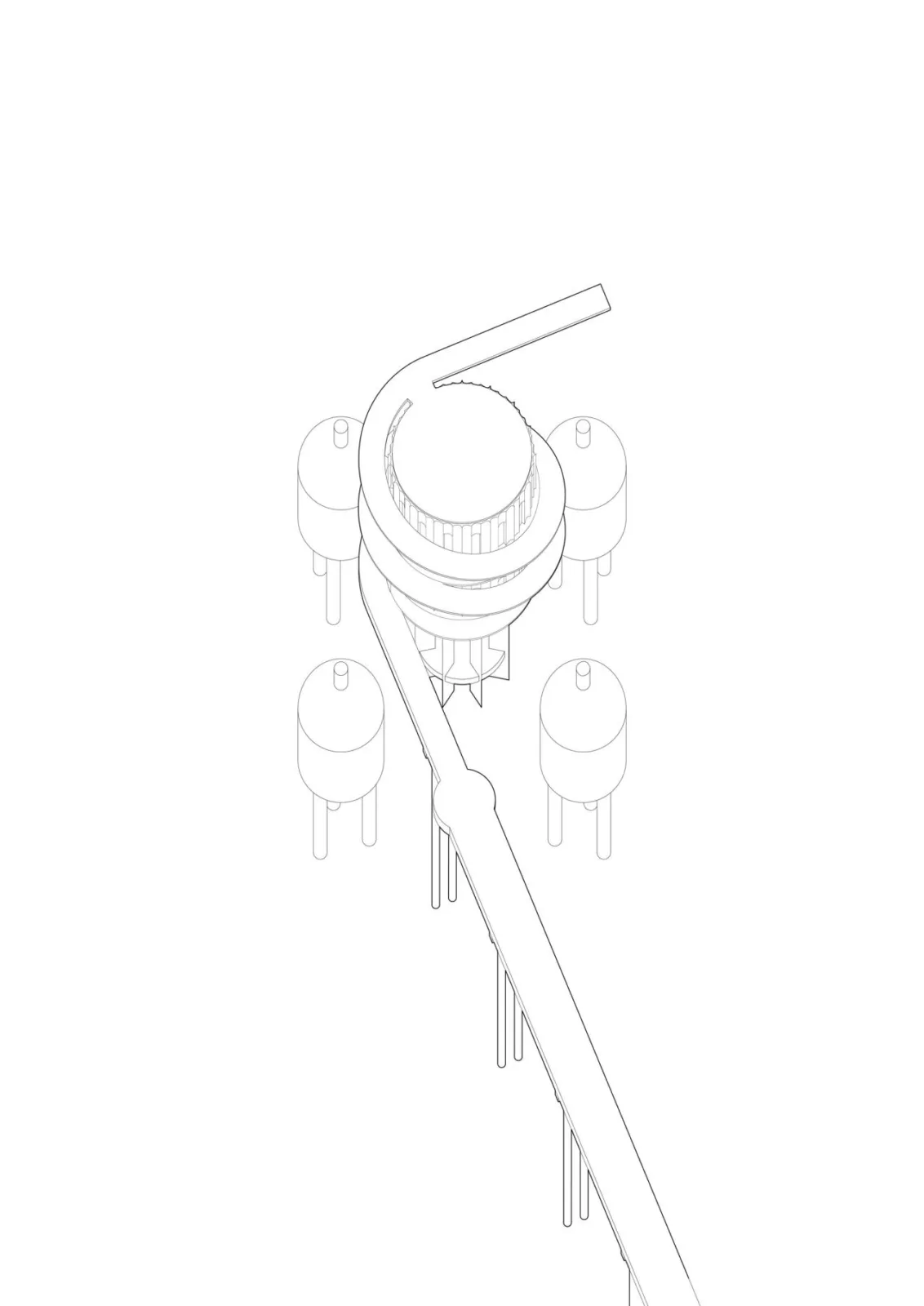
△ Spiral Station Axonometric Diagram
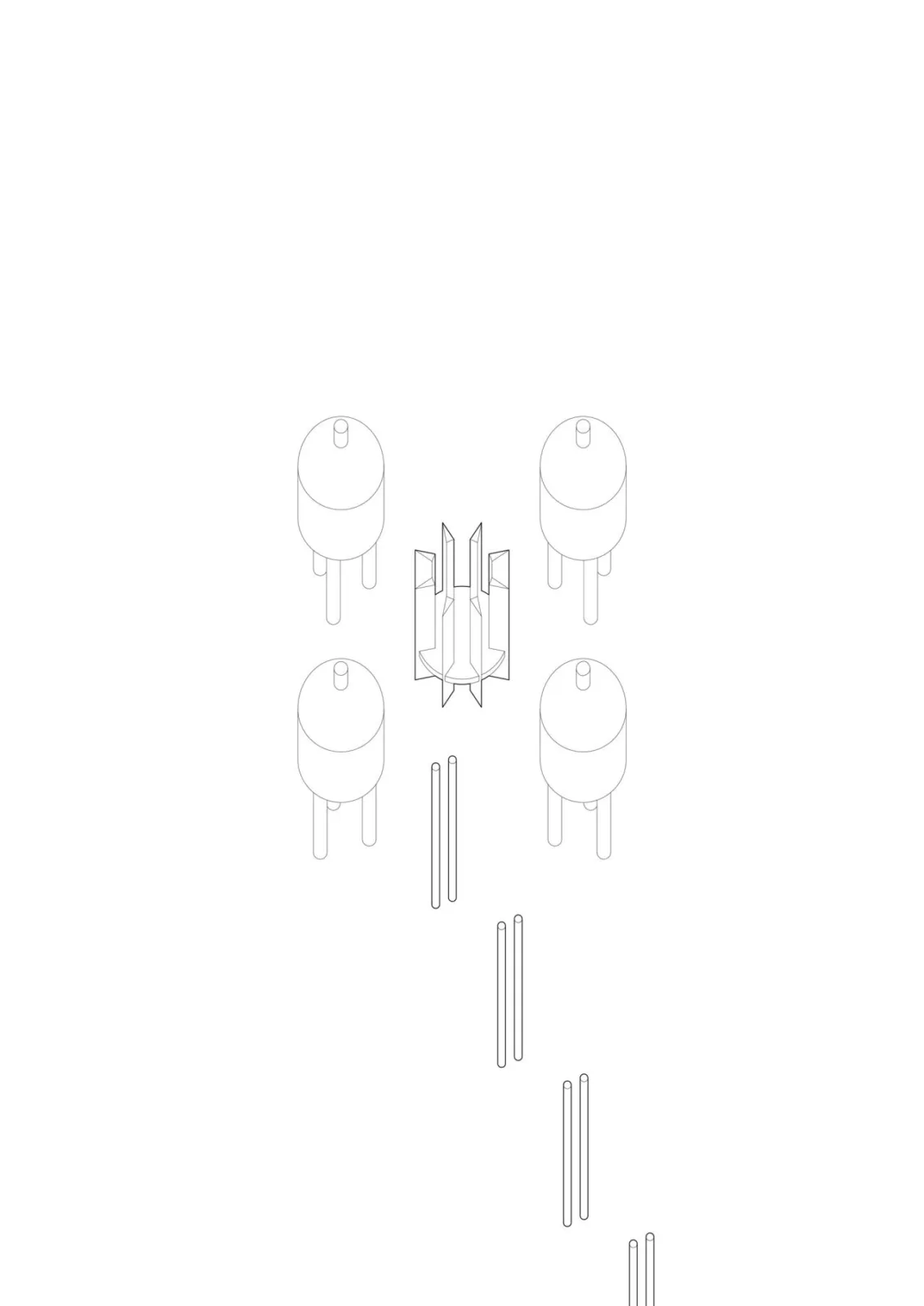
△ Spiral Station Axonometric Diagram
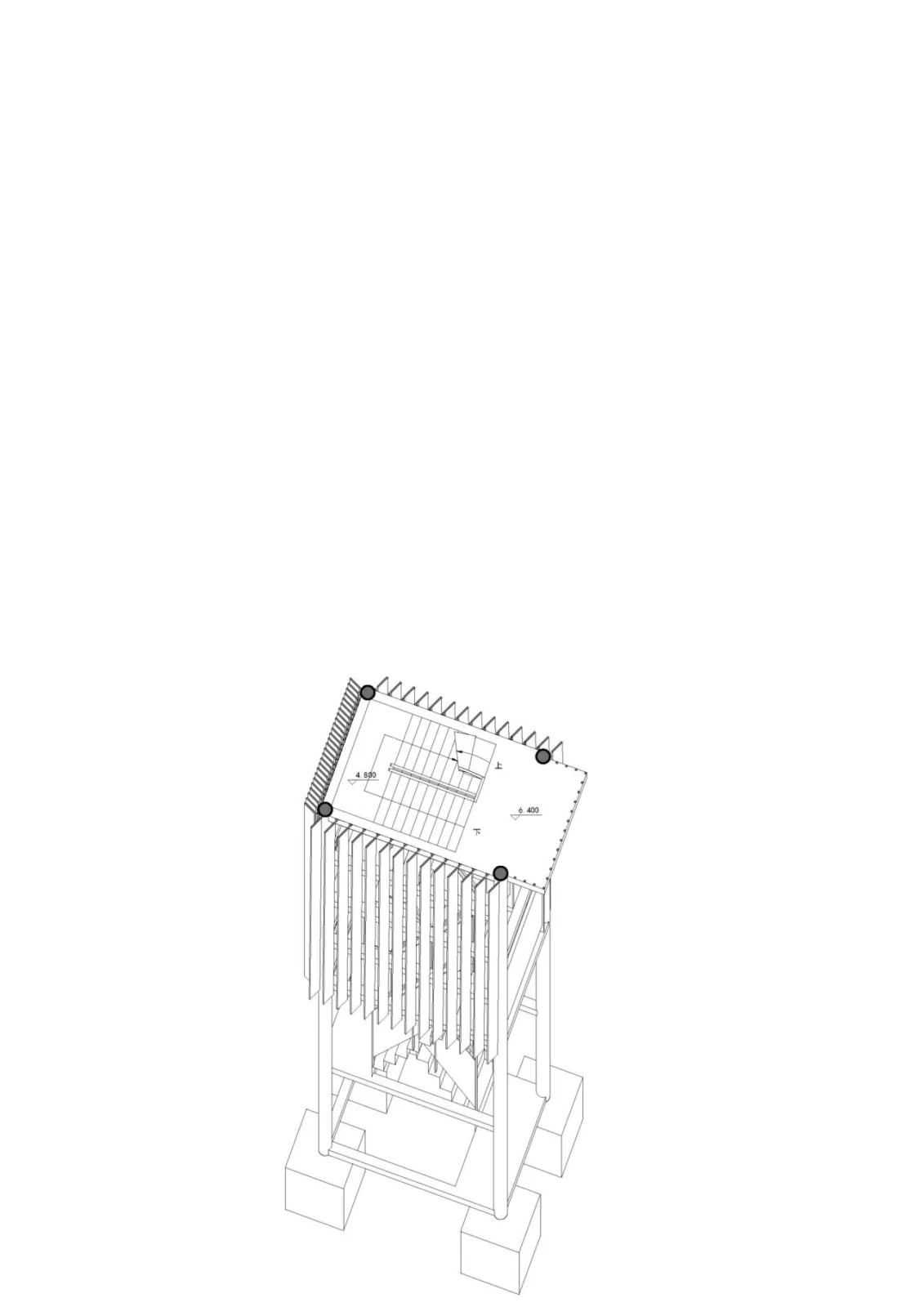
△ Twist Tower Axonometric Diagram
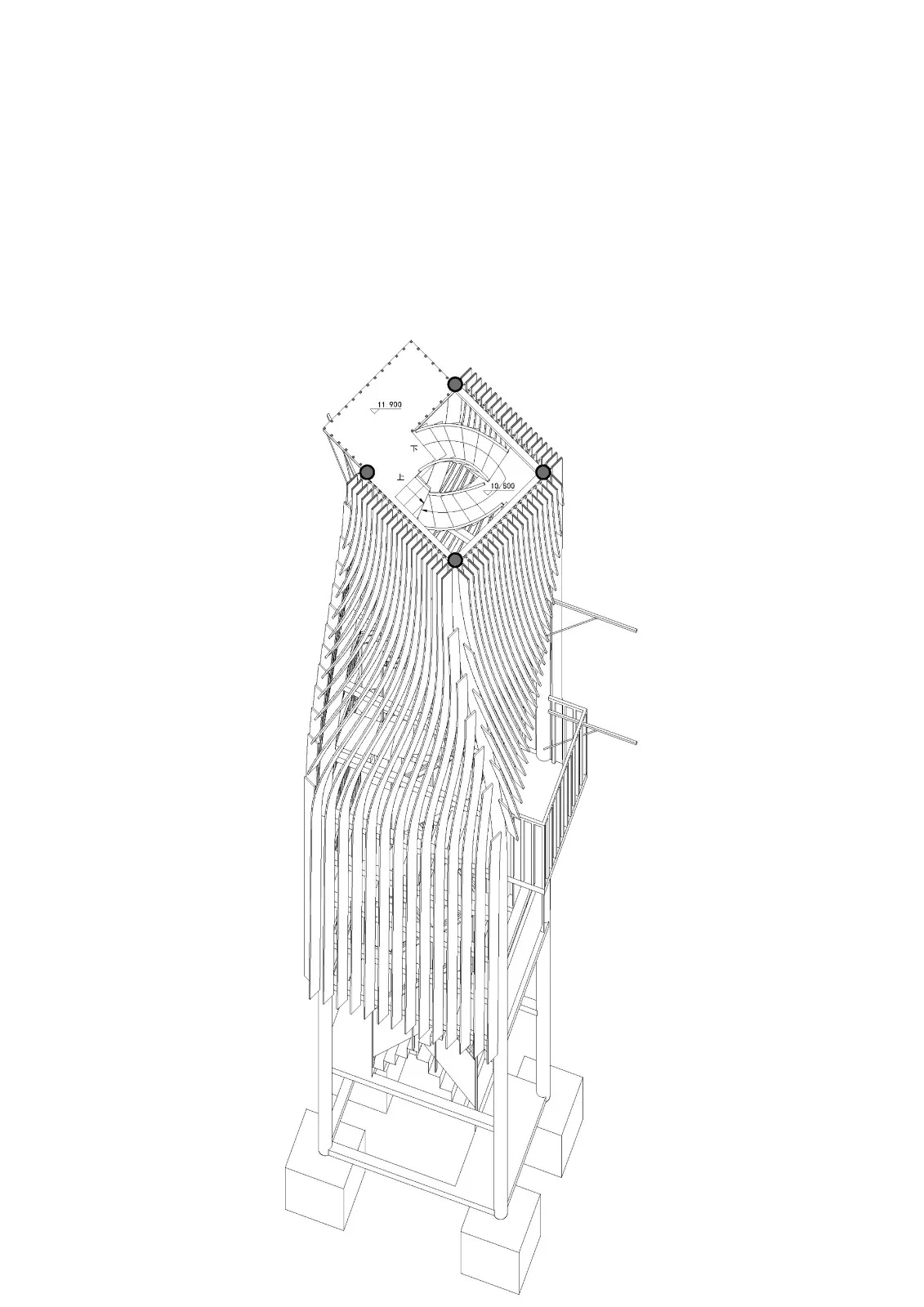
△ Twist Tower Axonometric Diagram
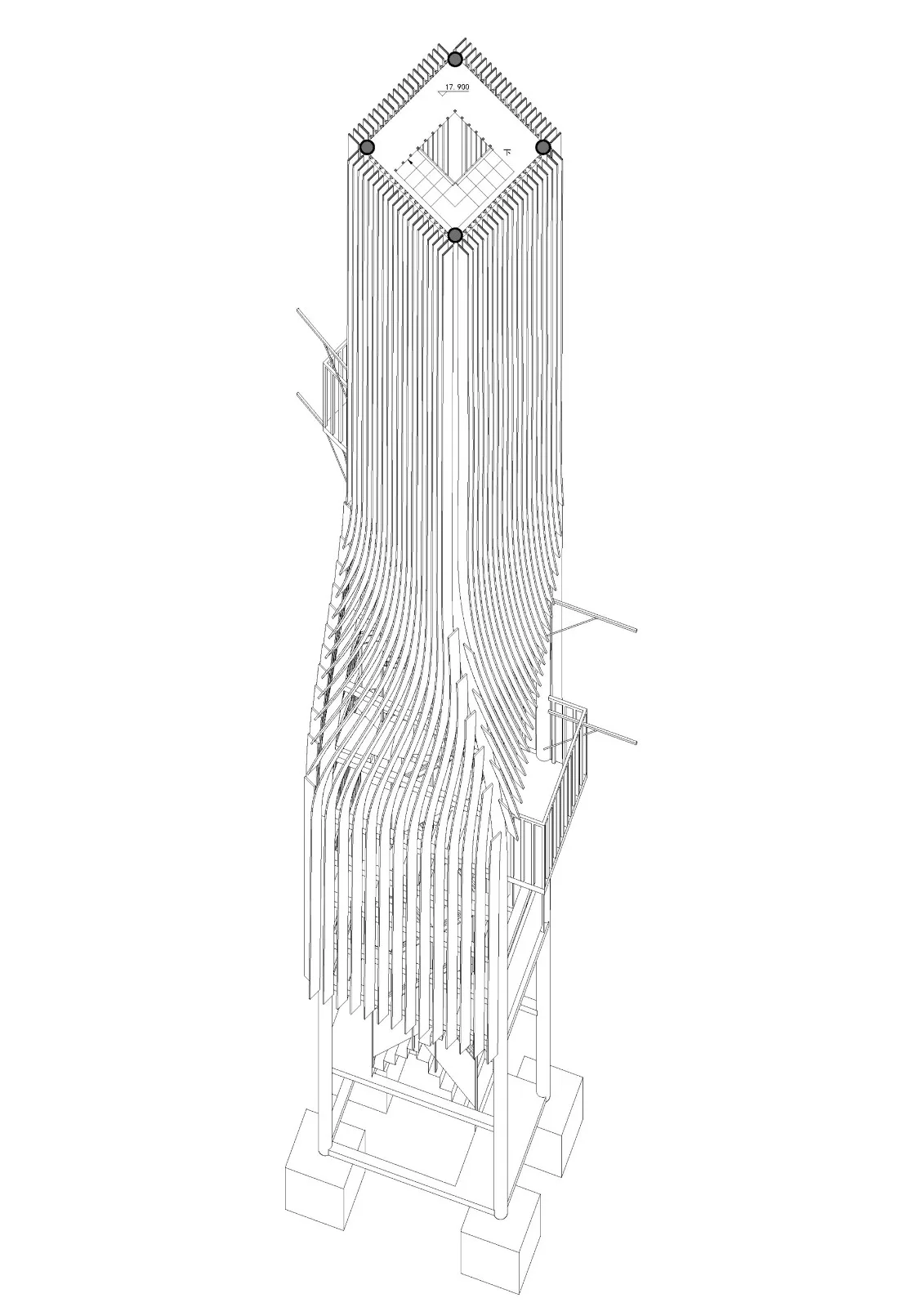
△ Twist Tower Axonometric Diagram
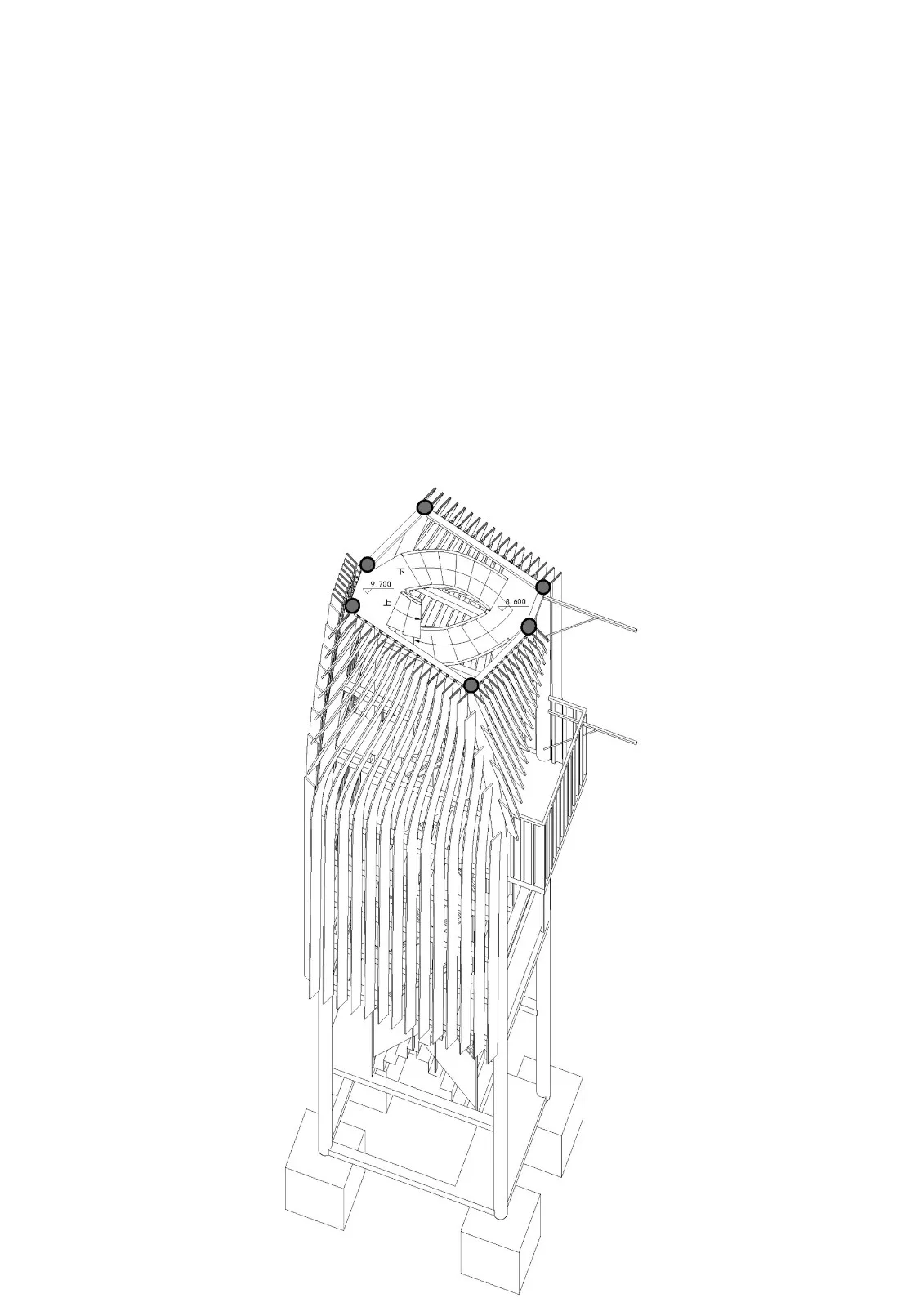
△ Twist Tower Axonometric Diagram
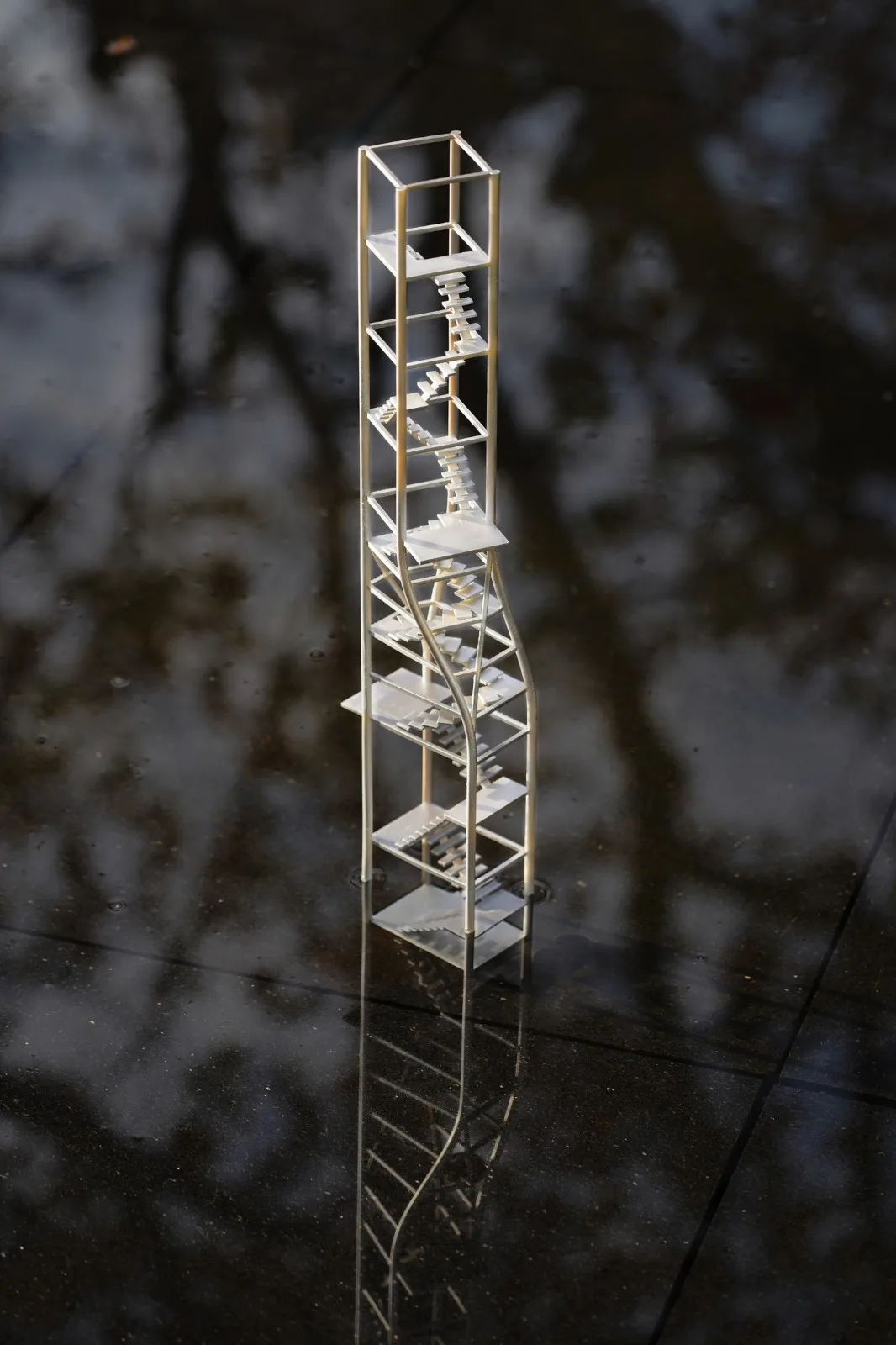
△ Twist Tower Model Diagram
Project Information
Architect: Hechen Building
Project Year: 2023
Photographer: Zhu Qingyan
Design Team: Chen Hao, Hu Chenchen, Wang Yuling, Zheng Qi, Hou Yida
Collaborative Design Institute: Shanghai Youwei Engineering Design Co., Ltd
Location: Shanghai
















Must log in before commenting!
Sign Up