
Shenmu Middle School
Shenmu Middle School is a prominent high school in Shaanxi Province, recognized as a model institution among ordinary high schools in the region. Situated in the heart of Binhe New District, Shenmu City, this campus spans 196,647 square meters of land with a total construction area of 113,205.11 square meters, including 104,467 square meters above ground. It accommodates 60 teaching classes, 3,000 boarding students, and 322 faculty members.
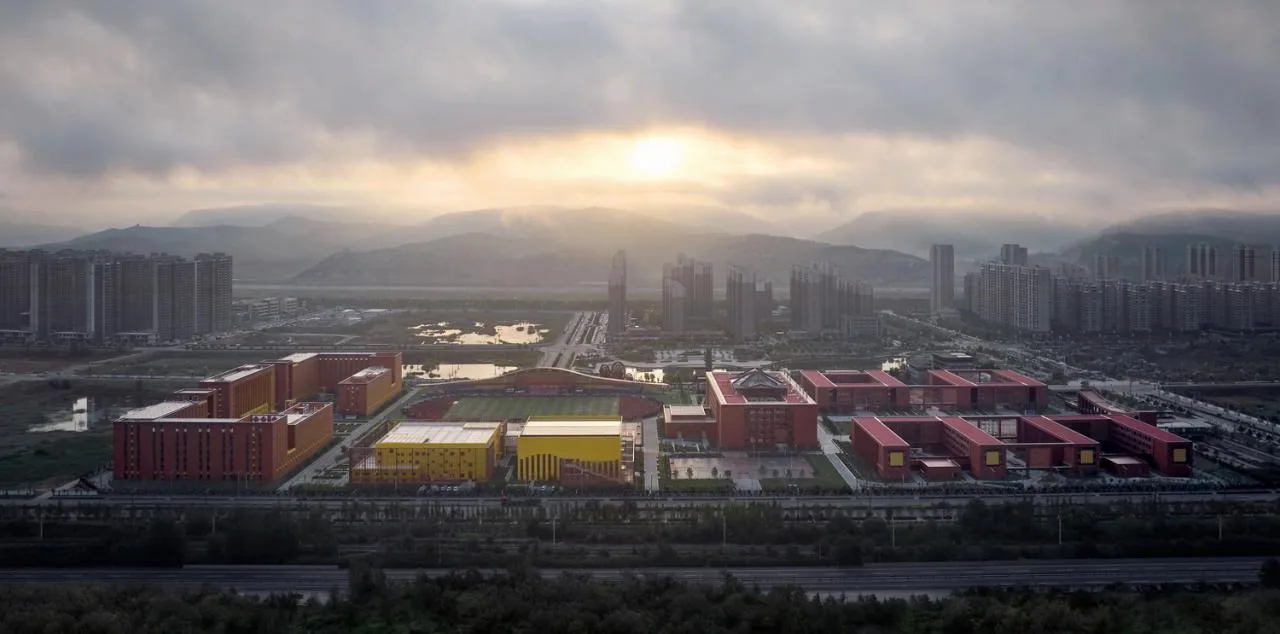
△ West-facing bird’s-eye view of the school
The campus layout follows the traditional “ritual and music” academy model, leveraging its unique environment surrounded by mountains and water. It integrates three functional zones—teaching, culture, and living—arranged in a courtyard style along the north-south axis. This design creates a layered sequence of multi-level research and learning spaces, embodying both the spiritual and physical essence of Shenmu Middle School with rich depth and cultural significance.
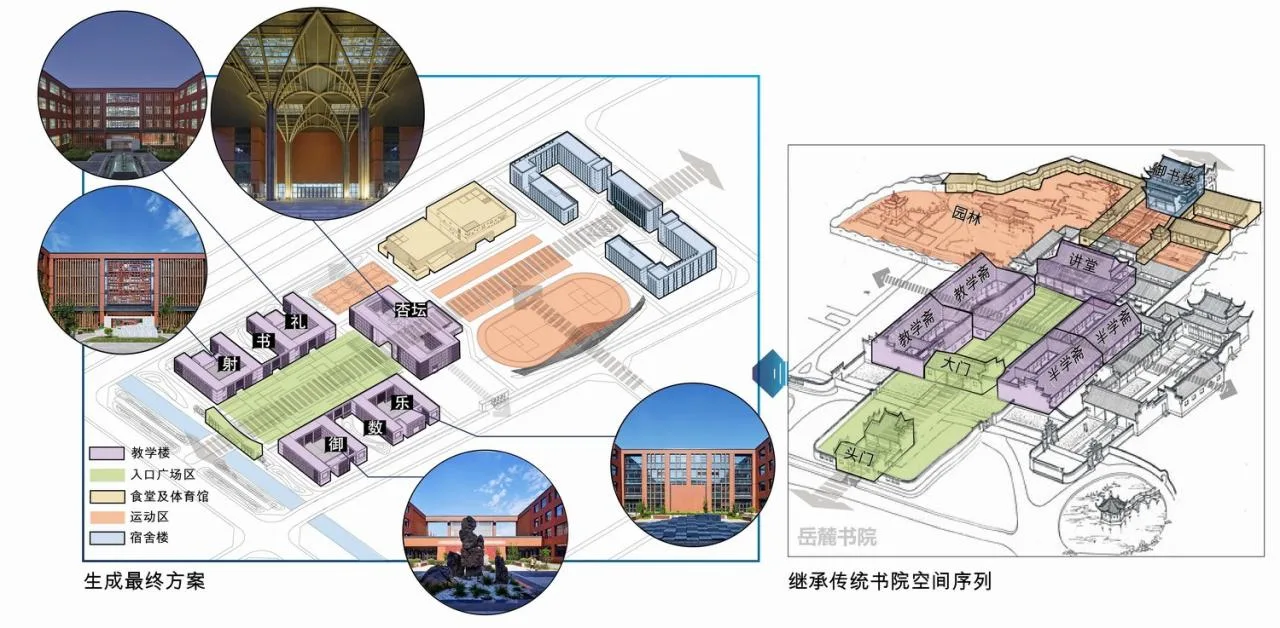
△ Academy style layout
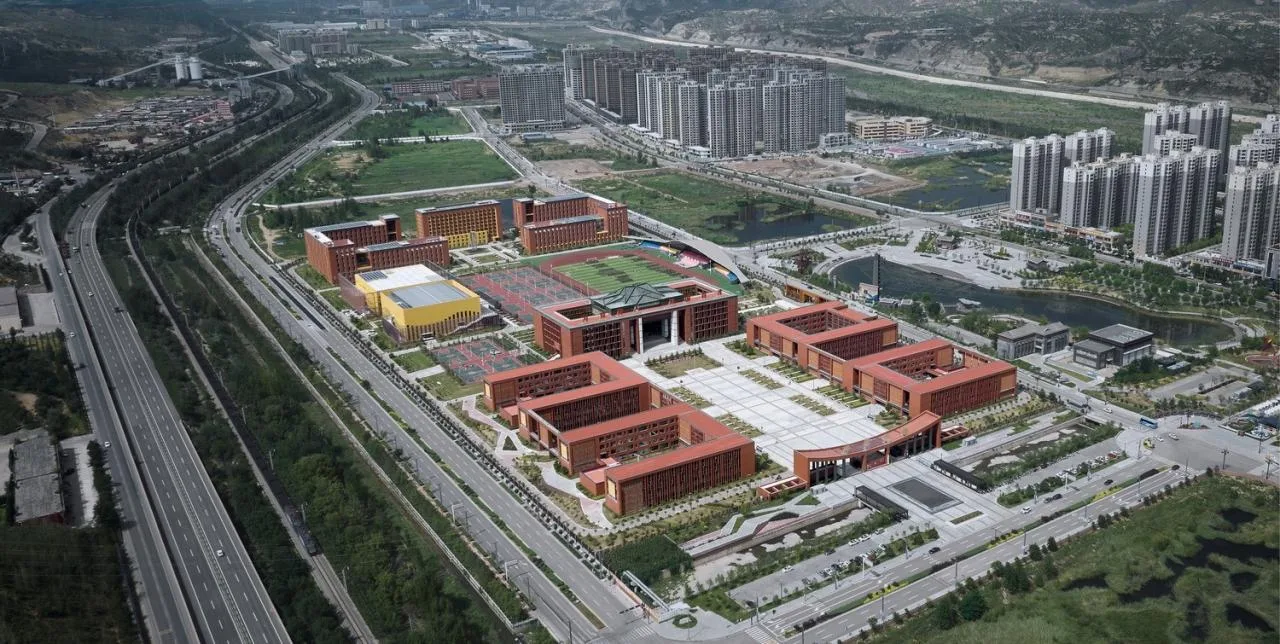
Southwest-facing bird’s-eye view of the school
Modular Design and Structural Continuity
The campus architecture balances order and freedom through its spatial organization. Controlled by the central and urban road axes, the teaching, cultural, and living areas are arranged orderly. Modular units are combined, extracted, and nested using proportion and rhythm, creating clustered courtyard spaces that extend the axial network.
The teaching complex centers around a comprehensive teaching building, flanked by tall wooden louvered screens that serve as interfaces, forming a ceremonial square reflecting campus culture. The cultural and sports group includes dining facilities, sports venues, open fields, and elegant stands that visually connect with city roads, continuing the urban axis.
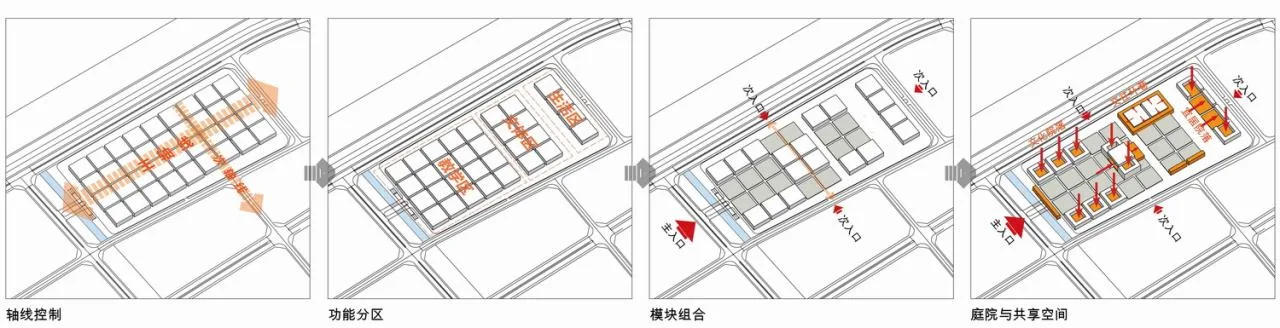
△ Axis Control and Module Generation
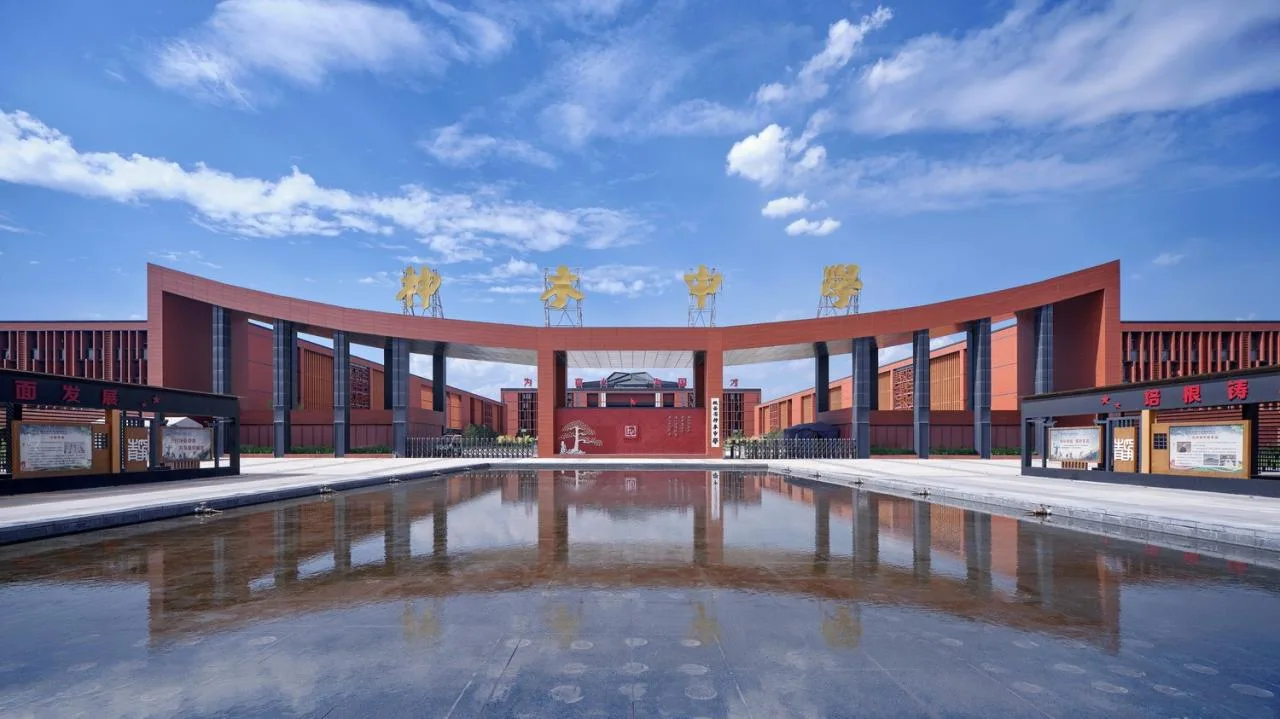
View of the school’s main entrance
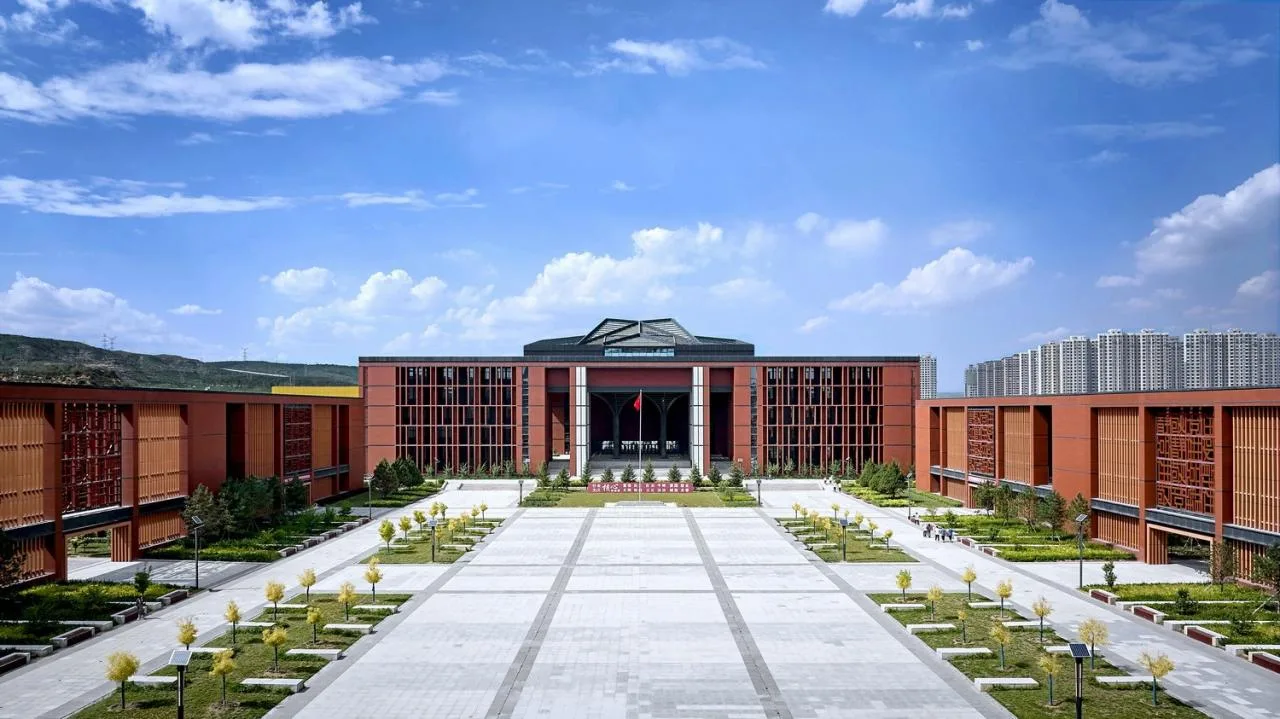
△ Etiquette Square
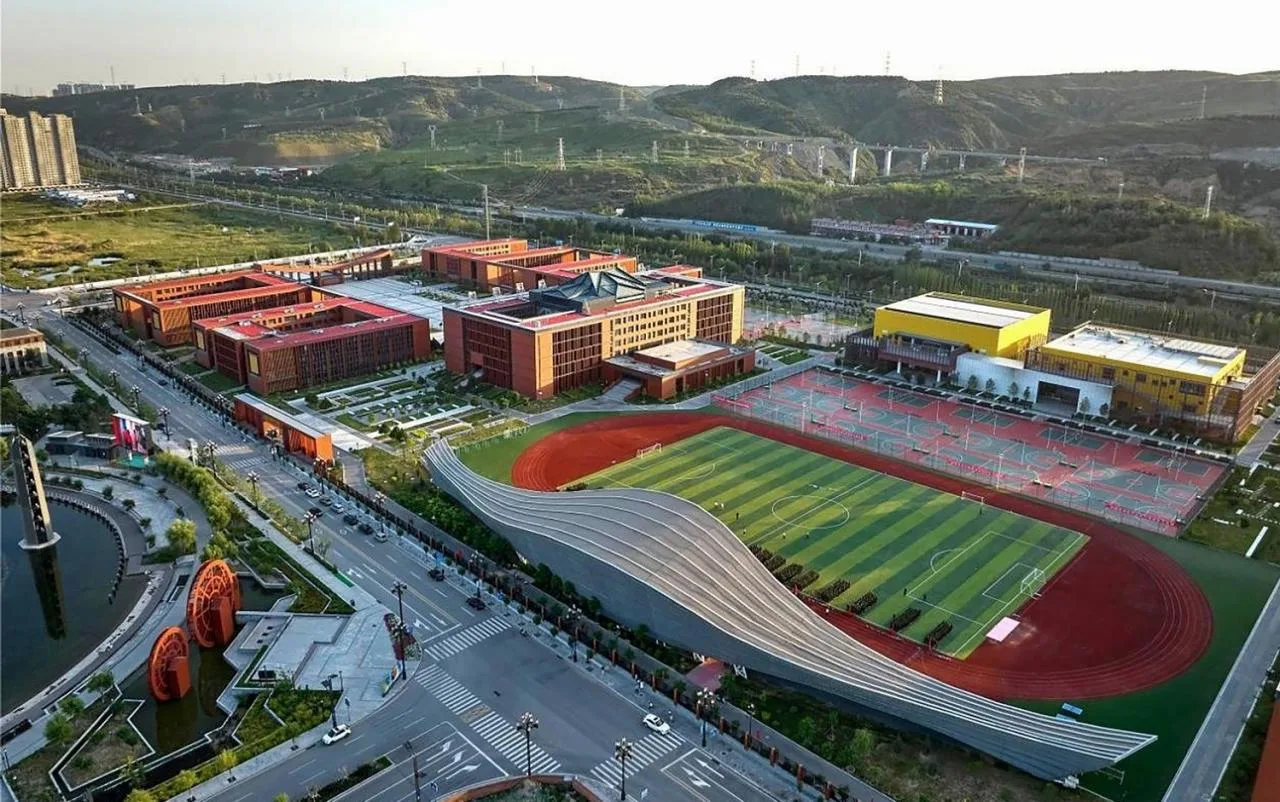
△ Northeast-facing bird’s-eye view of the school
Between Mountains and Waters: The Forest Academy
The teaching zone consists of six cultural courtyards, blending the traditional “six arts” with contemporary educational content. Each courtyard carries its own cultural character. The comprehensive building’s roof, crafted from modern materials, evokes the feel of traditional architecture up close and resembles a series of mountains and rivers from afar, endowing the campus with a landscape-like architectural presence.
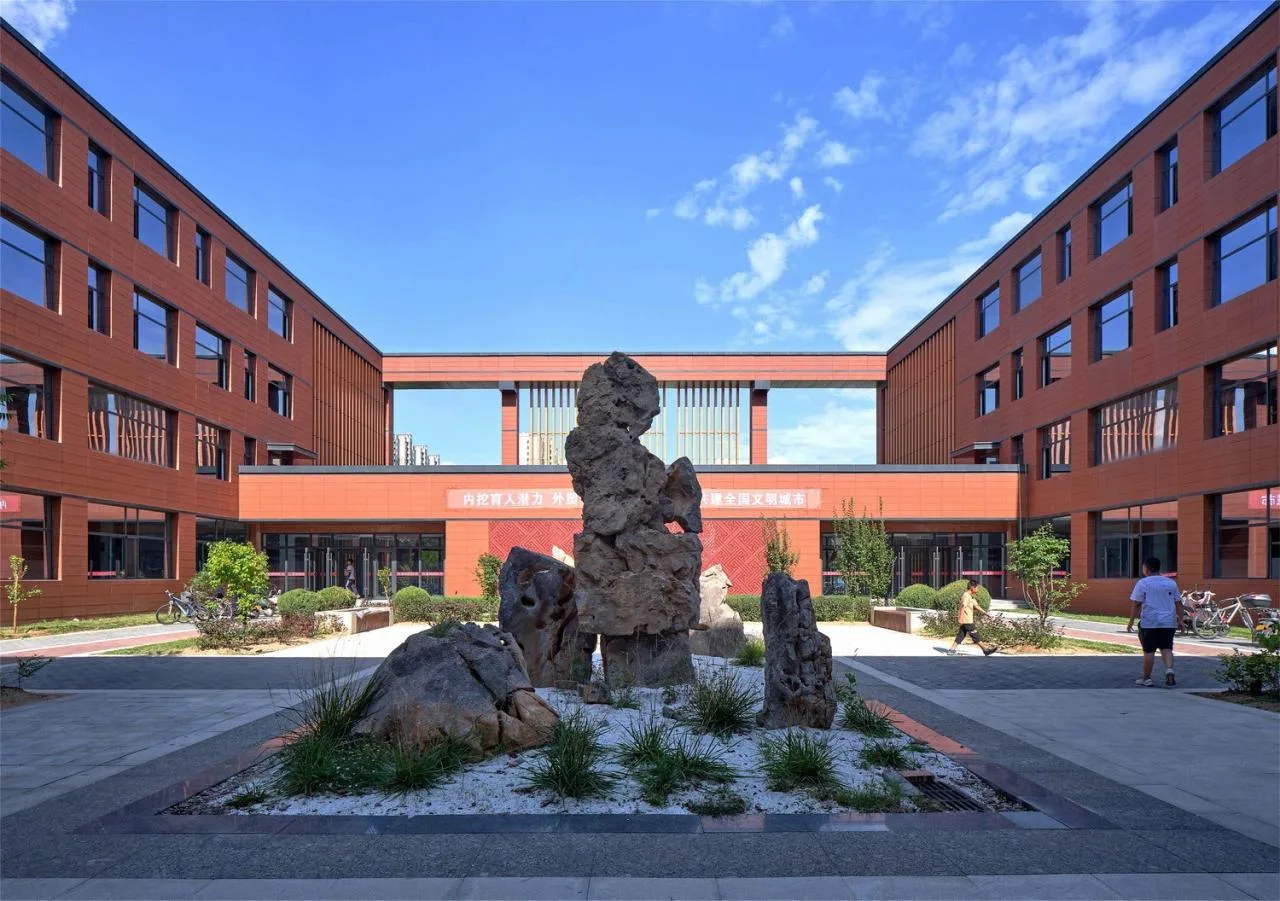
△ Realistic view of teaching group courtyard
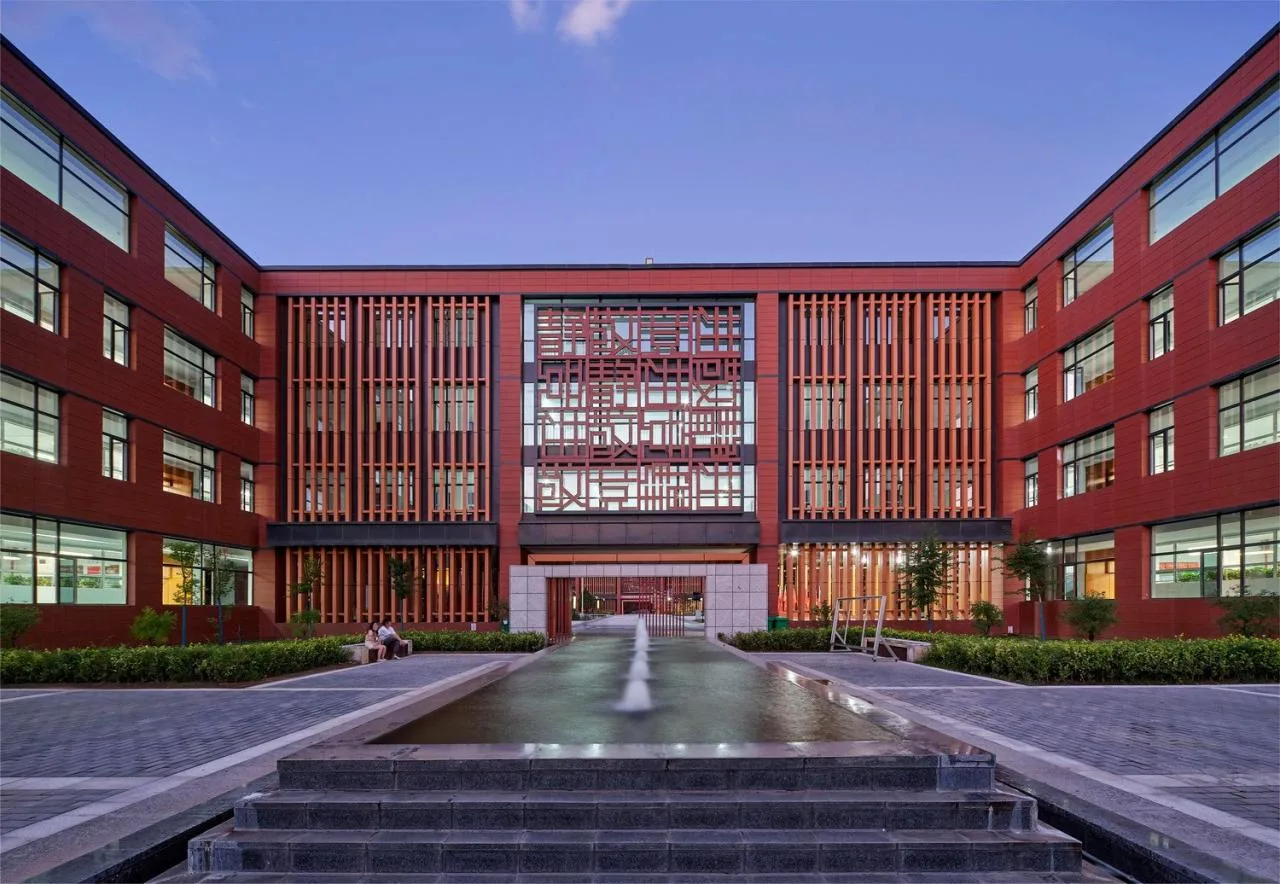
△ Realistic view of teaching group courtyard
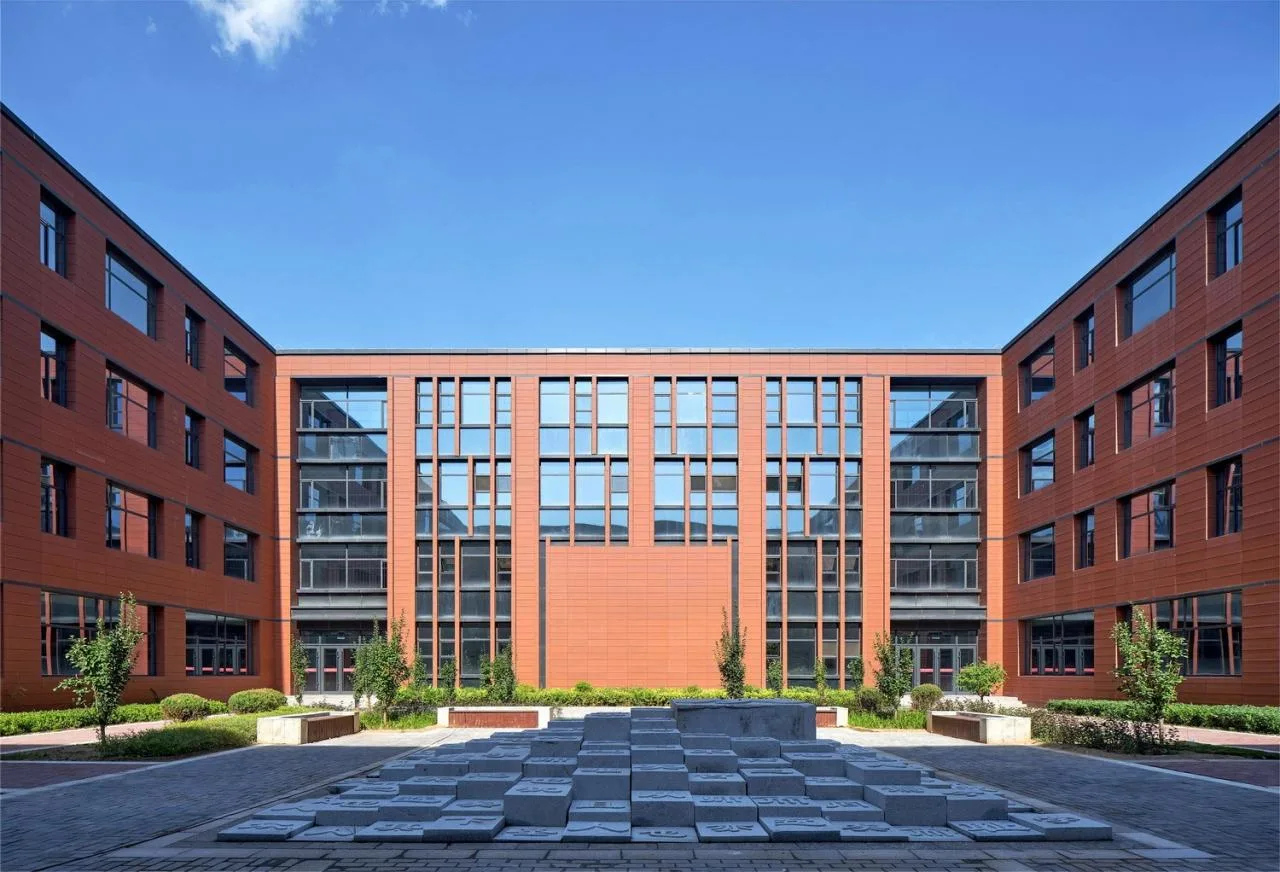
△ Realistic view of teaching group courtyard
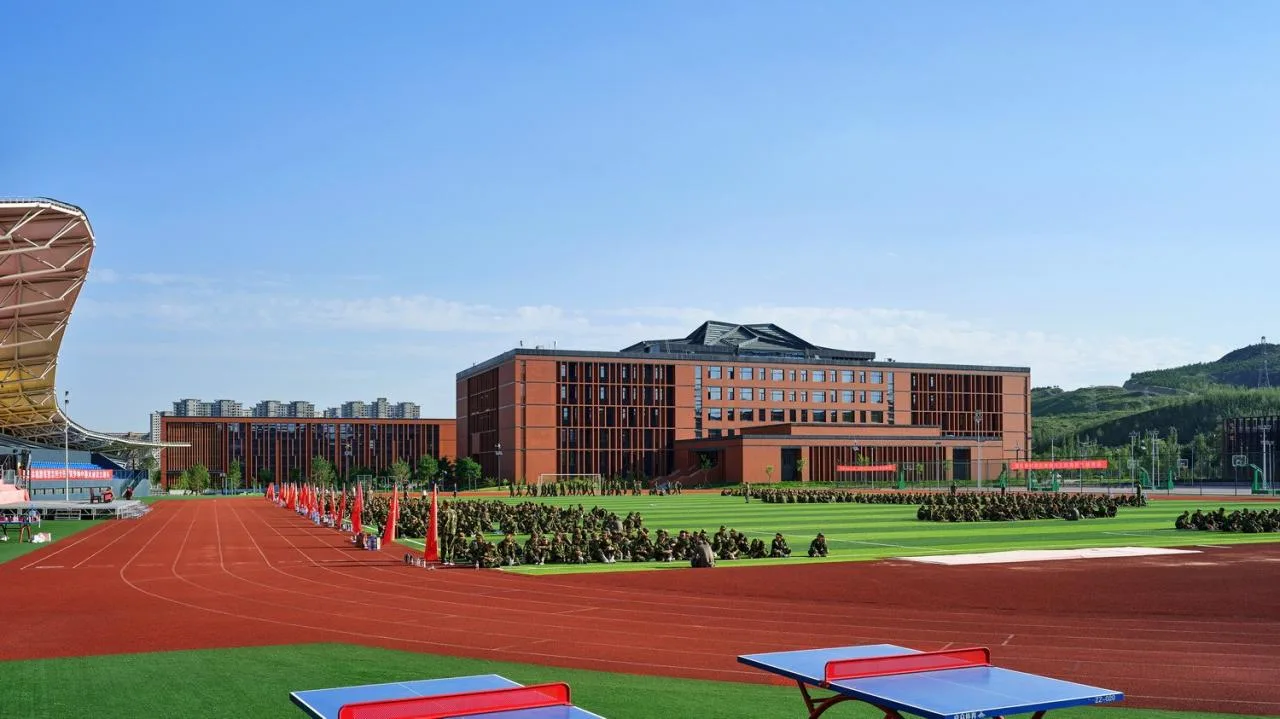
East-facing teaching building
A Blended Space for Learning and Leisure
Building on traditional teaching spaces, the campus integrates areas for student reading, arts, specialized labs, and campus activities to foster holistic development. Teaching zones connect through multi-dimensional open spaces such as shared platforms, courtyards, corridors, and elevated grey spaces. These areas not only serve as transitional spaces between classes but also encourage informal learning and social interaction, enriching both academic and extracurricular activities. This creates a composite model of learning and leisure aligned with modern educational approaches, stimulating student creativity and energy.
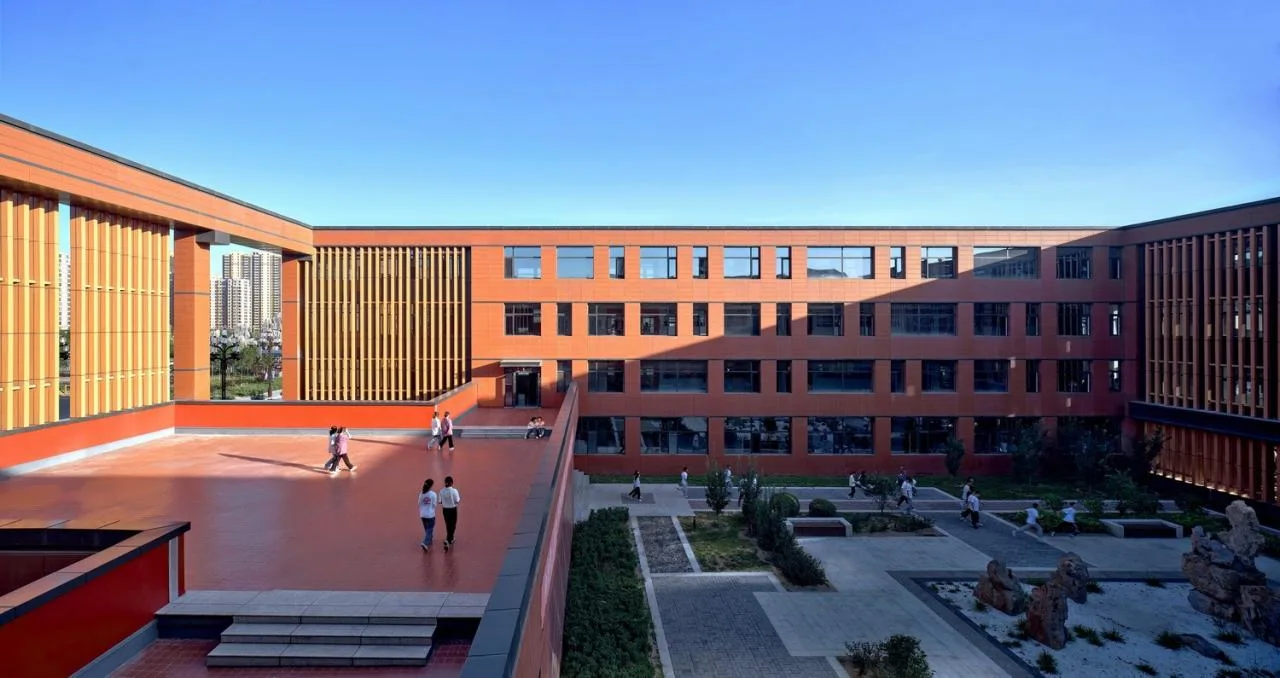
△ Teaching group shared platform
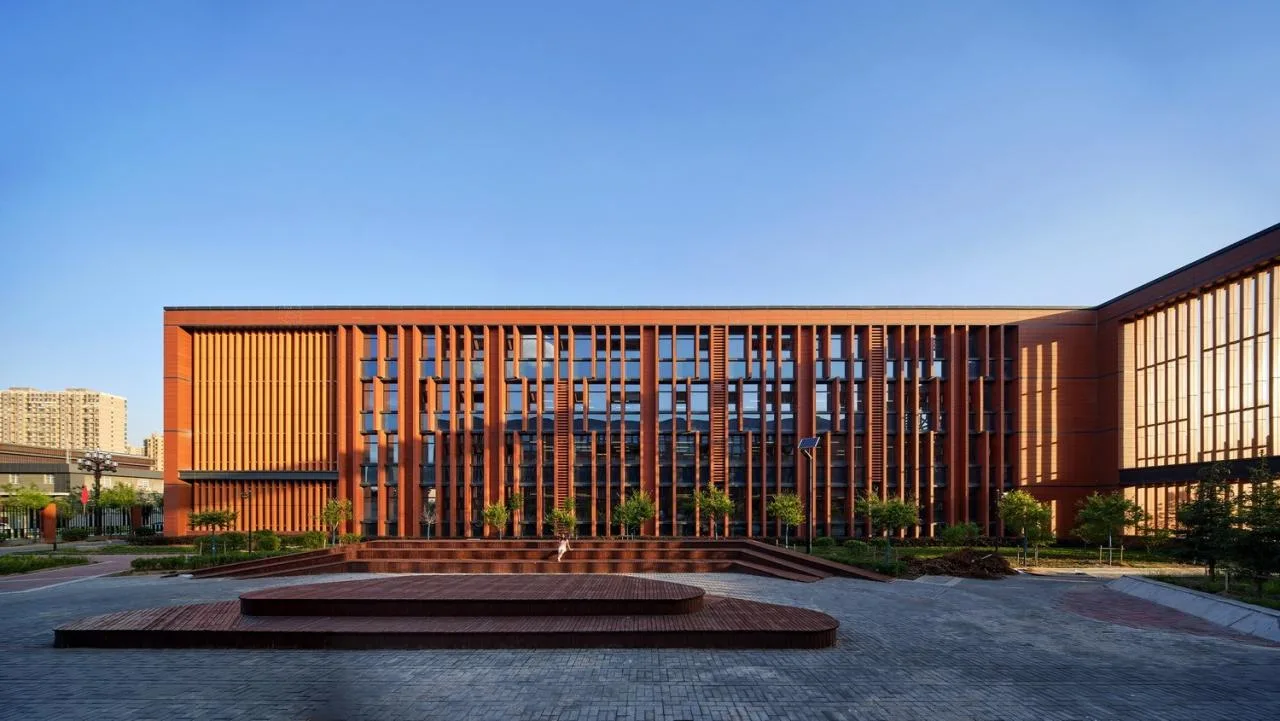
△ Teaching group outdoor theater
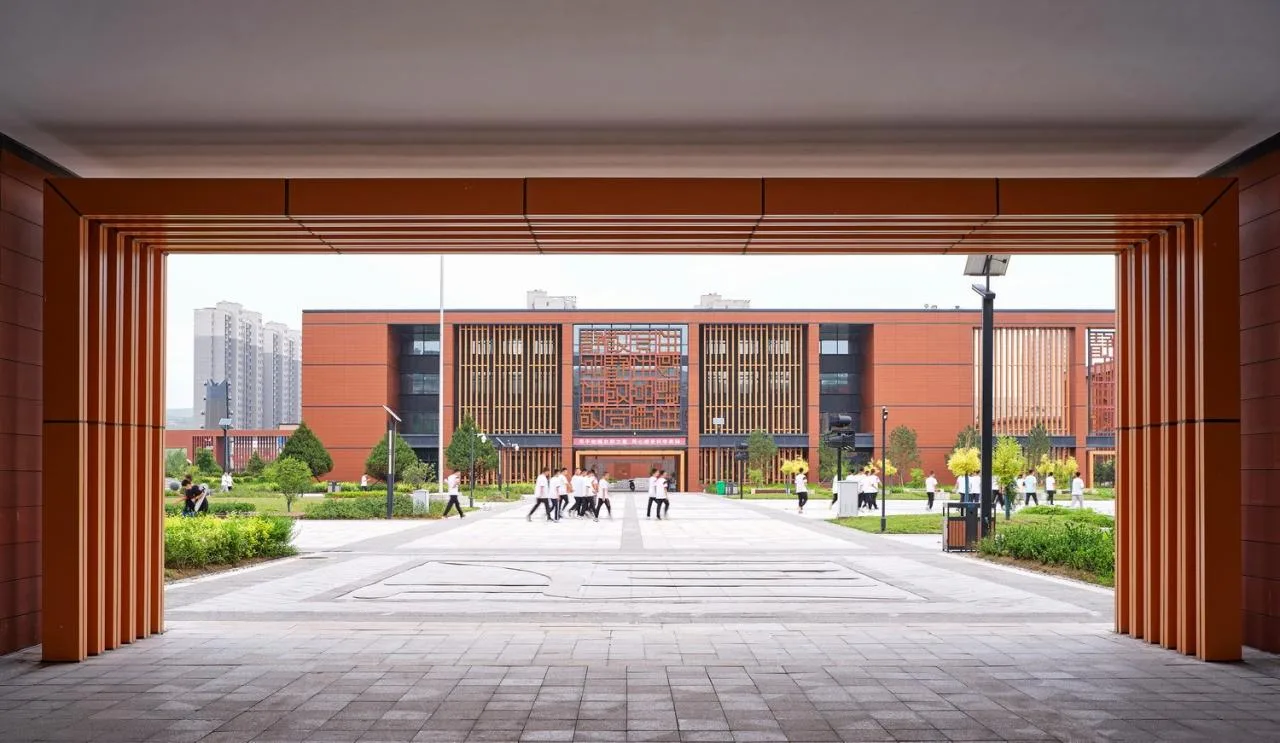
△ Elevated grey space at teaching group entrance
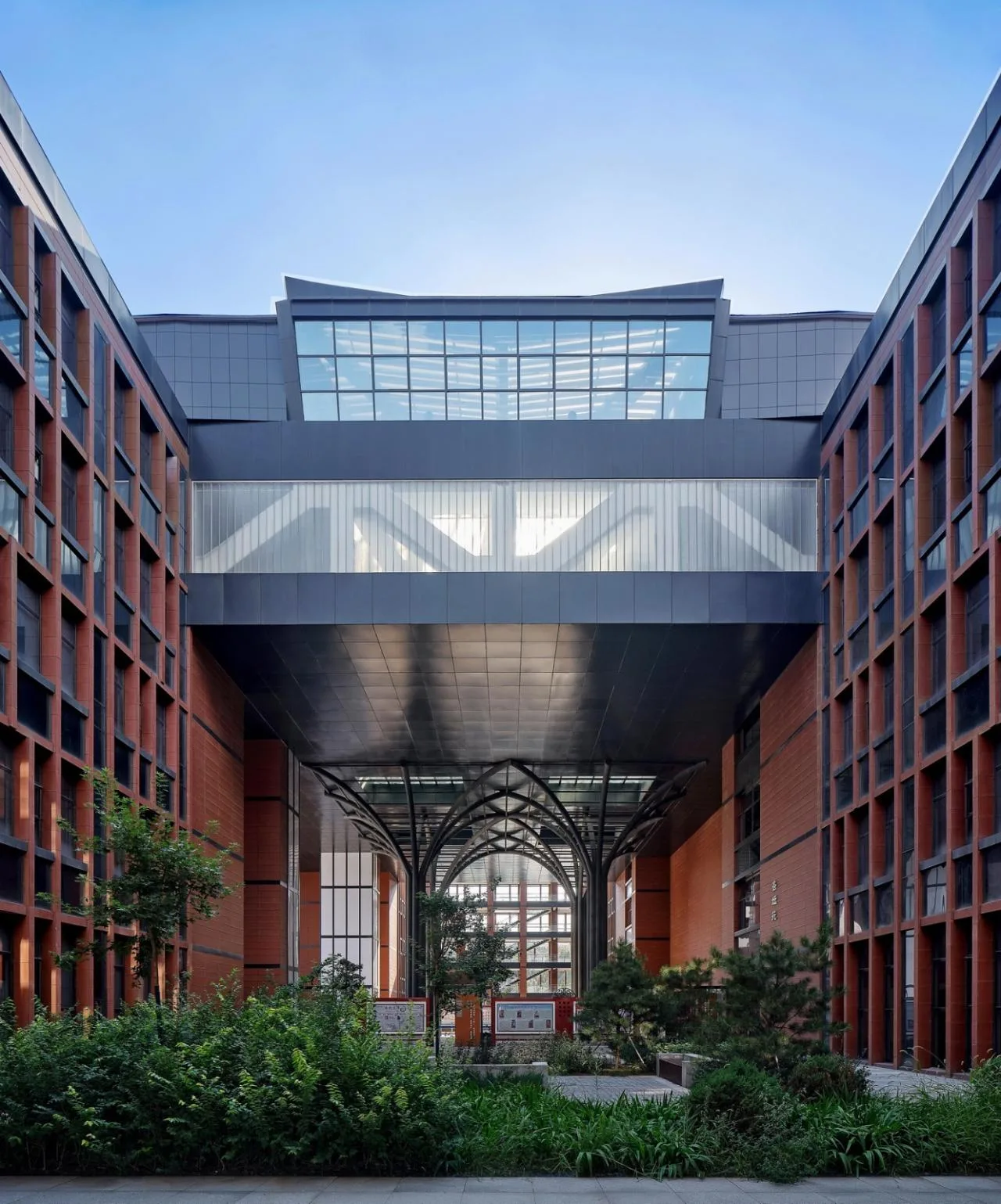
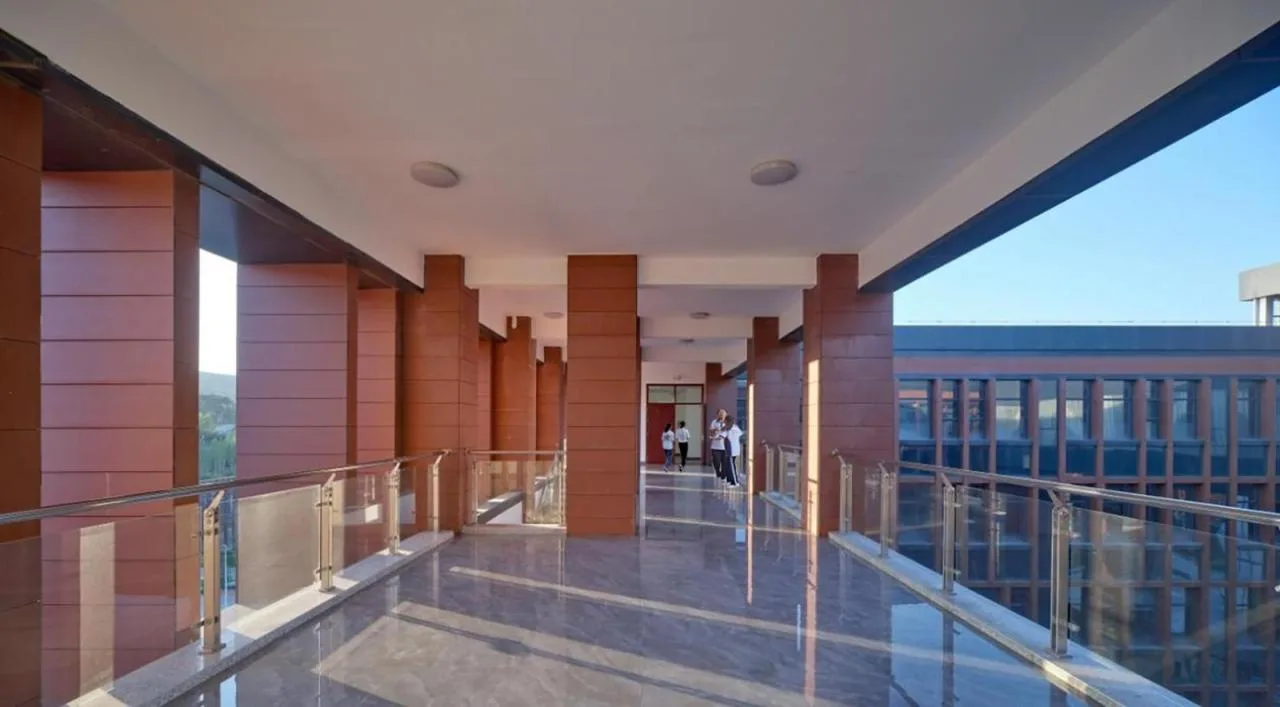
△ Realistic view of outdoor corridors and courtyards in the comprehensive teaching building
Within the teaching groups, shared communication spaces are designed with a rhythm of “contraction and expansion” indoors, promoting humanistic socialization. These areas provide diverse interactive and collaborative spaces for students to engage and share.
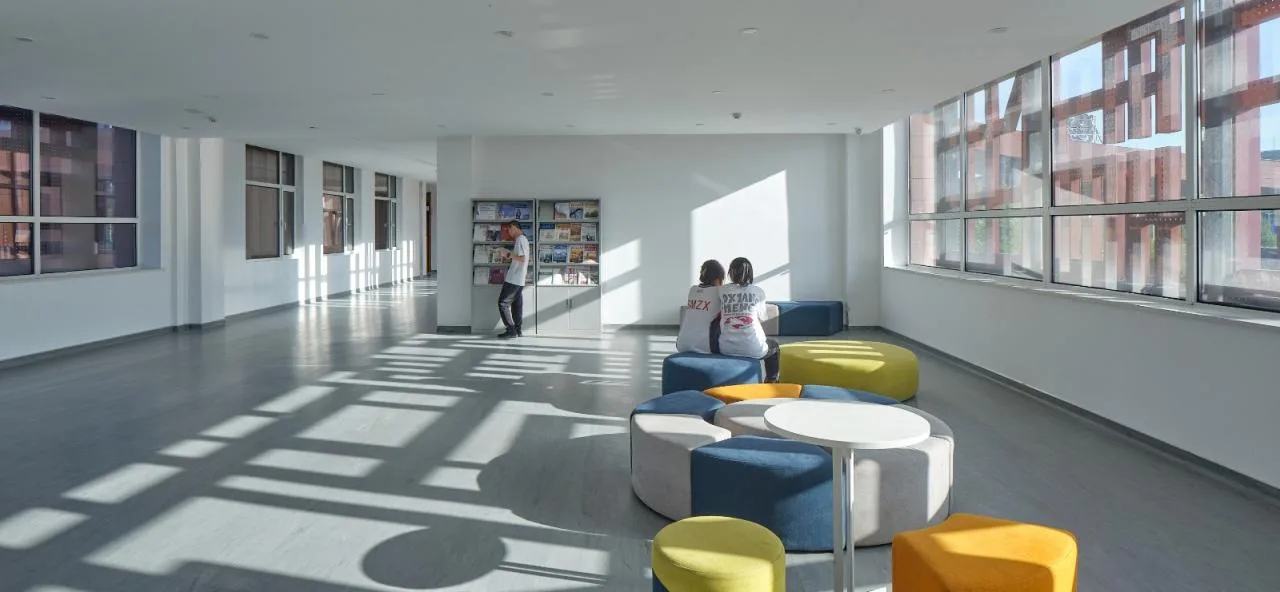
△ Teaching group study bar space
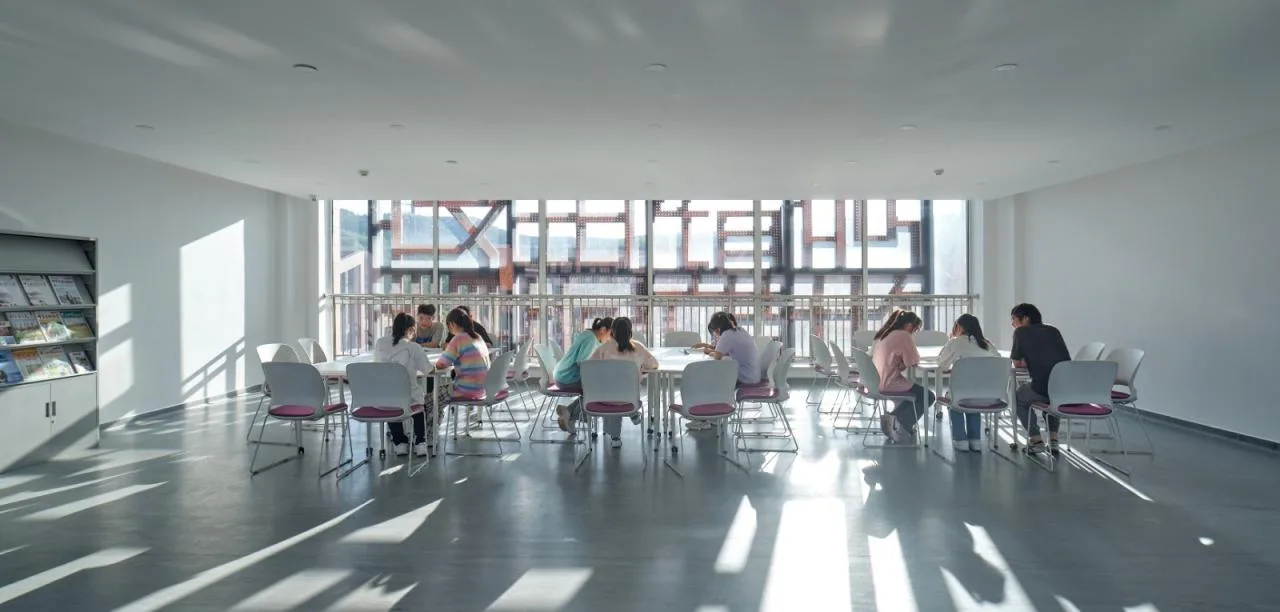
△ Teaching group study bar space
Pocket Spaces and Convenient Parking
The campus entrance area is thoughtfully designed to respond to its external environment and extend campus functions. An urban flood discharge channel runs along the south side of the main entrance, utilized to create convenient harbor-style parking zones on both sides. These are complemented by pocket parks where parents can relax and wait, integrating water features, greenery, and hardscape elements.
The cultural exhibition halls flanking the main entrance double as sheltered corridors, offering protection from wind and rain for waiting parents.
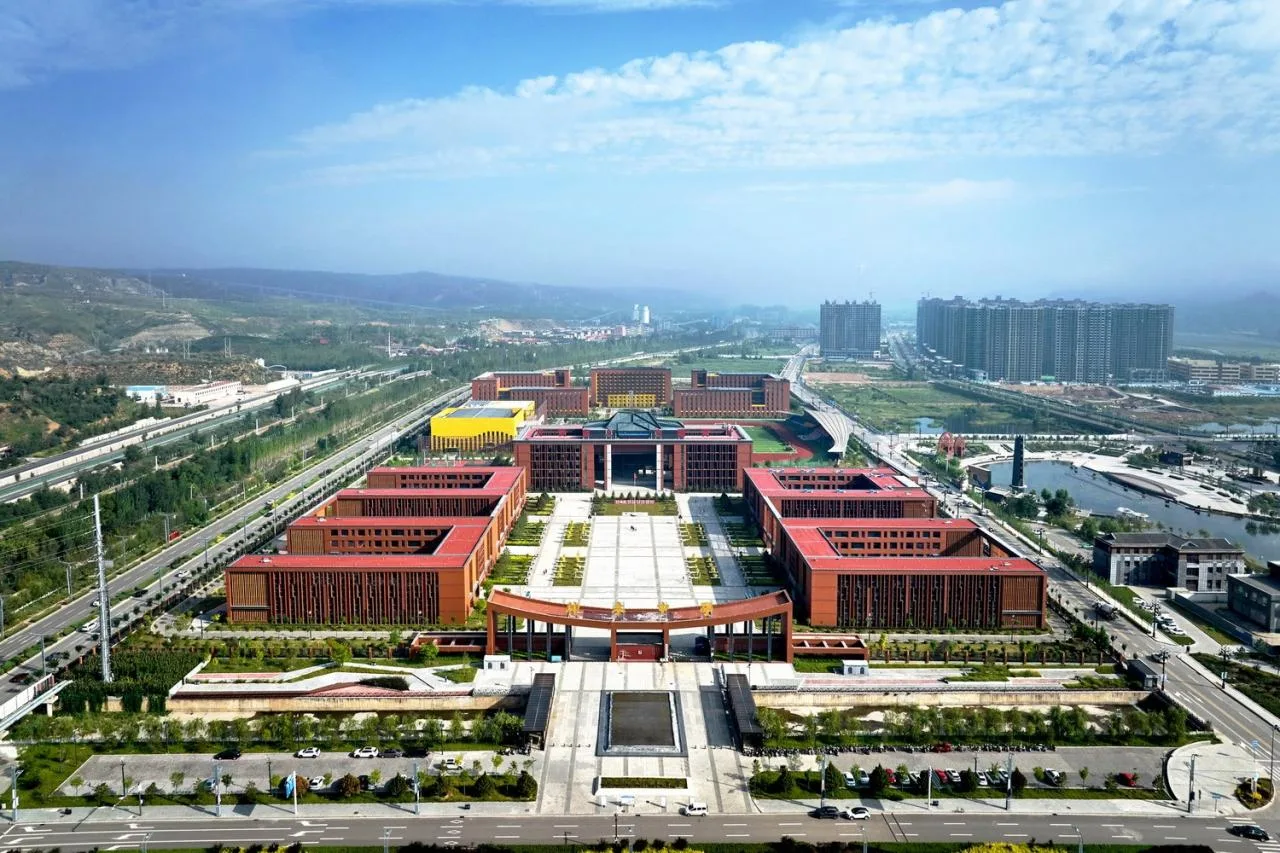
△ South-facing bird’s-eye view of the school
Multidimensional Corridors and Circular Alleys for Interaction
The cultural and sports complex features white parametric partitions that create flexible spaces connecting the gymnasium and cafeteria. These, combined with surrounding corridors, form distinctive campus lanes that offer unique alleyway experiences, fostering interaction among teachers and students.
Sunlight filtering through the multi-dimensional corridors creates a dynamic play of light and shadow, highlighting architectural details.
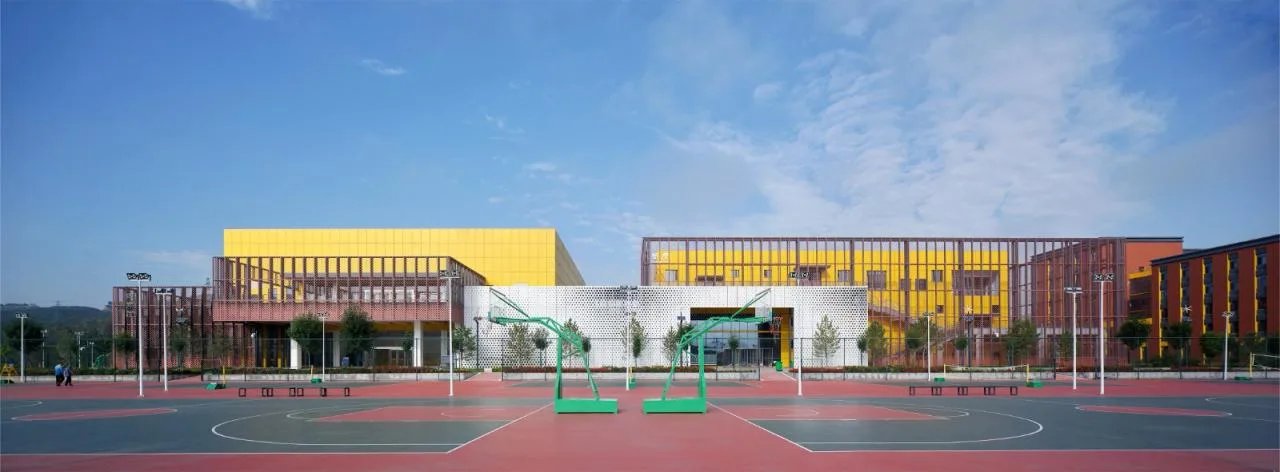
△ Realistic scene of cultural and sports groups
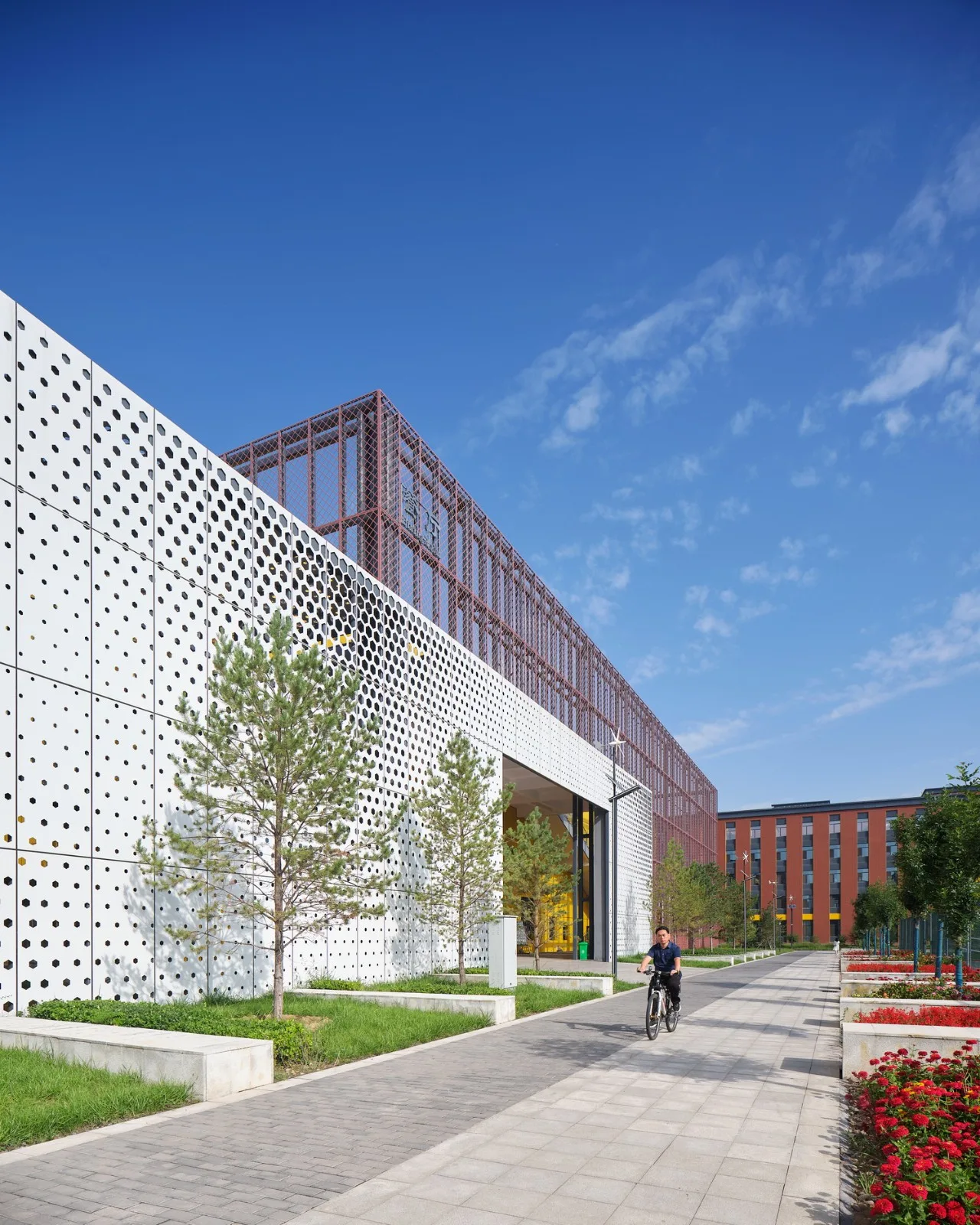
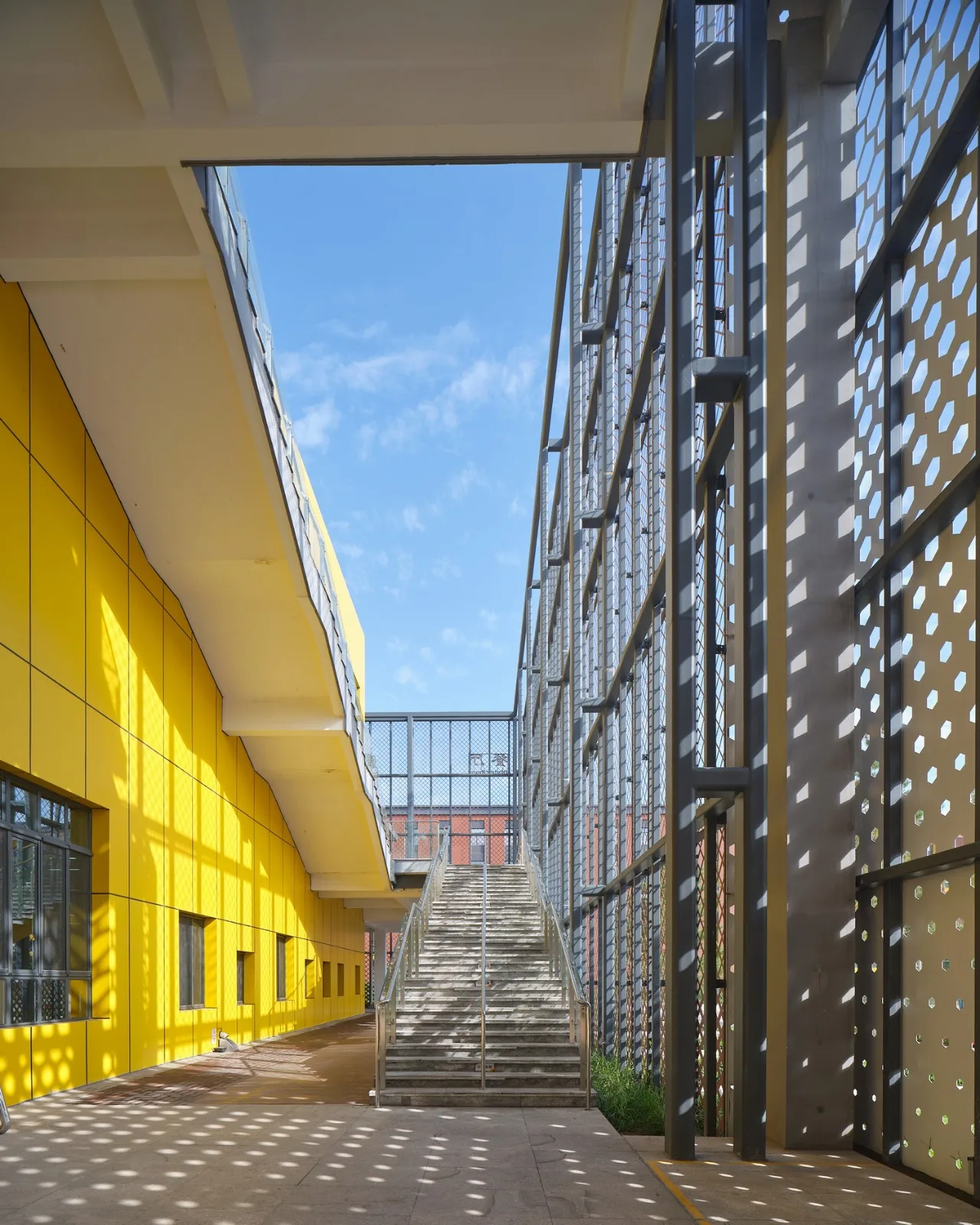
△ Multidimensional corridor
Joyful Forest and Chinese-style Campus
The comprehensive building serves as the campus’s visual centerpiece, incorporating the natural form of dense forests into its facade design. The motto “Ten years for trees, a hundred years for people” inspires this concept. Atop the building, a multifunctional study hall is supported by four umbrella-shaped steel beam columns, which not only resolve structural challenges but also evoke the architectural origin’s “Apricot Altar Lecture,” harmonizing with the lively tree motif on the facade.

△ Facade concept
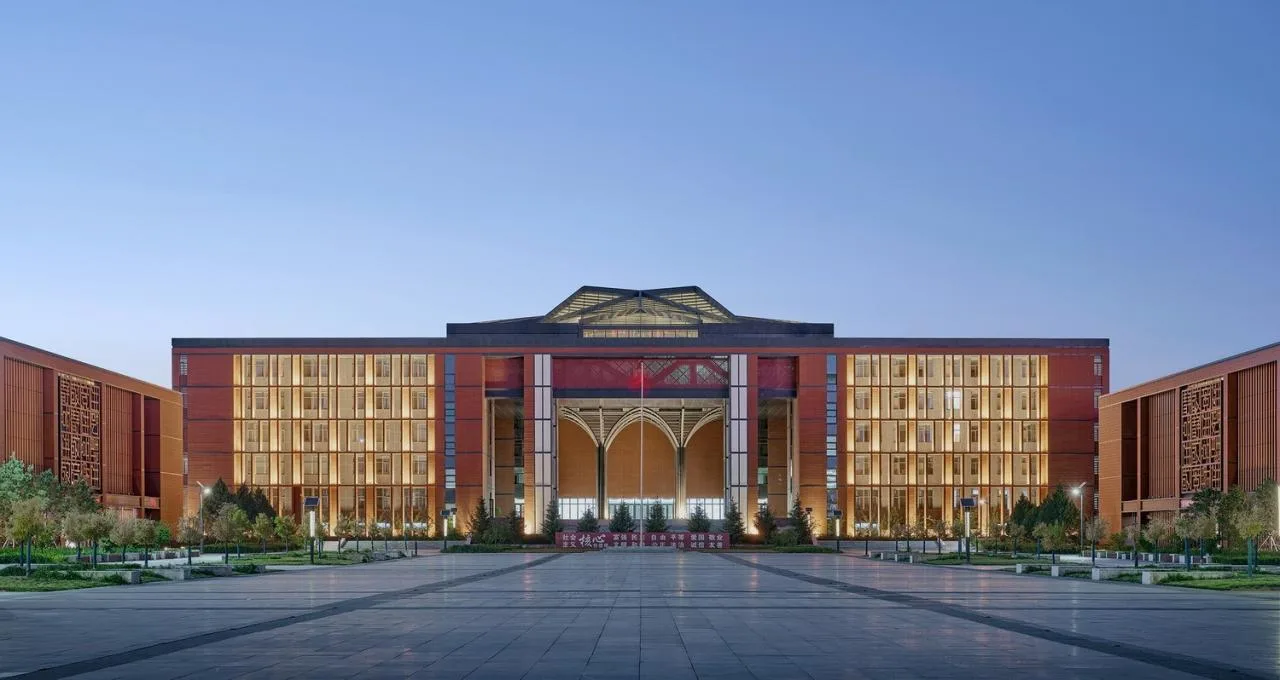
△ Night view of the comprehensive building
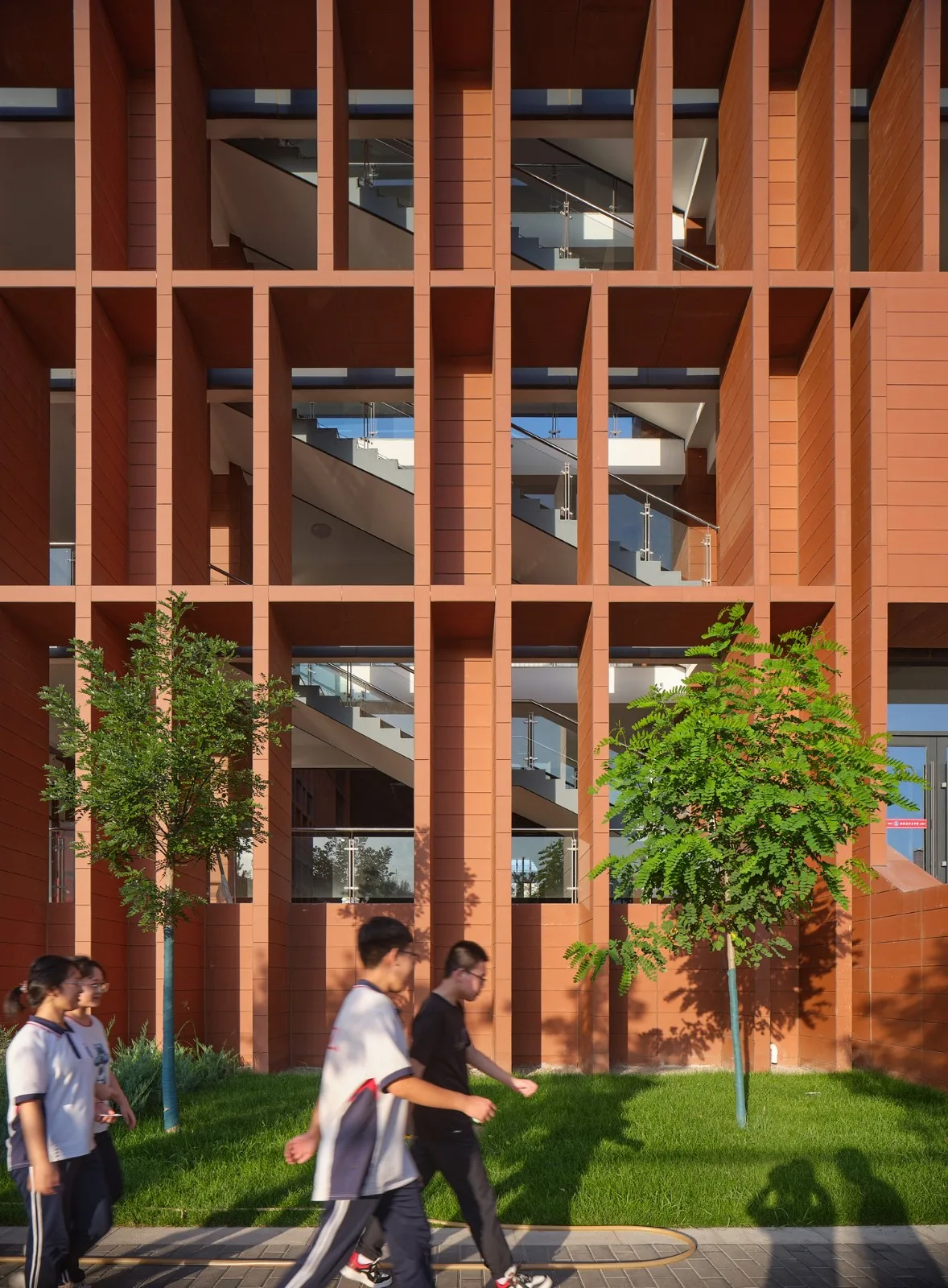
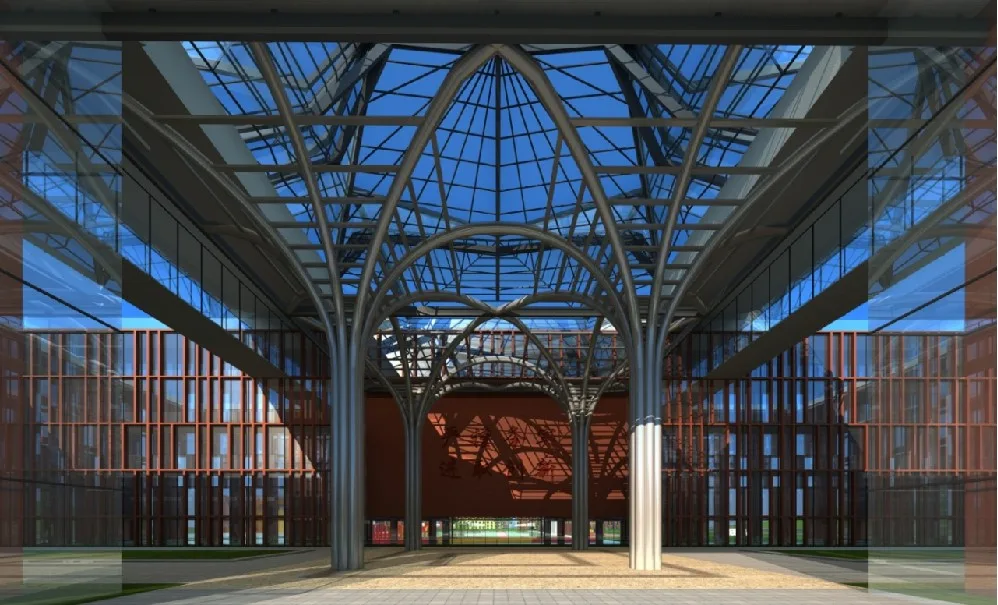
△ Facade details of the comprehensive building
Inspired by ancient bamboo slips and Shaanbei flower-patterned windows, the teaching group facades are divided by tall wooden louvered screens. The school motto, “Quiet Competition and Respectful Progress,” is subtly incorporated, creating a unique Chinese-style campus with a serene and classic charm.
These louvers are crafted from environmentally friendly, lightweight, and high-strength bamboo steel material. They offer multifunctional benefits including axial rotation, wind protection, partitioning, shading, and seating, providing a dynamic and varied light and shadow experience within teaching spaces.
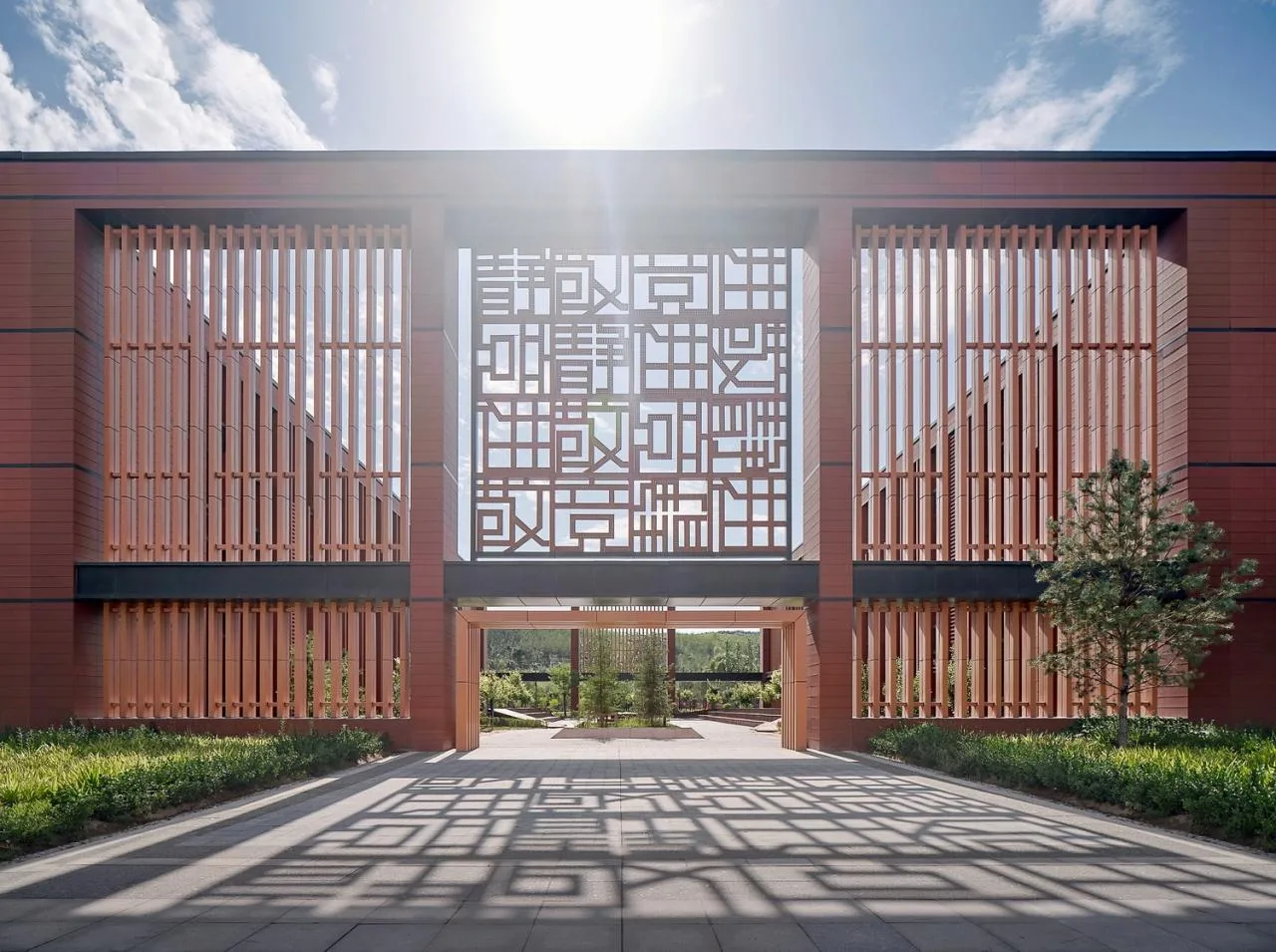
△ Teaching group grid facade
Green, Low-Carbon, and Healthy Lighting
The teaching spaces implement healthy lighting technologies, marking the first demonstration project under China’s national healthy lighting standards.
By using passive design strategies to reduce energy consumption, the multifunctional study hall atop the comprehensive building features a slanted grid ceiling with skylights and high side windows, enhancing natural light and ventilation.
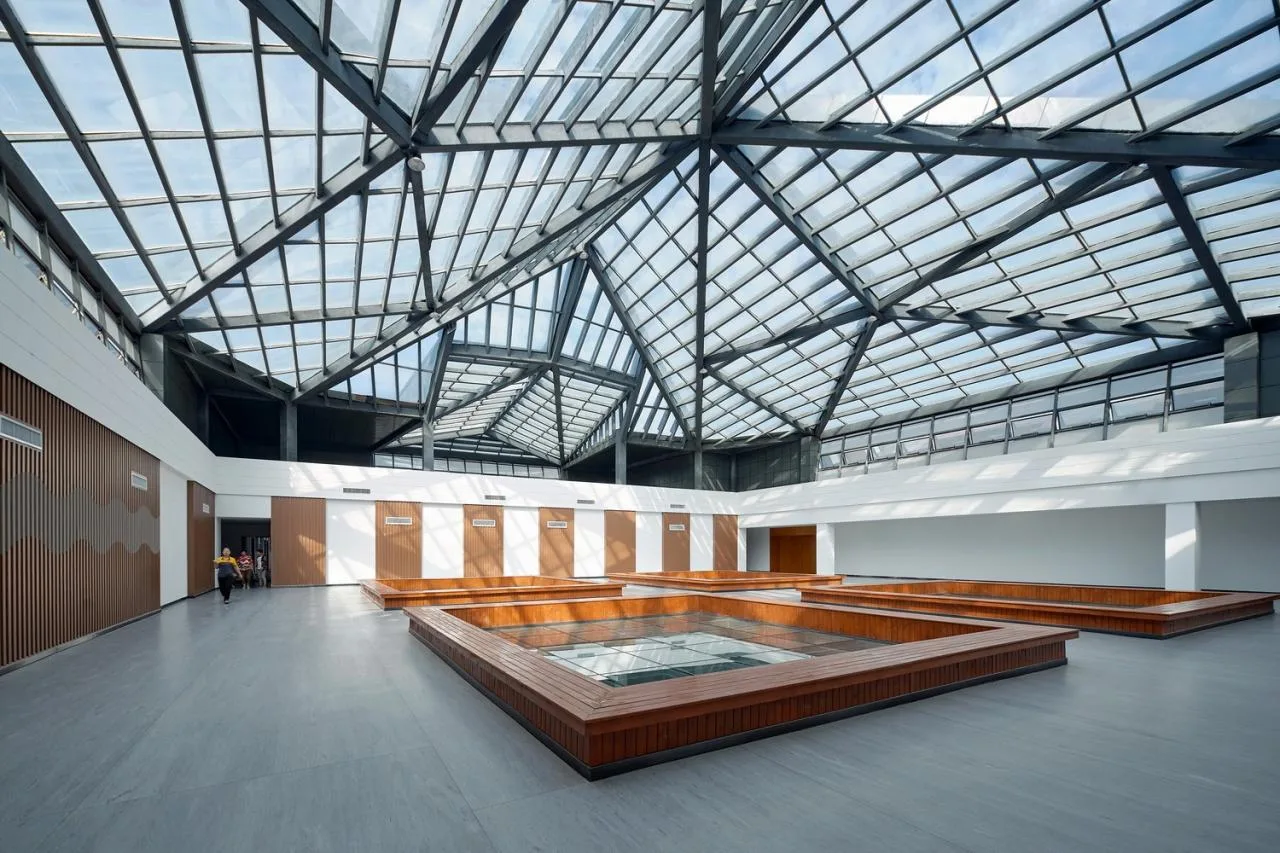
△ Multifunctional research hall in the comprehensive building
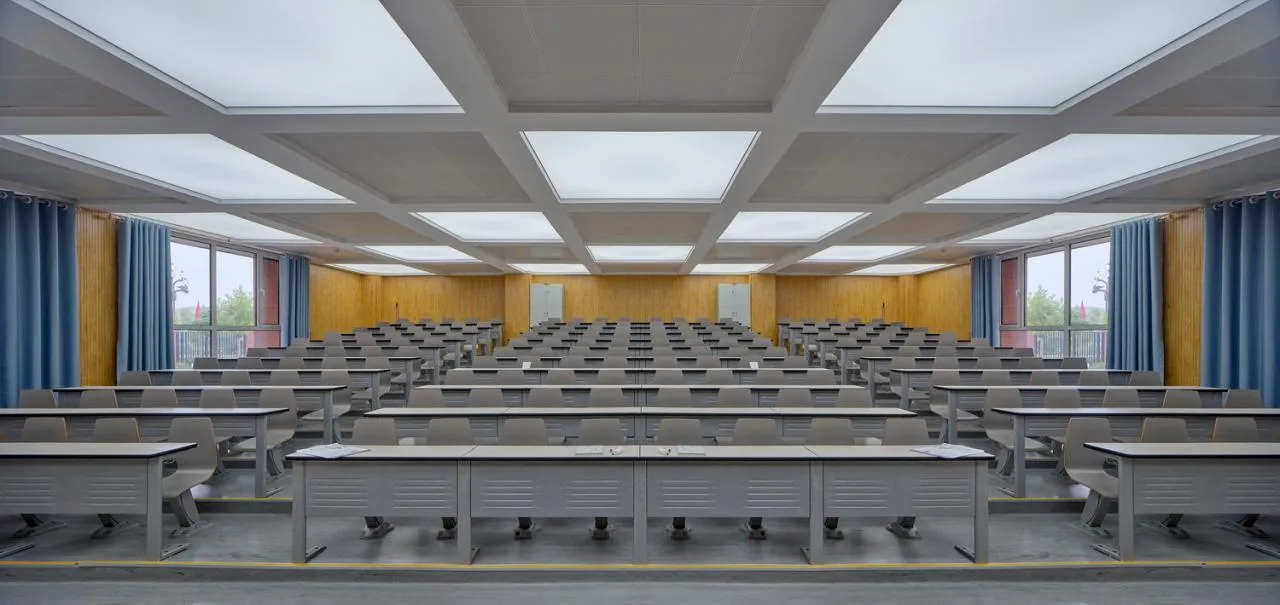
△ Teaching group combined classroom
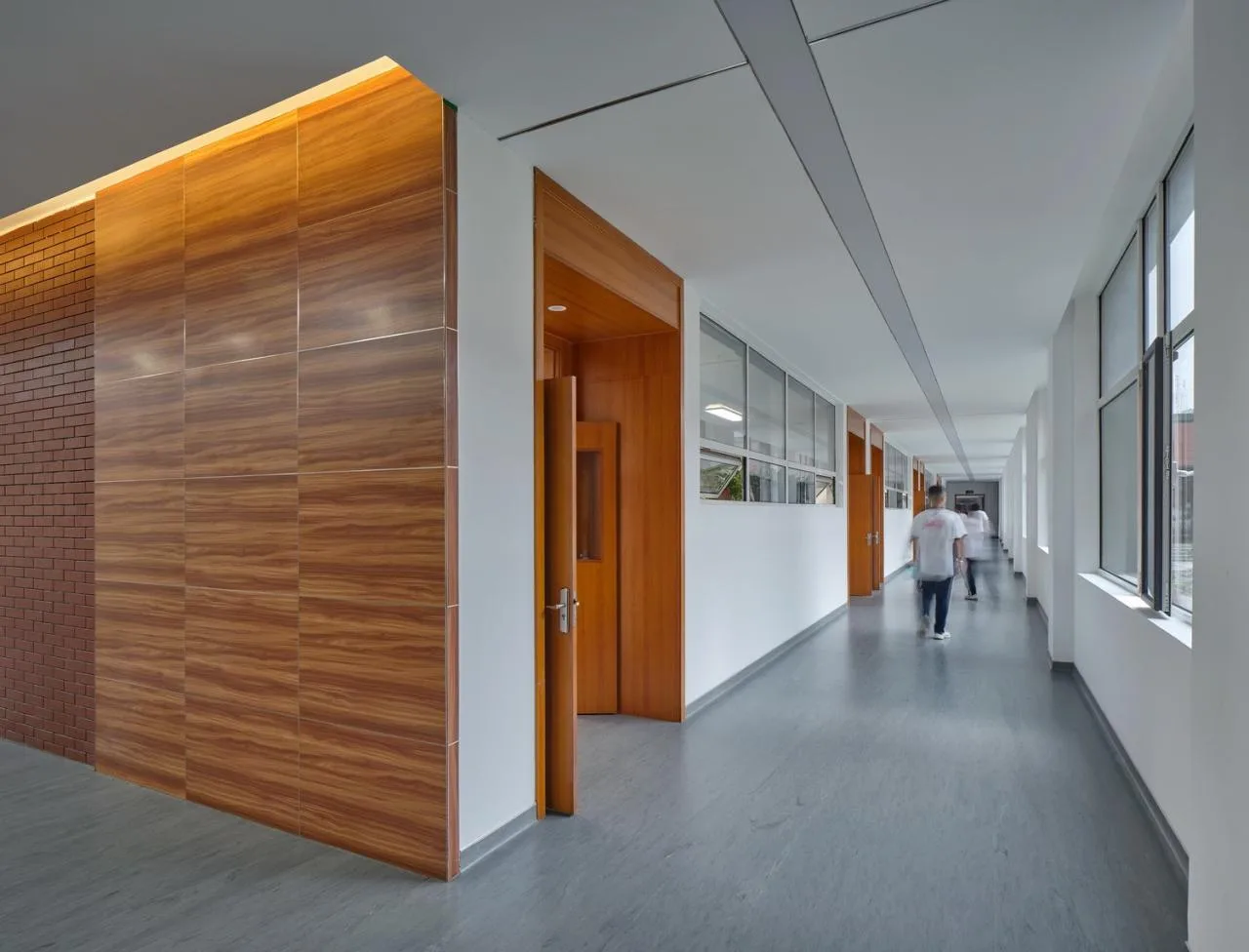
△ Teaching group regular classroom
Project Drawings
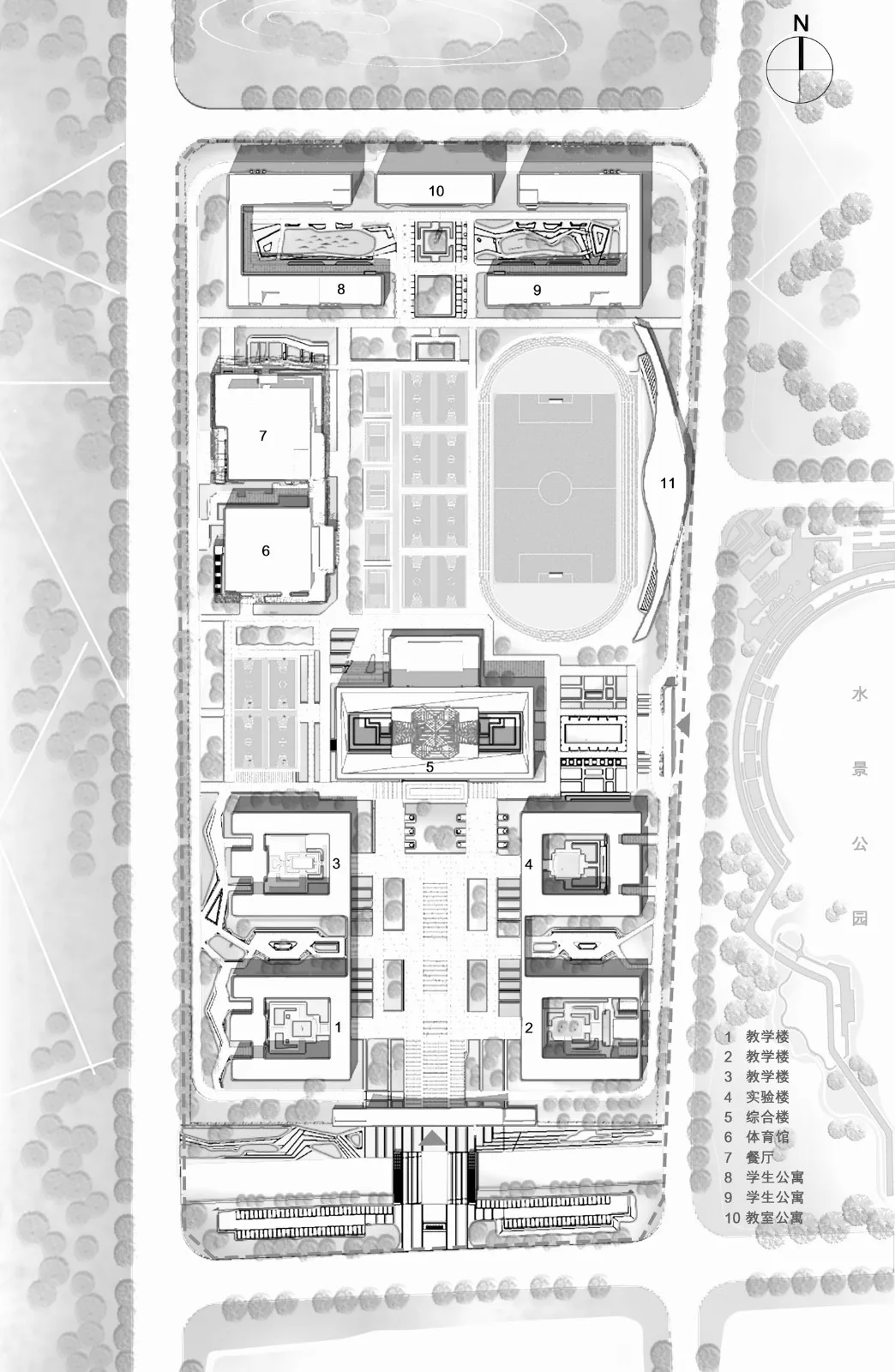
△ General layout plan
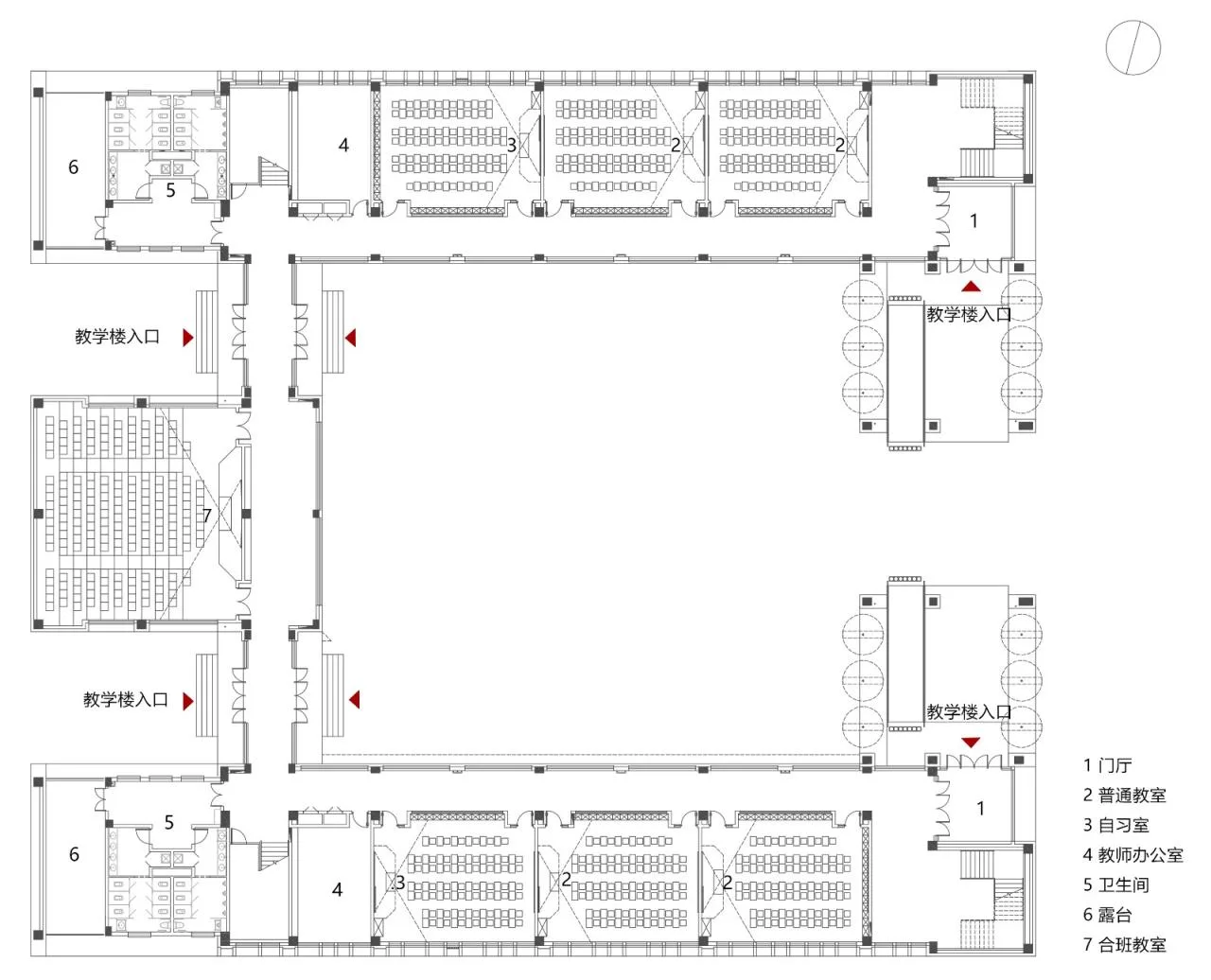
△ First floor plan of the teaching building
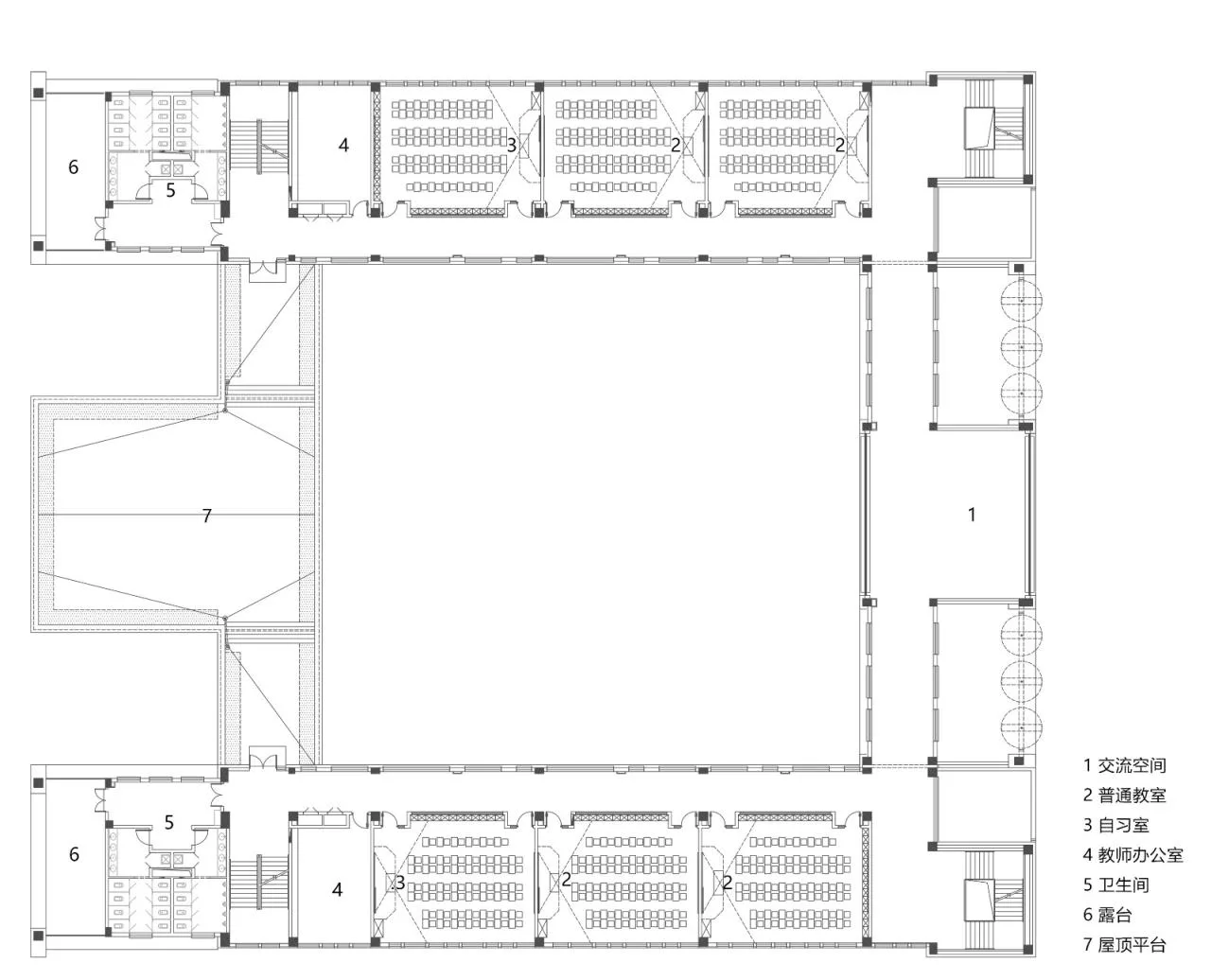
△ Second floor plan of the teaching building
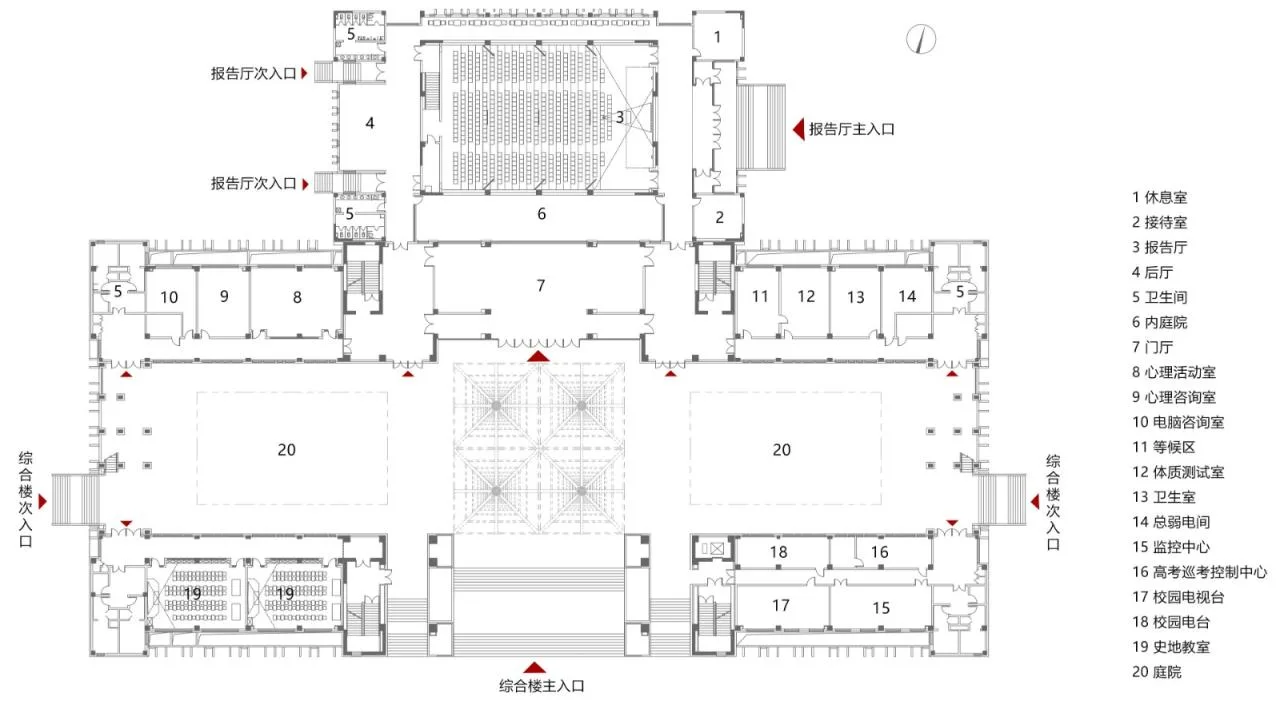
△ First floor plan of the comprehensive building
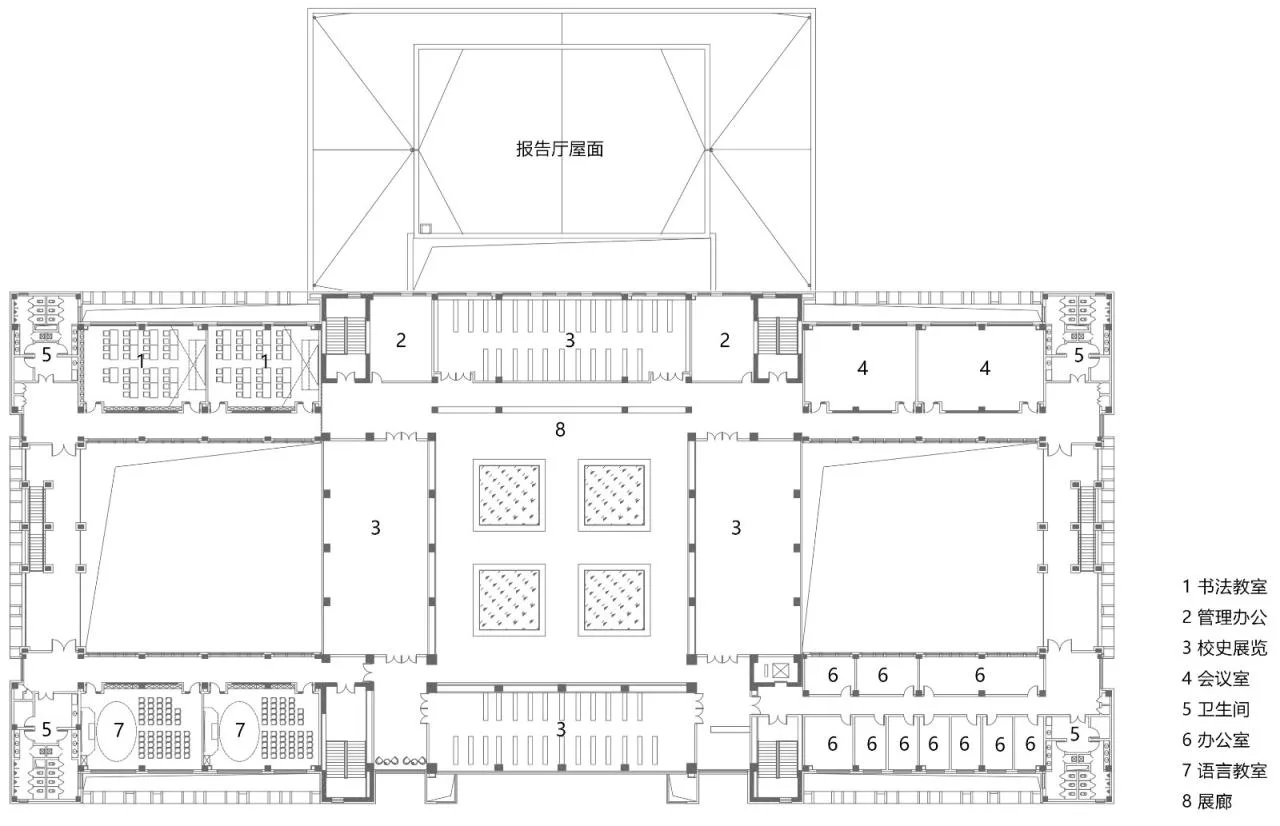
△ Fifth floor plan of the comprehensive building
Project Information
Project Name: Shenmu Middle School
Project Type: Educational Architecture
Location: Shenmu, Shaanxi Province
Design Firm: Institute of Architectural Design and Research, Chinese Academy of Sciences Co., Ltd
Design Team:
- Lead Architect: Li Xinbin
- Architecture: Li Xinbin, Pan Hua, Zou Jinming, Ma Shiwen, Fan Enchuang, Wang Ziyu, Chen Jichang, Zhao Li, Liu Yongting, Wang Ni
- Structure: Liao Yunyou, Gu Xiaorui
- HVAC: Liu Yuyang, Zhang Jin
- Electrical: Fu Yuan
- Water Supply and Drainage: Wang Weimin
- Landscape: Zhong Wei
Owner: Shenmu Middle School, Shaanxi Province
Status: Completed
Design Year: 2015
Construction Year: 2020
Land Area: 196,647 square meters
Building Area: 113,205.11 square meters
Photographer: © Octopus Sees Architecture















Must log in before commenting!
Sign Up