
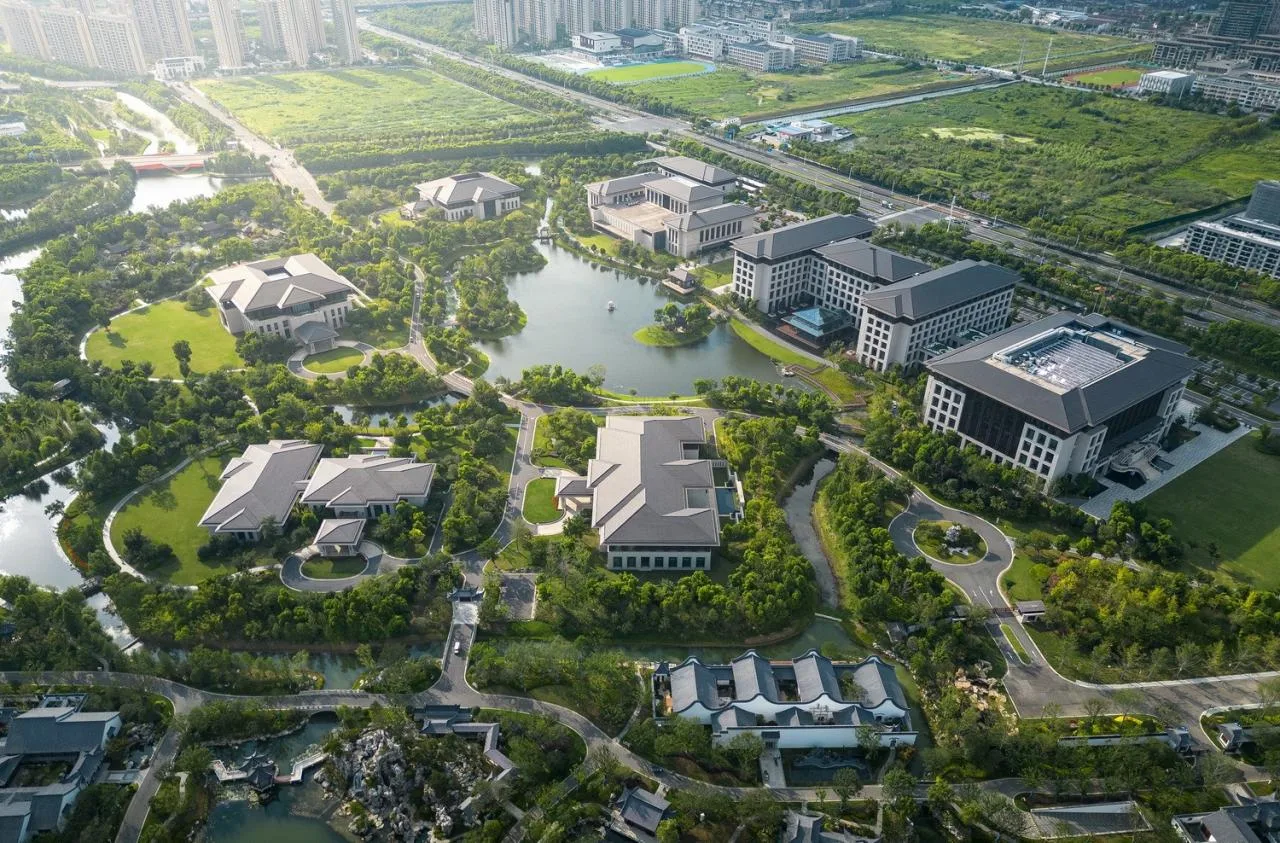
From shaping mountains and waters to crafting Jiangnan gardens, this “State Guesthouse” level resort hotel—named after the ancient name of Changzhou, “Zhongwu”—represents the design team’s exploration of the harmonious integration of architecture, environment, and cultural heritage.
01 Project Background: The Legacy of the Wu Dynasty — Bridging Past and Present
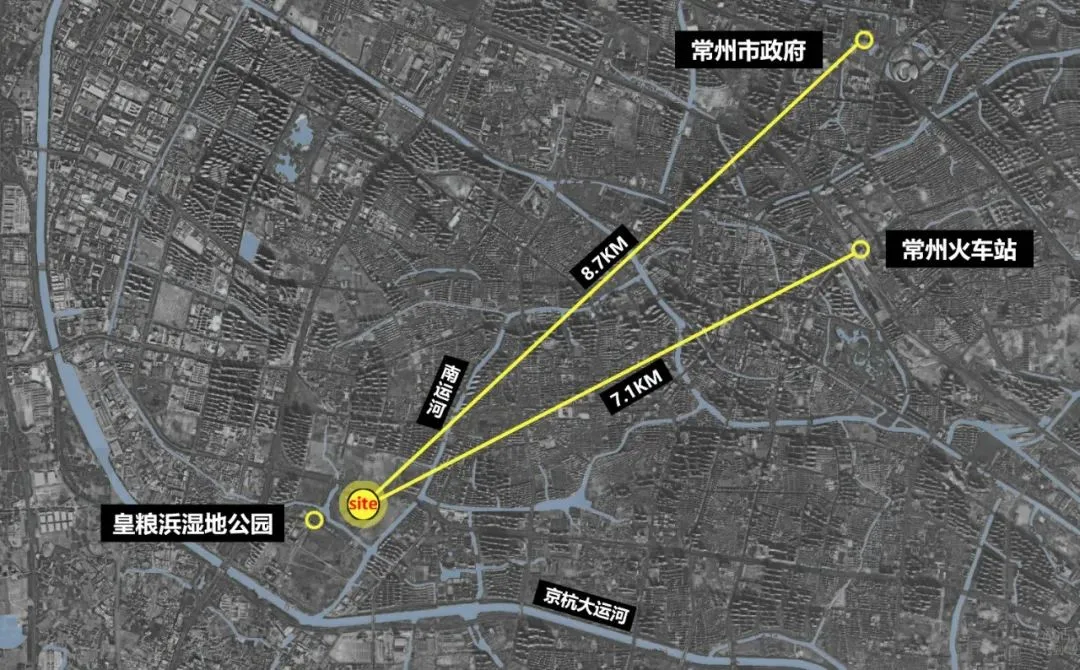
Changzhou has long been a vital water transportation hub, historically serving as a key point for the “Hundred Yue Boat and Car Meeting” and a center for grain transport. The Huangliangbang area, located in Xilin, was named for its bustling traffic and prosperous population during ancient times. Today, the Huangliangbang site lies east of the South Canal, south of the Beijing-Hangzhou Grand Canal, north of Zhongwu Avenue, and west of Longjiang Elevated Road, boasting a prime geographical location.
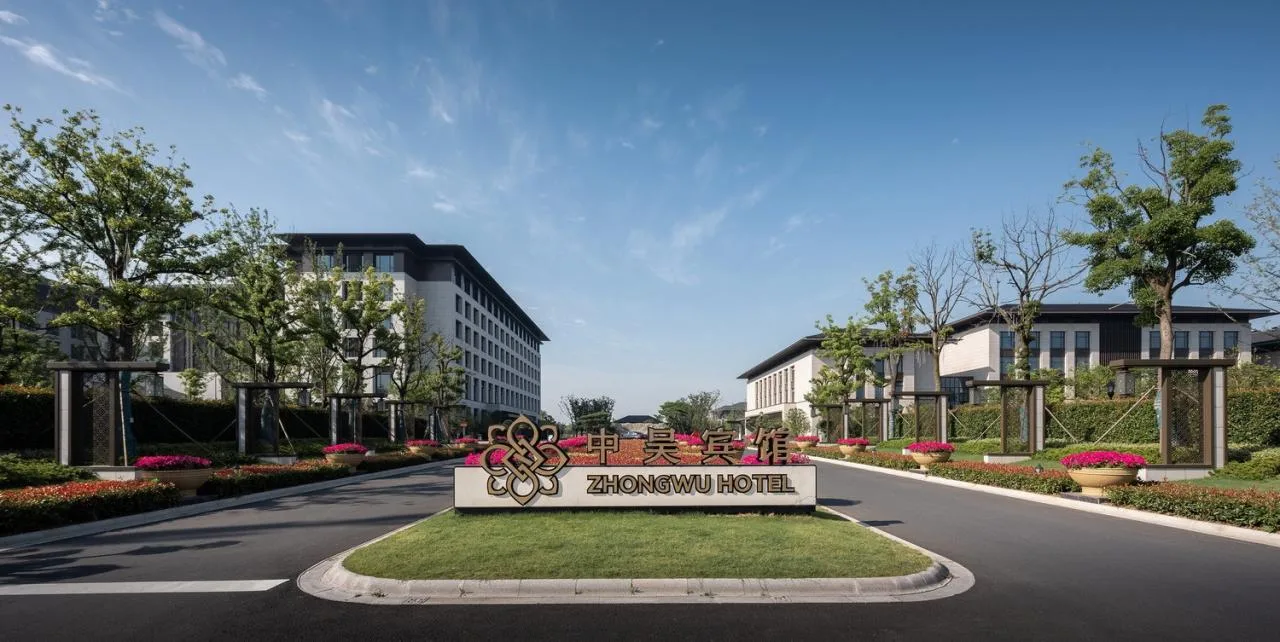
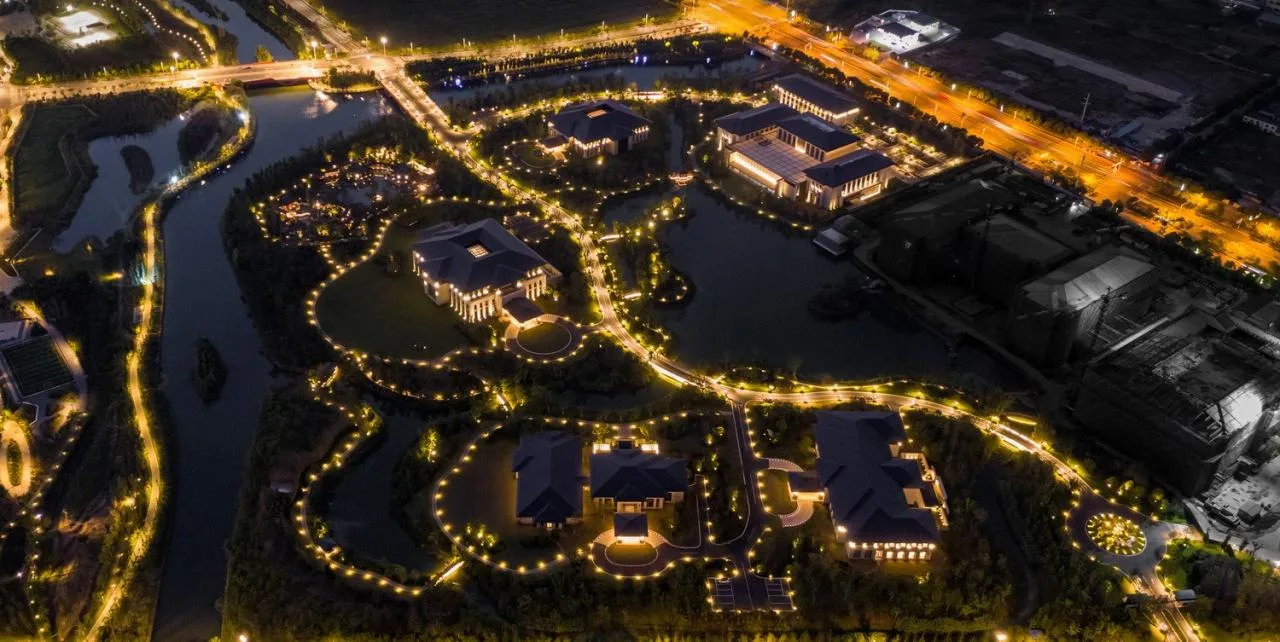
The project spans approximately 400 acres and includes 393 guest rooms. Situated in the northeast plot of Huangliangbang Wetland Park near the city, the hotel leverages its unique historical and geographical context. Serving as both an important gateway for urban promotion and a new cultural tourism landmark, Zhongwu Hotel combines government reception standards with the amenities expected of a luxury resort.
02 Project Concept: A Landscape Gift for State Guests
How can a newly built luxury hotel seamlessly accommodate government and business receptions alongside vacation functions through thoughtful design?
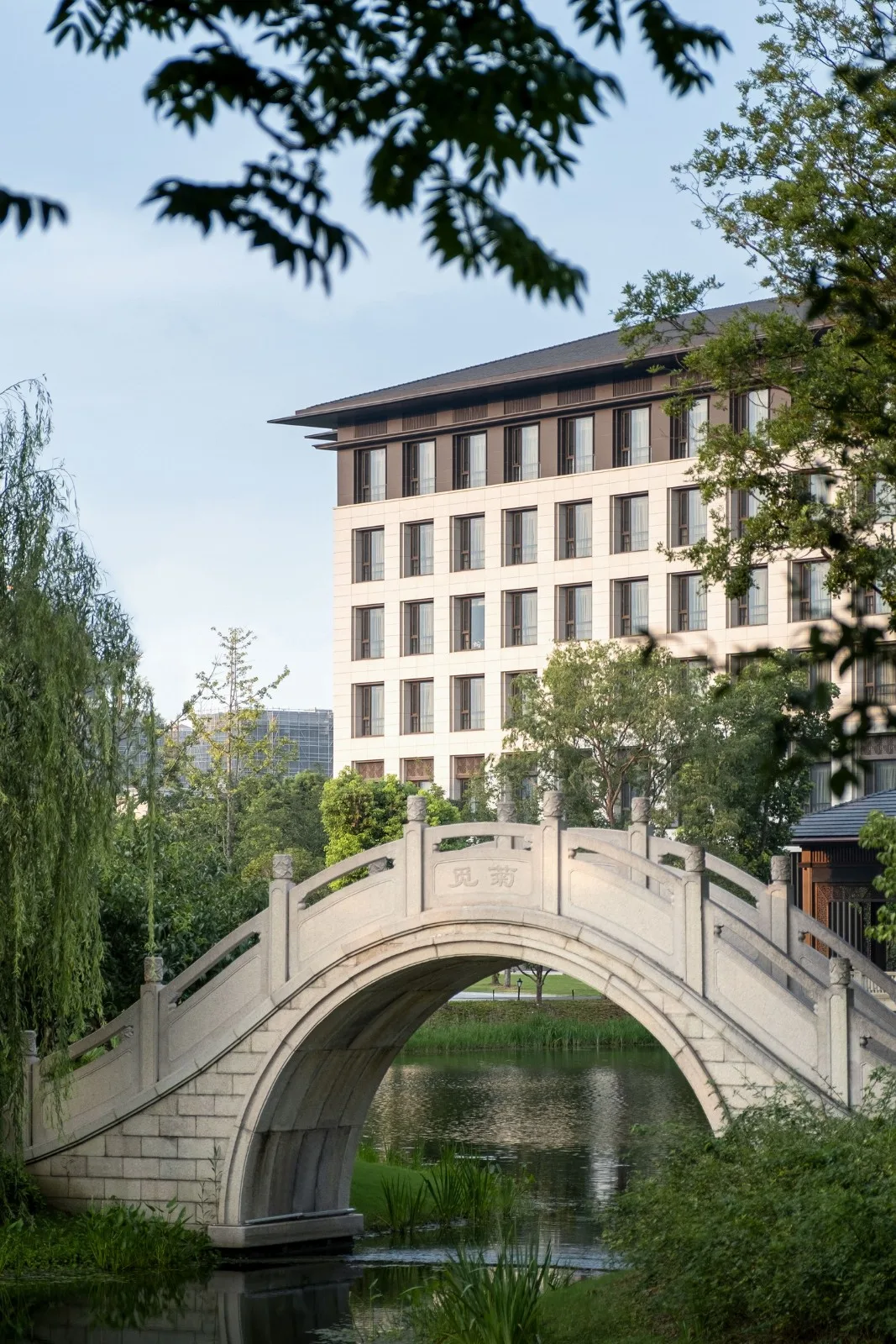
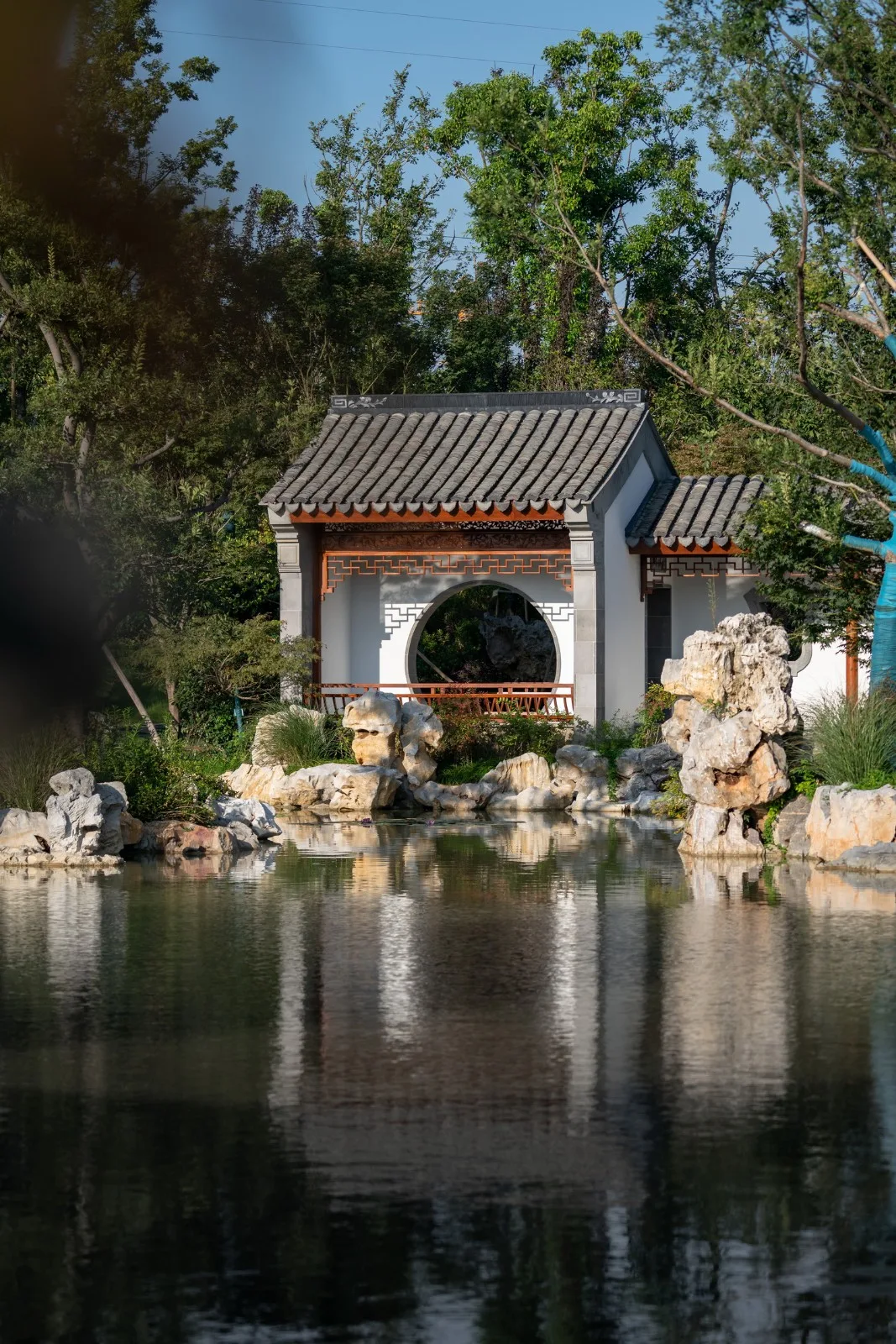
The architectural concept begins with the consideration of time, place, and people. Changzhou’s rich cultural heritage and deep connection to its natural surroundings are rooted in the customs of Central Wu. With mountains, waters, and trees at the core, gardens become a vital element in shaping the spatial experience.
03 Layout Planning: Organizing Mountains and Waters with Freedom and Order
When designing a forest garden, the management of mountains and waters takes precedence, followed by the garden itself. Ji Cheng’s reference to “Xiangdi” at the start of “Yuanye” highlights the foundational role of the site in the design process.
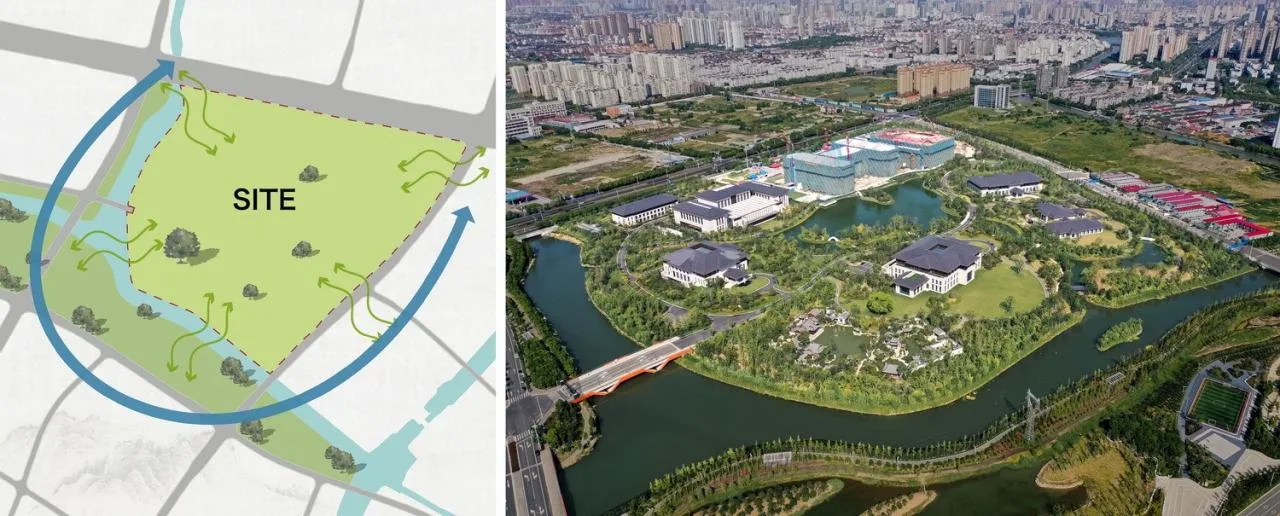
The project borders urban parks to the west and south, with the Nantongzi River forming an inverted “T”-shaped water channel. The site mostly consists of open spaces and ponds on flat terrain. A large, ancient camphor tree with a full canopy stands in the southwest corner, an important natural feature integrated into the design layout.
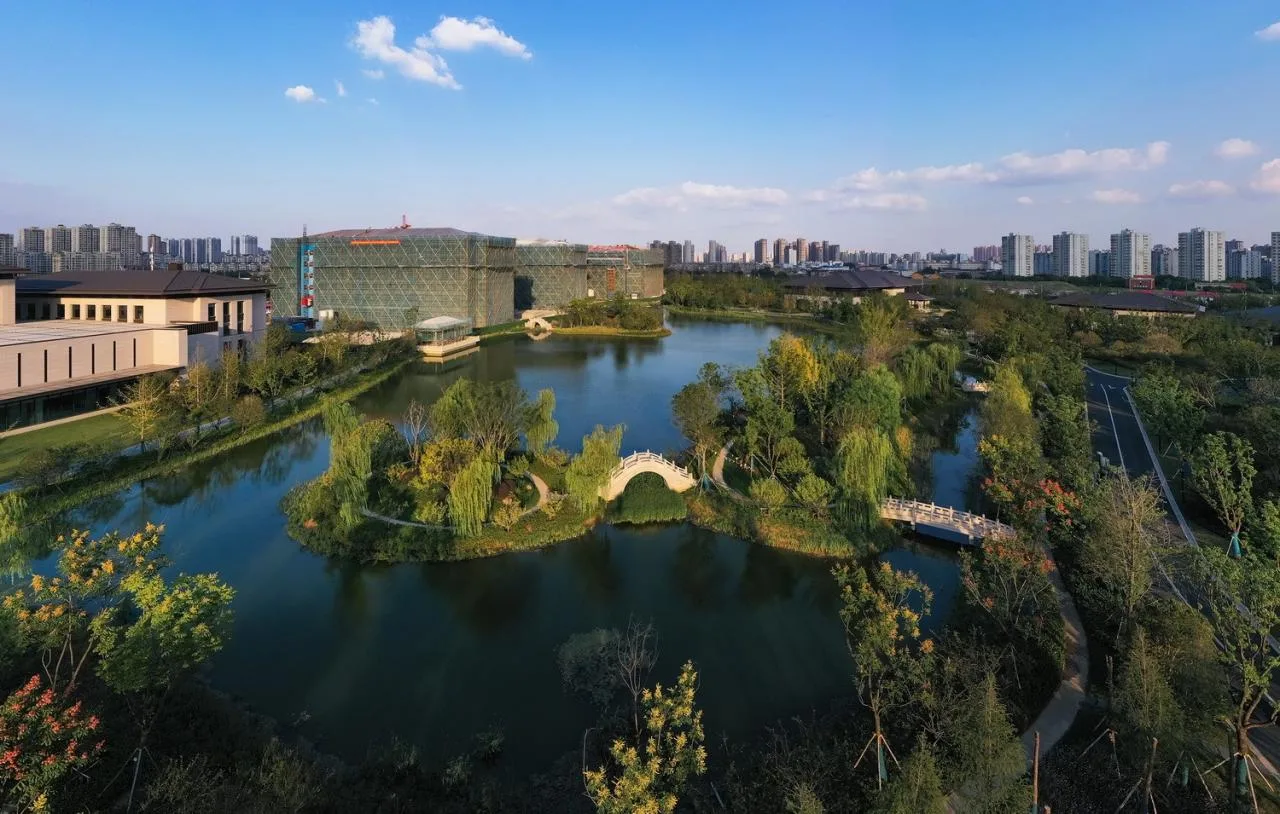
In Jiangnan garden design, there is a saying: “no garden without water.” The design team expanded the existing central pond into a landscape focal point and connected it with the Tongzi River to form a cohesive water system. This naturally divides the space into two main zones: north and south.
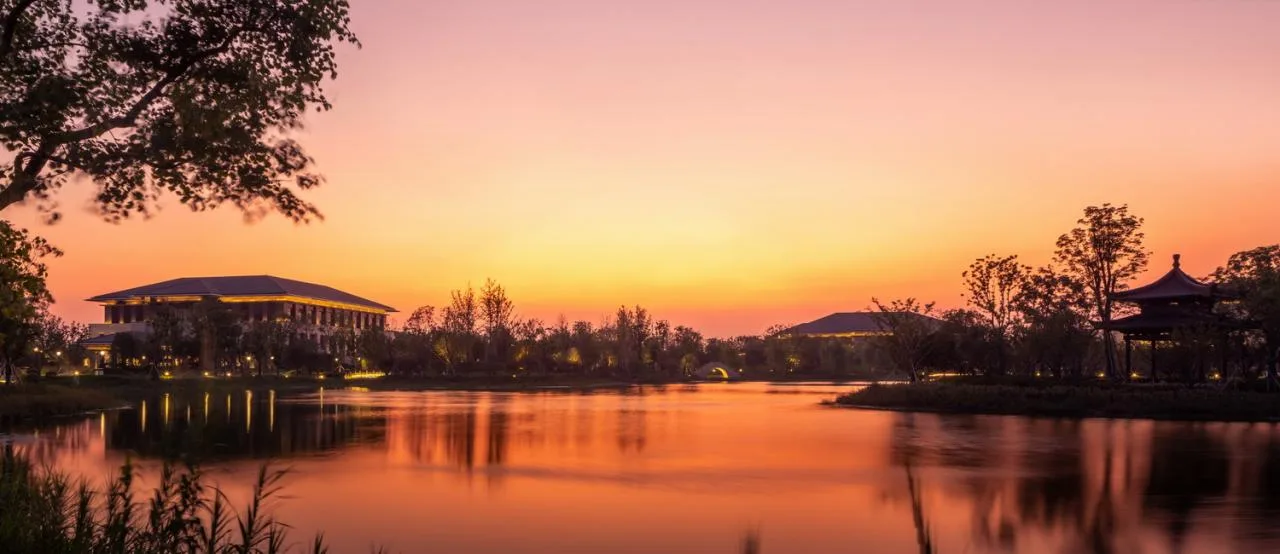
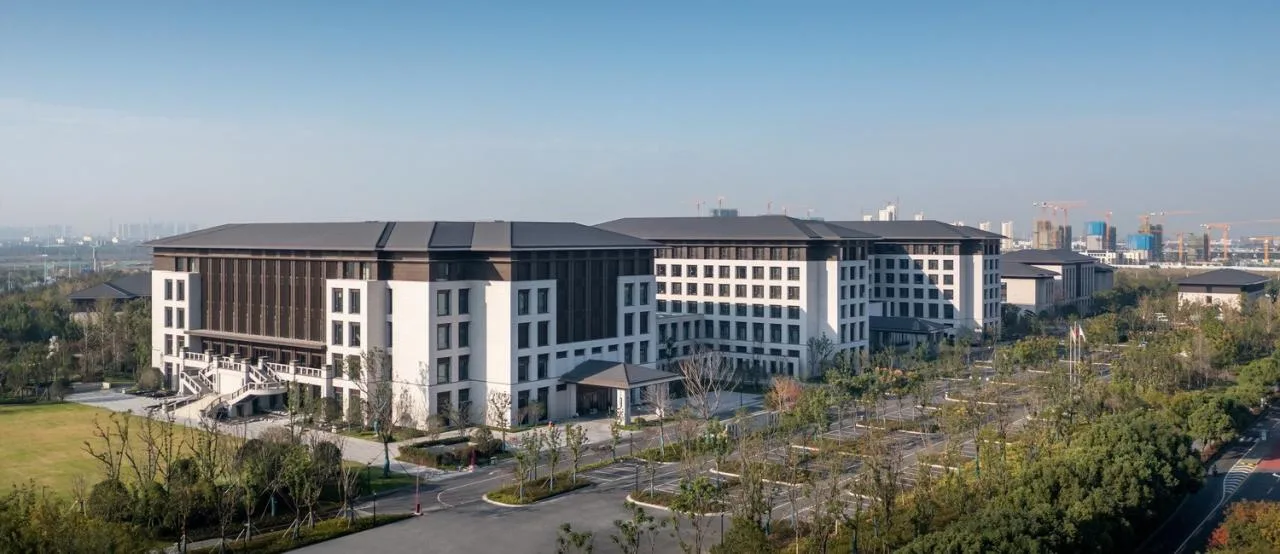
The VIP reception area on the south side integrates with the wetland park, while the northern social and support facilities face Zhongwu Avenue and the urban interface. This layout balances the hotel’s reception functions with harmony to its natural surroundings.
Once the landscape framework was established, the detailed gardening process began.
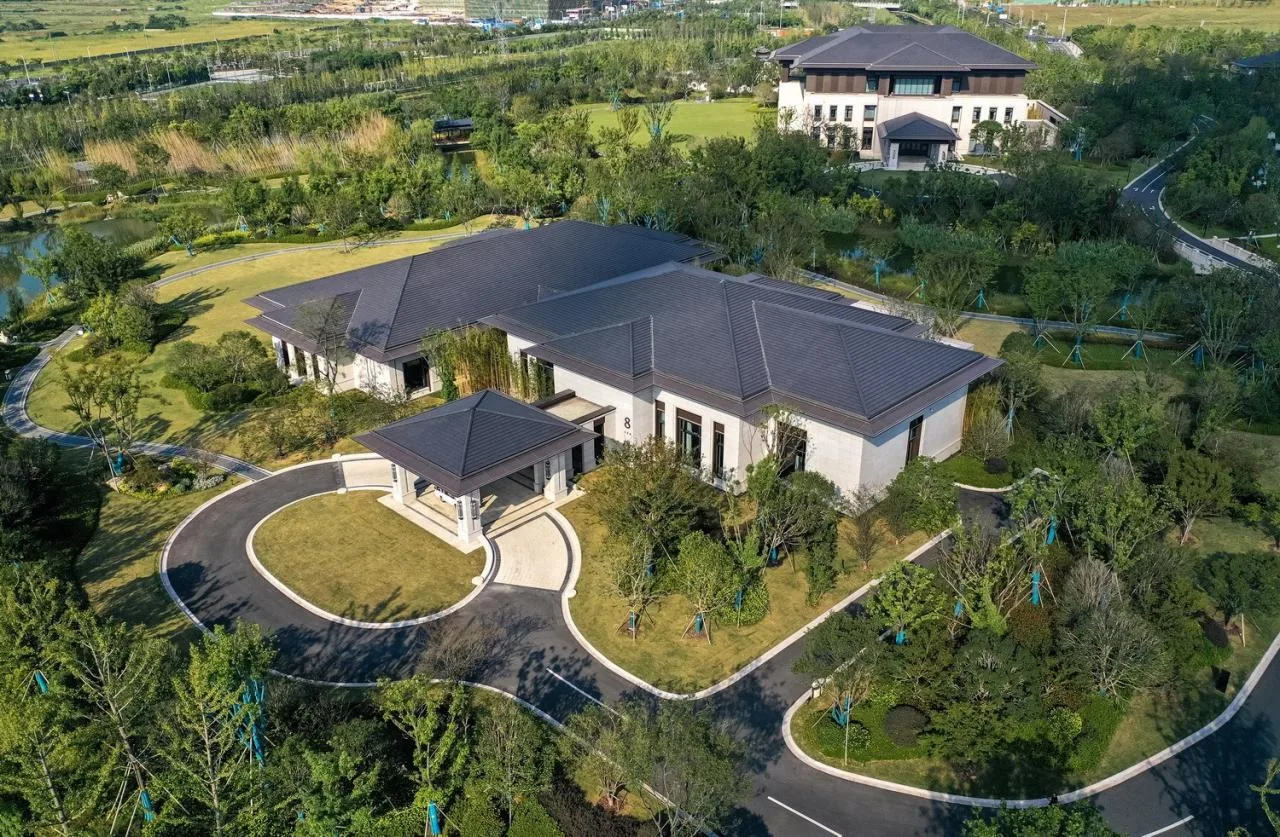
To meet requirements for independent security and privacy in the reception area, the design employs a “garden within garden” spatial organization. Each building forms a private small garden with its surroundings, collectively creating a large garden around the central lake. This design ensures privacy while offering high-quality outdoor views for interior spaces.
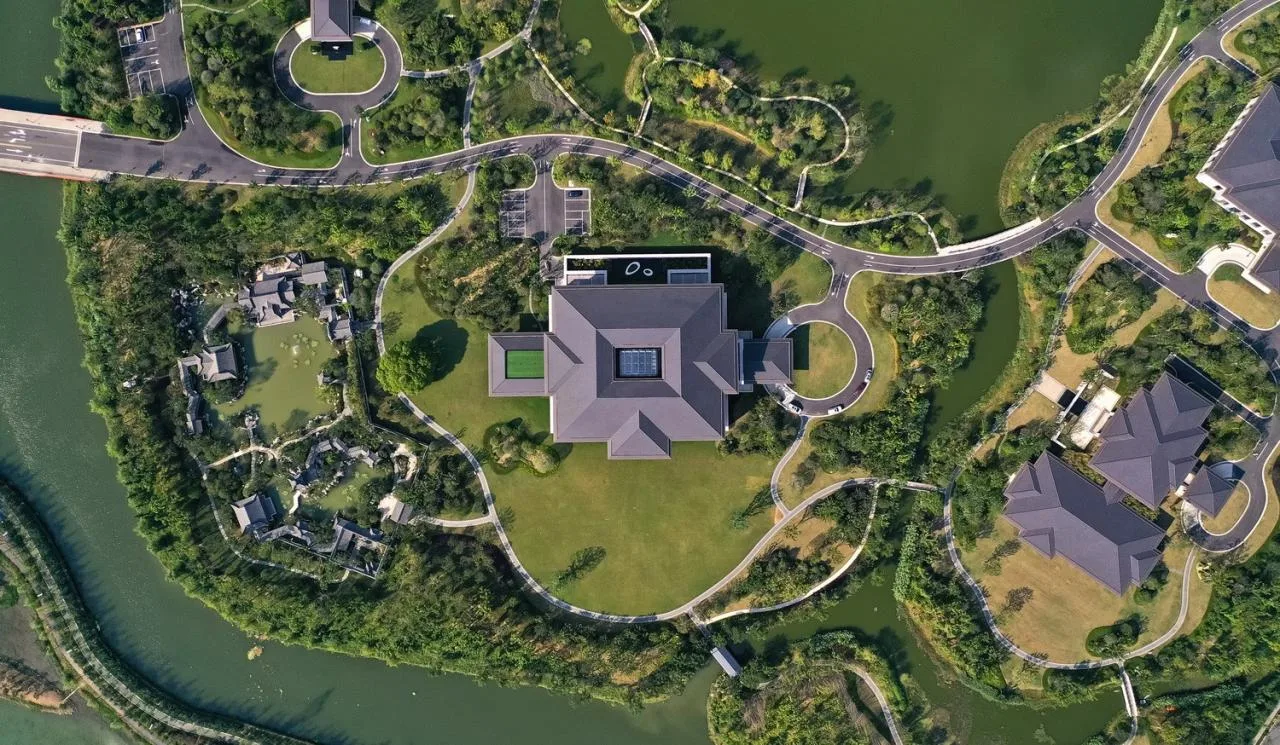
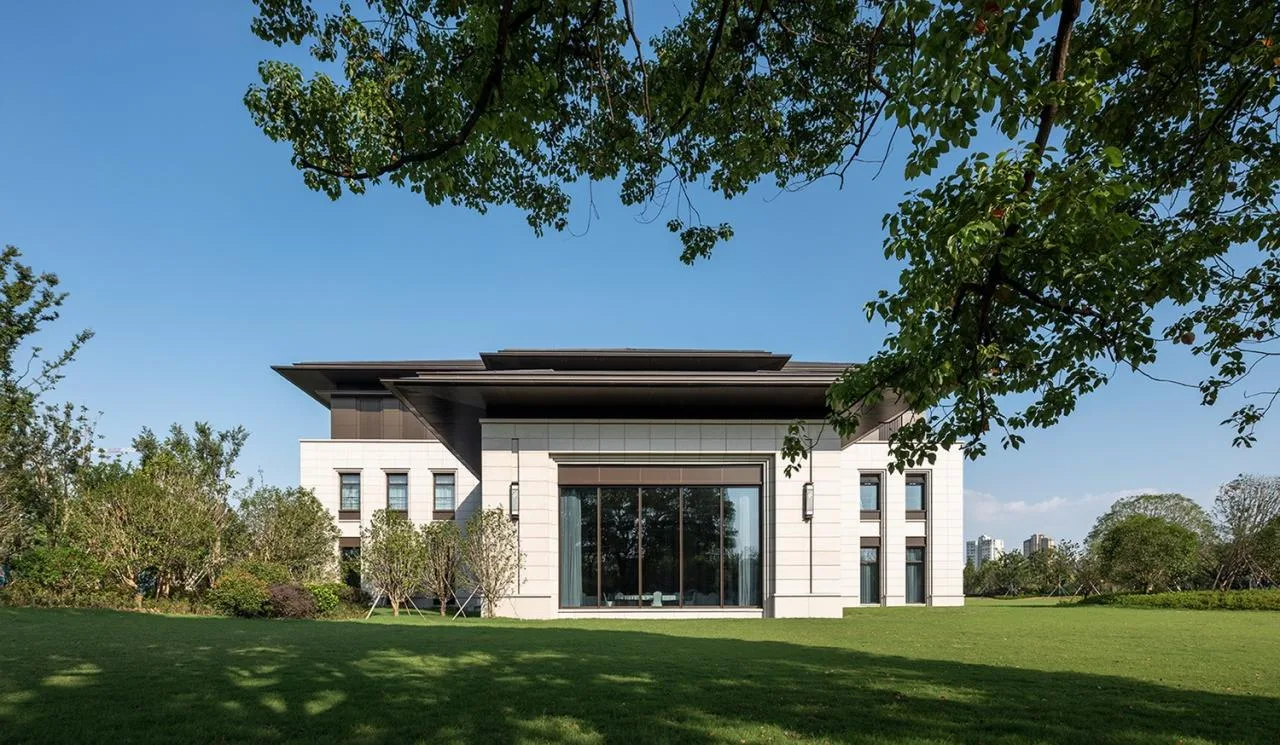
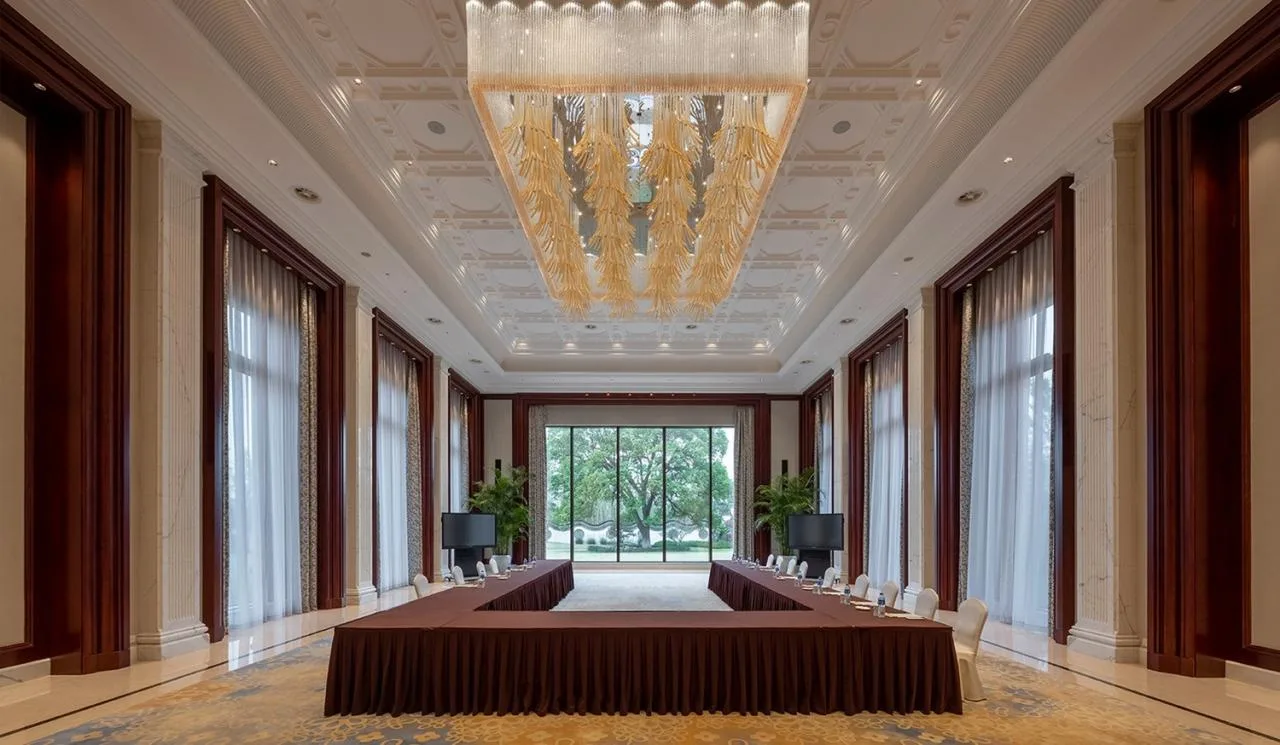
The preserved tall camphor trees serve as anchor points throughout the design, especially near the west end of Building 9—the highest-standard reception building—creating a dialogue between architecture and nature. These trees also play a significant role in the interior landscaping.
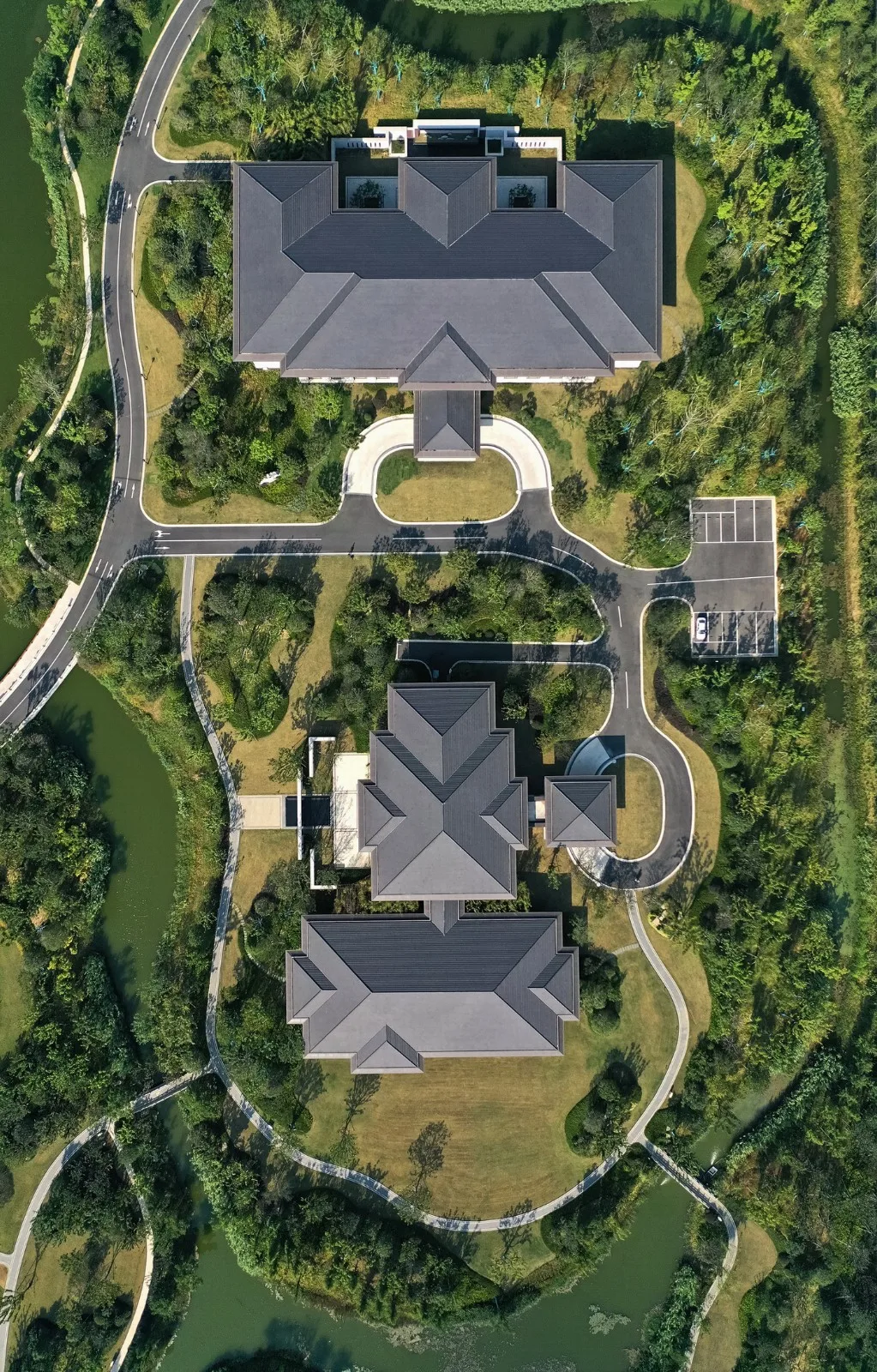
The other buildings are grouped in clusters of two to three, following a principle of “group layout with overall freedom,” unfolding along the central lake. Buildings 5 and 8 align clearly in terms of volume and spatial organization, complementing both each other and the surrounding landscape.
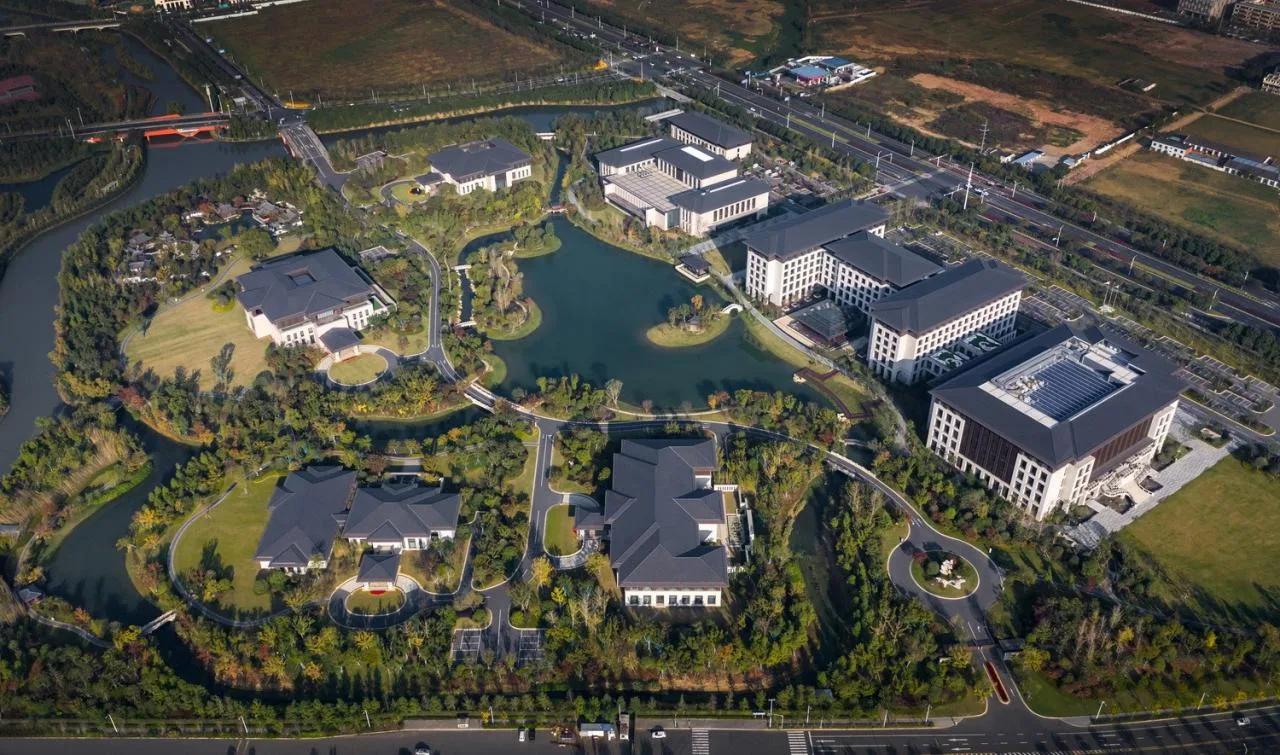
The subtle separation between building groups and the interplay between courtyards and landscapes create a sense of ease and harmony within the garden. This freedom is not disorder but an elegantly controlled rhythm.
04 Individual Design: A Deep Interpretation of the Garden’s Edge
The cultural essence of Jiangnan lies in its exquisite craftsmanship, unique scenery, and gentle breezes with light drizzles.
Traditional and regional culture lies at the heart of reception hotels. Understanding and translating these traditions into contemporary expressions that offer new experiences is a crucial design challenge.
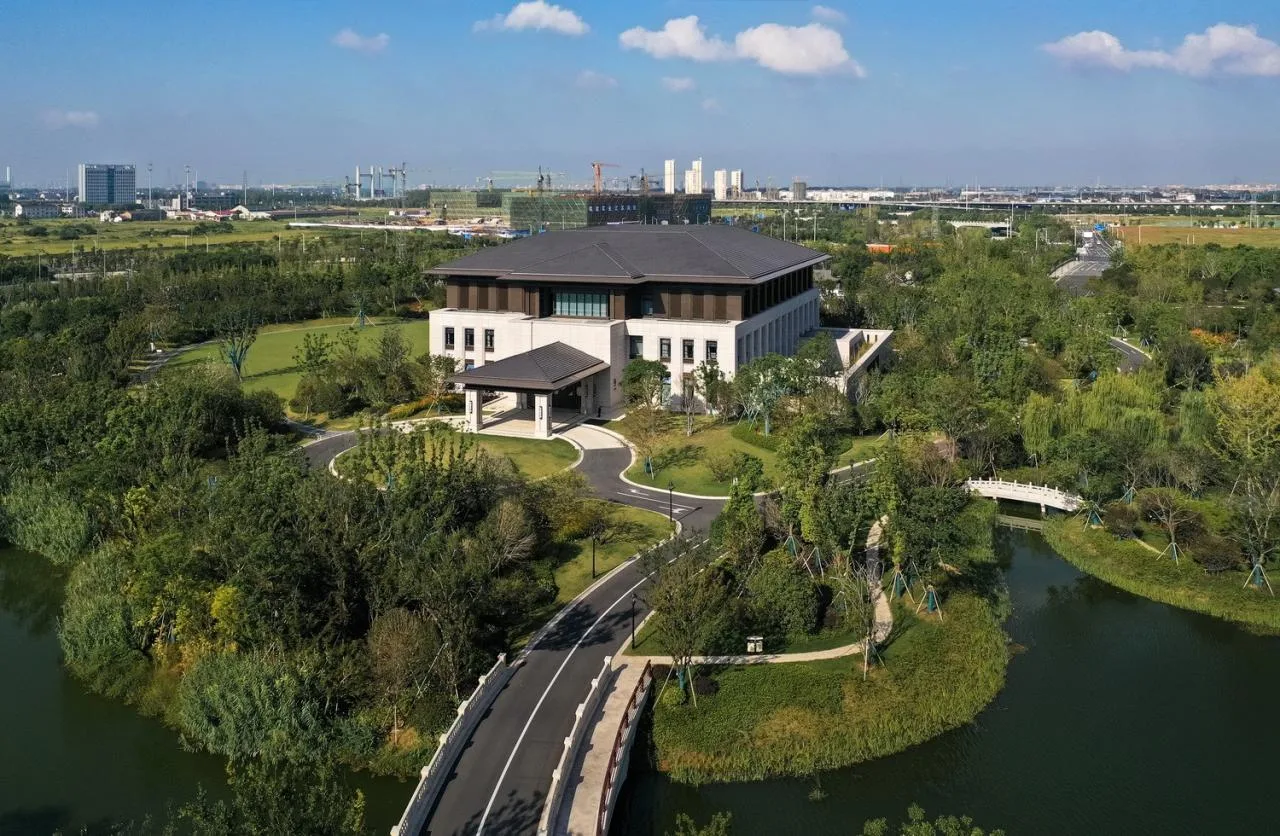
The architectural theme centers on “Jiangnan architecture,” where courtyards and buildings interrelate, and winding paths lead to secluded spots—a classic spatial organizational approach in the Jiangnan region.
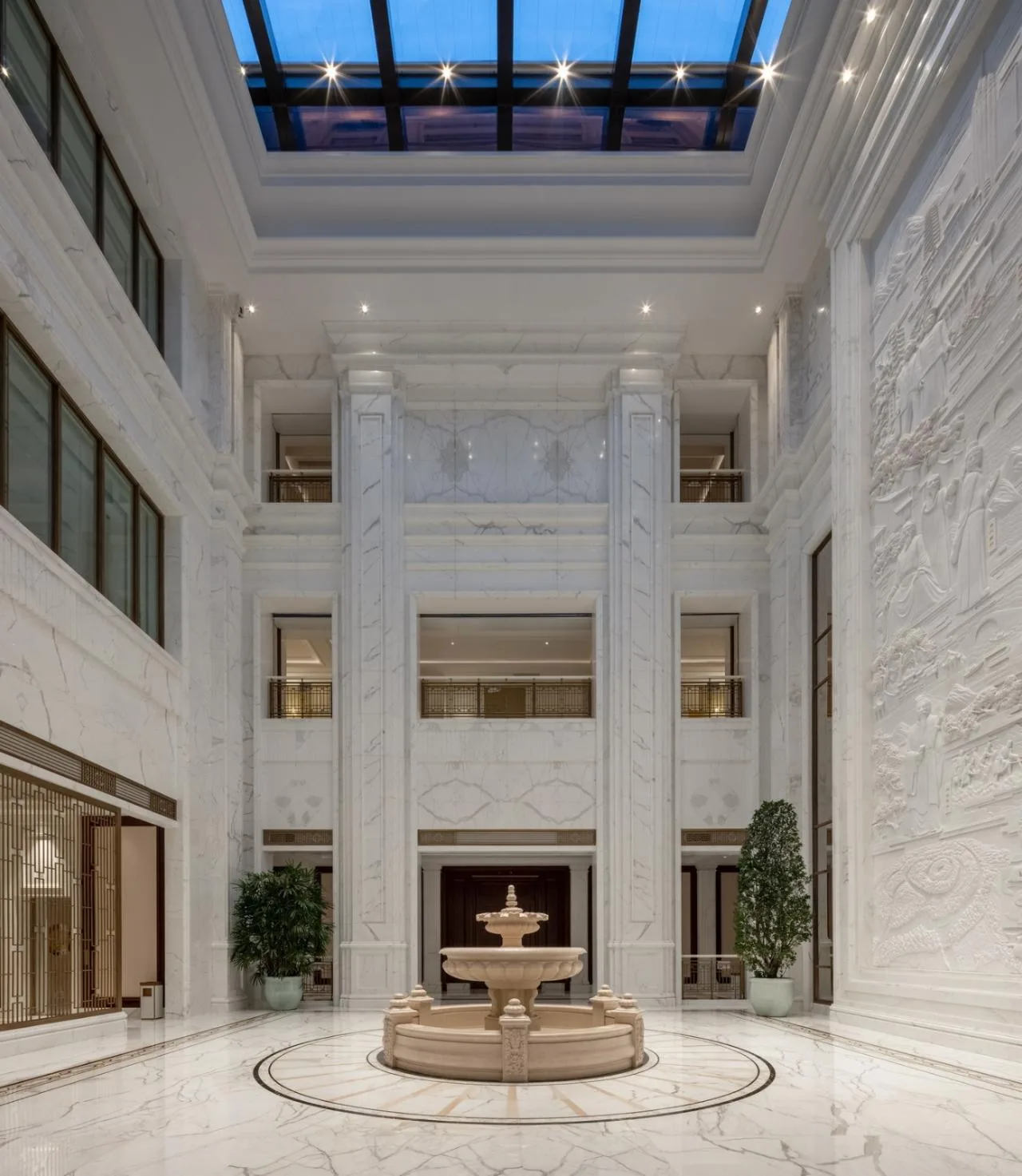
For example, Building 9 features an east entrance hall where a high open courtyard is visible through the elevator hall. Daylight filters in, enriching the interior with dynamic light, shadow, and a sense of time. The main reception area, positioned on the south side of the courtyard, benefits from optimal orientation and scenic views.
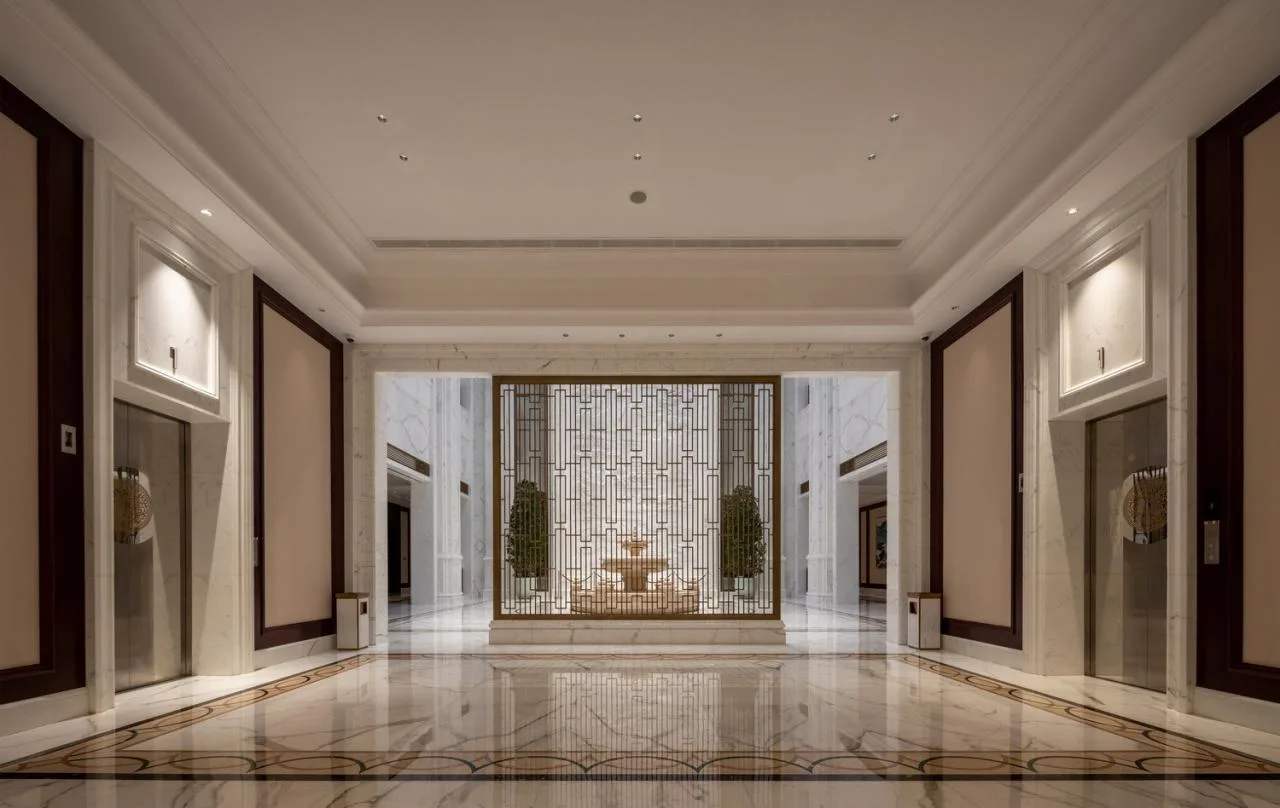
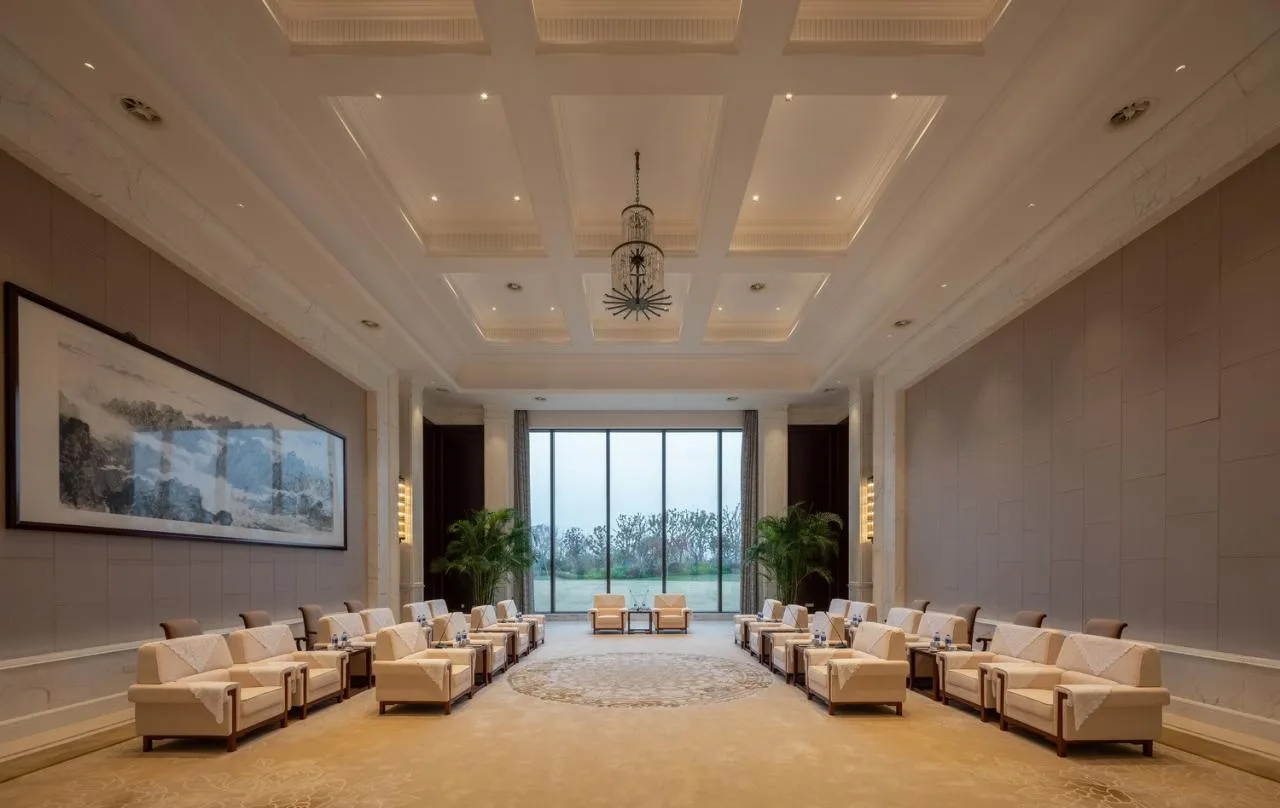
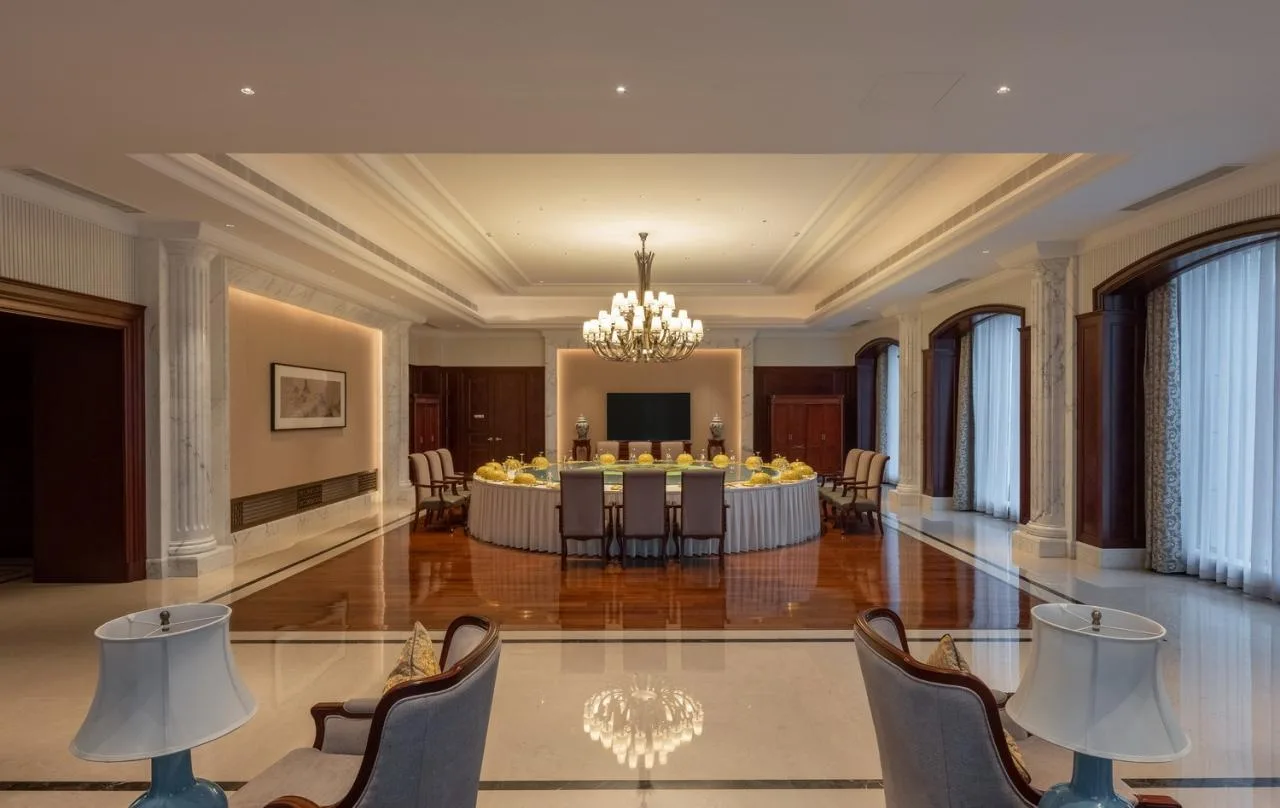
The waiting hall and main dining hall flank the reception space, arranged in a formal spatial layout that supports reception processes. A banquet hall lies on the west side of the courtyard, with kitchen and support areas to the north. This courtyard layout spatially separates public and service zones while integrating outdoor and indoor spaces in a mutually inspiring manner.
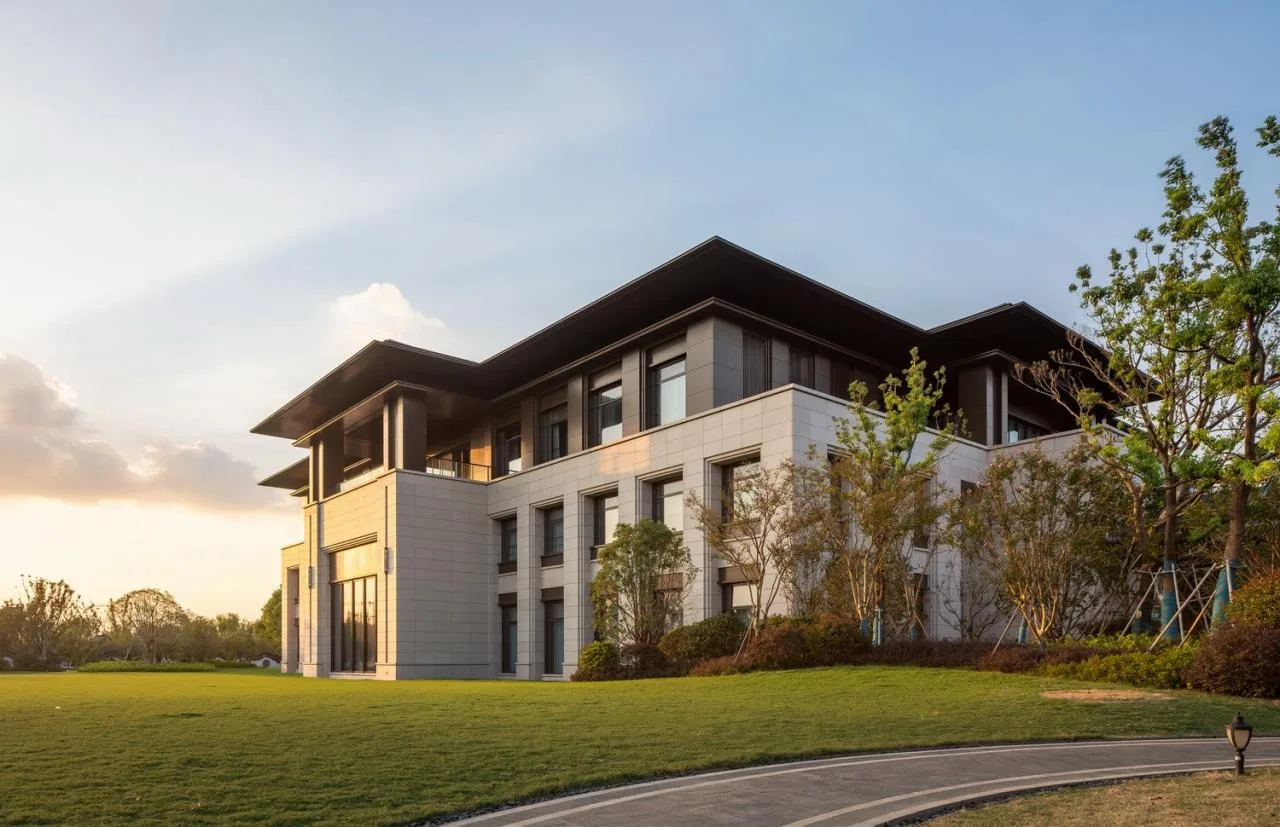
The building features a classic three-stage layout from ground to roof. Internally, the rhythm of the symmetrical layout changes through control of multiple axes, with variations in light, shadow, and form deconstructing the architectural scale to promote harmony with the environment.
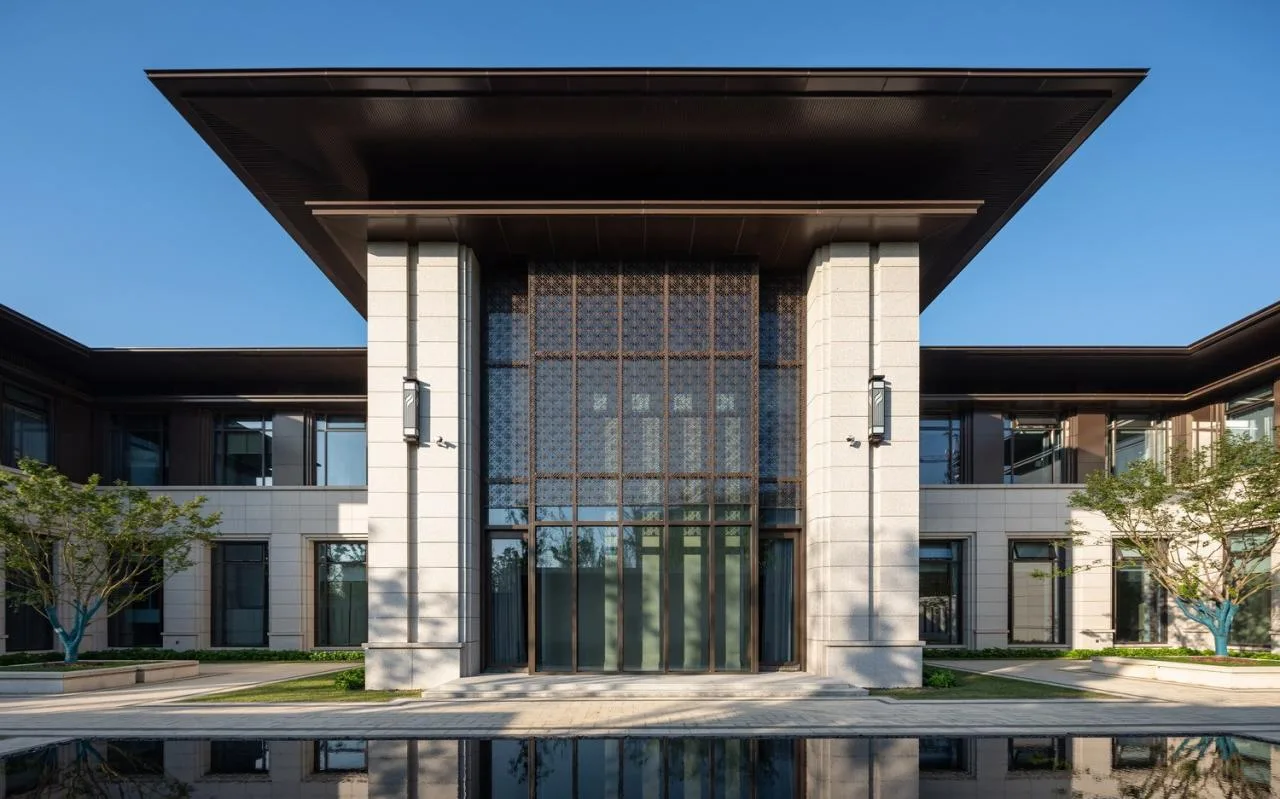
The materials and detailing balance delicacy with solemnity. Light-colored warm stone reflects the calm ambiance necessary for hosting distinguished guests, while expressing Jiangnan’s exquisite heritage. Features like aluminum eaves, stone-framed windows, and lattice designs blend tradition with innovation, highlighting Jiangnan’s architectural character.
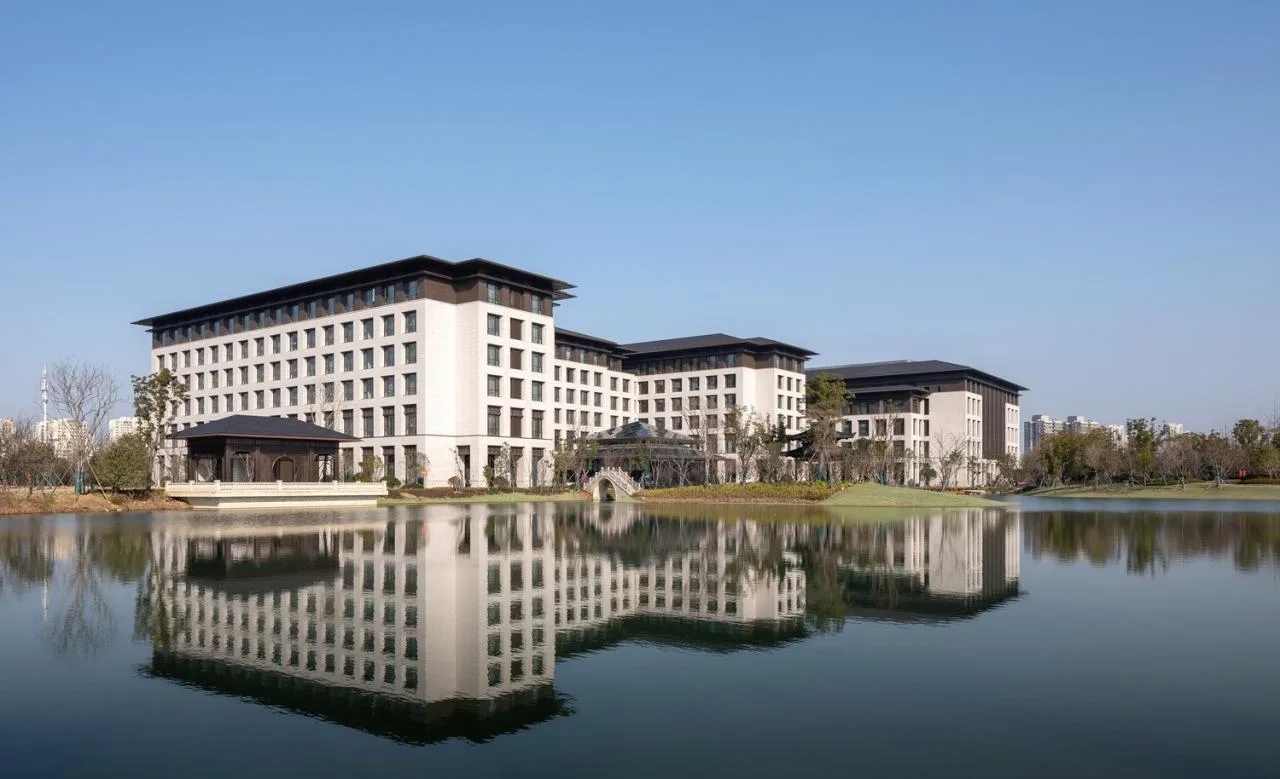
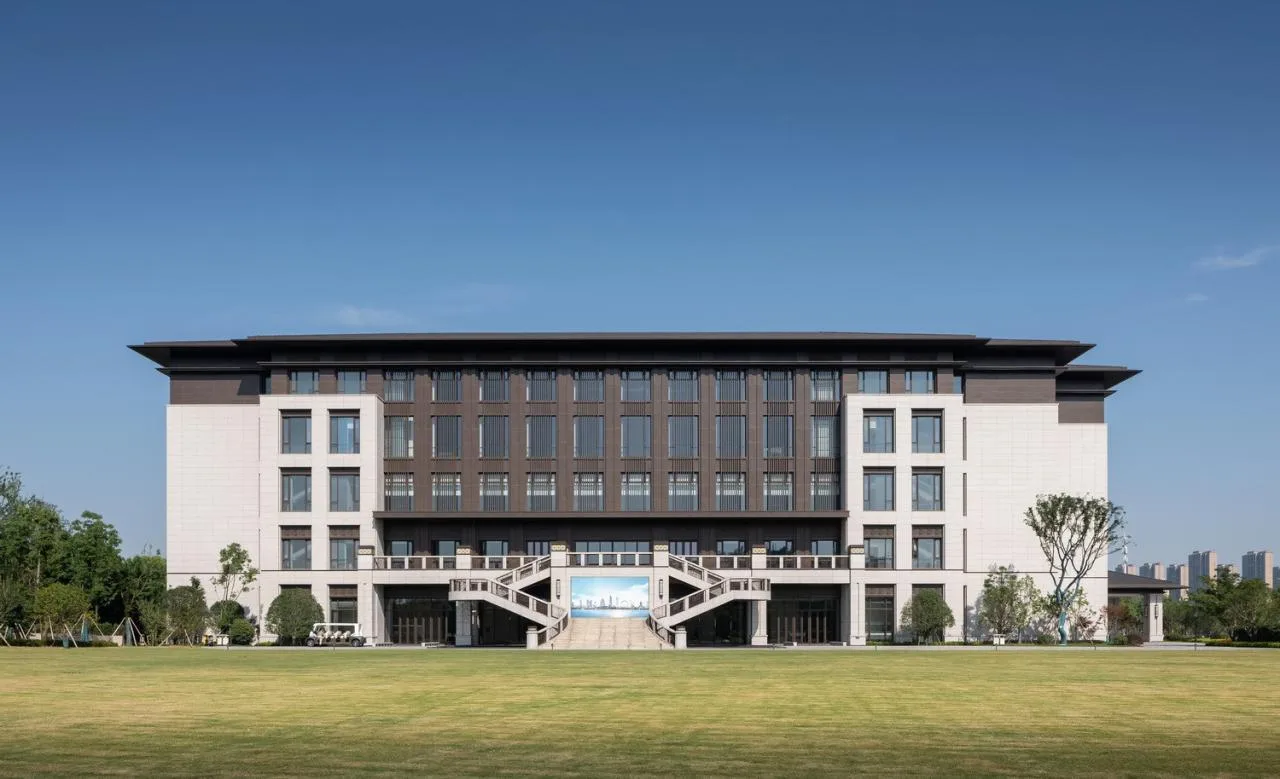
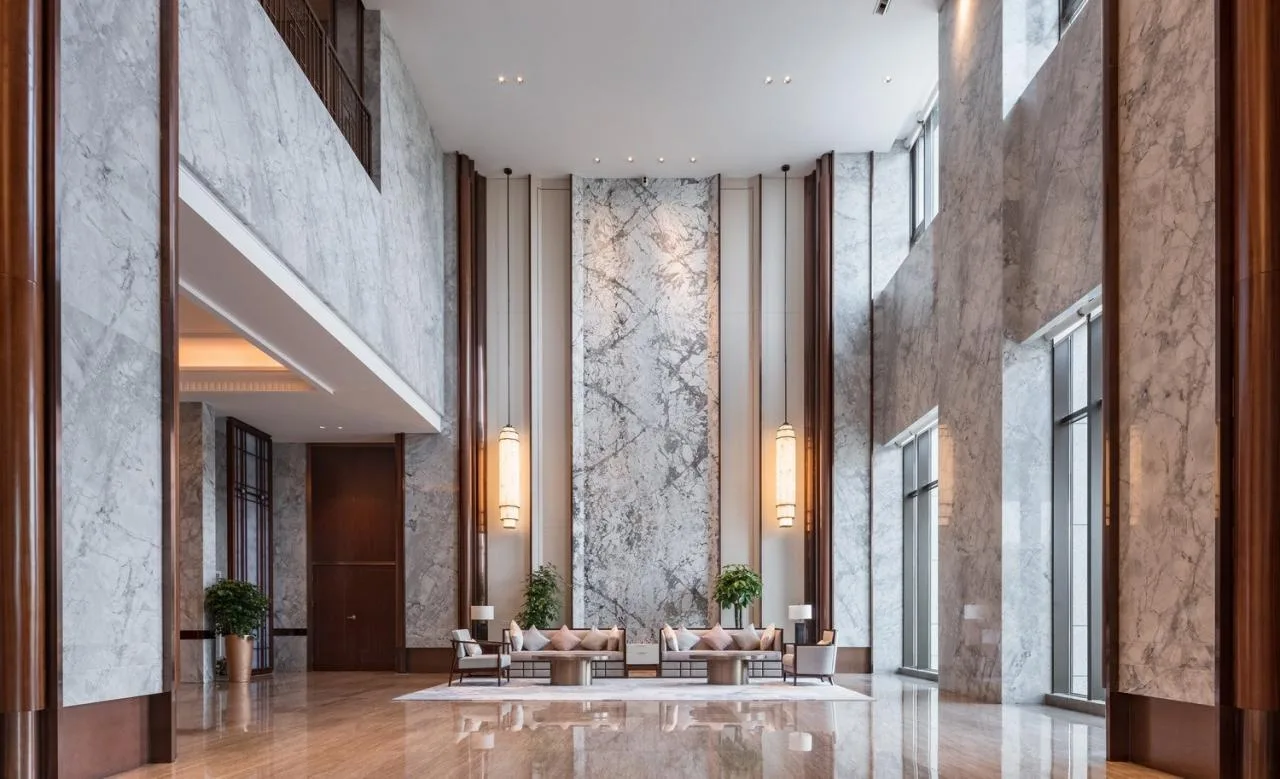
Building 1 serves as the main external business area, where a rigorous spatial axis and massing create a distinct sense of order compared to the VIP reception building.
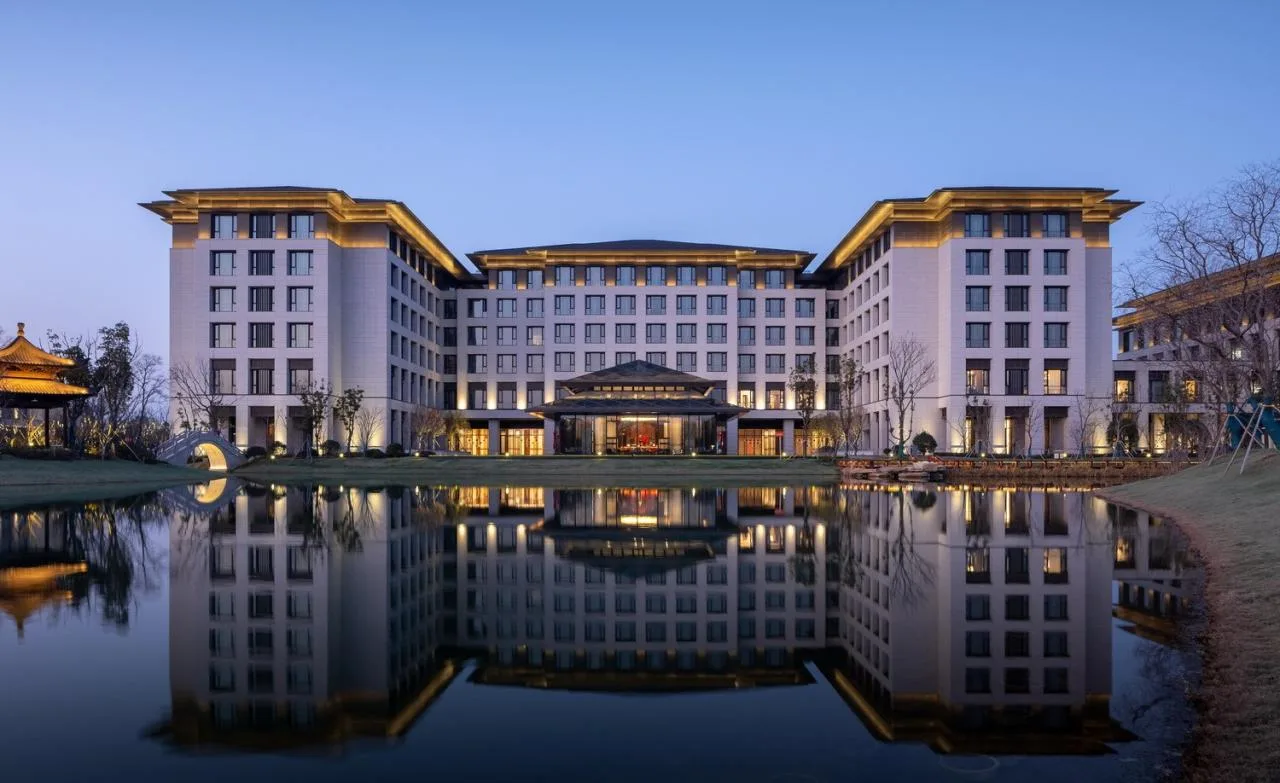
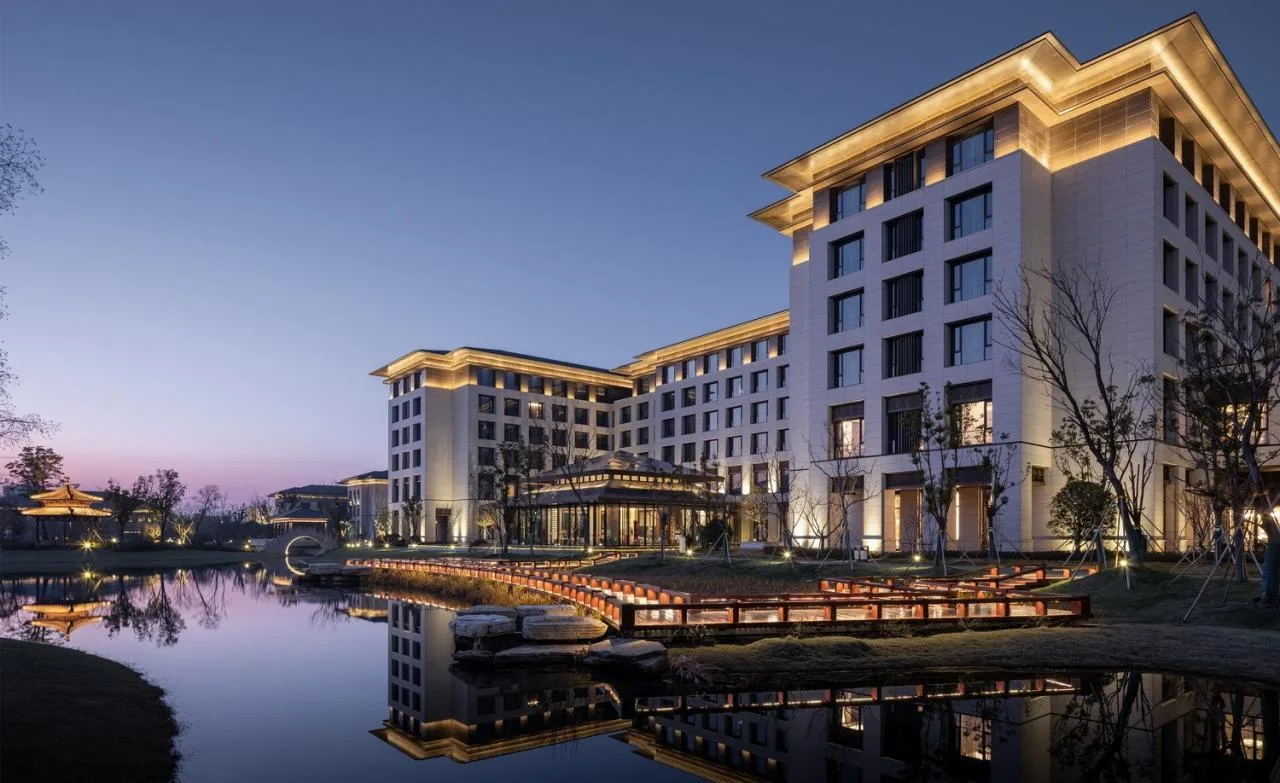
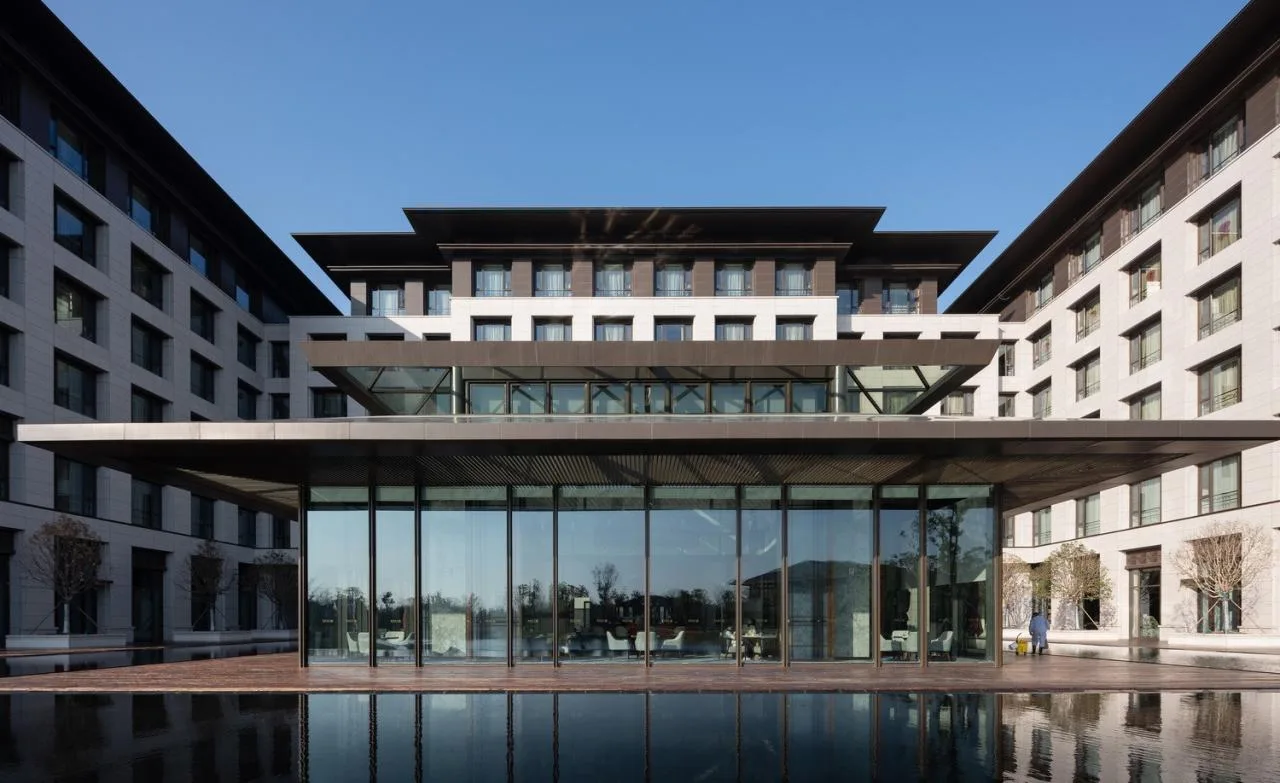
The lobby bar, featuring steel structures and glass curtain walls, offers a contemporary reinterpretation of traditional Chinese architecture through modern design language.
05 Landscape Design: Harmonious Openings and Closures within the Garden
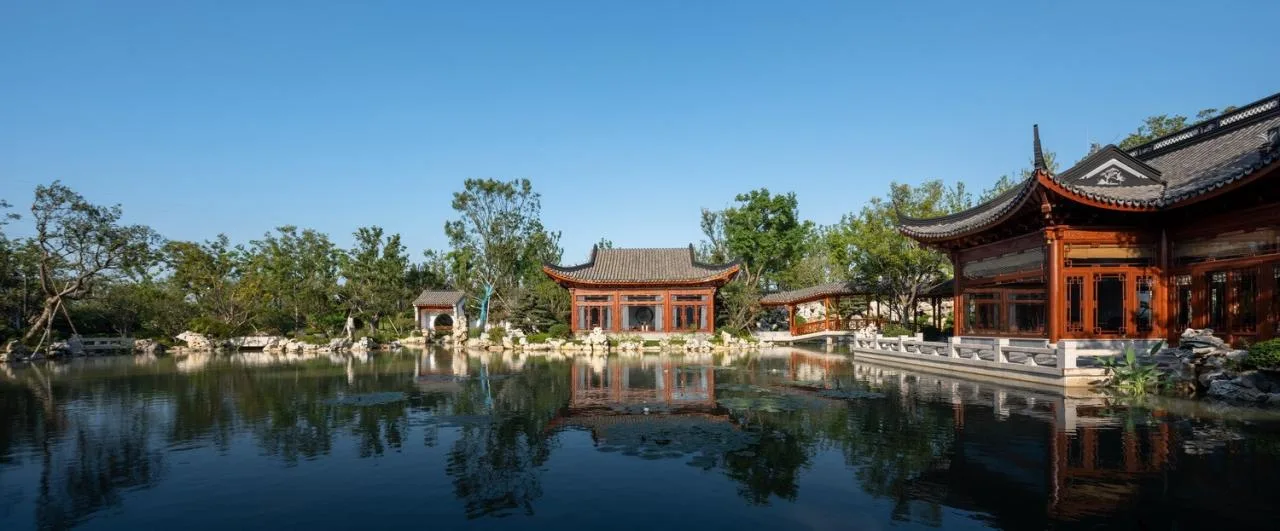
The garden’s spatial appeal stems from carefully orchestrated rhythms and sequences, featuring two lakes, three islands, four gardens, and five landscape areas. Bridges, ornamental stones, and native plants contribute to a layered landscape structure that harmoniously balances openness and intimacy, where environment and scenery blend seamlessly.
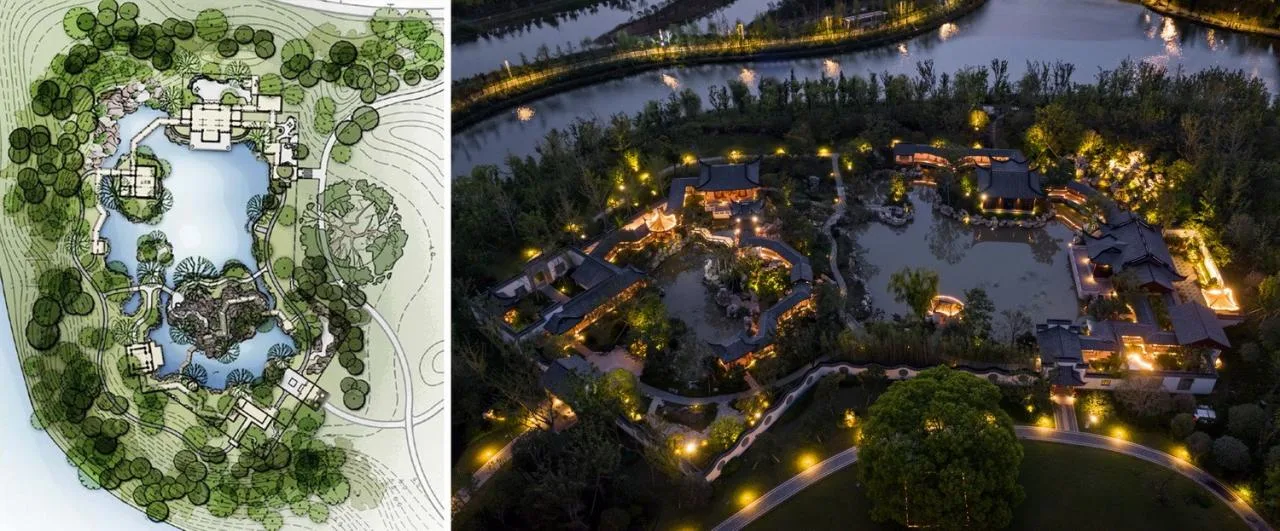
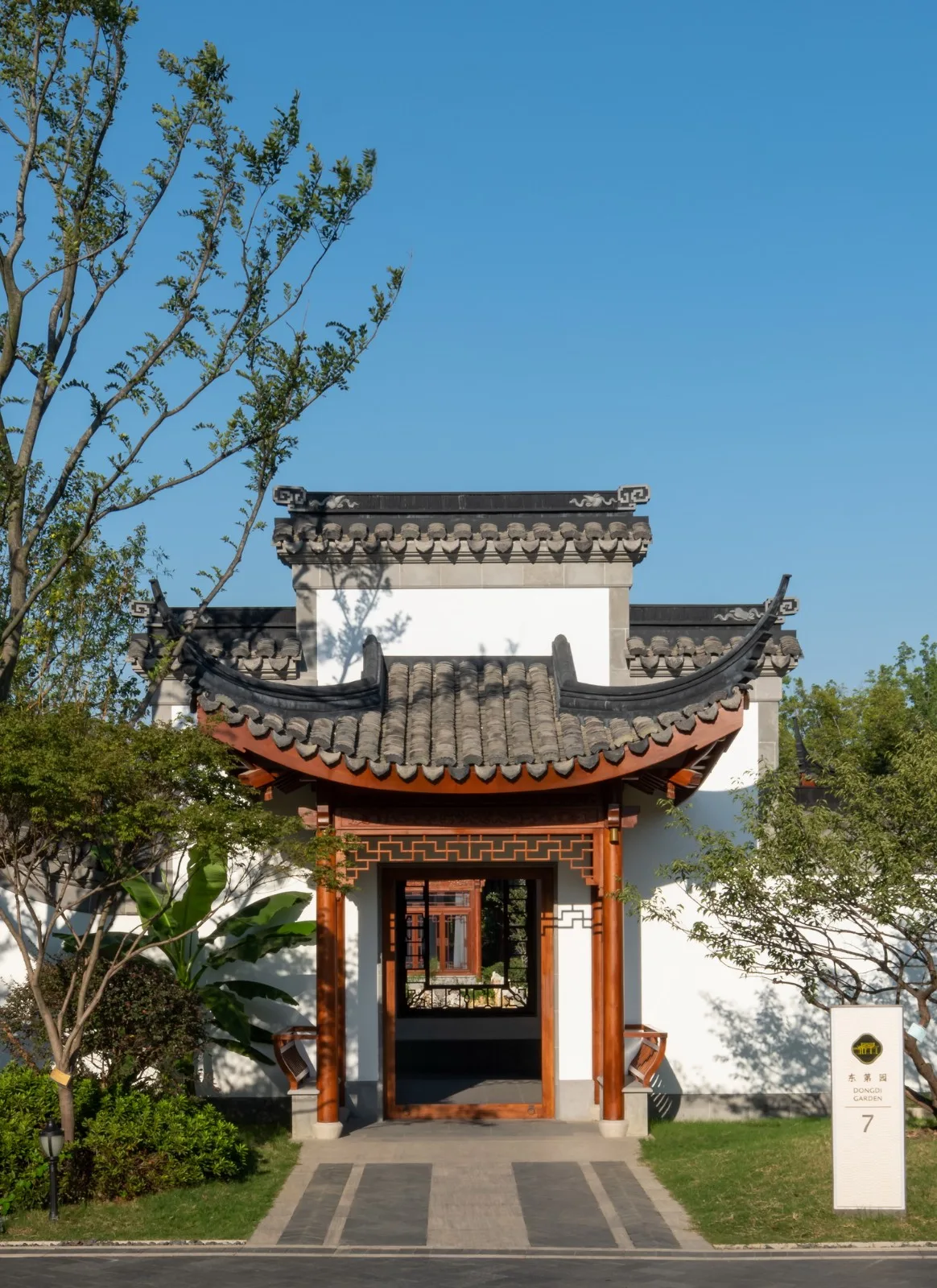
The gardener Virgo’s “Dongdi Garden,” once located in Changzhou, no longer exists today. To honor this legacy, the design team recreated the “Zhongwu Garden” on the site’s southwest side, based on records from “Yuanye.”
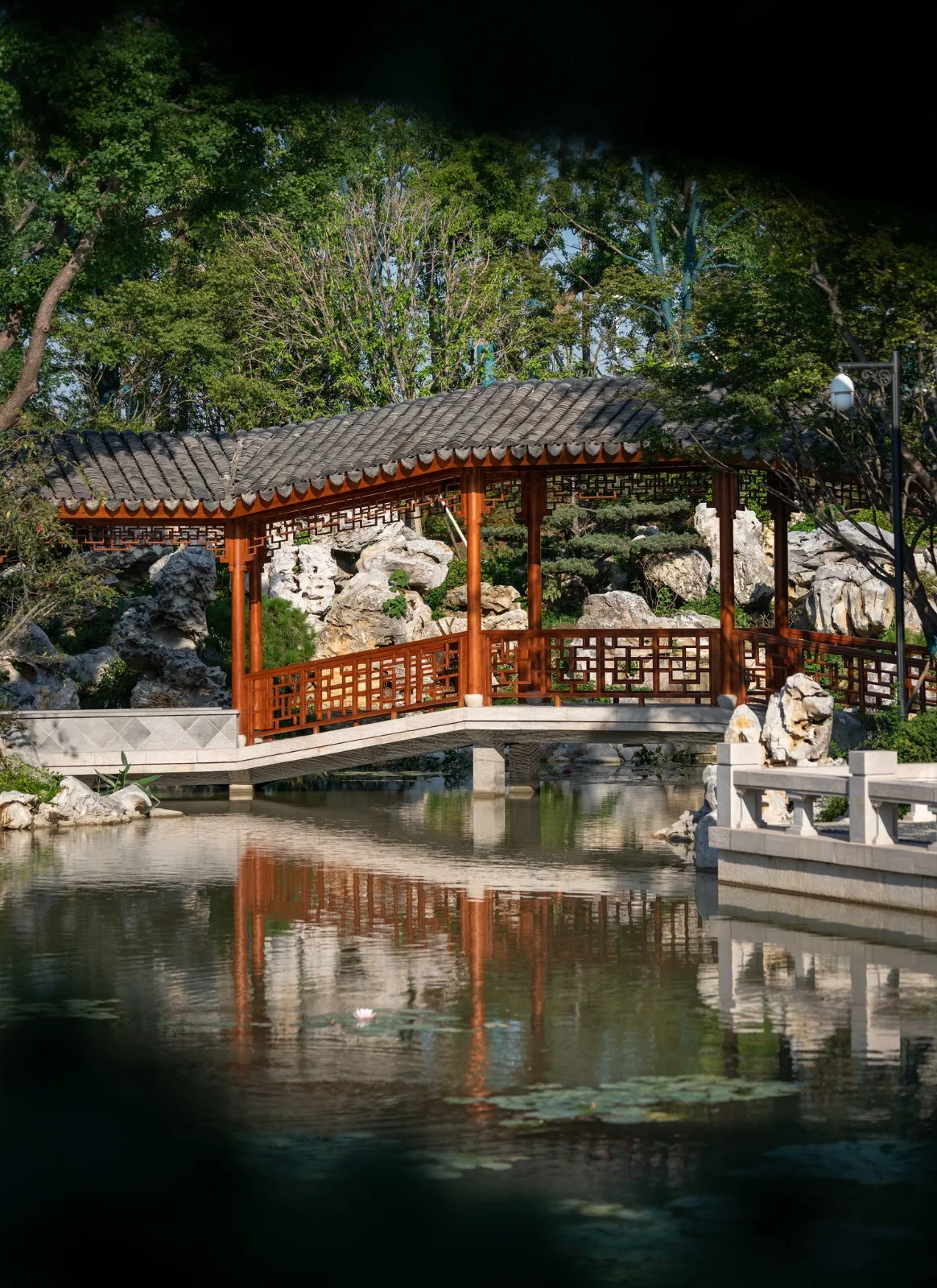
Within a limited space, the clever arrangement of stacked mountains, water features, buildings, pavilions, halls, boats, and corridors creates a water town atmosphere—where water and land intertwine, islands line the waterways, and small bridges arch over gentle waves. Courtyards and public landscapes are both distinct and integrated, enriching the visitor experience.
06 Construction Process
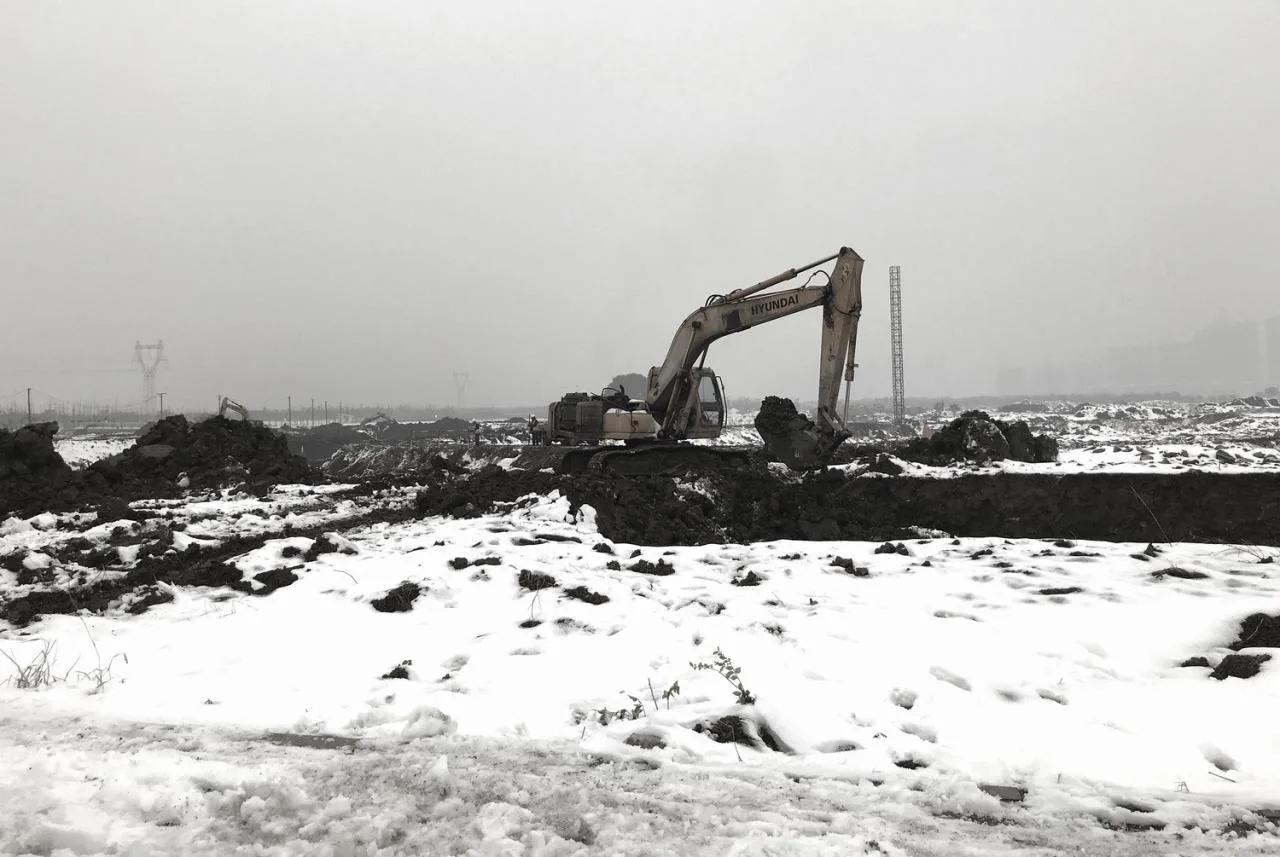
From the initial soil excavation before the 2018 Spring Festival to project completion in September 2020, municipal, architectural, and construction drawings were developed simultaneously. The design team maintained a long-term on-site presence to assist the owner with technical management.
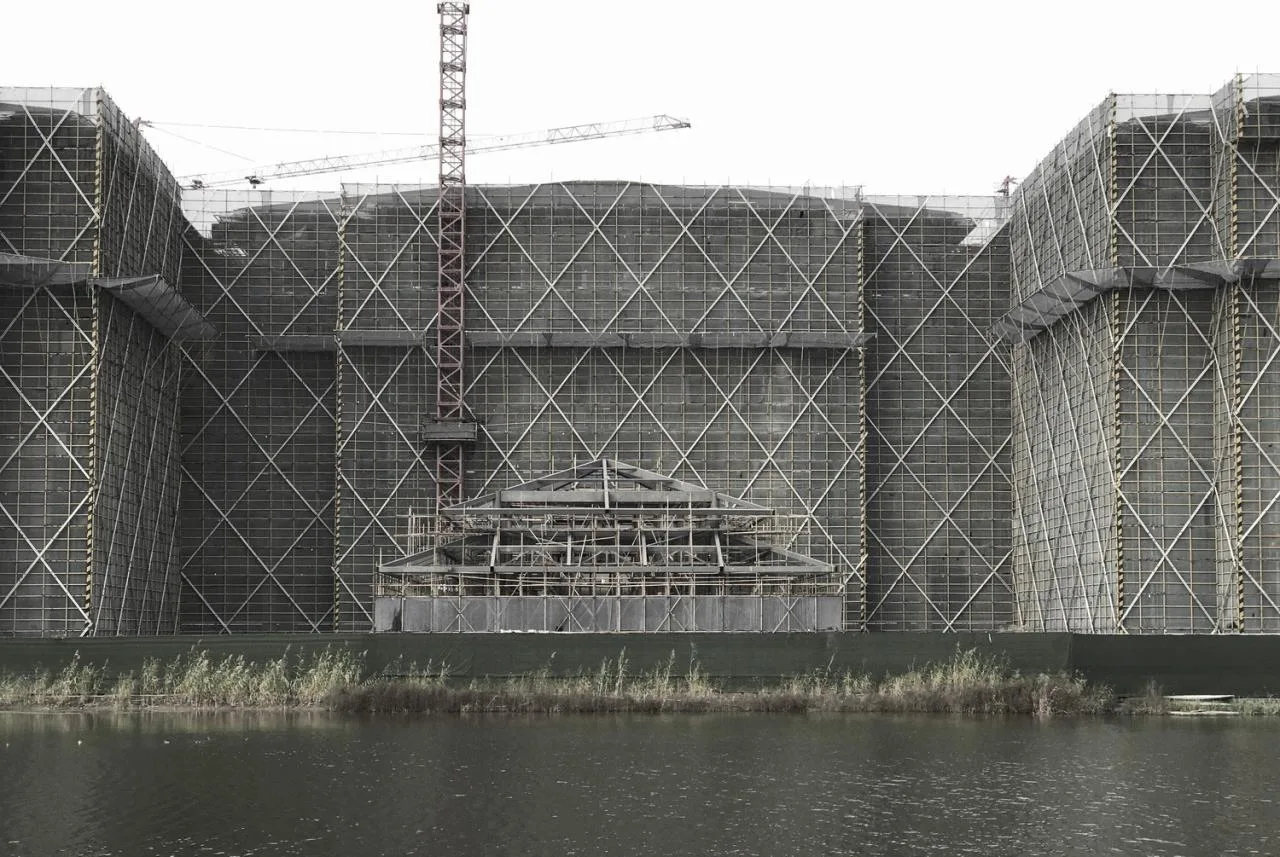
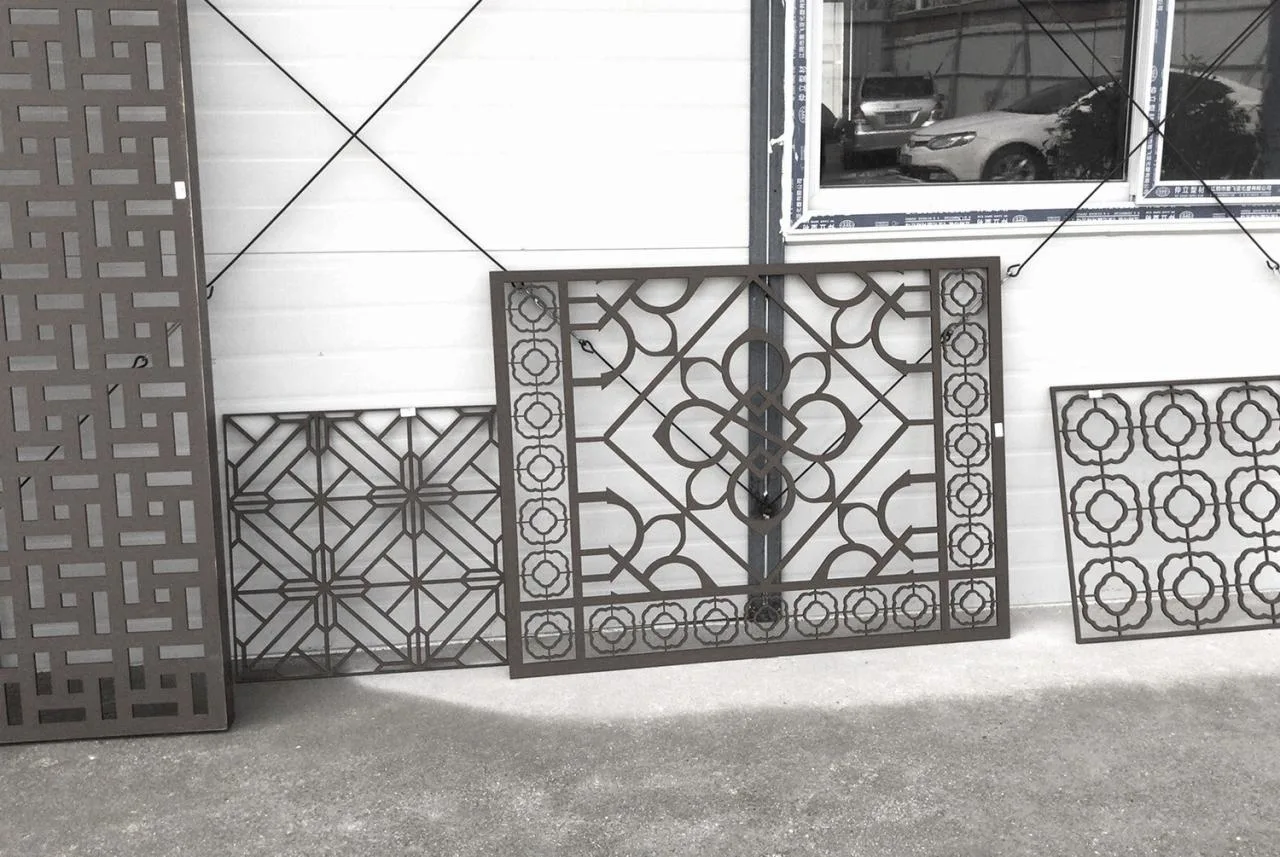
The team personally visited stone production sites to select raw materials, created wooden molds for comparison with aluminum alloy flower grids, provided on-site guidance on landscape paving and facade stone installation, and directed large tree planting. They also conducted strict material reviews during the interior phase.
Every detail reflects the craftsmanship that deserves close appreciation.
07 Conclusion
The dialogue between tradition and modernity remains a timeless challenge for architects. Eastern aesthetics, infused with the spirit of mountains and rivers, continue to hold their own amid changing times. For the Zhongwu Hotel project, the design team approached this task with humility and meticulous craftsmanship, weaving new narratives into the continuation of tradition.
Project Drawings
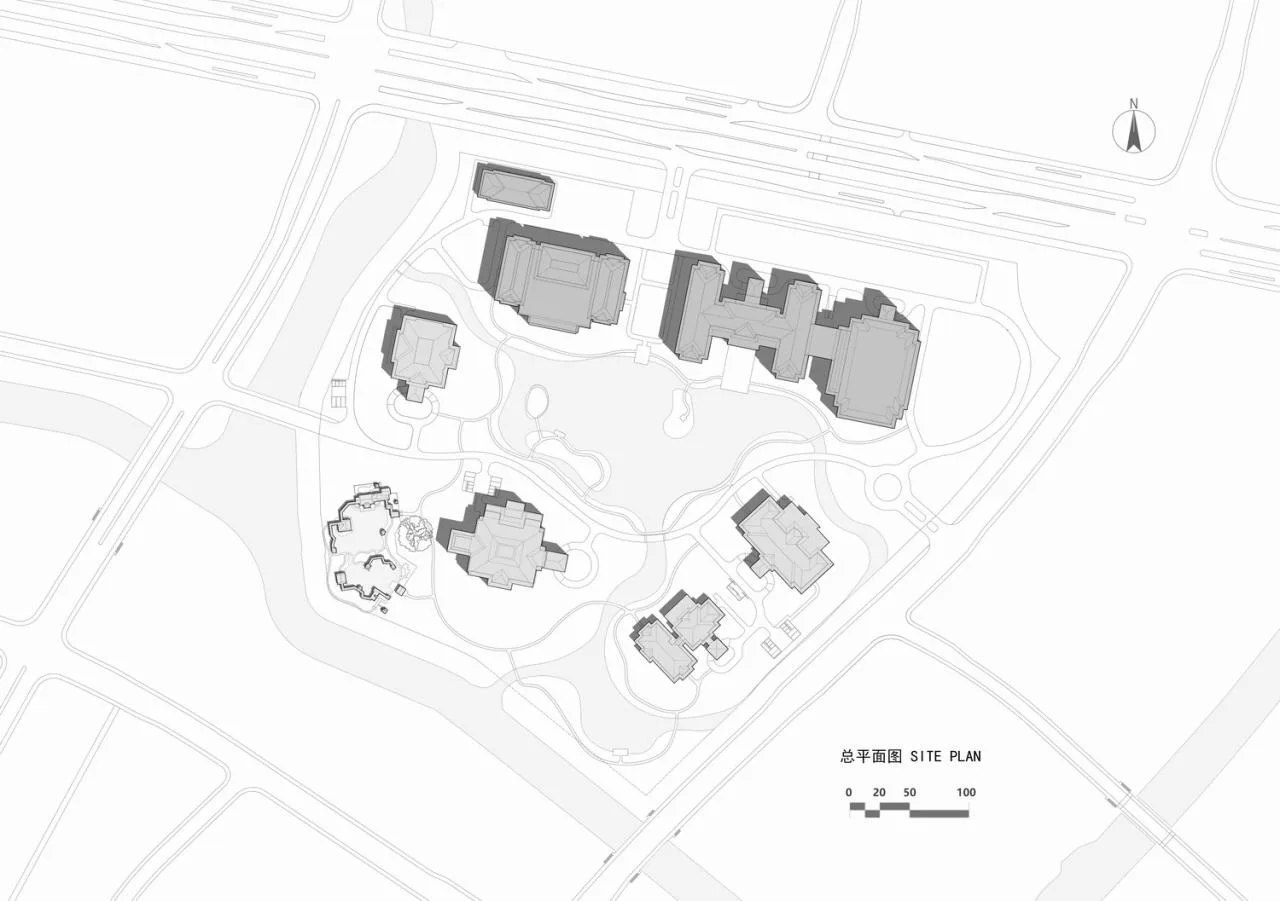
△ General Layout Plan
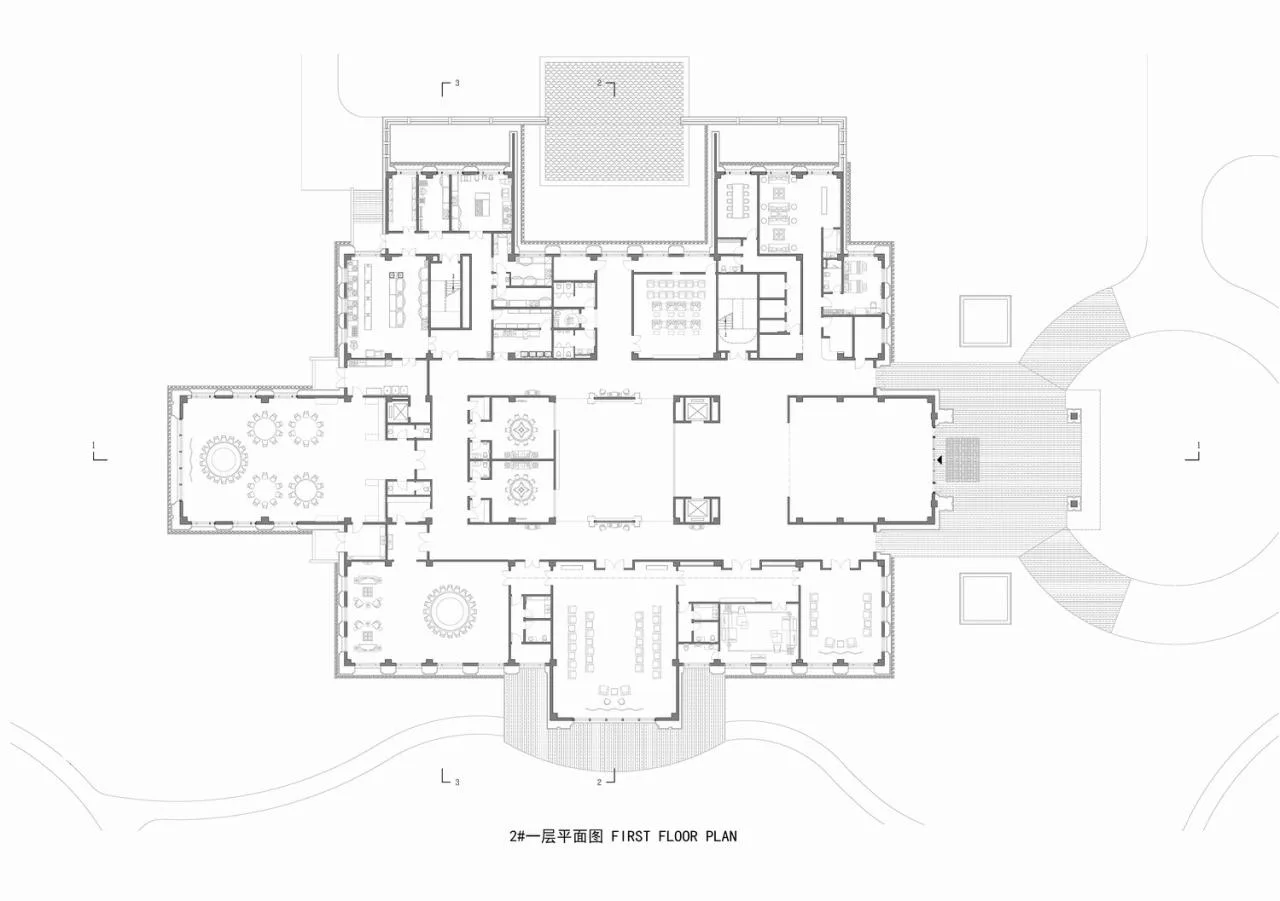
△ First Floor Plan
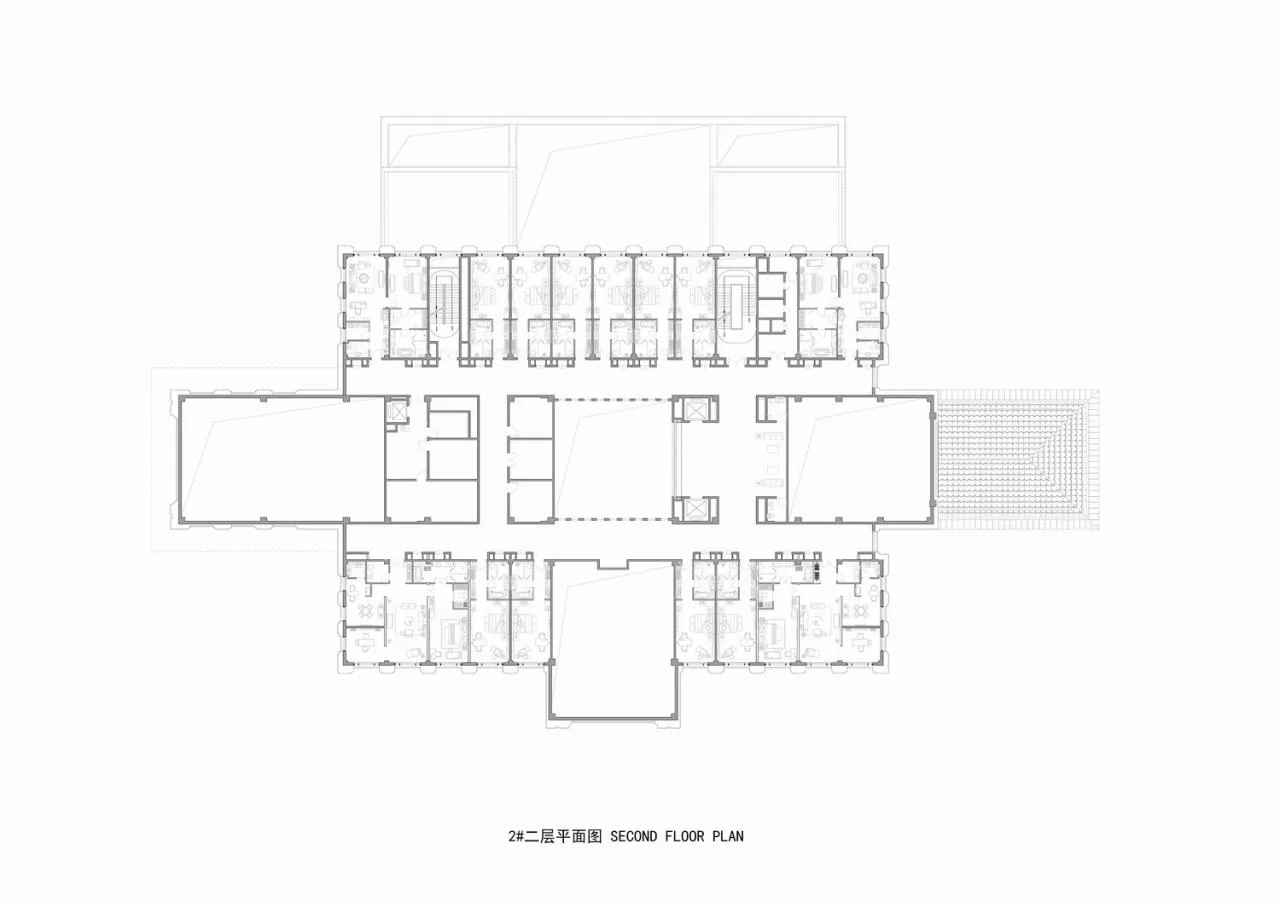
△ Second Floor Plan
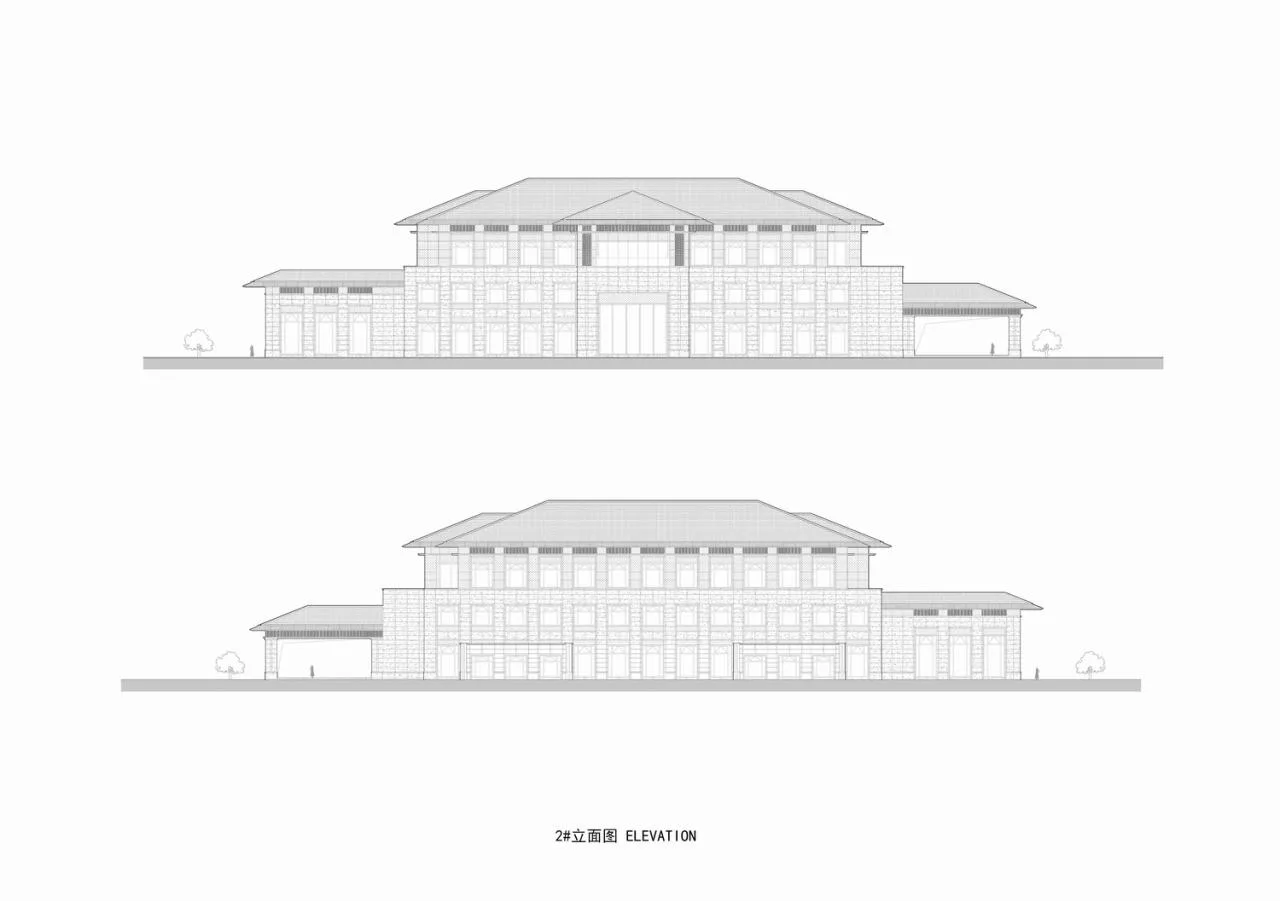
△ Elevation Drawing
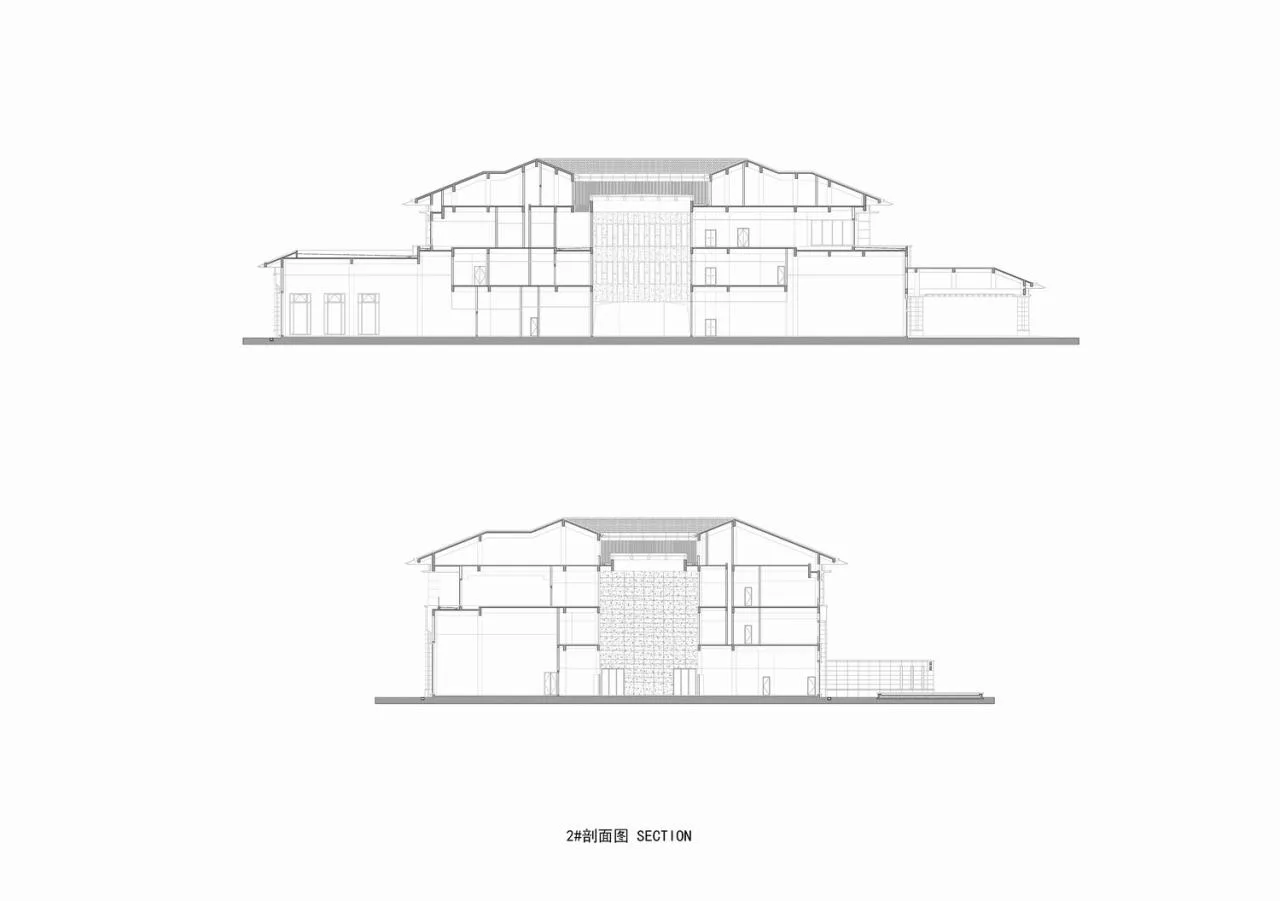
△ Section Diagram
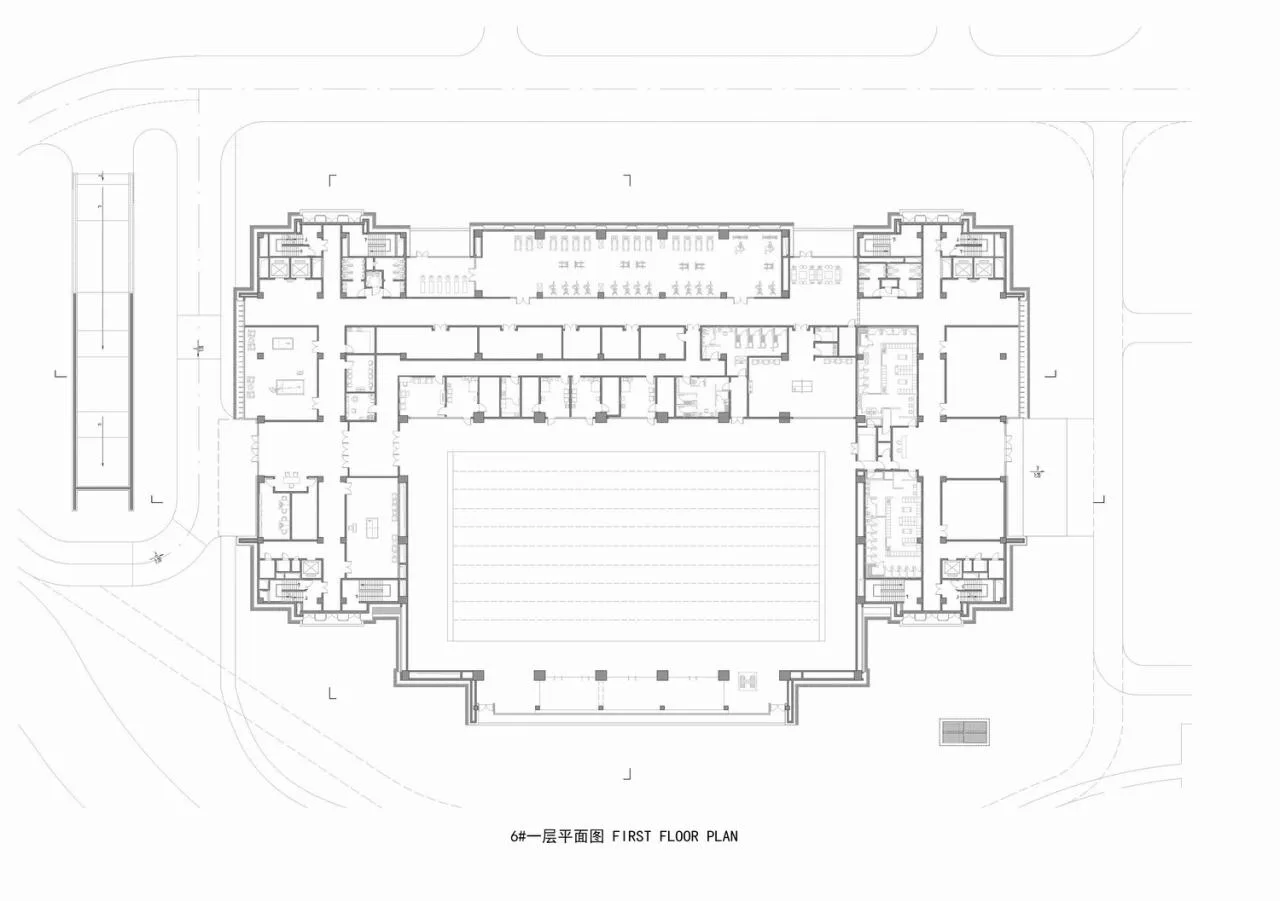
△ First Floor Plan
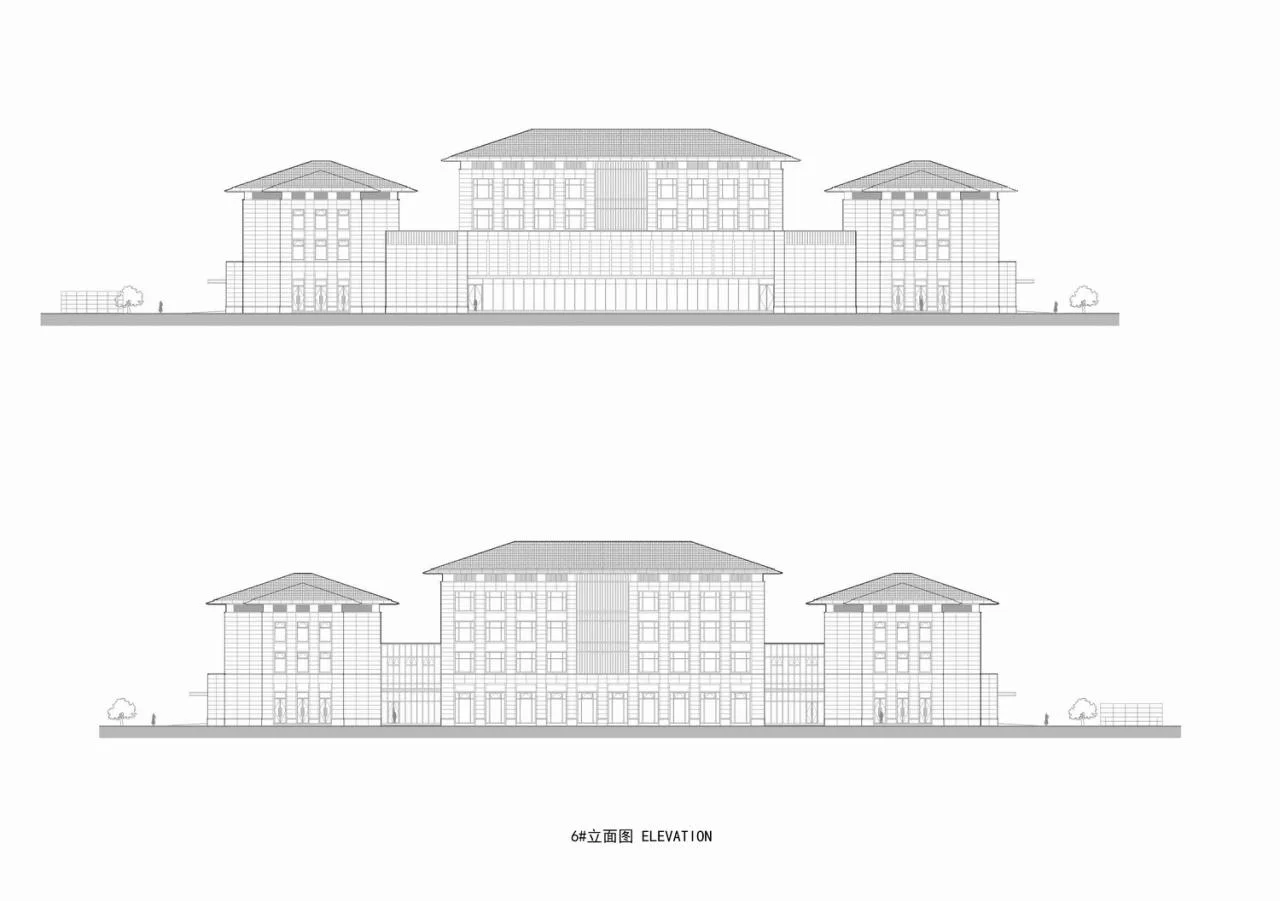
△ Elevation Drawing
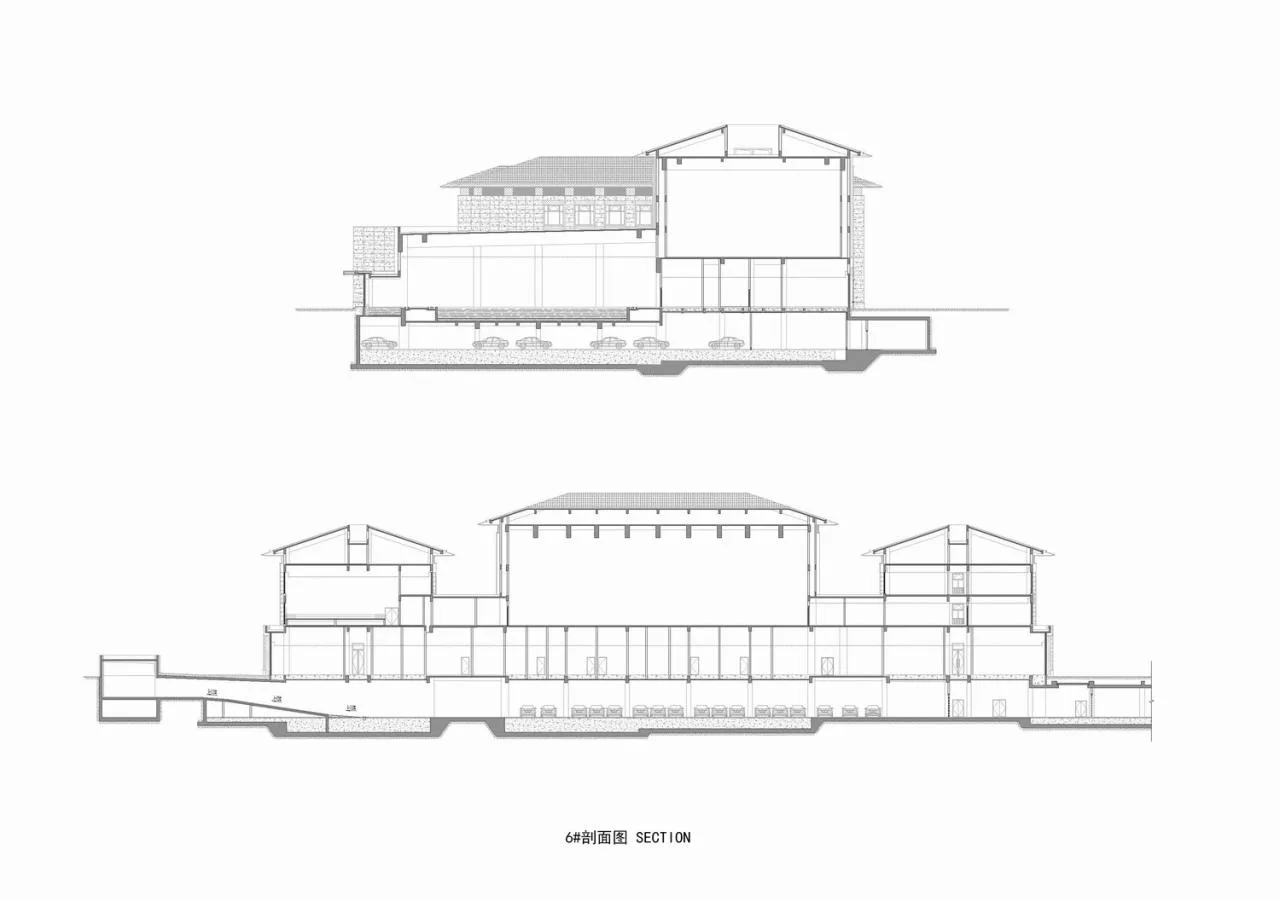
△ Section Diagram
Project Information
Project Name: Huangliangbang Renovation Site (Zhongwu Hotel) Project
Owner: Changzhou Jinling Investment and Construction Group Co., Ltd
Building Area: 133,632.97 square meters
Completion Date: September 2020
Concept Design: Zhang Xu, Yan Feng, Li Kang, Kuai Bingqian
Construction Drawing Design: Yun Chao, Qiu Yi, Zhu Youzhou, Liu Heng, Wang Jianjun, Yang Xiaodong, Lei Dong, Wang Tongle, Wang Tao, Wei Jing, Zhu Jiayou, Tu Zhiyan, Yuan Huizhi, Fan Chao, Zhou Wei
Landscape Design: Changzhou Landscape Design Institute Co., Ltd
Municipal Engineering Design: Changzhou Municipal Engineering Design and Research Institute Co., Ltd
Curtain Wall Design: Zhejiang Zhongnan Construction Group Co., Ltd
Interior Design: Suzhou Golden Mantis Building Decoration Co., Ltd
Logo Design: Suzhou Bono Design Consulting Co., Ltd
Architectural Exterior Lighting: Changzhou Urban Lighting Engineering Co., Ltd
Indoor Lighting Consultant: Shanghai Chima Lighting Design Co., Ltd
Photography: Architectural Vision
















Must log in before commenting!
Sign Up