
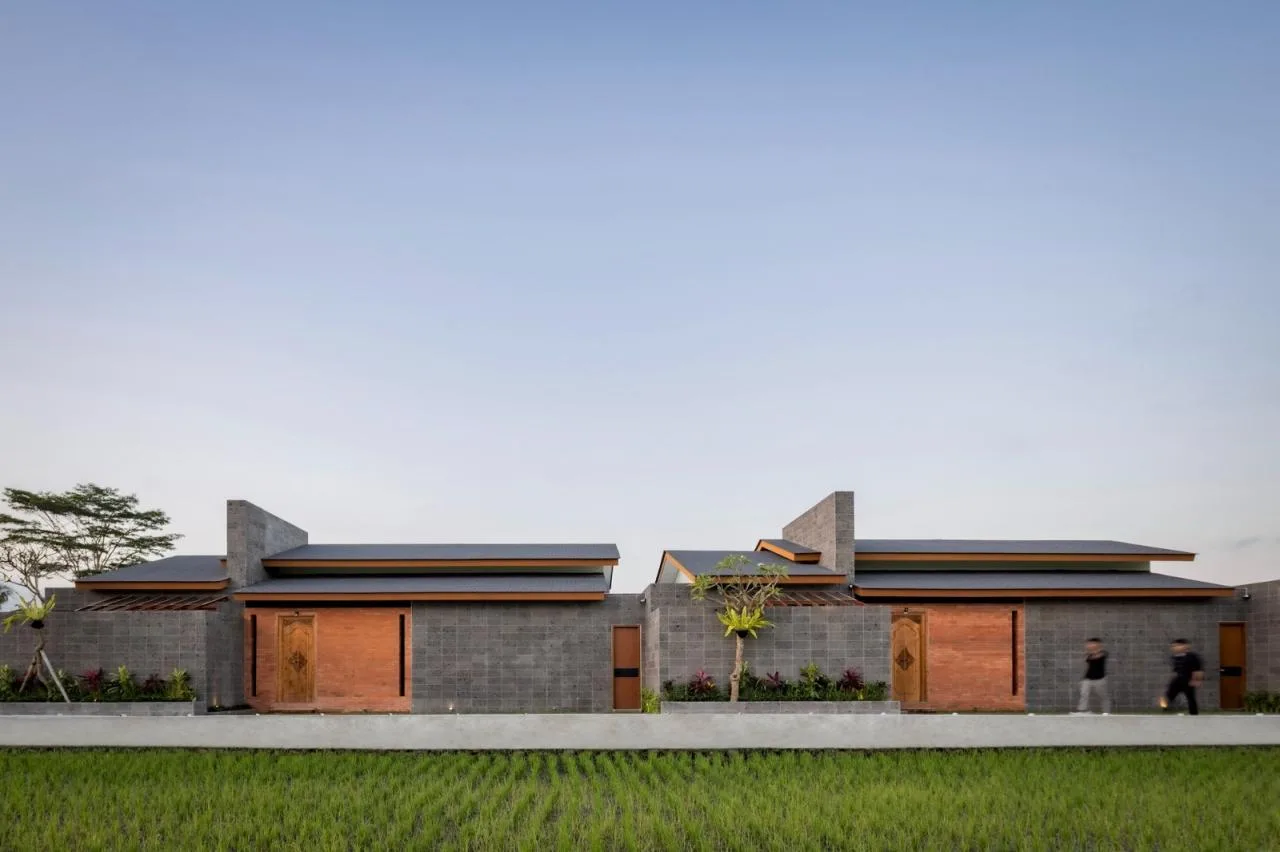
The LDT villa is located in a rural area just outside Bali’s Ubud region, surrounded by lush rice paddies and plantations. The project features two identical villa units, each occupying 200 square meters of land with 150 square meters of built space.
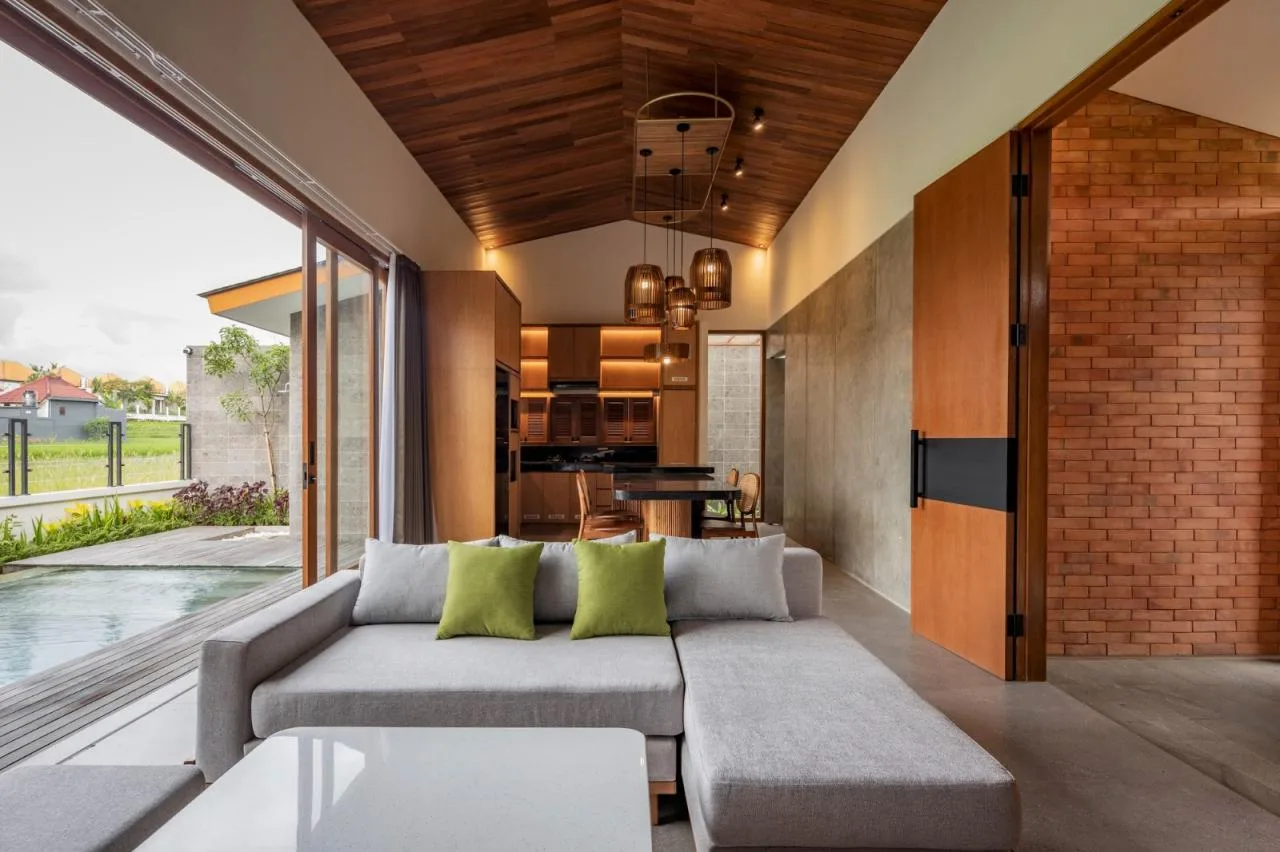
Each villa includes two bedrooms, a living room, a kitchen, a dining area, and a private swimming pool. This single-story design responds thoughtfully to the site’s natural context. The architects focused on maintaining modest proportions to ensure the villa harmonizes seamlessly with the surrounding rice fields. Visitors arriving from the main road will find their views and the natural skyline remain unobstructed.
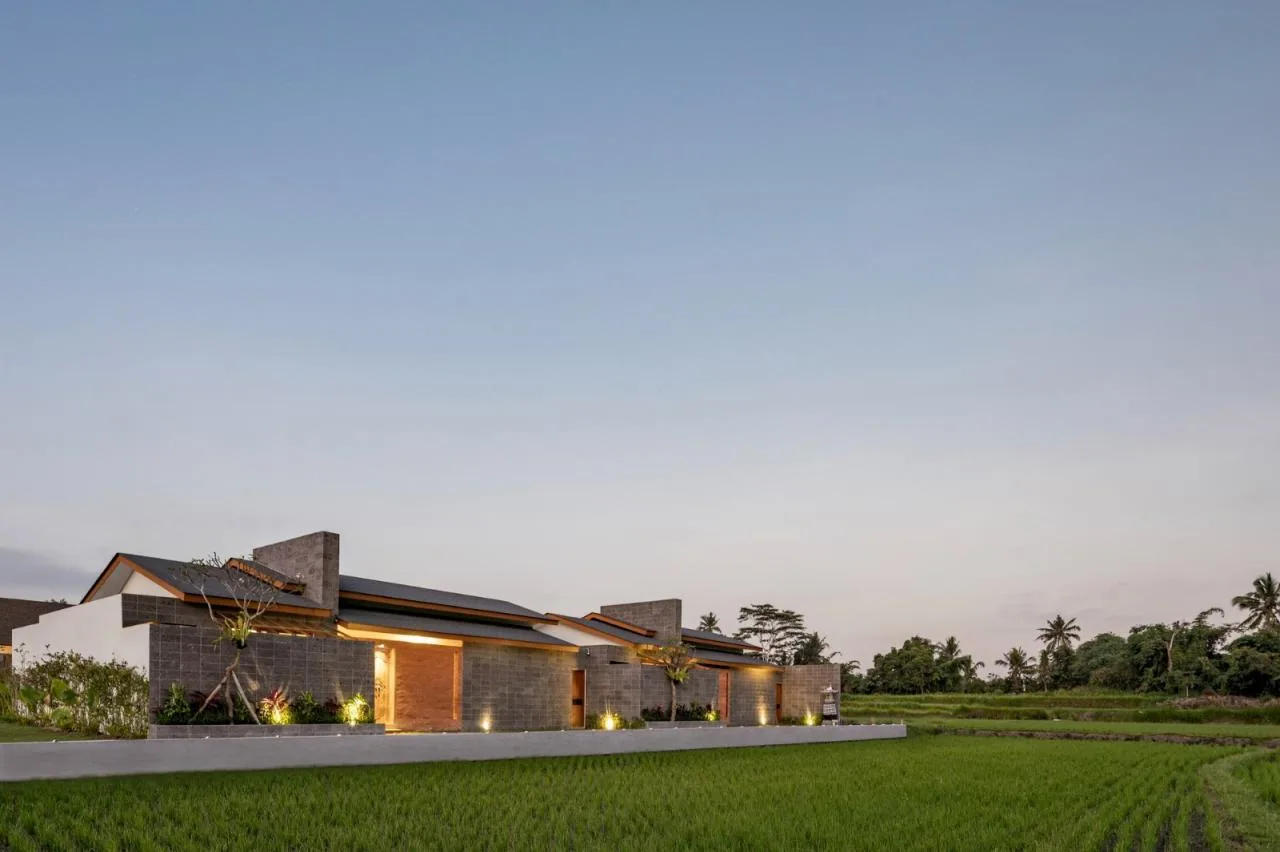
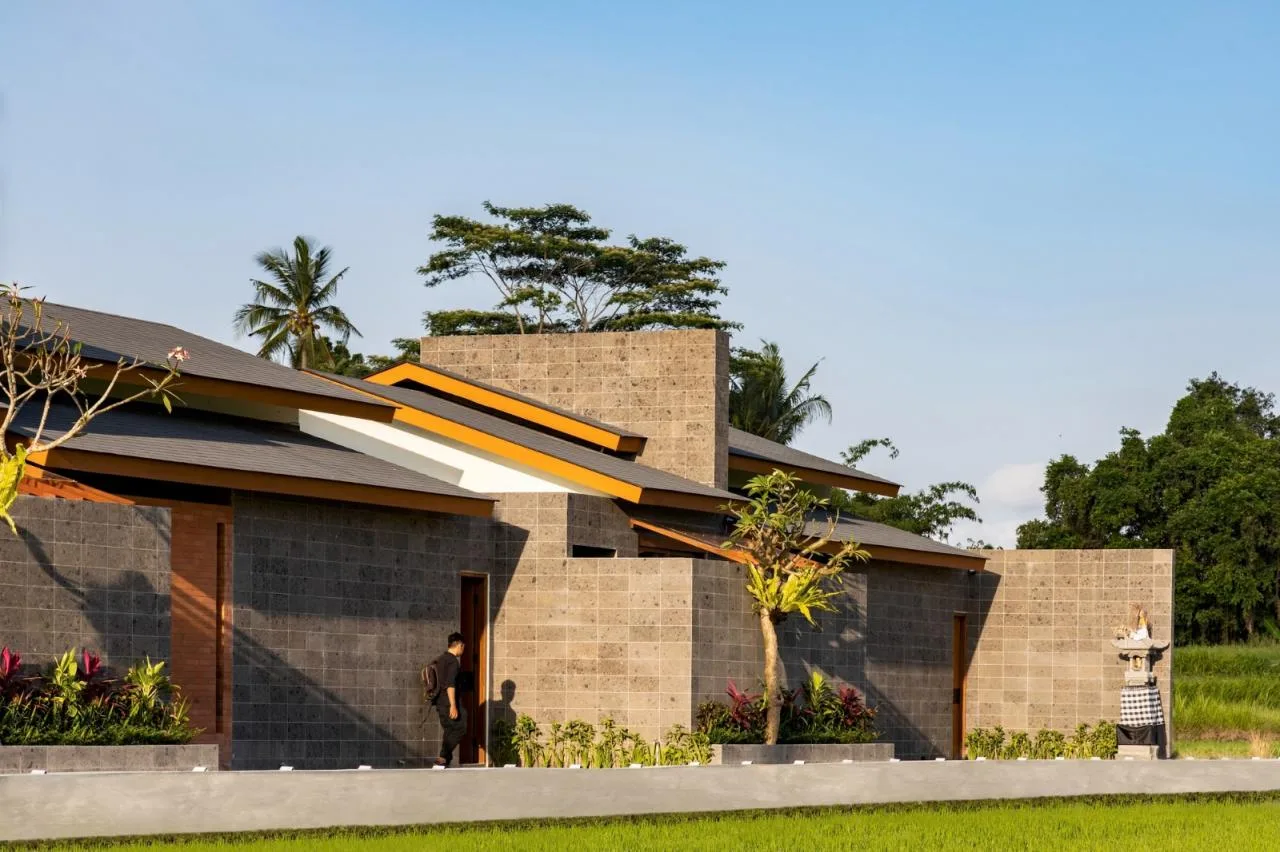
The main design challenge was creating a single-story building on a relatively small plot while accommodating a complex spatial program within a vertical layout. Another key consideration was designing the building’s form so that its volume would not overpower the landscape, preserving privacy and blending naturally into the rice fields.
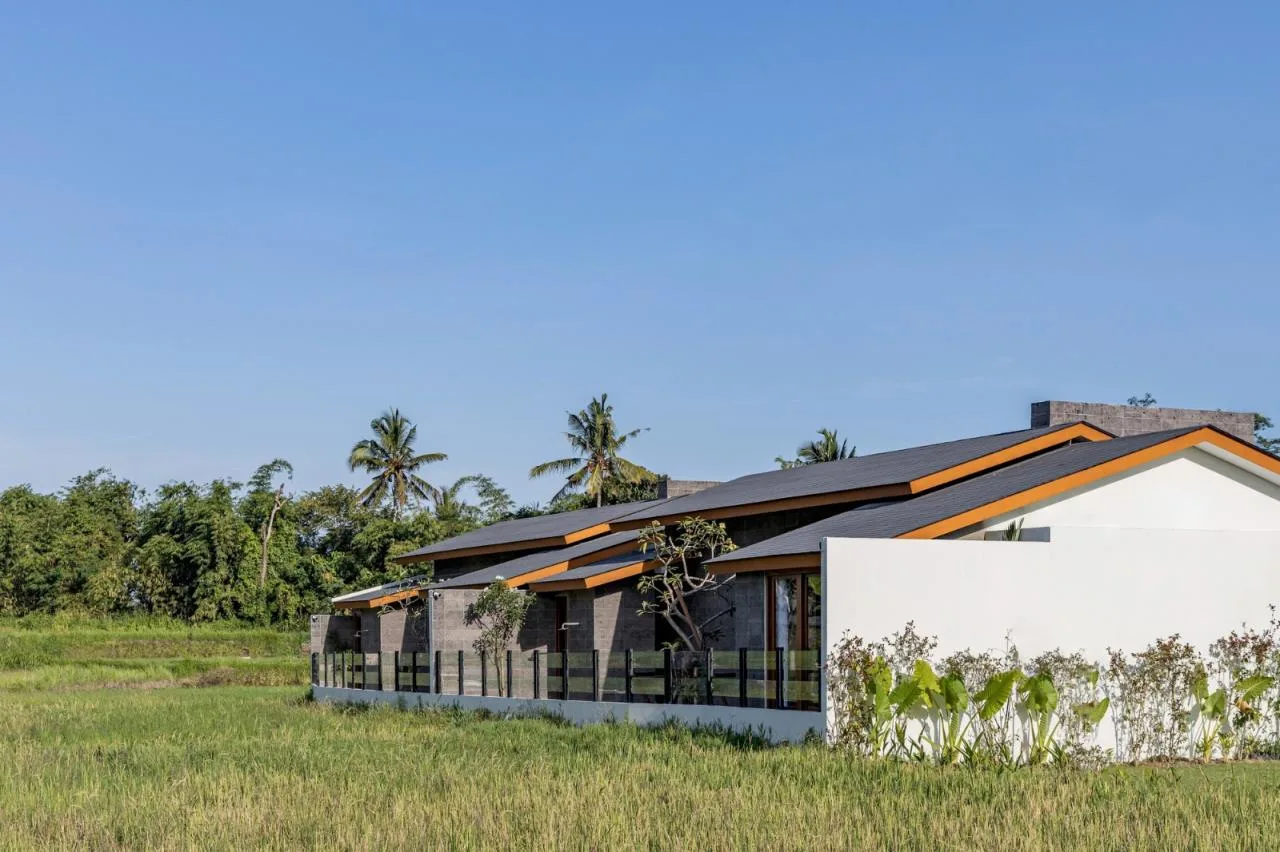
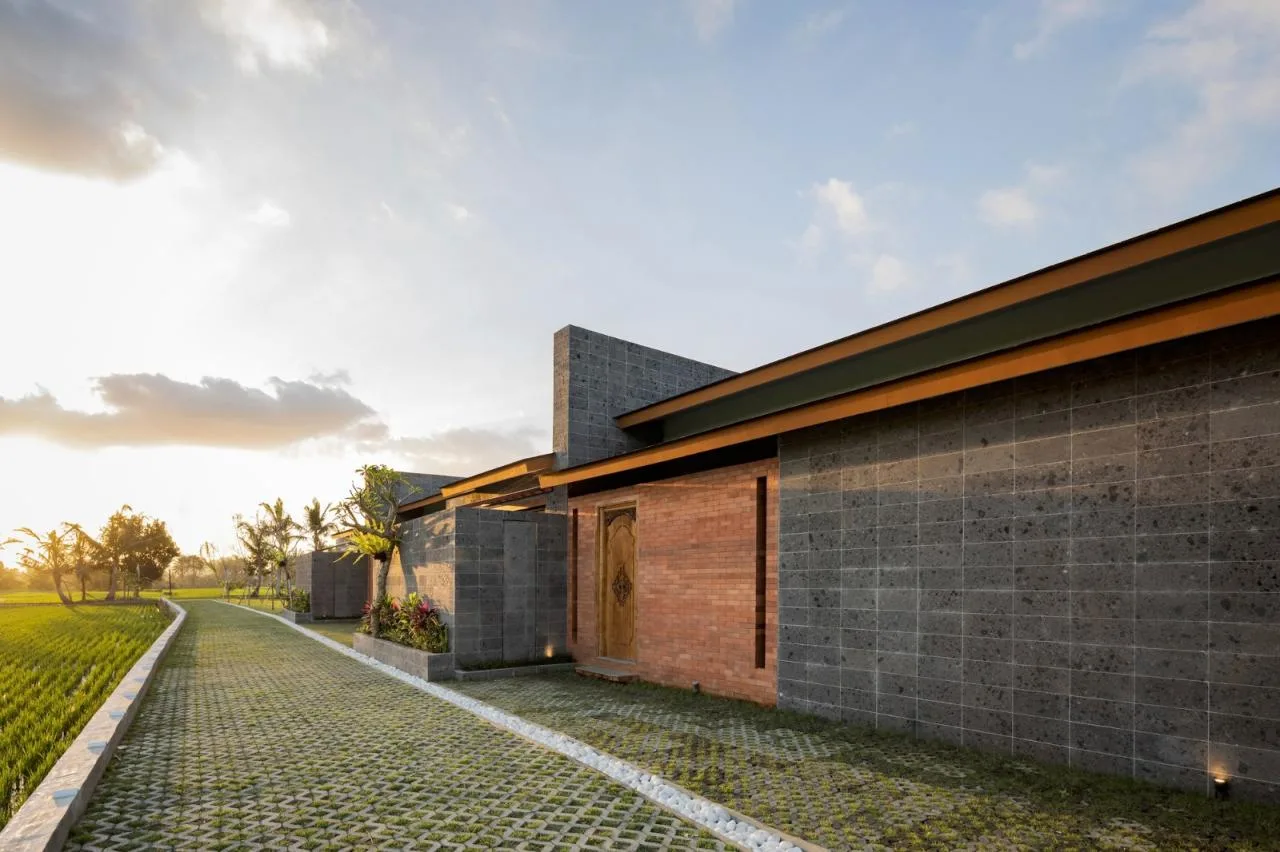
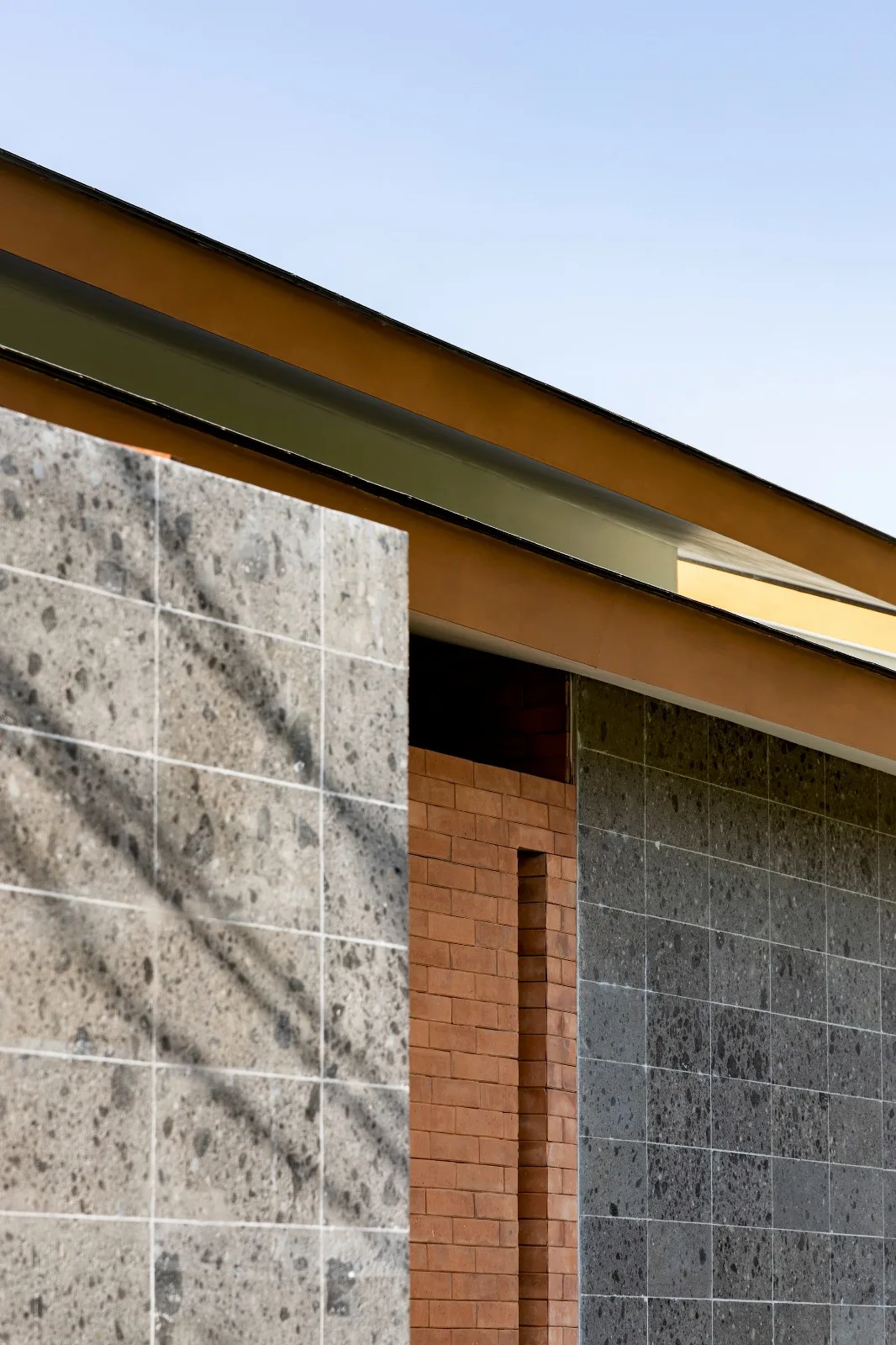
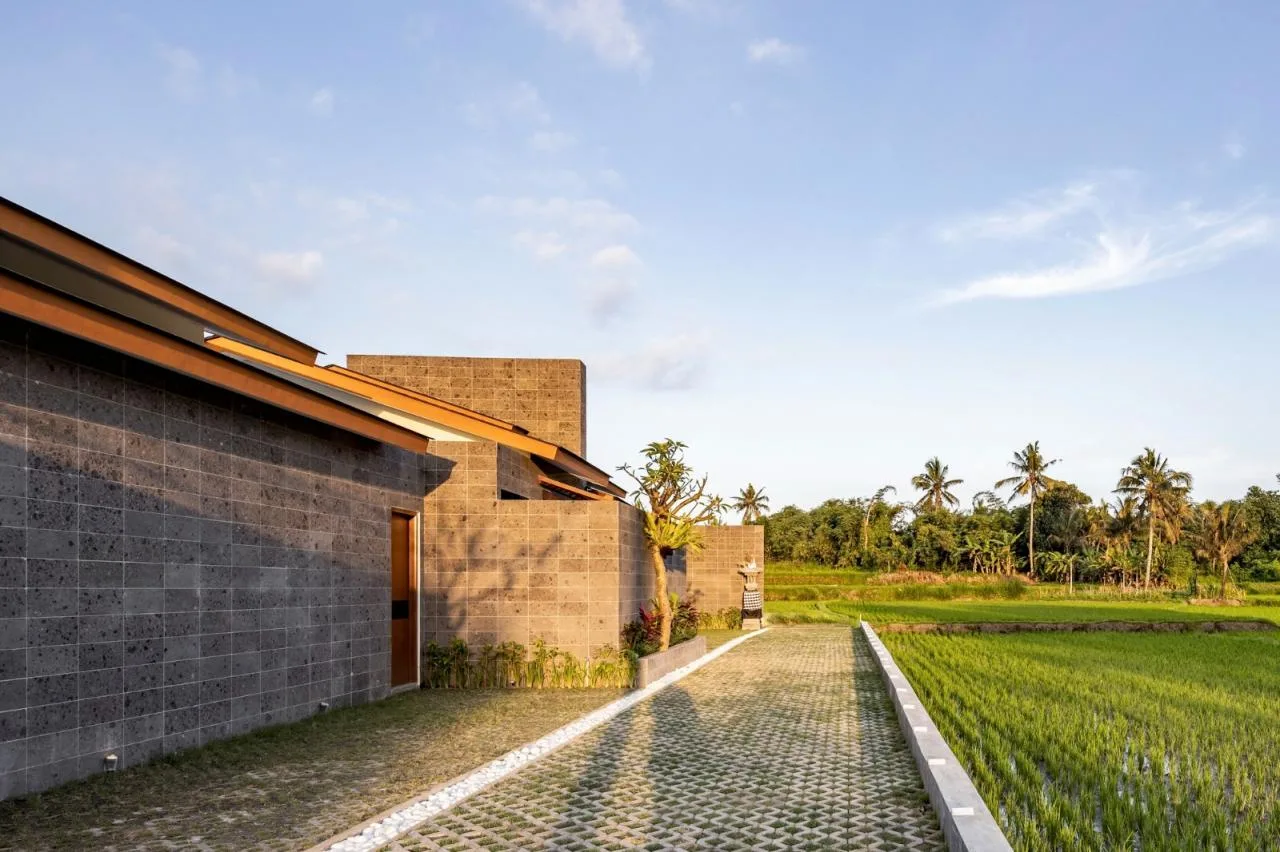
The building’s design follows the site’s natural contours, with particular attention to the roof shape and building proportions to avoid a harsh or bulky appearance. Given the area’s high rainfall, flat roofs were designed to channel rainwater efficiently into designated catchment areas.
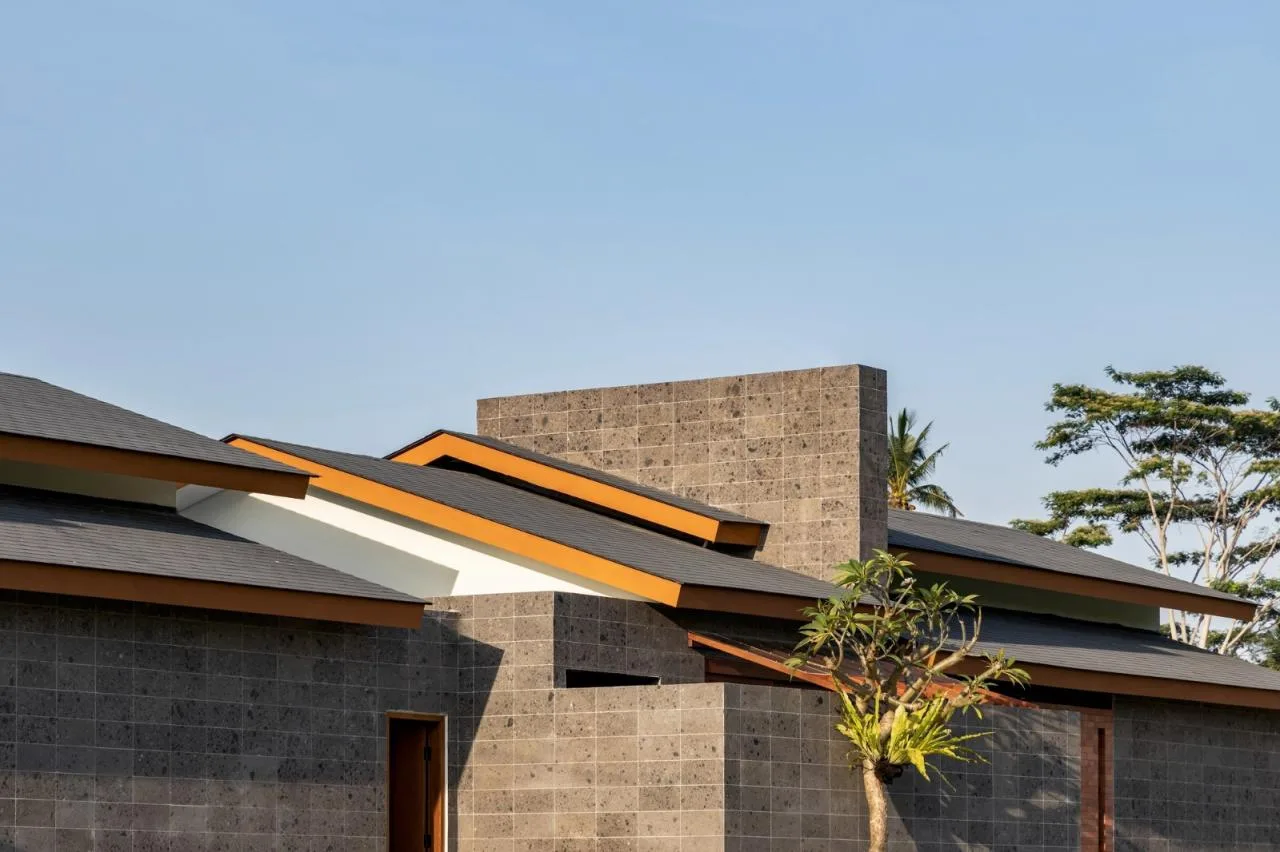
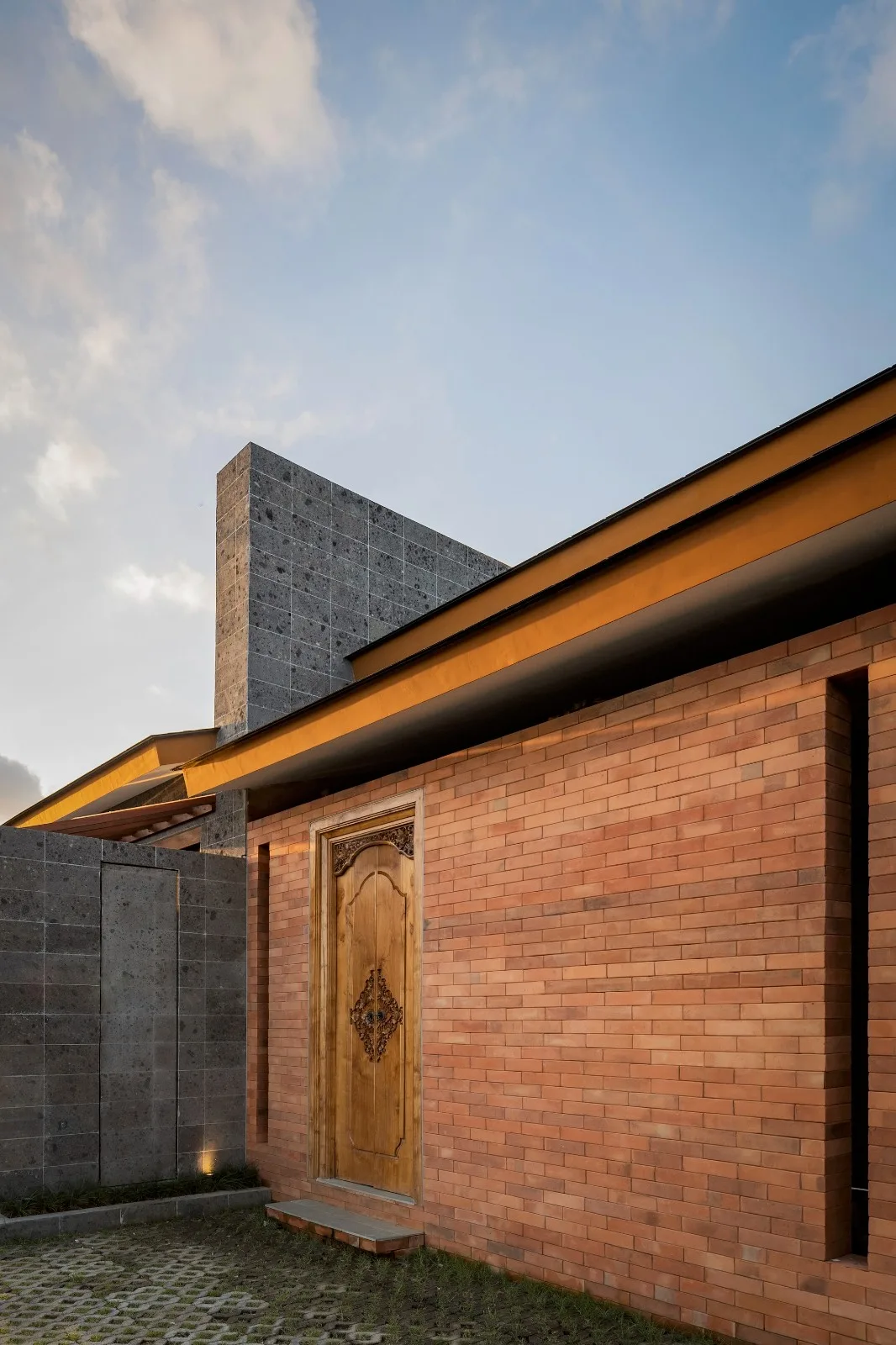
The architects created a composite roof form that appears layered, with one section overlapping another. To reduce the sense of elongation, the wall between the bedroom and living room extends upward, visually dividing the roof. This design achieves a humble aesthetic that complements the surrounding skyline.
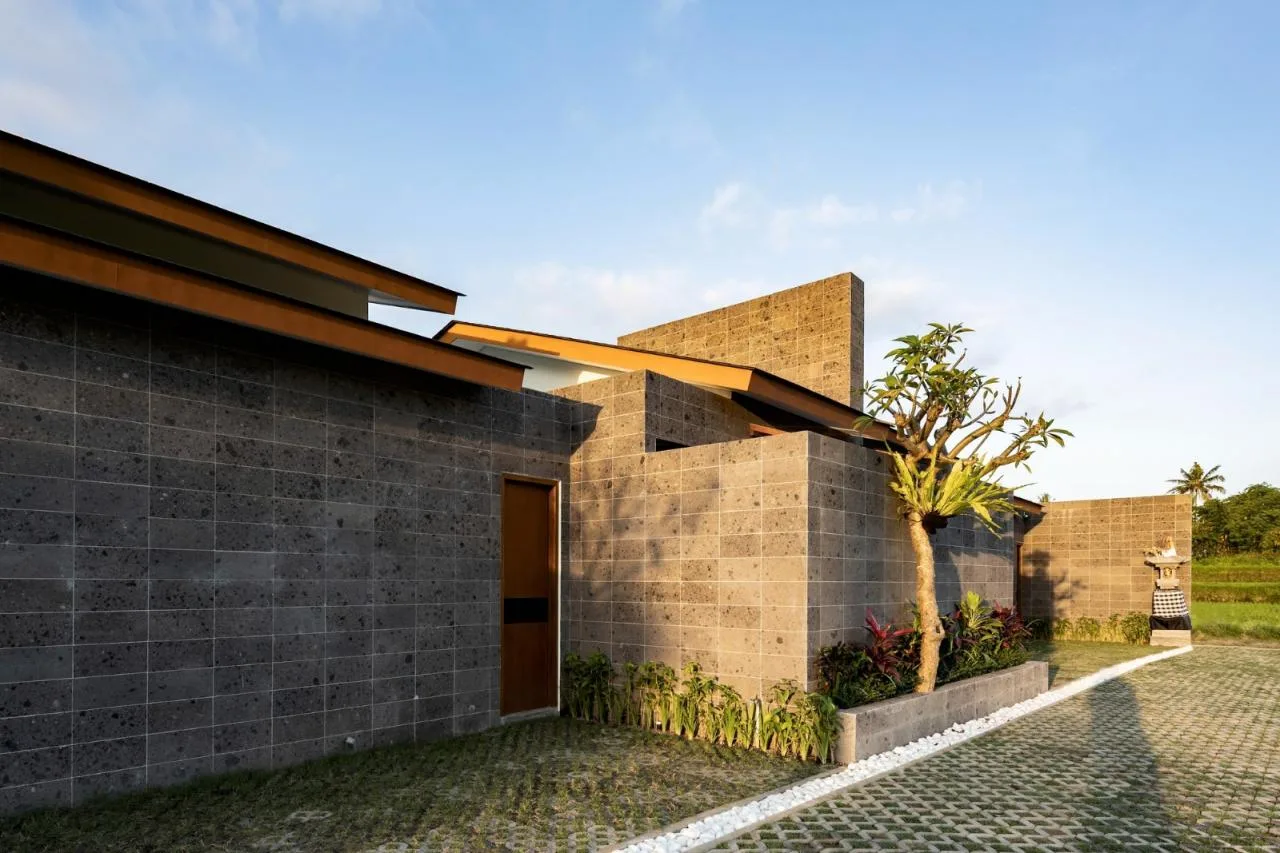
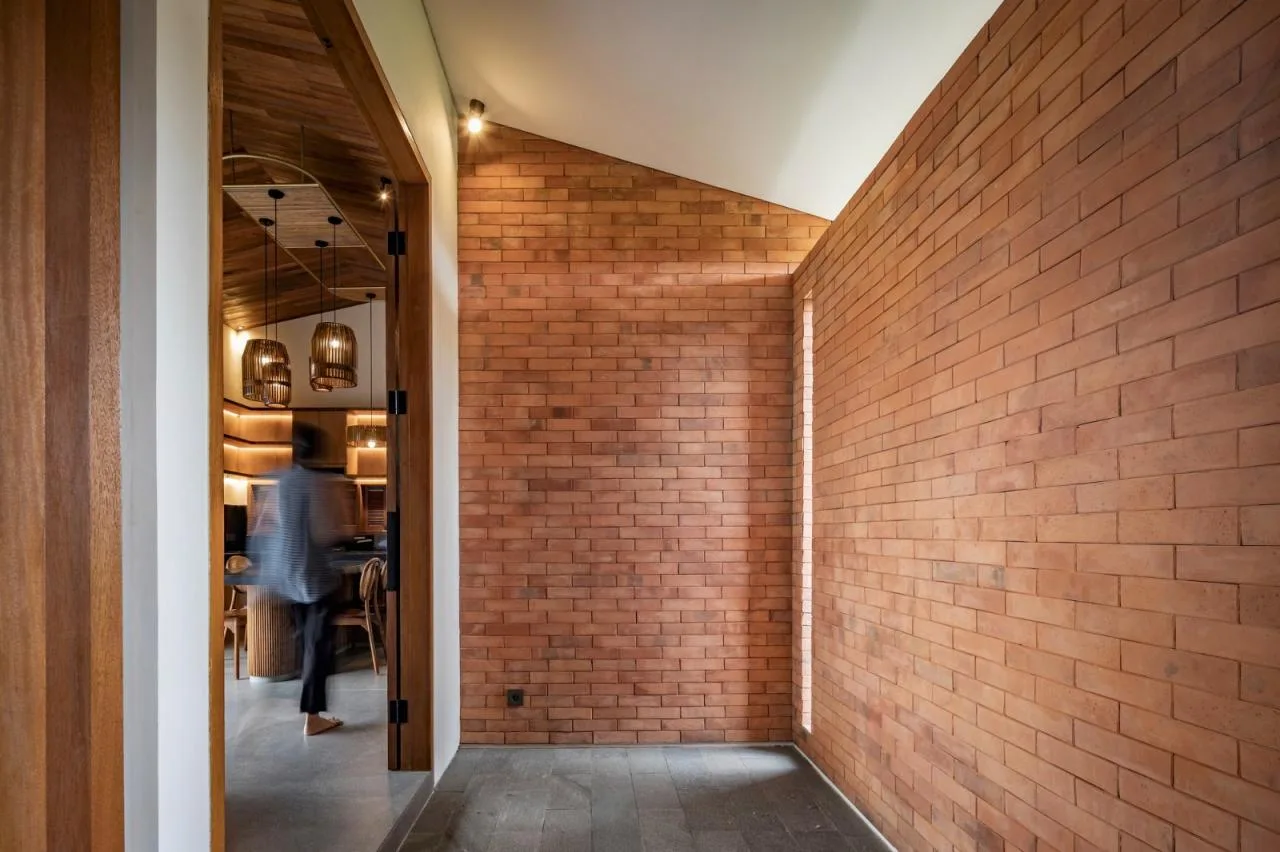
The front facade is designed to be enclosed, featuring walls clad in local natural brown-grey stone (Para Tuling Agung), which enhances harmony with the environment. In contrast, large openings are placed at the rear to connect with the landscape. Brick accents highlight the villa’s main entrance, adding subtle texture and warmth.
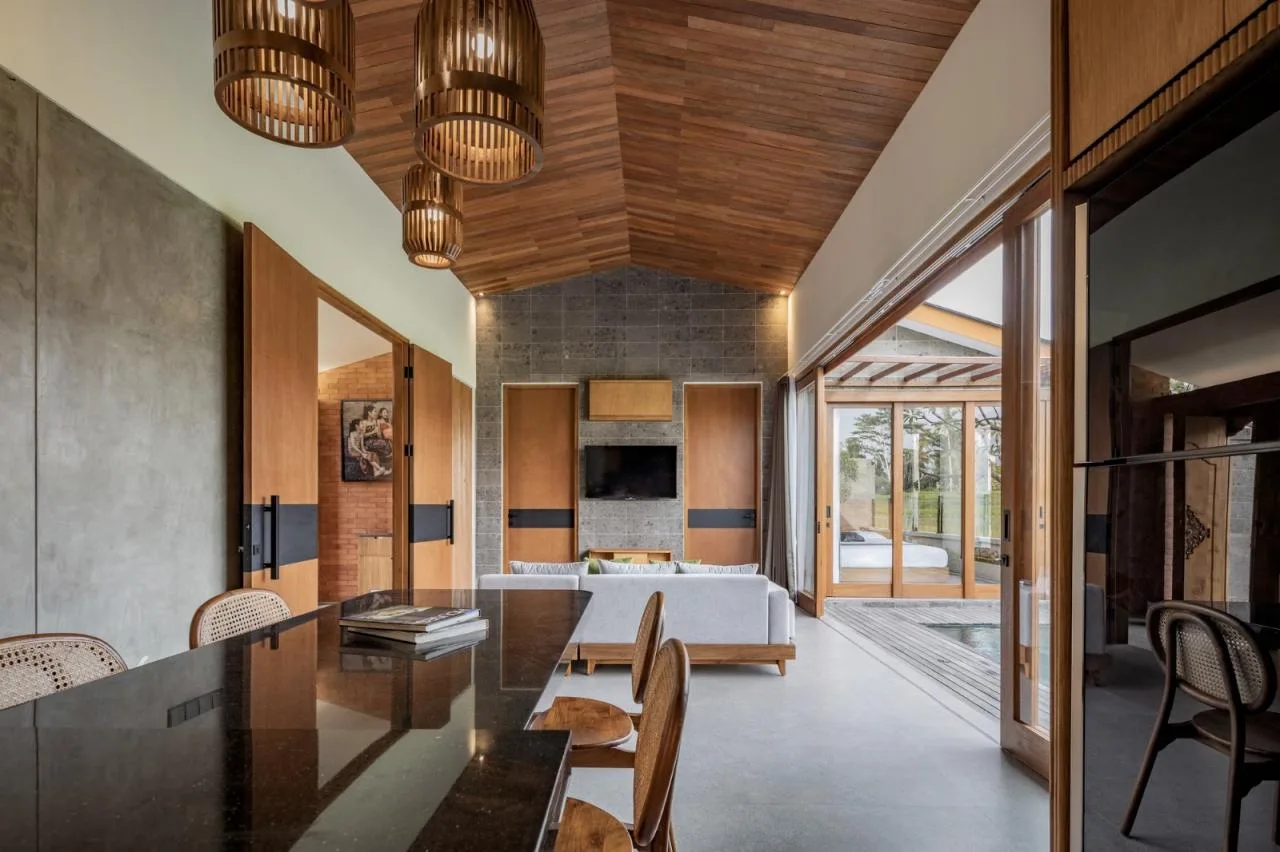
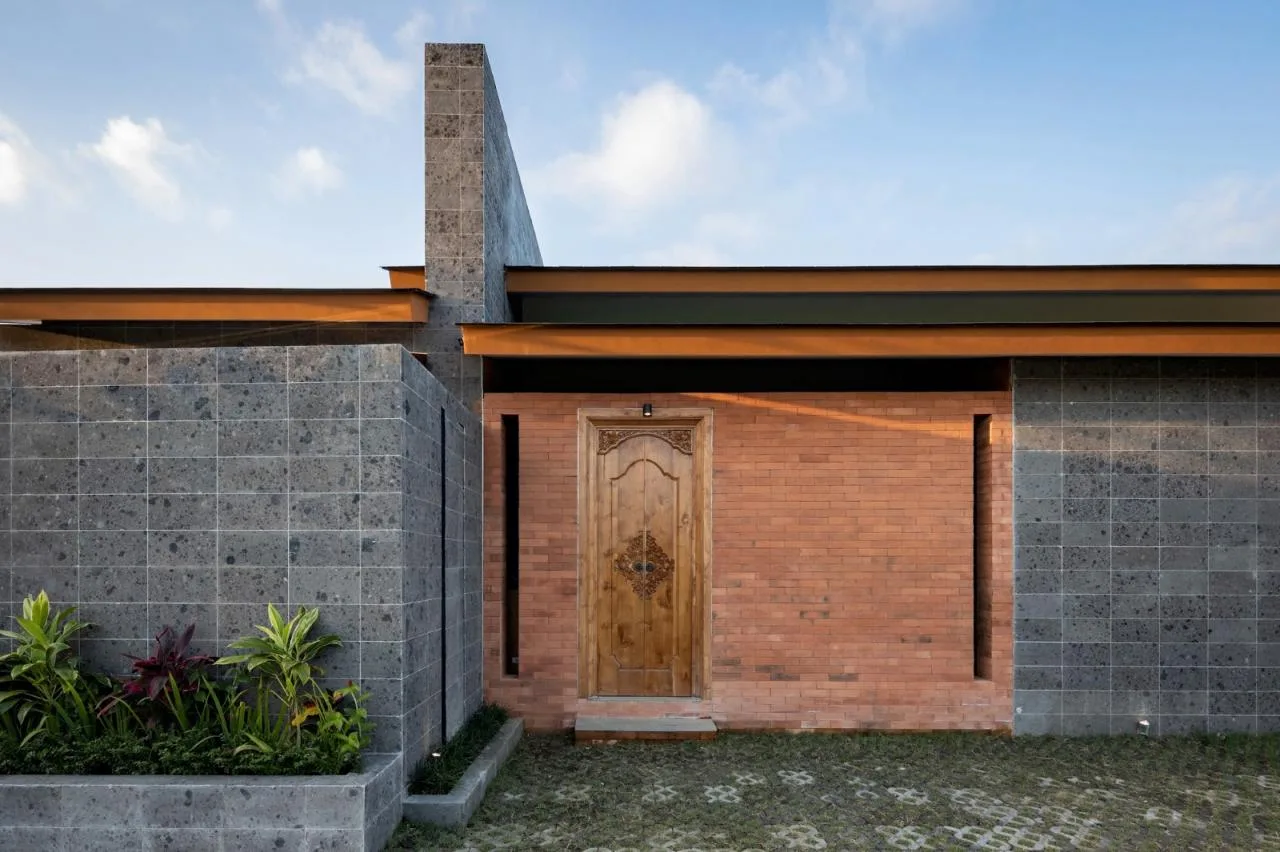
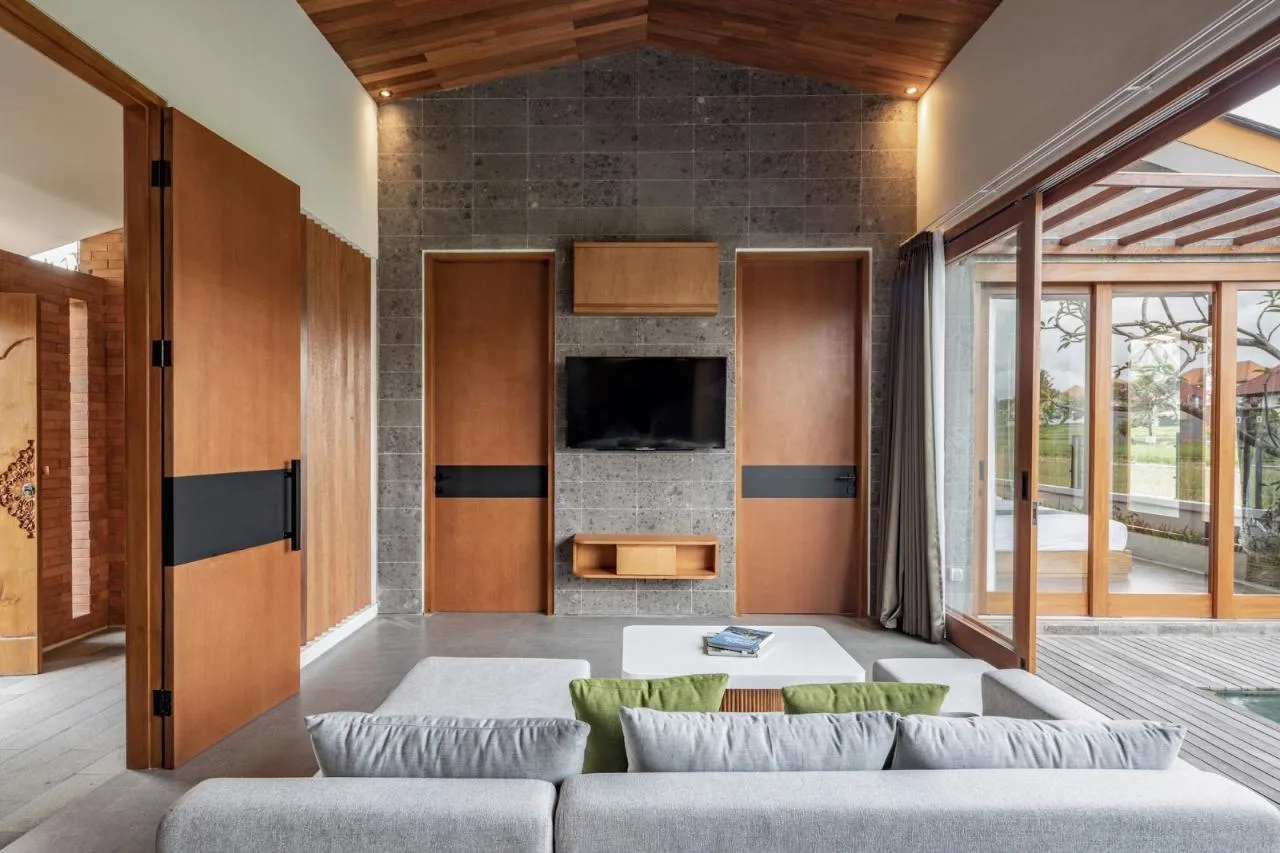
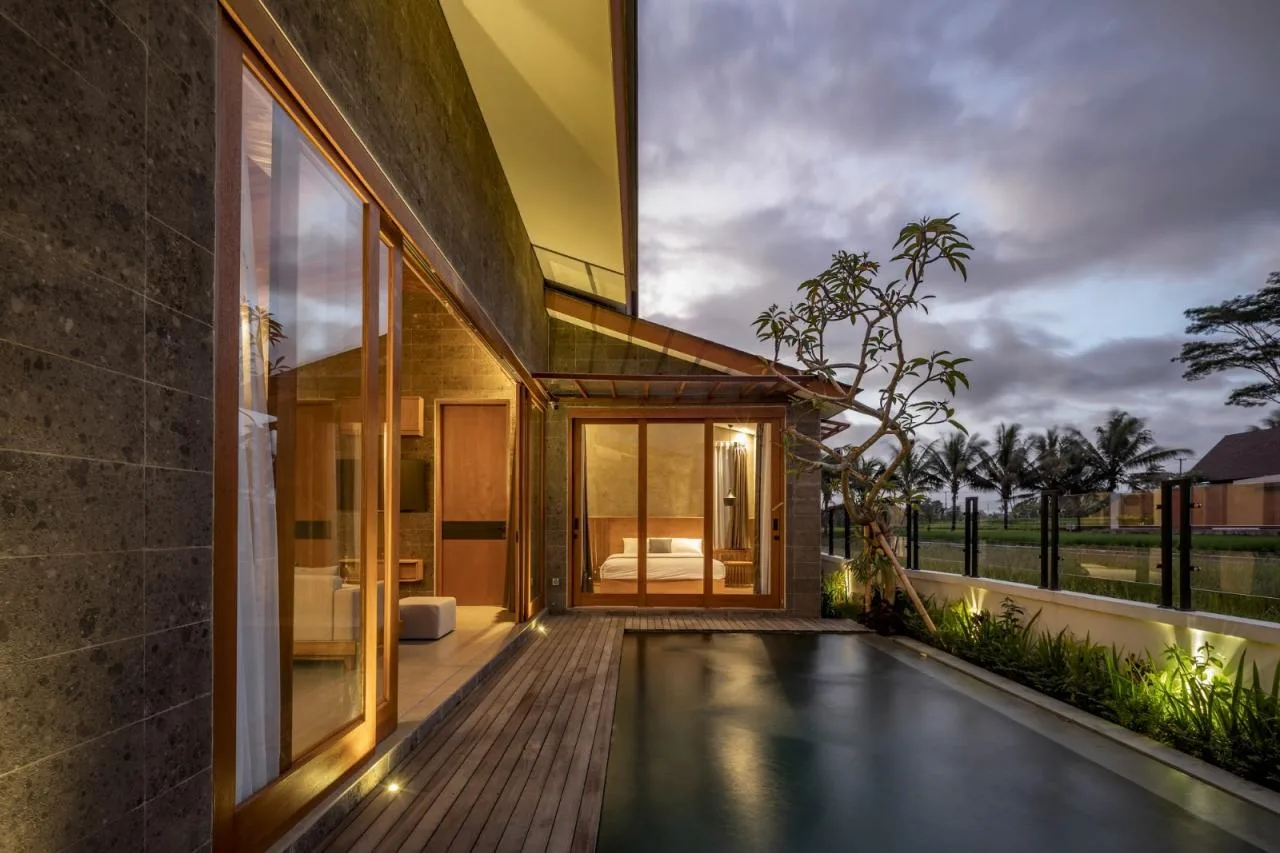
Room orientation maximizes views of the landscape at the back, with the private pool overlooking the rice paddies. All rooms face the rear, while service areas and landscaping at the front provide noise and visual buffers from the road, ensuring privacy.
The layout follows the narrow shape of the site, with a clear concept that each room has a view and a service area to block road disturbances. The design embraces simplicity, neatness, and visual appeal as its core principles.
Project Drawings
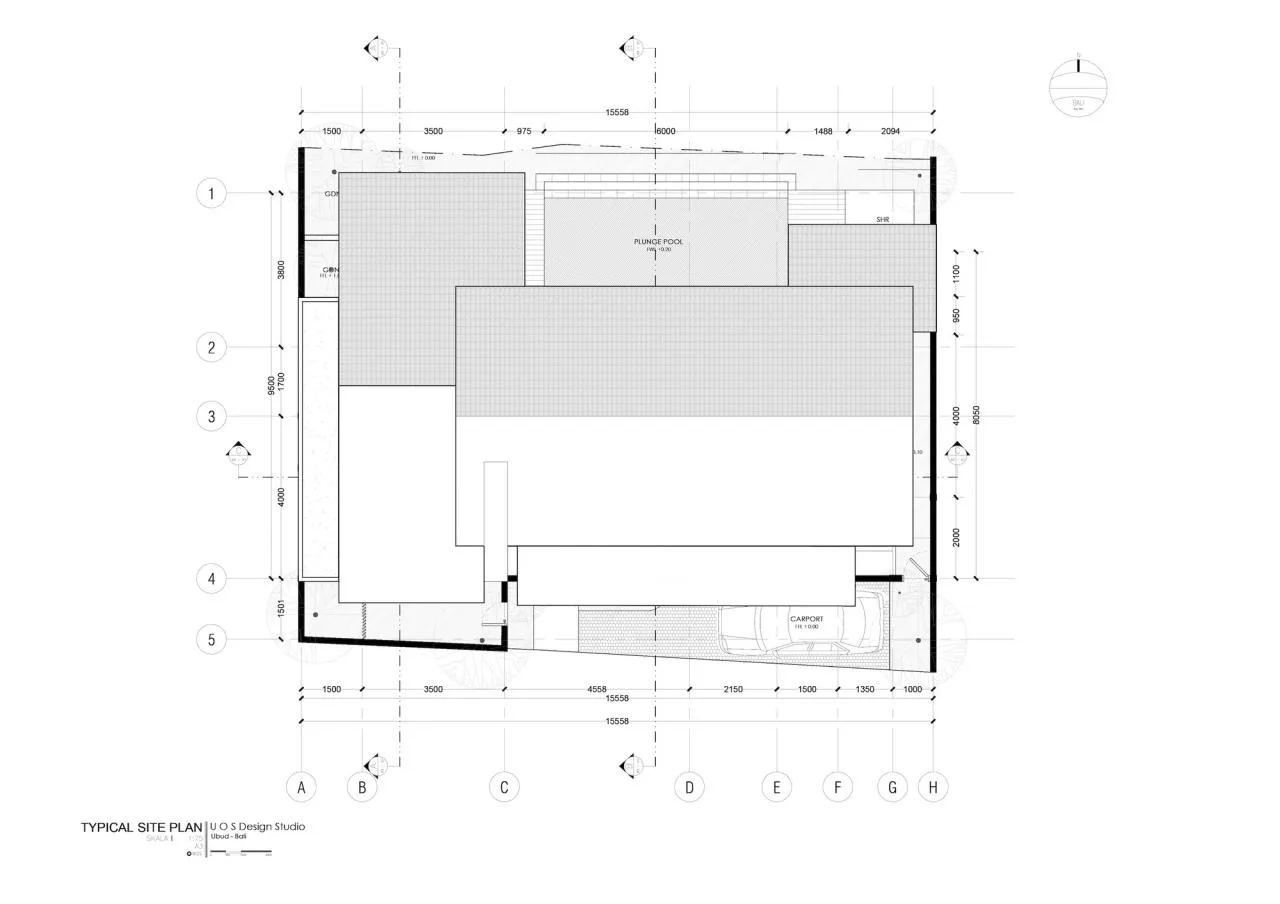
△ General layout plan
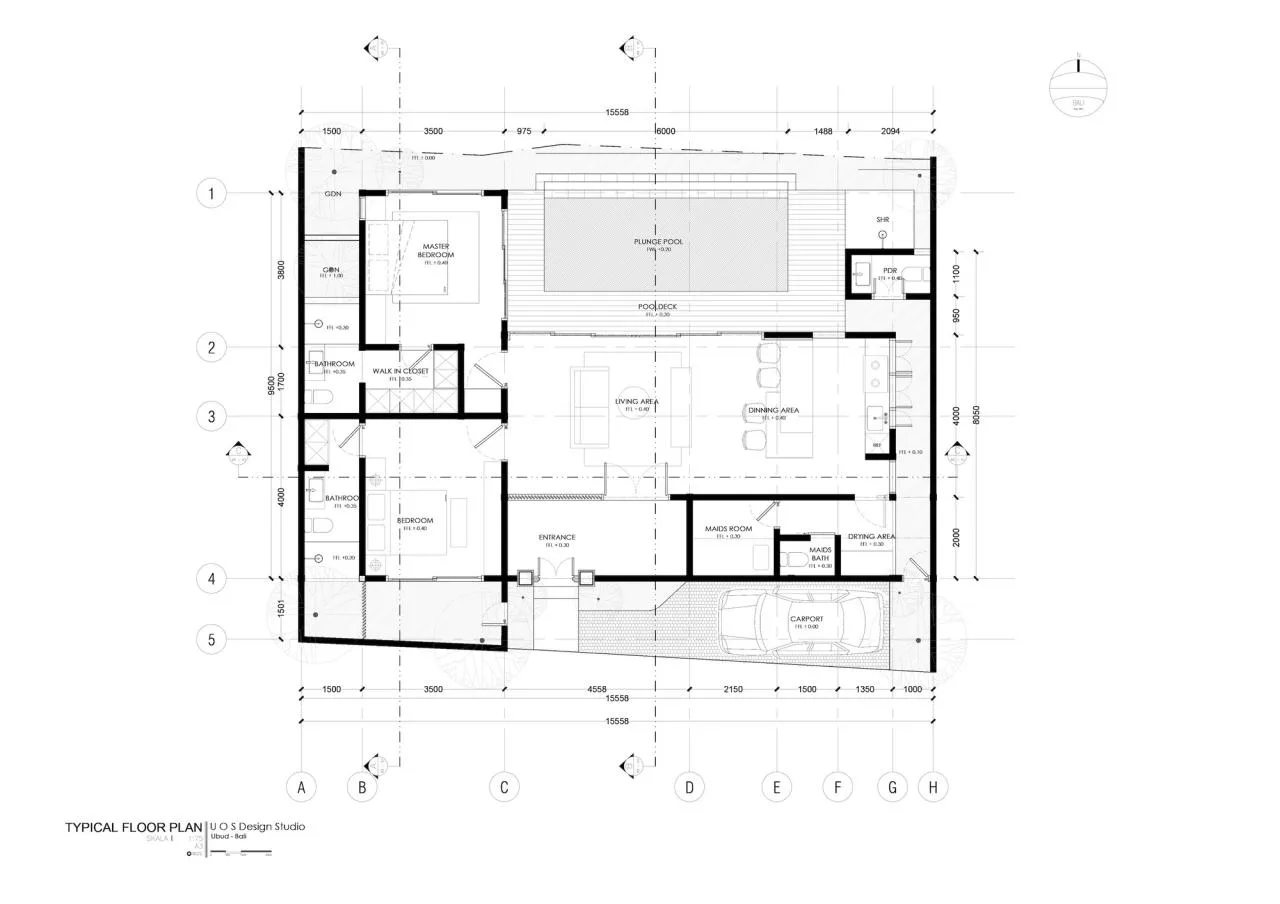
△ First floor plan
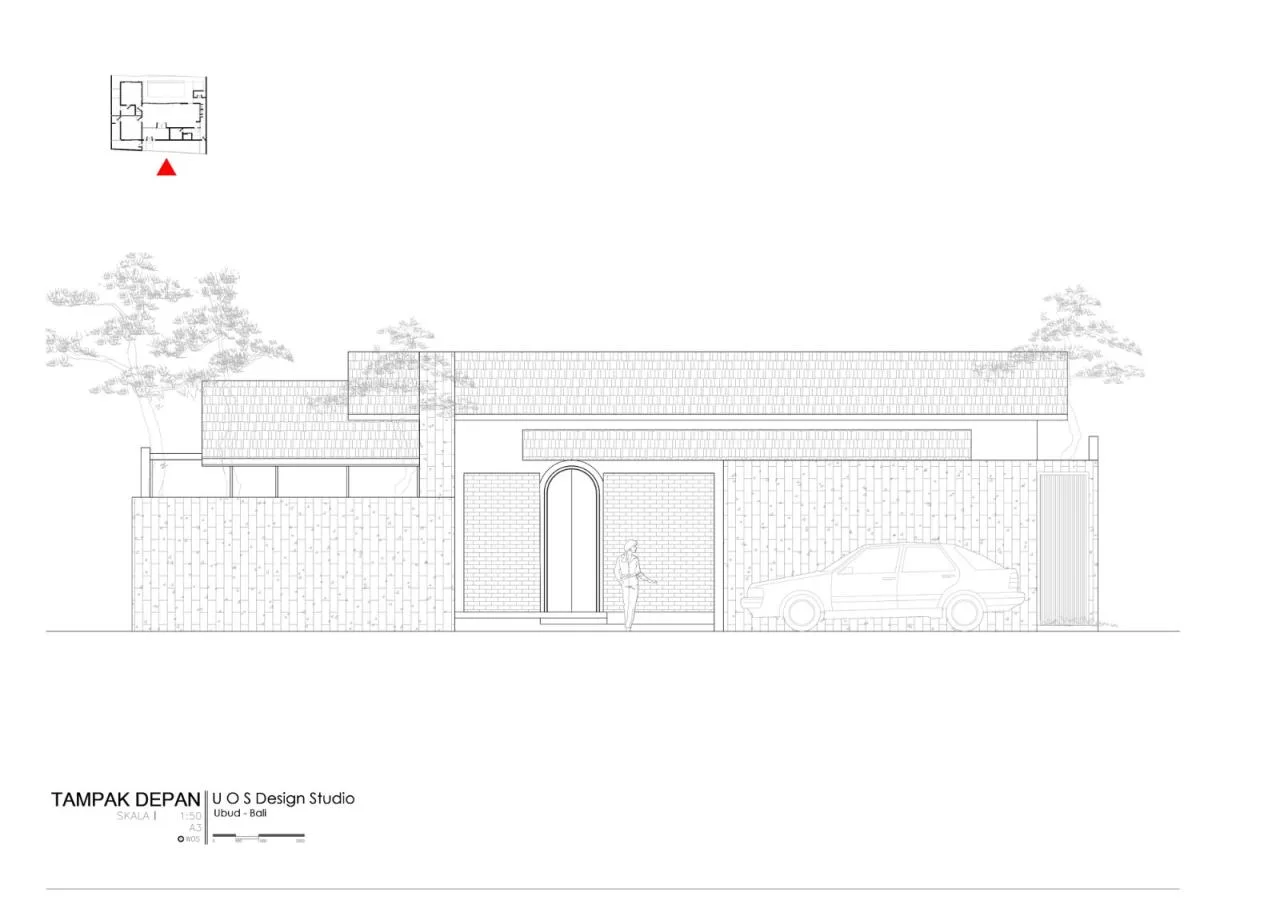
△ Elevation drawing
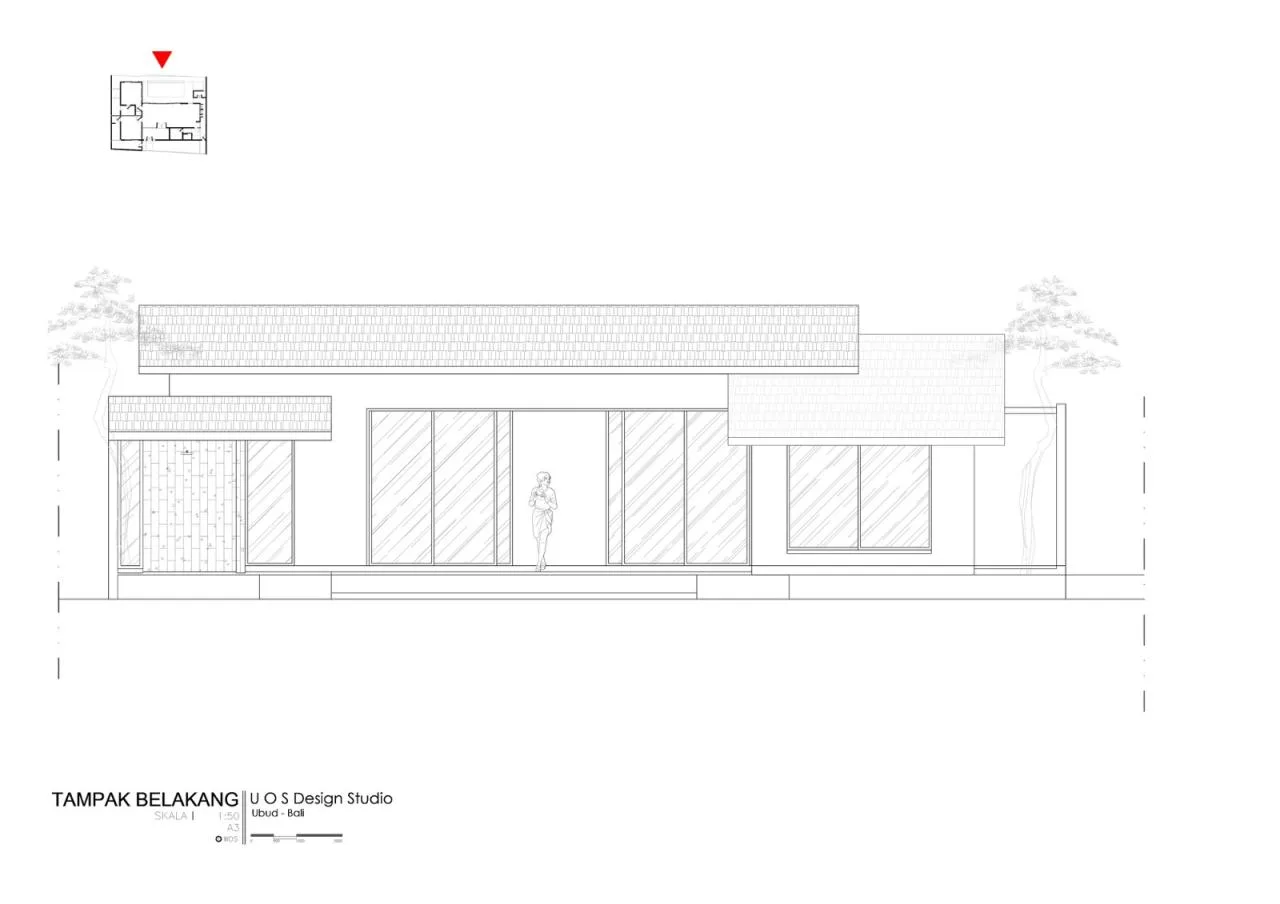
△ Elevation drawing
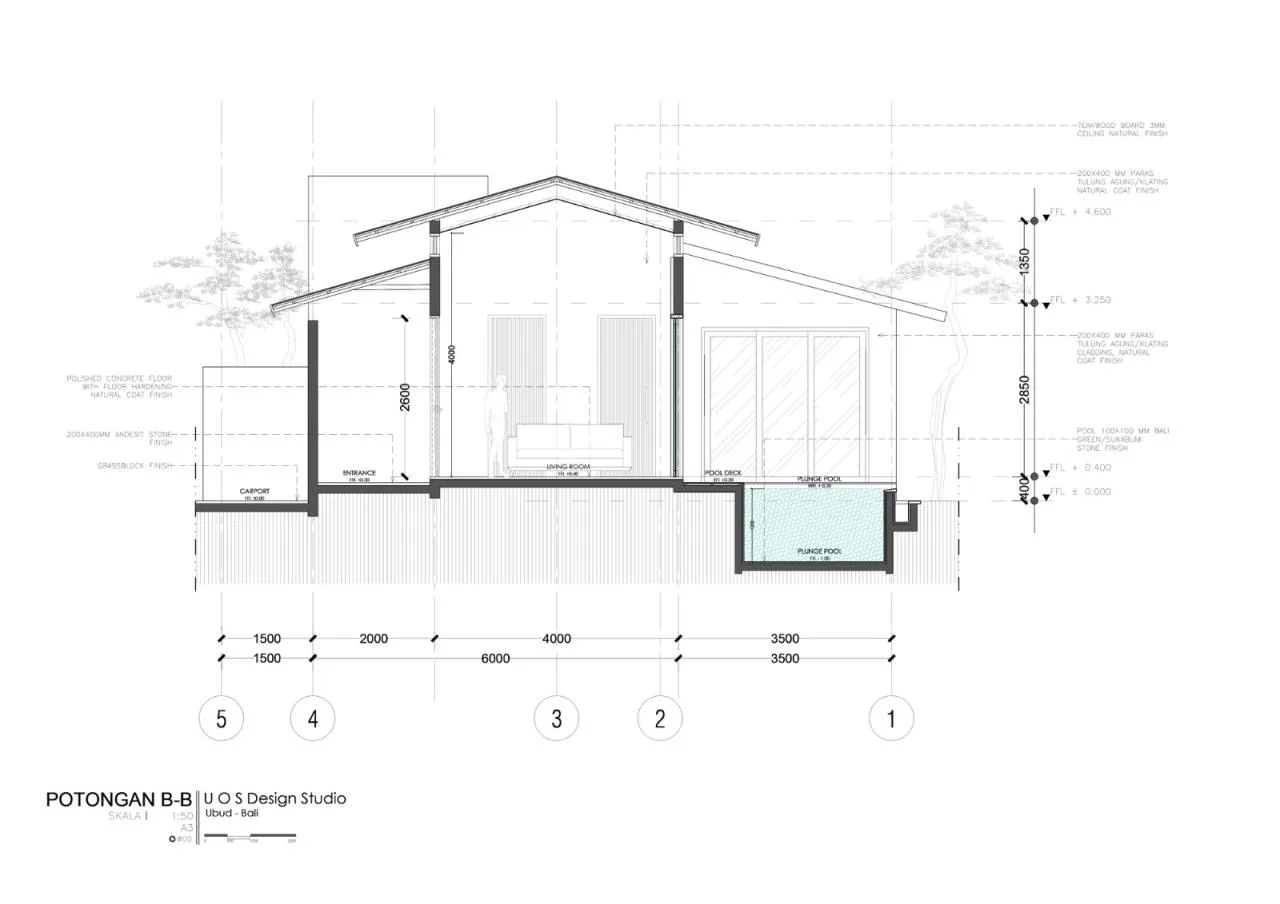
△ Section diagram
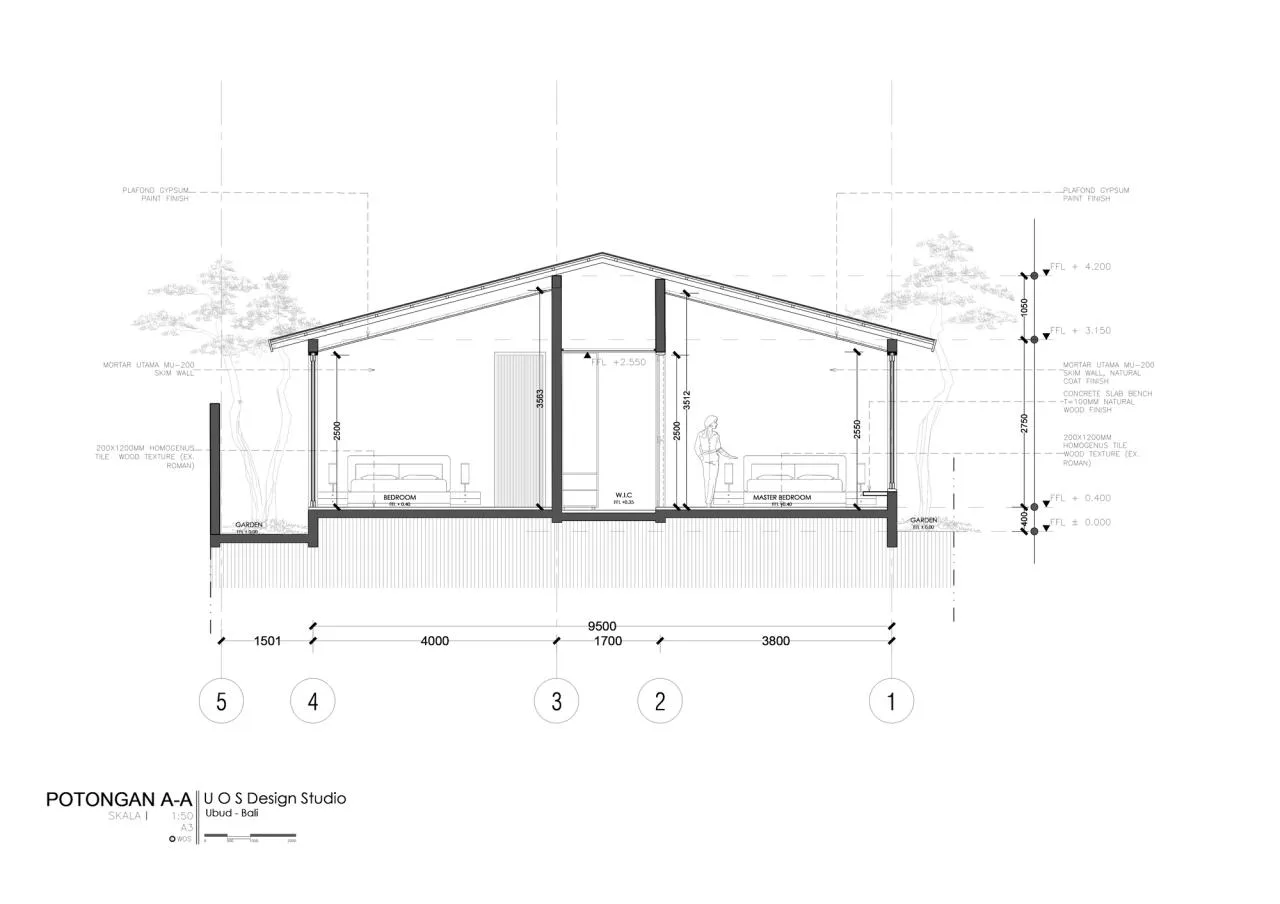
△ Section diagram
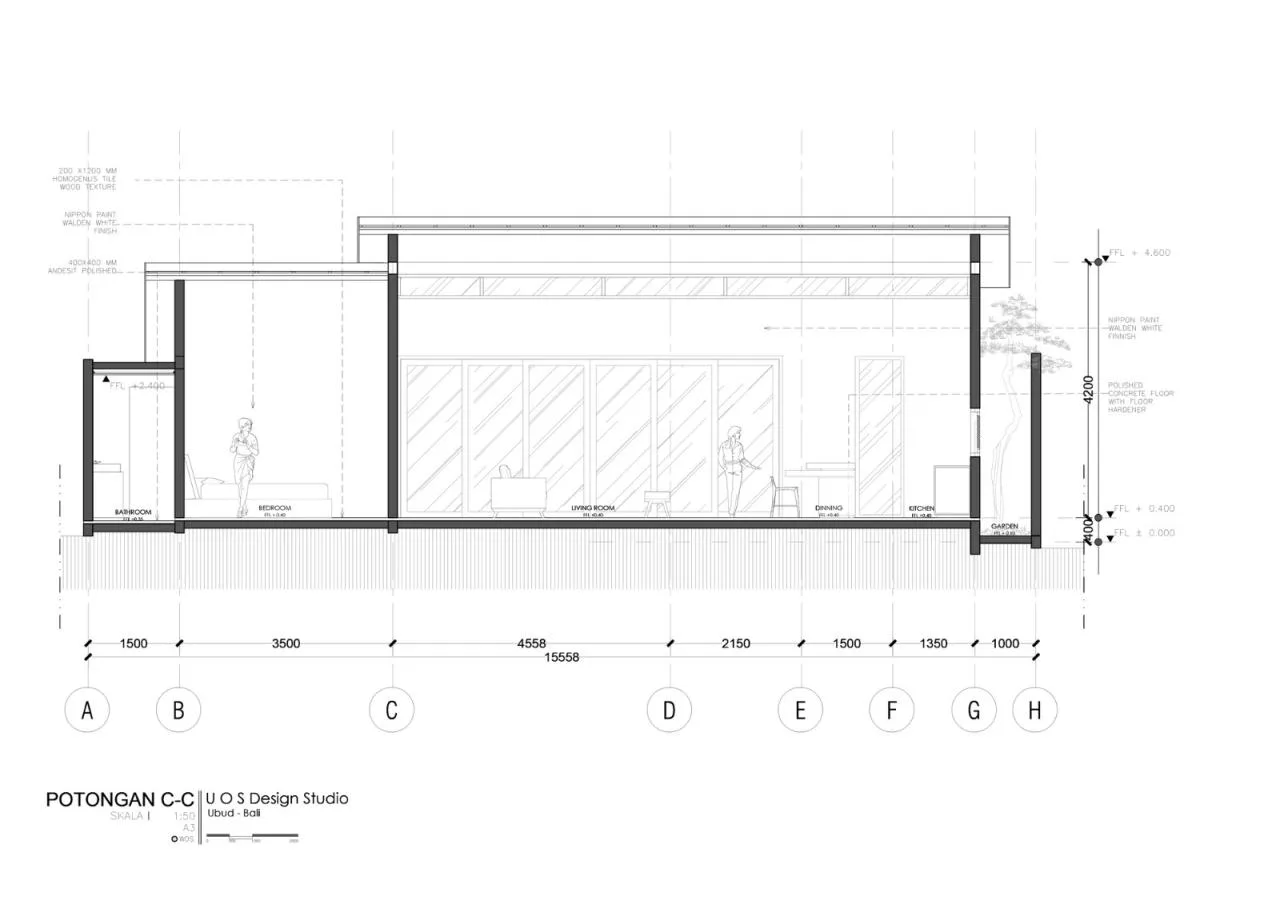
△ Section diagram
Project Information
Architect: UOS Architecture Studio
Area: 150 m²
Year: 2022
Photographer: Indra Wiras
Manufacturers: Dekkson Lock, Infinity Granite Tiles, Toto
Lead Architect: Banyu Priautama
Architects: Tjokorda Gede Dalem, Rahayu Sitha D
Contractor: NATS Project
Location: Ubud, Indonesia













Must log in before commenting!
Sign Up