
The China International Import Expo (CIIE) is the world’s first national exhibition dedicated exclusively to imports, serving as a vital platform showcasing China’s openness to the global community. Located in Xujing, West Hongqiao, Shanghai—the home of the National Convention and Exhibition Center and the permanent venue for CIIE—this area draws tens of thousands of visitors every November during the event.
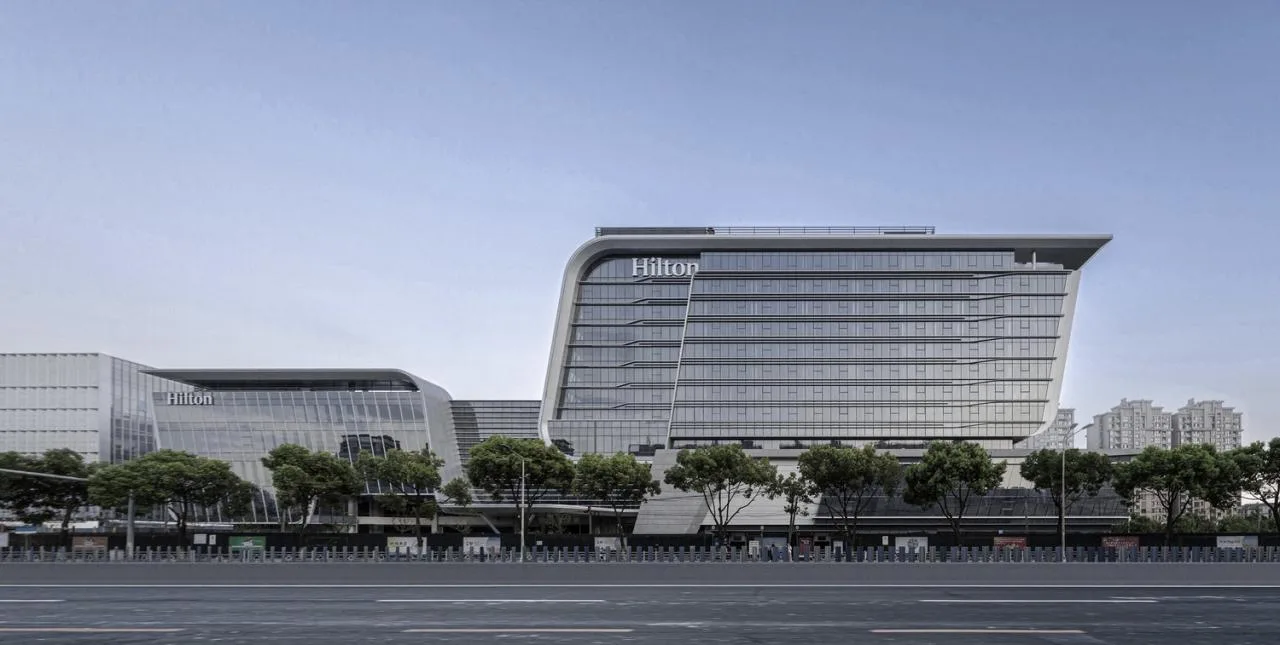
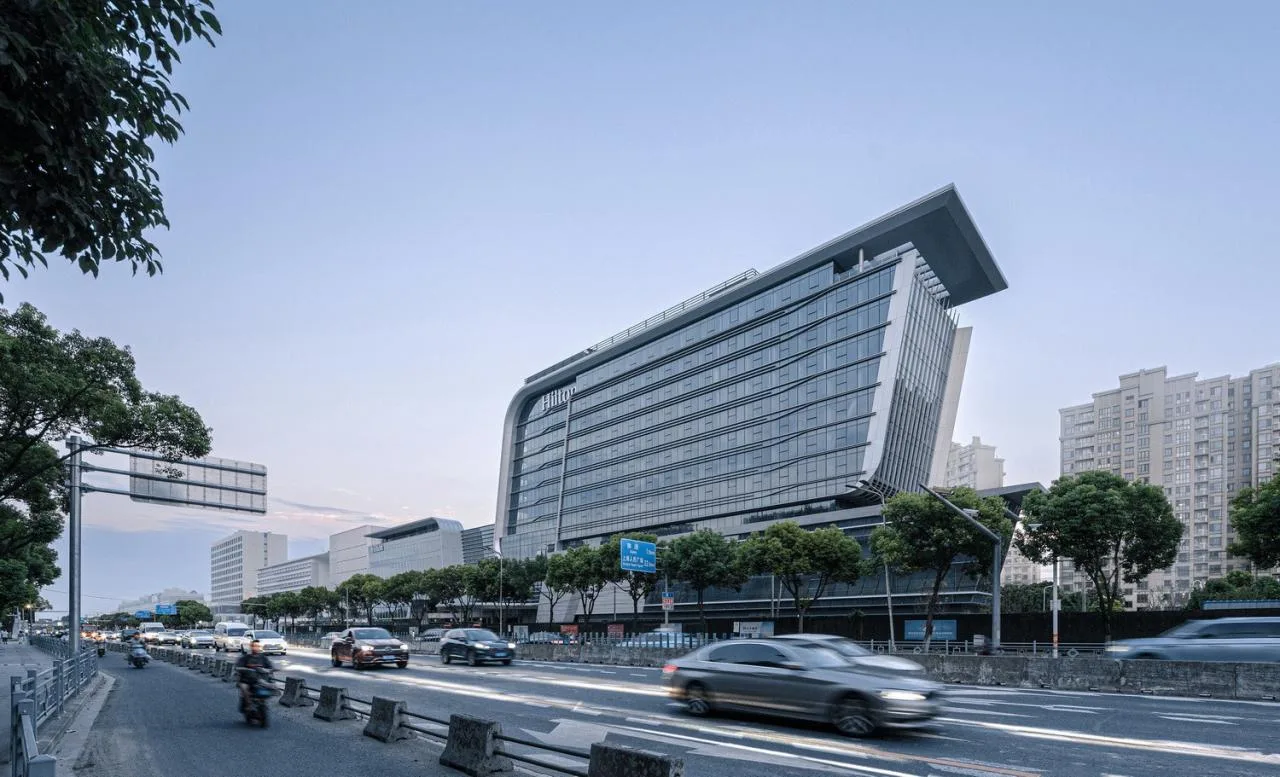
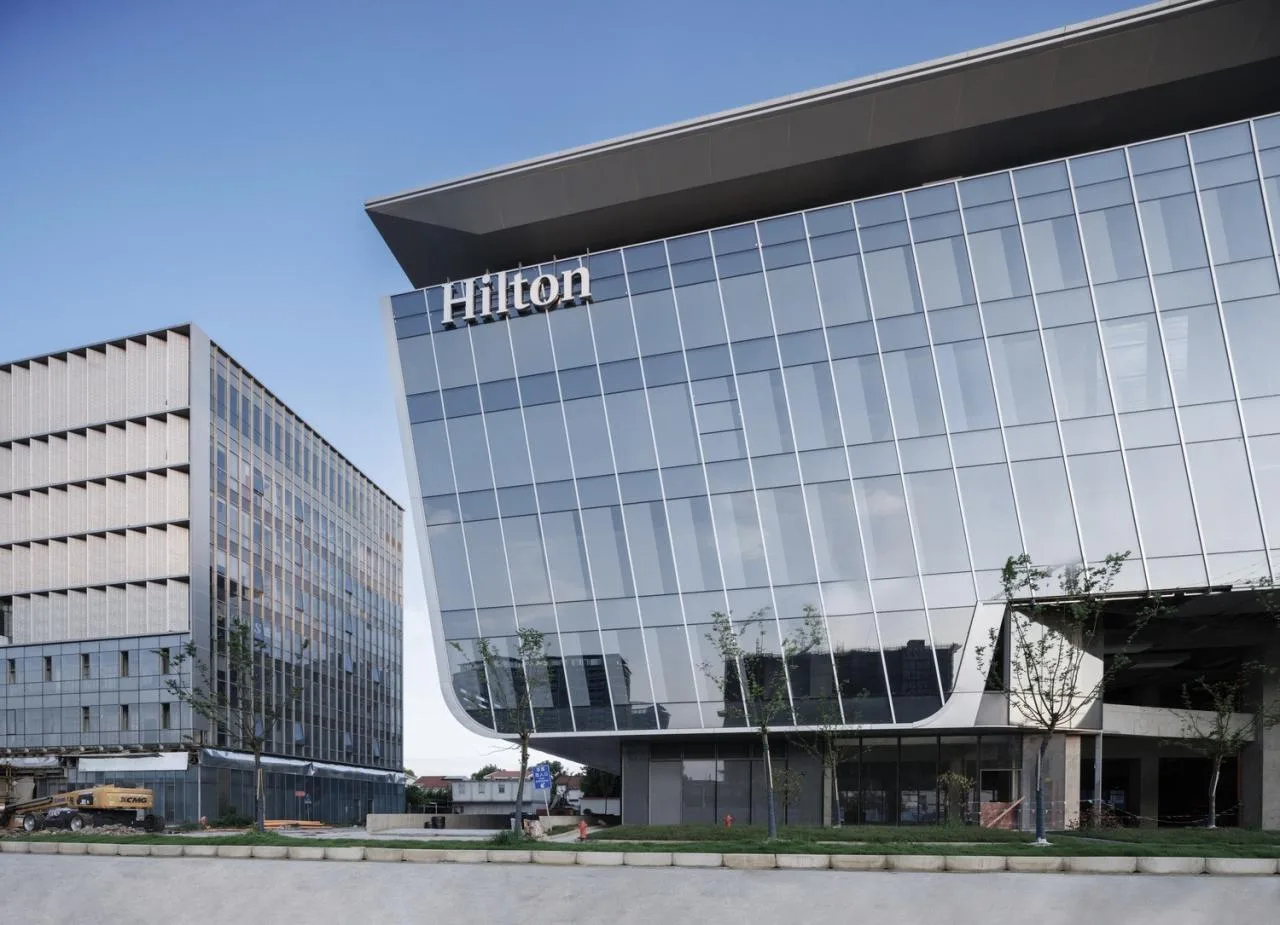
Our latest project features a striking facade painting in the heart of Xujing Town, West Hongqiao, Shanghai, inspired by the concept “Wings of Hongqiao.” This design captures a sense of flow and speed, embodied by the five-star Hilton Shanghai New Hongqiao. Positioned as a key supporting facility for both the National Convention and Exhibition Center and the Hongqiao Business District, the building reflects the image of Hongqiao Airport, resembling soaring wings that proudly mark the southwest gateway of the business district.
The exterior construction phase is now complete, with interior decoration underway. The hotel is scheduled to open fully in 2024.
Southwest Gateway of Dahongqiao International Business District
This project is situated centrally in Xujing Town, Qingpu District, Shanghai. It is bounded by Lianmin Road to the east, Canhui International Building to the west, Huqingping Road to the north, and Zhangguangjing to the south. Located just 3.5 km from the National Convention and Exhibition Center and close to the Hongqiao transport hub, it enjoys excellent connectivity and is part of the Greater Hongqiao business area, offering a prime geographic advantage.
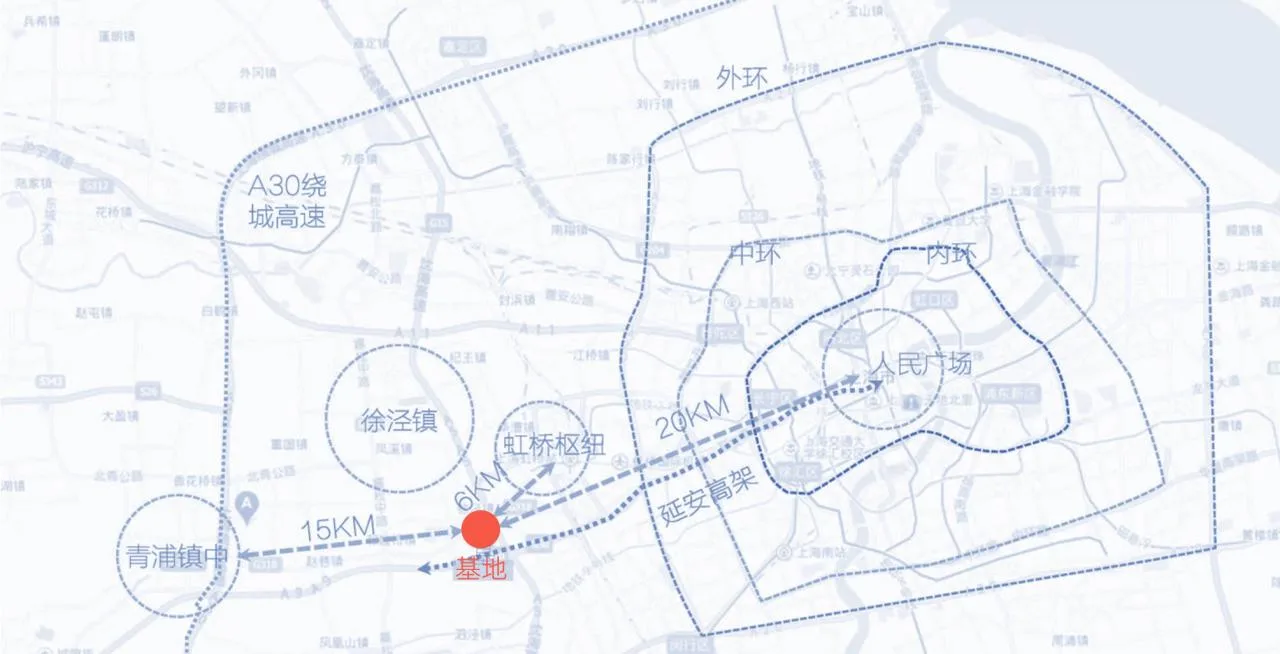
△ Project location
The site’s east side neighbors Canhui International Building, Hilton Garden Inn, and Hongqiao Shishang Tiandi Commercial Center, creating a vibrant commercial atmosphere. To the north lies a health-themed park, while the south borders a scenic river, offering rich landscape resources. Serving as the gateway to Xujing Town, this location holds promising development potential.
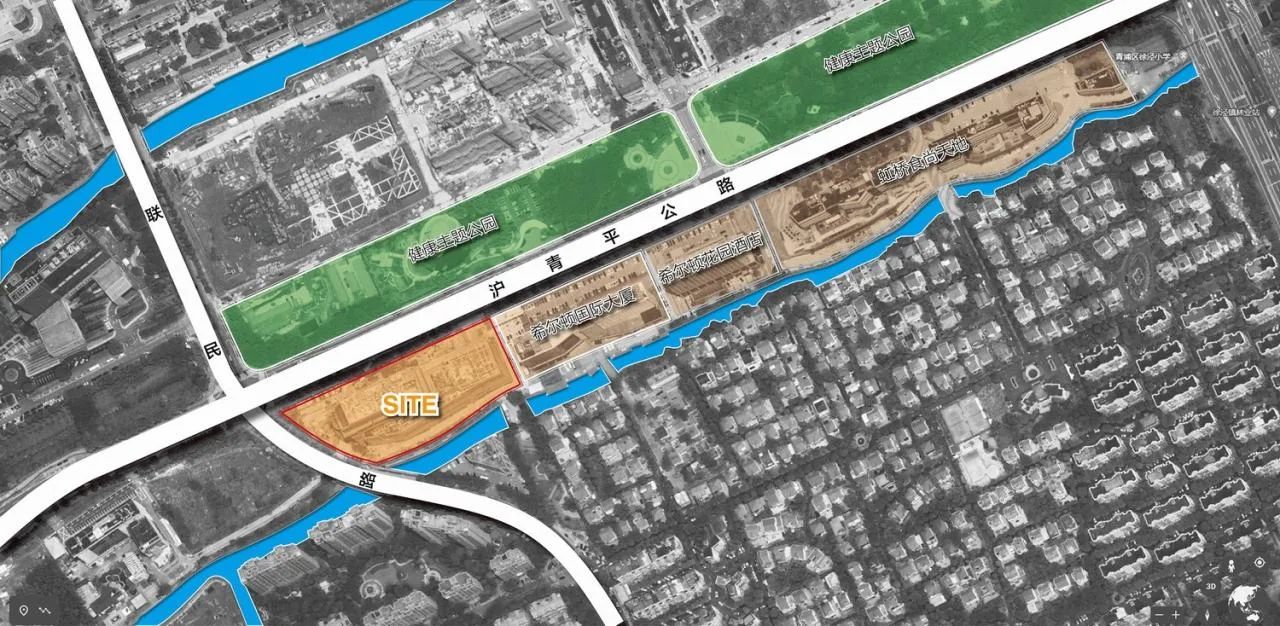
Overview of the Surrounding Area of the Base
Respecting Urban Texture to Create a Hilton Hotel Cluster
The project’s master plan carefully respects the existing urban fabric, complementing the adjacent Canhui International Building, Hilton Executive Hotel, and Hilton Garden Inn to the east. The hotel podium extends horizontally in a straight line along the site’s interior, while the building’s left and right wings stretch diagonally outward. The west side rises as guest room towers; the east hosts banquet halls and supporting facilities.
This composition forms a smooth, dynamic silhouette, with the left and right wings evoking the image of soaring wings.
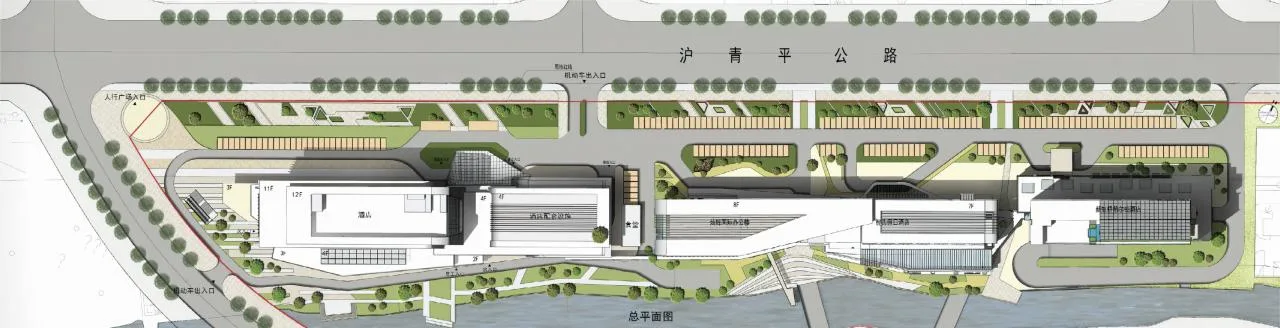
Overall project planning
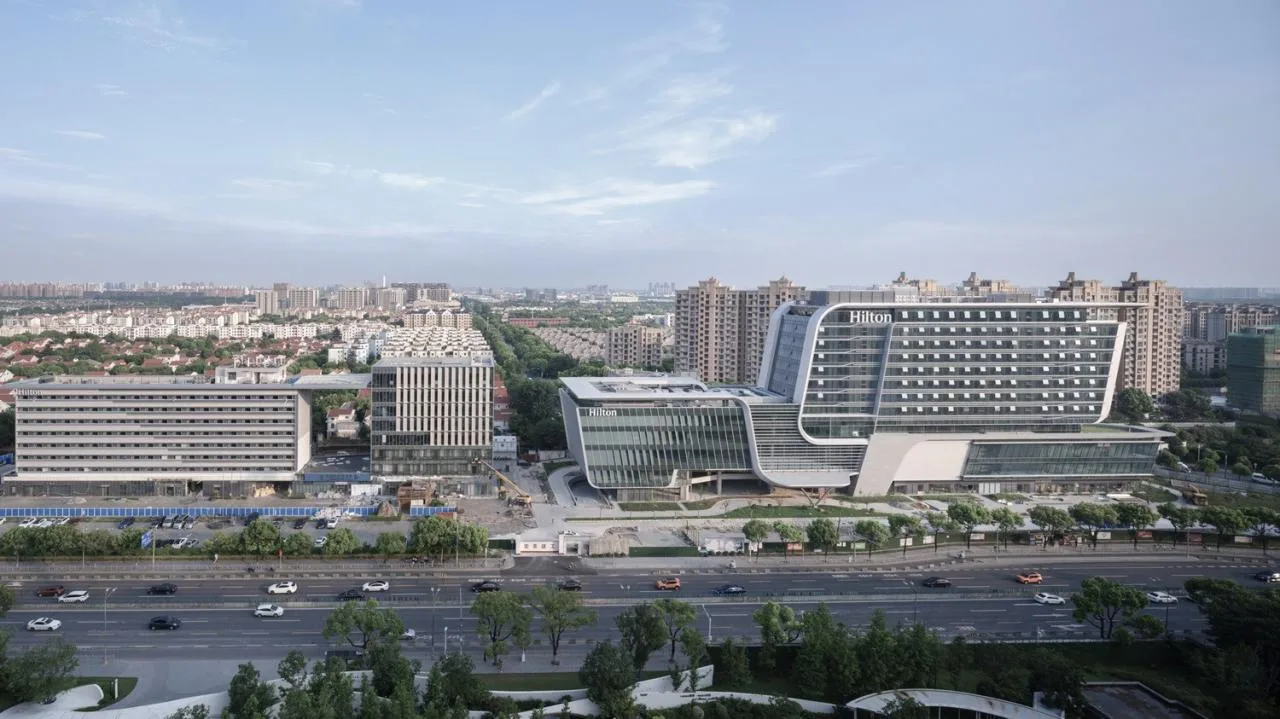
△ Seamless integration of architecture with the surrounding environment
The building’s extended form aligns with its surroundings, creating a stepped skyline along Shanghai Qingping Highway that complements the Canhui International Building, Hilton Executive Hotel, and Hilton Garden Inn. This not only achieves a visually harmonious whole but also establishes a Hilton-branded hotel cluster, fostering regional business growth.
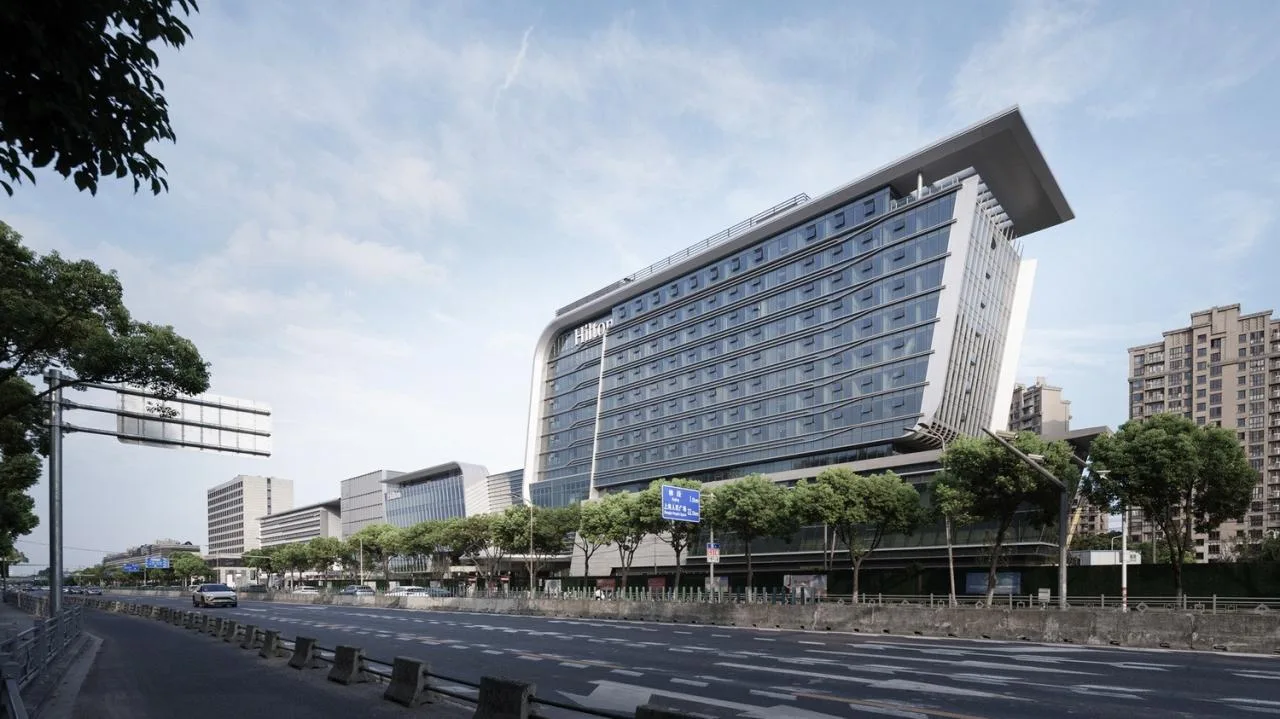
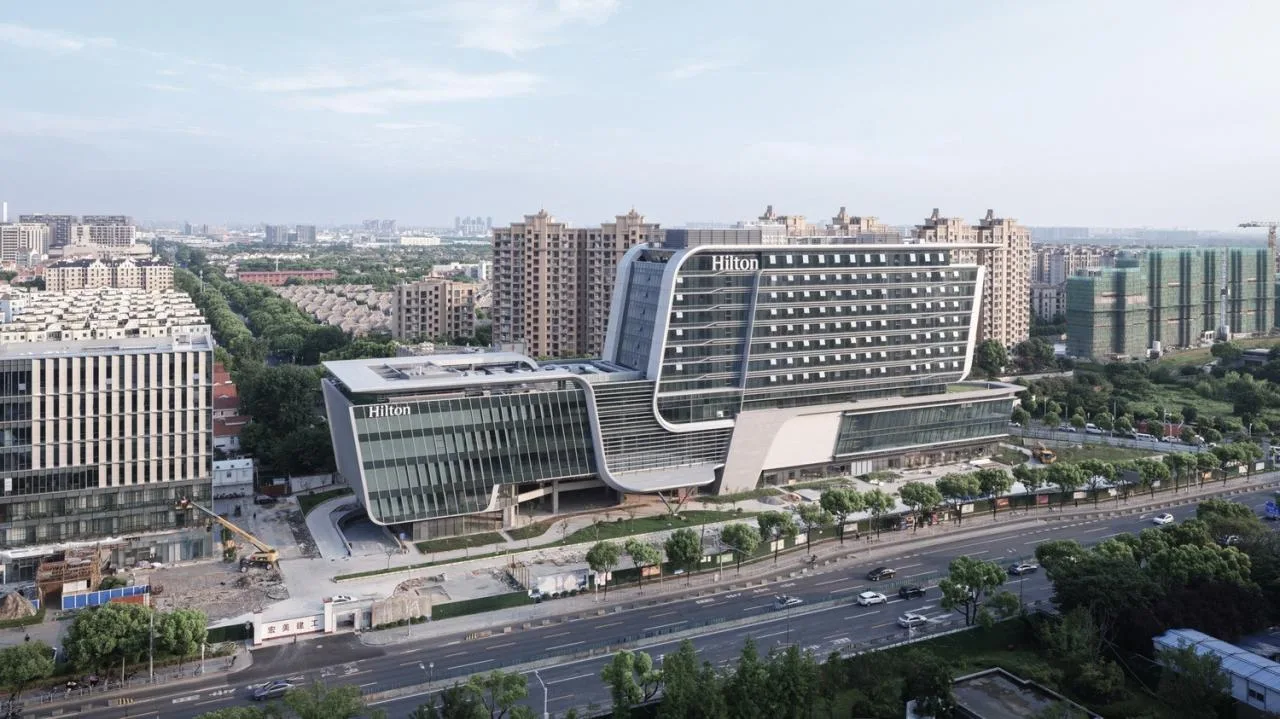
△ The skyline features varied heights along the urban interface
A Vertical Facade Expressing Flow and Speed
Serving as the southwest gateway to the Hongqiao Business District, the building’s architectural concept, “Wings of Hongqiao,” aims to create a distinctive and iconic landmark.
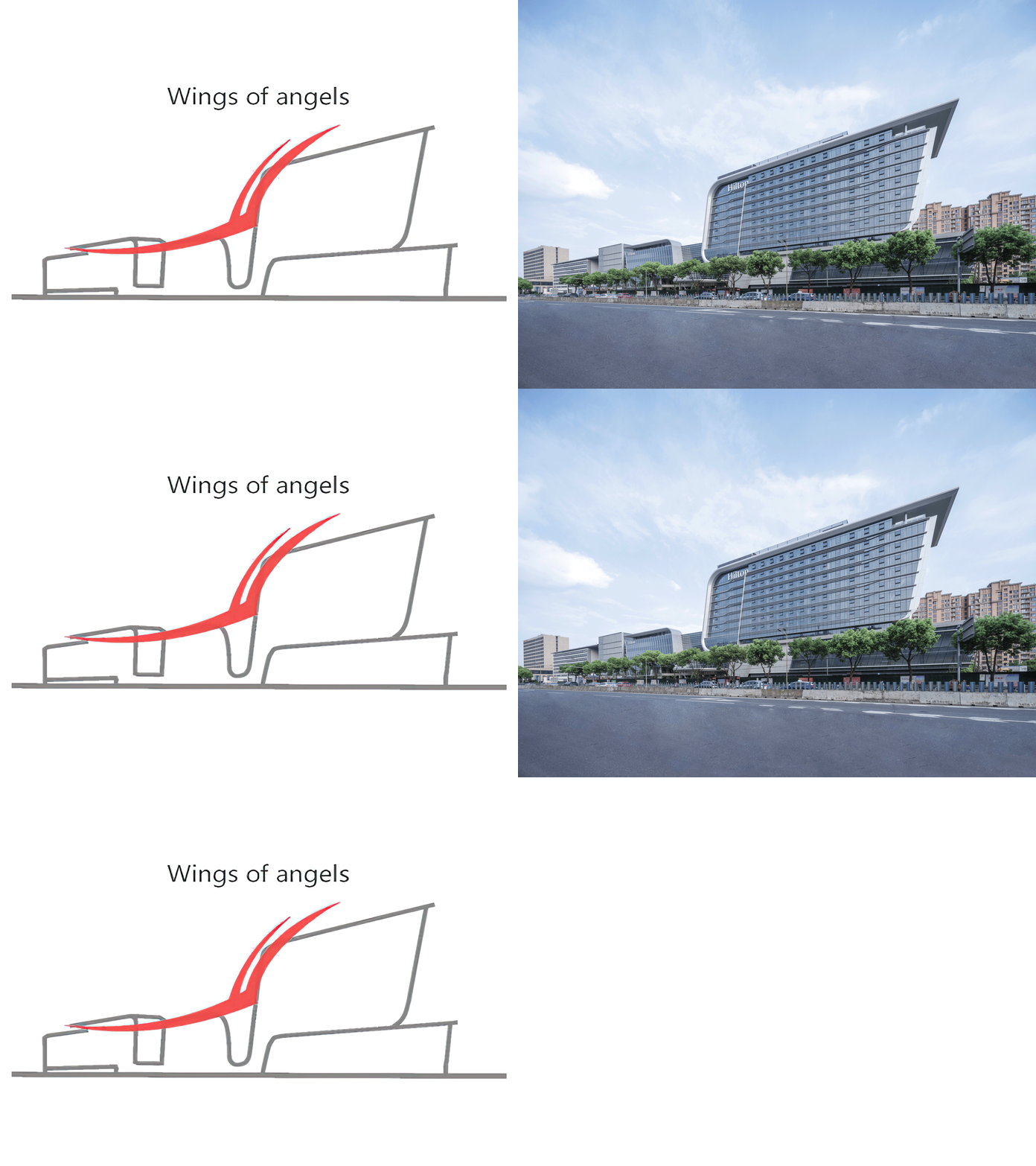
Design inspired by the concept “Wings of Hongqiao”
Facade Inspired by Streamlined Motion and Speed
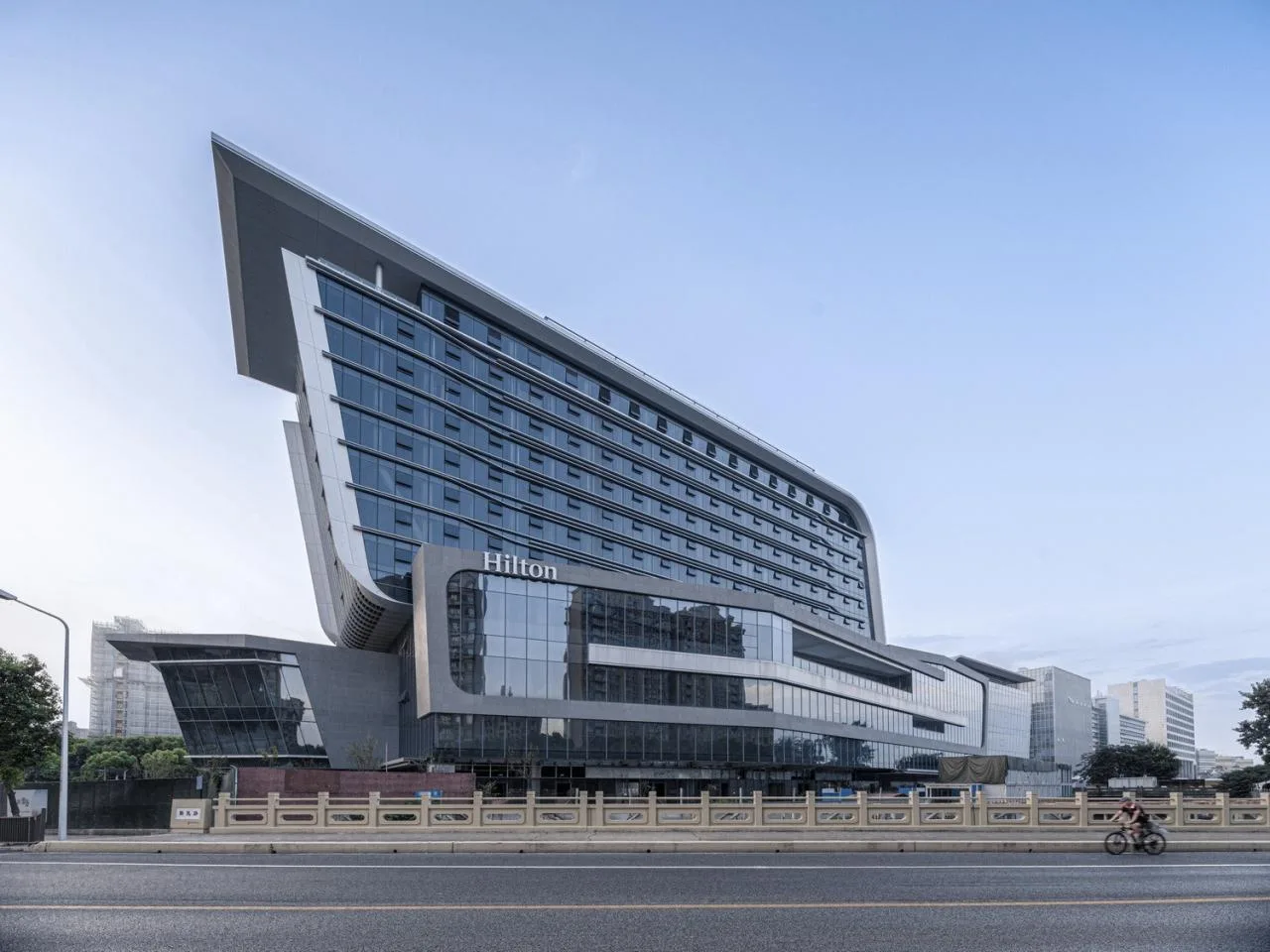
The facade design incorporates dynamic elements drawn from the Hongqiao transportation hub and the cultural background of the enterprise’s supercar, featuring sleek sports car lines and textures. Constructed from aluminum panels, glass curtain walls, and stone, the facade presents a simple yet sophisticated, modern, and international aesthetic.
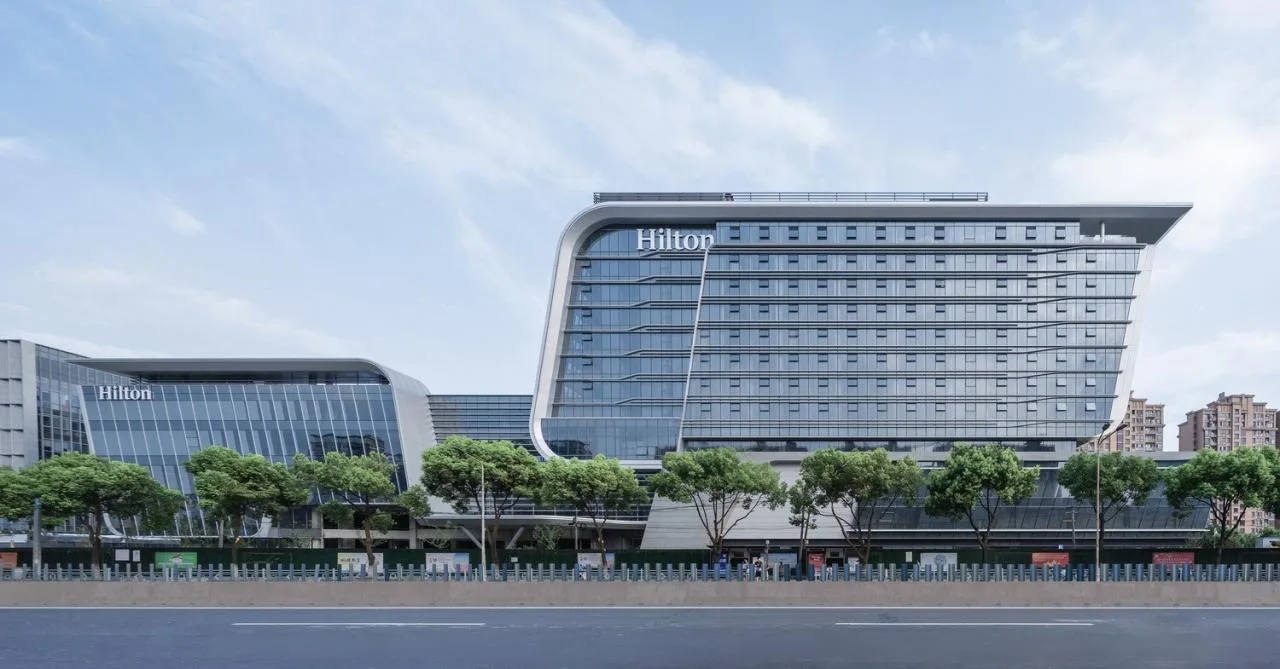
△ The design integrates dynamic features inspired by the Hongqiao hub
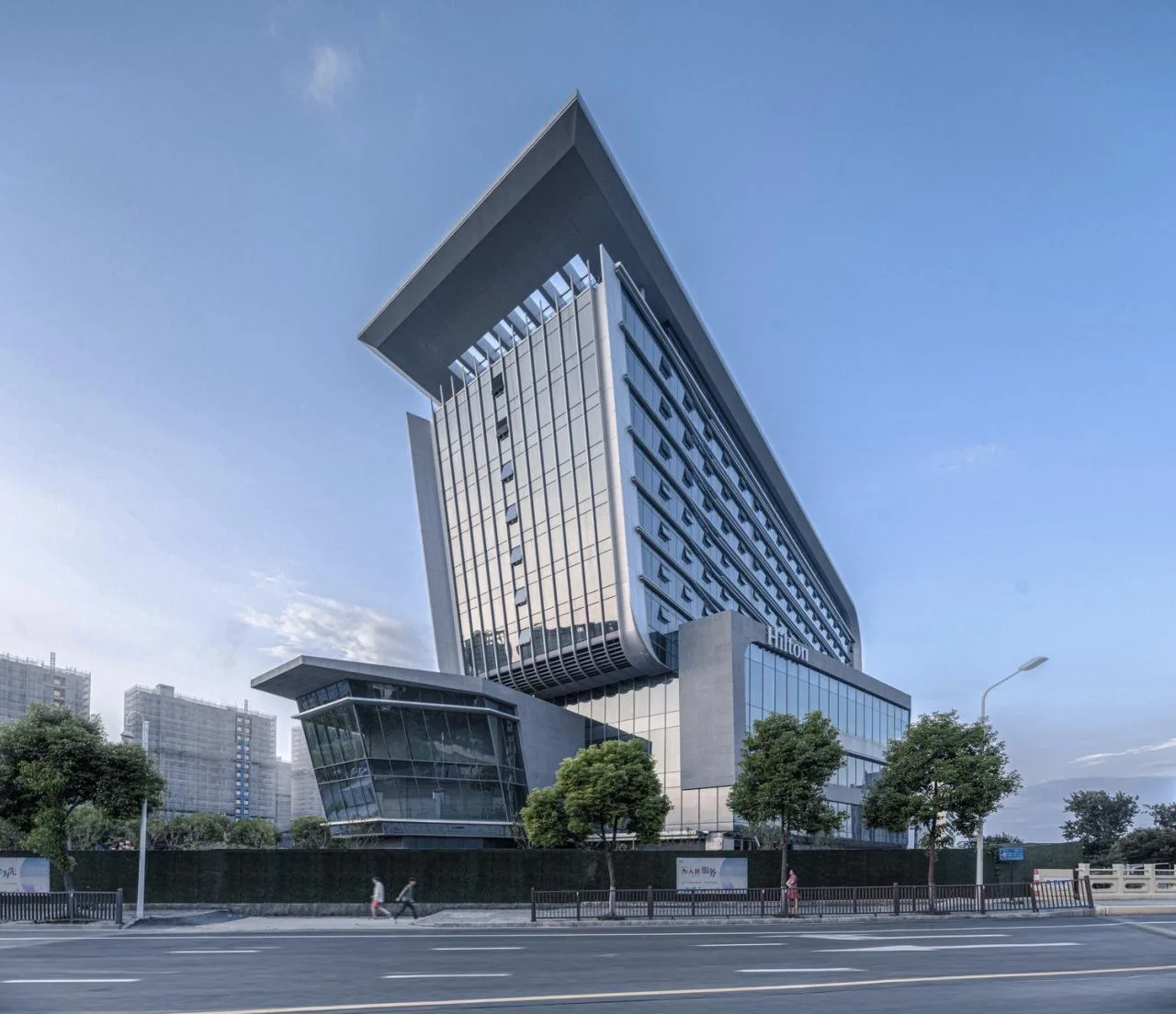
Both the tower and podium feature inclined facades clad with semi-enveloping silver-gray aluminum panels that emphasize the building’s dynamic form, enhancing its speed and futuristic character. Floating panels at each end create a sensation of lightness and horizontal extension. Suspended aluminum panel lines on the wings add flexibility to the facade, evoking the image of a young eagle about to spread its wings and take flight.
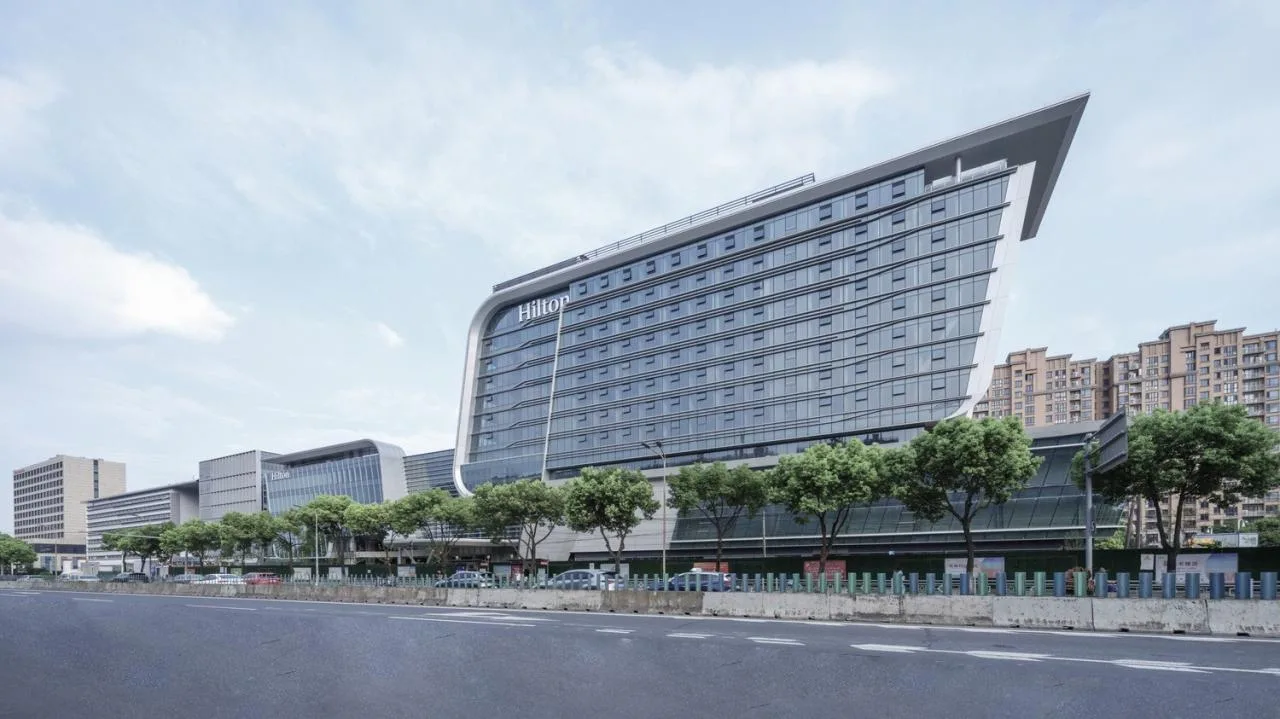
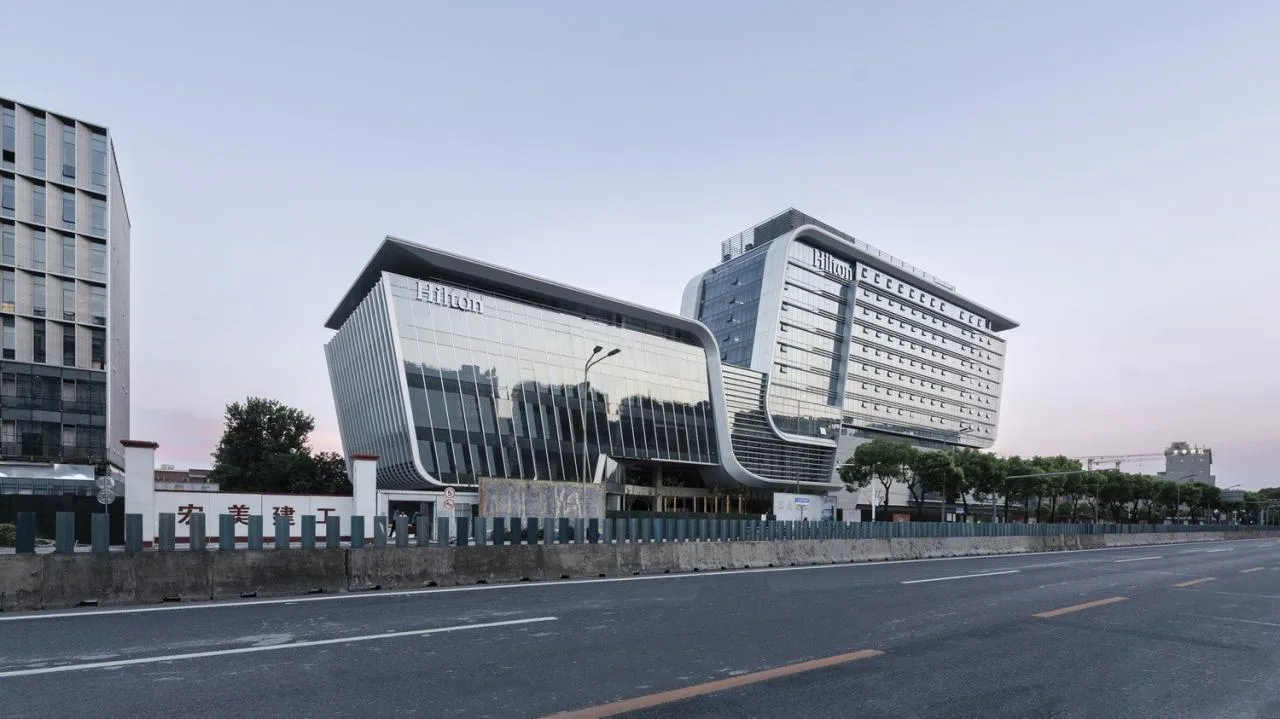
The overall design evokes a fledgling eagle spreading its wings and taking off
Rich Shapes and Interactive Spaces
The building’s first floor extensively employs inward recesses and second-floor cantilevers around its perimeter, enriching the building’s form while creating additional “grey space.” This design supports future commercial outdoor activities on the first floor, enhancing the commercial atmosphere.
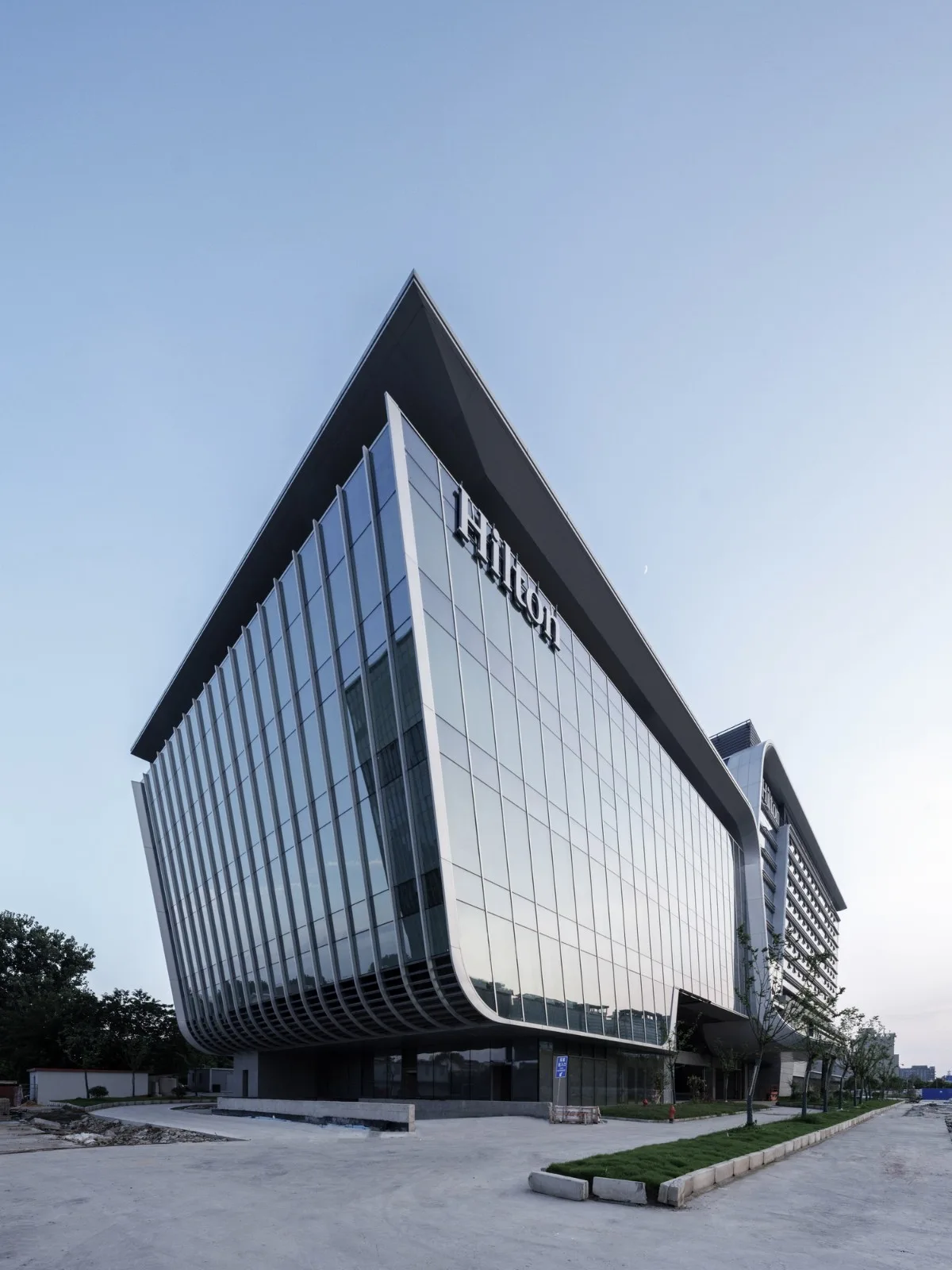
△ Extensive inward recesses on the first floor
The third and fourth floors combine banquet halls with sports and fitness public spaces, featuring outdoor terraces and balconies along the river. Multi-level outdoor communication spaces are created on podium and tower rooftops, enhancing connectivity and interaction.
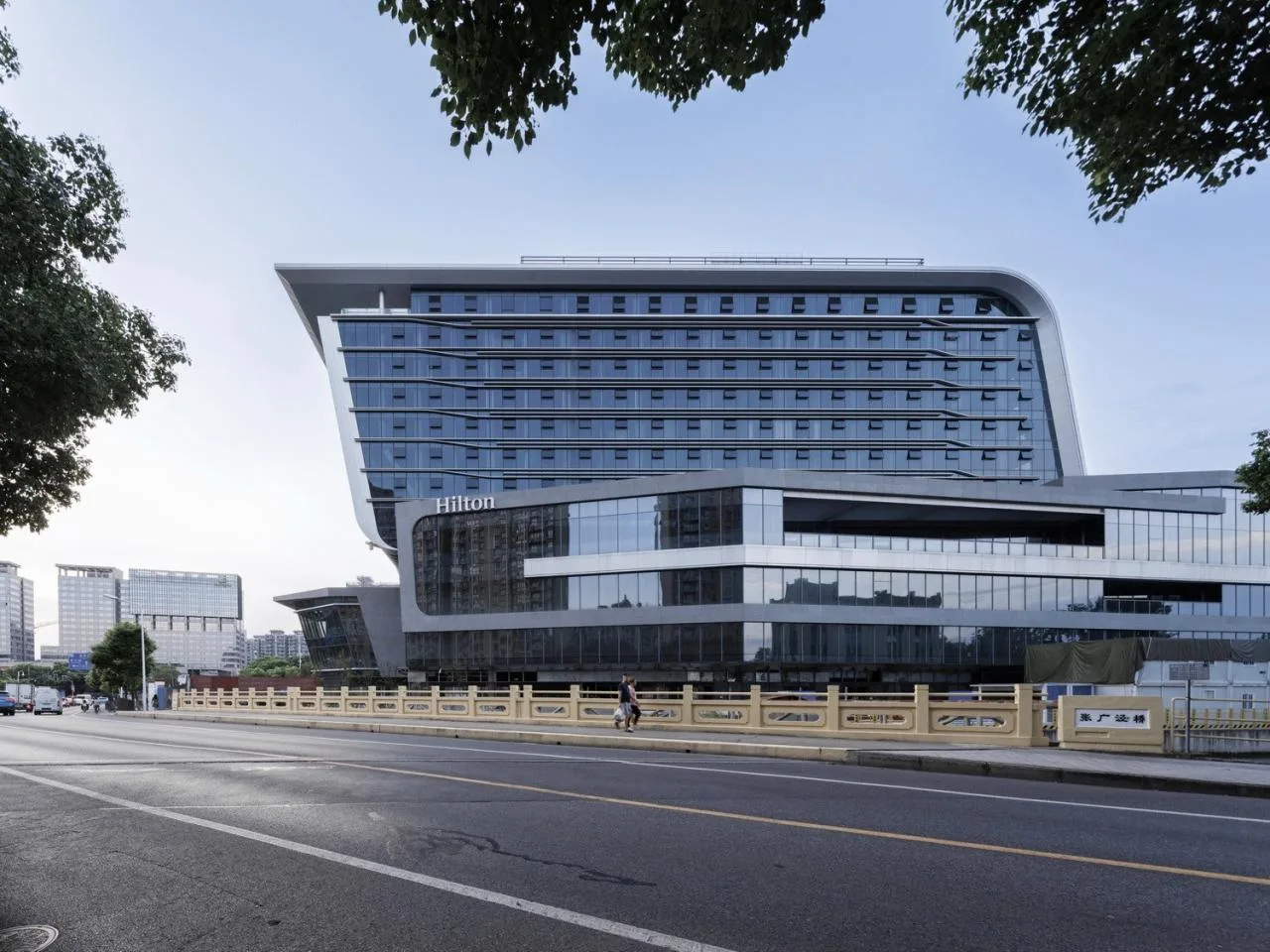
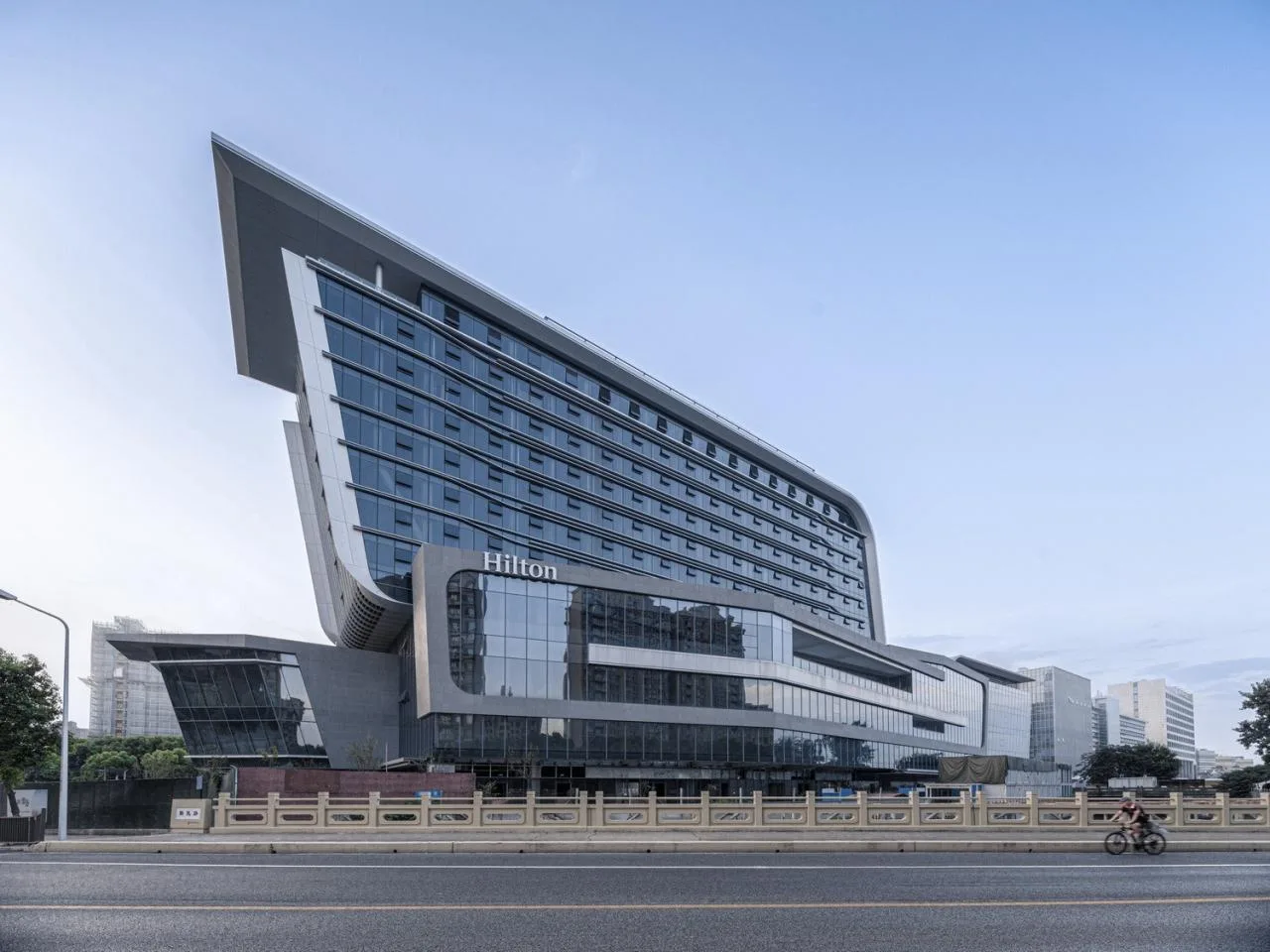
△ Creating multi-level outdoor communication spaces along the river
Integrated Aesthetic Design
The hotel entrance canopy and podium contour lines are designed as a unified element. Flowing lines outline the building’s shape, with the canopy cascading down from the podium like fabric. The entrance flows inward across the first and second floors, combining an elegant canopy shape with V-shaped cross columns and two-story glass curtain walls, creating a sense of fluidity and modernity.
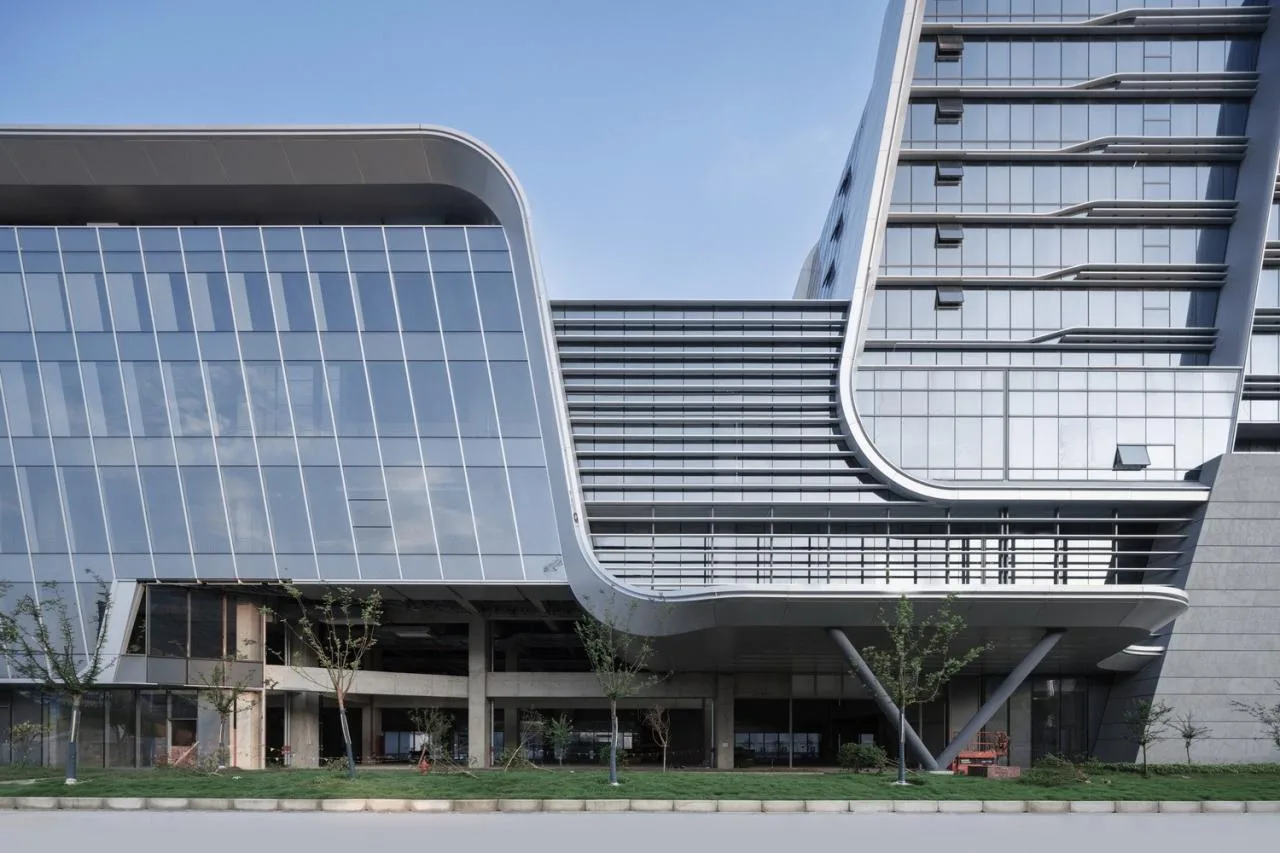
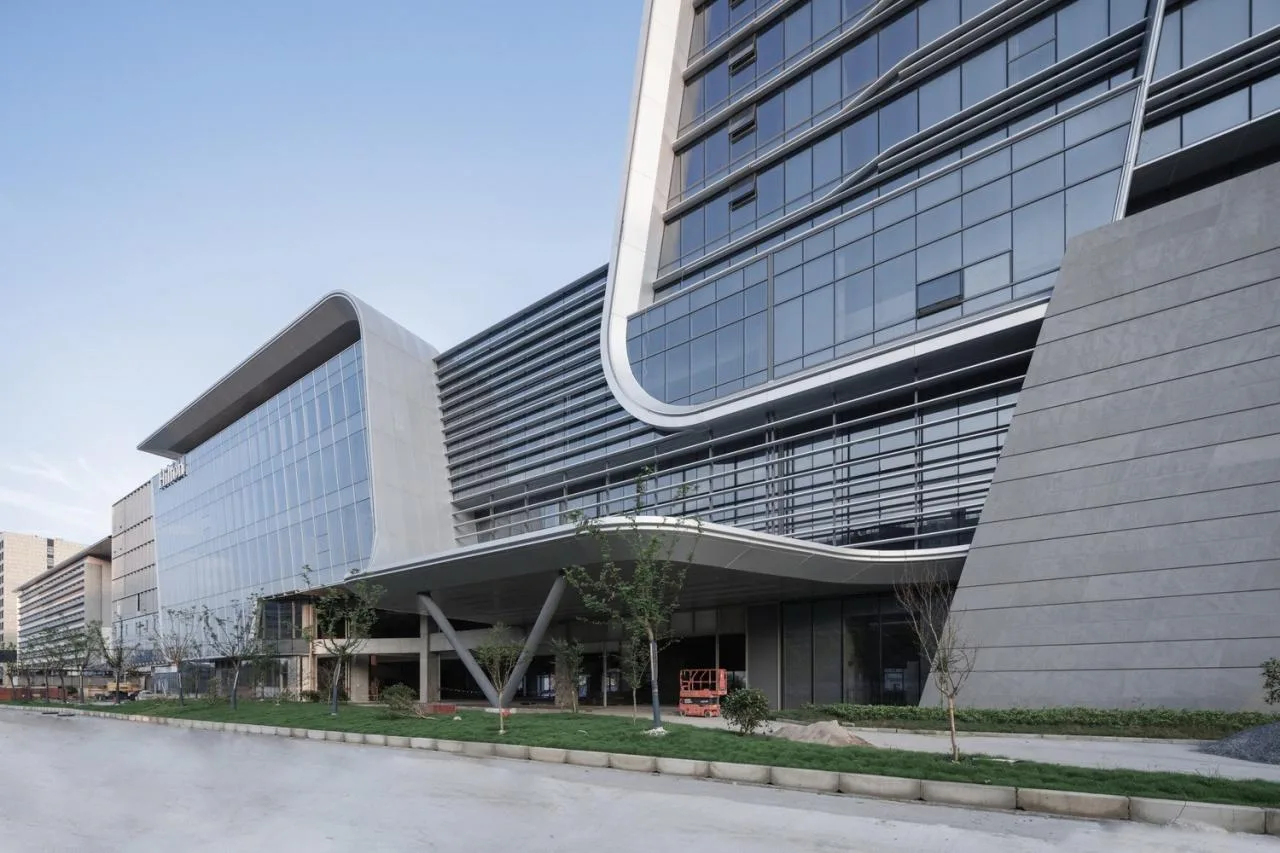
△ Integrated design of entrance canopy and podium outline
The architectural lighting also follows an integrated approach. Light slots are reserved within the flowing lines and floating edges of the tower’s outer ring, as well as within horizontal decorative lines between floors. Hidden light strips ensure the building’s facade maintains its effect by day and outlines the structure’s elegant, fashionable form by night.
Attention to Detail Elevates Artistic Quality
Facade Materials Emphasizing Fluidity and Lightness
The building’s simple, elegant shape reflects a contemporary urban vibe. Facade materials combine silver-white aluminum panels with light gray glass, using cool tones to highlight the building’s fluidity and lightweight feel.
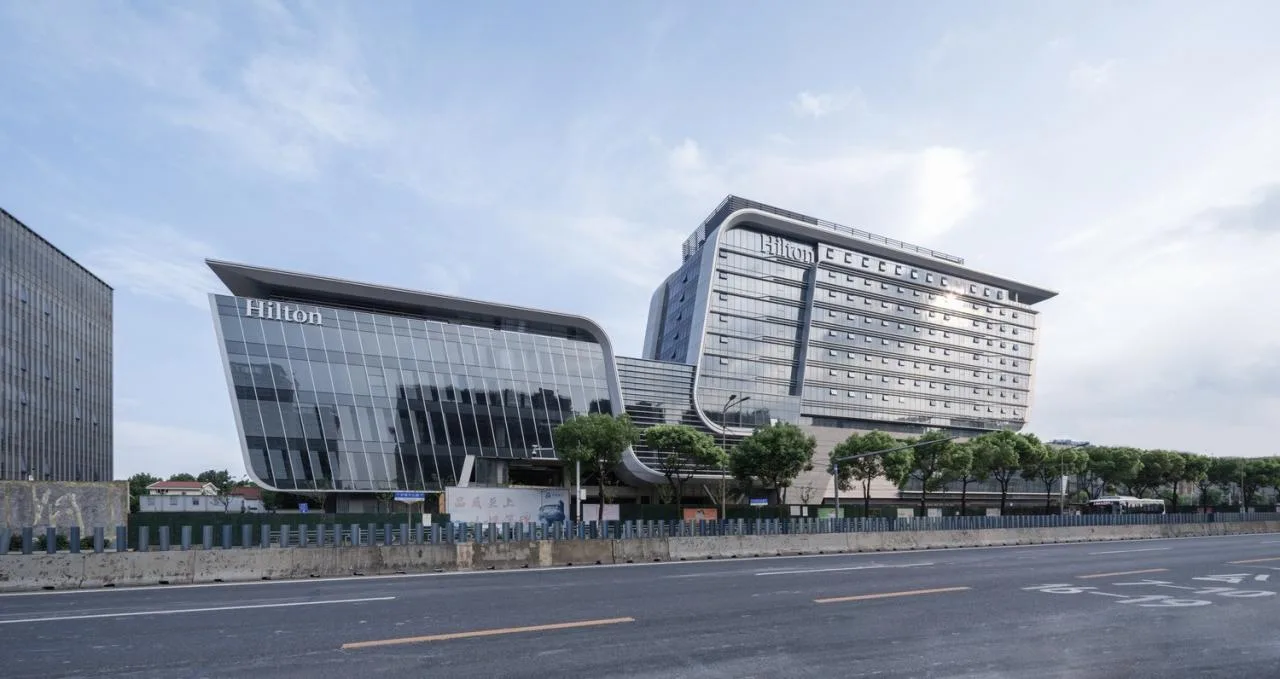
△ Highly fluid and lightweight facade
The tower’s main body features a glass curtain wall combined with silver-gray aluminum horizontal profiles. Three horizontal lines between floors extend laterally, tapering at both ends to follow the building’s shape and accentuate the facade’s sporty texture.
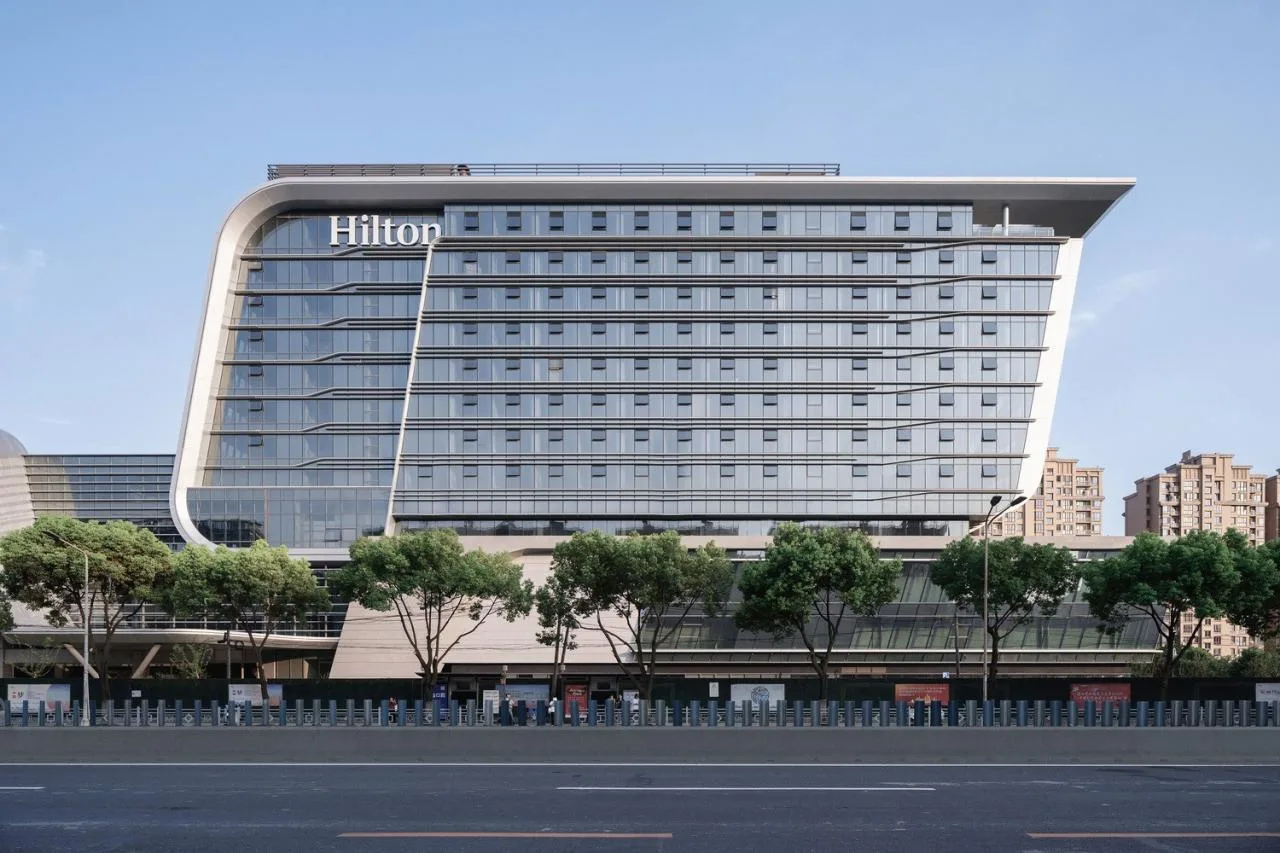
△ Sporty facade texture
Gradient Colored Glaze Screens Equipment Rooms
The east side of the podium houses kitchen and equipment rooms, which could impact the facade’s appearance. To mitigate this, colored glazed glass is used to shield views.
A gradual gradient glaze spray design balances transparency for banquet private rooms with the shading needs of kitchen equipment, adding visual rhythm to the facade.
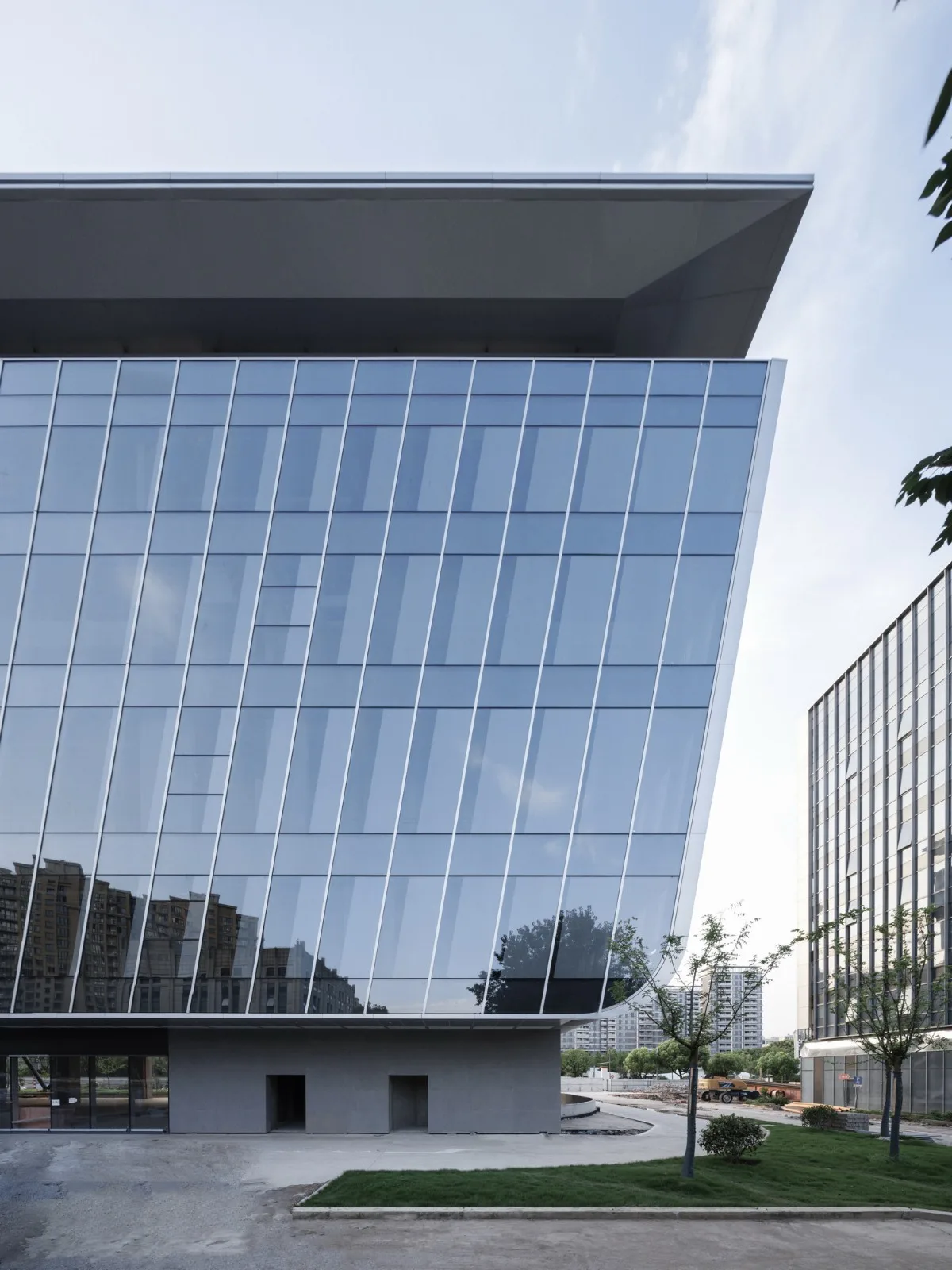
△ Gradient colored glaze spray masking equipment room
For lighting, internal fixtures are installed under the interlayer beams inside the curtain wall, with aluminum baffles shielding the lamps to prevent disruption of the facade’s appearance. This lighting highlights the building’s horizontal extension and facade rhythm at night.
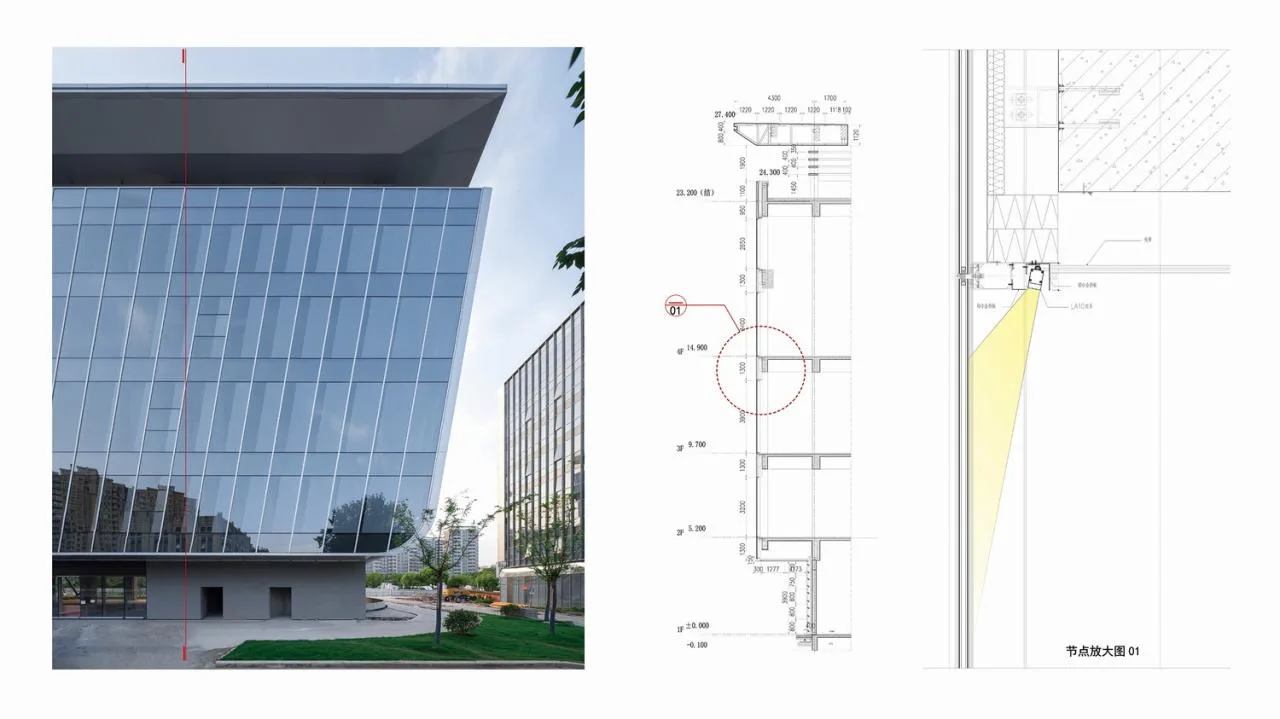
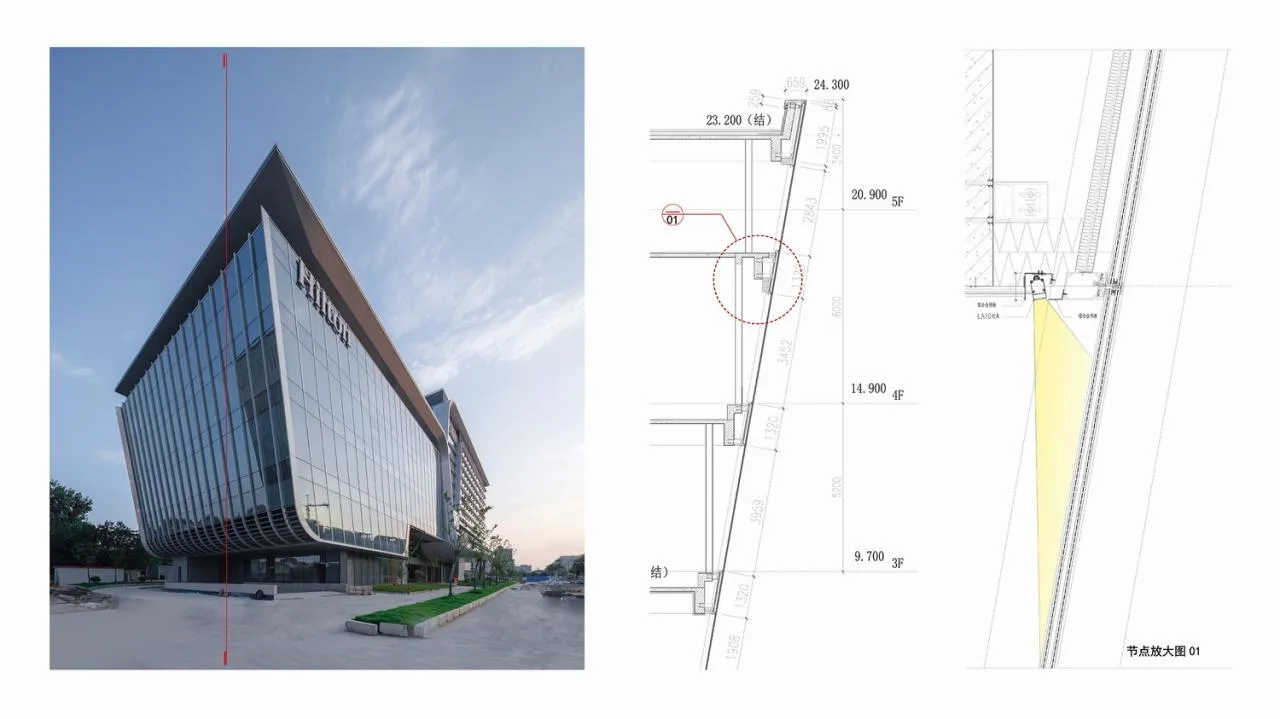
△ Lighting node samples
△ Glazed glass treated with internal lighting
Local Stone Enhances the Tower’s Floating Appearance
To emphasize the tower’s lightness, the lower podium is clad in 30mm thick dark gray natural stone, partially wrapping around the glass curtain wall. The facade on the west side is suspended, complementing the inclined glass curtain wall design of the podium. The clean, simple horizontal stone lines contribute to a stable and striking facade.
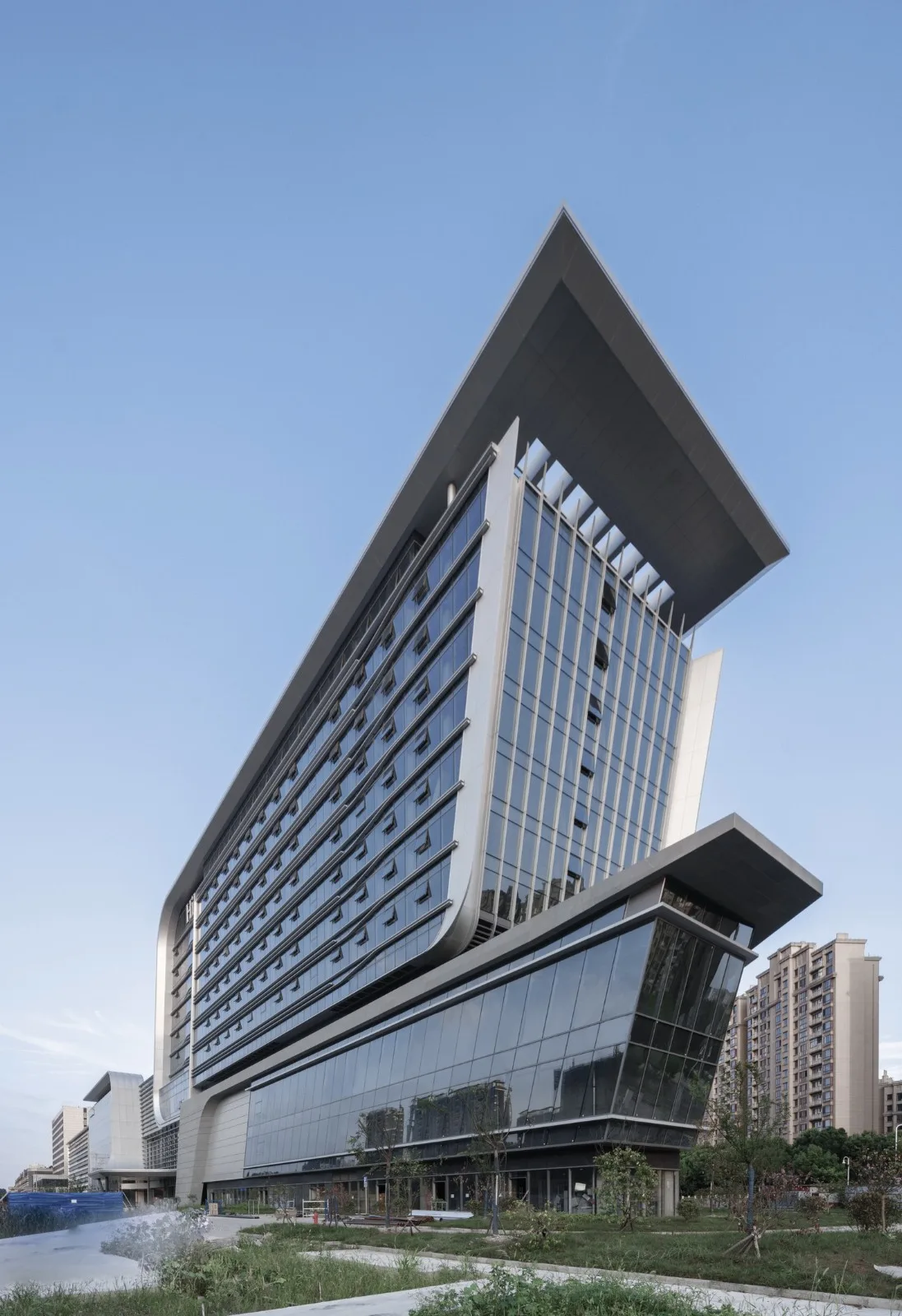
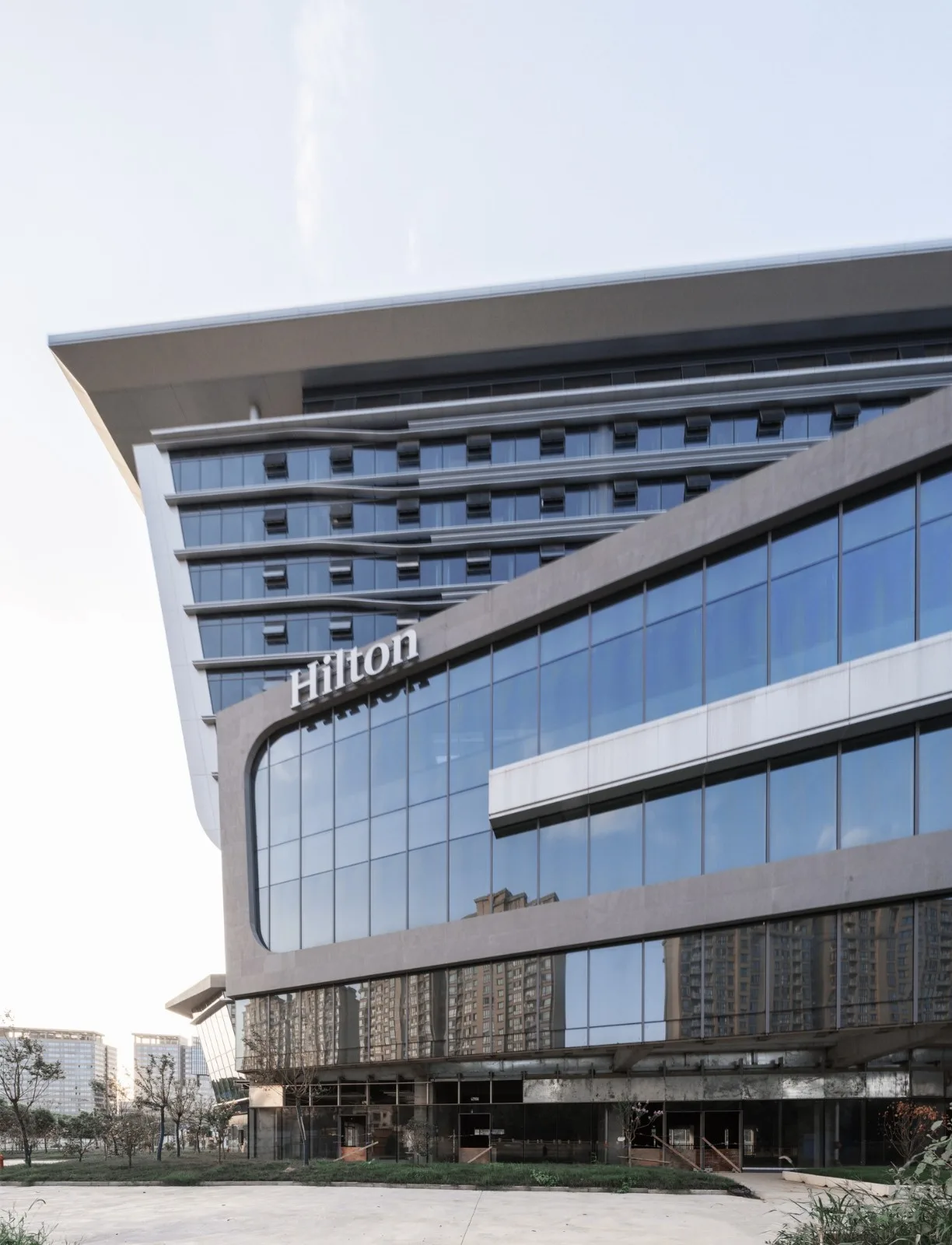
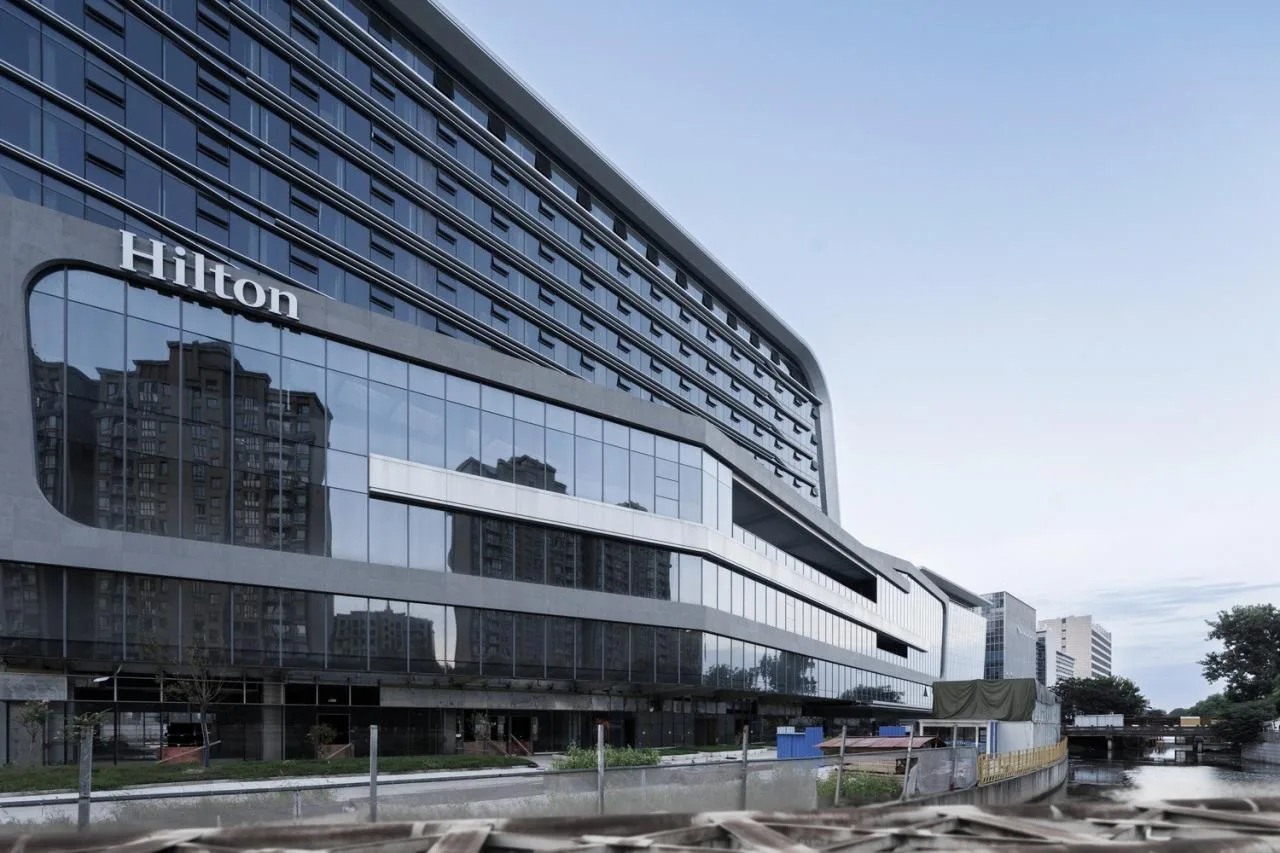
△ Stone lines define a stable and pronounced facade
The stone curtain wall at the hotel entrance uses a combination of tight and drawn joints in its design. Horizontal joints feature inner stone seam extraction, while other joints are tightly spaced. The adjacent aluminum panel curtain wall aligns with the stone seam widths and features equal-width grooves, reinforcing the building’s streamlined horizontal lines.
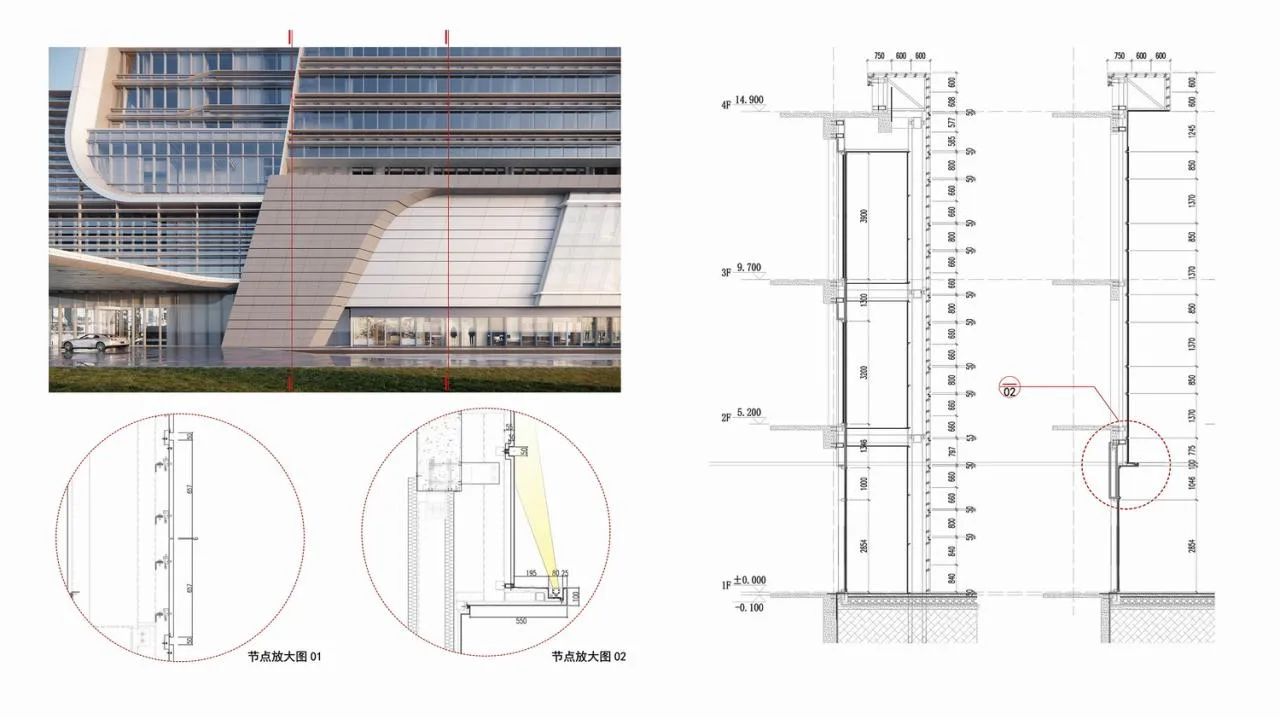
△ Joint detail sample
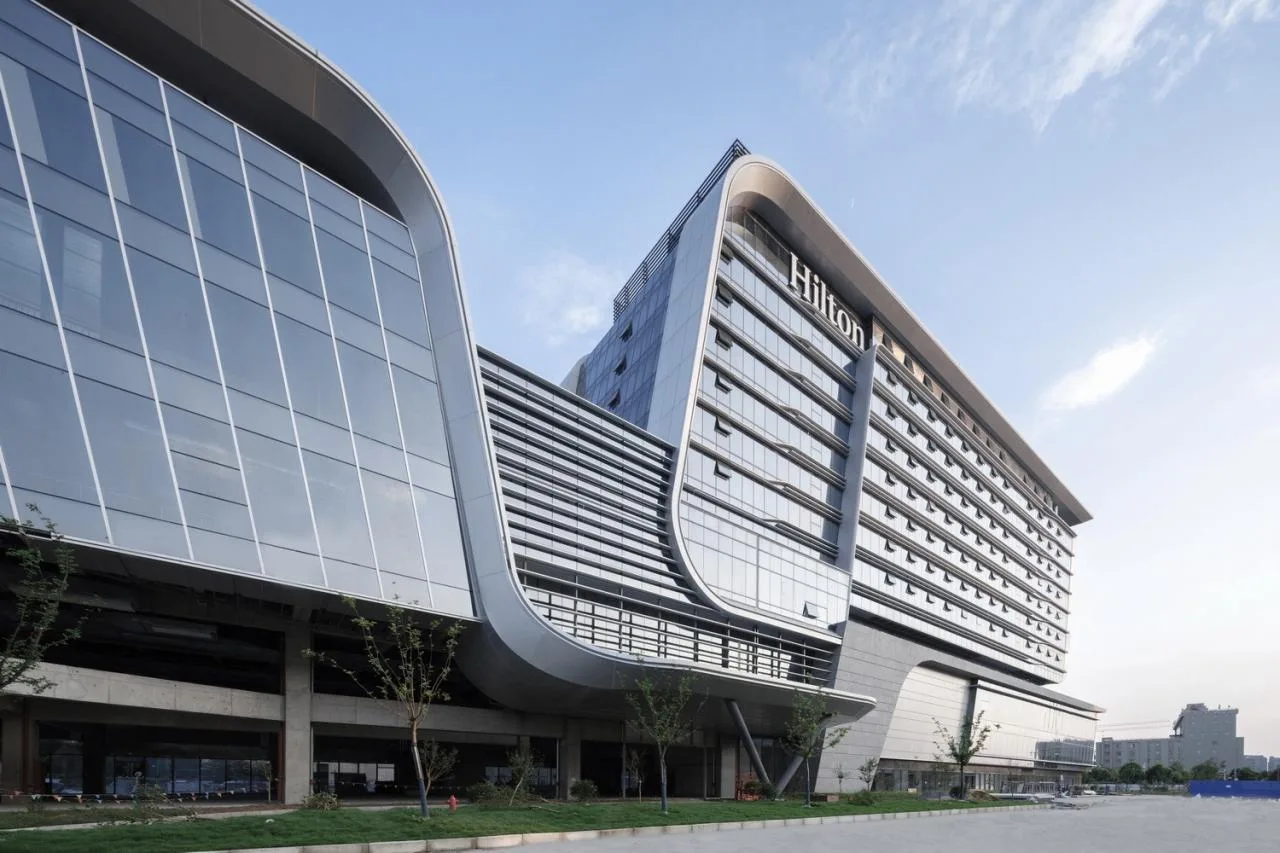
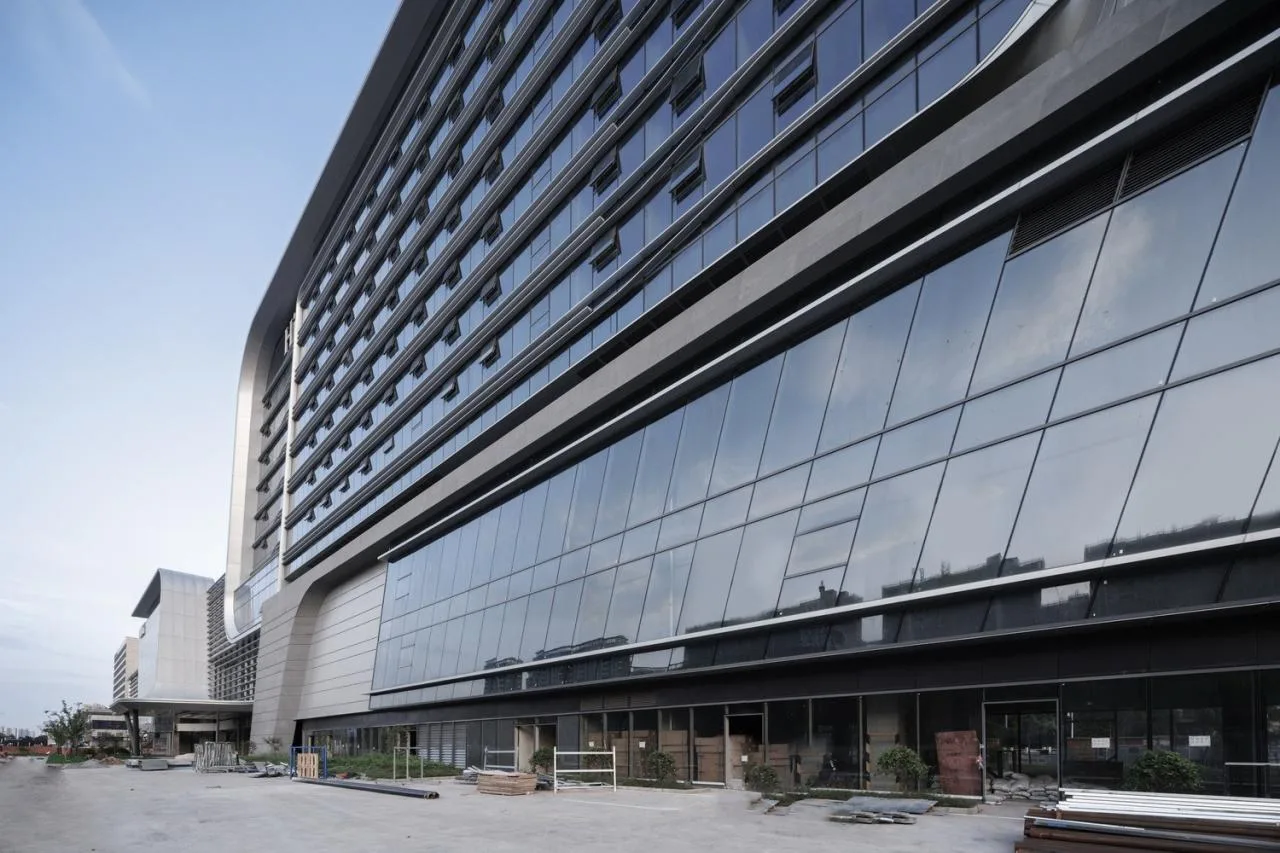
The transition between the entrance stone and the adjacent aluminum panels is carefully unified to enhance the overall streamlined appearance.
Double-Layered Louvers Preserve Facade Integrity
The hotel’s underground support and equipment rooms, along with gas wells, require extensive ventilation, necessitating numerous louvers on the facade.
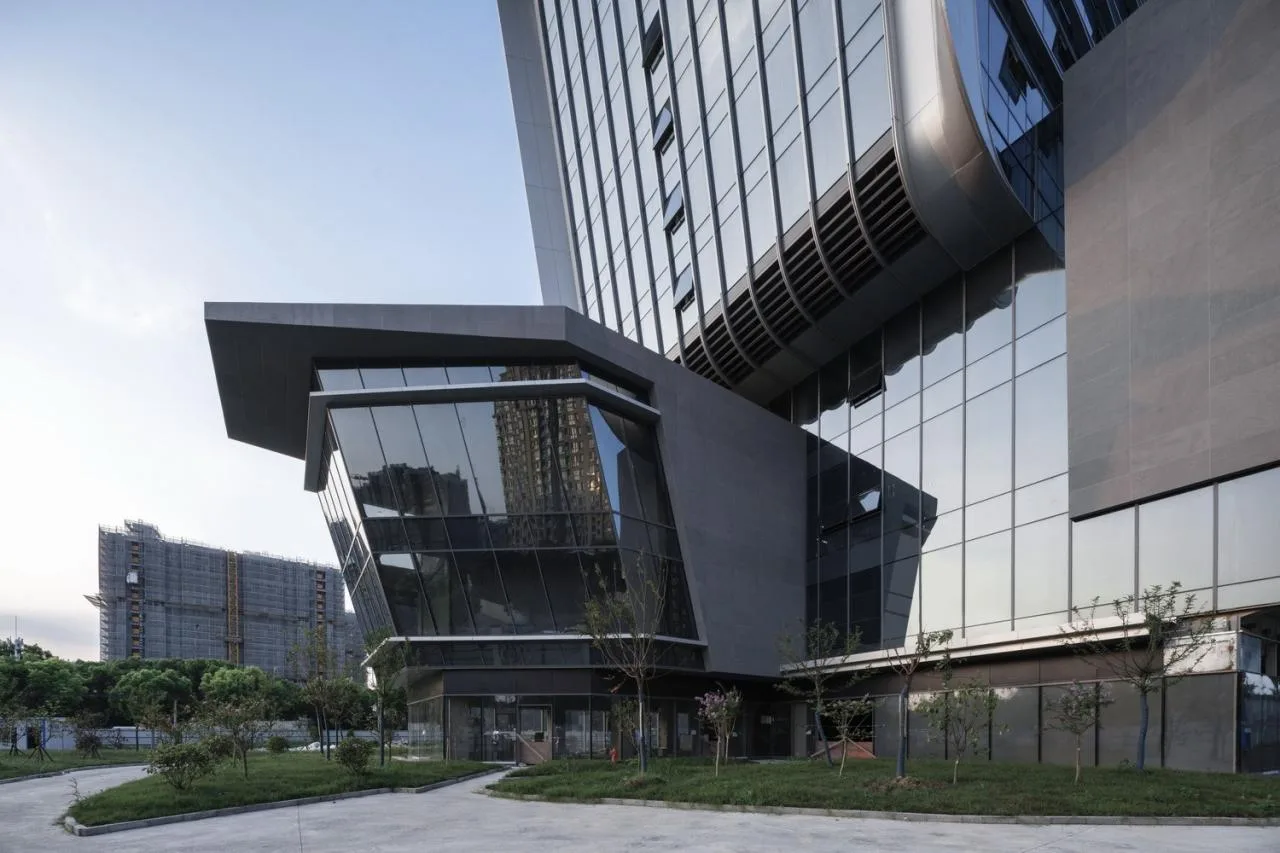
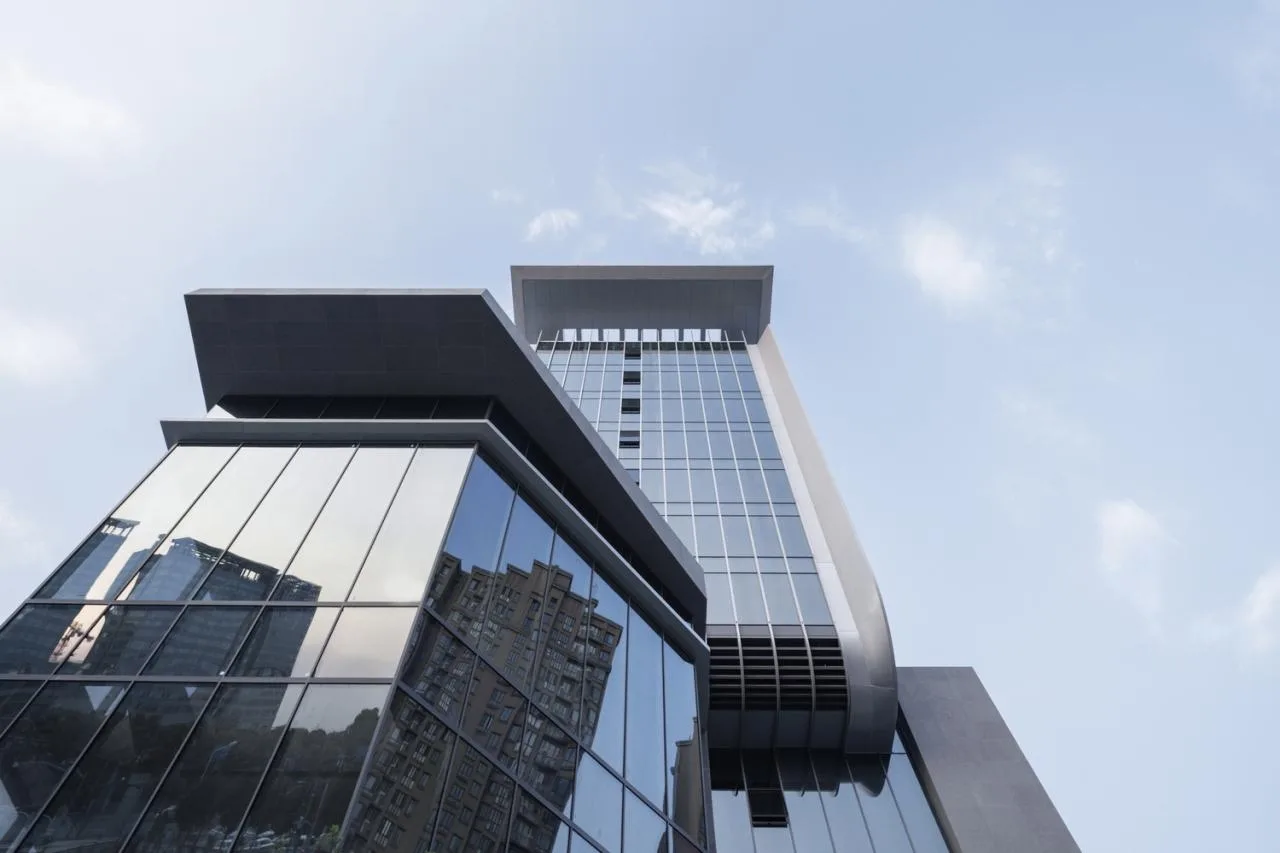
△ Ventilation louvers designed as double layers
To maintain facade harmony, a curtain wall treatment with a double-layer louver system is implemented: the exterior layer consists of tilted glass louvers matching the curtain wall’s appearance, while the interior layer uses aluminum alloy rainproof louvers. This design minimizes the visual impact of louvers and preserves the facade’s seamless effect.
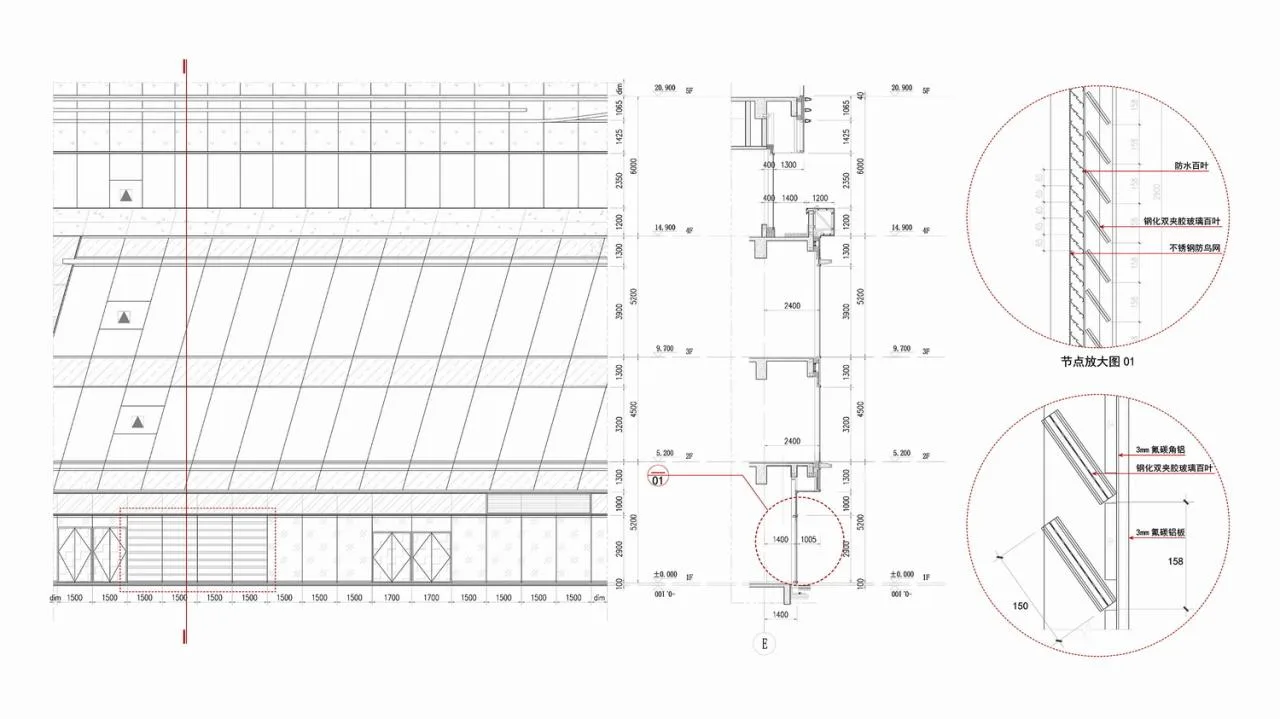
△ Node sample
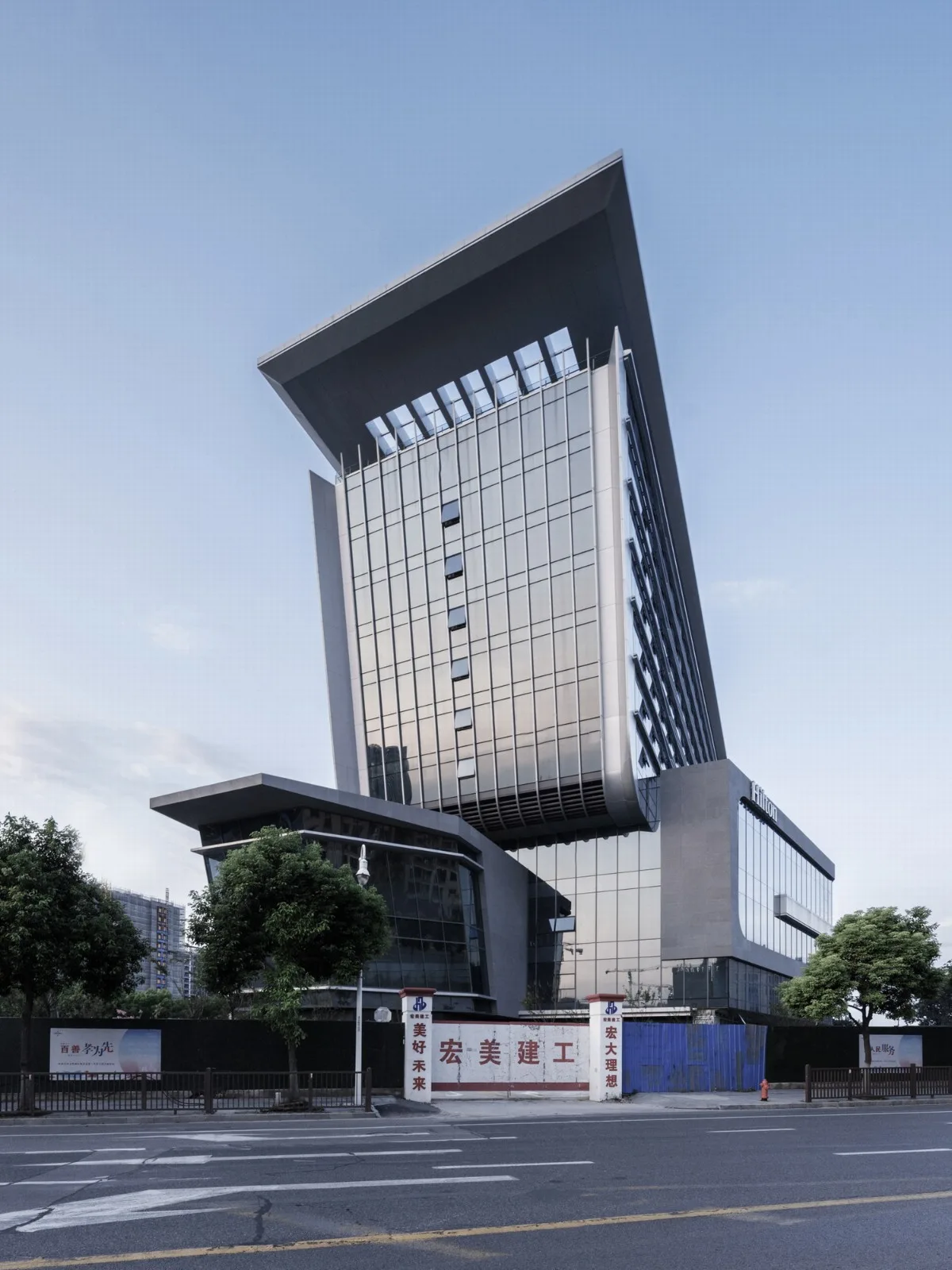
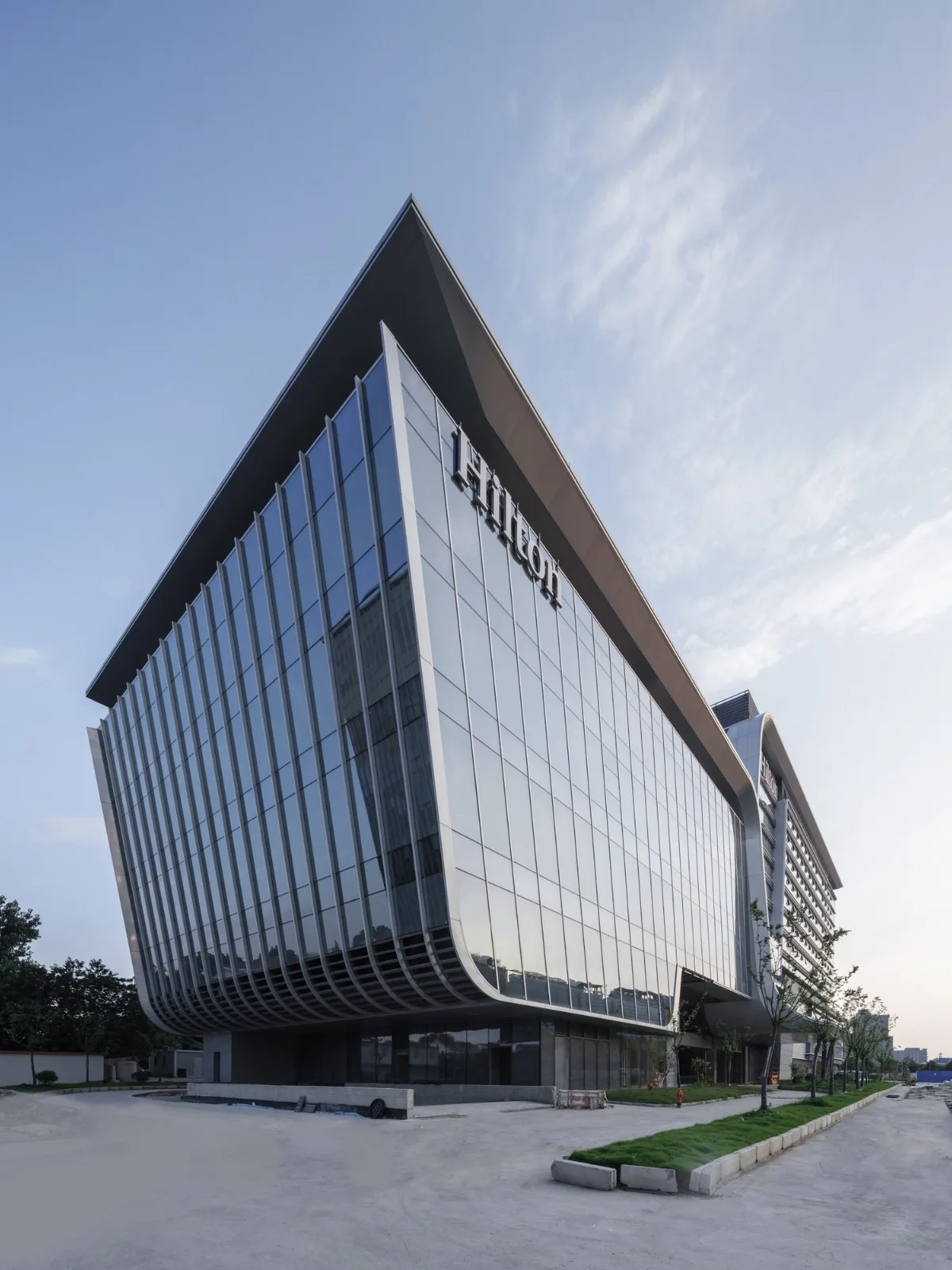
These double-layer louvers ensure the facade remains visually cohesive.
Conclusion
This project aims to complement the Hongqiao hub by blending modern architectural design with the dynamic spirit of the Hongqiao business district. Through flowing shapes and smooth lines, it creates a contemporary, international architectural landmark that revitalizes the area. The building stands as a testament to Dahongqiao’s development and as a gateway inspiring travelers on their journeys.
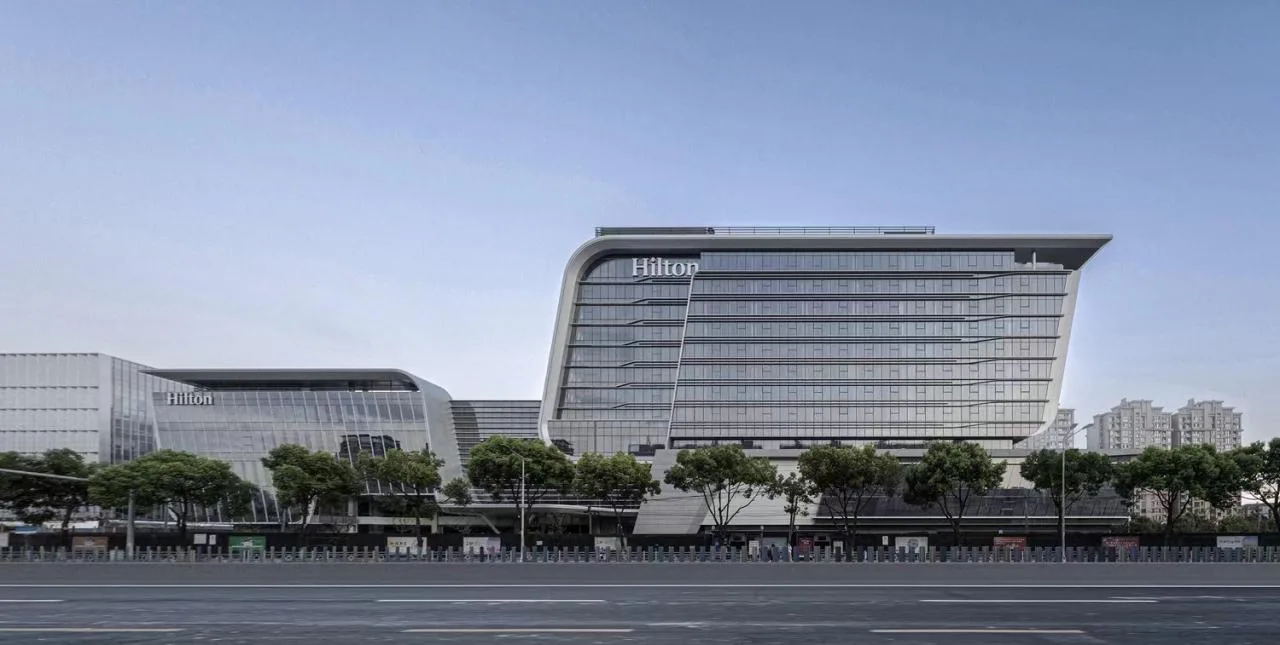
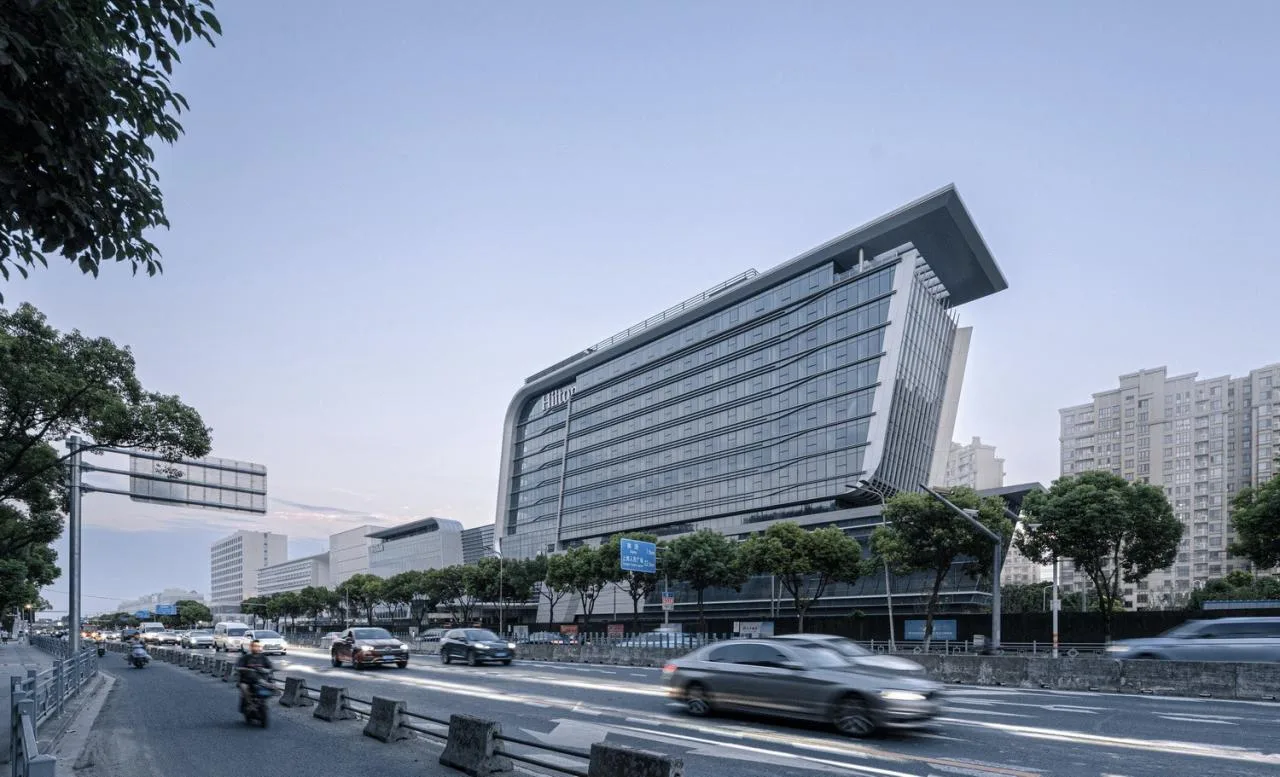
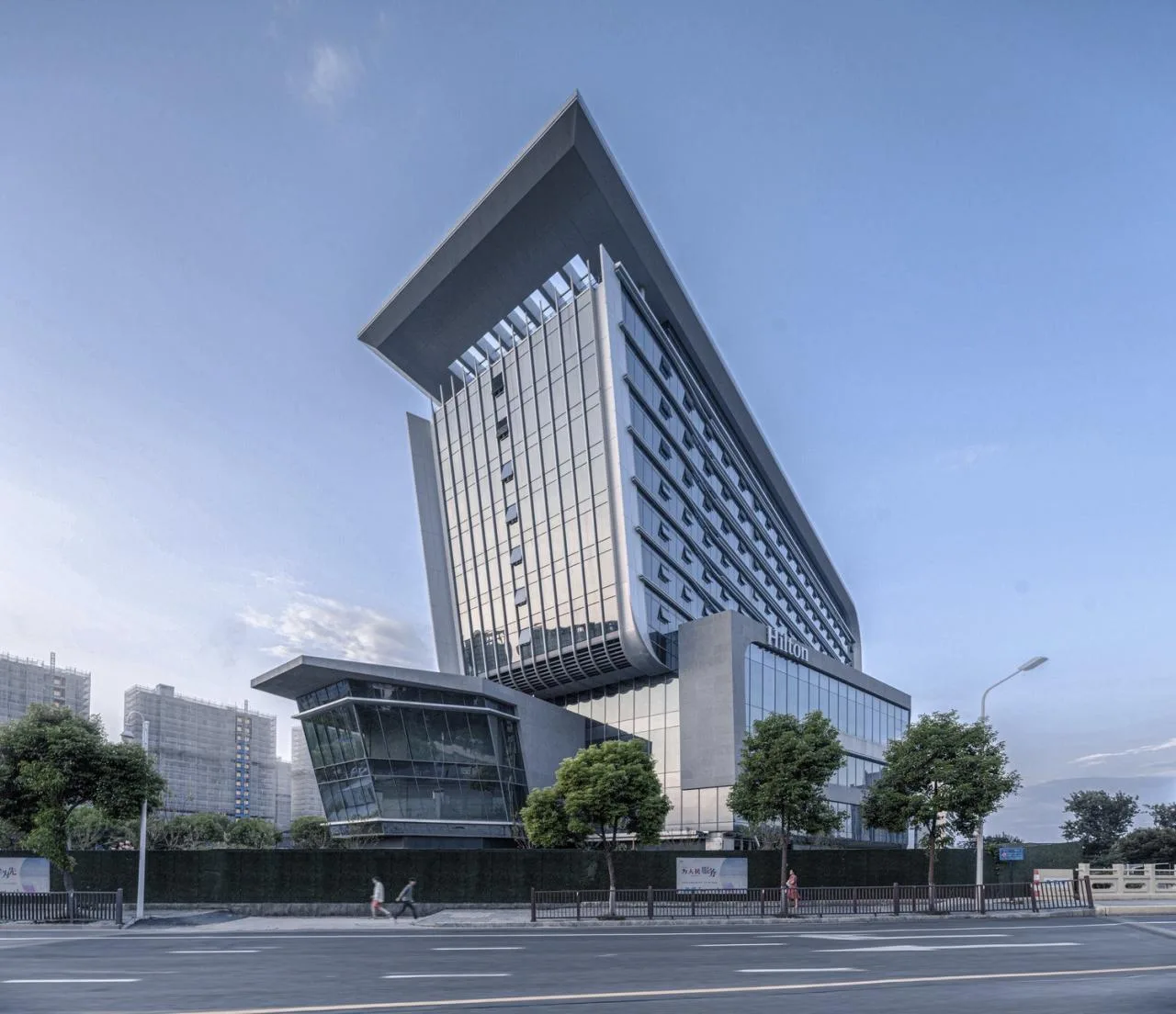
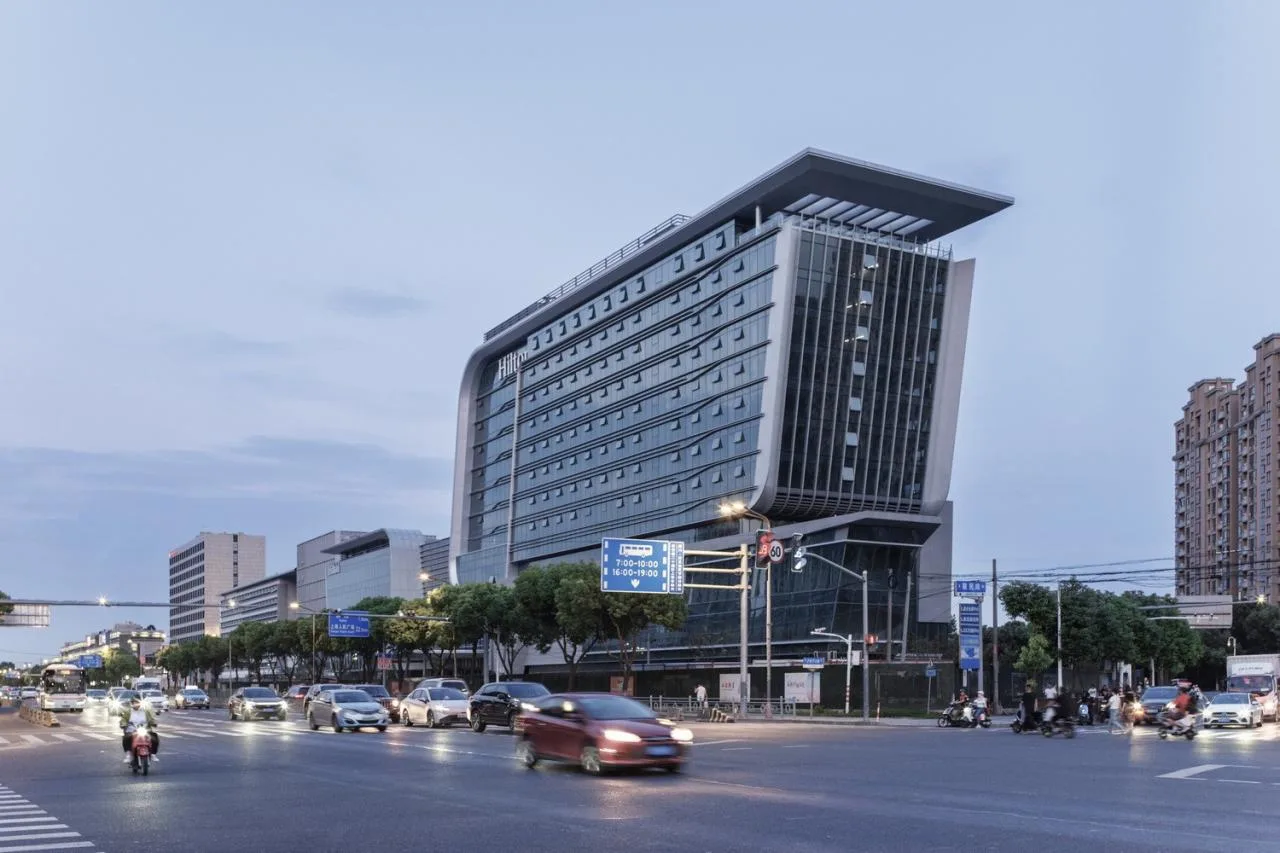
△ Architectural reality
Project Drawings
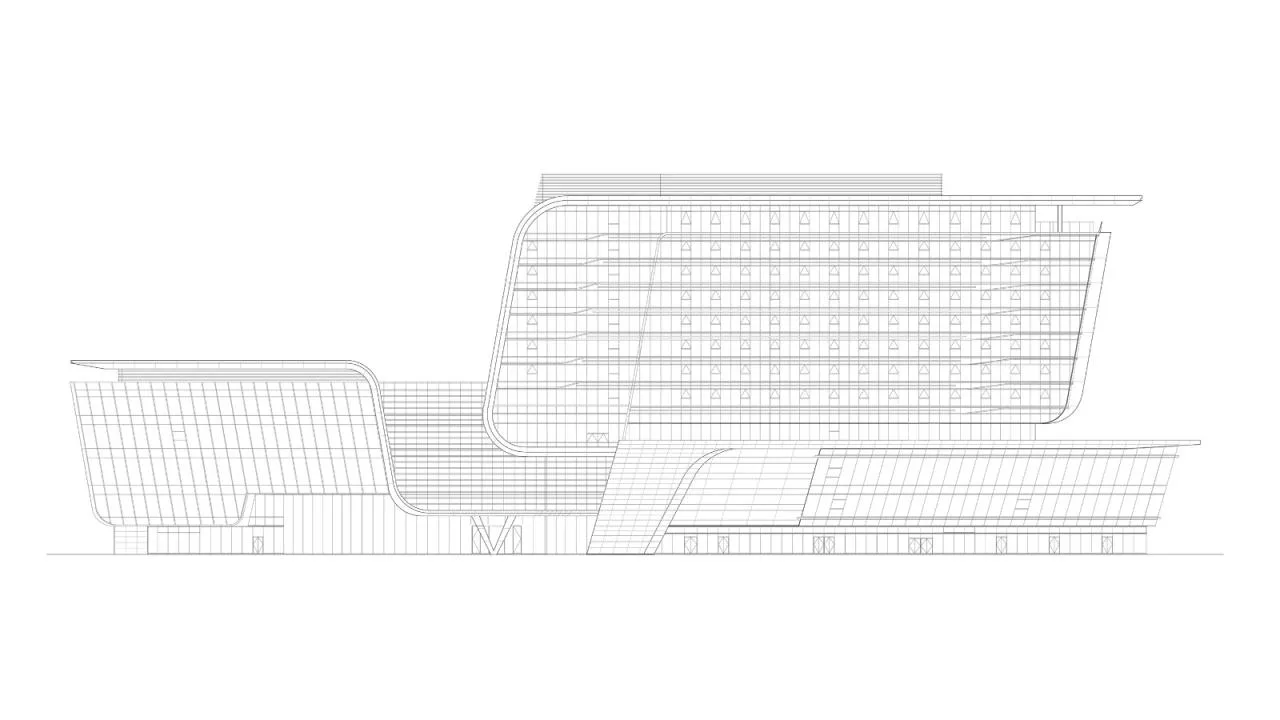
△ North elevation view
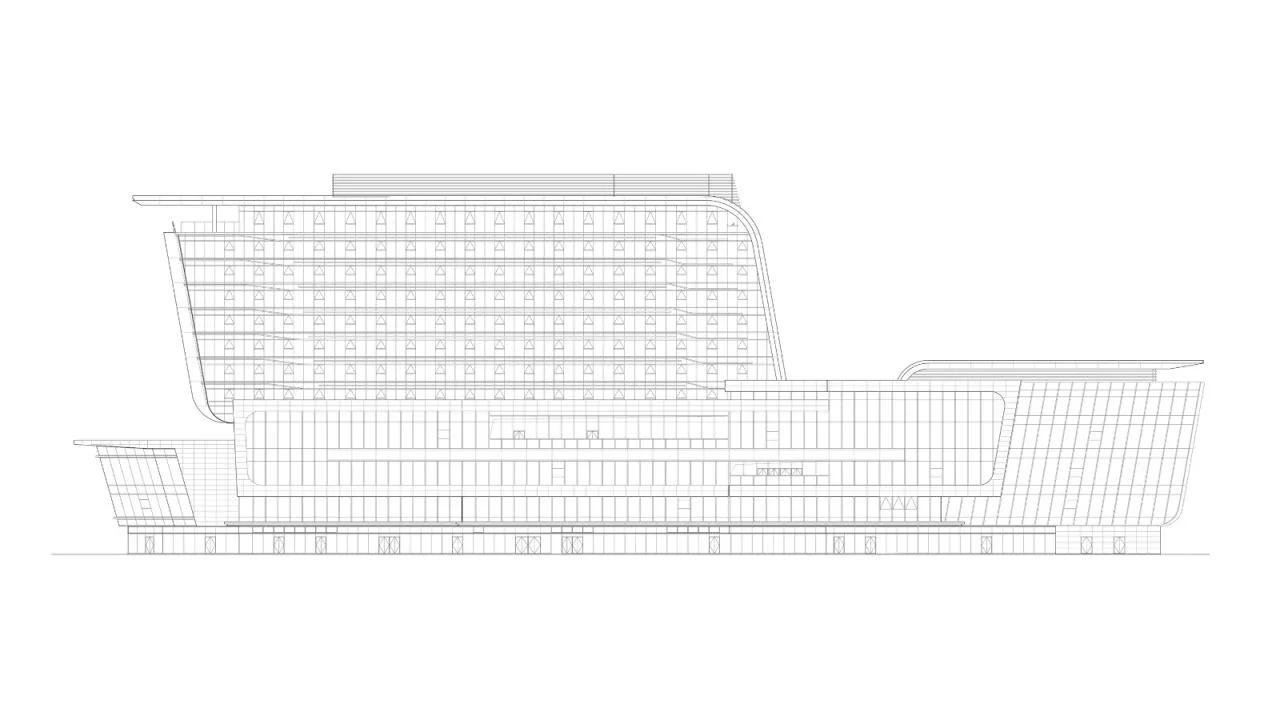
△ South elevation view
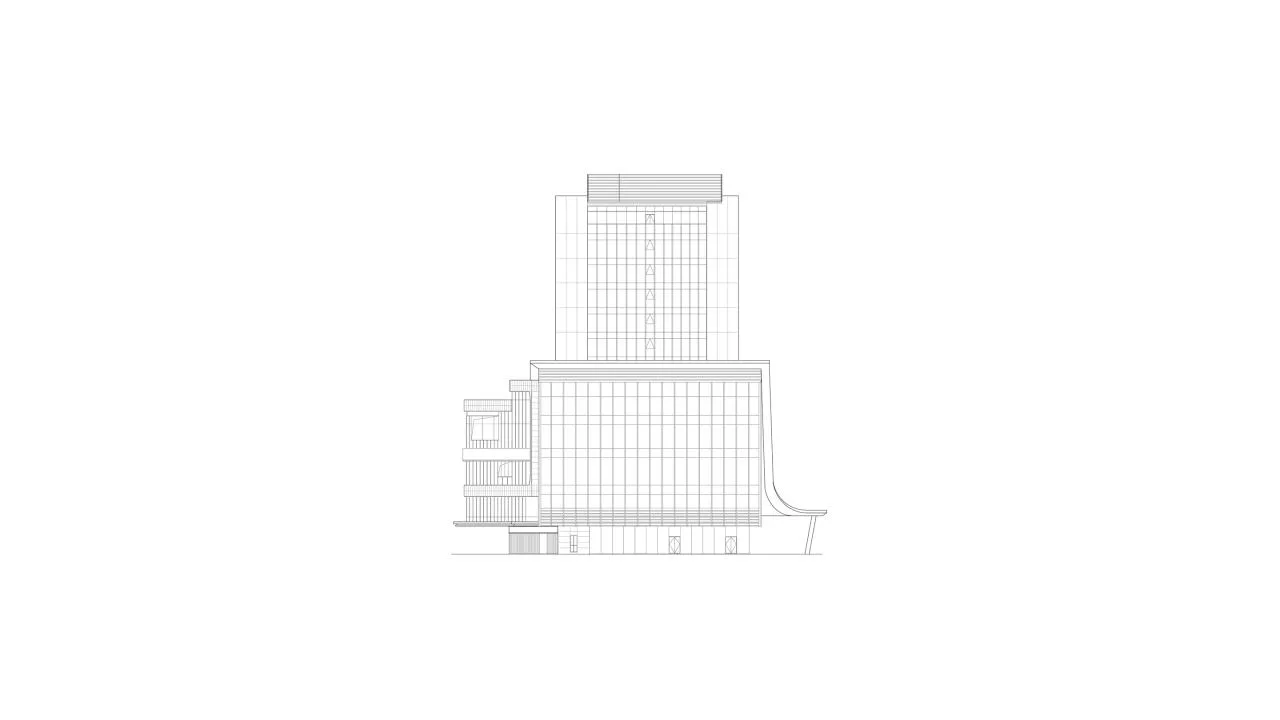
△ East elevation view
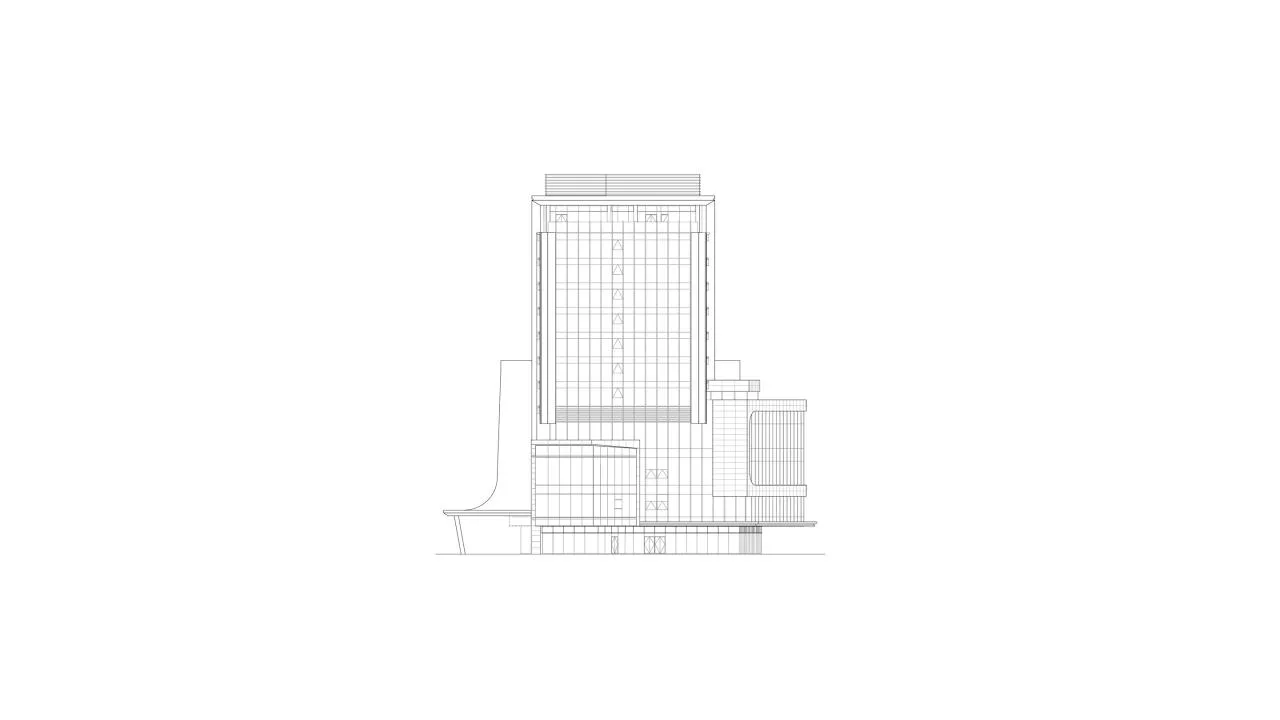
△ West elevation view
Project Information
Project Name: Shanghai New Hongqiao Canhui Hilton Five Star Hotel
Project Type: Hotel
Address: Huqingping Road, Qingpu District, Shanghai
Site Area: 9,444.4 m²
Building Area: 45,648 m²
Floor Area Ratio: 3.0
Design Period: November 2018 – September 2023
Construction Period: April 2021 – Present
Developer: Canhui Real Estate (Shanghai) Co., Ltd
Design & Construction Drawing Unit: Shanghai Sanyi Architectural Design Co., Ltd
Lead Architects: Lu Xiaogang, Jiang Wenjun
Project Manager: Jiang Wenjun
Scheme Design Team: Jiang Wenjun, Sun Jingya, Wang Tao, Wu Wenxuan, Lv Zongru, Xia Zhili, Li Wei, Huang Hu, Ye Luye, Feng Haozhe, Chen Yuli, Liu Pinxi, Ye Ruobin, Pan Ruyue
Construction Drawing Design Manager: Jiao Feng
Architectural Design Team: Jiao Feng, Jiang Dawei, Qian Guoliang, Xing Jian, Li Yuanyuan, Li Yali, Chen Wenjuan
Structural Design Team: Hu Yu, Zheng Peng, Wang Gang, Xiong Jingfeng, Huang Xindong, Sha Zheng, Kong Weiliang, Wu Xibing
Overall Design: Zhang Yanyan, Chen Zhe, Ni Yijiao
BIM Design Team: Wei Yinjun, Li Xin, Liu Yingjie, Yu Zhijing, Jiang Zhaokang, Gui Xunwei
Water Supply and Drainage Design: Ye Lin, Liu Jun, Li Yaqing, Chen Xinlin, Xu Weidong
Electrical Design: Luo Jin, Wang Yiqin, Wu Ting, Xie Daoming
HVAC Design: Luo Jin, Wang Yiqin, Wu Ting, Xie Daoming, Feng Juanjuan
Technical Support: Wang Xiaohong, Zhao Bin, Wang Fang, Hu Wenxiao, Jiang Hong, Ju Yongjian, Chen Ying
Cooperative Partners
Landscape Design: MPG | Mogao Design
Interior Design: HBA | Singapore
Curtain Wall Design: Ancheng Aolin Planning and Design Consultant (Shanghai) Co., Ltd
Lighting Design: BPI
Construction Unit: Hongmei Construction Engineering
Architectural Photography: Liu Songkai














Must log in before commenting!
Sign Up