
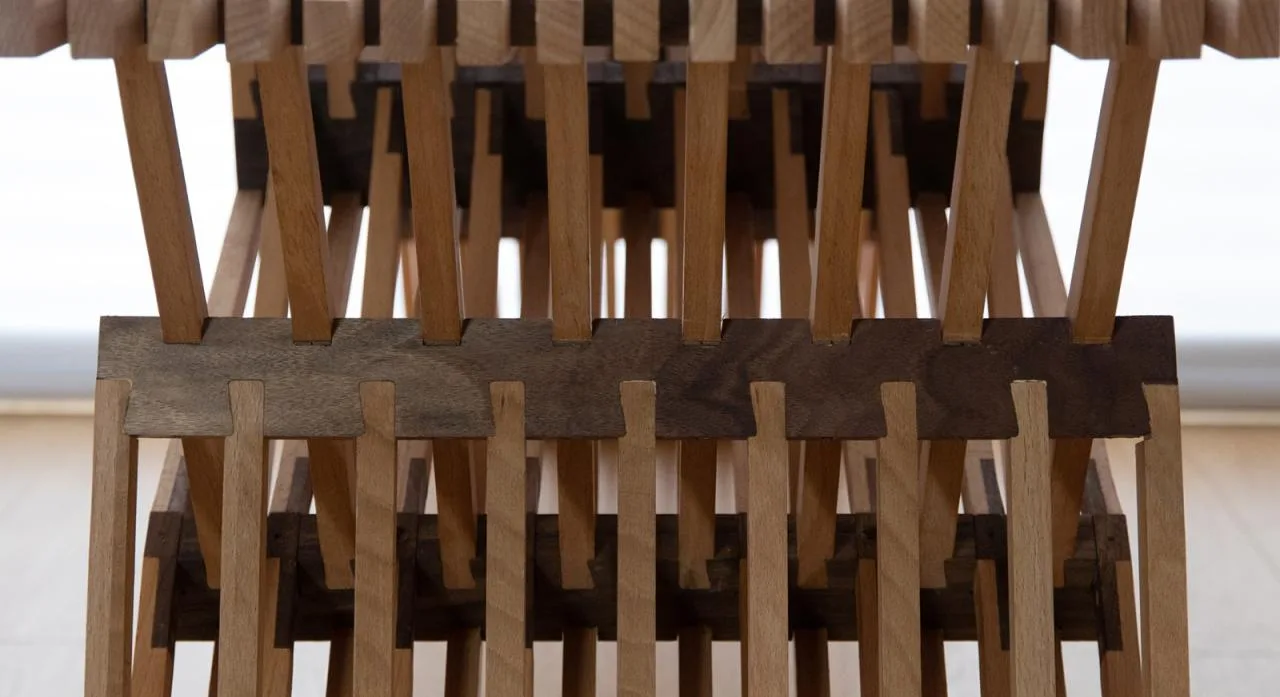
▲ Product details © Bonestudio Studio

▲ Product photos © Bonestudio Studio
Wooden Arch Stool
The “Weaving Wooden Arches” furniture series draws inspiration from the Song dynasty corridor bridge construction techniques. It reinterprets the traditional craftsmanship and structural forms of large wooden corridor bridges through a modern design lens, transforming these grand wooden structures into contemporary, functional small-scale pieces.
By examining Song dynasty architecture, the series explores how traditional large wooden structures can be integrated into modern design, preserving the essence of heritage while adapting to current aesthetics and functionality.

▲ Product photos © Bonestudio Studio
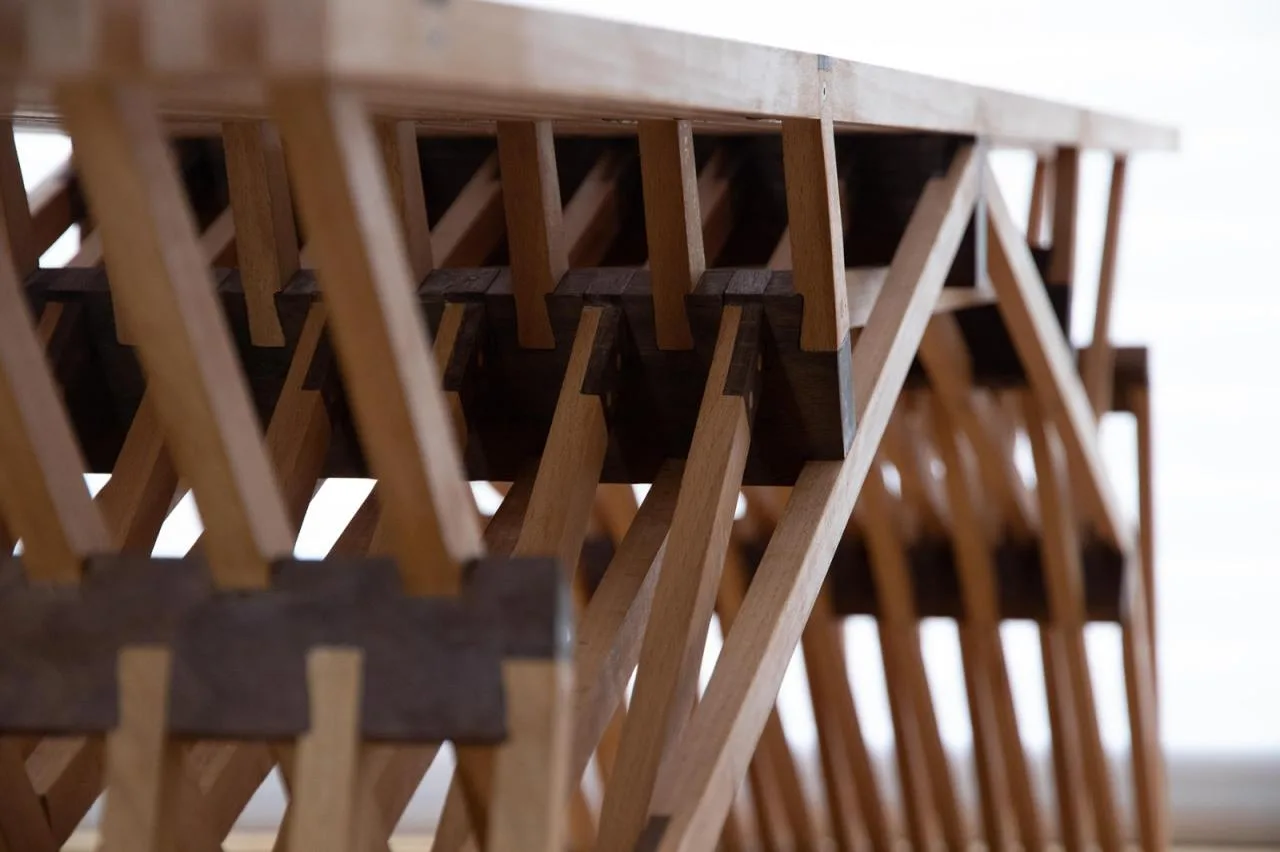
▲ Product details © Bonestudio Studio
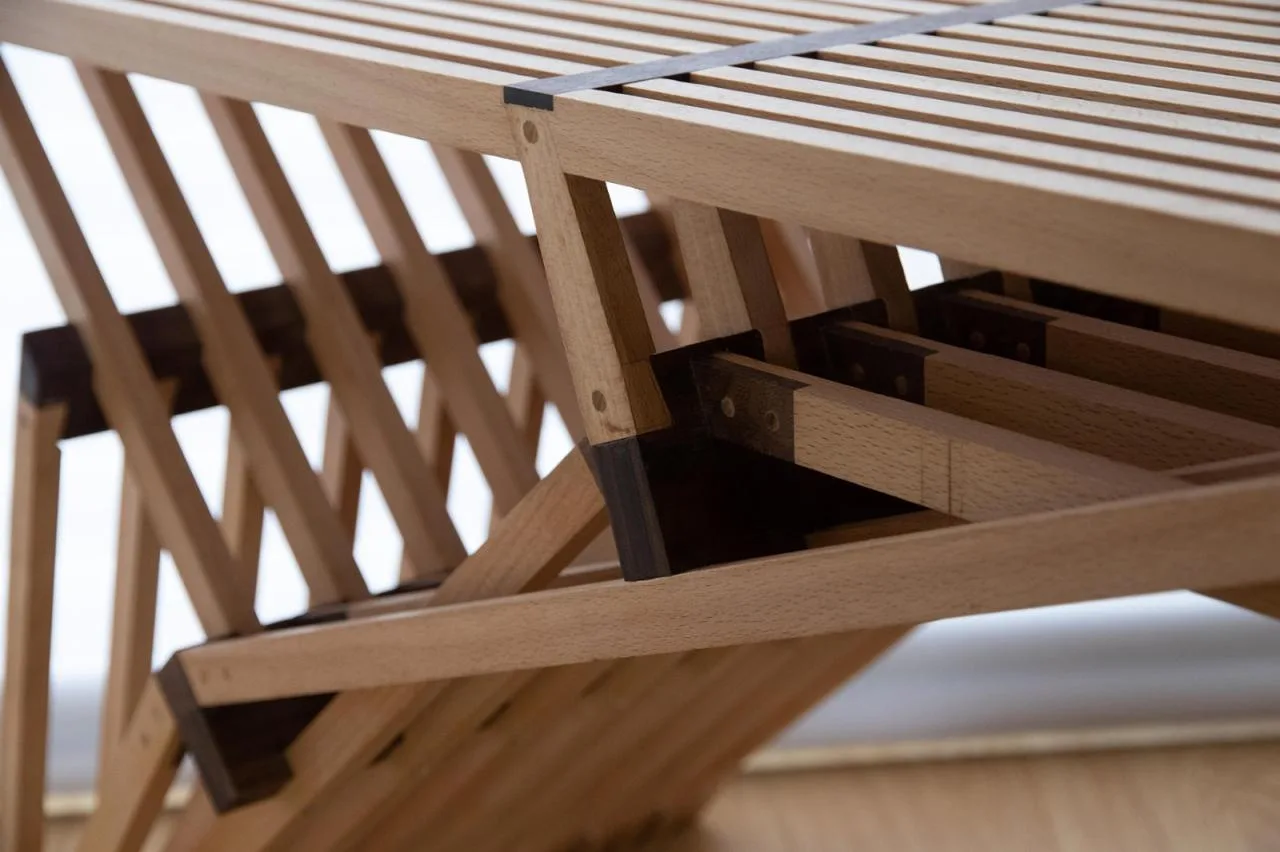
▲ Product details © Bonestudio Studio
The stool’s overall form reflects the woven structure found in wooden arch bridges. This woven wooden arch design has been adapted to furniture scale and modern design language to meet contemporary functional and structural demands.
This project investigates the application of traditional Chinese woodworking techniques in modern furniture, focusing not only on form and craftsmanship but also on standardization, adaptability, and constructability.
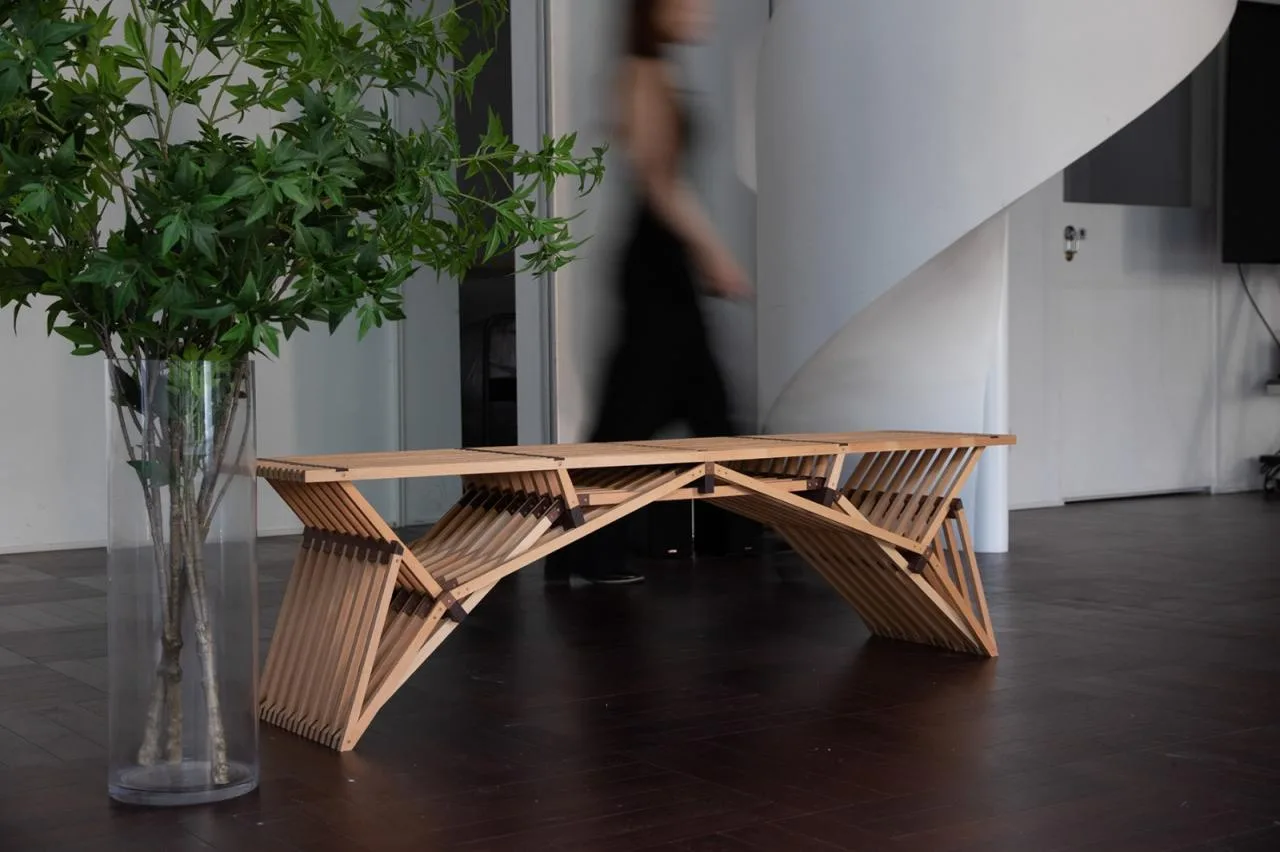
▲ Product photos © Bonestudio Studio

▲ Product photos © Bonestudio Studio
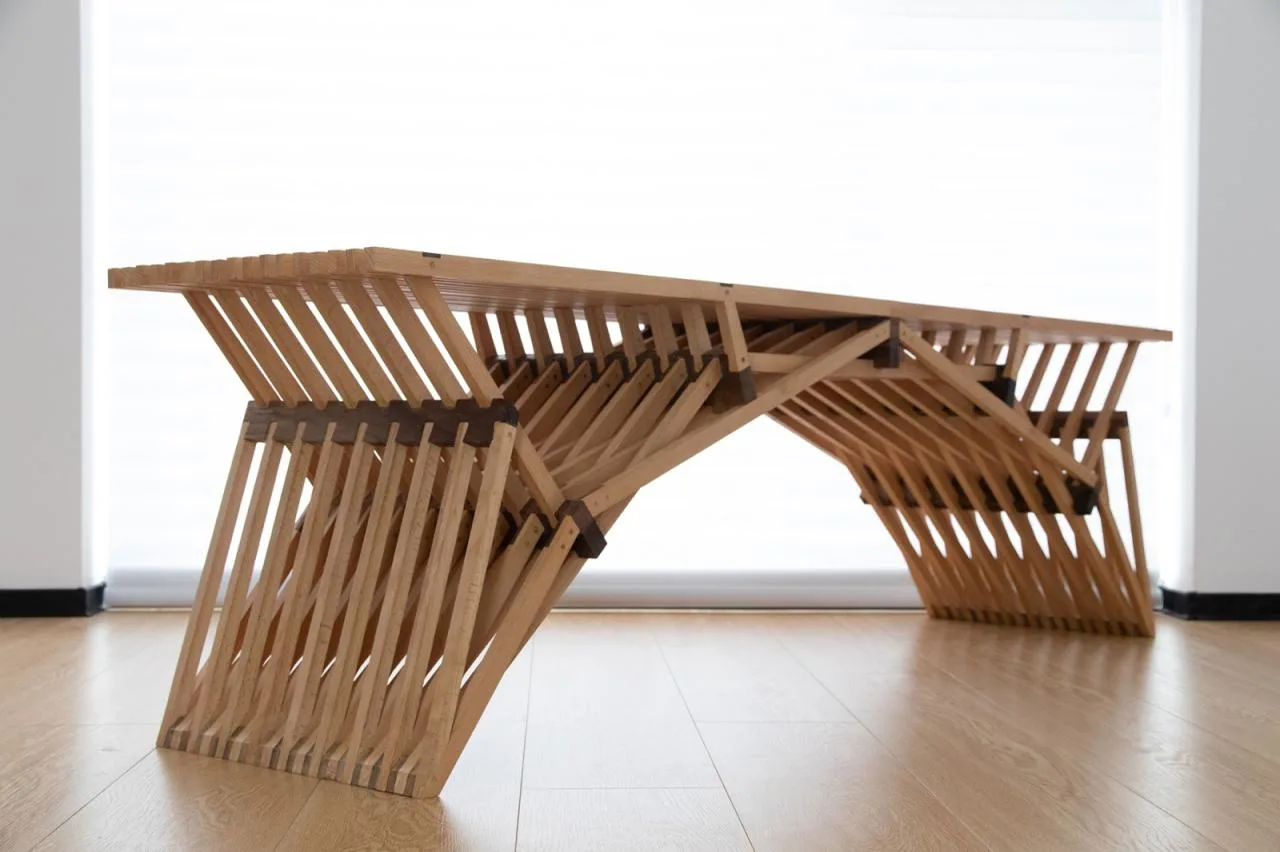
▲ Product photos © Bonestudio Studio
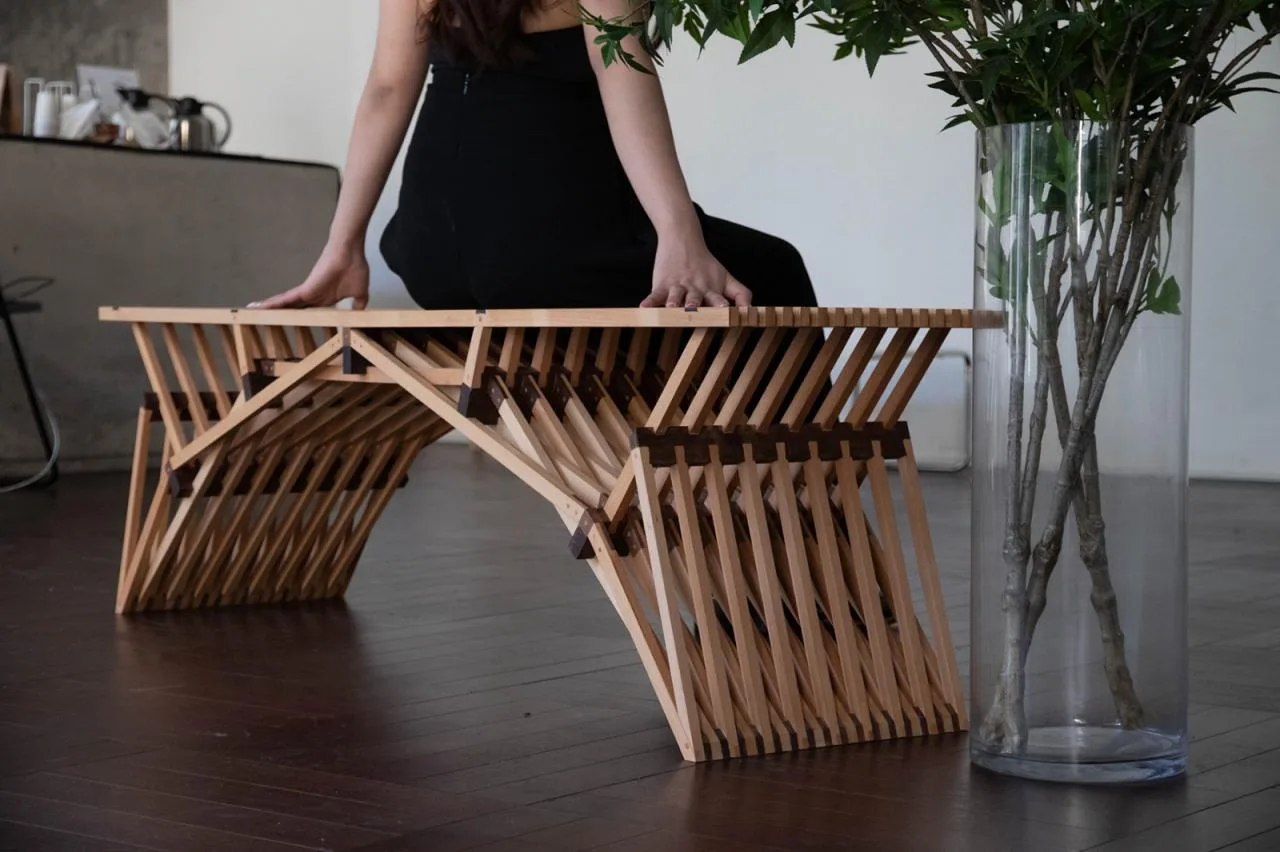
▲ Product photos © Bonestudio Studio
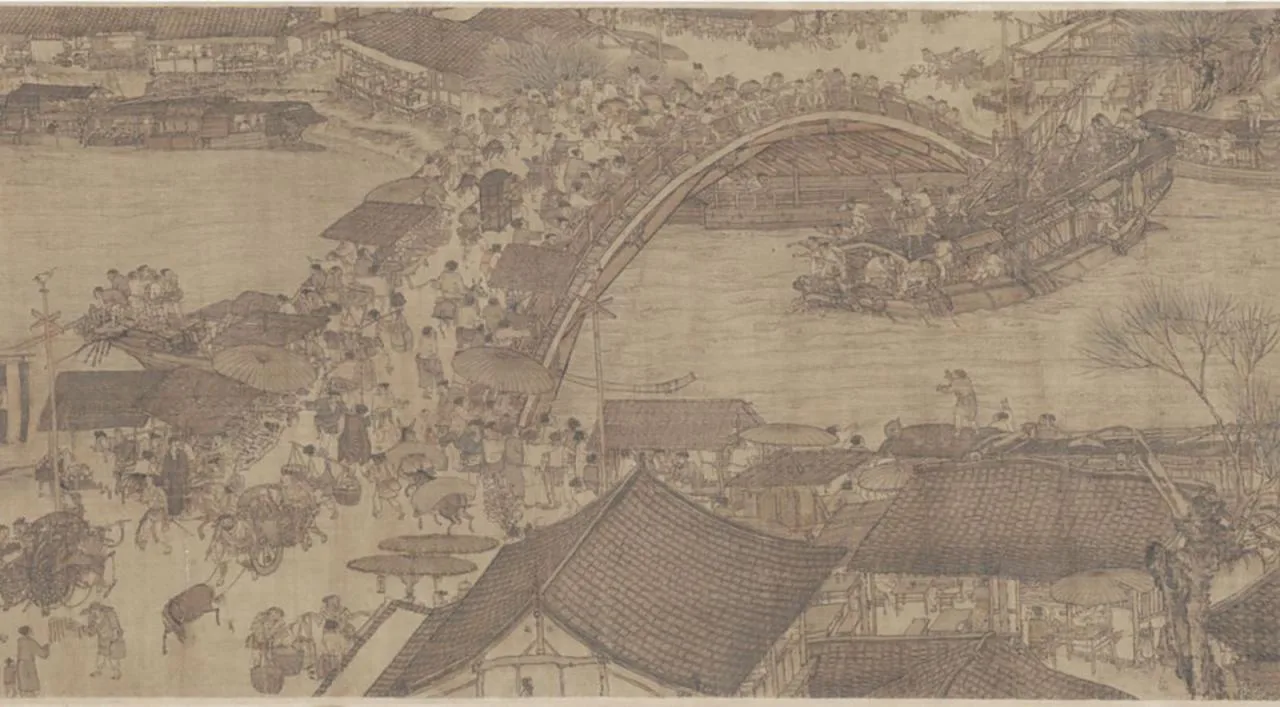
▲ “Along the River during Qingming Festival” – Bianshui Hongqiao © Zhang Zeduan, Song Dynasty, Palace Museum, Beijing
Bianshui Hongqiao
The painting “Along the River during Qingming Festival” depicts the Bianshui Hongqiao, a wooden arch bridge spanning the Bianshui River. This bridge not only captures the bustling atmosphere of Bianjing, the Song dynasty capital, but also showcases the exquisite craftsmanship of large-scale wooden structures from that era.
According to the historical record “Tokyo Dream of Splendor”: “Its bridges have no pillars, and are all made of giant wooden frames, decorated with cinnabar like flying rainbows,” which is how the bridge earned the name Hongqiao.
The main arch structure consists of two interconnected systems of crossed and overlapping crossbeams that support each other, bearing the bridge deck’s load and transferring it to stone foundations at both ends. Scholar Tang Huancheng classified the Bianshui Hongqiao as a “stacked beam wooden arch bridge” in his work on ancient Chinese bridge technology, later referring to it simply as a “wooden arch bridge.”

Yangmeizhou Bridge, Kengdi Township, Shouning County, Fujian Province © Liu Yan
Wooden Arch Covered Bridge
While Bianshui Hongqiao exemplifies the wooden arch structure, the Fujian-Zhejiang wooden arch bridges inherit this design and stand as well-preserved masterpieces of ancient wooden architecture in their region.
Both the Fujian-Zhejiang wooden arched corridor bridges and Bianshui Hongqiao utilize woven wooden construction methods in terms of structure and form. Structurally, the Bianshui Hongqiao of the Northern Song dynasty is classified as a “woven wooden arch bridge,” whereas the extant Fujian and Zhejiang bridges are called “woven wooden arch beam bridges.”
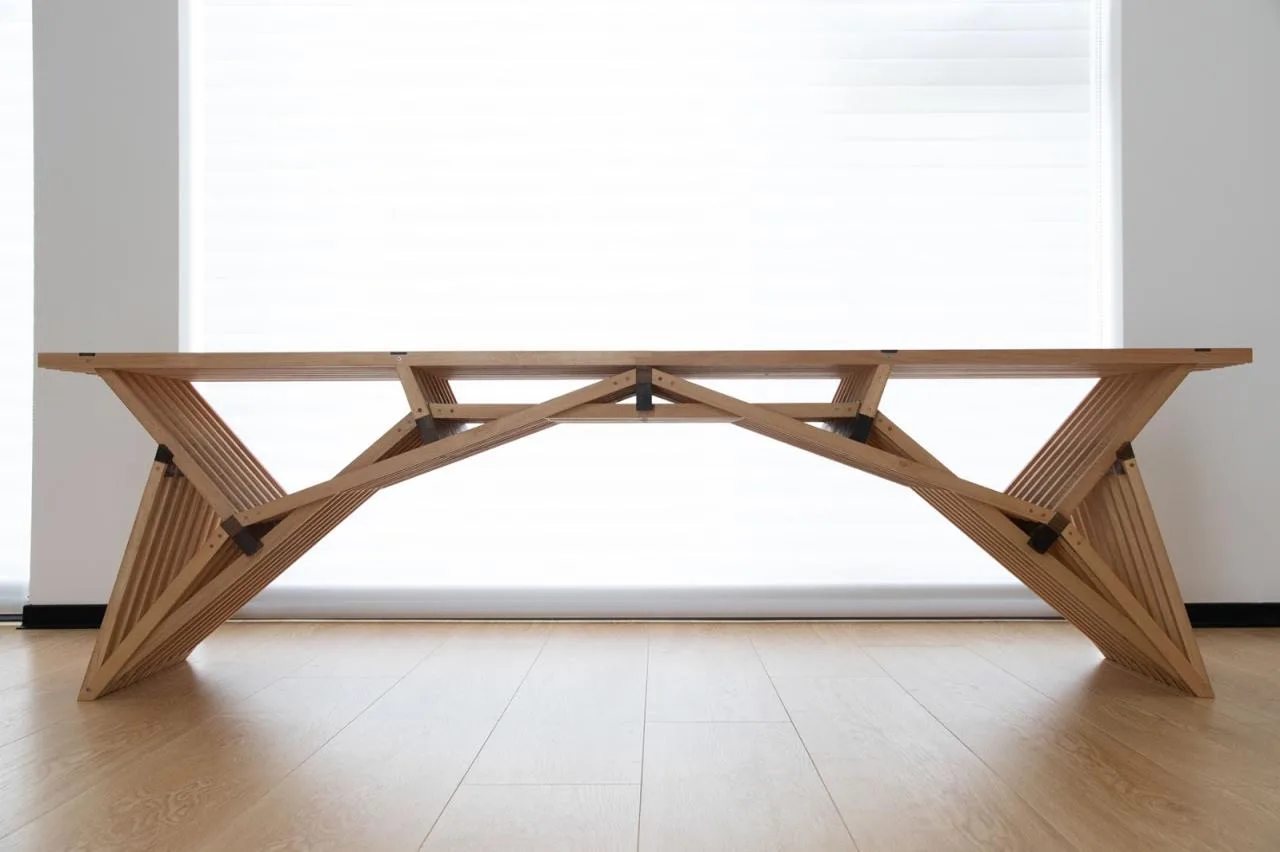
▲ Product photos © Bonestudio Studio
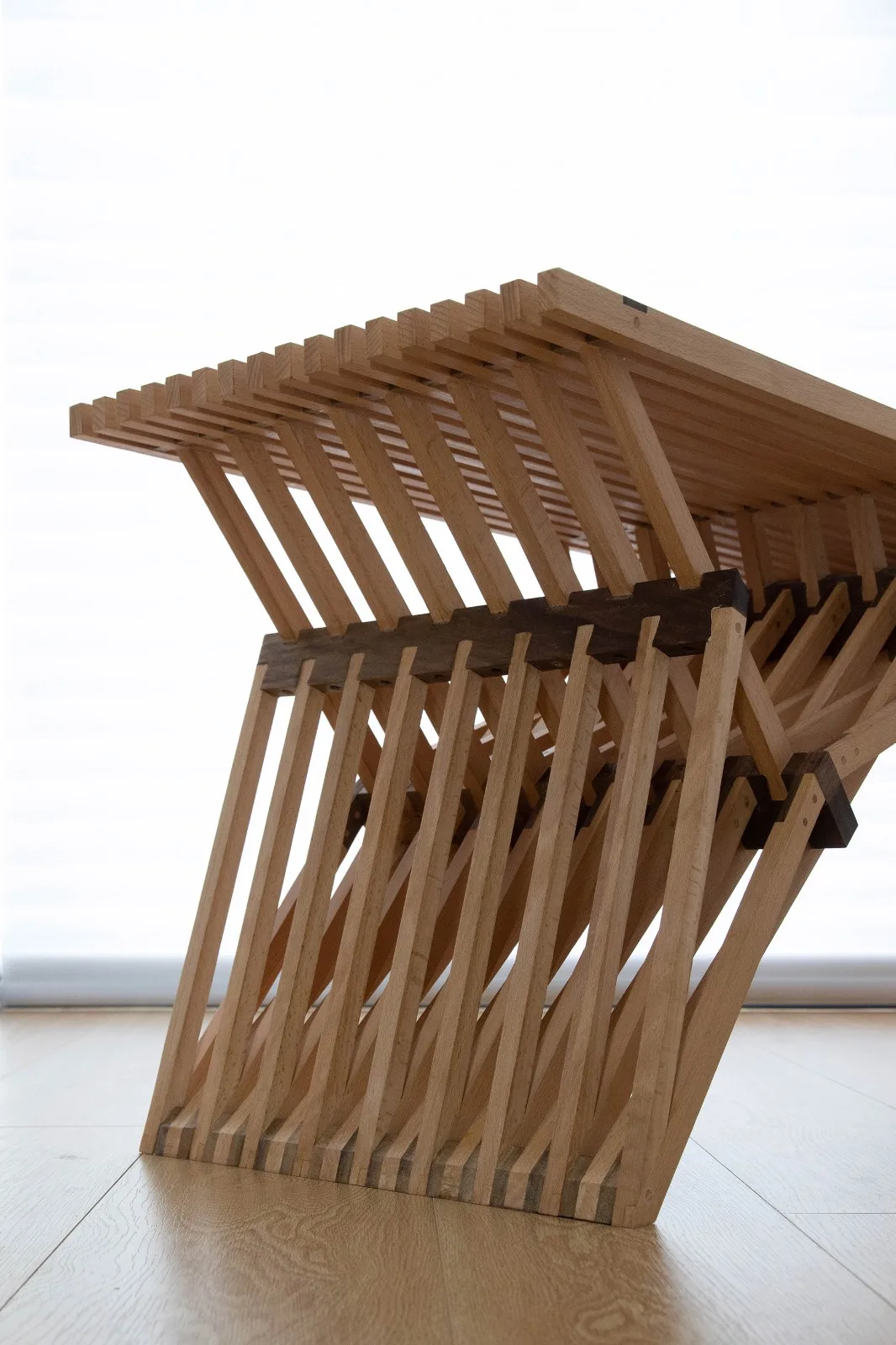
▲ Product side details © Bonestudio Studio
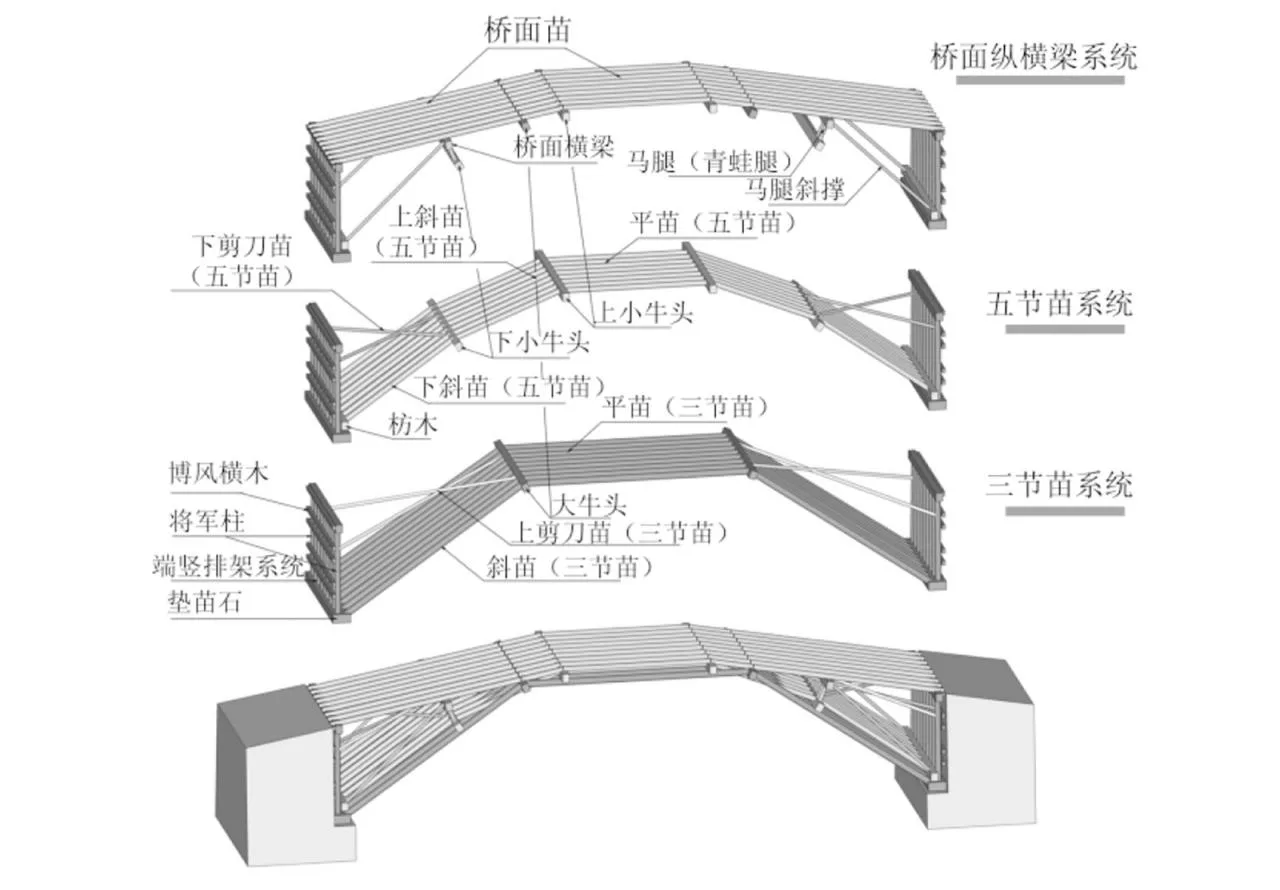
▲ Decomposition of Wooden Arch Frame System for Wooden Arch Corridor Bridge © Zhang Ying
Wooden Arch Corridor Bridge Structural System
The wooden arch’s main structure consists of two systems: one with three sections of seedlings and another with four or five sections. These two systems connect to the main crossbeam via mortise and tenon joints, creating an integrated woven arch that ensures structural stability and supports the bridge deck load.
Loads from the bridge deck and the structure’s own weight transfer to stone foundations on each side. Additionally, supporting elements such as columns help sustain the bridge deck.
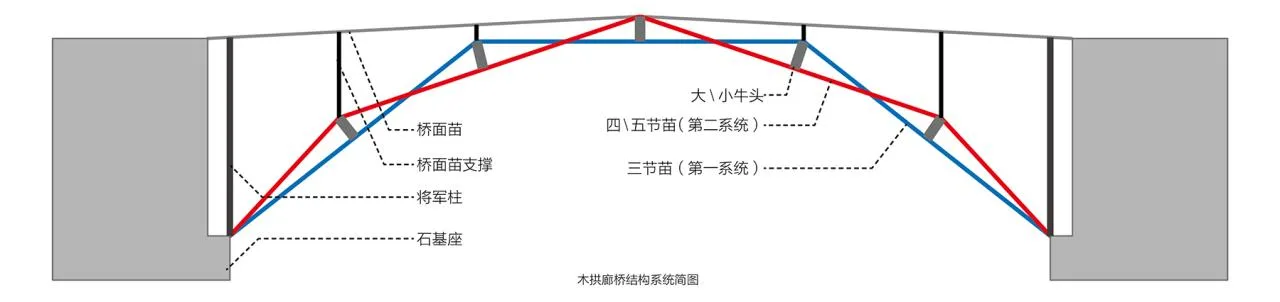
▲ Schematic diagram of the main structural system of the wooden arch bridge © Bonestudio Studio
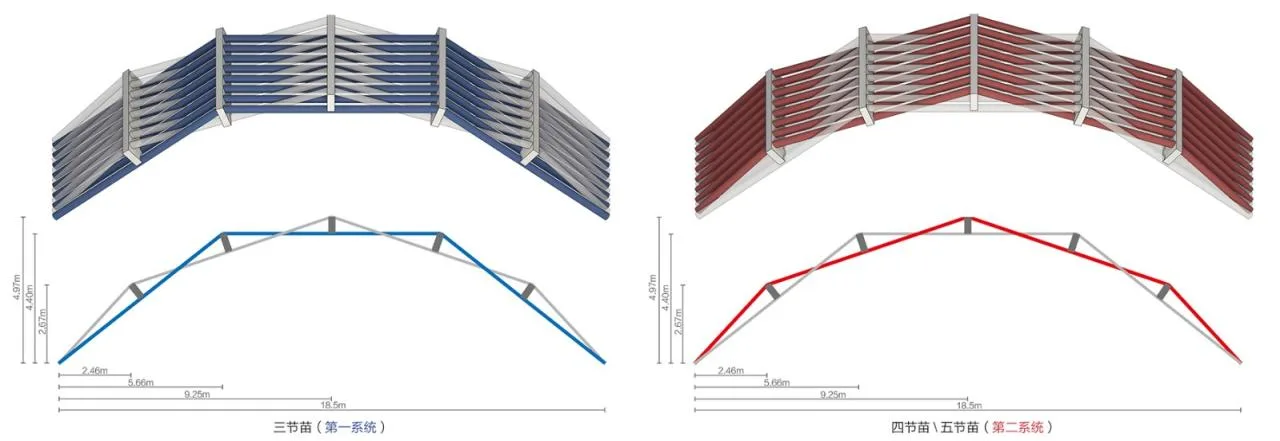
▲ Three-section seedlings (first system) and four- and five-section seedlings (second system) © Bonestudio Studio
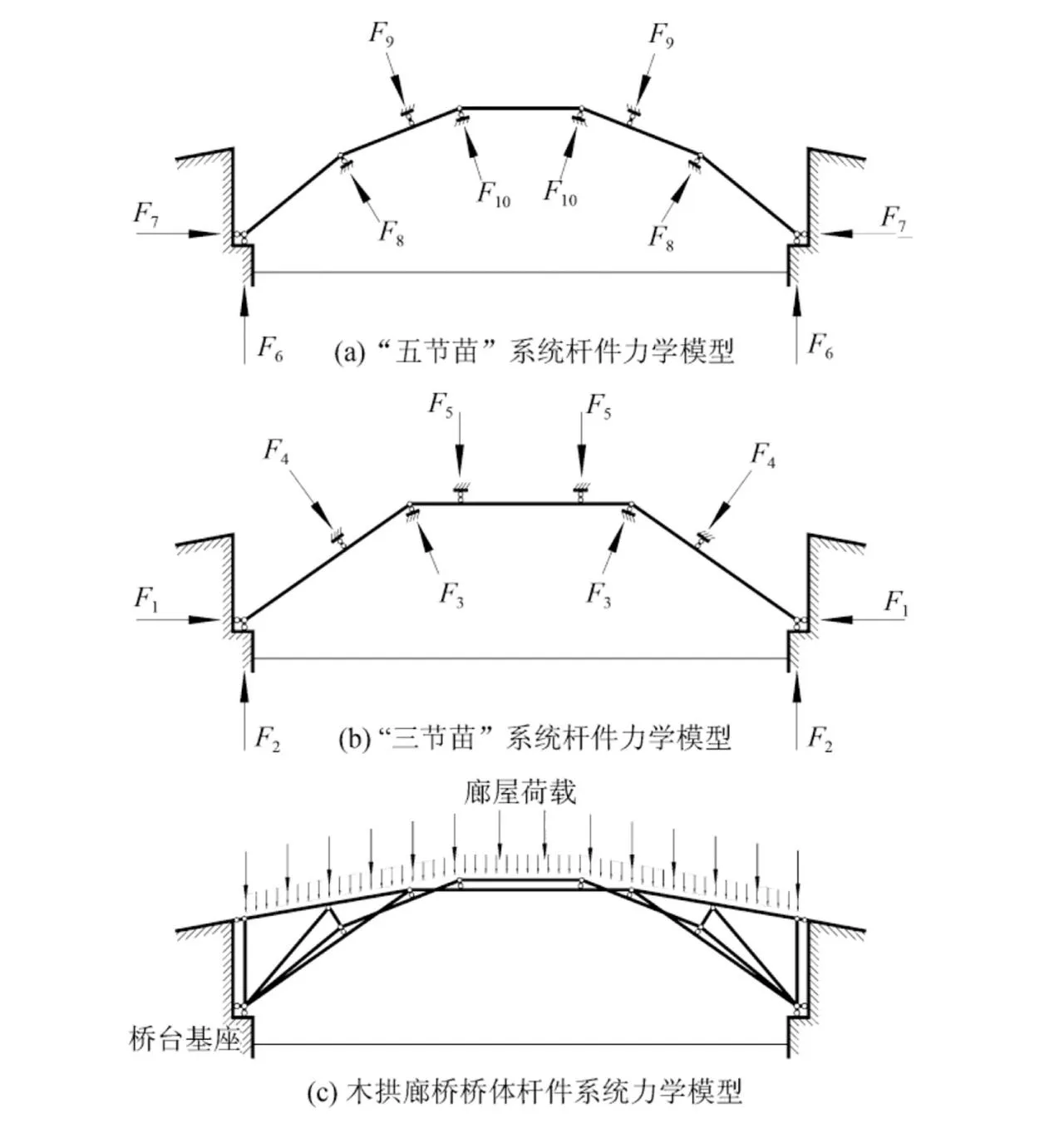
▲ Mechanical Model of Member System of Wooden Arch Covered Bridge Body © Zhang Ying
Mechanical Characteristics of Wooden Arch Bridges
Within the dual-system wooden arch bridge structure, loads from the bridge deck transfer to the stone foundations via the interlaced wooden arch framework.
Structural analysis shows that vertical loads induce horizontal thrust in the arch, while the stone foundations resist this lateral thrust and the downward vertical forces. These foundations significantly enhance the bridge’s load-bearing capacity.
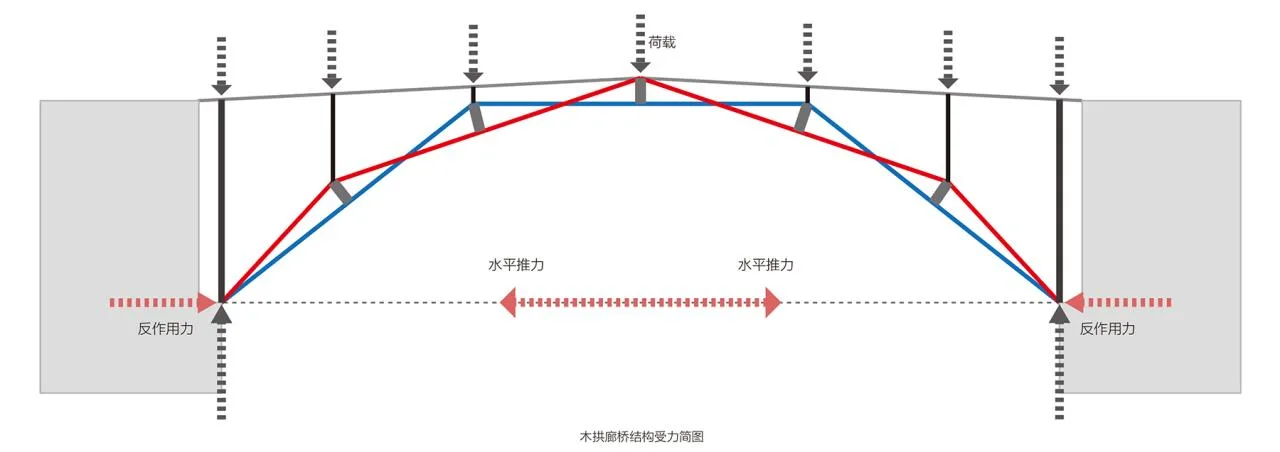
▲ Structural stress diagram of wooden arch covered bridge © Bonestudio Studio
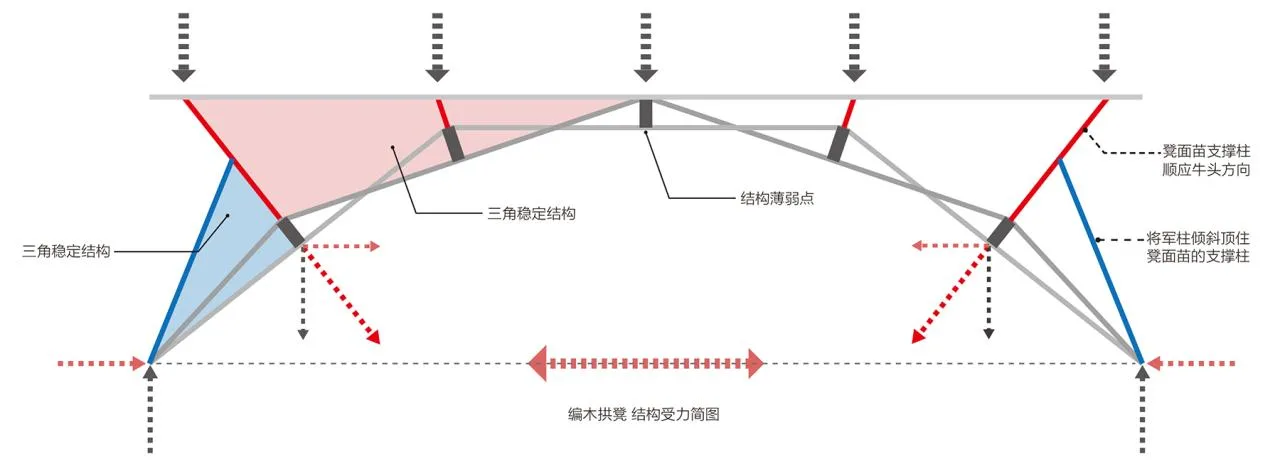
▲ Structural stress diagram of wooden arch stool © Bonestudio Studio
Evolution of Structural Design for Wooden Arched Stools
Unlike bridges, wooden arch stools lack stone foundations, which affects both aesthetics and practicality. Without the foundation’s reactive forces, the arch’s load-bearing capacity decreases.
To address this, the design aims to reduce horizontal thrust generated by the arch under load. The simplest solution is to tie the stool legs together to counteract this thrust; however, this can compromise the product’s aesthetics and the purity of the arch form.
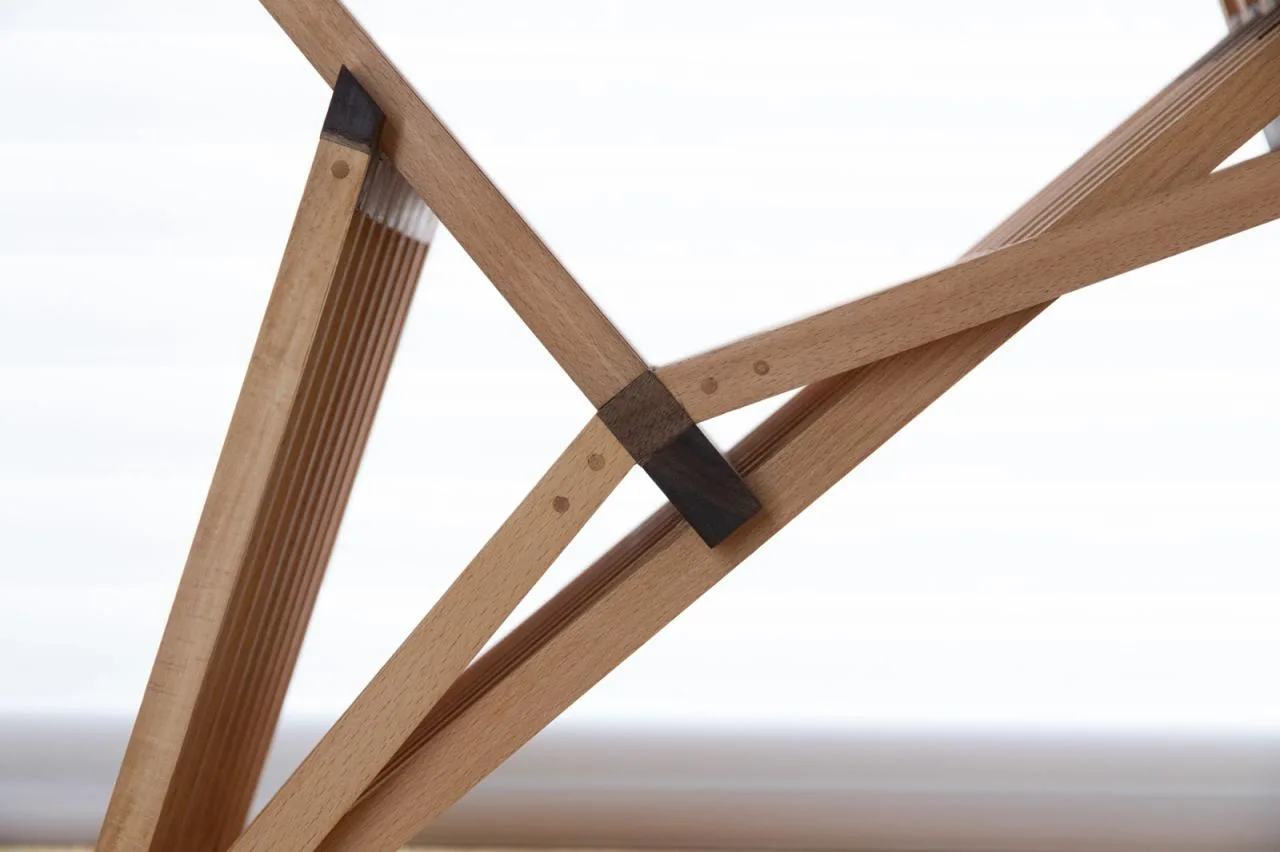
▲ Product details © Bonestudio Studio
Instead, the supporting members of the stool surface are angled obliquely, perpendicular to the top surface of the main crossbeam. This adjustment changes the force angles on the supports, offsetting some horizontal thrust.
The stool surface members, wooden arch components, and supports together create multiple stable triangular structures. While the stool maintains adequate load-bearing ability, the lack of stone foundations leaves a structural weak point at the center of the arch. To reinforce this, the cross-section of the horizontal members in the first system (three-section seedlings) is increased, strengthening the arch’s midsection.
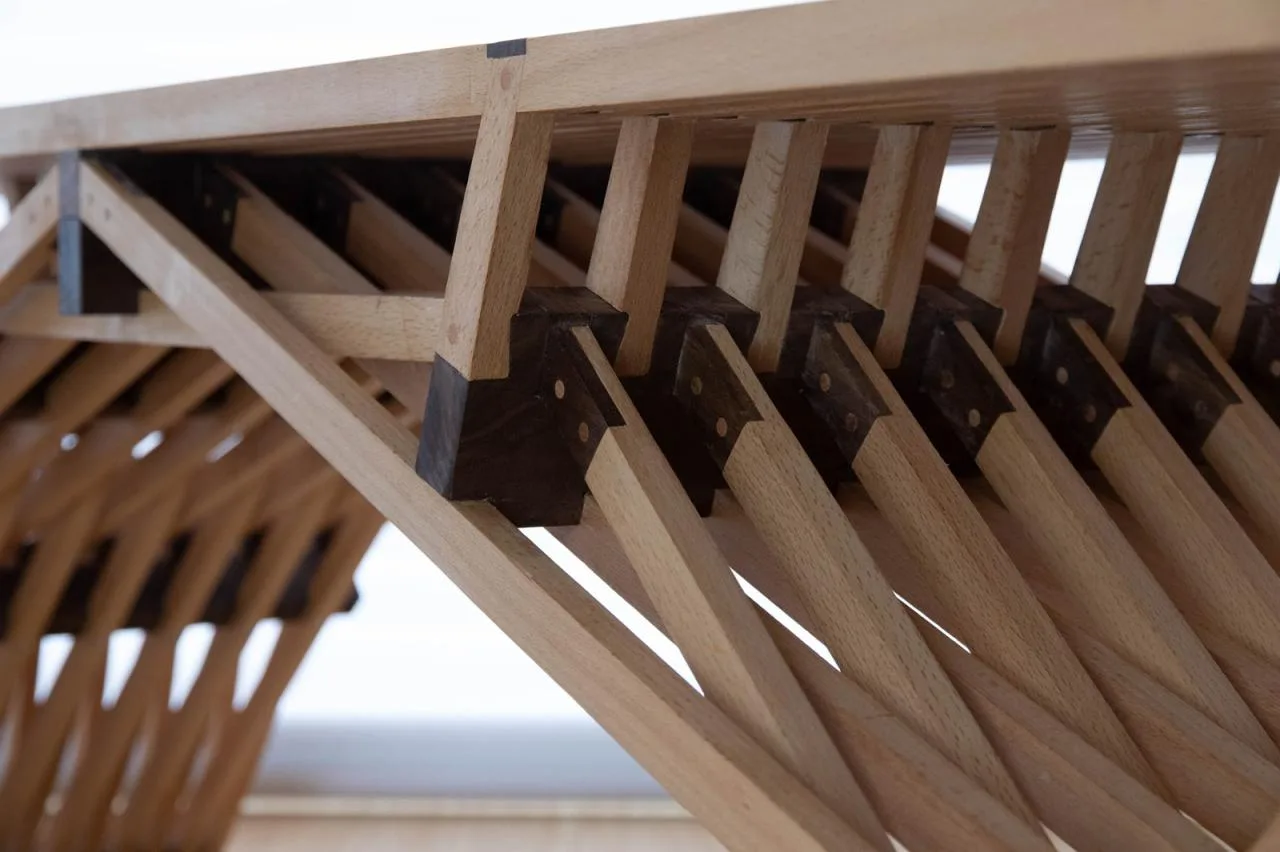
▲ Product details © Bonestudio Studio
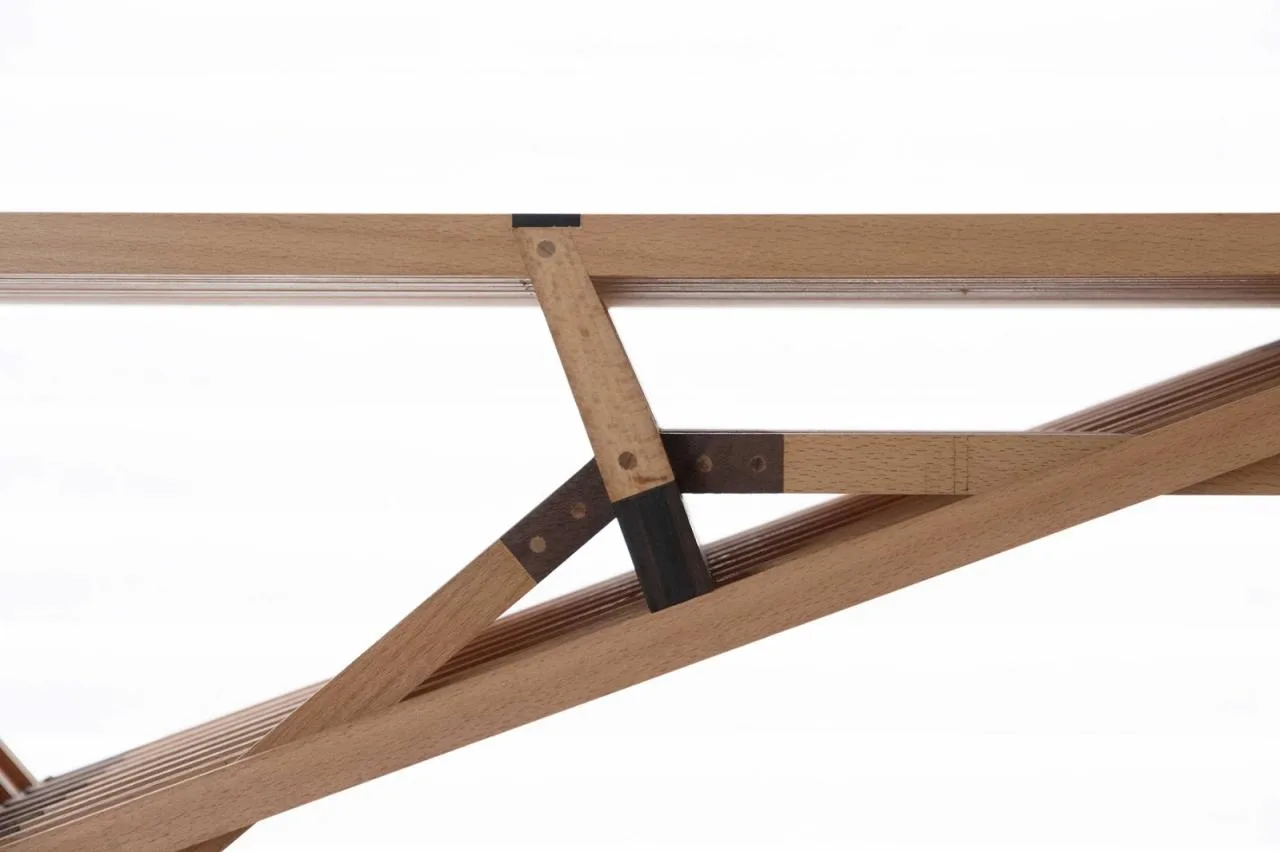
▲ Product details © Bonestudio Studio
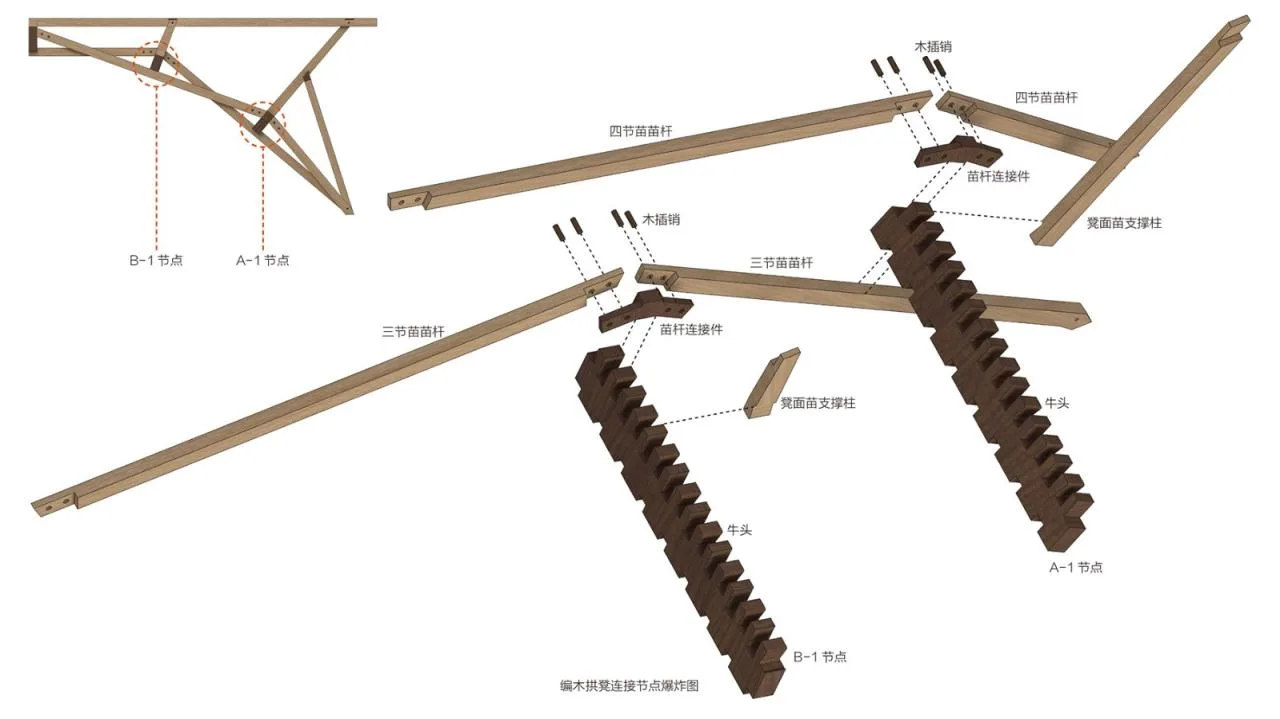
▲ Exploded diagram of wooden arch stool joints © Bonestudio Studio
Evolution of Connection Nodes
In wooden arch bridges, the three-section seedlings (first system) and four-section seedlings (second system) connect to the main crossbeam (“cow head”) using mortise and tenon joints, forming a stable integrated structure.
For the smaller scale of the wooden arch stool, using the same mortise and tenon method would overcrowd the joints on the cow head, weakening its structural integrity. Additionally, the stool surface members also need to connect to the cow head, requiring four members to join at one point. Therefore, the design must balance connection firmness with maintaining the strength of the main crossbeam.
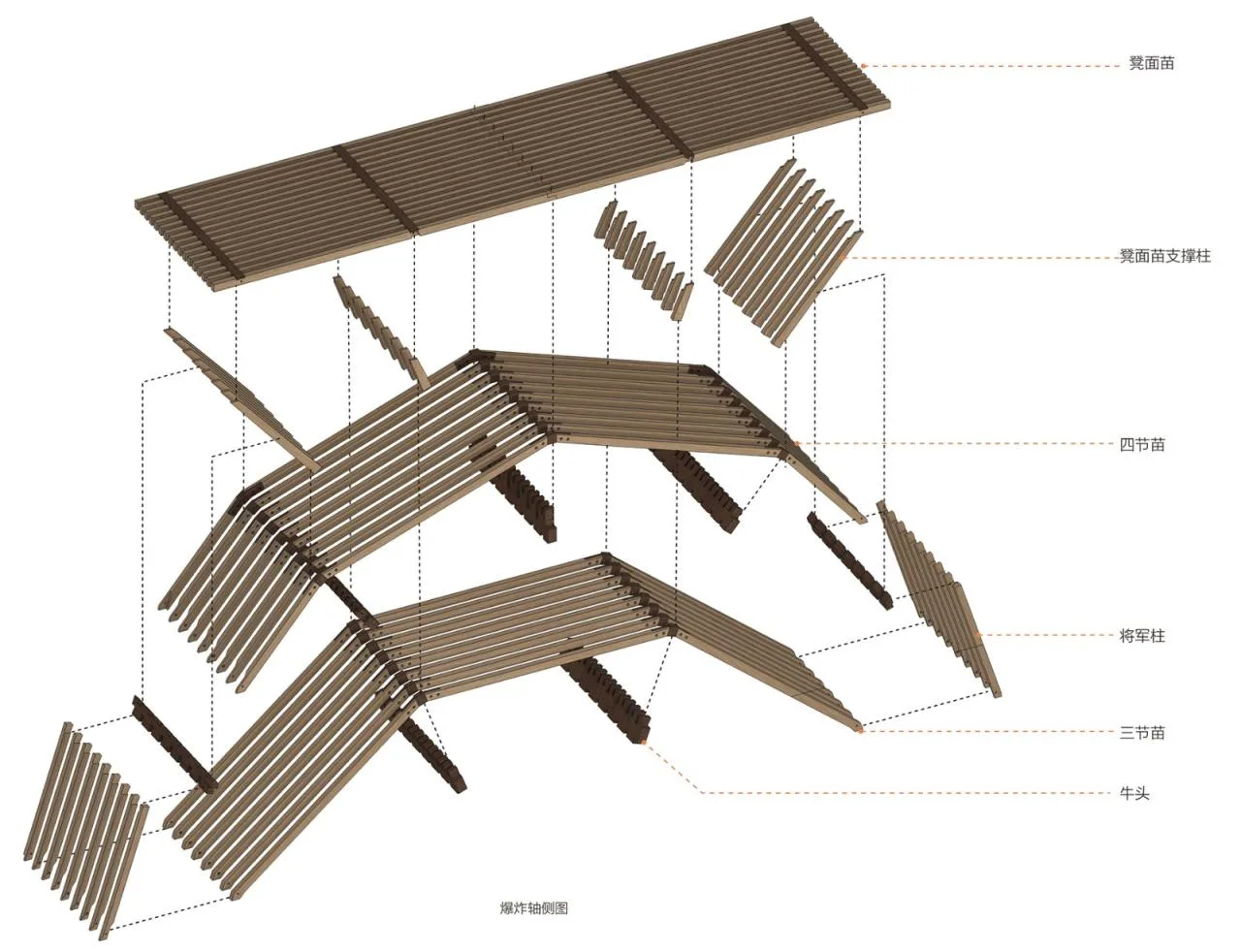
▲ Decomposed diagram of wooden arch stool structure © Bonestudio Studio
Instead of direct connection, the wooden arch members are anchored together with wooden pins through bidirectional connectors, then inserted into grooves in the main crossbeam.
The stool’s supporting members are positioned between the wooden arch members and connected via mortise and tenon joints. For added strength, metal connectors can be incorporated if necessary.
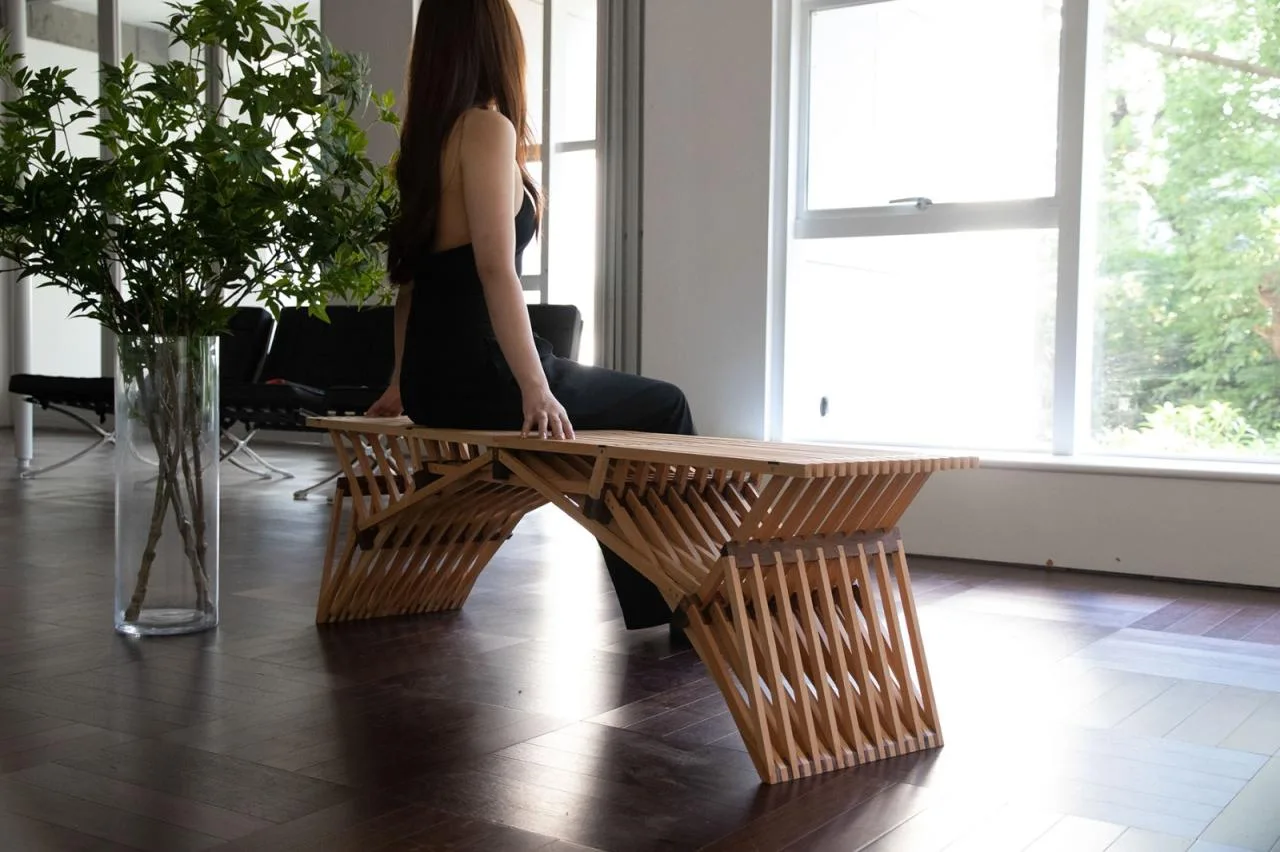
▲ Product photos © Bonestudio Studio
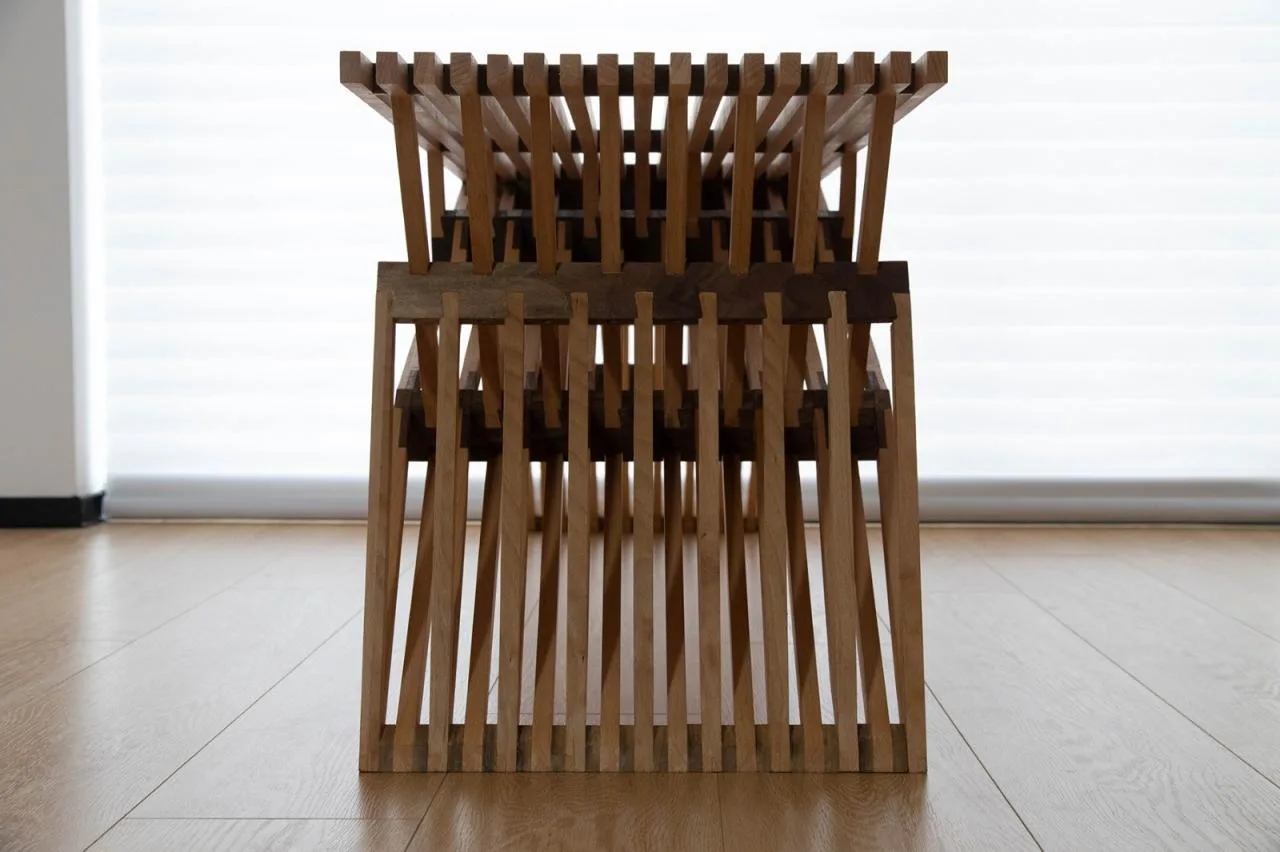
▲ Product details © Bonestudio Studio
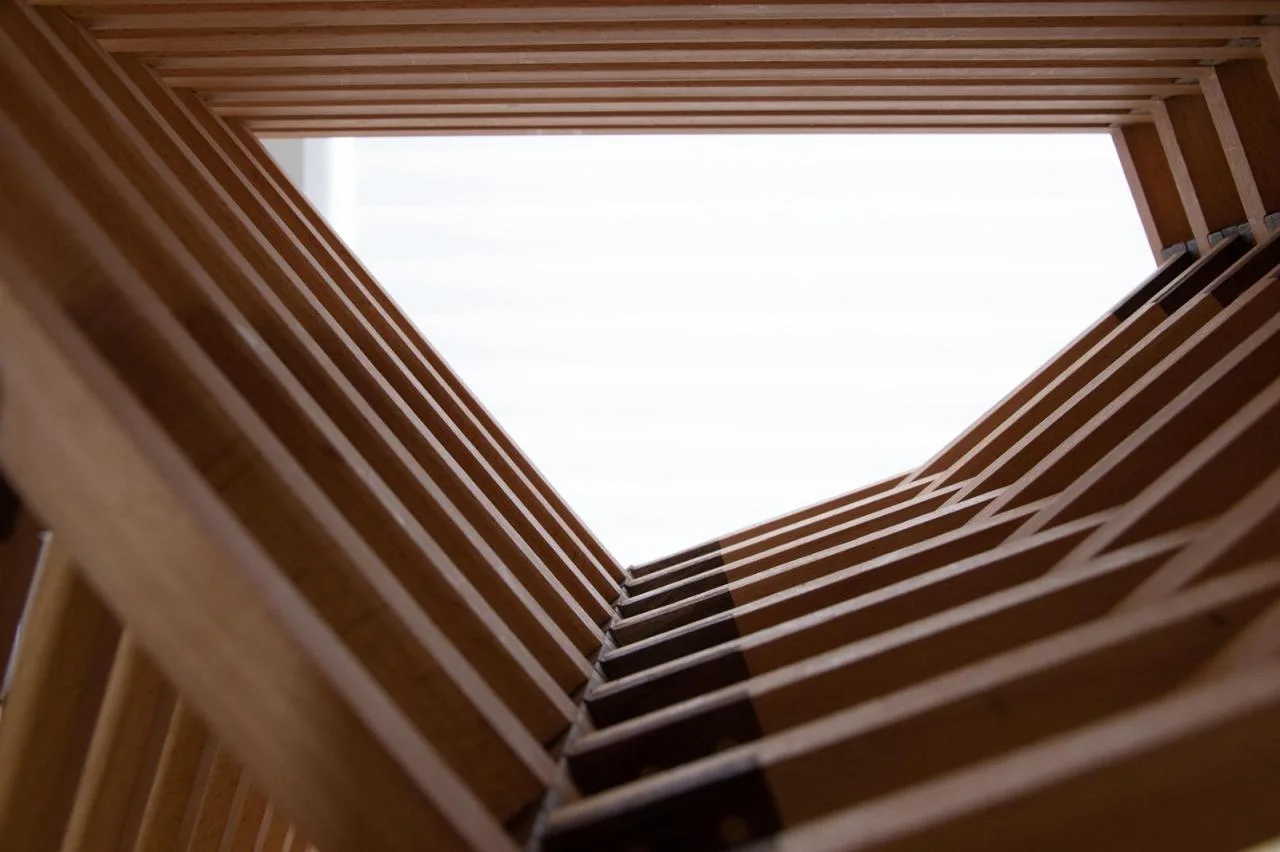
▲ Product details © Bonestudio Studio
Conclusion
The structural form and construction techniques of woven wooden arcade bridges have been preserved from the Song dynasty to today. However, as lifestyles have evolved, these traditional methods no longer fit contemporary needs, making the preservation of arcade bridge culture increasingly challenging.
Rather than relying solely on traditional inheritance, innovation is necessary. By integrating and adapting the cultural heritage, structural forms, and construction techniques of woven wooden arch bridges into modern lifestyles and products, we can create new expressions that allow traditional culture to thrive within contemporary contexts.
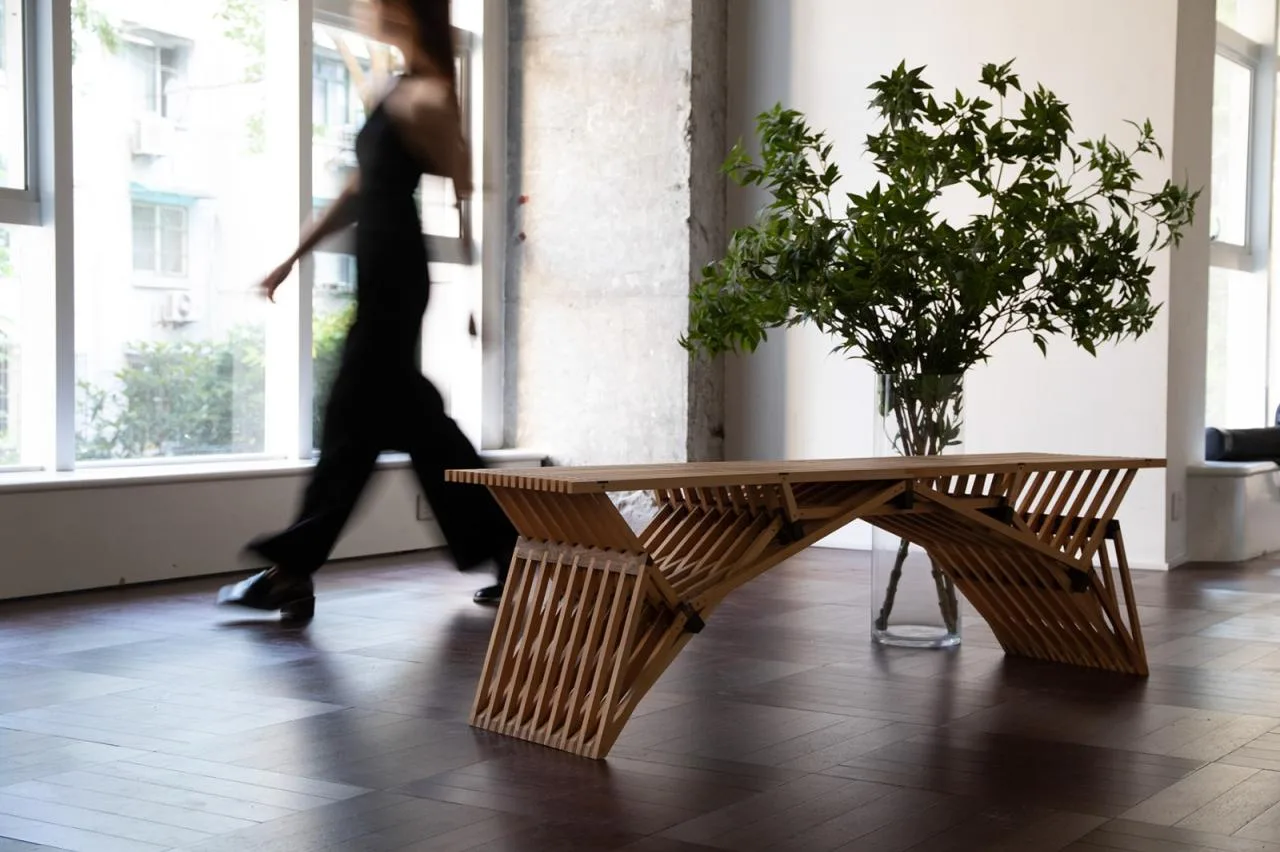
▲ Product photos © Bonestudio Studio
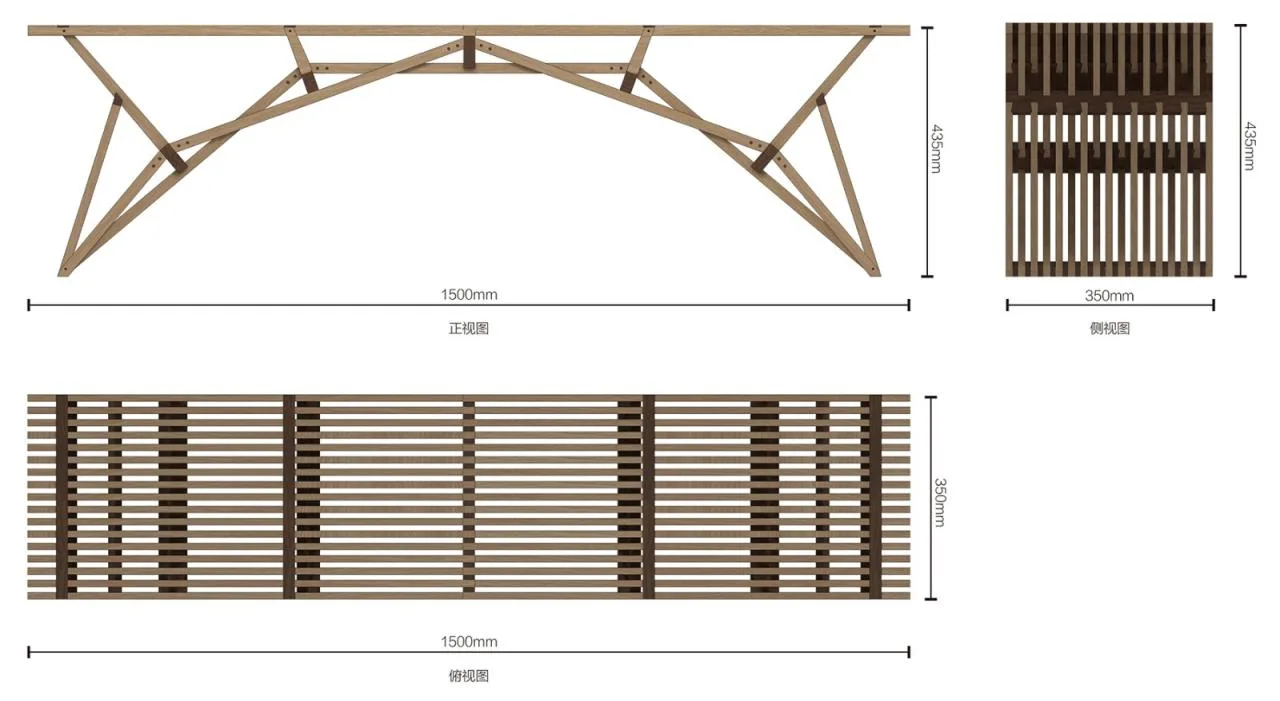
▲ Dimensional drawing of wooden arch stool © Bonestudio Studio
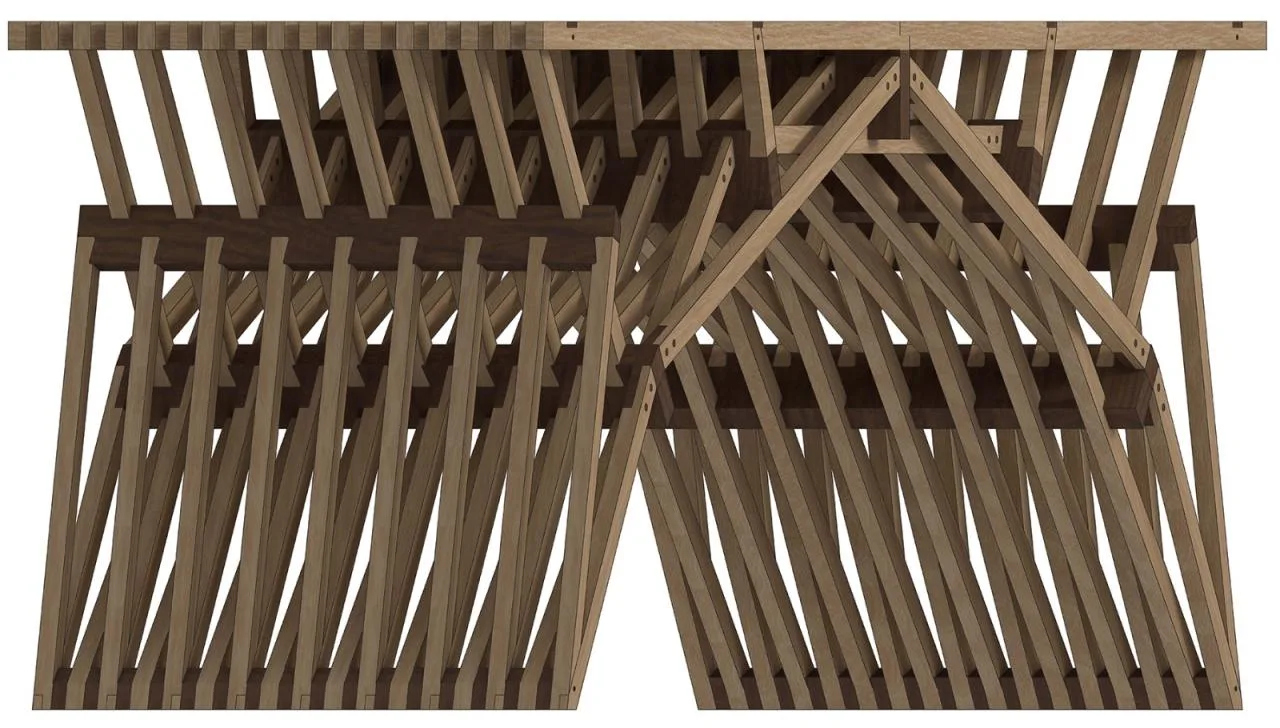
▲ Rendering image © Bonestudio Studio
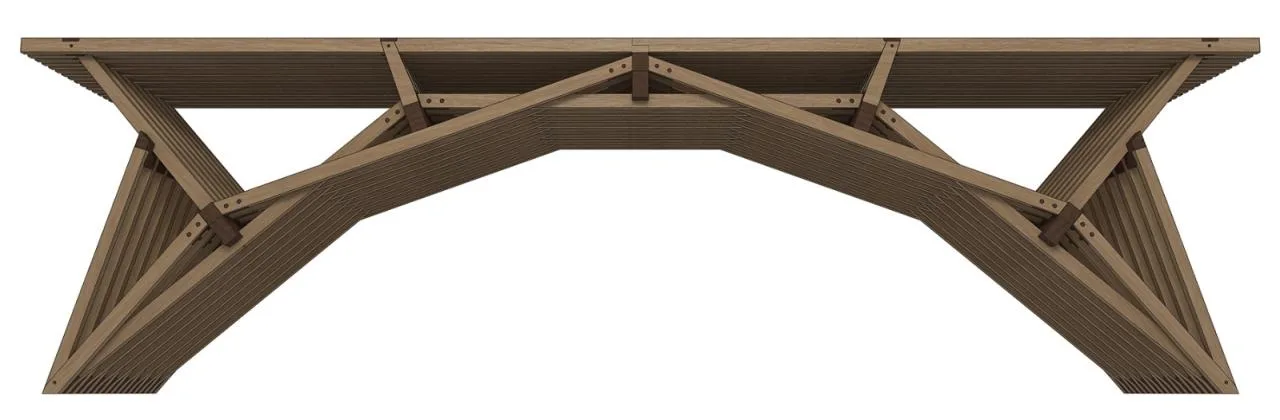
▲ Rendering image © Bonestudio Studio
References
Zhang Ying. “Analysis of Construction Techniques for Fujian Zhejiang Wooden Arch Bridges.” Journal of Fuzhou University (Natural Science Edition), 2011, 39(06): 917-922.
Liu Jie. Architectural Art of Chinese Wooden Arched Bridges. Shanghai: Shanghai People’s Fine Arts Publishing House, 2017.
Liu Yan. Compilation of Wooden Arch Bridges: A History of Technology and Society. Beijing: Tsinghua University Press, 2021.
Project Information
Project Name: Wooden Arched Stool
Project Type: Furniture Design
Design Company: Boyi Workshop (Hangzhou) Cultural and Creative Co., Ltd
Studio Brand: Bonestudio Studio
Materials: Beech wood, Black walnut wood
Size: 1500mm × 348mm × 428mm
Design Sample: Zhu Xiaocheng
Date: March 2023
Photography Credit: Zhu Xiaocheng, Zhang Ying, Liu Yan
Video Credit: Boyi Workshop (Hangzhou) Cultural and Creative Co., Ltd
Contact Email: bonestudio@foxmail.com
Company Website: www.bonestudio.cn













Must log in before commenting!
Sign Up