
Mr. Dongpo’s poetry contrasts pine trees with flowing water, symbolizing the freedom of water against the steadfastness of pine and cypress. This yin-yang relationship embodies the harmony of strength and softness, a core principle in Chinese culture that values balance and unity in opposites.
The cultural significance of the pine tree in China extends beyond botany, representing lofty aspirations and enduring spirit. Ancient poets often used pine trees to express resilience and determination, as reflected in the lines: “Why should we soar thousands of feet straight into the sky? The cold and heat cannot be moved, and time cannot be defeated, only pine and cypress trees do.” This symbolizes the unyielding spirit of the ancients.
Beyond its symbolic meaning, pine is widely used in landscaping and even as outdoor furniture. In traditional Chinese landscape paintings, pine trunks often serve as support elements, and natural pine pillars are common architectural features. For example, Yuan Mei’s “Suiyuan Poetry Talks” records the construction of a pavilion made from six pine trees, known as the Six Pine Pavilion, which remains one of his proudest creations.
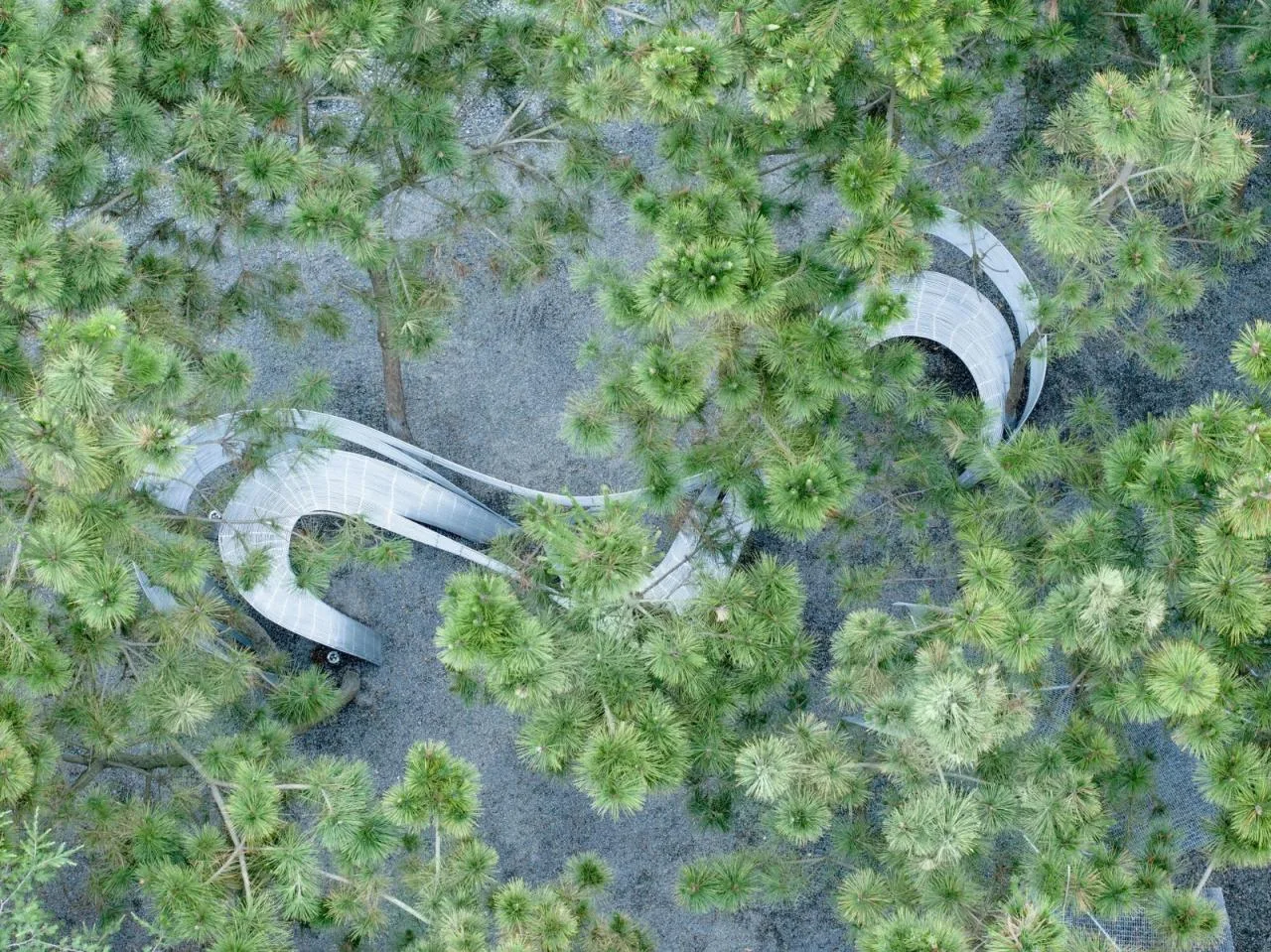
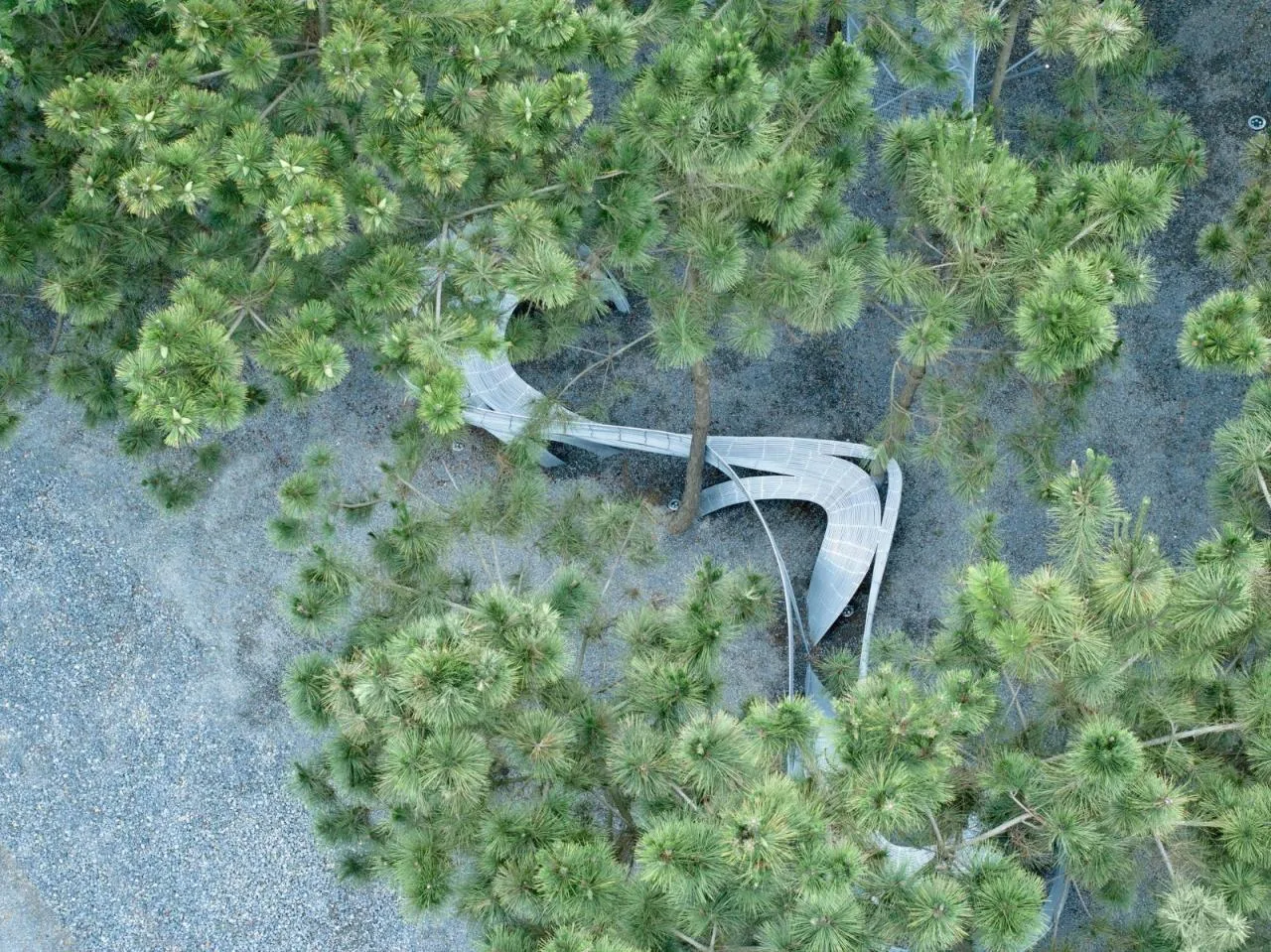
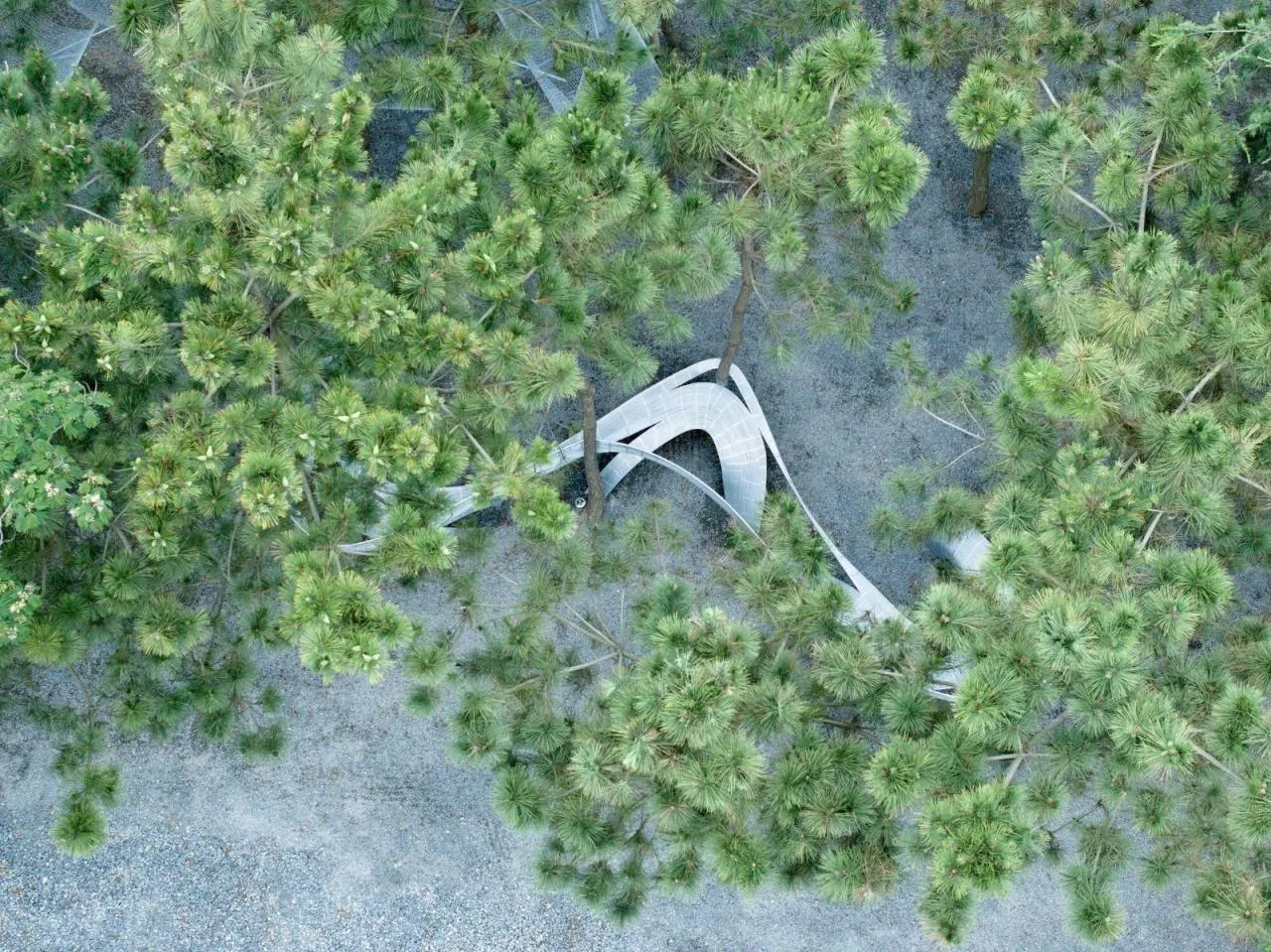
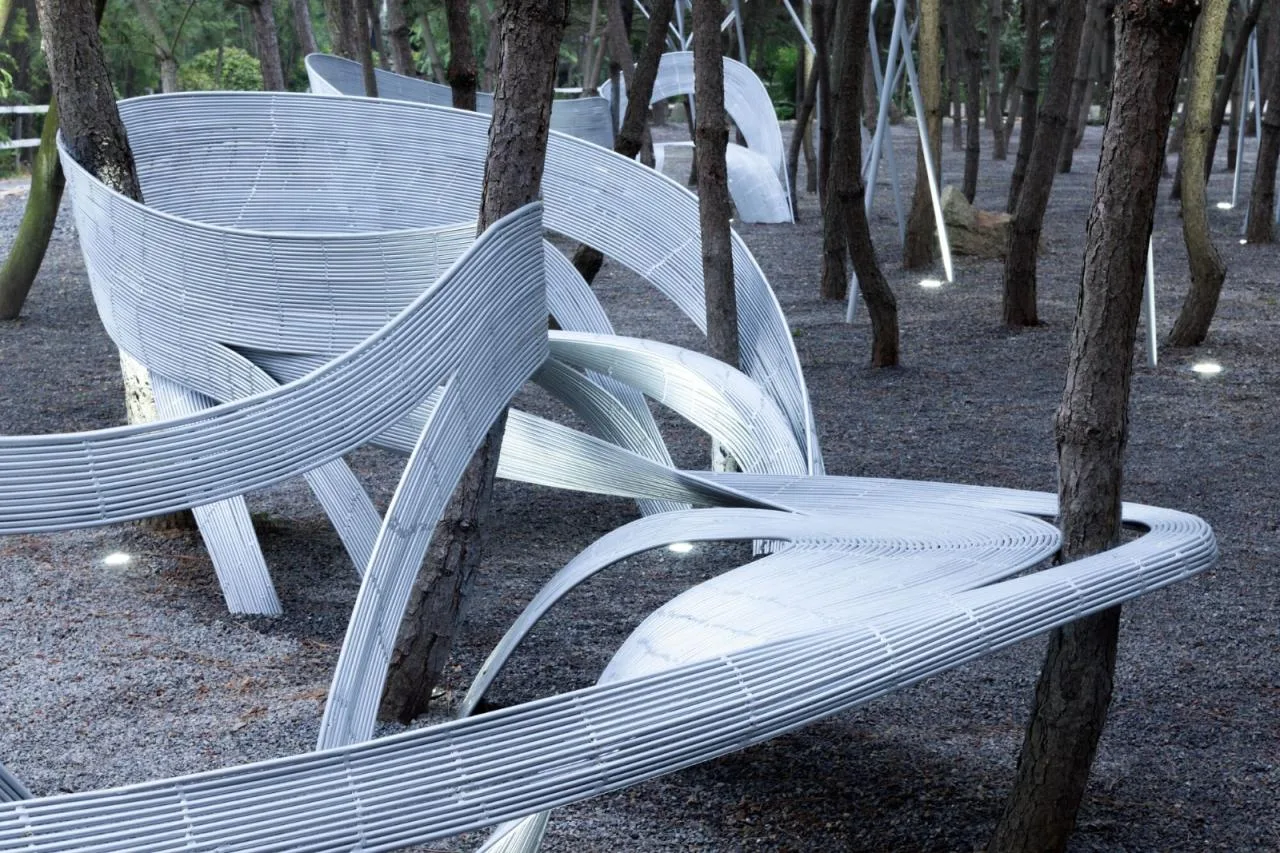
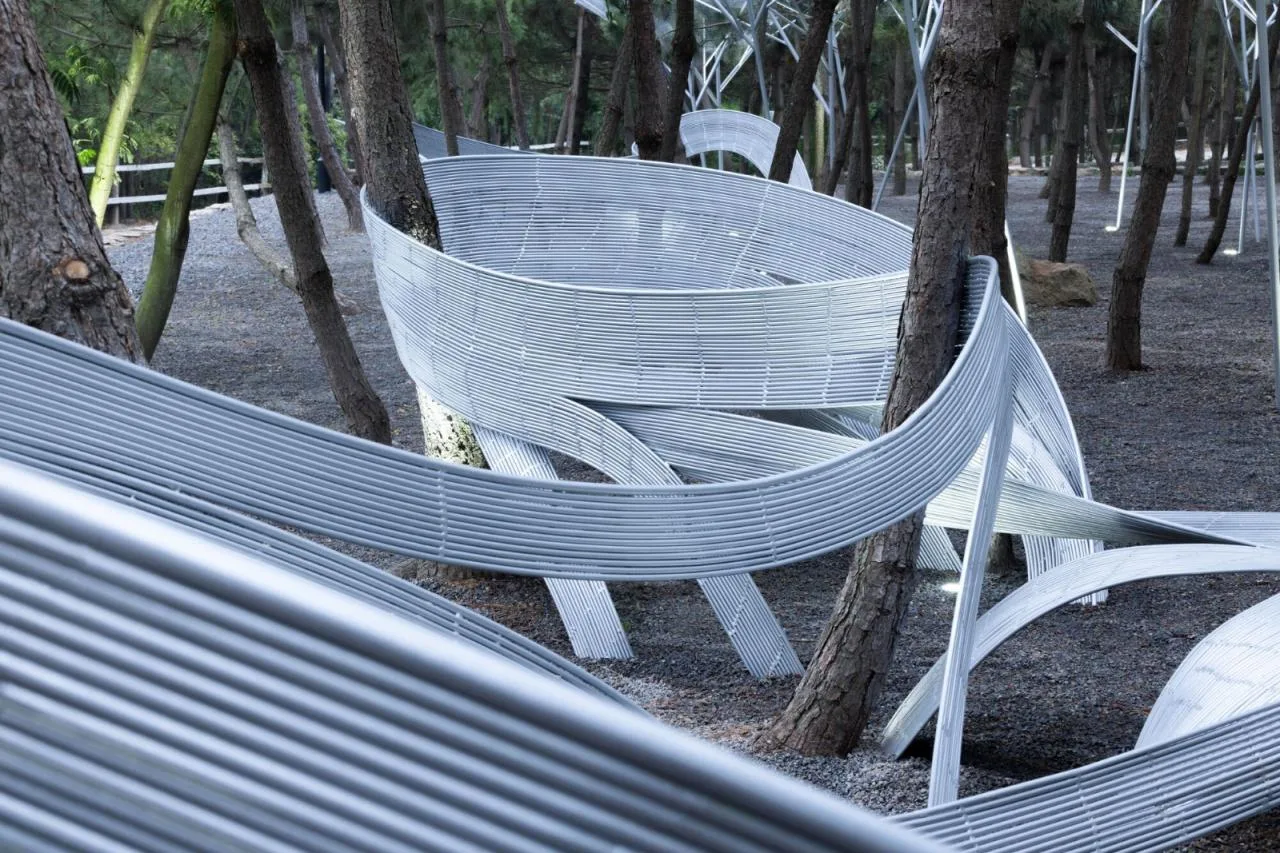
During the creation of the “Songyi Theater” in YunGuo Mountain Tea Garden Art Zone, I found inspiration in the warm spring setting. My favorite moments were spent sitting under pine trees, sharing conversations with workers. One day, while seated before eight pine trees arranged with natural elegance, I envisioned using these trees to form an engaging object. Inspired by Yuan Mei’s six-pine pavilion, I imagined eight pine trees serving as chairs, designed to resemble the graceful form of a beautiful woman’s seat. This concept was quickly sketched onsite, featuring a curved line weaving between the trees.
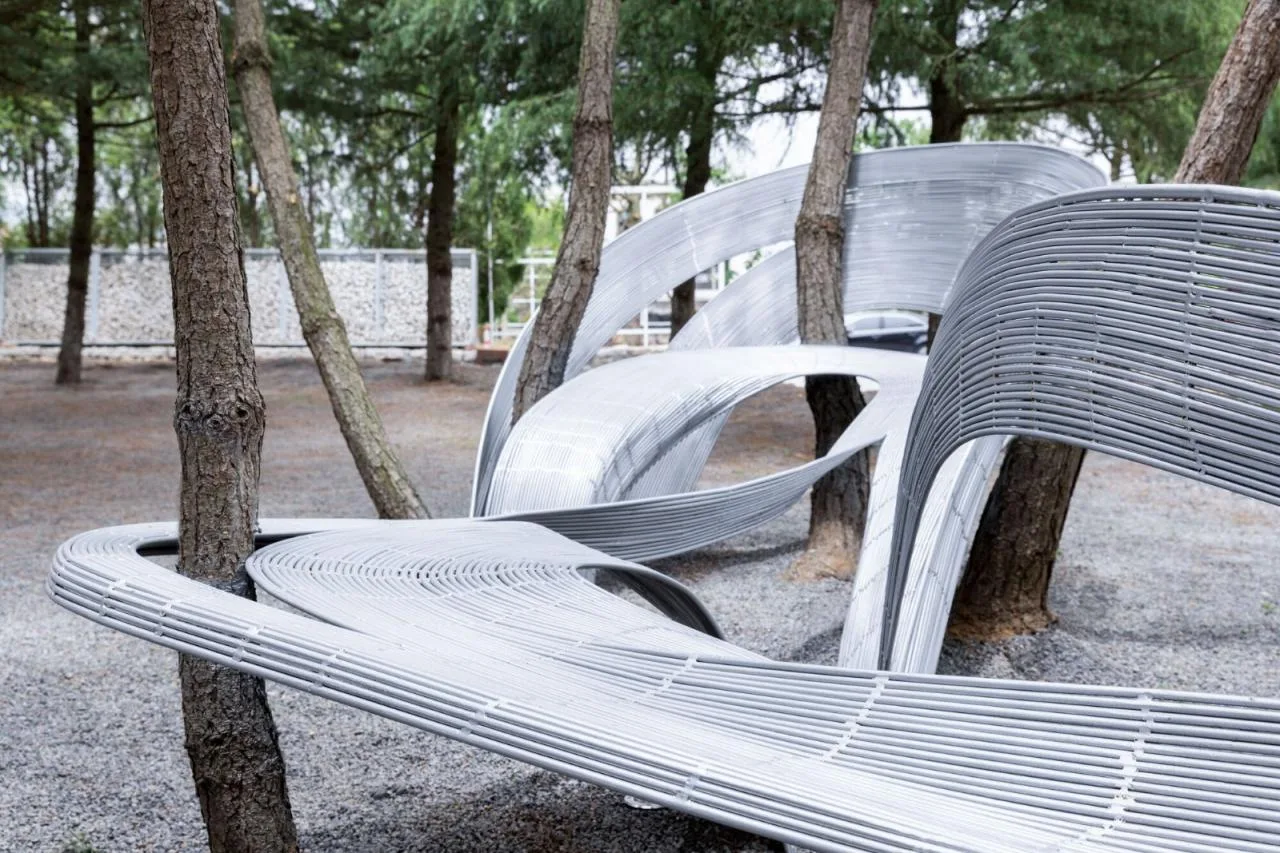
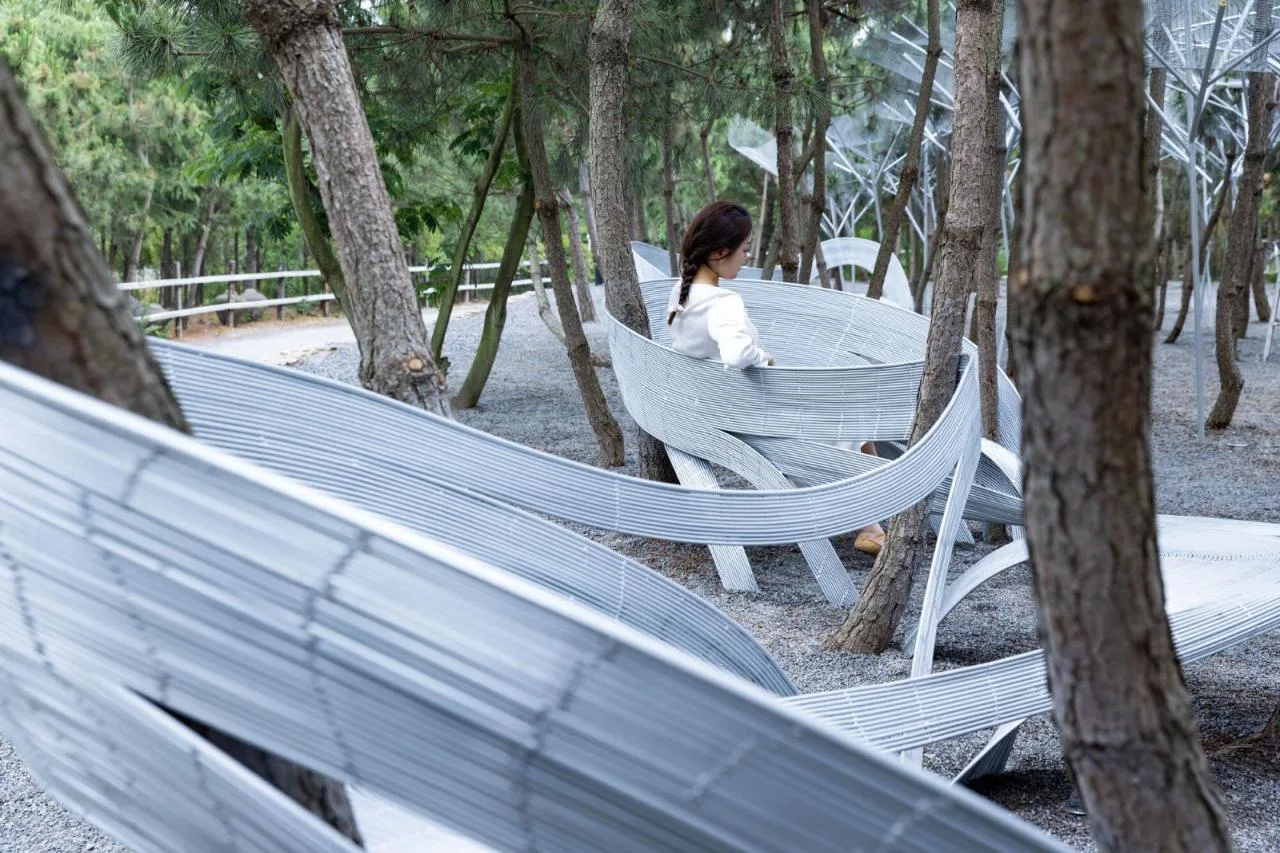
The “beauty relies on beauty” concept refers to a distinct type of independent furniture in traditional Chinese architecture and gardens. Such pieces can connect semi-outdoor spaces like attic overlaps and courtyards, integrate with outdoor corridors, or stand alone apart from pavilions. The most enchanting setting is by a streamside pavilion, where a graceful figure leans gently, accompanied by the soft murmur of flowing water.
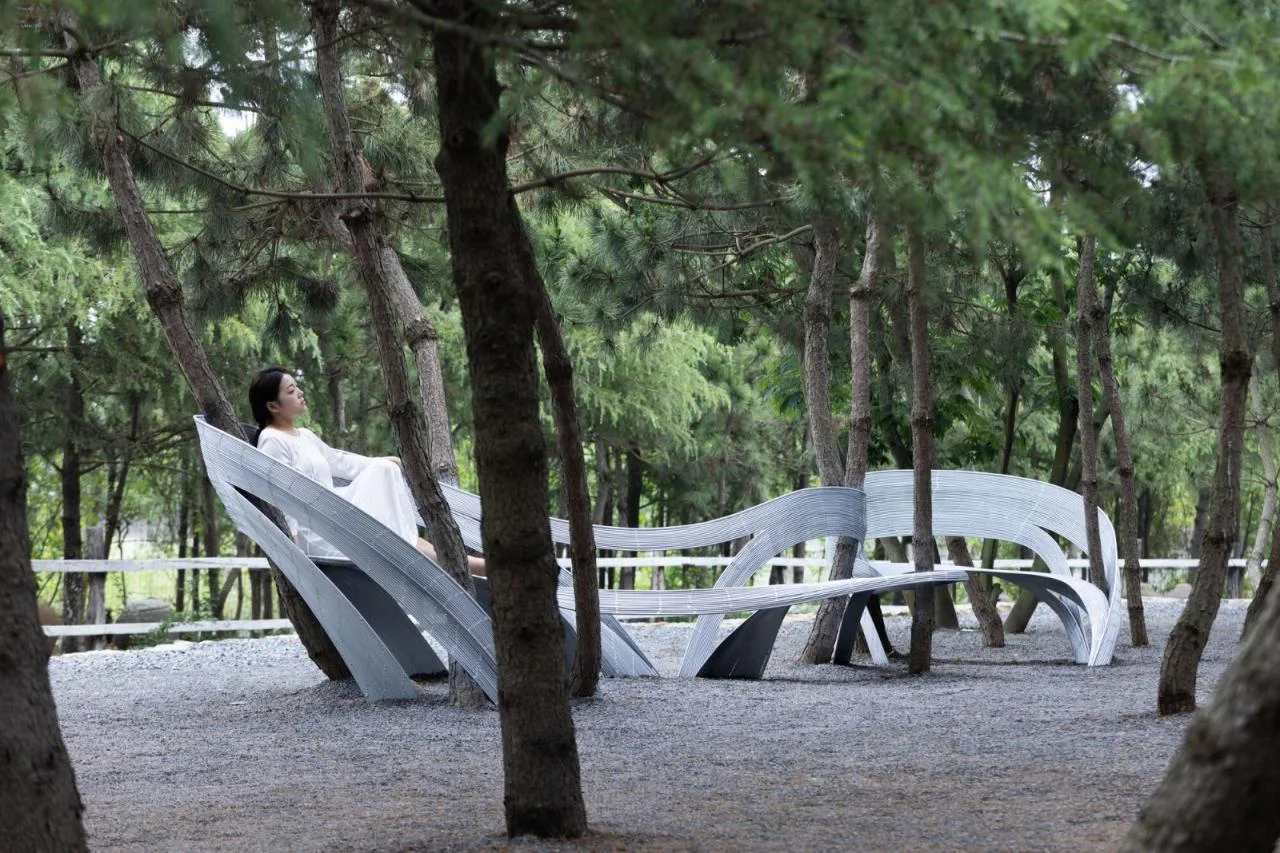
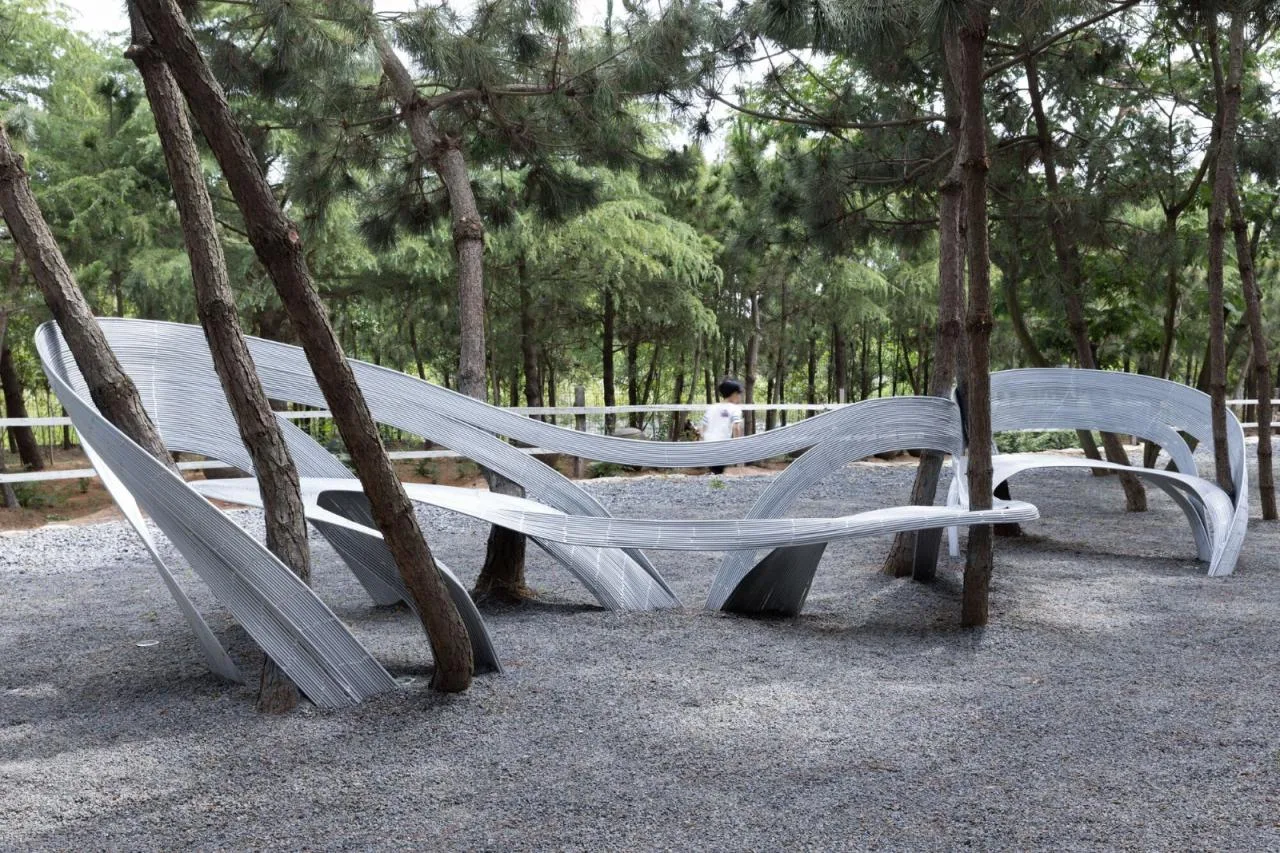
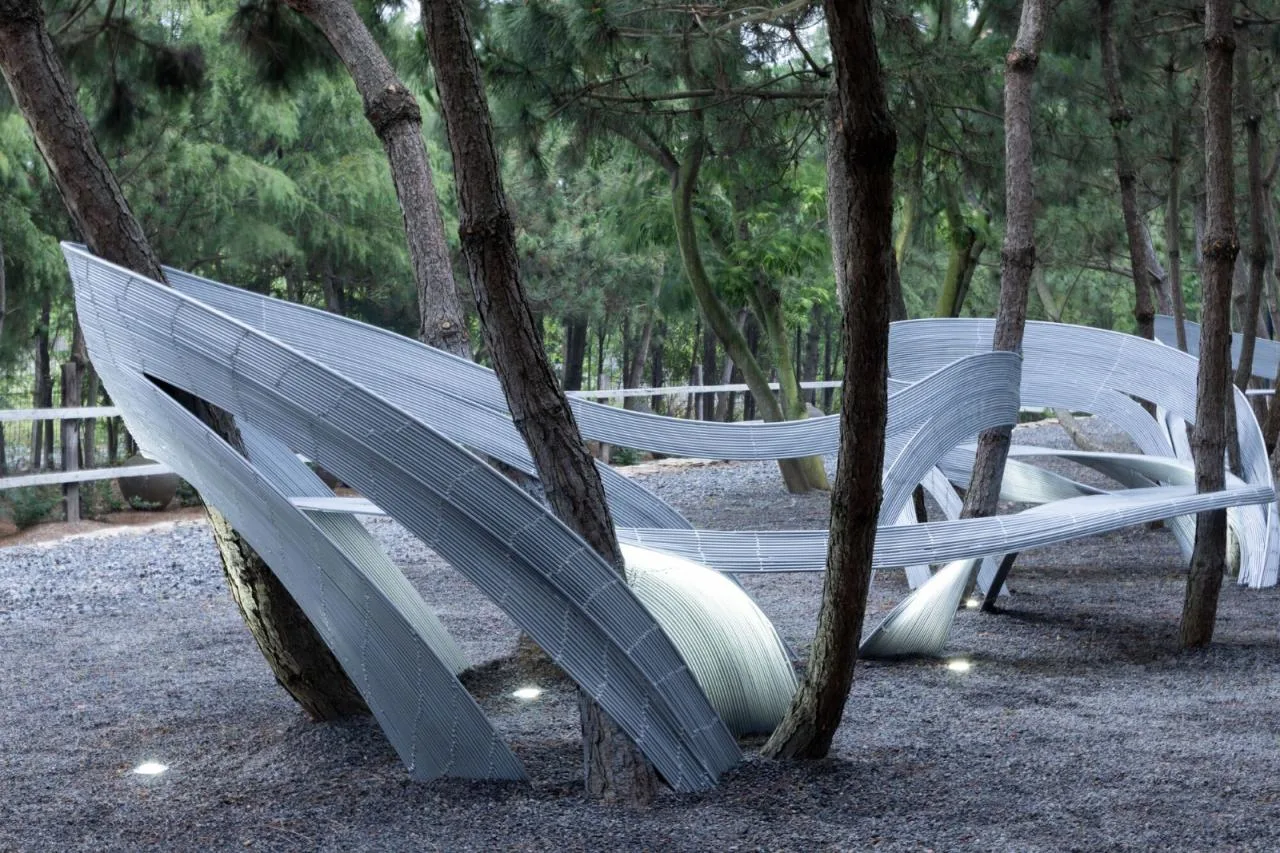
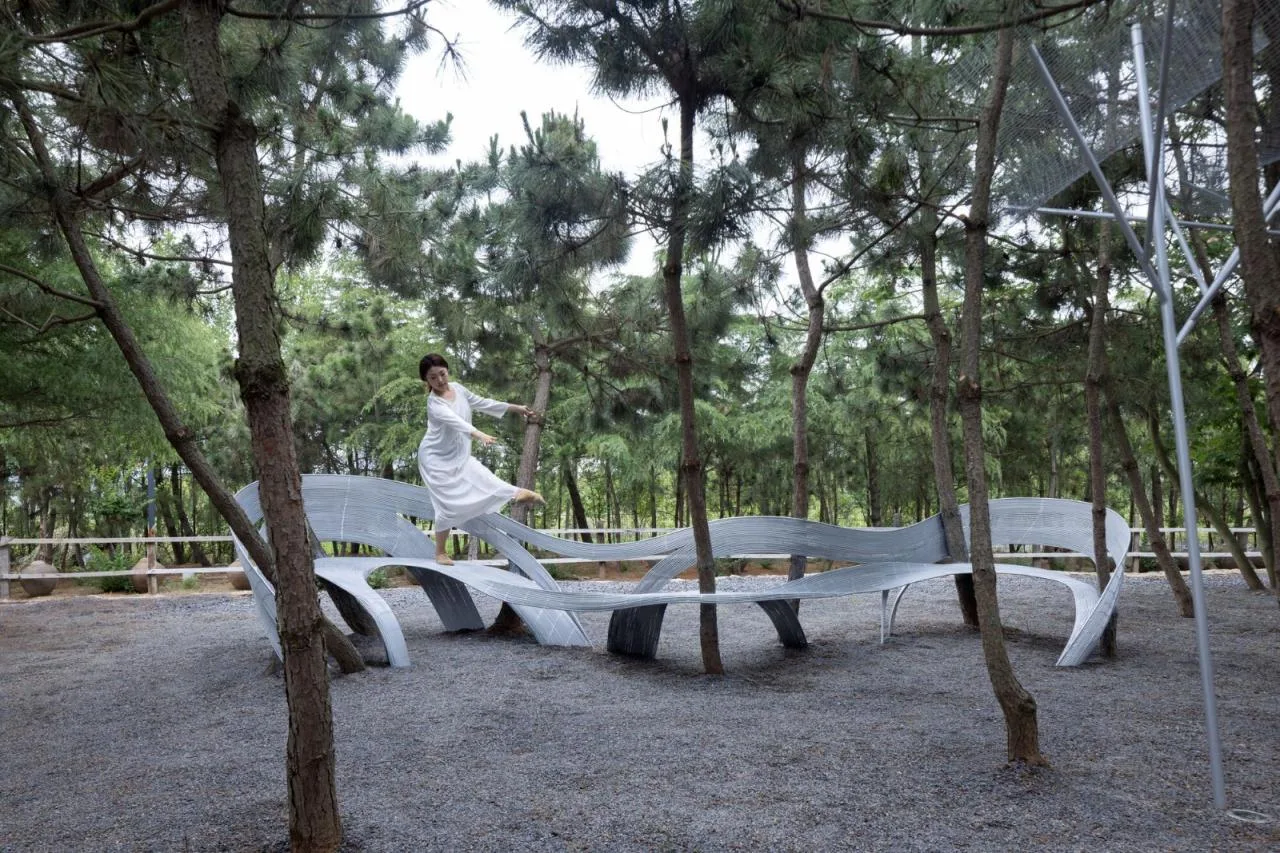
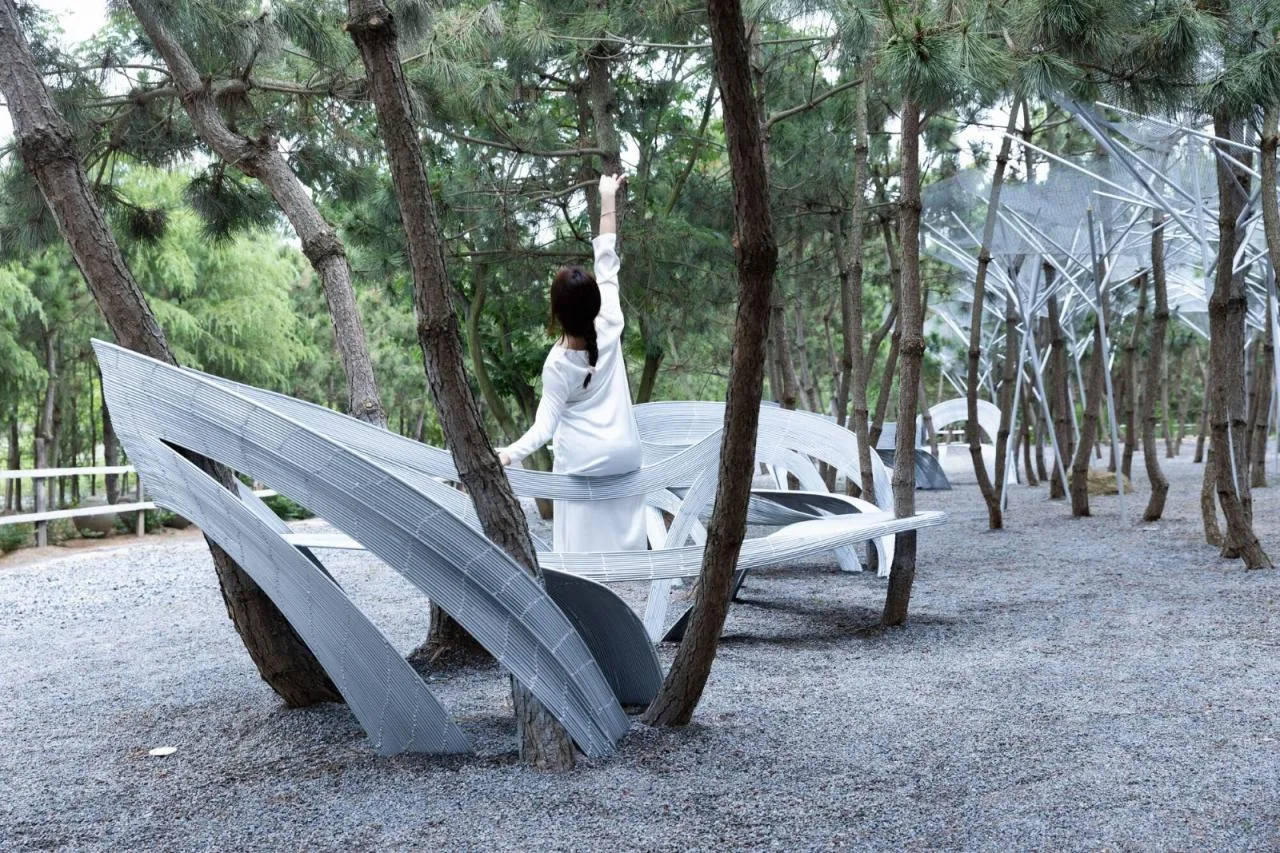
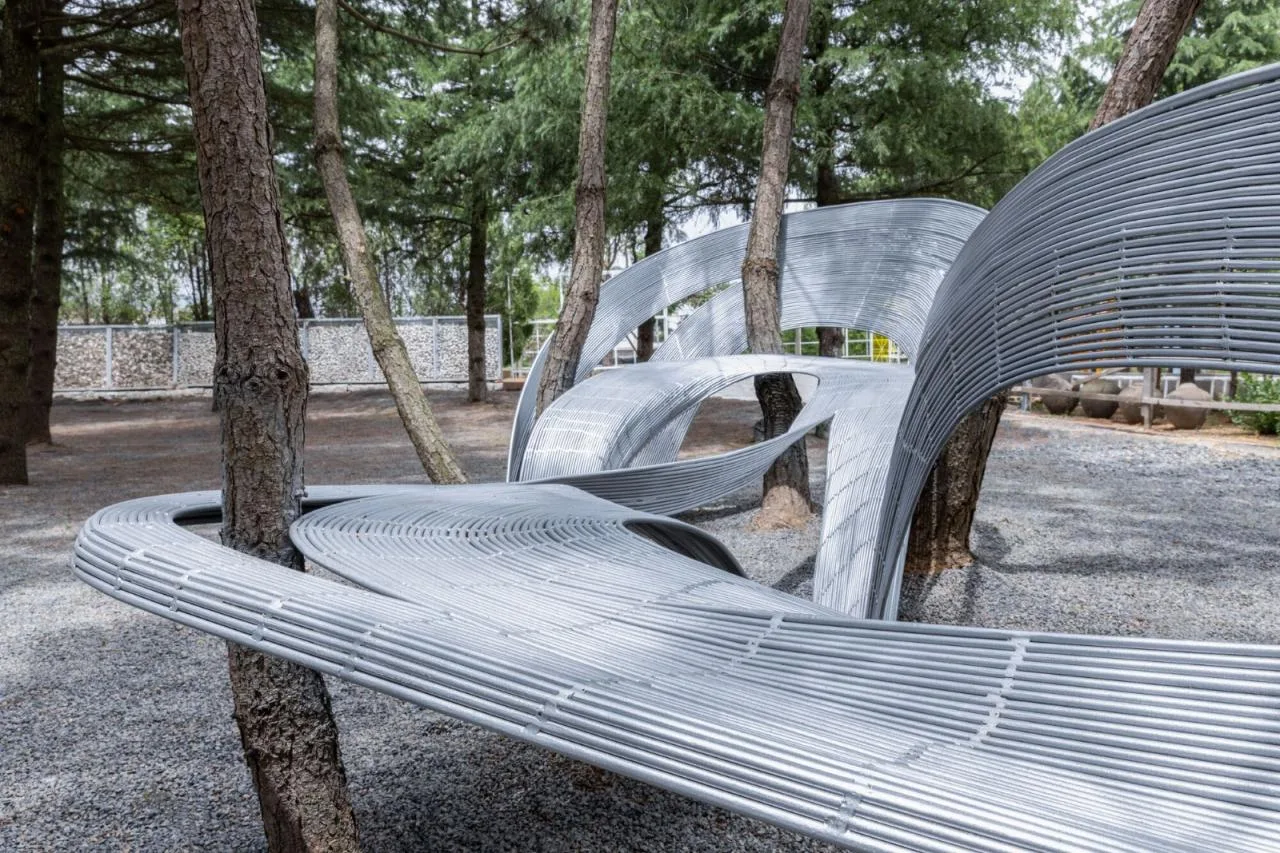
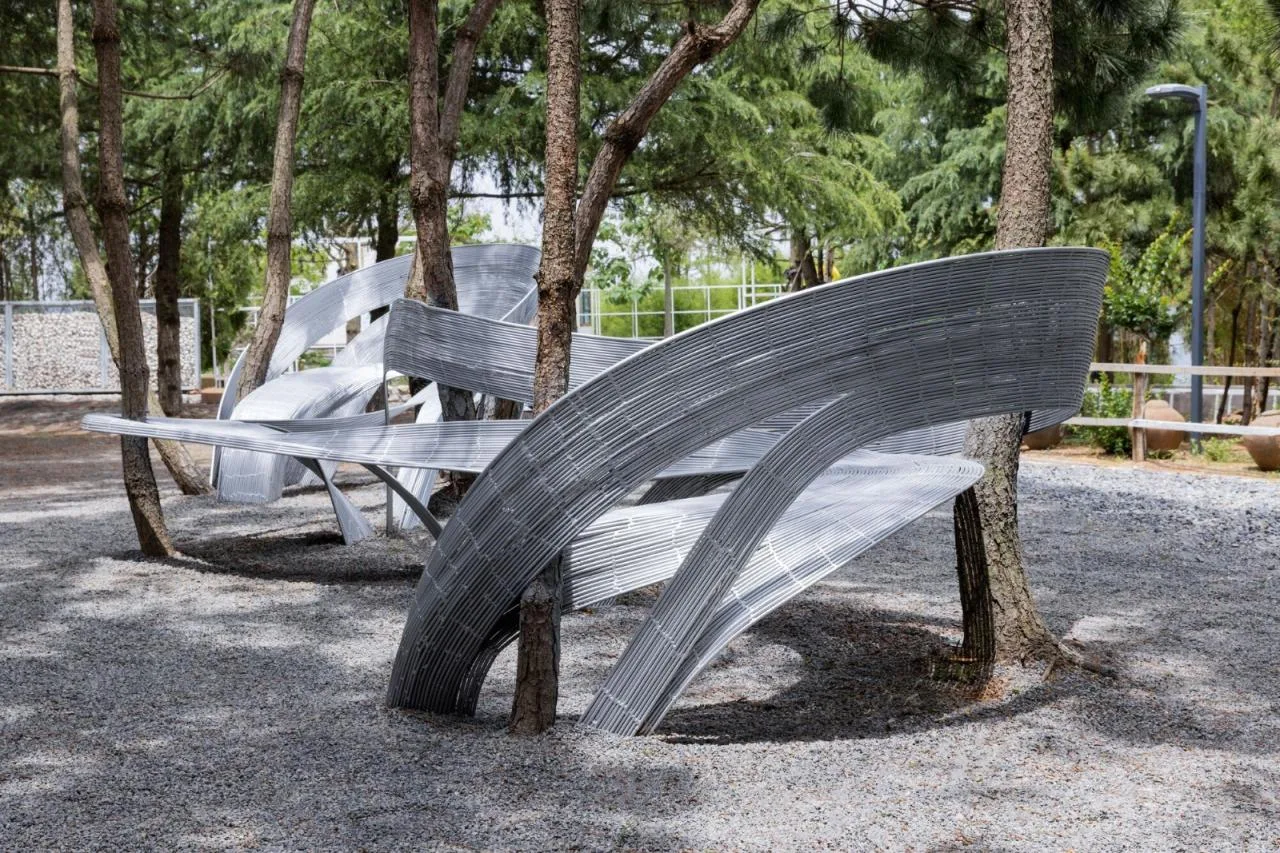
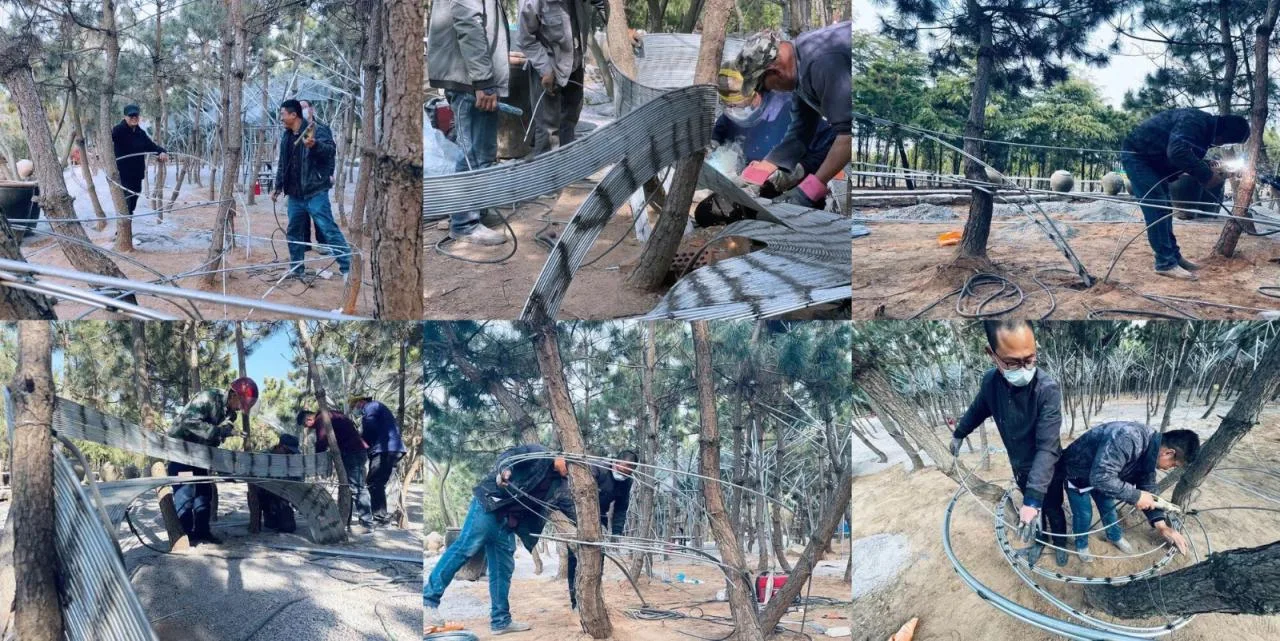
Striving to balance strength and elegance in the design, steel became the ideal material to realize the flowing, curved form. I chose a sculptural approach to construction. Because of the complex spatial relationships among the pine trees, precise surveying was impractical. Instead, my team and I relied on intuition, shaping three steel curves weaving between eight pines to unify the trees into a cohesive whole.
The upper curve forms the backrest where the figure leans, while the two lower lines define the front and rear edges of the seat. After marking the contours, vertical steel reinforcements were added for support. The curved steel bars were anchored into the ground and connected at intersections through repeated adjustments to ensure smooth transitions. Due to steel’s toughness, achieving gentle curves required significant effort, especially at critical bends, which highlight both craftsmanship and beauty.
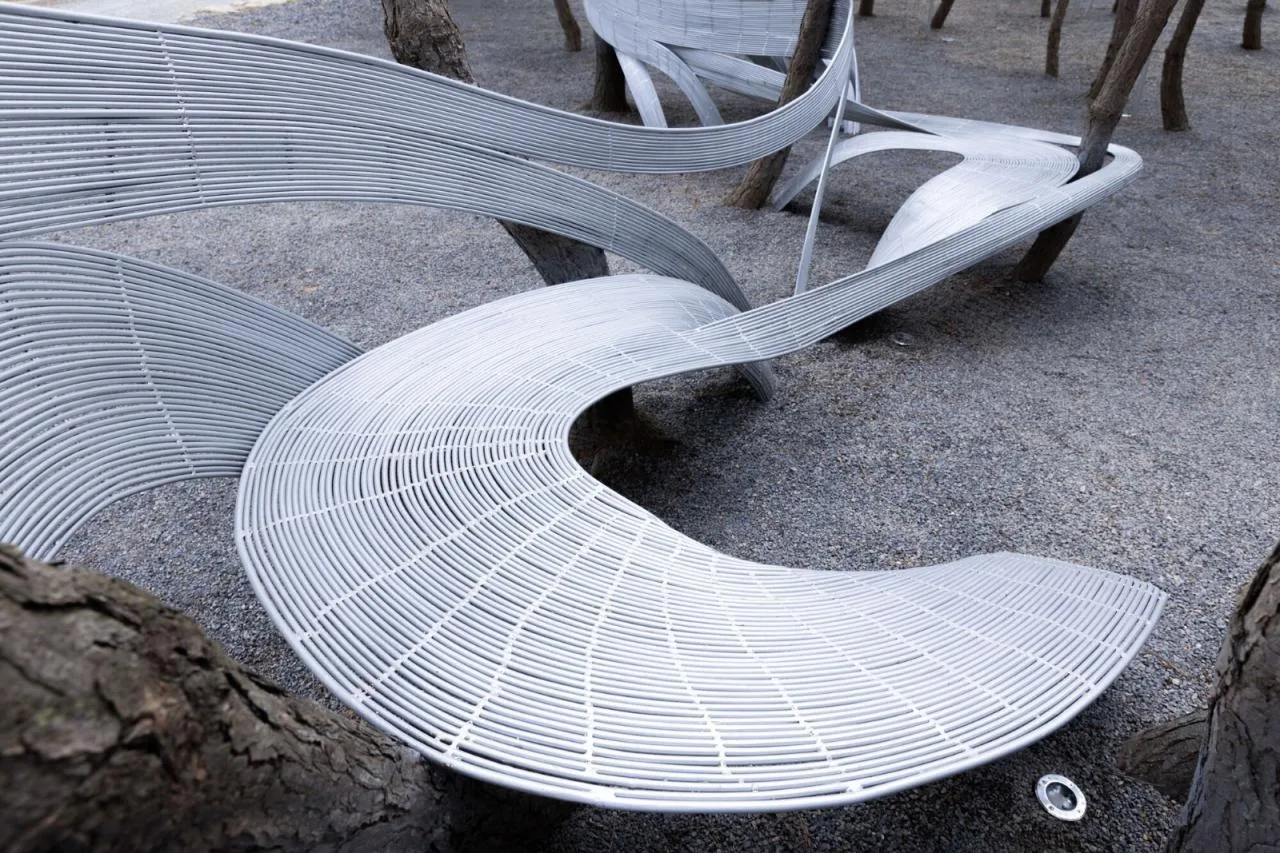
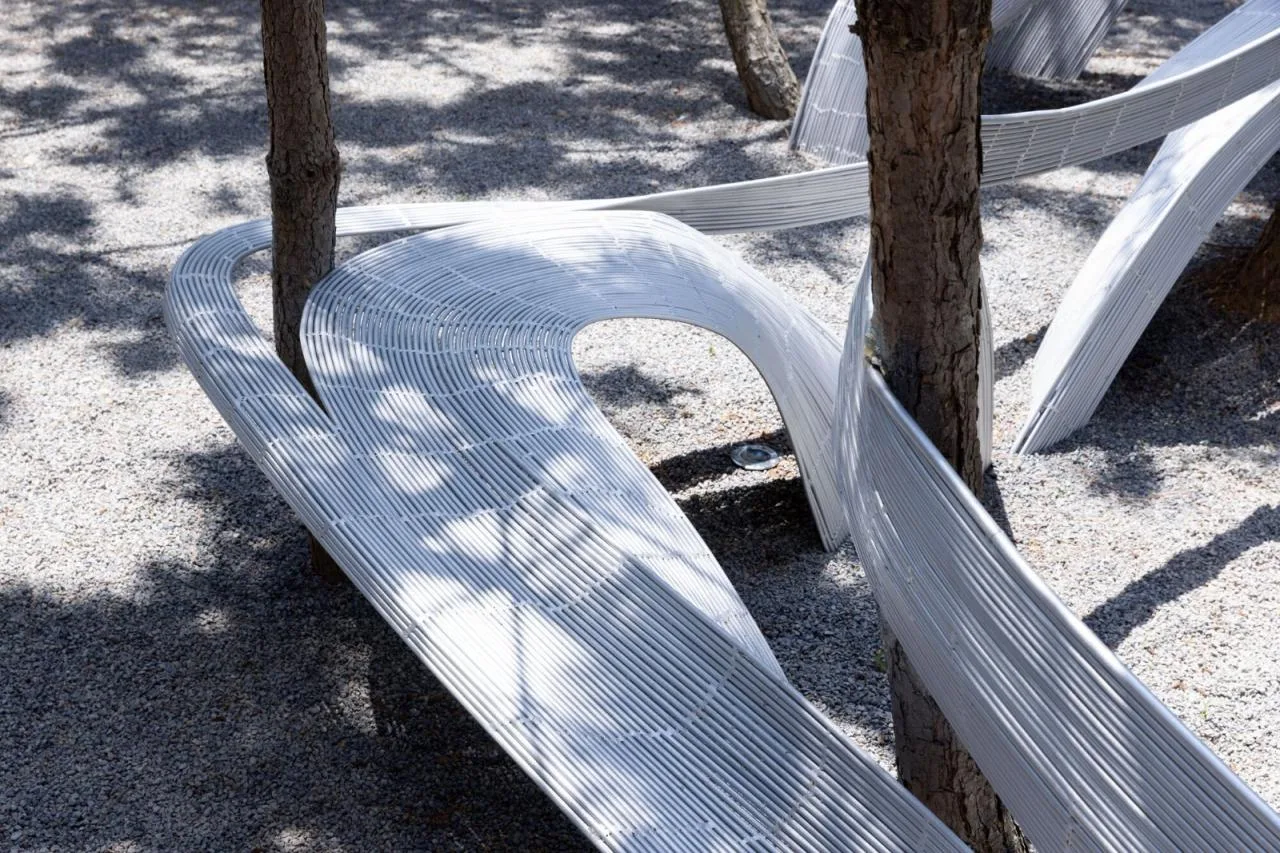
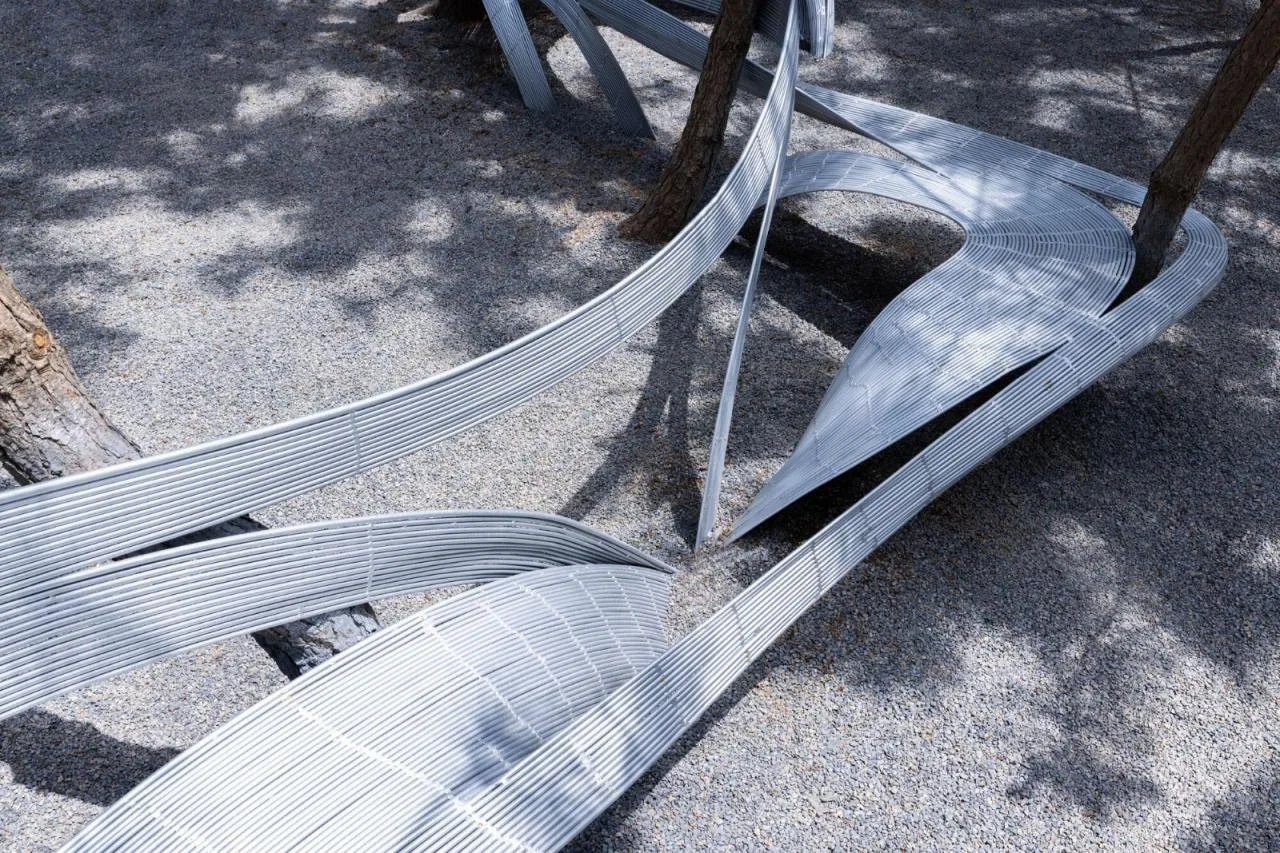
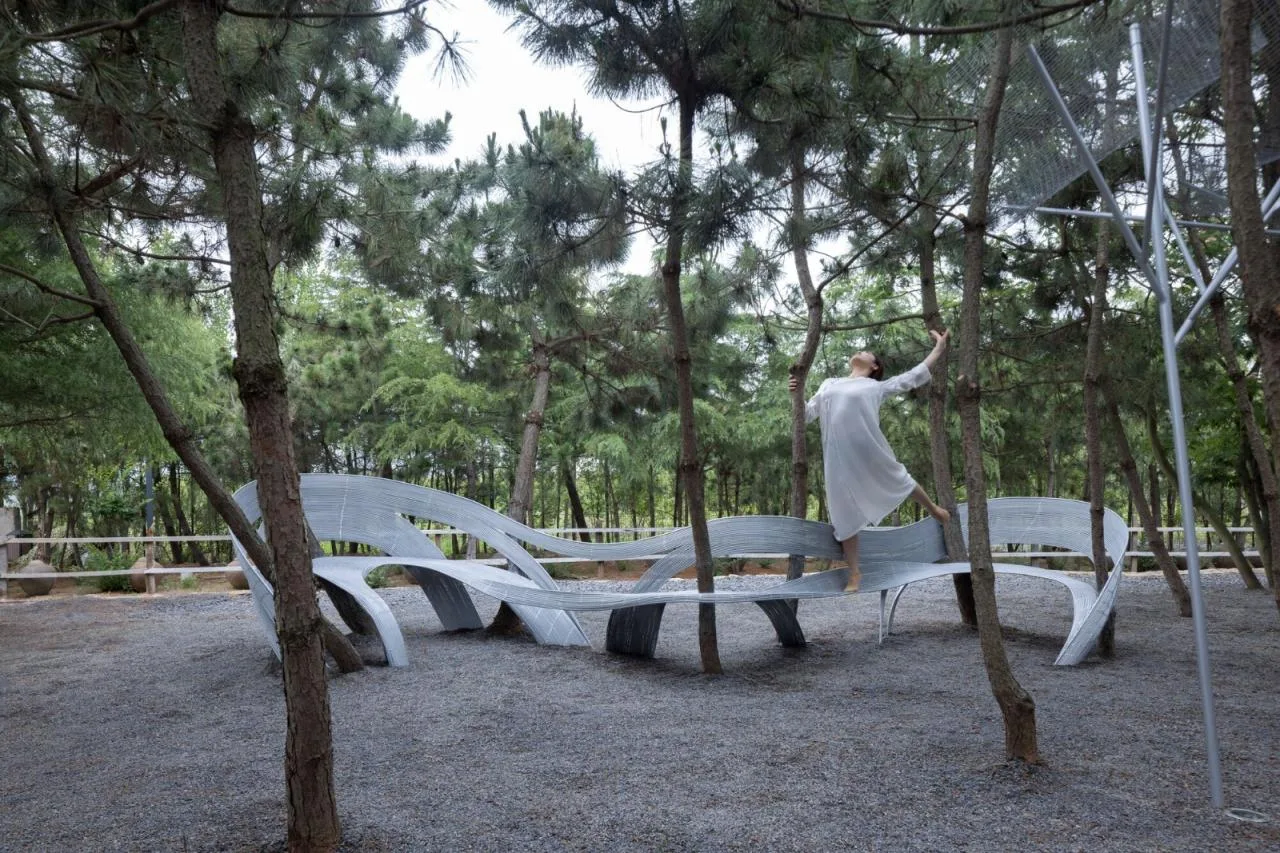
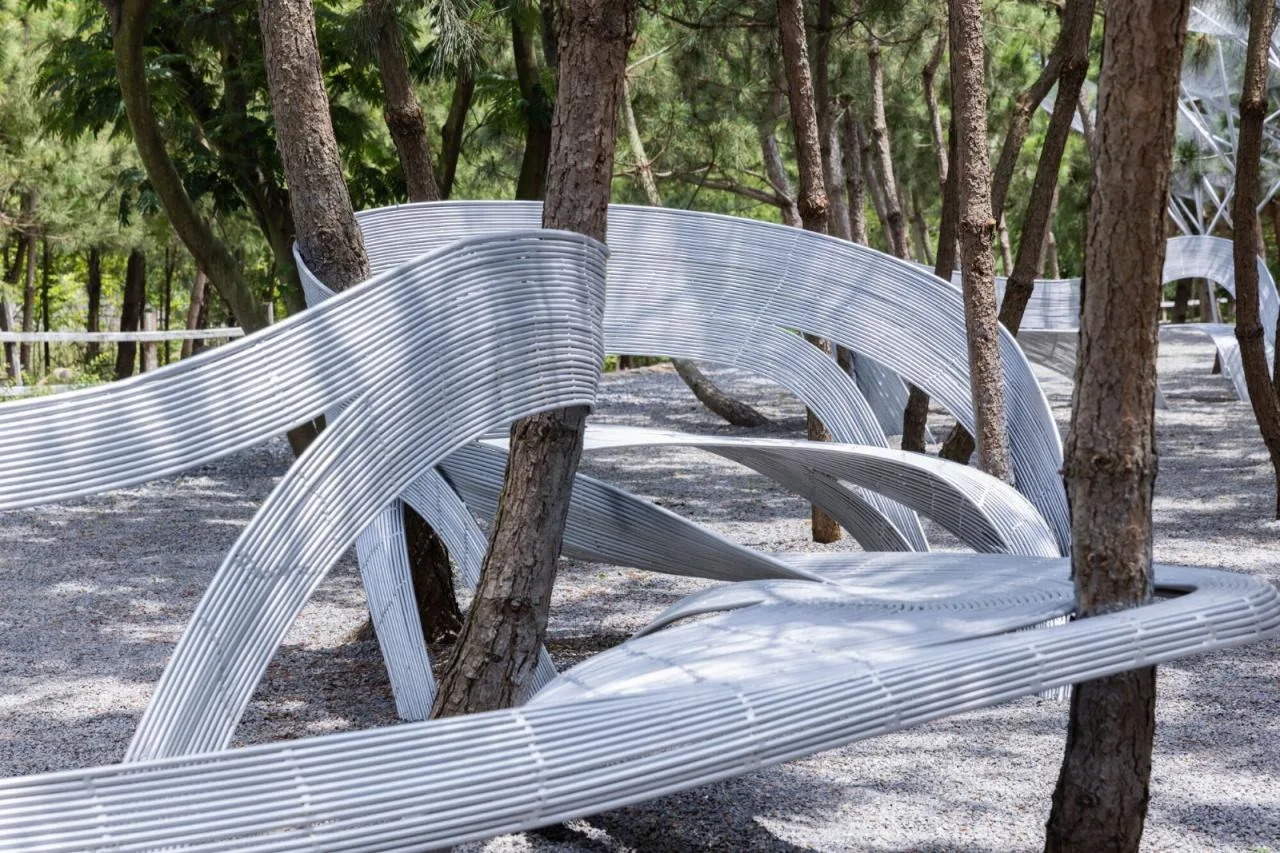
Once the steel frame was completed, the seating surface was constructed using parallel steel bars aligned in the same direction. This organic curve weaves through the pine trees like a flowing Milky Way, evoking the poetry of Su Shi: “Those who flow without returning are like water; those who do not change with the times are like pine and cypress trees.”
Su Shi, a revered literary figure, led a life filled with challenges yet embodied the resilience and adaptability of flowing water. The steel bars threading through the pine trees symbolize this vitality, capturing Su Shi’s enduring spirit. In tribute, this piece was named “Su Zi Beauty.”
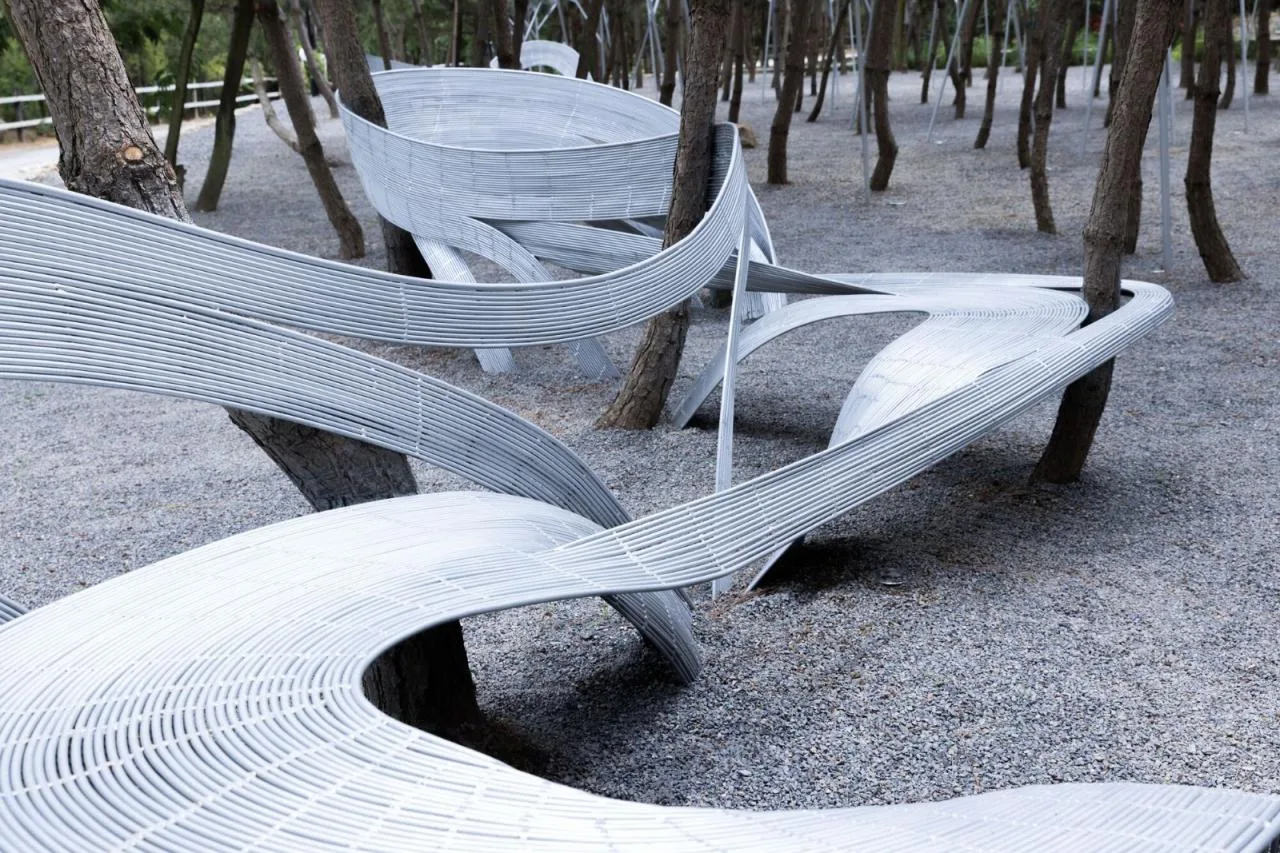
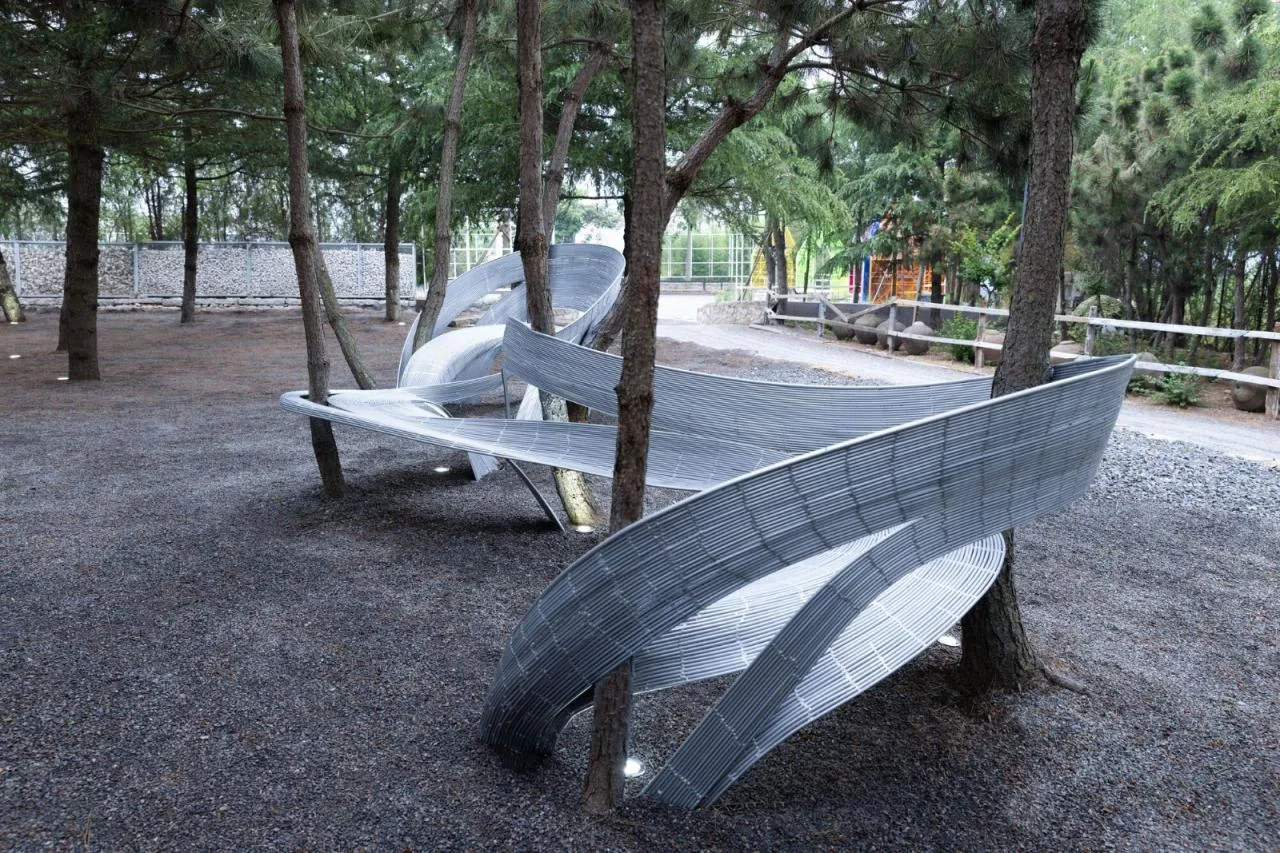
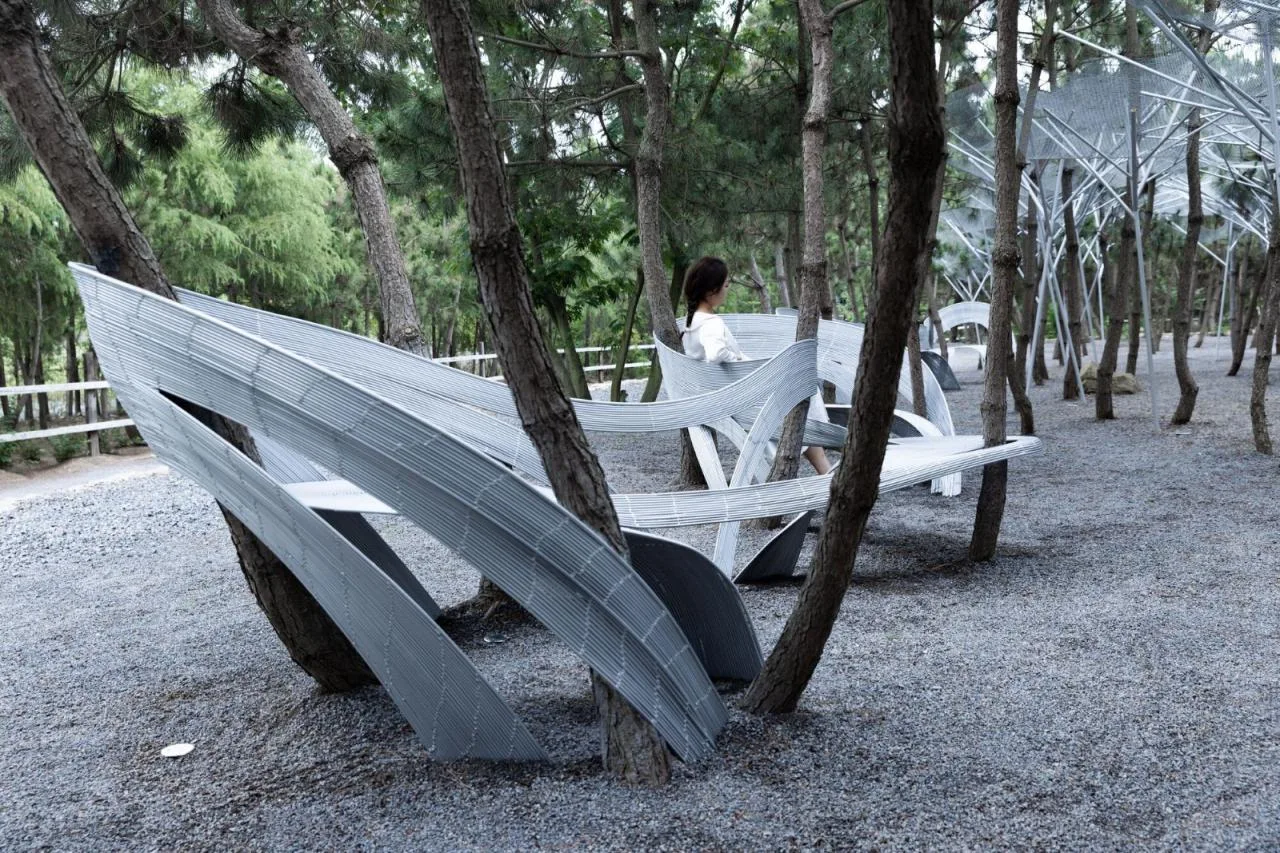
Louis Kang, a close collaborator familiar with materials, emphasizes the importance of understanding the voice of materials. Steel reinforcement, typically concealed within concrete in urban projects, is often overlooked due to its raw texture and lack of refinement. However, in rural construction, steel rebar has been rediscovered and repeatedly embraced for its unique advantages.
Steel bars offer high strength, toughness, malleability, and cost-efficiency, making them ideal for projects relying heavily on skilled onsite craftsmanship. Thin bars under 10mm are slender and flexible but provide limited support. Bars between 10-16mm combine sufficient strength with excellent formability achievable by manual bending. By harnessing steel bars of various diameters, structures gain both support and freedom of movement, allowing them to “dance” in space.
By respecting material properties, adapting to local building practices, and fostering a collaborative relationship with materials, new levels of efficiency, practicality, and beauty are achieved.
Through multiple design and construction experiences, the spirit of craftsmanship has firmly rooted itself in rural building projects. Key principles include establishing core guidelines while maintaining flexibility, adopting cost-effective strategies, and fostering deep communication.
Local craftsmen serve as the vital link between design and materials, their skill and force application varying individually. Because the work is hands-on, the precise amount of force needed to achieve desired effects depends on their experience. Designers must communicate closely with them to ensure smooth collaboration. Craftsmen’s feedback often leads to timely adjustments on difficult aspects, sometimes requiring architects to revise their plans. Yet, these interactions often result in unexpected creative refinements, enriching the project with room for innovation.
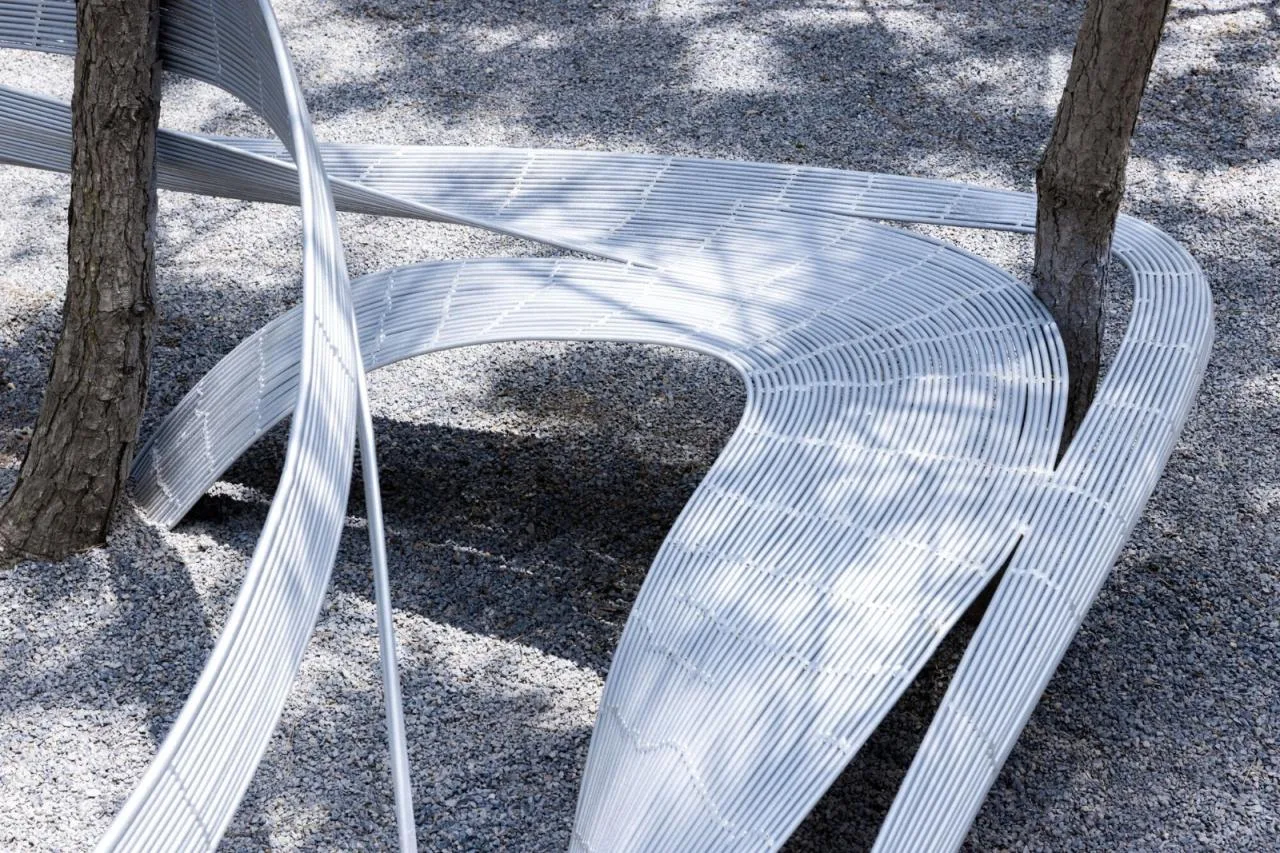
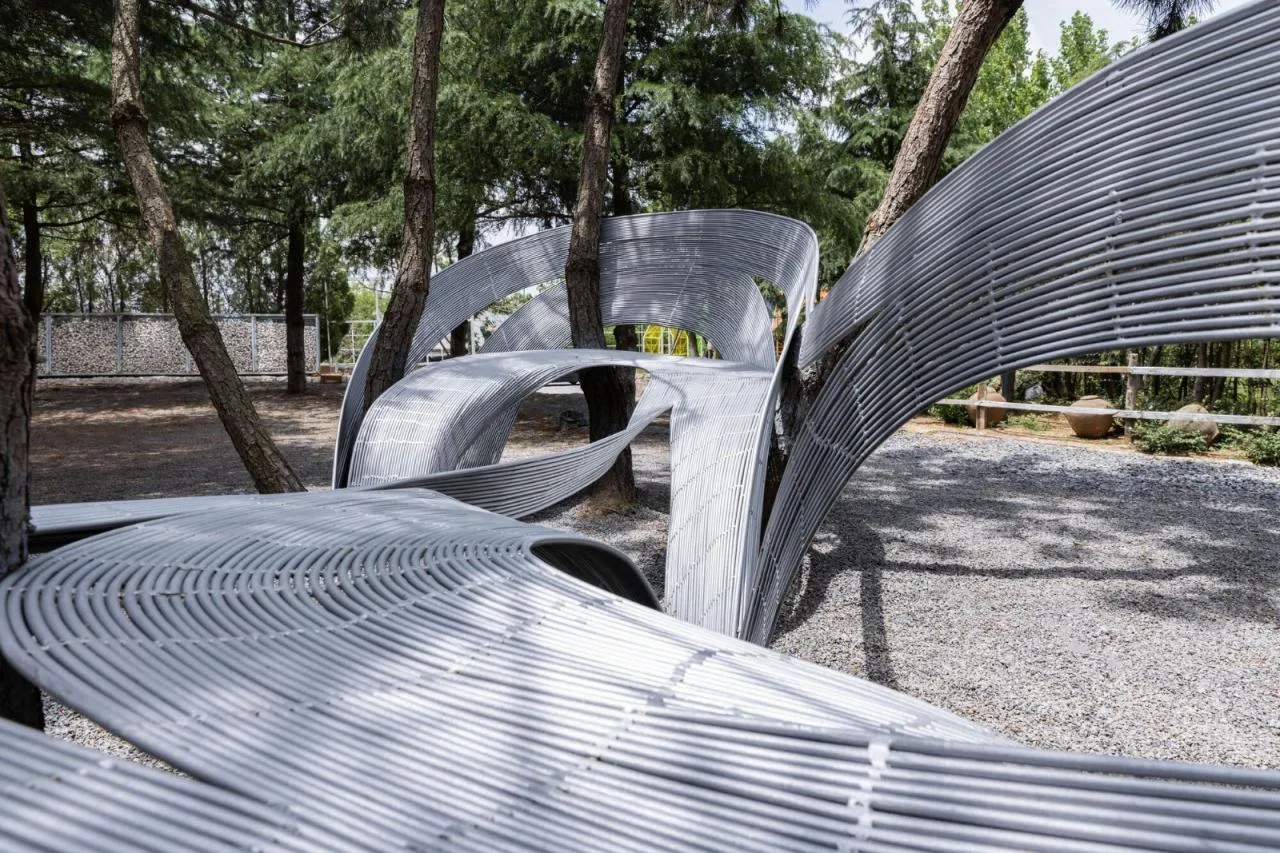
Art, nature, and human beauty converge not only in natural outdoor seating but also through objects that enhance the aesthetic experience within nature. Situated under the shade of eight pine trees, this seating accommodates over ten people, becoming both a functional and visual centerpiece.
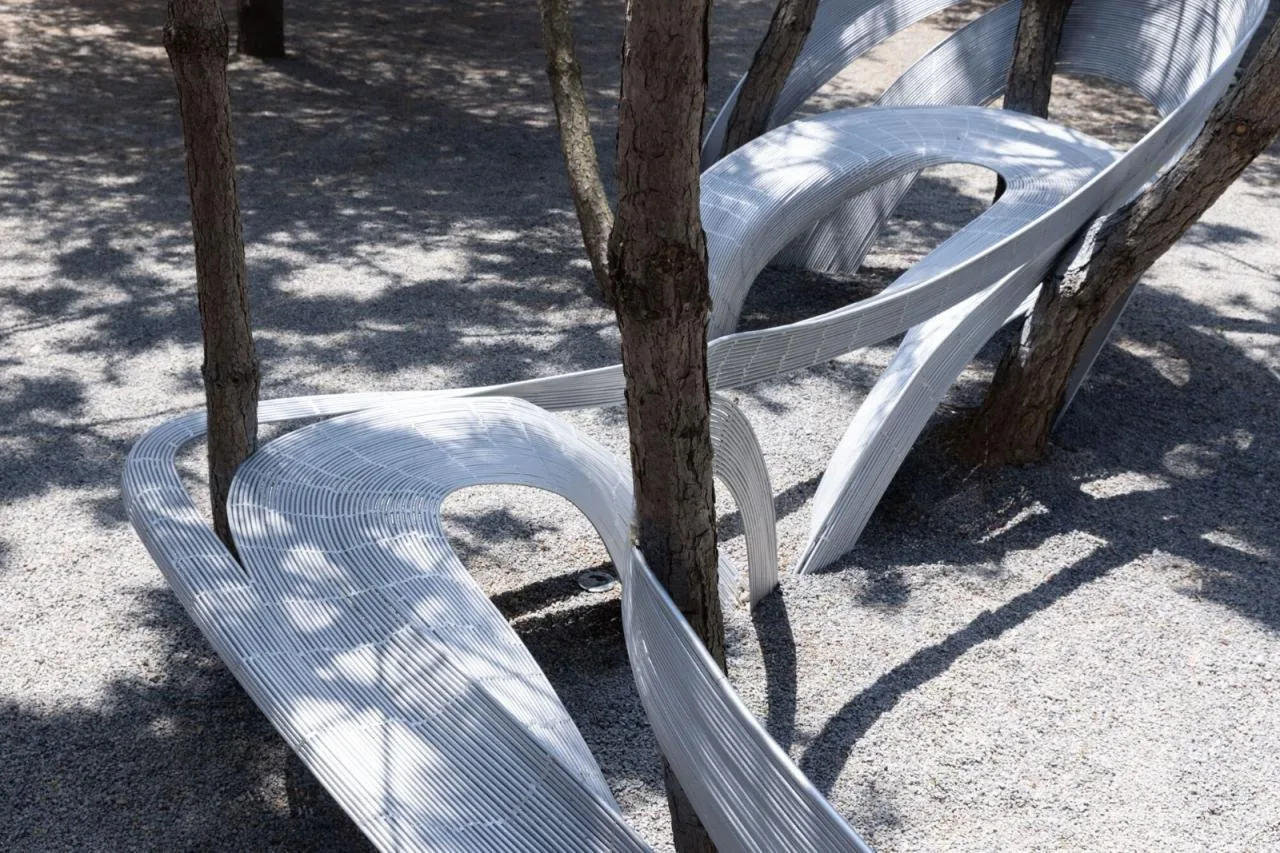
With its smooth, dynamic lines, the piece resembles an elegant contemporary artwork nestled in the pine forest, outlining a flowing Milky Way against the firm greenery. It invites neighbors to chat, children to play, couples to take photographs, and dancers to perform. Through its interaction with diverse groups, “Su Zi Beauty” becomes a bridge connecting nature, art, and humanity.
Project Information
Architect: Kong Xiangwei Studio
Area: 20 m²
Year: 2023
Photographer: Literal translation of architectural photography
Chief Creative Designer: Kong Xiangwei
Design Team: Cui Jun, Peacock, Gao Zhuojian
Location: Yantai












Must log in before commenting!
Sign Up