
Recently, the final winners of the 15th IAI Global Design Awards 2023 were announced. Among numerous global entries, Fan Pu’s project, Architectural Scheme Design for Urban Renewal Project in Toppan Printing Industrial Zone, earned the prestigious IAI Global Design Architecture Gold Award, marking a remarkable achievement.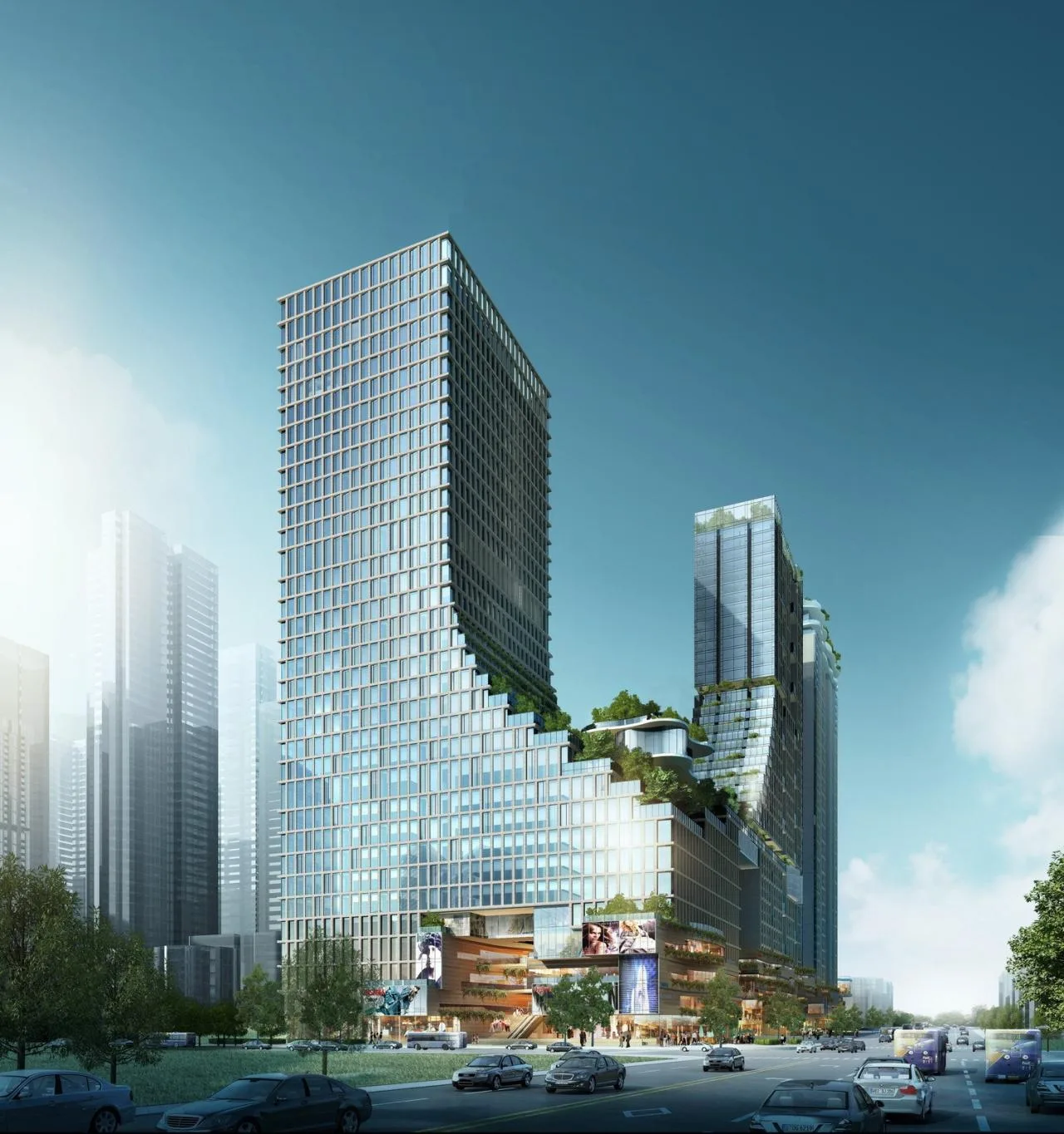
Urban renewal of the letterpress printing industrial zone © Fanpu Design
01 Project Concept
In its pursuit of creativity and innovation, the Shenzhen Municipal Government aims to establish the city as China’s future “Design Capital.” The letterpress printing industrial zone is situated in the Xin’an Shangchuan area of Bao’an District, Shenzhen. It lies adjacent to the urban development axis along Chuangye 2nd Road, with Qianhai to the south, the Liuxiandong headquarters base to the east, and Honglang North Station on Metro Line 5 nearby.
This area is a dense mix of residential and industrial zones, surrounded by ongoing urban renewal projects. Unfortunately, most surrounding landscapes are obstructed, with the closest green space being Dalang Community Street Corner Park, which spans only 3,500 square meters.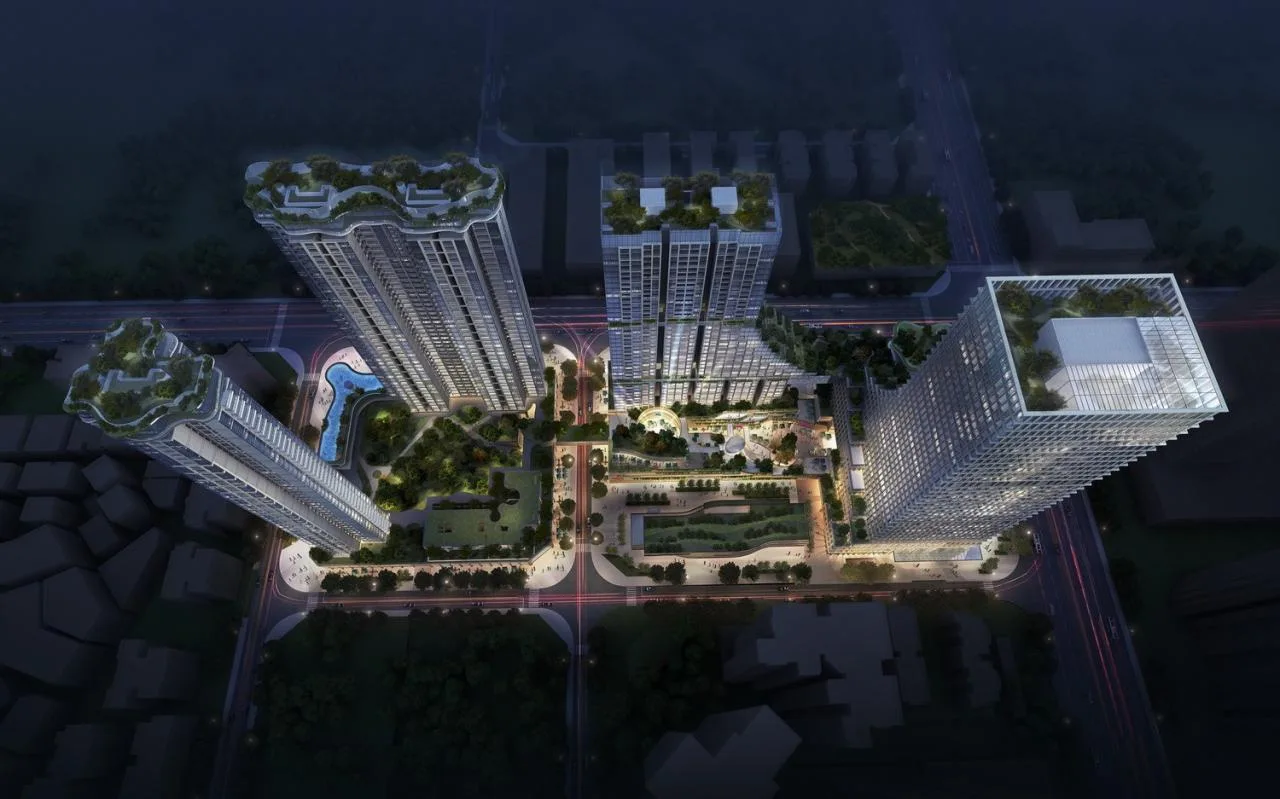
A bird’s-eye view of the project © Fanpu Design
The design embraces the concept of a “valley city,” aiming to develop a community living experience greater than the sum of its parts—with the philosophy of 1+1+1>3. It integrates four natural elements—mountains, water, trees, and clouds—to create a three-dimensional ecological city that fosters a close connection between residents and nature.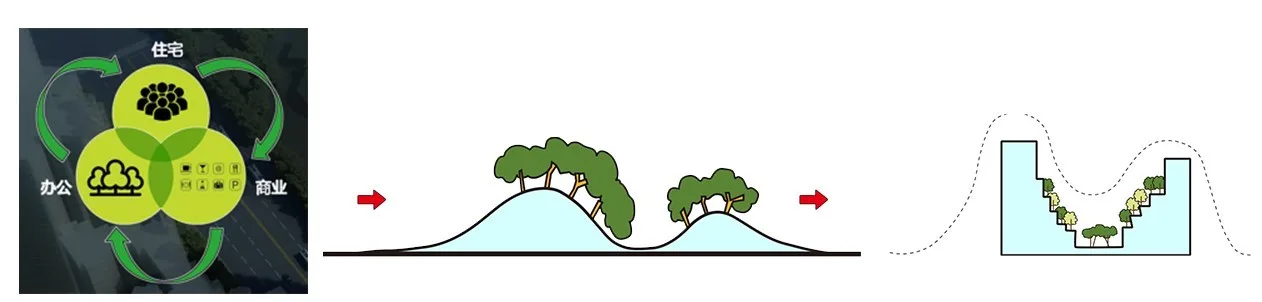
Design concept © Fanpu Design
The master plan is grounded in the community concept, featuring three distinct land parcels that frame an undulating skyline. A seamless commercial flow, resembling a mountain stream, weaves through the site. Indoor and outdoor spaces blend harmoniously, complemented by landscapes that evoke floating clouds dancing on the mountainside, creating the sensation of being in a serene natural valley.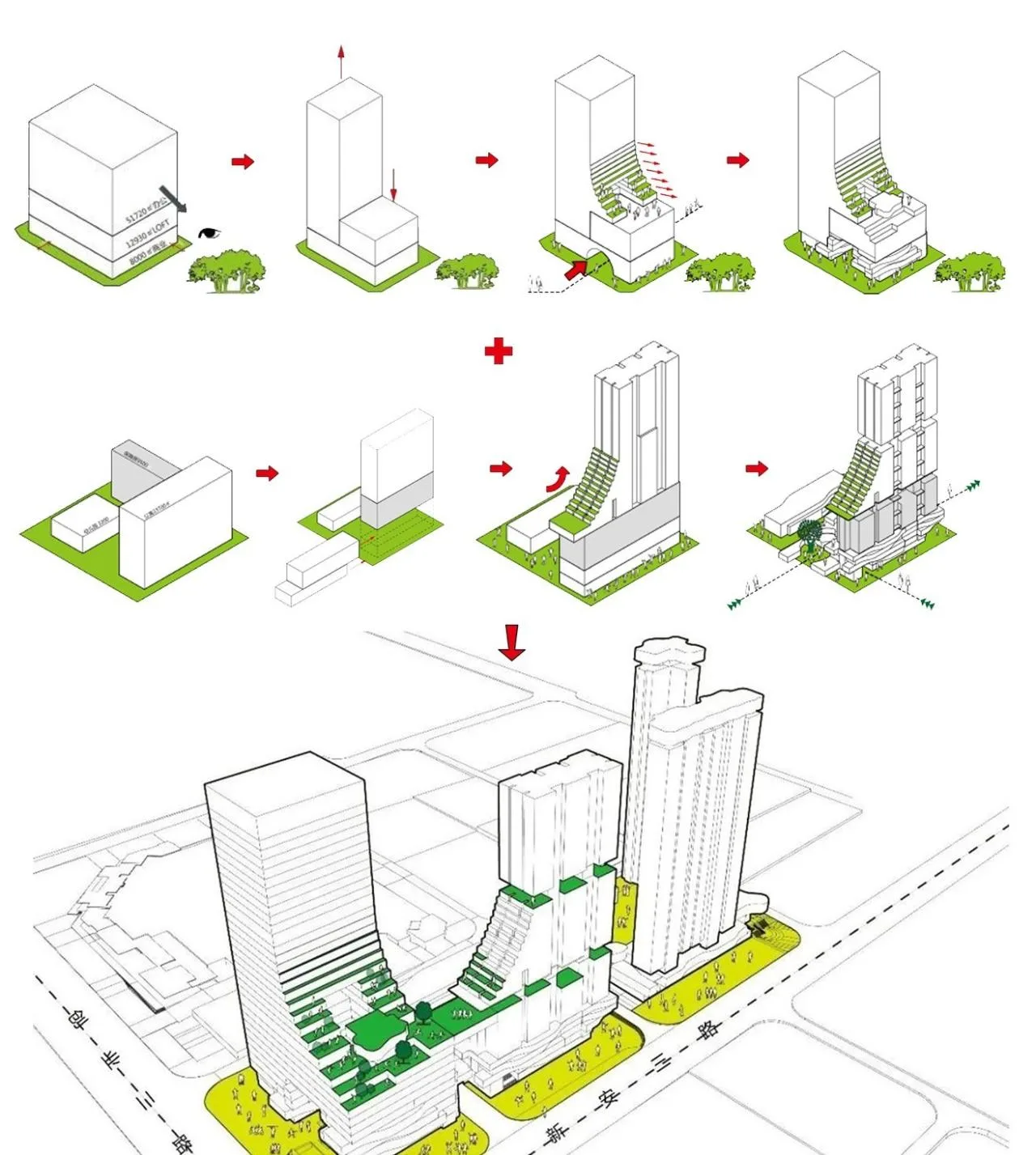
Block generation © Fanpu Design
02 Architectural Design
Creating an Experiential Commercial Hub Connected to the Subway
The project maximizes the potential of diverse functions—office, residential, education, and activity centers—while leveraging transportation hubs such as subway and bus stations. This fusion creates a vibrant, mixed-use commercial district that embraces culture, arts, and ecology.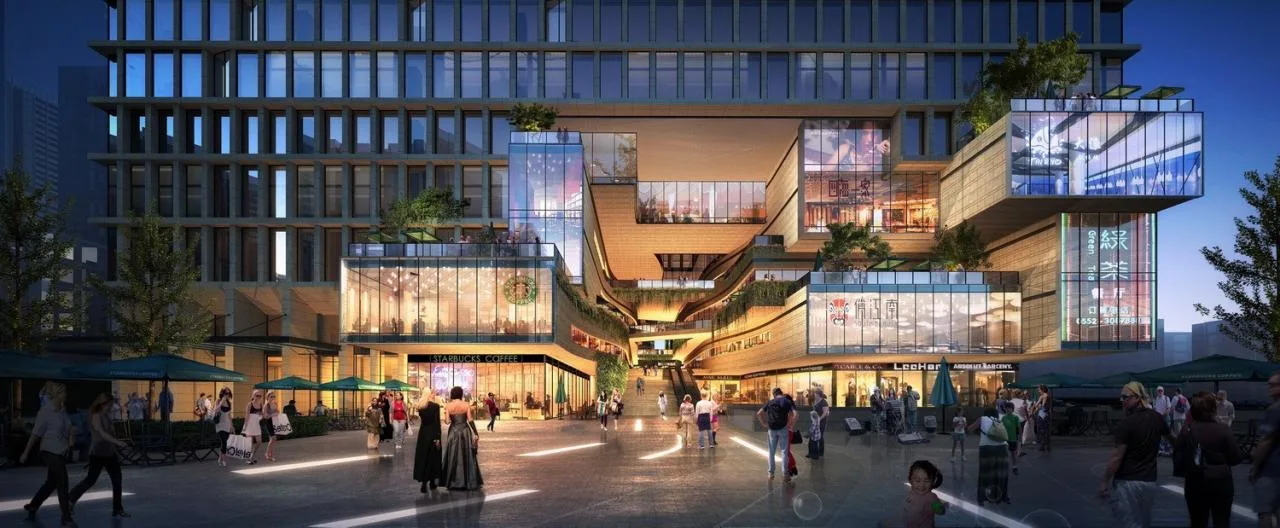
Commercial entrance © Fanpu Design
The scattered commercial zones across three plots are consolidated into a 30,000-square-meter themed commercial district integrated with public facilities. The design fully harnesses pedestrian flows from subways, bus stations, kindergartens, and more, connected via a two-level platform system that defines clear commercial routes and a comprehensive slow-traffic network.
Public activity spaces such as sunken courtyards, atriums, rooftop terraces, second-floor corridors, and outdoor green squares form a multi-layered, leisure-focused green environment. This approach mitigates urban heat island effects, enhances the ecosystem, and provides a comfortable, healthy space for the community, while optimizing limited land and boosting commercial value. Clear commercial flow lines establish an orderly connection between indoor and outdoor spaces, enriching the shopping experience.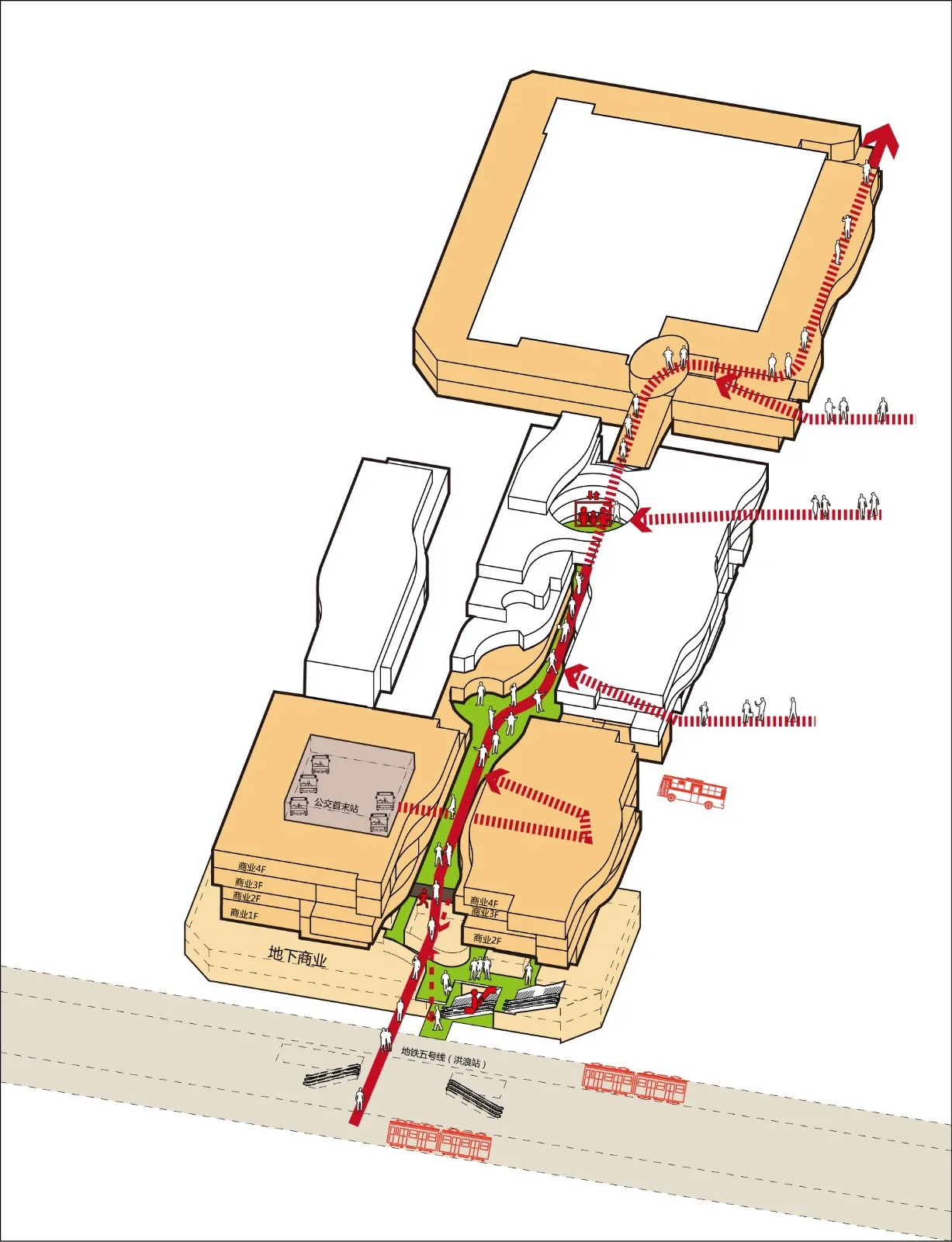
Horizontal commercial flow analysis © Fanpu Design
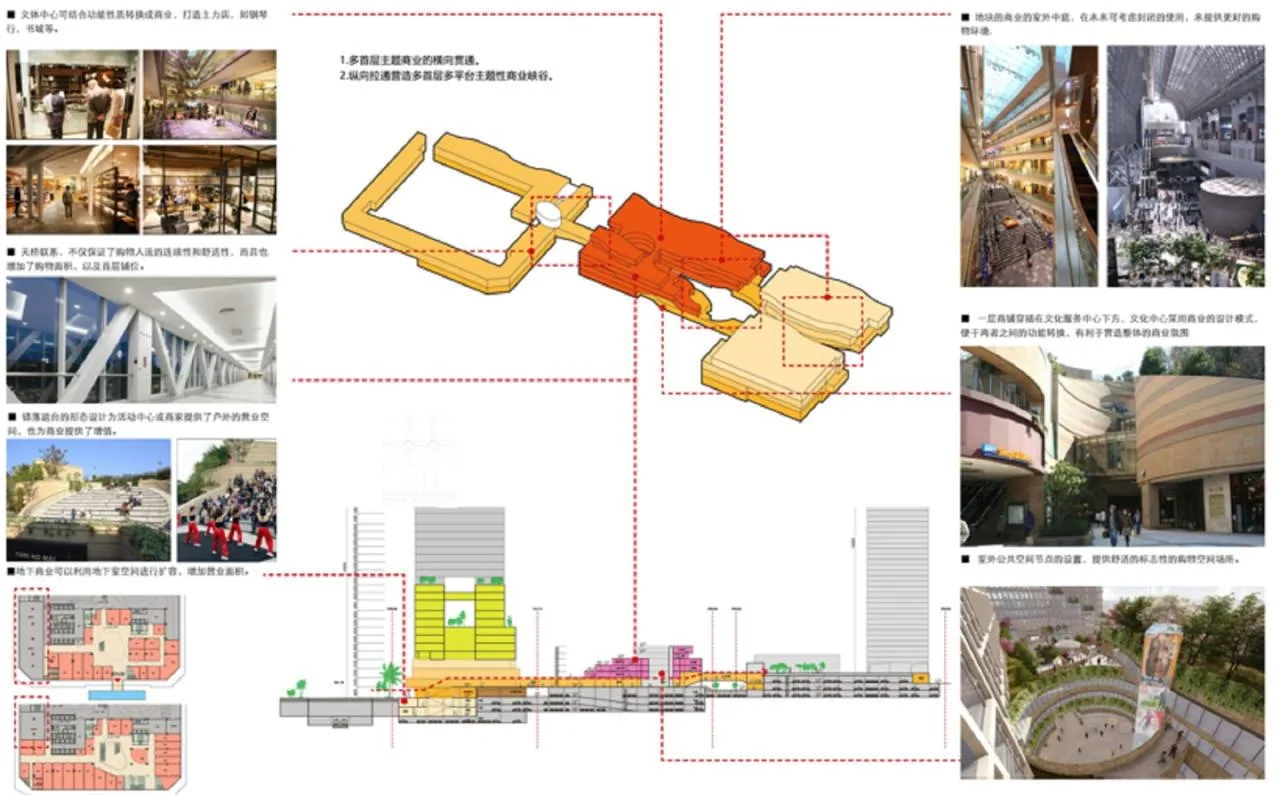
Node analysis © Fanpu Design
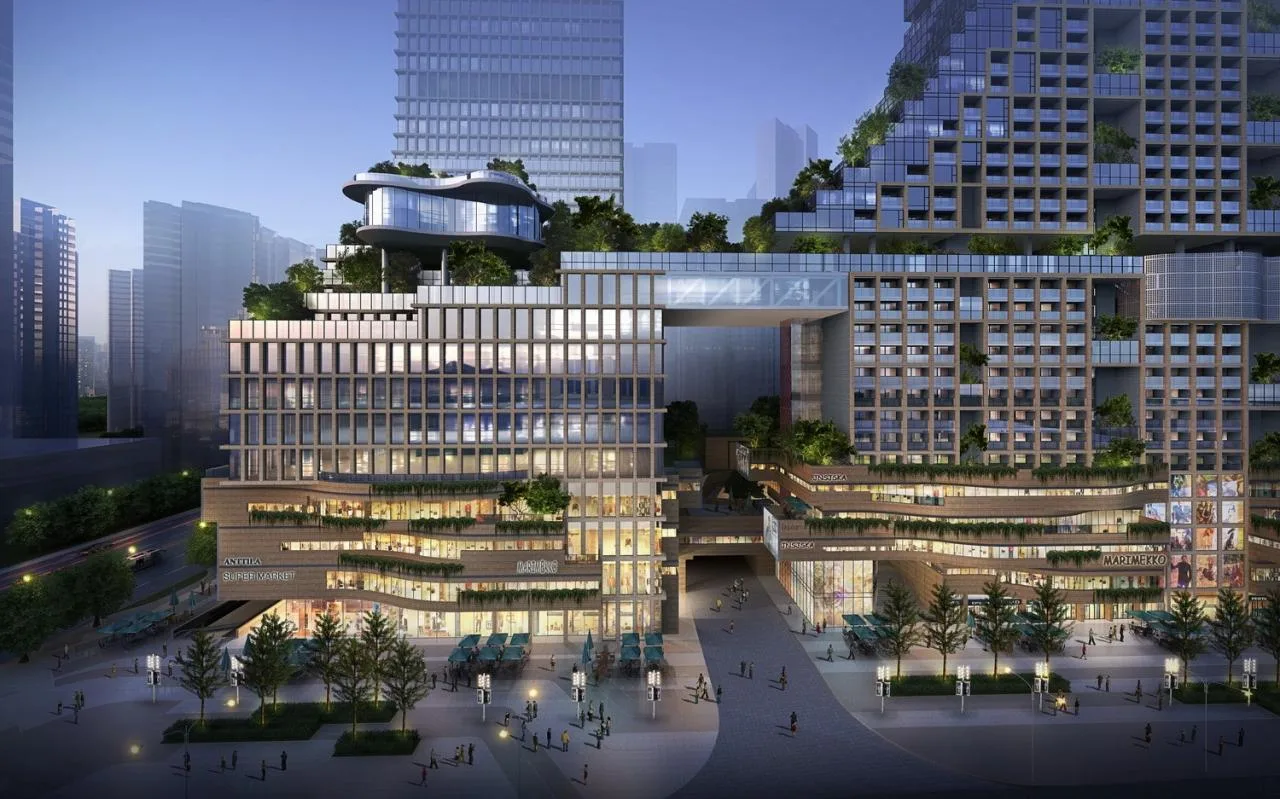
Commercial facade © Fanpu Design
The commercial architectural form draws inspiration from valley contours, creating dynamic, rhythmic shapes that define the facade’s character.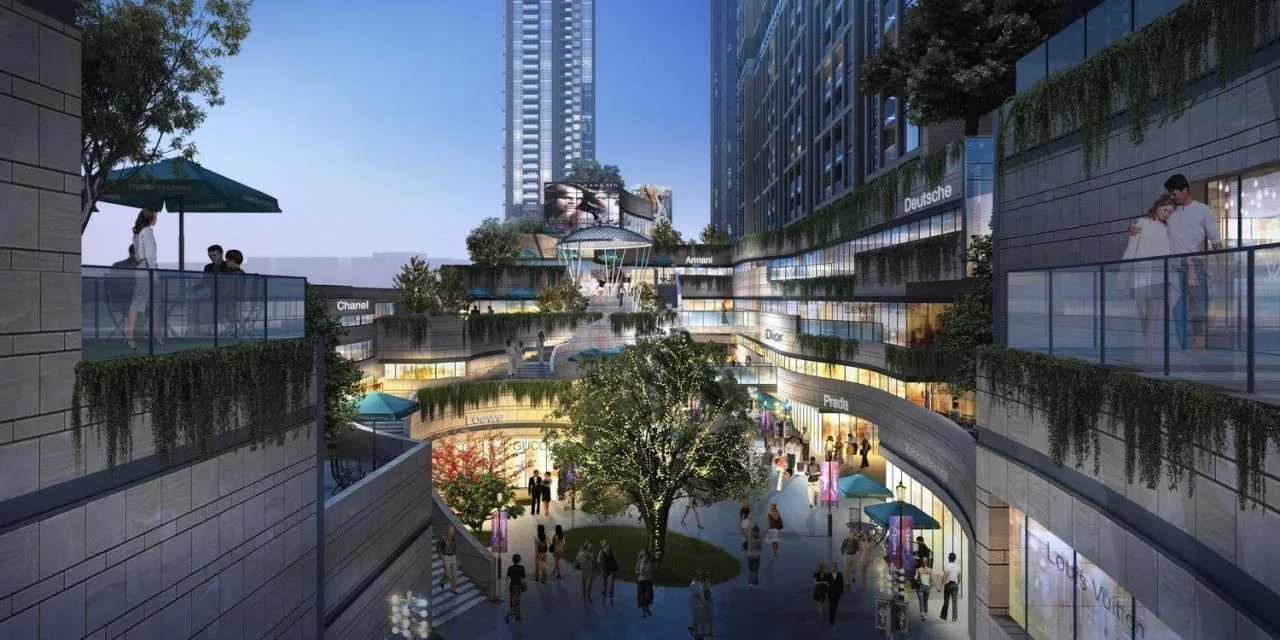
Public space landscape design © Fanpu Design
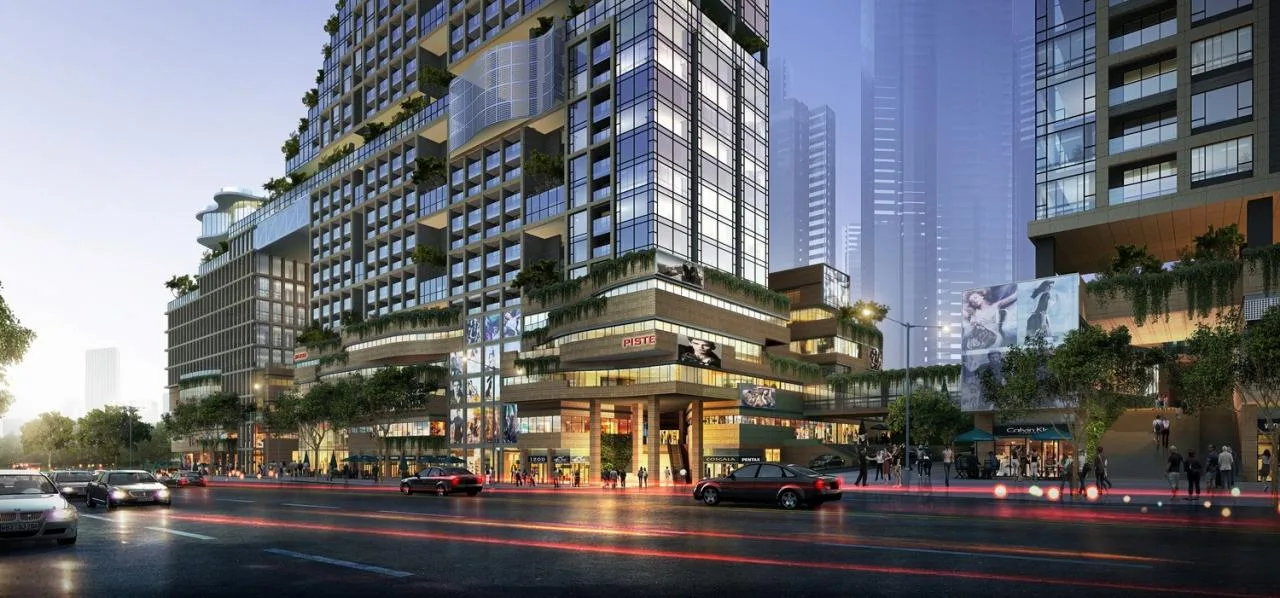
Street facade view © Fanpu Design
Designing a Personalized, Flexible, and Green Office Environment
The high-rise office buildings emphasize greenery by incorporating atriums and public activity platforms, integrating the surrounding landscape with the building’s spatial layers. This achieves a 100% three-dimensional greening rate, fostering a natural, comfortable workspace.
The design includes a low-rise garden-style conference center that merges ecological elements and offers private meeting spaces. Mid-level terraces serve as park-like retreats for social activities, while the top three floors house multiple shared halls providing panoramic city views. The office facade features layered setbacks, contributing to a rich urban interface.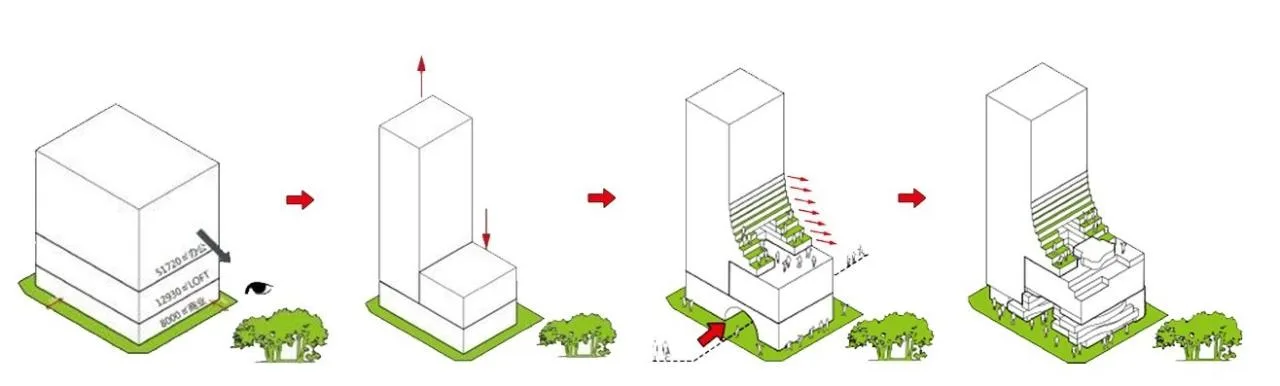
Block generation © Fanpu Design
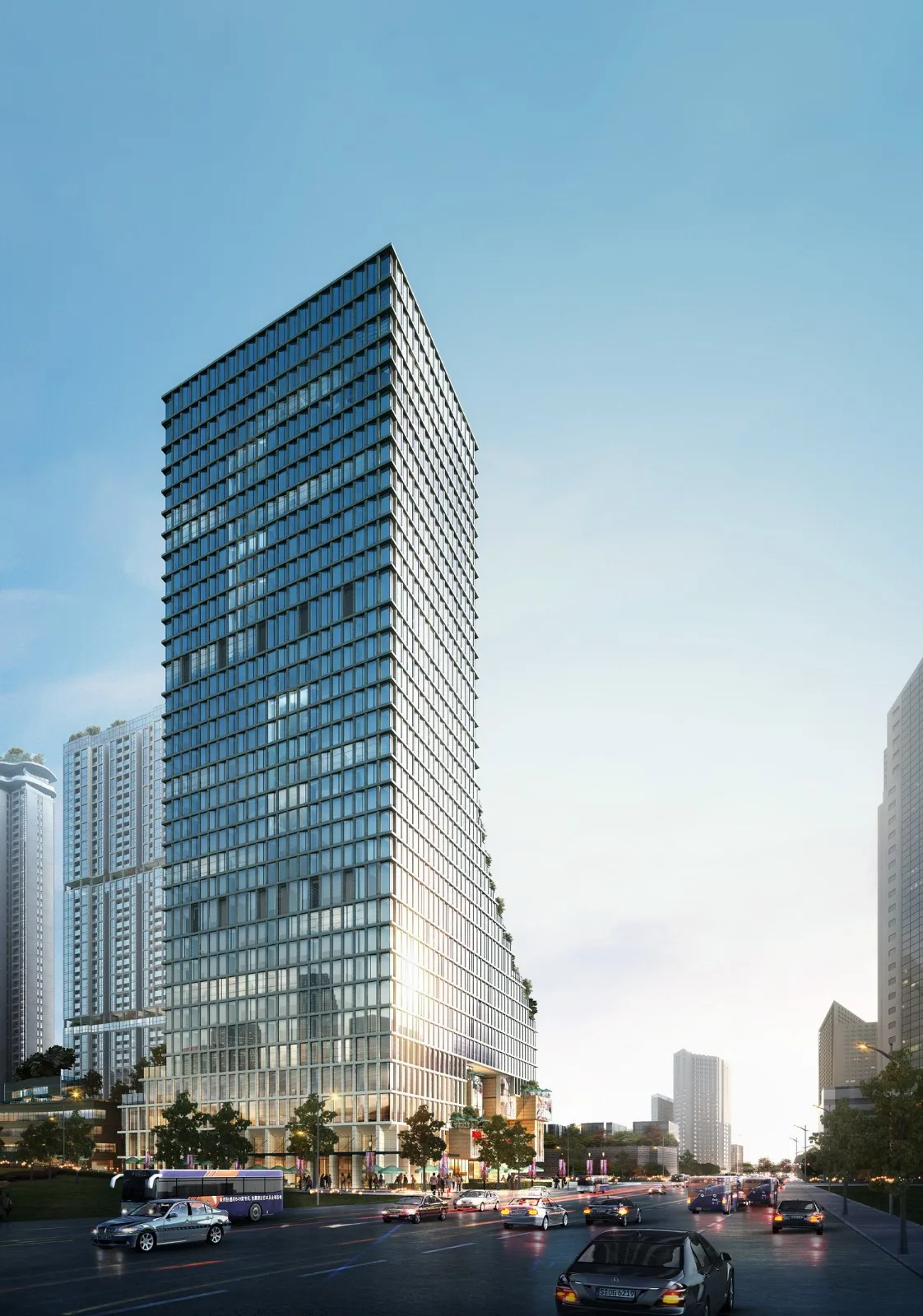
Office building © Fanpu Design
A Model of High-End, Naturally Livable Residential Living
The residential areas maximize panoramic city views and garden landscapes. The building facades adopt a modern and elegant style, reflecting craftsmanship through classic proportions and refined details, emphasizing the quality of contemporary architecture.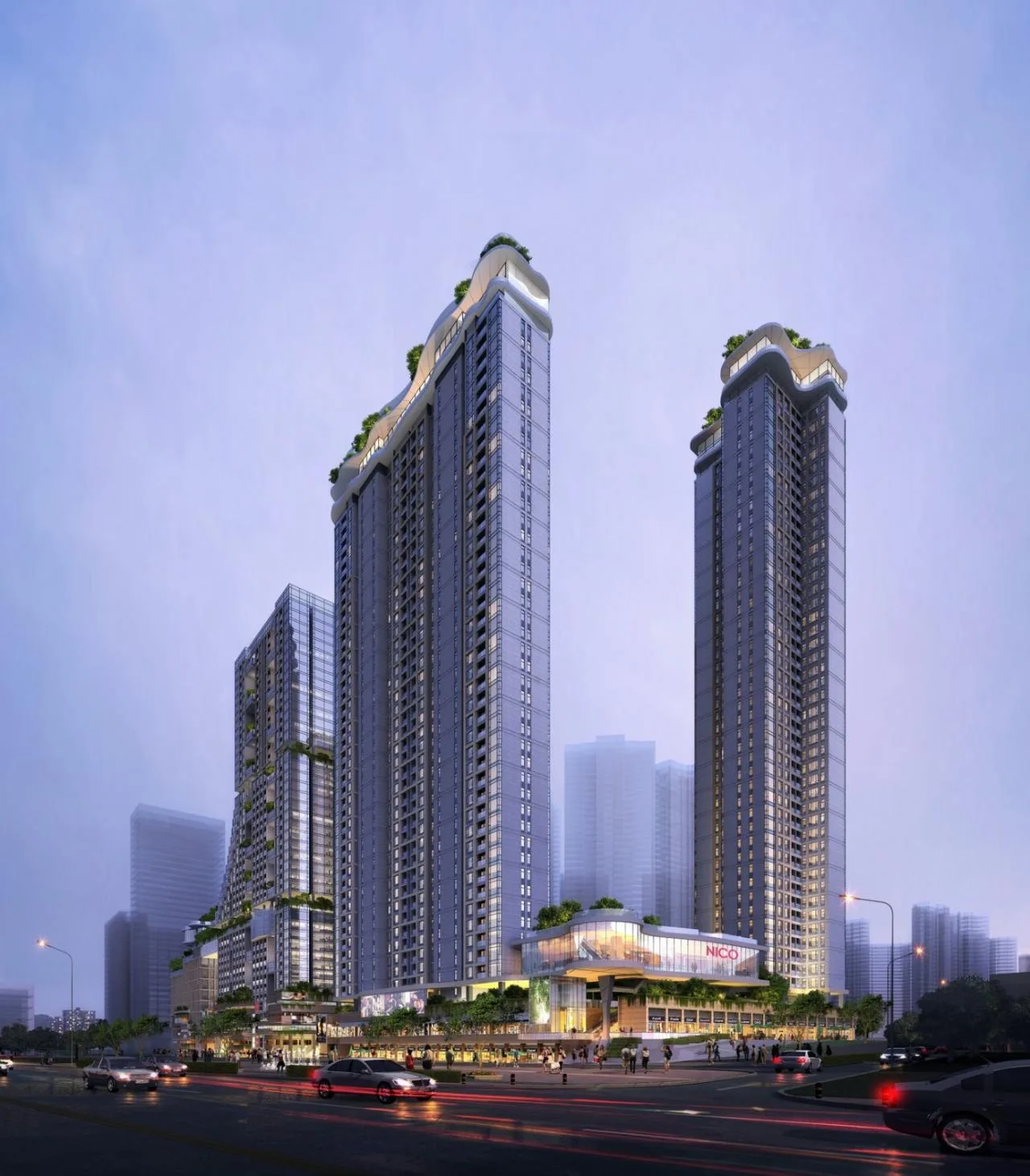
Residential area © Fanpu Design
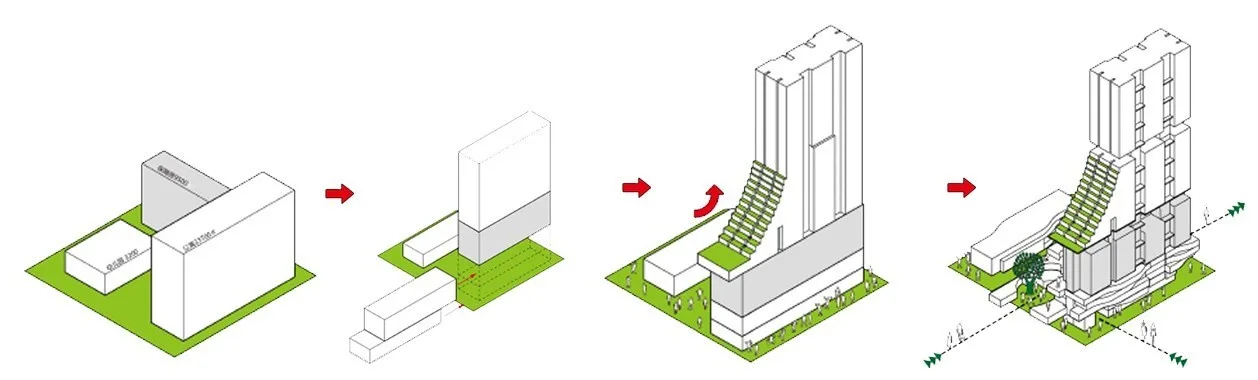
Apartment block generation © Fanpu Design
The apartment design features stacked setbacks, while aerial gardens on refuge levels extend the surrounding landscape and connect with office gardens, offering residents spaces for activities and social interaction.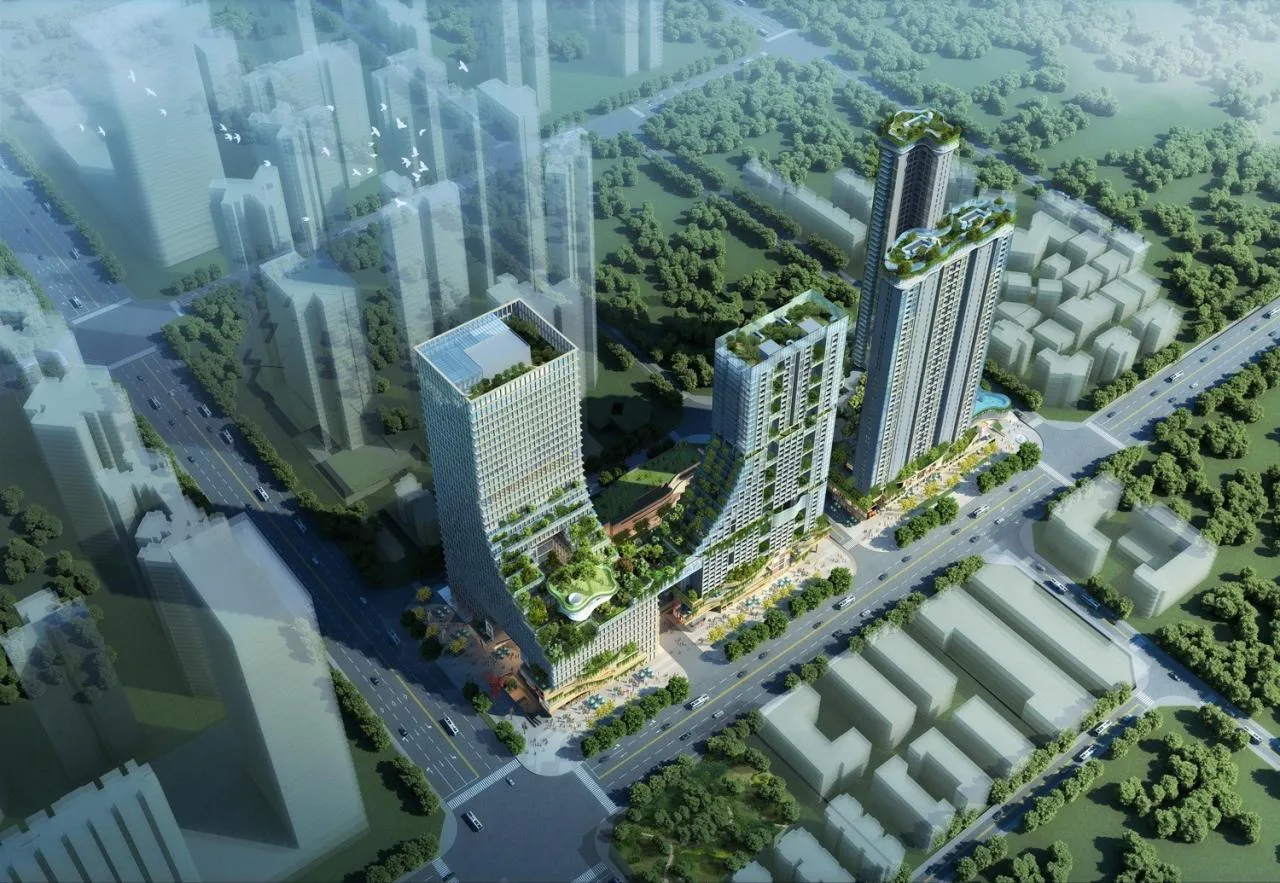
Aerial view © Fanpu Design
Project Drawings
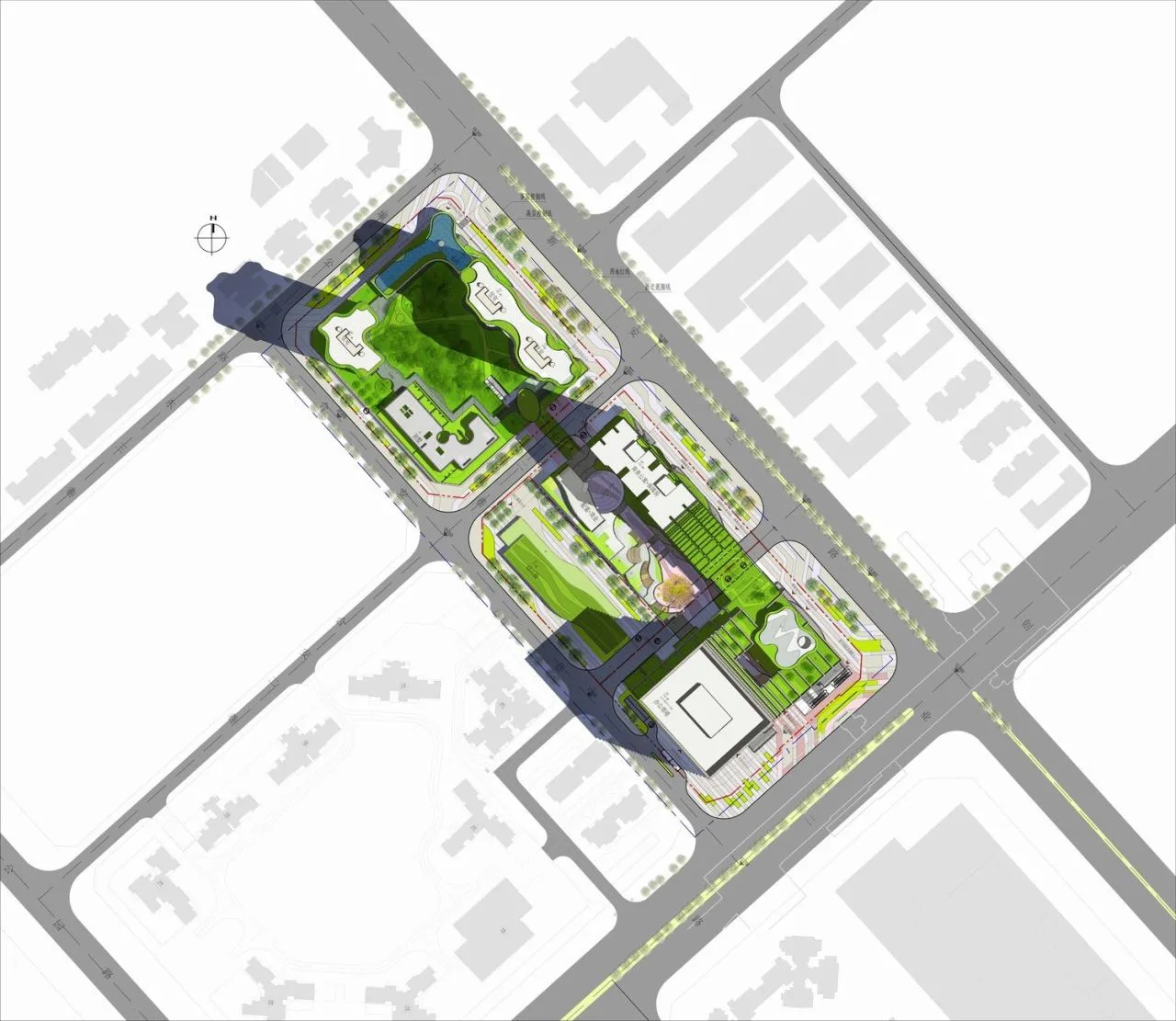
General layout plan © Fanpu Design
Project Information
- Project Name: Urban Renewal Project of Toppan Printing Industrial Zone
- Architectural Firm: Shenzhen Fanpu Architectural Design Co., Ltd
- Company Location: LB601, L6 Floor, Phase I, Shangcheng South District, Shenye, Futian District, Shenzhen
- Building Area: 196,600 square meters
- Project Address: Shenzhen
- Lead Architect: Wang Cong
- Rendering Company: Fanpu (Shenzhen) Architectural Design Co., Ltd
- Client: Shenzhen Hongzhengda Real Estate Development Co., Ltd












Must log in before commenting!
Sign Up