
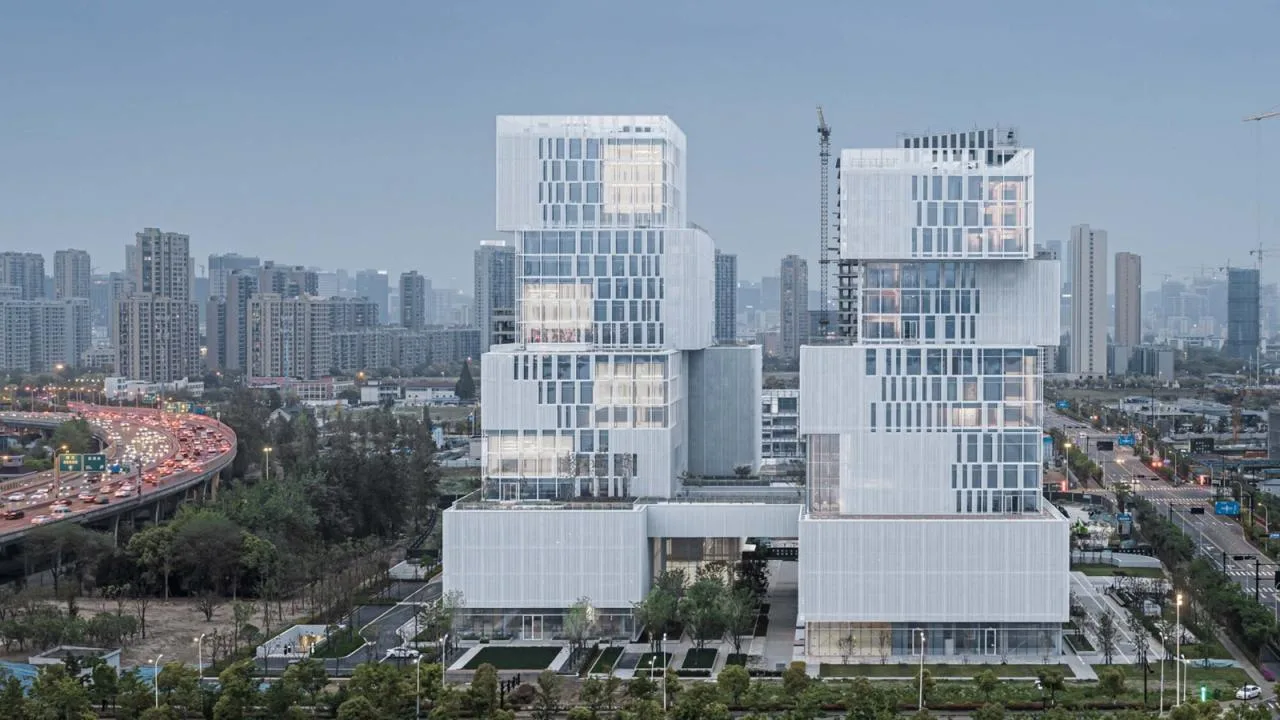
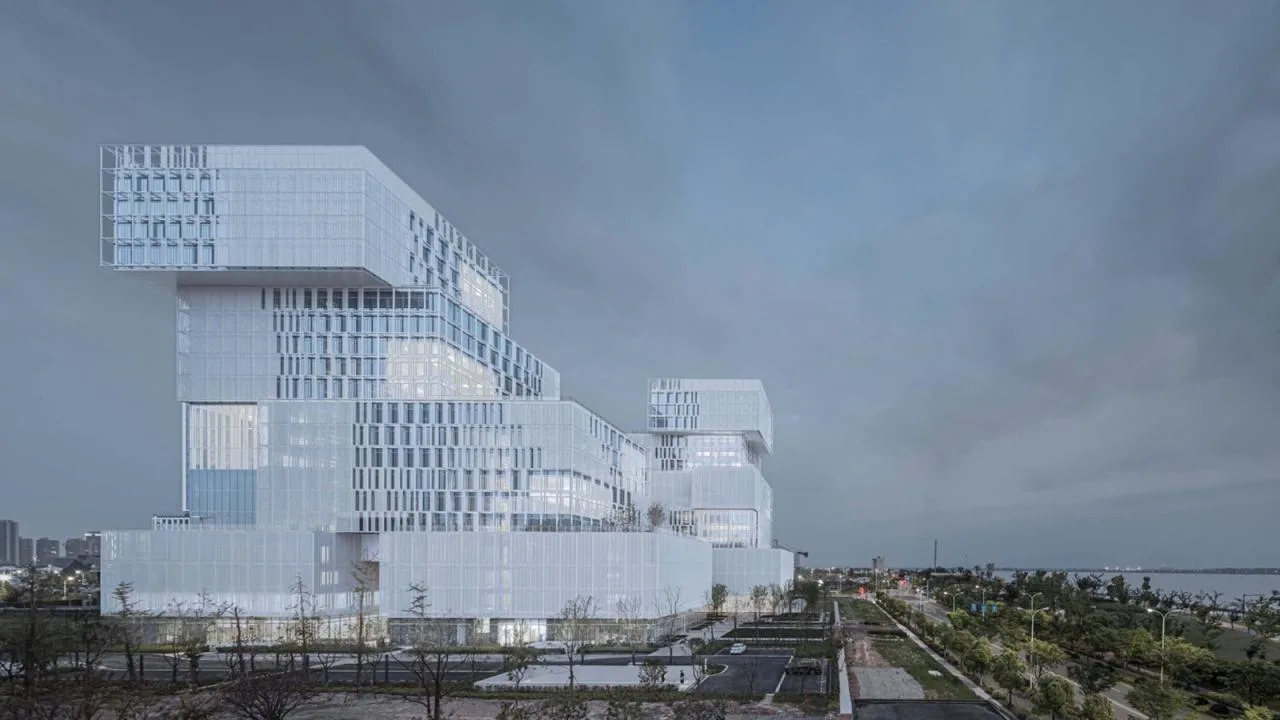
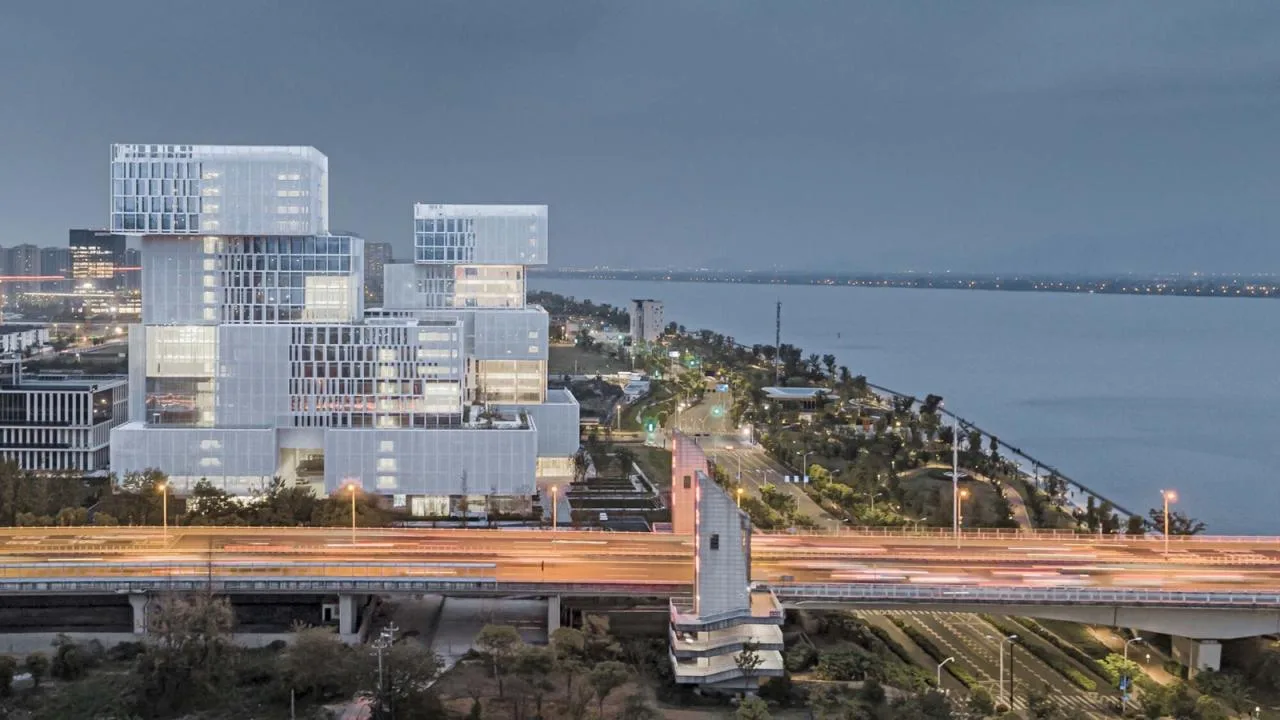
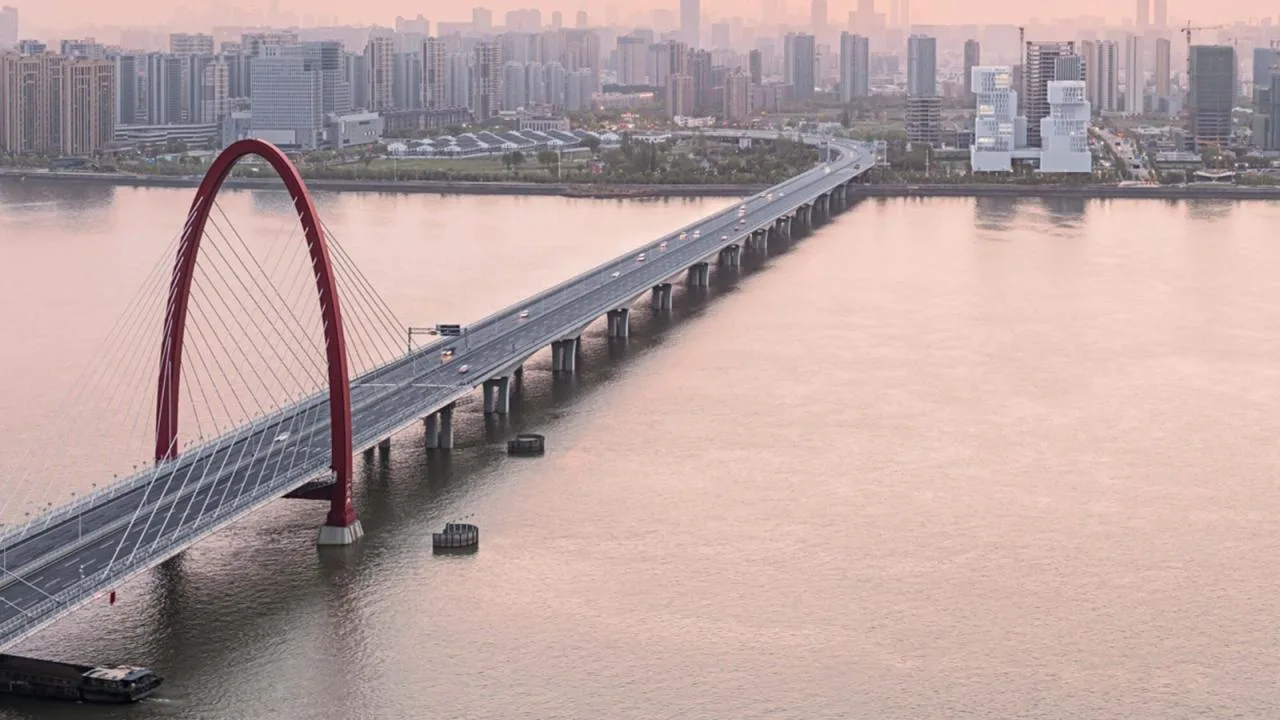
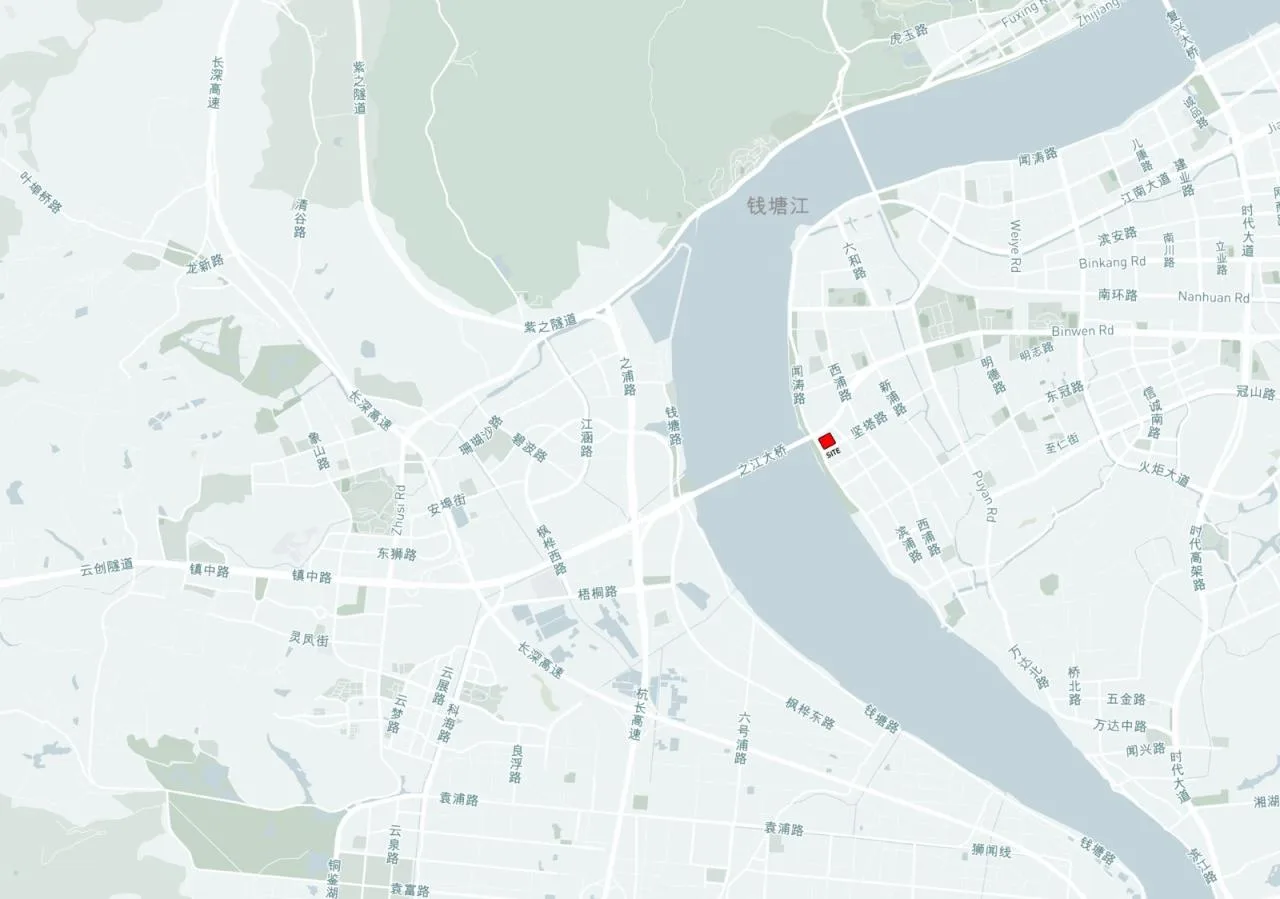
The Smart Xintiandi Innovation Center is situated in the Hangzhou Hi-Tech Zone, positioned on the north bank of the Qiantang River, adjacent to the Zhijiang Bridge. This project serves as a smart industrial cluster and incubation hub, combining business services with office functionalities. It aims to attract a variety of high-tech and strategically emerging industries in the future. The unique location and the concentration of specialized talent impose new demands that differ from conventional office environments.
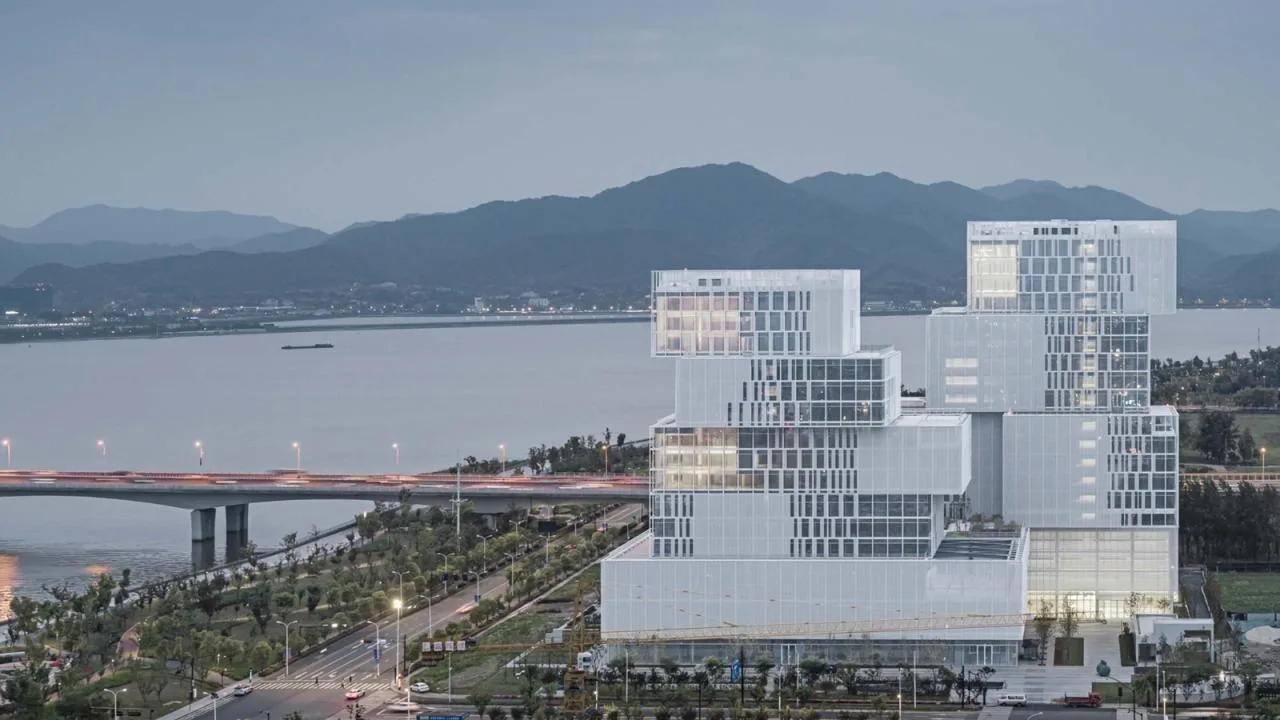
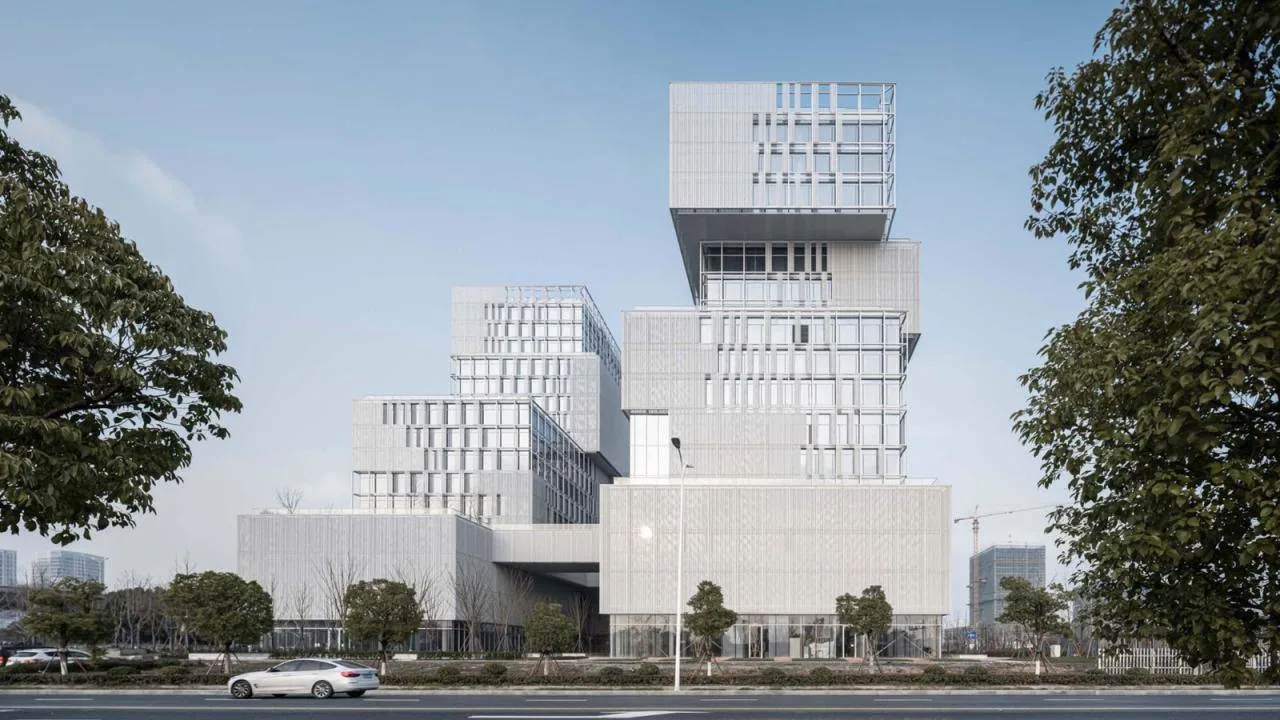
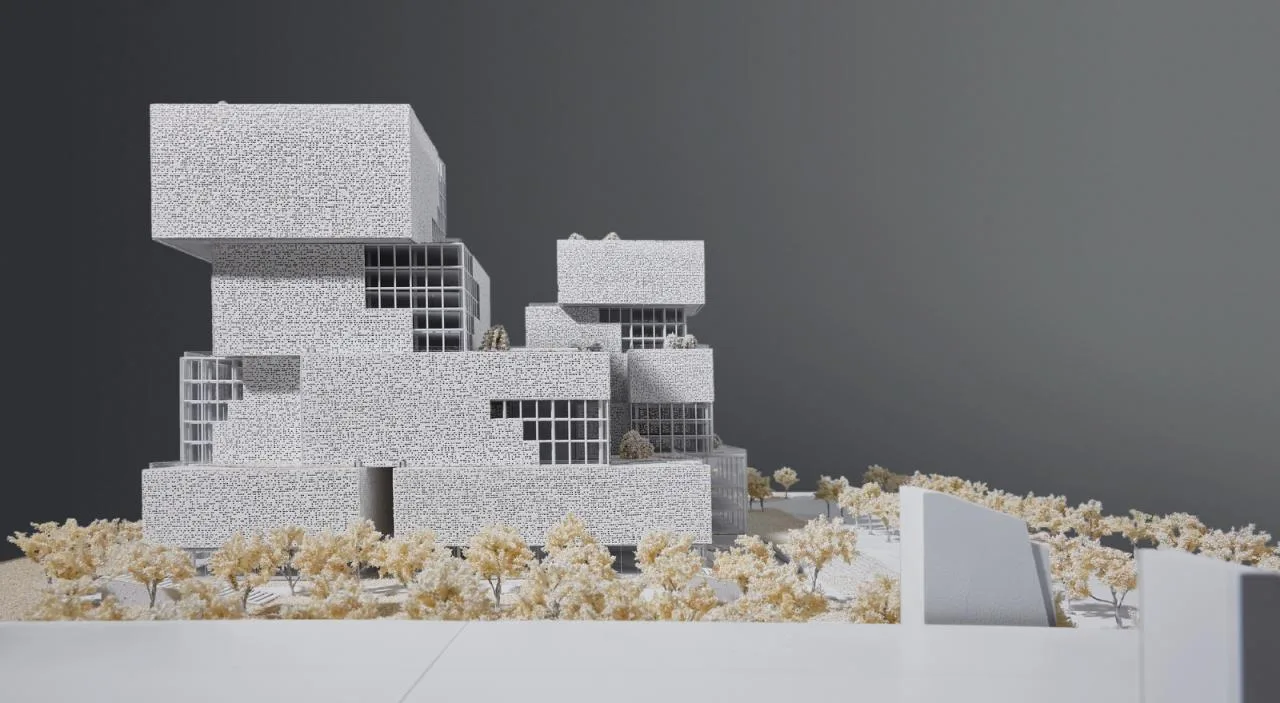
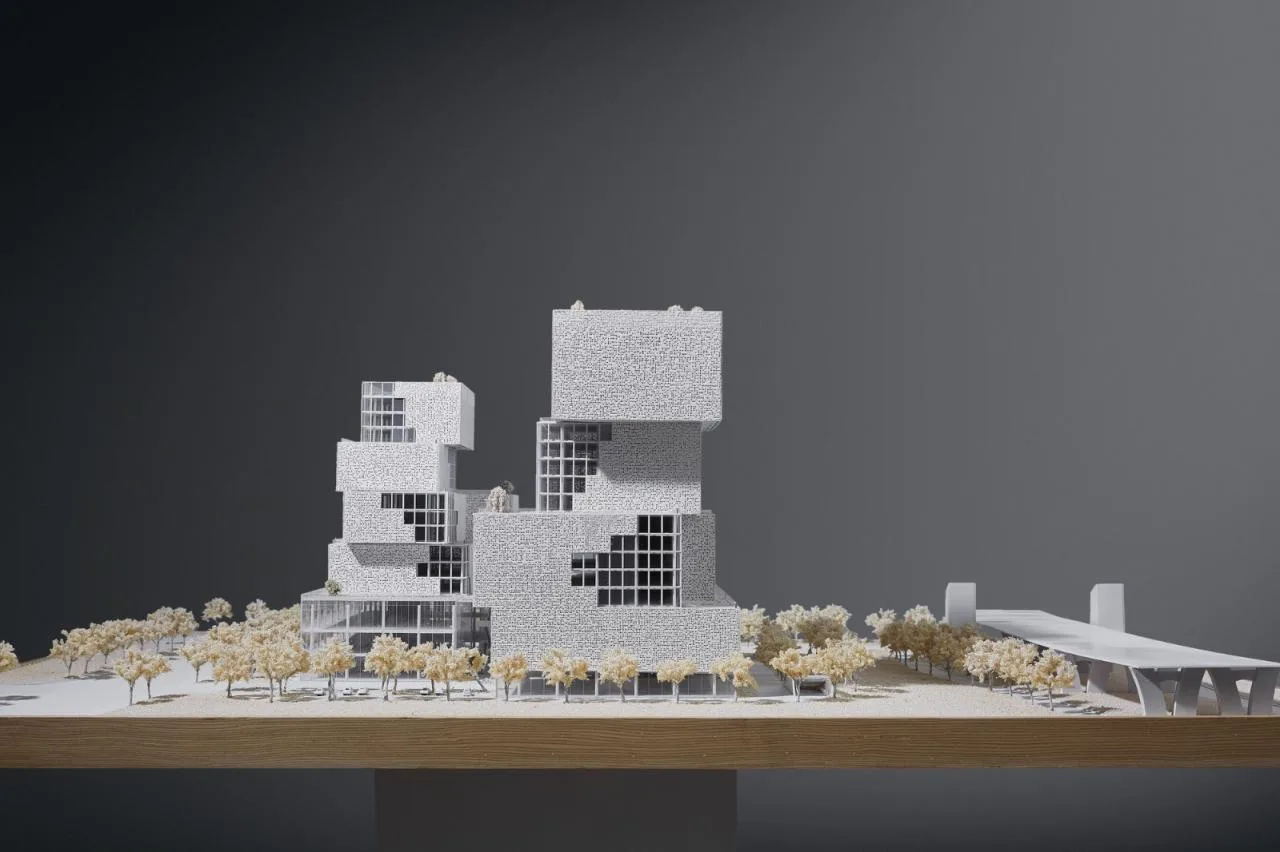
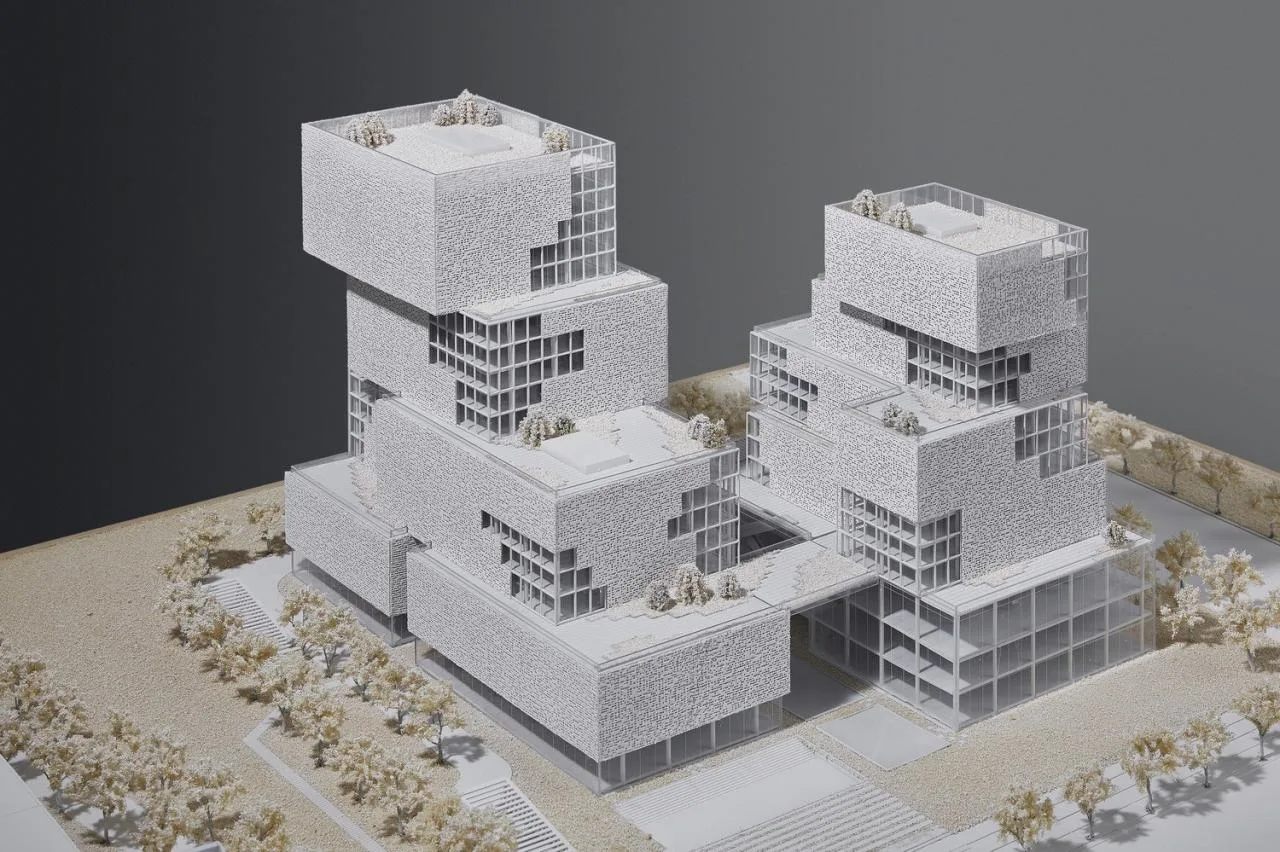
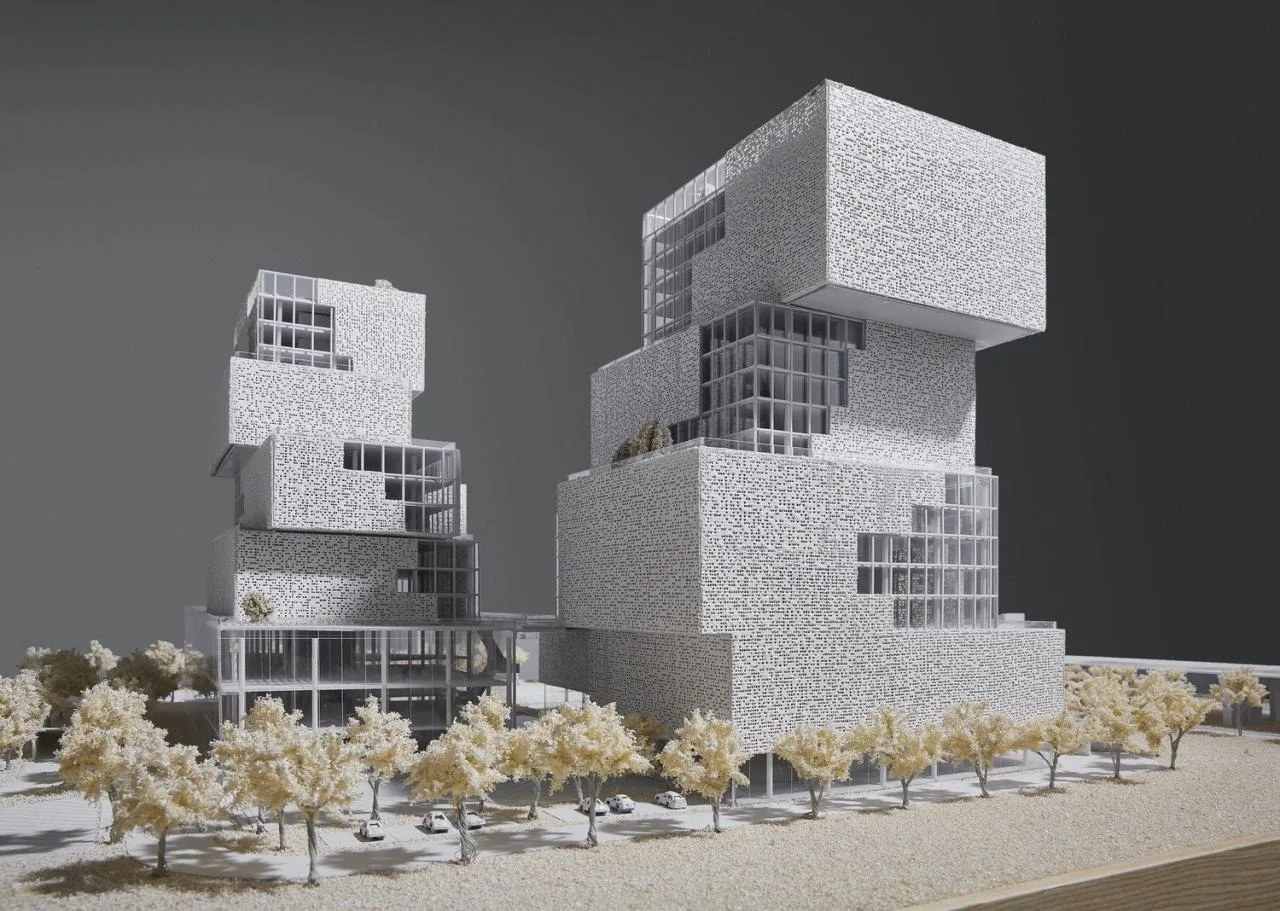
Why place the modular base at the gateway of the Zhijiang Bridge, where urban buildings cluster and a continuous mountain range lies across the river? The lack of greenery in such urban settings causes new constructions to feel disconnected from nature. In response, we introduced natural elements by simulating mountainous forms. By pixelating the structure, multiple platforms emerge, creating an environment that can be climbed and paused upon like a natural mountain.
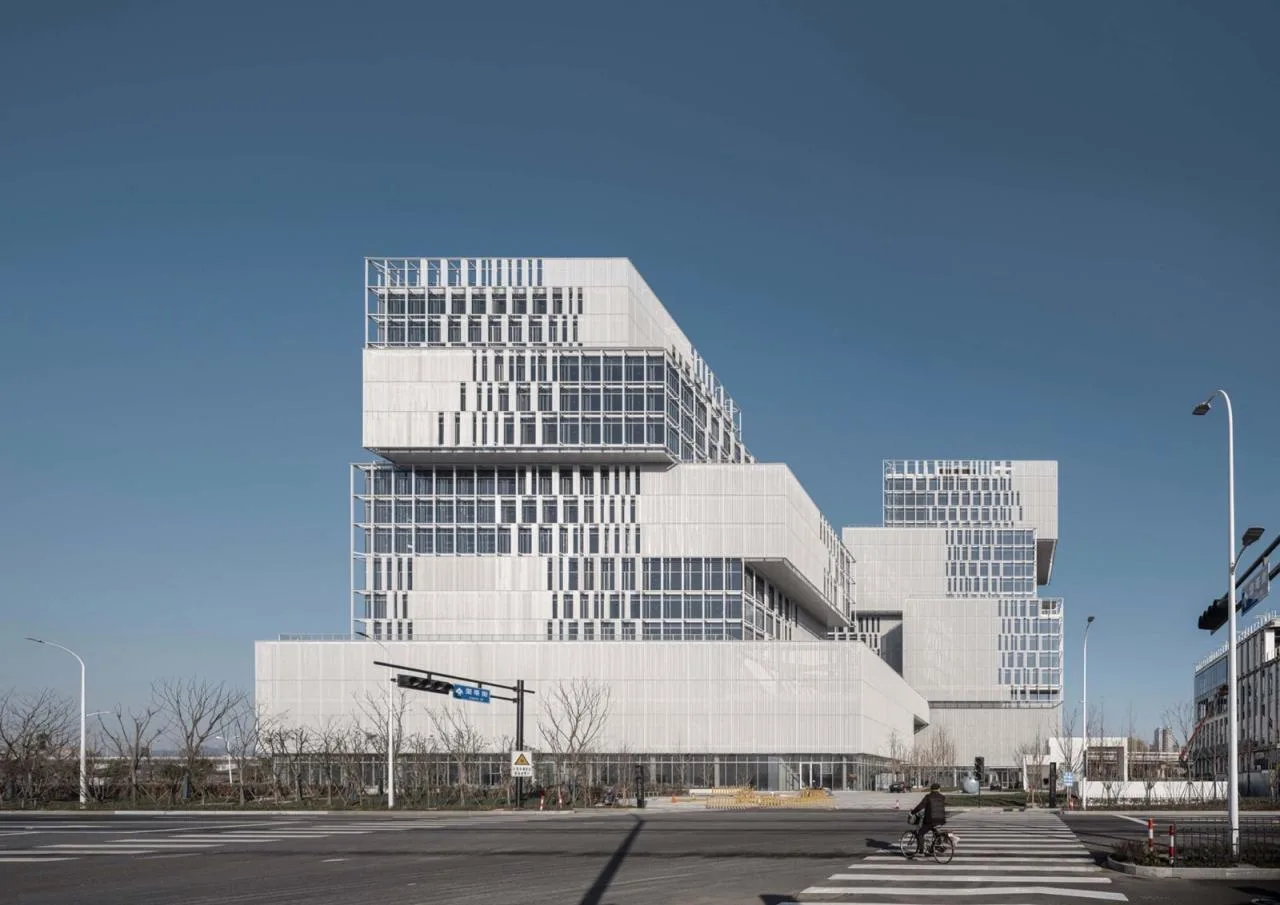
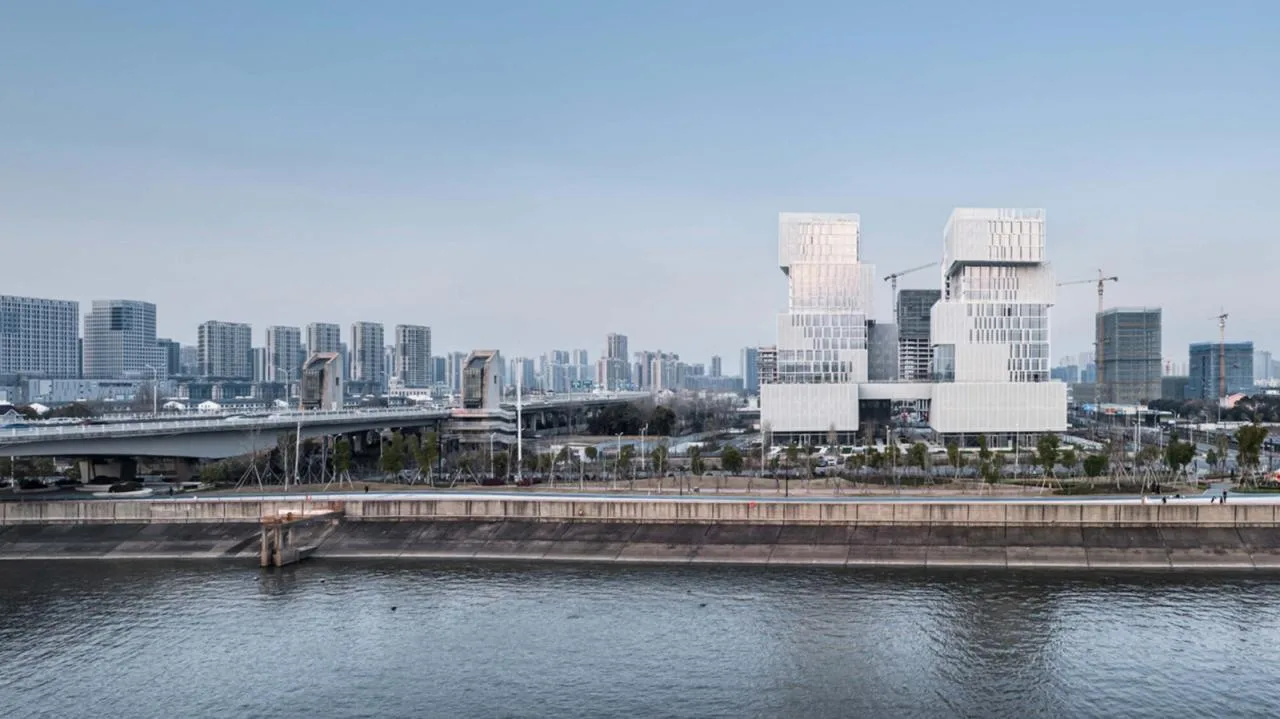
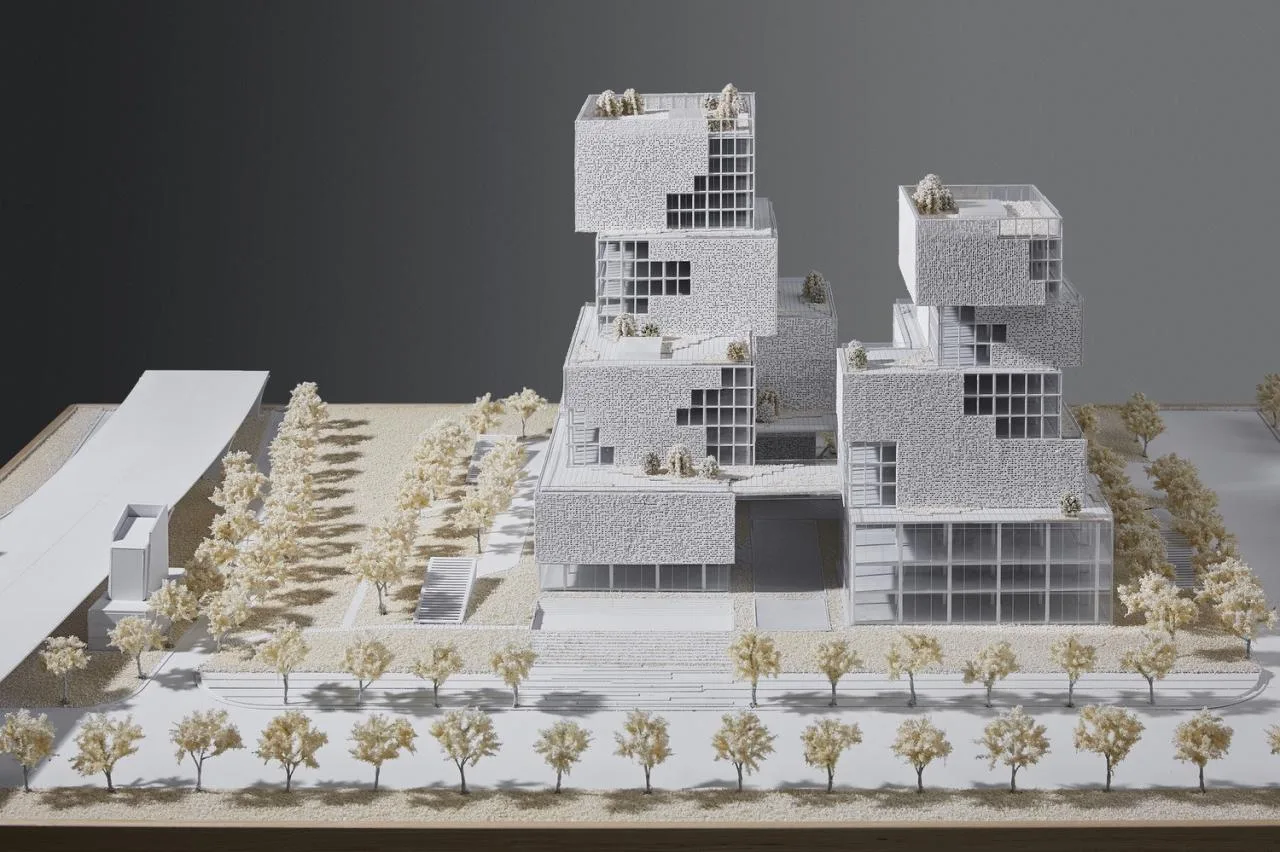
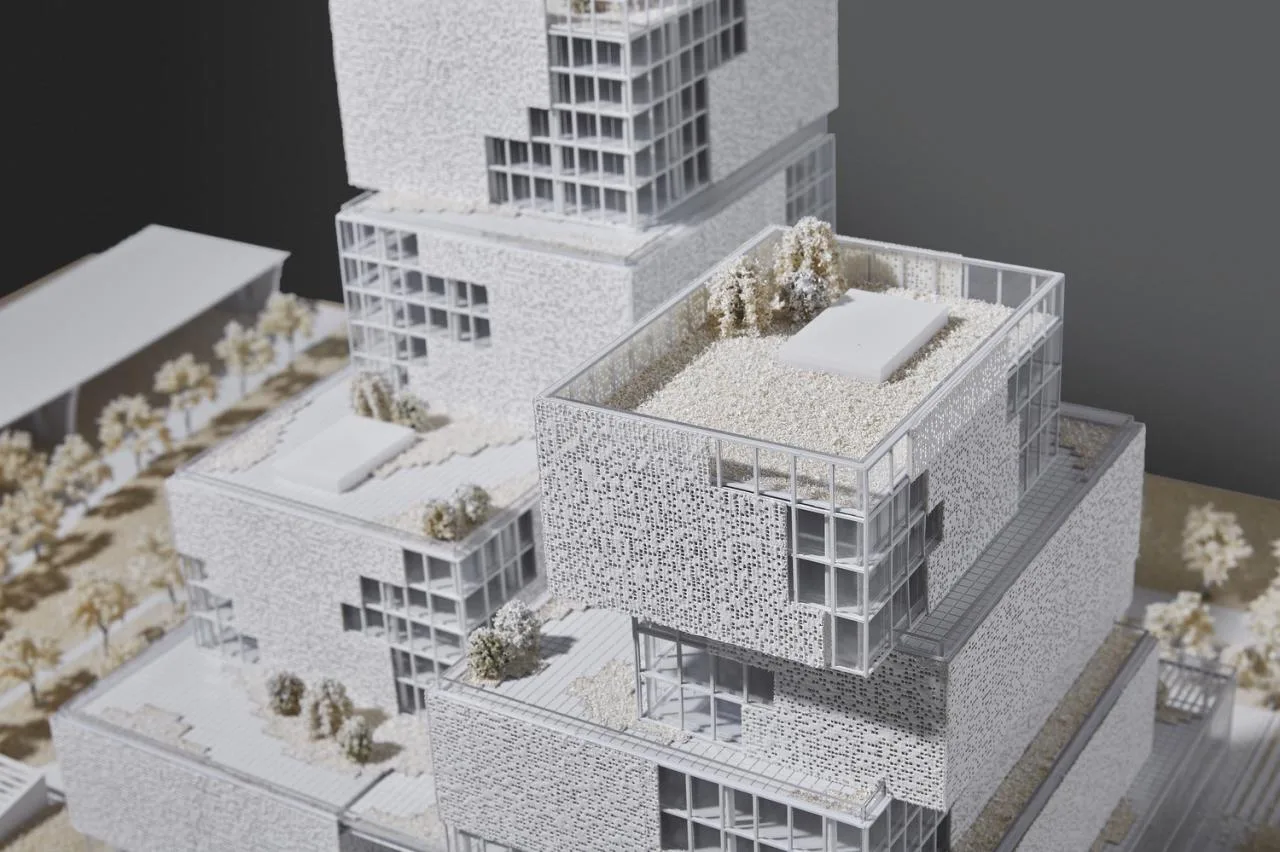
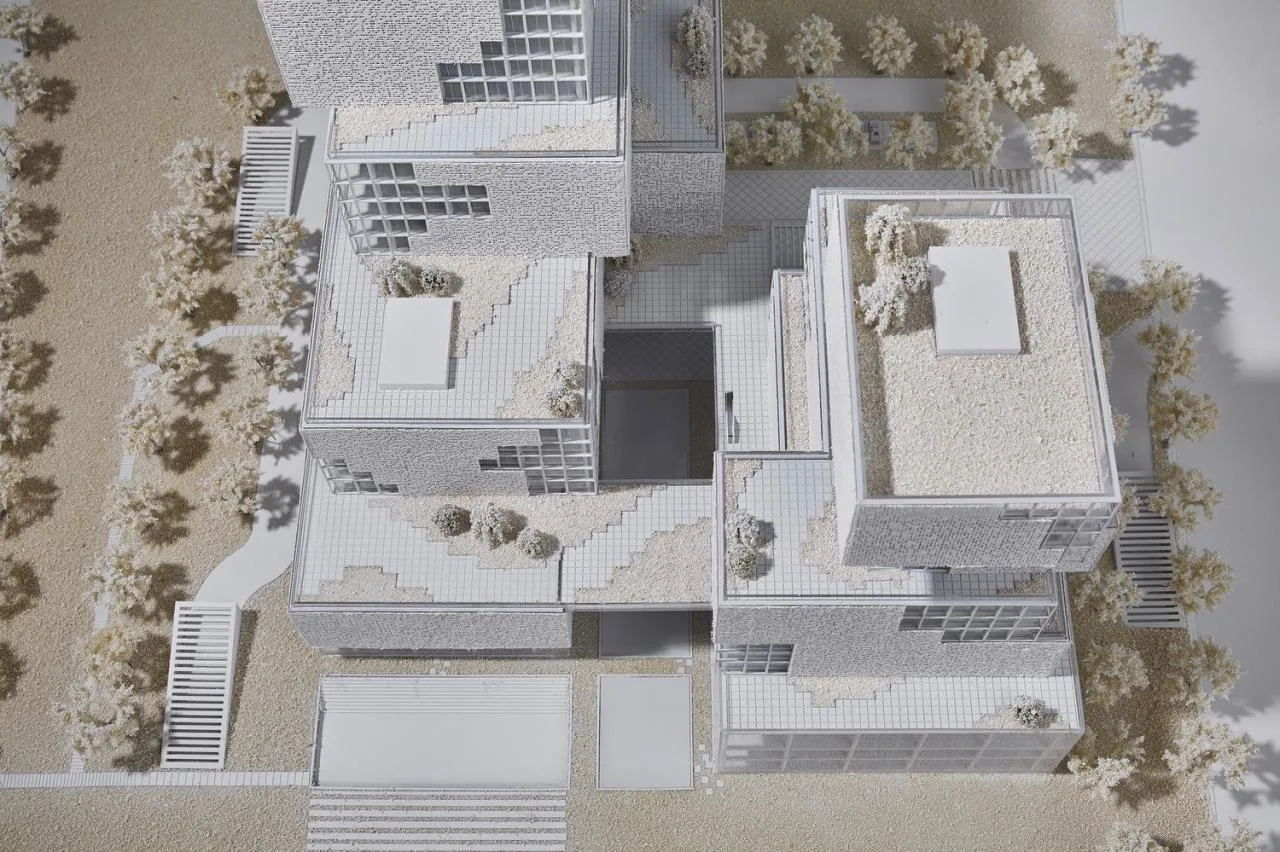
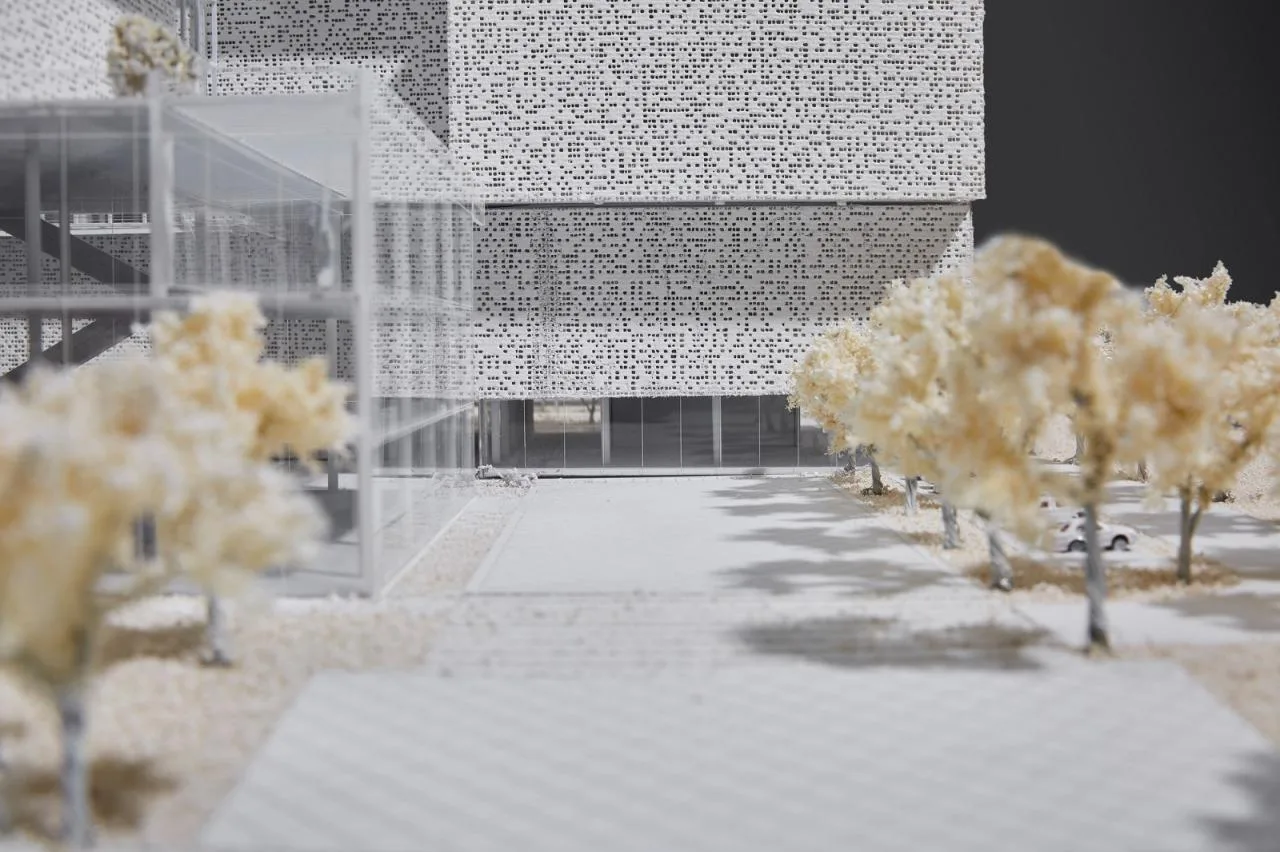
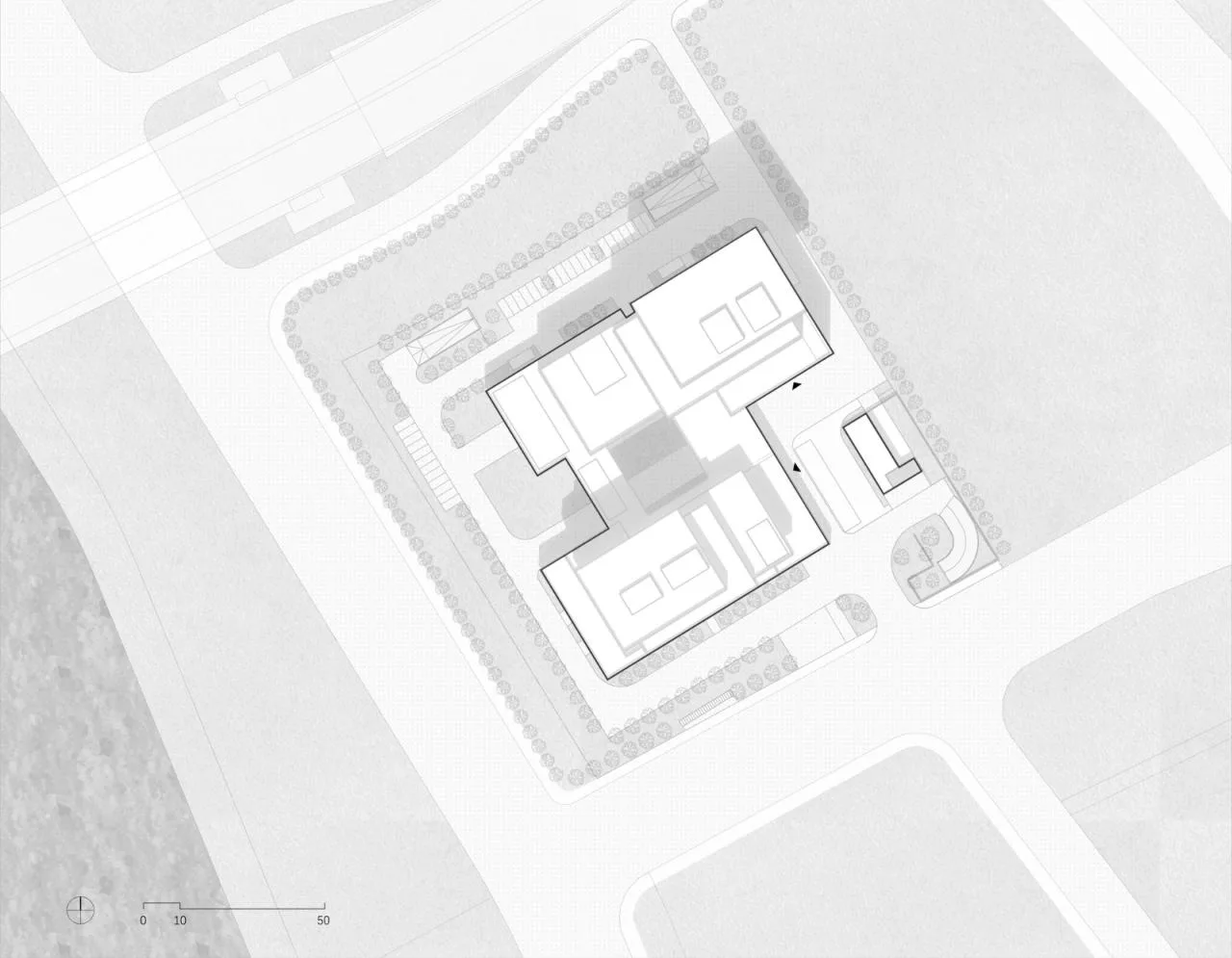
Within the modular mountain concept, two independent high-rise buildings were designed to accommodate diverse office needs of various enterprises. The towers shift in position, naturally defining two interconnected plazas: the entrance and the riverside square. Imitating the layered stacking of mountains, the towers recede from the site’s center in tiers, maximizing distance and minimizing interference between them. Influences from the nearby expressway and planned high-rises cause further staggered setbacks. Rooftop gardens and shared viewing platforms are incorporated to invite nature from the riverbank into the heart of the buildings.
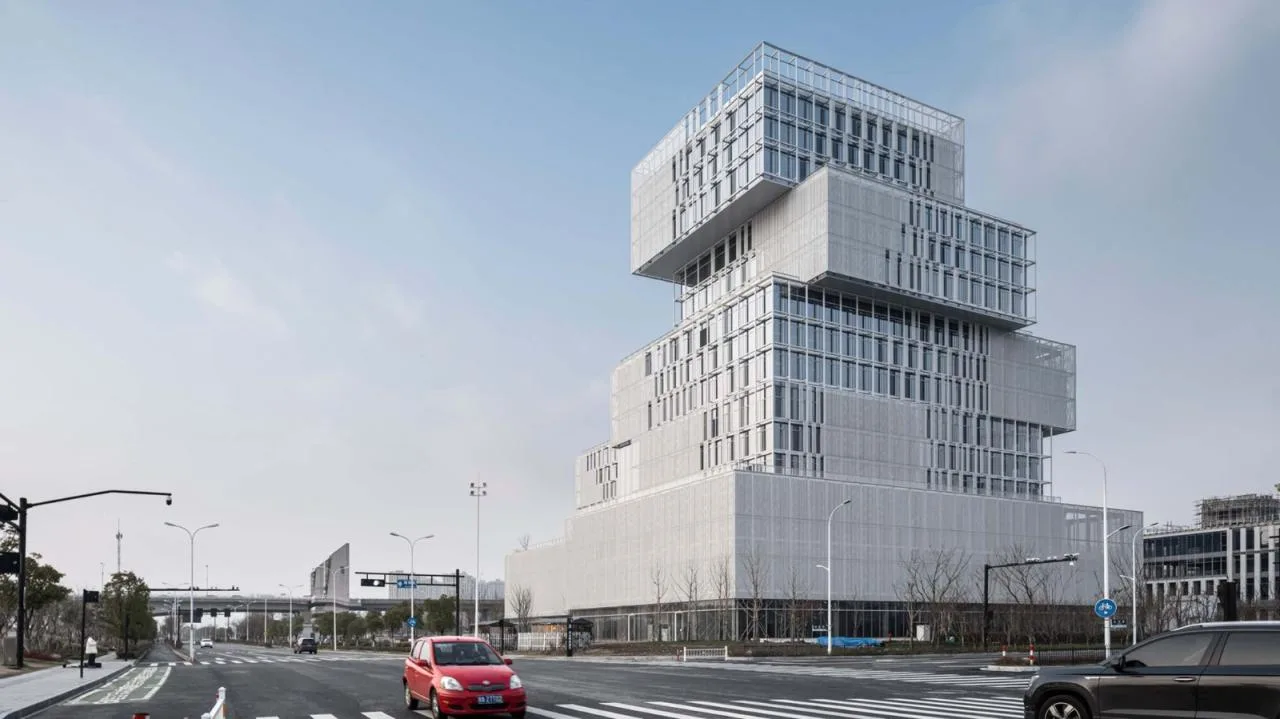
The rapid and elastic growth typical of high-tech industries often outpaces current societal norms and brings unpredictability. Therefore, the building design emphasizes flexibility to accommodate the expansion needs of emerging enterprises. Each modular “box” is designed as a standard column grid unit spanning 3 to 5 floors, suited for small businesses at different growth stages. These can function as standalone floors or be leased as complete units.
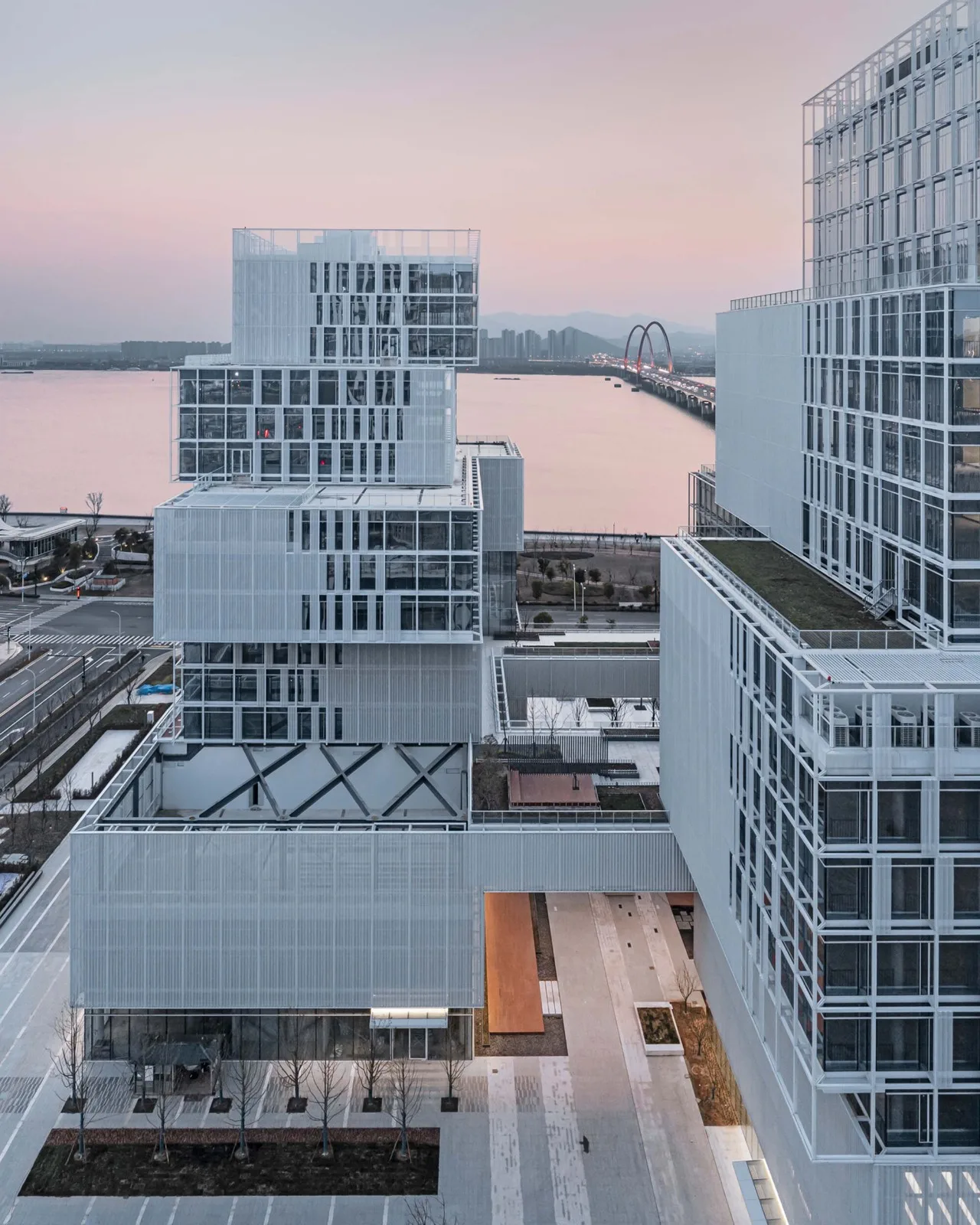
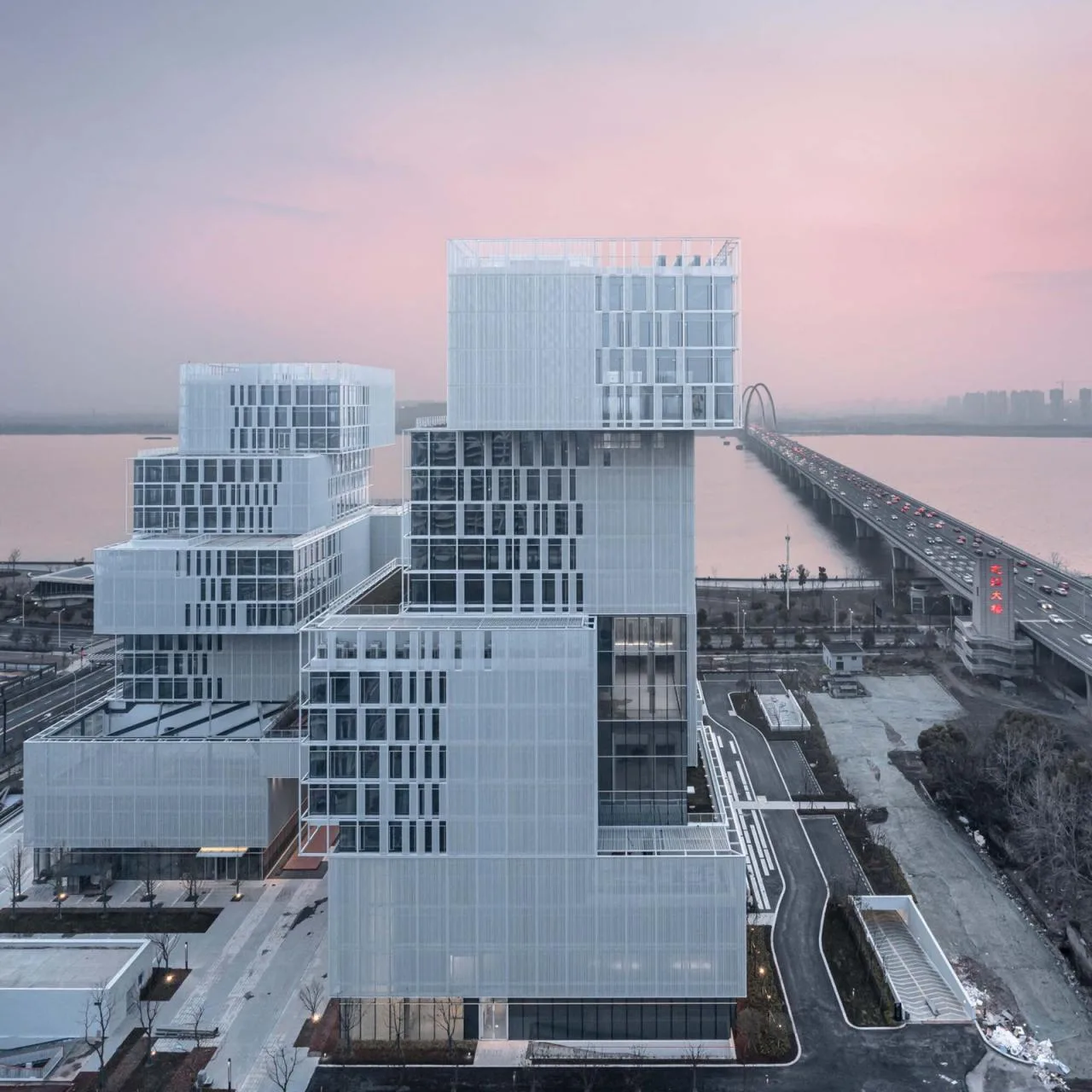
Traditional sealed office towers with three-dimensional gardens often result in dull environments due to a lack of natural activity space. To counter this, the project employs a series of flexible, staggered blocks to create vibrant outdoor terrace areas. Integrating rooftop greenery and sky gardens breaks the monotony of standardized offices, offering open, unobstructed spaces that invigorate the workplace. This design approach promotes green office concepts, fosters interaction among users, and enhances employee creativity and cohesion.
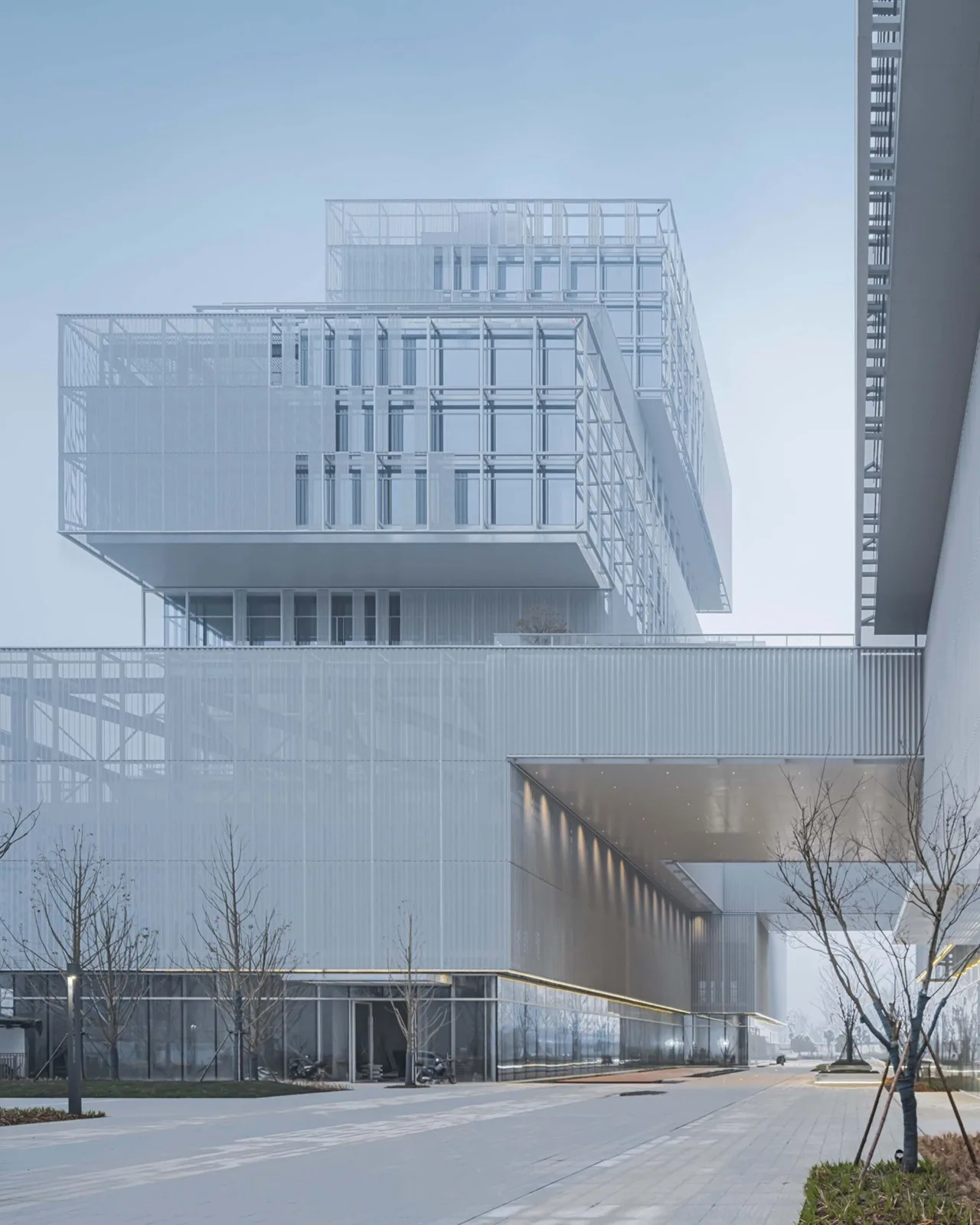
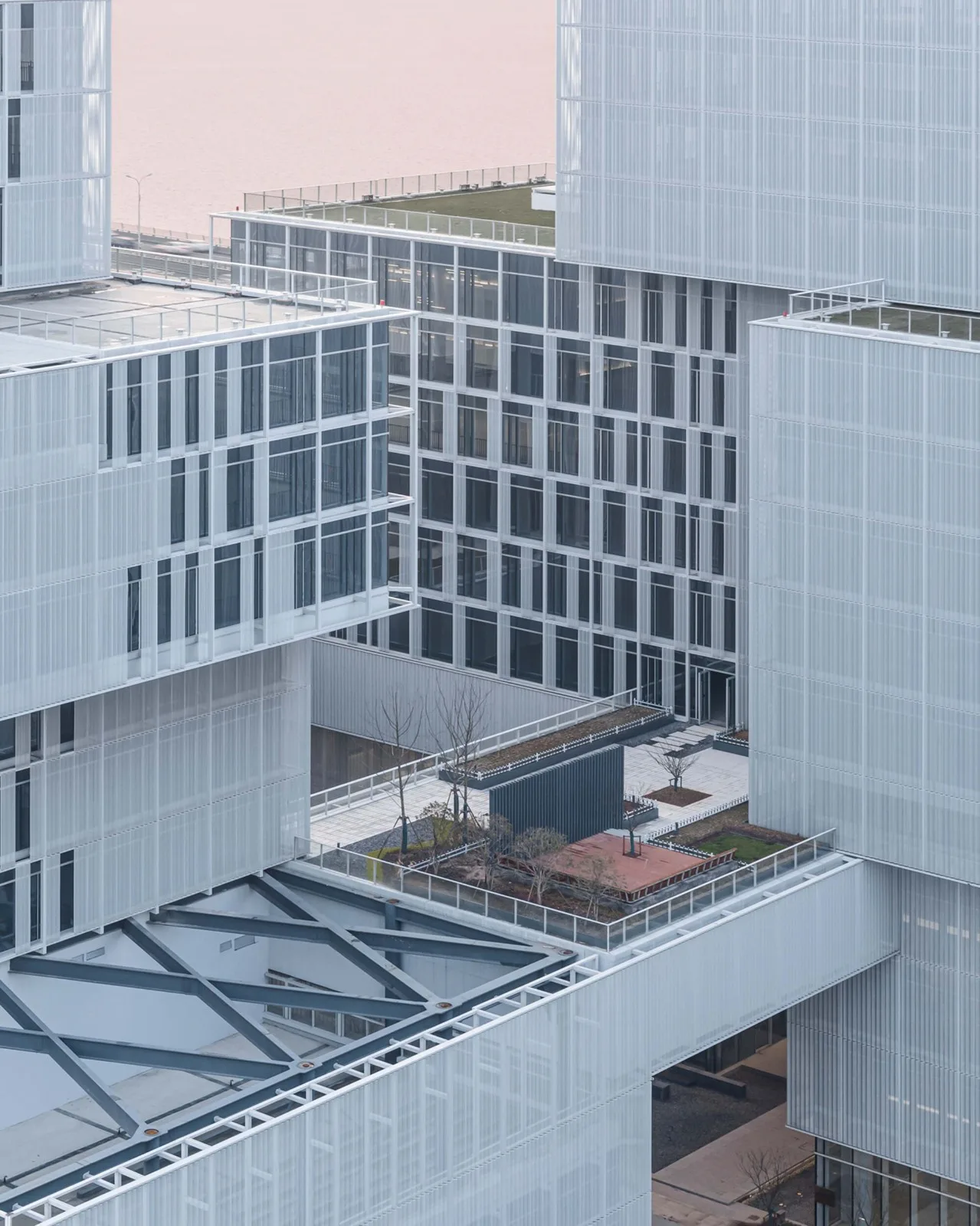
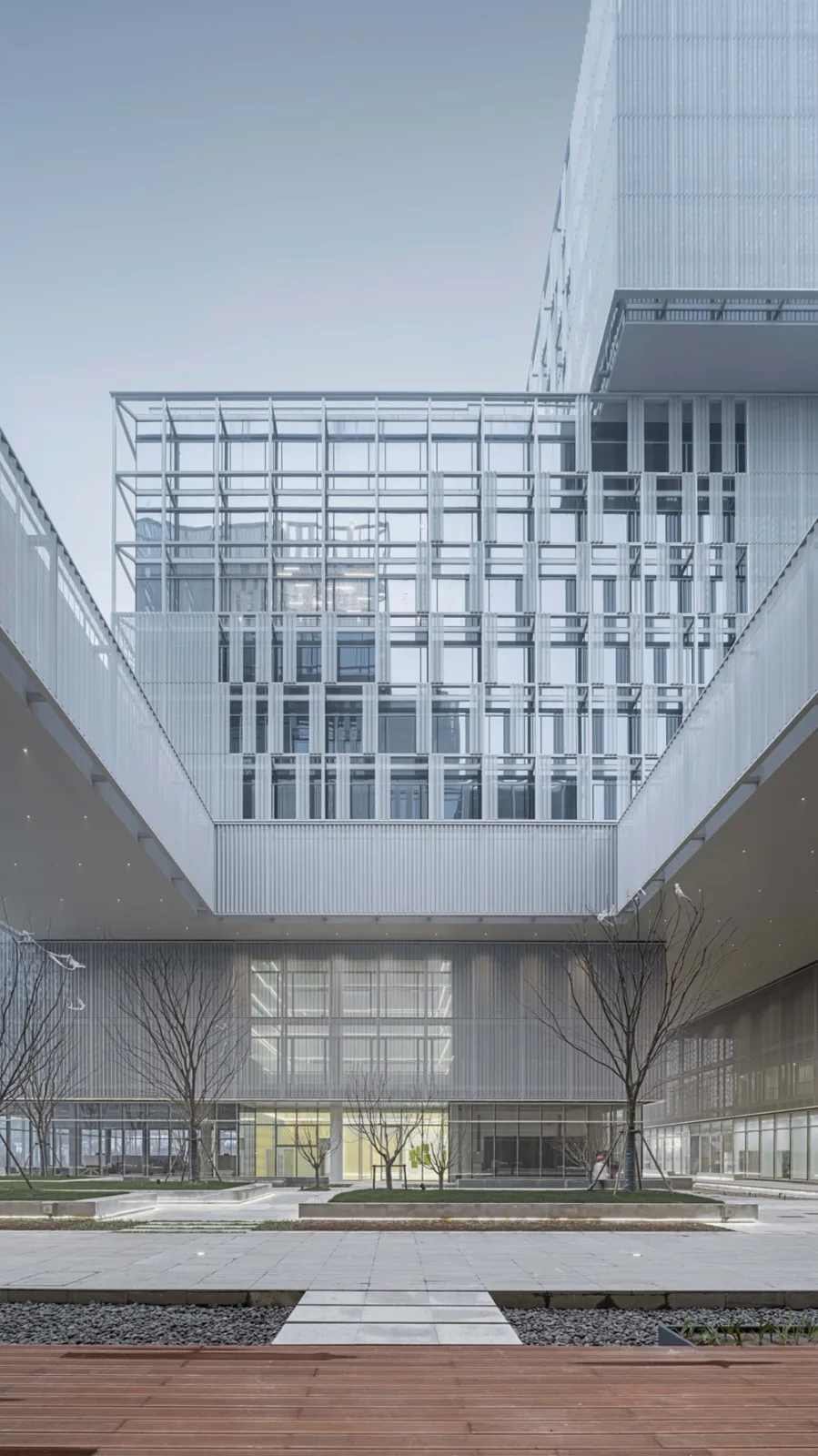
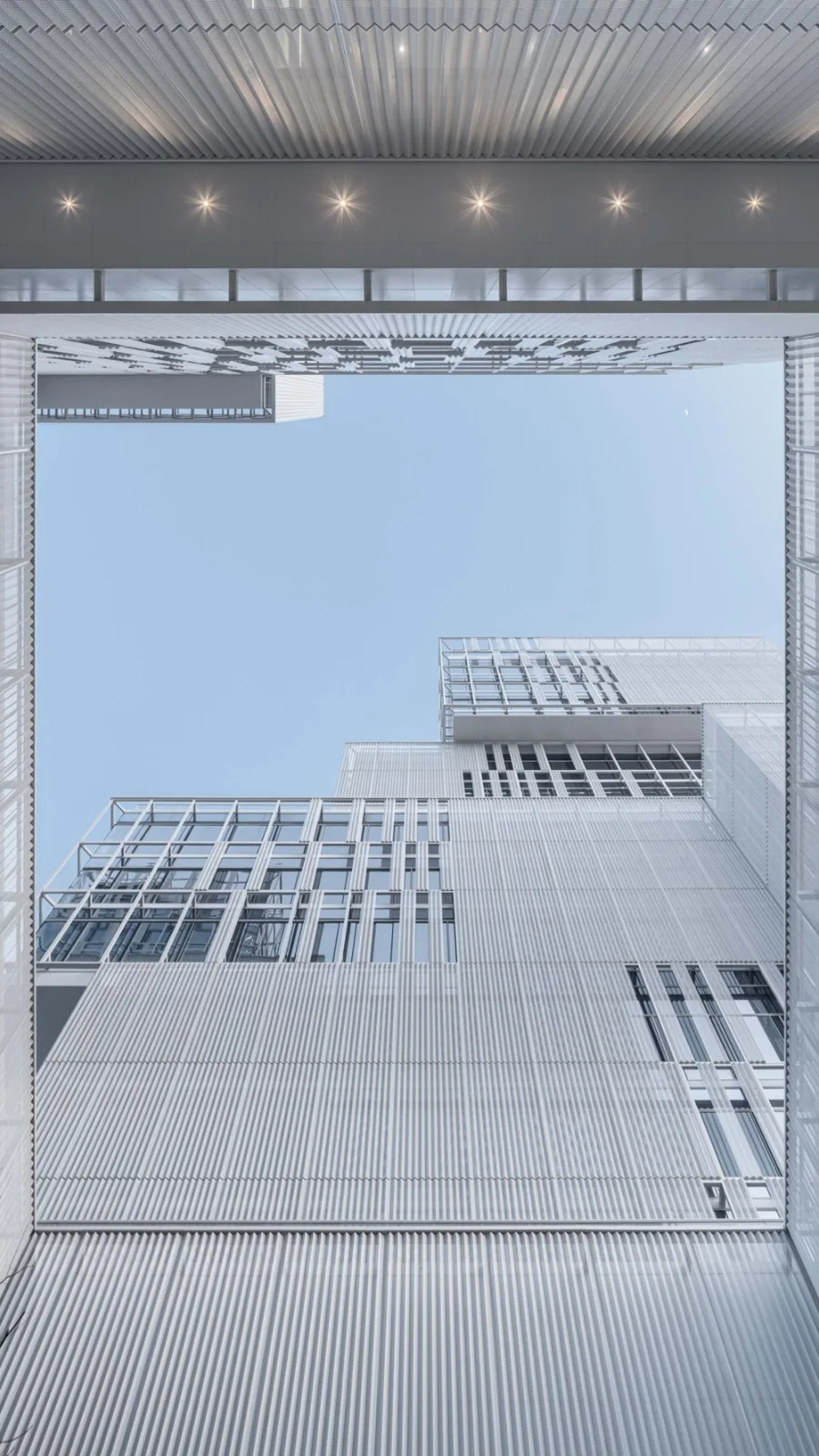
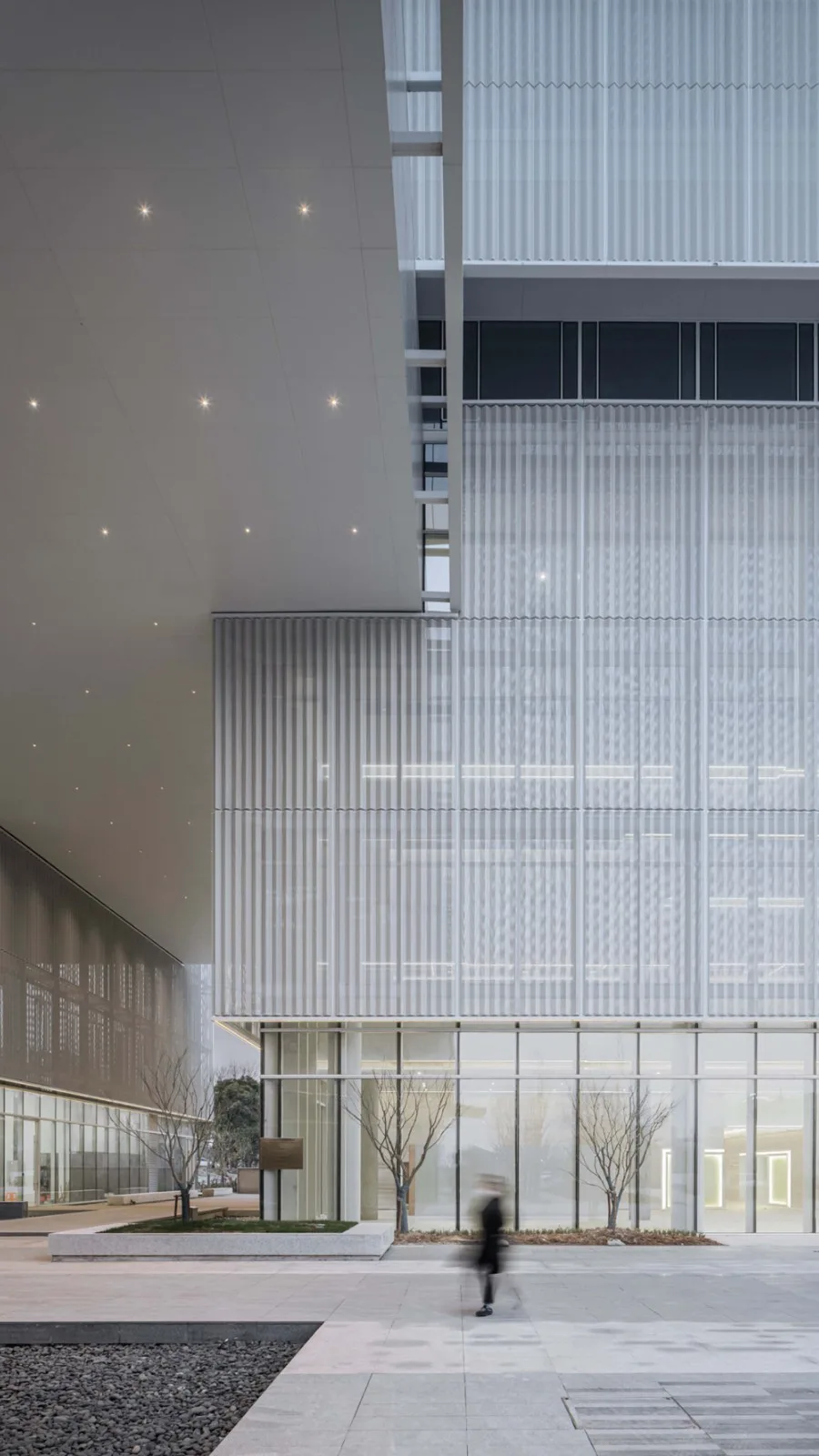
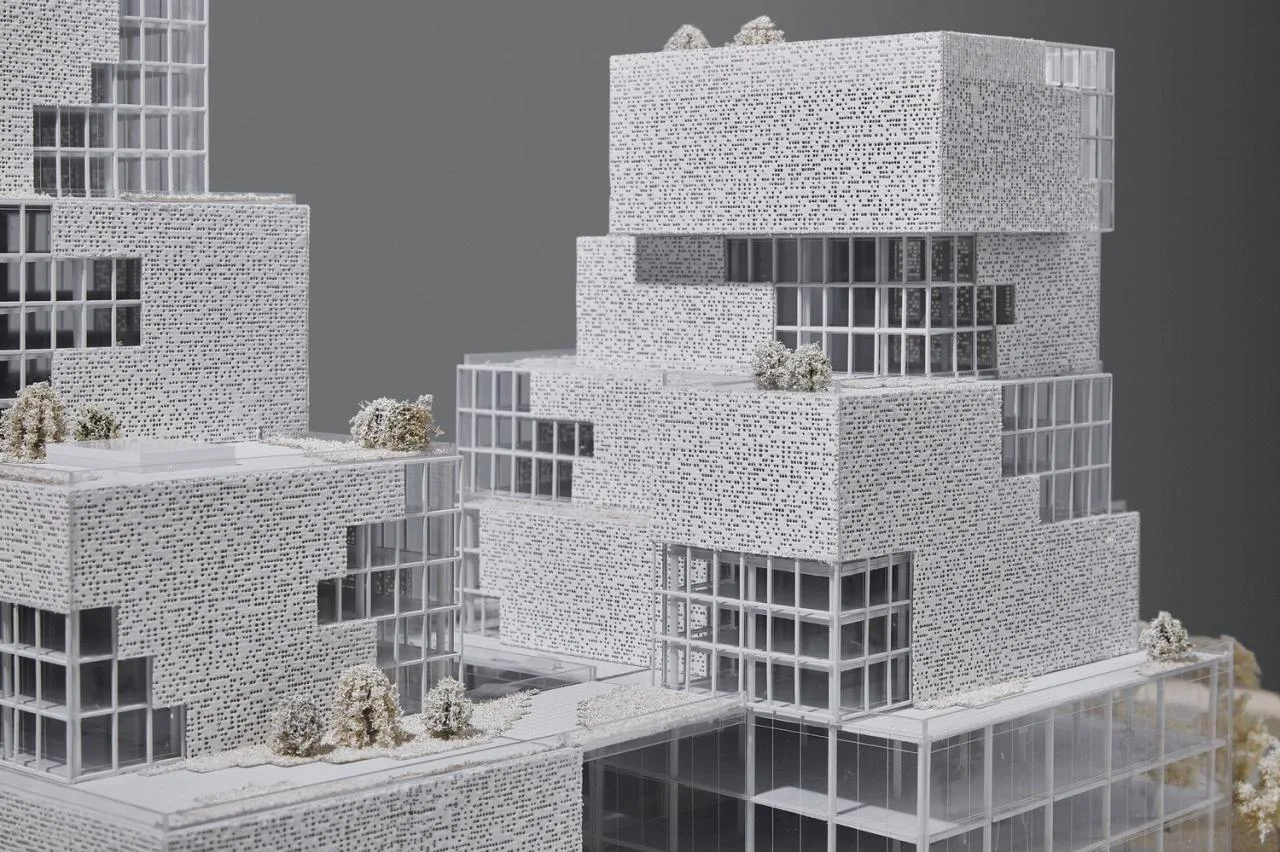
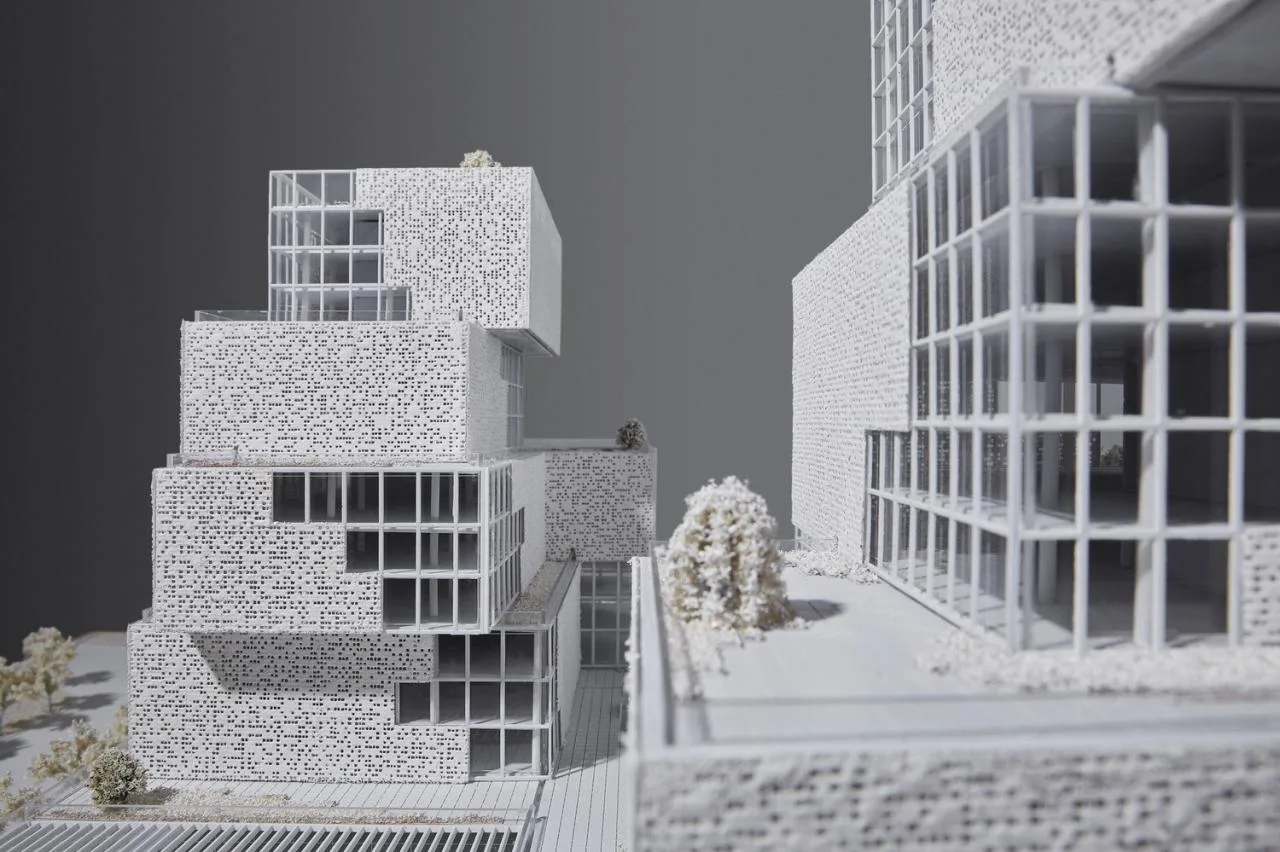
To enhance the modular appearance of the innovation center, we aimed for a stacked white module aesthetic. Traditional construction methods typically result in overhanging parts hanging down and terraces overlapping with floor surfaces, creating jagged shapes. Here, we pursued a cleaner, flatter look by controlling the upper limit of each module’s facade at the ceiling height of the suspended portions. The terrace panels are lowered to ensure proper waterproofing and height differentials between indoor and outdoor spaces. Inclined beams connect top plates of varying elevations, making the cantilever, regular floors, and terraces align perfectly, achieving a seamless stacking effect.
To maintain flatness and avoid interference from outdoor equipment and elevator shafts, core cylinders are divided into high and low zones. Elevator shafts in the lower zones are capped one floor earlier, with staircases reserved for evacuation. The height differences create space for lowered ceilings, buffering the elevator roofs and hiding equipment that would otherwise protrude onto terraces. Ventilation louvers top these areas, enhancing terrace quality and clarifying the modular “box” boundaries, resulting in a lighter architectural form.
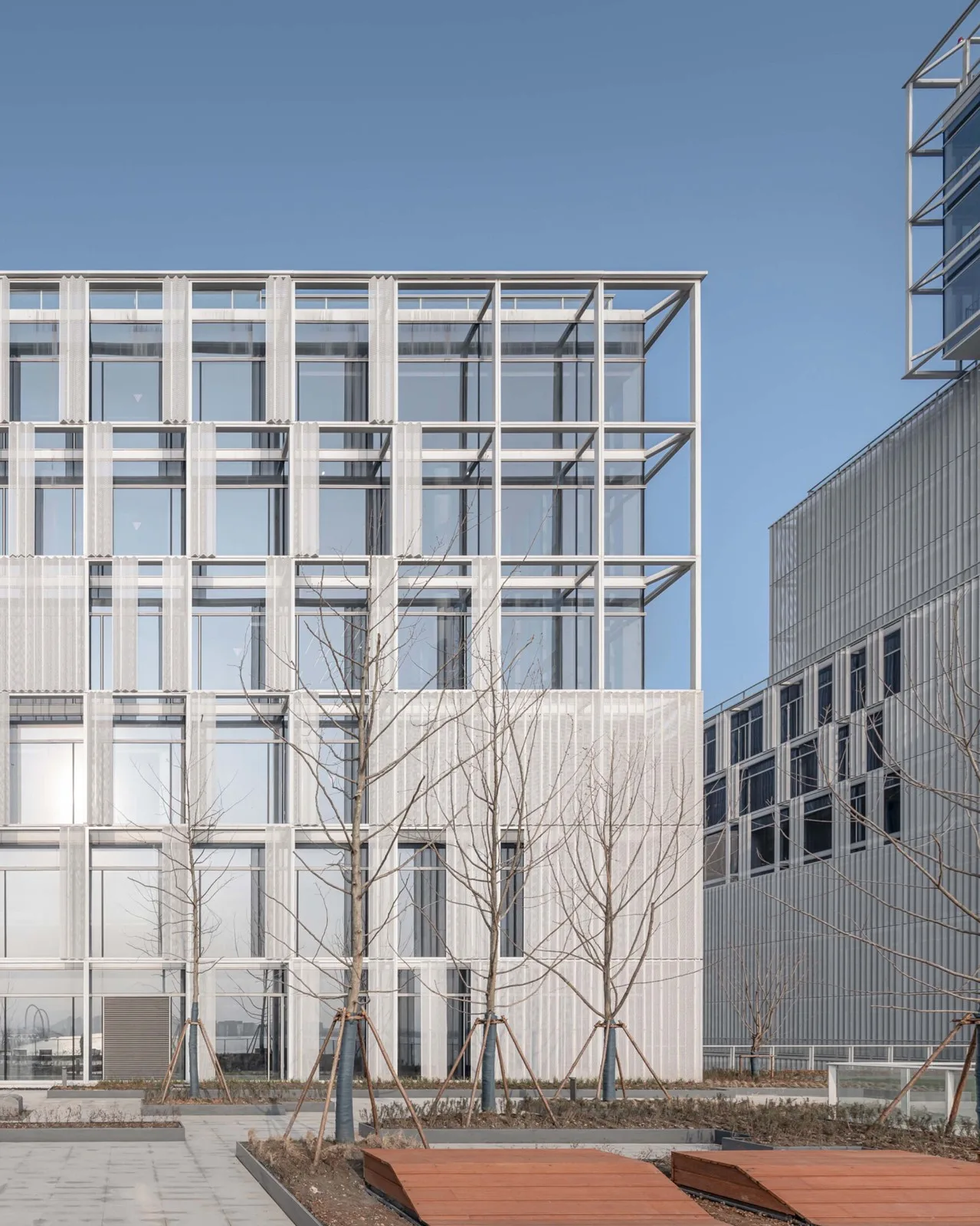
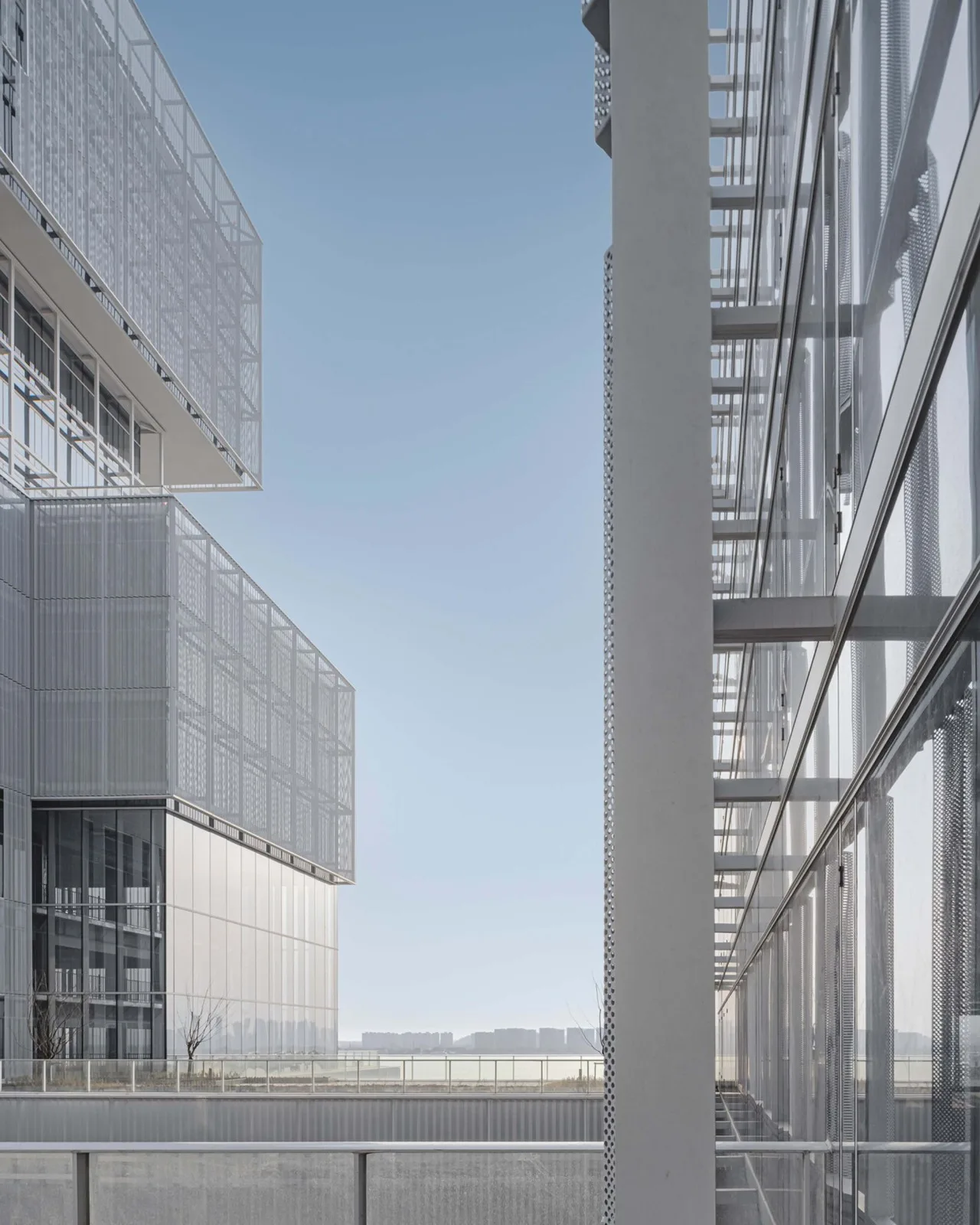
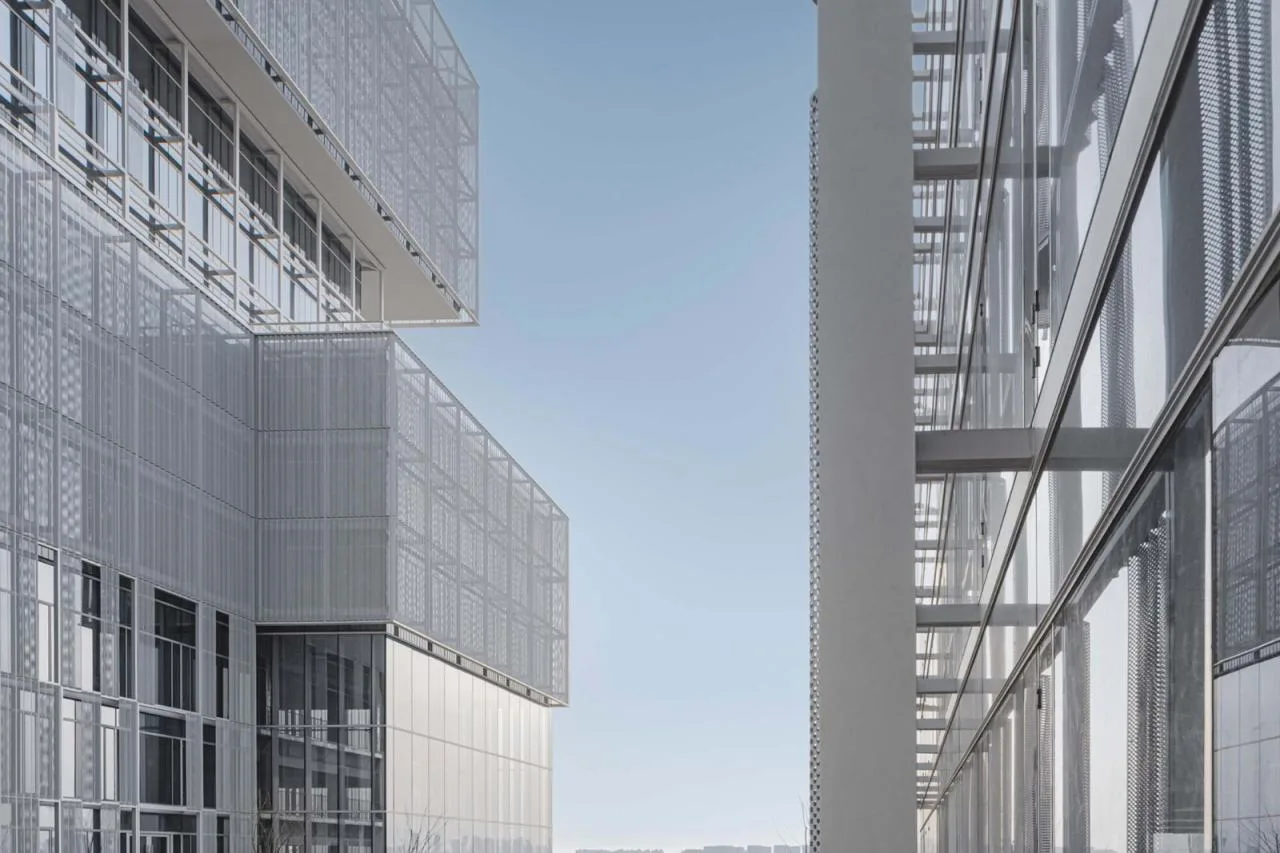
To mitigate optical interference from bridge traffic, a double-layer curtain wall system was adopted. It features an internal glass lining and perforated panels on the module-to-module facade. The displacement of the form and facade follows a calculated logic: shifts correspond to one-third and one-quarter of the structural column grid. These are broken down into smaller units controlled by a minimum common divisor to maintain symmetry on opposite facades. The facade modular framework measures 3 meters north to south and 2.8 meters east to west, strictly controlling divisions and displacements to create vertical alignment.
Perforated panels cover the frame at one-quarter width, with gradient textures that gradually taper off at the corners. These precise controls achieve architectural purity and modular consistency, extending to landscape and equipment integration, establishing a unified order throughout the project.
Conclusion
The Smart Xintiandi Innovation Center stands as a testament to the designers’ relentless pursuit of refinement and precision. It represents the cutting edge of high-tech office environments and reflects our vision for next-generation urban spaces. As a model of sustainable, innovative, and future-oriented workplaces, it aspires to become a microcosm of the Binjiang Hi-Tech Zone’s high-quality development, creating an office garden where nature and technology coexist harmoniously along the riverside.
Project Drawings
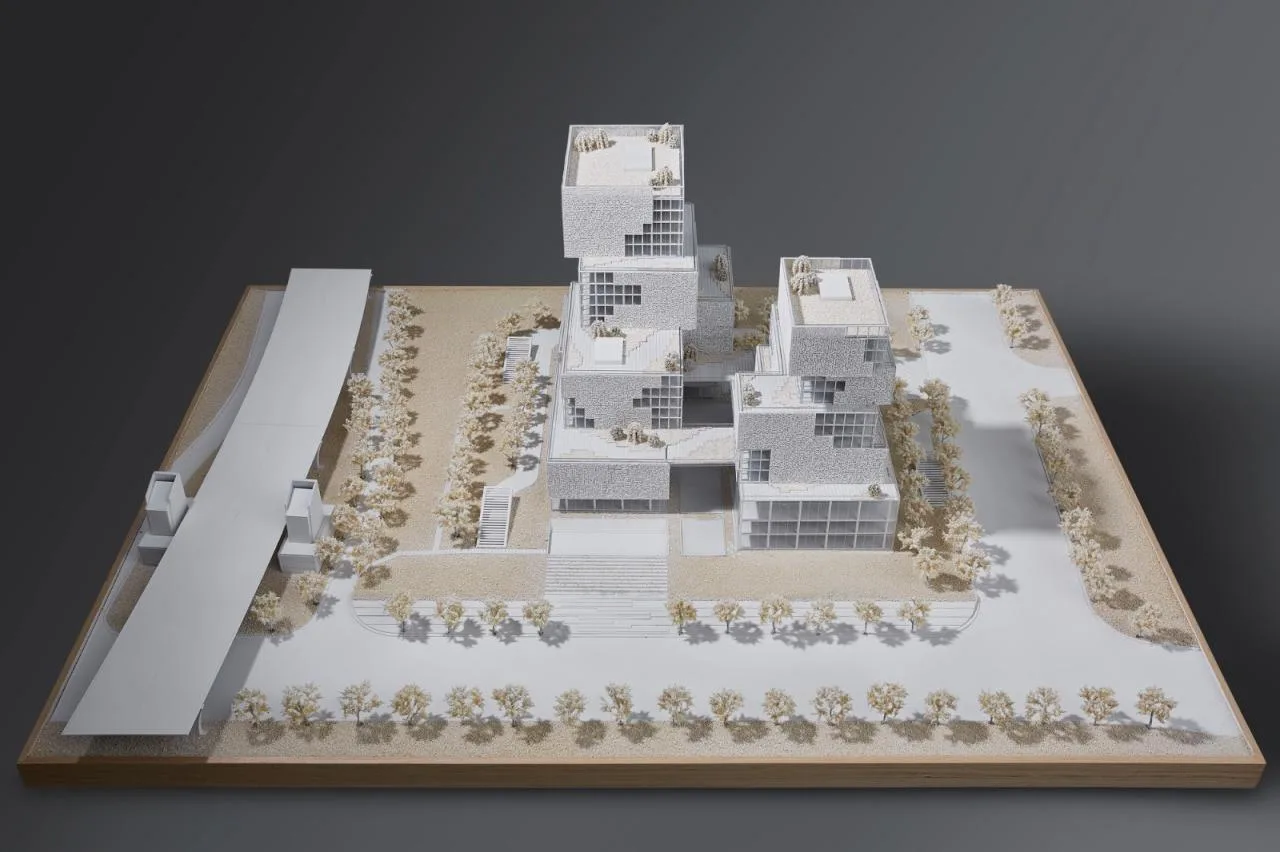
△ Model diagram
△ Model diagram
△ Model diagram
△ Model diagram
△ Model diagram
△ Model diagram
△ Model diagram
△ Model diagram
△ Model diagram
△ Model diagram
△ Model diagram
△ Base schematic diagram
△ General layout plan
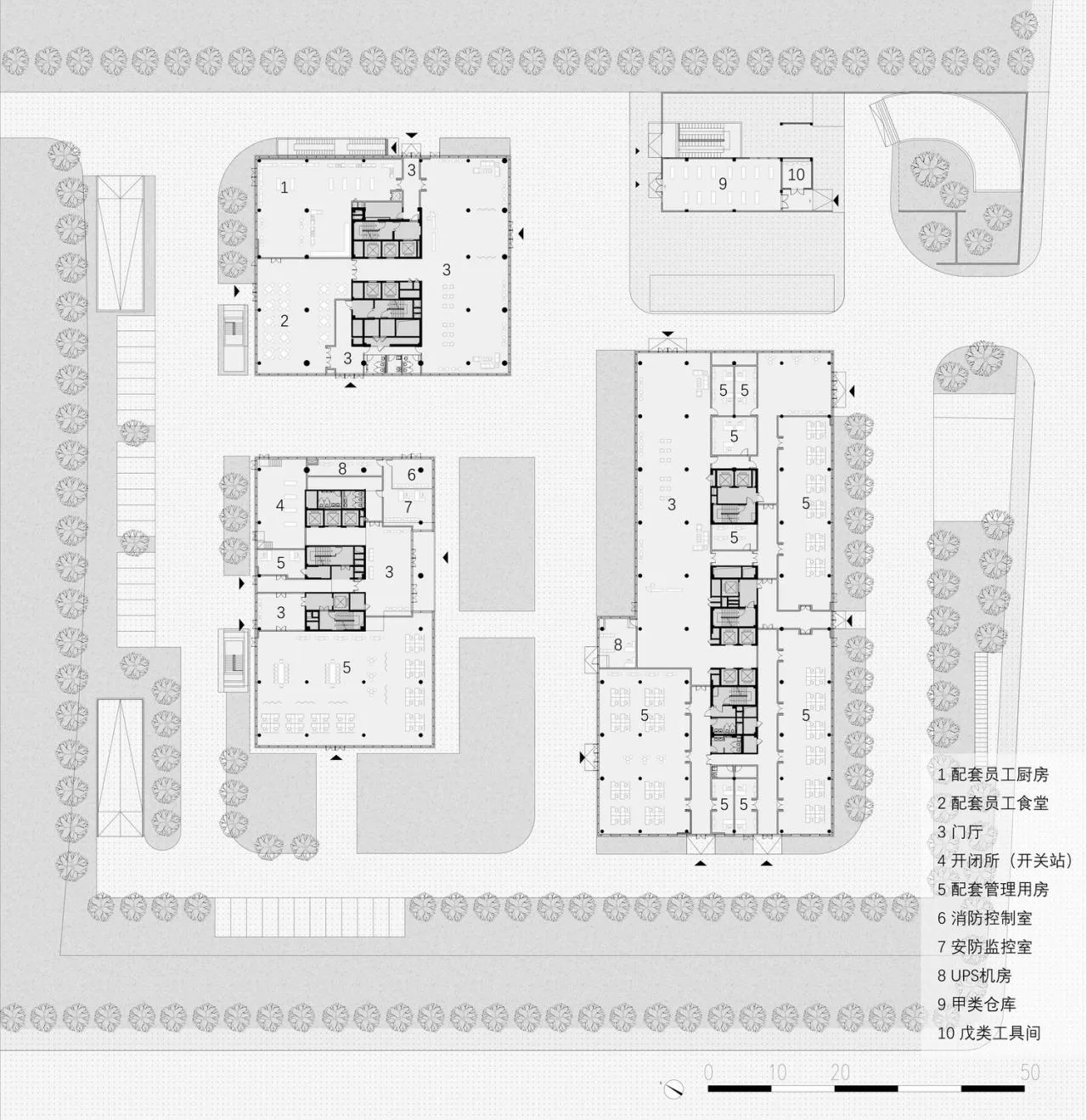
△ First floor plan
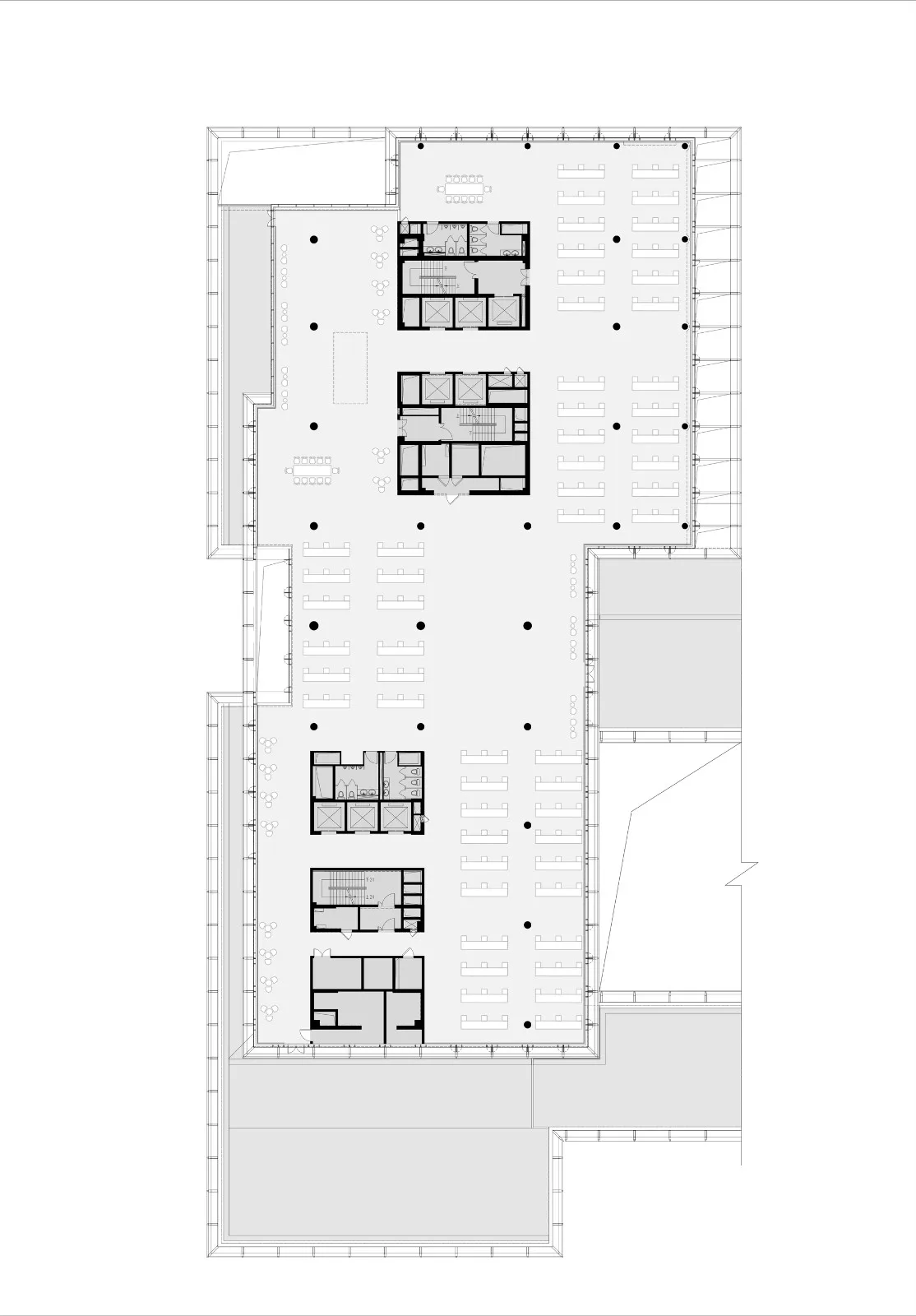
△ Plan view
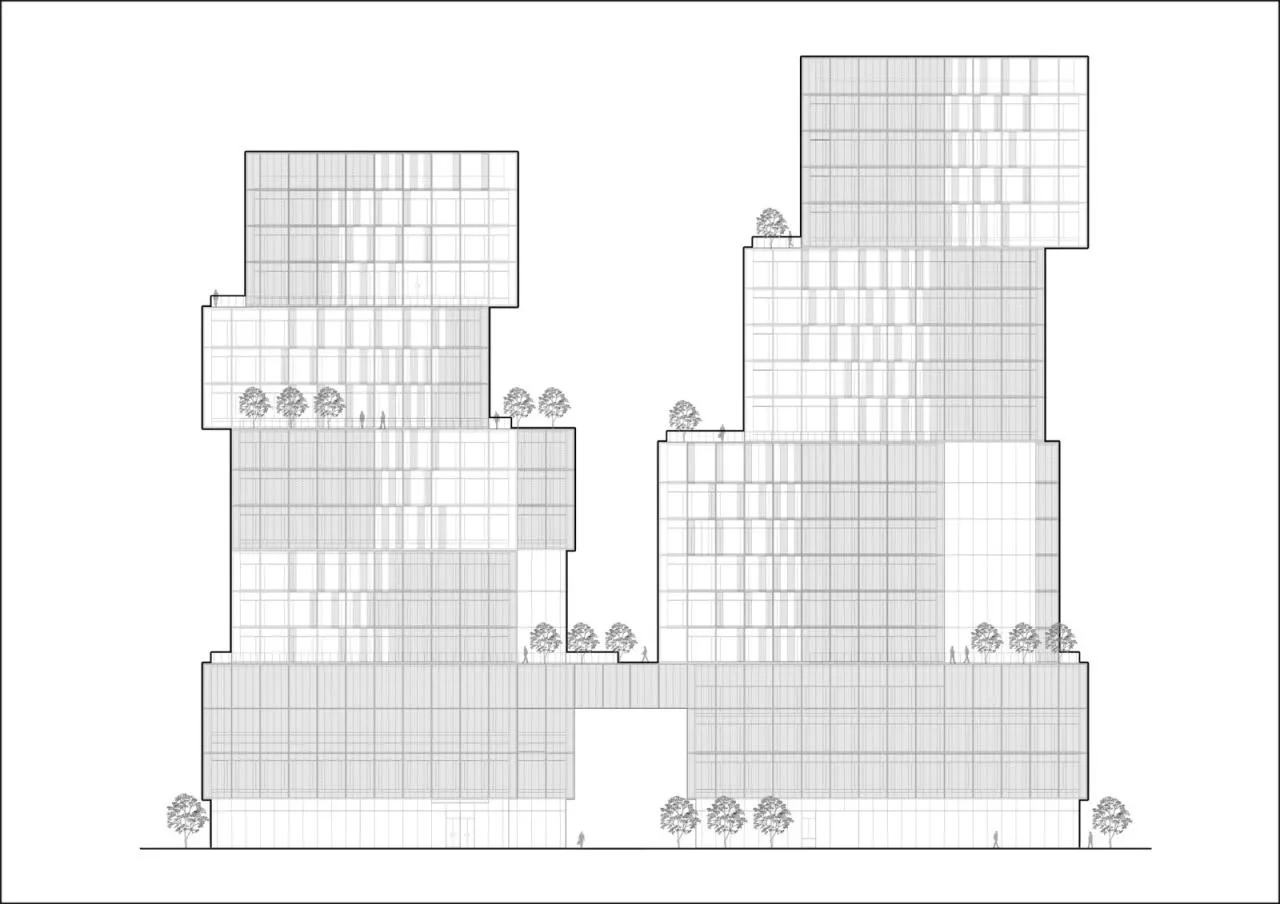
△ Elevation drawing
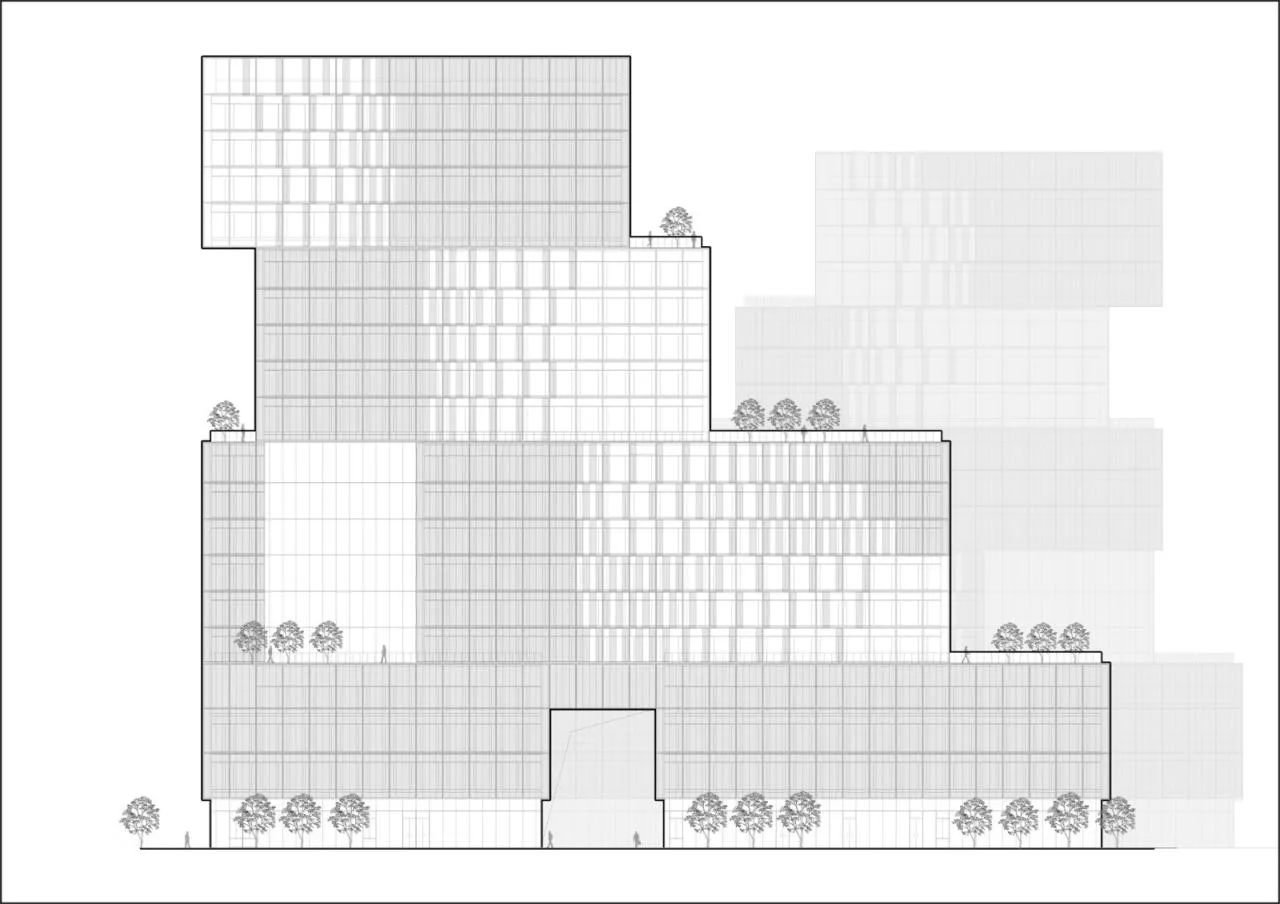
△ Elevation drawing
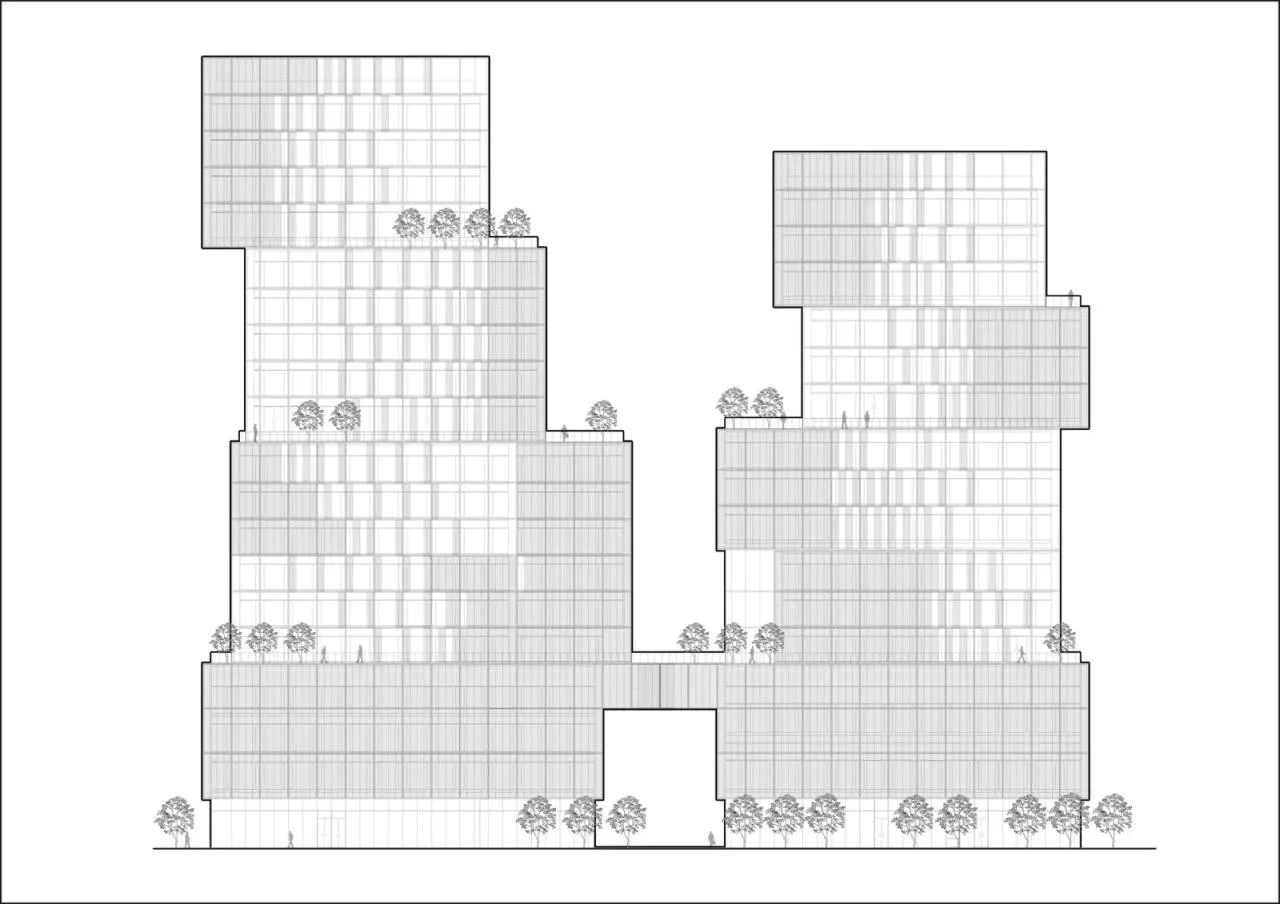
△ Elevation drawing
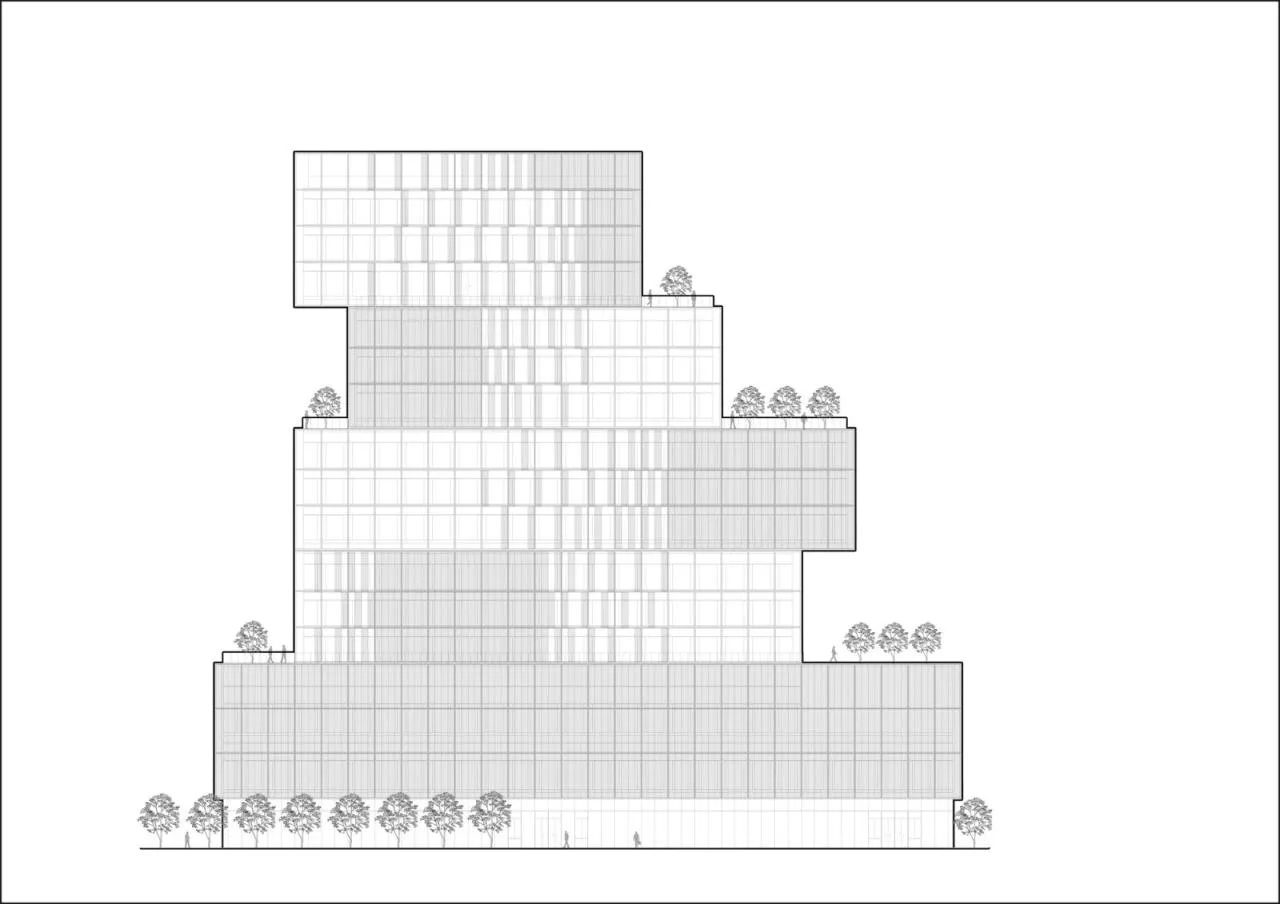
△ Elevation drawing
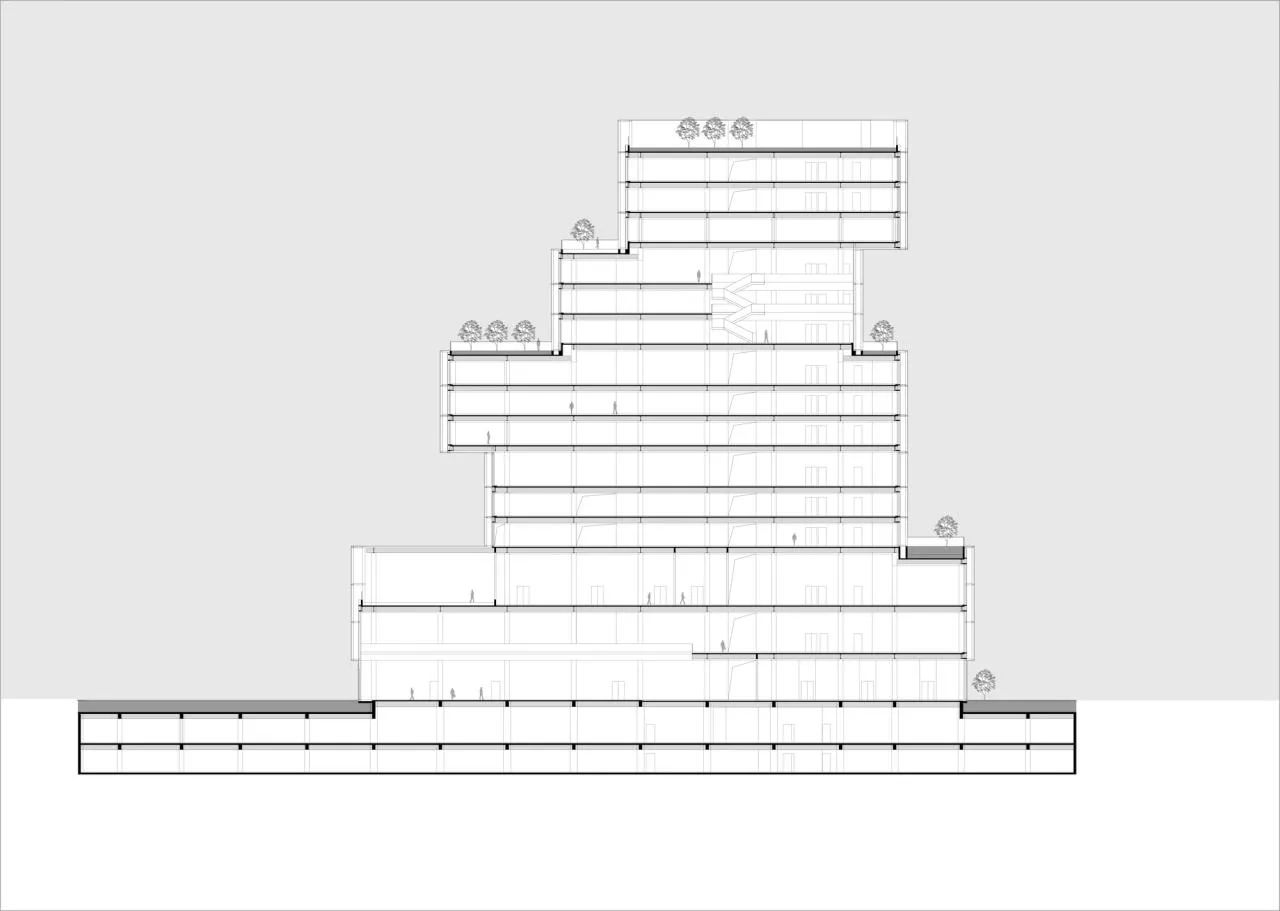
△ Section diagram
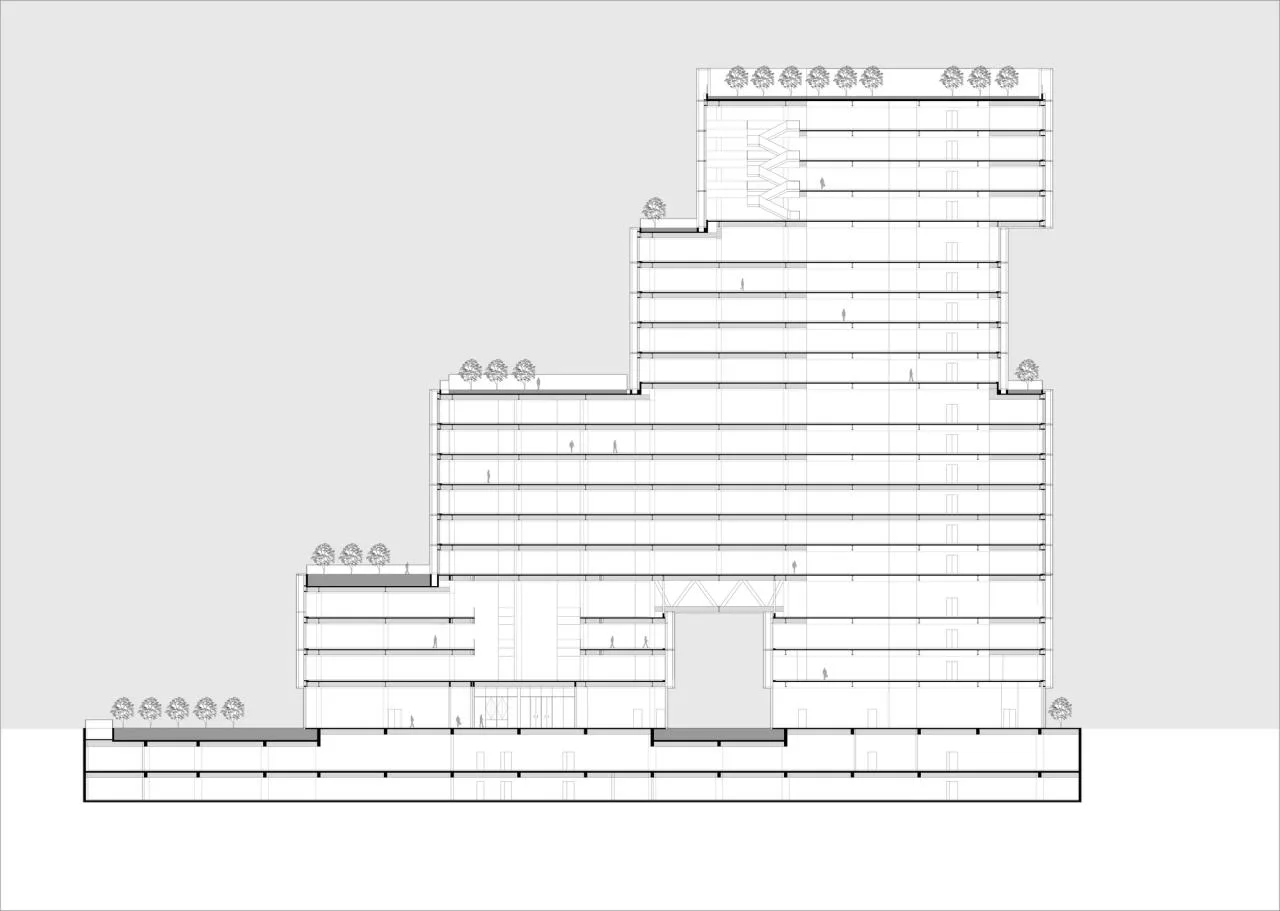
△ Section diagram
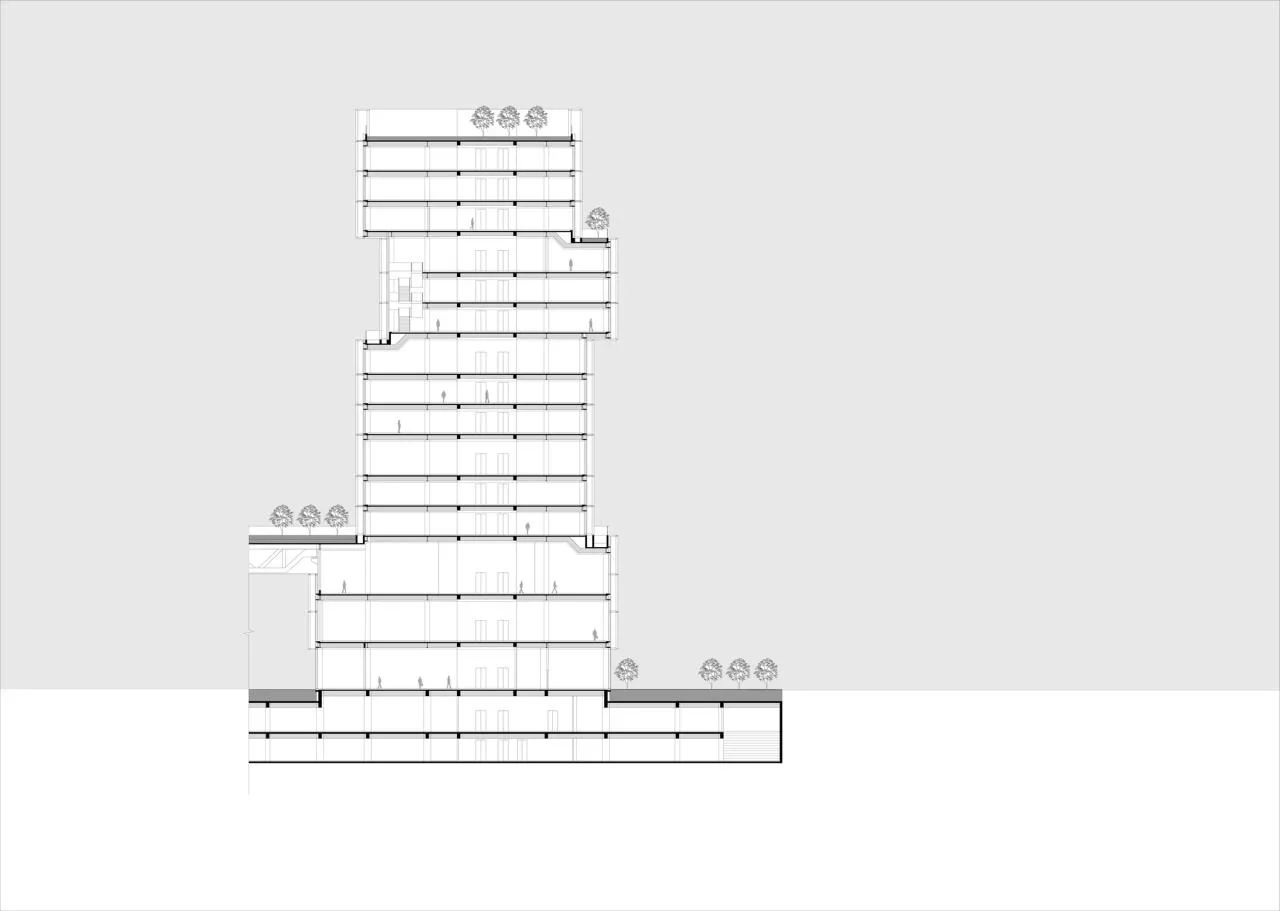
△ Section diagram
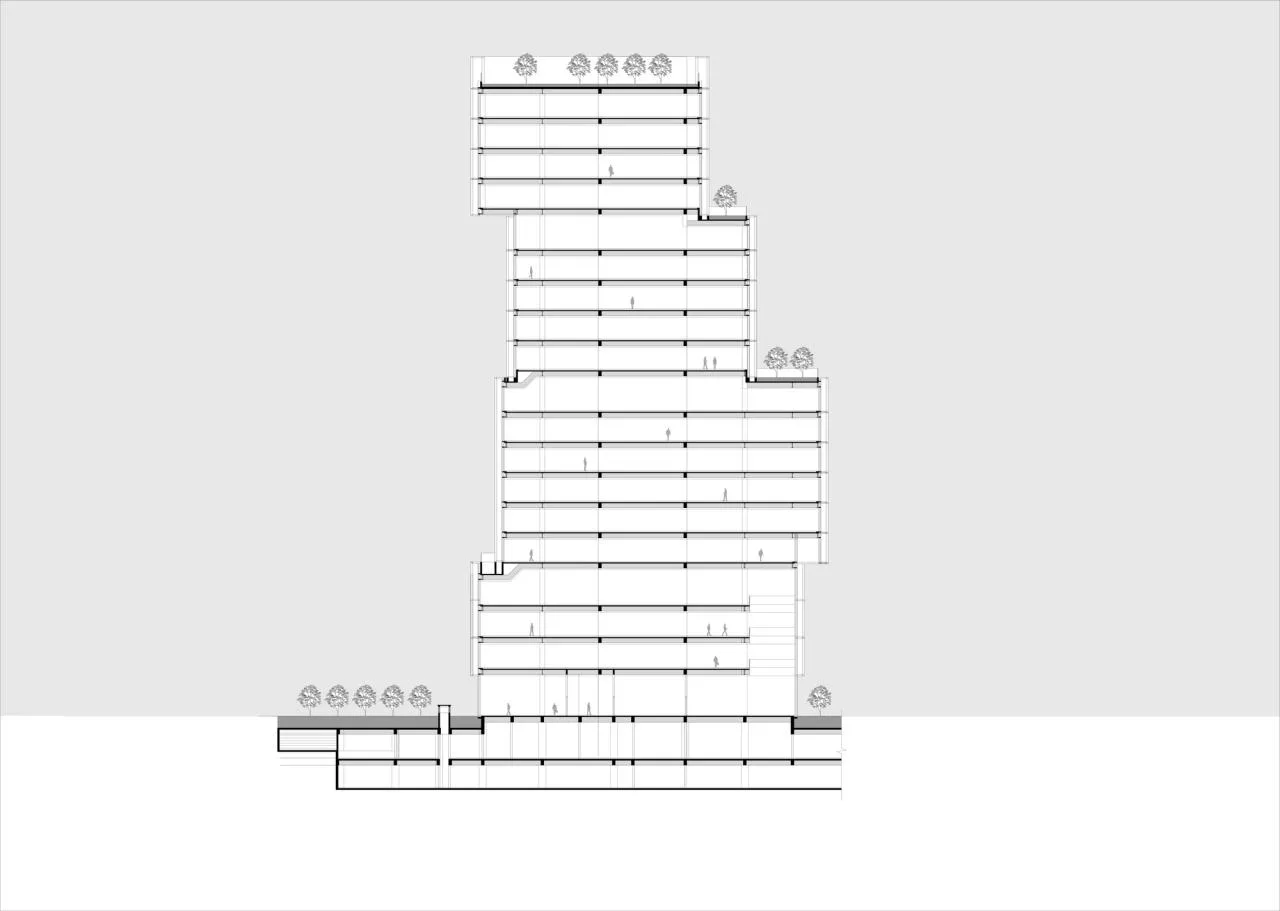
△ Section diagram
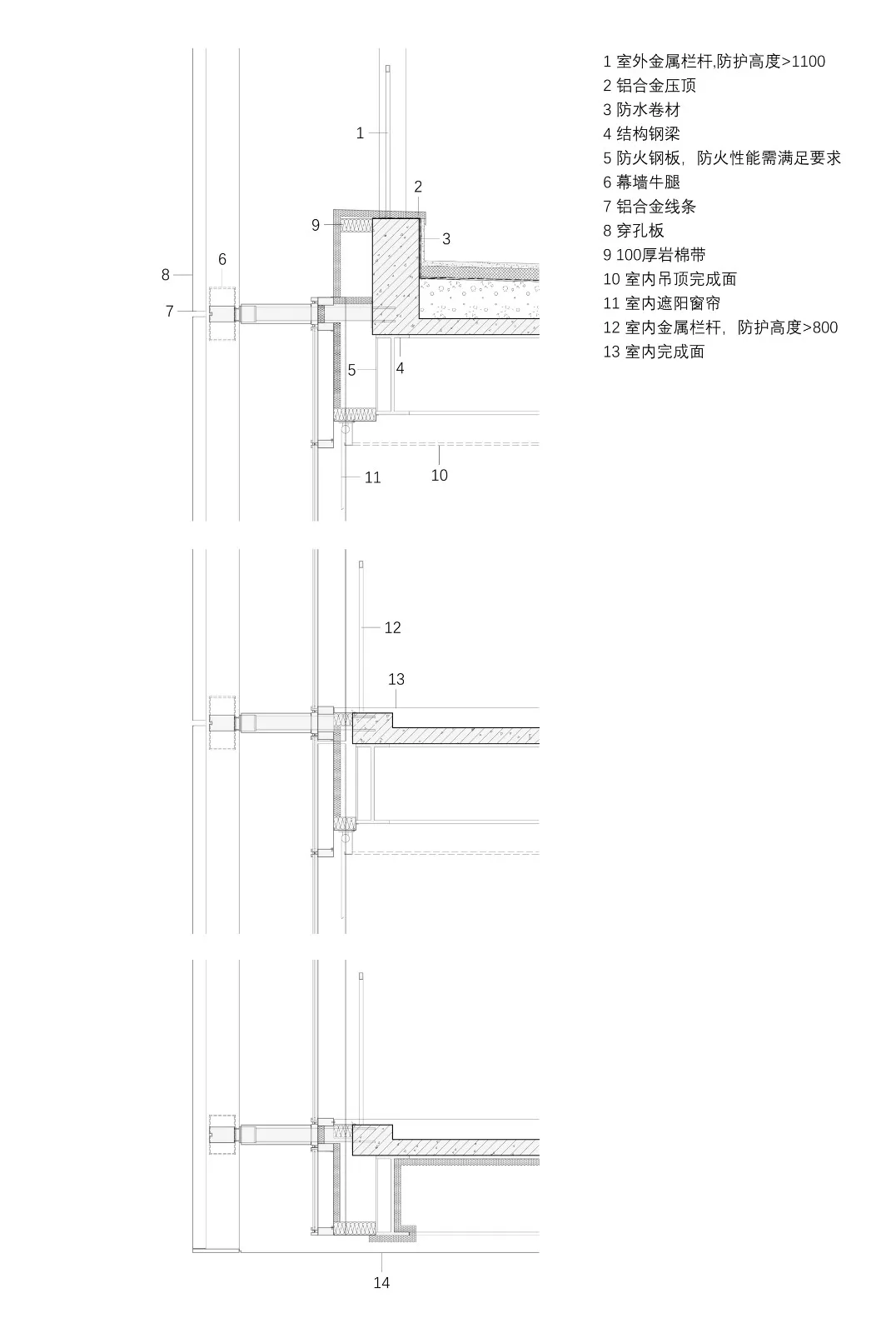
△ Detailed drawing
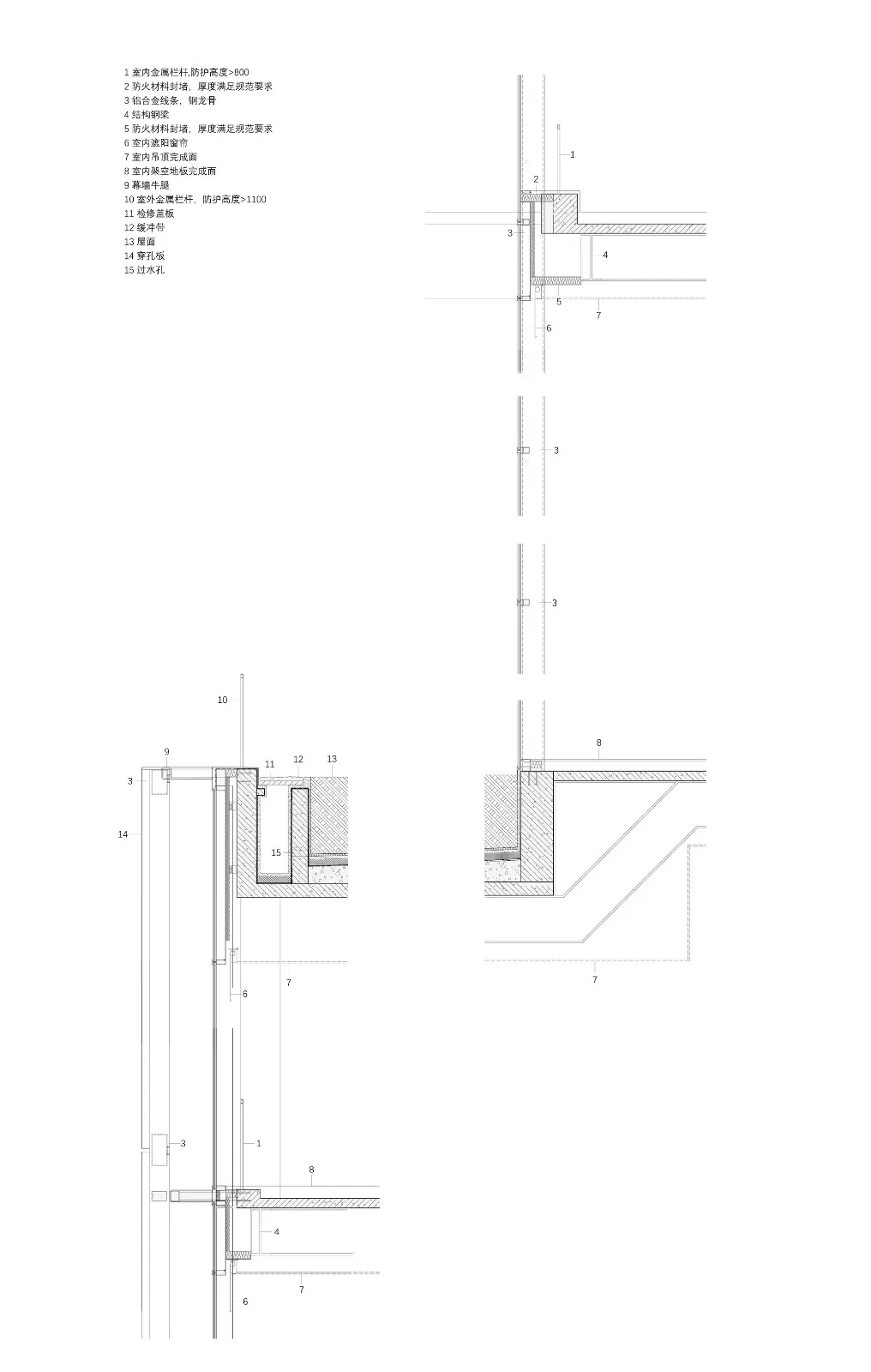
△ Detailed drawing
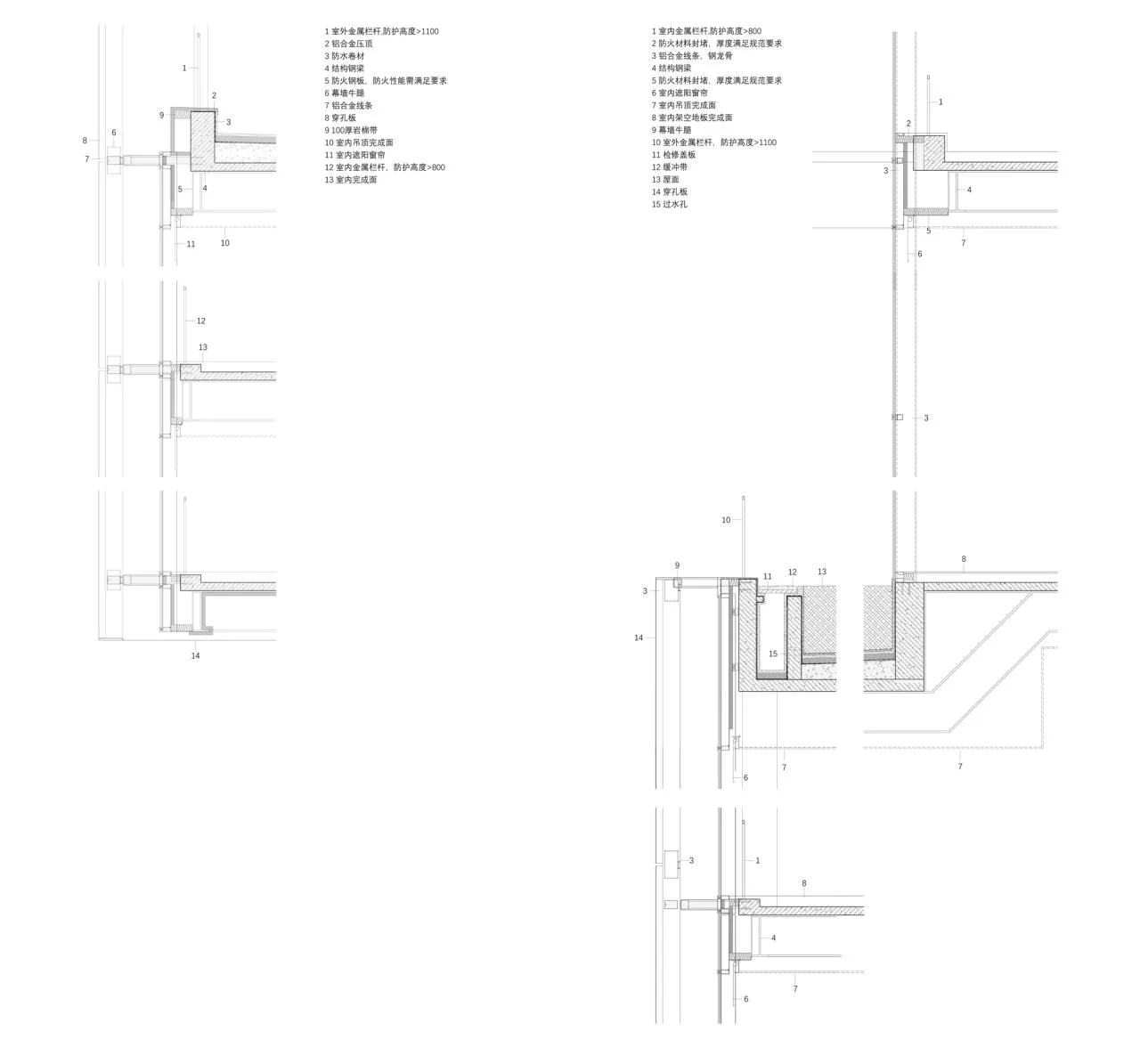
△ Detailed drawing
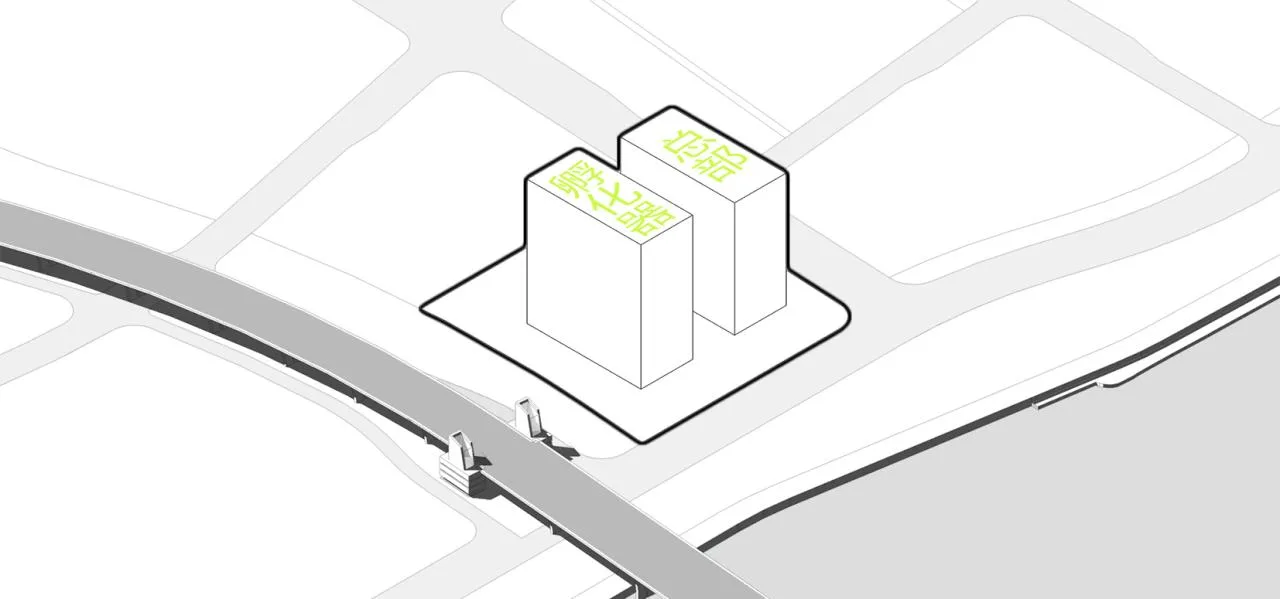
△ Block generation diagram
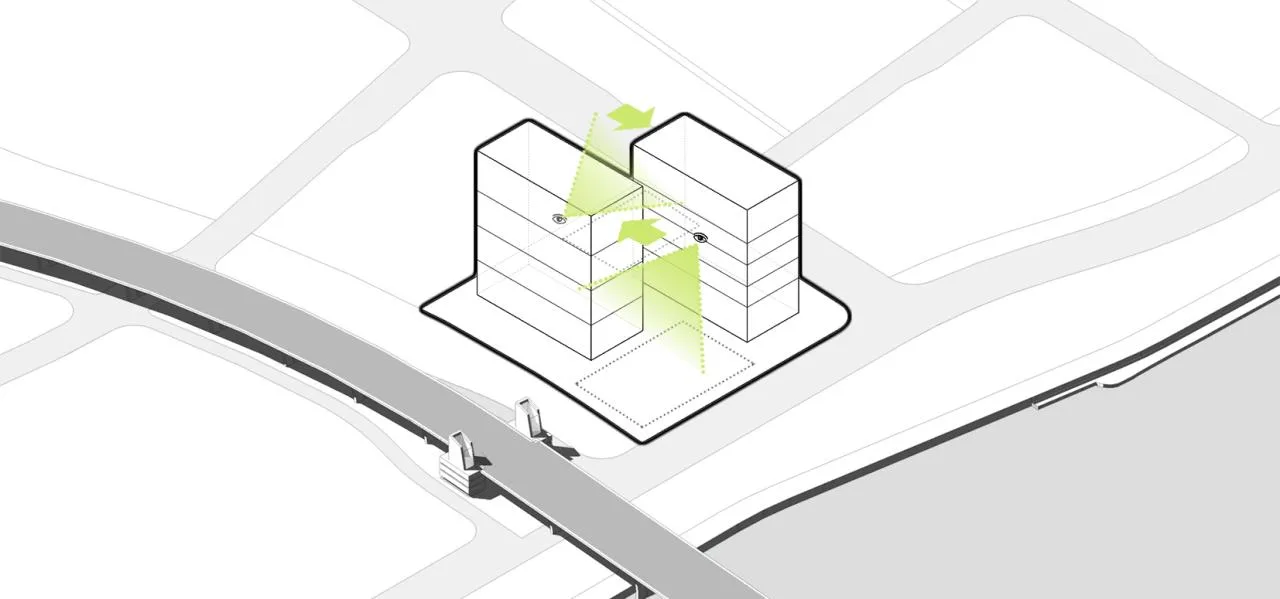
△ Block generation diagram
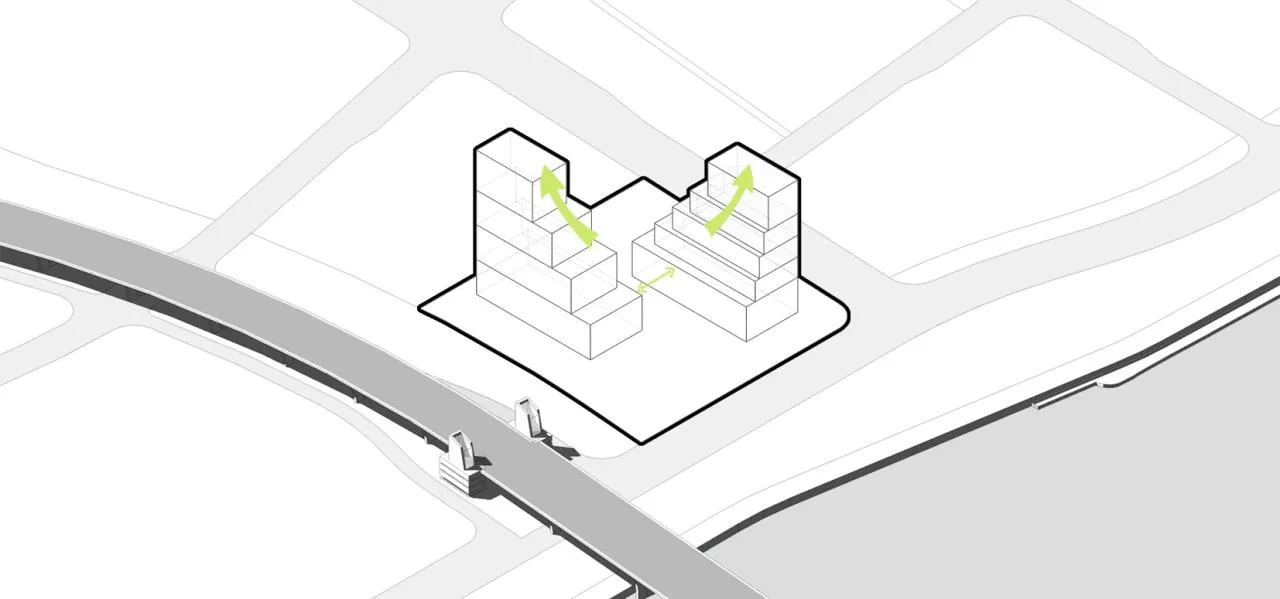
△ Block generation diagram
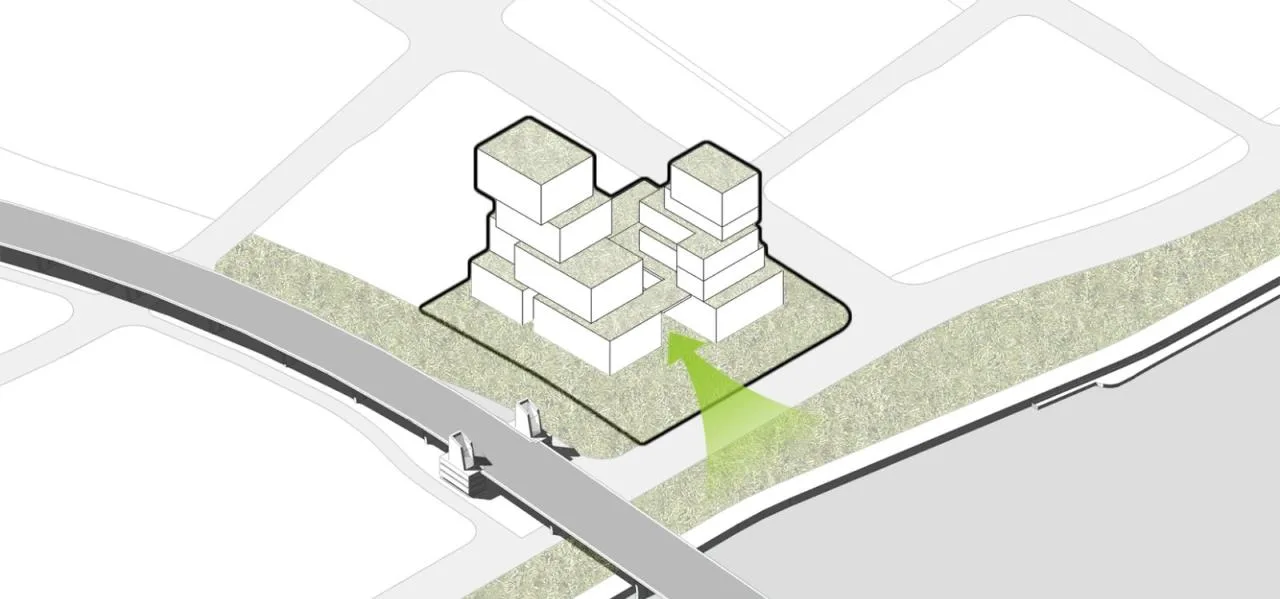
△ Block generation diagram
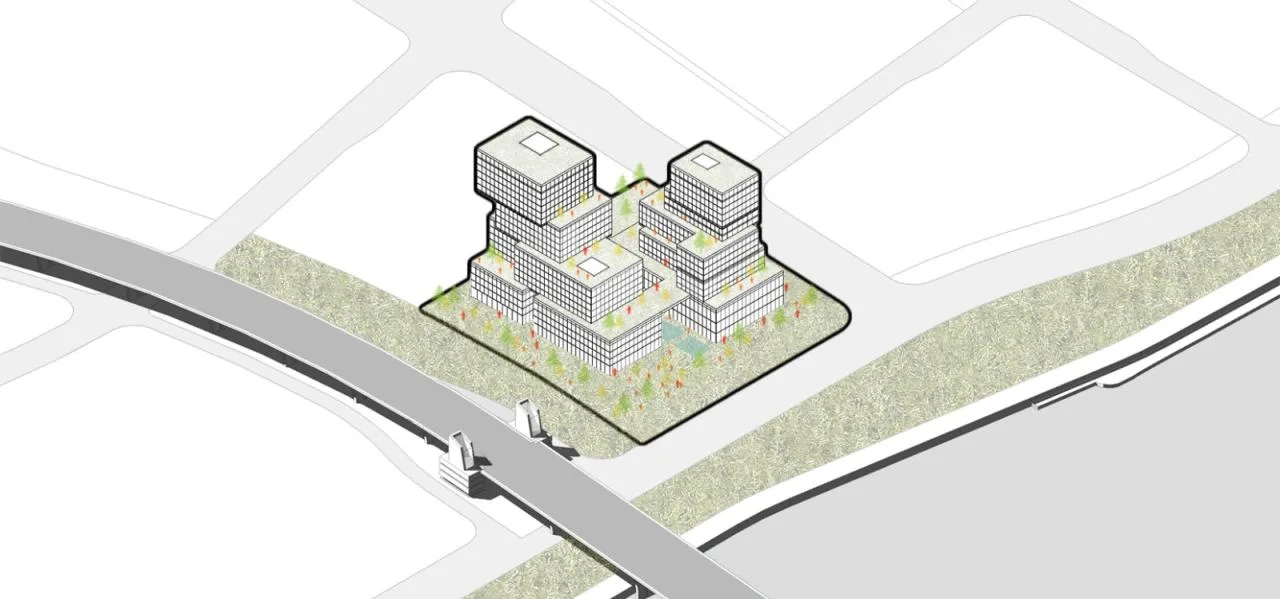
△ Block generation diagram
Project Information
Architects: Guo Yu, Zhou Run, Wang Dingding
Area: 89,891 m²
Project Year: 2023
Photographer: Architectural translator
Manufacturer: Xinyi Glass, Gaoshida
Project Director: Zhang Wei
Project Creator: Cheng Yue
Team Members: Zheng Yilin, Guo Xinxin, Sun Jun, Shi Yiyuan, Zhang Jing
Structural Design: Song Renqian, Zhong Zhouneng
Water Supply and Drainage Design: Zhang Bin, Hu Ting
HVAC Design: Li Jinniu
Electrical Design: Zhuo Zuhang, Yu Haiyang
Landscape Design: Guo Yu, Zhou Run, Wang Dingding
Interior Design: Dian Shang Architectural Decoration Co., Ltd
Owner: Hangzhou Gaoxin Jintou Holdings Group Co., Ltd
Location: Hangzhou














Must log in before commenting!
Sign Up