
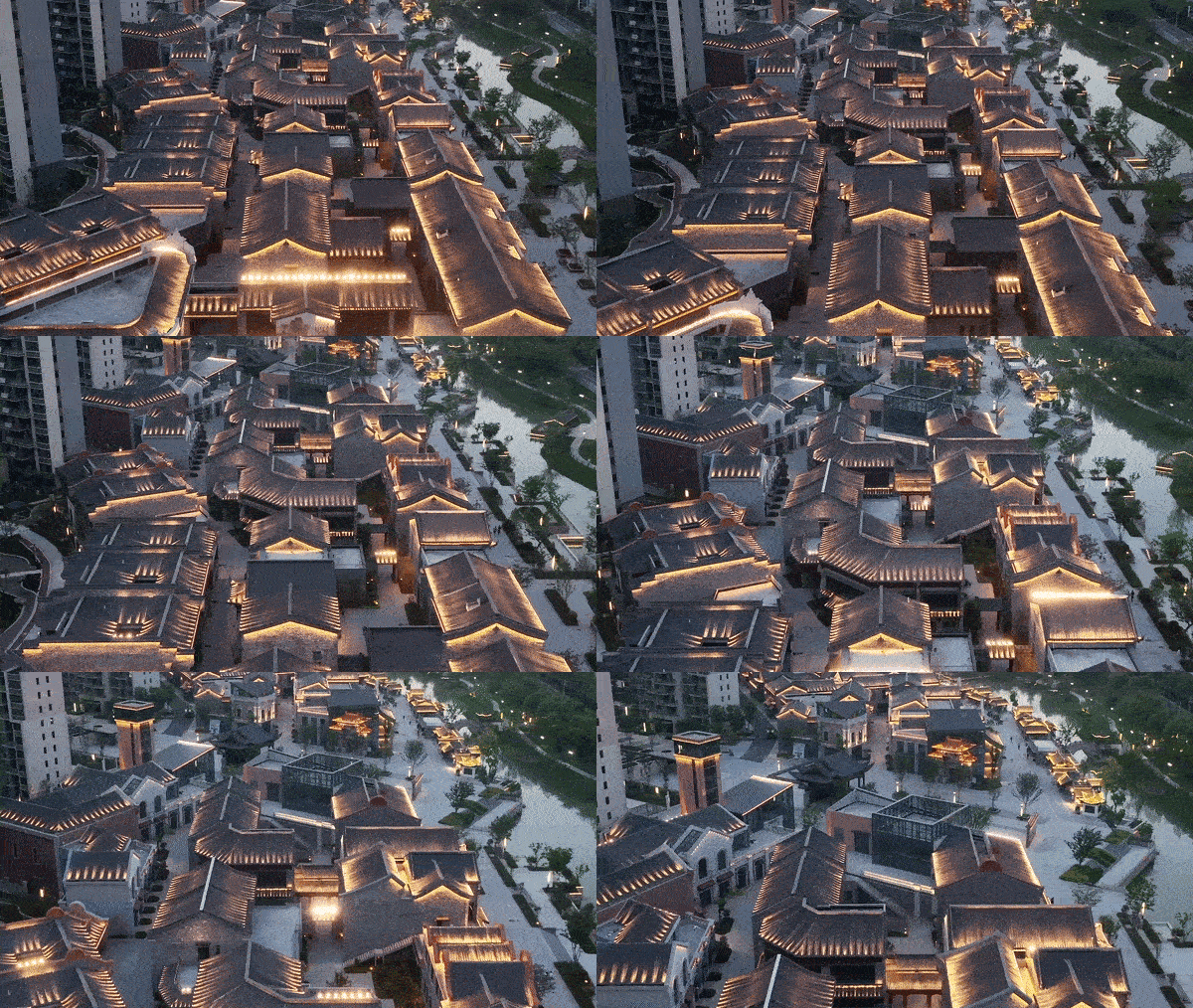
Fuyang Jian Street
Rooted in Yingzhou’s rich cultural heritage that spans thousands of years and the deep development of Wanjie in Fuyang, this project seamlessly blends traditional culture with contemporary trends. The fusion of timeless elements and modern expressions presents a refreshed vision of Fuyang’s enduring legacy.
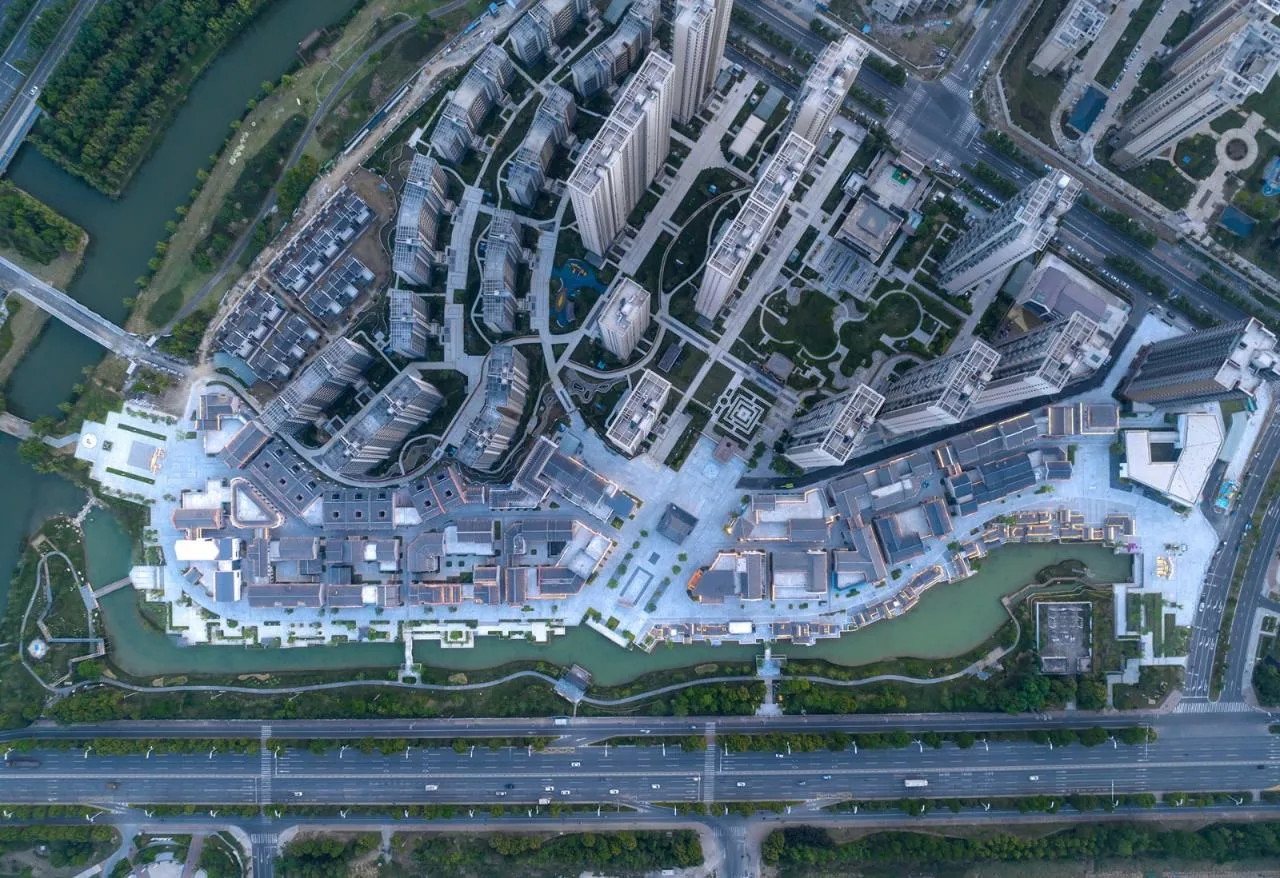
Fuyang serves as a key transitional hub for industrial transfer in eastern China, strategically positioned to connect east to west and north to south. It ranks among the three major hubs in Anhui province. This project is set along the industrial park’s central axis on Class II residential land, surrounded by natural landscapes including Caidie Lake, Luqiao Gou, and the Fuying River.
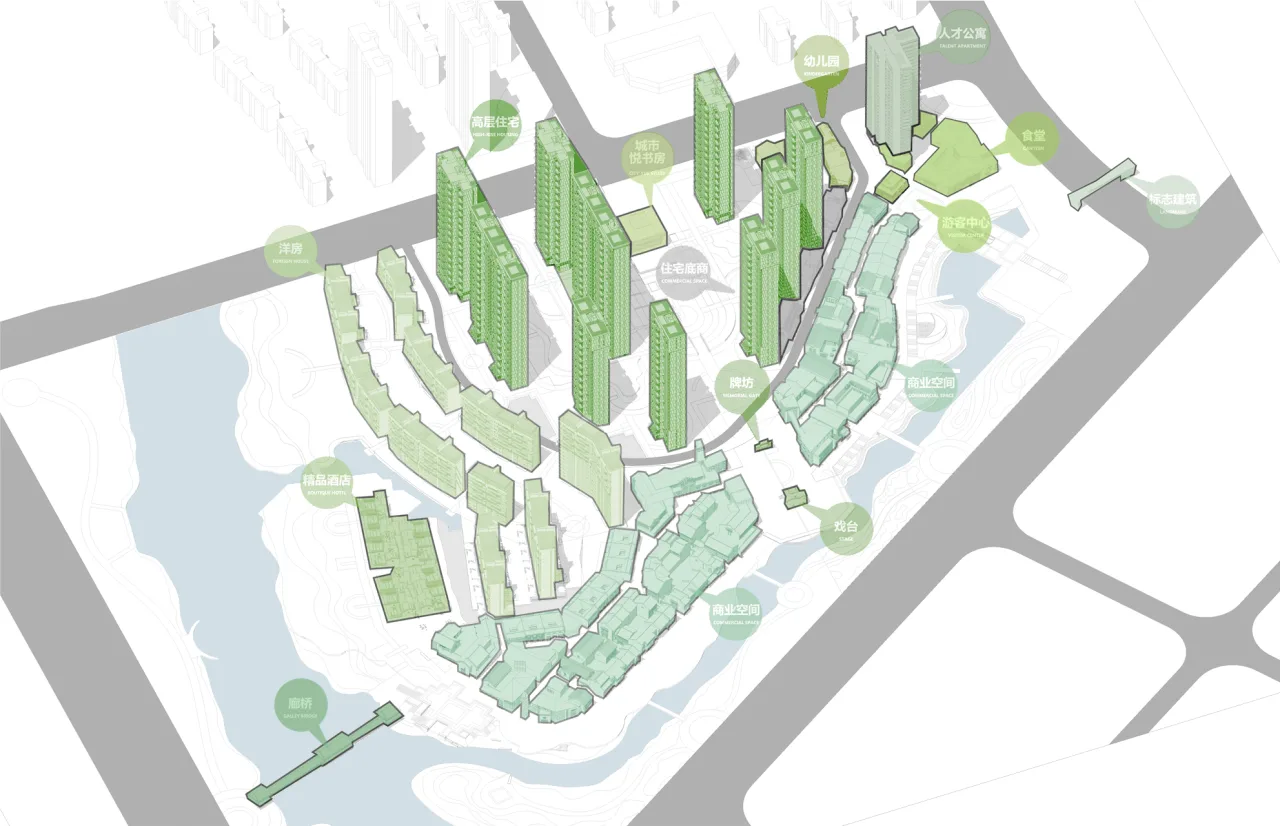
Fuyang’s defining characteristics include its expansive urban layout, large population, fertile plains, and the convergence of major rivers. Drawing from these features, the design emphasizes spatial qualities rooted in local tradition, utilizing multi-faction architectural groups to create a diverse community marked by distinctive and iconic imagery.
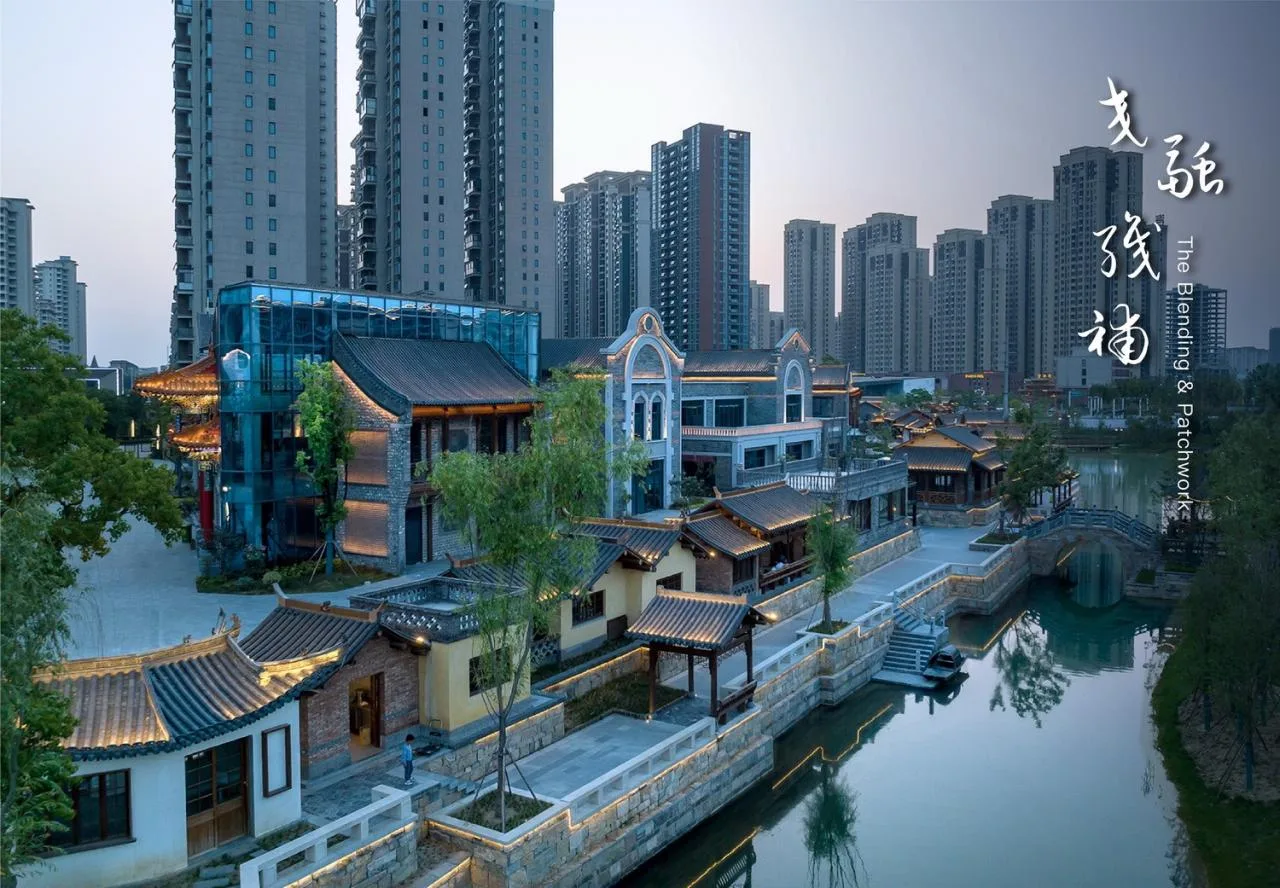
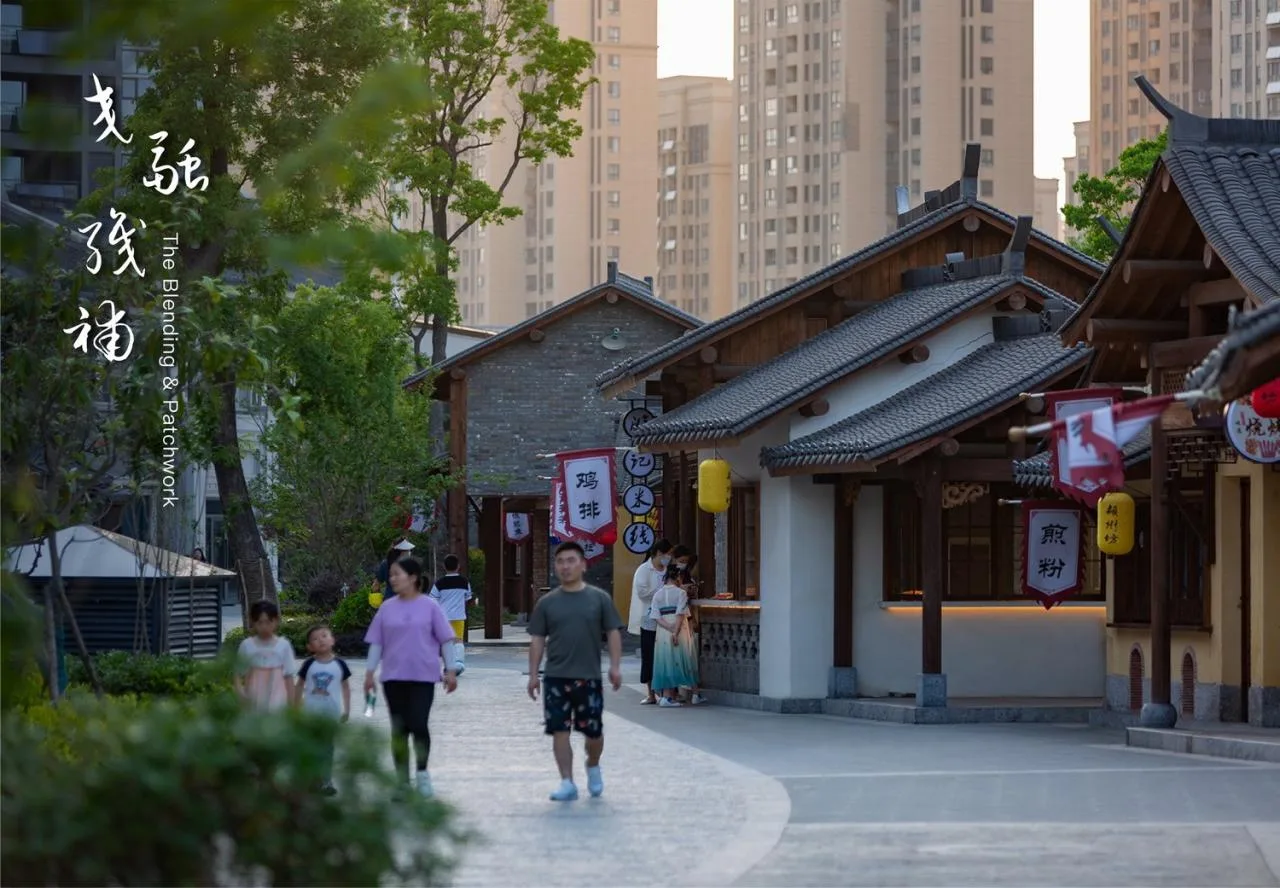
New and Old Blending Seamlessly
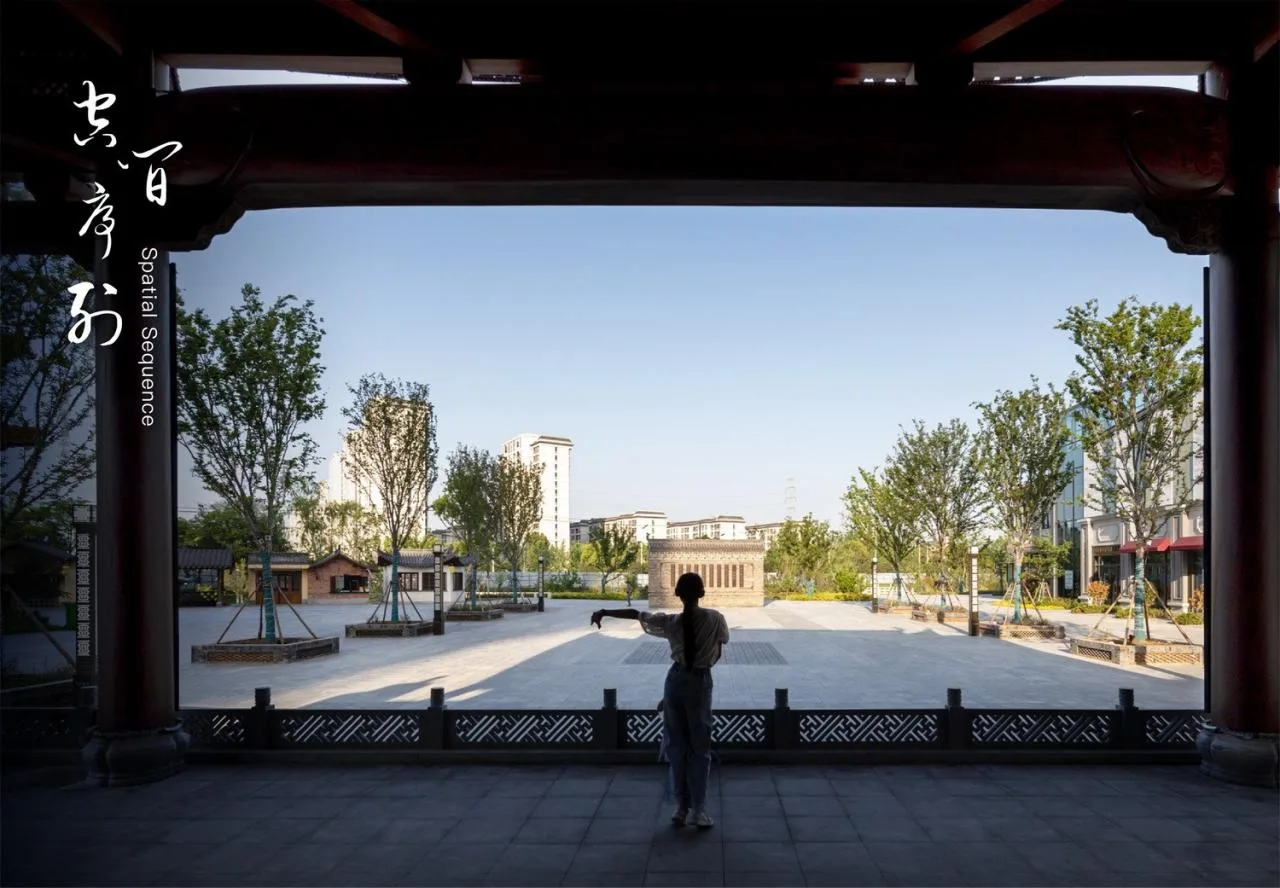
Dynamic and Static Spatial Sequences
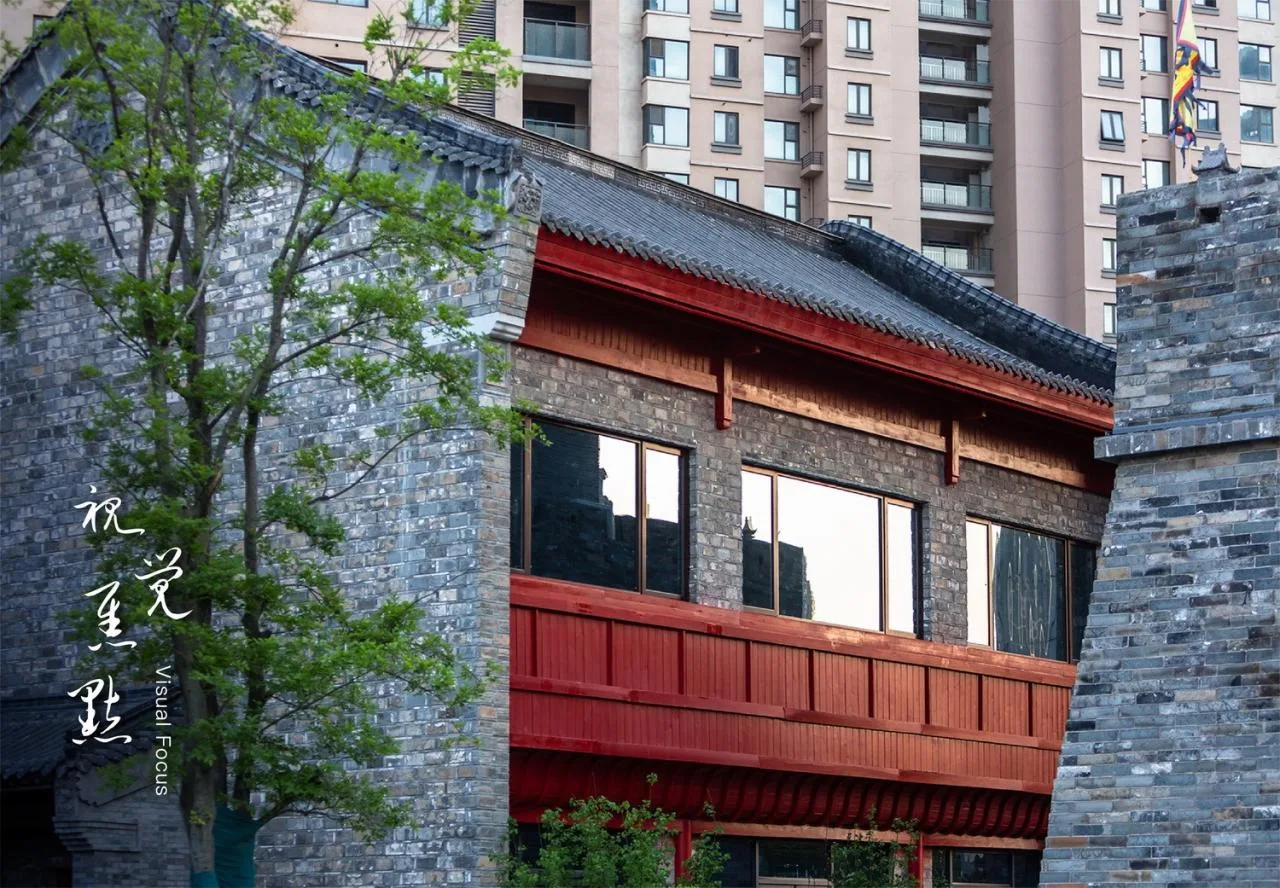
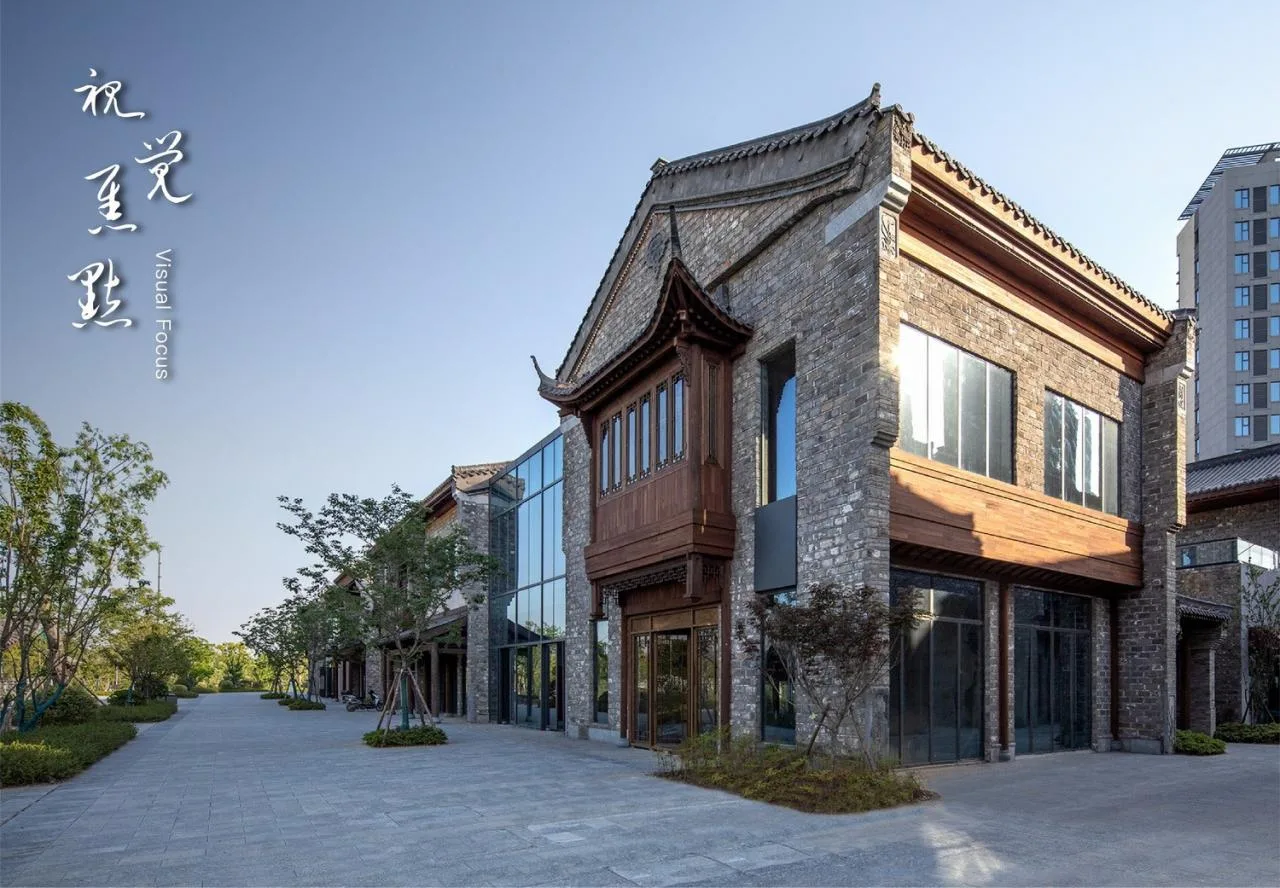
Light and Visual Color Focus
Wangjie · Yingzhou Fang
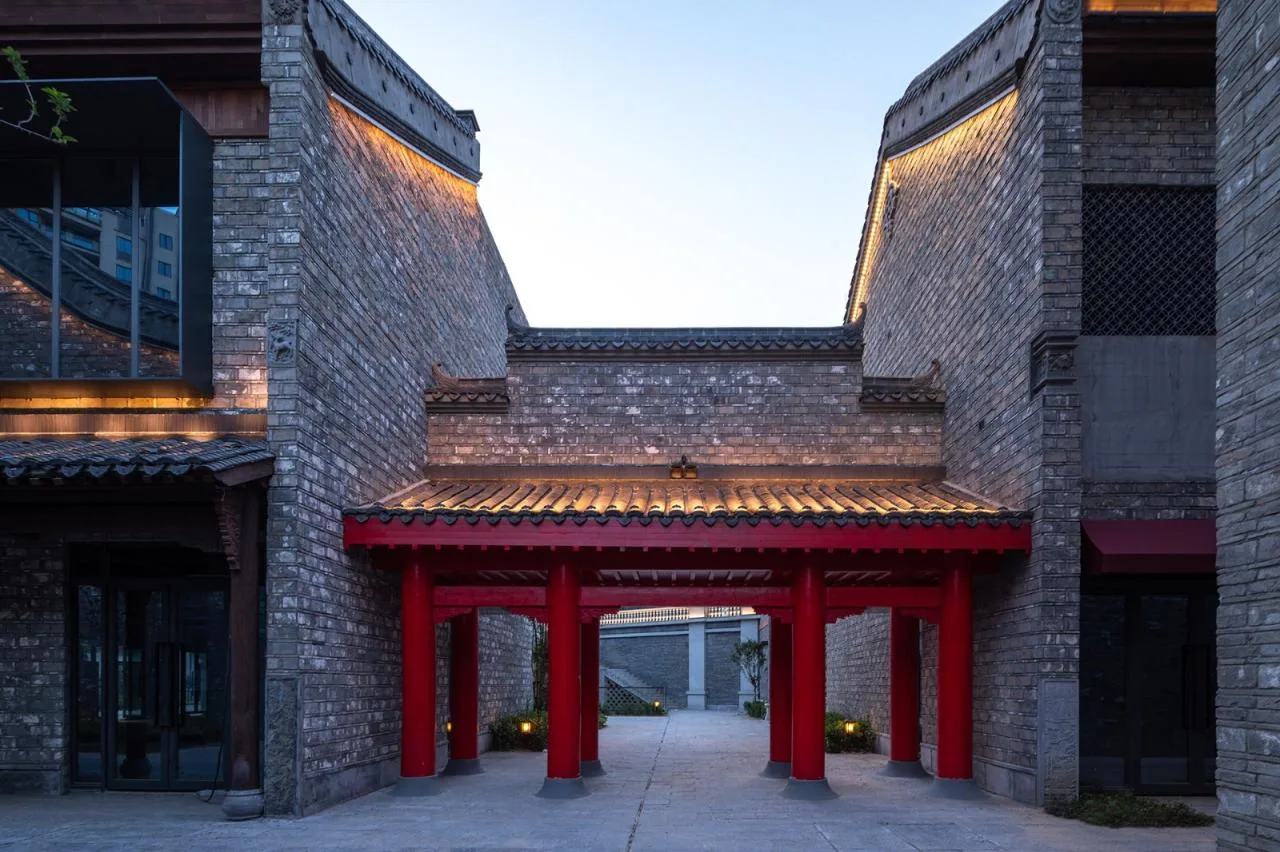
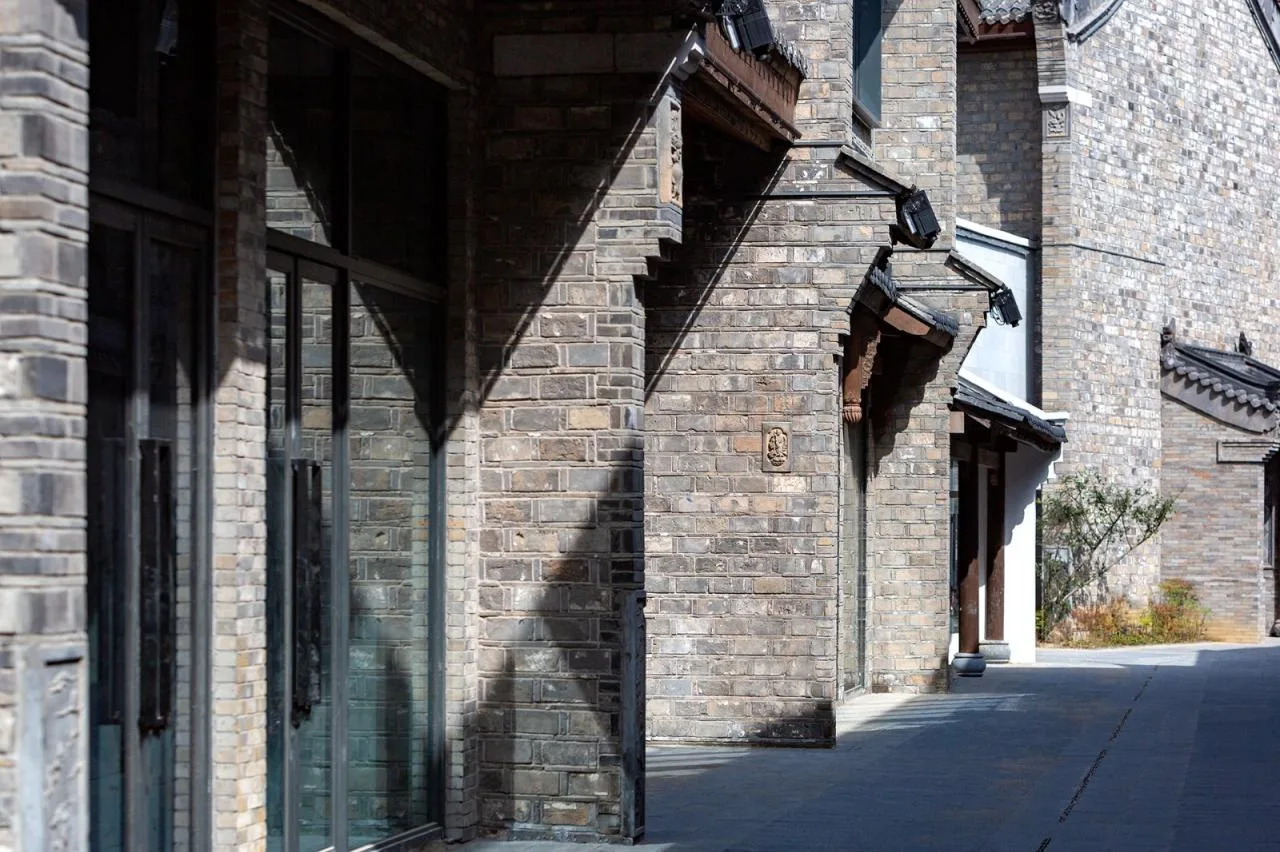
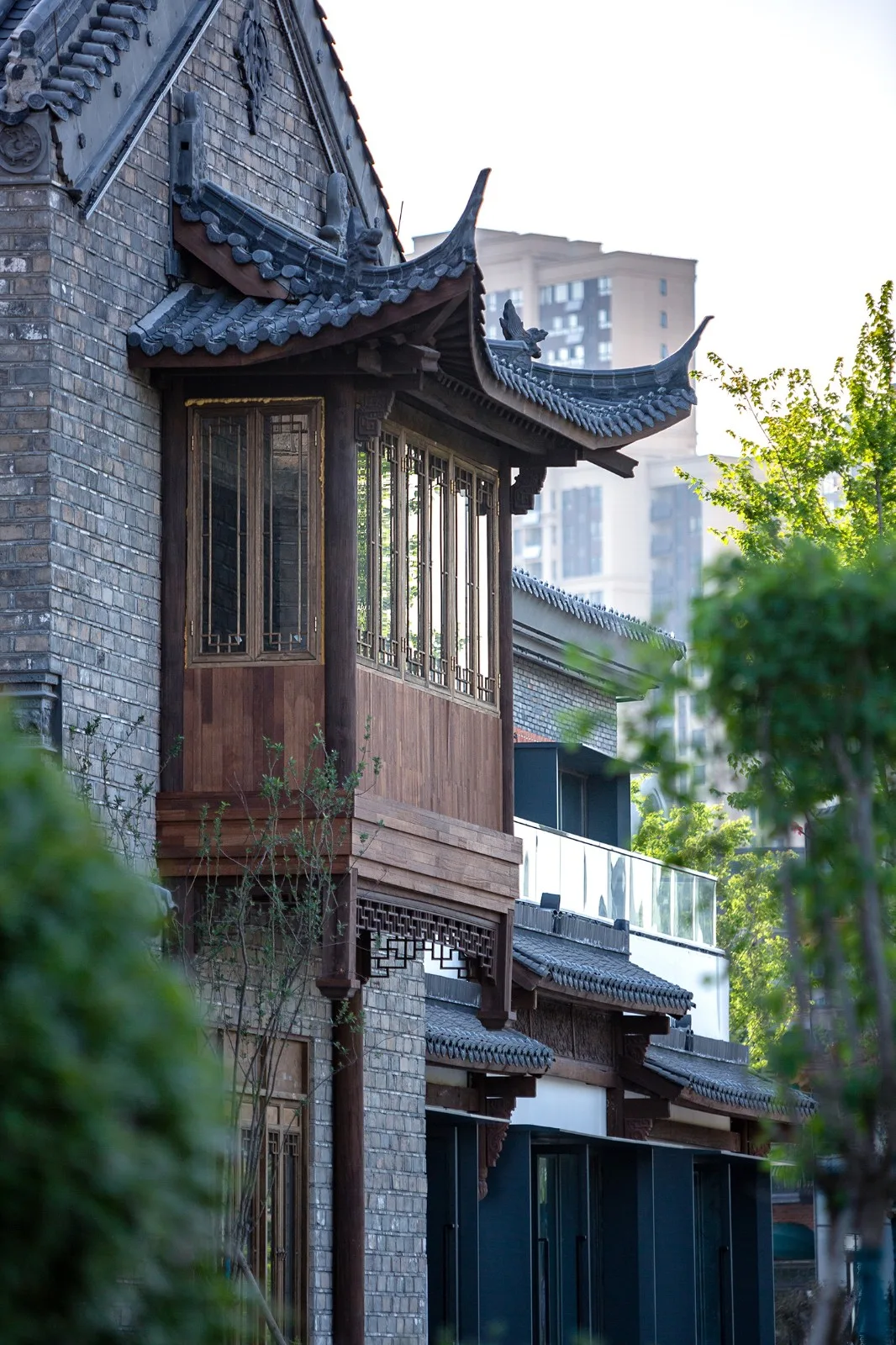
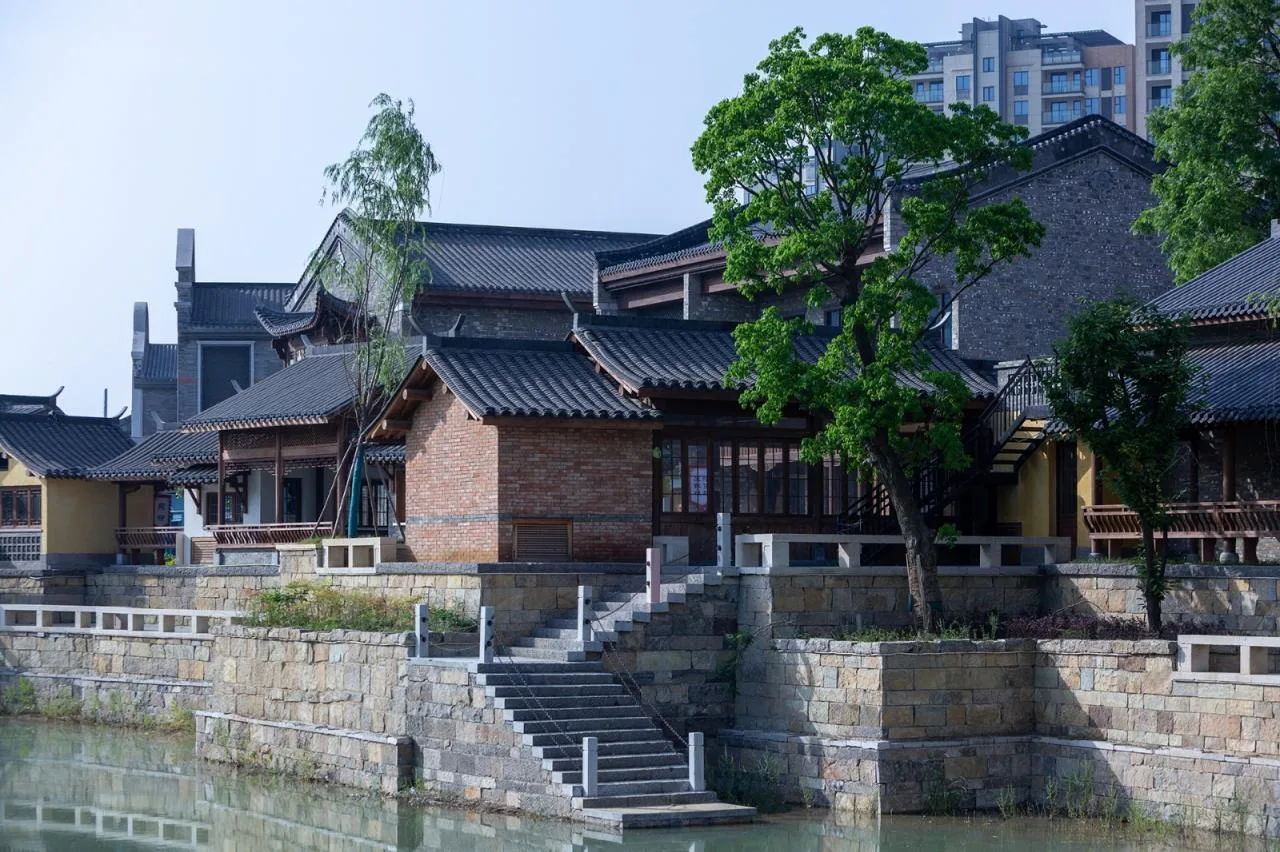
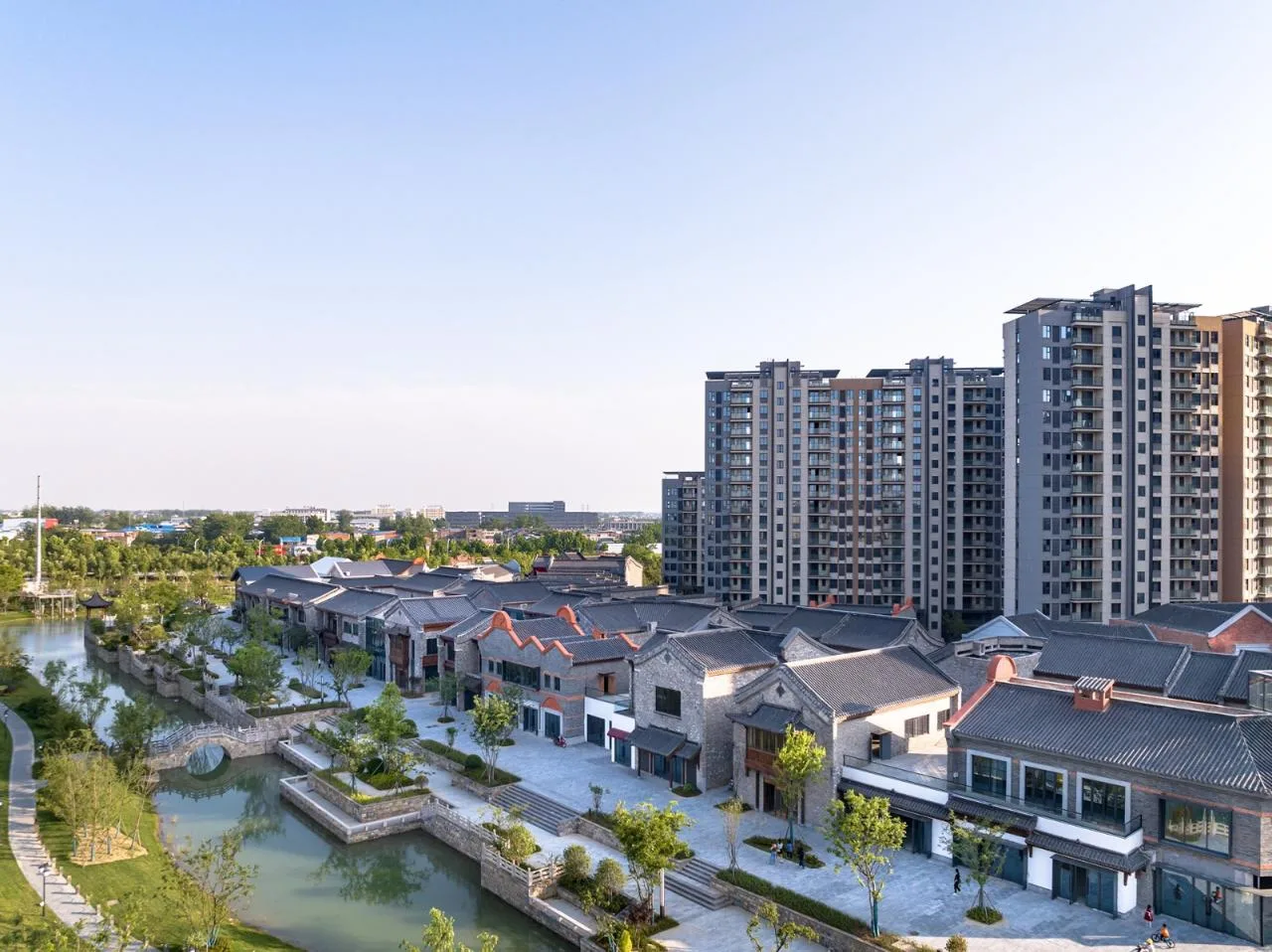
The Goujie area predominantly reflects Northern Beijing architectural style while incorporating a blend of Jiangnan Huizhou, New Chinese, Western Republic of China, and modern architectural influences. Key traditional buildings have been transplanted here to highlight regional culture and to harmonize with the historical environment. Through careful spatial planning and the interweaving of diverse styles and landscape flows, this area forms a unique commercial district that balances Chinese traditional aesthetics with Western architectural elements from the Republican era.
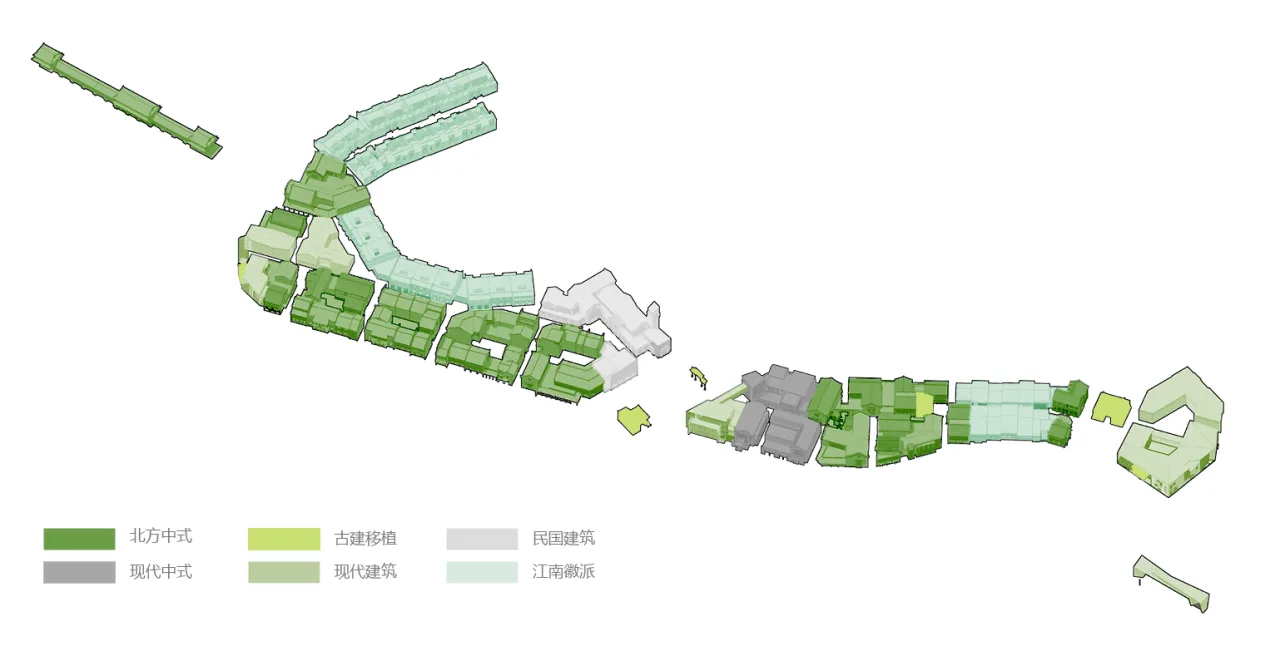
Architectural Style Analysis
Goujie features a main thoroughfare that guides the block’s flow while preserving the commercial street’s spatial texture and scale. The main street maintains a width of 6 to 7 meters, with most shops lining this central path. Smaller side streets are designed to function independently, linking the three key areas: Goujie South, Central Square, and Goujie North, extending roughly 500 to 600 meters in length.
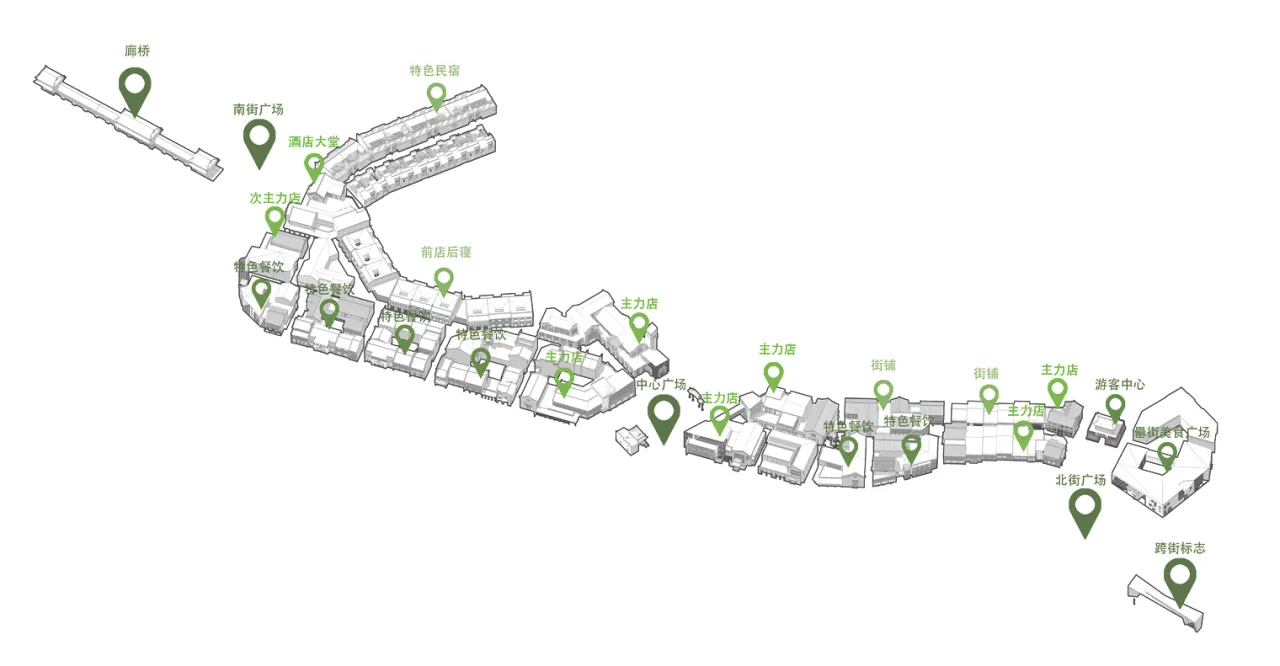
Key Features of Commercial Street Flow Organization
- The spatial layout is clear and well-ordered, offering intuitive navigation for visitors.
- Strong accessibility to the main street attracts high customer traffic and promotes shop profitability.
- Secondary routes enhance block depth and provide recreational spaces.
- The intersections between main and secondary routes create public squares, enriching the spatial experience of the area.
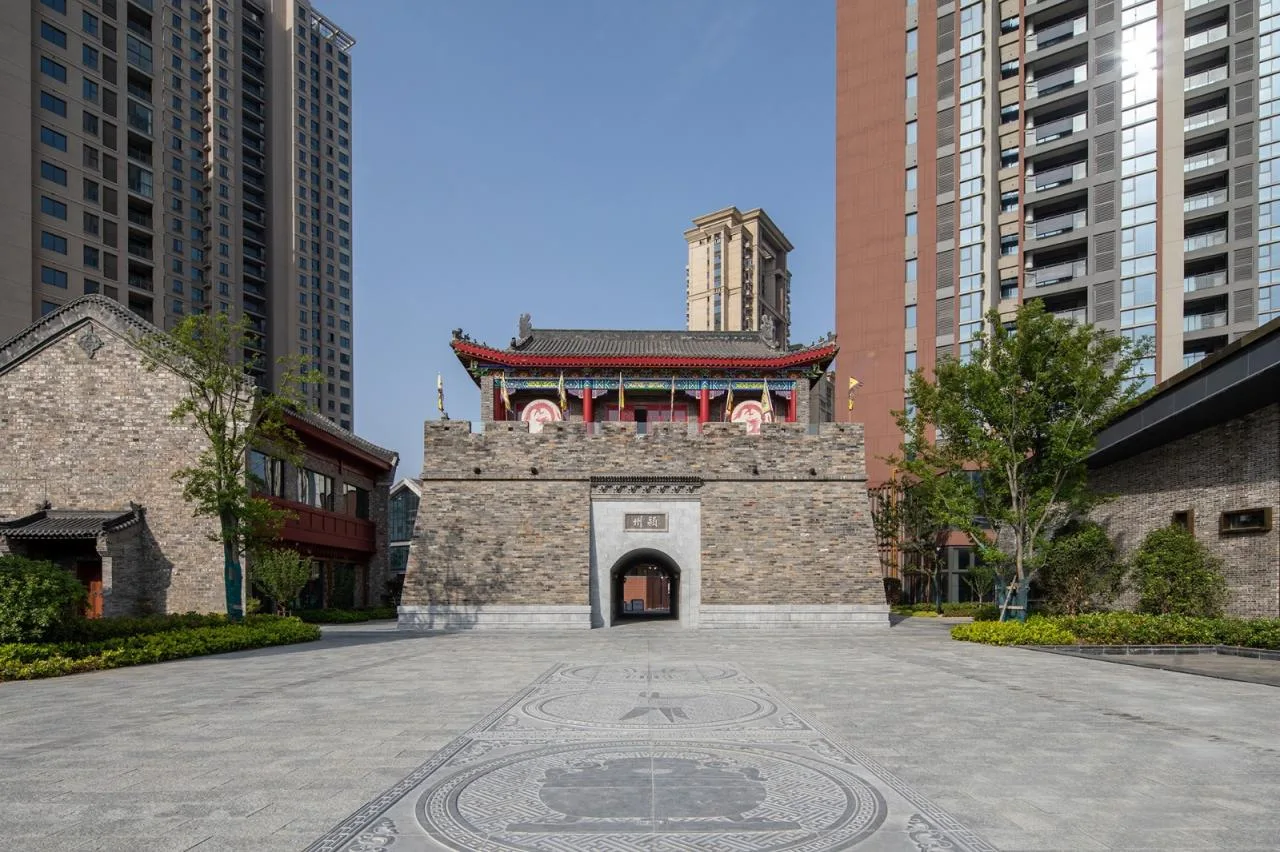
The northern main entrance to Goujie Street is the primary commercial pedestrian gateway. Here, an ancient wall is integrated alongside water features, with a traditional building showcasing Goujie’s iconic style prominently positioned along the main axis. This blend of old and new, tradition and modern trends, creates a distinctive architectural expression.
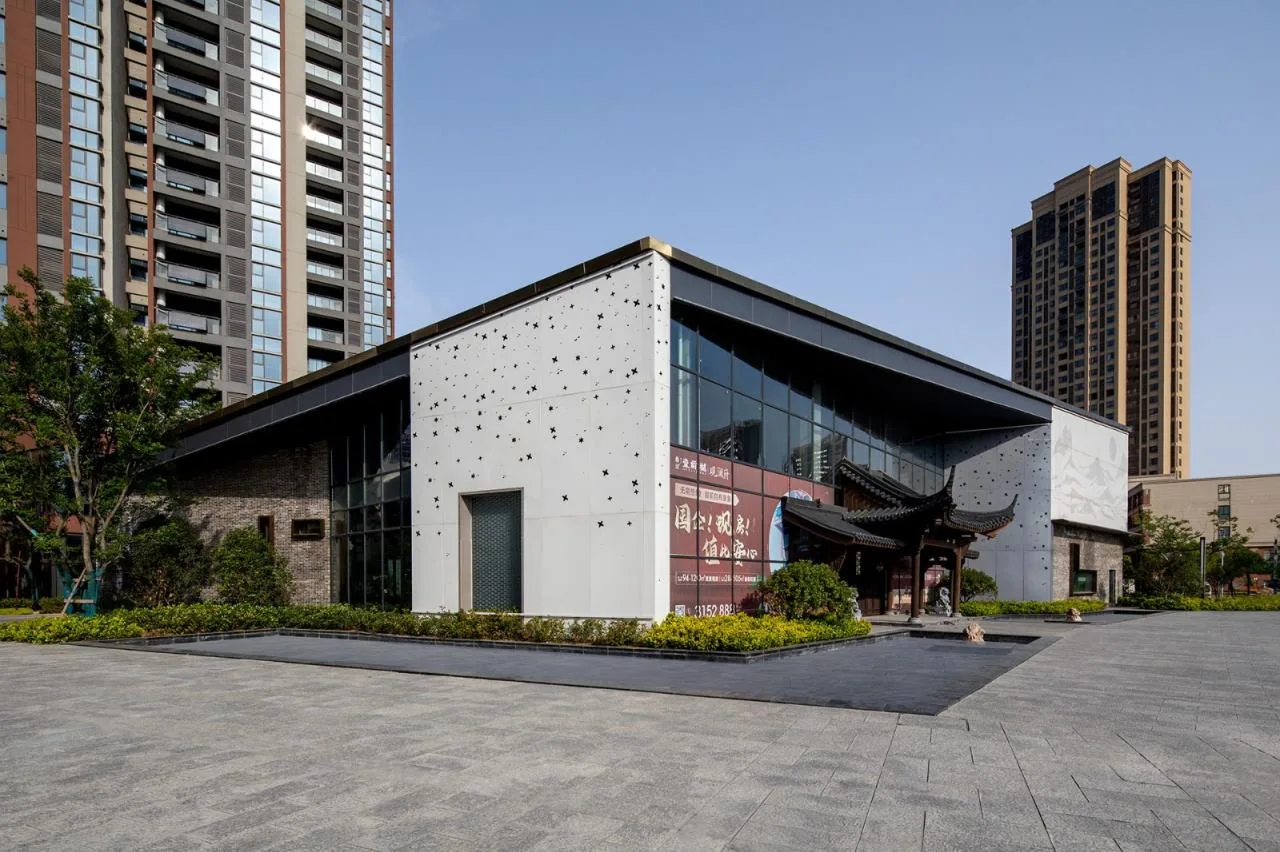
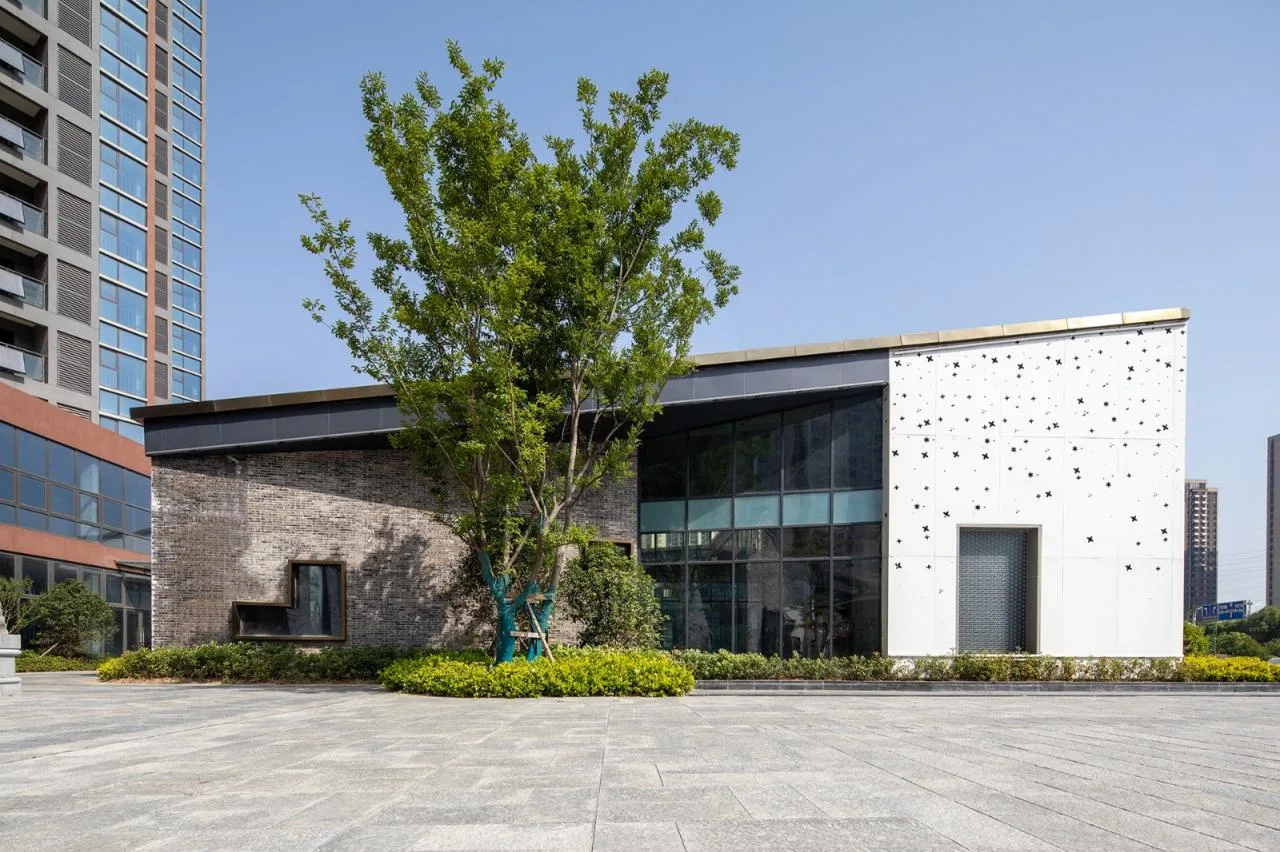
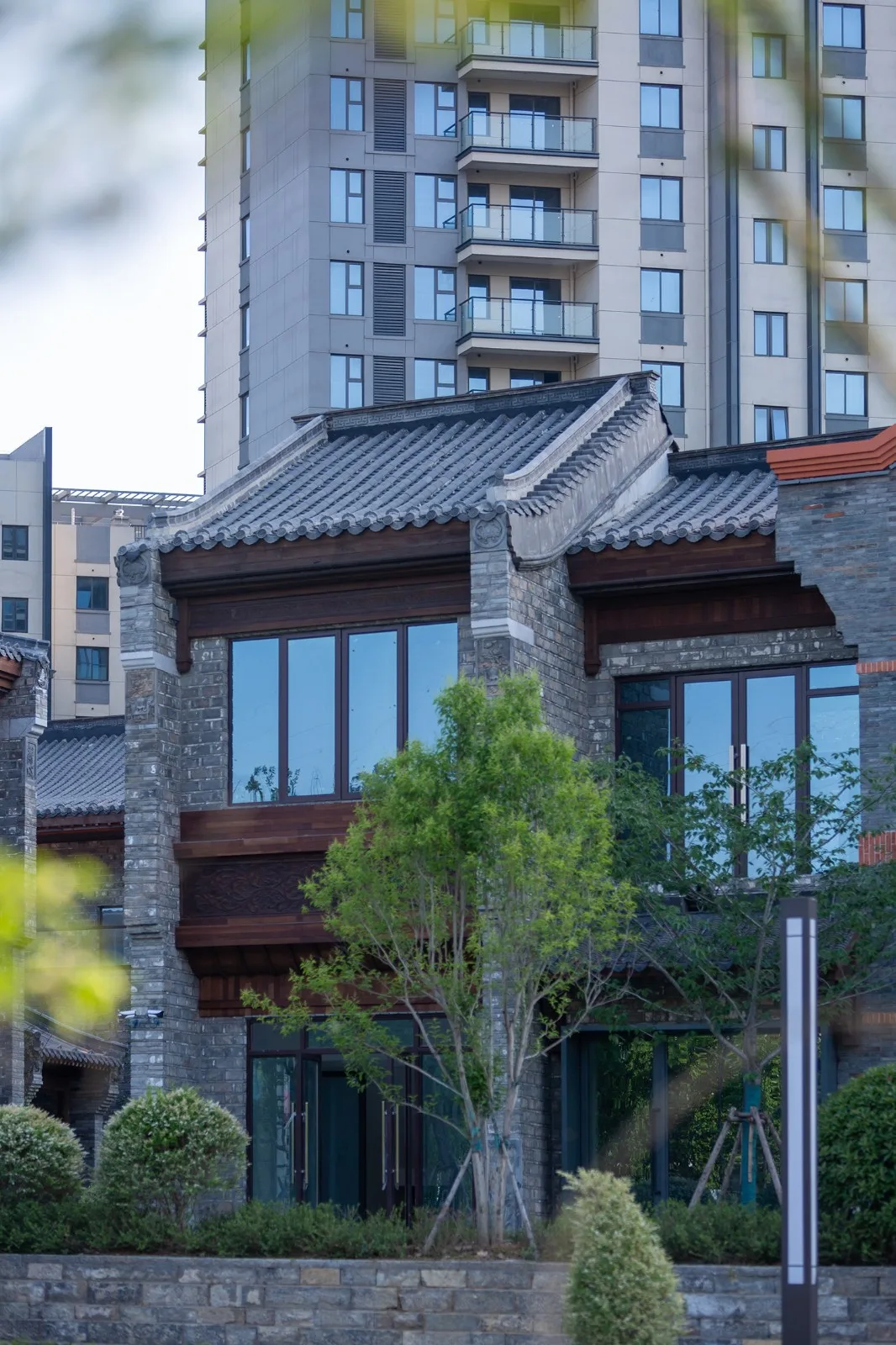
By introducing a rich and vibrant spatial environment infused with cultural experiences, the diverse architectural forms complement each other to create an engaging and multifaceted urban landscape.
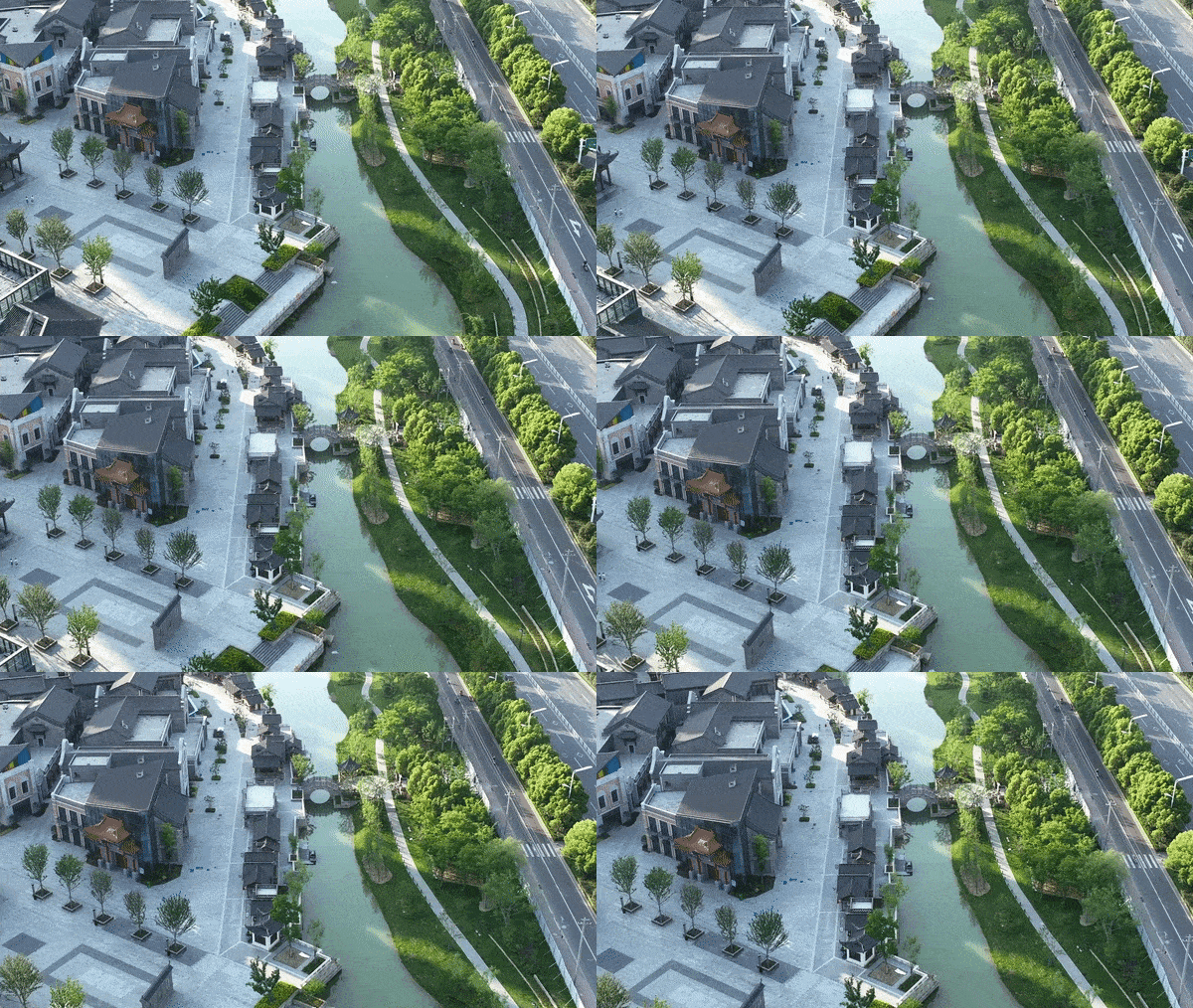
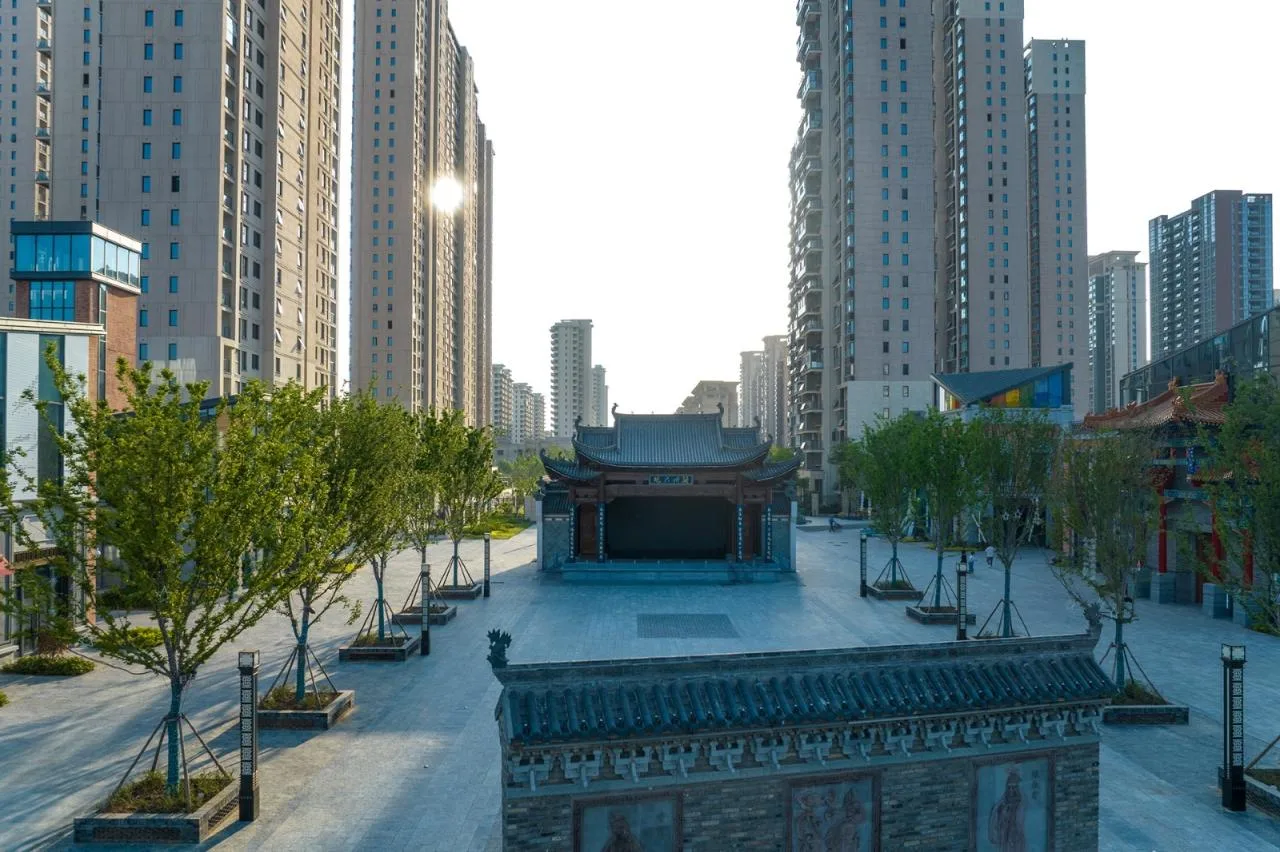
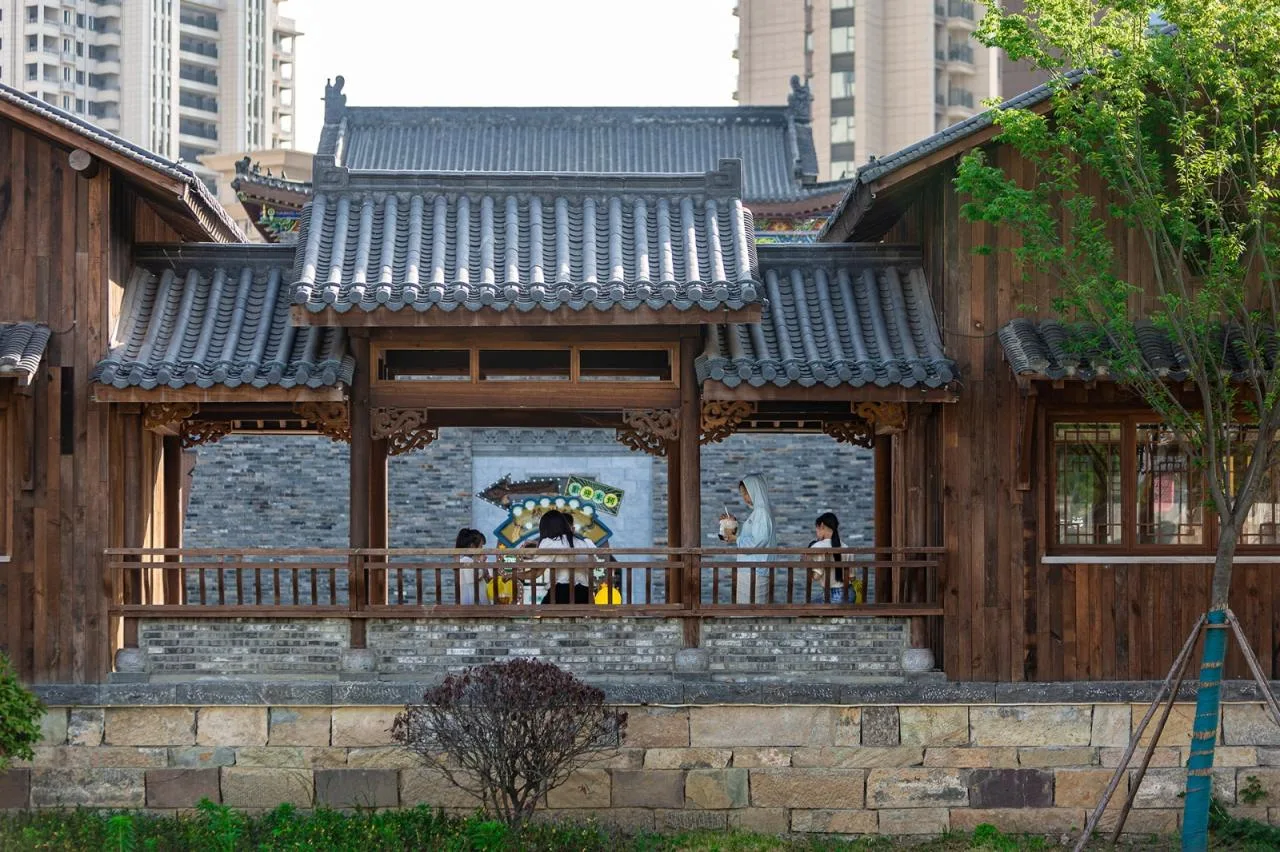
The central square connects the northern and southern streets, serving as a welcoming space for visitors to rest and enjoy the scenery. Spanning approximately 4,000 square meters, it features a memorial archway and opera troupes, hosting seasonal festivals and outdoor entertainment throughout the year.
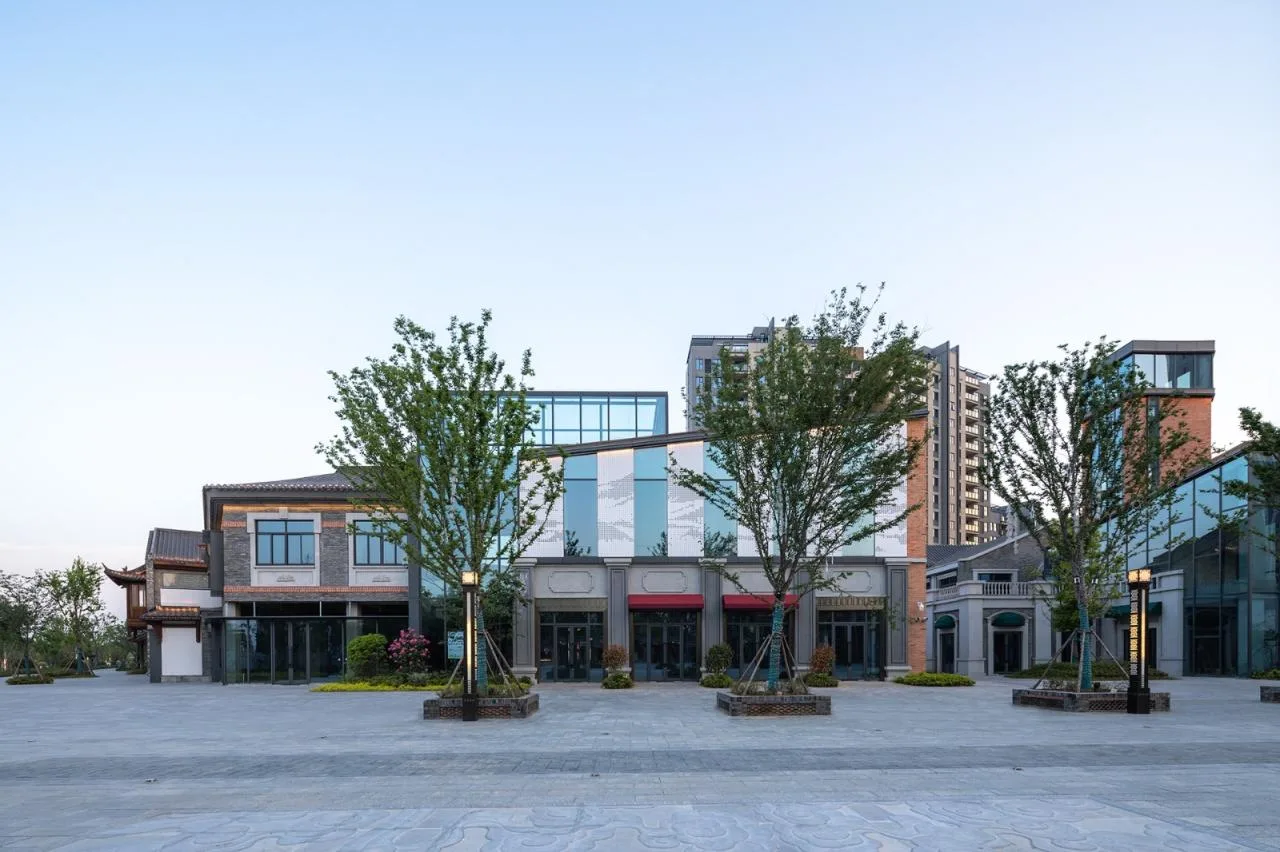
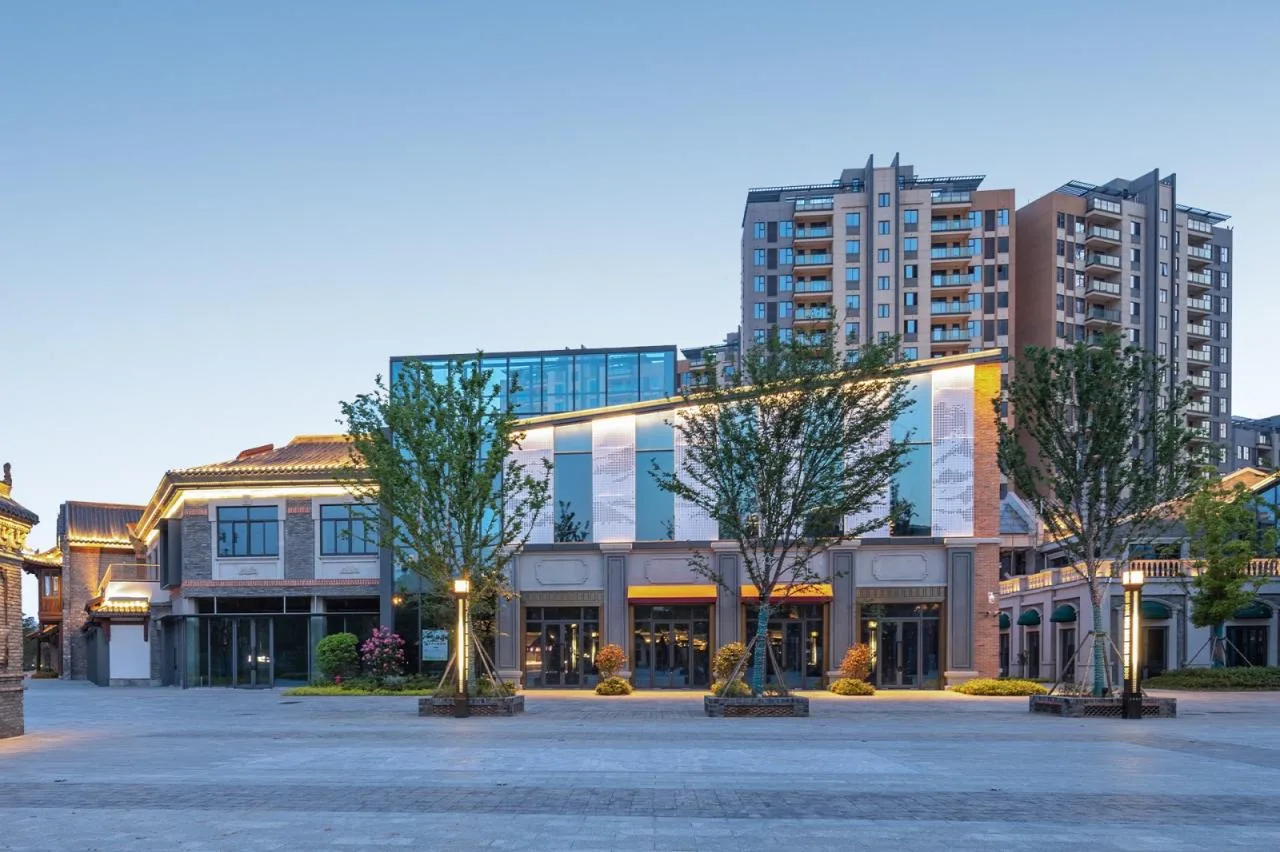
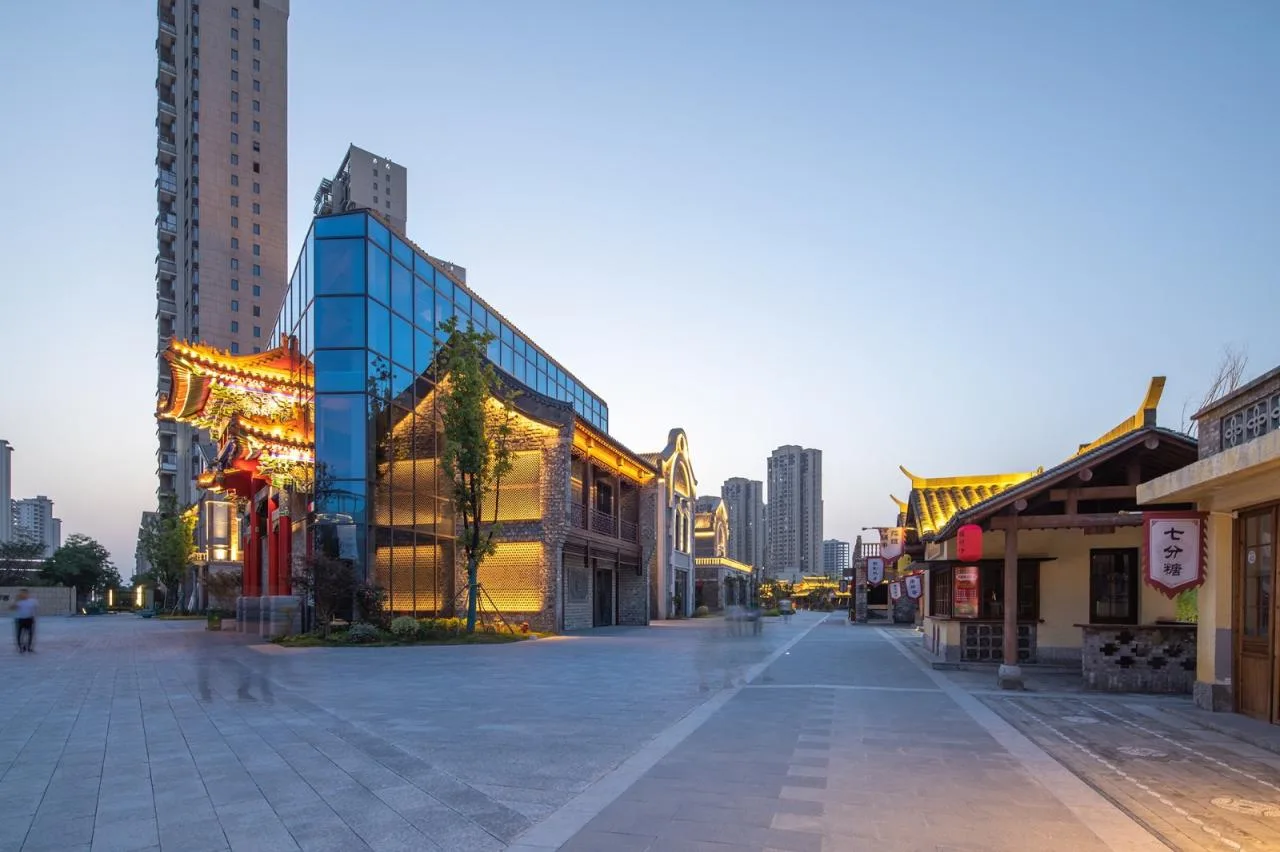
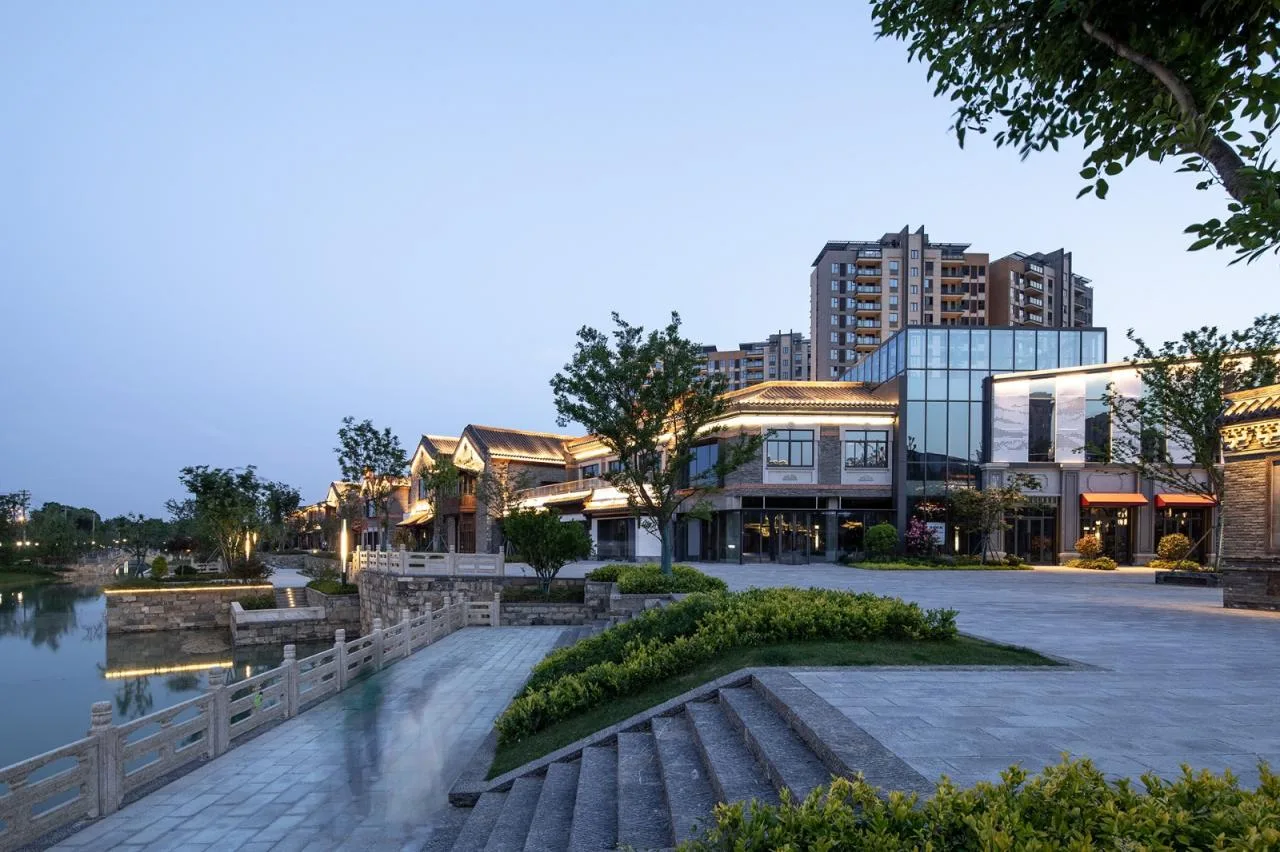
Standing in the center of the street, one experiences a harmonious blend of old and new, tradition and modernity. The architecture ranges from dignified and rational, to elegant and leisurely, to sleek and contemporary. These diverse elements enrich the district’s historical character, showcasing exquisite beauty and the cultural diversity shaped by the Fuying River.
From Hefei Avenue, a wooden arch bridge crosses the river, inviting visitors and locals alike to sit beneath it, enjoy the view, and socialize. Wangcun Square lies beyond, marked by a transplanted ancient tree that acts as a village entrance landmark, with the south street entrance located next to it.
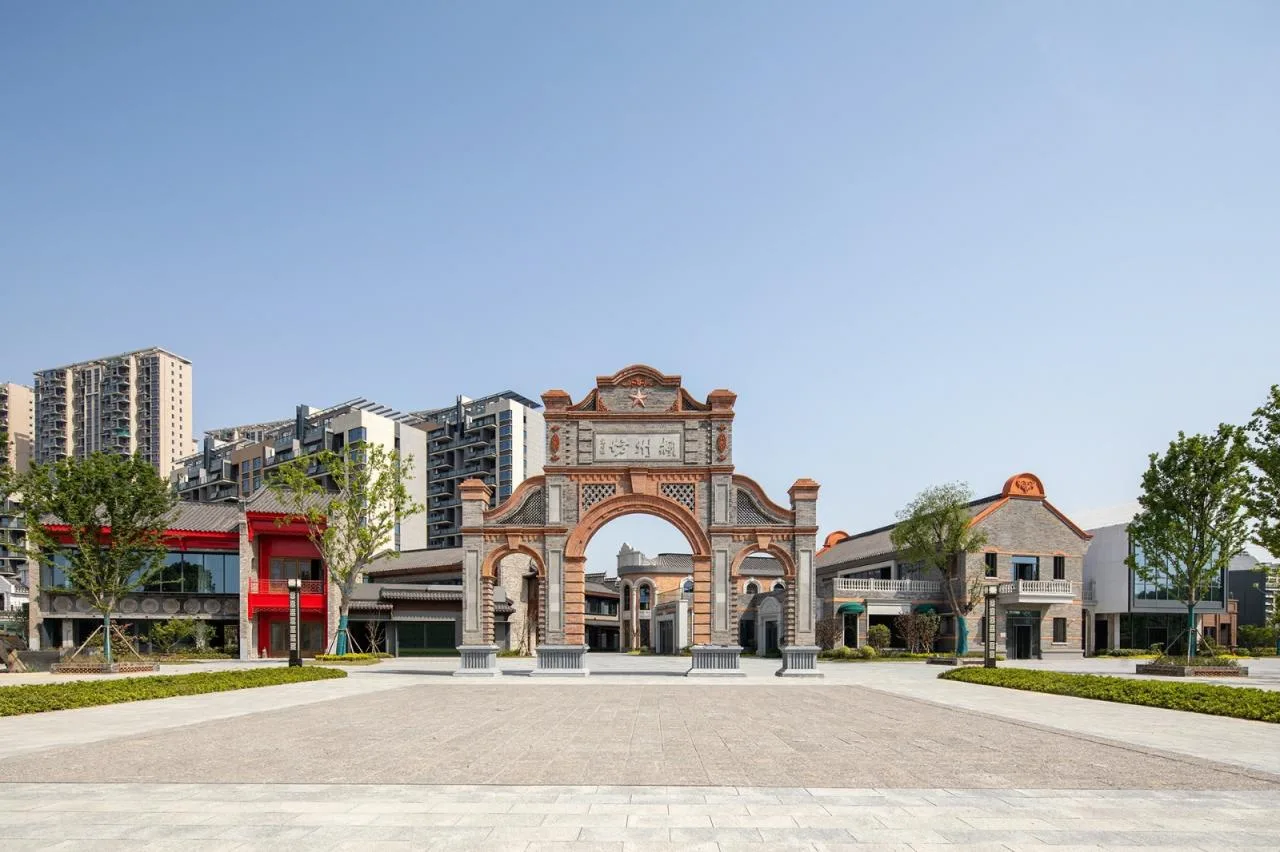
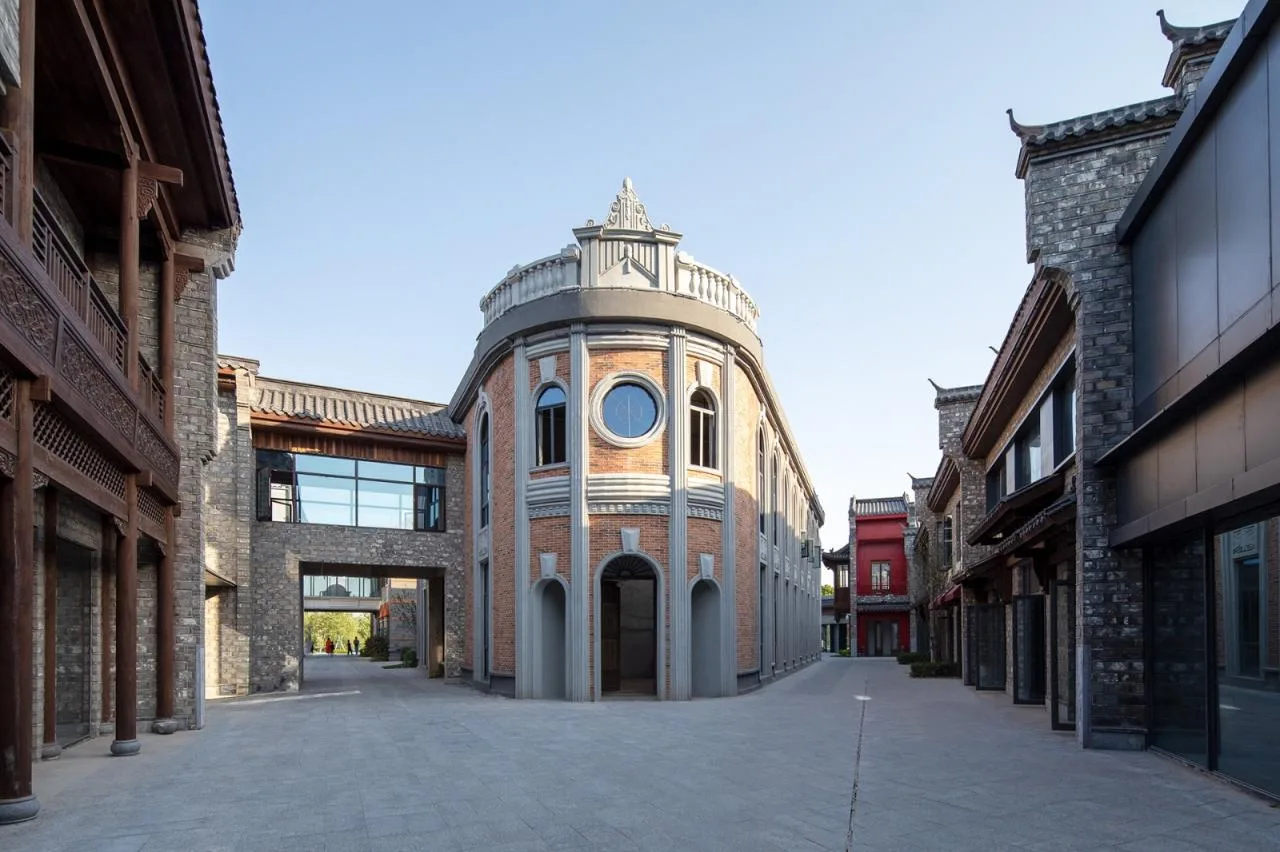
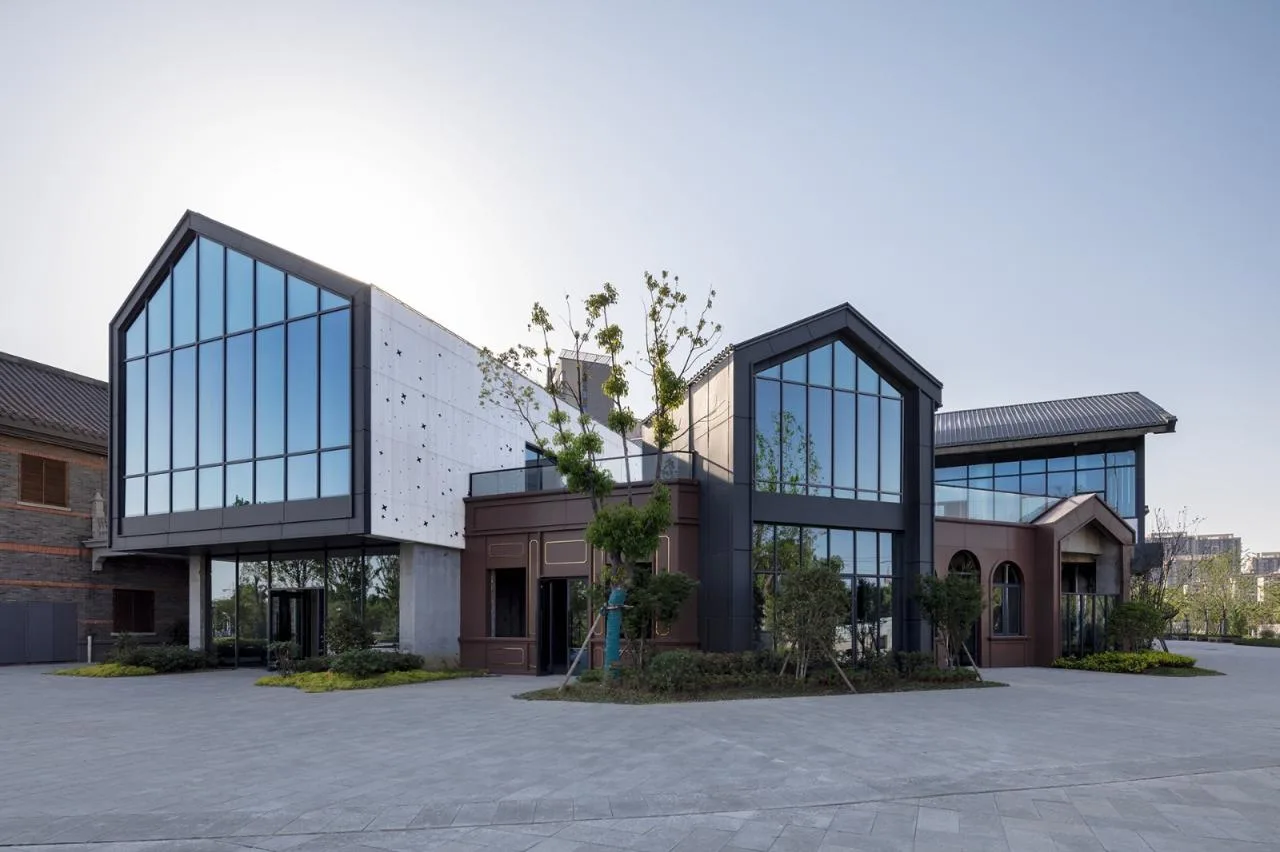
Through meticulous spatial planning and the interplay of varied architectural styles, combined with harmonious water and sky landscapes, this commercial district emerges as a unique fusion of Chinese traditional and early 20th-century Western architectural styles.
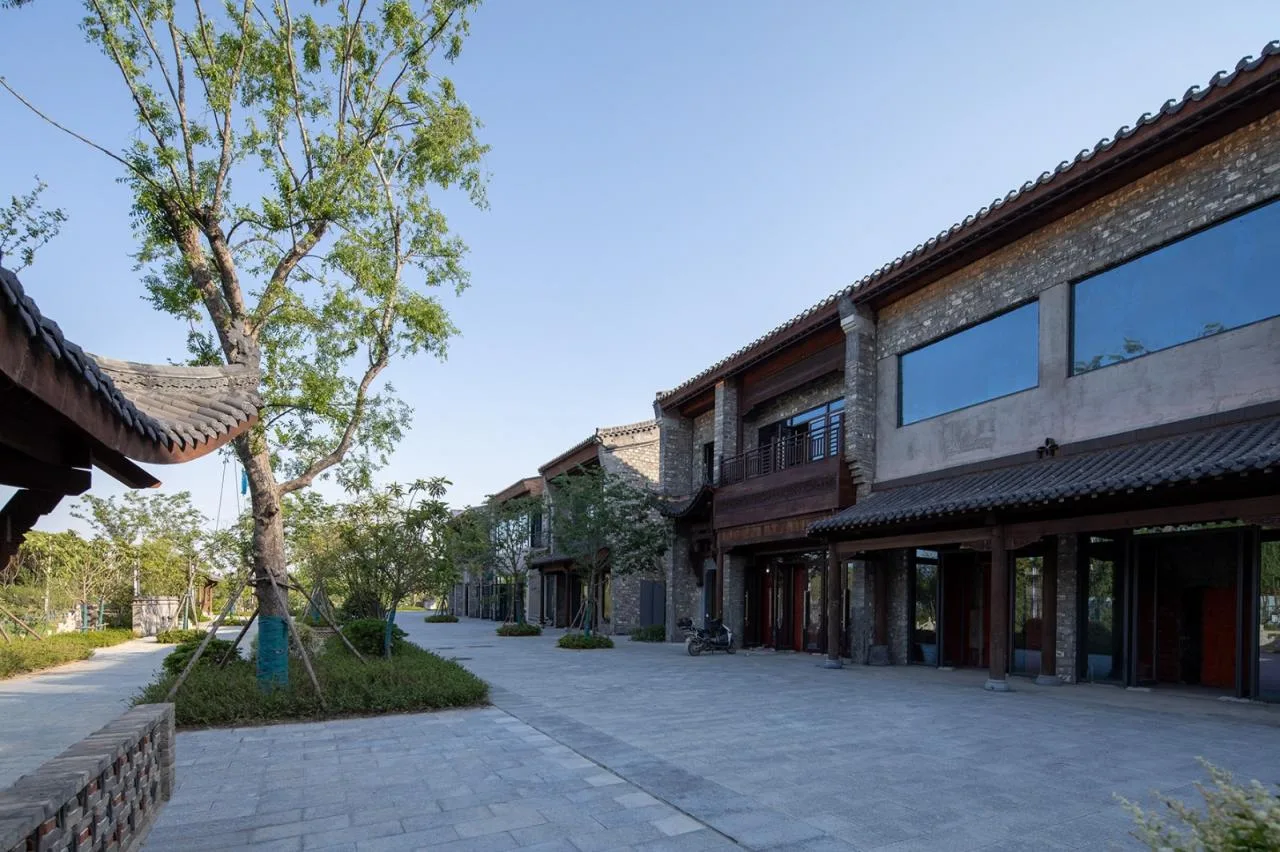
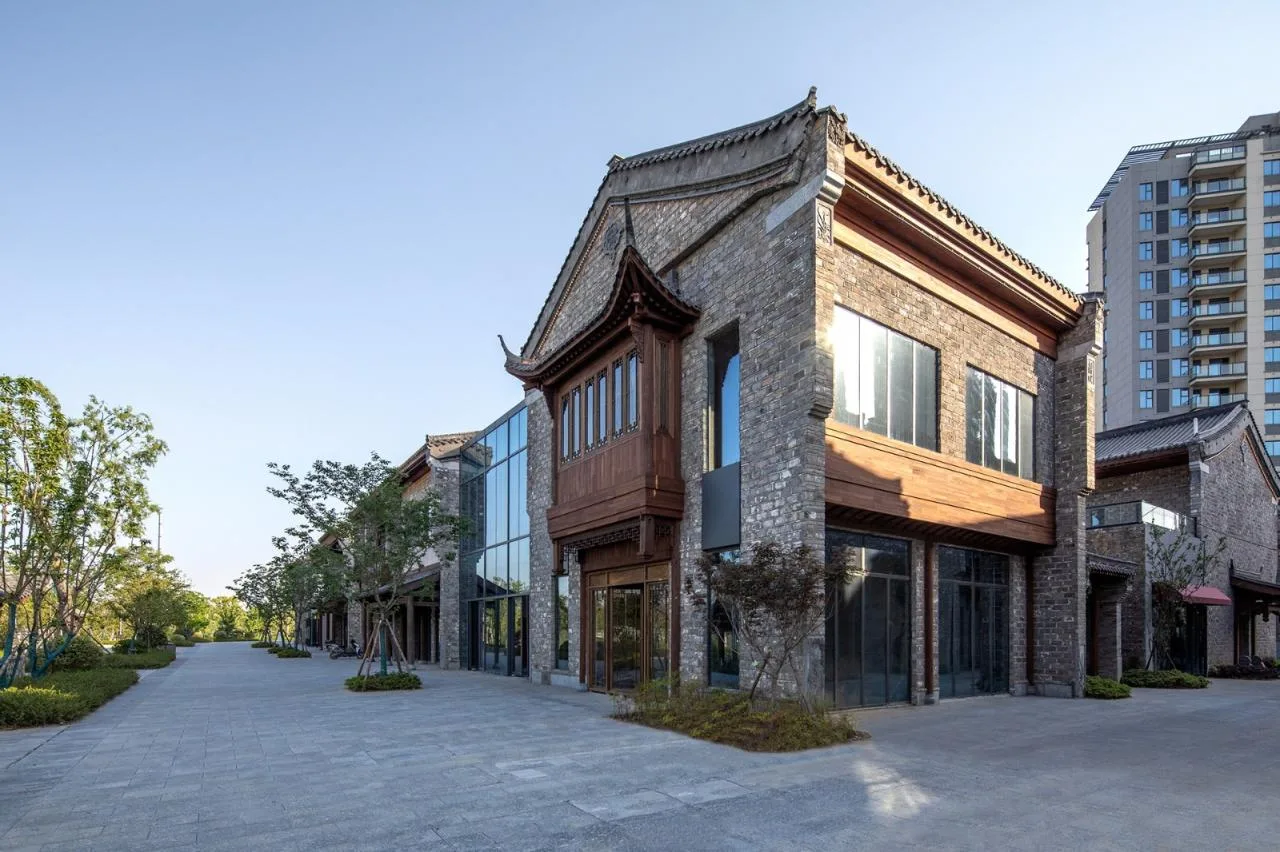
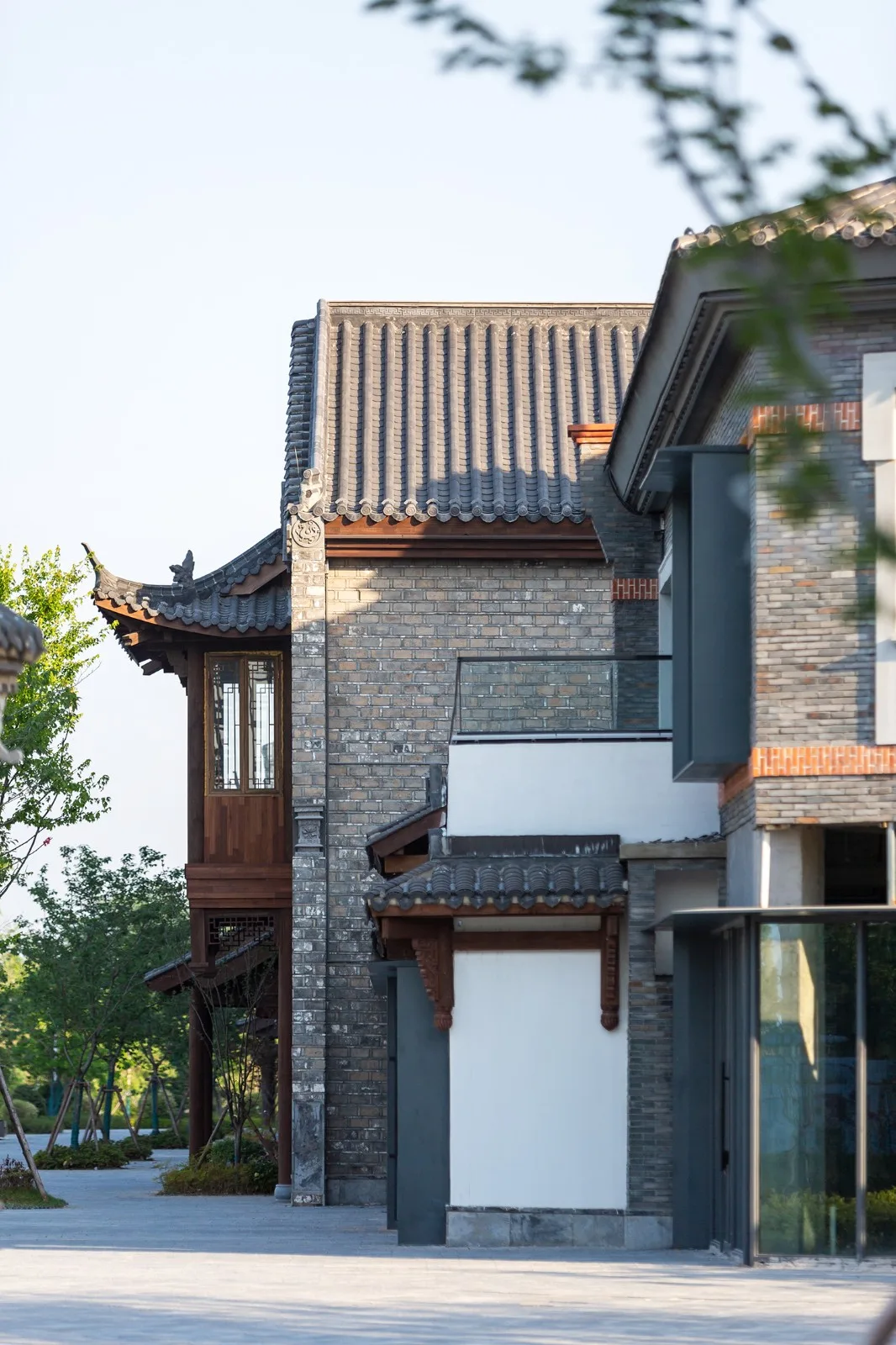
The Linshui Commercial Street is organized with a clear layout, featuring eight branch alleys connecting to the central block. These alleys maintain a consistent width of approximately 4.5 meters. Extending eastward along the Fuying River, courtyards create multifunctional spaces. The central courtyard is open and flexible, capable of subdivision or combination, supporting a variety of commercial activities.
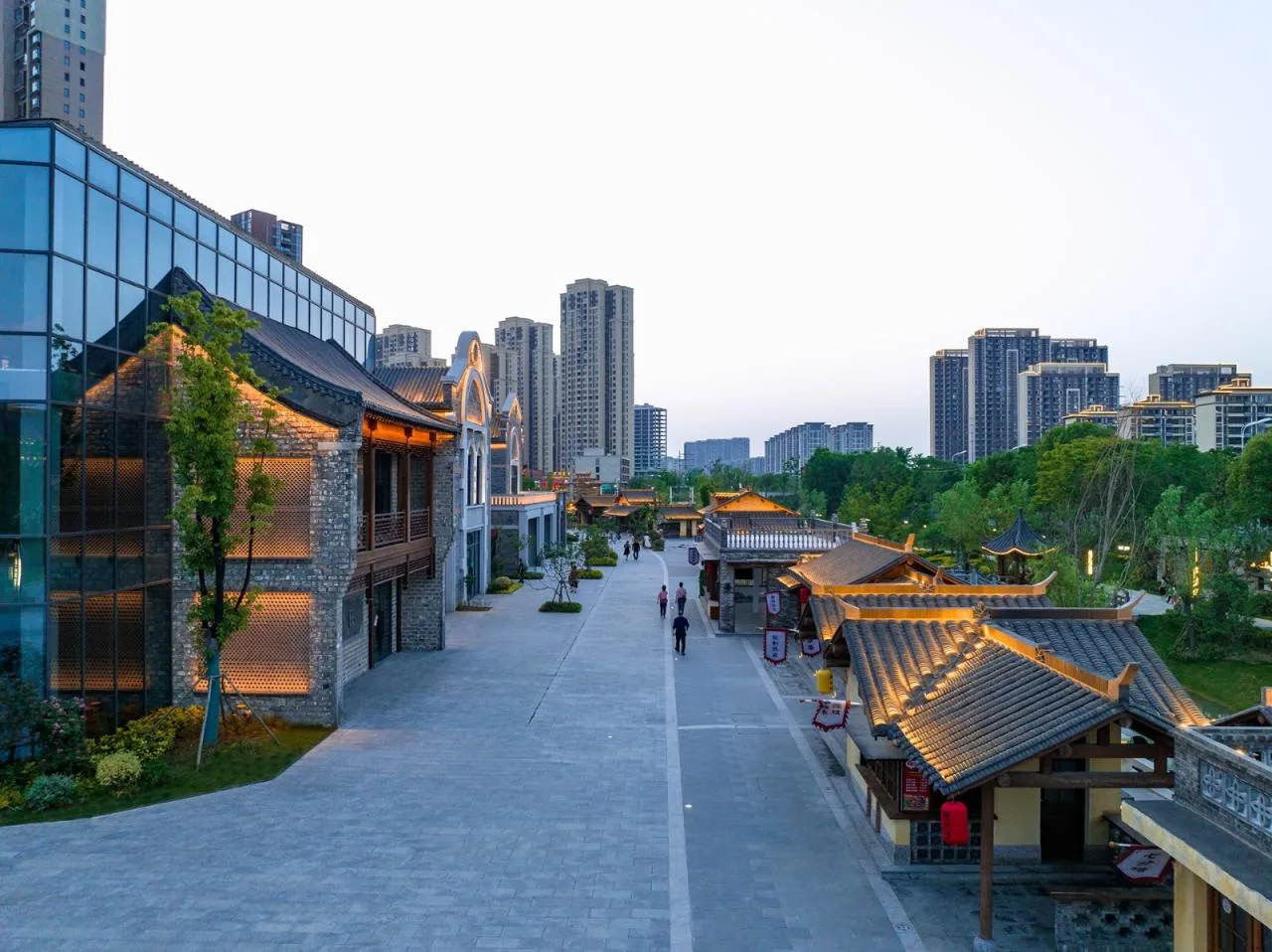
The picturesque riverbank, scattered platforms, and human-scale design harmoniously complement the lively atmosphere filled with bustling activity.
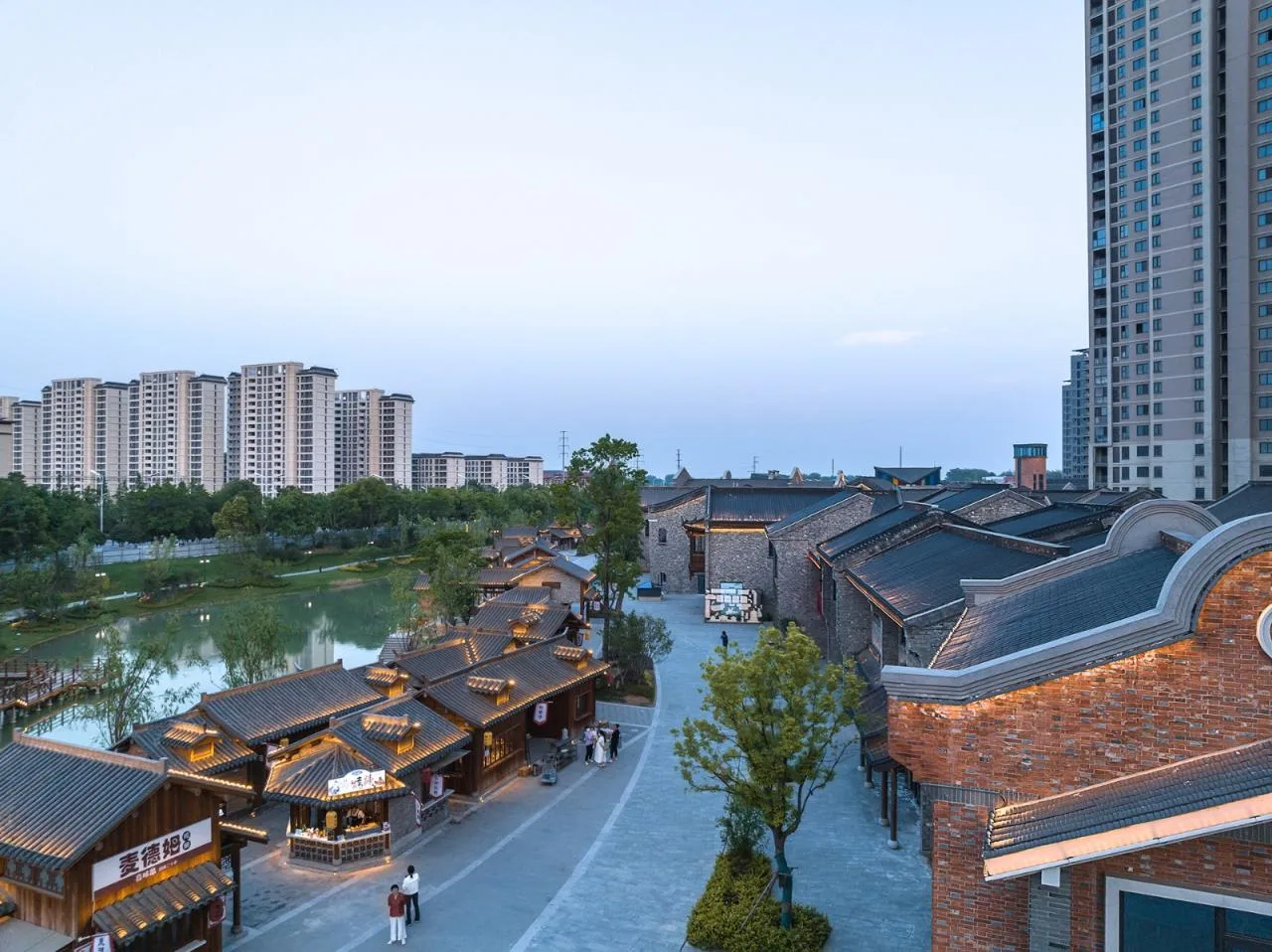
Wanjie · Tangqianyue
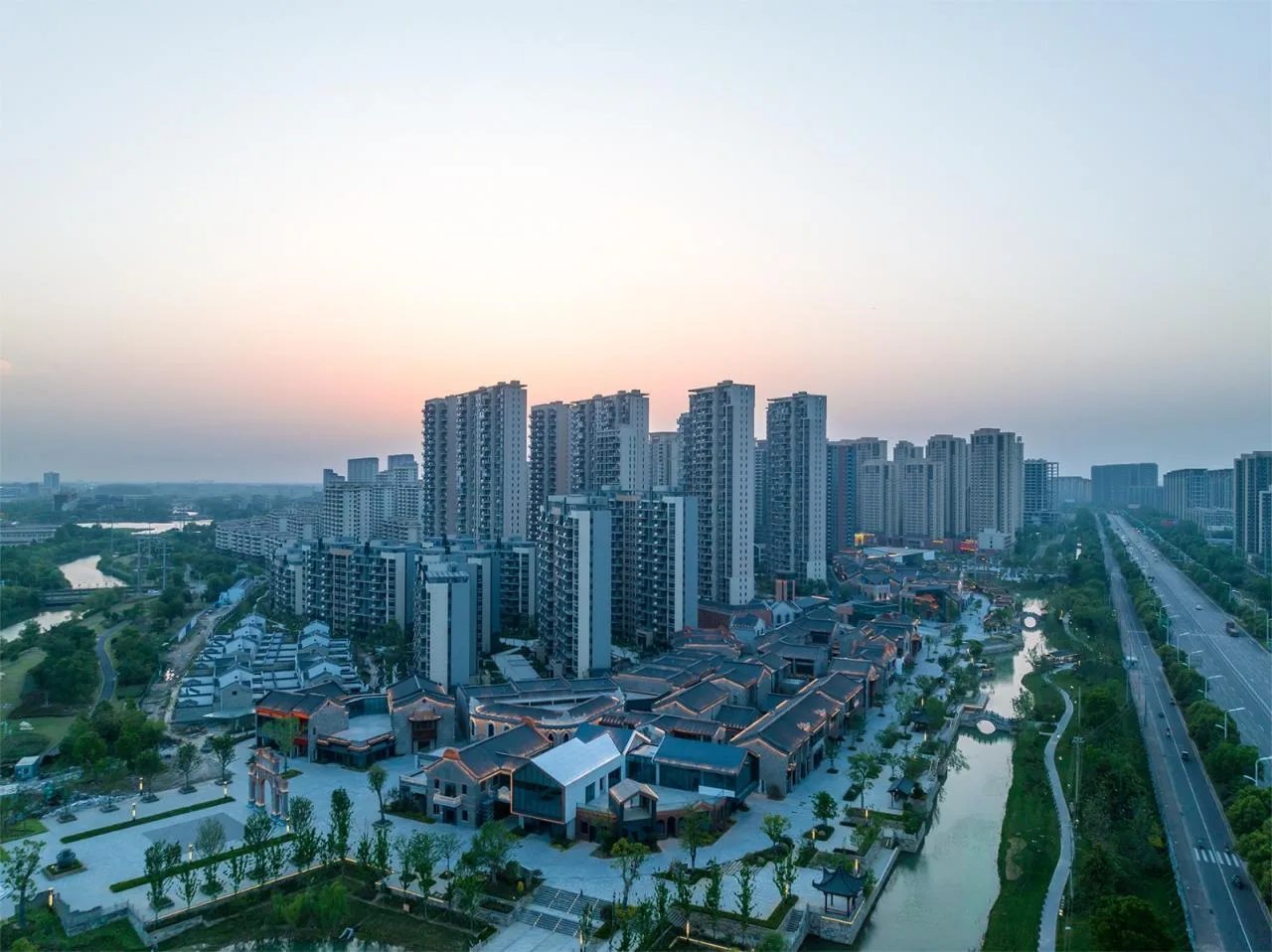
The residential area is designed as a garden-style community, with lower buildings in the south rising gradually towards the north. The urban interface is rich and varied, centered around a large communal courtyard with river views to the east, west, and south. The neighborhood offers a diverse mix of housing and commercial facilities, including talent apartments, high-rise towers, multi-story and small high-rise Western-style houses, City Yue Study, kindergartens, and street-level shops.
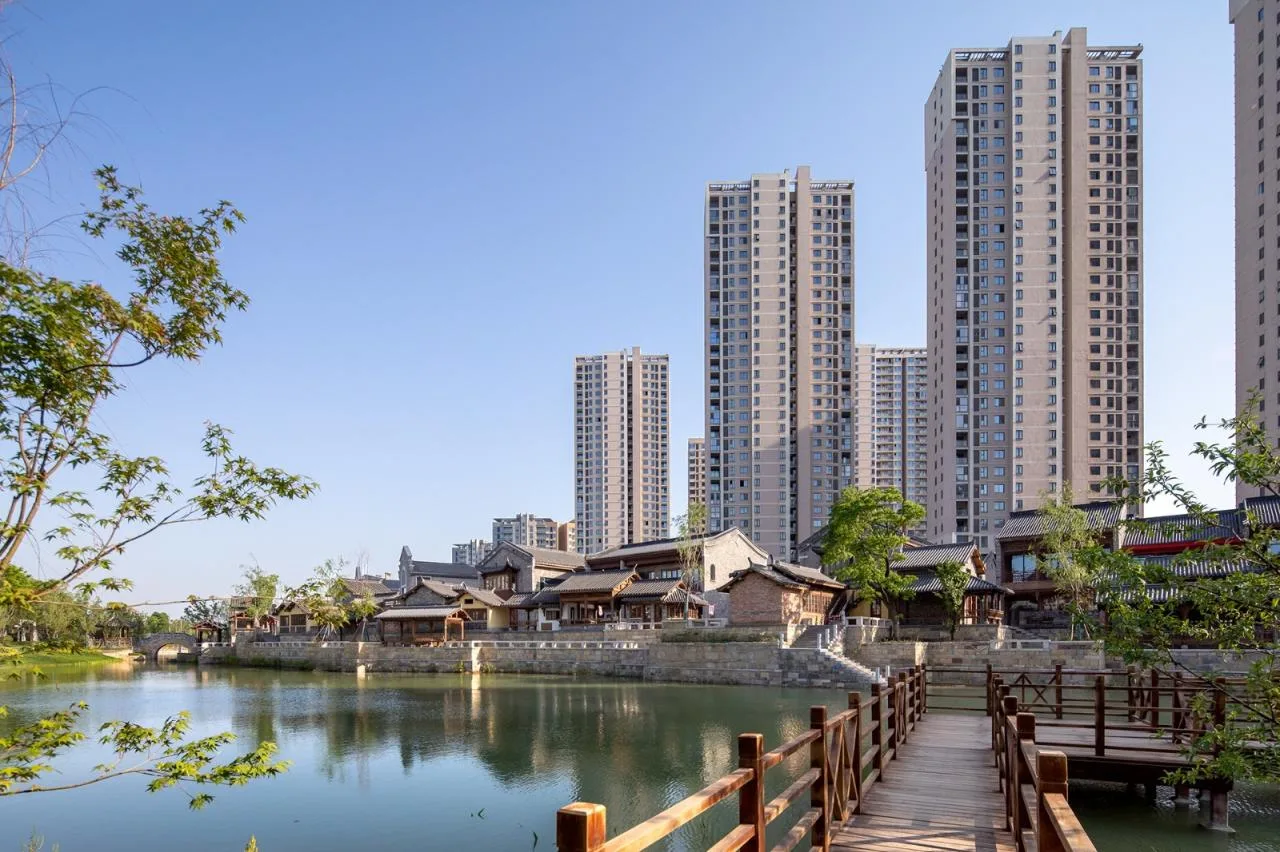
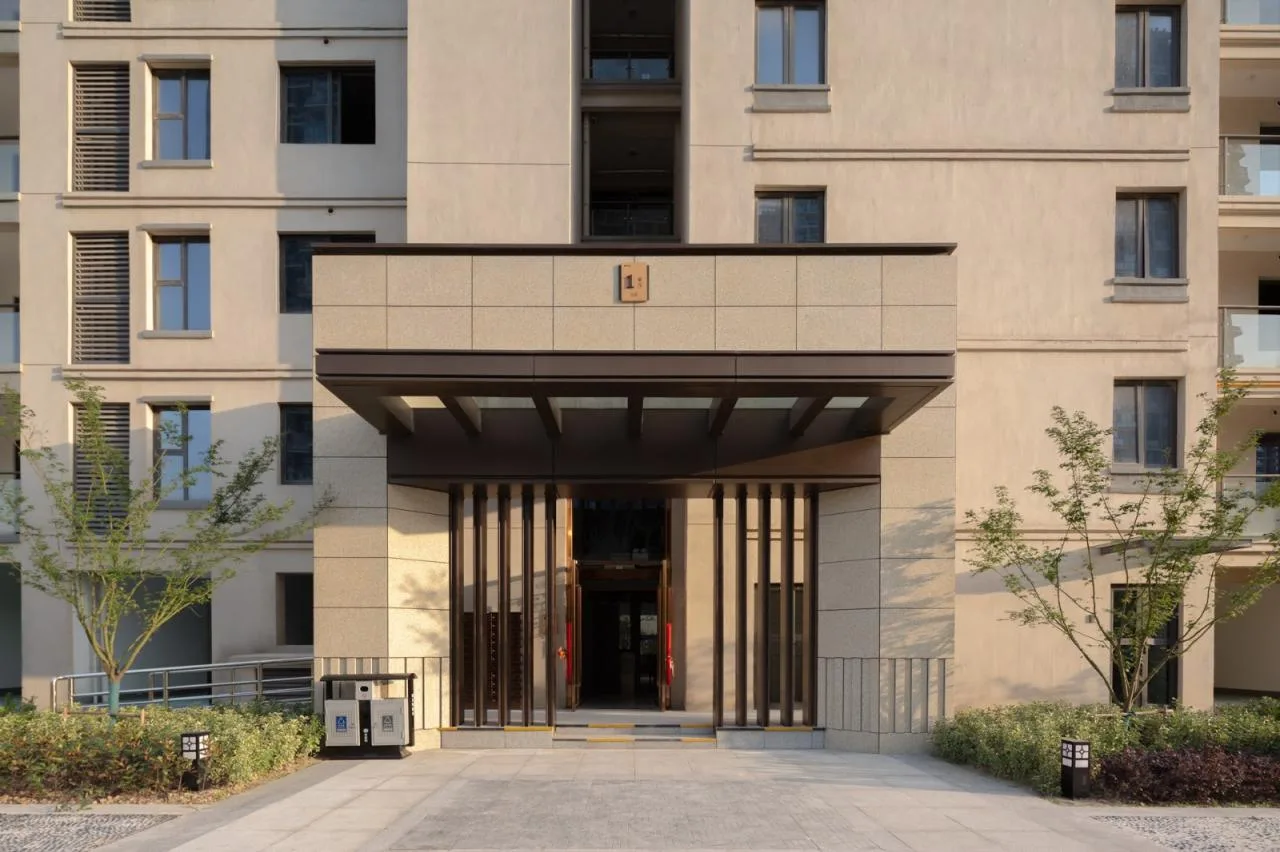
The architectural style features a simple and modern facade, using real stone paint in a warm palette of browns, yellows, and beige. The facades are layered and textured, creating a cozy and inviting atmosphere.
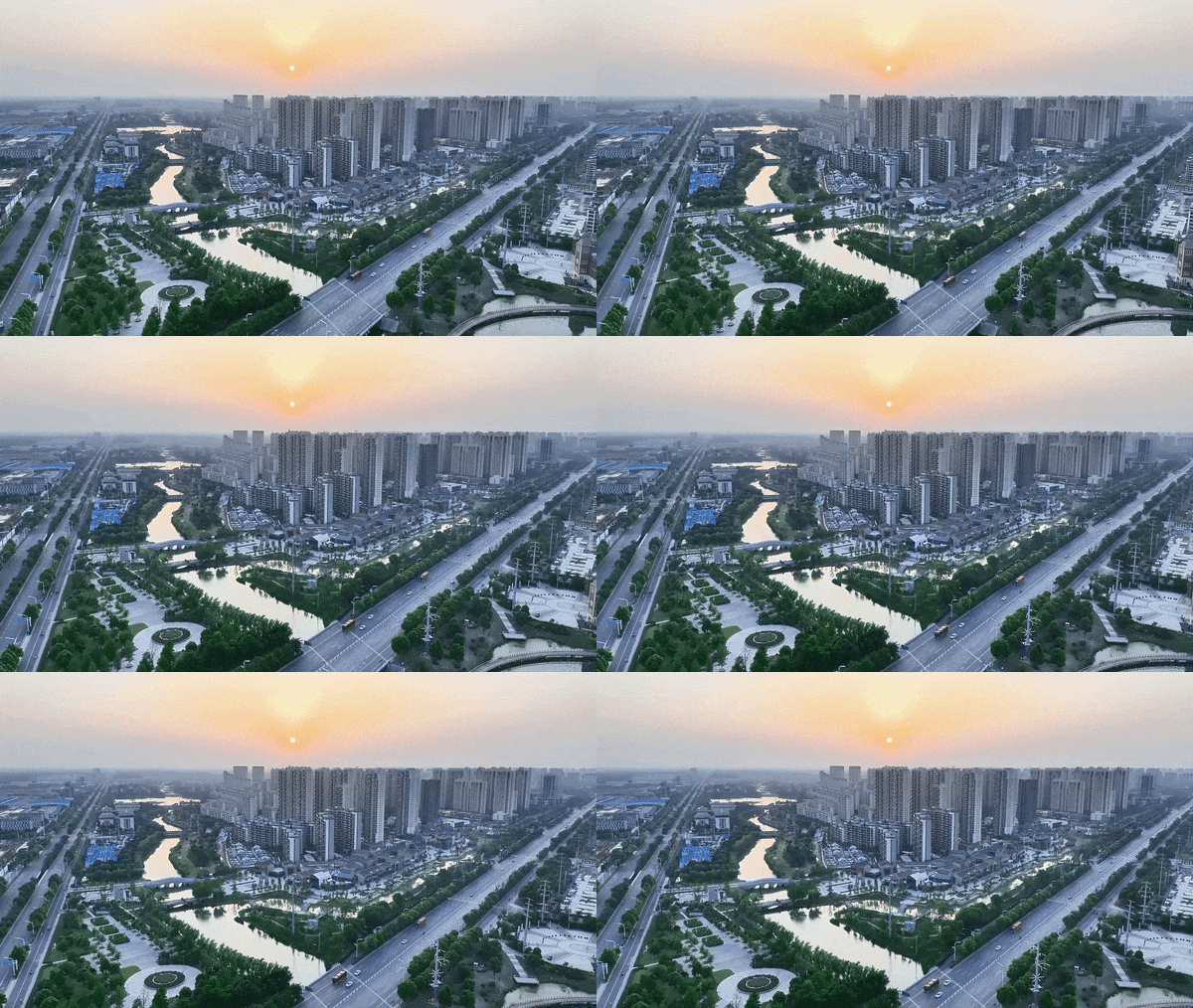
Project Information
Project Name: Fuyang Wangjie
Location: Fuyang, Anhui
Owner: Hefei Binhu Investment Holding Group Co., Ltd
Architectural Design: Botao Architectural Design (Shenzhen) Co., Ltd
Design Lead: Hou Qiming
Design Team: Yu Liping, Huang Xiaofeng, Ding Yichuan, Huang Ming, Ying Ting, Zhang Zhexian, Wei Ningna, Zhang Mingdong
Landscape Design: Shenzhen Botao Environmental Art Design Co., Ltd., Black Forest Design Co., Ltd
Construction Drawing Design: Anhui Huanyu Architectural Design Institute
Land Area: 120,900 m²
Total Construction Area: 343,100 m²
Project Photography: Wang Yang, Chen Guiming















Must log in before commenting!
Sign Up