
Revisiting Futurism
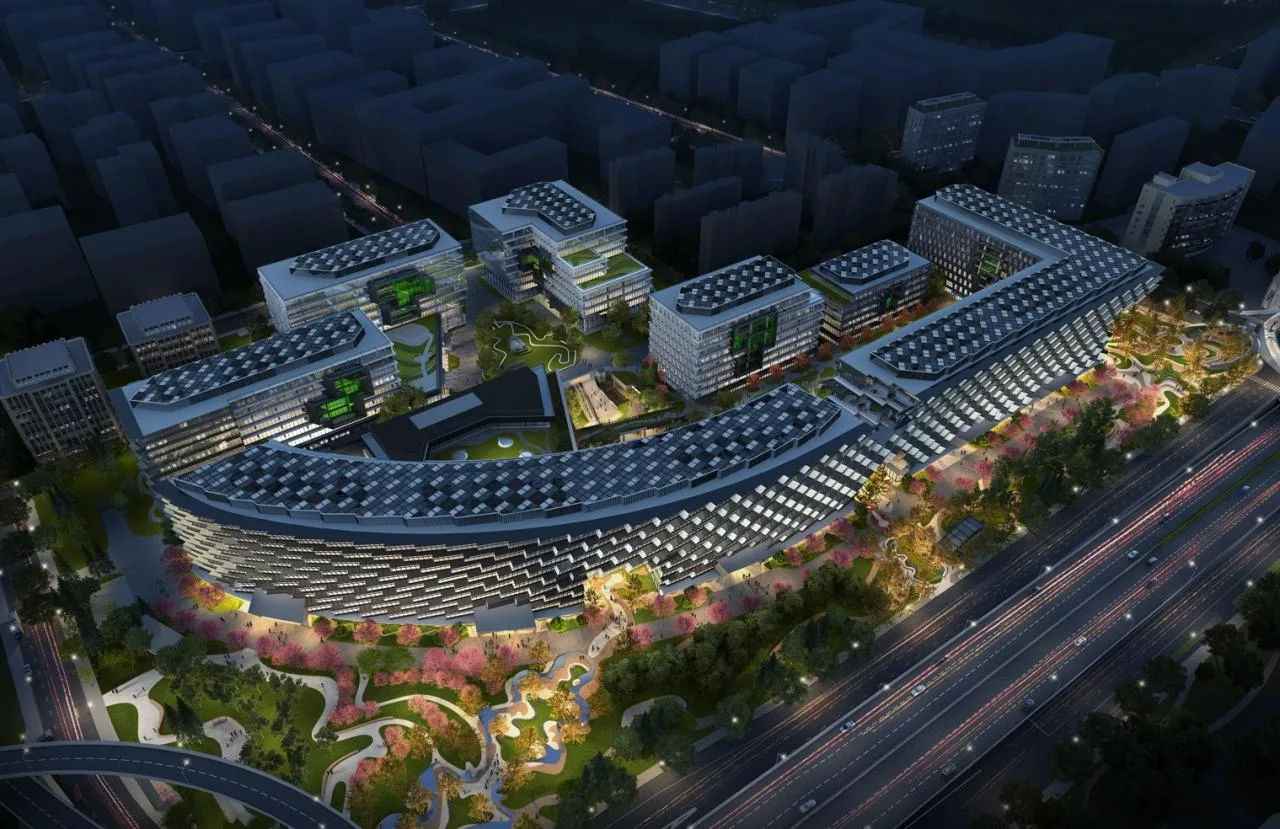
ZOOM OASIS is a 450,000 square meter international commercial office complex situated in Shanghai’s Changning District. With its striking Op Art façade and enclosed architectural form, it is set to become the new gateway to the area. BAU draws inspiration from airplanes, trains, cars, and the surrounding environment, skillfully harnessing the dynamic perspective of drivers to produce captivating visual effects.
As a key entry point to Changning District, ZOOM OASIS complements Zaha Hadid’s SOHO project nearby. While SOHO appears as a moment frozen in time, ZOOM OASIS acts as a mechanical device that creates an illusion of continuous motion.
Responding to the Environment
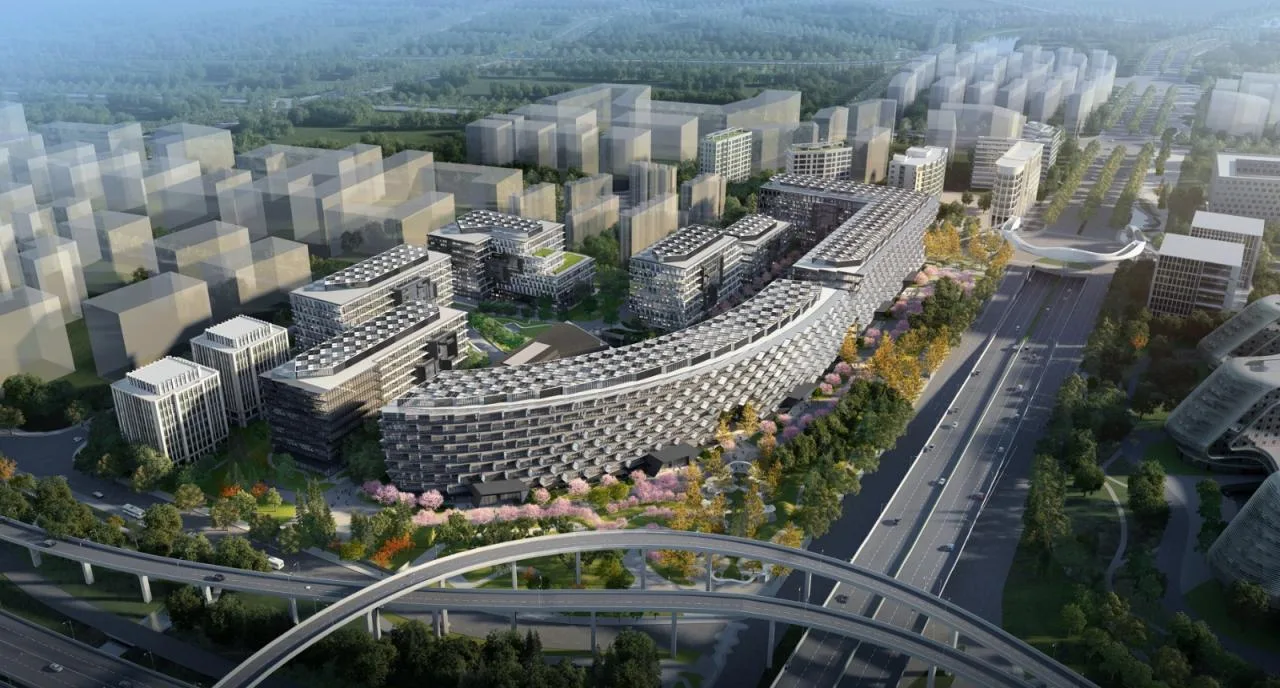
To address the surrounding large-scale road infrastructure, BAU designed ZOOM OASIS as a super-large enclosed building—an uncommon approach in contemporary Shanghai. The building’s volume along the street aligns with the scale and speed of the nearby elevated ring road, creating a cohesive and dynamic street façade. Inside, a tranquil oasis offers a comfortable retreat.
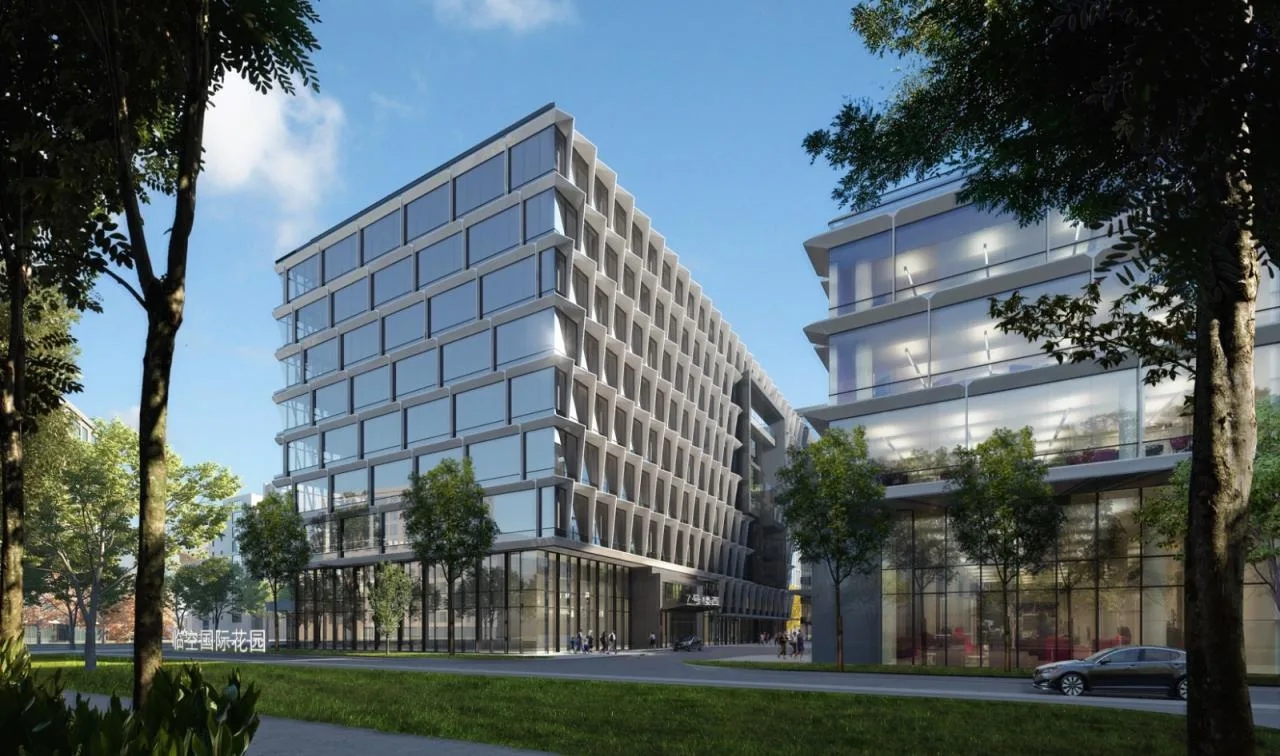
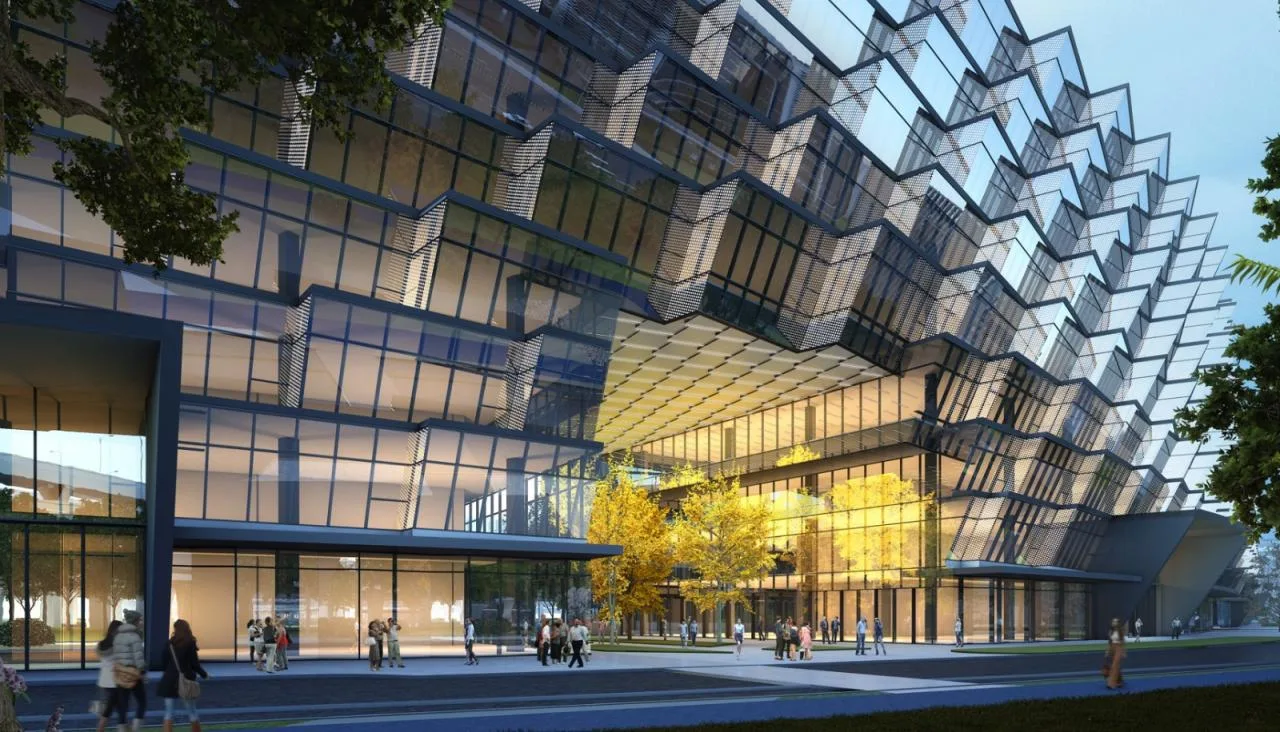
The southern façade features a sweeping curved section that corresponds to the traffic flow and dynamic trajectory of the adjacent elevated road. This 280-meter-long curved façade captures the diagonal movement visible from the urban overpass, with modular units that seem to be pulled by the energy of passing traffic.
Through rotation and movement, these modular elements trace the motion’s path on the façade, emphasizing the traffic’s kinetic energy. As viewers change their perspective, the two-colored components of each module alternate in a zigzag pattern, producing a visual effect that makes the building appear to move for passing drivers.
Addressing Heat Exposure
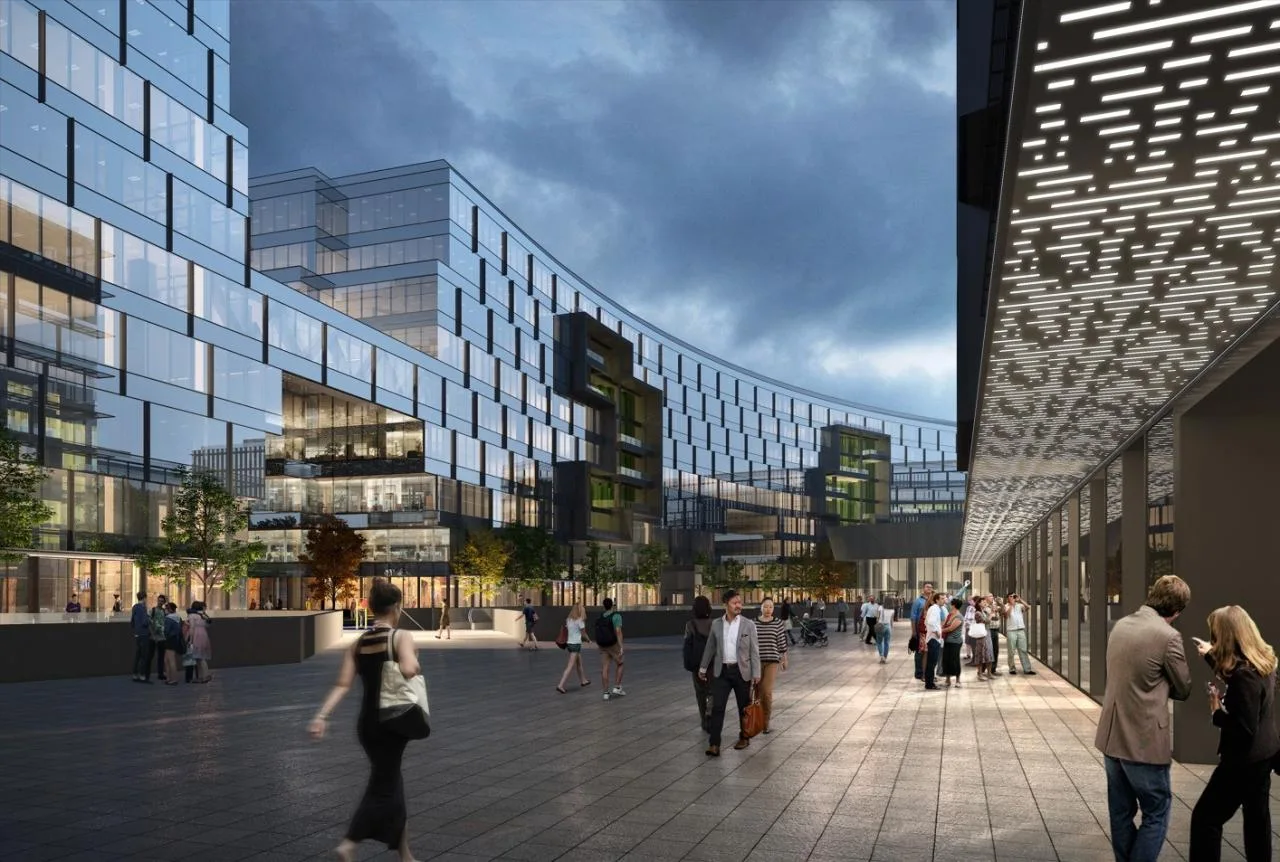
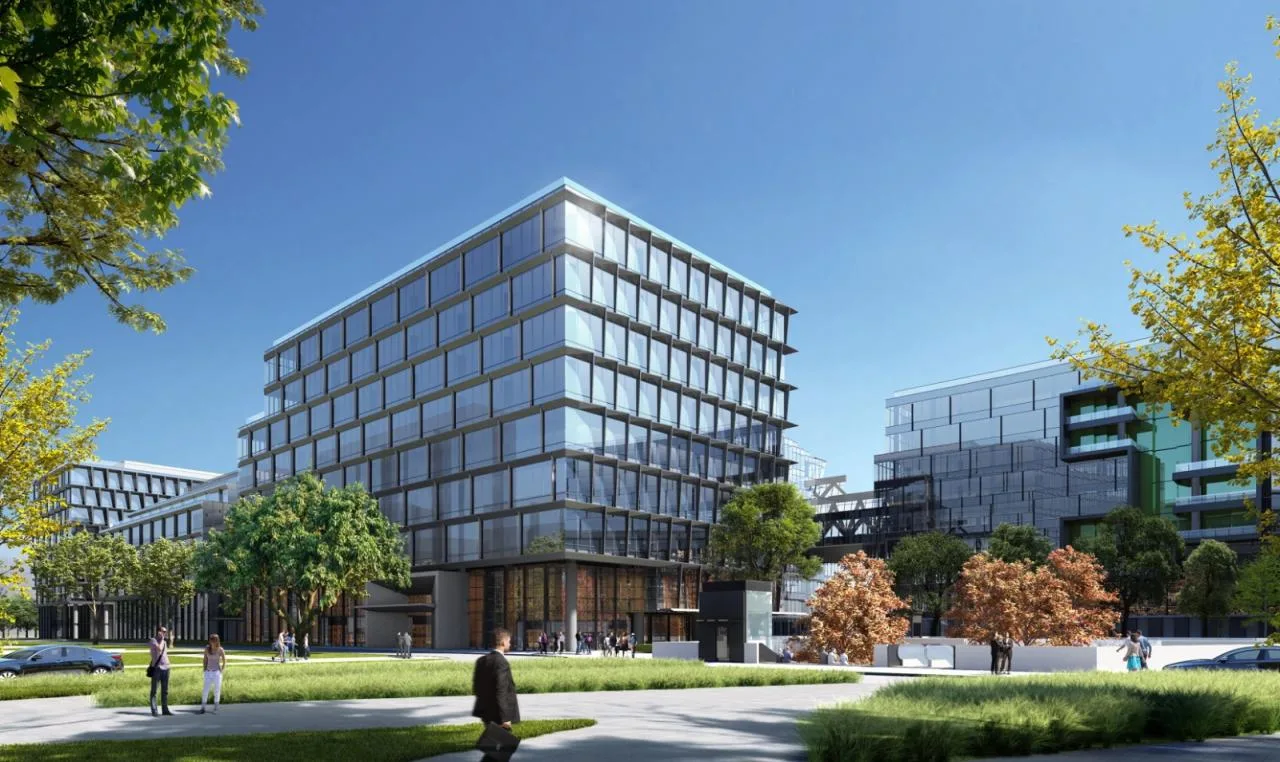
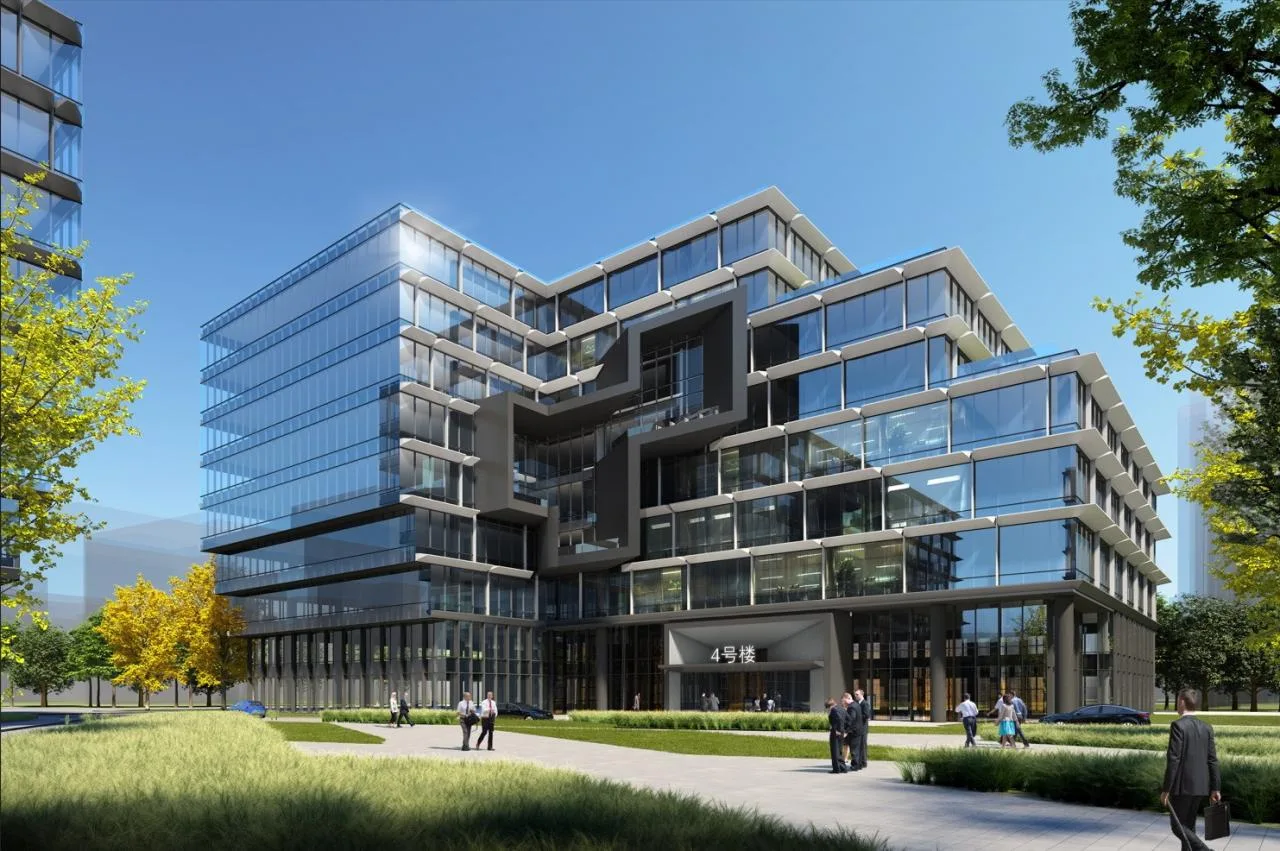
The façade modules are designed to provide self-shading, while vertically inclined glass windows offer an effective passive shading system for the office interiors. The west-facing side of each module features glazed glass to block harsh afternoon sunlight.
Within the park, passive shading strategies are fully integrated using horizontal shading louvers and combined horizontal-vertical shading modules. These elements effectively reduce direct sunlight exposure, supporting the project’s vision of smart energy conservation and sustainable environmental protection.
Human-Centered Design
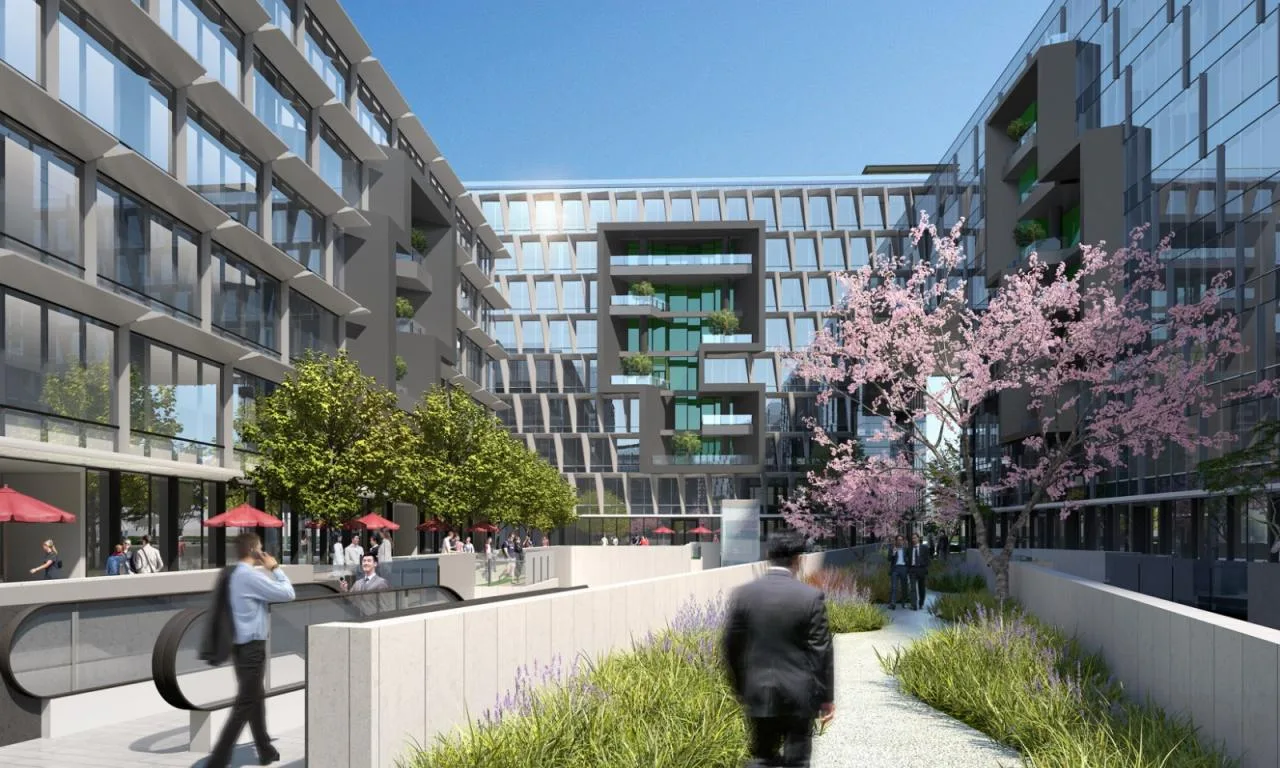
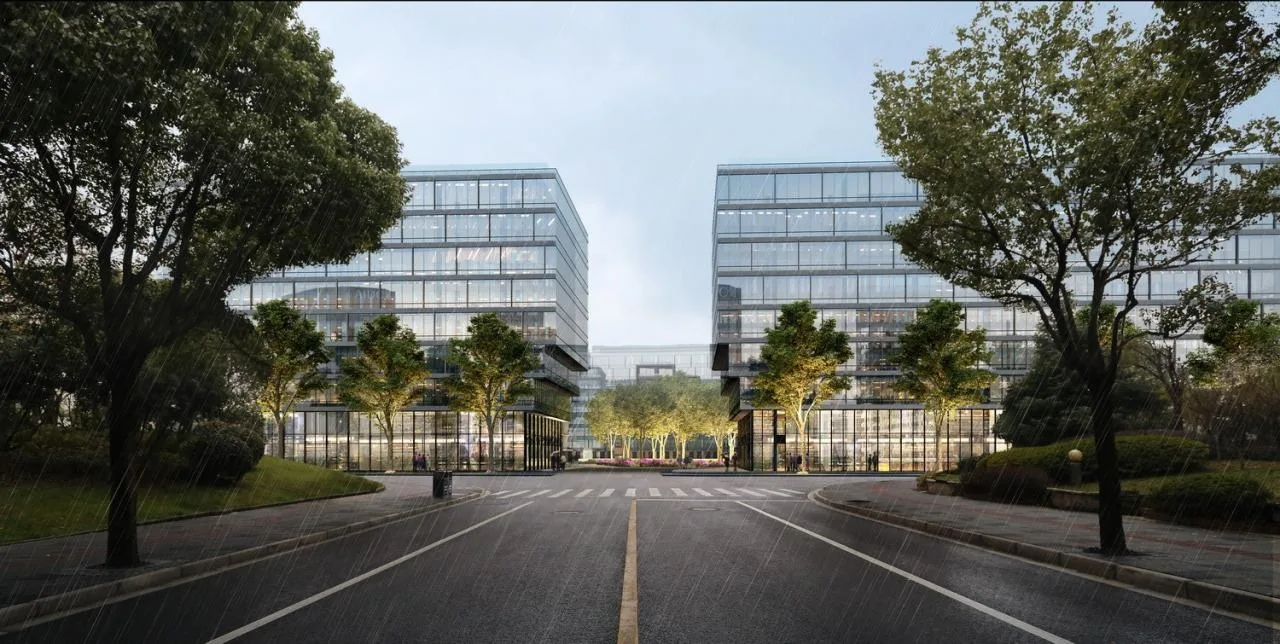
The south façade faces the city with varying sizes of openings at its base, creating convenient shortcuts for people to enter the park’s interior. Upon entering, visitors encounter a dramatically different design style. While the exterior façade reflects the large-scale, dynamic rhythm of surrounding traffic, the park’s interior focuses on human scale and comfort.
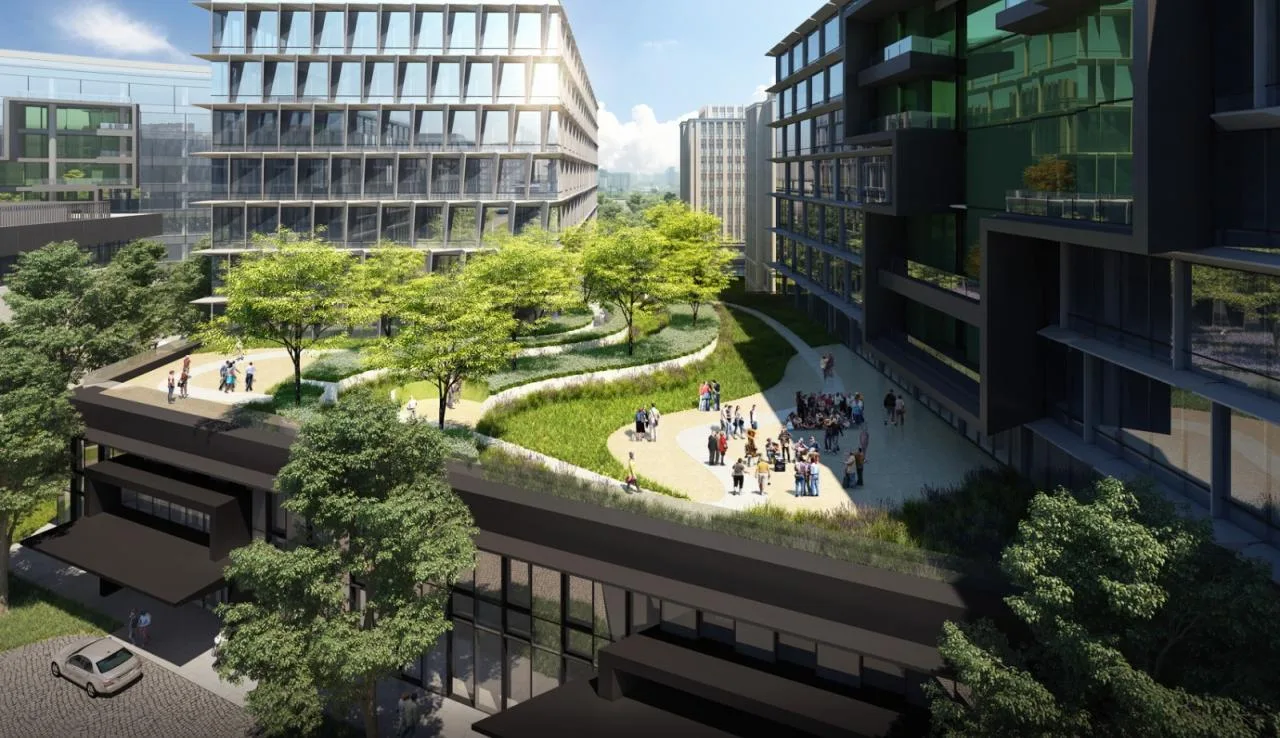
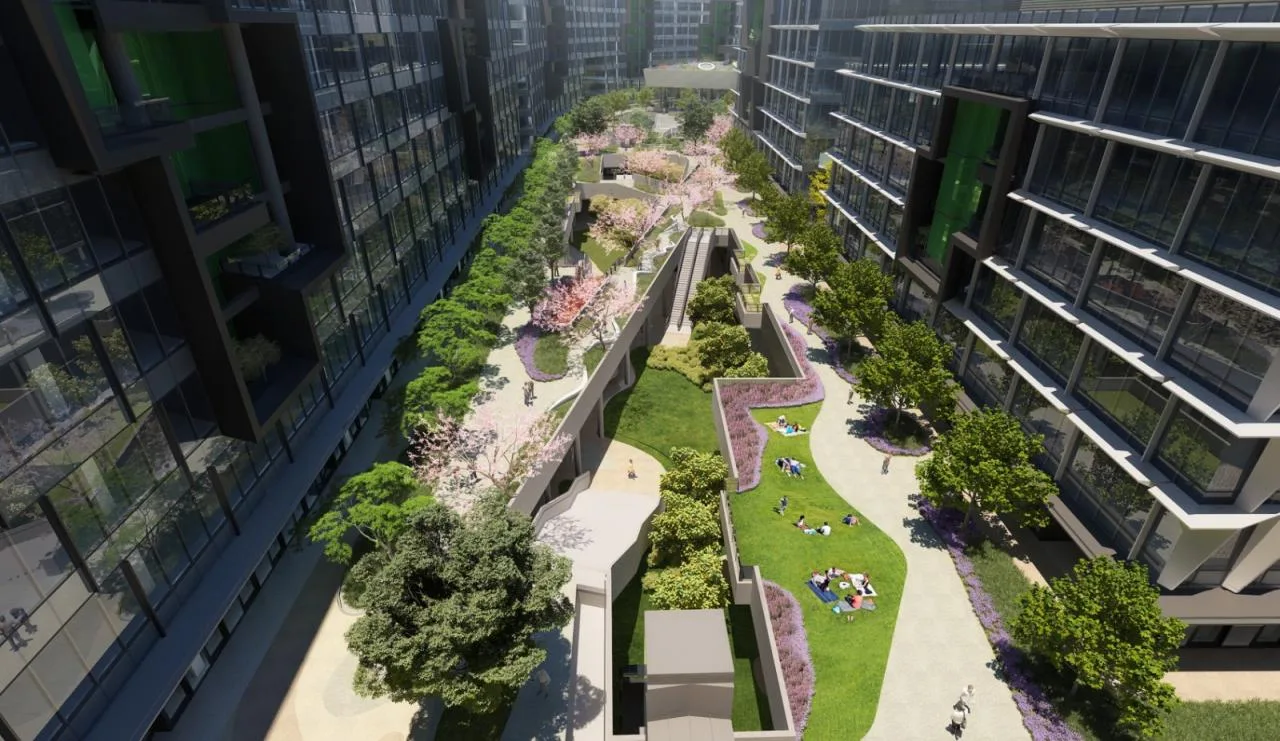
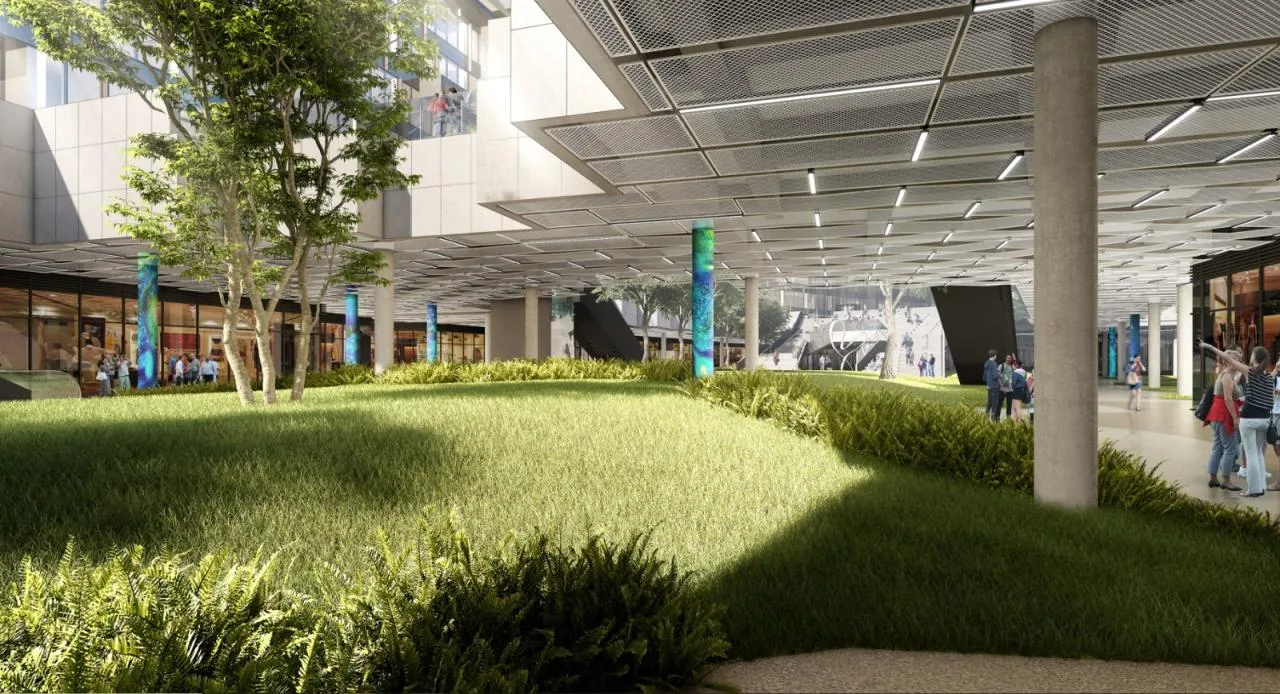
The park features lawns, trees, walking paths, small plazas, and social spaces, offering a peaceful green environment for occupants and visitors.
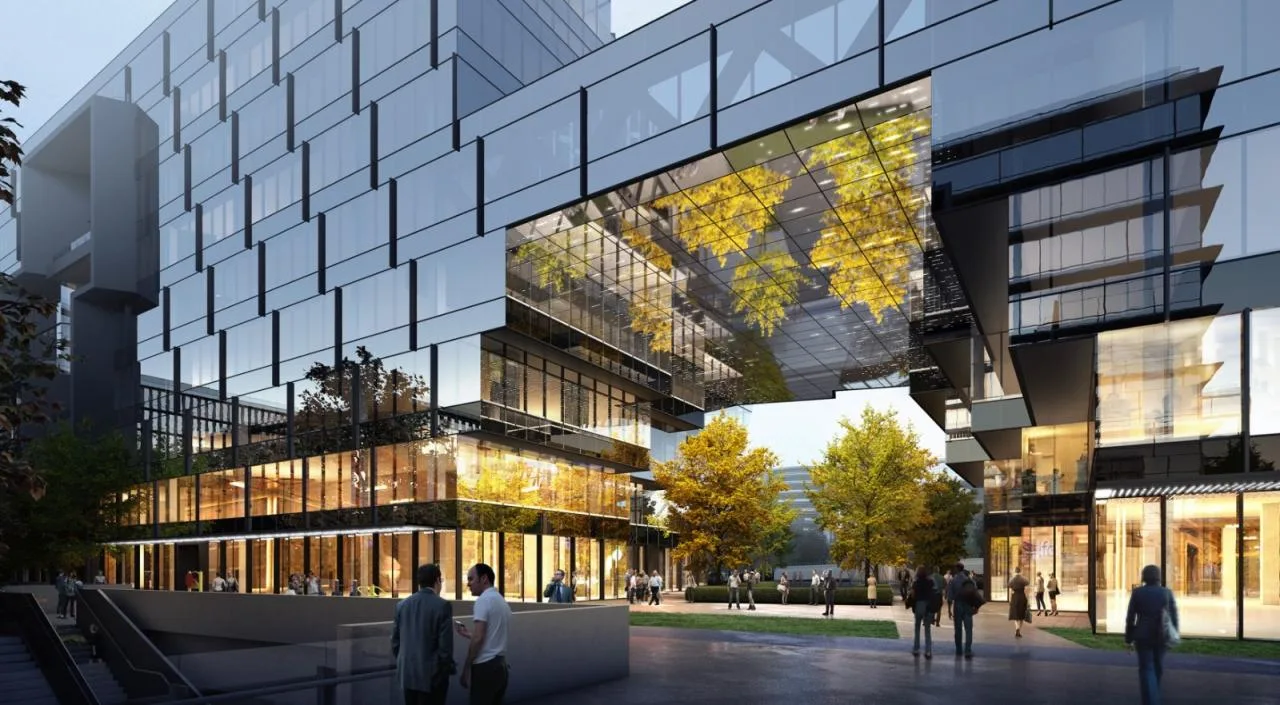
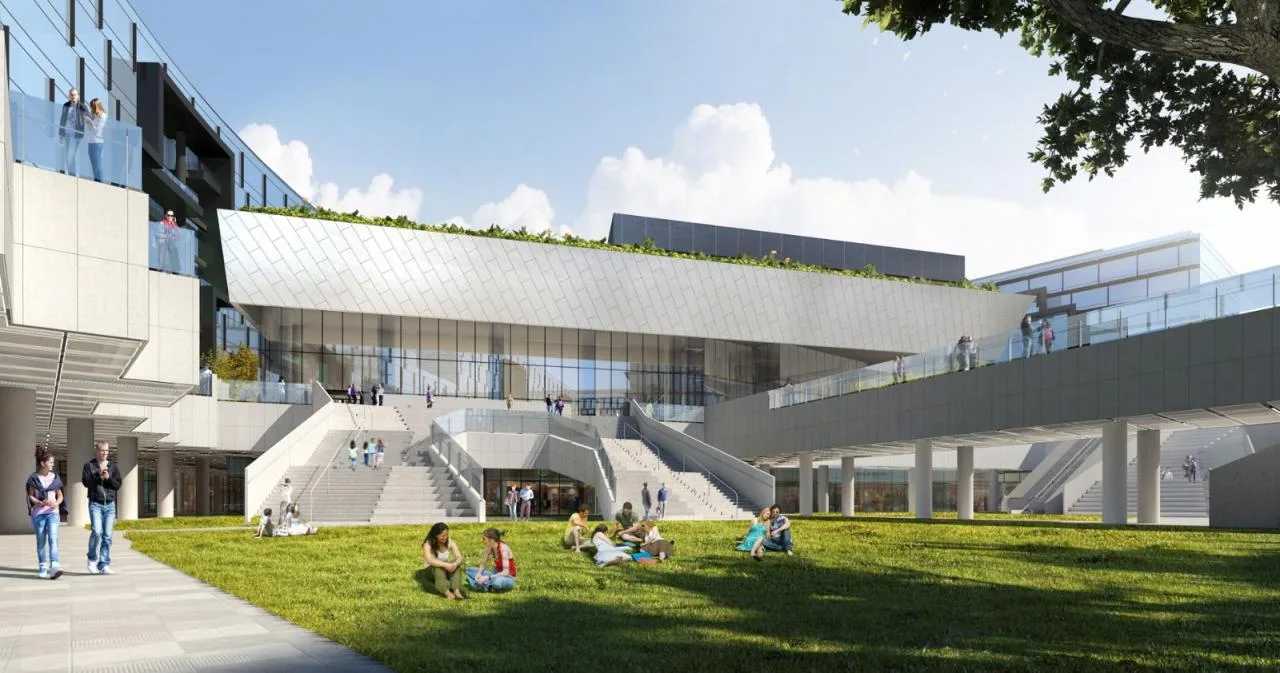
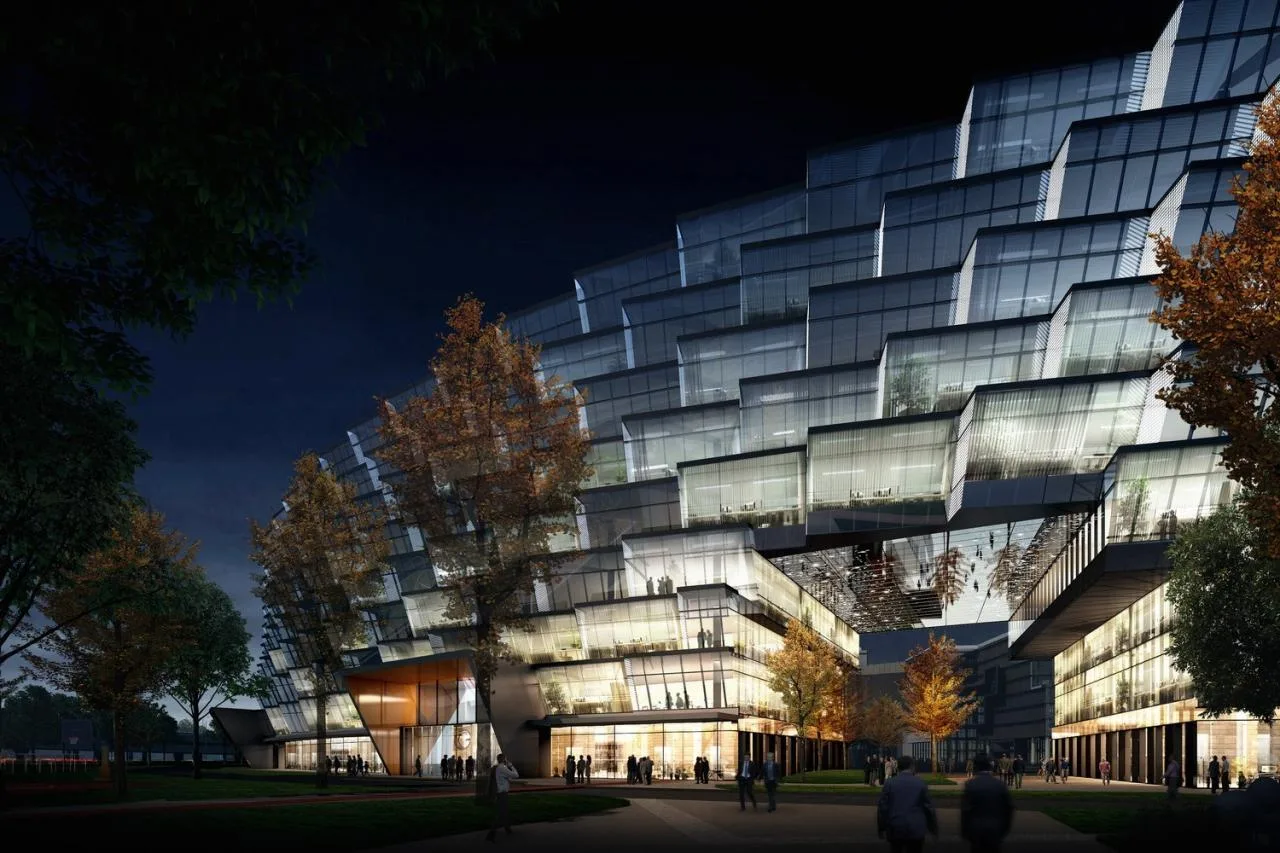
The internal circulation network ensures the shortest and fastest connections between buildings. A linear sunken courtyard at the site’s center offers commercial and dining options. Access to this courtyard is provided via large steps, escalators, and elevators with resting areas.
At the western end of the sunken courtyard lies the sports and community center. A wide staircase connects its ground floor entrance directly to the courtyard, while the adjacent sports center plaza includes shading structures and broad steps, creating a shared space where visitors can enjoy views of the entire complex.
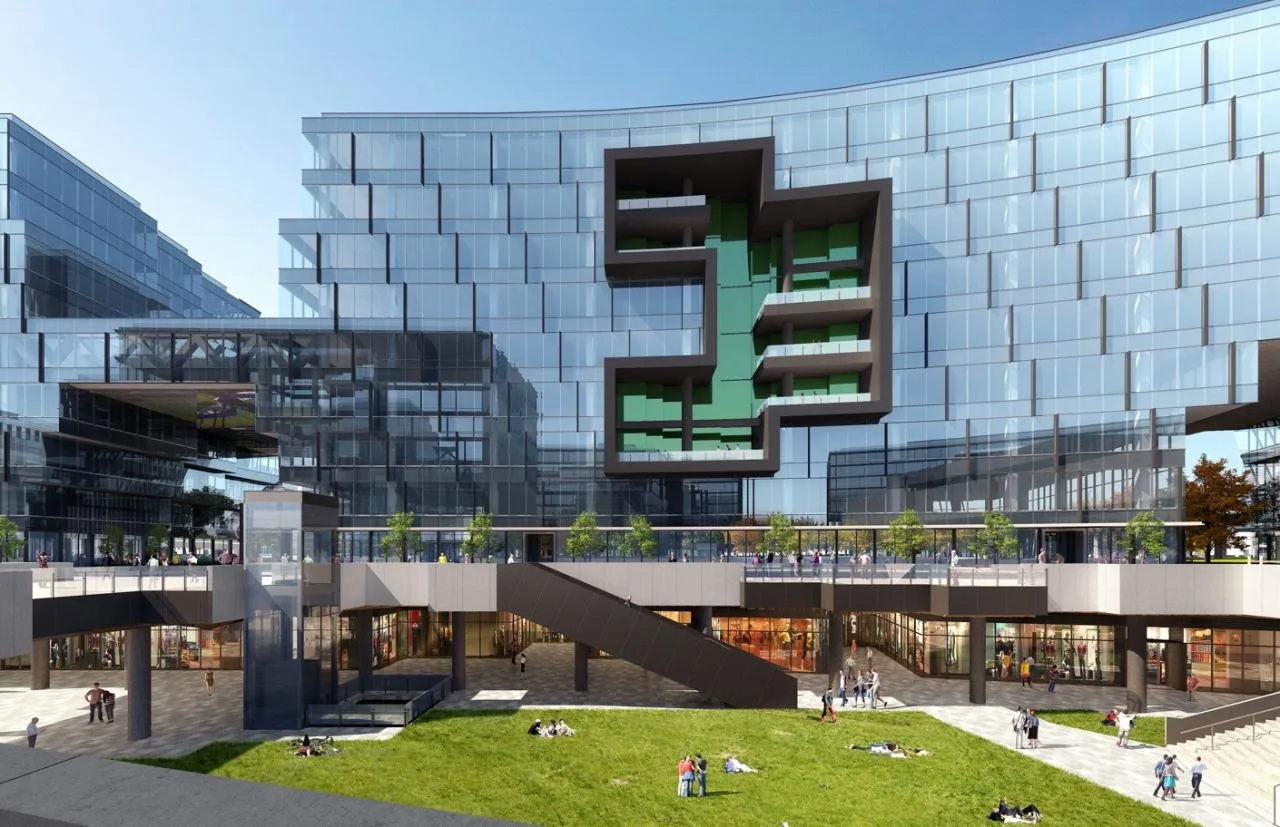
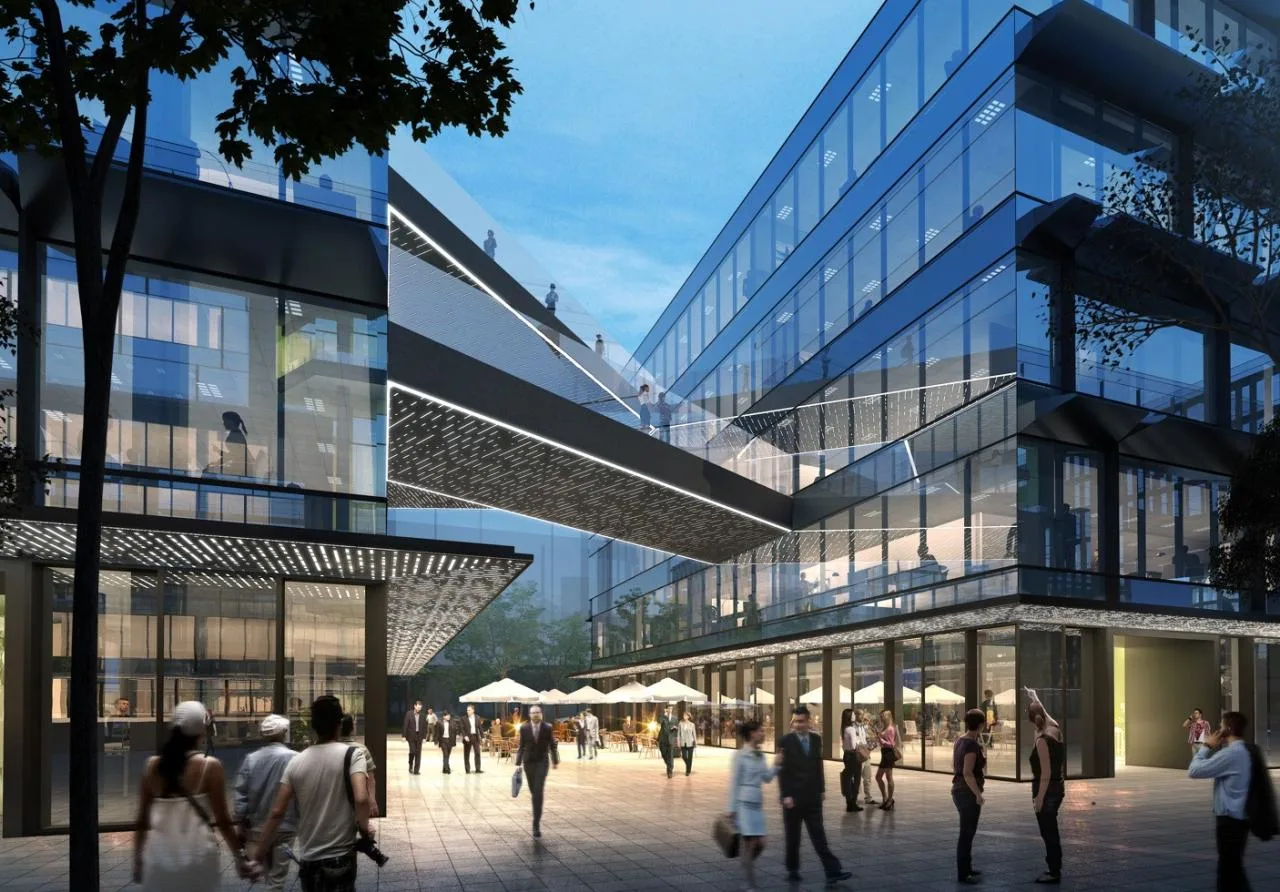
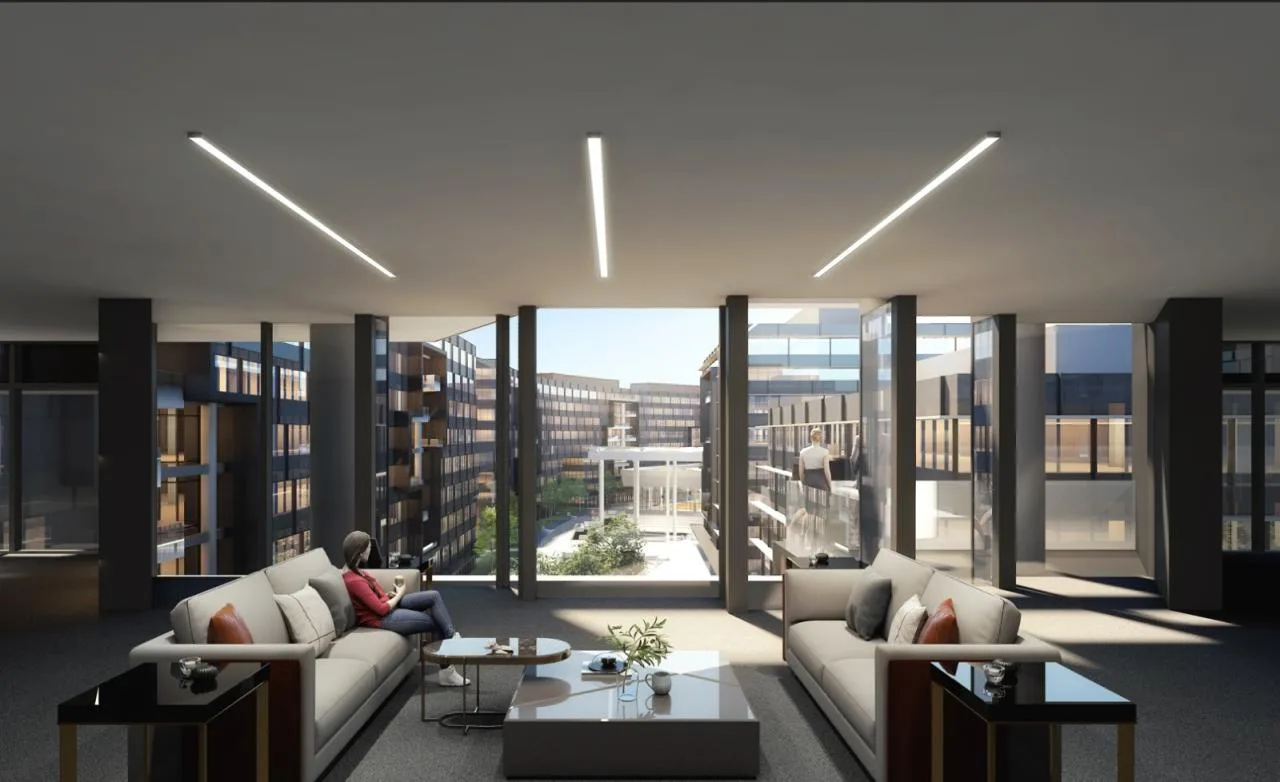
Each building inside the park features a series of large framed balconies, offering distinctive architectural elements and outdoor leisure spaces for employees on every floor. One of the unique design features is the aerial balcony, resembling a cave, which emerges after excavation. All framed balconies overlook the inner courtyard, allowing employees to enjoy varied scenic views of the park from multiple angles and floors.
Viewed from Above
Located next to the Shanghai Hongqiao transportation hub, this project is visible not only to ground-level visitors but also to passengers flying overhead. Serving as the building’s “fifth façade,” the serrated roof rack reflects the modular design of the structure.
The large radial patterns along the corridors are scaled progressively to align with the overall building modules, creating a distinctive landmark that can be recognized from several kilometers away in the sky.
Project Drawings
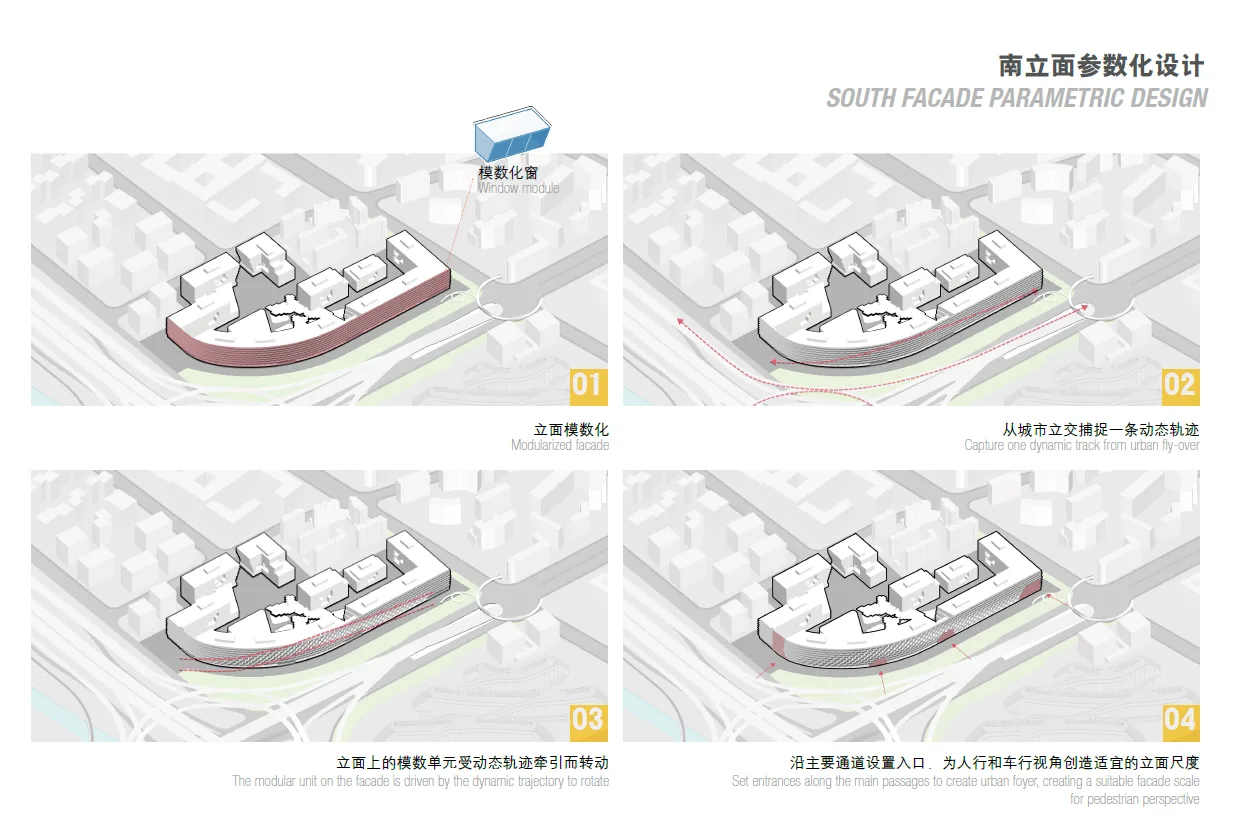
△ Analysis Chart
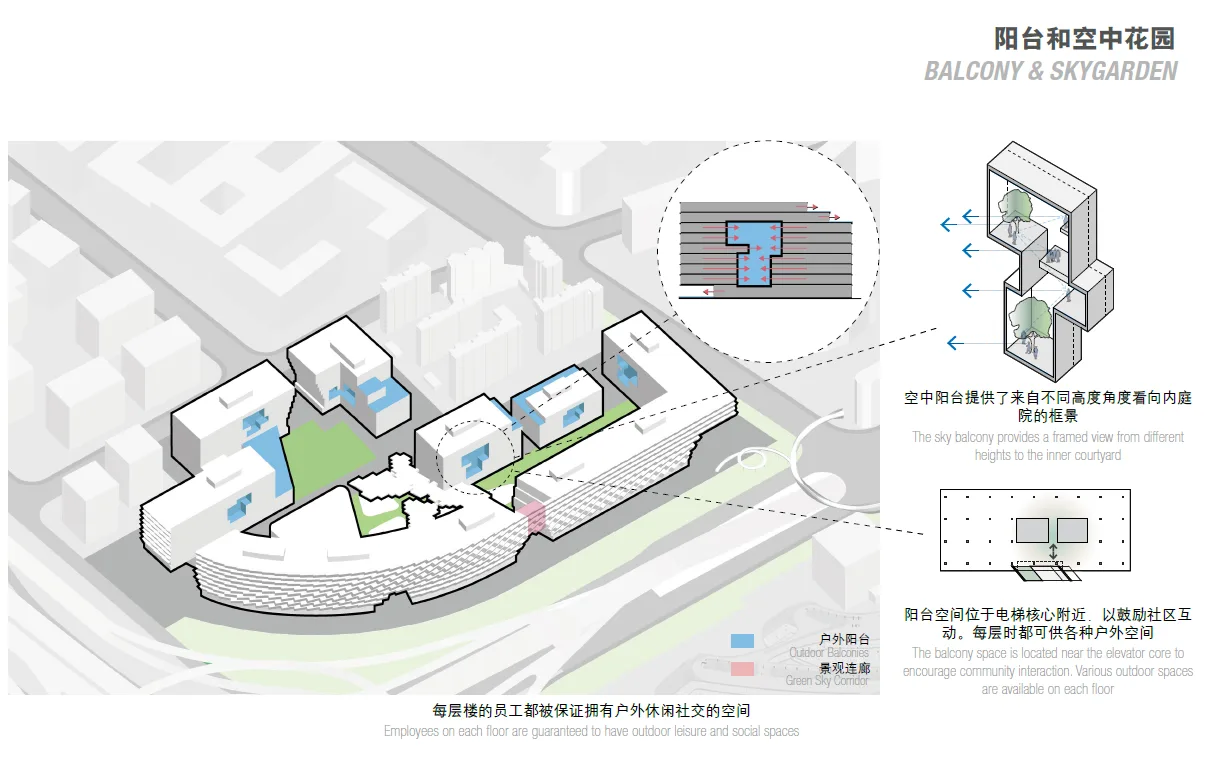
△ Analysis Chart
Project Information
Status: Under Construction
Location: Changning District, Shanghai, China
Year: 2019–Present
Client: Shanghai Hongyuan Real Estate Development Co., Ltd.
Building Area: 449,033.7 square meters
Type: Office
Functions: Office, commercial, dining, sports center, exhibition center, underground parking garage
BAU Project Team Members
Architecture Team: James Brearley, Jens Eberhardt, Luo Huaili, Liao Wang, Huang He, Li Zheng, Francisco Garcia Sung, Hu Liyao, Yu Jiadai, Kenneth Wong, Ding Xueyang, Ben Verzijl, Li Yiran, Li Jingshu, Zhang Dejun, Armando Lopez Morales
Landscape Team: Huang Fang, Fang Qun, Pan Linlu, Zhu Qizhen
BIM: Wang Hongbin, Wang Shuangdiao, Qin Xiaohang
Construction: Shanghai Construction Engineering Group Co., Ltd.
Collaborative Design Institute: Shanghai Architectural Design and Research Institute Co., Ltd.
3D Rendering: BAU














Must log in before commenting!
Sign Up