
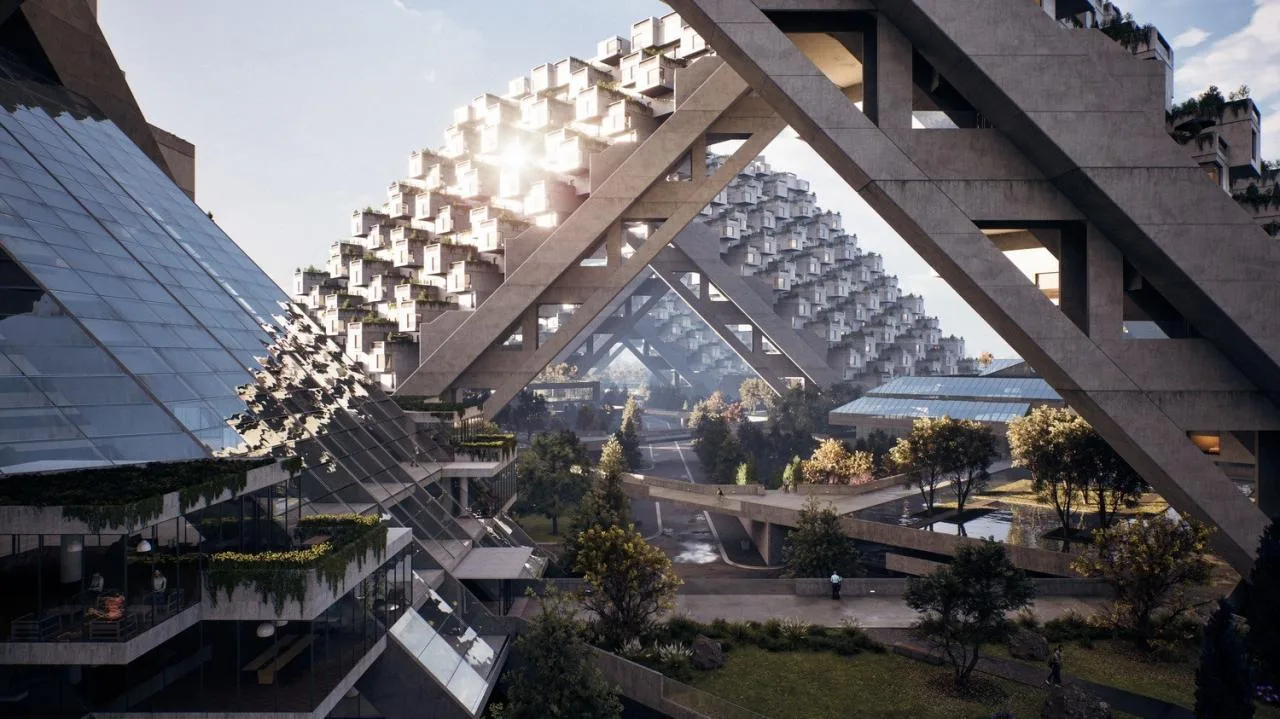
Habitat 67, a Canadian national cultural heritage site, remains an unfinished architectural ideal, as it was only partially built according to its original vision. Thanks to digital technology, this groundbreaking design has now been fully realized in a virtual form.
Neoscape, a leading architectural visualization company, teamed up with Safdie Architects to revive Habitat 67’s initial concept using Unreal Engine 5 (UE5) and real-time tools. This virtual reconstruction not only allows people to freely explore and reconsider living spaces but also serves as an interactive reference for future architects, engineers, and urban planners aiming to shape a better tomorrow.
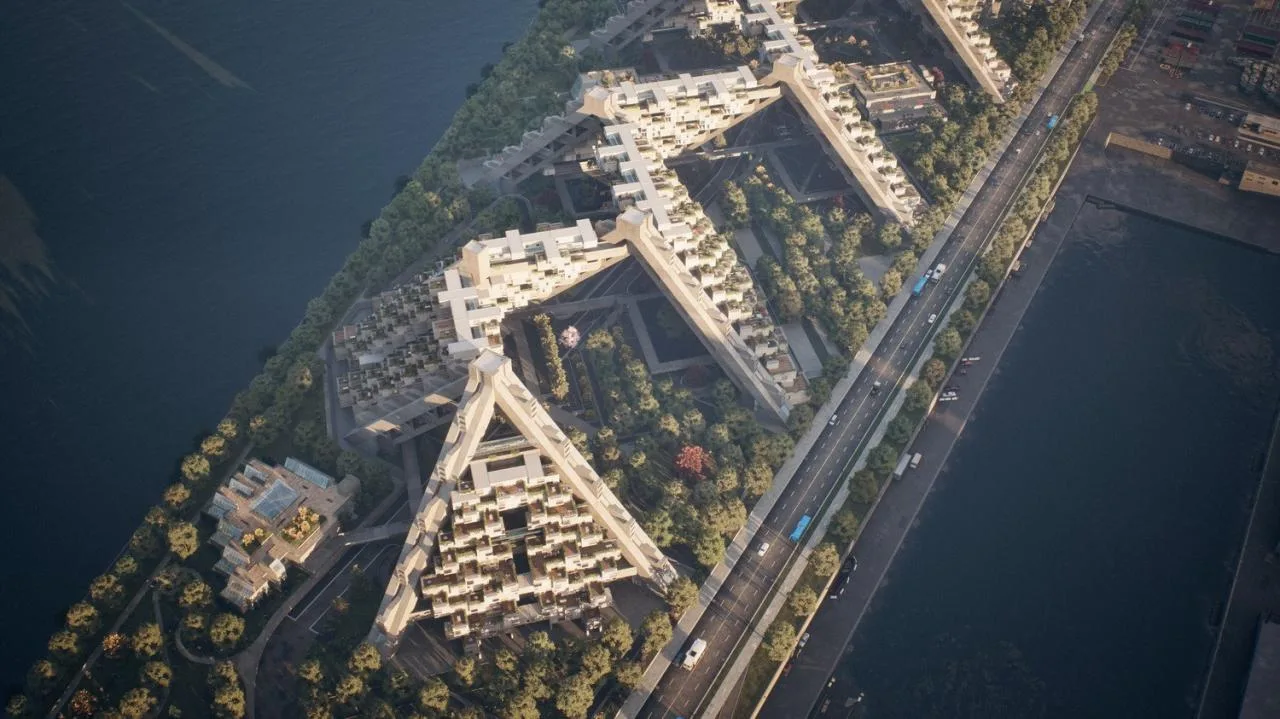
Complete Habitat 67 in the virtual world © Epic Games, Neoscape Inc.
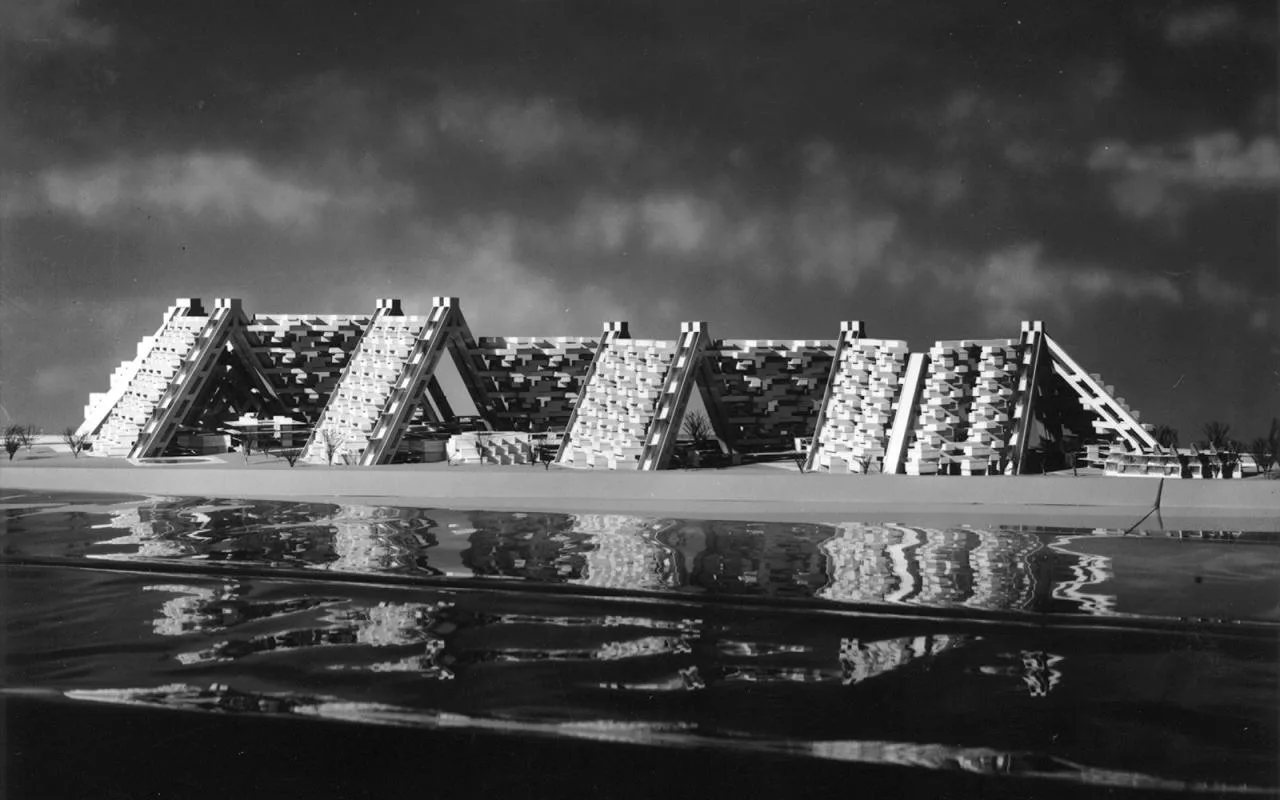
The original conceptual model of Habitat 67 © Safdie Architects
Urban Landmark: Habitat 67 in the Real World
Habitat 67 is one of the most significant buildings of the 20th century. But how did it all begin?
Moshe Safdie embarked on a journey across North America to study residential architecture. He concluded that suburban homes were unsustainable long-term due to their excessive consumption of land, energy, and transportation resources.
At just 23 years old, Safdie submitted his master’s thesis at McGill University to the organizing committee of the 1967 Montreal World Expo. He proposed a new vision for a mixed-use community, hoping it would be approved for development.
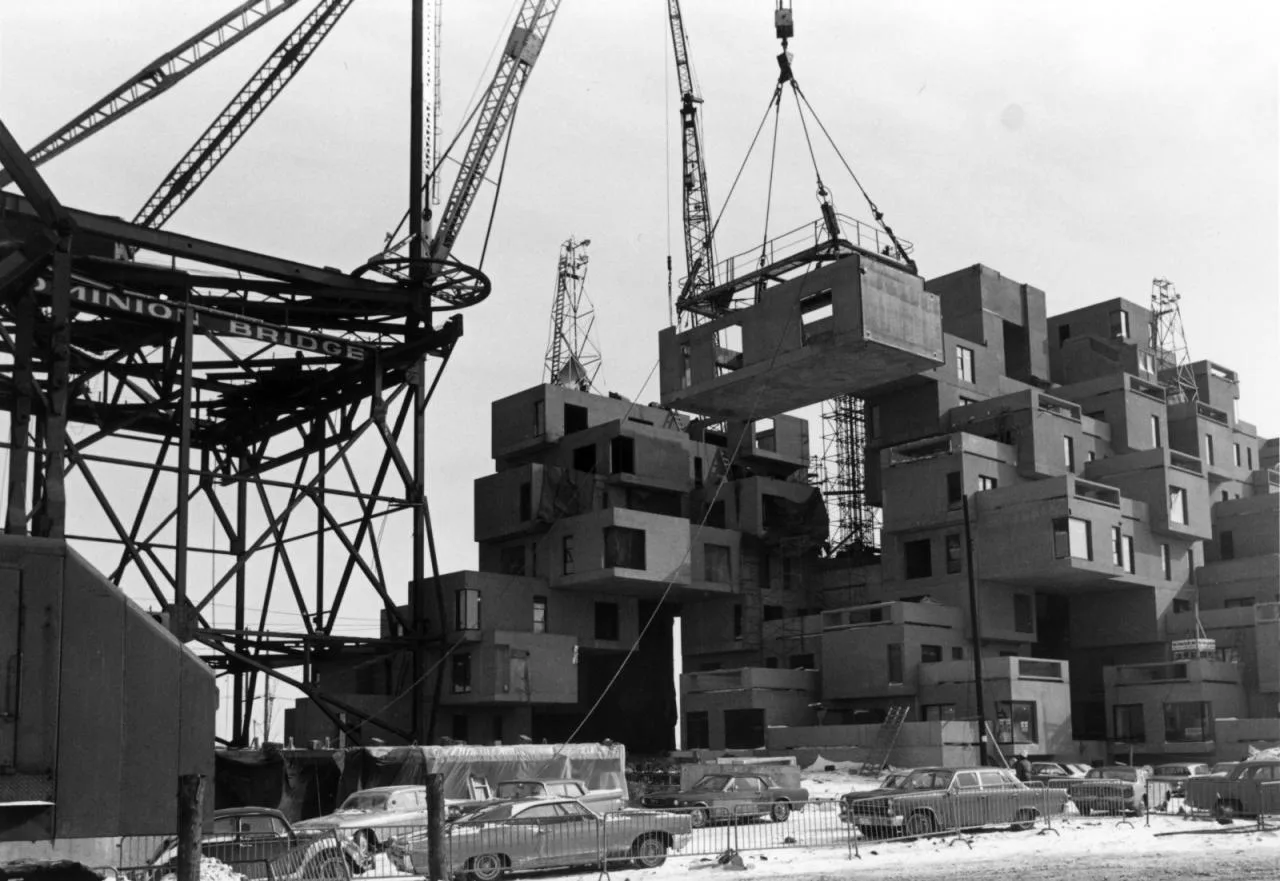
△ Habitat 67 construction site © Safdie Architects
“If we can create a new type of housing that not only improves residents’ quality of life but also offers gardens, privacy, and open streets, people will naturally be more inclined to live in the city.” – Moshe Safdie, Founder of Safdie Architects
While World Expos typically feature temporary structures, Canada aimed to break tradition in 1967 by creating permanent buildings that would encourage attendees to rethink their lifestyles. This vision gave birth to Habitat 67.
As a pioneering residential project, Habitat 67 avoided urban sprawl and the construction of soulless skyscrapers. It introduced one of the first mixed-use building concepts by integrating residential units, offices, hotels, colleges, and museums into a self-sufficient community. Though common today, this approach was unconventional at the time.
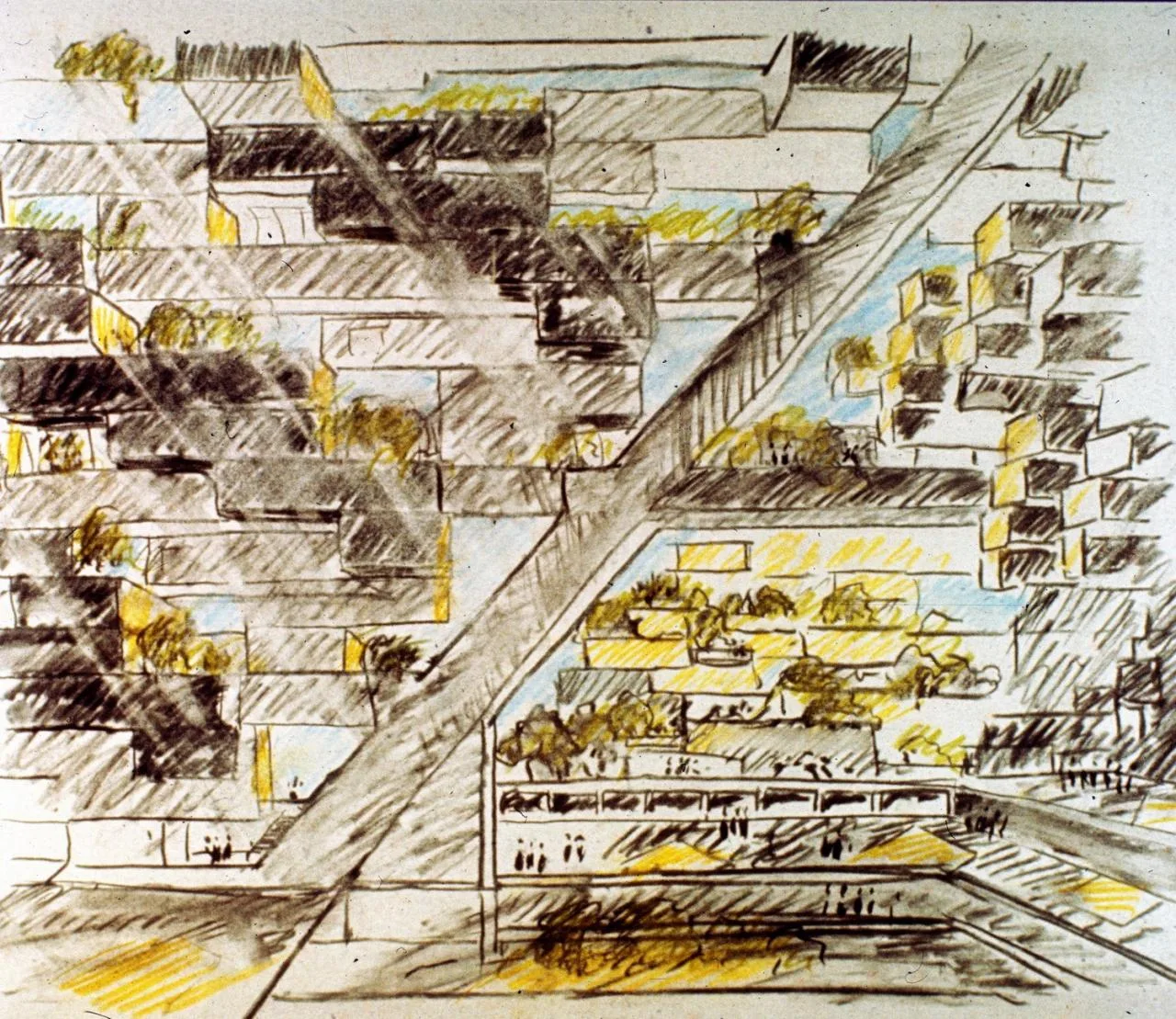
Initial concept sketch of Habitat 67 © Safdie Architects
Habitat 67 also proposed a forward-thinking idea: prefabricated housing assembled from multiple modular units on site.
Before computers became widespread, design required intense physical effort. For Safdie, 14-hour workdays were standard, but everything changed with the introduction of LEGO.
“LEGO is modular; it can be stacked and modified step by step. These qualities heavily influenced the design system of Habitat.” – Moshe Safdie, Founder of Safdie Architects
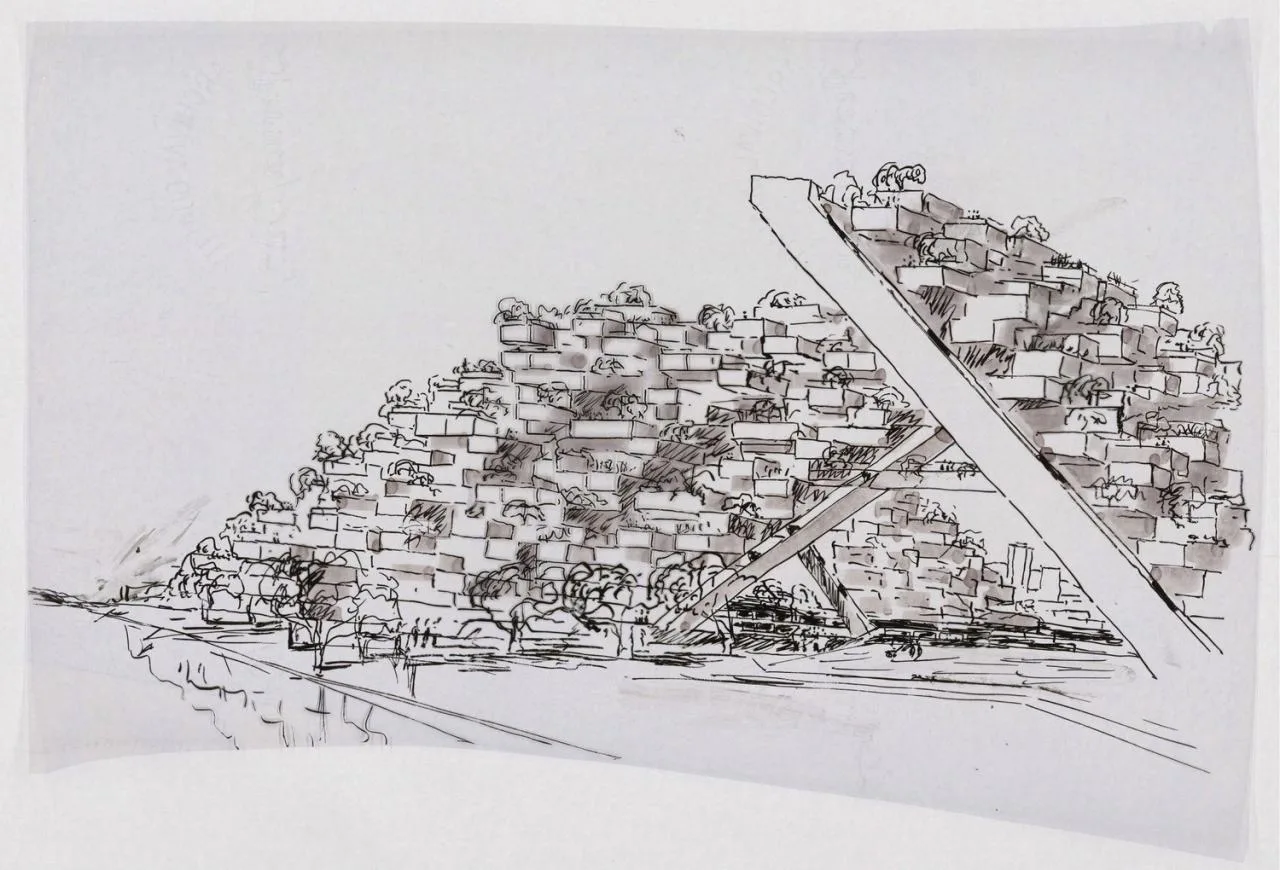
Initial concept sketch of Habitat 67 © Safdie Architects
Safdie’s original design envisioned stacking 20 to 30 modular units into a tower-like frame. He soon realized that staggering and tilting these modules like a hillside would give each residence its own garden and outdoor space. This layout allows a street every four floors and creates shaded public spaces at ground level.
Each home features a rooftop terrace—not just a balcony but a garden connected to the sky—offering the benefits of suburban living within the city. At the time, such a community of 1,200 homes would have cost $45 million, equivalent to roughly $450 million today. – Moshe Safdie, Founder of Safdie Architects
However, the final budget was only $15 million. Consequently, the completed Habitat 67 was a scaled-down version with just three pyramid structures and 158 residences, covering less than half the original planned area. The full vision remains an unrealized ambition.
A New Era: Habitat 67 in the Virtual World
While Habitat 67 stands as an iconic living space, many questions remain unanswered. What if the initial full-scale design had been completed? Would this vision still suit everyone? Could it continue to provide a comfortable living environment?
Neoscape seeks to explore these questions by collaborating with Safdie Architects to visualize the original design. They recreated a 30-story massive structure within UE5’s virtual world, allowing Safdie and new generations of architects to experience the full Habitat 67 in real time.
For 84-year-old Safdie, this was a rare opportunity to finally witness what his $45 million design might have looked like and to identify any unforeseen challenges in the original concept.
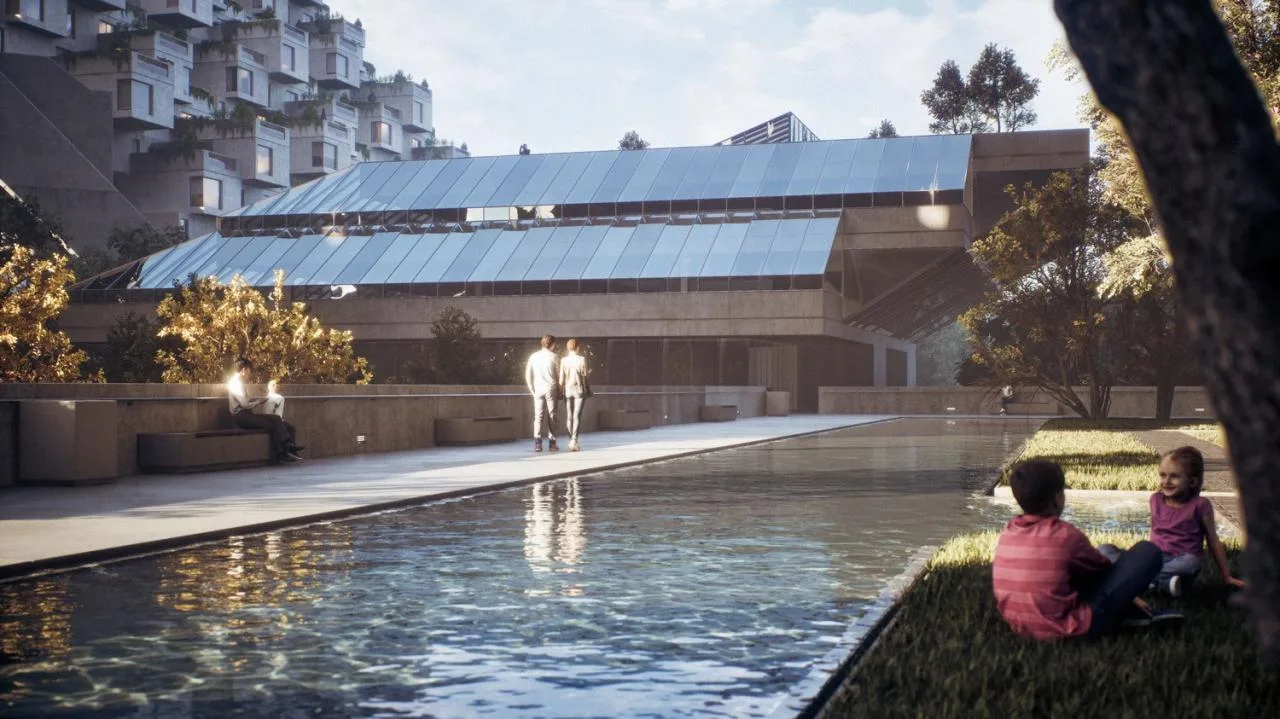
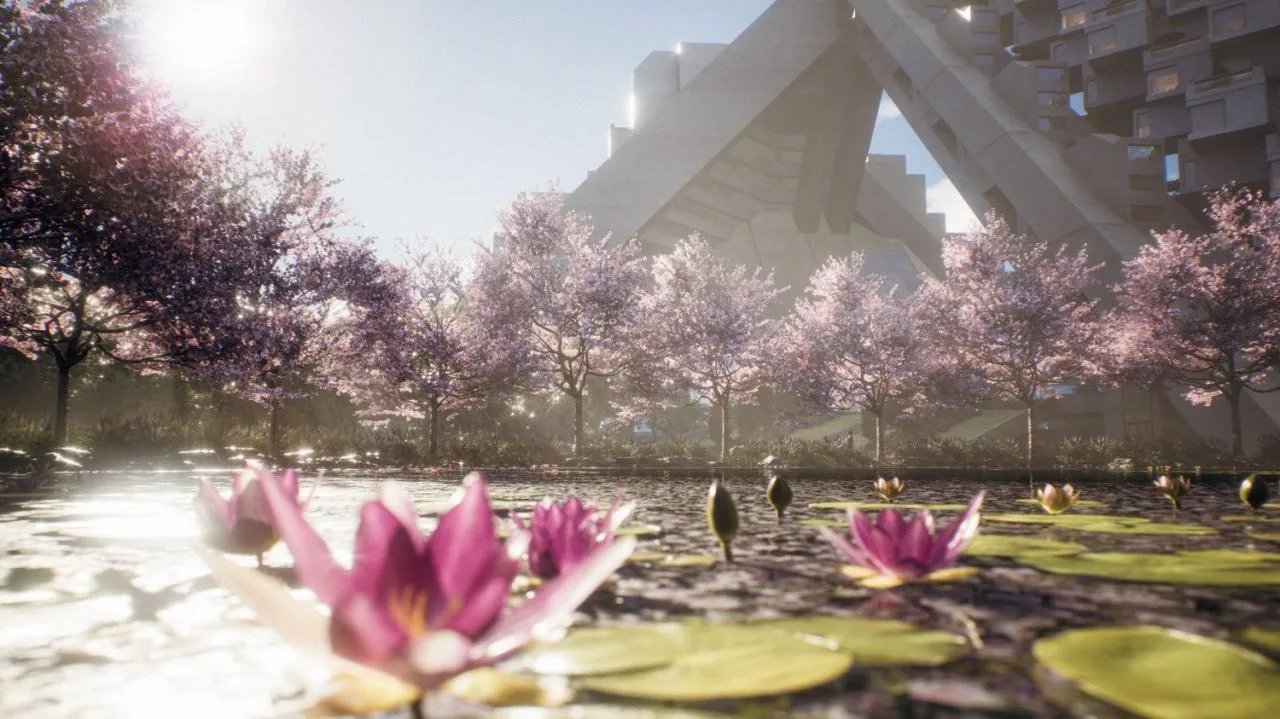
△ Hillside outdoor scene © Epic Games, Neoscape Inc.
“We were thrilled when Epic Games invited us to take on the challenge of recreating Habitat 67, a landmark project in architecture.” – Ryan Cohen, Head of Neoscape
Even with cutting-edge technology, this task posed significant challenges. Before modeling the unfinished sections, Neoscape first captured the existing structure.
They employed a drone equipped with a camera and LiDAR technology to scan the building 207 times along a programmed flight path. Simultaneously, a second drone captured 4,136 high-resolution images to document every detail of the surrounding environment. These datasets were then merged and processed using RealityCapture software to build an accurate 3D model of Habitat 67.
This process not only supported Neoscape’s next steps but also preserved the current state of Habitat 67 for future generations, enabling students worldwide to study and learn from it anytime.
△ Habitat 67 scan © R-E-A-L.IT, Leo Films, and Drone Services Canada Inc
Following this, Safdie Architects and Neoscape expanded upon the archived materials preserved by McGill University.
They enriched the 3D model with detailed elements such as building assembly methods, connections to parking areas, water features and gardens, as well as sidewalks and pathways. Additionally, they deepened and integrated other original plan components—including hotels, schools, and office spaces—into the mixed-use complex.
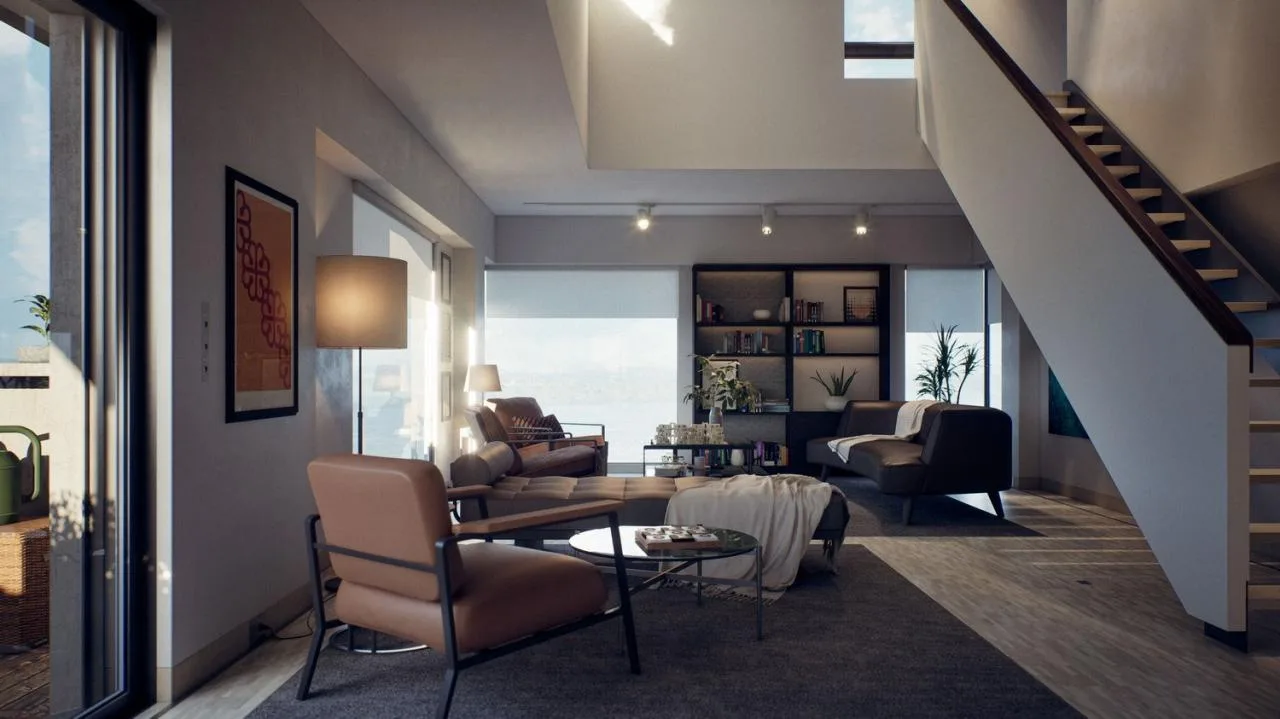
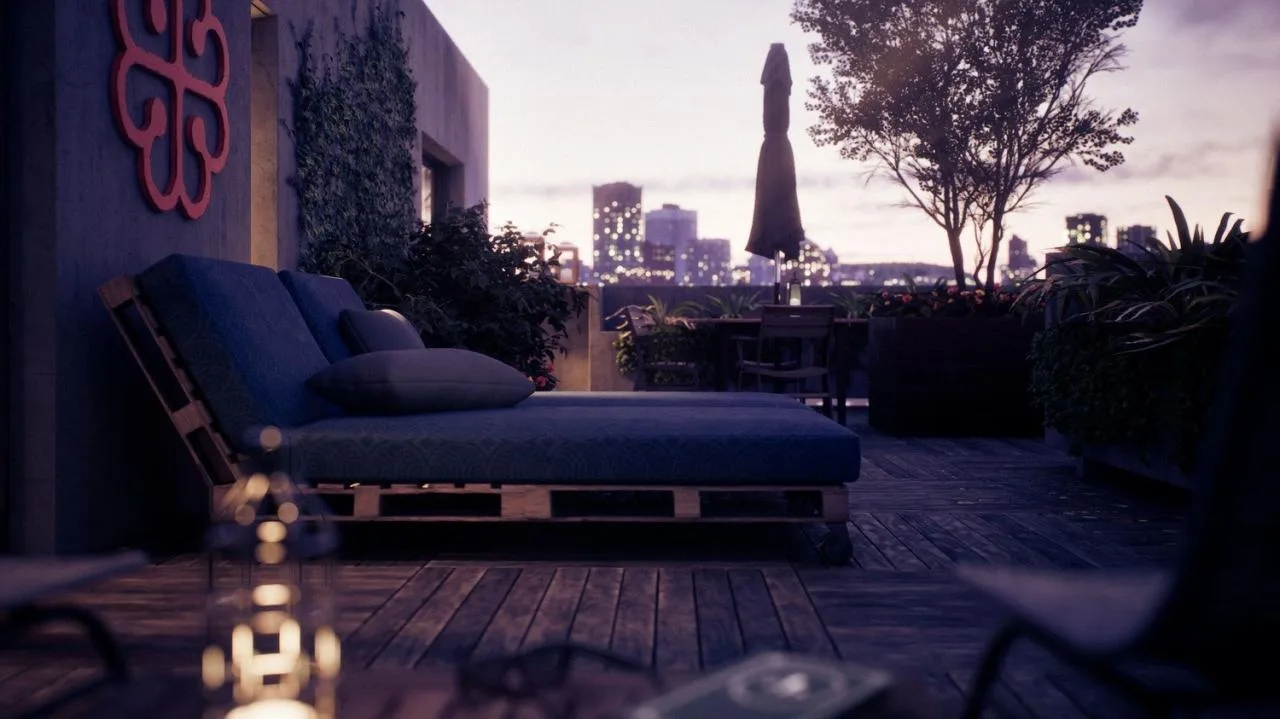
Hillside indoor and terrace scenes © Epic Games, Neoscape Inc.
At last, Habitat 67 has been fully realized. Through Safdie’s visionary design and Neoscape’s digital expertise, this 1961 concept has come to life over 50 years later, offering an immersive experience.
“Many of the core principles we uphold at Safdie Architects trace back to Habitat 67. Over the years, our projects have embraced values promoting community development, equal access to light, air, and green spaces. We strive to create large-scale buildings filled with human care, all of which are reflected in Habitat 67. The latest technology reveals the future potential of these ideas and allows them to extend beyond our studio into a broader world.” – Jaron Lubin, Partner at Safdie Architects
Visualization created within Epic’s creative ecosystem
Despite the massive scale of Hillside, Neoscape praises Epic’s creative ecosystem for providing abundant tools and resources that allow them to focus on critical visualization tasks without extensive customization. Particularly, UE5 enables large-scale, high-fidelity results beyond the capabilities of traditional digital content creation software.
“The best part is that you don’t have to wait for rendering to see your work, so we can truly focus on the artistic aspects. We aimed to push Unreal Engine’s boundaries in architectural visualization—and we succeeded, driven by great ambition.” – Ryan Cohen, Head of Neoscape
The project’s base material models were created with Rhino and 3ds Max, then imported into UE5 via Datasmith. In UE5, elements like plants, scenery, and vehicles are presented in varied yet optimized forms. The entire scene uses discrete sets to achieve realism without compromising performance.
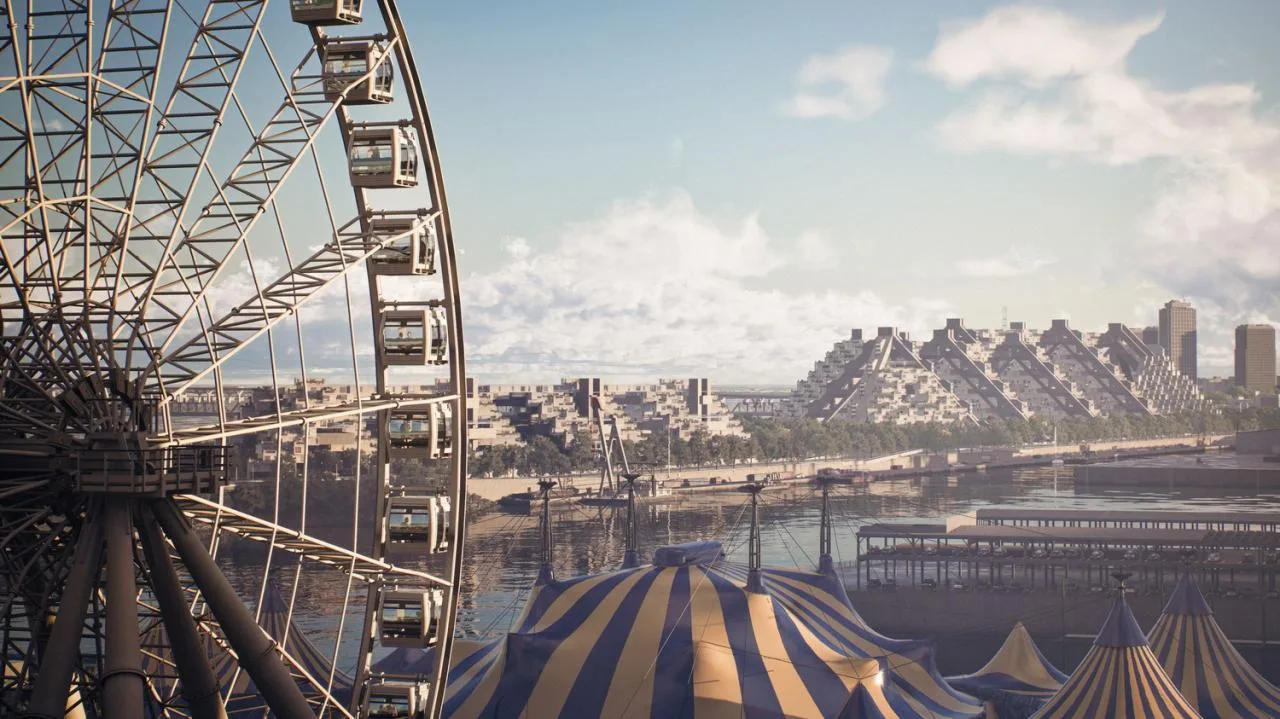
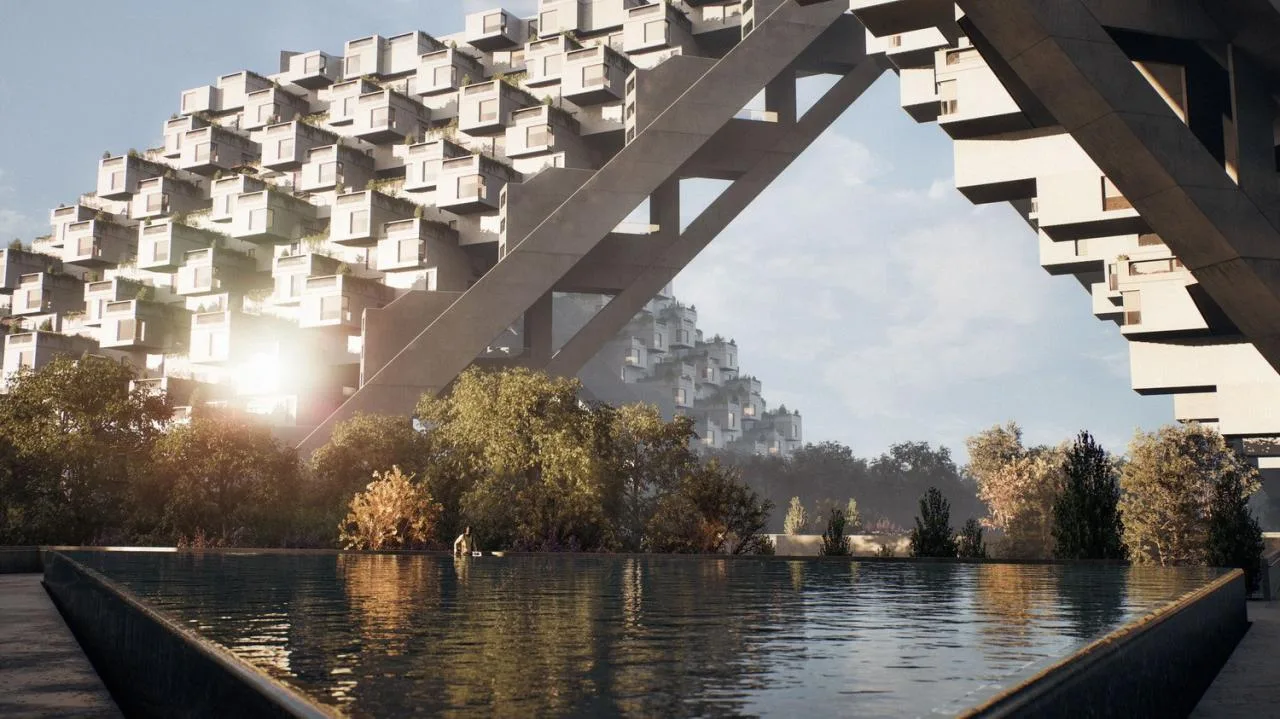
After final preparations, the development team assessed UE5’s data processing capabilities. The virtual Habitat 67 features thousands of residential units with over 4.5 billion triangles, along with a Montreal city model on the horizon. This scale surpasses what most rendering packages can handle.
To manage this, Neoscape adopted Habitat 67’s modular construction approach within UE5. They developed a new tool to convert Rhino blocks into static mesh bodies that automatically position themselves correctly.
Additionally, the team leveraged UE5’s Nanite technology, revolutionizing how large scenes are rendered. This allows for displaying greater detail without sacrificing performance. They also utilized UE5’s Lumen for real-time, accurate global illumination, enabling synchronized content editing and art direction, which streamlined decisions on lighting, materials, and animations.
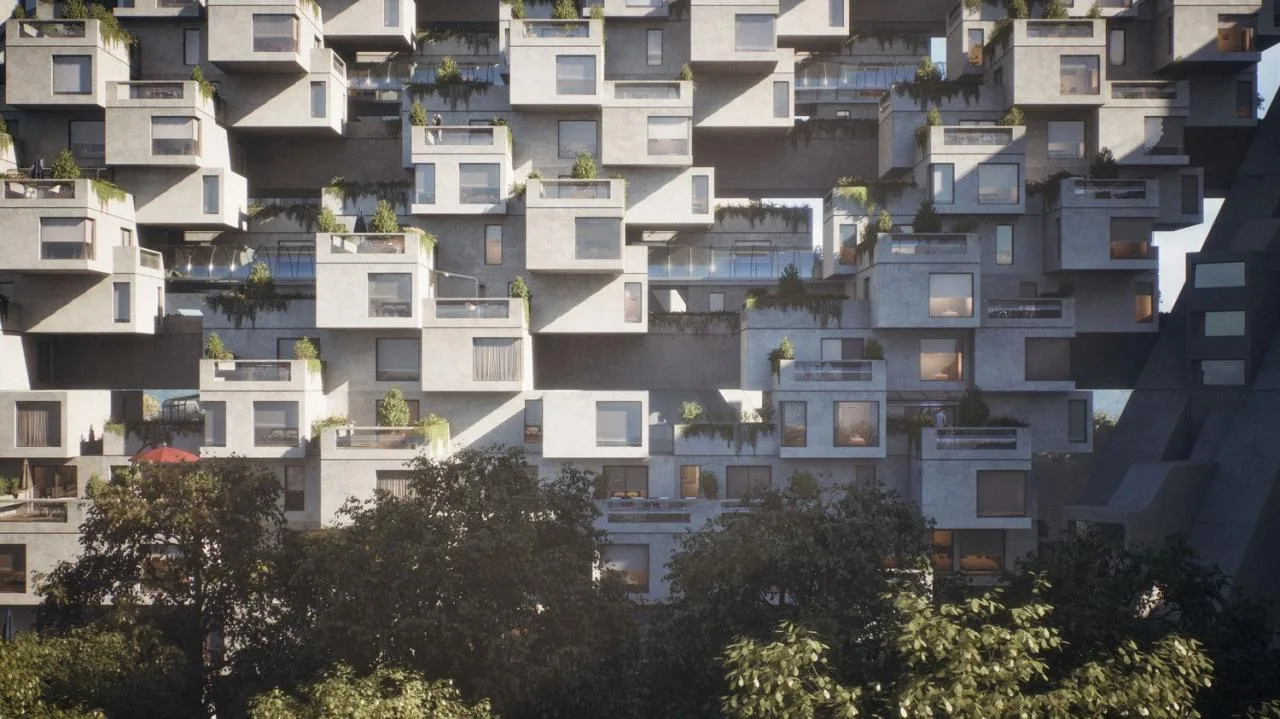
△ Hillside outdoor scene © Epic Games, Neoscape Inc.
Safdie expressed amazement at the final model and project outcome.
“Unreal Engine isn’t just a tool for architects; it opens a whole new world and inspires fresh perspectives. This is exactly what we need—to rethink how cities should be built. I hope this reaches the public and raises awareness that environments like Habitat 67 are livable, helping to inspire people to pursue that vision.” – Moshe Safdie, Founder of Safdie Architects
“We want to encourage people not only to appreciate these works but also to share their own ideas and imagine their own habitats. People can interact with them, learn, and have fun; they can create films, renderings, and practice their own designs.” – Carlos Cristerna, Senior Product Expert at Epic Games












Must log in before commenting!
Sign Up