
A transparent ‘island’ seems to dissolve into the lawn.
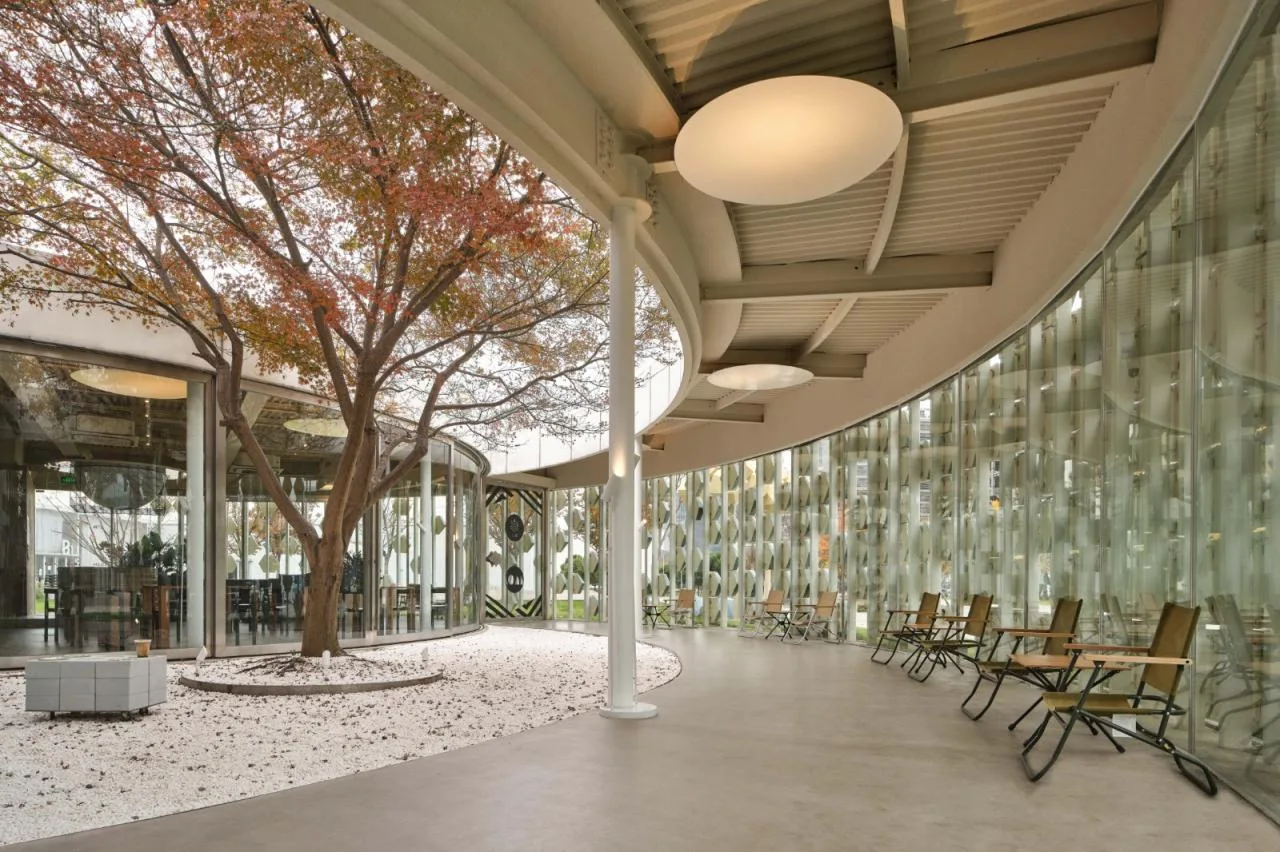
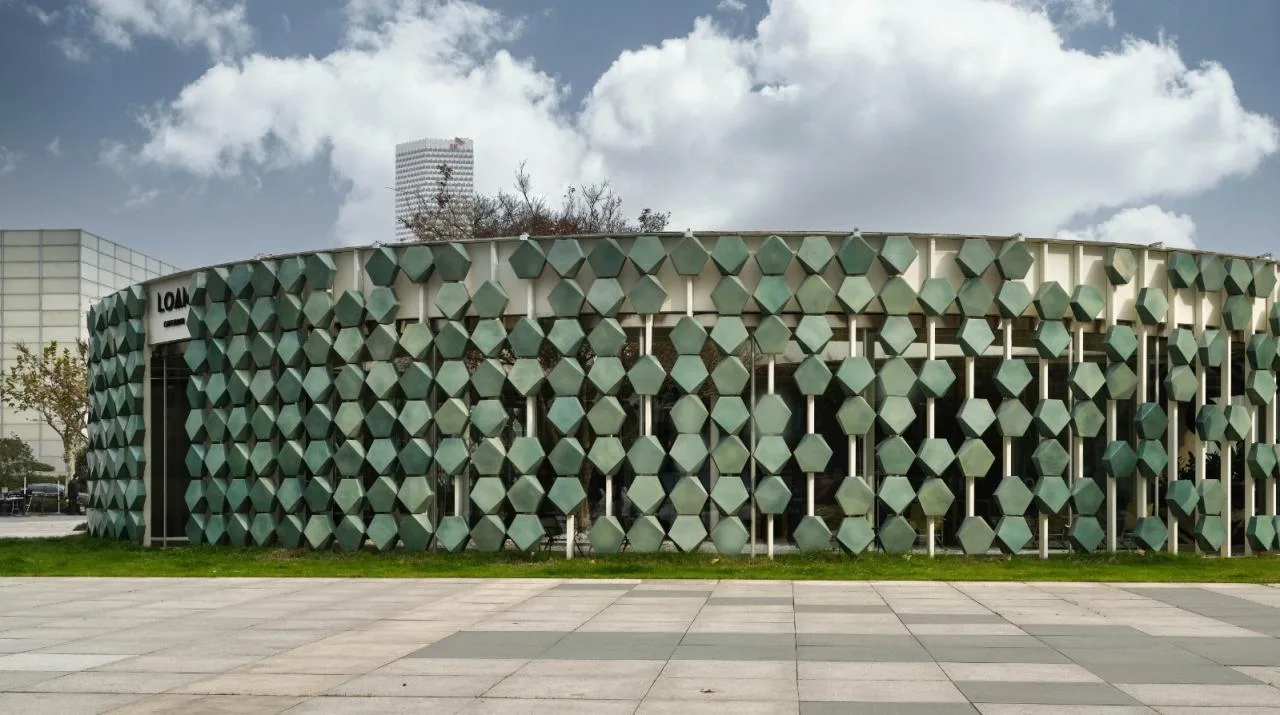
Eight Wilderness Design recently completed both the interior and facade renovation of LOAM Porcelain House Coffee, located on Shanghai’s west coast. Situated within one of Asia’s largest art hubs, this circular porcelain house with its distinctive exterior stands out like a small island in an urban oasis. The designers at Eight Wilderness have crafted an unconventional leisure experience that allows LOAM’s visitors to connect with nature within a limited space—offering a sense of returning to and becoming one with the natural world.
When taking on this project, the design team faced two major challenges: adapting the building’s function and addressing its incomplete original facade. The task given to Ba Huang was to transform the previously enclosed art exhibition space into a flexible café and bar. This new design needed to accommodate different activities and events at various times, easily adapting its function and atmosphere. But how do you define the interior and exterior of a (semi) transparent building? Eight Wilderness chose to redesign the exterior, interior, and surrounding landscape as a cohesive whole.
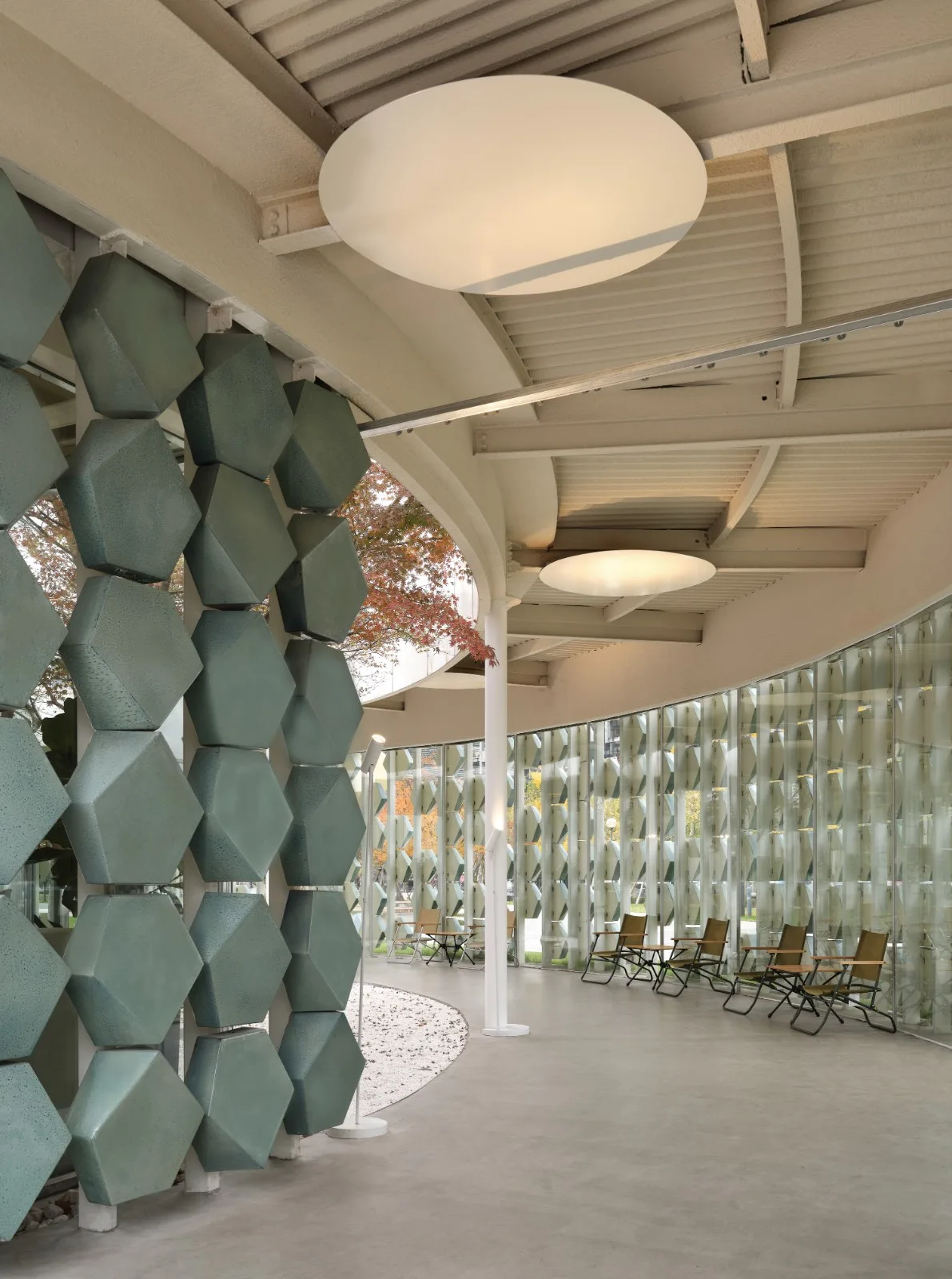
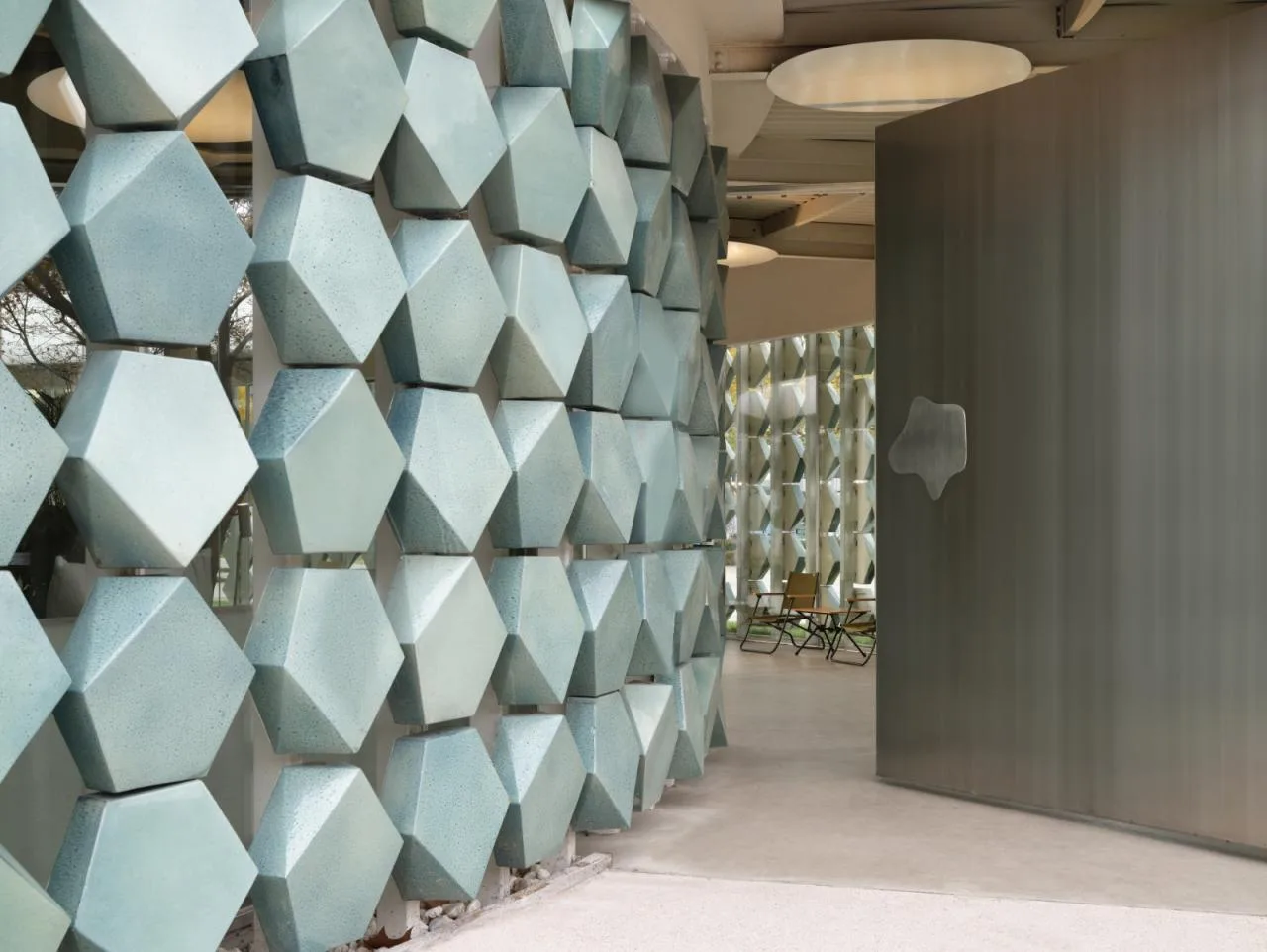
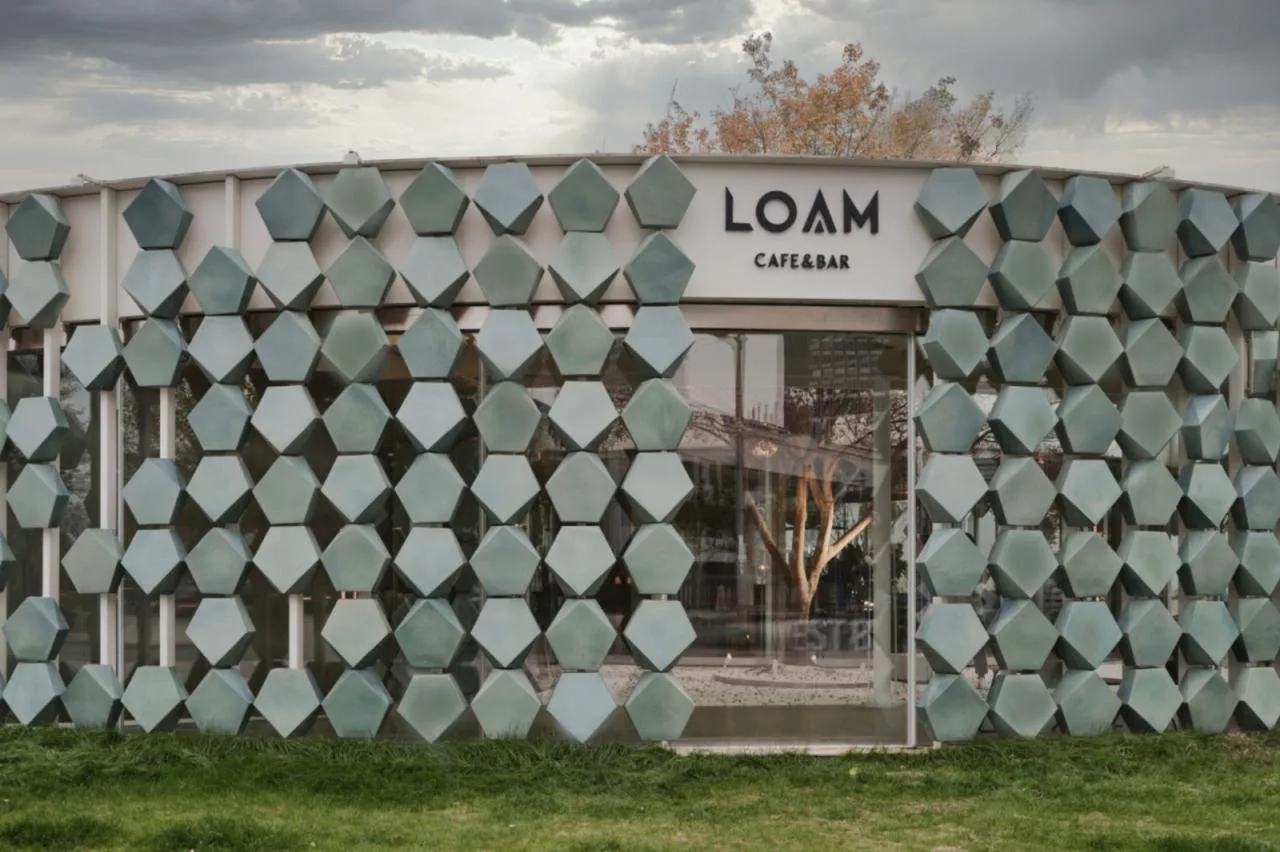
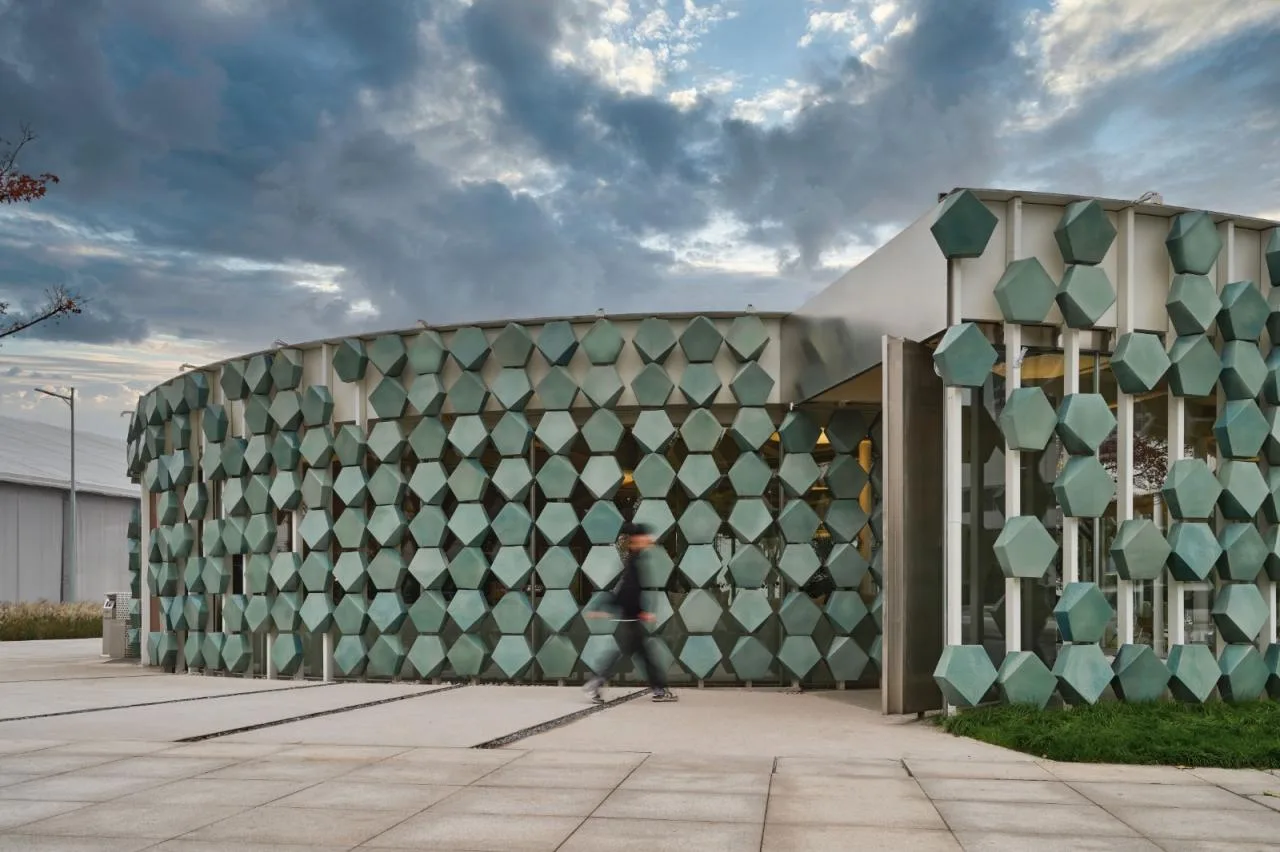
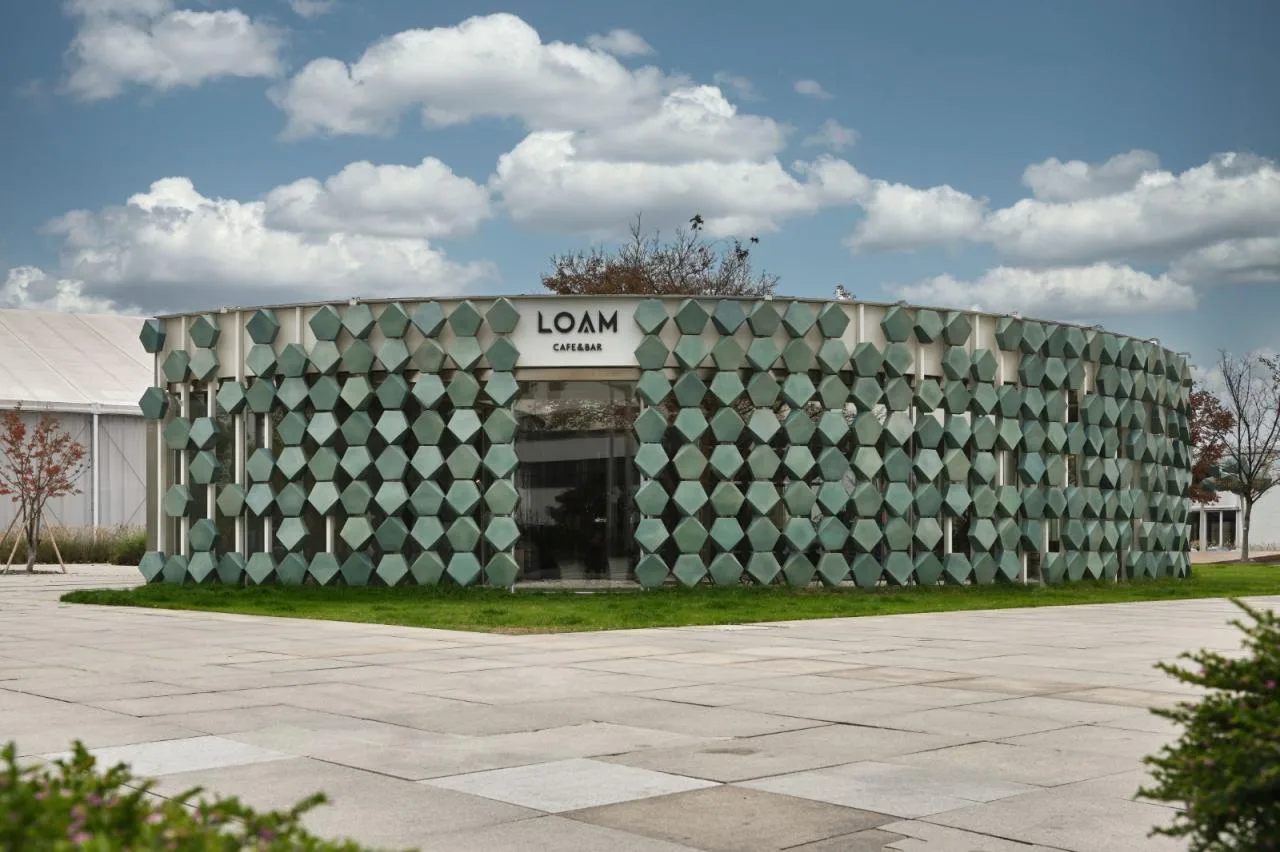
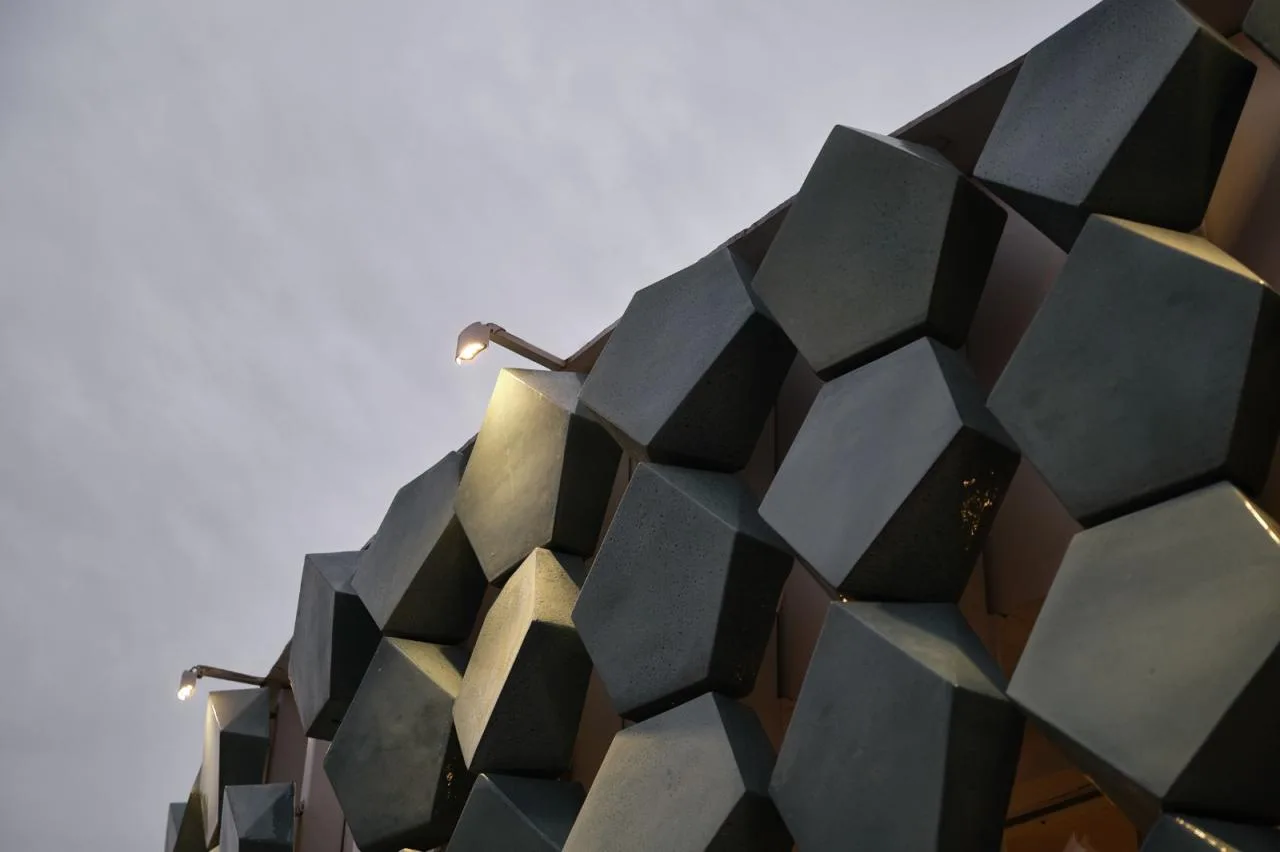
The original building was designed by a talented team as an independent spiral-shaped structure, its facade covered with hundreds of green ceramic tiles. However, for various reasons, only half of the facade was clad with porcelain blocks, falling short of the original vision. Ba Huang aimed to complete the facade in a way that aligned with the architect’s initial concept. After analyzing both indoor and outdoor spaces, the decision was made not to add new elements but to rearrange the existing porcelain blocks to redefine the facade’s rhythm. Starting from the entrance, the density of porcelain tiles gradually decreases, creating a gradient effect that respects the original design intent. The porcelain blocks interact with light and shadow, offering visitors a dynamic visual experience as they approach the building.
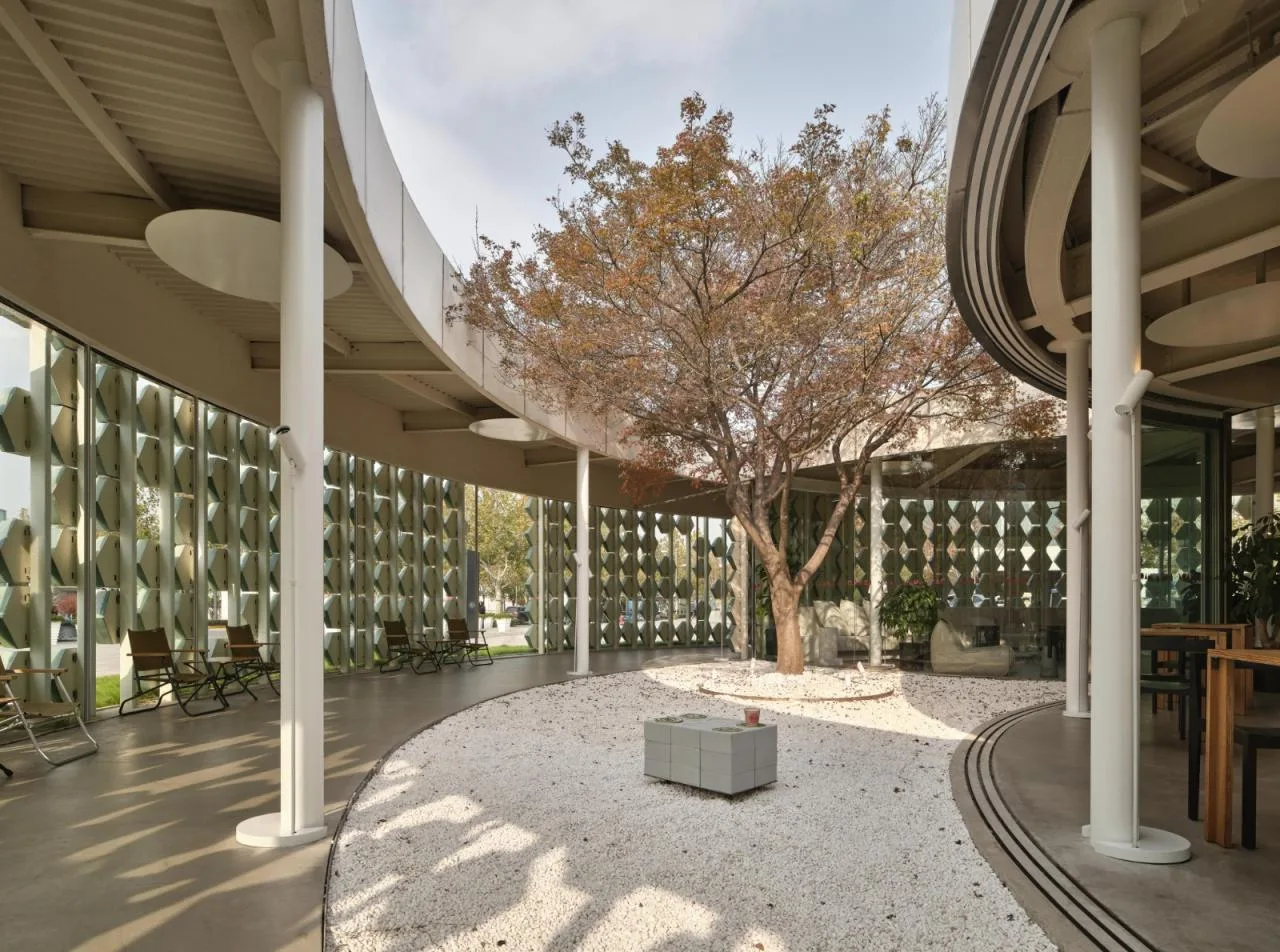
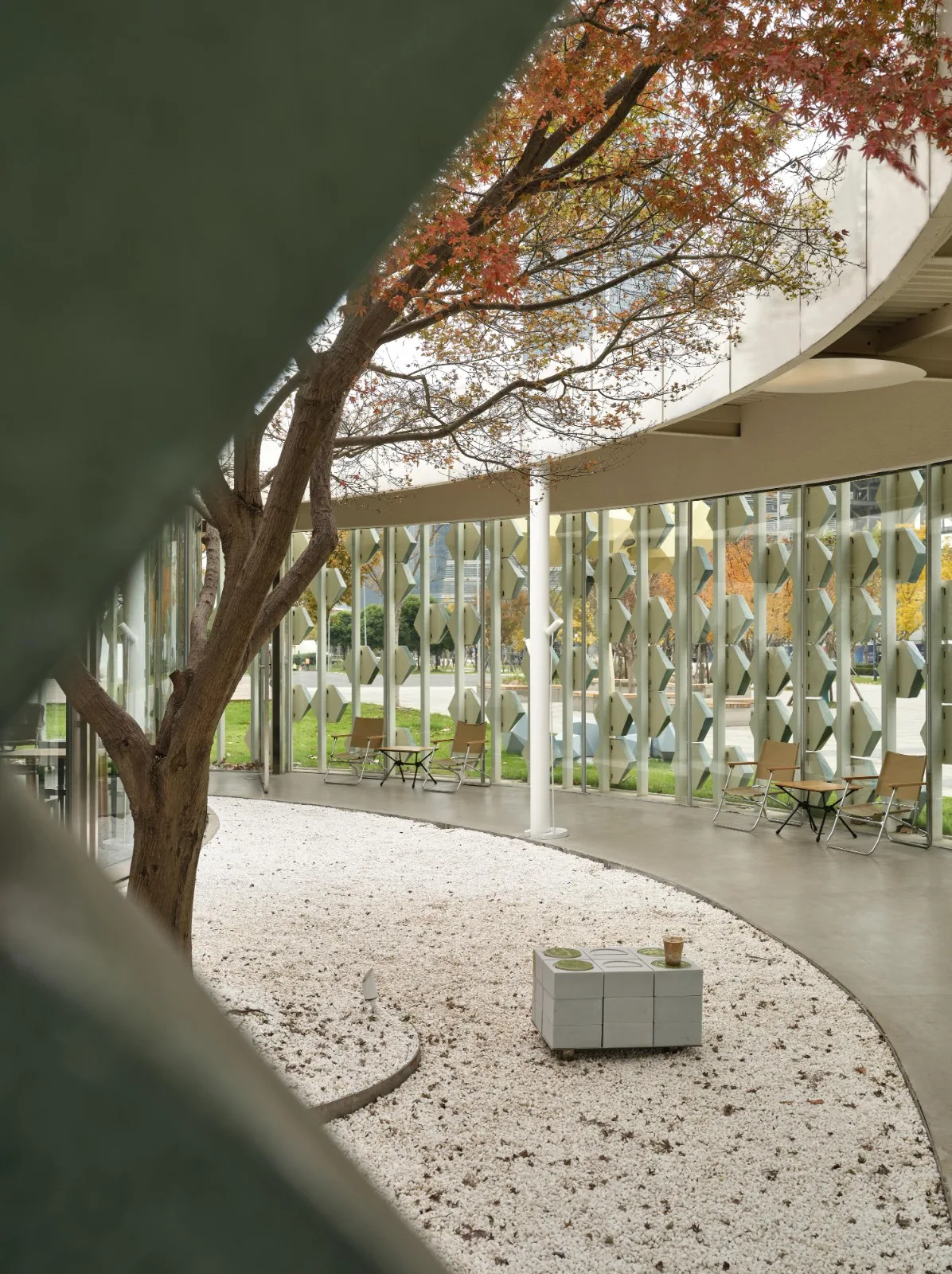
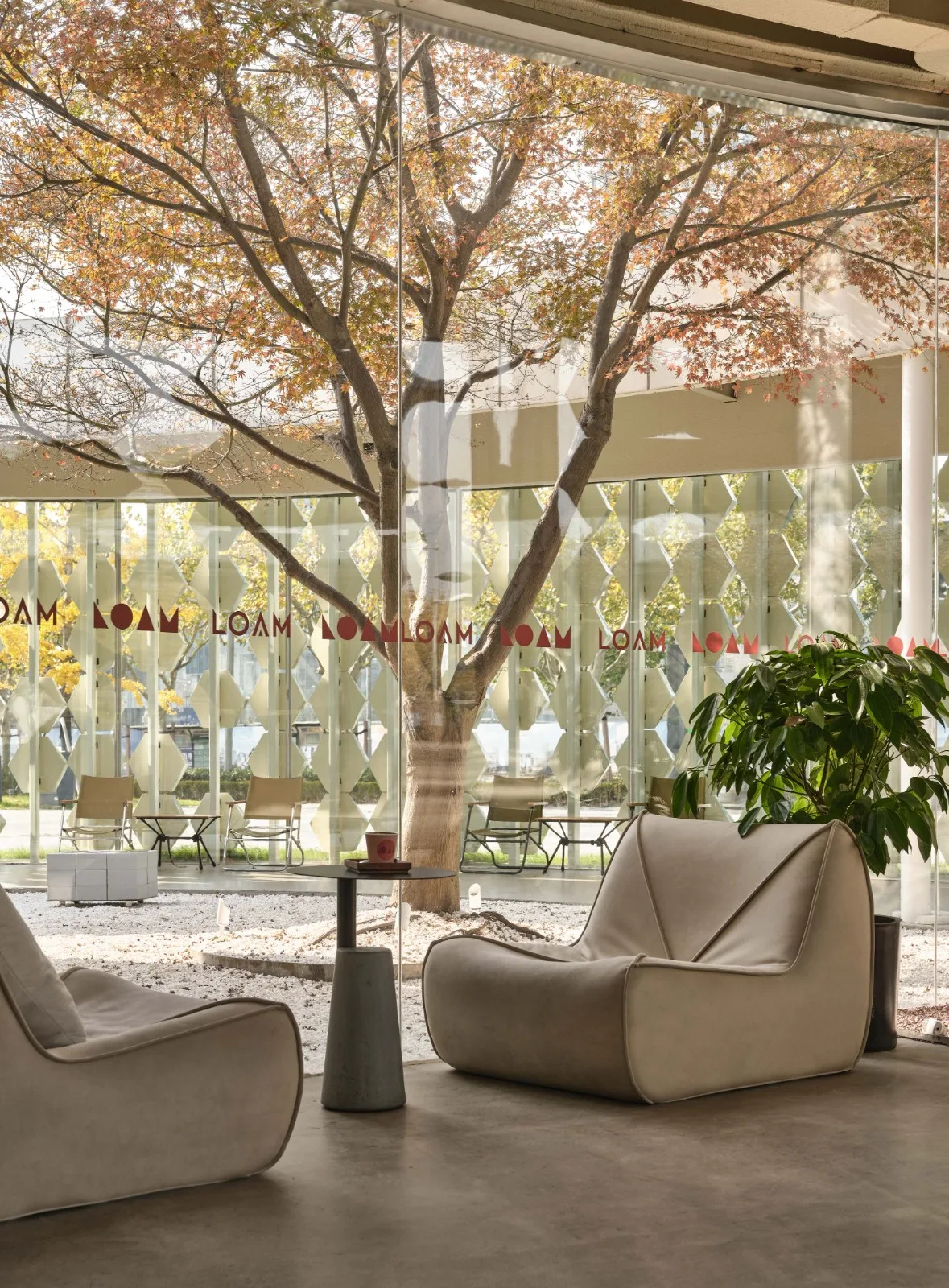
The journey starts at the large pivot door of the main entrance. When closed, the door cleverly reflects the porcelain blocks, creating the illusion of a continuous and complete facade. Moving into the semi-outdoor area, visitors are greeted by a small path circling a courtyard covered with white gravel—a tranquil spot perfect for a quick rest. This semi-open space blurs the boundaries between inside and outside with smooth, flowing curves. As light and shadow interplay, the distinction between interior and exterior spaces fades.
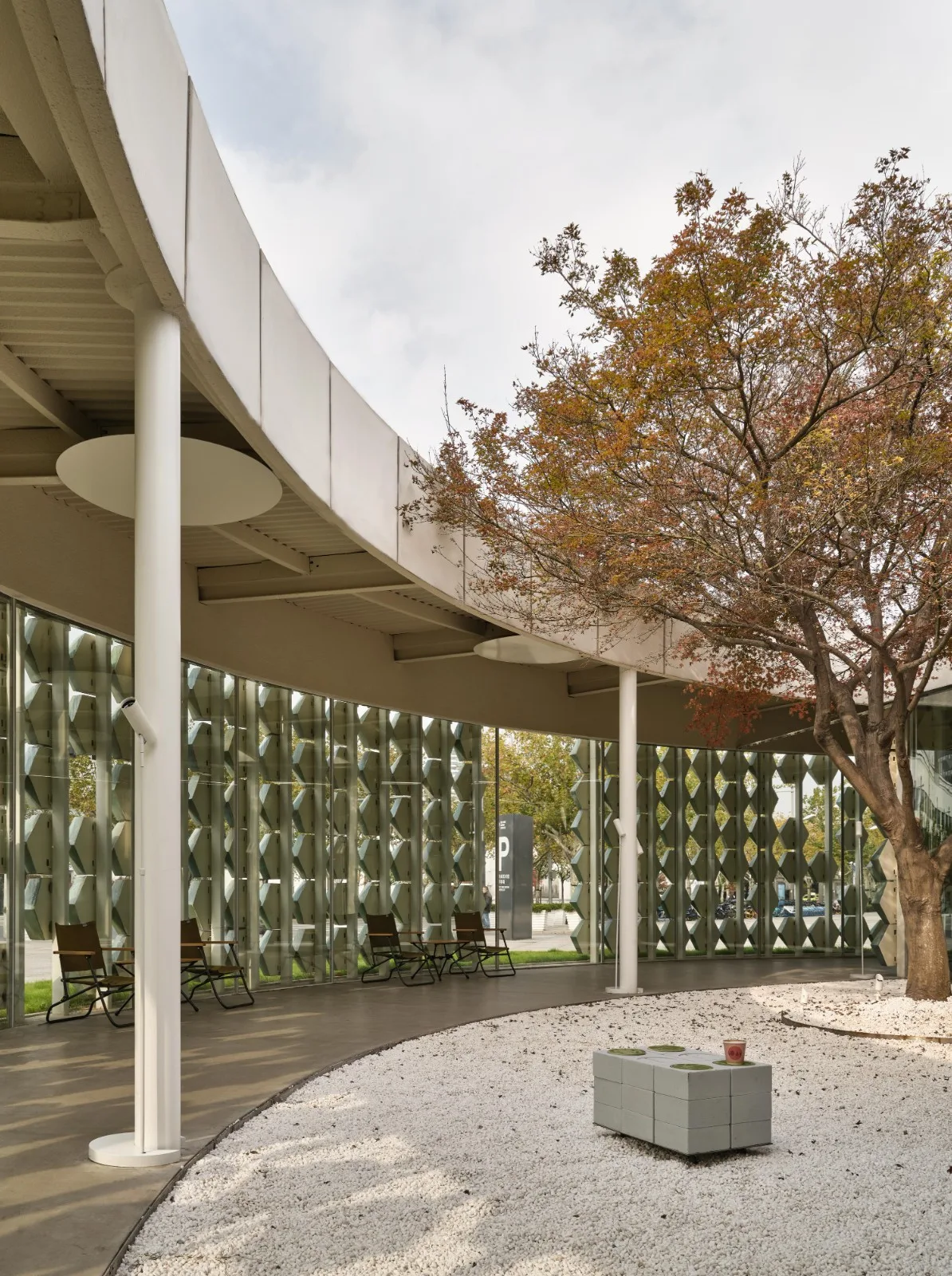
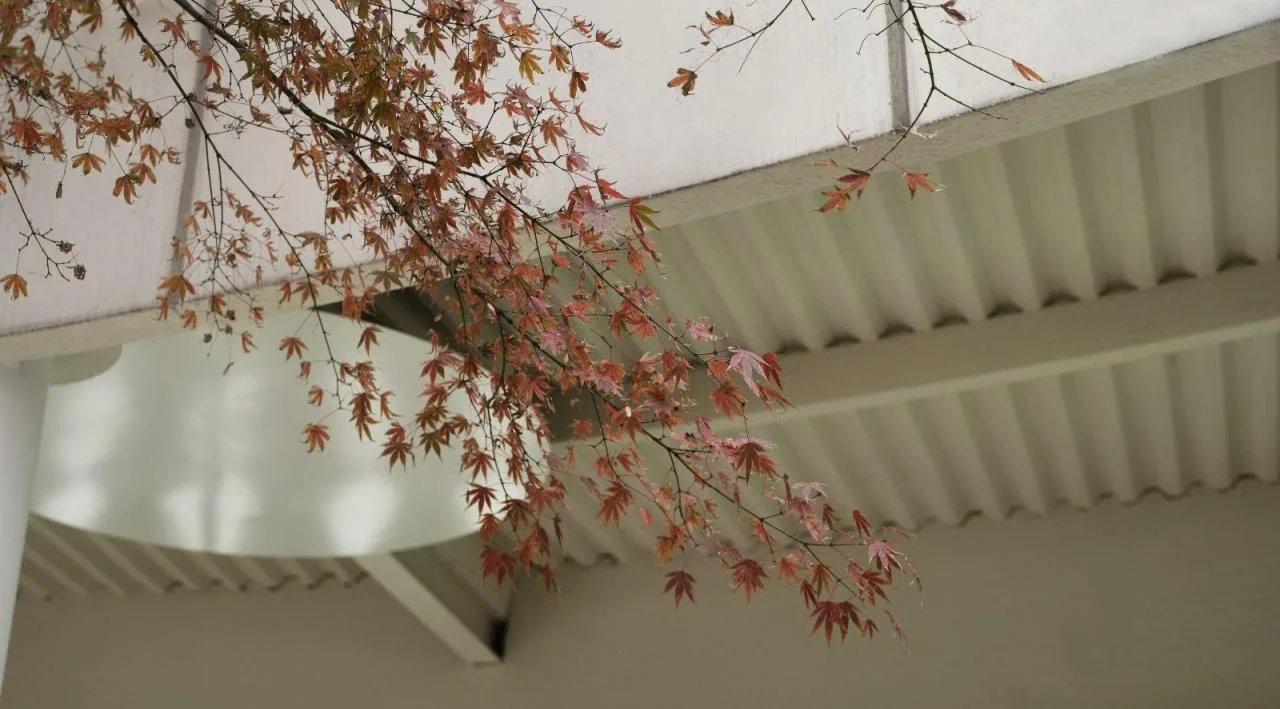
The design was inspired by a green maple tree situated at the center of the site. The experience of entering the building is like a “journey” around this tree, offering spaces for art appreciation, picnics, and social gatherings beneath its shade. Eight Wilderness aimed to create a “pause point” that encourages visitors to slow down and connect with the environment. To achieve this, a grassy area was added around the porcelain house, making it appear as though it dissolves into an oasis. A visual channel was opened on the facade, offering views both out to the street corner and inward toward the maple tree. This connection links the indoor and outdoor spaces and integrates the building with the surrounding urban greenery.
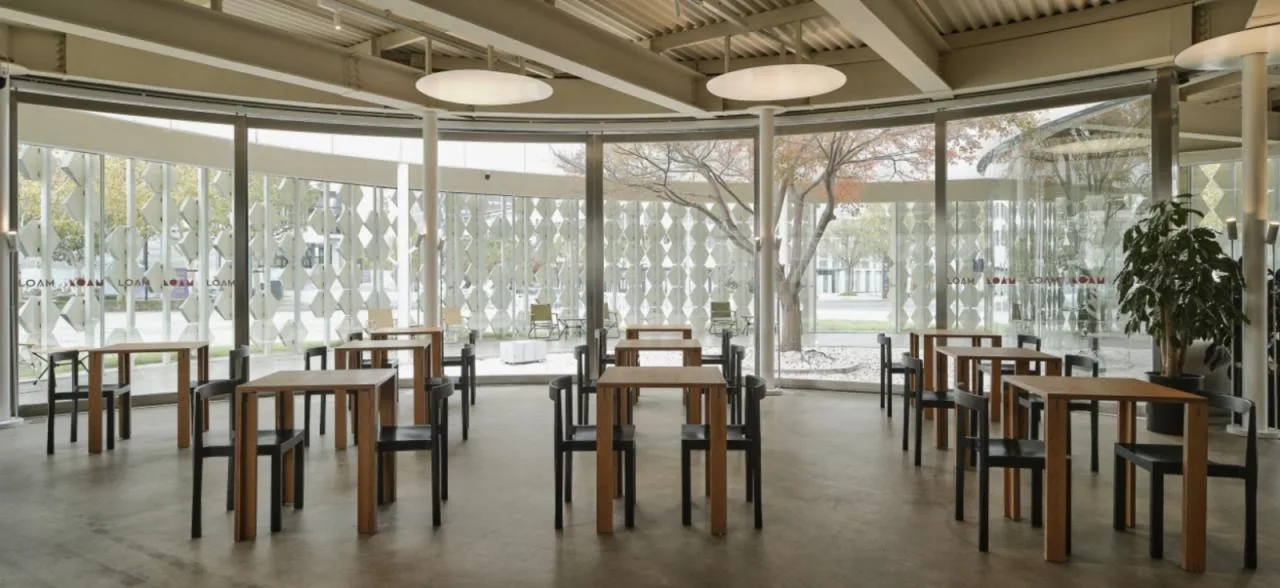
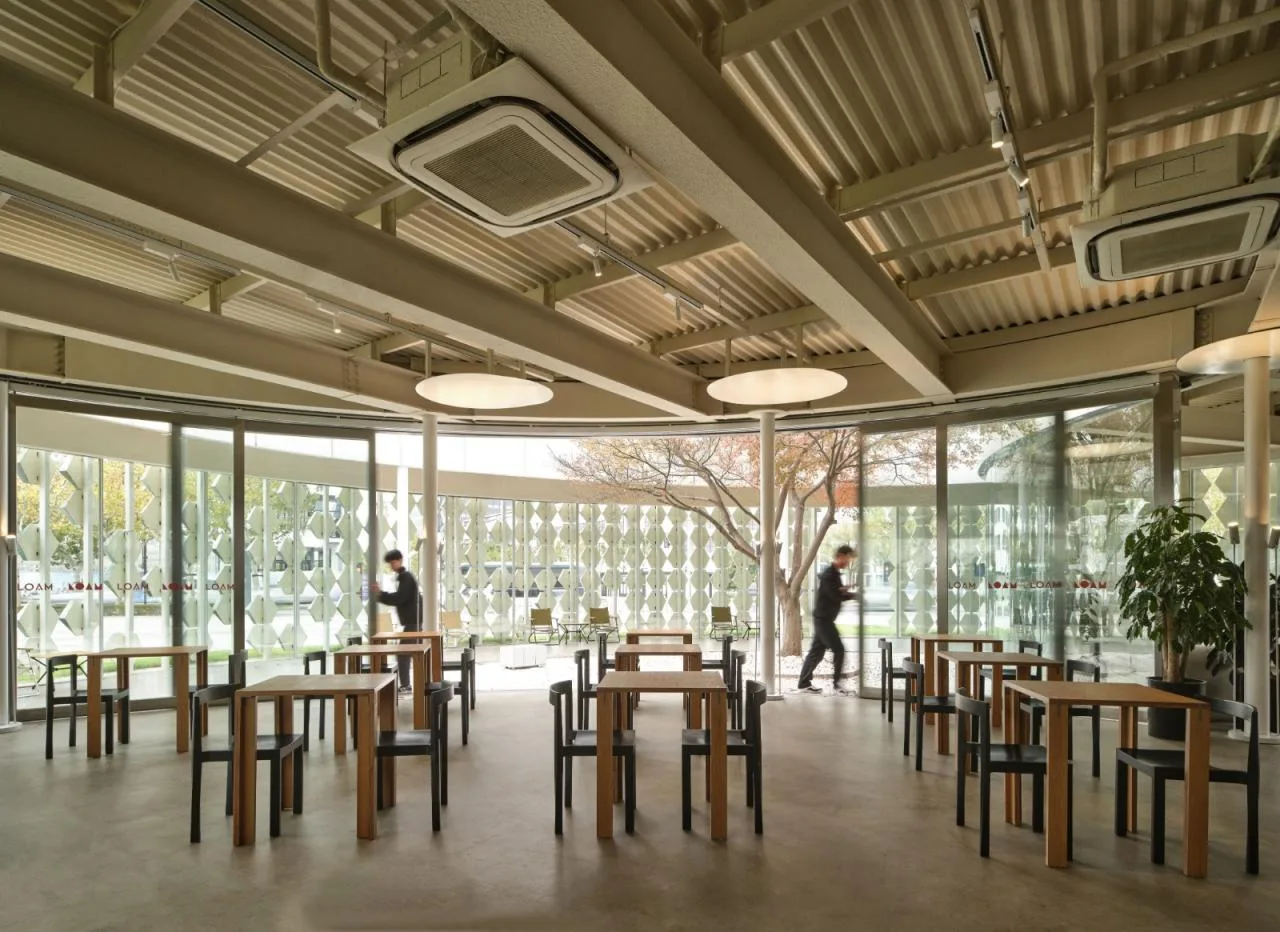
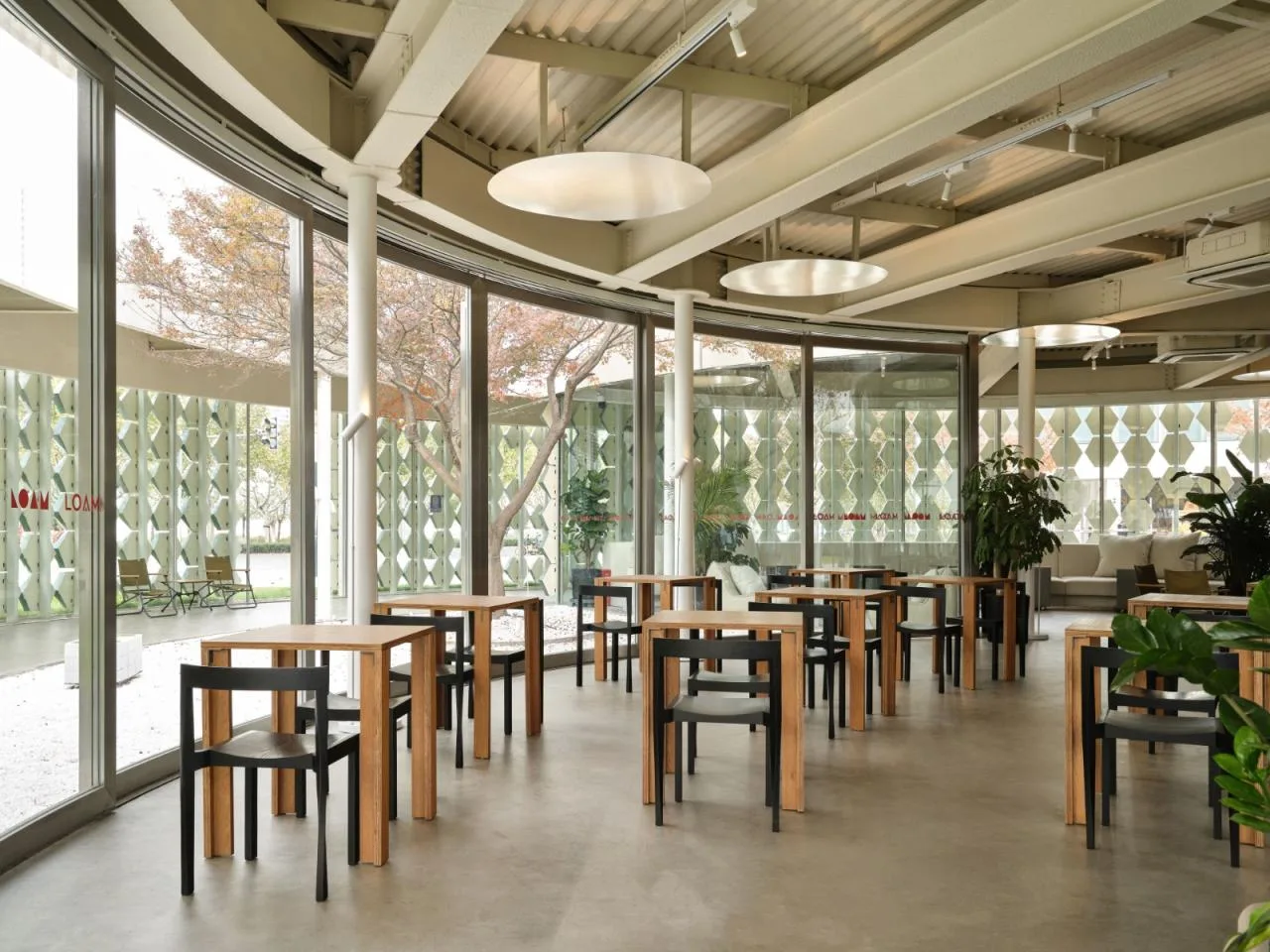
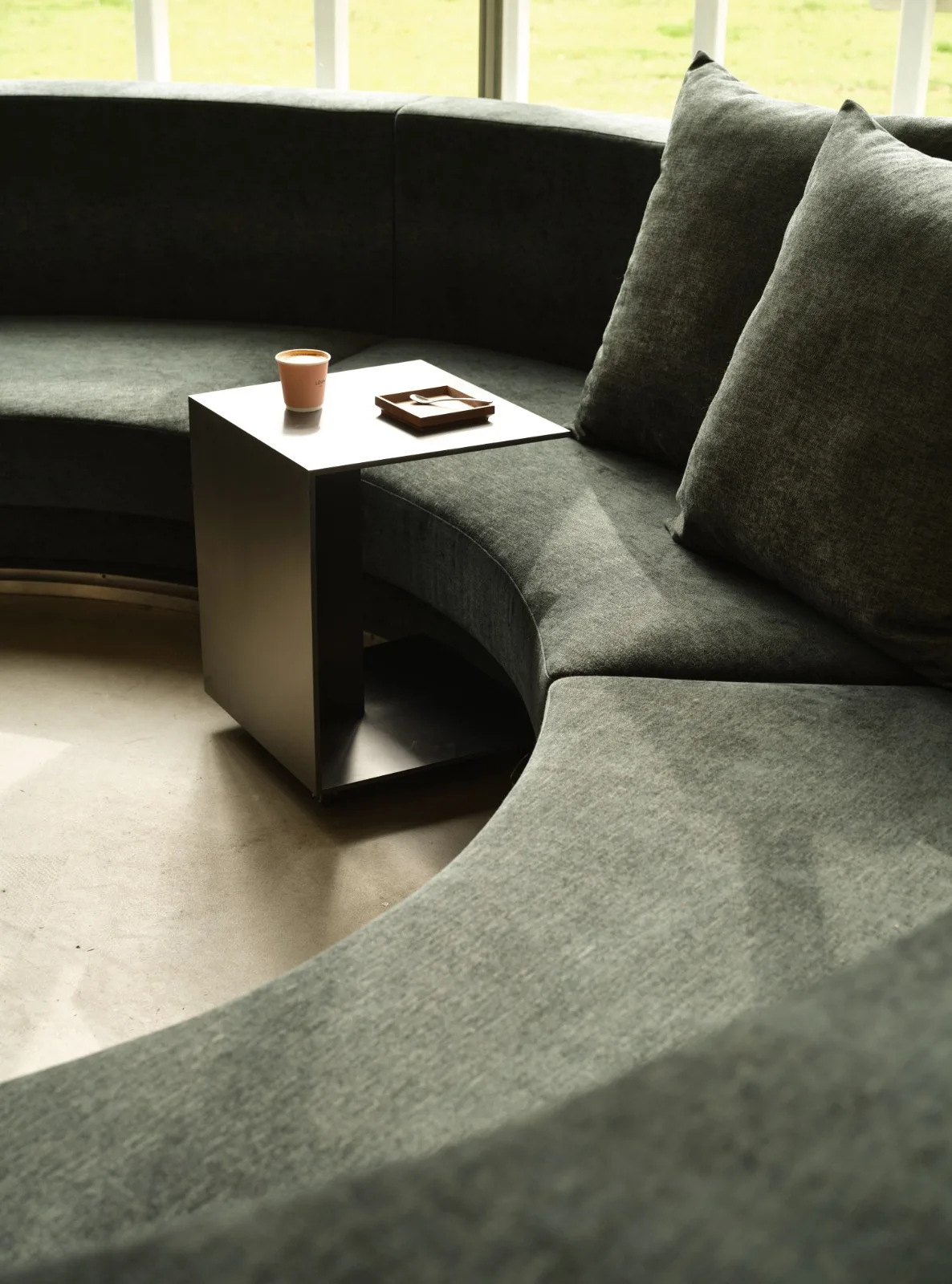
Passing through the glass door into the interior, visitors enter a completely different atmosphere. From the casual seating along the sliding doors to curved sofas deeper inside, the space leads to a more private area furnished with spacious sofas and comfortable armchairs. All seating faces the courtyard, completing this “journey” around the tree. The seating arrangement follows the spatial narrative: transitioning from fast-paced to relaxed, from open to intimate, while maintaining a connection with the exterior facade. As the density of porcelain blocks on the facade decreases, the light penetration changes accordingly, catering to a variety of customer needs for rest, socializing, or solitude.
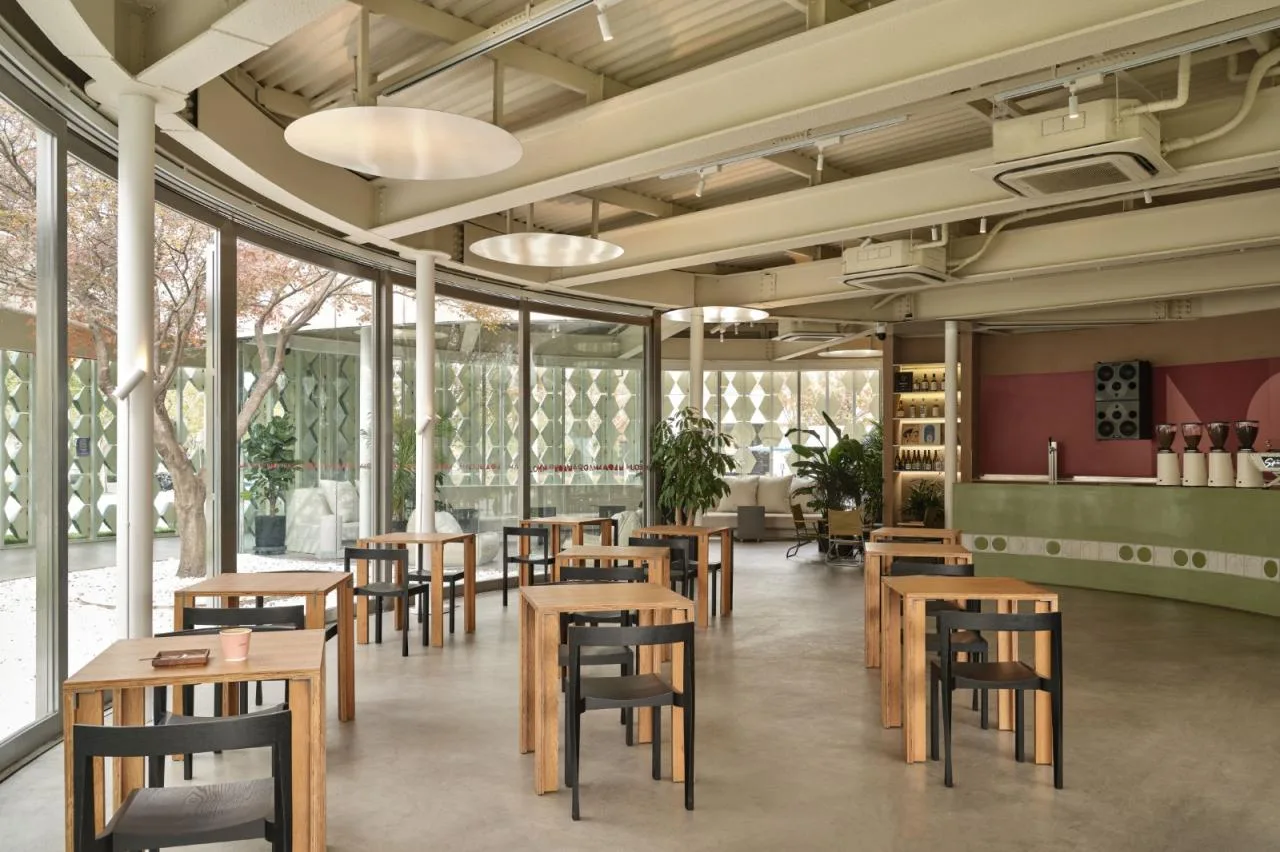
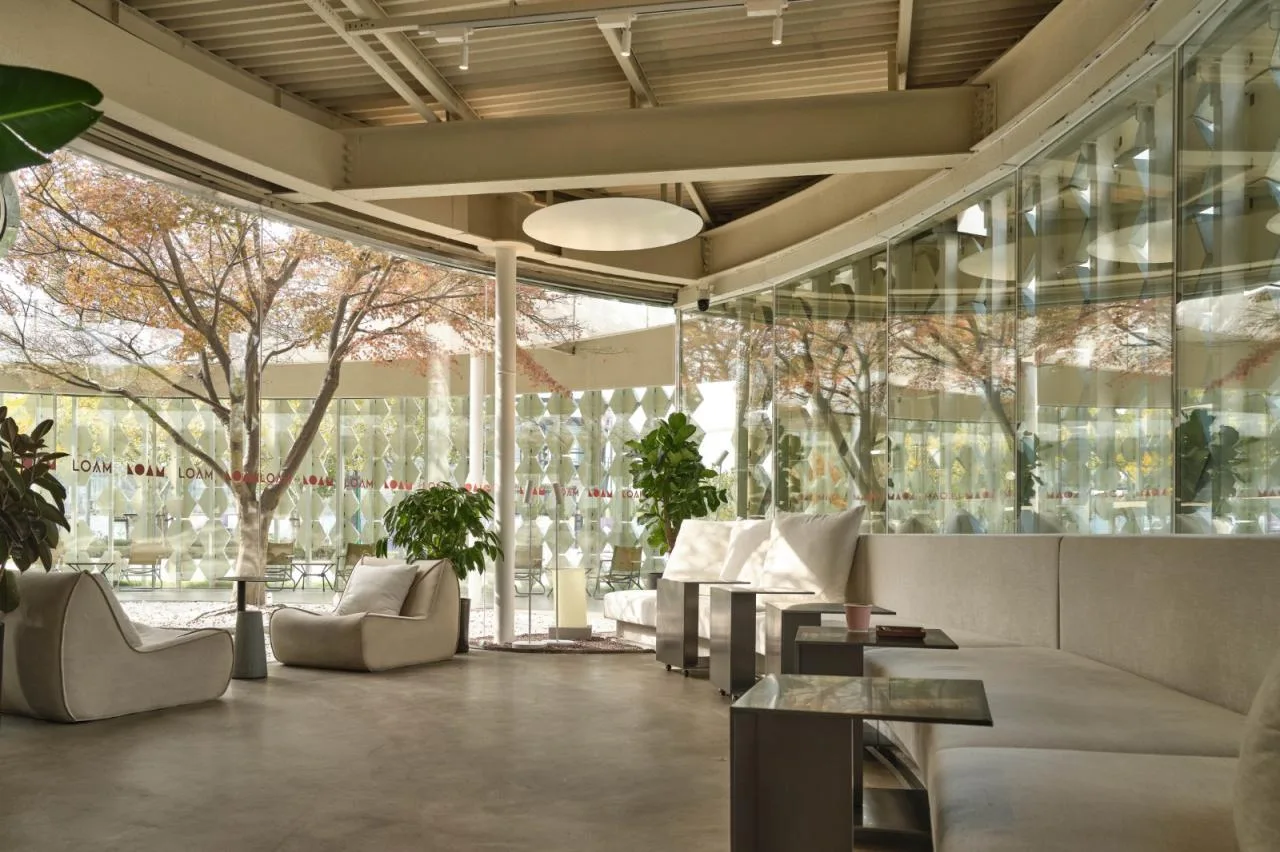
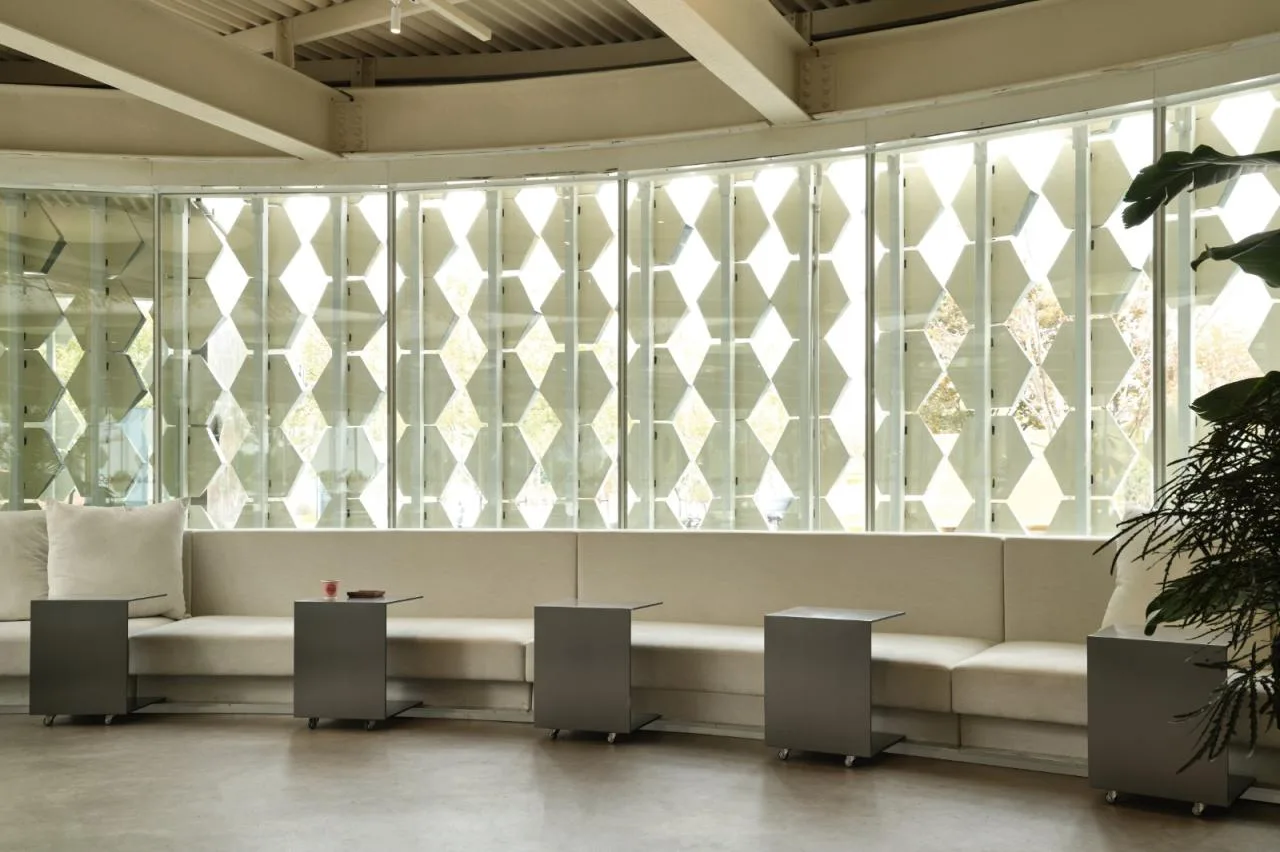
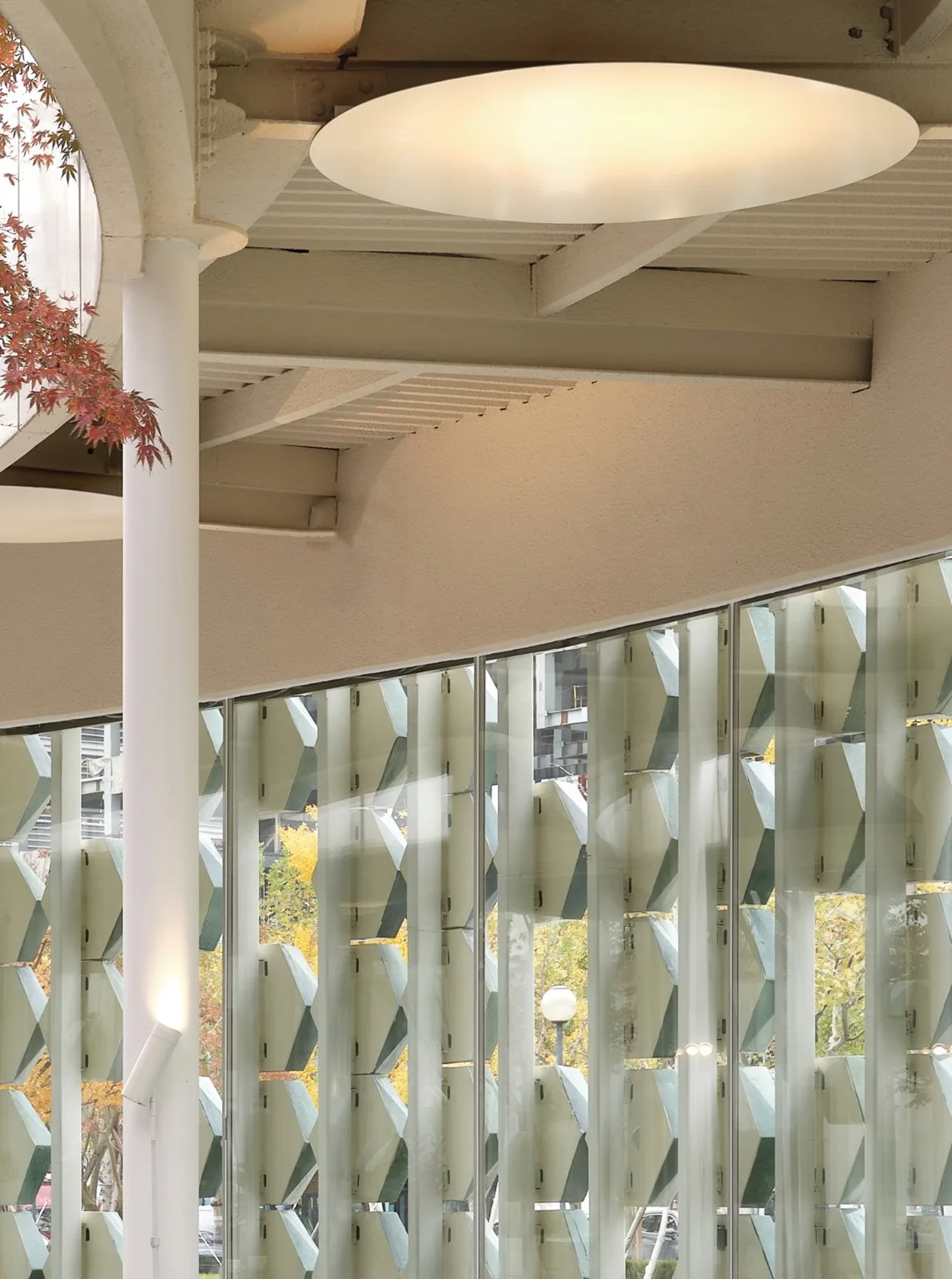
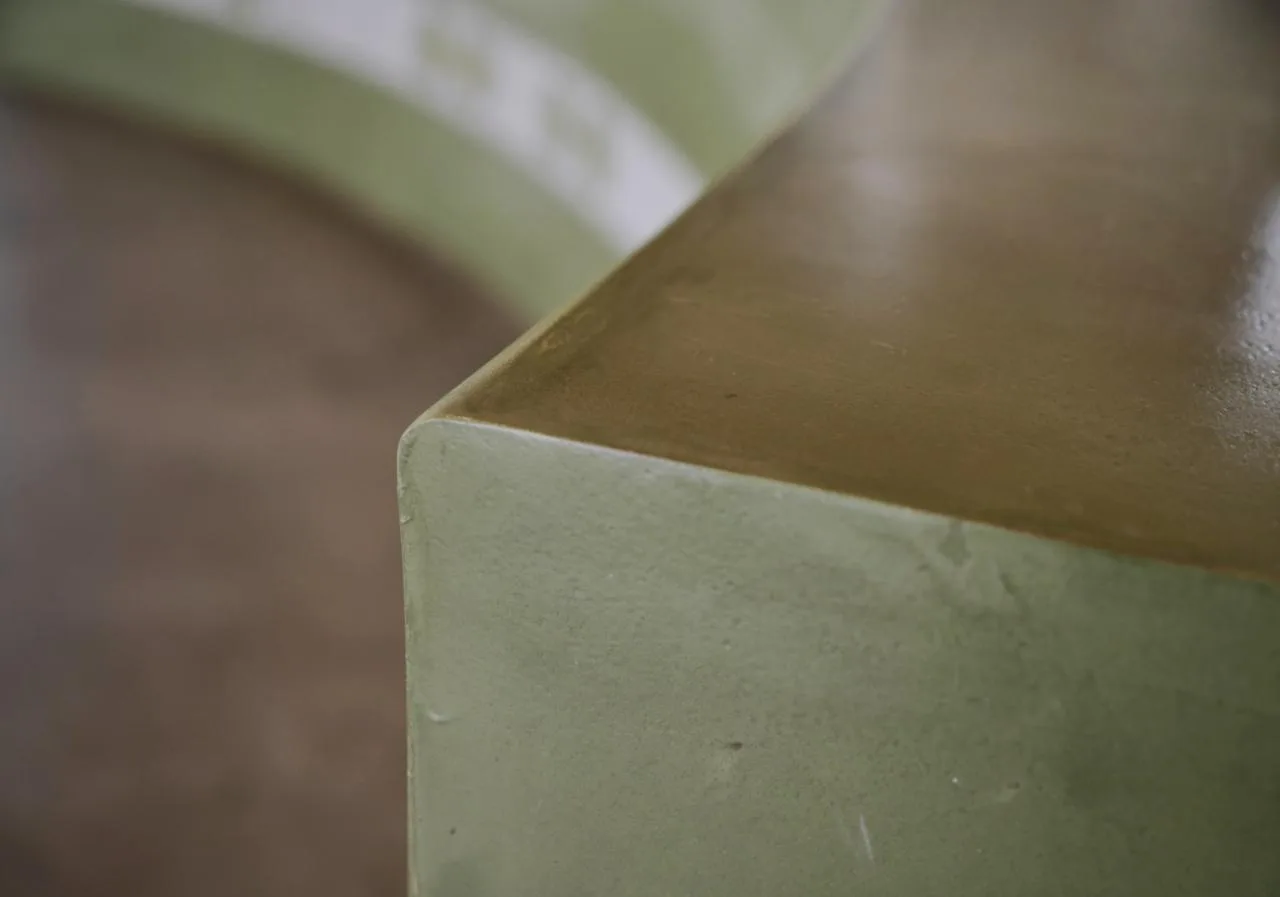
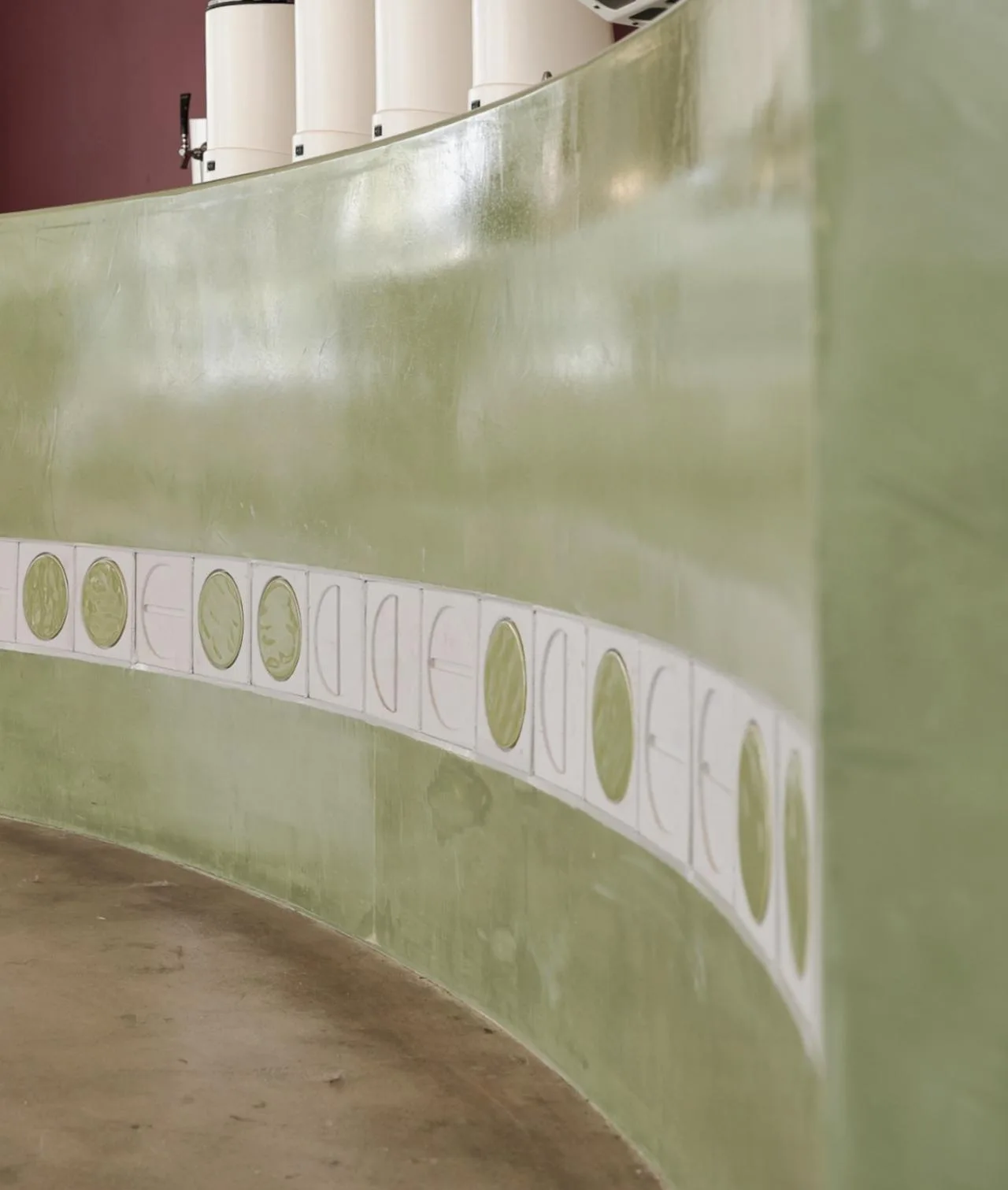
The relationship between people and space is designed as an open and fluid interaction, which is the core concept of this project. Ba Huang’s designers approached this principle by integrating multiple dimensions: exterior facade, interior layout, color palette, materials, lighting, and furniture, to create an immersive “strolling under the big tree” experience. The ceiling remains minimally decorated, allowing the space to feel vertically expansive. Traditional overhead lighting was replaced with a diffuse lighting system that directs light upward to the ceiling, creating a soft, uniform glow. Specially crafted disks with unique surface treatments act as diffusers, highlighting key areas subtly throughout the venue. Custom stainless steel side tables connected via a special rail system allow for flexible arrangement to suit different uses. The openable glass sliding door further dissolves physical boundaries, seamlessly connecting indoor and outdoor spaces. The custom bar counter echoes the building’s smooth curves, constructed with glazed concrete that mimics the natural texture of porcelain. Circular tiles matching the exterior facade materials unify the indoor and outdoor environments.
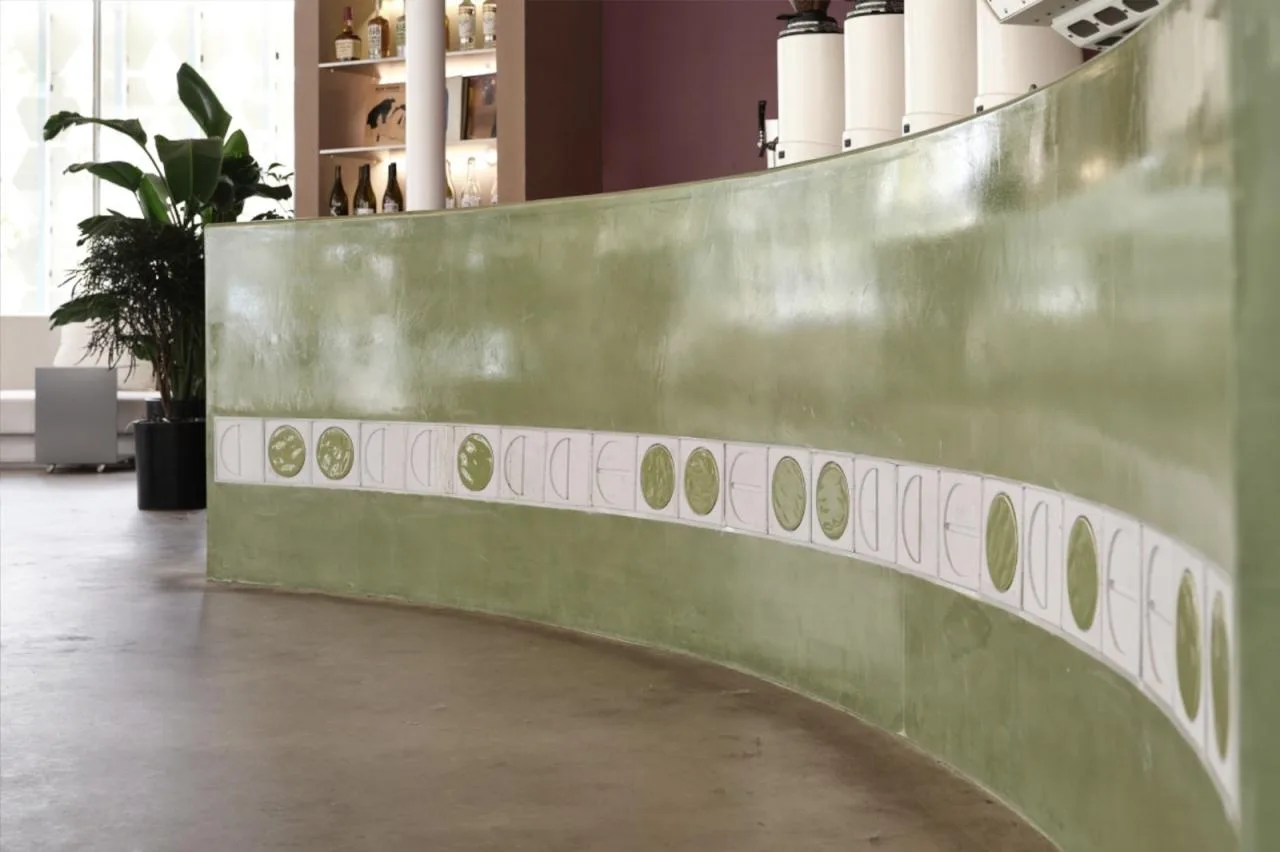
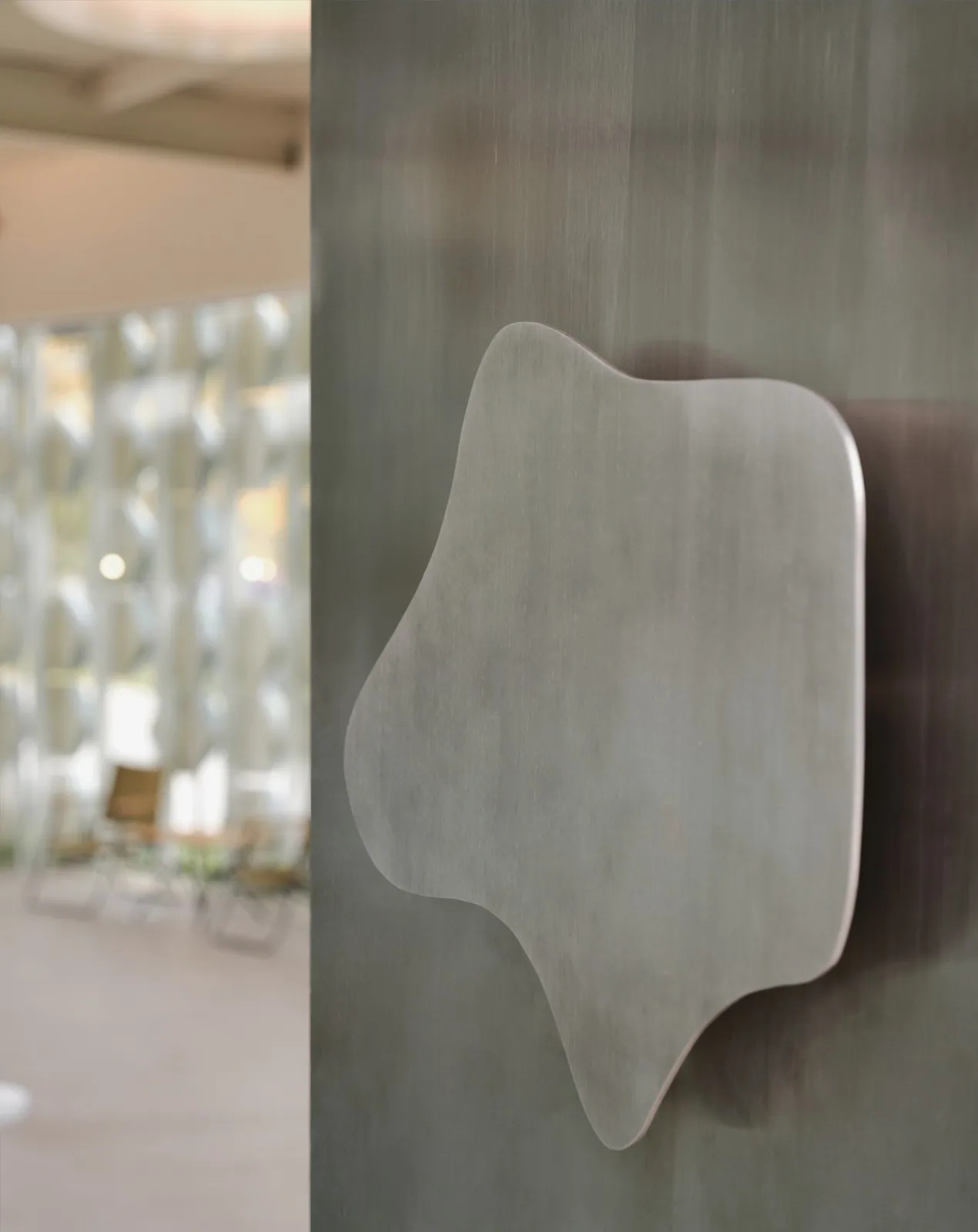
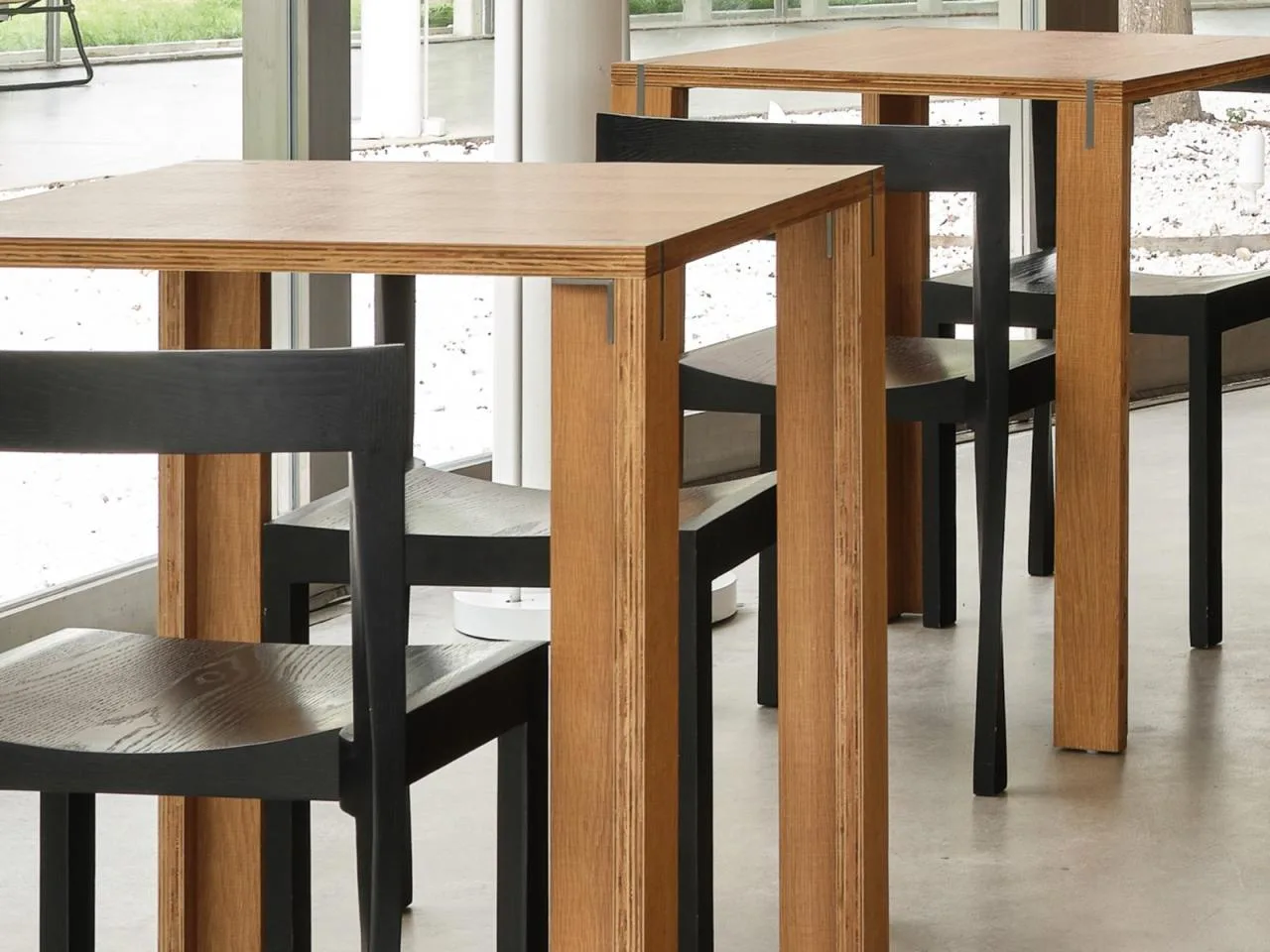
One noteworthy detail is the door handle design. Inspired by the shape of melted porcelain blocks, Eight Wilderness incorporated diverse materials to reinterpret the previously enclosed exhibition hall, now opened to the public through integration with urban green spaces. The furniture features innovative wooden tables with mortise and tenon joints, alongside movable small tables made from recycled foam ceramic materials, showcasing an environmentally friendly and inventive use of “porcelain” aesthetics.
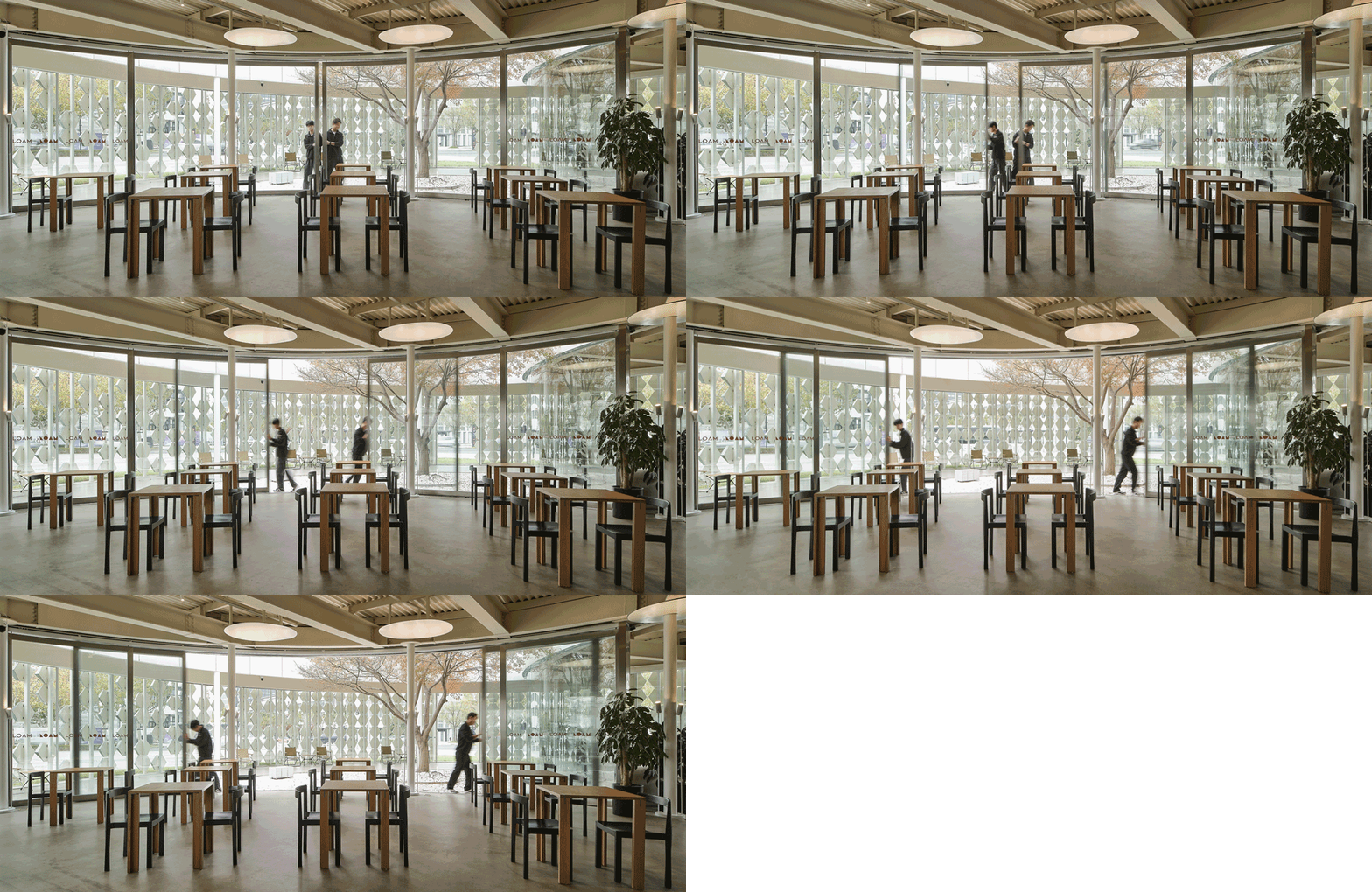
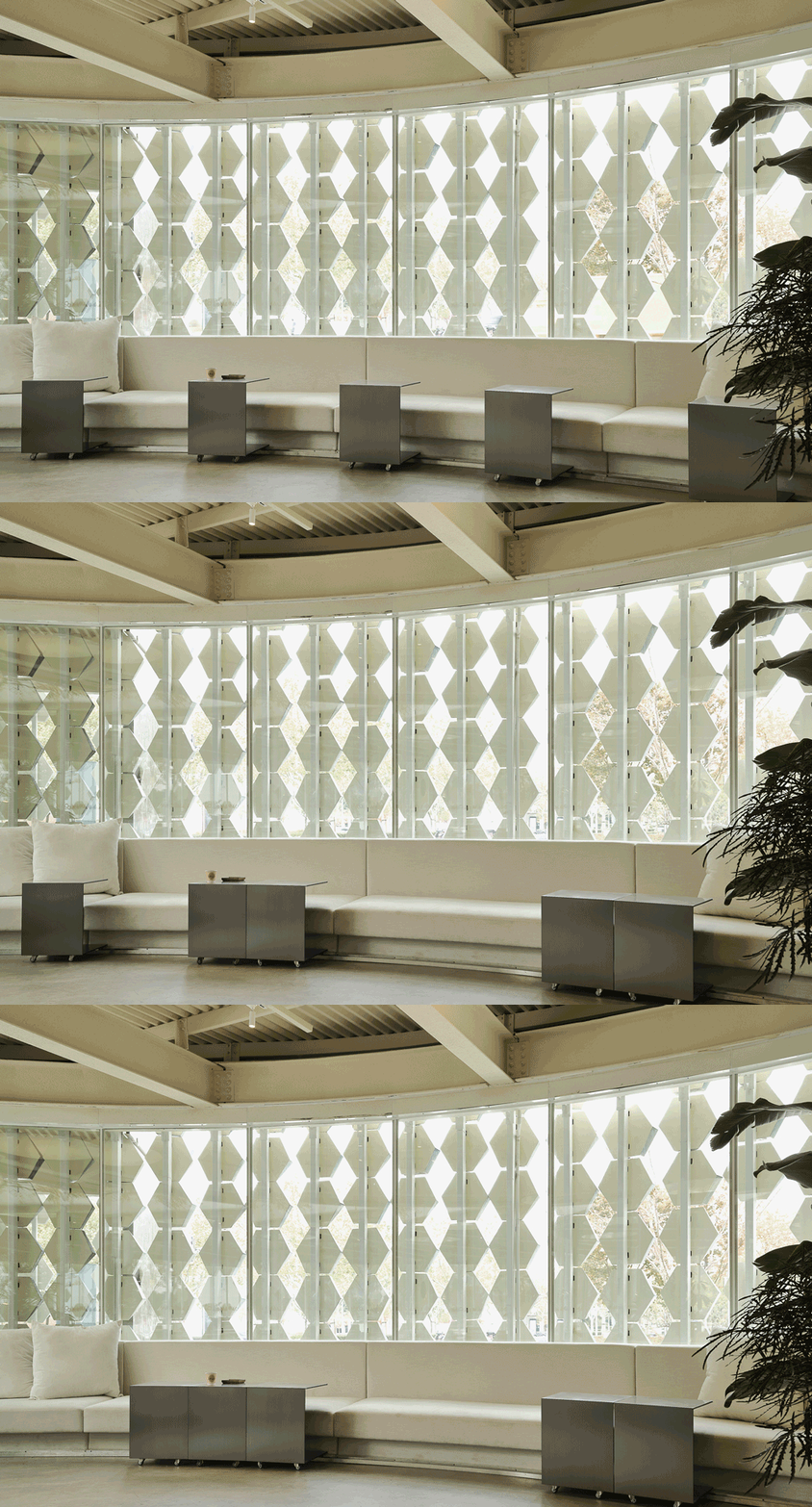
This project marks Eight Wilderness’s departure from conventional spatial experiences, achieving a transformation through the space’s inherent fluidity and directionality. The seamless integration of people and space reinterprets the “porcelain house,” introducing fresh ideas to Shanghai’s west coast cultural oasis.
Project Drawings
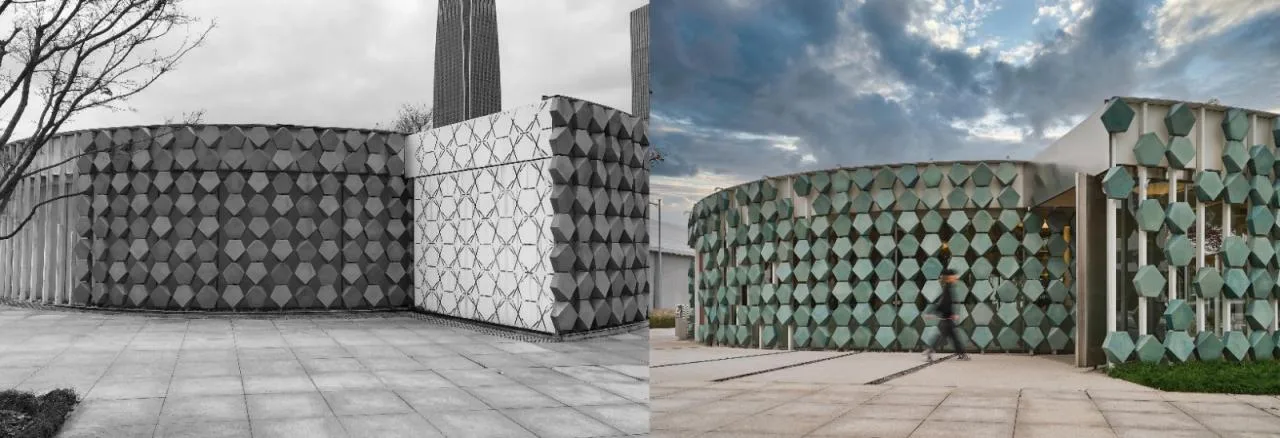
△ Before and After Renovation Comparison
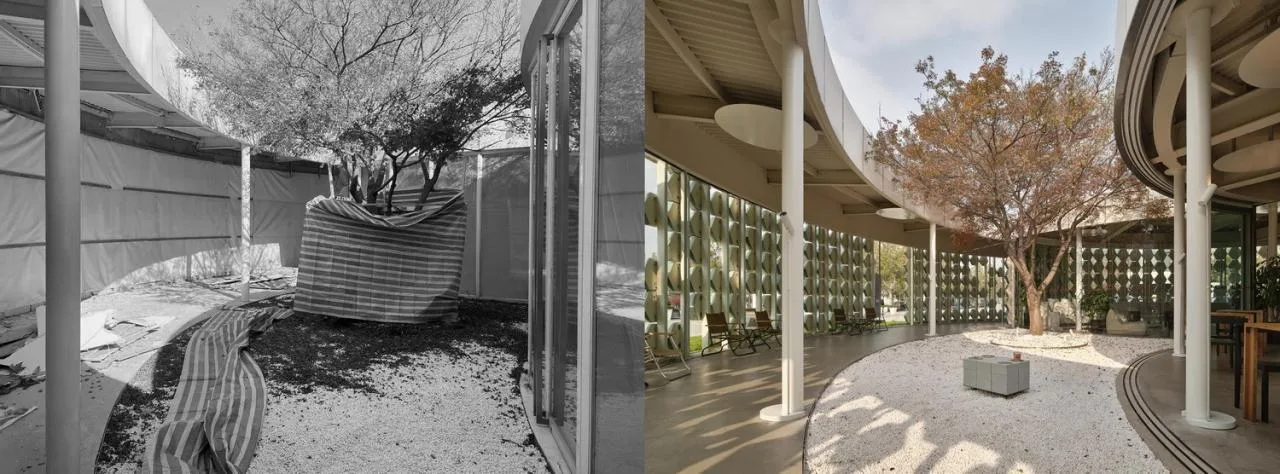
△ Before and After Renovation Comparison
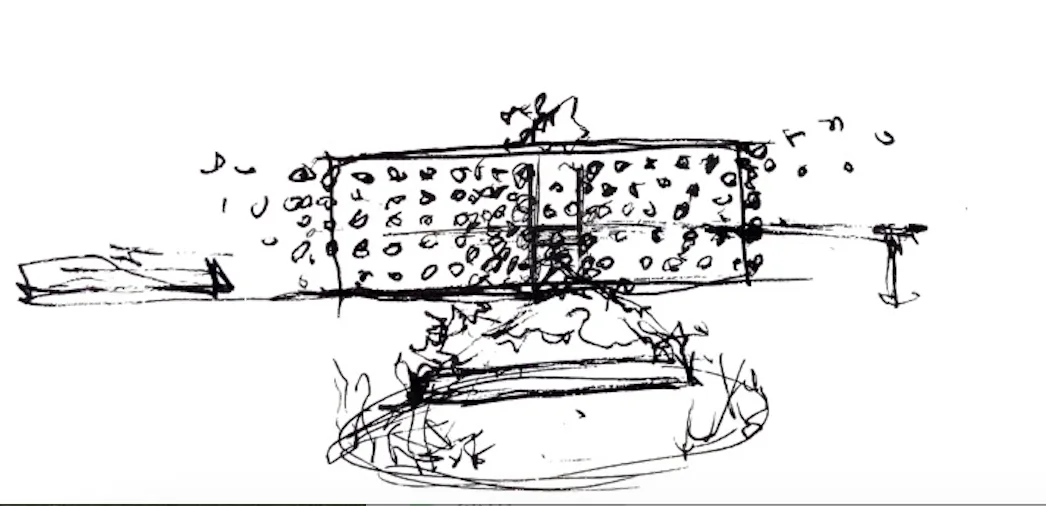
△ Hand-drawn Design Sketches
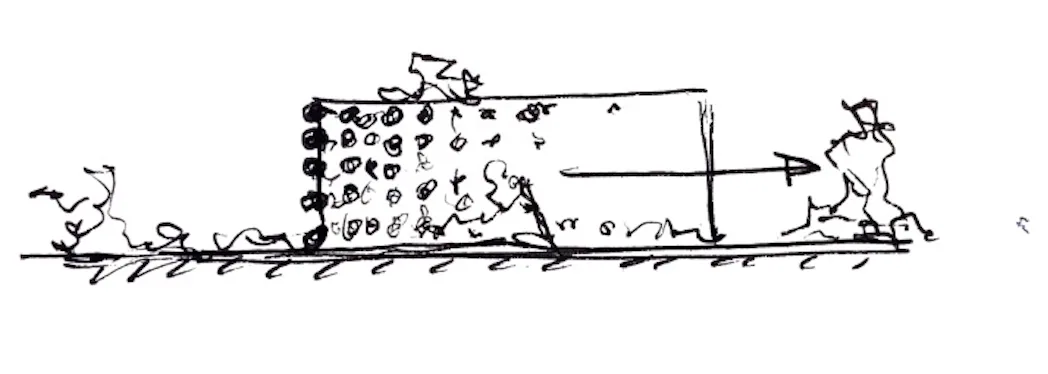
△ Hand-drawn Design Sketches

△ Plan View
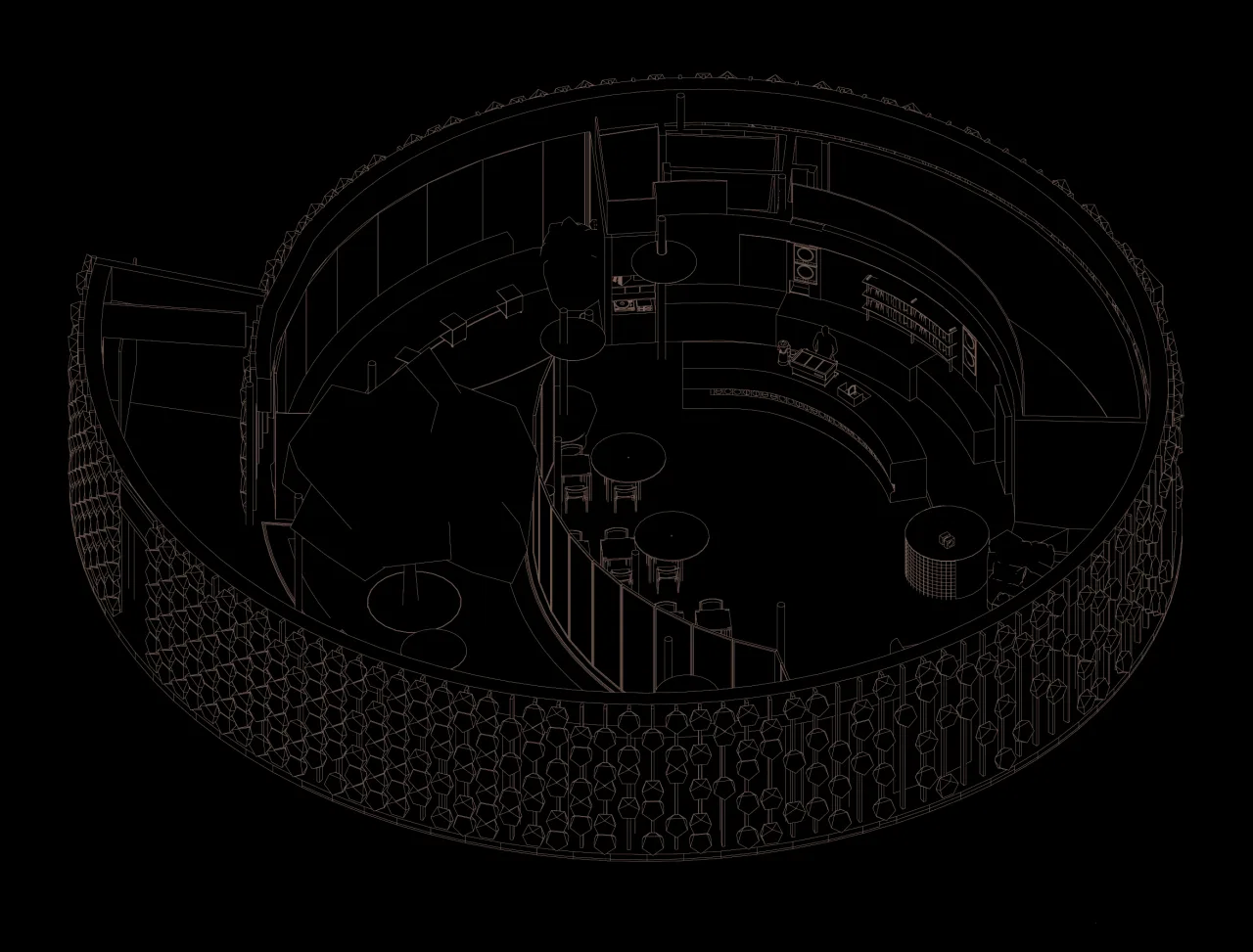
△ Axonometric Diagram
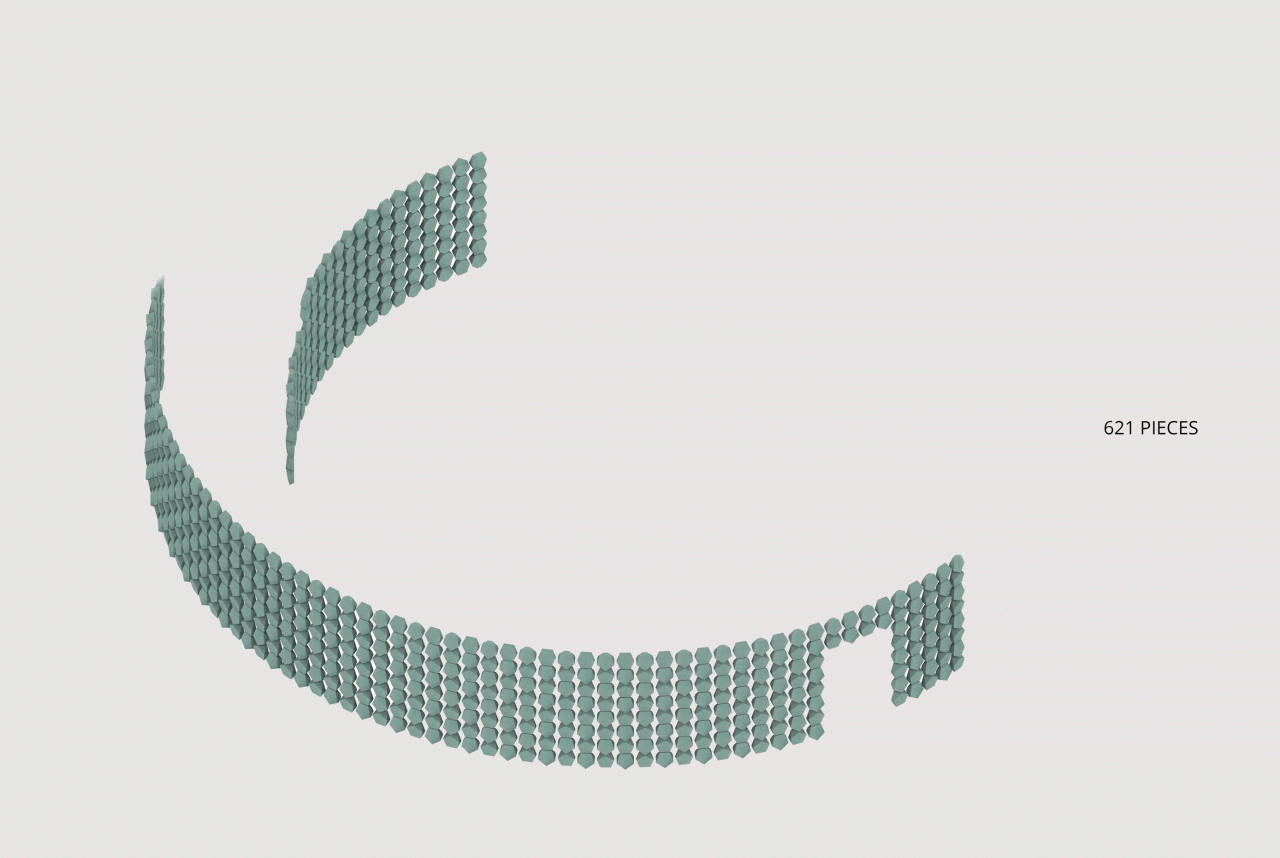
△ Facade Schematic Diagram
Project Information
Project Name: LOAM Porcelain House Coffee Under the Tree
Lead Designers: Shirley Dong, Andrea Maira
Design Team: Angel Gekov and Eight Wilderness Design Team
Design Company: Eight Wilderness Architectural Design Consulting (Shanghai) Co., Ltd
Location: Shanghai, China
Completion Date: November 2022
Area: 253 square meters
Photography: Zhang Daqi
Owner: Shanghai Porcelain House Enterprise Management Co., Ltd
Materials: concrete, ceramics, ceramic tiles, foam ceramic blocks, wood, glazed concrete, plaster, stainless steel, metal
Brands: Gedu, Zhiyin, Local















Must log in before commenting!
Sign Up