
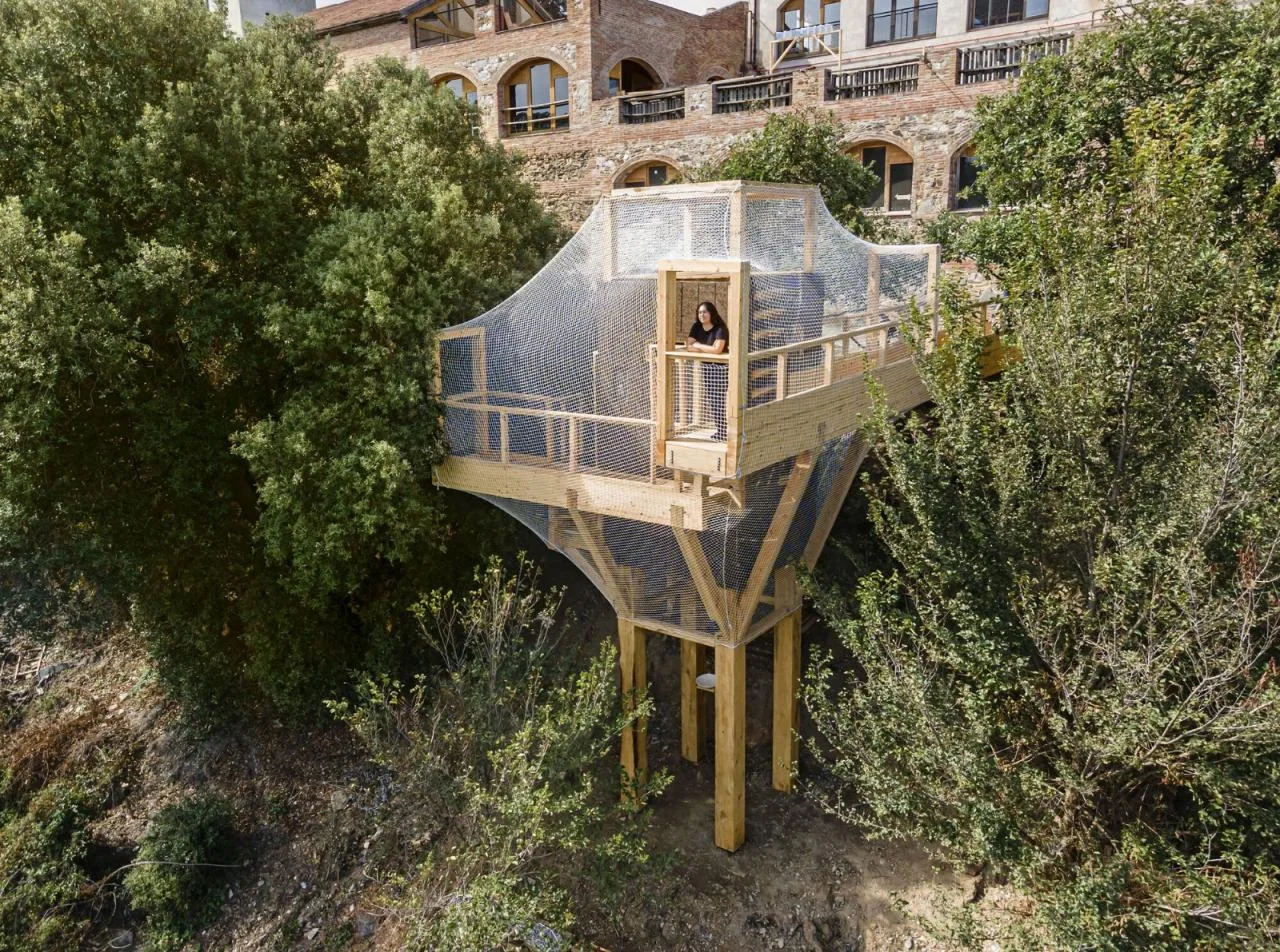
FLORA is a cutting-edge ecological observation station located within Barcelona’s Collserola Natural Park. This project was developed by students and researchers from the “Master of Advanced Ecological Architecture and Biocity” (MAEBB) program.
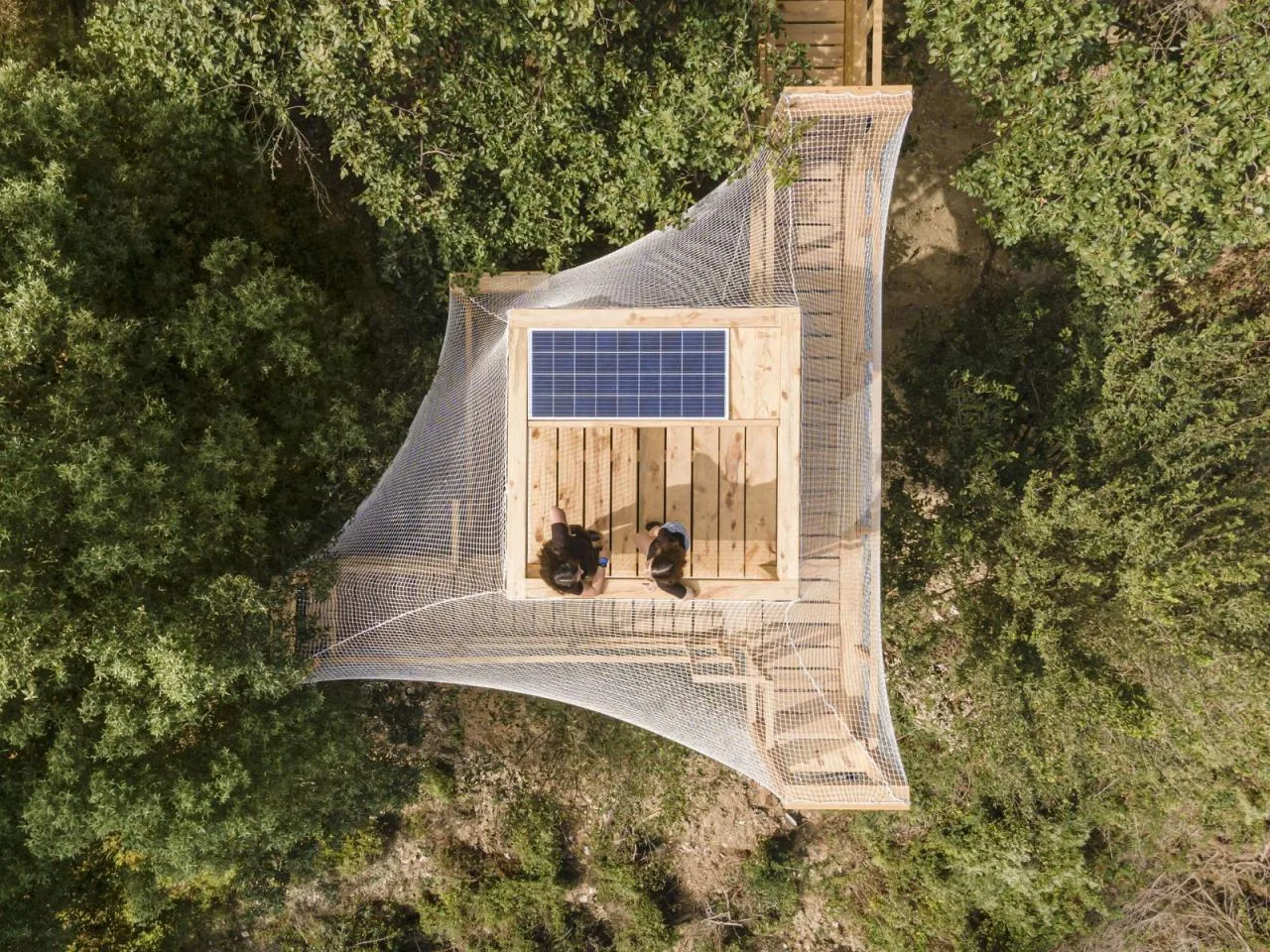
This research facility is constructed from wood sourced through sustainable forest management in the surrounding areas, enabling researchers to live and work high in the forest canopy. Inspired by American biologist Margaret D. Lowman’s forest walkways (also known as Canopy Meg), the Institute of Advanced Architecture of Catalonia (IAAC) designed a versatile natural monitoring system adaptable to any forest ecosystem worldwide.
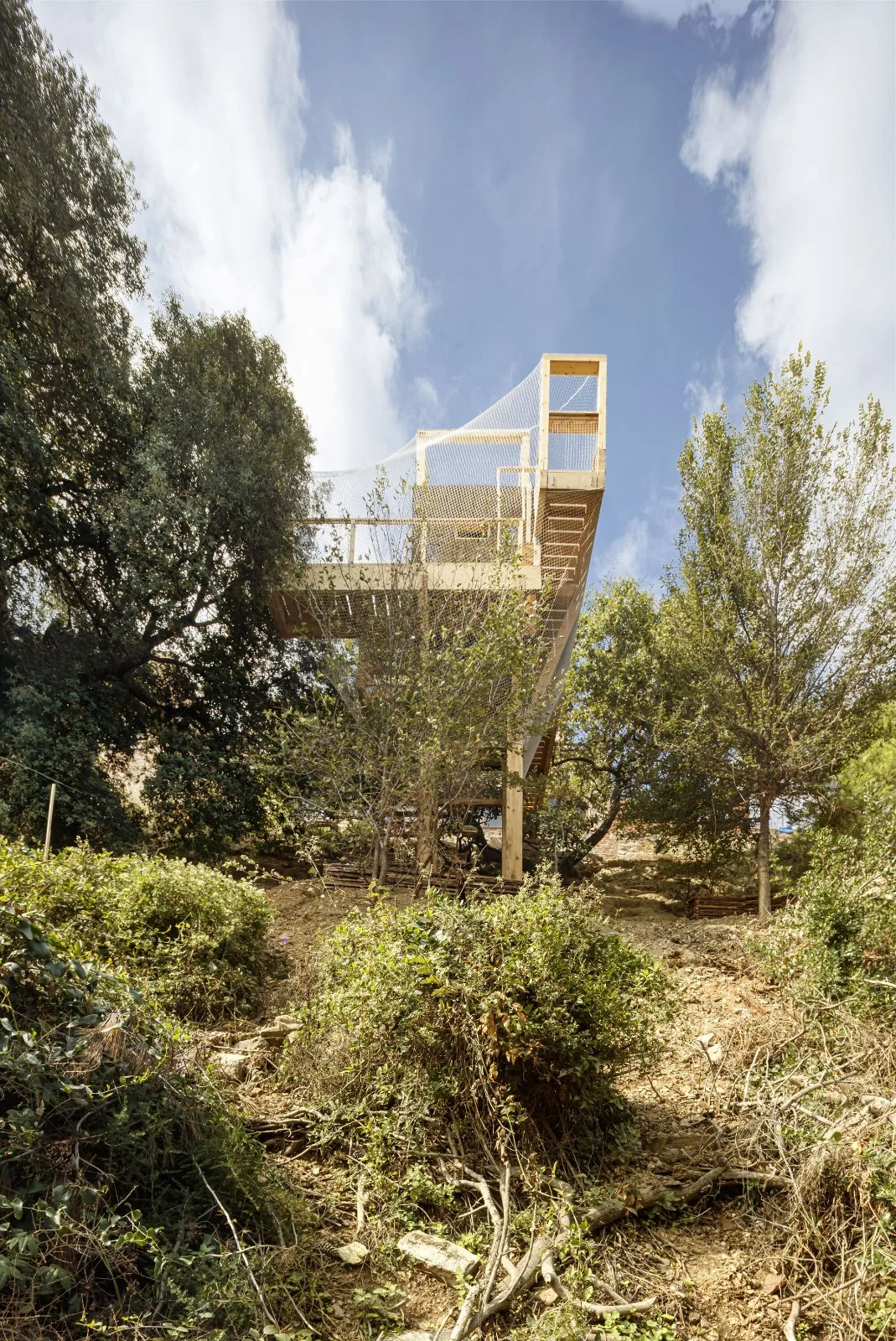
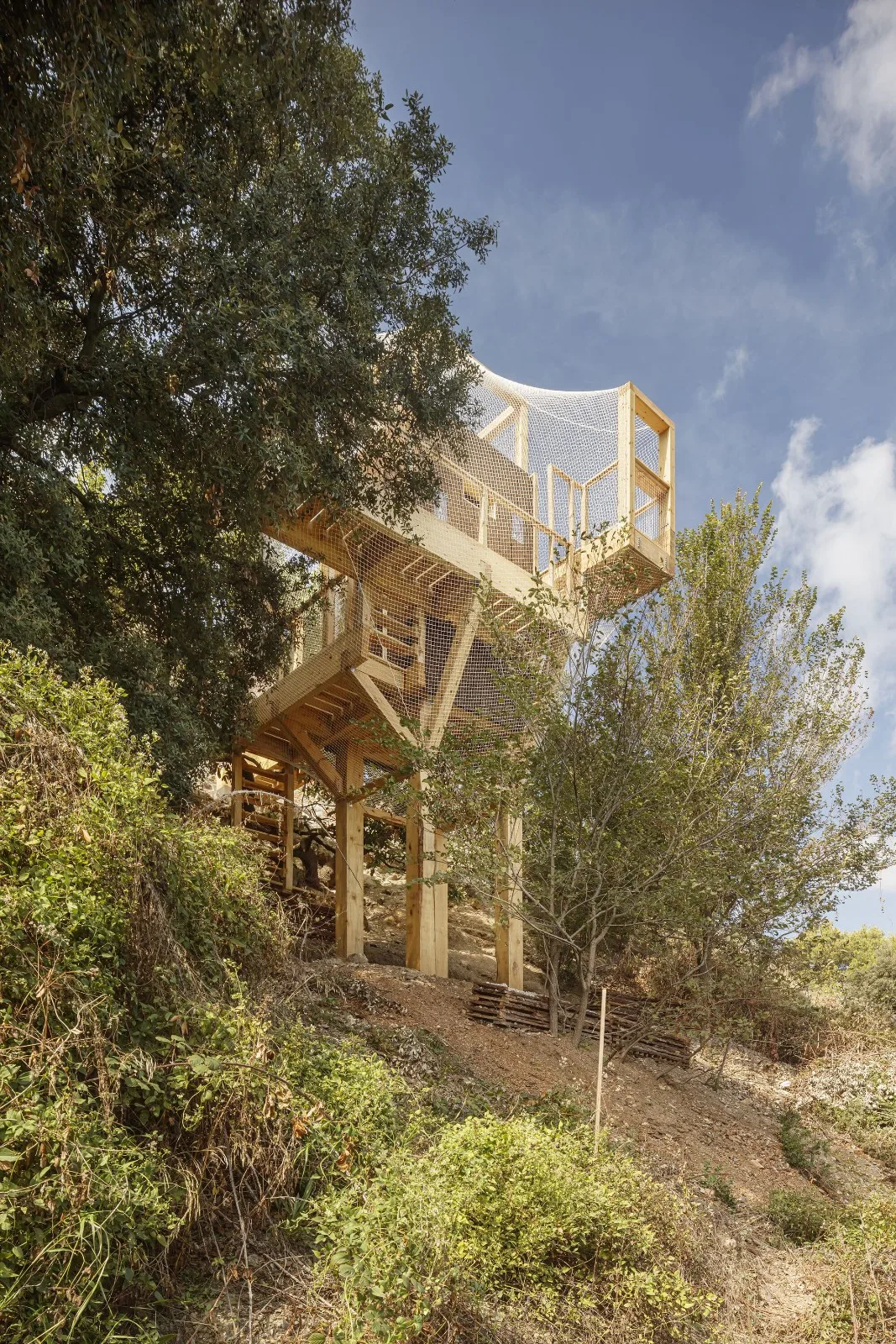
FLORA stands for Forest Laboratory for Observation, Research, and Analysis. It is a solid wood structure situated in the heart of the Vallduara metropolitan forest area of Barcelona, within Collserola Natural Park. Rising over 8.5 meters high, it is built from pine trees harvested under strict traceability protocols as part of sustainable forest management in the region.
Students from IAAC’s Advanced Master’s in Ecological Architecture and Biocity cut down and processed 70 trees to create cross-laminated timber (CLT) boards, laminated beams, and solid wood elements. The FLORA station offers short-term accommodation for researchers studying the park’s biodiversity and doubles as a meteorological monitoring site.
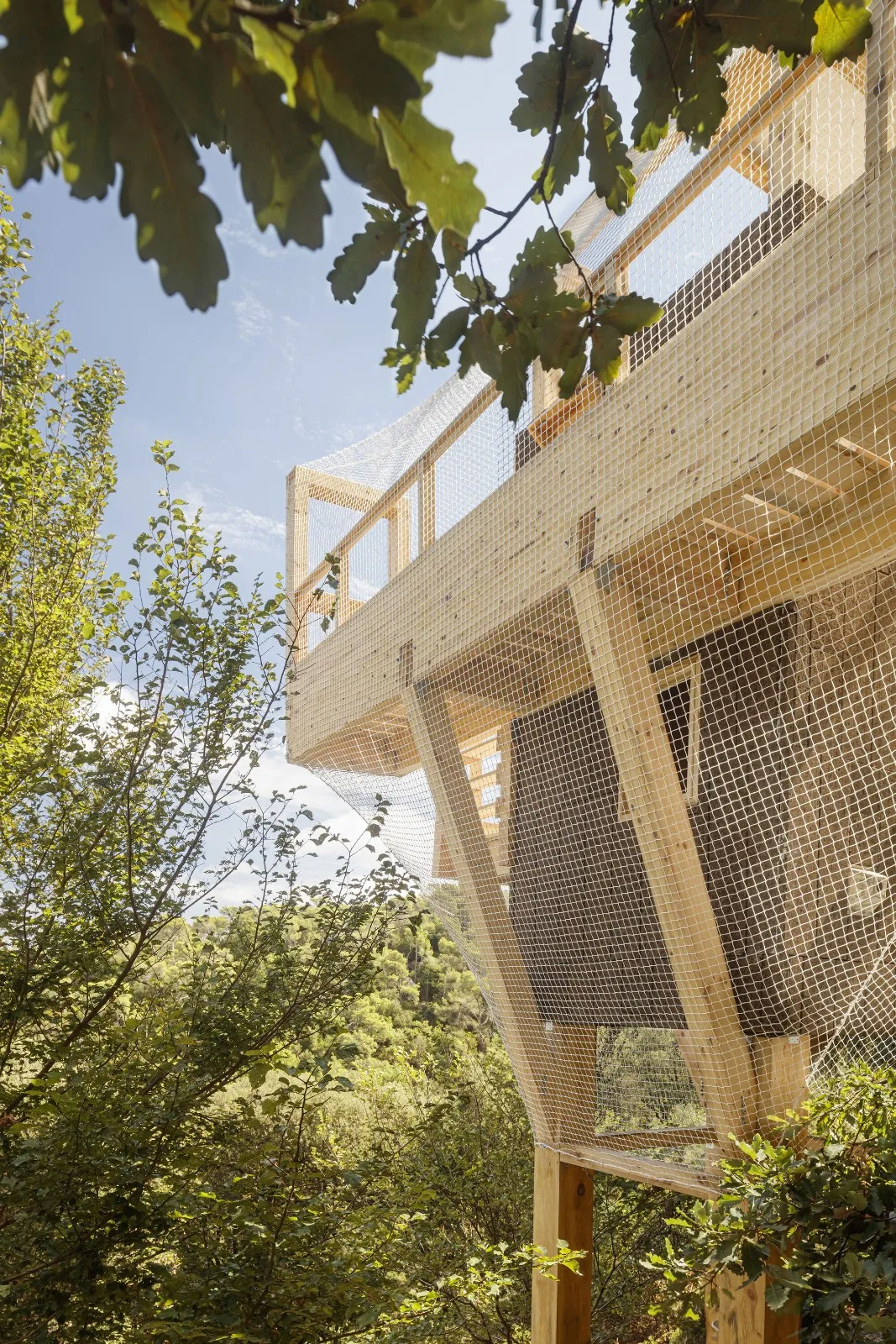
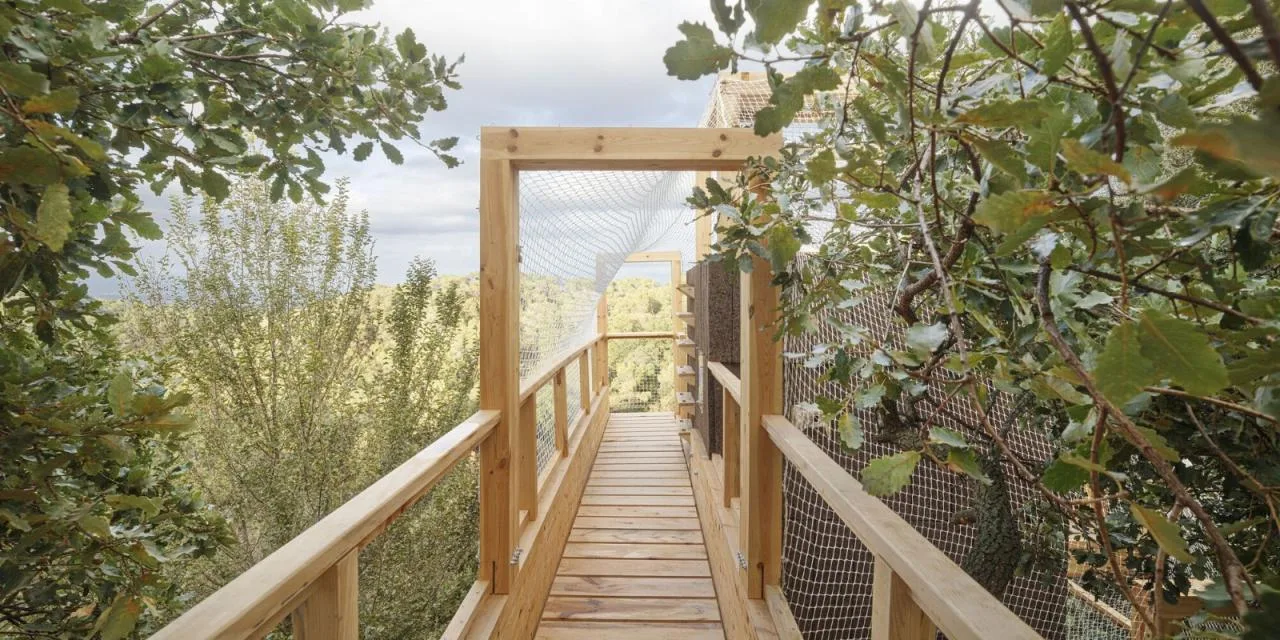
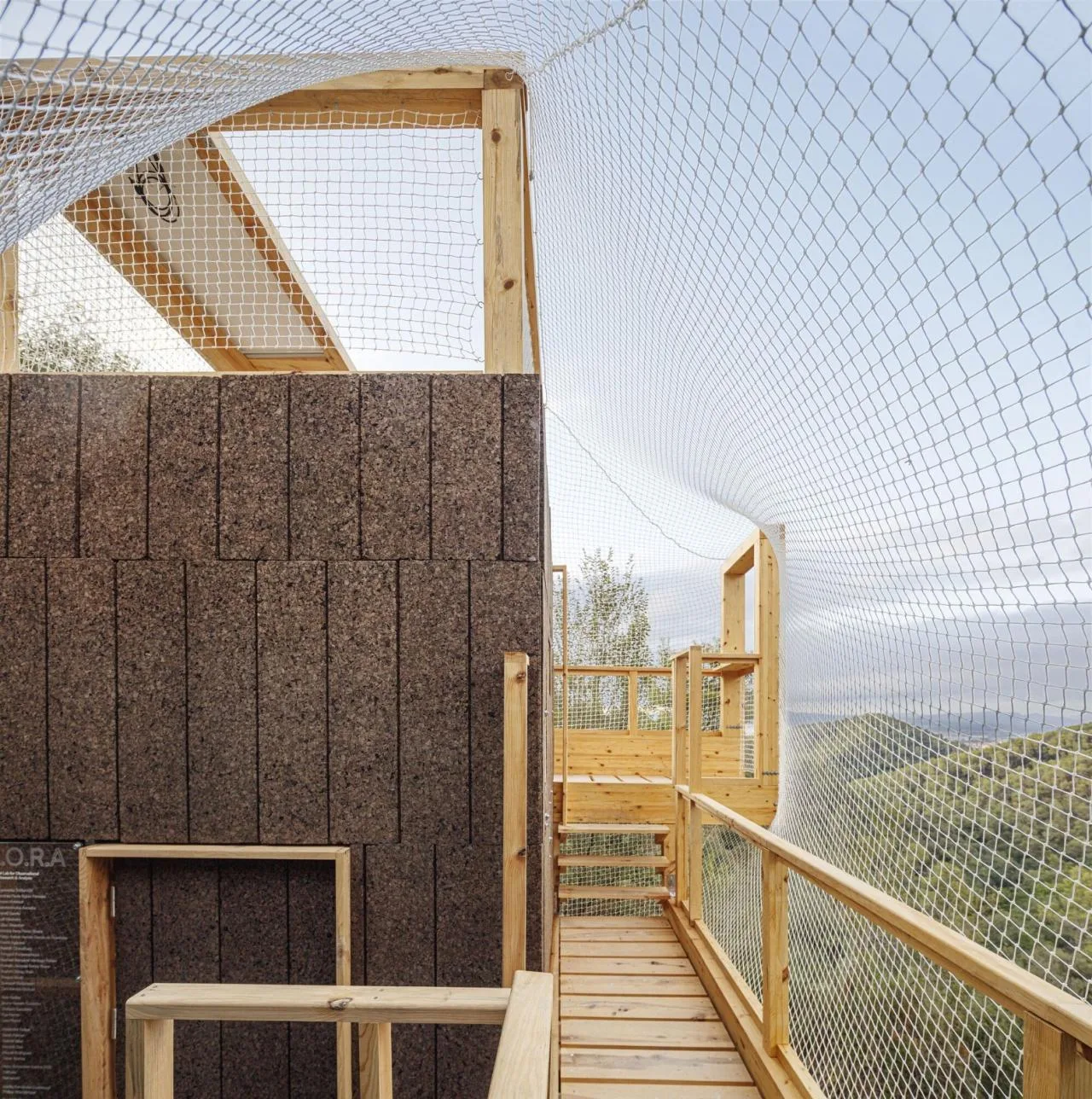
Covering over 8,000 hectares, Collserola Natural Park is the largest natural area in the Barcelona metropolitan region. It faces typical Mediterranean forest challenges such as prolonged drought and climate change effects. Within this ecological context, IAAC’s master’s students designed and constructed FLORA—the first observation station capable of monitoring the park’s forest canopy and tracking ecosystem changes over time.
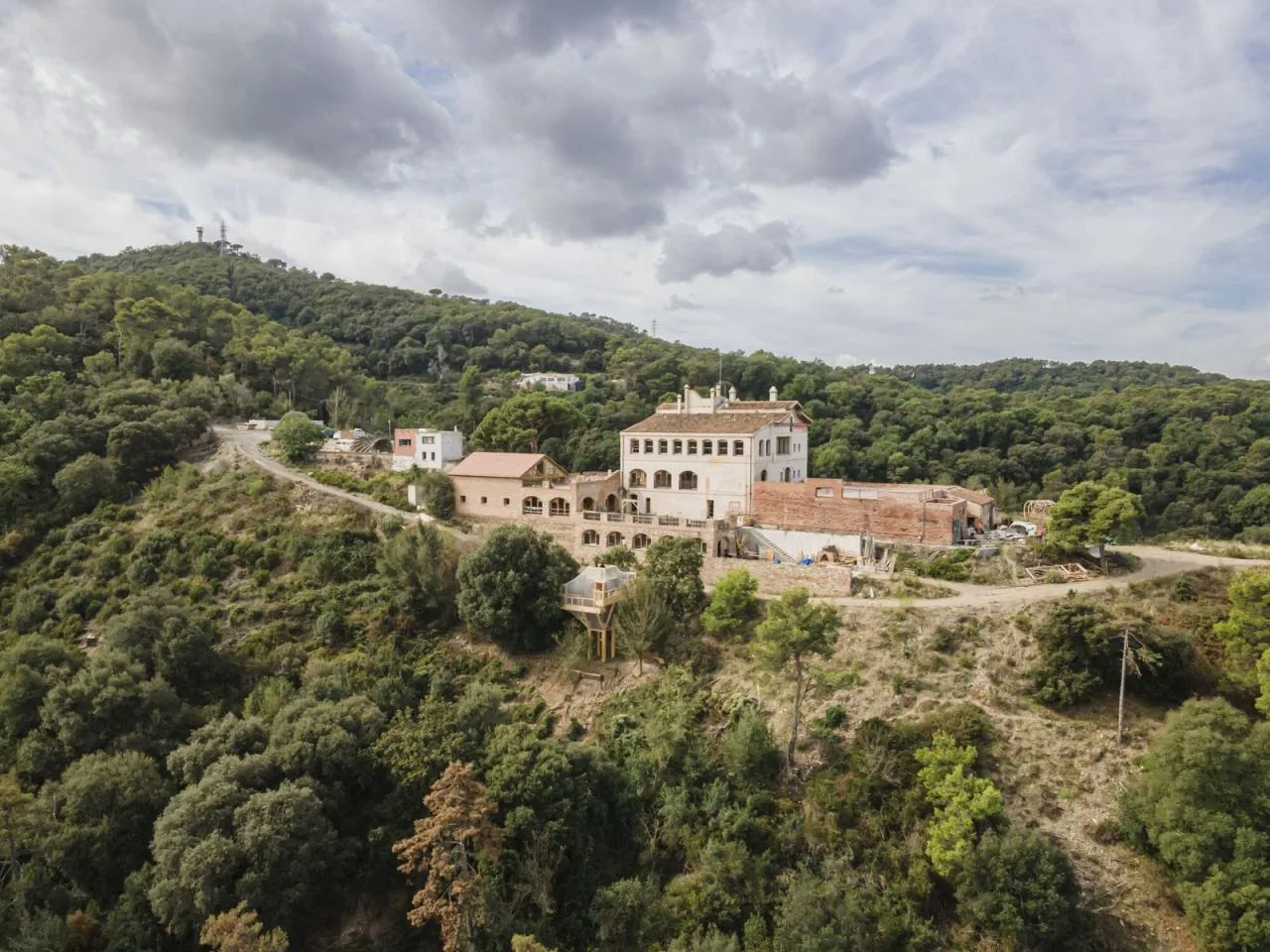
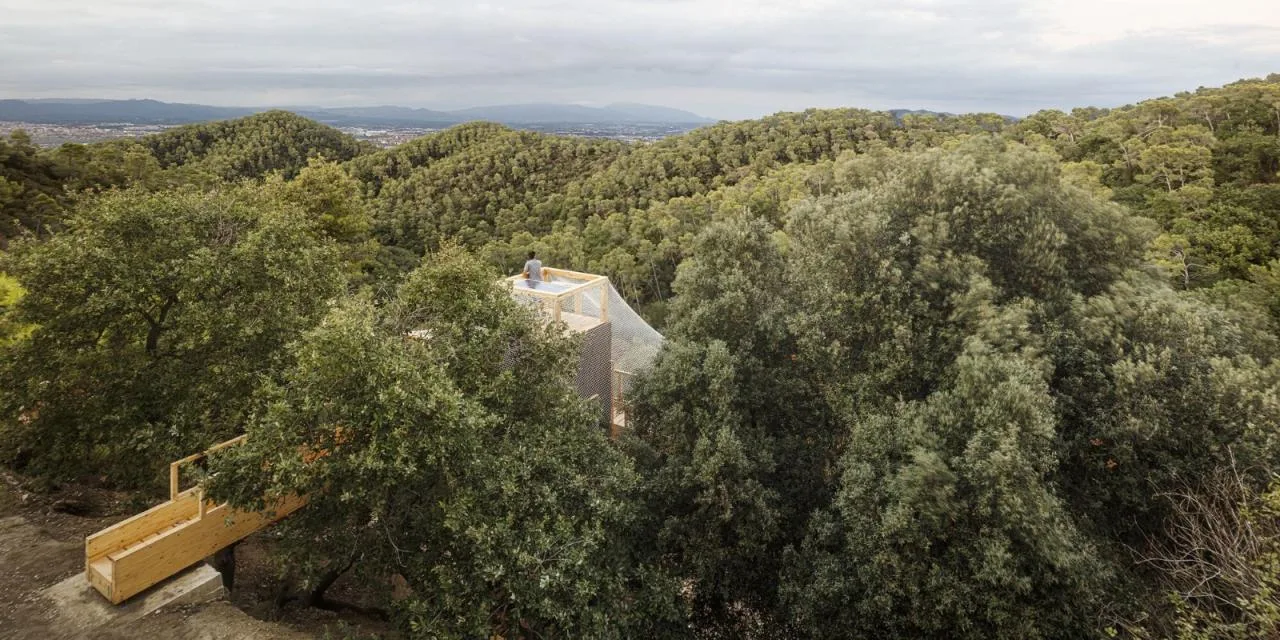
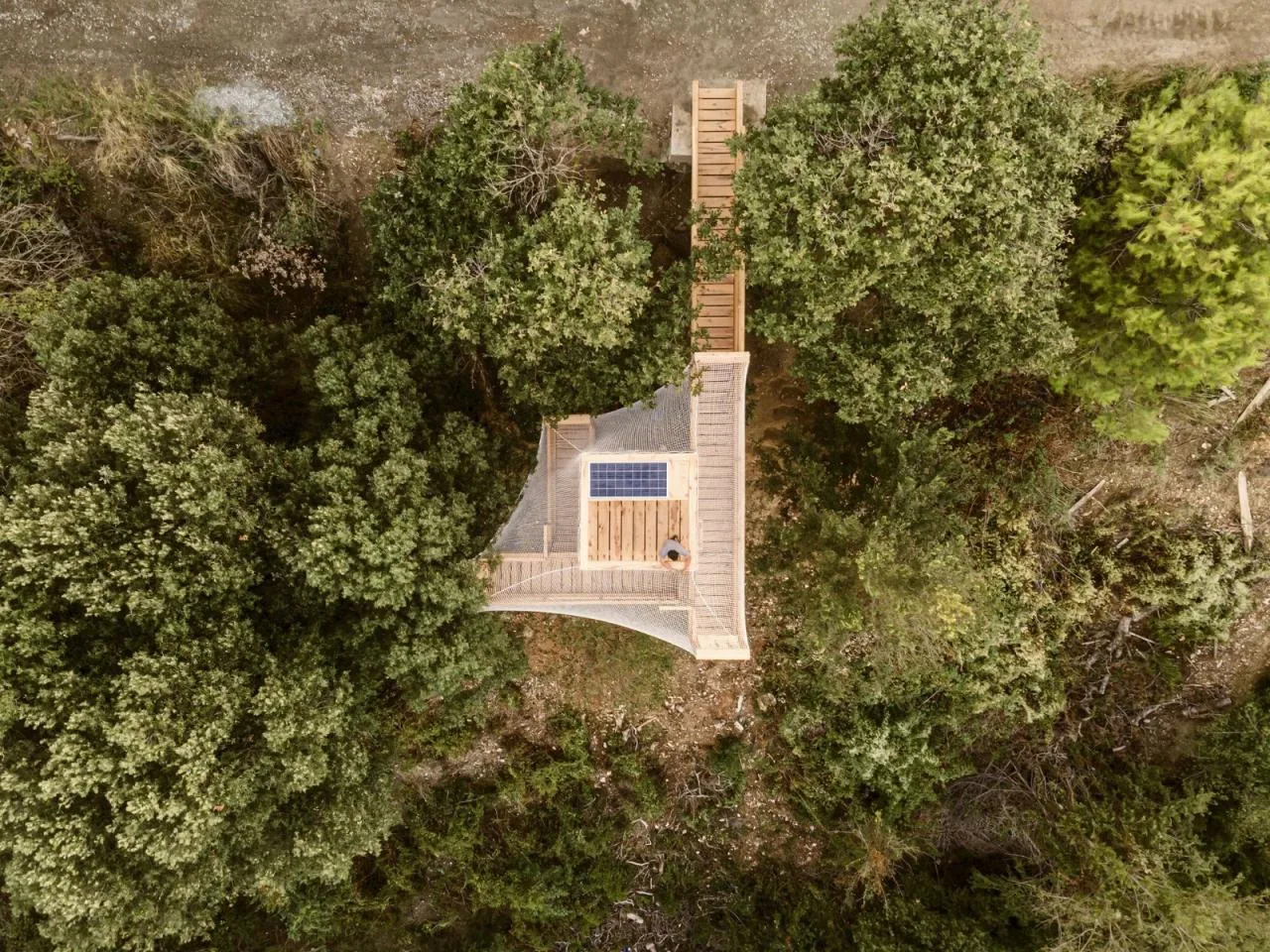
Embracing the “zero kilometer” philosophy, the students conducted comprehensive research on forest biodiversity. They studied ecological residents across underground, surface, canopy, and sky layers, which informed the structural requirements and material choices for the project.
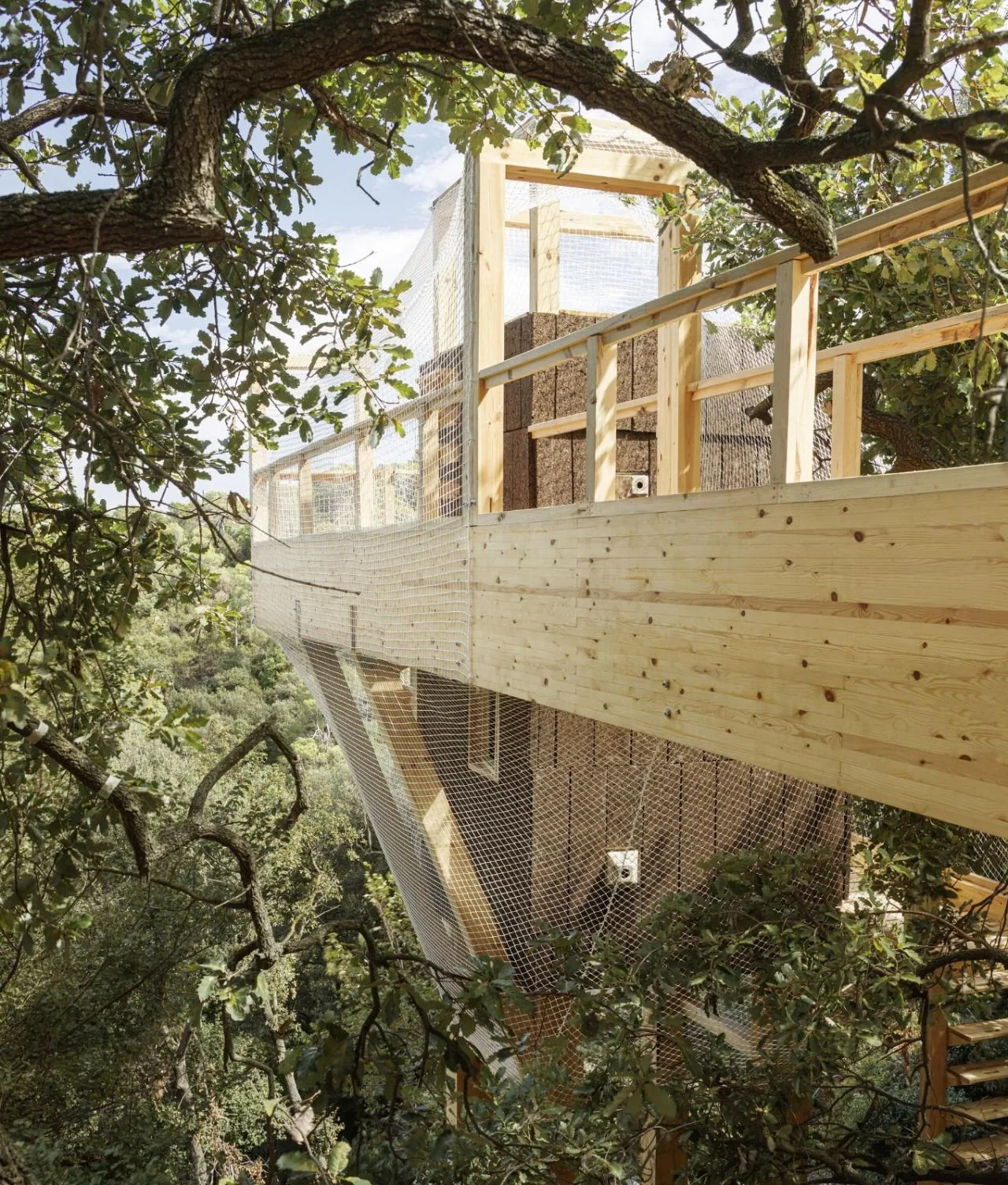
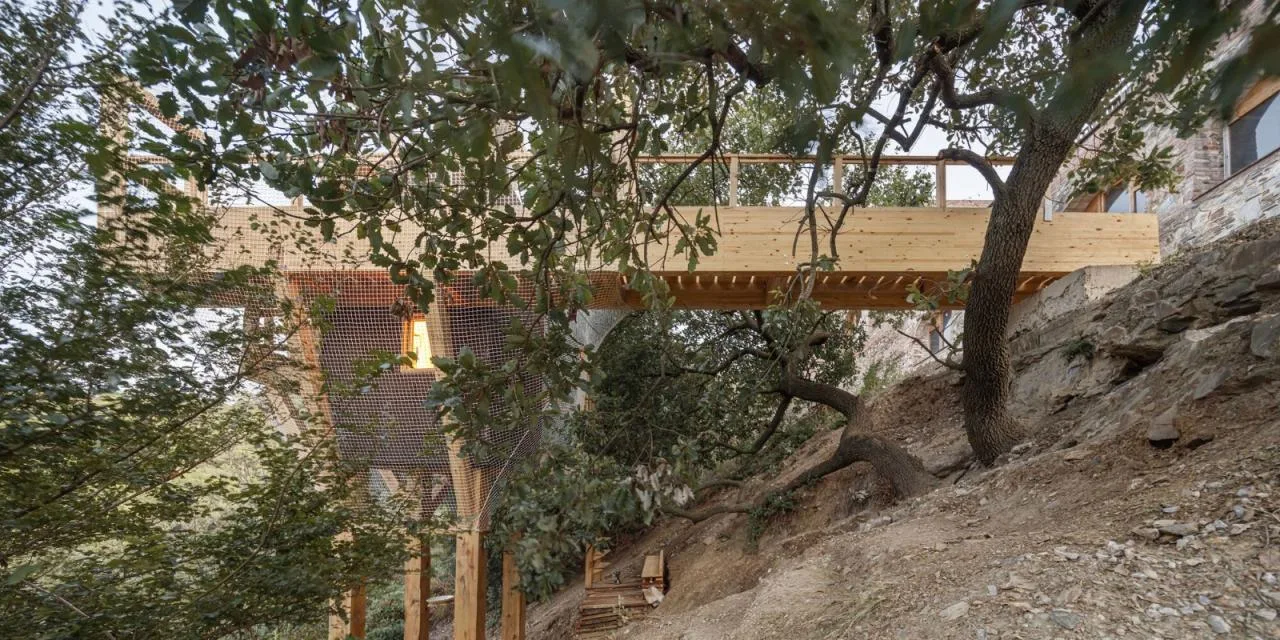
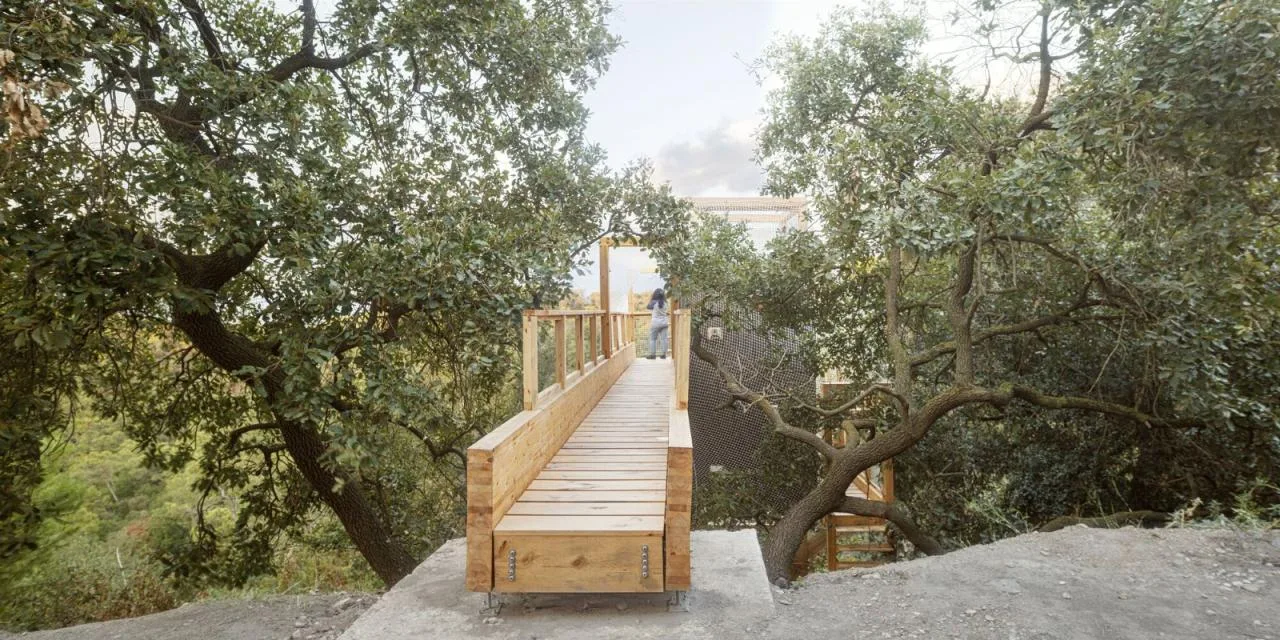
From construction to final use, FLORA strictly follows the “zero kilometer” concept by utilizing wood sourced directly from the local environment, eliminating the need for external supply chains. The Collserola forest features diverse tree species and vegetation, and sustainable management is essential to maintain its health and biodiversity.
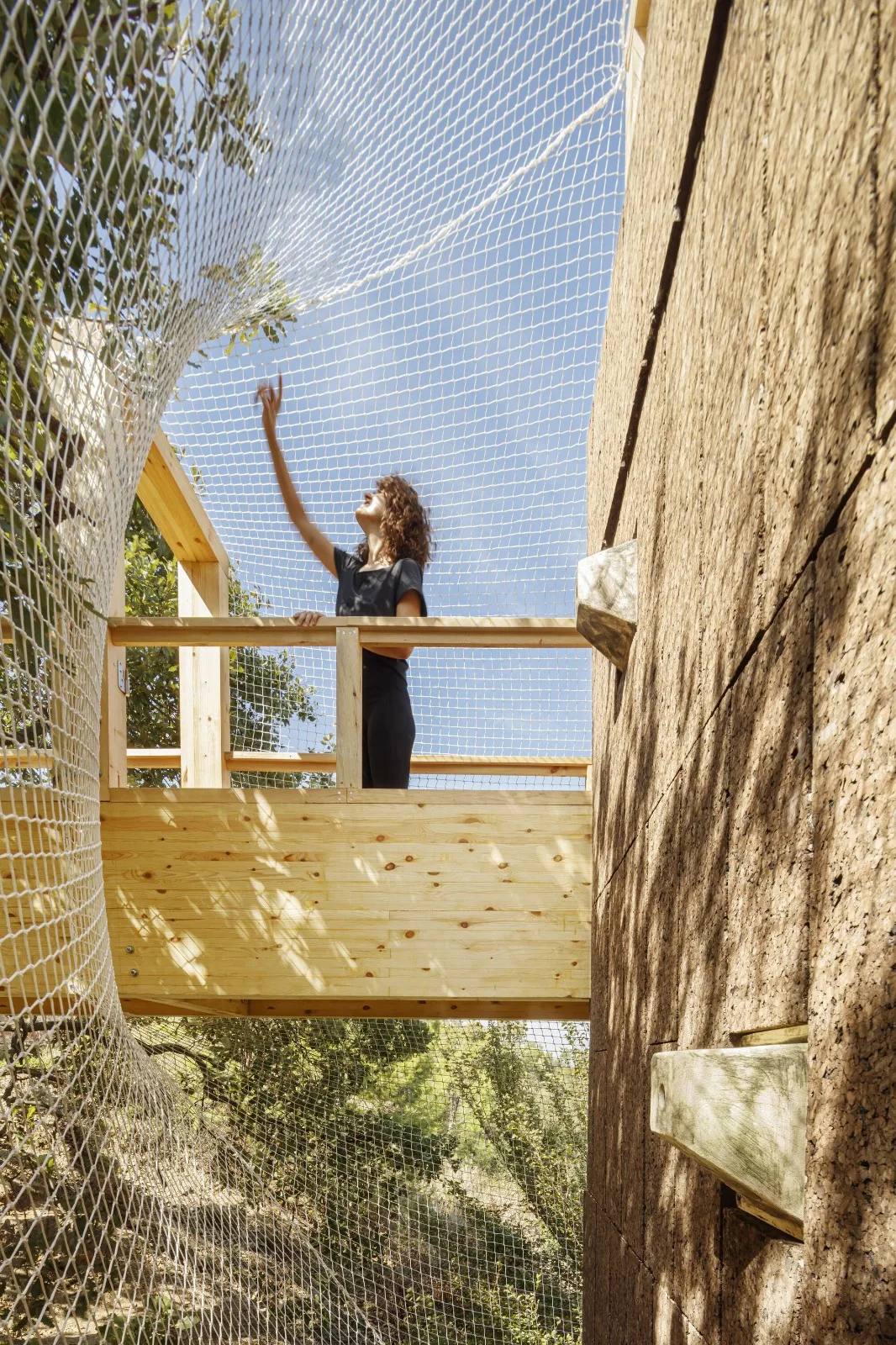
In total, seventy pine trees were harvested from the Vallduara area, all selected under Collserola’s approved sustainable forest management plan. Using the sawmill and small CLT press at Vallduara Labs, students transformed the pine wood into cross laminated timber panels, laminated beams, and solid wood components.
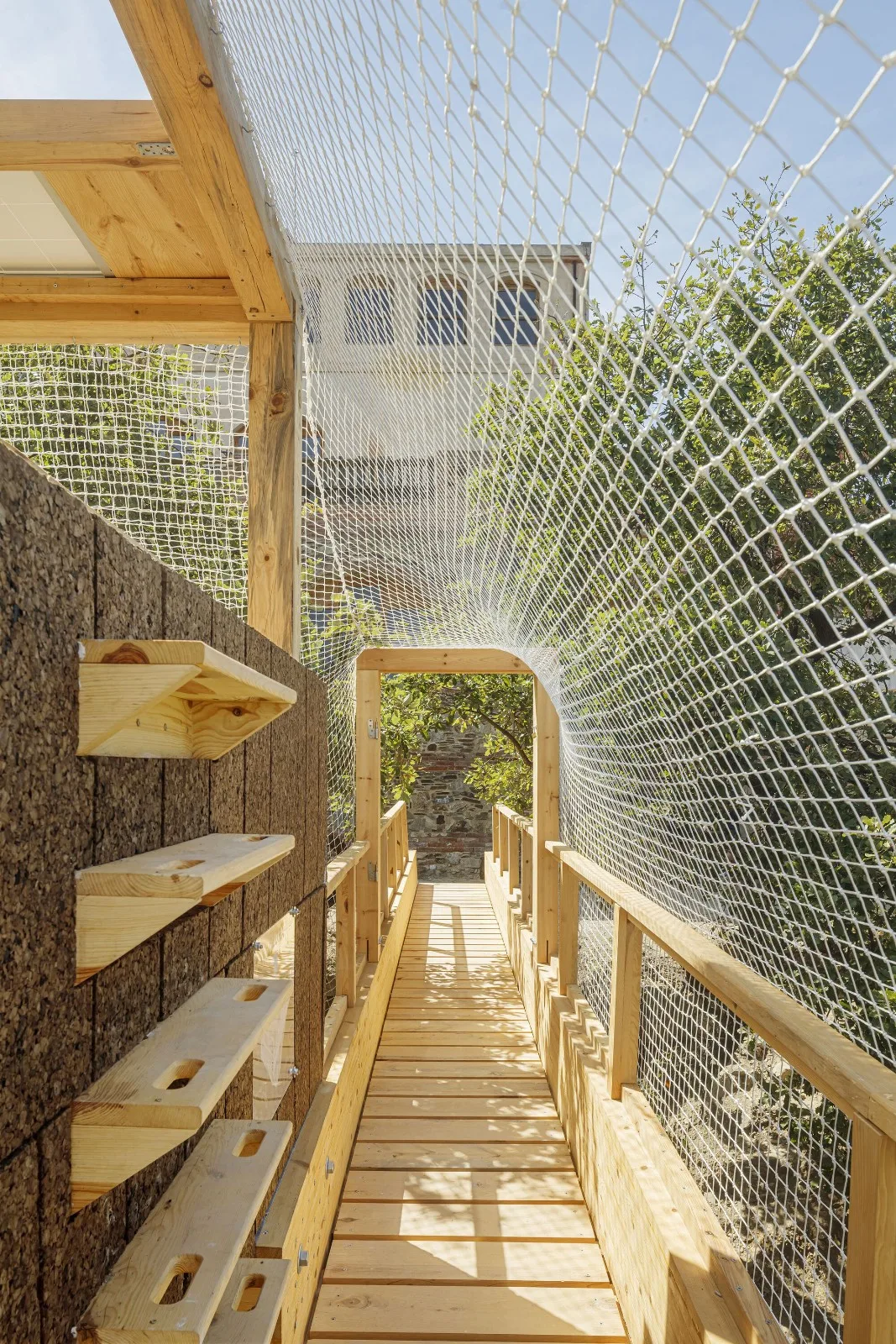
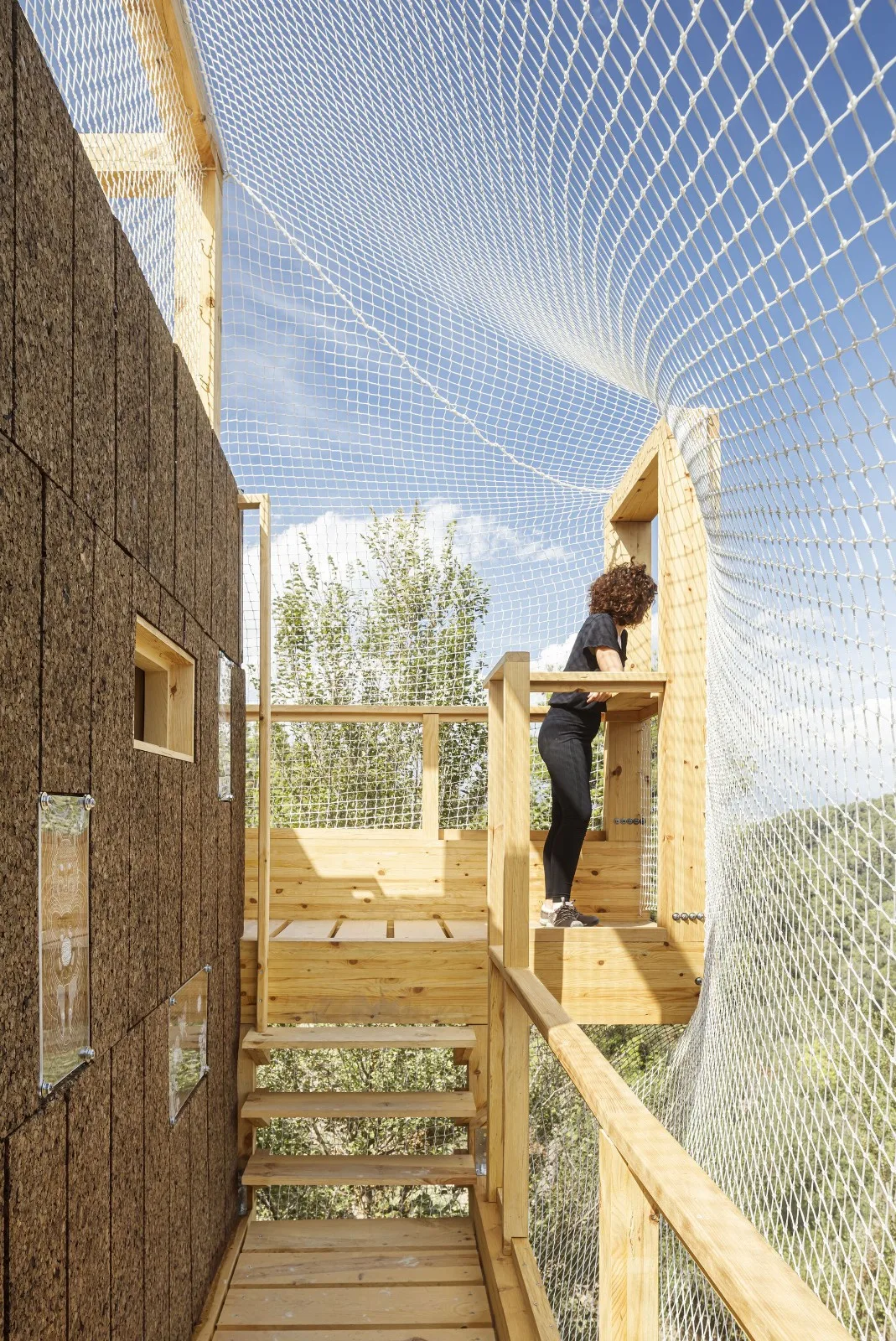
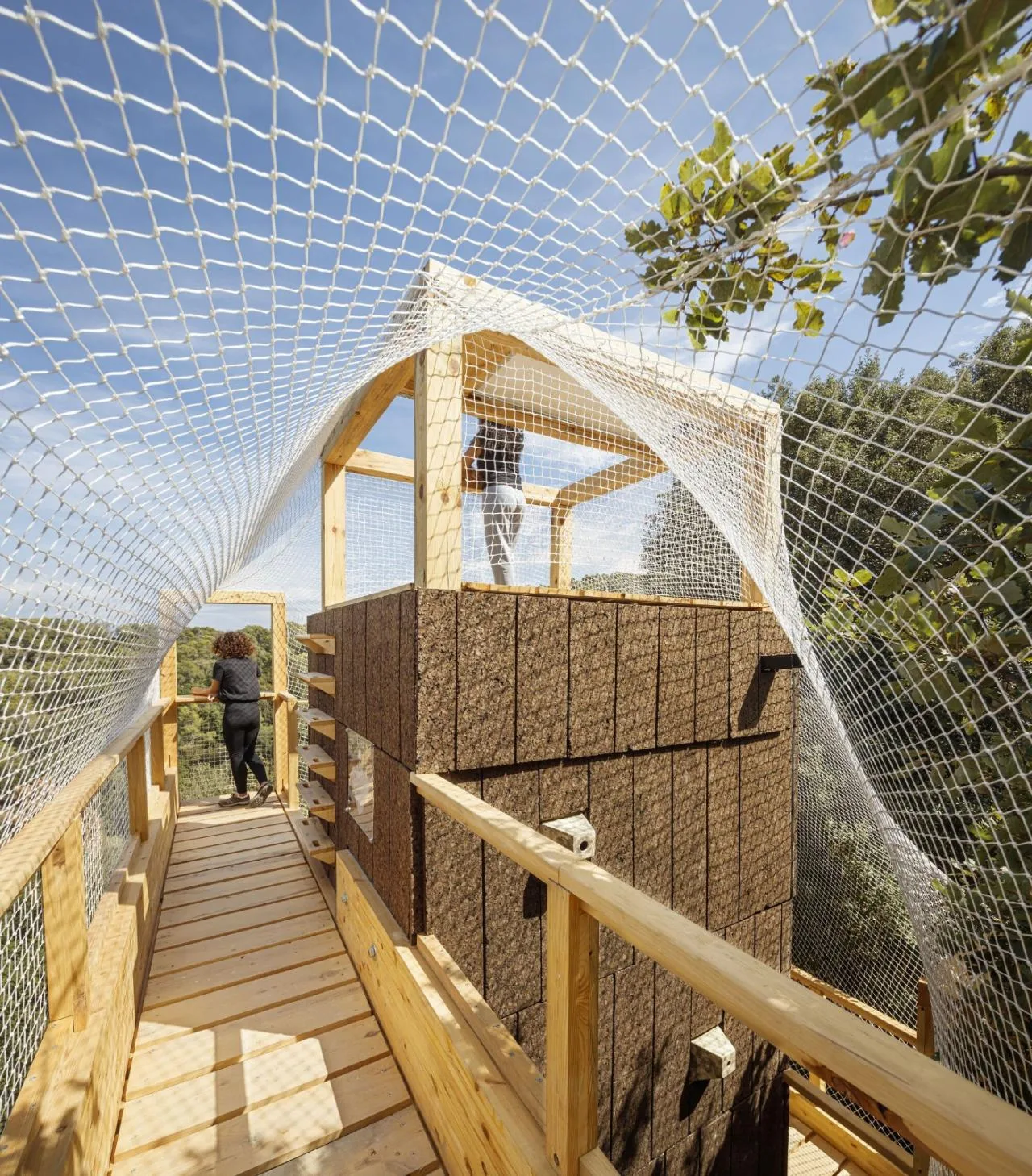
The cross laminated timber core rests on four 30×30 cm glued laminated wood columns. The laminated wood beams, some reaching up to 12 meters in length, form the main bridge structure. Each component was individually manufactured and assembled using a crane in a complex installation process. The entire structure is insulated and soundproofed with two layers of natural softwood boards.
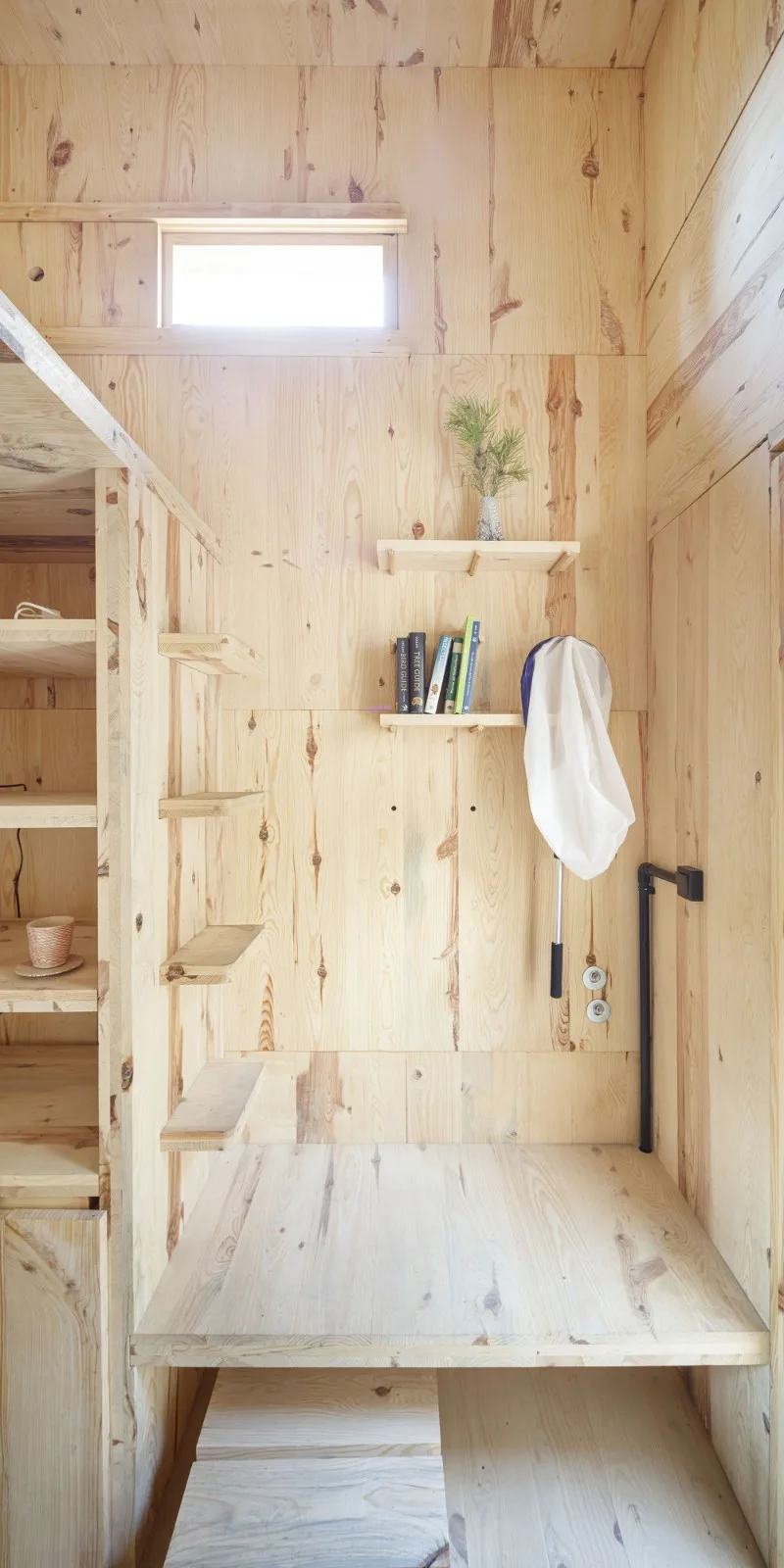
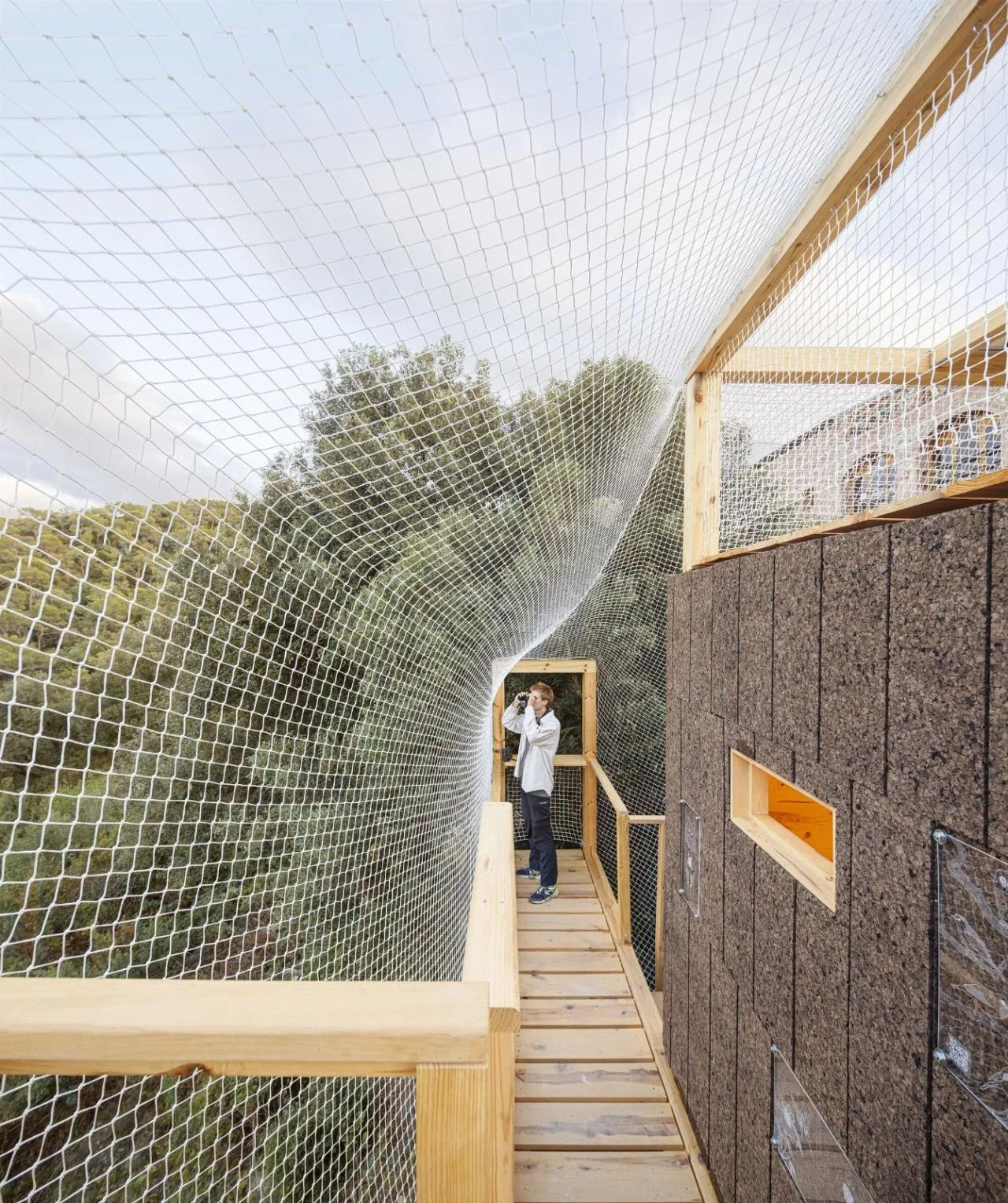
The netting surrounding the building draws inspiration from a hunter’s nest. Digitally designed and handwoven, this net serves to camouflage the observation station by allowing plants to grow over it, helping the structure blend seamlessly into its wild forest environment.
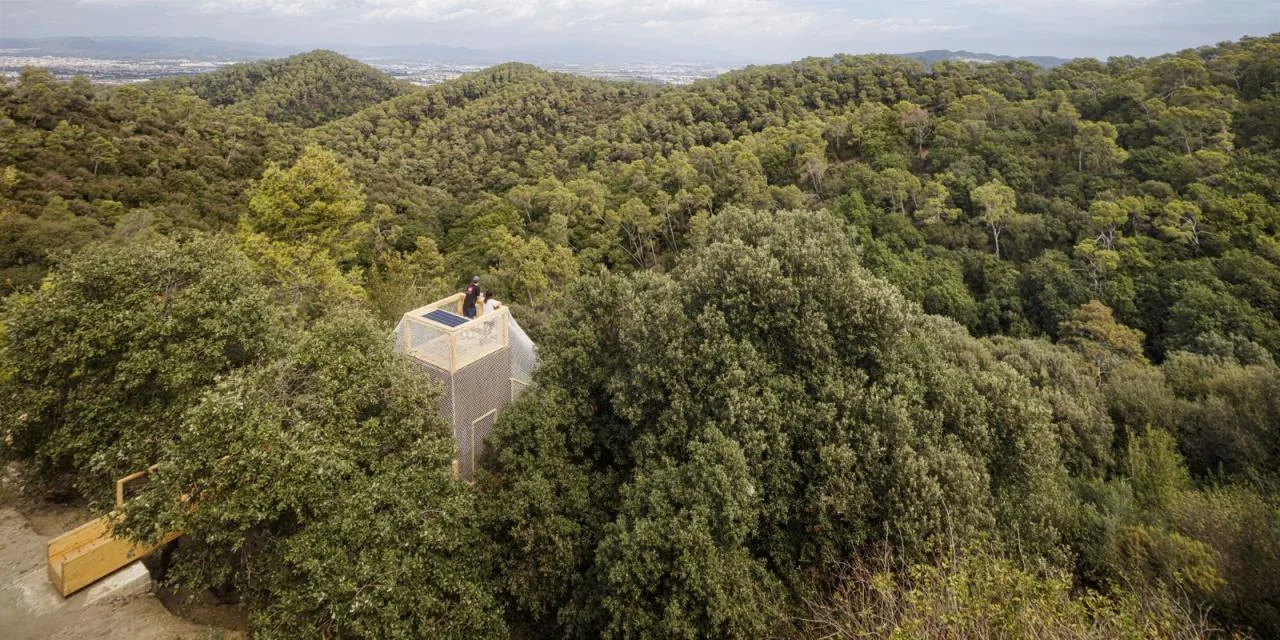
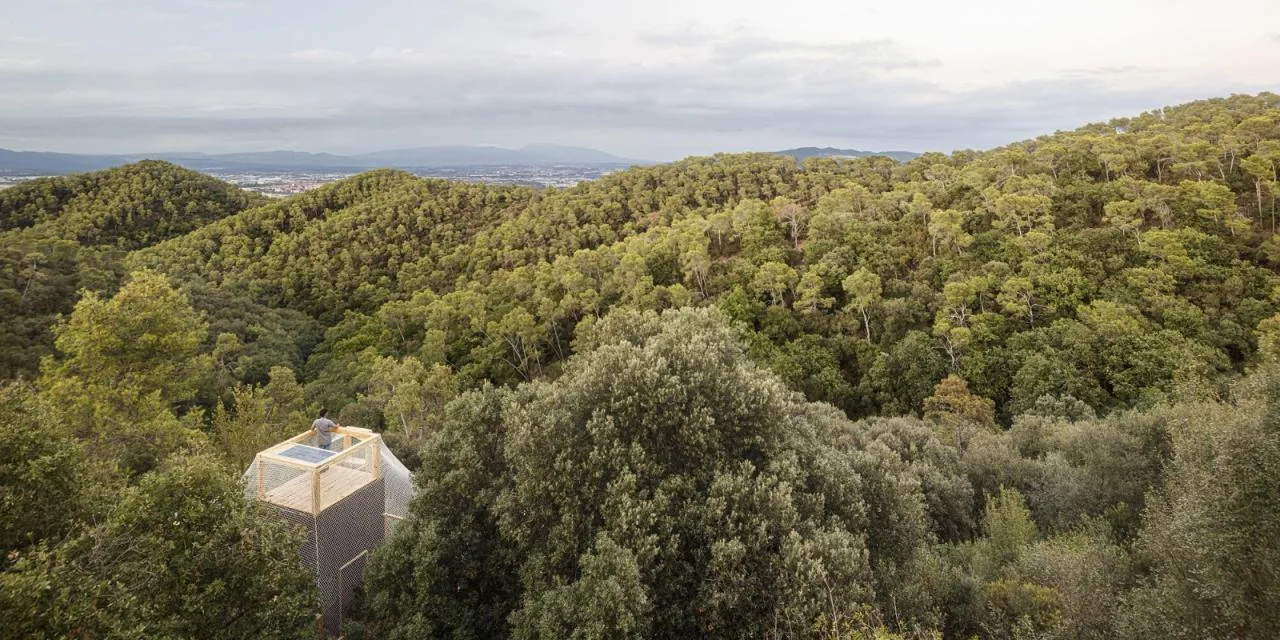
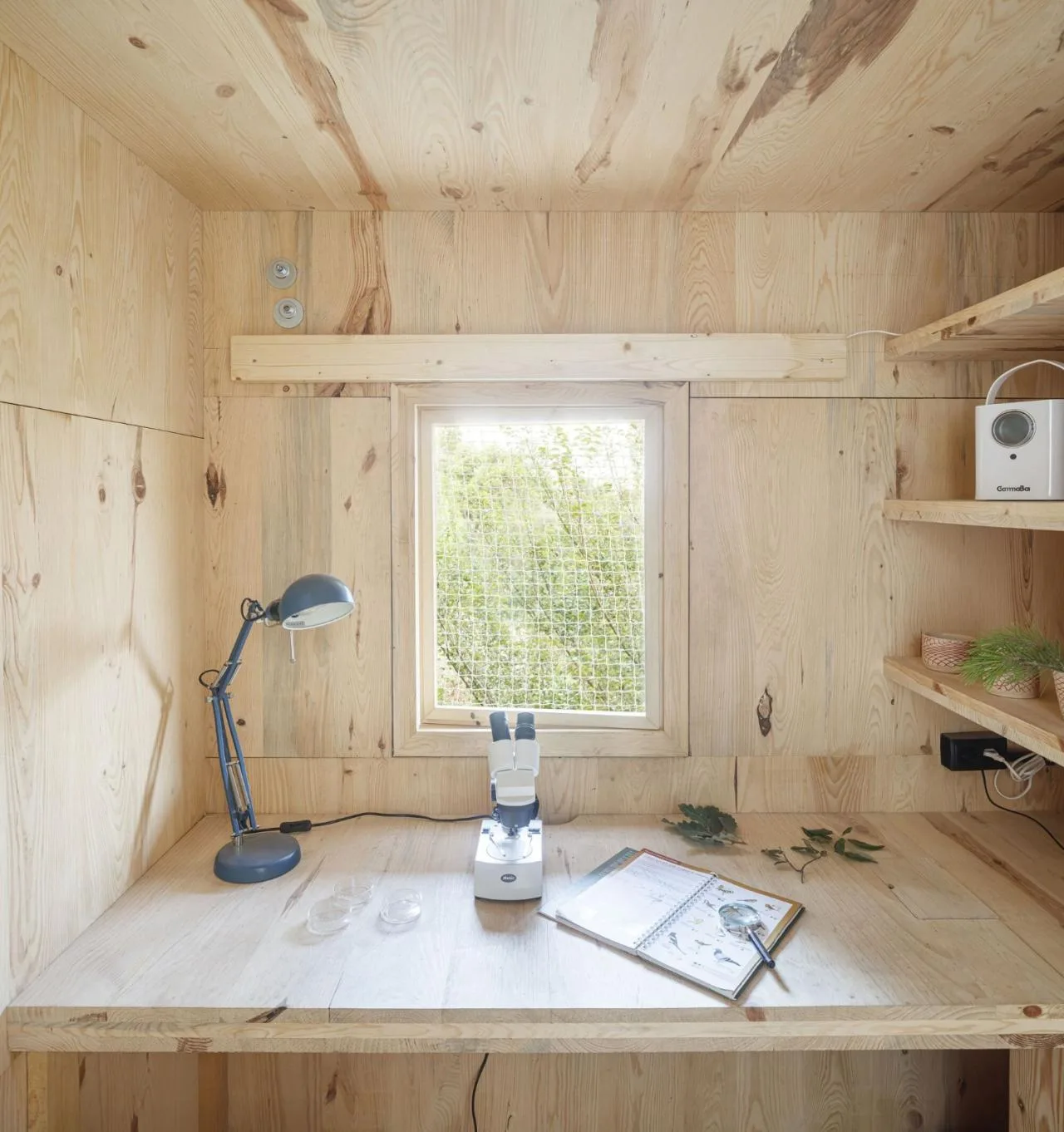
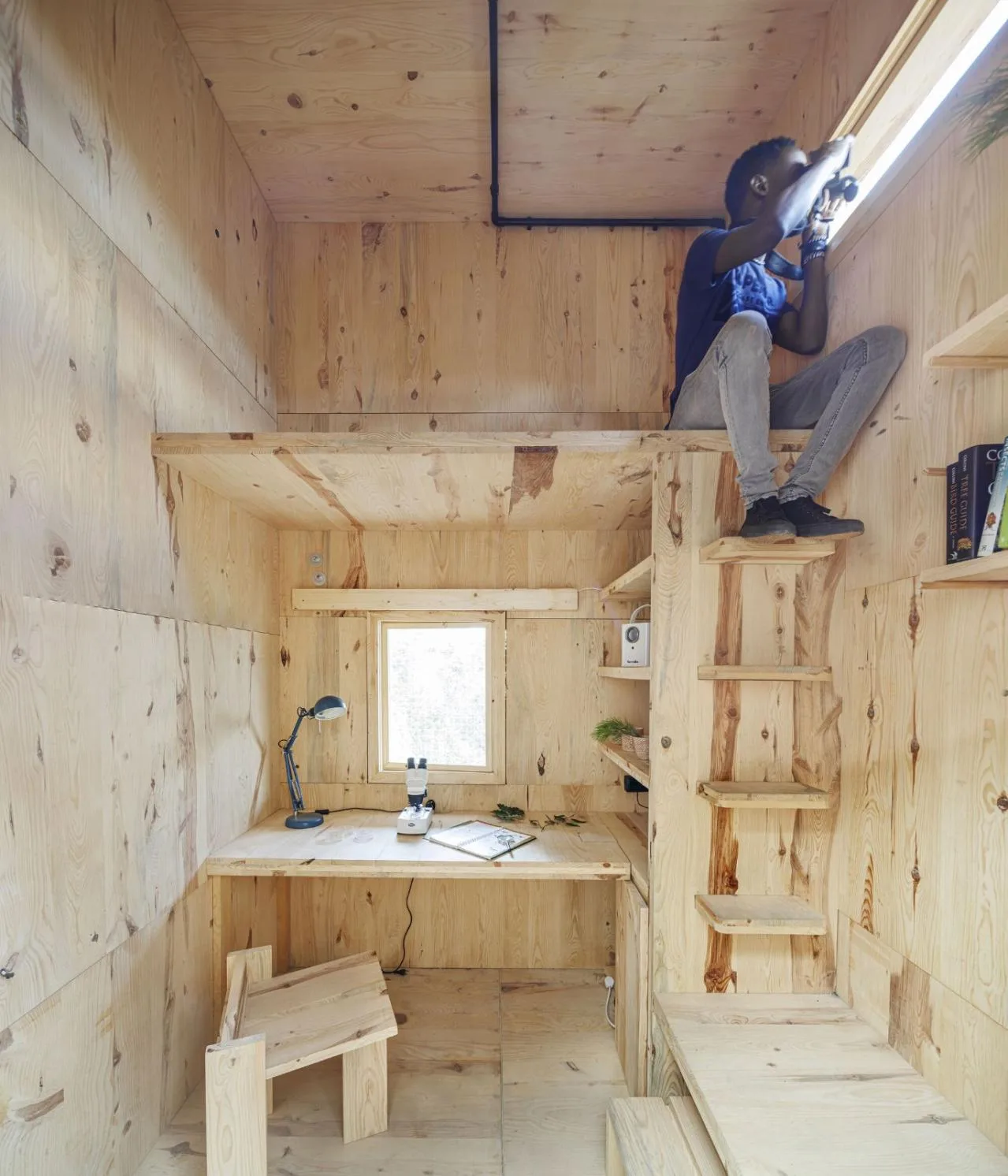
The FLORA Observatory provides scientists with a temporary base to study local biodiversity and assess the impacts of climate change on natural parks. Equipped with bird radios, nesting boxes, workspace areas, projection zones, and birdwatching platforms, the project creates an immersive and interactive ecological prototype.
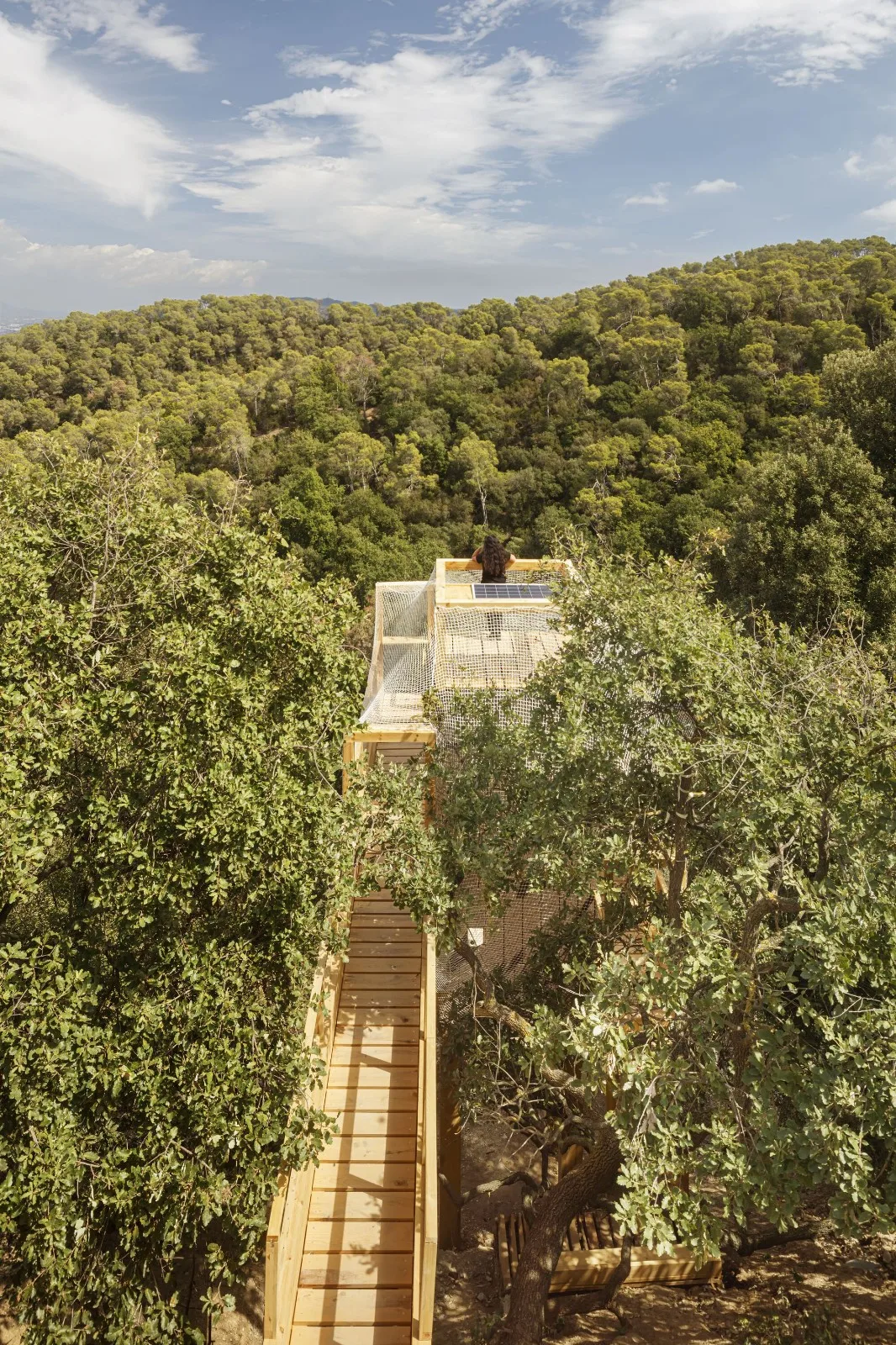
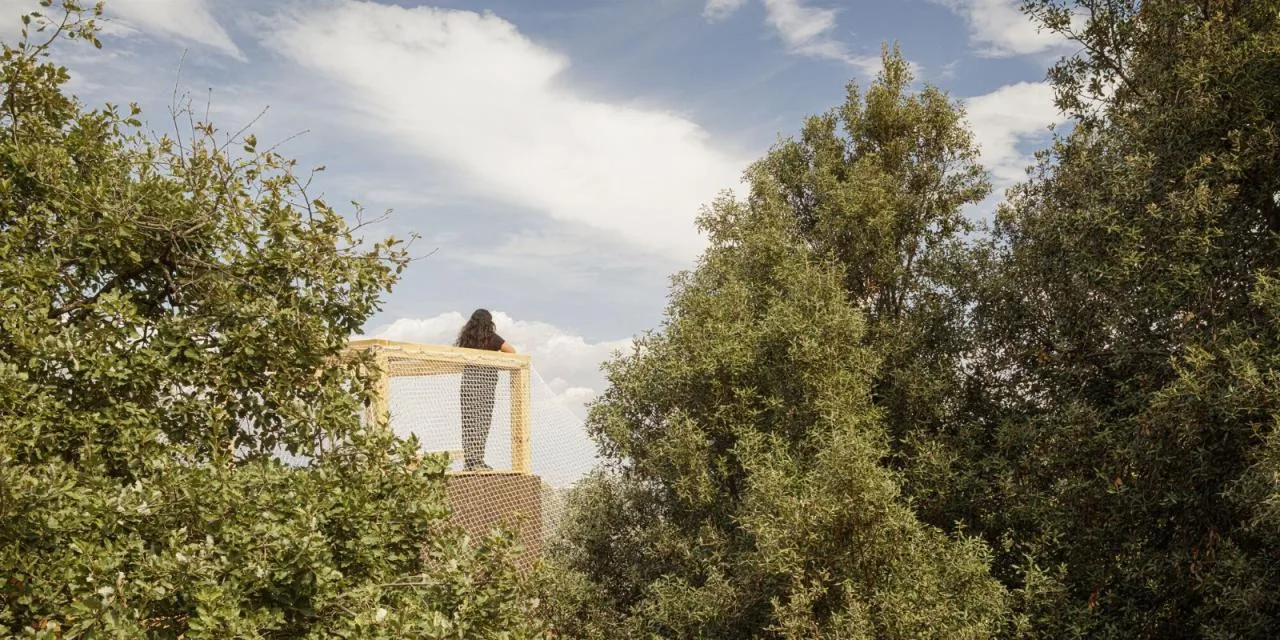
The design of this scientific research station draws inspiration from Margaret D. Lowman, a pioneering American biologist in forest canopy ecology. For over 30 years, she has developed tools like weather balloons and canopy trails to explore forest ecosystems, focusing on insect diversity and overall ecosystem health.
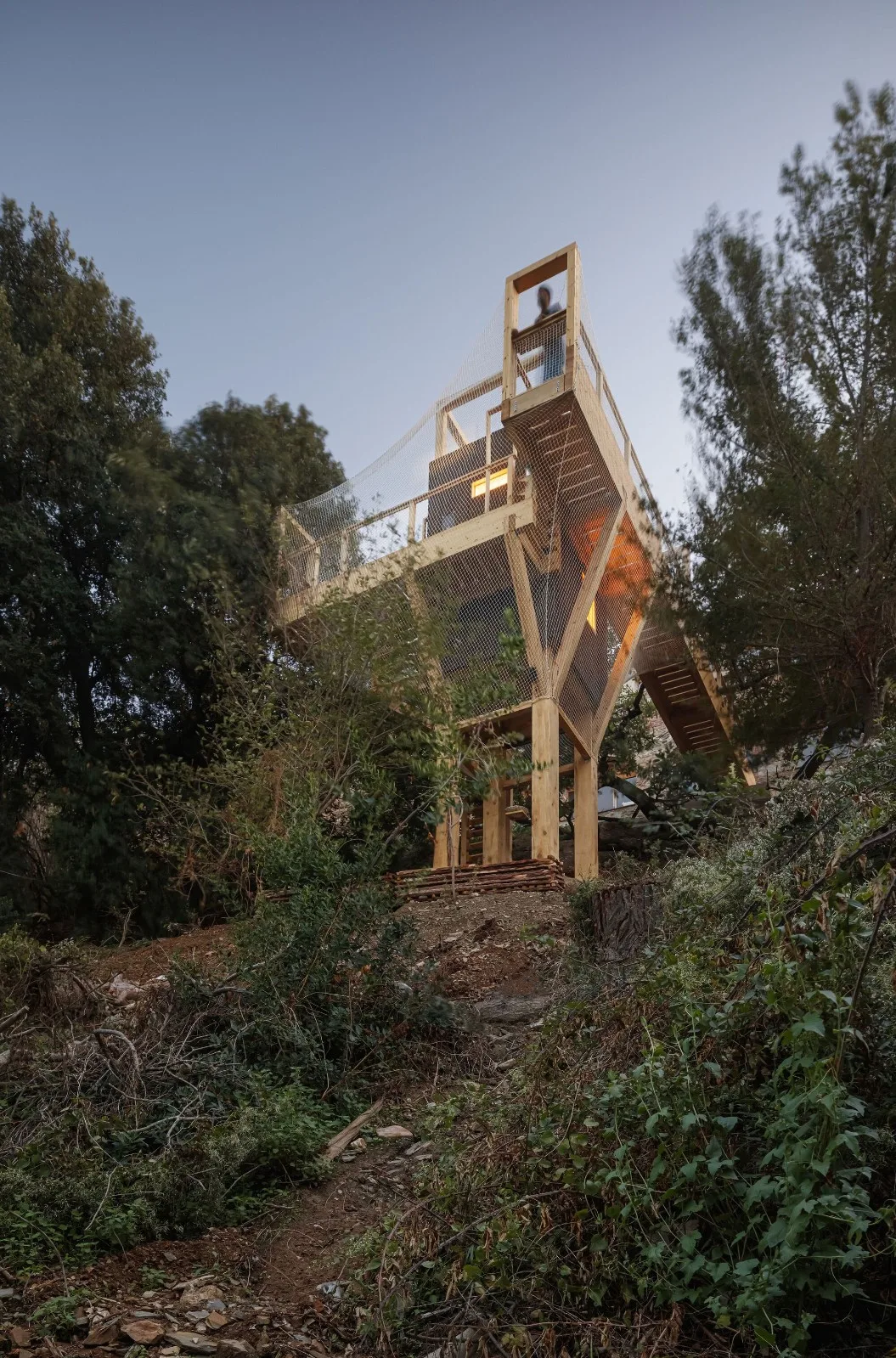
The forest canopy, formed by the uppermost tree layers, provides a vital habitat for many species. It intercepts 60-90% of rainfall or snowmelt, facilitating water infiltration and protecting plant roots during storms. The canopy also nourishes the soil through leaf litter, maintaining forest fertility.
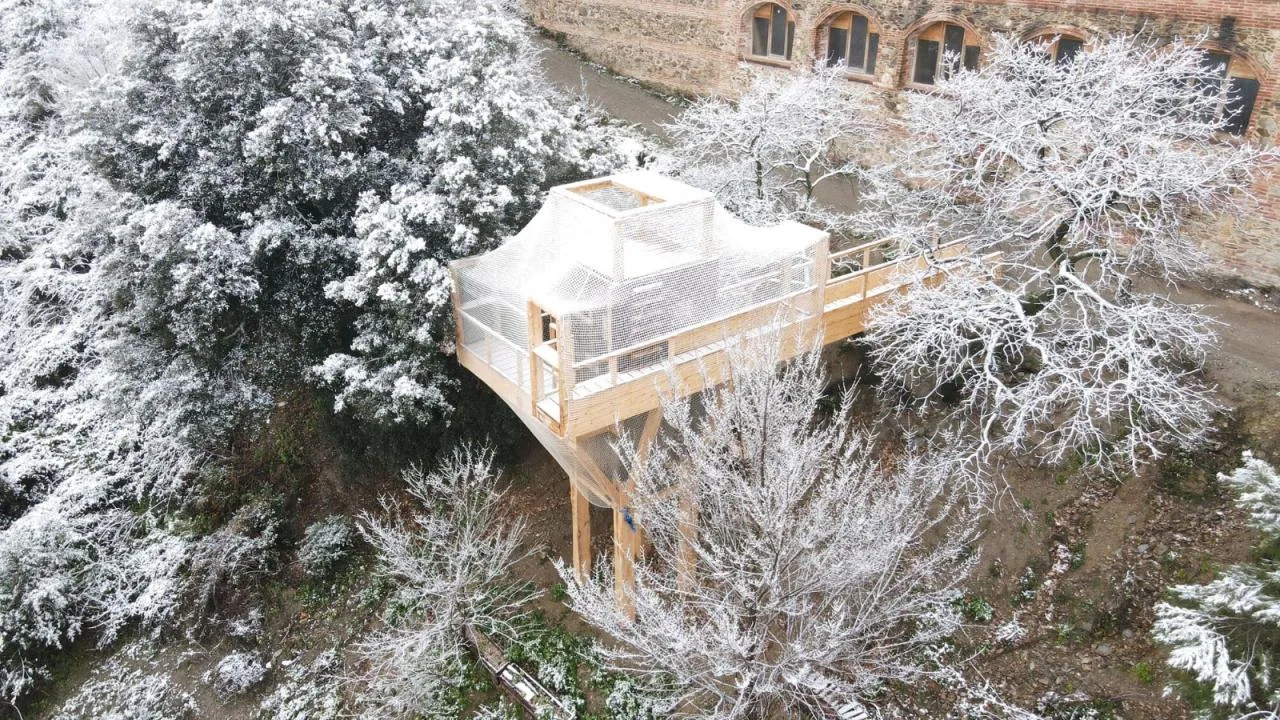
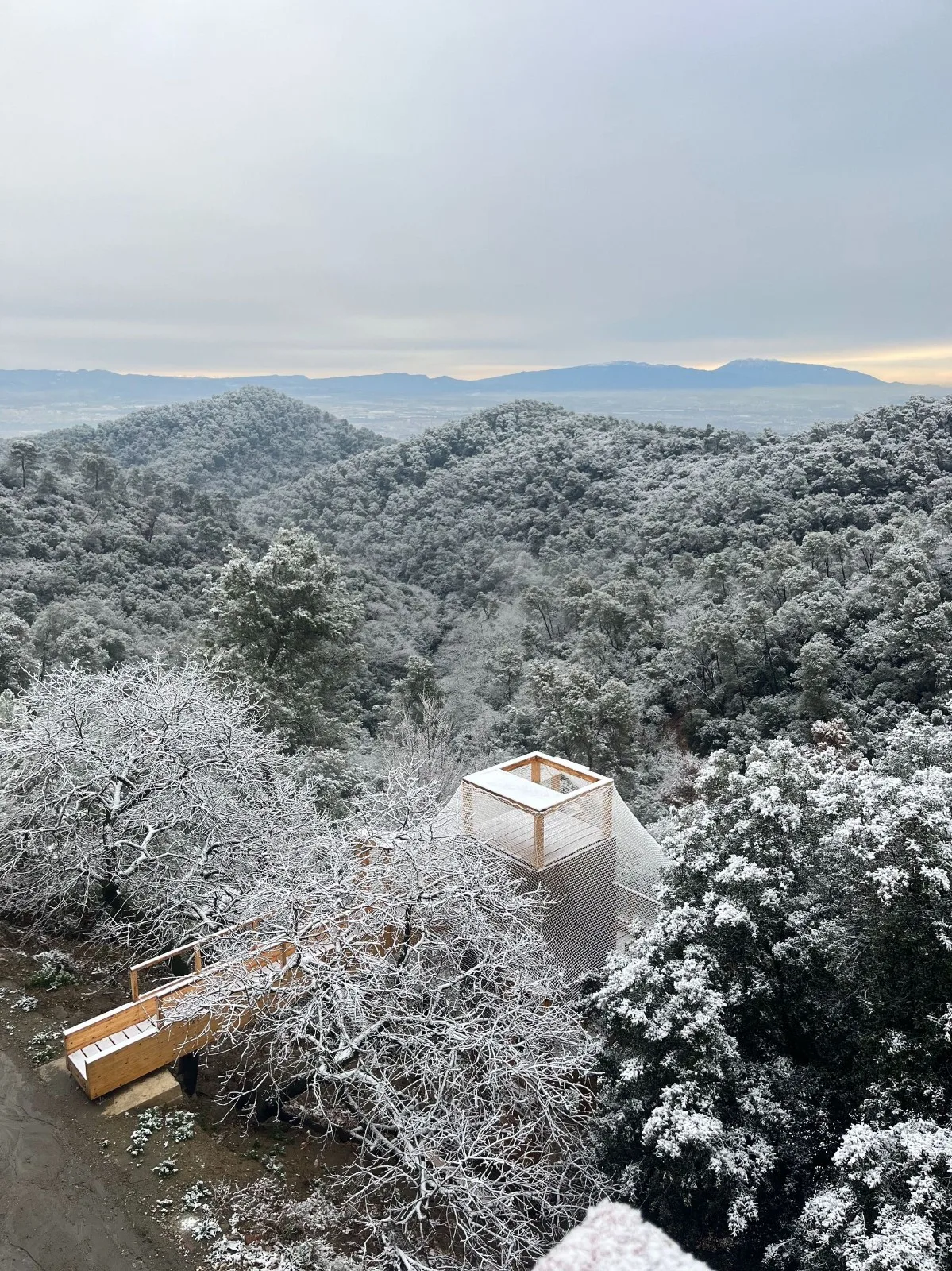
Protecting the forest canopy is essential for maintaining the water cycle, as most water absorbed by trees returns to the atmosphere through transpiration. Studying the canopy helps researchers analyze carbon absorption, storage, and flow, offering valuable insights for climate change mitigation.
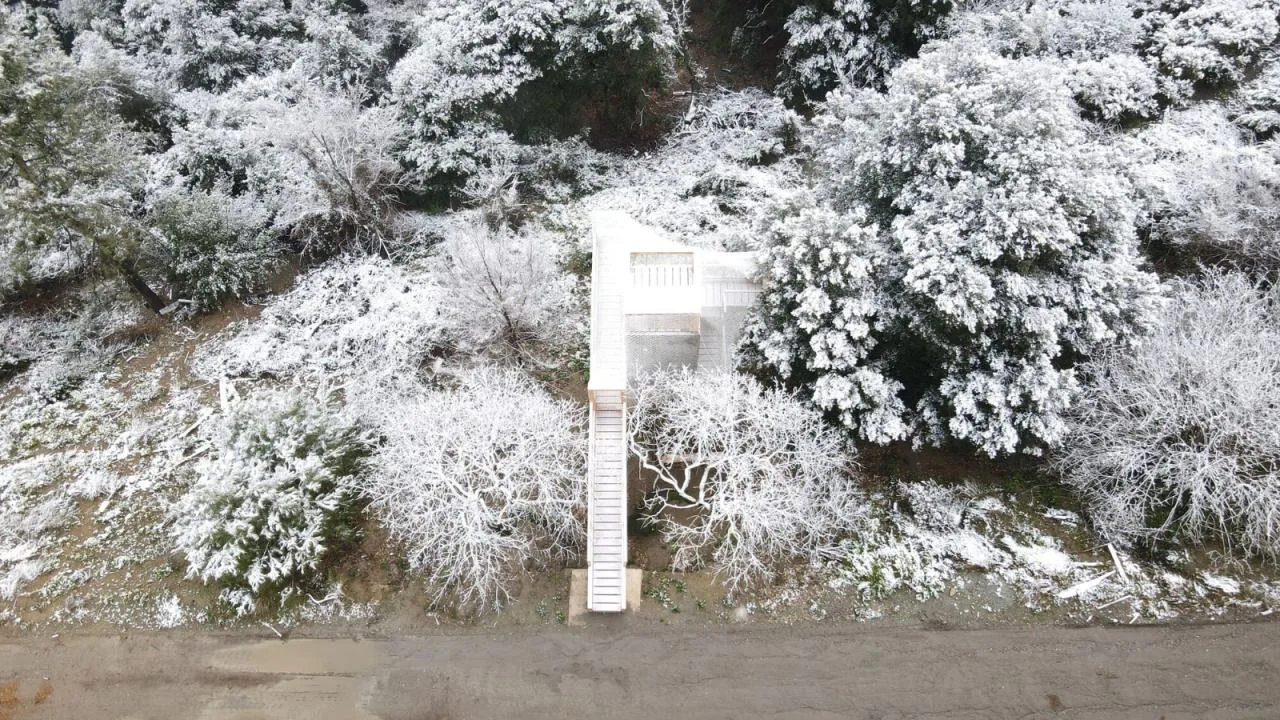
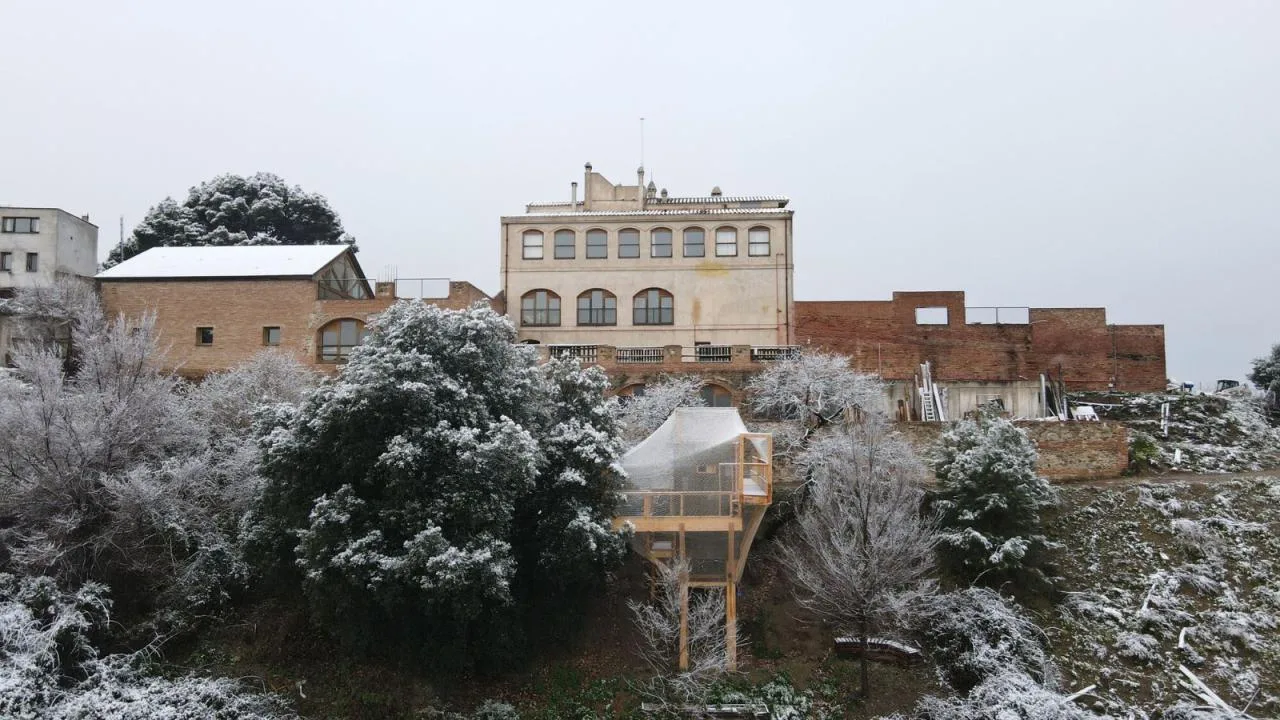
Project Drawings
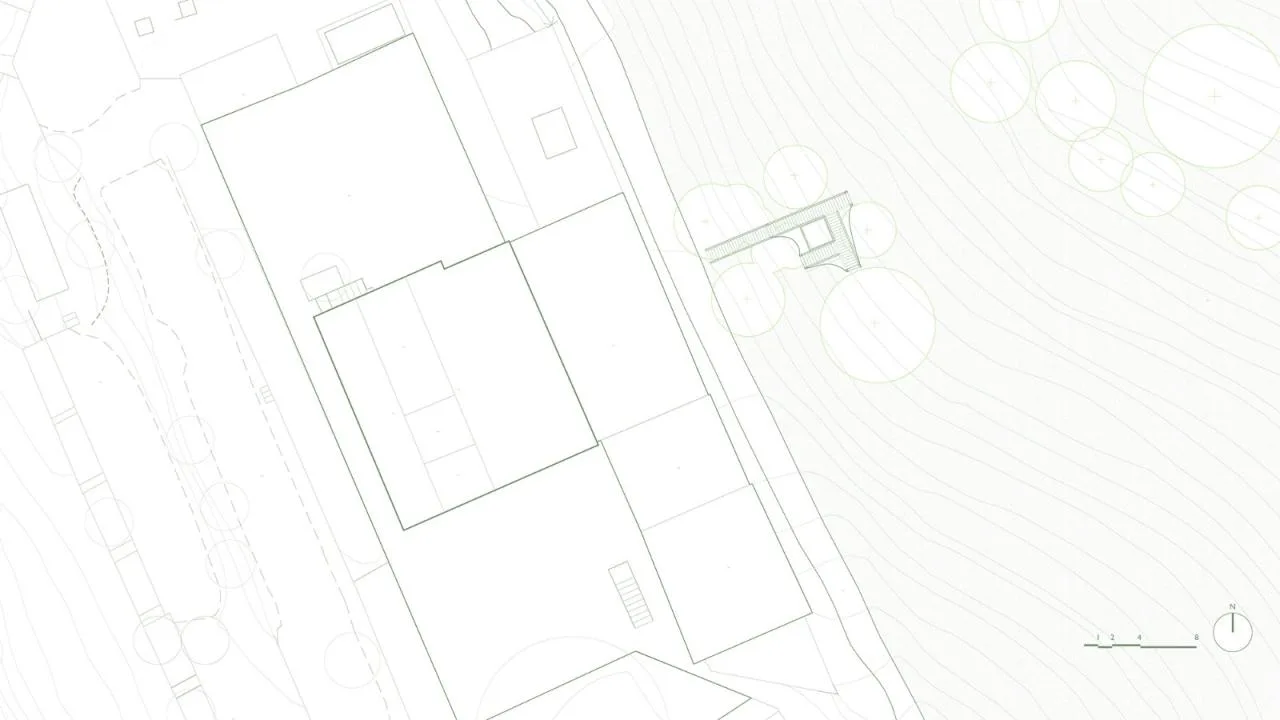
△ General Layout Plan
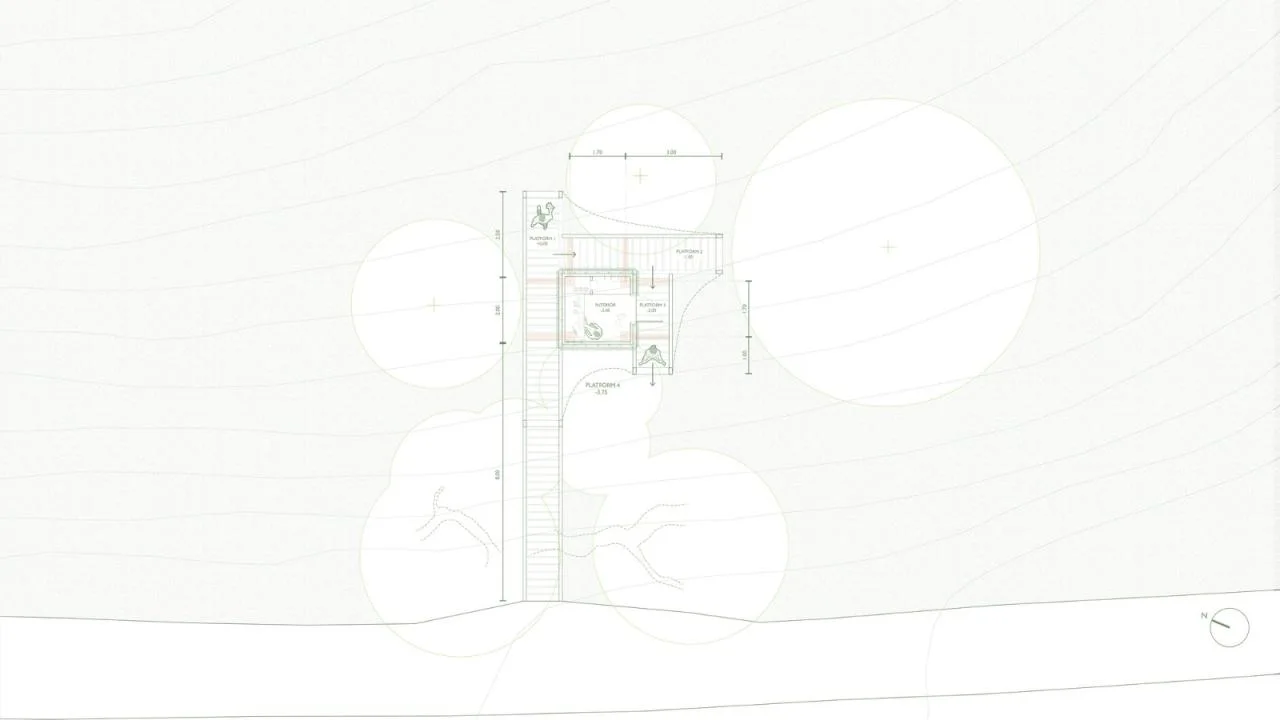
△ Plan View
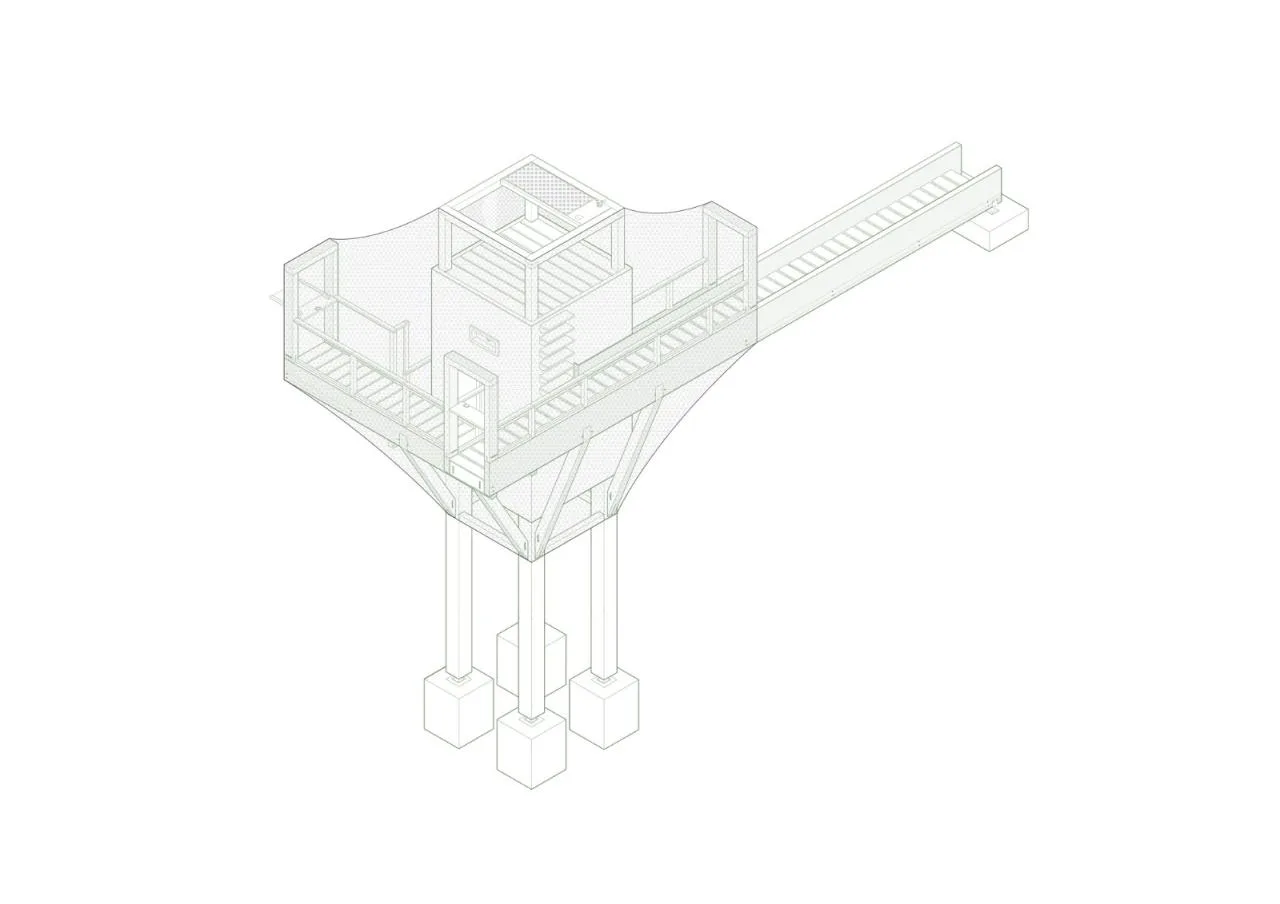
△ Axonometric Diagram
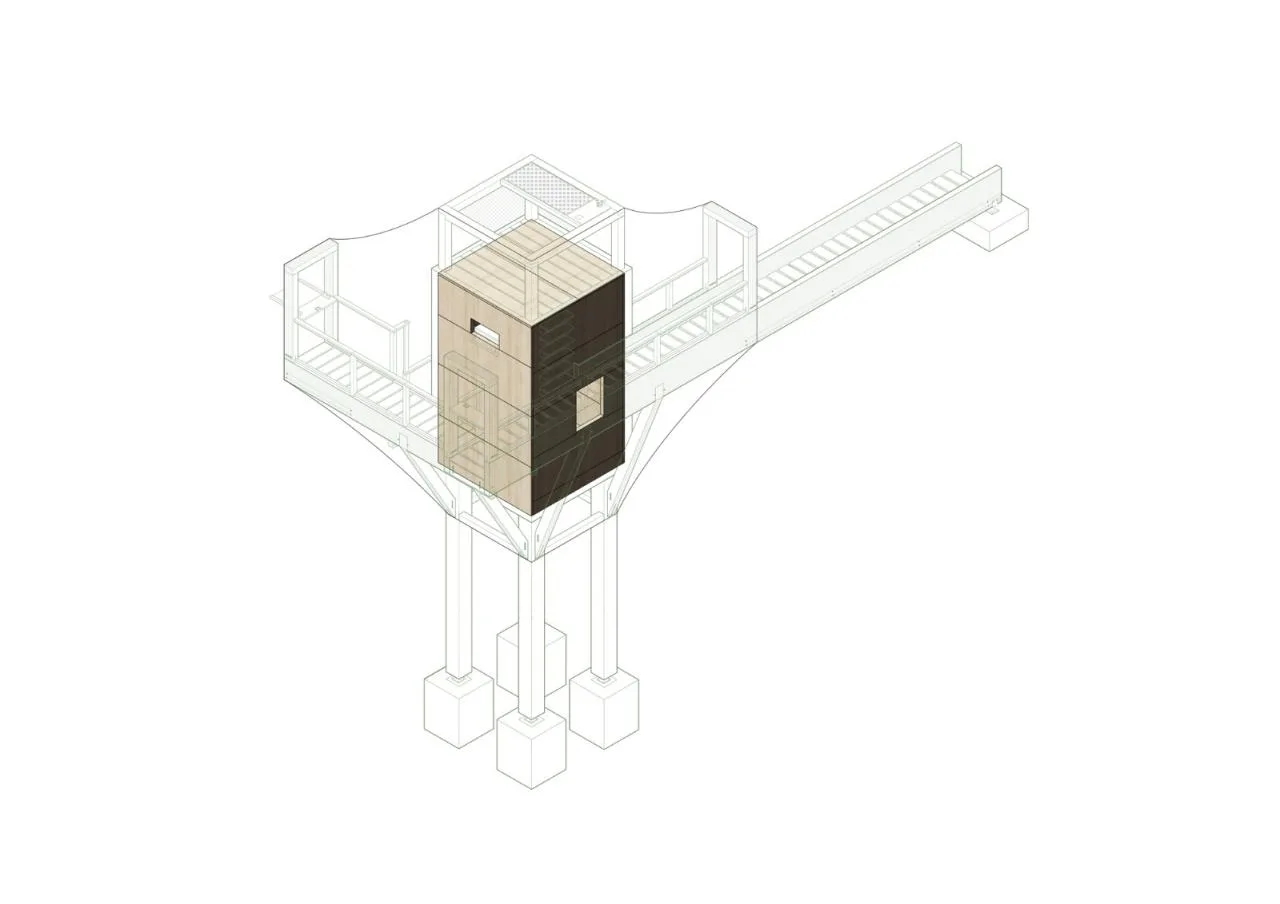
△ Schematic Diagram of Internal Structure
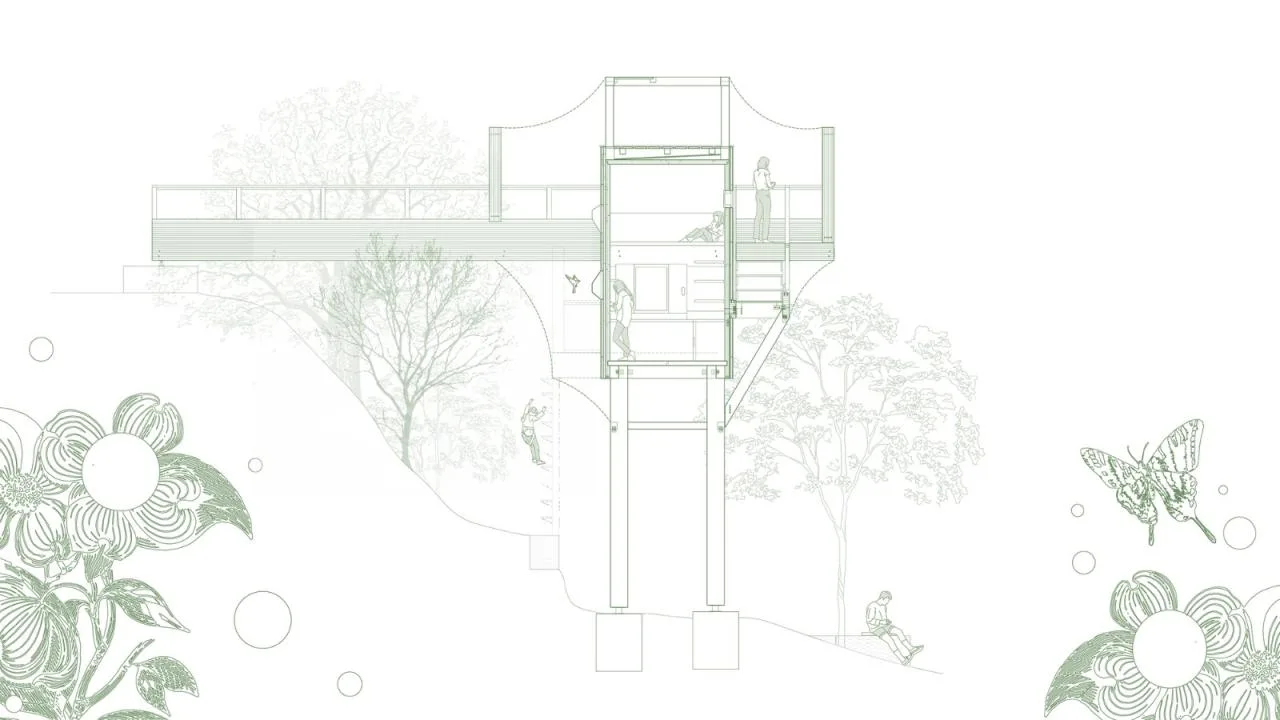
△ Section Diagram
Project Information
Architect: IAAC
Project Year: 2022
Photographer: Adrià Goula
Project Directors: Vicente Guallart, Daniel Ibañez
Team Members: Andrea Paola Rubio Paredes, Leif-Andres Vallecillo Riksheim, Lillian Wanjiru Beauttah, Pablo Rafael Herraiz García de Guadiana, Prachi Agarwal, Rachael Margaret Verdugo Pelaez, Romain Jacques Kenny Russe, Roshni Chirag Shah, Shagun Modi, Zani Kerubo Gichuki, Iletutu “Tutu” Ibiyemi Awosika, Kshitij Ramlal Sarote, Mónica Irene Pérez Rivera, Prasidh Choudhary, Agnieszka Szklarczyk, Pongpol Punjawaytegul, Suwapat Rodprasert, Anton Hofstadt
Base: Vallduara Labs
Venue Manager: Laia Pifarré
Support Team: Bruno Ganem, Alex Hadley, Gustavo Escudero
Project Evaluators: Marziah Zad, Miquel Rodriguez, Elena Orte, Guillermo Sevillano, Ignasi Caus, Miguel Nevado
Project Sponsors: Tallfusta, Alberch, Heco Schrauben Ibérica
Project Support: Ayuntamiento de Cerdanyola del Vallès
Volunteers: Marilia Fernandez Lockwood, Philipp Wienkämper
Location: Barcelona, Spain













Must log in before commenting!
Sign Up