
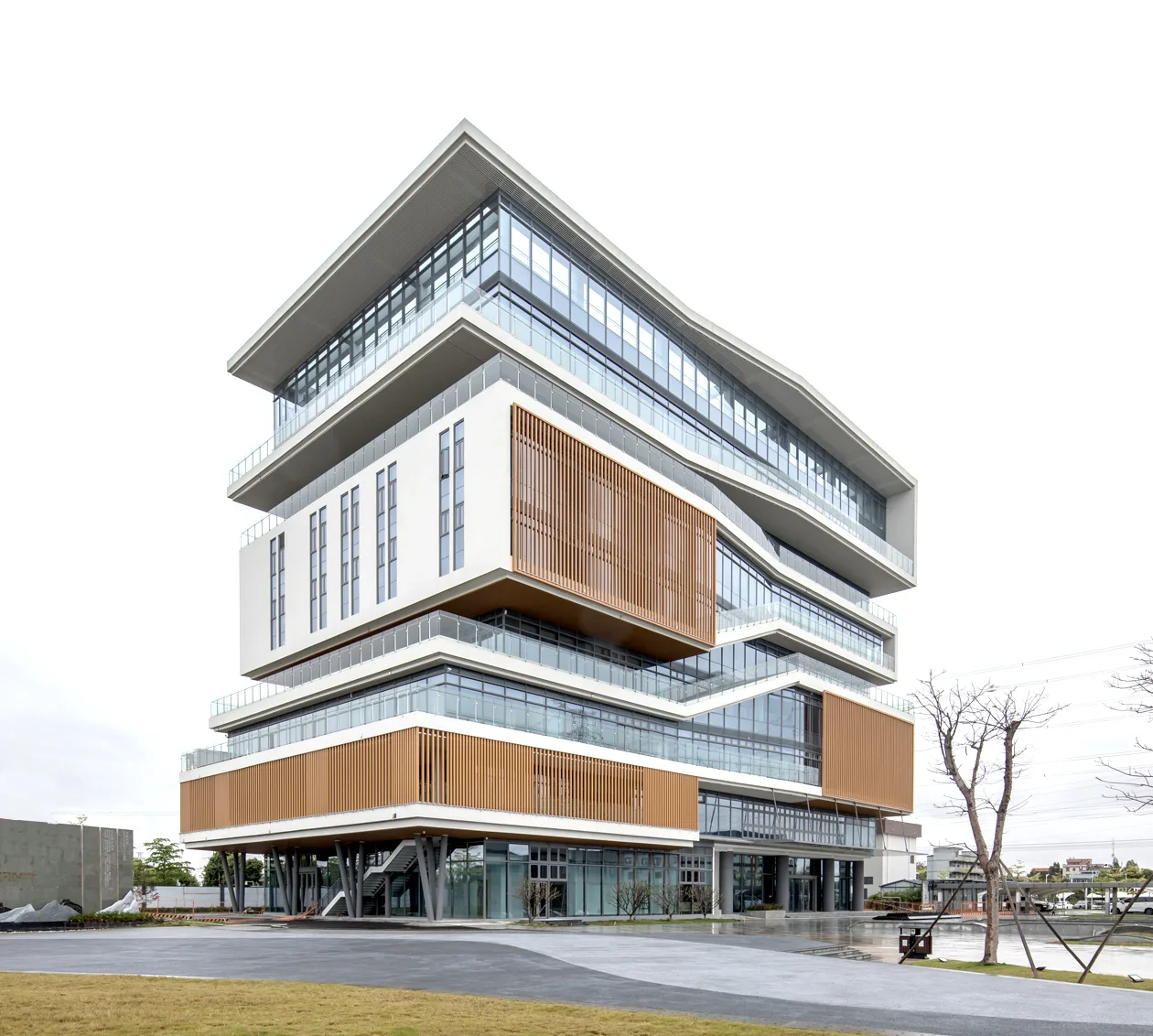
Project Overview
The Dongguan Water Town Functional Zone is a key provincial-level development area in Guangdong Province. Future planning positions this water town area as a model for high-quality, coordinated development. This project serves as a flagship building representing the management organization of the water town functional zone.
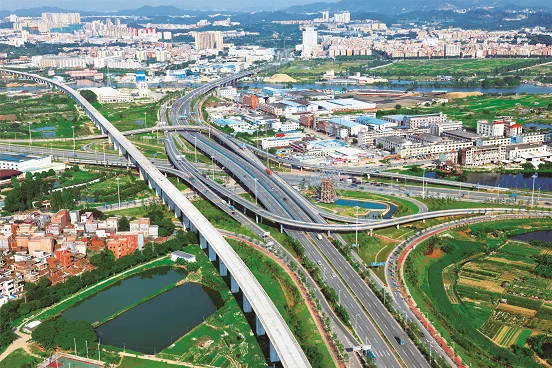
△ Dongguan Water Town
To ensure the design goals were fully realized, the client entrusted the entire design scope to the team as a general contractor. Under the constraint of a “fixed-price design,” the team delivered a turnkey project integrating architecture, interior, and landscape design.
The client had high expectations: the building should respond to the Lingnan climate while avoiding traditional clichés, highlighting the vibrancy of modern architecture and reflecting the fresh atmosphere of the water town area.
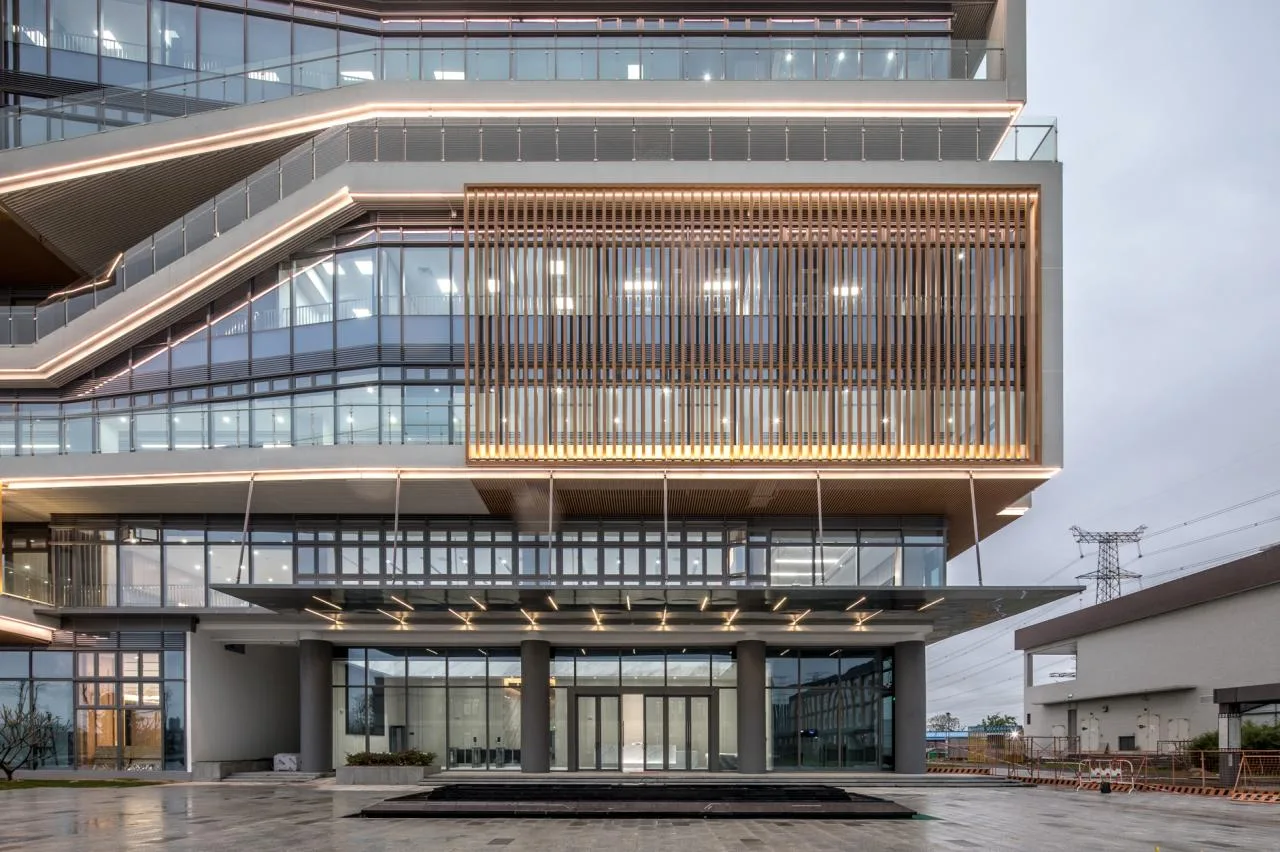
△ Main entrance of the project
Park Planning
The Shuixiang Science and Technology Innovation Industrial Park spans about 53 acres with a floor area ratio of 3.5, resulting in a compact planning space. The completed first phase consists of low-rise buildings no higher than four floors, occupying nearly half the site and leaving limited land for future construction.
When commissioned to research the second phase building, our initial focus shifted to the overall park planning.
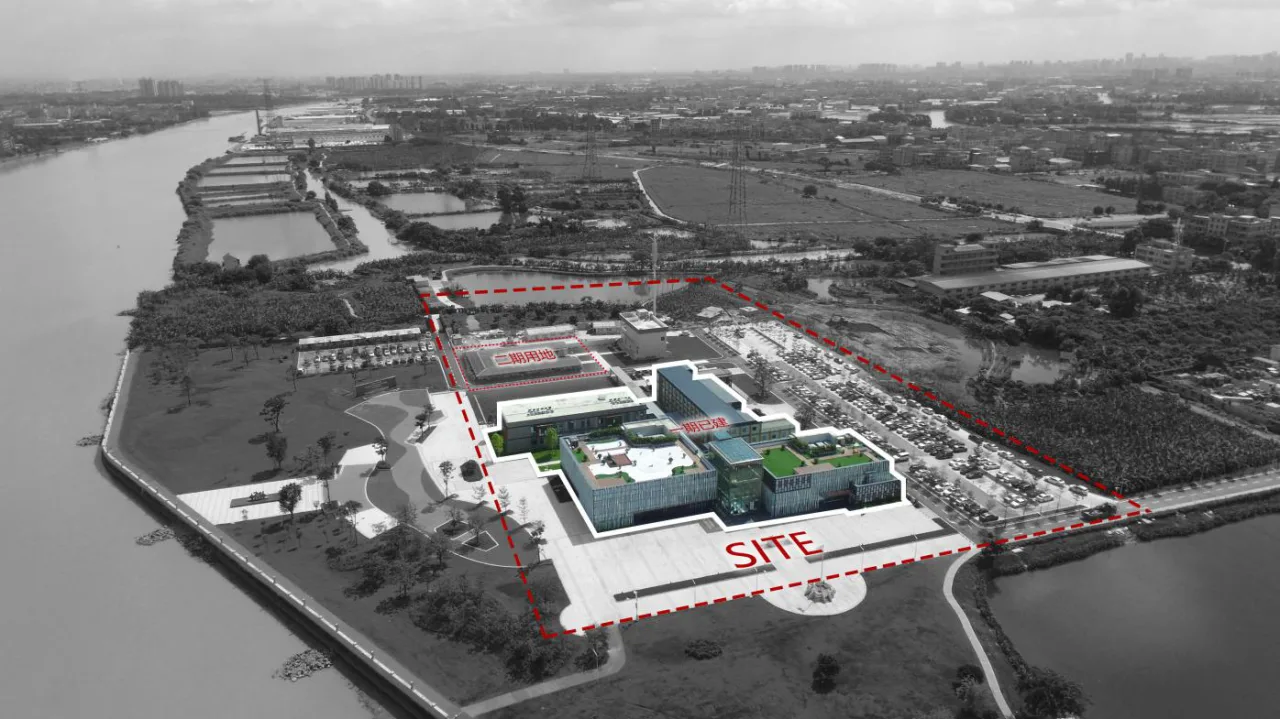
△ Current site conditions
We believe that individual buildings must be integrated parts of the overall park rather than standalone entities. By planning the park’s overall layout rationally, we identified the optimal placement for the new building in Phase II. This involved redesigning the main park entrance, vehicle and pedestrian routes, parking plans, and redefining the park’s landscape core.
Approaching the project holistically with a rational and orderly methodology enhanced the design logic for Phase II and strengthened the owner’s confidence in ongoing development. This comprehensive approach secured us the design rights for the project.
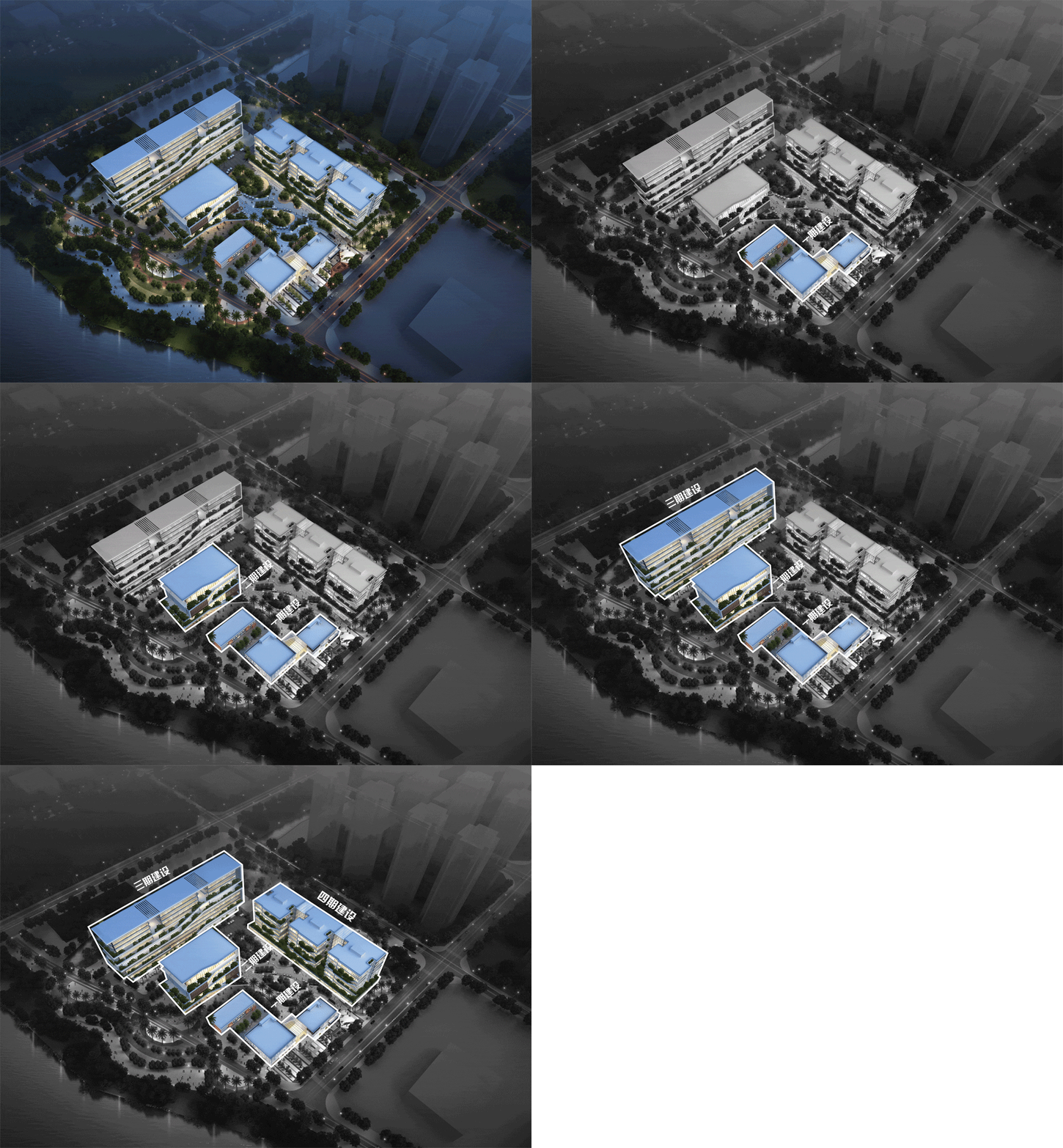
△ Project phased development
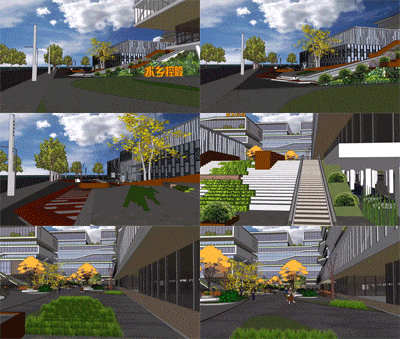
△ Park entrance walkthrough
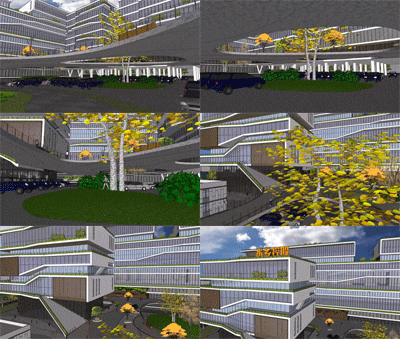
△ Park courtyard walkthrough
The Water Town Science and Technology Innovation Phase II Project serves as the park’s main supporting facility, designed to meet multi-functional daily needs. It includes a large multifunctional hall seating 300 people, a reservation-based conference center for serviced parks, supporting canteens and catering, administrative offices, and a dedicated meeting area for township leaders to host guests.
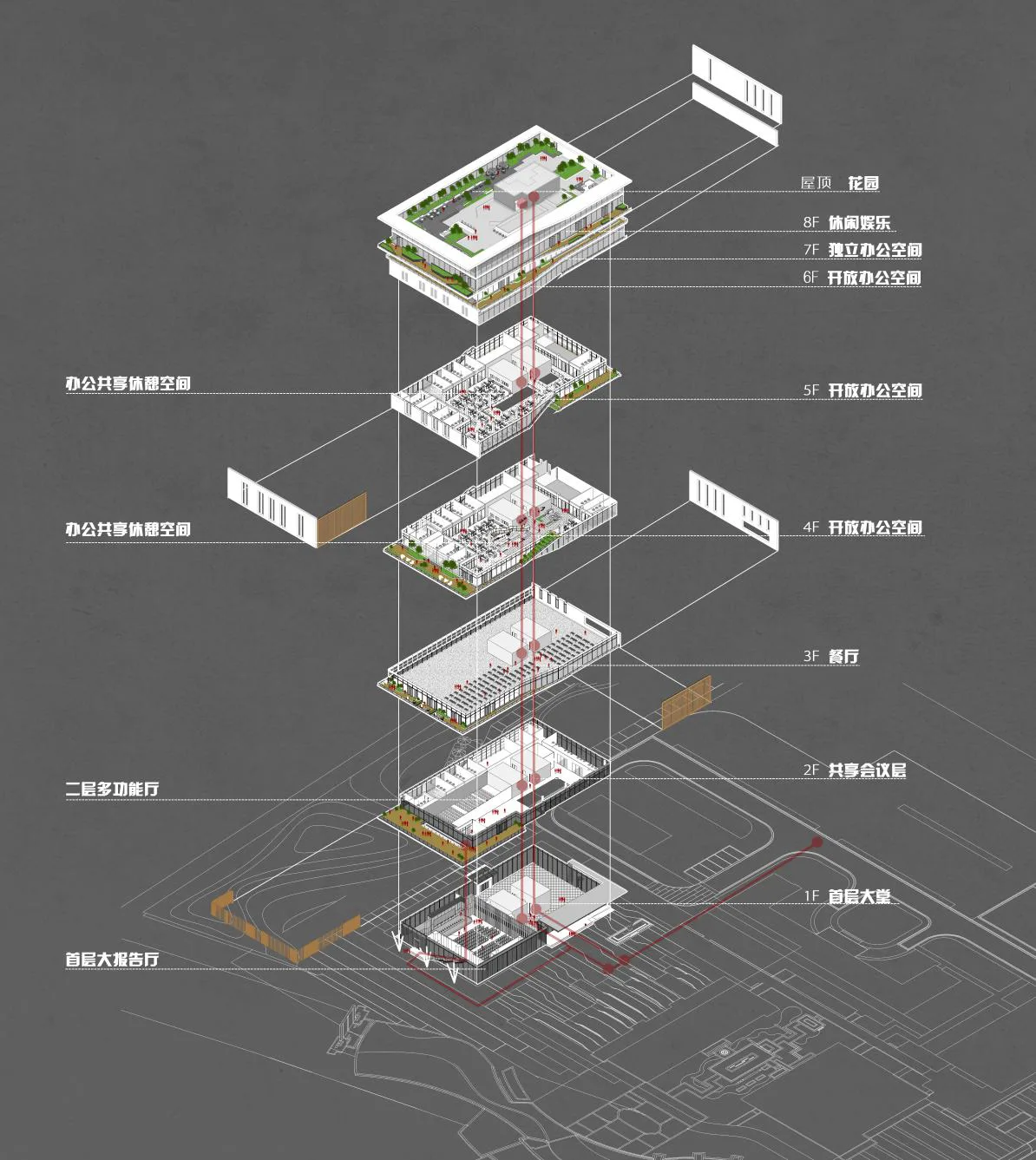
△ Functional analysis
We carefully examined usage and evacuation requirements for each function, then organized traffic flow logically before vertically stacking the functions. This ensures that exclusive functions on each floor do not interfere with one another, maximizing efficiency.
For instance, the multifunctional hall, which accommodates many users and requires efficient evacuation, is situated on the ground floor for ease of use. As floors rise, the view of the western river landscape improves, so the conference and reception areas are located on the eighth floor to provide occupants with the best river views and create a welcoming atmosphere for guests.
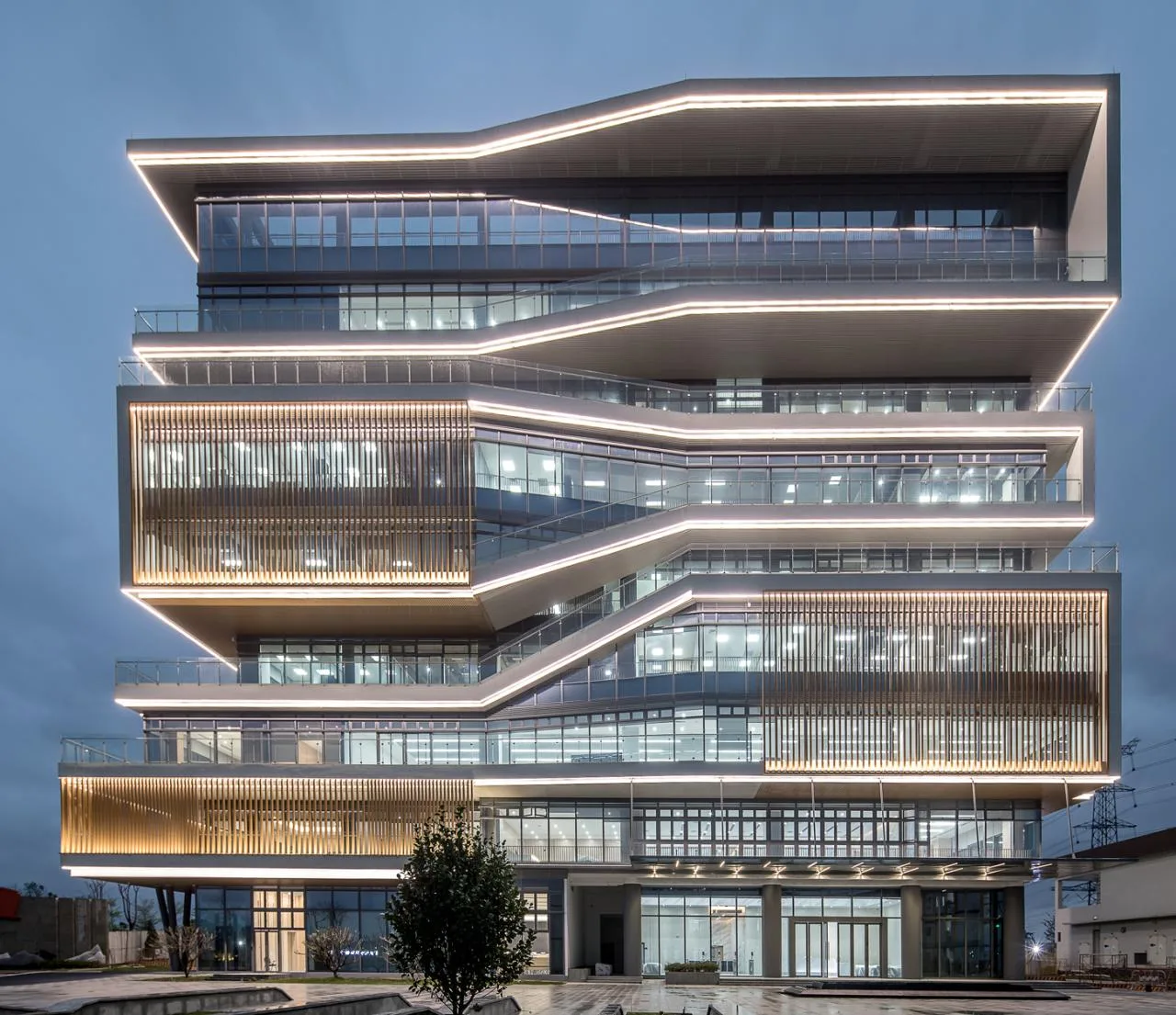
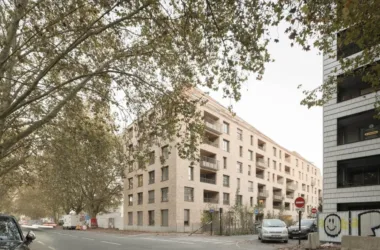
△ Project exterior
Facade Details
The client, with extensive European research experience, favors simple yet powerful modern architecture with refined aesthetics.
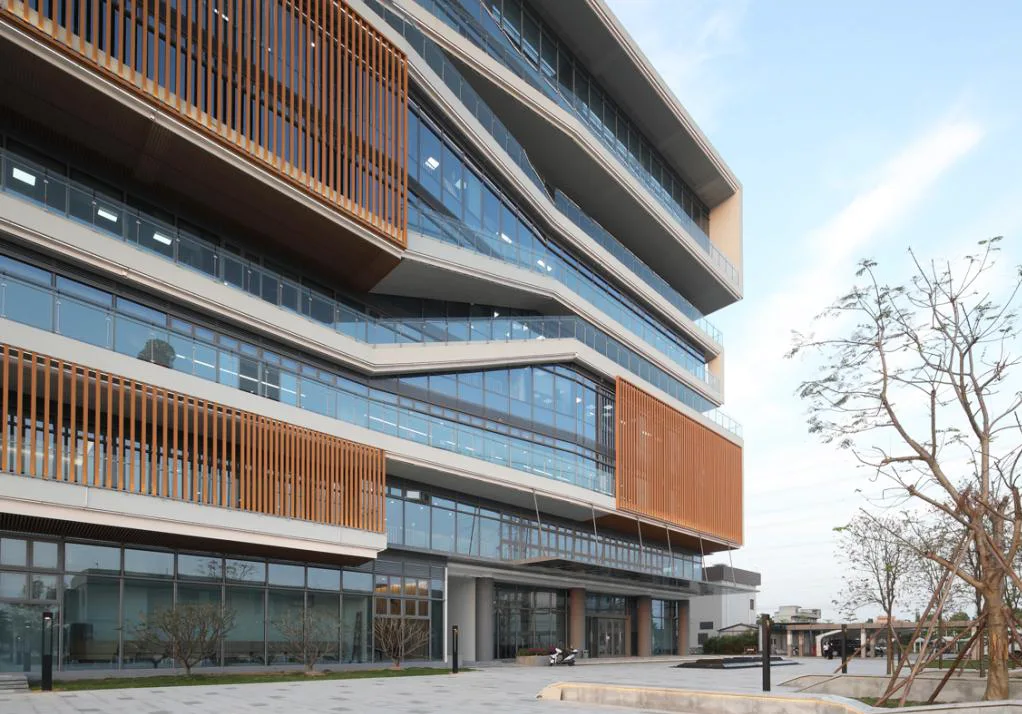
△ Project exterior
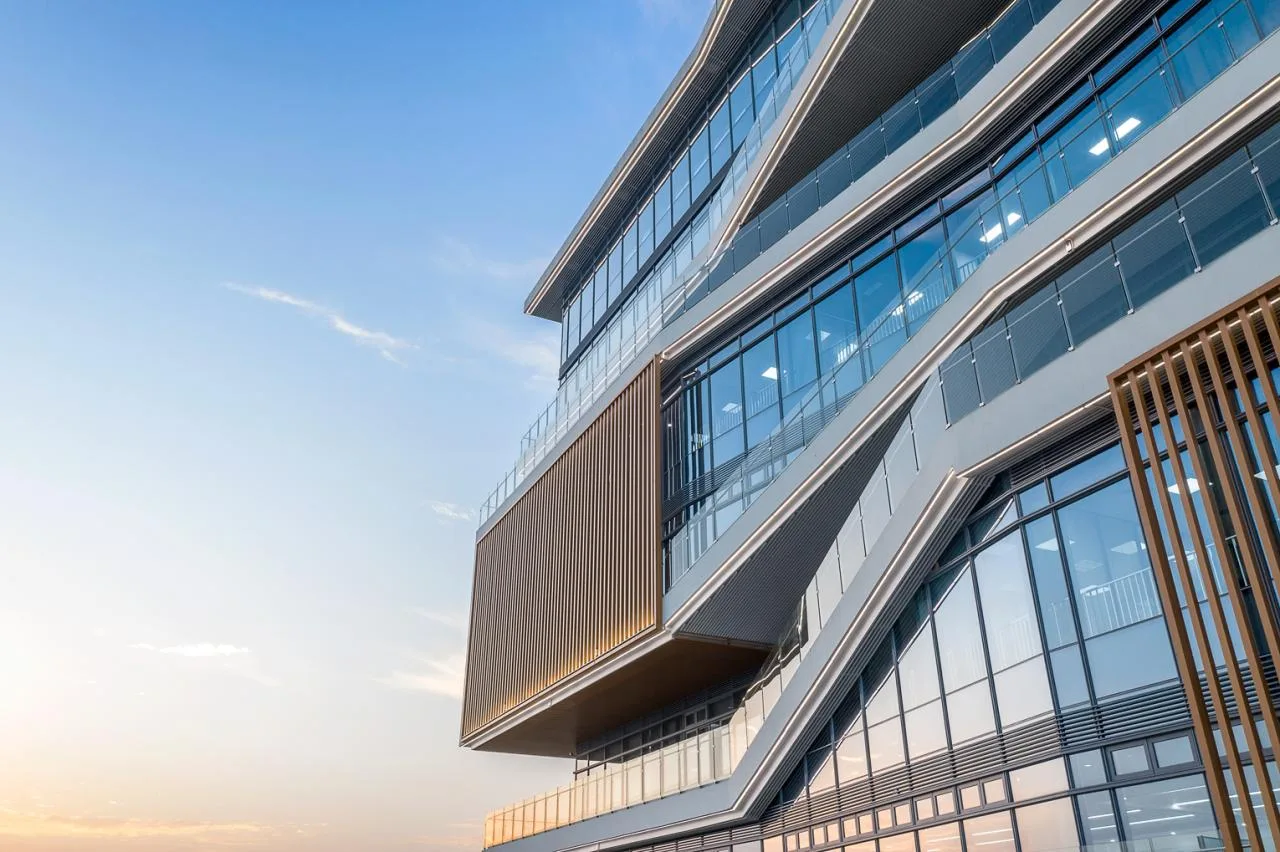
During design, we aimed to create a sculptural effect by contrasting solid, massive walls with light, transparent glass curtains. Heavy concrete elements appear to float, supported by delicate glass volumes. The balconies feature staggered obtuse angles inspired by rolling water waves, allowing the heavy concrete to seem as if it dances like a ribbon extending into the distance. This approach results in a volume that combines modern artistic expression with regional water town characteristics.
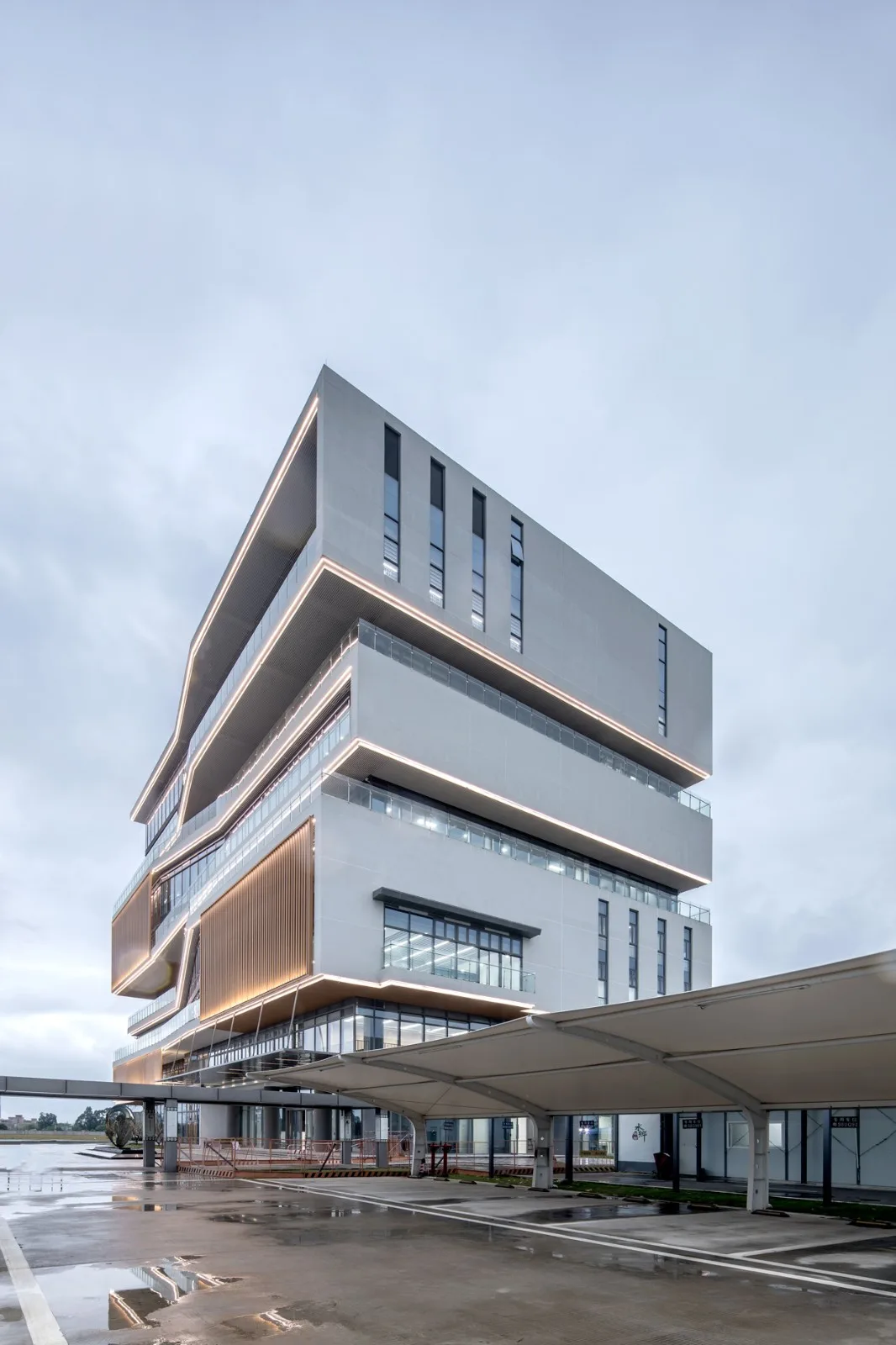
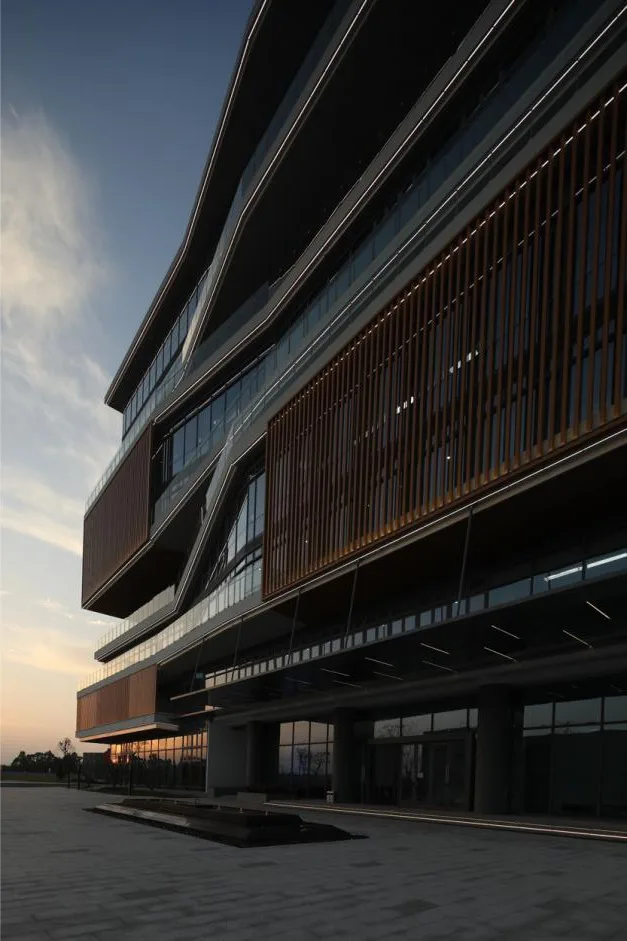
△ Project exterior
The architectural form is clearly visible to vehicles passing along Shuixiang Avenue, serving as a landmark gateway for the Shuixiang functional area.
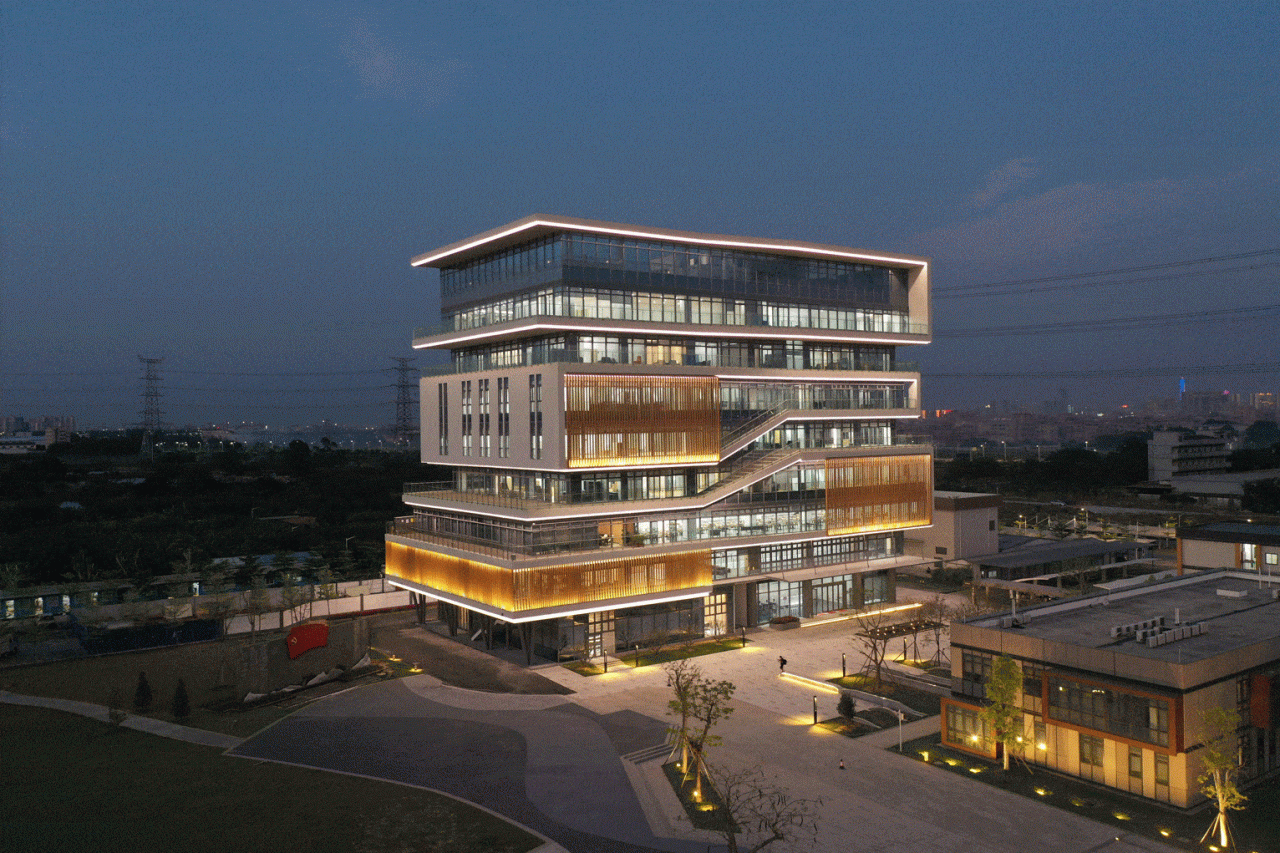
△ Aerial night view
To the west, the project overlooks a tributary of the Dongjiang River with expansive views. However, the Lingnan region’s afternoon sun can be intense and uncomfortable. The design employs both active and passive shading strategies, allowing occupants to enjoy the western views while minimizing sun exposure.
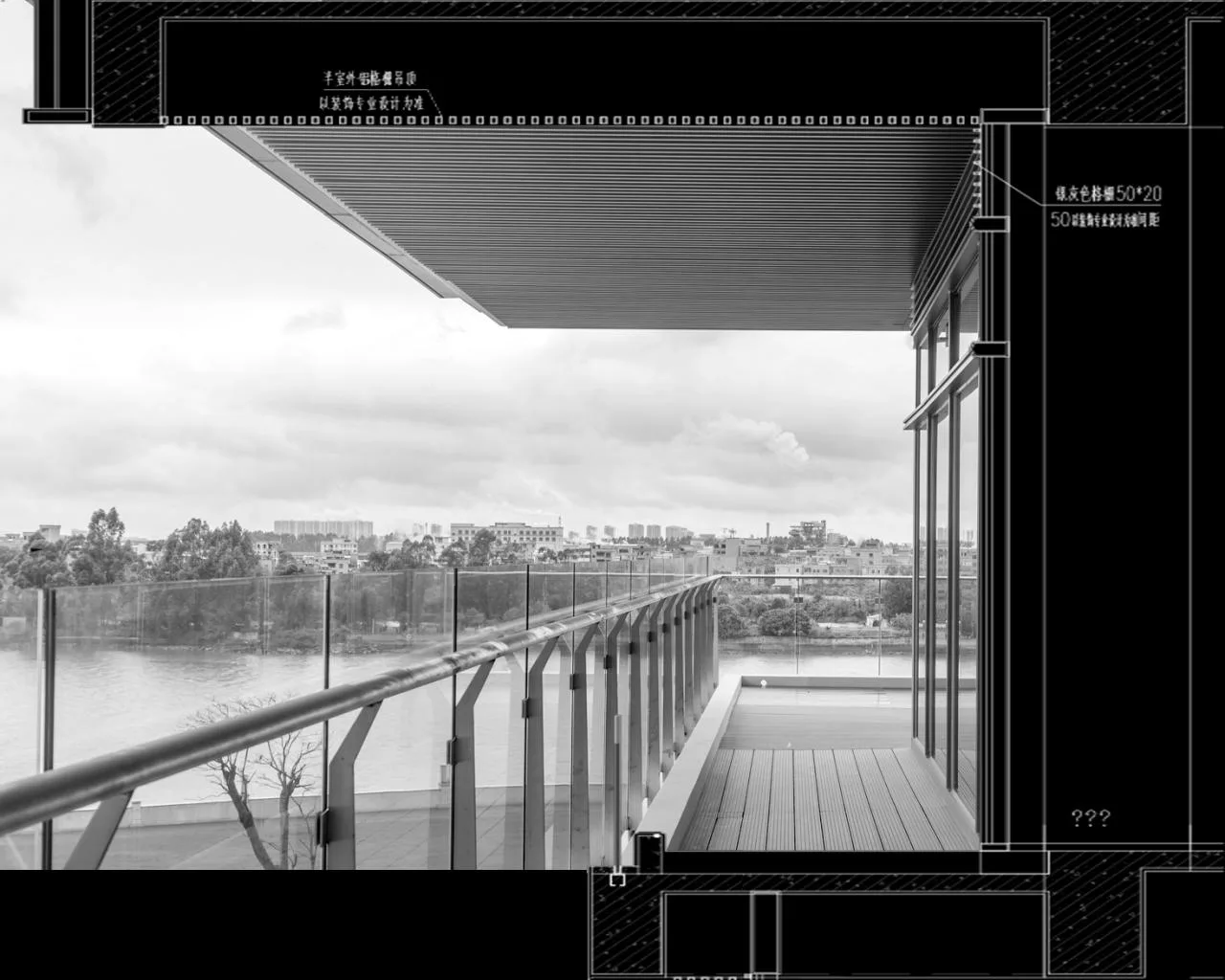
△ Balcony sectional perspective
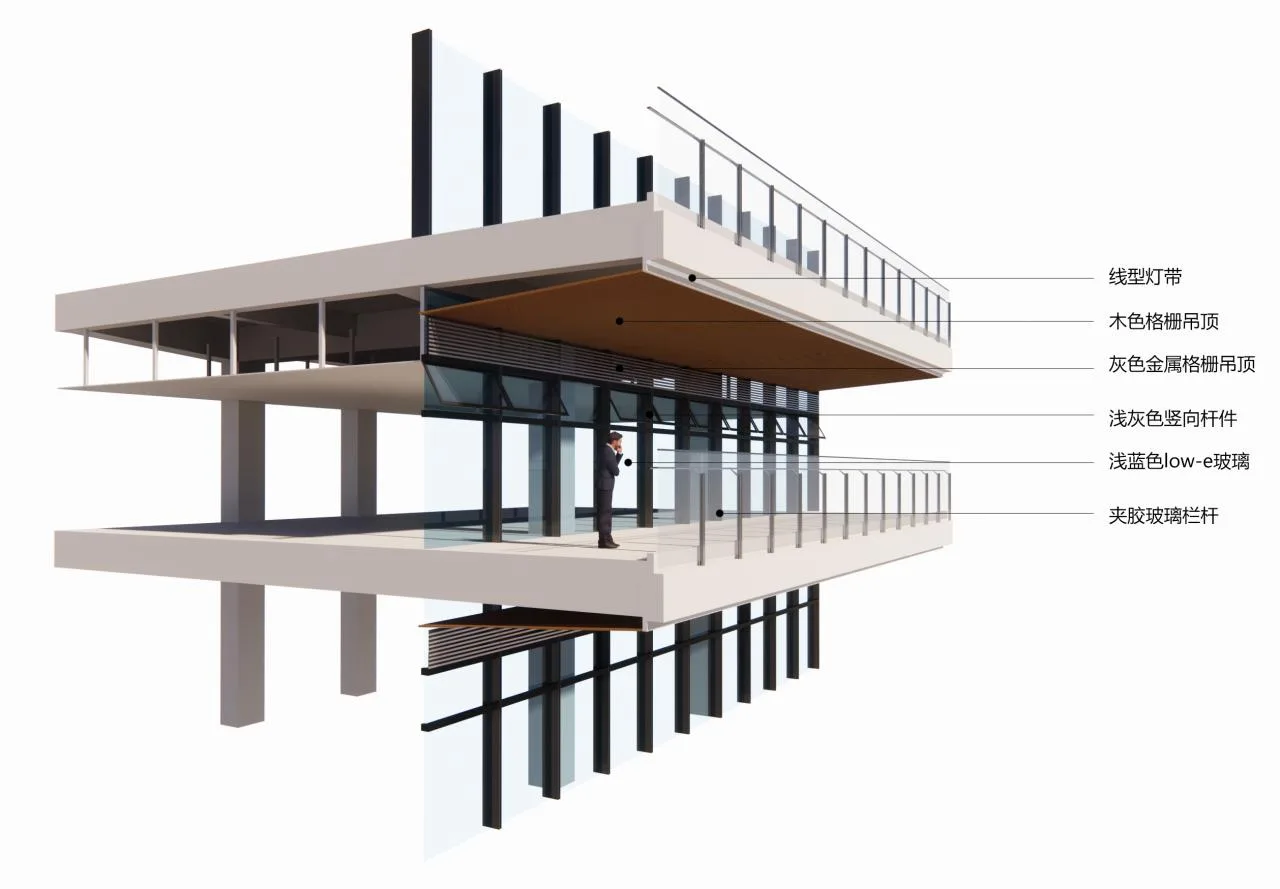
△ Balcony detail
The main facade combines folded plates to create shading elements between floors, augmented by horizontal louvers on windows and vertical wooden grids in select areas. The glass curtain wall features high-grade, pale gray components that effectively reduce heat absorption.
Facing west—the main landscape and sun-exposed side—each floor has terraces with large overhangs of varying widths. These terraces provide prime sunset views while casting deep shadows that shade the western windows.
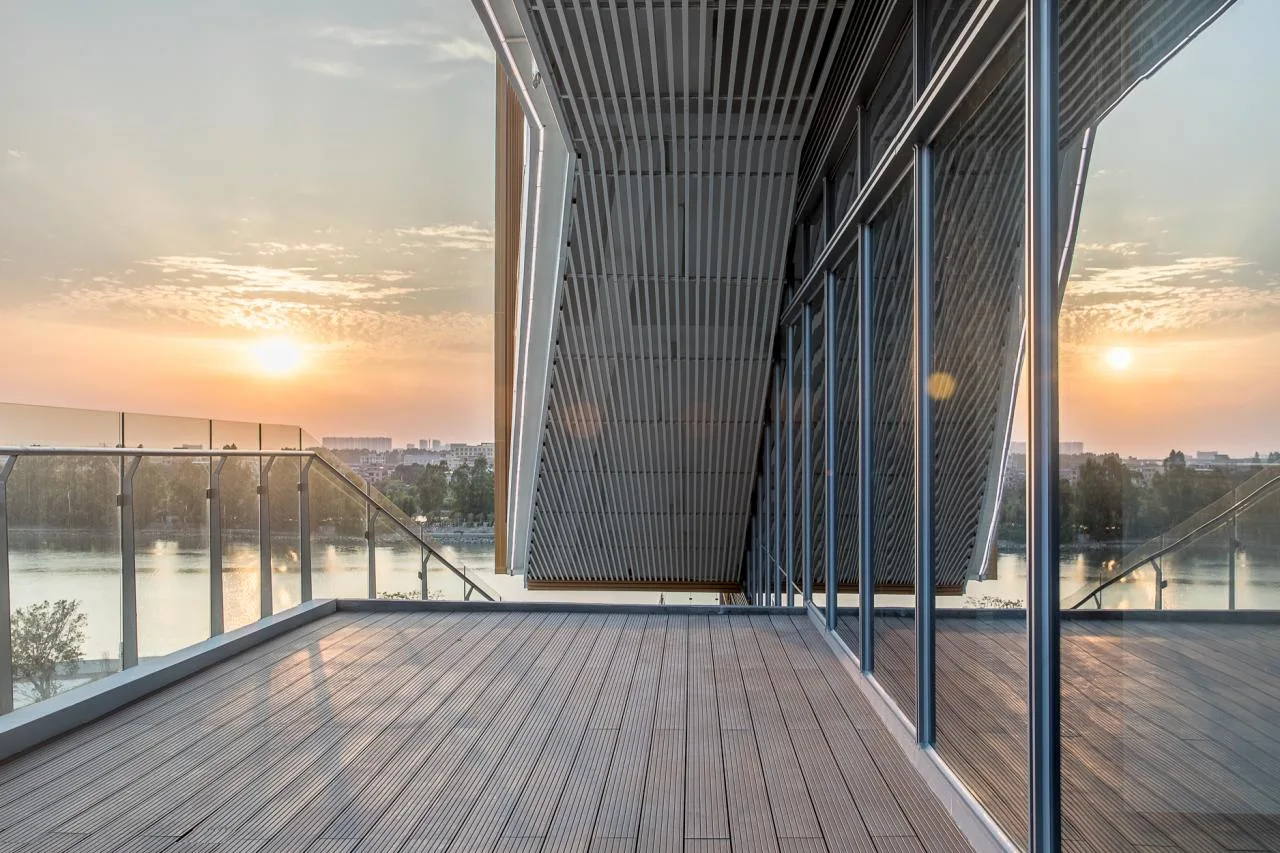
△ Realistic balcony view
Balcony Details
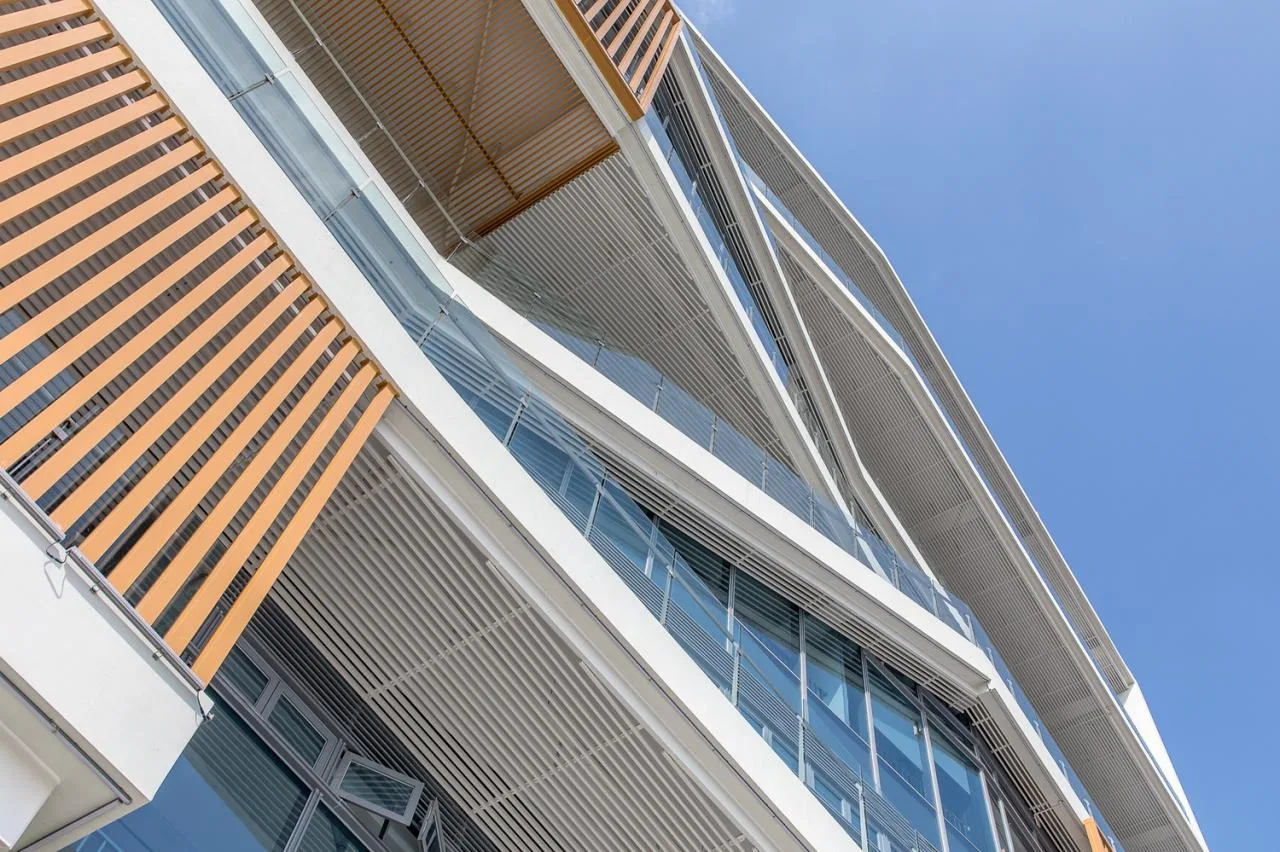
△ Facade detail photography
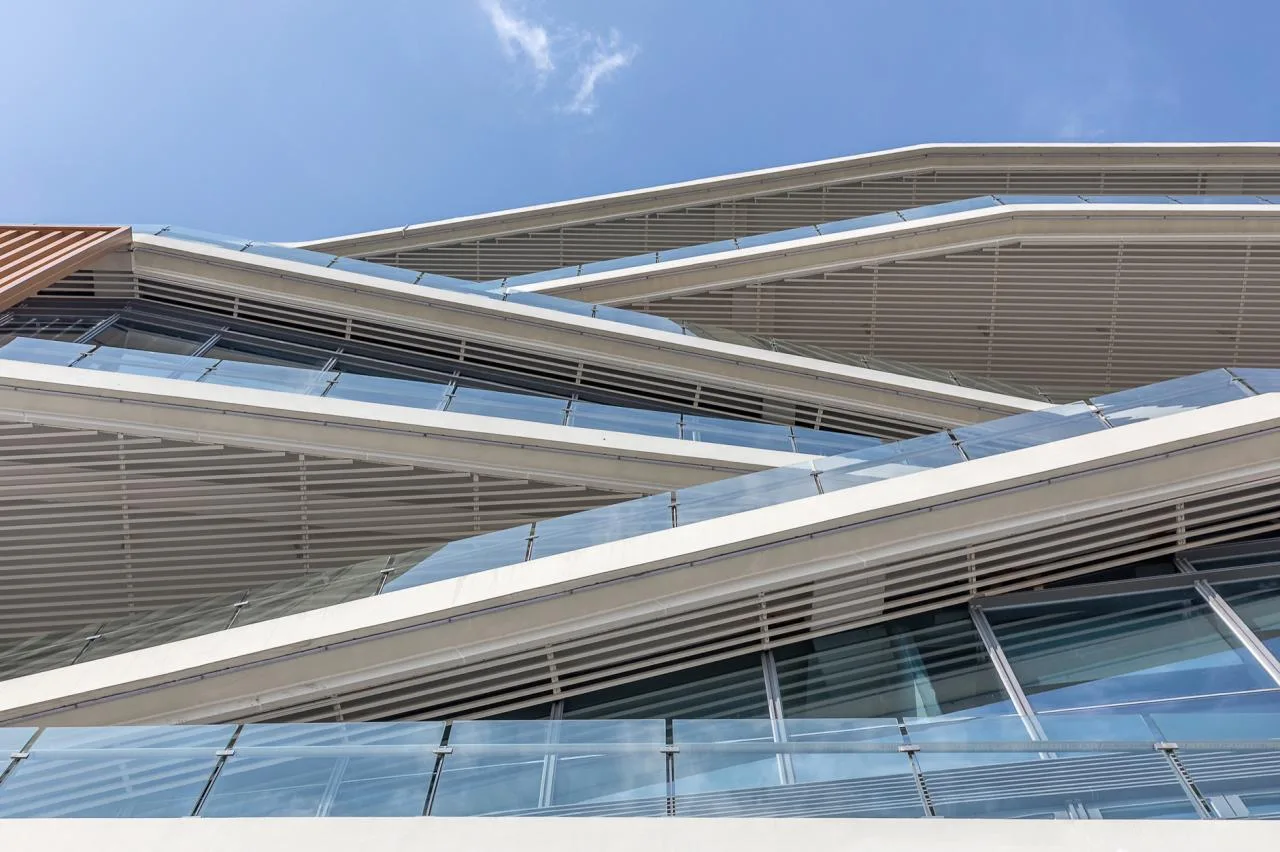
△ Facade detail photography
The intense western sun is filtered by the grille, producing dappled light and shadow that provide cooling shade to the interior spaces.
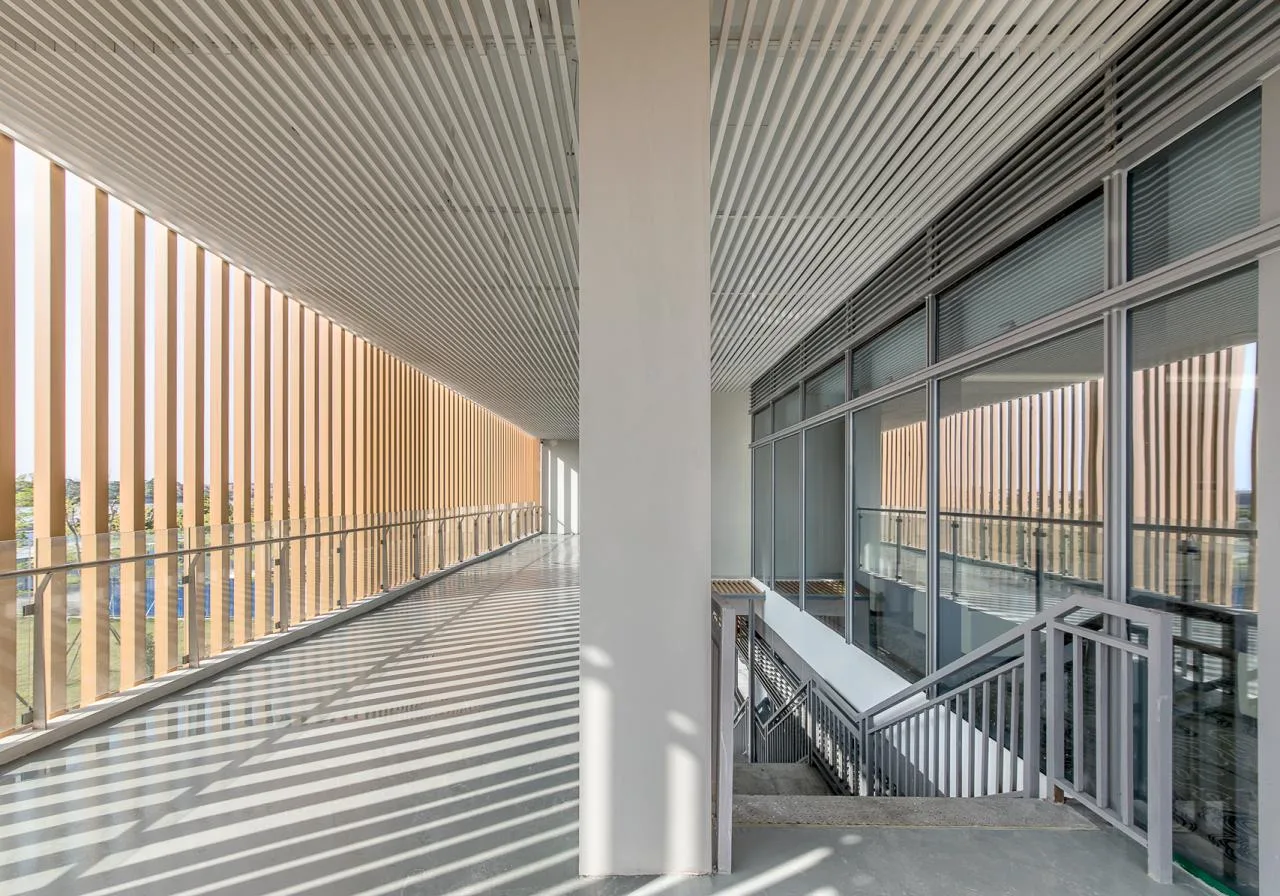
△ Balcony grille
One popular landscape design concept was to feature gardens on balconies and terraces of varying widths on each floor, creating a ‘Babylonian Hanging Garden’ effect. Unfortunately, due to budget constraints, this balcony garden was not realized, which remains a significant regret for the project.
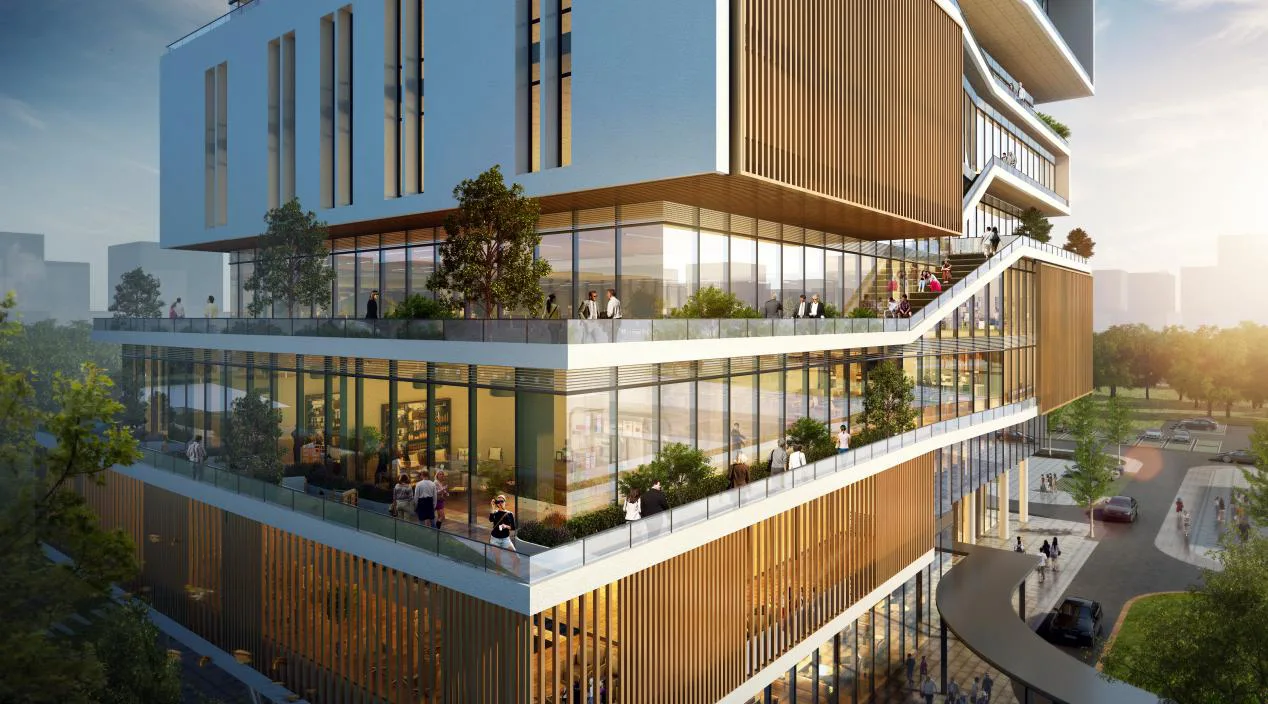
△ Balcony Garden Rendering
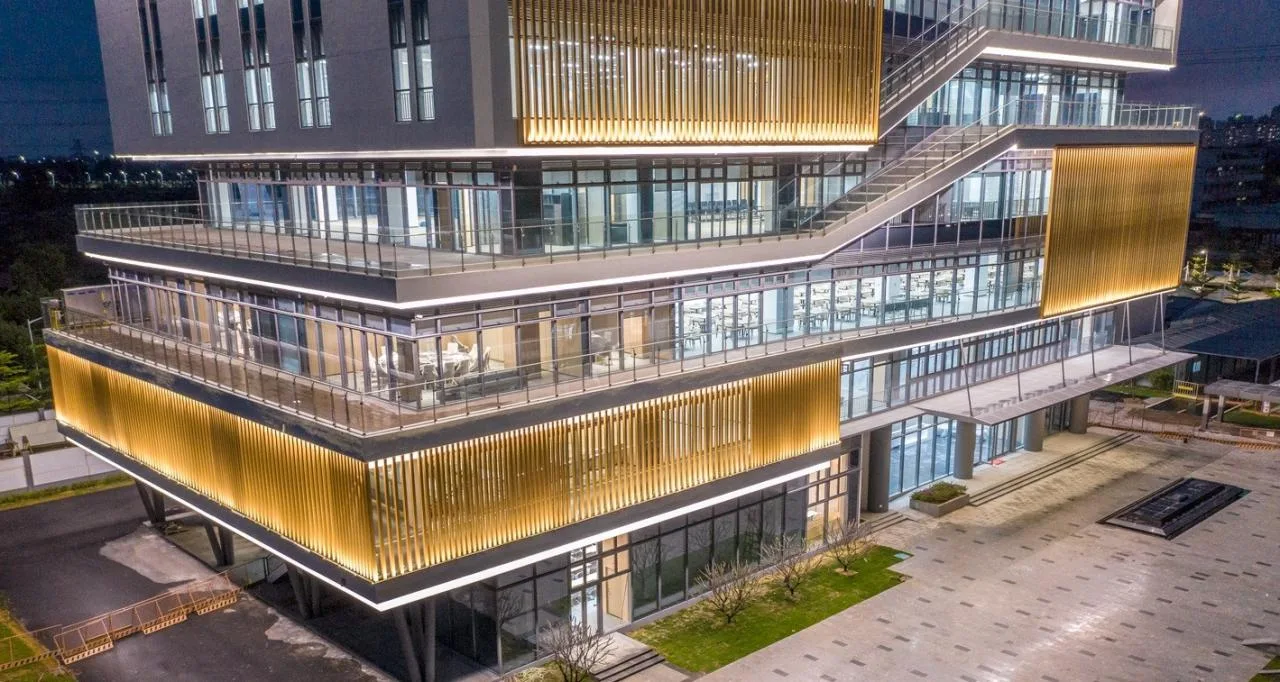
△ Realistic balcony view
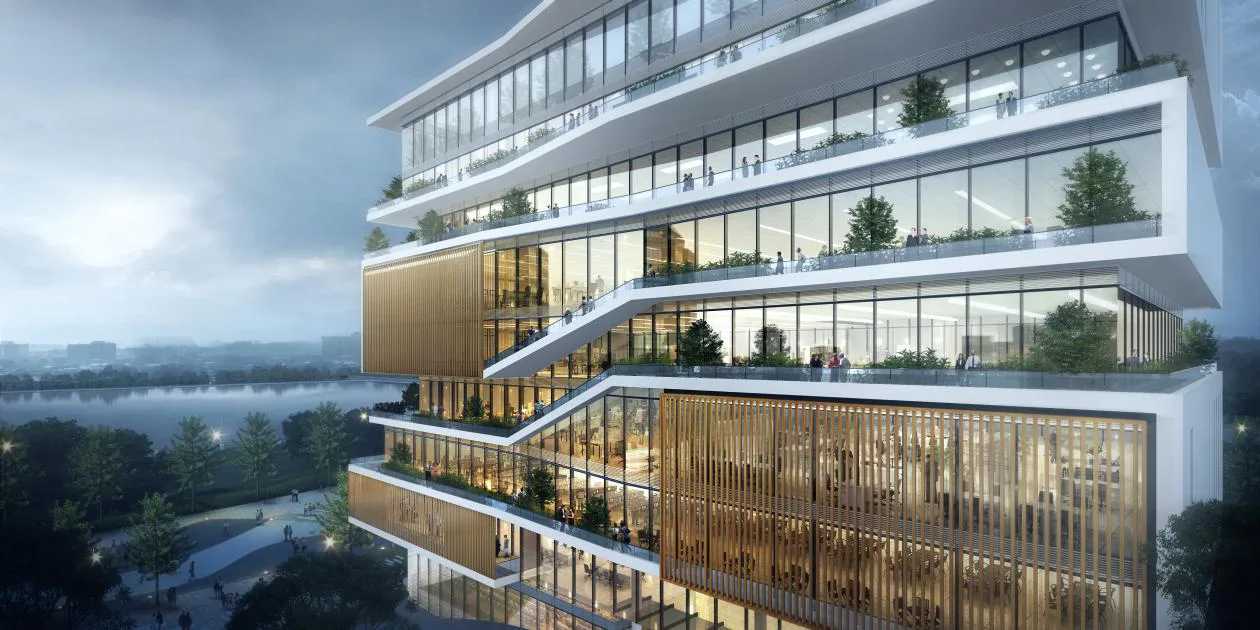
△ Balcony Garden Rendering
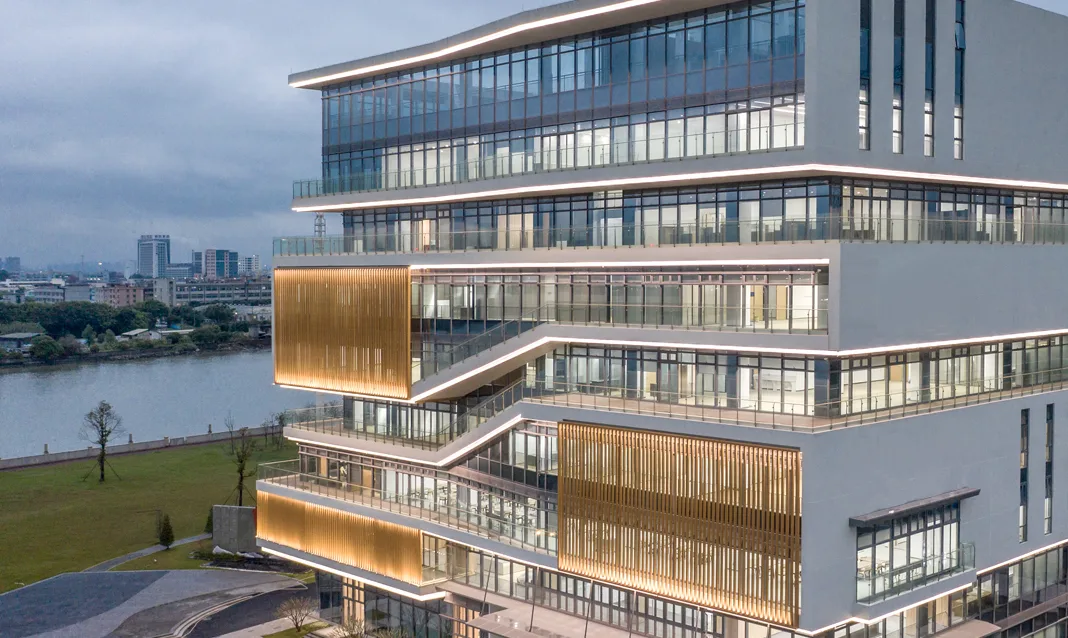
△ Realistic balcony view
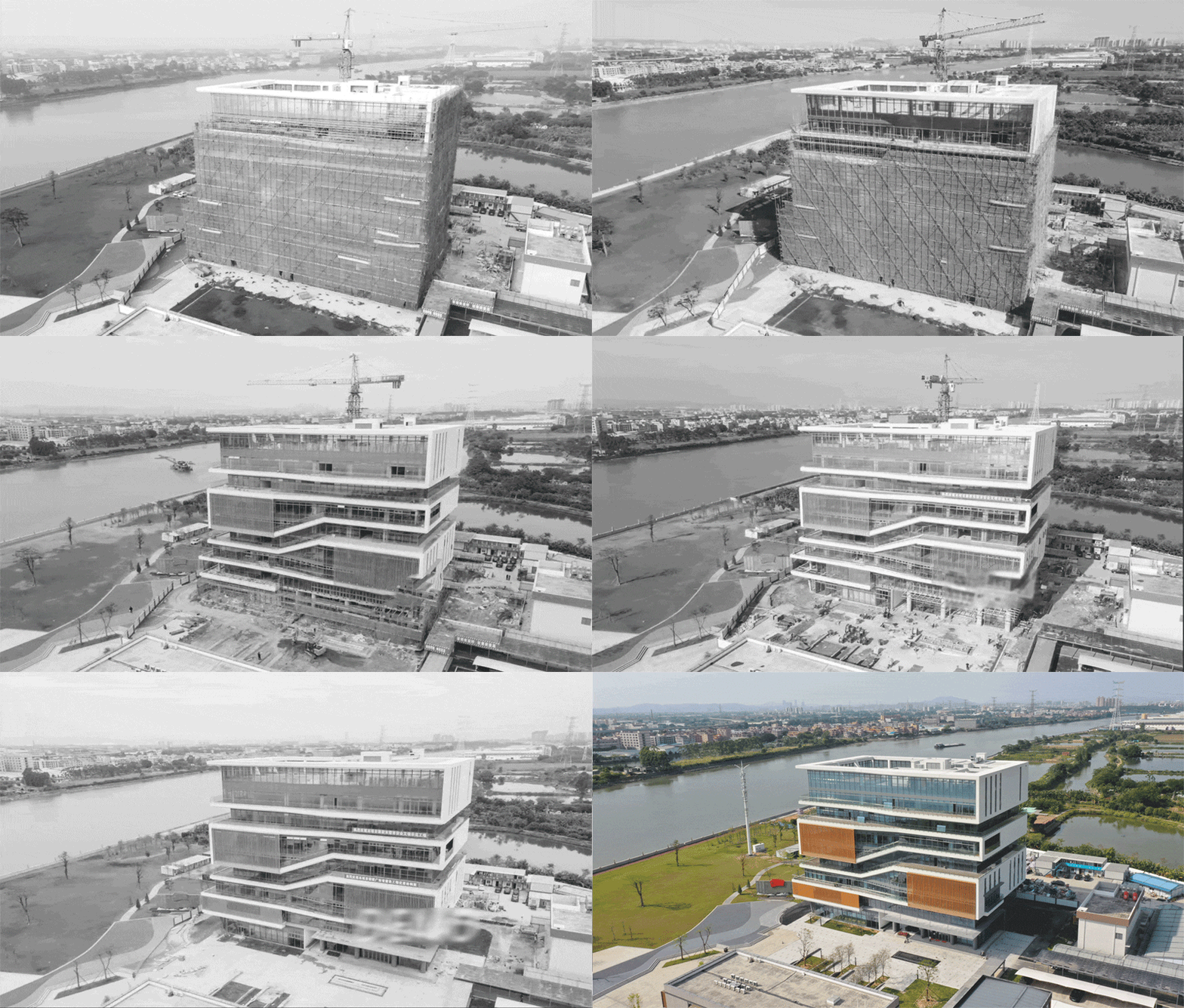
△ Construction progress
Structural System
This project features complex spatial arrangements and functional requirements. A key structural challenge was designing the first-floor multifunctional hall to be column-free, accommodating 300 people simultaneously.
The hall’s ground-floor location is critical. Eliminating four columns typically requires raising the beam height significantly, consuming vertical space and necessitating extensive reinforcement, which drives up costs and can create an oppressive interior.
Under the “fixed-price design” constraint, we sought a structural solution that balanced cost savings with spatial aesthetics. After extensive collaboration with the chief engineer, we adopted an innovative inclined column design.
This approach converts the four removed columns into inclined supports spanning two floors, adjusting their angles to maintain structural integrity while creating a large, open first-floor space without compromising other floors.
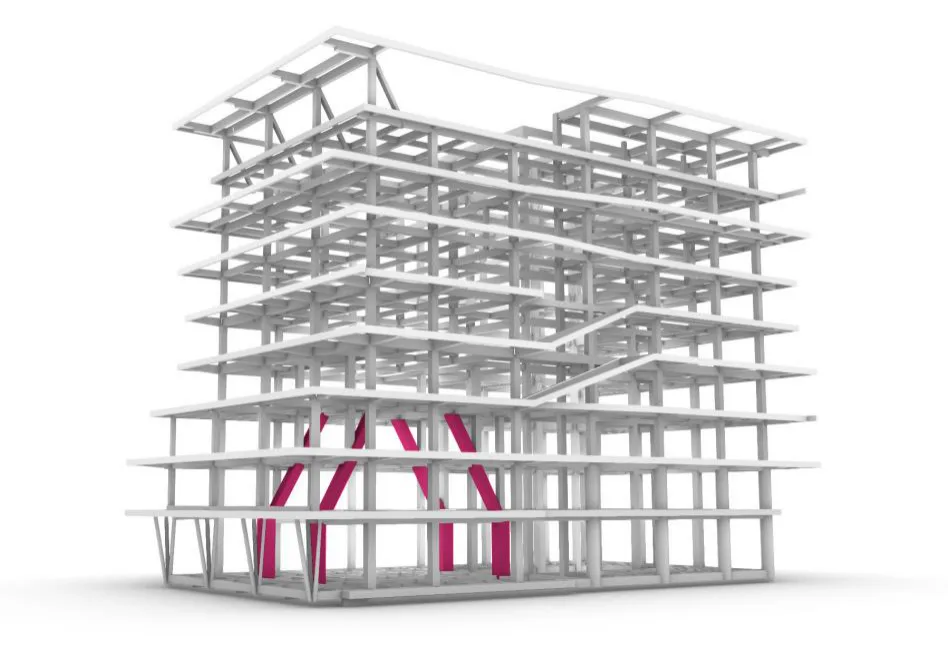
△ Structural model diagram
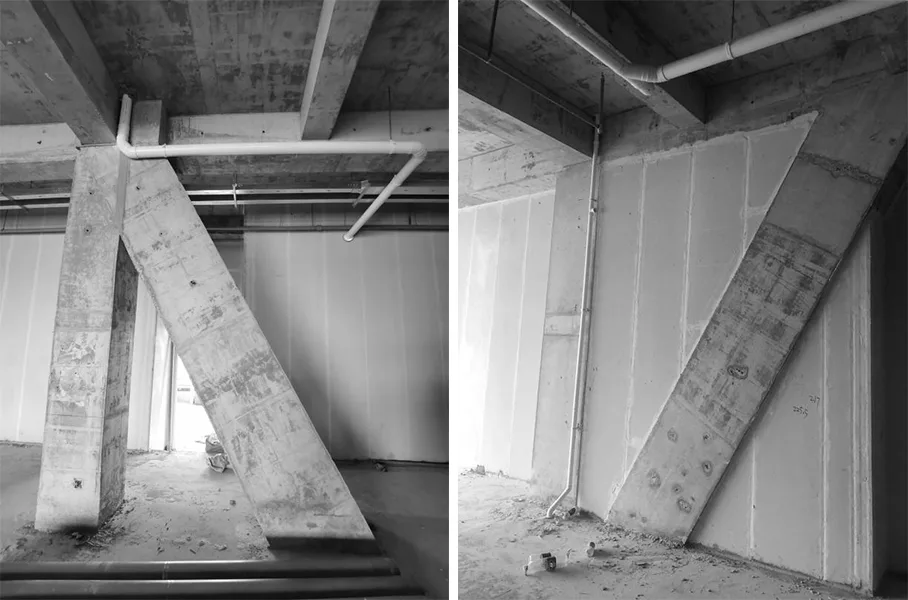
△ Construction on second and third floors
△ Multifunctional hall construction process
Interior Spaces
The interior design continues the architectural concept and color palette, adopting a light-toned New Chinese style. The entrance lobby exudes a stable and dignified atmosphere, the restaurant offers a relaxed and cozy setting, the office areas are modern and stylish, and the party and government conference rooms maintain a serious and formal tone.
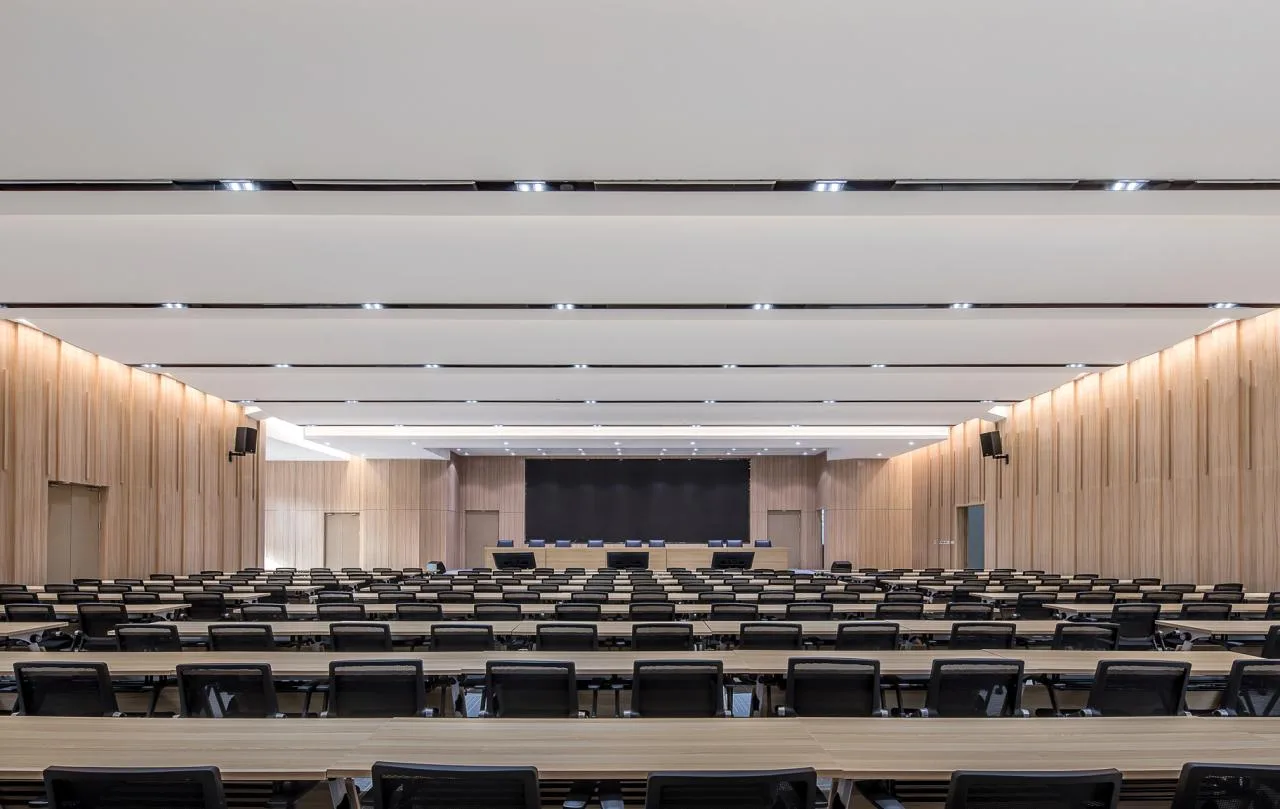
△ First floor multifunctional hall
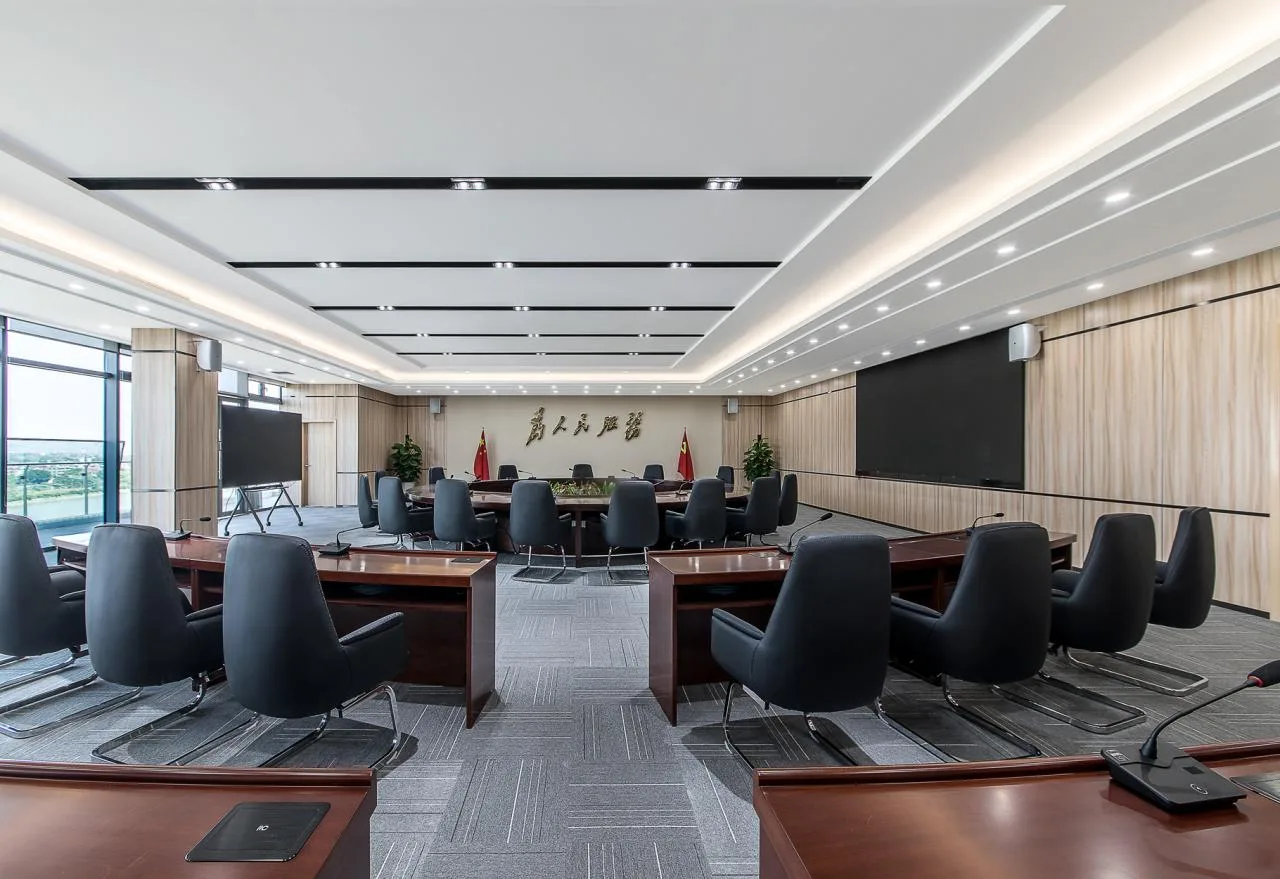
Party and government conference room
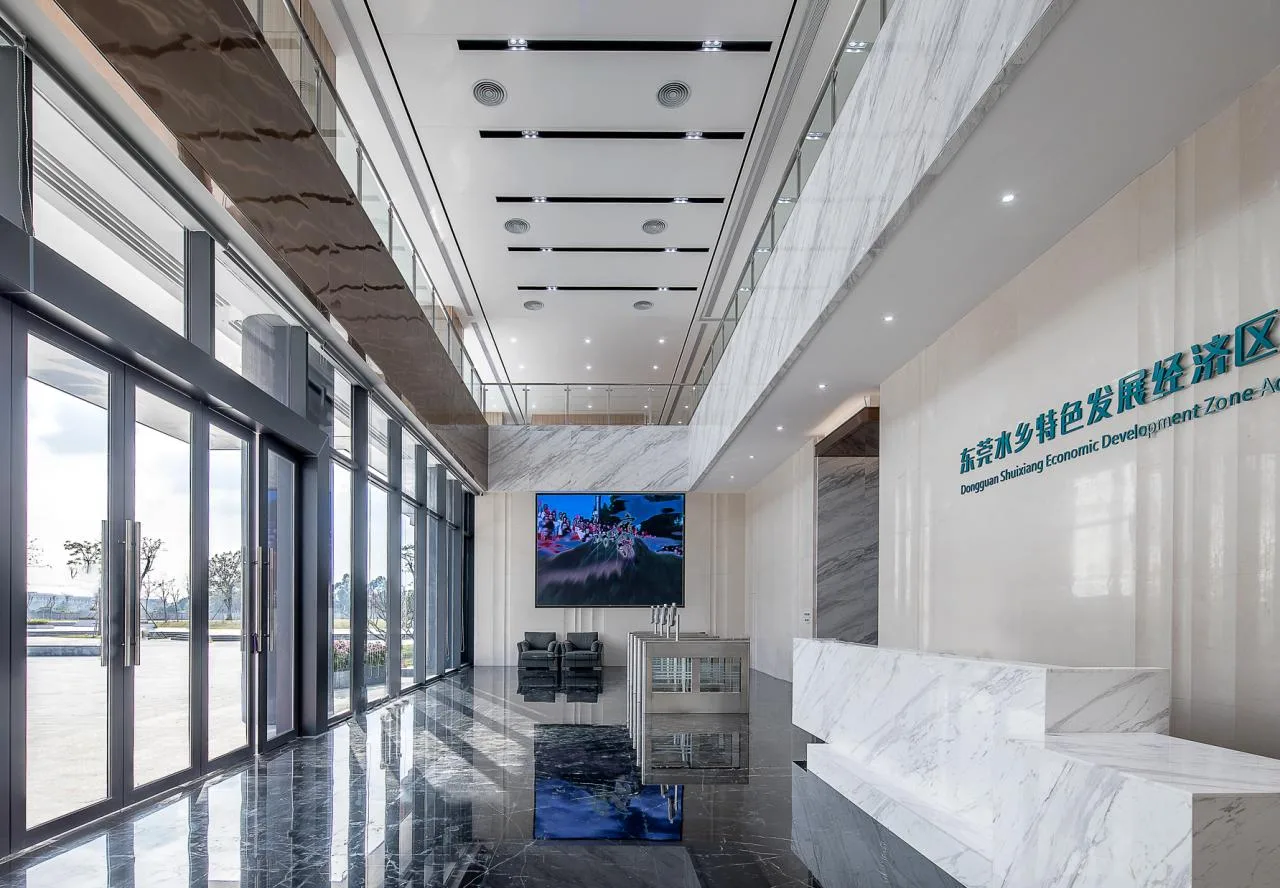
△ Indoor lobby on the first floor
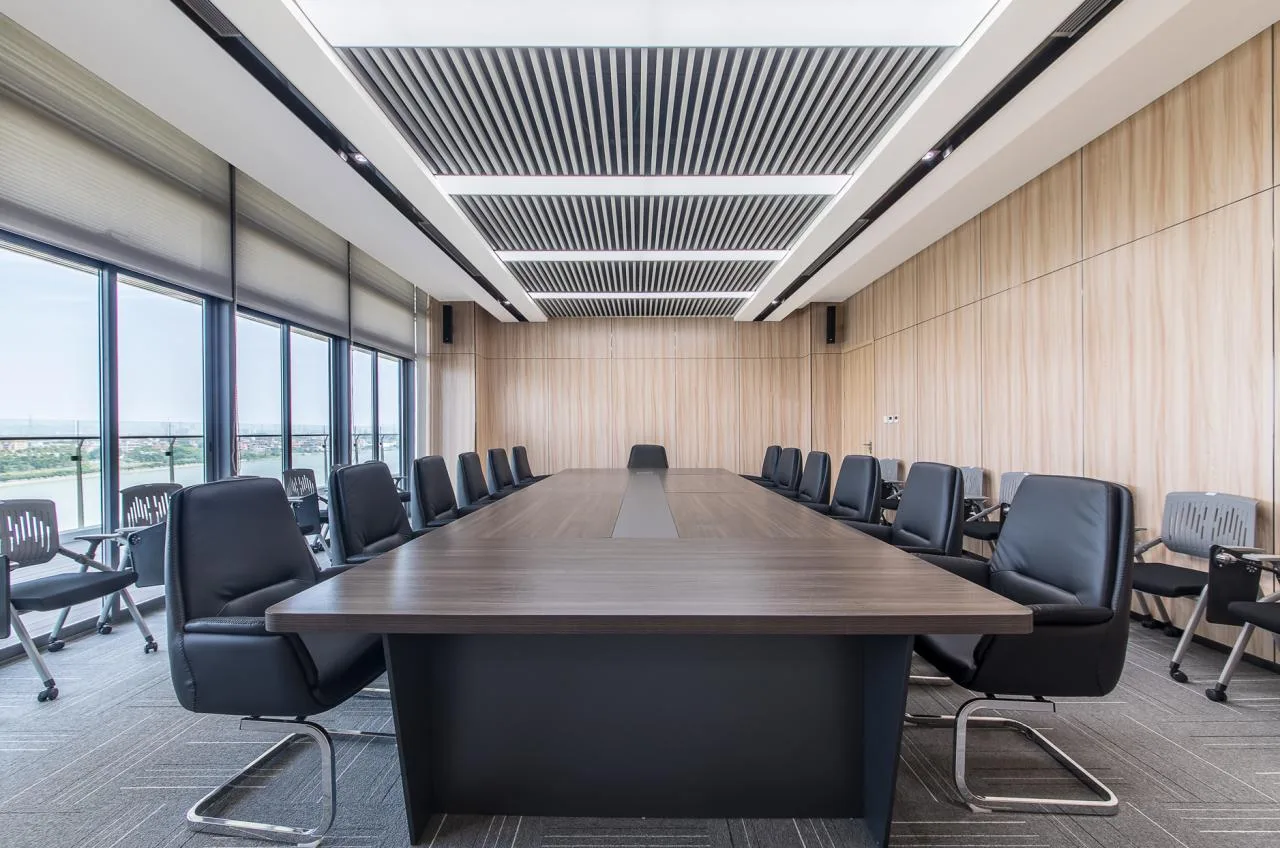
△ Meeting room
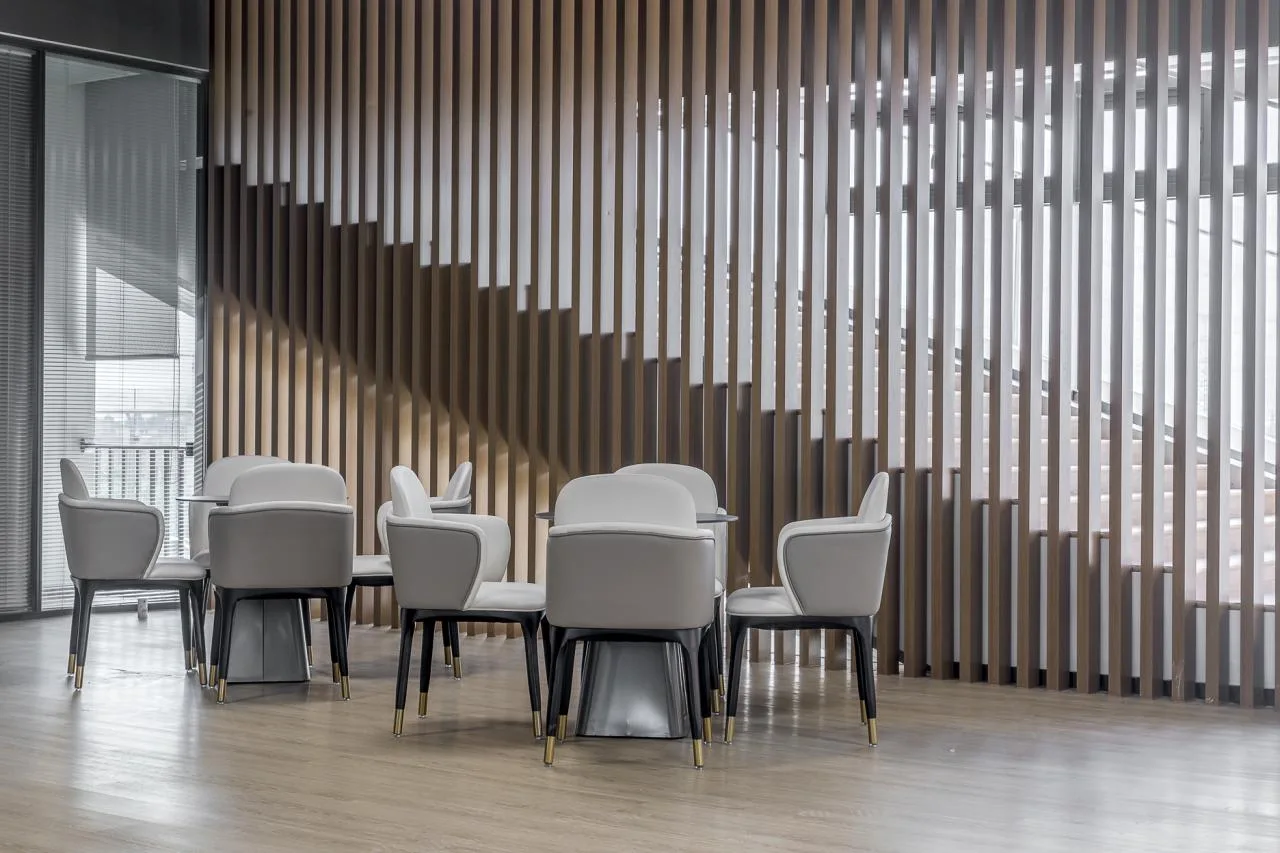
△ Office area
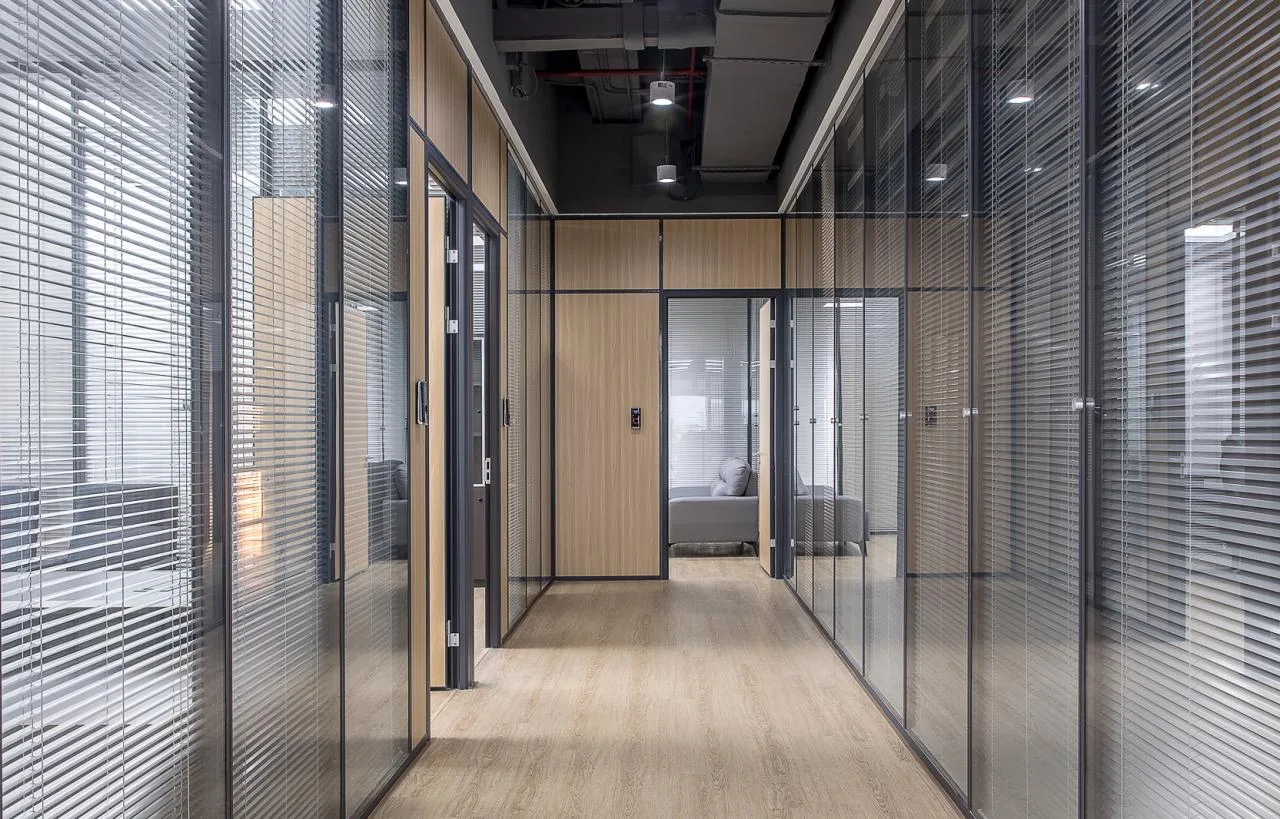
Indoor office space
Conclusion
As a design general contracting project guided by the “architect responsibility system,” the Water Town Science and Technology Innovation Center involved the architectural team deeply at every stage, from design to construction.
Breaking the narrow focus of domestic architects who concentrate solely on the main building design, the architects played a leading role across all sub-projects, effectively managing design quality and controlling project investment.
This “architect responsibility system” prioritizes the project’s completion quality and has provided valuable construction experience that will serve as the standard approach for all future projects by the team.
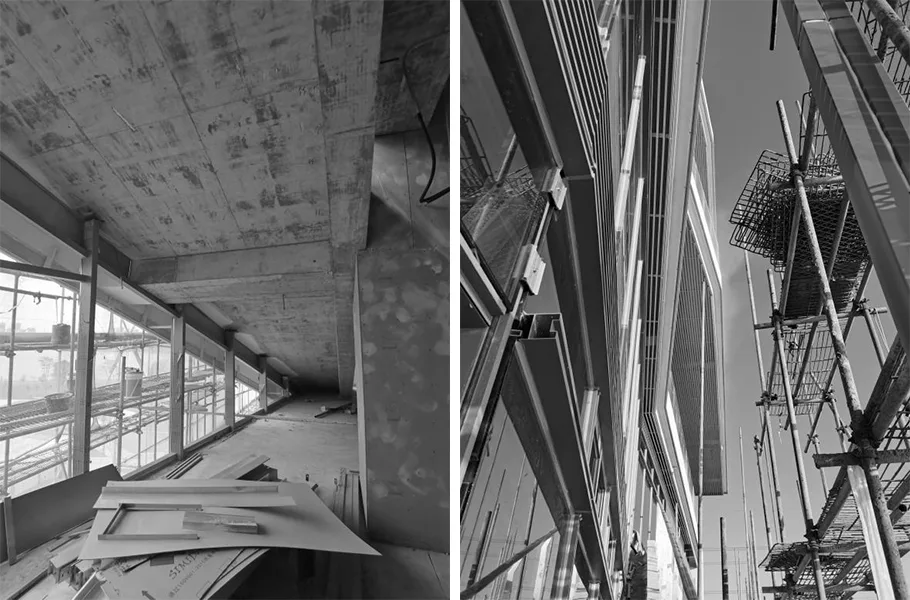
△ Construction site
Technical Drawings
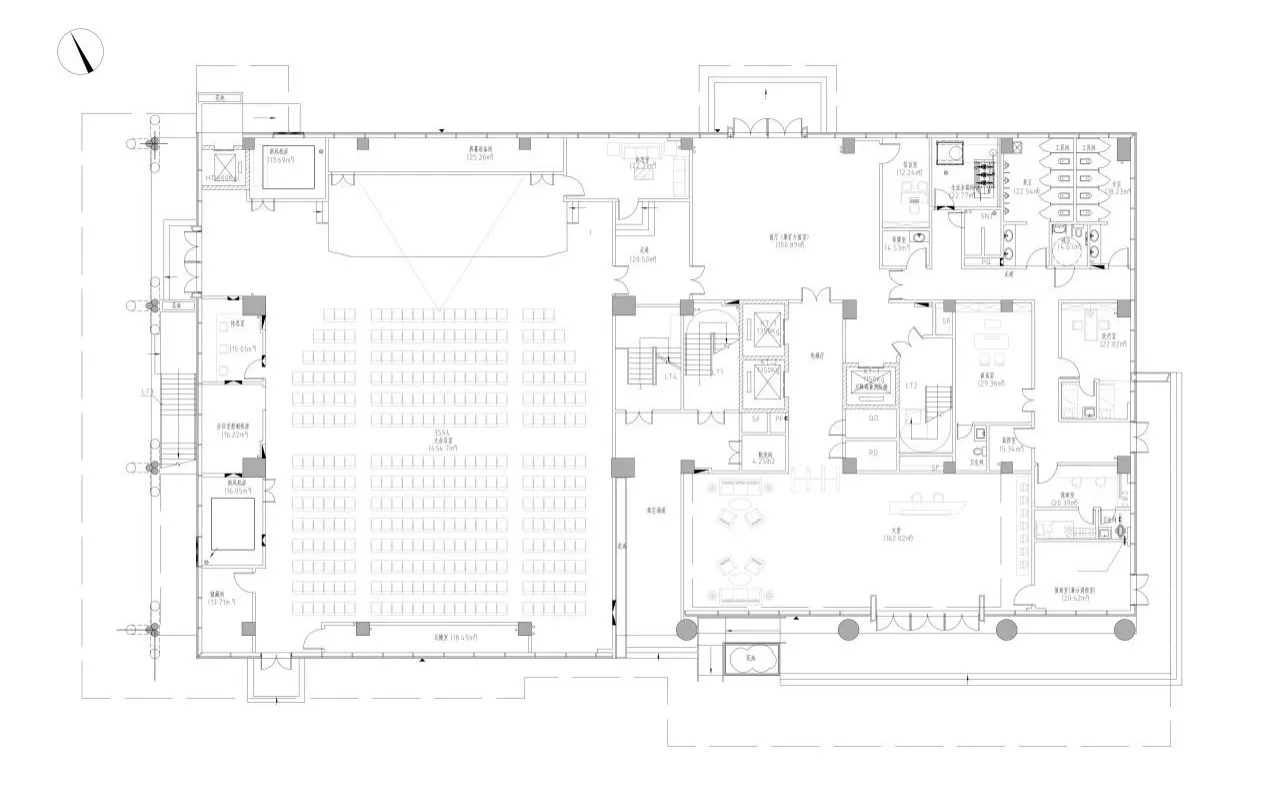
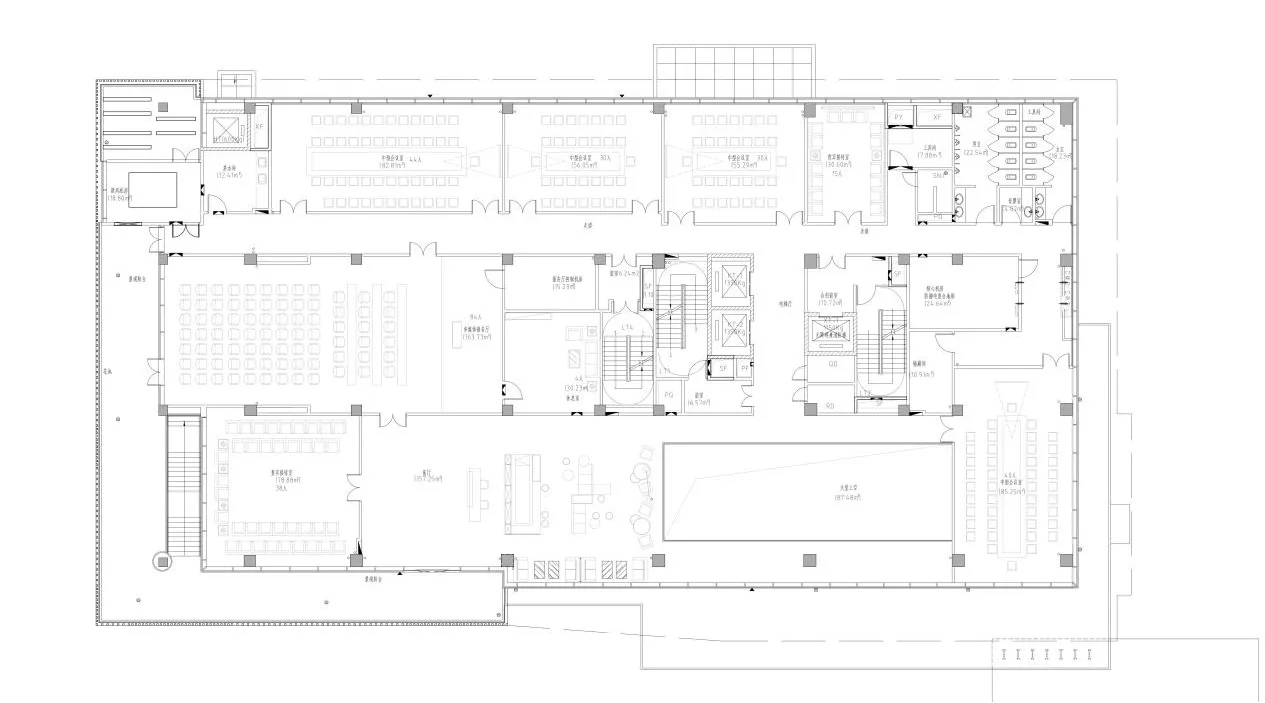
△ First floor plan
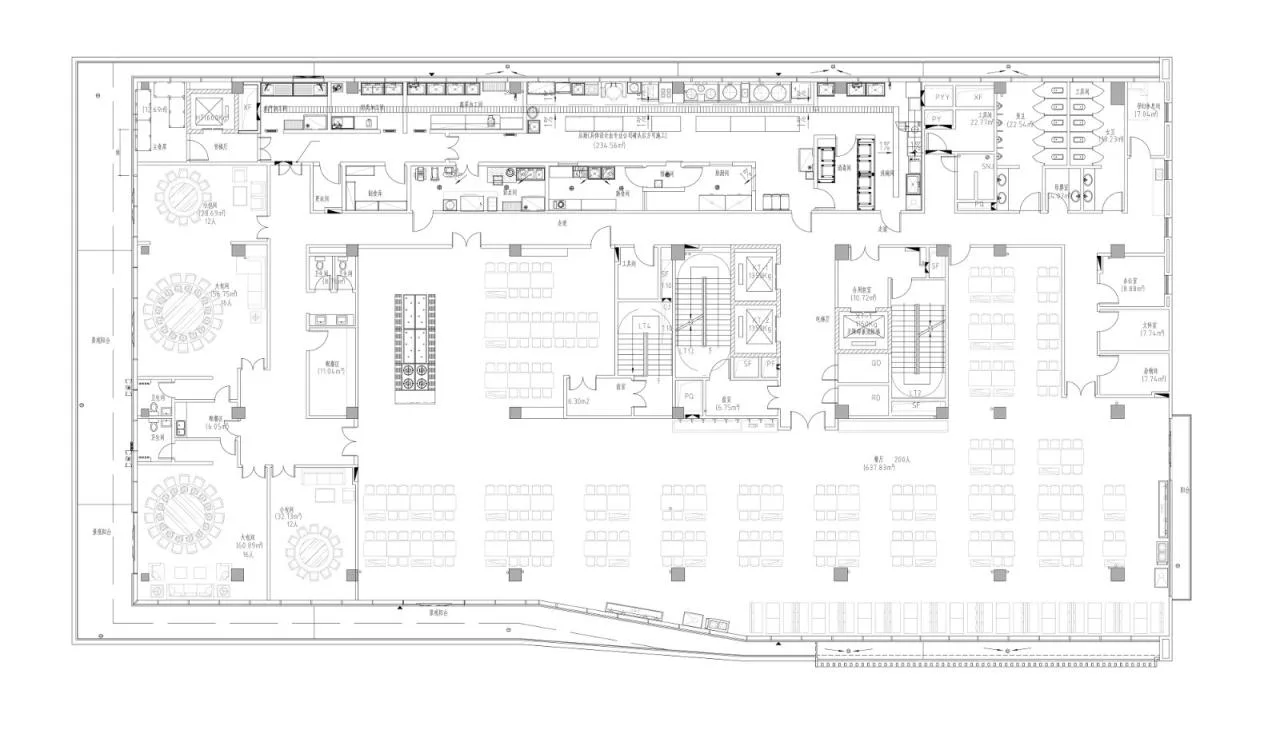
△ Second floor plan
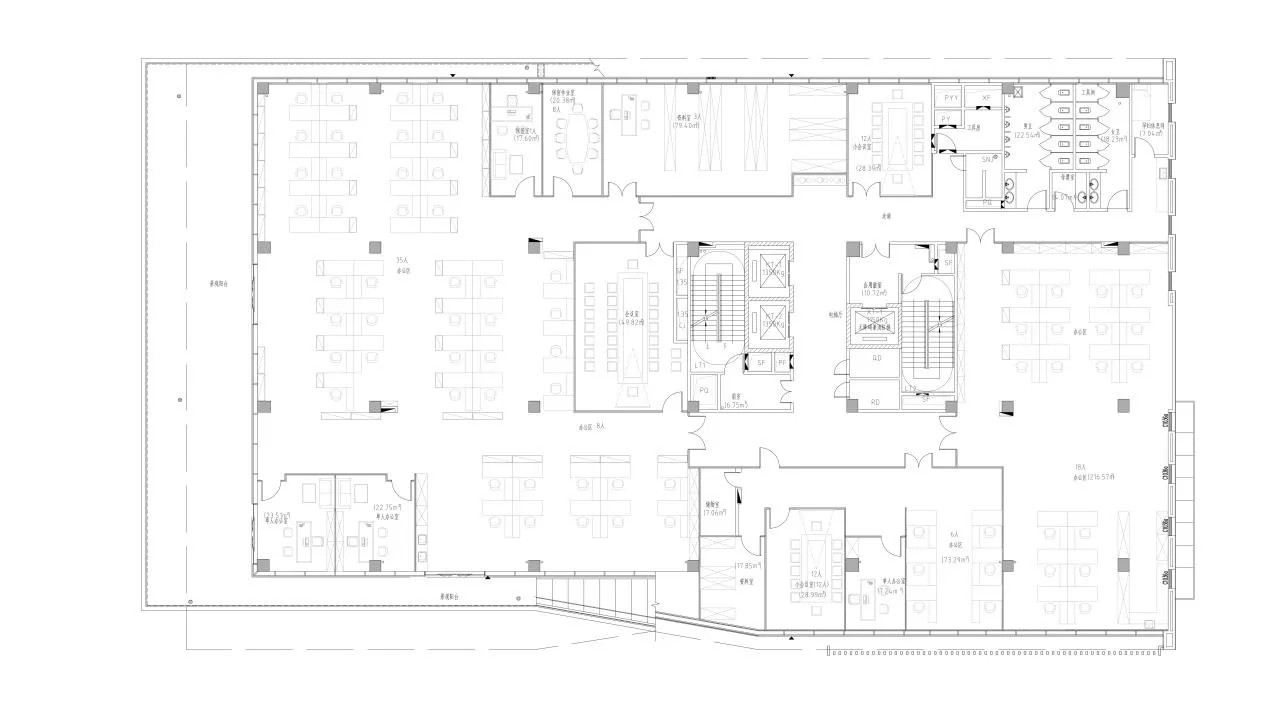
△ Third floor plan
△ Office floor plan
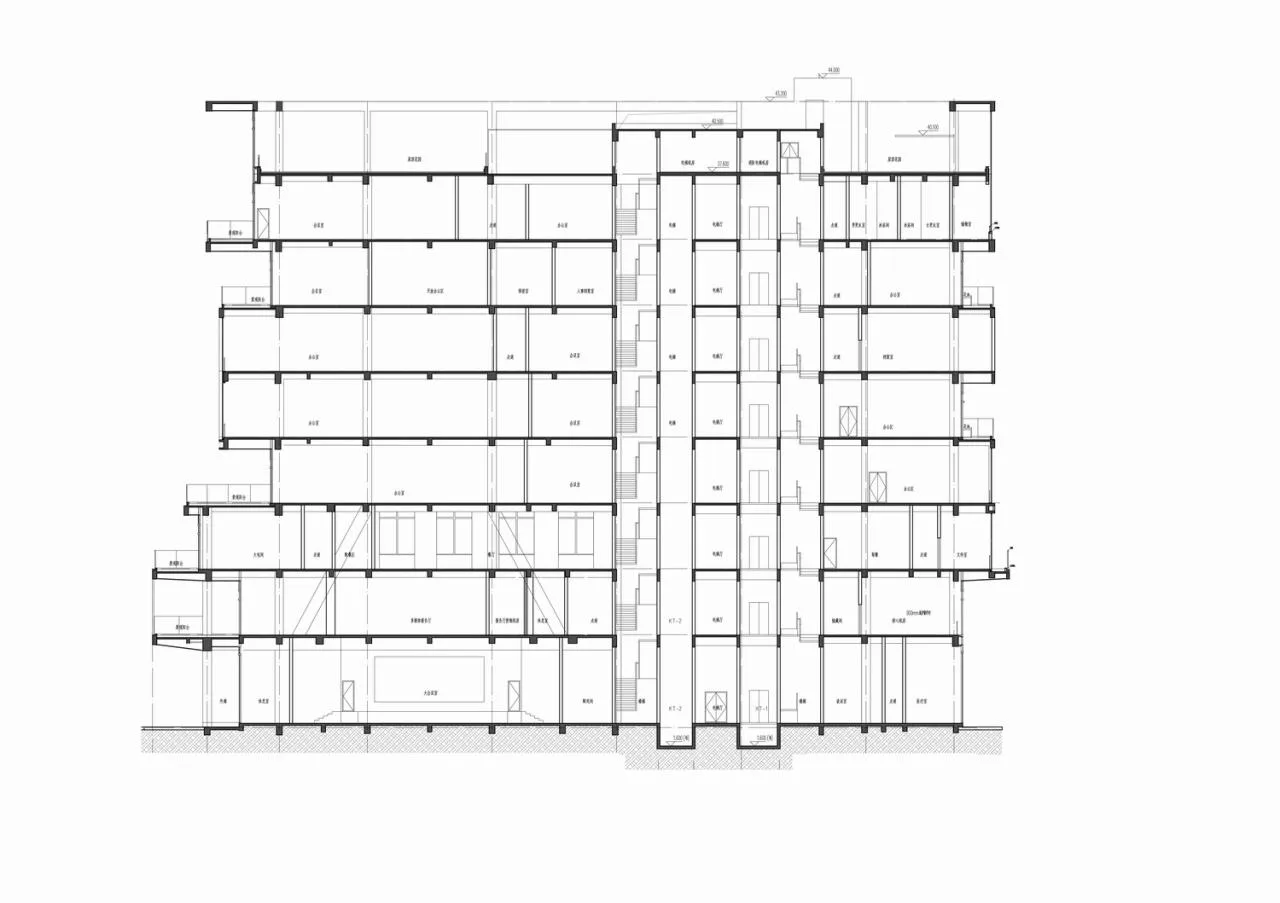
△ Section diagram
Project Information
Project Name: Dongguan Water Town Science and Technology Innovation Phase II
Location: Shuixiang Functional Zone, Dongguan City
Building Type: Office, Production
Land Area: 35,154.66 m²
Total Construction Area: 153,697.98 m²
Phase II Building Area: 12,518.4 m²
Floor Area Ratio: 3.5
Design Unit: Senlei International
Design Team:
Lead Architect: Xiong Wei
General Contracting Management: Xiong Wei, Cao Ke
Architectural Scheme Design: Zheng Xinyu, Zhu Chuanjing, Lei Weiting, Liu Ting
Construction Drawings: Jin Jianping, Wu Junming, Yan Haiqing, Lu Baicheng, Zhang Hongwei
Structure: Huo Yongxian, Wu Wei, Sun Jiawei
Electrical: Cheng Zhu’an, Wang Hongshuang, Luo Yanhua, Yang Jing, Fang Peipei
Water Supply and Drainage: Wang Lingli, Zhang Bingshi, Wang Xinke, Tang Qianqian
Intelligence Systems: Cheng Zhu’an, Zhu Bingkun, Tan Jiantao
HVAC: Li Bo, Wu Qian, Feng Mengnan
Landscape Design: Xu Tianle, Li Yu, Lian Qingwei, Wu Yancheng, Wu Haowu
Developer: Dongguan Shuixiang Real Estate Management Co., Ltd
Photography: Arhat Studio















Must log in before commenting!
Sign Up