
“Education is life, and campus is society.” — John Dewey
01 Project Overview
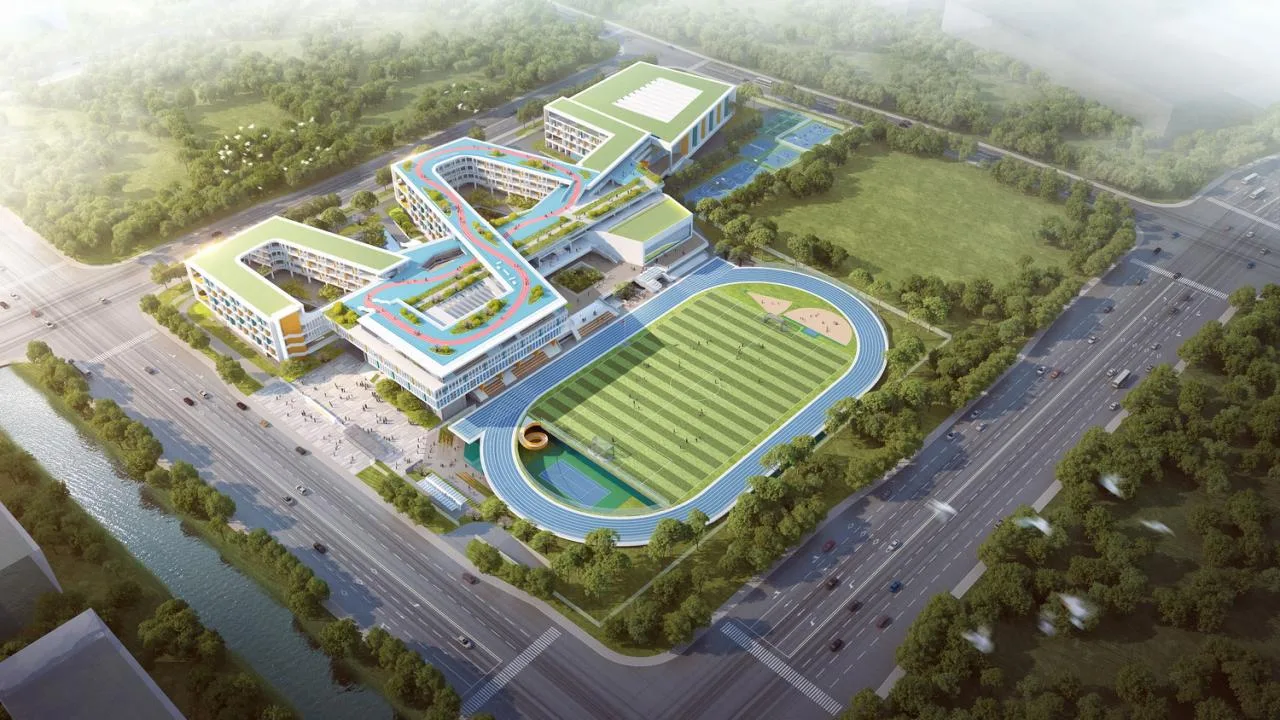
The site is situated in the southern part of Suzhou Industrial Park, surrounded by residential and industrial areas, covering approximately 6.67 hectares. The plan is to construct a high school with 80 classes, totaling around 90,000 square meters of built space. This large-scale school with 27 tracks demands more efficient, intensive learning environments and flexible, spacious activity areas. Additionally, the scarcity of surrounding green spaces places higher expectations on the campus’s ecological environment.
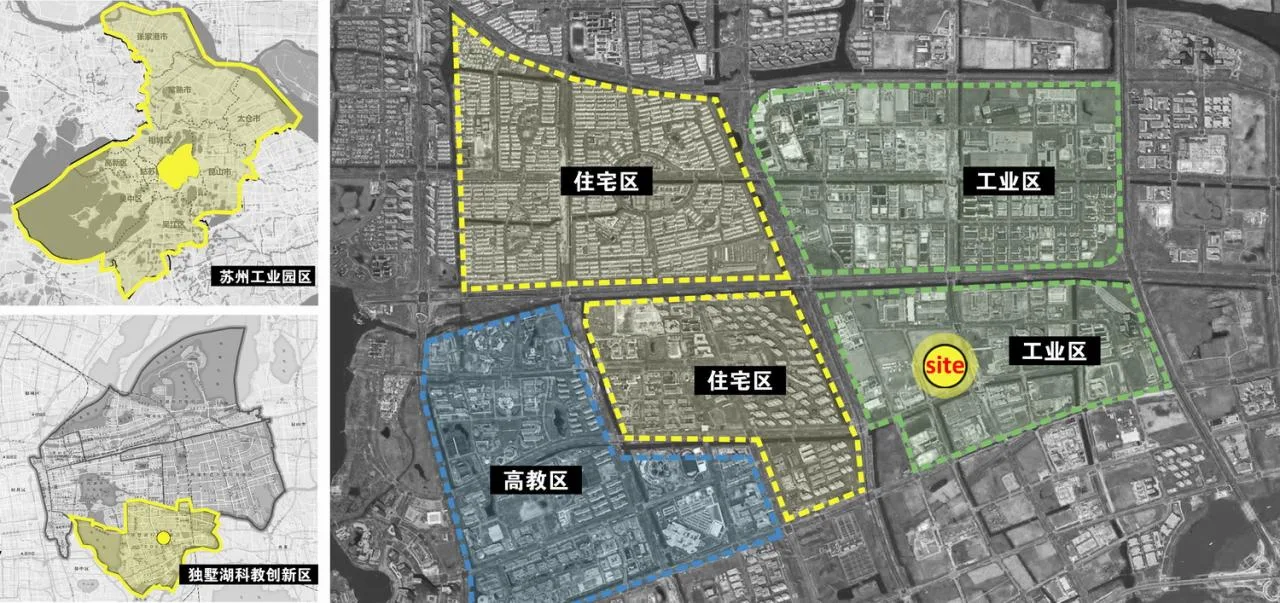
△ Location Analysis
As a critical bridge between basic and higher education, high school must balance college entrance exam preparation with holistic development, nurturing both students’ “hard skills” and “soft skills.” The design team’s primary focus was to integrate high school students’ unique learning patterns and address the challenges through thoughtful design.
02 Design Strategy · “Pin-Style” Campus
High school is a pivotal stage for the rapid growth of social awareness, participation, physical fitness, and personality development. A campus that fosters strong communication, freedom, and constant activity naturally aligns with students’ needs for collaborative discussions and self-directed learning.
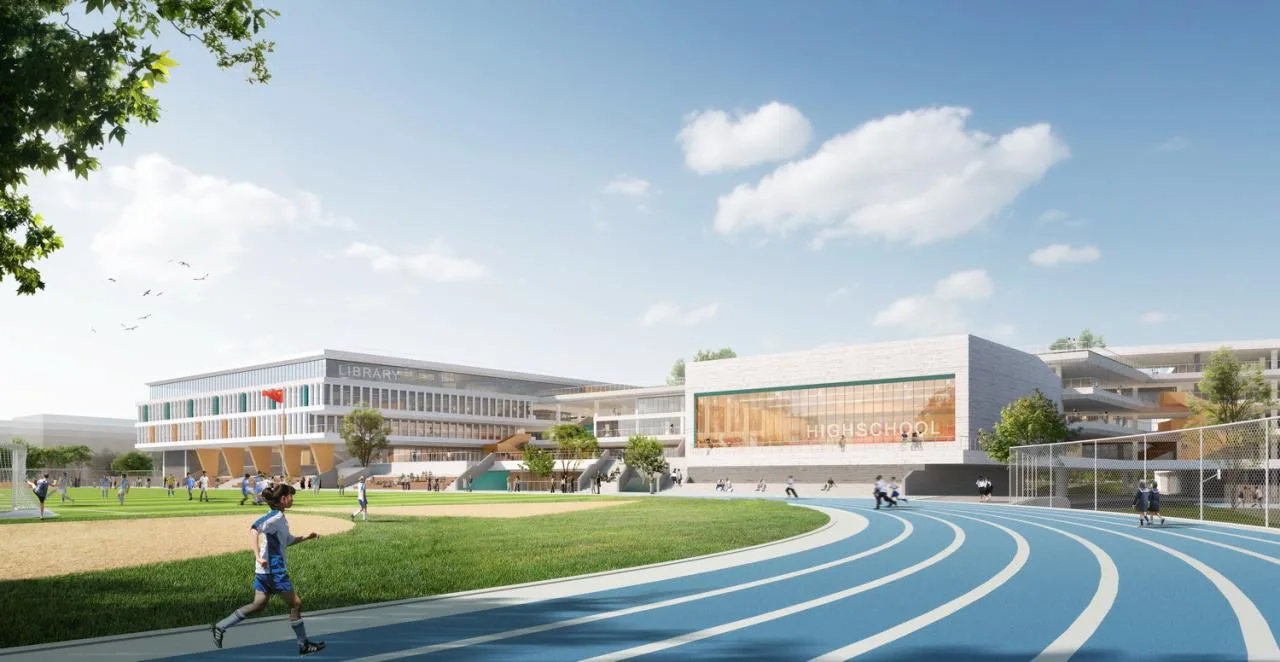
Starting from the cross-disciplinary integration and promoting communication and sharing among partners, the design team discarded the traditional concept of “buildings.” Instead, they aligned classrooms of different subjects along a shared axis, embedding “informal” learning spaces at key nodes. This creates a series of teaching clusters linked by densely packed public areas, connecting the entire campus in a “pin-like” formation.
This flexible, open, and mobile space encourages communication and exchange anytime and anywhere. It supports “class-based” teaching, truly centering students and boosting their motivation and interest through personalized education. The campus becomes a fertile ground for innovative ideas and nurtures versatile talents adaptable to future societal needs.
03 Overall Planning · Folding and Stacking
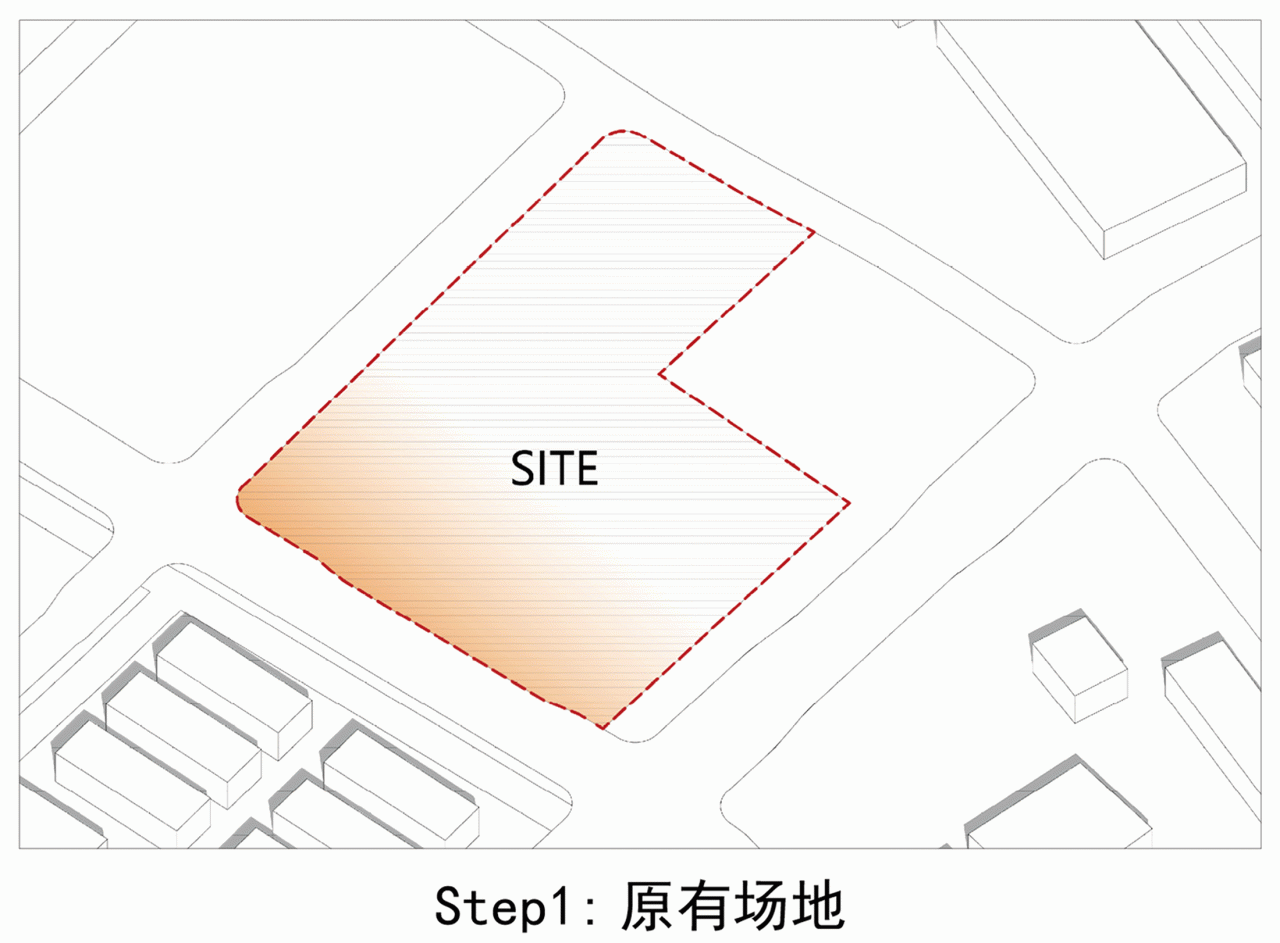
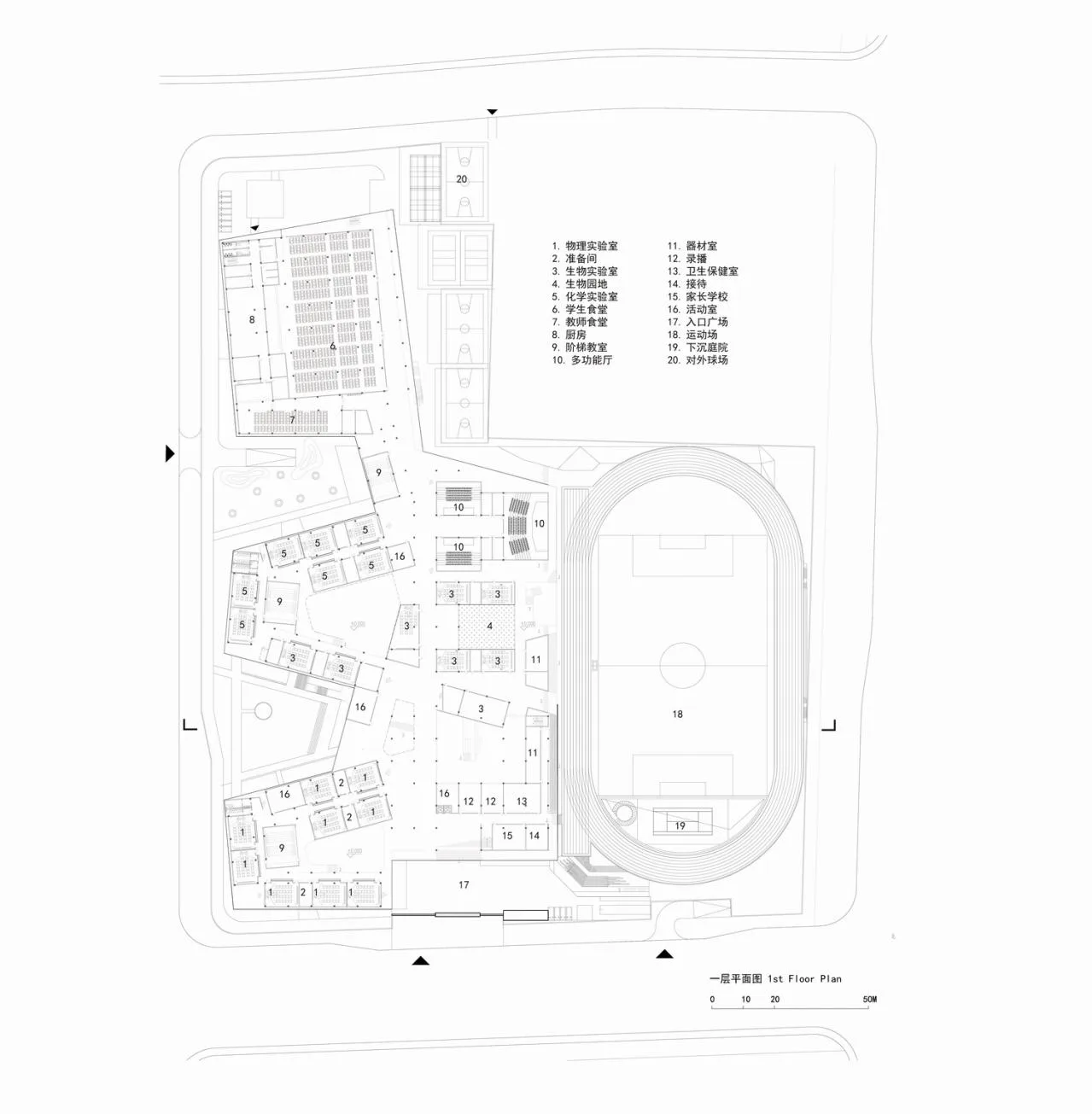
The site’s irregular “knife handle” shape faces south-southwest, with Jinyan Road on the east as the main urban route. The playground is positioned on the noisy east side, separating active and quiet zones. Teaching clusters are arranged on the west side, which benefits from good sunlight, while the northwest corner houses the residential area, where connection to the main campus is weaker. These zones are linked by cultural and sports functional areas.
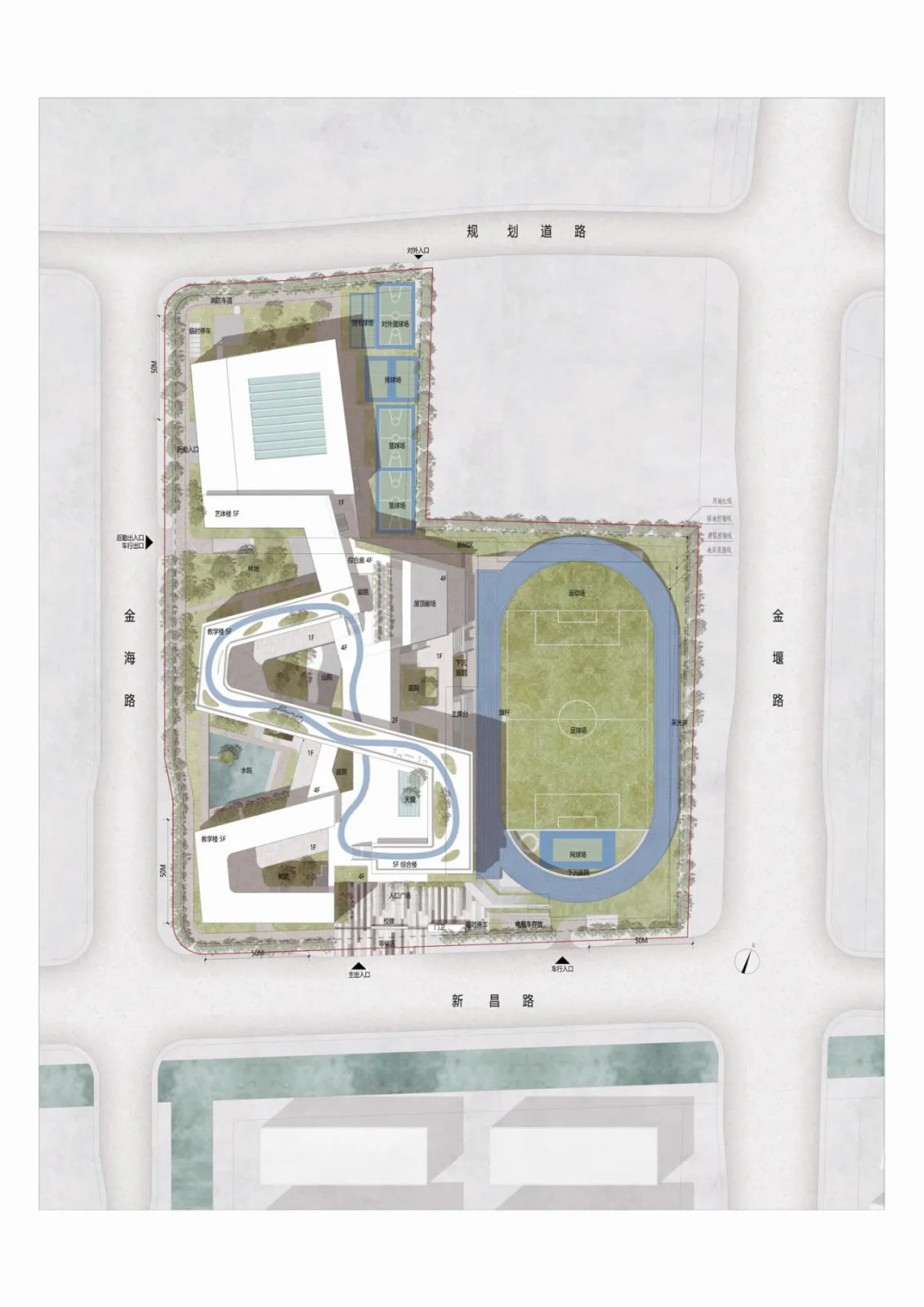
Boldly employing polylines, the design breaks from traditional orthogonal campus layouts, enclosing a trapezoidal courtyard centered on the main axis. This naturally creates two levels: an inner courtyard opening to the public area, and an outer courtyard facing the city, seamlessly integrating building and environment.
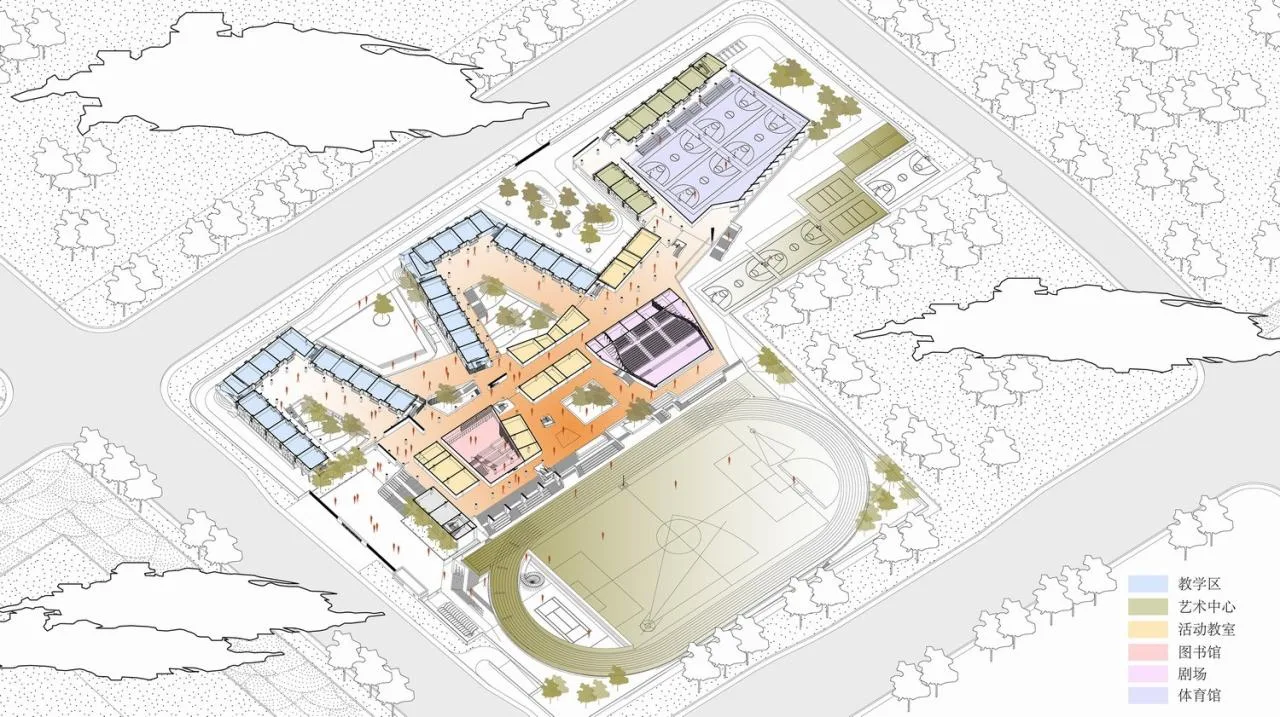
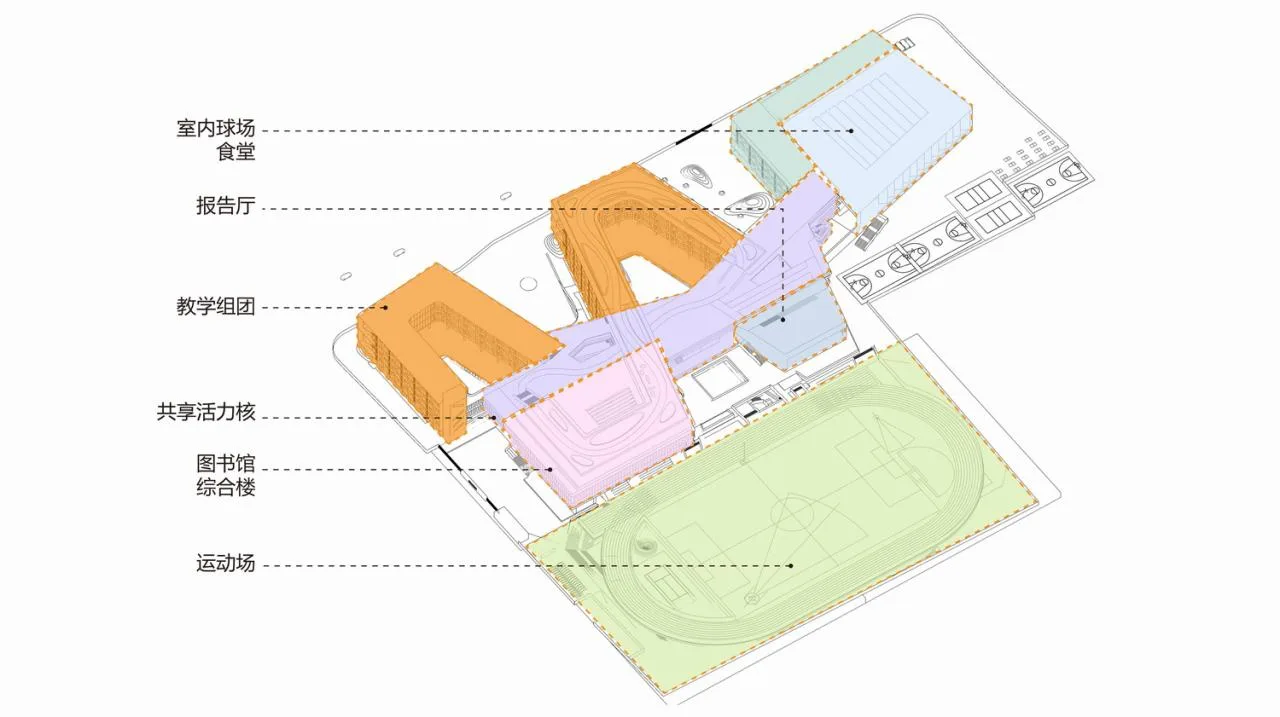
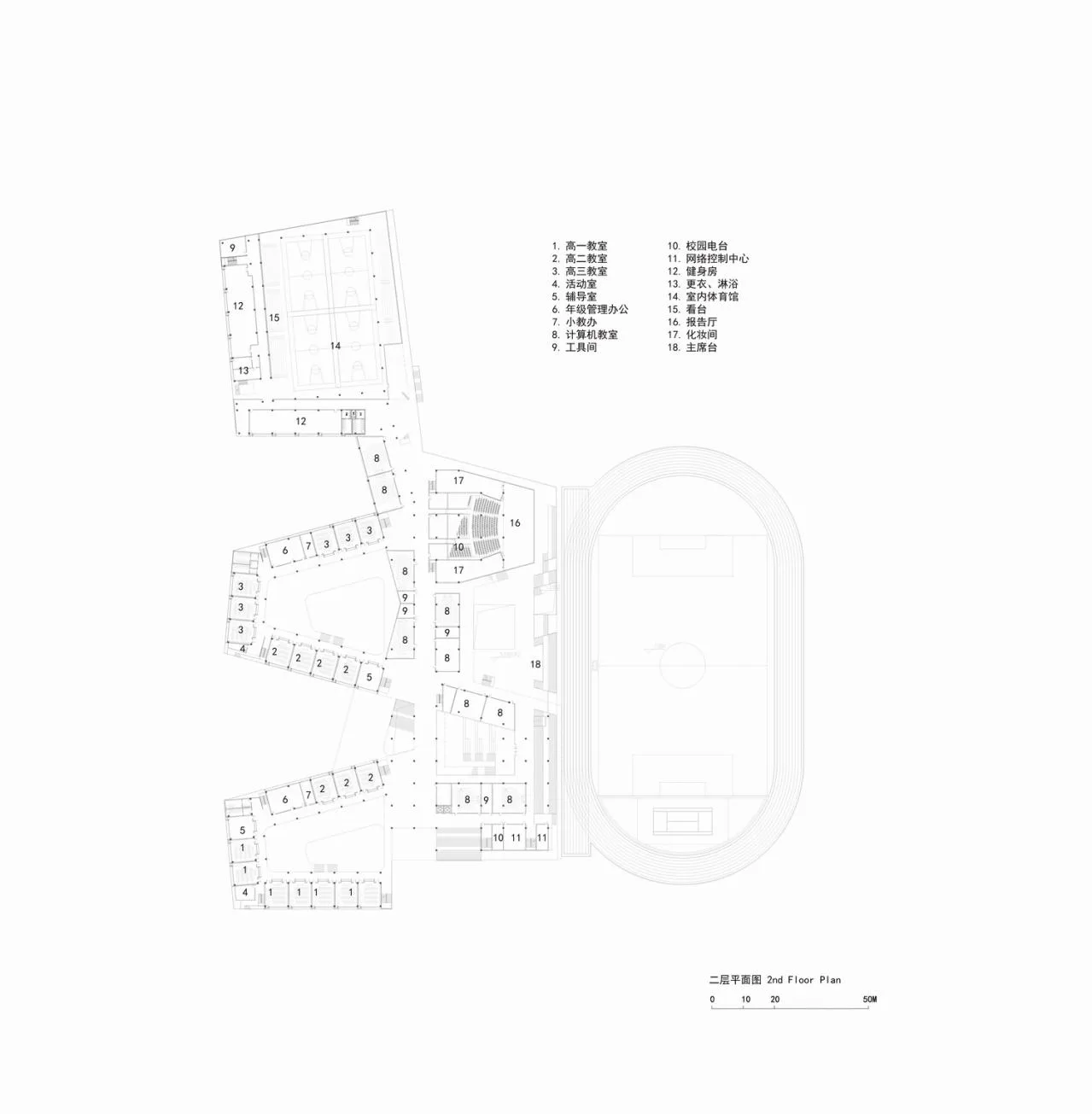
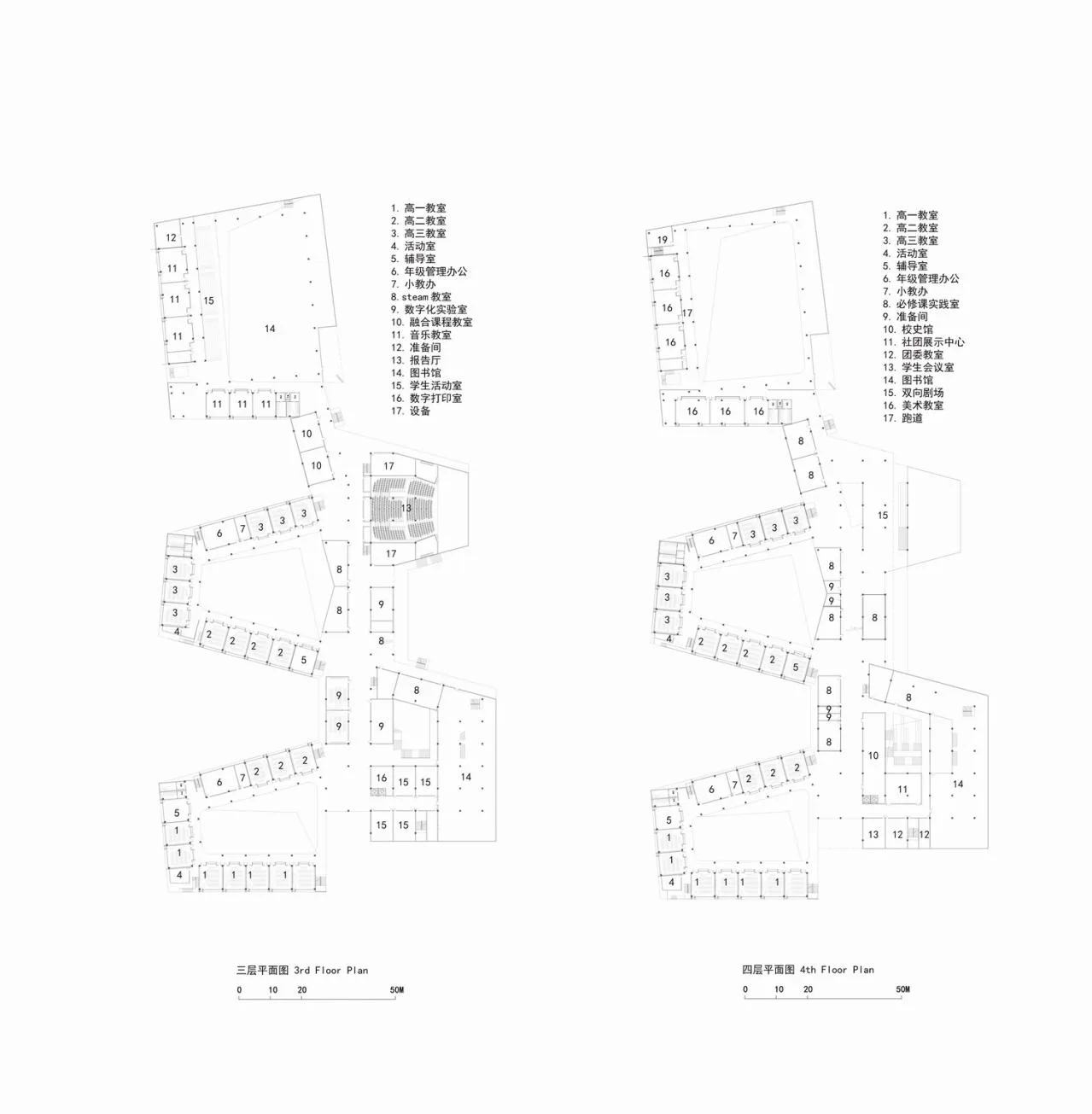
The layering and stacking of public spaces redefines their roles as extensions of classrooms. When learning is accessible everywhere on campus, students are more inclined to engage and grow independently.
Through “folding,” the campus spatial hierarchy features one main axis, one square, three courtyards, and four additional courtyards. All areas connect to the axis, weaving together forms that create a vibrant shared central space.
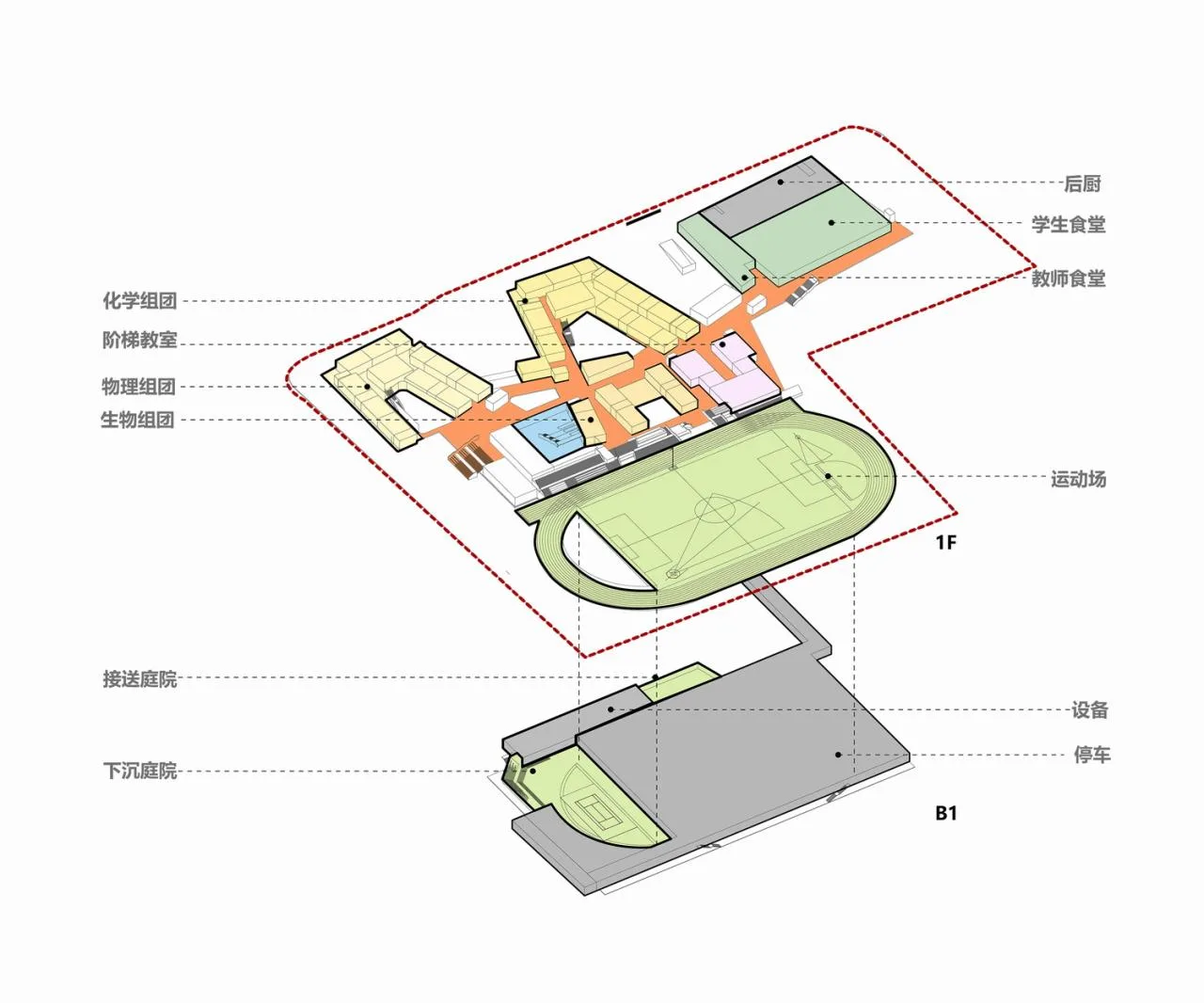
△ Layered Axial View
The previously linear and loosely connected spaces are “folded” into a dynamic three-dimensional network, forming vibrant shared indoor and outdoor areas. This multidimensional design not only maximizes campus space efficiency but also “folds” students’ time, making their busy high school life more efficient and convenient.
04 Functional Streamline
There are two vehicle entrances: the main entrance on Xinchang Road to the south, and a secondary one on Jinhai Road to the west. During pick-up and drop-off, the Jinhai Road entrance operates as a one-way right turn, easing traffic pressure and serving as the delivery point for cafeteria freight.
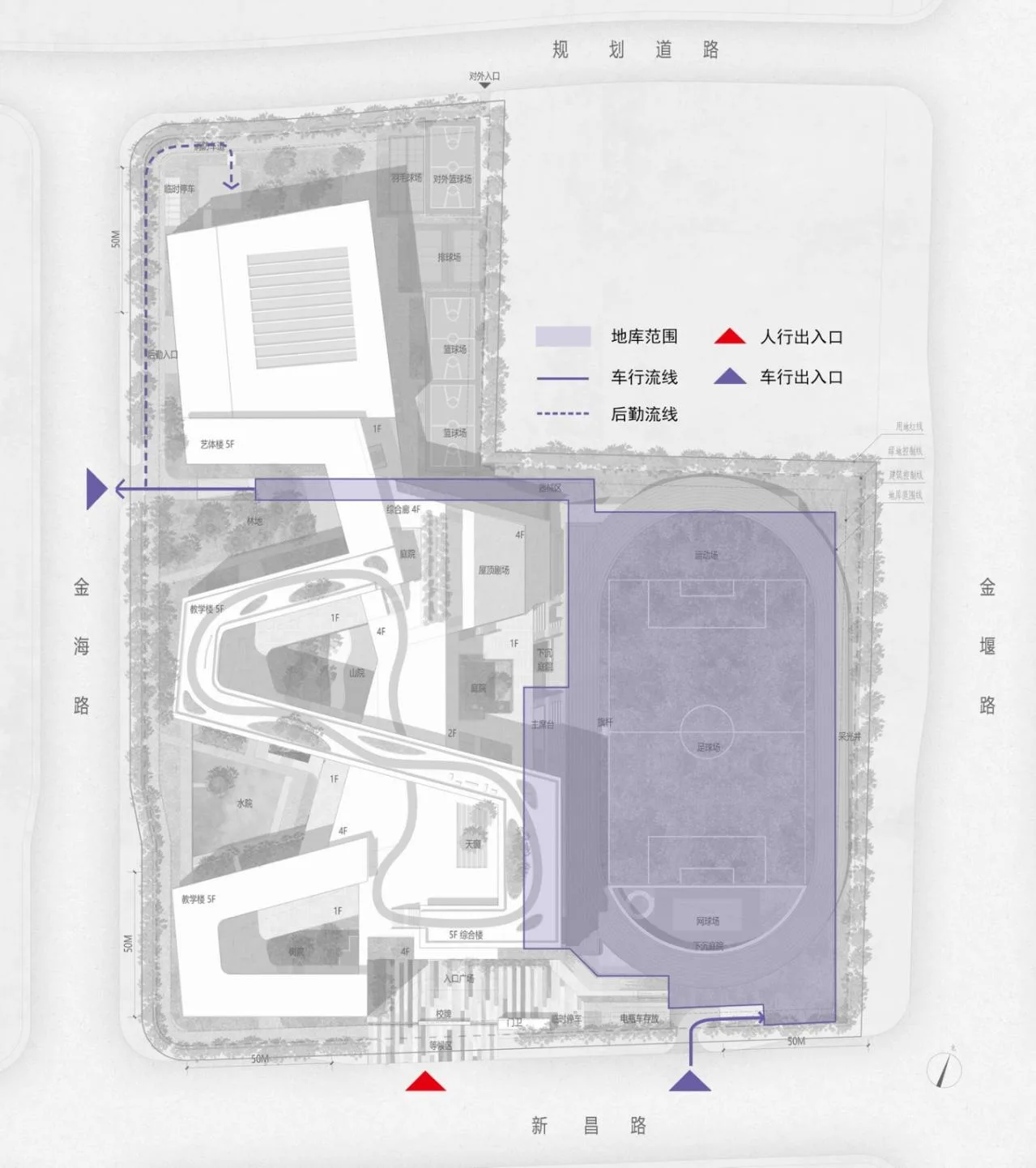
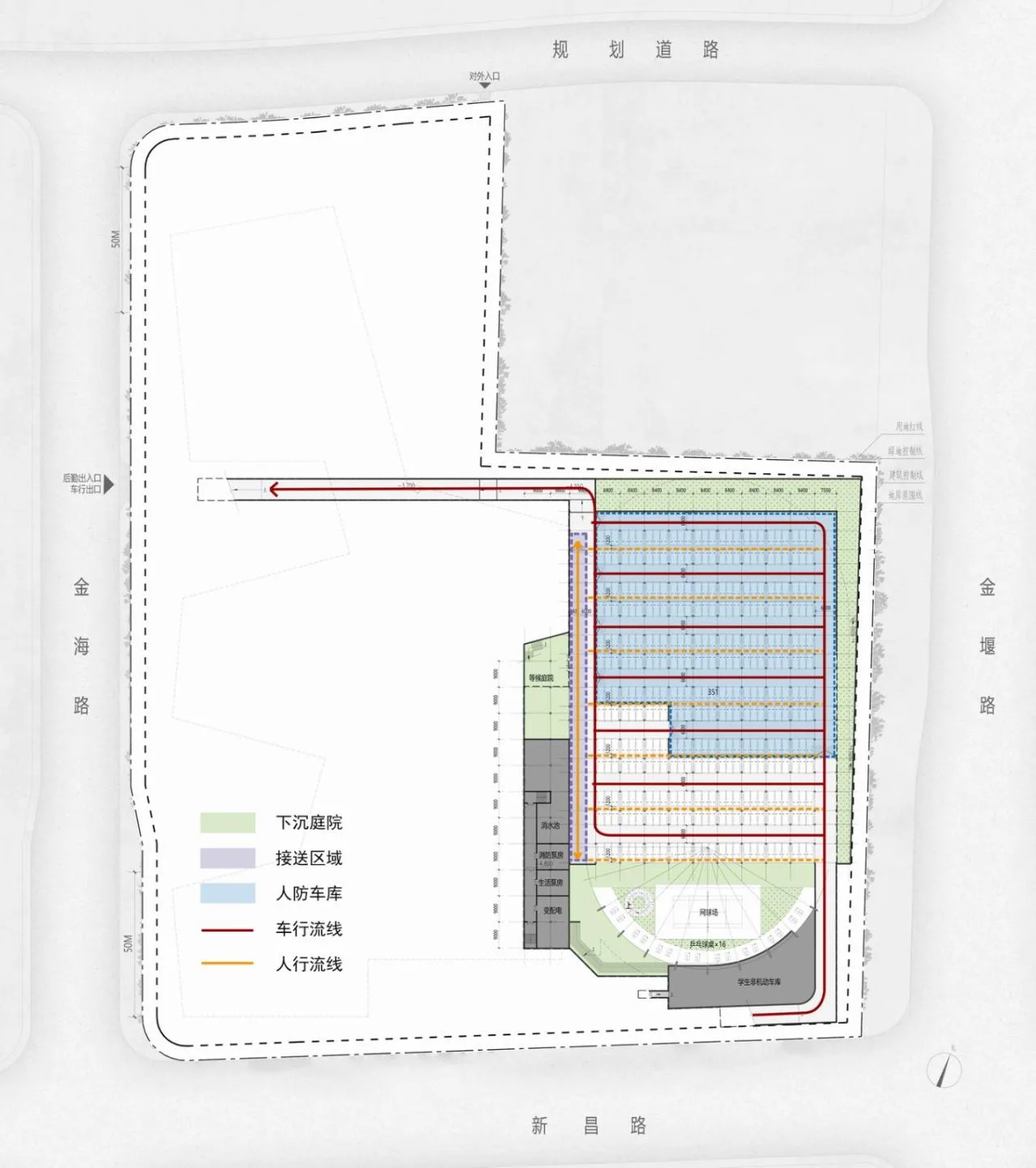
△ Streamline Analysis
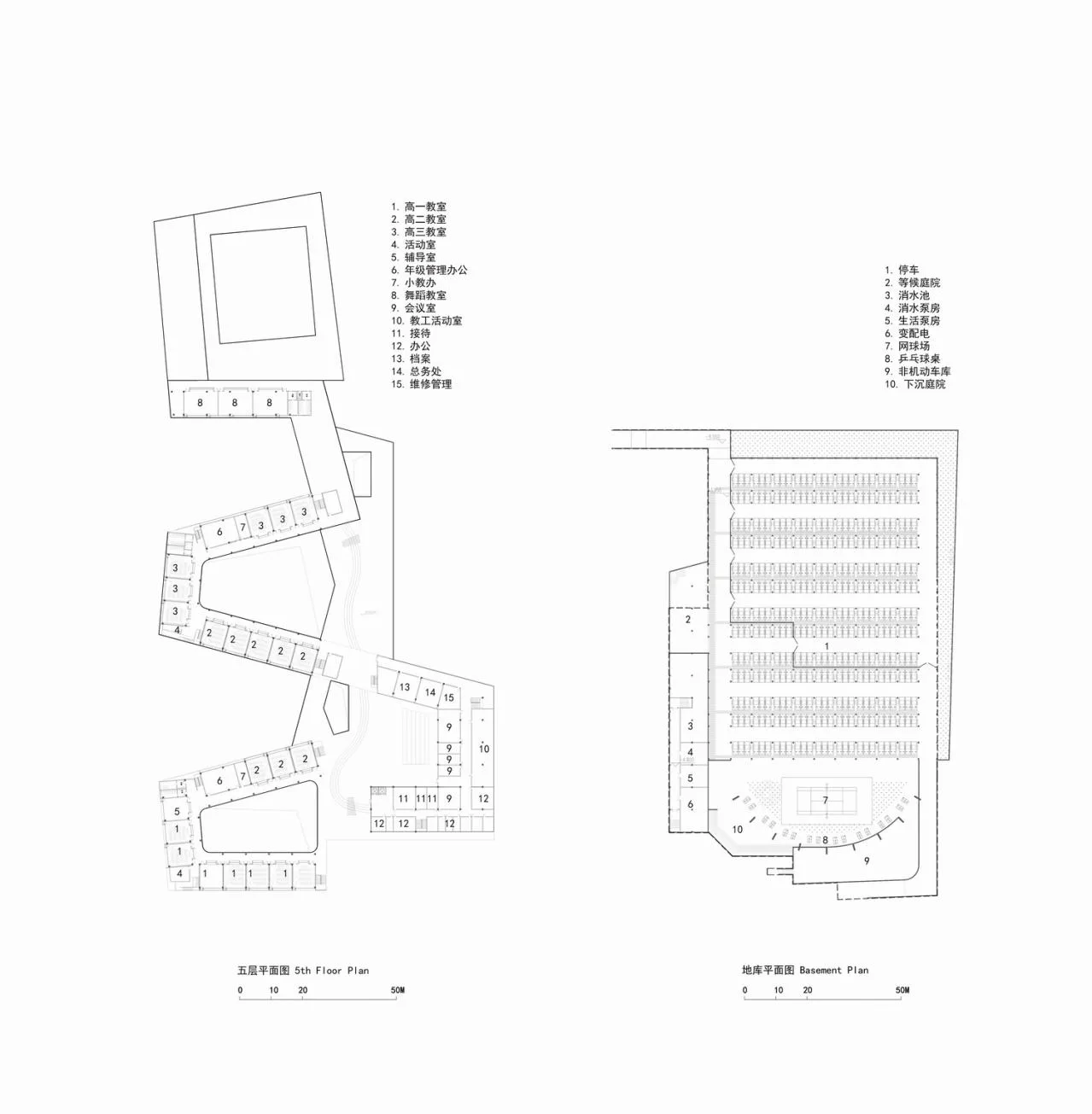
The design minimizes intersections between pedestrian and vehicular paths within the campus. The underground garage’s entrance is located near the main vehicle entrance. A three-dimensional traffic system with sunken lanes and pedestrian crossings fully separates pedestrians from vehicles, ensuring safety and smooth flow.
05 Architectural Design
Integrated Landscape and Connected Gardens
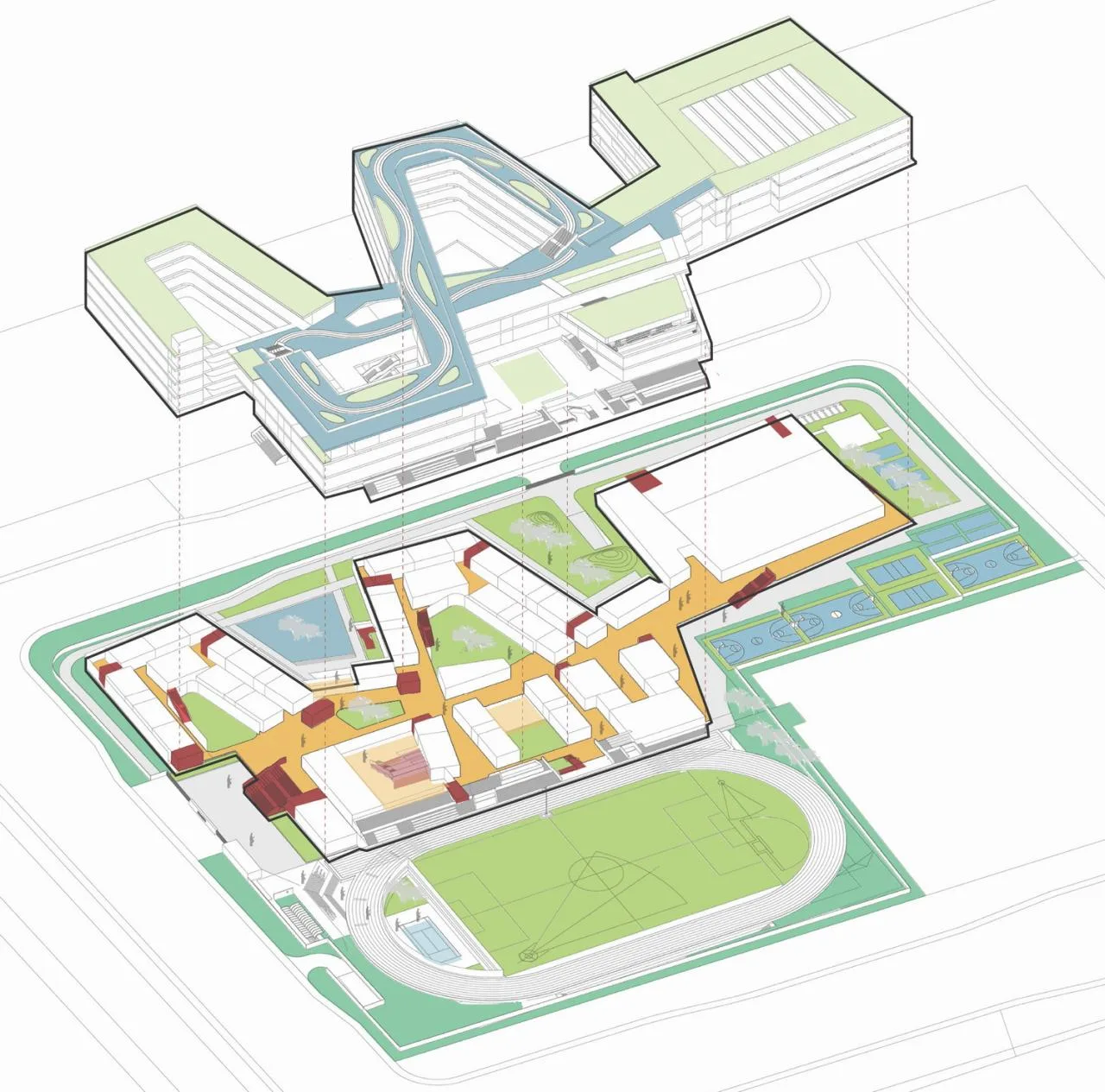
An infinite loop runs throughout the campus, combining transportation, green corridors, and activity platforms. This integrated landscape serves as a vibrant public hub for the school community.
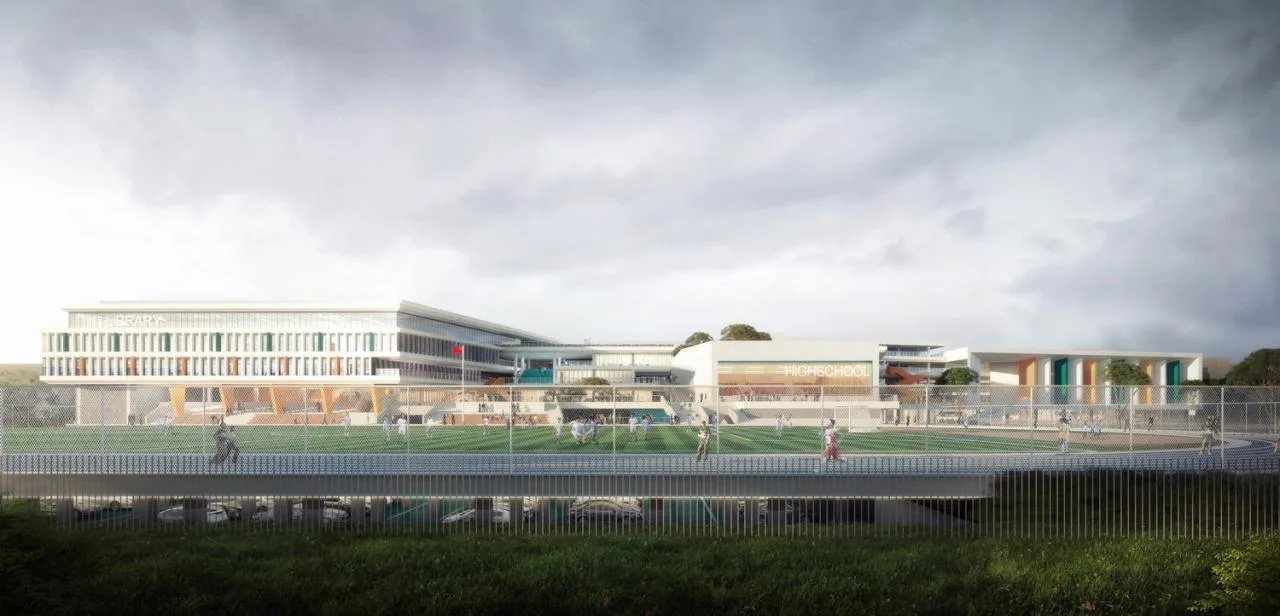
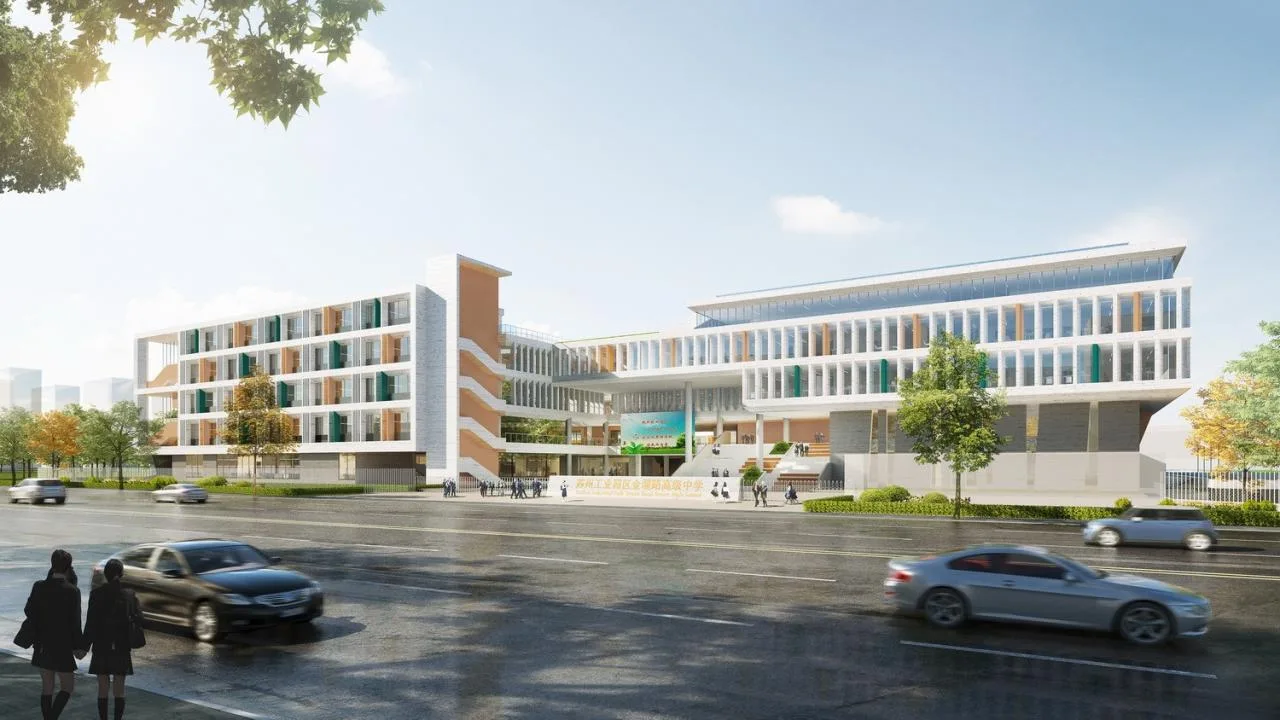
The building rises five stories. To break the monotony of its mass, the design incorporates multiple ground-level entrances. Parts of the first floor are elevated, with the second-floor platform creating a “floating” facade effect, offering a light and airy visual experience.
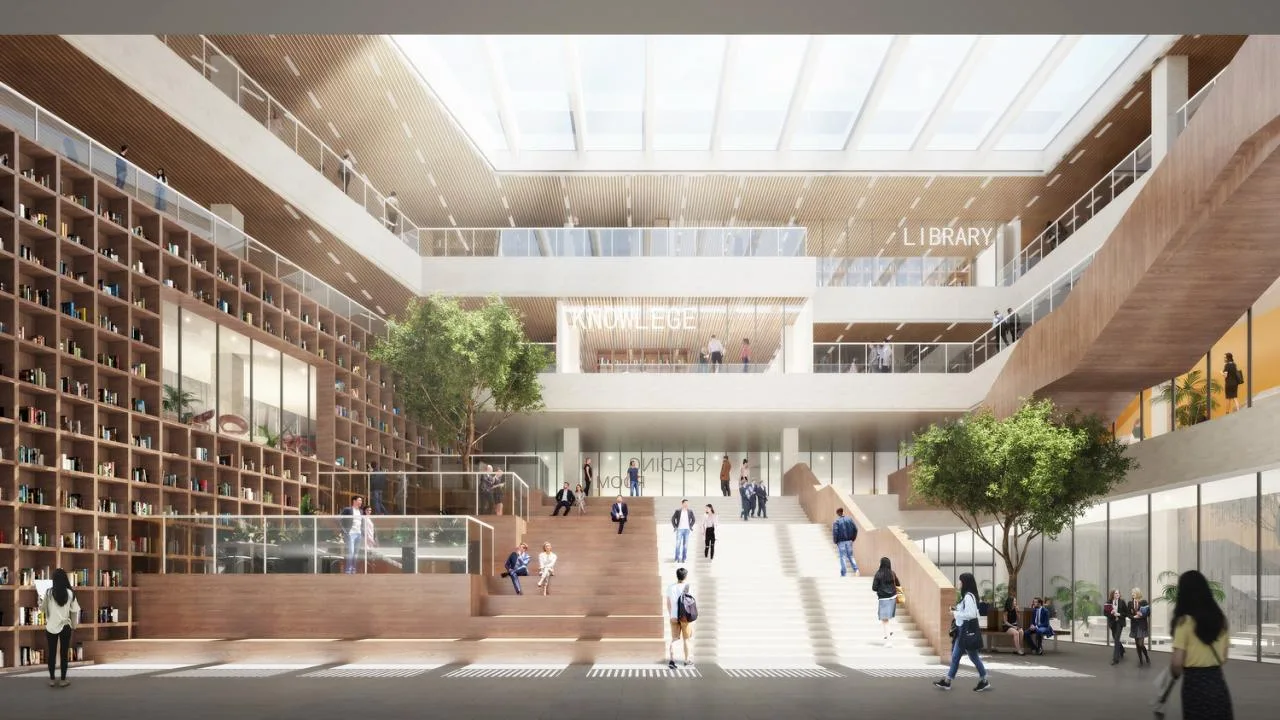
Multiple landscaped staircases on the public activity platform connect the teaching buildings and activity areas, blending architecture, interior, and landscape spaces into a continuous flow. This immersive environment enhances students’ perception and learning experience.
Suzhou Embroidery Landscape: The Journey of a Legendary Painting
The facade design combines linear and planar elements, featuring horizontal main lines and vertical sunshades. Functional areas are linked by aerial corridors and platforms adorned with greenery.
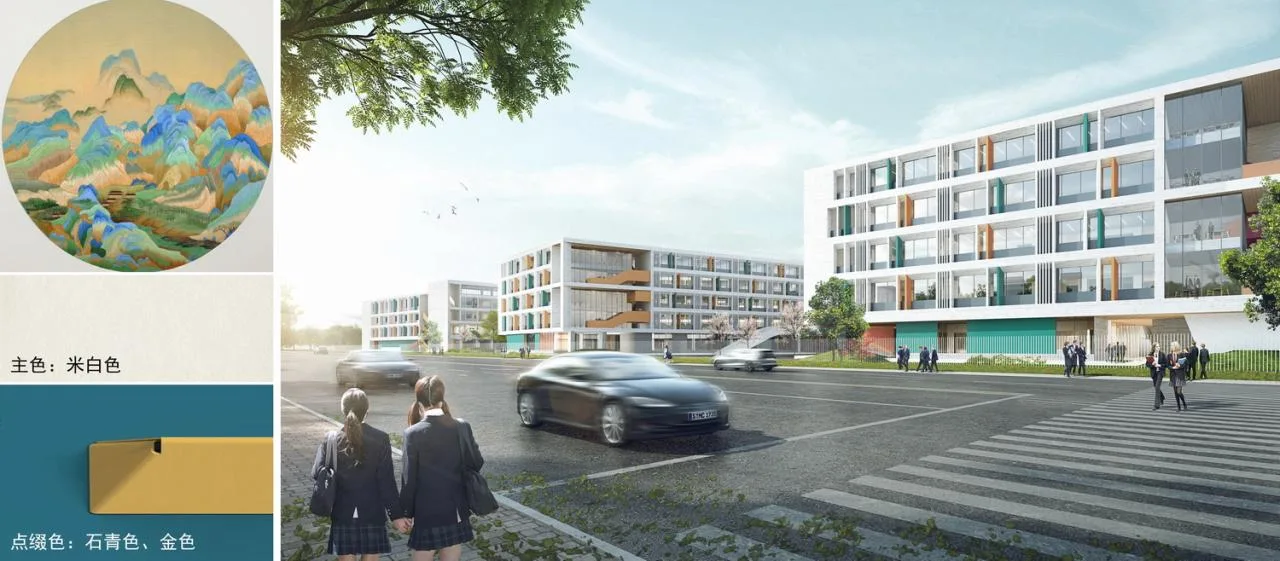
Inspired by Su Xiu’s “Thousand Miles of Rivers and Mountains,” the design incorporates stone blue—symbolizing blue skies and clear water—and gold hues reflecting the “Jinyan Road” and “Jinhai Road” plots, all set against a large beige background. The facade is simple and orderly, powerful yet agile, evoking the spirit of the water town.
06 Green, Low-Carbon, Multidimensional Ecology
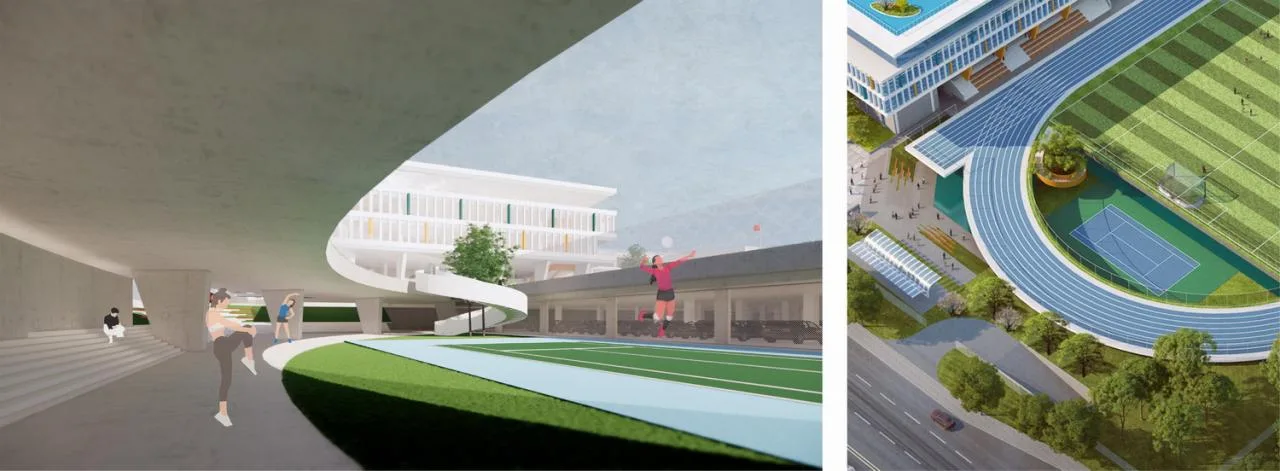
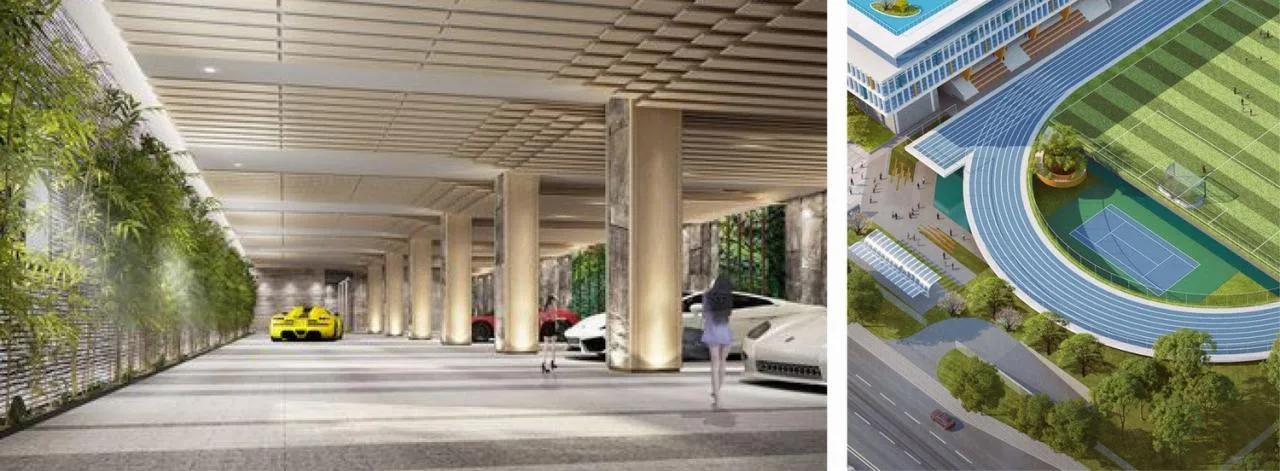
To reduce excavation and support costs for the underground garage, the sports field was raised by 1.5 meters. This approach decreased the garage’s burial depth while improving natural ventilation and lighting, reducing equipment costs and shortening construction time.
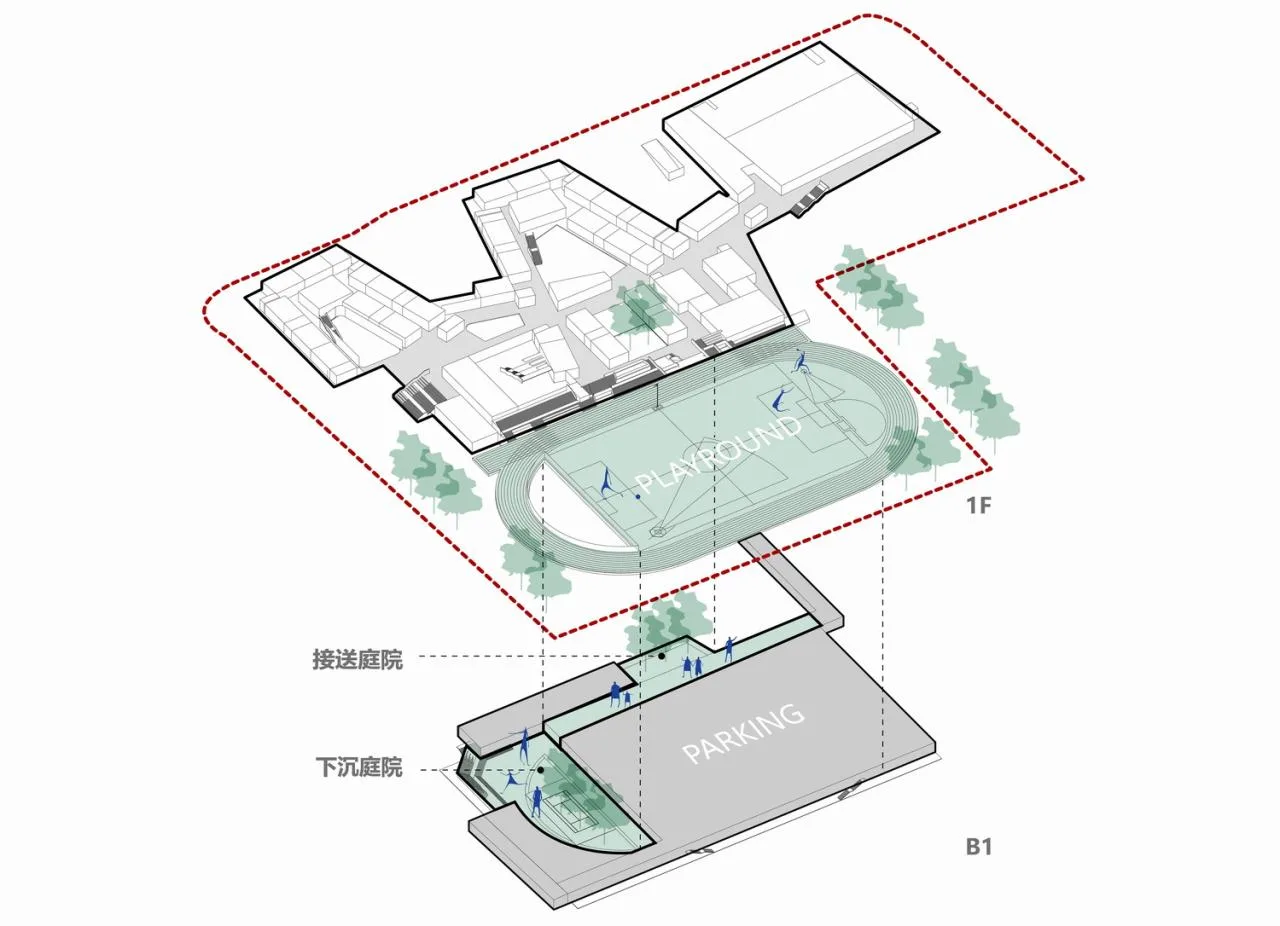
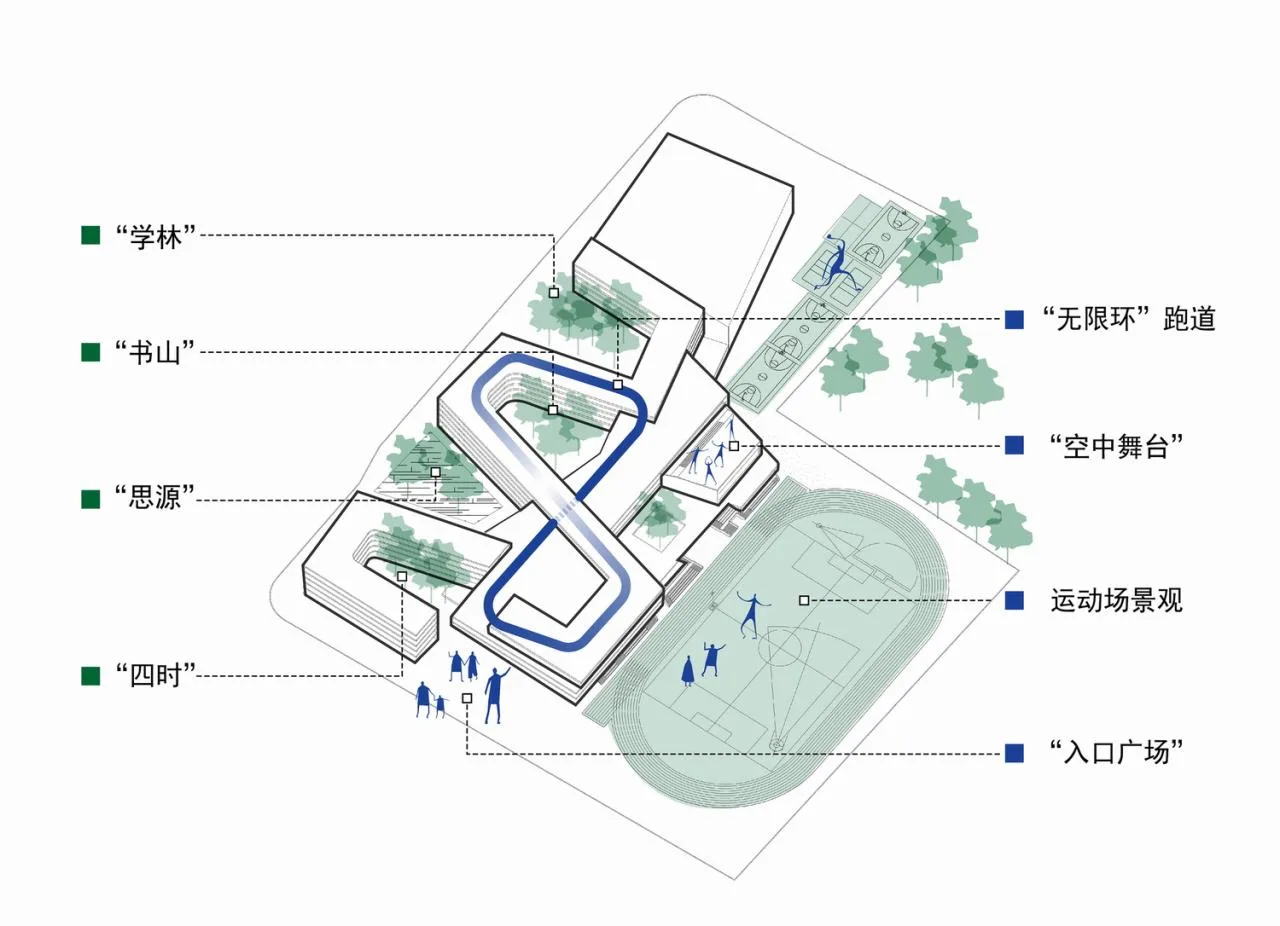
The combination of a well-lit basement and elevated activity areas, layered buildings, and abundant greenery—including rooftop gardens and aerial platforms—extends multidimensional green spaces from the basement through courtyards to the rooftops. This interconnected landscape system offers teachers and students ample spaces for activity and relaxation within a pleasant environment.
07 Conclusion
Schools are key environments where children experience critical stages of life and reflect broader societal aspirations. In the Jinyan Road High School project, the design team focused on students as the core, using the campus itself as an intangible educational tool to empower and support children’s growth through thoughtful design.
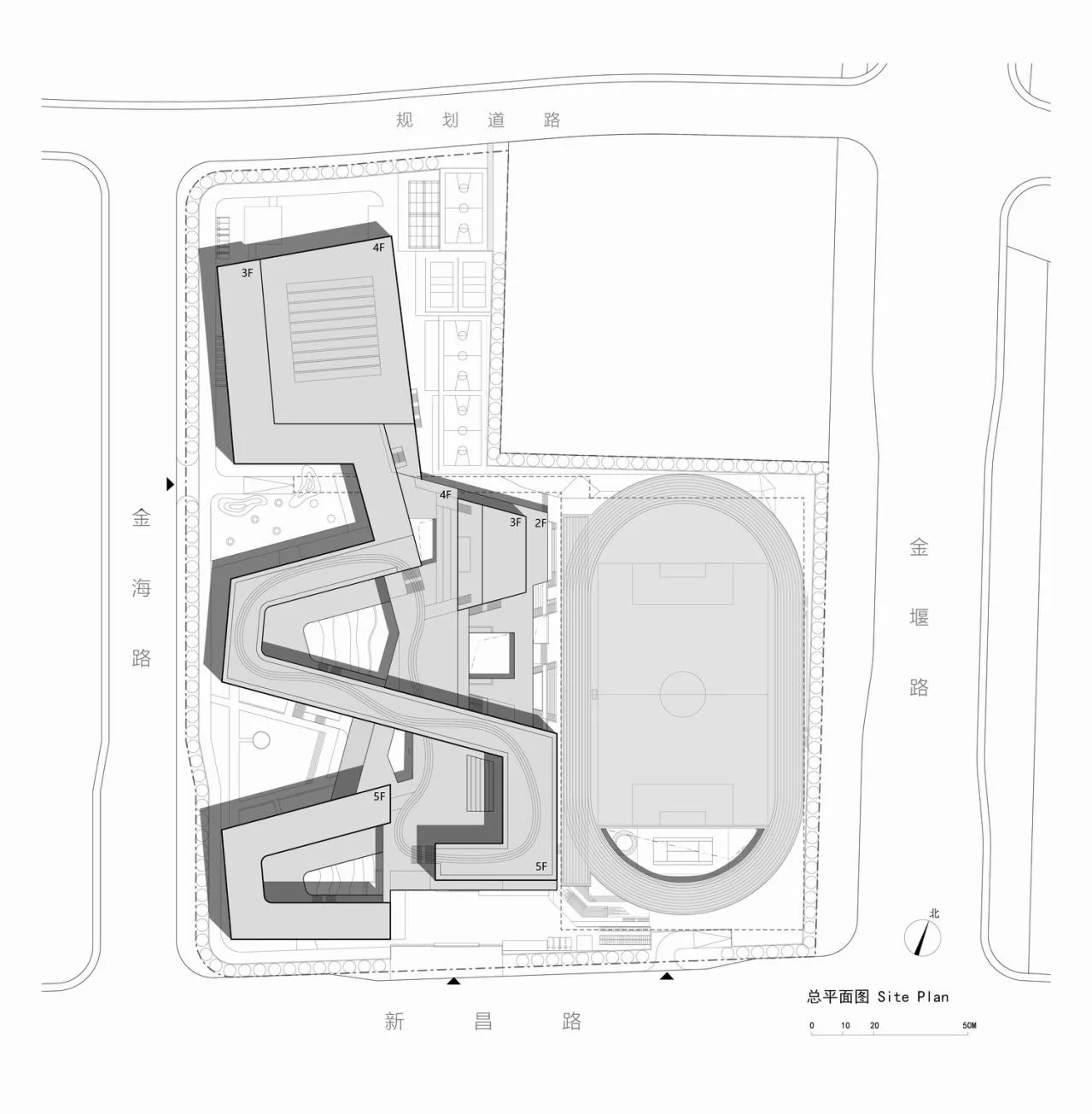
Project Drawings
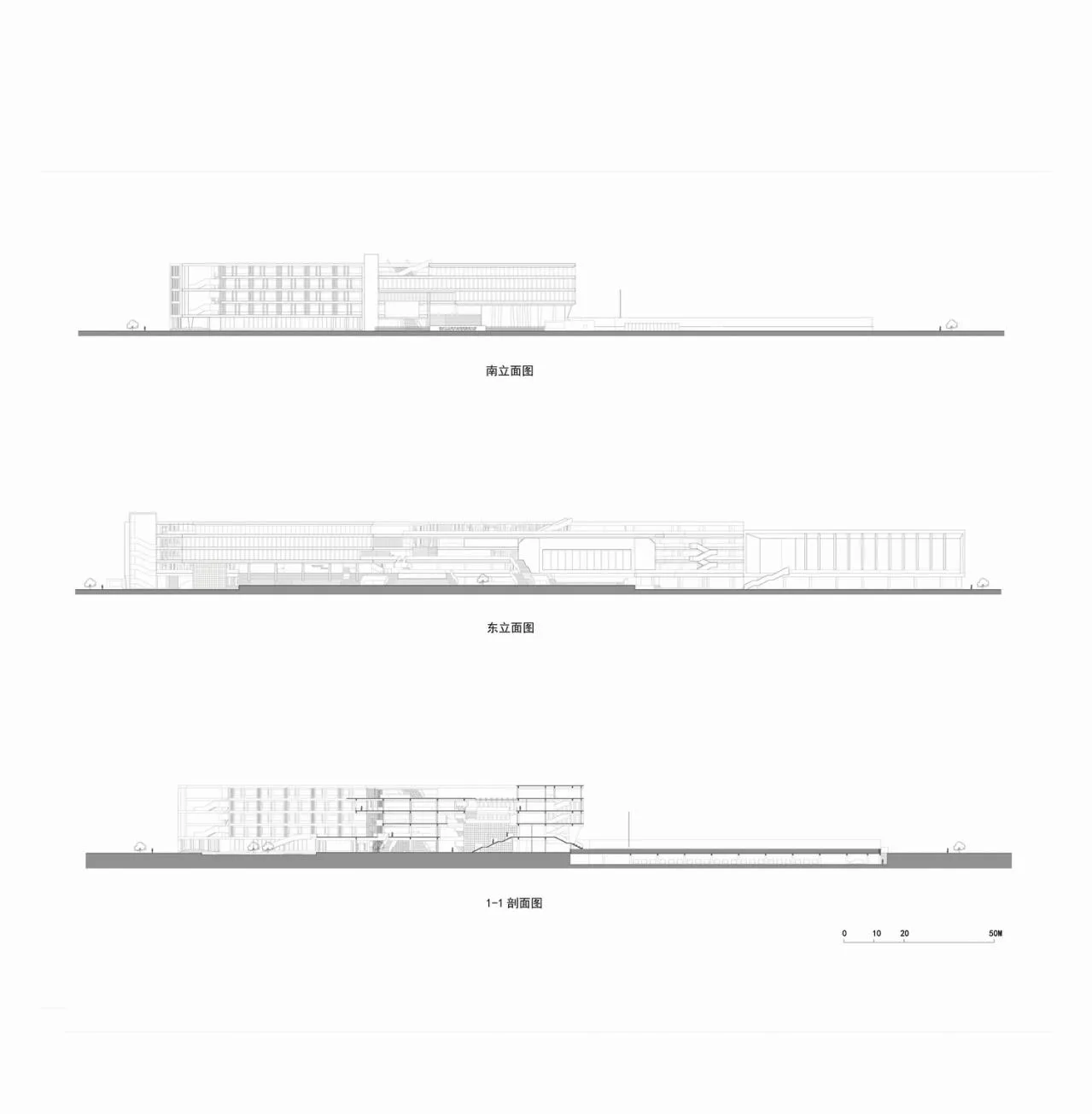
Project Information
Project Name: Jinyan Road Plot High School, Suzhou Industrial Park
Site Area: 66,700 square meters
Building Area: 89,040 square meters
Design Date: November 2021
Design Team: Zou Danni, Liu Yujing, Li Yue, Wang Zizhen














Must log in before commenting!
Sign Up