
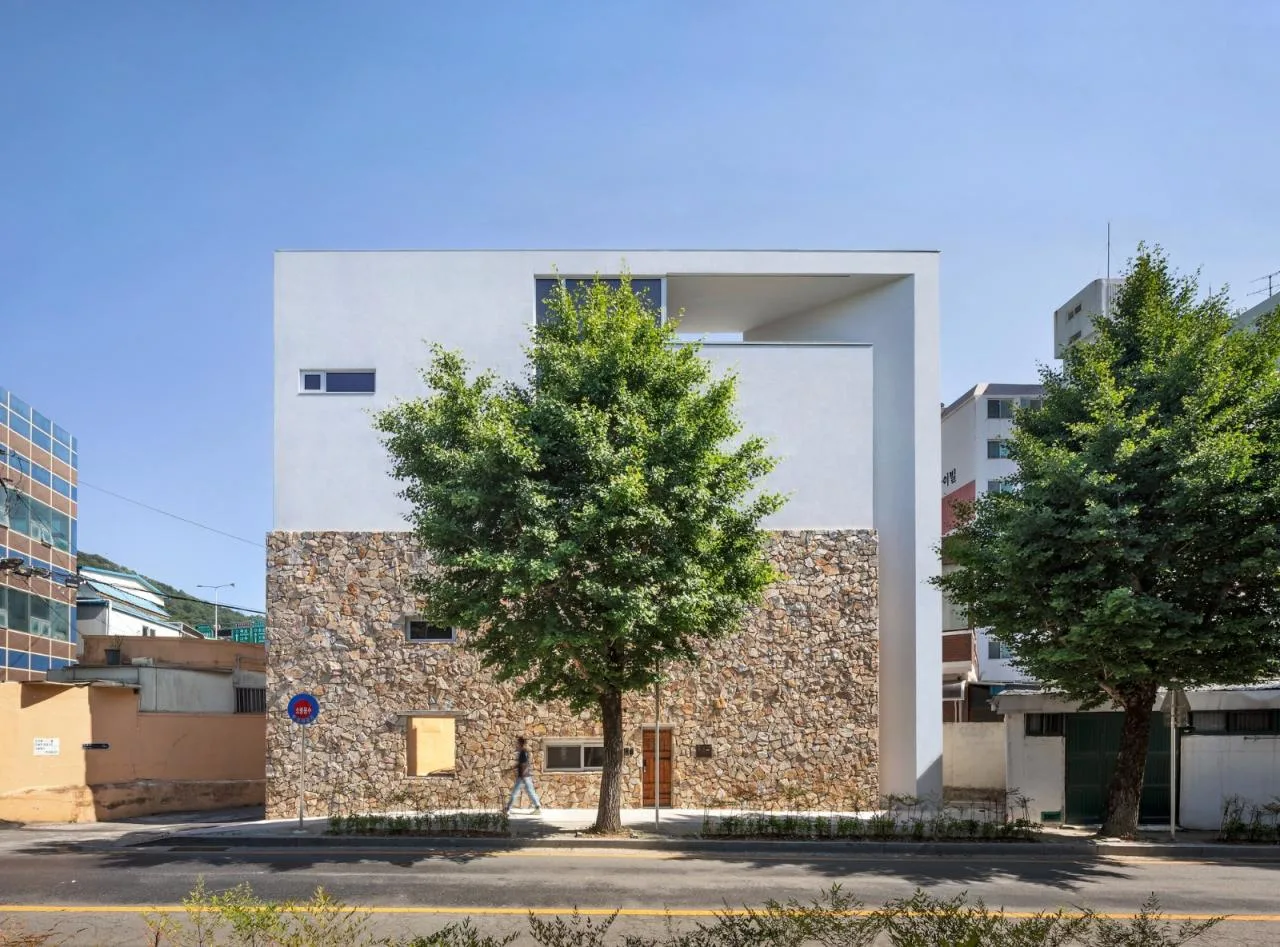
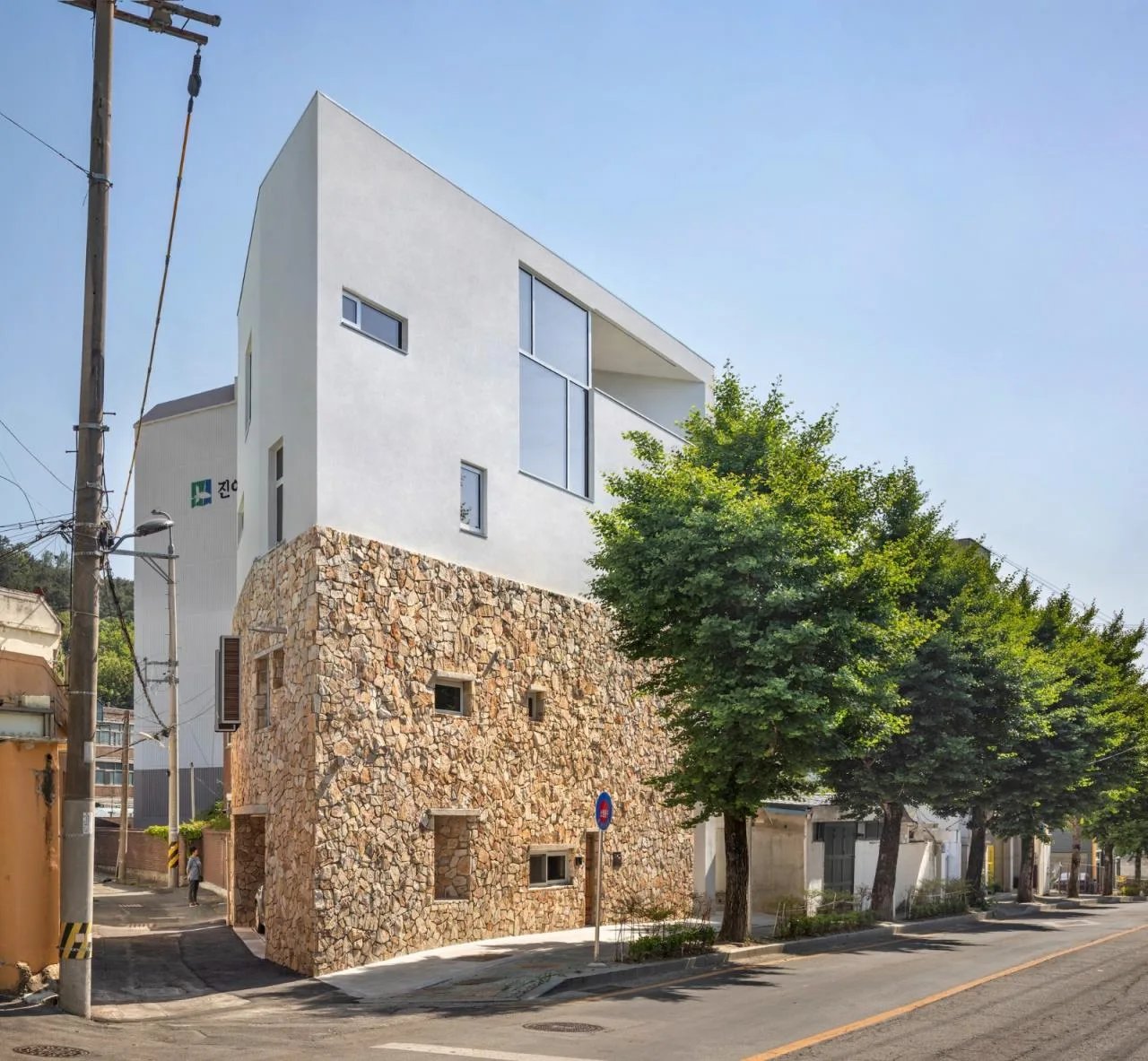
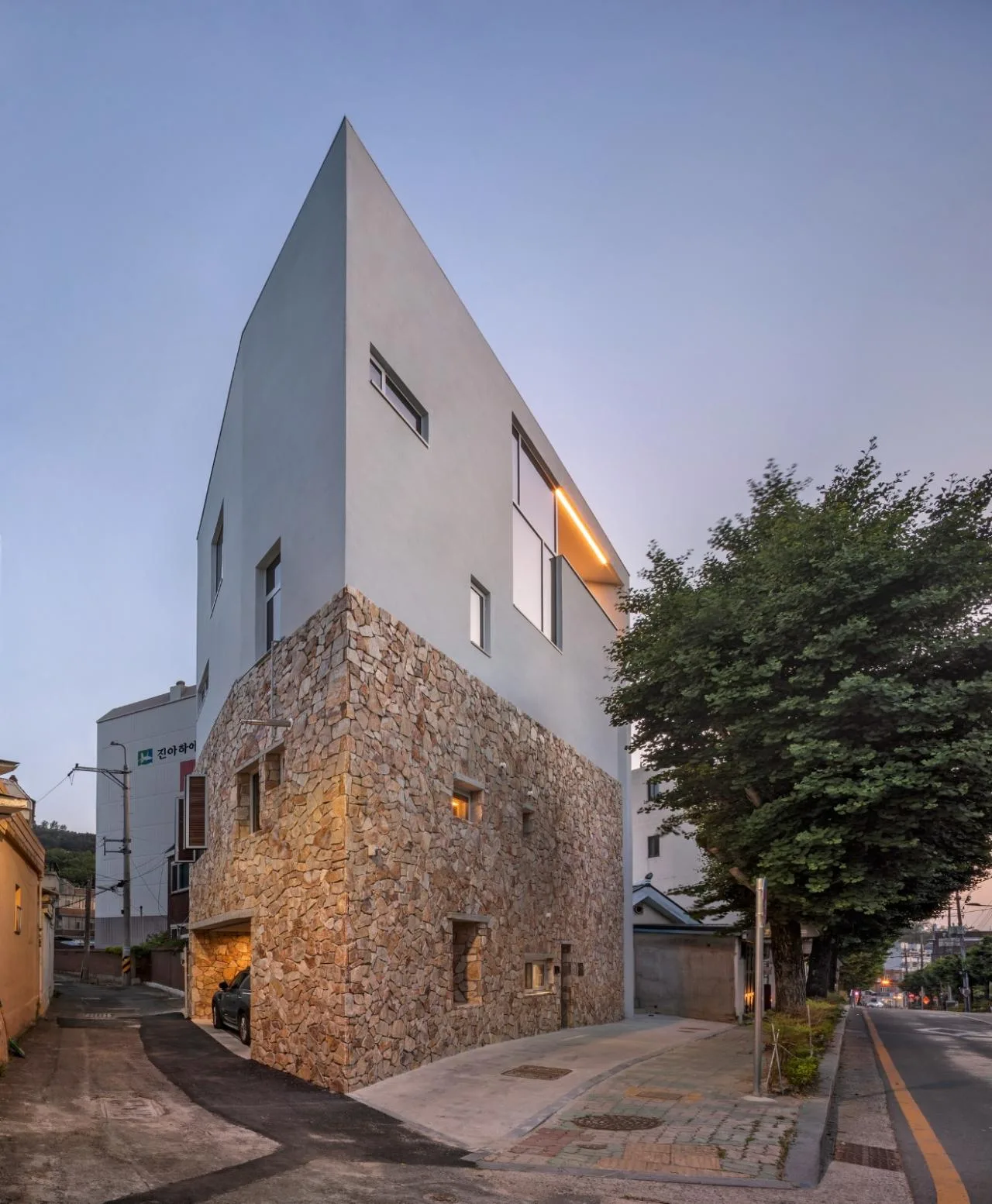
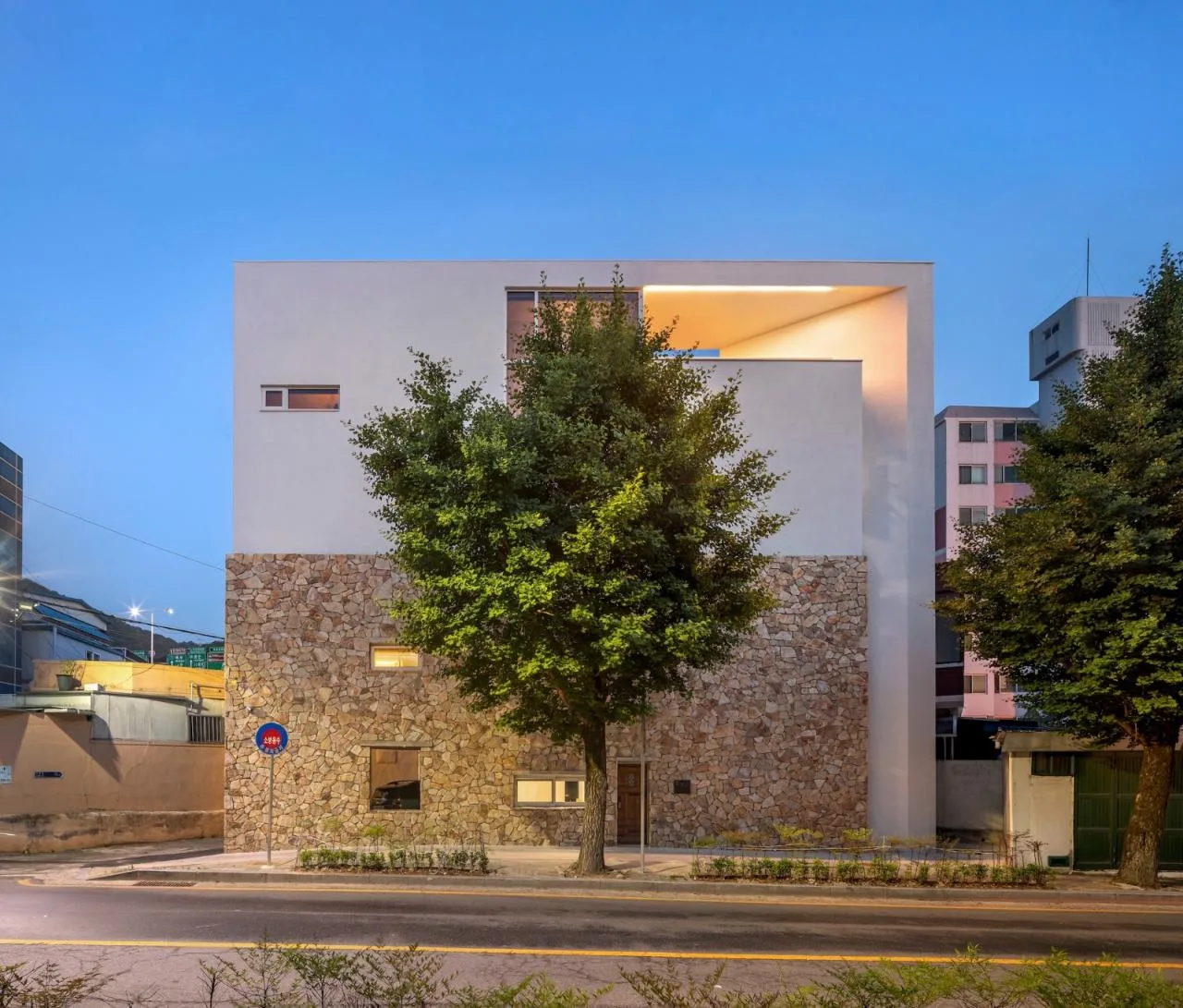
This project is located at the intersection of Wudeshan National Park and Gwangju City, accessible by a two-lane highway that offers views of both natural landscapes and urban settings. Along the street, you’ll find tall ginkgo trees, historic houses, and commercial buildings. The site itself was partially used for road maintenance, resulting in a triangular plot of land. Due to road widening standards that exclude the rear road area and a two-meter reduction on the front road for landscaping, the buildable area is limited to just 62.73 square meters. The triangular building faces the road on two sides, while its third side faces south, blocked by an adjacent structure.
The homeowners, a couple who run a restaurant, envisioned a home that supports both their professional and personal lives. They desired additional functions in the house that would allow them to share daily moments while working and enjoy their hobbies at home. Given the house’s close proximity to neighboring buildings and the absence of a buffer zone, they also wanted a clear separation between indoor and outdoor functions.
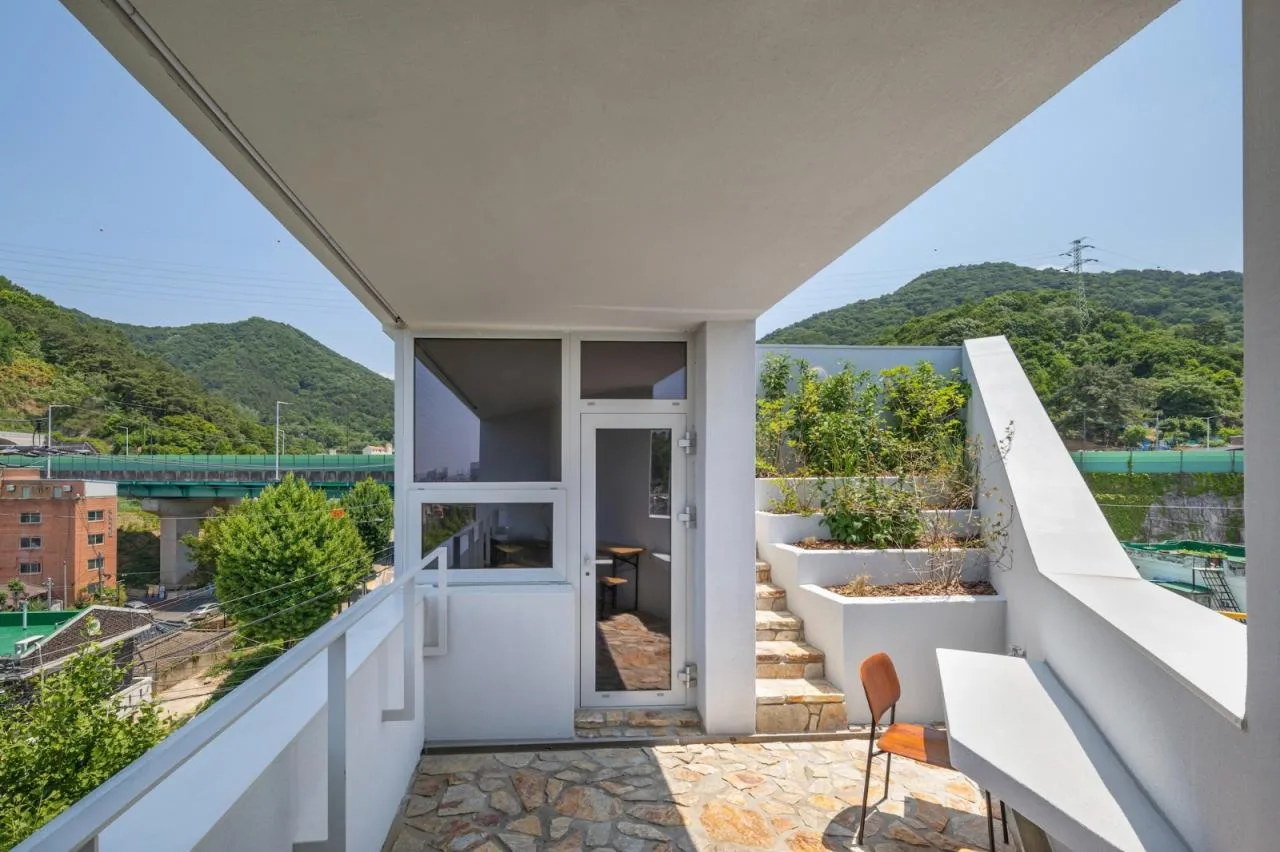
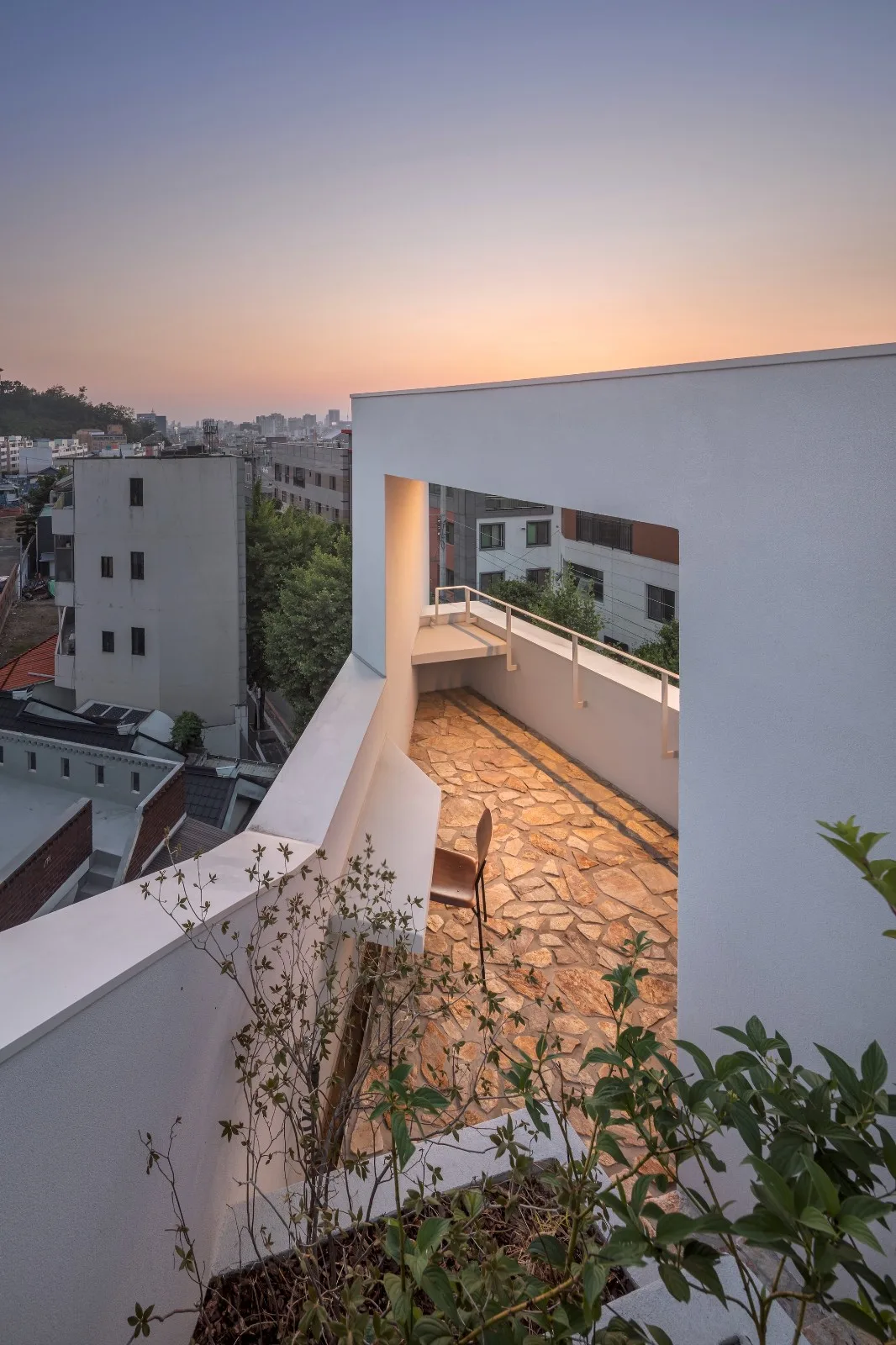
The house is organized into three main functional zones: the first floor houses the restaurant and kitchen, designed for dining and social gatherings; the second through fourth floors serve as residential spaces; and the rooftop provides an immersive connection to the surrounding natural environment.
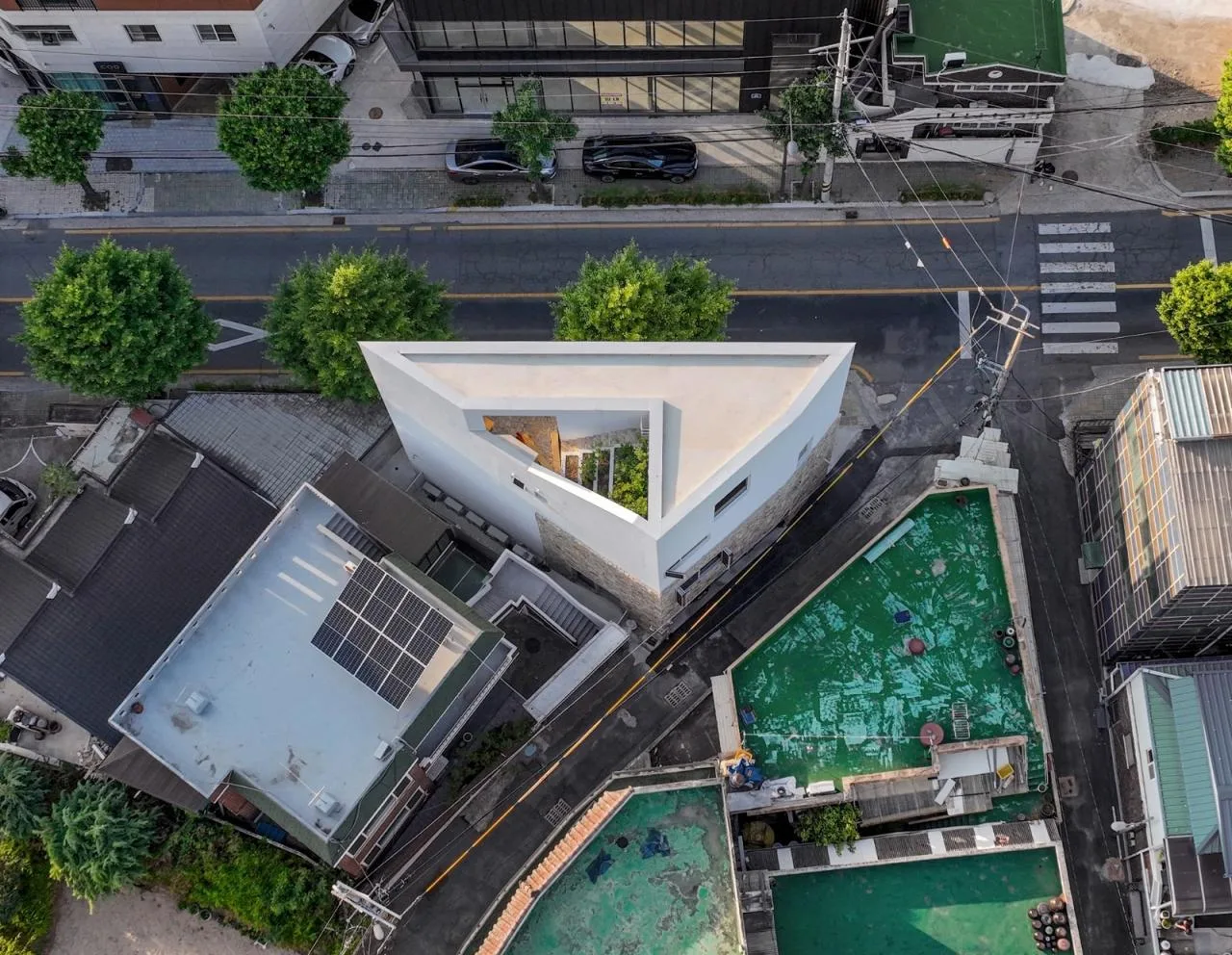
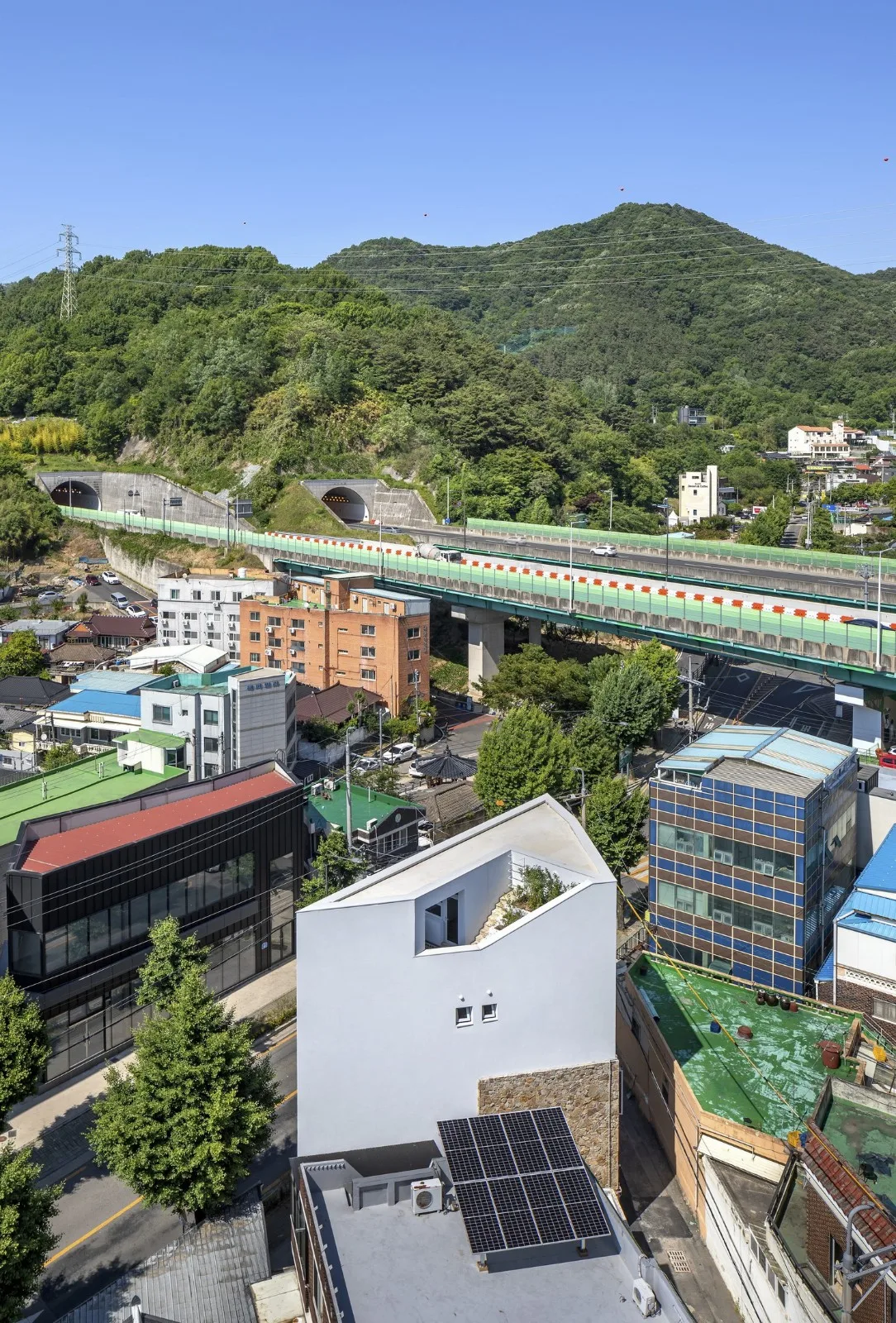
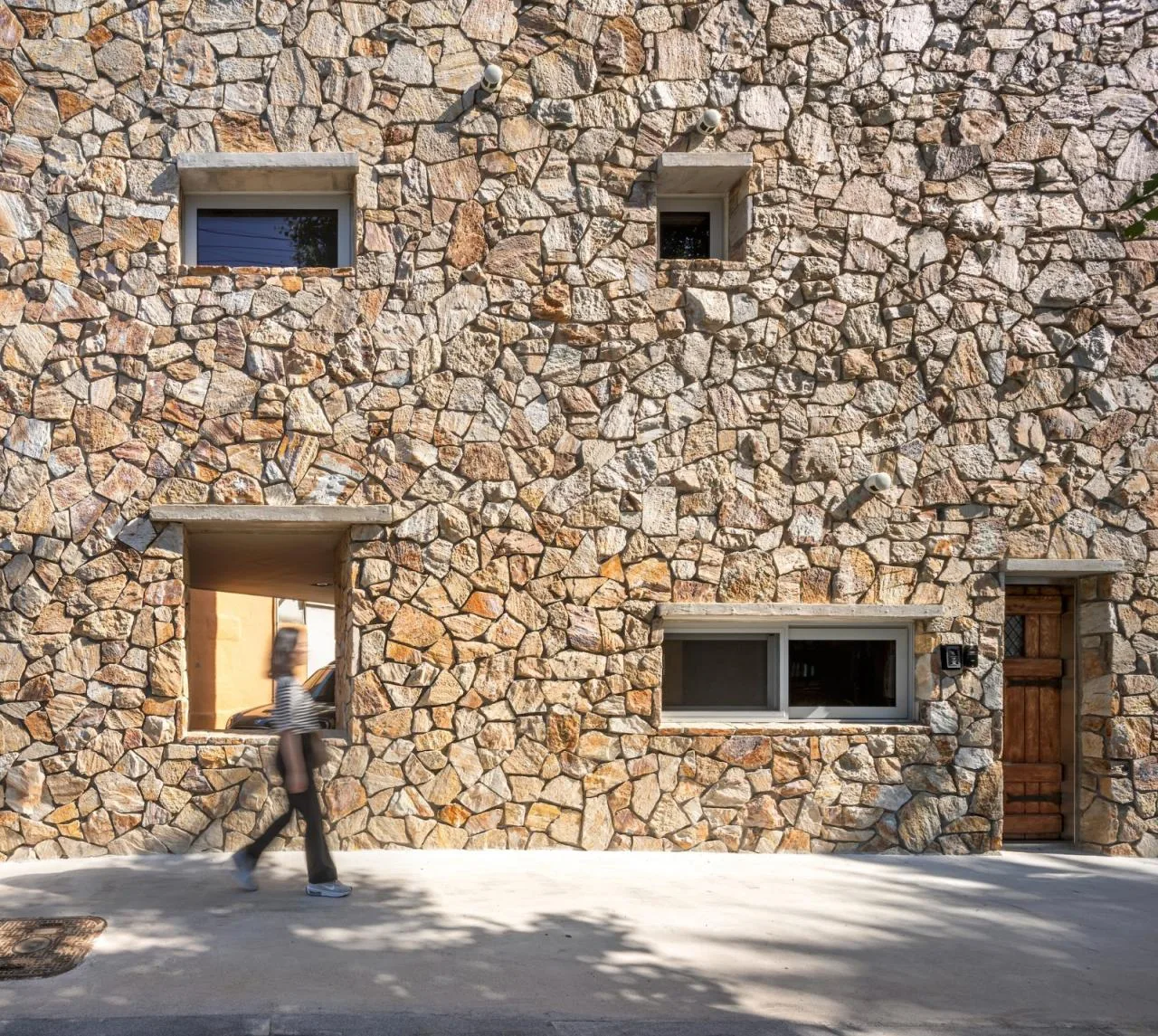
The exterior walls serve as the primary boundary between the interior and exterior. Constructed from solid natural stone blocks arranged in layered masonry, they integrate the building seamlessly into the natural streetscape, providing residents with a sense of tranquility.
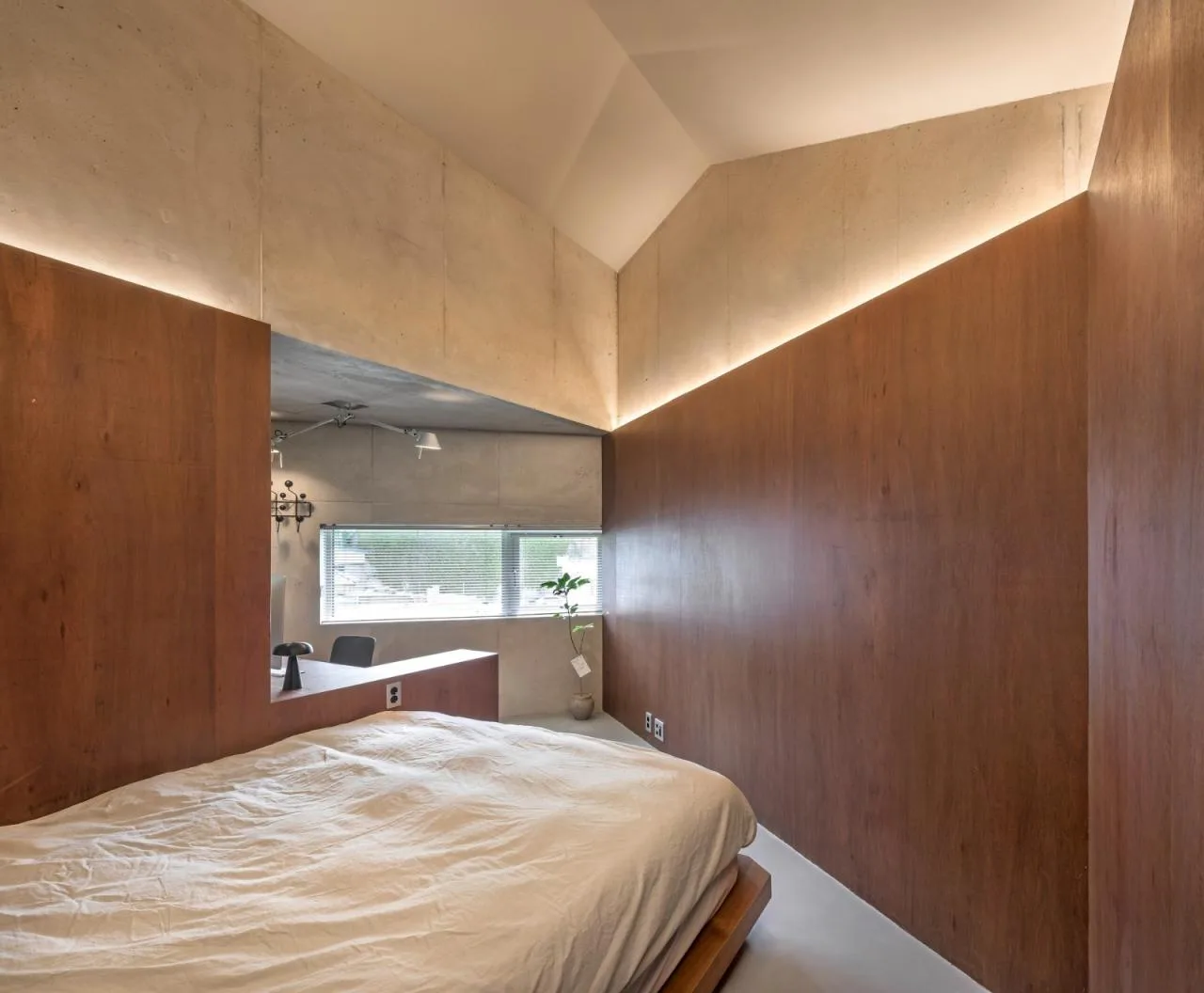
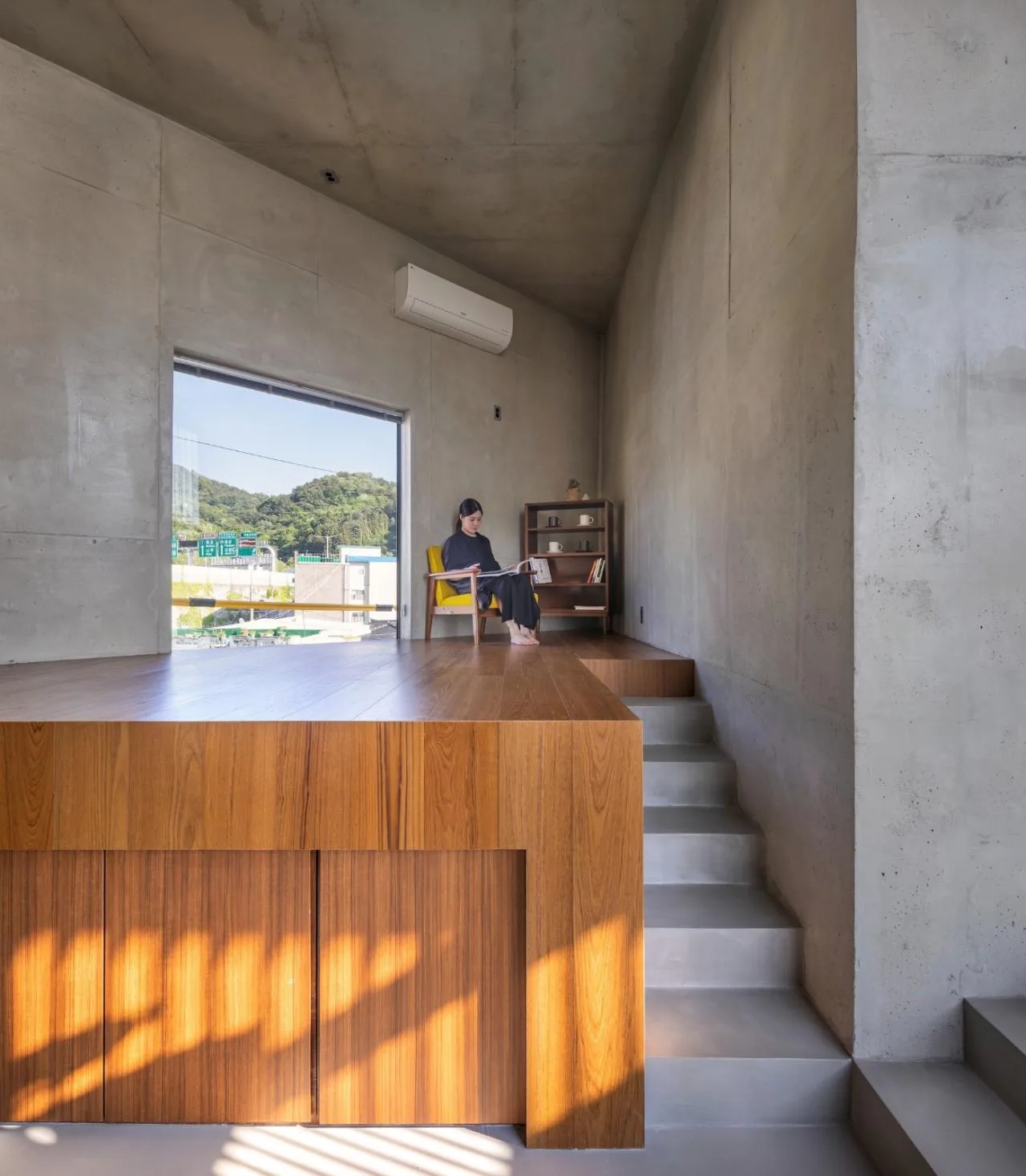
Inside, exposed concrete finishes complement built-in furniture crafted from natural wood, creating a harmonious blend of indoor and outdoor natural aesthetics.
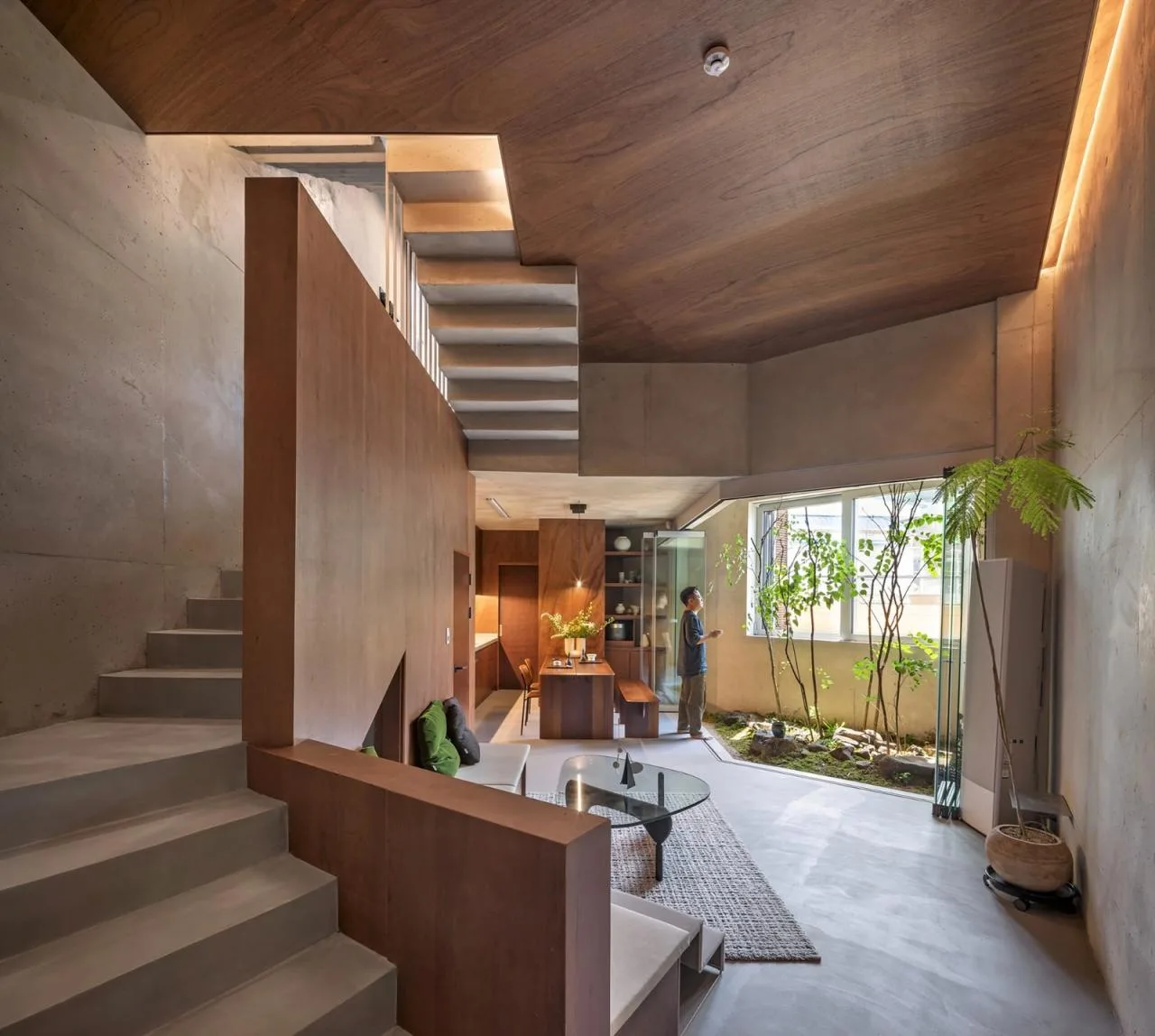
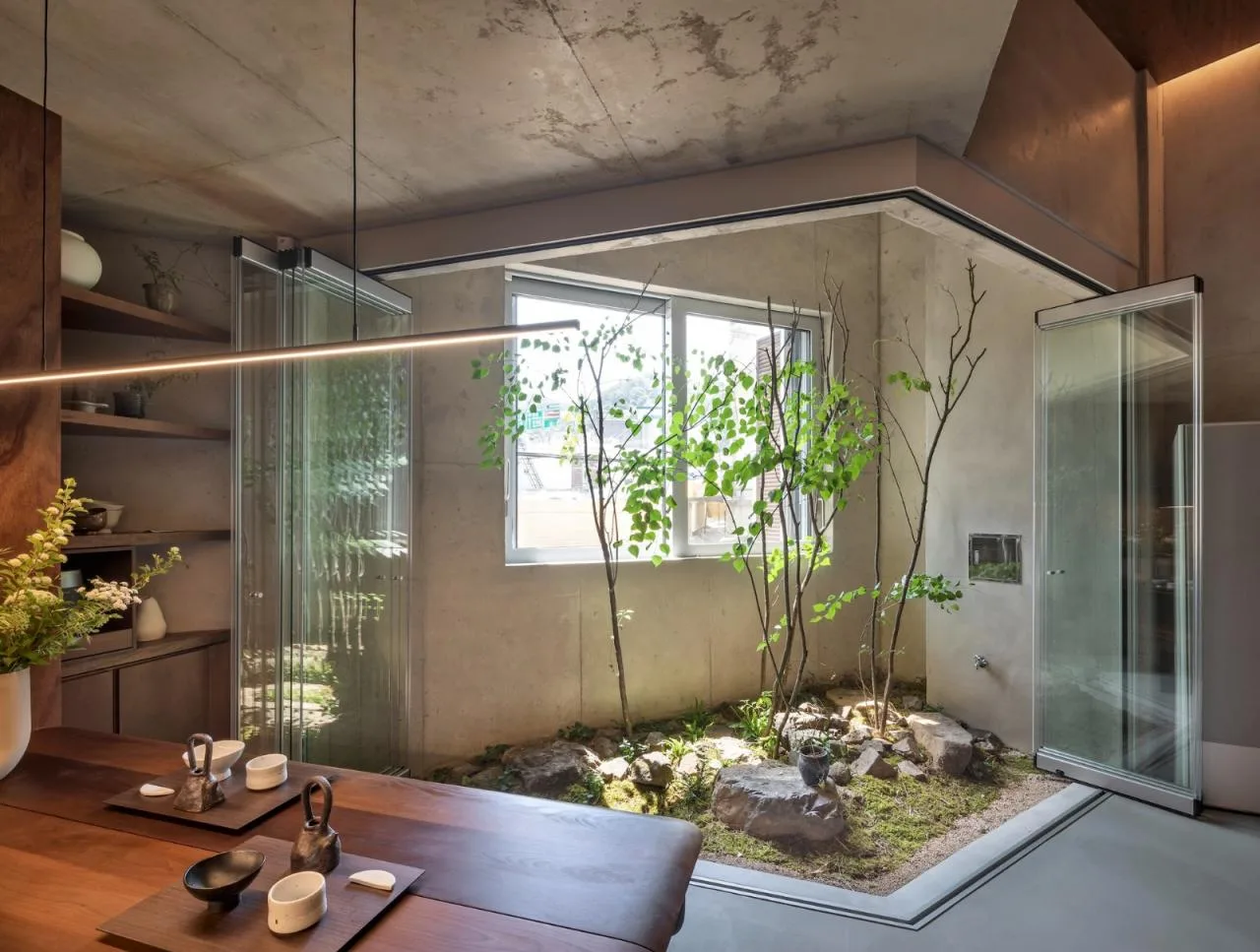
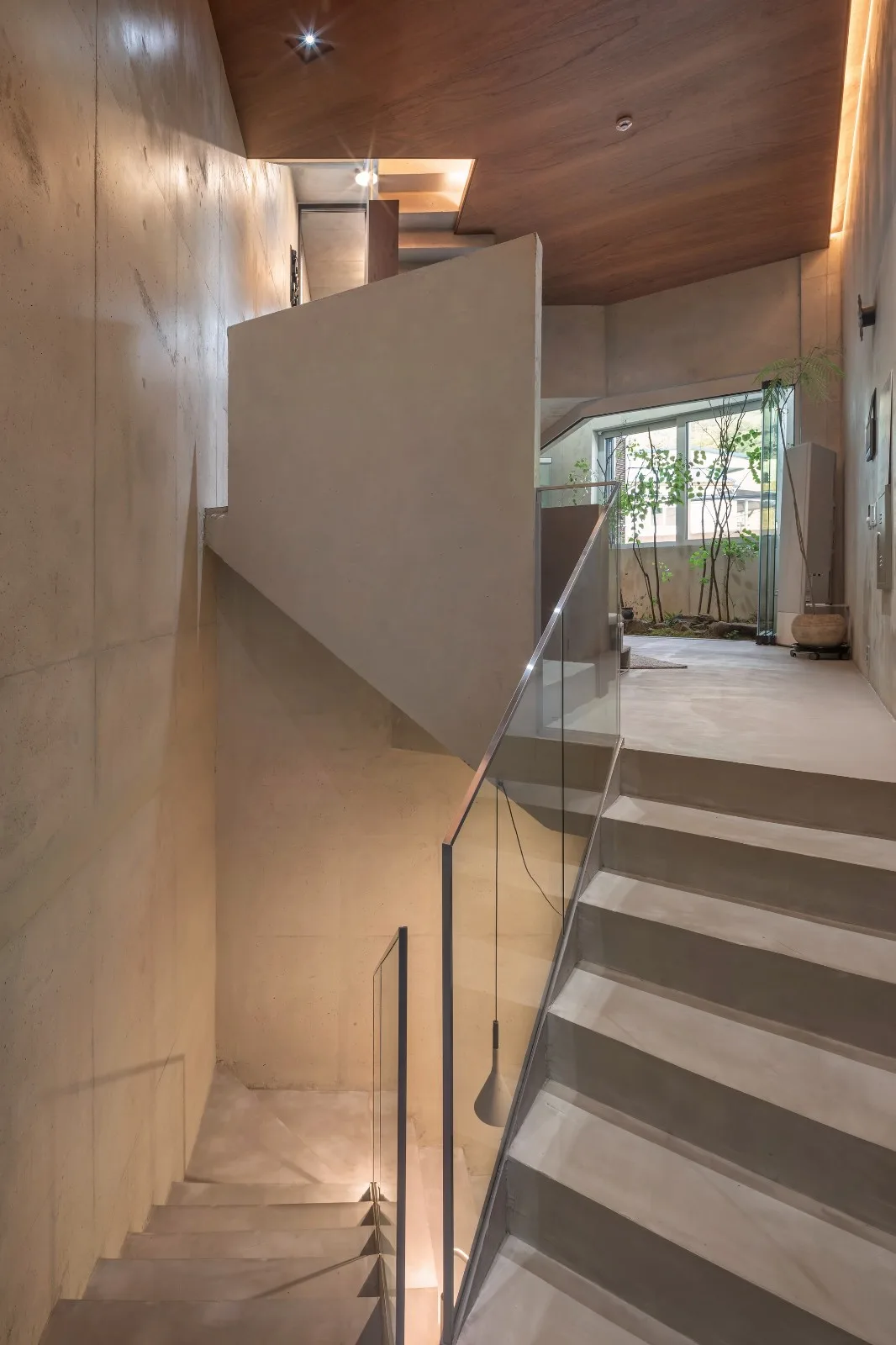
The interior uses a duplex layout to create a fuzzy boundary and add vertical variation, ensuring the living room feels open and facilitating convenient stair access. The stairs are strategically placed to avoid interference with the functional zones on each floor, improving space efficiency and allowing free movement.
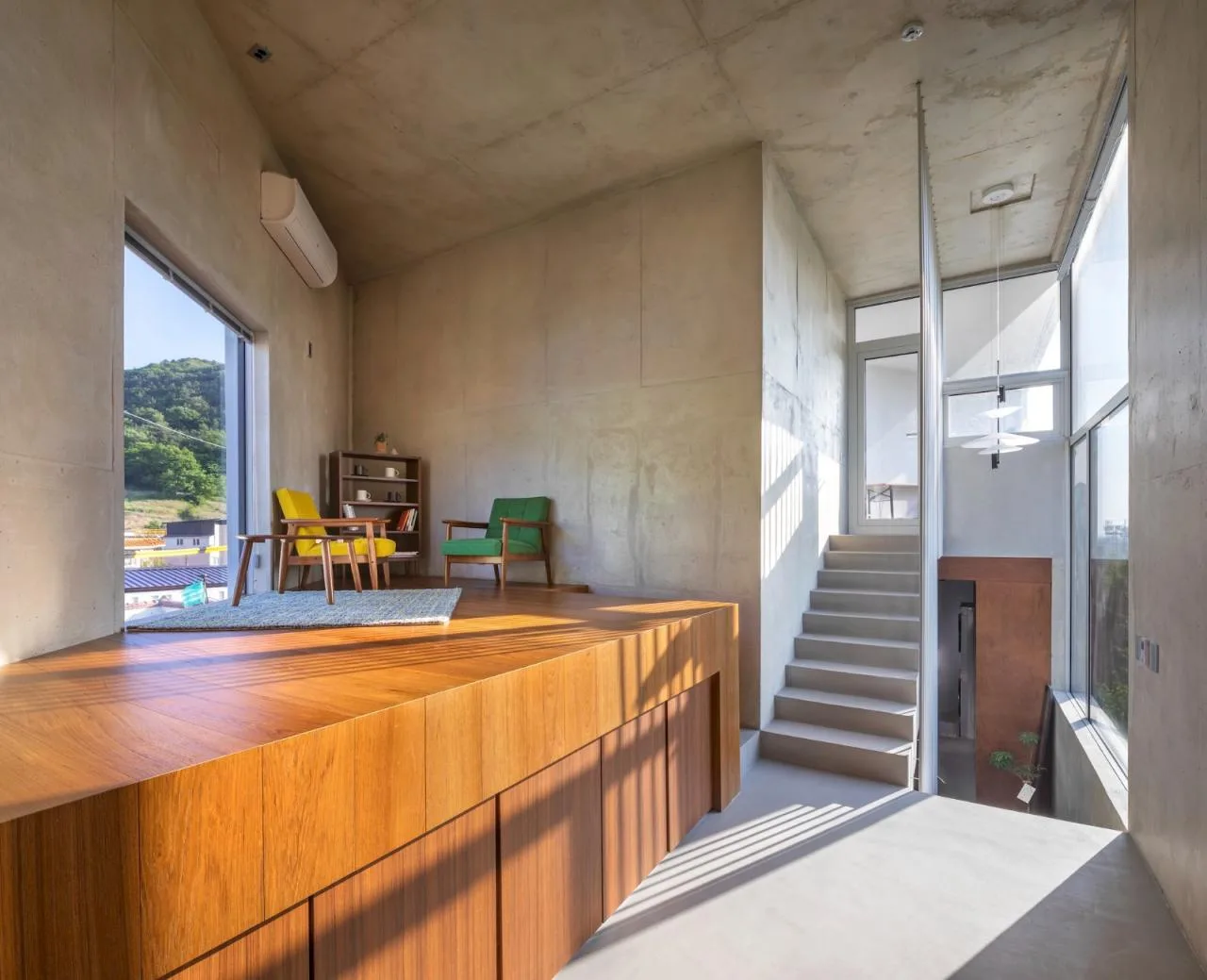
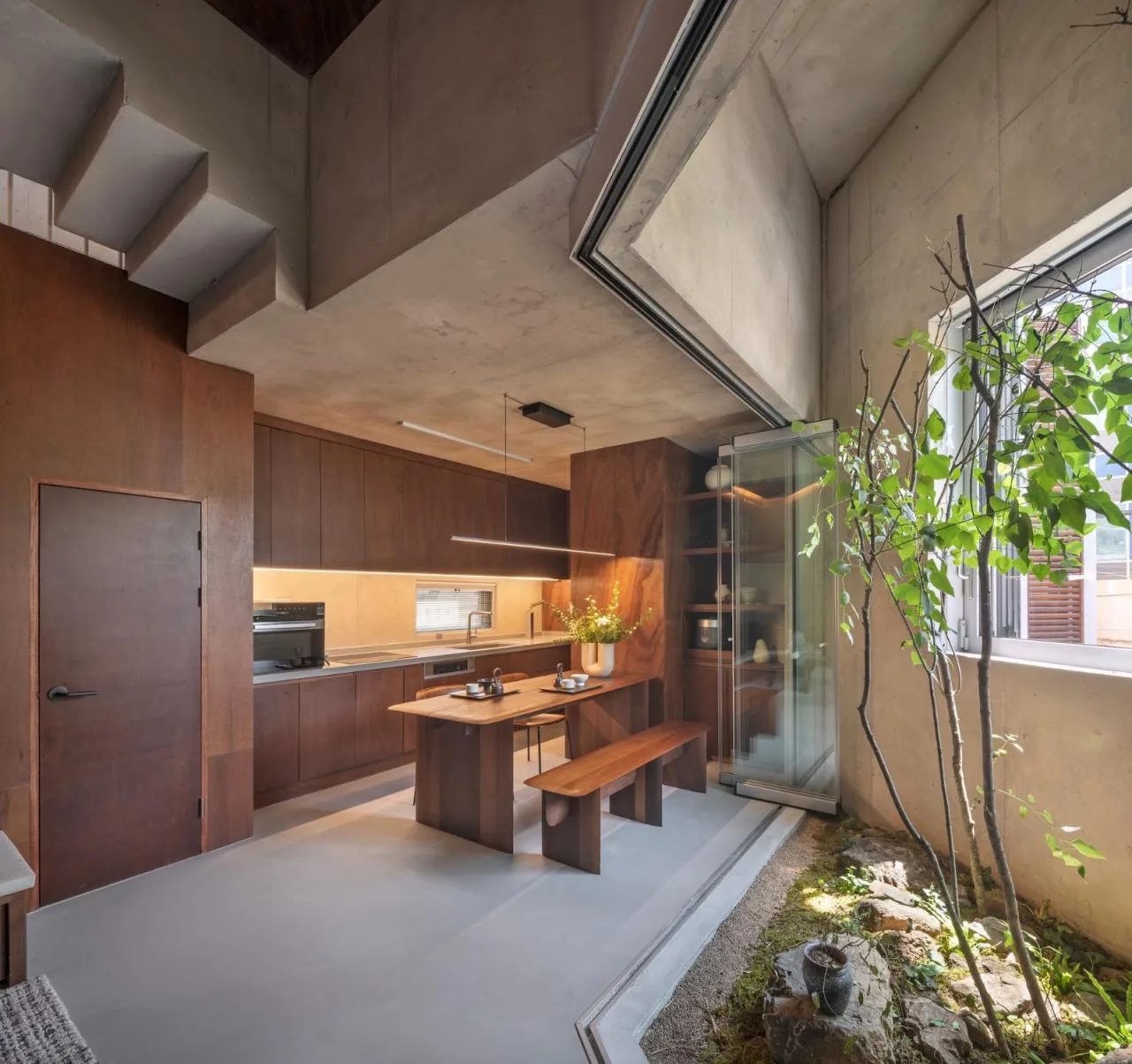
Except for the bedrooms and bathrooms, all other spaces are designed to feel spacious. Transparent glass partitions or open connections blur boundaries between the children’s room and stairs, hallways, bathrooms and laundry, entertainment spaces and stairs, and living room and garden. This approach maximizes the use of narrow spaces and determines partitioning based on functional needs and spatial form. Custom-designed furniture reinforces a cohesive spatial experience throughout the house.
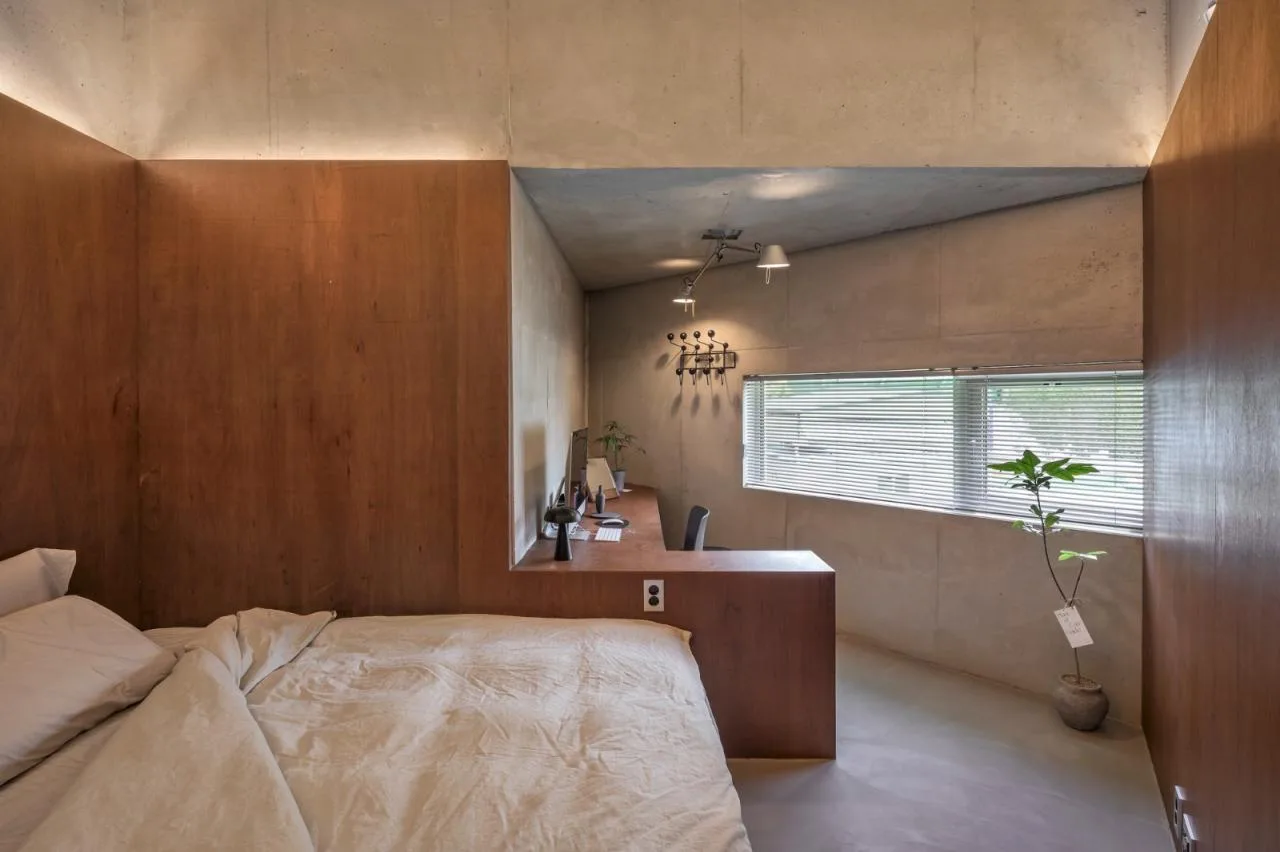
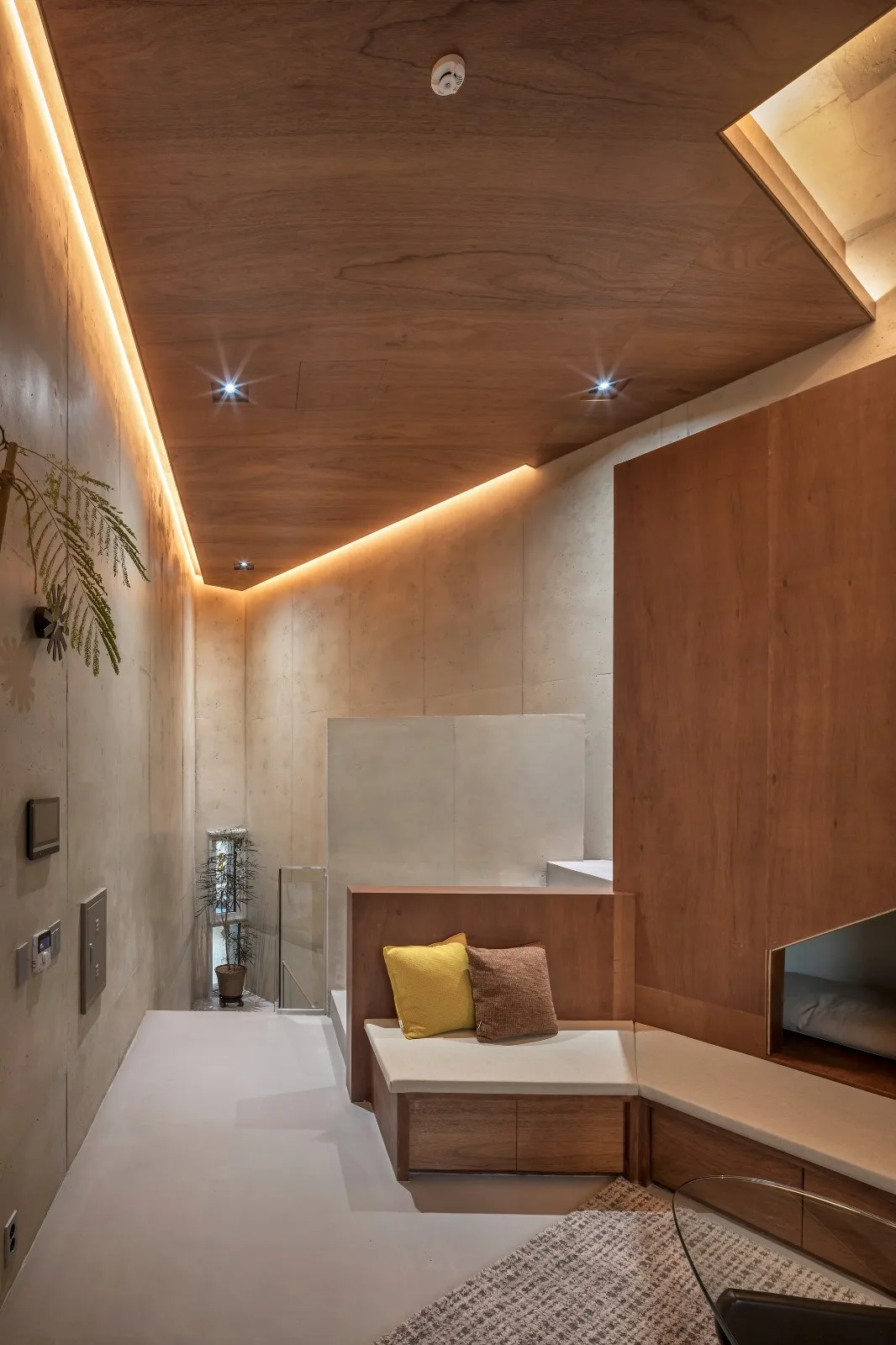
Given the limited space, flexible intervention was key in the design and planning around the staircase area. The house is segmented vertically—between one or two floors, two or three floors, and above three floors—with the stairs redefining function, structure, and orientation of each zone. The first level features transparent glass railings to showcase interior decor, while the second and third floors use framed structural walls that also act as partitions for bathrooms, custom sofas, and storage. Above the third floor, rhythmic linear elements introduce a fresh way to express open walls, highlighting various stair designs tailored to each spatial context.
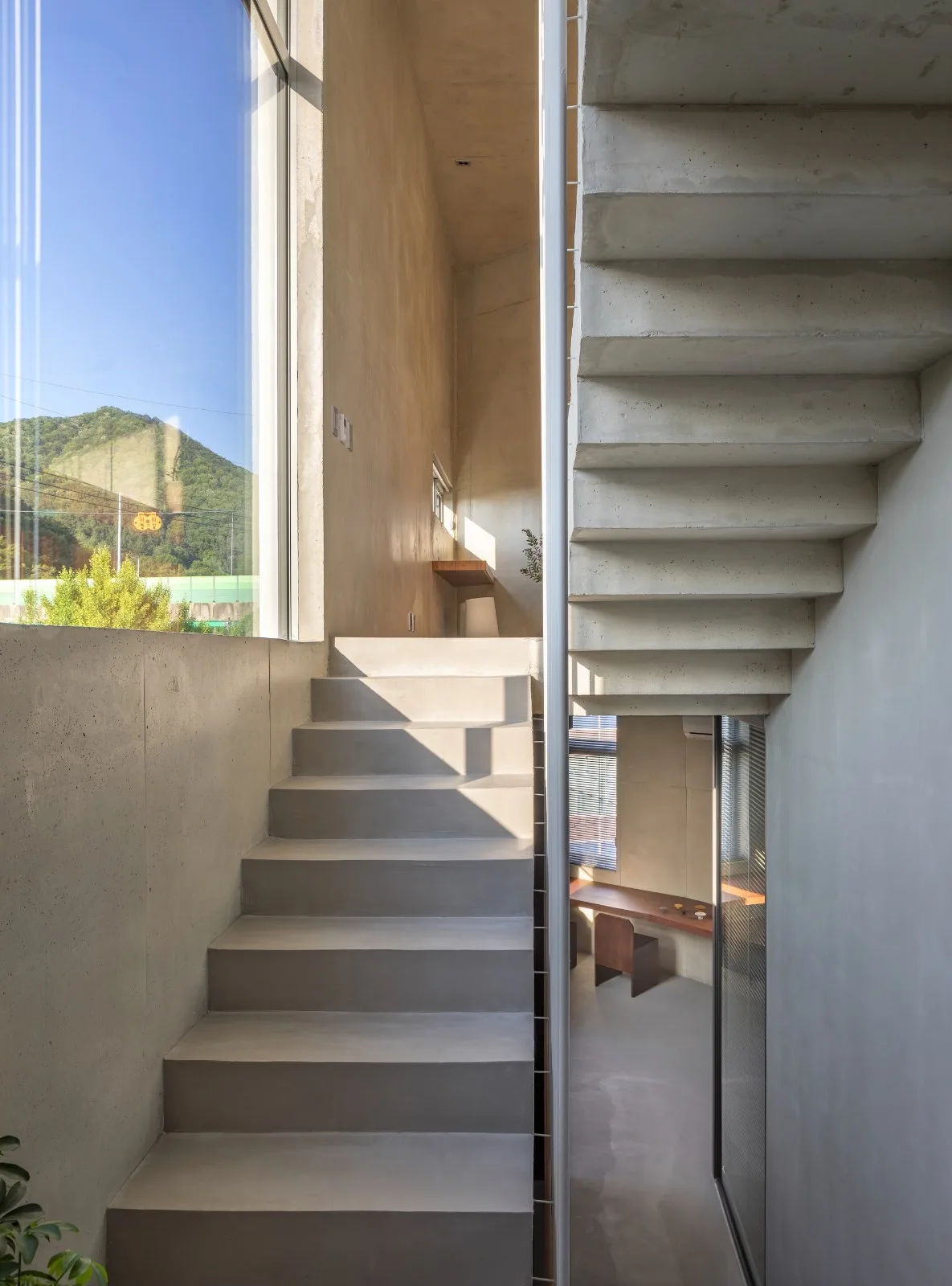
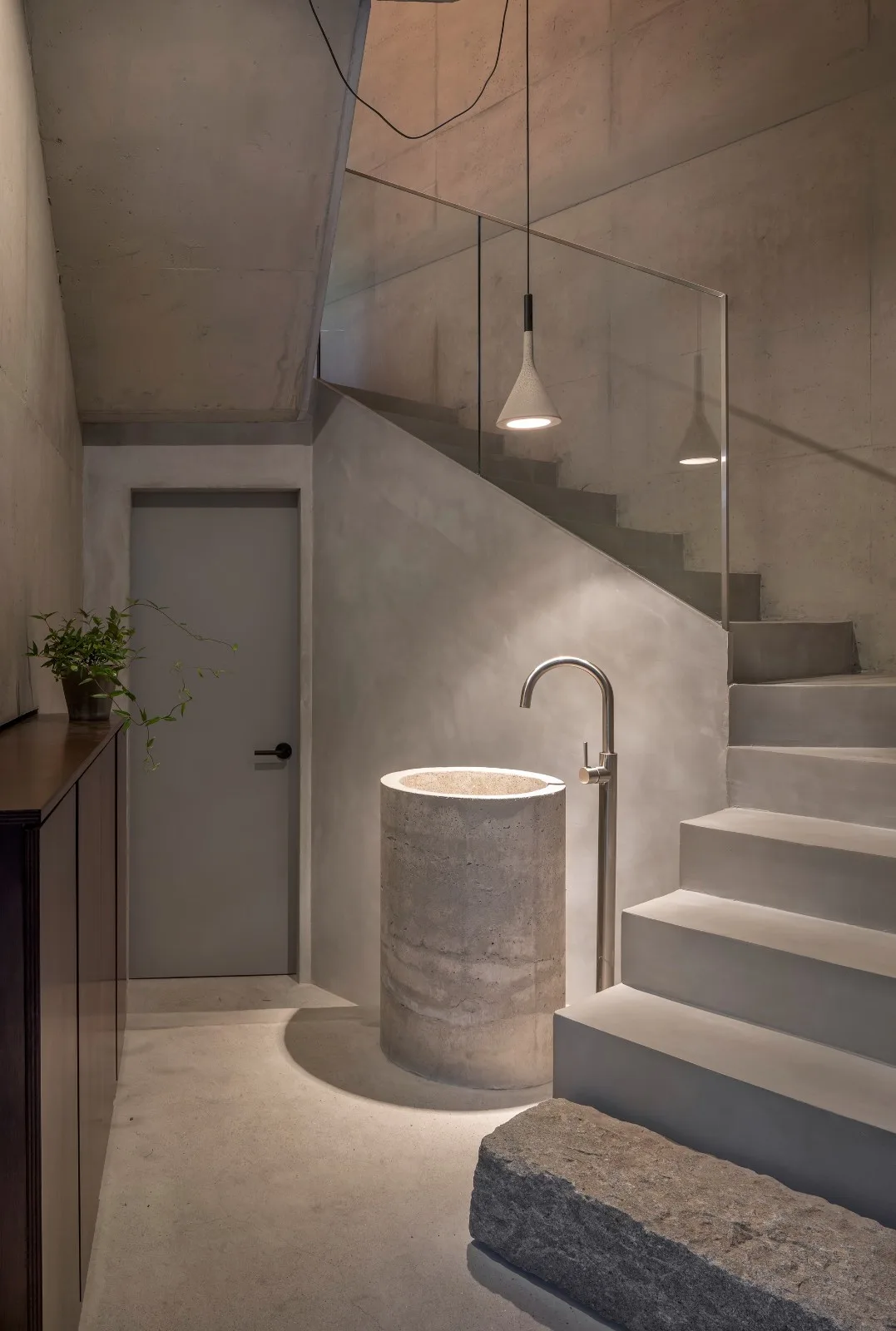
The integration of the exterior landscape walls defines the first impression of the house. Built with irregular, layered stones and minimal raw materials, the exterior features a two-meter wide sidewalk seamlessly connected to the stone wall, paved with polished concrete. Even without a visible boundary wall, pedestrians recognize this as the edge between road and property, while drivers understand this marks the transition from city to nature. The varying size and placement of openings in the exterior walls are intentionally irregular to soften the visual weight of the rough stone. As the building rises, ceilings and windows open up to provide expansive views of the distant Wushang Mountain.
Project Drawings
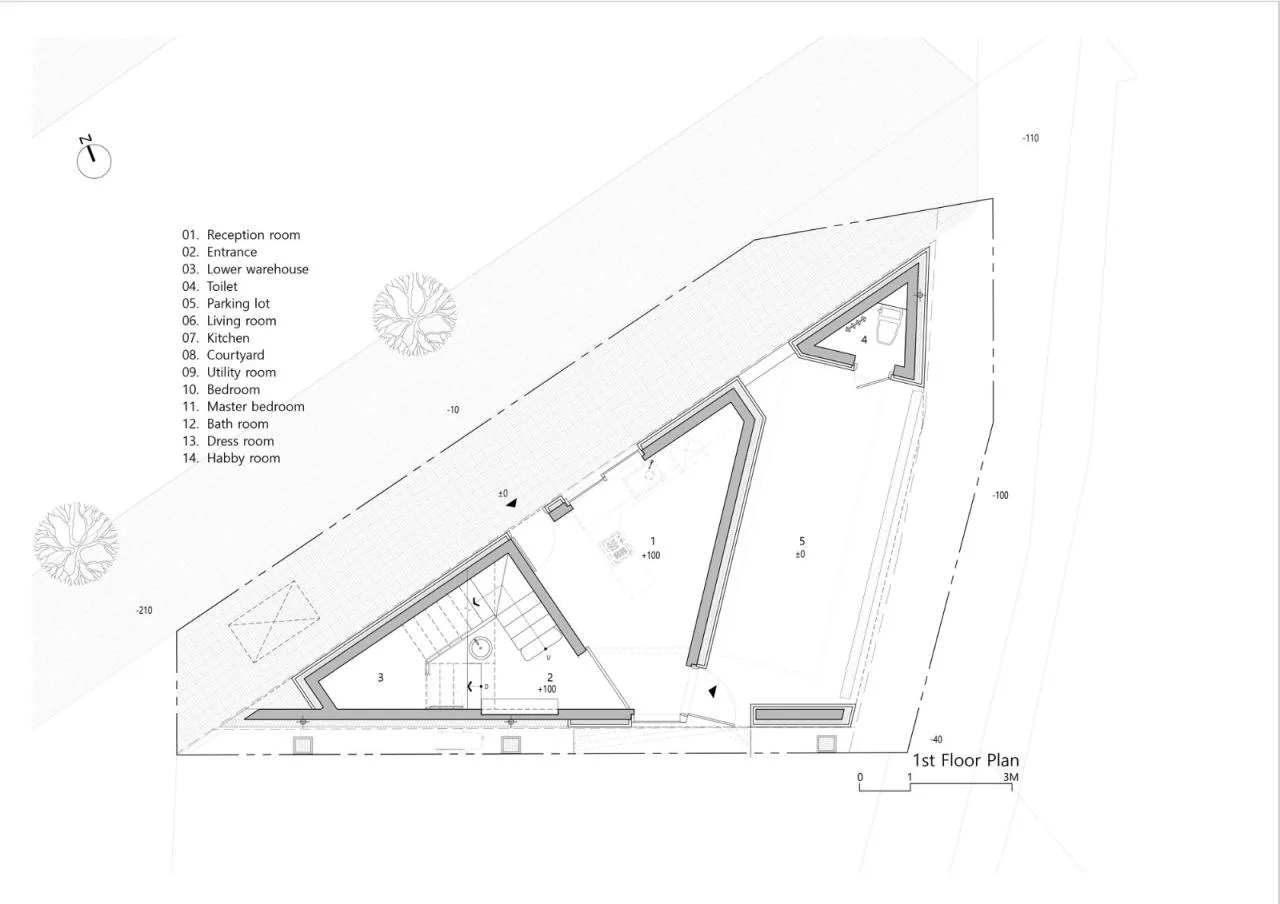
△ First Floor Plan
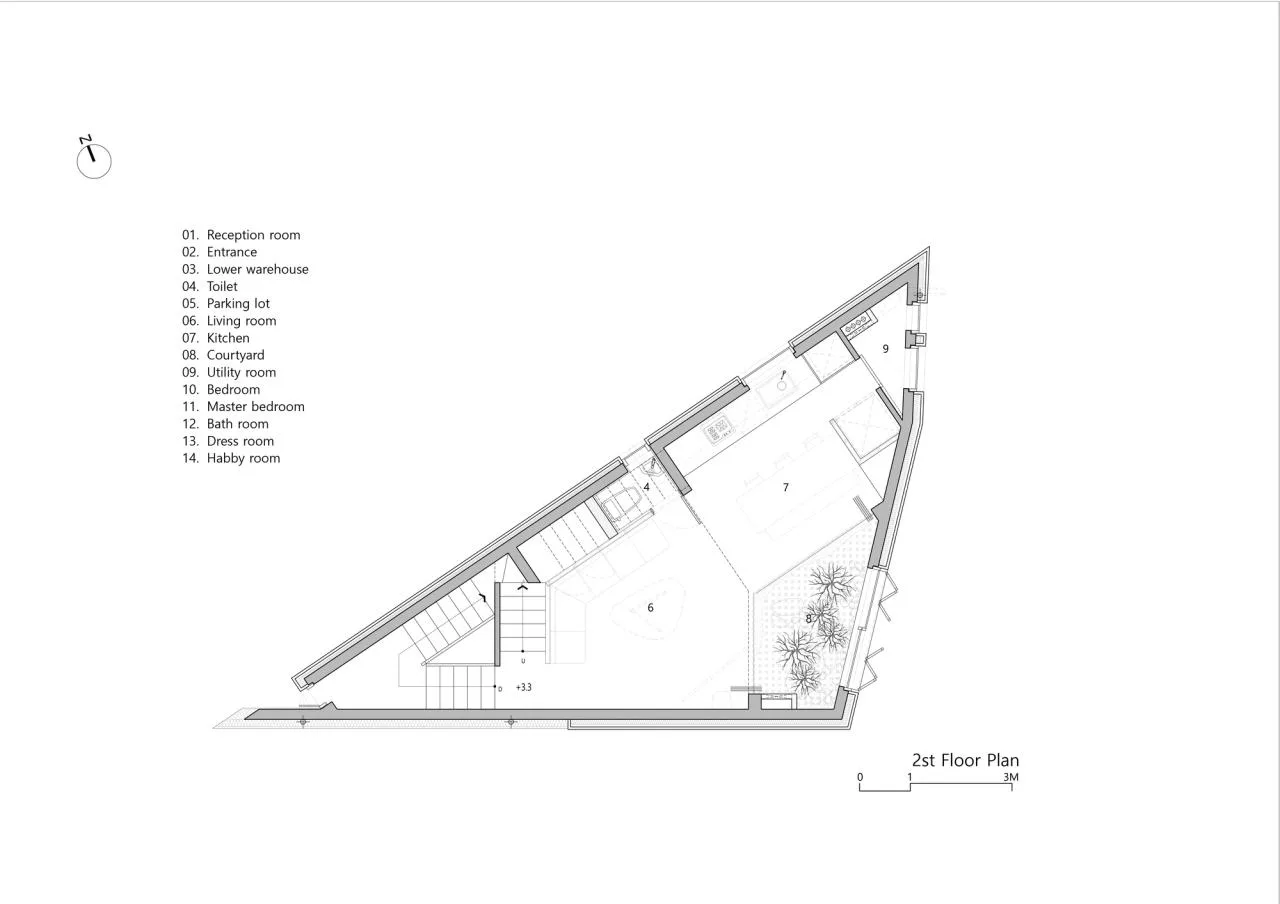
△ Second Floor Plan
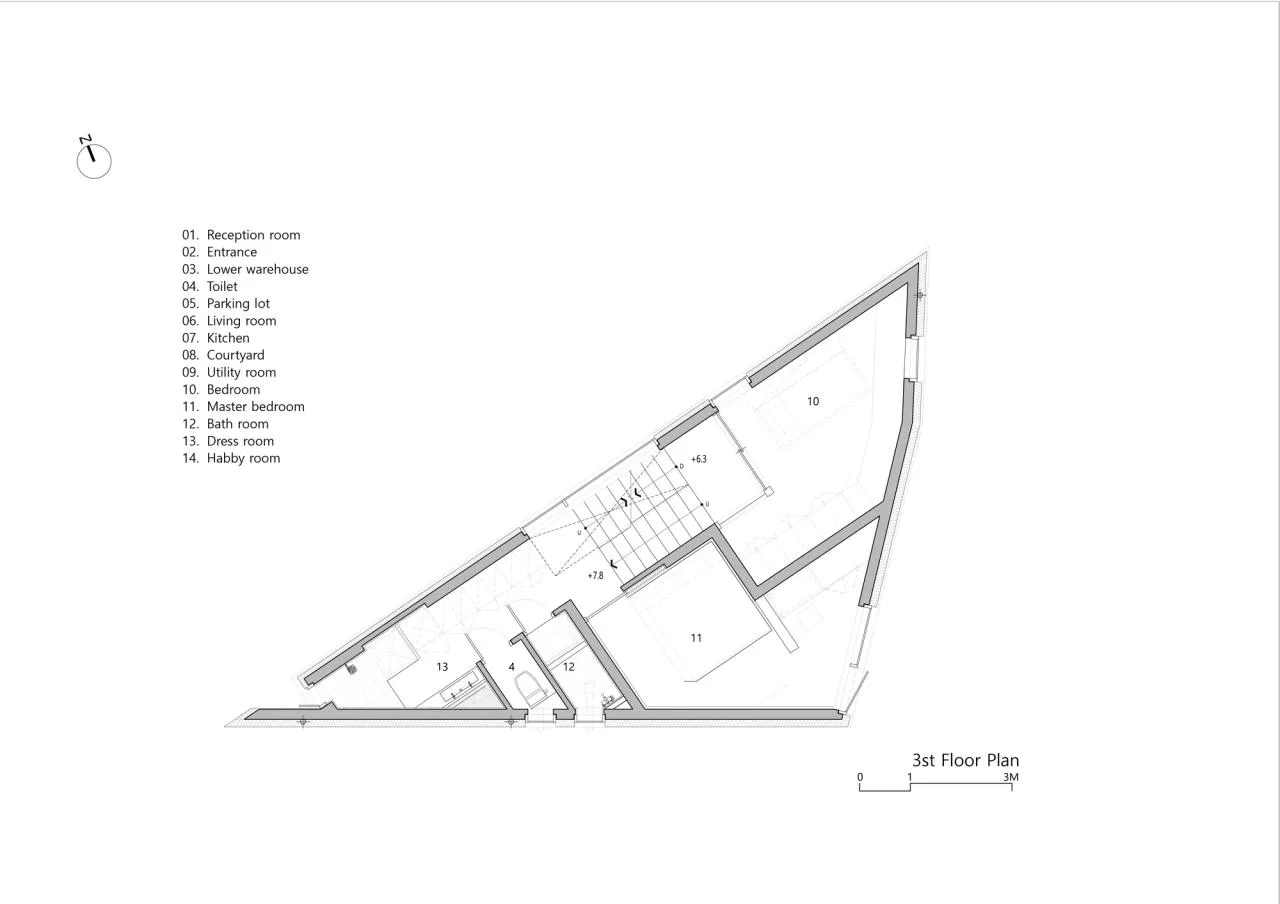
△ Third Floor Plan
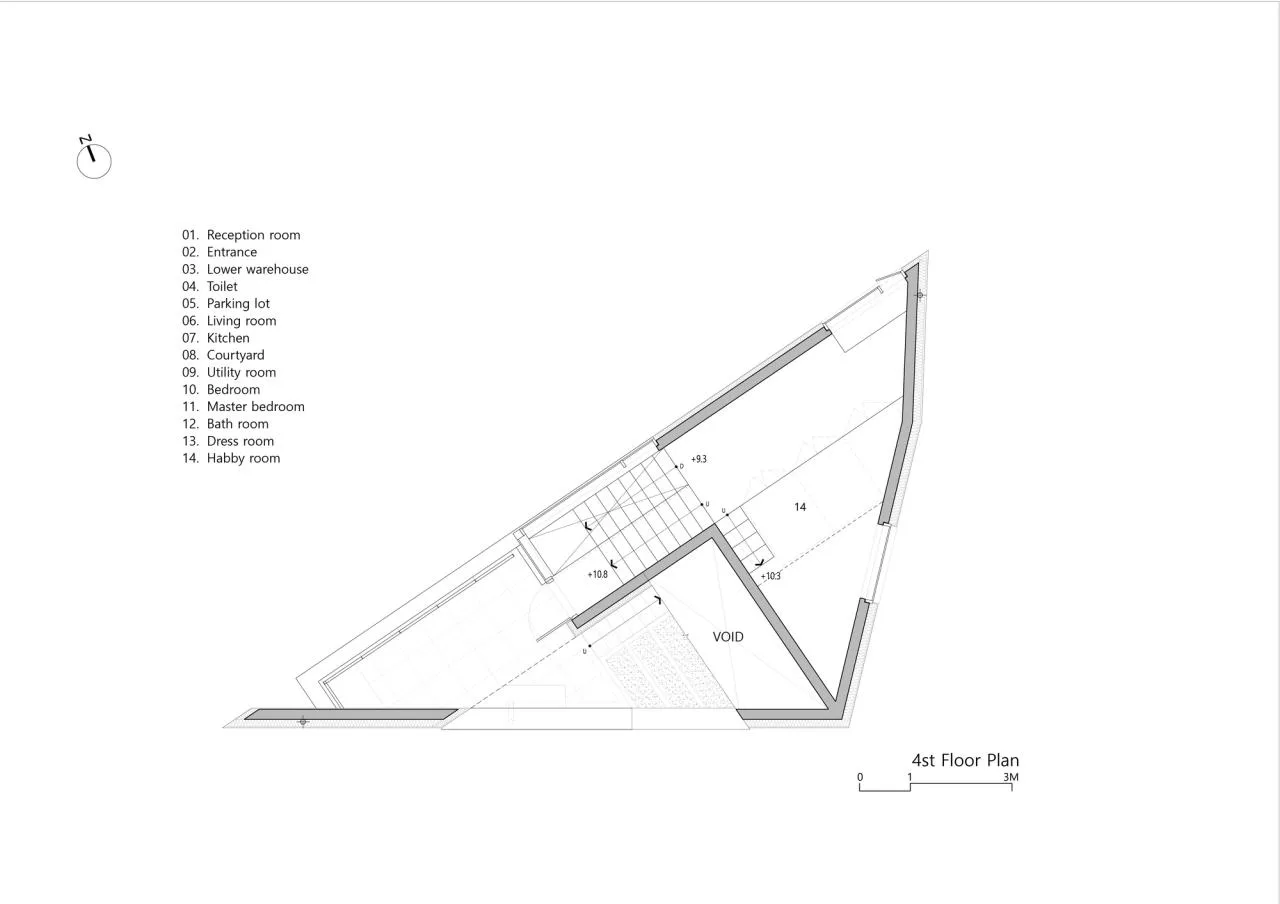
△ Fourth Floor Plan
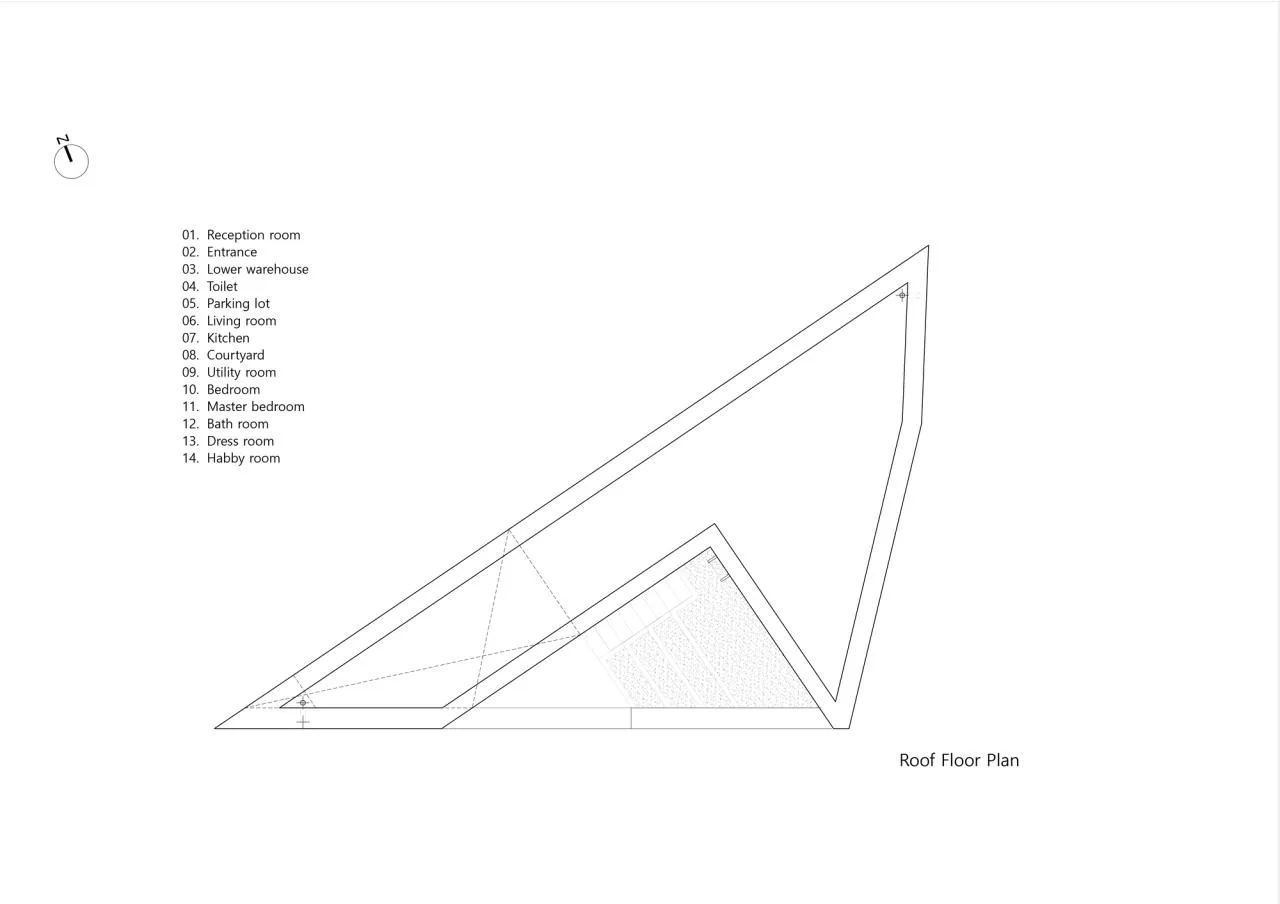
△ Roof Plan
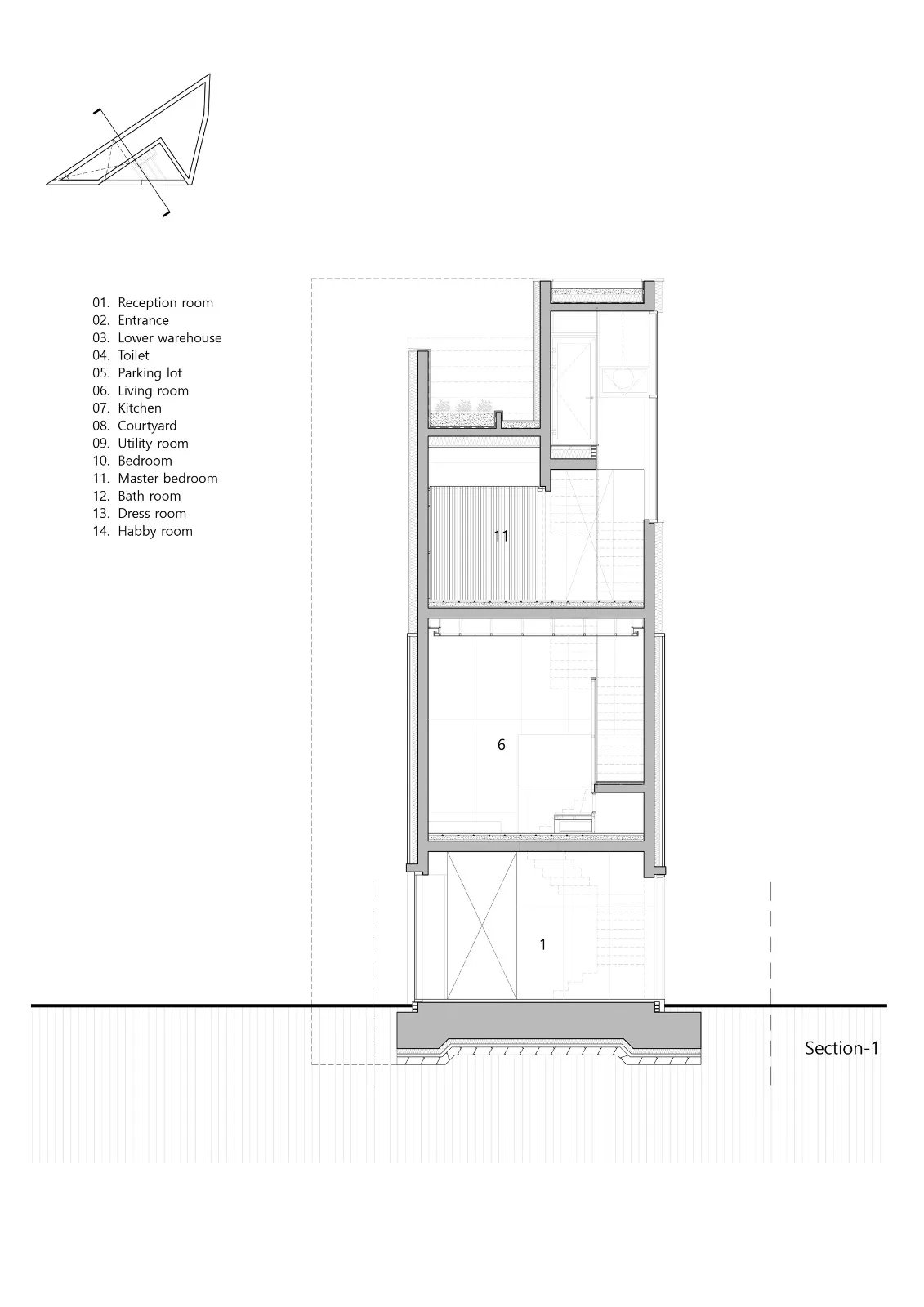
△ Section Diagram
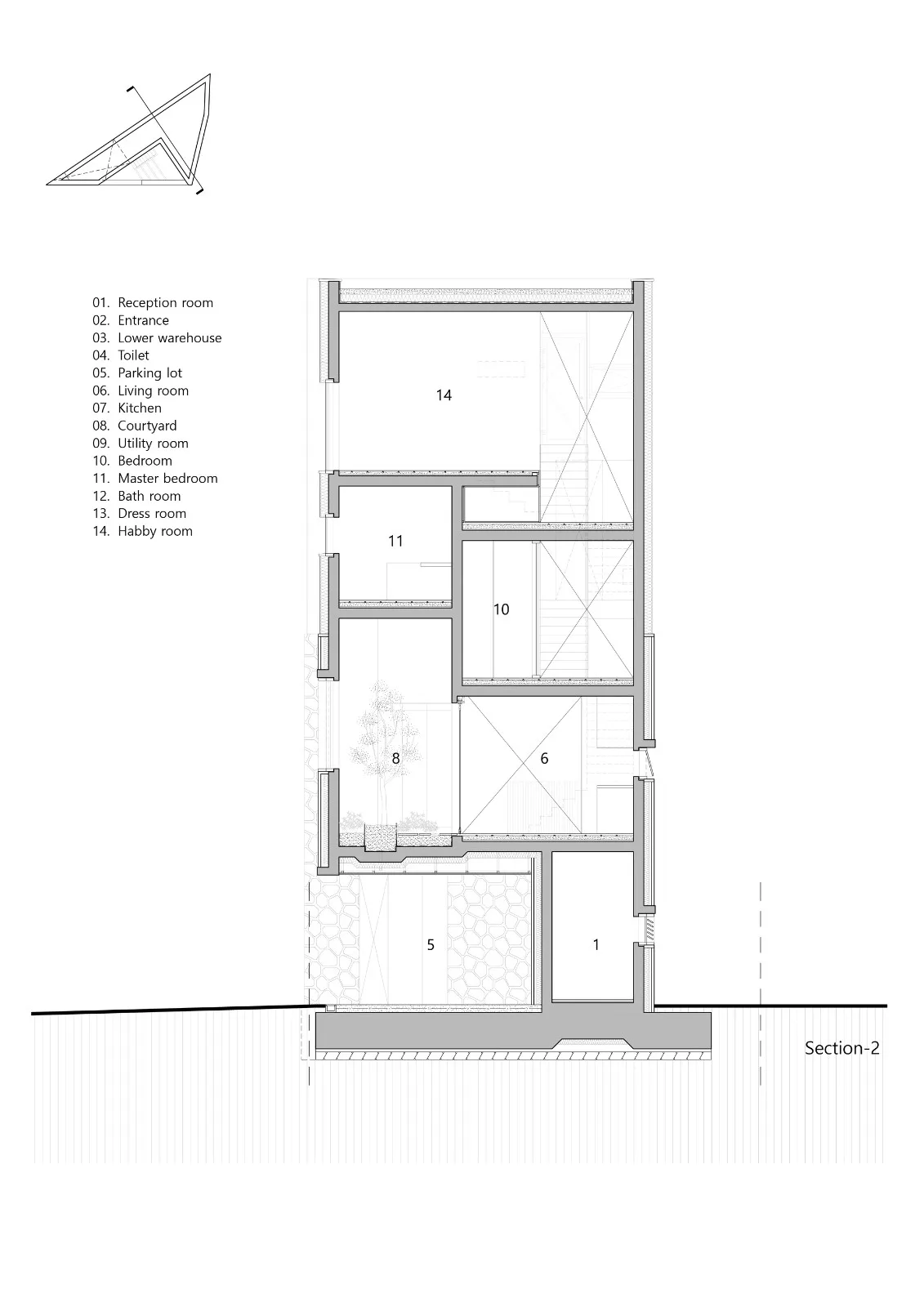
△ Section Diagram
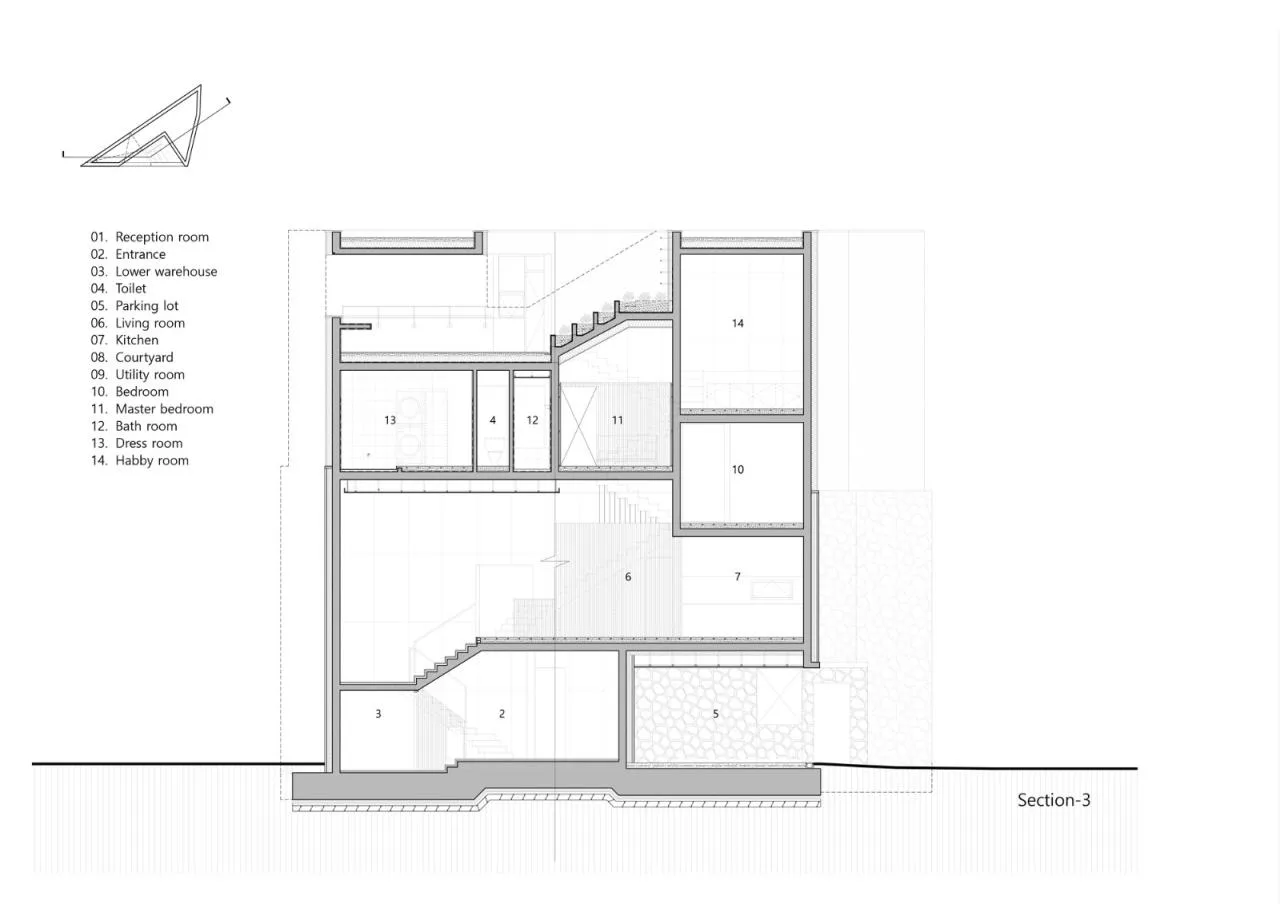
△ Section Diagram
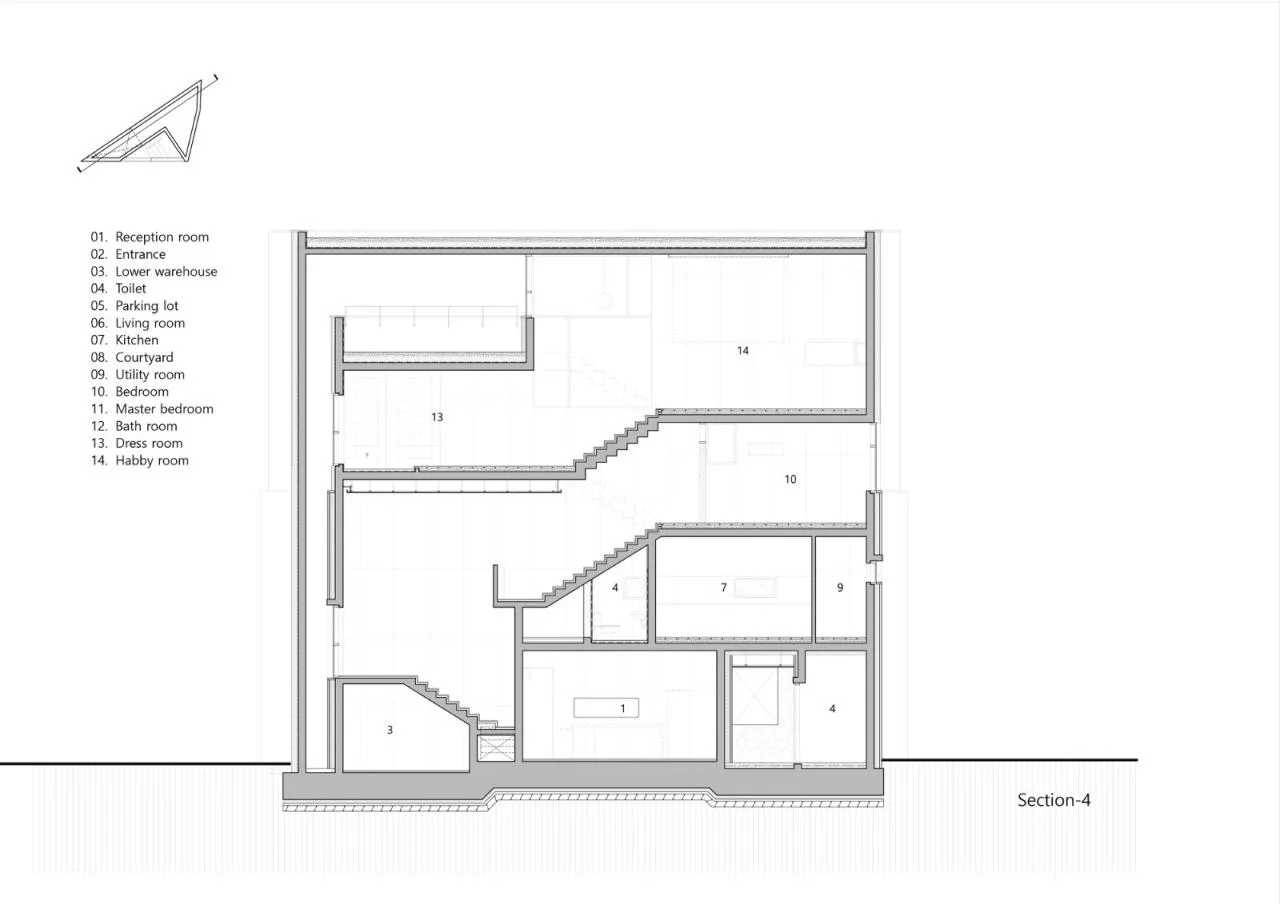
△ Section Diagram
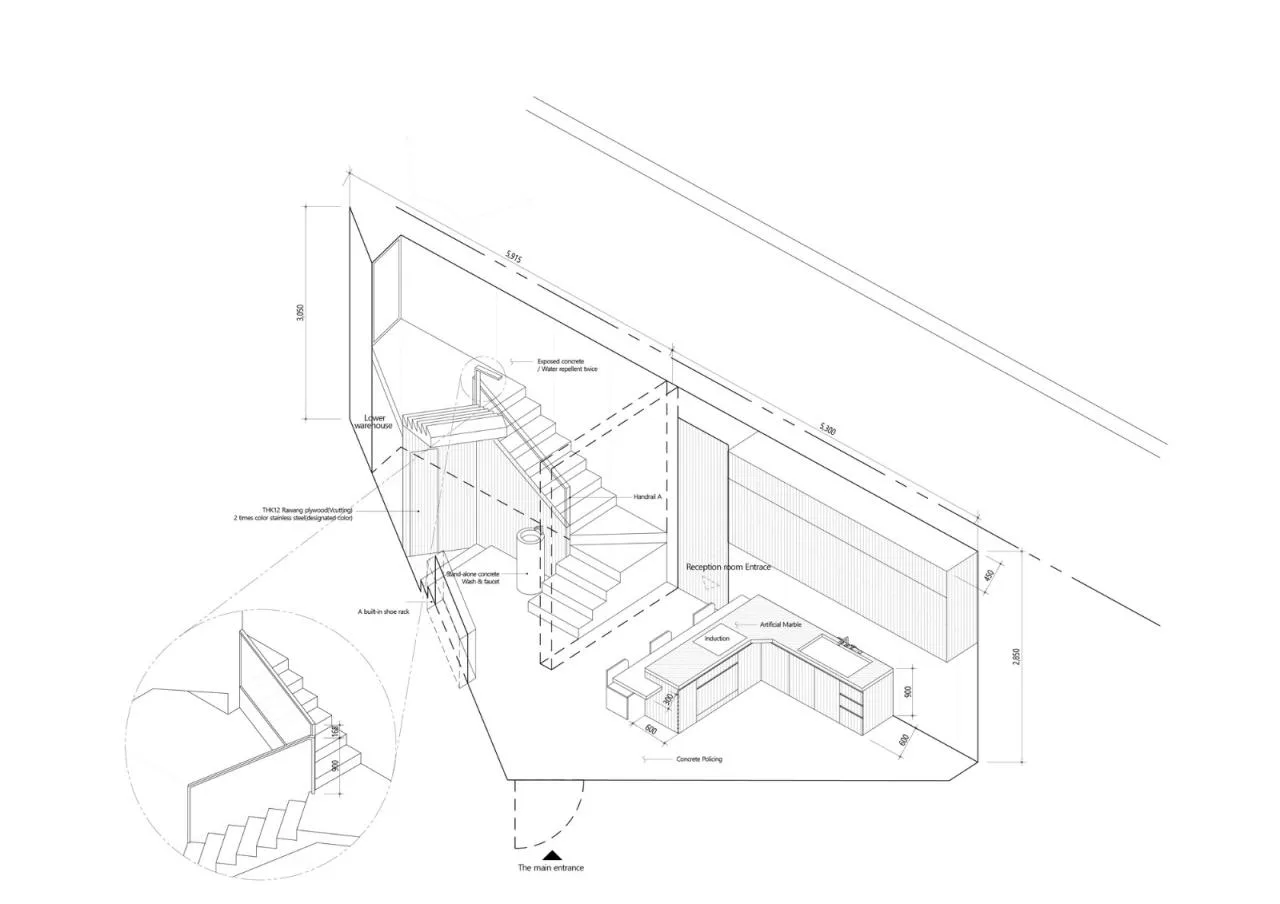
△ Analysis Chart
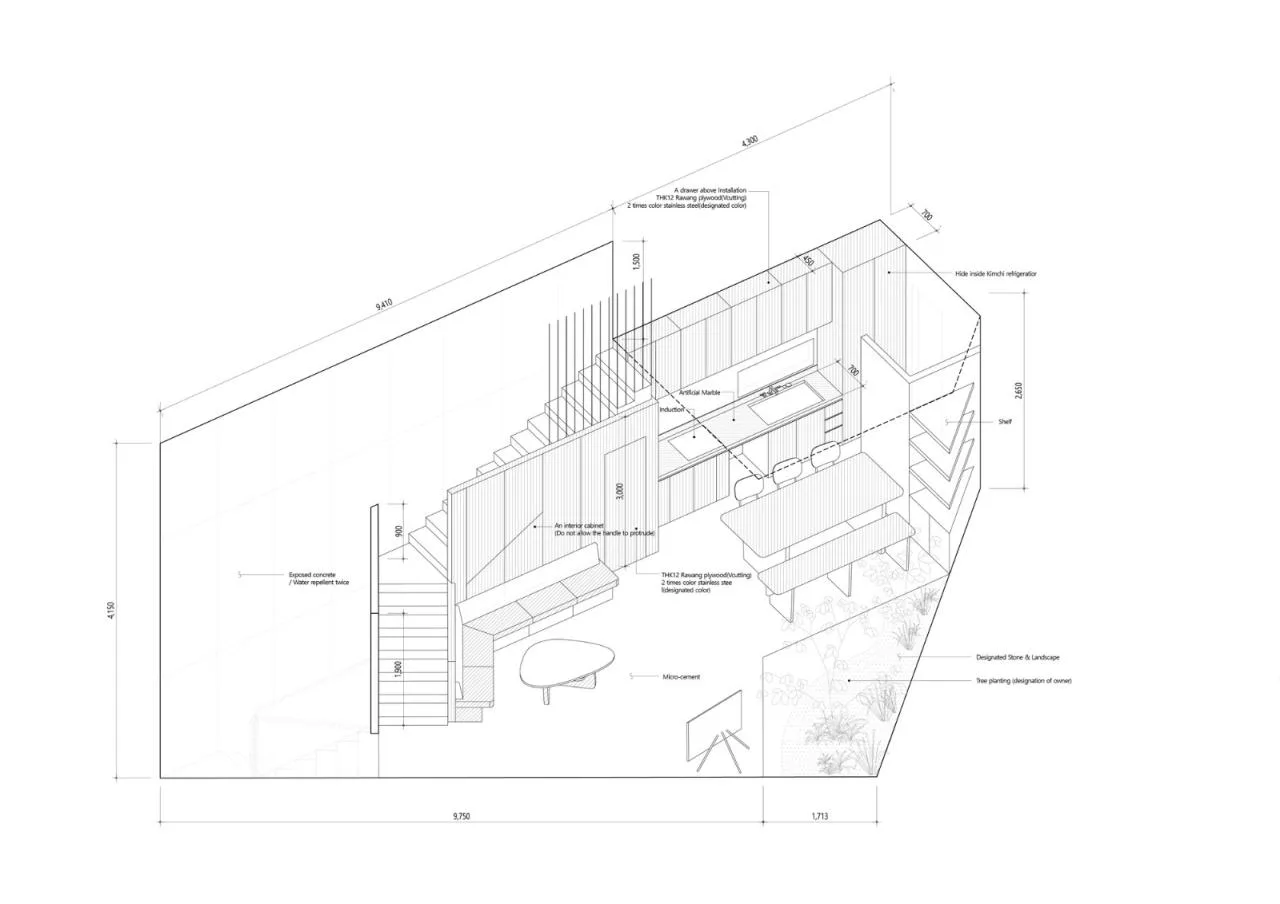
△ Analysis Chart
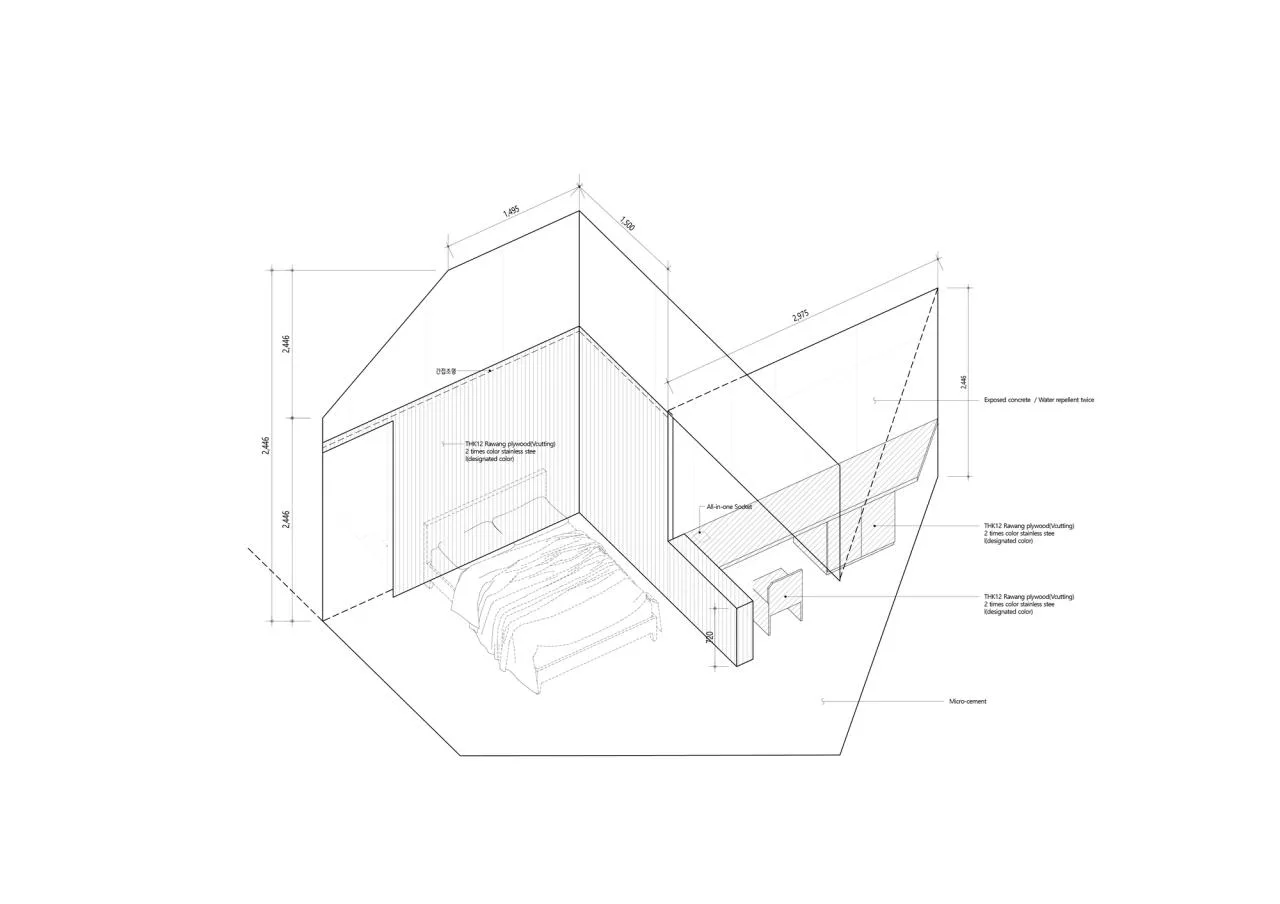
△ Analysis Chart
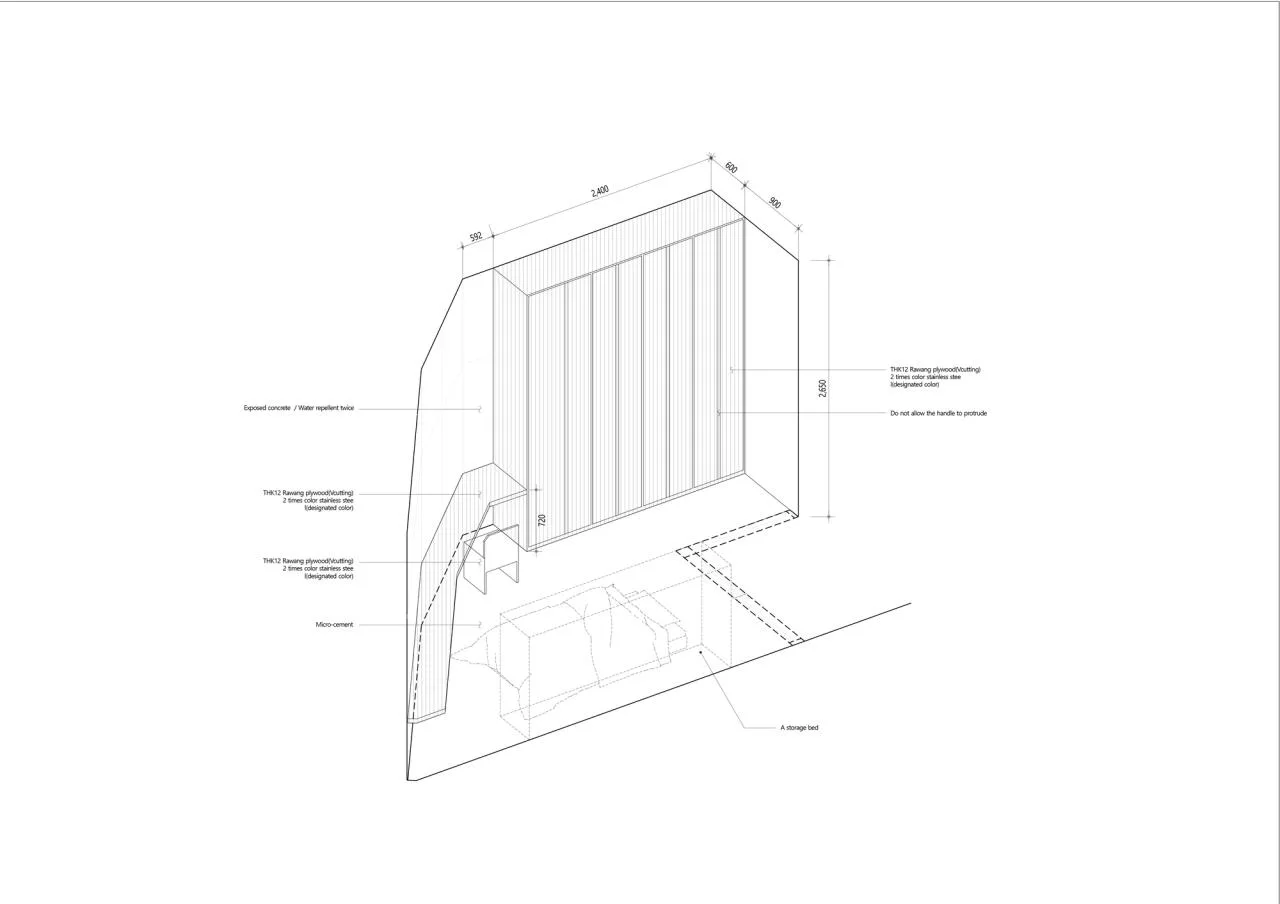
△ Analysis Chart
Project Information
Architect: PLAN Architects Office
Area: 178 m²
Project Year: 2022
Photographer: Joon Hwan, Yoon
Architects: PLAN Architects Office, Lim Tae Hyung, Jo Hanee
Structural Engineer: SDM Partners
Mechanical Engineer: SAETEO.ENG
Landscape Design: Landscape Chamber of Commerce
Location: Gwangju, South Korea













Must log in before commenting!
Sign Up