
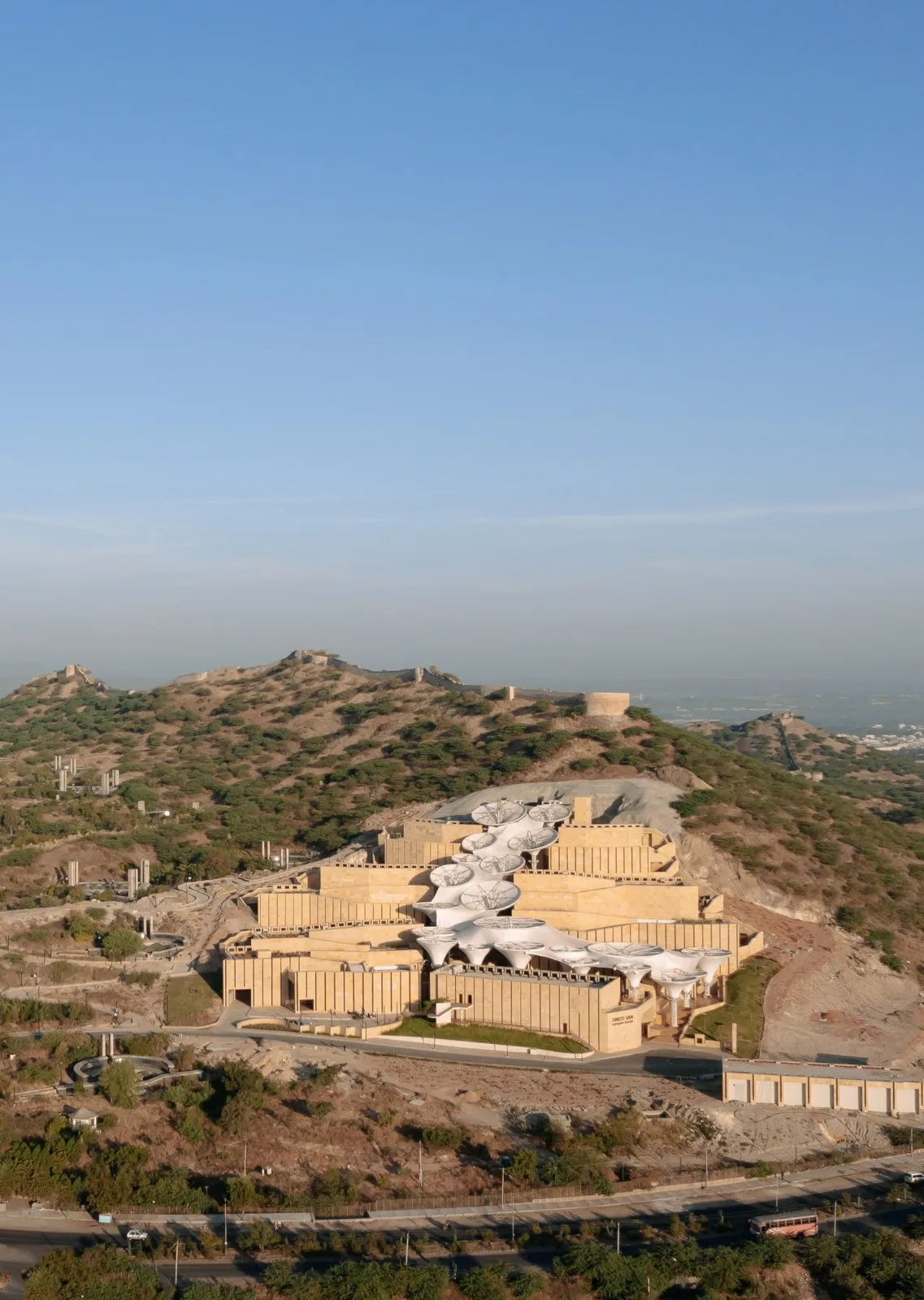
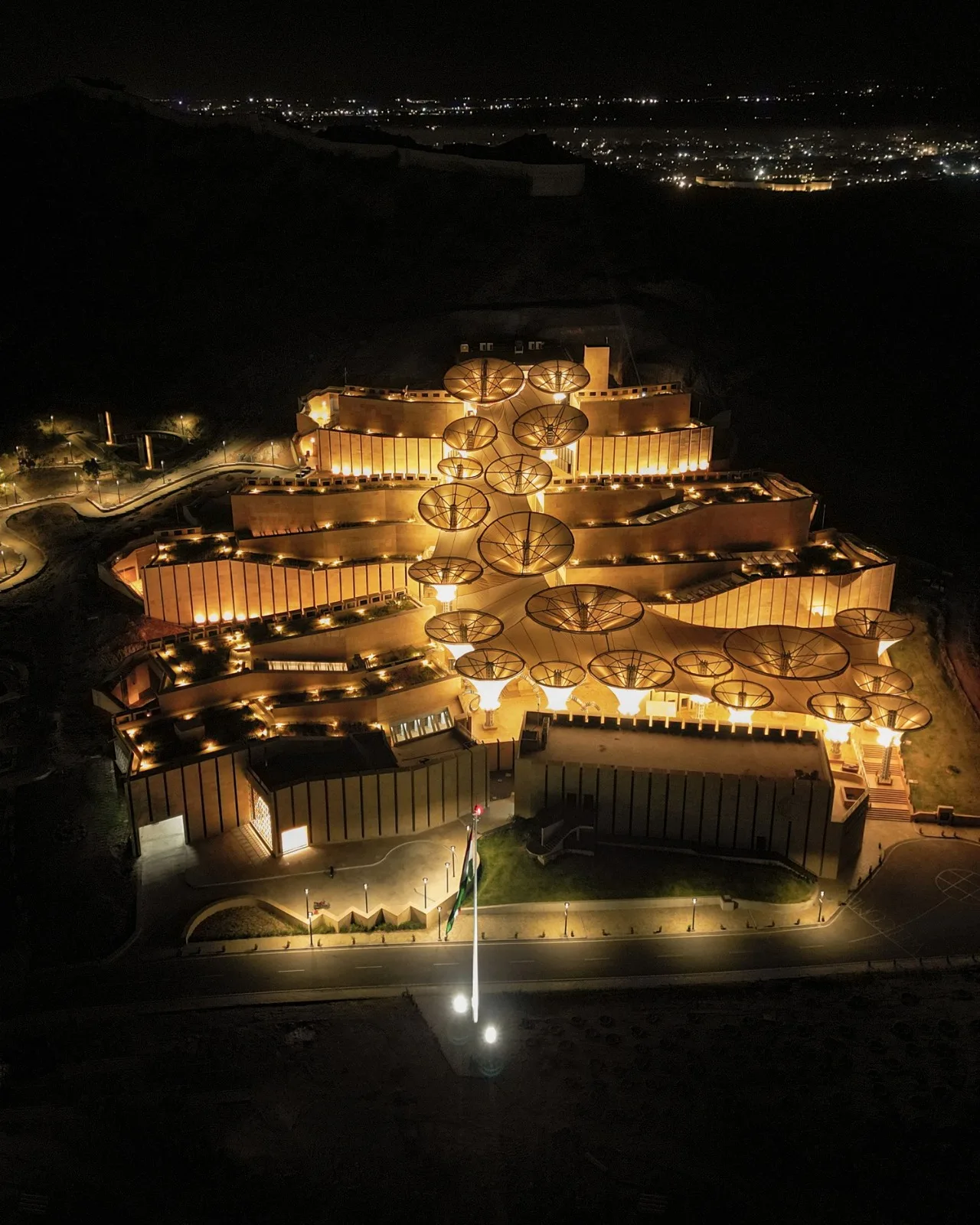
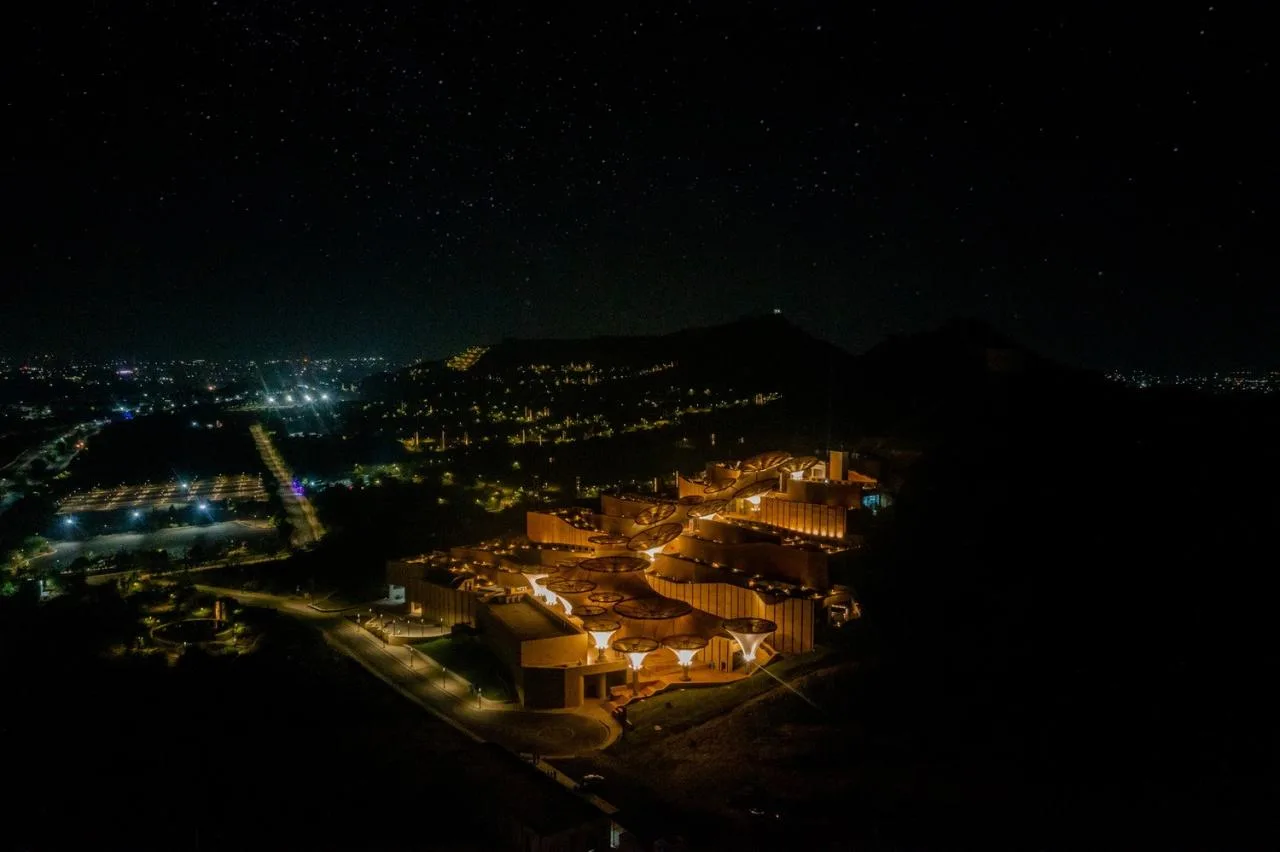
Situated on Mount Bhujiyo in Bhuj, Gujarat, India, the Smritivan Earthquake Memorial Hall is a museum dedicated to commemorating the devastating 2001 earthquake, with Bhuj at the epicenter. This museum is part of a larger complex designed to celebrate the rich heritage, culture, handicrafts, and diverse wildlife conservation areas of Bhuj city and the Kutch region.
The design aims to create not just a museum, but a vibrant community space where locals can gather to celebrate festivals and enjoy civic activities. As with other projects by Vastushilpa Sangath, this institution plays a vital role in shaping the city’s identity and enriching the lives of its citizens. The memorial hall also addresses the city’s need for green spaces, functioning as an urban lung and park. Inside, various exhibition halls showcase the crafts and skills unique to the Kutch region.
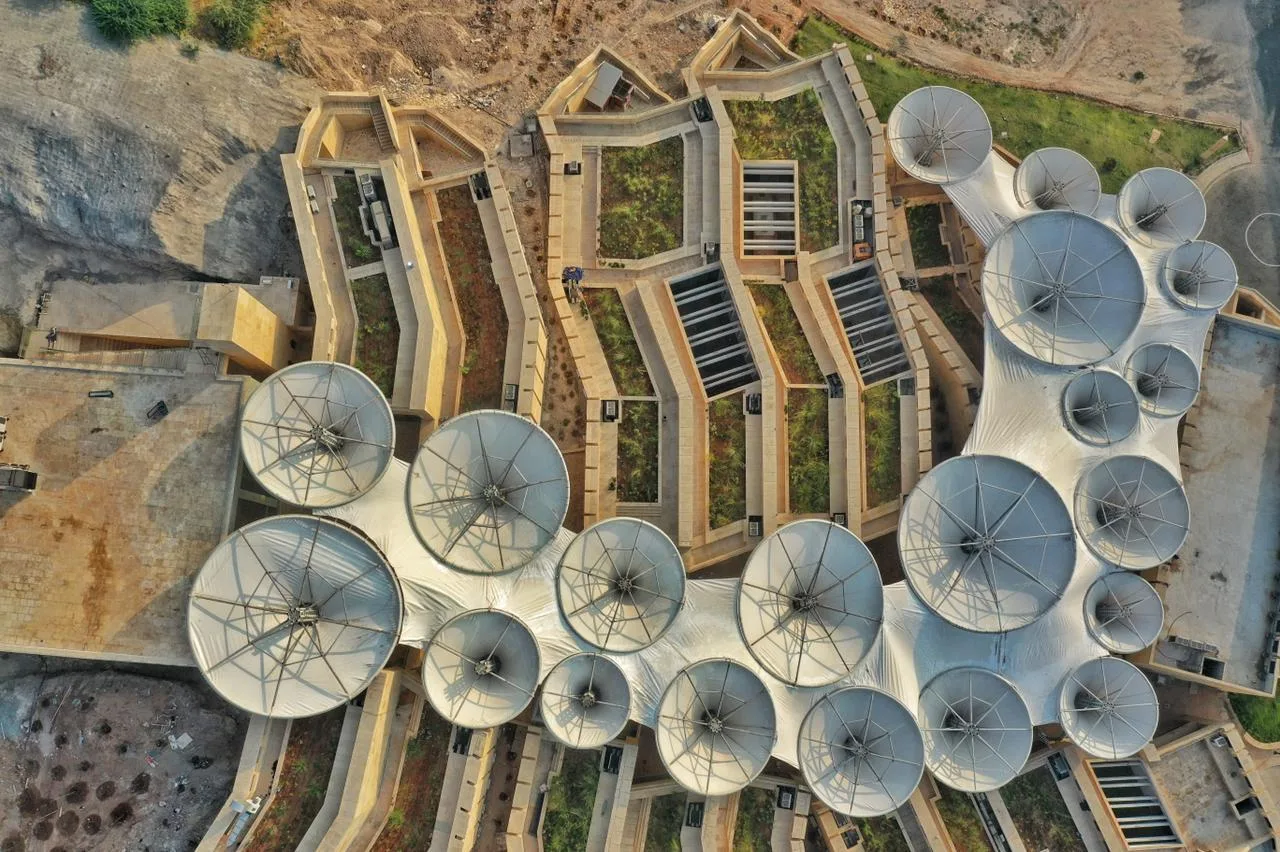
Given the steep slope of Mount Bhujiyo, the building needed to be carefully integrated without disrupting the natural landscape, which holds cultural significance for the local community. Instead of constructing a large, contrasting structure, the design follows the mountain’s contour lines, echoing the form of the ancient fortress wall ruins found on the site.
The building extends as a zigzagging line climbing the hill, resembling natural pathways used by animals and humans, or pilgrimage routes to sacred sites. This slow ascent, about 50 meters long, forms the museum’s core experience—an architectural “soul” that invites visitors to connect with the environment through walking. The central spine acts as a long corridor where visitors can pause, reflect, and take in the surrounding landscape.
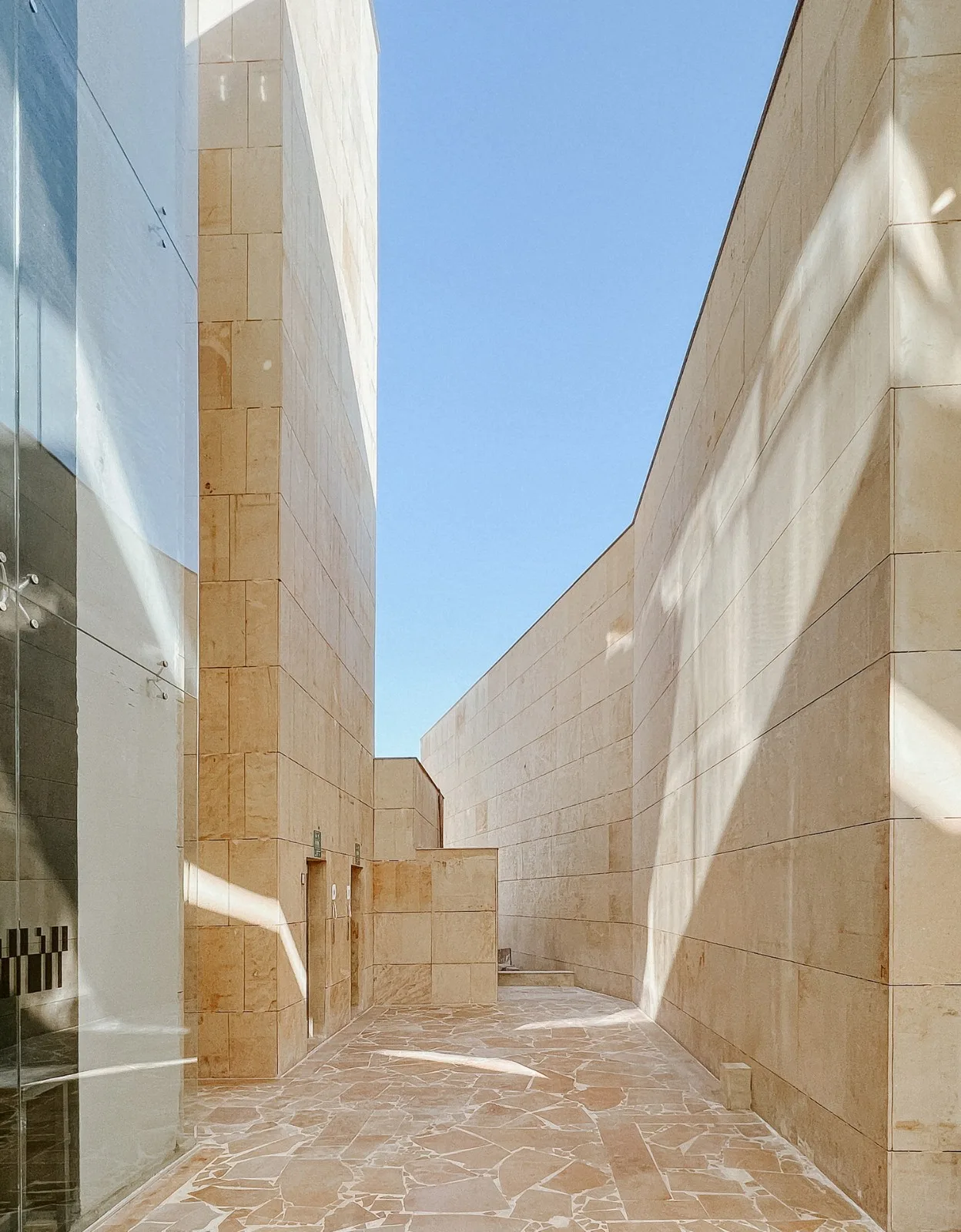
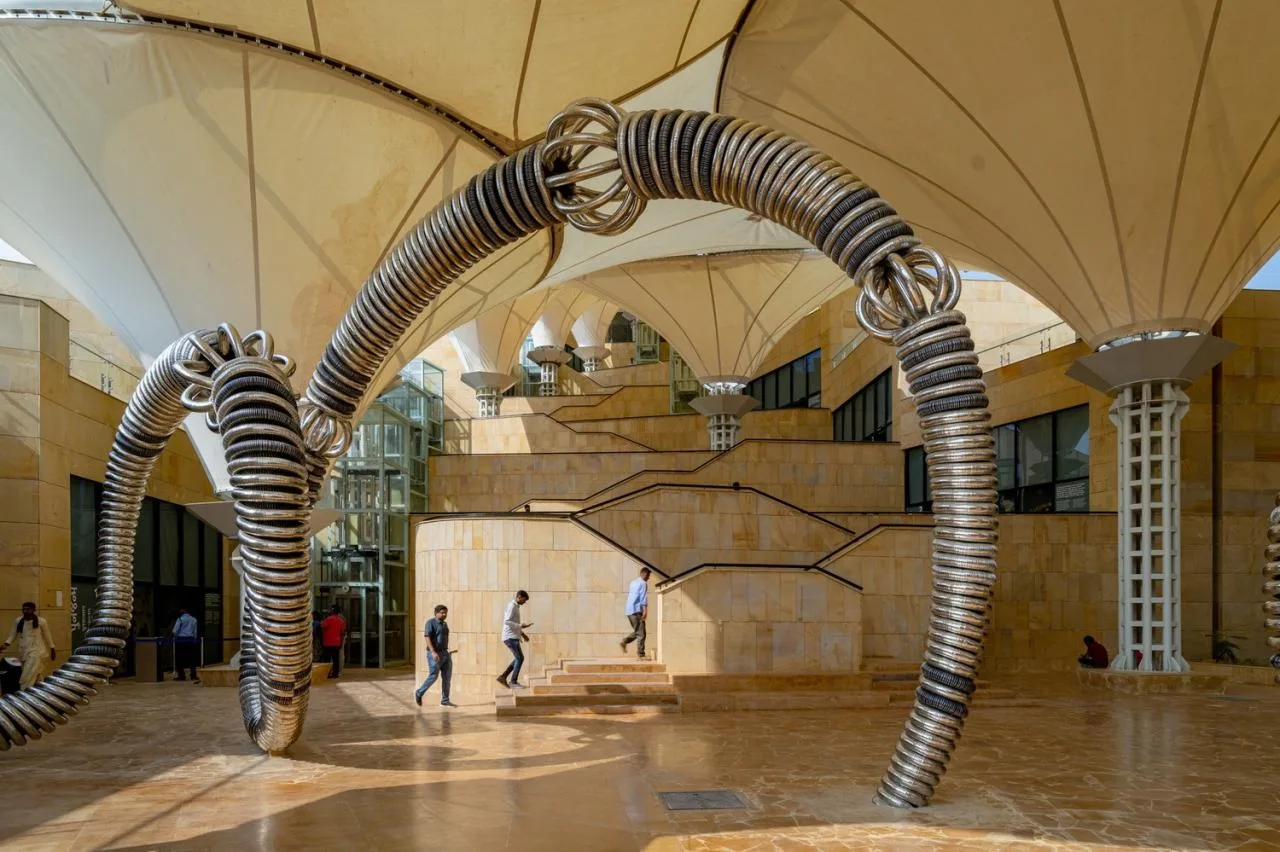
The structure’s elongated form creates a gentle glow over individual buildings, each clad in local stone quarried nearby. The museum’s central spine serves as a civic space accessible even when the galleries are closed, enhancing its role as a community hub.
The roofs of each gallery feature planted local vegetation that changes with the seasons, mirroring the mountain’s natural environment. These rooftop gardens are multifunctional, providing spaces for temporary exhibitions and performances that encourage reflection and engagement—key aspects for a museum of this nature.
The museum’s design embraces gradual growth, similar to traditional settlements. The modular galleries and the central spine’s linear layout allow for future expansion that harmonizes with the site’s unique character. This approach honors Bhuj’s deep history while preserving the living memory of recent events.
Project Information
Architect: Vastushilpa Sangath
Area: 10,900 m²
Project Year: 2023
Photographers: Vinay Panjwani, Sohaib Ilyas
Manufacturers: Daikin, Jaquar, Jindal Steel, Tata Steel
Managing Partner and Chief Architect: Rajeev Kathaplia
Project Manager: Piyas Choudhari
Senior Architect: Rajesh Suthar
Architect: Kunal Suthar
Architectural Design: Vastushilpa Sangath
MEPF Consultant: Jhaveri Associates
Structural Consultant: V.R Shah Engineers
Location: Bhuj, India












Must log in before commenting!
Sign Up