
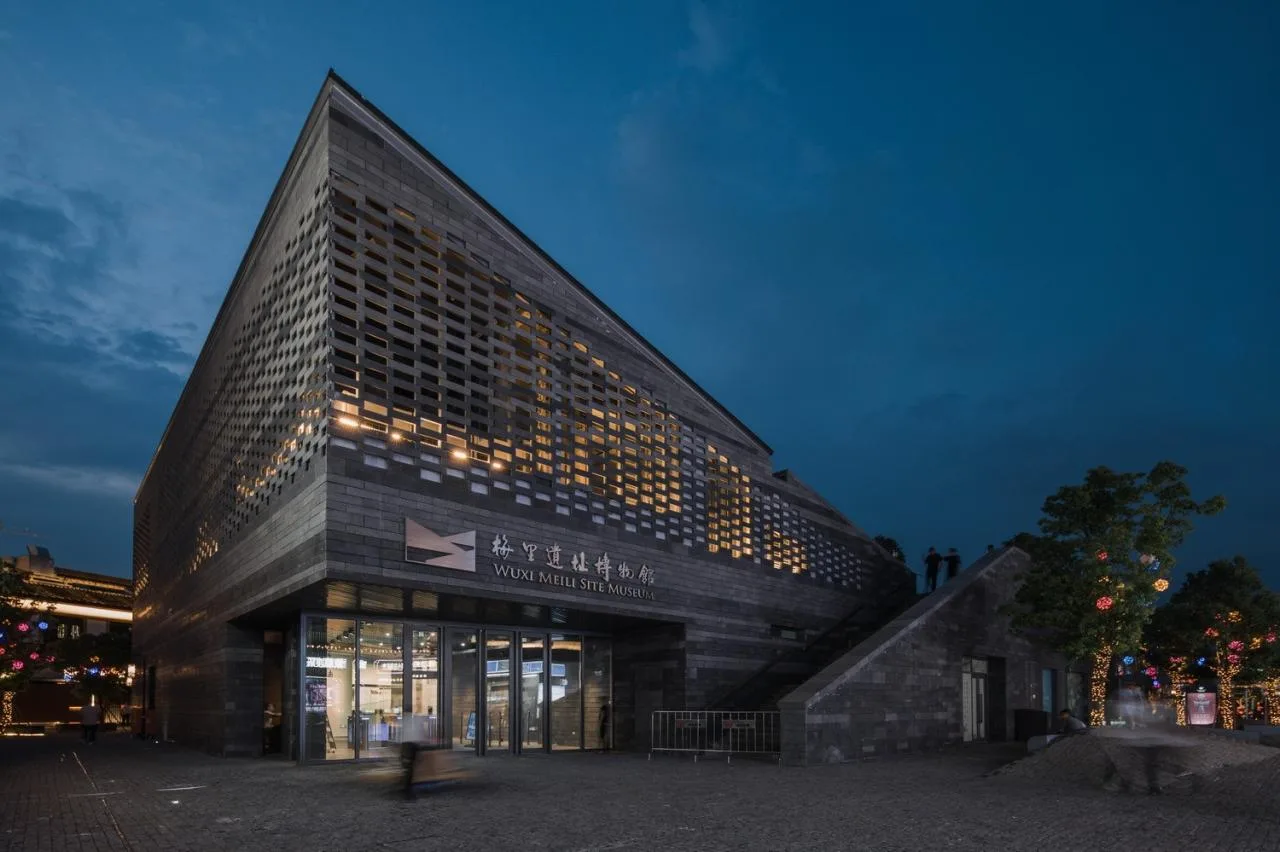
Overview
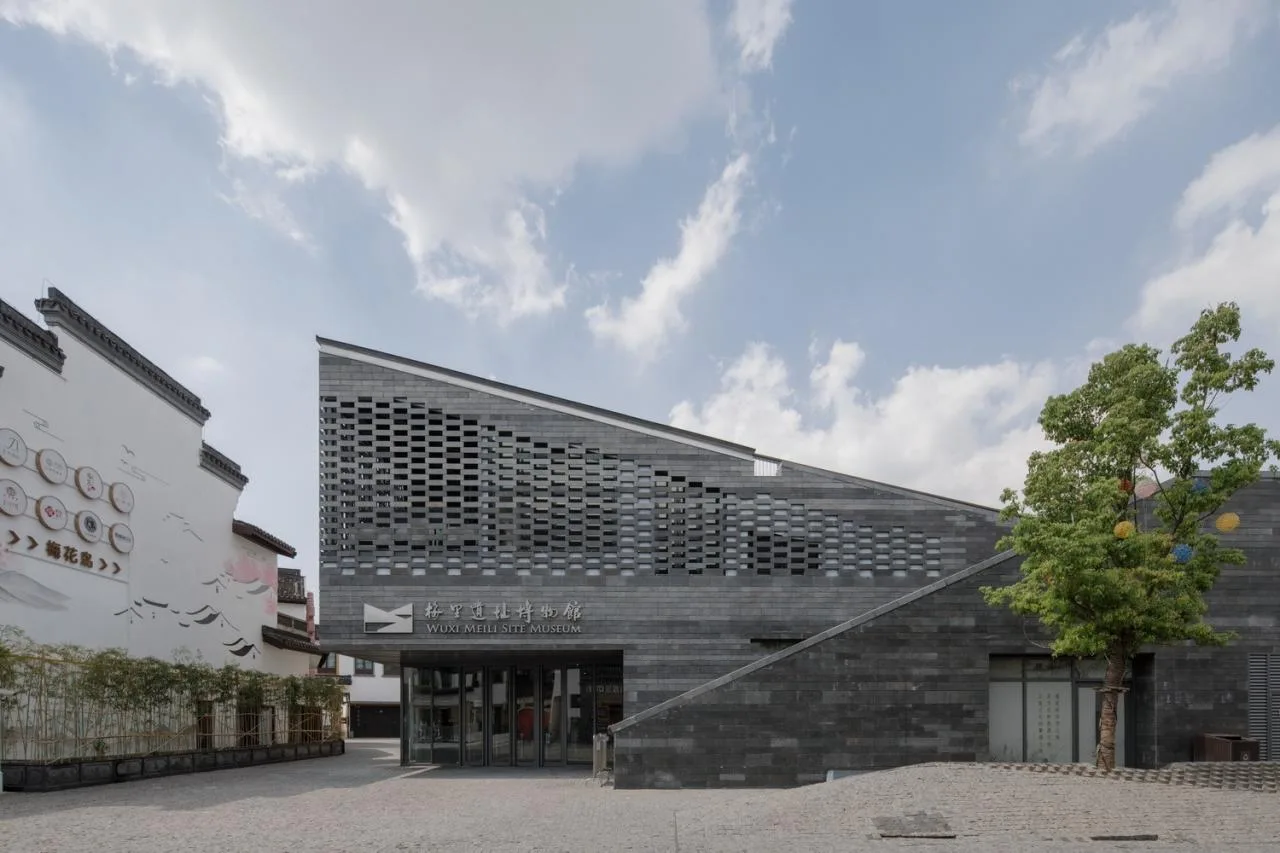
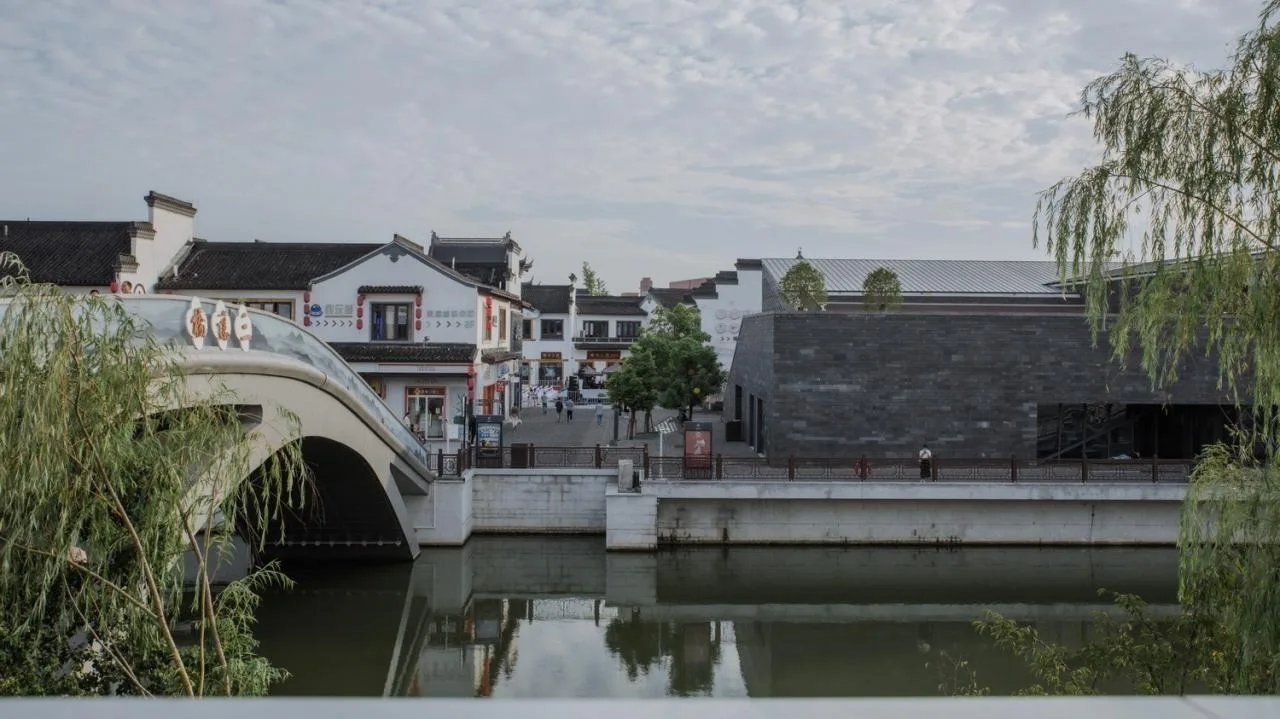
The Wuxi Meili Site Museum is situated in Meili Ancient Town, bordered by the Youyou Qianzai Taibo Temple to the west and the flowing Wudu River to the north. The discovery of ruins from the Shang and Zhou dynasties during the town’s construction enriches the longstanding narratives of “Taibo’s Journey to Wu” and the “Origins of Jiangnan.” Despite its modest size—less than 2,000 square meters—the museum’s design is centered on comprehensively telling the story of Wu’s origins.
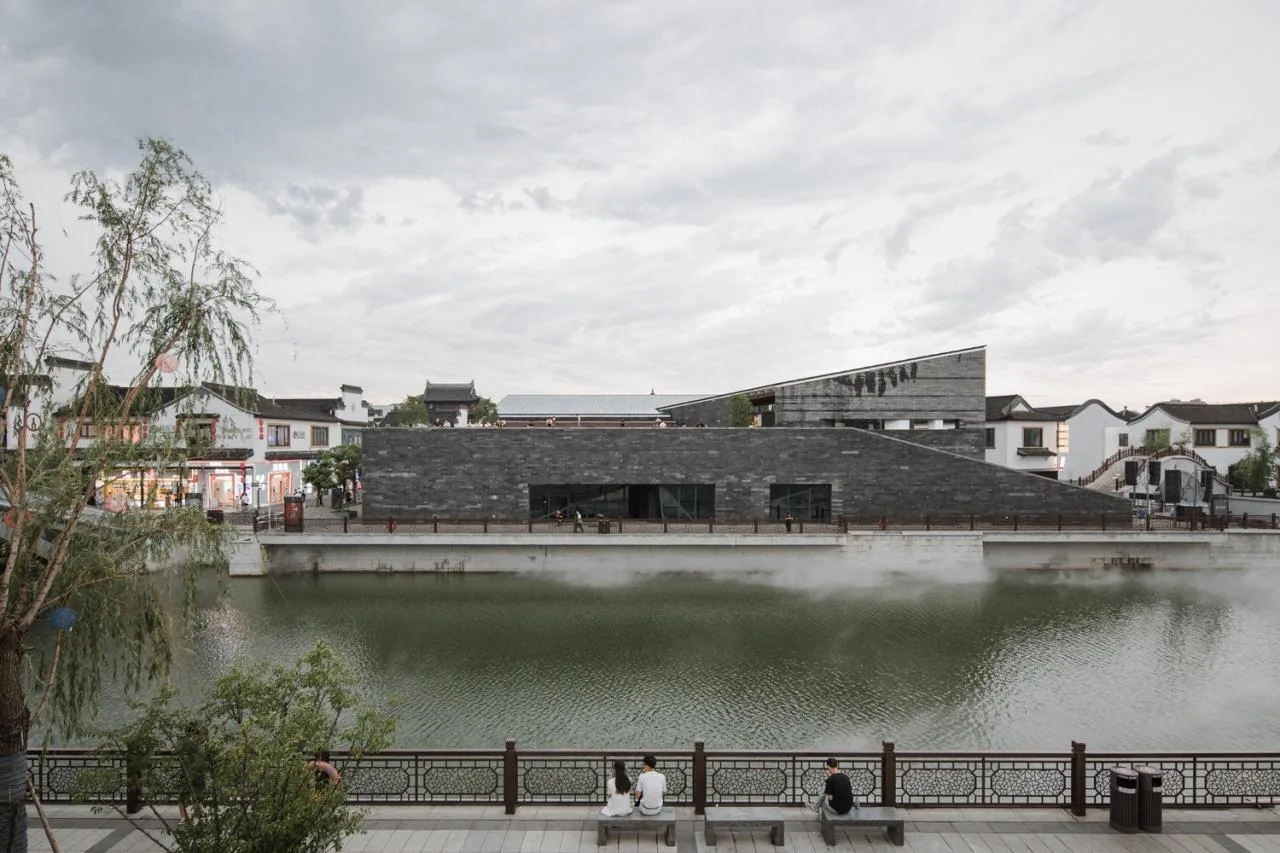
Symbiosis
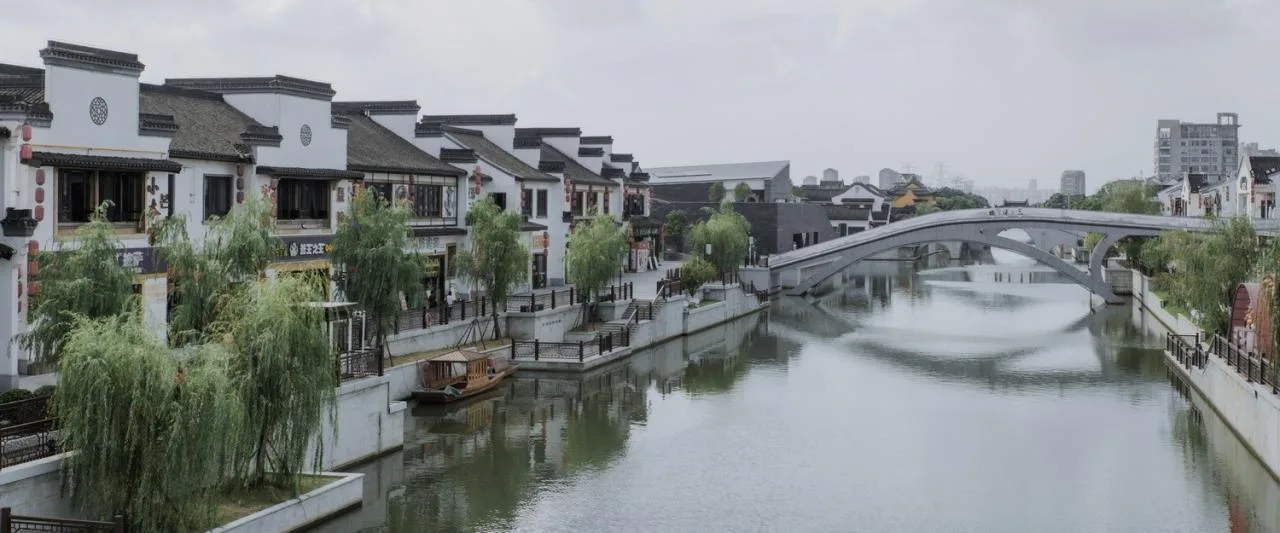
The Wuxi Meili Site Museum, commemorating the Shang and Zhou dynasties, is located within a developing commercial street town designed to emulate the Ming and Qing dynasty styles. The architectural approach posed an intriguing challenge: Should the building’s style reflect the distant pre-Qin era or align with the more recent Ming and Qing aesthetics? Should its function prioritize historical exhibitions or harmonize with the commercial street and community life? Additionally, how could the museum, adjacent to a riverbank, coexist with the daily activities of the surrounding neighborhood?
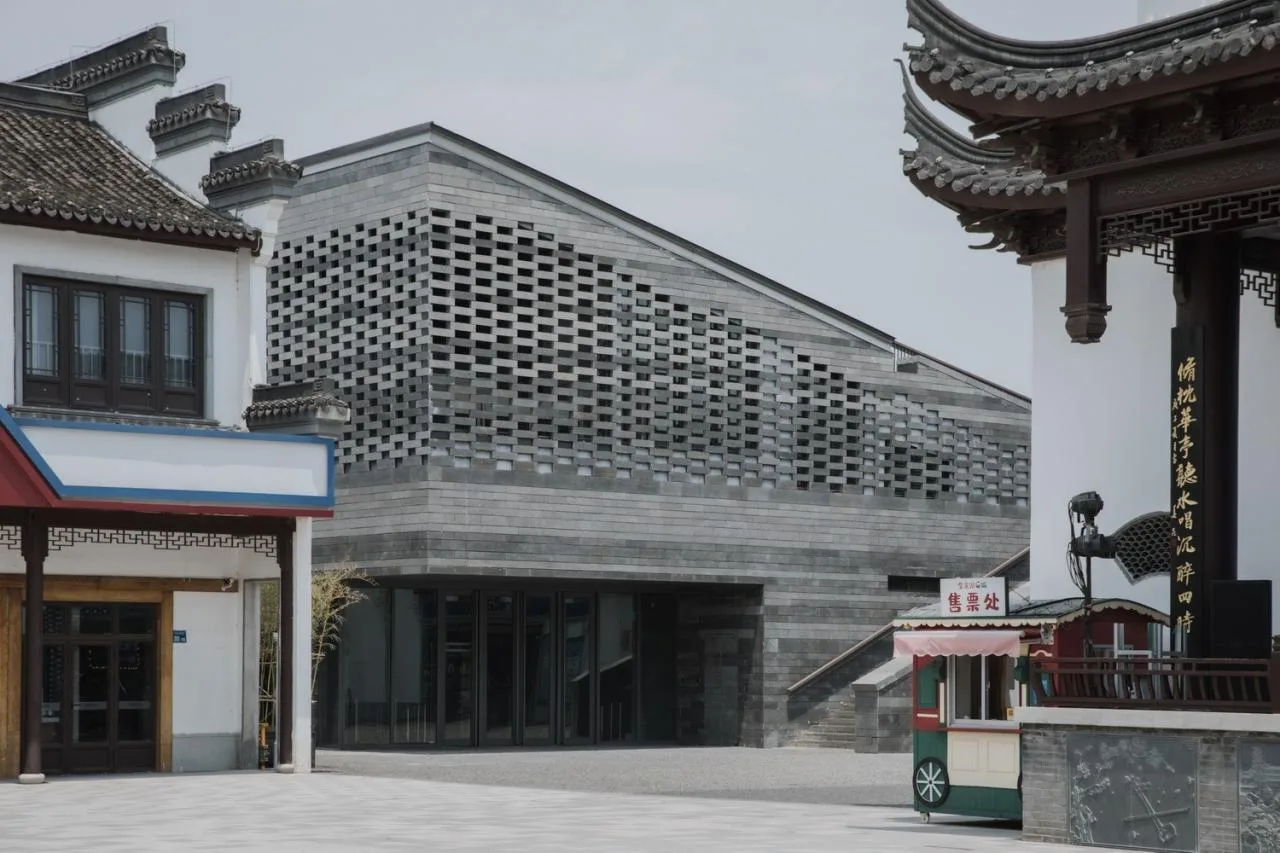
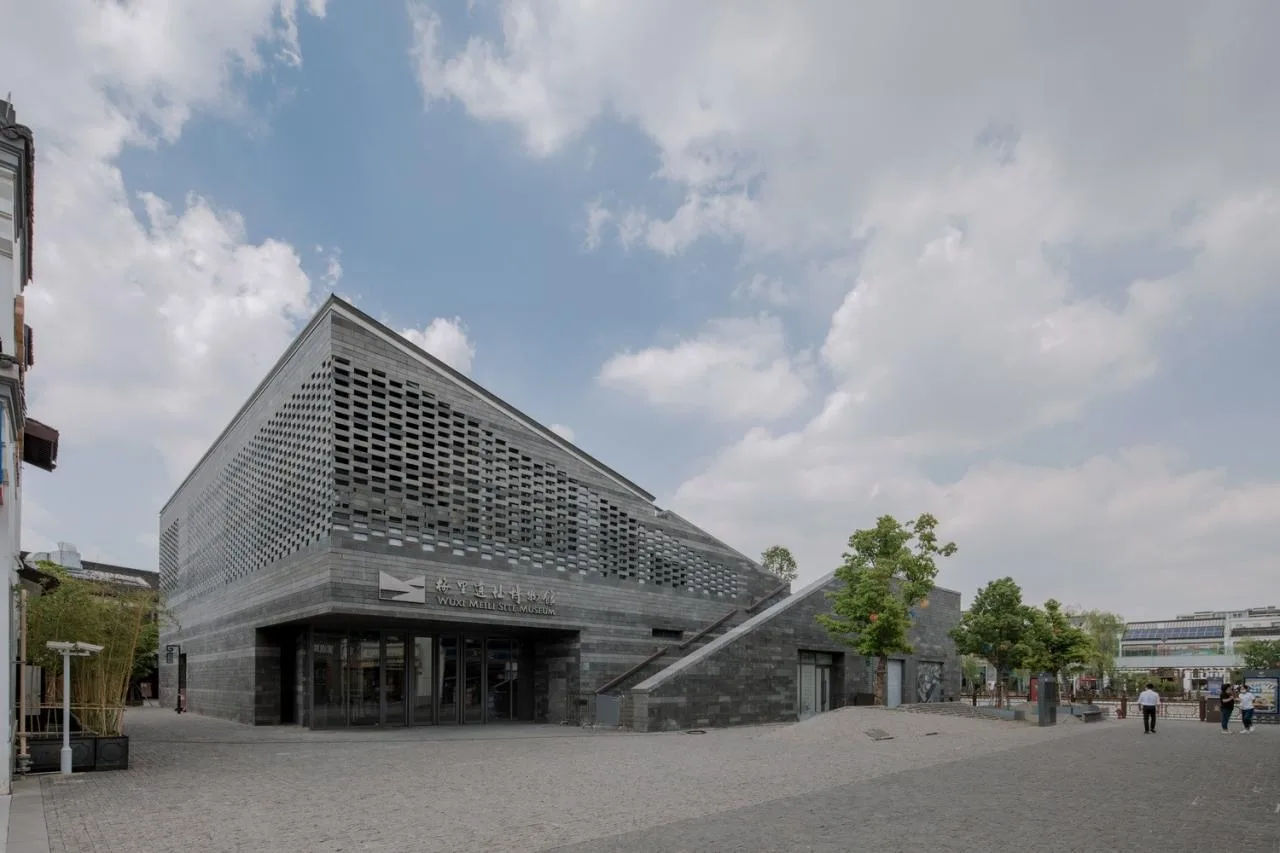
After thorough consideration, the design team established the following guiding principles:
- From an architectural history perspective, there is limited tangible evidence of the architectural forms from the Shang and Zhou dynasties, and the cultural context of the Ming and Qing commercial district is unclear and incomplete. Ultimately, the design adopts a modern architectural style that reflects contemporary heritage interpretation and construction technologies, while maintaining a strong connection to the surrounding urban public life.
- As a public welfare project embedded within a commercial district, the museum balances the academic rigor of cultural heritage interpretation with the functional compatibility of commercial spaces and the everyday nature of public activity areas, fostering a meaningful connection between scholarly work and the community.
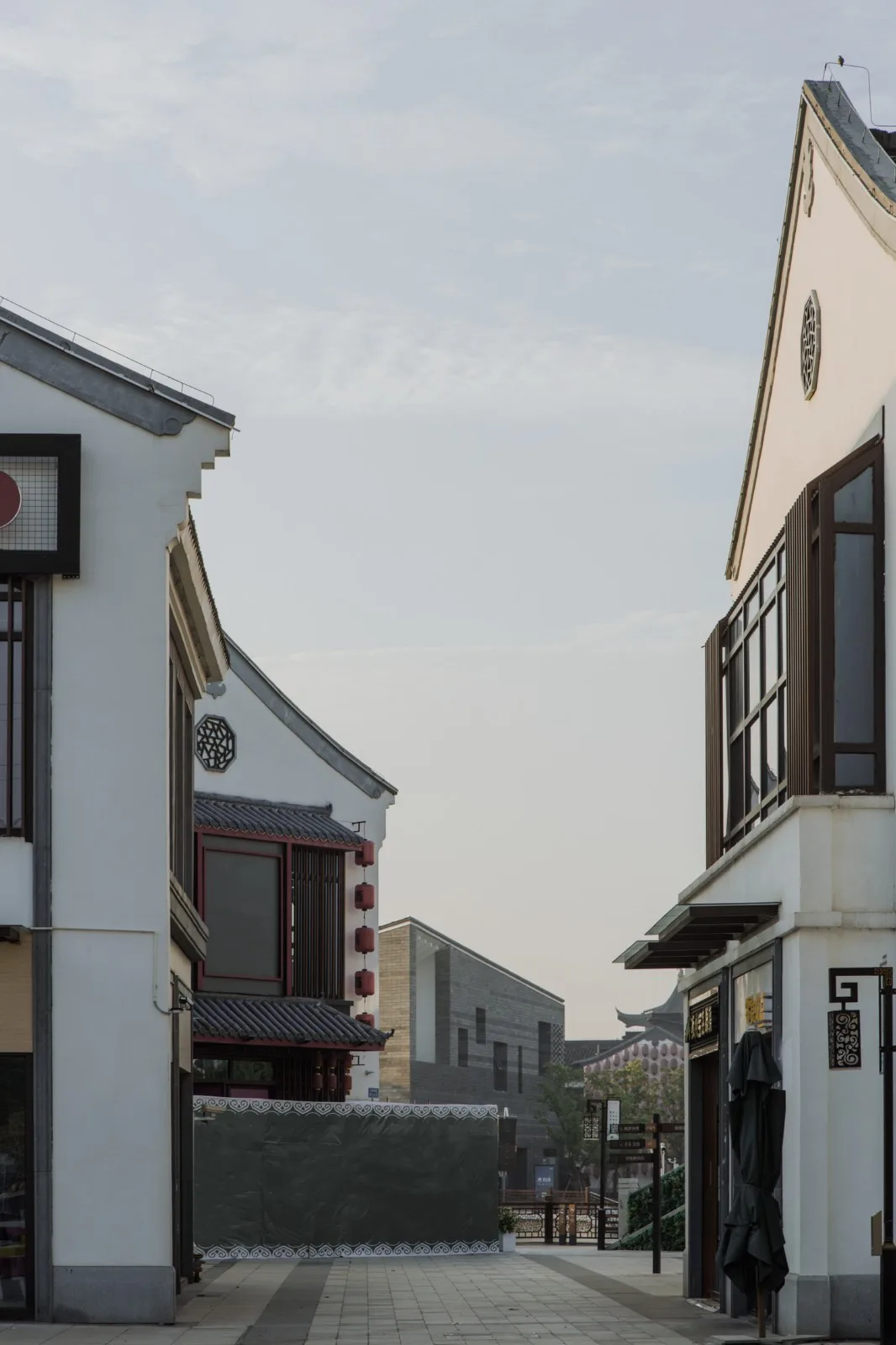
- Situated at the heart of a commercial district, the building’s exterior massing respects the texture, scale, and harmony of the adjacent streets and neighboring structures.
These three key ideas shaped the subsequent design direction and received full support from the client. The project advanced smoothly from detailed planning to multi-disciplinary design of construction documents, culminating in the construction phase.
Space
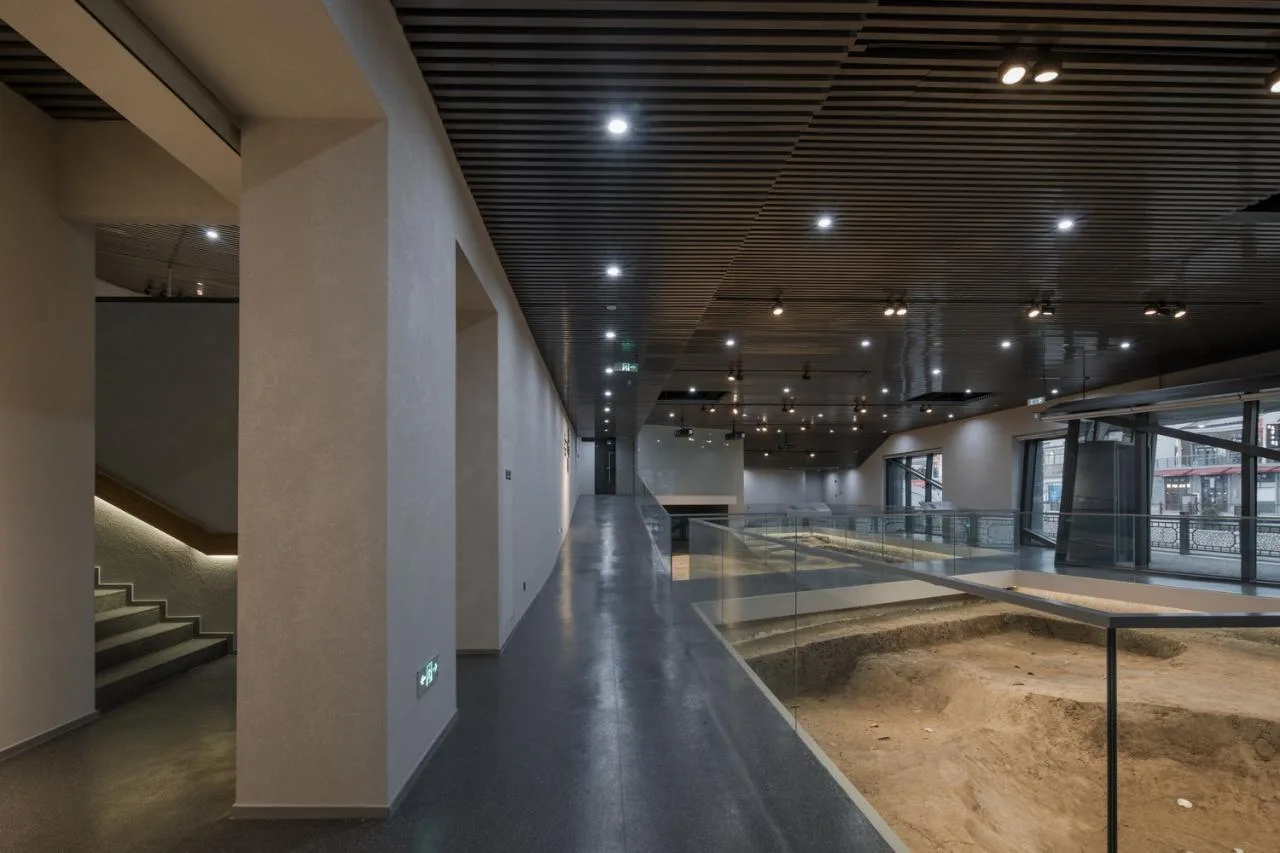
The design of the museum’s interior and exterior spaces revolves around a cohesive visitor flow. The museum’s modest scale—approximately 2,000 square meters—allocates roughly half of this area to exhibitions, including a large hall dedicated to the original site. Visitor circulation follows a linear path, guided thematically through the curated displays. Visitors progress smoothly from entry to exit without backtracking.
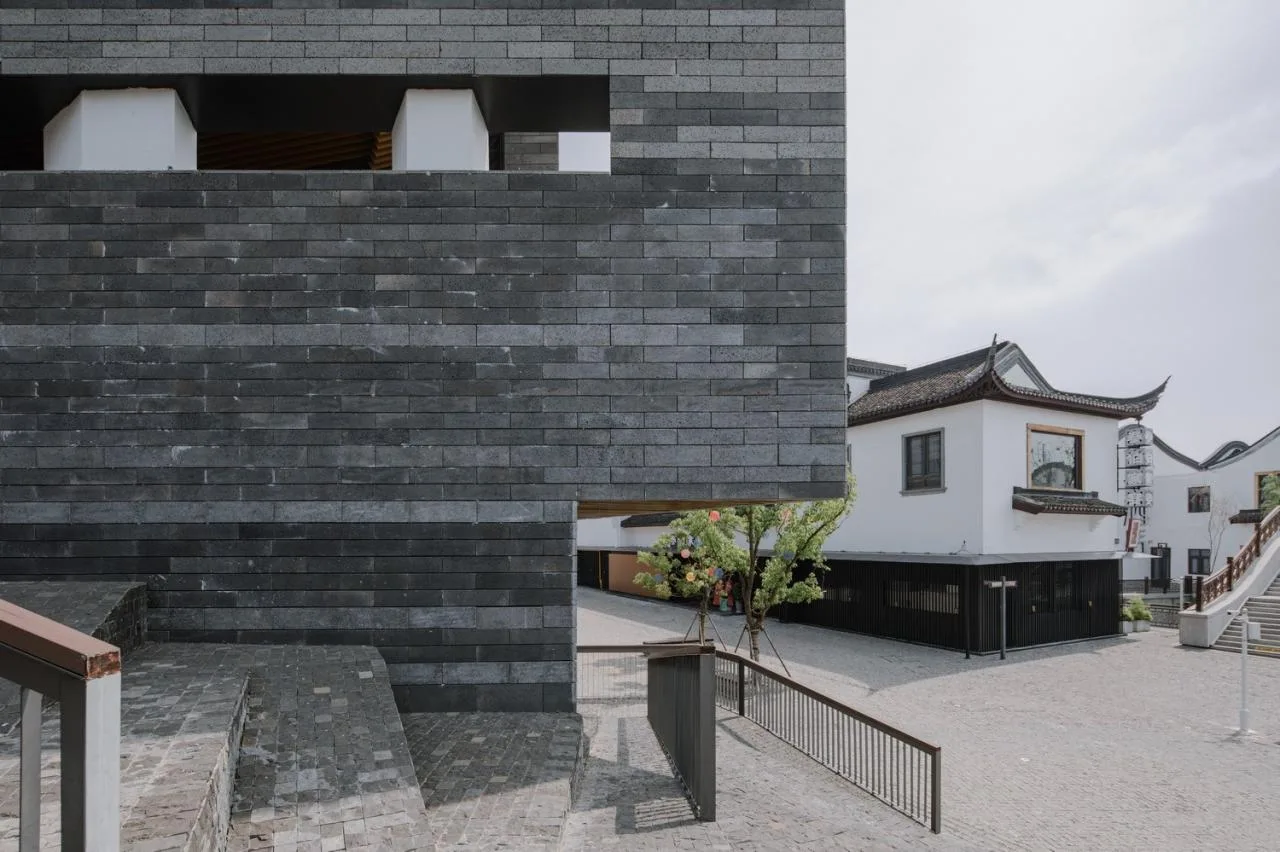
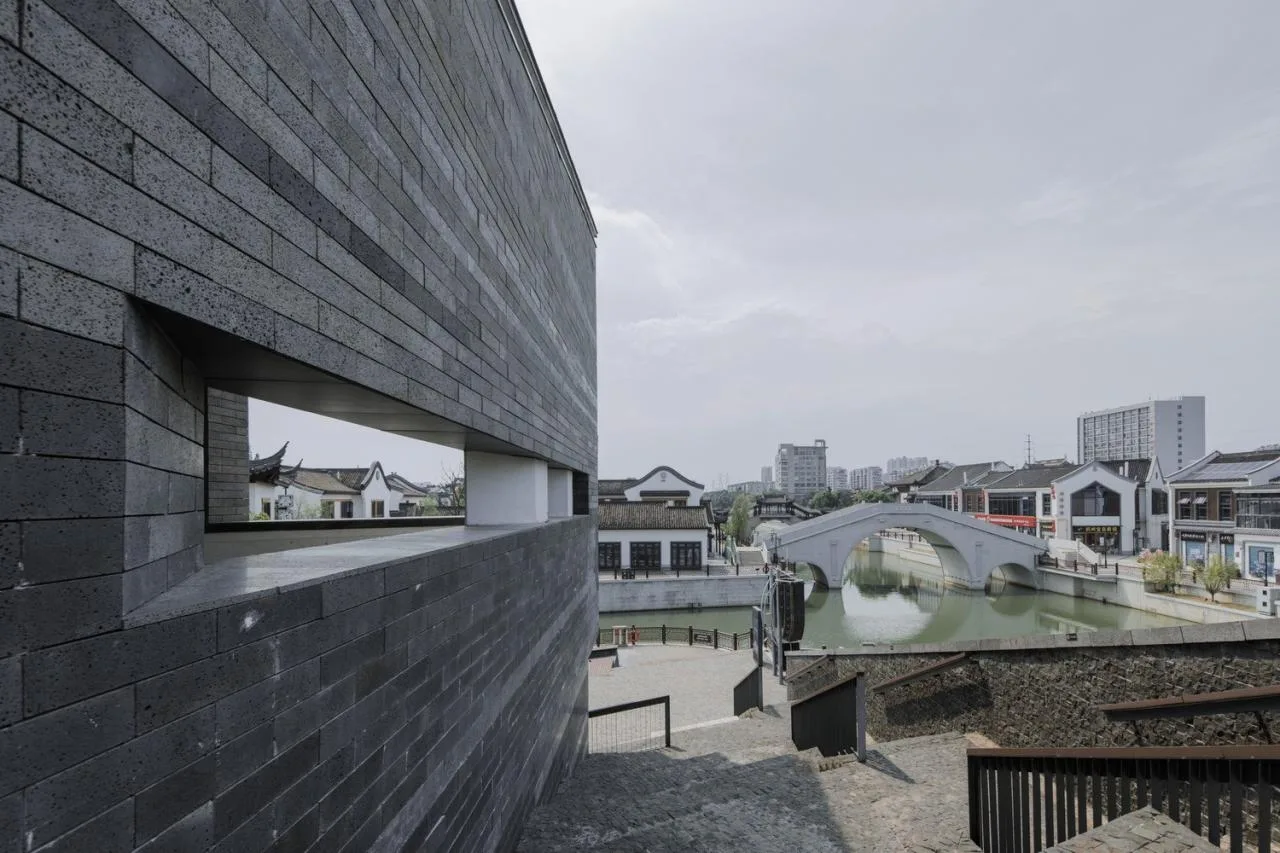
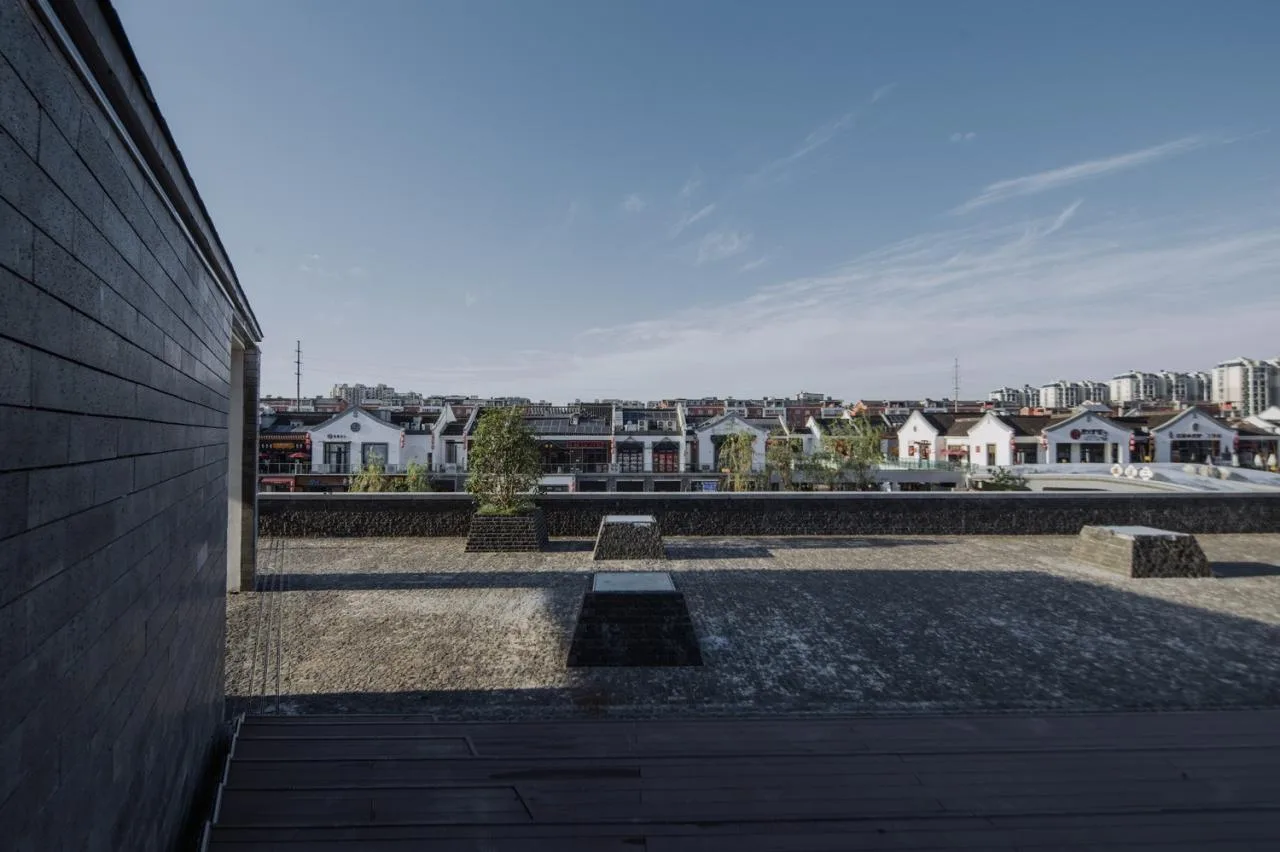
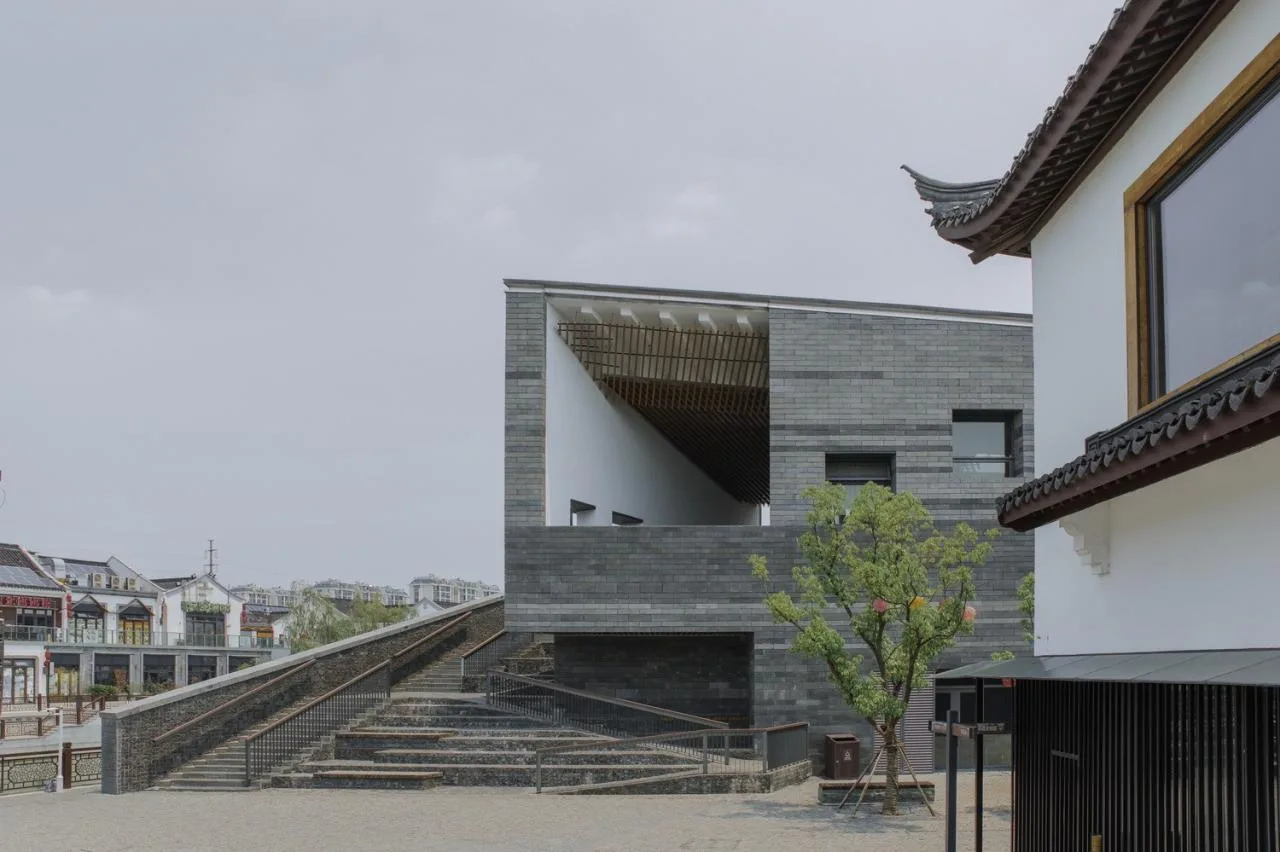
A notable challenge was the building’s entrance located at a corner of the central square, away from the Bodu River, while the site itself bordered the riverbank. The circulation needed to link all exhibition halls and ultimately return visitors to the square. After multiple iterations, the design connects upper and lower levels through a rotating spatial flow. This approach links the start and end of each exhibit, guides visitors from the cultural and creative store on the second floor to the rooftop riverside viewing platform above the site exhibition hall, before descending back to the museum entrance—creating a continuous, immersive visitor experience.
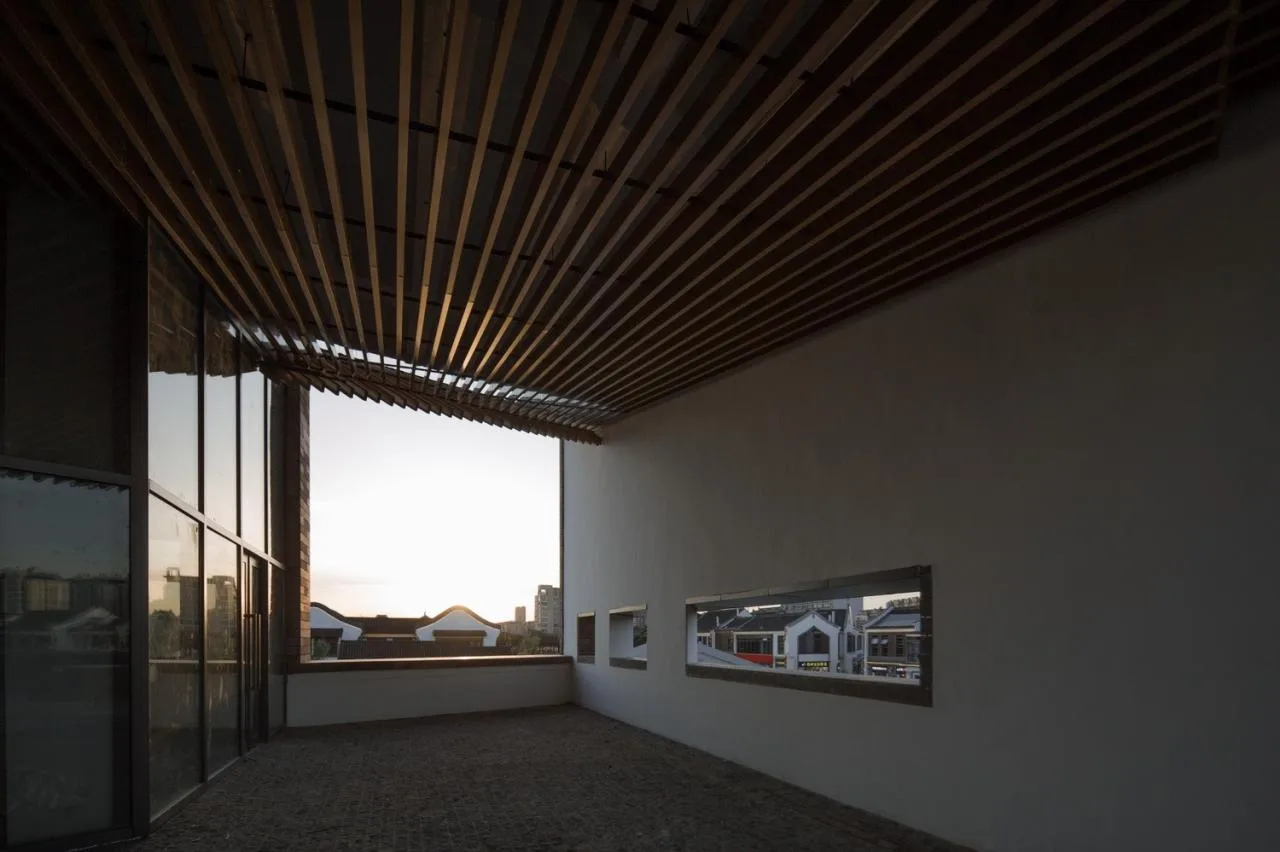
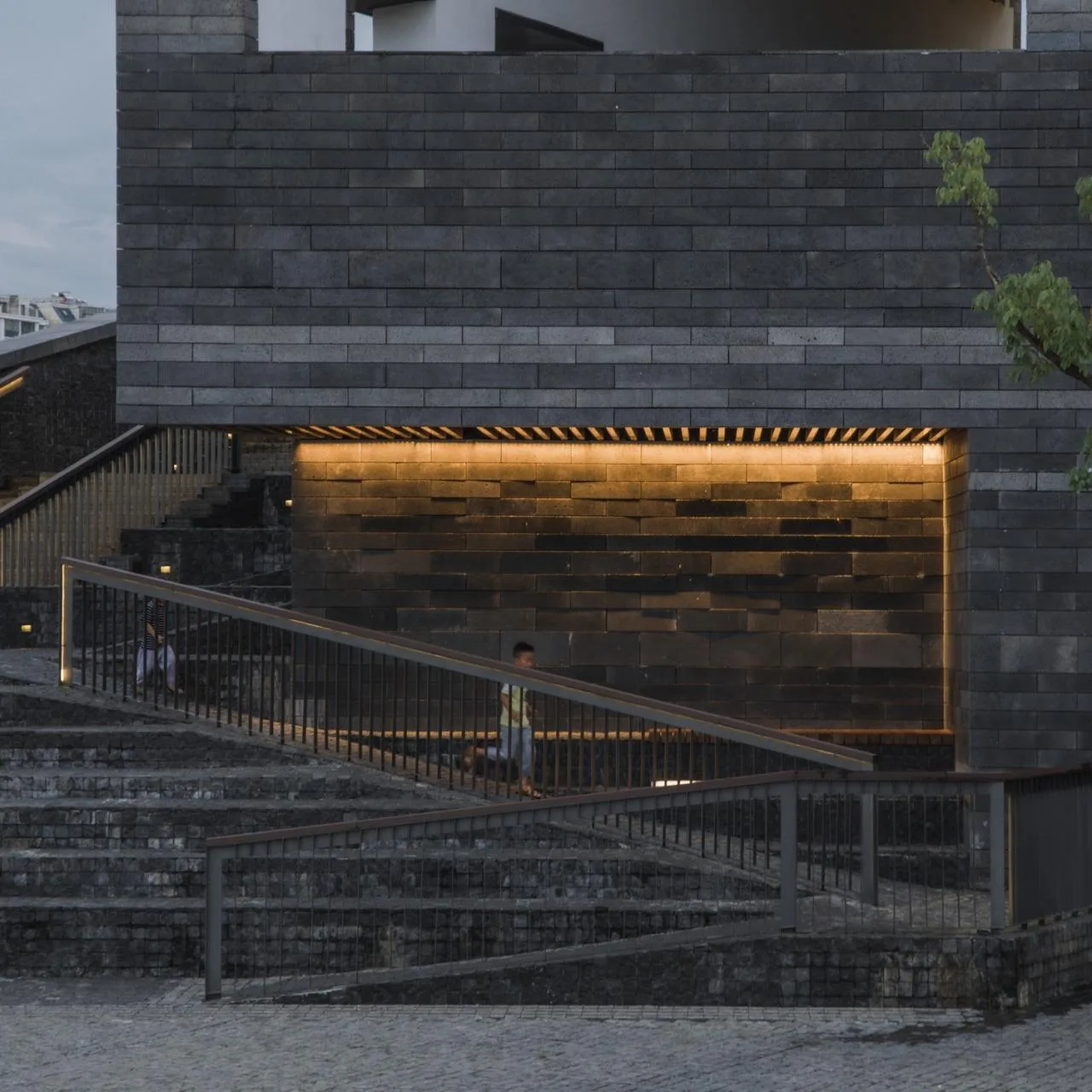
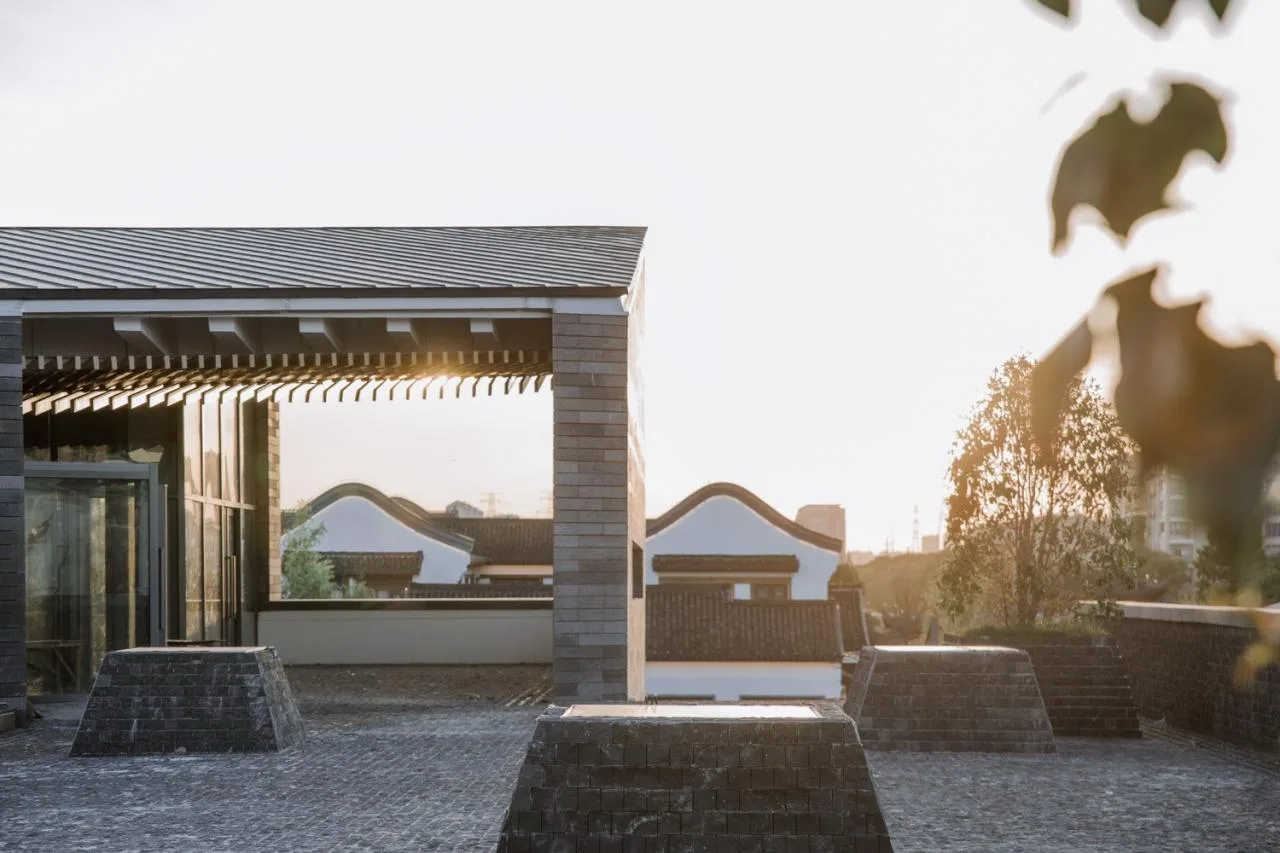
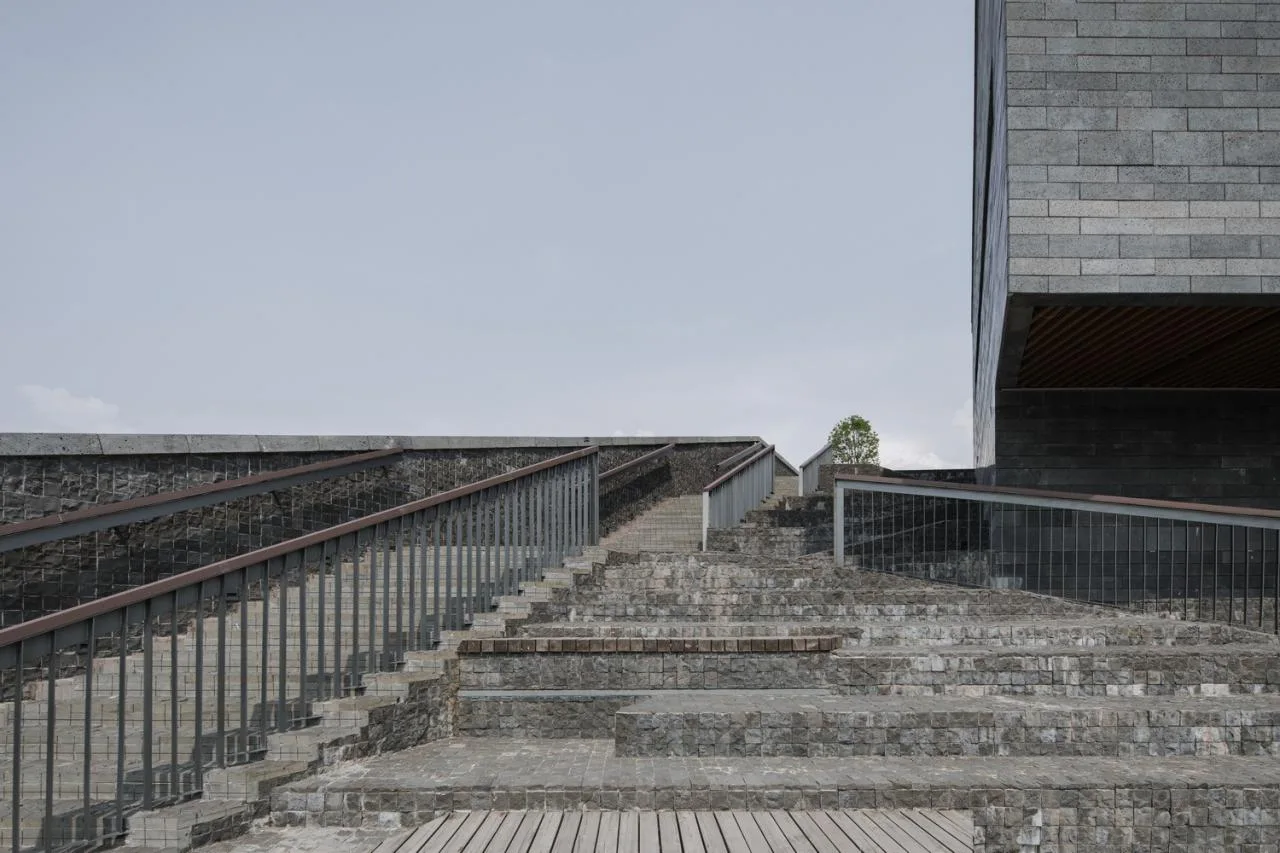
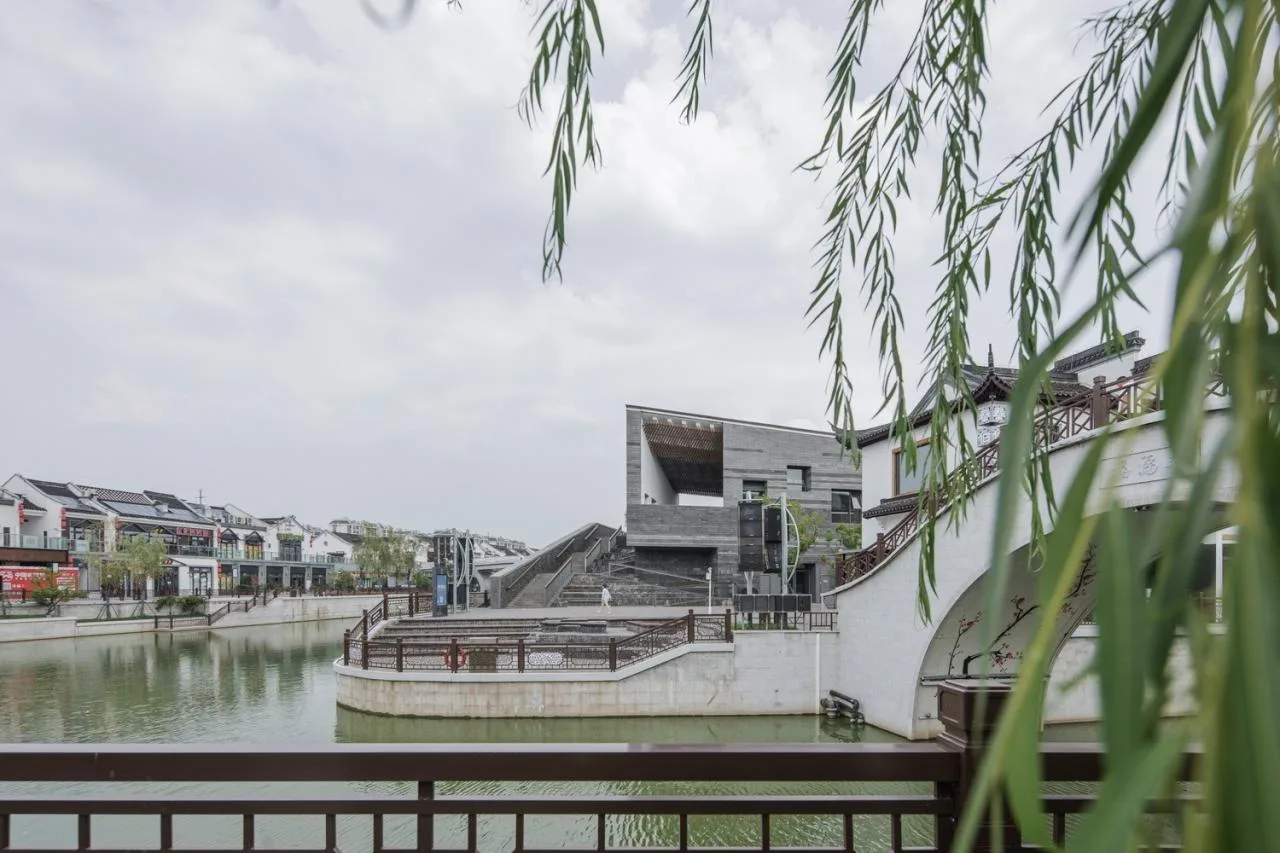
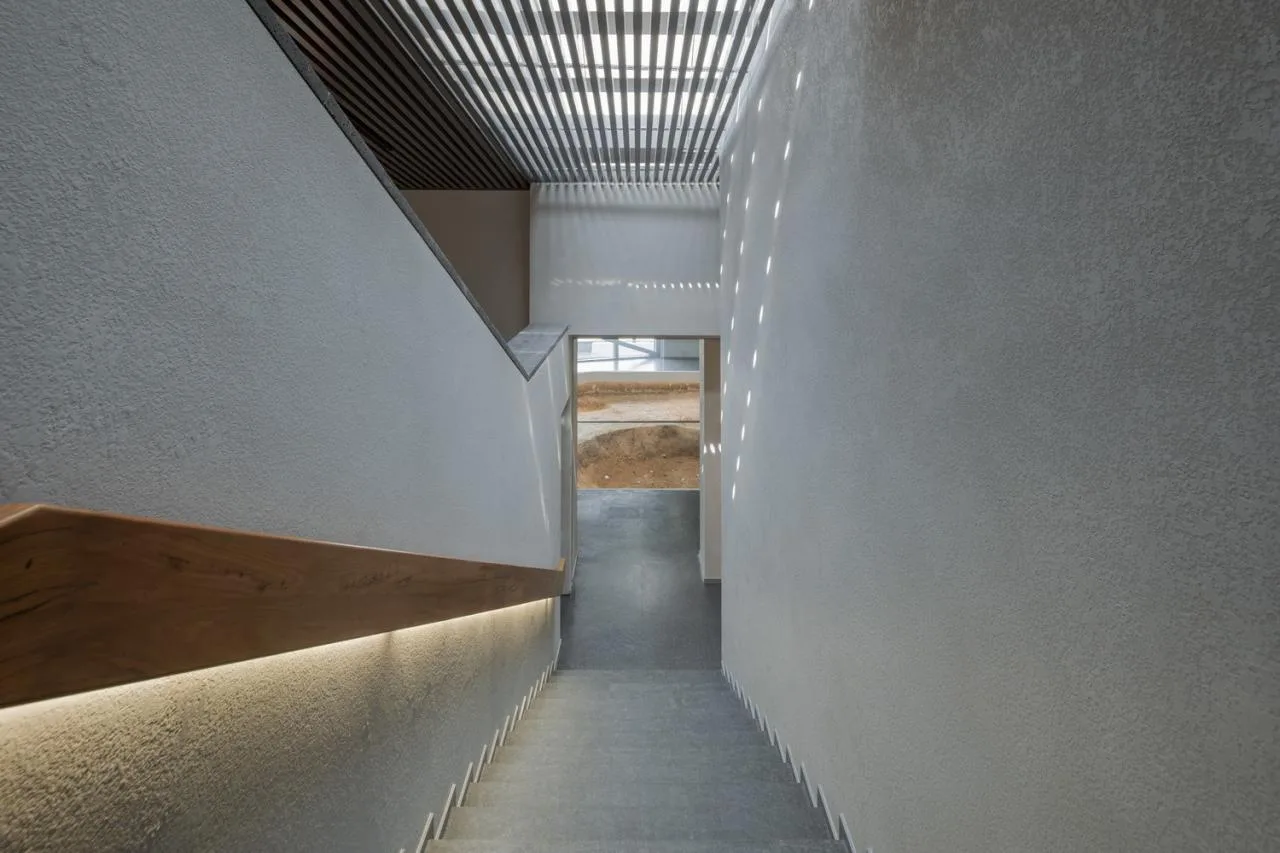
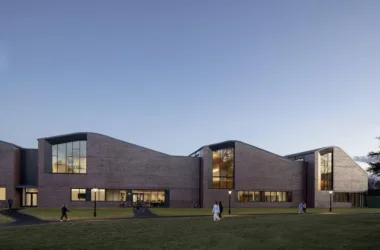
The museum features a single-sided sloping roof that creates a lively two-story exhibition space in the center. On the second floor, an open shared area beneath the roof slope provides shelter for visitors against wind and rain and offers views of the nearby river’s water curtain performance. The building’s transparent and dynamic form suits the Jiangnan region’s climate. The rooftop viewing platform not only offers scenic river views but also elevates the ground square to the roof, reclaiming public space occupied by the building.
Materials
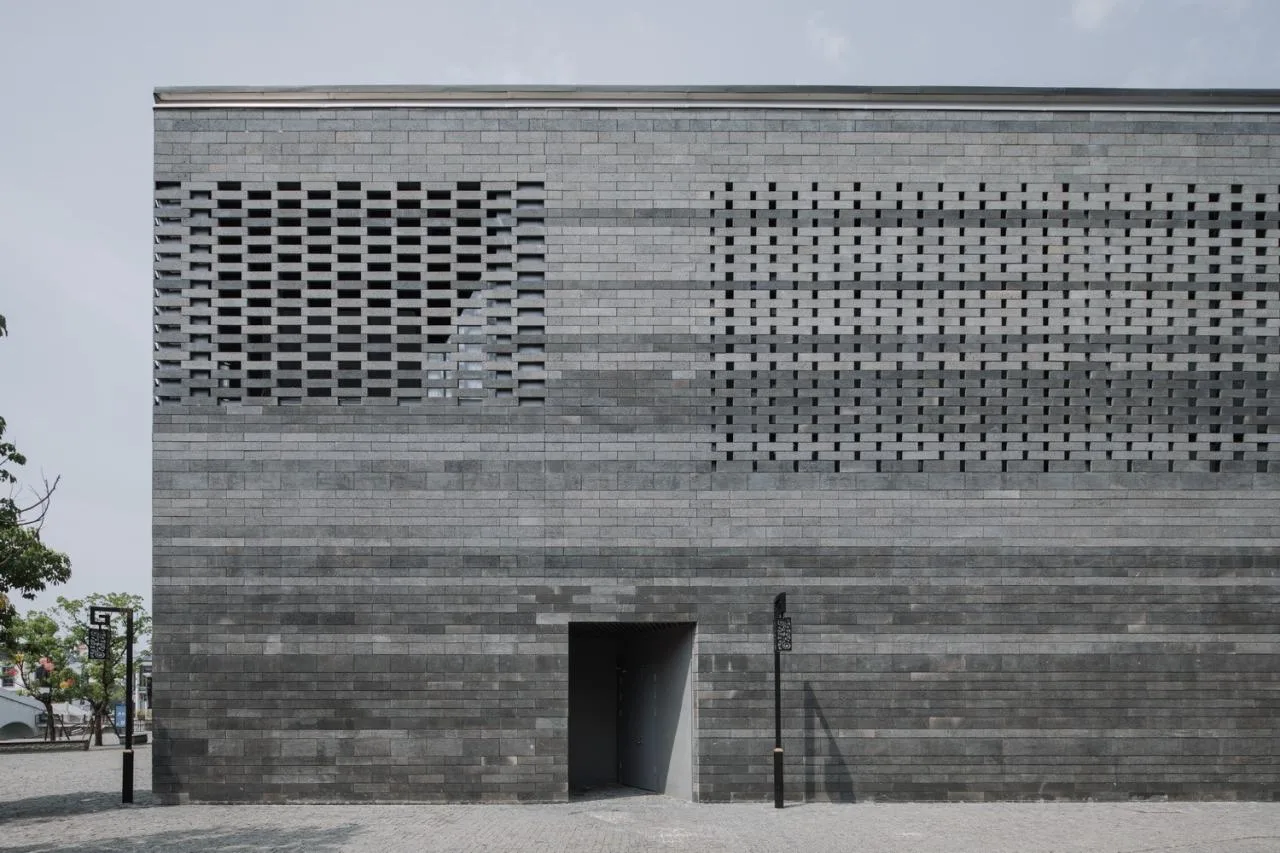
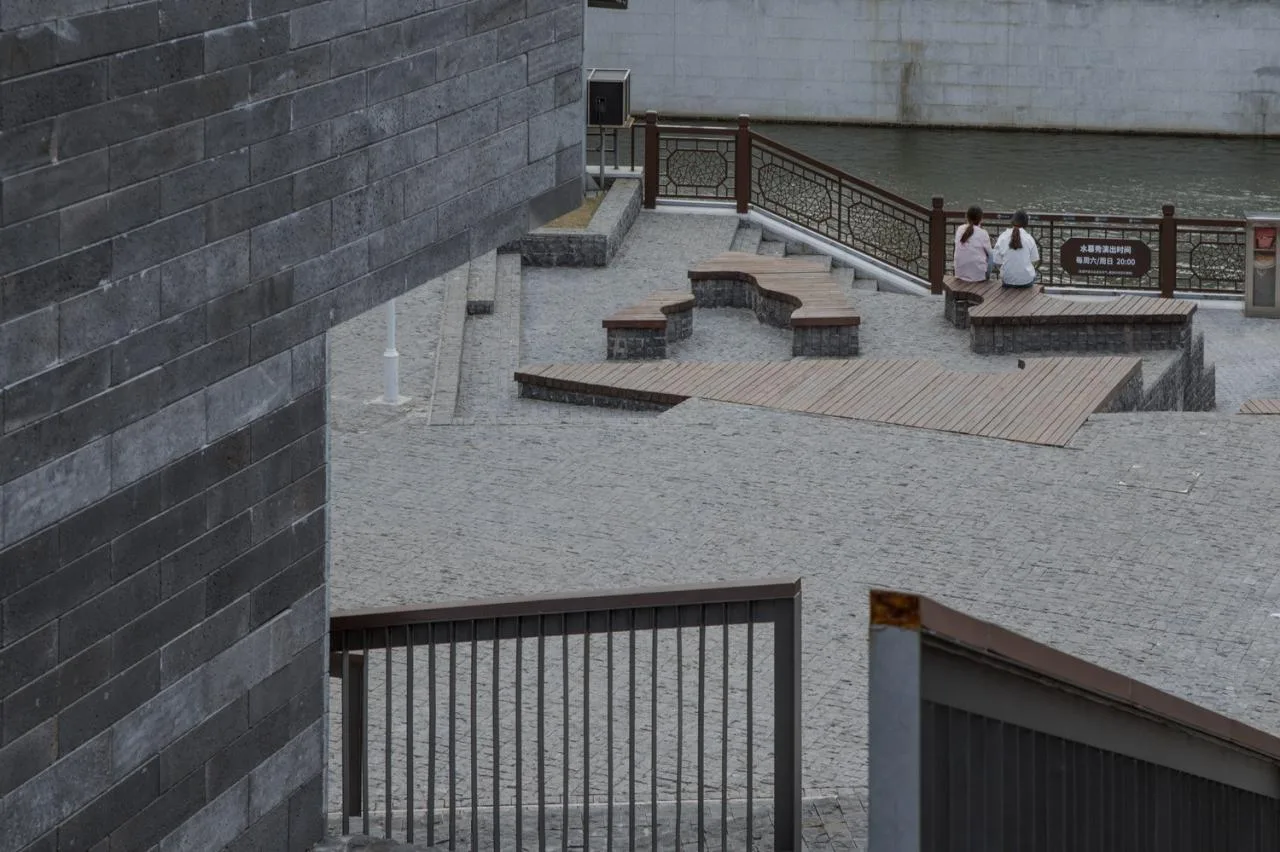
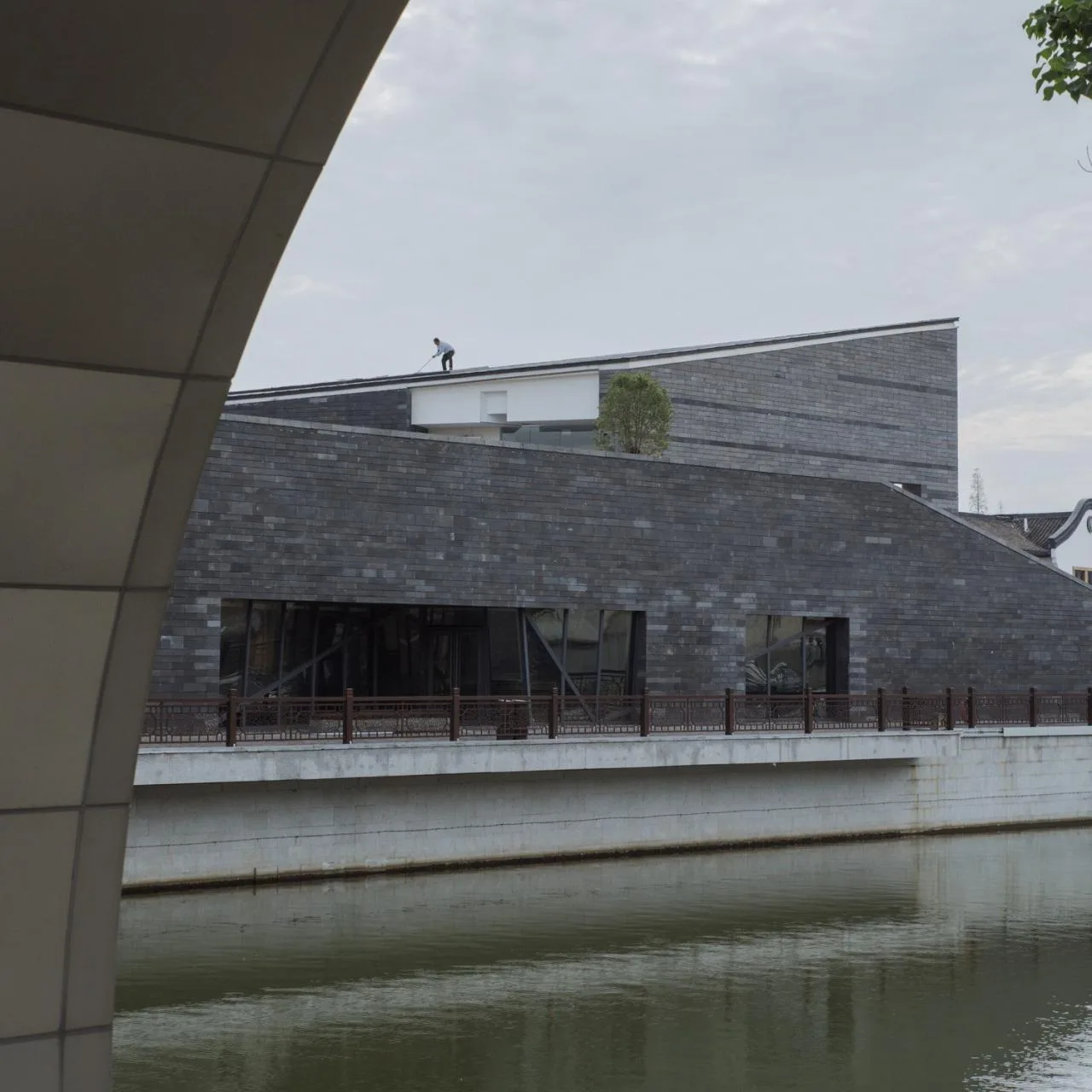
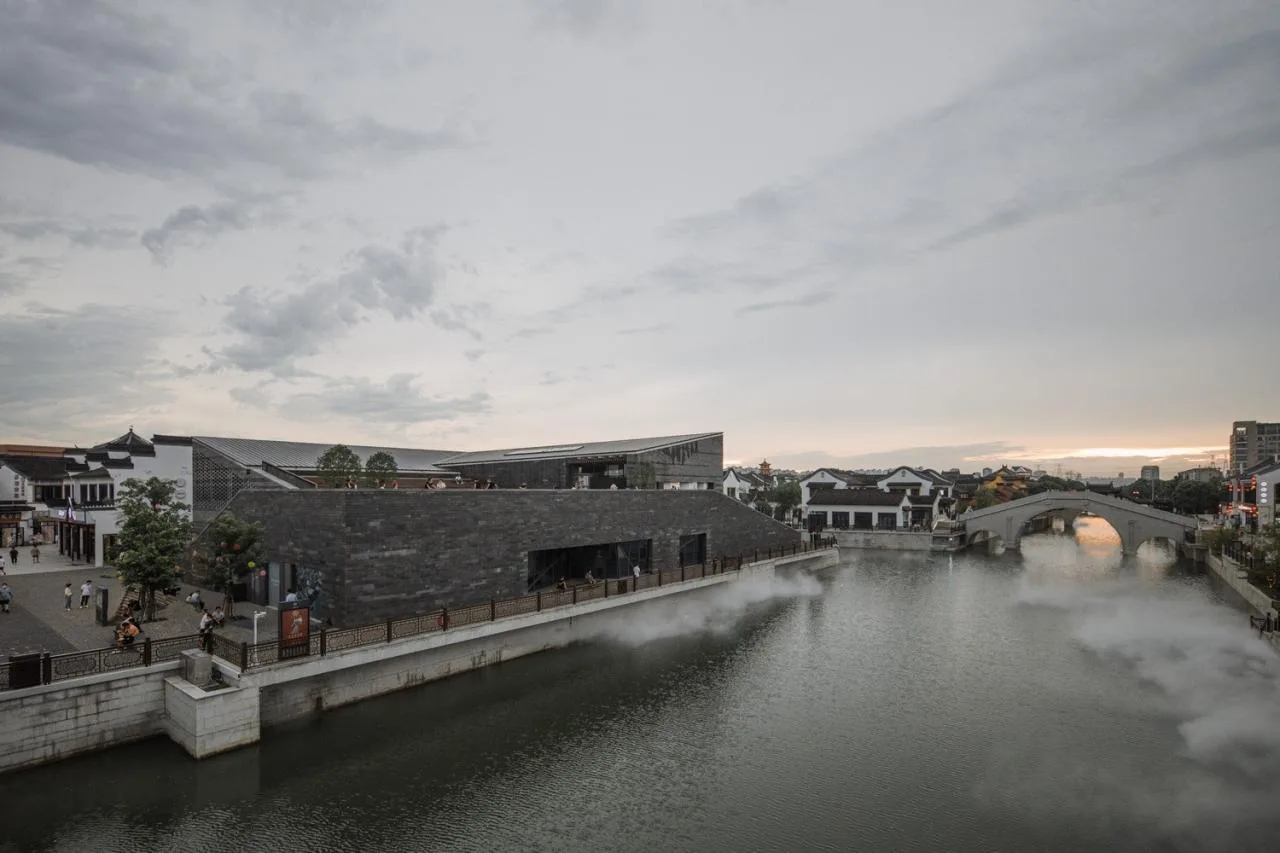
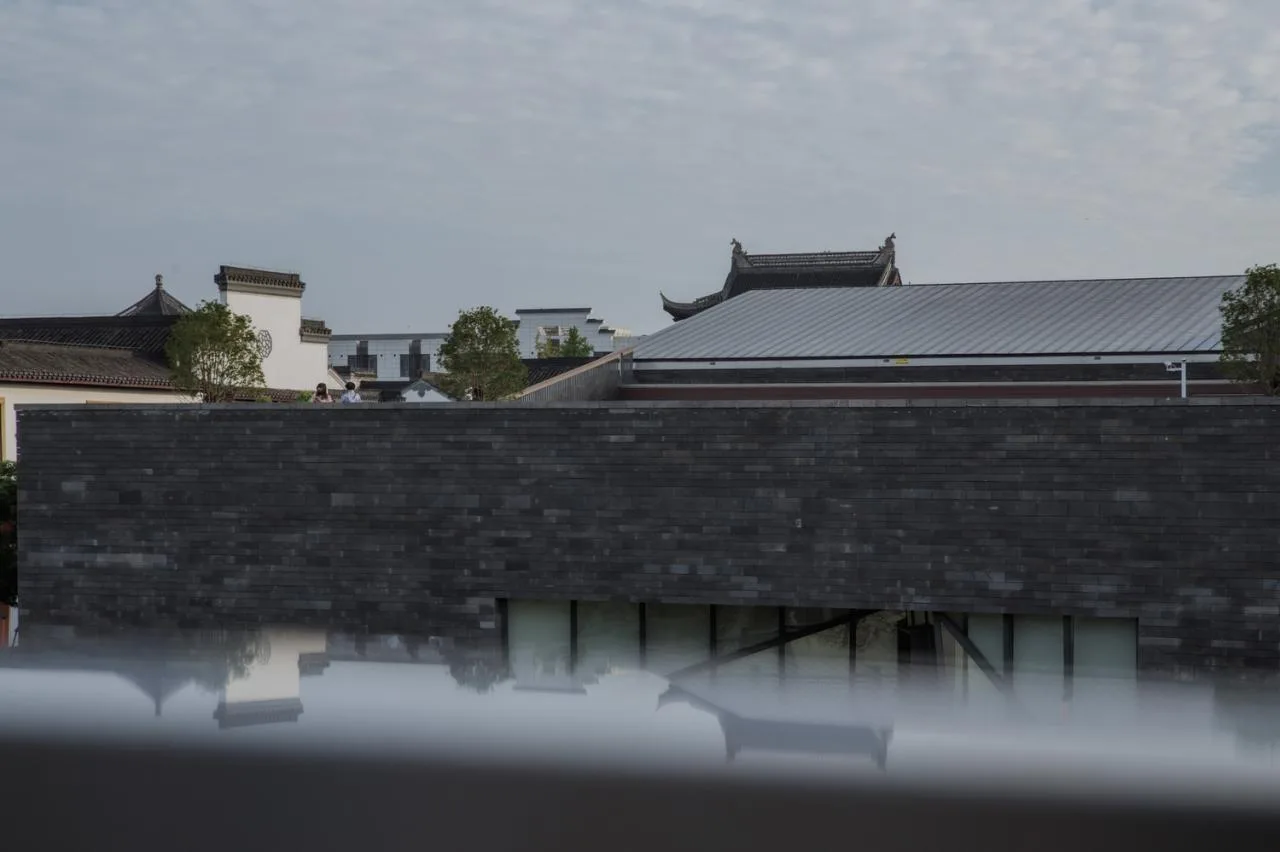
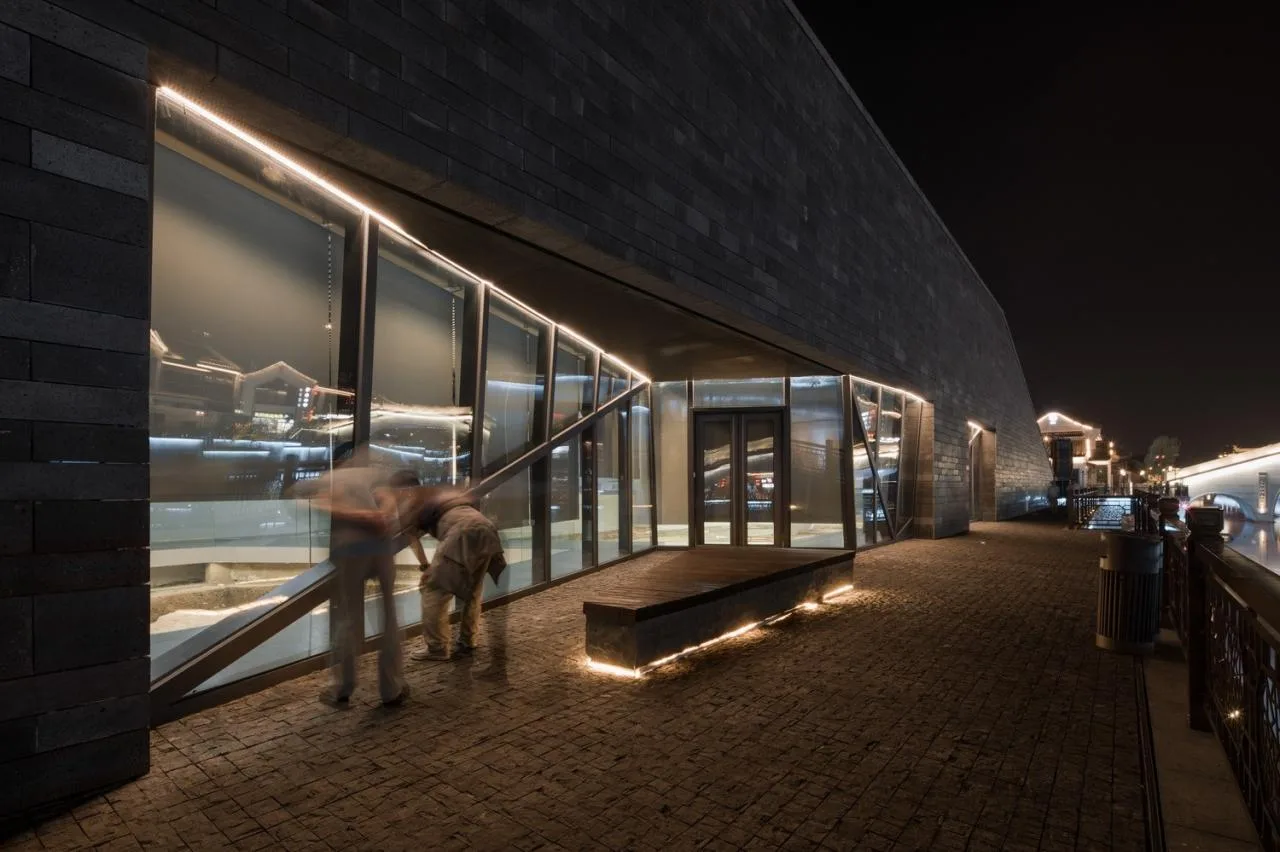
The museum’s exterior primarily features a dark gray vertical lock-edge metal roof panel, reminiscent of traditional blue tiles, and gray tuff stone (cave stone) for the walls. The choice of gray tuff is intentional for its calm, delicate green-gray tone and texture, which aligns with the desired architectural “historical sense” and character.
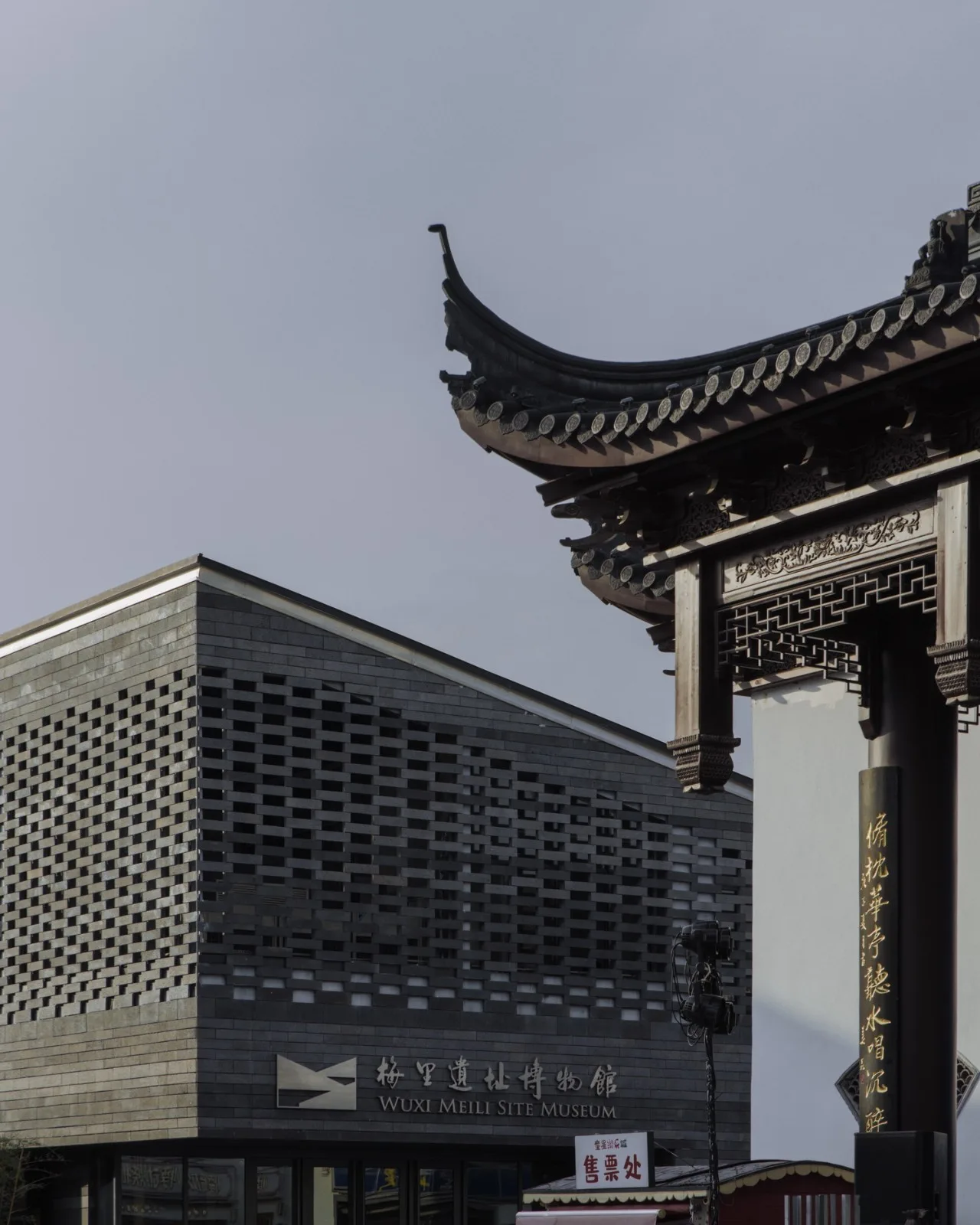
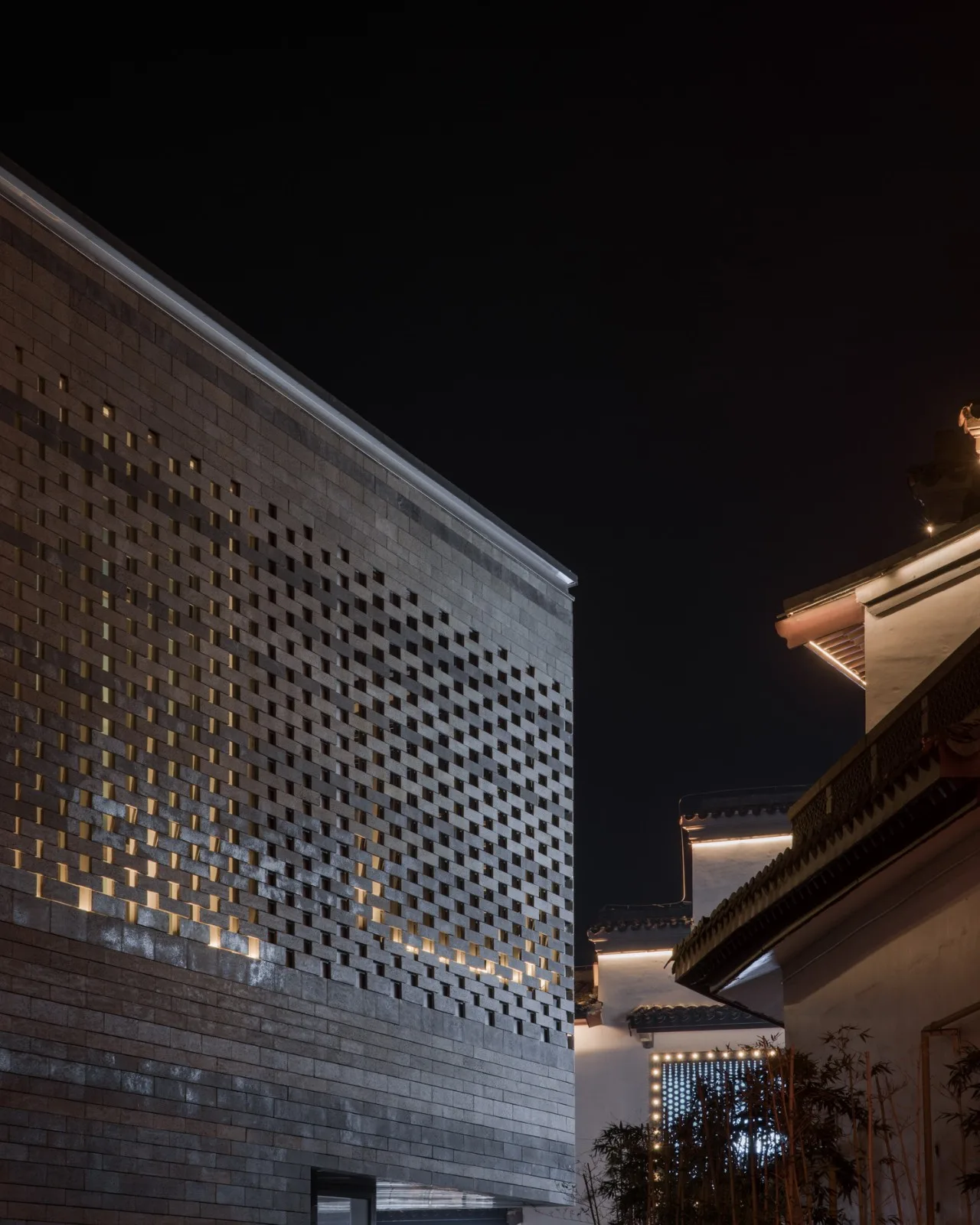
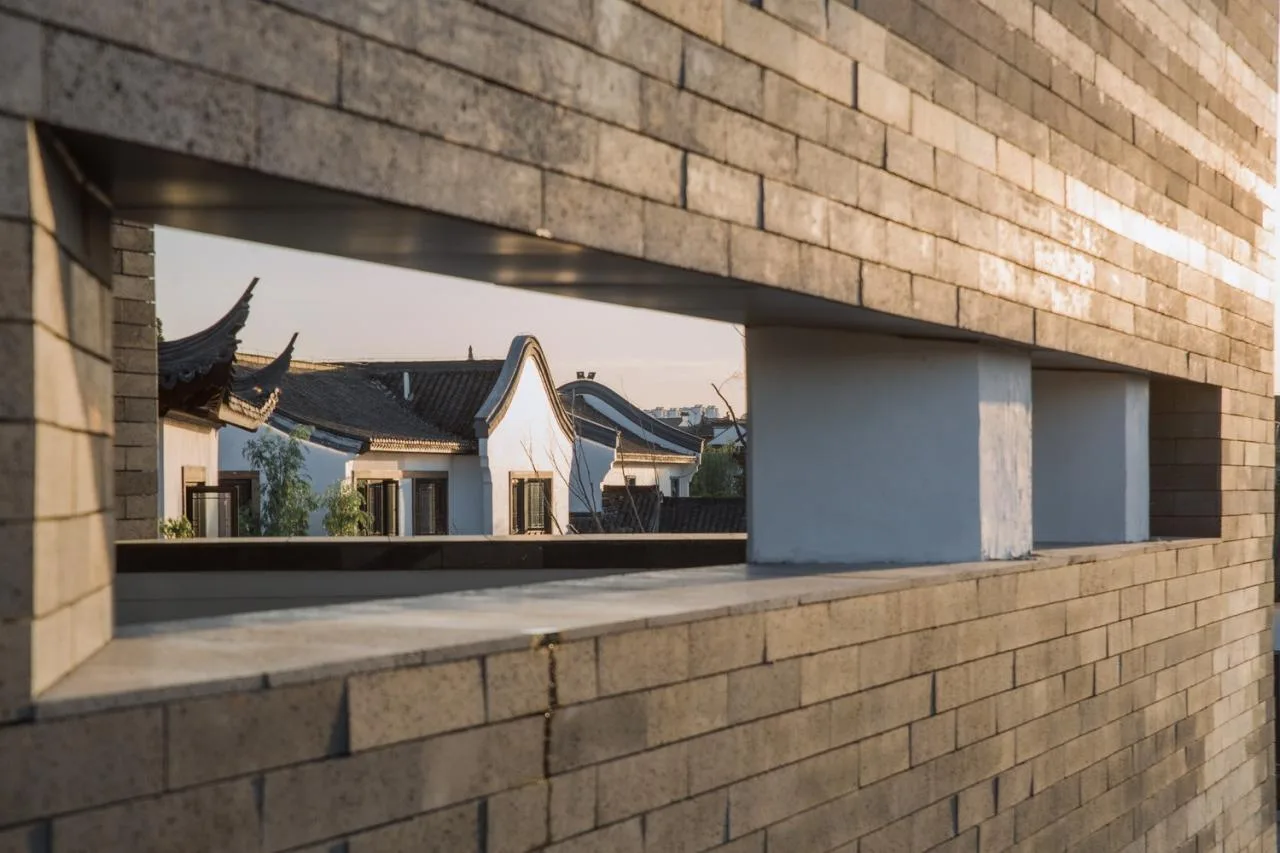
In contrast, the surrounding commercial street buildings—designed to mimic traditional Jiangnan residences—feature pink walls, black tiles, and wooden windows. The gray stone acts as a transitional tone between black and white, helping the museum blend smoothly into its environment without abruptness.
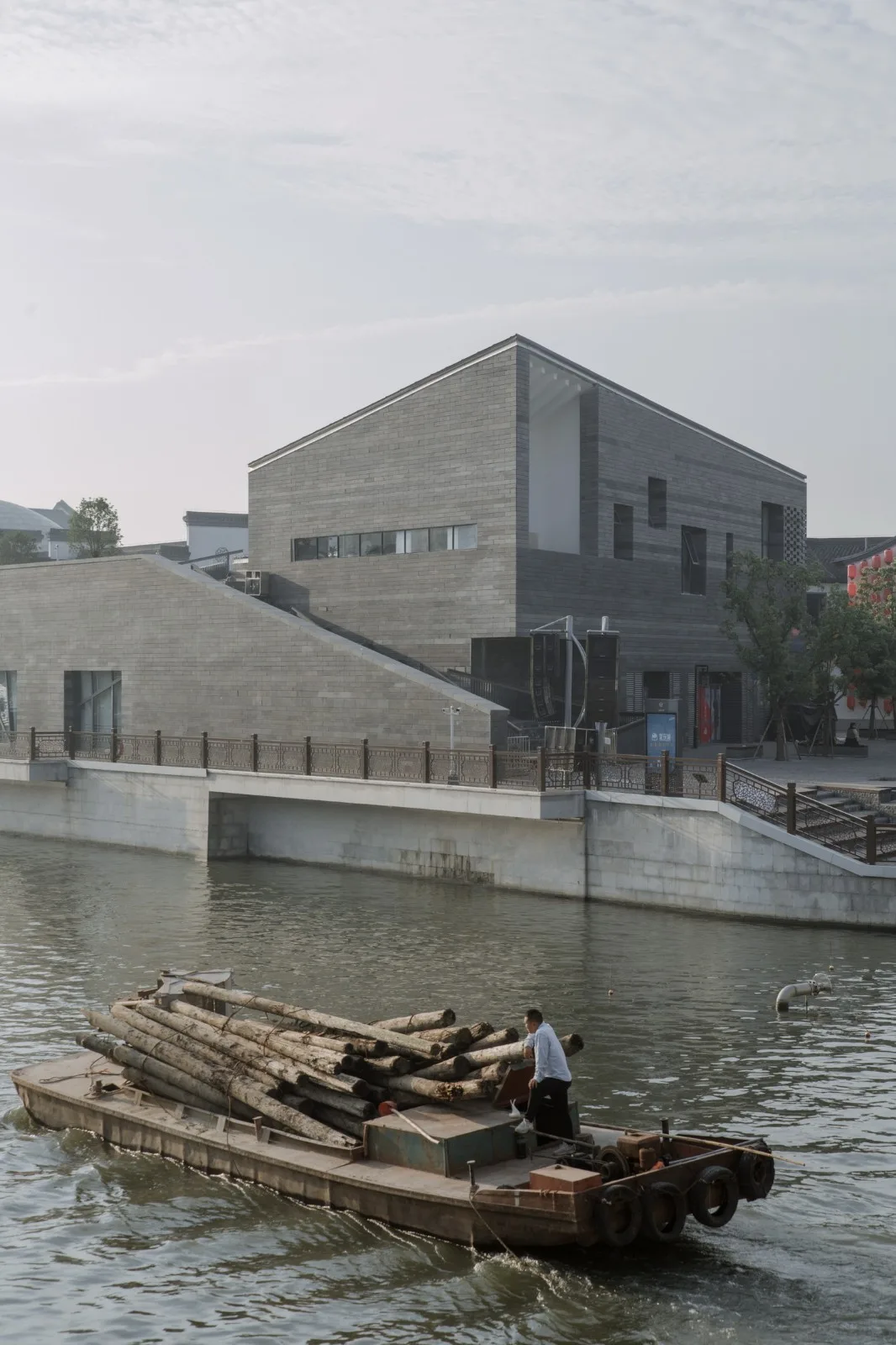
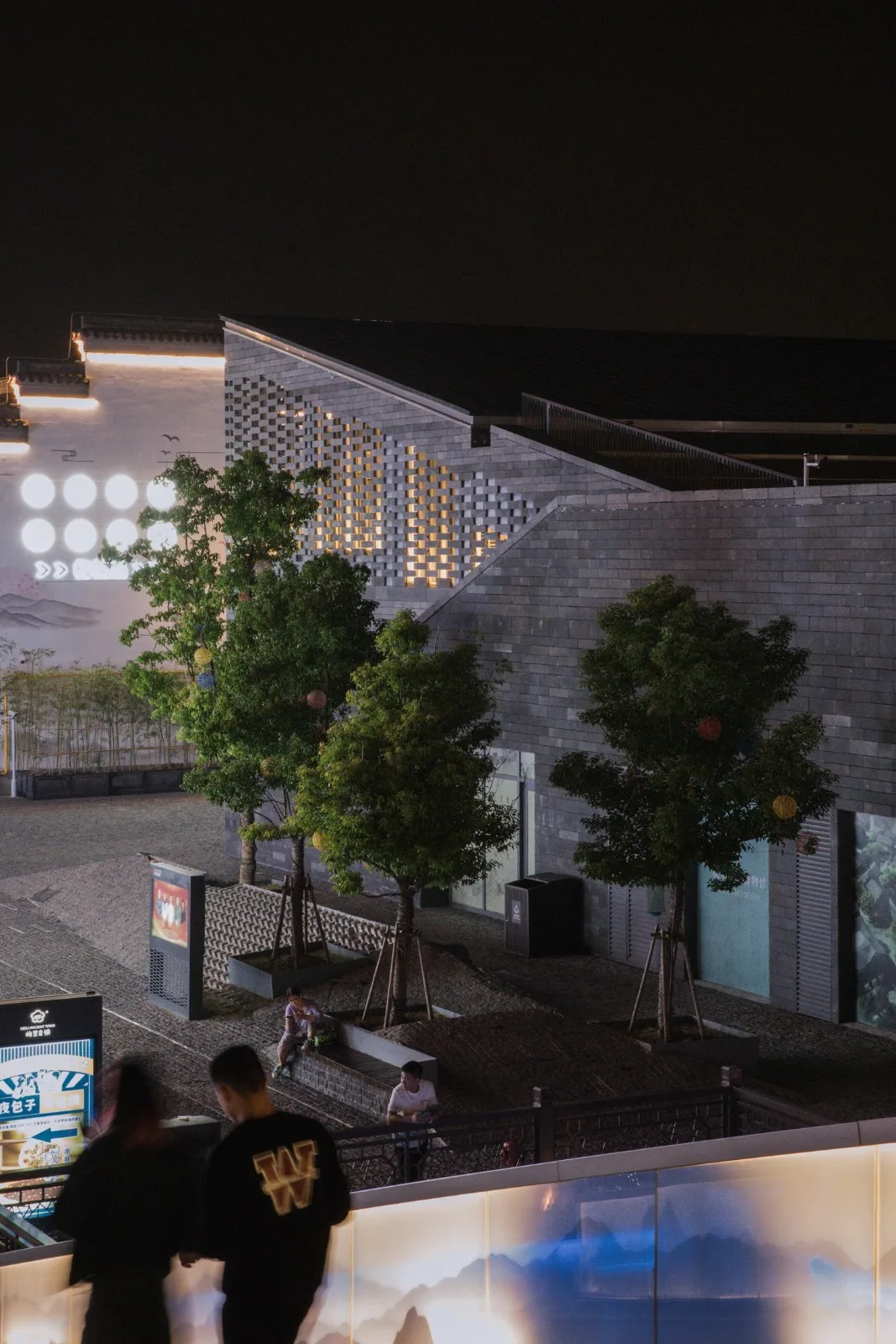
The stone surfaces are treated with varied polishing techniques to create subtle depth and color variations. Stone blocks are deliberately sized in five (later simplified to three) different widths and lengths, creating a lively, delicate, and natural texture across the walls. Horizontally stretched joints add a layered effect, metaphorically echoing archaeological stratigraphy. When wet, the stone’s slightly porous texture changes, adding a misty quality that complements the Jiangnan water town’s atmosphere.
History
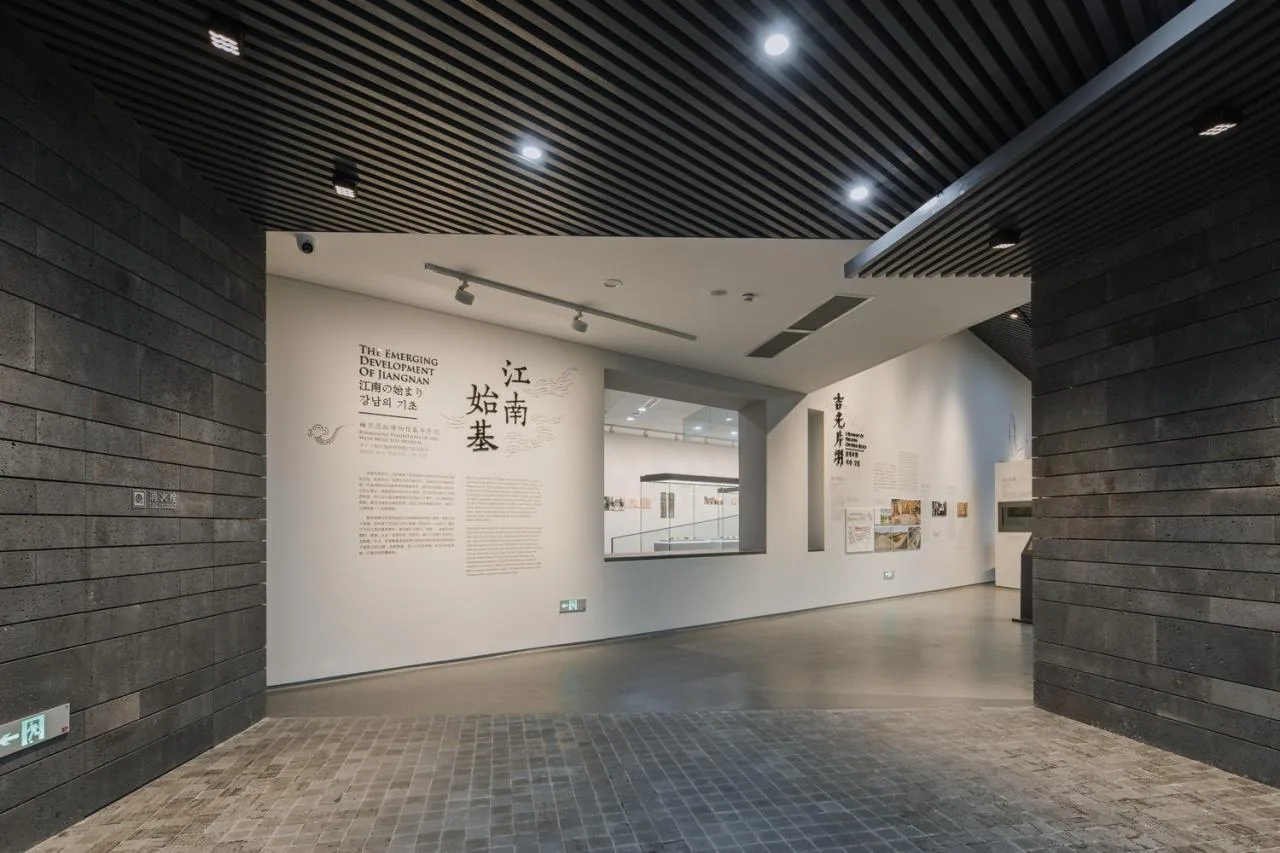
The primary purpose of the site museum is to preserve the archaeological site and educate the public. This foundational goal guided the exhibition design, which was carefully integrated into the architectural planning, accounting for visitor flow, spatial transitions, and exhibition technologies. Consequently, the overall narrative structure was established early in the process.
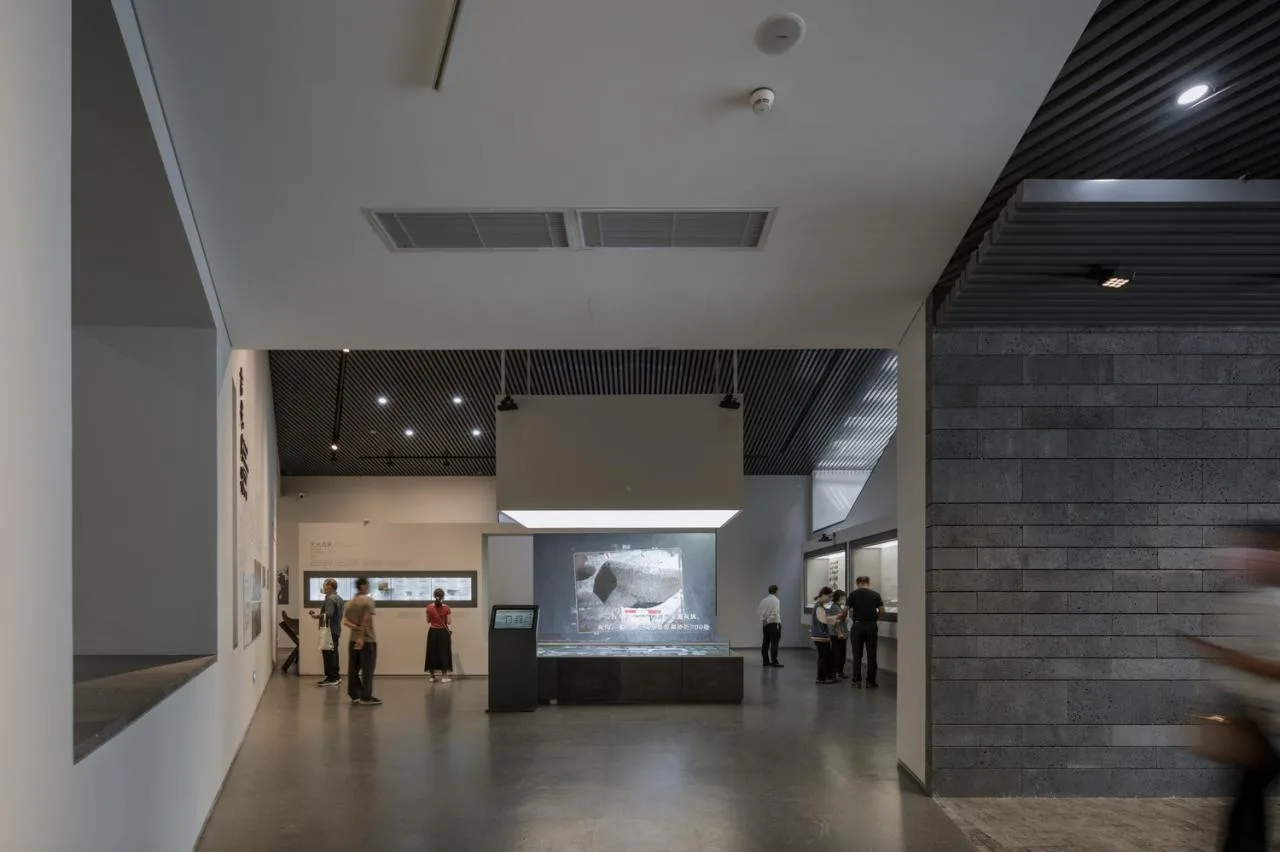
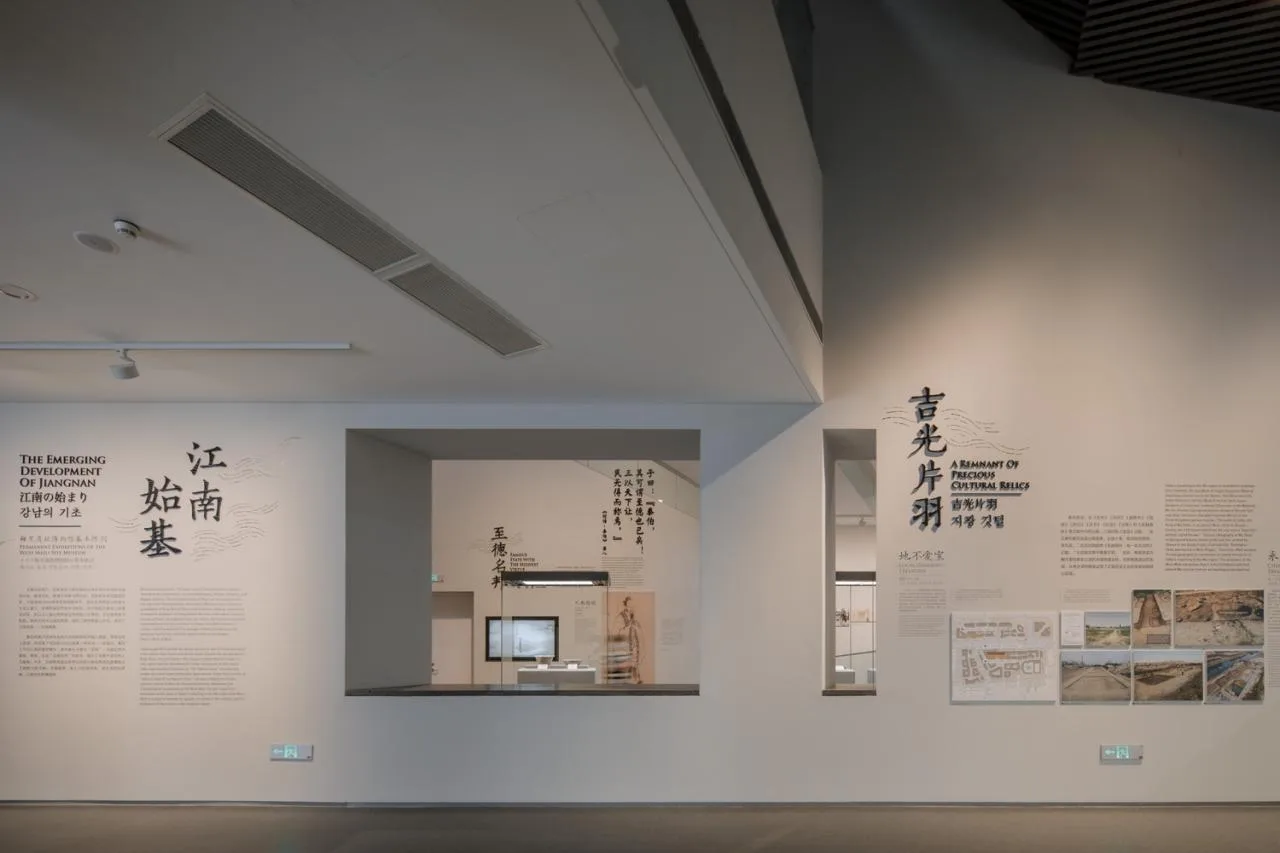
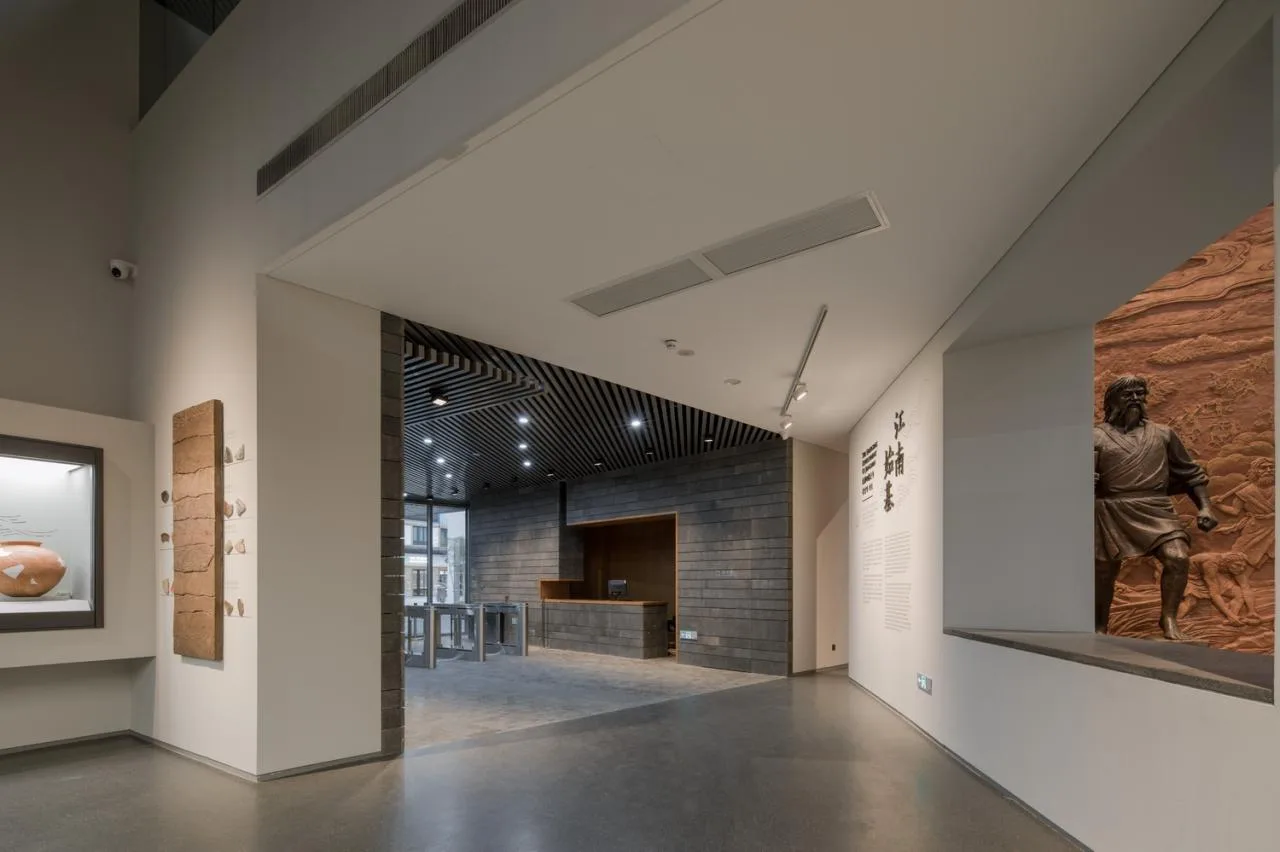
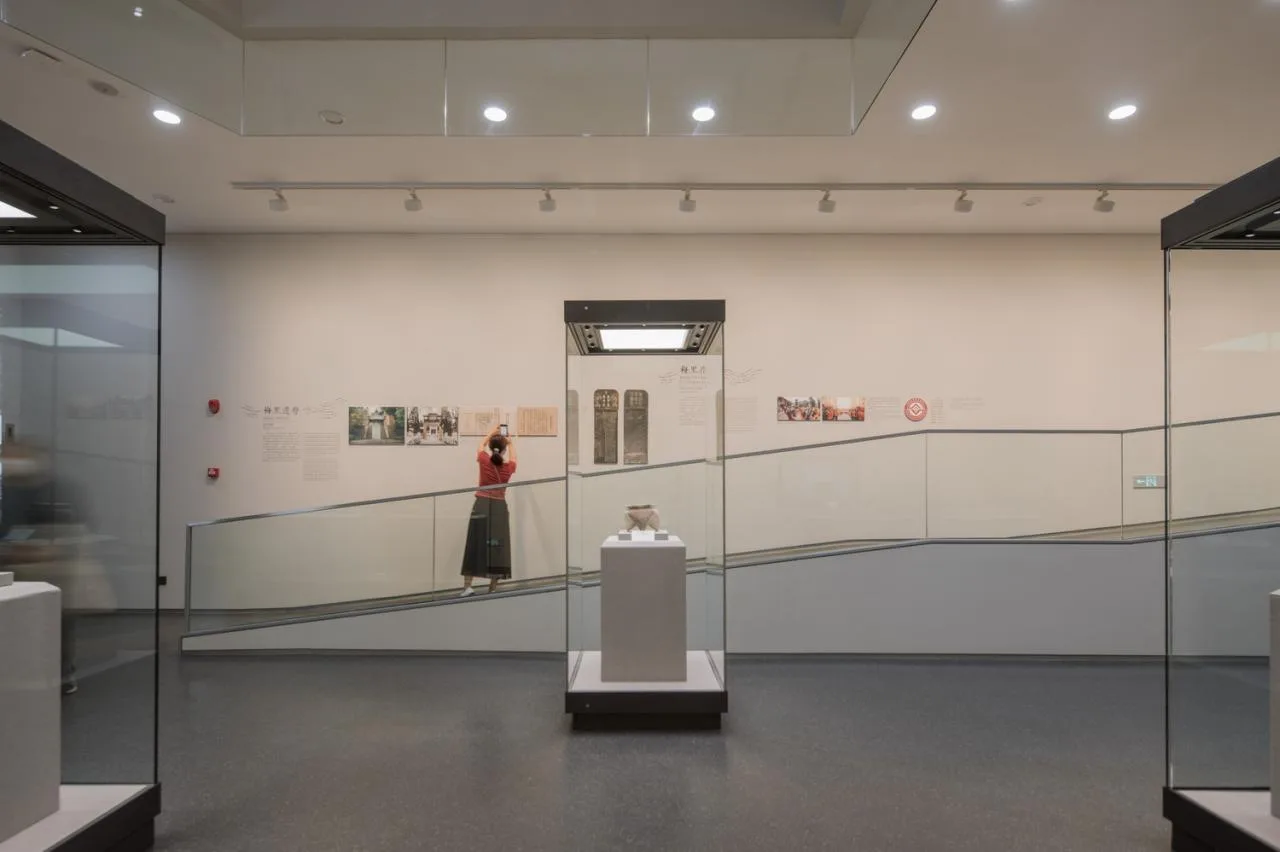
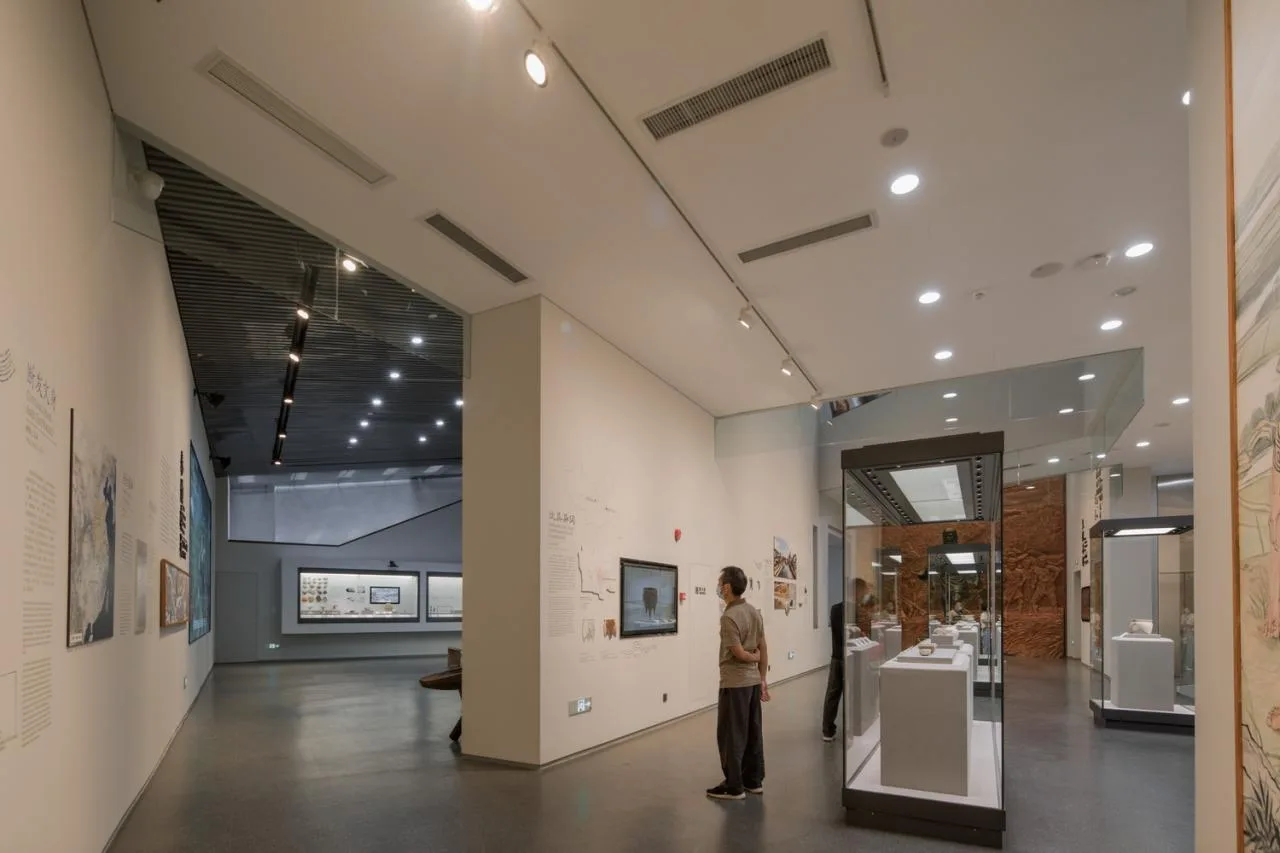
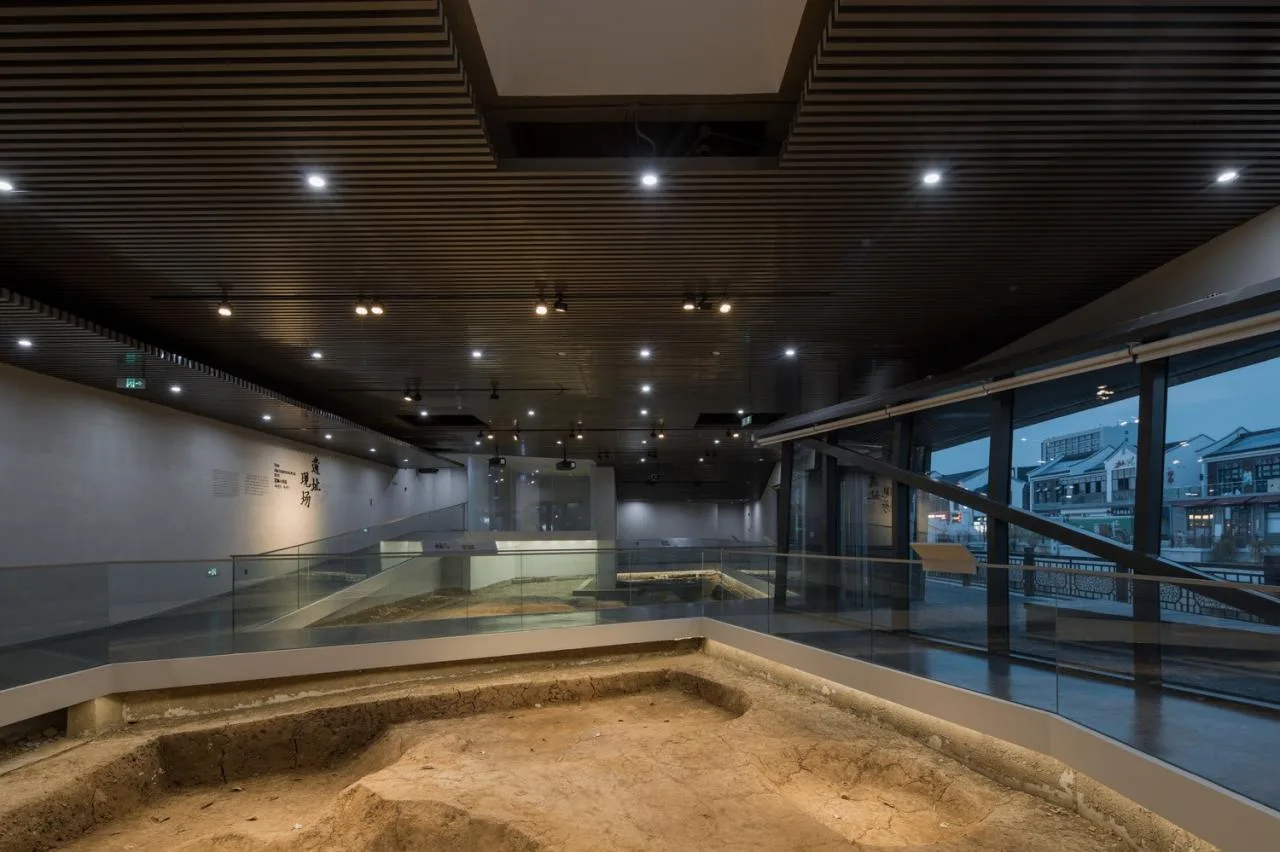
The exhibition is divided into six sections: “Preface Hall,” “Lucky Light and Feathers,” “Taibo’s Journey to Wu,” “Zhide Mingbang,” “Changes in the World,” and “Site Scene.” The permanent exhibition starts by detailing archaeological excavation, settlement origins, cultural exchanges, artifacts, historical legends, the canal environment, and the cultural spirit of the Meili site. Modern exhibition technologies such as transparent display screens, electronic sand tables, and multimedia enhance storytelling, making the archaeological narrative vivid and engaging.
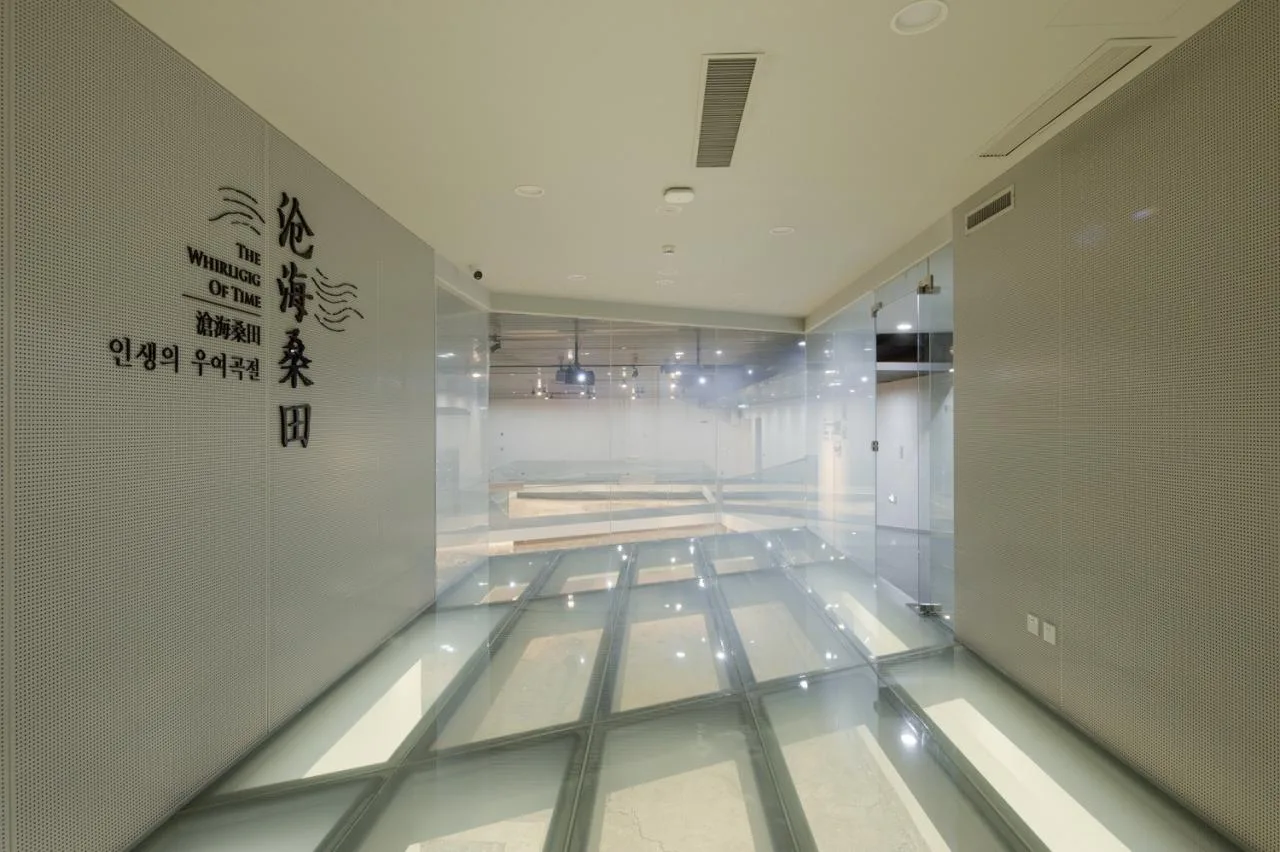
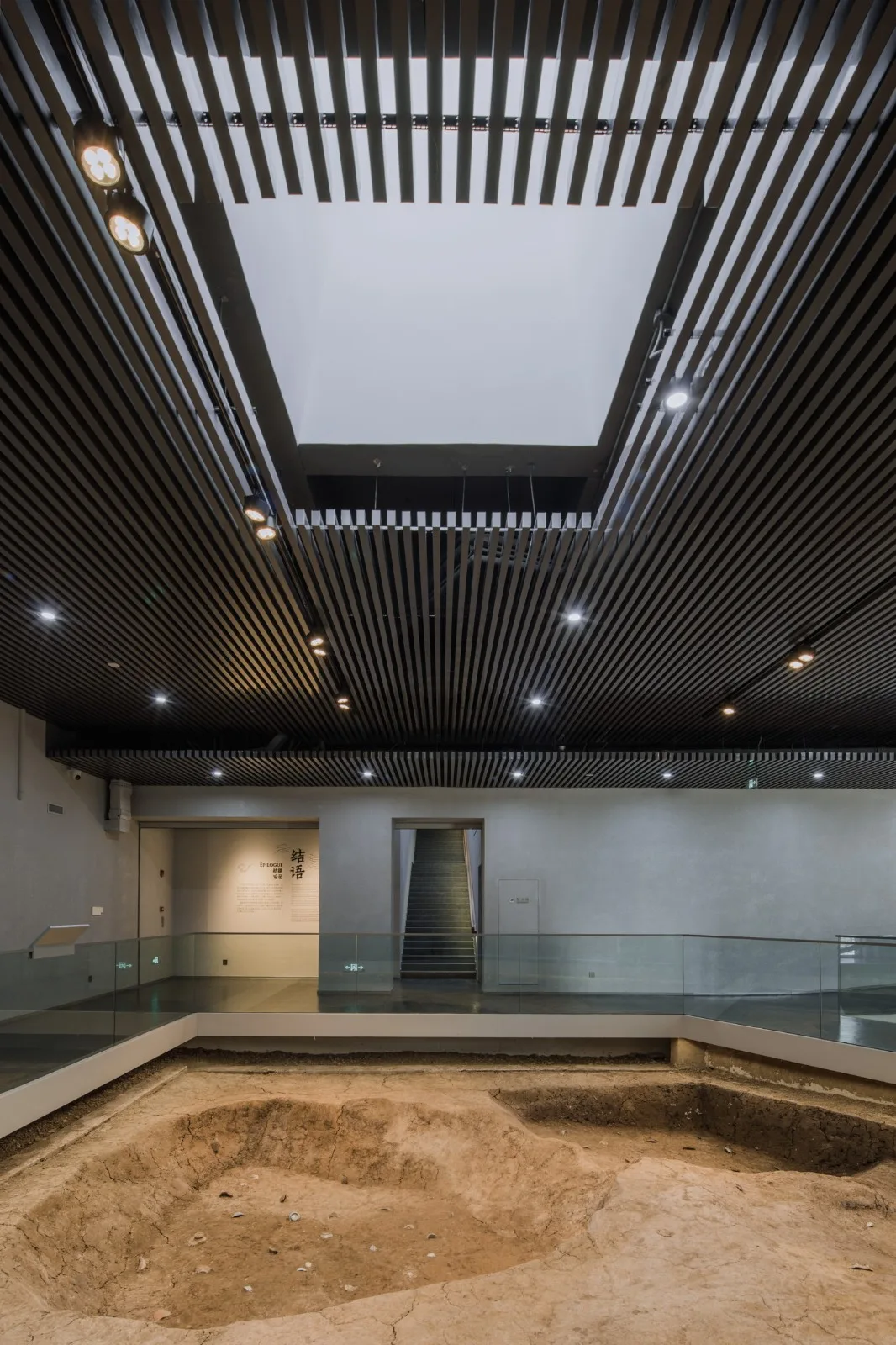
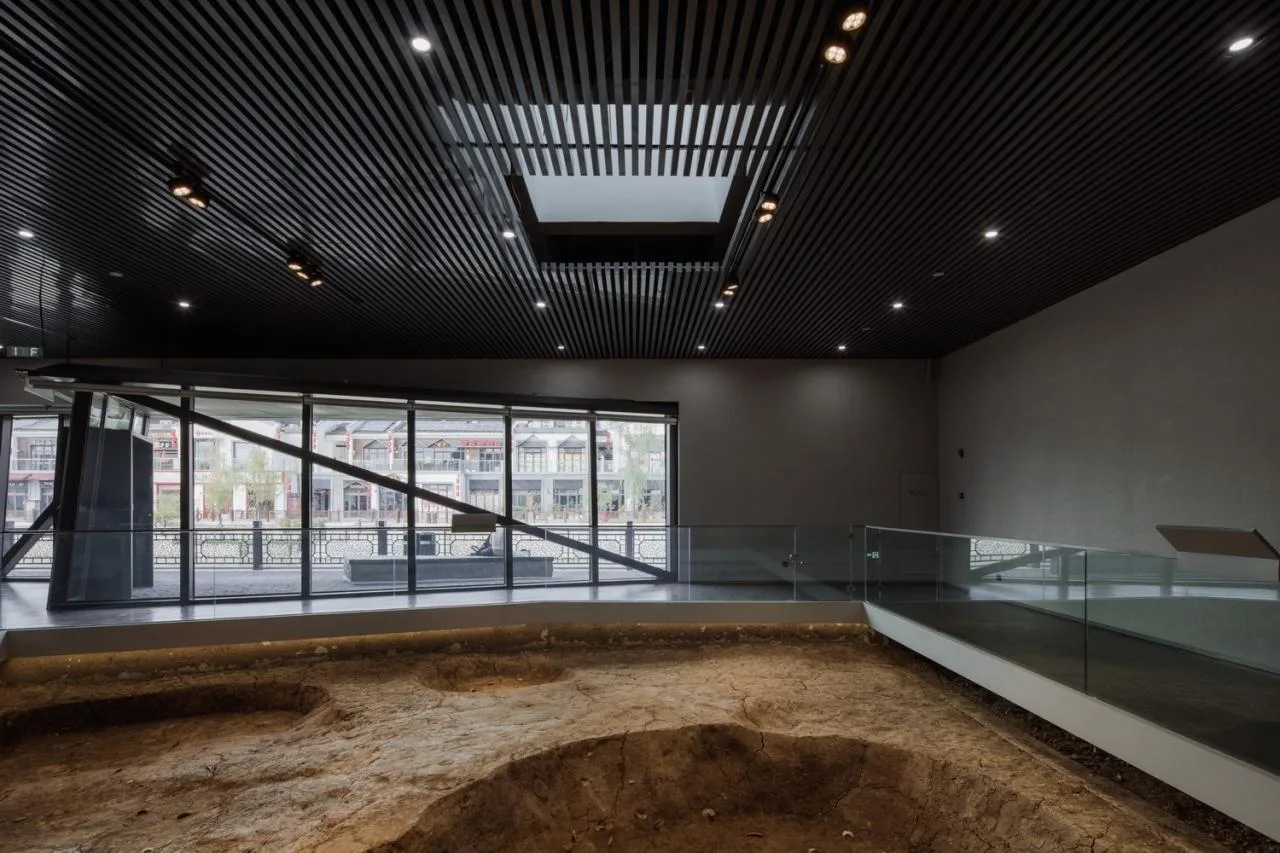
Visitors then descend a ramp to a glass-box screening hall to watch a film. Post-screening, the electrified glass transitions to reveal the actual site environment, creating a seamless immersive experience. The on-site exhibition hall allows visitors to explore pathways around the archaeological site and observe the Bodu Ancient River—integral to the site’s formation—through a glass curtain wall.
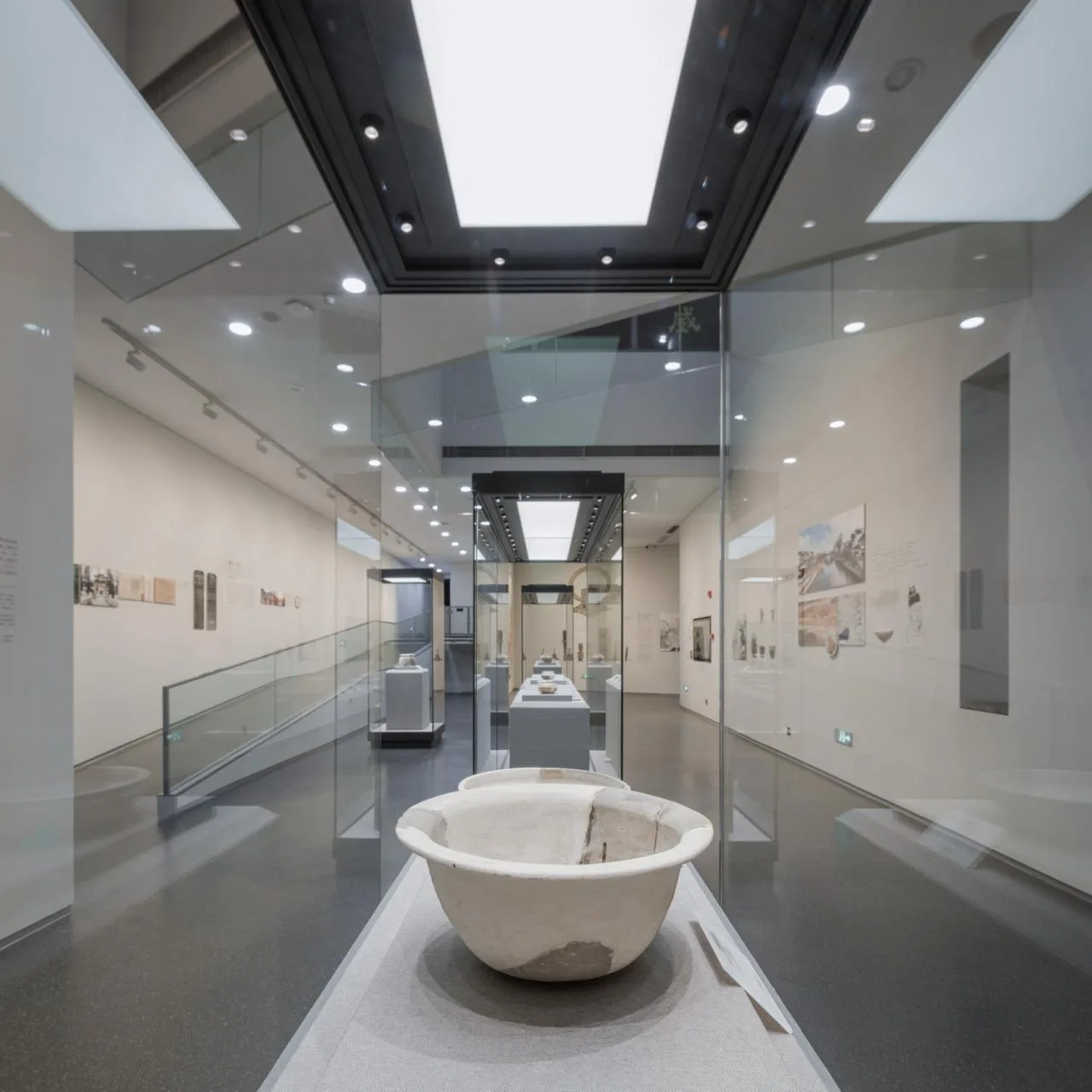
The exhibition hall’s floors and walls primarily feature dark and light gray tones to maintain simplicity and elegance, ensuring the artifacts and explanatory texts stand out as the focal points. The black-and-white contrast between text and walls also resonates with the Jiangnan aesthetic.
Community
Modern urban development requires new buildings to foster community engagement and public interaction. Positioned within a newly developed commercial street town aimed at stimulating the economy and consumption, the Meili Site Museum embraces this responsibility. One of the design’s original intentions was to create not just a museum but an open community space accessible 24/7, truly returning urban space to the people.
The on-site exhibition hall’s proximity to the Bodu River makes it ideal for a rooftop platform, serving as a connection to the museum’s second-floor exit. Though limited in size, landscape design enhances the platform with small shrubs and observation windows that allow visitors to view the site below. This rooftop space remains open 24 hours and is accessible directly from the street via staircases on both sides, without entering the museum. The western staircase includes a ramp integrated into the viewing platform, catering to residents with strollers. A wooden resting area beneath the roof slope provides additional opportunities for community activities. Unfortunately, the platform does not extend to connect with nearby arch bridges and shops, limiting the potential for a more diverse recreational area.
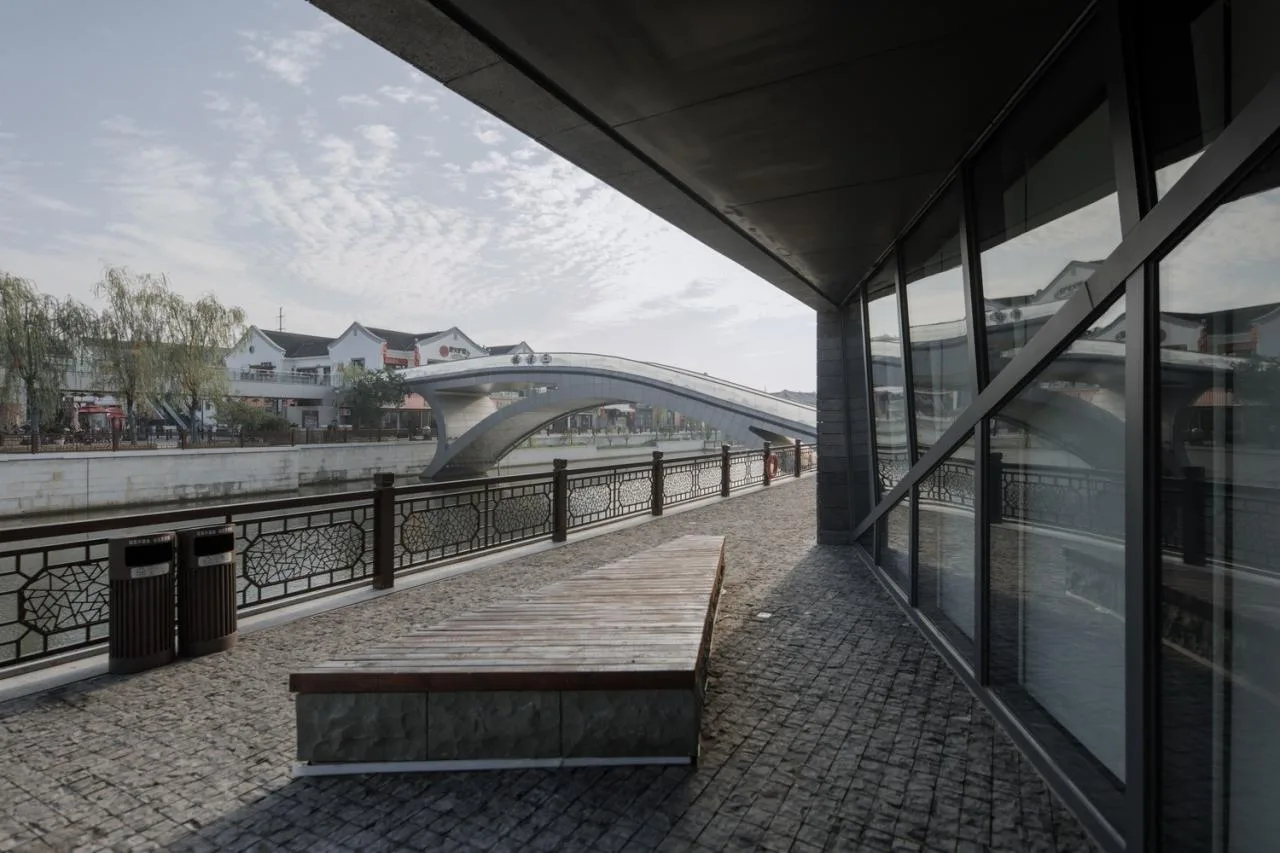
A narrow passage runs along the north side of the site exhibition hall, facing the river. The exhibition hall is recessed into a triangular space within this passage, serving as both an emergency exit and an extension of the public riverside walkway. This design provides a resting spot for visitors and reduces the building’s impact on the riverside path. The triangular outdoor area features floor-to-ceiling glass walls, creating a transparent boundary. Located on the north side, these walls avoid direct sunlight, allowing passersby to perceive the contrast between the ancient site and the modern commercial street, provoking reflection on the relationship between history and today.
Project Drawings
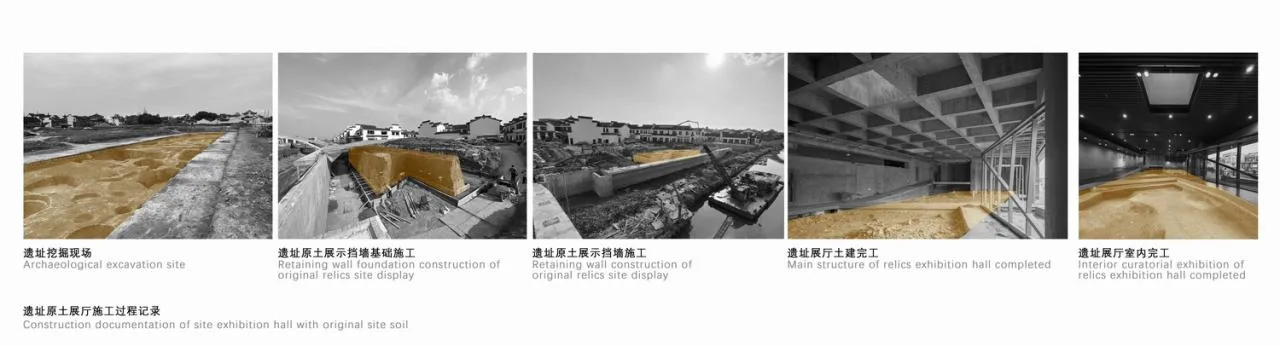
△ Construction process records
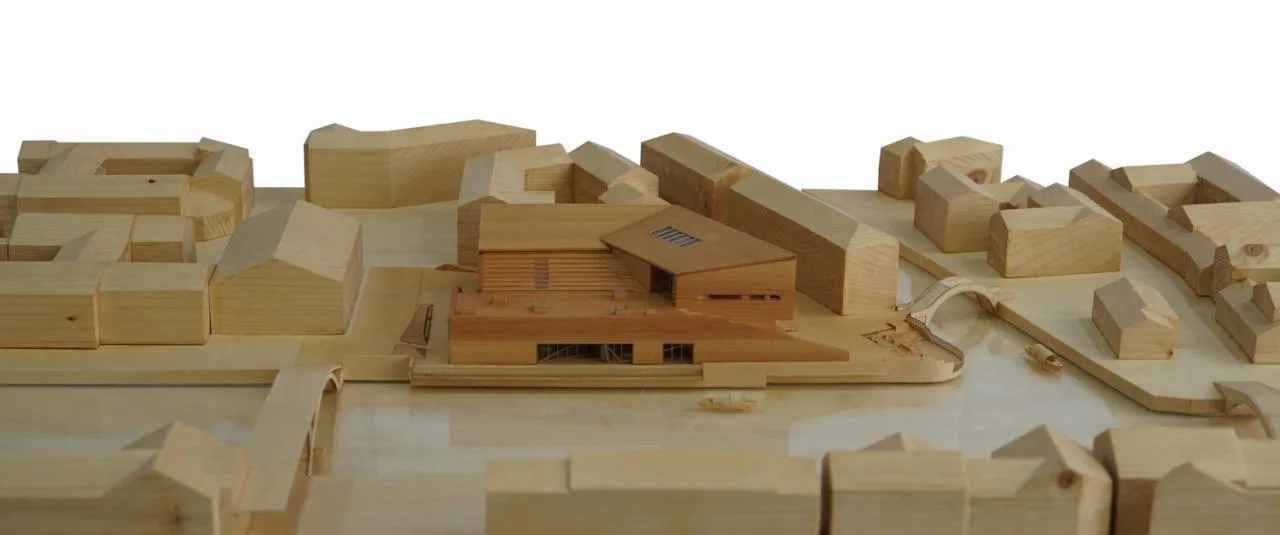
△ Model diagram
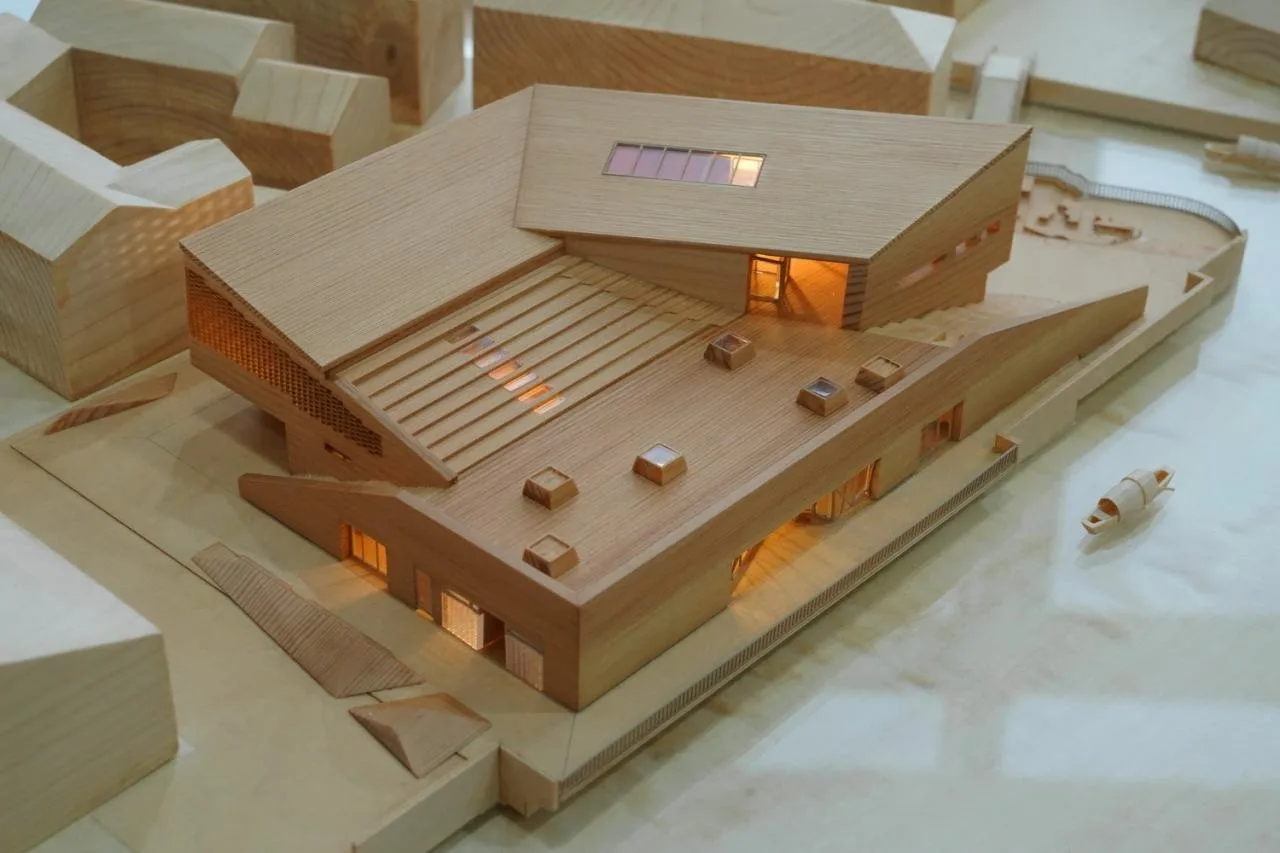
△ Model diagram
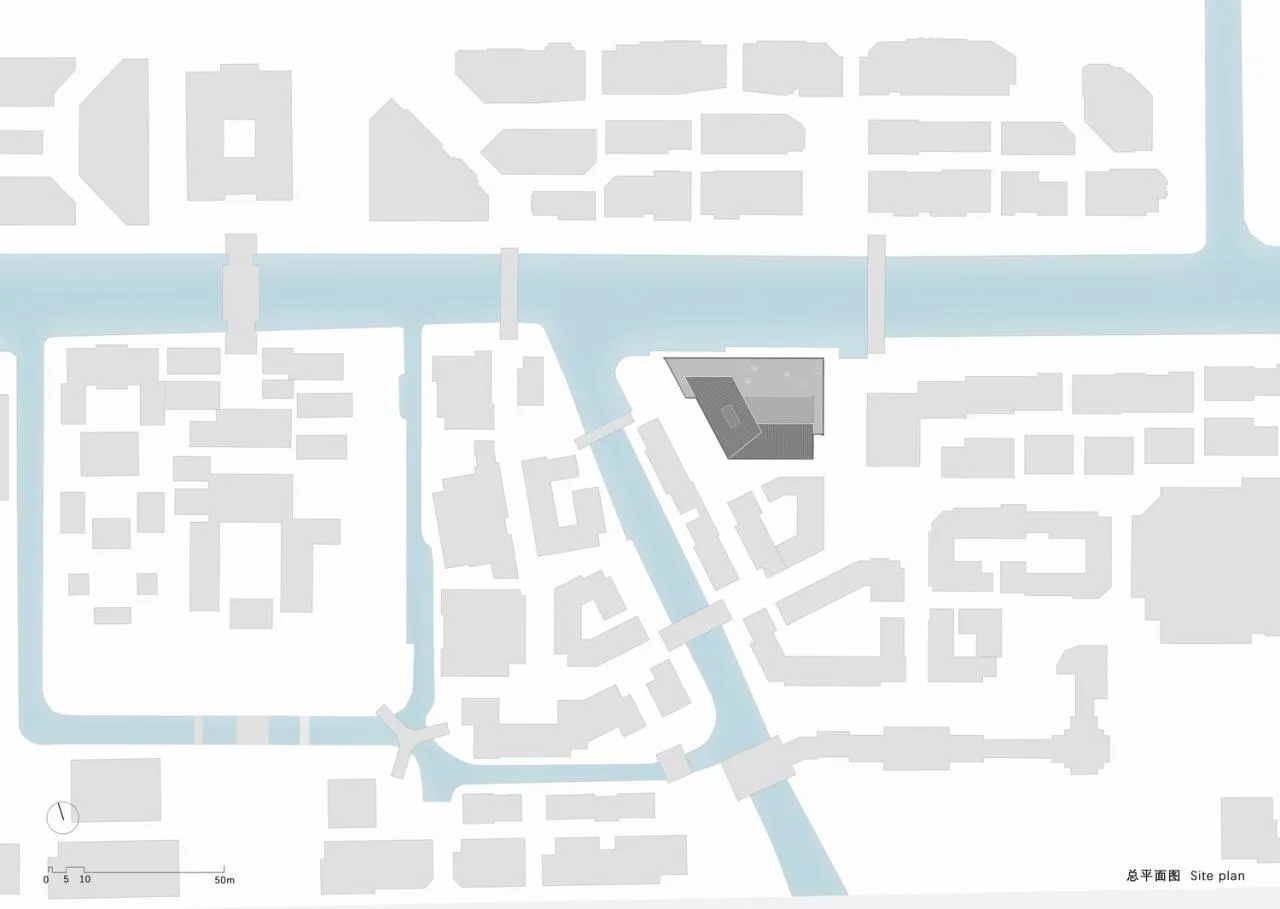
△ General layout plan
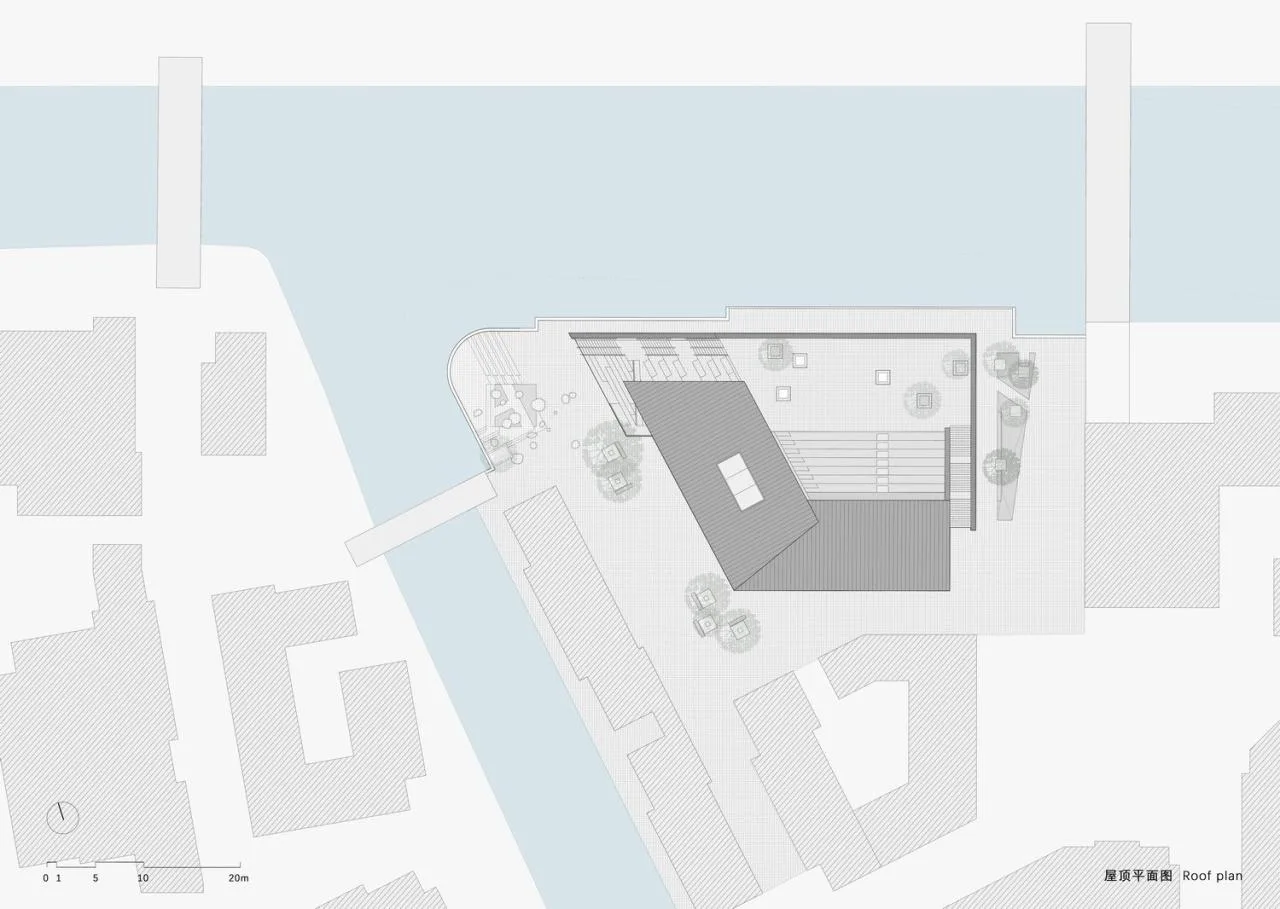
△ Roof Plan
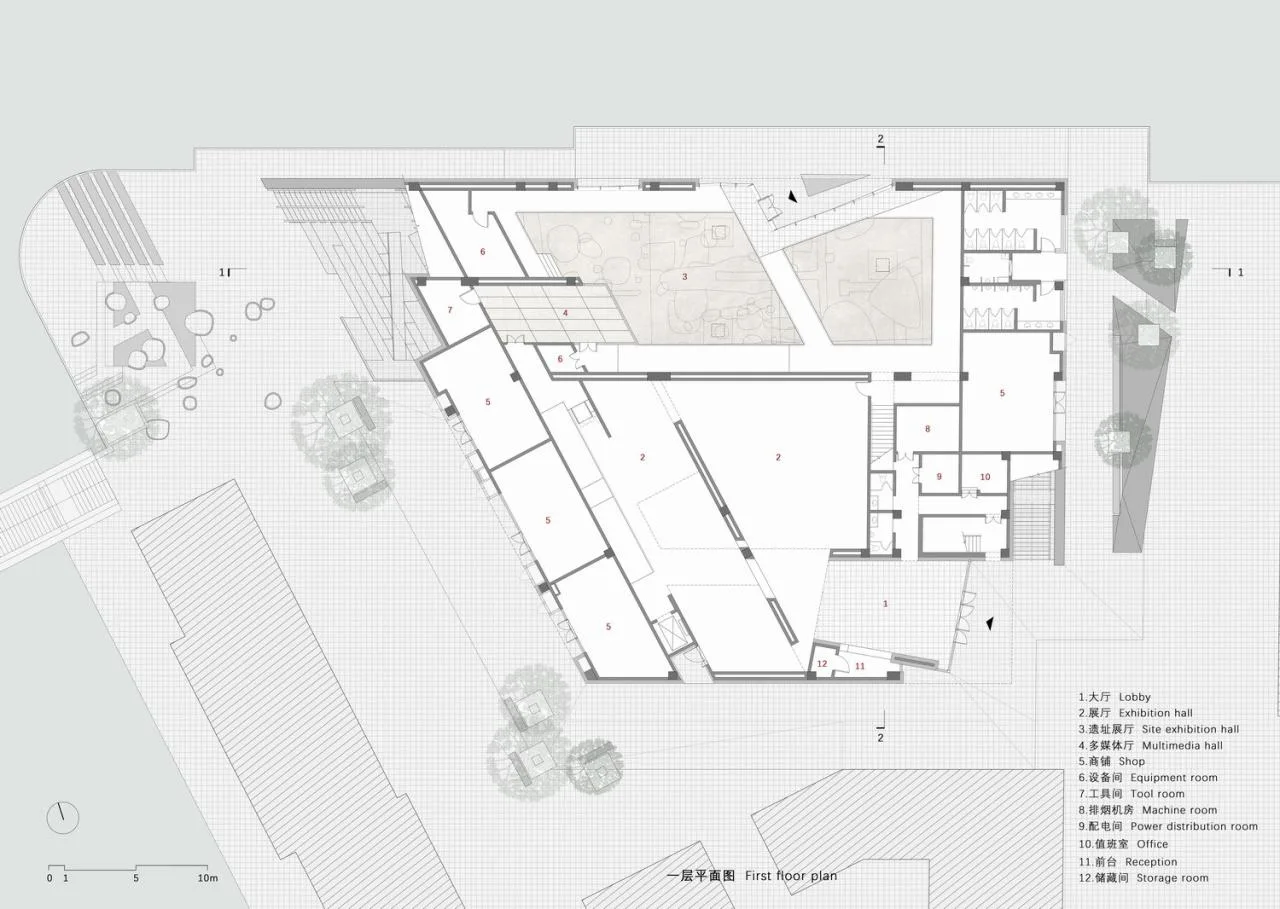
△ First floor plan
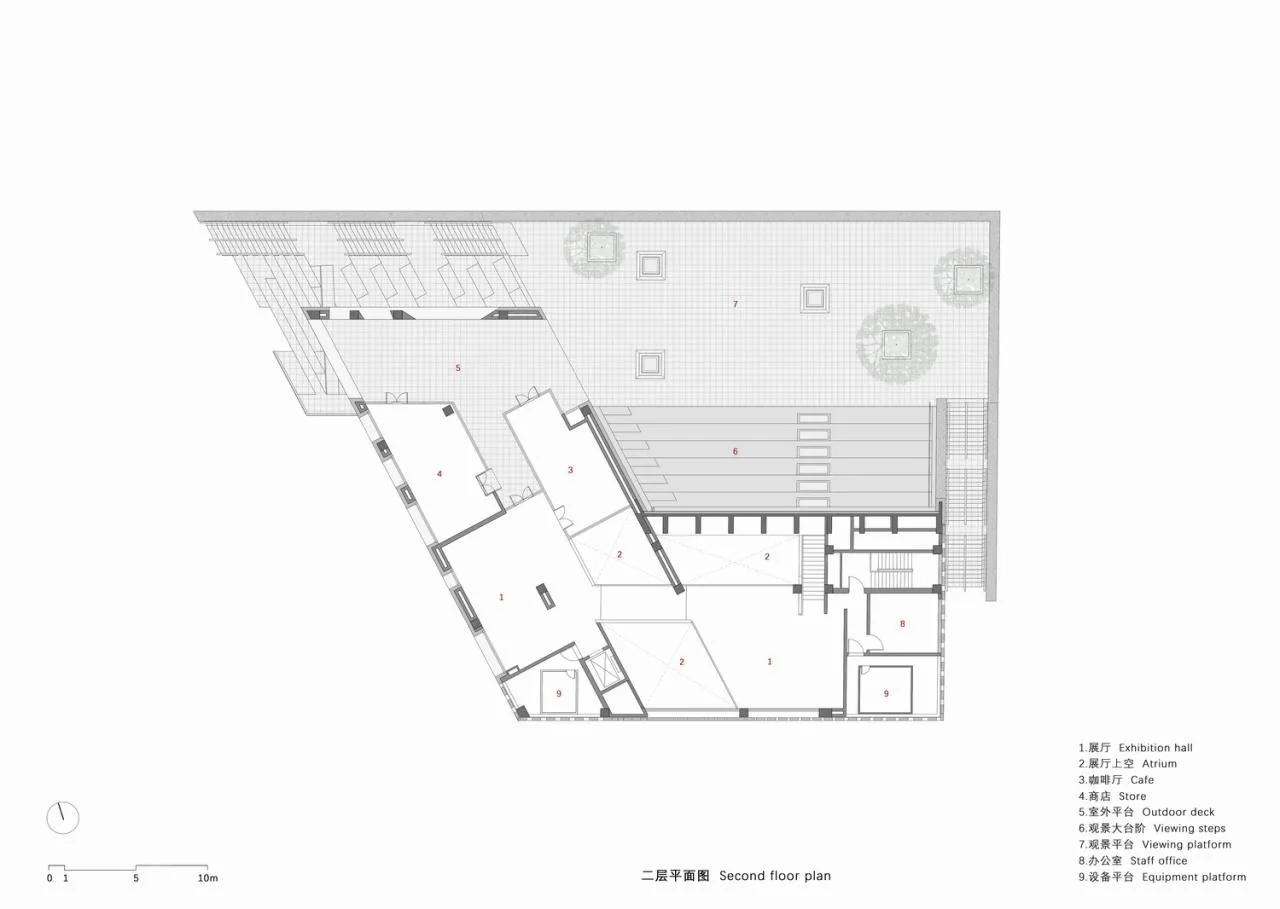
△ Second floor plan
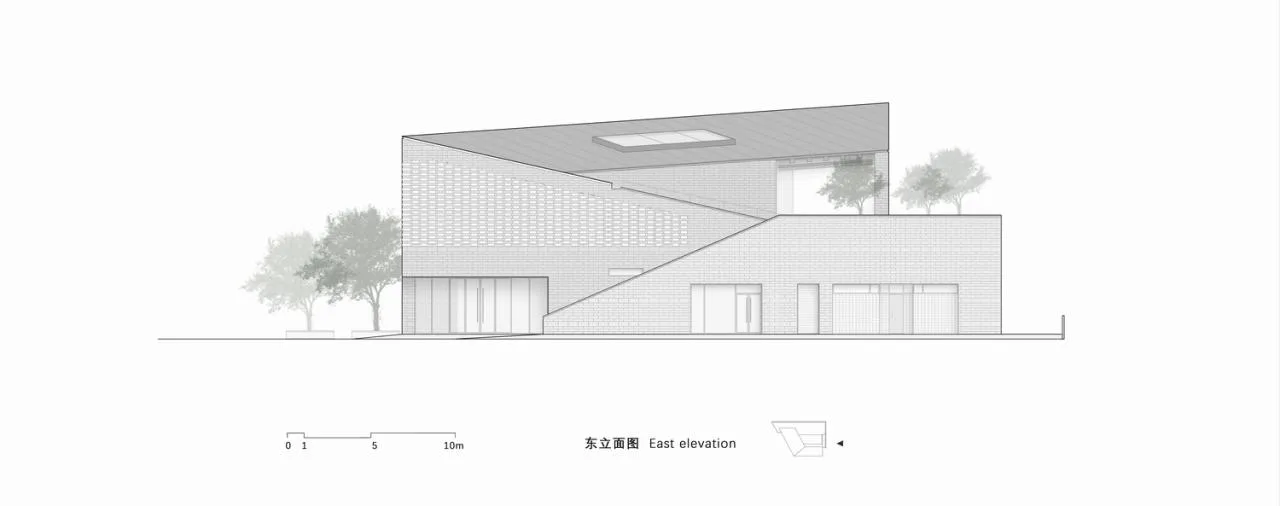
△ East elevation view
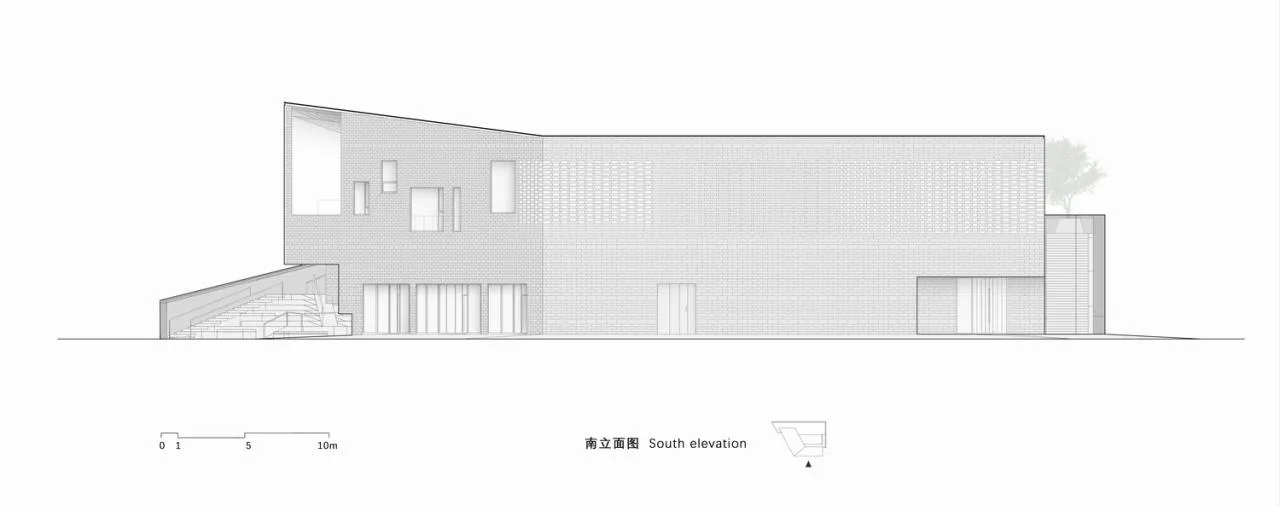
△ South elevation view
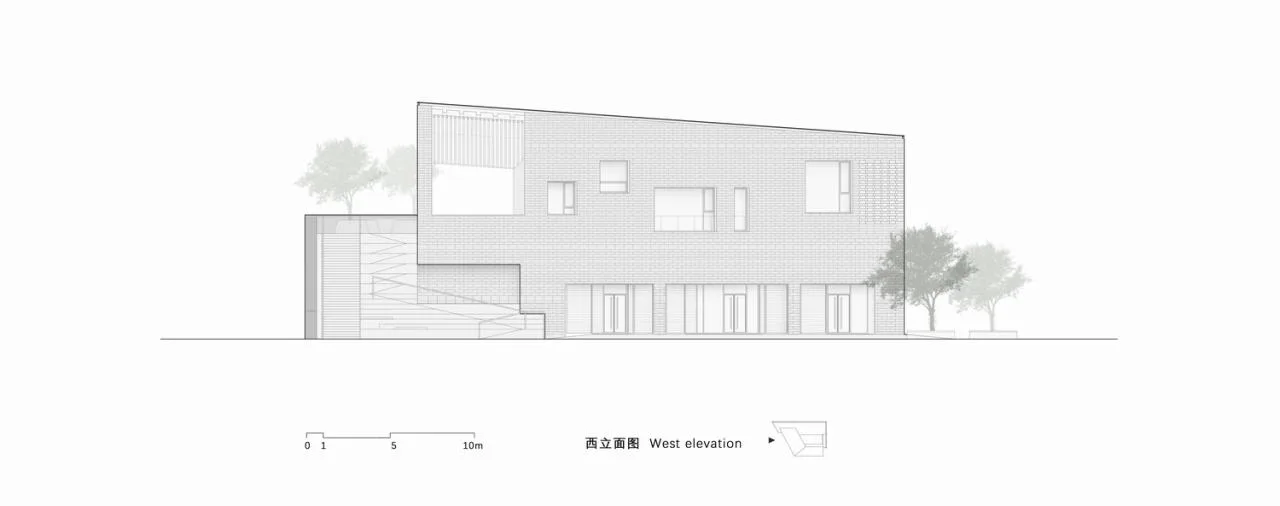
△ West elevation view
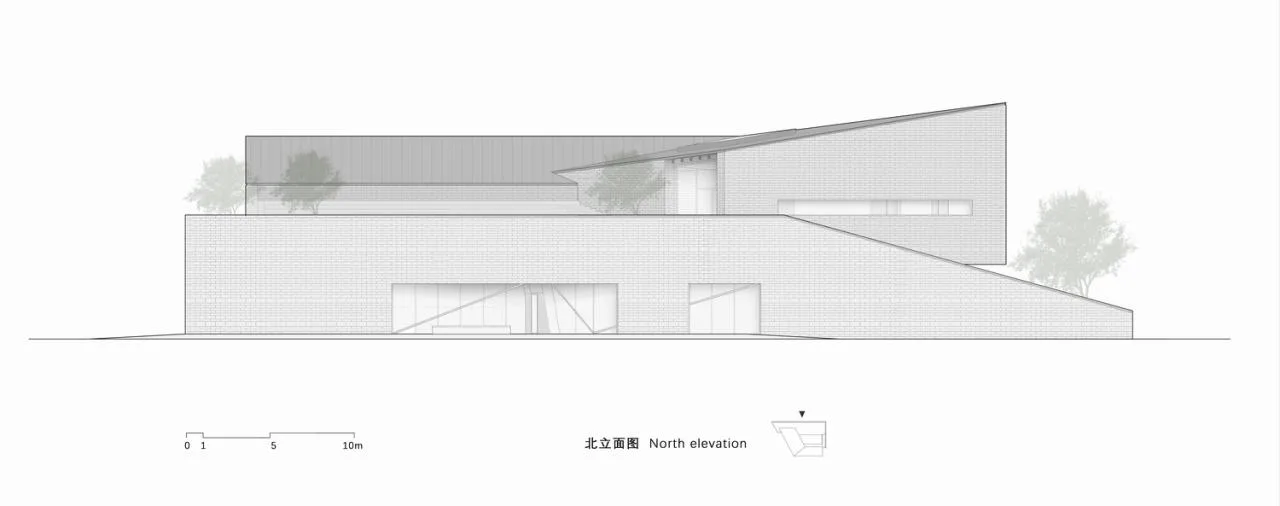
△ North elevation view
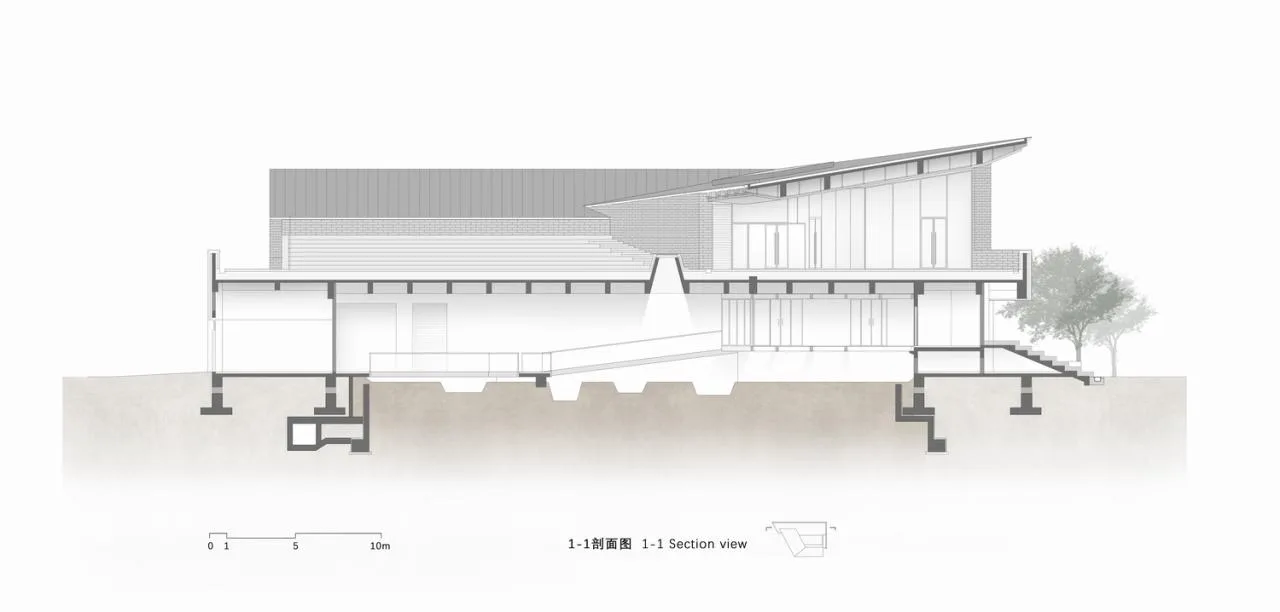
△ Section diagram
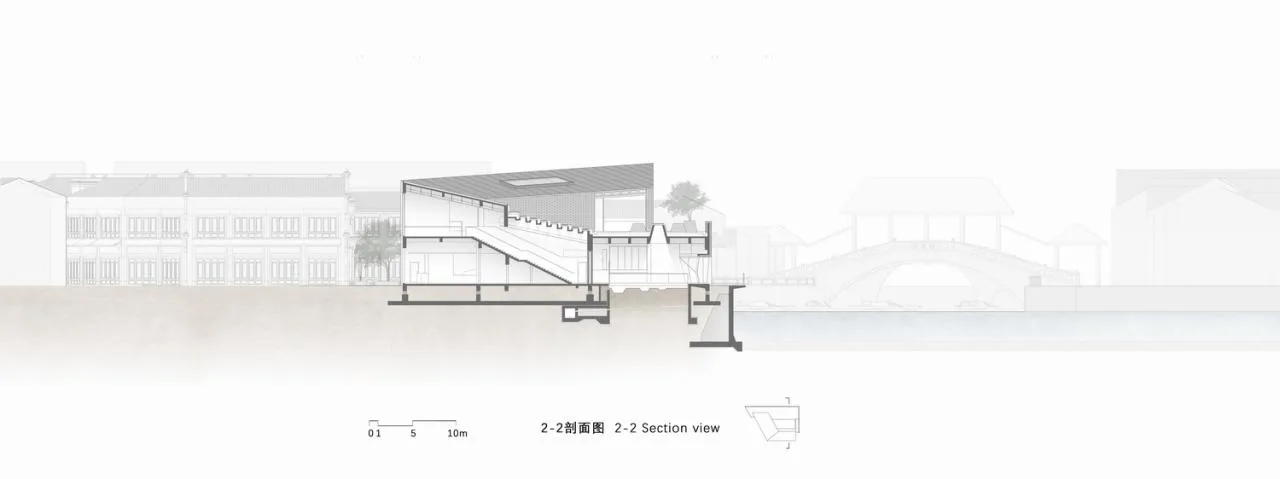
△ Section diagram
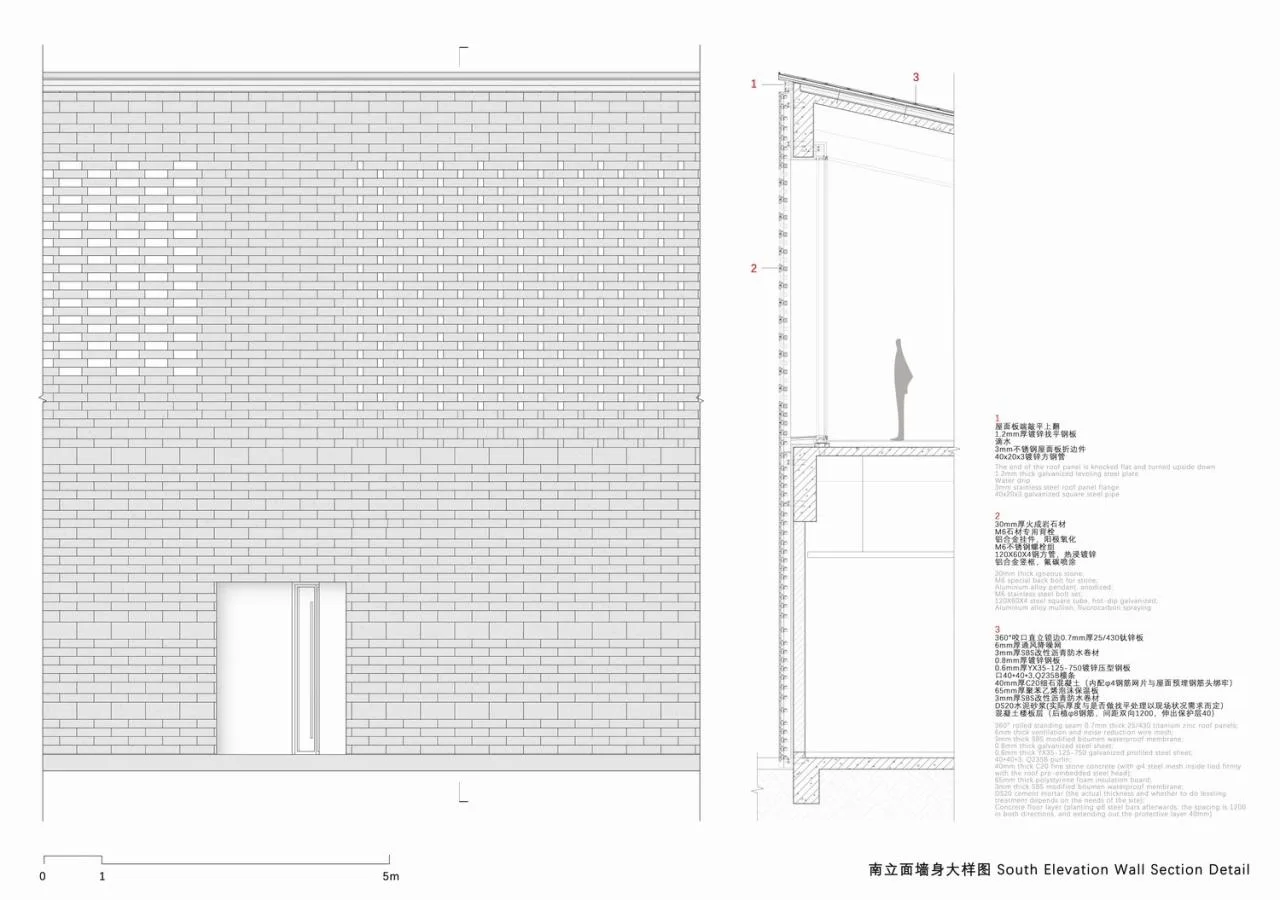
△ Wall detail drawing
Project Information
Project Name: Wuxi Meili Site Museum
Location: Meili Ancient Town, Xinwu District, Wuxi, Jiangsu Province
Building Area: 1,937.55 square meters
Design Period: January 2019 – September 2020
Construction Period: August 2020 – September 2022
Owner: Meicun Street, Xinwu District, Wuxi City
Design Teams:
Architectural History Research Institute of China Architecture Design and Research Institute Co., Ltd. (Architectural design, interior exhibition planning, and full process collaboration)
Shanghai Zhongsen Architecture and Engineering Design Consulting Co., Ltd. Jiezhi Design Studio (Architectural scheme refinement, construction drawings, landscape design, and civil engineering coordination)
Design Leads: Liu Jian and Wu Jiabao (Institute of Chinese History); Zhang Nan and Zhang Xiaoyuan (Shanghai Zhongsen Jieding Design Studio)
Design Team Members:
China Academy of Architectural Design and Research Co., Ltd.: Chen Xiaopeng, Lv Wenjie (Architecture)
Shanghai Zhongsen Architecture and Engineering Design Consulting Co., Ltd.: Chen Yang, Gan Lu, Yu Yaqi, Feng Qi, Guo Jingrui, Ou Renwei, Huang Shuting, Tang Yi (Architecture); Tang Xiaohui, Shi Zheng, Zhao Zheng (Structure); Zhang Huijie (Landscape); Pang Zhiquan, Tian Juanrin, Zhang Rubo, Yu Zibin (Water Supply and Drainage); An Qiuxiang, Ma Haoran, Wang Jianwei (HVAC); Zhou Yingjun, Yang Hejun, Gao Chun (Electrical); Wang Li, Yan Benchi, Xu Jinhui (Overall Planning); Li Chao (Energy Efficiency)
Interior Exhibition Design: China Architecture Design and Research Institute Co., Ltd., Beijing Zhubang Building Decoration Engineering Co., Ltd., Hangzhou Yuzhi Culture and Art Planning Co., Ltd.
Exhibition Planning: China Architecture Design and Research Institute Co., Ltd., Beijing Liucai Workshop Cultural Development Co., Ltd.
Exhibition Multimedia Design: Shandong Chaoqi Culture Communication Co., Ltd.
Curtain Wall Design: Shanghai Yixuan Architectural Design Consulting Co., Ltd.
Construction Agent: Wuxi Juntai Real Estate Development Co., Ltd.
Civil Construction: Jiangsu Wuxi Second Construction Group Co., Ltd.
Exhibition Construction: Beijing Zhubang Building Decoration Engineering Co., Ltd.
Curtain Wall Construction: Meihua Construction Group Co., Ltd.
Materials and Suppliers:
Lighting: ERCO
Showcases: Zhongbi
Titanium Zinc Plates: Peruvian Zinc
Photography Copyright: Chen Yang
Translation: Su Yiling















Must log in before commenting!
Sign Up